
On-screen assessments in sessional high-stakes qualifications in England
Published 11 December 2025

© Crown copyright 2025
This publication is licensed under the terms of the Open Government Licence v3.0 except where otherwise stated. To view this licence, visit nationalarchives.gov.uk/doc/open-government-licence/version/3 or write to the Information Policy Team, The National Archives, Kew, London TW9 4DU, or email: psi@nationalarchives.gov.uk.
Where we have identified any third party copyright information you will need to obtain permission from the copyright holders concerned.
This publication is available at https://www.gov.uk/government/publications/on-screen-assessments-in-sessional-high-stakes-qualifications-in-england/on-screen-assessments-in-sessional-high-stakes-qualifications-in-england
Authors
- Yasmine El Masri
- Tim Stratton
With thanks to
- Emma Howard
- JL Partners
- Jo Handford
How to cite this publication
El Masri, Y. & Stratton, T. (2025). On-screen assessments in sessional high-stakes qualifications in England: Opportunities and risks in the eyes of students and parents. (Ofqual/25/7279). Ofqual. Retrieved from: https://www.gov.uk/government/publications/on-screen-assessments-in-sessional-high-stakes-qualifications-in-england
Executive summary
This report summarises the results of a survey administered by Ofqual through JL Partners, between 23 February and 3 March 2023, to a representative sample of students and parents. The aim was to better understand their perceptions of on-screen assessments, including any concerns they may have around their potential deployment at a large scale in GCSEs and A levels in England.
Participants included a representative sample of 516 students, aged 15 to 18, who were preparing for high-stakes GCSEs and A levels and sitting their exams in 2023 and 2024, as well as a representative sample of 500 parents of such students (not necessarily the parents of the students taking the survey).
Background
On-screen assessments (OSAs) are assessments that are taken on a digital device such as a desktop computer, a laptop or a tablet, instead of on paper. This mode of assessment has become increasingly popular in various contexts as different providers and jurisdictions try to capitalise on potential benefits such as more authentic assessments, improved assessment experience, more efficient delivery and greater security.
In 2020, Ofqual published a report describing key barriers to greater adoption and deployment of OSAs in high-stakes sessional general qualifications (GCSEs, AS and A levels) in England. The report identified various barriers to large-scale adoption of OSAs, including inadequate existing IT infrastructure in schools and colleges, challenges around implementation, especially for qualifications with very large cohorts, and concerns over fairness and equity across the system. The report suggested ways to overcome some of these barriers by drawing on the experience of 3 jurisdictions (Finland, New Zealand and Israel) where on-screen high-stakes assessments have been deployed successfully.
Ofqual’s (2020) report was a first step to build an understanding of how technology can impact the sector it regulates. It gathered insights from stakeholders in England, including teachers, school and college leaders, technology providers, awarding organisations, industry bodies and the Department for Education. Missing in the report were the voices of students and parents. To ensure that these voices were heard, in early 2023 Ofqual administered a survey in collaboration with JL Partners, to a representative sample of students and parents to better understand their perceptions of OSAs, including any concerns they may have around their deployment in GCSE, AS and A level exams in England.
Key findings
Generally speaking, students have a positive attitude towards digital technology and are confident using digital devices. For many, computers are the preferred mode for school-related work. Some students have also completed computer-based assessments, which were typically invigilated in real time by a person sitting in the same exam hall.
Most students have computers at home and in school, but only a minority can use these devices without having to share them with others. Although most students use digital devices in the classroom, a significant minority of them have very limited, if any, exposure to them in a typical school week.
Most students and parents expect that some GCSE and A level exams will be delivered on computer in the next decade. However, although they recognise the potential opportunities for improving assessment, they believe some subjects, such as those involving inputting equations or those currently assessed through performances, are not suitable to be assessed on computer. They also think that automated marking should only be conducted on selected response questions, while essays should continue to be marked by human markers.
Students and parents share various concerns relating to OSAs. They worry about technical failures, students’ readiness to use computers for exam purposes as well as fairness due to the variation in the quality of devices that students would be using. Significant concerns over assessment security and malpractice were expressed, especially by parents.
The findings of this survey are consistent with the research that awarding organisations have already carried out into stakeholders’ perceptions of OSAs. The importance of students’ preparation for OSA and ensuring suitable infrastructure and equal provision of technology across schools and colleges will be key to reassuring students and parents if there is to be any widespread adoption of OSAs in high-stakes exams.
Introduction
On-screen assessments (OSAs) are assessments that are taken on a digital device such a desktop computer, a laptop or a tablet, instead of on paper. This mode of assessment has become increasingly popular in various contexts as different providers and jurisdictions try to capitalise on potential benefits such as more authentic assessments, improved assessment experience, more efficient delivery and greater security (see Alrababah & Molnár, 2021; Facer, 2012; Timmis, Broadfoot, Sutherland & Oldfield, 2016).
In 2020, Ofqual published a report describing key barriers to greater adoption and deployment of OSAs in high-stakes sessional general qualifications (GCSEs, AS and A levels) in England. The report identified various barriers to large-scale adoption of OSAs, including inadequate existing IT infrastructure in schools and colleges, challenges around implementation, especially for qualifications with very large cohorts, and concerns over fairness and equity across the system. The report suggested ways to overcome some of these barriers by drawing on the experience of 3 countries (Finland, New Zealand and Israel) where on-screen high-stakes assessments have been deployed successfully.
Following the 2020 report, Ofqual created a wider programme of work, the Technology in Assessment Programme (TiAP), to gather evidence around the opportunities, benefits, risks and challenges of technology integration in assessment, including those associated with a greater adoption of OSAs in high-stakes qualifications in England. Concurrently, awarding organisations have conducted their own research into stakeholders’ and public perceptions of OSAs[footnote 1],[footnote 2],[footnote 3]. This work highlighted some qualified enthusiasm for OSAs, recognising the potential opportunities they may bring and their inevitability, while raising concerns over teachers’ and students’ preparedness, inadequate infrastructure in schools and at home, and serious implications for fairness due to unequal access to IT and digital devices around the country.
Ofqual’s (2020) report was a first step to build an understanding of how technology can impact the sector it regulates. It gathered insights from stakeholders in England, including teachers, school and college leaders, technology providers, awarding organisations, industry bodies and the Department for Education. Missing in the report were the voices of students and parents. To ensure these voices were heard, in early 2023 Ofqual worked with JL Partners, to survey a representative sample of students and parents to better understand their perceptions of OSAs, including any concerns they may have around their use in GCSE, AS and A level exams in England.
Method
Participants
Participants included a representative sample (in terms of age, gender, region, and ethnicity) of 516 students, aged 15 to 18, who were preparing for high-stakes GCSEs and A levels and sitting their exams in 2023 and 2024. A representative sample (gender, region, ethnicity) of 500 parents of such students (although not necessarily the parents of those students who took the survey) was also surveyed. Participants were from a range of socio-economic backgrounds and included students and parents of students with special educational needs (SEND). However, it is worth noting that the survey was administered online, which means that students and parents who participated in the survey are more likely to be those with an accessible digital device and an internet connection.
Survey
A survey of mostly closed response questions was held online by JL Partners between 23 February and 3 March 2023. The survey consisted of 4 sections. The questions in the first section were only given to students and probed their general attitudes towards the use of technology both in and outside the context of formal schooling. This section also asked questions about their level of access, confidence, familiarity and use of digital devices. The rationale behind this section was to disentangle students’ perceptions of OSAs from any strong views they may already hold about the use of technology in education more broadly, which can be influenced by their level of access and familiarity with using digital devices.
The rest of the survey was administered to both students and parents, with parents completing, where needed, questions that mirrored the ones given to students.
For example:
Question to student:
To what extent do you find the following tasks hard or easy?
[…]
Question to parent:
To what extent would your child find the following tasks hard or easy?
[…]
Section 2 of the survey probed students and parents for their general views on moving high-stakes assessments on screen. The rest of the survey examined students’ and parents’ perceptions of the potential benefits of OSAs (section 3) and their concerns over some risks of taking high-stakes exams on a computer (section 4). This final section primarily focused on digital exams, rather than other forms of assessment, and on a computer, rather than other digital devices.
Key findings
This section details the key findings of the research, structured in the same way as the survey. The margins of error, representing 95% confidence intervals, have been included as error bars in the figures throughout the report to enable comparisons. These are +/- 4.3% for students and +/- 4.4% for parents. Margins of error are reported because the survey results are based on samples of students and parents (which have been weighted to be representative) rather than the whole populations. Each result from the student survey, for example, is therefore an estimate of what the result would be if we asked all students aged 15 to 18, who were preparing to sit their GCSEs or A levels in 2023 and 2024. The margin of error indicates how precisely the survey result estimates the whole population result.
Digital environment and attitudes
This section reports on participants’ levels of access to digital devices at home and in school, as well as their use of computers in formal schooling. It also explores any prior experience with assessments taken on a digital device. Throughout this report, ‘digital devices’ includes computers, mobile phones and tablets. The aim is to understand the digital environment and the inherent views of the particular sample of students participating in the survey, providing context for their responses to questions in subsequent sections. It is important to remind readers that the reported figures in this section are not a national census of IT provision and digital skills in upper secondary schools and includes self-reported perceptions of students and parents rather than objective measures.
Access to digital devices
At home
While the vast majority of students (88%) reported having a laptop or a desktop computer at home, only 43% of students said they could use them without needing to share them. This proportion varied across socio-economic levels and ranges from 48 to 50% for students from affluent backgrounds (social grades A, B and C1) to 30% for those from the lowest socio-economic backgrounds (social grades D and E)[footnote 4]. Variations were also observed across regions, with exclusive access being highest in the Midlands (51%) and lowest in the North (36%), although these differences were not statistically significant.
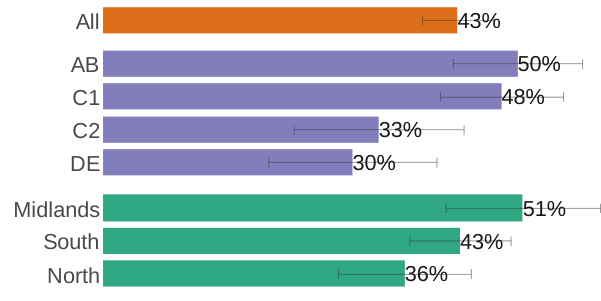
Figure 1. Percentage of students with a digital device at home which they do not need to share
In school
While most students (91%) reported having computer devices (desktop computers or laptops) in their school, the devices were not necessarily available for them to use. The proportion of students reporting using the digital devices offered by their school varied from 68% for desktop computers to 43% for laptops and 20% for tablets (Figure 2).
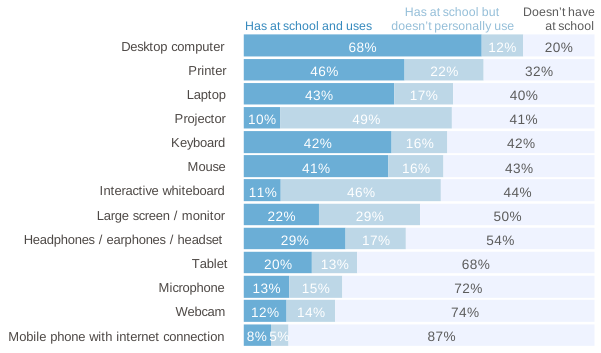
Figure 2. Digital devices used in schools
While digital devices in schools are accessible to a sizeable proportion of students, they are not for their exclusive use. Half of participating students said they shared the computer devices available to them in school at least sometimes.
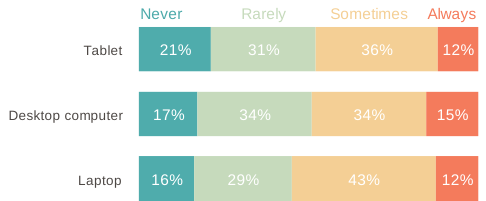
Figure 3. Extent of sharing digital devices in school.
Main takeaways
-
A large proportion of students live in households where digital devices, particularly computers, are available. However, only a minority can use these devices without having to share them with others.
-
Most students reported having a digital device in school, but these are not always available to them, and when they are, they tend to be shared amongst peers.
Use of digital devices
Outside school
Students use digital devices on a regular basis and for several hours during a typical school week. Nearly half of students (46%) reported spending at least 4 hours a day using a digital device outside school in a typical school week (Figure 4). Additionally, over half of students (52%) reported using digital devices extensively (at least 6 hours per day) during a typical weekend (Figure 5).
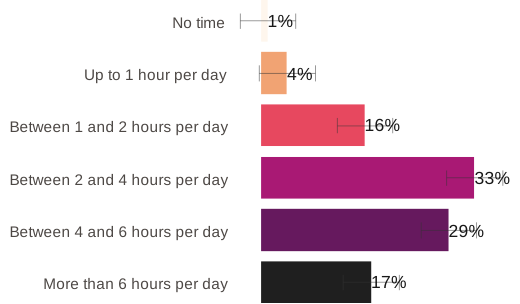
Figure 4. Use of digital devices in a typical school week (excluding the weekend).
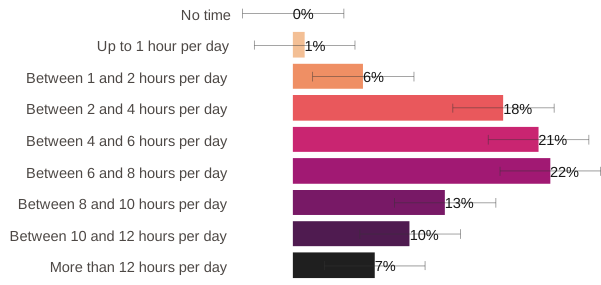
Figure 5. Use of digital devices in a typical weekend.
In school
The use of digital devices in schools is common for more than half of the surveyed students. Two-thirds (67%) reported spending more than one hour a day working on a digital device in classroom lessons in a typical school week (Figure 6).
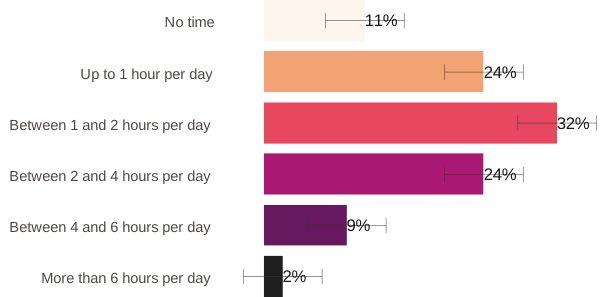
Figure 6. Time spent on a digital device in classroom lessons during a typical school day
Main takeaways
-
The use of digital devices (computers, tablets, mobile phones) in and out of school is common for around half of students.
-
While most students use digital devices on a regular basis in the classroom, there is a sizeable proportion that has no or very limited exposure to them during a typical school week.
Attitudes towards digital devices
Perceptions of digital devices
Students reported positive views towards digital devices, the internet and associated technologies. The vast majority (89%) said they liked using digital devices and felt that time went quickly when they were using them (87%). Additionally, 80% reported finding the discovery of new digital devices and applications exciting (Figure 7).
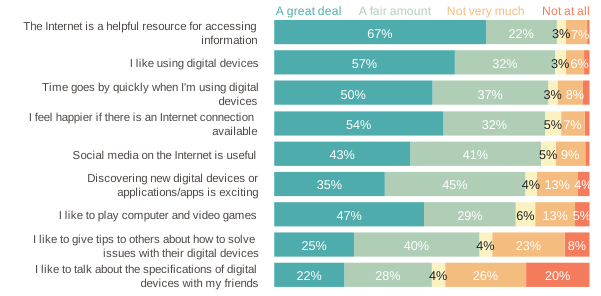
Figure 7. Attitude towards digital devices and technology. Pale yellow indicates the percentage who responded ‘I don’t know’.
Confidence in using digital devices
Most students seem relatively confident in operating digital devices and technology. 88% reported feeling comfortable using their digital devices at home, 84% reported being able to choose a suitable application that served their needs and 79% reported being comfortable operating digital devices that they were not familiar with. Furthermore, 61% reported making efforts to keep themselves informed about the latest technology (Figure 8).
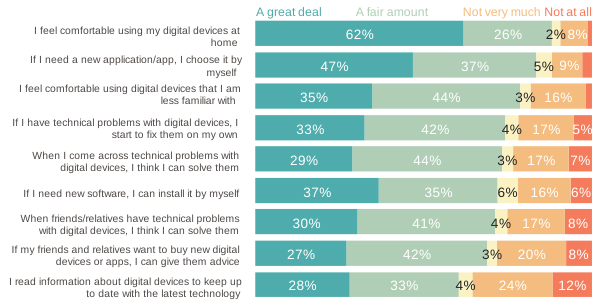
Figure 8. Confidence in using digital devices and technology. Pale yellow indicates the percentage who responded ‘I don’t know’.
Mode preference for school-related work
Students were asked about their preferred mode of work in school and at home. Half of students (50%) reported a preference for a computer, 21% had no particular mode preference while only 27% reported a preference for pen and paper (Figure 9).
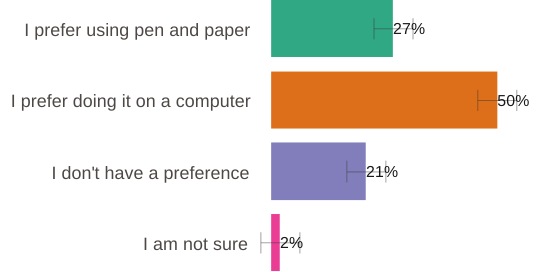
Figure 9. Mode of work preference.
Main takeaways
-
Students typically have a positive attitude towards digital technology.
-
Most students are confident in operating digital devices.
-
Computers are the preferred mode of work for at least half of students.
Experience of on-screen assessments
Students were asked whether they had any prior experience of taking exams on a computer. 65% of students reported having sat at least one computer-based exam in the past, however it is likely that many of these may have been classroom tests or other formative assessments. The proportion of students with computer-based exam experience increased with year levels, reported by 70% of students in Year 13 compared with 56% of those in Year 10. However, these differences are not statistically significant (Figure 10).
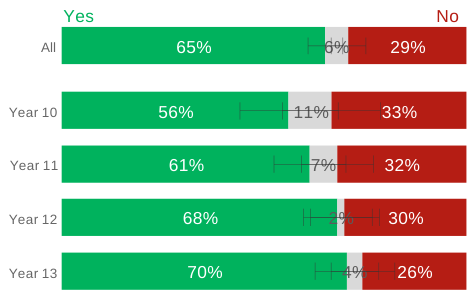
Figure 10. Prior experience taking an exam on a computer (desktop or laptop). Light grey indicates the percent that responded ‘Can’t remember’.
Computer-based exams experienced by students were primarily invigilated exams (95%). Invigilation was mainly carried out by a human present in the same room (66%). However, some students reported different forms of remote invigilation: either in real time, by a human monitoring students through cameras (19%), or after the exam, by a human reviewing video-recorded footage of the exam session (10%).
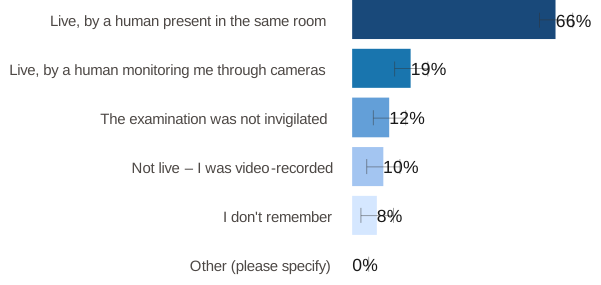
Figure 11. Invigilation approach in previously experienced computer-based exams.
Main takeaways
-
A sizeable proportion of students have already experienced taking exams on a computer.
-
Most of the computer-based exams were invigilated live by a person present in the same exam room. However, remote invigilation was occasionally used.
General views of on-screen assessments
Appetite for computer-based assessments
There was considerable interest in OSAs among those surveyed. 63% of students and 74% of parents said they would like GCSE and A level students to take some of their exams on a computer. However, both groups were split on whether computer-based exams would improve students’ experience, with only 47% of students and 35% of parents having positive views. Despite this, a large proportion of students and over half of parents believe it is inevitable that all GCSE and A level exams will be delivered on screen in the future (Figure 12).
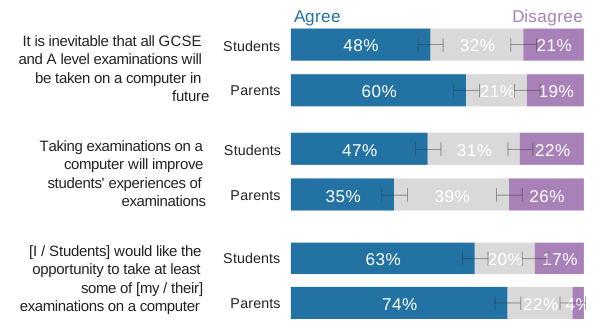
Figure 12. Students’ and parents’ general perceptions of computer-based exams. Light grey indicates the percentage that responded ‘I don’t know’ or ‘Neither agree nor disagree’.
The majority of both parents and students also believe that GCSE and A level exams will be taken on a computer within the next 6 years (71% parents; 68% students).
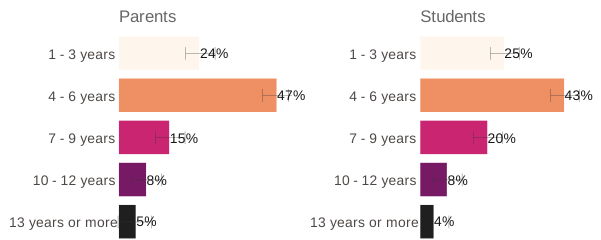
Figure 13. Expected time before GCSE and A level written exams will be taken on a computer.
Mode preference for high-stakes exams
Students and parents were divided on whether GCSE and A levels exams should be delivered on paper or on screen. Over a quarter of students (28%) and a fifth of parents (21%) thought all GCSE and A levels exams should be on paper only while only a fifth of students and parents (~20%) thought all exams should be taken on a computer. The overriding preference was for a mixed-mode approach, where around half of students (48%) and parents (54%) said they would like some exams to be delivered on paper and others delivered on screen.
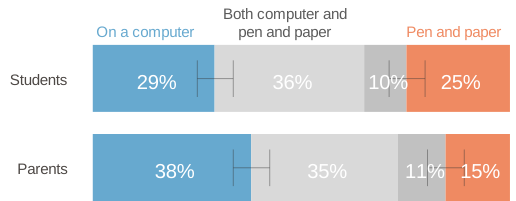
Figure 14. Preference for mode of assessment. Dark grey indicates percentage that answered ‘I don’t know’.
The preference for a particular mode of assessment became less clear when students were forced to make a choice between the 2 modes. Just over half of students (53%) said they thought all GCSE and A levels exams should be on paper while the rest (47%) said they should be on computer. The split is almost 50/50% for most student subgroups (gender, year level, ethnicity, socio-economic status, region), and where there are deviations from that split they are not statistically significant.
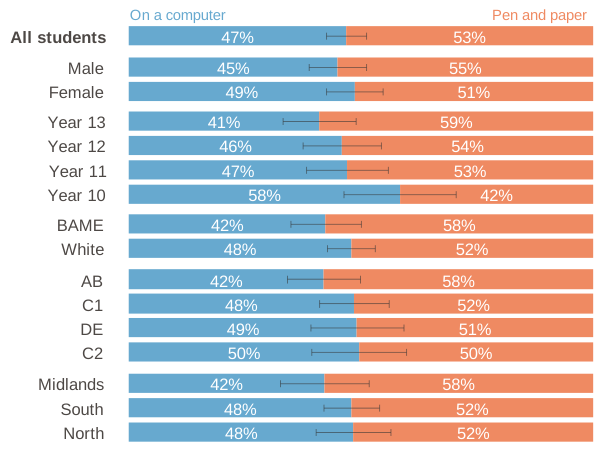
Figure 15. Preference for mode of assessment by student sub-group when forced to make a choice.
The split in preference of 15 to 18-year-old students and their parents in whether they preferred high-stakes exams to be delivered on screen or on paper was reflected in students’ support for being able to have the choice of assessment mode (61%). Parents were slightly less convinced that this choice should be given to students with less than half of them (47%) supporting students’ choice of assessment mode while nearly a third of them (32%) opposed the idea.

Figure 16. Supporting students’ choice of assessment mode. Light grey indicates the percentage that responded ‘I don’t know’ or ‘Neither agree nor disagree’.
Marking
Students and parents were consistent in how they felt about a computer marking their responses to a GCSE or A level exam taken on a computer. While only a small proportion of students (11%) and parents (13%) opposed the idea if the responses were to multiple choice questions, over a third of students (36%) and nearly half of parents (45%) opposed computer marking for essay responses (Figure 17).
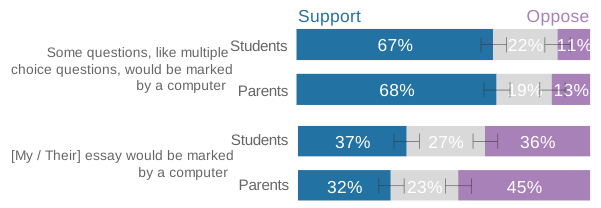
Figure 17. Support or opposition to responses being marked by a computer. Light grey indicates the percentage that responded ‘I don’t know’ or ‘Neither support nor oppose.
Assessment mode and fitness for purpose
Most students (67%) and parents (67%) believe that computer-based assessments are more suitable for some types of exams. They also agree that it is right for some subjects and not others to be assessed on screen in the future (students 72%; parents: 81%).
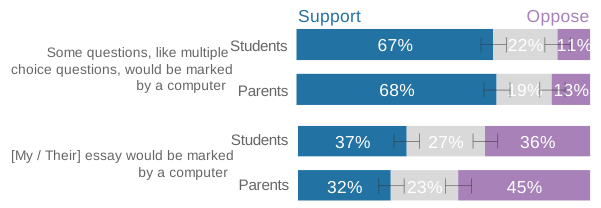
Figure 18. Perceptions of mode fitness for purpose. Light grey indicates the percentage that responded ‘I don’t know’ or ‘Neither support nor oppose.
The views presented in Figure 18 were also reflected in students’ and parents’ responses to another question asking whether they thought computer-based assessments were suitable for some specific GCSE and A level subjects. Students and parents thought that most GCSE and A level subjects could be assessed on screen (Figure 19). In particular, they thought computer science, business studies, history and geography were particularly suitable for computer-based assessments. In contrast, subjects that currently included performance-based assessments (such as drama, art, and PE) were seen as less suitable for computer-based assessments. Interestingly, parents did not think music was suitable to be assessed on a computer, while students showed some support for assessing music on screen.
While students’ and parents’ responses were largely consistent across the range of subjects, notably, students were much less positive about the suitability of mathematics to be assessed on a computer compared with parents (+15% vs. +46%).
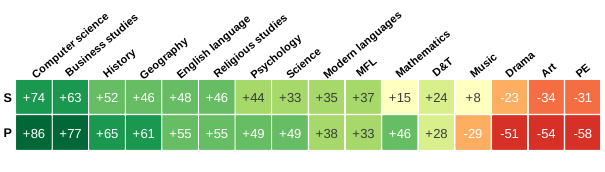
Figure 19. Suitability of different subjects for assessments on a computer. Values indicate the percent saying that the subject was suitable minus the percent saying the subject was unsuitable. S: Students. P: Parents. MFL: Modern Foreign languages, D&T: Design and technology, PE: Physical Education.
The variation in students’ and parents’ views of subject suitability for computer-based assessments could have possibly been influenced by the type of responses that students tend to complete in each of these subjects (Figure 20) and their perceived level of difficulty if completed on paper or on a computer (Figure 21).
Figure 20 indicates that students and parents typically reported a preference to answer selected response questions (multiple-choice questions and true or false questions) as well as short and long constructed response questions on a computer. In contrast, they preferred to highlight and underline text, write equations, plot graphs, annotate diagrams and draw figures on paper.
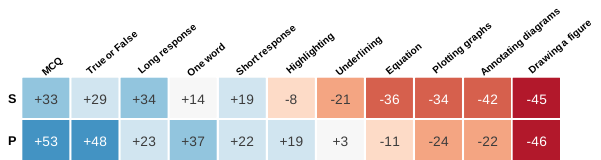
Figure 20. Mode preference by response type. Values indicate the percent reporting a preference for a response to be completed on a computer minus the percent reporting a preference for a response to be completed on paper. S: Students. P: Parents. MCQ: multiple choice questions, T or F: True or False questions.
The response pattern in Figure 20 is largely supported by students’ and parents’ responses to a different question asking them to rate the extent to which they (or their child) found various tasks as being easy or hard on a computer (Figure 21). Students rated plotting charts, typing mathematical equations and drawing geometric shapes as rather difficult to execute on screen, while scrolling, reading on screen and typing responses were perceived as easy. Parents on average rated the different tasks as easier than students did, and only ‘drawing geometric shapes’ was rated as difficult.
Interestingly, students typically found highlighting and underlining information easy do on computers (Figure 21). However, they reported a preference to carry out these tasks on paper (Figure 20), suggesting that although students may find those tasks relatively easy on a computer, they may still find them less practical than performing them on paper.
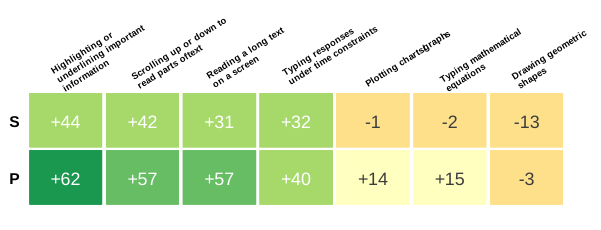
Figure 21. Level of easiness of a given task on computer. Values indicate the percent reporting they found the tasks easy on a computer minus the percent reporting they found the tasks hard on a computer.
Main takeaways
-
A mixture of views was reported by students and parents when asked about their appetite for on-screen assessment, despite a majority of both groups believing they would be prevalent in the future. Both groups preferred a mixed-mode approach where some assessments would be delivered on paper while others would be delivered on screen.
-
When forced to make a choice, students were evenly split between those who preferred the paper mode and those who preferred the on-screen mode.
-
Students and parents thought that computer marking was more acceptable for selected response questions than essay questions.
-
Students and parents thought that OSAs could be suitable for a range of GCSE and A level subjects but not all. Subjects that included performance-based assessments such as drama and dance were believed not to be well suited for OSA. Students were less confident than their parents about mathematics being assessed on screen.
-
Preference of assessment mode varied with the type of exam question. Both students and parents reported higher preferences for completing questions on screen except if responses involved highlighting or underlining text, inputting equations, plotting graphs, annotating diagrams or drawing figures. With the exception of highlighting and underlining text, students more frequently rated these tasks as difficult to do on a computer.
Potential benefits of on-screen assessments
Students were asked to rate their views on the usefulness of various potential features of OSAs. The 5 features perceived to be most useful were all related to word processing and editing. Students found it helpful to type responses rather than handwriting them. They also appreciated the ability to easily delete, copy or cut and paste text and figures. Additionally, they found the spell-check and built-in dictionary functions as helpful resources, if allowed in an exam.
In contrast, students found that the ‘zoom in or out’ function, the possibility to watch videos, the option to do their exams at a convenient location (if that were an option), and the ability to choose a device, were less useful. Most importantly, they did not find the features allowing them to produce graphs and diagrams on screen helpful. This aligns with their reported perceptions in earlier sections about the difficulty of doing maths exams on a computer and producing responses that require plotting graphs and drawing diagrams on screen.
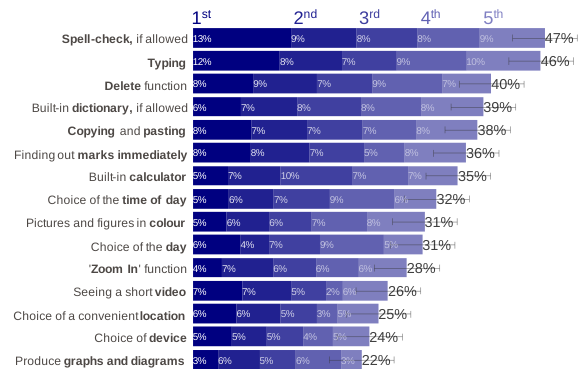
Figure 22. Students’ rating of the usefulness of features available on a computer.
Parents generally agreed with students and ranked the spell-check function and typing responses as the top 2 useful features of carrying out an assessment on a computer. They also included the ‘delete’ function among the top 5 most useful features. Similarly, they ranked the zoom function, the possible convenience of the location, and the production of diagrams or figures among the 5 least useful features.
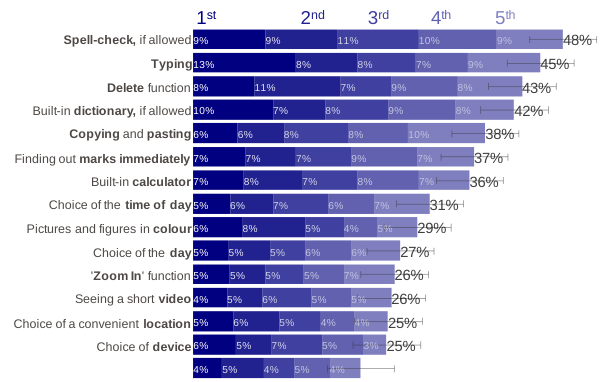
Figure 23. Parents’ rating of the usefulness of features available on a computer.
Main takeaways
-
Students and parents ranked the spell-check function, the built-in dictionary, and the delete function among the top 5 most useful features available when carrying out an assessment on a computer.
-
Students and parents ranked the zoom function, the convenience of the location and the production of diagrams or figures among the 5 least useful features.
Risks and concerns
Students and parents were surveyed about their perceptions of potential risks associated with a move of high-stakes exams in England (GCSEs and A levels) from pen-and-paper to computer based. They were asked about their concerns over technical failures, preparation, fairness, assessment security and susceptibility to malpractice. In some instances, they were asked to rate how concerned they would be about specific events happening.
Concerns over technical issues
Most students and parents were worried about potential technical failures. 80% of students and 85% of parents were concerned about the loss of students’ work if not properly saved, and 77% of students and 89% of parents would be concerned if the screen froze during an exam, preventing students from moving to other questions (Figure 24).
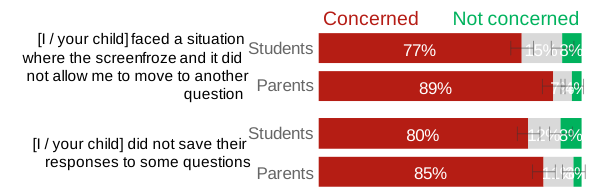
Figure 24. Students’ and parents’ rating of concerns over technical issues. Light grey indicates the percentage that responded ‘I don’t know’ or ‘Neither concerned nor unconcerned’.
Concerns over preparation
Over half of students (64%) and the large majority of parents (81%) reported being concerned if students did not have the opportunity to practise sitting exams on a computer. Moderate to high levels of concern were also expressed by students (60%) and parents (69%) over students not being able to predict what the exam would look like (Figure 25).
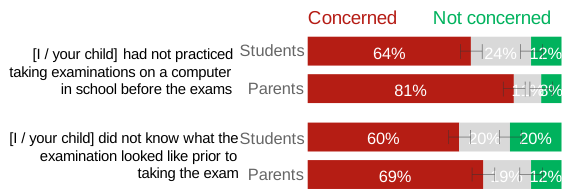
Figure 25. Students’ and parents’ rating of concerns over preparation for exams. Light grey indicates the percentage that responded ‘I don’t know’ or ‘Neither concerned nor unconcerned’.
Concerns over fairness
Both students and parents reported being concerned over the impact of device quality, on students’ experiences and outcomes. In particular, students and parents were concerned over the impact of computers’ processing speed (70% and 78% respectively) and the quality of screens (62% and 74% respectively) on students’ marks. Similarly, students (65%) and parents (76%) expressed their concern over the impact of the computer’s ‘age’ on the quality of students’ assessment experience.
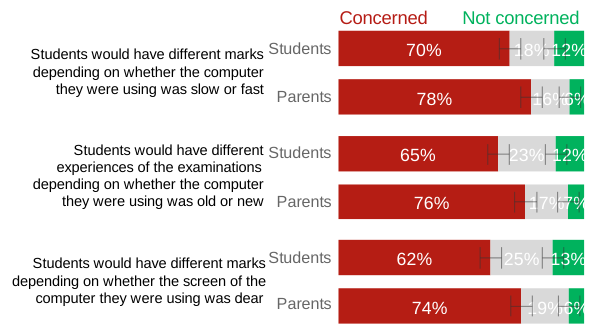
Figure 26. Students’ and parents’ rating of concerns over the implications for fairness. Light grey indicates the percentage that responded ‘I don’t know’ or ‘Neither concerned nor unconcerned’.
Concerns over assessment security and malpractice
Students and, to a larger degree, parents expressed high levels of concerns over assessment security and malpractice. Concerns over hacking were substantial, with 74% of students and 84% of parents being concerned over hackers stealing and destroying results, and 66% of students and 83% of parents being concerned over hackers leaking questions before the exams. Large concerns were expressed, by students and parents, over sharing exam material electronically via email or social media (68% students, 86% parents). They were also concerned over plagiarism (72% students, 86% parents) if students were able to copy material from other webpages while doing their exams without acknowledging the source and pretending the work was theirs.
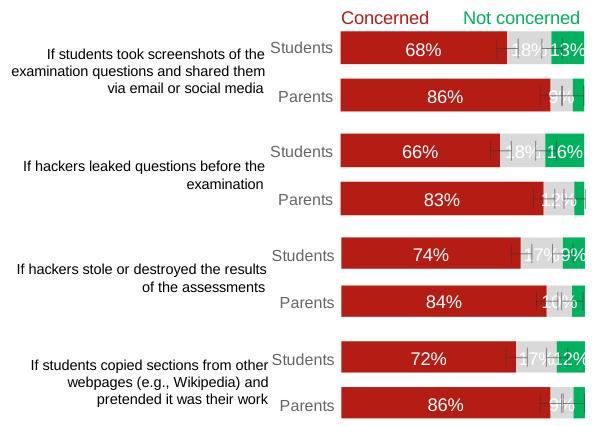
Figure 27. Students’ and parents’ rating of concerns over assessment security and malpractice. Light grey indicates the percentage that responded ‘I don’t know’ or ‘Neither concerned nor unconcerned’.
Not only were students and parents worried about assessment security and malpractice, they also doubted that all the risks in these areas could be effectively mitigated. Students and parents were particularly sceptical about the extent to which students could be prevented from sharing exam materials via email or social media (students: 67%; parents: 71%) or from plagiarising material from other webpages if they were doing their exams on a computer (students: 68%; parents: 68%).
The risk of hackers leaking exam materials prior to the exams was considered probable by over half of students and parents (61% and 62% respectively), while data theft and destruction was ranked as a likely event by a smaller proportion of students (52%) and parents (48%).
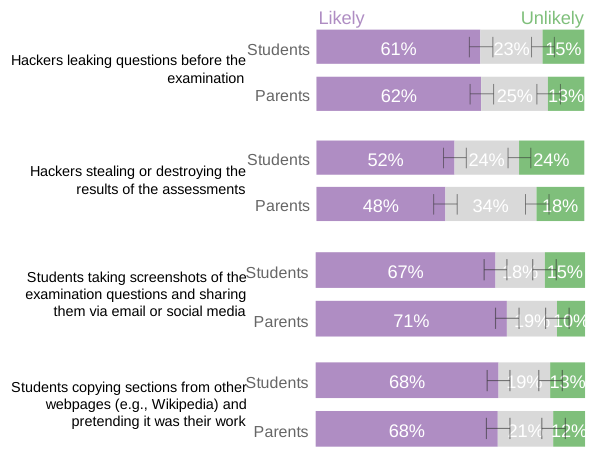
Figure 28. Students’ and parents’ rating of the likelihood of risks relating to assessment security and malpractice. Light grey indicates the percentage that responded ‘I don’t know’ or ‘Neither likely nor unlikely.
Concerns over home-based assessments
OSAs can, in principle, be taken from anywhere, including a student’s home. As mentioned previously, this is because it may be easier to ensure the security of an on-screen exam compared with a paper-based exam, it is also more feasible to carry out invigilation remotely. This question was added to the survey to see what students and parents thought about high-stakes exams being taken from home, as the flexibility of assessment location is considered as one of the possible benefits of OSAs. However, this option is not being considered by Ofqual, outside the context of access arrangements.
In previous questions, students and parents did not rank the flexibility of assessment location highly as a useful feature of computer-based assessments (Figures 22 and 23). The responses in Figure 29 are in line with this. Students and parents reported being worried about the security of assessments taken from home, with 63% of students and 85% of parents expressing concern if invigilators were not able to authenticate the identity of candidates taking the exam. In addition, 70% of students and 88% of parents were concerned if students were able to get help from another person while doing their exam at home.
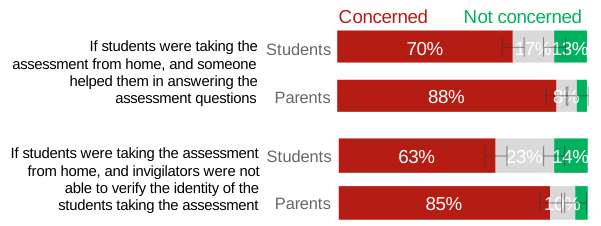
Figure 29. Students’ and parents’ rating of concerns over home-based assessments. Light grey indicates the percentage that responded ‘I don’t know’ or ‘Neither concerned nor unconcerned.
They also rated the likelihood of these events materialising as moderate to high, with 60% of students and 63% of parents believing that there is a genuine possibility for issues with candidate authentication to arise, and 68% of students and 71% parents believing that students getting help at home while doing their assessments is a likely event.
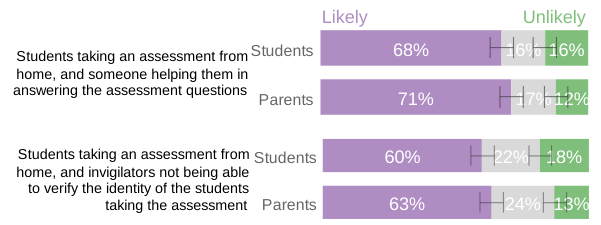
Figure 30. Students’ and parents’ rating of the likelihood of risks relating to home-based assessments. Light grey indicates the percentage that responded ‘I don’t know’ or ‘Neither likely nor unlikely.
Main takeaways
-
While students and parents have expressed interest in some GCSE and A level exams being taken on screen, they reported being concerned about various risks, including technical failures, the opportunity to practice taking exams on a computer, and fairness issues arising from the variation in device quality.
-
Students, and to a larger degree parents, expressed high levels of concern over assessment security and malpractice, including hacking threats, data theft and destruction, plagiarism, and students sharing exam materials during the exam by email or through social media.
-
Concerns over assessment security and malpractice were higher for home-based assessments, if they were to be allowed. However, the option of home-based assessments is not being considered by Ofqual, outside the context of access arrangements.
Conclusion
This report summarises the results of a survey administered by Ofqual through JL Partners to a representative sample of students and parents to better understand their perceptions of OSAs, including any concerns they may have around their potential deployment at a large scale in GCSEs and A levels in England.
Generally speaking, students have a positive attitude towards digital technology and are confident using digital devices. Indeed, for many, computers are the preferred mode for school-related work. Some students have also completed computer-based assessments, which were typically invigilated in real time by a person sitting in the same exam hall.
Most students have computers at home and in schools, but only a minority can use these devices without having to share them with others. This has serious implications for students’ preparation for and familiarisation with on-screen exams if opportunities to practice working on a computer are limited in schools and at home. Indeed, although most students use digital devices in the classroom, a significant minority of them have very limited, if any, exposure to them in a typical school week.
Most students and parents expect that some GCSE and A level exams will be delivered on computer in the next decade. However, they do not fully endorse them. While they recognise the potential opportunities for improving assessment, they believe some subjects, such as those involving inputting equations or carrying out performances, are not suitable to be assessed on computer. They also think that automated marking should only be conducted on selected response questions, while essays should continue to be marked by human markers.
Students and parents share various concerns relating to OSAs. They worry about technical failures, students’ readiness to use computers for exam purposes as well as fairness due to the variation in the quality of devices that students would be using. Significant concerns over assessment security and malpractice were expressed, especially by parents.
The findings of this survey are consistent with the research that awarding organisations have already carried out into stakeholders’ perceptions of OSAs (see earlier footnotes). The importance of students’ preparation for OSA and ensuring suitable infrastructure and equal provision of technology across schools and colleges will be key to reassuring students and parents if there is to be any widespread adoption of OSAs in high-stakes exams.
Limitations
While efforts have been made to recruit a diverse group of students and parents and ensure high representativeness of the sample, it is important to note a key caveat that limits the generalisability of the results to the entire population. The online nature of the survey meant that participants had access to a digital device and internet connection. Consequently, the voices of those who cannot access digital devices or internet connections are likely to be under-represented.
References
Alrababah, S. A., & Molnár, G. (2021). The evolution of technology-based assessment: past, present, and future. International Journal of Learning Technology, 16(2), 134–157.
Facer, K. (2012). Taking the 21st century seriously: young people, education and socio-technical futures. Oxford Review of Education, 38 (1), pp. 97-113.
Ofqual (2020). Online and on-screen assessment in high stakes, sessional qualifications. Retrieved 3/3/2021 from: Online and on-screen assessment in high stakes, sessional qualifications - GOV.UK (www.gov.uk)
Timmis, S., Broadfoot, P., Sutherland, R., & Oldfield, A. (2016). Rethinking assessment in a digital age: Opportunities, challenges and risks. British Educational Research Journal, 42(3), 454-476.
-
Matthews, E. (2022). On-screen assessment: What does the public think? AQA. Retrieved from: On-screen assessment: What does the public think? (aqa.org.uk) ↩
-
Ewington, T. (2022). On-screen exams: what school leaders, teachers and students think. AQA. Retrieved from: On-screen exams: what school leaders, teachers and students think (aqa.org.uk) ↩
-
Pearson (2022). Spotlight on onscreen assessment. Pearson. Retrieved from: Spotlight-OSA-FINAL.pdf (pearson.com) ↩
-
Social Grade has 6 possible classifications (A, B, C1, C2, D and E). Census data uses a combined, 4-way classification:
• AB: Higher and intermediate managerial, administrative and professional occupations
• C1: Supervisory, clerical, and junior managerial, administrative and professional occupations
• C2: Skilled manual occupations
• DE: Semi-skilled and unskilled manual occupations; unemployed and lowest grade occupations
Approximated Social Grade data - Office for National Statistics (ons.gov.uk) ↩