Mpox outbreak: epidemiological overview, 10 September 2026
Updated 8 October 2026

© Crown copyright 2026
This publication is licensed under the terms of the Open Government Licence v3.0 except where otherwise stated. To view this licence, visit nationalarchives.gov.uk/doc/open-government-licence/version/3 or write to the Information Policy Team, The National Archives, Kew, London TW9 4DU, or email: psi@nationalarchives.gov.uk.
Where we have identified any third party copyright information you will need to obtain permission from the copyright holders concerned.
This publication is available at https://www.gov.uk/government/publications/monkeypox-outbreak-epidemiological-overview/mpox-outbreak-epidemiological-overview-10-september-2026
This epidemiological overview provides an update to the number of mpox cases by clade in England, Northern Ireland, Scotland and Wales.
Reports published prior to September 2026 presented mpox cases for clade Ib and clade IIb separately. In these previous reports, cases with unconfirmed clade type were combined with clade IIb cases for reporting purposes. Given the recent shift in the epidemiology of clade Ib mpox in the UK to become both similar to clade IIb, and increasingly common, presentation of mpox surveillance data from August 2026 will present a combined picture of confirmed clade Ib, confirmed clade IIb, recombinant clades, and clade not yet known.
The epidemiological situation of mpox up to 31 August 2026
Mpox is a zoonotic infection, caused by the monkeypox virus, that historically occurred primarily in West and Central Africa. Prior to 2022, cases diagnosed in the UK had been either imported from countries in West and Central Africa or in contacts with epidemiological links to imported cases. Between 2018 and 2021, there had been 7 cases of mpox in the UK. Of these, 4 were imported, 2 were in household contacts, and 1 was in a health care worker involved in the care of an imported case.
Detection of the first cases of mpox clade IIb without links to endemic countries, were confirmed in England from 6 May 2022. These were part of a global outbreak during 2022, with the majority of cases among GBMSM without documented history of travel to the African region. Case numbers have since reduced, however mpox clade IIb cases continue to occur regularly at a low level both through importation and limited onward transmission within GBMSM networks in the UK.
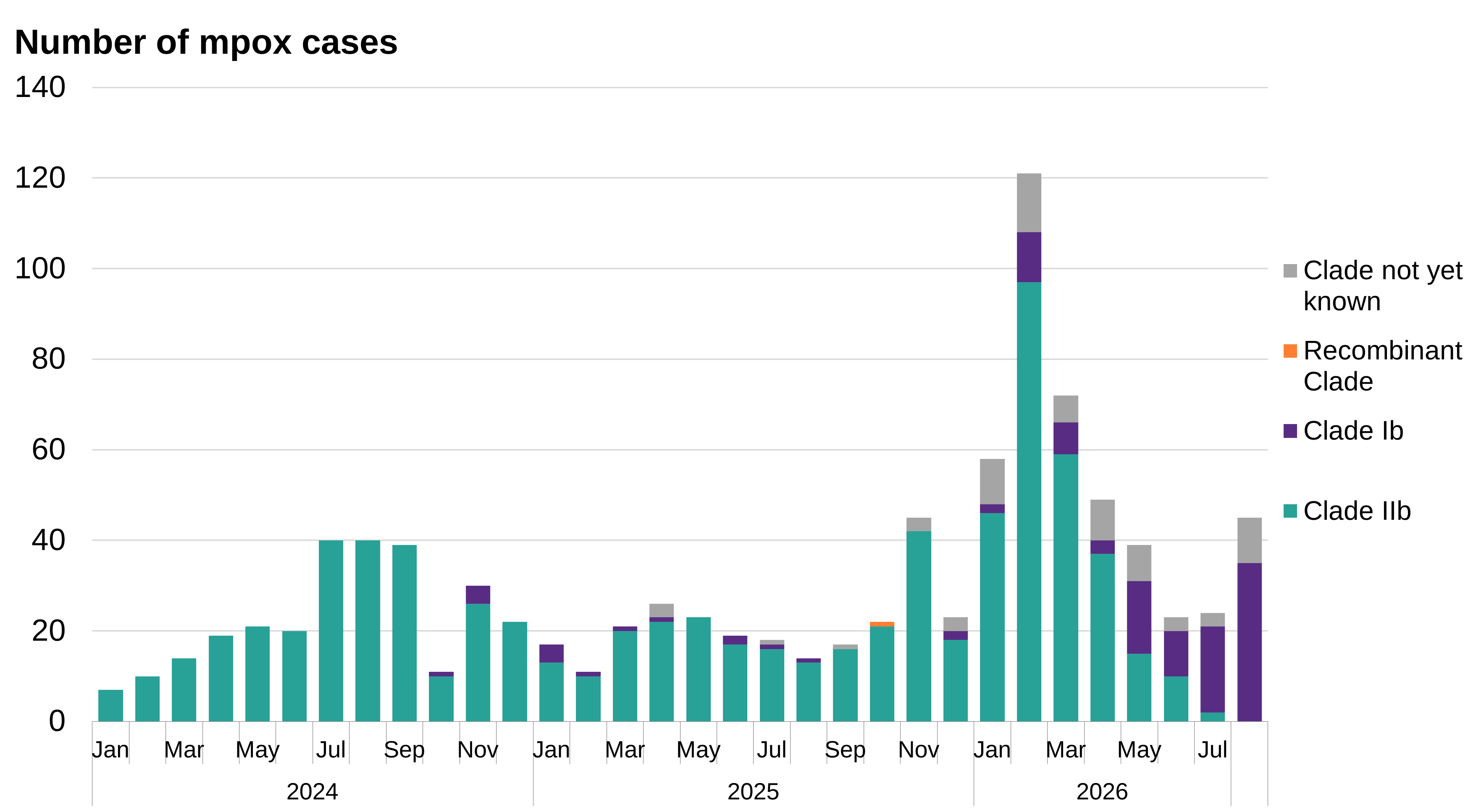
The first imported case of mpox clade Ib was confirmed in the UK in October 2024. During 2024 to 2025, most cases of clade Ib mpox reported in the UK were among men identifying as heterosexual who were linked directly or indirectly to travel to the African region. In October 2025, community transmission through GBMSM networks in Europe and North America was reported and from March 2025, clade Ib mpox in the UK includes both community and imported cases primarily among GBMSM. Cases of clade Ib mpox in the UK have increased into 2026, with the number of clade Ib cases exceeding that of clade IIb cases in July 2026.
In October 2025, a new recombinant mpox virus was identified in England in an individual who had recently travelled to Asia. Genomic sequencing showed that the mpox genome contained elements of clade Ib and IIb mpox. This case has previously been reported in the mpox clade Ib figures.
Further background information on mpox clade Ib and clade IIb is available.
Table 1. Number of confirmed mpox cases by clade and UK nation of residence, 6 May 2022 to 31 August 2026 [note 1]
| UK nation | Clade IIb 2022 [note 2] | Clade Ib 2023 to 2026 |
Clade IIb 2023 to 2026 | Recombinant clade 2023 to 2026 |
Clade not yet known 2023 to 2026 | Total (2022 to 2026) |
|---|---|---|---|---|---|---|
| England | 3,553 | 121 | 902 | 1 | 73 | 4,650 |
| Northern Ireland | 34 | 30 | 10 | 0 | 0 | 74 |
| Scotland | 97 | 11 | 36 | 0 | 2 | 146 |
| Wales | 48 | 6 | 21 | 0 | 1 | 76 |
| Total | 3,732 | 168 | 969 | 1 | 76 | 4,946 |
Note 1: based on data extracted on 7 September 2026.
Note 2: figures for 2022 start from 6 May 2022.
Figure 1 shows the monthly number of mpox cases by clade over the period 1 January 2024 to 31 August 2026.
Figure 1. Monthly number of confirmed mpox cases by clade in England, 1 January 2024 to 31 August 2026
During the period, 1 January 2023 to 31 August 2026 there have been a total of 1,214 cases of mpox (all clades) reported in the UK. Of these:
- 1,097 were in England (555 cases were presumed to have acquired mpox in the UK, 355 were acquired outside the UK and 187 are awaiting classification)
- 40 were in Northern Ireland (5 were presumed to have acquired mpox in the UK, 3 were imported cases acquired outside the UK and 32 are awaiting classification)
- 49 were in Scotland (14 were presumed to have acquired mpox in the UK, 21 were imported cases acquired outside the UK and 14 are awaiting classification)
- 28 were in Wales (8 were presumed to have acquired mpox in the UK, 9 were imported cases acquired outside the UK and 11 are awaiting classification)
Table 2 presents the number of confirmed and highly probable mpox cases by UK nation of residence and whether considered imported or community acquired.
Table 2. Number of confirmed mpox (all clades combined) by UK nation of residence and route of acquisition, 6 May 2022 to 31 August 2026 [note 3]
| UK nation | Cases reported in 2022 [note 4] | Cases presumed acquired in the UK in 2023 to 2026 | Cases presumed acquired outside the UK (imported) in 2023 to 2026 | Cases awaiting classification in 2023 to 2026 | Total (2022 to 2026) |
|---|---|---|---|---|---|
| England | 3,553 | 555 | 355 | 187 | 4,650 |
| Northern Ireland | 34 | 5 | 3 | 32 | 74 |
| Scotland | 97 | 14 | 21 | 14 | 146 |
| Wales | 48 | 8 | 9 | 11 | 76 |
| Total | 3,732 | 582 | 388 | 244 | 4,946 |
Note 3: based on data extracted on 7 September 2026.
Note 4: figures for 2022 start from 6 May 2022 and combine UK acquired and imported cases.
Despite continuing and regular imports of mpox, it is likely case numbers during 2023 to 2026 remain substantially lower than that seen during the 2022 outbreak as a result of high levels of vaccine protection suppressing transmission.
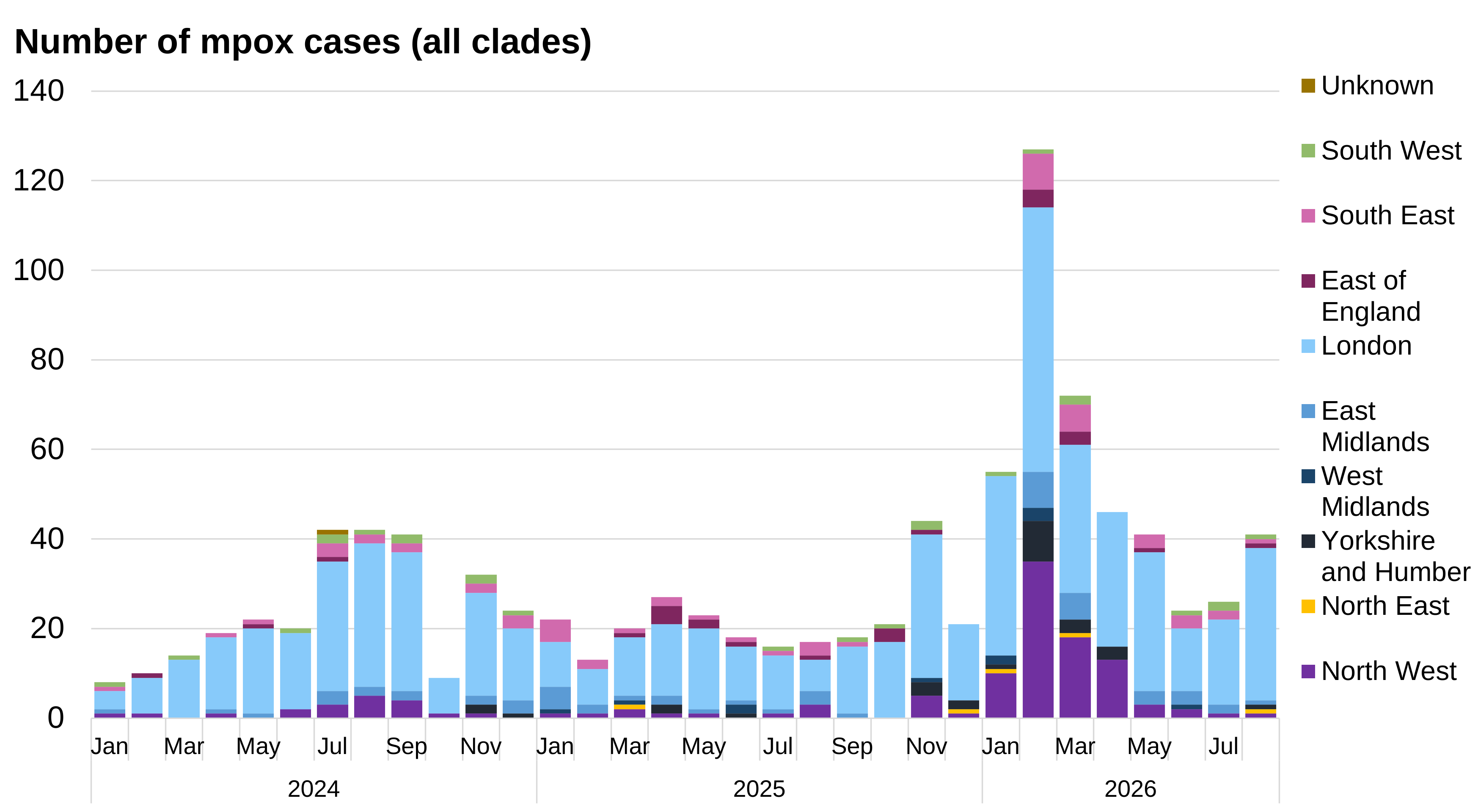
Figure 2 shows the monthly number of mpox cases (all clades combined) in England during the period 2024 to 2026, by region of residence. Throughout the period most cases were resident in London, however in early 2026 there was an increase in cases in the north of England.
Figure 2. Monthly number of confirmed mpox cases by region of residence in England, 01 January 2024 to 31 August 2026
Mpox vaccination doses administered up to 31 March 2026
In response to the global outbreak, reactive pre-exposure mpox vaccination was introduced in the UK from June 2022. This was offered to GBMSM and healthcare workers at higher risk of mpox exposure. Mpox vaccination (a 2-dose course) is expected to protect against all currently circulating mpox clades.
The reactive vaccination offer ended nationally in summer 2023, though it continued to be offered in London and Greater Manchester in response to ongoing local transmission and identification of mpox case clusters. As of August 2025, a routine national mpox vaccination programme was in place for GBMSM at higher risk of exposure attending specialist sexual health services (SHSs) in England following advice from the Joint Committee on Vaccination and Immunisation (JCVI).
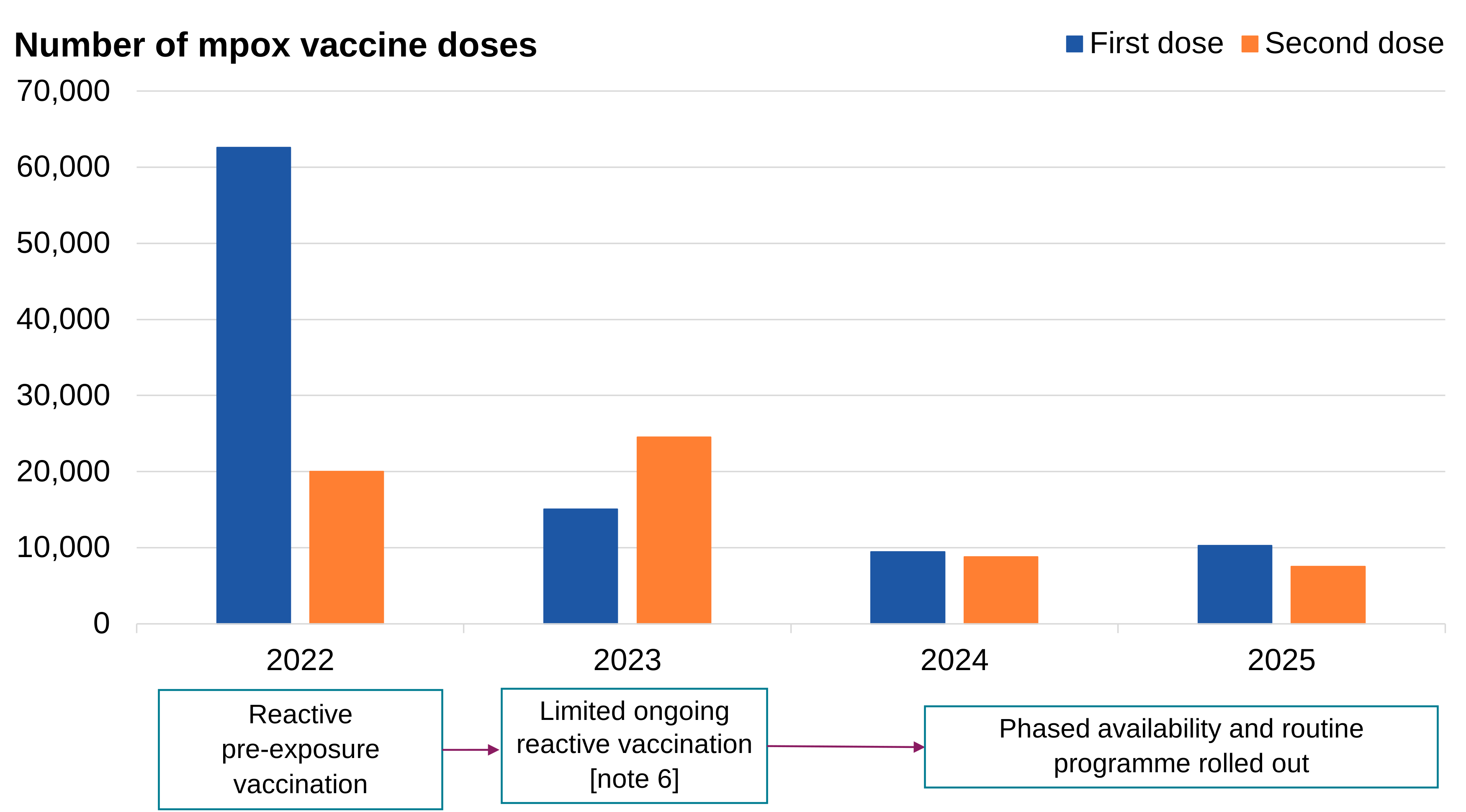
Figure 3 shows the number of mpox vaccination first and second doses administered by year from the start of the outbreak in June 2022 to the end of December 2025. Most doses were administered during the outbreak in 2022 to the end of 2023.
Figure 3. Number of mpox vaccination doses administered to GBMSM in England by year from June 2022 to December 2025 [note 5]
Note 5: data extracted from NHS England Federated Data Platform for the June 2022 to March 2024 period and from GUMCAD sexually transmitted infection (STI) Surveillance System for the April 2024 to December 2025 period.
Note 6: reactive vaccination offer ended nationally in summer 2023, though it continued to be offered in London and Greater Manchester.
Table 3 shows the number of mpox vaccination first and second doses administered by region from June 2022 to the end of March 2026. As of 31 March 2026, a total of 101,210 first doses and 63,915 second doses of mpox vaccine were administered to GBMSM in England. Most of these doses were administered in London.
Table 3. Number of mpox vaccination doses administered to GBMSM in England, by region of residence, from June 2022 to 31 March 2026 [note 7]
| Region [note 8] | First dose | Second dose |
|---|---|---|
| North East and Yorkshire and the Humber | 6,235 | 3,624 |
| North West | 9,236 | 4,796 |
| East Midlands and West Midlands | 4,998 | 2,600 |
| East of England | 2,880 | 1,547 |
| London | 63,624 | 42,902 |
| South East | 9,437 | 5,696 |
| South West | 4,800 | 2,750 |
| England | 101,210 | 63,915 |
Note 7: data extracted from NHS England Federated Data Platform for the June 2022 to March 2024 period and from GUMCAD STI Surveillance System for the April 2024 to March 2026 period.
Note 8: data extracted from the NHS England Federated Data Platform cannot be stratified by the 9 UKHSA regions therefore vaccination data is presented by NHS region.
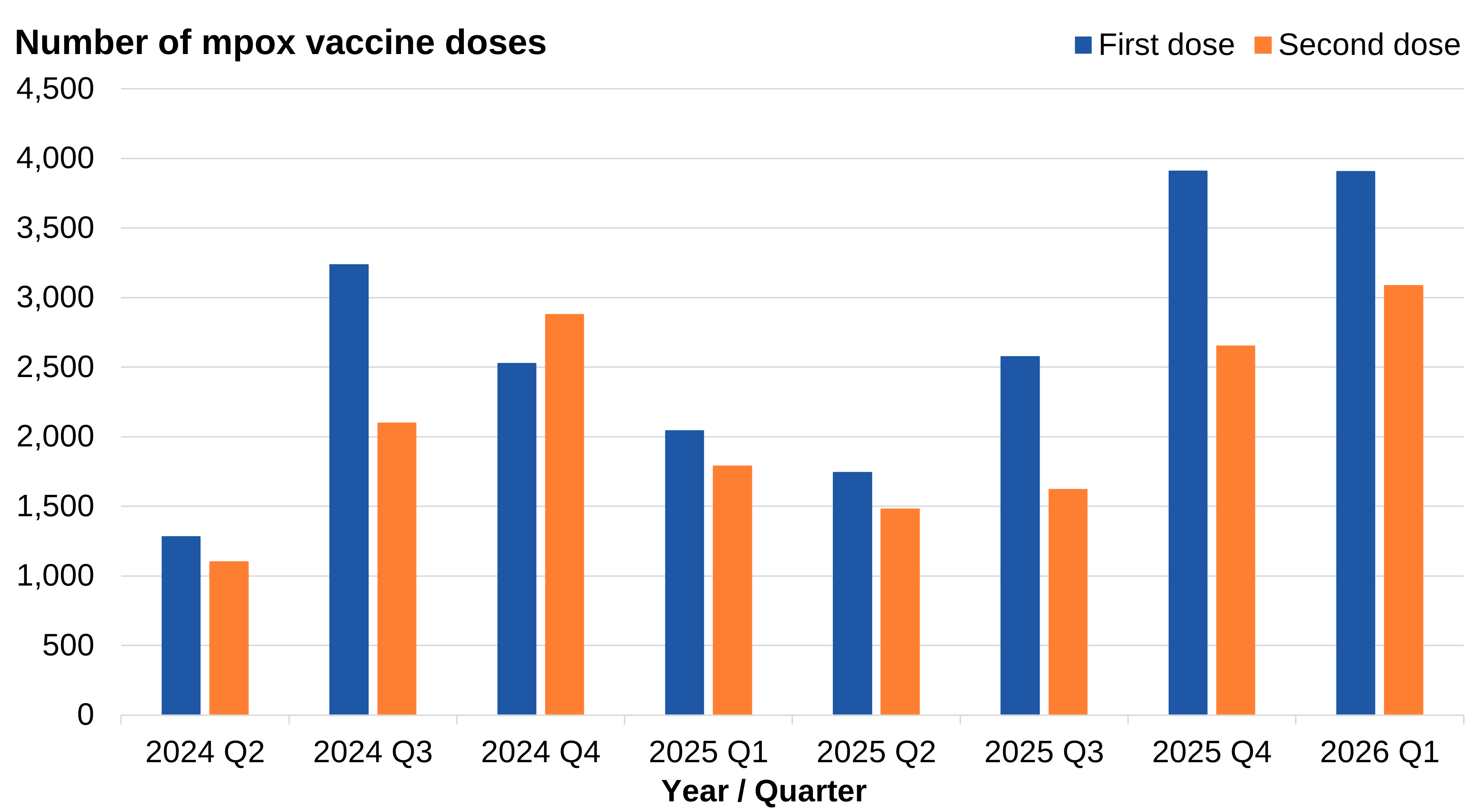
Figure 4 shows the number of mpox vaccination dose 1 and dose 2 administered in GBMSM attending SHSs between April 2024 and the end of March 2026 by quarter in England.
Figure 4. Number of mpox vaccination doses in GBMSM by quarter and year in England, April 2024 to March 2026 (GUMCAD data only)
Data sources
Mpox surveillance data in England is based on mpox and orthopox virus test results from the Rare and Imported Pathogens Laboratory (RIPL), which is the UK Health Security Agency (UKHSA) mpox reference laboratory, and other UK laboratories with mpox and orthopox testing.
Suspected mpox samples that are positive using a mpox polymerase chain reaction (PCR) test are classified as confirmed cases. Samples which are positive using an orthopox PCR test are classified as highly probable mpox clade IIb cases. Orthopox is the group of viruses which includes mpox. Counts for mpox clade IIb cases presented in this report combine both confirmed and highly probable cases, this should be taken into consideration when interpreting results, as counts may be an overestimate, however impact is likely minimal.
Laboratory data for mpox cases in England are extracted from UKHSA’s Second Generation Surveillance System (SGSS). This data is cleaned and deduplicated before being enhanced through linkage to data from health protection teams reported through UKHSA’s case incident management system.
Counts of confirmed cases in Wales, Northern Ireland, and Scotland are submitted to UKHSA by Public Health Wales, Public Health Agency Northern Ireland, and Public Health Scotland respectively.
Data for mpox vaccination is from 2 sources. Data was extracted from NHS England Federated Data Platform for the June 2022 to March 2024 period and from GUMCAD STI Surveillance System for the April 2024 to March 2026. Vaccination doses reported to GUMCAD were deduplicated by attendance.
Information about this publication
These figures are used for official reporting of mpox-confirmed case counts in the UK.
England counts may differ from those published in the Notifications of infectious diseases (NOIDs) causative agents weekly report. This is due to differences in timings of when the data is compiled, and differences in processing of duplicate data (for example, if a person has tested more than once but insufficient information is provided to identify them).
As mpox continues to be a notifiable infection, please refer to UKHSA’s NOIDS reports for weekly updates (but not cumulative totals) on laboratory-notified mpox cases in England.
While data cleaning is carried out routinely, corrections can be applied between reports, such as delayed reporting resulting in numbers changing, updates to patient information and the removal of quality assurance samples from laboratory surveillance systems.
Where data is presented by month, this is based on specimen date.