South London groundwater situation: March 2026
Updated 1 April 2026
Applies to England

© Crown copyright 2026
This publication is licensed under the terms of the Open Government Licence v3.0 except where otherwise stated. To view this licence, visit nationalarchives.gov.uk/doc/open-government-licence/version/3 or write to the Information Policy Team, The National Archives, Kew, London TW9 4DU, or email: psi@nationalarchives.gov.uk.
Where we have identified any third party copyright information you will need to obtain permission from the copyright holders concerned.
This publication is available at https://www.gov.uk/government/publications/mole-and-south-london-groundwater-situation/south-london-groundwater-situation
Current situation
Groundwater levels started to increase sharply for a brief time at the end of February 2026, following rainfall received in South London. However, due to the lack of significant rainfall since the end of February, groundwater levels are now falling.
Groundwater levels are now normal for this time of year in South London.
Short term forecast
Weather forecasts for the next 2 weeks indicate that there will be periods of fine weather with light intermittent rainfall and scattered showers at times, however daily rainfall totals are not expected to exceed a few millimetres. As a result, groundwater levels are expected to continue to fall.
Longer term forecast
Weather conditions 2 to 4 weeks from now are predicted to remain relatively dry, with only light and patchy rainfall currently forecast. If rainfall over the next few weeks remains as low as expected, groundwater levels would be expected to fall.
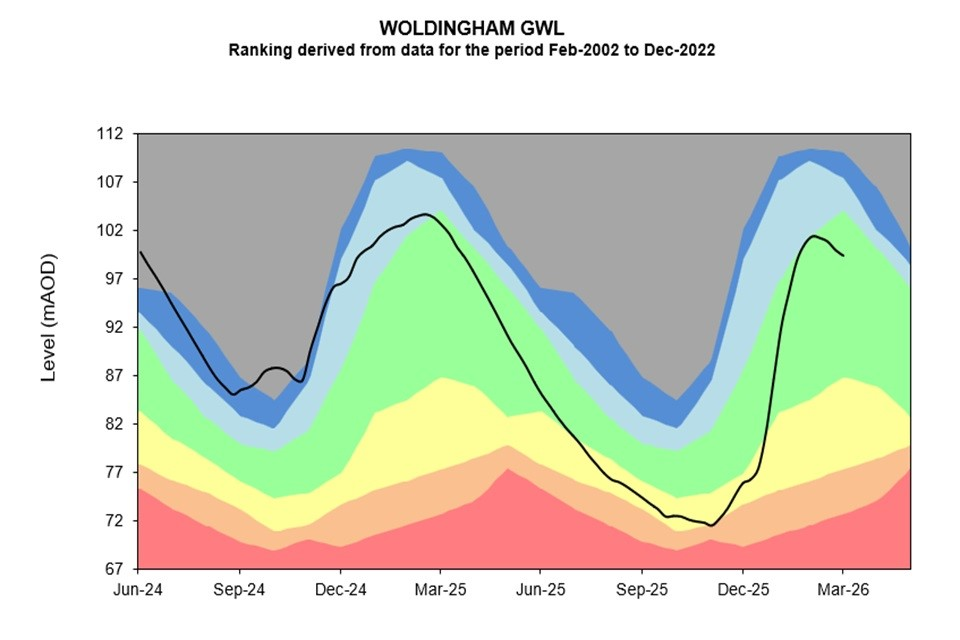
Graph showing the trend of groundwater levels since June 2024 at the Woldingham Observation Borehole in South London overlying a background of colour banding indicating relatively high and low conditions. Levels are normal for this time of year as of 31 March 2026.
What the Environment Agency is doing
We will continue to monitor groundwater levels across South London and provide situation report updates, if the outlook changes. If there is no significant change to the current outlook, the next report will be published during the next recharge season (October to March), when groundwater rises again.
We will take evidence-based decisions and if conditions deteriorate, we will notify our partners (including lead local flood authorities and water companies). We will also actively engage with our partners to help them prepare for incident response.
Actions and advice
There is practical advice on what to do before, during and after groundwater flooding, and further guidance about groundwater flooding, how it might affect you and what to do
Next update
We will continue to monitor groundwater levels closely. If there is no significant change to the current outlook, the next report will be published during the next recharge season (October to March), when groundwater rises again.
Further information
You can view:
Contacts
If you have any questions, email enquiries@environment-agency.gov.uk.
The Environment Agency offers free Groundwater Flood Alerts. You can:
-
call Floodline on 0345 988 1188
-
follow @EnvAgencySE and #floodaware on X/Twitter for the latest flood outlook