Migration Advisory Committee (MAC) annual report, 2025 (accessible)
Published 17 December 2025

© Crown copyright 2025
This publication is licensed under the terms of the Open Government Licence v3.0 except where otherwise stated. To view this licence, visit nationalarchives.gov.uk/doc/open-government-licence/version/3 or write to the Information Policy Team, The National Archives, Kew, London TW9 4DU, or email: psi@nationalarchives.gov.uk.
Where we have identified any third party copyright information you will need to obtain permission from the copyright holders concerned.
This publication is available at https://www.gov.uk/government/publications/migration-advisory-committee-annual-report-2025/migration-advisory-committee-mac-annual-report-2025-accessible
Foreword
The Framework Document that covers our governance requires us to produce an annual report to inform Parliament and the public of the work we have done and our use of resources. It also suggests that the report contain comment on, and recommendations relating to, any aspect of the immigration system.
We completed two major reviews for the government during the first half of 2025. The first provided a review of the use of the immigration system in the Engineering and IT sectors. The second covered the financial requirements for Family visas. We are also today publishing a further review that the government commissioned on salary thresholds for work routes.
The MAC have also been actively engaged in furthering the broad agenda of the government to more closely link immigration policy with skills policy and the Industrial Strategy. Through the Labour Market Evidence Group, which the MAC currently chairs, we are working collaboratively with Skills England (and equivalents from the Devolved Nations), the Industrial Strategy Advisory Council, and the Department for Work and Pensions to deliver this. A key element of this work is the review of the Temporary Shortage List (TSL) that will provide time-limited access to the immigration system for some mid-skill level occupations that are crucial to the Industrial Strategy or building critical infrastructure. We provided an interim report to the Home Secretary in October and will make recommendations on which occupations should be included on the TSL in July 2026.
We have also focused this year on the development of modelling tools to enable us to assess both the short-and long-run impact of visa routes on fiscal outcomes. Whether migrants are positive or negative for the fiscal balance is one important component in evaluating the costs and benefits of particular routes. We published a paper earlier this month that provided a detailed explanation of our approach, and a full set of estimates for the Skilled Worker route. We provide a further set of estimates for partners on the Family visa in the first chapter of this report.
The next two chapters of this report cover topics highlighted in the Immigration White Paper, Restoring Control over the Immigration System that the government published in May. The first looks at the Overseas Domestic Worker (ODW) visa, which the White Paper highlighted as a concern in terms of migrant exploitation. The second examines evidence on English language proficiency and the potential benefits of such proficiency for economic outcomes and Integration. The government have recently legislated to increase the English language requirements across a range of visa routes.
The government have supported this extensive work programme by strengthening the MAC at both Committee and secretariat levels, delivering on their Manifesto commitment. From the start of this year, the role of Chair has become a full-time position, and a new role of Deputy Chair has also been put in place.
We are again indebted to stakeholders who have taken the time during the year to assist us with our work, both in response to formal commissions and in ongoing engagement, and we have also continued our active engagement with the Devolved Governments. Finally, the Committee are grateful to the excellent work that the secretariat has done during the year.
We look forward in the coming year to working with the government to further deliver the priorities outlined in the White Paper and to continue to provide independent evidence-based advice.
Prof. Brian Bell (Chair)
Dr. Madeleine Sumption MBE (Deputy Chair)
Prof. Dina Kiwan
Prof. Sergi Pardos-Prado
Prof. Jo Swaffield
Chapter 1: Fiscal analysis of the Family visa
Summary
-
We model the lifetime fiscal impact of the Partner route of the Family visa, building upon our previous fiscal analysis of the Skilled Worker (SW) visa.
-
Under the current immigration rules, we estimate that the 2022/23 cohort of successful applicants to the Partner route, which consists of the partners of British citizens and settled residents, will incur a net lifetime fiscal deficit of -£5.6bn in present value terms – an average of -£109,000 per applicant.
-
During their first two decades in the UK, the cohort make an annual positive net fiscal contribution. After they obtain Indefinite Leave to Remain (ILR), they become entitled to benefits and no longer pay visa fees or the Immigration Health Surcharge, which reduces this positive contribution.
-
This, combined with a decline in their employment rate and higher public spending as they age, causes the cohort to incur an annual net fiscal deficit as they remain in the UK. Rising mortality rates and the effect of adjusting future fiscal impacts to compute their present value (‘discounting’) cause this deficit to fall in size in later years.
-
We find this result unsurprising as the Partner route was not established for economic reasons and is not contingent on one’s employment status. Employment status and earnings are the primary drivers of their fiscal impact over the lifetime.
Introduction
In September 2024, the former Home Secretary commissioned the MAC to review the Minimum Income Requirement (MIR) of the Family visa. Citing analysis of low-wage migrants by the Office for Budget Responsibility (OBR), we surmised in our subsequent report that “applicants on the Family route are likely to be fiscally negative over their lifetime”. We now confirm this by applying our in-house fiscal model – initially developed for the SW visa – that we published earlier this month in our Fiscal Impact of Immigration report. The fiscal model consists of static and dynamic versions. The static model estimates the fiscal impact of an applicant in their year of arrival, whereas the dynamic model extends this to estimate their lifetime fiscal impact. We focus on the cohort of applicants to the Partner route of the Family visa who entered the UK during the fiscal year of 2022/23. Note that this is distinct from the recently suspended Refugee Family Reunion route, which is not considered in this analysis.
We find that the 2022/23 Partner cohort has a net negative lifetime fiscal impact. In her commission of the Family visa financial requirements review, the Home Secretary stated that the MIR is intended to “maintain the economic wellbeing of the UK whilst respecting family life”. The MAC has previously emphasised that the fiscal impact of a migrant is an important measure of their effect on economic wellbeing, although it is by no means the only one.
Context
Table 1.1 reports the number of in country and out of country applications made on the Partner route between 2018 and 2024. Prior to 2020, around 40,000 out of country visas were issued per annum. By 2023 and 2024, this number had risen to approximately 55,000. There are several possible explanations for this. First, from 2012 to March 2024, the MIR fell in real terms due to inflation - with a particularly large drop following the COVID-19 pandemic. This may have made the sponsorship requirements more accessible.
Second, there was an increase in demand from EU citizens following the end of Freedom of Movement (though they only account for around 5% of Partner visas). Finally, the MIR increase to £29,000 in April 2024 led to a spike of applications towards the end of 2023, presumably as applicants brought forward their applications to take advantage of the lower £18,600 threshold.
Table 1.1 Number of Visas Issued on the Partner Route
| Year | 2018 | 2019 | 2020 | 2021 | 2022 | 2023 | 2024 |
|---|---|---|---|---|---|---|---|
| Out of country | 40,000 | 39,700 | 27,900 | 35,700 | 45,300 | 54,200 | 54,400 |
| In country | 7,500 | 7,800 | 9,400 | 8,000 | 7,000 | 9,800 | 12,700 |
| Total | 47,500 | 47,500 | 37,300 | 43,700 | 52,300 | 64,000 | 67,100 |
Sources: Entry clearance visa applications and outcomes detailed datasets, year ending September 2025 (out of country visas); Home Office Management Information (in country visas). Note: Year refers to the calendar year, not fiscal year.
Static Fiscal Analysis
The static fiscal model estimates the fiscal impact of the financial year 2022/23 Partner applicant cohort in their arrival year. Our data set consists of 51,000 out of country applicants who have been matched with HMRC data. As noted previously, our analysis builds upon the static model we developed to estimate the fiscal impact of the SW route. The methodology underpinning this model is explained in our Fiscal Impact paper mentioned above. We highlight where we have deviated from this methodology in the process of adapting it for the Family route.
Expenditure
We follow the OBR in focusing on primary government revenue and expenditure in this model: excluding debt interest allows for a more natural interpretation of the results, and the OBR forecast that the primary deficit (primary revenue less primary expenditure) will be roughly zero over the current parliament.
As shown in Figure 1.1, we estimate that the average Partner applicant is allocated £9,700 in primary government expenditure.
Figure 1.1

Source: MAC internal fiscal modelling.
This is a similar allocation to adult dependants on the SW route (£9,400).[footnote 1] This is unsurprising because the two groups share several characteristics which distinguish them from UK resident adults. For example, they are ineligible for the State Pension (as they have made no NI contributions at this point) and are subject to the immigration rule of “No Recourse to Public Funds” (NRPF), which prevents them from accessing most forms of welfare until they obtain ILR after at least five years of stay. The expenditure allocated towards working age UK residents is therefore higher: £10,000 for those in employment, and £16,500 for those who are not. In other words, Partner applicants and SW adult dependants can contribute considerably less through taxation than UK residents and still be more fiscally positive.
To allocate health and adult social care expenditure, we use OBR estimates of how this spending is apportioned by age (as well as gender for health). We estimate that Partner applicants account for £2,300 of expenditure in this category. This is lower than for UK resident adults (by £1,900) and can be attributed to the younger age distribution of the Partner cohort relative to the UK population (see Figure 1.2) at the time of their visa grant – the median age of the UK population was 41 in mid-2022, whereas the median age of the Partner cohort was 30. Further details on the allocation of public spending to migrants is contained in our Fiscal Impact report.
Figure 1.2. Age Distribution of the 2022/23 Partner Cohort at Visa Grant

We also assume that additions to the population do not dilute the public capital stock. The public (general government plus public non-financial corporations) net capital stock was valued at £996bn in 2022 – equivalent to £14,733 per person. We therefore allocate an additional cost to migrants equal to the annual cost of an additional £14,733 of public sector borrowing over a 20-year period (with capital repayment) that would be required to maintain the same level of the net public capital stock per person. We use the average gilt yield in 2022/23 of 3.13%, giving an annual cost of £992.
Visa Fees
Partner applicants are required to pay two fees over the lifespan of their visa: the Immigration Health Surcharge (IHS), which is paid for each year until they acquire ILR, and the upfront cost of the visa application. We have converted these to an annualised figure (in other words, spread out across the duration of the visa) which are presented in Table 1.2. Note that these figures only include fees paid as part of the applicant’s initial out of country visa application and that these have been raised since 2022/23. We do not consider here the fees paid as part of subsequent in country visa extensions – these are however accounted for in the dynamic model.
Table 1.2 Annualised Visa Fees Revenue, 2022/23
| Fee | Amount |
|---|---|
| Application Fee | £559 |
| Immigration Heath Surcharge | £624 |
| Total (Annualised) | £1,183 |
Source: MAC internal fiscal modelling.
Tax Receipts
Most of the Partner applicant’s fiscal contribution is comprised of tax receipts rather than visa fees. We present our estimates for these in Figure 1.3. We estimate that the average Partner applicant contributed £8,600 via tax receipts in their arrival year. This was the second lowest contribution out of the comparator groups, with only non-working UK residents of working age contributing a lower amount (£6,500).
Figure 1.3. Estimated Tax Contributions, 2022/23
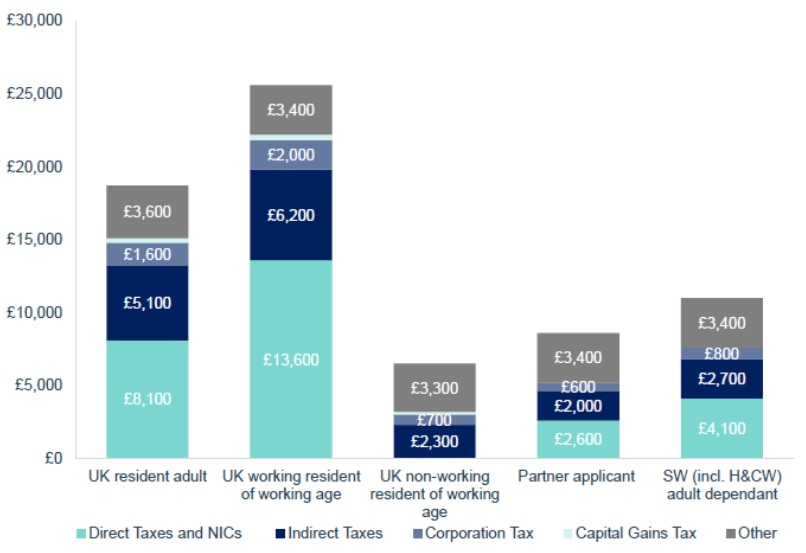
The differences between the tax receipts of each group are driven primarily by direct taxes and, to a lesser extent, indirect taxes. Both are determined by the level of income that the average individual receives, which in turn depends on their likelihood of being in employment and – if employed – their earnings. We consider an applicant to be employed in their arrival year if HMRC data matched with Home Office records indicates that they received income through PAYE. This method yields a slight underestimate for the employment rate in this year as it excludes self-employment[footnote 2], although the dynamic model adjusts for the likely probability of self-employment in future years.
Using this measure, the employment rate of this Partner cohort was 49%. Their mean salaries were £21,000 and their median salaries were £20,000. By contrast, the median salary for UK adults was £28,000. Whilst adult dependants on the SW routes had a lower employment rate of 44%, their mean salary was higher at £26,100. The lower direct (£2,600) and indirect tax (£2,000) contributions of the Partner cohort are therefore unsurprising. In the longer term, we may expect this to change as the cohort progresses through the labour market; this is again considered in the dynamic model.
Two factors may explain the relatively low employment rate of the cohort. First, the Partner route is not an economic route, and employment is not a condition of the visa. Second, a Partner applicant will not have to work to the extent that they are adequately supported by their partner’s income. The MIR is intended to ensure that the sponsoring partner earns enough to provide such support. Nonetheless, the employment rate of the cohort is expected to increase during the first few years after arrival as people settle in. We again account for this in the dynamic model.
The allocation of other taxes and revenues follows that outlined in the Fiscal Impact report.
Net Fiscal Impact
Figure 1.4 shows that the average Partner applicant in 2022/23 incurred a net fiscal deficit of -£30 in their arrival year. In other words, the amount they pay in taxes and visa fees is almost exactly equal to the estimated cost of providing them with public services. Of the comparator groups, the most fiscally similar were SW adult dependants, who made a small net fiscal contribution of +£2,000. Since both these groups were allocated a similar level of government expenditure as the others, the small deficit of Partner applicants is a result of their lower tax receipts.
Figure 1.4. Net Static Fiscal Estimates, 2022/23
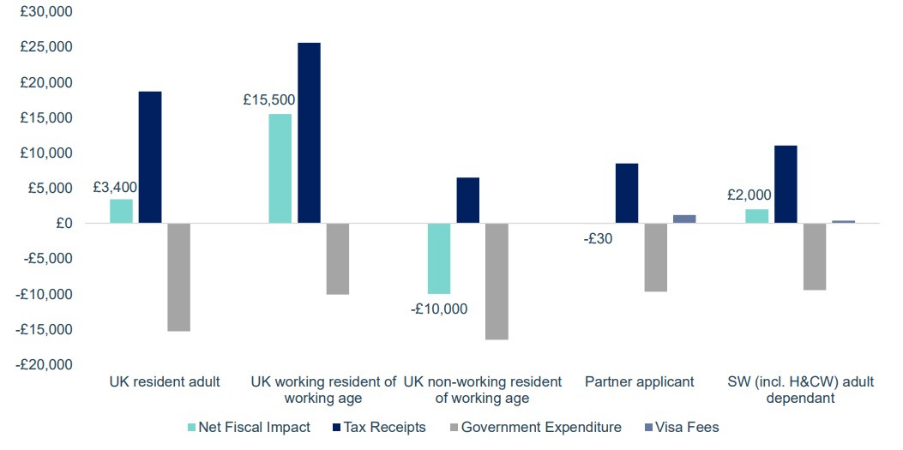
These estimates are based on primary spending and revenue and so do not include spending on debt interest, or the revenue received from interest and dividends. In aggregate, including these components would increase the deficit in 2022/23 by £96bn. If we apportion this on an adult per capita basis, this will reduce the net fiscal contribution of all adults by £1,800 (including UK resident adults). There is much debate as to whether this cost should also be allocated to migrants. On one side, it is argued that migrants benefit from at least some of the past government spending that the debt has financed, such as infrastructure. Conversely, some part of the debt financing will have been on current spending that newly arrived migrants did not benefit from. We take no view on this as we are focused on primary totals, but the reader should bear this additional cost in mind.
We previously noted that the results of the static (and dynamic) analysis rely on several assumptions. We explore the effects of adopting alternative assumptions in our sensitivity analysis, which is located in the annex to this report. Of these, we show that alternate methods of allocating public goods expenditure have the greatest effect.
Dynamic Fiscal Analysis
The static fiscal model yields a snapshot of the fiscal impact of an individual in a single year. However, this result cannot be extrapolated to subsequent years, and so it cannot predict their lifetime fiscal impact. This is because the characteristics of the cohort will change over time. For example, as they age, their allocation of healthcare expenditure will increase; after they obtain ILR, they will be entitled to welfare benefits that they were previously barred from; and as they progress through the labour market, their earnings will change. The issue is particularly acute when using static estimates for the first five years after a migrant’s arrival because ILR, which can be acquired in their fifth year, will worsen their fiscal position.
We can think of the dynamic model as aggregating the results of the static model for each year after the cohort’s arrival, whilst also accounting for changes in their size and characteristics. It is this that renders the model suitable to estimate the lifetime fiscal impact of the cohort. Policymakers should surely be focused on such lifetime estimates, particularly for visa routes such as the Family route where the vast majority of migrants remain in the UK.
Employment, Tax and Benefits
As stated in the static model section, the employment rate of this Partner cohort was 49% in their year of arrival. We use additional data sources to predict future changes in their employment rate. For Year 0 (the arrival year) to Year 3, we use the employment rates estimated in our report on the Family visa financial requirements. These were derived from data for earlier Partner cohorts using HMRC data matched with Home Office Family visa data. For subsequent years, we use the longitudinal ONS Annual Population Survey (APS) for 2021-23 to estimate the transition rates in and out of employment by age and gender. Whilst the APS is representative of the entire population – and therefore primarily the UK-born we assume that these transition rates apply to those in the Partner cohort. We also adjust for self-employment, which the HMRC data does not include. The employment rate of the cohort begins at 49% in Year 0. As they adjust to the labour market, the employment rate increases by 16% to a peak of 65% by Year 3. One could alternatively use pooled APS data from 2017-2022 to show that the employment rate of those who arrived as a spouse or partner of a UK resident or individual with ILR was 65%. This is consistent with our modelling approach.
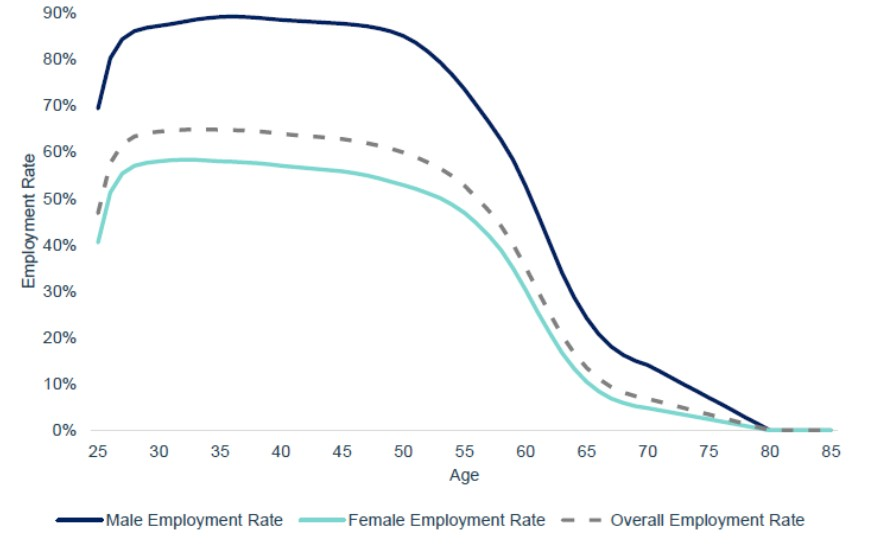
Figure 1.5 displays the predicted employment rate for a Partner applicant who arrived aged 25. Their overall employment rate is 65% within five years of arrival and remains at broadly this level until they reach their 50s. From that point, their employment falls as ill-health and retirement become more prevalent, just as with UK residents.
We can further break down the employment rate into separate employment rates for males and females. The male employment rate peaks at 89%, whereas the female employment rate peaks at 58%. It is important to note that the overall employment rate is simply the weighted average of the male and female employment rates. The employment rate of females in the cohort is substantially lower compared to that of females in the UK population, which was 72% for working-aged females in 2022/23. Since females comprise most of the cohort (78% of 25-year-old applicants and 71% of all applicants), the overall employment rate will be closer to the female employment rate – and therefore relatively low. We attribute the low female employment rate for this group of migrants to two factors. First, it is likely that some of these partners will have caring responsibilities or plan to start a family soon after arrival. Second, Partner applicants came disproportionately from countries with relatively low female employment rates. A discussion on the nationality of Partner applicants can be found in our review of the Family visa financial requirements.
Figure 1.5. Predicted Employment Rates for Partner Applicants Aged 25 on Arrival, 2022/23 Cohort
We also model how the earnings of those in employment will increase over time. Their initial earnings are sourced from HMRC data that has been matched with Home Office administrative records. We assume that these earnings rise by 12% in the next year. This is based on the growth of earnings that we observe in the HMRC data for the previous cohort (i.e. 2021/22 arrivals) where we can observe two full years of data. This may appear to be a large increase in earnings but likely reflects both a shift from part-time to full-time work for some and job moves to more suitably matched work as new arrivals adjust to the labour market. In subsequent years, we assume that wages grow at the same rate as for UK residents of the same age and gender. This produces faster wage growth for younger ages as they accrue more experience. Full details of our approach are provided in the Fiscal Impact report.
For those who are not employed and have obtained ILR (and therefore have entitlement to benefits), we use the ONS Family Resources Survey (FRS) to compute the mean benefits income received by married individuals of the same age and gender (i.e. we assume they remain married over their lifetime). This is considerably lower than the amount received by their unmarried counterparts simply because the eligibility for many benefits (such as Universal Credit) is assessed based on household income rather than individual income. We are assuming here that the distribution of income of the UK partner of these migrants is the same as the overall distribution of married UK residents. We have no way of knowing whether this is correct because we know nothing about the UK sponsor. We discuss this in some detail in our review of the Family visa financial requirements. We do not allocate Universal Credit to the employed, but we note that the pattern of married individuals claiming fewer benefits than unmarried individuals is observed irrespective of employment status (although the difference is smaller between the employed). We also use the FRS to compute the miscellaneous income the applicant receives (e.g. from investments) and do so in the same manner outlined in our Fiscal Impact report.
Once applicants reach the State Pension age, we compute their pension payments using their length of stay. One must pay NICs for 10 years to qualify for the state pension and 35 years to receive the full amount. We assume for simplicity that all applicants work and contribute NICs in each year of stay or are engaged in activities that qualify for NIC credits, such as raising children.
Emigration and Mortality
Each year, there is a chance that a migrant exits the cohort through either emigration or death. The emigration rate is derived from the Home Office Migrant Journey (MJ) dataset. Emigration is most likely in the first years after arrival, whilst mortality rates increase as the cohort ages. Partner applicants are less likely to emigrate than SW migrants: by Year 8, only 11% of Partner applicants will have emigrated compared to 32% of SW applicants. We estimate the mortality rate for each migrant by age and gender using the ONS National Life Tables. Whilst these are estimated from the resident population, we assume that the same rates apply for migrants. The probability that a migrant has neither emigrated nor died is used to weight their fiscal impact for that year. Figure 1.6 shows the expected size of the Partner cohort over time after accounting for these factors. The initial decline between Year 0 and Year 4 is largely driven by emigration. The cohort does not reach half of its original size until Year 50; however, it shrinks rapidly thereafter due to the increased mortality risk that accompanies ageing.
Figure 1.6. Predicted Size of the 2022/23 Partner Cohort Over Time

Source: MAC analysis of Home Office Migrant Journey data and the ONS National Life Tables.
ILR and Visa Fees
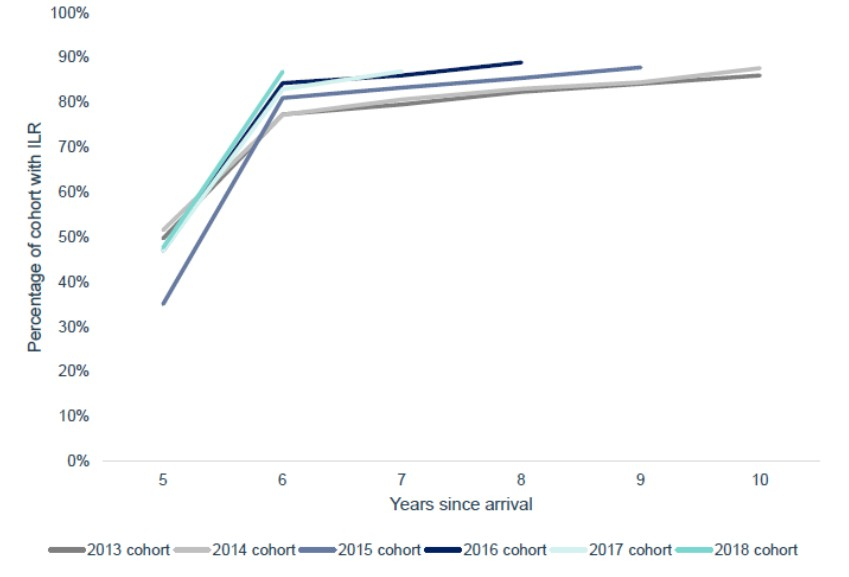
Our modelling is based on current ILR and visa fee policy and does not take into account potential changes to the route to settlement outlined in the government’s November 2025 consultation on earned settlement. Currently, the earliest that an applicant can obtain ILR is in their fifth year after arrival, although some will choose to apply later – for example, because they require more time to acquire enough savings to pay the application fee. Using Home Office Migrant Journey data on Family cohorts since 2013 (when the ILR rules changed), we estimate that 44% of the cohort will obtain ILR in the fifth year after arrival with an additional 29% obtaining ILR by the sixth year. We then apply a simplifying assumption that 100% of the cohort will obtain ILR by the tenth year and linearly interpolate.
We account for the additional IHS and visa extension fees paid by applicants until they obtain ILR. However, we will overestimate the revenue from these to the extent that the cohort acquires ILR at a faster rate than predicted. Figure 1.7 shows the rate at which previous Family cohorts acquired ILR after arrival. Note that the uptake of ILR appears to be both greater and faster for more recent cohorts. Nonetheless, this is unlikely to have a substantial effect on the lifetime fiscal impact of the cohort because visa fees constitute a small proportion of their lifetime fiscal contribution compared to their tax receipts. We do not consider fee waivers granted to a small share of Family migrants.
Figure 1.7. Observed ILR Rates of Selected Past Family Cohorts
Lifetime Net Fiscal Impact
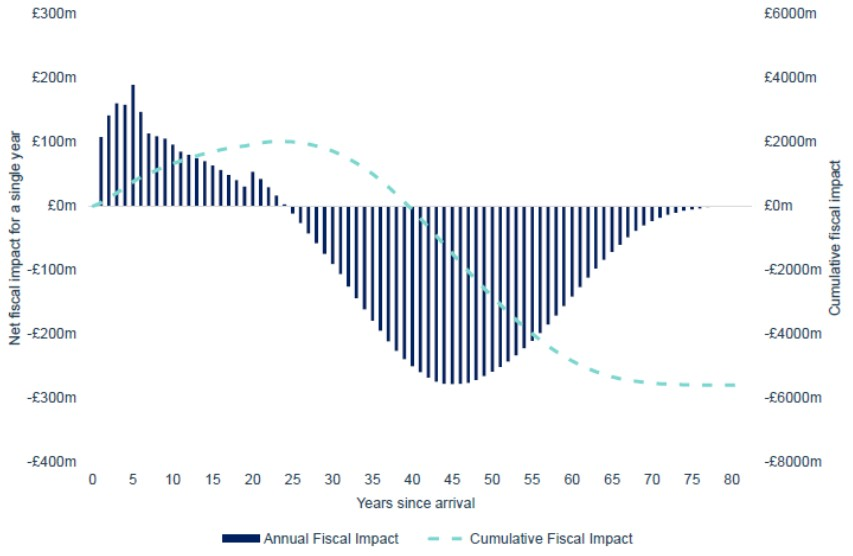
In our baseline estimate, the 2022/23 Partner applicant cohort incurs a net fiscal cost over their lifetime with a net present value (NPV) of -£5.6bn, or an average of -£109,000 per person. The NPV assigns a greater weight to revenue and expenditure closer to the present (by reducing – or ‘discounting’ – future fiscal impacts by a factor termed the ‘discount rate’, set at 3%). Discounting is standard practice in both economic appraisal throughout government and the literature estimating the fiscal impacts of migration.
The baseline estimate assumes that government tax receipts and expenditure are held constant as a share of GDP. We therefore inflate both by an assumed real GDP growth rate of 1.8% per annum, consistent with OBR long-term projections. Were we not to do this, an increase in real GDP would lead to the government sector shrinking. Under this scenario, the cohort incurs a significantly less negative net fiscal cost of -£1.6bn (or -£31,000 per person). This is, however, unrealistic – as discussed in our Fiscal Impact report.
Figure 1.8 shows how the net fiscal impact of the cohort changes over time. The annual net fiscal impact of the cohort begins negligibly negative in Year 0 (which is simply the static estimate of -£30 reported above) and becomes more positive until Year 5. This is caused by the improvement in the employment rate (and earnings) of the cohort over their first few years, which increases their average income and tax receipts. Under the current policy, the cohort can obtain ILR from Year 5, and as previously noted we predict that 44% of the cohort will obtain ILR in this year. Their fiscal contribution also peaks in this year – this simply reflects the high likelihood that applicants will apply for ILR and pay the £3,029 application fee.
Figure 1.8 Lifetime Fiscal Contribution, 2022/23 Partner Cohort
Source: MAC internal fiscal modelling.
The net fiscal contribution of the cohort begins to decline, though remains positive, after Year 5. This is initially almost entirely driven by the cohort acquiring ILR. After obtaining ILR, an applicant is no longer subject to the NRPF rule and is eligible to access benefits. For example, we estimate that the cohort will claim £109m in benefits between Year 5 and Year 7, with claimants receiving an average of £2,400 in benefits per annum over this period. This figure accounts for the tendency of married individuals to claim fewer benefits. It, however, also assumes that applicants’ sponsors have the same income distribution as the UK population – and so it will be an underestimate insofar as the income of sponsors is lower. We discuss this further in our limitations section. In addition, ILR removes an applicant’s obligation to pay the IHS and visa extension fees. This decreases their fiscal contributions. There is a slight increase in the cohort’s net fiscal contribution in Year 20; this is because we assume the amount borrowed to keep the public capital stock constant is fully repaid in this year.
As the cohort ages further, the annual fiscal contribution becomes negative. This is a result of both declining employment income, as the cohort ages into ill-health and retirement, and the rising level of public spending allocated to them (particularly health, social care and state pension). However, mortality rates also begin to increase at this point which reduces the overall fiscal cost of the cohort as members die.
The government’s earned settlement consultation suggests extending the NRPF condition to those holding ILR. Using Migrant Journey data, we estimate that Family migrants spend an average of two years with ILR before acquiring citizenship (which would lift the NRPF condition). If we were to suppose that all Partner migrants spent an additional two years with the NRPF condition as a result, we estimate this change would reduce the net lifetime fiscal deficit of the cohort by £42m under our baseline. This figure is not equivalent to the value of the benefits saved (£97m) – it accounts for how some of these benefits would have been recouped through taxation. This figure also assumes that no behavioural changes are induced in the cohort. It is possible, however, that applicants would respond to the change by acquiring citizenship more quickly, thereby limiting any fiscal improvement. On the other hand, this estimate assumes all Partner applicants with ILR obtain citizenship and does not account for the additional fiscal improvement from withholding benefits from those who never do.
From the migrant comparator groups, the average Partner applicant is closest fiscally to Health and Care Worker (H&CW) adult dependants, who on average incur a net lifetime fiscal deficit of -£67,000. By contrast, UK residents will make a mean future net fiscal contribution of -£39,000 (with a median of -£145,000); in other words, their net fiscal impact over the remainder of their lifetime will also be negative on average. We compute both these estimates in our Fiscal Impact report.
If we adjust the age distribution of UK residents to match that of the Partner cohort, their mean future net fiscal contribution increases to +£110,000 (with a median of -£49,000); that is to say, the forward-looking net fiscal contribution of UK residents who are of the same age as the Partner cohort is higher compared to both Partner applicants and UK residents overall. The net lifetime fiscal deficit incurred by the average Partner applicant is similar to the future net fiscal deficit incurred by the 43rd percentile of age-adjusted UK residents (-£112,600). A key reason why the mean contribution of UK residents is substantially higher than Partner applicants is that the progressive tax system means that tax contributions are heavily skewed toward higher earners, and the HMRC data does not suggest that there are substantial numbers of these in the Partner cohort. It should be noted that the NRPF condition and the payment of ILR fees boost the fiscal position of the average Partner applicant by +£17,000. In their absence, the per-person lifetime net fiscal deficit would worsen to -£126,000 – roughly equivalent to the 41st percentile of age-adjusted UK residents.
If we assume that the earnings of the cohort grow by an additional 1% per annum for the first ten years relative to UK workers, the cohort will incur a less negative net lifetime deficit of -£4.8bn (or -£95,000 per person). This is in line with Bell and Johnson (2024), which reported that migrants experienced slightly higher wage growth than UK-born. In either case, only the top decile of earners within the Partner cohort are fiscally positive over their lifetime. Under our baseline scenario, their net lifetime fiscal impact is +£2.5bn. There is some heterogeneity in initial salaries within the top decile: 5% of the decile exceed £100,000, whereas the median within the decile is £33,000. It is these highest earners who drive the lifetime net fiscal impact of the top decile into the positive range. In contrast, all lower deciles of earners incur a lifetime net fiscal deficit.
In Figure 1.9, we show the estimated lifetime fiscal impact of a representative Partner applicant. We assume the applicant enters aged 33 (which is the average age of applicants at the point their visa is granted), does not emigrate and lives until the age of 100. We break down their impact to illustrate the effects of discounting and adjusting for mortality rates. With adjustments for neither mortality nor discounting, the applicant incurs a lifetime fiscal deficit of -£1.4m. Adjusting for mortality halves the deficit to -£698,000. Finally, discounting improves the deficit to -£148,000. This highlights the risk of quoting estimates that do not adjust appropriately for these two key factors.
Figure 1.9 Lifetime Fiscal Contribution of a Partner Applicant Aged 33 on Arrival, 2022/23 Cohort

Source: MAC internal fiscal modelling.
We do not consider the children of Partner applicants in our analysis. We assume children born to applicants in the UK will share the same outcome as children born to UK residents after controlling for parental socioeconomic characteristics. Whilst there are insufficient data to determine whether this assumption will hold in the UK, the findings of Jensen & Manning (2025) support this assumption for the children of migrants in Denmark. We discuss this in more detail in our Fiscal Impact report.
Limitations
There are several drawbacks with the model. First, the long-term employment and income outcomes of Partner applicants are uncertain. The data sources we use to estimate these, namely the FRS and Annual Survey of Hours and Earnings (ASHE), are representative of the entire population and will largely consist of UK-born residents. Consequently, our predictions for these may not reflect the effects of any characteristics of the cohort that differ from those of the general population. The same problem applies to their propensity to claim benefits after obtaining ILR. We cannot say whether a Partner applicant will claim more or fewer benefits than an equivalent resident with the same income, age, gender and marital status. This is because the data we possess on the cohort has not been matched with benefits records held by the Department for Work and Pensions (DWP).
Second, we assume that the current age and gender-specific profiles of health and adult social care spending hold in the future, disregarding potential developments in medicine and change in life expectancies. As mentioned previously, we also assume that migrants and residents use public goods identically. There is, however, no reliable data on migrants’ usage of these.
Third, we do not possess data on the sponsors of applicants. As a result, we are unable to account for any indirect effects an applicant may have on their household’s income by changing its labour supply decisions. For example, a sponsor may be able to work longer hours if an applicant assists with childcare, increasing their income and tax receipts. Conversely, a sponsor may choose to work fewer hours if an applicant enters employment and contributes to their household income. This would limit any increase in their household tax receipts. Furthermore, our modelling of benefit receipt after ILR is based on the assumption that sponsor income is distributed in the same way as the overall UK income distribution. If instead, for example, sponsors had significantly lower income that the UK average, we would likely be underestimating the benefit receipt of Partner applicants after ILR. We recommended to the government in our Family visa financial requirements review that they start immediately collecting the National Insurance number of the sponsor when assessing Partner applicants so that progress could be made on improving our understanding of the household income of these families, and we assume the government have already implemented this change.
Fourth, we do not model divorce and remarriage. Recall that we implicitly assume that an applicant is married when computing the benefits that they receive. This yields a lower benefits allocation than if we assumed that they were unmarried. We will therefore underestimate the benefits allocation of the cohort to the extent that the average applicant spends time single. As an illustrative exercise, we estimate that the lifetime net fiscal deficit of the cohort would worsen by -£5,300 per person under our baseline if we assume that 20% of the cohort were to become single.
Finally, our analysis focuses on the fiscal impact of the applicant and cannot tell us what the impact would be of policy changes towards sponsors. Raising or lowering the MIR may affect the overall fiscal impact of the Partner route, to the extent that it affects the number of Partner migrants coming to the UK. However, the model shows that the applicant’s fiscal impact is driven primarily by their own employment rate and earnings, as we discussed in our report on the MIR. Partner migrants can thus be fiscally negative regardless of the sponsor’s income.
Implications for Other Routes
Table 1.3 summarises our fiscal modelling of the 2022/23 Partner and SW cohorts. We have so far highlighted two key determinants of the lifetime fiscal impact of an applicant. First, their rates of employment and the earnings (particularly at the top of the distribution) they receive when employed – which drive their tax receipts and therefore their fiscal contributions. Second, their eligibility for settlement (ILR), which generally determines whether they can access benefits – which increases their allocated government expenditure. Even if granted ILR, however, their lifetime fiscal impact may remain positive depending on their employment rate and earnings. This is the case for the SW (excl. H&CW) adult dependants. By contrast, we estimate the lifetime fiscal impact of Partner applicants and H&CW adult dependants to be negative. This is consistent with their lower total income from employment.
Table 1.3. Baseline Net Lifetime Fiscal Impact of SWs and Partner Applicants, 2022/23
| Cohort | Net Lifetime Fiscal Impact (Per-Person Mean) | Net Lifetime Fiscal Impact (Whole Cohort) |
|---|---|---|
| SW (excl. H&CW) Main Applicant | +£689,000 | +£47.7bn |
| H&CW Main Applicant | +£54,000 | +£5.5bn |
| SW (excl. H&CW) Adult Dependant + | £3,000 | +£0.1bn |
| H&CW Adult Dependant | -£67,000 | -£3.3bn |
| Family (Partner) | -£109,000 | -£5.6bn |
Source: MAC internal fiscal modelling.
Table 1.4 shows the number of visas granted through all the main routes of entry in 2022/23, whilst Table 1.5 shows the number of those granted permission to stay on asylum and refugee routes. We provide some preliminary observations in this section on the likely lifetime fiscal impact of these routes on the basis of the work we have already done on SW and Family routes, which are the largest routes that lead to settlement. Going forward, our plan is to formally estimate fiscal models for these additional routes to be able to provide a more comprehensive overview of the lifetime fiscal implications of the immigration system.
Focusing first on routes that lead to settlement, most applicants to the British National (Overseas) (BN(O)) routes over this period were from Hong Kong. The Hong Kong BN(O) Migrants Panel Survey, covering both main applicants and dependants, estimates the employment rate of this cohort to be 59% - a relatively low rate. As with other routes, we would expect this employment rate to rise over time as familiarity with the UK labour market increases. However, BN(O)s are a very well-educated migrant group. The same survey shows that 65% had at least a bachelor’s degree (compared to 30% of the UK-born population) and only 4% had no qualifications. We might therefore expect the earnings of those in employment to be reasonably good. Similar to SW and Partner applicants, BN(O) applicants are subject to the NRPF condition until they obtain ILR.
Overall, we think it likely that BN(O) visa holders will have a positive lifetime net fiscal impact, albeit one that is likely to be closer to that of SW (excl. H&CW) dependants rather than the high values observed for SW main applicants. This is for two reasons. First, unlike the SW visas, employment is not a condition of the BN(O) visa. Second, it is likely that some employed BN(O) applicants are overqualified for the occupations they are working in, so their earnings will less closely reflect their skills and education.
Table 1.4 Visas Issued on Selected Routes, 2022/23
Routes eligible for settlement:
| Route | Visas Issued | Main Applicants | Dependant Applicants |
|---|---|---|---|
| SW (incl. H&CW) | 329,400 | 170,400 | 158,900 |
| Family (Partner) | 51,400 | 51,400 | N/A |
| British National (Overseas) | 47,100 | 28,100 | 19,100 |
| Global Talent | 6,100 | 3,400 | 2,700 |
| Innovator Founder | 900 | 400 | 500 |
| Start-up | 800 | 400 | 400 |
Routes not eligible for settlement:
| Route | Visas Issued | Main Applicants | Dependant Applicants |
|---|---|---|---|
| Study/Student | 629,300 | 481,100 | 148,300 |
| Ukraine | 196,600 | 196,600 | N/A |
| Graduate | 112,400 | 93,700 | 18,700 |
| Seasonal Worker | 35,100 | 35,100 | N/A |
| Youth Mobility Scheme | 19,800 | 19,800 | N/A |
| Global Business Mobility | 35,500 | 18,700 | 16,800 |
| High Potential Individual | 2,100 | 1,900 | 300 |
Source: Entry clearance visa applications and outcomes detailed datasets, year ending September 2025; Extensions detailed datasets, year ending September 2025.
Notes: 2022/23 corresponds to the period between Q2 2022 and Q1 2023, inclusive. We use the number of issued entry visas except for the Graduate route, which is treated as an extension in the immigration statistics. Discrepancies between totals and sub-totals are due to rounding.
Table 1.5. Grants on Refugee and Asylum Routes, 2022/23
| Route | Grants |
|---|---|
| Asylum (Main Applicant) | 14,100 |
| Asylum (Dependant) | 3,500 |
| Resettlement | 4,400 |
| Refugee Family Reunion | 4,300 |
Sources: Asylum claims and initial decisions detailed datasets, year ending September 2025; Resettlement detailed datasets, year ending September 2025; Family reunion visa grants detailed datasets, year ending September 2025. Notes: “Grants” consist of those who were given a “Grant of Protection” or “Grant of Other Leave”. “Resettlement” consists of those entering under the Afghan Resettlement Scheme, Mandate Scheme and UK Resettlement Scheme. Some asylum claimants may have entered via a visa before claiming asylum and may therefore have been counted in Table 1.4. We only consider asylum claims that were granted at the initial decision stage. Some of those who were refused asylum at this stage will have had this decision later overturned after appeal. Due to the asylum backlog, some who claimed asylum in 2022/23 will not have received an initial decision within the same year.
The Global Talent (GT) route target individuals who are leaders or potential leaders in academia and research, arts and culture, and digital technology. We therefore expect the GT cohort to have a positive net lifetime fiscal impact, which is consistent with the position taken by the Home Office in their Impact Assessment of the Autumn 2025 Immigration Rules. However, it is difficult to credibly predict its position relative to other routes without earnings data. This issue is compounded by the varied composition of the cohort, which includes highly paid tech professionals as well as academics and self-employed musicians whose earnings may not be particularly high. It seems reasonable to suggest that their fiscal impact may be broadly similar to our estimate for SW (excl. H&CW) main applicants.
The Start-up and Innovator Founder routes are targeted at entrepreneurs. To the extent that such targeting is successful, it is likely that main applicants on these routes will also rank highly in the earnings distribution, and so we would expect their net lifetime impact to be positive. It again might be reasonable to suppose that their lifetime net fiscal impact is similar to our estimate for SW (excl. H&CW) main applicants, though this obviously remains speculative in the absence of earnings data. It is also possible that there will be a significant tail of poor performers since these routes are unsponsored.
We expect the lifetime net fiscal impact of those entering through asylum and refugee routes to be unambiguously negative. This is largely due to their low employment rates and wages, high rates of economic inactivity and their exemption from the NRPF rule. For example, analysis by Migration Observatory suggested that 56% of those who reported initially arriving in the UK to claim asylum and were of working age were in employment, compared to 75% of the UK-born population. When in employment, their median annual salary was £20,000 for men and £18,000 for women, compared to £31,000 and £22,000 respectively for the UK-born. Asylum migrants are also much less likely to have earnings at the higher end of the distribution. A sizeable negative lifetime impact is consistent with the literature estimating the fiscal impact of similar migrant cohorts in other nations. Varela et al. (2021) estimates the lifetime net fiscal impact of resettled refugees in Australia to be -A$400,000 (compared to -A$85,000 for the resident population); van de Beek et al. (2024) similarly estimate a lifetime net fiscal impact of -€400,000 for asylum seekers in the Netherlands who enter before the age of 70. Note that many of those who enter through the asylum route will also have incurred substantial additional costs from being housed in asylum accommodation.
For routes that do not lead to settlement, the fiscal calculation is different. We only need to consider the fiscal contribution in the years for which their visa is valid. This tends to be 2-3 years, and all the routes (except the Ukraine schemes) are subject to the NRPF rule. Most do not allow dependants. It is almost inevitable that such routes are fiscally positive. Our analysis of the Family and SW routes demonstrates that a migrant’s first years are generally when they are most net fiscally positive, primarily due to the NRPF rule and their payment of visa fees. In effect, limiting a migrant’s length of stay cuts off those later years in which their annual net fiscal contribution generally declines (and in many cases becomes negative, as seen earlier). Whether the temporariness of a route is a positive or negative aspect from the fiscal perspective depends on whether the net fiscal impact would have been positive or negative if they had been able to remain. For example, we assessed the fiscal impact of a Seasonal Worker as being negligibly positive in our review of the route. If Seasonal Workers were able to obtain ILR (and thus access to public funds), the fiscal impact of the route would become substantially negative. This is because their allocation of government expenditure would exceed their tax receipts, which are likely to remain low even if the worker leaves the agricultural sector.
Note that migrants can switch from these routes into routes that do lead to settlement – at that point they are counted in the fiscal calculations discussed above.
We discussed the likely fiscal impact of international students in our 2018 report. Students contribute indirect tax revenue through the money they spend in the local economy. It is however difficult to get reliable estimates for the levels of expenditure of these students as they will account for a small fraction of the sample in any expenditure survey. Some students will also work (and so pay direct taxes) during their studies. They also contribute through visa fees and IHS. Being young and subject to NRPF means that they make few demands on public services. Overall, they are likely to have a very positive net fiscal impact during their studies. Oxford Economics estimated a net annual fiscal contribution of around £3,300 per year higher than the UK average for EEA students, and £5,100 per year for non-EEA students. It should however be noted that in 2022/23, international students on taught master’s programmes could bring dependants, and Table 1.4 shows 148,300 visas issued to dependants. We have very little data on students’ dependants but know that those of school age are likely to impose significant fiscal costs as a result of access to state education. Accounting for this is likely to reduce, but not eliminate, the overall positive fiscal contribution. The government removed the ability of taught master’s students to bring dependants in 2024.
Upon graduation, those on the Student route are eligible to switch onto the Graduate route that provides a 2-year visa to remain in the UK. There are few restrictions on what people can do whilst on the Graduate route. Our rapid review of the Graduate route concluded that visa holders were likely to be net fiscally positive whilst on the route. Around 70% work within 12 months, with a median salary of around £21,000. The tax payments associated with these earnings, combined with low healthcare costs which are closely linked to age, the payment of visa fees and the IHS, and the NRPF restriction all suggest a net positive fiscal outcome. But it should be borne in mind that the earnings of those on the route are much closer to those of SW dependants and Partner visa holders rather than main applicants on the SW visa, so the fiscal contribution will be comparatively lower.
The Ukraine schemes allowed people affected by the war in Ukraine to come to the UK or those already in the UK to remain. The schemes are temporary, though the government have recently extended the period of leave by a further maximum of 3.5 years. It is unclear at this point how long those on the Ukraine schemes will ultimately remain in the UK. This will depend on future policy decisions on the creation of additional extension schemes and ultimately potential consideration of settlement.
The ONS have conducted surveys of those on these schemes. The most recent shows that respondents reported an employment rate of 69% in 2024. Of those working, the data suggest a median gross salary of around £19,000 (based on reported monthly take-home pay), considerably lower than for the UK-born. In addition, and unusually for temporary routes, those on the visa do not pay the IHS and are eligible for welfare benefits (i.e. no NRPF condition). The same survey shows that 40% were receiving benefits. Overall, it is likely that the schemes are fiscally negative in the short-run and would likely impose long-term fiscal costs similar or greater to Partner applicants on the Family route if they became routes to settlement.
We discussed the likely fiscal impact of the Seasonal Worker scheme in our 2024 report and concluded that the impacts would be positive but minimal. Earnings are relatively low in the agriculture sector so only modest direct tax payments will occur. This, combined with the fact that these workers tend to remit more, means they are also likely to have relatively low levels of consumption, paying less indirect tax as they buy fewer goods and services. They will however make very few demands on public services.
Very little is known about what migrants on the Youth Mobility schemes do whilst they are in the UK. It is assumed that the majority work, most likely employed in lower-paying service roles in hospitality and retail. So, whilst we would not expect their tax contributions (direct and indirect) to be very substantial on average, the overall net fiscal impact will surely be positive because they again have to pay visa fees (including the IHS) and are subject to the NRPF condition. Their age (18-35) will also mitigate against substantial health care usage.
Global Business Mobility (GBM) routes have very similar rules in place to the SW visa – indeed they are often used interchangeably by firms. Median salaries on GBM tend to be broadly similar to those on the SW visa. There are however two main reasons why the tax contributions may be somewhat lower than for the SW route. First, GBM workers can come and go over the duration of their visa, so it is unclear how much of the year is spent working in the UK. Second, there are reciprocal agreements in place that limit the national insurance contributions of this group of workers. In spite of this, it is reasonable to suppose that the net fiscal contribution is strongly positive for GBM routes, and broadly similar to the SW (excl. H&CW) main applicants.
Finally, the High Potential Individual (HPI) visa is similar to the Graduate visa but with the key difference that only graduates of high-ranking international universities are eligible to apply. A 2025 Home Office evaluation of the route found 78% of surveyed HPI main applicants to be employed, with 46% reporting having a salary greater than £40,000. We therefore expect HPI main applicants to have a more positive fiscal impact than their counterparts on the Graduate route, though it is still likely to be relatively small due to the short 2-year duration of the visa. The employment rate of HPI dependant partners was 67%, with 37% reporting a salary above £40,000, suggesting a broader similar positive fiscal contribution to the main applicants.
Conclusion
We estimate that the average Partner route applicant from the 2022/23 cohort will incur a lifetime fiscal deficit in net present value terms of around -£109,000. Whilst their annual fiscal impact is positive for many years after arrival, it is not sufficient to offset the costs associated with old age.
The dynamic lifetime results highlight a key dilemma for policymakers. Even though we estimate an overall lifetime negative impact for the partner route, the fiscal impact is positive for the first two decades after arrival (Figure 1.8) and is largest in the first five years prior to ILR. Since the fiscal rules are essentially evaluated over a 5-year period, this implies that almost all migration is fiscally positive from this perspective. But basing policy on such an outcome will impose future fiscal costs that will outweigh the short-term gains. Policymakers should at least be clear about this in the decisions they reach.
We do not consider a negative lifetime fiscal impact for Partner applicants to be surprising for two reasons. First, the Partner route was not established for economic reasons and, unlike the SW visa, is not contingent on employment. Second, the MIR is designed to ensure that sponsors can financially support their applicants, and those who can live on their sponsors’ incomes will have less of an incentive to work. Again, we emphasize that fiscal contribution is only one element of the overall assessment of a visa route.
We then use our findings to briefly explore the possible lifetime fiscal impact of other visa routes. We predict that cohorts entering through the Global Talent, Start-up and Innovator Founder routes will have a positive lifetime fiscal impact with a reasonable degree of confidence, whereas this is less certain for those entering through the BN(O) and Ukraine routes. By contrast, we predict that the refugee and humanitarian routes will impose a significant negative lifetime fiscal cost. Provided we are given adequate data, future work may include a more thorough fiscal analysis of these routes. Such a ranking of the fiscal contribution of visa routes is also reflected in international comparisons, where employment-focused skilled routes are the most fiscally positive and asylum routes the most fiscally negative.
We highlight several times that – all else being equal – the acquisition of ILR worsens the fiscal impact of migrants. This is primarily caused by the end of the NRPF condition, though the ending of fee payments is also important. This does not necessarily mean that increasing the time required to obtain ILR will improve the overall fiscal impact of a particular route. This will instead depend on the quantity and characteristics of the migrants who are deterred from entering the UK, or choose to leave early, due to such a change. As we have highlighted, the top 10% of earners within the Partner cohort have a positive net lifetime fiscal impact. If it is primarily the high earners in a cohort who are deterred, it is possible that the overall fiscal impact of the change will be negative. Finally, if lengthening the pathway to ILR worsens some applicants’ labour market outcomes (for example, by creating a disincentive to invest in skills or limiting integration), this would have a negative fiscal impact that may offset some of the NRPF-related savings.
Chapter 2: Overseas Domestic Workers
Summary
-
The 2025 Immigration White Paper contained a commitment to reconsider the Overseas Domestic Worker (ODW) route. This chapter sets out some of the considerations the Home Office will need to weigh up as it does so.
-
We were told that the route is important diplomatically to the UK. It may also be financially important, although it is difficult to establish the extent to which this is the case.
-
The scale of exploitation and abuse on the ODW route is unknown and we do not suggest that all employers are exploitative. Nevertheless, we know that abuse and exploitation does occur, and that the route as currently constituted allows employers who wish to behave in this way to operate more or less unchecked.
-
Enforcement on the route is difficult for practical and operational reasons, but more could be done if the government wants to reduce the risks of exploitation.
-
There are a number of data improvements that could be made, in particular collecting additional data on employers.
Introduction
The 2025 Immigration White Paper contained a commitment to reconsider the Overseas Domestic Worker (ODW) route based on concerns about exploitation[footnote 3], although it did not specify how this would be done or a timetable for doing so. This year also marks ten years since the 2015 Ewins Review, the last independent review of the route. With these factors in mind, in this chapter we focus on ODWs, who are often female, older, and isolated; their employers, who range from the super-rich to the middle classes in a handful of common countries but are not licensed sponsors in the immigration system; and some of the problems associated with the route, articulating issues that the government will need to consider in any future review of the route.
We have reviewed available published statistics, management information and other data held by the Home Office, and have spoken to a number of teams and organisations with a policy or welfare interest in the route, including colleagues in the Home Office, other government departments and non-departmental public bodies, and non-governmental organisations (NGOs). We have spoken to two general work rights organisations, Focus on Labour Exploitation (FLEX) and Work Rights Centre. We also spoke to three ODW-focused groups, including ‘by and for’ groups with lived experience of the route as part of the background work for this chapter: Kalayaan, Voice of Domestic Workers and Waling-Waling, with Voice of Domestic Workers and Kalayaan also convening small groups of ODWs who shared their experiences and perspectives.
About the route
The Overseas Domestic Worker (ODW) visa enables domestic staff (for example nannies, housekeepers, chauffeurs and personal carers) to accompany their visiting employers to the UK. It is not officially a sponsored route (meaning that the employer is not licensed as a sponsor), but the applicant only comes to the UK because of their status as an employee in their employer’s private household. A number of other countries also make specific provision in their immigration systems to allow ODWs to accompany their employers.
Rules of the route
Only employers who normally live outside the UK (which may include British nationals) and who are not intending to stay for more than six months may bring an ODW with them. The ODW must have worked for their employer for at least 12 months. ODWs accompanying their employer, whether the employer requires a visa or not, must apply for a visa in advance of travelling to the UK. The maximum length of the ODW visa is six months. The employer must complete a Domestic Worker Statement confirming they will pay at least National Minimum Wage and the employee’s visa and travel costs, and setting out details of the employment and accommodation. The visa costs £682 for six months, and people may leave and return during this time. The visa cannot be extended but people may switch employer to carry out domestic work in another private household within the visa period. Those who applied for the equivalent visa prior to 5 April 2012 may be able to extend. Those on the visa have no recourse to public funds, and dependants are not allowed.
Private servants in diplomatic households are not covered under the ODW visa. There is an international obligation to admit this group, which is covered under Temporary Work - International Agreement.
History of the route
ODWs were first recognised in 1998 as a concession outside the Immigration Rules, with a specific route written into the Immigration Rules in 2002. At this time ODWs were referred to as ‘Domestic Workers in a Private Household’ and could stay for up to 12 months, extend their visa, and eventually apply for settlement. ODWs were allowed to change employer to work in another private household. Before 1998, ODWs generally came to the UK on visit visas or as a family member, which made it harder to leave their job as they were not allowed to change employer.
In 2012 restrictions were made to the route to align it with wider immigration policy changes made at this time. From 2012, UK residents could no longer sponsor ODWs, and ODWs were not permitted to change employer, their stay in the UK being aligned to that of their employer. The maximum visa length for new visa applications was reduced to 6 months, and the ability to extend the visa and to apply for settlement was removed. ODWs were no longer allowed to bring dependants.
Concerns about these restrictions were expressed in Parliament and by NGOs, on the grounds that increasing restrictions on ODWs and limiting their options would increase the potential for abuse and exploitation. These concerns were reiterated during the passing of the Modern Slavery Bill in 2015, and in the Modern Slavery Act 2015 a new category of permission to stay was created for ODWs enabling those who have been confirmed as victims of Modern Slavery to apply for additional leave to remain and continue to stay in the UK working as a domestic worker. At this time, as part of its commitment to combat all forms of modern slavery, the government also commissioned an independent review of the route (the ‘Independent Review’ referred to throughout this chapter) in March 2015. James Ewins KC was asked to assess how effectively the then arrangements for the admission of ODWs protected them from abuse and exploitation, and to make recommendations.
During passage of the Modern Slavery Bill, Lord Hylton and Baroness Hamwee sought an amendment to include a commitment to implement the recommendations of the Independent Review in full. In 2016 some of the recommendations were taken forward by the government. The employer tie for the ODW visa was removed, allowing ODWs to change employer within their visa validity period. The minimum age for ODWs was raised to 19 to ensure they were over 18 when agreeing to work in the UK (and because ODWs must have worked for their employer for a minimum of 12 months). The period of leave that can be granted to an ODW victim of Modern Slavery was increased from 6 months to 2 years, and those entering the National Referral Mechanism (NRM) and receiving a positive first-stage ‘reasonable grounds’ decision within their visa validity period were allowed to continue to work. Minimum wage requirements were emphasised in immigration guidance. New guidance stated that ODWs should be provided with a leaflet at the Visa Application Centre (VAC) and that they should be interviewed without anyone else in the room at the point of application. Other recommendations were made but not implemented, for example registering changes of employer and mandating that ODWs should attend in-person information sessions a few weeks after arriving in the UK.
Why does the UK have the ODW route?
The ODW visa was introduced to formalise a route for domestic workers to join their employers in the UK. As this means that the route has a role in supporting visits by these employers, several government departments have a potential interest in the route.
Benefits to the UK
Tourism from the most common countries ODWs travel from is valuable to the UK. As Figure 2.4 shows, countries in the Gulf are particularly heavy users of the ODW visa, with India, China, Nigeria and Singapore also represented within the top 10 countries from which ODWs originate. Visit Britain data on Gulf Cooperation Council[footnote 4] (GCC) countries estimated that in 2024, 1 million visits were made to the UK from GCC countries, during which visitors spent £2.2 billion (an average of £2,143 per visit). Most applications from China come from Hong Kong, and in 2024, 170,000 visits were made from Hong Kong to the UK with an estimated total expenditure of £255.4 million (£1,505 per visit). We might reasonably suppose that those coming with domestic workers are likely to spend substantially more than the average. The Foreign, Commonwealth and Development Office (FCDO) considers the route to be supporting the UK’s wider diplomatic interests, and investment and trade partnerships. It is not possible to estimate to what extent being unable to bring ODWs would change visitor behaviour, but anecdotal evidence suggests that at least some employers would not travel without staff and therefore would not come to the UK if ODWs were not allowed, especially in the case of staff providing childcare or personal care where the personal connection is important.
The Department for Business and Trade (DBT) has an interest in the ODW route from the perspective of both supporting trade and preventing labour market exploitation. The Department for Culture, Media and Sport (DCMS) and VisitBritain told us that high-spending international visitors, who often favour luxury stays and longer stays, make a significant contribution to the UK’s tourism economy. They observed that policy changes (for example ending tax-free shopping or moving from a visa to electronic travel agreement), can influence visitor behaviour and destination choice, with possible implications for sectors such as retail, hospitality, culture and transport. They therefore emphasised that (while upholding safeguarding standards and employment rights) it is important to maintain the UK’s competitiveness.
When considering how much of a problem this would be to the UK, it may be relevant to look at the MAC’s review of the Tier 1 (Investor) report from 2014. This concluded that there was some benefit to the UK from spending, but that this was difficult to quantify. Evidence submitted to the Call for Evidence (CfE) indicated living expenses of between £4,500 and £200,000 per month for this group but was insufficient to allow an assessment of the benefit to the UK, and the report commented that the benefit was “perhaps not as significant as asserted by partners”. If we assume ODW employers are a similar group, we might also assume that the benefit from spending would be smaller, as the visit visa is only for six months, unless the employer maintains a home in the UK or visits regularly. In practice, we do not know whether ODW employers are similar to previous Tier 1 (Investor) visa holders.
How the UK compares internationally
The UK’s provision for ODWs is broadly comparable to that of similar countries. We have looked at how the UK compares to the US, Australia, France, and Italy, all of which either make specific provision for this group to accompany their employers or allow ODWs under more general work or visit visas. Recent policy shifts in these countries have generally focused on protecting workers’ rights and streamlining application processes. Like the UK, most of these countries specifically require evidence that the employee has worked for their employer for up to a year.
Most of these countries cover employment standards for domestic workers under minimum wage and labour laws but do not enforce them proactively – ODWs may report to the general police or labour market enforcement authorities assuming they know about these and are able to do so. In some countries (for example, some Middle Eastern and Asian countries) there is much less protection for ODWs, who may be practically or even legally prevented from leaving their employers.
Australia has a specific pilot visa allowing any migrant who has left an abusive employer to stay and work while they seek redress (see Case Study 1 below). In the US this flexibility in visa status is restricted to those migrants who have been confirmed as victims of offences including trafficking or modern slavery (among others). In the UK, ODWs who have a ‘conclusive grounds’ letter confirming they are a victim of modern slavery or human trafficking may apply to stay in the UK for up to two years. This is discussed later in the chapter.
Case Study 1: Australia – Workplace Justice Visa Pilot
Since July 2024 Australia has been piloting a visa that allows temporary visa holders who have experienced workplace exploitation to remain in Australia to pursue legal action. This was introduced as part of the Migrant Amendment (Strengthening Employer Compliance) Act 2024. Workers can stay up to 12 months to pursue claims such as underpayment, coercion and sexual harassment. Certification of the exploitation matter is required by an accredited organisation e.g. the Fair Work Ombudsman.
In 2023 the Migrant Justice Institute surveyed 15,000 migrant workers on casual contracts and found 75% earned below the ‘casual’ minimum wage (which should be 125% of minimum wage to reflect the lack of sick and holiday pay for casual workers) and that 90% of underpaid workers took no action due to fear of visa cancellation. The visa was co-designed with community legal centres, unions, and human rights organisations to ensure it is used in good faith.
Who are ODWs?
Using Home Office visa application data, it is possible to find out more about the characteristics of ODWs. However, there is much less data available on those who employ them, as employers do not have to become licensed sponsors, and the government does not collect data on them. At the end of this section, we draw together the available evidence to bring employers into focus.
Number of visa applications
86% of applications were granted over the period 2005-2024, with reasons for refusals including concerns about exploitation based on the interview, as well as non-compliance with the rules (for example, not working for the employer for the minimum 12-month period, not travelling with them, or working in a role other than those allowed). As Figure 2.1 below shows, applications dipped during the pandemic but by 2024 numbers had recovered. The total number of entry clearance visa applications that were granted for ODWs in 2024 was 21,000.
Figure 2.1: Entry clearance visas granted and refused by year for Overseas Domestic Workers
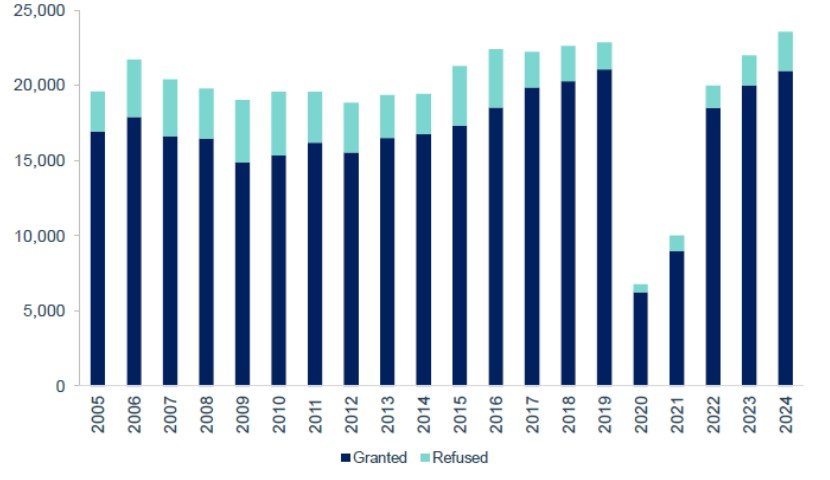
Source: Home Office published Entry Clearance data, from 2005-2025, main applicants only. Withdrawn and lapsed decisions are not included. Number of granted entry clearance visas from January to June 2025 was 12,800, 1,500 were refused (these figures may be subject to revision).
Figure 2.2 below shows the gender and age split of ODWs since 2005. ODWs are predominantly female (75% in 2024). 35-44 is the age category that had the highest number of granted visas over the period 2005-2024 (for 2024, 23% were aged 25-34, 39% 35-44 and 25% 45-54). The average (mean) age of ODWs has increased over time, from 38 in 2005 to 42 in 2024. The age and gender profile seen in the visa data fits with what is known about the reasons ODWs enter overseas domestic work: NGOs working with ODWs have told us that it is common for women to do so because of poverty, with many being divorced or widowed, and with a family to support or educate. This is also consistent with the narratives we have heard from ODWs themselves about the reasons they personally looked for domestic work overseas.
Figure 2.2: ODW granted entry clearance visas by age and gender, 2005-2024
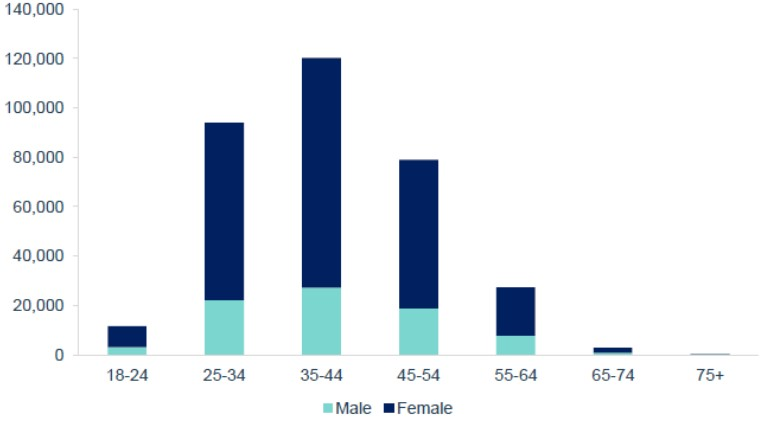
Source: Home Office Management Information Data, from 2005-2024, main applicants only. 77% of entry clearance visas granted between January and June 2025 were to females, and 23% to males (figures subject to revision).
In 2024, just over half of visas were granted to Filipino nationals (52%). The nationality with the next highest proportion of granted visas was India (19%), followed by Indonesia (5%). These nationalities have consistently accounted for the largest numbers of granted entry clearance visas since 2005, as Figure 2.3 below indicates.
Given that poverty is a major driver of individuals becoming domestic workers before coming to the UK, it is not surprising that most come from countries with comparatively lower per capita GDP. In some of the richer countries[footnote 5] where ODWs work, Home Office visa application data shows that very few of the ODW visa applications made are made by domestic nationals in those countries. In contrast, in countries where the GDP per capita is significantly lower, domestic workers may work in their country of origin or overseas: in Nigeria, India, and Pakistan[footnote 6] a large number of the ODW applications made are by these countries’ own nationals[footnote 7]. The next section will explore where ODWs find employment, as well as the reasons ODW employers come to the UK.
Figure 2.3: Top 10 ODW nationalities, 2005-2024
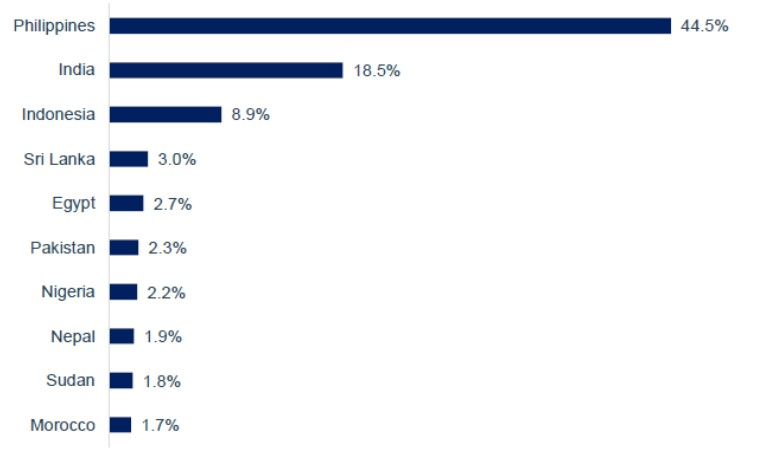
Source: Home Office published Entry Clearance data (includes main applicants only). This chart shows the percentage of all visa grants represented by the 10 nationalities who were granted the highest number of visas from 2005-2024, from 166 nationalities who were granted a visa.
Pre-2012 ODWs
The ODW visa prior to 2012 allowed the employee to extend their visa as long as they remained in employment, to change their employer, and to apply for settlement after 5 years. A few pre-2012 ODWs remain in the UK on the ODW visa. This may be because they cannot afford to apply for Indefinite Leave to Remain, which has a non-waivable fee of £3,029, or because of other reasons such as not being able to meet the English Language requirements or pass the Life in the UK test. In 2024, 255 applications to extend (main applicant) were made by ODWs, all of which were granted.
Who employs ODWs?
As ODW employers are not officially sponsors, the information available about their profile and characteristics is limited. This limited data amplifies the problems in enforcing employment standards and fair treatment of ODWs, as discussed later in the chapter.
Nationality
We do not have nationality data for the employers of ODWs, who may include British nationals based overseas, nationals of the country from which the application is made, and internationally mobile individuals. Figure 2.4 below shows the top 10 countries from which granted ODW visa applications originated in 2024, indicating that by far the highest number originated from the United Arab Emirates, Qatar and Saudi Arabia. These countries have consistently represented the highest share of ODW visa applications regardless of visa outcome: between 2005 and 2024, 64% of all visa applications originated from these three countries.
Figure 2.4: Top 10 countries where ODW visas were processed, 2024
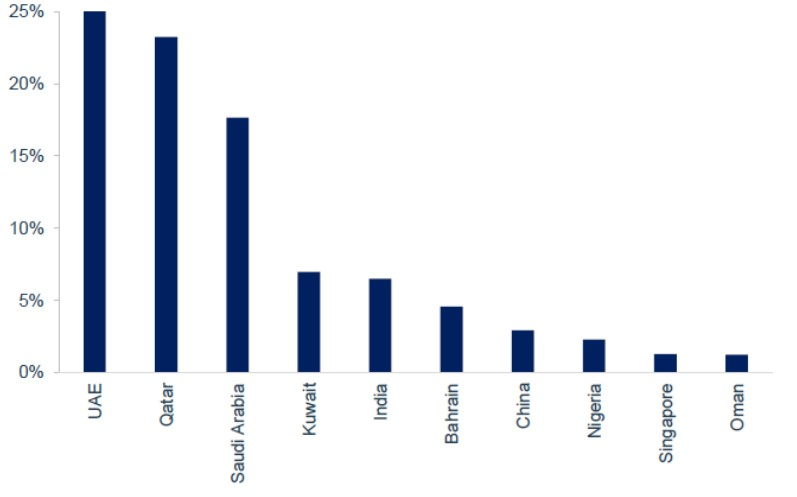
Source: Home Office Management Information Data. This chart displays the top 10 countries where granted Overseas Domestic Worker visas were processed in 2024.
Wealth
By facilitating employers’ visits to the UK, the ODW visa route indirectly facilitates travel for business, family, and leisure purposes. As the earlier section on why the UK has the ODW route indicates, the financial benefits of tourism are considered by some stakeholders to be a key benefit of the route. Yet it is difficult to isolate the specific benefits of the ODW route. Fragomen, a legal advisory firm that supports clients bringing ODWs to the UK, told us that their clientele are often highly mobile, maintaining residences in multiple countries and requiring domestic staff to travel with them. However, in many of the countries in which the highest numbers of visa applications are made, it is common for middle-class households as well as wealthy, high-net-worth individuals to employ domestic staff. It is therefore possible that some employers of ODWs will also be these more modestly wealthy households.
According to Fragomen, ODWs can be employed in a range of roles. However, many clients primarily engage ODWs as nannies or carers – roles that involve close personal interaction and a high degree of trust. Fragomen indicated that a number of clients prefer to travel with workers from their own country of residence as opposed to recruiting locally in the UK due to background checks, language barriers and maintaining continuity of care, especially for younger children. They told us that while there are occasional enquiries for roles like chefs, these tend not to progress, as employers find it easier to recruit such staff locally. Fragomen indicated that although cost and availability do influence employer decisions to some extent, pay is not typically the main concern for their clients.
Travel patterns
Home Office data shows ODW visa applications peak in the second quarter of each year (for example, in 2024, 46% of applications were made in Q2). This seasonal pattern implies that many domestic workers accompany their employers to the UK during the summer months, likely for holidays: this is supported by what we heard from stakeholders, who told us that many people from the Middle East and other hot countries like to travel in summer to escape the heat and make regular or repeated visits to the UK over the summer. As ODWs are often looking after children as part of their job, summer visits may also be to allow travel during school holidays.
Problems with the route
It is difficult to assess the extent to which exploitation and abuse takes place on the route, in the absence of being able to survey or interview all ODWs using the visa, and we do not suggest that all employers of ODWs are abusive or that all ODWs are mistreated. ODWs who come into contact with NGOs working in the field may be more likely to be those who are experiencing serious problems with the route, or who have relatively more freedom to leave the house or access services given that many referrals come through other community support such as friends or churches. The 2015 Independent Review commented that “robust data of the extent of such abuse simply does not exist. However, the evidence cannot be dismissed as merely anecdotal. … whilst it would be inappropriate to draw conclusions as to extent, it is quite proper – indeed it is necessary – to acknowledge that such abuse is a reality for some, albeit that the scale is undetermined.”
Domestic work and ODWs are highlighted in the DLME’s 2025-2026 Labour Market Enforcement Strategy as one of the areas of the labour market where employees are at most risk of exploitation, and there are a number of ways in which ODWs are particularly vulnerable to mistreatment. These concern the type of employment they undertake and where they do it, the power imbalance between employers and employees, and the lack of enforcement both in the UK and overseas. Employees may find escaping the situation difficult, and even when they do, they may lack other realistic options.
Employment conditions
As noted above, assessing the extent to which exploitation and abuse take place is difficult. However, evidence from NGOs working both specifically with ODWs and generally in the field of labour market exploitation[footnote 8], and statements from ODWs themselves, indicate that several forms of employment abuse do take place, many of which illustrate the vulnerability and comparative lack of power of this group of workers.
Nottingham Rights Lab conducted a survey using a snowball-recruitment method[footnote 9] that will not necessarily produce a sample representative of the overall population, and includes other migrant domestic workers as well as ODWs, but provides a useful indication of potential patterns. It found that, of the 97 domestic workers surveyed:
- 82% reported experiencing verbal abuse and 42% threatening/intimidating behaviour from their employers, with over a third experiencing physical violence and 24% receiving a lasting injury as a result;
- 41% reported that their employers always or sometimes withheld their travel or ID documentation;
- 41% reported having had payments owing to them withheld;
- 10% reported working more than 12 hours per day, with 24% reporting that they worked more than 40 hours per week; and
- Less than half (42%) reported that they had a break of more than 24 hours every week.
NGOs working in the sector, and ODWs themselves, further reported that excessive deductions from wages, sexual abuse, being kept short of food, and not being allowed to leave the house, were problems experienced by some ODWs on the route.
Awareness of rights
Workers may be unaware of their rights in the UK and often have limited rights in the countries in which they normally work. Some have limited English language or literacy skills which increases the difficulty of accessing this information. A 2021 report from Human Rights Watch indicated that Hong Kong continued to exclude domestic workers from key legal protections, and that while immigration protections in the Middle East had improved, the kafala system (under which employers are also immigration sponsors) continued to leave workers at risk of abuse. Where ODWs are exploited in the UK, the exploitation may in many cases already have started overseas.
ODWs additionally said that they thought employers may not always be aware of the work rights ODWs should have in the UK, although the Home Office has simplified guidance, for example around minimum wage, to make this easier for employers to understand. A recommendation of the 2015 Independent Review that has not been taken forward is the provision of compulsory in-person information sessions a few weeks after workers arrive in the UK, for those on longer visits. Kalayaan and other NGOs have further suggested that workers do not always receive information at visa applications centres (VACs) either, although (following the implementation of the recommendation in the 2015 Independent Review) they are supposed to be separated from their employers there and given a leaflet that explains their rights in the UK and what to do if they experience abuse. Within the small group of ODWs we spoke to, some said that their employers or a representative such as their employers’ driver had been present throughout their interviews for the visa application process.
Employment contracts may be poorly translated or entirely absent which may leave workers unaware of their rights: Nottingham Rights Lab found that, of the workers they surveyed, most (61%) did not have a written contract with their employers. The Domestic Worker Statement referred to earlier is intended to outline some of the main terms and conditions for at least the period in which the ODW is working in the UK. However, a group of ODWs convened by Kalayaan on our behalf further indicated that in cases where contracts did exist, employers often did not stick to them, and that the terms set out in both contracts and the ODW visa application were “only on paper”. For example, one ODW said that her employer had signed a paper stating the minimum salary she would be paid in the UK, but that he had told her this was just to meet visa requirements, and she would in fact be paid less.
Enforcement
The Independent Anti-Slavery Commissioner told us that “The current ODW visa route leaves domestic workers highly vulnerable to exploitation, given their dependency on one employer and the absence of state oversight and monitoring.” As discussed further below, there is little proactive enforcement on the route. Limited data exists to enable enforcement despite better information sharing being a recommendation of the 2015 Independent Review and despite the government stating in its response to the review that all employers bringing an ODW to the UK would be registered. After publication of the review, debates about enforcement focused on the difficulties in enforcement and how many prosecutions would ever take place or employers be banned from entering the UK.
Although it is possible for prosecutions of abusive employers to take place, these remain rare because of the difficulty both of building a case and taking effective action against someone who lives abroad, especially in cases where the employer has no assets in the UK. It can also be difficult for ODWs to find Legal Aid solicitors, further limiting their ability to enforce their rights. The Gangmasters and Labour Abuse Authority (GLAA) told us that where action against employers can take place, the victim navigator role (which is not exclusive to ODWs but maintains contact with victims of crimes and can help them access other services) can improve engagement with the process and the ultimate chances of success. However, there is a shortage of these roles. GLAA currently has one navigator, which they say they find invaluable for Modern Slavery cases and could provide a full caseload for another but are unable to meet the £60,000 cost within the current budget.
Ability to leave an abusive situation
Although lack of knowledge about employment rights on the part of both employer and employee may contribute to workers entering or remaining in exploitative employment, the employee may be perfectly aware that they are not being treated properly but may be unable or unwilling, due to other pressures including their need to earn money, to do anything about it.
Where abuse takes place, it is often hidden as the employee is based at their employer’s home, potentially not allowed to leave the house, and likely to be working long hours: these are logistical factors that also limit the employee’s ability to report abuse, as is lack of knowledge of transport links to leave the location, and lack of access to phone and internet. Additionally, as discussed earlier, many ODWs are responsible financially for their own family and extended family, having entered domestic work overseas to support them. In these cases, they may remain even where employment is exploitative or abusive, in order to keep receiving the money they need for their family: one ODW told us that “you sacrifice yourself for them”. NGOs working in the field told us that for this reason, the trigger for an ODW to leave an abusive situation can often be when the employer stops paying them.
This lack of options available to employees and the logistical or financial difficulty of escaping the situation may increase the likelihood of abuses occurring. Kalayaan has reported analysis of the standardised interview questions they ask to ODWs, which indicates that those coming to the UK before 2012, when there were fewer restrictions on the route, were less likely to experience abuse. Although it does not prove causation, their analysis indicated that the percentage of people who, when asked standard questions, indicated abuse or exploitation across a range of measures (including being able to leave the house, having possession of their passport, physical abuse, withholding food and lack of a day off) was higher across all measures for those issued a visa after both the 2012 and 2016 visa rule changes than for those issued a visa before April 2012.
What can an ODW do if they leave an exploitative employer?
In theory, the options available to employees leaving abusive employers are finding a new job, entering the National Referral Mechanism (NRM), claiming asylum or returning to their home country. Practically, access to each of these may be limited.
Changing employer
ODWs are free to change employer within the validity period of their visa for any reason, as long as they stay in domestic work for a private household. NGOs have commented that this may be more of a theoretical concession, given that if an ODW leaves they may not have their passport or a reference and so will be looking for a job in someone’s private household for a very limited period and with limited documentation. Employees who change employer do not need to inform the Home Office that they have done this. This rule is intended to make it easier for employees to leave but reduces the visibility of employees even further. Workers who change employers without oversight may become more vulnerable to exploitation, and there is currently no means of checking whether their circumstances improve or deteriorate further. The 2015 Independent Review recommended that where an ODW changed their job, they should be required to register details of the new employer, but this has not been implemented.
It is possible that some ODWs will overstay once they have ‘disappeared’ in this way. Previous exit checks data for 2018-2019 suggests that in 4% of cases, ODWs could not be identified as having left the UK on time at the end of their visa. The report indicates that not being identified as having left does not necessarily mean non-compliance or overstaying, as people may not have been able to be matched at the time of the report, may have left via the Common Travel Area, or through means where they were not counted, for example using private airports. Others may have overstayed for short periods before leaving the country.
Entering the National Referral Mechanism
The National Referral Mechanism (NRM) is the framework for identifying and supporting victims of modern slavery and human trafficking. It aims to protect victims, rather than preventing abuse from occurring. The government recently (July 2025) launched a Call for Evidence on how the process of identifying the victims of modern slavery can be improved.
A ‘first responder organisation’ is, in England and Wales, an authority that has a duty to refer potential victims of modern slavery into the NRM, where ‘competent authorities’ in the Home Office make decisions on cases. First responder organisations may be statutory, including the police, Border Force or UKVI, or non-statutory (NGOs). The ODWs who enter the NRM and receive a positive ‘reasonable grounds’ decision at the first stage before their initial visa period expires maintain their right to work as a domestic worker in a private household for a 30-day period or until a final ‘conclusive grounds’ decision is made, whichever is longest. A positive ‘conclusive grounds’ decision at the second stage under the NRM further allows ODWs whose situation is accepted as amounting to modern slavery to apply for two years’ further leave to remain in the UK, during which time they can also continue to work as a domestic worker in a private household.
Based on available management information (MI) data, initial estimates suggest that around 1% of ODW visas between 2022 and 2024 can be linked to an NRM referral. These results are uncertain given the challenges of the matching process and data quality. This is against an overall backdrop of rising NRM referrals: referrals increased by 13% between 2023 and 2024, and total referrals in the latest quarter for which data is available (July-September 2025) were the highest in any quarter since the NRM was introduced in 2009.
Both the Independent Anti-Slavery Commissioner and NGOs also highlighted the speed of the decision-making process. There are a limited number of accredited first responding organisations, which consequently have a high workload. This creates a bottleneck that can delay or even prevent ODWs from being able to access an initial decision within their visa period, as can the fact that ODWs often lack their passport and the associated documentation to show their visa expiry date. The average age of cases awaiting a conclusive grounds decision was 141 days at the end of September 2025, compared to 305 days at the end of the previous quarter. Although this is expected to fall following increased resourcing, as referenced above there are still difficulties with initial access to the NRM.
As with other visa applicants, some ODWs are not eligible to work while their claim is considered because their visa expired before starting the application process. The applicant maintains the immigration status they had when entering the process, as NRM does not in itself confer immigration status. Given the financial pressures that drive ODWs to seek work abroad, and the limited stay of their employers in the UK, going without work is unlikely to be a realistic option. Instead, ODWs may work in the informal economy and may be further exploited. Some ODWs we spoke to told us that having left their employer, or at the end of their period of leave following a positive NRM decision, they would return to their home countries and then seek further work abroad given that their financial situation would not have changed.
ODWs in the UK who are exploited but are not in a situation that meets the definitions of trafficking or Modern Slavery are in theory protected by general employment rights legislation, but in practice may struggle to make use of these protections.
Asylum claims
Some ODWs in the UK will eventually claim asylum. Based on available MI data, initial estimates suggest that around 2% of ODWs between 2022 and 2024 did so. These results are uncertain given the challenges of the matching process and data quality. Applicants may also not necessarily apply for asylum in the same year their ODW visa was granted. A NRM and asylum claim may be made at separate times or concurrently, and a positive ‘conclusive grounds’ NRM decision may add weight to an asylum claim. Further work would be needed to establish whether there are any differences by nationality or other demographics, whether in terms of the likelihood of claiming asylum or the grounds on which it is claimed. It is not clear from the available data to what extent the asylum claims were directly related to exploitation (for example, if a person is at risk of being re-trafficked if they return home). Either way, NRM referrals and asylum applications have a fiscal cost that will offset some of the economic benefits of the route described earlier.
Monitoring and enforcement
Monitoring and enforcement on the ODW route is limited. As previously discussed, there is a lack of available information on employers, which makes it difficult to undertake any effective scrutiny of them as a group. Additionally, many ODWs are only in the UK for a short time.
Private households are the primary workplaces for ODWs. The main agency with a remit to address serious labour market offences and modern slavery, the GLAA, can only enter private residences in non-licensed sectors such as domestic work if they have the evidence to secure a search or arrest warrant. This would depend on being able to build up an evidential picture, which in turn is unlikely unless the ODW or a member of the public reports the situation and is also dependent on limited resourcing. Immigration Enforcement (IE) also has limited capacity and competing priorities, which further reduces the likelihood of intervention. Although helplines exist for reporting modern slavery, ODWs may be unaware of these resources or are unable to access them due to language barriers or fear of retaliation by their employers.
It remains to be seen whether the new Fair Work Agency (FWA), which will launch in 2026 and will bring together the GLAA, Employment Agency Standards Inspectorate, Office for the Director of Labour Market Enforcement and HMRC National Minimum Wage, will enable these issues to be addressed with any greater ease for ODWs. It may at least increase the visibility of labour market exploitation and be a recognisable name that may be shared with ODWs and be an obvious place for them to report abuse. It is also likely to cut down on the need for inter-agency referrals, compared to the situation at present where GLAA picks up some issues and HMRC others. The additional powers being granted to the FWA in the Employment Rights Bill will enable the FWA to tackle ‘fraud by abuse of position’, which may enable more action to be taken where exploitative treatment of workers falls short of Modern Slavery. However, the new single body will still need to balance any action taken regarding ODWs with its other operational priorities.
The visa rules also contribute to enforcement difficulties. This is not a sponsored route and introducing sponsorship would make it much more complicated to use and administer; however, the lack of sponsorship also creates a visibility gap that reduces authorities’ ability to identify and address exploitation. The current system provides some scope for intelligence relating to exploitation of ODWs to be used. If an ODW is referred into the NRM, information may be fed back to UK Visas and Immigration and Home Office Intelligence by the first responder or competent authority and an alert may then be created. Depending on the nature of this intelligence, it may be available to a decision maker considering a future application from the same applicant or from other ODWs working for the same employer. The Immigration Rules do not prevent an ODW being granted a visa if they work for someone who has previously employed an ODW who was referred into the NRM, nor do they contain grounds for refusing the visa on this basis. However, any information that was available in this way would be considered by the decision maker as part of their holistic assessment of an application.
For many groups of employees, compliance with minimum wage legislation can be monitored through HMRC, but it is likely that most ODWs are paid in the same way that they are when they are working for their employer overseas.
Evidence gaps
Employer data
The data currently gathered by Home Office focuses on ODWs rather than their employers, as ODWs are not sponsored. The data that it is possible to extract and analyse reflects this focus, and we consequently have a limited understanding of the employer profile. In particular we do not know:
- How long employers stay in the UK, and whether this is on average longer or shorter than other visitors;
- Where they stay in the UK: most addresses accessible in Home Office management information systems are overseas addresses from application data. The address where the ODW is staying is collected as part of the application process and held centrally, but not routinely extracted for monitoring and enforcement purposes, unless there is a specific reason to do so such as an intelligence report;
- What the nationality of employers is;
- The balance of ODW employers between business people, luxury tourists, more modest holidaymakers, internationally mobile individuals and visiting British nationals.
More data in these areas would allow a more informed estimate of the financial value of the route to the UK, although we note that some of the value of the route is diplomatic or otherwise unquantifiable. In particular, it should be possible to see where people are working, including those who have changed their employer. Informing the Home Office need not present a barrier to ODWs moving job if they are able to do so after the move, and if they are informed from the outset that their immigration status will not be at risk as a result as long as they stay within the domestic work sector.
Monitoring and enforcement data
Increased information about employers is likely to improve the theoretical ability to enforce the rules on the ODW route, although it would not improve the resources available to either GLAA or IE to do so. It would be useful to consider whether there are any data that can be consistently collected from ODWs themselves to help with this, for example personal rather than employer email addresses and mobile numbers. As with other visas, the contact details held are those entered in the application form by the person completing it, and hence these could be for the ODW, an employer or an agent acting on their behalf. This could enable, for example, check-ins via email or the introduction of an ODW survey along the lines of that conducted annually on the Seasonal Worker route to better understand the nature and extent of exploitation.
We also know what roles ODWs are permitted to do but lack data on the roles they actually perform. More information on this would help the Home Office to evaluate the ongoing need for the route, in terms of the likelihood that employers will be able to source the help they need in the UK instead – as discussed previously, this is much more likely for some roles than for others.
It would also be useful to interrogate the data on asylum and NRM further, to allow a more accurate calculation of what percentage of each ODW entry cohort a) were referred into NRM; b) applied for, and were granted, asylum; or c) went through both the NRM and the asylum system, versus just one. Asylum and NRM data matched to nationality could also help identify whether certain nationalities are more likely to claim asylum or be referred, and the extent to which this reflects vulnerability and other claim behaviour.
Considerations on the future of the ODW route
Improving the data available would increase the UK’s ability to understand better the benefits and drawbacks of the ODW route, and to improve employer scrutiny and employee protections. Beyond this, there are several issues that the Home Office will have to balance in any future consideration of the route.
The existence, purpose and rules of the route
NGOs have repeatedly expressed a desire to return to the pre-2012 system where ODWs could extend their visa, bring dependants and eventually settle. These rules offered employees more (although by no means total) protection while they worked in the UK, given that the ability to extend the visa made it easier to change employer. This was a key reason that the 2015 Independent Review recommended ODWs should be able to extend their visa for two years beyond the initial 6-month visa period, but on the other hand, it also argued that offering settlement exceeded what was necessary to enable ODWs to escape from a specific exploitative situation, and that it was reasonable to expect people to leave the UK once the exploitation was resolved.
The policy landscape has changed dramatically since the pre-2012 rules were in force, and in particular the ability to come to the UK to carry out work such as domestic, childcare and private driving roles – the roles covered by the ODW visa. Indeed, one of the primary reasons for changing the rules in 2012 was to bring ODWs in line with the restrictions on work routes. The government thus faces a trade-off between the goals of protecting ODWs and restricting visas for low-wage work. Current policy, for those who successfully apply for further leave following engagement with the NRM, follows the approach suggested in the 2015 Independent Review, which argued that workers’ ability to move between employers could be achieved with two years of residence. As noted earlier, those who remain on the visa without entering the NRM are likely to find it difficult or impossible to find alternative legal employment.
It would also be possible for the government to decide to remove the ODW route altogether. The Independent Anti-Slavery Commissioner and NGOs argue that this would mean ODWs would continue to be brought into the UK to work in the UK on visit visas, and that this would reduce rather than improve employee protection. It is not clear how widespread this would be, because it is highly likely that visit visas would be refused to many people seeking to come to the UK as ODWs, under today’s visit visa procedures. The economic consequences of closing the route are hard to assess, as there is so little information on the economic and fiscal impacts of employers’ activities in the UK, and whether this offsets the cost of asylum applications where these take place. Nonetheless, it does seem likely that there would be negative diplomatic consequences to doing so, and the UK would fall out of line with similar countries unless ODWs remain accommodated in the immigration system.
Employee protections
Although there are undoubtedly many ODWs using the route who work for good employers, it is clear that under the present rules there is plenty of scope for employers who wish to exploit their employees to do so relatively unchallenged. It is important to bear in mind that in many cases those who are being exploited in the UK will already have been exploited in the country where they normally work: it is the location of their exploitation that has changed, not (in most cases) whether or not it is happening. It must also be noted that all ODW protections will also involve a cost to the UK, whether this is experienced in the form of increased enforcement and preventative action, or the costs of increased overstaying and asylum claims when the protections offered by the NRM are inadequate. These costs should be passed on to the employers via higher visa fees. Nevertheless, allowing a privileged group of foreign and British nationals the ability to underpay or otherwise exploit their staff in the UK is undesirable as well as being incompatible with upholding our labour market standards.
The Home Office may wish to consider employee protection from various angles as it develops its thoughts on the future of the route, for example:
- Revisit the unadopted 2015 Independent Review recommendations and assess their continued relevance now time has passed. For example, whether it is now easier for Home Office systems to gather information on or monitor employers (for example by setting up a register of non-compliant employers), or whether increased smartphone penetration and improved technology mean that there are additional ways that ODWs could be informed about their rights, be able to keep such information to hand, or be enabled to report abuse more easily. Additionally, the Home Office may wish to reconsider in-person information sessions, as suggested by the 2015 Independent Review, for those who are in the UK for longer than a few weeks. The Home Office may also wish to consider the protection offered on the route in a systemic sense, in order to better understand where best to direct resources. For example, resourcing considerations aside, who is in theory responsible for enforcing conditions and how is this supposed to happen? What is intended to happen to employees who are seriously exploited but not trafficked, or do not meet the definition of Modern Slavery?
- The Home Office may want to evaluate whether all avenues for improving enforcement and welfare have been considered. In particular, it could further consider the possibility that welfare measures could be paid for by ODWs’ employers, who are comparatively wealthy. For example, it may be possible to fund options such as in-person information sessions (as recommended in the Independent Review) or additional victim navigator support ringfenced for ODWs by increasing the visa cost. As an example, the cost of an additional victim navigator would cost less than £3 extra for each visa.
- Given that the current ODW visa rules have now been in place for several years and the very small number of people involved, the Home Office may also wish to consider whether it could do anything to rationalise the position of those few pre-2012 ODWs who remain in the UK. Given the small numbers, the cost of granting this group settlement would be minimal. It would also remove the ongoing administrative need to renew these visas.
- Consider whether learning could be applied from other temporary routes such as the Seasonal Worker Route. For example, the Home Office may wish to consider whether the pre-departure information on work rights and sources of help produced by GLAA and the International Organisation for Migration (IOM) in some of the languages most commonly used by Seasonal Workers could be adapted slightly and translated into the most common languages used by ODWs. It may also wish to consider other possibilities such as an annual ODW survey to better understand the true nature and extent of exploitation. DLME has also mentioned in its 2023-2025 Annual Report that community organisations can play an important role in reaching otherwise hard-to-reach workers.
- Employees can change employer, but it is difficult for them to find equivalent work within their visa validity period. The Home Office may wish to consider whether there are similar roles outside private households in which ODWs could work, whilst ensuring the visa is distinct from work visa routes. This would increase the exit options available to ODWs and could enable the Home Office to regularise what is already happening to some extent in an irregular way.
Although this is a small visa route, and has benefits to the UK, the severity of some of the exploitation associated with the ODW visa means that it is important for the Home Office to explore all options that would allow it to maximise employee protection as far as possible, if it decides to retain the route.
Chapter 3: English language and Integration
Summary
-
The recent Immigration White Paper set out government aims to improve integration, employability and community cohesion. It introduced plans to raise requirements for English language across different visa routes which will come into force in January 2026.
-
Census data shows that most migrants speak good English, but a small minority (around 10%) do not speak English well or at all. English proficiency varies across migrants’ characteristics, as well as across different parts of the UK. English levels tend to be higher amongst migrants who have been here longer and for those who arrived when they were younger. There are also marked gender differences for some countries of birth, where males have higher English proficiency than females.
-
We assess how English proficiency changes over time in England and Wales, and how poor English correlates with integration outcomes. Those who score highly on outcomes such as employment, wages and interest in politics are less likely to find English difficult. However, when controlling for education, the size of the correlations falls, demonstrating that there are multiple factors at work explaining these outcomes.
-
We highlight some key recent studies that show there is a significant causal impact to having proficiency in the language of the host country on integration outcomes and that this is sustained or even increases over time.
Introduction
English language skills are a requirement of various immigration routes in the UK, with the objective of ensuring applicants are capable of participating in UK life, to prevent exploitation and to ensure they have the potential to integrate. In May 2025, the government published the Immigration White Paper. The White Paper set out government plans to increase the level of English required for skilled workers, those on the Scale-up and High Potential Individual (HPI) route, and for the dependants of workers and students. It highlighted evidence of an association between English language levels and employment outcomes and suggested that English language is also a key facilitator of wider integration, as a justification for this change.
In this chapter we begin by briefly considering what we have said about English language in our previous reports and comment on the current policy context. In the main body of the chapter, we examine the proficiency of English amongst migrants across the UK using Census data. We then look specifically at England and Wales to consider how proficiency varies by characteristics such as country of birth, place of residence, reason for migration, and how it changes over time. We explore how language proficiency is correlated with both labour market outcomes and indicators seeking to measure integration. Finally, we review some recent research that seeks to estimate the causal impact of language proficiency on these outcomes, since policymakers should place more weight on such evidence rather than simple correlations. We do not, though, assess the adequacy of the English levels set by the government and required of migrants coming to the UK and whether this is fit for purpose. The data to do so do not currently exist but we would urge the government to ensure that they are collecting data to enable them to evaluate the changes they are making to English language requirements.
Policy background
The MAC has consistently emphasised the importance of English language proficiency in our reports, particularly in relation to integration, employability and protection from exploitation in a work context. In our 2022 Annual Report we argued that English language proficiency helps workers understand their rights and protect themselves against exploitation through better understanding of employment contracts and ability to communicate with authorities and report abuse. We emphasised this point again in October 2025, when we published our Temporary Shortage List: Stage 1 report.
English language requirements were first introduced in 2010 for partners applying under the Family route and were applied over the following decade across a range of routes[footnote 10] and at a range of levels, including skilled workers in 2016. The recently published Immigration White Paper set out planned changes in English language requirements across most routes. From the 8th January 2026, new rules will come into effect introducing higher English language proficiency standards for new applicants in specified work routes. For example, the Skilled Worker route proficiency level will increase from B1 to B2 on the Common European Framework of Reference for Languages (CEFR). In addition, the White Paper signalled an intention to introduce a requirement that adult dependants in work and study routes must meet the A1 level of English proficiency. This will be a new requirement and will bring arrangements for work and study dependants in line with existing arrangements for partners who apply under the Family route. In order to demonstrate improvement and integration during their stay, dependants will also be required to demonstrate A2 level English when they apply to extend their visa. For settlement, the government has indicated that B2 level English will be the default required level of English for most routes, including adult dependants in work and study routes. The government is currently consulting on changes to settlement policy. English language is an element of this, and further changes could potentially be brought in down the line.
The White Paper seeks to enhance overall outcomes in integration, employability and community cohesion. It states, ‘If people want to come to Britain to start a new life, they must contribute, learn our language and integrate.’ The government faces trade-offs when setting language requirements. On the one hand, it wants to ensure that migrants speak good English, to facilitate integration in the labour market and meaningful social connections with the resident population. This is a sensible goal. On the other hand, setting language requirements too high can have negative impacts. On the Family route, more demanding language requirements may separate British citizens and settled residents from their partners or children for longer and could delay language acquisition by keeping applicants out of an English-speaking country where they could more easily improve their proficiency. On the work route, many employers already require high English proficiency, particularly in graduate occupations. However, high language requirements may exceed employers’ requirements, in which case such requirements may exclude workers who would otherwise have brought economic benefits and technical skills that are in high demand in the UK. It is of course important to also highlight that the learning of a language and integration itself are processes, and proficiency can develop over time. Higher language requirements for settlement may in practice mean keeping migrants in temporary statuses for longer periods, which can have both costs and benefits in the short run, but in the long run might be expected to make social and economic integration more difficult.
A further challenge for setting policy is that government lacks the data and evidence to assess the ‘right’ level of language proficiency to balance these competing goals. Language requirements that apply at extension and settlement (rather than just at entry), also raise questions about the availability of language instruction and the government’s possible role in providing it. Realistically, the onus will usually be on migrants themselves to find language learning opportunities (including a growing number of digital options) given the limited public provision in the UK and the cost of expanding it. In practice, opportunities for developing language skills will vary. For example, low earners working long hours to support themselves may struggle to find the time and resources for high-quality instruction; and some people find language acquisition more difficult than others.
With these questions in mind, for the rest of the chapter we turn to examine what levels of English proficiency look like in the existing migrant population in the UK. It is intuitive to say that proficiency in the local language facilitates integration, however there are also many other factors that affect integration.
English proficiency levels
For this section we draw largely on data from the England and Wales Census 2021. We also present some figures for Northern Ireland and Scotland from their censuses where feasible. To determine English proficiency levels, we utilise the proficiency in English language variable in the England and Wales Census. The Census firsts asks ‘What is your main language?’, and those who reported their main language was not English were then asked ‘How well can you speak English?’ and were required to rate their perceived level of proficiency on a scale comprising ‘very well’,’ ‘well’, ‘not well’ and ‘not at all’. Since this is self-reported, it is subjective, and it is possible that respondents may have different perceptions of what speaking well or not well means. Furthermore, perceptions of one’s own language ability could be contextual and fluctuate over time. For example, it is possible that a migrant’s perception of their language ability could decline if they enter a new environment where everyone else speaks the language well, such as starting a new job. These Census categories do not straightforwardly map onto CEFR levels, although it is likely that those at the B2 level would perceive that they speak English at least ‘well’.
Given the government’s desire to increase English language requirements, it is notable, when looking at the current migrant population (defined as those born outside the UK) that most migrants living in England and Wales speak good English, whilst a small but significant minority (around 10%) do not speak English well or at all. This figure is around 15% in Northern Ireland and 9% in Scotland.
Our analysis of the England and Wales Census 2021 shows:
- 90% of the migrant population have English as either their main language or speak it well or very well. Around half of migrants spoke English as their main language (52%) and over a third had another main language but spoke English well or very well (38%).
- Around 10% of migrants reported they could not speak English well or at all; 8% reported that they cannot speak English well, while 1% reported that they could not speak English at all (around 143,000 migrants).
- Amongst newly arrived migrants (defined as those who arrived in 15 months prior to the Census), 3% (around 22,800) could not speak English at all and 13% (around 88,000) could not speak English well.
Table 3.1: English language proficiency
| Main language is English | Can speak English very well | Can speak English well | Cannot speak English well | Cannot speak English | |
|---|---|---|---|---|---|
| All migrants (England & Wales) | 52% | 20% | 18% | 8% | 1% |
| 2020-21 arrivals (England & Wales) | 35% | 24% | 25% | 13% | 3% |
| All migrants (Scotland) | 54% | 20% | 17% | 8% | 1% |
| All migrants (Northern Ireland) | 41% | 22% | 22% | 12% | 3% |
Source: England and Wales Census 2021. Scotland Census 2022. Northern Ireland Census 2021. Notes: Percentages may not sum due to rounding. Migrants defined as those born in countries outside the UK.
To put the figures above into context, the UK is fortunate that English is an international language. It is a de facto (commonly used in practice) or de jure (officially recognised by law) language in 87 countries worldwide, for 46 of whom it is the primary language in 2025. The map below plots these countries.
Figure 3.1: English speaking countries worldwide
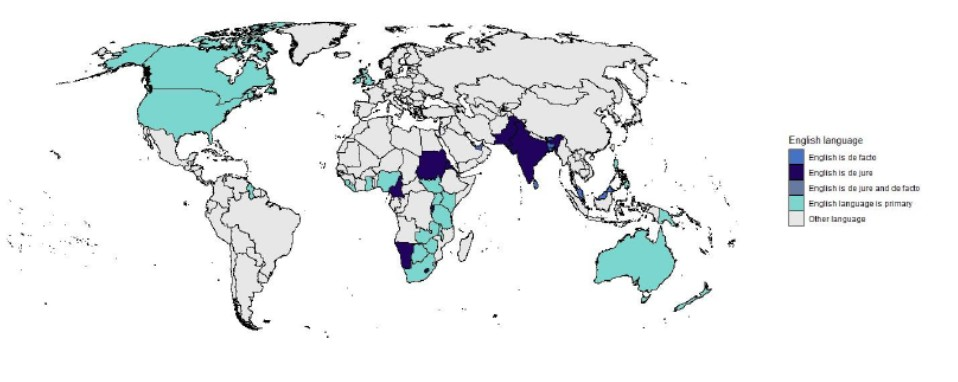
Source: Reproduced from World Population Review, 2025: English Speaking Countries 2025.
Many of the countries from which migrants who are granted settlement come from, have strong linguistic ties to the UK. If we examine the top 10 countries for settlement in the UK between 2021 and 2024, five have such ties - English is a primary language for three of these countries (US, Nigeria and the Philippines) and a de jure language for two countries (India and Pakistan).
Figure 3.2: UK settlement grants by nationality, 2021-24
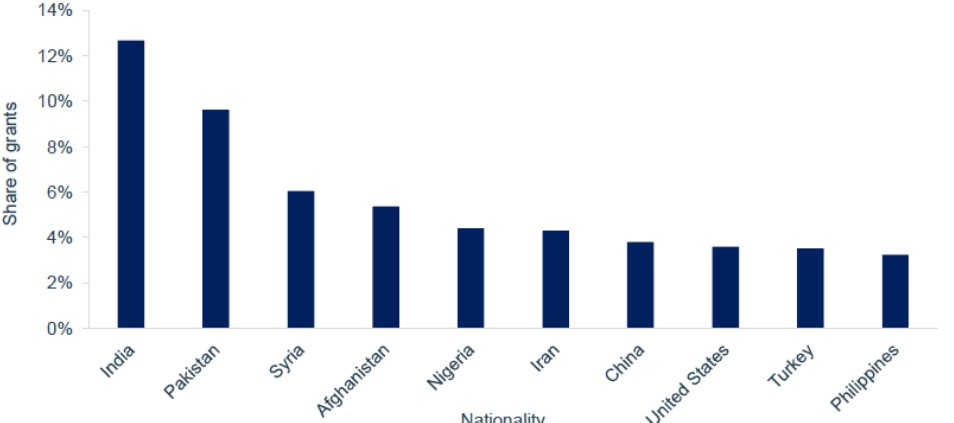
Source: Immigration system statistics data tables. Settlement detailed datasets.
English proficiency levels by characteristics
English and country of birth
Language proficiency varies significantly by country of birth. Figure 3.3 shows proficiency levels among migrants across the largest 15 source countries for migrants in England and Wales.
Even the country with the lowest proficiency (Bangladesh) still has over 75% of migrants speaking English well, very well or as a main language, and many countries have much higher percentages. The lower levels of English proficiency tend to be concentrated amongst migrants from some Asian countries and from Eastern Europe.
In addition, levels of speaking English as a main language do not straightforwardly correspond with levels of lower proficiency. For example, in Figure 3.3 we see that Pakistan and Bangladesh have higher proportions of English as a main language compared to Poland and Romania, but they also have higher proportions of migrants who cannot speak English well or at all.
We then looked at the top 15 countries of arrival for 2020/21. As shown in Figure 3.4, amongst migrants who arrived in 2020/21 there is still considerable variation across the countries of birth in levels of proficiency. This is also generally a lower level of proficiency than amongst all migrants, however there is still more than 60% of migrants from each of these countries who speak English well, very well or have English as a main language even from the country with the lowest proficiency (Brazil). Brazil, Bangladesh, Romania and Turkey are the countries with lowest proficiency.
The academic literature suggests that linguistic difference, that is the greater the difference in the languages between country of origin and country of migration, can make it harder to learn the new language (Isphording, 2015; Chiswick & Miller, 2014). However, much of the difference in English language proficiency may also be related to compositional effects, that is the makeup of the migrants that come from different countries, such as age and education levels or time in England and Wales.
Figure 3.3: English proficiency by country of birth
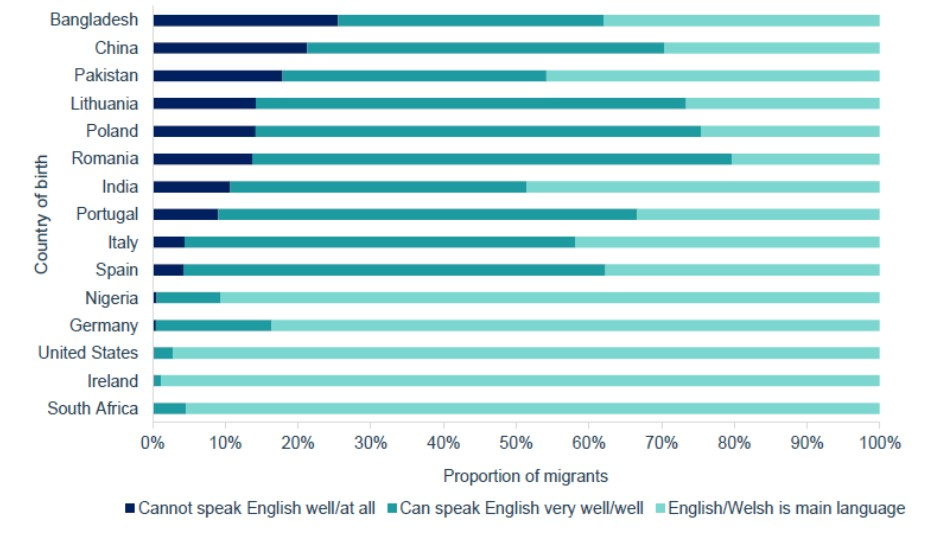
Source: England and Wales Census 2021. Top 15 countries in terms of volume of migrants living in England and Wales. Ordered by those with the highest proportion of migrants in England and Wales that do not speak English well or at all. All does not apply responses have been excluded.
Figure 3.4. English proficiency by country of birth, new arrivals
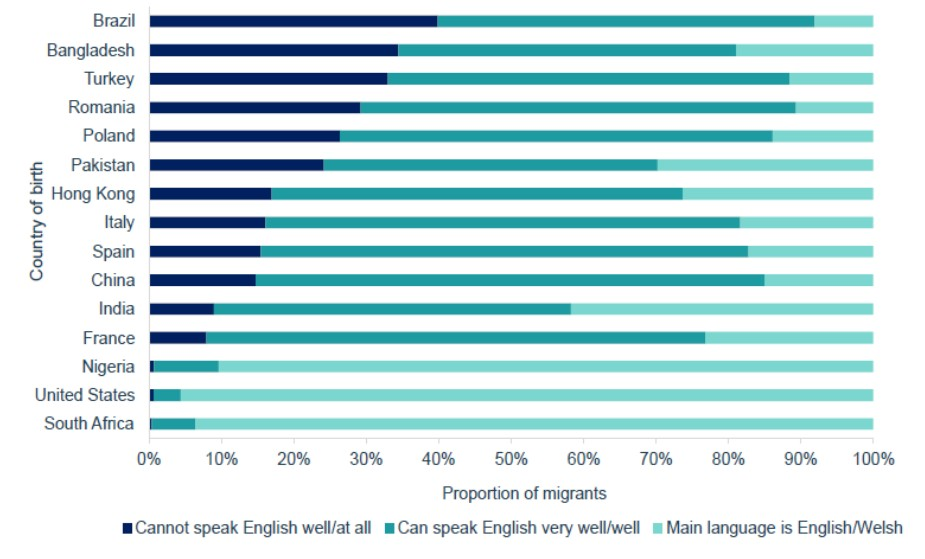
Source: England and Wales Census 2021. Top 15 countries in terms of volume of migrants living in England and Wales who arrived between 2020 and 2021. Ordered by those with the highest proportion of migrants in England and Wales that do not speak English well or at all. All does not apply responses have been excluded.
English and length of time in UK
As might be expected, there are higher levels of English language proficiency for groups of migrants who have been in England and Wales longer, potentially reflecting a combination of improvement in English language skills over time, changes in the composition of newly arriving migrants in different periods, and potentially emigration of people with lower language proficiency.
As can be observed in Figure 3.5 there is an increase in the proportion of migrants who speak English as a main language with greater time since arrival and a corresponding reduction in the numbers who speak English well or very well over time. There is also a reduced proportion who do not speak English well or at all with greater time since arrival. This finding is also consistent with analysis of the Understanding Society longitudinal survey which shows that most migrants who reported difficulty speaking English at the first survey reported improvement 7-10 years later.
Figure 3.5: English proficiency by year of arrival
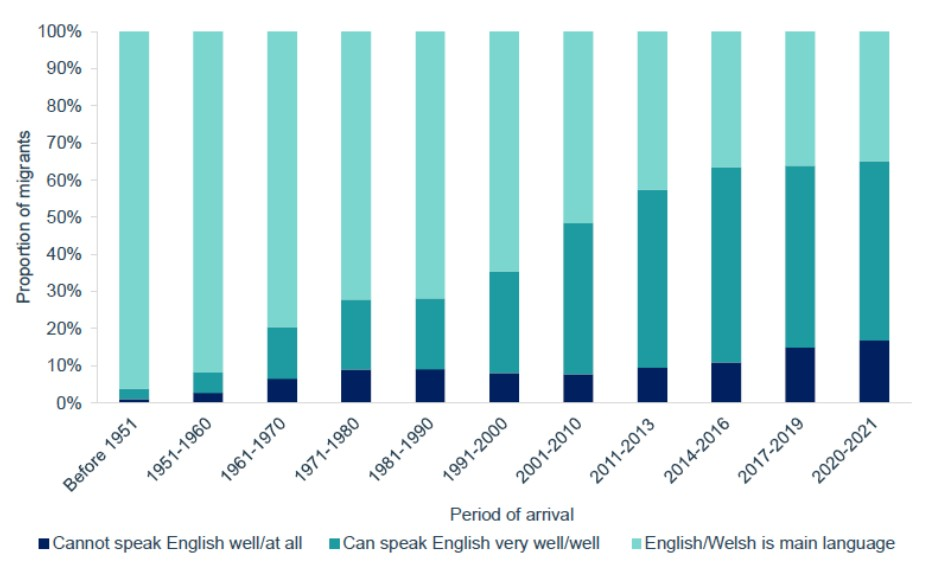
Source: England and Wales Census 2021. All does not apply responses have been excluded.
Country of birth, year of arrival and English language
We also explored how English varies by year of arrival amongst migrants from different countries. Some countries of birth have a small but significant proportion of migrants who do not speak English well or at all amongst people who have been in England and Wales for at least 30 years and in some cases, this is proportionately higher than for more recent arrivals from those countries.
The following patterns can be observed across countries of birth:
- For migrants from countries where English is an official language (e.g. South Africa, Nigeria), almost all migrants have high levels of English, including new arrivals;
- For migrants from some countries which do not have English an as official language (e.g. Poland, Romania), those who had spent longer in the UK had higher levels of English proficiency than newer arrivals;
- In contrast, India, Pakistan and China have similar or higher proportions of migrants who arrived in earlier years that do not speak English well or at all to those that arrived in recent years. In the case of Bangladesh earlier arrived migrants do not have quite as high a rate as more recent arrivals but still have a large (more than 20%) proportion that do not speak well or at all.
This could suggest that early migrants from some countries of birth may be different in some way to newer arrivals or for some reason these groups have less opportunity to learn English compared to migrants from other countries. As highlighted in the introduction, English language requirements for entry to the UK were not in place prior to 2010 across any routes.
Figure 3.6: English proficiency by year of arrival and country of birth
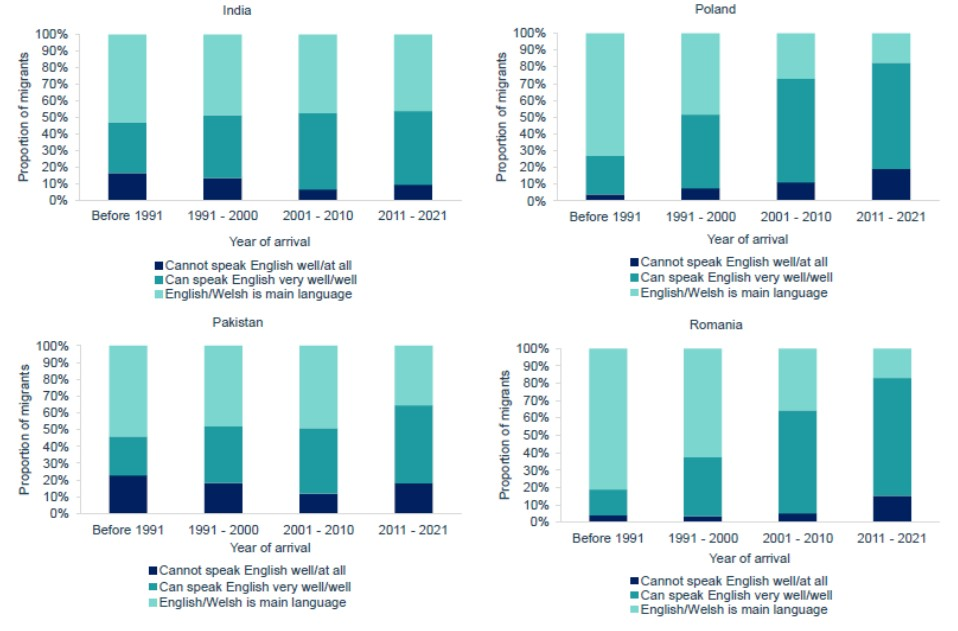
Source: England and Wales Census 2021. India, Poland, Pakistan and Romania selected as top 4 countries in terms of volume of migrants in England and Wales. All does not apply responses have been excluded.
English language, country of birth and sex
Overall, there are relatively small differences between male and female levels of language proficiency, with 8% of men and 11% of women not speaking English well or at all. This however masks significant variation by country of birth.
Table 3.2: Poor English proficiency by country of birth and sex
| Male (%) | Female (%) | Gap between males and females (%point) | |
|---|---|---|---|
| Afghanistan | 14 | 31 | 17 |
| Bangladesh | 17 | 34 | 17 |
| Pakistan | 11 | 25 | 14 |
| Turkey | 19 | 30 | 11 |
| Syria | 24 | 32 | 8 |
| India | 8 | 14 | 6 |
| Iran | 17 | 19 | 2 |
| Romania | 13 | 15 | 2 |
| Germany | <1 | <1 | 0 |
| Italy | 4 | 4 | 0 |
| Nigeria | <1 | 1 | 0 |
| Philippines | 1 | 1 | 0 |
| Poland | 14 | 14 | 0 |
| South Africa | <1 | <1 | 0 |
| China | 25 | 19 | -6 |
| All migrants | 8 | 11 | 3 |
Source: England and Wales Census 2021. Notes: Countries that appear in top 10 by volume of migrants and/or top 10 for settlement (2021-2024). US and Ireland not included in top 10 as are not subject to English language proficiency testing. Total ‘all migrants’ is based on migrants from all countries.
For the South Asian countries of Afghanistan, Pakistan, Bangladesh and India, as well as Turkey and Syria, men have higher levels of English proficiency compared to women. Some of these differences are quite stark, with twice the proportion of women not speaking English well or at all as men from these countries. 30% or more female migrants from Afghanistan, Bangladesh, Syria and Turkey do not speak English well or at all.
The reasons for these differences by country of birth will be complex and may reflect various underlying factors. For example, cultural expectations or experiences of men and women’s education and employment, or reasons for migration (e.g. women migrating for family or asylum rather than work or study may have lower English levels).
Extending this analysis further, we also examined proficiency by year of arrival and sex for the countries above with gaps in proficiency between male and female migrants. This is important as it helps us to understand whether this is an issue for new migrants or those have been here for much longer, as this could have different policy implications.
The results show that there is considerable variation across the countries in how pronounced the gap is between male and female migrants who arrived at different times. For some countries the gap between males and female migrants in poor proficiency is more historical (i.e. mainly seen amongst migrants who have been in the country for over 30 years). For example, migrants from India where the gap is 15 percentage points (ppt) for migrants who arrived pre-1991, compared to a 3ppt gap for migrants who arrived 2020/21. For other countries, the difference is more persistent and is seen amongst migrants that arrived both a long time ago and more recently (for example migrants from Afghanistan and Bangladesh).
These varied patterns may in part reflect changes in the composition of migration from each country over time. For example, many recently arrived Indian migrants will be work and study visa holders who will not necessarily stay in the country permanently, while we should expect a higher share of family migrants among those who have lived in the UK for a long time.
English language and age at arrival
Previous work has shown that the age of arrival in the host country is of key importance in terms of ability to develop language skills. Migrants arriving in the host country before adolescence are more easily able to acquire the language to a proficiency level of those born in the country or almost at that level. People that arrive when they are older find it harder to learn a new language. The ‘critical period’ hypothesis suggests that there is a break in ability to learn a new language after early adolescence (e.g. at around age 11) (Isphording, 2015).
This is reflected in our analysis of the England and Wales Census. Amongst all migrants, there is greater proficiency for those who arrived at younger ages: 76% of those who arrived at ages 0-15 reported English as a main language, compared to only 36% of those who migrated after 50. There is also a much higher share of those who do not speak English well or at all for those who arrived after 35.
If we compare the picture of migrants overall to those who arrived in 2020-21 (Figure 3.8), we see more consistency in terms of the proportion of migrants who speak English as a main language across all ages, ranging from 33-40%. We also see an increase in the proportion who cannot speak English well or at all at ages 0 to 15 years, increasing from 3% overall to 26% for recent arrivals. The comparison to the overall picture indicates that the recent young arrivals will likely improve their English over time.
Figure 3.7 English proficiency by age at arrival, all migrants

Source: England and Wales Census 2021. All does not apply responses have been removed.
Figure 3.8 English proficiency by age at arrival, new arrivals
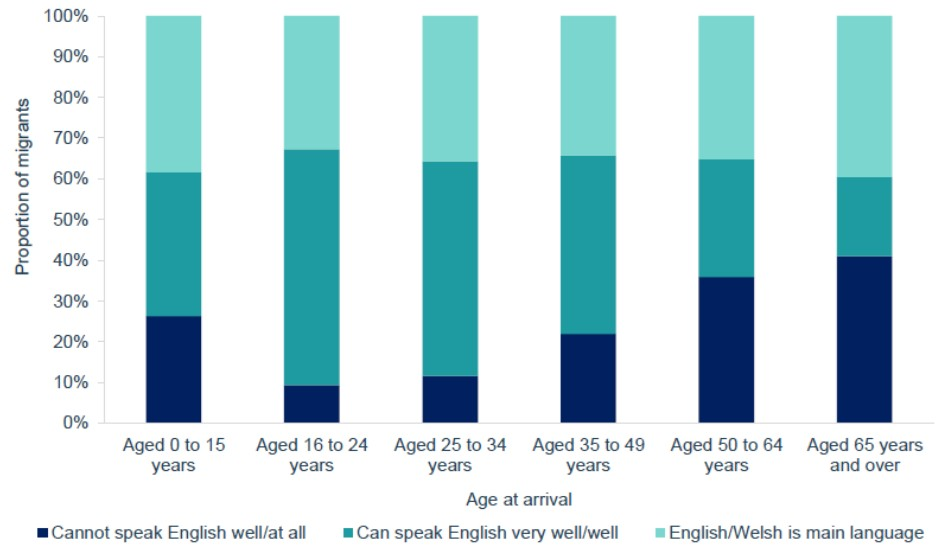
Source: England and Wales Census 2021. All does not apply responses have been removed. New arrivals includes migrants who arrived 2020 to 2021.
English and education level
For both long term and newly arrived migrants in England and Wales, English levels rise with higher educational qualification levels, although there is little difference between those who hold level 3 (equivalent to 2 or more A levels) versus level 4 (equivalent to first year of degree) and above qualifications. Those with no qualifications have the highest proportions who do not speak English well or at all.
When looking at migrants who do not speak English well or at all, 58% have no qualifications compared to 20% for all migrants, and this group are also much less likely to hold higher level qualifications.
Figure 3.9 English proficiency by highest level of qualification, all migrants
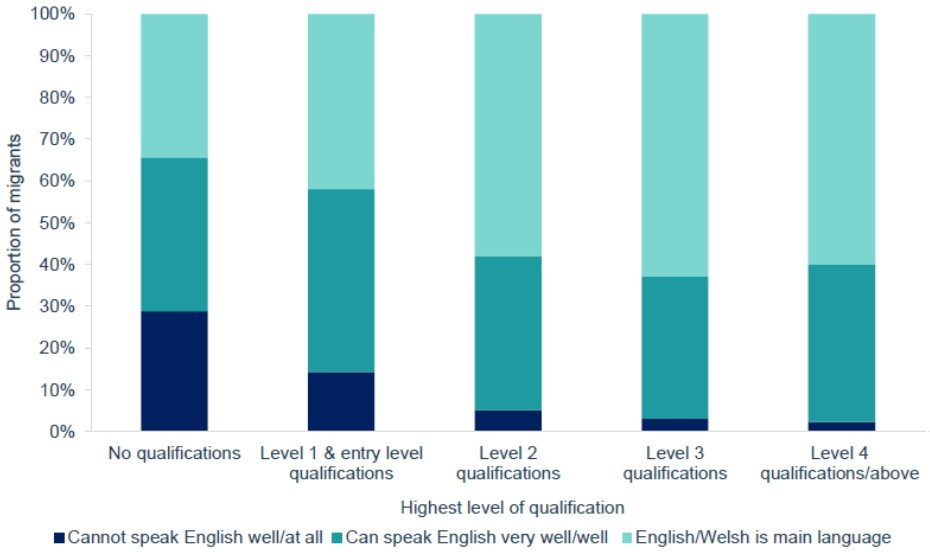
Source England and Wales Census 2021. Notes: Highest level of qualification classification, England and Wales Census. No qualifications: no formal qualifications Level 1: one to four GCSE passes (grade A* to C or grade 4 and above) and any other GCSEs at other grades, or equivalent qualifications. Level 2: five or more GCSE passes (grade A* to C or grade 4 and above) or equivalent qualifications apprenticeships. Level 3: two or more A Levels or equivalent qualifications. Level 4 or above: Higher National Certificate, Higher National Diploma, Bachelor’s degree, or postgraduate qualifications other qualifications of unknown level. All does not apply responses have been removed.
Figure 3.10 English proficiency by highest level of qualification, new arrivals
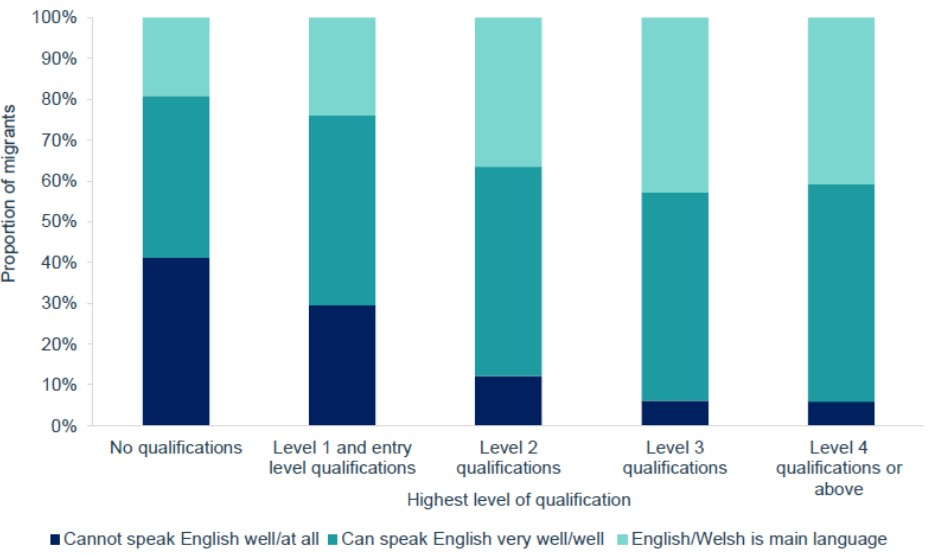
Source: England and Wales Census 2021. Notes: Highest level of qualification classification, England and Wales Census. No qualifications: no formal qualifications Level 1: one to four GCSE passes (grade A* to C or grade 4 and above) and any other GCSEs at other grades, or equivalent qualifications. Level 2: five or more GCSE passes (grade A* to C or grade 4 and above) or equivalent qualifications apprenticeships. Level 3: two or more A Levels or equivalent qualifications. Level 4 or above: Higher National Certificate, Higher National Diploma, Bachelor’s degree, or postgraduate qualifications other qualifications of unknown level. New arrivals includes migrants who arrived between 2020 and 2021. All does not apply responses have been removed.
English proficiency and reason for migration
It is likely that English proficiency will vary according to reason for migration, partly because many economic migrants and students are subject to English language requirements as part of the visa application process and would in any case require such language skills to pursue the activity. Research also finds that motivation makes a difference, as does actively choosing to come to a country which is less likely to be the case for refugees. Economic migrants have been reported to be more proficient in host country language with refugees often having lower proficiency and family migrants in the middle (Chiswick and Miller, 2006, 2007, cited in Adserà & Pytliková, 2016).
There is limited evidence on English proficiency of dependants of visa holders, but Home Office evaluation surveys of the Skilled Worker route and Graduate route suggest that while language proficiency of dependants may not be quite as good as main applicants, it may still be at a relatively high level. Seven out of ten Graduate route users with partners as dependants reported their partners spoke English very well or fluently and only 5% said English was spoken by partners at a basic level.
English proficiency across the UK
The proportion of migrants who do not speak English well or at all varies substantially across the UK. When looking at Census data for local authorities (LAs) with the highest proportions of migrants who cannot speak English well or at all, there are some geographical concentrations particularly in the North West of England, Yorkshire and the Humber, the East and West Midlands and Northern Ireland. The local authority with the highest proportion of migrants who do not speak English well or at all is Boston (26%), followed by Pendle (24%), Mid Ulster (23%) and Burnley (22%). Leicester (20%), Kingston upon Hull (21%), Bradford (20%) and Armagh City (20%) are the only cities that appear in the top 20. For many local authorities across the country this proportion is much lower. The average for local authorities is 8% of migrants who do not speak English well or at all.
Figure 3.11: Share of migrants who cannot speak English well or at all by local authority

Source: England and Wales Census 2021. Scotland Census 2022. Northern Ireland Census 2021.
Of course, the share of all residents in a local authority who cannot speak English well or at all will be much lower, because migrants account for a minority of the population and the native-born all speak English. When we look at the proportion of each total local authority population (including individuals born in the UK and those born abroad) who cannot speak English well or at all (Figure 3.12 below), the proportions shrink significantly. Across all local authorities, the average proportion of the local authority population that cannot speak English well or at all is only 1%. Only 39 (10%) local authorities have 3% or more of the population who do not speak English well or at all. The local authority with the highest proportion of individuals who do not speak English well or at all is Leicester (9%), followed by Newham (8%) and Brent (8%). Over half of the 20 areas with the highest proportions of those who do not speak English well or at all are in London, which tend to have the highest share of migrants.
Figure 3.12: Share of total population who cannot speak English well or at all by local authority

Source: England and Wales Census 2021. Scotland Census 2022. Northern Ireland Census 2021.
English proficiency within local authorities
We selected three areas in England to examine a more detailed geographical level, using Lower Super Output Areas (LSOAs), which are geographical areas within local authorities that comprise between 400 and 1,200 households. This enables us to see how English proficiency varies within LAs.
We selected Leicester, Brent and Boston LAs as examples to explore, as they have multiple LSOAs that appear in the top 50 of the highest proportions of people that do not speak English well or at all. Note there are also other LAs that fit this criteria and patterns described below should not be taken as representative of all LAs with high proportions that do not speak English well or at all.
Maps of these areas are shown below. We see that there tends to be geographic clustering of individuals with poor English, so that some neighbourhoods have much higher concentrations than others.
Figure 3.13: Share of population of areas in Leicester that do not speak English well or at all

Source: England and Wales Census 2021.
Leicester is an outlier across LAs, given that it contains the top 14 individual LSOAs with the highest proportion of people that do not speak English well or at all across England and Wales. These neighbourhoods all have at least 24% of the residents who have poor English proficiency. The areas of higher proportions of poor English speaking are quite geographically concentrated. Indeed, over two thirds of neighbourhoods of the city (69%) have less than 10% of the population that do not speak English well or at all, and 48% of neighbourhoods have less than 5%.
Figure 3.14: Share of population of areas in Brent that do not speak English well or at all

Source: England and Wales Census 2021.
In Brent, the neighbourhoods with the highest proportions of people not speaking English well or at all have a lower proportion than in Leicester, with a maximum of 21% compared with 36% for one area in Leicester. While there is one pocket in the southwest with high proportions of around 20% who cannot speak English well, English proficiency tends to be more evenly distributed across the whole local authority.
Figure 3.15: Share of population across Boston that do not speak English well or at all

Source: England and Wales Census 2021.
Our final example, Boston, shows a much starker concentration of the neighbourhoods that do not speak English well or at all, with a heavy concentration in the urban area of Boston town, in an otherwise largely rural area.
What is the relationship between English language proficiency and integration?
In this section we explore how English is related to aspects of integration drawing upon data from the England and Wales Census and Understanding Society. We then go on to highlight the challenges with ascertaining the size of the effect of English on integration outcomes and highlight some newer academic studies which seek to explore this in innovative ways. This is important because while it is clear that English language skills lead to better outcomes, understanding the size of this effect is important for policy making.
The Home Office Indicators of Integration highlight the role of language in facilitating many aspects of integration, including with other communities and with state and local actors. A review by the Home Office of refugee integration reported the value of English for facilitating employment, reducing exclusion and improving wellbeing. The positive relationship between English proficiency and employment as well as wages has been shown in numerous international studies (Chiswick & Miller, 2014). Migrants themselves recognise the value of English language for integration. For example, in a Home Office Graduate route evaluation, some of those on the route felt that lower levels of English negatively impacted their ability to integrate and some highlighted that this was the case for their partners. Others highlighted that their English had helped them to integrate, including getting a job.
Analysis of the Census conducted by the Migration Observatory also shows there is a positive relationship between employment and English language. Just under 70% of migrants who could speak English were employed or self-employed, compared to 50% who could not speak English well or at all. Around 15% migrants who could speak English were economically inactive, compared to 41% of those who cannot speak English well or at all.
Further analysis (figures 3.16 and 3.17) shows that people seeking work and those in work have better English levels than those who are not (with the exception of students) and this is the case amongst migrants as a whole and newer arrivals to the UK.
Migrants who are disabled/long term sick or looking after home or family are more likely to not speak English well or at all compared to those who are economically active or students, while there is little difference between those working and unemployed in English levels. While it is not possible to easily ascertain causality it may be that being long term sick or disabled has a strong isolating impact either because it is more long term than unemployment or due to reduced contacts of all types - limiting ability to learn English. It also may be possible that some people decide to look after home/family because they cannot access suitable employment due to lack of English proficiency.
Figure 3.16: English proficiency by economic activity status
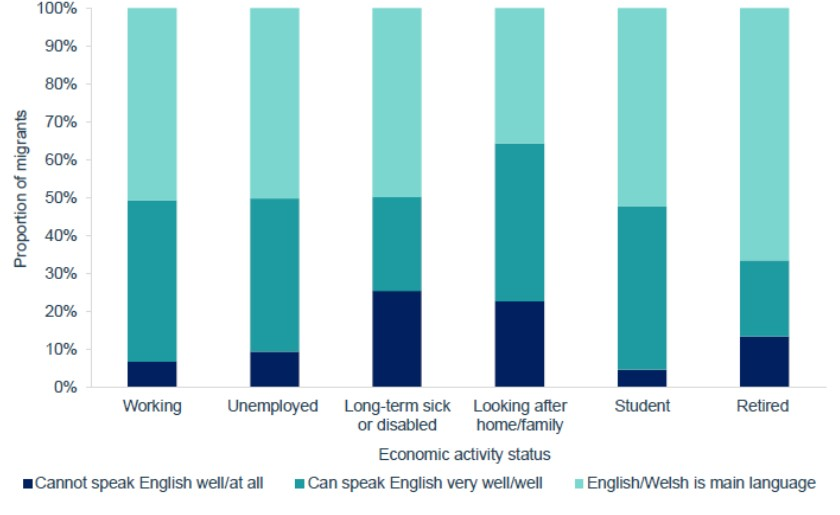
Source: England and Wales Census 2021. Filtered for working-age population only, those aged 15 years and under and 65 and over have been excluded. Those shown in the retired category are therefore under the age of 65. All does not apply responses have been excluded. Long-term sick or disabled, looking after home/family, other, retired, student and unemployed categories are all classified as economically inactive.
Figure 3.17: English proficiency by economic activity status, new arrivals
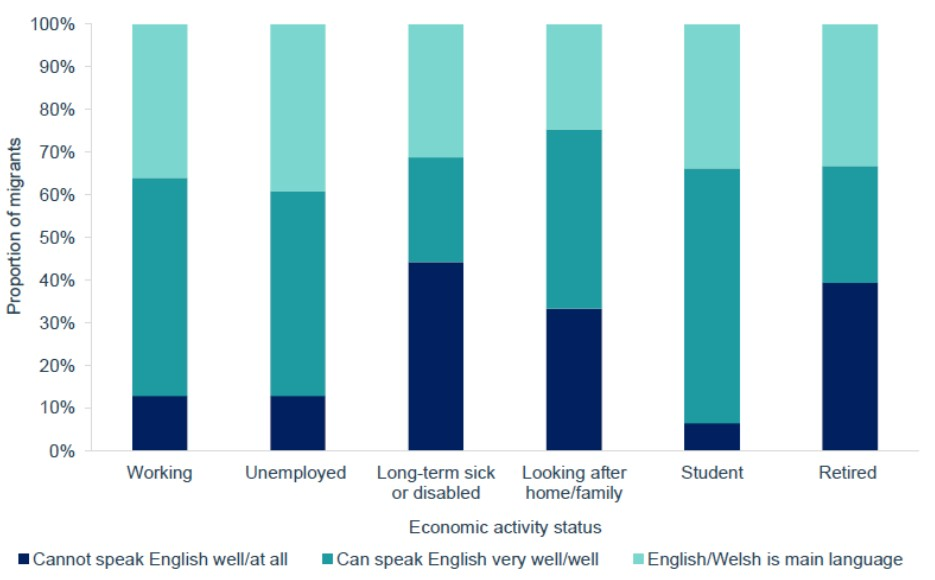
Source: England and Wales Census 2021. Filtered for working-age population only, those aged 15 years and under and 65 and over have been excluded. Those shown in the retired category are therefore under the age of 65. All does not apply responses have been excluded. Long-term sick or disabled, looking after home/family, other, retired, student and unemployed categories are all classified as economically inactive. New arrivals includes migrants who arrived between 2020 and 2021.
Interestingly, people who report speaking English well or very well had the same likelihood of being employed as those that had English as a main language. However, the Migration Observatory analysis of the skills levels suggests that those who spoke English as a main language were more likely to be in a higher skilled role than those who spoke English very well or well. This could either reflect greater fluency or could be due to other factors such as experience or greater integration on other aspects. Those who could not speak English well or at all tended to work in lower skilled roles.
Correlations between poor English and integration outcomes
Using Understanding Society, the UK household longitudinal study and a Census microdata sample, we explore how difficulty in speaking English is correlated with various social and economic integration outcomes (see table 3.3 for results). The first column in the table presents the raw correlation whilst the second column shows correlations once we control for education (i.e. holding education constant, so people of the same education level are being compared). This eliminates the part of the effect that is potentially caused by higher education levels. The numbers can be interpreted approximately as the percentage point (ppt) difference between a migrant with good compared to poor English. So, for example, the estimate for labour force participation from the Census (-0.236), implies that a migrant with poor English has a 24-ppt lower participation rate in the labour force than a migrant with good English.
The table shows the following results:
- Those who have poor English are less likely to participate in the labour market and they have lower wages when they do.
- For volunteering and using local services the relationship is much weaker, but those who have poor English are less likely to volunteer or use local services.
- For other local neighbourhood variables there is a weak relationship, but it works in the opposite direction e.g. those who have poor English are slightly more likely to feel they belong to the neighbourhood and feel the same as their neighbours. This may be because some are living in areas with neighbours who also do not speak English well but speak the same language.
- People also more likely to be dissatisfied with life if they have poor English, although the relationship is weaker than that between English and the labour market outcomes.
If we control for education levels (e.g. comparing migrants with the same education level) then the size of the correlation between economic variables and English proficiency falls substantially. This suggests that part of the reason English proficiency levels are positively related to employment outcomes is that people who are better educated speak better English and it is the education level which is influencing the higher wages or likelihood of employment rather than solely English. There is less change for interest in politics or being dissatisfied with life which suggests that education has a smaller role in these relationships.
Table 3.3: Correlations of integration outcomes with poor English
| Panel A: 2021 Census | No controls | Controlling for Educational Qualification | Sample size |
|---|---|---|---|
| Labour Force Participation | -0.236 (0.002) |
-0.122 (0.002) |
470,337 |
| Never Had Employment | 0.250 (0.002) |
0.171 (0.002) |
470,337 |
| Panel B: Understanding Society | No controls | Controlling for Educational Qualification | Sample size |
|---|---|---|---|
| Labour Force Participation | -0.260 (0.049) |
-0.187 (0.049) |
4,152 |
| Ln (Wage)* | -0.405 (0.054) |
-0.251 (0.048) |
1,822 |
| Dissatisfied with Life | 0.165 (0.063) |
0.164 (0.063) |
3,614 |
| Interest in Politics | -0.279 (0.086) |
-0.208 (0.094) |
1,307 |
| Volunteer | -0.108 (0.026) |
-0.046 (0.025) |
3,982 |
| Use Local Leisure Services | -0.172 (0.048) |
-0.085 (0.050) |
3,813 |
| Member of Resident Group | -0.013 (0.005) |
-0.010 (0.006) |
2,718 |
| Lonely | 0.087 (0.061) |
0.090 (0.062) |
3,601 |
| Belongs to Neighbourhood | 0.064 (0.032) |
0.069 (0.036) |
1,847 |
| Same as Neighbours | 0.139 (0.037) |
0.122 (0.041) |
1,841 |
Source: Understanding Society, Census Microdata. Note: those in bold are significant at 5% level; * Wage is measured as gross monthly wage, and we control for the log of weekly working hours in this specification.
We also explored how labour market participation varies by language proficiency for people with different levels of education using the Census data. Here we can see there are larger differences between those who speak English well and those that do not in employment for those at the lower and higher ends of education spectrum, while in the middle there is less difference.
For example:
- For those with no qualifications: There is a 14-ppt difference between those who speak good English and those who speak poorer English in labour market participation (29% of those with no qualifications have poor English)
- For those with 1-4 GCSEs there is an 11-ppt difference (14% have poor English)
- For those with more than 5 GCSEs there is a 1-ppt difference (5 % have poor English) and for 2 or more A levels there is a 4-ppt difference (3% have poor English)
- For those who are at level 4 which is equal to first year of degree, there is a 21-ppt difference (3% have poor English)
This could suggest that having English language requirements in place or support to develop English language may have an impact on employment or integration for those with no or very limited qualifications, which are also the groups where lower English is more prevalent.
For those at the higher education levels there may be some people who would benefit from support to enable labour market participation. However, it is also important to note that only a very small proportion of this group actually have low levels of English. These migrants may have arrived through family or asylum routes, or as dependants of those on other routes.
How strong is the effect of English proficiency on integration outcomes?
Quantitative studies have attempted to explore the causal relationship between language proficiency and integration to explore how much of a role it can play.
The key concern, which is acknowledged in the literature, is that it is difficult to generate a clear understanding about the role of English language on integration because there are other factors that are also correlated with English that could be leading to better employment outcomes rather than the English itself (Chiswick & Miller, 2014). We have shown above for example, that education is positively correlated with both English proficiency and economic outcomes. Many of these factors might be unobservable or at least not recorded in relevant data including things like cognitive ability or motivation. Not being able to account for these unobserved factors could potentially lead to an overestimation of the effects of English language within the research. In addition, causality can of course work both ways in that English leads to greater chances of employment but also being in employment will improve your English.
In addition, self-reported estimates of English ability have been argued to potentially reduce the size of the effect of English language in statistical analysis, given people may have different perceptions of what speaking English well or not well for example may mean.
Acknowledging these limitations, Chiswick & Miller conducted a review of the studies which use survey or census data to conduct analysis across different countries to explore the links between English language and employment or earnings. Across these studies, English proficiency was associated with 5 to 30% higher earnings than those without English fluency.
To explore this relationship further, we review a small number of more recent studies which take what is considered the ‘gold standard’ approach to exploring causality by introducing randomisation into the design; that is to create conditions where the language ability is randomly assigned and not related to other factors such as motivation. This is obviously difficult in real world conditions, so understandably these studies are limited in number.
Two different types of studies are considered:
- Quasi experimental/natural experiment - exploiting an existing policy in Switzerland whereby refugees are randomly allocated to areas which have tightly defined language boundaries, and they do or do not speak the language.
- Comparing participants of language course interventions with control groups that did not participate.
It is important to note that these studies also face challenges. For example, they all look at different groups of migrants, so generating overall conclusions on the size of the effects is difficult and it is unclear how applicable the results would be in different contexts. We explore these in turn in a bit more detail below.
Natural experiment exploiting refugee placement policy
Auer (2017) and Schmid (2023) used a natural ‘experiment’ approach involving the placement of refugees to explore the role of language proficiency on employment outcomes. This involves statistically comparing outcomes for refugees placed in an area where they speak the language compared to refugees placed in areas where they cannot.
These two studies draw on data from Switzerland, where there is a policy of randomly allocating refugees to specific Cantons (states) which refugees themselves have no choice over and they are not allowed to move out of the canton. Such placement is therefore not related to either their preferences, motivation or abilities. Within Switzerland there are strictly defined language regions which correspond to these Cantons (German, French, Italian and Romansch). The studies differ in their approach and data utilised so while they have similar approaches there are some key differences.
Auer (2017) compared employment outcomes of a sub-sample of two groups of working age asylum seekers/temporarily accepted refugees and using data from the unemployment registry where language proficiency is assessed on registration created two groups:
- Matched - those who speak German, French or Italian (either as mother tongue or non-native speaker) and are accepted into a canton where their language is spoken.
- Mismatched - those who speak German, French or Italian but placed into a canton where their language is not spoken.
Using simple linear regression models, they found that being placed in a canton where the familiar language was spoken increased the likelihood of getting a job within 3 months of registration as a job seeker by 3% and by 14% within two years.
As a second part of the analysis, they explored the effects of participating in a language training program for those who did not have proficiency in a Swiss language. Compared to asylum seekers who did not participate in language training, those who took part in language training show almost as high a likelihood of employment as those of asylum seekers in the Matched language group. The authors acknowledge that it is possible that there are other effects rather than the pure language effect at play. Job seekers are placed on the course by job centre workers who could potentially be choosing those who seem more highly motivated. There could also be ‘signalling’ effects, i.e. being on a course makes someone look like they are more keen or able and this increases the likelihood of employment rather than the language proficiency.
Schmid (2023) focused on French speaking African refugees and made comparisons between French speaking migrants in French speaking areas and French speaking migrants in German speaking areas. He also had a second control group which the Auer study does not have (English speaking migrants), to take account of area effects which eliminates differences between the German and French speaking areas in employment rates and social conditions which could otherwise potentially bias the estimates.
French speaking migrants in the French speaking areas had a 10.5 ppt higher probability in finding a job in the first 5 years after arrival relative to the counterfactual, which is a 167% relative increase.
Over the first five years after arrival, the average employment level increases for both the counterfactual group and the treatment group. However, the gap widens over time, showing that the language proficiency effect is persistent for at least five years. It increases from 7.8 ppt in the second year to 17.4 ppt in the fifth year.
Figure 3.18: The effect of language proficiency on the employment level over time

Note: Recreated from Figure 2 in Schmid 2023, page 488
There is a potential challenge for this study that language proficiency is inferred from the country of origin, so it is possible that not all language matches are in reality matches (e.g. not all migrants from a French speaking country speak French or they could be bilingual), although this would likely downplay the estimate rather than overstate it. The author also cautions against generalising findings from this study with refugees to broader groups of economic migrants.
Both these studies suggest that speaking the host area language significantly increases the chance of refugees being employed, and that the probability increases over time compared to those who do not speak the language. Auer’s study takes place over a shorter period so comparing the estimates is not straightforward, but at the 2-year point Auer’s study is suggesting about a 14% higher probability of employment for matched language speakers, whilst Schmid suggests an 8% higher probability.
Language interventions
The following studies compared participants of language programmes with non-participants who are the same in other respects, to demonstrate the effect of the language programme on outcomes such as likelihood of voting, employment and wage level. Two key approaches were utilised: a randomised control trial whereby migrants were randomly selected to participate in the language programme (Heller and Slungaard Mumma ,2023) and regression discontinuity designs which compare refugees who arrived in countries just before and after the introduction of the language programmes (Foged et al. (2024); Marbach et al. 2025).
Heller and Slungaard Mumma (2023) use a Randomised Controlled Trial experiment to compare the earnings and voter participation for migrants who took part in a lottery to gain a place on an English language training programme in Massachusetts. The study sample comprised 4,700 people who applied to the programme for the first time between Autumn 2008 and Spring 2016. It compares those who a) were randomly selected to participate and attended and b) those who were not selected to participate and therefore did not attend.
They conducted regression analysis to estimate what effect the English programme participation has on earnings and voter behaviour and found that:
- Attending adult ESOL classes increased voter registration by 9 ppt, which means a doubling of participants probability of being a registered voter. Similarly, enrolling in the programme increases the probability of ever casting a vote by 7.8 ppt.
- Two years after the first lottery application, individuals who enrol on the programme report $2,400 more in annual earnings, which is about 56% more than control group. Interestingly these effects do not emerge significantly until year 2, and 10 years later there remains a sustained difference between the program participants and the control group in earnings. It appears that the difference between control group and treatment group increases in the first few years but then starts to level off.
- Effects on earnings are stronger for individuals who had a record of earnings pre-lottery, and who had higher levels of baseline English.
The evidence is less strong on the mechanisms by which the programme has an impact as it could potentially be other aspects of the course rather than the development of English skills that are important. They could not observe the English levels of those who do not participate in the programme after the initial test. However, they do find that proficiency increases the levels of English for those that did participate.
Figure 3.19: Cumulative effects on probability of having registered to vote by year since first lottery

Notes: Reproduced from Figure 2, Heller & Slungaard Mumma, 2023, page 421
The study by Foged et al. (2024) follows a slightly different approach called a regression discontinuity design. Over the course of 18 years, they compare a control and treatment group of working age refugees (total sample of around 8,500) who arrived in Denmark just before and after the introduction of a mandatory language training course on 1st January 1999. The control group were offered a less extensive, voluntary programme up to 1 and a half years after their placement in accommodation. In contrast, the treatment group’s mandatory programme ran up to 3 years after placement, increased instruction time from 1,370 to 1,800 hours and included a course on civil education and introduced national tests.
In the long run, they found a 4ppt greater likelihood of employment for the treatment group compared to the control group and earnings were on average of $2500 higher than in the control group. They also found differences in the types of occupations refugees were employed in, with employment in complex occupations increasing by 9 ppt compared to the control group.
They find that earnings for the treatment and control group continue to rise over time, but the gap between the treatment and control group also increased over time. In terms of probability of employment, the gap between the groups increased over time the first 7-8 years and then stabilised.
Both of these studies suggest there are increased earnings as a result of participation in the language programmes and that these increased earnings are sustained over time. While the research is with different groups of migrants (one with refugees and the other with a broader group of migrants) and in different countries, they appear to show a similar level of effect on earnings, with increases of over $2,000 in average annual earnings compared to those who did not participate in the programmes. However, in both studies these effects take several years to become significant.
It is important to note that not all language programmes will necessarily have an impact on the likelihood of employment or wage level for migrants. Marbach et al. (2025) conducted a similar study to Foged et al (2024), involving a regression discontinuity design of a large-scale language programme at the time of the 2015-16 refugee crisis in Germany. They looked at the employment outcomes of those who arrived shortly before and shortly after the introduction of the new programme and found no discernible impact on subsequent refugee employment.
The authors then did an additional difference-in-difference analysis comparing employment outcomes between refugees that participated in a pre-existing smaller scale but more intense language programme and those that did not. For the participants of this pre-existing programme, they found a 4 to 5 ppt higher likelihood of employment than for the control group after 12 months, rising to around 10 ppt after 20 months. They explain that the pre-existing programme was longer in length (600 hours compared to 320 hours), it had a more structured and standardised curriculum, and refugees received certification at the end which the newer programme did not provide. The authors suggest that it is likely that the first programme did not give sufficient support for refugees to develop German proficiency. However, they also caution that is possible that it was the provision of the certification to evidence proficiency that led to greater employment for the pre-existing programme rather than just the improved proficiency.
In summary, while we have not conducted a systematic review of the literature, these highlighted studies suggest there is a causal impact to having proficiency in the language of the host country on employment and earnings and that this is sustained or even increases over time.
The fact that this sustained difference over time is found for the language interventions suggests that this impact could also be achieved once in the host country and not just in terms of prior proficiency, although interestingly the Massachusetts study did find that people who already had a record of earnings prior to the intervention had higher earnings returns. The quality of the language programme is also key in achieving these positive outcomes.
It is important to note the potential challenges of generalising from these studies, not least that they are limited in number and conducted in different contexts that may not be generalisable to the UK.
Future research could explore the use of language training programmes and follow participants over time in the UK context. This could also be linked in with developing greater monitoring and evaluation of the reforms to the language requirements identified in the Immigration White Paper.
Conclusion
The Immigration White Paper published earlier this year focused heavily on the importance of English language proficiency for migrants. It highlighted the economic and social integration benefits that accrue from better fluency in English. All the evidence that we have presented in this chapter supports that conclusion. Migrants who have poor or no fluency in English have worse labour market outcomes, both in terms of employment and earnings, and are less engaged in broad community activities, such as political engagement and volunteering. There is however less evidence that this matters at the very local level – poor English does not seem to be associated with less engagement with neighbours or a sense of not belonging.
These correlations seem to reflect an underlying causal mechanism. We summarise a number of recent papers that use clever research design to tease out the causal effect of language proficiency on outcomes. This matters because much of the simple correlation is likely picking up other factors. For example, whilst it is true that migrants with poor English have a 24-ppt lower labour force participation rate, at least half of this effect is likely due to the fact that those with lower educational qualifications are far more likely to have poor English and are also much less likely to be active in the labour market. It is not just the direction of the effect that should matter for policymakers. If the causal effect were small, policy that focused on language proficiency might be expected to have quite small effects on outcomes and policy action might be better focused elsewhere. Fortunately, that does not seem to be the case.
In spite of the focus given to language proficiency in the White Paper, it is important to recognise that the UK starts from a relatively strong position. Levels of English proficiency are generally good amongst migrants already in the UK. This is partly a result of the widespread use of English around the world and the self-selection of many migrants. There are however a small group (around 10%) of migrants who cannot speak English well or at all. Particularly concerning are the gender differences from some countries, with over a quarter of female migrants from Pakistan, Bangladesh, Afghanistan, Turkey and Syria not being able to speak English well or at all. Given the effects on integration, this should be a key concern for policymakers. Evidence on the years of arrival of migrants also suggest considerable variation between countries on whether lower proficiency for female migrants is for new or more established migrants, potentially pointing to different policy responses.
What is less clear is the extent to which the changes that the government are making to English language standards both at entry and for extensions/settlement will have substantial effects. Most of the causal evidence that we reviewed focused on refugee outcomes and the evidence from the Census suggests that differences in economic outcomes depending on language proficiency are more pronounced for low-skill migrants. This suggests that there may be only marginal changes in outcomes by for example moving the language threshold from B1 to B2 for Skilled Worker main applicants. If that is the case, more focus would need to be given to the potential costs of such a move. By contrast, focusing on the language proficiency of those arriving on the Family route may generate larger changes in outcomes and could help address some of the gender gaps that we have highlighted. In addition, given that learning of language is a process and it is easier to improve language proficiency whilst living in the UK, policymakers should think about the link between language requirements at entry compared to language requirements for settlement.
Finally, the evidence that we have focuses mainly on self-reported levels of English proficiency rather than the test standards used in the Immigration Rules. It will be important for the government to think about what data should be collected as they implement changes to language requirements on visa routes to enable an evaluation of these policy reforms. Without such data, it will not be possible to determine whether changes like those being introduced by the government in the recent Immigration White Paper are proportionate and have the intended effect.
Annex
Sensitivity analysis for the static fiscal model results
In Table A.1, we present the effects of alternative assumptions on the results of the static fiscal model. We first test the assumption that migrants pay neither council tax nor business rates. This is because both these taxes are due on empty properties in the short run, and so one can assume that the presence or absence of an additional migrant is not relevant to the amount collected. This assumption is less suitable for a longer-term model, such as our dynamic model.
Table A.1. Effects of Alternative Assumptions on the Net Static Fiscal Estimates
| Group | UK Resident Adult | UK Working Resident of Working Age | Partner Applicant | SW (incl. H&CW) Adult Dependant |
|---|---|---|---|---|
| Baseline net fiscal impact | +£3,400 | +£15,500 | -£30 | +£2,000 |
| Do not allocate Council Tax to migrants | +£4 | +£12 | -£700 | -£700 |
| Do not allocate Business Rates to migrants | +£2 | +£2 | -£500 | -£500 |
| Allocate Capital Gains Tax to migrants | - | - | +£100 | +£100 |
| Allocate Corporation Tax based on wealth estimated from income; exclude migrants and consider foreign shareholders | +£900 | -£1,100 | -£600 | -£800 |
| Only allocate spending on pure public goods to UK adult residents per capita | -£400 | -£400 | +£1,400 | +£1,400 |
| Only allocate spending on congestible public goods to UK adult residents per capita | -£900 | -£900 | +£3,400 | +£3,400 |
Source: MAC internal fiscal modelling.
Second, we test allocating capital gains tax to migrants. We allocate this using the wealth distribution of the population, which is estimated from their disposable income. This has only a small effect on Partner applicants due to their low income.
Third, we test an alternative method of allocating corporation tax. We allocate the tax to shareholders and assume that only residents hold domestic equity (migrants having had insufficient time to acquire assets); we also account for foreign share ownership. Domestic equity is estimated using wealth estimated from disposable income. The effect is to improve the fiscal position of UK resident adults with lower incomes and worsen it for all other groups, presumably because non-working adults are more likely to possess substantial wealth than income (e.g. pensioners who have private pension assets).
Finally, we test restricting the allocation of both ’pure’ and ’congestible’ public goods expenditure to only UK resident adults. This illustrates the importance of our assumption that residents and migrants consume public goods equally, and that both types of public goods can be treated identically. But in contrast to pure public goods (e.g. defence), consuming congestible public goods (e.g. healthcare) can at least somewhat reduce its availability to others. It can therefore be argued that migrants increase expenditure on congestible public goods, but not pure public goods. In any case, solely allocating public goods expenditure to adult residents improves the fiscal position of migrants and worsens the fiscal position of adult residents (though to a lesser extent, as there are more adult residents than migrants). The assumptions on public goods have the largest impacts of the alternative assumptions outlined here.
-
The adult ‘dependants’ of a SW main applicant – their partners and adult children – can separately apply to join them in the UK. A treatment of SW non-adult child dependants can be found in our Fiscal Impact report. ↩
-
In the survey of Family applicants conducted for our review of the Family visa financial requirements, 5% of respondents reported self-employment as their primary employment status. ↩
-
“Instances of modern slavery and labour exploitation continue to be seen amongst those who held visas as domestic workers. We will reconsider the purpose of this route, acting to stop employers exploiting their staff.” (Immigration White Paper) ↩
-
Saudi Arabia, United Arab Emirates, Qatar, Kuwait, Bahrain, and Oman. ↩
-
For example GDP per capita for UAE $68,600; Saudi Arabia $62,700; Qatar $110,900; Kuwait $45,400 (2024 estimates for these countries, rounded; GDP per capita, PPP (constant 2021 international $) Source: World Bank) ↩
-
For example, GDP per capita for Nigeria $5,700; India $9,800; Pakistan $5,500 (2024 estimates, rounded, ibid.) ↩
-
The proportion of nationals who had their visas processed in their own country of nationality was 87% for Nigerians, 26% for Indians, and 23% for Pakistanis. (Source: Home Office visa application data) ↩
-
As well as speaking to the three ODW-focused organisations, we also spoke to Focus on Labour Exploitation (FLEX) and Work Rights Centre. ↩
-
This involves research participants who are successfully recruited suggesting other participants to the researchers. ↩
-
Student, Skilled Worker, Representative of an Overseas Business, Minister of Religion, International Sportsperson, UK Ancestry (Settlement only), Start-up, Innovator, Global Talent (Settlement only), Domestic Workers (Settlement only), High Potential Individual, Private Life (Settlement only), Scale-up, Child Relative, Bereaved Partner, Victim of Domestic Abuse, Settlement Family Life, HM Armed Forces, Long Residence, Temporary Work – International Agreement. ↩