Local Power Plan: evidence annex (accessible webpage)
Updated 11 February 2026

© Crown copyright 2026
This publication is licensed under the terms of the Open Government Licence v3.0 except where otherwise stated. To view this licence, visit nationalarchives.gov.uk/doc/open-government-licence/version/3 or write to the Information Policy Team, The National Archives, Kew, London TW9 4DU, or email: psi@nationalarchives.gov.uk.
Where we have identified any third party copyright information you will need to obtain permission from the copyright holders concerned.
This publication is available at https://www.gov.uk/government/publications/local-power-plan/local-power-plan-evidence-annex-accessible-webpage
1. Purpose
The Local Power Plan sets out the government and Great British Energy’s shared vision for communities, as well as our offer to communities, local government and other public sector organisations to achieve this. This Annex draws from existing research, sectoral data and consultation evidence that underpins support for this offer.
The contents in this Annex have been developed through engagement with community energy group representatives, academics, and industry. It is targeted at sector participants to support their day-to-day work when developing the strategic and economic case for local government and community energy.
- This Annex covers 4 key areas:
- i. State of the sector. The evidence is presented on the sector’s current estimated size, in terms of current pipeline and operational generation capacity, and insights from international practice.
- ii. A case for change. This section identifies key barriers to sector growth and presents the case for local government and community energy by highlighting the sector’s unique ability to deliver specific social and economic benefits.
- iii. Evidence on local government and community benefits. The evidence is summarised on how local government and community energy projects deliver measurable economic and social benefits, such as community cohesion and local economic stimulus.
- iv. Wider power-system effects of small-scale renewable distributed energy. This section draws on existing literature to outline some of the potential effects on the power system of increasing small-scale distributed renewable energy and flexibility. As the local government and community energy sector is predominantly made of small-scale installations, these projects can contribute to these outcomes.
- This Annex summarises the evidence base as it stands at the time of publication. Great British Energy (GBE) and the Department of Energy Security and Net Zero (DESNZ) will work with the sector to continue building the evidence base going forward.
2. State of the sector
This section sets out evidence about the estimated current sector size, in terms of current pipeline and operational generation capacity, and it summarises insights from international practice.
2.1 Facts and figures from Great Britain
Local government and community energy projects - defined here as renewable energy generation assets owned or co-owned by local government bodies (including councils, boroughs, and combined authorities) and community energy groups (CEGs) respectively - deliver benefits that extend far beyond renewable electricity generation. Despite these wider benefits, the current evidence base suggests that the size of the sector is relatively small within the wider energy system.
Evidence suggests that there is an estimated pipeline of around 1.9 GW of local government and community energy projects in Great Britain, highlighting significant opportunities for growth. This may be an underestimate, however, because there is no centralised database for the sector.
When looking at community energy specifically, this is driven by close to 700 community energy groups.[footnote 1] This sector – spanning solar, onshore wind, and hydropower projects – is estimated to account for approximately 440 MW of operational capacity[footnote 2], has historically grown by more than 25 MW per year between 2017 and 2024[footnote 3] , and has around 695 MW in the current pipeline[footnote 2] [footnote 4] across England, Scotland, and Wales.[footnote 5]
On the other hand, local government owned energy is estimated to have a current pipeline of 1.2 GW[footnote 6] across solar, onshore wind and hydro projects in Great Britain. There is no comprehensive picture of operational capacity in this sector as there is no centralised database. However, there is indicative evidence of local government commitment and readiness to meet net zero and to build energy resilience. More than 300 local authorities in the UK[footnote 7] have declared a climate emergency[footnote 8] which represents around 79% of principal local authorities. Among them, 88%[footnote 7] have developed a Climate Action Plan[footnote 9] to support their declarations. In addition, according to Energy Systems Catapult, 25% of local authorities in the UK have developed or committed to a Local Area Energy Plan (LAEP) as of May 2024.[footnote 10]
The current operational and pipeline capacity offers a partial picture of the sector based on trusted data sources and stakeholder engagement. There are factors that could both increase and decrease the actual size compared to the estimate[footnote 11] , so while they provide a useful indication of current – and future potential – activity, they should not be used for baselining purposes. Further detail on the methodology underlying this analysis can be found in Section 6.
Figure 1. 2025 state of the sector data per segment and development stage, based on DESNZ analysis[footnote 12]
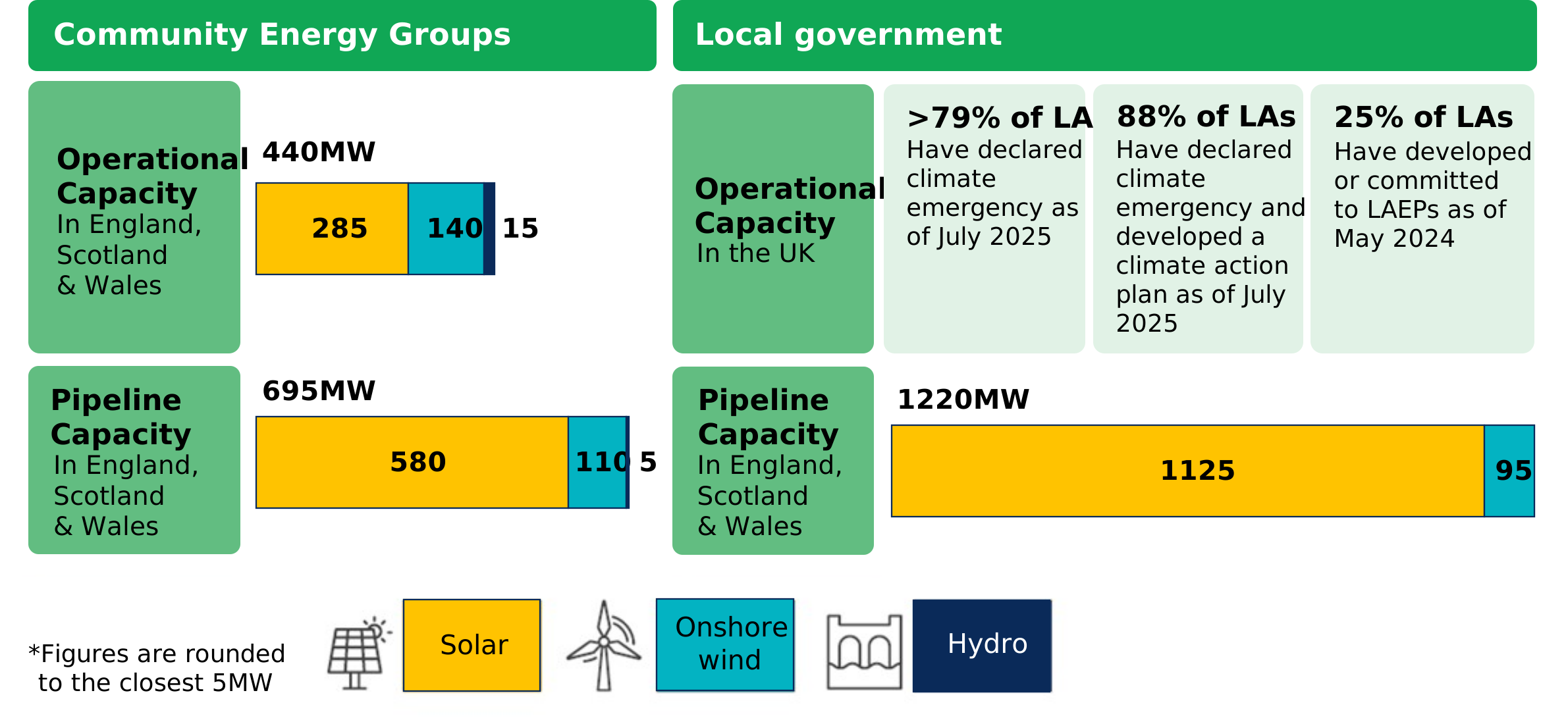
Description of Figure 1
Diagram of community energy group and local government state of the sector - operational capacity and pipeline capacity
Community Energy Groups:
| Capacity | Solar | Onshore wind | Hydro | Total |
|---|---|---|---|---|
| Operational Capacity in England, Scotland & Wales | 285 | 140 | 15 | 440 MW |
| Pipeline Capacity in England, Scotland & Wales | 580 | 110 | 5 | 695 MW |
Local government:
Operational Capacity in the UK:
- >79% of LAs have declared climate emergency as of July 2025
- 88% of LAS have declared climate emergency and developed a climate action plan as of July 2025
- 25% of LAs have developed or committed to LAEPs as of May 2024
| Capacity | Solar | Onshore wind | Hydro | Total |
|---|---|---|---|---|
| Pipeline Capacity in England, Scotland & Wales | 1,125 | 95 | 0 | 1,220 MW |
A growing pipeline of projects does not guarantee delivery of assets – high failure rates at early stages of project development, coupled with funding and finance barriers and the current policy and regulatory environment, likely limit both successful implementation of these projects and sector growth. The Local Power Plan will address these issues (as set out in Section 3.2) to help accelerate development, and to empower communities and local government to take a larger role in the energy transition.
Looking at historical context, GBE’s support for the 2025 to 2026 financial year has been significant, laying the foundations for GBE’s future delivery. Total funding to Mayoral Strategic Authorities, schools and NHS sites[footnote 13] combined is expected to deliver up to 135 MW[footnote 14] of solar generation capacity in 2026. This support is estimated to deliver up to £570m in lifetime energy bill savings[footnote 15] over the next 30 years.
2.2 International evidence
Local government and community energy organisations also operate internationally. An academic review estimated that there were nearly 3,500 energy communities across the European Union in 2022.[footnote 16] [footnote 17] These differed across countries, with Germany, the Netherlands, and Denmark identified as sector leaders, while other countries had fewer energy communities.
In Germany, municipal companies have a longstanding tradition of local ownership of utility assets. These are operated to meet the needs of the local community.[footnote 18] Energy cooperatives have then emerged for communities to own and invest in clean energy assets.[footnote 19] [footnote 20] One study estimated that in 2019, 40% of installed capacity of renewable energy generation in Germany was citizen-owned.[footnote 21]
In the Netherlands, the emergence of local government and community-owned energy has been enabled by a mix of factors, including adopting a regional approach to decarbonisation which engages public authorities and communities in the energy transition[footnote 22] , and the existence of national bodies who represent the sector and provide direct assistance to individual energy cooperatives.[footnote 23]
In Denmark, government policy has promoted the creation of energy cooperatives to allow communities to directly profit from power generation. Since 2009, developers are required to offer at least 20% community ownership for all new wind projects.[footnote 24] This has led to an expansion in citizen ownership of wind generation assets, with one study estimating that more than half of the existing installed wind capacity in December 2016 consisted of some form of citizen ownership model.[footnote 25]
DESNZ and GBE will continue to engage with international evidence, and work with colleagues outside the UK to share experiences and bring best practice into our policy and delivery.
3. A case for change
Local government and community energy will play an important role in achieving the government’s target to achieve clean power by 2030. This section sets out why this is, how the LPP will address barriers to deployment, and the unique social and economic benefits that the LPP will enable.
3.1 Clean Power 2030: Roles of local government and community energy
Electricity demand across Great Britain is projected to at least double by 2050 as the economy electrifies heating, transport and industry.[footnote 26] To support this, the government has set an ambitious agenda to transform the energy system by 2030. The Clean Power Action Plan[footnote 27] set out possible capacity ranges for achieving 2030 goals, including onshore wind capacity almost doubling from 14.2 GW to 27-29 GW and solar power capacity more than doubling from 16.6 GW to 45-47 GW by 2030. Meeting this ambition will require substantial investment across the country, estimated at £40 billion on average per year between 2025-2030, with much of this investment coming from the private sector.
Most of this deployment is likely to come from large-scale, commercial energy infrastructure. However, small-scale energy infrastructure will play a vital role in delivering these ambitions and contributing to the capacity mix on an aggregate basis. For example, the Solar Roadmap[footnote 28] outlines under the current policy range[footnote 29] of solar capacity installed by 2030: around 60%-65% could be large-scale projects, around 20% domestic rooftop, and around 15%-20% commercial rooftop and ground mount.[footnote 30]
Local government and community energy projects are also expected to play a role and, importantly, to distribute benefits locally. As well as this, these projects can play a vital indirect role by strengthening public support for the energy transition. More information on these benefits is provided in Section 3.3 and Section 4.
3.2 Sector barriers and market failures
The government is committed to delivering Clean Power by 2030, to address the fossil fuel penalty that households, businesses, and communities are paying. This Mission will unlock clean power investment, as well as protect billpayers from future price shocks. Homegrown, clean energy is also the route to energy security.
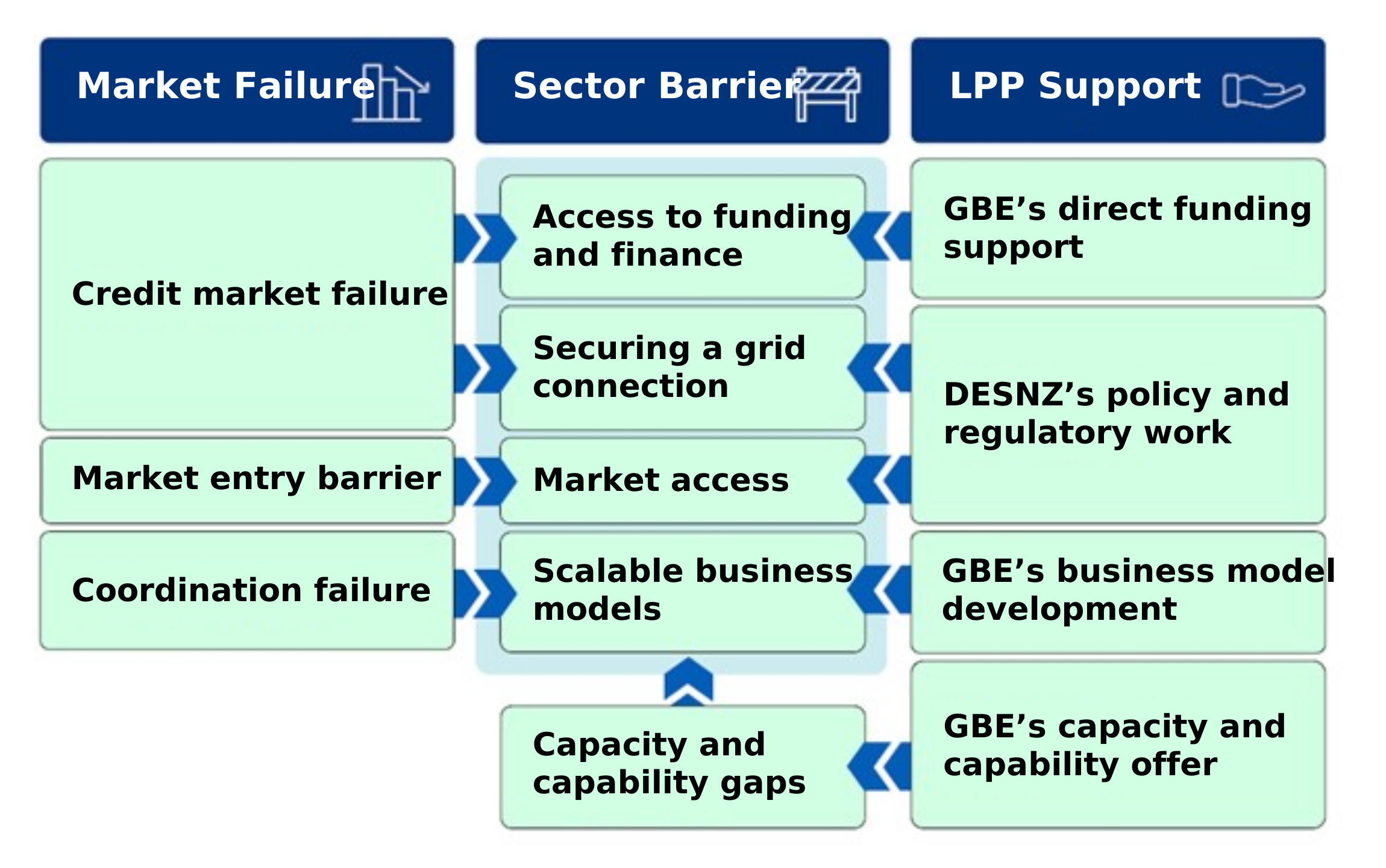
The Local Power Plan supports the government’s Clean Power by 2030 Mission by addressing the barriers preventing the local government and community energy sector from growing. These barriers are rooted in a specific set of market failures.[footnote 31] Figure 2 illustrates the connection between the barriers, failures, and how the Local Power Plan will address them.
Figure 2. Links between market failures in the local government and community energy sector, sector barriers, and Local Power Plan support
Description of Figure 2
Diagram linking market failures, sector barriers, and LPP support.
- MF: market failure
- SB: sector barrier
- LPPS: LPP support
Credit market failure (MF) is associated with 2 sector barriers:
- access to funding and finance (SB), which is addressed by GBE’s direct funding support (LPPS)
- securing a grid connection (SB), which is addressed by DESNZ’s policy and regulatory work (LPPS)
Market entry barrier (MF) is associated with:
- market access (SB), which is addressed by DESNZ’s policy and regulatory work (LPPS)
Coordination failure (MF) is associated with:
- scalable business models (SB), which is addressed by GBE’s business model development (LPPS)
Capacity and capability gaps (SB) cut across all stages amplify the effects of each barrier and related market failure. They are addressed by GBE’s capacity and capability offer (LPPS).
As Figure 2 illustrates, there are credit market failures which restrict access to finance from the earliest pre-development stages. These restrictions can persist through to project delivery, affecting the ability of these generators to secure a grid connection. Market-entry barriers limit viable routes to the wholesale market for small local government and community generators who want to sell the electricity produced. Coordination failure, meanwhile, prevents the standardisation and aggregation of projects, hindering the development of scalable business models. Cutting across all stages are capability and capacity gaps, which amplify the effects of each barrier and related market failure. Table 1 sets out more detail on each barrier and its associated market failure.
Table 1: Overview of barriers facing local government and community energy projects and the associated market failures
| Barrier for projects | Description of barrier | Key market failure associated with the barrier |
|---|---|---|
| Access to funding and finance[footnote 32] | Significant upfront costs mean that renewable energy generation projects require access to funding and finance to progress from concept to construction. In a perfectly functioning market, finance would be available throughout the project lifecycle. In practice, however, lenders and equity investors are unwilling to take on the uncertainty of early, high-risk pre-development activities - such as feasibility studies - with no revenue streams so projects largely depend on a limited pool of non-repayable funding at this stage. Finance should become available later in the lifecycle, once risks have reduced and the commercial model is clearer. Yet access to private sector finance remains a barrier preventing the sector from growing. According to the 2024 Call for Evidence on the Barriers to CE projects[footnote 33], the most frequently cited barrier preventing the establishment, development and scaling of CE projects was difficulty accessing funding and private sector finance (mentioned by 72% of respondents). Further evidence from community energy stakeholder engagement indicates that most CEGs lack the collateral and the track record (credit history) to secure finance. Meanwhile, local government face competing budget pressures, alongside governance-related borrowing constraints, which limit their ability to secure affordable, long-term finance including for small, novel local energy projects. Both groups also face internal financial capability and capacity constraints (see relevant box), which further hinder their ability to secure investment. |
Credit market failure – The consequence of this failure is that commercially viable and socially valuable projects can struggle to secure finance, and overall investment in local government and community led energy falls below levels that are socially optimal. This market failure arises from information asymmetry between borrowers and lenders, a common feature of financial markets where borrowers know more about the true value and characteristics of their projects than investors and lenders but are unable to relay these to the market. In the case of local government and community energy projects, this asymmetry is particularly pronounced, as these actors are relatively new to the finance community, and often lack credit history, collateral, and capability and capacity (see relevant box) to signal project quality. In this context, the information asymmetry manifests in 2 ways: – Credit rationing: with limited ability to assess a project’s true risk and value, funders and lenders may choose to withhold finance. As a result, projects that are socially beneficial and commercially viable are unable to access the financial resources needed. – Adverse selection: with limited information, lenders cannot reliably distinguish between lower-risk and higher-risk projects and borrowers. This leads to the mispricing of risk. As a consequence, lenders demand higher interest rates and more stringent lending conditions. This means that while finance may be technically available, it is too expensive for local government and community stakeholders to access. |
| Securing a grid connection | England and Wales have benefitted from a Transmission Impact Assessment threshold export capacity limit increase, from 1 MW to 5 MW, but local government and community energy projects still struggle to secure grid connections on economically viable terms, like many small generators. Data from the 2024 Call for Evidence on the Barriers to CE projects[footnote 34], indicates that 58% of respondents reported infrastructure barriers, particularly grid connection, as a barrier to community energy projects. Stakeholder engagement with community energy groups, Ofgem and DNOs[footnote 35] have highlighted that grid connections come with substantial up-front costs associated with feasibility studies, planning permission, legal and application fees, pre-construction, and deposits to secure a connection agreement. This has also been highlighted in oral evidence provided in the Unlocking Community Energy at Scale parliamentary enquiry in October 2025.[footnote 36] Additionally, the process run by DNOs for obtaining connection offers and queue positions on the distribution network can result in longer connection lead times for small-scale generators. These projects often do not have the upfront equity or necessary securities (for example, balance sheets from previous projects) to apply for a near-date connection that requires milestone payments to be made in quicker succession than a far-date connection. When these costs are combined with long grid connection waits, it can create substantial liquidity challenges for local government and CEGs with limited access to capital, compared with large energy companies with more financial resources. |
Grid connection issues experienced by local governments and CEGs arise from a combination of structural features of grid connection processes and financial market frictions. The high up-front costs constitute a significant barrier because difficulties accessing funding and finance – linked to a credit market failure – limit the ability of these actors to absorb these costs and secure a timely connection. |
| Market access | Local government and community energy projects participate in the energy market mostly as small generators. To monetise their output, they need a route to market. The supplier (wholesale) market connects electricity producers with consumers (retail market).[footnote 37] Data from the 2024 Call for Evidence on the Barriers to CE projects[footnote 38], indicates that 38% of respondents noted that ‘routes to market’ (via suppliers) is a barrier to community energy projects. Engagement with community energy stakeholders has reinforced this. Negotiating access to the wholesale market involves high fixed legal, commercial and administrative costs, which disproportionately impact small producers. Additionally, large suppliers, who dominate the wholesale market, tend to prioritise larger standardised counterparties.[footnote 39] This may be exacerbated by the consolidation of the UK energy supply sector since 2021-22. 6 large suppliers now supply 91% of the UK’s retail electricity and gas markets leaving fewer operators for the local government and community energy sector to work with[footnote 40]. |
Market entry barrier – These structural challenges (high fixed access costs; prioritisation of larger counterparties; fewer suppliers to work with) place local government and community energy stakeholders at a disadvantage when seeking to participate in the electricity supply market. The consequence of this is that local government and community renewable energy projects are unable to compete in the wholesale market, not because they are unable to produce commercially viable electricity, but because they cannot access consumers through the supplier market. This deters small entrants, reduces market diversity, and potentially hinders innovation. |
| Scalable business models | Local government and community energy projects are small and diverse. Responses from the 2024 Call for Evidence on the Barriers to CE projects[footnote 41] identified that business models used across the sector struggle to scale and aggregate. This has led to the dispersion of actors in the sector, with local governments and CEGs often working separately to originate, build, own and operate projects.[footnote 42] This has limited opportunities to create replicable bankable business models, project development processes, and accessible routes to aggregation. As projects tend to be small in scale, they are less likely to access the benefits of economies of scale. For example, by engaging with the supply chain on a project-by-project basis, projects are less likely to attract the largest suppliers and are therefore less likely to access the most competitive pricing. Projects are also less likely to attract competitive lending rates, due to the high costs of due diligence against a smaller value project. Furthermore, an absence of standardisation has resulted in uncoordinated support being provided to the sector leading to disproportionately high upfront costs (for example, supply chain costs, resource costs, legal costs), increasing delivery risk and reducing synergies with other projects. This deters project origination and investment. |
Coordination failure – The failure to coordinate across the sector to achieve more desirable outcomes. Sector coordination would improve outcomes for individual projects – for example aggregation to improve access to economies of scale. Standardised and repeatable bankable business models would also improve projects’ revenue certainty, de-risking investment, but the costs of sourcing opportunities to coordinate are too high, meaning that local governments and CEGs cannot access these benefits. |
| Capacity and capability gaps | Local government and CEGs often lack the right skills - such as financial, technical and commercial expertise - or sufficient resources to deploy renewable energy generation assets. In the 2024 Call for Evidence on the Barriers to CE projects[footnote 43], nearly 60% of respondents reported that capability and capacity constraints were preventing the establishment and scaling of community renewable energy projects. Feedback from local government stakeholder engagement revealed that these gaps leave organisations reliant on costly consultants to carry out the technical, economic and financial analyses required to demonstrate the social and economic value of projects. | Capability and capacity constraints experienced by local governments and CEGs contribute to barriers in accessing funding and finance, negotiating market entry and grid access, and developing scalable business models, hence are indirectly linked to the related market failures. |
The Local Power Plan is expected to address these barriers and market failures in both the short-term and longer-term. In a world without the Local Power Plan (the ‘counterfactual’), we expect that the above barriers to community and local energy projects will continue to exist, that the benefits of local ownership will remain untapped, and that local governments and communities will continue to rely on grid electricity, limiting the contribution of the sector to Clean Power by 2030 and Net Zero by 2050.
3.3 Benefits of local government and community energy
The case for supporting local government and community energy interventions is rooted in their ability to deliver a range of unique social and economic benefits. These benefits rely on genuine community involvement and opportunities for ownership – both shared and 100% local/community owned. Section 4 sets out the evidence base for these. The main evidence-supported benefits are:
- Local economic stimulus – clean energy projects owned or co-owned by local government and CEGs are expected to generate direct energy bill savings and revenue streams. When these are retained within the community and invested and spent locally, it stimulates the local economy (see Section 4.2.1). For example, in Wales, the Cambrian Village Trust has delivered a micro-hydro plant and transformed a derelict building into a thriving community cafe. The scheme has helped the community cafe reduce their electricity costs, deliver a community service, and generate income for local reinvestment.
- Community cohesion – when clean energy projects include local participation in decision-making processes, knowledge exchange, and co-ownership, they can cultivate a sense of community cohesion. Cohesiveness improves people’s wellbeing by strengthening social bonds, making communities better places to live and work (see Section 4.3.1).
- Local jobs supported – locally delivered renewable energy projects create well-paying jobs spread across communities, rather than concentrating them in specific parts of the UK (see Section 4.2.2).
By addressing the barriers faced by stakeholders, the Local Power Plan aims to unlock local government and community led renewable energy projects across the UK. These projects are expected to generate a range of unique social and economic benefits, alongside other benefits such as increased innovation and increased energy efficiency (see Figures 3 to 5 in Section 4.1). Public support for the clean energy transition grows when communities have a say in how projects are designed and implemented, and experience social and economic benefits firsthand. Systemic change is not just technological, it is social. The link between community ownership, benefits sharing, and public support has been demonstrated by research.[footnote 44]
The Local Power Plan is also expected to generate a range of power system effects (see Section 5). When small-scale generation projects are strategically located and combined with flexibility, they have the potential to deliver power system benefits and improve energy security, as well as reduce greenhouse gas emissions and improve air quality. Together, these outcomes are expected to contribute to thriving and prosperous communities across the UK while accelerating the growth and resilience of the local government and community energy sector.
The way these benefits are realised is illustrated by the theory of change diagram in the Purpose section of the Local Power Plan. It shows the key stakeholders that will be helped, the activities that will be catalysed and how these flow to the benefits and impacts. Fundamentally, the Local Power Plan is centred on generating benefits for people and communities via shared and 100% local/community ownership.
4. Evidence on unique local government and community benefits
4.1 Expected economic and social benefits from the Local Power Plan
In 2026, GBE will start to deliver direct financial support to local government and community energy projects, alongside enabling capacity and capability support. In parallel, the government will explore potential policy and regulatory interventions to support the sector.
These actions are expected to create the conditions to mobilise private capital into the sector, with GBE developing a product portfolio and delivery approach that aims to attract long term investment, by diversifying and reducing investor risk and creating scale to meet the requirements of a wider range of investors.
As a result, this strategy is expected to effectively leverage GBE funding and finance into new projects located in communities across the UK.[footnote 45] [footnote 46]
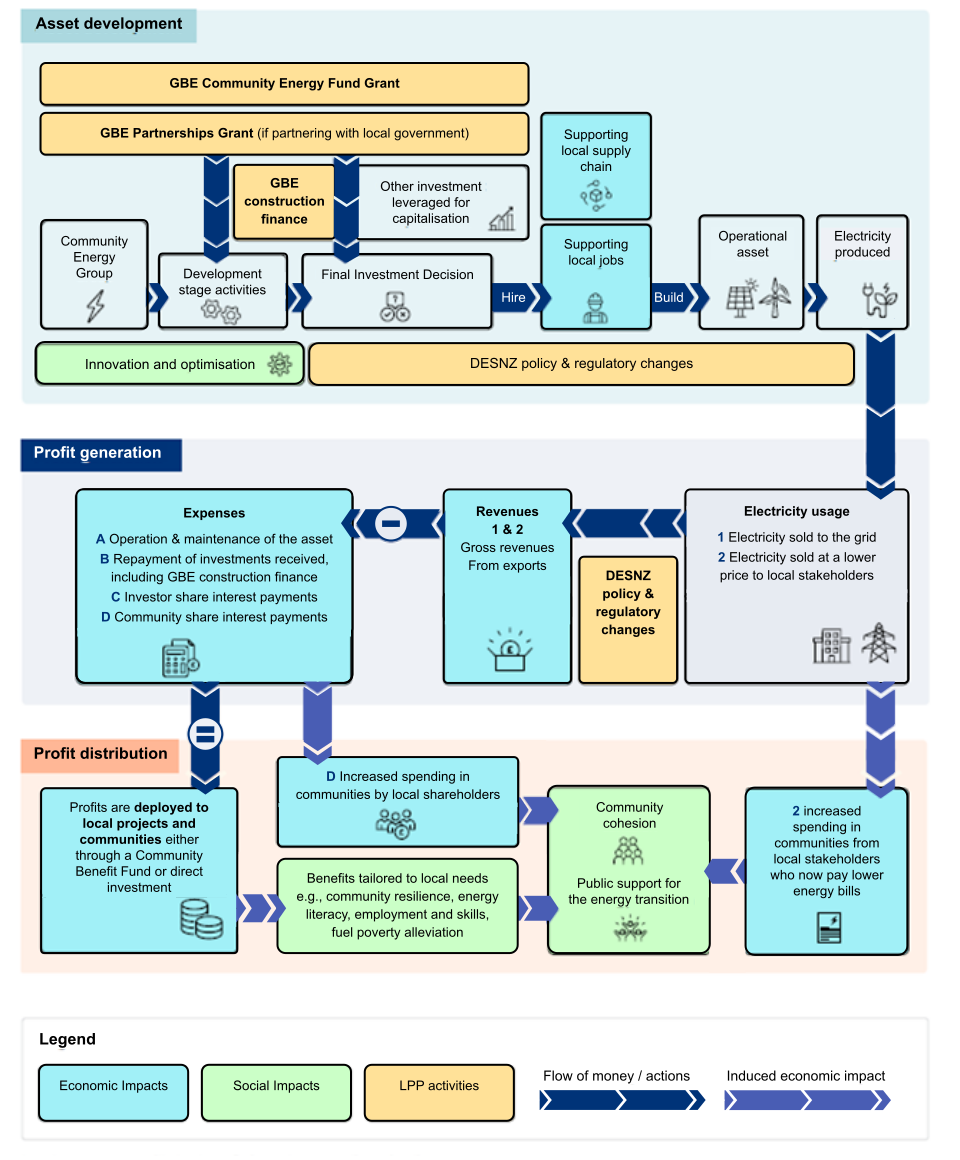
Figure 3 demonstrates how the Local Power Plan will support CEGs to build renewable generation assets[footnote 47] (Support Type 1 in the Local Power Plan), and the mechanisms by which this could create localised social and economic value.
Figure 3. Economic and social impacts of the Local Power Plan to enable CEGs to build renewable energy generation assets
Description of Figure 3
Diagram on the economic and social impacts of the Local Power Plan to enable CEGs to build renewable energy generation assets.
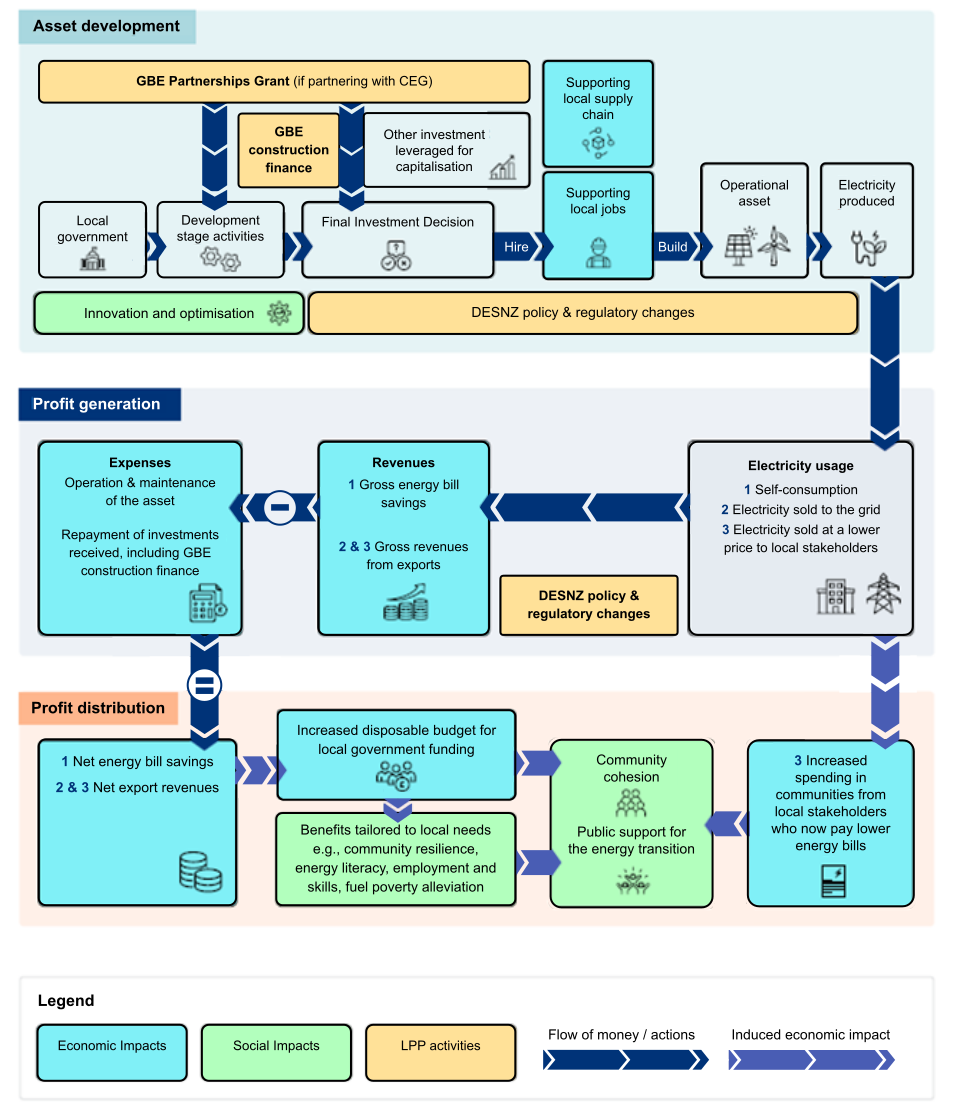
Local government will also benefit from the same direct funding opportunities and policy and regulatory support to facilitate building new generation projects. However, the nature of local government projects means that some of the associated economic and social impacts will differ to those realised by CEG-owned projects, or they will be delivered through different mechanisms. These are outlined in Figure 4.
GBE’s Partnership Grant will support projects brought forward by local government and CEGs, in partnership. Therefore, these projects will bring about the social and economic impacts identified in both Figure 3 and Figure 4.
The Local Power Plan will also support communities and local government to purchase shares in renewable energy projects – see Figure 5. This includes the launch of new finance interventions to support shared ownership (Support Type 1 in the Local Power Plan), and a plan to consult in 2026 on a mandatory shared ownership offer to communities (Support Type 4 in the Local Power Plan). Increasing the share of community and local government ownership in large-scale commercial projects will deliver localised social and economic impacts, but through different mechanisms to projects which are majority community or local government owned.
Figure 4. Economic and social impacts of the Local Power Plan to enable local government to build renewable energy generation assets
Description of Figure 4
Diagram on the economic and social impacts of the Local Power Plan to enable local government to build renewable energy generation assets.
Figure 5. Economic and social impacts of the Local Power Plan to enable shared ownership of commercial renewable energy generation projects
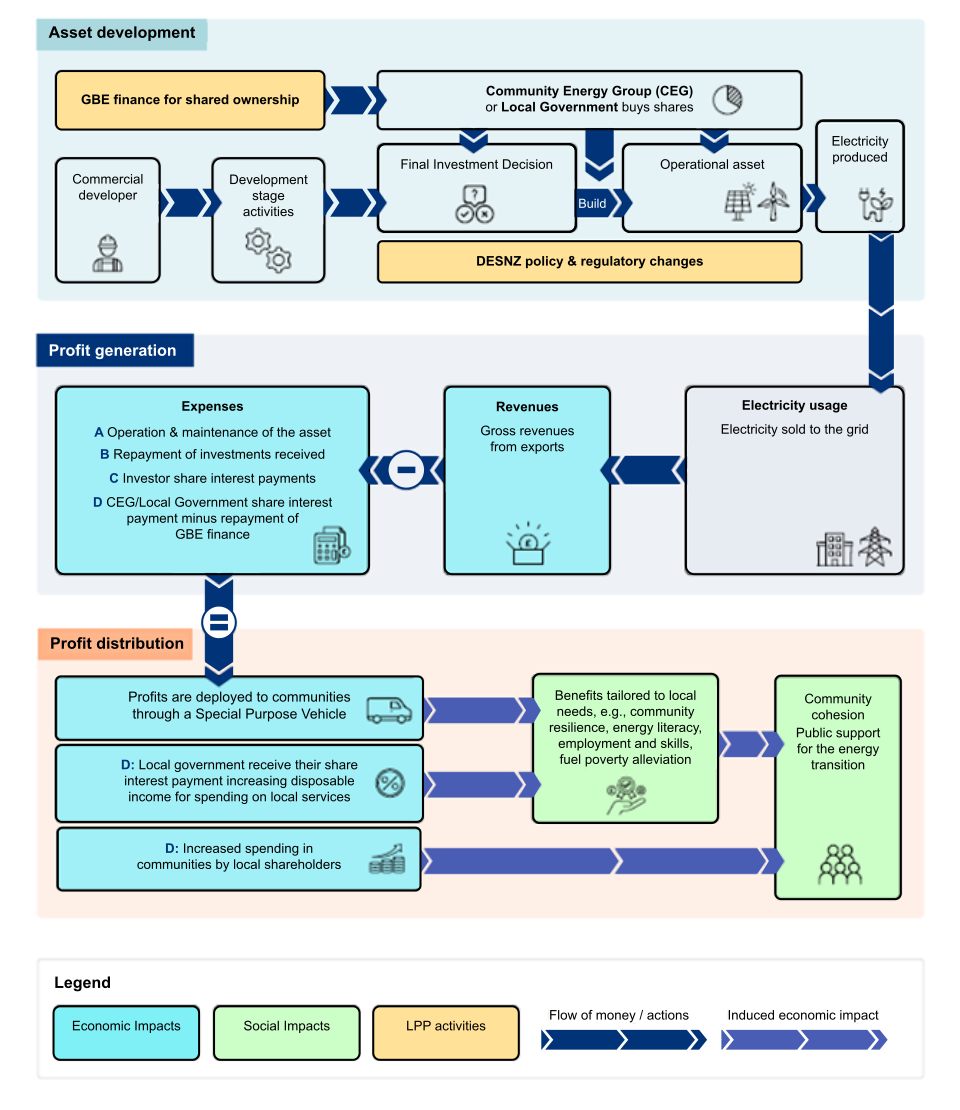
Description of Figure 5
Diagram on the economic and social impacts of the Local Power Plan to enable shared ownership of commercial renewable energy generation projects.
The Local Power Plan will also support communities and local government to purchase shares in renewable energy projects. This includes the launch of new finance interventions to support shared ownership (Support Type 1 in the Local Power Plan), and a plan to consult in 2026 on a mandatory shared ownership offer to communities (Support Type 4 in the Local Power Plan). Increasing the share of community and local government ownership in large-scale commercial projects will deliver localised social and economic impacts, but through different mechanisms to projects which are majority community or local government owned.
4.2 Economic benefits
4.2.1 Local economic stimulus
Renewable energy generation projects owned or co-owned by local government and communities are expected to generate energy bill savings and create revenue streams. When these are retained within the community, it stimulates the local economy.
Much of the existing literature focuses on how community energy projects stimulate local economies. We believe these findings can also apply to local governments, as savings on electricity bills or revenues from locally owned renewable energy projects are expected to be reinvested in the community or public services.
An analysis of over 26,000 renewable energy projects in Scotland, for example, found that community energy projects distribute the economic benefits from solar-generated electricity into areas of high economic deprivation.[footnote 48] [footnote 49] This research also showed that community energy groups played a key role as economic intermediaries by coordinating funding, managing projects, and reinvesting revenues locally – often supported by government funding such as the Scottish Government’s Community and Renewable Energy Scheme and the Green Economy (CARES) Fund. It also indicated that community energy projects keep more value within communities, benefit underserved groups and promote inclusivity by giving people a stake in the clean energy transition. These projects also maximise local economic stimulus through revenue retention.[footnote 50]
Empirical data support these findings. In Scottish and Southern Electricity Networks (SSEN) areas, CEGs spent 59% of their expenditure budgets locally, injecting over £3 million into local economies between 2022 and 2023.[footnote 51] Outside these SSEN areas, local CEG spending was even higher at 77%, on average. This is supported by analysis conducted at the University of Strathclyde[footnote 52], which examined the local economic impacts[footnote 53] of revenue sharing agreements for wind-generated electricity on the Shetland Islands. This found that local ownership led to the greatest economic impacts for the local community. For example, when 24% of profits from community-owned projects were retained locally, GDP for the Shetland Islands increased by nearly 31% and employment by 9%.[footnote 54]
A comparative economic analysis commissioned by Devon County Council further supports the link between community-owned projects and local economic stimulus.[footnote 55] Modelled on a 30 MW solar farm under community and commercial ownership structures, it showed that the community-owned project delivered substantially higher local economic benefits than commercial alternatives.[footnote 56] While the community-led approach was estimated to incur slightly higher additional upfront costs (£2-4 million associated with engineering, procurement and construction), it was estimated to generate over £15 million in net local economic value (direct and indirect benefits) over a 20-year project lifetime, greater than the commercial options.[footnote 57] The added value of local and community owned energy is attributed to local economic multiplier effects, where revenues from renewable energy generation are paid to local shareholders and spent locally.
This can be seen in the wind sector too. A comparative analysis of onshore wind farms in Scotland shows that community owned projects deliver an average financial return to the local community of £170,000 per installed MW per annum.[footnote 58] For instance, on the island of Tiree, annual wind farm income has been used to fund educational bursaries, support local business start-ups, upgrade community buildings and provide comfort grants to residents travelling to the mainland for hospital appointments.
4.2.2 Local jobs created and supported
Local government and community led energy projects distribute well-paying jobs across communities, both directly and indirectly, rather than concentrating them in specific parts of the UK. Studies estimate that local government and community-led renewable energy projects create and/or support between 0.7 and 5.5 full-time equivalent (FTE) jobs for every megawatt (MW) of installed capacity.[footnote 59] [footnote 60] [footnote 61] This range is associated with different renewable technology types – hydro schemes, for example, have higher FTEs supported than wind farms.[footnote 62] Research also suggests that community-owned projects tend to create and/or support more jobs overall[footnote 63] non-locally owned projects, with about 1.1-1.3 times more direct and indirect[footnote 64] local jobs created during construction and about 1.1-2.8 times more jobs during operation.[footnote 65] [footnote 66] [footnote 67] This research also suggests that because community energy projects are geographically dispersed, the employment benefits are also dispersed. Dispersion is important for distributing employment benefits across communities and for anchoring skilled roles in places not limited to where large energy companies and projects are located.
4.3 Social benefits
4.3.1 Community cohesion and project support
Research indicates that local government and community-led renewable energy generation projects enjoy higher levels of community support than non-locally led projects, as well as contribute to community cohesion.[footnote 68] [footnote 69] Research from Scotland showed a close relationship between local decision-making and community ownership, public support for renewable energy, and community cohesion. One study showed local support for renewable energy projects was influenced by perceptions of the fairness associated with decision-making and economic benefits distribution. Locally-owned shared ownership models, it found, prompted community members to come together around a shared interest and to be involved in renewable energy projects, by contrast with non-locally owned projects.[footnote 70]
A similar study in Scotland that compared survey results from 3 onshore wind projects with varying levels of community ownership support these findings. It found projects with full or shared community ownership, with genuine community participation in decision-making processes, enjoyed higher levels of community support. The study also suggested that local government and community owned projects cultivated a sense of cohesion, particularly amongst those concerned about projects being developed and owned by non-community members.[footnote 71]
Reviews of the wider literature also support this. A systematic literature review by Bray et al. (2024)[footnote 72] on smart local energy systems showed that people involved in community energy activities reported feeling a greater sense of community pride, empowerment, and cohesion. Continuous engagement, transparent decision-making, and local leadership, they found, are crucial for building trust and community cohesion.
Cohesion is also linked to how the benefits from local government and community led energy projects are reinvested. On the island of Shapinsay in Scotland, for example, revenue from community-owned renewables helped fund local transport services, connecting isolated island residents. This investment in transport services (a community bus and an electric car service) not only reduced social isolation but also substantially improved the island’s social cohesion.[footnote 73] Taken collectively, these findings demonstrate the importance of community involvement and benefits from local projects to foster public acceptance and community cohesion.
4.4 Measuring local specific social and economic benefits
The sections above summarise the growing pool of evidence on the economic and social benefits arising specifically from local government and community energy projects. Methodologies for measuring economic benefits are well established. While there is clear evidence that local specific social benefits exist, measuring and monetising these remains the subject of research across academia, industry, and government.[footnote 74] [footnote 75] [footnote 76] [footnote 77]
DESNZ and GBE are planning to undertake a programme of work to measure and, where possible, monetise these local specific social benefits, alongside the economic benefits. This will build on the Green Book[footnote 78] and Green Book Supplementary Guidance on Wellbeing.[footnote 79] It will also look at new empirical research in this area, like ‘co-benefits’, alongside new tools for calculating them.[footnote 80] [footnote 81]
5. Wider power system effects of small-scale renewable distributed energy
This section focuses on how increasing the share of small-scale renewable energy projects in Great Britain’s overall energy mix influences the power system. The effects are created by small-scale distributed energy generation and flexibility (including batteries and consumer-led flexibility), which could be delivered by local government and CEGs, or other interested parties. Because local government and community energy projects typically consist of precisely these types of assets, they can play a role in delivering these effects.
The literature is not conclusive, and evidence gaps remain. DESNZ and GBE are planning further work to build their evidence base to fully understand the effects of a system with a greater share of small-scale distributed renewable energy generation.
5.1 Context
Electricity demand across Great Britain is projected to at least double by 2050 as the economy electrifies heating, transport, and industry. Small-scale distributed energy projects are becoming a part of the UK generation landscape. Studies simulating local energy systems combining generation, storage, and demand flexibility[footnote 82] demonstrate a range of benefits including the potential to reduce system costs, by generating close to demand centres and providing local balancing. Many of the benefits distributed energy generation and flexibility could bring will develop alongside broader changes in energy use, with increased electrification of both heating and transport, and wider engagement in consumer led flexibility.
Local energy systems offer the potential to manage demand growth efficiently, manage reinforcement pressures, and enhance resilience if they are implemented strategically and combined with flexibility. This will need to be managed alongside the risk that placing local generation on parts of the network with low available capacity could force network reinforcement and additional balancing costs.
Work is underway on NESO’s[footnote 83] methodology for the Regional Energy Spatial Plans (RESPs) which will be developed to assess local energy network infrastructure and investment needs. The methodology will be published in Summer 2026, with delivery of the full RESPs expected by the end of 2028. These plans will need to account for the opportunities and challenges of aggregated small-scale distributed renewable assets and more complex local energy systems within the regional and distributed energy system.
5.2 Potential benefits and risks
5.2.1 Avoided or delayed reinforcement
With demand expected to grow across the country, small-scale distributed renewable energy generation has the potential to defer network reinforcement, by lessening the growth in power flows that drive constraints on network assets. By generating and storing electricity close to where it is used, they could help to keep network infrastructure within operating limits and lessen the need for immediate upgrades. The need for network reinforcement can be a barrier to further electrification, so deferring the need for reinforcement could also unlock further deployment of low carbon technologies.
Research suggests that a net-zero system containing a mix of smart local energy systems (SLES) could deliver significant cost savings. The technologies include consumer led flexibility assets, distributed batteries and rooftop PV generation, and can produce estimated savings of £1.7 bn/year, c.4.2% of total system costs, when compared to a non-SLES system.[footnote 84] A key component of the savings is the ability to postpone or avoid costly network upgrades. Given reinforcements are largely capital-intensive, even partial deferral or avoidance has the potential to represent substantial savings.
In order to fully realise these benefits, other potential risks will be managed. For example, the risk of a significant increase in small-scale renewable generation on a weak part of the network, overloading parts of the power system.
5.2.2 Reduced technical losses
Energy can be lost in the form of heat when power is transported through the network. Local energy systems, with generation closer to consumption, have the potential to reduce these losses which improves efficiency. In 2024, Great Britain’s distribution system losses were ~17 TWh and transmission system losses were ~6 TWh, which amount to ~£1.3 billion (2024 prices).[footnote 85] Therefore, efficiency improvements present a significant opportunity for savings.
Despite energy travelling shorter distances, there is potential for opposing effects. More energy travelling on a lower voltage distribution network could see some increased technical losses. This will be highly dependent on the spread of distributed energy within distribution zones and if power is being exported to neighbouring distribution zones.
5.2.3 Balancing and curtailment cost reduction
Smart local energy systems, consisting of renewables combined with flexibility, have the potential to reduce national balancing actions[footnote 86] – steps NESO takes to increase or reduce generation or adjust demand so that electricity supply and demand stay equal in real time and the system remains stable.
Flexibility offers a range of benefits to the energy system, and it can be increased by deploying storage at a local level. A report to the Committee on Climate Change[footnote 87] that modelled the UK’s electricity system, with high shares of variable renewables (wind and solar), highlights the need for distribution-connected flexibility resources (storage, demand response and other distributed energy resources). It estimated that deploying flexibility at scale, in a distribution network centric model, delivers multi-billion-pound annual system savings, with significant savings coming from system operation costs. Overall, it suggests that the greatest savings are achieved via a coordinated approach to the operation and design of the network.
To fully realise these benefits, it is important to manage potential competing pressures, to avoid adding to balancing costs. NESO’s 2025 annual balancing costs report shows that when renewable generation in constrained areas exceeds network capacity, it increases curtailment and redispatch actions.[footnote 88]
5.2.4 Energy system security
Small-scale distributed energy systems consisting of distributed generation, energy storage, and active demand side management can contribute to increased energy system resiliency and, with it, energy security.[footnote 89] Research suggests that generating, storing, and controlling energy locally without the need for long transmission lines can make power networks less susceptible to extreme weather.[footnote 90] According to the International Energy Agency, small-scale resources distributed across the power system can also reduce single points of failure, improving system reliability.[footnote 91] Small-scale distributed energy also contributes to the UK’s energy security by reducing its dependency on fossil fuels, which has historically left us vulnerable to global market disruptions or geopolitical tensions that affect energy prices.[footnote 92] [footnote 93] [footnote 94]
5.3 Maximising potential local energy benefits and mitigating risks
The effects outlined above are highly dependent on several factors including location, technology type as well as change in the wider system. Location and flexibility are 2 key considerations that determine the extent to which benefits are achieved and risks mitigated.
- Location of assets: Substations and feeders have capacity limits; if local energy can reduce flows through those assets, they can stay below safe and statutory operating limits, avoiding reinforcement. There is a large degree of variability of network pressure within and across regions, hence strategically aligning the placement of local renewable generation assets to relieve pressure on parts of the system under high stress could support benefits.
-
Flexibility: Renewable generation does not always line up with peak demand, and flexibility solutions like batteries, flexibility markets and consumer-led flexibility can help manage this.
- Batteries can help to smooth peak demand by charging during export surpluses and discharging at peak demand. Therefore, coupling small-scale renewable generation assets with storage can smooth the variability in generation schedules.
- In flexibility markets, DNOs can contract local renewable energy assets to turn-up and turn-down based on demand. They can also maintain assets within operating limits, with the potential to ease pressures and delay/avoid reinforcement.
- Consumer-led flexibility occurs when consumers choose to shift their electricity use or supply, incentivised by time-of-use tariffs that reward off-peak consumption. Smart appliances can delay operation, electric vehicles can charge when demand is low, and vehicle-to-grid systems can return energy during busy periods. These actions have the potential to reduce peak demand, ease pressure on networks, and help the system make more efficient use of renewable power, in turn helping consumers make savings.
Using distributed generation and flexibility strategically, while managing risks effectively, can provide a range of benefits including stronger energy system security.[footnote 95] [footnote 96]
6. Sub-annex: Methodology note: state of the sector analysis
6.1 Scope
This analysis describes data for energy projects related to solar, wind and hydropower technologies that are owned or co-owned by local government and community energy groups in England, Scotland and Wales.
The technology scope was restricted to the principal renewable electricity generating technologies deployed at scale by the local government and community energy sector in Great Britain. As to the geographic coverage, this was driven by the availability of robust and consistent national and regional data sources that the Department for Energy Security and Net Zero (DESNZ) was able to access. Available data was significantly limited for Northern Ireland which has led us to report results for Great Britain only.
The dataset includes projects owned or co-owned by community energy groups or local government. For the purpose of this analysis, we attributed the full asset capacity to local government and community energy groups, with the exception of shared ownership projects. For shared ownership – which is a type of community energy where a community energy group has the opportunity to invest in a renewable energy project – only the community’s proportion of the project is counted as community owned. This is because ownership share data was available or inferable only for shared ownership projects.
The data for this analysis was sourced throughout 2025 and primarily covers project information from 2024 and 2025.
6.2 Data sources and overall data coverage
For community energy projects, the combined operational and pipeline figures provide an indicative overview of sector size in England, Scotland and Wales. These estimates draw on a range of established national and regional sources, including the 2025 Community Energy England State of the Sector report, Local Energy Scotland records, the Local Net Zero Hubs, DESNZ Community Energy Fund, the London Community Energy Fund, the Renewable Energy Planning Database and insights from relevant stakeholder engagement.
For local authorities, pipeline figures reflect activity captured through available sources covering England, Scotland and Wales, including the Local Net Zero Hubs, the Greater London Authority, and Renewable Energy Planning database.
The pipeline data covers projects from pre-development to construction and excludes projects that have stopped or stalled, as well as projects with undisclosed development stage information.
Pipeline data offers a snapshot in time, recognising that some of the projects may have progressed through delivery since data collection, and some may have stopped/stalled.
6.3 Data cleaning and processing
All datasets were reviewed by DESNZ analysts to assess accuracy, relevance to scope and completeness.
Some datasets, such as the Renewable Energy Planning Database, required filtering because they include privately owned assets which are out of scope. To isolate the projects of interest, we identified local government owned assets by filtering operators using council names and related keywords. Community owned projects were identified through an AI assisted review of operator information - based on our database of community energy groups names, key words such as ‘co-op’ and ‘community’ and light-touch web scraping.
To support consistency and traceability, all data were consolidated into a single processing environment. During this stage, a limited number of assumptions were applied to harmonise formats and taxonomies across data sources. For example, where projects reported an undisclosed split between technologies, capacity was distributed evenly across the relevant technologies. Where information gaps existed, values were inferred from other available data where reasonable - for instance, estimating development stage based on construction or operational dates. For community shared ownership projects lacking ownership share information, an average value derived from comparable records was applied. Where no suitable inference could be made, fields were recorded as ‘undisclosed’. Outliers were identified and removed where justified. All assumptions were documented to ensure transparency and reproducibility.
Given the use of multiple data sources, projects were checked for potential duplication by comparing key attributes such as project name, technology, capacity, development stage, ownership and location. Where these aligned, records were treated as duplicates and the most complete source was retained. Where development stages differed, the most advanced stage was kept. This duplication check logic applies to community energy projects as well – except that in this instance, the unit of analysis are community energy groups, rather than project names, due to Community Energy England data being aggregated at the community energy group level. In other words, duplication checks were carried out as far as possible by comparing community energy group names, technology, capacity, development stage and ownership across datasets. Records with identical or very similar alignment in criteria were treated as duplicates, and where development stages differed across data sources, the most advanced stage was kept.
Following data cleaning and processing, summary tables were produced showing aggregated projects and capacity by development stage, ownership type and data source.
6.4 Main limitations and considerations
We believe there are factors that could both increase and decrease the estimated sector size. On the one hand, fragmented data availability and coverage creates a risk of the collected data not capturing all existing projects. It also resulted in the exclusion of data entries where one or more key metrics required for analysis were unavailable or not inferable. Collectively, these gaps could result in an underestimation of the sector’s size - an issue that would have been mitigated had a centralised historical database existed for these sectors.
On the other hand, risks of double-counting across data sources, or projects having progressed further in delivery since the data collection, could result in an overestimation. In the absence of detailed ownership share data, community groups and local government were necessarily treated as full asset owners – except for shared ownership projects – which is likely to have resulted in an overestimation of the sector size. Consequently, it remains possible that some projects that were attributed full asset capacity incorporate an element of non-local government or community ownership. In addition, some elements of the data processing and duplication checks required reasonable inference, and assumptions, which may introduce a degree of uncertainty.
Although data cleaning processes were applied to reduce these risks, the impact of these factors in analysis cannot be fully eliminated. Therefore, the estimates should not be used for baselining purposes. Instead, they provide a useful indication of current activity and future potential, while highlighting the need for an improved and more comprehensive data collection system.
-
This estimate is based on the same data sources used for the community energy operational and pipeline generation capacity figures. ↩
-
Both the operational capacity and pipeline figures provide an aggregated view of the overall community energy sector size, drawing on data collected by the Community Energy England 2025 State of the Sector Report, DESNZ Community Energy Fund, Great British Energy stakeholder engagement, Community Energy Pathways, Community for Renewable, London Community Energy Fund, Local Energy Scotland, the Local Net Zero Hubs and the Renewable Energy Planning Database. ↩ ↩2
-
This estimate is based on data from Community Energy England only. We were unable to obtain historical data from other sources to update this annual growth rate. ↩
-
This analysis considers pipeline projects across various development stages, from pre-development through to construction. Please note that due to the limited delivery milestone data, such as confirmation of grid connection or planning consent, we have not taken into account any potential delivery risk. Consequently, it should be expected that not all projects identified within the pipeline will reach completion. ↩
-
This growth was, in part, driven by the Feed In Tariff (FiT) scheme, which stopped accepting new applications in April 2019. See: Feed In Tariffs: Scheme closure, Ofgem. ↩
-
The pipeline figure for local government is believed to be a partial picture of the overall sector size based on data collected from the Local Net Zero Hubs, Greater London Authority and the Renewable Energy Planning Database. ↩
-
Climate emergency declarations acknowledge the threat of climate change and the urgency of action needed to limit its impact, preventing severe environmental and economic impacts. ↩
-
A Climate Action Plan (CAP) is a roadmap to reducing emissions, strengthening climate resilience, and meeting sustainability goals by defining clear actions, targets, responsibilities, and monitoring processes across key sectors – including beyond the energy sector - thereby translating high level climate ambitions into actionable and measurable implementation pathways. ↩
-
A Local Area Energy Plan (LAEP) is a strategic roadmap for decarbonising a specific region. A comprehensive LAEP follows 7 stages: it sets clear targets, engages stakeholders, maps current and future energy demand, models scenarios, selects the best pathway to meet net-zero goals, as well as identify and create a plan for implementation. This figure comes from a study released by Energy systems Catapult 2024. Richard Leach (2024) ‘Local Area Energy Planning – What does good look like?’ ↩
-
The limited data availability and coverage could lead to an underestimation of the actual size, while risks of double-counting across data sources, or projects having progressed further in delivery since the data collection, could result in an overestimation. Although data cleaning processes were applied, the impact of these factors in analysis cannot be fully eliminated. See the methodology note at the end of this Annex for more detail. ↩
-
Figures are rounded to the closest 5 MW. ↩
-
The funding includes match-funding from other government departments, mayoral strategic authorities and other public funding. ↩
-
The figure reflects pipeline data as of December 2025 and may be subject to change as projects progress through delivery. ↩
-
Lifetime energy bill savings estimates are calculated on the total expected project value (including match-funding), using DESNZ assumptions agreed with delivery partners. These estimates are undiscounted and calculated net of operating costs. They remain uncertain, as they are sensitive to key input assumptions, particularly future electricity retail prices. ↩
-
Maksym Kultunov and others (2023) ‘Mapping of Energy Communities in Europe: Status Quo and Review of Existing Classifications’ ↩
-
European Commission (2019) ‘Energy communities’ ↩
-
Verband Kommunaler Unternehmen e.V. (2025) VKU website ↩
-
Bündnis Bürgerenergie e.V. ‘Community energy map’ ↩
-
Kahla and others (2017) ‘Development and State of Community Energy Companies and Energy Cooperatives in Germany’ ↩
-
Agentur für Erneuerbare Energien (2021) ‘Neue Studie zeigt: Bürgerenergie bleibt zentrale Säule der Energiewende’ ↩
-
Regionale Energie Strategie (2025) ‘Dutch National Programme Regional Energy Strategies’ ↩
-
Energie Samen (2025) Energie Samen website ↩
-
IEA (2023) ‘Denmark community ownership of renewables’ ↩
-
Leire Gorroño-Albizu and others (2019) ‘The past, present and uncertain future of community energy in Denmark: Critically reviewing and conceptualising citizen ownership’ ↩
-
DESNZ (2024) ‘Clean Power 2030 Action Plan’ ↩
-
DESNZ (2024) ‘Clean Power 2030 Action Plan’ ↩
-
DESNZ (2024) ‘Solar roadmap’ ↩
-
Current Policy Range: Favourable economic and infrastructure conditions under current policies. The upper end of this range assumes implementation of planned connection reforms, and plentiful availability of skills, supply chain and finance. This leads to deployment which exceeds historic growth but is in line with the plans the government has set out. At the upper end of this scenario, we would achieve 2030 deployment consistent with The Clean Power Action Plan (45-47 GW), and 75 GW by 2035. ↩
-
The average capacity for ground mount is >5 MW, for commercial rooftop and ground mount is between 10 kW and 5 MW, and for residential rooftop is <=10 kW. ↩
-
There are market failures that apply to the broader energy system, including to this sector, for example, negative externalities from greenhouse gas emissions or positive externalities from energy security. These are not covered in this Annex, with focus given to market failures that are very specific to barriers in local and community energy. ↩
-
Funding in this context is defined as non-repayable financial support, typically provided as grants or subsidies to enable a project or activity. Finance is defined as repayable capital, usually through equity or debt instruments. ↩
-
DESNZ (2025) ‘Barriers to community energy projects: government response’ ↩
-
DESNZ (2025) ‘Barriers to community energy projects: government response’ ↩
-
A Distribution Network Operator (DNO) is a company responsible for operating and maintaining the local electricity distribution network. ↩
-
UK Parliament (2025) ‘Unlocking community energy at scale’ - UK Parliament ↩
-
Local governments are less reliant on generating revenue from selling electricity to the market than CEGs, because they primarily generate electricity for self-consumption. ↩
-
DESNZ (2025) ‘Barriers to community energy projects: government response’ ↩
-
Jeff Hardy and others (2023) ‘Enabling Decentralised Energy Innovation’ ↩
-
Ofgem (2025) ‘State of the market report’ ↩
-
DESNZ (2025) ‘Barriers to community energy projects: government response’ ↩
-
Hardy and others find that a “lack of coordination” is key market barrier to decentralised small scale energy production. Jeff Hardy and others (2023) ‘Enabling Decentralised Energy Innovation’ ↩
-
DESNZ (2025) ‘Barriers to community energy projects: government response’ ↩
-
Jessica Hogan (2024) ‘Why does community ownership foster greater acceptance of renewable projects? Investigating energy justice explanations’ ↩
-
Jessica Hogan (2024) ‘Why does community ownership foster greater acceptance of renewable projects? Investigating energy justice explanations’ ↩
-
Jeff Hardy and others (2023) ‘Enabling Decentralised Energy Innovation’ ↩
-
As set out in the Statement of Strategic Priorities and GBE’s Strategic Plan, GBE will continue working with the devolved governments to explore how GBE’s developing offers can complement existing support, services and funding in Scotland and Wales. ↩
-
Fraser Stewart (2021) ‘All for sun, sun for all: Can community energy help to overcome socioeconomic inequalities in low-carbon technology subsidies?’ ↩
-
The analysis included both 23,267 household owned systems (owned by individuals/households) and 2,951 Community-owned systems (owned by community groups). ↩
-
Fraser Stewart (2021) ‘All for sun, sun for all: Can community energy help to overcome socioeconomic inequalities in low-carbon technology subsidies?’ ↩
-
SSEN (2025) ‘Community energy regional report for North of Scotland and Central Southern England’ ↩
-
Grant Allan and others (2011) ‘The Importance of Revenue Sharing for the Local Economic Impacts of a Renewable Energy Project: A Social Accounting Matrix Approach’ ↩
-
In the case of the report, locally refers to profits retained within the Shetland economy, primarily through the Shetland Community Trust’s ownership stake, rather than flowing to external investors. ↩
-
Grant Allan and others (2011) ‘The Importance of Revenue Sharing for the Local Economic Impacts of a Renewable Energy Project: A Social Accounting Matrix Approach’. GDP figures calculated using a Social Accounting Matrix (SAM) specific to the local economy of Shetland Islands. ↩
-
CAG CONSULTANTS (2021) ‘Devon Community Energy: Socio Economic Impact Assessment - Final Report’ ↩
-
The assessment compared the costs and benefits of community and commercial ownership by constructing an illustrative financial model for a 30 MW solar farm, using evidence-based assumptions for capital and operational costs, financing structures, revenue, and local economic multipliers; it quantified direct and indirect socio-economic impacts, including jobs, GVA, community benefit funds, leveraged investment, and the re-spending of local returns, while also conducting sensitivity analysis to test the robustness of results. ↩
-
This comparison was derived from an illustrative financial model that applied consistent assumptions on capital costs, revenues, and socio-economic multipliers across 3 scenarios. The study defined value as encompassing both ‘direct benefits’, (excluding jobs, CO2 savings, energy bills savings) and ‘indirect benefits’ (excluding education, community empowerment). Under the study’s ‘central assumption’ the net economic benefits of the 2 commercial options were £10.4 million and £4 million. ↩
-
Aquatera (2021) ‘A comparison of the financial benefits arising from private and community owned wind farms’ ↩
-
WPI Economics (2020) ‘The Future of Community Energy’ ↩
-
Jemma Bere and others (2016) ‘Energy and development in the periphery: A regional perspective on small hydropower projects’ ↩
-
These studies did not separate direct jobs creation from indirect jobs creation. ↩
-
CAG CONSULTANTS (2021) ‘Devon Community Energy: Socio Economic Impact Assessment - Final Report’ ↩
-
This research lumped together what it defined as ‘direct’, ‘indirect’ and ‘induced’ jobs impacts into ‘total employment impacts’. Lantz and Tegan (2009), where these figures were taken from, define ‘direct’ jobs as those accruing to companies engaged in the development and onsite construction and operation of wind farms, and ‘indirect’ jobs as those accruing to supporting industries (excluding turbine production and supply chains). They defined ‘Induced’ jobs impact, by contrast, as those arising from local spending activities on local restaurants, retailers and child-care providers, for example. ↩
-
Here we use ‘indirect’ to refer to both ‘indirect’ and ‘induced’, as defined by Lantz and Tegan (2009). ↩
-
Mumtaz Tarhan (2015) ‘Renewable Energy Cooperatives: A Review of Demonstrated Impacts and Limitations’ ↩
-
Although the literature mentions ‘local job creation’, there is currently little research to evidence that these jobs are being filled by the local workforce. ↩
-
E Lantz and S Tegan (2009) ‘Economic development impacts of community wind projects: A review and empirical evaluation’ ↩
-
Derek Bell and others (2013) ‘Re-visiting the ‘social gap’: public opinion and relations of power in the local politics of wind energy’ ↩
-
Jessica Hogan (2023) ‘Why does community ownership foster greater acceptance of renewable projects? Investigating energy justice explanations’ ↩
-
Jessica Hogan (2023) ‘Why does community ownership foster greater acceptance of renewable projects? Investigating energy justice explanations’ ↩
-
Jessica Hogan and others (2022) ‘What makes local energy projects acceptable? Probing the connection between ownership structures and community acceptance’ ↩
-
Rachel Bray and others (2024) ‘The co-benefits and risks of smart local energy systems: A systematic review’ ↩
-
Esther Van Der Waal and others (2020) ‘Local impact of community renewable energy: A case study of an Orcadian community-led wind scheme’ ↩
-
Andrew Sudmant and others (2025) ‘Climate policy as social policy? A comprehensive assessment of the economic impact of climate action in the UK’, Journal of Environmental Studies and Sciences 15, 476–490 ↩
-
Climate Change Committee (2025) ‘The distribution of climate action co-benefits – Methodology Report’ ↩
-
UK Universities Climate Network (2021) ‘Co-benefits of climate change mitigation and adaptation actions’ ↩
-
Owen Finn and Paul Brockway (2023) ‘Much broader than health: Surveying the diverse co-benefits of energy demand reduction in Europe’ ↩
-
HM Treasury (2022) ‘The Green Book’ ↩
-
HM Treasury (2021) ‘Green Book supplementary guidance: wellbeing’ ↩
-
UK Co-Benefits Atlas (2025) The UK Co-Benefits Atlas ↩
-
Climate Change Committee (2025) ‘The distribution of climate action co-benefits – Methodology Report’ ↩
-
EnergyREV (2022) ‘Benefits of flexibility of Smart Local Energy Systems in supporting national decarbonisation’ ↩
-
NESO is the National Energy System Operator for Great Britain, NESO website ↩
-
EnergyREV (2022) ‘Benefits of flexibility of Smart Local Energy Systems in supporting national decarbonisation’ ↩
-
UK Power Networks (2025) ‘Distribution Losses Strategy’ ↩
-
EnergyREV (2024) ‘The role of smart local energy systems in a net zero future’ ↩
-
Imperial College London and Pöyry (2017) ‘Roadmap for flexibility services to 2030: A report to the Committee on Climate Change’ ↩
-
NESO (2025) ‘2025 Annual Balancing Costs Report’ ↩
-
Jeff Hardy and others (2023) ‘Enabling Decentralised Energy Innovation’ ↩
-
Mathaios Panteli and Pierluigi Mancarella (2015) ‘Influence of extreme weather and climate change on the resilience of power systems: Impacts and possible mitigation strategies’ ↩
-
IEA (2022) ‘Unlocking the Potential of Distributed Energy Resources’ ↩
-
DESNZ (2024) ‘Clean Power 2030 Action Plan’ ↩
-
IEA (2022) ‘Energy security in energy transitions’ ↩
-
Chris Aylett and Armida van Rij (2026) ‘Why renewables and electrification hold the keys to EU energy security’ ↩
-
Mathaios Panteli and Pierluigi Mancarella (2015) ‘Influence of extreme weather and climate change on the resilience of power systems: Impacts and possible mitigation strategies’ ↩
-
Jeff Hardy and others (2023) ‘Enabling Decentralised Energy Innovation’ ↩