Local Power Plan (accessible webpage)
Updated 11 February 2026

© Crown copyright 2026
This publication is licensed under the terms of the Open Government Licence v3.0 except where otherwise stated. To view this licence, visit nationalarchives.gov.uk/doc/open-government-licence/version/3 or write to the Information Policy Team, The National Archives, Kew, London TW9 4DU, or email: psi@nationalarchives.gov.uk.
Where we have identified any third party copyright information you will need to obtain permission from the copyright holders concerned.
This publication is available at https://www.gov.uk/government/publications/local-power-plan/local-power-plan-accessible-webpage
1. Forewords
Secretary of State, Ed Miliband
Britain’s drive for clean energy is about answering the call for a different kind of economy that works for the many, not just the wealthy and powerful in our society.
Local and community energy is at the heart of our government’s vision. We refuse to accept that the days when Britain owned things are in the past. That is why we set up Great British Energy (GBE), the UK’s first new publicly owned energy company in 70 years, to ensure the British people can own and benefit from our natural energy resources.
I am incredibly proud that today GBE and my department are launching the Local Power Plan, delivering the biggest public investment in community energy in this country’s history.
This is about working hand in hand with community groups, local authorities and the devolved governments right across the UK to realise a bottom-up vision not just of publicly owned power, but of power owned and controlled by communities themselves.
Ownership is a transformative tool to build the wealth of local areas—giving people a stake in the places they live and generating pride, respect and local prosperity that can’t be dismantled.
We see that in community-owned pubs, leisure centres and libraries; in the UK’s thousands of cooperative businesses and its proud cooperative movement; and in the pioneering community energy projects we already see across Britain, from Lawrence Weston in Bristol to the Isle of Skye Cooperative in the Hebrides to Westmill in Oxfordshire to the Geraint Thomas Velodrome in Wales.
Indeed, community-owned energy is already the norm in other countries. More than half of wind in Denmark and half of solar in Germany is citizen-owned. But despite its huge potential, for too long community energy in this country has been held back by a lack of funding, advice and government support.
The Local Power Plan is how we turn this around. This is a transformative strategy to unleash the untapped dynamism, resources and enthusiasm of our communities, backed by up to £1 billion of funding from Great British Energy to support local projects that will cut bills and grow community wealth.
This future won’t be built from Westminster but place by place, community by community, as we get off the rollercoaster of fossil fuel markets in a way that truly takes back control for the British people.
The Local Power Plan sits alongside the Pride in Place programme, the Community Right to Buy and our government’s world-leading commitment to double the size of the co-operative sector—putting wealth, power and ownership back in the hands of working people.
Publishing this plan is just the start. Today we are issuing an invitation to local and community groups across the country: come forward with proposals for your area and we will support you to help make them happen. Together we will build a new generation of local and community-owned energy for Britain.
GBE, Dan McGrail

For too long, the conventional view of our energy system has been a one‑way street: power generated somewhere far away, transmitted across great distances, and finally delivered to people who have little say in how it is produced or how they use it. Our GBE Local strategy aims to enable more users of energy to be active contributors to the energy system, benefiting from the lowering costs of renewable energy and electricity storage and helping manage the energy system through flexible use of electricity.
Across the UK, we already see glimpses of what this future could look like. I have visited schools and hospitals using their own estates to host clean energy technologies like rooftop solar. These savings mean better education and health outcomes, not just cleaner energy generation. I have also visited communities who have come together to build clean energy facilities such as hydro-electric power plants, solar or wind turbines, harnessing the power of nature to serve their communities, with the benefits turning into better local facilities, nature restoration, lower bills and strong community cohesion.
Yet these success stories are still the exception, not the norm. Hospitals, schools and other public institutions need to direct their limited capital resources to their core activities, such as buying life-saving equipment, or improving school buildings. And community projects that have succeeded have often relied on having access to skills and knowhow that are not freely available to everyone.
That is the challenge GBE Local has been created to meet head‑on. Our ambition is simple but transformative: to make these kinds of projects commonplace across the UK. GBE Local will become an institution that brings national scale to local and community energy. We will build knowhow and resources to make the process of building a small-scale power plant in a public sector building, a social housing provider, a small or medium sized business, or a local community more navigable, simplified and provide easier access to capital and financing structures that enable community ownership.
Our ambition must reach every part of the UK. That is why we have set the bold target of supporting over 1,000 local and community projects in the first phase of our strategic plan to 2030. But we know we cannot achieve this alone. Many devolved governments, local authorities, and community energy groups already have programmes leading the way. Our role is not to duplicate or complicate this work, but to stand alongside it—complementing the landscape, learning from what already works, and offering a platform through which far more communities can participate.
The potential impact is far greater than local benefits alone. If we succeed in scaling community and local energy in the way we intend, the cumulative effect could be transformational for our energy system. So, it will be as important that we develop this activity alongside Distribution Network Operators, so that we can serve the needs of the energy system and harness the value of flexibility and a smarter system.
This plan fires the starting pistol on an important element of GBE’s business and sets out the shape of our programme. For us to have the impact we want to make, it is important that we build the details of our products collaboratively with the sector, finance providers and customers. This is why we will work closely with these stakeholders on the details of our product portfolio as a first step.
I am incredibly excited about what this means for our organisation and for the country. GBE Local can be a gamechanger for making distributed, local and community energy a much bigger feature of our energy system—putting people, place, and purpose at the heart of things, and ensuring the benefits of the clean energy transition flow directly to the communities that power it. We are ready to get to work.
2. Purpose
The Local Power Plan is shaped by communities with the aim of driving forward a sea change in support for community ownership. We’re matching the ambition people have for their local areas with the resources to make real change happen.
Through up to £1 billion investment in a combination of grants, loans, advice, expert help and more, this plan will accelerate the build out of clean power in communities across the country. It represents the largest public investment in community energy in this country’s history. In turn, the benefits of clean power will be felt by all, with lower bills for community buildings and businesses, stronger local energy resilience and the profits of clean power driven back into communities for them to spend on their priorities.
Our vision is:
By 2030, every community in the UK will have the opportunity to own a local energy project.
In developing this plan, we have been inspired by the extraordinary work of communities and local government to deliver clean power projects. Take groups like 9CC in Ayrshire using revenue from wind farms to fund repairs at the local bowling club or Community Power Outer Hebrides, a consortium of 6 community generators that own and operate wind turbines (totalling 22 MW). They have kept the benefits locally; between them, they have returned £20 million to local communities in the Western Isles over the past decade. Panel by panel, turbine by turbine, this government wants to support communities and local government to build these projects in every part of the country.
Why Local Power?
Local power is about restoring pride in communities, delivering energy security and creating good local jobs and growth.
- Giving power back to communities: Ownership matters. Community ownership literally puts power back into the hands of communities, giving them control over their energy future and using the many benefits of clean power to shape where they live.
- Cutting bills and transforming communities: Clean energy projects owned by local government and community energy groups drive lower energy bills as well as generate income for the people who own them. Solar on community buildings cut bills for services, like libraries, schools and leisure centres, freeing up money to spend on better facilities. A community-owned wind turbine can generate profits which the community can choose to reinvest in local priorities, such as supporting those in fuel poverty or regenerating community green spaces. Because these projects keep generating savings and income year after year, they can become a long-term engine for local economic growth and community wealth building.[footnote 1]
- Creating local jobs: Local government and community energy projects create good jobs in the places where they’re developed, built and maintained. Because these projects can be in every town and village across the country, they create opportunities for skilled workers everywhere. They can also boost local businesses and services, which lead to further job opportunities in the wider community.[footnote 2]
- Strengthening energy security: Local and community energy projects make our energy system stronger and more reliable. As well as reducing our exposure to volatile fossil fuel markets, generating, storing and consuming energy locally can increase resilience and reduce pressure during times of high demand.[footnote 3]
These benefits aren’t just theoretical—they’re proven. We’ve got solid evidence and real-world expertise showing exactly why community and local government energy works. If you want to dive deeper into the facts behind this plan, you can explore the Evidence Annex on GOV.UK, where we set out the research and economic thinking that shaped it.
What does this mean for you?
There is already great progress, from the hard work of grassroots community energy groups[footnote 4], cooperatives, local government and public sector organisations with around 1.9 GW of projects[footnote 5] on the way. We want to boost this progress, ensuring local clean power benefits every community in the country. Besides direct support through GBE, government will tackle regulatory and technical barriers which hold communities back.
Celebrating success across the UK
Communities are already showing what’s possible:
- In Wales, the Cambrian Village Trust has delivered a micro-hydro plant and transformed a derelict building into a thriving community café.
- In Scotland, the Huntly Development Trust owns 1 wind project and collaborates on another 2 that generate income for local priorities such as protecting local wildlife and providing updated equipment to community buildings.
- In England, Staffordshire Community Energy, working with Cannock Chase Council, installed solar panels on 314 council bungalows—cutting bills and supporting tenants.
These projects—though small—can transform whole communities. The Local Power Plan will unleash the dynamism and enthusiasm of communities, supporting people to replicate projects like this in every part of the country.
This plan sets out how we will help turn these ideas into reality. It marks a step change in how we will work hand in hand with communities, community energy groups, local government and public sector organisations to help reap the rewards that local ownership can bring. Local power means ensuring communities choose how to distribute the benefits of clean power, whether it’s through lower bills for local pubs, sports clubs and places of worship, or investment in local services and in revitalising local high streets. We’re building on existing schemes—like Scottish Government’s CARES programme and Welsh Government’s Energy Service—learning from the experience of the devolved governments and working with them to complement existing support and identify new opportunities for collaboration.
We will help communities develop their own renewable projects or buy shares in larger projects, opening up ways for even more people to benefit from local ownership.
This diagram shows, step by step, how the Local Power Plan delivers real benefits for communities:
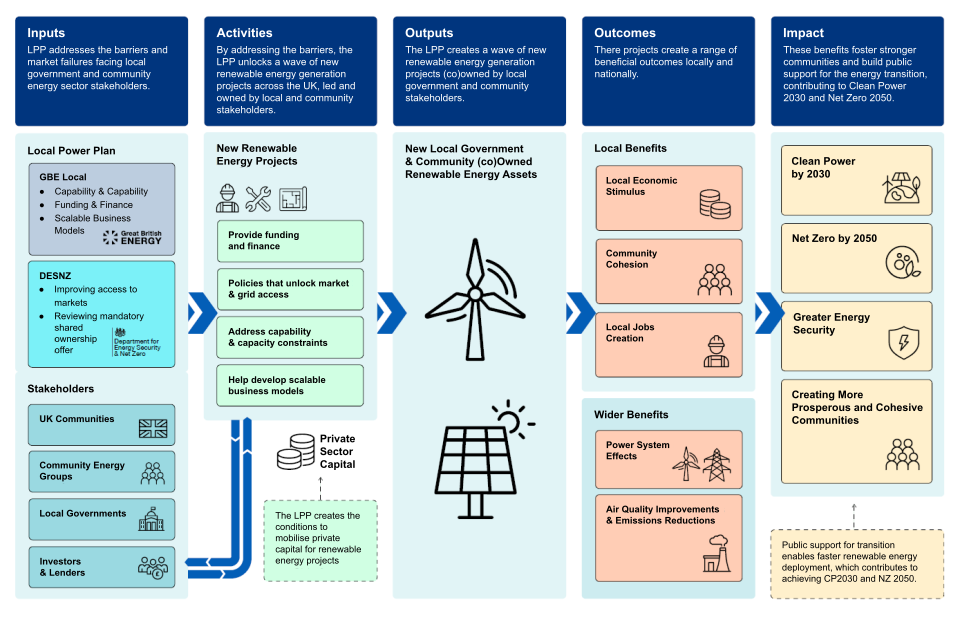
Description of diagram:
1. Inputs
LPP addresses the barriers and market failures facing local government and community energy sector stakeholders.
Local Power Plan:
GBE Local:
- Capability and capacity
- Funding and finance
- Scalable business models
DESNZ:
- Improving access to markets
- Reviewing mandatory shared ownership offer
Stakeholders:
- UK Communities
- Community Energy Groups
- Local governments
- Investors and lenders
2. Activities
By addressing the barriers, the LPP unlocks a wave of new renewable energy generation projects across the UK, led and owned by local and community stakeholders.
New renewable energy projects:
- Provide funding and finance
- Policies that unlock market and grid access
- Address capability and capacity constraints
- Help develop scalable business models
Private sector capital:
The LPP creates the conditions to mobilise private capital for renewable energy projects.
3. Outputs
The LPP creates a wave of new renewable energy generation projects (co)owned by local government and community stakeholders.
- New local government and community (co)owned renewable energy assets
4. Outcomes
There projects create a range of beneficial outcomes locally and nationally.
Local benefits:
- Local economic stimulus
- Community cohesion
- Local jobs creation
Wider benefits:
- Power system effects
- Air quality improvements and emissions reductions
5. Impact
These benefits foster stronger communities and build public support for the energy transition, contributing to Clean Power 2030 and Net Zero 2050.
- Clean Power by 2030
- Net Zero by 2050
- Greater energy security
- Creating more prosperous and cohesive communities
Public support for transition enables faster renewable energy deployment, which contributes to achieving CP2030 and NZ 2050.
Delivering this vision together
This plan isn’t about government telling communities how to do this. We want this to be an enabler for communities to go out and do what they do best—shape their future on behalf of local people. To make this plan a reality, we need government, GBE, energy companies, local government, community energy groups, energy sector bodies like Ofgem, NESO and network operators, public finance institutions and other investors, and—most importantly—local people to come together and play their part in shaping the future of clean, local power.
We want to hear from you. GBE is launching an Expression of Interest (EOI) process inviting communities and local government to share their project ideas so we can understand their readiness and suitability for the Local Power Plan, and whether they might need future support or investment. Sending an EOI won’t commit you to anything and it isn’t a formal funding application—it’s simply a first step. Express your interest - Great British Energy.
By working together, we can build on progress and help community energy accelerate across the country. Together, we can create more opportunities, reach more places, and ensure that by 2030, every community in the UK has the chance to own a local energy project.
Shared ownership
Shared ownership is a type of community energy where a community energy group has the opportunity to invest in a renewable energy project, and where the community’s share of the development is then considered community owned. This gives communities a greater say over the project, and a chance to earn revenues which can be spent on local priorities, like cutting bills or supporting local schools, services and social clubs.
There are a number of common models of shared ownership including:
- Split Ownership: community owns a physical portion of the project.
- Joint Venture: community group and developer co-own a special purpose vehicle (SPV).
- Shared Revenue: community purchase a share of the project’s future revenue.
Shared ownership matters and is important to achieving our vision because it:
- Opens the door for everyone. It’s an easy first step for communities new to energy projects, helping people learn and grow without taking on the full responsibilities of development. It also makes sure communities who don’t have space to host energy projects can still play a part.
- Unlocks bigger opportunities. It allows communities to take part in larger projects they couldn’t deliver. It can offer greater financial returns to the community than traditional community benefit funds.
- Gives locals a say in larger-scale energy projects. Involving local communities in decision-making can allow them to more directly feel the benefits of large-scale energy projects being developed in their local area. This greater community engagement is something which developers may also welcome.
Shared ownership is already proving its power and illustrating these benefits. As set out in greater detail below, government will develop detailed proposals on how a mandatory shared ownership offer could work and consult on it in 2026.
We continue to encourage developers to offer shared ownership and community funds as best practice.
Middelgrunden Wind Farm, Denmark
The Middelgrunden Wind Farm is located 3.5 km off the coast of Copenhagen, Denmark in the Øresund Strait, and was commissioned in 2001 and began generating electricity in the same year. It has a capacity of 40 MW from 20 turbines (each 2 MW).
Middelgrunden is 50% owned by the Middelgrunden Windmill Cooperative (c.8,500 members) and 50% by Copenhagen Energy, the municipal utility. When built, Middelgrunden was the largest offshore wind farm in the world.
The Cooperative invested 23 million euros, with c.7% annual return for members. Each cooperative share represents 1,000 kWh/year and generates a 7.5% return after depreciation – this means that the initial cost of buying a share was earned back in 8 years; everything since has been profit.
3. Our offer
Progress so far
In the last year, we’ve already helped communities take control of their own energy supply and cut their bills. Together we have:
- Worked with Mayors to cut bills for leisure centres, police headquarters, and other public buildings through £16 million for the Mayoral Renewables Fund. This will fund the installation of solar and complementary technologies across 14 Mayoral Strategic Authorities, estimated to save local public buildings around £50 million in lifetime energy bills over the next 30 years.[footnote 6]
- Provided what community energy groups tell us they need the most, using £5 million for GBE Community Fund to provide early-stage funding to over 60 community energy projects as of January 2026 across England, with more to come.
- Provided free expertise and resource to help local authorities develop clean energy projects through £6.8 million for the Local Net Zero Hubs.
- Helped communities across Scotland, Wales and Northern Ireland cut bills or raise local revenues by delivering £21.5 million in partnership with devolved governments — offering funding to over 80 community energy and public building schemes so far, including Further Education colleges in Northern Ireland, schools, leisure centres and museums in Wales, solar farms on the Isle of Arran and wind projects in Aberdeenshire.
- Cut bills for schools, hospitals and other public services across England, via the Solar Partnerships Scheme — investing up to £255 million to install solar and complementary technologies (including batteries) on more than 250 schools, 260 NHS sites and multiple military sites, estimated to save up to £520 million in lifetime energy bill savings for schools and NHS sites over the next 30 years.[footnote 6]
- Made it easier for local schemes to connect to the grid by supporting proposals to raise the Transmission Impact Assessment limit from 1 MW to 5 MW for smaller generation projects in England and Wales.
- Made progress on unlocking shared ownership and community benefits for low-carbon energy infrastructure through publishing a Working Paper exploring these options—ensuring communities can take a real stake in the clean energy transition.
The cornerstone of the Local Power Plan is the establishment of GBE itself. The UK’s publicly owned clean energy company, stems from a simple idea: that the British people should own and benefit from a share of our natural resources. This plan sets out how we will deliver this with clear targets to:
- Power communities by supporting over 1,000 local and community energy generation projects and boosting shared ownership[footnote 7]
- Develop scalable, self-sustaining business models for community energy groups
- Act as a sector leader, market maker and strategic investor, driving innovation and taking calculated risks to deliver benefits to communities
- Help more communities access the benefits of local and community energy, with grants and loans increasingly focused on underserved areas or those who are new to the sector
GBE Local – Funding commitment
To achieve these targets, GBE is dedicating up to £1 billion throughout the rest of the Spending Review period. This financial commitment reflects the scale of the opportunity we believe is on offer in the coming years—a chance for our communities to own the clean energy projects in their area and to benefit from the profits they create.
This funding will support projects, such as solar, onshore wind, and hydro. With clean power projects in the hands of communities, funds will flow back to community priorities and could be used to cut bills for community buildings like libraries, leisure centres and working men’s clubs.
Who we’re here for and how it works
The Local Power Plan is for:
- members of the public interested in exploring community energy
- community energy groups of all sizes and stages
- local government, including councils and combined authorities
- other public sector organisations who could benefit from renewables
Historically these groups have faced barriers in realising their visions for their communities. The Local Power Plan is designed to eliminate these hurdles.
Public investment is key. That is why GBE is providing a combination of grants, loans and local investments to maximise the already considerable pipeline of projects across the UK. But we have listened to communities and know that access to finance is not the only barrier holding them back—we want to make sure that the benefits of local ownership are available to all communities, not just those who already have knowledge or expertise of the energy sector. That is why GBE will also provide expertise, advice and support to help local groups on their journey. As a publicly owned energy company, GBE will make sure that all communities, including underserved communities, have the opportunity to access this support. At the same time, DESNZ will tackle policy and regulatory barriers to create an environment for local energy projects to grow and thrive.
Together, we—in partnership with the devolved governments and other trusted partners—will tackle the barriers and market failures that hold projects back by offering:
- Direct funding, to overcome the barriers of access to finance and funding certainty. This will include support to help projects become financially robust and ready for investment, with the potential to mobilise private capital and, where appropriate, enable future refinancing or risk‑sharing through partners such as the National Wealth Fund to help reduce costs and improve long‑term viability.
- A team of experts to help communities plan and build their projects. GBE will also support with capacity-building, helping to upskill and build additional expertise and resource within community groups, as well as within organisations that can have a role to play in helping them.
- A long-term plan to attract more investment into local and community energy by developing repeatable business models and exploring new ideas such as aggregation.
- Policy and regulatory changes, to foster an environment that promotes the growth and success of local power.
Ready to get started?
If you are a community new to the idea, an existing community energy group planning your next project, or a local authority looking to collaborate—GBE is here to help.
Call to action
Visit our website and complete the dedicated enquiry form to find out more and receive details about out GBE Capital Toolkit and how to apply as soon as schemes launch.
Working together across the UK
There are many examples of community energy thriving across the UK and we want to build on these examples. We know existing schemes such as Scottish Government’s Community and Renewable Energy Scheme (CARES) and Ynni Cymru, the Welsh Government Energy Service and the Wales Funding Programme in Wales which have helped hundreds of projects take root. GBE funding has already invested in some of these schemes, and we want to build on that success. In Northern Ireland, GBE will work with the Northern Ireland Executive to design a tailored approach that reflects its energy landscape and ambitions in its upcoming Community Energy Policy Framework.
As set out in the Statement of Strategic Priorities and GBE’s Strategic Plan, GBE will work with the devolved governments to complement existing support and identify new opportunities for collaboration. We will respect the distinct legislative operational and ministerial responsibilities in each nation, ensuring our approach works for local priorities while making sure communities across the UK can access the support they need.
Welsh Government Energy Service
Supports public sector and community groups to deliver local energy projects and decarbonisation.
- Total capital investment value of £270,700,000
- Installed generation capacity of 49.2 MW of renewable energy
- £100 million in direct awards since 2018
Community and Renewable Energy Scheme - Scotland
Accelerates community and locally owned renewable energy projects in Scotland.
- Advised over 1,300 organisation across Scotland and offered over £67 million in funding to over 990 projects
- CARES has helped to install 66 MW of renewable energy projects
We will be offering:
Support Type 1: Direct funding and finance for projects
Funding opportunities will be available for all stages of the project life cycle. GBE, in consultation with sector experts and existing funding providers, is developing a range of fair and accessible funding solutions including targeted grants, loans and project finance. This approach to community focused public finance is shaped by the people delivering local energy and designed to maximise the already considerable pipeline of projects across the UK.
For Community Energy Groups: Apply for grants to support that much needed early-stage support—like a feasibility study or a construction loan to take you from project development to operation.
For local government: Apply for partnership grants for joint projects with local community energy groups, strengthening local resilience, sharing expertise and boosting staffing capacity.
For members of a local community: Understand how you could buy into a clean energy project run by your local community or council—or even a larger-scale commercial project.
A fantastic example of where a community energy group and a local authority has worked together is involving the installation of solar panels on a number of social housing homes in the Barnsley Metropolitan Borough Council area.
Energise Barnsley – Solar and Social Housing
Energise Barnsley has been set up with Barnsley Metropolitan Borough Council to deliver community owned renewable energy and heating projects across the Borough.
Project aims:
- Reduce fuel poverty
- Develop community resilience
- Educate residents on energy saving
- Improve community and local authority partnerships
- Support the most vulnerable in the community
Energise Barnsley supported 321 council owned homes to receive free solar PV assets
Over 75% of the houses are bungalows housing elderly tenants
25% of residents are on pre-payment meters
In the first-year tenants saved over £40,000 in reduced electricity bills
Full details—including GBE’s investment allocation—will be published in the GBE Capital Toolkit launching in Autumn 2026.
GBE’s Capital Toolkit will contain a range of different types of financial support to suit different projects. Through this approach, GBE will provide early, direct investment into viable projects and aggregate them into portfolios as they progress. The Capital Toolkit will comprise 3 distinct sets of interventions: emergence and development grants; construction and operation finance; and local investment funding.
The toolkit will complement existing programmes and be as clear and intuitive as possible for communities. We’ll partner closely with devolved governments and organisations so communities can access these products seamlessly alongside current support, such as Scottish Government’s CARES and the Welsh Government Energy Service.
GBE Capital Toolkit
Emergence and development grants:
Great projects start with strong foundations. That’s why GBE is exploring 2 grant funds to support early-stage project development:
- The Great British Energy Community Fund for community energy groups
- The Partnership Fund, backing joint local government and community energy group projects
These funds are designed to increases project viability and give these groups the confidence to take the first step toward building a greater pipeline of clean investable projects.
Construction and operation loans:
We know the challenges don’t stop when a project reaches construction and getting loans for a range of community energy projects can be a barrier. That’s why GBE is exploring new loan schemes to help projects move onto the next stage:
- Construction - giving projects the backing they need to get built and start generating clean power.
- Shared Ownership - enabling communities to buy a stake in larger renewable projects in their area, so the benefits stay local.
These loans will work alongside private investment and community share offers.
Local Investment Funding:
GBE will launch a Local Investment Fund – searching on a project-by-project basis to identify viable investment opportunities and provide direct investment into local projects.
Beyond the launch of the GBE Capital Toolkit, GBE will:
- keep funding and developing the pipeline of local government and community energy projects
- work with the NWF and private finance institutions, to maximise the impact of subsidised funding products and close gaps in the market
- develop a long-term plan to unlock wider investment in community energy
Support Type 2: Capacity and capability building through expert advice and support
Alongside direct investment, GBE will also provide a team of experts to help communities plan and build their projects. Turning an initial idea into a business case can be the most challenging stage—particularly for volunteer and community-led groups. Our support will provide expert help to fill the gaps in capacity and capability and be open UK-wide. GBE is putting communities at the heart of everything it does, investing in people as well as projects.
As GBE grows, we will act as a convener and coordinator to connect communities, community energy groups, local government and others to this existing support network.
Our first priority in 2026 will be to build a new service model that makes it easy for anyone – from a member of the public with an idea, to a local council planning a major scheme – to choose and access the right level of advice and tools. This will include what communities have told us they need the most: standardised templates and access to commercial, financial and technical expertise. If you would like to be the first to hear when this launches, please contact us at Local Power Plan - GBE.
Beyond this, we will develop 3 core functions for capacity and capability building:
A strong partner network:
GBE Local will develop strong relationships with a range of partners - both regionally and nationally - to tackle barriers to growth. This network will include:
- Strategic partners: Organisations GBE works with to develop new delivery models such as Ofgem, Distribution Network Operators (DNOs) and NESO.
- Project partners: Organisations GBE develops a commercial arrangement with to help support the development and delivery of projects.
- Local Power Plan partners: Organisations GBE works with to ensure the success of the Local Power Plan, including community energy groups and local authorities. GBE Local will work with these partners to develop a pipeline of projects in the construction and operation stages which we can support.
Expertise in-house and regional support:
As GBE establishes itself as a key player in the local energy landscape, we will create an advisory service of specialists so community energy groups and local government can easily access support on a range of topics, such as different technologies or finance. This service will complement existing regional support and ensure every community can access the expertise it needs.
A robust range of templates and guidance documents:
GBE will also create a comprehensive “Community Energy in a Box” toolkit for communities, community energy groups and local government. The toolkit will provide clear guidance, standardised documents and resources to make getting started on, and delivering, projects easier. From raising awareness, to project origination, to project development support, access to technologies and even to information about financing options, these tools will save our communities valuable time and resources, giving them the confidence they need to move forward. Currently, we are developing shared ownership templates to be ready in 2026.
Mayoral and Combined Authority Agreements in England
GBE will partner with Mayoral Strategic Authorities, Combined Authorities and Local Authorities - taking a holistic approach to supporting renewable energy deployment in their regions.
GBE’s first agreements can be accessed online at Local Power Plans - GBE. We hope to announce more in 2026.
Fair Community Benefit Funds
Beyond full or shared ownership projects, we recognise that community benefit funds as part of larger renewable energy projects are also important for providing long-term, flexible financial support that helps local communities directly improve their economy, environment and social wellbeing.
9CC Group, Scotland – Fair Community Benefit funds
The 9CC Group comprises of 9 communities in the Cumnock and Doon Valley area of Scotland. As the area is popular for wind farm development, the consortium was established to be a single trust to manage, administer and distribute community benefits from any new and future wind farms in a fair and equitable way.
9CCG have developed a Community Benefit Funding Matrix to allocate funding to each of the 9 communities based on population, distance from the turbines and Scottish index of Multiple Deprivation.
To date, the group has distributed hundreds-of-thousands of pounds across the communities.
This has produced £495,000 Round 1 Local Community Fund Allocations
Support Type 3: A long-term plan to unlock wider investment in community and local energy
The Local Power Plan is not only about GBE directly investing in local and community energy projects. We also want to unlock wider investment into local and community energy. The public investment announced in the Local Power Plan will be catalytic and designed to crowd in much more private investment.
To do this, we will explore ways to make it easier for communities to benefit from local energy projects. Right now, many projects struggle because the energy system isn’t structured to recognise, encourage or financially reward locally produced energy.
As the diagram shows, there are many different ways to set up a business which allows these projects to sell power. If communities have a clear route to sell the power they generate, they can more easily attract investment, and generate returns which can be invested in local priorities, such as leisure centres, libraries or pubs or cutting residents energy bills.
Community Energy Revenue Models
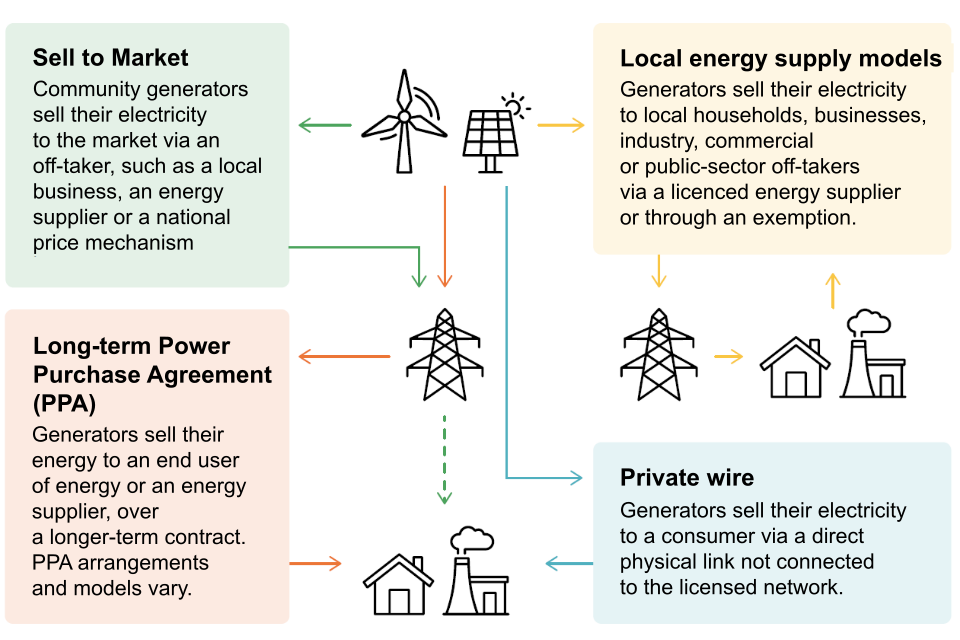
Description of diagram:
Sell to market: Community generators sell their electricity to the market via an off-taker, such as a local business, an energy supplier or a national price mechanism.
Local energy supply models: Generators sell their electricity to local households, businesses, industry, commercial or public-sector off-takers via a licenced energy supplier or through an exemption.
Long-term Power Purchase Agreement (PPA): Generators sell their energy to an end user of energy or an energy supplier, over a longer-term contract. PPA arrangements and models vary.
Private wire: Generators sell their electricity to a consumer via a direct physical link not connected to the licensed network.
GBE will look to develop viable, bankable and repeatable business models that work today. GBE will also explore how these repeatable models can benefit from future improvements as they come through. This should help bring new investment into the local and community energy sector and help even more communities reap the benefits of local clean energy.
Throughout 2026, GBE will:
- Learn from successful projects, test new solutions and develop financial products, standardised templates and mechanisms that unlock confidence for communities and investors alike. This includes exploring innovative revenue models with a focus on consumer-led flexibility, local flexibility arrangements, Smart Community Energy and virtual PPAs. These tools will help projects raise finance, share power locally, and keep more of the benefits in the hands of communities.
- Develop the Local Energy Platform to make it easier – and provide multiple options for – communities to get involved with local clean energy.
Local Energy Platform
The Local Energy Platform concept aims to be an end-to-end business solution for local energy projects to address the barrier of a lack of standardised and repeatable models for delivering projects.
Helping communities get the most out of local energy generation – unlocking the potential of Smart Community Energy
We want to help communities cut bills by developing business models that deliver Smart Local Energy Systems (SLES) or Smart Community Energy.
These models have the potential to help communities save on their electricity bills, so GBE will explore ways to allow this form of energy to grow. Innovative work has already been taking place across the UK in support of SLES, including the £30 million Ynni Cymru capital grant scheme launched by the Welsh Government and a smart grid project in Northern Ireland led by UKRI funding.
Unlike traditional centralised systems, SLES are designed to reflect local needs and resources, enabling communities to take a more active role in their energy future. A SLES is a way to bring together different energy assets and infrastructure in a local area, and make them operate in a smarter way, in which more value is retained locally.
GBE will explore, with stakeholders and expertise, the future potential of generating and sharing power locally, in a smart way, and which products could be developed to unlock this at greater scale.
Project Girona – Smart Grid in Northern Ireland
Northern Ireland’s first smart grid is demonstrating how innovative smart local energy system solutions can not only bring greener electricity to communities but also save on bills. The project:
- Installed solar panels and smart storage batteries to 60 properties and commercial buildings in the Coleraine area.
- Developed an energy management platform, PARIS, software to maximise efficiency of the solar panels and battery storage.
- Discharged excess electricity to the grid to benefit other households to use renewable energy.
Significant savings for users: reducing standard electricity bills between 40% to 60% Saved 40 tonnes of CO2 a year – equivalent to 19 family cars worth of CO2 production.
£450 saved on average per household
Support Type 4: Policy and regulatory changes
The Local Power Plan marks a step-change in how the UK government will work side by side with our communities so they can reap the rewards of local energy. To make the biggest public investment in community energy in this country’s history a success, DESNZ is backing up GBE’s offers with ambitious policy and regulatory changes. DESNZ is driving forward work with Ofgem, NESO and others to unlock the growth of local and community energy, while also delivering our wider departmental objectives of cutting bills and strengthening energy security.
In 2026-27, DESNZ will:
Make it easier for communities to own a stake in projects
Ownership matters and unlocking shared ownership is important for achieving our vision for communities and bringing the UK’s community energy movement to a broader audience. Following our consultation on mandating an offer on shared ownership published in 2025 (Community benefits and shared ownership for low carbon energy infrastructure - GOV.UK), we will develop detailed proposals on how a mandatory shared ownership offer could work and consult on it in 2026. This will use the existing powers in the 2015 Infrastructure Act.
We will work with communities, community energy groups, energy suppliers, developers and others on the design.
We continue to encourage developers to offer shared ownership and community funds as best practise.
Give communities fairer access to energy markets
DESNZ will:
- Continue work with Ofgem and Elexon on key code modifications P441, P442, P444 and P415 to make it easier to establish local energy communities, share locally generated power and benefit from community energy. We strongly support the progression of these modifications.
- Explore other opportunities in supply licence legislation to support market access for communities.
- Engage across the public sector on opportunities to unlock PPAs between community energy groups and public buildings, building on the decision made at the November 2025 Budget to enable public-private partnerships for decarbonisation.[footnote 8] We have listened to community energy groups on this issue and reiterate our support for this approach, recognising it will create new development opportunities on public land and expand co-benefits for communities and the public estate.
- Collect evidence on how communities are disadvantaged by current market arrangements, considering the experiences across all the different regions of the UK. This will form the backbone of the case for future reforms including possible price support for community projects, if needed.
Call to action
We encourage the code administrators, managers and industry to bring forward additional code modifications to enable local energy communities to share locally generated power and benefit from community energy.
Call to action
We welcome feedback from across communities, community energy groups, local government and others to strengthen our evidence case. Please contact the relevant DESNZ team.
Call to action
We encourage suppliers and market infrastructure providers to enable community energy schemes to access the energy market through community supply tariffs, peer-to-peer trading, local balancing, PPAs and collaborate with service providers to support innovative models.
Make it easier for communities to sell their power
Building on our work to update guidance to clarify the Class A supply exemption in January 2026, DESNZ is looking to:
- develop a definition of a ‘Community Energy Group’
- address informational barriers, reducing costs and improving incentives for licensed suppliers to provide services and tariffs for community energy schemes
Make the grid connection process and experience easier
Community and local energy leaders – like many projects –report challenges with grid access as a key reason for project delays. This is a priority for DESNZ and we are:
- working with Ofgem to implement the outputs of its Connections End-to-End Review to improve network company service standards, like obligatory response times from DNOs[footnote 9]
- convening new working groups with Ofgem and DNOs to explore tailored support for community energy projects looking to secure grid connections
- collaborating with Ofgem, NESO and DNOs on looking at models for ‘whole system optimisation’ as part of developing Regional Energy Strategic Plans
- recognising the specific issues in Scotland, working with Ofgem, NESO, the Scottish Government, and network operators to ensure there is action taken to address the additional barriers presented by the lower Transmission Impact Assessment (TIA) thresholds in Scotland better support community energy[footnote 10]
- work with the System Operator (SONI) and the Distribution Network Operator (NIE Networks) to explore how Community Energy can be effectively supported across Northern Ireland, responding to power system needs in an open, balanced and constructive way
Getting the most out of local energy generation – unlocking the potential of Smart Community Energy[footnote 11]
DESNZ shares GBE’s enthusiasm about the potential of SLES to reflect local needs and resources better than centralised systems, enabling communities to take a more active role in their energy future. Building on EnergyREV’s ‘Prospering from an Energy Revolution (PFER) Programme’ and Ynni Cymru’s £30 million portfolio, DESNZ will assess the impact of GBE’s SLES pilots to build an evidence base and identify cost effective models. Following this analysis, DESNZ will consult the sector on implementation options.
Call to action
There is also potential for Smart Local Energy Systems to benefit the broader host network, including Distribution Network Operators (DNOs).
We encourage DNOs to engage with us to realise this opportunity. Please contact the relevant DESNZ team.
Helping communities access battery power
Community batteries – smaller batteries, typically co-located with solar, that provide shared energy storage for multiple homes – provide exciting opportunities for communities by enabling participation in flexibility markets, delayed self-consumption and delivering direct bill savings.
Community battery project at Odet Court, Cardiff
In 2022, Wales and West Housing delivered a pioneering retrofit at Odet Court, a block of 24 flats in Cardiff, to tackle rising energy costs and improve energy efficiency.
The project aimed to provide residents with renewable energy and reduce electricity bills. With limited space, a solution was found through Allume’s SolShare technology, which enables multiple homes to share solar power and battery storage.
The project installed 2 rooftop solar PV systems and 2 community scale batteries, connecting all 24 flats to affordable energy without residents needing to switch supplier. The project was funded by the Optimised Retrofit Programme in Wales.
60-70% reduction in grid energy use
£560-690 yearly bill savings per flat
DESNZ will issue a call for evidence in 2026 to assess the role of community batteries in the transition and identify measures to scale deployment.
Call to action
If you are interested in the potential of community batteries and would like to receive further details about our call for evidence, please contact the relevant DESNZ team.
Helping communities ’place shape’[footnote 12]
Building on the promising work of the Net Zero Accelerator Programme, DESNZ, GBE and financial partners will develop scalable investment models for whole place-based net zero solutions, working with the devolved governments on areas of devolved competence, such as planning.
Making the planning system work for communities and support community energy projects in England[footnote 13]
The Planning and Infrastructure Act will streamline energy infrastructure delivery by accelerating the planning process. To support local planners, DESNZ is funding Regen in 2026 to upskill planning officers on renewable energy and storage technologies, improving their application of the National Planning Policy Framework (NPPF) and Planning Practice Guidance.
Government is also consulting on a new National Planning Policy Framework (NPPF) that includes clearer, ‘rules based’ policies for decision-making and plan-making, designed to make planning policy easier to use and underpin the delivery of faster and simpler local plans. The consultation includes policies on securing clean energy.
Call to action
We encourage a wide range communities and relevant parties to engage with this consultation to ensure your views are heard. Please contact the relevant DESNZ team.
GBE next steps
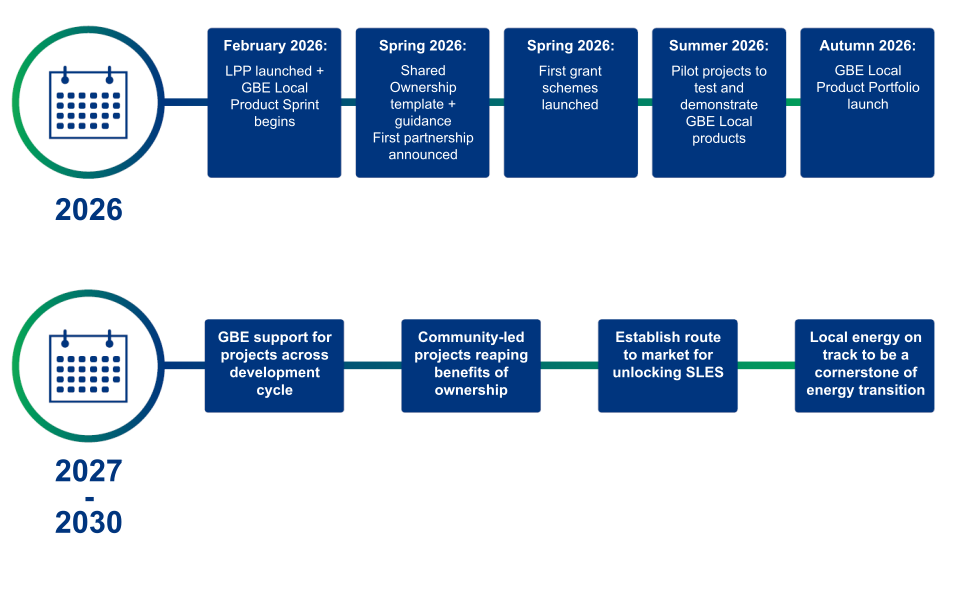
Description of diagram:
2026:
- February 2026: LPP launched + GBE Local Product Sprint begins
- Spring 2026: Shared Ownership template + guidance, First partnership announced
- Spring 2026: First grant schemes launched
- Summer 2026: Pilot projects to test and demonstrate GBE Local products
- Autumn 2026: GBE Local Product Portfolio launch
2027 to 2030:
- GBE support for projects across development cycle
- Community-led projects reaping benefits of ownership
- Establish route to market for unlocking SLES
- Local energy on track to be a cornerstone of energy transition
-
For a summary of the research, please see Section 4 of the Evidence Annex. ↩
-
For a summary of the research, please see Section 4.2.2 of the Evidence Annex. ↩
-
For a summary of the research, please see Section 5 of the Evidence Annex. ↩
-
Community Energy Group: (for the purpose of this Plan) a local organisation that works to benefit its community through energy projects. DESNZ is currently developing a definition of a ‘Community Energy Group’. Other legal definitions exist, such as in Scotland and Wales ↩
-
The pipeline focuses on local government and community energy group projects only, please see Section 2.1 of the Evidence Annex for an explanation of the data used and key considerations and limitations. ↩
-
Lifetime energy bill savings estimates are calculated on the total project value (including match-funding), using DESNZ assumptions agreed with delivery partners. These estimates are undiscounted and calculated net of operating costs. They remain uncertain, as they are sensitive to key input assumptions, particularly future electricity retail prices. ↩ ↩2
-
This plan is energy generation and smart local energy systems focused. GBE can consider any technologies in line with its objects in the Great British Energy Act 2025, including but not limited to: wind, solar, hydroelectric (including wave and tidal energy), bioenergy, electricity storage (battery storage). ↩
-
Wording from Budget 2025 Document: ‘Private finance for decarbonisation of the public sector estate – The government has confirmed it will consider private sources of finance – including Public Private Partnerships – to decarbonise the public sector estate (alongside or in place of government capital. expenditure), where these offer value for money. HM Treasury will consider proposals based on business cases from relevant departments.’ ↩
-
Ofgem (2025) ‘Connections end-to-end review: updated proposals and next steps’ ↩
-
Currently 200 kW in mainland Scotland and 50 kW in Scottish Islands. ↩
-
SLES are integrated, place-based energy systems that combine local generation, storage, demand-side technologies, and infrastructure, optimised through smart technologies to meet local needs. ↩
-
Whereby joint planning and project development between the local authority, community energy groups, other local councils and the wider community utilise local knowledge and expertise to shape their local area. This often combines renewable energy generation, storage clean heat, retrofit, transport and green spaces. ↩
-
Planning is a devolved power in Scotland, Wales and Northern Ireland ↩