Listeriosis in England and Wales: summary for 2025
Updated 28 May 2026

© Crown copyright 2026
This publication is licensed under the terms of the Open Government Licence v3.0 except where otherwise stated. To view this licence, visit nationalarchives.gov.uk/doc/open-government-licence/version/3 or write to the Information Policy Team, The National Archives, Kew, London TW9 4DU, or email: psi@nationalarchives.gov.uk.
Where we have identified any third party copyright information you will need to obtain permission from the copyright holders concerned.
This publication is available at https://www.gov.uk/government/publications/listeria-monocytogenes-surveillance-reports/listeriosis-in-england-and-wales-summary-for-2025
Main points for 2025
This report summarises the number, demographics and clinical outcomes of confirmed cases of listeriosis in England and Wales in 2025:
- in 2025, 181 cases of listeriosis were reported in England and Wales
- incidence rates of listeriosis were highest in people aged 80 years and over
- overall, the crude incidence of listeriosis was lower in men than women, but for the age groups under 10, 50 to 69, 70 to 79, and 80 and over, rates were higher among men
- pregnancy-associated infections accounted for around a fifth of all reported cases and 31.4% of pregnancy associated cases (where known) resulted in still birth or miscarriage
- among non-pregnancy associated cases of listeriosis, death was reported for 28 cases (19.9%), of whom 17 (60.7%) were known to have listeriosis recorded as a cause of death on the death certificate
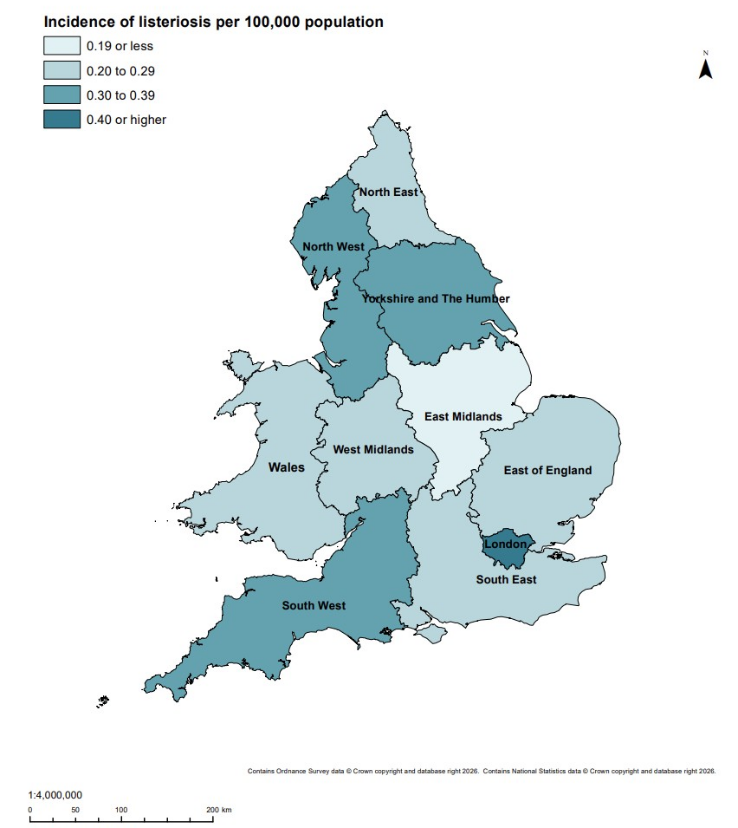
- incidence of listeriosis varied geographically, with the lowest incidence in the East Midlands (0.18 cases per 100,000 population) and the highest in London (0.42 cases per 100,000 population)
- there were 4 listeriosis outbreaks investigated in England and Wales in 2025, including national outbreaks associated with smoked fish and prepacked sandwiches
Background
Listeriosis is a foodborne disease caused by the bacterium Listeria monocytogenes (L. monocytogenes). These bacteria are widely distributed in the environment and infection usually occurs after consumption of contaminated raw, chilled, or ready-to-eat foods, which can cause sporadic infections but can also result in outbreaks of disease. People with listeriosis have been reported to develop symptoms between 1 to 70 days after consuming food contaminated with L. monocytogenes (1).
Compared to other foodborne pathogens, infections in humans are relatively rare, with 3,041 confirmed cases of listeriosis (rate per 100,000 population of 0.69) reported across reporting EU member states in 2024 (2), and a median of 172 cases in England and Wales each year (2016 to 2025).
Most cases are asymptomatic or experience mild gastroenteritis and are not detected by routine faecal diagnostic assays. However, the infection can cause bacteraemia, meningoencephalitis or severe sepsis in the elderly, immunocompromised or those with underlying chronic conditions (3). Invasive infections are detected by culturing blood, cerebrospinal fluid (CSF) and sterile sites in patients admitted to hospital. Vertical and peripartum transmission during pregnancy can lead to miscarriage, neonatal meningoencephalitis and sepsis.
Due to the severity of infection and high case fatality rate, listeriosis is an important public health concern.
National surveillance of listeriosis in England and Wales has been undertaken since 1992. This report summarises the number, demographics and clinical outcomes of confirmed cases of listeriosis in England and Wales reported in 2025.
Methods
National surveillance of listeriosis in England and Wales is coordinated by the Gastrointestinal Infections, Food Safety and One Health Division (GIFSOH) at UKHSA, with support from Public Health Wales and involves the collation of routinely collected epidemiological, clinical and microbiological data for cases of listeriosis.
New cases are reported to the national surveillance system by local clinical laboratories, health protection teams and/or by referral of L. monocytogenes isolates to the Gastrointestinal Bacteria Reference Unit (GBRU) for whole genome sequencing (WGS).
Demographic and food history data is collected via a standardised questionnaire (trawling questionnaire) administered to the case or a proxy via Health Protection Teams or Local Authorities. Clinical data is collected from clinical microbiologists at the frontline diagnostic laboratories via a second separate questionnaire (clinical questionnaire).
The analysis of WGS derived data, combined with clinical and epidemiological data from standardised food and clinical questionnaires, is used to detect clusters of genomically and epidemiologically linked cases, inform outbreak investigations and implement appropriate control measures.
It is likely that the emergence of SARS-CoV-2 (COVID-19) and subsequent non-pharmaceutical interventions (NPIs) implemented to control COVID-19 affected gastrointestinal disease surveillance in a number of ways. These included, but were not limited to, changes which may have impacted ascertainment (for example, healthcare seeking behaviour and access to health care) as well as changes which likely impacted incidence (for example, closures of hospitality and food businesses, increased awareness of general hygiene, changes or disruption to food supply chains, changes in food consumption or storage habits) which will have also varied over time. It should be noted however that the NPIs implemented during this period would have been less likely to affect reporting of listeriosis cases in a similar manner to other cases of gastrointestinal infections, due to the greater severity of illness (and thus higher rate of hospitalisation) of cases of listeriosis. The low numbers of annually reported cases of listeriosis makes meaningful interpretation difficult however, and it is therefore unclear whether the lower number of cases reported in 2020, and the number of cases reported in 2021, was due to in part to effects of the COVID-19 pandemic or interannual variation which may have occurred even if COVID-19 had not emerged.
As any potential impact of the COVID-19 pandemic upon the 2020 and 2021 case numbers remains unclear, throughout this report data from these years has been excluded when calculating the 5-year median used to compare against the 2025 data, with the time period of 2018, 2019 and 2022 to 2024 used instead.
Case definitions
For reporting, a confirmed case of listeriosis is defined as (4):
- a person with a clinically compatible illness (see Clinical criteria, below)
and:
- isolation of L. monocytogenes (or detection of nucleic acid) from a normally sterile site
or:
- isolation of L. monocytogenes (or detection of nucleic acid) from a normally non-sterile site from a foetus, stillborn, newborn, placenta, foetal tissue or from the mother following birth
Clinical criteria
In adults, invasive disease caused by L. monocytogenes (listeriosis) manifests most commonly as septicaemia and/or meningoencephalitis.
Invasive listeriosis principally affects high risk groups including:
- people aged over 50 years
- people with malignancies (especially of the blood)
- organ transplants
- chronic kidney disease
- chronic liver disease
- uncontrolled diabetes
- uncontrolled human immunodeficiency virus (HIV)
- alcohol dependency
- iron overload
- patients undergoing immunosuppressive or cytotoxic treatments
- pregnant women and their unborn or newborn infants
Symptoms of sepsis include fever, confusion and collapse. Infection during pregnancy may result in foetal loss through miscarriage or stillbirth, neonatal meningitis or bacteraemia. Neonatal infection can range from mild illness to neonatal death, usually within 10 days of delivery.
Cases are further sub-classified as pregnancy associated or non-pregnancy associated (Table 1).
Table 1. Sub-classification of confirmed listeriosis cases
| Pregnancy associated | Non-pregnancy associated |
|---|---|
|
L. monocytogenes infection in a pregnant patient and neonatal patients aged 28 days or less A mother-baby pair is considered a single case |
L. monocytogenes infection in a patient aged over 28 days |
Counts and rates
Data presented relate to confirmed cases reported to the national enhanced surveillance system for L. monocytogenes infection during the period 2016 to 2025.
Population and deaths data was sourced from the Office for National Statistics (ONS). Mid-year 2024 population estimates for England and Wales were used to provide denominators for the calculation of incidence rates. All rates are calculated as per 100,000 population.
National surveillance data for listeriosis
Annual cases of listeriosis
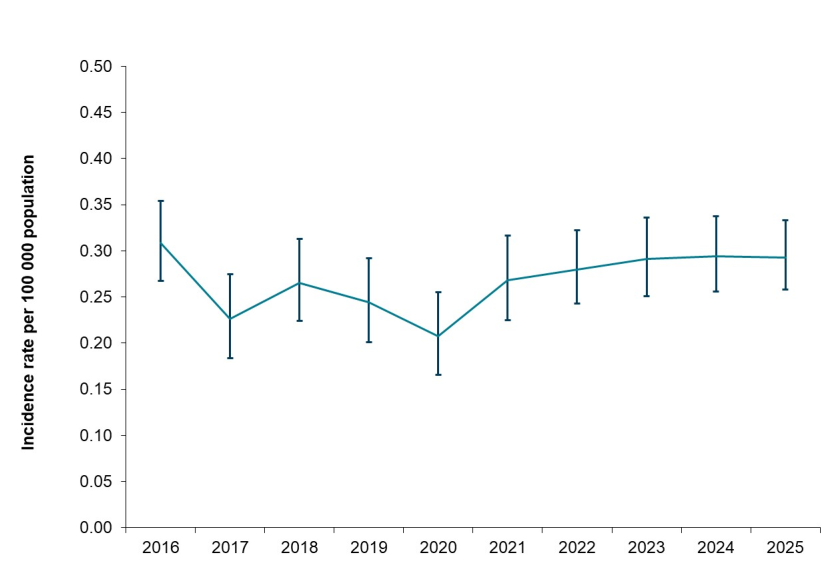
In 2025, 181 cases of listeriosis were reported to national surveillance in England and Wales (Figure 1), representing an 8.4% increase in reported cases compared to the previous 5-year median (n=167, 2018 and 2019, 2022 to 2024). The crude incidence of listeriosis in 2025 was 0.29 cases per 100,000 population (95% CI: 0.25 to 0.34), identical to 2023 and 2024.
Figure 1. Annual cases and crude incidence rate of listeriosis reported in England and Wales, 2016 to 2025
Data underlying Figure 1
(Use the scroll bar to view the full range of data.)
| 2016 | 2017 | 2018 | 2019 | 2020 | 2021 | 2022 | 2023 | 2024 | 2025 | |
|---|---|---|---|---|---|---|---|---|---|---|
| Incidence rate per 100,000 population | 0.31 | 0.23 | 0.27 | 0.24 | 0.21 | 0.27 | 0.28 | 0.29 | 0.29 | 0.29 |
| Number of laboratory-confirmed cases | 180 | 133 | 157 | 145 | 124 | 160 | 167 | 177 | 179 | 181 |
Age and sex distribution of cases
Incidence of listeriosis varied by age group and sex, with age-specific incidence rates highest in people aged 80 years and over (Figure 2).
Overall, the crude incidence of listeriosis was slightly lower in males than females (Table 2, incidence rate ratio (IRR): 0.92, 95% CI: 0.68 to 1.25), but higher in males compared to females in 4 age groups, under 10 years (IRR: 3.50, 95% CI: 0.92 to 19.52), 50 to 59 years (IRR: 4.17, 95% CI: 1.34 to 17.12), 70 to 79 years (IRR: 1.21, 95% CI: 0.53 to 2.80) and 80 years and older (IRR: 1.48, 95% CI: 0.75 to 2.94, Figure 2). Incidence was lower in males compared to females in the 20 to 29 (IRR: 0.39, 95% CI: 0.09 to 1.36), 30 to 39 (IRR: 0.18, 95% CI: 0.04 to 0.52) and 40 to 49 age groups (IRR: 0.60, 95% CI: 0.13 to 2.36), as pregnancy-associated listeriosis occurs most commonly in these age groups.
Of the 52 cases aged 10 to 49, 41 were female, of which 29 cases were associated with pregnancy (range: aged 20 to 42).
Table 2. Sex-specific incidence rates of listeriosis reported in England and Wales, 2025
| Gender | Reported cases | Incidence rate | 95% CI |
|---|---|---|---|
| Male | 85 | 0.28 | 0.22 to 0.35 |
| Female | 96 | 0.30 | 0.25 to 0.37 |
Figure 2. Age-specific incidence of listeriosis in England and Wales, stratified by sex, 2025 [note 1]

Data underlying Figure 2
| Less than 10 | 10 to 19 | 20 to 29 | 30 to 39 | 40 to 49 | 50 to 59 | 60 to 69 | 70 to 79 | 80 and over | |
|---|---|---|---|---|---|---|---|---|---|
| Male | 0.32 | 0.00 | 0.10 | 0.10 | 0.11 | 0.41 | 0.36 | 0.56 | 1.50 |
| Female | 0.09 | 0.00 | 0.26 | 0.54 | 0.18 | 0.10 | 0.45 | 0.46 | 1.01 |
Note 1: for a sub-set of pregnancy-associated listeriosis cases only the clinical isolate for the baby was received by the national reference laboratory. As such, only the age-sex specific data for these babies (rather than their mothers) was available to UKHSA and therefore included in this figure.
Pregnancy-associated cases
In 2025, over a fifth of cases were pregnancy associated (n=40, 22.1%), which was higher than previous years (14.4% to 20.7% between 2018 and 2019, 2022 to 2024).
Outcome of pregnancy was known for 35 (87.5%) pregnancy associated cases. Of these 35 cases, 24 (68.6%) pregnancies resulted in live births and 11 (31.4%) resulted in still birth or miscarriage. Of pregnancy-associated cases of listeriosis in England and Wales in 2025 (n=40), 60.0% resulted in live births, 12.5% resulted in still births, 15.0% in miscarriage and in 12.5% the outcome was unknown (Figure 3).
Figure 3. Pregnancy-associated cases of listeriosis in England and Wales in 2025 (n=40)

Mortality rate
In 2025, there were 28 deaths among 141 non-pregnancy cases reported to national surveillance (19.9%), which was lower compared to the previous 5-year median calculated from the years of 2018 and 2019, 2022 to 2024 (23.1%, range: 19.7% to 29.4%).
Of the 28 deaths, 17 were known to have a clinical manifestation of invasive L. monocytogenes infection recorded as a cause of death (please note this data may be incomplete). This represented a case fatality rate of 12.1%, compared to 6.3% in 2024.
Regional distribution of cases
The incidence rate of listeriosis varied geographically (Table 3; Figure 4). In England, London had the highest incidence rate of 0.42 cases per 100,000 population whilst the East Midlands had the lowest incidence rate of 0.18 cases per 100,000 population.
Table 3. Regional incidence of listeriosis reported in England and Wales, 2025
| Region | Cases | Incidence rate | 95% confidence interval |
|---|---|---|---|
| England | |||
| East Midlands | 9 | 0.18 | 0.08 - 0.34 |
| East of England | 14 | 0.21 | 0.12 - 0.36 |
| London | 38 | 0.42 | 0.30 - 0.57 |
| North East | 8 | 0.29 | 0.13 - 0.57 |
| North West | 23 | 0.30 | 0.19 - 0.45 |
| South East | 27 | 0.28 | 0.18 - 0.41 |
| South West | 18 | 0.31 | 0.18 - 0.48 |
| West Midlands | 17 | 0.27 | 0.16 - 0.44 |
| Yorkshire and The Humber | 20 | 0.35 | 0.22 - 0.54 |
| Wales | |||
| Wales | 7 | 0.22 | 0.09 - 0.45 |
Figure 4. Incidence rates of reported listeriosis cases in England and Wales, by region, 2025
Seasonality
June was the peak month for listeriosis reporting in 2025, with no known outbreak activity influencing the peak. In 2024 case numbers peaked in June and September, with no known outbreaks influencing either peak.
Figure 5. Seasonal trend of reported listeriosis cases in England and Wales (2023 to 2025)

Incidents of listeriosis
There were 4 outbreaks (comprising 2 or more linked cases) of listeriosis investigated in England in 2025 (Table 4), 2 of which also included cases in Wales. Investigations identified the source of all 4 outbreaks and included smoked fish and prepacked sandwiches; both considered to be high-risk foods for listeriosis in vulnerable groups.
Table 4. Outbreaks of listeriosis in England investigated in 2025 [note 2]
| Outbreak | Clinical cases | Time-frame | Region | Source of contamination |
|---|---|---|---|---|
| 1 | 21 | 2020 to 2025 | England, Wales | Smoked fish |
| 2 | 5 | 2024 to 2025 | England, Wales | Chocolate and vanilla mousse Strawberry and vanilla mousse |
| 3 | 2 | 2025 | England | Ready meals |
| 4 | 5 | 2021 to 2025 | England | Prepacked cooked chicken and prepacked sandwiches |
Note 2: time-frame indicates the years from which clinical cases associated with each incident were reported.
National outbreak of listeriosis in England associated with smoked fish, 2020 to 2025 (5)
In December 2020, an outbreak of listeriosis was detected in England after 3 people were infected with the same strain of L. monocytogenes, one of whom died. All 3 cases had underlying comorbidities or risk factors for listeriosis, including one pregnancy-related case. One of the outbreak cases reported consuming salmon trimmings and smoked salmon slices purchased from a UK supermarket chain.
Following international inquiry through the European surveillance portal (EpiPulse), WGS analysis of food isolates sampled from smoked salmon in an EU country identified the outbreak strain. The samples were traced back to a smoked salmon supplier in the UK that distributed salmon products to the supermarket chain reported by one of the cases.
Two further cases were identified in 2021, 7 more in 2022, 3 in 2023, 4 in 2024 and 2 in 2025. All had underlying comorbidities or risk factors for listeriosis, all were non-pregnancy associated and where it was possible to complete a standardised questionnaire with the case or next of kin, all reported consuming smoked fish products.
Risk mitigation measures implemented as a result of this outbreak included updates to NHS guidance to include smoked fish as a ‘high risk’ food for listeriosis amongst the vulnerable population. Further steps have included the implementation of warning labels on certain smoked fish products to inform consumers that they may present a microbiological risk to vulnerable groups.
National outbreak of listeriosis in England associated with ready to eat frozen mousse products, 2024 to 2025
In February 2025, an outbreak of listeriosis was detected in England after 5 people were infected with the same strain of L. monocytogenes, 4 of whom died. All 5 cases had underlying comorbidities or risk factors for listeriosis and 4 had reported consumption of frozen desserts. The outbreak strain was subsequently detected from frozen mousse dessert products that were routinely supplied to NHS hospitals and care homes. The affected products were recalled, with no further cases having occurred following this action.
Conclusions
Listeriosis remains a rarely reported disease in England and Wales, with 0.29 cases per 100,000 population in 2025. The outcome of listeriosis in pregnancy remains severe with 31.4% resulting in miscarriage or stillbirth. Mortality amongst non-pregnancy cases was lower compared to the previous 5-year median (2018 and 2019, 2022 to 2024), with a case fatality rate of 19.9% compared to a median of 23.1%. Three national outbreaks were traced back to high-risk foods for listeriosis, supported by the linkage of cases to contaminated food through the analysis of strain relatedness using WGS data. The number of listeriosis cases in 2025 in England and Wales has remained relatively similar to 2024 and maintained a comparable level with the years preceding the COVID-19 pandemic. While the reason for the decrease in case reporting for 2020 and 2021 is uncertain, it is possible that the impact of the COVID-19 pandemic and consequently its effects upon ascertainment and incidence of listeriosis cases contributed to changes in case reporting in these years when compared to the 5-year median calculated from the 5 years prior to the pandemic (2015 to 2019).
As a predominantly foodborne infection, awareness of high-risk foods for vulnerable groups is vital. While the low number of reported cases complicates the interpretation of trends and any comparisons with previous years, it remains important that cases of illness and clusters of disease continue to be monitored and investigated to inform the continued risk assessment of the food chain and implementation of control measures to protect public health.
Data sources
- National Enhanced Surveillance System for Listeria monocytogenes infection in England and Wales
- Second Generation Surveillance System (SGSS)
- Gastro Data Warehouse (GDW)
Acknowledgements
We are grateful to the NHS and private hospitals diagnostic microbiology laboratories, health protection and environmental health specialists who have contributed data and reports to the national surveillance system, as well as providing support to outbreak investigations.
We also thank our colleagues in the:
- Gastrointestinal Bacteria Reference Unit (GBRU) for providing the Reference Laboratory Services and laboratory surveillance functions and expertise
- UKHSA Local Public Health Laboratories and Food Water and Environmental Microbiology Services for providing a surveillance function for GI pathogens and testing of food and environmental samples routinely and during outbreak investigation
- UKHSA Health Protection and Field Service teams, as well as Local Authorities for their contributions to incident investigations
References
1. Swaminathan B, Gerner-Smidt P. ‘The epidemiology of human listeriosis’ Microbes and Infection 2007: volume 9, issue 10, pages 1,236 to 1,243
2. European Food Safety Authority and European Centre for Disease Prevention and Control. ‘The European Union One Health 2024 Zoonoses Report’ EFSA Journal, volume 23, issue 12, e9759
3. Scobie A, Kanagarajah S, Harris RJ, Byrne L, Amar C, Grant K, Godbole G. ‘Mortality risk factors for listeriosis: a 10-year review of non-pregnancy associated cases in England 2006 to 2015’ Journal of Infection 2019: volume 78, issue 3, pages 208 to 214
4. Commission Implementing Decision (EU) 2018/945 of 22 June 2018. ‘On the communicable diseases and related special health issues to be covered by epidemiological surveillance as well as relevant case definitions’ Official Journal of the European Union 2018, volume, page 28
5. UK Health Security Agency (UKHSA). ‘Ongoing investigation into listeriosis associated with consumption of smoked fish products in England, Scotland and Wales’ Health Protection Report 2023: volume 17, issue 9