National outbreak of a Listeria monocytogenes CC4 t5.248 cluster associated with cook-chill meals
Updated 20 August 2026

© Crown copyright 2026
This publication is licensed under the terms of the Open Government Licence v3.0 except where otherwise stated. To view this licence, visit nationalarchives.gov.uk/doc/open-government-licence/version/3 or write to the Information Policy Team, The National Archives, Kew, London TW9 4DU, or email: psi@nationalarchives.gov.uk.
Where we have identified any third party copyright information you will need to obtain permission from the copyright holders concerned.
This publication is available at https://www.gov.uk/government/publications/listeria-monocytogenes-incident-report/national-outbreak-of-a-listeria-monocytogenes-cc4-t5248-cluster-associated-with-cook-chill-meals
Background
Listeriosis is an infection caused by the Gram-positive bacterium Listeria (L.) monocytogenes (1). Listeriosis may present as mild self-limiting gastroenteritis with fever. However, in vulnerable individuals such as the elderly, neonates, immunocompromised, or pregnant women, infection can lead to invasive disease such as septicaemia, central nervous system (CNS) disease, foetal loss, or death (1, 2).
Listeriosis is a rare infection in England and Wales, with only 181 cases reported to national surveillance in 2025 (3). However, its clinical severity renders it a public health concern. Of all non-pregnancy associated cases reported to surveillance in England over a 10-year period, 70% presented to hospital with septicaemia, 22% presented with CNS involvement, and 12% presented with both CNS involvement and septicaemia (2). Of all pregnant women with invasive listeriosis reported to surveillance in England and Wales during a 20-year period, over 20% suffered foetal death (4).
L. monocytogenes is usually transmitted to humans via consumption of contaminated food (5). The bacterium tolerates disinfectants and salt, low oxygen environments, and freezing, and grows at ideal refrigeration temperatures (1, 6). In food production environments, it can establish biofilms on surfaces which can protect the bacteria from cleaning and disinfection (6). Consequently, L. monocytogenes has been documented to persist on manufacturing equipment for years or even decades, increasing opportunities for cross-contamination (1, 7, 8).
Listeriosis has been a notifiable disease in England since 2010 (2). The UK Health Security Agency (UKHSA) and its predecessor organisations have maintained enhanced surveillance for listeriosis since 1992. UKHSA collects clinical and epidemiological data on all notified cases of listeriosis (3). Local health protection teams (HPTs) complete a standardised enhanced surveillance questionnaire (ESQ) with all notified cases or case proxies to gather demographic, clinical, food exposure and travel information (9). Clinical isolates from listeriosis cases diagnosed within the NHS are referred to the Gastrointestinal Bacteria Reference Unit (GBRU) at UKHSA for confirmation and genetic typing. Since December 2015, all referred L. monocytogenes isolates undergo whole genome sequencing (WGS), which allows identification of genetically linked isolates and detection of clusters. All listeriosis clusters are risk assessed to determine the appropriate level of response as outlined under the UKHSA Incident Response Plan (IRP) (10). UKHSA works with key stakeholders to investigate clusters and outbreaks and multi-agency risk assessments are carried out throughout the investigation.
Methods
Incident notification and management
On 15 April 2025, GBRU notified Gastrointestinal Infections, Food Safety and One Health (GIFSOH) Division of a cluster of 2 cases of listeriosis with report dates of 17 March and 14 April 2025 and sample dates in March 2025. L. monocytogenes isolates from the cases were closely genetically linked using WGS, indicating a likely common source of infection. Initial analysis of the available epidemiological data on the cases identified a common exposure to foods supplied by a commercial food business operator (FBO) based in London, which delivers chef-prepared cook-chill meals to their customers which need to be reheated before consumption. GIFSOH notified both HPTs under whose jurisdiction the 2 cases resided, the Food Standards Agency (FSA) and the local authority (LA) that presided over this food business, Havering Council.
On 16 April 2025, a multidisciplinary Risk Assessment Team meeting (RAT) was held with representatives from GIFSOH, the UKHSA GBRU, Food Water and Environmental Microbiology (FWEM) unit, FSA, the 2 HPTs and the Havering Council to undertake a risk assessment and determine next steps. The group agreed to convene an incident management team (IMT) to investigate and control the outbreak. The IMT met 5 times between 30 April and 21 November 2025. On 21 November 2025, the IMT was stood down. A subgroup of the IMT met on 13 January 2026 to discuss a temporary enhanced surveillance programme for the particular FBO.
The incident was managed as a routine response under the UKHSA IRP. All incident related documents including meeting minutes and reports were stored securely in a dedicated folder on a secure UKHSA network drive.
Data in this report are correct as of 15 February 2026.
Epidemiological investigations
The objectives of the epidemiological investigation were to identify and describe cases associated with the outbreak and to identify and confirm the likely vehicle of infection.
Key strands of the epidemiological investigation included agreeing the outbreak case definition, case ascertainment, and collection and review of epidemiological data for hypothesis generation and confirmation. Demographic and food history data were collected via the standardised listeriosis ESQ administered to the case or a proxy via HPTs, hospital staff or the relevant LA.
Cases are not always able to recall specific foods or dishes eaten and where the food had been purchased in the 30-day period prior to onset of illness, which must be considered when assessing case exposure information derived from case interviews. Due to the severity of illness of listeriosis and the fact that cases are often interviewed when in hospital being treated for severe illness, this may negatively impact their recall, and sometimes proxies (for example, a relative or close friend) may complete the questionnaire on their behalf.
Case definitions agreed by the IMT
Confirmed
A case of Listeria monocytogenes CC4 belonging to the SNP designation t5.248 (2.2.21.21.237.248.%).
Microbiology
The objectives of the microbiological investigations were to collect and characterise isolates of L. monocytogenes from cases and compare them to isolates from the food and food production environments. Isolates of presumptive L. monocytogenes from normally sterile sites (blood and, or CSF) were sent from hospital laboratories to GBRU. DNA was extracted from pure cultures and submitted for WGS via Illumina Nextseq platforms. For each isolate, the species identification, serogroup and multi-locus sequence type (MLST), were derived from WGS data and genomes assigned to a clonal complex using the Institut Pasteur international MLST database for L. monocytogenes (11). Sequence alignment was performed on each sample’s reads against the CC4 specific reference strain (accession FM242711.1). Hierarchical single-linkage clustering was performed on the pairwise high-quality variant positions or Single Nucleotide Polymorphism (SNP) difference between all strains at specific distance thresholds (250, 100, 50, 25, 10, 5, 0). The result of the clustering is a SNP profile, or SNP address. The SNP address is used to describe the genetic relationships of genomes, and clusters of less than and including 5- (t5) and 10- (t10) SNP differences are indicative of genomes from the same source (12). A phylogeny was created based on a soft-core SNP alignment using the CC4 reference genome and accounting for recombination based on an alignment produced from SnapperDB v3.
Food and environmental samples were obtained from food production environments by Environmental Health Practitioners and transported in accordance with the Food Law Code of Practice (13). Microbiological testing of food and environmental samples was performed by the UKHSA FWEM laboratories in Colindale. The laboratory is an official control laboratory (as designated by the FSA) and in the UK Accreditation Service (UKAS) accredited to ISO17025. Food samples of 25g were tested for both presence or absence and enumeration of L. monocytogenes (as well as other Listeria species (spp)) using the ISO11290-1:2017 and ISO11290-2:2017 methods (14, 15). Isolates of L. monocytogenes detected by FWEM were sent to UKHSA GBRU at Colindale for WGS and SNP typing as detailed above.
Food chain investigations
On 10 April 2025, Havering Council inspected the FBO’s premises. Following the initial RAT meeting on 16 April, Havering Council requested information from the FBO on its consumer base, scale of distribution, tracking capabilities, and shelf-life modelling. The LA also requested the business to submit any L. monocytogenes isolates from their in-house testing to the GBRU at UKHSA for WGS. On 9 December 2025, Havering Council carried out an unannounced inspection of the premises.
Official sampling at the FBO was carried out by Havering Council with support from FWEM. On 23 April 2025, Havering Council undertook formal sampling at the production facility, during which they took 12 environmental swabs and 2 food samples, including a sample of a parsley garnish intended to be sprinkled on top of certain meals. Successive sampling visits were undertaken at the production facility on 1 May 2025 (15 environmental swabs and 6 food samples), 20 May (4 environmental swabs and 13 food samples), 19 June (20 environmental swabs and 9 food samples) and 15 October (22 environmental swabs and 6 food samples). The 1 May and 19 June sampling visits were carried out in conjunction with FWEM. A total of 109 samples (73 environmental swabs and 36 food samples) were taken from the premises.
The FSA liaised with Havering Council throughout the investigations at the manufacturing site to provide support and advice to the LA where needed regarding actions being taken at the business, to assure there was no ongoing risk to consumers. FSA and Havering Borough Council met on 19 May 2025 to discuss sampling, cleaning and cessation of production at the FBO’s facility, in addition to communication with the FBO’s customers concerning cooking instructions. FSA and Havering Borough Council met again on 1 July 2025 to discuss the recent sampling results and product recall.
Results
Epidemiological investigations
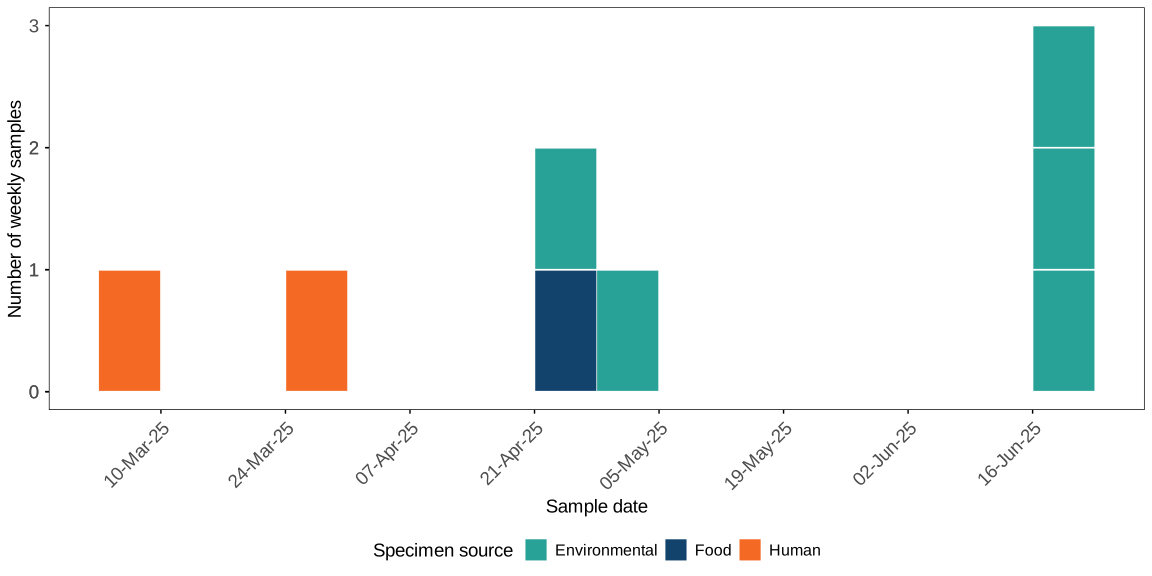
Retrospective and prospective case ascertainment identified 2 confirmed cases of listeriosis with sample dates of 3 March and 28 March 2025 (Figure 1). The cases fell within a 5-single nucleotide polymorphism (5-SNP) cluster designated CC4 t5.248 (hereafter ‘the outbreak strain’).
Figure 1. Temporal distribution of confirmed cases and matching environmental and food isolates in the L. monocytogenes CC4 t5.248 cluster, by sample date and sample source
ESQs and clinical questionnaires were returned for both cases. Cases were resident in the East Midlands and East of England respectively at the time of their first positive samples. Both confirmed cases were male and the median age of the cases was 60 years, with one in the 50 to 59 year age group and the other in the 60 to 69 year age group.
Both cases had underlying comorbidities and had been inpatients in the weeks prior to the onset of symptoms but had been hospitalised due to listeriosis. One case was confirmed deceased, with Listeria monocytogenes infection listed as a cause of death on their death certificate, and the relevant Coroner was informed of their death.
Review of ESQs indicated that both cases had consumed meals produced by the same FBO. One case reported consuming a prepacked cooked chicken meal and a sea-bass meal from the food business between 19 to 21 February 2025, while the second case reported consuming teriyaki salmon, chilli and garlic chicken donburi, lamb burger, potatoes and assorted vegetables, from the same business, that were shipped between 12 February and 12 March 2025. There were no other high-risk foods purchased or consumed by both confirmed cases, though both cases noted consuming pasteurised milk and cheddar. Both cases had been admitted to different hospitals and eaten food in hospital settings within their incubation period for listeriosis. There was no evidence that the 2 cases had common food exposures while in hospital.
Review of information available in the Listeria enhanced surveillance database identified one other case of listeriosis with a sample date in September 2024 who had also reported consumption of foods from the same business. However, this case’s samples did not culture Listeria monocytogenes, so it was not possible to determine by WGS if the case matched the outbreak strain.
Microbiology
Prior to the incident notification, L. monocytogenes was detected during routine internal testing from 2 ‘cold kitchen knives’ swabs taken by the business on 12 February 2024. There were also positive detections of L. monocytogenes in end-of-shelf-life samples of chicken korma and hazelnut dukkah-crusted salmon meal from their routine internal testing on 4 March 2025, at levels of less than 20 colony forming units (cfu) per gram. The food isolates were not retained by the private laboratory and therefore it could not be determined whether they were the outbreak strain. There were no positive Listeria identifications from any samples taken through routine internal testing subsequent to the incident notification.
L. monocytogenes matching the outbreak strain, CC4 t5.248, was isolated from one food and 5 environmental samples taken from the business (Figure 1). The food isolate was detected from ‘washed garnish parsley’, sampled on 1 May 2025, at a level of less than 10 cfu per gram. The 5 environmental isolates were detected from a ‘cold kitchen drain gulley’ on 23 April 2025, a ‘hot kitchen floor wall’ on 1 May 2025, from ‘dirty dollies’ on 19 June 2025 and 2 isolates from ‘hot kitchen floor/wall junction’ also on 19 June 2025.
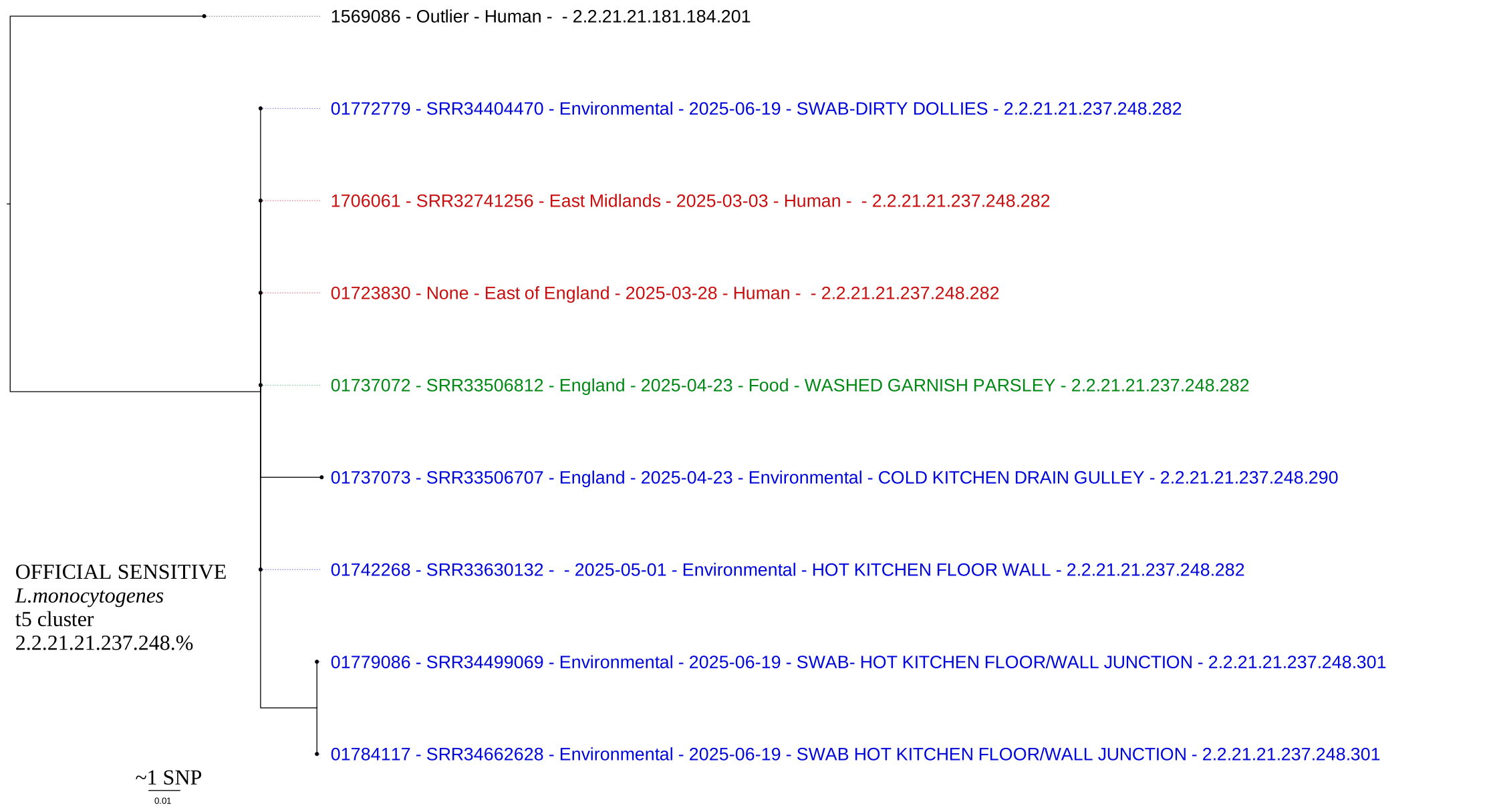
These clinical, food and environmental isolates all cluster in a 5-SNP cluster (CC4 t5:248), forming a single monophyletic clade in the phylogenetic tree, this is indicative of a common source of contamination (see Appendix 1).
LA sampling at the business also returned one food and 4 environmental L. monocytogenes isolates shared the same t10 single linkage cluster (CC155 t10.16). The 4 environmental isolates were detected from ‘floor scrubber’, ‘cold kitchen floor’, ‘cold kitchen drain’ (sampled in June 2025) and ‘mezzanine lift floor’ (sampled in October 2025). A food isolate was detected from a chimichurri beef bowl sampled in May 2025 at a level of less than 20 cfu per gram. The CC155 t10.16 cluster also included 2 historical cases of listeriosis with specimen dates in December 2015 and March 2018 and a smoked salmon isolate from sampling at a fish processing facility in another region in February 2018.
In addition, L. innocua was recovered at a level of less than 10 cfu per gram from a sample of a ‘beef gyudon rice bowl’ taken on 19 June 2025. A further 15 isolates of L. monocytogenes and 26 isolates of other Listeria spp including L. innocua, L. grayi and L. seeligeri were recovered from environmental samples taken between April and October 2025.
The L. monocytogenes isolates were assigned to CC20 or CC121 and were not linked to any clinical cases. L. monocytogenes (CC155 and CC20) and L. innocua were recovered from 5 swabs taken in the mezzanine lift in the food business between April and October 2025. The large number of positive environmental Listeria isolates at the facility suggested widespread and persistent contamination (see Appendix 2).
Food chain investigations
The UK-based FBO produces and delivers cook-chill meals and some ready-to-eat (RTE) foods across the United Kingdom. At the time of the investigation, Havering Council reported that the business had approximately 22,000 active customers, distributed across England, Wales and Scotland. The company caters predominantly to health-conscious individuals and fitness enthusiasts. The company uses the ComBase broth model for shelf-life assessments, which can simulate how an organism will survive under different conditions in certain foods. A partner delivery company oversees and tracks deliveries, which take place twice a week. The business carries out regular in-house sampling of its products and production environment, with all microbiological testing carried out by a UKAS-accredited laboratory. Havering Council was made aware in late 2024 and early 2025 of 3 alleged food poisoning complaints made regarding the business.
From its visit to the premises on 10 April 2025, Havering Council identified a number of food hygiene issues, including condensation beneath the canopy, pools of stagnant water and damaged flooring, and suggested more testing was needed to determine the root cause of Listeria contamination. Havering Council served the concerned business 3 hygiene improvement notices between 23 July and 31 August 2025 due to the below standard conditions in the food preparation areas related to inadequate drainage, inadequate ventilation and poor condition of surfaces. The business’ food hygiene rating was reduced from 4 to 1. The LA recommended that the FBO should carry out remedial works by 31 August 2025. The business sent the LA weekly updates on progress of remedial works and Listeria management, and results of the microbiological analysis of sampling carried out internally. On 5 September 2025, Havering Council confirmed that the notices served had been complied with and all remedial works were complete.
Following the identification of L. monocytogenes matching the outbreak strain from a sample of parsley garnish, it was established that the garnish was packaged with the meals and was intended to be reheated along with the meal prior to consumption, rather than packaged separately and sprinkled on the meal after reheating. It was confirmed that at least one case had consumed a meal with a parsley garnish.
There was no indication of common supply chain links between the 2 hospitals to which the cases had been admitted during their incubation period for listeriosis.
Risk assessment and control measures
Risk assessment
On 16 April 2025, the multiagency members of the RAT agreed that the risk to public health was moderate to high. Listeriosis outcomes can be severe, particularly for individuals with underlying comorbidities. In this cluster, one case had died, with the death attributed to Listeria infection. LIPI-3 and LIPI-4 pathogenicity islands, presence of either or both of which is associated with hypervirulence, are common in CC4 strains. There was an epidemiological signal implicating the business, with both confirmed cases in the cluster and a third culture-negative case having indicated consumption of meals from the same business, and positive Listeria detections from routine environmental and food sampling at their premises. The RAT consequently decided to set up an IMT to further investigate the incident.
At the fifth IMT on 21 November 2025, the IMT agreed to step down the outbreak response to business as usual. It was agreed that the risk to public health had been minimised, as indicated by the lack of cases since March 2025 and various control measures implemented during the response. There was a reduction in L. monocytogenes detections from LA sampling at the production facility and assurances from the LA that the company’s Listeria management plan was being implemented satisfactorily, including redress of structural issues identified (see Implemented controls below). Due to ongoing Listeria spp detections from samples taken from the mezzanine lift, it was agreed that an enhanced surveillance programme for the business would be set up after this incident. An IMT sub-group involving the UKHSA, FSA and Havering Council met to discuss the enhanced surveillance programme on 13 January 2026, at which point it was agreed that formal sampling visits would take place every 2 months over a 6-month period, beginning with an announced visit at the end of February 2026 by the LA.
Communications
Following the initial RAT on 16 April 2025, Havering Council requested the business to circulate a reminder to their customers of correct heating procedures, appropriate storage temperatures and adherence to use-by dates of their products.
On 7 May 2025, the business implemented a multi-channel update to reinforce safe reheating and defrosting practices to their customers in the form of a printed leaflet in every customer’s delivery, customer emails, and updating FAQs, Terms and Conditions on their website and food packaging labels. A new instruction was added on the website of the business and emailed to customers, stating that meals should be reheated until steam could be perceived to rise from the surface and from the centre when cut into.
General guidance on the importance of following cooking instructions for high-risk foods was also included in the press release accompanying the publication of UKHSA’s Listeria annual report in May 2025 in which it was enlisted.
Implemented controls
The business voluntarily ceased production on 20 May 2025, undertook a deep clean on 21 May and re-opened on 23 May following satisfactory results from their in-house environmental testing and implementation of a Listeria management plan, including work on improving their cleaning methodologies, partitioning of the facility and staff training. They also increased the concentration of its cleaning chemicals on the recommendation of a hygiene consultant recruited by the company who visited the production facility on 21 May 2025 and shared their risk assessment report on 22 May 2025. They completed a reheating validation on food products using 900W, 800W and 700W microwaves; a validation study was not carried out using lower wattage microwaves as these were difficult to source as they are not widely available on the market. Havering Borough Council requested that the business review its Hazard Analysis and Critical Control Points (HACCP) plan, with a particular emphasis on validation of procedures and critical control points.
On 23 May 2025, following the identification of L. monocytogenes matching the outbreak strain in a parsley garnish sample, the business issued a product recall for meals containing the garnish based on FSA and LA risk management advice. The recall was issued directly to food business’ consumer base. A total of 110 customers were identified as having received meals containing the parsley garnish and 102 customers responded to confirm safe disposal of the meal. On 4 June 2025, the business recalled the chimichurri beef bowl meal, a sample of which had yielded L. monocytogenes that did not match the outbreak strain (see Results Microbiology above); 5 customers were identified as having received the meal and 4 replied to confirm safe disposal. As affected items could only be obtained via an online subscription and all customers could be contacted directly by the business, the FSA did not issue a public Product Recall Information Notice, as the FSA do not routinely publish food alerts for online sales.
On 11 June 2025, the business consulted external experts at Campden Brewing Research International (BRI) and a detailed summary of the latter’s review was issued on 27 June 2025. The business also held technical discussions with the Secretary General of the Chilled Food Association to ensure their Listeria Management Plan was independently reviewed and aligned with industry best practice. On 3 September 2025, Havering Council updated the IMT that initial remedial works had been completed and that environmental health officers were satisfied that the hygiene improvement notices had been complied with.
On 15 October 2025, Havering Council visited the food business facility and found there to be improvements in the structure, including better drainage systems, repairs to previously leaking pipes, reduction in stagnant water throughout the premises, less condensation in the production areas and a cleaned vegetable preparation room. Further works in relation to ventilation were ongoing at that time but Havering Council confirmed that these had been completed following their inspection visit on 9 December 2025. The business installed a new lift in its low-risk area and refurbished the old lift, which was restricted to outer packaging only. The business’ food hygiene rating was increased to 4, with Hygienic food handling and Cleanliness and condition of facilities and building rated as Good, and Management of food safety rated as Generally satisfactory.
Discussion
This outbreak of L. monocytogenes CC4 t5.248, including 2 clinical cases with sample dates in March 2025, was found to be associated with consumption of home-delivered meals provided by a food business operator which produces and delivers cook-chill meals across the United Kingdom. Both cases were hospitalised due to listeriosis and one case died, with Listeria listed on their death certificate. L. monocytogenes was recovered at low levels (less than 20 cfu per gram) from food samples taken at the production facility, including one isolate from a sample of parsley garnish that clustered with the outbreak strain at the 5-SNP single-linkage cluster (t5.248), and affected meals were recalled through direct communication by the business with their customers. The FBO implemented a Listeria management plan, including refurbishment works to address food hygiene issues identified by the LA, and there was a reduction in positive L. monocytogenes detections from environmental sampling carried out by the LA. As of February 2026, no new cases in the CC4 t5.248 cluster have been identified since March 2025.
RTE meals such as sandwiches and precooked pasta have been implicated in listeriosis outbreaks (16, 17). Under UK Food Law (Assimilated Regulation EC (No.) 2073/2005), RTE food, once placed on the market, can legally have up to 100 cfu per gram of L. monocytogenes throughout its shelf-life. If still under the control of the Producer/Manufacturer, there should be no L. monocytogenes present in 25g unless the Producer/Manufacturer can provide suitable evidence to the Enforcing Authority that numbers will not exceed 100 cfu per gram during the shelf-life. If this evidence can be provided, then this tolerance is legally acceptable (18). Many of the foods produced by the business are not RTE foods in that they are cook-chill products that, although have been fully cooked, have been chilled and require thorough reheating before consumption. As they require further regeneration, they are not technically RTE foods. There is no legal value for L. monocytogenes in cook-chill foods. The FSA recommends cooking or reheating food at 75⁰C for at least 30 seconds to destroy L. monocytogenes present in food (6). Meals may be delivered as separate components and, irrespective of reheating instructions, some components may be more or less likely to be reheated by consumers. This outbreak highlights the risk associated with home-delivered cook-chill meals that are marketed towards busy and health-conscious individuals but may nevertheless remain appealing to a wider consumer base, including less independent and more vulnerable individuals.
Appendix 1
Maximum likelihood cluster phylogenetic tree of L. monocytogenes CC4 t5.248 clinical (red), food (green) and environmental (blue) isolates, with closest reference genome (black)
Appendix 2
Microbiological results summary table for Listeria species isolates from food and environmental samples taken at the premises of the concerned food business through official sampling by Havering Borough Council and UKHSA Food, Water and Environmental Microbiology, 23 April to 15 October 2025 (n=52).
Multiple isolates may be recovered from a single sample. SNP typing results available for L. monocytogenes isolates only. Cluster designations are provided for isolates in the CC4 t5.248 and CC155 t10.16 clusters only, the remaining L. monocytogenes isolates do not cluster with any clinical cases.
Use the scroll bar at the bottom of the table to view the data.
| Isolate | Sample date | Specimen source | Description | Organism | WGS SNP typing result |
|---|---|---|---|---|---|
| 1 [note 1] |
23/04/2025 | Environmental | Cold kitchen drain close to the washing area - drain gulley | L. monocytogenes | CC4 t5.248 (2.2.21.21.237.248.290) |
| 2 | 23/04/2025 | Environmental | Cold kitchen floor around the prep area | L. innocua | Not applicable |
| 3 | 23/04/2025 | Environmental | Cold kitchen floor around the prep area | L. monocytogenes | CC121 1.1.13.17.481.498.1528 |
| 4 | 23/04/2025 | Environmental | Cold kitchen belt cutter - green | L. monocytogenes | CC121 1.1.13.17.481.498.1527 |
| 5 | 23/04/2025 | Environmental | Mezz lift (pooled water in lift) | L. monocytogenes | CC20 1.12.47.47.64.75.250 |
| 6 [note 1] |
23/04/2025 | Food | Washed garnish parsley just prepared and washed in cold kitchen ready to be chilled | L. monocytogenes | CC4 t5.248 (2.2.21.21.237.248.282) |
| 7 | 01/05/2025 | Environmental | Corridor floor wall | L. innocua | Not applicable |
| 8 | 01/05/2025 | Environmental | Corridor floor wall | L. monocytogenes | CC20 1.12.47.16.112.140.251 |
| 9 | 01/05/2025 | Environmental | Hot kitchen drain | L. innocua | Not applicable |
| 10 | 01/05/2025 | Environmental | Hot kitchen drain | L. monocytogenes | CC20 1.12.47.47.64.75.252 |
| 11 | 01/05/2025 | Environmental | Hot kitchen floor wall | L. innocua | Not applicable |
| 12 [note 1] |
01/05/2025 | Environmental | Hot kitchen floor wall | L. monocytogenes | CC4 t5.248 (2.2.21.21.237.248.282) |
| 13 | 01/05/2025 | Environmental | Cold kitchen drain | L. innocua | Not applicable |
| 14 | 01/05/2025 | Environmental | Cold kitchen drain | L. monocytogenes | CC20 1.12.47.16.112.140.251 |
| 15 | 01/05/2025 | Environmental | Cold kitchen floor - prep area | L. innocua | Not applicable |
| 16 | 01/05/2025 | Environmental | Mezz lift floor | L. innocua | Not applicable |
| 17 | 01/05/2025 | Environmental | Mezz lift floor | L. monocytogenes | CC20 1.12.47.47.64.75.253 |
| 18 | 01/05/2025 | Environmental | Assembly area trolley wheel | L. monocytogenes | CC20 1.12.47.47.64.75.250 |
| 19 | 01/05/2025 | Environmental | Line1, belt 1 - underside | L. innocua | Not applicable |
| 20 | 20/05/2025 | Food | Chimichurri beef bowl | L. innocua | Not applicable |
| 21 | 20/05/2025 | Food | Chimichurri beef bowl | L. monocytogenes | CC155 t10.16 (1.1.8.8.16.40.150) |
| 22 | 20/05/2025 | Environmental | Cold kitchen floor | L. innocua | Not applicable |
| 23 | 20/05/2025 | Environmental | Floor to wall corridor | L. innocua | Not applicable |
| 24 | 20/05/2025 | Environmental | Mezz floor lift | L. innocua | Not applicable |
| 25 | 20/05/2025 | Environmental | Mezz floor lift | L. monocytogenes | CC20 1.12.47.47.64.75.250 |
| 26 | 20/05/2025 | Environmental | Hot kitchen floor to wall | L. monocytogenes | CC20 1.12.47.47.64.75.254 |
| 27 | 19/06/2025 | Environmental | Mezzanine lift floor | L. monocytogenes | CC20 1.12.47.47.64.75.250 |
| 28 | 19/06/2025 | Environmental | Clean room cardboard | L. innocua | Not applicable |
| 29 | 19/06/2025 | Environmental | Dirty dollies | L. innocua | Not applicable |
| 30 [note 1] |
19/06/2025 | Environmental | Dirty dollies | L. monocytogenes | CC4 t5.248 (2.2.21.21.237.248.282) |
| 31 | 19/06/2025 | Environmental | Hot kitchen floor/wall | L. seeligeri | Not applicable |
| 32 | 19/06/2025 | Environmental | Hot kitchen drain | L. innocua | Not applicable |
| 33 | 19/06/2025 | Environmental | Hot kitchen drain | L. monocytogenes | CC20 1.12.47.47.114.142.257 |
| 34 | 19/06/2025 | Environmental | Hot kitchen floor/wall junction 2 | L. innocua | Not applicable |
| 35 [note 1] |
19/06/2025 | Environmental | Hot kitchen floor/wall junction 2 | L. monocytogenes | CC4 t5.248 (2.2.21.21.237.248.301) |
| 36 | 19/06/2025 | Environmental | Cold kitchen drain | L. innocua | Not applicable |
| 37 | 19/06/2025 | Environmental | Cold kitchen drain | L. monocytogenes | CC155 t10.16 (1.1.8.8.16.40.152) |
| 38 | 19/06/2025 | Environmental | Cold kitchen floor | L. innocua | Not applicable |
| 39 | 19/06/2025 | Environmental | Cold kitchen floor | L. monocytogenes | CC155 t10.16 (1.1.8.8.16.40.151) |
| 40 | 19/06/2025 | Environmental | Cold kitchen pillar base | L. innocua | Not applicable |
| 41 | 19/06/2025 | Environmental | Cold kitchen pillar base | L. monocytogenes | CC20 1.12.47.47.64.75.258 |
| 42 | 19/06/2025 | Environmental | Cold kitchen trolley wheels | L. innocua | Not applicable |
| 43 | 19/06/2025 | Environmental | Cold kitchen trolley wheels | L. monocytogenes | 1.12.47.47.64.75.262 |
| 44 | 19/06/2025 | Environmental | Floor scrubber | L. innocua | Not applicable |
| 45 | 19/06/2025 | Environmental | Floor scrubber | L. monocytogenes | CC155 t10.16 (1.1.8.8.16.40.151) |
| 46 | 19/06/2025 | Environmental | Green broom | L. innocua | Not applicable |
| 47 | 19/06/2025 | Environmental | Green broom | L. monocytogenes | CC20 1.12.47.16.112.140.256 |
| 48 | 19/06/2025 | Environmental | Assembly point line 1, belt 1, Underside | L. grayi | Not applicable |
| 49 | 19/06/2025 | Environmental | Beef gyudon rice bowl | L. innocua | Not applicable |
| 50 | 15/10/2025 | Environmental | Clean dolly/floor | L. innocua | Not applicable |
| 51 | 15/10/2025 | Environmental | Mezzanine lift floor | L. monocytogenes | CC155 t10.16 (1.1.8.8.16.40.51) |
| 52 | 15/10/2025 | Environmental | Cold kitchen floor | L. innocua | Not applicable |
Note 1: isolates matching the CC4 t5.248 outbreak strain.
This table is also available to download as an ods spreadsheet.
References
1. Swaminathan B, Gerner-Smidt P. ‘The epidemiology of human listeriosis’ Microbes and Infection 2007: volume 9, issue 10, pages 1,236 to 1,243
2. Scobie A, Kanagarajah S, Harris RJ, Byrne L, Amar C, Grant K, Godbole, G. ‘Mortality risk factors for listeriosis - A 10 year review of non-pregnancy associated cases in England 2006-2015’ Journal of Infection 2019: volume 78, issue 3, pages 208 to 214
3. UKHSA (2026). ‘Listeriosis in England and Wales: summary for 2025’
4. Awofisayo A, Amar C, Ruggles R, Elson R, Adak GK, Mook P, Grant, KA. ‘Pregnancy-associated listeriosis in England and Wales Epidemiology and Infection’ 2015: volume 143, issue 2, pages 249 to 256
5. McLauchlin J. ‘The relationship between Listeria and listeriosis’ Food Control 1996: volume 7, issues 4 to 5, pages187 to 193
6. Food Standards Agency (2016). ‘Reducing the risk of vulnerable groups contracting listeriosis’
7. McLauchlin J, Mitchell RT, Smerdon WJ, Jewell K. ‘Listeria monocytogenes and listeriosis: a review of hazard characterisation for use in microbiological risk assessment of foods’ International Journal of Food Microbiology 2004: volume 92, issue 1, pages 15 to 33
8. McLauchlin J, Grant KA, Amar CFL. ‘Human foodborne listeriosis in England and Wales, 1981 to 2015’ Epidemiology and Infection 2020: volume 148, e54
9. UKHSA (2022). ‘Listeria: enhanced surveillance questionnaire’
10. UKHSA (2025). ‘Incident response plan’
11. Institut Pasteur (2025). ‘Listeria monocytogenes’
12. Painset A, Bjorkman JT, Kiil K, Guillier L, Mariet JF, Felix B, et al. ‘LiSEQ - whole-genome sequencing of a cross-sectional survey of Listeria monocytogenes in ready-to-eat foods and human clinical cases in Europe’ Microbial Genomics 2019: volume 5, issue 2
13. Food Standards Agency (2025). ‘Food Law Code of Practice (England)’
14. International Organization for Standardization (2017). ‘ISO 11290-1:2017 Microbiology of the food chain - Horizontal method for the detection and enumeration of Listeria monocytogenes and of Listeria spp. Part 1: Detection method’
15. International Organization for Standardization (2017). ‘ISO 11290-2:2017 Microbiology of the food chain - Horizontal method for the detection and enumeration of Listeria monocytogenes and of Listeria spp. Part 2: Enumeration method’
16. UKHSA (2020). ‘Investigation into an outbreak of Listeria monocytogenes infections associated with hospital-provided preprepared sandwiches, UK May to July 2019’
17. U.S. Food and Drug Administration (2025). ‘Outbreak Investigation of Listeria monocytogenes: Prepared Pasta Meals (June 2025)’
18. European Union (2025). ‘Commission Regulation (EC) No 2073/2005 of 15 November 2005 on microbiological criteria for foodstuffs’