Life sciences competitiveness indicators 2026: summary
Updated 23 March 2026

© Crown copyright 2026
This publication is licensed under the terms of the Open Government Licence v3.0 except where otherwise stated. To view this licence, visit nationalarchives.gov.uk/doc/open-government-licence/version/3 or write to the Information Policy Team, The National Archives, Kew, London TW9 4DU, or email: psi@nationalarchives.gov.uk.
Where we have identified any third party copyright information you will need to obtain permission from the copyright holders concerned.
This publication is available at https://www.gov.uk/government/publications/life-sciences-competitiveness-indicators-2026/life-sciences-competitiveness-indicators-2026-summary
Main points on the UK’s performance in the LSCIs
Research environment
-
In 2023, the UK had the fourth highest Government budget allocation for health research and development (R&D) as a percentage of gross domestic product (GDP), behind the USA, Denmark and Norway. The budget allocation made up 0.12% of GDP in 2023, which remains unchanged from 2022 but represents a decline from 0.15% in 2020.
-
In 2023, pharmaceutical R&D performed by the business enterprise sector in the UK accounted for 0.32% of the UK’s GDP. Amongst 16 countries with available data, only Switzerland and Belgium had a higher share of pharmaceutical R&D as a percentage of GDP than the UK.
-
In 2023, the UK’s global share of patients recruited to a subset of interventional commercial trials was 2.7%, a slight increase from 2.6% in 2022. In 2023, the UK ranked fifth out of 10 comparator countries.
-
For a subset of interventional commercial trials, the median length of time in the UK between a clinical trial application being submitted to the regulator and the first dose to first patient in 2023 increased compared to 2022, from 273 days in 2022 to 338 in 2023. In 2023, the UK ranked tenth out of 10 comparator countries.
-
The UK continues to account for a substantial share of global medical sciences citations, at 10.8% in 2024, behind only the USA and China amongst 12 comparator countries. The UK was also one of the leaders amongst comparators in terms of producing high quality academic research in medical sciences; 1.8% of publications were considered highly cited, which was the second largest percentage of 12 comparator countries, behind only France, and similar to the percentages seen in Canada, Italy and Germany.
-
The UK had 0.16 patent applications per thousand population in 2022 and has seen a broadly consistent trend since 2011. This ranked the UK fourth out of 13 comparator countries, a ranking which has also remained broadly stable over the same period.
Domestic market
-
For medicines that received marketing authorisation between 2020 and 2023, 65% and 57% were available to patients in England and Scotland respectively. Both England and Scotland saw an increase in medicines made available compared to the period between 2019 and 2021, rising from 56% and 54% respectively. This resulted in England ranking sixth and Scotland eleventh in Europe for the period between 2020 and 2023.
-
For medicines approved between 2020 and 2023, the median length of time to be made available to patients was 310 days in England and 303 days in Scotland. The median time varied across European countries, with England and Scotland placing eighth and sixth respectively for the period between 2020 and 2023. The median time in Scotland has been steadily improving from 384 days for medicines approved between 2017 and 2020. Over the same time period, England’s median time remained broadly consistent.
Production environment
- Businesses with a standard industry classification (SIC) of pharmaceutical manufacturing, had a total gross value added (GVA) in the UK of £20.4 billion in 2023 (in chained volume measures, and rebased into 2020 prices). This was a decrease of 10% compared to 2022. Despite this decrease, out of 11 comparator countries with available data, only Switzerland and Germany had a higher GVA value than the UK over the same period.
International collaboration
-
The value of UK pharmaceutical exports declined slightly from £25.6 billion in 2023 to £24.7 billion in 2024, a decrease of 4%. The UK’s ranking has also decreased from tenth in 2023 to eleventh globally in 2024.
-
After a period of growth between 2013 and 2019, the value of UK medical technology exports has remained stable up to 2024. In 2024, the UK ranked twelfth globally amongst comparator countries, with an export value of £10.0 billion.
-
The value of pharmaceutical imports saw an increase of 4% between 2023 and 2024, with a value of £25.9 billion in 2024. The UK continued to rank ninth globally in 2024, the same position as 2023.
-
The value of imports was £15.4 billion in 2024, placing the UK seventh globally. The value of UK medical technology imports was stable between 2022 and 2024. The UK’s import value in 2024 was lower than the spike seen in 2020, but remained higher than the import values seen pre-pandemic.
Investment environment
-
Investments can be highly volatile year-on-year and surges were seen over 2020 and 2021 to accelerate research into COVID-19 over the course of the pandemic. Because of this, caution is advised when interpreting trends.
-
The UK saw a large increase in the estimated value of inward life sciences foreign direct investment (FDI) between 2023 and 2024. Inward investment into the UK in 2024 was £2.1 billion, a 164% increase compared to 2023 with the FDI value in 2024 returning to similar levels seen in 2021. Previously, the UK had seen a notable decrease each year from 2021 until 2023. This means that the UK’s ranking amongst 18 comparators countries rose to fourth in 2024 from eighth in 2023. This percentage increase is similar to that observed by the US, but other comparators saw declines, including Germany, India and France.
-
Equity finance raised by the UK life sciences sector similarly increased in 2024, following a previous decline between 2021 and 2023. Equity finance raised in 2024 was £4.5 billion, a 32% increase compared to 2023. The UK continued to rank third globally in 2024, behind only the USA and China.
-
There was one life sciences initial public offering (IPO), a type of equity finance, in the UK in 2024. This is a decline from 10 in 2021, although an increase from 0 in 2023. The USA, South Korea and India saw an increase in the number of IPOs since 2021, and they remained at the top of the rankings.
Skills
- In 2023, 8.0% of UK graduates from a tertiary education graduated from natural sciences, mathematics and statistics programmes; this placed the UK fifth amongst comparators, behind India, France and the USA. The UK’s ranking in 2023 was lower than it was in 2021, when the UK ranked second behind only the USA. The UK has seen a declining proportion of graduates choosing these fields since 2019, when 13.4% of graduates completed degrees in these fields.
Introduction
The life sciences competitiveness indicators (LSCIs) are a set of high-level indicators, produced by the Office for Life Sciences (OLS), used to measure the performance of the UK’s life sciences sector by benchmarking the UK in relation to comparator countries. The indicators are brought together from a range of different sources, including data already in the public domain, and commercially sourced data published for the first time via this report.
The LSCIs aims to measure the performance of the UK’s life sciences sector through comparisons to different countries. Each metric follows a different approach to selecting comparator countries. Further details of how which comparator countries have been chosen and why is available in the accompanying 2026 user guide.
The LSCIs are published each year as part of a collection of ‘research and analysis’ reports. From the 2024 report and onwards, OLS are committing to a voluntary application of the Code of Practice for Statistics in the compilation and dissemination of these reports. This is to provide users with further information on the standards of the data and processes used in the LSCIs. This year’s report is accompanied by a statement on voluntary application which outlines where the LSCIs applies principles from the code and highlights places where there are deviations or proposals for improvement in the longer term.
2026 publication updates
For the most part, the 2026 LSCIs release reports on the same metrics as the previous 2024 report, where data availability allows. There was no 2025 release of LSCIs. A summary of changes since the 2024 report is below:
-
international data for business enterprise expenditure on pharmaceutical R&D (BERD) has been added to the LSCIs for the first time. Due to data availability, only UK data was presented in past releases. This data comes from the Organisation for Economic Co-operation and Development (OECD) and the Office for National Statistics (ONS) for the UK
- the source for equity finance and initial public offerings (IPOs) has been updated. The change in source has resulted in minor revisions to the equity finance and IPO values, but this has not had any notable impact on rankings
- the metrics in the LSCIs currently each take a different approach to selecting comparator countries for the UK. For the research and development (R&D) and access to medicine metrics, the methodology for selecting country comparators has changed
The change in selecting comparator countries for the R&D and access metrics has been updated to provide consistency with the key targets set in the Life Sciences Sector Plan (LSSP). In the 2026 report, these metrics now compare the UK to all other countries with available data. In previous LSCIs reports a selection of comparator countries were selected:
-
for R&D metrics, countries with the highest gross domestic product (GDP) with available data from the OECD
-
for access to medicines metrics, a selection of comparator countries were chosen based on a determination of the UK’s closest competitors in the relevant metric
Section 1: Research Environment
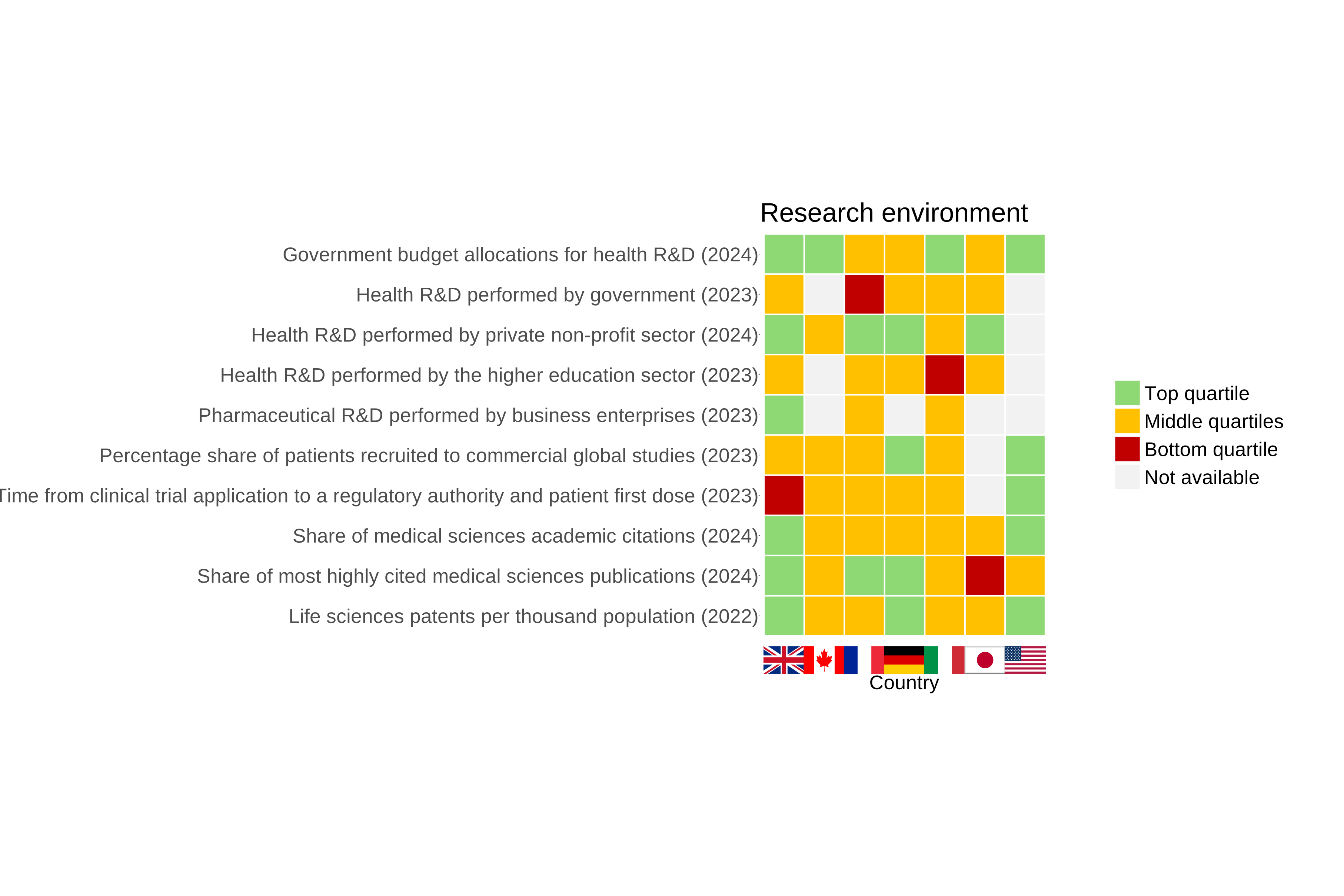
Figure 1 provides a high-level visualisation of the UK’s ranking within the G7, using quartiles, for metrics within the research environment. The remainder of the research environment section compares the UK to a wider selection of countries.
Figure 1: G7 country positions amongst comparator countries (in terms of quartiles) for research environment metrics, latest year available
Notes:
- data from figure 1 can be found in table 28 of the accompanying ‘Life sciences competitiveness indicators 2026: data tables’
- each metric relates to the period referenced in the diagram, when this is not available, the next available year is used
- the colour of each square represents each country’s quartile position amongst comparator countries only (rather than all countries). The list of the comparator countries used is available in the accompanying data tables
- ‘Top quartile’ indicates that the country sits within the top quartile (0 - 25th percentile) of comparator countries
- ‘Middle quartiles’ indicates that the country sits within the middle quartiles (25th – 75th percentiles) of comparator countries
- ‘Bottom quartile’ indicates that the country sits within the bottom quartile (75th – 100th percentile) of comparator countries
Research and development (R&D)
R&D can be measured by the expenditure on R&D performed by an organisation, or the amount of R&D funded by an organisation. Funding received to perform R&D can come from the organisation itself, organisations within the same sector (whether domestic or overseas) or a separate sector of the economy. The LSCIs measures:
- Government budget allocations for health R&D as a measure of funding for R&D
- Expenditure on R&D performed by the government, higher education, private-non-profit and business sectors
The 2026 LSCIs has updated the methodology for selecting country comparators for the UK for the R&D metrics. The 2026 LSCIs selects all countries with available data from OECD. Previous LSCIs reports took a selection of comparator countries based on countries with the highest overall GDP in the OECD data. This has been updated to align with a key target in the LSSP: ‘The UK will have more investment in commercial R&D than any other European economy by 2030, and more than any other country globally (excluding the US and China) by 2035’.
The UK is not currently reporting recent figures for amount of medical and health sciences R&D performed by the higher education sector, and this is therefore unavailable in this year’s report.
Government budget allocations for Health R&D
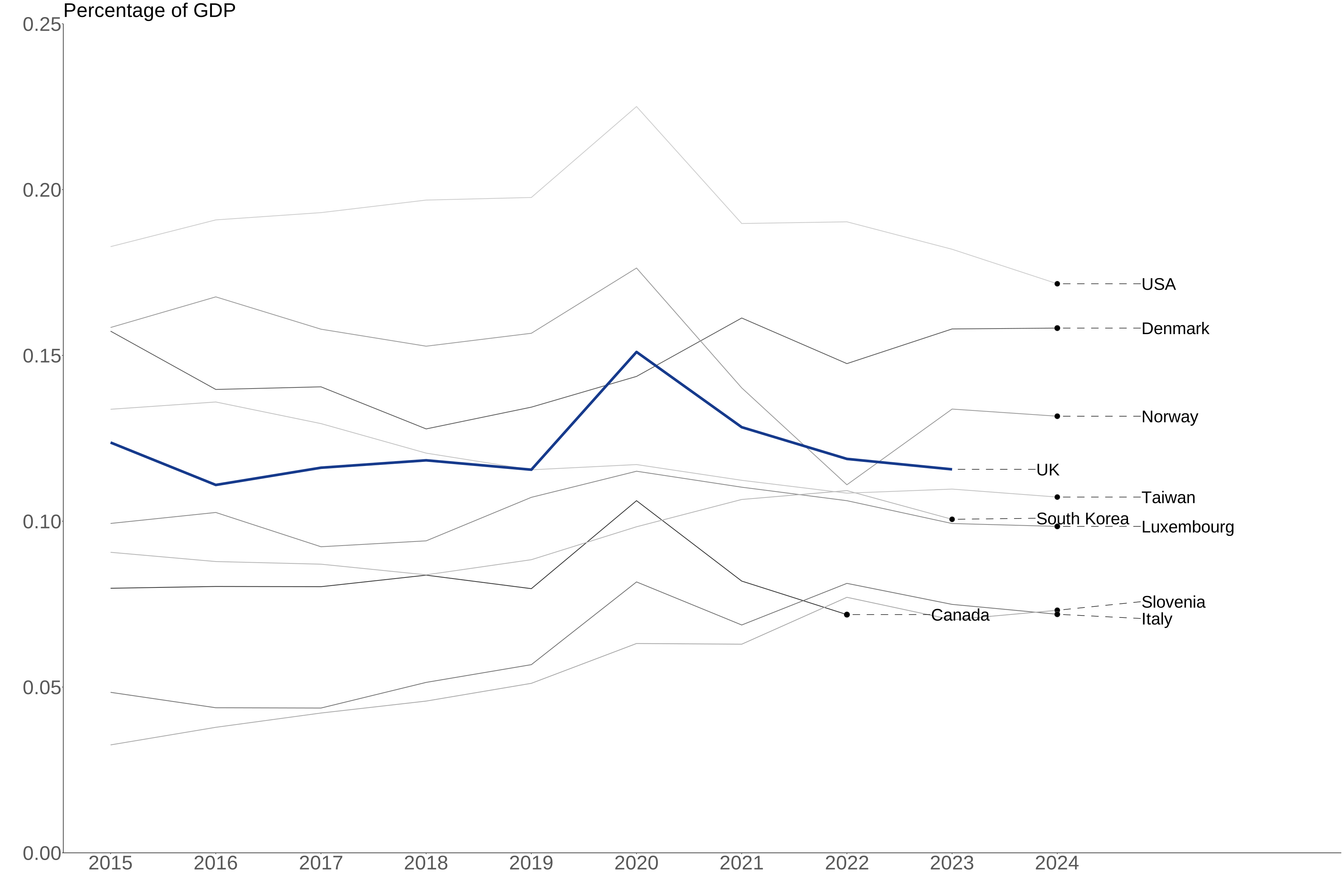
The UK Government budget allocation for health R&D as a percentage of GDP in 2023 is the same as 2022. This is a drop from the peak in 2020, but similar to levels observed between 2015 and 2019
Figure 2: Government budget allocations for health R&D as a percentage of GDP, 2015 to 2024, UK and comparator countries
Note:
- data from figure 2 can be found in table 1 of the accompanying ‘Life sciences competitiveness indicators 2026: data tables’
- for the top 10 countries, UK, Canada and South Korea data for 2024 is unavailable
- the time series for each country is represented by the solid lines with the UK in blue. The dotted lines link the country name to the respective time series values
In 2023, the UK Government’s budget for health R&D was £3.1 billion, which equated to 0.12% of GDP. Out of countries with available data, the UK Government had the fourth highest health R&D budget as a percentage of GDP in 2023, behind the USA, Denmark and Norway. The UK’s ranking has fluctuated between third and fourth since 2018.
The UK Government’s health R&D budget as a percentage of GDP in 2023 (0.12%) remained lower than the peak of 0.15% seen in 2020, with little change seen between 2022 and 2023. The UK’s total budget rose slightly from £3.0 billion in 2022 to £3.1 billion in 2023, an increase of 4% (not adjusted for inflation). A number of other countries such as the USA and Norway also saw declines since 2020.
The USA’s budget as a proportion of GDP has consistently been the highest of all countries with available data.
Gross domestic expenditure on R&D for government and the private non-profit sector
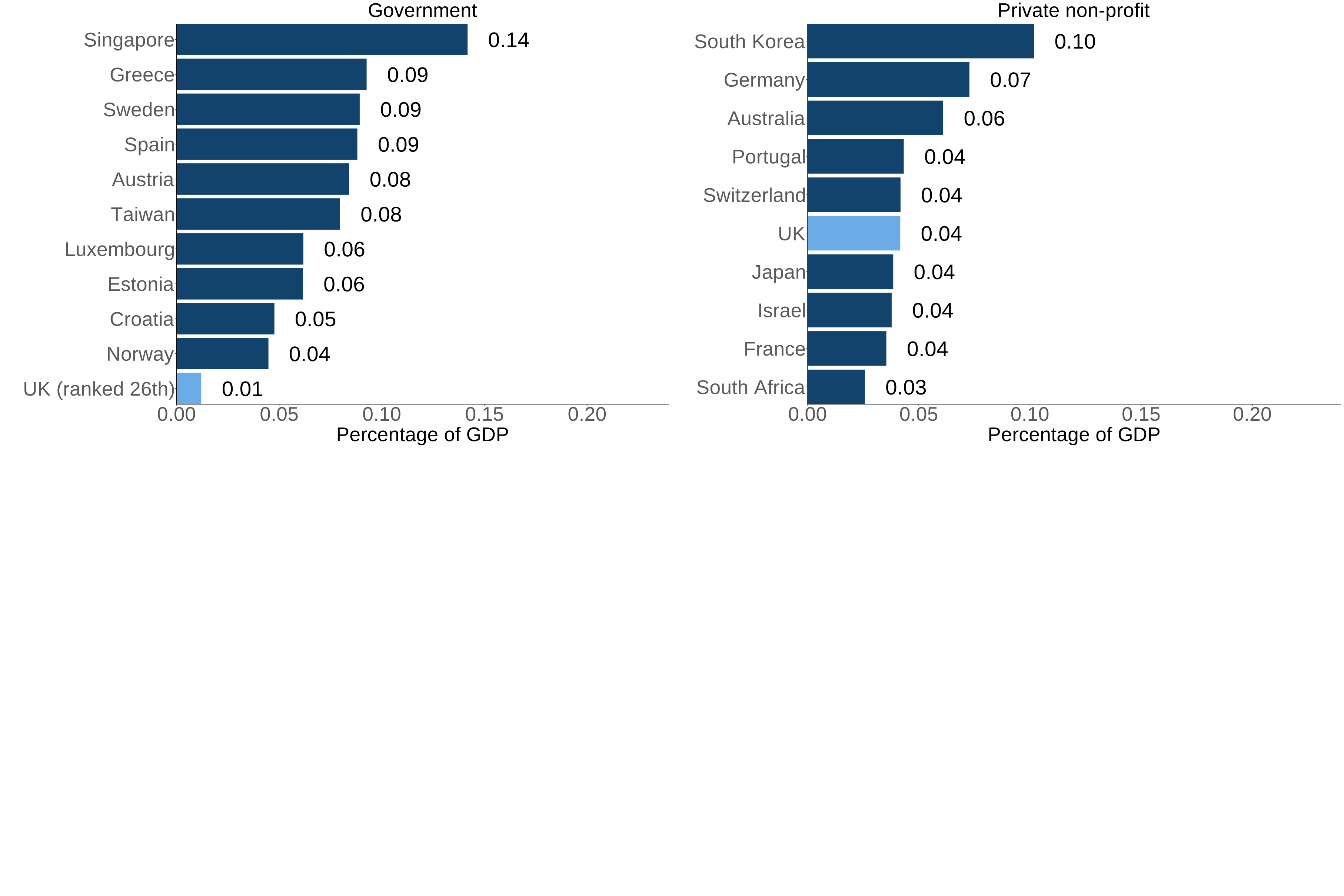
The UK Government performed a lower proportion of R&D relative to GDP compared to other countries, whilst the UK private non-profit sector places sixth in the global rankings
Figure 3: Gross domestic expenditure on medical and health sciences R&D performed by government and higher education sectors and all R&D for the private non-profit sector, as a percentage of GDP, 2023 (or latest year available), UK and comparator countries
Notes:
- data from figure 3 can be found in tables 2-3 of the accompanying ‘Life sciences competitiveness indicators 2026: data tables’
- figures for R&D performed by government relate to medical and health science R&D. For the private non-profit sector this relates to all R&D performed
- the data labels in the chart are rounded to 2 decimal places but the bars represent their unrounded value
- figures where R&D as a percentage of GDP rounds to 0 at 2 decimal places are not included in the visualisation
UK Government institutions performed £327 million of medical and health sciences R&D, which was equivalent to 0.01% of GDP. This was lower than most countries with available data, with countries such as Singapore and Greece spending the equivalent of 0.14% and 0.09% of their GDP respectively on medical and health sciences R&D in 2022 and 2023.
The value of expenditure on R&D performed by the UK private non-profit sector was £1.1 billion, or 0.04% as a percentage of GDP, which placed the UK sixth in the ranking of comparators. This measure includes all R&D by the private non-profit sector. In the UK, the private non-profit sector largely consists of registered charities and trusts that specialise mainly in health and medical research, but this is not necessarily the case in other countries, where private non-profit sector R&D figures may include a higher proportion of non-life sciences R&D.
R&D as a share of GDP performed by the government and the private non-profit sector remained broadly consistent in the UK between 2015 and 2023.
Business enterprise expenditure on R&D
OECD data on business enterprise expenditure on R&D has become available for a wider selection of countries on an industry orientation basis, meaning that it is possible to compare internationally expenditure on pharmaceuticals R&D performed by businesses for the first time in the 2026 LSCIs. The metric in this report uses ONS pharmaceuticals product group data for the UK data and equivalent figures for other countries.
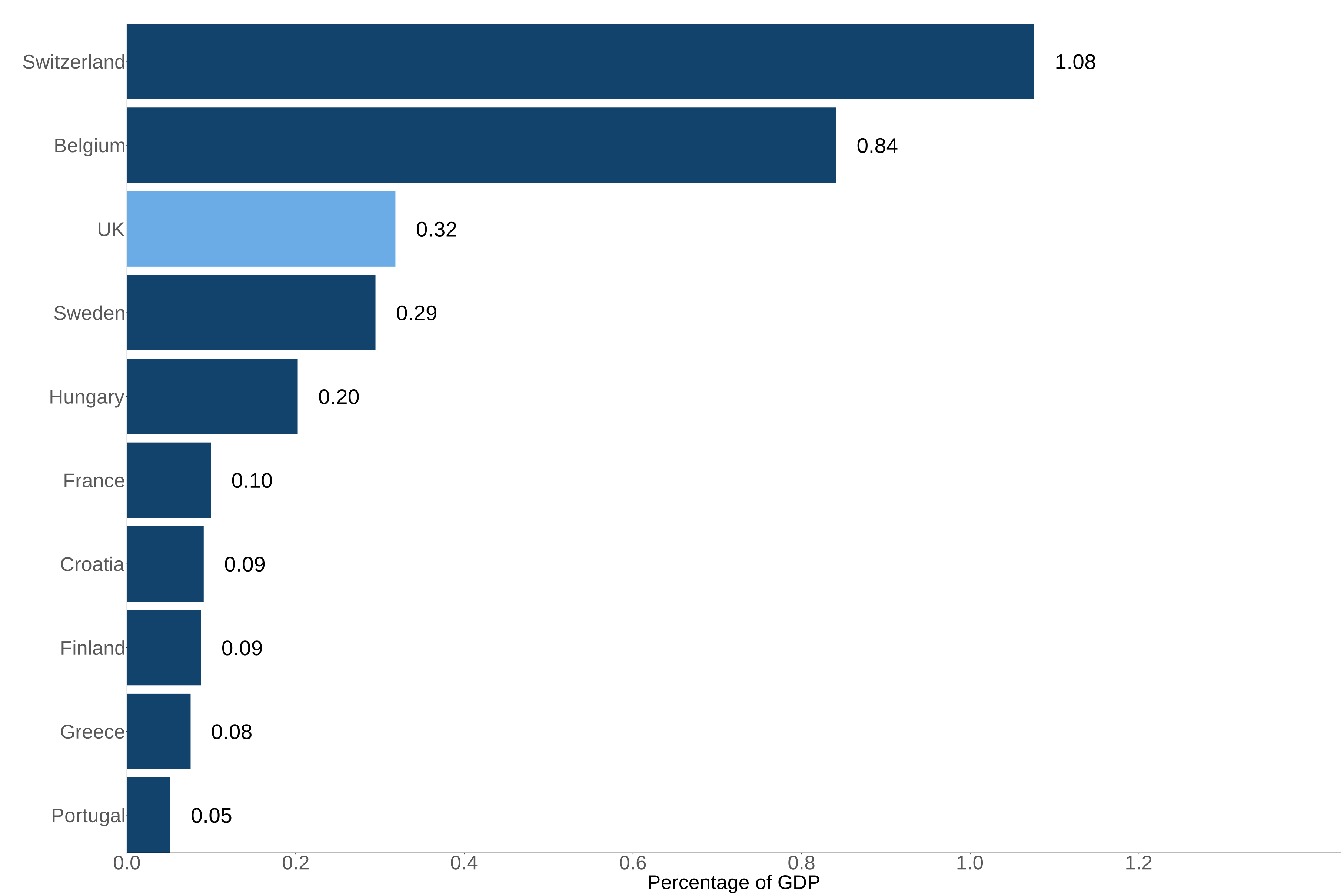
In 2023, expenditure on pharmaceutical R&D by businesses as a percentage of GDP in the UK was 0.32%. For the UK, this represented a slight decrease from 0.35% in 2022.
Amongst 16 countries with available data, only Switzerland and Belgium had a higher share of pharmaceutical R&D as a percentage of GDP than the UK (when comparing the most recent data available in each country). The values for business expenditure on pharmaceuticals R&D as a percentage of GDP for Switzerland and Belgium were 1.08% (2021) and 0.84% (2023) respectively.
Figure 4: Business enterprise expenditure on pharmaceuticals R&D as a percentage of GDP by country, 2023 (or latest year available), UK and comparator countries
Notes:
- data from figure 4 can be found in table 5 of the accompanying ‘Life sciences competitiveness indicators 2026: data tables’
- the time series for each country is represented by the solid lines with the UK in blue. The dotted lines link the country name to the respective time series values
- more recent data for the UK, relating to the year 2024, is available from the ONS. The above chart includes the UK’s 2023 data, as this was the year that had the best coverage across all countries included in the metric. Please see below section for more information about the UK’s 2024 expenditure on pharmaceuticals R&D performed by business enterprises
More recent data, relating to the year 2024, can be accessed for the UK only in ONS’s business enterprise research and development publication. According to this data, pharmaceuticals was the ONS product group which accounted for second the largest share of total expenditure on R&D performed by UK businesses in 2024, behind software development. The sector performed £9.3 billion of R&D in 2024, accounting for 17% of the total R&D expenditure. Expenditure on pharmaceutical R&D performed by UK businesses was equivalent to 0.33% of GDP in 2024.
Slightly below two thirds of current expenditure on pharmaceuticals R&D performed by UK businesses was spent on experimental development R&D in 2024. This was the research type with the largest value of expenditure, followed by applied research (with 24% of the total pharmaceuticals R&D spend), and basic research (11%).
The majority (63%) of expenditure on pharmaceutical R&D performed by UK businesses in 2024 was funded by the businesses themselves. Overseas companies/investors were the source of funding for a further 34% of pharmaceutical R&D expenditure. The UK government funded just over 1% of pharmaceutical R&D performed by UK industry in 2024.
Clinical trials
Data on the following metrics is extracted from the Centre for Medicines Research (CMR) Global Clinical Performances Metrics, Clarivate:
- percentage of patients recruited to a subset of interventional commercial global trials
- median time between clinical trial application to a regulatory authority and the first patient receiving a first dose for a subset of interventional commercial trials
This includes data from 25 pharmaceutical companies that participated in data collection activities. This metric therefore only includes commercially sponsored trials. This data also only considers interventional trials, where a medicine is tested on participants, and trials for novel medicines (newly launched medicines or recently launched for a new indication). The data considers all phases of trials.
The data is based on a small subset of commercial trials that take place in the UK. The data in this report can be used to benchmark how the UK compared to other similar countries up to 2023 but should not be used to make inferences on how many clinical trials are taking place in the UK, the number of patients recruited to trials in the UK nor how the UK is performing against targets set by the UK government. Data covering a wider range of trials taking place in the UK and is available through DHSC’s UK Clinical Research Delivery key performance indicators. This covers all trials on NIHR’s Central Portfolio Management System (CPMS) and reports on performance against key targets.
The ‘median number of days from clinical trial application to the first patient receiving a first dose for a subset of commercial trials’ metric takes the median time between the below milestones:
-
clinical trial application to a regulatory authority: this is the date on which the documentation for the clinical study was first submitted to the first authority within a country. The authority may be an Institutional Review Board or regulatory authority. This metric will take the date which occurred earlier if there are multiple submissions to separate bodies.
-
first patient receiving a first dose: this is the date of the first dose of active substance or placebo for the study, following the recording of baseline measurements, for the first patient. This is intended to refer to the start of the treatment phase
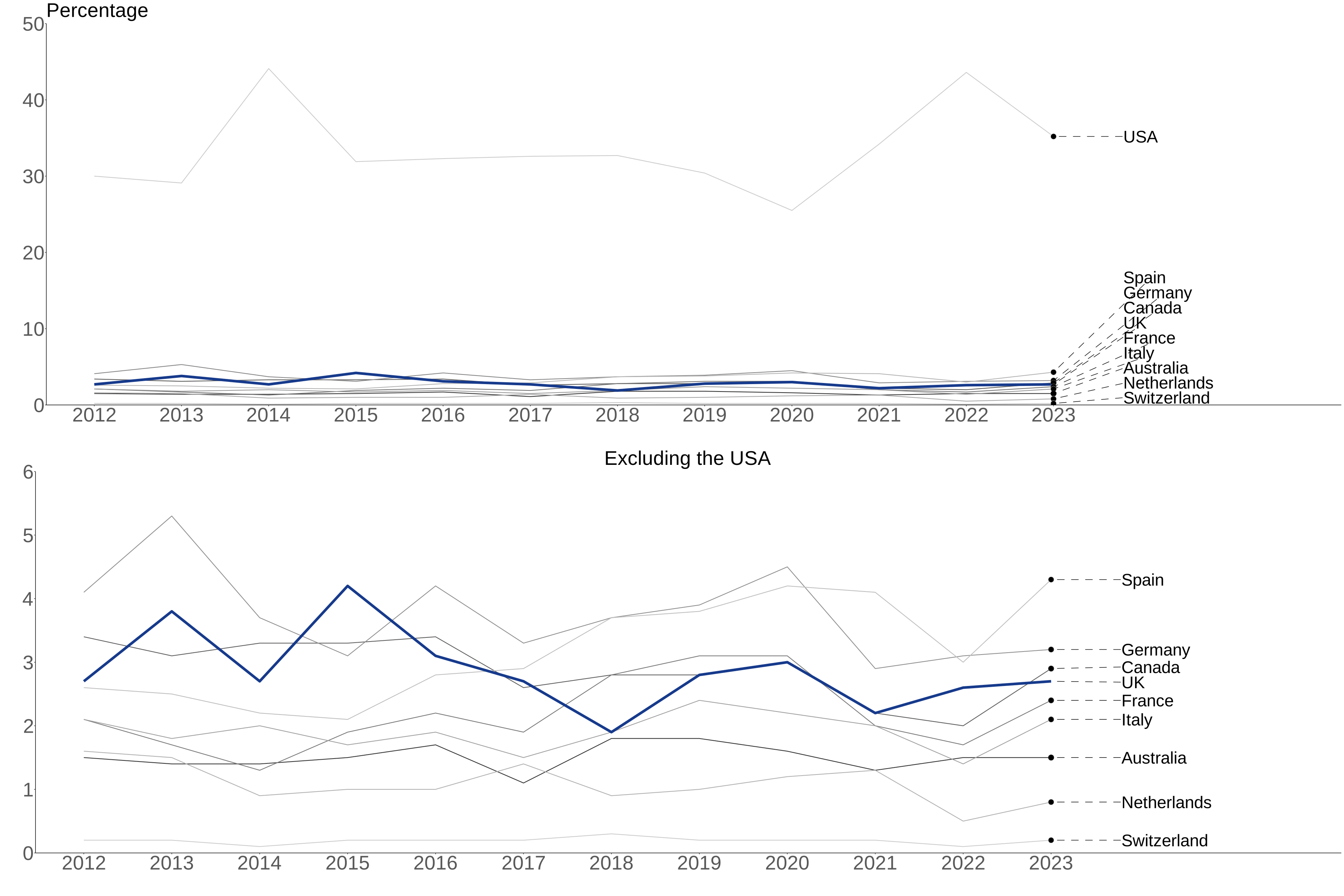
The UK and most European comparators’ shares of patients recruited to commercial trials have fluctuated over time, with the USA continuously accounting for a substantially higher share
Figure 5: Percentage share of patients recruited to a subset of interventional commercial global studies for novel medicines, 2012 to 2023, UK and comparator countries
Notes:
- data from figure 5 can be found in table 6 of the accompanying ‘Life sciences competitiveness indicators 2026: data tables’
- figure 5 contains a chart for all comparator countries on top then a chart beneath with the USA excluded to allow trends in other countries to be visualised
- the time series for each country is represented by the solid lines with the UK in blue. The dotted lines link the country name to the respective time series values
In 2023 the UK’s share of patients for a subset of commercial clinical trials for novel medicines was 2.7% (8,900 out of 331,000 patients in the data), continuing the increase observed since 2021, when the UK accounted for a share of 2.2% of patients recruited. As a result, the UK’s ranking amongst 10 comparator countries was fifth in 2023.
The UK saw its highest share of patients recruited to these commercial trials in 2015, with 4.2% of patients, after which the UK’s share declined each year until 2018. Since 2018, the UK’s share has increased, except for a decline seen between 2020 and 2021. However, most other comparator countries also saw a decrease in their share of patient recruitment between 2020 and 2021, with the exception of the USA (whose share increased from 25.5% to 34.2%). Data for 2020 and 2021 will have been substantially influenced by the COVID-19 pandemic. During the pandemic many countries paused non-essential research and moved focus towards COVID-19 research, which was frequently non-commercially funded in the UK and other comparator countries.
Most other comparator countries’ patient shares have fluctuated markedly over the period, but all have continuously accounted for a substantially lower share of patients than the USA.
This metric only presents a subset of commercial trials to allow a standardised comparison between countries. For the UK this data relates to 164 clinical trials in 2023 - the number of studies included for other countries and for past years is available in the accompanying data tables.
Please see DHSC’s UK Clinical Research Delivery key performance indicators for further data on the number of trials and participants for UK trials on the NIHR CPMS. The DHSC statistics show that 20,200 patients were recruited to interventional commercial contract trials in 2025.
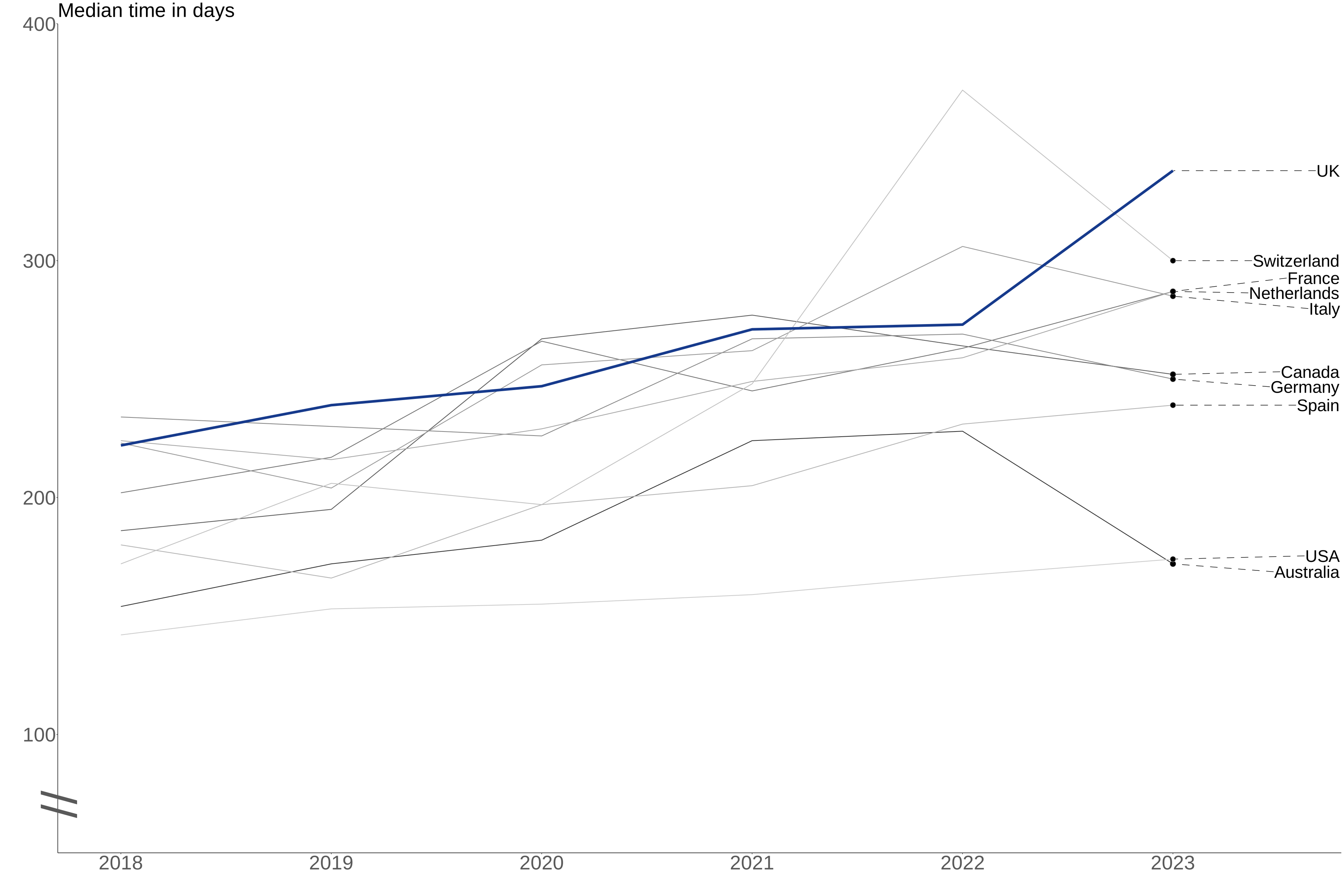
The UK’s median time from application to first dose to first patient increased between 2018 and 2023
Figure 6: Median number of days from clinical trial application to a regulatory authority and the first patient receiving a first dose for a subset of interventional commercial trials for novel medicines (all trial phases), 2018 to 2023, UK and comparator countries
Notes:
- the y-axis does not begin at 0
- data from figure 6 can be found in table 7 of the accompanying ‘Life sciences competitiveness indicators 2026: data tables’
- the time series for each country is represented by the solid lines with the UK in blue. The dotted lines link the country name to the respective time series values
- higher values equate to a longer time from application to first dose to first patient. Countries with lower values have a higher rank
The time from clinical trial application to first patient first dose includes the time taken for:
- regulatory approval
- set-up including recruiting patients
In 2023, the median time in the UK between a clinical trial application being submitted to a regulator and the first dose to first patient was 338 days for a subset of interventional commercial trials. This was 24% higher than in 2022, when the median time was 273 days, with the UK seeing the highest percentage increase between 2022 and 2023 across the 10 comparator countries used in the analysis. The UK has seen a continuous increase year-on-year since 2018. Australia had the shortest turnaround time in 2023 of 172 days. This was closely followed by the USA with 174 days.
The UK’s ranking amongst comparator countries in 2023 was tenth, a drop from eighth in 2022. Every comparator country took longer to approve and set-up clinical trials in 2023 compared to 2018 (when data collection begun).
For the UK this data relates to 97 clinical trials in 2023. The number of studies included for other countries and for past years is available in the accompanying data tables.
The above data refers to the period up to the end of 2023, but it should be noted that DHSC also publishes more timely and higher coverage data for the UK as part of their UK Clinical Research Delivery key performance indicators. The DHSC reports cover a wider range of trials taking place in the UK on the NIHR CPMS. The DHSC statistics show that:
- in 2025, 98% of studies received combined review approval within 60 days (or 90 days for advanced therapy investigational medicinal product (ATIMP) studies). This figures covers both commercial/non-commercial studies and both interventional/observational trials
- the median number of days taken for studies to open to recruitment following regulatory approval for commercial contract interventional studies was 98 days in 2024
- the median number of days taken for studies to recruit their first participant from opening to recruitment for commercial contract interventional studies was 28 days in 2024
Citations
It should be noted that publications can be cited several years after their publication date, so data for more recent years will be incomplete and citations will continue to accumulate after publication of the LSCIs. Despite this, data from recent years are still presented as an early indication of how countries’ newer publications compare to others.
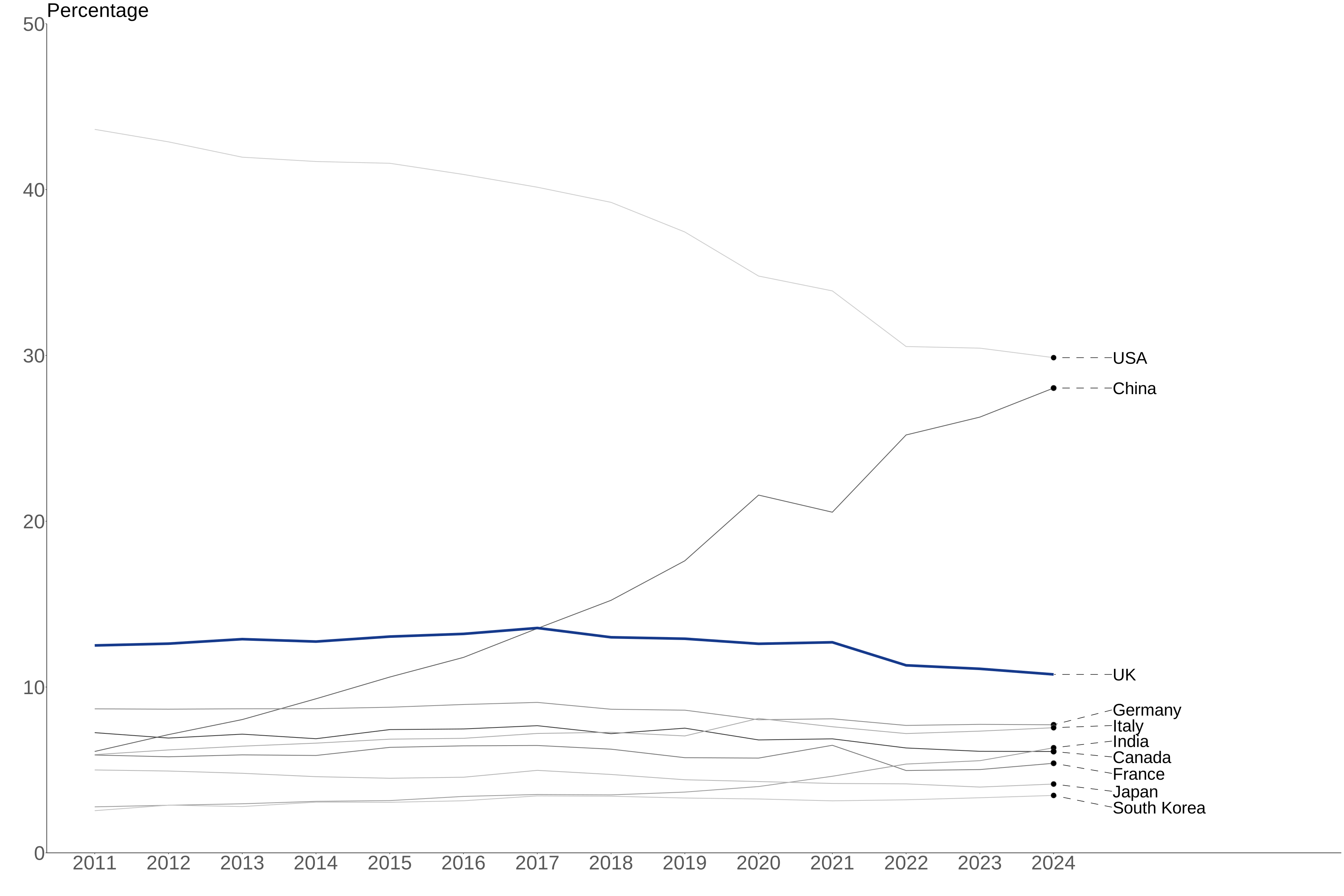
The UK’s share of medical science citations has declined since 2017 but has consistently ranked third
Figure 7: Percentage share of global medical sciences academic citations, 2011 to 2024, UK and comparator countries
Note: data from figure 7 can be found in table 8 of the accompanying ‘Life sciences competitiveness indicators 2026: data tables’
This metric shows the share of global medical sciences academic citations held by the UK and 12 comparator countries. Citation counts can be used to indicate the total citation impact of a country’s medical sciences publications.
In 2024, the UK’s share of global medical sciences academic citation counts was 10.8%. The UK’s share has seen a slight but steady decline since 2017, when the UK accounted for 13.6% of global medical sciences citations. Despite this, the UK has consistently placed third amongst 12 comparator countries since 2017, behind only the USA and China, who accounted for a 29.9% and 28.0% of medical science citation counts respectively in 2024.
The UK’s ranking fell from second to third in 2017 due to China’s share markedly increasing. Whilst the USA has continuously accounted for the highest share of citations relative to comparators, there has been a declining trend in the USA’s share since 2011.
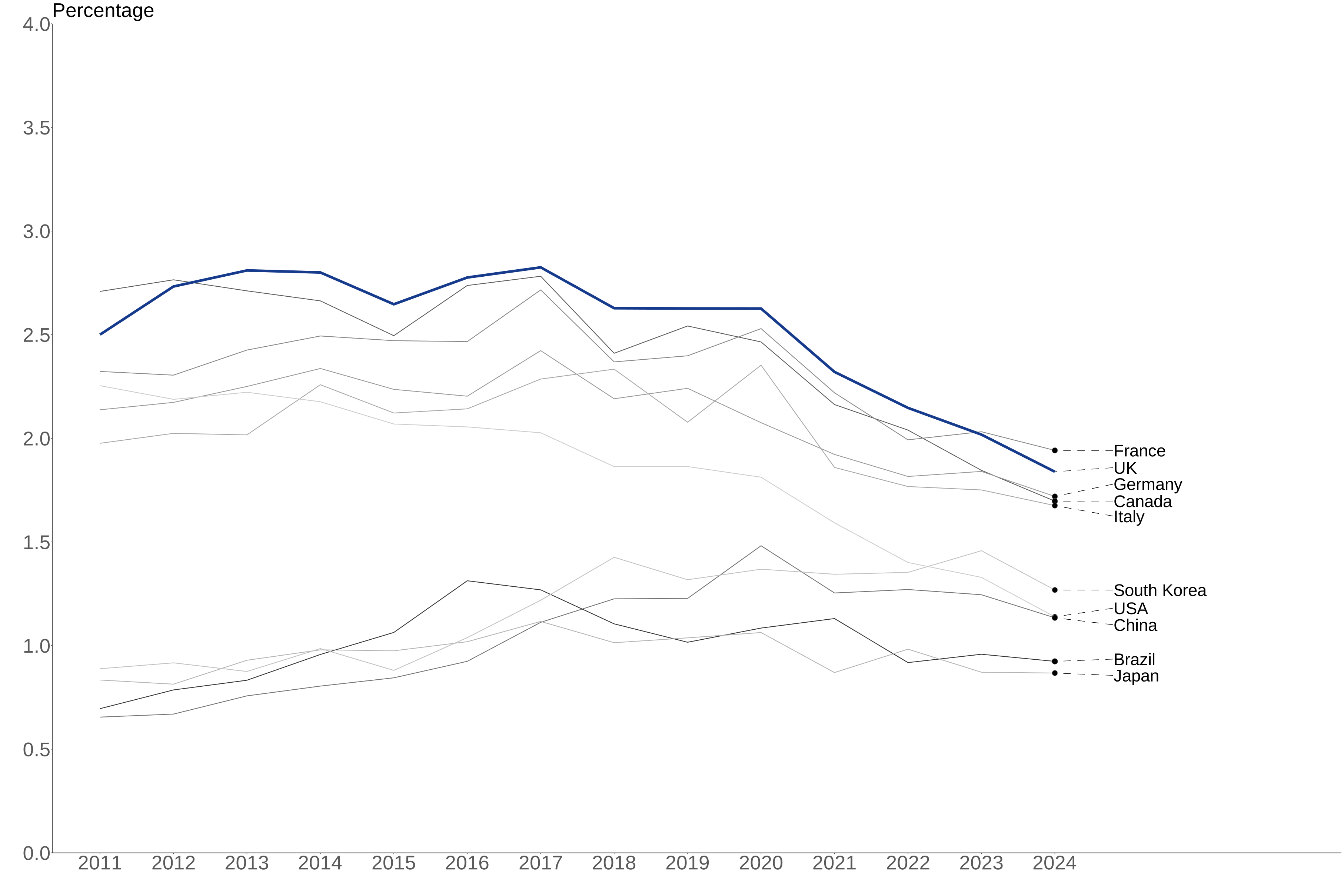
The UK’s publications have consistently had high proportion of publications that are highly cited compared to comparators
Figure 8: proportion of medical science publications that are amongst the most cited (top 1%) globally, 2011 to 2024, UK and comparator countries
Notes:
-
data from figure 8 can be found in table 9 of the accompanying ‘Life sciences competitiveness indicators 2026: data tables’
-
the time series for each country is represented by the solid lines with the UK in blue. The dotted lines link the country name to the respective time series values
This metric indicates the proportion of each country’s publication which are among the most-cited globally within the field of medical sciences. This is calculated by taking the number of medical sciences publications for each country which are amongst the top 1% most cited globally as a proportion of that country’s total scholarly output, that is the total publication count.
In 2024, 1.8% of the UK’s medical sciences publications were in the top 1% of the most-cited medical sciences publications globally. This is a drop from 2.0% in 2023, and as a result the UK had the second highest proportion of all comparator counties behind France, where 1.9% of publications were in the top 1% of most cited publications. The top five comparator countries had very similar levels of cited publications, with the three countries below France and the UK (Canada, Germany and Italy) all having 1.7% of publications in the top 1% most cited publications. The UK’s proportion of medical science publications that were highly cited has declined from 2.6% in 2020 but, as noted above, citations for more recent medical science publications will continue to accumulate in the years following this data snapshot. For this reason, the most recent years’ data for the UK and comparator countries may be revised in future, which may alter trends.
Patents
This section shows the number of life sciences patent applications (adjusted for population) made from each country in each year. Applications are assigned to the country in which the applicant (either a company, a university, or an individual) is registered or based.
Although this metric is generally a good proxy of where and when innovative life sciences activity took place, the applicant address may be the address of a company’s head office, or the inventor’s home address, rather than the actual location of where the invention took place. This means that, in some circumstances, patents may originate from research and development that took place in a different country to the ‘applicant country’.
Patent data (for the most recent years in particular) is subject to revisions. The most recent data can be revised substantially due to patent publication delays or retrospective changes by patent offices following discussion with applicants. The result of this is that data takes a few years to accumulate and ‘settle’, and that trends for recent years should be interpreted with caution.
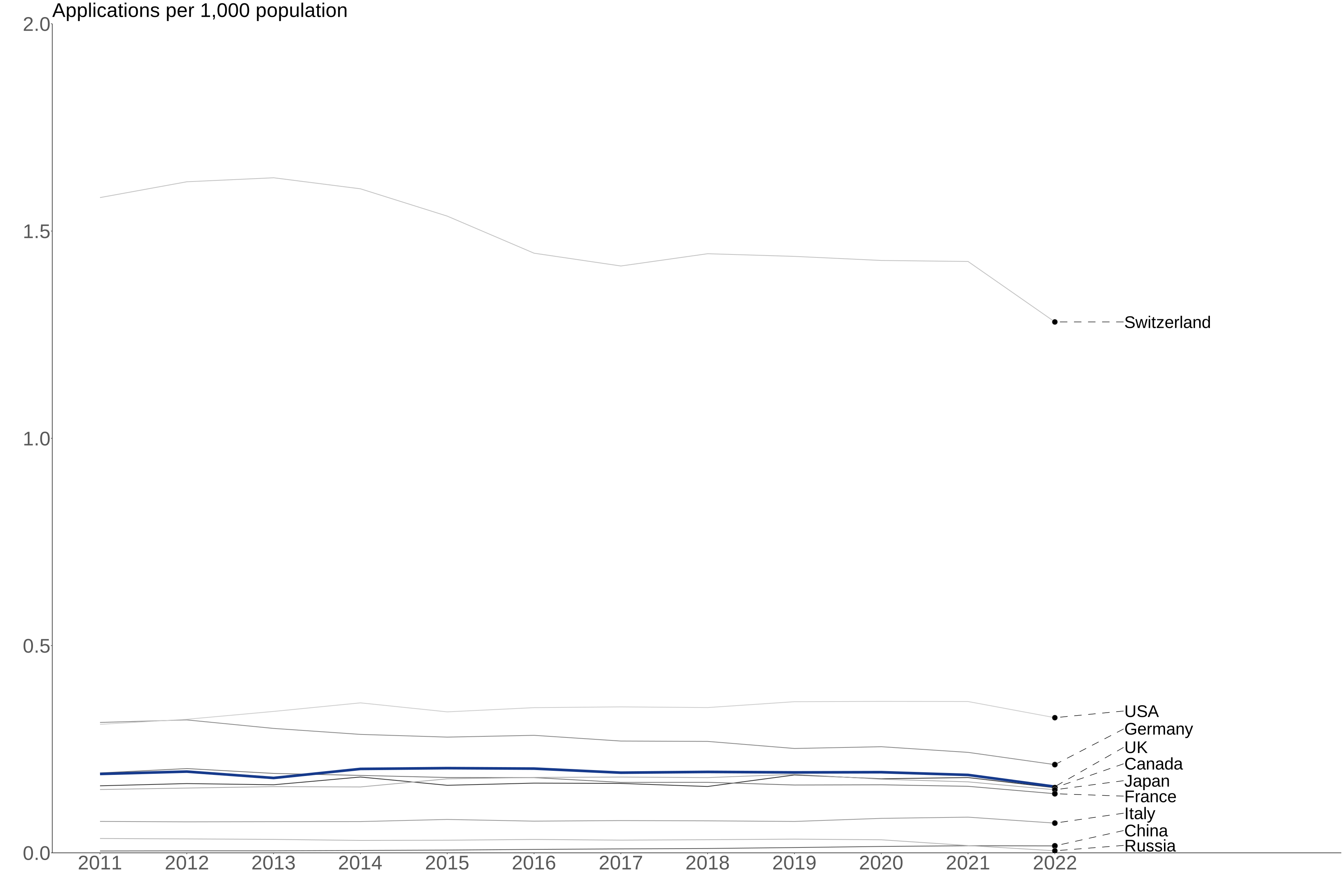
The UK’s count of life sciences patent applications per thousand population has been broadly consistent over time
Figure 9: number of patent applications per thousand population, 2011 to 2022, UK and comparator countries
Notes:
- data from figure 9 can be found in table 10 of the accompanying ‘Life sciences competitiveness indicators 2026: data tables’
- the time series for each country is represented by the solid lines with the UK in blue. The dotted lines link the country name to the respective time series values
- substantial data is missing for China, and therefore the country’s figure is an underestimate
The UK has seen a fairly similar number of life sciences patent applications per thousand population over time, with an average of 0.19 between 2011 and 2022. In 2022, the UK had 0.16 life sciences patent applications per thousand population. This figure is lower than the average yearly rate since 2011 but, as mentioned above, this figure is likely to be revised upward in future as more data becomes available, and therefore may not be an accurate indication of a decline in UK life sciences patenting activity. This has resulted in the UK ranking fourth amongst 13 competitors in 2022, a ranking which has been broadly stable (fluctuating between fourth and fifth) since 2011.
Switzerland has consistently had the highest number of life sciences patent applications per thousand population amongst comparator countries, with between 3 to 5 times the number of patent applications per thousand population than the second highest comparator country for the entire period between 2011 and 2022. Switzerland’s count of patent applications per thousand population has been declining since 2013 - however, it’s worth noting that revisions to the most recent data may reveal that the decline is not as substantial as it appears to be currently.
When measuring patenting activity, the Relative Specialisation Index (RSI) value can show the volume of patents filed in a given country in a specific field relative to overall patenting levels in that country.
An RSI value greater than zero indicates that a country has a higher share of a particular technology relative to its overall share of patent families. In 2022, the UK’s RSI value for life sciences patents was -0.22, indicating that disproportionately few life sciences patents are filed in the UK compared to other fields. Most comparators similarly had a negative RSI value for life sciences, but countries such as Brazil and Canada had a positive RSI of 0.38 and 0.36 respectively in 2022, meaning more life sciences patents are filed there compared to other fields.
Section 2: Domestic market
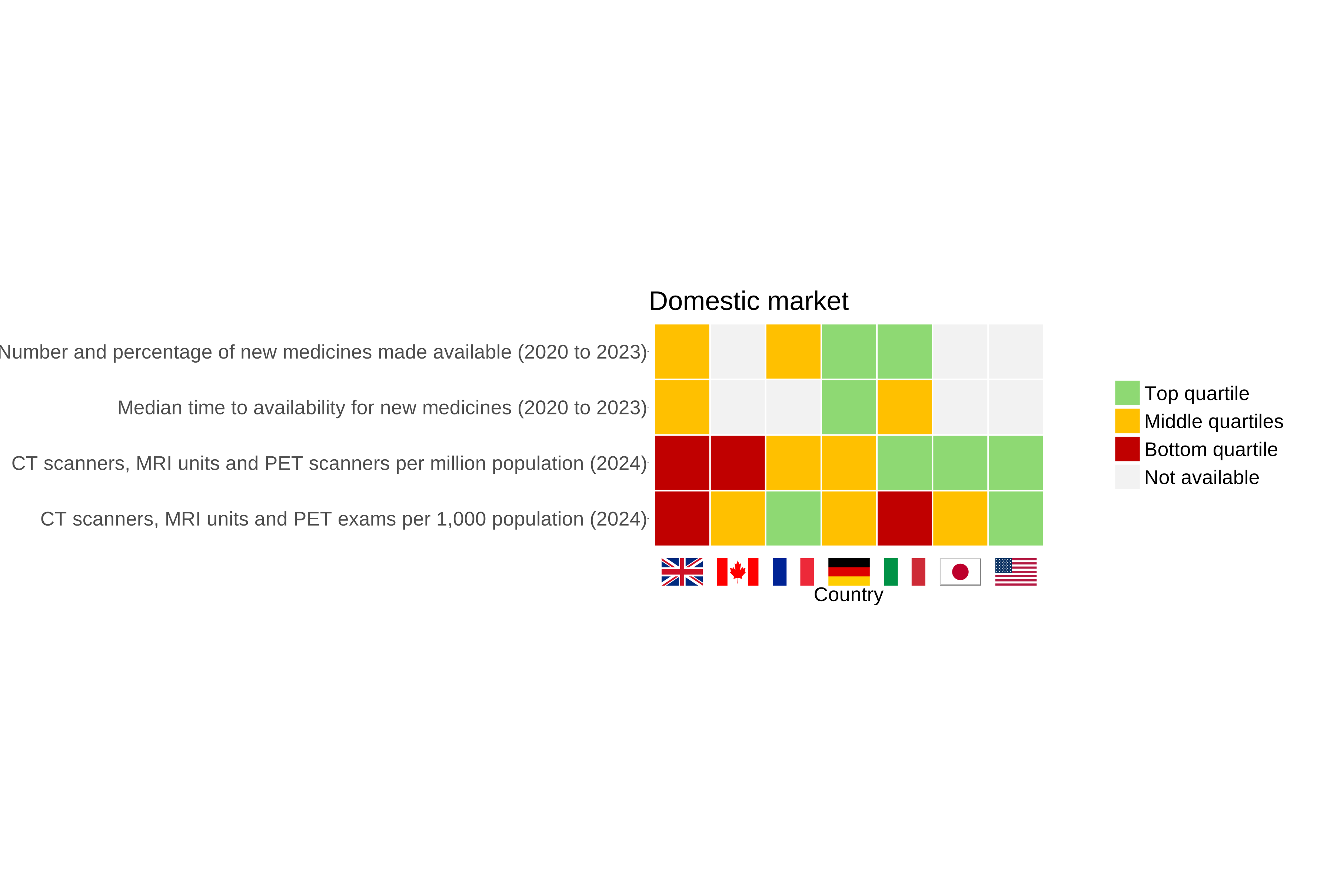
Figure 2 provides a high-level visualisation of the UK’s ranking within the G7, using quartiles, for metrics within the domestic market section. The remainder of the domestic market section compares the UK to a wider selection of countries.
Figure 10: G7 country positions amongst comparator countries (in terms of quartiles) for domestic market metrics, latest year available
Note: data from figure 10 can be found in table 28 of the accompanying ‘Life sciences competitiveness indicators 2026: data tables’
Access to pharmaceuticals
This report takes the analysis from the European Federation of Pharmaceutical Industries and Associations’ (EFPIA) W.A.I.T Indicators. The analysis is based on new medicines that received central marketing authorisation from the European Medicines Agency (EMA) within the associated time periods.
A medicine being ‘available’ in this analysis in England and Scotland is defined as the point at which the National Institute of Health and Care Excellence (NICE) and the Scottish Medicine Consortium (SMC), respectively, have issued a positive recommendation as part of their technology appraisal processes.
The time to availability takes the median length of time from marketing authorisation received by the relevant medicines regulator to when a medicine is considered ‘available’ to patients. The definitions for the date of marketing authorisation and date of availability for England and Scotland are available in the accompanying user guide.
The 2026 LSCIs has updated the methodology used to select country comparators for the UK for the access to medicine metrics. The 2026 LSCIs selects all countries with available data from the EFPIA W.A.I.T Indicators. Previous LSCIs reports chose a selection of comparator countries based on a determination of the UK’s closest competitors. This has been updated to align with the key target in the LSSP for ‘By 2030, the UK will be one of the top 3 fastest places in Europe for patient access to medicines and MedTech’. All data points in the time series in this report have been backdated with the new approach.
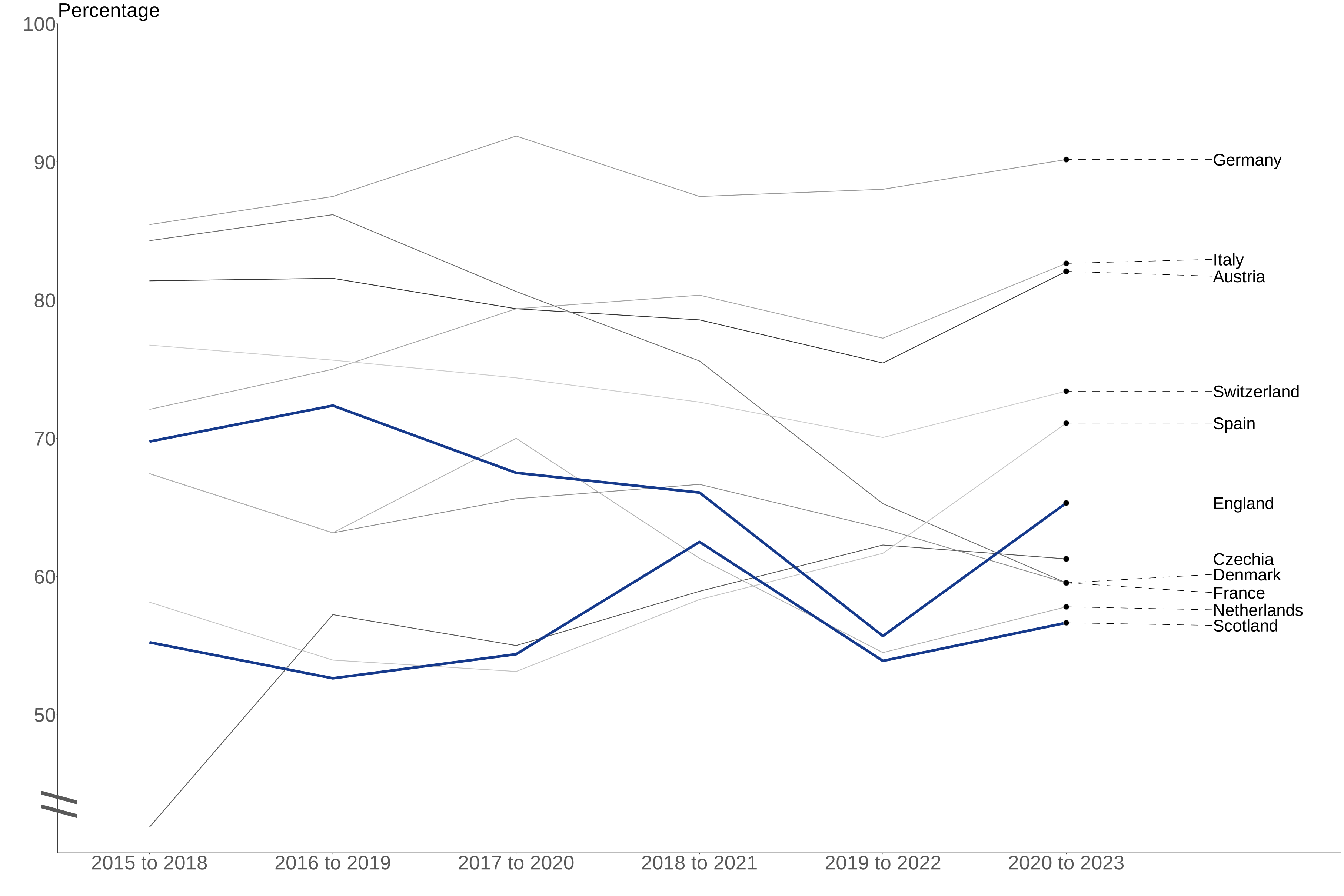
The rate of availability for new medicines has risen in most European comparators in 2020 to 2023
Figure 11: Percentage of new medicines receiving central marketing authorisation that are available to patients, 2015 to 2023, UK and comparator countries
Note:
- data from figure 11 can be found in table 11 of the accompanying ‘Life sciences competitiveness indicators 2026: data tables’
- the time series for each country is represented by the solid lines with the UK in blue. The dotted lines link the country name to the respective time series values
- note the y axis does not begin at 0
There were 173 new medicines in the analysis that received central marketing authorisation from the European Medicines Agency (EMA) between 2020 and 2023; 65% of these medicines were made available to patients in England and 57% were made available in Scotland. This proportion has increased for both nations compared to the past period, following a period of decline.
The proportion of medicines made available in England has risen 10 percentage points from 56% in 2019 to 2022 to 65% in 2020 to 2023 (percentages are rounded), although this latest figure is still lower than the peak of 72% seen in 2016 to 2019. The proportion for Scotland has increased 3 percentage points from 54% in the 2019 to 2022 period to 57% in 2020 to 2023, although levels are still lower than the 63% recorded in 2018 to 2021.
England ranked sixth out of all European countries with available data in the period 2020 to 2023, an increase from ninth in the period 2019 to 2022. Scotland ranked eleventh out of all European countries with available data in the period 2020 to 2023; this is unchanged from the previous period. Most other comparators saw a similar declining trend since 2017 to 2020 resulting in broad stability within the rankings.
Across European comparators, there was high variation in the proportion of medicines made available: within the top 15 countries, the percentage of medicines made available ranged from 90% of medicines available in Germany compared to only 50% in Finland in the period 2020 to 2023.
More information on the differences between how medicines are reimbursed across Europe can be found in the World Health Organisation’s (WHO) report on Medicines reimbursement policy in Europe.
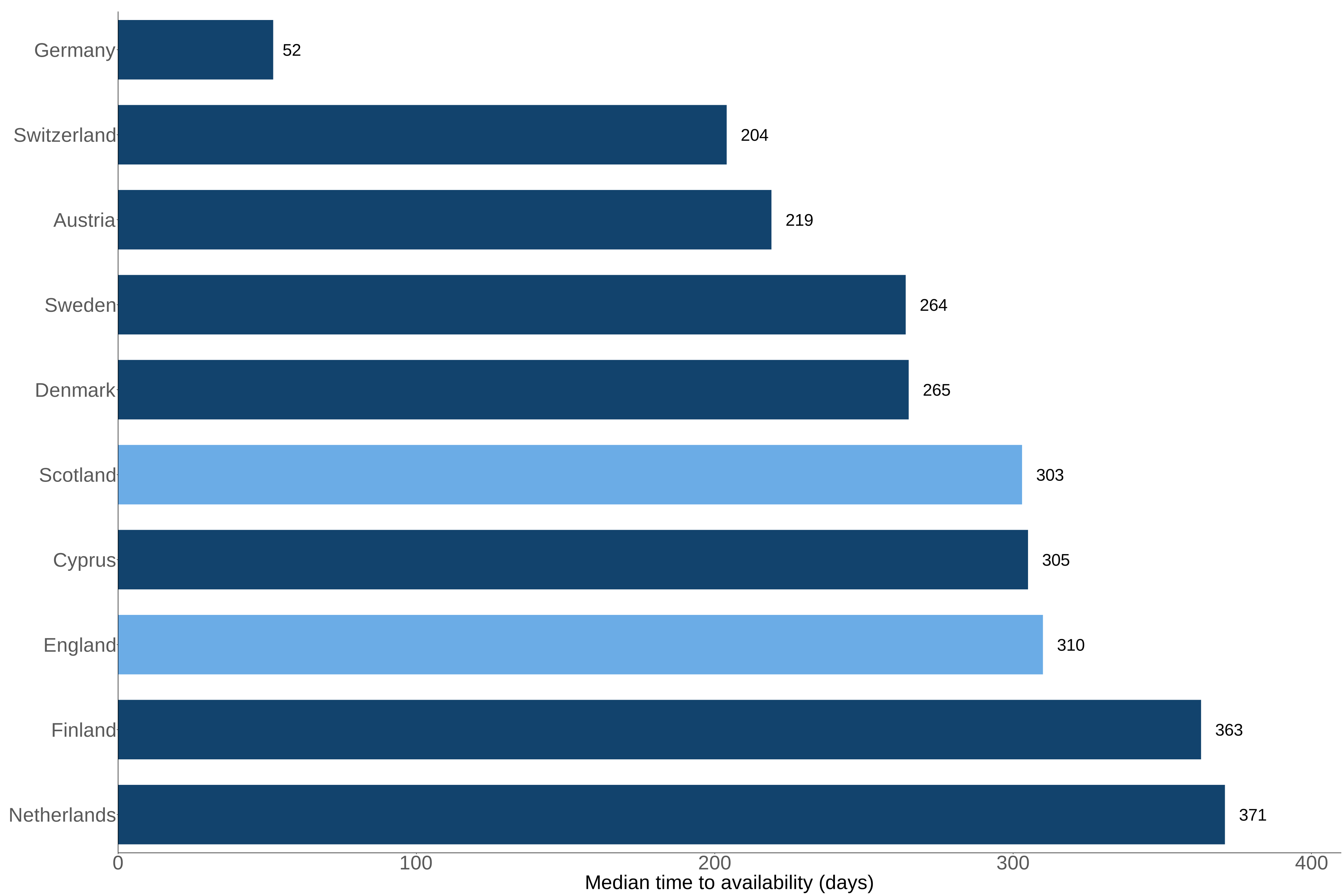
Time to availability for new medicines varies substantially across Europe with Scotland and England ranking sixth and eighth in Europe.
Figure 12: Median number of days between marketing authorisation and medicines being made available to patients for medicines that received central marketing authorisation between 2020 and 2023, UK and comparator countries
Notes:
- data from figure 12 can be found in table 12 of the accompanying ‘Life sciences competitiveness indicators 2026: data tables’
- a higher median number of days indicates new medicines take longer to be available to patients in the respective country
- the marketing authorisation (MA) date is based on the EMA central marketing authorisation date for all countries except England, Scotland and Switzerland, where local authorisation dates are used instead
For medicines that received marketing authorisation between 2020 and 2023, the median time from the marketing authorisation date to availability, referred to as the time to availability, was 310 days in England. The median time has remained broadly consistent over all 6 time periods for which data is available, although there was a slight increase of 11 days in 2020 to 2023 compared to the previous period, which resulted in a drop in rank to eighth from sixth over the same period.
For Scotland, the median time to availability for medicines approved between 2020 and 2023 was 303 days. This has improved substantially over the past 3 periods from 384 days in the period 2017 to 2020. Due to this change, Scotland’s ranking has increased to sixth in 2020 to 2023 compared to twelfth in the previous period.
Similarly to the proportion of medicines made available, there was high variation in the median time to availability. Within the top 15 countries in Europe, the median time ranged from 52 days in Germany in the period 2020 to 2023 to 500 in Norway over the same period (note this analysis uses 15 comparator countries but only the top 10 are visualised in the charts). Countries vary in what processes they use to carry out health technology assessments and approve medicines for usage in different populations. More details on the definition for the length of time for medicines to become available can be found in the accompanying ‘Life sciences competitiveness indicators 2026: user guide’.
Uptake of medicines
The uptake ratio measures the relative adoption of new medicines in the UK compared to other countries. The uptake ratio is a measure of relative uptake in terms of days of therapy (DOT) per capita for new medicines recommended by NICE and first launched between 2017 and 2023. A ratio of the UK DOT per capita to the average DOT per capita for comparator countries is calculated for each medicine, and then the median of these ratios is taken to summarise how uptake in the UK compares to other countries. This value is hereafter referred to as the ‘uptake ratio’.
An uptake ratio of 1 means the median UK per capita consumption (referred to in this report as ‘uptake’) is equivalent to the average uptake per capita in the comparator countries.
An uptake ratio of less than 1 means the median UK per capita consumption is lower than the average uptake per capita in the comparator countries. Conversely, an uptake ratio of greater than 1 means the median UK per capita consumption is greater than the average uptake per capita in the comparator countries.
The uptake ratio accounts for individual country population size, but not for need (disease prevalence and Health Technology Assessment (HTA) authorities’ recommended coverage), standard clinical practice, or total medicine spend in each country. It also does not adjust for the impact of different marketing or launch strategies in different countries. These factors are likely to have a substantial impact on uptake figures.
In many cases there is no consensus as to what the ideal level of uptake should be. As such, high or low usage should not be interpreted as good or bad performance in itself. Nonetheless, the uptake ratio may be used as an international benchmark to understand how UK adoption of new medicines changes in the years following their introduction.
Uptake in the UK continues to be below the average of comparators
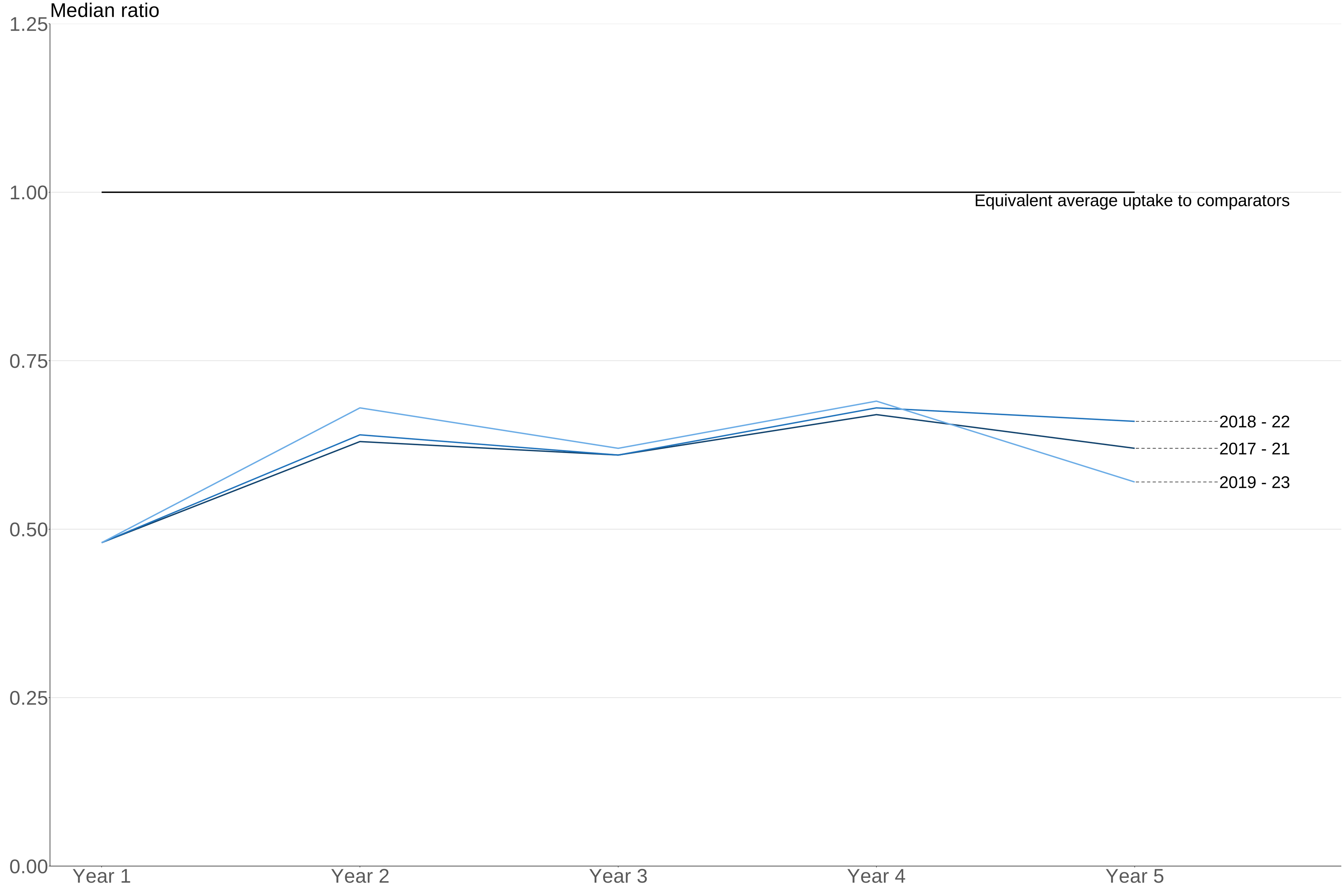
Figure 13: UK uptake (days of therapy) of new medicines, per capita, as a ratio of comparator countries average, 2017 to 2023
Notes:
- data from figure 13 can be found in table 13 of the accompanying ‘Life sciences competitiveness indicators 2026: data tables’
- the figures only include medicines with a positive NICE recommendation.
- each line refers to the cohort of medicines with a launch date in the labelled years. The x-axis refers to the number of years after launch for each medicine in the cohort
- the figures are adjusted for population size between countries but not for other factors (such as disease prevalence and HTA authorities’ recommended coverage) which may influence differences in uptake
The comparator countries used to derive the uptake ratio are Australia, Austria, Belgium, Canada, Finland, France, Germany, Ireland, Italy, Japan, Netherlands, Spain, Switzerland, Sweden, USA.
For medicines launched between 2019 and 2023, the uptake ratio one year after launch was 0.48, meaning that the average uptake of new medicines per capita in the UK was around half of the comparator country average. This ratio has remained consistent compared to the previous two periods.
For these medicines launched between 2019 and 2023, there is a yearly fluctuation of the uptake ratio from 1 year after launch through to 5 years after launch. The uptake ratio increases to 0.68 2 years after launch, then drops to 0.62 in year 3 before reaching a peak of 0.69 in year 4. By 5 years after launch the uptake ratio has decreased to 0.57, lower than the ratio seen 2 years after launch. Only 12 medicines are used in the calculation for 5 years after launch, as very few medicines receiving HTA approval between 2019 and 2023 have had sufficient time to accumulate a full 5 years of data, so caution is advised when interpreting this analysis. Table 1 shows the uptake ratio values alongside the number of medicines in the calculations for each period.
For the previous two cohorts, the uptake ratio 5 years after launch was 0.66 for medicines launched between 2017 and 2021 and 0.62 for medicines launched between 2017 and 2022. For these cohorts, more medicines have accumulated five years of uptake data since launch (41 for 2017 to 2021 and 25 for 2018 to 2021).
A median value for uptake is taken across all medicines for each country, to show broadly how UK uptake compares to other countries. It should be noted however that there is substantial variation between medicines for the average uptake in the UK compared to other countries. Each medicine is weighted equally in the analysis, but the eligible patient population varies substantially for different medicines and between different countries.
Table 1: Uptake ratios for the UK and number of medicines included in the ratio calculation
| Measure | Launch Year | Year 1 | Year 2 | Year 3 | Year 4 | Year 5 |
|---|---|---|---|---|---|---|
| Uptake ratio | 2017 - 21 | 0.48 | 0.63 | 0.61 | 0.67 | 0.62 |
| Uptake ratio | 2018 - 22 | 0.48 | 0.64 | 0.61 | 0.68 | 0.66 |
| Uptake ratio | 2019 - 23 | 0.48 | 0.68 | 0.62 | 0.69 | 0.57 |
| Number of medicines in the analysis | 2017 - 21 | 87 | 86 | 79 | 58 | 41 |
| Number of medicines in the analysis | 2018 - 22 | 83 | 79 | 63 | 42 | 25 |
| Number of medicines in the analysis | 2019 - 23 | 82 | 62 | 46 | 26 | 12 |
This report does not rank countries by their uptake of medicines due to the ambiguity around the ideal level of uptake for each individual medicine. This measure does not make inferences on what the UK’s ratio should ideally be but exists to provide information on how the UK is utilising new medicines compared to peers and how that is changing over time.
Availability and utilisation of diagnostic technologies
This metric gives an indication of the differing levels of availability in the UK and comparator countries for three diagnostic technologies: computed tomography (CT), magnetic resonance imaging (MRI) and positron emission tomography (PET).
Whilst these technologies have an important function in medical diagnosis, it is important to note that there is no general international benchmark for the ideal number of CT scanners, MRI units or PET scanners.
The UK’s count of diagnostic technologies per million population have been presented alongside data for 15 comparator countries (the same 15 as used in the ‘uptake of medicines’ metric, see the section above).
For the UK, data for 2019 and after is not directly comparable to earlier data points as scanners outside of hospitals are excluded.
The UK continues to have lowest number of MRI units, CT and PET scanners per million population amongst comparator countries
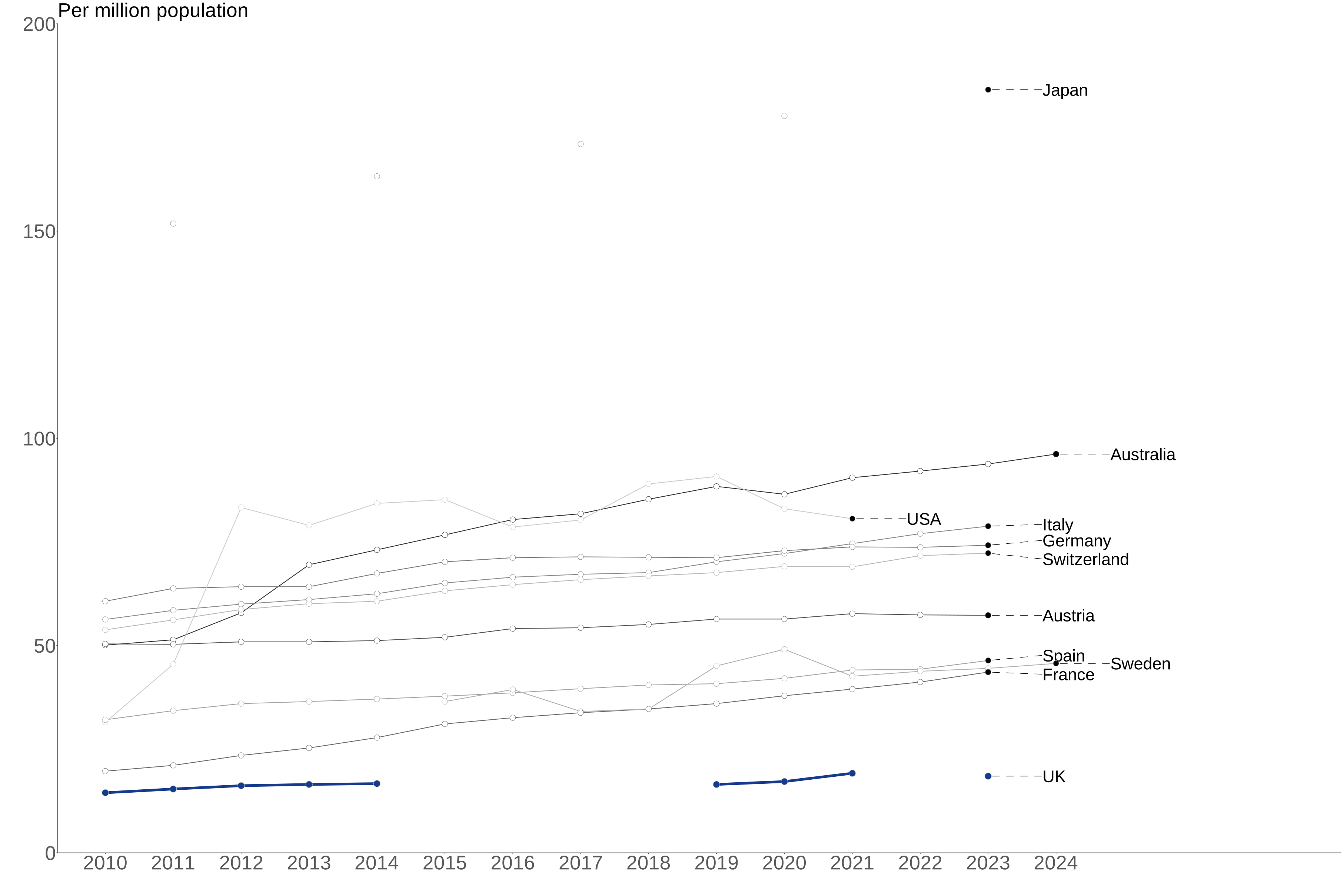
Figure 14: Number of MRI units, CT and PET scanners per million population, 2010 to 2024, UK and comparator countries
Notes:
- data from figure 14 can be found in table 14 of the accompanying ‘Life sciences competitiveness indicators 2026: data tables’
- the time series for each country is represented by the solid lines with the UK in blue. The dotted lines link the country name to the respective time series values
- the chart visualises the 10 comparator countries with the highest number of scanners for the most recent year of data in addition to the UK, which has the lowest number of scanners out of 16 comparators
- for the UK, scanners outside of hospitals are excluded for data relating to 2019 and onwards. There is variation in data coverage for other nations. Please see the user guide for more details
For the combined number of CT scanners, MRI units and PET scanners in 2023, the UK had the lowest number per million population, at 18.5, out of 16 comparators. This is a decrease from 19.2 scanners per million population observed in 2021. In comparison, most comparator countries have seen an increase in scanners per million population between 2021 and the most recent measure.
Japan has a substantially higher combined number of scanners relative to all comparators at 184.1 per million population as of 2023, an increase of 4% since 2020.
The UK had the lowest number of CT scanners (9.9) and MRI units (8.6) in 2023, and the lowest number of PET scanners (0.5) per million population in 2021 amongst comparator countries.
Data for the UK only includes diagnostic equipment and scans performed in hospitals. As a result, the figures for the UK should be interpreted with caution against other countries as equipment in community settings will not necessarily be captured in these statistics.
The UK performed a low number of diagnostic exams relative to comparators, with most countries seeing annual increases post COVID-19
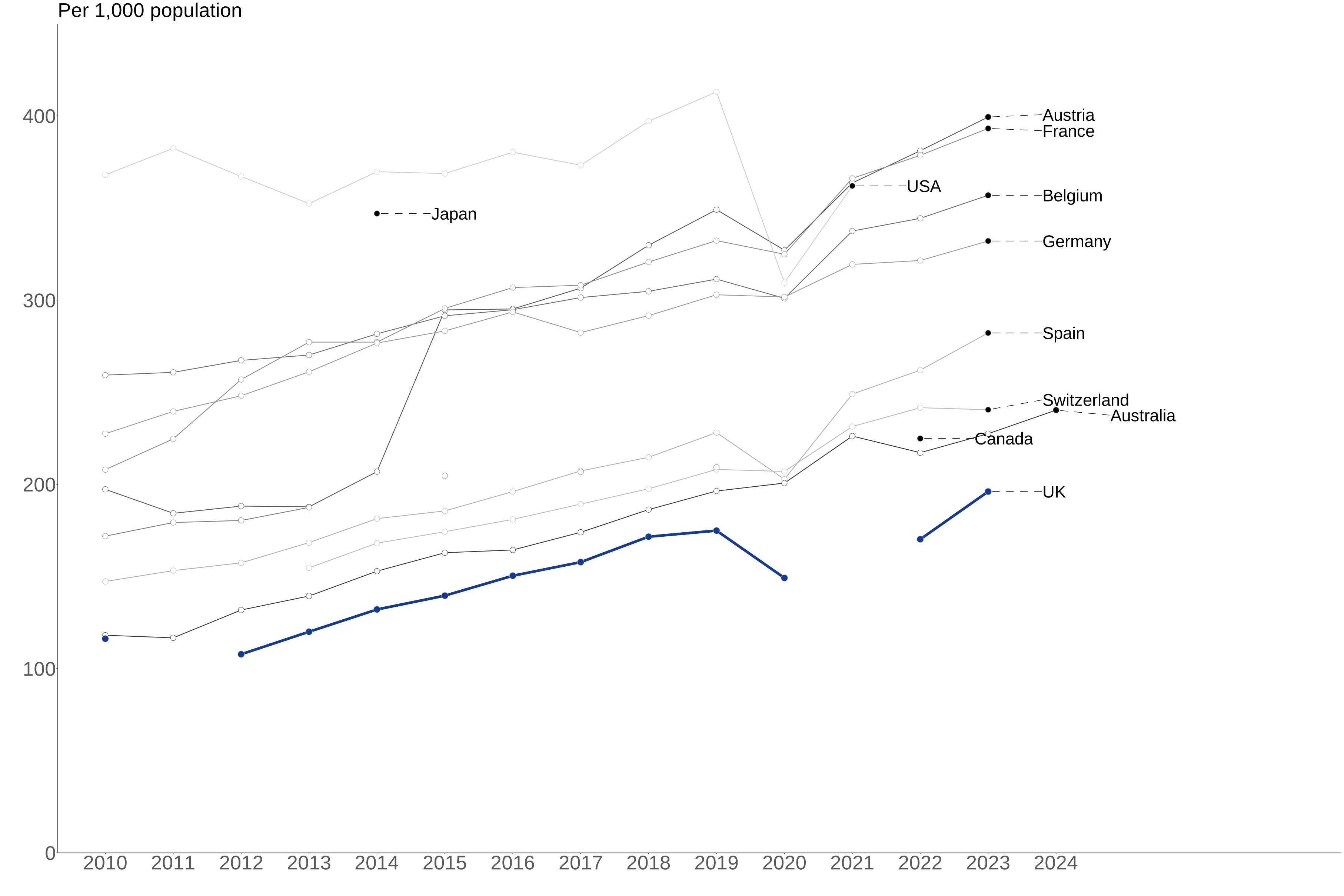
Figure 15: number of diagnostic exams per 1,000 population, 2010 to 2024, UK and comparator countries
Notes:
- data from figure 15 can be found in table 15 of the accompanying ‘Life sciences competitiveness indicators 2026: data tables’
- the time series for each country is represented by the solid lines with the UK in blue. The dotted lines link the country name to the respective time series values
- for the UK exams conducted outside of hospitals are not included. There is variation in data coverage for other nations. Please see the user guide for more details
This metric demonstrates the varying levels of diagnostic technology utilisation in the UK and comparator countries. Historical data for this metric relating to 2020 and 2021 occurred during the COVID-19 pandemic, when many countries paused essential procedures including diagnostic exams. As such, data report for the years 2020 and 2021 is not directly comparable to previous and later time periods and should be used with caution.
The UK’s count of diagnostic exams per 1,000 population is presented alongside that of 12 comparator countries – this is a subset of the 15 countries used for the international comparison of diagnostic technology equipment availability, as data for Japan, Sweden and Ireland is not available.
The UK performed 196.1 CT, MRI and PET exams combined per 1,000 population in 2023, a substantial increase of 15% compared to 2022. Several comparator countries saw an increase over the same time period. This includes Austria, which continues to perform the highest number of exams in 2023. Prior to 2020, the USA typically performed a significantly higher number of scans relative to comparator companies, however new data has not been provided since 2021, when they performed a similar level to Austria and France.
Prior to 2020, the number of exams performed in the UK had seen an upward trend since 2012 with year-on-year increases up until 2019, resulting in 62% more exams being performed in 2019 compared to 2012. This upward trend has continued in 2022 and 2023. In 2023, 12% more scans per 1000 population were performed compared to 2019, the last year recorded before scans were paused during the Covid-19 pandemic.
In 2023, 63% of the exams performed in the UK were CT scans, 35% were MRI scans and 2% were PET scans. CT scans similarly make up the largest share of diagnostic exams for all comparator countries, followed by MRI exams and then PET exams.
Section 3: Production environment
Figures presented for pharmaceutical manufacturing employment and GVA only include enterprises whose economic activity is classed as “manufacture of basic pharmaceuticals and pharmaceutical products”. Some GVA in pharmaceutical manufacturing may be captured within enterprises whose economic activity is classed under other categories (and therefore omitted from this data).
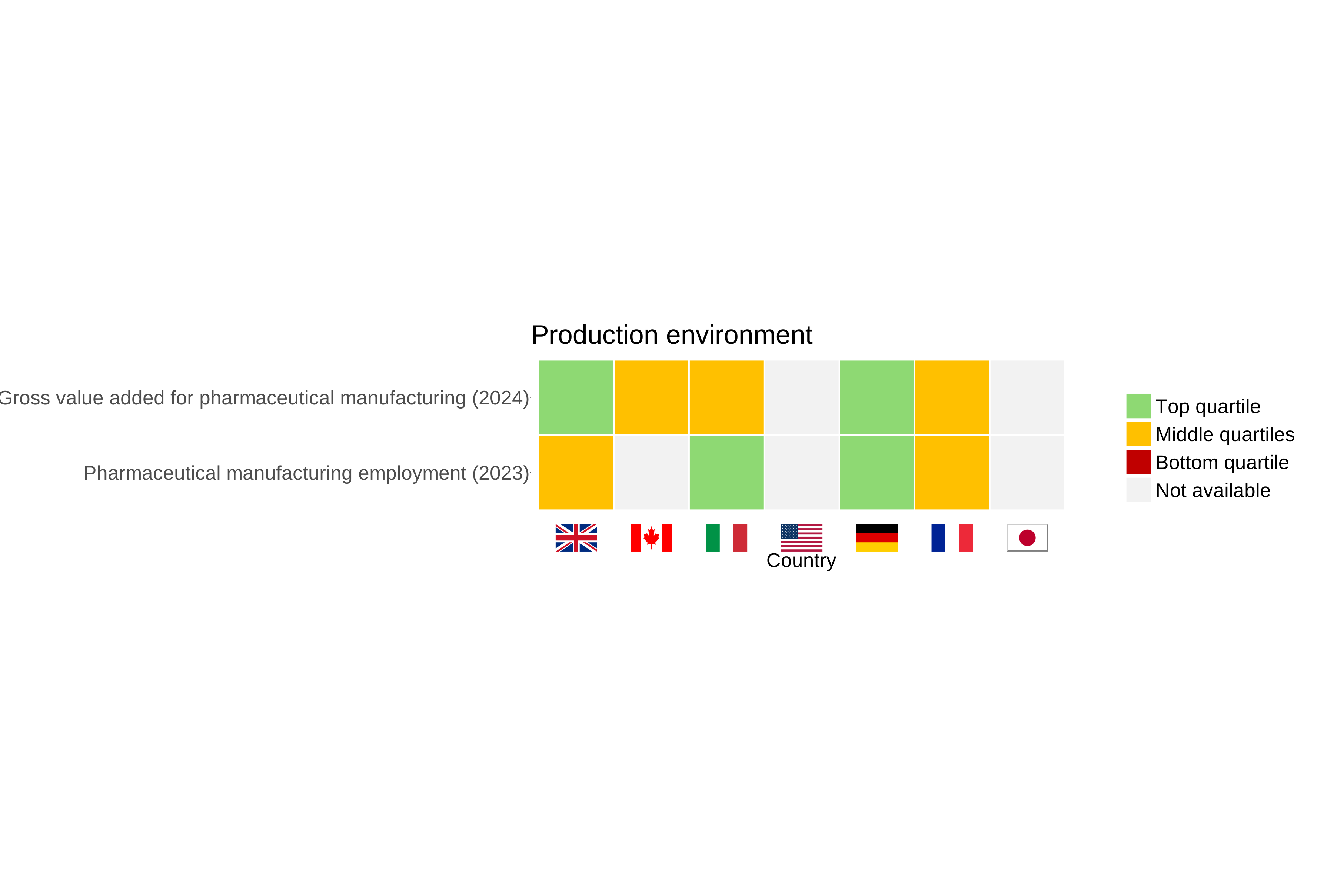
Figure 16 provides a high-level visualisation of the UK’s ranking within the G7, using quartiles, for metrics within the production environment. The remainder of the production environment section compares the UK to a wider selection of countries.
Figure 16: G7 country positions amongst comparator countries (in terms of quartiles) for production environment metrics, latest year available
Notes:
- data from figure 16 can be found in table 28 of the accompanying ‘Life sciences competitiveness indicators 2026: data tables’
- figures presented only include employment in enterprises whose economic activity is classed as “manufacture of basic pharmaceuticals and pharmaceutical products”.
Manufacturing employment
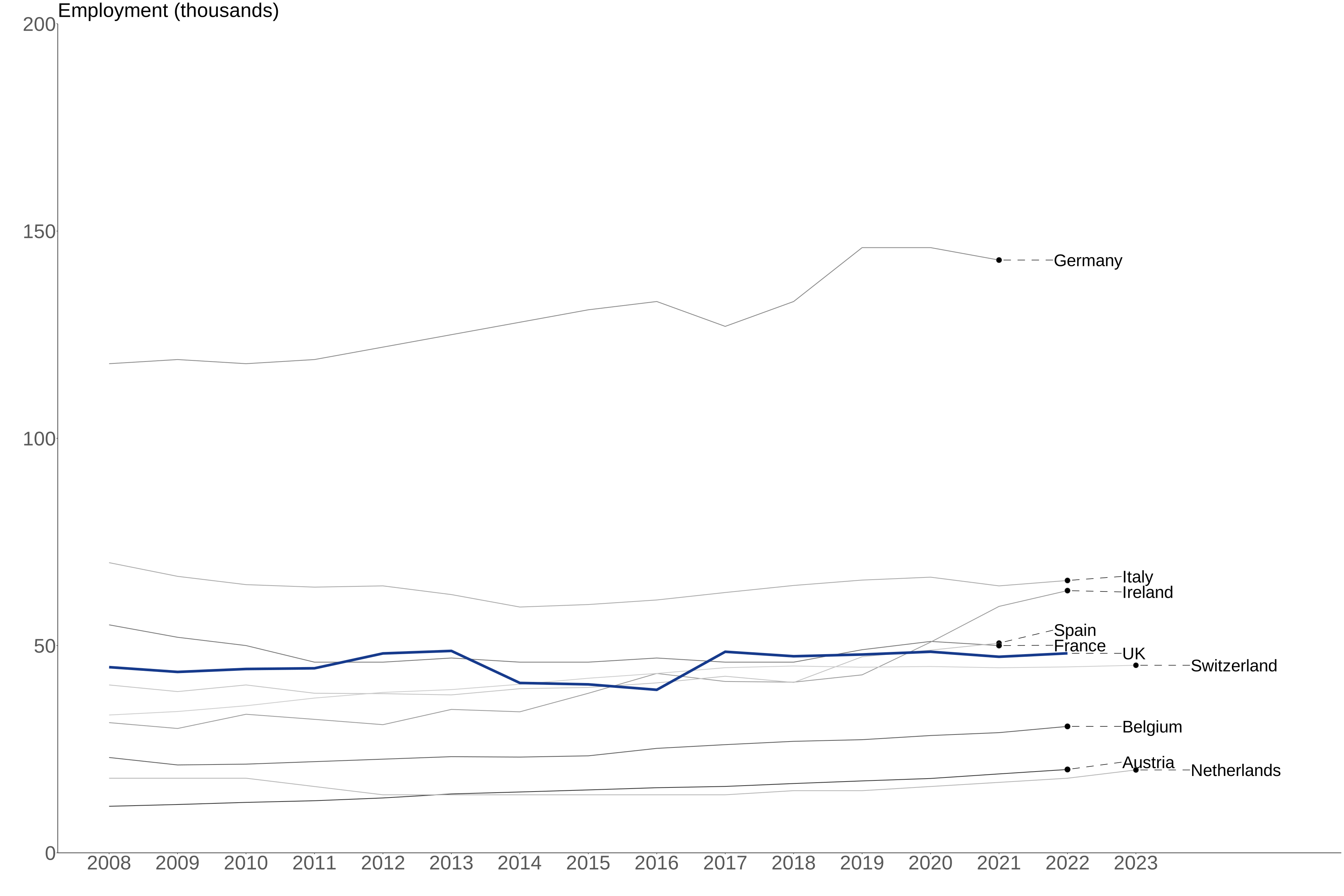
UK employment in pharmaceutical manufacturing has been stable since 2017
Figure 17: Number of people employed in manufacture of basic pharmaceutical products and pharmaceutical preparations, 2008 to 2023, UK and comparator countries
Notes:
- data from figure 17 can be found in table 16 of the accompanying ‘ Life sciences competitiveness indicators 2026: data tables’
- the time series for each country is represented by the solid lines with the UK in blue. The dotted lines link the country name to the respective time series values
- only includes employment in enterprises whose economic activity is classed as “manufacture of basic pharmaceuticals and pharmaceutical products”
In 2022, UK pharmaceutical manufacturing employment was 48,100, placing the UK sixth amongst comparator countries. The UK’s ranking has fluctuated over the years, reaching as high as third in 2012 and 2017. However, the UK’s employment levels have been similar to that of its nearest comparators (Spain, France and Switzerland) since 2017. The UK’s pharmaceutical manufacturing employment has been fairly steady since 2017, when employment was 48,500. Prior to 2017, pharmaceutical employment in the UK experienced a declining trend between 2013 and 2016, with employment falling from 48,700 in 2013 (the highest employment figure for the UK across the whole time period 2008-2022) to 39,300 in 2016.
Germany has consistently had the highest pharmaceutical manufacturing employment since 2008, with its employment figure in 2021 (the latest year available for the country) being over double that of any other comparator country.
Gross value added (GVA) for pharmaceutical manufacturing
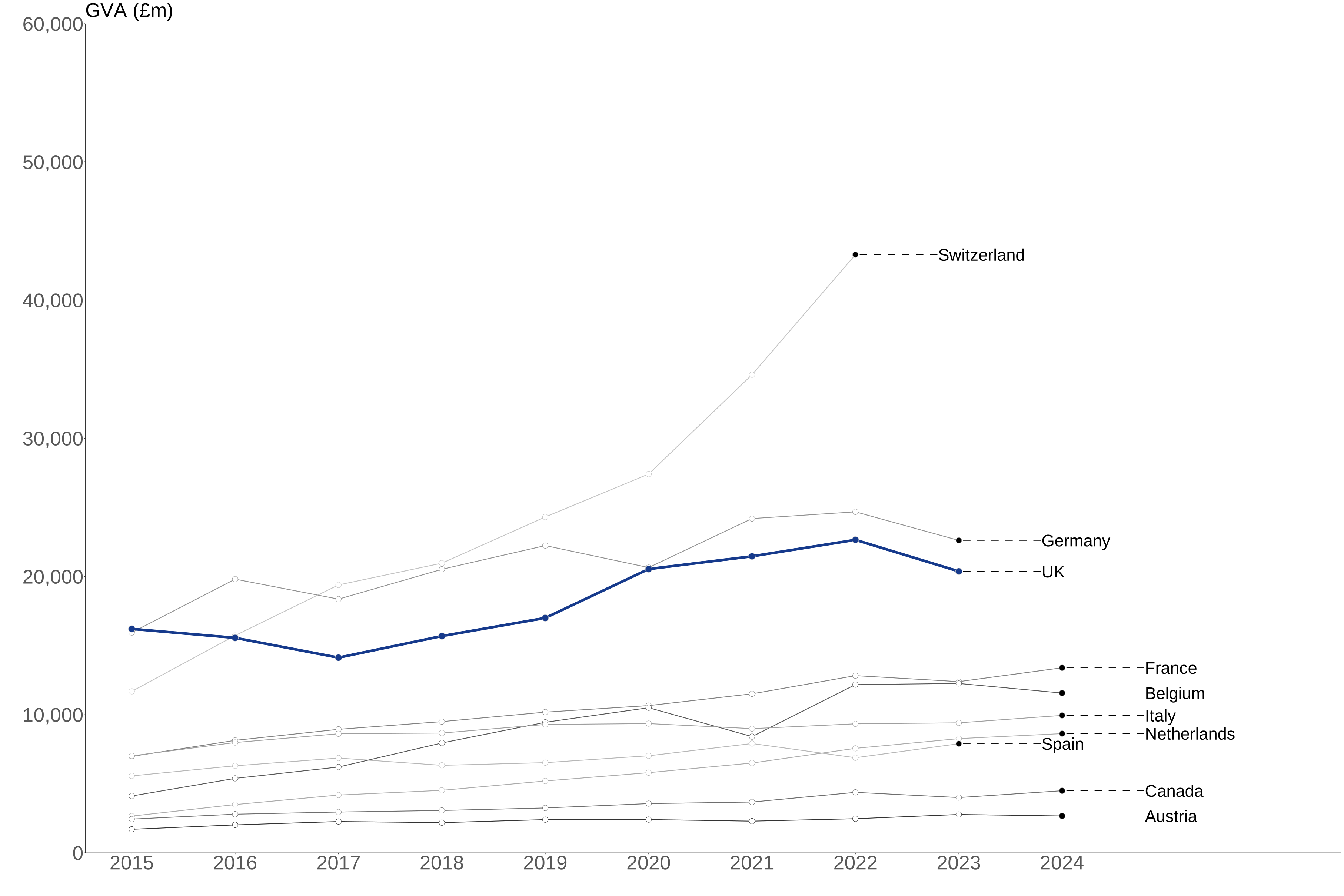
The UK’s pharmaceutical manufacturing GVA has followed an upward trend between 2017 and 2022, but decreased in 2023 compared to the previous year
Figure 18: GVA for manufacture of basic pharmaceutical products and pharmaceutical preparations, chain linked volumes, base year 2020 (£ millions), 2015 to 2024, UK and comparator countries
Note:
- data from figure 18 can be found in table 17 of the accompanying ‘Life sciences competitiveness indicators 2026: data tables’
- the time series for each country is represented by the solid lines with the UK in blue. The dotted lines link the country name to the respective time series values
- only includes GVA from enterprises whose economic activity is classed as “manufacture of basic pharmaceuticals and pharmaceutical products”
- 2024 data is unavailable for Switzerland, Germany, the UK and Spain
- USA data for this metric is not currently available, so this country has not been included as a comparator country
All values in this section are in chained volume measures and rebased to 2020 prices. The UK’s GVA for manufacturing was £20.4 billion in 2023. This is a decrease of 10% from £22.7 billion observed in 2022. Before this, the UK’s GVA for manufacturing was increasing year-on-year between 2017 and 2022. Other countries such as Germany and France experienced a similar decrease between 2023 and 2022.
Data for the USA is not currently available due to methodological changes in the data they submit to OECD. The USA had previously been a comparator country in past LSCIs publications and had the highest GVA of all comparators by a substantial margin. Due to the unavailability of data for the USA, rankings have been avoided for the 2026 LSCIs publication.
Section 4: International collaboration
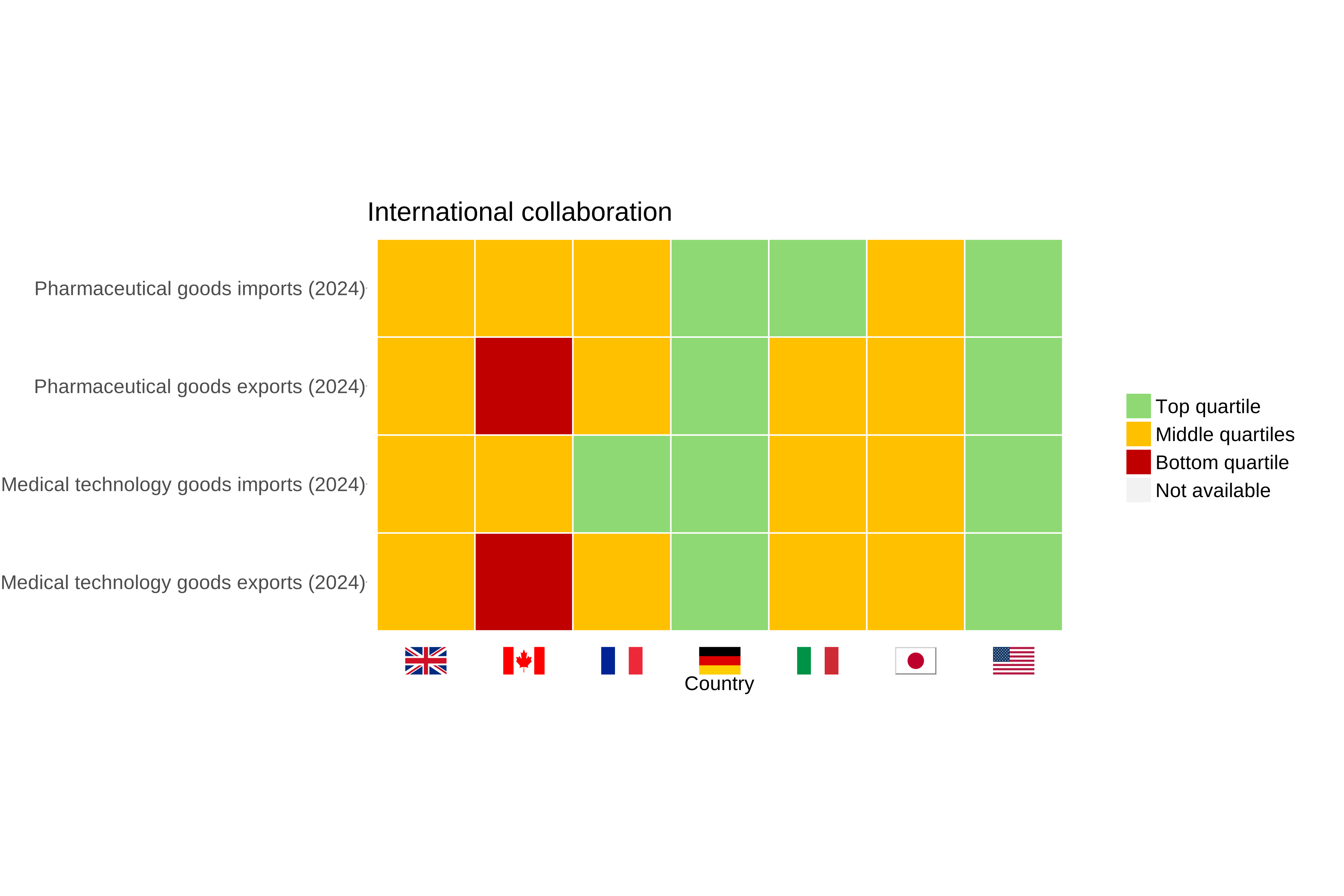
Figure 19 provides a high-level visualisation of the UK’s ranking within the G7, using quartiles, for metrics on international collaboration. The remainder of the international collaboration section compares the UK to a wider selection of countries
Figure 19: G7 country positions amongst comparator countries (in terms of quartiles) for international collaboration metrics, latest year available
Note: data from figure 19 can be found in table 28 of the accompanying ‘Life sciences competitiveness indicators 2026: data tables’
Export and imports of pharmaceuticals and medical technology products
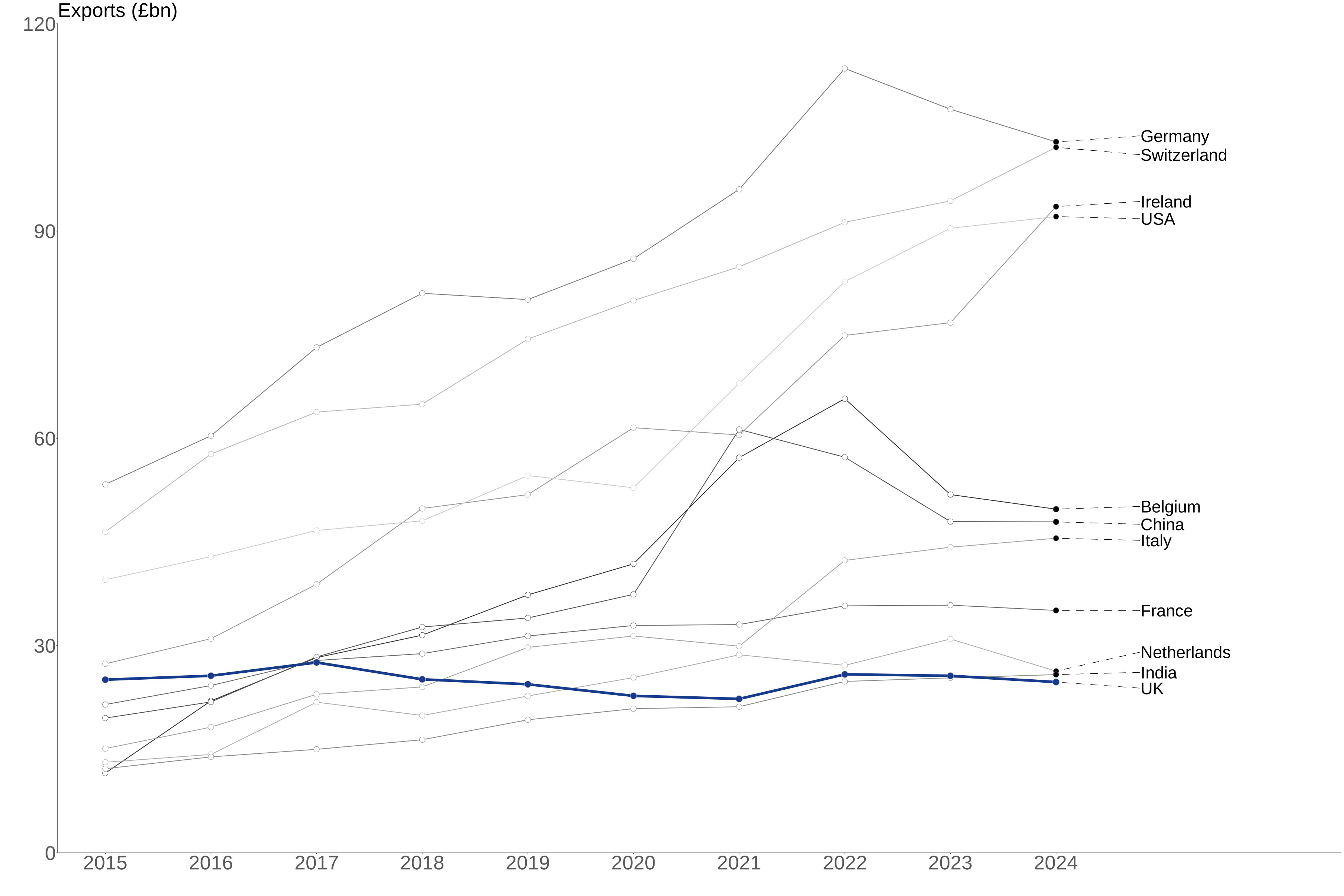
The value of the UK’s exports of pharmaceutical products has decreased since 2022, and continues to be lower than the peak in 2017
Figure 20: Value (£ billions) of global exports of pharmaceutical products, 2015 to 2024, UK and comparator countries
Notes:
- data from figure 20 can be found in table 18 of the accompanying ‘Life science competitiveness indicators 2026: data tables’
- the time series for each country is represented by the solid lines with the UK in blue. The dotted lines link the country name to the respective time series values
In 2024, the value of UK exports of pharmaceutical products was £24.7 billion, placing the UK eleventh amongst all countries with available data. The UK saw its highest value in 2017, at £27.6 billion, and subsequently saw a declining trend until 2021, with the value dropping by 19% over this period. In 2022 exports recovered to £25.8 billion, a 16% increase from 2021. Since 2022, exports have modestly decreased each year up to 2024, with exports in 2024 4% lower compared to 2022.
In contrast to the UK, several countries saw high growth over the period 2013 to 2024. The USA and Ireland also saw notable growth, with Ireland having a similar value of exports to the UK in 2013, but nearly four times the value of the UK’s exports in 2024. Germany and Switzerland continue to be the top two comparators for 2023 and 2024, although while the value of exports from Switzerland continues to grow, Germany has seen export values decline each year since 2022.
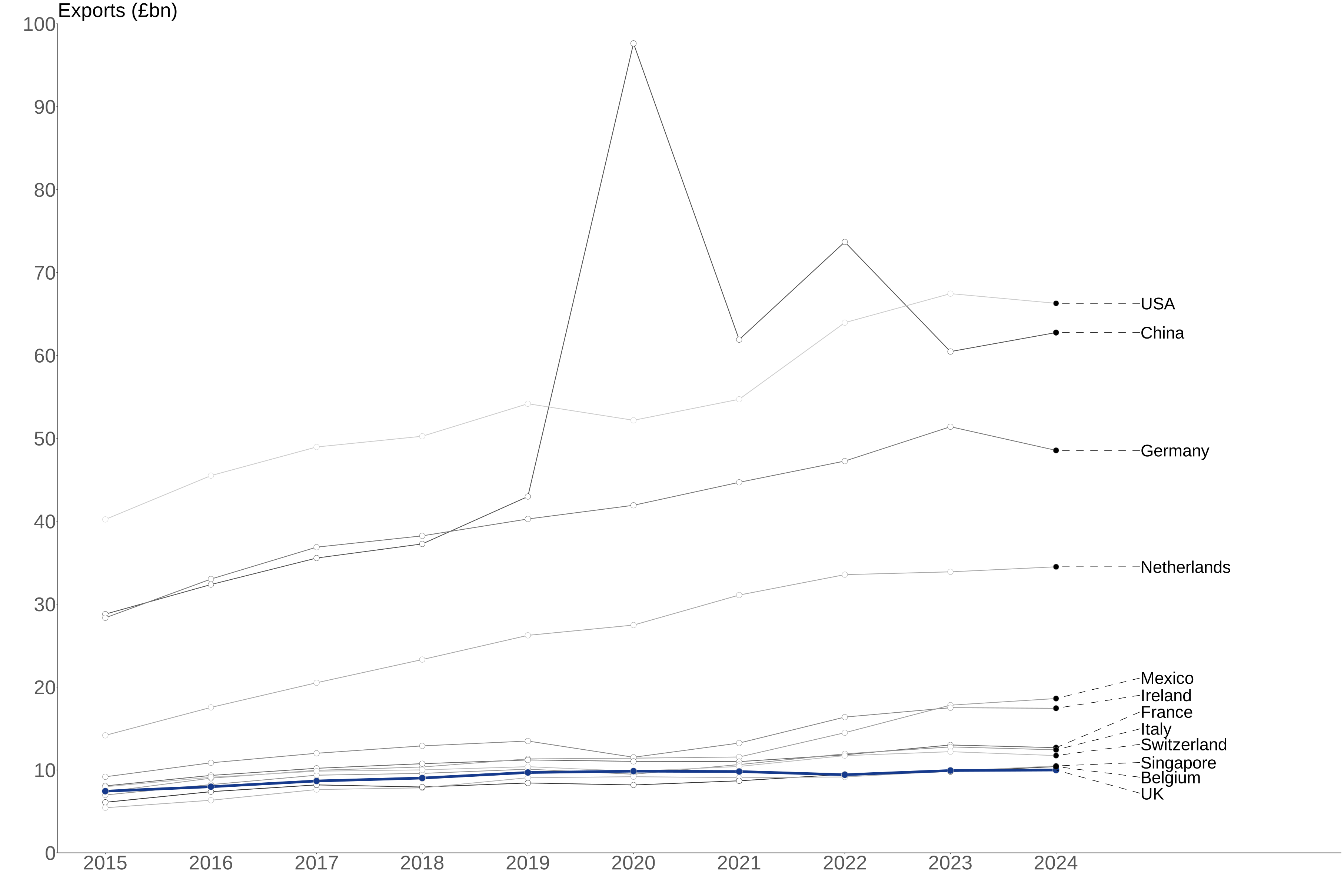
The UK’s value of medical technology exports has been broadly consistent since 2019
Figure 21: Value (£ billions) of global exports of medical technology products, 2015 to 2024, UK and comparator countries
Notes:
- data from figure 21 can be found in table 19 of the accompanying ‘Life sciences competitiveness indicators 2026: data tables’
- the time series for each country is represented by the solid lines with the UK in blue. The dotted lines link the country name to the respective time series values
The value of UK exports of medical technology products in 2024 was £10.0 billion, a slight increase of £0.1 billion (0.6%) since 2023. UK medical technology exports increased between 2015 and 2020 from £7.4 billion to £9.9 billion. Subsequently, between 2020 and 2024, the value of these exports has been broadly consistent since then with the exception of a slight decrease in 2022.
In 2024, the UK ranked twelfth amongst countries with available data in terms of the value of medical technology exports. The USA, China and Germany have consistently been the top three comparator countries since 2013, with the value of the USA’s medical technology exports in 2024 (£66.3 billion) being over six times that of the UK for the same year.
The commodities within ‘medical technology’ in this analysis include PPE products and ventilation equipment, which saw higher global demand during the pandemic. It is therefore likely that figures presented in this section of the report were impacted by the COVID-19 pandemic.
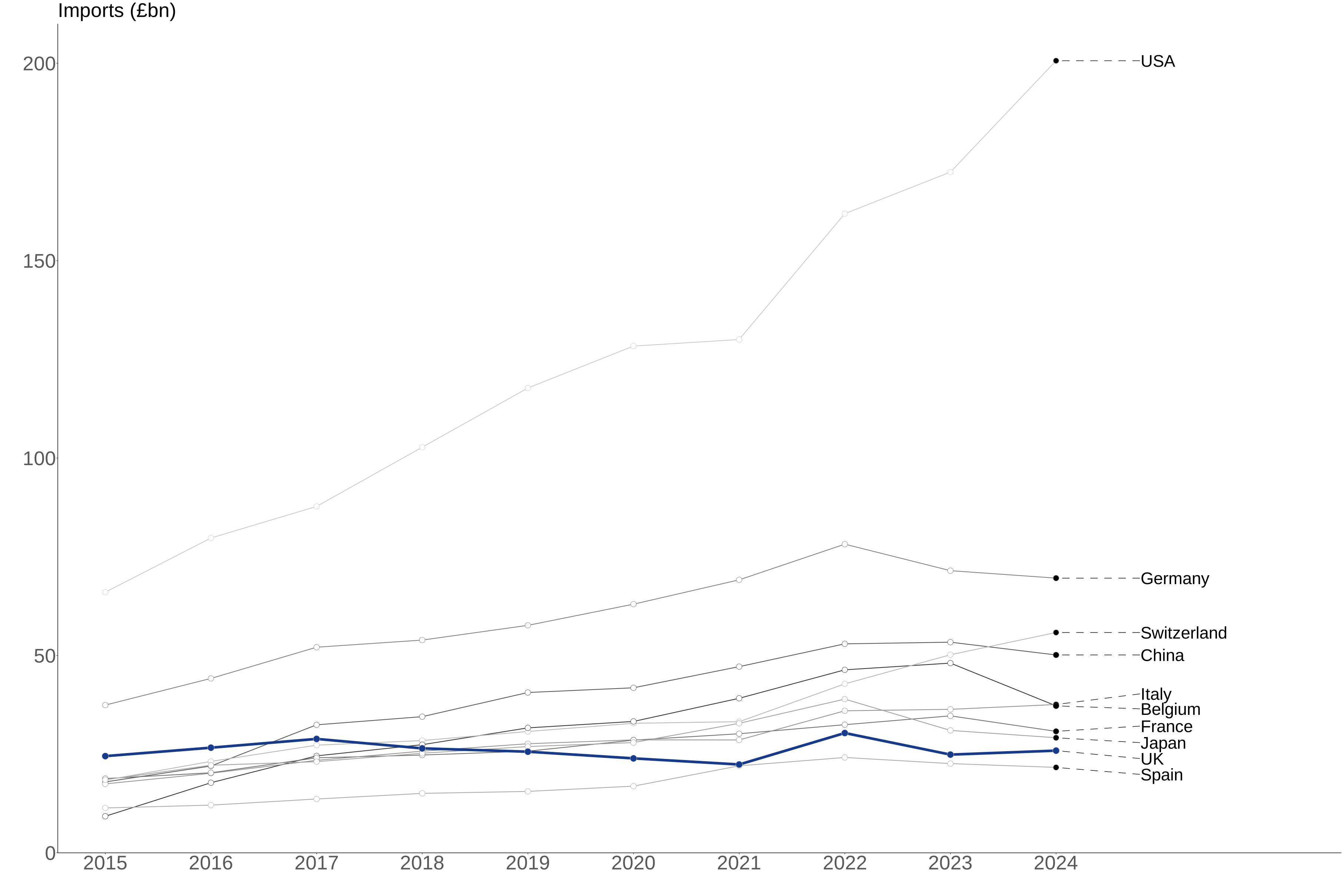
The value of UK imports of pharmaceutical products has increased slightly in 2024 but remains lower compared to 2022
Figure 22: Value (£ billions) of global imports of pharmaceutical products, 2015 to 2024, UK and comparator countries
Notes:
- data from figure 22 can be found in table 20 of the accompanying ‘Life sciences competitiveness indicators 2026: data tables’
- the time series for each country is represented by the solid lines with the UK in blue. The dotted lines link the country name to the respective time series values
In 2024, the value of UK imports of pharmaceutical products was £25.9 billion, placing the UK ninth amongst the selection of comparator countries. The value in 2024 was an increase of £1.0 billion (4%) from the value in 2023. The UK’s highest value of pharmaceutical imports over the period 2015 to 2024 was in 2022, but this was followed by a 18% decrease the following year. Prior to this, imports had been declining year-on-year between 2017 and 2021.
The USA and Germany have consistently been the highest ranked comparator countries in terms of pharmaceutical imports for the entire period between 2015 and 2024, with Switzerland overtaking China to rank third in 2023 and 2024.
The UK had a pharmaceutical products trade deficit of £1.2 billion in 2024 (meaning that UK imports exceeded UK exports by £1.2 billion).
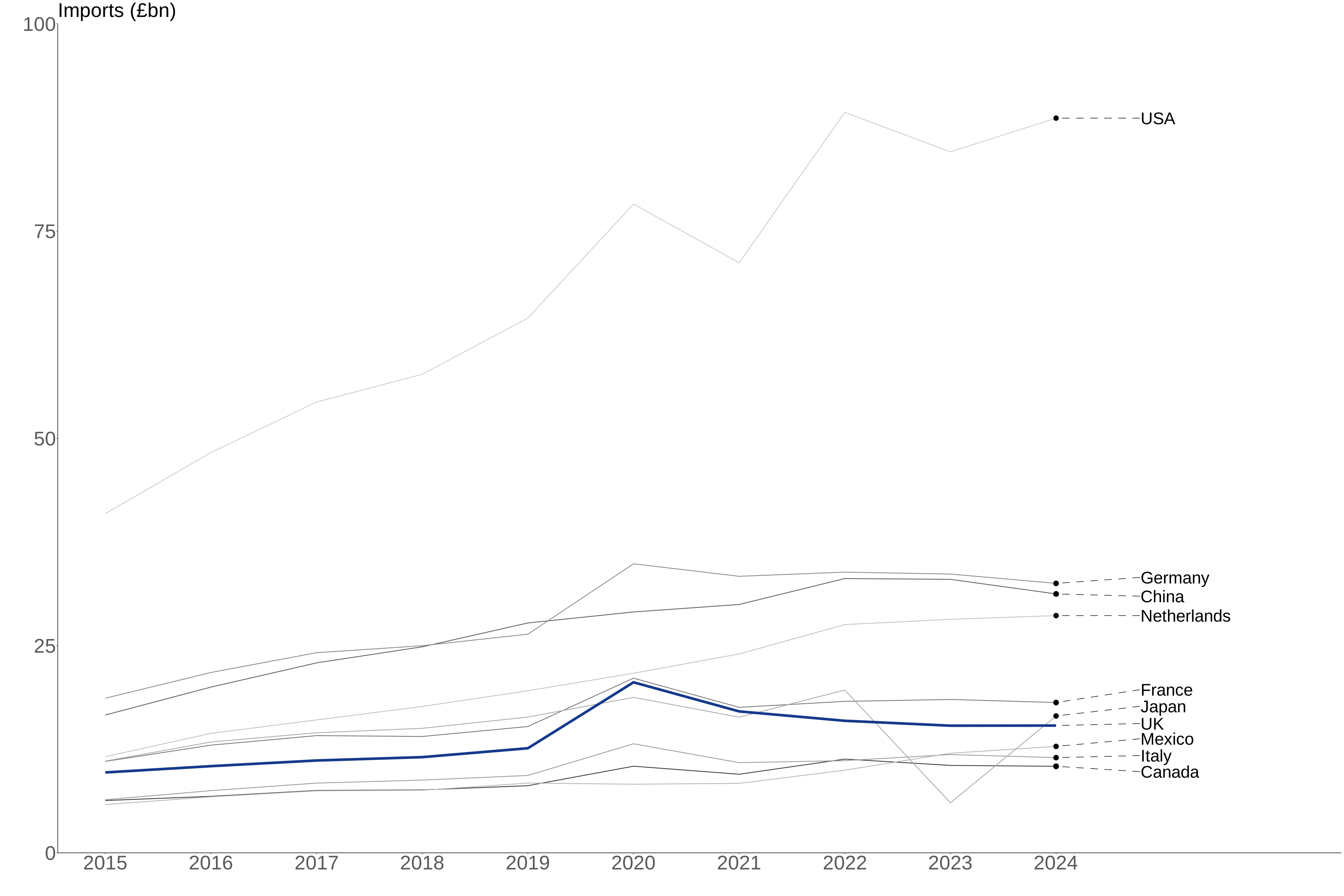
The value of UK imports of medical technology products was steady between 2023 and 2024, following a period of decline since 2020
Figure 23: Value (£ billions) of global imports of medical technology products, 2015 to 2024, UK and comparator countries
Notes:
- data from figure 23 can be found in table 21 of the accompanying ‘Life sciences competitiveness indicators 2026: data tables’
- the time series for each country is represented by the solid lines with the UK in blue. The dotted lines link the country name to the respective time series values
The value of UK imports of medical technology products in 2024 was £15.4 billion, remaining broadly similar compared to 2023 and placing the UK seventh amongst comparator countries. The UK’s ranking against comparators has remained broadly consistent over the period 2015 to 2024, fluctuating between sixth and seventh.
UK medical technology imports increased gradually between 2015 and 2019, after which the value of imports increased substantially to £20.7 billion in 2020, an increase of 63% compared to 2019. Since then, imports have decreased each year up to 2023, with the most substantial of these decreases occurring between 2020 and 2021. Like the UK, several other countries also saw a large spike in 2020, such as Germany, France and Italy.
The USA’s value of medical technology imports has consistently been at least double that of any other comparator country between 2015 and 2024. The USA’s imports of medical technology products was £88.6 billion in 2024.
In 2024, the UK had a trade deficit in medical technology products of £5.4 billion (meaning that the value of imports exceeded the value of exports by £5.4 billion).
Section 5: Investment environment
Figure 24 provides a high-level visualisation of the UK’s ranking within the G7, using quartiles, for metrics within the investment environment. The remainder of the investment environment section compares the UK to a wider selection of countries.
Figure 24: G7 country positions amongst comparator countries (in terms of quartiles) for investment environment metrics, latest year available
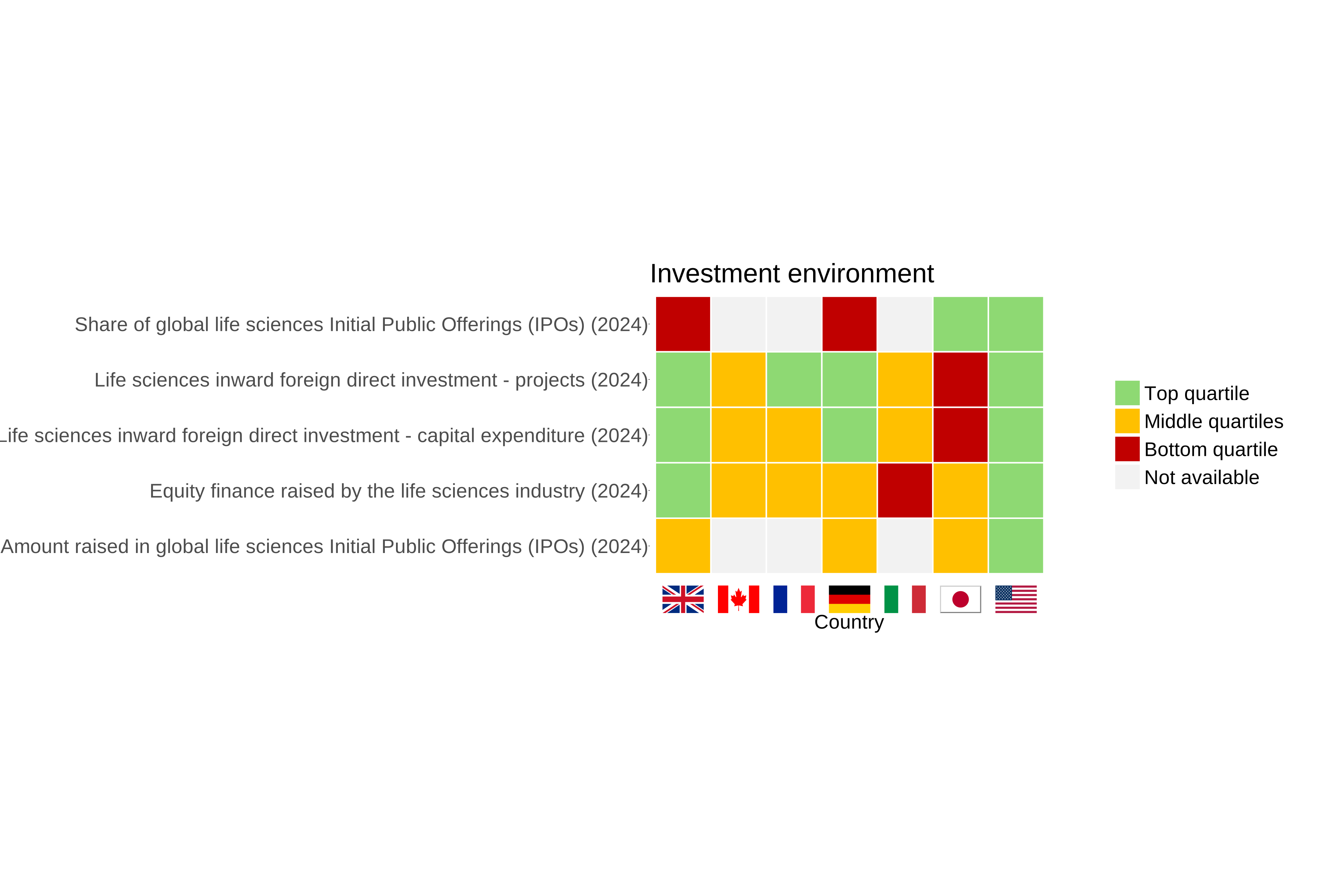
Note: data from figure 24 can be found in table 28 of the accompanying ‘Life sciences competitiveness indicators 2026: data tables’
Foreign direct investment (FDI)
FDI is an investment from a foreign investor into an enterprise in a different country. The entity then becomes an affiliate enterprise, which is either a subsidiary, branch, or an affiliate company of the parent company – the foreign investor. In practical terms, a foreign company can either set up a version of itself in the country or can acquire/merge with an existing company. FDI data is highly volatile year-on-year and can be heavily influenced by a small number of high value investments.
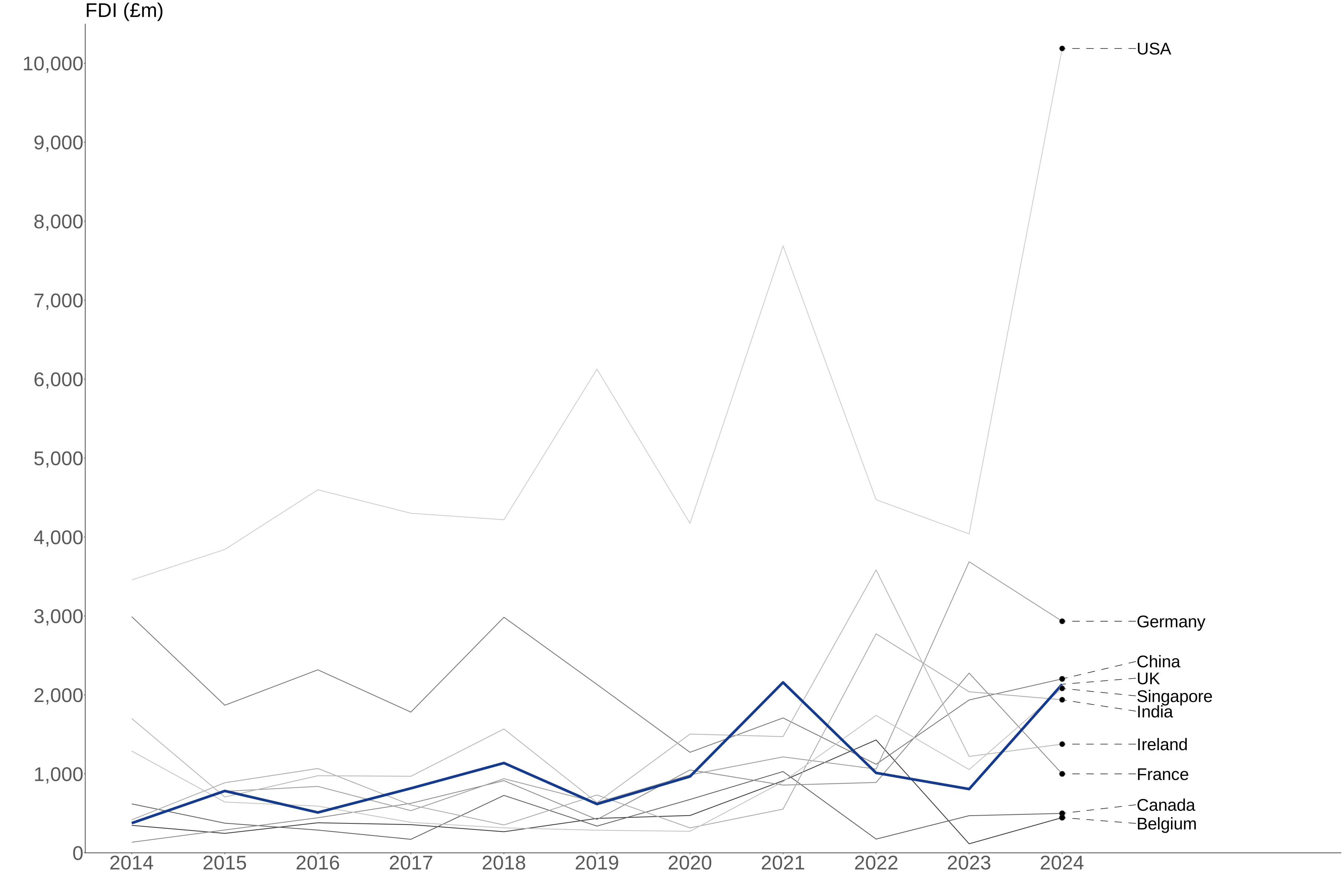
The UK’s ranking in FDI investment has fluctuated since 2012, with an increase between 2023 and 2024 bringing its ranking from eighth to fourth
Figure 25: Life sciences inward foreign direct investment – estimated capital expenditure (£ millions), 2014 to 2024, UK and comparator countries
Notes:
- data from figure 25 can be found in table 23 of the accompanying ‘Life sciences competitiveness indicators 2026 data tables’
- the time series for each country is represented by the solid lines with the UK in blue. The dotted lines link the country name to the respective time series values
- data on the value and number of FDI projects is sourced from fDi markets. An estimate is produced by fDi markets for any projects which do not have a known value for capital expenditure
In 2024 the value of estimated inward FDI into the UK was £2.1 billion, which was an increase of £1.3 billion, or 164%, compared to 2023. With this large increase, the UK’s ranking amongst 18 comparators increased to fourth in 2024, up from eight in 2023. The increase was higher than most comparator countries, with Germany, India and France seeing declines in life sciences inward investment over the same period. Other comparators, such as China, the USA and Singapore also saw increases, but at a lower percentage increase compared to the UK.
Prior to 2024, the UK had seen a spike in FDI in 2021 before declining up until 2023. This spike was also seen in many other countries and likely influenced by the surge in investment to accelerate research into the COVID-19 pandemic. In 2024, the UK saw inward FDI returning to similar levels that were seen in 2021.
The USA has consistently had the highest value of estimated inward life sciences FDI since 2014 amongst comparator countries. The USA’s inward FDI reached £10.2 billion in 2024. This is more than 3 times the value of Germany, who ranked second amongst comparators with an inward FDI value of £2.9 billion.
The value of estimated inward FDI in 2024 was generated from 62 projects in the UK, which was similar level to the 64 projects recorded in 2023. Whilst the number of projects decreased in 2024, the amount of investment increased, meaning a higher average expenditure per project. The USA had the highest number of projects in 2024 at 152, whilst India and Germany both also ranked higher than the UK with 77 and 65 projects respectively. However, it should be noted that the count of inward FDI projects is highly volatile year-on-year.
Equity finance raised by life science companies
Industry investment in this report refers to the amount of equity capital raised by the issuing of new shares by life science companies. The values presented in this section represent equity raises by private and publicly listed companies that have been publicly disclosed (private companies do not always disclose capital raises, and therefore the data may be incomplete). One type of equity financing is initial public offerings (IPO) which are also reported on in the next section of the report.
The data for both equity finance and IPOs in this report includes companies listing for the first time on a stock exchange, as well as companies relisting on a different stock exchange to their initial listing. The relisting value will also be included in the figures in this section.
The source for equity finance and initial public offerings (IPOs) has been updated for the 2026 report. The change in source has resulted in revisions to the equity finance and IPO metrics but this has not had any notable impact on rankings.
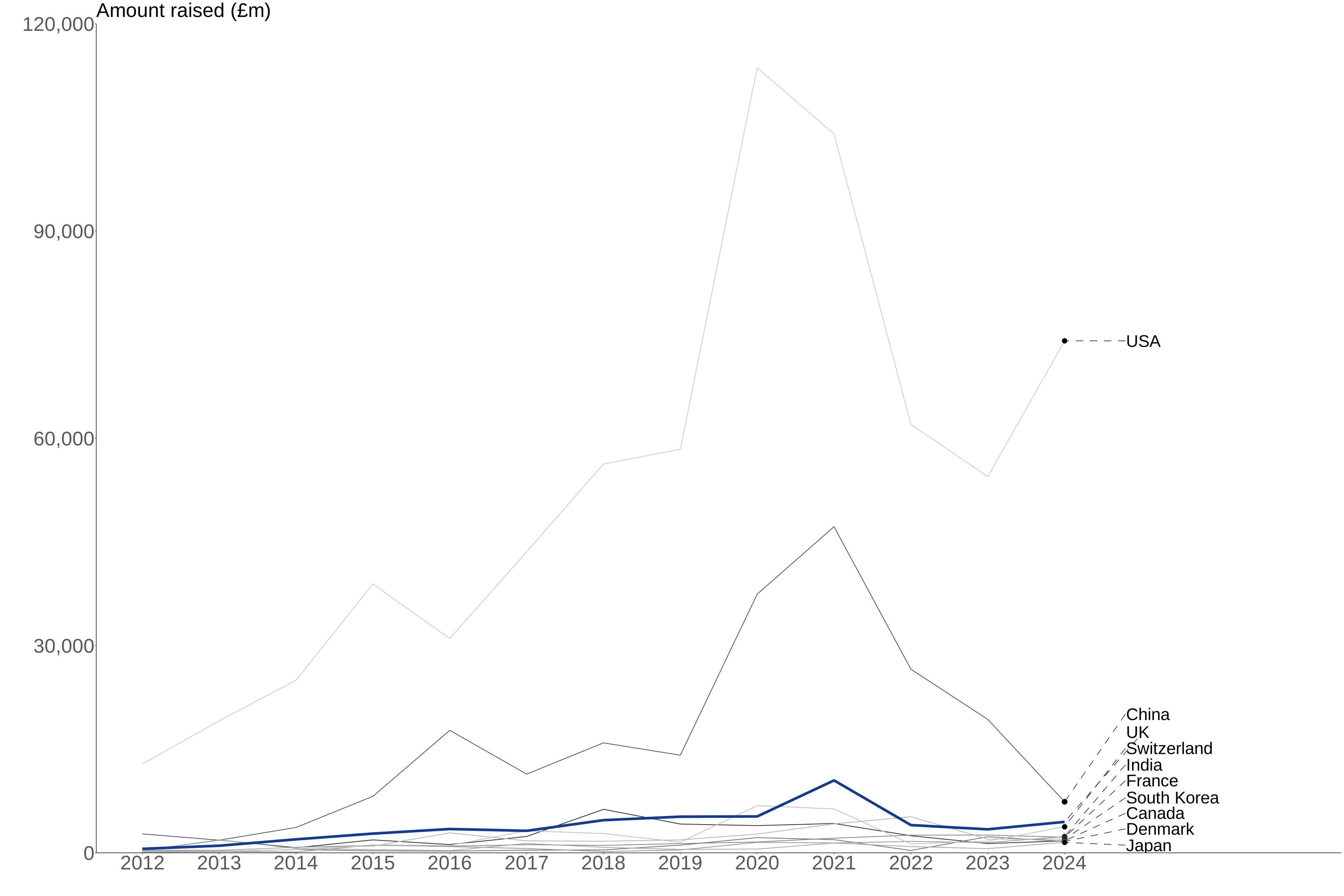
Equity finance raised in 2024 increased notably in the UK compared to 2023
Figure 26: Equity finance raised by life sciences companies, (£ millions, currency translations at historic exchange rates), 2012 to 2024, UK and comparator countries
Notes:
-
data from figure 26 can be found in table 24 of the accompanying ‘Life sciences competitiveness indicators 2026: data tables’
-
the time series for each country is represented by the solid lines with the UK in blue. The dotted lines link the country name to the respective time series values
Equity finance raised by UK life sciences companies increased to £4.5 billion in 2024, up from £3.4 billion in 2023, an increase of 32%. This is the highest value for equity finance raised since 2021, when values were notably higher globally due to high investment in life sciences during the COVID-19 pandemic in 2020 and 2021. The UK ranks third in life sciences equity finance raised in 2024, behind only the USA and China. This ranking remains unchanged from 2023.
The USA has continuously raised substantially more equity finance compared to other countries, generating £74.1 billion in 2024. This is 36% higher compared to 2023. The USA raised 10 times the amount of life sciences equity finance in 2024 compared to China, which ranked second out of all countries with available data. China raised £7.4 billion in 2024, which is a 62% decrease compared to 2023.
Initial Public Offerings (IPOs)
An IPO describes the act of a company offering their stock on a public stock exchange for the first time. An IPO allows a company to raise capital from public-market investors and enables its shares to be traded after the listing. A publicly listed company is more likely to increase its activities in the country where it is listed.
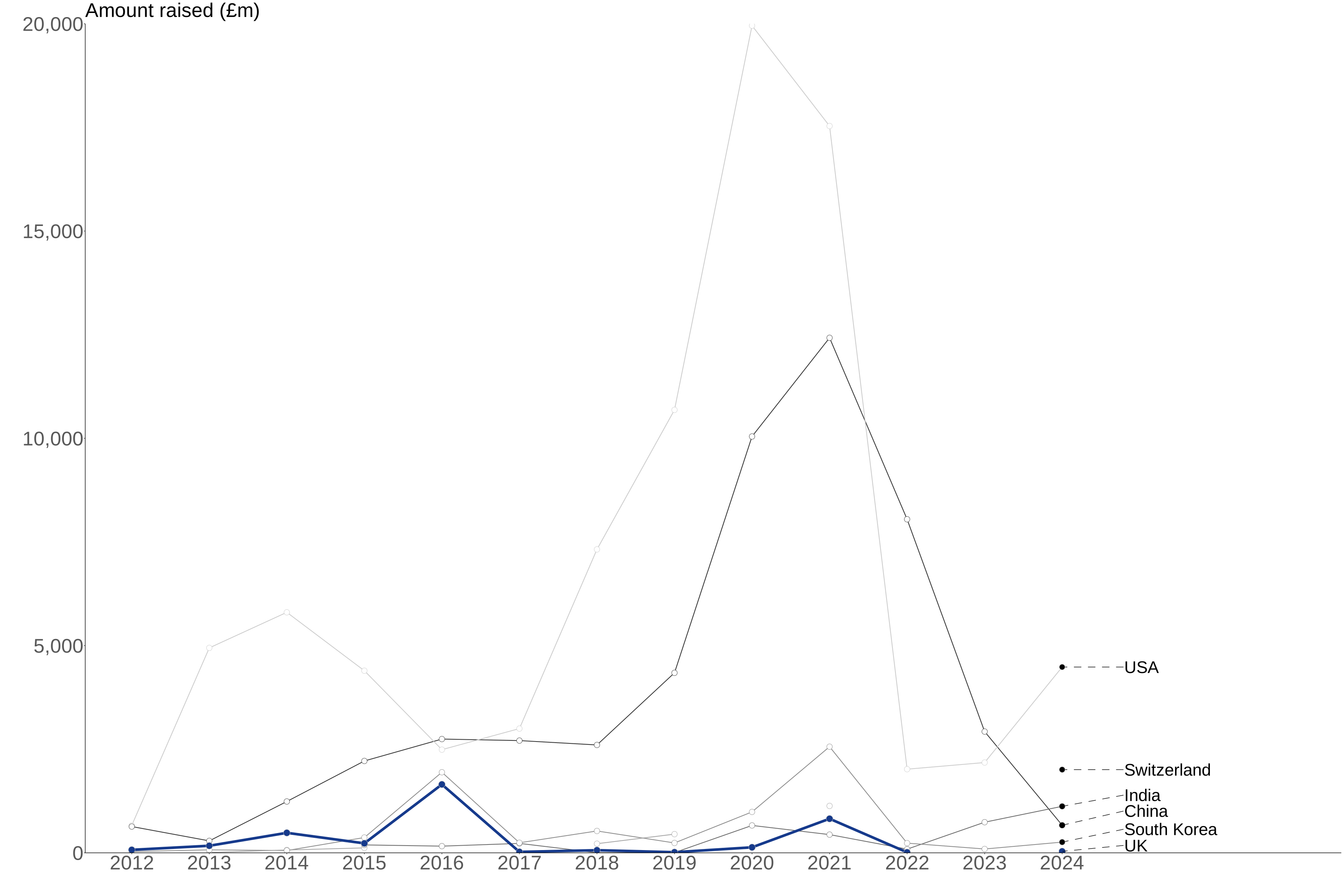
The value raised in IPOs in the UK and most comparators has substantially fallen between 2021 and 2024
Figure 27: Amount raised in life sciences IPOs (£ millions, currency translations at historic exchange rates), 2012 to 2024, UK and comparator countries
Notes:
- data from figure 27 can be found in table 26 of the accompanying ‘Life sciences competitiveness indicators 2026: data tables’
- the time series for each country is represented by the solid lines with the UK in blue. The dotted lines link the country name to the respective time series values
- the chart shows IPO fundraising amounts for the five highest-ranked countries in 2024, with the UK included for comparison despite ranking twelfth globally
- the data in this report includes companies that have previously listed on one country’s stock exchange and then relisted on another country’s. Both the initial offering and the relisting are included in these figures in the referenced time series
In 2024, the UK had one IPO in life sciences, raising £35.1 million. This was an increase from 2023, when the UK had no IPOs. However, this is still substantially lower than the £822.6 million raised over 10 IPOs in 2021. As with equity finance overall, this trend has been seen in other countries globally due to the spike in investment seen in life sciences companies around 2020 and 2021 during the COVID-19 pandemic.
Both the number of IPOs and amount raised has been highly volatile year to year, but 2023 was the only time since 2012 that the UK had no IPOs in life sciences. Between 2012 and 2023, China and the USA have consistently been the top two countries in terms of amount raised in IPOs since 2017 although the value raised in each country fluctuated substantially year-on-year. However in 2024, Switzerland raised the second highest amount in IPOs, behind the USA.
In 2024, the top four countries (the USA, Switzerland, India and China) accounted for 90% of the amount raised from IPOs, having received 57% of all IPOs.
Section 6: Skills
Figure 28 provides a high-level visualisation of the UK’s ranking within the G7, using quartiles, for the skills metrics. The remainder of the skills section compares the UK to a wider selection of countries
Figure 28: G7 country positions amongst comparator countries (in terms of quartiles) for access to skilled labour metric, 2023
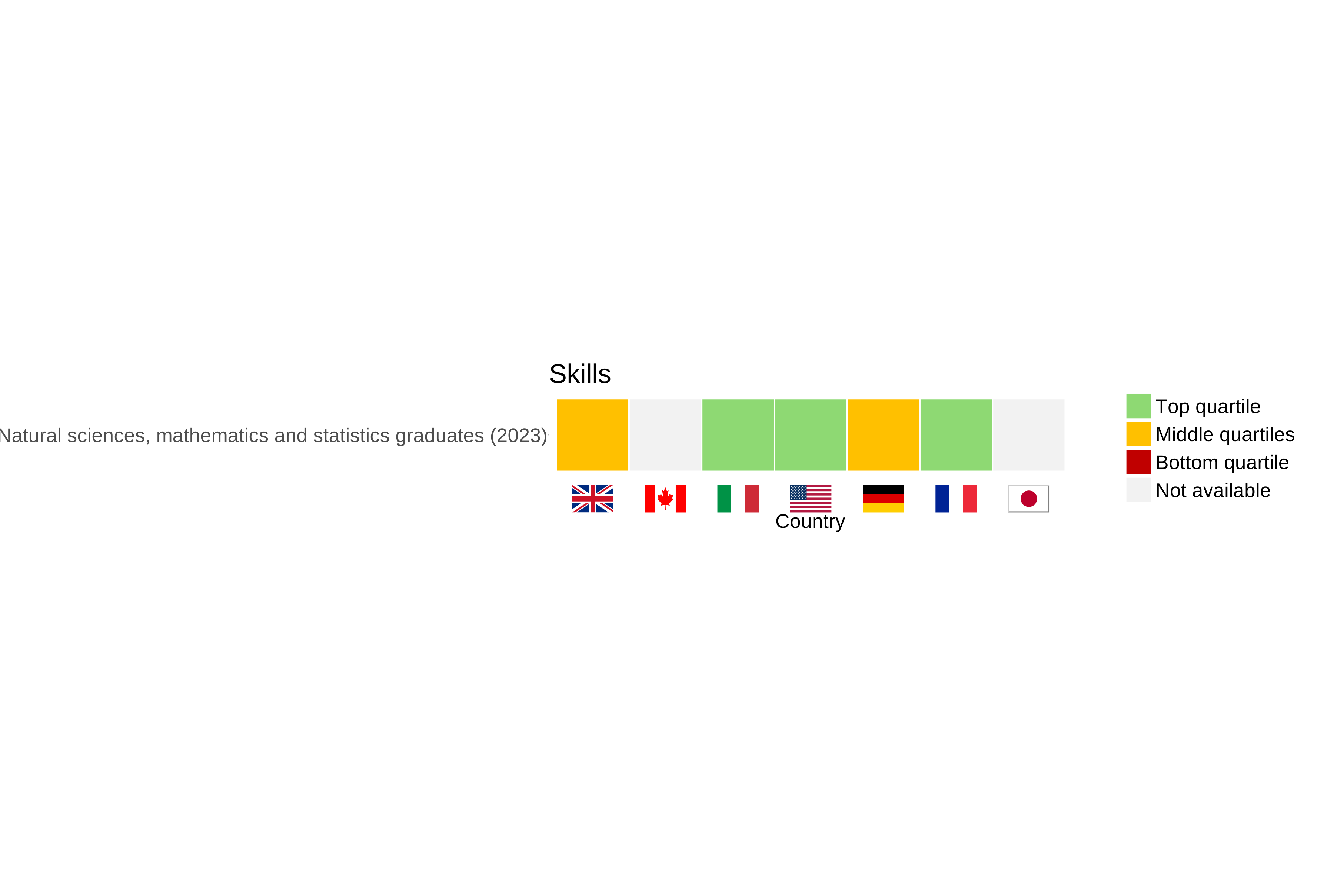
Note: data from figure 28 can be found in table 28 of the accompanying ‘Life sciences competitiveness indicators 2026: data tables’
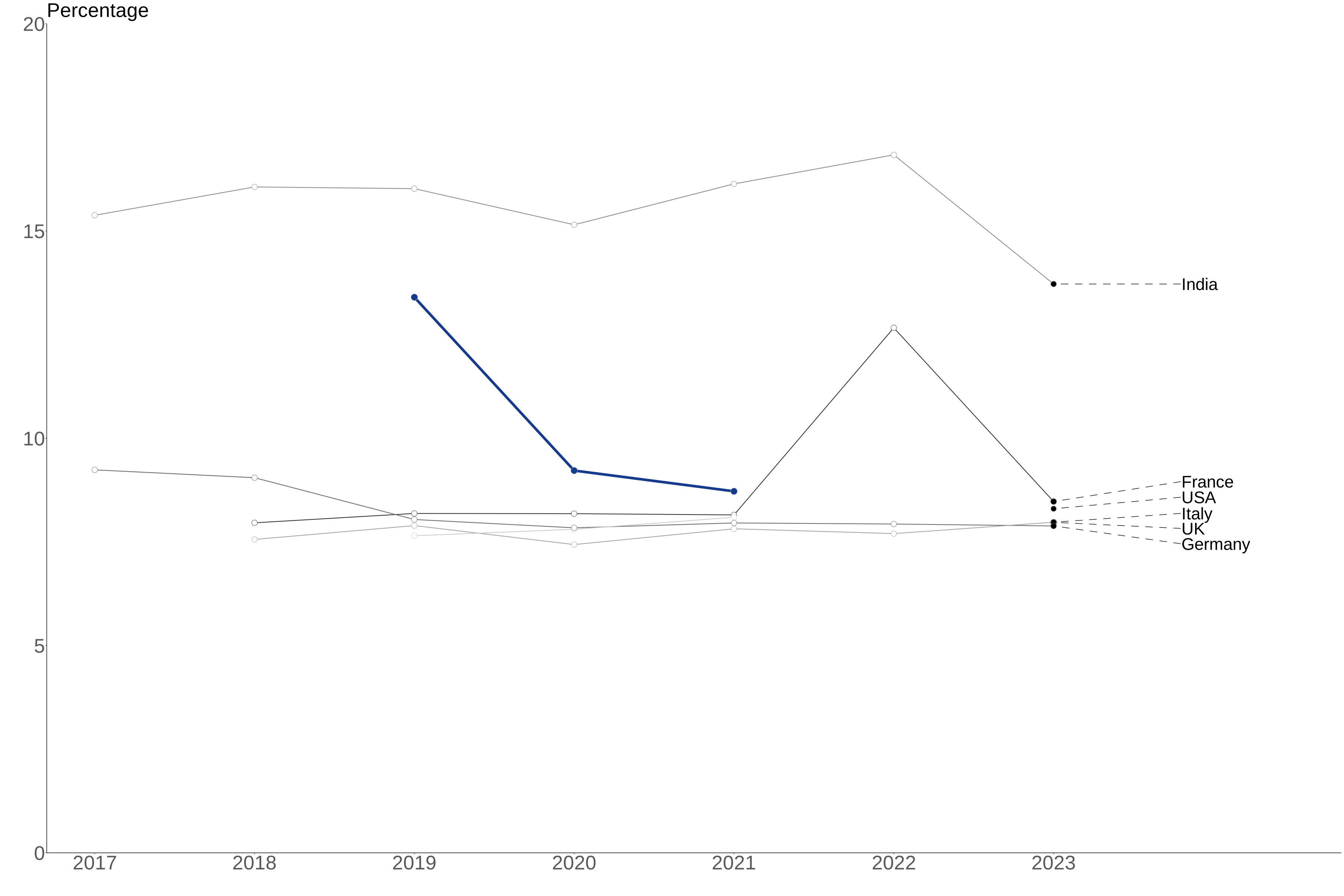
The UK continued to rank second but saw a substantial decline in 2020 compared to 2019 for the proportion of graduates from life sciences fields
Figure 29: Percentage of graduates from tertiary education graduating from natural sciences, mathematics, and statistics programmes, 2017 to 2023, UK and comparator countries
Notes:
- data from figure 29 can be found in table 27 of the accompanying ‘Life sciences competitiveness indicators 2026: data tables’
- the time series for each country is represented by the solid lines with the UK in blue. The dotted lines link the country name to the respective time series values
- tertiary education comprises undergraduate degrees (or equivalent) and above - this metric shows the percentage of graduates from tertiary education graduating from natural sciences, mathematics and statistics programmes
In 2021, 8.0% of graduates completed a degrees in natural sciences, mathematics and statistics. This percentage has notably declined from 13.4% in 2019. In 2023, the UK ranked fifth out of 14 comparators for the percentage of graduates completing a degree in these fields. This is a decline from second in 2019.
In addition to the number of graduates, the number of life sciences apprenticeships started each year in England is a measure of the sector’s skills base. In the financial year 2024/25, the number of life sciences apprenticeships started was 1,290, a decrease of 9% compared to the previous financial year. Apprenticeship starts have fluctuated since 2019/20. A spike was previously seen in 2021/22, when starts rose by 25% on the previous year, followed by a decline in 2022/23. Numbers then climbed sharply in 2023/24, reaching a five-year high of 1,420 starts, before returning to 2022/23 levels in 2024/25.
340 of the life sciences apprenticeships started in 2024/25 were level 6 or 7, approximately equivalent to a bachelor’s or master’s degree. This accounted for 26% of all starts in 2024/25, a proportion that has been broadly consistent since 2020/21.
Accompanying documents
This report is part of a series of documents for the 2026 LSCIs publication:
- The accompanying ‘Life sciences competitiveness indicators 2026: user guide’. This outlines the sources used in this report along with any limitations or considerations to note when disseminating the data.
- The ‘Life sciences competitiveness indicators: ecosystem’. This provides a visualisation and description of the main activities that OLS considers contribute to a successful life sciences sector, and it outlines which metrics in the LSCIs relate to these activities.
- The ‘Life sciences competitiveness indicators 2026: data tables’ provide the aggregated data used throughout this report.
- The ‘Life sciences competitiveness indicators 2026: statement of voluntary application of the Code of Practice for Statistics’. This summarises OLS’s commitment to applying principles in the code of practice and where there are any deviations.
Feedback
The Office for Life Sciences (OLS) will continue to review the publication content on an annual basis to ensure it continuously meets evolving user needs.
The Office for Life Sciences (OLS) aims to continuously evolve the content and methods used in the LSCIs publication based on our users’ needs. If you would like to give specific feedback or wish to be on our user list to receive updates about proposed changes, please contact analysis@officeforlifesciences.gov.uk.