Country policy and information note: actors of protection, Kenya, July 2026 (accessible)
Updated 27 July 2026

© Crown copyright 2026
This publication is licensed under the terms of the Open Government Licence v3.0 except where otherwise stated. To view this licence, visit nationalarchives.gov.uk/doc/open-government-licence/version/3 or write to the Information Policy Team, The National Archives, Kew, London TW9 4DU, or email: psi@nationalarchives.gov.uk.
Where we have identified any third party copyright information you will need to obtain permission from the copyright holders concerned.
This publication is available at https://www.gov.uk/government/publications/kenya-country-policy-and-information-notes/country-policy-and-information-note-actors-of-protection-kenya-july-2026-accessible
Version 1.0, July 2026
Executive summary
The Constitution of Kenya, alongside other law, provides for the protection of fundamental rights and freedoms, and the Kenyan penal code criminalises a range of offences.
There is a functioning police force and judiciary, which are generally accessible.
In general the state is both willing and able to offer sufficient protection to persons fearing non-state actors, including ‘rogue’ state actors.
Protection is likely to be difficult to access for lesbian, gay, bisexual, trans and intersex people (see the Country Policy and Information Note Kenya: Sexual orientation and gender identity and expression for specific guidance and information). Protection may be difficult to access for people with limited financial means and survivors of gender-based violence.
All cases must be considered on their individual facts, with the onus on the person to demonstrate that they are not able to obtain sufficient protection from the state.
Assessment
Section updated: 28 May 2026
About the assessment
This section considers the evidence relevant to this note – that is the country information, refugee/human rights laws and policies, and applicable caselaw – and provides an assessment of whether, in general those with a well-founded fear of persecution or serious harm from non-state actors can seek effective state protection.
Each case must be considered on its individual facts.
For details on how CPIT makes its assessments, gathers and presents country information, its research methodology and disclaimers and explainers on coverage, source selection, maps, translations and the use of Artificial Intelligence (AI) in developing CPIT products, see About country policy and information notes.
1. Material facts, credibility, and other checks/referrals
Decision makers must:
- assess credibility (see the Asylum Instruction on Assessing Credibility and Refugee Status
- check if there has been a previous application for a UK visa or another form of leave. Asylum applications matched to visas should be investigated prior to the asylum interview (see the Asylum Instruction on Visa Matches, Asylum Claims from UK Visa Applicants).
- consider making an international biometric data-sharing check, when one has not already been undertaken (see Biometric data-sharing process (Migration 5 biometric data-sharing process)).
- consider language analysis testing, where available, in cases where there are doubts surrounding a person’s claimed place of origin (see the Asylum Instruction on Language Analysis).
Official – sensitive: Not for disclosure – Start of section
The information in this section has been removed as it is restricted for internal Home Office use.
Official – sensitive: Not for disclosure – End of section
2. Exclusion
2.1.1 Decision makers must consider whether there are serious reasons to apply one (or more) of the exclusion clauses. Each case must be considered on its individual facts.
2.1.3 If the person is excluded from the Refugee Convention, they will also be excluded from a grant of humanitarian protection (which has a wider range of exclusions than refugee status).
2.1.4 For guidance on exclusion and restricted leave, see the Asylum Instruction on Exclusion under Articles 1F and 33(2) of the Refugee Convention, Humanitarian Protection and the instruction on Restricted Leave.
Official – sensitive: Not for disclosure – Start of section
The information in this section has been removed as it is restricted for internal Home Office use.
Official – sensitive: Not for disclosure – End of section
3. Protection
3.1.1 In general, the state is both willing and able to offer sufficient protection to persons fearing non-state actors, including ‘rogue’ state actors. The onus is on the person to demonstrate otherwise.
3.1.2 Protection is likely to be difficult to access for lesbian, gay, bisexual, trans and intersex people (see the Country Policy and Information Note Kenya: Sexual orientation and gender identity and expression for specific guidance and information). Protection may be difficult to access for people with limited financial means and survivors of gender-based violence.
3.1.4 Corruption, sympathy or weakness of some in the system of justice does not mean that the state is unwilling to afford protection, and there may be various sound reasons why criminals may not be brought to justice.
3.1.5 Kenya has a comprehensive constitutional and legal framework in place to protect civil, political and economic rights. The Constitution of Kenya guarantees fundamental rights including the right to life, dignity, equality before the law and freedom from torture and arbitrary detention. The Penal Code and Criminal Procedure Code provide for the punishment of criminal acts, while additional legislation such as the National Police Service Act, Victim Protection Act and Witness Protection Act set out provisions for law enforcement, victim support and access to justice (see Legal framework). Kenya is also party to a number of international and regional human rights instruments, including the International Covenant on Civil and Political Rights (ICCPR), the Convention Against Torture and the African Charter on Human and Peoples’ Rights (see Regional and international human rights treaties).
3.1.5 The National Police Service (NPS), which operates nationwide, is responsible for domestic security and law enforcement. It consists of the Kenya Police Service, the Administration Police Service and the Directorate of Criminal Investigations (DCI), responsible for investigating serious crimes. The NPS is governed by a central command structure led by the Inspector General. Kenya also has a National Intelligence Service, which gathers domestic and international intelligence, and the Kenya Defence Forces (see Organisations responsible for law enforcement).
3.1.6 Whilst capacity and efficacy are affected by resource constraints, the police maintain a formal nationwide structure. As of 2024, there were just over 104,000 officers. Reforms, increased funding and changes to training have been introduced to improve professionalism and service delivery, supporting police operations across the country. However, the police-to-population ratio declined from 1:479 in 2023 to 1:512 in 2024 and recruitment freezes, alongside inefficiencies in recruitment and deployment, have continued to place a strain on operational effectiveness, particularly in densely populated urban locations and remote areas. Among police shortcomings identified by the National Crime Research Centre in its research are a lack of police responsiveness to distress calls and emergencies (see Police efficacy and Accessibility).
3.1.7 Sources have raised concerns about police responses to cases of gender-based violence and femicide, citing issues such as delays in filing cases, inadequate funding and personnel, unsuitable environments at police stations and uneven training (see Police efficacy).
3.1.8 Corruption remains an issue affecting access to protection. Survey data from a nationally representative sample of 2,400 adult Kenyans in 2024 indicated that a majority of those seeking police assistance reported having to pay bribes or provide favours to receive help, with around two‑thirds of respondents reporting such experiences. Police officers are often identified as among the public officials most associated with corruption, which can deter people from seeking assistance and undermine the effectiveness of protection (see Police corruption).
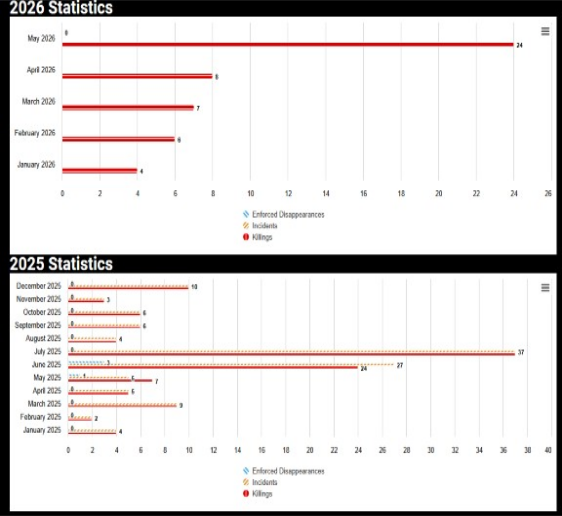
3.1.9 Security forces operate within a formal policing framework, Sources report extrajudicial killings, enforced disappearances, abductions, arbitrary arrest, excessive use of force and torture by police, although precise national-level data on the overall scale is limited. Missing Voices, a coalition of human rights organisations, documented 110 alleged killings by police in 2024 and 117 in 2025. It also documented 72 suspected enforced disappearances during 2024 and 4 during 2025.(see Misconduct and human rights violations).
3.1.10 There are a number of mechanisms for reporting misconduct and corruption among the police and judiciary through oversight bodies and complaints systems. The bodies responsible include the Independent Policing Oversight Authority, the Internal Affairs Unit, the Office of the Director of Public Prosecutions as well as the KNCHR. These bodies are mandated to investigate complaints and hold officials to account. Their effectiveness is affected by challenges including limited resources, lack of cooperation from the police, delays in investigations and difficulties in obtaining evidence, meaning accountability is often slow. Between 2018 and 2024, the Independent Policing Oversight Authority resolved over 12,000 complaints, conducted nearly 5,000 investigations and referred hundreds of cases for prosecution, although this resulted in the conviction of only 30 officers. The Kenya National Commission on Human Rights (KNCHR) received 661 complaints about alleged violations of the right to freedom and security of the person between December 2024 and December 2025 (see Misconduct and human rights violations and Avenues of redress).
3.1.11 There is a functioning criminal justice system. The judiciary operates independently and includes a system of courts with nationwide reach (see Judiciary – Structure, size and composition). The Legal Aid Act 2016 provides a framework for legal aid to enable indigent persons to access justice (see National legislation). The effectiveness of the judiciary is limited by delays in court proceedings and backlogs. It is also hampered by barriers such as high legal costs, limited availability of legal aid and distance to courts, which particularly affect rural populations and those of limited means. There are also reports of corruption and occasional political pressure, which affect public confidence in the system (see Independence and Fair trial and access to justice).
3.1.12 Despite these limitations, an annual report published by the judiciary showed that in the fiscal year 2024/2025, a total of 647,686 cases were resolved across all courts, indicating that the courts handle a high volume of cases. The same report recorded a case clearance rate of 104%, suggesting that the system is able to keep pace with demand and make some limited progress towards backlog clearance. Efforts have also been made to improve access to justice and efficiency through the expansion of court infrastructure, the use of mobile courts to reach remote areas and the introduction of alternative dispute resolution mechanisms aimed at reducing delays (see Judiciary – Structure, size and composition and Fair trial and access to justice). Among the sources consulted, no statistics were found on acquittals, convictions and sentencing.
3.1.13 For further guidance on assessing state protection, see the Asylum Instruction on Assessing Credibility and Refugee Status.
Country information
About the country information
The COI provides the basis for the assessment and the executive summary. Decision makers must use relevant COI as the evidential basis for decisions.
The cut-off date for COI included in this note is 14 May 2026
For details on how CPIT gathers and presents country information, its research methodology and disclaimers and explainers on coverage, source selection, maps, translations and the use of Artificial Intelligence (AI) in developing CPIT products, see About country policy and information notes.
4. Legal framework
4.1 Constitution of Kenya
4.1.1 The following articles from the Constitution of Kenya (2010) are relevant to the legal framework governing state protection, including the duties of authorities to protect fundamental rights, the role of law-enforcement bodies, and access to justice mechanisms: - Articles 19 to 21 (Bill of Rights and state obligations) – The constitution establishes that the Bill of Rights binds all state organs and requires the state to respect, protect, promote and fulfil fundamental rights and freedoms.[footnote 1]
- Article 26 (Right to life) – Guarantees the right to life, creating a constitutional obligation for authorities to prevent unlawful killing and protect individuals from threats to life.[footnote 2]
- Article 27 (Equality and freedom from discrimination) – Provides for equality before the law and equal protection of the law, prohibiting discrimination on various grounds.[footnote 3]
- Article 28 (Human dignity) – Recognises that every person has inherent dignity and the right to have that dignity respected and protected.[footnote 4]
- Article 29 (Freedom and security of the person) – Protects individuals from violence, torture, cruel, inhuman, or degrading treatment or punishment, and arbitrary detention.[footnote 5]
- Article 48 (Access to justice) – Requires the state to ensure access to justice for all persons, including through the courts.[footnote 6]
- Article 49 (Rights of arrested persons) – Establishes safeguards for individuals who are arrested, including the right to be informed of charges and brought before a court promptly.[footnote 7]
- Article 51 (Rights of persons detained, held in custody or imprisoned) – Ensures a person retains all rights and freedoms in the Bill of Rights, except where those rights are clearly incompatible with being in custody.[footnote 8]
- Articles 239 to 247 (National security framework) – Establishes national security organs responsible for internal security and law enforcement, including the Kenya Police Service, Administration Police Service, and Directorate of Criminal Investigations.[footnote 9]
- Article 244 (Police responsibilities) – Requires police services to maintain professionalism, prevent corruption and comply with constitutional standards of human rights.[footnote 10]
- Article 59 (Human rights oversight) – Establishes the Kenya National Human Rights and Equality Commission, which monitors human rights and addresses violations.[footnote 11]
- Article 246 (Police oversight) – Establishes the National Police Service Commission, responsible for oversight of recruitment, discipline, and standards within the police service.[footnote 12]
4.1.2 Article 50 of the constitution also states:
1. ‘Every person has the right to have any dispute that can be resolved by the application of law decided in a fair and public hearing before a court or, if appropriate, another independent and impartial tribunal or body.
2. ‘Every accused person has the right to a fair trial, which includes the right.
‘(a) to be presumed innocent until the contrary is proved.
‘(b) to be informed of the charge, with sufficient detail to answer it.
‘(c) to have adequate time and facilities to prepare a defence
‘(d) to a public trial before a court established under this Constitution.
‘(e) to have the trial begin and conclude without unreasonable delay.
‘(f) to be present when being tried unless the conduct of the accused person makes it impossible for the trial to proceed.
‘(g) to choose, and be represented by, an advocate, and to be informed of this right promptly.
‘(h) to have an advocate assigned to the accused person by the State and at State expense, if substantial injustice would otherwise result, and to be informed of this right promptly.
‘(i) to remain silent, and not to testify during the proceedings.
‘(j) to be informed in advance of the evidence the prosecution intends to rely on, and to have reasonable access to that evidence.
‘(k) to adduce and challenge evidence.
‘(l) to refuse to give self-incriminating evidence.
‘(m) to have the assistance of an interpreter without payment if the accused person cannot understand the language used at the trial.
‘(n) not to be convicted for an act or omission that at the time it was committed or omitted was not— (i) an offence in Kenya; or (ii) a crime under international law.
‘(o) not to be tried for an offence in respect of an act or omission for which the accused person has previously been either acquitted or convicted.
‘(p) to the benefit of the least severe of the prescribed punishments for an offence, if the prescribed punishment for the offence has been changed between the time that the offence was committed and the time of sentencing; and
‘(q) if convicted, to appeal to, or apply for review by, a higher court as prescribed by law.’[footnote 13]
4.1.3 Article 48 of the constitution states: ‘The State shall ensure access to justice for all persons and, if any fee is required, it shall be reasonable and shall not impede access to justice.’[footnote 14]
4.2 Penal Code and Code of Criminal Procedure
4.2.1 The Kenyan Penal Code of 1930 is the main criminal code of Kenya and provides for the punishment of offences.[footnote 15]
4.2.2 The Code of Criminal Procedure is the main legislation on procedure for administration of substantive criminal law in Kenya. It is an ‘[a]n Act of Parliament to make provision for the procedure to be followed in criminal cases’[footnote 16] It provides the tools needed for criminal investigations, arrest of suspected criminals, collection of evidence, determination of guilt or innocence of the accused person and the determination of procedure.[footnote 17]
4.3 Regional and international human rights treaties
4.3.1 The Law on Police Use of Force Worldwide (LPUF) is an academic website which seeks to review national legal regimes governing the use of force by law enforcement officials, managed by the Faculty of Law of the University of Johannesburg[footnote 18] (LPUF website 2025). Their Kenya section, updated June 2025, gave the following information on Kenya’s status in relation to global and regional treaties[footnote 19]:
Global Treaties
| Category | Treaty / Protocol | Status |
|---|---|---|
| Adherence to Selected Human Rights Treaties | 1966 Covenant on Civil and Political Rights (ICCPR) | State Party |
| ICCPR Optional Protocol 1 | Not party | |
| 1984 Convention against Torture (CAT) | State Party | |
| Competence of CAT Committee to receive individual complaints | No | |
| CAT Optional Protocol 1 | Not party | |
| Adherence to International Criminal Law Treaties | 1998 Rome Statute of the International Criminal Court | State Party |
Regional Treaties
| Category | Treaty / Protocol | Status |
|---|---|---|
| Adherence to Regional Human Rights Treaties | 1981 African Charter on Human and Peoples’ Rights | State Party |
| 1998 Protocol to the African Charter on the African Court | State Party | |
| Article 34(6) declaration regarding individual petitions | No | |
| Adherence to International Criminal Law Treaties at Regional Level | Malabo Protocol on Amendments to the African Court of Justice and Human Rights | Signatory |
4.4 National legislation
4.4.1 The National Police Service Act establishes the structure, functions and powers of the National Police Service, including the Kenya Police Service, Administration Police Service and Directorate of Criminal Investigations. It outlines police duties such as maintaining law and order, preventing crime, protecting life and property and conducting investigations.[footnote 20] Detailed rules on police use of force are set out in the Act, which states:
‘…SIXTH SCHEDULE [s. 61(2)] …
A - conditions as to the use of force
- A police officer shall always attempt to use non-violent means first and force may only be employed when non-violent means are ineffective or without any promise of achieving the intended result.’[footnote 21]
- The force used shall be proportional to the objective to be achieved, the seriousness of the offence, and the resistance of the person against whom it is used, and only to the extent necessary while adhering to the provisions of the law and the Standing Orders.’[footnote 22]
4.4.2 According to the same Act:
‘B - conditions as to the use of firearms
1. Firearms may only be used when less extreme means is inadequate and for the following purposes—
‘(a) saving or protecting the life of the officer or other person.
‘(b) in self-defence or in defence of other person against imminent threat of life or serious injury.
‘(c) protection of life and property through justifiable use of force.
‘(d) preventing a person charged with a felony from escaping lawful custody; and
‘(e) preventing a person who attempts to rescue or rescues a person charged with a felony from escaping lawful custody.’[footnote 23]
4.4.3 The National Police Service Commission Act (2011) sets out the structure, powers and functions of Kenya’s National Police Service Commission.[footnote 24] The NSPC explains it derives its mandate from the Constitution of Kenya 2010.[footnote 25]
‘Article 246 (3) gives the Commission the mandate to:
- Recruit and appoint persons to hold or act in office in the police service, confirm appointments and determine promotions and transfers within the National Police Service.
- Observing due process, exercise disciplinary control over and remove persons holding or acting in offices within the service.
- Perform any other functions as prescribed by the national legislation.’.[footnote 26]
4.4.4 The Independent Policing Oversight Authority (IPOA) Act[footnote 27] was assented to in November 2011. According to IPOA-Online News, ‘it provides for civilian oversight of the work of the Police; to establish the Independent Policing Oversight Authority; to provide for its functions and powers and for connected purposes.’[footnote 28]
4.4.5 The Kenya National Commission on Human Rights Act, 2011[footnote 29] was introduced to restructure the Kenya National Human Rights and Equality Commission and to establish the Kenya National Commission on Human Rights.[footnote 30] According to the Act:
‘The functions of the Commission shall be to—
‘(a) promote respect for human rights and develop a culture of human rights in the Republic.
‘(b) promote the protection and observance of human rights in public and private institutions.
‘(c) monitor, investigate, and report on the observance of human rights in all spheres of life in the Republic.
‘(d) receive and investigate complaints about alleged abuses of human rights, except those relating to the violation of the principle of equality and freedom from discriminations under the gender and equality commission and take steps to secure appropriate redress where human rights have been violated.
‘(e) on its own initiative or on the basis of complaints investigate or research matter in respect of human rights and make recommendations to improve the functioning of State organs.
‘(f) act as the principal organ of the State in ensuring compliance with obligations under international and regional treaties and conventions relating to human rights except those that relate to the rights of special interest groups protected under the law relating to equality and non-discrimination.
‘(g) formulate, implement, and oversee programmes intended to raise public awareness of the rights and obligations of a citizen under the Constitution.
‘(h) work with the National Gender and Equality Commission and the Commission on Administrative Justice to ensure efficiency, effectiveness, and complementarity in their activities and to establish mechanisms for referrals and collaboration.
‘(i) perform such other functions as the Commission may consider necessary for the promotion and protection of human rights; and
‘(j) perform such other functions as may be prescribed by the Constitution and any other written law.’[footnote 31]
4.4.6 Regarding protection for victims of crime, the Victim Protection Act 2014 states:
‘The objects and purposes of this Act are to —
‘(a) recognize and give effect to the rights of victims of crime.
‘(b) protect the dignity of victims through —
‘(i) provision of better information, support services, reparations, and compensation from the offender, in accordance with this Act.
‘(ii) establishment of programs to assist vulnerable victims.
‘(iii) supporting reconciliation in appropriate cases by means of a restorative justice response.
‘(iv) establishment of programmes to prevent victimization at all levels of government.
‘(v) preventing re-victimization in the justice process; and
‘(c) promote co-operation between all government departments and other organizations and agencies involved in working with victims of crime.’[footnote 32]
4.4.7 The Witness Protection Act 2006 also establishes an agency ‘to provide the framework and procedures for giving special protection, on behalf of the State, to persons in possession of important information and who are facing potential risk or intimidation due to their co-operation with prosecution and other law enforcement agencies.[footnote 33]
4.4.8 The Legal Aid Act 2016 states:
‘The object of this Act is to establish a legal and institutional framework to promote access to justice by—
‘(a) providing affordable, accessible, sustainable, credible, and accountable legal aid services to indigent persons in Kenya in accordance with the Constitution.
‘(b) providing a legal aid scheme to assist indigent persons to access legal aid.
‘(c) promoting legal awareness.
‘(d) supporting community legal services by funding justice advisory centers, education, and research; and
‘(e) promoting alternative dispute resolution methods that enhance access to justice in accordance with the Constitution.’[footnote 34]
5. Organisations responsible for law enforcement
5.1 Police
5.1.1 According to the LPUF website 2025:
‘Part 4 of Kenya’s 2010 Constitution concerns the National Police Service, which is one of the country’s national security organs along with the Kenya Defence Forces and the National Intelligence Service. The National Police Service, which “shall function throughout Kenya”, consists of the Kenya Police Service and the Administration Police Service.
‘The “objects and functions” of the National Police Service are set out in Article 244 of the Constitution. The National Police Service shall:
- ‘strive for the highest standards of professionalism and discipline among its members.
- ‘prevent corruption and promote and practice transparency and accountability.
- ‘comply with constitutional standards of human rights and fundamental freedoms.
- ‘train staff to the highest possible standards of competence and integrity and to respect human rights and fundamental freedoms and dignity; and
- ‘foster and promote relationships with the broader society.’[footnote 35]
5.1.2 Considering the structure of police force in Kenya, Kenyans.co.ke, an online news portal[footnote 36], in their article ‘Inside the Command Structure of NPS: Units, Commanders & DCI’, published August 2025 (Kenyans.co.ke article 2025), noted:
‘To maintain law and order, a country relies on its “men (and women) in blue.” In Kenya, this critical responsibility is shouldered by the National Police Service, an umbrella organisation for three powerful sub-sections: the Kenya Police Service, the Administration Police Service, and the Directorate of Criminal Investigations.
‘Despite having different functions, the three sub-sections of the law enforcement body all have the same mandate. The three are organised by a seamless command structure that employs a top-down system, laying out the basis of reporting and command.’[footnote 37]
5.1.3 The Kenyans.co.ke article 2025 also noted:
‘At the apex of this command system is the Inspector-General of Police … The IG is the principal leader and administrator of the entire police force, providing overall command, overseeing policy and administration, leadership, and oversight. Other duties include ensuring discipline, professionalism, and accountability.
‘Below the IG is where the police force structure becomes more nuanced. The IG is deputised by two Deputy Inspector-Generals of Police, each with their laid-out responsibilities.’[footnote 38]
5.1.4 An undated entry on the website of the Directorate of Criminal Investigations (DCI) stated:
‘The mandate of the Directorate of Criminal Investigations is to investigate all serious criminal cases as guided by law.
‘The Directorate of Criminal Investigations derives her mandate from Article 247 of the Constitution of Kenya and through the National Police Service Act 2011 which establishes the Directorate as an organ of the NPS responsible to the Inspector General.
‘The mandate of the Directorate is further derived from Part V, Section 28 and 35 of the National Police Service Act 2011 which gives the core functions of the Directorate in the areas of detection, prevention and investigation of crime.’[footnote 39]
5.1.5 The DCI website also stated:
‘The current functions of the Directorate as provided for under the National Police service Act, 2011 include:
1. ‘Collect and provide criminal intelligence,
2. ‘Undertake Investigations on serious crimes including homicide, narcotics crimes, human trafficking, money laundering, terrorism, economic crimes, piracy, organized crimes, and cybercrime, among others.
3. ‘Maintain law and order.
4. ‘Detect and prevent crimes.
5. ‘Apprehend offenders.
6. ‘Maintain criminal records.
7. ‘Conduct forensic analysis.
8. ‘Execute the directions given to the Inspector General by the Director of Public Prosecutions pursuant to article 157(4) of the constitution.
9. ‘Coordinate Country Interpol Affairs
10. ‘Investigate any matter that may be referred to it by the Independent Police Oversight Authority 11. ‘Perform any other function conferred on it by other written Law.’[footnote 40]
5.2 Intelligence agencies
5.2.1 According to the Star, a national daily newspaper in Kenya[footnote 41], in an article titled ‘Explainer: Understanding NIS (National Intelligence Service) and its Constitutional mandate’, dated 15 January 2025 (Star article 2025): ‘NIS is Kenya’s principal intelligence agency tasked with providing both domestic and foreign intelligence. ‘The agency’s responsibility includes gathering and analysing information related to national security, with a focus on identifying and addressing potential threats to the safety and stability of the country.’[footnote 42]
5.2.2 The Star article 2025 also noted:
‘The NIS is divided into seven main sections, each managed by a director. These include:
‘1. Administration – Managed by the Director of Administration, this section handles the day-to-day operations and administrative functions of the service.
‘2. Information Technology – Under the Director of Information Technology, this section ensures the agency remains technologically advanced in its intelligence-gathering and analysis.
‘3. Internal Intelligence – Focused on domestic threats, this division deals with intelligence related to internal national security matters.
‘4. External Intelligence – Managed by the Director of External Intelligence, this section handles international threats, gathering intelligence beyond Kenya’s borders.
‘5. Analysis and Production – Under the Director of Economic Affairs, this division analyses intelligence gathered by NIS to produce actionable reports for government decision-making
‘6. Operations – Managed by the Director of Operations, this section deals with executing intelligence operations to neutralize threats to national security.
‘7. National Intelligence Academy – Responsible for training intelligence officers and ensuring they are equipped with the necessary skills and knowledge to perform their roles effectively.’[footnote 43]
5.3 Armed forces
5.3.1 According to an undated entry on the website of Kenya’s Ministry of Defence, ‘The Kenya Defence Forces comprises of the Kenya Army, Kenya Air Force and Kenya Navy. The current Kenya Defence Forces were established, and its composition laid out, in Article 241 of the 2010 Constitution of Kenya; the KDF is governed by the Kenya Defence Forces Act of 2012. The President of Kenya is the commander-in-chief of all the armed forces.’[footnote 44]
5.3.2 The same source noted:
‘The promulgation of the new Constitution 2010 created the Kenya Defence Forces (KDF) to be headed by the Chief of the Defence Forces (CDF). The Chief of the Defence Forces (CDF) is the professional head of the three Kenya Defence Forces Services and the Principal Military Advisor to the Commander-in-Chief.
‘The CDF is the principal advisor to the President and Cabinet Secretary on any military, operational, and administrative matters within the competence of the Chief of the Defence Forces. Subject to the general direction of the Defence Council chaired by the Cabinet Secretary, the CDF is responsible for the control, direction, and general superintendence of the Defence Forces.’[footnote 45]
6. Capabilities of security forces
6.1 Police efficacy
6.1.1 The 2025 KNBS survey stated that the number of crimes reported to the police stood at 101,200 in 2024, representing a decrease of 3.5% compared to the previous year.[footnote 46]
6.1.2 The table below, from the NCAJ 2025 annual report, provided a detailed breakdown of cases handled by the NPS between 2020 and 2025.[footnote 47] The source did not define ‘handled’:
| Types of cases | 2020/21 | 2021/22 | 2022/23 | 2023/24 | 2024/25 | |
|---|---|---|---|---|---|---|
| Homicide | 3,288 | 3,128 | 3,102 | 3,028 | 2,914 | |
| Offences against morality | 9,361 | 7,663 | 7,259 | 7,776 | 7,330 | |
| Other offences against the person | 21,777 | 22,899 | 23,875 | 25,577 | 24,733 | |
| Robbery | 2,316 | 2,801 | 3,530 | 3,913 | 3,496 | |
| Breakings | 4,387 | 5,507 | 6,740 | 6,426 | 5,421 | |
| Theft of stock | 1,740 | 2,322 | 2,927 | 2,667 | 2,307 | |
| Stealing | 9,751 | 13,142 | 17,386 | 18,292 | 17,013 | |
| Theft by servant | 1,707 | 1,752 | 1,762 | 1,817 | 1,519 | |
| Theft of vehicles and other thefts | 1,219 | 1,335 | 1,666 | 1,496 | 1,351 | |
| Offences concerning dangerous drugs | 4,738 | 6,390 | 8,077 | 9,107 | 7,319 | |
| Traffic offences | 113 | 174 | 132 | 124 | 103 | |
| Criminal damage | 4,294 | 4,694 | 4,707 | 5,028 | 5,195 | |
| Economic crimes | 3,821 | 4,258 | 4,619 | 4,901 | 4,463 | |
| Corruption | 142 | 93 | 96 | 115 | 98 | |
| Offences involving police officers | 60 | 70 | 131 | 203 | 242 | |
| Offences involving tourists | 33 | 18 | 46 | 50 | 52 | |
| Other penal code offences | 7,778 | 9,293 | 11,246 | 14,249 | ||
| Total | 76,525 | 85,539 | 97,301 | 104,769 | 98,679 |
Source: NCAJ analysis using NPS data.
6.1.3 There was no information on national annual arrest figures, in the sources consulted (see Bibliography).
6.1.4 Regarding police numbers, Citizen Digital, part of privately-owned Royal Media Services (RMS) in Kenya[footnote 48], in an article, ‘Number of police officers in Kenya drops’, dated May 2025, reported:
‘Kenya Police officers’ population fell from 92,350 in 2023 to 88,483 officers in 2024.
‘The KNBS [Kenya National Bureau of Statistics] data indicates that the sum total of police officers, comprising both the Kenya Police and Administration Police, fell by 3.6 per cent from 108,013 in 2023 to 104,080 in 2024. A decrease was also witnessed in the number of prison officers.
‘In the years prior to the drop, there had been an upsurge in security officers such that in 2020, they were numbered at 100,481 and in 2021 the number was 101,421 and this hit a peak in 2022 when all security officers numbered were 109,857. Within the prisons department, the number of officers fell by 590 to 30,559 in 2024 from 31,149 in 2023.
‘This trend had been anticipated following the suspension of police recruitment over the past three years which has put a strain on policing especially in densely populated urban areas and sparsely populated rural areas covering huge swathes of territory.’[footnote 49]
6.1.5 The same source stated:
‘According to a Kenya Public Policy Research and Analysis (KIPPRA) report released last year, the Kenya National Police force faces various challenges, including allegations of bribery, human rights violations, and a weak link between law enforcement and the community.
‘On Wednesday, Interior Cabinet Secretary Kipchumba Murkomen said the government has definite plans to go for a fresh recruitment of around 10, 000 police officers to fill the gap over the next few months…
‘Murkomen was of the opinion that given a choice, his number one solution to effective monitor huge swathes of land and densely populated urban areas, advance custom made-drones would be his number one choice.
‘During the interview Murkomen remarked, “If I had my wish-list, my first wish would be technology. Our dream, which is within our plan, is to have more drones, and not just simple drones… the ones that have longer flight capability and night vision.”’[footnote 50]
6.1.6 The National Crime Research Centre (NCRC) published a 2025 report on the impact of community policing. The NCRC is a ‘state corporation’ under the Ministry of Interior and National Administration, with a mandate to research the causes of crime and its prevention and share findings and recommendations with government agencies.[footnote 51] The report combined qualitative and quantitative research methods, including key informant interviews, focus group discussions with members of the public and a survey of 1,149 households drawn from 11 counties.[footnote 52] The report stated:
‘… [N]early half of the respondents (43%) perceived their communities as unsafe. Perceptions and feelings of insecurity in the localities were attributed to among others, the rampancy of crimes in the localities, police unresponsiveness to distress calls and reported crimes, corruption among rogue police officers, rise in illicit alcohol, drug and substance abuse. Other reasons were lack of security infrastructure like streetlights, rise in criminal gangs, fear of retaliation from criminals’ gang when cases are reported, and unresolved crime cases.’[footnote 53]
6.1.7 On community-led police relations, the same report stated:
‘Although citizens had low levels of trust in the police, it was established that community policing had enhanced cooperation between police and the community in the following ways: it improved reporting of crime and incidences, enhanced information/intelligence sharing, boosted involvement of members of the community in prioritisation of their security needs, encouraged active participation of the community in addressing crime risk factors in the neighbourhoods, supported community arrest and handing over criminals to the police, led to reduction of complaints against police, and enhanced openness and transparency in the activities of the police service.’[footnote 54]
6.1.8 Regarding complaints about the police, the report stated:
‘Citizens had the following complaints against the police: Corruption, delayed response to distress calls and emergencies, police harassment and intimidation, rogue police officers collusion with criminals, unlawful arrests and detentions, limited police visibility, and abuse of police power. Others were police brutality and excessive use of force, police favouritism and discrimination in the discharge of duty, extortion of the vulnerable by rogue police, lack of confidentiality of information/intelligence shared by community, involvement of police in criminal activities and human rights abuses and violations.’[footnote 55]
6.1.9 The KNBS, in their Economic Survey 2025 (2025 KNBS survey), published May 2025, covering 2024, reported that the police-to-civilian ratio had declined from 1:479 in 2023 to 1:512 in 2024.[footnote 56]
6.1.10 Regarding recruitment, David Koome Mutea, Dennis Ndambo and Victor Muithya of National Defence University, Kenya, in a 2025 academic study published in the International Journal of Research and Innovation in Social Science (IJRISS study 2025), sought to examine recruitment practices in Kenya’s National Police Service and their impact on national security. The study used survey responses from police officers (approximately 120 participants) and relevant stakeholders involved in policing and recruitment processes.[footnote 57] It noted: ‘… [I]nefficiencies in its recruitment process specifically concerning the selection, deployment, and professional development of personnel have contributed to operational inadequacies, ethical concerns, and diminished public trust in law enforcement…’[footnote 58]
6.1.11 The IJRISS study 2025 also noted ‘… Reports of favouritism, corruption, political interference, and inadequate transparency in the recruitment of police officers have led to the appointment of individuals who may lack the requisite qualifications, ethical grounding, and professional competence. These systemic weaknesses not only erode public trust in the NPS but also compromise its operational effectiveness, thereby posing a significant threat to national security.’[footnote 59]
6.1.12 Polo Otieno Daniel, Catherine Muganda and Stephen Bitok, all of the School of Business and Economics at Moi University, Kenya, in a 2025 academic study published in the Journal of Research Innovation and Implications in Education (JRIIE), examined the effect of restructuring on the performance of Kenya’s National Police Service using questionnaires completed by 266 police officers selected from across the service.[footnote 60] The authors reported: ‘The study concluded that there was a positive significant effect of restructuring and performance of NPS. Restructuring at NPS has improved workflow and processes, led to increased job satisfaction among employees. Restructuring of police services has enabled officers to contribute effectively to the growth and success of NPS.’[footnote 61]
6.1.13 In relation to training, Kenyans.co.ke, in an article, ‘Police Announce Changes in Training Curriculum as 10,000 Recruits Begin Training’, dated 16 December 2025, noted:
‘The National Police Service (NPS) has introduced significant changes to its police training curriculum, aimed at modernising the force and improving public trust. This comes as over 10,000 new recruits begin their nine-month mandatory training at various police colleges across the country. Speaking at the Kiganjo National Police College in Nyeri on Tuesday, NPS Spokesperson Muchiri Nyaga outlined the revamped training approach, noting that recruits will now undergo modules that extend beyond traditional physical drills and penal code studies … Human rights training has also been introduced as a core component of the curriculum. The move follows increased criticism of police conduct, particularly during public protests, where officers have been accused of excessive force. “We have heard the outcry about human rights atrocities, and we acknowledge the gaps. The Inspector General is personally involved to ensure the new training corrects the image of the service and instils a rights-based approach,” Nyaga added. In addition to law and penal code instruction, the recruits will now receive expanded classroom instruction that includes basic etiquette and public relations training under the community policing framework. This aims to enhance how officers engage with members of the public.’[footnote 62]
6.1.14 Referring to the funding of security services including the police force, Kenya Broadcasting Corporation (KBC), a state corporation[footnote 63], in their article ‘2025/26 Budget: Gov’t injects billions to strengthen police, military’, dated 13 June 2025 (KBC article June 2025), stated:
‘The government has significantly boosted funding for the security sector in the 2025/2026 fiscal year, with the National Treasury allocating Ksh 464.8 billion [£4.648 billion], an increase of Ksh 87.3 billion [£0.873 billion], from the previous year’s allocation of Ksh 377.5 billion [£3.775 billion].’
(Currency conversion was done using Xe.com on 22 May 2026 at the rate of 1.00 KES = 0.01 GBP[footnote 64].)
‘… The Cabinet Secretary stated that the funding increase is part of broader efforts to enhance the country’s internal and external security preparedness amid emerging threats and the ongoing Bottom-Up Economic Transformation Agenda (BETA).
‘Budget breakdown – 2025/2026
- ‘Defence: Ksh 202.3 billion [£2.023 billion]
- National Police Service: Ksh 125.7 billion [£1.257 billion]
- National Intelligence Service: Ksh 51.4 billion [£0.514 billion]
- Internal Security & National Administration: Ksh 32.5 billion [£0.325 billion]
- Prisons Services: Ksh 38.1 billion [£0.381 billion]
- Police Motor Vehicle Leasing: Ksh 10.0 billion [£0.100 billion]
- Police Modernization Programme: Ksh 3.6 billion [£0.036 billion]
- National Forensic Facilities: Ksh 1.2 billion [£0.012 billion]
‘In comparison, the 2024/2025 budget allocated:
- ‘Defence: Ksh 173.1 billion [£1.731 billion]
- National Police Service: Ksh 110.6 billion [£1.106 billion]
- National Intelligence Service: Ksh 46.3 billion [£0.463 billion]
- Prisons: Ksh 32.7 billion [£0.327 billion]
- Police Leasing & Modernization: Ksh 13.9 billion [£0.139 billion]
- Forensics: Ksh 918.4 million [£9.184 million]’[footnote 65]
(Currency conversion was done using Xe.com on 22 May 2026 at the rate of 1.00 KES = 0.01 GBP).[footnote 66]
6.1.15 The KBC article June 2025 also stated: ‘The additional funding, according to Treasury, will facilitate the recruitment of more police, prison, and military personnel, the expansion of infrastructure, the modernization of equipment, and the digitization of services such as passport issuance and ID processing. Priority will also be given to the construction of housing and health facilities for security officers.’[footnote 67]
6.1.16 Open Budget Kenya, a website that sources its data from publicly available information published by the National Treasury and Economic Planning[footnote 68], noted that the budget allocated to the Kenya Police Regional Training Centre in 2025 was KES 90,636,780 [£906,367.80] and KES 89,776,554 [£897,765.54] in 2024.[footnote 69]
(Currency conversion was done using Xe.com on 22 May 2026 at the rate of 1.00 KES = 0.01 GBP[footnote 70].)
6.1.17 In relation to pay, Pulse, a leading online news platform in Kenya[footnote 71], in an article titled ‘Police get major pay increase, see the new salary figures’, dated 4 March 2026, noted:
‘Police officers, prison warders and National Youth Service (NYS) personnel will begin receiving the final phase of their revised salaries in July, as part of what the government describes as the most significant cumulative pay rise for security officers in decades …’[footnote 72]
6.1.18 The same article also noted:
‘Police constables in the lowest cadre are the main beneficiaries.
‘A constable will now earn a maximum of Sh57,700 [£577.00], up from Sh38,975 [£389.75], representing a 48 per cent increase.
‘A similar cap has been applied to their counterparts in the prison service.
‘Newly graduating constables will receive a starting salary of Sh29,296 [£292.96], up from Sh20,390 [£203.90] earned before July 2024. For NYS officers in the lowest cadre, salaries will range from Sh26,222 [£262.22] to Sh37,912 [£379.12], up from the previous range of Sh19,800 [£198.00] to Sh32,315 [£323.15].
‘At the top of the scale, the highest-serving police officer will earn a maximum monthly basic pay of Sh345,850 [£3,458.50], up from Sh289,090 [£2,890.90], a 20 per cent increase. Senior officers in the prisons service will now earn between Sh301,548 [£3,015.48] and Sh584,903 [£5,849.03], compared to a previous minimum of Sh292,765 [£2,927.65] and a maximum of Sh576,120 [£5,761.20]. Similar adjustments apply to their counterparts in the NYS. ’[footnote 73]
(Currency conversion was done using Xe.com on 22 May 2026 at the rate of 1.00 KES = 0.01 GBP[footnote 74].)
6.1.19 Regarding trust, Afrobarometer, a Ghana-based pan-African, non-partisan survey research network[footnote 75], published a report on public trust in institutions and leaders, dated 26 September 2025 (Afrobarometer report 2025). As part of their research for the report, the Afrobarometer team, led by the Institute for Development Studies at the University of Nairobi, conducted face‑to‑face interviews with a nationally representative sample of 2,400 adult Kenyans between April and May 2024.[footnote 76] The research found that:
‘Only 36% express trust in the police… trust in the police has hovered just above one-third for the past 10 years. Trust in the police is more prevalent in rural areas (40%) than in cities (29%), and older Kenyans (40%-41%) express higher levels of trust than their younger counterparts (34%-35%) … The largest variation can be seen across education status: Kenyans with no formal schooling are nearly twice as likely as those with post-secondary education to trust the police (52% vs. 28%).’[footnote 77]
6.1.20 The figure below from the Afrobarometer report 2025 showed the percentage of trust in the police by demographic group[footnote 78]:
| Group | Percentage Trust |
|---|---|
| Average | 36% |
| Men | 38% |
| Women | 35% |
| Urban | 29% |
| Rural | 40% |
| No formal education | 52% |
| Primary | 42% |
| Secondary | 35% |
| Post-secondary | 28% |
| 18-35 years | 35% |
| 36-45 years | 34% |
| 46-55 years | 40% |
| Over 55 years | 41% |
6.1.21 Regarding protection for women and girls, an Afrobarometer news release published in December 2024 stated: ‘Eight in 10 respondents (79%) say the police and courts need to do “somewhat more” or “much more” to protect women and girls from discrimination and harassment in schools, workplaces, and public spaces.’[footnote 79]
6.1.22 The Star, in an article dated 11 April 2025, reported:
‘The National Police Service has highlighted several gaps existing in police response to the cases of GBV [gender-based violence] and femicide.
‘The report submitted by the National Police Service on Wednesday before the Technical Working Group on GBV stated that there have been inconsistencies in the handling of GBV cases.
‘“There have been concerns about delays in filing cases, reluctance by officers to record statements, poor preservation of evidence and lack of survivor-friendly environments in police stations,” NPS said.
‘It also highlighted underreporting, explaining that many survivors do not report violence due to fear of victim-blaming, intimidation by perpetrators or lack of trust in police processes …
‘The issue of data and case management challenges was also raised, with the service noting that the absence of a centralised, digitised GBV case management system within the police impedes evidence-based decision-making, tracking of cases and accountability for prosecution outcomes …
‘“While some officers have undergone GBV training, overall capacity remains uneven. Many police stations lack trained personnel or clear procedures for handling sensitive GBV and femicide cases due to restructuring of the NPS and gazettements of new police stations and post,” NPS said …
‘Other existing gaps in police response to GBV and femicide cases include inadequate funding and personnel, inadequate survivor shelters and relocation support, and digital literacy gaps among officers handling Technology-Facilitated Gender-Based Violence (TFGBV).
‘Additionally, other gaps are weak cybercrime legislation enforcement on image-based abuse and sextortion, lack of formal integration of GBV case data systems, and poor coordination mechanisms on stakeholders handling GBV.’[footnote 80]
6.1.23 Reporting on gender-based violence in the context of humanitarian crises in Kenya, an article in the New Humanitarian published in April 2026 stated:
‘… Kenya’s prosecution services are weak. Despite every police station having a gender office, its officers “aren’t equipped to handle gender-based cases,” [Gathanga] Ndung’u [a researcher at the non-profit Mathare Social Justice Centre] told The New Humanitarian.
‘When reporting, survivors are often subjected to victim-blaming and demeaning questions. Officers sometimes ask what the women were wearing, or what they did to provoke their attackers, he said, explaining how this discourages survivors from reporting – as do the more urgent necessities of finding safe shelter or work.’[footnote 81]
6.2 Accessibility
6.2.1 HapaKenya’s, a Kenyan digital news platform[footnote 82], article ‘How to contact emergency services in Nairobi & Nationwide’ dated 9 March 2026 explained:
‘For general emergencies anywhere in the country, the primary toll-free lines remain the most efficient way to reach help. These lines are operational 24/7.
‘Police & General Emergency: Dial 999 or 112 …’[footnote 83]
6.2.2 Regarding the presence and proximity of police and police stations, Afrobarometer published a report entitled ‘Kenyans cite criminal activity, lack of respect, and corruption among police failings’, in September 2022. The report noted, with reference to access to the police:
‘One factor that might affect people’s sense of security is the presence of security forces. As part of their data collection process, Afrobarometer field teams make on-the-ground observations in each census enumeration area (EA) they visit about services and facilities available in the area. Since the EAs visited are selected to represent the country’s population as a whole, these data provide reliable indicators of infrastructure and service availability.
‘In Kenya, Afrobarometer field teams found police stations in or within easy walking distance of about half (48%) of the EAs they visited … They saw police officers or police vehicles in 20% of the EAs. Other signs of security-related activity were less common, including roadblocks by the police or army (4%), roadblocks by private security or the local community (4%), soldiers or other military (3%), and customs checkpoints (2%).’[footnote 84]
6.2.3 On 19 January 2026, Afrobarometer published a report titled ‘Many Kenyans struggle to access vital public services, express dissatisfaction with delivery’. The report is based on a nationally representative survey of 2,400 adult Kenyans conducted between April and May 2024, focusing on experiences of accessing selected public services (Afrobarometer survey January 2026). The report noted: ‘Among citizens who sought selected public services during the previous year, a majority found it difficult to get police assistance …’[footnote 85]
6.2.4 For information on the payment of bribes to secure assistance, see Police corruption.
6.2.5 The figure below, reproduced from the Afrobarometer survey January 2026, highlighted public perceptions of access to police assistance in Kenya[footnote 86]:
Figure 6: Ease of difficulty in obtaining services, Kenya, 2024
| Service | Easy/Very easy | Difficult/very difficult |
|---|---|---|
| Medical care | 37% | 63% |
| Identity document | 33% | 67% |
| Police assistance | 31% | 69% |
6.2.6 The figure below, reproduced from the Afrobarometer survey January 2026, shows reported ease and difficulty in obtaining police assistance in Kenya by levels of lived poverty[footnote 87]:
Figure 7: Ease or difficulty of obtaining services, by lived poverty, Kenya, 2024
Medical care:
| Lived poverty | Easy/Very easy | Difficult/Very difficult |
|---|---|---|
| No lived poverty | 53% | 47% |
| Low lived poverty | 52% | 48% |
| Moderate lived poverty | 35% | 65% |
| High lived poverty | 22% | 78% |
Identity document:
| Lived poverty | Easy/Very easy | Difficult/Very difficult |
|---|---|---|
| No lived poverty | 69% | 31% |
| Low lived poverty | 38% | 62% |
| Moderate lived poverty | 28% | 72% |
| High lived poverty | 25% | 75% |
Police assistance:
| Lived poverty | Easy/Very easy | Difficult/Very difficult |
|---|---|---|
| No lived poverty | 57% | 43% |
| Low lived poverty | 35% | 65% |
| Moderate lived poverty | 25% | 75% |
| High lived poverty | 30% | 70% |
Respondents who sought selected public services during the previous year were asked: How difficult was it to obtain: The medical care or services you needed? The document you needed? The assistance you needed? (Respondents who did not have contact with these services are excluded)
6.2.7 The same survey also noted: ‘Requests for police assistance were also more common among men (21%) and urbanites (22%) than among women (14%) and rural residents (15%) … Citizens with post-secondary education were five times as likely as those without formal schooling to request police help (24% vs. 5%).’[footnote 88]
6.2.8 The figure below from the Afrobarometer survey January 2026 shows the percentage of Kenyan respondents who requested police assistance in (2024), disaggregated by gender, location, education, age, and lived‑poverty level[footnote 89]:
Figure 5: Requested police assistance, by demographic group, Kenya, 2024
| Group | Percentage requested assistance |
|---|---|
| Kenya average | 17% |
| Men | 21% |
| Women | 14% |
| Urban | 22% |
| Rural | 15% |
| No formal education | 5% |
| Primary | 14% |
| Secondary | 18% |
| Post-secondary | 24% |
| 18-35 years | 18% |
| 36-55 years | 17% |
| Over 55 years | 16% |
| High lived poverty | 20% |
| Moderate lived poverty | 18% |
| Low lived poverty | 16% |
| No lived poverty | 18% |
Respondents were asked: in the past 12 months, have you requested assistance from the police? (% “yes”)
6.3 Police corruption
6.3.1 The Afrobarometer survey January 2026 noted: ‘… police assistance was … more likely than the other two services (health care, and identity documents) to involve corruption: Fully two-thirds (67%) of those who sought assistance say they had to pay a bribe, give a gift, or do a favour for a police officer to get the help they needed, an increase of 15 percentage points compared to 2021.’[footnote 90]
6.3.2 The figure below from the Afrobarometer survey January 2026 highlighted the percentage of respondents who reported paying bribes to access police assistance compared to other public services:
Figure 8: Bribe paying for public services, Kenya, 2021-2024
| Service | 2021 | 2024 |
|---|---|---|
| Police assistance | 52% | 67% |
| Identity document | 43% | 56% |
| Medical care | 21% | 32% |
Respondents who sought selected public services during the previous year were asked: How often, if ever, did you have to pay a bribe, give a gift, or do a favour:
- For a health worker or clinic or hospital staff in order to get the medical care or services you needed?
- For a government official in order to get the document you needed?
- For a police officer in order to get the assistance you needed?
(% who say “once or twice”, “a few times”, or “often”)
(Respondents who did not have contact with these services are excluded.)
6.3.3 The Ethics and Anti-Corruption Commission (EACC) Kenya is a public body established under the Ethics and Anti-Corruption Commission Act 2011.[footnote 92] The EACC published the National Ethics and Corruption Survey 2024 in February 2025 (EACC survey 2024). The survey was based on households selected from a national list created after Kenya’s 2019 population census. The survey aimed to interview 6,000 households. In total, 5,960 households took part.[footnote 93] In the survey it was noted: ‘Government Departments and Agencies perceived as most prone to unethical practices and corruption are the Kenya Police (48.2%) …Traffic Police (3.6%), … State Department for Internal Security and National Administration (3.2%) … among others.’[footnote 94]
6.4 Misconduct and human rights violations
6.4.1 The FH report 2025 stated: ‘The police service is thoroughly undermined by corruption, misconduct, and extrajudicial killings …’[footnote 95]
6.4.2 Missing Voices is a Kenya-based coalition of human rights organisations that documents and advocates against extrajudicial killings and enforced disappearances.[footnote 96] Its website presented tables documenting the number of alleged enforced disappearances, extrajudicial killings and incidents in which one or more of such violations took place for 2023 and 2024, which are reproduced below:
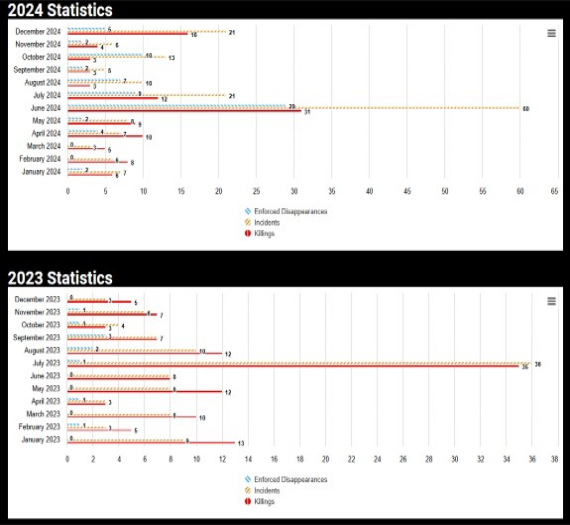
6.4.3 The same source also published the below tables for 2025 and 2026, up until May. The 2026 table did not provide data on the number of incidents in which alleged violations took place:
6.4.4 The Mount Kenya Times, a digital ePaper based in Kenya[footnote 99], in an article titled ‘The Alarming Reality of Police Brutality and Abductions in Kenya’, dated 22 October 2024, noted:
‘In recent years, Kenya has witnessed a troubling escalation of police brutality and extrajudicial abductions. The alarming frequency of these incidents has sparked outrage among citizens, human rights organizations, and the international community, revealing systemic issues within the police force and raising critical questions about the rule of law and governance in the country.
‘To understand the current situation, we must examine the historical context of policing in Kenya. The police force has long been viewed as an extension of political power rather than a protector of citizens. The legacy of colonialism has left deep scars, where the police were often used to suppress dissent rather than uphold justice. This culture of impunity has persisted post-independence, allowing brutality and misconduct to thrive within the ranks.’[footnote 100]
6.4.5 The US State Department, in their 2024 Country Reports on Human Rights Practices, dated 12 August 2025, reported: ‘In response to nationwide protests in June and July, authorities reportedly committed numerous abuses, including unlawful killings, physical violence, and arbitrary arrests and detentions.’[footnote 101]
6.4.6 The Kenya National Commission on Human Rights (KNCHR), an independent National Human Rights Institution and the state’s lead agency in the promotion and protection of human rights[footnote 102], in their report ‘The State of Human Rights in Kenya: December 2024-December 2025’, published on 9 December 2025 (KNCHR report 2025), noted:
‘The Commission received and documented 661 complaints on violations of the right to freedom and security of the person between December 2024 and December 2025 and regrets the resurgence of cases of arbitrary detentions and torture, including abductions, and enforced disappearances allegedly committed by security officials. During the period under review fifteen (15) cases of abduction were reported.’[footnote 103]
6.4.7 The KNCHR report 2025 also noted:
‘While the Commission has observed relative calm and improved security in the North Rift counties gazetted as ‘disturbed and dangerous’ of West Pokot, Elgeyo Marakwet, Baringo, Turkana and Samburu; we remain concerned over reports of extra-judicial killings allegedly by Security officers under ‘Operation Maliza Uhalifu’. The commission is in receipt of at least Twelve (12) complaints of abductions, torture and extra-judicial killings which occurred in parts of Marakwet East, Pokot Central and Tiaty.’[footnote 104]
6.4.8 Human Rights Watch (HRW) in their World Report 2025 – Kenya, covering events in 2024, dated 16 January 2025 (HRW report Kenya 2025) noted:
‘From June 18 [2024], Kenya faced intense street protests that continued through August, over taxes proposed in the Finance Bill 2024 to meet International Monetary Fund (IMF) revenue targets that would disproportionately fall on people with low incomes. The protests organized largely by Kenyans between the ages of 18 and 35 reached their peak with the invasion of parliament on June 25. …
‘Police shot directly into crowds, killing protesters and bystanders. The authorities have continued to track down people believed to be protest leaders or one of the estimated 3,000 protesters involved in the parliament invasion. Several of these people have either been arrested or abducted by suspected security agents then forcefully disappeared. On June 31, a preliminary report of the state funded Kenya National Commission on Human Rights (KNCHR) said that police had killed at least 60 protesters and abducted another 66 people.
‘Bodies of people showing signs of torture continued to turn up in rivers, forests, abandoned quarries, and mortuaries. The authorities have yet to investigate or prosecute anyone for these crimes.
‘Kenya has a history of police brutality and lack of accountability for serious abuses by security forces. Requests by several of the United Nations special rapporteurs, including the rapporteur on the right to freedom of assembly and association and the rapporteur on extrajudicial, summary, or arbitrary executions, to visit to investigate abuses have been pending approval from Kenyan authorities for years.’[footnote 105]
6.4.9 Commenting on police misconduct and human rights violations, Amnesty International, in their report ‘The State of the World’s Human Rights 2026’, published in April 2026 (Amnesty International report 2026), noted: ‘According to human rights monitors and advocacy groups there was a continued rise in extrajudicial killings nationwide. The rise signalled a trend in which efforts to strengthen accountability, and the rule of law were undermined. Many victims were linked to protest movements, informal economic sectors or human rights activism. The UN Human Rights Council’s May review of Kenya cited the authorities’ failure to curb extrajudicial killings, noting systemic impunity and lack of accountability mechanisms.’[footnote 106]
6.4.10 For more information on accountability, see Accountability and impunity.
7. Arrest and detention
7.1.1 The US State Department, in their ‘2024 Country Reports on Human Rights Practices’, dated 12 August 2025, reported:
‘Police and prison officials reportedly used torture and violence during interrogations and to punish pretrial detainees and convicted prisoners. According to human rights NGOs, beatings, bondage in painful positions, and electric shock were the most common methods used by police. Media reported police used excessive force in some cases when making arrests. NGOs reported police violence was especially prevalent in informal settlements and often involved arrests and beatings of poor, young men profiled as criminals.’[footnote 107]
7.1.2 In February 2025, the UN Human Rights Council published a compilation of information prepared by the United Nations High Commissioner for Human Rights, as part of the Universal Periodic Review of Kenya. The report stated: ‘The … [Committee Against Torture] expressed concern about reports of overcrowding in some prisons, limited access to quality healthcare and lack of trained and qualified prison staff…’[footnote 108]
8. Public prosecutors and prosecutions
8.1.1 According to an undated entry on the website of the Office of the Director of Public Prosecutions (ODDP):
‘The Office of the Director of Public Prosecutions (ODPP) is the National Prosecuting Authority established by the Constitution of Kenya (2010) to institute and undertake criminal proceedings against any person before any court other than a court martial in respect of any offence alleged to have been committed …The ODPP has a presence in all the 47 counties and 131 court stations across the country, with its headquarters in Nairobi, Kenya. ODPP has eight (8) regional Offices which are headed by Regional Coordinators who provide oversight and coordinate prosecution services in the counties.
‘Nationally, the ODPP prosecutors deal with a wide range of cases, from minor offences in the magistrates’ courts to serious cases such as murder, which are heard in the High Court. The majority of our workload is in the Magistrates’ Courts.’[footnote 109]
8.1.2 The table below, taken from the National Council on the Administration of Justice (NCAJ)’s ‘Administration of Justice in Kenya Annual Report 2024/25’, published on 10 November 2025 (NCAJ 2025 annual report), shows trends in criminal cases processed by the Office of the Director of Public Prosecutions (ODPP) between 2021 and 2025[footnote 110]:
Figure 3.4 Trend of cases processed by ODPP
| Year | Cases processed |
|---|---|
| 2021/22 | 317,838 |
| 2022/23 | 299,435 |
| 2023/24 | 298,610 |
| 2024/25 | 342,450 |
8.1.3 The NCAJ 2025 annual report did not state how many, if any, of the ‘cases processed by ODPP’ were ultimately prosecuted.[footnote 111]
9. Judiciary
9.1 Structure, size and composition
9.1.1 An undated entry on the website of Kenya’s Judiciary stated:
‘The Judiciary is one of the three State organs established under Chapter 10, Article 159 of the Constitution of Kenya. It establishes the Judiciary as an independent custodian of justice in Kenya. Its primary role is to exercise judicial authority given to it, by the people of Kenya…
‘…The judicial system in Kenya is defined by 15 articles spanning from Article 159 (judicial authority) to article 173 (Judiciary Fund) contained in the new constitution of Kenya. In Kenya, the courts under the Constitution operate at two levels, namely, Superior and Subordinate courts. The Court system has been decentralized with the Supreme Court and the Court of Appeal having their own Presidents and the High Court having a Principal Judge as heads of the respective institutions. The Supreme Court of Kenya is established under Article 163 of the Constitution of Kenya. It comprises of Seven judges: the Chief Justice, who is the president of the Court, the Deputy Chief Justice, who is the deputy to the Chief Justice and the vice-president of the Supreme Court and five other judges. The Court of Appeal is established under Article 164 of the Constitution of Kenya 2010. The High Court is established under Article 165, and it consists of a number of judges to be prescribed by an Act of Parliament. The Court is organized and administered in the manner prescribed by an Act of Parliament. The Court has a Principal Judge, who is elected by the judges of the High Court from among themselves … The subordinate courts are established under Article 169. They consist of the Magistrates’ Courts, Kadhis Courts, Court Martial, and any other court or local Tribunal established by an Act of Parliament.’[footnote 112]
9.1.2 Referring to Kadhi courts, Kenya’s Judiciary website noted:
‘Kadhis’ Courts are established under Article 170 of the Constitution. Their jurisdiction is limited to the determination of questions of Muslim Law relating to personal status, marriage, divorce, or inheritance in proceedings in which all the parties profess the Muslim Religion and submit to the jurisdiction of the Kadhis’ courts.
‘There are 14 stand-alone Kadhis’ courts while the rest are located at various Magistrates courts.’[footnote 113]
9.1.3 In a book titled ‘Governance and Islam in East Africa’, authored by Abdulkadir Hashim and published on 5 March 2026 by Edinburgh University press, it was noted:
‘…Section 65 (1) of the Civil Procedure Act (Chapter 21) states that “an appeal shall lie to the High Court (c) from a decree or part of a decree of a Kadhi’s Court, and on such an appeal the Chief Kadhi or … two other Kadhis shall sit as assessor or assessors.”’[footnote 114]
9.1.4 The ‘State of the Judiciary and the Administration of Justice annual report 2024/2025’ published in 2025 (SJAJ annual report 2025), noted:
‘The Judiciary’s human capital comprises judges, magistrates, Kadhis, tribunal members, registrars, law clerks, legal researchers, and judiciary staff. As of June 30, 2025, the Judiciary’s staffing level stood at 6,979, representing 64 per cent of the approved establishment of 10,870 positions. The increased establishment resulted from the creation of 20 new court stations, and review of administrative offices structure. Tribunal Members had the highest staffing level at 82 per cent of the approved establishment, followed by Kadhis at 71 per cent. In contrast, Registrars and Law Clerks/ Legal Researchers had the least staffing levels at 11 and 23 per cent, respectively.’[footnote 115]
9.1.5 The table below, published in the SJAJ annual report 2025 showed the overall number of judicial appointees and employees by designation:
| Designation | Approved Establishment | In Post | Staffing Level |
|---|---|---|---|
| Judges | 388 | 202 | 52% |
| Magistrates | 1,200 | 566 | 47% |
| Kadhis | 65 | 46 | 71% |
| Tribunal Members | 175 | 143 | 82% |
| Registrars | 428 | 48 | 11% |
| Law Clerks & Legal Researchers | 666 | 150 | 23% |
| Judicial Staff | 7,948 | 5,824 | 73% |
| Total | 10,870 | 6,979 | 64% |
9.1.6 Commenting on initiatives to improve the judiciary, the SJAJ annual report 2025 noted:
‘Within the Judiciary, a number of self-governing professional associations play an important role in advancing the welfare of members, strengthening peer support, and promoting shared values. The Kenya Magistrates and Judges Association (KMJA) represent judges and magistrates, advocating for their collective interests, independence, and professional development. The International Association of Women Judges – Kenya Chapter (IAWJ-Kenya) provides a platform for women judges to promote gender equality, mentorship, and initiatives that advance the rights of women and vulnerable groups. The Kenya Judges Welfare Association (KJWA) focuses on the social and economic well-being of judges, complementing institutional efforts to ensure a supportive working environment. The Kenya Judicial Staff Association (KJSA) brings together judicial staff, offering a unified voice on issues of welfare, capacity-building, and workplace rights. Together, these associations foster collegiality, strengthen institutional resilience, and contribute to a cohesive, motivated, and values-driven Judiciary. Importantly, their work complements the Judiciary’s Social Transformation through Access to Justice (STAJ) Blueprint by promoting welfare, inclusion, accountability, and professional excellence as cornerstones of sustainable transformation.’[footnote 117]
9.1.7 The SJAJ annual report 2025 also noted:
‘The Judiciary remains steadfast in its commitment to fostering a skilled, innovative, and adaptable workforce to address the dynamic demands of justice delivery in Kenya. Despite significant financial constraints that limited the scope and frequency of training programs for Judges, Judicial Officers, and Judiciary staff in the 2024/25 financial year, the institution implemented strategic measures to enhance professional competencies…
‘In FY 2024/25, the Kenya Judiciary Academy (KJA) delivered 11 Continuous Judicial Education (CJE) programs, training 317 participants comprising: 98 Judges; 126 Judicial Officers; 11 Legal Researchers and 82 Justice Actors. The Magistrates’ and Kadhis’ Colloquium, themed “Digital Transformation, Technology and the Law-Tech Justice,” engaged 542 participants, after a two-year hiatus due to budget limitations. These initiatives enhanced judicial competencies to deliver efficient and transformative justice despite financial constraints. The initiatives undertaken achieved 67.3 per cent coverage of the 1,153 in-post Judges, Magistrates, Kadhis, Tribunal members; Registrars; Law Clerks and Legal Researchers.’[footnote 118]
9.2 Independence
9.2.1 Kenya’s Judicial Service Commission explained their mandate and functions:
‘MANDATE
‘The Commission is mandated to promote and facilitate the independence and accountability of the Judiciary and the efficient, effective, and transparent administration of justice under Article 172 of the Constitution of Kenya 2010.
‘FUNCTIONS OF THE COMMISSION
- ‘Recommend to the President persons for appointment as Judges.
- ‘Review and make recommendations on conditions of service for Judges, judicial officers (other than their remuneration) and staff of the Judiciary.
- ‘Appoint, receive complaints against, investigate and remove from office or otherwise discipline registrars, magistrates, other judicial officers, and other staff of the Judiciary.
- ‘Prepare and implement programmes for the continuing education and training of Judges and judicial officers.
- ‘Advise the National Government on improving the efficiency of the administration of Justice.
- ‘Receive and consider petitions for the removal from office of judges under Article 168 of the Constitution.’[footnote 119]
9.2.2 Freedom House (FH) in their report Freedom in the World 2025, Kenya, dated February 2025 (FH Report 2025), noted:
‘While judicial procedures are inefficient, the Kenyan judiciary is generally considered to be independent, and the courts have demonstrated this through a series of high-profile rulings in recent years. In 2022, for example, the Supreme Court ruled against the incumbent government to unanimously uphold the results of the presidential election, bolstering its role as the independent final arbiter of electoral disputes. In March 2024, the High Court suspended the implementation of the NADCO [National Dialogue Committee] report while a challenge regarding its constitutionality was considered.
‘The government has occasionally refused to comply with court orders and ignored the recommendations of the Judicial Service Commission. In 2023, President Ruto increased the judiciary’s budget following several years of funding disputes between the judiciary and the Kenyatta administration. However, judges continued to rule against several provisions of President Ruto’s finance policy agenda during 2024; Ruto responded by accusing the judiciary of corruption and indicating that his administration would not comply with the decisions. In May, the president sent hundreds of Kenyan police officers to lead an international security mission in Haiti, despite a High Court ruling that the deployment was unconstitutional.’[footnote 120]
9.2.3 The Afrobarometer report 2025 noted:
‘Trust in the Judiciary has remained divided for the past decade, generally with a slim majority saying they trust the courts “somewhat” or “a lot” while more than four in 10 saying they trust the judiciary “just a little” or “not at all”.
‘Trust increased to 57% in 2019 before declining to a low of 50% in 2024. The peak in 2019 may be attributable in part to the Supreme Court’s historic nullification of the presidential election results in 2017 because of irregularities, which may have inspired some confidence in the judiciary.’[footnote 121]
9.2.4 Bertelsmann Stiftung (BTI), a German private foundation analysing and comparing transformation processes towards democracy and inclusive market economy worldwide[footnote 122], in their Kenya Country Report 2026, dated 27 March, covering the period 1 February 2023 to 31 January 2025, stated: ‘The lack of operational autonomy and the absence of a guaranteed budget allocation share reserved for the judiciary are significant administrative weaknesses, leaving the judiciary subject to abrupt, irregular and illegal budget cuts with consequent implications for its service delivery and independence.’[footnote 123]
9.3 Judicial corruption
9.3.1 Afrobarometer, in the results of their ‘Kenya Round 10’ survey, dated 16 October 2024, based on face-to-face interviews conducted with 2,400 adults between 10 April and 3 May 2024 (Afrobarometer Round 10 survey 2024), reported that 51.9% of respondents considered that ‘some’ judges and magistrates were ‘involved in corruption’, while 22.9% responded that ‘most’ were.[footnote 124]
9.3.2 The Judiciary of Kenya, in their ‘State of the Judiciary and the Administration of Justice Annual Report 2024/2025’, dated 21 November 2025 (SOJAR 2024/2025 report), stated that out of 1,206 complaints handled by the Judiciary across courts of all levels in the financial year 2024/2025, 110 related to integrity.[footnote 125] The source did not define ‘handled’ or ‘integrity’. It reported that 57 of these were complaints against magistrates, 51 were against judicial staff and 2 were against judges.[footnote 126] The report also stated that in the same financial year, 17 disciplinary cases were registered against judicial staff for ‘soliciting and receiving a bribe’.[footnote 127]
9.3.3 A 2025 report by the Ethics and Anti-Corruption Commission entitled ‘Kenya National Gender and Corruption Survey 2025’ noted that: ‘The national average bribe increased considerably from KES 4,878 (GBV £28.18) in 2024 to KES 6,724 (GBV £38.84) in 2025, representing a 38 percent increase. Geographic variation is striking, with Kakamega County recording the highest average bribe at KES 79,305 (GBV £458.15), driven primarily by bribes to judicial officers.’[footnote 128]
(Currency conversion was done using Xe.com on 22 May 2026 at the rate of 1.00 KES = 0.01 GBP.)
9.3.4 For more information on accountability, see Accountability and impunity.
9.4 Fair trial and access to justice
9.4.1 The FH report 2025 noted: ‘Constitutional guarantees of due process are poorly upheld.’[footnote 129]
9.4.2 The SJAJ annual report 2025 noted:
‘The Judiciary continued to prioritise the expansion of its infrastructure and institutional footprint as a cornerstone of access to justice. During the reporting period, new court facilities were constructed and operationalised across several counties, extending both superior and subordinate courts to regions that had previously been underserved. The establishment of additional Magistrates’ Courts and the rapid rollout of Small Claims Courts further enhanced proximity to justice, particularly for rural communities and small-scale economic actors. This expansion is guided by the principle of bringing justice closer to the people, reducing the time, cost, and logistical barriers that citizens face in accessing courts. It also reinforces institutional presence nationwide, ensuring that the Judiciary is visible and accessible in every county. Beyond physical construction, the infrastructure programme includes the modernisation of existing facilities to meet evolving standards of safety, inclusivity, and digital-readiness, thereby aligning the Judiciary’s physical growth with its broader transformation under the STAJ (Social Transformation through Access to Justice) Blueprint.’[footnote 130]
9.4.3 The SJAJ annual report 2025 noted: ‘During the year, 59 mobile courts were in operation, registering 7,872 new cases and successfully resolving 6,751. Through these mobile courts, the Judiciary brought justice closer to marginalized and vulnerable communities in line with the STAJ Blueprint, reaching populations that would otherwise have to travel long distances or navigate difficult terrain to access the nearest court.’[footnote 131]
9.4.4 The same report also noted:
‘The Judiciary is committed to enhancing access to justice by simplifying court procedures and providing user-friendly resources that demystify complex legal processes. In line with this commitment, a range of policy documents, manuals, and guides were developed with the overarching goal of improving efficiency, transparency, and user experience across all levels.
‘The Judiciary has actively engaged with a wide range of stakeholders to expand access to justice through the adoption of alternative dispute resolution mechanisms such as Court-Annexed Mediation and Alternative Justice Systems (AJS). These approaches are fostering a more inclusive, efficient, and responsive legal framework that better meets the needs of all court users.’[footnote 132]
9.4.5 The United Nations, in their report titled ‘Kenya - Common Country Analysis Report for Kenya 2025 Update’ (2025 UN Kenya report), dated 28 November 2025, noted:
‘The Constitution guarantees access to justice for all, but costs, distance and information gaps pose barriers for vulnerable communities and children. Access to justice is a key democratic right, as recognized in Article 48 of the Constitution … In practice, access to justice is hampered by factors like high legal fees, which results in vulnerable groups including children going through the justice system with no legal representation, distance to courts, lack of information and court delays … In 2022, the Judiciary rolled out Alternative Disputes Resolution Policy in a bid to address heavy backlogs primarily due to poor case management and trial administration, exacerbated by lack of infrastructure.’[footnote 133]
9.4.6 The same report also noted:
‘The judiciary continued to implement its vision - The Social Transformation through Access to Justice (STAJ) which has 5 guiding principles to enhance administration of justice under; Accessibility and Efficiency; Transparency and Accountability; Inclusiveness and Shared Leadership; Cooperative Dialogue and Social Justice.
‘The Chief Justice also doubles as the Chairperson of the National Council on the Administration of Justice (NCAJ) has [sic] put in place matters on access to justice for vulnerable groups and promotion of alternative dispute resolution mechanisms. The NCAJ was established by the Judicial Service Act in 2016 and convenes, coordinates justice actors, and develops policies on the administration of Justice. The NCAJ exists in the grassroots through the Court User Committees which reflects the national level. The members of the Council include the Director of Public Persecutions, the Director of Criminal Investigations, the Inspector General, the Chairperson, Council of Governors, the Cabinet Secretary, Ministry of Interior and National Coordination and other state and non-state agencies.’[footnote 134]
9.4.7 Regarding legal aid, the Star, in an article dated 17 December 2024, citing NCAJ statistics, reported that in the financial year 2023/2024, ‘the National Legal Aid Service received 3,391 matters requiring legal aid, of which only 1,139 were successfully handled, leaving 2,250 pending’.[footnote 135] The article did not define ‘handled’.
9.4.8 The UNHRC in its Universal Periodic Review – Kenya, ‘Report of the Working Group on the Universal Periodic Review: Kenya’, dated 25 June 2025 (UN periodic review February 2025 working group report) stated:
‘Several initiatives had been implemented to improve access to justice, including the development of frameworks such as the National Action Plan for Legal Aid (2017–2022) and the Legal Aid (General) Regulations 2022. About 300 paralegals had been trained, and offices had been opened in four marginalized counties. The National Legal Aid Service had facilitated the resolution of more than 1,000 cases through alternative dispute resolution, in line with the 2020 Alternative Justice Policy …’[footnote 136]
9.4.9 The 2025 UN Kenya report stated: ‘Although Kenya has the Legal Aid Act, not all accused persons have access to pro-bono legal aid envisaged under the Act … In 2024, the National Legal Aid Service finalized the Legal Aid Fund Regulations 2024, aimed at enhancing access to legal aid to accused persons.’[footnote 137]
9.4.10 Regarding witness protection, the 2025 UN Kenya report stated: ‘The Victims Protection Board established under the Victims Protection Act that is mandated to provide support services is yet to be fully operationalized countrywide due to limited resources. Nonetheless, a Taskforce to establish Victims’ Protection Funds was established in 2023 with the mandate to develop regulations and institutional frameworks for administering Victims’ Protection Funds established under the Victims’ Protection Act.’[footnote 138]
9.4.11 Hubzmedia, the website of the Uasin Gishu Journalists Association’s Eldoret Media Hub in Uasin Gishu County[footnote 139], in an article dated 4 February 2026, quoted a Witness Protection Agency (WPA) public relations officer as telling a media sensitisation workshop that more than 2,000 applications had been made to the WPA’s protection programme since 2009. The article stated that, according to the WPA, more than 900 people had been admitted to the programme during the same period, and the agency had enabled about 600 protected witnesses to testify successfully in court. The article quoted the public relations officer as saying that the WPA’s capacity was limited by financial constraints.[footnote 140]
9.5 Efficacy
9.5.1 The FH report 2025 stated: ‘There remains a significant backlog of court cases, contributing to a large number of lengthy pretrial detentions.’[footnote 141]
9.5.2 The 2025 KNBS survey stated that in 2024, 516,100 new cases were filed in the courts, 509,800 cases were disposed of, and 635,300 cases were pending.[footnote 142] The survey did not provide figures for criminal cases specifically.
The figure below from the NCAJ 2025 annual report provides the number of filed, resolved and pending criminal cases across all courts between 2019 and 2025[footnote 143]:
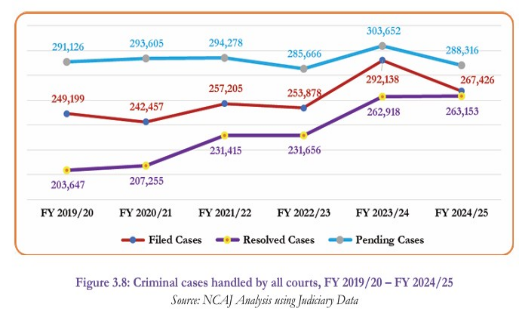
9.5.4 The SOJAR 2024/2025 report stated:
‘Case filings [in the financial year 2024/2025] rose by 20% to 621,425, while resolutions increased by 25% to 647,686, achieving a clearance rate of 104%. Criminal filings fell by 8% … Pending cases reduced by 3% to 601,490, and backlog cases (over one year old) fell by 30% to 177,081 …
‘Through the Mahakama Popote initiative, 19,089 cases from high-volume courts were redistributed to stations with lower caseloads, resulting in 14,240 cases being resolved. A total of 677 cases were concluded through Alternative Justice Systems (AJS) in counties where the Judiciary was actively monitoring referrals. The Prison Decongestion Programme, launched at the Industrial Area Remand and Maximum Prison, reviewed 3,157 cases, leading to probation placements, community service orders, sentence reductions, and releases.’[footnote 144] The report did not state how many of the cases reviewed under the Prison Decongestion Programme were at the pre-trial stage.
9.5.5 The same source published the below table, which showed the number of filed and resolved cases by court type for the financial year 2024/2025[footnote 145]:
| Court Rank | Filed Cases: Criminal | Filed Cases: Civil | Filed Cases: All | Resolved Cases: Criminal | Resolved Cases: Civil | Resolved Cases: All | CCR (%) |
|---|---|---|---|---|---|---|---|
| Supreme Court | - | 70 | 70 | - | 72 | 72 | 103% |
| Court of Appeal | 1,269 | 3,587 | 4,856 | 1,177 | 2,541 | 3,718 | 77% |
| High Court | 19,756 | 28,456 | 48,212 | 18,261 | 38,275 | 56,536 | 117% |
| Employment & Labour Relations Court | - | 4,854 | 4,854 | - | 6,389 | 6,389 | 132% |
| Environment & Land Court | - | 8,923 | 8,923 | - | 10,331 | 10,331 | 116% |
| Magistrates’ Courts | 246,476 | 124,976 | 371,452 | 243,689 | 144,606 | 388,295 | 105% |
| Tribunals | - | 11,246 | 11,246 | - | 14,536 | 14,536 | 129% |
| Small Claims Courts | - | 158,357 | 158,357 | - | 155,227 | 155,227 | 98% |
| Kadhis’ Courts | - | 13,555 | 13,555 | - | 12,562 | 12,562 | 93% |
| All Courts | 267,501 | 354,024 | 621,525 | 263,127 | 384,539 | 647,666 | 104% |
9.5.6 There was no information on statistics relating to convictions, acquittals or sentencing, in the sources consulted for this note (see Bibliography). With regard to imprisonment, the World Prison Brief database, maintained by the Institute for Crime & Justice Policy Research at Birkbeck, University of London, reported that Kenya had an average prison population of 60,740 in 2025, 40.3% of which comprised pre-trial detainees.[footnote 146]
10. Avenues of redress
10.1 Accountability and impunity
10.1.1 The BTI Kenya country report 2024 noted:
‘Kenya has also established several institutions to protect and promote civil rights, including the Independent Policing Oversight Authority (IPOA), the National Gender and Equality Commission, and the Kenya National Commission on Human Rights (KNCHR). These institutions are tasked with investigating and prosecuting violations of civil rights, providing redress to victims, and promoting education on and awareness of civil rights.’[footnote 147]
10.1.2 The LPUF website 2025 noted:
‘Kenya’s Constitution established the office of the Inspector-General of the National Police Service. The Constitution also gives the Director of Public Prosecutions the power to direct the Inspector-General of the National Police Service to investigate any information or allegation of criminal conduct and the Inspector-General shall comply with any such direction.
‘Within the Kenyan Police Service, an Internal Affairs Unit is empowered to investigate suspected police misconduct, including excessive use of force.
‘The Independent Police Oversight Authority (IPOA) is an independent authority established under a 2011 law to provide for civilian oversight over the work of the police in Kenya. Its vision is of: A robust civilian accountability mechanism that promotes public trust and confidence in the National Police Service.
‘IPOA has the authority to investigate any death or serious injury occurring or suspected of having occurred as a result of police action. In addition, its Constitutive Act requires that police officers report all deaths resulting from police actions to the Authority.’[footnote 148]
10.2.3 The UNHRC in its Universal Periodic Review – Kenya, in a report submitted by Kenya titled ‘National report submitted pursuant to Human Rights Council resolutions 5/1 and 16/21’, dated 7 February 2025 (UN periodic review February 2025) noted:
‘The Independent Policing Oversight Authority (IPOA) is an independent body that holds the police accountable for their actions and ensures that they operate within the law. From 2018 to 2024, the IPOA resolved 12,732 of 20,112 complaints, conducted 4,865 investigations, and referred 773 files to the Office of the Director of Public Prosecutions leading to 30 convictions. IPOA also monitored 514 police operations and conducted 3,854 inspections of NPS facilities to promote human rights compliance.’[footnote 149]
10.2.4 The NCAJ 2025 annual report noted:
‘IPOA monitored 128 police cases in FY 2024/25, an increase of 66 per cent from the previous period. The Authority also investigated 711 cases and forwarded 171 to ODPP for prosecution. This represented a 21 per cent decline in number of matters investigated and 43 per cent increase in number of cases forwarded to ODPP from the previous reporting period.’ [footnote 150]
The table below from the NCAJ 2025 annual report number of matters handled by the IPOA (the source did not define ‘handled’) between 2020 and 2025.[footnote 151]
Table 3.3 Matters handles by IPOA, FY 2020/21 - FY2024/25
| Matters handled | 2020/21 | 2021/22 | 2022/23 | 2023/24 | 2024/25 |
|---|---|---|---|---|---|
| No. of police operations monitored | 67 | 70 | 122 | 77 | 128 |
| No. of investigations | 625 | 781 | 995 | 895 | 711 |
| No. of cases forwarded to ODPP | 141 | 135 | 208 | 120 | 171 |
| Total No. of cases processed | 833 | 986 | 1,325 | 1,092 | 1,010 |
Source: NCAJ analysis using IPOA data.
10.2.5 Regarding challenges, the IPOA, in their Annual Report July 2022- June 2023, noted:
‘During the reporting period, the Authority faced several challenges:
a) ‘Inadequate budgetary allocation.
b) ‘Inadequate staffing.
c) ‘Non-cooperation by the National Police Service: undue delay to arrest warrants and summons to suspect police officers, failure to produce required documents and cover-up of suspect police officers by their colleagues.
d) ‘Low rate of implementation of IPOA’s recommendations by NPS.
e) ‘Difficulties in accessing forensic services causing delay in investigations.
f) ‘Failure by NPS to notify the Authority of deaths due to police action, inaction or in police custody as required by law.’[footnote 152]
10.1.6 The UN periodic review February 2025 working group report noted:
‘Kenya had unequivocally condemned extrajudicial killing and enforced disappearance and strengthening accountability for such crimes within law enforcement agencies had remained a top priority. Oversight mechanisms continued to be enhanced, particularly through the Independent Policing Oversight Authority. Legislative reforms aimed at explicitly criminalizing enforced disappearance were under way.
‘Accountability in counter-terrorism operations had improved. Judicial oversight and complaint mechanisms had been strengthened …’[footnote 153]
10.1.7 The Amnesty International report 2026 noted:
‘Despite years of advocacy and international scrutiny, the government was yet to implement systemic reforms or provide justice and reparations to families of victims of extrajudicial killings. However, in May, four police officers were charged with the 2017 killing of six-month-old Baby Samantha Pendo. She died from head injuries inflicted by police in a house raid during a violent crackdown on post-election protests in Kisumu County. In September, the High Court ruled that the case should be transferred from Nairobi for hearing at a court in the city of Kisumu. The developments marked a rare instance of progress in prosecuting state violence, although broader accountability remained elusive.’[footnote 154]
10.1.8 The UN periodic review February 2025 - working group report noted:
‘Recognizing the need for security sector reforms, in 2022, Kenya had established the Maraga Task Force on Police Reforms. The Task Force had presented its report in 2023, in which it proposed key measures to enhance police welfare, accountability and professionalism, and more than half of the recommendations had since been implemented. However, a recent court ruling had declared the establishment of the Task Force unconstitutional, and the Government was challenging the ruling.’[footnote 155]
10.1.9 The UN Kenya analysis report 2025 noted:
‘Continuous lack of government respect for and enforcement of court orders and judgements undermine the rule of law and public confidence. Trust in the rule of law institutions, including in the security forces, is low due to a history of police violence and excessive use of force, particularly during electoral periods, and recently in the context of public order management that saw police officers violently disperse demonstrations and protests. However, the Constitution established institutions that have promoted police reforms, provided civilian oversight, and strengthened collaboration in the investigation and prosecution of serious human rights violations committed by police officers, and there has been slow progress in accountability for police misconduct. The outgoing 2024 Independent Policing Oversight Authority critiqued lack of cooperation by the National Police Service during investigations of human rights violations thereby frustrating efforts for police accountability. Nonetheless the outgoing IPOA made raft recommendations policy, legislative and institutional reforms that would aid in prevention of violations by police officers and accountability.’[footnote 156]
10.1.10 The United Against Torture Consortium (UATC) and the Independent Medico-Legal Unit (IMLU) in their joint stakeholder submission to the United Nations committee against torture regarding the periodic review of Kenya. List of Issues Prior to Reporting (LOIPR) (82nd Session – April-May 2025), dated 13 January 2025 noted:
‘The police continue to enjoy impunity despite extensive credible documentation of their abuses against protesters. Barriers to accountability include the State’s lack of acknowledgement of the repeated violations, police officers operating in plainclothes without identification, and challenges with reporting and investigations. Many victims fear reprisals if they were to file complaints with the police, making them reluctant to report police abuses.’[footnote 157]
10.1.11 Commenting on judicial accountability, the SOJAR 2024/2025 report stated: ‘The Judiciary advanced accountability and transparency through the expansion of e-filing, the Case Tracking System (CTS), and public cause-list portal …’[footnote 158]
10.1.12 The SOJAR 2024/2025 report also stated:
‘OJO [Office of the Judiciary Ombudsman] is mandated to receive complaints, monitor and evaluate the integrity of staff, monitor complaints on court processes, as well as propose improvements for effective judicial services and ease of access to justice … During the reporting period, OJO intensified its oversight role through the deployment of spot-checks across court stations. These unannounced, targeted assessments served as a proactive mechanism to evaluate compliance, uphold integrity, and evaluate operational performance across court stations.’[footnote 159]
10.1.13 According to the same report, ‘During the FY 2024/25, the Judiciary handled a total of 1,206 complaints, comprising 1,107 new complaints received during the year and 99 carried forward from the previous financial year.’[footnote 160]
10.1.14 For information on integrity-related complaints, see Judicial corruption.
10.1.15 The Eastleigh Voice, a Kenyan online news platform[footnote 161] in an article dated 27 August 2025, reported: ‘At least four judges have been removed from office since the promulgation of the 2010 Constitution, while 210 judicial staff have been dismissed for misconduct, Chief Justice Martha Koome has revealed.’[footnote 162]
10.2 Kenya National Commission on Human Rights (KNCHR)
10.2.1 The KNCHR report 2025 noted:
‘The Commission is organized around 5 Directorates and 2 independent units namely, Complaints and Investigations Directorate; Redress and Legal Services Directorate; Reforms, Accountability and Advocacy Directorate; Regional Services Directorate; Corporate Services Directorate and Internal Audit and Risk Management and Supply Chain Management Units. The Regional Services Directorate cover five (5) KNCHR regional offices … and 3 satellite offices …’[footnote 163]
10.2.2 The KNCHR, in an undated entry on their official website, stated:
‘The KNCHR’s Legal Services are currently provided to the public through the receipt and processing of complaints during which complainants are offered appropriate legal advice …
‘The KNCHR conducts litigation in appropriate cases involving the interpretation of the Bill of Rights. The Commission takes up cases that are either of broad public interest or that would have a significant impact on the legal discourse of human rights in Kenya. The case should also have a strategic goal such as setting up legal precedents, highlight a discriminatory position in the law or one that would lend weight to legal reforms …’[footnote 164]
10.2.3 The KNCHR report 2025 noted ‘The Commission received screened and processed 3486 complaints received across 6 regions (Nairobi, Western, Coast, Central, Northeastern, and North Rift). Among these, 66.2% received legal advice and assistance, while the remaining 33.8% were referred to KNCHR’s partner organizations for further follow-up …’[footnote 165]
10.2.4 Regarding the commission’s effectiveness, the UNCAT concluding observations 2022 stated:
‘While noting that the Kenya National Commission on Human Rights has been granted A status [full accreditation[footnote 166]] in accordance with the principles relating to the status of national institutions for the promotion and protection of human rights (the Paris Principles) since 2005, the Committee is concerned that the resources allocated to the Commission are insufficient to allow it to perform all its functions effectively, notably its role in conducting visits to places of detention and in receiving and investigating complaints about alleged human rights violations.’[footnote 167]
Terms of Reference
The ‘Terms of Reference’ (ToR) provides a broad outline of the issues relevant to the scope of this note and forms the basis for the country information.
The following topics were identified prior to drafting as relevant and on which research was undertaken:
- Legal framework - relevant laws and policies that:
- protect individuals and groups from treatment that may amount to persecution in the constitution, and penal and criminal procedural codes
- regulate the operation and function of security/protection forces and judiciary, including arrest and detention rights
- any discriminatory laws, policies or programmes applicable to protection
- Organisations responsible for law enforcement (police and any other agencies):
- structure and size (and number of security officers as a ratio of the wider population)
- resourcing, pay, equipment and training
- numbers of investigations, arrests (and types of crimes) and prosecutions
- occurrence of corruption, misconduct and human rights violations
- accessibility – existence (or lack) of barriers to obtaining protection for particular groups, by location or other factors
- application – discrimination in enforcement of law against particular groups, by location or other factors
- reform – ongoing or planned reform
- Oversight bodies of security forces:
- size, structure, remit and powers of units within enforcement agencies, the courts and independent organisations including national human rights institutions
- process for raising complaints
- numbers of investigations and outcomes, including any evidence of investigations and punishment for corruption, misconduct and human rights violations
- application – discrimination against particular groups, by location or other factors
- Judiciary:
- structure, size and composition, including juvenile, family and military courts
- selection process for magistrates/judges
- resourcing, pay, equipment and training
- independence from executive or other state bodies – government influence on court composition and judgements
- fair trial – availability of legal aid and representation; witness protection programmes and their effectiveness; open and public trial; rights of appeal to higher courts
- accessibility - existence (or lack) of barriers to accessing the judicial process for particular groups, by location (different provinces or rural/urban) or other factors
- occurrence of corruption, misconduct and human rights violations
- numbers of cases, outcomes including convictions and acquittals
- informal justice systems, types of case and effectiveness
Bibliography
Sources cited
Abdulkadir Hashim, Governance and Islam in East Africa (chapter 14), 5 March 2026. Accessed: 11 May 2026
Afrobarometer:
-
About, no date. Accessed: 4 February 2026
-
In Kenya, public trust in institutions and leaders is on a downward slide, 26 September 2025. Accessed: 18 February 2026
-
Kenya Round 10 summary of results, 16 October 2024
-
Kenyans cite criminal activity, lack of respect, and corruption among police failings, 19 September 2022. Accessed: 4 February 2026
-
Kenyans want police and courts to do more to protect women and girls against harassment and discrimination, 17 December 2024. Accessed: 21 July 2026
-
Many Kenyans struggle to access vital public services, express dissatisfaction with delivery, 19 January 2026. Accessed: 17 February 2026
Amnesty International, The State of the World’s Human Rights 2026 , April 2026. Accessed: 13 May 2026
Bertelsmann Stiftung, Transformation Index (BTI), Kenya Country Report 2024, 2024. Accessed: 3 March 2026
Citizen Digital, Number of police officers in Kenya drops, 15 May 2025. Accessed: 6 March 2026
Constitute, Kenya 2010, no date. Accessed: 4 March 2026
Daniel, PO, Muganda, C, and Bitok, S, Effect of Restructuring on the Performance of National Police Service in Kenya, Journal of Research Innovation and Implications in Education (JRIIE), Volume 9, Issue 4, 6 November 2025. Accessed: 11 June 2026
Directorate of Criminal Investigations (DCI):
-
DCI Functions, no date. Accessed: 16 February 2026
-
DCI Mandate, no date. Accessed: 16 February 2026
The Eastleigh Voice, Four judges removed, 210 staff sacked for misconduct since promulgation of 2010 Constitution - CJ Koome, 27 August 2025. Accessed: 10 June 2026
The Ethics and Anti-Corruption Commission (EACC):
-
About us, no date. Accessed: 15 April 2026
-
Kenya National Gender and Corruption Survey, 2025. Accessed: 29 June 2026
-
National Ethics and Corruption Survey (NECS), 2024, 17 February 2025. Accessed: 15 April 2026
Freedom House (FH), Freedom in the World 2025-Kenya, February 2025. Accessed: 11 February 2026
Global Alliance of National Human Rights Institutions (GANHRI), Accreditation, no date
Government of Kenya, Constitution of Kenya, September 2010. Accessed: 11 February 2026
HapaKenya:
-
About, no date. Accessed: 6 May 2026
-
How to contact emergency services in Nairobi & Nationwide, 9 March 2026. Accessed: 6 May 2026
Hubzmedia:
-
About Us, no date. Accessed: 10 June 2026
-
Over 900 Witnesses Protected as Demand for Kenya’s Witness Protection Program Soars, 4 February 2026
Human Rights Council (HRC), Kenya; Compilation of information prepared by the Office of the United Nations High Commissioner for Human Rights, 13 February 2025. Accessed: 29 June 2026
Human Rights Watch (HRW):
-
World Report 2023 – Kenya, 12 January 2023. Accessed: 26 May 2026
-
World Report 2025 – Kenya,16 January 2025. Accessed: 18 February 2026
-
World Report 2026 – Kenya, 4 February 2026. Accessed: 19 February 2026
Independent Policing Oversight Authority (IPOA):
-
IPOA Annual Report July 2022- June 2023, no date. Accessed: 5 March 2026
-
Monitoring report on policing of the protests held in various counties, 14 August 2024. Accessed: 16 April 2026
Independent Policing Oversight Authority (IPOA) Online News, The Independent Policing Oversight Authority, no date. Accessed: 8 May 2026
Judiciary of Kenya:
-
The Judiciary: Overview, no date. Accessed: 18 February 2026
-
State of the Judiciary and Administration of Justice Annual Report 2024/2025 2025. Accessed: 9 June 2026
Judicial Service Commission (JSC), Mandate and functions, no date. Accessed: 21 April 2026
Kenya Broadcasting Corporation (KBC), 2025/26 Budget: Gov’t injects billions to strengthen police, military,13 June 2025. Accessed: 13 April 2026
Kenya Institute for Public Policy Research and Analysis, Constitution of Kenya, 2010. Accessed: 23 April 2026
Kenya Law:
-
Criminal Procedure Code, 11 December 2023. Accessed: 13 April 2026. Accessed: 8 May 2026
-
Independent Policing Oversight Authority Act, 11 November 2011. Accessed: 8 May 2026
-
Judicial Service Act, 11 December 2023. Accessed: 9 June 2026
-
The Kenya National Commission on Human Rights Act, 2011, 30 August 2011. Accessed: 8 May 2026
-
Legal Aid Act 2016, 10 May 2016. Accessed: 8 May 2026
-
National Police Service Commission Act (2011), 10 October 2011. Accessed: 8 May 2026
-
Penal code, 11 December 2023. Accessed: 13 April 2026
-
Victim protection Act 2024, 3 October 2014. Accessed: 8 May 2026
-
Witness Protection Act 2006, 30 December 2006. Accessed: 8 May 2026
Kenya National Bureau of Statistics (KNBS), Kenya Economic Survey 2025 (via UN Women Data Hub), May 2025. Accessed: 5 June 2026
Kenya National Commission on Human Rights (KHCHR):
-
About us, 9 December 2025. Accessed 24 February 2026
-
The State of Human Rights in Kenya: December 2024-December 2025, 9 December 2025. Accessed: 24 February 2026
-
Legal and Redress, no date. Accessed: 24 February 2026
Kenyans.co.ke:
-
About us, no date. Accessed: 4 February 2026
-
Inside the Command Structure of NPS: Units, Commanders & DCI, 9 August 2025. Accessed: 4 February 2026
-
Police Announce Changes in Training Curriculum as 10,000 Recruits Begin Training,16 December 2025. Accessed: 13 April 2026
Law on Police Use of Force Worldwide (LUPF):
Ministry of Defence, Kenya:
-
About us, no date. Accessed: 9 February 2026
-
KDF Services, no date. Accessed: 9 February 2026
Missing voices:
-
About us, no date. Accessed: 26 May 2026
-
Statistics, no date. Accessed: 26 May 2026
The Mount Kenya Times:
-
Home, no date. Accessed: 3 June 2026
-
The Alarming Reality of Police Brutality and Abductions in Kenya, 22 October 2024. Accessed: 14 May 2026
Muck Rack, Eastleigh Voice: Contact Information, Journalists, and Overview, no date. Accessed: 10 June 2026
Mutea, DK, Ndambo, D, and Muithya, V, Assessing the Effectiveness of Recruitment Practices in the National Police Service and Their Impact on National Security in Kenya, International Journal of Research and Innovation in Social Science (IJRISS), Volume IX, Issue VI, 11 July 2025. Accessed: 20 April 2026
The National Council on the Administration of Justice (NCAJ):
-
About, no date. Accessed: 21 April 2026
-
Administration of Justice in Kenya Annual Report 2024/25, 10 November 2025. Accessed: 21 April 2026
-
Bail and Bond Policy Guidelines, March 2015. Accessed: 21 April 2026
National Crime Research Centre (NCRC):
-
Home page, undated. Accessed: 29 June 2026
-
The Impact of Community Policing in Kenya, 2025. Accessed: 29 June 2026
National Police Service Commission, About Us, undated. Accessed: 29 June 2026
The New Humanitarian, After the floods, the GBV: The double tragedy for women in Kenya’s informal settlements, 25 April 2026
The Office of the Director of Public Prosecutions (ODPP), Who we are, no date. Accessed: 23 April 2026
Open Budget Kenya:
-
Kenya Police Regional Training Centre – 2025, 2025. Accessed: 14 April 2026
-
Notes on sources, no date. Accessed: 14 April 2026
Pulse:
-
About, no date. Accessed: 24 April 2026
-
Police get major pay increase, see the new salary figures, 04 March 2026. Accessed: 24 April 2026
Royal Media Services (RMS), About us, no date. Accessed: 20 April 2026
The Star:
-
Crimes reported rose by 19 per cent in 2023 – Economic survey, 20 May 2024. Accessed: 20 April 2026
-
Explainer: Understanding NIS and its Constitutional mandate, 15 January 2025. Accessed: 3 March 2026
-
Home, no date. Accessed: 4 June 2026
-
Legal aid office slow in handling children and criminal cases, 17 December 2024. Accessed: 10 June 2026
-
NPS reveal existing gaps in response to GBV and Femicide cases, 11 April 2025. Accessed: 22 July 2026
The United against Torture Consortium (UATC) & the Independent Medico-Legal Unit (IMLU), Joint stakeholder submission to the United Nations committee against torture regarding the periodic review of Kenya. List of Issues Prior to Reporting (82nd Session – April-May 2025), 13 January 2025. Accessed: 17 February 2026
United Nations Committee against Torture (UNCAT), Concluding observations on the third periodic report of Kenya, 30 May 2022. Accessed: 17 February 2026
United Nations:
-
Kenya Common Country Analysis Report for Kenya 2025 Update, 28 November 2025. Accessed: 6 February 2026
-
Report of the Working Group on the Universal Periodic Review- Kenya, 25 June 2025. Accessed: 6 February 2026
United Nations Human Rights Council (UNHRC), National report submitted pursuant to Human Rights Council resolutions 5/1 and 16/21 , 7 February 2025. Accessed: 9 February 2026
US State department (USSD), Country Report 2024 - Kenya, 12 August 2025. Accessed: 29 June 2026
World Prison Brief:
-
About the World Prison Brief, no date
-
Kenya, no date
Version control and feedback
Clearance
Below is information on when this note was cleared:
- version 1.0
- valid from 23 July 2026
Official – sensitive: Not for disclosure – Start of section
The information in this section has been removed as it is restricted for internal Home Office use.
Official – sensitive: Not for disclosure – End of section
Changes from last version of this note
Updated COI and assessment.
Feedback to the Home Office
Our goal is to provide accurate, reliable, and up-to-date COI and clear guidance. We welcome feedback on how to improve our products. If you would like to comment on this note, please email the Country Policy and Information Team.
Independent Advisory Group on Country Information
The Independent Advisory Group on Country Information (IAGCI) was set up in March 2009 by the Independent Chief Inspector of Borders and Immigration to support them in reviewing the efficiency, effectiveness and consistency of approach of COI produced by the Home Office.
The IAGCI welcomes feedback on the Home Office’s COI material. It is not the function of the IAGCI to endorse any Home Office material, procedures, or policy. The IAGCI may be contacted at:
Independent Advisory Group on Country Information
Independent Chief Inspector of Borders and Immigration
3rd Floor
28 Kirby Street
London
EC1N 8TE
Email: chiefinspector@icibi.gov.uk
Information about the IAGCI’s work and a list of the documents which have been reviewed by the IAGCI can be found on the Independent Chief Inspector’s pages of the GOV.UK website.
-
Kenya Institute for Public Policy Research and Analysis, Constitution of Kenya (page 19-21), 2010 ↩
-
Kenya Institute for Public Policy Research and Analysis, Constitution of Kenya (page 24), 2010 ↩
-
Kenya Institute for Public Policy Research and Analysis, Constitution of Kenya (page 24-25), 2010 ↩
-
Kenya Institute for Public Policy Research and Analysis, Constitution of Kenya (page 25), 2010 ↩
-
Kenya Institute for Public Policy Research and Analysis, Constitution of Kenya (page 25), 2010 ↩
-
Kenya Institute for Public Policy Research and Analysis, Constitution of Kenya (page 33), 2010 ↩
-
Kenya Institute for Public Policy Research and Analysis, Constitution of Kenya (page 33-34), 2010 ↩
-
Kenya Institute for Public Policy Research and Analysis, Constitution of Kenya (page 36), 2010 ↩
-
Kenya Institute for Public Policy Research and Analysis, Constitution of Kenya (page 143-149), 2010 ↩
-
Kenya Institute for Public Policy Research and Analysis, Constitution of Kenya (page 147), 2010 ↩
-
Kenya Institute for Public Policy Research and Analysis, Constitution of Kenya (page 40-41), 2010 ↩
-
Kenya Institute for Public Policy Research and Analysis, Constitution of Kenya (page148-149),2010 ↩
-
Kenya Institute for Public Policy Research and Analysis, Constitution of Kenya (Section 50), 2010 ↩
-
Kenya Institute for Public Policy Research and Analysis, Constitution of Kenya (Section 48), 2010 ↩
-
Kenya Law, Penal code, 11 December 2023 ↩
-
Kenya Law, Criminal Procedure Code, 11 December 2023 ↩
-
Kenya Law, Criminal Procedure Code, 11 December 2023 ↩
-
Kenya Law, National Police Service Act, 27 August 2011 ↩
-
Kenya Law, National Police Service Act, (SIXTH SCHEDULE [s. 61(2)]), 27 August 2011 ↩
-
Kenya Law, National Police Service Act, (SIXTH SCHEDULE [s. 61(2)]), 27 August 2011 ↩
-
Kenya Law, National Police Service Act, (SIXTH SCHEDULE [s. 61(2)]), 27 August 2011 ↩
-
Kenya Law, National Police Service Commission Act (2011), 10 October 2011 ↩
-
Kenya Law, Independent Policing Oversight Authority Act, 11 November 2011 ↩
-
IPOA-Online News, The Independent Policing Oversight Authority, no date ↩
-
Kenya Law, The Kenya National Commission on Human Rights Act, 2011, 30 August 2011 ↩
-
Kenya Law, The Kenya National Commission on Human Rights Act, 2011, 30 August 2011 ↩
-
Kenya Law, The Kenya National Commission on Human Rights Act… (Section 8), 30 August 2011 ↩
-
Kenya Law, Victim protection Act 2024 (Section 3), 3 October 2014 ↩
-
Kenya Law, Witness Protection Act (Section 3B(1)), 30 December 2006 ↩
-
Kenya Law, Legal Aid Act 2016 (Section 3), 10 May 2016 ↩
-
Kenyans.co.ke, Inside the Command Structure of NPS: Units, Commanders & DCI, 9 August 2025 ↩
-
Kenyans.co.ke, Inside the Command Structure of NPS: Units, Commanders & DCI, 9 August 2025 ↩
-
DCI, DCI Mandate, no date. ↩
-
DCI, DCI Functions, no date ↩
-
The Star, Explainer: Understanding NIS (National Intelligence… (What is NIS?), 15 January 2025 ↩
-
The Star, Explainer: Understanding NIS (Nation…) (NIS Organisational Structure), 15 January 2025 ↩
-
Ministry of Defence-Kenya, KDF Services, no date ↩
-
KNBS, Kenya Economic Survey 2025 (page 10), May 2025 ↩
-
NCAJ, Administration of Justice in Kenya Annual Report 2024/25 (page 24), 10 November 2025 ↩
-
Citizen Digital, Number of police officers in Kenya drops, 15 May 2025 ↩
-
Citizen Digital, Number of police officers in Kenya drops, 15 May 2025 ↩
-
NCRC, The Impact of Community Policing in Kenya, (Chapter 2: Methodology), 2025 ↩
-
NCRC, The Impact of Community Policing in Kenya, (Executive Summary), 2025 ↩
-
NCRC, The Impact of Community Policing in Kenya, (Executive Summary), 2025 ↩
-
NCRC, The Impact of Community Policing in Kenya, (Executive Summary), 2025 ↩
-
KNBS, Kenya Economic Survey 2025 (page 10), May 2025 ↩
-
Mutea, DK, and others, IJRISS, Assessing the Effectiveness … (Data and methods), 11 July 2025 ↩
-
Mutea, DK, and others, IJRISS, Assessing the Effectiveness … (Background …), 11 July 2025 ↩
-
Mutea, DK, and others, IJRISS, Assessing the Effectiveness … (Background …), 11 July 2025 ↩
-
Daniel, PO, and others, JRIIE, Effect of Restructuring on the …(Methodology), 6 November 2025 ↩
-
Daniel, PO, and others, JRIIE, Effect of Restructuring on the …(Conclusion), 6 November 2025 ↩
-
Kenyans.co.ke, Police Announce Changes in Training Curriculum as 10,000…, 16 December 2025 ↩
-
XE,com, Global currency conversions,22 May 2025 ↩
-
KBC, 2025/26 Budget: Gov’t injects billions to strengthen police, military,13 June 2025 ↩
-
Xe.com, Global currency conversions, 22 May 2025 ↩
-
KBC, 2025/26 Budget: Gov’t injects billions to strengthen police, military,13 June 2025 ↩
-
Open Budget Kenya, Notes on sources, no date ↩
-
Open Budget Kenya, Kenya Police Regional Training Centre – 2025, 2025 ↩
-
Xe.com, Global currency conversions, 22 May 2025 ↩
-
Pulse, Police get major pay increase, see the new salary figures, 4 March 2026 ↩
-
Pulse, Police get major pay increase, see the new salary figures, 04 March ↩
-
Xe.com, Global currency conversions, 22 May 2025 ↩
-
Afrobarometer, In Kenya, public trust in institutions and leader…, (page 2), 26 September 2025 ↩
-
Afrobarometer, In Kenya, public trust in institutions and leader…, (page 5), 26 September 2025 ↩
-
Afrobarometer, In Kenya, public trust in institutions and leader…, (page 6), 26 September 2025 ↩
-
Afrobarometer, Kenyans want police and courts to do more to protect …, 17 December 2024 ↩
-
The Star, NPS reveal existing gaps in response to GBV and Femicide cases, 11 April 2025 ↩
-
The New Humanitarian, After the floods, the GBV: The double tragedy …, 25 April 2026 ↩
-
HapaKenya, How to contact emergency services in Nairobi & Nationwide, 9 March 2026 ↩
-
Afrobarometer, Kenyans cite criminal activity… (Police/security presence), 19 September 2022 ↩
-
Afrobarometer, Many Kenyans struggle to access vital… (Conclusion), 19 January 2026 ↩
-
Afrobarometer, Many Kenyans… (Citizens’ experience with key public services), 19 January 2026 ↩
-
Afrobarometer, Many Kenyans… (Citizens’ experience with key public services), 19 January 2026 ↩
-
Afrobarometer, Many Kenyans… (Citizens’ experience with key public services), 19 January 2026 ↩
-
Afrobarometer, Many Kenyans… (Citizens’ experience with key public services), 19 January 2026 ↩
-
Afrobarometer, Many Kenyans… (Citizens’ experience with key public services), 19 January 2026 ↩
-
Afrobarometer, Many Kenyans… (Citizens’ experience with key public services), 19 January 2026 ↩
-
EACC, National Ethics and Corruption Survey (NECS)… (Executive summary), 17 February 2025 ↩
-
EACC, National Ethics and Corruption Survey (NECS), 2024 (Page 21), 17 February 2025 ↩
-
FH, Freedom in the World 2025-Kenya (Section F-Rule of Law), February 2025 ↩
-
Missing Voices, Statistics, no date ↩
-
The Mount Kenya Times, Alarming Reality of Police Brutality and Abductions…, 22 October 2024 ↩
-
USSD, Country Report 2024 - Kenya, 12 August 2025 ↩
-
KHCHR, The State of Human Rights in Kenya- December 2024… (page 16), 9 December 2025 ↩
-
KHCHR, The State of Human Rights in Kenya- December 2024… (page 16), 9 December 2025 ↩
-
HRW, World Report 2025 – Kenya (Police Brutality Against Protesters),16 January 2025 ↩
-
AI, The State of the World’s Human Rights 2026 (Extrajudicial Executions), April 2026 ↩
-
USSD, Country Report 2024 - Kenya, 12 August 2025 ↩
-
HRC, Kenya; Compilation of information prepared by the Office of the…, 13 February 2025 ↩
-
ODDP, who we are, no date ↩
-
NCAJ, Administration of Justice in Kenya Annual Report 2024/25 (page 26), 10 November 2025 ↩
-
NCAJ, Administration of Justice in Kenya Annual Report 2024/25, 10 November 2025 ↩
-
The Judiciary, The Judiciary: Overview, no date ↩
-
The Judiciary, About Kadhis Courts, no date ↩
-
Abdulkadir Hashim, Governance and Islam in East Africa (chapter 14), 5 March 2026 ↩
-
The Judiciary, The State of the Judiciary and the Administration of… (Section 5.1.2), 2025 ↩
-
The Judiciary, The State of the Judiciary and the Administration of… (Section 5.1.2), 2025 ↩
-
The Judiciary, The State of the Judiciary and the Administration of… (Section 1.1.14), 2025 ↩
-
The Judiciary, The State of the Judiciary and the Administration of… (Section 5.2-5.2.2), 2025 ↩
-
JSC, Mandate and functions, no date ↩
-
FH, Freedom in the World 2025-Kenya (Section F-Rule of Law), February 2025 ↩
-
Afrobarometer, In Kenya, public trust in institutions and leader…, (page 5), 26 September 2025 ↩
-
BTI, Who We Are, no date ↩
-
Bertelsmann Stiftung, BTI, 2026 Kenya Country Report, 27 March 2026 ↩
-
Afrobarometer, Kenya Round 10 summary of results, 16 October 2024 ↩
-
The Judiciary, SOJAR 2024-2025 (page 180), 21 November 2025 ↩
-
The Judiciary, SOJAR 2024-2025 (page 180), 21 November 2025 ↩
-
The Judiciary, SOJAR 2024-2025 (Table 4.1.5, page 182), 21 November 2025 ↩
-
EACC, Kenya National Gender and Corruption Survey, 2025 ↩
-
FH, Freedom in the World 2025-Kenya (Section F-Rule of Law), February 2025 ↩
-
The Judiciary, The State of the Judiciary and the Administration of… (Section 1.2.11), 2025 ↩
-
The Judiciary, The State of the Judiciary and the Administration of… (Section 2.1.3), 2025 ↩
-
The Judiciary, The State of the Judiciary and the Administration of… (Section 2.1.9 - 2.1.10), 2025 ↩
-
UN, Kenya Common Country Analysis Report for Kenya 2025… (page 42-43), 28 November 2025 ↩
-
UN, Kenya Common Country Analysis Report for Kenya 2025… (page 44), 28 November 2025 ↩
-
The Star, Legal aid office slow in handling children and criminal cases, 17 December 2024 ↩
-
UN, Report of the Working Group on the Universal Periodic … (Paragraph 29), 25 June 2025 ↩
-
UN, Kenya Common Country Analysis Report for Kenya 2025… (page 42-43), 28 November 2025 ↩
-
UN, Kenya Common Country Analysis Report for Kenya … (pages 42-43), 28 November 2025 ↩
-
Hubzmedia, Over 900 Witnesses Protected as Demand for Kenya’s Witness …, 4 February 2026 ↩
-
FH, Freedom in the World 2025-Kenya, (Section F-Rule of Law) February 2025 ↩
-
KNBS, Kenya Economic Survey 2025 (page 10), May 2025 ↩
-
NCAJ, Administration of Justice in Kenya Annual Report 2024/25 (page 31), 10 November 2025 ↩
-
The Judiciary, SOJAR 2024-2025 (Executive summary), 21 November 2025 ↩
-
The Judiciary, SOJAR 2024-2025 (page 54), 21 November 2025 ↩
-
BTI, Kenya Country Report 2024 (Rule of law), 2024 ↩
-
UNHRC, National report submitted pursuant to Human … (paragraph 16), 7 February 2025 ↩
-
NCAJ, Administration of Justice in Kenya Annual Report 2024/25 (page 26), 10 November 2025 ↩
-
NCAJ, Administration of Justice in Kenya Annual Report 2024/25 (page 26), 10 November 2025 ↩
-
IPOA, IPOA Annual Report July 2022- June 2023 (paragraph 5.1), no date ↩
-
UN, Report of the Working Group on the Universal Periodic … (paragraph 37-38), 25 June 2025 ↩
-
AI, The State of the World’s Human Rights 2026 (Extrajudicial Executions), April 2026 ↩
-
UN, Report of the Working Group on the Universal Periodic Re… (paragraph 39), 25 June 2025 ↩
-
UN, Kenya Common Country Analysis Report for Kenya 2025… (page 45), 28 November 2025 ↩
-
UATC & IMLU, Joint stakeholder submission to the United …, (paragraph 18),13 January 2025 ↩
-
The Judiciary, SOJAR 2024-2025 (page 175), 21 November 2025 ↩
-
The Judiciary, SOJAR 2024-2025 (page 175), 21 November 2025 ↩
-
The Judiciary, SOJAR 2024-2025 (page 181), 21 November 2025 ↩
-
Muck Rack, Eastleigh Voice: Contact Information, Journalists, and Overview, ↩
-
Eastleigh Voice, Four judges removed, 210 staff sacked for misconduct …, 27 August 2025 ↩
-
KHCHR, The State of Human Rights in Kenya- December 2024… (page 14), 9 December 2025 ↩
-
KNCHR, Legal and Redress, no date ↩
-
KHCHR, The State of Human Rights in Kenya- December 2024… (page 35), 9 December 2025 ↩
-
GANHRI, Accreditation, no date ↩
-
UNCAT, Concluding observations on the third periodic report of … (paragraph 13), 30 May 2022 ↩