Joint targeted area inspection of the multi-agency response to younger children living with neglect
Updated 15 October 2026
Applies to England

© Crown copyright 2026
This publication is licensed under the terms of the Open Government Licence v3.0 except where otherwise stated. To view this licence, visit nationalarchives.gov.uk/doc/open-government-licence/version/3 or write to the Information Policy Team, The National Archives, Kew, London TW9 4DU, or email: psi@nationalarchives.gov.uk.
Where we have identified any third party copyright information you will need to obtain permission from the copyright holders concerned.
This publication is available at https://www.gov.uk/government/publications/joint-targeted-area-inspections-of-the-response-to-younger-children-living-with-neglect/joint-targeted-area-inspection-of-the-multi-agency-response-to-younger-children-living-with-neglect
1. This guidance is for inspectors carrying out a joint targeted area inspection (JTAI) of the multi-agency response to younger children living with neglect in a local authority area in England. These JTAIs are carried out by inspectors from:
-
Ofsted
-
Care Quality Commission (CQC)
-
His Majesty’s Inspectorate of Constabulary and Fire & Rescue Services (HMICFRS)
-
His Majesty’s Inspectorate of Probation (HMI Probation)
2. We carry out JTAIs under section 20 of the Children Act 2004. When applying this guidance, inspectors will take appropriate action to comply with their duties under the Equality Act 2010.
3. For guidance on JTAIs that look at other topics, see our joint inspections of local area services collection.
Introduction
4. We are evaluating this area of practice because there has been particular concern from stakeholders about the neglect of children, and the profound and life-lasting impact this can have in the earliest years of a child’s life. We have previously inspected older children living with neglect and so in this framework we focus on the neglect of younger children from the unborn to age 11.
5. In July 2018, we published ‘Growing up neglected: a multi-agency response to older children’. This report was an overview of findings from JTAIs in 6 local areas that examined the multi-agency response to children living with neglect. The main findings were that:
-
neglect of older children sometimes goes unseen
-
work that should be done with parents to address the neglect of older children does not always happen
-
adult services in most areas are not effective in identifying potential neglect of older children
-
the behaviour of older children must be understood in the context of trauma
-
tackling neglect of older children requires a coordinated strategic approach across all agencies
6. In April 2026, the Child Safeguarding Practice Review Panel published a thematic report on neglect. Safeguarding reviews as part of this work showed that neglect is common and complex, and that it can be missed. Understanding these recurring issues can help improve practice.
-
Child neglect can affect babies, children and adolescents but can be missed, especially when concerns relate to poverty, parental challenges or chronic low‑level issues that build gradually.
-
Delays in identification are frequently linked to unclear definitions, inconsistent thresholds and reliance on terms such as ‘persistence’ and ‘serious impairment’.
-
Many responses to neglect are episodic and fragmented, resulting in missed opportunities to understand cumulative harm.
-
Children’s voices and lived experiences are not consistently captured, and home conditions are often not seen or explored in enough depth.
-
Early help and coordinated support are frequently hindered by consent barriers, capacity pressures, and inconsistent multi‑agency working.
-
A more proactive, child‑centred and trauma‑informed approach is needed – one that names neglect clearly and responds early.
-
Strong practice requires shared chronologies, structured tools, multi‑agency information sharing, and a clear focus on the child’s daily life, safety, and wellbeing.
Scope of the inspection
7. For the purpose of this inspection, we will use the definition of neglect in ‘Working together to safeguard children’:
‘Neglect is the persistent failure to meet a child’s basic physical and/or psychological needs, likely to result in the serious impairment of the child’s health or development. Neglect may occur during pregnancy as a result of maternal substance abuse. Once a child is born, neglect may involve a parent or carer failing to:
-
provide adequate food, clothing, and shelter (including exclusion from home or abandonment)
-
protect a child from physical and emotional harm or danger
-
ensure adequate supervision (including the use of inadequate caregivers)
-
ensure access to appropriate medical care or treatment
-
provide suitable education
It may also include neglect of, or unresponsiveness to, a child’s basic emotional needs.’
8. The agencies within the scope of this inspection are the police, children’s social care, probation services and relevant health services. When evaluating the multi-agency safeguarding arrangements put in place by the partners in the local area, we will take into account the guidance set out in Working together to safeguard children. Inspectors will also evaluate how local agencies work with education and early years providers to identify and respond to children who are living with neglect.
9. Inspectors will evaluate how local agencies work with the voluntary and community sector to respond to children who are living with neglect.
10. Inspectors will also evaluate the multi-agency arrangements for:
-
responding to children who are at risk of, or are living with, neglect, at the point of identification
-
assessment, planning and decision-making in response to notifications and referrals about children who are at risk of, or are living with, neglect
-
protecting, supporting and caring for children who are at risk of, or are living with, neglect
-
preventing children from experiencing neglect
11. Inspectors will also evaluate how effectively the local partnership – through its multi-agency safeguarding arrangements (MASA) – monitors, promotes, coordinates and evaluates the work of the statutory partners. Inspectors will base their findings on recent practice. This will usually be practice in the 6 months before the inspection. The inspection will evaluate how well current practice takes account of relevant history in children’s cases.
12. All JTAIs need to balance the breadth and depth of what we evaluate. The scope of the inspection therefore needs to be focused so that the inspectorates can gather sufficient depth of evidence to add value and learning for the sector. Following discussions with stakeholders, we have decided that these JTAIs will focus on unborn children and children aged 0 to 11 who are living with neglect. Given the younger age range that we will focus on, we will evaluate the role of probation services in relation to the multi-agency response to children who are living with neglect, but we will not evaluate the role of youth justice.
13. When looking at the experiences of younger children, we will consider the support for other children in the same household.
14. Inspectors may talk with, by telephone or in person:
-
voluntary and community sector representatives who are providing services to children living with neglect in the local area
-
local housing providers
-
designated child protection leads and/or headteachers
-
representatives from organisations within the local area that have been brokered by schools or the local authority to provide alternative education provision
15. Our evaluation of strategic arrangements in the local area will take a broader look and consider children of all ages.
Evaluation criteria
16. Inspectors will evaluate evidence about the experiences and progress of children against the criteria set out below. The evaluation criteria (EC) numbers are a referencing system used by inspectors when recording their evidence.
17. When we refer to children in the evaluation criteria, this includes unborn children when relevant.
| EC number | Criteria |
|---|---|
| EC1 | Agencies work together to identify children who are at risk of, or are living with, neglect. They recognise the signs and indicators, and the impact of neglect. They intervene to reduce risk at an early stage by ensuring children have timely access to effective help and providing support for children in the child’s timescales. They monitor effectively the impact of interventions so that needs are met and risk is reduced. |
| EC2 | All professionals take a child-centred approach to working with children who are at risk of, or are living with, neglect. Practice is based on a good understanding of children’s experiences, their background and identity (including ethnicity, culture, sexuality and/or disability), including any barriers to accessing help and support. Effective safeguarding is based on anti-discriminatory and anti-racist practice. Practitioners understand and are sensitive to economic and social circumstances, ethnicity and disability. |
| EC3 | Professionals understand the importance of building trusting relationships with children and their families. They make sure to communicate with children, including those with disabilities and/or communication needs, to hear their views and understand their needs and experiences. Practitioners have a shared understanding of the risks and needs of the child. Tools are used effectively, and relationships are built on respectful communication. Practitioners seek out and build relationships with parents and members of a child’s extended family network and connected people. They use empathy to build trust and familiarity with them. They promote positive relationships through consistent and intensive interactions. Support is given to the family to overcome barriers to meeting children’s needs. There are clear expectations of parents/carers. |
| EC4 | Assessments demonstrate a comprehensive understanding of the risks to children and of their needs, experiences and strengths. Children’s views are clearly recorded and are central to a multi-agency response. Assessments are timely, include contributions from all relevant agencies and consider all forms of abuse, including neglect. In assessments, practitioners consider strengths and risks within the family and address any risk to siblings. |
| EC5 | Assessments and plans consider the needs of the whole family, are dynamic, and adapt to changing risks and needs. Plans are child-centred and address the needs of the child and all family members. |
| EC6 | Families and carers receive timely and effective support to enable them to safely help and protect children at risk of, or living with, neglect. The needs of all family members are considered, and support is in place to address all needs and risks. Family networks are actively involved. This leads to effective family group decision-making, where appropriate, that has a positive impact for children. |
| EC7 | Professionals have a clear understanding of how the actions and behaviour of parents and carers affects children. Appropriate support is provided. Professionals assess any strengths and risks in parenting and the extended family. Where changes in parents’ and/or carers’ behaviour are required, appropriate support is provided for the family and clear timescales for change are agreed. These timescales are based on the child’s needs. Improvements in parenting are closely monitored. |
| EC8 | Health practitioners show professional curiosity. They identify where neglect may be a risk, respond to immediate and evolving needs and share information to reduce risk. They ensure that children and families can access services to help them to stay safe and to meet their healthcare needs. |
| EC9 | Children are protected through effective multi-agency arrangements that ensure timely effective information-sharing, which leads to practitioners and partner agencies having up-to-date information about the child and their family. Key participants attend and contribute to multi-agency meetings. These meetings are effective forums for child-centred decision-making, planning of interventions and monitoring of progress. Safeguarding thresholds are understood and are applied appropriately. Actions happen within agreed timescales, and they make a positive difference to children. |
| EC10 | Children and families can access a range of effective services, including therapeutic help. Services are well coordinated and provided at the right time. |
| EC11 | Professionals and support staff across agencies are well trained and supported. This includes receiving support for the emotional impact of working with children living with neglect. Professionals and support staff are confident and knowledgeable. They understand the impact of neglect on children’s daily lives as well as the long-term and cumulative impact on their health and emotional wellbeing. They understand thresholds and are aware of and make use of pathways to support and protect children. This enables them to identify effectively how to help and protect children and to respond in an appropriate and timely way. |
| EC12 | Professionals challenge each other appropriately to ensure good practice, and they challenge and support parents/carers where parenting is leading to the neglect of children. |
| EC13 | Professionals ensure that children’s voices are heard and responded to. They also ensure that children’s lived experience, including the impact of home conditions and of cumulative neglect, is understood and addressed. This leads to action to ensure that children’s welfare is safeguarded and promoted. The child’s family are effectively engaged and their views fully taken into account in assessment and decision-making for children. |
| EC14 | Health practitioners work effectively to ensure timely identification of children who are at risk of, or are living with, neglect. This includes recognising the cumulative impact of neglect on a child’s physical and emotional wellbeing. Health practitioners use tools to help prevent neglect. They respond to children’s and families’ immediate needs and share information appropriately to reduce risk. They ensure that children and their families are supported to access services to help them to stay safe and to meet their needs. |
| EC15 | Where a criminal offence is suspected in relation to neglect, police/practitioners clearly record this and there is an effective, child-centred multi-agency response. This includes timely and good-quality criminal investigation that contributes to reducing risk for children. Decision-making is child-centred and includes consideration of out-of-court disposals. Police powers and protective measures are used effectively and proportionately to safeguard children. Where the threshold for criminal investigation or prosecution is not met, agencies work together to assess and manage risk. They take coordinated action to support children and reduce the impact of neglect. |
| EC16 | Practitioners are aware of, and focus on, neglect. Risk of harm to children is reduced through the identification and assessment of adults who pose a risk to children. These adults are held to account through appropriate and targeted interventions by all practitioners. |
| EC17 | Schools/education and early years providers have effective systems to identify children who are at risk of, or are living with, neglect. They make timely referrals to access appropriate support and protection, including to family help or, where relevant, the police. Schools, early years providers and partner agencies share information appropriately and work together effectively to make sure that children get the support they need. |
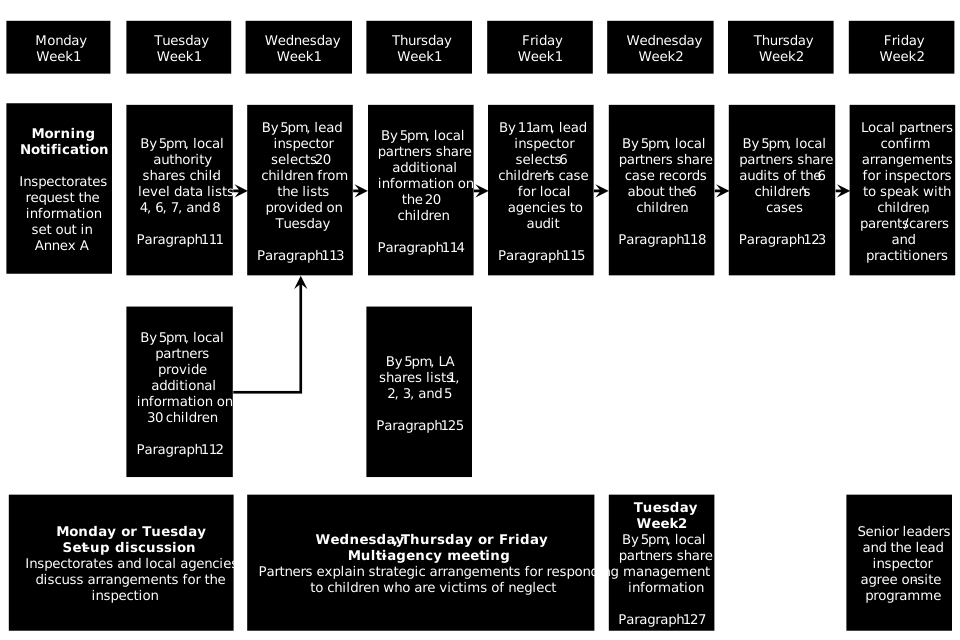
| EC18 | Schools/education and early years providers are supported by local safeguarding partners to contribute effectively to multi-agency working, including joint work to ensure that children are protected from harm. |
| EC19 | Leaders and managers across agencies know and understand the prevalence and profile of children who are at risk of, or are living with, neglect, including children who are harder to reach. They share, collate and analyse information and data effectively so that partners can identify and prioritise how to meet the needs of children in their area. This leads to effective multi-agency strategy, planning and action, including commissioning preventative work and support services to meet needs of local children and families. |
| EC20 | Leaders in the local partnership, through the MASA, effectively monitor and evaluate the work of the statutory partners. The local partnership works closely with other strategic partnerships and local organisations to make sure that children and their families get the help and support they need. |
| EC21 | Leaders and managers engage in critical reflection, and challenge and support practice. They promote continuous improvement in services for children who are at risk of, or are living with, neglect including those at increased risk and vulnerability. |
| EC22 | The local partnership promotes multi-agency learning about identifying, assessing and responding to children at risk of, or living with, neglect. The partnership informs and improves practice, planning and the design of services, using feedback from children and families, as well as research and intelligence about effective multi-agency practice. |
The inspection team
18. The inspection team will usually consist of:
-
3 social care inspectors from Ofsted – one will be the lead inspector
-
1 education inspector from Ofsted
-
3 inspectors from HMICFRS
-
3 inspectors from CQC
-
2 inspectors from HMI Probation
19. A Senior His Majesty’s Inspector (HMI) from Ofsted will be the quality assurance manager.
20. CQC, HMICFRS and HMI Probation may appoint additional quality assurance managers to the team if there are specific circumstances that require additional oversight.
Overview of the inspection
21. The JTAI will follow the structure set out below. The lead inspector will provide a detailed timeline when they notify the leaders in the local area of the inspection.
Activities in week 1
-
Inspectors notify the local leaders of the inspection 10 working days before the fieldwork begins. This will usually be on a Monday but may happen earlier if there is a bank holiday in week 1 or 2 of the inspection.
-
Inspectors request information to support the inspection (this information is set out in Annex A of this guidance).
-
Inspectors and local leaders hold a set-up discussion (inspectors are off site).
-
Local agencies share information to support the inspection.
-
Inspectors select some children and ask the local agencies to evaluate the children’s experiences through an audit.
-
Inspectors carry out planning and pre-inspection analysis.
-
A multi-agency meeting is held with local partners, in which they explain strategic arrangements for responding to children living with neglect.
Activities in week 2
-
The local area evaluates children’s experiences and provides audits to the inspection team (see ‘Week 2: local partnership audits’ in Annex A for more information).
-
Local agencies share information to support the inspection.
-
Inspectors carry out pre-inspection analysis and review the information set out in Annex A.
-
Inspectors work with the local agencies to agree a fieldwork timetable.
-
Inspectors may meet virtually with local leaders to discuss arrangements for the inspection and the local context.
Activities in week 3
-
Fieldwork – inspectors gather evidence.
-
Inspection findings are fed back to the local partnership.
Pre-inspection activity
22. The inspectorates will share with each other an analysis of relevant information they hold about the local area.
23. An inspector from each of the inspectorates will review the information. They will meet to discuss arrangements for the inspection before they notify the local partners of the JTAI.
Week 1: notification, set-up and information request
Notification
24. On day 1 (10 working days before the fieldwork), inspectors will contact the relevant leaders in the local area to notify them of the inspection:
-
Ofsted will contact the director of children’s services (DCS)
-
CQC will notify the integrated care board (ICB)’s chief executive and executive lead for safeguarding children
-
HMICFRS will notify the chief constable and the force liaison officer
-
HMI Probation will notify the regional probation director (RPD)
25. The Ofsted lead inspector will ask the DCS to notify the chair of the MASA and the person with responsibility for independent scrutiny of the local MASA. The chair of the MASA may be one of the people notified by the inspectorates, as set out in the previous paragraph.
26. Inspectors will ask local leaders to arrange for the information set out in Annex A to be shared with inspectors. Inspectors will provide a timeline for this to happen.
27. While it is important that we carry out our planned inspections wherever possible, we understand that sometimes there may be reasons why this is not possible. The local safeguarding partnership can request a deferral of the JTAI after they have been notified and before fieldwork starts. The inspectorates will decide whether a deferral should be granted in accordance with our policy on deferring inspections.
Set-up discussion
28. Inspectors will arrange a multi-agency set-up discussion with local leaders, including the chair of the MASA and the person responsible for independent scrutiny of the local safeguarding arrangements. This conversation will help the inspectors and local senior leaders to establish a constructive and professional relationship and give them a shared understanding of the starting point of the inspection. It is an opportunity for:
-
inspectors and local agencies to discuss the scope and methodology of the inspection, and the practical arrangements for ensuring that the inspection can be carried out smoothly
-
local agencies to ask questions about the inspection
-
inspectors to ask whether they need to take any steps to ensure the wellbeing of local staff, including senior leaders, during the inspection – they will ask who to contact if the inspection team needs to pass on any concerns about someone’s wellbeing
-
local partners to raise any issues or concerns about the inspection and for inspectors to explain how the local partners can raise any matters during the inspection
-
local partners to discuss and/or give us information on potential equalities duties, including reasonable adjustments for individuals
29. Inspectors will ask the local area to identify a link person to help arrange the inspection. The link person should have access to the senior leaders in the agencies and the authority to respond to the lead inspector’s requests.
30. Inspectors will ask whether there are any safeguarding incidents that they should be made aware of. This includes significant and current investigations, rapid reviews, child safeguarding practice reviews, or local issues of high media interest.
Information request (Annex A)
31. Annex A sets out the information inspectors will request and the timeline for the local agencies to share it. The information includes:
-
child-level data, which inspectors will use to select the children whose experiences they will evaluate (inspectors will ask the local agencies to audit the experiences of some of these children)
-
case records of the children whose experiences the local agencies have audited
-
performance and management information that sets out how the local partnership works together
32. Inspectors may ask for additional information not set out in Annex A and may agree to look at additional information provided by the local partnership. The inspector/local agency must demonstrate that the additional information is:
-
necessary for an accurate understanding of children’s experiences and the effectiveness of the local partnership in relation to the scope of the inspection
-
not already available through the request in Annex A
Selecting cases to audit
33. By the end of week 1, inspectors will select 6 children and ask the local agencies to audit these children’s experiences. Inspectors will use the child-level data set out in Annex A to select these children.
34. Inspectors will ask for some of the child-level data lists from Ofsted’s inspections of local authority children’s services (ILACS). We will ask the local authority to include some additional information in these lists (see Annex A for more information).
Week 2: children’s case audits, off-site analysis and creating a fieldwork timetable
Children’s case audits
35. Starting in week 2, the local agencies should audit the experiences of the children that the lead inspector selected at the end of week 1. Inspectors will also ask the agencies to share these children’s case records. They will ask the agencies to share the records electronically in week 2, if possible.
36. The local partnership should use its own methods to evaluate the children’s experiences, while taking the scope of the inspection into account. Inspectors will ask the local partners to share audits for each child. If the local partnership has carried out audits of any of these children’s experiences in the 3 months before the inspection, it may submit this as its evaluation for the inspection. For more information on the audits that partners should carry out, see ‘Week 2: local partnership audits’ in Annex A.
37. Inspectors will evaluate these cases and the local agencies’ audits. They will ask to meet with the practitioners involved in these children’s cases during the fieldwork week. At least 3 of these meetings will be multi-agency discussions. We refer to these activities collectively as case tracking.
Off-site analysis
38. In week 2, the local agencies should share the performance and management information set out in Annex A. Inspectors will refine their analysis based on the information that the local agencies share. Inspectors will also review audits of children’s cases carried out by the local agencies.
Off-site meetings with local agencies
39. Inspectors may meet remotely with local leaders, staff and stakeholders to discuss arrangements for the inspection and start gathering evidence in week 2. More information on who inspectors may speak to is set out in the ‘Interviews with practitioners, managers and leaders’ and ‘Meeting with representatives of the agencies in the MASA, independent scrutineer and sub-groups’ sections.
Creating the fieldwork timetable
40. The Ofsted lead inspector will coordinate the creation of a fieldwork timetable. They will ask the lead inspectors from CQC, HMICFRS and HMI Probation to liaise with their respective agencies to help create the timetable. This will include arrangements for meeting with practitioners, managers and leaders to discuss their work. Inspectors will also make arrangements for keep-in-touch (KIT) and feedback meetings to share inspectors’ findings.
41. Inspectors may also ask local agencies to arrange opportunities to meet with children and their families to discuss their experiences.
42. When creating the timetable, the Ofsted lead inspector will:
-
consider which activities should be carried out in person and which by phone or video call
-
include enough time for inspectors to travel between appointments
-
include time for inspectors to review and analyse their evidence, individually and together
-
ensure that the timetable is flexible enough to be changed in response to emerging findings
-
agree arrangements for the local area to provide any additional support to facilitate communication with children, young people, parents and carers, when this is required (for example, by a social worker, advocate or family member)
-
work with the link person in the local area to ensure that local leaders and practitioners are aware of the timetable and any changes to it
43. Inspectors will meet at the end of week 2 to discuss the plan for the inspection and any matters arising from their off-site analysis.
Week 3: inspection team meetings
44. Inspectors will meet when they arrive on site to review the arrangements for fieldwork.
45. Inspectors will meet regularly during fieldwork to discuss their findings. They may meet as a whole team or in smaller groups to consider findings from a particular part of the inspection scope. At these meetings, inspectors will:
-
compare evidence from different inspectors and different parts of the inspection
-
consider the impact of leaders, managers and the MASA on practice with children and families
-
agree when the team has gathered enough evidence
-
agree how best to gather further evidence in the time remaining
-
ensure that the lead inspector has the information they need to coordinate the inspection effectively and keep the local agencies informed
46. Inspectors will meet at the end of fieldwork to review all the evidence they have gathered and agree provisional findings. Inspectors will review the evidence against the evaluation criteria and use their professional judgement to determine the weight and significance of their findings. They will identify any strengths, areas for improvement and areas for priority action.
Week 3: meetings with senior leaders
Initial on-site meeting with senior leaders
47. The lead inspector and a representative from each inspectorate will meet with senior leaders from the local agencies on the first day of fieldwork. At this meeting, attendees will review the matters discussed at the set-up discussion and inspectors will answer any questions the local leaders have.
48. This is also an opportunity for the local agencies to set out their local context. This can include any key strengths or challenges faced by the partnership and known issues of concern or public interest relating to the scope of the JTAI.
Keep-in-touch meetings
49. Inspectors will offer local senior leaders an opportunity to attend KIT meetings. KIT meetings are opportunities for senior leaders to hear emerging findings from the inspection. Leaders can use these meetings to ask questions about the findings and to help the lead inspector identify where further evidence is needed.
50. KIT meetings take place during the fieldwork week. They focus on the main findings arising from fieldwork. Inspectors may raise concerns about the help, protection or care of specific children for discussion at the meetings. They may ask the relevant local agencies to respond to these concerns in writing.
51. The lead inspector will chair these meetings. A representative from each inspectorate will usually attend. The lead inspector will ask the relevant local agencies to identify an appropriate senior leader from each agency to attend. Local leaders may bring additional attendees from their agency. They should discuss this with the lead inspector to ensure the meetings can be kept brief and manageable.
52. Attendance at KIT meetings can be in person or by phone or video call. A local agency’s attendance at, or absence from, the meetings will not affect the inspection findings.
The feedback meeting
53. At the end of fieldwork, the lead inspector will invite all senior agency leaders, the chair of the MASA and the person responsible for independent scrutiny of the MASA to meet inspectors to hear the provisional findings. The Ofsted lead inspector and at least one inspector from each inspectorate will attend. We will ask the local agencies to keep attendance to a minimum to help keep the discussions manageable and focused. Attendance at the feedback meeting is voluntary and any attendee from the local agencies may leave at any time.
54. We encourage the local agencies to discuss the findings to help them:
-
understand the evidence on which the findings are based
-
understand any strengths, areas for improvement and areas for priority action
-
build on their strengths and inform discussions about improvement
55. The lead inspector will set out the main findings and provide a summary of the evidence that demonstrates the local area’s strengths and areas for improvement. The findings shared at this meeting are provisional pending quality assurance after the fieldwork has finished. Local leaders can share inspection findings, in confidence, with others who were not involved in the inspection. This may include their colleagues, family members, medical advisers and/or their wider support group. Leaders should not make the findings public.
56. If there are findings that may lead an inspectorate to take further action (for example, in its role as a regulator), the relevant inspectorate will offer to have a separate discussion with the relevant local agency.
57. Inspectors will set out the procedures for raising any concerns or issues after fieldwork, sharing the draft report for the local partnership to review and publishing the report. Inspectors will also set out the arrangements for making a formal complaint (see Annex C.
Week 3: gathering and evaluating evidence
58. Inspectors will prioritise gathering evidence about direct practice with children and families. They will gather evidence by:
-
evaluating the experiences of children through case tracking, case sampling and observations of practice, and, where possible, speaking to children and families
-
interviewing practitioners, managers, leaders and stakeholders
-
evaluating the quality and impact of local multi-agency audits
-
meeting with representatives of the agencies in the MASA, and any relevant sub-groups/multi-agency partnership groups
-
reviewing documents about the local partnership’s work that are relevant to the scope of the inspection
59. Each of these methods is set out in more detail below.
60. When inspectors select the children whose experiences they will evaluate, they will take into account:
-
the child’s age, sex and ethnicity, and whether the child is disabled
-
children at different stages of involvement with the agencies being inspected
-
issues specific to the local area that are relevant to the scope of the inspection
61. Inspectors will gather personal information that is necessary to help them evaluate local services. Our privacy notices set out what data we collect, what we do with it, how long we keep it for and people’s rights under the Data Protection Act 2018.
62. At all times, inspectors will focus on children’s experiences and how well practitioners have understood and taken account of their views in assessment, planning and intervention. They will also consider this within the context of the immediate and wider family network. Inspectors will evaluate how well leaders, managers and representatives of agencies in the MASA understand the experiences of children and families. Inspectors will work with leaders and staff constructively and will act with professionalism, courtesy, empathy and respect.
Hearing the views of children and their families
63. There are several ways for inspectors to hear the views of children and their families. These include:
-
talking to children and their families directly, either in person or by phone or video call
-
reading views recorded in case records and meeting minutes
-
listening to views expressed by advocates on behalf of children
-
listening to views expressed by practitioners, based on their work with the child and their family
-
analysing the responses to consultations with children, families and carers, particularly those the local partnership uses to evaluate and improve the help and protection it provides
64. The lead inspector may ask the local agencies to arrange for inspectors to talk to the children and their families and/or carers. This will usually be the children whose experiences inspectors have chosen to track. Given the focus of this inspection, we recognise there may be many situations where this may not be appropriate or possible.
65. The focus of any discussion with children and families will be on the child and their family’s experience of working with multi-agency partners. Inspectors will provide information to help children and their families/carers understand what their involvement in the inspection means. Children and their families/carers do not have to take part in the inspection if they do not want to. If a child, parent or carer does not want to speak to an inspector, the local agencies should inform the lead inspector of this. If there are reasons why the local agencies do not think it is appropriate for inspectors to speak to a particular child or their family, they should inform the lead inspector of the reasons.
66. In all activities involving children and their families, inspectors will ask the appropriate practitioner(s) in the local area to speak to the child and their family and explain the inspection to them before the inspector speaks to the child/family or observes any work directly with them. Before proceeding with any discussions or observations, inspectors will always check with the child and family that they have understood what their involvement means. Inspectors should note this in their record of the discussion/observation.
67. When evaluating the experiences of children, inspectors will consider the extent to which the local agencies comply with the relevant legal duties as set out in the Equality Act 2010, including, when relevant, the Public Sector Equality Duty and the Human Rights Act 1998.
Case tracking
68. Tracking is an in-depth look at a child’s experiences in relation to the scope of the inspection. Case tracking will usually include the following activities:
-
reviewing children’s records (including case supervision notes)
-
reviewing audits carried out by local agencies
-
discussing children’s experiences with them and their parents/carers
-
discussing children’s experiences with their social worker, health and education practitioners, and other practitioners involved with them
-
reviewing the quality of statutory probation work with adults who are known to the service and have involvement with children
-
observing the work of practitioners
-
speaking to providers of commissioned services for children (when relevant)
Case sampling
69. Case sampling (also referred to as ‘dip sampling’) involves looking at the experiences of a larger number of children. It is not an evaluation of all the support provided to children and their families. Inspectors use sampling to focus on particular aspects of children’s experiences with local services. Inspectors use sampling to investigate areas of potentially strong or weak practice that they identify from other evidence gathered on the inspection. Inspectors may sample children’s cases alongside practitioners or by looking directly at case records.
70. The lead inspector may select some children’s cases for all inspectorates to sample (multi-agency sampling). Inspectors may also carry out single-agency sampling.
71. The lead inspector will decide when the inspection team has evaluated the experiences of a sufficient sample of children to arrive at clear inspection findings.
Observations of practice
72. Inspectors may gather evidence by observing meetings that are relevant to the scope of the inspection. These meetings could include:
-
a strategy discussion/meeting
-
a multi-agency panel
-
an initial child protection conference
-
a child-in-need or other planning or review meeting
-
a multi-agency perpetrator review meeting
-
any other meeting, service or project that is relevant to the scope of the inspection
73. If meetings relevant to the inspection are taking place in week 2, inspectors may join these by video call to observe local practice.
Interviews with practitioners, managers and leaders
74. Inspectors will speak to practitioners and/or managers about the children who they are responsible for, the learning and development of practitioners, and the support and supervision they receive. They will ask them about their view of any strengths and areas for development relevant to the scope of the inspection.
75. In most instances, inspectors will want to have private conversations with practitioners and managers and will usually ask to speak with them alone. Practitioners may ask to have a colleague present at this discussion to support them. This should not usually be their direct manager, unless the inspector agrees that this is appropriate. It is the responsibility of both local staff and inspectors to ensure that discussions are not overheard or influenced by others. If the individuals that inspectors want to speak to are not available, they may talk to those who are deputising for them.
76. If a member of staff becomes upset or distressed, inspectors will take a break from the discussion. The inspector will inform those responsible for that person’s welfare, the lead inspector and the quality assurance manager. The discussion will resume after the necessary steps have been taken to ensure the person’s wellbeing. If appropriate, inspectors will change the arrangements for the staff member to enable the discussion to continue. There may be exceptional circumstances when we need to consider pausing the inspection. We will consider these on a case-by-case basis, according to our guidance on pausing inspections.
77. Inspectors will usually meet with the service leaders listed below:
-
DCS
-
head of social care
-
the chair of the MASA
-
person responsible for independent scrutiny of the MASA
-
police head of public protection or child protection and safeguarding
-
police lead for the force or constabulary’s arrangements in relation to the scope of the inspection
-
ICB head of safeguarding and/or designated nurse for safeguarding children
-
probation head of public protection
-
head of probation delivery unit
-
police lead for response policing or frontline operations
-
police lead for contact management or control room functions
78. If these individuals are not available, inspectors may talk to those who deputise for them. Where the local area has an alternative service model, inspectors will talk to the local equivalent of these service leaders.
79. Inspectors may speak to stakeholders who provide local services that are relevant to the scope of the inspection, such as providers of commissioned services or voluntary sector organisations. These discussions are to gather information about the effectiveness of the local safeguarding partners; they are not an inspection of the stakeholder.
Meeting with agency representatives of the MASA, the independent scrutineer and sub-groups
80. Inspectors will speak to representatives of the MASA, including the chair, by phone or video call in the week before fieldwork to find out how they support and enable local arrangements to safeguard and promote the welfare of children at risk of, or living with, neglect. This includes how well they understand the strengths and areas for development in multi-agency practice and their impact on improvements in the multi-agency response to children living with neglect.
81. Inspectors will meet with the representatives of the MASA and the chair again during fieldwork to share our findings. This will be an opportunity to reflect on our findings and provide further evidence if appropriate.
82. The lead inspector will meet with the person responsible for independent scrutiny of the MASA (the independent scrutineer) during fieldwork to inform our understanding of how effective the MASA are in relation to the scope of the inspection.
83. Inspectors may decide to meet with any sub-groups involved in the MASA that are relevant to the inspection.
Role of the schools HMI
84. The schools HMI will review children’s experiences for the cases that the local partnership is asked to audit. They will contact and meet with relevant education and early years providers that the children attend. They will evaluate whether schools/early years/education providers contribute effectively to a well-coordinated multi-agency response to ensure that children get the right support, help and protection at the right time. They will meet with education and early years representatives to evaluate how education and early years providers are working with others to ensure that preventative work is taking place and that children living with neglect are identified and responded to.
Issues of concern
85. Inspectors will notify a senior officer as soon as possible if they identify serious issues of concern during the inspection. Examples of these include a failure to follow child protection procedures or when a child is discovered to be at immediate risk of significant harm.
86. The lead inspector will provide a template for recording issues of concern and discuss the arrangements for managing this information at the set-up discussion. Inspectors will record their concerns on this template and ask the relevant senior officer(s) to provide a written response. The notifying inspector will inform the lead inspector, who will ensure that the response is received through the KIT meetings. The inspector who raised the concern and the lead inspector will evaluate the response and share their evaluation with the senior officer. The lead inspector and senior officer will sign this written record to confirm that they have seen the final version and that the process of review is complete.
Recording evidence
87. Each inspector will maintain a record of the evidence they gather. They should record the source of the evidence, and the date and time they gathered it. This includes the date and time of any meetings, discussions and interviews. Each inspectorate will retain its individual inspectors’ evidence records in accordance with its retention policies.
88. Inspectors will record evaluative summaries of their evidence in the inspection team’s shared evidence record. The summaries will set out the inspector’s view of the quality of practice and the difference this makes for children. Two or more inspectors may coordinate their findings and agree for one of them to record an evaluative summary on their behalf. The shared record will include the notes of team meetings and KIT meetings with the local agencies. Ofsted will retain the shared record on behalf of the inspectorates.
89. Inspectors should complete all evidence records by the end of the fieldwork week. This is so an accurate record is available to support report writing and quality assurance.
90. The lead inspector will coordinate completion of the evidence record and will direct inspectors when further evidence is needed. All inspectors should review the shared evidence record regularly and advise the lead inspector when they identify gaps and when the team has gathered enough evidence.
91. When recording information about specific people, inspectors should use case reference numbers, people’s initials, dates of birth and job titles/roles. Inspectors should only record people’s names in the evidence record when this is necessary to accurately connect related evidence from across the local agencies. Inspectors should delete any names from the evidence record if they are no longer needed.
The letter of findings
92. The lead inspector will write up the inspection findings, drawing on the inspection team’s expertise as required. They will set out the findings in a letter addressed to the senior leaders in the local partnership, the chair of the MASA and the independent scrutineer for the MASA.
93. The letter will set out any strengths, areas for improvement and areas for priority action. It will state the services, practice or arrangements that the findings relate to but will not state what action the local partnership should take in response to the findings.
Areas for priority action
94. Inspectors will include an area for priority action if they identify a serious weakness that is placing children at risk of inadequate protection or significant harm. Priority actions may result from particular or localised failings to protect children, as well as systemic failures or deficits. The inspectorates may take action individually after the inspection to respond to the areas for priority action they identified. For further information, see Annex B.
Quality assurance manager
95. A quality assurance manager will be assigned to the inspection to ensure that the inspection guidance, methodology and criteria are applied consistently and correctly, and that any concerns raised by the local agencies about the inspection are resolved. They will review the findings in the final letter to ensure that they link clearly to the evidence from the inspection.
Arrangements for publishing findings
96. The quality assurance manager will support the lead inspector throughout the writing process. Senior managers in all inspectorates will review and agree the findings presented in the letter.
97. We will share the draft letter with the DCS and ask them to coordinate a shared review of the factual accuracy of the letter and a response on behalf of the local partnership.
98. Inspectors will share a timeline for writing, reviewing and publishing the letter when they notify the local area of the inspection.
| Activity | Timescales |
|---|---|
| Draft letter sent to local partnership to review factual accuracy | 15 working days after fieldwork |
| DCS has 9 working days to coordinate the partnership’s comments | 24 working days after fieldwork |
| Final version of the letter sent to the local partnership (pre-publication, under embargo) | 31 working days after fieldwork |
| Letter published | 34 working days after fieldwork |
After the inspection
Post-inspection feedback survey
99. When we send the final letter of findings to the local partnership, we will ask the DCS to coordinate a response from the partnership to an evaluation questionnaire. The inspectorates will use the feedback to improve future inspections.
Action plan after the inspection
100. The Children Act 2004 (Joint Area Reviews) Regulations 2015 allow His Majesty’s Chief Inspector to require a written statement of proposed action that responds to the findings. Ofsted will decide whether to require a statement of action in consultation with CQC, HMICFRS and HMI Probation. We will also decide which agency or person should lead and which agencies should cooperate in making the statement. The lead may be one of the safeguarding partners, such as the partnership chair of the MASA. We will include this decision in the letter of findings. The local partnership may choose to involve other partners in addition to those identified in the letter.
101. The local partnership must make the statement within 70 working days of receiving the final letter of findings.
102. The inspectorates will review the action plan and write a response to the local partnership. The purpose of the inspectorates’ review is to confirm whether the action plan shows that the local agencies have understood the findings. It is the partnership’s responsibility to agree the actions that it should take in response to the inspection findings.
Conduct, concerns and complaints
103. All the inspectorates follow the Civil Service code and share the principle that inspectors will work with leaders and staff constructively and will act with professionalism, courtesy, empathy and respect. Each inspectorate has further guidance on its conduct and values, which you can find at the links below.
-
Ofsted’s code of conduct
-
HMICFRS: our purpose, values and objectives
-
HMI Probation: our vision, purpose, and values
104. Most of our work is carried out smoothly and without incident. If concerns arise during an inspection, the local partnership should raise these with the lead inspector or quality assurance manager as soon as possible to resolve the matter before the inspection is completed. If an issue remains unresolved, the local partnership can contact the quality assurance manager – a senior HMI who is independent of the inspection team – on the working day after the end of fieldwork. This is an opportunity for the local partnership to raise concerns about the inspection process or outcomes informally to try to resolve these concerns at the earliest opportunity. Depending on the nature of the concern, a quality assurance manager from CQC, HMICFRS and/or HMI Probation may be a part of any discussion.
105. We will take any concerns seriously. Raising a concern will not affect the inspection findings or how the inspectorates consider the local partnership. If it is not possible to resolve concerns during the inspection or quality assurance process for the report, the local partnership may wish to make a formal complaint. Arrangements for doing this are set out in Annex C.
Annex A: local information to support the inspection
106. This annex sets out the information that inspectors request when they notify the local partnership of the JTAI. It also sets out the arrangements for selecting the children’s cases that inspectors will ask the local agencies to audit. The flow chart below sets out the process and timeline for sharing this information. The steps in this flow chart are set out in more detail in the subsequent paragraphs of Annex A.
Process and timeline for sharing supporting information
107. Inspectors will provide details for accessing an online system that local agencies can use to share information. Ofsted configures and manages this system in line with guidance from the National Cyber Security Centre.
108. Inspectors will gather personal information that is necessary to help them evaluate local services. Our privacy notices set out the data that we collect, what we do with it, how long we keep it and people’s rights under the Data Protection Act 2018.
Case selection: children living with neglect
Lists of children who are at risk of, or are living with, neglect
109. The age range will be unborn to 11.
110. The local area provides a discrete amount of information on all cases. The lead inspector will then select 20 cases for additional information from the lists provided. The information in the 20 cases will then be used to narrow the list down to the 6 cases that the joint inspection team will track.
Providing information to support the inspector to identify which cases to track
111. By 5pm on the Tuesday of week 1, the local authority working with partner agencies should provide lists of child-level data. These lists are similar to the information requested in Ofsted’s framework for the inspection of local authority children’s services. For a JTAI, these lists should include some additional fields of data, as set out in the following table.
Lists 4, 6, 7 and 8 are only for children who are unborn to age 11.
| List | ILACS list number | Additional fields |
|---|---|---|
| All statutory assessment in accordance with section 17 or section 47 of the Children Act 1989 in the 6 months before the inspection | List 4 (assessments) | Is the child living with, or have they lived with, neglect? |
| All those in receipt of services as a child in need at the point of inspection or in the 6 months before the inspection | List 6 (children in need) | Is the child living with, or have they lived with, neglect? |
| All those who are the subject of a child protection plan at the point of inspection, including those who ceased to be the subject of a child protection plan in the 6 months before the inspection | List 7 (child protection) | Is the child living with, or have they lived with, neglect? |
| All children in care at the point of inspection, including all those who ceased to be looked after in the 6 months before the inspection | List 8 (children in care) | Is the child living with, or have they lived with, neglect? |
112. By 5pm on the Tuesday of week 1, the local authority and partner agencies should also share separate lists of children, as set out in the bullet points below. For each child on these lists, the local partners should include the child’s unique ID; the agencies involved with the child and their family; and whether they are a child in need, on a child protection plan or a child in care. We will provide a template that local agencies can use to share this information. The lists should cover:
-
up to 10 children who are unborn to age 11 who the local authority and partner agencies think there has been a recent incident, allegation or concern about neglect, and with whom at least 2 agencies are involved
-
up to 10 children who are unborn to age 11 who the local authority and partner agencies think there has been a recent incident, allegation or concern about neglect, and they believe that there has been positive engagement with the child and their family to improve outcomes for the child
-
up to 10 children who are unborn to age 11 who the local authority and partner agencies think there has been a recent incident, allegation or concern about neglect, where children’s services are involved, and where the local probation service is involved with a relevant adult
113. We want to identify cases where there is current and ongoing work (or has been in the last 6 months) to address. This includes allegations or concerns relating to neglect. By 5pm on the Wednesday of week 1, the lead inspector will select 20 children who are living with neglect from the lists provided and ask the local authority and partners to provide additional information on these.
114. By 5pm on the Thursday of week 1, the local area should provide answers to the following questions on the 20 children:
-
Is child neglect a current factor? (This includes allegations of non-recent abuse) (Yes/No)
-
Is there multi-agency involvement? (Yes/No)
-
Is the probation service working with a parent or any adult living in the same household as the child or who has a close connection to the child? (Yes/No)
-
Is there a current police investigation, or has there been in the last 6 months, and/or are there any criminal proceedings? (Yes/No)
-
Is the child and/or family currently receiving (or have they received in the last 6 months) intervention or support from a health service in relation to child neglect? (Yes/No)
115. By 11am on the Friday of week 1, the lead inspector will select 6 children from the 20.
116. By 12pm on the Friday of week 1, the lead inspector will request a telephone call with the local authority to confirm that the cases selected include multi-agency involvement and current or recent work to address concerns about child neglect. The lead inspector may ask the local authority to review the cases on the electronic recording system to ensure this.
117. The lead inspector will ask the local partnership to share additional information about the 6 children and any relevant adults and to audit these children’s cases.
Week 2: children’s case records
118. The list below sets out the information that inspectors will ask for about each child whose experiences the local agencies have been asked to audit. Whenever possible, the local agencies should share this information electronically by 5pm on the Wednesday of week 2. If this is not possible, the local agencies should liaise with the relevant inspectorate to give access to this information during fieldwork.
119. The local authority should share:
-
the initial referral/contact/notification (if applicable)
-
the child’s most recent assessment, which may be an early help assessment
-
the strategy or other multi-agency discussion or equivalent
-
the section 47 investigation documentation/initial child protection conference minutes
-
the child’s most recent plan and/or the most recent review of the plan, including any healthcare plans
-
the minutes of any multi-agency meetings about the child
-
the most recent pre-sentence report about any relevant adult (where applicable)
-
a chronology of significant events in the 6 months before the inspection; these may include:
-
episodes of the child going missing from home, care or education
-
any contact that the child or relevant adults has/have had with the police, either as a victim or suspect, such as in connection with reported incidents, crimes and investigations, and reports of the child being missing or absent
-
These should include information about events earlier than the 6 months before the inspection when this is necessary to understand the context of the child’s experience.
120. The police force should share:
-
incident logs
-
crime/non-crime reports (including investigation plans)
-
copy of police referrals to the multi-agency safeguarding hub (MASH) or other triage facility
-
minutes of strategy meetings
-
any orders or relevant actions taken to safeguard the victims(s)/potential victims and manage risk to the children within and outside of the household
-
risk assessments, either single-agency or multi-agency, in relation to this child or others connected to the perpetrator
-
records of repeat police contact involving the child, family or household, including non-crime incidents and welfare concerns
-
any police-held chronologies, summaries or vulnerability profiles relating to the child or household
121. The health services should share:
-
assessments of need/risk and action taken
-
analysis and evaluations of the impact of work undertaken
-
referrals to children’s social care, and/or other health services
-
follow-up of referrals and evidence of feedback
-
evidence of information-sharing with and from other health and multi-agency partners
-
evidence of health agencies’ contributions to decision-making, including at meetings (for example, initial child protection conferences)
-
evidence of managers’ supervision/oversight of health practitioners’ work with the child
-
evidence of escalation to multi-agency partners, including children’s social care, when there are professional disagreements about decision-making
The specific health agencies that help each child will vary. CQC will determine which agencies to request information from.
122. The probation services should share:
-
access to the most recent records of probation service management of any relevant adult
-
assessments of risk/need and action taken
-
referrals to multi-agency forums and any follow-up
-
evidence of information-sharing with multi-agency partners
-
evidence of probation service contributions to decision-making, including at meetings (for example, initial child protection conferences)
-
evidence of managers’ supervision/oversight of probation practitioners’ work with any relevant adult (where appropriate)
-
evidence of escalation to multi-agency partners, including children’s social care, when there are professional disagreements about decision-making
Week 2: local partnership audits
123. The local agencies should share their audits of children’s experiences electronically by 5pm on the Thursday of week 2:
-
The local partners should share a multi-agency audit for each of the 6 children.
-
Partners should share any single-agency audits or findings that they created to inform the multi-agency audit (which should include findings in relation to education providers, early years providers, and/or the voluntary and community sector, when relevant to the child’s experience).
-
Each of the relevant health services involved with the child should share a single-agency audit.
124. Inspectors will ask to meet with the practitioners involved in these children’s cases during the fieldwork week for a discussion about their work. At least 3 of these meetings will be multi-agency discussions.
Week 1: other child-level lists and planned multi-agency meetings
125. By 5pm on the Thursday of week 1, the local agencies should provide the lead inspector with details of the multi-agency meetings taking place during the fieldwork week, including initial child protection conferences; review child protection conferences; looked-after children reviews; strategy discussions; and other multi-agency meetings/panels relevant to the scope.
126. The local authority should also share the child-level data lists in the table below.
| List | ILACS list number | Is the child living with, or have they lived with, neglect? |
|---|---|---|
| All contacts received in the 6 months before the date of inspection | List 1 (contacts) | |
| All early help assessments in the 6 months before the date of inspection. Also, current early help interventions that are being coordinated through the local authority | List 2 (early help) | |
| All referrals received in the 6 months before the inspection | List 3 (referrals) | |
| All section 47 enquiries in the 6 months before the inspection | List 5 (section 47) | |
| A report on children the local authority is responsible for, who are of school age and who are not receiving full-time education at the time of the inspection | This list is similar to item 2.05 of Ofsted’s ILACS framework. For each child, this report should include the: - child’s unique ID or unique pupil number (UPN) - child’s date of birth - type of education provision they are receiving, including home tuition - number of hours of provision they are receiving per week (in particular, whether they are receiving more or less than 25 hours per week) - type of exclusion (if the child has been excluded) - date when alternative provision began - the early years setting the child is attending or that is claiming funded hours for the child (if relevant and known) |
Week 2: performance and management information
127. By 5pm on the Tuesday of week 2, the local agencies should provide the information set out below. Inspectors will use this information to understand how members of the local partnership work together.
128. The local partnership should not provide everything that it holds on each subject. The inspectors will want only the area’s best and most recent examples that relate to the scope of this inspection. Inspectors will not review information that they consider to fall outside the scope of the inspection, so the information provided must be relevant.
The local authority
| Number | Item | Description |
|---|---|---|
| 1.1 | Local authority organisational structures | Organisational structures showing lines of reporting and accountability |
| 1.2 | Management information reports | Reports for those children within the scope of the inspection, at both a local and agency level |
| 1.3 | Threshold criteria | Assessment and threshold criteria for helping families and protecting the identified children |
| 1.4 | Practice audits | Practice audits, including multi-agency audits, over the 12 months before the inspection, relating to the theme of the inspection |
| 1.5 | Improvement plans | Improvement/action plans |
| 1.6 | Commissioned services | Details of any services in the area that have been commissioned for children who are at risk of, or are living with, neglect, and any evaluation of these services |
| 1.7 | Needs analysis | Needs analysis, strategies and action plans relating to children who are at risk of, or are living with, neglect, including any success criteria and any analysis of impact |
| 1.8 | Strategic meetings | Minutes of strategic multi-agency meetings relating to children who are at risk of, or are living with, neglect |
| 1.9 | Multi-agency safeguarding hub | Terms of reference for the multi-agency safeguarding hub or local equivalent |
| 1.10 | Engagement with children | Information about how the local authority seeks feedback from children and families and engages them in evaluating and improving services for children who are at risk of, or are living with, neglect |
| 1.11 | Escalation policy | Any policy relating to escalation following disagreement between agencies |
Multi-agency safeguarding arrangements
| Number | Item | Description |
|---|---|---|
| 2.1 | MASA structure | Organisational structures showing lines of accountability and reporting |
| 2.2 | Management information reports | Management information reports (Please inform the lead inspector if these are the same as the reports shared by the individual agencies.) |
| 2.3 | MASA meeting minutes | Minutes of the local safeguarding partners’ meetings from the 12 months before the inspection (including executive board meetings where applicable) |
| 2.4 | Sub-group minutes | Sub-group meeting minutes relevant to the scope of the inspection (requested by the lead inspector) |
| 2.5 | MASA audits | Any audits that are relevant to the scope of the inspection |
| 2.6 | MASA yearly report | The most recent MASA yearly report, setting out the effectiveness of local arrangements |
| 2.7 | Reviews | Rapid reviews and practice reviews carried out in the 18 months before the inspection |
| 2.8 | Action plans | All relevant action plans, including those following rapid reviews, practice reviews and multi-agency audits |
| 2.9 | Engagement with children | Information about how the local authority seeks feedback from children and families and engages them in evaluating and improving services for children who are at risk of, or are living with, neglect |
| 2.10 | Escalation policy | Any policy relating to escalation following disagreement between agencies about decisions |
The police force
| Number | Item | Description |
|---|---|---|
| 3.1 | Police organisational structure | Organisational structure showing lines of reporting and accountability, including frontline officers, control room and public protection teams |
| 3.2 | Learning and development | Learning and development products and training policies regarding vulnerability, neglect and child protection |
| 3.3 | Referral document | Child protection referral document |
| 3.4 | Risk assessment | Tools used to assess vulnerability and risk, including those used in incident response and command and control environments, and how these support the identification of children living with neglect |
| 3.5 | Strategies | Strategy, policies and guidance relating to children who are at risk of, or are living with, neglect (relating to identification and response to children living with neglect and wider vulnerability) |
| 3.6 | Commissioned services | Child neglect services commissioned by the police or Office of the Police and Crime Commissioner and any related evaluations of these services |
| 3.7 | Problem profile | Problem profiles relating to children who are at risk of, or are living with, neglect, including profiles relating to violence against women and girls |
| 3.8 | Minutes (strategic governance) | The 3 most recent sets of minutes for any force-strategic governance meetings related to children who are at risk of, or are living with, neglect |
| 3.9 | Minutes (partnership governance) | The 3 most recent sets of minutes from partnership governance meetings related to children who are at risk of, or are living with, neglect, for example meetings of the Community Safety Partnership or Child Safeguarding Partnership |
| 3.10 | Audits and action plans | Any audits and action plan(s) relating to children who are at risk of, or are living with, neglect |
| 3.11 | Performance management | Performance management information/data for children who are at risk of, or are living with, neglect |
| 3.12 | Information-sharing: | - repeat contacts involving the same child or household - number and quality of referrals to children’s social care - timeliness of safeguarding notifications - supervisory oversight of vulnerability cases - outcomes of cases involving neglect concerns |
Health partners
| Number | Item | Description |
|---|---|---|
| 4.1 | ICB/provider organisational structure | Organisational structures of the ICB and provider organisations showing lines of reporting and accountability, including details of local health commissioning and/or provider services and links between operational and safeguarding teams |
| 4.2 | Commissioning arrangements | ICB and provider services, with details of the commissioning arrangements; these may include: public health nursing services, young people’s substance misuse services, adult substance misuse services, child and adolescent mental health services (CAMHS) and emotional wellbeing services, adult mental health services, emergency department and maternity services, community paediatrics, details of primary care networks and arrangements for paediatric dental care |
| 4.3 | Annual reports | Annual reports from the ICB and provider services on safeguarding and child protection, including for children looked after |
| 4.4 | Provider policies | Provider policies relating to child neglect, for example safeguarding policies, including local primary care policies |
| 4.5 | Audits and action plans | Any commissioner or provider audits and action plans relating to children who are at risk of, or are living with, neglect |
| 4.6 | Referral data | Most recent data on health referrals to the multi-agency safeguarding hub (or equivalent) |
| 4.7 | Training | Level 3 safeguarding training data by service, including topics |
Probation partners
| Number | Item | Description |
|---|---|---|
| 5.1 | Organisational structures | Organisational structures showing lines of reporting and accountability |
| 5.2 | Management information reports | Reports within the scope of the inspection, at both a local and agency level |
| 5.3 | Practice audits | Practice audits, including multi-agency audits, over the 12 months before the inspection relating to the theme of the inspection |
| 5.4 | Improvement plans | Improvement/action plans relating to the scope of the inspection |
| 5.5 | Commissioned services | Details of any services in the area that have been commissioned within the scope of the inspection and any evaluation of these services |
| 5.6 | Needs assessment/analysis | Needs analysis, strategies and action plans within the scope of the inspection, any success criteria and any analysis impact |
| 5.7 | Strategic meetings | Minutes of strategic multi-agency meetings within the scope of the inspection |
| 5.8 | Multi-agency safeguarding hub | Terms of reference for contribution to the multi-agency safeguarding hub or local equivalent |
| 5.9 | Escalation policy | Any policy relating to escalation following disagreement between agencies |
| 5.10 | Learning and development | Learning and development training data regarding vulnerability, neglect and child protection |
| 5.11 | Engagement | Information about how the probation service seeks feedback from people on probation linked to the theme of the inspection and engages them in evaluating and improving services |
Annex B: what the inspectorates will do if there is an area for priority action
If an area for priority action is relevant to more than one agency within the scope of the inspection or the MASA:
129. The inspectorates will discuss how to coordinate their follow-up with individual agencies (as set out below). We will share the final letter of findings with the government departments before it is published. We may offer the departments a discussion to explain the findings so that they can coordinate any response they may take. The inspectorates will consider whether to carry out a JTAI with the same scope after the local partnership has had sufficient time to respond to the area for priority action.
If an area for priority action is relevant to the local authority:
130. Ofsted will inform the Department for Education (DfE). The DfE may contact the local authority to discuss the findings. Ofsted will also follow the process set out in the ILACS framework, including asking for an action plan.
If an area for priority action is relevant to a health service:
131. The CQC inspection team will immediately notify their manager, and a management review meeting will be called. This meeting may be attended by representatives from the regulation team and other key individuals, as deemed necessary.
132. At the management review meeting, the inspection team will present the issues, and a decision will be made as to whether regulatory action is required. The regulatory response may include arranging a meeting with providers, organising a further follow-up visit, and/or beginning enforcement activity according to CQC’s enforcement policy.
If an area for priority action is relevant to a police force:
133. If HMICFRS identifies an area of significant concern for a police force, it will consider whether this needs to be reported as a cause of concern. HMICFRS reviews a force’s progress against a cause of concern through its force monitoring process.
If an area for priority action is relevant to the probation service:
134. HMI Probation will inform the RPD, setting out the causes of concern and identifying the actions that need to be taken. Based on these discussions, the RPD will formulate an improvement plan and will report progress to HMI Probation on actions undertaken to resolve the causes of concern.
Annex C: complaints about JTAIs
135. If concerns arise during an inspection, these should be raised with the lead inspector or quality assurance manager as soon as possible during the inspection. This provides an opportunity to resolve the matter before the inspection is completed.
136. If it has not been possible to resolve concerns, the local partnership can make a complaint. There is a different process for:
-
complaints about the inspection process and/or the findings
-
complaints about an inspector’s conduct
137. If the local partnership wishes to make a complaint, they can inform Ofsted of this from the day they receive the final letter of findings (the pre-publication stage) until the day before the letter of findings is to be published.
138. Once the local partnership has notified us in writing that they intend to complain, we will pause publication of the letter of findings. The local partnership then has 10 working days to submit the formal complaint. If the local partnership makes a formal complaint, we will respond to the complaint before we publish the letter of findings.
Complaints about the inspection process and/or findings
139. Complaints relating to the inspection arrangements or findings should be submitted to Ofsted through our complaints form. Ofsted will appoint a lead investigator to coordinate an investigation with the other inspectorates. We will follow the timeline set out in the table below.
| Milestone | Activity |
|---|---|
| From receiving the pre-publication report to 10 working days after the report is published | Local partnership submits complaint to Ofsted. |
| Within 5 working days of complaint being made | Ofsted sends an acknowledgement letter to the complainant, setting out the timeline for considering their complaint. The letter will confirm whether any request to withdraw the report has been agreed. Ofsted shares copies of the complaint with the other inspectorates. |
| Within 30 working days of complaint being made | The response letter will undergo final checks and sign-off in Ofsted. Ofsted will share the final response with all inspectorates before sending it to the complainant. |
Complaints about inspectors’ conduct
140. Complaints about an inspector’s conduct should be submitted to the relevant inspectorate. The relevant inspectorate will use its own processes to investigate the complaint.
141. To maintain confidentiality, the details of the complaint and the outcome may not be shared across all inspectorates. However, inspectorates must share whether a complaint about an inspector’s conduct has been upheld so that any potential implications for the findings can be considered. The inspectorates have agreed the following milestones for keeping each other informed of the complaint progress:
| Milestone | Activity |
|---|---|
| Within 5 working days of complaint being made | Acknowledgement letters will be sent to complainants and will confirm expected response deadlines; the letter will explain which inspectorate will carry out the investigation. All inspectorates will be informed that a complaint has been received. |
| Within 30 working days of complaint being made | All inspectorates will be informed of whether the complaint has been upheld. The relevant inspectorate will respond to the complainant. |
Complaints about inspection process/findings and inspectors’ conduct
142. Complaints about both the inspection process/findings and inspectors’ conduct will be considered on a case-by-case basis. In some cases, it may be appropriate for queries about inspectors’ conduct to be included in a broader complaint investigation. In other cases, for reasons of confidentiality, complaints about conduct might be considered separately.
143. Where this occurs, it is important to consider whether the outcome of an investigation into a complaint about conduct might impact on the robustness of the inspection process itself or on the inspection outcomes. The relevant inspectorates will be consulted in all such cases.