Country medical note, Iran, October 2026 (accessible)
Updated 21 October 2026

© Crown copyright 2026
This publication is licensed under the terms of the Open Government Licence v3.0 except where otherwise stated. To view this licence, visit nationalarchives.gov.uk/doc/open-government-licence/version/3 or write to the Information Policy Team, The National Archives, Kew, London TW9 4DU, or email: psi@nationalarchives.gov.uk.
Where we have identified any third party copyright information you will need to obtain permission from the copyright holders concerned.
This publication is available at https://www.gov.uk/government/publications/iran-country-policy-and-information-notes/country-medical-note-iran-october-2026-accessible
Version 4.0, October 2026
About this note
Purpose
This Country Medical Note (CMN) provides country of origin information (COI) for Home Office decision makers handling cases where a person claims that removing them from the UK would be a breach of Articles 3 and/or 8 of the European Convention on Human Rights (ECHR) because of an ongoing health condition.
For general guidance on considering claims based on a breach of Article 3 and/or 8 of the ECHR because of an ongoing health condition, see the instruction on Human rights claims on medical grounds.
Decision makers must use relevant COI as the evidential basis for decisions.
About the country information
This section contains publicly available or disclosable COI. For details on how the Country Policy and Information Team (CPIT) gathers and presents country information, its research methodology and disclaimers and explainers on coverage, source selection, maps, translations and the use of Artificial Intelligence (AI) in developing CPIT products, see Purpose, methodology and use.
The structure and content follow a terms of reference which sets out the general and specific topics relevant to the scope of this note.
This CMN is intended to provide a comprehensive but not exhaustive survey of healthcare in Iran.
The COI included was published or made publicly available on or before 21 September 2026. Any information or report published after this date will not be included.
Country information
1. Costs and currency
1.1.1 This note includes the cost for various medications and treatments. These prices have been converted into British pounds whenever possible. The exchange rate as of 19 September 2026 was £1 GBP to 1,833,711 Iranian Rial (IRR)[footnote 1] and $1 USD to 1,369,863 IRR.[footnote 2]
2. The healthcare system
2.1.1 Organisation of the healthcare system
2.1.1 In December 2024, the UN International Children’s Emergency Fund (UNICEF) published a report entitled ‘Iran country brief’ (UNICEF 2024 report) which stated:
‘Following the Islamic Revolution and the adoption of the Alma Ata Declaration [a UNICEF and World Health Organization (WHO) combined international health initiative[footnote 3]], Iran restructured its community health in alignment with primary health care (PHC) principles. The Iranian PHC system was established to improve access to health care for the disadvantaged and reduce the gap between health outcomes in urban and rural areas. Central to this aim was the establishment of Health Houses in rural and sparsely populated areas staffed by community health workers (CHWs) known as Behvarzes (rural area) and Moraghebe-Salamat (urban area). Working at the community level, these health workers deliver comprehensive primary health care services, including for maternal and child health and the management of communicable and non-communicable diseases. Health houses serve a population of about 1,000-1,500 and health posts (see paragraph 2.1.4) average around 12,500 persons.
‘… Iranian citizens have unique national identification codes, which are linked to their electronic health records. Health records contain information on health status, preventive services, illness and treatment, among others.’[footnote 4]
2.1.2 In September 2025, the Finnish Immigration Service published a report entitled ‘Healthcare and mental health services, update of 2024–2025’ (Finnish Immigration Service 2025 report). The report, citing various sources and which has been translated using AI, stated:
‘In Iran, healthcare is provided by public and private providers, as well as charitable organisations. In primary healthcare, public services in Iran are comprehensive and free to citizens. More specialised care is provided by central clinics and hospitals in the districts, while specialised medical care is available in public and private hospitals located in large cities. The Iranian state covers the costs incurred by users of public healthcare in the form of health insurance and various subsidies.
‘… According to the Iranian constitution, the Iranian government must guarantee equal access to healthcare for all citizens.’[footnote 5]
2.1.3 In May 2026, the Commonwealth Fund, a private foundation based in New York that focuses on improving health care systems through research, analysis, and grant funding[footnote 6], updated its webpage for Iran (Commonwealth Fund 2026 webpage) which stated: ‘The health system is centrally overseen by the Ministry of Health and Medical Education (Vezârat-e Behdâšt, Darmân o Âmuzeš-e Pezeški), which manages policy, regulation, service delivery, and medical education … Despite notable achievements in improving health care, international economic sanctions on Iran have restricted financial and physical access to health care services and essential medications.’[footnote 7]
2.1.4 The same source stated:
‘The primary health care system is structured around a tiered referral network designed to promote universal access, preventive care, and early disease detection. Oversight is provided by the MoHME [Ministry of Health and Medical Education], which coordinates a multilevel infrastructure spanning rural and urban areas.
‘Health houses - In rural areas, the first point of contact is the khaneh behdasht, each serving between 1,000 and 1,500 residents.
‘Health posts and urban health centers: In urban areas, first-line care is delivered at health posts and urban comprehensive health centers. Health posts serve catchment areas of about 12,500 people and are staffed by “health protectors” (moraghebe salāmat), typically nurses or midwives with more formal clinical training than behvarz. Nutrition and mental health experts, dentists, and other professionals also work in the centers. Collectively, their responsibilities include chronic disease screening, health counseling, and managing noncommunicable diseases in urban communities.
‘Comprehensive health centers: Both rural and urban comprehensive health centers function as supervisory and referral hubs. They offer more advanced services — including diagnostics, dental care, and mental health interventions.’[footnote 8]
2.2 Provision of healthcare
2.2.1 Nuclear Threat Initiative (NTI) and the Johns Hopkins Center for Health Security, assesses and compares health security capabilities across 195 countries.[footnote 9] In its 2021 assessment (the most recent assessment at the time of writing), Iran received an overall score of 36.5 out of 100[footnote 10], compared with 67.2 out of 100 for the UK.[footnote 11]
Iran’s scores across the main categories were:
- Prevention: 42.9/100
- Detection and reporting: 28.9/100
- Rapid response: 36.4/100
- Health system: 39.4/100
- Norms (including commitments to strengthen national capacity, address financing gaps, and adhere to international standards): 27.1/100
- Risk environment: 44.4/100[footnote 12]
For more information and methodology see the Country score justification.
2.2.2 According to the World Bank, health expenditure in Iran was equivalent to an estimated 6.03% of GDP in 2023. In comparison, health expenditure in the UK was 11.13% of GDP in 2024.[footnote 13]
2.2.3 The UNICEF 2024 report stated that ‘PHC [Primary health care] in Iran is provided free-of-charge to all Iranian and non-Iranian citizens. It is funded domestically through a public/private partnership that is coordinated and regulated by the Ministry of Health and Medical Education (MoHME).’[footnote 14]
2.2.4 In June 2025, the United Nations Secretary-General published the Annual report of the United Nations High Commissioner for Human Rights (UNHCHR) and reports of the Office of the High Commissioner (OHCHR) and the Secretary-General on the Situation of human rights in the Islamic Republic of Iran (UNHRC 2025 report). The report stated that ‘According to official information shared with OHCHR, on 22 October 2024, the Chief Executive Officer of the Iranian Health Insurance Organization announced that those aged 65 and older would receive free medical treatment in public hospitals and university-affiliated medical centres.’[footnote 15]
2.3 Public health insurance
2.3.1 In September 2024, Landinfo, the Norwegian COI centre[footnote 16], published a report entitled ‘Iran: Medicine shortage’ (Landinfo 2024 report), citing various sources and translated using AI, which stated: ‘Most Iranians should in principle be covered by health insurance, but several sources report that not all are … In general, health insurance should cover 60–80 percent of medicine costs in public pharmacies … In 2024, a member of parliament stated that [p]atients now pay almost half of their medical costs themselves.’[footnote 17]
2.3.2 The Commonwealth Fund 2026 webpage stated:
‘Iran has made significant progress toward universal health coverage, with about 95 percent of the population now enrolled in public insurance plans.
‘… The Social Security Organization (Sāzmān-e Ta’min-e Ejtemā’I, or SSO): The country’s largest public health insurer, the SSO covers over 50 percent of the population, serving private-sector employees, self-employed people, and some government-affiliated workers.
‘… The Iran Health Insurance Organization (Bimeh-ye Khadamāt-e Darmānī, or IHIO): The IHIO covers rural residents, civil servants, students, and informal-sector workers. Enrollment is automatic for rural residents, mandatory for civil servants, and voluntary for others.
‘… Armed Forces Medical Services Insurance Organization (Sāzmān-e Bimeh Khadamāt-e Darmani-ye Nīrūhā-ye Mosallah, or AFMSIO): The AFMSIO covers active and retired military personnel and their families.’[footnote 18]
2.3.3 The same source stated:
‘The public health insurance system offers a range of services through various benefit packages:
- Preventive care
- Primary health care (including mental health care)
- Inpatient care
- Outpatient care
- Maternity care (preventive, childbirth, and prenatal care)
- Pharmaceuticals (prescription drugs in the Ministry of Health list)
- Emergency care
- Dental care (preventive)
- Rehabilitation services (partly covered).
‘Under most of the insurance plans, patients are responsible for 10 percent of inpatient service costs and 30 percent of outpatient service costs.
‘Members of the IHIO [Iran Health Insurance Organization] rural program benefit from reduced inpatient copayments of 3 percent when they use the referral system. Under this arrangement, 2 percent is covered by the MoHME, and 95 percent is funded by the IHIO.
‘Members of the SSO [Social Security Organization] do not incur out-of-pocket expenses if they get services at SSO-owned facilities.’[footnote 19]
2.4 Private health insurance
2.4.1 In January 2025, Press TV, an Iranian English language news network[footnote 20], published an article entitled ‘Iran reports major rise in health insurance purchases’, which stated:
‘The number of health insurance policies issued by private insurers in Iran has increased significantly this year amid a rise in the cost of healthcare services in the country.
‘Figures by the Central Insurance of Iran (Bimeh Markazi) published on Saturday [11 January 2025] showed that the number of health policies issued by insurers in the country had reached more than 2.825 million in the nine months to December 20 [2024], up 74.5% from the same period last year.
‘… The growth in the Iranian health insurance sector has come amid the rising costs of healthcare services, including the price of medicines, in the country in recent months.’[footnote 21]
2.4.2 The Commonwealth Fund 2026 webpage stated:
‘As the public health insurance system does not cover all medical expenses, about 20 percent of the population obtains private insurance to fill coverage gaps. This includes coverage for copayments, coinsurance, and services excluded from basic plans, such as certain dental and optical services.
‘The private sector encompasses a range of providers, including independent practitioners, clinics, hospitals, diagnostic units, and pharmacies, which are licensed and regulated by the MoHME [Ministry of Health and Medical Education] and its affiliated agencies, such as universities of medical sciences, at the provincial/local level.
‘Patients pay directly for about 35 percent of the cost of private health services. The cost of services can also be high, further limiting lower-income households’ access to private health care.’[footnote 22]
2.5 Effect of the war on healthcare facilities, personnel and provisions
2.5.1 In June 2026, the World Health Organization (WHO) published a report entitled ‘Global situation report: Middle East Escalation of Conflict’ which stated that ‘WHO verified a total of 26 attacks on health care from 28 February to 4 April 2026 resulting in the deaths of 11 health care workers.’[footnote 23]
2.5.2 In July 2026, the Safeguarding Health in Conflict Coalition, a group of organisations working to protect health workers, services and infrastructure[footnote 24], published a report entitled ‘Violence Against Health Care in Conflict 2025’ which stated:
‘Health facilities were reportedly damaged 14 times between June 13 and 24 [2025] by 12 reported Israeli aircraft strikes and two drone strikes. Nearly 72% of damaged health facilities were located in Tehran. IDF aircraft strikes damaged health facilities in Kermanshah, Khuzestan, and Kurdistan provinces, including a children’s facility, a burn hospital, and the Evin Prison infirmary, as well as health centers and emergency health care buildings.
‘… Patients’ access to health care was disrupted during the [2025] conflict, including in Tehran, where infants and children were evacuated from Ameneh Infant Care Center following an Israeli warning to clear the surrounding district, interrupting specialized pediatric services. Mehrad Private Hospital reportedly reduced clinic opening hours in response to IDF [Israel Defense Forces] air strikes, while patients at Shahid Motahari Hospital and Labafinejad Hospital were evacuated and transferred to other facilities. The Iranian Red Crescent Society stated that approximately 1,500 hospital beds were damaged across Iran during the [2025] conflict.
‘… The Islamic Revolutionary Guard Corps (IRGC) mobilised health workers from multiple provinces, including Gilan, Isfahan, Khuzestan and Qazvin, to reinforce hospitals in Tehran, reducing staffing in their home regions.’[footnote 25]
2.6 Number of healthcare facilities and personnel
2.6.1 The World Health Organization’s data portal for Iran stated that as of 2022 the density of doctors in Iran is 15.05 per 10,000 population[footnote 26] compared to 32.3 per 10,000 for the UK.[footnote 27] The density of nurses was 19.7 per 10,000[footnote 28] as of 2022 compared to 92.4 for the UK[footnote 29], the density of dentists was 4.25[footnote 30] compared to 5.12[footnote 31] and the density of pharmacists 2.79[footnote 32] to the UK’s 8.97[footnote 33] (per 10,000 as of 2022).
2.6.2 In November 2024, Iran International, an English language Iranian news website[footnote 34], published an article entitled ‘Large exodus of doctors and nurses strains Iran’s healthcare system’ which stated:
‘An increasing number of Iranian doctors and nurses are leaving the profession or emigrating, mainly due to very low wages, raising concerns about a serious shortage of healthcare workers.
‘… A parliamentary report last year said the number of general practitioners in Iran has dropped to 13 per 10,000.
‘… Ahmad Nejatian, head of the Nurses Council of the Islamic Republic — a non-governmental body overseeing nursing regulation and licensing — stated Thursday [7 November 2024] that Iran’s healthcare system faces a severe crisis with a shortage of 100,000 nurses.’[footnote 35]
2.6.3 The UNICEF 2024 report stated:
‘The 2024 public health workforce consisted of about 52,000 males and 78,000 females, totalling over 130,000 health workers. The community healthcare workforce consisted of 7,500 males and 45,830 females.
‘… One CHW [community healthcare worker] provides services to around 1,500 persons in a rural area, mostly within their own communities under close monthly supervision. Health Houses are also staffed by CHWs and are usually no more than a one-hour walking distance from any village, allowing for accessible services.’[footnote 36]
2.6.4 The Finnish Immigration Service 2025 report stated: ‘In recent years, thousands of healthcare workers have emigrated, which has led to a decline in access to specialist care, especially in rural areas, where most doctors are based in urban areas … According to official statistics, in 2024, there were 13 general practitioners per 10,000 inhabitants, which is lower than in many other countries in the Middle East and Central Asia.’[footnote 37]
2.6.5 The Commonwealth Fund 2026 webpage stated:
‘As of 2024, there were about 62 specialist doctors for every 100,000 people — significantly lower than the regional average of 143 and averages in developed nations, which range from 300 to 500 specialists for every 100,000 people.
‘… The hospital system is a mix of public, private, and charitable institutions, with oversight primarily provided by the MoHME [Ministry of Health and Medical Education]. As of 2024, there were just under 1,100 hospitals, including 749 affiliated with the MoHME, 73 managed by the SSO, 32 operated by military organizations, 37 operated by charities, and 166 privately run.’[footnote 38]
2.6.6 The same source stated that ‘The private health care sector plays a major role in the delivery of care, providing about 80 percent of outpatient services and 30 percent of inpatient services — some of which are funded by public insurance under service agreements with the MoHME.’[footnote 39]
2.7 Non-governmental organisations (NGOs) and other support
2.7.1 In February 2026, the International Federation of Red Cross and Red Crescent Societies (IFRC) published the ‘2026-2027 IRFC network country plan’ for Iran. The report stated:
‘The Red Crescent Society of the Islamic Republic of Iran (Iranian Red Crescent) was established in 1922 and was admitted to the International Federation of Red Cross and Red Crescent Societies (IFRC) in 1929. It is the only local organization in Iran with nationwide community reach and access and is well respected. The National Society [The Iranian Red Crescent] plays a pivotal role as an auxiliary to the public authorities in humanitarian response.
‘The National Society also provides relief, basic emergency health care units during national and international disasters, rapid response field hospitals, medical equipment and supplies, procurement, and the production of both specialized and non-specialized medicines. In the area of preventive health care, the National Society provides assistance with reproductive health, vaccination campaigns, HIV awareness-raising, and pilgrimage season health awareness-raising.
‘… The Iranian Red Crescent is mandated by Iranian law to lead national emergency operations, conduct search-and-rescue activities, relief services, and provide emergency health and shelter services. It is also responsible for raising public awareness around disasters and crises and organizing related educational activities. The National Society plays a vital role in contingency planning at national and local levels in cooperation with the authorities and other stakeholders.’[footnote 40]
2.7.2 Referring to the Iranian Red Crescent, the same source stated that there are 579 branches, 7,897 local units, 7,454 staff and 3 million volunteers across Iran.[footnote 41]
2.7.3 In March 2026, Reza Hemmati and Sharareh Chelongar from the University of Isfahan, Iran published a research article entitled ‘The Analysis of Effectiveness of NGOs and Charities in Improving the Resilience of Treatment Beneficiaries’ (the Hemmati and Chelongar research article) which stated that ‘In Iran, charitable organizations are relatively nascent and in the initial phases of their development and maturation. According to the Director General of Charitable Affairs at the Ministry of Health, approximately 3,000 charitable organizations collaborate with the Ministry of Health across various health sectors, with approximately 60 of these organizations actively engaged in the field of cancer.’[footnote 42]
2.7.4 In June 2026, the WHO published a report entitled ‘Middle East Escalation of Conflict, Global external situation report #9’ which stated that ‘WHO continues to support preparedness activities through procurement of priority equipment and supplies, including noncommunicable disease medicines, backup power systems and generators to strengthen health service continuity.’[footnote 43]
2.8 Availability and accessibility to medical treatment and drugs
2.8.1 Daroyab is a pharmaceutical information system developed by the Isfahan University of Medical Sciences. With the cooperation of the Food and Drug Administration and the Medical Council Organization of the Islamic Republic of Iran, it tracks drug shortages and exchanges.[footnote 44] On its website in Persian and translated using the google online translate function, it lists Iranian pharmaceutical companies and the drugs they produce.[footnote 45] A list of commonly prescribed drugs is available in Annex H.
2.8.2 The Landinfo 2024 report stated:
‘Iran has a large pharmaceutical industry, and ever since the establishment of the Islamic Republic, the country has had a goal of self-sufficiency in medicines. According to the health authorities, Iranian manufacturers now supply 97-99 percent of the medicines consumed in the country. A large part of the production [is] in generic medicines, i.e medicines with the same active ingredient and effect as the original preparations. The industry is therefore dependent on importing active ingredients and other raw materials.’[footnote 46]
2.8.3 In September 2024, Amir Reza Ghanbari and others from the University of Tehran, published a research article entitled ‘Availability and affordability of selected medicines in the Islamic Republic of Iran’. The study evaluated the availability of 60 medicines across 31 provinces in Iran covering pharmacies directly managed and operated by the government, the private sector and independent pharmacies located in public hospitals. The study concluded that ‘Most medicines in the Islamic Republic of Iran were affordable and the pharmaceutical supply chain was acceptable.’[footnote 47] For a list of medicines assessed in the study see Table 1 in the research article.
2.8.4 The UNHRC 2025 report stated:
‘A report published by the State news agency in January 2025 stated that up to 300 types of drugs were in short supply in the country, with approximately 100 being practically unavailable. The Ministry of Health and Medical Education cited drug smuggling and excessive spending by national pharmaceutical companies as the primary reasons for the shortage. In response to the present report, the Islamic Republic of Iran stated that the impact of unilateral coercive measures also impeded scientific research, access to essential medicines and equipment.’[footnote 48]
2.8.5 The Finnish Immigration Service 2025 report stated:
‘According to an article published by the IranWire news website in January 2025, several provinces in Iran were experiencing shortages of common medicines used for chronic diseases. Availability problems had been reported at least in Sistan-Baluchistan, Khuzestan and Isfahan, and a pharmacist from Tehran interviewed in the news also spoke about the challenges of accessing basic medicines. According to IranWire, availability problems also affected medicines used to treat diabetes, hemophilia, cancers, thalassemia and multiple sclerosis throughout the country.’[footnote 49]
2.8.6 In September 2025, the Mehr news agency, an Iranian English language news site[footnote 50] published an article entitled ‘Iran gains over 90% self-sufficiency in medicine production’, which stated: ‘Arash Mahboubi, board member of the Tehran Pharmacists Association and faculty member at Shahid Beheshti University, highlighted Iran’s major progress in the pharmaceutical sector … He emphasized that the efforts of young scientists and pharmacy graduates have transformed the sector over the past decades, with over 90%, and in some reports up to 98–99%, of medicines now produced domestically.’[footnote 51]
2.8.7 In September 2026, Al Jazeera published an article entitled ‘Medicine shortages grow in Iran as US tightens sanctions, blockade’, which stated:
‘Many Iranians cannot access or afford life-saving or everyday medicine, but authorities insist [the] pharmaceutical sector will not collapse.
‘… Iranian news outlets have reported growing shortages of medicine for cancer and other serious illnesses amid a crisis in Iran’s pharmaceutical sector.
‘… About 800 pharmaceutical products are currently in short supply nationwide, including 90 considered essential and life-saving, according to Hadi Ahmadi, a spokesman for the Iranian Pharmacists Association. Four hundred of those drugs, he told local media last week, are manufactured inside Iran.
‘… The state-run Mehr News Agency reported last week that the price of gabapentin, used to treat epilepsy and nerve pain, has risen 220 percent over the past year. Pain and fever pill Acetaminophen has risen by 375 percent, antibiotic Amoxicillin by 285 percent, and anti-depressant Fluoxetine by 100 percent. Insulin, a daily necessity for diabetics, now costs up to six times what it did a year ago.’[footnote 52]
The source did not specify which pharmaceutical products are in short supply, nor was CPIT able, from the sources consulted (see Bibliography), to find further information on the types of drugs in short supply.
2.9 Emergency medical services
2.9.1 Emergency medical services are available at the following facilities (see the relevant website for more information):
- Hazrat Mehdi Smart Hospital, Tehran[footnote 53]
- Hashemi Rafsanjani Super Specialty Hospital, Tehran[footnote 54]
- Namazee Hospital, Shiraz[footnote 55]
- Pars Hospital, Tehran[footnote 56]
- Shafa Hospital, Khorramabad[footnote 57]
- Shahid Faghihi Hospital, Shiraz[footnote 58]
- Vali-Asr center, Arak[footnote 59]
3. Paediatric diseases and healthcare
3.1 Paediatric hospital care services
3.1.1 The Children’s Medical Centre in Tehran, stated on its ‘About us’ page that:
‘Children’s Medical Center (CMC) Hospital as the country’s center of excellence in pediatrics and the most comprehensive teaching, therapeutic and research center of children diseases in Iran, has started its activity since 1968 based on great endeavor of Dr.Ahari and Dr.Gharib.
‘All pediatric subspecialties are being instructed in CMC by the most experienced professors of Iran.
‘Healing and relieving the agonies of innocent children and admission of patients with complicated and rare illnesses and syndromes from all around the country is believed to be a god sent gift and pride of our hospital.
‘We are managing the most crowded and referral [sic] pediatric hospital of the country also many advanced medical procedures such as complex congenital heart surgery, brain surgery and bone marrow transplantation are being performed here.’[footnote 60]
3.1.2 For a list of services at the Children’s Medical Center Tehran[footnote 61] see Annex B
3.1.3 For a list of services at the Mofid Children’s Hospital[footnote 62], see Annex C.
3.1.4 Paediatric care services are available at the following facilities (see the relevant website for more information):
- Al-Zahra and Shahid Hejazi Hospital, Shiraz[footnote 63]. On the webpage for the hospital, last updated 31 May 2022 it stated that ‘These Hospitals were built in a district where low-income residents constitute a majority, therefore, to provide charity health care to the inhabitants.’[footnote 64]
- Hakim Children’s Hospital, Tehran[footnote 65]
- Hashemi Rafsanjani Super Specialty Hospital, Tehran (particularly paediatric cancers)[footnote 66]
- Imam Reza and Shahid Motahari Clinic Complex, Shiraz.[footnote 67] A January 2026 study confirmed that children with type 1 diabetes were being treated at the Imam Reza clinic.[footnote 68]
- Mortaz Hospital, Yazd[footnote 69]
- Namazee Hospital, Shiraz[footnote 70]
- Pars Hospital, Tehran[footnote 71]
- Shahid Dastgheib Hospital, Shiraz[footnote 72]
3.2 Paediatric cardiology and heart surgery
3.2.1 Paediatric cardiology and heart surgery are available at the following facilities (see the relevant website for more information):
- Jam Hospital, Tehran[footnote 73]
- Namazee Hospital, Shiraz[footnote 74]
- Rajaei Institute Tehran[footnote 75]
- Shahid Faghihi Hospital, Shiraz[footnote 76]
3.2.2 In March 2024, Iran International published an article entitled ‘Iranian Medical Council Warns Of Pediatric Heart Surgeons’ Emigration’ which stated:
‘Iran’s Medical Council warns of rising emigration of pediatric heart specialists and surgeons, leaving hundreds of sick children without care, sparking concerns.
‘… [T]he Iranian Medical Council’s statistics, between 10,000 to 15,000 children are born annually with congenital heart diseases in Iran. With 70 to 80 percent of the cases requiring surgical intervention, the shortage of specialized medical professionals poses a significant challenge.
‘… [T]he waiting list for pediatric heart surgeries at Tehran’s Shahid Rajaei Hospital, the largest heart surgery center in Iran, is already filled until 2026.’[footnote 77]
3.3 Paediatric cancer treatment
3.3.1 The MAHAK Society to Support Children Suffering from Cancer is a charity organisation established in 1991, with more than 800 dedicated staff and hundreds of volunteers across Iran. The MAHAK website stated:
‘The organization provides comprehensive services including full medical treatment, research and extensive psycho-social support to every family whose child has cancer and requires financial or medical assistance. By the end of March 2025, MAHAK had provided these inclusive services to more than 45,000 children, with nearly 16,000 active cases currently receiving treatment and psycho-social support in public hospitals throughout the country that have pediatric oncology wards.’[footnote 78]
3.3.2 The same source stated: ‘The [MAHAK] hospital comprises a wide range of specialized departments, including Emergency, Oncology, Hematology, ICU, Chemotherapy, Radiology, Radiotherapy, Psychology, Surgery, Genetic Laboratory and Children’s Heart, alongside a Dentistry Clinic. It also offers comprehensive diagnostic services such as CT scanning, MRI, Biochemical and Microbiology Laboratories, Physiotherapy and Hydrotherapy Centers.’[footnote 79]
3.3.3 The same source stated: ‘In September 2011, MAHAK also inaugurated its Bone Marrow Transplant Department with state-of-the-art facilities’.[footnote 80]
3.3.4 In September 2026, the Union for International Cancer Control (UICC), an international cancer organisation[footnote 81], published an article entitled ‘5,000 support calls in 40 days: keeping childhood cancer care running in Iran‘, which stated:
‘Dr Hadieh Eslampanah [Director of PR, International Development and Communications at MAHAK], a UICC member organisation in Iran, describes how the country’s largest paediatric cancer centre kept children in treatment through two periods of armed conflict, and why the supply and price of medicines, rather than clinical capacity, remains the harder constraint.
‘… Sanctions and rapid inflation, rather than a shortage of expertise or equipment, are the main obstacle to consistent access to medicines.
‘… Dr Eslampanah is clear that the persistent constraint on childhood cancer care in Iran is not clinical. “On treatment protocols, my country is in a good situation, because there is enough knowledge and a great deal of practical experience,” she says, pointing to hospitals and research centres equipped with diagnostic instruments and test kits. “There is no significant gap between detection and delivering the treatment protocols and services.”
‘… Iran has achieved a high rate of childhood cancer survival[,] nationwide analysis of Iran’s cancer registry published in BMC Pediatrics found overall five-year survival for childhood cancers of 81% for the period 2010 to 2014, up from 70% in the preceding five years, and now comparable to most high-income countries.’[footnote 82]
3.4 Paediatric nephrology (kidney disease)
3.4.1 The Namazee Hospital, part of the University of Shiraz has a Paediatric Nephrology ward.[footnote 83]
3.4.2 See also Kidney diseases and other urological conditions.
4. Cancer
4.1 General
4.1.1 Cancer treatment is available at the following facilities (see the relevant website for more information):
- Amir Oncology Hospital, Shiraz[footnote 84]
- Imam Khomeini Hospital, Tehran[footnote 85]
- Mahak Hospital and Rehabilitation Complex, Tehran[footnote 86]
- Mortaz Hospital, Yazd[footnote 87]
- Payambar Hospital, Tehran[footnote 88]
- Rasa Comprehensive Diagnostic and Treatment Center, Isfahan[footnote 89]
- Reza Radiotherapy Oncology Center (RROC), Mashhad[footnote 90]
- Roshna Cancer Treatment Center, Tehran[footnote 91]
- Shafa Hospital, Khorramabad[footnote 92]
4.1.2 The Hemmati and Chelongar research article stated:
‘MACSA (Iranian Cancer Control Institute) is a non-governmental and public organization operating in the cancer sector.
‘… The provision of free medical services by MACSA Charity significantly alleviated patients’ concerns regarding their illness, facilitating improvements in their physical condition and enabling them to better endure the challenges of their illness while reducing financial concerns related to their treatment. Many cancer patients experience medical poverty due to the high costs associated with treatment.
‘By covering a portion of medical expenses, particularly for clients with limited financial resources, MACSA has significantly reduced economic strain, allowing these individuals to prioritize their health.
‘… MACSA has implemented various initiatives to support patients with cancer, alleviate psychological stress on families, improve patients’ quality of life indicators, and raise public awareness about cancer.’[footnote 93]
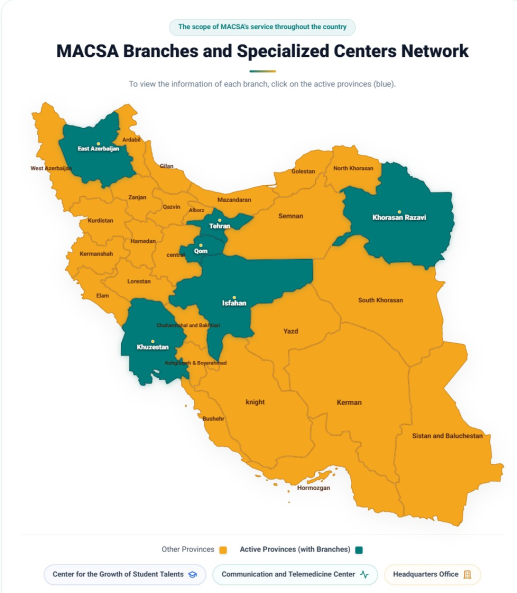
4.1.3 The MACSA website (translated using Google translate) has an interactive map that shows the MACSA branches and specialized centers network. It shows active branches in East Azerbaijan, Tehran, Qom, Isfahan, Khuzestan and Khorasan Razavi provinces.
4.2 Radiotherapy
4.2.1 Radiotherapy and associated treatments are available at the following facilities (see the relevant website for more information):
- Ayatollah-Khansari Education and Treatment Center, Markazi[footnote 95]
- Cancer Institute at the Imam Khomeini Hospital, Tehran[footnote 96]
- Hashemi Rafsanjani Super Specialty Hospital, Tehran[footnote 97]
- Jam Hospital, Tehran[footnote 98]
- Namazee Hospital, Shiraz[footnote 99]
- Negin Cancer Centre, Tehran[footnote 100]
- Sayyed al-Shohada Hospital, Isfahan[footnote 101]
- Shahid Faghihi Hospital, Shiraz[footnote 102]
4.3 Chemotherapy
4.3.1 Chemotherapy and associated treatments are available at the following facilities (see the relevant website for more information):
- Jam Hospital, Tehran[footnote 103]
- Negin Cancer Centre, Tehran[footnote 104]
- Sayyed al-Shohada Hospital, Isfahan[footnote 105]
- Shahid Faghihi Hospital, Shiraz[footnote 106]
4.4 Anti-cancer drugs
4.4.1 The Landinfo 2024 report stated:
‘When it comes to cancer medicine, we do not have specific information on whether certain patient groups experience greater problems than others. A local medical expert checked the availability of 52 drugs used in cancer treatment in January/February 2024. The expert found that 48 of them were available in pharmacies in Tehran, without specifying how easy or difficult it was to obtain them. The four drugs that were not available are also not listed in the Iranian Pharmacopoeia, i.e. the state-authorized catalog of drugs that are in common use in the country ([according to a l]ocal medical expert [in] Iran [in] 2024). Such drugs can be ordered from abroad, but then the patient must cover all the costs themselves – health insurance does not cover either the medicine or the import costs. The orders must also be approved by the Ministry of Health.’[footnote 107]
4.4.2 See also Availability and accessibility to medical treatment and drugs.
4.5 Lung cancer
4.5.1 CPIT was not able to find specific information about the availability of treatment for lung cancer within the sources consulted (see Bibliography).
4.6 Breast cancer
4.6.1 Breast cancer treatments are available at the following facilities (see the relevant website for more information):
- Amir Oncology Hospital, Shiraz[footnote 108]
- Hashemi Rafsanjani Super Specialty Hospital, Tehran[footnote 109]
- Imam Khomeini Hospital, Tehran[footnote 110]
- Jam Hospital, Tehran[footnote 111]
- Motamed Cancer Institute, Tehran[footnote 112]
- Namazee Hospital, Shiraz[footnote 113]
4.6.2 In December 2024, Homa Hemati and others from the Department of Pharmacoeconomics and Pharmaceutical Administration at the Tehran University of Medical Sciences, published an article entitled ‘Cost-Utility Analysis of Trastuzumab-Emtansine Versus Trastuzumab for the Treatment of Residual Invasive HER-2-Positive Breast Cancer in Iran’, which stated:
‘Breast cancer is one of the most common types of cancer in women, and its incidence is increasing in Iran
‘… In Iran, treatment costs for breast cancer vary depending on the disease stage, averaging approximately 222.17$ [£165 GBP], 224.61$ [£167 GBP], 316.51$ [£236 GBP], and 828.52$ [£618 GBP] per patient for stages I through IV, respectively.
‘… Iranian experts estimated a total of 12,684 patients with breast cancer in Iran, with 95% of these patients having access to medical treatment.’[footnote 114]
4.7 Brain cancer
4.7.1 The Jam Hospital in Tehran has a neurosurgery Clinic offering treatment for neuro-oncology in a variety of malignancies.[footnote 115]
4.7.2 CPIT was not able to find any further specific information about the availability of treatment for brain cancer within the sources consulted (see Bibliography).
4.8 Liver cancer
CPIT was not able to find any specific information about the availability of treatment for liver cancer within the sources consulted (see Bibliography)
4.9 Cervical cancer
4.9.1 The Vali Asr Hospital, part of the Imam Kohmeini Hospital complex and the University of Tehran offers a gynaecological oncology department.[footnote 116]
4.9.2 CPIT was not able to find any further specific information about the availability of treatment for cervical cancer within the sources consulted (see Bibliography).
4.10 Cancer of the head and neck
4.10.1 The Imam Khomeini Hospital, part of the University of Tehran, has an oncology department with education and a fellowship in head and neck surgery.[footnote 117]
4.10.2 The Khalili Hospital, part of the University of Shiraz, offers Neck and Facial cancer surgery.[footnote 118]
4.10.3 CPIT was not able to find any further specific information about the availability of treatment for cancer of the head and neck within the sources consulted (see Bibliography).
4.11 Urological cancers
4.11.1 The Hazrate Ali-Asghar Hospital, part of the University of Shiraz, offers endourology and urologic oncology surgery for treating adrenal, bladder, cancer, prostate and testicular cancers.[footnote 119]
4.11.2 CPIT was not able to find any further specific information about the availability of treatment for urological cancers within the sources consulted (see Bibliography).
4.12 Gastroenterological cancers
4.12.1 CPIT was not able to find any specific information about the availability of treatment for gastroenterological cancers within the sources consulted (see Bibliography).
4.13 Bone and skin cancers
4.13.1 CPIT was not able to find any specific information about the availability of treatment for bone and skin cancers within the sources consulted (see Bibliography).
Colorectal cancers
4.14.1 CPIT was not able to find any specific information about the availability of treatment for colorectal cancers within the sources consulted (see Bibliography).
4.15 Blood cancers
4.15.1 The Imam Khomeini Hospital, part of the University of Tehran, has an oncology department with a subspecialty in blood. It has pathobiology genetics and immunohistochemistry laboratories.[footnote 120]
4.15.2 The Jam Hospital in Tehran has a haematology and oncology clinic for the treatment of primary and metastatic cancers that affect organs, muscles bones and other tissues as well as blood disorders including blood and bone marrow cancers.[footnote 121]
4.15.3 CPIT was not able to find any further specific information about the availability of treatment for blood cancers within the sources consulted (see Bibliography).
5. Cardiovascular diseases
5.1 Cardiology
5.1.1 Cardiology treatments are available at the following facilities (see the relevant website for more information):
- Amir-al-Momenin hospital, Arak[footnote 122]
- Amir-Kabir hospital, Arak[footnote 123]
- Hashemi Rafsanjani Super Specialty Hospital, Tehran[footnote 124]
- Jam Hospital, Tehran[footnote 125][footnote 126]
- Mortaz Hospital, Yazd[footnote 127]
- Namazee Hospital, Shiraz[footnote 128]
- Pars Hospital, a Private hospital in Tehran[footnote 129][footnote 130]
- Shafa Hospital, Khorramabad[footnote 131]
5.1.2 In May 2025, Fereshte Karimi and others from the Department of Health Management and Economics at the University of Tehran, published the article entitled ‘Impact of IRAN’S Package of Essential Non‑communicable Disease (IRAPEN) on cardiovascular disease risk’, which stated:
‘Based on the latest data, in Iran, CVD [cardiovascular disease] has caused … 30% of all deaths in 2019.
‘… In Iran, the Ministry of Health has been implementing a 10-next-year risk assessment and management program for the occurrence of fatal and non-fatal cardiovascular disease since 2015, simultaneously with the Health Transformation Plan in the deputy health department. According to this program, decisions about preventive and therapeutic interventions for high-risk groups should be made based on the estimation of the 10-next year risk of cardiovascular attacks.
‘This program is part of a larger plan (Package of Essential Non-Communicable Disease: IRAPEN) and carried out at the Primary Health Care (PHC) level.
‘… Despite the success of the IRAPEN program in the country, this program still has challenges such as lack of coordination between departments, lack of adaptation of the network system to the needs of patients, lack of an integrated information system, and instability of financial resources.’[footnote 132]
5.2 Drugs used to treat high blood pressure and cholesterol levels
5.2 For a list of drugs prescribed for high blood pressure and cholesterol see Annex H: Commonly prescribed drugs in Iran.
5.3 Drugs used to treat blood clots
5.3.1 In November 2024, Satar Rezaei and others from the Kermanshah University of Medical Sciences, published an article entitled ‘Cost-effectiveness analysis of anticoagulation options for non-valvular atrial fibrillation in Iran’, which included the following table of the costs of anticoagulation drugs from Iran’s Food and Drug Administration (FDA) website:
| Warfarin | 1,755 USD [£1311 GBP] |
|---|---|
| Apixaban | 2,113 USD [£1578 GBP] |
| Rivaroxaban | 2,207 USD [£1648 GBP] |
| Dabigatran 150 mg | 2,310 USD [£1725 GBP] |
| Dabigatran 110 mg | 3,462 USD [£2586 GBP] |
5.4 Heart surgery
5.4.1 Hearth surgery is available at the following facilities (see the relevant website for more information):
- Al-Zahra and Shahid Hejazi Hospital, Shiraz.[footnote 134] On the webpage for the hospital, last updated 31 May 2022 it stated that ‘These Hospitals were built in a district where low-income residents constitute a majority, therefore, to provide charity health care to the inhabitants.’[footnote 135]
- Jam Hospital, Tehran[footnote 136]
- Shafa Hospital, Khorramabad[footnote 137]
- Shahid Faghihi Hospital, Shiraz[footnote 138]
5.4.2 The Nodeh Gasht Aram (NGA) Medical Tourism (a health tourism facilitator company)[footnote 139] website stated:
‘More than 55 years have passed since the first modern heart surgery in Iran. In the last half century, in Iran, heart surgery has made significant progress. Today, about 550,000 to 600,000 heart surgeries are performed annually in Iran. Valve surgery, coronary heart bypass and aorta surgery are the most common types of heart surgery performed in Iran.
‘Iran is currently a leader in the field of cardiology in the Middle East due to its significant progress in the field of diagnosis, treatment and cardiovascular surgery and the comprehensive expertise of Iranian cardiologists. Iranian heart surgeons are able to perform the most difficult, complex and risky cardiovascular operations, including open heart surgery and minimally invasive heart surgery, using modern technologies.
‘Due to the fact that Iran offers low-cost and affordable service and treatment packages, countless heart patients from all over the world have become significantly interested in traveling to Iran for heart surgery…
‘Today, about 100 heart transplants are performed annually in several hospitals in Iran.’[footnote 140]
6. Endocrine conditions including diabetes and thyroid diseases
6.1.1 The Hashemi Rafsanjani Super Specialty Hospital in Tehran has an endocrinology clinic dedicated to the diagnosis, treatment, and monitoring of endocrine and hormonal disorders. Including:
- Diagnosis and treatment of thyroid disorders: such as hypothyroidism, hyperthyroidism, goiter and thyroid nodules.
- Diabetes management and control:
- Evaluation and treatment of hormonal disorders: related to the pituitary gland, adrenal glands and other endocrine disorders.
- Hormonal monitoring in cancer patients
Services include
- Endocrine function assessment
- Hormonal regulation and stabilization
- Screening
- Management of complex metabolic disorders such as hormonal obesity, lipid disorders and metabolic syndromes
- Monitoring hormonal response to medical treatments
- Treatment of growth and puberty disorders
- Hormone-related fertility disorders[footnote 141]
6.1.2 Endocrine investigation and associated treatments are available at the following facilities (see the relevant website for more information):
- Amir-al-Momenin hospital, Arak[footnote 142]
- Jam Hospital[footnote 143][footnote 144]
- Motaz Hospital, Yazd[footnote 145]
- Namazee Hospital, Shiraz[footnote 146]
6.1.3 In November 2025, Iran International published an article entitled ‘Iran health official warns diabetes now emerging at age 20’, which stated: ‘Iran’s deputy health minister said on Thursday [13 November 2025], estimating that about 7.5 million people nationwide now live with the disease. … Only half of Iran’s estimated diabetic population, according to Raisi, is registered in the national health system.’[footnote 147]
6.1.4 In July 2026, Iran International published an article entitled ‘Insulin costs soar in Iran as insurance fails to keep up’ which stated:
‘Rising drug prices and lagging insurance coverage are pushing diabetes medication further out of reach in Iran, documents obtained by Iran International show, with one patient’s NovoMix FlexPen insulin payment rising more than 24-fold in less than two months.
‘The patient paid 1,592,500 rials [£0.87 GBP] for 15 insulin pens in early May. The same prescription, purchased from the same pharmacy in Tabriz on June 28, cost 39,092,500 rials [£21 GBP], an increase of about 2,355%.’[footnote 148]
6.1.5 See also Availability and accessibility to medical treatment and drugs.
7. Gastroenterology, liver diseases and liver transplants
7.1.1 The Hashemi Rafsanjani Super Specialty Hospital in Tehran has a gastroenterology and liver clinic that offers the following services:
- Upper GI Endoscopy: to detect problems such as gastroesophageal reflux, ulcers, inflammation and suspicious lesions
- Colonoscopy: to detect polyps, gastrointestinal bleeding, intestinal inflammation and colon cancer
- Screening for digestive tract cancers: early detection of stomach, colon, oesophagus, pancreas and liver cancers
- Inflammatory bowel disease treatment: Management of diseases such as Crohn’s and ulcerative colitis
- Examination and treatment of gastrointestinal bleeding: through endoscopic methods
- Specialized biopsy and sampling
- Specialised ultrasound of the liver and digestive system[footnote 149]
7.1.2 Gastroenterology investigation and associated treatments are available at the following facilities (see the relevant website for more information):
- Amir-al-Momenin hospital, Arak[footnote 150]
- Jam Hospital, Tehran[footnote 151][footnote 152]
- Namazee Hospital, Shiraz[footnote 153]
-
Negin Azadi Comprehensive Health Center, Tehran.[footnote 154] Further information about the services this facility offers can be found in Annex D.
- Shahid Faghihi Hospital, Shiraz[footnote 155]
8. Genetic conditions
8.1.1 The Landinfo 2024 report, citing various sources, stated:
‘Patients with thalassemia have had reduced access to necessary medicine for several years. Thalassemia is a hereditary condition that affects the hemoglobin in the red blood cells and causes anemia and accumulation of iron in the body. Import of the iron-regulating drug Desferal, as well as key ingredients for local production of substitute drugs, have decreased significantly after 2018, which is said to have increased the risk of complications and resulted in higher mortality. According to the head of the Iranian Thalassemia Association, around 1,100 patients have died due to lack of medicine since 2018, most of them children.
‘… Thalassemia is particularly prevalent in Iran, especially in Sistan and Baluchistan Province. In 2019, there were 23,000 registered patients in the country.’[footnote 156]
8.1.2 The Shahid Dastgheib Hospital, part of the University of Shiraz, has a genetic counselling and testing centre for prenatal diagnosis of thalassemia and haemophilia.[footnote 157]
9. Gynaecology and obstetrics
9.1.1 Gynaecology and obstetrics and associated treatments are available at the following facilities (see the relevant website for more information):
- Hafez Hospital, Shiraz[footnote 158]
- Hazrate Zeinab Hospital, Shiraz[footnote 159]
- Jam Hospital, Tehran[footnote 160][footnote 161]
- Mortaz Hospital, Yazd[footnote 162]
- Namazee Hospital, Shiraz[footnote 163]
- Shafa Hospital, a private hospital in Khorramabad.[footnote 164] On the hospital webpage for obstetrics and gynaecology it stated that ‘It should be noted that natural childbirth is performed for free in Shafa Hospital.’[footnote 165]
- Shahid Faghihi Hospital, Shiraz[footnote 166]
- Shooshtari Hospital, Shiraz[footnote 167]
- Talegahani Maternity Hospital, Arak[footnote 168]
- Vali Asr Hospital, Tehran[footnote 169]
10. HIV/AIDS
10.1.1 In February 2023, Hesam Ghiasvand and others from the University of Warwick, UK, published an article entitled ‘Economic Burden of HIV/AIDS in Iran: A Modelling Approach’, which stated: ‘In Iran, in line with many other WHO member states, Antiretroviral Therapy (ART) is the government’s main national free-of-charge plan to manage HIV/AIDS … In Iran, there is a national plan for controlling HIV/AIDS across the country, and the country’s Ministry of Health leads the efforts to tackle this problem.’[footnote 170]
10.1.2 In January 2024, Mehdi Sharafi and others from the Hormozgan University of Medical Sciences, published an article entitled ‘Factors associated with late initiation of antiretroviral therapy in Iran’s HIV/AIDS surveillance data’, which stated:
‘Despite a decrease in new HIV cases worldwide, the number is increasing in Iran. UNAIDS [a joint United Nations Programme on HIV and AIDs[footnote 171]] estimates indicate 59,000 People Living With HIV (PLWH) in Iran, with 4100 new cases and 2500 AIDS-related deaths annually.
‘Additionally, despite attempts, approximately two-thirds and one-third of HIV patients in Iran are diagnosed late and in advanced disease, respectively.
‘Although injecting drug use (IDU) is still the most common transmission route, Iran’s HIV epidemic is shifting toward sexual contact.’[footnote 172]
10.1.3 In June 2024, UNAIDS published a ‘call for application’ entitled ‘Providing 500,000 HIV Rapid Test Kits to Iran to Strengthen National HIV Response’, which stated:
‘Only 51% of Iran’s estimated HIV population of 46,000 is aware of its HIV status, of which 72% is receiving antiretroviral therapy.
‘… Although Iran’s National AIDS Control Programme provides HIV testing free-of-charge for all through various testing approaches (client- and provider-initiated testing and counselling, routine antenatal testing, community-based testing and counselling, lay provider testing, self-testing (pilot), and assisted partner notification/index testing) to promote uptake of HIV testing services, only half the estimated HIV population is thought to be aware of its HIV status. This issue has been compounded by a shortage of rapid diagnostic kits in recent years.’[footnote 173]
10.1.4 In February 2025, Keyvan Karimi and others from the Non-Communicable Diseases Research Center at the Tehran University of Medical Sciences, published an article entitled ‘Assessing HIV transmission knowledge and rapid test history among the general population in Iran’, which stated: ‘Iran is among the 30 fast-track countries identified by UNAIDS, collectively responsible for 89% of all new HIV infections worldwide. The situation in Iran remains concerning, with an estimated 46,000 people living with HIV (PLWHs) in 2023, 17 years after the country reported its first HIV case … [K]nowledge gaps about HIV transmission persist in Iran, and a considerable proportion of PLWH remain undiagnosed.’[footnote 174]
10.1.5 The UNHRC 2025 report stated that ‘On 22 November 2024, the Ministry of Health and Medical Education announced that HIV treatment would … be free of charge.’[footnote 175]
11. Haematological conditions
11.1.1 Haematology investigation and associated treatments are available at the following facilities (see the relevant website for more information):
- Hashemi Rafsanjani Super Specialty Hospital, Tehran[footnote 176]
- Sayyed al-Shohada Hospital, Isfahan[footnote 177]
- Shahid Dastgheib Hospital, Shiraz[footnote 178]
- Shahid Faghihi Hospital, Shiraz[footnote 179][footnote 180]
- Vali Asr Hospital, Tehran[footnote 181]
12. Lung diseases including tuberculosis (TB)
12.1.1 Tuberculosis and other lung disease treatment are available at the following facilities (see the relevant website for more information):
- Amir-al-Momenin Hospital, Arak[footnote 182]
- Hashemi Rafsanjani Super Specialty Hospital,Tehran[footnote 183]
- Hazrate Ali-Asghar Hospital, Shiraz[footnote 184]
- Jam Hospital,Tehran[footnote 185]
- Shafa Hospital, Khorramabad[footnote 186]
- Shahid Faghihi Hospital, Shiraz[footnote 187]
- Mashid Daneshvari Hospital, Khuzestan[footnote 188]
13. Nephrology (kidney diseases) and other urological conditions
13.1 General
13.1.1 Kidney disease and treatment for other urological conditions are available at the following facilities (see the relevant website for more information):
- Amir-al-Momenin Hospital, Arak[footnote 189]
- Emitiyaz Hospital and Shahid Rajaee Surgery Emergency Centre Shiraz[footnote 190]
- Hashemi Rafsanjani Super Specialty Hospital, Tehran[footnote 191]
- Jam Hospital, Tehran[footnote 192]
- Mortaz Hospital, Yazd[footnote 193]
- Shahid Faghihi Hospital, Shiraz[footnote 194]
13.2 Dialysis
13.2.1 Dialysis is available at the following facilities (see the relevant website for more information):
- Hazrate Ali-Asghar Hospital, Shiraz[footnote 195]
- Namazee Hospital, Shiraz[footnote 196]
- Pars Hospital, Tehran[footnote 197]
- Shafa Hospital, Khorramabad[footnote 198]
- Shahid Faghihi Hospital, Shiraz[footnote 199]
13.3 Kidney transplants
13.3.1 The Namazee Hospital, part of the University of Shiraz offers kidney transplantation and urology surgery.[footnote 200]
14. Neurological conditions including epilepsy
14.1.1 Treatment for neurological conditions is available at the following facilities (see the relevant website for more information):
- Emitiyaz Hospital and Shahid Rajaee Surgery Emergency Center, Shiraz[footnote 201]
- Hafez Hospital, Shiraz[footnote 202]
- Hashemi Rafsanjani Super Specialty Hospital[footnote 203]
- Jam Hospital, Tehran[footnote 204][footnote 205][footnote 206]
- Mortaz Hospital, Yazd[footnote 207]
- Namazee Hospital, Shiraz[footnote 208]
- Pars Hospital, Tehran[footnote 209]
- Shafa Hospital, Khorramabad[footnote 210]
- Shahid Faghihi Hospital, Shiraz[footnote 211]
15. Orthopaedics, rheumatology and musculoskeletal conditions
15.1.1 Orthopaedic, rheumatology and musculoskeletal treatments are available at the following facilities (see the relevant website for more information):
- Hashemi Rafsanjani Super Specialty Hospital, Tehran[footnote 212]
- Jam Hospital, Tehran[footnote 213]
- Mortaz Hospital, Yazd[footnote 214]
- Shafa Hospital, Khorramabad[footnote 215] [footnote 216] [footnote 217]
- Shahid Chamran Hospital, Shiraz[footnote 218]
16. Reconstruction and plastic surgery including burns
16.1.1 The Amir-al Moemenin Hospital, part of the University of Shiraz has an advanced burn care unit including a children’s burns ward, reconstructive surgery and plastic surgery, as well as a chronic and acute wound care clinic, skin allograft and auto skin-graft surgery and skin transplants.[footnote 219] On the webpage for the hospital, last updated 5 September 2022, it stated that ‘[The hospital is] the largest and most advanced burn care and treatment hospital in southern Iran.’[footnote 220]
17. Antibiotic medication
17.1.1 In June 2026, Nabizadeh Azita and others from the Iran Food and Drug Administration and University of Tehran, published an article entitled ‘Cost, availability and affordability of antibiotics in Islamic Republic of Iran’, which stated that ‘The Iran Food and Drug Administration (IFDA) reported an increase in national antimicrobial consumption from 51.60 defined daily doses (DDD) per 1000 in habitants per day (DID) in 2020 to 67.4 DID in 2022, with watch group use increasing from 49.4% to 53.1%.’[footnote 221]
17.1.2 The WHO defines the watch group of antibiotics as antibiotics with a higher risk of antimicrobial resistance.[footnote 222]
17.1.3 A June 2026 study published by the WHO Eastern Mediterranean Regional Office (WHO EMRO), based on antibiotic consumption data from all 248 teaching hospitals in Iran between March 2023 and March 2024, found that ceftriaxone and cefazolin were the most frequently used antibiotics, followed by meropenem and vancomycin. Other antibiotics that were consumed include clindamycin, metronidazole, cefalexin, ciprofloxacin, and levofloxacin.[footnote 223]
17.1.4 See also Availability and accessibility to medical treatment and drugs.
18. Pain relief medication and treatment
18.1.1 The Jam Hospital in Tehran has a pain clinic for the treatment of acute and chronic neuromuscular diseases such as back pain, neck pain, scoliosis, congenital abnormalities, various types of arthritis, and post-chemotherapy cancer pain and palliative care.[footnote 224]
18.1.2 In March 2023, the Press TV published an article entitled ‘Iran self-sufficient in making active ingredient of acetaminophen’ which stated that ‘Iran has announced self-sufficiency in making the active ingredient needed to manufacture acetaminophen drugs [known as paracetamol in the UK[footnote 225]] amid efforts in the country [to] cut back reliance on foreigners for medical supplies.’[footnote 226]
18.1.3 See also Palliative (end of life) care and Availability and accessibility to medical treatment and drugs.
19. Dermatology and skin diseases
19.1.1 The Hashemi Rafsanjani Super Specialty Hospital in Tehran has a dermatology clinic for the treatment of skin cancer and inflammatory skin diseases.[footnote 227]
20. Dental treatment and conditions
20.1.1 Dental treatments are available at the following facilities (see the relevant website for more information):
- Emitiyaz Hospital and Shahid Rajaee Surgery Emergency Center, Shiraz[footnote 228]
- Hashemi Rafsanjani Super Specialty Hospital, Tehran[footnote 229]
- Mortz hospital, Yazd[footnote 230]
- Shafa Hospital, Khorramabad[footnote 231]
20.1.2 The Iran Health Agency website provided the following information regarding the range of dental-care treatment available in Iran:
‘Diagnostic and Preventive Services
- Oral Exams: Check for dental health problems and develop treatment plans
- Teeth Cleaning: Removes plaque and tartar to prevent gum disease
- X-rays: Takes images of teeth and jaws to evaluate dental health
- Fluoride Treatment: Coats teeth to prevent cavities and make enamel stronger
- Sealants: Thin plastic coatings put on chewing surfaces of back teeth to avoid decay
- Dental Veneers
- Restorative Services
- Endodontic Services
- Prosthodontic Services
- Orthodontic Services[footnote 232]
21. Ear, nose and throat conditions (ENT)
21.1.1 Treatments for ear nose and throat conditions are available at the following facilities (see the relevant website for more information):
- Amir-Kabir hospital, Arak[footnote 233]
- Emitiyaz Hospital and Shahid Rajaee Surgery Emergency Center, Shiraz[footnote 234]
- Jam Hospital, Tehran[footnote 235]
- Khalili Hospital, Shiraz[footnote 236]
- Mortaz Hospital, Yazd[footnote 237]
- Shafa Hospital, Khorramabad[footnote 238]
- Vali Asr Hospital, Tehran[footnote 239]
22. Eye conditions and diseases
22.1.1 Treatments for eye conditions and diseases are available at the following facilities (see the relevant website for more information):
- Amir-Kabir Hospital, Arak[footnote 240]
- Emitiyaz Hospital and Shahid Rajaee Surgery Emergency Center, Shiraz[footnote 241]
- Hazrate Ali-Asghar Hospital, Shiraz[footnote 242]
- Jam Hospital, Tehran[footnote 243]
- Khalili Hospital, Shiraz[footnote 244]
- Mortax Hospital, Yazd[footnote 245]
- Noor eye Hospital, Tehran[footnote 246] (for a list of prices see Annex G)
- Shafa Hospital, Khorramabad[footnote 247]
- Shahid Dastgheib Hospital, Shiraz[footnote 248]
- Shahid Faghihi Hospital, Shiraz[footnote 249]
23. Immunology and allergies
23.1.1 The Jam Hospital in Tehran has an immunology and allergy clinic for patients suffering from allergy and immunodeficiency disorders including respiratory allergies such as asthma and allergic rhinitis, gastrointestinal allergies (food allergies) and skin allergies (eczema and urticaria).[footnote 250]
23.1.2 The Immunology, Asthma and Allergy Research Institute (IAARI), part of the Children’s Medical Center in Tehran, has a specialised allergy laboratory offering allergy testing and screening.[footnote 251]
24. Palliative (end of life) care
24.1.1 In August 2024, Salman Barasteh with others from the Nursing Care Research Centre in Tehran, published a study entitled ‘Future scenarios of palliative care in health system of Iran: a multi-method study’, which stated:
‘In 2013, Iran’s Ministry of health (MOH), in line with its development plan, developed a comprehensive national program of palliative and supportive care for cancer in the country. Also with the establishment of the nursing deputy in MOH in 2013, this deputy developed counseling centers, nursing services at home, the regulations for long-term care centers and hospices and long-term care centers and planned a pilot plan for the establishment of PC [Palliative Care] for cancer patients for 4 volunteer centers, and compiled home care service packages for insurance coverage.
‘However, PC services are still in their infancy and are available only in a limited center in major cities. In Iran, most people and their families prefer to receive health services at home, but near death, they tend to receive these services in hospitals. The expansion of PC in Iran is faced with challenges such as weak coherent governance, weak infrastructure, weak awareness of society, and poor supply of narcotic drugs.
‘… In Iran, as one of the countries of [the] EMR [Eastern Mediterranean Region], palliative care is inaccessible to most people in need.’[footnote 252]
24.1.2 In 2025 the Atlantes Global Observatory of Palliative Care, part of the University of Navarra, Spain and partnered with the WHO[footnote 253], published an Iran country report which stated:
‘In Iran, several charities and NGOs promote the rights of patients in need of palliative care, together with their caregivers and survivors … The main academic hub for palliative care is at the Cancer Institute, the country’s largest referral center, which runs a clinic, consult services, a dedicated ward, and tele-palliative care, currently led by two palliative medicine specialists and a fellow resident.
‘… In Iran, there are currently no national policies or guidelines that specifically address advance care planning (ACP) for medical decisions regarding life-sustaining treatment or end-of-life care.
‘… More than a decade ago, a national palliative care programme was developed within the Ministry of Health and Medical Education (MoHME), though it has not yet been fully implemented. Nevertheless, significant regulatory progress has been made, particularly regarding the establishment of outpatient palliative care centres for cancer patients.
‘… Efforts to integrate palliative care into primary health care (PHC) in Iran have included research aimed at developing appropriate service packages and models of care. This integration remains in its early stages, but ongoing dialogue between the Deputy of Nursing and the Deputy of Public Health at the MoHME reflects a growing institutional commitment to advancing this process.
‘… Palliative care is recognized as a priority within Iran’s MoH. The Support and Palliative Care Working Group of the Department of Health acts as the coordinating body and is a fully scientific entity.
‘… In Iran, immediate-release oral morphine (in liquid or tablet form) is generally not available at the primary care level. While injectable morphine is accessible for acute and urgent pain management, most opioid analgesics are classified as controlled substances and are primarily distributed through hospitals and specific outpatient facilities under the strict supervision of the Iran Food and Drug Organization (FDO). Community pharmacies typically do not dispense these medications, except for oral tramadol and certain codeine-containing combinations. Since 2016, oral oxycodone tablets have been authorised for limited distribution through select community pharmacies. Notably, immediate-release oral oxycodone is available at the primary care level, unlike morphine, highlighting a significant disparity in accessibility between these two opioids.
‘… There are two pediatric palliative care centers in the country. One of these, a well-developed facility, is situated at Mofid Pediatric Hospital.’[footnote 254]
25. Geriatric care
25.1.1 In February 2025, Khorshid Mobasseri and others from the Department of Geriatric Health at the Tabriz University of Medical Sciences, published a study entitled ‘Developing a comprehensive model of home-based long-term care for older people in Iran: a multi-method study’, which stated:
‘With the increasing aging population, the demand for care that fosters independence in older adults is rising. Complications from hospitalization and the preference for aging in place highlight the need for geriatric home care systems.
‘… Healthcare at home is provided by trained professionals, such as nurses or healthcare workers, and includes nursing and medical services focusing primarily on clinical care. Family care primarily involves non-specialized support. However, geriatric care systems in Iran have not been comprehensively developed. The existence of various layers of care — both formal (including nurses and care centers) and informal (such as home services and family support) — necessitates evaluation and standardization to enhance the quality and accessibility of these services.
‘… In relation to the services provided to older adults, many areas of care, including home care, remain insufficient, and there is no comprehensive program focused on geriatric care. Long-term care is primarily provided by informal caregivers (families), and organized specialized and non-specialized services for the aging population are lacking. Moreover, despite the global community’s increasing attention to senior health in recent decades, there are still no comprehensive programs for specialized and non-specialized formal care for older adults living at home in our country.’[footnote 255]
25.1.2 In June 2026, the Tehran times published an article entitled ‘Welfare Organization, WHO discuss ways to address future of care for elderly’, which stated:
‘By 2050, nearly 30 percent of the Iranian population is projected to be over the age of 60, a demographic shift that brings a host of challenges.
‘ICOPE [integrated care for older people] is grounded in the concept of healthy ageing, with a focus on developing and maintaining the functional abilities that enable well-being in older age. It promotes a community-based approach that reorients care away from a narrow focus on diseases towards an integrated, person-centered system.
‘… [T]he ICOPE care handbook … streamlines the care pathway into four essential phases – basic assessment in the community, in-depth assessment in primary care, development of a personalized care plan and continuous monitoring.
‘… The Welfare Organization … has launched community-based rehabilitation (CBR) projects in less privileged and remote areas where access to welfare services is limited … The project has so far covered 95 percent of the rural areas, and is planned to cover 30 percent of urban areas, as well.
‘According to [Mohammad-Javad] Hosseini [the head of the Welfare Organization], the Welfare Organization has validated some 300 elderly day-care centers in cooperation with the national standard organization, and it is planning to establish new elderly service centers such as the elderly villages and elderly social health towns.
‘Prevention of disability in old age, home rehabilitation, home care services, and livelihood assistance for the elderly with severe disabilities are among other programs of the organization. The financial assistance has increase[d] by 80 percent for nursing and 100 percent for home visit services.
‘The Welfare Organization has started to implement a forty-day training program for old people to improve their quality of life.
‘The program includes 240 different educational subjects such as health, life skills, arts, communication skills, digital and entrepreneurship, music, sports, games, and other leisure activities.
‘… So far, 19 cities in the country have taken necessary measures to develop age-friendly communities. These cities are located in different provinces, including Tehran, Gilan, Yazd, Isfahan, East Azarbaijan, West Azarbaijan, Lorestan, Hamedan, Khuzestan, and Bushehr.
‘Age-friendly communities are places where age is not a barrier to living well and where the environment, activities, and services support and enable older people to have opportunities to enjoy life and feel well.’[footnote 256]
26. Residential care for people with disabilities
26.1.1 In October 2022, Marzieh Shirazikhah and others from the University of Social Welfare and Rehabilitation Sciences in Tehran published a study entitled ‘Availability of Physical Rehabilitation Facilities for People with Disabilities in Iran: A Comparative Study on Universal Health Coverage’, which stated:
‘Iran, like many other countries, has committed to providing universal and equal access to health care and rehabilitation for people with disabilities by joining the Convention on the Rights of People with Disabilities.
‘… Universal health coverage means that all people have access to the health services they need, when and where they need them, without financial hardship.
‘… Infrastructures for outpatient rehabilitation in Iran included rehabilitation, physical medicine and rehabilitation, physiotherapy, occupational therapy, speech therapy, audiology, optometry, orthotic and prosthetic, and daycare centers. There were 1.7 rehabilitation centers per million populations in 19 out of the 31 provinces in Iran, with the provinces of Isfahan, Yazd, Golestan, Hamedan, and Tehran having the highest number of these centers, respectively. The remaining provinces did not have any rehabilitation centers and only had an average of 3.8 physical medicine and rehabilitation centers per million populations, with the provinces of Fars, Tehran, Isfahan, East Azarbaijan, and Qom having the highest number of these centers, respectively. Five of the provinces did not have any physical medicine centers.
‘There were physiotherapy, optometry, audiology, occupational therapy, speech therapy, orthotic and prosthetic, and daycare centers with an average of 42.6, 16.4, 10.5, 8.2, 8.1, 4.5, and 11.7 per million population, respectively. Regarding community-based rehabilitation (CBR), the country provided rehabilitation home care services with an average of two centers per million population in the all the [sic] provinces, medical rehabilitation home care services with an average of 0.3 centers per million population (24 of the provinces had no centers), rehabilitation nursing home care services with an average of 1.6 centers per million population (six of the provinces had no centers), and CBR units with an average of 15.9 units per million population, and long-term care centers with an average of 4.1 centers per million population.
‘… Moreover, the limited rehabilitation centers in Iran suffer from an improper distribution, causing unequal access to rehabilitation services,
‘… In Iran, CBR services are provided through home rehabilitation services (under the supervision of the State Welfare Organization), medical rehabilitation home care, and home rehabilitation nursing care (under the supervision of the Ministry of Health and Medical Education).
‘… In Iran, long-term rehabilitation care is provided to the elderly and people with disabilities in the form of residential care services.’[footnote 257]
27. Addiction treatment
27.1.1 Addiction treatment is available at the following facilities (see the relevant website for more information):
- Ibn-e-Sina Hospital, Shiraz[footnote 258]
- Namazee Hospital, Shiraz[footnote 259]
27.1.2 On the website for the Iranian National Center for Addictions Studies (INCAS), it lists clinics for:
- Opiate addiction treatment
- Alcohol addiction treatment
- Stimulant addiction treatment
- Behavioural addiction treatment[footnote 260]
27.1.3 In May 2024, the United Nations Office on Drugs and Crime (UNODC) published the report entitled ‘UNODC Iran Supports improving Health Conditions of Inmates’ which stated:
‘Iran faces a grave challenge in the drug abuse, grappling with one of the highest rates of opiate use worldwide, alongside a significant prevalence of amphetamine-type stimulant abuse. In response, opioid substitution therapy (OST) has emerged as a proven intervention, replacing illicit drug use with medically prescribed, orally administered opiates such as buprenorphine and methadone. While methadone maintenance therapy has been the cornerstone of OST for the past two decades, the introduction of buprenorphine in recent years calls for a comparative research study to gauge their effectiveness in this unique setting.
‘With the support of UNODC Iran, the Iranian Drug Control Headquarters, and the Iranian Prisons Organization, and the Iranian National Center for Addiction Studies (INCAS), functioning as the implementing and technical agent, conducted a two-day training program for research assistants.’[footnote 261]
27.1.4 In June 2024, Bijan Pirina from the Bijan Center for Substance Abuse Treatment in Tehran, published an article entitled ‘Opioid agonist treatment in Iran after an opium poppy ban in Afghanistan’ which stated:
‘The prevalence of the use of opium and residual opium juice (shireh) has been reported as 150 cases and 660 cases per 100 000 people, respectively. Opioid agonist treatment has substantially reduced the health damage caused by drugs in Iran, and is estimated to be able to prevent a quarter of the deaths in people who inject opioids over the next 20 years. However, despite the existence of numerous opioid agonist treatment centres in Iran, only 31% of people with opioid use disorder have received opioid agonist treatment.’[footnote 262]
27.1.5 In February 2026, the same author published an article entitled ‘Drug policies in Iran and Afghanistan’ in the Lancet medical journal. It stated that ‘Opioid use disorder, one of the most serious health challenges in Iran, is successfully managed in outpatient clinics with harm reduction strategies such as opioid agonist treatment, involving maintenance treatment with methadone, opium tincture, buprenorphine, and buprenorphine–naloxone.’[footnote 263]
28. Mental healthcare
28.1.1 Mental healthcare treatment is available at the following facilities (see the relevant website for more information):
- Ibn-e-Sina Hospital, Shiraz[footnote 264]
- Jam Hospital, Tehran[footnote 265]
- Ostad Moharary Neuropsychiatric Hospital, Shiraz[footnote 266]
- Shafa Hospital, Khorramabad[footnote 267]
28.1.2 In January 2025, Hashem Rastegar from the Department of Health Policy & Management at Tabriz University of Medical Sciences with others published the article entitled ‘The dynamics of mental health policy in Iran over the last century’ which stated:
‘The prevalence of mental disorders has increased from 21% in 1999 to 31·7% in 2015. In 2019, mental and substance use disorders accounted for 1.9% of total DALYs (disability-adjusted life-year). Depression, anxiety disorders, and bipolar disorders were the mental and behavioural disorders that had the greatest impact on the age-standardized DALY rate. Although the observed increase in the burden of mental disorders in Iran (77%) has been higher than the general increase in the world (55%), it has been lower than the WHO Eastern Mediterranean region countries (114%). In recent years, a number of significant developments have occurred in the realm of mental health policy. Among these, the promotion of mental health indicators, as outlined in the Fifth Economic, Social and Cultural Development Plan of the Islamic Republic of Iran in 2012 and general health policies in 2014, and the inclusion of mental health and substance abuse prevention in the 2014 Health Transformation Plan stand out as particularly noteworthy. The Ministry of Health is responsible for defining, implementing and monitoring mental health programmes. The State Welfare Organization, the main provider of social services in Iran, targets mental health as well. The organization emphasizes the empowerment of individuals and families and improving mental health in communities. The national mental health organizations, Emdad Relief Organization, Prisons and Corrective Measures Organization, Ministry of Youth and Sports, Ministry of Education, The Police Force and a variety of NGOs provide similar services.
‘… In September 2022, a new support measure was introduced in the form of a special fund for individuals with severe mental illness and other special and incurable diseases. This fund has been implemented by health insurance and social security organizations, and individuals with basic insurance and those with special and incurable medical conditions are eligible to receive benefits. To financially protect chronic mental patients, as one of the main beneficiaries of this fund, fundamental steps were taken. These patients were exempted from paying the deductible during hospitalization in a psychiatric hospital. Additionally, the national accreditation standards for Iranian hospitals incorporated considerations related to financial assistance. To further enhance support, the Iran Ministry of Health and Medical Education approved instructions for economic assistance for patients in medical centers and supporting individuals with special, rare, and incurable diseases.’[footnote 268]
28.1.3 The Finnish Immigration Service 2025 report stated:
‘According to the 2025 surveys conducted by the MedCOI [Medical Country of Origin Information] service of the European Union Agency for Asylum (EUAA), mental health treatment is available in Tehran, including for anxiety disorders, depression and psychosis, provided by psychiatrists and psychologists in outpatient and inpatient settings. In addition, psychotherapy services, eye movement therapy, psychiatric support services and housing, support services for those attempting suicide and, if necessary, involuntary treatment are available in Tehran. According to the EUAA, certain antipsychotic and antidepressant medications are available in pharmacies in Tehran, but some of the requested antipsychotic medications have availability problems or have to be ordered from abroad.
‘… Iran’s social security system has also been expanded to include public mental health services under health insurance, and people with chronic mental health disorders can receive benefits.
‘… The use of mental health services is relatively low, with only one-third of people with mental health disorders receiving treatment. This is attributed to ignorance, stigma, and discrimination against patients.’[footnote 269]
28.1.4 The Commonwealth Fund 2026 webpage stated:
‘Mental health is a growing public health priority. An estimated one-fifth of the population has a mental health or substance use disorder, and these collectively account for nearly 10 percent of the national disease burden.
‘… The Comprehensive Mental and Social Health Services initiative (SERAJ) aims to provide integrated care across three levels: mental health screening and counseling in primary health care centers, specialized treatment through CMHCs [community mental health centres] and psychiatric hospitals, and community-based social support initiatives.’[footnote 270]
28.1.5 In May 2026, the Austrian centre for COI and asylum research and documentation (ACCORD) published a COI query response on the ‘Treatment and care situation of mentally ill persons who are not (fully) legally competent’. The response, which has been translated using AI, noted that one example of the impact of the expansion of Iran’s social security system to include public mental health services under health insurance (see paragraph 28.1.3) ‘… inpatients would no longer have to pay a co-payment due to the latest expansions.’[footnote 271]
28.1.6 The ACCORD COI response also stated: ‘According to a study by MedCOI, health insurance covers 20-80% of treatment and medication costs in public institutions, depending on the type of insurance.’[footnote 272]
28.1.7 In June 2026, the WHO published a report entitled ‘Middle East Escalation of Conflict, Global external situation report #9’ which stated that ‘WHO is also strengthening mental health and psychosocial services (MHPSS), with 250 health workers trained across 29 provinces, 87 peer-support sessions reaching approximately 4,700 health workers, and individual psychological support provided to around 300 health workers, while supporting the integration of MHPSS into primary health care services.’[footnote 273]
Annex: Hospitals and services across Iran
List of hospitals and services in Tehran
The below table has been compiled by CPIT based on information listed on the TopIranianHospitals website.[footnote 274]
| Hospital name | Location | Services provided |
|---|---|---|
| Apadana Hospital | Tehran | Orthopaedics; urology; paediatrics; plastic surgery; cardiovascular care; ENT [Ear, Nose and Throat]; neurology; pulmonology; internal medicine and digestive diseases |
| Ayatollah Taleghani Hospital | Tehran, Shahid Chamran Highway, Yemen St., Shahid Arabi St. | Plastic surgery; oral and maxillofacial surgery; obstetrics and gynaecology; dentistry; orthopaedics; gastroenterology; cell therapy; liver services; urology; paediatrics; infectious diseases; cardiovascular medicine; neurology; ENT; angiography and angioplasty; chemotherapy; nuclear medicine; physiotherapy; sports medicine; infertility; memory and nutrition clinics |
| Baqiyatallah Al-Azam Hospital | Tehran, Vanak Square, Molla Sadra St., after Sheikh Bahai St. | Neurology; rheumatology; pulmonology; orthopaedics; plastic surgery; paediatrics; ENT; cardiovascular medicine; obstetrics and gynaecology; ophthalmology; Iranian medicine; nephrology; psychiatry; physiotherapy; radiology; pathology; bone densitometry; CT angiography; mammography; nuclear medicine; heart and kidney transplantation; cochlear and corneal implantation; hair transplantation and cosmetic procedures |
| Bina Hospital | Tehran, Resalat Highway, between Sayad Shirazi and Imam Ali highways | Specialist ophthalmology; retina; cornea; glaucoma; strabismus; oculoplastics; optometry; ophthalmic surgery; cardiology and internal medicine support; nutrition; radiology; laboratory services |
| Day Hospital | Tehran, Valiasr St., corner of Shahid Abbaspour | Obstetrics and gynaecology; cardiac and vascular surgery; paediatrics and paediatric surgery; ENT; neurosurgery; pain medicine; orthopaedics; urology; plastic surgery; oncology; bone marrow transplantation; ophthalmology; neurology; infectious diseases; rheumatology; pulmonology; endocrinology; gastroenterology and liver; nephrology; endoscopy; angiography; colonoscopy; mammography; EEG |
| Farabi Hospital | Not stated on indexed directory page | Specialist and subspecialist services not specified on the indexed directory page |
| Ghayathi Hospital | Tehran, Ayatollah Saidi Highway, Shahid Bani St., Shahid Soleimani St. | ENT; paediatrics; orthopaedics; audiology; breast surgery; urology; dermatology; oncology; obstetrics and gynaecology; ophthalmology; neurology; nephrology; psychiatry; haemodialysis; radiology; clinical pathology; physiotherapy; dentistry |
| Hazrat Fatima (S) Hospital | Tehran, Yousef Abad, Asadabadi St., 21st St., next to Shafaq Park | Oral and maxillofacial surgery; burns and reconstructive surgery; cosmetic surgery; orthodontics; cardiovascular medicine; speech therapy; rehabilitation; dermatology and laser; dentistry; neurology; radiology; laboratory services; physiotherapy; occupational therapy |
| Ibn Sina Hospital | Not stated on indexed directory page | Gastroenterology and liver; haematology and oncology; asthma, pulmonology and allergy; endocrinology; nephrology; rheumatology; ophthalmology; paediatrics and neonatology; infectious diseases; cardiovascular medicine; neurology; colorectal services; orthopaedics; dermatology, hair and cosmetic services; radiology; pathology; endoscopic services |
| Irfan Hospital | Tehran, Saadat Abad, between Sarv Crossroad and Shahrdari Blvd. | Paediatrics and neonatology; dermatology and laser; orthopaedic surgery; urological surgery; plastic and reconstructive surgery; obstetric and gynaecological surgery; spine surgery; cardiac surgery; neurosurgery; ENT surgery; pulmonology; oncology; geriatric medicine; rehabilitation; infertility and genetics; pathology; radiology; physiotherapy; laser and cosmetic services |
| Jam Hospital | Tehran, Motahari St., Fajr St. | Allergy and immunology; orthopaedics; paediatrics and neonatology; urology; dermatology and hair; cosmetic and plastic surgery; neurology; ophthalmology; pain clinic; rheumatology; pulmonology; women’s health and infertility; recurrent miscarriage; cardiovascular care; cardiac rehabilitation; nuclear medicine; radiology; pathology; dentistry; CT angiography; audiology; physiotherapy |
| Laleh Hospital | Tehran, Shahrak Gharb, Phase 5, Simaye Iran St. | Orthopaedics; advanced endoscopic surgery; obstetrics; ophthalmology; paediatrics; ENT; neurosurgery; gastroenterology; cardiac surgery; pulmonology; plastic and reconstructive surgery; endocrinology; rheumatology; dentistry; arrhythmia services; radiotherapy; physiotherapy; traditional medicine; angiography; mammography; fluoroscopy; OPG |
| Mofid Children’s Hospital | Tehran, Shariati St., above Hosseinieh Ershad | Paediatric neurology; infectious diseases; endocrinology; nephrology; rheumatology; orthopaedics; pulmonology; gastroenterology; cardiovascular medicine; neonatal care; spirometry; haematology; asthma and allergy; radiology; urodynamics; colonoscopy; haemodialysis; audiology; endoscopy |
| Moheb Kowsar Hospital | Tehran, Yousef Abad St., 23rd St., next to Shafaq Park | Obstetrics and gynaecology; neurology; kidney and urinary tract; gynaecological surgery; orthopaedics; pulmonology and endocrinology; paediatrics; cardiovascular medicine; ENT; pain clinic; nephrology; oncology; plastic surgery; sleep clinic; technical orthopaedics; radiology; physiotherapy and occupational therapy; endoscopy; colonoscopy |
| Rasoul Akram Hospital | Tehran, Sattarkhan, Niayesh St., corner of Mansouri St. | Orthopaedics; ENT; obstetrics and gynaecology; neurosurgery; paediatrics; cardiovascular medicine; dermatology and hair; physical medicine; ophthalmology; wound care; pulmonology; breast services; gastroenterology; endoscopy and colonoscopy; radiology; physiotherapy; speech and swallowing therapy; occupational therapy; audiology; nutrition; breastfeeding clinic; sports medicine |
| Shafa Yahyayan Hospital | Tehran, Baharestan Square, Mojahedin-e Eslam St. | Orthopaedics; neurosurgery; rheumatology; hip surgery; spine surgery; knee surgery; shoulder surgery; hand and peripheral nerve surgery; bone tumour surgery; radiology; ultrasonography; pathology; physiotherapy; occupational therapy; braces and technical orthopaedics |
| Shahid Hasheminejad Hospital | Tehran, Vali Asr St., above Vanak Square, Shahid Valinejad Alley | Urology; nephrology; endocrinology; infectious diseases; oncology; urology for patients with MS; haematology; vascular surgery; gastroenterology; cardiology; paediatric urology; paediatric nephrology; wound clinic; ultrasonography; CT; urodynamics; radiology; pathology; dialysis |
| Shahid Rajaei Heart Hospital | Tehran, Vali Asr St., next to Mellat Park, Niayesh corner | Cardiovascular medicine; cardiovascular surgery; general surgery; thoracic surgery; neurology; infectious diseases; pulmonology; neurosurgery; radiology; nuclear medicine; cardiac rehabilitation; exercise testing; endoscopic services; physiotherapy; echocardiography; dentistry |
| Shahram Hospital (Sajad) | Tehran, Dr Fatemi St., Dr Fatemi Square, corner of Chehelston St. | Obstetrics and gynaecology; orthopaedics; oral and maxillofacial surgery; plastic and cosmetic surgery; haematology and oncology; pulmonology; dentistry; ophthalmology; dermatology, hair and beauty; gastroenterology; neurosurgery; kidney and urinary tract surgery; ENT; cardiovascular medicine; radiology; pathology; ultrasonography; physiotherapy |
| Shahriar Hospital | Not stated on indexed directory page | ENT; paediatrics; orthopaedics; breast surgery; dermatology; infectious diseases; obstetrics and gynaecology; cardiology; gastroenterology; nephrology; ophthalmology; neuromuscular services; radiology; pathology; physiotherapy; mammography; pain services |
| Shariati Hospital | Tehran, North Kargar St., Jalal Al Ahmad junction | Orthopaedics; neurology; maxillofacial services; paediatrics; infectious diseases; nutrition; ophthalmology; internal medicine; high-risk maternity; gastroenterology and liver; nephrology; cardiovascular medicine; obstetrics and gynaecology; endocrinology; radiology; rehabilitation; chemotherapy; bone densitometry; sports medicine; infertility; neurodiagnostics; nuclear medicine; spirometry; cerebral vessel ultrasound |
| Shohadaye Tajrish Hospital | Tehran, Tajrish Square, Shahdari St. | Urology; cardiovascular medicine; endocrinology; dermatology; obstetrics and gynaecology; orthopaedics; gastroenterology; neonatology; nephrology; neurosurgery; neurology; pulmonology; infectious diseases; oncology; paediatric haematology; maxillofacial surgery; pain medicine; rheumatology; ENT; audiology; radiology; nuclear medicine; mammography; physiotherapy; bone densitometry; urodynamics; spirometry; colonoscopy; cobalt therapy; ECG |
| Tehran Hospital | Tehran, Karimkhan Zand St., Hosseini St. | Cardiovascular medicine; obstetrics and gynaecology; plastic surgery; orthopaedics; spinal services; neurology; urology; haematology and oncology; gastroenterology; ENT; infectious diseases; nephrology; endoscopy; colonoscopy; radiology; physiotherapy; rehabilitation |
| Trita Hospital | Tehran, Hemmat Highway, Shahid Kharazi Highway | Ophthalmology; breastfeeding and pregnancy services; wound clinic; oncology and haematology; neurology; gastroenterology; obstetrics and gynaecology; rheumatology; cardiovascular medicine; endocrinology; oxygen therapy; paediatrics and neonatology; urology; pulmonology; endoscopy; dialysis; radiology; angiography; electrophysiology; physiotherapy; rehabilitation |
List of hospitals and services outside of Tehran
Annex B: Services offered at the Children’s Medical Centre, Tehan
DocTour, an Iranian Health Tourism organisation[footnote 275], listed the following departments and wards on its webpage for the Children’s Medical Centre, Tehran:
- Cardiology
- Cardiac Intensive Care Unit (CICU)
- Intensive Care Unit-Open Heart (ICU-OH)
- Neonatal Intensive Care Unit-Open Heart (NICU-OH)
- Haematology-Oncology
- Paediatric Stem Cell Transplantation
- Post Bone Marrow Transplant (BMT)
- Neurology
- Gastroenterology
- Pulmonology
- Nephrology
- Endocrinology
- Urology
- Rheumatology
- Allergy and Clinical Immunology
- Operation Room & Day Care Unit
- Infectious Disease
- Neonatal Intensive Care Unit (ICU)
- Emergency Room
- Emergency Intensive Care Unit (ICU)
- Infant Intensive Care Unit (ICU)
- Paediatric Intensive Care Unit (ICU)
The same source lists the following Outpatient Clinics:
- Internal Paediatric
- Cardiology
- Haematology-Oncology
- Bone Marrow Transplant (BMT)
- Neurology and Epilepsy
- Neurosurgery
- Orthopedy
- Gastroenterology
- Nephrology
- Urology
- Paediatric Surgery
- Pulmonology
- Rheumatology
- Endocrinology
- Immuno-Genetic
- Neonates
- Dermatology
- Psychology and mental health
- Allergy and clinical Immunology
- Oral and Maxillofacial Surgery
The same source lists the following Para-clinical Sections:
- Physiotherapy & Rehabilitation
- Children’s Medical Diagnostic Imaging Center (CT scan and MRI)
- Laboratory & Pathology
- Speech Therapy
- Spirometry
- Skin Test
- Foetal Echocardiography
- Development
- Nutrition
- Electrophysiology
- Advanced Respiratory and Sleep Lab Section
- Electro physiologic Monitoring and Evaluation Unit (Electroencephalogram [EEG] monitoring and Long term Monitoring [LTM])
- Nuclear Medicine
The same source lists the following Paediatric Surgery Lists:
- Complex and congenital cardiac surgery
- Catheterization laboratory
- Urology
- Neurosurgery
- Orthopaedic surgery
- Head and Neck surgery
- General surgery
- Ear, Nose, Throat surgery
- Kidney transplantation
- Liver transplantation
- Bone-marrow transplantation[footnote 276]
Annex C: Services offered at the Mofid Children’s Hospital, Tehran
The TopIranianHospitals.com website listed the following specialist and subspecialist clinics at the Mofid Children’s Hospital in Tehran:
- Neurology
- Infectious
- Glands
- Kidney
- Rheumatology
- Orthopaedics
- Lung
- Digestion
- Cardiovascular
- Infants
- Spirometry
- Blood
- Asthma and allergy
It also has the following Para-clinics:
- Radiography
- Bladder strip
- Colonoscopy
- Haemodialysis
- Audiologists
- Spirometry
- Endoscopy[footnote 277]
Annex D: Services offered at the Negin Azadi Gastreoenterology and Liver Diseases Clinic, Tehran
The Negin Azadi Comprehensive Health Center in Tehran[footnote 278] offers the following services:
Diagnostic and therapeutic endoscopy
- Diagnosis of oesophageal, gastric and duodenal ulcers
- Diagnosis of various types of upper gastrointestinal inflammation
- Detection of the presence of H. pylori bacteria
- Diagnosing various types of oesophageal, stomach and duodenal cancers in early and treatable stages
- Diagnosis and follow-up of Barrett’s oesophagus
- Complete gastric mapping in patients with suspected cancer or a family history of gastric cancer
- Diagnostic duodenal biopsy in patients with suspected celiac disease
- Complete checkup of the upper digestive system
- Treatment of bleeding caused by gastric and duodenal ulcers
- Treatment of various vascular lesions (angiectasia, Dillafoy, etc.) with haemoclip insertion or argon plasma coagulation
- Stopping bleeding with cyanoacrylate in gastric fundus varices
- Emergency stopping of bleeding caused by advanced gastric cancers
- Treatment of oesophageal varices caused by cirrhosis or portal hypertension using band ligation without the need for surgery
- Removal of various polyps and superficial lesions of the oesophagus, stomach, and duodenum with an endoscope without the need for surgery
- Insertion of a PEG (intragastric feeding tube) in patients with neurological problems or advanced malignancies with swallowing disorders who are unable to feed through the mouth
- Relieving gastrointestinal strictures (oesophageal stricture, achalasia, gastric and duodenal outlet strictures) with dilation and stent placement without the need for surgery
Diagnostic and therapeutic colonoscopy
- Diagnosing various causes of intestinal bleeding
- Colon cancer screening in the community (screening colonoscopy for those over 50 years of age)
- Diagnosis of vascular haemorrhagic lesions (telangiectasia) in patients with malignancy undergoing radiotherapy
- Diagnosis of various types of intestinal inflammation (inflammatory bowel disease: ulcerative colitis, Crohn’s, etc.)
- Definitive diagnosis of irritable bowel syndrome
- Diagnosing the causes of inflammation and bleeding in patients with a history of colon surgery who have a colostomy or ileostomy or who have had a pouch inserted
- Definitive diagnosis of various types of anal bleeding lesions (haemorrhoids, fissures, isolated rectal ulcers or malignancies)
- Diagnosis of ischemic lesions in the intestines
- Diagnosis of intestinal tuberculosis
- Complete checkup of the lower digestive system
- Relieving strictures in the large intestine with dilation and stent placement without the need for surgery
- Polypectomy (removal of gastrointestinal polyps) and superficial precancerous lesions of the colon using an endoscopic method without the need for surgery
- EMR [Endoscopic Mucosal resection] and ESD [Endoscopic submucosal dissection] mucosectomy of colon lesions
- Treatment of bleeding caused by intestinal ulcers
- Treatment of various types of intestinal vascular lesions (angiectasia) with haemoclip insertion or argon plasma coagulation
- Emergency stopping of bleeding caused by advanced intestinal cancers
Other services of Negin Azadi Gastroenterology Subspecialty Clinic
- Liver biopsy or sampling
- Paracentesis (drainage) of ascites fluid in patients with liver cirrhosis
- Remicade therapy (treatment of inflammatory bowel disease)
- Capsule endoscopy
Visit, consultation and treatment of diseases and disorders of the digestive system and liver
- Examination and treatment of liver test abnormalities
- Treatment of hepatitis A, B, C, D
- Diagnosis and treatment of fatty liver
- Diagnosis and treatment of liver cirrhosis, liver failure, and liver transplant consultation
- Diagnosis and treatment of Wilson’s disease
- Diagnosis and treatment of liver cancer
- Diagnosis and treatment of Budd-Chiari syndrome
- Diagnosis and treatment of amyloidosis
- Gallbladder and bile duct diseases and gallstones
- Pancreatic dysfunction and inflammatory lesions
- Diagnosis and treatment of inflammation of the oesophagus (oesophagitis)
- Diagnosis and treatment of oesophageal achalasia
- Diagnosis and treatment of Barrett’s oesophagus
- Diagnosing a hiatal hernia
- Diagnosis and treatment of indigestion and bloating of the upper and lower digestive system (stomach and colon)
- Diagnosis and treatment of stomach ulcers
- Diagnosis and treatment of celiac disease (sensitivity to gluten or wheat and barley protein)
- Diagnosis and treatment of Whipple’s disease
- Treatment of chronic and resistant diarrhoea
- Diagnosis and treatment of AIDS-related diarrhoea
- Diagnosis and treatment of carcinoid syndrome
- Treatment of chronic and resistant constipation
- Investigation of the causes of anaemia of unknown origin
- Non-surgical treatment of internal haemorrhoids in the early stages
Annex E: General Surgery offered at Jam Hospital, Tehran
The Jam Hospital in Tehran lists the following surgeries and procedures on its General Surgery Clinic webpage:[footnote 279]
- Gallbladder surgery
- Bile duct and liver
- Spleen and pancreas
- Abdominal wall hernia
- Adrenal glands
- Oesophageal, stomach, and intestinal diseases
- Abdominal cysts
- Diagnostic laparoscopy
- Abdominal emergencies including:
- Abdominal trauma, foreign bodies, visceral rupture, adhesions after abdominal surgery
- Laparoscopic hernia repair
- Bowel resection
- Cholecystectomy
- Appendectomy
- Breast surgery
- Cancer surgeries
- Gastrointestinal diseases, abdominal wall sarcoma
- Excessive obesity, sleeve gastrectomy
- Vascular diseases, varicose veins, pregnancy, lower limb veins
Annex F: Jam Hospital surgeries price list
The table below sets out the prices of various surgical procedures at Jam Hospital in Tehran.[footnote 280] However, as the source does not indicate when the price list was published, the figures should be treated as indicative rather than definitive. For comparison, at the time of writing, US$1,000 is equivalent to approximately £747 (GBP) or 1,369 million Iranian rials (IRR).[footnote 281]
| Surgery | Price ($) |
|---|---|
| Knee osteotomy surgery | 3,000 |
| Knee prosthesis surgery | 4,000 |
| Laminectomy surgery | 3,000 |
| Lumpectomy surgery | 2,200 |
| Laparotomy surgery | 3,000 |
| Laparoscopic hernia surgery | 3,500 |
| Laparoscopic appendectomy | 3,500 |
| Neck disc surgery | 4,000 |
| Lumbar stenosis surgery | 2,500 |
| Lymph node mass surgery | 3,000 |
| Mastectomy surgery | 3,000 |
| Myomectomy surgery | 1,500 |
| Caesarean section | 1,500 |
| Open heart surgery (CABG) | 15,000 |
| Ovarian cyst surgery | 1,000 |
| Pelvic joint replacement surgery (without accessories) | 5,000 |
| Peripheral angiography (without accessories) | 1,500 |
| Pilonidal sinus surgery | 1,000 |
| PIPAC [Pressurised Intraperitoneal Aerosol Chemotherapy] surgery | 5,000 |
| Pituitary tumour surgery | 15,000 |
| Port embedding surgery | 2,000 |
| Premict surgery | 2,000 |
| Prostatectomy | 8,000 |
| Rectocell surgery | 2,500 |
| Shaldon surgery | 2,000 |
| Shirodka surgery | 1,000 |
| Single vessel angioplasty (without accessories) | 5,000 |
| Three vessel angioplasty (without accessories) | 8,000 |
| Bipolar angioplasty (without accessories) | 6,000 |
| Single hole pacemaker (without accessories) | 5,000 |
| Three hole pacemaker (without accessories) | 7,000 |
| Sleeve surgery | 7,000 |
| Spinal tumor surgery | 10,000 |
| Thyroid surgery | 8,000 |
| Tonsil surgery | 2,000 |
| Total Hip surgery | 6,000 |
| TUL [Transurethral lithotripsy] | 2,000 |
| Anal fistula surgery | 3,000 |
| Angiography | 2,000 |
| Arthroscopic surgery | 5,000 |
| Breast biopsy surgery | 2,500 |
| Breast prosthesis surgery | 8,000 |
| Breast tumor surgery | 5,000 |
| Bronchoscopy | 2,000 |
| Chemotherapy (daily) | 1,000 |
| Circumcision | 1,000 |
| Colectomy surgery | 15,000 |
| Colonoscopy | 1,500 |
| Curettage surgery | 2,000 |
| Cystoscopic surgery | 2,000 |
| Elbow fracture surgery | 4,000 |
| Endometriosis surgery | 15,000 |
| Endoscopy | 1,500 |
| EPS [Electrophysiology study] | 4,000 |
| EPS (Supraventricular) | 4,000 |
| EPS (NO accessories) | 4,000 |
| ERCP (Without accessories) | 5,000 |
| Facelift surgery | 6,000 |
| Femoral fracture surgery | 8,000 |
| Fisher surgery | 2,000 |
| Forearm fracture surgery | 3,000 |
| Gallstone surgery | 4,000 |
| Haemorrhoid surgery | 3,000 |
| Hernia surgery | 3,000 |
| Hernia surgery (Laparoscopy) | 5,000 |
| HIPEC [Hyperthermic Intraperitoneal Chemotherapy] Surgery | 30,000 |
| Hysterectomy surgery | 5,000 |
| Hysteroscopic surgery | 2,500 |
| Intestinal obstruction surgery | 15,000 |
| Tur [Transurethral Resection] | 3,000 |
| Bartollen cyst surgery | 2,000 |
| Varicocele surgery | 3,000 |
| Varicose vein surgery | 3,500 |
| Wrist surgery | 4,000 |
Annex G: Price list for Noor Eye Hospital, Tehran
The table below sets out the prices of various procedures at Noor Eye Hospital.[footnote 282] However, as the source does not indicate when the prices were published, the figures should be treated as indicative rather than definitive. For comparison, at the time of writing, US$1,000 is equivalent to approximately £747 (GBP) or 1,369 million Iranian rials (IRR).[footnote 283]
| Procedure | Price (USD) |
|---|---|
| Femto-LASIK surgery | 1,500 |
| UVX surgery | 500 |
| Intracorneal ring implantation | 2,100 (one eye) |
| Glaucoma surgery | 1,500 |
| Corneal transplantation | 2,200 |
| Avastin injection in one eye | 200 |
| DCR surgery without silicone tubes | 1,400 |
| Ahmed Valve Glaucoma Surgery | 1,900 |
| Pterygium Surgery | 1,000 |
| Eylea Injection | 300 |
| Ocular Brachytherapy | 7,000 |
| Femto Cataract Surgery | 1,200-1,500 |
| Vitrectomy Surgery | 4,500 |
| Blepharoplasty Surgery | 800 |
| PRK-Surgery | 800 |
| Two- or Three-Muscle Strabismus Surgery | 1,500 |
| Femto-SMILE Surgery | 1,700 |
Annex H: Commonly prescribed drugs in Iran
The below table has been compiled by CPIT based on information listed on the Daroyab Iranian pharmaceutical website.[footnote 284] Further medicines can be found using the search function on the website.
| Condition | Commonly prescribed medicines imported or manufactured in Iran |
|---|---|
| Hypertension | Losartan, Valsartan, Amlodipine, Enalapril, Hydrochlorothiazide |
| High cholesterol | Atorvastatin, Rosuvastatin |
| Ischaemic heart disease / stroke prevention | Aspirin, Clopidogrel, Atorvastatin |
| Type 2 diabetes | Metformin, Gliclazide, Glibenclamide, Insulin |
| Respiratory disease (asthma/COPD) | Salbutamol inhalers, Budesonide, Fluticasone |
| Gastro-oesophageal reflux / gastritis | Omeprazole, Pantoprazole, Famotidine |
| Bacterial infections | Amoxicillin, Co-amoxiclav, Azithromycin, Cefixime, Ciprofloxacin |
| Pain and fever | Acetaminophen (Paracetamol), Ibuprofen, Diclofenac, Naproxen |
| Depression and anxiety | Sertraline, Fluoxetine, Citalopram, Alprazolam |
| Epilepsy | Sodium Valproate, Carbamazepine, Levetiracetam |
| Hypothyroidism | Levothyroxine |
| Allergic conditions | Cetirizine, Loratadine, Fexofenadine |
Terms of reference
A ‘Terms of Reference’ (ToR) is a broad outline of the issues relevant to the scope of this note and forms the basis for the country information.
The following topics were identified prior to drafting as relevant and on which research was undertaken:
- overview of the structure of the healthcare system including patient access to:
- public - free or subsidised at point of entry
- private - pay at point of entry
- health insurance system - private, public and community based insurance systems, cost and contributions
- non-government organisation (NGO) provision and assistance
- costs to: consult a general practitioner, consult a specialist and receive treatment, contribute to an insurance scheme
- infrastructure and staffing
- number, location and type of medical facility (and specialism) - primary, secondary and tertiary
- number and location in absolute and per head of population of nurses and doctors, including specialists
- provide links to medical, dental and other healthcare practitioners, and hospitals
- pharmaceutical sector
- availability of therapeutic drugs
- accessibility of therapeutic drugs, cost and other factors affecting access
- number and location of pharmacies
- specific diseases/conditions in alphabetical order including:
- cancer
- national programme for control and treatment
- availability of treatment: facilities, personnel and location
- accessibility: cost of treatment and other factors affecting access, such as location of particular treatment centres
- support in obtaining treatment from state, private or civil society sectors
- cancer
[For each subsequent health condition research information as set out for cancer above. Note: some conditions may fit under more than one heading, for example, liver cancer]
- blood and immune system conditions, including sickle cell disease
- cardiovascular conditions
- Diabetes and other endocrinal, nutritional and metabolic conditions
- digestive tract conditions
- eye conditions
- gynaecological conditions
- HIV/AIDS
- kidney conditions
- liver conditions, including hepatitis
- mental health, behavioural and neurodevelopmental conditions
- musculoskeletal conditions
- oral and dental conditions
- neurological conditions
- palliative care
- paediatric conditions
- respiratory conditions, including Tuberculosis
- skin conditions
- urological conditions
Bibliography
Sources cited
Unless otherwise stated all sources were accessed between 4 September and 21 September 2026
Austrian Centre for Country of Origin and Asylum Research and Documentation (ACCORD), Treatment and care situation of mentally ill persons who are not (fully) legally competent, 20 May 2026
Al Jazeera:
- Medicine shortages grow in Iran as US tightens sanctions, blockade, 9 September 2026
Amir Reza Ghanbari, Mohammad Moazen, Arezou Azizi, Akbar Abdollahiasll and Fatemeh Soleymani, Availability and affordability of selected medicines in the Islamic Republic of Iran, September 2024
Arak University of Medical Sciences:
-
Amir-Kabir, no date
-
Amir-al-Momenin, no date
-
Ayatollah-Khansari, no date
-
Teleghani, no date
-
Vali-Asr, no date
Atlantes Global Observatory of Palliative Care:
-
About, no date
-
Country Report: Iran, 2025
Bijan Pirnia:
-
Drug policies in Iran and Afghanistan, February 2026
-
Opioid agonist treatment in Iran after an opium poppy ban in Afghanistan, June 2024
Children’s Medical Centre, About, no date
Daroyab:
-
Daroyab, Pharmaceutical Companies (Pharmaceutical Manufacturers), no date
DocTour:
-
About, no date
-
Children’s Medical Centre, no date
Exchange Rates, USD to IRR, calculated 21 September 2026
Fereshte Karimi, Fatemeh Darabi & Farahnaz Ezzati, Impact of IRAN’S Package of Essential Non‑communicable Disease (IRAPEN) on cardiovascular disease risk, 12 May 2025
Finnish Immigration Service:
- Healthcare and mental health services, update of 2024–2025, 11 September 2025
Global Health Security (GHS) Index:
-
About, no date
-
Iran, 2021
-
United Kingdom, 2021
Hamintour:
-
About us, no date
-
Oncology centers in Iran, last updated 24 December 2025
Hashem Rastegar, Esmaeil Khedmati Morasae & Leila Doshmangir, The dynamics of mental health policy in Iran over the last century, 17 January 2025
Hashemi Rafsanjani Hospital:
-
Angiography Department, no date
-
Breast Clinic, no date
-
Bronchoscopy Department, no date
-
CCU, no date
-
Cardiology, no date
-
Dental Clinic, no date
-
Dermatology Clinic, no date
-
Emergency Department, no date
-
Endocrinology Clinic, no date
-
Gastroenterology and Liver clinic, no date
-
ICU, no date
-
Iodine Therapy, no date
-
Nephrology Clinic, no date
-
Neurology Clinic, no date
-
Nuclear Medicine Clinic, no date
-
Pediatrics Clinic, no date
-
Physiotherapy Department, no date
Hesam Ghiasvand, Jebreil Shamseddin, Seyran Naghdi, Akbar Biglarian, Economic Burden of HIV/AIDS in Iran: A Modelling Approach, February 2023
Homa Hemati, Marzieh Nosrati, Meysam Seyedifar, Cost-Utility Analysis of Trastuzumab-Emtansine Versus Trastuzumab for the Treatment of Residual Invasive HER-2-Positive Breast Cancer in Iran, December 2024
Homa Ilkhanipoor, Nasim Taghadosi far, Hossein Moravej, Hamide Barzegar, Leila Salarian, Zhila Afshar, Afsane Nazari, Dyslipidemia in children with type 1 diabetes across age groups in Southern Iran: is it time to rethink guidelines?, 26 January 2026
Immunology, Asthma and Allergy Research Institute (IAARI), Specialized Allergy Laboratory, no date
Iranian National Center for Addiction Studies (INCAS), Clinics, no date
Imam Khomeini Hospital Complex:
-
Cancer Institute, no date
-
Hazrat Mehdi Smart Hospital, no date
-
Vali Asr Hospital, no date
Imam Reza and Shadid Motahari clinic complex, Pediatric sub-specialties, no date
International Federation of Red Cross and Red Crescent Societies (IFRC), 2026-2027 IFRC network country plan, 18 February 2026
Iran Health, Cosmetic Dentistry in Iran, no date
Iran International:
-
About us, no date
-
Insulin costs soar in Iran as insurance fails to keep up, 1 July 2026
-
Large exodus of doctors and nurses strains Iran’s healthcare system, 10 November 2024
-
Iran health official warns diabetes now emerging at age 20, 14 November 2025
-
Iranian Medical Council Warns Of Pediatric Heart Surgeons’ Emigration, 16 March 2024
Jam Hospital:
-
Angiography, no date
-
Breast cancer surgery, no date
-
Cardiology Clinic, no date
-
Chemotherapy, no date
-
Endocrinology Clinic, no date
-
Endometriosis Clinic, no date
-
Endometriosis, no date
-
Gastroenterology Clinic, no date
-
Gastroenterology, no date
-
General Surgery Clinic, no date
-
Gynecology and Midwifery Clinic, no date
-
HIPEC, no date
-
Hematology and Oncology Clinic, no date
-
Immunology and Allergy Clinic, no date
-
Nephrology and Hypertension Clinic, no date
-
Neurology Clinic, no date
-
Neurosurgery Clinic, no date
-
Neurosurgery, no date
-
Opthalmology Clinic, no date
-
Orthopedic surgery, no date
-
Otorhinolaryngology Clinic, no date
-
PIPEC, no date
-
Pain Clinic, no date
-
Psychology Clinic, no date
-
Pulmonary Clinic, no date
-
Radioisotope Therapy Clinic, no date
-
Recurrent Miscarriage Clinic, no date
-
Rheumatology Clinic, no date
-
Spine Disorders Clinic, no date
-
Surgeries Price List, no date
-
Thyroid surgery, no date
Keyvan Karimi, Yosra Azizpour, Maryam Shafaati, Safieh Mohammad Nejad, Reyhaneh Ehsani, Ali Nikfarjam, Mohammad Ebrahimzadeh Mousavi, Samaneh Akbarpour, Assessing HIV transmission knowledge and rapid test history among the general population in Iran, 10 February 2025
Khorshid Mobasseri, Shabnam Ghasemyani, Rahim Khodayari-Zarnaq, Ahmad Kousha, Developing a comprehensive model of home-based long-term care for older people in Iran: a multi-method study, 22 February 2025
Landinfo:
-
About, no date. Accessed: 23 July 2026
-
Iran: Medicine shortage, 5 September 2024. Accessed: 23 July 2026
MACSA, MACSA Branches and Centers, no date
MAHAK:
-
About us, no date
-
Hospital Wards, no date
-
MAHAK Hospital, no date
Marzieh Shirazikhah, Payam Roshanfekr, Amirhossein Takian, Mehdi Alizadeh Zarei, Adeleh Shirazikhah, Mohammad Taghi Joghataei, Availability of Physical Rehabilitation Facilities for People with Disabilities in Iran: A Comparative Study on Universal Health Coverage, October 2022
Mehdi sharafi, Alireza Mirahmadizadeh, Jafar Hassanzadeh, Mozhgan Seif, Alireza Heiran, Factors associated with late initiation of antiretroviral therapy in Iran’s HIV/AIDS surveillance data, 2 January 2024
Mehr News Agency:
-
About us, no date
-
Iran gains over 90% self-sufficiency in medicine production, 29 September 2025
Mortaz Hospital:
-
Cancer, no date
-
Cardiovascular, no date
-
Dental and Maxillofacial, no date
-
ENT, no date
-
Neurosurgery, no date
-
Obstetrics Gynecology Infertility, no date
-
Opthalmology, no date
-
Orthopedic, no date
-
Pediatrics, no date
-
Tyroidectomy, no date
-
Urology, no date
Motamed Cancer Institute, Chemotherapy and Oncology Clinic, no date
MyHospitalsNow, Masih Daneshvari Hospital, no date
NGA Medical Tourism, About, no date
Nodeh Gasht Aram (NGA) Medical Tourism, ‘General Heart Surgery in Iran’, 2022
Nabizadeh Azita, Bobson Derrick Fofanah, Zahra Jahangard-Rafsanjani, Fatemeh Nosrati, Neda Khoz, Arian Radfar, Robert F Terry and Mohammad M Mojahedian, Cost, availability and affordability of antibiotics in Islamic Republic of Iran, June 2026
Negin Azadi:
-
Chemotherapy, no date
-
Gastroenterology and Liver Diseases Subspecialty Clinic, no date
-
Welcome to the Negin cancer center, no date
Noor Eye Hospital:
Pars Hospital:
-
About, no date
-
Cath Lab, no date
-
Dialysis, no date
-
EMU, no date
-
Emergency, no date
-
ICU Open Heart, no date
-
NICU, no date
Press TV:
-
About, no date
-
Iran reports major rise in health insurance purchases, 11 January 2025
-
Iran self-sufficient in making active ingredient of acetaminophen, 7 March 2023
Rajaei Institute:
-
About, no date
-
Cardiac Surgery (Paediatric & Adult), no date
Reza HemmatiI, Sharareh Chelongar, The Analysis of Effectiveness of NGOs and Charities in Improving the Resilience of Treatment Beneficiaries, March 2026
Safeguarding Health in Conflict:
-
About, no date
-
Violence against health care in conflict 2025, 7 July 2026
Salman Barasteh, Akram Parandeh, Maryam Rassouli, Rohallah Zaboli, Amir Vahedian Azimi, Morteza Khaghanizadeh, Future scenarios of palliative care in health system of Iran: a multi-method study, 27 August 2024
Satar Rezaei, Maryam Bavandpour, Mohammadreza Mobinizadeh, Rajabali Daroudi, Cost-effectiveness analysis of anticoagulation options for non-valvular atrial fibrillation in Iran, 26 November 2024
Sayyed al-Shohada Hospital, About Omid Hospital, no date
Shafa Hospital:
-
Angiography, no date
-
CCU, no date
-
Ear, Nose, and Throat (ENT), no date
-
Emergency, no date
-
Infertility Treatment, no date
-
Kidney and Urinary tract, no date
-
Lung, no date
-
NICU (Neonatal Intensive Care Unit), no date
-
Neurology, no date
-
Neurology and Psychiatry, no date
-
Obstetrics Ward, no date
-
Obstetrics and Gynecology, no date
-
Oncology, no date
-
Open-Heart Surgery, no date
-
Opthalmology, no date
-
Orthopedics, no date
-
Shafa Dental Clinic, no date
Shahid Beheshti University of Medical Sciences, Services, no date
Shiraz University of Medical Sciences:
-
Al-Zahra and Shadid Hejazi Hospital, last updated 31 May 2022
-
Amir Oncology Hospital, last updated 13 November 2022
-
Amir-al-Moemenin Hospital, last updated 5 September 2022
-
Emitiyaz Hospital and Shahid Rajaee Surgery Emergency Center, last updated 20 April 2024
-
Hafez Hospital, last updated 5 September 2022
-
Hazrate Ali-Asghar Hospital, last updated 30 May 2022
-
Hazrate Zeinab Hospital, last updated 29 May 2022
-
Ibn-e-Sina Hospital, last updated 23 September 2020
-
Khalili Hospital, last updated 30 May 2022
-
Namazee Hospital, last updated 29 September 2025
-
Ostad Moharary Neuropsychiatric Hospital, last updated 31 May 2022
-
Shadid Dastgheib Hospital, last updated 29 May 2022
-
Shahid Chamran Hospital, last updated 30 May 2022
-
Shahid Faghihi Hospital, last updated 21 November 2022
-
Shooshtari Hospital, last updated 31 May 2022
Tehran Times:
-
About, no date
-
Israel’s ruthless aggression strikes Tehran pediatric hospital, 14 June 2025
-
Welfare Organization, WHO discuss ways to address future of care for elderly, 26 June 2026
The Commonwealth Fund:
TopIranianHospitals:
-
Best Hospitals in Iran, no date
-
Mofid Children’s Hospital, no date
Union for international Cancer Control (UICC):
-
5,000 support calls in 40 days: keeping childhood cancer care running in Iran, 3 September 2026
-
About, no date
UNAIDS:
-
About, no date
United Nations Children’s Fund (UNICEF), Iran country brief, December 2024. Accessed: 23 July 2026
United Nations Human Rights Council (UNHRC), Situation of human rights in the Islamic Republic of Iran: Report of the Secretary-General, 18 June 2025. Accessed: 23 July 2026
United Nations Office on Drugs and Crime (UNODC), UNODC Iran Supports improving Health Conditions of Inmates, 28 May 2024
World Health Organization (WHO):
-
Declaration of Alma-Ata, 8 October 2019. Accessed: 22 September 2026
-
Iran, 2023. Accessed: 23 July 2026
-
Middle East Escalation of Conflict, Global external situation report #9, 11 June 2026. Accessed: 23 July 2026
-
Situation report 14 May-2 June 2026, 4 June 2026. Accessed: 23 July 2026
-
The WHO AWaRe (Access, Watch, Reserve) antibiotic book, 9 December 2022. Accessed: 23 July 2026
-
United Kingdom, no date. Accessed: 23 July 2026
World Health Organization Easter Mediterranean Region (WHO EMR), Antibiotic consumption patterns in Iranian teaching hospitals, June 2026
World Bank, Health expenditure Iran and the UK, 2023
Sources consulted but not cited
Ali Mohammad Mosadeghrad, Mahnaz Afshari, Hamed Dehnavi, Iman Keliddar, Maryam Zahmatkesh, Parvaneh Isfahani, Tahere Sharifi, Abbas Shahsavani, Abbas Ostadtaghizadeh, Masoumeh Abbasabadi-Arab & Masud Yunesian, Strategic analysis of Iran’s climate resilient health system, 30 September 2024
The Borgen Project, Diseases Impacting Iran, 25 September 2025
Fateme Gorgani, Mohammadreza Naderian, Shahab Khatibzadeh, Ahmad Amin, Yosef Farzi, Mohammad Reza Beyranvand, Majid Haghjoo, Mitra Modirian, Nazila Shahbal, Mehrdad Azmin & Saeid Shahraz, Healthcare performance for patients with heart failure in Iran: addressing the tip of the iceberg, 30 October 2024
Human Rights Watch, Global Failure to Protect Right to Health in Conflict, 29 May 2026
Iran International:
-
Iran cuts living allowances for many people with disabilities, 14 July 2026.
-
Iran drug shortages hit 800 medicines as costs could triple, 3 September 2026
Iranian Research Center for HIV/AIDS (IRCHA):
Landinfo, Iran: Emigrasjon av personell fra helsesektoren, 5 September 2024
Parnian Kubor, Ahmad Reza Pourghaderi, Maryam Moeeni & Reza Rezayatmand, Cost-effectiveness analysis of home-based palliative care for end-stage cancer patients, 25 December 2025
Rohaneh Rahimisadegh, Somayeh Noori Hekmat, Mohammad Hossein Mehrolhassani and Mohammad Jafari Sirizi, Iran’s health insurance ecosystem: challenges and strategies, 2024
Sameen Siddiqi, Health Transformation Plan for Universal Health Coverage in Iran: Reflections From the Past, 2025
Seyedeh Vajiheh Kazemian, Mohammadtaghi Shakeri, Eisa Nazar, Mahshid Nasehi, Saeid Sharafi, Maliheh Dadgarmoghaddam, Prevalence, treatment outcomes and determinants of TB/HIV coinfection: A 4-year retrospective review of national tuberculosis registry in a country in a MENA region, 17 February 2024
World Health Organisation (WHO):
-
Iranian NCD committee: multisectoral engagement for NCDs at the highest level, no date
-
Paving the way for dignified ageing: WHO supports the Islamic Republic of Iran’s adoption of integrated care for older people, 24 June 2026
Version control and feedback
Clearance
Below is information on when this note was cleared:
- version 4.0
- valid from 20 October 2026
Official – sensitive: Not for disclosure – Start of section
The information on this page has been removed as it is restricted for internal Home Office use.
Official – sensitive: Not for disclosure – End of section
Changes from last version of this note
Updated country of origin information.
Feedback to the Home Office
Our goal is to provide accurate, reliable and up-to-date COI. We welcome feedback on how to improve our products. If you would like to comment on this note, please email the Country Policy and Information Team.
-
ExchangeRates.org.uk, GBP to IRR, calculated 21 September 2026 ↩
-
ExchangeRates.org.uk, USD to IRR, calculated 21 September 2026 ↩
-
WHO, Declaration of Alma-Ata, 8 October 2019 ↩
-
UNICEF, Iran country brief (page 2-3), December 2024 ↩
-
Finnish Immigration Service, Healthcare and mental health services…(page 2), 11 September 2025 ↩
-
GHS Index, United Kingdom, 2021 ↩
-
World Bank, Health expenditure Iran and the UK, 2023 ↩
-
UNICEF, Iran country brief (page 2-3), December 2024 ↩
-
UNHRC, Situation of human rights in the Islamic Republic of Iran: Report…, 18 June 2025 ↩
-
Landinfo, Iran: Medicine shortage (page 5-6), 5 September 2024 ↩
-
Press TV, Iran reports major rise in health insurance purchases, 11 January 2025 ↩
-
WHO, Situation report 14 May-2 June 2026, 4 June 2026 ↩
-
Safeguarding Health in Conflict, Violence against health care… 2025 (page 4-5), 7 July 2026 ↩
-
WHO, United Kingdom, no date ↩
-
WHO, United Kingdom, no date ↩
-
WHO, United Kingdom, no date ↩
-
WHO, United Kingdom, no date ↩
-
Iran International, Large exodus of doctors and nurses strains Iran’s …., 10 November 2024 ↩
-
UNICEF, Iran country brief (page 4-5), December 2024 ↩
-
Finnish Immigration Service, Healthcare and mental health… (page 4), 11 September 2025 ↩
-
IFRC, 2026-2027 IFRC network country plan (page 3), 18 February 2026 ↩
-
IFRC, 2026-2027 IFRC network country plan (page 1), 18 February 2026 ↩
-
Hemmati & Chelongar, The Analysis of Effectiveness of NGOs and Charities…, March 2026 ↩
-
WHO, Middle East Escalation of Conflict, Global external situation report #9, 11 June 2026 ↩
-
Daroyab, Daroyab Drug Shortages and Exchanges System, no date ↩
-
Daroyab, Pharmaceutical Companies (Pharmaceutical Manufacturers), no date ↩
-
Landinfo, Iran: Medicine shortage (page 1-2), 5 September 2024 ↩
-
Amir Reza Ghanbari et.al, Availability and affordability of selected medicines…, September 2024 ↩
-
UNHRC, Situation of human rights in the Islamic Republic of Iran: Report…, 18 June 2025 ↩
-
Finnish Immigration Service, Healthcare and mental health services…(page 4), 11 September 2025 ↩
-
Mehr News Agency, Iran gains over 90% self-sufficiency in medicine…, 29 September 2025 ↩
-
Al Jazeera, Medicine shortages grow in Iran as US tightens sanctions, blockade, 9 September 2026 ↩
-
Imam Khomeini Hospital Complex, Hazrat Mehdi Smart Hospital, no date ↩
-
Hashemi Rafsanjani Hospital, Emergency Department, no date ↩
-
Shiraz University of Medical Sciences, Namazee Hospital, last updated 29 September 2025 ↩
-
Shiraz University of Medical Sciences, Shahid Faghihi Hospital, last updated 21 November 2022 ↩
-
DocTour, Children’s Medical Centre, no date ↩
-
TopIranianHospitals, Mofid Children’s Hospital, no date ↩
-
Shiraz University of Medical Sciences, Al-Zahra and Shadid Hejazi…, last updated 31 May 2022 ↩
-
Shiraz University of Medical Sciences, Al-Zahra and Shadid Hejazi…, last updated 31 May 2022 ↩
-
Tehran Times, Israel’s ruthless aggression strikes Tehran pediatric hospital, 14 June 2025 ↩
-
Hashemi Rafsanjani Hospital, Pediatrics Clinic, no date ↩
-
Imam Reza and Shadid Motahari clinic complex, Pediatric sub-specialties, no date ↩
-
Homa Ilkhanipoor et al., Dyslipidemia in children with type 1 diabetes…, 26 January 2026 ↩
-
Mortaz Hospital, Pediatrics, no date ↩
-
Shiraz University of Medical Sciences, Namazee Hospital, last updated 29 September 2025 ↩
-
Shiraz University of Medical Sciences, Shadid Dastgheib Hospital, last updated 29 May 2022 ↩
-
Jam Hospital, Cardiology Clinic, no date ↩
-
Shiraz University of Medical Sciences, Namazee Hospital, last updated 29 September 2025 ↩
-
Rajaei Institute, Cardiac Surgery (Paediatric & Adult), no date ↩
-
Shiraz University of Medical Sciences, Shahid Faghihi Hospital, last updated 21 November 2022 ↩
-
Iran International, Iranian Medical Council Warns Of Pediatric Heart Surgeons…, 16 March 2024 ↩
-
MAHAK, MAHAK Hospital, no date ↩
-
MAHAK, Hospital Wards, no date ↩
-
UICC, 5,000 support calls in 40 days: keeping childhood cancer care…, 3 September 2026 ↩
-
Shiraz University of Medical Sciences, Namazee Hospital, last updated 29 September 2025 ↩
-
Shiraz University of Medical Sciences, Amir Oncology Hospital, last updated 13 November 2022 ↩
-
Imam Khomeini Hospital Complex, Cancer Institute, no date ↩
-
HaminTour, Oncology centers in Iran, last updated 24 December 2025 ↩
-
HaminTour, Oncology centers in Iran, last updated 24 December 2025 ↩
-
HaminTour, Oncology centers in Iran, last updated 24 December 2025 ↩
-
HaminTour, Oncology centers in Iran, last updated 24 December 2025 ↩
-
HaminTour, Oncology centers in Iran, last updated 24 December 2025 ↩
-
Hemmati & Chelongar, The Analysis of Effectiveness of NGOs and Charities…, March 2026 ↩
-
MACSA, MACSA Branches and Centers, no date ↩
-
Arak University of medical Sciences, Ayatollah-Khansari, no date ↩
-
Imam Khomeini Hospital Complex, Cancer Institute, no date ↩
-
Hashemi Rafsanjani Hospital, Nuclear Medicine Clinic, no date ↩
-
Hashemi Rafsanjani Hospital, Nuclear Medicine Clinic, no date ↩
-
Shiraz University of Medical Sciences, Namazee Hospital, last updated 29 September 2025 ↩
-
Negin Azadi, Welcome to the Negin cancer center, no date ↩
-
Sayyed al-Shohada Hospital, About Omid Hospital, no date ↩
-
Shiraz University of Medical Sciences, Shahid Faghihi Hospital, last updated 21 November 2022 ↩
-
Negin Azadi, Chemotherapy, no date ↩
-
Sayyed al-Shohada Hospital, About Omid Hospital, no date ↩
-
Shiraz University of Medical Sciences, Shahid Faghihi Hospital, last updated 21 November 2022 ↩
-
Landinfo, Iran: Medicine shortage (page 3), 5 September 2024 ↩
-
Shiraz University of Medical Sciences, Amir Oncology Hospital, last updated 13 November 2022 ↩
-
Hashemi Rafsanjani Hospital, Breast Clinic, no date ↩
-
Imam Khomeini Hospital Complex, Cancer Institute, no date ↩
-
Jam Hospital, Breast cancer surgery, no date ↩
-
Motamed Cancer Institute, Chemotherapy and Oncology Clinic, no date ↩
-
Shiraz University of Medical Sciences, Namazee Hospital, last updated 29 September 2025 ↩
-
Homa Hemati et al., Cost-Utility Analysis of Trastuzumab-Emtansine…, December 2024 ↩
-
Jam Hospital, Neurosurgery Clinic, no date ↩
-
Imam Khomeini Hospital Complex, Vali Asr Hospital, no date ↩
-
Imam Khomeini Hospital Complex, Cancer Institute, no date ↩
-
Shiraz University of Medical Sciences, Khalili Hospital, last updated 30 May 2022 ↩
-
Shiraz University of Medical Sciences, Hazrate Ali-Asghar Hospital, last updated 30 May 2022 ↩
-
Imam Khomeini Hospital Complex, Cancer Institute, no date ↩
-
Jam Hospital, Hematology and Oncology Clinic, no date ↩
-
Arak University of Medical Sciences, Amir-al-Momenin, no date ↩
-
Arak University of Medical Sciences, Amir-Kabir, no date ↩
-
Jam Hospital, Cardiology Clinic, no date ↩
-
Jam Hospital, Angiography, no date ↩
-
Mortaz Hospital, Cardiovascular, no date ↩
-
Shiraz University of Medical Sciences, Namazee Hospital, last updated 29 September 2025 ↩
-
Pars Hospital, ICU Open Heart, no date ↩
-
Shafa Hospital, Angiography, no date ↩
-
Fereshte Karimi et al, Impact of IRAN’S Package of Essential Non‑communicable…, 12 May 2025 ↩
-
Satar Rezaei et al., Cost-effectiveness analysis of anticoagulation options…, 26 November 2024 ↩
-
Shiraz University of Medical Sciences, Al-Zahra and Shadid Hejazi…, last updated 31 May 2022 ↩
-
Shiraz University of Medical Sciences, Al-Zahra and Shadid Hejazi…, last updated 31 May 2022 ↩
-
Jam Hospital, Angiography, no date ↩
-
Shafa Hospital, Open-Heart Surgery, no date ↩
-
Shiraz University of Medical Sciences, Shahid Faghihi Hospital, last updated 21 November 2022 ↩
-
NGA Medical Tourism, General Heart Surgery in Iran, 2022 ↩
-
Hashemi Rafsanjani Hospital, Endocrinology Clinic, no date ↩
-
Arak University of Medical Sciences, Amir-al-Momenin, no date ↩
-
Jam Hospital, Endocrinology Clinic, no date ↩
-
Jam Hospital, Thyroid surgery, no date ↩
-
Mortaz Hospital, Tyroidectomy, no date ↩
-
Shiraz University of Medical Sciences, Namazee Hospital, last updated 29 September 2025 ↩
-
Iran International, Iran health official warns diabetes now emerging at age 20, 14 November 2025 ↩
-
Iran International, Insulin costs soar in Iran as insurance fails to keep up, 1 July 2026 ↩
-
Hashemi Rafsanjani Hospital, Gastroenterology and Liver clinic, no date ↩
-
Arak University of Medical Sciences, Amir-al-Momenin, no date ↩
-
Jam Hospital, Gastroenterology Clinic, no date ↩
-
Jam Hospital, Gastroenterology, no date ↩
-
Shiraz University of Medical Sciences, Namazee Hospital, last updated 29 September 2025 ↩
-
Negin Azadi, Gastroenterology and Liver Diseases Subspecialty Clinic, no date ↩
-
Shiraz University of Medical Sciences, Shahid Faghihi Hospital, last updated 21 November 2022 ↩
-
Landinfo, Iran: Medicine shortage (page 4), 5 September 2024 ↩
-
Shiraz University of Medical Sciences, Shadid Dastgheib Hospital, last updated 29 May 2022 ↩
-
Shiraz University of Medical Sciences, Hafez Hospital, last updated 5 September 2022 ↩
-
Shiraz University of Medical Sciences, Hazrate Zeinab Hospital, last updated 29 May 2022 ↩
-
Jam Hospital, Gynecology and Midwifery Clinic, no date ↩
-
Jam Hospital, Recurrent Miscarriage Clinic, no date ↩
-
Mortaz Hospital, Obstetrics Gynecology Infertility, no date ↩
-
Shiraz University of Medical Sciences, Namazee Hospital, last updated 29 September 2025 ↩
-
Shafa Hospital, Obstetrics Ward, no date ↩
-
Shafa Hospital, Obstetrics and Gynecology, no date ↩
-
Shiraz University of Medical Sciences, Shahid Faghihi Hospital, last updated 21 November 2022 ↩
-
Shiraz University of Medical Sciences, Shooshtari Hospital, last updated 31 May 2022 ↩
-
Imam Khomeini Hospital Complex, Vali Asr Hospital, no date ↩
-
Hesam Ghiasvand et al., Economic Burden of HIV/AIDS in Iran: A Modelling…, February 2023 ↩
-
Mehdi Sharafi et al., Factors associated with late initiation of antiretroviral…, 2 January 2024 ↩
-
UNAIDS, Call for application - Providing 500,000 HIV Rapid Test Kits to Iran…, June 2024 ↩
-
Keyvan Karimi et al, Assessing HIV transmission knowledge and rapid test…, 10 February 2025 ↩
-
UNHRC, Situation of human rights in the Islamic Republic of Iran: Report…, 18 June 2025 ↩
-
Hashemi Rafsanjani Hospital, Bone Marrow Transplantation Department, no date ↩
-
Sayyed al-Shohada Hospital, About Omid Hospital, no date ↩
-
Shiraz University of Medical Sciences, Shadid Dastgheib Hospital, last updated 29 May 2022 ↩
-
NHS, Thalasseamia, no date ↩
-
Shiraz University of Medical Sciences, Shahid Faghihi Hospital, last updated 21 November 2022 ↩
-
Imam Khomeini Hospital Complex, Vali Asr Hospital, no date ↩
-
Arak University of Medical Sciences, Amir-al-Momenin, no date ↩
-
Hashemi Rafsanjani Hospital, Bronchoscopy Department, no date ↩
-
Shiraz University of Medical Sciences, Hazrate Ali-Asghar Hospital, last updated 30 May 2022 ↩
-
Jam Hospital, Pulmonary Clinic, no date ↩
-
Shiraz University of Medical Sciences, Shahid Faghihi Hospital, last updated 21 November 2022 ↩
-
MyHospitalsNow, Masih Daneshvari Hospital, no date ↩
-
Arak University of Medical Sciences, Amir-al-Momenin, no date ↩
-
Shiraz University of Medical Sciences, Shahid Chamran Hospital, last updated 30 May 2022 ↩
-
Hashemi Rafsanjani Hospital, Nephrology Clinic, no date ↩
-
Jam Hospital, Nephrology and Hypertension Clinic, no date ↩
-
Shiraz University of Medical Sciences, Shahid Faghihi Hospital, last updated 21 November 2022 ↩
-
Shiraz University of Medical Sciences, Hazrate Ali-Asghar Hospital, last updated 30 May 2022 ↩
-
Shiraz University of Medical Sciences, Namazee Hospital, last updated 29 September 2025 ↩
-
Shafa Hospital, Kidney and Urinary tract, no date ↩
-
Shiraz University of Medical Sciences, Shahid Faghihi Hospital, last updated 21 November 2022 ↩
-
Shiraz University of Medical Sciences, Emitiyaz Hospital and Shahid…, last updated 20 April 2024 ↩
-
Shiraz University of Medical Sciences, Emitiyaz Hospital and Shahid…, last updated 20 April 2024 ↩
-
Shiraz University of Medical Sciences, Hafez Hospital, last updated 5 September 2022 ↩
-
Hashemi Rafsanjani Hospital, Neurology Clinic, no date ↩
-
Jam Hospital, Neurology Clinic, no date ↩
-
Jam Hospital, Neurosurgery Clinic, no date ↩
-
Jam Hospital, Neurosurgery, no date ↩
-
Mortaz Hospital, Neurosurgery, no date ↩
-
Shiraz University of Medical Sciences, Namazee Hospital, last updated 29 September 2025 ↩
-
Shiraz University of Medical Sciences, Shahid Faghihi Hospital, last updated 21 November 2022 ↩
-
Hashemi Rafsanjani Hospital, Physiotherapy Department, no date ↩
-
Jam Hospital, Orthopedic surgery, no date ↩
-
Mortaz Hospital, Orthopedic, no date ↩
-
Shafa Hospital, Orthopedics, no date ↩
-
Shafa Hospital, Physical Medicine and Electromyography, no date ↩
-
Shafa Hospital, Technical Orthopedics (prosthetics and orthotics), no date ↩
-
Shiraz University of Medical Sciences, Shahid Chamran Hospital, last updated 30 May 2022 ↩
-
Shiraz University of Medical Sciences, Amir-al-Moemenin…, last updated 5 September 2022 ↩
-
Shiraz University of Medical Sciences, Amir-al-Moemenin…, last updated 5 September 2022 ↩
-
Nabizadeh Azita et al., Cost, availability and affordability of antibiotics…, June 2026 ↩
-
WHO, The WHO AWaRe (Access, Watch, Reserve) antibiotic book, 9 December 2022 ↩
-
WHO EMRO, Antibiotic consumption patterns in Iranian teaching hospitals, June 2026 ↩
-
Jam Hospital, Pain Clinic, no date ↩
-
NHS Health Research Authority, The PAIN Study, 7 June 2019 ↩
-
Press TV, Iran self-sufficient in making active ingredient of acetaminophen, 7 March 2023 ↩
-
Hashemi Rafsanjani Hospital, Dermatology Clinic, no date ↩
-
Shiraz University of Medical Sciences, Emitiyaz Hospital and Shahid…, last updated 20 April 2024 ↩
-
Hashemi Rafsanjani Hospital, Dental Clinic, no date ↩
-
Mortaz Hospital, Dental and Maxillofacial, no date ↩
-
Shafa Hospital, Shafa Dental Clinic, no date ↩
-
Iran Health, Cosmetic Dentistry in Iran, no date ↩
-
Arak University of Medical Sciences, Amir-Kabir, no date ↩
-
Shiraz University of Medical Sciences, Emitiyaz Hospital and Shahid…, last updated 20 April 2024 ↩
-
Jam Hospital, Otorhinolaryngology Clinic, no date ↩
-
Shiraz University of Medical Sciences, Khalili Hospital, last updated 30 May 2022 ↩
-
Shafa Hospital, Ear, Nose, and Throat (ENT), no date ↩
-
Imam Khomeini Hospital Complex, Vali Asr Hospital, no date ↩
-
Arak University of Medical Sciences, Amir-Kabir, no date ↩
-
Shiraz University of Medical Sciences, Emitiyaz Hospital and Shahid…, last updated 20 April 2024 ↩
-
Shiraz University of Medical Sciences, Hazrate Ali-Asghar Hospital, last updated 30 May 2022 ↩
-
Jam Hospital, Opthalmology Clinic, no date ↩
-
Shiraz University of Medical Sciences, Khalili Hospital, last updated 30 May 2022 ↩
-
Mortaz Hospital, Opthalmology, no date ↩
-
Shafa Hospital, Opthalmology, no date ↩
-
Shiraz University of Medical Sciences, Shadid Dastgheib Hospital, last updated 29 May 2022 ↩
-
Shiraz University of Medical Sciences, Shahid Faghihi Hospital, last updated 21 November 2022 ↩
-
Jam Hospital, Immunology and Allergy Clinic, no date ↩
-
IAARI, Specialized Allergy Laboratory, no date ↩
-
Salman Barasteh et al., Future scenarios of palliative care in health…, 27 August 2024 ↩
-
Atlantes Global Observatory of Palliative Care, About, no date ↩
-
Atlantes Global Observatory of Palliative Care, Country Report: Iran, 2025 ↩
-
Khorshid Mobasseri et al., Developing a comprehensive model…, 22 February 2025 ↩
-
Tehran Times, Welfare Organization WHO discuss ways to address future…, 26 June 2026 ↩
-
Marzieh Shirazikhah et al., Availability of Physical Rehabilitation…, October 2022 ↩
-
Shiraz University of Medical Sciences, Ibn-e-Sina Hospital, last updated 23 September 2020 ↩
-
Shiraz University of Medical Sciences, Namazee Hospital, last updated 29 September 2025 ↩
-
UNODC, UNODC Iran Supports improving Health Conditions of Inmates, 28 May 2024 ↩
-
Bijan Pirnia, Opioid agonist treatment in Iran after an opium poppy…, June 2024 ↩
-
Bijan Pirnia, Drug policies in Iran and Afghanistan, February 2026 ↩
-
Shiraz University of Medical Sciences, Ibn-e-Sina Hospital, last updated 23 September 2020 ↩
-
Jam Hospital, Psychology Clinic, no date ↩
-
Shiraz University of Medical Sciences, Ostad Moharary…, last updated 31 May 2022 ↩
-
Shafa Hospital, Neurology and Psychiatry, no date ↩
-
Hashem Rastegar et al., The dynamics of mental health policy in Iran…, 17 January 2025 ↩
-
Finnish Immigration Service, Healthcare and mental health… (page 4), 11 September 2025 ↩
-
ACCORD, Treatment and care situation of mentally ill persons…, 20 May 2026 ↩
-
ACCORD, Treatment and care situation of mentally ill persons…, 20 May 2026 ↩
-
WHO, Middle East Escalation of Conflict, Global external situation report #9, 11 June 2026 ↩
-
TopIranianHospitals, Best Hospitals in Iran, no date ↩
-
DocTour, Children’s Medical Centre, no date ↩
-
TopIranianHospitals, Mofid Children’s Hospital, no date ↩
-
Negin Azadi, Gastroenterology and Liver Diseases Subspecialty Clinic, no date ↩
-
Jam Hospital, General Surgery Clinic, no date ↩
-
Jam Hospital, Surgeries Price List, no date ↩
-
Exchange Rates, USD to IRR, calculated 21 September 2026 ↩
-
Exchange Rates, USD to IRR, calculated 21 September 2026 ↩
-
Daroyab, Pharmaceutical Companies (Pharmaceutical Manufacturers), no date ↩