International Climate Finance KPI 10: value of ecosystem services generated or protected as a result of International Climate Finance
Published 1 March 2024

© Crown copyright 2024
This publication is licensed under the terms of the Open Government Licence v3.0 except where otherwise stated. To view this licence, visit nationalarchives.gov.uk/doc/open-government-licence/version/3 or write to the Information Policy Team, The National Archives, Kew, London TW9 4DU, or email: psi@nationalarchives.gov.uk.
Where we have identified any third party copyright information you will need to obtain permission from the copyright holders concerned.
This publication is available at https://www.gov.uk/government/publications/international-climate-finance-kpi-10-methodology-value-of-ecosystem-services-generated-or-protected/international-climate-finance-kpi-10-value-of-ecosystem-services-generated-or-protected-as-a-result-of-international-climate-finance
Purpose of this document
International Climate Finance (ICF) is Official Development Assistance (ODA) from the UK to support developing countries to reduce poverty and respond to the causes and impacts of climate change. These investments help developing countries to:
- adapt and build resilience to the current and future effects of climate change
- pursue low-carbon economic growth and development
- protect, restore and sustainably manage nature
- accelerate the clean energy transition
ICF is spent by the Foreign, Commonwealth and Development Office (FCDO), the Department for Environment, Food and Rural Affairs (Defra), the Department for Energy Security and Net Zero (DESNZ) and the Department for Science, Innovation and Technology (DSIT).
This methodology note explains how to calculate one of the key performance indicators (KPI) that we use to measure the achievements of UK ICF. The intended audience is ICF programme teams, results leads, climate analysts and our programme implementing partners. Visit the International Climate Finance GOV.UK webpage to learn more about UK International Climate Finance, its results and read case studies.
Rationale
ICF KPI 10 is an output indicator that measures the benefits of UK ICF climate change programmes to supporting ecosystem services. It measures the annual value (GBP) of ecosystem services that are provided as a result of measures taken through ICF programmes to protect or manage natural ecosystems and combat climate change.
Ecosystem services, also called nature’s contributions to people, are the direct and indirect contributions that natural ecosystems make to human wellbeing. The Common International Classification of Ecosystem Services (CICES)[footnote 1] and the Dasgupta Review of the Economics of Biodiversity[footnote 2] use 3 categories:
- Provisioning services (for example, energy, food, medicine)
- Regulation and maintenance services that support ecosystem processes (for example, flood protection, climate regulation, pest control, nutrient and hydrological cycles)
- Cultural services (for example, education, recreation, spiritual, aesthetic).
The Dasgupta Review highlighted the risks posed to humanity by our failures to protect biodiversity and the ecosystems services provided by nature. Between 1992 and 2014, the stock of natural capital per person declined by nearly 40%. Continuing the imbalance between our demands and nature’s supply means we would require 1.7 Earths to maintain our current living standards into the future. The World Economic Forum[footnote 3] identifies biodiversity loss as the third largest global severe risk of the next decade.
As the benefits of the natural environment tend to be delivered for free, they are often neglected in decisions. This is also an issue of power, as those who make decisions are often the ones who benefit from this status quo. Forestry and agriculture concessions for example, benefit from commodities sales but are not interested in accounting for loss of other ecosystem services (such as disaster-risk mitigation provided by forests or wetlands) as this might lead to compensations to local communities.
Valuing ecosystem services attempts to capture the range of benefits natural ecosystems provide to society for free and provide an economic estimate of their contribution to human wellbeing. By accounting for ecosystem services as part of our natural capital (for example, m3 of water, timber or fish, #hectares of mangroves or peatlands; percentage of species endemism, etc) we gain a more accurate picture of how our way of life depends on the natural world, and how our actions affect these assets. Adding monetary figures help with aggregating, comparing and designing better policies.
Ideally, value assessments should try to take into account different worldviews, expressing and respecting the ways by which people ascribe meaning and importance to nature. This means at least attempting a pluralistic approach to values rather than a subset of unidimensional values (for example, economic, biophysical, social-cultural)[footnote 4]. In practice, this may be more difficult. ICF KPI 10’s main aim is to identify the wider benefits and does not attempt to ascribe the benefits to a specific population and the results are presented in economic terms for ease of aggregation.
ICF KPI 10 provides evidence of support across multiple Sustainable Development Goals (SDGs) that rely on ecosystem services, including food (SDG 2), water (SDG 6), health (SDG 3), and biodiversity (SDGs 14 and 15).
Summary table
Table 1: ICF KPI 10 summary table
| Element | Explanation |
|---|---|
| Units | Value in £ per year. |
| Headline data to be reported | Annual flow of ecosystem services from hectares protected in any given year. |
| Disaggregations | Country; Ecosystem type; Ecosystem service type; Services protected or generated |
| Revision history | January 2023: Updated to expand to other ecosystems beyond forests, inclusion of more up-to-date data sources for ecosystem services valuation, and to include more disaggregation of the data, including ecosystem and service types, and addition of new worked example. |
| Timing | Include all relevant ICF KPIs in your programme logframe. ICF programme teams will be commissioned to report ICF results in spring, according to department-specific processes. Report results for the most recent complete programming year. If reporting lags mean that results are only available more than a year after they were delivered, enter them under the relevant earlier year. |
| Links across the ICF KPI portfolio | ICF KPI 10 links closely to ICF KPI 8 and ICF KPI 17. In many cases the ecosystem areas reported under ICF KPI 8 or 17 may be the same as that used to calculate the supply of ecosystem services. |
Technical definition
ICF KPI 10 estimates the value of ecosystem services provided as a result of ICF projects, usually through the protection or management of an area of habitat.
Ecosystem services are the benefits we derive from the natural environment, as assessed through the framework established in the Millennium Ecosystem Assessment 2005. They are grouped into 3 categories:
- Provisioning services (for example, providing a source of food, fuel and fibre)
- Regulation and maintenance services (for example, influencing the flow or quality of water, regulating the climate, pest and pollination control)
- Cultural services (for example, education, recreation, spiritual and aesthetic benefits).
Ecosystem services can be positive (for example, food) or negative (for example, loss of life or livelihoods because of human-wildlife conflict). See Annex 1 for more details of ecosystem service categories. Key concepts and technical terms used in this and other ICF KPI Methodology Notes are defined in Annex 3.
ICF KPI 10 is a high-level indicator estimating the value of ecosystem services generated or preserved as a result of ICF investments. As an area-based indicator it means that it may be possible to obtain information on type of ecosystem (for example, coastal, wetland, forest, agriculture), the type of ecosystem service to include (for example, timber, disaster-risk mitigation), the location (for example, using GIS if available, country, or rural/urban/peri-urban), size (number of hectares), quality of the asset before and after intervention (intact, intervened, degraded), and the type of intervention (for example, protection, sustainable management, restoration).
This information can be used to qualify levels of values per hectare, for example if using benefit-transfer methodologies. It is important to be aware of trade-offs. For example, maximising the value of timber in a forest by extracting it (a provisioning service) will reduce the forest’s ecosystem services of GHG storage and regulation of hydrological flows.
Going through this process for as many ecosystem services as possible using the data available will provide a wider indicative estimate of the value or ecosystem services protected or delivered, which can include benefits on a local, national and global level.
Methodological summary
Programmes report the value of ecosystem services protected or generated by the ICF interventions, according to the following steps, which are described in more detail in the next section:
- Define the area affected by your intervention – this will likely be the same as the area used in ICF KPI 8 or 17, if reporting those.
- Specify the countries where your intervention takes place.
- Define the types of habitats present and areas covered by each (again, this should have already been done if reporting ICF KPI 8).
- Consider the types of ecosystem services you think are likely to benefit from your intervention.
- Define whether your intervention involves protecting or generating ecosystem services.
- Obtain an estimate of the per-hectare value of ecosystem services being protected or generated by your intervention. This can come from a variety of sources, further details in the methodology below.
- Multiply the hectare value by the area affected by your intervention for each of the ecosystem services you are reporting on.
- Correct for any exchange rate adjustments needed (for example, year, currency).
- If necessary, adjust for additionality.
- For jointly funded programmes, calculate the UK attribution of results in proportion to funding share.
- Report disaggregated results.
Methodology
1. Define the area affected by your intervention
These data are likely to already have been collected if you reported on ICF KPI 8. If not, you need to measure the area that will be affected by your project; this can be done using GPS data, satellite imagery, local maps or other similar data sources, but must be location specific (in other words, it refers to a distinct area of land or water that can be mapped). Explore whether the country has existing natural capital accounts, which can provide valuable information[footnote 5].
2. Specify the countries where your intervention takes place
Your project may take place in one or more countries – please disaggregate the areas based on which countries they occur in.
3. Define the types of habitats present and areas covered by each
This should have already been done if you reported against ICF KPI 8, but if not please identify the coverage of the different ecosystem types affected by your project and quantify the area of each of these. Where there are several ecosystems on site you may focus on reporting against the dominant types directly or indirectly affected by the project. Data may be obtained from a range of sources, such as land use or satellite maps. The most important point is to clearly record data sources so it can be replicated in future. The ICF KPI 8 methodology includes suggestions of data sources.
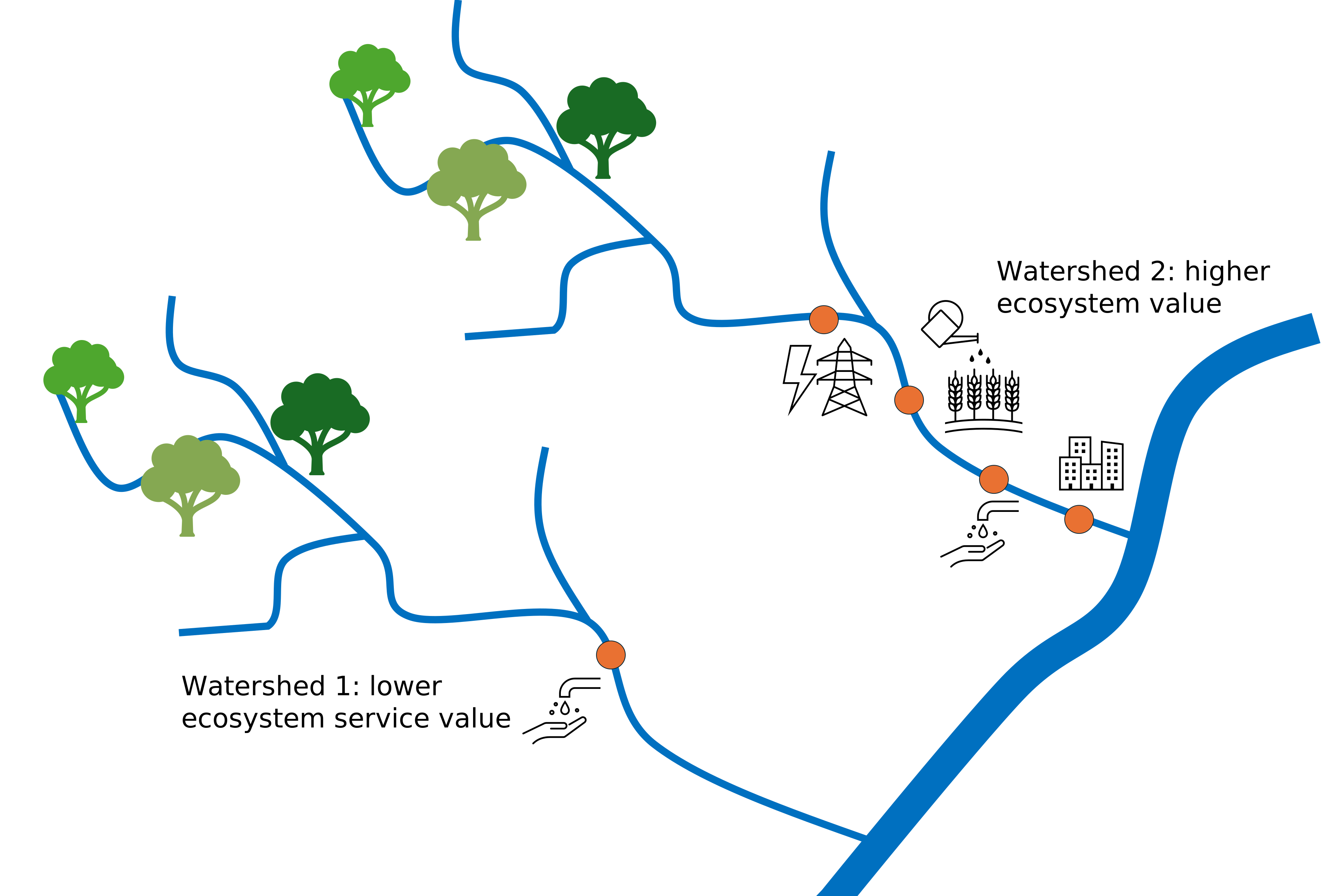
This is an important step, because different types of ecosystems and their location (step 1 and 2) will have different value attached[footnote 6]. For example, an intact forest located in critical water recharge area for a city or a hydroelectric project will have higher water regulation benefits than an identical forest located in an unpopulated area.
Figure 1 Location affects the value of ecosystem services
Two environmentally identical watersheds with different types and numbers of downstream beneficiaries will have different values.
4. Consider the types of ecosystem services you think are likely to benefit from your intervention
A list of ecosystem services can be found in annex 1. These are grouped under broad categories, but you can provide more specific details in the comments. Your theory of change will be a good place to start to help identify which ecosystem services might be affected and how. Think also about trade-offs and synergies. For example, extractive provisioning services, such as timber, can result in the loss of GHG storage or habitats for biodiversity. Similarly, large scale reforestation to increase GHG sequestration can reduce downstream water resources, especially in dry areas.
5. Define whether your intervention involves protecting or generating ecosystem services
This helps to distinguish between ecosystem services that are being protected as a result of avoiding habitat loss (for example, ICF KPI 8), and those that are being generated through improvements to the ecosystem such as regeneration of natural habitats (for example, ICF KPI 17). This may differ for different services and areas covered in your intervention.
6. Obtain an estimate of the per-hectare value of ecosystem services being protected or generated by your intervention
As noted above, the values emerging from ecosystem service assessment can vary widely depending on the context, so it is important that the data used to inform your valuations should be closely matched to your programme for better accuracy. Make sure you record the source of data used to inform your estimates to allow replication in future. There are global datasets, and most countries will have some valuation studies of various ecosystem services. A quick desk-based review will help you strengthen your case for reliable values. When in doubt, it is better to be conservative in the estimates.
At this point it is important to double check the monetary units emerging from studies and adjust using the appropriate exchange rates and deflators against a baseline year, to ensure the units are all comparable. Your economist should be able to help with this step.
Check relevance: Make sure your ES value estimates are based on services, habitats and regions that are as closely matched to your project as possible. For example, the value of water supplied by a Swedish peatland can be very different from the value of water associated with Australian tropical forest!
Due to the high uncertainty associated with estimating the value of ecosystem services, and their strong context dependence, we recommend using the lower-bound values of the ranges given. This reduces the risk of overestimating the value of ecosystem services supported through ICF. Useful sources of ecosystem service valuation data include, but are not limited to:
- where your programme can collect observed data on the ES value of your programme’s interventions, this is the ideal source to use. This could include the value of sale of carbon credits generated by the programme, or payments for ecosystem service schemes delivered by your programme
- the Ecosystem Services Valuation Database ESVD[footnote 7] – this allows you to choose habitat types, service types and regions and provides a per hectare value for each based on published studies. It is unlikely you will find an exact value for the service and habitat in your location, but by exploring a selection of similar examples, you can create an informed estimate for your area. Many programmes use ESVD at the business case stage to provide an initial estimate, which could later be updated with observed data if you are able to collect it at later stages of the programme to provide a more accurate picture
- Co$tingNature – this allows you to get an estimate of the most important ecosystem services in a specific area and the risks of losing them. This can be combined with data on the value of these services from national accounts to provide a monetary estimate of the value of protecting these areas to avoid such losses
- for carbon stocks: IPCC 2019 Refinement to the 2006 Guidelines for National Greenhouse Gas Inventories – this provides information on above-and below-ground biomass for use in calculating carbon stores
- National Natural Capital accounts
- academic literature from the country the intervention takes place. The University of Oxford Nature-based Solutions Initiative maintains a platform of case studies from around the globe
7. Multiply the hectare value by the area affected by your intervention for each of the ecosystem services you are reporting on
This can involve layering up multiple ecosystem services provided by the same area, but critical judgement should be used to avoid over-inflating the estimate of the value of an area through possible double counting. A correction factor can be applied to adjust for potential overlap if you feel this is appropriate (for example, a percentage discount, which should be decided by the programme teams and explicitly recorded in any calculations).
8. Correct for any exchange rate adjustments needed
Ensure all values are reported in £GPB (many are published as US$), using the exchange rate for the reporting year, and adjusting for inflation if values are based on estimates from older literature, as explained in Step 6.
9. If necessary, adjust for additionality
Results are additional if they are beyond the results that would have occurred in the absence of the ICF-supported intervention (known as a business-as-usual counterfactual). Because the counterfactual is estimated, and the government or other donors may be operating similar programmes in the same area, there may be uncertainty around the extent to which UK results are additional. To avoid over-claiming, an adjustment factor can be applied to reflect the level of uncertainty around additionality. See supplementary guidance on additionality, attribution and contribution.
10. For jointly funded programmes, calculate the UK attribution of results in proportion to funding share
If the UK government is the sole investor in a programme, the full amount of results is attributed to the UK. If the UK government is one donor among a number of development partners providing funding for a programme, claim results only in proportion to the UK donor share of public co-financing.
In instances where an ICF programme leverages public or private finance that helps to deliver programme results, this finance should be disregarded in the calculation of the ICF share of total results. Count the leveraged public finance under ICF KPI 11 and the leveraged private finance under ICF KPI 12.
Note on attribution: If you are using results from ICF KPI 8 or ICF KPI 17 to calculate ecosystem services, then attribution should already have been applied for those indicators. You do not need to apply it twice.
11. Report disaggregated results
Report annual flow of ecosystem services from hectares protected in any given year in £, using the relevant interest rates for the reporting year. The results should be disaggregated by country, ecosystem type, ecosystem service and whether ecosystem services were protected or generated as a result of the activity. Disaggregation must be based on actual data; not models or estimates.
It is important that we know how the different disaggregation categories intersect with each other. For this reason, collecting the data at the most granular level will support the reporting process, aligning with the way our results management system (REX) receives data.
Data quality
Portfolio ICF results are published following the UK statistics authority Code of Practice for Statistics. This means that we make efforts to maximise the trustworthiness, quality and value of the statistics. To support ICF data quality, please:
- Review ICF KPI results provided by programme partners, ensuring that methodologies have been adhered to, and calculations are documented and correct.
- Ask a suitable analyst or climate adviser to quality assure ICF results before submission.
- Submit ICF results following the instructions specific to your department. Include supporting documentation of calculations and flag any concerns about data quality.
- A revision to historical results may be needed if programme monitoring systems or methodologies are improved, or historical data errors are found. Please update results for earlier years as necessary, and make a note in the return. ICF results are reported cumulatively, therefore it is important to make these corrections. Questions about results reporting can be discussed with central ICF analysts, who undertake a further stage of quality assurance before publication.
Annex 1: Disaggregation options
Please report your results disaggregated by country, ecosystem type, ecosystem service and protection/generation of ES. The categories available for each disaggregation level are set out below:
Country
Use country names as set out in the FCDO’s Geographical names index - GOV.UK
Ecosystem type
Use IUCN biome; see full IUCN Global Ecosystem Typology for detailed biome descriptions. - tropical-subtropical forests - temperate-boreal forests and woodlands - shrublands and shrubby woodlands - savannas and grasslands - deserts and semi-deserts - polar/alpine - intensive land-use - marine shelf - pelagic ocean waters - deep sea floors - anthropogenic marine - rivers and streams - lakes - artificial wetlands - subterranean lithic systems - anthropogenic subterranean voids - shorelines - supralittoral coastal - anthropogenic shorelines - subterranean freshwaters - anthropogenic subterranean freshwaters - semi-confined transitional waters - brackish tidal - subterranean tidal - palustrine wetlands
Ecosystem service type
Categories used in the ESVD, based on De Groot (2020), where you can find further details and examples. - food - water - raw materials - genetic resources - medicinal resources - ornamental resources - air quality regulation - climate regulation (excluding carbon*) - carbon sequestration and storage - moderation of extreme events - regulation of water flows - waste treatment - erosion prevention - maintenance of soil fertility - pollination - biological control - maintenance of life cycles - maintenance of genetic diversity - aesthetic information - opportunities for recreation and tourism - inspiration for culture, art and design - spiritual experience - information for cognitive development - existence, bequest values - unspecified** (details in comments)
*Carbon sequestration and storage should be captured separately in the data, as this may be used for greenhouse gas emissions inventories and high carbon values risk obscuring the value of other ecosystem services.
** Where you are unable to provide a breakdown of the value of specific services, you may provide an aggregate figure but please include a description in the comments of what ES are affected by your intervention.
Services protected or generated
- protected: An ecosystem service that was at risk has been protected as a result of the ICF project, possibly as a result of avoiding ecosystem loss (likely ICF KPI 8 reported)
- generated: Additional ecosystem service supply has been created or enhanced as a result of the ICF project, possibly through the restoration or management of ecosystems (likely ICF KPI 17 reported)
Annex 2: Worked example
This example focuses on the estimation of a bundle of ecosystem services in coastal marine spaces under the COAST programme.
Figure 2: Coast economic model
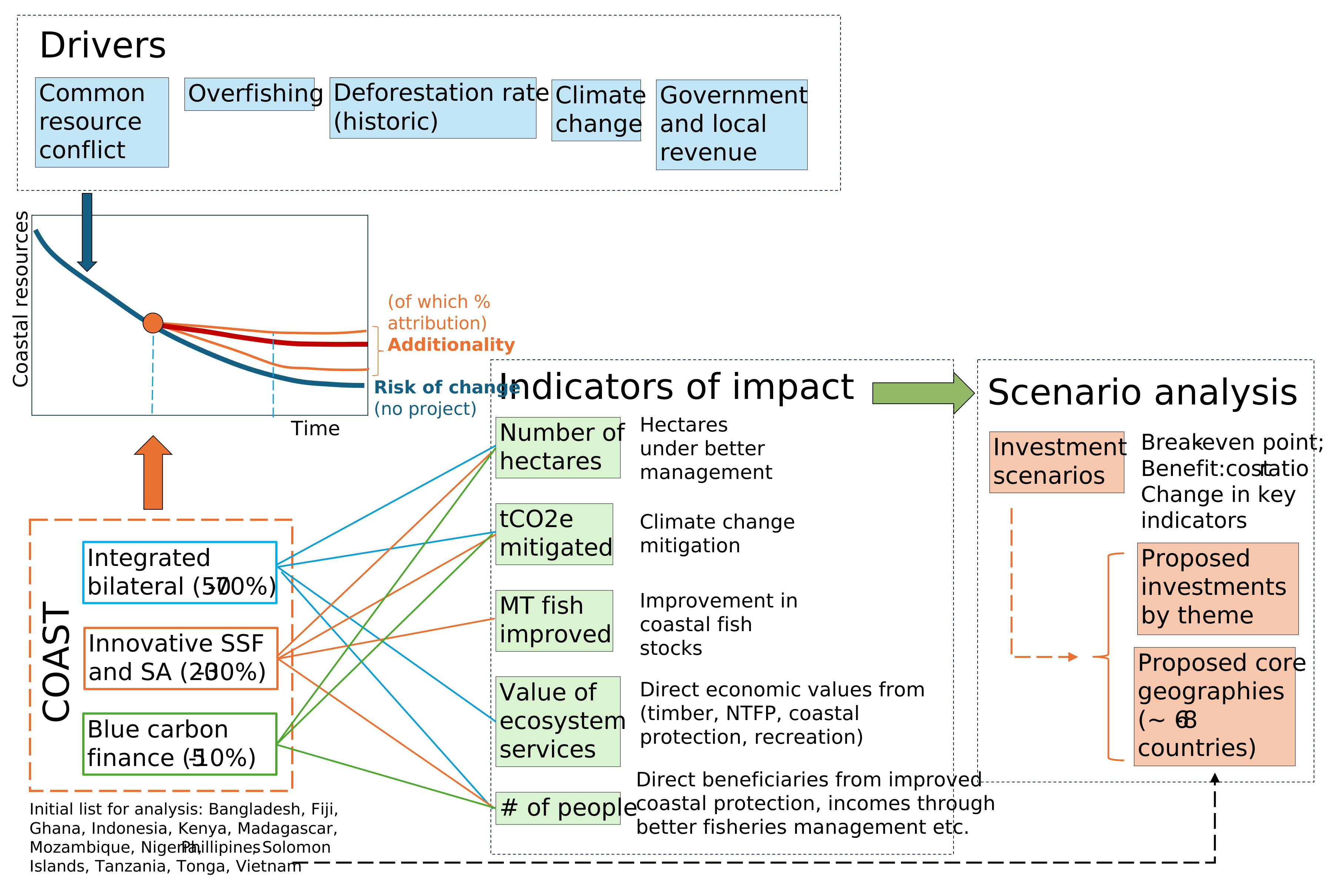
Here we focus on the methodology for identifying ecosystem services.
- Selection of countries (Bangladesh, Fiji, Ghana, Indonesia, Kenya, Madagascar, Mozambique, Nigeria, Philippines, Solomon Islands, Tanzania, Tonga and Viet Nam).
- We focus on mangroves as the leading habitat. Other potential habitats considered (but not included in the analysis) are coral reefs and seagrasses.
- Detailed theory of change informed the programme interventions and the types of ecosystem services likely to be affected. Ecosystem services from mangroves include provisioning (food, fish nurseries, water, raw materials), regulating and maintenance (climate regulation, moderation of extreme events, air quality, water flows, soil fertility, habitat for migratory species), and cultural (recreation, spiritual, bequest).
- We began the analysis with De Groot’s (2020) global valuation, which suggests a value of US$78,052/ha/year.
- We decided against using this value directly, because of political economy context and the largely absent market values. Instead, we concentrate on direct and indirect use values reported from existing (and as local as possible) economic studies.
- We conducted a desk-based study on valuation studies, which carefully considered quality of analysis and values reported. All values were converted into comparable units using adequate exchange rates and deflators. Where possible we estimated ranges of values, to inform decisions on HIGH, MEDIUM and LOW scenarios: High: US$40,840/ha/year, from global values using De Groot (2020). Medium: US$17,430/ha/year, using a selection of direct, indirect and regulation services (shaded values from Table 1 below). Low: US$8170/ha/year, equivalent to ~20% of global values as in (a).
- Estimation of carbon capture was done separately to the wider ecosystem services bundle, to enable disaggregated reporting. We looked at numerous studies and obtained the following estimates of carbon pools per hectare: High: 1218 tCO2e/ha; Medium: 830 tCO2e/ha; and Low: 511 tCO2e/ha. Assuming a 25-year horizon for mangrove regrowth, this provides a range of roughly 20-50 tCO2e/ha/year.
- We estimate the mangrove area for each country, and the risks of conversion from deforestation and degradation to estimate potential impact of intervention.
- Programme attribution: Rather than a simple fixed impact rate across countries, we developed a nuanced approach to disaggregating impact across countries based on 3 elements: total number of mangrove hectares, total number of small-scale fishers, and the financially viable pool of carbon. Results are presented in Table 2.
- These values are used as benchmark for the programme, and will support KPI reporting when the programme begins. An example of how these results might be presented is given in Table 3 (note these figures are illustrative only and do NOT represent any expectation of what COAST will deliver).
Table 1. Global and local values of mangroves ecosystem services ($/ha/year) (from COAST Business Case)
| Detail of type of ecosystem service | US$/ha/year (2021 equivalent) | Source |
|---|---|---|
| Direct and indirect provisioning (use) values | ||
| Food, fishing | 6,717 | Global, De Groot et al 2020 |
| Raw materials (timber, non-timber) | 4,454 | Global, De Groot et al 2020 |
| Direct Use (firewood, timber, and fishing)* | 853 | Indonesia; Rizal et al 2018. |
| Direct use (apiculture, crustaceans, fish, fuelwood, medicine) | 19,161 | USAID 2014, Mozambique Limpopo Estuary |
| Direct uses (firewood, poles) | 177 | Solomon, Warren et al 2011 |
| Indirect use (spawning ground, nursery ground, feeding ground, beach protection from waves) | 12,317 | Indonesia; Rizal et al 2018. |
| Provisioning (wood: COS wood, charcoal) | 191 | WWF Madagascar (2021) |
| Timber (poles, $1-$2 per pole, at average of 500-2000 poles per ha)* | 2,400 | Machava et al, 2020 Mozambique |
| Direct use, timber* | 2,717 | USAID 2014, Mozambique Limpopo Estuary |
| Fisheries (subsistence and commercial)* | 531 | Vanuatu; Pascal 2014 |
| Provisioning (NWFP: crab, fish, honey, wild silk) | 148 | WWF Madagascar (2021) |
| Fishing near mangroves | 516 | Solomon Islands, Warren et al 2011 |
| Value of mangrove-aquaculture integrated system* | 3,000 | Tuan Quoc Vo, Vietnam 2013 |
| Indirect use (offshore fishery)* | 1,810 | USAID 2014, Mozambique Limpopo Estuary |
| Climate and regulation values | ||
| Moderation of extreme events | 16,960 | Global, De Groot et al 2020 |
| Climate regulation | 1,698 | Global, De Groot et al 2020 |
| Avoided damage to residential and industrial stock* | 3200 | WAVES, Philippines |
| Storm-protection function | 901 | Sundarbans, Bangladesh |
| Regulation, carbon | 165 | WWF Madagascar (2021) |
| Indirect use (carbon)* | 2,339 | USAID 2014, Mozambique Limpopo Estuary |
| Recreation and tourism use values | ||
| Opportunities for recreation and tourism | 4,366 | Global, De Groot et al 2020 |
| Tourism values (Travel cost, $53 million aggregated to country, for 603000 hectares)* | 88 | Tourism, Sundarbans Bangladesh. Nur Nobi et al, 2021 |
| Ecotourism | 46 | WWF Madagascar (2021) |
| Maintenance and option values | ||
| Maintenance of genetic diversity | 6,645 | Global, De Groot et al 2020 |
| Option: Biodiversity has been selected to refer the different types of biological diversity habitats or traits which exist in any given system | 15 | Indonesia; Rizal et al 2018. |
| Existence value: CVM of how communities value the mangrove resources* | 1,538 | Indonesia; Rizal et al 2018. |
| Maintenance of biodiversity | 29 | WWF Madagascar (2021) |
*Note: values marked with asterisks are those selected towards the ’medium value’ of ecosystem services, based on desk-based analysis. Note: all values from individual studies have been converted to 2021 values by using the GDP deflator.
Table 2. Estimating the programme attribution factor
| Mangrove area (‘000 hectares) | Programme attribution | Weighting factor | Assumptions |
|---|---|---|---|
| <10 | 40% | 50% | Inverse relation: the smaller the mangrove area the larger the programme impact. Weighting factor 50%: Given the large range of benefits provided by mangroves (beyond fishing), we give this the greater weighting factor. |
| 10 to <50 | 30% | As above | As above |
| 50 to <100 | 15% | As above | As above |
| 100 to <300 | 12% | As above | As above |
| 300 to <500 | 6% | As above | As above |
| Over 500 | 2.5% | As above | As above |
| Number of small-scale fishers | Programme attribution | Weighting factor | Assumptions |
|---|---|---|---|
| <20,000 Fishers | 35.00% | 30% | Inverse relation: the smaller the number of fishers, the larger proportion the programme will be able to benefit. Weighting factor 30%: small-scale fishers are among the most vulnerable members of society and key focus of ODA. |
| 20,000 to <50,000 | 20% | As above | As above |
| 50,000 to <200,000 | 15% | As above | As above |
| 200,000 to <500,000 | 7.5% | As above | As above |
| >500,000 | 2.5% | as above | As above |
| Financially viable carbon pool (Zeng et al, 2021). tCO2e | Programme attribution | Weighting factor | Assumptions |
|---|---|---|---|
| <300,000 | 2.50% | 20% | Direct relation: the larger the pool of financially viable carbon, the greater the programme impact. Weighting factor 20%: While carbon finance is potentially important, markets in the countries are largely undeveloped. |
| 300,000 to <1 million | 5% | As above | As above |
| 1 million to <5 million | 7.50% | As above | As above |
| 5 million to 15 million | 15.00% | As above | As above |
| >15 million | 20.00% | As above | As above |
Table 3. The COAST Programme
The COAST programme has not yet started reporting, but below is an example of what the annual return might look like when it comes to report the data on REX or in your ICF results return (please note these figures are illustrative only and do NOT represent any expectation of what COAST will deliver). If we assume that in year 1, the programme restored or sustainably managed 5000 Ha of mangrove habitat in Madagascar, and take the average of the values for each ecosystem service type highlighted in Table 1 (grouped according to ES type, set out in Annex 1), then we can get a breakdown of the values provided by each ES type.
For example, Food: (Mean value for ‘subsistence and commercial fisheries’ + ‘aquaculture’ + ‘indirect offshore fisheries’ = (531+3000+1810)/3)) = $1,780/Ha/yr ×0.73 (USD to GPB average exchange rate 2021) ×5000 Ha (area included in project) = £6,498,217 per year in food ES generated or protected as a result of this ICF programme. N.b. planned values are the same as achieved; in this case, the programme delivered all interventions as planned.
| Country | Ecosystem type | Ecosystem service | Protected or generated | Value £ (planned) | Value £ (achieved) | Comments |
|---|---|---|---|---|---|---|
| Madagascar | Brackish tidal | Food | Generated | 6,498,217 | 6,498,217 | Mangrove habitat; fisheries; generation of ES through improvement of habitat, which will increase fish stocks and creation of new sustainable aquaculture. |
| Madagascar | Brackish tidal | Raw materials | Protected | 7,263,500 | 7,263,500 | Raw materials primarily include timber products, maintained by better habitat management |
| Madagascar | Brackish tidal | Opportunities for recreation and tourism | Protected | 321,200 | 321,200 | Opportunities for tourism will be protected by sustainably managing the mangrove habitat. |
| Madagascar | Brackish tidal | Moderation of extreme events | Protected | 11,680,000 | 11,680,000 | Avoiding loss of mangroves can provide protection from floods and storms. |
| Madagascar | Brackish tidal | Existence, bequest values | Protected | 5,613,700 | 5,613,700 | How communities value the mangrove resources |
| Madagascar | Brackish tidal | Carbon sequestration and storage | Protected | 8,537,350 | 8,537,350 | Assumes protection and restoration supports carbon sequestration and avoids GHG emissions. |
| Total | £39,913,967 |
Annex 3: Definitions
- additionality: results are additional if they are beyond the results that would have occurred in the absence of the ICF-supported intervention under a ‘business as usual’ counterfactual (see definition below and supplementary guidance note on additionality, attribution and contribution)
- attribution: attribution refers to allocating responsibility for results among all actors that have played a causal role in their delivery. This is commonly done based on share of financial contributions. However, there are situations where greater nuance is needed, as with ICF KPI 11 and ICF KPI 12 on public and private finance mobilised, where a broader range of factors is considered. See supplementary guidance note on additionality, attribution and contribution
- climate change: a change of climate which is attributed directly or indirectly to human activity that alters the composition of the global atmosphere, and which is in addition to natural climate variability observed over comparable time periods
- climate change adaptation: the process of adjustment to actual or expected climate and its effects. In human systems, adaptation seeks to moderate or avoid harm or exploit beneficial opportunities. In some natural systems, human intervention may facilitate adjustment to expected climate and its effects
- counterfactual: the situation one might expect to have prevailed at the point in time in which a programme is providing results, under different conditions. Commonly, this is used to refer to a ‘business-as-usual’ counterfactual case that would have been observed had the ICF-supported intervention not taken place
- ecosystem services: the benefits people derive from ecosystems. Besides provisioning services or goods like food, wood and other raw materials, plants, animals, fungi and micro-organisms provide essential regulating services such as pollination of crops, prevention of soil erosion and water purification, and a vast array of cultural services, like recreation and a sense of place
- effects of climate change: effects of both observed climate variability and expected impacts of future climate change on lives, livelihoods, health, ecosystems, economies, societies, cultures, services, and infrastructure
- mitigation (of climate change): a human intervention to reduce the sources or enhance the sinks of greenhouse gases
- public finance: funding from governments, or organisations such as development banks where governments own more than 50% of equity
- support: assistance from an ICF programme that helps with climate change mitigation or adaptation. In the case of this indicator, this may support the provision of ecosystem services that help mitigate the effects of climate change, such as flood control, or those that provide resources that people rely on, such as food and water
-
Final Report - The Economics of Biodiversity: The Dasgupta Review - GOV.UK ↩
-
IPBES Methodological assessment regarding the diverse conceptualization of multiple values of nature and its benefits, including biodiversity and ecosystem functions and services ↩
-
These are good resources for natural capital accounting: UN-SEEA website and the World Bank WAVES partnership ↩
-
Ecosystem Services and Poverty Alleviation (OPEN ACCESS), Trade-offs ↩
-
de Groot et al. (2020) ESVD Global Update ↩