Independent review into mental health conditions, ADHD and autism: interim report
Updated 10 June 2026
Applies to England

© Crown copyright 2026
This publication is licensed under the terms of the Open Government Licence v3.0 except where otherwise stated. To view this licence, visit nationalarchives.gov.uk/doc/open-government-licence/version/3 or write to the Information Policy Team, The National Archives, Kew, London TW9 4DU, or email: psi@nationalarchives.gov.uk.
Where we have identified any third party copyright information you will need to obtain permission from the copyright holders concerned.
This publication is available at https://www.gov.uk/government/publications/independent-review-into-mental-health-conditions-adhd-and-autism-interim-report/independent-review-into-mental-health-conditions-adhd-and-autism-interim-report
1. Executive summary
The purpose of our interim report is to set out:
- some of our key findings from the data and evidence reviewed so far - and to clarify the gaps and key questions that remain
- what we have learned so far from discussions with people, including people with lived experience, and organisations with a diverse range of perspectives
- how we are bringing together and making sense of different forms of insight, data and evidence
- where different kinds of data and evidence appear to be showing different things, which can at times challenge assumptions and appear contradictory
- our plans for the next phase of the review and the key questions we intend to address in more detail
The purpose of this report is not to offer conclusions or recommendations. These will be set out in our final report and will address the central question for the review: how can we better understand why many people who are autistic, have attention deficit hyperactivity disorder (ADHD) and/or experience mental health conditions are not getting the support they need as quickly or as early as they need it; and what needs to change to address this.
We are committed to providing recommendations to government at the end of this review that will support real change and a fairer and better system of treatment and support for people with mental health conditions, ADHD and autism.
The review is seeking to understand what is changing and why. Demand has increased. We are looking at population-level prevalence, for example through national surveys that collect data on how people’s mental and emotional wellbeing is changing across the population over time. These surveys can tell us important things, but they also have limitations, and we will examine them in more detail in the next phase of the review as part of developing a fuller picture. We are also looking at administrative prevalence, for example NHS and education data, to understand how services are used, how many people have a diagnosis recorded and where pressures are building, including long waiting times for assessment.
This report also highlights the importance of considering the wider social context in which mental health, ADHD and autism are recognised and supported. This includes:
- changes in education, work and daily life
- public awareness and expectations
- social media, artificial intelligence (AI) and digital change
- the ways systems and services create incentives, particularly around securing diagnoses, and shape people’s routes to help and support
Public discussion of rising diagnoses has become increasingly polarised in some areas. Some commentators emphasise under-recognition of need, while others raise concerns about misdiagnosis and professionalisation, the process by which personal or social problems become defined and treated as illnesses or disorders by health professionals. This can either leave their root causes unaddressed and/or expose the person to treatments and their side effects without benefit. The review was established not to align itself with either side of an already contested debate, but to clarify what the available evidence can and cannot support. The central question is not simply whether the numbers have increased. They have. Rather, it is how changes in population prevalence, psychological distress, administrative diagnosis, self-identification, service demand and underlying need relate to one another, and what that implies for policy and service design that will improve lives.
Alongside considering the quantitative data and evidence available, it is also a priority to draw on a diverse range of perspectives and the expertise and lived experience of people with mental health conditions, ADHD and autism, as well as clinicians, charities, researchers, service leaders and other professionals and organisations. By combining data with real-world experience, we can understand both the trends and how the current system of support and treatment works, or indeed does not work, for people in practice. We will continue to expand our engagement, as well as continuing more in-depth engagement with those we are already in contact with, as the review progresses. This will support the development of recommendations for the final report.
The evidence we have reviewed so far shows that multiple things are happening at the same time. The review is committed to being open and honest about what the evidence does and does not show, and to challenge assumptions and over-simplistic statements that are not supported by strong evidence. It is not intended to minimise the challenges people are facing, question the legitimacy of lived experience, or contribute to any stigmatisation or re-stigmatisation of mental health and neurodevelopmental conditions. Greater openness about mental health and neurodiversity has brought important benefits, and reducing stigma remains essential. People also need to be empowered with the knowledge, tools and support that are appropriate for their needs.
In the second phase of the review we will also focus on the challenges people face when they have more than one mental health or neurodevelopmental condition. This will be crucial in informing our recommendations on moving towards systems of support and treatment that identify and address problems earlier, and that are properly co-ordinated and aligned across health, education and other public services. With this in mind, the report also notes the importance of recognising the strong association between mental health difficulties, neurodevelopmental conditions and not being in education, employment or training - particularly for young people. The review intends to do further work in this area so that its recommendations can inform the Rt Hon Alan Milburn’s review on Young People and Work and wider work on reforming the special educational needs and disabilities (SEND) system.
In the next phase, the review will deepen its analysis and engagement to test emerging findings and fill key gaps in the evidence. This will include closer examination of who is being diagnosed and supported, and who may still be missed, as there is evidence that some groups are demonstrably still not being identified or helped. It will also include further engagement with people with lived experience, professionals and service leaders to help interpret the data and shape practical conclusions for the final report. A key priority for our second phase will be to continue work on inequalities, exploring the data and evidence on variations across age, ethnicity, deprivation and other protected characteristics in more detail.
All the issues highlighted in the report are interacting and causing significant challenges for the public, patients, clinicians and other professionals. The final phase of the review will focus on clarifying the relationship between distress, symptoms, diagnosis, functional impairment and need, and on identifying how systems of support might be better aligned across health, education and other public services. By doing this, the review will set out a path towards a fairer, more proportionate and more coherent system in which support is better matched to need and available earlier - without unnecessary delay or dependence on diagnosis alone.
Mental health conditions
Evidence shows consistently that common mental health conditions and psychological distress have increased over the past 2 decades, particularly among younger people. The prevalence of common mental disorders, principally anxiety and depression, among adults in England has risen from around 15% to 16% in the early 1990s to around 23% by the mid-2020s, with the clearest increases observed among young adults.
The report finds that psychological distress has increased most clearly among younger people, marking a significant shifting of previous age-based patterns. Historically, distress tended to be higher in midlife than in early adulthood. More recent evidence shows that young adults now report higher levels of distress than older age groups, with this shift emerging from the early 2010s rather than solely during the pandemic.
The nature of distress is also changing. The largest increases among young people are seen in emotional symptoms, loneliness, sleep problems, loss of confidence and difficulty concentrating, rather than across all domains of mental health equally. Evidence suggests that, among those reporting high levels of distress, functional impairment has also increased over time, indicating that these difficulties are not only more frequently reported but may also be more disruptive to day-to-day life.
These changes matter clinically, socially and economically. Rising distress among young people is linked to educational disruption, school absence, disengagement from work and training, and high rates of young people not in education, employment or training (NEET). This highlights the importance of understanding mental health trends not only in relation to services, but also in relation to participation and life chances.
Patterns differ across other age groups and conditions. While distress has risen most sharply among young people, the report also highlights continuing concerns about under-recognition and unmet need among older adults, particularly where difficulties may be masked, normalised or less likely to lead to help-seeking or diagnosis.
Severe mental illness remains within the scope of the review, including eating disorders, where prevalence appears to be rising, in contrast to psychosis, bipolar disorder and related conditions, where population prevalence appears to have remained relatively stable over time. This does not imply that severe mental illness is a lesser concern; rather, it reflects where the strongest evidence of recent change currently lies.
The final phase of the review will build on these findings. Phase 2 will deepen analysis of the particular drivers of increased mental distress, how this translates into service use and outcomes, and how services and systems of support can respond more effectively to different levels of need and impairment. This will support recommendations on earlier intervention, better alignment between need and support, and a more equitable and proportionate system - ensuring that those with the greatest levels of distress and functional impact receive timely and appropriate help, while others can access earlier and less intensive forms of support without unnecessary delay and are empowered with the right tools to improve their mental health where appropriate.
ADHD
Referrals, waiting lists for assessment and recorded diagnoses for ADHD have increased substantially, particularly among adolescent and young adult females. NHS England monitoring data shows that the number of children and young people waiting for an ADHD assessment rose from around 21,000 in April 2019 to around 270,000 by December 2025. Primary care data also shows a sharp acceleration in diagnoses after 2020, with incidence among women aged 20 to 24 more than doubling compared with pre-pandemic trends, while increases among males have been smaller.
At the same time, the best available population surveys - which do not rely on referral, assessment or diagnosis - suggest that underlying prevalence of ADHD symptoms has been far more stable. The National Institute for Health and Care Excellence (NICE), for example, cites prevalence estimates of around 5% in children and young people and 2% to 3% in adults, with no evidence of a dramatic population-level increase over recent decades. However, this data has limitations, and further work in phase 2 will examine it in more detail rather than treating it as definitive.
This does not imply that one set of trends is ‘real’ and the other is not. The evidence points to a more complex picture in which relatively stable underlying prevalence can coexist with rapidly rising diagnosis, referral and service demand.
Despite recent growth in diagnosis, there may remain a gap in some demographic groups between recorded and expected prevalence, particularly among adults. This suggests that some people who may benefit from diagnosis and support are still not being identified, including those in settings such as the criminal justice system. This will be explored further in phase 2.
There is substantial pressure on services providing ADHD assessment. The next phase of the review will examine more closely the quality and consistency of assessments, variation in diagnostic practice, and the extent to which diagnosis is followed by evidence-based treatment. Among children and young people, the proportion of diagnoses followed by medication prescribing has roughly halved in the post-pandemic period, suggesting a shift in case mix or wider contextual changes that require further investigation.
We recognise that the current system is not working well. The aim of the review is to support recommendations that lead to a fairer and more effective system of treatment and support for people with ADHD.
A key limitation at present is the lack of reliable data on severity, functional impact and outcomes among those diagnosed. Without this, it is not yet possible to determine whether diagnostic thresholds have changed significantly over time.
The objective is to move towards a more equitable and proportionate system in which treatment and support are tailored to levels of need, functional impact and severity. This includes ensuring timely access to specialist assessment and treatment for those with the greatest needs, while also enabling earlier, more accessible forms of support that do not depend on prolonged waits for formal diagnosis.
Autism
The evidence on autism shows a pattern that is similar to ADHD in some respects, although there are important differences.
Self-identification and diagnoses within health and education systems have increased substantially, while underlying prevalence based on population surveys appears more stable over time. It is important, however, to acknowledge that diagnostic criteria have also changed over time.
This does not imply that one set of trends is ‘real’ and the other is not. As with ADHD, the evidence points to a more complex picture in which relatively stable underlying prevalence can coexist with sharply rising diagnosis, identification and service demand.
For children, population-based estimates of autism remain broadly stable. At the same time, parent-reported autism - where parents report that their child has autism, whether or not this is based on a formal diagnostic assessment - has increased in recent years. In the available survey data, parent-reported prevalence rose by around 25% between 2022 and 2024, suggesting that public recognition and identification of autism are increasing.
That increase has been particularly marked in the education system. By 2025, autism-related identified need accounted for around 3.1% of school-age children within the SEND system and growth has been especially rapid among girls and pupils without learning disability, indicating changing patterns of recognition.
Based on the Adult Psychiatric Morbidity Survey (APMS), prevalence of autism in adults has remained broadly stable at around 1 in 100 across 2007, 2014 and 2023 to 2024, with estimates of 1.0%, 0.7% and 0.9% respectively. However, these findings will need to be considered in more detail in the next phase of the review.
Primary care data shows rising numbers of autism diagnoses over time, with especially rapid growth among females and young people without learning disability, even though absolute diagnosis rates remain higher in males.
In English primary care records, the annual incidence of autism diagnosis increased from 12 per 100,000 in 2000 to 80 per 100,000 in 2017, before falling slightly to 77 per 100,000 in 2018. Incidence remained consistently higher in males than females throughout this period. Between 2000 and 2018, incidence in males rose from 20 to 111 per 100,000, while incidence in females rose from 4 to 40 per 100,000.
As with ADHD, there may be important demographic differences between recorded diagnosis and expected prevalence, particularly among adults, and this requires further exploration. Findings on deprivation differ depending on the source of data. There is also evidence of significant variation across England in the proportion of people referred for an autism assessment who then receive a diagnosis. Variation by ethnicity will also need more detailed exploration in the second phase of the review.
Again, as with ADHD, the review will need to address major gaps in the data - particularly the lack of reliable national information on severity, functional impairment and day-to-day impact among those being diagnosed.
Conclusion
What emerges from our interim work is not a single, unifying explanation, but a more demanding synthesis: one that requires us to hold together different forms of evidence - population data, administrative records and lived experience - without collapsing their distinct meanings. Read together, these sources suggest that current patterns are shaped as much by the design of systems as by underlying need, including the incentives those systems create and the increasing tendency to medicalise forms of distress that may have broader social or developmental roots.
At the same time, the evidence indicates that many who would benefit from support may still be missed, and that inequalities in both prevalence and access remain insufficiently understood. What is clear is that services are under significant and sustained pressure, and that the status quo is unlikely to be sustainable or fair in its present form. This creates an opportunity, and indeed a responsibility, to consider how support might be organised differently:
- less dependent on diagnostic thresholds alone
- more responsive to functional need
- more available through earlier, less intensive and more accessible forms of provision beyond specialist clinical settings
2. The question this review is addressing and the purpose of this interim report
This review was commissioned in response to mounting pressure across multiple parts of the current system, and to the growing difficulty many people face in obtaining timely, appropriate and proportionate support. Referrals for mental health and neurodevelopmental conditions particularly ADHD and autism have risen substantially. Waiting times for assessment and treatment have increased. Schools, universities, employers, general practice, other public services and specialist services all report sustained pressure. At the same time, public discussion of mental health conditions, ADHD and autism has become more prominent, more urgent and, at times, increasingly polarised around questions of available support, the role of diagnosis and different interpretations of rising demand.
The review was established in that context not to align itself with either side of an already contested debate, but to clarify what the available evidence can and cannot support. The central question is not simply whether the numbers have increased. Rather, it is how changes in population prevalence, psychological distress, administrative diagnosis, service demand and underlying need relate to one another, and what those relationships imply for public policy and service design.
These distinctions are important. A rise in population prevalence means that more people in the community meet criteria for a condition, whether or not they have sought help or been identified by services. A rise in administrative prevalence means that more people are diagnosed or recorded within health, education or other systems. A rise in demand means that more people are seeking support, being referred or entering assessment pathways. A rise in need may imply greater severity, greater impairment or greater pressure on everyday functioning, even where diagnosis itself does not change.
Equally, there may be substantial unmet need: individuals who meet criteria for a condition but who are not seeking help, not being referred, or not being recognised within services. In such cases, under-diagnosis and barriers to access can obscure the true distribution of need and contribute to inequalities in who receives support. These measures may move in the same direction, but they do not necessarily do so. Indeed, one of the clearest findings from the evidence reviewed to date is that they frequently diverge. That divergence is not a technical detail; it lies at the centre of the policy challenge.
The evidence reviewed thus far suggests that, for common mental health conditions, there has been an increase in prevalence over the past 2 decades, particularly among younger people. There is also evidence of rising psychological distress, which is closely related but not identical. For ADHD and autism, by contrast, epidemiological estimates of prevalence appear more stable, while recorded diagnoses, referrals and public identification have increased substantially. This does not imply that one set of trends is ‘real’ and the other is not. Rather, it suggests that several processes may be operating at the same time:
- changes in levels of distress
- improved recognition of previously unmet need
- changes in help-seeking
- institutional incentives associated with diagnosis
- changes in professional and public understanding
The review is therefore proceeding on the basis that several things may be true simultaneously. There may be real increases in distress in some groups. There may also be under-recognition of important problems in parts of the system, alongside over-reliance on diagnostic routes in others. Underdiagnosis, misdiagnosis and overdiagnosis are not mutually exclusive possibilities[footnote 1]. Nor are they merely abstract concerns. They shape whether people receive support, what form that support takes, how quickly it is available, and whether systems are able to direct resources where they are most needed.
It is also important to state clearly what this review is not seeking to do. We recognise that work of this kind may be interpreted, or may give rise to concern, that it could minimise people’s suffering, question the legitimacy of lived experience or contribute to the re-stigmatisation of mental health and neurodevelopmental conditions. We want to be clear that any such interpretation would be deeply regrettable and is not the intention of the review.
Greater openness about mental health and neurodiversity (ADHD and autism) has brought important benefits. At the same time, the review cannot proceed on the assumption that every increase in referrals, diagnoses or self-identification necessarily reflects an increase in underlying conditions. Both complacency and overstatement would be unhelpful. The task of the review is therefore to retain sufficient analytical discipline to do justice to the complexity of the issue.
This interim report is an initial account of where that work has reached. It sets out the evidence reviewed to date, the principal patterns that are already apparent, and the most important uncertainties that remain. Some of the trends and patterns presented here should be regarded as provisional and may change as further data is incorporated and analyses are refined. It is not the review’s final word, and it does not contain recommendations. Those will follow in the final report, once further analyses have been completed and the evidence has been tested more fully. The purpose of this interim report is therefore narrower, but nonetheless important:
- to clarify the nature of the problem
- to make explicit the principal evidential tensions
- to identify the questions that now need to be addressed if the final report is to provide sound and actionable conclusions
From the outset, the review has sought to keep lived experience, professional expertise and quantitative evidence in proper relation to one another. None of these perspectives is sufficient in isolation. Population surveys can identify broad trends, but do not always capture what those trends mean in practice. Administrative data can indicate where systems are under strain, but not always whether diagnosis corresponds closely to underlying need. Stakeholder and lived-experience evidence can illuminate where systems fail but cannot on their own establish the scale or distribution of a national pattern. The task of the review is therefore to bring these forms of evidence into constructive relation without collapsing one into another.
What emerges at this stage is neither a simple account of rising disorder nor a simple account of over-medicalisation (the process by which personal, or social problems become defined and treated as medical issues, illnesses or disorders while potentially leaving their root causes unaddressed). It is a picture of:
- a population in which some forms of distress appear to have increased, particularly among the young
- diagnostic and service systems that are identifying and recording some forms of need more intensively than before
- social and institutional conditions that increasingly shape who is identified, how difficulties are classified, and what forms of support become available from poorly integrated systems that are stressed and failing
The remainder of this report sets out the evidence for that account, together with the limits of what can properly be inferred from it.
3. How the review has approached the evidence
Different forms of evidence answer different questions
The questions addressed by this review cannot be resolved through any single data set or disciplinary perspective. Mental health conditions, ADHD and autism sit at the intersection of epidemiology, clinical practice, education, social policy and lived experience. The review has therefore adopted a deliberately broad approach to the evidence, drawing on several distinct forms of information and considering carefully what each can and cannot reasonably tell us.
A central principle of the review has been that different forms of evidence answer different questions. Population surveys are the most reliable guide to whether the underlying prevalence of distress or disorder may have changed in the community. Administrative data sets are valuable for understanding diagnosis, referral patterns, prescribing and pressures within services. Qualitative evidence, stakeholder engagement and lived-experience testimony help to explain how systems are encountered in practice, how help-seeking is shaped and how public and professional understandings of mental health and neurodevelopment are changing.
Difficulties arise when one form of evidence is expected to perform the function of another - for example, when administrative diagnoses are treated as direct measures of population prevalence, or when lived-experience accounts are treated as if they could by themselves establish the scale of a national trend.
Population surveys and what they can tell us
For questions of prevalence, the review has given priority to population-based studies using measures that are comparable over time. These include major national surveys such as the APMS, the Mental Health of Children and Young People Survey, and longitudinal data sets such as the UK Household Longitudinal Study (UKHLS). These sources are not without limitations, but they remain the strongest basis for assessing change in the population because they are not restricted to those who have sought help or received a diagnosis. Where possible, the review has relied most heavily on measures that have been used repeatedly over time and that have demonstrated acceptable stability across age, sex and survey waves.
At the same time, the review has given careful attention to the limitations of population surveys. Response rates have declined over time. Some groups with particularly high levels of need - including those in insecure housing, residential care, prison or other institutional settings - are often poorly captured or excluded altogether. Survey mode may also influence findings, as responses can vary depending on whether questions are asked face to face, by telephone or online.
However, most of the trends we draw on are based on measures that have been collected using comparable methods over time, often face to face, which increases confidence in their interpretation. One notable exception is the Mental Health of Children and Young People Survey, where the transition from face-to-face to online data collection between 2017 and 2020 requires particular caution in interpretation as studies using methods other than face to face can overestimate prevalence and may not be comparable. In addition, willingness to disclose symptoms may itself change as stigma falls and awareness increases. These considerations do not render survey evidence unreliable, but they do require that trends be interpreted with appropriate caution and with close attention to measurement consistency.
For questions of diagnosis, access and service use, the review has drawn on administrative data, including primary care records, secondary mental health data sets, prescribing data and education data. This data is highly informative in showing how systems are functioning. However, it does not provide a direct measure of underlying prevalence. A recorded diagnosis depends not only on the presence of symptoms, but also on impairment of function, help-seeking, professional recognition, referral and diagnostic thresholds, service availability, recording practices and, in some settings, the incentives created when diagnosis is linked to access to support. One of the clearest messages emerging from the review’s work to date is that administrative prevalence should not be interpreted as if it were equivalent to epidemiological prevalence.
It is also important to recognise how diagnosis itself is determined. Mental health and neurodevelopmental conditions such as ADHD are not identified through a biological test or biomarker. A diagnosis of ADHD requires evidence that a defined pattern of symptoms has been present across more than one setting, has persisted over time, and was evident from childhood, together with clear evidence that these difficulties are associated with functional impairment.
In current diagnostic systems, including the International Classification of Diseases 11 (ICD-11) and Diagnostic and Statistical Manual (DSM) frameworks, diagnosis depends not only on the presence of symptoms but on evidence of clinically significant impairment. This is important for the review because symptoms, diagnosis, functioning and need are related but not identical. A more systematic account of impairment and participation may therefore be needed alongside diagnosis if support is to be calibrated appropriately.
One possible approach, which will be considered further in the next phase, is the use of structured frameworks for describing functioning and need, including approaches informed by the International Classification of Functioning, Disability and Health (ICF).
Administrative data, diagnosis and service use
Both symptoms and impairment exist on continuums of severity and may vary considerably depending on context. As a result, diagnostic decisions necessarily involve clinical judgement. Different clinicians, working in different settings, may reasonably arrive at different conclusions about whether the threshold for diagnosis has been met. In practice, diagnosis therefore reflects not only symptom presence but also professional judgement about severity, impact and whether assigning a diagnosis is likely to lead to meaningful benefit in terms of understanding, intervention or treatment.
The review has distinguished between different administrative sources. On the evidence currently available, primary care data appears to be the most useful national administrative source for examining diagnostic trends, because they cover defined registered populations and often incorporate diagnoses made elsewhere in the system. Secondary mental health data sets are highly informative for understanding referrals, contacts and service pathways, but they are considerably less reliable as direct sources of diagnostic prevalence because diagnostic coding is frequently incomplete. Analyses presented to the review indicate that, for ADHD and autism, a substantial proportion of diagnoses recorded in clinical notes may not appear in structured data fields unless free text is analysed using natural language processing. This has important implications for the interpretation of national service data sets which often omit critically important data.
Because no single data set captures the full pathway from distress to diagnosis, interventions and support, the review has also considered linked regional data sets and more detailed pathway analyses. These are particularly relevant for understanding:
- waiting times
- movement between referral and assessment
- diagnostic sequencing
- treatment initiation
- the role of co-occurring conditions
In this context, it is helpful to distinguish between treatment - interventions intended to bring about clinical change - and wider forms of support, which may aim to maintain stability, improve functioning, or enable participation and may be provided across health, education and social care settings.
Although these analyses are not yet complete, they will be central to the next phase of the review, as they may help explain how people move through systems, where bottlenecks arise, and how diagnosis, treatment and support are related in practice.
Interpreting variation in prevalence estimates
It is also important to recognise that baseline prevalence estimates vary across studies, and to understand why. Differences arise from:
- how conditions are defined
- how they are measured
- which populations are included
Some studies apply strict diagnostic criteria through detailed clinical assessment, while others use screening tools that identify possible cases. Survey methods and participation patterns also differ. These variations do not necessarily indicate inconsistency or error. Rather, they reflect the fact that different approaches capture different aspects of the same underlying phenomena. Understanding these differences is essential if prevalence estimates are to be interpreted appropriately.
Qualitative evidence
Alongside quantitative analysis, the review has drawn on qualitative evidence and begun broad engagement. This has included initial discussions with clinicians, people with lived experience, professional bodies, voluntary sector organisations, education stakeholders, service leaders and other expert voices and organisations. These discussions have informed this interim report and have been particularly helpful in identifying recurrent system problems, including:
- fragmented pathways
- repeated retelling of distress
- long waits
- variable thresholds
- diagnosis as a necessary route to support
- concern about both under-recognition and over-medicalisation
- potential solutions
Such evidence does not, in itself, establish how widespread these problems are, but it does help the review understand how the patterns seen in the data are experienced and interpreted by those living and working within the system.
Engagement with people and organisations with lived experience
Engagement with people with lived experience has been a central component of the review from the outset. The review has begun structured engagement with a wide range of individuals and organisations representing people with mental health conditions, ADHD, autism and other less common neurodevelopmental conditions, alongside professional and service perspectives.
To date, this has included engagement with over 50 organisations across the mental health and neurodevelopmental sectors, as well as a large number of written contributions from individuals with lived experience. These contributions have informed the interpretation of evidence and helped identify key issues relating to access, pathways and the experience of current systems.
In addition, a group of lived experience partners has been recruited to work directly with the review. These individuals are embedded within topic groups, contributing to discussion, interpretation and the identification of priorities for further analysis. Alongside this, 2 lived experience reference groups are being established to provide broader input and challenge as the work develops.
This engagement is ongoing. In the next phase of the review it will be expanded and integrated more systematically with the analytical work, including:
- targeted engagement with specific groups
- further work with patient and voluntary sector organisations
- continued collaboration with professionals and service leaders
The intention is not only to gather perspectives, but to ensure that lived experience informs how evidence is interpreted and how conclusions are developed.
Weighing the evidence and holding distinctions in mind
Throughout, the review has sought to be explicit about the strengths and limits of the available evidence. Not all findings carry equal weight. Some patterns recur across independent data sets and can therefore be described with greater confidence. Others are suggestive but remain incomplete. Others again are best regarded as hypotheses requiring further analysis. In support of consistent interpretation, the review has worked with a simple evidence framework intended to distinguish between stronger and weaker conclusions and to guard against overstatement. This is particularly important in an area where public debate is often polarised and where there may be pressure to draw conclusions beyond what the evidence can properly sustain.
The review has sought to keep distinct 3 related but separable questions:
- what is happening in the population
- what is happening in systems
- how those 2 are related
Population prevalence, psychological distress, recorded diagnosis, service demand and underlying need may move together, but they do not necessarily do so. Much of the analytical work of the review has therefore involved resisting premature collapse of those categories. The objective is not to impose false neatness, but to arrive at the most accurate possible account of what is changing, for whom and why.
4. What the population data tells us
Interpreting population prevalence data
Population-based surveys are the most reliable source for understanding how common conditions and symptoms are within the community, but they also require careful interpretation.
Prevalence refers to the proportion of the population experiencing a condition or set of symptoms at a given point or over a defined period, whereas incidence refers to the rate at which new cases arise. Changes in prevalence may therefore reflect changes in incidence, but also changes in duration, recovery, survival or patterns of reporting and recognition.
Estimates of prevalence are influenced by how conditions are defined and measured. Some studies use structured diagnostic assessments, while others rely on screening tools or self-report measures that identify possible cases rather than confirmed diagnoses. Differences in thresholds, instruments and survey methods mean that estimates may vary across studies without necessarily indicating inconsistency.
In addition, population surveys may not fully capture all groups, particularly those with the highest levels of need, such as individuals in institutional settings or those less likely to participate in surveys. As a result, prevalence estimates should be interpreted as indicators of patterns within the population rather than precise measures of true underlying rates.
For these reasons, population prevalence data is most informative when interpreted alongside other sources of evidence, including administrative data and qualitative insights, and when attention is paid to how measures are defined and applied over time.
The strongest evidence as to whether mental health and neurodevelopmental conditions are becoming more common is derived from population-based studies: surveys and cohorts that sample individuals regardless of whether they have sought help or received a diagnosis. These sources do not answer every question, but they remain the most robust starting point for understanding changes in prevalence over time.
For this reason, the review has drawn extensively on repeated national surveys and longitudinal studies that employ comparable measures across waves. The principal sources are the APMS (with the 2023 to 2024 wave currently being analysed and will be incorporated in the final report of the review) (see references 1 and 2), the Mental Health of Children and Young People Survey (see reference 3), and the UKHLS and Understanding Society (see reference 4). Estimates from the Global Burden of Disease Study (see reference 5) have also been used where they provide helpful wider context.
This data nevertheless requires careful interpretation. As noted earlier, survey findings may be influenced by factors such as response patterns and changing willingness to report symptoms over time. For this reason, the review has placed greatest weight on measures shown to perform consistently across time and across groups. In particular, studies of measurement invariance suggest that widely used instruments such as the General Health Questionnaire (GHQ-12) and the Strengths and Difficulties Questionnaire (SDQ) are sufficiently stable to support meaningful comparison over time. While this does not remove all uncertainty, it increases confidence that the changes described below are unlikely to be explained solely by measurement effects.
Common mental health conditions
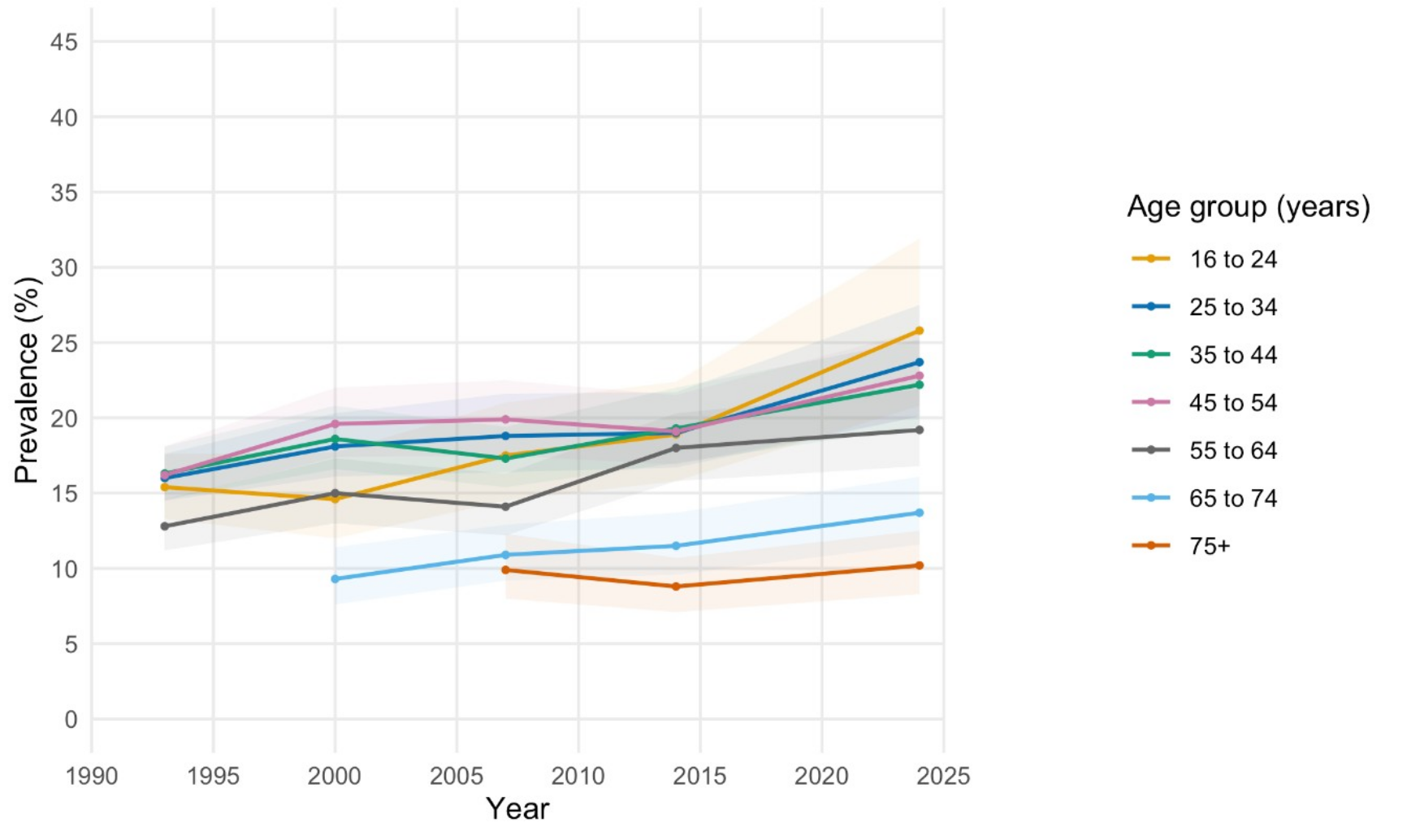
Across several sources, the evidence indicates that common mental disorders - principally depression and anxiety - have increased over the past 3 decades, with the clearest changes observed among younger adults. The APMS suggests that prevalence among adults in England rose from around 15% to 16% in the early 1990s to around 23% by the mid-2020s (see references 1 and 2).
Figure 1: any depressive or anxiety disorder (CIS-R) by age group in England, APMS, 1993 to 2024
Source: APMS.
Note: 2024 represents the 2023 to 2024 reporting period.
Description of figure 1: shows the prevalence of depressive or anxiety disorders in England by age group (16 to 24, to over 75), from 1993 to reporting year 2023 to 2024. Prevalence increases over time in all age groups, with the largest rises among people aged 16 to 24 and 25 to 34. Older age groups show lower and more gradual increases.
Severe mental illness
The review is also considering severe mental illness. The available evidence suggests that the prevalence of conditions such as schizophrenia and bipolar disorder has remained relatively stable over time, meaning that the most marked recent increases in prevalence, diagnosis and demand appear to be occurring elsewhere in the system. At the same time, there are important exceptions and areas of concern, including eating disorders, where available screening data suggests rising prevalence, although comparable diagnostic time-series data is not yet available. This should not be taken to imply that severe mental illness is of lesser importance. Rather, it reflects where the current evidence most clearly indicates recent change and where further analysis is needed.
While this interim report focuses primarily on common mental disorders, particularly anxiety and depression, the final report will take a broader view of trends in mental health. This will include consideration of rising rates of eating disorders, self-harm and suicide attempts, which represent important indicators of distress and risk, particularly among younger people, and which require careful integration into the overall analysis.
Child and adolescent mental health
Among children and adolescents, the picture is more differentiated. Diagnostic assessments from the Mental Health of Children and Young People Survey suggest that emotional disorders rose modestly between 1999 and 2017, from around 4.3% to 5.8% among 5 to 15 year olds. This represents a real increase, though not a dramatic one. More recent survey and screening data, including the latest national evidence, is not comparable as the 2017 survey has not been repeated. However, the UKHLS data shows a continuing pattern of increase in mean reported symptoms.
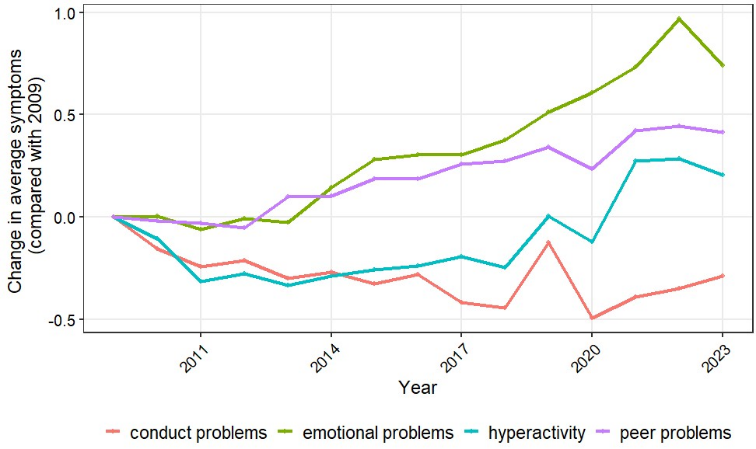
The changes are not uniform across all domains of child mental health. Emotional problems and peer difficulties have increased, while conduct problems have remained broadly stable or declined in some data sets. Figure 2 sets out domain-specific trends in emotional, peer, conduct and hyperactivity symptoms across 2 data sets. This distinction in the population level data is discussed further in section 5.
Figure 2: mental health symptoms, 10 to 15 year olds
Source: UKHLS.
Description of figure 2: shows change in average mental health symptoms in 10 to 15 year olds over time (compared with 2009). Emotional and peer problems increase steadily, with the largest rises by 2022 to 2023. Hyperactivity shows a smaller overall increase. Conduct problems decrease slightly over the period.
ADHD
The population evidence for ADHD is materially different. In contrast to common mental health conditions, epidemiological estimates of ADHD prevalence appeared to have remained broadly stable, with a trend towards only modest increases over time. In the Mental Health of Children and Young People surveys, the prevalence of hyperkinetic disorder - the more stringent International Classification of Diseases 10 (ICD-10) category most closely aligned with ADHD - was around 1.5% in 1999 and 2004 and around 1.9% in 2017 (see reference 3). Estimates from the Global Burden of Disease Study similarly suggest little substantial change over recent decades (see reference 5).
It is important to note that hyperkinetic disorder represents a narrower and more stringent construct than ADHD as defined in DSM frameworks, which use broader criteria. Prevalence estimates based on ICD-10 definitions may therefore understate the prevalence of ADHD as it is currently diagnosed in many clinical settings. This latter estimate may understate change in more broadly defined ADHD, as reflected in Global Burden of Disease analyses, which suggest a smaller but still notable increase of around 17% in population prevalence among those under 20 between 1990 and 2021.
It is notable that there is a lack of good adult ADHD population prevalence data for the UK and also recent population prevalence data for children and young people (since 2017) when the steepest rise in ADHD administrative prevalence has occurred. However, even under conservative assumptions of relatively stable population prevalence, recorded administrative prevalence for ADHD remains below some epidemiological estimates, suggesting that unmet need may persist, albeit with some narrowing of the gap in recent years, particularly among females and young adults.
However, symptom screening based on parent or self-identification presents a more complex picture. For children and young people there has been a rise in reporting of symptoms of hyperactivity and inattention (see figure 3 and figure 4). In adults, Measures such as the Adult ADHD Self-Report Scale (ASRS) suggest that the proportion of people reporting symptoms consistent with ADHD has risen in recent years, particularly among young people (see figure 3) and especially among women. This does not in itself demonstrate that the underlying prevalence of ADHD has increased, although it leaves open that possibility.
The next phase of the review will therefore need to examine changes in functional impairment as a proxy for disability, to better understand whether those now identified differ in their level of need from those previously recognised. Screening tools identify possible cases rather than confirmed diagnoses, and their results may be influenced by changes in awareness, interpretation and willingness to endorse symptoms. It is also difficult to measure disability and impairment robustly through a brief question set not designed to capture that information. The contrast does, however, indicate that stable epidemiological prevalence can coexist with rising symptom reporting and rising diagnostic activity. This is one of the principal interpretive and analytical challenges for the review.
Figure 3: ADHD and/or hyperactivity symptoms in young people
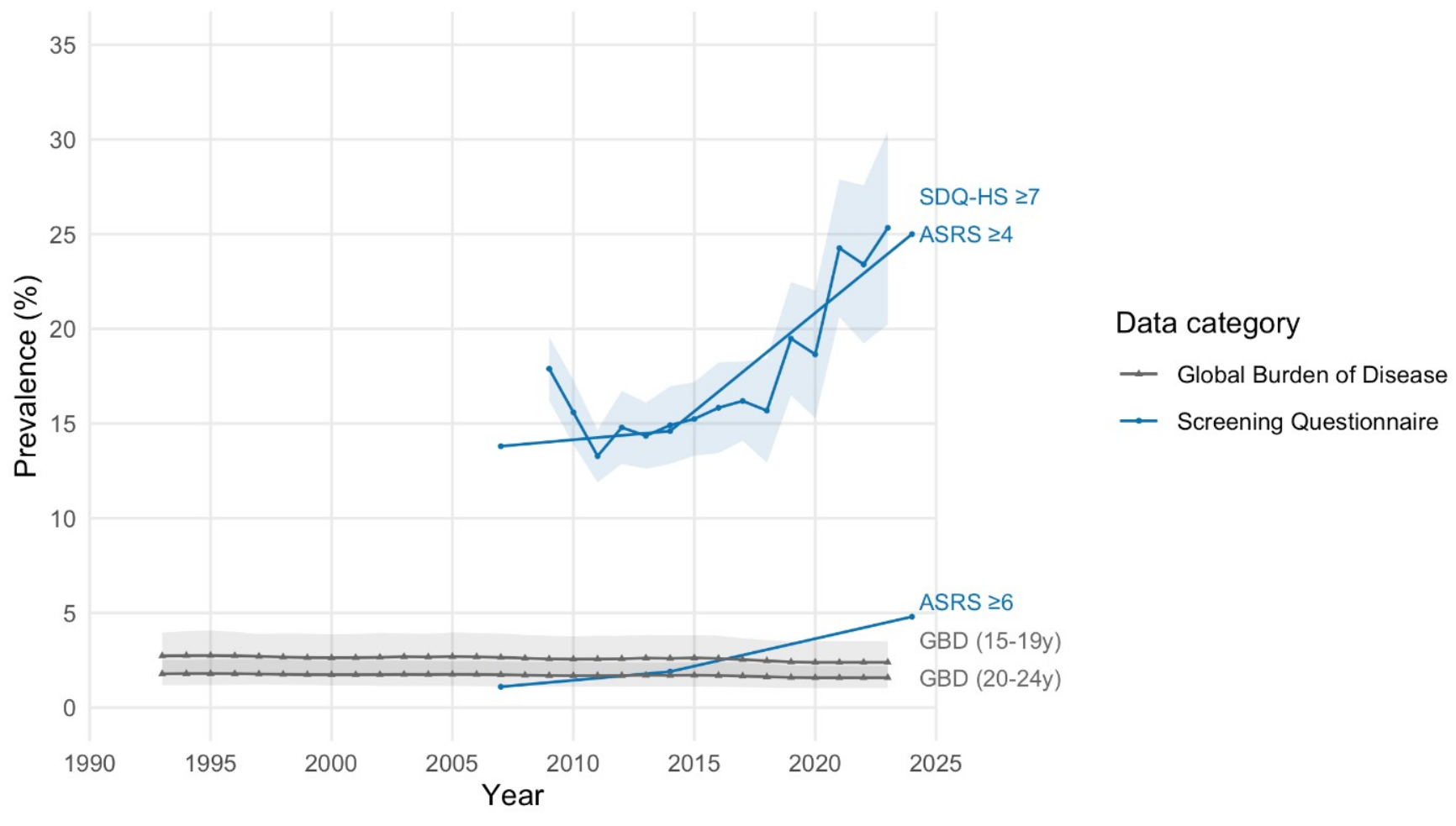
Abbreviations in figure 3:
- SDQ-HS: Strength and Difficulties Questionnaire - hyperactivity symptoms
- ASRS: Adult ADHD Self-Report Scale
- GBD: Global Burden of Disease
Source: APMS.
Note: 2024 represents the 2023 to 2024 reporting period.
Description of figure 3: shows prevalence of ADHD or hyperactivity symptoms among young people aged 16 to 25 from the early 1990s to 2025. Prevalence increases over time, rising more sharply from around 2015 onwards. Rates from screening questionnaires are consistently higher than Global Burden of Disease estimates.
Figure 4: ADHD and/or hyperactivity symptoms in adults
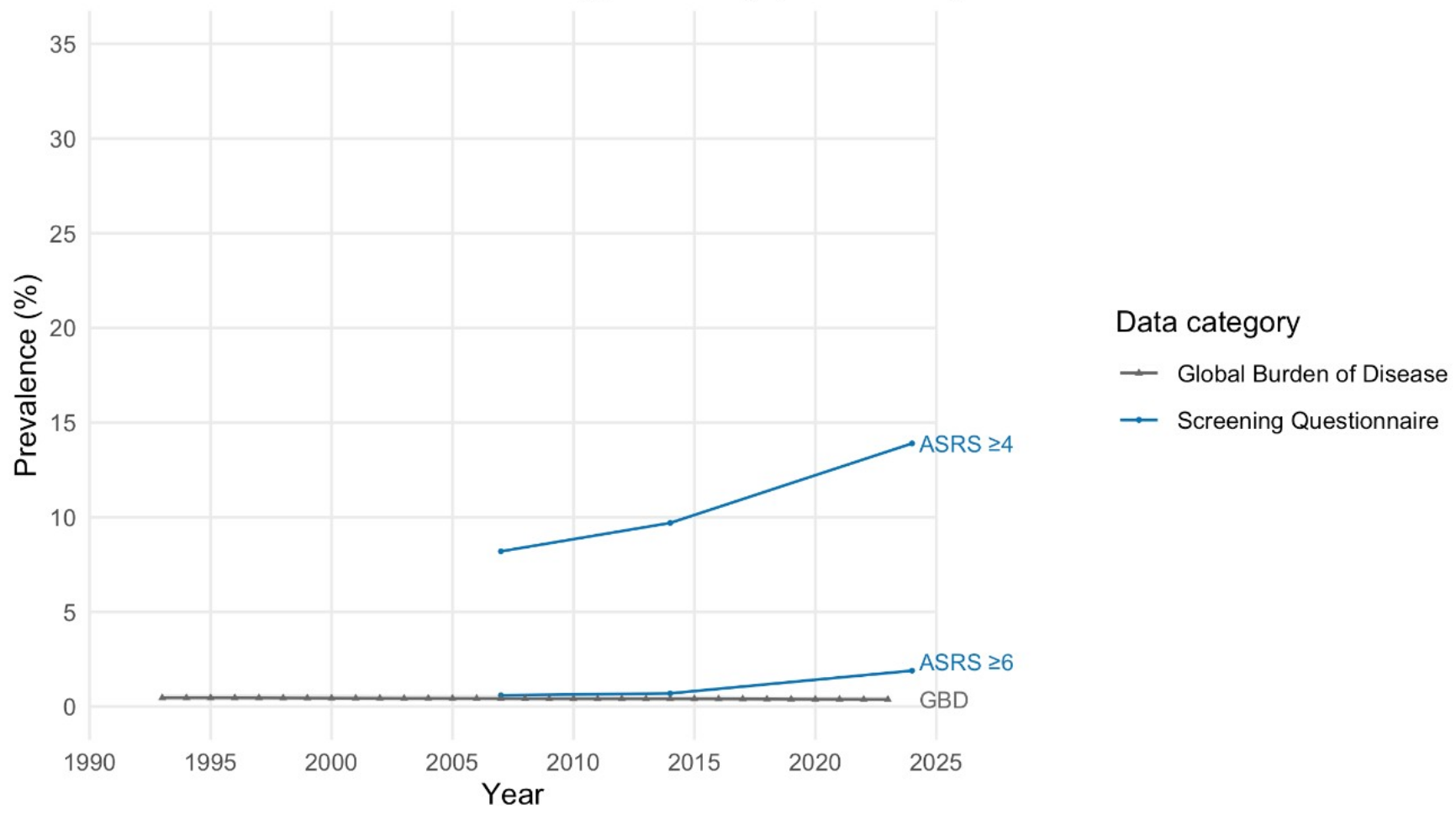
Abbreviations in figure 4:
- ASRS: Adult ADHD Self-Report Scale
- GBD: Global Burden of Disease
Source: APMS.
Note: 2024 represents the 2023 to 2024 reporting period.
Description of figure 4: shows prevalence of ADHD or hyperactivity in adults aged 16 and over from the early 1990s to 2025. Prevalence increases over time, with higher rates in screening questionnaire results than in Global Burden of Disease estimates throughout the period.
Autism
Population estimates for autism also suggest relative stability rather than a dramatic increase. The Mental Health of Children and Young People Survey estimated autism prevalence in children at around 1.0% in 2004 and around 1.3% in 2017 (see reference 3). Global Burden of Disease estimates again suggest modest variation over time rather than a sharp rise (see reference 5).
As with ADHD, however, stable or modestly increasing epidemiological estimates sit alongside a much greater rise in self-identification and rising administrative recognition. Surveys of GP-registered populations suggest that the proportion of young people and adults identifying as autistic has increased in recent years (see figure 6). That divergence does not in itself, indicate whether current systems are over-identifying, correcting previous under-recognition, or some combination of the 2. It does, however, suggest that changes in self-identification and administrative recording cannot simply be read as equivalent to changes in underlying prevalence.
Figure 5: the prevalence of autism in children
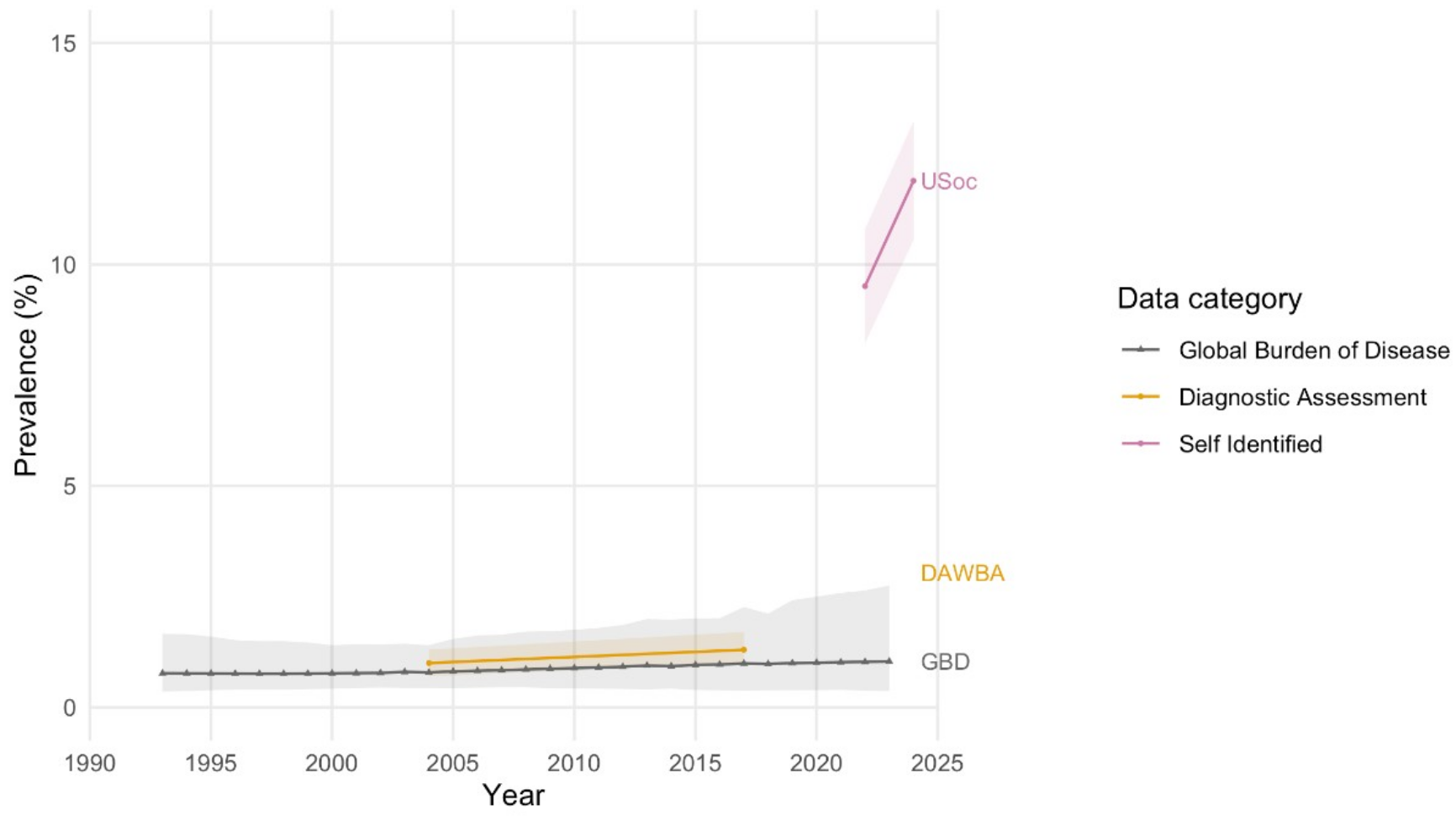
Abbreviations in figure 5:
- USoc: Understanding Society (UK Household Longitudinal Study)
- DAWBA: Development and Well Being Assessment
- GBD: Global Burden of Disease
Source: APMS.
Note: 2024 represents the 2023 to 2024 reporting period.
Description of figure 5: shows prevalence of autism among children aged 5 to 15 over time, from 1993 to 2023. Diagnostic and Global Burden of Disease estimates remain low and fairly stable, while self‑identified autism increases sharply from around 2019 onwards.
Figure 6: the prevalence of autism in young people
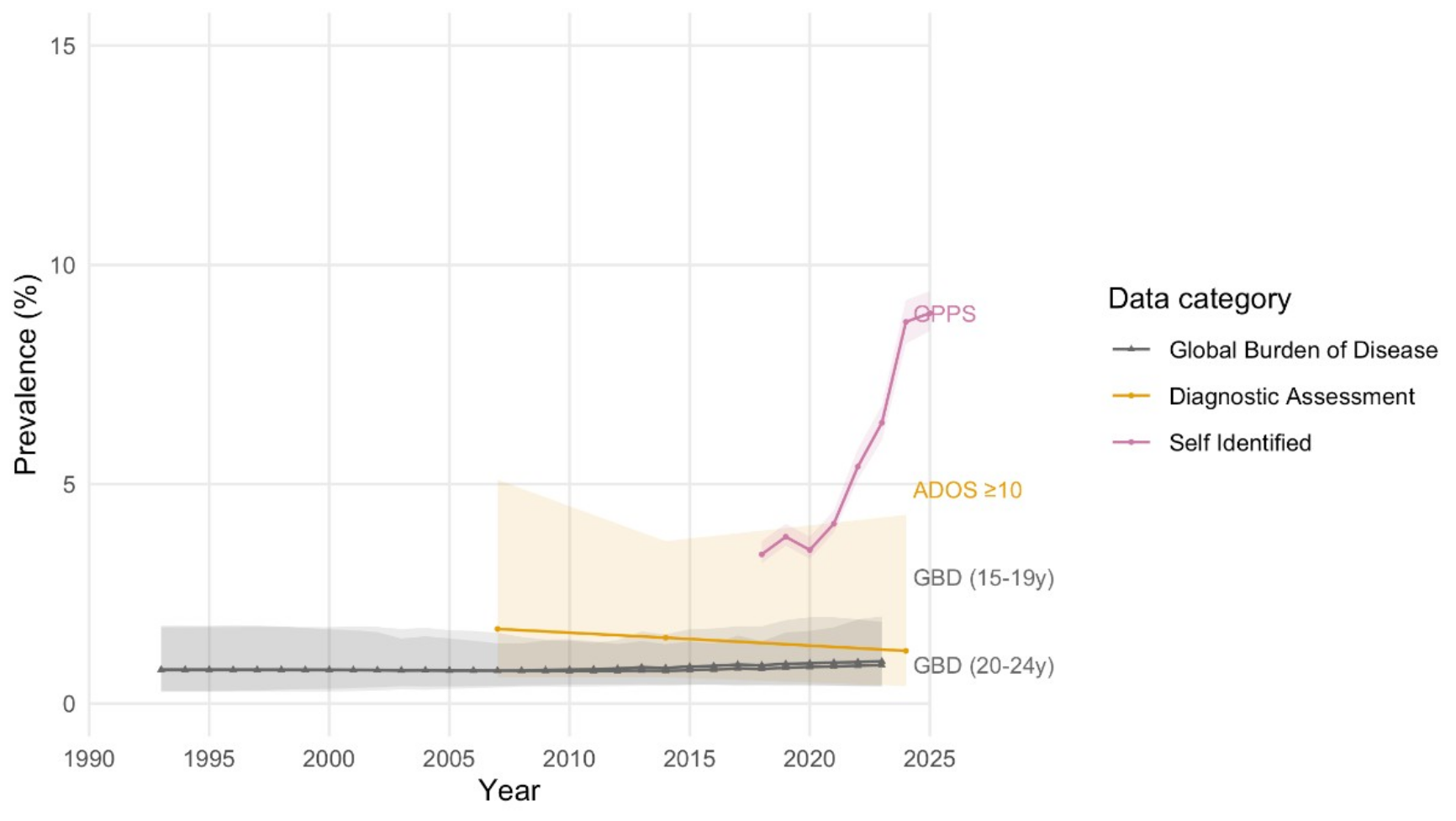
Abbreviations in figure 6:
- GPPS: General Practitioner Patient Survey
- ADOS: Autism Diagnostic Observation Schedule
- GBD: Global Burden of Disease
Source: APMS.
Note: 2024 represents the 2023 to 2024 reporting period.
Description of figure 6: shows autism prevalence among young people aged 16 to 25 from 1993 to 2023. Diagnostic and Global Burden of Disease estimates remain low and stable throughout, while self‑identified autism increases sharply from around 2020 onwards.
In line with these distinctions, the percentage change in self-reported prevalence of autism, learning disability and mental health conditions based on GP Patient Survey data shows marked differences for autism and other conditions. Over the period, from 2018 to 2025, self-reported autism increased by over 180%, compared with approximately 50% for mental health conditions and less than 30% for learning disability (see reference 6).
The APMS provides an important source of information on autistic symptoms in the general population and is particularly valuable for examining trends over time using a consistent methodology. However, its findings should be interpreted with care when considering questions of ‘true prevalence’. The survey identifies cases based on Autism Diagnostic Observation Schedule (ADOS) assessed autism within a 2-phase design, rather than a full clinical diagnostic assessment, and therefore reflects a specific operational definition rather than a comprehensive ascertainment of all individuals who might meet diagnostic criteria. Key elements of diagnosis, such as developmental history and aspects of restricted and repetitive behaviour, are not fully captured. The assessment uses an earlier diagnostic algorithm aligned with DSM-4 and ICD-10 and applies a relatively conservative threshold, which may limit identification of the broader autism spectrum. There are also indications that certain groups, particularly women and those without more overt presentations, may be under-ascertained, and that the characteristics of identified cases do not fully reflect the wider autistic population.
More broadly, autism is best understood as a condition in which relevant traits are continuously distributed in the population, meaning that any estimate of prevalence depends on where diagnostic thresholds are set. For this reason, population estimates derived from structured assessments should be interpreted as indicators of symptom distribution and case identification under particular criteria, rather than definitive measures of how common autism is in an absolute sense.
These considerations do not diminish the value of the APMS. Rather, they suggest that its findings are most informative when interpreted alongside other sources of evidence, particularly in understanding patterns of symptoms over time, rather than as a standalone estimate of underlying population prevalence.
Interpreting the population evidence
The population data suggests that trends differ across conditions. There is evidence that common mental disorders have increased gradually over the past 3 decades, with particularly steep increases among younger adults. By contrast, epidemiological estimates of ADHD (with limited data) and autism appear broadly stable, even though diagnoses and self-identification have increased.
This divergence has important implications. It suggests that rising diagnoses in neurodevelopmental conditions cannot be interpreted simply as a reflection of rising underlying prevalence. Rather, the available evidence points to a more complex interaction between:
- population mental health
- awareness
- help-seeking behaviour
- shifts in diagnostic criteria
- institutional processes through which diagnoses are made and recorded
Understanding how these elements interact is central to the task of the review.
5. Changes in psychological distress and wellbeing
A central question for the review is whether rising presentations to services reflect a real increase in psychological distress within the population, or whether they arise primarily from changes in awareness, recognition, diagnosis and service use. This question is not abstract. It reflects the lived experience of many individuals, families and professionals who report that emotional distress among young people in particular has become more visible and more difficult to manage in recent years. Services have responded. The proportion of adults with a common mental disorder reporting receipt of treatment has increased substantially over time, rising from 24.4% in 2007 to 39.4% in 2014 and 47.7% in 2023 to 2024 (see reference 7). At the same time, public discussion of these issues has expanded rapidly, with widespread commentary across media, education and professional communities.
The strongest evidence on this question is derived not from administrative diagnosis data, but from population surveys and longitudinal cohort studies that assess symptoms, wellbeing and functioning directly in representative samples.
Across several such data sets, the evidence suggests that psychological distress has increased in England in recent years, particularly among younger people. The pattern is, however, not straightforward. It varies by age, gender, symptom domain and the indicator used. This makes interpretation more complex but also provides a more refined understanding of what may be changing.
A change in the age pattern of distress
One of the clearest findings is that the relationship between age and mental distress appears to have changed. Historically, distress tended to be higher in midlife than in early adulthood. More recent evidence suggests that this may no longer be the case.
Analyses using the data sources listed in section 4 indicate that while reported distress has increased in all age groups, distress among young adults has increased significantly since the early 2010s, while levels among older adults have increased less dramatically or remained stable. This means that young adults now report higher average levels of distress than older age groups, representing an important shift from the pattern observed in earlier decades. The timing is also noteworthy. The change does not appear to begin abruptly with the COVID-19 pandemic. Rather, it appears to have emerged progressively over the preceding decade, with the pandemic acting more as an intensifying factor than as the sole explanation.
This reversal of the age gradient is evident across more than one data set and appears to have developed progressively from the early 2010s, rather than arising solely as a consequence of the pandemic. Figure 7 illustrates this pattern of increasing distress among young adults across the data sets described above.
Figure 7: mental distress by age group 1996 to 2024
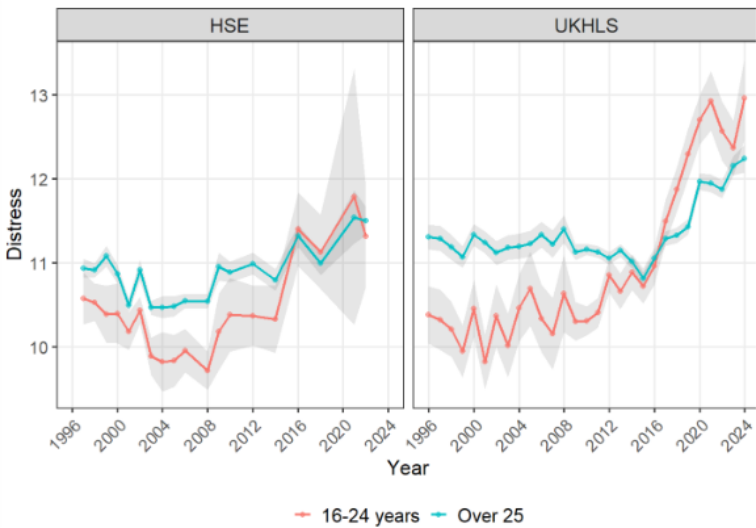
Sources: Health Survey for England (HSE) and UKHLS.
Description of figure 7: 2 charts (HSE and UKHLS) showing mental distress scores for ages 16 to 24 and over 25 from 1996 to 2024. In HSE, distress rises for both after about 2014, with 16 to 24 year olds higher in the most recent years. In UKHLS, over‑25s are generally higher in the earlier years, but distress among 16 to 24 year olds increases sharply from around 2016 and is higher than over‑25s towards the end of the period.
What kind of distress is increasing?
Examination of individual symptoms helps to clarify the nature of this change - there is evidence that the content of distress is important. The largest increases in GHQ-12 symptoms among young adults are not confined to low mood, but include loss of confidence, difficulty concentrating, and feeling under strain. This suggests that what is increasing is not only emotional distress, but also pressure on coping capacity, self-evaluation and everyday functioning. In other words, the change appears to extend beyond mood alone to include difficulties with attention, self-management and resilience. Figure 8 illustrates which GHQ-12 symptoms have increased most.
Figure 8: change in symptoms of mental distress 1997 to 1998, to 2021 to 2022, 16 to 24 year olds
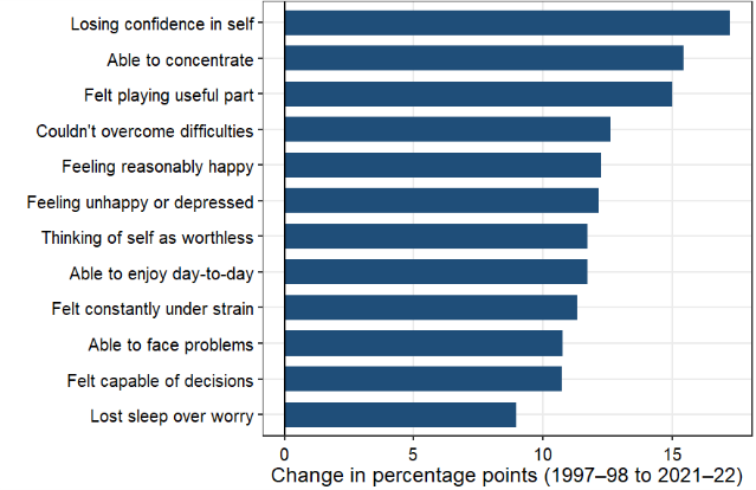
Sources: HSE and UKHLS.
Description of figure 8: shows change in mental health symptoms between 1997 to 1998 and 2021 to 2022. The largest increases are in losing confidence in self, difficulty concentrating and feeling less useful.
Children and adolescents: a more differentiated picture
Among children and adolescents, the pattern is also more differentiated than a simple across-the-board deterioration in mental health. The Mental Health of Children and Young People in England Survey found that emotional disorders among 5 to 15 year olds increased modestly between 1999 and 2017 (see reference 3). More recent analyses of screening measures suggest that emotional symptoms have continued to rise since then, particularly in adolescents.
However, these increases are not evenly distributed across all symptom domains. Emotional problems and certain ADHD-related symptoms, including hyperactivity (for example, being ‘fidgety or squirming’ and ‘failing to finish tasks’) have increased by more than 5 percentage points, alongside rises in peer difficulties, while conduct problems have remained broadly stable or, in some data sets, have declined (see figure 2 and figure 10). This is important because it suggests that the current pattern is more one of rising internalising distress - anxiety, low mood, worry and social strain - than of generalised behavioural deterioration.
It is also possible that some presentations previously interpreted primarily through a mental health or behavioural lens are now more often understood within neurodevelopmental pathways. There is a decline in conduct problems and disruptive behaviour symptoms, particularly those historically associated with ADHD presentations in younger boys in more deprived contexts. This shift may contribute to some of the changing patterns observed in ADHD diagnosis, including a narrowing of the male-to-female ratio and changes in the social distribution of diagnoses. It may also be relevant to the observed reduction in the proportion of diagnosed cases proceeding to medication, although these relationships require further investigation. That possibility requires careful examination rather than assumption. Further, APMS finds the common mental condition particularly driving rising rates in young people is generalised anxiety disorder (GAD). There is much to understand about this trend and we hope to arrive at a fuller explanation in the final report.
Child and adolescent mental health
Diagnostic assessments from the Mental Health of Children and Young People Survey suggest that emotional disorders rose modestly between 1999 and 2017, from around 4.3% to 5.8% among 5 to 15 year olds. This represents a real increase, an extra 3 children in every 1,000, though not a dramatic one. More recent survey and screening data, including the latest national evidence, suggests that emotional symptoms have risen further since the late 2010s, particularly in adolescents.
There is evidence from the last 15 years that symptoms of emotional and peer problems have increased steeply since the early 2010s while other domains have not and may have even fallen. Figure 2 sets out domain-specific trends in emotional, peer, conduct and hyperactivity symptoms across 2 data sets. This distinction in the population level data is discussed further in section 5.
Other wellbeing indicators support that interpretation. Office for National Statistics (ONS) data shows increasing loneliness among young people in recent years (see reference 8). Longitudinal survey data also suggests declining satisfaction with appearance, friendships and school, while satisfaction with family life has remained more stable. This points towards a changing social and developmental environment rather than a simple across-the-board deterioration in all aspects of child functioning.
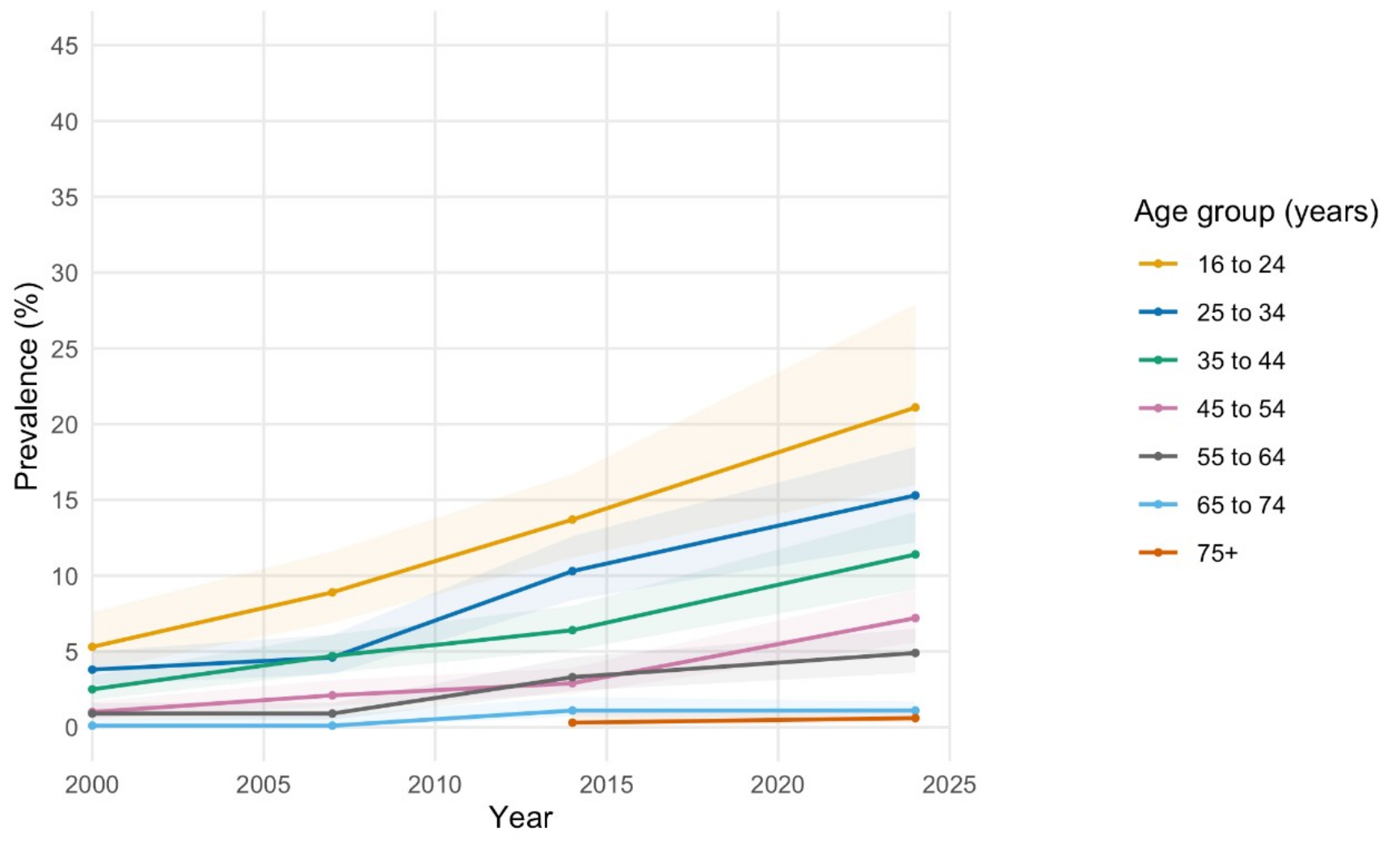
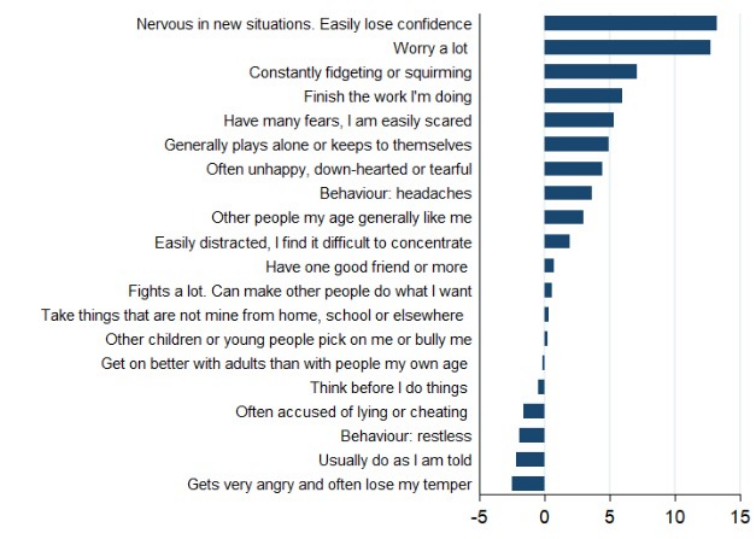
Other indicators point in the same direction: adolescent substance use, historically associated with behavioural problems, has fallen rather than risen. This suggests that what is changing may not be child mental health in a wholly undifferentiated sense, but rather the balance of difficulties within it. Figure 10 shows which SDQ symptom categories have increased most between 2009 and 2022. The current picture is more consistent with rising internalising distress, hyperactivity, inattention and peer difficulties than with a generalised worsening of behavioural disturbance. Part of this pattern includes a marked increase in self-harm among young people, with many reporting it as a way of coping with distress (see APMS data in figure 9). At the same time, there have been notable reductions in other behaviours previously associated with coping, such as alcohol use among 16 to 24 year olds, with declines of a similar order of magnitude.
Figure 9: self harmed without suicidal intent, by age
Source: APMS.
Note: 2024 represents the 2023 to 2024 reporting period.
Description of figure 9: shows prevalence of self‑harm without suicidal intent in England by age group from 2000 to 2024. Prevalence increases over time in most age groups, with the largest and steepest rises among people aged 16 to 24 and 25 to 34. Older age groups show lower levels and more gradual increases.
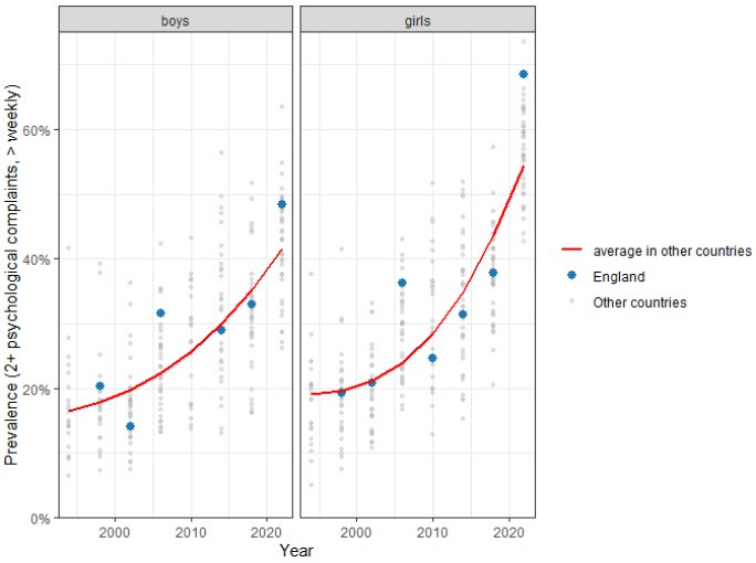
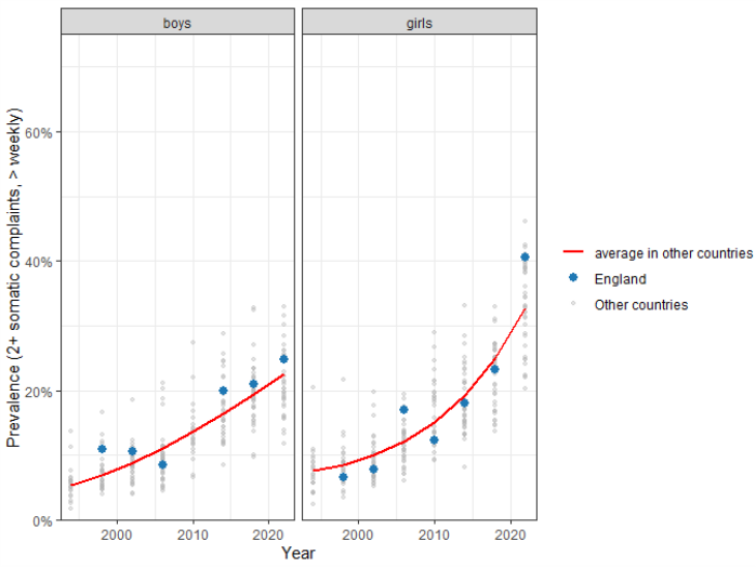
There are also indications that similar patterns are observed across other industrialised countries, suggesting that this is not a UK-specific phenomenon. Some comparative data, shown in figures 11 and 12, may indicate that trends in the UK have been somewhat more marked in the post-pandemic period. However, this evidence is limited and should be interpreted with caution.
Figure 10: change in percentage reporting the worst SDQ item category, 2009 to 2010, to 2022 to 2023
Source: UKHLS.
Description of figure 10: shows change in the percentage of young people reporting the worst SDQ item category between 2009to 2010 and 2022 to 2023. The largest increases are in feeling nervous in new situations and losing confidence, and worrying a lot, while behaviours such as fighting and restlessness show smaller changes or decreases.
Figure 11: proportion of 15 year olds reporting weekly symptoms of psychological complaints in 41 western and developed countries
Source: Health Behaviour in School-aged Children.
Description of figure 11: 2 charts showing the prevalence of weekly psychological complaints among 15 year olds from around 2000 to 2022, shown separately for boys and girls. In both groups, prevalence increases over time, rising more sharply after around 2010. Levels in England are broadly similar to the average across other countries, with higher prevalence among girls than boys, particularly in the later years.
Figure 12: proportion of 15 year olds reporting weekly somatic complaints[footnote 2] in 41 western and developed countries
Source: Health Behaviour in School-aged Children.
Description of figure 12: 2 charts showing the prevalence of weekly somatic complaints among 15 year olds in 41 western and developed countries from around 2000 to 2022. One chart shows data for boys and the other shows data for girls. In both groups, prevalence increases over time, with steeper rises from around 2010 onwards. Levels are higher among girls than boys in the later years.
Loneliness, life satisfaction and the wider climate of distress
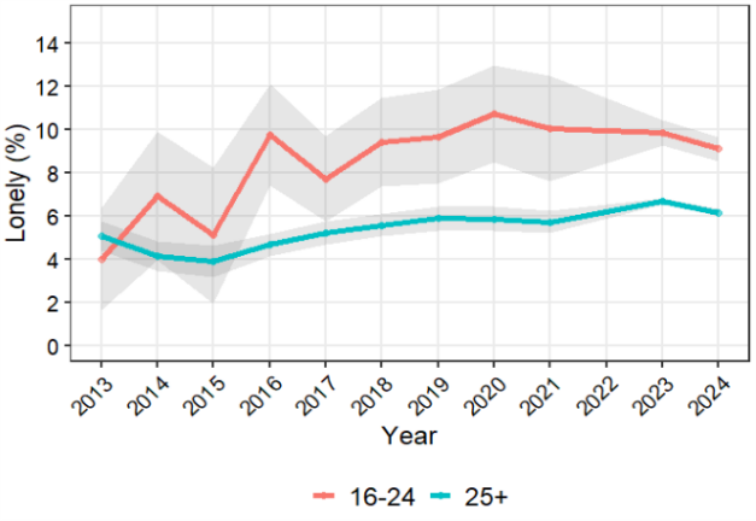
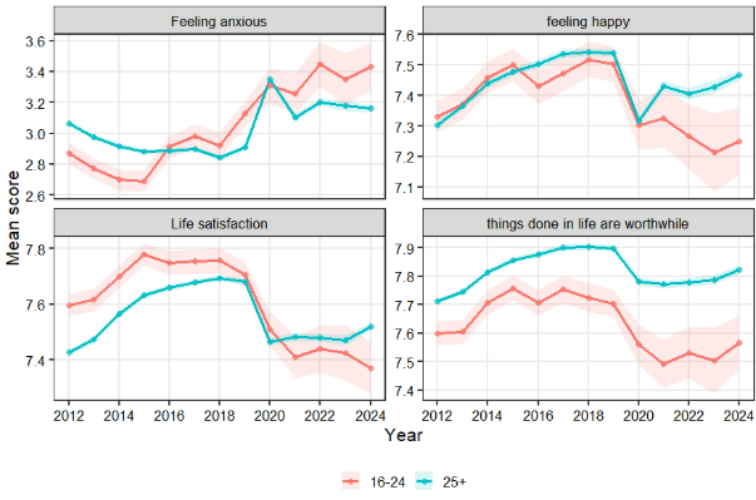
Broader wellbeing indicators point in a similar direction. Data from ONS shows that loneliness among young adults has increased markedly since the early 2010s (see reference 8). Figure 13 illustrates the marked increase among young adults. At the same time, measures of life satisfaction, happiness and sense of wellbeing have deteriorated, particularly among adolescents and young adults. Figure 14 sets out trends in happiness, life satisfaction and anxiety.
Figure 13: proportion reporting feeling lonely ‘a lot of the time’ by age group
Source: Community Life Survey (CLS).
Description of figure 13: shows the percentage reporting feeling lonely ‘a lot of the time’ by age group from 2013 to 2024. Levels are consistently higher among people aged 16 to 24 than those aged 25 and over. Loneliness among 16 to 24 year olds rises overall, peaking around 2020 before falling slightly by 2024, while levels among those aged 25 and over increase more gradually over the period.
Figure 14: wellbeing by age group
Source: Annual Population Survey (APS).
Description of figure 14: shows wellbeing measures for people aged 18 to 24 and 25 and over from 2012 to 2024. Anxiety increases for both groups, rising more sharply for 18 to 24 year olds. Happiness, life satisfaction and feeling that things in life are worthwhile increase slightly to around 2019, fall sharply in 2020, and then recover partially by 2024, remaining lower for 18 to 24 year olds than for those aged 25 and over.
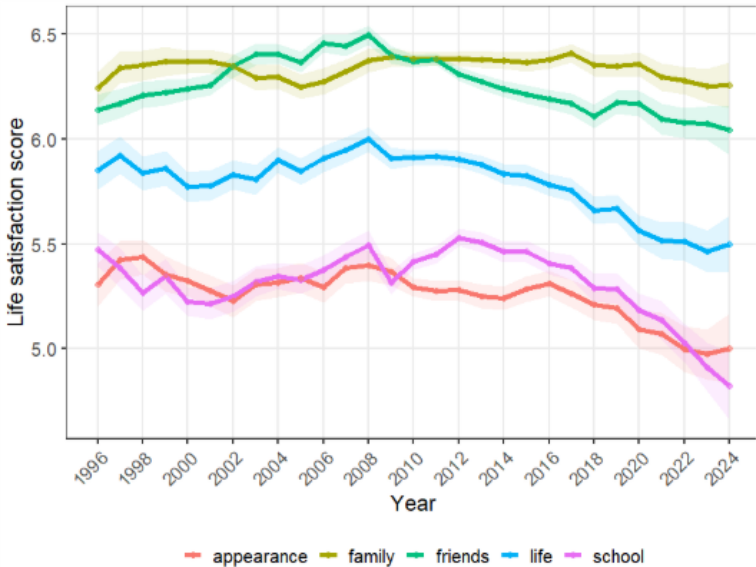
Among 10 to 15 year olds, longitudinal survey data suggests declining satisfaction with school, friendships and appearance, while satisfaction with family life has remained comparatively more stable. Figure 15 shows declines across several domains after 2010. This pattern is informative, as it suggests that many of the pressures affecting young people may lie less in family life itself and more in peer relationships, identity formation, schooling and the broader social environment in which they are developing.
Figure 15: life satisfaction (higher scores, more satisfaction), 10 to 15 year olds
Source: UKHLS.
Description of figure 15: shows average life satisfaction scores across different areas (appearance, family, friends, life overall and school) from 1996 to 2024. Scores generally increase slightly to the late 2000s, remain fairly stable until the mid‑2010s, then decline from around 2016 onwards. The largest and steepest fall is in satisfaction with school after 2020.
Sleep and everyday functioning
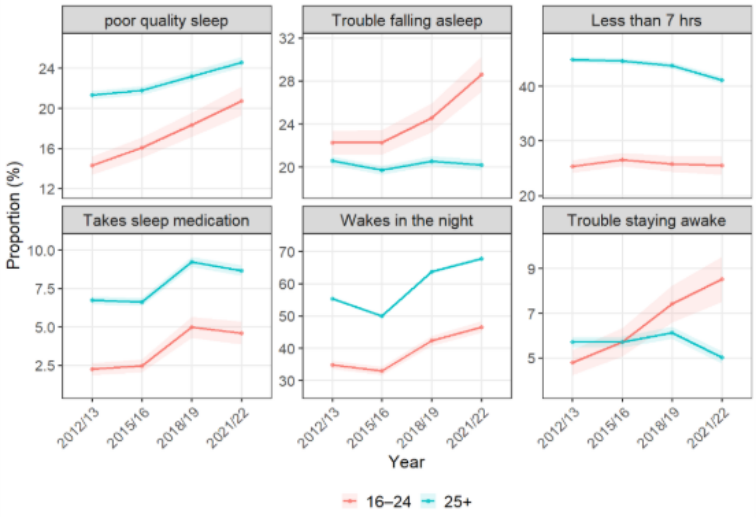
Sleep is another domain in which population indicators have worsened, particularly among younger groups. Figure 16 illustrates deterioration in sleep patterns. Analyses from the UKHLS suggest that sleep quality has declined over time, and poor sleep is itself strongly associated with anxiety, depression and impaired functioning. This does not establish causation, but it adds to the broader picture of increasing strain.
Figure 16: indicators of sleep quality 2013 to 2020
Source: UKHLS.
Description of figure 16: shows indicators of sleep quality for people aged 16 to 24 and 25 and over from 2012 to 2013, to 2021 to 2022. Poor quality sleep, trouble falling asleep, waking in the night and trouble staying awake increase over time in both age groups, with steeper rises among 16 to 24 year olds. The proportion sleeping less than 7 hours falls slightly, while use of sleep medication increases, particularly after around 2017 to 2018.
Changes in impairment and functional impact
Survey symptom scales do not directly measure impacts on life and concurrent and longer-term consequences. It is therefore useful to examine whether the association of symptoms with functional impairment or adverse consequences on other domains of functioning has changed over time. If higher prevalence were mainly due to lower reporting thresholds, the severity of consequences among those reporting distress would be expected to decline over time. However, several cross-generational studies find little evidence of declining impact and, in some cases, suggest worsening impairment (see references 9, 10, 11 and 12). For instance Sellers (2019) found that children with mental health symptoms from more recent generations have worse adolescent social functioning and academic attainment, and Thompson (2023) found that adolescent mental health in more recent generations has greater impacts on adult employment, partnership and health outcomes. These findings related to worse outcomes for more recent generations are found when looking at:
- shorter term or concurrent impairment (see references 9 and 10)
- medium term outcomes from childhood symptoms to adolescent outcomes (see reference 11)
- adulthood outcomes of adolescent mental health symptoms (see reference 12)
These findings, contrary to expectations if symptom increase was solely or mainly due to reduced stigma or lower thresholds, suggest that we have to consider the possibility that not only are more people, especially young people, reporting greater emotional symptoms and/or distress, but the consequences on their lives of these symptoms is also potentially increasing. We will conduct further analyses to investigate this important issue and understand the potential consequences in the final report.
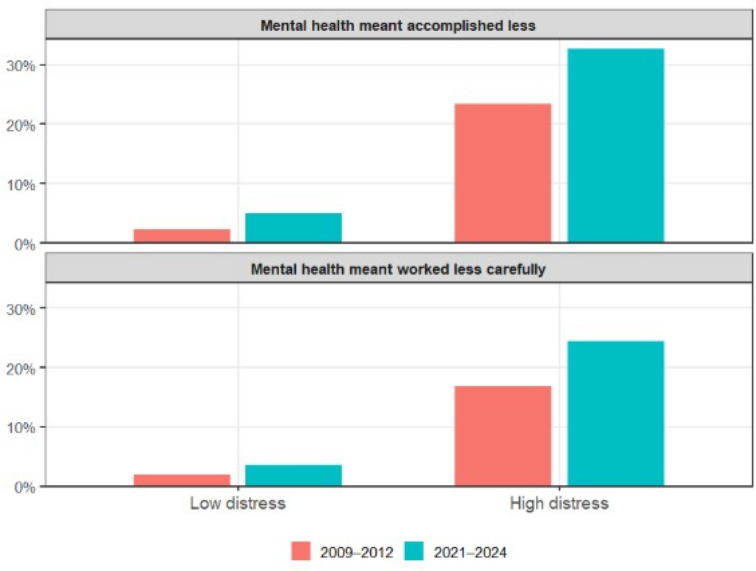
Figure 17: impairment associated with mental health, according to level of mental distress and year
Source: UKHLS.
Description of figure 17: shows the impact of mental health on daily functioning by level of distress, comparing 2009 to 2012 with 2021 to 2024. For both ‘accomplished less’ and ‘worked less carefully’, impacts are much higher among people with high distress, and levels are higher in 2021 to 2024 than in 2009 to 2012. Changes among those with low distress are small in both periods.
Changes in mental health inequalities
Inequalities in mental health and neurodevelopmental conditions are a central concern for the review, but they are also complex and multidimensional. While socioeconomic disadvantage remains one of the most consistently identified risk factors, it is only one of several axes along which differences in prevalence, recognition, diagnosis and access to support are observed. Patterns of inequality are also evident by sex and gender, ethnicity, age, geography and other social characteristics, and these dimensions often intersect in ways that are not easily disentangled within existing data sets.
The evidence presented in this section focuses primarily on socioeconomic inequalities, as these are the most consistently measured and the most readily comparable over time. However, this should not be taken to imply that other forms of inequality are of lesser importance.
The review is therefore treating this as an initial account. In the next phase, we will examine inequalities in greater depth, drawing on additional data sets and linked analyses to explore variation across a wider range of outcomes and dimensions. This will include more detailed consideration of how patterns differ by ethnicity, sex, age and geography, how multiple forms of disadvantage may combine, and how inequalities manifest not only in prevalence but also in recognition, diagnosis, service use and longer-term outcomes. Here we restrict our initial review to deprivation.
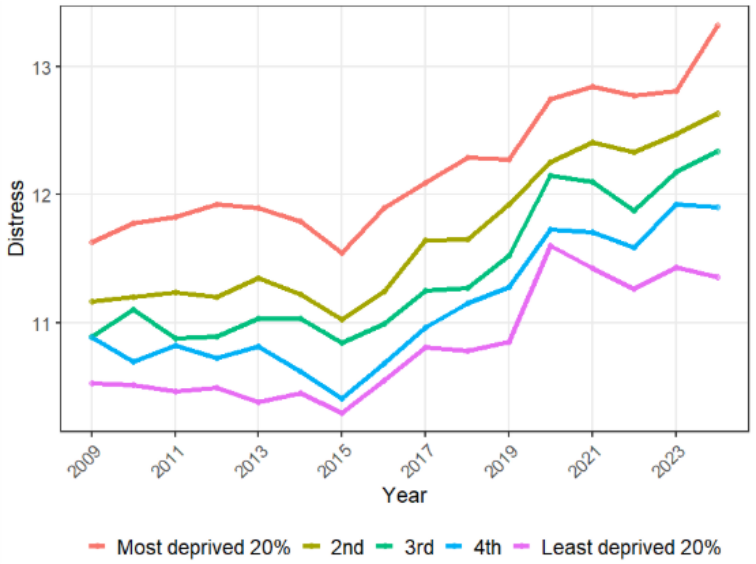
Poverty and material deprivation remain strong predictors of poor mental health. There is evidence that socioeconomic disadvantage may have become an even stronger predictor of adolescent mental distress in recent years (see reference 13). However, more recent analyses of the UKHLS suggest that the recent rise in psychological distress among young adults has occurred across all deprivation groups, rather than being confined to the most disadvantaged (figure 18).
This indicates that, while inequalities remain substantial, recent increases in distress among young people appear to be occurring across a wider section of society. While increases may be most marked in the most deprived group, they are also marked in those experiencing far less deprivation.
Figure 18: trends in mental distress in young adults (aged 16 to 24) by area-level deprivation, 2009 to 2024
Source: UKHLS.
Description of figure 18: shows mental distress scores by area‑level deprivation from 2009 to 2023. Distress increases across all deprivation groups over time, with a sharper rise after around 2016. Scores are consistently highest in the most deprived areas and lowest in the least deprived areas throughout the period.
Gender differences also remain pronounced. Girls and young women consistently report higher levels of emotional problems than boys and young men. Evidence on whether recent increases have been more marked among females is mixed. Some studies suggest earlier onset and greater increases in emotional symptoms among girls (see reference 9), while others find more similar trends across sexes or less consistent patterns over time. This remains an area where further analysis is needed.
Patterns across ethnic groups are more complex. Overall, the available evidence suggests that, in adults, some ethnic minority groups continue to experience poorer mental health outcomes on certain measures, although patterns vary by condition and data set. Evidence on trends over time among young people is more mixed. Some analyses of national data sets suggest that young people from Black and Asian backgrounds have experienced smaller declines in wellbeing than their White British peers (see references 15 and 16). Although these findings are observed consistently across multiple data sets, they require cautious interpretation. Further work is needed to better understand the underlying drivers of these patterns and how they vary across groups and contexts.
Interpreting the evidence
The available evidence therefore points to a complex pattern. Psychological distress appears to have increased, particularly among younger adults and adolescents, but the changes are not uniform across all symptoms or all age groups. Emotional symptoms, loneliness and difficulties with concentration or confidence appear to have increased most strongly, with evidence also pointing to rises in anxiety, particularly generalised anxiety, and in self-harm reported as a coping strategy. By contrast, other behavioural problems have remained stable or, in some cases, declined.
At the same time, interpretation requires caution. Population surveys are sensitive to social and cultural influences, including changes in willingness to report symptoms and differences in how individuals interpret survey questions. Declining survey participation rates may also influence estimates if those with more severe difficulties are less likely to respond.
For these reasons, the review has considered multiple sources of evidence rather than relying on any single data set. The convergence of findings across several independent surveys suggests that the increase in distress among young people is unlikely to be wholly an artefact of measurement. However, the precise causes of these changes remain uncertain and will require further examination of potential drivers in the next phase of the review.
In summary, the population evidence suggests that psychological distress has increased in England over the past decade, particularly among young adults and adolescents. The increase appears to be concentrated in emotional symptoms, loneliness and aspects of daily functioning, rather than across all domains of mental health equally. While these trends are consistent across several large surveys, the reasons for them are not yet fully understood. The following sections therefore examine possible explanations for these patterns and consider how social, institutional and service factors may interact with underlying changes in distress.
Mental health, neurodevelopmental conditions and participation in education and employment
An important implication of the trends described above concerns their consequences for functioning, participation and life course outcomes. Mental health and neurodevelopmental conditions are associated not only with service use, but with a wide range of longer-term outcomes, including educational attainment, employment, physical health and, in some cases, mortality. These broader consequences are central to understanding the significance of changes in distress and diagnosis, and to considering how systems of support should respond.
One particularly important dimension of this concerns participation in education, training and employment, especially among young people. The number of young people who are NEET has risen in recent years and now stands at around 900,000 young people aged 16 to 24 in the UK, or roughly 12% to 13% of that age group (see reference 17). This group is diverse, but there is longstanding evidence that mental disorders and neurodevelopmental conditions are strongly associated with increased risk of disengagement from education and the labour market. For these reasons, the review considers the relationship between mental health, neurodevelopmental conditions and participation outcomes - including NEET status - to be central to understanding both current trends and their implications for policy.
Negative educational experiences frequently precede entry into NEET status and may represent early indicators of vulnerability rather than isolated educational problems. Difficulties that first emerge in school - such as problems with concentration, social interaction, behaviour or emotional regulation - may affect attendance, attainment and progression through key transition points in the education system. Administrative data shows that pupils experiencing persistent absence or exclusion as well as children home schooled due to unmet needs are substantially over-represented among those who later become NEET (see reference 18).
The relationship also operates in the opposite direction. Periods spent outside education, training or employment are themselves associated with increased psychological distress, reduced wellbeing and poorer long-term health outcomes. Longitudinal research has shown that extended NEET status is associated with higher risks of unemployment, economic insecurity and poorer mental health later in life (see references 19 and 20). In this way, early educational disengagement can initiate a reinforcing cycle in which reduced participation contributes to worsening wellbeing and diminished opportunities for recovery. These processes may also operate within a wider intergenerational context, where patterns of disadvantage and disengagement in families shape and are shaped by young people’s trajectories, an area that warrants further investigation.
These patterns suggest that mental health and neurodevelopmental conditions should not be considered solely in terms of diagnosis or service use. They are also closely linked to questions of participation, educational progression and economic inclusion. Diagnostic pathways can play different roles in this process. In some cases, recognition of a condition allows appropriate adjustments and support to be provided, enabling young people to remain engaged in education or employment. In other cases, where support is slow or contingent on formal diagnosis, delays in recognition may contribute to prolonged disengagement.
The economic implications are also substantial. Earlier analyses estimated that a young person who remains long-term NEET may generate lifetime public finance costs of £56,000 to £100,000 and wider economic costs approaching £200,000 to £300,000 (see reference 21). Preventing sustained disengagement from education and employment therefore has implications not only for individual wellbeing but also for long-term productivity and public expenditure.
These observations help place the earlier findings of this report in a broader context. sections 4 to 8 indicate that psychological distress among young people has increased in recent years, while diagnoses of ADHD and autism have risen substantially within administrative systems even where epidemiological prevalence appears relatively stable. The relationship with NEET status illustrates how these developments intersect with educational participation and labour market transitions. Difficulties associated with mental health or neurodevelopmental conditions often first become visible within school environments, where they may affect attendance, attainment and progression. Where systems respond slowly, or where access to support depends heavily on formal diagnosis, these early difficulties may accumulate and contribute to educational disengagement and eventual NEET status.
Conversely, once young people become disengaged from education or employment, the loss of structure, opportunity and social connection may contribute to worsening mental health. ‘The scarring effect’ is a term used to describe how NEET status isn’t just a temporary setback - it leaves lasting psychological scars. Research consistently shows that even after finding employment, individuals who were NEET often suffer from lower life satisfaction and higher anxiety for years afterward (see references 22, 23 and 24). This isn’t new. Since the Great Depression, we’ve known (notably from the Marienthal study) that prolonged unemployment leads to ‘psychological erosion’ - a slide from anxiety into universal resignation and apathy. These dynamics suggest that the design of pathways through education, health and support systems may play an important role in shaping outcomes. An earlier, more co-ordinated response to emerging difficulties may therefore help prevent later disengagement as well as reduce pressure on specialist diagnostic services.
For these reasons, the review considers the relationship between mental health, neurodevelopmental conditions and NEET status to be of central importance. The interim evidence suggests that patterns of distress, diagnosis and educational disengagement are closely intertwined, but the mechanisms linking them remain insufficiently understood.
In the next phase of the review, further analysis will therefore examine administrative data sets linking education, health and employment outcomes in order to understand more clearly how these trajectories develop. Particular attention will be given to identifying which pathways appear to support continued participation in education and employment, and which appear to contribute to prolonged disengagement. Our hope is that this review will support and inform the Rt Hon Alan Milburn’s review on Young People and Work, and wider work on SEND reform, with the aim of ensuring that findings on mental health and neurodevelopmental conditions inform broader work on preventing long-term economic inactivity among young people and ensuring that analysis of prevalence, diagnosis and service demand is considered alongside developments in the education system.
The objective is not only to understand the association between mental health, neurodevelopmental conditions and NEET status, but also to identify how systems of support might be organised so that recognition and diagnosis act as facilitators of adaptation, resilience, coping and participation rather than unintended barriers.
6. What administrative data shows
Interpreting administrative data
Administrative data sets are essential for understanding service use, diagnosis and system pressures, but they should not be interpreted as direct measures of population prevalence.
In particular, education data on ‘autism-related need’ reflect administrative categories used to allocate support and may include a mixture of:
- confirmed diagnoses
- individuals awaiting assessment
- needs identified within educational settings
These categories are not equivalent to clinical diagnosis and should not be treated as epidemiological prevalence.
Similarly, different administrative sources vary in coverage, coding practices and level of detail. For example, data sets such as the Network Contract Directed Enhanced Service (NCDES) and Health and Care of People with Learning Disabilities (HCPLD) differ in how populations are captured and disaggregated and cannot be assumed to be fully representative of the population without careful interpretation.
For these reasons, administrative data is most informative when used alongside population surveys and other evidence, and when interpreted as indicators of system activity and recognition rather than underlying prevalence.
Administrative data does not indicate how common a condition is in the population in the same way as epidemiological surveys. Rather, it shows how individuals are recognised, recorded and managed within systems. It is therefore indispensable for understanding service pressure, referral patterns, diagnosis, prescribing and pathway delays. It should not, however, be treated as direct measures of underlying prevalence. That distinction is particularly important for this review, as one of the clearest emerging findings is that population prevalence, administrative prevalence and service demand may move in different ways and at different rates.
Figure 19: number of people in contact with NHS funded secondary mental health, learning disabilities and autism services
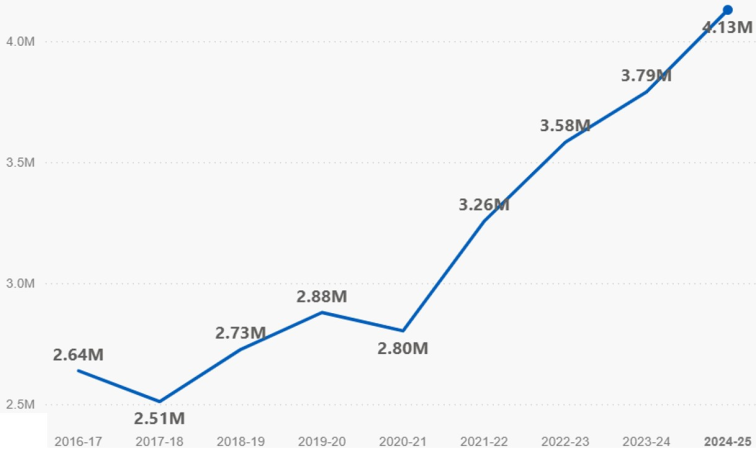
Source: Mental Health Services Data Set (MHSDS).
Description of figure 19: shows the number of people in contact with NHS-funded secondary mental health, learning disabilities and autism services in England each year from 2016 to 2017, to 2024 to 2025. The number increases steadily overall, rising from about 2.64 million to about 4.13 million, with the steepest growth in the most recent years.
The administrative evidence reviewed to date points to 3 broad conclusions.
First, diagnostic activity has increased substantially across several conditions, particularly since 2020. Figure 19 demonstrates the rate of this increase, from 2.64 million people in contact with secondary mental health, learning disabilities and autism services in 2016 to 2017, to 4.13 million in 2024 to 2025.
Second, service data sets vary considerably in quality and completeness, meaning that some are materially more useful than others for drawing inferences about prevalence although they tend to reflect increased service activity.
Third, increases in recorded diagnoses are best understood as the result of several interacting processes:
- changes in distress
- help-seeking
- recognition
- coding
- institutional incentives
Primary care gives the clearest national picture
Of the national administrative sources currently available, primary care records are the most informative for tracking diagnostic trends over time. The reason is straightforward: general practice sits at the centre of the English health system and maintains a defined registered population. This makes it possible to calculate rates of diagnosis and prescribing against a denominator in a way that secondary care data sets often cannot. Primary care records also tend to capture diagnoses made elsewhere in the system once these have been communicated back to the GP.
This is one reason why several of the strongest recent analyses of ADHD trends are based on primary care data. Using UK primary care records from January 2010 to March 2022 and covering 12,371,319 individuals aged 1 to 24 years, Trafford and others (2025) found that ADHD incidence fell sharply at the onset of COVID restrictions and then diverged by sex. Diagnoses in females rose above expected levels across the subsequent 2 years, particularly among those aged 20 to 24, whereas in males incidence returned closer to expected levels after the initial shock.
Similarly, unpublished analyses of Clinical Practice Research Datalink (CPRD) Aurum (see reference 25) indicate that ADHD administrative incidence increased sharply from 2021 onwards. At the same time, recorded prevalence in June 2025 remained below epidemiological benchmarks, particularly among older adults. The data also suggests that recorded prevalence is highest in young adulthood and declines across the life course. Taken together, these findings reinforce the point that primary care data are useful for tracking diagnostic activity, but that such activity should not be interpreted as a direct measure of underlying population prevalence.
Primary care data also provides useful perspective beyond ADHD. The review’s rapid review found that, for common mental disorders, recorded annual incidence in UK primary care increased through the 2000s and 2010s, particularly among younger adults, with evidence from linked analyses indicating a notable acceleration in presentations for anxiety and self-harm from around 2010 onwards. Trends after the pandemic are more complex and sensitive to definition and recording practices. This serves as a reminder that administrative trends may depend heavily on coding conventions and case definitions, particularly for common mental health conditions where boundaries are less sharply defined and recording practices are less uniform.
Secondary care data is valuable, but often a poor diagnostic measure
Secondary care mental health data sets remain extremely valuable for understanding referrals, contacts, waiting times and service pathways, but they are considerably less reliable as direct measures of diagnostic prevalence. The principal reason is under-recording and incomplete coding.
The analysis of data from Akrivia Health is particularly important in this regard. Across more than 20 NHS mental health trusts and approximately 6.5 million records, structured secondary care diagnostic codes captured only a minority of the diagnoses that could be identified when free text was analysed using validated natural language processing tools. In this data set, structured fields captured only around 14% of ADHD diagnoses, 18% of autism diagnoses, and 42% of mental health diagnoses identifiable when structured and free-text information were combined. Under-recording was particularly marked for co-occurring conditions and varied by service type.
This is significant because it means that data sets such as the MHSDS cannot be treated as straightforward national counts of diagnosed ADHD or autism. They remain informative regarding activity and flow through services, but they reflect recording practices and local coding behaviour at least as much as they reflect true clinical prevalence. This is one of the strongest reasons for caution in interpreting administrative data too literally.
Referrals, waiting lists and unmet demand
Even where administrative diagnoses are imperfect, administrative data remains indispensable in showing the scale of increasing demand on services. On this point, the signal is clear. Across both mental health and neurodevelopmental pathways, referrals and waiting lists have risen sharply in recent years.
In ADHD, the most frequently cited example is the increase in open referrals for children and young people awaiting assessment in mental health services - approximately 21,000 in April 2019, rising to around 270,000 by December 2025, according to NHS England service monitoring. This represents a substantial increase over a relatively short period. Neurodevelopmental assessments account for a substantial proportion of referrals into mental health services. For example, at South West Yorkshire Partnership NHS Foundation Trust (SWYPFT), serving around 2.2% of England’s population, referrals for ADHD represent approximately 25% of single point of access referrals to secondary mental health care, with autism accounting for a further 8% (see reference 26). These figures suggest that while referrals for ADHD and autism are not the sole drivers of pressure on the system, they constitute a significant component of a wider increase in demand for mental health services.
This wider perspective is important for interpretation. Service pressure is not confined to ADHD. Referrals to children and young people’s mental health services (formerly and more commonly known as child and adolescent mental health services, or CAMHS) and other mental health services more generally are increasing. Meanwhile the standardised diagnostic assessment for children and young people with emotional difficulties (STADIA) findings suggest that:
- many children with probable emotional disorders are not receiving timely diagnosis or treatment
- deterioration while waiting is common
In other words, rising pressure appears to reflect both growing inflow and longstanding structural weakness in system responsiveness.
Administrative trends are shaped by social patterning
Administrative data also makes it possible to examine more closely who is being diagnosed and how patterns are shifting socially. This is one of its major strengths.
In relation to ADHD, recent studies suggest that earlier assumptions about who is diagnosed may no longer hold in the same way. Historically, diagnoses were more concentrated among boys and in more deprived populations. More recent analyses suggest a more complex position. In Hussey and others (2025), based on the Greater Manchester Care Record, incidence increased across all deprivation groups after the pandemic, but the largest relative increases were seen in the least deprived groups. The same study also suggested very marked relative increases among non-White females, albeit from lower baselines. Trafford and others (2025) similarly identified widening deprivation-related differences among females in the post-pandemic period.
This shift is analytically important because it suggests that administrative growth may partly reflect changing access, changing recognition, or changing demand among previously under-represented groups, rather than simply a worsening of underlying condition. It also means that inequalities cannot be inferred from administrative counts alone without careful examination of who is and is not entering the system.
Pathways matter as much as counts
One of the most useful developments in the review’s work to date has been the shift from considering only numbers of diagnoses to considering pathways. Linked regional data sets make it possible to reconstruct what occurs between referral, assessment, diagnosis, treatment and discharge, and to identify where delay and fragmentation enter the system.
The review’s early analyses from Cambridge and other linked data sets remain provisional, but they already indicate that:
- waiting times for ADHD and autism assessments have lengthened substantially
- post-assessment pathways vary by condition
- some individuals remain in the system for prolonged periods without clearly recorded treatment events
These analyses are not yet sufficiently mature to support strong national conclusions, but they demonstrate why pathway analysis will be essential to the final report. Rising diagnoses may indicate better detection of need, but they may equally reflect repeated referrals, prolonged assessment processes, complex comorbidity, or services that are unable to convert contact into timely support.
What administrative data can - and cannot - tell us
Administrative data shows clear increases in referrals, diagnoses and service demand across several mental health and neurodevelopmental conditions. These increases cannot, however, be interpreted as direct evidence of rising population prevalence.
Administrative prevalence reflects the interaction of several processes:
- the underlying occurrence of conditions in the population
- the likelihood that individuals seek help
- the availability of services
- clinicians’ diagnostic practices
- the way information is recorded within systems
For this reason, administrative data must be interpreted alongside population surveys and qualitative evidence. Used together, these sources can help the review assess whether rising diagnoses reflect changes in:
- underlying need
- improved recognition of previously unmet need
- changes in diagnostic practice
- pressures within the systems providing care
At the same time, administrative data itself can be informative in examining how the characteristics of diagnosed populations may be changing over time - for example, through analysis of functional impairment, co-occurring conditions or associated outcomes - which may provide indirect evidence on whether diagnostic thresholds or case mix have shifted. Understanding how these factors interact is central to explaining the patterns currently observed in mental health and neurodevelopmental diagnoses.
The review also notes that related issues are currently being examined within the Department for Education’s programme of reform to the SEND system. The SEND and alternative provision improvement plan and subsequent consultations have highlighted concerns about the extent to which access to support in education has become closely linked to diagnostic categorisation rather than functional need. The reform programme is exploring ways of:
- strengthening earlier identification
- improving consistency of support within mainstream settings
- reducing reliance on diagnostic pathways as the principal gateway to assistance
The review considers these developments highly relevant, as they engage directly with the same structural questions about how need, diagnosis and support are currently connected across health and education systems.
7. ADHD trends and service demand
ADHD provides one of the clearest examples in this review of why it is necessary to distinguish between population prevalence, recorded diagnosis and service demand. The available evidence does not suggest a dramatic increase in the underlying population prevalence of ADHD. However, it is important to note that robust, large-scale diagnostic assessments of ADHD in the UK general population are limited. In that context, while uncertainty remains, it would be difficult to reconcile very rapid increases in prevalence with current understanding of ADHD as a neurodevelopmental condition. What it does show, however, is a substantial increase in administrative incidence, recorded prevalence, referrals and waiting lists, with the sharpest acceleration occurring after 2020 and with particularly marked increases among adolescent and young adult females. The central interpretive challenge is therefore not whether ADHD has become more visible within systems - this is clear - but which combination of unmet need, improved recognition, changing help-seeking, institutional incentives and possible threshold change best explains that pattern.
Population prevalence appears broadly stable
The epidemiological starting point remains relatively stable. NICE cites prevalence estimates of around 5% in children and young people and 2% to 3% in adults (see reference 27). These figures, as indicated when first considered under the ADHD section in ‘4. What the population data tells us’, should be understood as broad benchmarks rather than precise constants, and more age-specific and sex-specific UK estimates would be preferable for comparison with administrative data.
This is consistent with the Global Burden of Disease Study, which has not shown large secular shifts in ADHD prevalence over recent decades (see reference 5). It is also consistent with the Mental Health of Children and Young People Survey, in which the prevalence of hyperkinetic disorder in children remained fairly similar across waves, rising only modestly from around 1.5% in 1999 and 2004 to around 1.9% in 2017 (see reference 3). There are important limitations in the available population data for ADHD. While in the UK, there is a lack of robust, large-scale diagnostic assessment of adult ADHD, and no recent population prevalence data for children and young people since 2017, particularly covering the post-pandemic period during which the steepest rise in administrative prevalence has occurred. The earlier evidence from the Mental Health of Children and Young People Survey showed that, between 1999 and 2017, the prevalence of emotional disorders increased by around one third (from 4.3% to 5.8%), while narrowly defined ICD-10 hyperkinetic disorder rose more modestly (from 1.5% to 1.9%), which may under-represent change in the more broadly defined ADHD category. Global Burden of Disease estimates suggest a smaller but still notable increase of around 17% in ADHD prevalence among those under 20 between 1990 and 2021.
It is also important to interpret commonly cited prevalence estimates with some caution. Figures such as the often-quoted 5% prevalence for ADHD are averages drawn from many different studies, which vary widely in how they define and measure the condition. As a result, the true range of estimates across studies is much broader than the headline figure suggests, with some studies reporting substantially lower or higher rates depending on methods and thresholds used. This means that such averages should not be treated as precise or definitive benchmarks against which administrative data can be directly compared. Rather, they provide a broad indication of scale, and need to be interpreted alongside an understanding of the variability and uncertainty inherent in the underlying evidence.
Taken together, this data indicates some increase over time, but falls short of providing a definitive account of recent changes, particularly in relation to the post-2020 period. That relative stability is important because it frames the central question: if underlying prevalence has not changed substantially, why have diagnoses and service pressures increased so rapidly? Much of the available prevalence evidence predates the post-2020 acceleration in administrative activity, and more recent population data is limited. However, symptom-based measures, such as the SDQ and ASRS, also show upward trends, suggesting that changes in reported difficulties may be contributing alongside changes in recognition and service use although these may be part of a general upward trend in the reporting of all mental health symptoms, which we will scrutinise more carefully in phase 2 of the review.
Diagnosis has accelerated sharply, especially after 2020
Administrative data presents a markedly different picture. Across primary care and regional health records, ADHD diagnoses have risen steadily since the early 2000s and then accelerated sharply after the pandemic. In this respect, the available evidence is notably consistent.
Using UK primary care records covering 12,371,319 individuals aged 1 to 24 years between January 2010 and March 2022, Trafford and others (2025) identified a clear structural break around 2020. Diagnoses fell sharply during the first lockdown and then rebounded strongly. Over the 2 years from March 2020 to March 2022, diagnoses among females were 24.7% higher than expected on the basis of pre-pandemic trends, with the largest divergence in women aged 20 to 24, where incidence was 158.6% higher than expected. Among males, by contrast, rates recovered after the initial pandemic disruption but remained below expected levels overall across that same 2-year period.
Figure 20: primary care incidence of ADHD diagnoses in primary care records between 2000 and 2025
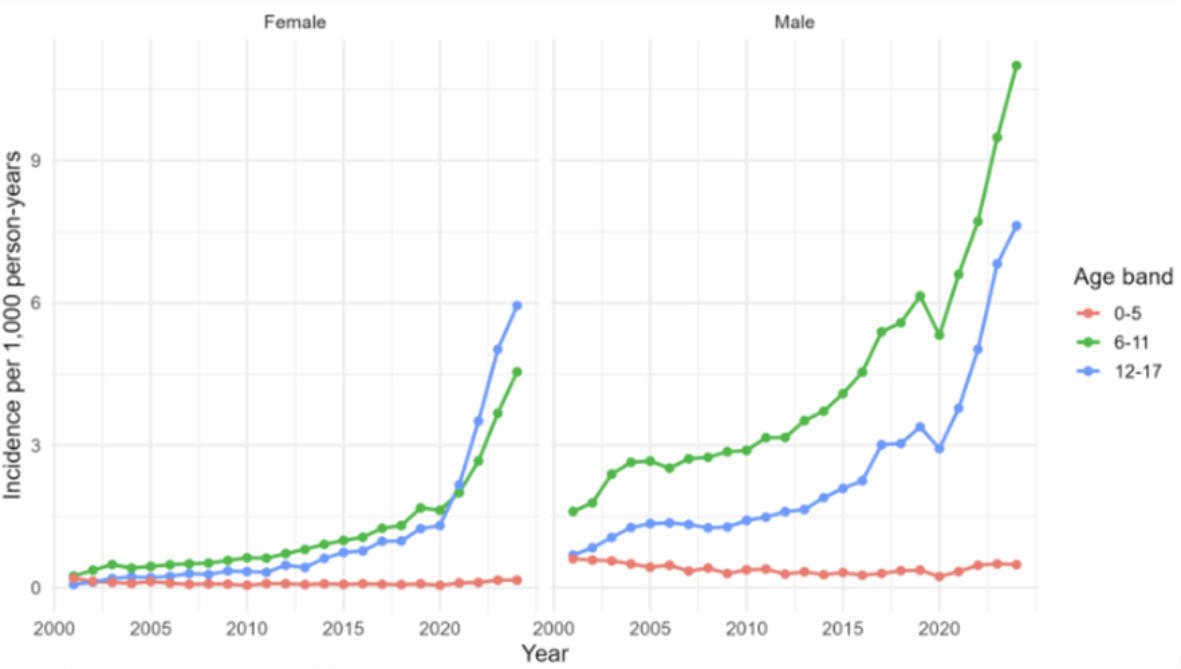
Source: CPRD Aurum.
Description of figure 20: shows primary care incidence of ADHD diagnoses by age group and sex from 2000 to 2025. Incidence increases over time for children aged 6 to 11 and 12 to 17, with much steeper rises from around 2015 onwards. Rates remain very low and relatively stable among children aged 0 to 5. In all age groups, incidence is higher in males than females.
A similar pattern is evident in the Greater Manchester Care Record. Hussey and others (2025) analysed incidences of ADHD diagnoses among approximately 940,563 people aged 1 to 24 and found strong post-pandemic growth in both sexes, but a much steeper increase in females. By January to November 2023, compared with pre-pandemic levels, incidence was 82% higher in males and more than 4 times higher in females. These are very substantial relative changes over a short period, again concentrated particularly in adolescence and young adulthood.
Unpublished analyses presented to the review from CPRD Aurum (see reference 25) show the same broad pattern at national scale. In this data, annual incidence rose from 1.03 per 1,000 person-years in 2021 to 1.64 in 2022, 2.18 in 2023 and 2.53 in 2024. The acceleration is particularly evident after 2021, again suggesting that something changed in the post-pandemic period beyond the underlying long-term trend.
The demographic profile of diagnosis is changing
The increase in ADHD diagnosis is not evenly distributed. Historically, diagnosed ADHD was concentrated predominantly in boys and in more deprived populations. More recent administrative evidence suggests that this profile is changing.
The most striking change concerns girls and young women. Incidence among adolescent and young adult females has risen particularly rapidly, to the point that the historical sex ratio appears to be narrowing markedly. In some analyses of children and young people, the gap between males and females appears much smaller by 2025 than it was previously, suggesting that ADHD is now being identified in girls and young women at rates that would have been unusual a decade ago. In the APMS, using the ASRS screening measure, while rates were broadly similar in men and women in 2007 and 2014, by 2024 women report higher levels than men. Administrative data also shows that, in some locations at least, referrals are now disproportionately concentrated among women, with over 60% of referrals coming from female patients, exceeding what would be expected based on population prevalence estimates (see reference 26).
There are also indications of changing social gradients. Earlier work tended to find higher incidence in more deprived areas. More recent analyses, however, suggest a more complex position. In the Greater Manchester data, incidence increased across all deprivation quintiles after the pandemic, but the largest relative increases were in the least deprived groups. There is also evidence that, among young people, post-pandemic increases may now be steeper in more advantaged groups than in the most deprived (see figures 21a and 21b).
Figure 21a: ADHD incidence by level of deprivation - male
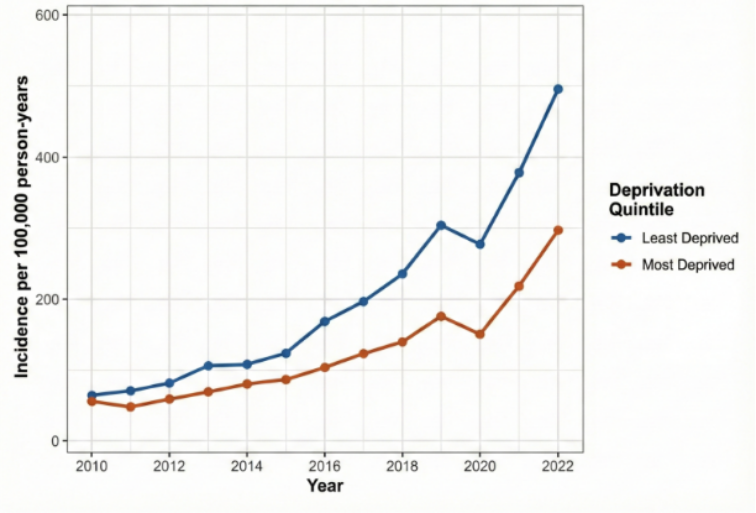
Source: CPRD.
Description of figure 21a: shows annual incidence of ADHD among males by deprivation level from 2010 to 2022. Incidence increases over time in both the least and most deprived groups, with a sharper rise after 2020. Rates are consistently higher in the least deprived group across the period.
Figure 21b: ADHD incidence by level of deprivation - female
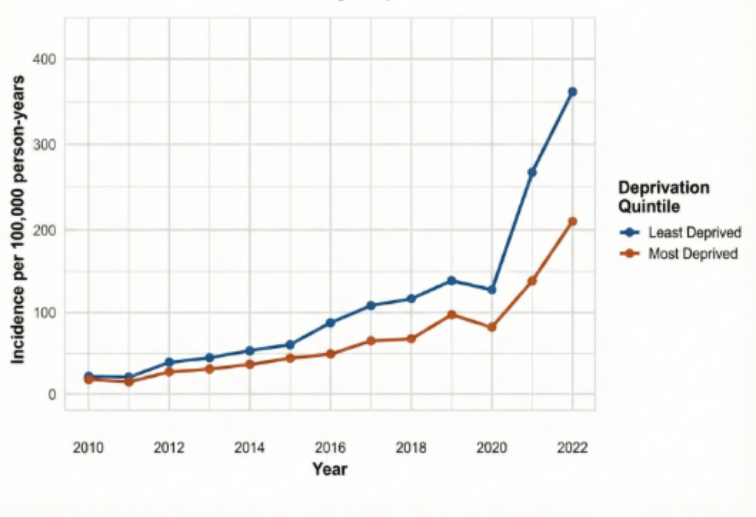
Source: CPRD.
Description of figure 21b: shows annual incidence of ADHD among females by deprivation level from 2010 to 2022. Incidence increases in both the least and most deprived groups, with a sharp rise after 2020. Rates are consistently higher in the least deprived group across the period.
Figure 22: general practice recording of ADHD diagnosis by level of deprivation
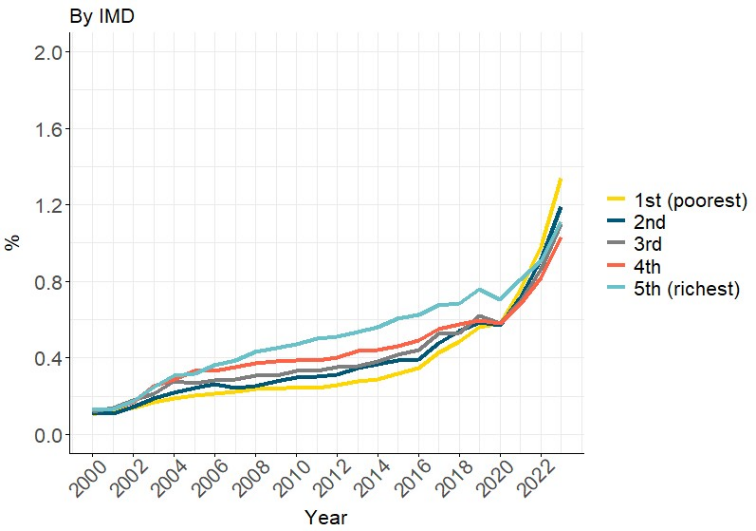
Source: CPRD Aurum.
Description of figure 22: shows primary care incidence of ADHD by deprivation level from 2000 to 2023. Incidence increases steadily across all deprivation groups, with sharper rises after around 2020. By 2023, rates are highest in the most deprived areas.
The same may be true in relation to ethnicity, although the evidence remains less developed. Hussey and others (2025) found especially marked relative increases among Black and Asian females, albeit from lower baselines. While this is not sufficient to support firm conclusions, it suggests that recent growth may partly reflect ADHD being recognised in groups previously less likely to receive diagnosis. However, this is likely to have been hidden by the substantial increase in the most affluent postcodes (figure 22).
Recorded prevalence is still low relative to epidemiological benchmarks
Despite this rapid growth, recorded prevalence in health systems remains below population benchmarks. In the CPRD Aurum analyses, point prevalence in June 2025 was 1.19% overall, with higher prevalence in males (1.48%) than females (0.91%). Prevalence was highest in 18 to 24 year olds, reaching around 3.60% in males and 2.07% in females, and then declining steadily across older age groups.
The available evidence suggests a more complex position than either simple over- or underdiagnosis. Even allowing for uncertainty in population prevalence, recorded administrative prevalence remains below epidemiological estimates, although the gap appears to be narrowing, particularly among females and young adults. Evidence from the APMS further indicates that individuals reporting a professional ADHD diagnosis almost all screen positive on the ASRS, while very few who screen negative report a diagnosis. At the same time, only a minority of those screening positive report diagnosis, treatment or self-identification. This pattern is consistent with a system in which diagnosis and treatment remain concentrated among those with higher levels of symptoms, while a proportion of potentially affected individuals may still not be recognised or supported.
This is important because it complicates any straightforward account of ‘overdiagnosis’. Even with very substantial administrative growth, recorded prevalence in most age groups remains below the epidemiological benchmarks usually cited in policy and clinical guidance. One interpretation of the current position is therefore that it involves continued underdiagnosis across the life course, especially in older adults, alongside rapid recent expansion in diagnosis among younger groups. That interpretation does, however, depend on accepting the epidemiological benchmarks as the appropriate comparator, and that assumption itself warrants some caution. The limitations and uncertainties associated with epidemiological estimation are discussed further in section 12, including issues relating to measurement, case definition and changes over time. On the other hand, one would expect that one would see slowing of the rate of growth in demand as administrative prevalence approaches the epidemiological benchmarks. We have yet to see this happen.
Referrals and waiting lists have risen dramatically
Perhaps the clearest service-level finding is the growth in demand for assessment. NHS England monitoring data indicates that the number of open referrals for children and young people awaiting ADHD assessment in mental health services rose from around 21,000 in April 2019 to around 270,000 in December 2025. Whatever interpretation is placed on underlying prevalence, this is direct evidence of substantial pressure on the assessment system.
At the same time, an important point is sometimes lost in public discussion. While ADHD assessments appear to account for a significant proportion of mental health referrals, this has occurred against a background of a broader increase in mental health service demand (see above). While a significant part of the problem, ADHD may not uniquely be driving overall waiting list growth. This interpretation is supported by population survey data from APMS, which indicates that the proportion of people with a mental health condition receiving treatment has increased substantially (perhaps by 100% since 2000 except for autism), suggesting that rising service use reflects wider changes in both need and access rather than any single diagnostic category. This is an important corrective to more alarmist interpretations and should pause us to reflect on broader cultural determinants of increased demand for mental health services.
Diagnosis is not translating into treatment in the same way
Another notable change concerns the relationship between diagnosis and treatment. Evidence from CPRD suggests that, among children and young people, conversion from ADHD diagnosis to medication prescribing has roughly halved in the post-pandemic period. This is a striking finding because it suggests that rising diagnosis is not being matched by a corresponding increase in treatment initiation. By contrast, population survey data (APMS) suggests that among individuals screening positive for ADHD, the proportion receiving ADHD medication has increased substantially over time. Taken together, these findings point to a more complex and changing relationship between identification, diagnosis and treatment across different parts of the system.
There are several plausible explanations. It may reflect:
- increasing delays between diagnosis and treatment
- greater caution in prescribing
- changes in case mix
- the growing role of private assessment pathways in which diagnosis does not always lead directly to NHS prescribing
It may also reflect the fact that diagnosis is sometimes being pursued for reasons other than medication alone - for example, to obtain explanation, validation, educational support or workplace adjustments. At present, the data does not permit these explanations to be disentangled with confidence.
The major unresolved issue: severity and impairment
The principal evidential gap remains the same throughout the review’s consideration of ADHD - routine data is not yet available in sufficient quality to determine whether the severity or functional impairment of diagnosed cases has changed over time. Without this, the core interpretive question remains unresolved. Rising diagnoses could reflect improved detection of individuals with substantial unmet need, broader thresholds for assessment and diagnosis, or some combination of the 2. Equally, they could reflect broader thresholds for assessment and diagnosis, or some combination of both. At present, the available evidence does not allow that balance to be determined.
This is why the next phase of the review will need to go beyond counting diagnoses and referrals. It will need to examine who is being diagnosed now compared with previously, how impaired they are, what treatments or supports follow, and whether service pathways are becoming more efficient, more delayed or simply more crowded. This will be important in supporting a more differentiated and stratified approach to need and response, so that support can be better aligned to levels of impairment and functional impact.
These findings underline the importance of developing systems that are both equitable and proportionate. If diagnostic activity is increasing while the severity and functional impact of cases remain uncertain, systems must ensure that those with the greatest levels of impairment and risk receive timely access to specialist assessment and treatment. At the same time, many people may benefit from earlier, more accessible forms of support that do not depend on long waits for specialist diagnosis. A central challenge for the next phase of the review will therefore be to examine how pathways can be designed so that support is better aligned and stratified with functional need, severity and risk, while broadening the range of routes through which help can be offered, rather than being determined primarily by the ability to secure a formal diagnostic label.
Interim interpretation of the ADHD evidence
The evidence on ADHD does not support a simple conclusion that underlying prevalence has risen dramatically. Nor does it support the opposite claim that recent growth can be dismissed as artefact. What it supports is a more complex picture, namely:
- broadly stable epidemiological prevalence
- sharply rising diagnosis and referral activity, especially among adolescent and young adult females
- substantial pressure on assessment systems that is not invariably followed by medication treatment
These findings suggest that several processes may be occurring simultaneously. Increased awareness of ADHD, improved recognition of symptoms in previously under-diagnosed groups, societal factors (including pandemic-related pressures) increasing need, changes in help-seeking behaviour and pressures within services may all be contributing to the observed rise in diagnoses. At the same time, in the absence of reliable data on the severity and functional impact of newly diagnosed cases, it is not yet possible to determine whether diagnostic thresholds have changed over time. Understanding how these factors interact will be an important focus of the next phase of the review.
8. Autism trends and service demand
The evidence on autism shows a pattern that is similar to ADHD in some respects, although there are important differences. The clearest overall picture is one of relatively stable autistic symptoms and population prevalence in the general population, alongside substantially rising rates of administrative identification, diagnosis and self-identification. In other words, the epidemiological evidence does not at present suggest a dramatic increase in the underlying prevalence of autism, whereas education, primary care and other administrative systems show marked growth in recorded need and diagnosis. Setting out this distinction at the outset is important, because it anchors the interpretation of the evidence that follows. Changes in underlying prevalence, public identification and administrative diagnosis cannot be assumed to move together.
This divergence is particularly visible in children and young people. Growth in autism-related identified need within education has been especially marked among girls and among pupils without intellectual disability, with emerging evidence of a notable concentration around the point of secondary school transition. If this pattern is confirmed, it is likely to have important implications not only for current educational provision but for future demand in both education and adult services, since the expanding cohort appears to differ in profile from the more historically recognised population.
At the same time, there is also evidence that under-recognition persists, particularly among older adults. This appears especially marked beyond the age of 30, with the extent of underdiagnosis increasing with each passing decade. O’Nions and others (2023), for example, reported extremely low recorded prevalence among older adults, including particularly low rates in those aged 70 and above. This suggests that recent growth in diagnosis is occurring alongside the continued presence of a substantial older population who may never have been recognised within earlier diagnostic systems.
Estimates across high-income countries are broadly similar in scale, but vary depending on how cases are defined, identified and recorded. Higher reported rates in some countries often reflect differences in surveillance methods, diagnostic practice and access to services rather than clear differences in underlying population prevalence. International data is therefore helpful in providing context, but does not, in itself, resolve questions about trends in England.
Population prevalence
For children, population-based diagnostic estimates of autism remain broadly stable. However, as with ADHD, self and/or parent reported indicators of neurodevelopmental concerns have increased in recent years. In the available survey data, parent-reported prevalence rises from 9.5% in 2022 to 11.9% in 2024. This suggests that, while diagnostic prevalence may have remained relatively stable, public identification and recognition of autism are increasing.
For adults, the strongest epidemiological evidence comes from the APMS, which uses a 2-phase design including clinical assessment with ADOS-2. On this basis, the examined prevalence of autism in adults has remained broadly stable at around 1 in 100 across 2007, 2014, and 2023 to 2024, with estimates of 1.0%, 0.7% and 0.9% respectively. Because numbers are relatively small, confidence intervals remain wide, but the overall pattern with the same instrumentation (ADOS) is one of stability rather than population surge (see the ‘Severe mental illness’ section).
By contrast, self-identification has clearly increased. In the GP Patient Survey, the proportion of 16 to 24 year olds reporting that they have autism rose from 5.4% in 2022 to 8.9% in 2025. Among adults overall, the corresponding proportion rose from 1.4% in 2022 to 2.6% in 2025. These trends suggest a marked increase in self-reported autism even where population-based diagnostic estimates remain relatively stable.
Administrative trends
Administrative data shows a substantial increase in autism diagnosis in both health and education systems. In both primary care and educational data sets, annual incidence has risen significantly over time, with the largest relative increases observed among females, as shown in figure 23. This is consistent with a broader pattern of improved recognition in groups historically less likely to be identified, although the evidence does not yet allow firm conclusions to be drawn about the balance between improved recognition and broader threshold change.
Figure 23: primary care annual incidence of autism in children and young people (aged under 25 years old)
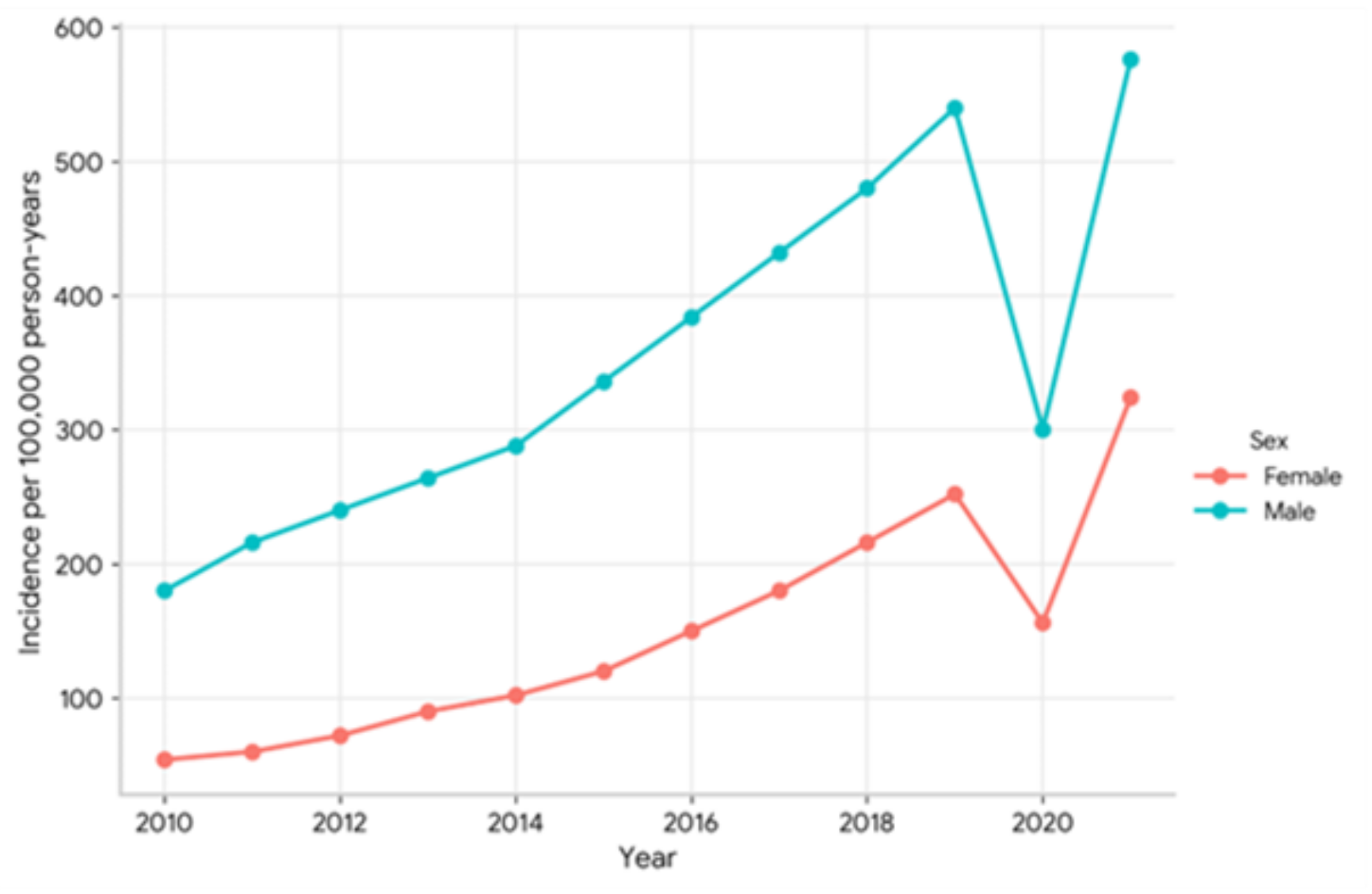
Source: CPRD.
Description of figure 23: shows annual incidence of autism recorded in primary care among children and young people under 25, by sex, from 2010 to 2021. Incidence increases over time for both males and females, is consistently higher in males, dips in 2020, and rises sharply again in 2021.
The social patterning of autism diagnosis is less clear-cut. Findings on deprivation differ depending on the source of data. Studies focused on children and young people using education data tend to show higher rates of autism-related identification in more deprived groups, whereas all-age primary care studies suggest higher incidence in the least deprived groups, as illustrated in figure 24. By contrast, population-based evidence from the APMS indicates higher prevalence in more deprived areas. Taken together, these differences suggest that patterns of diagnosis and identification may reflect variation in access, recognition and service pathways, as well as underlying need. Ethnic patterning may be similarly mixed. Some education-based studies suggest higher rates of autism identification among Black and mixed-ethnicity pupils, whereas comparable primary care evidence by ethnicity remains limited.
Figure 24: all-age primary care studies of deprivation and incidence of autism
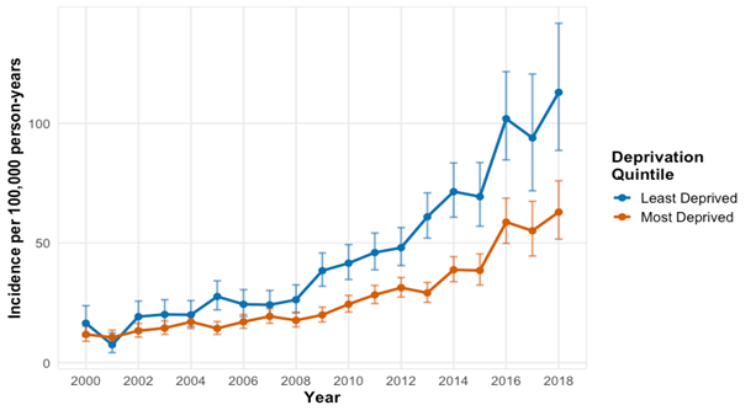
Source: CPRD.
Description of figure 24: shows annual incidence of autism recorded in primary care by deprivation level from 2000 to 2018. Incidence increases over time in both groups, with consistently higher rates in the least deprived areas. The gap widens from around 2010 onwards, with the steepest increases after 2015.
A further important development is the emerging evidence of substantial variation in assessment conversion rates across England. Freedom of Information data assembled by Autistica suggests that the proportion of autism assessments resulting in diagnosis varies widely, from the high teens to nearly 100%, with indications that variation may be greater still where Right to Choose pathways are used. This does not by itself demonstrate inappropriate diagnosis, but it does raise important questions about consistency, quality assurance and comparability across providers.
Children and young people
Education data shows a substantial and sustained increase in autism-related identified need within the SEND system in English schools. Following SEND reforms in 2014, growth accelerated further after 2016, and by 2025 the point prevalence of autism-related identified need had reached approximately 3.1% of school-age children. This is a notable increase and underlines the growing importance of the identification of autism as a category within educational support systems.
New national pupil record analyses suggest that this growth is not evenly distributed. It appears to be especially rapid among girls and among pupils without learning disability, and there are indications of a new peak around the secondary school transition. If confirmed, this would be important both clinically and operationally, since it suggests that the expanding cohort differs in profile from the historically more readily identified group and that future support demand may already be partly ‘locked in’.
Analysis of school census data between 2014 and 2017 also suggests variation by ethnicity. Pupils recorded in the ‘not stated’ ethnic category showed particularly high rates of autism identification. Among those with stated ethnicity, rates were broadly stable over the period, but the mixed-ethnicity group had the highest annual incidence, reaching around 500 per 100,000 by 2017. The ‘any other ethnic group’ category showed a steady increase, reaching 341 per 100,000 by 2016 to 2017, while pupils in the Asian ethnic group had lower baseline rates of autism identification than their White peers. These differences will require more detailed exploration in the course of our continued enquiry.
Primary care data for children and young people shows a similar upward trend. Between 2010 and 2022, annual incidence of autism diagnosis among those aged 3 to 25 years rose in males from 185 to 580 per 100,000, and in females from 45 to 320 per 100,000, with a temporary dip during the pandemic followed by rebound. The relative increase is therefore particularly marked in females, even though absolute rates remain higher in males.
Emerging linked education-health analyses also suggest that autistic children, particularly those with additional SEND, face markedly elevated risks in relation to persistent absence, exclusions, attainment difficulties and later NEET status, and remain more concentrated in more deprived neighbourhoods. These findings are still being refined, but they point to the importance of understanding autism not only as a diagnostic category but also in terms of participation, impairment and support need. It is also an open question if other forms of neurodiversity have similar associations.
Adults
Among adults, primary care data again shows rising administrative incidence. In English primary care records, the annual incidence of autism diagnosis increased from 12 per 100,000 in 2000 to 80 per 100,000 in 2017, before falling slightly to 77 per 100,000 in 2018. Incidence remained consistently higher in males than females throughout this period. Between 2000 and 2018, incidence in males rose from 20 to 111 per 100,000, while incidence in females rose from 4 to 40 per 100,000.
There are also indications of a social gradient in adult primary care diagnosis, although not always in the direction that might be expected. Using Townsend deprivation quintiles, one study found higher annual incidence in the least deprived groups than in the most deprived. By 2018, incidence was 113 per 100,000 in the least deprived quintile compared with 63 per 100,000 in the most deprived quintile. This may reflect differences in access, recognition or help-seeking, rather than differences in underlying prevalence alone.
A further issue raised by our analysis is the possibility of a substantial undiagnosed adult population, including adults who suspect they may be autistic but have never received diagnosis. This remains an important uncertainty for the next phase of the review, particularly in considering equity, late recognition and the boundary between self-identification and clinical need.
This pattern is consistent with the possibility of substantial under-recognition in older adults. The available evidence suggests that recorded prevalence falls sharply with age, raising the likelihood that many older autistic adults were never identified within the diagnostic frameworks and service systems available earlier in life.
Interim interpretation of the autism evidence
The evidence suggests that population-based estimates of autism prevalence have remained relatively stable, while self-identification and administrative diagnosis have increased substantially. This divergence mirrors the broader pattern seen elsewhere in the review - underlying prevalence, self-reported identity and recorded diagnosis cannot be assumed to move together.
As noted in section 4, there are limitations to the ADOS. The ADOS is designed to assess social communication differences, it does not in itself distinguish between the underlying causes of those difficulties. As a result, a range of presentations may be channelled into an autism classification unless supported by comprehensive clinical assessment, including developmental history, which may be more difficult to establish reliably in adult populations and in service settings focused on single diagnostic questions
The most plausible interpretation at this stage is that several processes are contributing simultaneously:
- greater public awareness
- increasing self-identification
- improved recognition in females and other previously under-identified groups
- stronger institutional use of autism diagnosis within education and support systems
At the same time, the emerging evidence of marked variation in assessment conversion rates (see reference 28), together with the absence of strong national time-series data on severity, impairment and diagnostic practice, means that important questions remain about consistency, thresholds and equity.
As with ADHD, the most important unresolved question is whether these trends primarily reflect improved identification of unmet need, broader thresholds for diagnosis, or a combination of the 2. Our emphasis on functioning, masking, contextual impairment and possible needs-led reform suggests that the next phase should not focus only on prevalence and diagnosis, but also on how autism-related disability and support need are best defined and met. These questions are difficult to answer in the absence of reliable routine measures of impairment and functional need, a limitation that applies here as it does in other parts of the review. This also reinforces the importance of distinguishing diagnosis from the assessment of functioning and support need. Under current diagnostic frameworks, including ICD-11, diagnosis should depend on clinically significant impairment, but this does not in itself provide a sufficiently detailed account of how needs are experienced across settings. One approach now being explored is whether more structured assessment of functioning, strengths and participation - potentially using ICF-informed methods - could support clearer profiling of need and better co-ordination of provision across health, education and social care. We will provide further evidence and framing on this in the next phase of the review.
Co-occurring conditions may also influence trends in administrative prevalence. Autism frequently occurs alongside ADHD and other mental health conditions, and changes in how such co-occurrence is recognised or recorded - particularly following the removal of the autism-ADHD diagnostic exclusion in DSM-5 (2013) - may contribute to rising diagnostic activity. At the same time, evidence that prevalence of autism associated with severe intellectual disability has remained broadly stable suggests that at least part of the recent increase reflects changes in recognition and classification rather than large shifts in underlying prevalence.
Crucially, the evidence we have reviewed so far suggests that levels of autistic characteristics in the population appear relatively stable over time, while rates of diagnosis and self-identification have increased, reflecting a combination of social, institutional and clinical developments, including greater awareness, changes in help-seeking and the role of diagnosis in accessing support. These trends should not be interpreted through a single lens. Unmet need, misdiagnosis and concerns about over-medicalisation can coexist within the same system, and are best understood as arising from how thresholds, pathways and supports are currently organised. Addressing these issues therefore requires not a narrowing of access, but a more precise alignment between identification, functional need and the forms of support provided.
Towards more precise profiling of need in autism
The evidence reviewed in this section also raises a broader question about how need within the autistic population is currently understood and organised within systems of support. The marked growth in identified need, particularly within education, together with the increasing heterogeneity of those receiving a diagnosis, suggests that autism is being used as a single category to describe groups with substantially different profiles of need.
From an analytical perspective, it may be helpful to consider more differentiated approaches to understanding need within the autistic population. One practical distinction is between individuals with co-occurring intellectual disability and those without, as these groups are associated with different patterns of functioning, support requirements and service use. A second is to consider developmental stages, including early childhood, primary transition, secondary transition and post-16 pathways, where needs may change and where demand for support appears to become more firmly established over time.
Such an approach would align with wider developments in education policy, including the SEND and alternative provision improvement plan, and with the emerging evidence in this review that educational systems are not only responding to demand but also shaping it. More explicit consideration of need profiles, rather than reliance on diagnosis alone, may therefore improve the alignment between identification, support and outcomes.
At the same time, it is important to recognise that such approaches are not yet routinely embedded within current service structures, either in the NHS or more widely. Existing systems often rely on diagnostic categories as the primary organising principle, and there is limited consistent use of standardised approaches to stratifying need within diagnostic groups. The development of more explicit needs-based frameworks would therefore require careful consideration of feasibility, consistency and equity.
In this context, there may be value in further analytical work to examine how need is already differentiated in practice, including informal stratification within clinical and educational teams, and how this relates to outcomes such as access to support, waiting times and long-term participation. The next phase of the review will consider this question further - we will draw on evidence across multiple sources with a view to understanding how more precise alignment between need and response might be achieved in practice.
9. The social context of diagnosis
Changes in diagnosis cannot be understood solely by examining symptoms, prevalence estimates or service activity. Mental health and neurodevelopmental categories are applied within a broader social environment shaped by institutions, law, public discourse, family expectations and professional practice. Diagnosis is therefore not only a matter of identifying an underlying biological condition, which at the time of writing remains elusive in most of the conditions that are the subject of this review. It also involves determining (the social processes through which) distress, difference or difficulty that has reached a threshold at which it is recognised as clinically significant and socially actionable.
Social expectations and the settings in which behaviour is judged
One way in which this occurs is through changing expectations in the settings where symptoms are first recognised. Schools are particularly important in this regard. Behaviours such as restlessness, distractibility, social withdrawal or emotional volatility are rarely observed in isolation; they are encountered within classrooms, homes and peer groups that have their own norms, demands and pressures, which can and do change over time. Historical analyses show that behaviours in children once regarded as within the range of normal variation, or even as something to be welcomed in some contexts, are now more often interpreted as requiring intervention or treatment.
Our work has also highlighted a number of possible institutional influences, including curriculum driven academic pressure, increasing performance expectations, behaviour policies and the wider accountability framework within which schools operate. While the precise mechanisms are not yet fully established, it is difficult to interpret changes in child distress and diagnosis without recognising that the social contexts in which children and young people are expected to function have evolved themselves. There is also the wider environment outside school, including opportunities for building community and participating in youth clubs and sporting activities.
Awareness, stigma and changing help-seeking
Public understanding of mental health and neurodevelopmental conditions has also changed significantly over the past 2 decades. There is evidence that stigma associated with mental illness has declined over time, and that individuals may now be more willing to discuss symptoms and seek support than previously (see reference 29). However, this does not fully explain observed changes in prevalence and demand. Some recent analyses suggest that reductions in stigma and increased awareness are not necessarily correlated and are unlikely, on their own, to account for the scale of change observed (see reference 30). Further, the survey reported in the annual Mind Big Mental Health Report suggests that public attitudes to mental health are going backwards, lower expectations of full recovery and decreased acceptance of the treatment of severe mental illness in the community (see reference 31).
At the same time, greater visibility of diagnostic language may increase the extent to which experiences are interpreted through diagnostic frameworks. Improved recognition and expansion of diagnostic self-understanding may therefore occur concurrently.
Diagnosis, law and access to support
A further social influence on diagnosis arises from the way institutions allocate support. In many parts of the current system, diagnosis functions not only as a clinical classification but also as a gateway to resources, adjustments and formal recognition. This is particularly evident in education, higher education and employment, where documentary evidence of a diagnosis is often required before support can be provided.
The Equality Act 2010 is framed around substantial and long-term impairment of functioning rather than diagnosis alone. In practice, however, institutions frequently rely on diagnosis as the most readily available form of evidence that support is warranted. Because the same diagnosis may be associated with widely differing levels of functional impairment, this approach may lead to allocations of support that are not always proportionate to need.
New authority, self-diagnosis and the circulation of knowledge
The social context of diagnosis is also evolving because authority over mental health knowledge is now more widely distributed than in the past. Clinicians remain central to the diagnostic process, but they are no longer the sole interpreters of symptoms. Online communities, charities, peer networks and social media platforms increasingly contribute to how people understand distress, neurodivergence and both personal and diagnostic identity.
These developments may facilitate earlier recognition and empower individuals whose difficulties might previously have been overlooked. At the same time, they may also influence thresholds for self-identification and increase demand for assessment independently of any change in underlying prevalence. There is also concern that certain platforms, including TikTok, convey a high proportion of factually inaccurate messages around, for example, ADHD. A 2026 systematic review found that 52% of ADHD-related videos on TikTok were inaccurate (see reference 32). Other studies have echoed this, with one finding that only 21% of popular ADHD videos were ‘useful’ according to clinical standards (see reference 33).
At the same time, these developments are not solely associated with increased diagnostic demand. Many observers emphasise that online communities, peer networks and advocacy groups have also played an important role in increasing awareness of mental health and neurodevelopmental conditions, reducing stigma and enabling individuals to find explanation and community where their experiences were previously misunderstood or dismissed. For some individuals, such spaces provide validation, a sense of identity, practical advice and a sense of belonging that may not have been available through formal services. In this respect, the expanding circulation of mental health knowledge can have both enabling and complicating effects: it may support earlier recognition and help-seeking while also shaping expectations about diagnosis and the routes through which support is sought. The implications of these changes for service demand and diagnostic pathways remain an important area for further examination.
Medicalisation of distress
There is also a need to consider the medicalisation of distress within current systems of response. While clinical frameworks are essential for identifying and treating many conditions, there is a risk that a wide range of difficulties - particularly those arising from social, educational or environmental pressures - may increasingly be interpreted primarily through a medical lens. This can lead to pathways in which diagnosis becomes the main route to support, even where alternative responses may be more appropriate. It can also lead to inappropriate treatment - loneliness for example is unlikely to respond to antidepressants. A more effective approach may therefore require ensuring that people are directed to the form of support that best matches their needs, which in some cases will be clinical, but in others may be educational, social or community-based.
What this means for interpretation
The evidence reviewed in this section indicates that trends in diagnosis cannot be interpreted solely as reflections of biological prevalence. Social expectations, institutional arrangements, public awareness and cultural narratives all play a role in shaping how symptoms are recognised and interpreted. These factors influence who seeks help, how clinicians arrive at diagnoses and how systems record and respond to distress.
Social and contextual factors play an essential role in shaping how difficulties are experienced and expressed. Trends in diagnosis and service demand must therefore be understood within this wider social and institutional landscape. A clearer understanding of how these forces interact will be essential both for explaining the patterns observed in the data and for designing systems that respond more effectively to people’s needs.
10. Competing narratives about rising prevalence
Public and professional debate concerning mental health conditions, ADHD and autism has increasingly focused on a single question: how should rising numbers be interpreted? In practice, 2 broad interpretations have emerged. One suggests that the increase reflects a real deterioration in population mental health and wellbeing. The other suggests that much of the increase reflects changes in recognition, diagnosis, help-seeking behaviour and the institutional role of diagnosis itself. The evidence reviewed to date indicates that both interpretations capture elements of the current situation, but that neither is sufficient on its own.
Narrative 1: a real increase in distress and disorder
This interpretation is supported most strongly by the evidence relating to common mental health conditions and psychological distress, particularly among younger people. Across several large population surveys, young adults now report substantially poorer mental health than in earlier decades. Analyses we have undertaken indicate that this trend predates the COVID-19 pandemic, with evidence of deterioration emerging from the early 2010s.
This interpretation is also supported by broader indicators of wellbeing. Levels of loneliness among young adults have increased significantly, while measures of life satisfaction and subjective wellbeing have declined. There is also evidence that these trends cannot be explained solely by changes in willingness to report distress. Among those reporting high levels of distress, indicators of impairment appear to have increased rather than diminished, suggesting that the distress being reported is not simply more readily disclosed but may also be associated with greater functional impact.
Narrative 2: changing recognition, diagnosis and institutional demand
A different pattern emerges in relation to ADHD and autism. In these areas, epidemiological estimates appear comparatively stable, while administrative diagnoses, referrals and self-identification have increased substantially. Several mechanisms may contribute to this development. One is improved recognition of groups who were previously under-identified. Another relates to institutional incentives: where access to support is closely linked to diagnosis, demand for diagnostic assessment may increase. A further factor is the changing public understanding of mental health and neurodevelopment, with reduced stigma and greater familiarity with diagnostic terminology encouraging both help-seeking and self-identification.
Why the opposition between the 2 narratives is misleading
A difficulty in public discussion is that these narratives are often presented as if they were mutually exclusive. The evidence reviewed in this report suggests that this is unlikely to be the case. It is entirely plausible that both processes are occurring simultaneously, though not necessarily in the same populations or in relation to the same conditions.
For example, the evidence relating to common mental disorders among young adults is more consistent with a real increase in distress and disorder. It is important to be clear that this does not depend on any distinction between ‘genuine’ and ‘non-genuine’ distress. Distress and symptoms are real, even where their causes are complex or their presentation does not map neatly onto diagnostic categories. The relevant question is not whether distress is authentic, but whether it is being understood and responded to in the most appropriate way. One risk within systems of care is that real distress may, in some cases, be classified in ways that do not accurately reflect underlying need, potentially leading to interventions that are ineffective or poorly matched. By contrast, the evidence relating to ADHD is more consistent with relatively stable underlying prevalence combined with substantial changes in recognition, diagnosis and service use. It would therefore be misleading to attempt to explain all observed trends through a single explanatory framework.
It is also important to recognise that these processes are not independent. Increased awareness and changing social expectations may shape how distress is experienced and expressed and may therefore contribute to changes in reported distress as well as to changes in recognition.
Implications
The evidence reviewed in this section indicates that changes in diagnosis cannot be interpreted solely as reflections of biological prevalence. Social expectations, institutional arrangements, public awareness and cultural narratives all influence how symptoms are recognised, interpreted and recorded. These factors may shape who seeks help, how clinicians arrive at diagnoses, and how systems record and respond to distress.
Individuals now receiving diagnoses of autism or ADHD are experiencing impairment. The key question is therefore less whether diagnostic thresholds have shifted, and more how best to characterise and respond to variation in need across the population. At the same time, increasing heterogeneity within diagnostic categories - particularly in autism - means that a single label may encompass groups with markedly different levels of impairment. While variation in diagnostic practice and access to services may contribute to observed trends, the extent of this effect remains uncertain. These considerations support a cautious interpretation of rising diagnostic rates and underline the importance of focusing on functional need rather than diagnosis alone.
A fuller account of these trends therefore requires attention not only to individual symptoms, but to the settings and systems in which they are recognised and acted upon. Understanding how social, institutional and clinical factors interact will be essential for explaining current patterns and for designing responses that are both effective and proportionate to need.
11. Why services are under pressure
The pressure currently being experienced across mental health and neurodevelopmental services is substantial and well evidenced. It cannot, however, be explained by prevalence alone. Services may come under strain because:
- more people are experiencing distress
- more people are seeking help
- recognition and referral have increased
- thresholds and pathways have changed
- the system does not have the capacity to respond efficiently to demand that may itself be changing in both volume and composition
The evidence reviewed to date suggests that all of these factors are likely to be contributing.
Rising demand is broad, not confined to one diagnosis
Administrative data shows substantial increases in referrals and waiting-list pressure, particularly in relation to neurodevelopmental assessment. However, the wider context is one of system-wide growth in demand for mental health support. The same pattern is visible in adult services. NHS Talking Therapies annual reports show sustained high referral volumes, with more than 1.8 million referrals in 2023 to 2024 (see reference 34).
It is also important to recognise that pressure on services reflects not only increasing numbers but also the composition and acuity of need. Evidence from clinical services and administrative data suggests that individuals with more complex presentations - often involving co-occurring mental health and neurodevelopmental conditions, trauma histories or social disadvantage - are disproportionately represented within acute and specialist settings. These groups tend to require more intensive, longer-term and more co-ordinated support, placing additional demands on services that are not captured by referral counts alone. In this context, pressure on services arises not only from volume but from the growing complexity and concentration of need within certain parts of the system.
The issue is therefore not simply a local commissioning problem or a temporary post-pandemic backlog. It reflects a broader mismatch between the difficulties with which people are presenting, the routes through which support may be accessed, and the capacity of current services to respond in a timely and proportionate manner.
Demand reflects both increasing distress and improved recognition
At least part of the current pressure appears to reflect confirmed increases in distress, particularly among younger people. At the same time, improved recognition is also clearly relevant. Some groups that were historically under-identified are now entering services in greater numbers. The service challenge, therefore, is not simply that more people may be in difficulty, but that increasing numbers are presenting to systems that are not always well configured to sort, prioritise and support them efficiently.
Diagnosis has become the route through which support is accessed
One of the clearest themes emerging from stakeholder engagement is that diagnosis has increasingly become the practical gateway to support. In education, higher education and employment, formal categorisation often functions as the mechanism through which support is activated. This does not imply that those seeking diagnosis are not experiencing real difficulty. It does, however, suggest that growth in diagnostic activity may be driven in part by the way systems allocate support, and not solely by changes in underlying condition.
Capacity problems amplify demand into backlog
Pressure on services also reflects the fact that capacity has not kept pace with either complexity or volume. In many parts of the system, assessments are labour-intensive, staffing is fragile and pathways are fragmented. The Royal College of Psychiatrists’ workforce census continues to identify shortages across psychiatry, including child and adolescent psychiatry (see reference 35).
Where demand rises faster than capacity, waiting times increase. Waiting itself then becomes part of the problem. Long waits may generate:
- repeated GP appointments
- multiple referrals
- increased distress
- worsening family and school difficulties
- greater recourse to private providers
Private provision adds activity but not necessarily system coherence
The growth of private and alternative assessment pathways is a further indicator of system strain. Where NHS waiting times are prolonged, some families and adults seek private diagnosis, while others make use of the Right to Choose route. These pathways may improve access for some, but they also complicate the interpretation of administrative trends and may widen inequalities if some individuals are better able than others to navigate or afford alternative routes.
A system under multiple, interacting pressures
The evidence points to a system responding simultaneously to rising distress in some parts of the population, improved recognition of previously unmet need, growing expectation that distress or difference should receive a response, institutional arrangements that make diagnosis the gateway to support, and service capacity that is too limited and too fragmented to absorb these changes effectively.
The policy challenge is therefore not only to increase capacity, important though that is. It is also to consider whether current pathways are directing the right people to the right forms of support, at the right time, and on the basis of the right criteria.
12. What we still do not know
The evidence reviewed to date is sufficient to identify a number of important patterns. It is not yet sufficient to resolve some of the questions that matter most for policy and service design. This is not because the review lacks data altogether, but because the data sets currently available often capture only one part of a wider process, such as:
- symptoms without service use
- diagnosis without severity
- potential harms as well as benefits of medical diagnoses
- referral without outcome
- demand without a clear denominator
Severity, impairment and whether thresholds have changed
The single most important unresolved issue is whether the severity and functional impact associated with diagnosis have changed over time. Administrative diagnoses and referrals for ADHD and autism have risen sharply. Much less is known about whether the average level of impairment among those now entering services is greater, lesser or simply different from that seen previously. For common mental health conditions, there is at least some evidence that increasing distress is accompanied by increasing impairment. For ADHD and autism, equivalent routine measures are largely absent.
This issue is particularly acute for autism. There are no national time-series data on changes in autism severity metrics, only partial evidence on functional impairment, and limited evidence on how use of specific diagnostic instruments has changed over time. This materially limits the review’s ability to determine whether recent growth reflects changes in severity, changes in threshold or both.
Adult ADHD prevalence remains poorly measured
A second major uncertainty concerns adult ADHD prevalence in England. Administrative evidence clearly indicates rising diagnosis among adults, particularly younger adults, and women. What is lacking, however, is a recent large-scale diagnostic survey of ADHD in a representative adult population in England. Most of the available adult evidence is derived either from screening tools or from administrative diagnosis data, neither of which provides an adequate substitute for direct population-based assessment. Recent work has demonstrated the feasibility of incorporating structured diagnostic approaches - for example, the development and testing of a Schedules for Clinical Assessment in Neuropsychiatry (SCAN) based module to assess ADHD to diagnostic criteria - which points to a possible route for strengthening future population surveys. This highlights the importance of more timely and repeated national measurement, as current survey intervals limit the ability to understand changes over shorter timeframes.
Interpreting population estimates of autism prevalence
A further area of uncertainty concerns how population estimates of autism should be interpreted. While the APMS provides important information on autistic symptoms in the population, it does not provide a definitive estimate of underlying prevalence. Autism-related traits are continuously distributed, and any estimate depends on the threshold applied. In addition, current survey approaches rely on structured assessments rather than full diagnostic evaluation, and may under-identify some groups, particularly those with less overt presentations.
It is also important to recognise that changes in diagnostic frameworks have contributed to shifts in how conditions are defined and identified over time. In the case of autism, the consolidation of previously distinct categories, such as Asperger’s syndrome and other subtypes, into a single spectrum diagnosis within DSM and ICD frameworks has broadened the construct and may have increased the number of individuals meeting criteria. These changes were introduced for valid clinical and scientific reasons, including improving consistency and reliability of diagnosis. However, they have also prompted debate about whether combining heterogeneous presentations under a single label has been helpful in all cases, particularly where groups with differing levels of need are brought together. This is an area the review will consider further in its next phase.
As a result, it remains uncertain how far existing estimates capture the full distribution of autism in the population, and how comparable they are with administrative diagnoses or other data sources. Resolving this will require further work in the next phase of the review, including consideration of how prevalence, thresholds and functional need are best understood together.
The role of private diagnosis and Right to Choose
The review also does not yet have a sufficiently clear understanding of the contribution made by private assessments and Right to Choose pathways to recent diagnostic growth. Diagnoses made outside standard NHS specialist pathways may subsequently appear in NHS primary care records when individuals seek prescribing, shared care or follow-up. What is not yet known is the scale of this contribution, how it varies by region and social group, and whether it is materially altering the composition of diagnosed populations. In autism, this question is sharpened by evidence of wide variability in assessment conversion rates across providers, including under Right to Choose pathways, making it difficult to compare outcomes or assure consistency of diagnostic practice nationally. This does not in itself demonstrate inappropriate diagnosis, but it does raise important questions about consistency, comparability and quality assurance.
Co-occurrence remains poorly captured
Mental health and neurodevelopmental conditions frequently overlap but current administrative systems often capture these overlaps inadequately. The Akrivia administrative prevalence analyses suggest that co-occurring diagnoses are particularly likely to be missed in structured data. This is important because co-occurrence may:
- affect pathways to referral
- delay diagnosis
- complicate treatment
- influence how symptoms are interpreted
In autism, this issue is compounded by the likelihood that trends differ between the historically more readily identified group with learning disability and the expanding group without learning disability. Without better linked data, these different trajectories are difficult to disentangle.
Which social drivers matter most, and how
The review has identified a range of plausible social and institutional drivers, including:
- economic insecurity
- educational pressures
- public awareness
- digital environments
- legal frameworks
- the practical role of diagnosis
The principal uncertainty is not whether these factors exist, but which of them have changed sufficiently and have effects of sufficient magnitude to plausibly account for the trends observed. The next phase of the review will therefore need to distinguish more carefully between factors that are widely discussed and those for which the evidence is genuinely strong.
Inequalities in recognition and access
The review also does not yet know enough about who may still be missed by current systems. Existing evidence suggests that diagnosis and service use vary by sex, ethnicity, deprivation and age, but these patterns are not yet sufficiently well understood across conditions. For autism, recent analyses suggest especially rapid growth among girls and among young people without learning disability, alongside persistent socioeconomic disparities and possible under-identification in some ethnic minority groups. This reinforces the need for more fine-grained analysis of who is, and is not, entering diagnostic pathways.
Data quality remains a constraint
Finally, some uncertainty arises directly from limitations in data quality. Population surveys are affected by declining response rates and the exclusion or under-representation of some high-need groups. Administrative data sets are affected by incomplete coding, uneven data quality and variable service coverage. For example, in autism, although APMS uses a screen and then the ADOS, there is a paucity of other national time-series data on consistently used diagnostic instruments, severity and impairment which remains a major limitation. This does not render the existing evidence unusable. It does, however, require continued caution in interpretation and suggests that better linked, better coded and more functionally informative data sets are likely to be needed.
Implications of these uncertainties
The issues set out above do not undermine the evidence reviewed so far. Rather, they illustrate the complexity involved in interpreting trends in mental health and neurodevelopmental conditions. A fuller understanding of the relationship between distress, diagnosis and service demand will require the integration of multiple sources of evidence and closer examination of the gaps identified here in the next phase of the review.
The final report will therefore build on the work presented in this interim report by examining these uncertainties in greater depth and considering what further evidence and analysis may be required to inform future policy and service design.
13. Implications emerging so far
The evidence reviewed in this interim report does not support a single explanation for the changes now visible across mental health and neurodevelopmental services. Rather, it indicates that several processes are likely to be occurring simultaneously. The implication for policy is that no single explanation is likely to be sufficient, and that effective responses will require recognising how these processes interact.
Rising distress in younger people appears to be part of the problem
The first implication is that current service pressures cannot be understood solely in terms of over-recognition or changes in diagnostic fashion. The population evidence indicates that distress among younger people has increased in ways that are likely to have material consequences for functioning, education and social participation.
Rising diagnosis does not necessarily mean rising prevalence
A second implication is that rising diagnoses, particularly in relation to ADHD and autism, should not be interpreted straightforwardly as evidence that these conditions have become substantially more common in the population. The epidemiological evidence appears considerably more stable than the administrative evidence, which continues to reflect possible acceleration. Diagnostic activity is therefore likely to reflect several influences simultaneously, including:
- improved recognition
- changes in help-seeking behaviour
- evolving social patterns
- the possibility that under-recognition may persist in parts of the population
Diagnosis is increasingly being used to secure support
A third implication is that diagnosis is now performing functions beyond clinical classification. In a number of settings, it has become the practical mechanism through which individuals obtain access to support, adjustments or formal recognition. The autism evidence strengthens this point. The sharp growth in SEND-identified autism, especially after 2016, together with emerging evidence of rapid growth among young people without learning disability, suggests that educational systems are not merely responding to diagnosis but are also shaping demand for it. This may help explain why diagnostic pathways can become heavily pressured, even where the most appropriate immediate response may involve practical, educational or psychological support rather than specialist diagnostic assessment alone.
System design is contributing to pressure, not just absorbing it
A fourth implication is that pressure on services reflects not only the volume of need but also the way in which services are organised. Fragmented pathways, variable coding practices, limited capacity and prolonged waiting times do not merely record demand - they may also shape it. Capacity, pathway design and data quality should therefore be understood not as secondary technical issues but as factors that contribute directly to the pressures currently experienced across the system.
Move beyond service models organised primarily around single diagnostic categories
The evidence reviewed also suggests a need to move beyond service models organised primarily around single diagnostic categories. Neurodevelopmental conditions frequently overlap in practice, and pathways structured around individual diagnoses may contribute to fragmented assessment and misdirected referral. A more integrated approach, in which individuals are initially assessed in relation to level of impairment, risk and presenting need, may support more appropriate and timely responses. Such pathways would allow for differential formulation across conditions - including ADHD, language and developmental disorders, intellectual disability and co-occurring mental health difficulties - rather than relying on ‘a priori’ (that is, based on theoretical deduction rather than empirical observation) diagnostic labels. This is consistent with the review’s wider finding that diagnosis has increasingly become the gateway to support, and suggests that more integrated pathways may help rebalance systems towards earlier, more proportionate forms of intervention.
Social context is not peripheral to diagnosis
A fifth implication is that social and institutional context must be considered as part of the explanation rather than as background. Diagnosis is influenced by:
- where behaviour is observed
- how impairment is interpreted within particular settings
- how public understanding evolves over time
- how legal and institutional frameworks determine access to support
In autism, this appears particularly relevant in relation to school transition points, educational expectations and the increasing importance of diagnosis in accessing support, especially for young people without learning disability.
Need and diagnosis are not the same thing
A further implication is that current systems may rely too heavily on diagnosis as the principal organising mechanism for support. Diagnosis can provide validation, guide clinical decision-making and be necessary for certain forms of treatment. However, it is not always a reliable proxy for immediate need. Individuals may experience substantial functional difficulty without meeting diagnostic thresholds, while those sharing the same diagnosis may differ significantly in their level of impairment and support requirement. In relation to autism there is strong emphasis on functioning, masking and contextual impairment which suggests that diagnosis alone may be an insufficient guide to support need in neurodiversity, particularly where environmental supports materially alter presentation.
This suggests a need for greater clarity in how impairment and support requirements are described alongside diagnosis. Diagnostic thresholds should remain clinically coherent, but support is more likely to be proportionate and effective where functioning, participation and environmental barriers are assessed more explicitly and systematically. Approaches informed by the ICF may offer one possible route towards a more shared language of need across health, education and social care, although further evidence and testing will be required.
Where this leaves the review
The evidence points to a system responding to a set of changes that are real but heterogeneous. There is evidence of increasing distress in some groups, particularly among younger people. There is also evidence of rapidly changing diagnostic activity, especially in relation to ADHD, which cannot be explained by prevalence alone. The next phase of the review will therefore need to translate these broad observations into more discriminating analysis of the mechanisms that may be driving them.
14. Questions for the next phase of the review
The interim phase has helped to narrow the field of inquiry. It is now clearer where the strongest signals in the evidence lie, where the principal tensions of interpretation arise, and which questions must be addressed if the final report is to provide useful guidance. The next phase should therefore be less concerned with establishing whether change has occurred - which now appears reasonably clear in several domains - and more concerned with understanding the nature of that change, whom it affects and the implications for support, diagnosis and system design.
How has functional need changed over time?
One of the most important tasks for the next phase will be to move beyond counts of referrals and diagnoses and to examine more directly how need has evolved. At present, this remains one of the weaker elements of the evidence base. In autism, this will require more explicit work on functional impairment, masking, contextual support and the possible development of a brief cross-context impairment framework, rather than relying on diagnosis alone as a proxy for need. The review will therefore need to make fuller use of linked data sets in which functional impact can be inferred more directly - for example through indicators such as:
- educational participation
- attendance
- exclusions
- transitions into employment
- patterns of re-referral
- intensity of service contact
- other measures of real-world functioning
How should we interpret administrative trends?
The review now has robust evidence that administrative diagnoses, referrals and waiting lists are increasing, particularly in relation to ADHD. What remains less clear is how this increase should be interpreted. Questions remain regarding the relative contribution of increased help-seeking, improved recognition, backlog effects, changes in recording practices, real changes in need, and the institutional role of diagnosis as a gateway to support. Addressing this will require more systematic triangulation across different data sources. It will also be important to see if the acceleration that we have seen either eases off or continues, which will have implications for the debates that we have outlined above.
What role does the private sector play?
The review also requires a clearer understanding of the contribution made by private diagnostic services and Right to Choose pathways. These routes are frequently referred to in stakeholder discussions and are likely to be contributing to recent activity, particularly in relation to ADHD and autism. The autism evidence suggests that this is not only a question of volume but of consistency, quality assurance and comparability of assessment outcomes across providers. The next phase should seek, where feasible, to quantify the scale of this contribution and to assess whether it varies systematically by region or socioeconomic group.
How do social and institutional factors shape diagnosis?
The review has identified a wide range of plausible drivers, including:
- economic insecurity
- educational pressures
- changes in family life
- shifts in public awareness
- digital technologies
- legal frameworks
- the pandemic
- the increasing practical importance of diagnosis in accessing support
The next phase will need to move beyond listing these potential drivers and instead examine how multiple factors may be operating together, and the extent to which different combinations of influences correspond with the observed patterns of change.
The analytical framework outlined above will be particularly relevant here, requiring that candidate explanations be assessed in relation to timing, scale, social distribution and consistency with lived experience and observed symptom patterns. A structured programme of engagement with people with lived experience is now underway, and participants will join topic groups to inform both interpretation of findings and the direction of further analysis.
How do conditions co-occur across the life course?
The next phase will also need to develop a more comprehensive understanding of co-occurrence. An accurate interpretation of current trends requires examination not only of single diagnoses but also of combinations of conditions over time, and of the sequence in which different diagnoses may emerge across the life course.
Are some groups being overlooked?
The evidence reviewed so far indicates that patterns of recognition and diagnosis vary by gender, socioeconomic status and ethnicity. For example, ADHD appears historically to have been under-recognised in girls and women, and in the criminal justice system, while access to mental health services may differ across ethnic groups. However, existing data sets do not consistently provide sufficient detail to examine these issues in depth. The next phase of the review will therefore examine how diagnostic and service trends vary across demographic groups and whether particular populations remain underserved.
How should services respond when diagnosis, need and support are no longer neatly aligned?
Finally, the review will examine the implications of the evidence for service design. Rising referrals and waiting lists indicate that current systems are struggling to respond proportionately to demand. At the same time, many stakeholders have emphasised that diagnosis alone should not be the sole pathway through which individuals access support. The next phase of the review will therefore consider how services might respond more effectively to rising need, including the role of earlier intervention, community-based provision and more integrated pathways across health, education and other public services.
Along these lines, a further priority will be to strengthen the focus on functional impact and patterns of functioning, both in relation to population trends and administrative data. Much of the current evidence describes symptoms, diagnoses and service use, but is less informative about how difficulties affect participation in education, employment and daily life. Developing a clearer picture of functional need will be essential in understanding which groups require more intensive or specialist support and which may benefit from earlier, less intensive intervention.
This will also require more explicit consideration of co-occurrence, both within mental health conditions and between mental health and neurodevelopmental conditions. Many individuals experience overlapping difficulties that do not fit neatly within single diagnostic categories, and these combinations are often associated with greater impairment and more complex pathways through services. Understanding these patterns will be important for identifying priorities for public services and for ensuring that support is organised in a way that reflects real-world need rather than administrative categories.
Moving forward
The issues outlined above illustrate that understanding changes in mental health and neurodevelopmental conditions requires the integration of evidence from multiple disciplines and data sets. The next phase of the review will therefore build on the analyses presented in this interim report by incorporating additional data and stakeholder perspectives in order to address these questions in greater depth.
The objective will be not only to clarify what the evidence indicates, but also to identify practical ways in which services and policies might respond more effectively to the needs of individuals, families and communities.
15. Next steps
This interim report is intended to clarify the current landscape, not to pre-empt the review’s final conclusions. It identifies a set of patterns that are now difficult to disregard:
- rising distress among younger people
- sharp growth in diagnostic activity in some areas
- mounting pressure on services
- a widening gap between what systems record and what they can confidently explain
The next phase of the review must therefore move from broad description to more discriminating analysis. The task is no longer simply to establish whether change has occurred, but rather to determine more clearly the nature of that change, where it has occurred, for whom, and with what implications for policy and service design.
Strengthening the evidence where current data is weakest
The first priority is to strengthen the evidence base in those areas where current data sets are most limited. The most important of these concerns the relationship between diagnosis and functional need. Population surveys have been able to say something about symptom burden and, to a degree, impairment. Administrative systems have been much less informative. In most routine data sets, there is still no consistent means of determining whether the people now being diagnosed or referred are, on average, more impaired, less impaired, or differently impaired than those seen previously.
The next phase will therefore need to make fuller use of linked data where function can be inferred more directly. This may include:
- educational participation
- attendance
- exclusions
- employment transitions
- prescribing patterns
- re-referral
- intensity of service contact
- other indicators of real-world impact
In autism, this should include work on measuring functional impairment more transparently, including the role of masking, environmental adjustment and participation restriction across settings. The review will also need to draw more carefully on data sets in which co-occurrence, pathway complexity and longer-term outcomes can be traced rather than merely counted. Regional linked data, and the potential to combine health and education records, will be particularly important in this regard.
Deepening the analysis of administrative pathways
A second priority is to move beyond administrative counts towards pathway analysis. The review already has strong evidence that referrals, diagnoses and waiting lists have increased. What remains less well understood is how individuals are moving through systems, including:
- how long they wait at different stages
- whether they are assessed but not treated
- how frequently they re-present
- how co-occurring conditions affect routes through care
- how private and NHS pathways interact
It will also be important to examine variation in assessment conversion rates and provider-level practice, especially in autism pathways involving independent and Right to Choose services.
This will require more detailed work with primary care records, specialist service data and regional linked data sets. The value of national primary care data in identifying broad trends has already been demonstrated, although much remains to be understood. An important next step will be to place national trends alongside more granular local pathway evidence. In particular, the review will need to establish whether current growth reflects faster recognition of unmet need, accumulation of backlog, longer and more fragmented diagnostic processes, or some combination of all 3.
The review will also need to take account of the coding weaknesses already identified. Any final interpretation of administrative trends will therefore need to be based on a more realistic understanding of what routine data sets do and do not capture.
Testing candidate drivers more directly
The third priority is to examine more systematically the possible drivers of recent change. The interim phase has identified a range of plausible candidates, including:
- economic insecurity
- school and educational pressures
- changing social relationships
- evolving public understanding
- diagnosis-linked access to support
- digital environments
- the pandemic
In autism, this should include:
- the interaction between educational demand
- identification of pupils without learning disability
- secondary school transition points
- the institutional consequences of diagnosis for access to support
The next phase must move from plausibility to more rigorous judgement.
A useful discipline for this work would be to assess any putative driver in relation to timing, scale, social distribution, consistency with lived experience, and fit with the observed symptom pattern. This is particularly important in areas where public confidence may have moved ahead of the evidence. Digital technology is one example. The task of the review is not to endorse any one position uncritically, but to assess which mechanisms are most consistent with the English data and whether they operate alongside other social and institutional pressures.
The same discipline will be required in relation to school context, labour market insecurity, housing pressure, family stress, and changing stigma. The final report will be stronger if it is able to distinguish between factors that are widely discussed and those for which the evidence is genuinely robust.
Operationalising a needs-led approach alongside diagnosis
A further priority for the next phase of the review will be to explore how systems can operationalise a more explicit needs-led approach alongside diagnostic processes. One potential approach is the use of structured frameworks to assess strengths, functioning and support needs in parallel with diagnosis, so that support can be aligned more closely with participation, impairment and environmental barriers rather than determined primarily by diagnostic category.
Frameworks such as the ICF, including emerging core sets for neurodevelopmental conditions, provide a potential basis for this. These approaches are already being explored in a number of UK and international settings and offer a means of describing functioning in a way that can be shared across health, education and employment systems.
The review will therefore consider how such approaches might be tested and implemented in practice, including whether they could support earlier and more proportionate intervention while individuals are awaiting specialist assessment, reduce pressure on diagnostic pathways, and improve continuity of support across services. This will require careful attention to feasibility, consistency and equity.
Continuing and co-ordinating stakeholder engagement
The fourth priority is to continue stakeholder engagement, but in a more integrated and analytical form. The review has already benefited from contributions from clinicians, service leaders, professional bodies, voluntary organisations and people with lived experience. These perspectives have helped to illuminate how pressure is experienced in practice and where formal data sets do not adequately reflect real-world difficulty. They have also demonstrated the extent to which current trends are interpreted differently by different groups. The collection of these views is not yet complete, and the final report will include a fuller account of them.
The next phase should continue this engagement while using it more explicitly to test interpretations emerging from the data. Lived-experience perspectives remain particularly important, not because they can resolve epidemiological questions in isolation, but because they help to iterate and refine hypotheses about where systems fail, where support is too tightly linked to diagnosis, and where current narratives may be incomplete. Their value lies in being considered alongside broader, more representative sources of evidence, helping to interpret findings and guide further analysis. Professional and service perspectives will be equally important in distinguishing pressures arising from increased volume from those arising from the design of systems themselves.
Preparing the final report
The purpose of the next phase is to place the final report on a firmer footing. By that stage, the review will need to do 3 things more confidently than is currently possible.
First, it will need to set out more clearly the extent to which current trends reflect changes in distress and need, as opposed to changes in recognition, diagnosis and service use.
Second, it will need to identify which explanatory factors are best supported by the evidence and which remain too uncertain to sustain strong conclusions.
Third, it will need to consider what these findings imply for systems of support across health, education and wider public services, particularly where current arrangements mean that access to support depends too narrowly on diagnosis alone, rather than allowing need to be recognised and responded to in a broader range of ways.
That final stage will require continued restraint as well as further analysis. The review will need to avoid overstatement where the evidence remains weak, while also being sufficiently clear to be of practical use. The aim is not to produce a definitive account of all recent change, but rather to provide the best available explanation of what has happened, why it may have happened, and what that implies for the organisation of support.
16. Conclusion
The issues addressed in this review are significant not only because they affect diagnostic statistics or waiting lists, but because they shape how individuals experiencing psychological distress or neurodevelopmental differences are recognised and supported across health, education and the wider system of support and treatment. The evidence reviewed in this interim report indicates that the current position cannot be explained by a single narrative. In some areas - particularly among younger people - there is credible evidence of increasing psychological distress. In others, notably ADHD and autism, rising diagnoses and referrals appear to exceed changes in underlying epidemiological prevalence and are likely to reflect a combination of:
- improved recognition
- changing help-seeking behaviour
- institutional incentives
- pressures within existing service pathways
Across both ADHD and autism, best currently available population-based estimates remain relatively stable, while administrative diagnoses, self-identification and recorded service demand have increased substantially. In autism, the evidence also points to particularly rapid growth in identified need within educational systems, including increasing identification among girls and among young people without learning disability. These patterns suggest that rising demand is not simply the result of increasing prevalence, but of several processes operating simultaneously, including:
- real increases in distress in some groups
- improved recognition of previously unmet need
- changing expectations about support
- systems that frequently rely on formal diagnosis as the primary route to assistance
Across the system, support is too often accessed through pathways that are slow, fragmented and heavily dependent on diagnostic categorisation. While diagnosis remains essential for some forms of clinical decision-making, the evidence suggests that current arrangements do not always provide the most effective or efficient way of identifying and responding to need. In particular, where access to support depends heavily on formal diagnosis, demand for diagnostic assessment can increase more rapidly than systems are able to respond, generating long waiting times, duplication of assessment and pressure on specialist services.
The next phase of the review will therefore focus on clarifying the relationship between distress, diagnosis and need, and on examining how systems might respond more effectively to these patterns. A central objective will be to identify opportunities for developing more coherent, evidence-informed care pathways that enable support to be provided earlier and more proportionately, while ensuring that specialist services are available in a timely and appropriate manner for those whose needs are most complex.
In doing so, the review will consider how systems of support can be better aligned across health, education and other public services so that individuals experiencing mental health difficulties or neurodevelopmental differences are able to access timely and appropriate assistance. This will include examining how support might be organised around functional need as well as diagnosis, how early and community-based interventions might reduce pressure on specialist services, and how clearer pathways could help ensure that resources are directed to those who most require them.
It is important to emphasise that this approach is not intended to restrict access to support. On the contrary, the review is exploring how systems might ensure that a wider range of people receive timely assistance, including those whose needs may not currently be well served by diagnosis-led pathways. In many cases, earlier practical, educational or community-based support may offer more effective and less disruptive responses than prolonged waits for specialist assessment alone. The aim is therefore not to narrow access, but to broaden the ways in which help can be offered, so that individuals and families are able to receive support earlier and in forms that are better matched to their circumstances. In practice this may mean expanding earlier forms of support while ensuring that specialist services remain available for those whose needs require them.
The aim is not only to improve outcomes for individuals and families but also to ensure that public resources are used more effectively, that services are organised in ways that reflect the distribution of need, and that individuals are supported to participate fully and productively in education, employment and community life. The purpose of the next phase of the review is therefore to translate the patterns identified in this interim analysis into practical proposals for a system that is more responsive, more coherent and more sustainable.
References
Note: because of the different format, the reference numbers in this accessible HTML do not match the original PDF version (now archived). The references cited are the same.
-
McManus S and others. Mental Health and Wellbeing in England: Adult Psychiatric Morbidity Survey 2014. NHS Digital 2016 (viewed on 29 March 2026)
-
Morris S and others. Adult Psychiatric Morbidity Survey: Survey of Mental Health and Wellbeing, England, 2023/4. NHS England 2025. DOI: 10.13140/RG.2.2.24367.39840 (viewed on 29 March 2026)
-
Sadler K, Vizard T, Ford T, Goodman A, Goodman R and McManus S. Mental health of children and young people in England, 2017: ‘MHCYP 2017: Trends and characteristics’. NHS Digital 2018 (viewed on 29 March 2026)
-
University of Essex, Institute for Social and Economic Research. Understanding Society. UK Household Longitudinal Study, waves 1 to 14, various releases.
-
Global Burden of Disease Mental Disorders Collaborators. Global, regional, and national burden of mental disorders in 204 countries and territories, 1990–2019. The Lancet Psychiatry 2022: volume 9, issue 2, pages 137 to 150 (viewed on 29 March 2026)
-
Tromans SJ, Morgan ZL, Brewer B, Williams R, Brugha TS and McManus S. Trends in self-reported autism among adults in England: analysis of a repeated cross-section patient survey series of 5,999,433 adults. (Manuscript submitted for publication, 2026.)
-
Morris S and others. Adult Psychiatric Morbidity Survey: Survey of Mental Health and Wellbeing, England, 2023/4, chapter 2: Mental health treatment and service use. NHS England 2025. DOI: 10.13140/RG.2.2.24367.39840 (viewed on 29 March 2026)
-
ONS. Children’s and young people’s wellbeing in the UK, various releases.
-
Armitage JM, Newlove-Delgado T, Ford T, McManus S and Collishaw S. Characteristics of children with a psychiatric disorder in 1999, 2004 and 2017: an analysis of the national child mental health surveys of England. Journal of Child Psychology and Psychiatry 2024: volume 66, pages 167 to 177.
-
Pierce M and others. Understanding drivers of recent trends in young people’s mental health. Youth Futures Foundation 2025 (viewed on 29 March 2026)
-
Sellers R, Warne N, Pickles A, Maughan B, Thapar A and Collishaw S. Cross-cohort change in adolescent outcomes for children with mental health problems. Journal of Child Psychology and Psychiatry 2019: volume 60, issue 7, pages 813 to 821.
-
Thompson EJ, Richards M, Ploubidis GB, Fonagy P and Patalay P. Changes in the adult consequences of adolescent mental ill-health: findings from the 1958 and 1970 British birth cohorts. Psychological Medicine 2023: volume 53, issue 3, pages 1074 to 1083.
-
McElroy E, Tibber M, Fearon P, Patalay P and Ploubidis GB. Socioeconomic and sex inequalities in parent-reported adolescent mental ill-health: time trends in four British birth cohorts. Journal of Child Psychology and Psychiatry 2023: volume 64, pages 758 to 767.
-
Armitage JM, Kwong ASF, Tseliou F, Sellers R, Blakey, R, Anthony R, Rice F, Thapar A and Collishaw S. Cross-cohort change in parent-reported emotional problem trajectories across childhood and adolescence in the UK. The Lancet Psychiatry 2023: volume 10, issue 7, pages 509 to 517.
-
Department for Education: Ahmed N, James D, Tayabali A and Watson M. Ethnicity and children’s social care (viewed on 29 March 2026)
-
Taxiarchi VP, Anderson JK, Abel KM, Ford TJ, Newlove-Delgado T, McManus S, Bai Y and Pierce M. Emotional disorders among children and young people in England from 2004 to 2017: analysis of a probability sample survey series. The British Journal of Psychiatry (online) 2025. DOI: 10.1192/bjp.2025.124 (viewed on 29 March 2026)
-
ONS. Young people not in education, employment or training (NEET), UK: February 2026 (viewed on 29 March 2026)
-
Department for Education. Suspensions and permanent exclusions in England, academic year 2023 to 2024 (viewed on 29 March 2026)
-
The Prince’s Trust. NatWest Youth Index 2024 (viewed on 29 March 2026)
-
Bynner J and Parsons S. Social exclusion and the transition from school to work: The case of young people not in education, employment, or training (NEET). Journal of Vocational Behavior 2002: volume 60, issue 2, pages 289 to 309.
-
Coles B, Godfrey C, Keung A, Parrott S and Bradshaw J. Estimating the life-time cost of NEET. University of York 2010 (viewed on 29 March 2026)
-
Goldman-Mellor S, Caspi A, Arseneault L, Ajala N, Ambler A, Danese A and others. Committed to work but vulnerable: self-perceptions and mental health in NEET 18-year olds from a contemporary British cohort. Journal of Child Psychology and Psychiatry 2016: volume 57, issue 2, pages 196 to 203. DOI: 10.1111/jcpp.12459
-
Ralston K, Everington D, Feng Z and Dibben C. Economic Inactivity Not in employment, education or training (NEET) and scarring: the importance of NEET as a marker of long-term disadvantage. Work, Employment and Society 2022: volume 36, issue 1, pages 59 to 79. DOI: 10.1177/0950017020973882
-
Gunnes M, Thaulow K, Kaspersen SL, Jensen C and Ose SO. Young adults not in education, employment, or training (NEET): a global scoping review. BMC Public Health 2025: volume 25, issue 1, article 3394. DOI: 10.1186/s12889-025-24781-y
-
John and Stott, 2026. Unpublished analyses presented to the review from CPRD Aurum.
-
Data from internal South West Yorkshire Partnership NHS Foundation Trust performance and information dashboards - provided by adult ADHD and autism services.
-
National Institute for Health and Care Excellence. Attention deficit hyperactivity disorder: diagnosis and management, NG87. NICE 2018 (viewed on 29 March 2026)
-
Autistica. ‘Not a Priority’ highlights crisis in autism assessment and support. Autistica 2024 (viewed on 29 March 2026)
-
Evans-Lacko S, Hahn JS, Peter LJ and Schomerus G. The impact of digital interventions on help-seeking behaviour for mental health problems: a systematic literature review. Current Opinion in Psychiatry 2022: volume 35, issue 3, pages 207 to 218.
-
Gagné T, Henderson C and McMunn A. Is the self-reporting of mental health problems sensitive to public stigma towards mental illness? A comparison of time trends across English regions (2009-19). Social Psychiatry and Psychiatric Epidemiology 2023: volume 58, issue 4, pages 671 to 680.
-
Mind. The Big Mental Health Report 2025 (viewed on 29 March 2026)
-
Carter A, Gracey F, Moody J, Ovens A and Chatburn E. Quality, reliability and misinformation in mental health and neurodivergence content on social media: a systematic review. Journal of Social Media Research 2026: volume 3, issue 1, pages 30 to 47 (viewed on 29 March 2026)
-
Yeung A, Ng E and Abi-Jaoude E. TikTok and attention-deficit/hyperactivity disorder: A cross-sectional study of social media content quality. The Canadian Journal of Psychiatry 2022: volume 67, issue 12, pages 899 to 906. DOI: 10.1177/07067437221082854
-
NHS England. NHS Talking Therapies, for anxiety and depression, Annual reports, 2023-24 (viewed on 29 March 2026)
-
Royal College of Psychiatrists. Workforce census 2023 (viewed on 29 March 2026)
-
To clarify the terms used in this review:
Underdiagnosis refers to situations in which a condition that is present is not recognised or identified, meaning that an individual may not receive support that could be beneficial.
Misdiagnosis refers to cases in which a difficulty is recognised, but is attributed to the wrong condition, which may lead to support that is not well matched to the individual’s needs.
Overdiagnosis is used here in a more specific sense, to describe situations in which a diagnosis is applied in circumstances where the level of difficulty or impairment may not require a formal clinical label, or where the label itself may not add clear benefit in guiding support. Importantly, this does not imply that the person’s experiences or difficulties are not real. Rather, it reflects the possibility that, in some cases, medical labels may not always be the most helpful or proportionate way of understanding or responding to those difficulties. ↩
-
The items shown here relate to somatic (physical) symptoms rather than psychological symptoms, including weekly reports of headache, stomach ache, backache and feeling dizzy. These are presented separately to avoid conflating physical and psychological domains and should be interpreted with appropriate caution. ↩