Supplementary data
Published 15 May 2026

© Crown copyright 2026
This publication is licensed under the terms of the Open Government Licence v3.0 except where otherwise stated. To view this licence, visit nationalarchives.gov.uk/doc/open-government-licence/version/3 or write to the Information Policy Team, The National Archives, Kew, London TW9 4DU, or email: psi@nationalarchives.gov.uk.
Where we have identified any third party copyright information you will need to obtain permission from the copyright holders concerned.
This publication is available at https://www.gov.uk/government/publications/idps-programmes-in-the-uk-effectiveness-review/supplementary-data
This supplementary data section contains data tables and figures providing additional context and detail to the data included and discussed in the main infectious diseases in pregnancy screening (IDPS) effectiveness report.
The data included in this section is reported by the calendar year (January 1 to December 31) unless specified.
UK data
Figure A: Rubella and congenital rubella cases in the UK (UK Health Security (UKHSA) data)
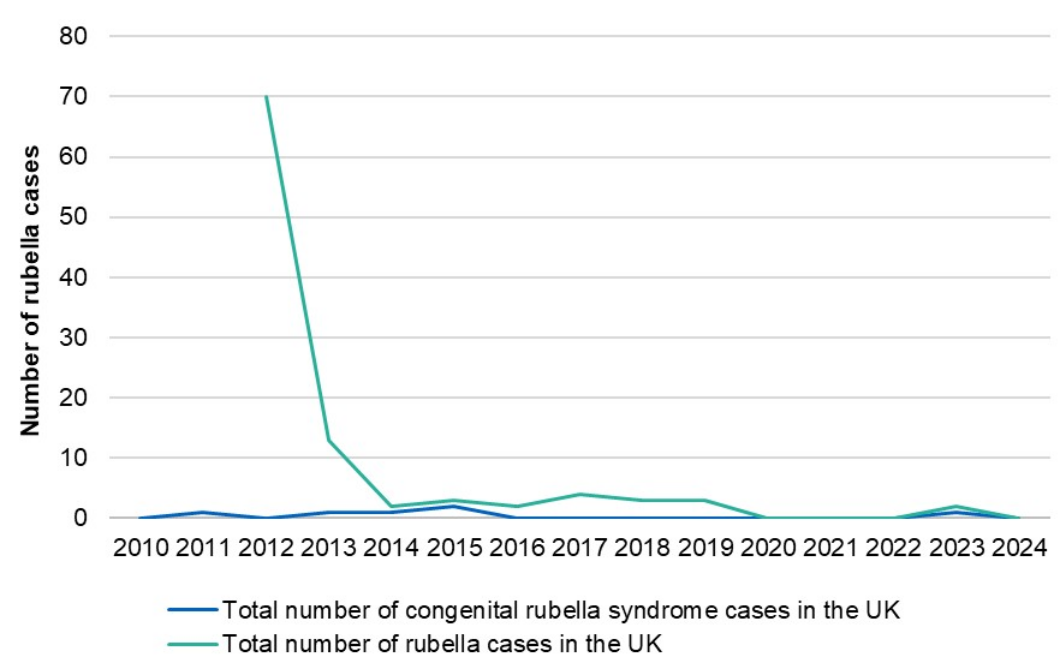
The line graph in figure A shows the number of rubella and congenital rubella cases in the UK between 2010 and 2024. The total number of cases fell from 70 in 2012, to below 5 since 2015. In 2024 there were no rubella cases in the UK.
Figure B: Number of syphilis diagnoses in heterosexual women in the UK (UKHSA data)
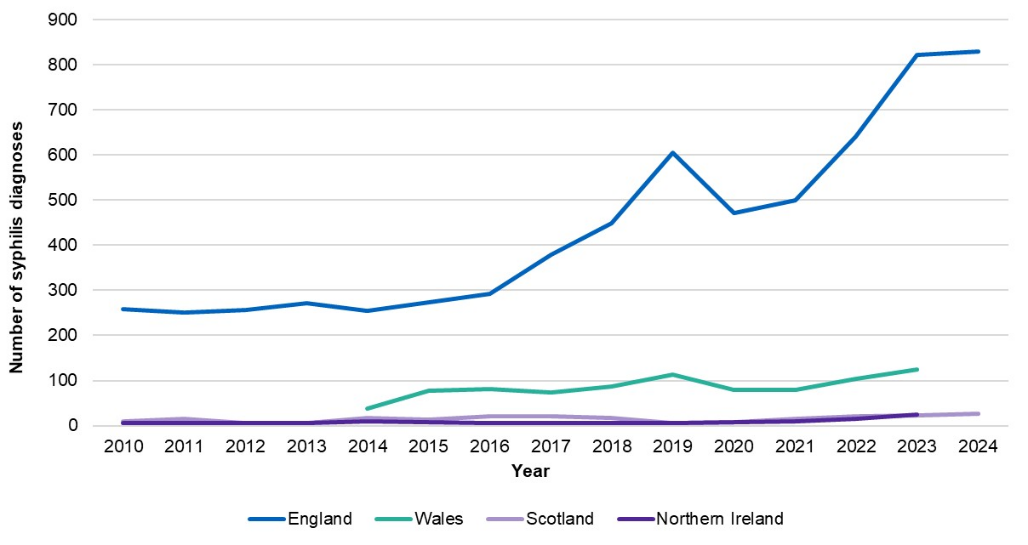
The line graph in figure B shows the number of syphilis diagnoses in heterosexual women in the UK and how this is increasing in all 4 nations. In England, there is a sharp increase in diagnoses between calendar years 2021 and 2023 from 472 to 822.
Figure C: Number of syphilis diagnoses in heterosexual men in the UK (UKHSA data)
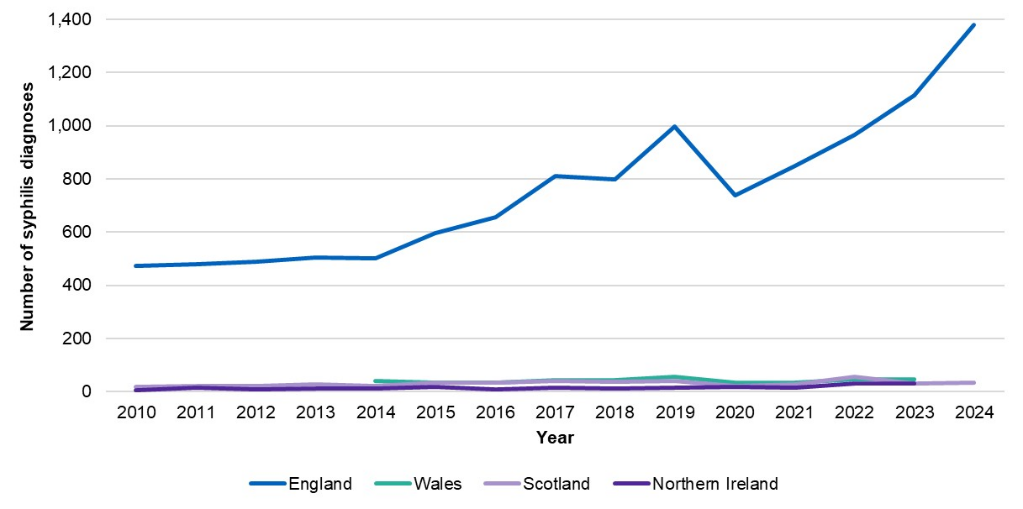
The line graph in figure C shows the rising number of new syphilis diagnoses in heterosexual men in England between 2010 and 2024, reaching a peak of 1,380 new diagnoses in 2024. The number of new diagnoses in Wales, Scotland and Northern Ireland has remained relatively stable during this time period, however.
Figure D: Characteristics of women who screen positive not seen for assessment within the 10-day timeframe, England, 2019 to 2022 (National antenatal audit report England)
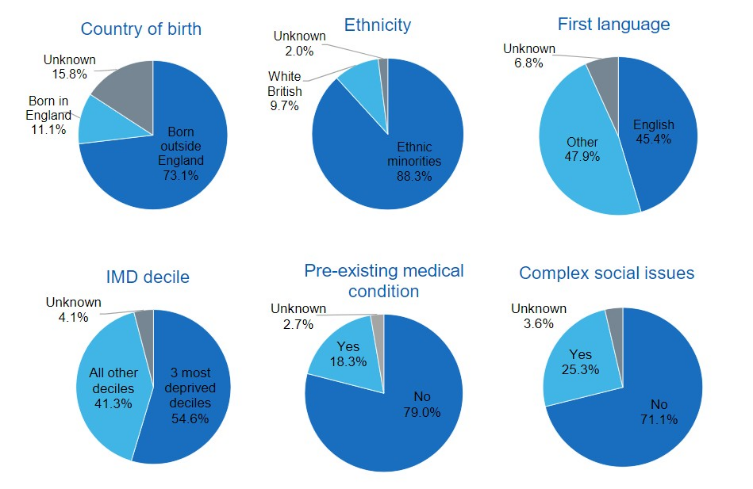
The pie charts in figure D show a summary of the demographics of the 512 women who had a screen positive result for human immunodeficiency virus (HIV), hepatitis B or syphilis and were not seen within the 10-day timeframe in England in the 2019 screening year. Over two thirds of these women were born outside of England, almost 90% were from an ethnic minority group, close to half did not have English as their first language and over half were registered with a GP in the 3 most deprived deciles in the country.
Table A: Number of babies eligible for the hepatitis B vaccination with or without the hepatitis B immunoglobulin and number of babies who received the vaccination with or without the immunoglobulin, England (NHS Infectious Diseases in Pregnancy Screening (IDPS) programme data)
| Screening year | Number who received vaccination within 24 hours | Number eligible for vaccination | Number who received immunoglobulin within 24 hours | Number eligible for immunoglobulin |
|---|---|---|---|---|
| 2016 to 2017 | 1,214 | 1,234 | 126 | 135 |
| 2017 to 2018 | 2,050 | 2,073 | 186 | 190 |
| 2018 to 2019 | 2,112 | 2,135 | 199 | 206 |
| 2019 to 2020 | 2,035 | 2,065 | 202 | 211 |
| 2020 to 2021 | 1,834 | 1,849 | 203 | 208 |
| 2021 to 2022 | 1,688 | 1,709 | 155 | 160 |
International comparisons
Many countries around the world have national universal antenatal screening programmes for HIV, syphilis and hepatitis B. For some of the countries that do not, selective screening for pregnant women belonging to high-risk groups is carried out instead.
In this section, data from countries within Europe was the focus for the purpose of comparing outcomes for populations like that of the UK. Data availability for the metrics included varied between countries, so some European countries were excluded from this section of the report for no other reason than lack of published data.
HIV
Despite the ambitious global goal to control HIV transmissions by 2030, research on the control of HIV across the World Health Organisation (WHO) European Regions shows that more than 30% of people with HIV show persistent transmissible levels of the virus. Significant progress in provision of universal access to HIV testing in pregnancy has been made across the WHO European region, with high prevalence countries such as Ukraine and Belarus achieving over 99% coverage. Several countries where antenatal HIV testing coverage is high (see for example data from Germany for 1993 to 2016 showing over 99% in the UK and 90% in Germany) have HIV vertical transmission rates of less than 0.4%, thus demonstrating the effectiveness of screening for infectious diseases in pregnancy.
The European Centre for Disease Prevention and Control (ECDC) 2016 technical report shows that the majority of European Union (EU) and European Economic Area (EEA) countries have implemented national antenatal screening for HIV, hepatitis B and syphilis, but there are some exceptions. Malta and Denmark have selective screening for pregnant women belonging to high-risk groups, such as immigrants from high incidence countries, women with multiple sexual partners, people who inject drugs, women with an human immunodeficiency virus (HIV) positive partner and people who sell or exchange sex. For Denmark, the move from a national screening programme to a selective one was the result of low coverage and an apparent lack of value to reducing HIV transmission in the country. In Malta, the incidence of HIV was seen to be low in both the general population and in pregnant women, so a national programme was not seen as viable. Research published in 1998 showed that elective HIV screening in the UK was ineffective, as identifying women who would be considered high risk is difficult, often missing women and uptake in high risk groups is low. Additionally, both the ECDC 2016 technical report (referring to the Netherlands) and research on universal screening for hepatitis B in Denmark show that replacing selective screening programmes targeting high risk groups with universal screening programmes with an opt-out strategy are effective in reducing the transmission rates of HIV, hepatitis B and syphilis.
Greece, Italy, Hungary and Slovenia do not have a national HIV antenatal screening programme. The ECDC and WHO report on HIV and AIDS surveillance in Europe shows that Malta had the highest rate of new HIV diagnoses in 2023 out of the 6 European countries that do not have a national antenatal HIV screening programme - followed by the UK. Malta has a much smaller population than the UK, so while this translated to 6,402 HIV diagnoses in the UK in 2023, in Malta there were only 114. In Greece, the rate of HIV diagnoses is higher than Italy, with approximately 7 HIV diagnoses per 100,000 population in 2023 compared to 4 in Italy (see figure E). Denmark had a HIV diagnosis rate of 3.8 in 2023, followed by Hungary with a rate of 2.4 and Slovenia with the lowest rate of 2.1.
Figure E: HIV diagnoses and rate per 100,000 population in the UK and European countries that do not have a national antenatal HIV screening programme, 2014 to 2023
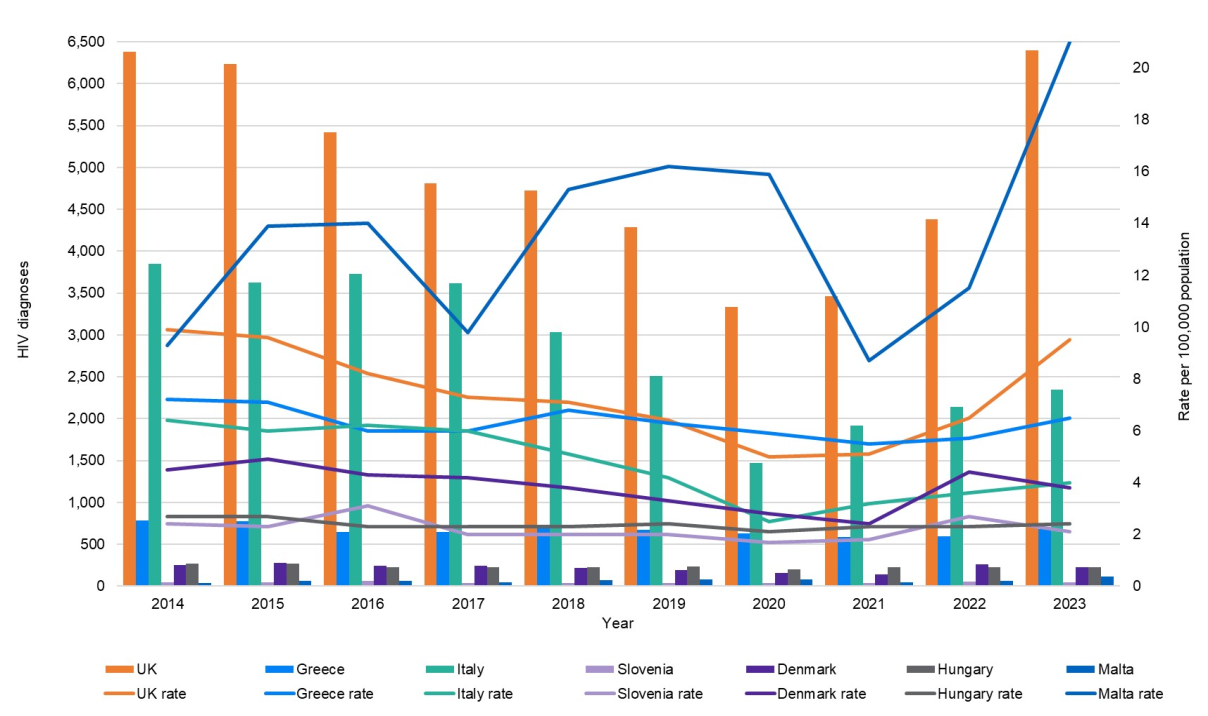
Figure E uses data from the European Centre for Disease Prevention and Control (ECDC) and World Health Organisation (WHO) report on HIV and acquired immune deficiency syndrome (AIDS) surveillance in Europe and shows that of the 7 countries represented (UK, Greece, Italy, Slovenia, Denmark, Hungary and Malta), the UK has the highest number of HIV diagnoses throughout the 2014 to 2023 period. Malta has the highest HIV diagnosis rate of 21 per 100,000 people.
In the 2020 and 2021 calendar years in England there were 3 vertical transmissions of AIDS. Two of these 3 pregnancies were in women diagnosed with HIV before pregnancy and one had an antenatal diagnosis – this woman screened negative at booking and then was diagnosed later in pregnancy. United Nations Children’s Fund (UNICEF) data shows that in Greece in 2022 there were 82 vertical transmissions. Research from Italy published in 2019 shows that between 2005 and 2015, there were 79 new cases of HIV-infected babies. Only 9 of their mothers were already aware of their HIV infection before pregnancy, whereas 25 were identified as HIV positive during pregnancy or in the peripartum period.
Hepatitis B
The ECDC prevention of hepatitis B and C elimination targets progress report shows that in the European Union (EU) and European Economic Area (EEA), rates of vertical transmission of the hepatitis B virus (HBV) are low, with national rates ranging from approximately 0% in Greece and Slovenia to 0.5% in the Netherlands. Additionally, coverage of timely HBV birth dose vaccine is above the WHO target of 90% in the Netherlands, Malta, Denmark, Ireland, Italy, Czechia, France, Poland and Germany. Coverage of the vaccine in Portugal, Bulgaria, Austria and Romania was below the WHO target as of 2020, however.
Malta has the highest coverage with timely HBV birth dose vaccine in 2020 at just under 100%, while Romania has the lowest at under 40%. For Malta and Ireland, clinic level data only was available, while for Poland regional level data only was available.
Syphilis
Figure F: Number and rate of congenital syphilis cases in European countries who reported data to the WHO, 2021

Figure F shows the number and rate of reported congenital syphilis cases in 46 European countries that reported data to the WHO in 2021; 22 countries reported zero cases of congenital syphilis. Turkey had the highest number of congenital syphilis cases while Moldova had the highest rate of congenital syphilis per 100,000 live births.
Antenatal screening for syphilis in the first trimester is carried out in most European countries with some offering a second screen in the third trimester. Turkey, however, does not have a national antenatal screening programme for syphilis. Between calendar years 2021 and 2024, there were 154 cases of congenital syphilis reported, with 39 cases in 2024. The incidence of syphilis in the general population in Turkey is unknown but is thought to be increasing. Moldova has the highest rate of syphilis with 22.9 cases per 100,000 live births.