Annual epidemiological spotlight on HIV in the East of England, 2023 data
Updated 23 December 2025

© Crown copyright 2025
This publication is licensed under the terms of the Open Government Licence v3.0 except where otherwise stated. To view this licence, visit nationalarchives.gov.uk/doc/open-government-licence/version/3 or write to the Information Policy Team, The National Archives, Kew, London TW9 4DU, or email: psi@nationalarchives.gov.uk.
Where we have identified any third party copyright information you will need to obtain permission from the copyright holders concerned.
This publication is available at https://www.gov.uk/government/publications/hiv-east-of-england-annual-data-spotlight/annual-epidemiological-spotlight-on-hiv-in-the-east-of-england-2023-data
Summary
HIV remains an important public health priority in the East of England. The East of England UKHSA region covers the following 12 local authorities:
- Bedford
- Central Bedfordshire
- Milton Keynes
- Cambridgeshire
- Essex
- Hertfordshire
- Luton
- Norfolk
- Peterborough
- Southend-on-Sea
- Suffolk
- Thurrock
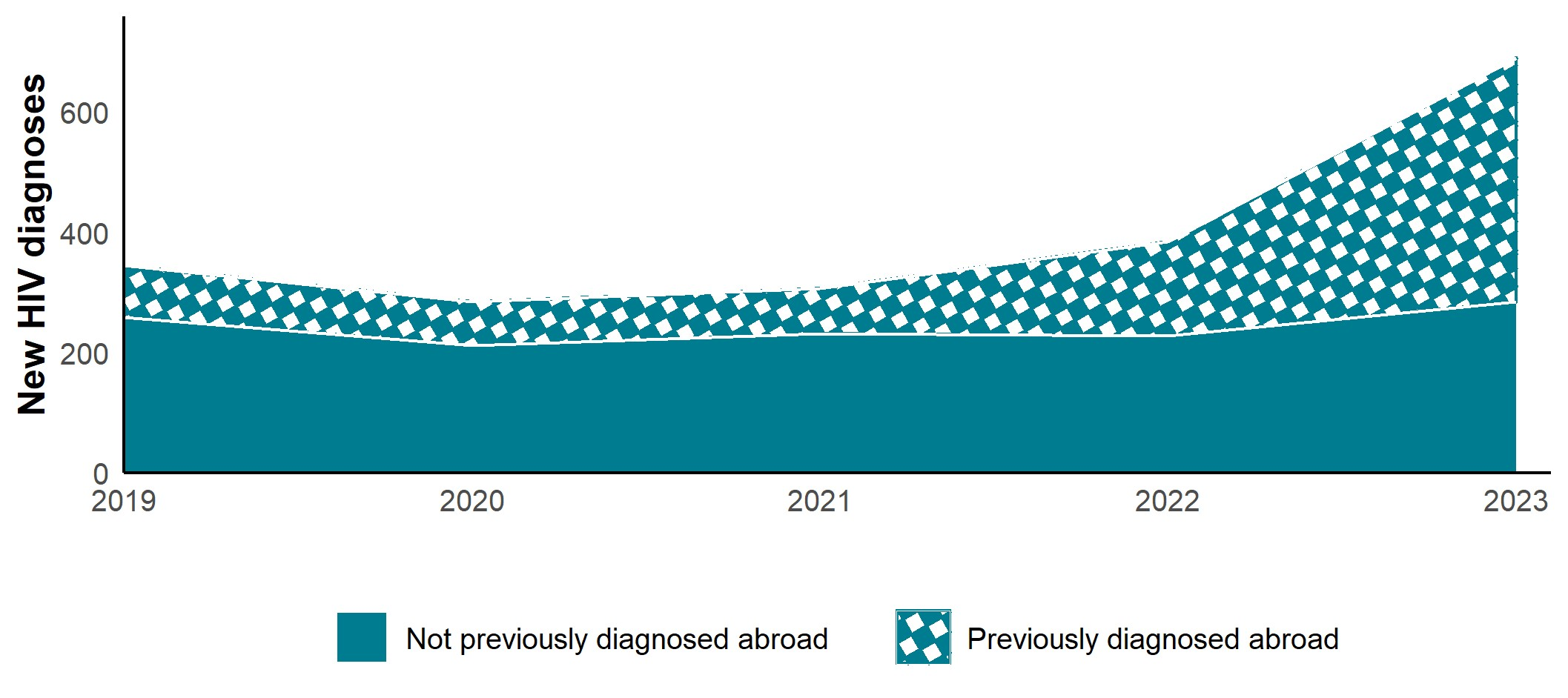
In 2023, the number of new HIV diagnoses in the East of England increased from 385 new diagnoses in 2022, to 690 in 2023, an increase of 79%. In 2023, the number of new diagnoses previously diagnosed abroad (405) exceeded those first diagnosed in the UK (285) for the first time.
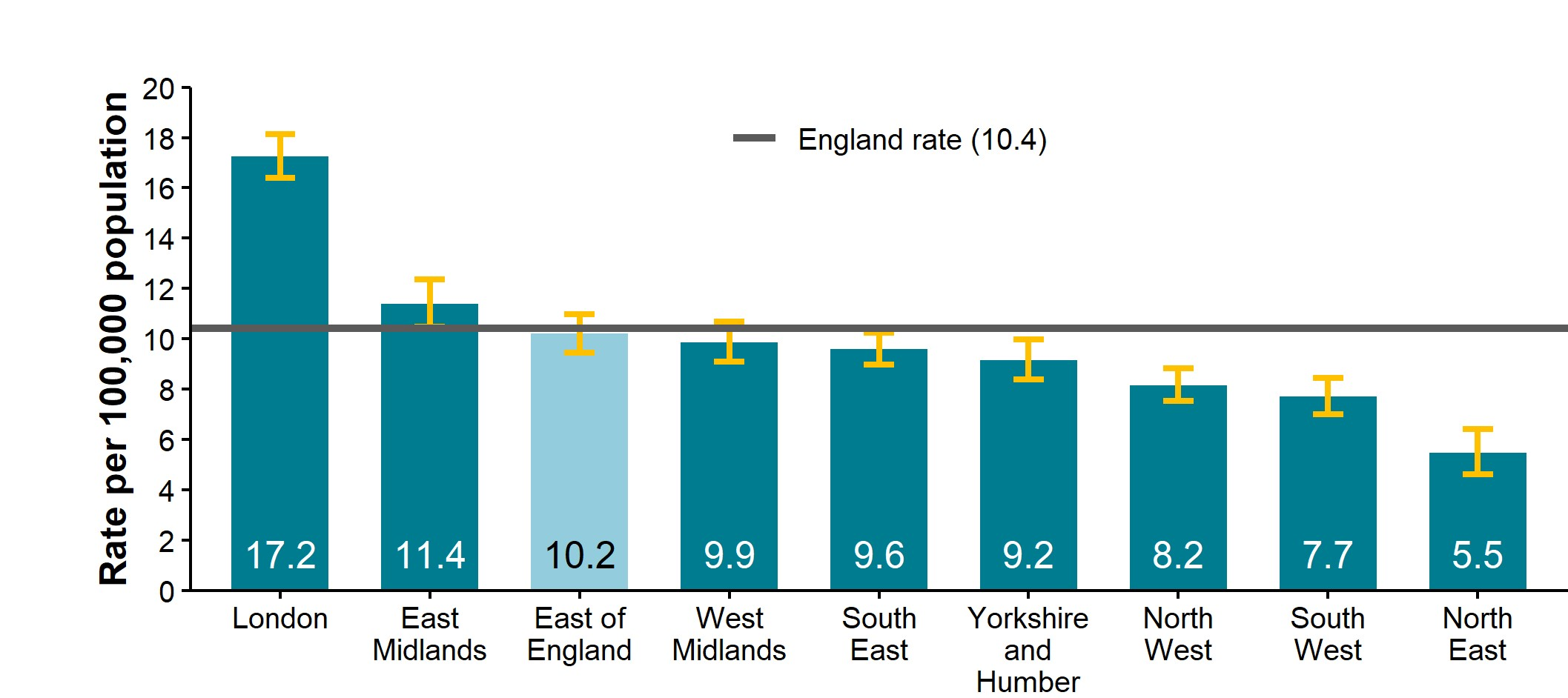
The East of England was the region with the third highest rate of new HIV diagnoses, 10.2 per 100,000, similar to the England rate of 10.4. London was the region with the highest rate (17.2) and the North East had the lowest (5.5). By East of England upper-tier local authority (UTLA), new HIV diagnoses rates ranged from 27 per 100,000 in Peterborough, to 5 per 100,000 in Suffolk. Peterborough (27), Luton (23), Milton Keynes (21), Southend-on-Sea (21), Bedford (16) and Thurrock (12) all had rates higher than the regional and national average.
In 2023, there was a large increase in the number of new HIV diagnoses likely acquired through heterosexual contact, while other probable infection routes remained relatively stable. In 2023, probable heterosexual contact accounted for 81% of new diagnoses, followed by sex between men (14%), and other infection routes (4%).
Between 2022 and 2023, there was an increase in the number of new HIV diagnoses among those of Black African ethnicity. In 2023, Black Africans accounted for 66% of new HIV diagnoses in the East of England, compared to 50% in 2022. Increases were also observed for those with a world birth region of Africa in 2023, accounting for 72% of new diagnoses.
47.2% of new HIV diagnoses in the East of England were diagnosed late in 2023. By UTLA this ranged from 56% of new diagnoses in Peterborough and Thurrock, to 36% in Luton. Between 2021 and 2023, 64% of new HIV diagnoses among heterosexual males were diagnosed late, 42% among heterosexual women, and 42% among sex between men.
Between 2014 and 2023 there has been an increasing trend in the number of residents living with diagnosed HIV and accessing care, from 6,029 in 2014 to 8,677 in 2023. Of those diagnosed with HIV and accessing care, 64% were likely exposed through heterosexual contact, 32% sex between men, 3% mother to child transmission and 1% injecting drug use.
HIV testing in the East of England has decreased when compared to pre-pandemic levels of 2019. In 2019, the testing rate was 1,982 per 100,000 compared to 1,811 in 2023. The number of tests taken at all sexual health services by gender and sexual orientation has decreased for all population groups between 2019 and 2023, with the exception of gay, bisexual and other men who have sex with men (GBMSM) for which the number of tests has increased.
New diagnoses
In 2023, 690 East of England residents were newly diagnosed with HIV, accounting for 11% of new diagnoses in England. This represents a rise of 79% from 2022. Nationally, there has been a long term trend of a decline in the overall number of new diagnoses, although there was a substantial upturn in 2023.
The new diagnosis rate for East of England residents (10 per 100,000) was equal to England in 2023 (10 per 100,000).
In 2023, 14% of all new diagnoses in East of England residents were in GBMSM (compared to 26% in 2022 and 37% in 2014). The number of GBMSM residents in the East of England newly diagnosed with HIV (97, adjusted for missing information) was 45% lower than in 2014. Of the GBMSM newly diagnosed with HIV 50% were White and 33% were UK-born.
Heterosexual contact was the largest infection route for new diagnoses in East of England residents in 2023 (81%). Infections in African born persons accounted for 83% of all heterosexually acquired cases in 2023 (n=412, of which 304 were previously diagnosed abroad), compared to 59% (n=138, of which 28 were previously diagnosed abroad) in 2014. Infections in UK born persons accounted for 8% of all heterosexually acquired cases in 2023.
Injecting drug use accounted for 0% of new diagnoses in East of England residents.
Black Africans represented 66% of all newly diagnosed East of England residents in 2023 (compared to 50% in 2022 and 36% in 2014). A small proportion of new diagnoses in 2023 were in Black Caribbeans (1%).
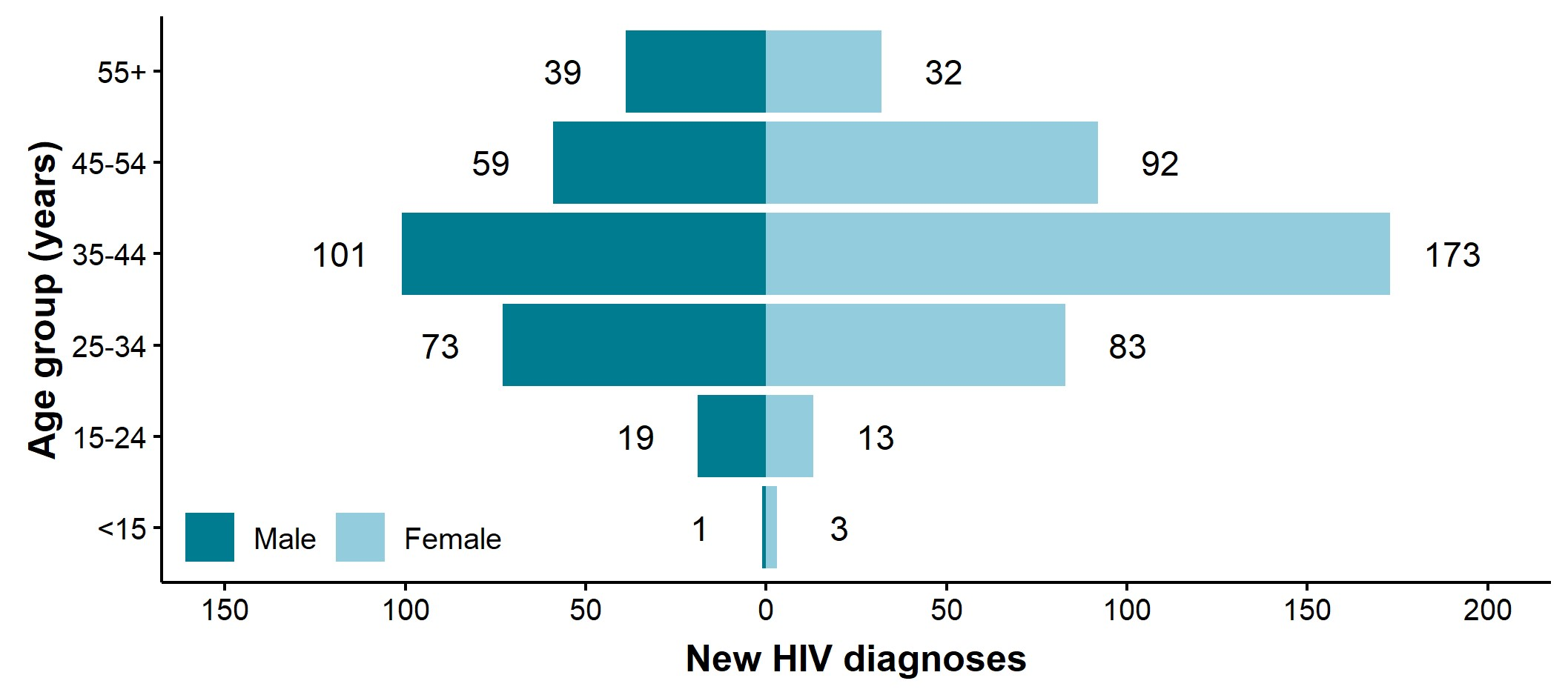
The number of new diagnoses was highest in the 35 to 44 year age group in both males and females in 2023.
Late diagnoses
Reducing late HIV diagnoses is one of the indicators in the Public Health Outcomes Framework and HIV Action Plan Monitoring and Evaluation Framework. People who are diagnosed late have a tenfold risk of mortality within one year of diagnosis compared to those diagnosed promptly and they have increased healthcare costs.
It is of particular concern that a large proportion of East of England residents with HIV are diagnosed late (47% from 2021 to 2023, compared to 43% in England), as defined by a CD4 count of less than 350 cells/mm at diagnosis.
In the East of England, heterosexuals were more likely to be diagnosed late (64% of males, 42% of females) than GBMSM (42%). By ethnic group, Black Africans were as likely to be diagnosed late as the White population (50% and 50% respectively).
People living with diagnosed HIV
The 8,677 people living with diagnosed HIV in the East of England in 2023 was 7% higher than in 2022 and 44% higher than in 2014. This increase is partly due to the effectiveness of HIV treatment, which has reduced the number of deaths from HIV.
The diagnosed prevalence rate of HIV in the East of England in 2023 was 2 per 1,000 residents aged 15 to 59 years. This was equal to the 2 per 1,000 observed in England as a whole (small differences may be hidden by rounding). Six local authorities in the East of England had a diagnosed HIV prevalence in excess of 2 per 1,000 population aged 15 to 59 in 2023, which is the threshold for expanded HIV testing. They were Bedford (2.6), Luton (3.9), Milton Keynes (3.4), Peterborough (2.8), Southend-on-Sea (3.7) and Thurrock (2.5).
The 2 most common probable routes of transmission for East of England residents living with diagnosed HIV in 2023 were sex between men and women (64%) and sex between men (32%).
In 2023, 37% of those living with diagnosed HIV in the East of England were aged between 35 and 49 years, and 51% were aged 50 years and over (up from 29% in 2014). Males represented 57% of East of England residents living with diagnosed HIV in 2023 and females represented 43%.
In 2023, 44% of East of England residents living with diagnosed HIV were White and 42% were Black Africans. However, due to the relative sizes of the White and Black African populations the rate per 1,000 population aged 15 to 59 years was much higher in Black Africans (26 per 1,000) than in the White population (1 per 1,000).
Continuum of HIV care
In England, excluding London in 2023, 99% of HIV diagnosed residents were receiving anti-retroviral treatment (ART). Of these, 98% were virally suppressed (viral load <200) and were very unlikely to pass on HIV, even if having sex without condoms (untransmissible virus). This compares to 98% in England as a whole receiving ART and 98% of these virally suppressed.
For East of England residents, the proportion starting treatment within 91 days of diagnosis for the period 2021 to 2023 was 87%. This compares to 84% for England.
People living with undiagnosed HIV
In 2023, it is estimated that 5% (Credible Interval (CrI) 4% to 7%) of people living with HIV in England, excluding London were undiagnosed. This equates to an estimated 3,407 (CrI 2,627 to 4,787) undiagnosed people.
It is estimated that 1,100 GBMSM in England, outside London, are undiagnosed (CrI 600 to 2,100) and 2,200 heterosexuals (CrI 1,700 to 3,200), including 1,200 Black Africans. In England, outside London, the proportion undiagnosed varied by exposure group with the highest proportion undiagnosed among people living with HIV who inject drugs (9%, CrI 2% to 20%), non-Black African heterosexual women (7%, 5% to 11%), and Black African heterosexual men (7%, 5% to 11%).
HIV testing
A total of 44,920 people were tested in specialist sexual health services (SHSs) in the East of England in 2023, a decrease of 51% since 2019 and an increase of 9% since 2022. The HIV testing rate (per 100,000 population) at all SHSs in the East of England was 1,811, which compares to 2,771 across England. HIV testing rates in all SHSs (specialist and non-specialist services) in the East of England is higher in men (1,714) than women (1,632).
The number of people testing at online sexual health services in the East of England has increased since the COVID-19 pandemic, from 21,854 people testing in 2019 to 57,063 in 2023.
PrEP
In 2023, 8% of HIV-negative East of England residents accessing SHSs in England were defined as having a PrEP need, among whom 72% initiated or continued PrEP. Of those with a PrEP need, 83% had this need identified at a clinical consultation. Among GBMSM, the group with greatest need, these proportions were: 68%, 74% and 84%. Consistent use of PrEP can be an efficacious and effective intervention to prevent HIV acquisition. Despite PrEP being routinely available through specialist SHS, awareness, accessibility and uptake of primary prevention initiatives is variable for different population groups. Addressing this disparity is key to HIV prevention.
HIV in England
The 2021 HIV Action Plan for England (1) sets an ambition to reduce HIV transmission by 80% between 2019 and 2025. The HIV Action Plan monitoring and evaluation framework report published in November 2024 further summarises progress made towards the ambitions of the HIV Action Plan (2). Although considerable progress has been made, it is unlikely that the 2025 interim ambitions will be met.
The number of people first diagnosed with HIV in England has risen by 15% in 2023 and there is further evidence of widening inequalities (3). Most of the increase in HIV diagnoses between 2022 and 2023 in England was among adults exposed through sex between men and women living outside London (increase of 51% among men exposed through sex with women and 44% among women exposed through sex with men). For both GBMSM and heterosexual adults, the 2023 rise has disproportionately affected ethnic minority groups. Further provision of services that are culturally competent and accessible to diverse key populations is needed.
Overall testing rates increased substantially since 2022 in England but have not fully recovered to those observed in 2019 for some demographic groups (3). The increasing levels of testing and fall in positivity over the past 5 years may be suggestive of an overall fall in HIV transmission in GBMSM, but not a continued reduction. The rise in HIV testing together with a higher and sustained positivity in Black African heterosexuals may be suggestive of ongoing transmission. However, this number is likely affected by changing patterns of migration with a recent rise in people diagnosed with HIV abroad arriving in England.
In England in 2023, for the first time, over half of all HIV diagnoses were among those previously diagnosed abroad (3). Most of those previously diagnosed with HIV abroad have evidence of existing treatment in the form of viral suppression within a month of their England presentation and are rapidly linked to care following presentation in England, ensuring good clinical outcomes and prevention of onward transmission. Services need resilience to ensure appropriate and accessible capacity for recently-arrived populations.
Migration patterns for the UK support this observed shift in the HIV burden in England. However, although immigration into the UK increased sharply following the COVID-19 pandemic, provisional estimates for July 2022 to June 2023 show a slowing of immigration during this period (4). Most people arriving in the UK for the period July 2022 to June 2023 were non-EU nationals, mainly migrants coming for work, largely using health and care visas (4).
The implementation of an NHS England funded programme of emergency departments (EDs) opt-out testing for bloodborne viruses in April 2022 has contributed to the increase in HIV diagnoses in 20232. The increase in HIV diagnoses seen in 2023 is only partially due to the increase in testing effort due to ED opt-out testing. This is particularly apparent outside of London, where there was a 21% increase in diagnoses after adjustment for ED opt-out testing (2).
Access to PrEP has been increasing on an annual basis since 2020. However, inequalities in access remain with unmet needs by specific exposure groups.
The rising number of late diagnoses, particularly among Black African populations demonstrates an urgent need to improve access to testing and the full implementation of HIV testing guidelines.
For those diagnosed and linked to services, HIV care remains excellent with 98% of people with diagnosed HIV being treated and 98% of people on treatment virally suppressed (3). People seen for HIV care are ageing, with over half aged 50 years and over in 2023 compared to a quarter 10 years ago. This highlights the need for joined-up health and social care services to meet the needs of the ageing population.
HIV prevention messages
Using condoms consistently and correctly protects against HIV and other STIs such as chlamydia, gonorrhoea and syphilis. They can also be used to prevent unplanned pregnancy.
HIV testing is central to HIV prevention since it provides access to PrEP and health advice for those testing HIV negative, while a positive result leads to essential HIV care and treatment, preventing onwards transmission. Everyone should have an STI screen, including an HIV test, on at least an annual basis, if having condomless sex with new or casual partners. GBMSM should have tests for HIV and STIs annually, or every 3 months if having condomless sex with new or casual partners.
HIV PrEP is available for free from specialist SHSs and can be used to reduce an individual’s risk of acquiring HIV. Consistent use of PrEP can be an efficacious and effective intervention to prevent HIV acquisition. Despite PrEP being routinely available through specialist SHSs, awareness, accessibility and uptake of primary prevention initiatives is variable for different population groups (3).
HIV post-exposure prophylaxis (PEP) can be used to reduce the risk of acquiring HIV following some sexual exposures. PEP is available for free from specialist SHSs and most emergency departments.
Symptoms due to HIV and AIDS may not appear for many years, and people who are unaware of living with HIV may not feel themselves to be a risk to others. Prevention messages should reinforce that anyone can acquire HIV regardless of age, gender, ethnicity, sexuality or religion, and it is important to challenge assumptions about who is at risk of acquiring HIV.
People living with diagnosed HIV infection who are on treatment and have an undetectable viral load are unable to pass on the virus to others during sex, even without PrEP or condoms. This is known as Undetectable = Untransmittable or U=U.
Stigma, anxiety and depression experienced by people with HIV affect their ability to seek healthcare, engage in treatment and remain in care (5). Reducing stigma in healthcare services will encourage people from seeking the healthcare services they need.
Specialist SHSs are free and confidential. They offer testing and treatment for HIV and STIs, condoms, vaccination, HIV PrEP and PEP. Clinic-based services are commissioned by local authorities for residents of all areas in England and online self-sampling for HIV and STIs is widely available. Information and advice about sexual health including how to access services is available at NHS.UK: Sexual health services and from the national sexual health helpline on 0300 123 7123.
Local and regional prevention strategies
HIV prevention strategies at a local and regional level should consider inclusion of the following areas from the national HIV Action plan monitoring and evaluation framework (2):
- implementation and monitoring of British HIV Association (BHIVA), British Association for Sexual Health and HIV (BASHH) and British Infection Association (BIA) Adult HIV testing guidelines 2020, including opt-out in sexual health services, subject to agreed support mechanisms for implementation
- continuation of ED opt-out testing in very high and high prevalence HIV areas (subject to results of the final evaluation of the programme due in October 2025)
- scaling up community testing focusing on those groups that are more likely to benefit from HIV testing in these settings such as ethnic minority populations
- understanding reasons behind the decline of HIV testing in women
- scaling up of partner notification activities
- understanding the drivers of late diagnosis in order to better focus interventions
- reducing inequalities in access and uptake to PrEP through implementation of the PrEP roadmap
Charts, tables and maps
Figure 1. Rate of new HIV diagnoses per 100,000 population (all ages) by UKHSA region of residence, 2023
Source: UKHSA, HIV & AIDS New Diagnoses and Deaths (HANDD).
Note:
- the number of new diagnoses will depend on accessibility of testing as well as infection and transmission
Figure 1 is a bar chart showing the rate of new HIV diagnoses per 100,000 population for all ages by UKHSA region of residence in 2023. 95% confidence intervals are displayed in yellow, and the overall England rate (10.4 per 100,000) is shown as a grey line.
The East of England (light blue) has the third highest rate of new HIV diagnoses with 10.2 per 100,000 population. The East of England rate is similar to the overall England rate, and the confidence intervals cross the England rate.
London (17.2 per 100,000) and the East Midlands (11.4 per 100,000) are the two regions with the highest rates of new HIV diagnoses, both higher than England overall. The rate of new diagnoses in the West Midlands, South East, Yorkshire and the Humber, North West, South West and North East are all lower than both the East of England and overall England rate.
Figure 2. Rate of new HIV diagnoses per 100,000 population (all ages) by upper-tier local authority of residence, East of England residents, 2023

Source: UKHSA, HIV & AIDS New Diagnoses and Deaths (HANDD).
Notes:
- the number of new diagnoses will depend on accessibility of testing as well as infection and transmission
- HIV diagnosed prevalence (rate per 1,000 aged 15 to 59 years as per NICE testing guidelines). Lower diagnosed prevalence less than 2, high diagnosed prevalence 2 to 5, Extremely high diagnosed prevalence more than 5
- the colour coding does not relate to new diagnosis but to the data in the diagnosed prevalence section later.
Figure 2 is a bar chart showing the rate of new HIV diagnoses per 100,000 population for all ages by East of England upper tier local authority in 2023. The bar heights represent the rate of new HIV diagnoses, with 95% confidence intervals in yellow and the overall East of England rate as a dashed line.
The shading on the bars reflects their status as a high (green) or low (light blue) HIV diagnosed prevalence area. Peterborough, Luton, Milton Keynes, Southend-on-Sea, Bedford and Thurrock are high diagnosed prevalence areas (green). Hertfordshire, Cambridgeshire, Central Bedfordshire, Norfolk, Essex and Suffolk are low diagnosed prevalence areas (light blue). There were no local authorities in the East of England with an extremely high diagnosed prevalence.
Peterborough has the highest rate of new HIV diagnoses (27 per 100,000), followed by Luton (23), Milton Keynes (21), Southend-on-Sea (21) and Bedford (16) and Thurrock (12). All areas have a rate higher than the region overall (10.2). Lower confidence intervals for each of these areas do not cross the regional rate, except for Thurrock.
Suffolk has the lowest rate of new diagnoses of 5 per 100,000, followed by Essex (7), Norfolk (7), Central Bedfordshire (8), Cambridgeshire (9) and Hertfordshire (10), all lower than the regional rate (10.2). Despite having low rates at UTLA level, Stevenage, Hatfield, Harlow, Southend-on-Sea and Norwich all have high rates of new HIV diagnoses. Upper confidence intervals for Norfolk, Essex and Suffolk do not cross the regional rate.
Figure 3. New HIV diagnoses and deaths, the East of England, 2014 to 2023 [note 1]

Source: UKHSA, HIV & AIDS New Diagnoses and Deaths (HANDD).
Notes:
- the number of new diagnoses will depend on accessibility of testing as well as infection and transmission
- numbers may rise as we receive more reports and more information. This will impact on interpretation of trends in more recent years. New HIV diagnoses are shown by UK region of residence at diagnosis. Deaths are shown by UK region of death which in some instances may not be the same as UK region of residence at diagnosis. Region of death may not be known for all deaths, particularly for those in the most recent years. Numbers for these years should be interpreted as minimum numbers (deaths reported and allocated to a region of death to date) and not as a trend
- note 1: numbers may rise as further reports are received and more information is obtained. This is more likely to affect more recent years, particularly 2023.
Figure 3 is a line chart showing the number of new HIV diagnoses (teal) and deaths among those diagnosed with HIV (light blue) by year from 2014 to 2023.
Between 2014 and 2020 there was a decreasing trend in the number of new HIV diagnoses, however since 2020 the number of new diagnoses has increased and in 2023 (n=690) surpassed the levels in 2014 (n=470).
The number of deaths among individuals diagnosed with HIV increased between 2017 and 2022. Between 2022 and 2023 the number of deaths among those diagnosed with HIV reduced (n=49).
Figure 4. New HIV diagnoses by whether a person had been previously diagnosed abroad, the East of England, 2019 to 2023 [note 1]
Source: UKHSA, HIV & AIDS New Diagnoses and Deaths (HANDD).
Notes:
- the number of new diagnoses will depend on accessibility of testing as well as infection and transmission
- note 1: numbers may rise as further reports are received and more information is obtained. This is more likely to affect more recent years, particularly 2023.
Figure 4 is a chart showing the number of new HIV diagnoses among East of England residents by whether they had been previously diagnosed abroad (checked teal) or were first diagnosed in the UK (solid teal) from 2019 to 2023.
Between 2019 and 2021, the number and proportion of individuals who had been previously diagnosed abroad compared to those who had not remained relatively stable.
In 2022, there was an increase in the number of individuals who had been previously diagnosed abroad, whilst those who had not decreased slightly. In 2023, the number of individuals who had previously been diagnosed abroad increased substantially, while only a slight increase was observed for those not previously diagnosed abroad.
In 2023 for the first time in the East of England, the number of new HIV diagnoses among individuals previously diagnosed abroad exceeded the number of individuals who had not been previously diagnosed abroad.
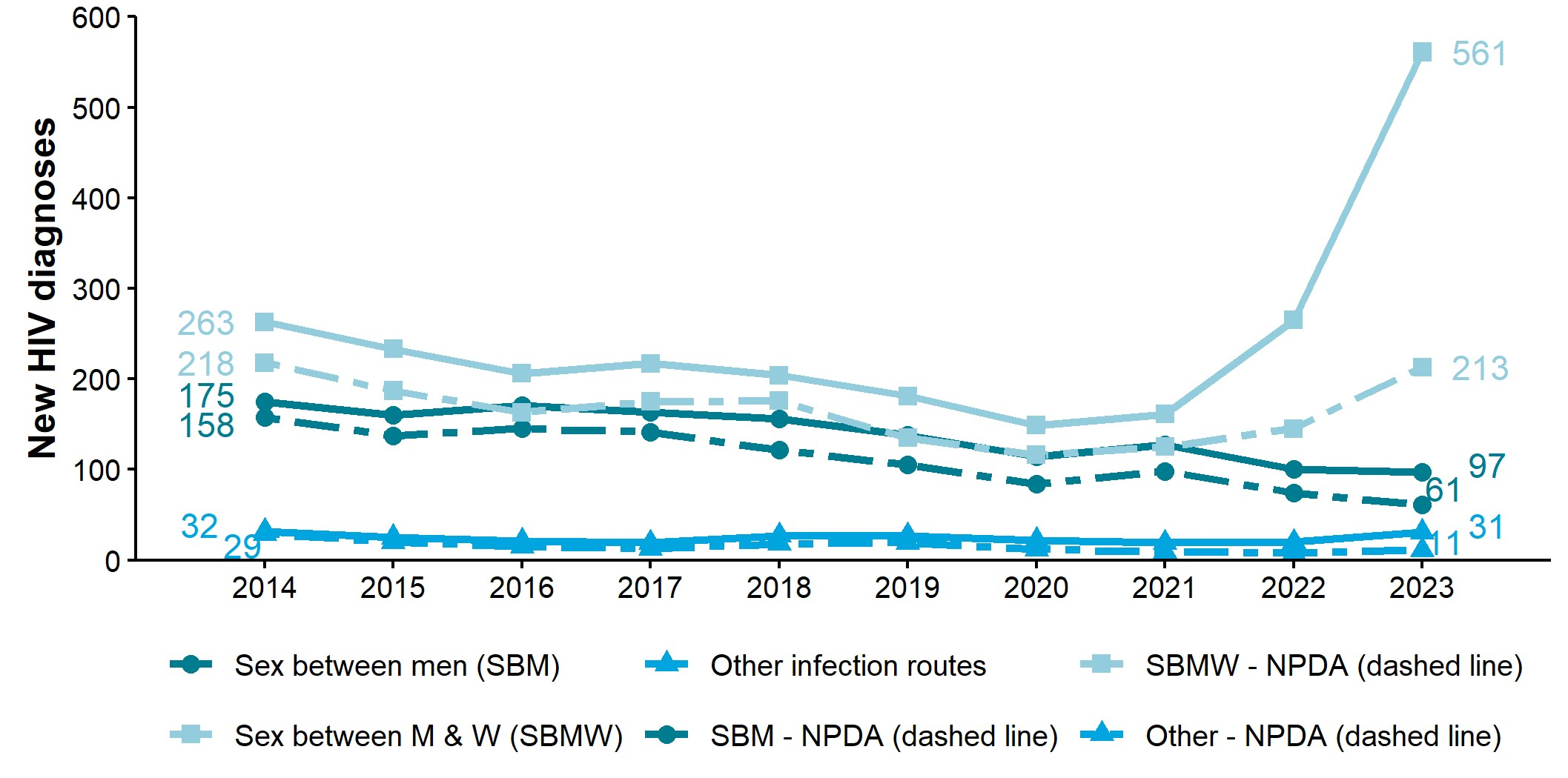
Figure 5a. New HIV diagnoses by probable route of acquiring HIV (adjusted for missing route information), East of England residents, 2014 to 2023 [note 1]
Source: UKHSA, HIV & AIDS New Diagnoses and Deaths (HANDD).
Notes:
- NPDA = Not previously diagnosed abroad.
- the number of new diagnoses will depend on accessibility of testing as well as infection and transmission
- note 1: numbers may rise as further reports are received and more information is obtained. This is more likely to affect more recent years, particularly 2023.
Figure 5a is a line chart showing the number of new HIV diagnoses by probable route of infection for East of England residents by year of diagnosis from 2014 to 2023. Probable routes of infections have been shown by all new diagnoses (solid lines) and those not previously diagnosed abroad (dashed lines). The data has been adjusted to account for missing probable route of infection.
Between 2014 and 2021, the number of new diagnoses likely due to heterosexual contact showed an overall declining trend for all diagnoses and for those not previously diagnosed abroad. However, in 2022 and 2023 there were sharp increases in the number of new diagnoses. In 2023 the overall number of new diagnoses increased sharply to 561, whilst a smaller increase was seen among those not previously diagnosed abroad (213) suggesting the large increase was among individuals who had been diagnosed abroad.
Between 2014 and 2023, the number of new HIV diagnoses likely due to sex between men has shown an overall declining trend for all diagnoses and for those not previously diagnosed abroad.
The number of new diagnoses likely due to other routes of infection is overall low. Between 2014 and 2023, numbers have decreased among those not previously diagnosed abroad whilst remaining stable for all diagnoses. This suggests an increase among individuals who had been diagnosed abroad.
Figure 5b. New HIV diagnoses detailed ‘other’ route of acquiring HIV (not adjusted for missing information), East of England residents, 2014 to 2023 [note 1]

Source: UKHSA, HIV & AIDS New Diagnoses and Deaths (HANDD).
Notes:
- the number of new diagnoses will depend on accessibility of testing as well as infection and transmission
- note 1: numbers may rise as further reports are received and more information is obtained. This is more likely to affect more recent years, particularly 2023.
Figure 5b is a line chart showing the number of new HIV diagnoses among East of England residents by other probable routes of infection by year of diagnosis from 2014 to 2023. Due to small numbers there is some fluctuation from year to year for each probable exposure category.
Between 2015 and 2021, injecting drug use was the other probable route of infection accounting for the highest number of new diagnoses. In 2022 and 2023 mother-to-child transmission accounted for the highest number of new diagnoses.
In 2023, by probable route of infection there were 23 mother-to-child transmission (light blue), 2 injecting drug use (teal), and 3 other (blue dashed line).
Figure 6a. Number of new HIV diagnoses by age group and gender, East of England residents, 2023
Source: UKHSA, HIV & AIDS New Diagnoses and Deaths (HANDD).
Notes:
- the number of new diagnoses will depend on accessibility of testing as well as infections and transmission
Figure 6a is an age-sex pyramid showing the number of new HIV diagnoses by age group and gender among East of England residents in 2023. Males are shown in teal, and females in light blue.
Among males, the highest number of new HIV diagnoses were among those aged 35 to 44 (101), followed by 25 to 34 (73).
Among females, the highest number of new diagnoses were in those aged 35 to 44 (173), followed by 45 to 54 (92).
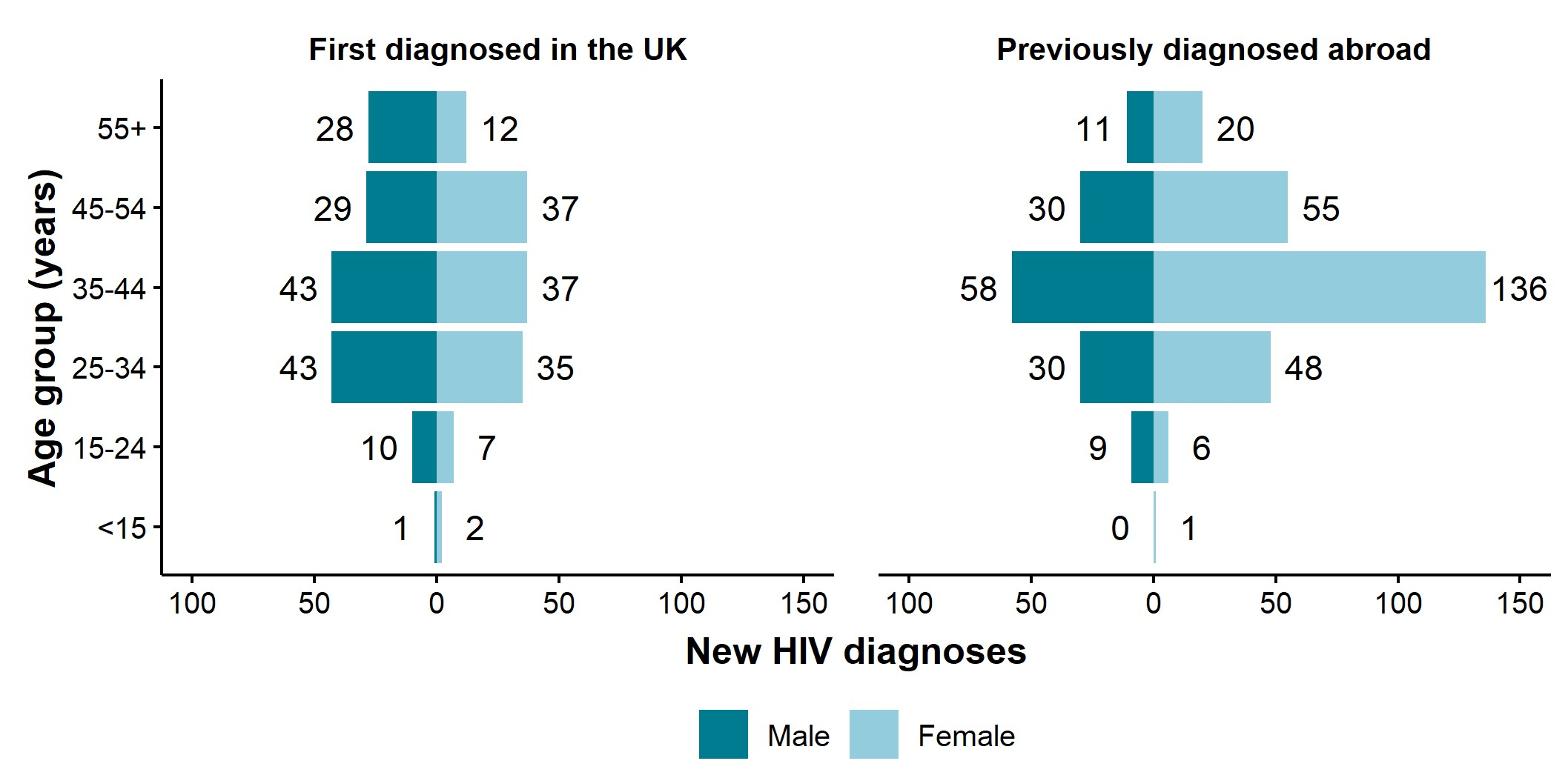
Figure 6b. Number of new HIV diagnoses by age group and gender, split by whether first diagnosed in the UK or abroad, East of England residents, 2023
Source: UKHSA, HIV & AIDS New Diagnoses and Deaths (HANDD).
Note:
- the number of new diagnoses will depend on accessibility of testing as well as infections and transmission
Figure 6b is a chart showing two age-sex pyramids. Both pyramids show the number of new HIV diagnoses among East of England residents by age group and gender in 2023. The pyramid on the left shows those first diagnosed in the UK, and the pyramid on the right shows those previously diagnosed abroad.
For new HIV diagnoses first diagnosed in the UK, among males the 25 to 34 and 35 to 44 age groups had the highest number of new diagnoses (both 43). Among females, the age groups 35 to 44 and 45 to 54 had the highest number of new diagnoses (both 37).
For new HIV diagnoses that had previously been diagnosed abroad, among males the 35 to 44 age group had the highest number of new diagnoses (58) followed by the 25 to 34 and 45 to 54 age groups (both 30). Among females, the age group 35 to 44 had the highest number of new diagnoses (136), followed by those aged 45 to 54 (55).
Figure 6c. Number of new HIV diagnoses by age group and probable route of acquiring HIV, male East of England residents aged 15 to 64 years, 2023

Source: UKHSA, HIV & AIDS New Diagnoses and Deaths (HANDD).
Notes:
- the number of new diagnoses will depend on accessibility of testing as well as infection and transmission
Figure 6c is an age-sex pyramid showing the number of new HIV diagnoses among male East of England residents aged 15 to 64 by probable route of exposure for 2023. The exposure route sex between men is shown in light blue, and all other exposure routes in teal.
Among new HIV diagnoses likely due to sex between men, those aged 25 to 34 had the highest number of new diagnoses (36), followed by those aged 35 to 44 (23).
Among new HIV diagnoses likely due to all other exposure routes, those aged 35 to 44 had the highest number of new diagnoses (67), followed by those aged 45 to 54 (39).
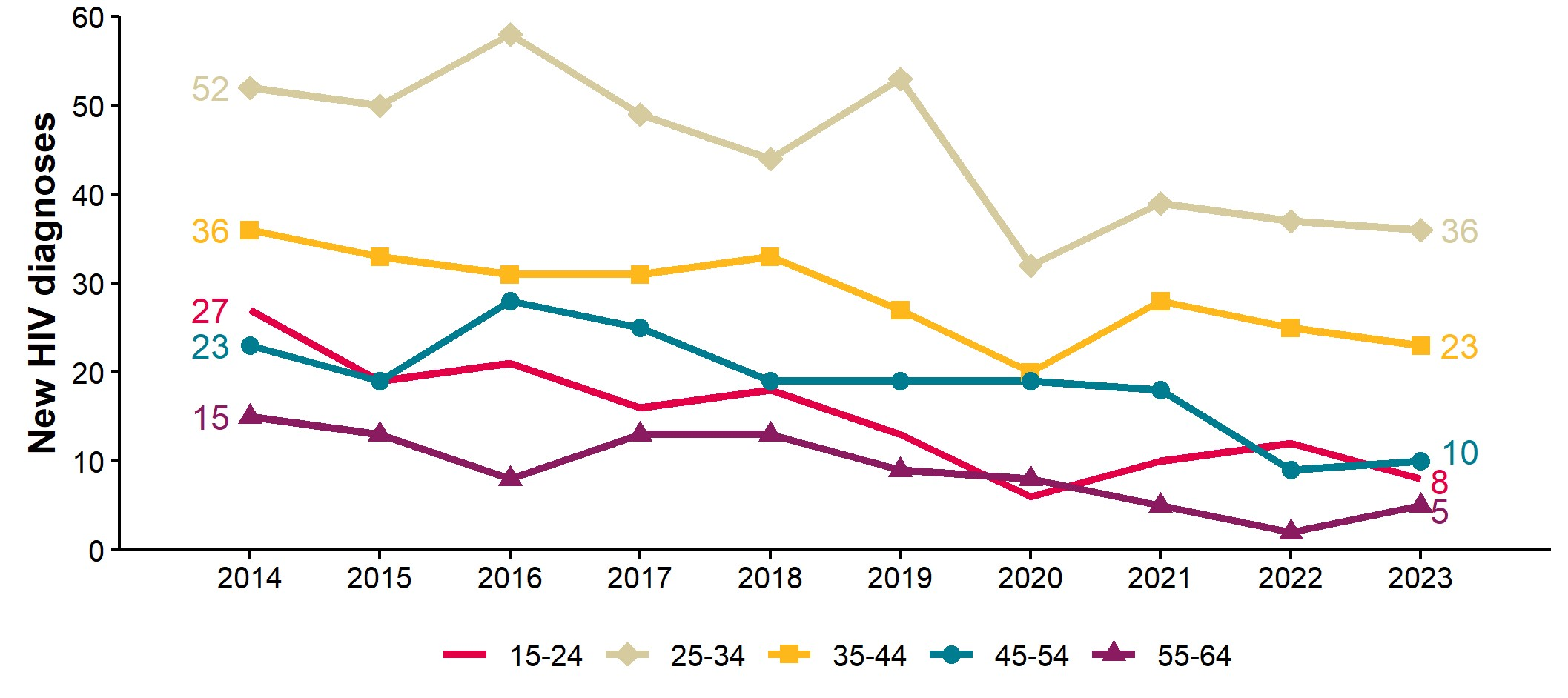
Figure 7a. Number of new HIV diagnoses probably acquired through sex between men by age group and year of first UK HIV diagnosis, East of England residents aged 15 to 64 years, 2014 to 2023 [note 1]
Source: UKHSA, HIV & AIDS New Diagnoses and Deaths (HANDD).
Notes:
- the number of new diagnoses will depend on accessibility of testing as well as infection and transmission
- note 1: numbers may rise as further reports are received and more information is obtained. This is more likely to affect more recent years, particularly 2023.
Figure 7a is a line chart showing the number of new HIV diagnoses among East of England residents aged 15 to 64 with a probable exposure route of sex between men, by age band and year of first UK HIV diagnosis.
Overall, between 2014 and 2023 there has been a decrease in the number of new HIV diagnoses for all age groups, although there are some fluctuations from year-to-year. Those aged 25 to 34 consistently have the highest number of new HIV diagnoses, followed by those aged 35 to 44, except for 2020.
In 2023, the highest number of new diagnoses were among those aged 25-34 (36), followed by 35 to 44 (24), 45 to 54 (10), 15 to 25 (8) and 55 to 64 (5).
Figure 7b. Number of new HIV diagnoses probably acquired through sex between men and women by age group (in years) and year of first UK HIV diagnosis, East of England residents aged 15 to 64 years, 2014 to 2023 [note 1]

Source: UKHSA, HIV & AIDS New Diagnoses and Deaths (HANDD).
Notes:
- the number of new diagnoses will depend on accessibility of testing as well as infection and transmission
- note 1: numbers may rise as further reports are received and more information is obtained. This is more likely to affect more recent years, particularly 2023
Figure 7b is a line chart showing the number of new HIV diagnoses among East of England residents aged 15 to 64 likely due to sex between men and women by age group and year of first diagnosis in the UK.
Overall, between 2014 and 2023 there were increases in the number of new diagnoses for all age groups, except for those aged 15 to 24. Between 2014 and 2021 there was a generally decreasing trend for each ae group, however since 2021 increases were seen for all age groups. The largest increases were seen among those aged 35 to 44 and 45 to 54.
In 2023, the highest number of new diagnoses were among those aged 35 to 44 (227), followed by 45 to 54 (124), 25 to 34 (89), 55 to 64 (46) and 15 to 24 (10).
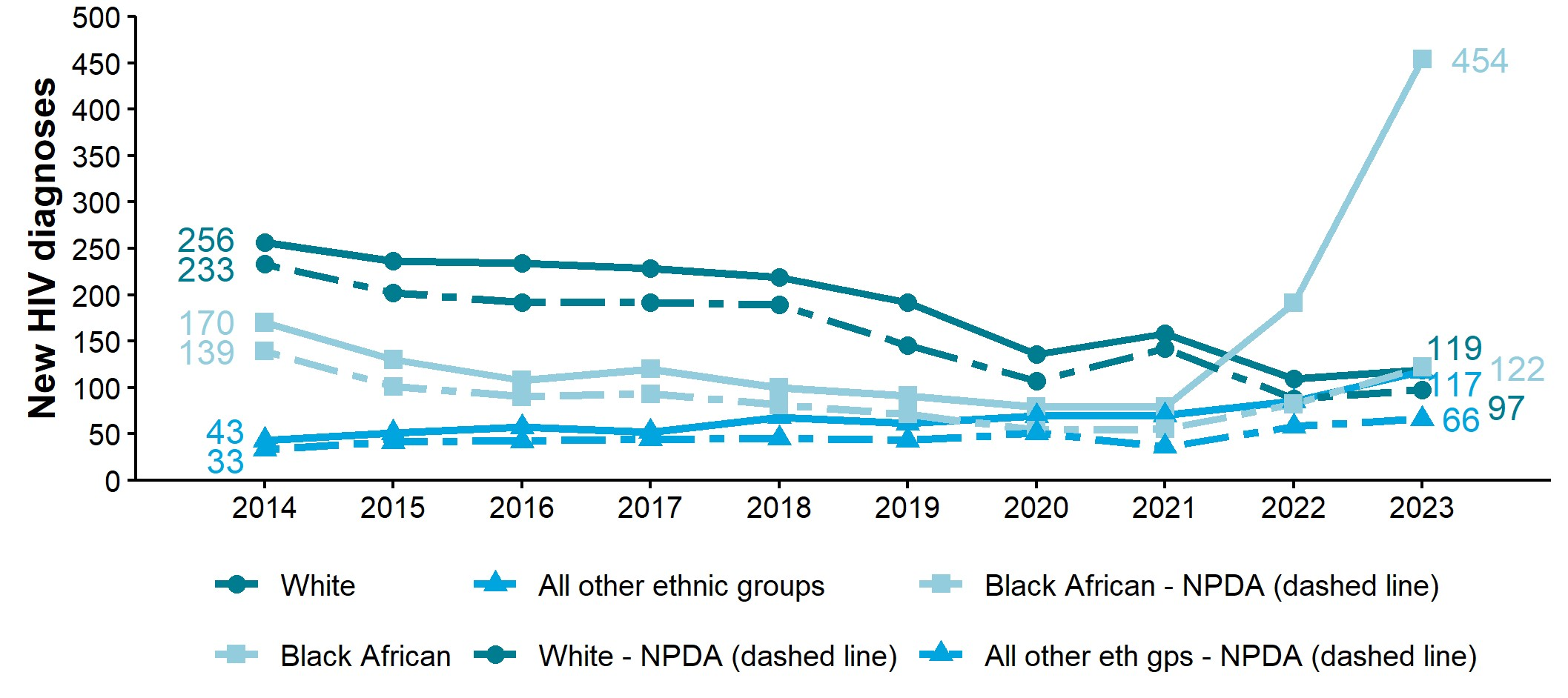
Figure 8. Number of new HIV diagnoses by ethnic group (adjusted for missing ethnic group information), East of England residents, 2014 to 2023 [note 1]
Source: UKHSA, HIV & AIDS New Diagnoses and Deaths (HANDD).
Notes:
- NPDA = not previously diagnosed abroad
- the number of new diagnoses will depend on accessibility of testing as well as infection and transmission
- note 1: numbers may rise as further reports are received and more information is obtained. This is more likely to affect more recent years, particularly 2023
Figure 8 is a line chart showing the number of new HIV diagnoses among East of England residents by ethnic group from 2014 to 2023. The ethnic groups are displayed by all diagnoses (solid lines) and those not previously diagnosed abroad (dashed lines).
There has been an overall decrease in the number of new diagnoses made among those of White ethnicity. In 2023, there were 119 new diagnoses among those of white ethnicity, 97 of whom had not been previously diagnosed abroad.
Among those of Black African ethnicity, the number of new diagnoses decreased between 2014 and 2021. In 2022 and 2023 there were sharp increases in the number of all new diagnoses of Black African ethnicity, much smaller increases were seen among those not previously diagnosed abroad. This suggests that the large increase is driven by those of Black African ethnicity who had been previously diagnosed abroad. In 2023 there were 454 new diagnoses among those of Black African ethnicity, 122 of whom had not been previously diagnosed abroad.
Among those of all other ethnic groups there has been an overall increasing trend between 2014 and 2023, both for all diagnoses and those not previously diagnosed abroad. In 2023, the number of new diagnoses for all other ethnic groups was 117, 66 of whom had not been previously diagnosed abroad.
Figure 9. Number of new HIV diagnoses by world region of birth (adjusted for missing world region of birth information), East of England residents, 2014 to 2023 [note 1]

Source: UKHSA, HIV & AIDS New Diagnoses and Deaths (HANDD).
Notes:
- NPDA = Not previously diagnosed abroad
- the number of new diagnoses will depend on accessibility of testing as well as infection and transmission
- numbers may rise as further reports are received and more information is obtained. This is more likely to affect more recent years, particularly 2023
Figure 9 is a line chart showing the number of new HIV diagnoses among East of England residents by world region of birth. World regions of birth have been shown by all diagnoses (solid line) and those not previously diagnosed abroad (dashed line).
Between 2014 and 2023, the number of new diagnoses decreased among individuals with the UK as their region of birth, for all new diagnoses and those not previously diagnosed abroad. Between 2014 and 2019, those born in the UK accounted for the highest number of new HIV diagnoses. In 2023, there were 88 new diagnoses among individuals born in the UK, 86 of whom had not been previously diagnosed abroad.
Among those born in Africa, between 2013 and 2021 there was a decreasing trend in new diagnoses. In 2022 and 2023 there were sharp increases in the number of all new diagnoses, smaller increases were seen in those not previously diagnosed abroad, suggesting the increase was mainly driven by increases in those who had been previously diagnosed abroad. In 2023 there were 496 new diagnoses in those born in Africa, 139 of whom had not been previously diagnosed abroad.
For those born in all other countries, the number of new HIV diagnoses has fluctuated between 2014 and 2023. In 2023, there were 109 new diagnoses among all individuals born in all other countries, 59 of whom had not been previously diagnosed abroad.
Table 1. Number of new HIV diagnoses by ethnic group and whether born abroad, East of England residents, 2019 to 2023 [note 1]
| Ethnic group | UK-born | Born abroad | Unknown country of birth |
|---|---|---|---|
| White | 318 | 142 | 53 |
| Black African | 11 | 300 | 31 |
| Black Caribbean | 4 | 14 | 1 |
| Other | 38 | 137 | 30 |
| Unknown | 8 | 25 | 104 |
Source: UKHSA, HIV & AIDS New Diagnoses and Deaths (HANDD).
Notes:
- Table 1 shows that the relationship between ethnic group and whether a person newly diagnosed with HIV was born abroad. Data is for the 5-year period 2019 to 2023. Those with a prior diagnosis abroad are excluded. To make it clear that there are differences in completeness of ascertainment of country of birth for different ethnic groups, numbers in this table are not adjusted for missing information
- the number of new diagnoses will depend on accessibility of testing as well as infection and transmission
- note 1: numbers may rise as further reports are received and more information is obtained. This is more likely to affect more recent years, particularly 2023
Table 1 shows the number of new HIV diagnoses among East of England residents by ethnic group and whether UK-born, born abroad or have an unknown country of birth for the 5-year period between 2019 and 2023.
The table shows that for those of White ethnicity, most cases were among those who were UK-born (318), compared to those born abroad (142). Among those of Black African ethnicity, a higher number were born abroad (300) than born in the UK (11). During the 5-year time period there were low numbers of individuals of Black Caribbean ethnicity diagnosed with HIV, although a higher number were born abroad (14) compared to born in the UK (4). A higher number of individuals in the Other ethnic group were born abroad (137) than born in the UK (38).
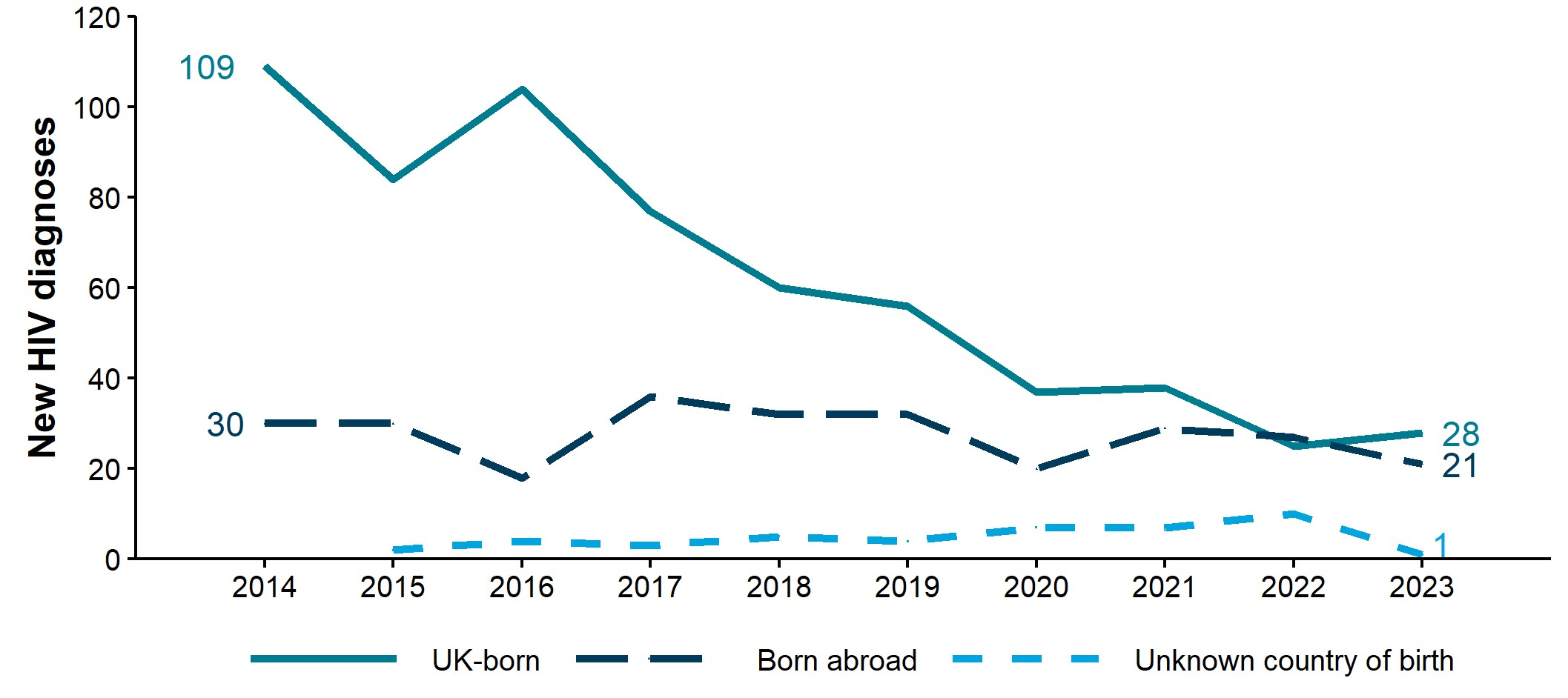
Figure 10a. New HIV diagnoses in GBMSM not previously diagnosed abroad by whether born abroad, East of England residents, 2014 to 2023 [note 1]
Source: UKHSA, HANDD.
Notes:
- the number of new diagnoses will depend on accessibility of testing as well as infection and transmission
- note 1: numbers may rise as further reports are received and more information is obtained. This is more likely to affect more recent years, particularly 2023
Figure 10a is a line chart showing the number of new HIV diagnoses in GBMSM East of England residents who had not been previously diagnosed abroad. The chart shows for individuals who were UK-born (solid teal), those who were born abroad (dark blue dashed line), and those with an unknown country of birth (blue dashed line).
Overall, there has been a generally decreasing trend in the number of new HIV diagnoses among GBMSM not previously diagnosed abroad and who were born in the UK, from 109 diagnoses in 2014 to 28 in 2023.
The number of new HIV diagnoses among those who had been born abroad has fluctuated between 2014 and 2023 but reduced from 30 new diagnoses in 2014 to 21 in 2023.
The number of new diagnoses among individuals with an unknown country of birth is low. Between 2019 and 2022 there was an increasing trend but decreased to 1 new diagnosis in 2023.
Figure 10b. New HIV diagnoses in heterosexuals not previously diagnosed abroad by whether born abroad, East of England residents, 2014 to 2023 [note 1]
Source: UKHSA, HANDD.
Notes:
- the number of new diagnoses will depend on accessibility of testing as well as infection and transmission
- note 1: numbers may rise as further reports are received and more information is obtained. This is more likely to affect more recent years, particularly 2023
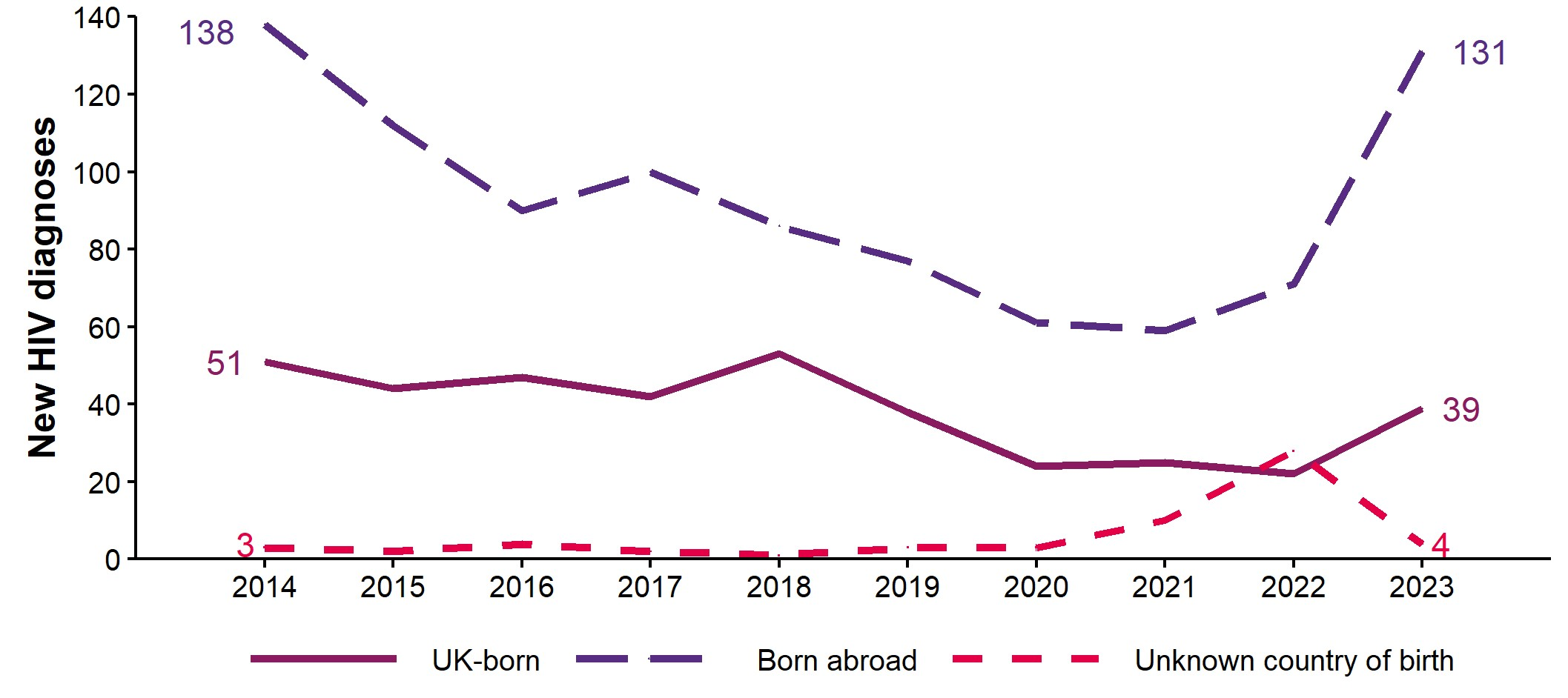
Figure 10b is a line chart showing the number of new HIV diagnoses in heterosexual residents in the East of England who had not previously been diagnosed abroad. The line chart shows this by whether they were UK-born (solid purple), born abroad (dark purple dashed line) or have an unknown country of birth (pink dashed line).
Between 2014 and 2023, the highest number of new HIV diagnoses were consistently among those who were born abroad. Between 2014 and 2021, there was a decrease in the number of new diagnoses among this group, but since 2021 there has been a sharp increase. The number of new diagnoses among this group in 2023 (131) is similar to the level in 2014 (138).
The number of new HIV-diagnoses among those who were UK-born decreased between 2018 and 2020. From 2021 new diagnose increased, however not as sharply as for those who had been born abroad. In 2023, there were 39 new HIV diagnoses among individuals who were UK-born.
The number of new diagnoses among individuals with an unknown country of birth is low. Increases were seen in 2021 and 2022, before decreasing to 4 new diagnoses in 2023.
Figure 11. Percentage of new HIV diagnoses, by local authority of residence, that were diagnosed late, East of England, aged 15 years and over, 2021 to 2023 [note 2]

Source: UKHSA, HIV & AIDS New Diagnoses and Deaths (HANDD), HIV & AIDS Reporting System (HARS).
Notes:
- note 2: only includes new diagnoses in those aged 15 years or older with no prior diagnosis abroad and for which a CD4 count was reported within 91 days of diagnosis; late diagnosis defined as CD4 count <350 cells/mm3. The underlying population will impact on the proportion diagnosed late, e.g. GBMSM are less likely to be diagnosed late
Figure 11 is a bar chart of the percentage of new HIV diagnoses that were diagnosed late among East of England residents aged over 15 by local authority of residence for the 3 year period 2021-2023. Confidence intervals are shown in yellow, and the regional total (47.2%) is shown by the grey dashed line.
The highest proportion of late diagnoses were made in Peterborough (56%) and Thurrock (56%), followed by Milton Keynes (54%), Cambridgeshire (53%), Southend-on-Sea (53%) and Essex (52%). These local authorities all had a higher percentage of late diagnoses than the East of England overall (47.2%).
Luton (36%) had the lowest proportion of late diagnoses, followed by Hertfordshire (40%), Suffolk (40%), Norfolk (41%), Central Bedfordshire (44%) and Bedford (45%). These local authorities all have a lower percentage of late diagnoses than the East of England overall (47.2%). Confidence intervals for all local authorities cross the regional average.
Very high proportions of late diagnoses are seen at district level, with 86% in North Norfolk, 80% in South Cambridgeshire, 75% in Uttlesford and East Cambridgeshire and 71% in Babergh.
Figure 12a. Percentage and number of new HIV diagnoses by probable route of infection that were diagnosed late, East of England residents, aged 15 years and over, 2021 to 2023 [note 3]

Source: UKHSA, HIV & AIDS New Diagnoses and Deaths (HANDD), HIV & AIDS Reporting System (HARS).
Note:
- note 3: only includes new diagnoses in those aged 15 years or older with no prior diagnosis abroad and for which a CD4 count was reported within 91 days of diagnosis; late diagnosis defined as CD4 count <350 cells/mm3. Proportions are only shown for the sex between men, heterosexual contact (males), heterosexual contact (females) and injecting drug use exposure groups and are withheld for any of these categories if they contain fewer than 5 late diagnoses.
Figure 12a is a bar chart showing the percentage and number of new HIV diagnoses in East of England residents aged over 15, who were diagnosed late by route of probable infection for the 3-year period 2021-2023. Confidence intervals are shown in yellow.
Males with heterosexual contact had the highest percentage of late diagnoses (64%, n=87), followed by injecting drug use (50%, n=2) and jointly females with heterosexual contact (42%, n=74), and sexual contact between men (42%, n=64).
The confidence intervals for males with heterosexual contact do not cross with those of females with heterosexual contact, or sex between men.
Figure 12b. Percentage and number of new HIV diagnoses by ethnic group that were diagnosed late, East of England residents, aged 15 years and over, 2021 to 2023 [note 4]
Source: UKHSA, HIV & AIDS New Diagnoses and Deaths (HANDD), HIV & AIDS Reporting System (HARS).
Note:
- note 4: only includes new diagnoses in those aged 15 years or older with no prior diagnosis abroad and for which a CD4 count was reported within 91 days of diagnosis; late diagnosis defined as CD4 count <350 cells/mm3. Proportions are only shown for the White, Black African and Black Caribbean ethnic groups and are withheld for any of these ethnic group categories if they contain fewer than 5 late diagnoses. IPB means Indian/Pakistani/Bangladeshi
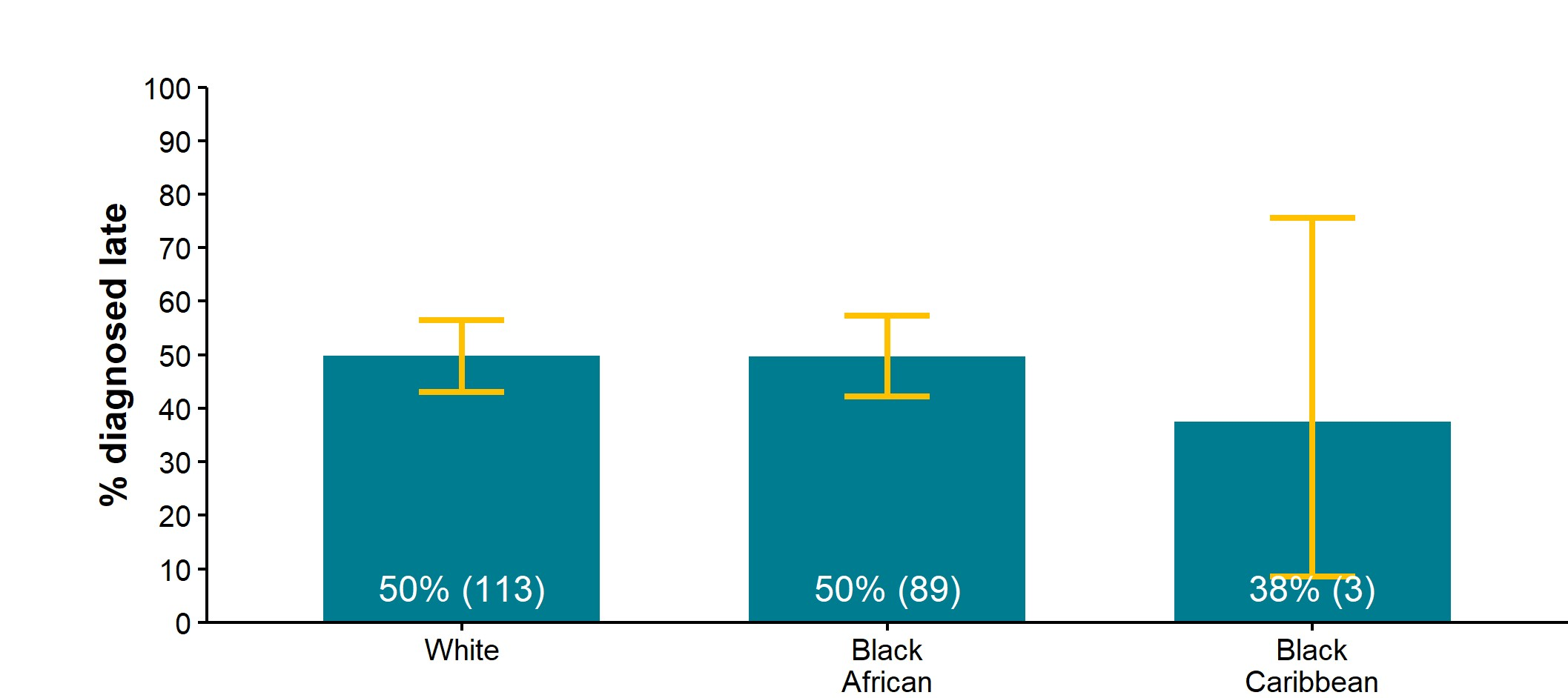
Figure 12b is a bar chart showing the percentage and number of new HIV diagnoses in East of England residents aged over 15, by ethnic group that were diagnosed late for the three-year period 2021-2023. Confidence intervals are shown in yellow.
The highest percentage of late diagnoses were among both White (50%, n=113) and Black African (50%, n=89) ethnic groups, followed by Black Caribbean (38%, n=3). Confidence intervals for all ethnic groups overlap.
Figure 13. Percentage of new HIV diagnoses that were diagnosed late by probable route of infection and year of first UK HIV diagnosis, East of England residents, aged 15 years and over, 2014 to 2023 [note 5]
Source: UKHSA, HIV & AIDS New Diagnoses and Deaths (HANDD), HIV & AIDS Reporting System (HARS).
Note:
- note 5: only includes new diagnoses in those aged 15 years or older with no prior diagnosis abroad and for which a CD4 count was reported within 91 days of diagnosis; late diagnosis defined as CD4 count <350 cells/mm3
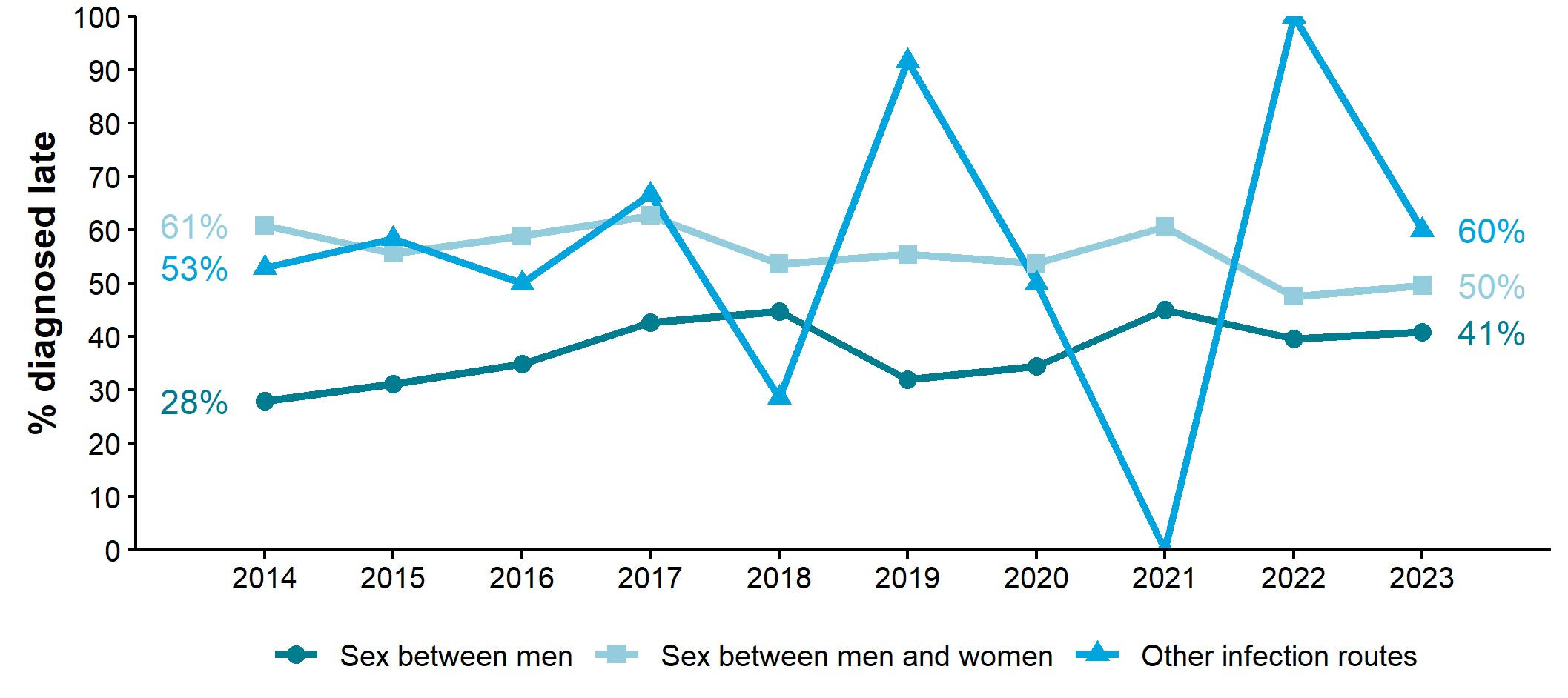
Figure 13 is a line chart showing the percentage of new HIV diagnoses among East of England residents aged over 15 that were diagnosed late, by probable exposure route and year of first UK diagnosis.
The percentage of late diagnoses among those with the probable exposure group of sex between men and women has small fluctuations from year to year. Since 2021, the proportion of diagnoses made late has reduced to 50% of new diagnoses in 2023.
The percentage of late diagnoses among those likely exposed through sex between men increased between 2014 and 2018, before decreasing to 2019 and 2020. In 2021, the proportion of diagnoses made late increased again but has since remained relatively stable. In 2023, 41% of new HIV diagnoses with the probable exposure of sex between men were diagnosed late.
The proportion of new HIV diagnoses that were diagnosed late for other probable infection routes fluctuates from year to year. In 2023, 60% of new HIV diagnoses likely due to other infection routes were diagnosed late.
Figure 14. Percentage of new HIV diagnoses that were diagnosed late in GBMSM and heterosexuals by whether born abroad, East of England residents, aged 15 years and over, 2021 to 2023 [note 5]
Source: UKHSA, HIV & AIDS New Diagnoses and Deaths (HANDD), HIV & AIDS Reporting System (HARS).
Note:
- note 5: only includes new diagnoses in those aged 15 years or older with no prior diagnosis abroad and for which a CD4 count was reported within 91 days of diagnosis; late diagnosis defined as CD4 count <350 cells/mm3
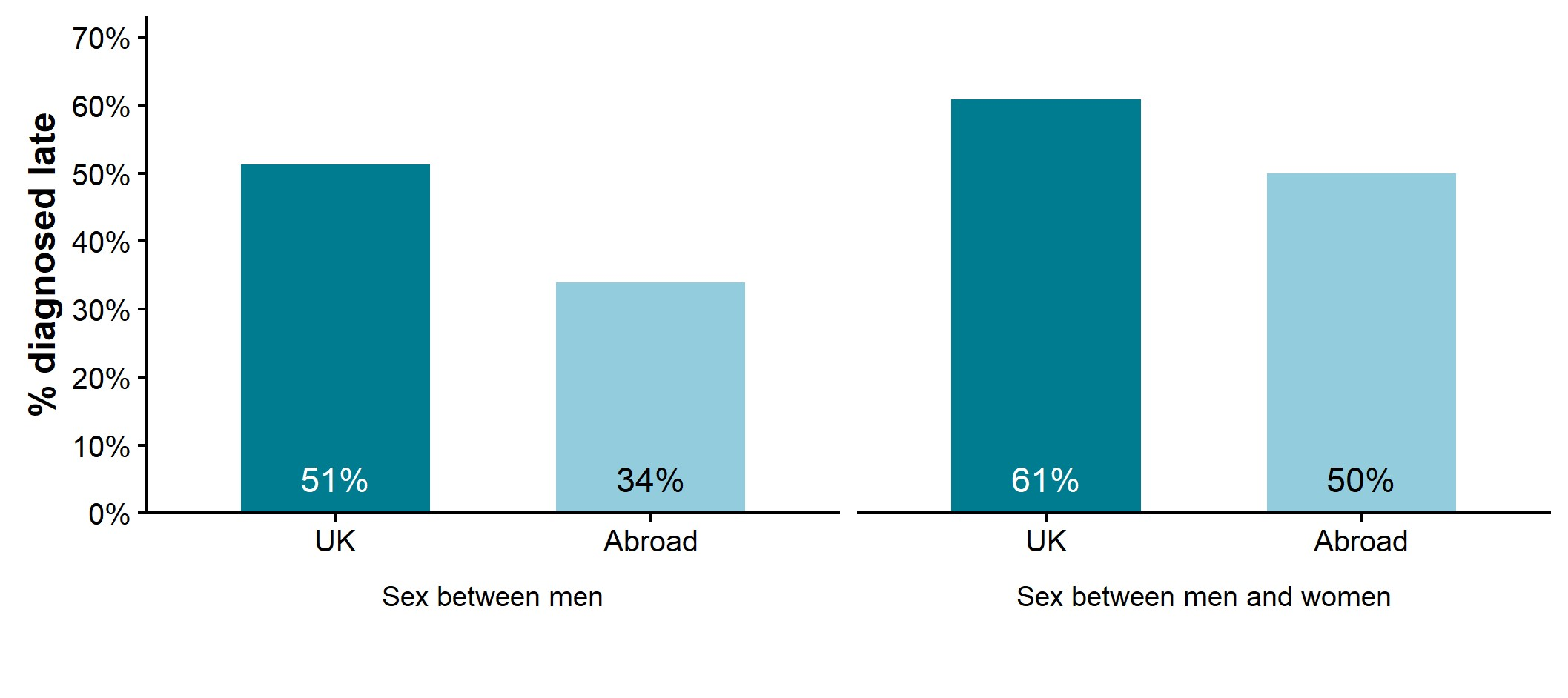
Figure 14 is a bar chart showing the percentage of new HIV diagnoses in East of England residents aged over 15 that were diagnosed late in GBMSM and heterosexuals by whether they were born abroad (light blue) or in the UK (teal). Data is shown for the three-year period between 2021 and 2023.
A higher proportion of new diagnoses among GBMSM were diagnosed late for those who were born in the UK (51%) compared to those who were born abroad (34%).
Among heterosexuals, a higher proportion of late diagnoses were made among those who were born in the UK (61%) compared to those who were born abroad (50%).
Figure 15a: Age distribution of new HIV diagnoses that were diagnosed late by year of first UK HIV diagnosis, East of England residents, aged 15 years and over, 2014 to 2023 [note 5]

Source: UKHSA, HIV & AIDS New Diagnoses and Deaths (HANDD), HIV & AIDS Reporting System (HARS).
Note:
- note 5: only includes new diagnoses in those aged 15 years or older with no prior diagnosis abroad and for which a CD4 count was reported within 91 days of diagnosis; late diagnosis defined as CD4 count <350 cells/mm3
Figure 15a is a chart showing the age distribution of new HIV diagnoses among East of England residents aged over 15 that were diagnosed late by age band and year of HIV diagnosis.
Of the new diagnoses that were diagnosed late in 2023, the largest proportion were aged 35 to 44, followed by those aged 45 to 54, 25 to 34, 55 and above, and 15 to 24. Between 2014 and 2023, those aged 15 to 24 consistently account for the lowest proportion of late diagnoses.
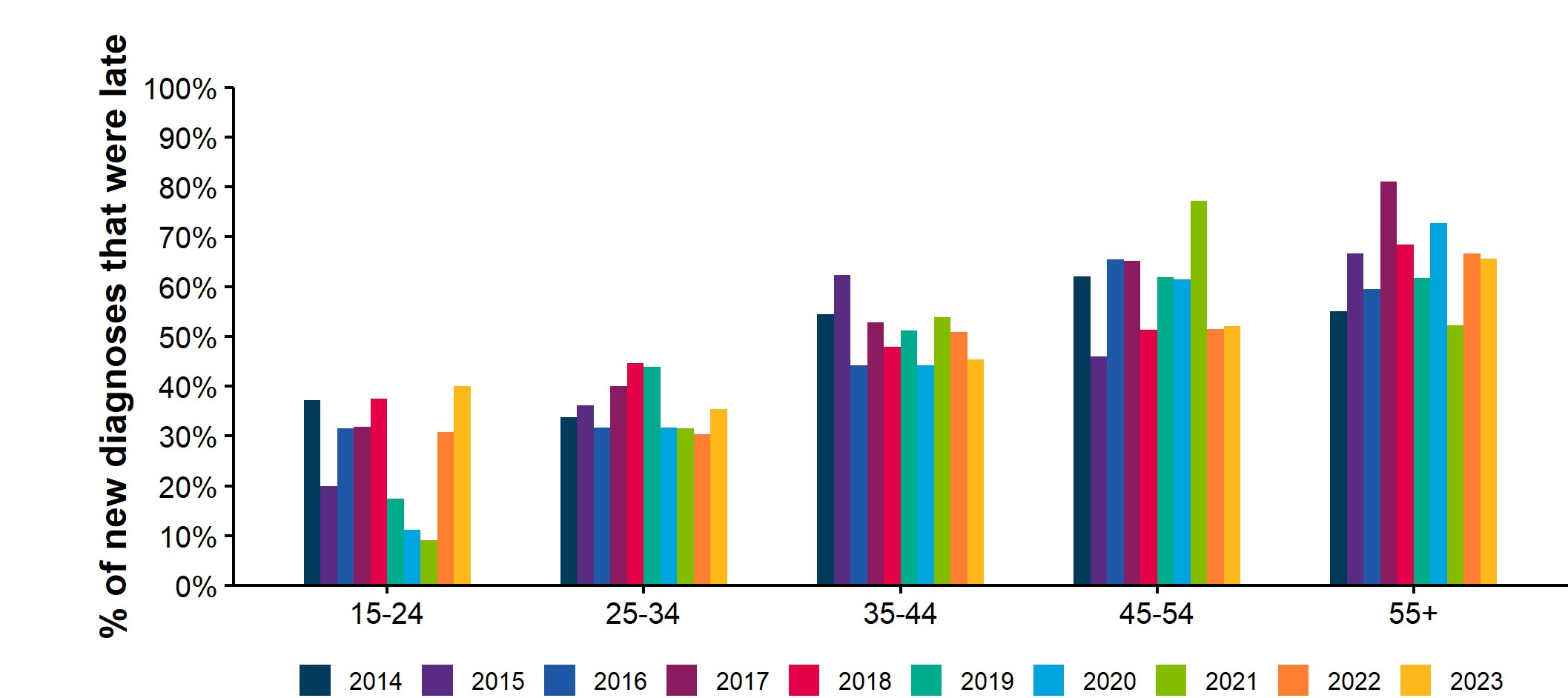
Figure 15b. Percentage of all new diagnoses that were late by age by year of first UK HIV diagnosis, East of England residents, aged 15 years and over, 2014 to 2023 [note 5]
Source: UKHSA, HIV & AIDS New Diagnoses and Deaths (HANDD), HIV & AIDS Reporting System (HARS).
Notes:
- note 5: only includes new diagnoses in those aged 15 years or older with no prior diagnosis abroad and for which a CD4 count was reported within 91 days of diagnosis; late diagnosis defined as CD4 count <350 cells/mm3
Figure 15b is a bar chart showing the percentage of new diagnoses among East of England residents aged over 15 that were diagnosed late by year of first diagnosis.
In general, the proportion of new diagnoses that were diagnosed late is higher in the older age groups, and lower in the younger age groups.
Among those aged 15 to 24 years old, the proportion of late diagnoses decreased between 2018 and 2021, before increasing in 2022 and 2023.
The proportion of late diagnoses among those aged 25 to 34 decreased between 2019 and 2022, before increasing in 2023.
For those aged 35 to 44, the proportion of new HIV diagnoses made late decreased between 2021 and 2023.
Among those age 45-54, the proportion of HIV diagnoses made late increased sharply in 2021, before decreasing in 2022.
The proportion of late diagnoses among those aged 55 and above decreased between 2020 and 2021, before increasing in 2022.
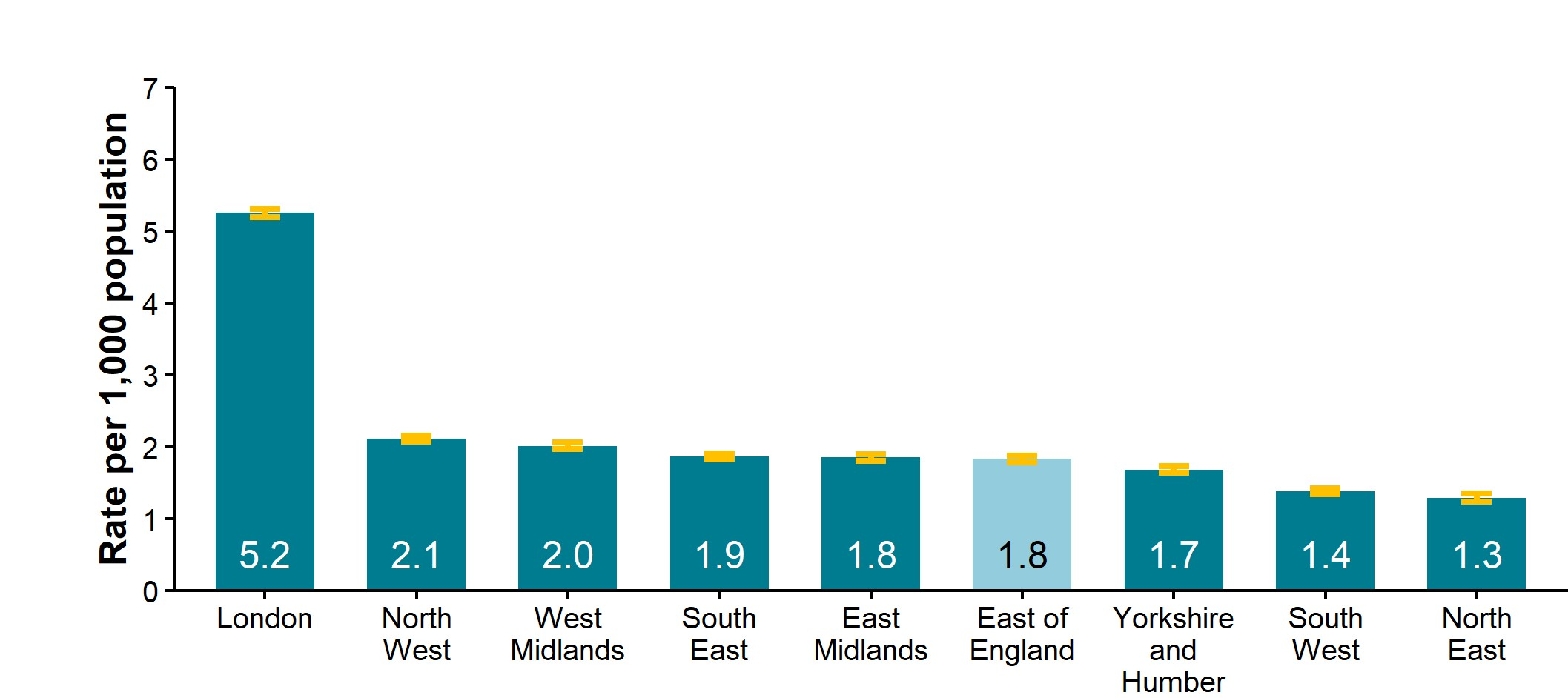
Figure 16. Diagnosed HIV prevalence per 1,000 residents aged 15 to 59 years by UKHSA region, 2023
Source: UKHSA, HIV & AIDS Reporting System (HARS).
Figure 16 is a bar chart of diagnosed HIV prevalence per 1,000 residents aged between 15 and 59 by UKHSA region in 2023.
The East of England has the fourth lowest HIV diagnosed prevalence of all UKHSA regions, with 1.8 per 1,000 residents. London is the region with the highest HIV diagnosed prevalence with 5.2 per 1,000, and the North East is the region with the lowest with 1.3 per 1,000. In 2022, the East of England had the fifth lowest HIV diagnosed prevalence with 1.7 per 1,000.
Figure 17. Number of residents living with diagnosed HIV and accessing care, the East of England, 2014 to 2023

Source: UKHSA, HIV & AIDS Reporting System (HARS).
Figure 17 is a line chart showing the number of East of England residents living with diagnosed HIV and accessing care between 2014 and 2023.
Between 2014 and 2023, there has been an increase in the number of East of England residents living with diagnosed HIV and accessing care, from 6,029 in 2014 to 8,677 in 2023.
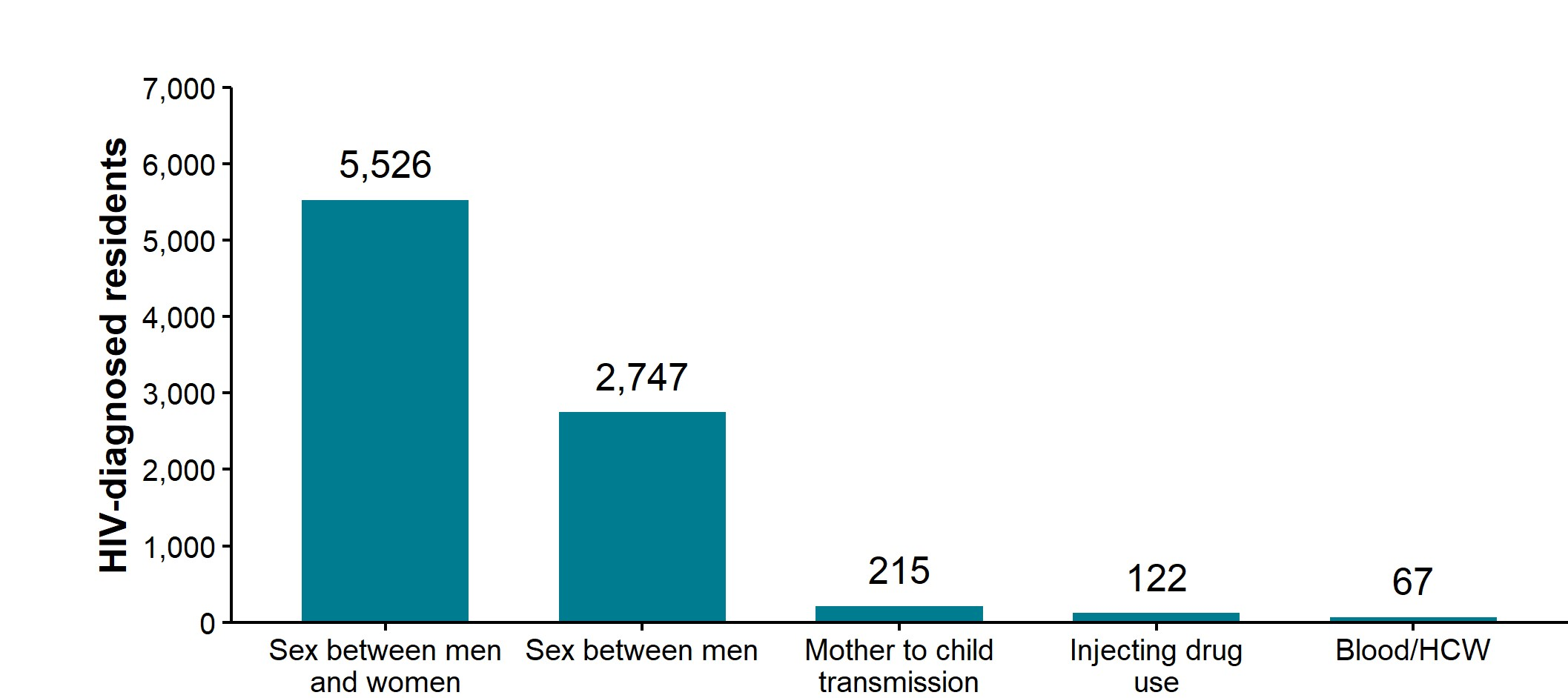
Figure 18. Number of residents living with diagnosed HIV and accessing care by probable route of transmission (adjusted for missing route information), the East of England, 2023
Source: UKHSA, HIV & AIDS Reporting System (HARS).
Figure 18 is a bar chart showing the number of East of England residents in 2023 living with diagnosed HIV and accessing care by probable route of infection. The data in this chart has been adjusted to account for missing data.
The highest number of individuals living with diagnosed HIV and accessing care were among those likely exposed by heterosexual contact (5,526), followed by those likely exposed by sex between men (2,747), mother to child transmission (215), injecting drug use (122) and blood/healthcare worker (67).
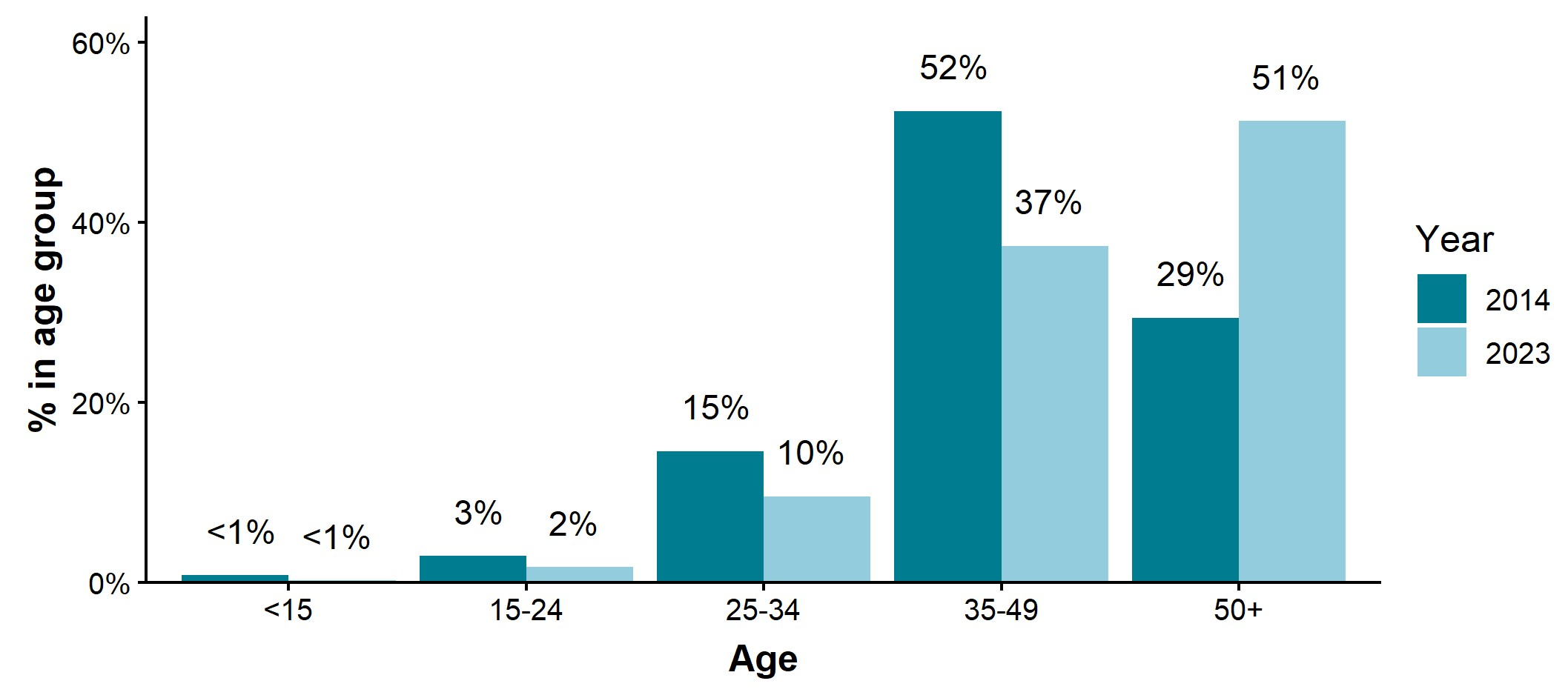
Figure 19: Percentage of residents with diagnosed HIV who are accessing care in each age group, the East of England, 2014 and 2023
Source: UKHSA, HIV & AIDS Reporting System (HARS).
Figure 19 is a bar chart showing the percentage of East of England residents with diagnosed HIV and accessing care by age group in 2014 (teal) and 2023 (light blue).
In 2014, the highest proportion of individuals living with diagnosed HIV and accessing care was among those aged 35 to 49 (52%), followed by 50 and above (29%), 25 to 34 (15%), 15 to 24 (3%) and those aged under 15 (<1%).
In 2023, the highest proportion of individuals living with diagnosed HIV and accessing care was highest among those aged 50 and above (51%), followed by those aged 35 to 49 (37%), 25 to 34 (10%), 15 to 24 (2%), and those aged under 15 (<1%).
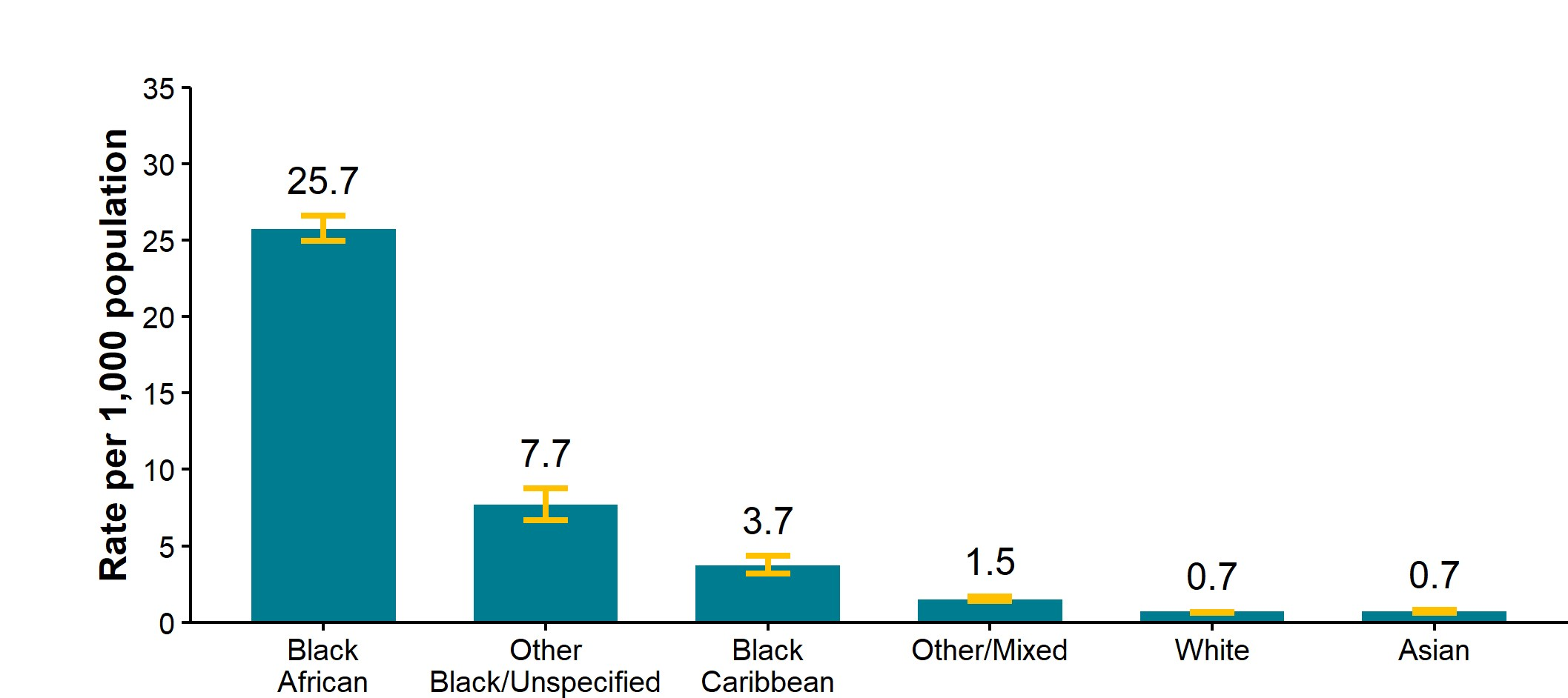
Figure 20. Diagnosed HIV prevalence per 1,000 residents by ethnic group (all ages), the East of England, 2023
Source: UKHSA, HIV & AIDS Reporting System (HARS).
Figure 20 is a bar chart showing diagnosed HIV prevalence per 1,000 residents for all ages, by ethnic group among East of England residents in 2023.
The Black African ethnic group had the highest HIV diagnosed prevalence with 25.7 per 1,000, followed by Other Black/Unspecified (7.7 per 1,000), Black Caribbean (3.7 per 1,000) Other/Mixed (1.5 per 1,000), White (0.7 per 1,000) and Asian (0.7 per 1,000).
Figure 21. Diagnosed HIV prevalence per 1,000 population by Index of Multiple Deprivation decile, the East of England, 2023

Source: UKHSA, HIV & AIDS Reporting System (HARS).
Figure 21 is a bar chart showing the HIV diagnosed prevalence per 1,000 population by Index of Multiple Deprivation decile in the East of England in 2023. Decile 1 is the most deprived 10%, and decile 10 is the least deprived 10%. Confidence intervals are shown in yellow.
HIV diagnosed prevalence increases as level of deprivation increases. From 0.6 per 1,000 in the least deprived decile (decile 10) to 2.4 per 1,000 in the most deprived decile (decile 1).
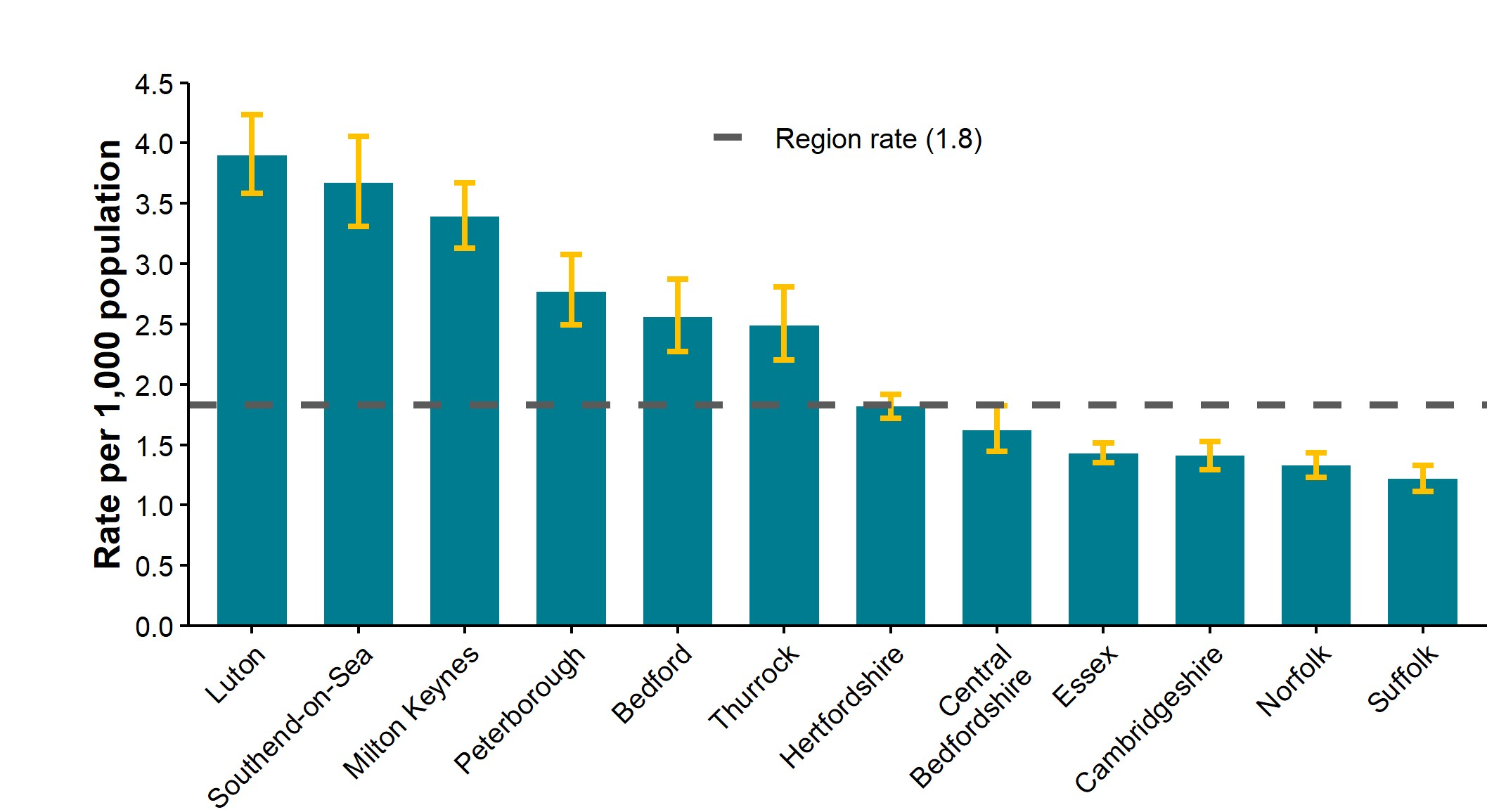
Figure 22. Diagnosed HIV prevalence per 1,000 residents aged 15 to 59 years by local authority, the East of England, 2023
Source: UKHSA, HIV & AIDS Reporting System (HARS).
Figure 22 is a bar chart showing the diagnosed HIV prevalence per 1,000 residents aged 15 to 59 years by East of England local authority in 2023. Confidence intervals are shown in yellow, with the regional rate (1.8 per 1,000) shown as a dashed line.
Luton has the highest HIV diagnosed prevalence rate (3.90), followed by Southend-on-Sea (3.67), Milton Keynes (3.39), Peterborough (2.77), Bedford (2.56) and Thurrock (2.49). These local authorities had rates higher than the regional rate (1.8), and their confidence intervals do not cross the regional average.
Suffolk has the lowest HIV diagnosed prevalence rate (1.22), followed by Norfolk (1.33), Cambridgeshire (1.41), Essex (1.43), Central Bedfordshire (1.62) and Hertfordshire (1.82). All these local authorities have rates lower than the regional average (1.8), confidence intervals for Hertfordshire and Central Bedfordshire cross the regional rate.
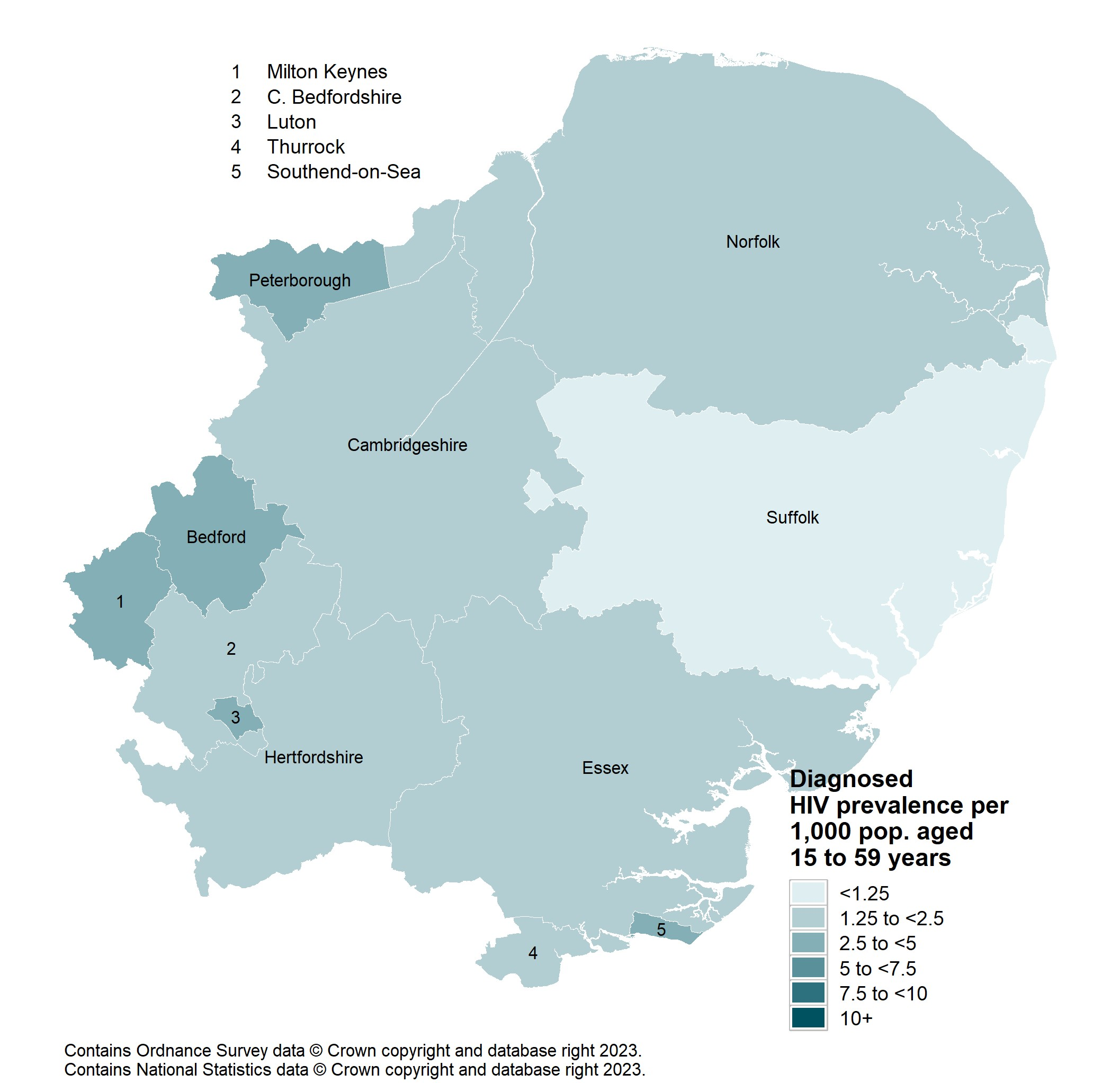
Figure 23. Diagnosed HIV prevalence per 1,000 residents aged 15 to 59 years by local authority, the East of England, 2023
Source: UKHSA, HIV & AIDS Reporting System (HARS).
Figure 23 is a map showing diagnosed HIV prevalence per 1,000 residents aged 15 to 59 by local authority in the East of England in 2023. Local authorities are colour coded based on diagnosed HIV prevalence rate, a darker blue indicates a higher rate, and a lighter blue indicates a lower rate.
The map shows the distribution of diagnosed HIV prevalence per 1,000 around local authorities in the East of England. None of the local authorities have a diagnosed HIV prevalence rate of greater than 5 per 1,000 population (mid to dark blue).
Figure 24. Diagnosed HIV prevalence per 1,000 residents (all ages) by middle super outer area of residence the East of England, 2023

Source: UKHSA, HIV & AIDS Reporting System (HARS).
Figure 24 is a map showing the diagnosed HIV prevalence rate per 1,000 residents of all ages, by middle super output area (MSOA) in the East of England in 2023. MSOA’s are colour coded based on HIV prevalence rate, with areas with a lower rate being a lighter blue, and areas with a higher rate a darker blue.
The majority of MSOA’s in the East of England have a diagnosed HIV prevalence of less than 1.25 (light blue).
Figure 25. The continuum of HIV care, 2023

Source: UKHSA, HIV & AIDS Reporting System (HARS, MPES model).
Figure 25 is a bar chart showing the continuum of HIV care in 2023. The chart shows progress towards the UNAIDS 95-95-95 targets in areas of England outside of London.
The UNAIDS 95-95-95 targets are that 95% of adults living with HIV should be diagnosed, 95% of those diagnosed should be on treatment, and 95% of those on treatment should be virally suppressed. Of all adults who are living with HIV, this is equal to 95% being diagnosed, 90% on treatment and 86% should be virally suppressed. These targets are shown as pink bars on the chart.
The areas of England outside of London either met or exceeded these targets in 2023. 95% of people living with HIV were diagnosed, 99% of those diagnosed were on treatment, and 98% of those on treatment were virally suppressed. Of all adults living with HIV this is equivalent to 95% diagnosed, 93% on treatment and 91% virally suppressed.
Figure 26. HIV testing rate per 100,000 by population group, East of England residents, 2019 to 2023

Source: UKHSA, GUMCAD.
Note:
- the proportion of eligible attendees at specialist sexual health services (SHS) who accepted a HIV test
- an eligible attendee is defined as a patient attending specialist SHS at least once during a calendar year
- patients known to be HIV positive, or for whom a HIV test was not appropriate, or for whom the attendance was related to Sexual and Reproductive Health (SRH) care only, are excluded
Figure 26 is a line chart showing the trend in HIV testing rates per 100,000 at specialist sexual health services (SHS) by population group (males, females, all) in East of England residents between 2019 and 2023.
Testing among all population groups decreased between 2019 and 2020, likely due to the COVID-19 pandemic. Since 2020 there had been increases in testing rate for all population groups, but in 2023 rates had not returned to the pre-pandemic levels of 2019.
In 2023, the testing rate was higher among males (1,714 per 100,000) compared to females (1,623 per 100,000). The overall testing rate in 2023 was 1,811 per 100,000.
Table 2. People tested for HIV by population group, East of England residents attending all SHSs, 2019 to 2023
| Gender/sexual orientation | 2019 | 2020 | 2021 | 2022 | 2023 | % change 2019 to 2023 | % change 2022 to 2023 |
|---|---|---|---|---|---|---|---|
| Heterosexual men | 39,986 | 21,630 | 22,702 | 27,328 | 27,099 | -32% | -1% |
| GBMSM | 11,279 | 10,891 | 14,366 | 15,217 | 14,155 | 25% | -7% |
| Subtotal (men) | 53,106 | 33,449 | 38,139 | 43,894 | 45,633 | -14% | 4% |
| Hetero/bisexual women | 58,022 | 37,908 | 42,765 | 46,654 | 41,832 | -28% | -10% |
| WOSW | 636 | 551 | 637 | 642 | 535 | -16% | -17% |
| Subtotal (women) | 60,767 | 39,251 | 44,208 | 48,325 | 48,180 | -21% | 0% |
| Total (all genders) | 115,691 | 74,671 | 88,111 | 98,984 | 102,352 | -12% | 3% |
Source: UKHSA, GUMCAD.
Table 2 shows the number of East of England residents tested for HIV at all sexual health services by gender and sexual orientation from 2019 to 2023, and the percentage change between the years.
When comparing the number of individuals tested in 2023 compared to 2019, testing among all gender and sexual orientation groups decreased, except for GBMSM which saw an increase.
The largest percentage decrease between 2019 and 2023 was observed for heterosexual men with a decrease of 32%, followed by hetero/bisexual women (28% decrease), all women (21% decrease), women who only have sex with women (WOSW) (16% decrease), all men (14% decrease). An increase was only seen among GBMSM where there was a 25% increase in testing between 2019 and 2023. Overall, there was a 12% decrease in the number of HIV tests between 2019 and 2023.
Between 2022 and 2023, decreases in the number of tests taken were observed for WOSW (17% decrease), hetero/bisexual women (10% decrease), GBMSM (7% decrease) and heterosexual men (1% decrease). No percentage change was seen for women overall (0% change), and increases were seen for men overall (4% increase) and all individuals total (3% increase).
Figure 27. HIV pre-exposure prophylaxis (PrEP) need and initiation/continuation in residents attending specialist sexual health services (SHSs), the East of England, 2023

Source: UKHSA, GUMCAD.
Figure 27 is a column chart showing information about PrEP need and use by gender and sexual orientation in 2023. The first column represents the percentage of East of England residents attending specialist SHSs who were determined to be in need of PrEP based on clinical and other information. The second column shows the percentage of those in need of PrEP whose PrEP need was identified by the service, and the third column shows the percentage of those in need of PrEP for whom PrEP was initiated or continued. These 2 final columns for each group must be looked at in relation to the first column.
Figure 27 is a bar chart showing the percentage of individuals attending a specialist sexual health service (SHS) with a HIV pre-exposure prophylaxis (PrEP) need, the percentage of individuals with need who were identified, and the percentage of those with a need identified who initiated or continued PrEP, in East of England residents in 2023.
For GBMSM, 68% of individuals seen at a specialist sexual health service were determined to be in need of PrEP, 84% of those with a PrEP need were identified by the service, and of those PrEP were initiated or continued for 74% of individuals.
For heterosexual/bisexual women, less than 1% of individuals attending SHS were determined to have a PrEP need, 68% of those with a need were identified, and 52% of those identified had PrEP initiated or continued.
For heterosexual men, 2% were determined to have a PrEP need, 60% of those with a need were identified, and 42% of those had PrEP initiated or continued.
For WOSW, 12% had a PrEP need, 90% of those with a need were identified and 78% of those identified had PrEP initiated or continued.
Information on data sources
HANDD collects information on new HIV diagnoses, AIDS at diagnosis and deaths among people diagnosed with HIV. Information is received from laboratories, specialist SHSs, GPs and other services where HIV testing takes place in England, Wales and Northern Ireland. The Recent Infection Testing Algorithm (RITA) and CD4 surveillance scheme are linked to HANDD to assess trends in recent and late diagnoses. Data is deduplicated across regions and therefore figures may differ from country-specific data.
The Survey of Prevalent HIV Infections Diagnosed (SOPHID) began in 1995 and was a cross-sectional survey of all adults living with diagnosed HIV infection who attend for HIV care in England, Wales and Northern Ireland. SOPHID collected information about the individual’s place of residence along with epidemiological data including clinical stage and antiretroviral therapy (ART). In 2015, SOPHID reporting in England was replaced by the HIV & AIDS Reporting System (HARS) which captures information at every attendance for HIV care.
Date of data extract: October 2024. Updates to HANDD and SOPHID/HARS made after this date will not be reflected in this report.
Confidence intervals for rates in the figures have been calculated to the 95% level using the Byar’s method; confidence intervals for percentages have been calculated to the 95% level using the Wilson Score method. Confidence intervals presented in the text are produced by Bayesian analysis.
The most recent ONS mid-year estimates at the time of analysis were used as denominators for rates. For UTLAs 2023 estimates were used (published Jun-2024), for MSOAs 2022 estimates were used (published November 2024), for LTLAs 2021 estimates were used (published November 2022), and for LSOAs 2022 estimates were used (published November 2024).
The data behind charts showing absolute numbers may have been adjusted for missing information; however, unless stated otherwise, the numbers in the summary section are the numbers as reported, that is unadjusted counts. Where charts are displaying adjusted data this is indicated in the chart title. Where figures have been ‘adjusted for missing information’, this means that when unknown values are present (such as route of probable infection = ‘unknown’), they are proportionally distributed amongst other groups for the purposes of analysis (for example, if A = 12, B = 4, C = 2, and unknown = 6, the 6 ‘unknown’ values are distributed proportionally among groups A, B, and C to give A = 15, B = 6, C = 3).
The denominators for all percentages exclude records for which information was unknown, that is, the proportion of new diagnoses where probable route of infection was sex between men would be calculated using new diagnoses for which route of infection was known as the denominator.
All analyses in this report are residence-based and reflect the patient’s place of residence at diagnosis.
Numbers may change as more information becomes available to assign area of residence to cases and historical data is refreshed accordingly.
Further information
Access the online ‘Sexual and Reproductive Health Profiles’ for further information on a whole range of sexual health indicators.
For more information on local sexual health data sources access the UKHSA guide.
For the national HIV report, see 2023 data.
Local authorities have access to additional HIV and STI intelligence via the Data Exchange and the HIV and STI web portal. They should also have received a set of tables containing HIV data specific to their authority. They should contact eoe.stihiv@ukhsa.gov.uk if they do not have access to this information.
About the Field Service
The Field Service was established in 2018 as a national service comprising geographically dispersed multi-disciplinary teams integrating expertise in Field Epidemiology, Real-time Syndromic Surveillance and Public Health Microbiology to strengthen the surveillance, intelligence and response functions of UKHSA.
You can contact your local FS team at eoe.stihiv@ukhsa.gov.uk.
If you have any comments or feedback regarding this report or the Field Service, contact eoe.stihiv@ukhsa.gov.uk.
Acknowledgements
We would like to thank:
- local sexual health and HIV clinics for supplying the HIV data
- Institute of Child Health
- UKHSA Blood Safety, Hepatitis, Sexually Transmitted Infections and HIV Division (BSHSH) for collection, analysis and distribution of data
References
1.Department of Health and Social Care UK. ‘Towards Zero - An action plan towards ending HIV transmission, AIDS and HIV-related deaths in England - 2022 to 2025’ UK Government White Paper 2022
2. Schoemig V, Martin V, Shah A, Okumu-Camerra K, Mackay N, Bera S, Kitt H, Kelly C, Kolawole T, Ratna N, Chau C, Duretić T, Brown A and contributors. ‘HIV Action Plan monitoring and evaluation framework 2024 report: Report summarising progress from 2019 to 2023’ UKHSA 2024
3. Kitt H, Shah A, Chau C, Okumu-Camerra K, Bera S, Schoemig V, Mackay N, Kolawole T, Ratna N, Martin V, Đjuretić T, Brown A. ‘HIV testing, PrEP, new HIV diagnoses, and care outcomes for people accessing HIV services: 2024 report’ UKHSA 2024
4. Office for National Statistics (ONS) statistical bulletin, Long-term international migration, provisional: year ending June 2023 ONS website 2023
5. Aghaizu A, Martin V, Kelly C, Kitt H, Farah A, Latham V, Brown AE, Humphreys C. ‘Positive Voices: The National Survey of People Living with HIV. Findings from 2022. Report summarising data from 2022 and measuring change since 2017’ UKHSA 2023