Hepatitis B in the South East: 2025 report
Published 14 May 2026
Applies to England

© Crown copyright 2026
This publication is licensed under the terms of the Open Government Licence v3.0 except where otherwise stated. To view this licence, visit nationalarchives.gov.uk/doc/open-government-licence/version/3 or write to the Information Policy Team, The National Archives, Kew, London TW9 4DU, or email: psi@nationalarchives.gov.uk.
Where we have identified any third party copyright information you will need to obtain permission from the copyright holders concerned.
This publication is available at https://www.gov.uk/government/publications/hepatitis-b-regional-surveillance-reports-2025/hepatitis-b-in-the-south-east-2025-report
Introduction
Hepatitis B virus (HBV) is a blood-borne virus that can cause an acute or chronic infection of the liver. Chronic infection can lead to liver cirrhosis, liver cancer, and even death.
Prevention and treatment efforts have been combined to combat HBV infection and progress towards elimination of HBV as a public health threat by 2030 (set out in the World Health Organization (WHO) Global Health Sector Strategy on Viral Hepatitis). The National Strategic Group on Viral Hepatitis, a cross-agency expert advisory body supported by the UK Health Security Agency (UKHSA) provides strategic guidance on viral hepatitis in England, and supports progress toward achieving the WHO goal of HBV elimination.
The UKHSA publishes a national report on the scale of HBV infection and related disease in England (Hepatitis B in England), presenting disease surveillance and programme data to support monitoring of England’s progress towards WHO HBV elimination targets.
This report complements the UKHSA Hepatitis B in England report and presents further information on HBV disease surveillance, trends in HBV diagnosis and testing and related diseases in the South East UKHSA region with data up to end of 2024. Although this report uses national data sources, regional figures may differ from the national figures for a given metric. For further details about data sources see information on data sources.
Summary
Trends in hepatitis B testing and diagnosis in the general population and risk groups
Main trends:
- 1,077 new laboratory reports of hepatitis B in residents of South East, representing a rate of 11.5 reports per 100,000 population in 2024
- the number of new laboratory reports has increased by 0.5% between 2023 and 2024, and increased by 51.3% over the past 10 years
- in 2024, the number of new laboratory reports in males was 639 (59.3%) and in females was 427 (39.6%)
- in 2024, the highest number of new laboratory reports was in males aged 35 to 44 and females aged 25 to 34
- in 2024, the number of new positive laboratory reports by upper tier local authority of residence ranged from 4 in Isle of Wight to 203 in Kent; rates were highest in Southampton at 48.2 new laboratory reports per 100,000 population and lowest in Buckinghamshire with 2.4 per 100,000 population
- the estimated incidence of acute (or probable acute) infection was 0.3 per 100,000 population. This was lower than the England average of 0.5 per 100,000
- there have been 24,025 individuals tested for hepatitis B surface antigens (HBsAg) in sentinel laboratories in the South East UKHSA region in 2024, of which 0.67% tested positive - the proportion positive was the same as tests referred through GP surgeries, higher for tests through sexual health services, lower for tests through drug services and lower for tests through emergency departments; the total number of tests conducted has likely increased since 2022 as a result of a new ‘opt-out’ blood-borne virus testing programme at selected emergency departments
Monitoring HBV-related morbidity
Main trends:
- there have been 1,200 hospital admissions for individuals with a diagnosis code for acute or chronic hepatitis B in the South East UKHSA region in 2024 which was lower than in 2023
- the number of hospital admissions with a diagnosis code for hepatitis B-related end-stage liver disease (HBV-related ESLD) and hepatitis B-related hepatocellular carcinoma (HBV-related HCC) was 65 and 25 respectively in 2024
Prevention of infection by immunisation
Main trends are:
- routine hepatitis B vaccine coverage of 3 doses at 24 months in the South East UKHSA region was 94.3% for financial year (FY) 2024 to 2025
- vaccine coverage of 3 doses at 24 months has increased by 0.2 percentage points between FY 2023 to 2024 and 2024 to 2025
- reported level of hepatitis B vaccine uptake among people who inject drugs (PWID) in the South East UKHSA region was 62.1% for 2023 (the most recently reported data)
- reported level of hepatitis B vaccine uptake among PWID has decreased by 5.4 percentage points between 2022 and 2023
Trends in hepatitis B testing and diagnosis in the general population and risk groups
Estimated prevalence of hepatitis B
Table 1. Estimated hepatitis B prevalence and number of people living with chronic hepatitis B, UKHSA regions and England, 2024
| Region | Estimated number of individuals with chronic hepatitis B, (95% confidence interval (CI)) | Estimated HBsAg prevalence (%), (95% CI) | Estimated sentinel surveillance coverage (%) |
|---|---|---|---|
| England | 268,767 (227,896 to 314,004) |
0.58 (0.50 to 0.68) |
45 |
| East of England | 19,584 (6,282 to 48,679) |
0.38 (0.12 to 0.95) |
40 |
| East Midlands | 7,584 (3,633 to 15,369) |
0.19 (0.09 to 0.38) |
64 |
| London | 99,067 (78,415 to 120,263) |
1.39 (1.10 to 1.69) |
75 |
| North East | 7,950 (2,700 to 20,289) |
0.36 (0.12 to 0.93) |
32 |
| North West | 25,406 (17,060 to 37,303) |
0.42 (0.28 to 0.62) |
43 |
| South East | 25,678 (12,326 to 53,207) |
0.34 (0.16 to 0.70) |
34 |
| South West | 15,978 (8,336 to 32,977) |
0.34 (0.18 to 0.70) |
30 |
| West Midlands | 24,756 (14,343 to 41,647) |
0.52 (0.30 to 0.87) |
35 |
| Yorkshire and Humber | 16,720 (9,012 to 29,921) |
0.37 (0.20 to 0.67) |
39 |
Data source: Modelling based on Sentinel Surveillance of Bloodborne Virus Testing. For further information, see information on data sources and Hepatitis B in England national report.
The modelling methodology used to calculate these estimates has been published in the Journal of Viral Hepatitis. It is important to note that there is less confidence in the regional estimates compared to the national estimate and, as the estimates are based on data from the Sentinel Surveillance of Blood Borne Viruses (SSBBV), the accuracy of regional estimates may be influenced by the coverage of SSBBV in that region.
New laboratory-confirmed diagnoses of hepatitis B
Figure 1. Number of new laboratory reports of hepatitis B (acute and chronic), residents of South East UKHSA region, 2015 to 2024

Data source: Second Generation Surveillance System (SGSS). For further information, see information on data sources.
In 2022, a new bloodborne virus (BBV) testing programme was introduced in selected emergency department (ED) sites in areas of high HIV diagnosed prevalence across England. This ‘opt-out’ programme may have led to increases in new diagnoses, however since the start of the ED opt-out programme, only approximately 11% of new hepatitis B diagnoses nationally where testing location is known have been made in ED sites.
Figure 1 shows the number of new laboratory reports of hepatitis B in the South East from 2015 to 2024. In 2024, 1,077 new laboratory reports of HBV were reported in the South East. This is similar to the previous year (1,072) and the highest number in the time period. Reports have been rising since 2020 when the number of reports fell significantly, likely due to the impact of the COVID-19 pandemic.
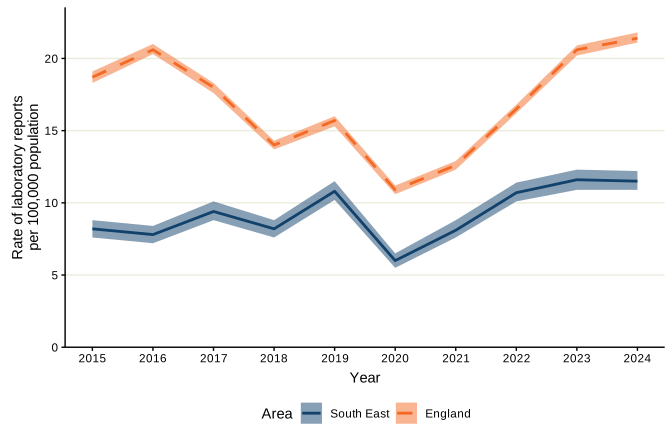
Figure 2. New laboratory reports of hepatitis B (acute and chronic) rate per 100,000 population [note 1], residents of South East UKHSA region and England, 2015 to 2024
Data sources: SGSS and Office for National Statistics (ONS) mid-year population estimates (MYE). For further information, see information on data sources.
Note 1: the error bands represent 95% confidence intervals.
Figure 2 shows the trend in rate of new laboratory reports of hepatitis B in the South East per 100,000 residents compared to England overall. The rate of new laboratory reports of HBV in the South East in 2024 was 11.5 per 100,000 population, lower than the national rate (21.4 per 100,000) and similar to the previous year (11.6 per 100,000). The rate has been increasing since 2020, when it fell significantly, likely due to the impact of the COVID-19 pandemic.
Table 2. Number of new laboratory reports of hepatitis B (acute and chronic) by UKHSA region of residence, 2015 to 2024
| Area | 2015 | 2016 | 2017 | 2018 | 2019 | 2020 | 2021 | 2022 | 2023 | 2024 |
|---|---|---|---|---|---|---|---|---|---|---|
| East Midlands | 281 | 407 | 574 | 590 | 535 | 339 | 426 | 556 | 675 | 675 |
| East of England | 636 | 674 | 616 | 513 | 616 | 495 | 511 | 650 | 721 | 809 |
| London | 5,581 | 6,666 | 4,875 | 2,851 | 3,302 | 2,531 | 2,703 | 3,830 | 5,291 | 5,359 |
| North East | 155 | 192 | 228 | 199 | 206 | 112 | 144 | 205 | 271 | 275 |
| North West | 780 | 761 | 715 | 830 | 1,123 | 750 | 794 | 771 | 1,137 | 1,736 |
| South East | 712 | 684 | 830 | 726 | 966 | 533 | 734 | 978 | 1,072 | 1,077 |
| South West | 385 | 431 | 569 | 445 | 371 | 348 | 547 | 697 | 590 | 656 |
| West Midlands | 858 | 889 | 890 | 850 | 868 | 557 | 627 | 860 | 1,188 | 1,081 |
| Yorkshire and Humber | 864 | 699 | 683 | 755 | 764 | 451 | 548 | 731 | 804 | 886 |
| England [note 2] | 10,252 | 11,406 | 9,991 | 7,829 | 8,806 | 6,149 | 7,107 | 9,427 | 11,910 | 12,566 |
Data source: SGSS. For further information, see information on data sources.
Note 2: sum of all regional cases may not equal the number of England cases as some cases may not have been able to be assigned to a region.
In 2024, London was the region with the highest number of laboratory reports, followed by the North West (1,736 reports), the West Midlands (1,081 reports) and the South East (1,077 reports) (Table 2). Over the period 2015 to 2025, 8.7% of reports in England were in the South East.
Table 3. Rate per 100,000 population of new laboratory reports of hepatitis B (acute and chronic) by UKHSA region of residence, 2015 to 2024
| Area | 2015 | 2016 | 2017 | 2018 | 2019 | 2020 | 2021 | 2022 | 2023 | 2024 |
|---|---|---|---|---|---|---|---|---|---|---|
| East Midlands | 6.0 | 8.6 | 12.0 | 12.3 | 11.0 | 7.0 | 8.7 | 11.3 | 13.5 | 13.3 |
| East of England | 10.0 | 10.5 | 9.5 | 7.9 | 9.4 | 7.5 | 7.7 | 9.7 | 10.6 | 11.8 |
| London | 64.4 | 76.2 | 55.5 | 32.3 | 37.1 | 28.5 | 30.7 | 43.2 | 58.8 | 59.0 |
| North East | 5.9 | 7.3 | 8.7 | 7.6 | 7.8 | 4.2 | 5.4 | 7.6 | 9.9 | 10.0 |
| North West | 10.9 | 10.5 | 9.8 | 11.3 | 15.3 | 10.2 | 10.7 | 10.2 | 14.9 | 22.4 |
| South East | 8.2 | 7.8 | 9.4 | 8.2 | 10.8 | 6.0 | 8.1 | 10.7 | 11.6 | 11.5 |
| South West | 7.0 | 7.8 | 10.2 | 7.9 | 6.6 | 6.1 | 9.6 | 12.1 | 10.1 | 11.1 |
| West Midlands | 14.9 | 15.3 | 15.2 | 14.4 | 14.7 | 9.4 | 10.5 | 14.3 | 19.5 | 17.5 |
| Yorkshire and Humber | 16.1 | 12.9 | 12.6 | 13.9 | 14.0 | 8.2 | 10.0 | 13.2 | 14.3 | 15.6 |
| England | 18.7 | 20.6 | 18.0 | 14.0 | 15.7 | 10.9 | 12.6 | 16.5 | 20.6 | 21.4 |
Data sources: SGSS and ONS MYE. For further information, see information on data sources.
In 2024, London was the region with the highest rate of hepatitis B reports (59 per 100,000), followed by the North West (22.4 per 100,000) (Table 3). The rate for the South East (11.5) was significantly lower than the rate for England.
Figure 3. Age group and sex of new laboratory reports of hepatitis B (acute and chronic) [note 3], residents of South East UKHSA region, 2024

Data source: SGSS. For further information, see information on data sources.
Note 3: cases reported in children under one year old have been removed. 11 Hepatitis B cases in the South East region in 2024 had no age and/or sex data and have not been included in this age-sex pyramid.
Figure 3 shows the age-sex distribution of new laboratory reports of hepatitis B in the South East in 2024. The group with the most cases was males aged 35 to 44. In all age groups there were more cases in males than females, with males making up 60% of all reports where data on sex is available.
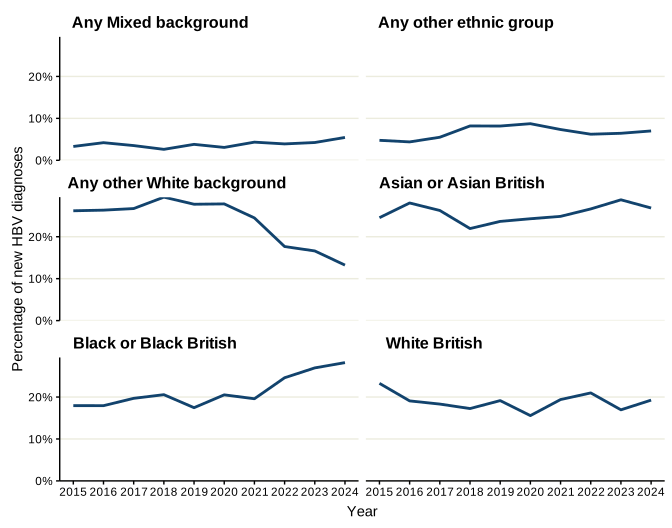
Figure 4. Ethnicity distribution of new laboratory reports of new diagnoses of HBV [note 4], residents of South East UKHSA region, 2015 to 2024
Data source: SGSS. For further information, see information on data sources.
Note 4: this figure excludes cases of unknown ethnicity.
Figure 4 shows the proportion of new laboratory reports by ethnic group in the South East from 2015 to 2024. In 2024 the ethnic group with the highest percentage of hepatitis B reports was Black or Black British (28%) followed by Asian or Asian British (27%) and White British (19%). The proportion of hepatitis B reports in people who identify as Black or Black British has been increasing since 2021. Data on ethnicity was available for 48% of new diagnoses in 2024.
Table 4. Number of new laboratory reports of hepatitis B (acute and chronic) by upper tier local authority of residence [note 5], South East UKHSA region, 2015 to 2024
| Upper tier local authority | 2015 | 2016 | 2017 | 2018 | 2019 | 2020 | 2021 | 2022 | 2023 | 2024 |
|---|---|---|---|---|---|---|---|---|---|---|
| Bracknell Forest | 7 | 5 | 9 | 9 | 14 | 8 | 13 | 10 | 15 | 9 |
| Brighton and Hove | 29 | 27 | 40 | 44 | 44 | 36 | 41 | 36 | 37 | 44 |
| Buckinghamshire | 34 | 34 | 45 | 35 | 35 | 6 | 13 | 7 | 11 | 14 |
| East Sussex | 28 | 18 | 33 | 27 | 30 | 16 | 18 | 25 | 39 | 36 |
| Hampshire | 38 | 41 | 30 | 33 | 94 | 24 | 186 | 194 | 79 | 86 |
| Isle of Wight | 4 | 2 | 10 | 4 | 9 | 0 | 2 | 4 | 14 | 4 |
| Kent | 84 | 68 | 77 | 93 | 102 | 77 | 86 | 141 | 175 | 203 |
| Medway | 23 | 22 | 39 | 18 | 10 | 13 | 15 | 20 | 47 | 55 |
| Oxfordshire | 50 | 53 | 62 | 73 | 64 | 66 | 58 | 56 | 74 | 31 |
| Portsmouth | 15 | 25 | 29 | 19 | 18 | 13 | 9 | 44 | 38 | 36 |
| Reading | 13 | 13 | 95 | 55 | 82 | 28 | 37 | 47 | 63 | 41 |
| Slough | 31 | 27 | 53 | 51 | 84 | 47 | 41 | 79 | 79 | 68 |
| Southampton | 26 | 32 | 25 | 20 | 21 | 29 | 21 | 17 | 30 | 125 |
| Surrey | 91 | 101 | 145 | 127 | 217 | 101 | 109 | 136 | 176 | 187 |
| West Berkshire | 1 | 5 | 15 | 14 | 9 | 10 | 14 | 20 | 15 | 6 |
| West Sussex | 42 | 38 | 31 | 67 | 82 | 47 | 54 | 101 | 133 | 88 |
| Windsor and Maidenhead | 10 | 5 | 19 | 17 | 25 | 6 | 4 | 11 | 18 | 13 |
| Wokingham | 4 | 10 | 34 | 20 | 26 | 6 | 13 | 30 | 29 | 31 |
Data source: SGSS. For further information, see information on data sources.
Note 5: this table excludes cases where upper tier local authority was unknown.
Table 4 shows the number of new laboratory reports of hepatitis B in the South East by upper tier local authority from 2015 to 2024. In 2024, the local authority with the highest number of reports (203) was Kent. Surrey and Southampton also experienced more than 100 reports.
Table 5. Rate per 100,000 population of new laboratory reports of hepatitis B (acute and chronic) by upper tier local authority of residence [note 6], South East UKHSA region, 2015 to 2024
| Upper tier local authority | 2015 | 2016 | 2017 | 2018 | 2019 | 2020 | 2021 | 2022 | 2023 | 2024 |
|---|---|---|---|---|---|---|---|---|---|---|
| Bracknell Forest | 6 | 4 | 8 | 7 | 12 | 7 | 10 | 8 | 12 | 7 |
| Brighton and Hove | 11 | 10 | 14 | 16 | 16 | 13 | 15 | 13 | 13 | 16 |
| Buckinghamshire | 6 | 6 | 8 | 7 | 6 | 1 | 2 | 1 | 2 | 2 |
| East Sussex | 5 | 3 | 6 | 5 | 6 | 3 | 3 | 5 | 7 | 6 |
| Hampshire | 3 | 3 | 2 | 2 | 7 | 2 | 13 | 14 | 6 | 6 |
| Isle of Wight | 3 | 1 | 7 | 3 | 6 | 0 | 1 | 3 | 10 | 3 |
| Kent | 6 | 4 | 5 | 6 | 7 | 5 | 5 | 9 | 11 | 12 |
| Medway | 8 | 8 | 14 | 7 | 4 | 5 | 5 | 7 | 16 | 19 |
| Oxfordshire | 7 | 8 | 9 | 10 | 9 | 9 | 8 | 8 | 10 | 4 |
| Portsmouth | 7 | 12 | 14 | 9 | 9 | 6 | 4 | 21 | 18 | 17 |
| Reading | 8 | 8 | 55 | 32 | 47 | 16 | 21 | 27 | 35 | 22 |
| Slough | 21 | 18 | 34 | 33 | 53 | 30 | 26 | 50 | 48 | 41 |
| Southampton | 11 | 13 | 10 | 8 | 8 | 12 | 9 | 7 | 12 | 48 |
| Surrey | 8 | 9 | 12 | 11 | 18 | 8 | 9 | 11 | 14 | 15 |
| West Berkshire | 1 | 3 | 9 | 9 | 6 | 6 | 9 | 12 | 9 | 4 |
| West Sussex | 5 | 5 | 4 | 8 | 9 | 5 | 6 | 11 | 15 | 10 |
| Windsor and Maidenhead | 7 | 3 | 12 | 11 | 16 | 4 | 3 | 7 | 12 | 8 |
| Wokingham | 3 | 6 | 21 | 12 | 15 | 3 | 7 | 17 | 16 | 17 |
Data sources: SGSS and ONS MYE. For further information, see information on data sources.
Note 6: this table excludes cases where upper tier local authority was unknown.
Table 5 shows the rate per 100,000 residents of new laboratory reports for each upper tier local authority in the South East from 2015 to 2024. In 2024, the local authority with the highest rate was Southampton with 48 reports per 100,000, followed by Slough (41 per 100,000). The local authority with the lowest rate was Buckinghamshire (2.4 per 100,000).
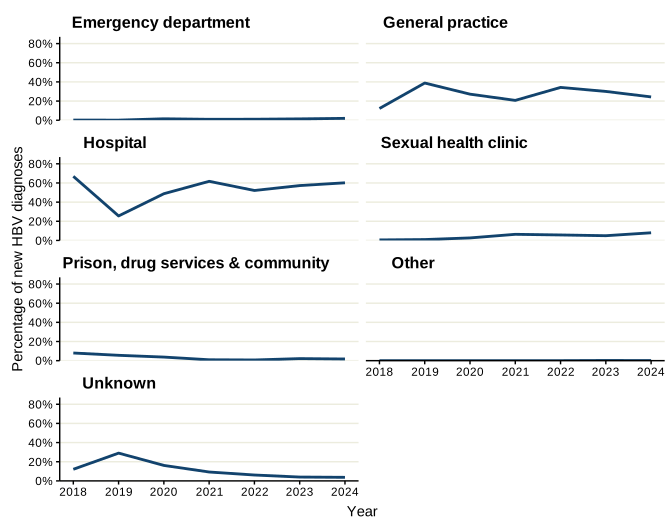
Figure 5. Test location of new laboratory reports of hepatitis B (acute and chronic), residents of South East UKHSA region, 2024
Data sources: SGSS. For further information, see information on data sources.
Figure 5 shows the proportion of new laboratory reports in the South East by test location from 2018 to 2024. In 2024, the test location with the highest proportion of reports was hospital (60%) followed by general practice (24%).
Acute or probable acute diagnoses of hepatitis B
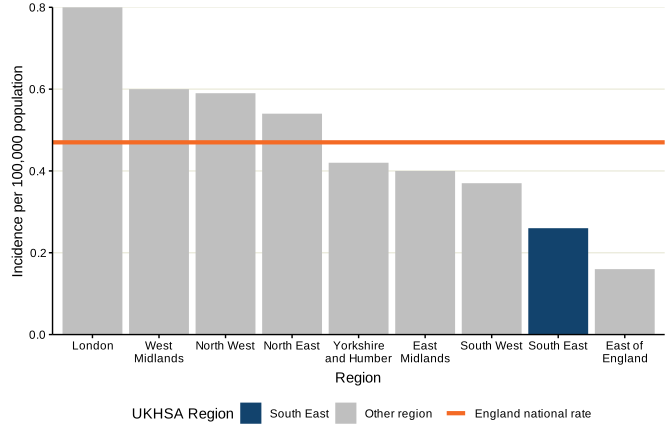
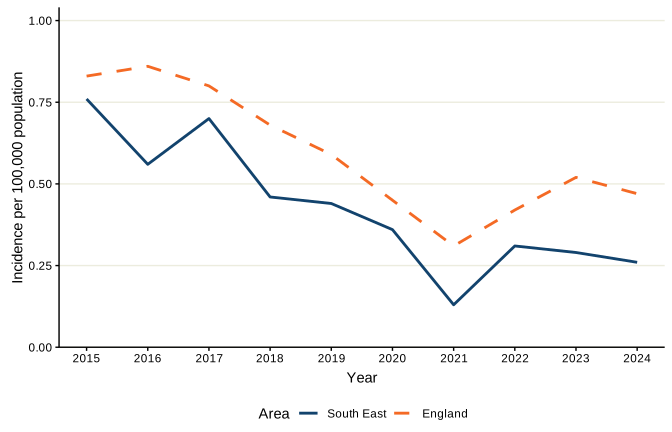
Figure 6. Estimated incidence of acute or probable acute hepatitis B per 100,000 population by UKHSA region [note 7], 2024
Data sources: SGSS, UKHSA Case and Incident Management System (CIMS) and ONS MYE. For further information, see information on data sources.
Note 7: UKHSA transitioned to a new case management system for notifiable diseases in 2024 which has impacted the identification of people with acute hepatitis B and likely resulted in underreporting.
Figure 6 shows the estimated incidence (per 100,000) of acute or probable acute hepatitis B in each region in England in 2024. London had the highest incidence of all regions at 0.8 per 100,000, followed by the West Midlands (0.6 per 100,000). London, the West Midlands, the North West and the North East were all higher than the national rate (0.47 per 100,000).
Figure 7. Estimated incidence of acute or probable acute hepatitis B per 100,000 population [note 8], South East UKHSA region and England, 2015 to 2024
Data sources: SGSS, CIMS and ONS MYE. For further information, see information on data sources.
Note 8: UKHSA transitioned to a new case management system for notifiable diseases in 2024 which has impacted the identification of people with acute hepatitis B and likely resulted in underreporting.
Figure 7 shows the estimated incidence (per 100,000) of acute or probable acute hepatitis B in the South East and England from 2015 to 2024. In 2024, the incidence rate was 0.3 per 100,000, similar to the previous year. The incidence rate in the South East has fluctuated but been on a general downward trend since 2015 and has remained below the national rate.
HBV testing in the wider population
Figure 8. Number of individuals tested for HBsAg by year (excluding antenatal testing) and proportion positive in sentinel laboratories [note 9] in the South East UKHSA region, 2015 to 2024

Data source: Sentinel Surveillance of Bloodborne Virus Testing. For further information, see information on data sources.
Note 9: the error band represents 95% confidence intervals.
From 2022 to 2024, the opt-out ED BBV testing programme was scaled-up, leading to increased numbers of tests being conducted in these sentinel surveillance sites.
Figure 8 shows the number of individuals tested for HBsAg in sentinel laboratories in the South East, and the percentage positive from 2015 to 2024. In 2024 the number of individuals tested was 24,025. This was higher than in 2023 (20,071), which had the lowest number of individuals tested since 2015. The percentage positive was 0.67% in 2024, similar to the previous year (0.66%).
Figure 9. Number of individuals tested for HBsAg by year (excluding antenatal testing) and proportion positive, through GP surgeries in sentinel laboratories [note 9] in the South East UKHSA region, 2015 to 2024

Data source: Sentinel Surveillance of Bloodborne Virus Testing. For further information, see information on data sources.
Note 9: the error band represents 95% confidence intervals.
Figure 9 shows the number of individuals tested for HBsAg in sentinel laboratories and percentage positive in the South East through GP surgeries from 2015 to 2024. In 2024 the number of individuals tested was 8,593 and the percentage positive was 0.67%. The number of individuals tested has been on an upward trend since 2020 when it was 5,583. The percentage positive has been on a downward trend since 2015 when it was 0.95%.
Testing and diagnoses in sexual health services (SHS)
Figure 10. Number of individuals tested for HBsAg by year (excluding antenatal testing) and proportion positive, through sexual health services in sentinel laboratories [note 9] in the South East UKHSA region, 2015 to 2024

Data source: Sentinel Surveillance of Bloodborne Virus Testing. For further information, see information on data sources.
Note 9: the error band represents 95% confidence intervals.
Figure 10 shows the number of individuals tested for HBsAg in sentinel laboratories in the South East through sexual health services and percentage positive from 2015 to 2024. In 2024 the number of individuals tested was 817 and the percentage positive was 2.82%. The number of individuals tested has been on an overall downward trend since 2015 when it was 2,496, although the number tested in 2024 was higher than in 2023 (573). The percentage positive has been on an overall upward trend since 2015 when it was 1.68%.
Testing and diagnoses in people who inject drugs and/or attend drug services
Figure 11. Number of individuals tested for HBsAg by year (excluding antenatal testing) and proportion positive, through drug services in sentinel laboratories [note 9] [note 10] in the South East UKHSA region, 2015 to 2024

Data source: Sentinel Surveillance of Bloodborne Virus Testing. For further information, see information on data sources.
Note 9: the error band represents 95% confidence intervals.
Note 10: Between 2023 and 2024, there was underreporting of hepatitis testing data from a sentinel laboratory which undertakes a large proportion of testing for drug treatment services, making it difficult to monitor trends in drug treatment services over this period.
Figure 11 shows the number of individuals tested for HBsAg in sentinel laboratories and percentage positive in the South East through drug services from 2015 to 2024. In 2024 the number tested was 453 and the percentage positive was 0.44%.
Testing and diagnoses in people attending emergency departments
Figure 12. Number of individuals tested for HBsAg by year and proportion positive, through emergency departments in sentinel laboratories [note 9] in the South East UKHSA region, 2015 to 2024

Data source: Sentinel Surveillance of Bloodborne Virus Testing. For further information, see information on data sources.
Note 9: the error band represents 95% confidence intervals.
Figure 12 shows the number of individuals tested for HBsAg in sentinel laboratories and percentage positive in the South East through emergency departments from 2015 to 2024. In 2024 the number of individuals tested was 976 and the percentage positive was 0.41%. The number of individuals tested has increased since 2023 when it was 567 but remains lower than in 2019 (1,256).
Coverage of maternal hepatitis B surface antigen (HBsAg) testing
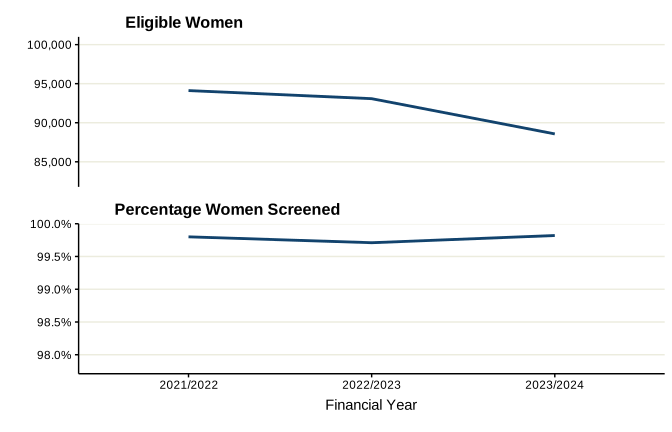
Figure 13. Coverage of hepatitis B antenatal screening by NHS region - Screening Standard IDPS-S02, NHS South East region, financial years 2021/2022 to 2023/2024
Data source: Infectious Disease in Pregnancy Screening (IDPS) (for further information, see information on data sources)
The NHSE region being used for this plot is South East.
Figure 13 shows the coverage of hepatitis B antenatal screening in the South East between financial years 2021/2022 and 2023/2024. The coverage of hepatitis B antenatal screening in FY 2023 to 2024 was 99.8%.
Monitoring HBV-related morbidity
Hospital admissions from HBV
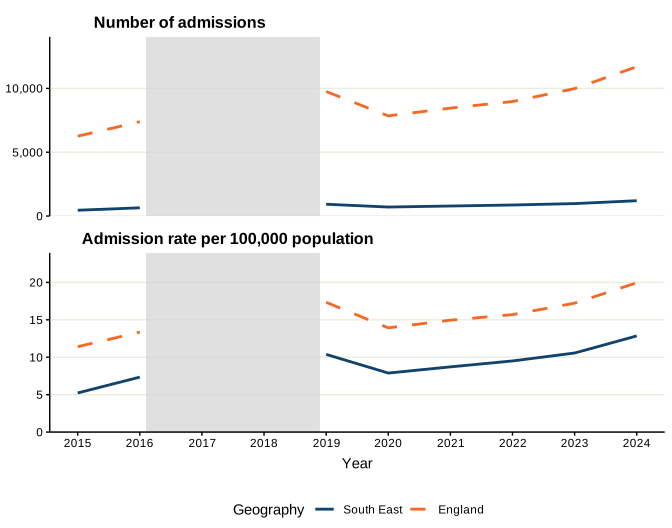
Figure 14. Number of hospital admissions [note 11] and admission rate per 100,000 population [note 12] for individuals with a diagnosis code for acute or chronic hepatitis B [note 13], residents of South East UKHSA region [note 14], 2015 to 2024
Data source: Hospital Episode Statistics (HES), NHS England. Produced by the UK Health Security Agency. Copyright © 2025, re-used with the permission of the NHS England. All rights reserved. For further information, see information on data sources.
Note 11: data has been suppressed in accordance with NHS disclosure control guidance for sub-national breakdowns. Numbers are rounded to the nearest 5. Due to data quality issues around HES identifiers, data has been omitted for 2017 and 2018 (grey box).
Note 12: rates have been calculated using ONS mid-year population estimates.
Note 13: hepatitis B is defined by ‘International Statistical Classification of Diseases and Related Health Problems 10th Revision’ (ICD-10) codes B16.0, B16.1, B16.2, B16.9, B18.0 and B18.1.
Note 14: there is a high proportion of data missingness in the HES data for the geographies of residence for people admitted to hospital with acute and chronic hepatitis B (approximately 25% for 2024 admissions). This means that the regional admission counts and rates are likely an underestimate of the true number.
Figure 14 shows the count of hospital admissions and admission rate per 100,000 population for residents of the South East with a diagnosis code for acute or chronic hepatitis B between 2015 and 2024.
There were 1200 hospital admissions for South East residents with a diagnosis code for acute or chronic hepatitis B in 2024, this was an increase of 23.1% from the previous year (2023: 975). The admission rate for the South East region in 2024 was 12.9 per 100,000 population, this was below the admission rate for England, which was 20.0 per 100,000.
Figure 15. Number of hospital admissions [note 15] for individuals with a diagnosis code for hepatitis B-related end-stage liver disease (HBV-related ESLD) or hepatitis B-related hepatocellular carcinoma (HBV-related HCC) [note 16] [note 17], residents of South East UKHSA region [note 18], 2015 to 2024

Data source: Hospital Episode Statistics (HES), NHS England. Produced by the UK Health Security Agency. Copyright © 2025, re-used with the permission of the NHS England. All rights reserved. For further information, see information on data sources.
Note 15: data has been suppressed in accordance with NHS disclosure control guidance for sub-national breakdowns. Numbers are rounded to the nearest 5. Due to data quality issues around HES identifiers, data has been omitted for 2017 and 2018 (grey box).
Note 16: end-stage liver disease (ESLD) is defined by ICD-10 codes for ascites (R18), bleeding oesophageal varices (I85.0 and I98.3), hepato-renal syndrome (K76.7), hepatic encephalopathy (K72.9) or hepatic failure (K72.0, K72.1 and K70.4). Hepatocellular carcinoma (HCC) is defined by ICD-10 code for hepatocellular carcinoma (C22.0).
Note 17: the methodology used to calculate hepatitis B-related ESLD and HCC admissions has been updated for this report, as the previous method of only using HES data may under report hepatitis B as it relies on a diagnosis of hepatitis B being recorded in HES. The updated methodology, which follows the ‘upper bound’ methodology outlined in Hepatitis B in England 2025 report, links HES data to laboratory diagnoses of hepatitis B from SGSS and SSBBV from any year.
Note 18: there is a high proportion of data missingness in the HES data for the geographies of residence for people admitted to hospital with ESLD and/or HCC (approximately 23% for ESLD admissions in 2024 and approximately 26% for HCC admissions in 2024). This means that the regional admission counts are likely an underestimate of the true number.
Figure 15 shows the count of hospital admissions for individuals with a diagnosis code for hepatitis B-related end-stage liver disease (HBV-related ESLD) or hepatitis B-related hepatocellular carcinoma (HBV-related HCC) in South East residents between 2015 and 2024. Data for 2017 and 2018 are missing.
In 2024, HES analysis identified 90 people with a first presentation to hospital with hepatitis B-related ESLD and/or hepatocellular carcinoma: 65 people with hepatitis B-related ESLD and 25 with hepatitis B-related HCC. The overall number is higher than previous years apart from 2023.
Monitoring HBV-related mortality
Figure 16. Rate of deaths with ESLD [note 19] or HCC in those with HBV mentioned on their death certificate [note 20] by UKHSA region, 2020 to 2024

Data sources: ONS Mortality and ONS MYE. For further information, see information on data sources.
Note 19: ESLD is defined by codes or text entries for ascites, bleeding oesophageal varices, hepato-renal syndrome, hepatic encephalopathy or hepatic failure. Patients were identified via ICD-10 codes and text searching.
Note 20: the methodology used to calculate hepatitis B-related mortality has been updated for this report, as the previous method of only counting deaths where ESLD and/or HCC and hepatitis B were reported in ONS death registrations may lead to underreporting. The updated methodology, which follows the ‘upper estimate’ methodology outlined in Hepatitis B in England 2025 report, links ONS deaths registrations data to HES hospital admissions data and laboratory diagnoses of hepatitis B from SGSS and SSBBV from any year to yield a maximum number of deaths attributable to hepatitis B-related ESLD and/or HCC.
Figure 16 displays the rate of deaths with ESLD or HCC in people with acute or chronic hepatitis B mentioned on their death certification by region between 2020 and 2024 per 100,000 population.
Between 2020 and 2024, the mortality rate in the South East region was 0.3 per 100,000 population, which was similar to the national rate during the same period.
Prevention of infection by immunisation
Coverage of hepatitis B vaccine 3 doses (HepB3) in universal programme
Figure 17. Routine hepatitis B vaccine coverage of 3 doses of the hexavalent vaccine at 12 months, South East UKHSA region and England, financial years 2019/2020 to 2024/2025

Data source: NHS Childhood Vaccination Coverage Statistics (COVER). For further information, see information on data sources.
Universal hepatitis B immunisation using a hexavalent vaccine has been included in the routine childhood programme in England since late 2017.The WHO targets for reducing incidence include achieving vaccination coverage of at least 90% for all 3 vaccine doses in the universal infant programme.
In 2024 to 2025, the 3-dose vaccination coverage at 12 months for children in the South East was 93.6%. This is above the WHO target and comparable to the coverage reported in the previous year, 2023 (93.5%).
The percentage vaccine coverage in England in FY 2024 to 2025 at 12 months with 3 vaccine doses was 91.3%, exceeding the WHO target of 90%.
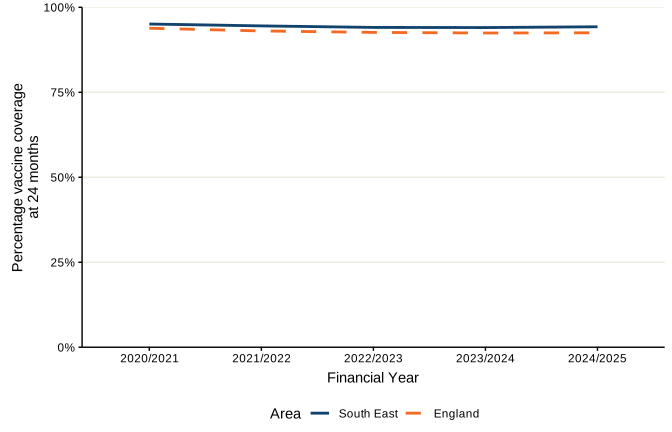
Figure 18. Routine hepatitis B vaccine coverage of 3 doses of the hexavalent vaccine at 24 months, South East UKHSA region and England, financial years 2020/2021 to 2024/2025
Data source: NHS COVER. For further information, see information on data sources.
In 2024 to 2025 the vaccine coverage in the South East for children aged 24 months was 94.27% exceeding the WHO target of 90%, this was an increase of 0.23 percentage points from the coverage in 2023 to 2024 (94.04%). The vaccine coverage in England in 2024 to 2025 at 24 months with 3 vaccine doses was 92.50%.
Coverage of hepatitis B vaccine 3 doses (HepB3) in selective programme
Table 6. Children born to mothers positive for hepatitis B vaccinated against hepatitis B by their first birthday by upper tier local authority: vaccine coverage (5 doses routine and selective combined [note 21]) and eligible population, South East UKHSA region, FY 2024 to 2025
| Local authority | Eligible population | Number vaccinated | Percentage covered (%) |
|---|---|---|---|
| Bracknell Forest | 5 | 5 | 100% |
| Brighton and Hove | 6 | 6 | 100% |
| Buckinghamshire | 19 | 15 | 78.9% |
| East Sussex | 5 | [note 22] | 70% to 100% |
| Hampshire | 15 | 15 | 100% |
| Isle of Wight | [note 22] | [note 22] | 70% to 100% |
| Kent | 37 | 35 | 94.6% |
| Medway | 13 | 10 | 76.9% |
| Oxfordshire | 25 | 24 | 96.0% |
| Portsmouth | [note 22] | [note 22] | 70% to 100% |
| Reading | 8 | 7 | 87.5% |
| Slough | 18 | 17 | 94.4% |
| Southampton | [note 22] | [note 22] | 70% to 100% |
| Surrey | 21 | 20 | 95.2% |
| West Berkshire | [note 22] | [note 22] | 70% to 100% |
| West Sussex | 15 | 15 | 100% |
| Windsor and Maidenhead | [note 22] | [note 22] | 70% to 100% |
| Wokingham | [note 22] | [note 22] | 70% to 100% |
Data source: NHS COVER. For further information, see information on data sources.
Note 21: babies received 2 monovalent vaccines (at birth and at 4 weeks), and 3 doses of hexavalent vaccines (at 8, 12 and 16 weeks).
Note 22: denotes that data is suppressed due to potential disclosure issues associated with small numbers.
Table 6 shows proportion of eligible infants who received 5 hepatitis B vaccine-containing doses as part of the selective (and routine) immunisation programme by 12 months of age and South East local authority in 2024 to 2025. Only 4 of the 18 (22%) local authorities in the South East achieved 100% coverage of the eligible infant population, the percentage coverage by local authorities ranged from 70% to 100%.
Table 7. Children born to mothers positive for hepatitis B vaccinated against hepatitis B by their second birthday by upper tier local authority: vaccine coverage (6 doses routine and selective combined [note 23]) and eligible population, South East UKHSA region, FY 2024 to 2025
| Local authority | Eligible population | Number vaccinated | Percentage covered (%) |
|---|---|---|---|
| Bracknell Forest | [note 24] | [note 24] | 70% to 100% |
| Brighton and Hove | [note 24] | [note 24] | 35% to 69% |
| Buckinghamshire | 14 | 12 | 85.7% |
| East Sussex | 5 | [note 24] | 70% to 100% |
| Hampshire | 15 | 15 | 100% |
| Isle of Wight | [note 24] | [note 24] | 70% to 100% |
| Kent | 34 | 29 | 85.3% |
| Medway | 9 | 7 | 77.8% |
| Oxfordshire | 18 | 17 | 94.4% |
| Portsmouth | 5 | 5 | 100% |
| Reading | 10 | 8 | 80.0% |
| Slough | 16 | 15 | 93.8% |
| Southampton | 8 | 8 | 100% |
| Surrey | 21 | 19 | 90.5% |
| West Berkshire | [note 24] | [note 24] | 70% to 100% |
| West Sussex | 13 | 10 | 76.9% |
| Windsor and Maidenhead | 5 | [note 24] | 70% to 100% |
| Wokingham | 0 | 0 | Not applicable |
Data source: NHS COVER. For further information, see information on data sources.
Note 23: babies received 3 monovalent vaccines (at birth, 4 weeks and 12 months), and 3 doses of hexavalent vaccines (at 8, 12 and 16 weeks).
Note 24: denotes that data is suppressed due to potential disclosure issues associated with small numbers.
Table 7 shows coverage of eligible infants who received 6 hepatitis B vaccine-containing doses as part of the selective (and routine) immunisation programme by 24 months of age by South East local authority in 2024 to 2025. Only 3 (17%) of the 18 local authorities in the South East achieved 100 % coverage of the eligible infant population, the percentage coverage by local authorities ranged from 35% to 100%.
Vaccine uptake in people who inject drugs
Figure 19. Reported level of hepatitis B vaccine uptake among people who inject drugs (PWID), South East UKHSA region, 2014 to 2023

Data source: Unlinked Anonymous Monitoring (UAM) survey. For further information, see information on data sources.
Figure 19 shows data from the Unlinked Anonymous Monitoring (UAM) Survey for reported levels of hepatitis B vaccine uptake among people who inject drugs (PWID) in the South East and England between 2014 and 2023.
In 2023, the reported level of hepatitis B vaccine uptake among PWID in the South East was 62.1% and is comparable to the reported level in England (62.2%). Between 2022 and 2023, the reported level of hepatitis B vaccine uptake among PWID decreased by 5.4 percentage points (2022: 67.4%) in the South East.
Prevention of infection by harm reduction
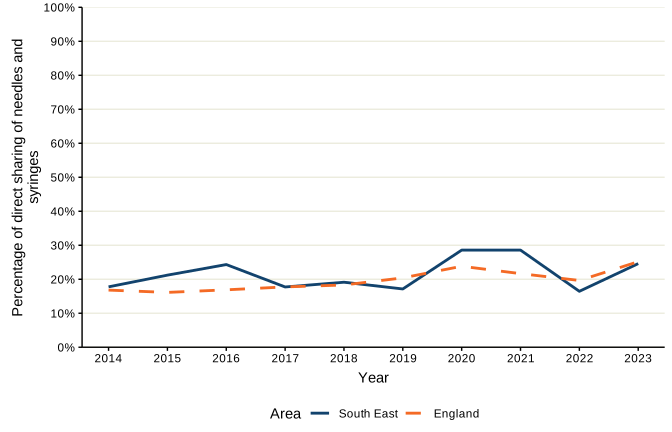
Figure 20. Reported level of direct sharing of needles and/or syringes among people who inject drugs (PWID) in the preceding 4 weeks, South East UKHSA region and England, 2014 to 2023
Data source: UAM survey. For further information, see information on data sources.
Figure 20 shows the reported level of direct sharing of needles and/or syringes among people who inject drugs (PWID) in the preceding 4 weeks in the South East and England between 2014 and 2023.
Direct sharing refers to self-reported sharing of needles and syringes among people who had injected in the 4 weeks preceding survey participation and Indirect sharing refers to self-reported sharing of injecting equipment other than needles and syringes.
The reported level of direct sharing of needles among PWID in the South East in 2023 was 24.6%, this is a decrease of 4.0 percentage points since the peak of 28.6% reported in 2020 and 2021 and is similar to the reported level in England in 2023 (25.2%).
Figure 21. Reported level of direct and indirect sharing of injecting equipment among people who inject drugs (PWID) in the preceding 4 weeks, South East UKHSA region and England, 2014 to 2023

Data source: UAM survey. For further information, see information on data sources.
Figure 21 shows the reported level of direct and indirect sharing of injecting equipment among people who inject drugs (PWID) in the preceding 4 weeks in the South East and England between 2014 and 2023.
The reported level of direct and indirect sharing of injecting equipment among PWID in the South East in 2023 was 44.2%, this is an increase of 11.7 percentage points since the lowest reported level seen in 2019 (32.5%). It is similar to England in 2023 (43.9%).
Between 2022 and 2023, the reported level of direct and indirect sharing of injecting equipment among PWID has increased by 3.5 percentage points (2022, 40.8%) in the South East.
Information on data sources
Second Generation Surveillance System (SGSS)
Brief description
SGSS captures routine laboratory surveillance data on infectious diseases and antimicrobial resistance from laboratories within England. Along with a number of other organisms, hepatitis B is notifiable under the Health Protection (Notifications) Regulations (2010).
Technical notes
Data extracted from Sentinel Surveillance of blood borne virus testing (SSBBV) and SGSS will vary for several reasons and should not be compared: the 2 systems have collected data over different historical periods, with data reported to SGSS and predecessor systems since 1995, whereas SSBBV has been running since 2002. Data reported to SSBBV reflects the timeframe from when the laboratory joined the surveillance system, with laboratories joining more recently having less data available than laboratories who have been reporting since 2002. Furthermore, whilst SGSS collects national level data, SSBBV collects data from a subset of laboratories. There are 35 laboratories which report to SSBBV with an estimated 45% coverage testing in the GP registered population in England.
Data completeness for ethnicity within this dataset declines over time, due to changes in methodology. ONOMAP, an ethnicity estimator which classifies ethnicity based on name is no longer used. Ethnicity is assigned using data reported through the test request form and through linkage to healthcare datasets and represents ethnicity that is assigned rather than estimated. Data will improve over time as additional information is reported, older records are more likely to be more complete.
Laboratory reports of new diagnoses of HBV include positive test results for HBV surface antigen (HBsAg) and are submitted to UKHSA or predecessor organisations via SGSS/CoSurv.
Data includes laboratory reports for both acute and chronic hepatitis B infections and therefore cannot be used to estimate incidence.
Data is assigned to local authority and UKHSA region by patient postcode where present, if patient postcode is unknown, data is assigned to local authority and UKHSA region of registered general practice; where both patient postcode and registered general practice are unknown data is assigned to local authority and UKHSA region of laboratory.
Dates are assigned based on earliest positive specimen date.
Patient identifiable data submitted by NHS laboratories is variable, particularly from sexual health and drug and alcohol services, which limits the ability to deduplicate.
Laboratory reports for children under one year of age are excluded from the analyses to rule out detecting maternal antibody.
Rates per 100,000 have been calculated using mid-year population estimates supplied by the Office for National Statistics (ONS).
Caveat: SGSS data in this report may differ from data shown in the Hepatitis B in England report and from data reported in other surveillance outputs at a different point in time. This is due to the SGSS dataset being a live system and a number of cleaning, deduplication, remapping and other operational processes being routinely applied to the data to improve data quality.
HPZone/CIMS
Brief description
HPZone was a case and outbreak management system used by the health protection teams (HPTs) in UKHSA until mid-2024, when it was replaced by a new Case and Incident Management System (CIMS). Details related to cases of hepatitis A, B, C and E are stored on this system in addition to details of other infections reported to the HPTs.
HPZone and CIMS are secure systems. Where acute hepatitis B cases are reported, HPTS used HPZone historically and CIMS currently to capture data about these cases and relevant risk factors to inform public health action. As a result of the transition from HPZone to CIMS in mid-2024, there is a known issue that has likely impacted the identification of people with acute hepatitis B and likely resulted in the underreporting of cases.
Hepatitis B case definitions using SGSS and HPZone/CIMS data
The definition for acute hepatitis B is ‘HBsAg positive and anti-HBc IgM positive and abnormal liver function tests with a pattern consistent with acute viral hepatitis’. As information on liver function is not usually available to UKHSA, for the purpose of this analysis the following case definitions were used:
- cases classified as acute viral hepatitis B by the local UKHSA region or the laboratory and/or with a documented positive anti-HBc IgM were classified as acute cases
- cases classified as acute viral hepatitis B by the local UKHSA region but without an anti-HBc IgM test result or not classified but a positive anti-HBc IgM reported were assumed to be probable acute hepatitis B cases
- cases initially classified as acute by the local UKHSA region but with contradictory laboratory evidence were reclassified as chronic infections
- cases classified as chronic infections or those not classified where anti-HBc IgM was negative or equivocal or missing were assumed to be chronic infections
The case definitions were derived using the following methodology: cases reported to UKHSA regions via HPZone/CIMS were extracted from 1 January 2015 to 31 December 2024 and matched using identifiers to SGSS data. The SGSS data was used to determine final classification of any cases reported from the UKHSA region via HPZone/CIMS. A final reconciled data set including cases classified as acute or probable acute was used for this report.
Technical notes
UKHSA transitioned to a new case management system for notifiable diseases in 2024 which has impacted the identification of people with acute hepatitis B and likely resulted in underreporting.
Sentinel Surveillance of bloodborne viruses (BBVs)
Brief description
The sentinel surveillance study of hepatitis, HIV and HTLV began in 2002 and provides information on testing, individual risk exposures and clinical symptoms. The study collects information on blood borne virus testing carried out in participating sentinel laboratories regardless of result. In 2022 there were 24 participating laboratories and at the time this report was produced there were 28 participating laboratories, some of the new laboratories have provided legacy data if they were able to.
Technical notes
See first technical note for SGSS
Excludes dried blood spot, oral fluid, reference testing and testing from hospitals referring all samples. Data is de-duplicated subject to availability of date of birth, Soundex and first initial.
Individuals under one year old are excluded from the analysis.
Regional and England data is aggregated data for all organisations who provided complete data for all 4 quarters. Data is assigned to UKHSA region by the location of the requesting testing site.
Infectious Diseases in Pregnancy Screening (IDPS)
Brief description
NHSE’s IDPS Programme has commissioned the Integrated Screening Outcomes Surveillance Service (ISOSS). ISOSS monitors pregnancies where the mother is screen positive or is already known to have hepatitis B. Monitoring is also conducted for HIV, syphilis as well as continuing monitoring cases of congenital rubella syndrome
Technical notes
Published data can be found at Antenatal screening standards: data report 2020 to 2021.
Hospital Episode Statistics (HES)
Brief description
HES is a database containing details of all admissions, A&E attendances and outpatient appointments at NHS hospitals in England. This data is used to calculate the number of individuals per year that have a hospital admission related to hepatitis B associated end stage liver disease (ESLD) or hepatocellular carcinoma (HCC). It is also used to calculate incidence of HBV related ESLD and HCC.
Technical notes
Hospital Episode Statistics (HES), NHS England. Produced by the UK Health Security Agency. Copyright © 2025, re-used with the permission of the NHS England. All rights reserved.
Data is based on Hospital Episode Statistics as at October 2025.
Patients who have had more than one hospital episode with a diagnosis of HBV in any one year and who have moved residence within that year have been grouped into the UKHSA region of their latest hospital episode in that year.
Hepatocellular carcinoma (HCC) is defined by ICD-10 code for hepatocellular carcinoma (C22.0). End-stage liver disease (ESLD) is defined by ICD-10 codes for ascites (R18), bleeding oesophageal varices (I85.0 and I98.3), hepato-renal syndrome (K76.7), hepatic encephalopathy (K72.9) or hepatic failure (K72.0, K72.1 and K70.4).
Data for 2017 and 2018 has been omitted. This is due an interrupt in the supply of identifiers in the HES year April 2017 to March 2018 making it impossible to distinguish repeat hospital episodes for the same person within the same year, and thus determine the number of prevalent cases of HBV and HBV-related HCC/ESLD in 2017 and 2018.
Office for National Statistics (ONS) Mortality data
Brief description
Data from the Mortality and Birth Information System is used to calculate the number of deaths from end stage liver disease (ESLD) or hepatocellular carcinoma (HCC) with hepatitis B mentioned on the death certificate.
Technical notes
Published data about deaths can be found on the ONS website.
Data on the number of deaths from ESLD and HCC in this report was identified by searching the ONS Mortality dataset using a combination of 2 methodologies described below, deaths that met either of these criteria were included in this report:
- searching for all causes of mortality using the following ICD-10 codes - ‘C220’, ‘R18’, ‘K767’, ‘K729’, ‘K720’, ‘K721’, ‘K704’, ‘I850’, ‘I983’
- searching all free-text variables for the following terms - “hepatocellular c%”, “primary liver c%”, “hcc”, “ascites”, “encephal%”, “liver failure”, “hepatorenal syndrome”, “hepatic failure”, “hepatic coma”, “bleeding o%”, “ruptured oesoph%”, “haemorrhage from oesoph%”, where ICD-10 codes ‘B160’, ‘B161’, ‘B162’, ‘B169’, ‘B181’, ‘B180’ were also reported on the death certificate
There has been no additional clinical review stage, as may be conducted on other UKHSA reporting for ESLD/HCC mortality, and therefore numbers may vary slightly from other reports.
Cover of Vaccination Evaluated Rapidly (COVER)
Brief description
The COVER programme is a quarterly data collection that started in 1987 with the aim of providing timely data. COVER data is extracted from Child Health Information Systems at the local authority level for children aged one, 2 and 5 years of age. Babies born to mothers with hepatitis B have been offered the hepatitis B vaccine from birth since the late 1980s. During autumn 2017 hepatitis B became part of the routine childhood immunisation schedule for all babies in a 6-in-1 vaccine.
Technical notes
Data from the Universal Programme:
- in FY 2019 to 2020, all children in the 12 month cohort were eligible for the DtaP/IPV/Hib/HepB (6-in-1) vaccination, which replaced the 5-in-1 vaccination
- this is the first year coverage is fully reported against the 6-in-1 vaccine for the 12 month cohort
- the DTaP/IPV/Hib (5-in-1) vaccine was replaced by the DTaP/IPV/Hib/HepB (6-in-1) vaccine in August 2017; therefore the 24 month age cohort in FY 2019 to 2020 (born in FY 2017 to 2018), will have received either the 5-in-1 or the 6-in-1 vaccination, depending on when in the year they were vaccinated
- from FY 2020 to 2021 onwards, all children in the 12 month cohort and 24 month cohort were eligible for the DtaP/IPV/Hib/HepB (6-in-1) vaccination, which replaced the 5-in-1 vaccination in 2017
- the DTaP/IPV/Hib (5-in-1) vaccine was replaced by the DTaP/IPV/Hib/HepB (6-in-1) vaccine in August 2017; therefore the 5 year age cohort in FY 2022 to 2023 (born in FY 2017 to 2018), will have received either the 5-in-1 or the 6-in-1 vaccination, depending on when in the year they were vaccinated
- all babies born on or after 1 January 2020 received their first dose of PCV at 12 weeks of age
- prior to this, PCV primary at 12 months was 2 doses administered at 8 and 16 weeks - FY 2021 to 2022 is the first year that coverage reported is based on the single dose primary course
Data from the Selective Programme:
- the ‘eligible population’ is the total number of children reaching their first birthday during the specified evaluation period with maternal Hep B positive status
- the ‘number of children vaccinated’ by their first birthday is total number of children from the eligible population receiving 2 monovalent HepB vaccines (at birth and one month) and 3 doses of hexavalent vaccine (at 8, 12 and 16 weeks) before their first birthday
- the ‘number of children vaccinated’ by their second birthday is total number of children from the eligible population receiving 3 monovalent HepB vaccines at birth, 4 weeks and 12 months, and 3 doses of hexavalent vaccine (at 8, 12 and 16 weeks) before their 2nd birthday
- small number suppression is carried out on data in this table, adhering to the following methodology; suppress all data (that is, eligible population, number vaccinated and coverage) where the eligible population is 1 or 2, and where the eligible population is greater than 2 and the number of children vaccinated is 0 or 1, suppress the number of children vaccinated and the coverage
Due to small number suppression, some local authorities had to be combined, therefore:
- Leicestershire also contains data for Rutland
- Hackney also contains data for City of London
- Cornwall also contains data for Isles of Scilly
More information can be found at Childhood Vaccination Coverage Statistics, England, 2022 to 2023.
Unlinked Anonymous Monitoring (UAM) Survey
Brief description
The voluntary UAM survey recruits people who have ever injected psychoactive drugs through specialist services (such as needle and syringe programmes and addiction treatment centres) across England, Wales and Northern Ireland. Those who agree to take part complete a questionnaire and provide a biological specimen that is tested anonymously for HIV, hepatitis B and hepatitis C.
Technical notes
Regional level data from the UAM survey should be interpreted cautiously as the survey recruits participants through a nationally reflective sample of the services provided to people who inject drugs.
Published regional-level data and more information can be found at People who inject drugs: HIV and viral hepatitis monitoring.
Acknowledgements
We would like to thank the following:
- local laboratories for supplying the hepatitis data
- the UKHSA Blood Safety, Hepatitis, STI and HIV Division for collection, analysis and distribution of data
- the UKHSA Epidemiology Data Science unit (part of the Regions Data Science team) for producing the charts and figures contained in this report
- the Office for National Statistics (ONS carried out the original collection and collation of the data but bears no responsibility for their future analysis or interpretation)
- the Hospital Episode Statistics (HES), NHS England, produced by UKHSA
About Field Services
Field Services is a Division within UKHSA that provides a national service comprising geographically dispersed multi-disciplinary teams integrating expertise in Field Epidemiology, Public Health Microbiology, Rapid Investigation, Real-time Syndromic Surveillance, and Field Epidemiology Training to strengthen the surveillance, epidemiological intelligence and response functions of UKHSA.
You can contact your local Field Services team at fes.seal@ukhsa.gov.uk
If you have any comments or feedback regarding this report or the Field Services, please contact FS.Central@ukhsa.gov.uk