Heat Soaked Thermally Toughened Glass: Sector Regulatory Report
Published 5 March 2026

© Crown copyright 2026
This publication is licensed under the terms of the Open Government Licence v3.0 except where otherwise stated. To view this licence, visit nationalarchives.gov.uk/doc/open-government-licence/version/3 or write to the Information Policy Team, The National Archives, Kew, London TW9 4DU, or email: psi@nationalarchives.gov.uk.
Where we have identified any third party copyright information you will need to obtain permission from the copyright holders concerned.
This publication is available at https://www.gov.uk/government/publications/heat-soaked-thermally-toughened-glass/heat-soaked-thermally-toughened-glass-sector-regulatory-report
Foreword

I am pleased to introduce our first Sector Regulatory Report covering a significant intervention by the Office for Product Safety and Standards in a construction product sector.
As the UK’s product regulator, OPSS has responsibility for the regulation of millions of products used by consumers, including construction products. These are relied on by consumers every day, incorporated into the buildings we all live and work in. At OPSS, protecting people and places from product-related harm is at the centre of everything we do. By regulating these markets effectively, we can restore consumer confidence and support the construction sector to build the homes and buildings our communities need.
This report sets out OPSS’ interventions with UK manufacturers of heat soaked thermally toughened glass, a critical part of the construction products manufacturing industry. It outlines the high rates of non-compliance we identified within the sector, and the actions we have taken to tackle them.
Some of the issues identified had the potential for serious safety consequences and required immediate action. Some of the findings reflect poorly on business’ practices in this industry, and potentially wider. It is vital that these are addressed so that the businesses that follow the rules face fair competition.
By raising awareness of OPSS’ regulatory activity, I hope that lessons will be learned, leading to improvements in practices across all construction product sectors.

Duncan Johnson
Deputy Director, Construction Products, Office for Product Safety and Standards
Glossary
| Acronym | Full name |
|---|---|
| AVCP | Assessment and Verification of Constancy of Performance |
| BSI | British Standards Institution |
| CAB | Conformity Assessment Body/Bodies (also used to denote references to Approved Bodies and Notified Bodies) |
| CE | Conformité Européenne (European Conformity) |
| CPR 2011 | Regulation (EU) No 305/2011 |
| CPR 2013 | The Construction Products Regulations 2013 |
| DBT | Department for Business and Trade |
| DoP | Declaration of Performance |
| EN | European Norm (European Standard) |
| EU | European Union |
| FPC | Factory Production Control |
| GVA | Gross Value Added |
| HSTTG | Heat Soaked Thermally Toughened Glass |
| ISO | International Organisation for Standardisation |
| ITT | Initial Type Testing |
| MHCLG | Ministry of Housing, Communities and Local Government |
| NPD | No Performance Determined |
| NQI | National Quality Infrastructure |
| OPSS | Office for Product Safety and Standards |
| SOP | Standard Operating Procedure |
| UKCA | UK Conformity Assessed |
| UKTA | UK Technical Assessment |
Executive summary
The Office for Product Safety and Standards (OPSS) is responsible for the national regulation of construction products in the UK, on behalf of the Ministry of Housing, Communities and Local Government. Since being appointed in 2021, OPSS has grown its capacity and capability to understand the industry, analyse sector intelligence, conduct research, carry out targeted market surveillance and take enforcement action to address non-compliance.
As part of our activity, in 2024-25 OPSS conducted a programme of inspections of manufacturers in the UK heat soaked thermally toughened glass (HSTTG) sector.
This sector was identified for regulatory intervention following intelligence gathering that indicated systemic failures of compliance. This was considered a significant concern due to the nature of risk posed by HSTTG products should they fail: HSTTG is primarily used in construction applications where the product’s performance and its safety are critical, such as settings with high footfall like commercial developments, high-rise buildings, infrastructure projects, and premium residential developments. The heat soaking process to give enhanced performance for toughened glass products is expensive as it uses significant amounts of energy and requires specialist equipment, meaning remakes are also costly. HSTTG commands a higher price than other glass products as a result. This creates a risk of economic detriment for customers if they cannot rely on the performance of HSTTG products, especially if issues emerge after they have been installed.
The demand for HSTTG is expected to grow, as Government and industry seek to reduce the built environment’s contribution to carbon emissions through, for example, requirements for higher-performance and more energy-efficient glazing. Mitigating the risk of breakage or poor performance caused by deficiencies in HSTTG is therefore equally important from an energy efficiency perspective.
To intervene with impact in this sector, OPSS conducted a programme of unannounced inspections of manufacturer production facilities. This report sets out OPSS’ key findings, including the market context in which the action took place, the approach taken to our interventions, the outcomes of our inspections, and the enforcement action OPSS took to bring businesses into compliance with the law.
Key findings and actions
- Every manufacturer inspected failed to provide a compliant Declaration of Performance for their products – required by law – during the initial inspection.
- Only half of the businesses were able to provide any form of DoP at the point of initial inspection.
- A majority of manufacturers were initially found to be non-compliant with product marking and labelling requirements. 93% of manufacturers were not meeting product labelling requirements, and 86% did not demonstrate compliance with marking requirements.
- Many businesses failed to provide evidence of accurate record keeping, undermining product traceability, reliability and safety. OPSS addressed the most serious cases by issuing nine Prohibition Notices to six manufacturers that failed to produce appropriate Declaration of Performance or initial type testing documentation. The Notices prohibited the businesses from supplying their products in the UK until they had addressed the non-compliances. Evidence relating to eight of the Notices now indicates the businesses have taken the action that OPSS required to comply with the regulations.
- OPSS issued warnings about future conduct to 25 of the 28 inspected manufacturers requiring them to address a range of non-compliance issues. 88% of all actions have been carried out, with 90% of serious non-compliance issues being addressed.
Impact
OPSS’ actions stopped the supply of non-compliant heat soaked toughened glass in the UK and resulted in several businesses being prevented from selling the products until they resolved the compliance issues OPSS identified.
Our enforcement has led to marked improvements in manufacturer production and assurance practices following the initial inspections and follow up activity by officers. These tough actions have positively influenced manufacturer behaviour, increasing levels of compliance with regulatory requirements and improving certainty in the market that HSTTG products will perform safely and as expected.
Officers continue their oversight activities with manufacturers to ensure actions are implemented, and that progress towards compliance with their legal obligations continues. OPSS has powers to consider further action, including taking prosecution action, should it become necessary.
The issues found during OPSS’ inspections may not be restricted to the processing and supply of HSTTG. The regulatory requirements for initial type testing and factory production control, for example, are common across many glass construction products. The low levels of compliance and regulatory awareness identified in the HSTTG sector may point to systemic non-compliance throughout the wider UK glass industry. Businesses should be reviewing their operations now to assure themselves they are meeting their obligations.
This is not only an indication of poor manufacturer behaviours. That businesses were found to be supplying HSTTG without accurate or appropriate documentation to verify its production, or support traceability, suggests their customers were not seeking any assurance, or were only applying minimal scrutiny to the products they were receiving. This needs to change too, as more demanding customers can influence supplier behaviours for the better.
OPSS continually monitors and evaluates our enforcement interventions to refine and tailor our regulatory approach. This improves our understanding of the effectiveness and appropriateness of different enforcement activities, helping OPSS deliver more impactful interventions to address non-compliance and drive change across the construction products industry. Following the HSTTG inspection programme, OPSS is planning to carry out similar initiatives in other product sectors. This Sector Regulatory Report outlines what businesses can expect and makes clear that they need to be ready to demonstrate compliance with the obligations they hold.

Figure 1: General view of a HSTTG factory
About the regulator
Consumer products
The Office for Product Safety and Standards (OPSS) is the UK’s national product regulator, formed in 2018 and operating within the Department for Business and Trade (DBT). OPSS’ primary purpose is to protect people and places from product-related harm, ensuring that consumers and businesses can buy and sell products with confidence. We are responsible for regulating most consumer products, except food, vehicles, and medicines.
We lead on all aspects of consumer product regulation from policy to delivery. We have responsibility for the product safety legislative framework, and provide national scientific, technical, and incident management capability working with local authorities. Our enforcement activity includes nationally significant, novel, or contentious issues, as well as proactive investigations and risk-based enforcement driven by intelligence.
Construction products
OPSS became responsible for the national regulation of construction products on behalf of the Ministry of Housing, Communities and Local Government (MHCLG) in April 2021. This followed a recommendation, made by Dame Judith Hackitt in her 2018 Independent Review of Building Regulations and Fire Safety, that the remit of OPSS be extended to take on national responsibility for the regulation of construction products.
OPSS oversees the construction products regulatory regime, and leads market surveillance and enforcement in this sector, coordinating and supporting local authority enforcement and exercising powers available to the MHCLG Secretary of State on their behalf. We also support businesses to meet their legal obligations through guidance and advice. OPSS collaborates with MHCLG on policy development in relation to building and construction product safety, and their leadership of Government’s programme of reform in response to the Grenfell Tower Inquiry Phase Two report. The Government’s White Paper on construction products reform was published in February 2026.
Read more about our role, remit and activities.
Read the White Paper on construction products reform.
Market overview
Commercial landscape
The UK produced and processed around 40 million square metres [footnote 1] of glass for industries including construction, automotive and container in 2024. The overall UK glass industry generated approximately £4.7 billion in revenue in 2023 and contributed around £1.9 billion in gross value added. [footnote 2] Approximately 20,000 people are directly employed in UK glass manufacturing and processing, with tens of thousands more in connected supply chains. [footnote 3]
The processing of HSTTG represents a niche within the broader toughened glass sector. The flat glass manufacture and processing industry is estimated to comprise around 11,000 businesses, predominantly small and medium-sized enterprises (SMEs), involved in activities ranging from glass fabrication to specialist toughened products. [footnote 4] Within this population, a subset supplies heat soaked units, although no official statistics are published on the exact number. A typical HSTTG business employs on average 104 [footnote 5] people. Industry reports indicate that many smaller businesses subcontract processing, while larger manufacturers are more likely to operate their own equipment. In planning our intervention, OPSS recognised that this niche presented an opportunity to reach the majority of, if not all, in-scope businesses in a construction product market. OPSS’ inspection programme identified and visited 28 UK-based companies that conduct heat soaking in-house, and though we have researched further, OPSS is not aware of any other such manufacturers in the UK.
Trade
HSTTG also presented an opportunity to build intelligence into a sector where overseas supply chains play a key part. Official data does not currently isolate production and trade metrics for heat soaked products; however, according to ONS Prodcom data, UK manufacturers produced approximately 6.3 million square metres of toughened safety glass in 2024, with total sales value of around £174 million. This represented a decrease from 9.1 million square metres in 2022. [footnote 6]
According to HMRC trade data, imports of toughened safety glass (HS 70071900 and 70072900) were valued at approximately £37 million from EU countries and £55 million from non-EU countries in 2024. Exports were comparatively modest, totalling around £20 million to EU markets and £5 million to non-EU destinations for the same period, [footnote 7] illustrating the UK’s continuing net-importer position for toughened glass products.
Investment trends
Like many construction product sectors, the HSTTG industry operates on slim margins, sensitive to energy costs and raw material prices, though businesses report that profitability is largely stable. Investment into the sector has primarily targeted modernising existing production facilities and technologies, enhancing energy efficiency, and reducing environmental impacts.
HSTTG involves higher production costs compared to standard thermally toughened glass due to extended processing times, additional oven space, and higher rejection rates. Consequently, it commands a price premium. Businesses are seen to be reinvesting profits into dedicated heat soak ovens, digital quality-tracking systems, and certification procedures, especially among firms supplying commercial construction and façade systems.
Product demand
The construction industry is the primary driver of demand for HSTTG in the UK. Increasingly, applications such as balconies, façades, overhead glazing, and frameless installations specify HSTTG due to the need for enhanced safety assurance after the glass is installed.
HSTTG units are especially common in commercial mid- and high-rise buildings, infrastructure projects, and premium residential developments. HSTTG is beginning to be seen as a default requirement for public settings or more complex and higher-risk applications, and uptake is expected to rise further as the construction industry drives up levels of building safety.
Regulatory and policy environment
The UK toughened glass sector operates within a complex regulatory framework. Products covered by designated standards must comply with the construction products regulations as they apply when placed on the market in Great Britain and in Northern Ireland. Building regulations (Part K) govern the performance of glass in certain uses in homes and buildings. Once installed, toughened glass must contribute to the overall safety of a building under the Building Safety Act 2022 regime.
The toughened glass industry may well be a net beneficiary of environmental policy decisions. The Government’s Industrial Strategy will have a significant influence, notably through support mechanisms for energy price rises. Additionally, the UK’s Net Zero Strategy and Industrial Decarbonisation Strategy present future growth opportunities for the HSTTG sector, as will policy developments impacting building energy efficiency. Since the UK left the EU, the industry has welcomed the UK retaining or aligning domestic policy with EU policy, particularly following the Government’s announcement in September 2024 providing clarity on recognition of UKCA and CE marking.
Outlook
This positions the HSTTG market well for the future, albeit in line with increasing expectations around safety. Such expectations will underpin a corresponding assumption about awareness of, and compliance with, the relevant regulations. As OPSS’ inspection programme found, however, the HSTTG sector has work to do here.
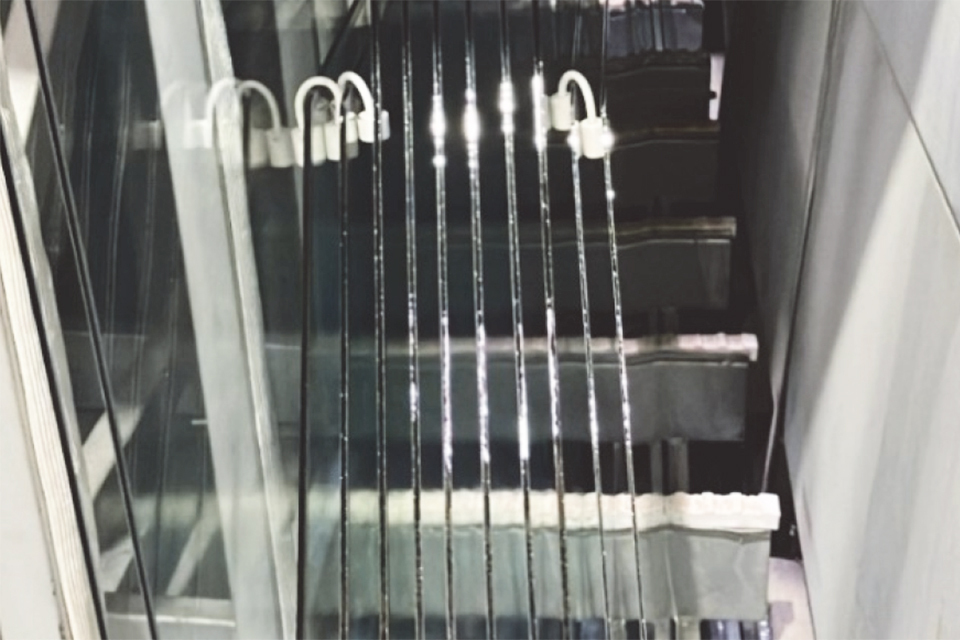
Figure 2: Picture of a rack of glass inside a heat soak oven
Background to the intervention
Identifying products of concern
As a risk-based regulator, OPSS seeks the best available evidence, data and intelligence to identify and make impactful interventions in the construction products industry. We use a specifically developed model for risk assessment and prioritisation to identify products or issues of concern, and deploy a wide range of regulatory interventions to deliver positive outcomes for business and consumers.
OPSS gathers intelligence from a range of sources, including our own research, research conducted by third parties, data analysis, industry and stakeholder engagement, and market monitoring. Potential issues in the HSTTG sector first came to OPSS’ attention in a report by Collaborative Reporting for Safer Structures (CROSS-UK), published in November 2022 [footnote 8] which identified challenges with HSTTG products:
- Lack of traceability: The report suggested a significant issue with traceability (i.e. records of where a product has been manufactured and the processes it has been subjected to), making it difficult to verify compliance with legal requirements and standards.
- Factory records: The report highlighted claims of absent or falsified factory records for the heat soaking process, which were unrelated to glass delivered on-site.
- More breakages than expected: The report referenced claims that glass marketed as heat soaked thermally toughened glass and compliant with BS EN 14179-2:2005 experienced far more nickel sulphide-related breakages than expected.
- Specifier confidence: Specifiers were said to be hesitant to use toughened glass due to a high rate of failures reported from certain glass processors.
- Risk to people: The report noted the risk to people in and around buildings should toughened glass fail.
There is also a significant economic detriment for a customer if the glass construction product specified has not been heat soaked. It is an expensive process and thermally toughened glass that has undergone heat soaking commands a price premium. However, there is no test that can determine whether glass has been subjected to the process. Consequently, if failures happen and a customer loses confidence in the performance of HSTTG products installed on a project, particularly where its strength or durability is essential to its use, they may need to consider replacing all instances of installed HSTTG.
OPSS verified the concerns raised by CROSS-UK through further evidence gathering from conversations across the industry with trade bodies, businesses and senior figures to discuss the report’s findings. OPSS also began gathering market intelligence through an initial visit to a manufacturing facility and raising awareness of the CROSS-UK report with businesses during industry events. The sentiment from stakeholders supported the concerns raised by CROSS-UK and strengthened OPSS’ evidence for targeting the sector for intervention.
The regulatory requirements
As with all construction products governed by a designated standard, HSTTG is subject to the UK’s regulatory framework for construction products. This includes CPR 2011, CPR 2013 and the Construction Products (Amendment etc.) (EU Exit) Regulations 2020 for Northern Ireland. The regulations only apply to products that are covered by a designated standard or those which comply with a UK Technical Assessment (UKTA).
Manufacturers are required to draw up a Declaration of Performance (DoP) for products within the scope of the construction products regulatory framework, which must also have the UKCA or CE mark affixed, or in relevant cases the CE UK(NI) mark.
Any construction product covered by a designated standard must meet all applicable requirements in the standard and have a compliant DoP before it is placed on the UK market. Annex ZA of a designated standard specifies the possible intended uses for the product, the essential characteristics, the relevant Assessment and Verification of Constancy of Performance (AVCP) system(s) and tasks allocated to the manufacturer and conformity assessment body (CAB) to assure product performance. Annex ZA usually specifies the requirements for marking and labelling the product, in addition to the conformity marking requirements.
A compliant DoP must include the information listed in Article 6 of CPR 2011 and should be drawn up as set out in Annex III of the CPR 2011.
Toughened glass is covered by designated standard BS EN 12150-2:2004, which sets out, among others, the following requirements:
- Permanent marking: According to BS EN 12150 Part 1 – Clause 10 and Part 2 – Clause 6, toughened glass must be permanently marked with the manufacturer’s name or trademark and the standard number EN 12150.
- Identification and traceability: Detailed production records for thermally toughened glass are required, as specified in Part 1 – Clause 10.
- Conformity marking: Article 9 of the CPR 2011 requires that the conformity marking be affixed to construction products for which a DoP has been drawn up.
- References to other standards: Certain compliance requirements in BS EN 12150-2 require the business to demonstrate compliance with specific elements of other product standards. As an example, a DoP for toughened glass products must declare the essential characteristic ‘Pendulum body impact resistance’, a manufacturer must demonstrate ITT evidence that shows products were tested in accordance with the test method set out in the standard BS EN 12600:2002, and the results of those tests.
- Initial Type Testing: Where DoPs also claim the glass is fire resistant, bullet resistant or explosion resistant, the manufacturer must be able to produce Initial Type Testing (ITT) from a CAB to verify these characteristics. These claims fall under the AVCP 1 system, and therefore the CAB is also required to oversee factory production controls.
The HSTTG designated standard BS EN 14179-2 mirrors the requirements above and includes additional requirements relevant to the heat soak process as well as permanently marking with EN 14179-2 (rather than EN12150-2).
Manufacturers are also required to demonstrate appropriate factory production control (FPC), which may require evidence of oversight by a CAB. There are different requirements for assuring production processes are compliant depending on the level of risk that the construction product poses, including the level of oversight of factory production required by a CAB. The majority of HSTTG manufacturers are required to operate to AVCP system 3, which does not require oversight of FPC by a third-party CAB. The responsibility is placed on the manufacturer.
The FPC process prescribes testing of the glass after the toughening or further heat soaking process. The standards set out the prescribed size of the test glass and the minimum frequency for testing to be carried out. These tests are as follows:
- Overall bow and local bow test
- Fragmentation test
-
One of the following three options:
- Surface pre-stress test
- Mechanical strength test, or
- Proxy test of mechanical strength
The designated standards also set out requirements for the equipment that should be used in the processing. Heat soaking ovens and machinery used to test the manufactured glass must be maintained and independently calibrated in accordance with parameters set out in the standards.
The issues raised by the CROSS-UK report linked closely to compliance requirements with the designated standard for HSTTG. To investigate further, OPSS began planning activity to assess those concerns against the real-world practices in the HSTTG sector and establish a picture of businesses’ compliance with the requirements.
Inspection programme: rationale
With OPSS’ research indicating that most toughened glass used in UK construction is manufactured domestically, rather than imported, OPSS planned to focus its interventions on activity at manufacturing facilities in the UK. This was also preferred because glass used in construction applications is typically required to be cut to size before it is toughened, meaning it is cheaper to import standardised, non-toughened glass and carry out the toughening and heat soaking processes domestically.
Our intelligence also indicated it would be suitable for inspection-led activity due to the nature of the assessments OPSS could conduct in-person at manufacturing facilities. This included:
- Factory checks: OPSS could verify whether marking and traceability was being undertaken correctly at the manufacturing sites.
- Record verification: Factory production records and processes for heat soaking, which should be kept by the business, could be inspected on site.
- Testing feasibility: There is no reliable post-production test to establish whether toughened glass has been heat soaked, which is why record keeping is essential to demonstrate compliance.
Conducting inspections at manufacturing facilities provided OPSS with the opportunity to gather direct evidence of whether businesses were meeting their regulatory obligations, while also indicating whether the performance of products being manufactured – and already on the UK market – could be relied upon by customers. It is not possible to determine through post-production tests whether heat soaking has been applied to toughened glass, so checks of production control processes are the only reliable means of assessing compliance.
Approach to checking compliance
OPSS contacted a major industry trade association, the Glass and Glazing Federation, to strengthen OPSS’ knowledge of the sector and the techniques used in HSTTG manufacturing. OPSS selected manufacturers for our initial inspections by assessing their publicly available product information and marketing material. This gave a high level of confidence that the identified businesses processed HSTTG in-house. OPSS also engaged with Local Authority Trading Standards and Environmental Health Northern Ireland teams to gather area-specific knowledge about local markets, and any prior experience with the manufacturers. For certain cases, local authorities participated in OPSS’ inspections.
Before commencing inspection activity, OPSS considered whether to notify a business in advance. The decision was made to carry out unannounced inspections, as this would give officers the best opportunity to establish a realistic picture of compliance levels at the HSTTG facilities, in relation to the concerns raised in the CROSS-UK report and regulatory requirements the companies are responsible for meeting. It is also an offence for a business to obstruct an enforcement officer. While visiting unannounced carried certain risks to a successful inspection, as they could be hindered by personnel being unavailable or the possibility that a business was not undertaking in-house heat soaking, this would still provide additional sector insight.
Inspection programme: objectives
The purpose of each inspection was to gather evidence of compliance with regulatory obligations at the specific manufacturer and, where non-compliance was identified, to consider the action OPSS should take – including whether the use of statutory enforcement action was necessary – to address it. The inspections also gave OPSS an opportunity to provide advice directly to the manufacturer on corrective actions required.
The inspections programme built our evidence of business awareness and compliance trends in the HSTTG sector. The programme was also intended to begin shifting behaviours across the whole HSTTG market, beyond OPSS’ direct inspections and interactions with businesses. Through unannounced inspections, OPSS aimed to generate word-of-mouth awareness of our activity between businesses and connected supply chains. This would also increase broader awareness of the obligations that manufacturers have and encourage them to proactively review any potential compliance issues. Intervening in the HSTTG sector in this way was intended to ultimately reduce the risk of non-compliant products being supplied on the UK market and the associated potential risks they would pose for customers.
Inspection programme: delivery
OPSS’ inspections were conducted in the following steps:
- An examination of the businesses’ technical documentation, starting with all relevant DoP certificates for the construction products. The regulations specify a format for DoPs that manufacturers must follow as part of their obligations. The product’s essential characteristics and its performance must be supported by Initial Type Testing (ITT) reports issued by conformity assessment bodies. This associated technical documentation demonstrates that a DoP can be relied upon.
- An on-site manufacturing facility audit to check incoming goods, witness the production processes and to check the adequacy of their factory production controls, and to check finished products.
- Construction product marking and labelling was examined while inspecting the FPC procedures on the factory floor. OPSS observed how (or if) the manufacturer was meeting the specific requirements laid down by the designated standards and regulations, to ensure product identification and production processes enabled products to be traceable through the production line and the supply chain to their end-use.
- FPC requirements for HSTTG are set out in Annex A of designated standard EN 14179-2. In assessing these, OPSS reviewed each company’s quality management system, standard operating procedures, internal audits, testing and documentation used in the factory to demonstrate control of incoming materials or components, equipment, production process, and the final product.
Identifying manufacturing sites for inspection
Our research identified glass manufacturing sites in all four nations of the UK. All manufacturers had websites to market their products, and these were examined in detail to assess the performance claims made. This included identifying whether manufacturers produced HSTTG products that are subject to the more stringent AVCP System 1 assessment, such as fire resistant, bullet resistant or explosion-resistant glass for use in buildings.
This analysis helped OPSS target an initial 12 businesses for inspection, to establish a broad overview of compliance trends from a representative sample of manufacturers for different types of HSTTG products, from different parts of the UK. However, when conducting the first set of inspections, new intelligence was quickly gathered that pointed to other firms in the sector, and OPSS was able to research and plan inspections of these facilities as part of the inspection programme.
In total, OPSS inspected 28 UK manufacturers of heat soaked thermally toughened glass who conducted heat soaking using in-house equipment. The findings of these inspections are set out below. In some cases, OPSS re-inspected manufacturing facilities when serious non-compliance was identified, to obtain assurance that manufacturers had begun addressing the most egregious failures. OPSS has undertaken and is planning further unannounced re-inspections at certain manufacturers, to assess their progress against the corrective actions required.
Inspection results
Summary
When OPSS conducted inspections, officers captured information using a template Inspection Checklist for each manufacturer. The information obtained in each checklist has been analysed to establish key trends in business behaviours and levels of compliance. This headline findings of OPSS’ inspections are set out in Table 1 below, with following analysis explaining the findings in more detail. Further details can be found in Annex A. The majority of the findings shown below relate to the initial inspections which were carried out between September 2024 to May 2025.
OPSS observed varying levels of compliance between businesses with their regulatory obligations. Some businesses were making efforts to meet their obligations, and occasionally falling short in relation to errors with documentation or record keeping. These non-compliances were dealt with by OPSS providing advice and the business taking prompt action to remedy the issues identified. Where manufacturers were unable to produce evidence of meeting their obligations with key regulatory requirements, and/or the issues had significant potential consequences for the product’s performance, these were considered to be more serious breaches and statutory enforcement action was taken.
Table 1: Regulatory compliance and business practice findings
| Question ID | Question | Response |
|---|---|---|
| Q1 | What percentage of inspected manufacturers provided a DoP at the initial inspection? | 50% |
| Q2 | What percentage of the DoPs provided were compliant at the initial inspection? | 0% |
| Q3 | What percentage of manufacturers failed to adequately declare pendulum body impact resistance on their DoPs for their products or otherwise failed to provide adequate evidence to support their declarations under this characteristic? | 68% |
| Q4 | What percentage of manufacturers provided Initial Type Test reports (ITT) during the initial inspection? | 61% |
| Q5 | What percentage of ITT reports were relevant to current production? | 65% |
| Q6 | What percentage of manufacturers had ISO 9001 certification? | 46% |
| Q7 | What percentage of manufacturers were compliant with product marking requirements at initial inspection? | 14% |
| Q8 | What percentage of manufacturers were compliant with product labelling requirements at initial inspection? | 7% |
| Q9 | What percentage of manufacturers were not providing adequate statutory documentation to customers? | 93% |
| Q10 | What percentage of manufacturers produced adequate personnel training records at initial inspection? | 50% |
| Q11 | What percentage of manufacturers could not produce adequate heat soak oven calibration records at initial inspection? | 25% |
| Q12 | What percentage of manufacturers could not produce adequate testing equipment calibration records at initial inspection? | 57% |
| Q13 | What percentage of manufacturers could not produce adequate records of bow testing at initial inspection? | 32% |
| Q14 | What percentage of manufacturers could not produce adequate records of fragmentation testing at initial inspection post heat soak process? | 25% |
| Q15 | What percentage of manufacturers could not produce adequate records of pre-stress, mechanical strength or proxy testing at initial inspection? | 50% |
| Q16 | What percentage of manufacturers could not produce adequate records of measurements of thickness of glass at initial inspection? | 57% |
| Q17 | What percentage of manufacturers could not produce adequate records of traceability data for incoming glass at initial inspection? | 32% |
| Q18 | What percentage of manufacturers could not produce records of heat soak curves which were traceable to specific orders at initial inspection? | 36% |
| Q19 | How many corrective actions were required? | 256 |
| Q20 | How many serious non-compliances did OPSS identify? | 114 |
| Q21 | What percentage of corrective actions were completed (as of 2 September 2025)? | 88% |
| Q22 | What percentage of corrective actions associated with serious non-compliances were completed (as of 2 September 2025)? | 90% |
Analysis of compliance failures
Declarations of performance and initial type testing reports
OPSS’ inspections revealed a 100% failure rate when manufacturers were requested to produce a compliant Declaration of Performance (DoP) for their products at initial inspection. A compliant DoP is required by law before placing HSTTG on the UK market. 50% of manufacturers were able to provide some form of a DoP for their HSTTG products at initial inspection, but all contained deficiencies that meant they did not comply with the requirements of the regulations. In some cases, non-compliance was promptly rectified, with technical documentation and new, compliant DoPs provided for review by an OPSS officer. Most businesses that found challenges in developing a compliant DoP sought further advice from OPSS and were directed to appropriate sources of industry guidance.
Where a business could not produce a compliant DoP due to missing initial type test (ITT) reports or other factory production control issues, these non-compliances were considered to significantly undermine confidence that the products being supplied would perform as expected in use. These cases led OPSS to serve Prohibition Notices, stopping the supply of identified products, and meaning the business could not restart supply to customers until taking action to meet its obligations.
One manufacturer was issued with a Prohibition Notice for its failure to produce a DoP containing required information about its heat soaking process. This intervention saw the business upgrade their equipment, investing in a new data controller on their heat soak oven to achieve compliance in the future by ensuring relevant data was being properly recorded.
OPSS identified a recurring theme that DoPs were not generally being supplied to customers with the physical products unless they had been specifically requested. Nearly every manufacturer (93%) was failing to provide customers with documentation in relation to the product’s essential characteristics, despite this being required by the regulations. These essential characteristics are required to be included in both the DoP and, in some cases, on product labels.
OPSS identified that many businesses did not comply with their obligation to produce ITT reports for pendulum body impact tests in accordance with the standard BS EN 12600:2002, to comply with BS EN 14179-2 and BS EN12150-2. This was the most frequent failure to meet DoP requirements, with 68% of manufacturers being unable to demonstrate they had conducted the required testing or had mis-declared the classification results. Some of these manufacturers were issued Prohibition Notices stopping them supplying relevant products until corrective action was taken.
A number of businesses provided third-party test reports for fragmentation and mechanical strength tests, believing these satisfied the regulatory obligations. These reports helped businesses meet the requirements of the preferred third-party scheme but were not a legal requirement and did not assist the manufacturer in demonstrating they were meeting their legal obligations.
The lack of up-to-date and appropriate ITT reports was also a major factor in businesses having non-compliant DoPs. Less than two-thirds (61%) of manufacturers could provide an ITT report at initial inspection, which is essential in demonstrating the product’s compliance with designated standards. Concerningly, over a third (35%) of the ITTs provided at inspection were not relevant to the manufacturer’s current production, meaning only around 40% of manufacturers were complying with ITT legal requirements.
In many cases, following OPSS identifying these compliance failures during inspection, the businesses took prompt action and were able to source their missing ITT reports to enable them to produce updated and compliant DoPs. It emerged that ITT reports had often been undertaken up to 20 years previously and had since been lost in the ‘corporate memory’. Businesses are required to keep all technical documentation while a product is available on the market, and for up to 10 years after it is no longer supplied. Many businesses contacted their CAB to obtain relevant copies, though some found these bodies no longer held older documents (as CABs are only required to maintain records for 10 years after conducting tests on behalf of the business). In some cases, the relevant CAB no longer existed. Businesses were advised that if changes had been made to production since the original ITT reports were carried out, then these would need to be renewed as required by the regulations.
These and additional errors relating to ITTs point to a general lack of understanding of the obligations placed on the businesses by the regulations, and how to demonstrate compliance with these.
Construction products marking and labelling requirements
The inspection programme identified high rates of non-compliance relating to product marking and labelling requirements. 86% of manufacturers could not demonstrate that they were conformity marking their products in accordance with the regulations, at initial inspection. When it came to labelling requirements, 93% of manufacturers’ product labelling did not meet the regulatory requirements. These compliance findings point to a general lack of understanding of, or regard for, the regulations that apply.
In addition to not marking a construction product with the required conformity mark, many businesses used marks that were neither a registered trademark nor their business name. This undermines the ability for customers or regulators to trace the source of the product once supplied, which impacts the ability to warn building owners of product risks or make it difficult to instigate a product recall. In further issues revealed by the inspections, it was observed that businesses used various methods to apply marking to the glass, some of which resulted in the mark being illegible once the product had undergone toughening. A learning for businesses is that laser marking produces clearer marks and is more likely to support compliant product marking.
OPSS encountered resistance from some inspected manufacturers when setting out corrective action needed. In highlighting the labelling non-compliance (specifically to meet the requirements set out in annex ZA of the standard) many businesses were reluctant to change their labels to accommodate additional information that is also contained in the DoP. OPSS officers and manufacturers reached a pragmatic solution for the information to be made available, either to be supplied in separate electronic DoPs with each product ordered or referenced in the commercial documentation provided to a customer via a web link or QR code, and made available on the manufacturer’s website. Where a web link or QR code is provided, the specific relevant DoP reference should be given with the commercial documentation so that the customer is clearly directed to the statutory information that applies to their order.
Manufacturers making their DoPs available to customers online were advised of the requirement to make them accessible for a minimum of 10 years after a product is placed on the market.
OPSS recognised that some changes would be challenging for some manufacturers, and at the time of publication, implementing these corrective actions in full was still ongoing. However, it has resulted in manufacturers exploring and deploying different solutions to address the information requirements, though few were displaying DoPs on their websites at the point of OPSS’ inspections. OPSS is holding them to account to achieve this in a proportionate timeframe.
Personnel records
OPSS used inspections to assess personnel records, which are required by the designated standard to demonstrate that staff have received the necessary training to operate the equipment and conduct product testing. Only half (50%) of the manufacturers were able to produce adequate training records. Where the training records did not include details of the heat soak process and/or testing activity, this was considered a significant instance of non-compliance.
Where a personnel training record matrix was completed, OPSS requested sight of the training record for that individual and any corresponding standard operating procedure (SOP) that businesses follow. Many businesses had not created SOPs, or had SOPs that did not reflect the manufacturing process being carried out, considering only health and safety when using the equipment and not competency of operating it. OPSS also saw examples of unsigned and undated training records, which did not give confidence that the training had been carried out.
OPSS did identify some better cases of personnel record keeping, particularly among businesses employing staff where English is not their primary language. Officers observed that these manufacturers tended to perform better because of the need to address the language barrier when making sure their staff were trained and could work safely.
Heat soak oven calibration
The calibration of a heat soak oven is an essential requirement under the designated standards, which ensures processing and testing can be carried out reliably. It is typically carried out by an independent calibration company on behalf of a manufacturer. The calibration test method is set out in BS EN 14179-1, however there are two versions of this standard, 2005 and 2016, which specify slightly different test methods. Businesses should be following the method set out in the 2005 standard, but it became apparent that the industry was unclear which test method should be used.
Regardless of the potential for confusion, manufacturers are required to undertake calibration to comply with the law. It became apparent that several manufacturers were not meeting this obligation. A quarter (25%) of manufacturers were unable to provide adequate calibration records for their in-house heat soak ovens at initial inspection. Some of the more serious non-compliances included out of date calibration certificates, or certificates that did not reference either test method specified in BS EN 14179-1. Some manufacturers provided calibration certificates for temperature probes only, and not for calibrating the oven against the designated standard. In the most concerning cases, some manufacturers had no evidence that they had calibrated equipment for over five years, which is the maximum permitted period set out in the test methods. Where OPSS’ inspections revealed failings of this nature, Prohibition Notices were served to immediately prevent supply of affected products until the calibration had been correctly carried out and evidence of this had been supplied.
OPSS also noted concerns about the quality of some calibration reports during our inspections, which were fed back to the businesses and passed on to the calibration companies by either the manufacturers or OPSS. This included not following the correct technical set up for calibration specified by the test method and not correctly recording calibration test information.
In addressing these failures, acknowledging there has been some longstanding confusion in the industry, OPSS has taken a proportionate approach to seeking corrective actions. For those manufacturers not required to immediately recalibrate their equipment and address serious non-compliances, OPSS advised these businesses to calibrate their ovens in line with the 2005 test method as soon as possible, and no later than the point at which the calibration is next due.
More positively, OPSS did see examples of manufacturers that recognised the importance of regular calibration. Some were carrying out recalibration annually, well above the requirement set out in the standard.

Figure 3: Unsuitable spacers / Figure 4: Suitable spacers minimum 20 mm thickness
Glass thickness
HSTTG manufacturers were found to be assessing the thickness of glass when it arrived at their factory from the production source. OPSS observed that this was typically done visually, which in general posed no concerns. Additionally, however, the designated standard sets out that glass must be accurately measured before it is processed, to make sure the thickness is within an acceptable tolerance for the heat soaked product to comply with the regulations. More than half (57%) of manufacturers were failing to accurately check and record the thickness of glass specimens being processed, meaning the product performance could be unreliable when supplied for customers’ end use. OPSS identified this compliance failure and highlighted it in our inspection reports to manufacturers. This was a relatively easy fix: following the inspections, businesses amended their processes to use appropriately calibrated callipers and evidence the result onto a production record correctly.
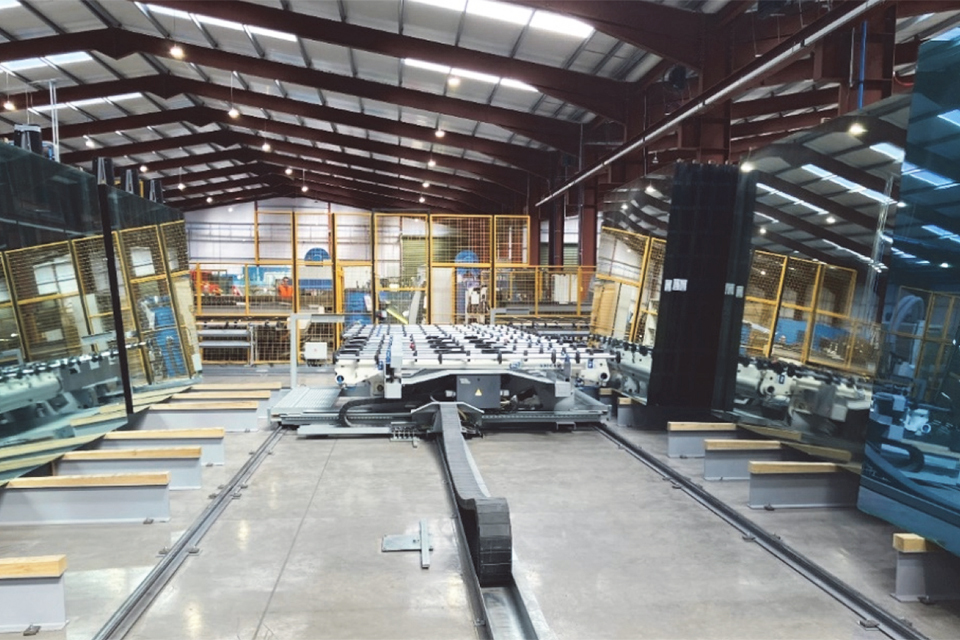
Figure 5: Segregated incoming glass storage area
Traceability
HSTTG manufacturers are required to verify the source of their incoming material so that glass subjected to heat soaking can be traced back to the float glass producer. However, only a third (32%) of manufacturers could demonstrate traceability for their HSTTG glass back to the source.
This poses a sizeable and potentially expensive issue for manufacturers and their customers. Should problems be identified with a HSTTG production run, a lack of traceability will mean neither the end user nor the manufacturer will be able to identify which specific products are affected. Consequently, poor traceability is likely to result in much higher costs for replacement and recall than would actually be necessary, as customers and suppliers cannot be confident which glass is affected, and which is satisfactory. With no reliable way to identify non-compliant products, it is likely they will have to alert a wider range of customers and could have to replace or recall more products supplied at significant financial and environmental cost.
OPSS did see evidence of good practices. This was often where product traceability information was being recorded electronically through a barcode system, meaning batches of glass could be quickly and accurately identified, enabling easy and cost-effective quarantining for affected products. Information about customers who received the affected product is also readily accessible, allowing clear and effective communication throughout the supply chain. Such investment in better traceability allows manufacturers to significantly reduce product losses and remakes, likely saving costs over the long term.
One manufacturer was sourcing some of their float glass ahead of the toughening and heat soak processing from an overseas producer, via an importer. OPSS’ attempts to trace this glass to source led to the UK-based importer, and technical documentation was requested from the business. Several issues were identified, including that the importer’s documentation did not meet the regulatory requirements, and OPSS discovered that the CAB certification had been falsified. OPSS has investigated these matters, and the importer has now largely rectified the non-compliances. This case demonstrates, however, that neither the importer nor the HSTTG manufacturer had previously been questioning the reliability or accuracy of the documentation for the original float glass.
Heat soak curves
The heat soak curve, a data record produced from the heat soak oven after processing, is a central element of verifying factory production control processes for HSTTG, and it is the primary means manufacturers use to demonstrate toughened glass has been subjected to heat soaking. Despite this, only 64% of manufacturers were able to produce adequate records of heat soak curves which related to specific products during OPSS’ initial inspection. This was surprising given there is no other mechanism to determine whether toughened glass has been subject to heat soak processing. The issues ranged from manufacturers not having access to the data held on the data recorder, to the recorder only providing date and time information for heat soaking, with no information about specific batches or orders that had been processed.
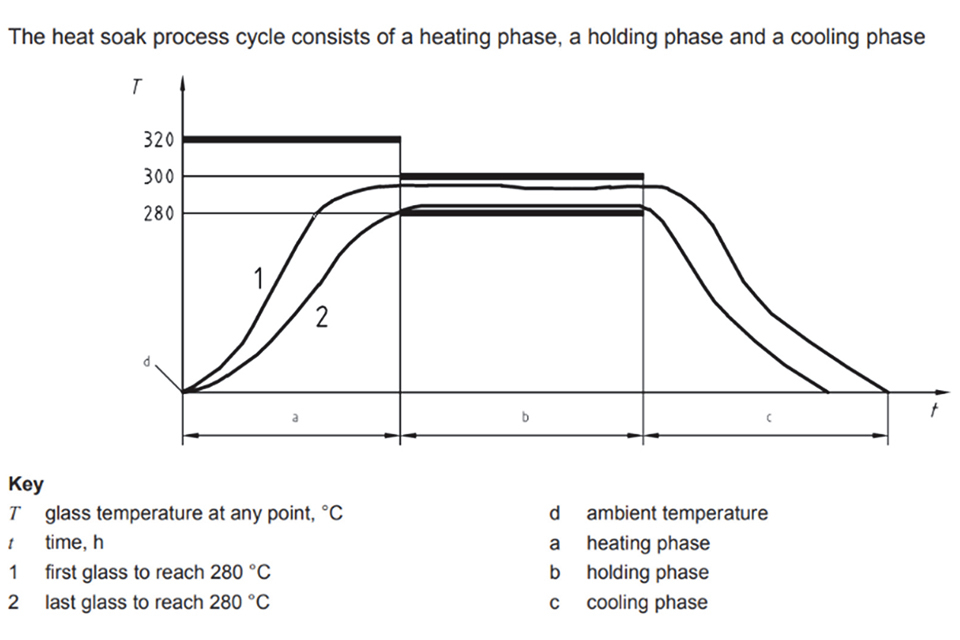
Figure 6: Example of a heat soak curve from BS EN14179-1 Temperature (Y-axis, degrees Celsius) against time (X-axis). [footnote 9] (The heat soak process cycle consists of a heating phase, a holding phase with consistent temperature, and a cooling phase.)
One manufacturer had to abandon heat soaking glass in real time after noticing that the date and time on the data controller was incorrect. Another manufacturer was storing the recorded data onto thermal chart paper, which can easily degrade over time and would unlikely last for the minimum retention period for information records. A different manufacturer was retaining heat soak curves only when requested by a customer.
This demonstrates an absence of concern among some manufacturers towards data that is key to proving – to their customers as well as regulators – that the products they market as heat soaked thermally toughened glass are what they claim. It is also essential evidence that shows a business has appropriate FPC processes in place. Following our inspections, OPSS officers reiterated the importance of this data in supporting the business to satisfactorily meet FPC requirements, as part of their overall compliance with their obligations.
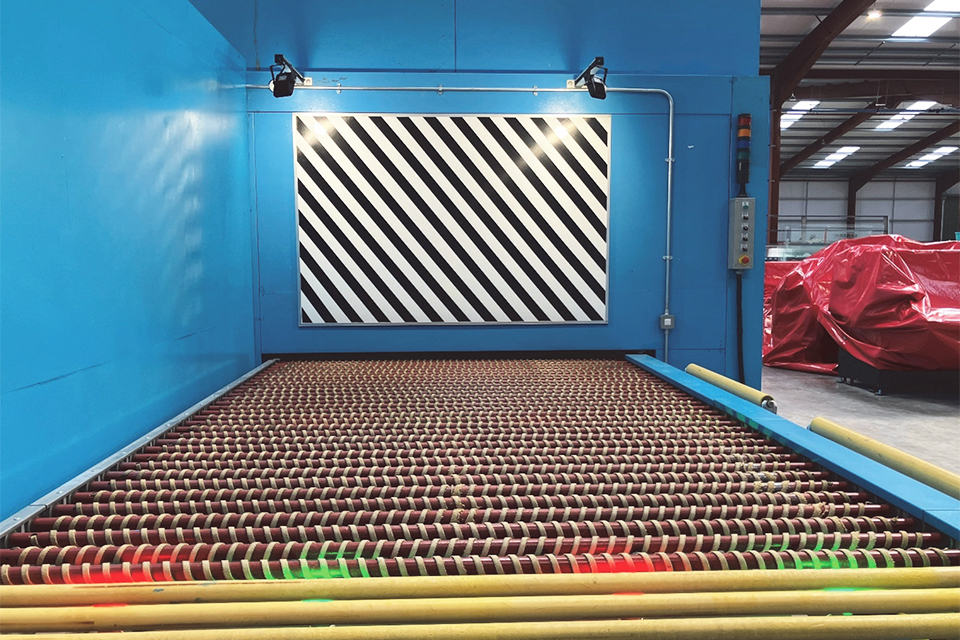
Figure 7: End of a toughening furnace
Factory testing and test equipment
OPSS inspections identified that 50% of manufacturers were not correctly undertaking the FPC testing and calibration of test equipment required by the designated standard, and for the business to be able to demonstrate its compliance with obligations. This is needed to ensure the equipment used to test a product’s performance and essential characteristics will provide accurate, reliable results. In some cases, manufacturers were not undertaking certain FPC tests at all: a quarter (25%) were not carrying out the required fragmentation testing while almost a third (32%) were not undertaking bow testing. During the course of inspections, OPSS observed that some manufacturers had the appropriate testing equipment available at their sites, but their appearance indicated they had not been used for some time.
In many cases, record keeping for the equipment used to test glass on the production line was not properly completed. There were instances where a manufacturer had clearly been given a template FPC manual but was not using it, with blank forms and references to other business names some of the more obvious indicators of a manufacturer’s failure to take these obligations seriously. OPSS saw instances where the records of equipment requiring calibration did not include the heat soak oven itself, and other essential equipment.
There was an example of a manufacturer using a single book to record all fragmentation, bow and mechanical strength tests results. OPSS highlighted the risk of this approach being a single point of failure for compliance and appropriate record keeping, should this one record be lost or damaged.
It was observed on several inspections that businesses without an identified person responsible for quality management in a full-time capacity were more likely to have poorer internal quality control over information management and product assurance. The best examples OPSS observed were fully computerised systems, which meant that records were backed up automatically, information could not be physically destroyed or lost, and data and information could be easily organised, searched and retrieved.
Third-party certification schemes
While there is no legal requirement for manufacturers to hold ISO 9001 Quality Management Systems certification, almost half (46%) of manufacturers inspected did so, with many citing that it was valuable in helping develop and manage their FPC processes, as well as supporting sales and marketing activities.
Auditors of such third-party schemes declare on their audit report which standards are in scope for their assessment of the manufacturer, and the scheme should assist a business to identify and comply with standards. However, serious non-conformances with factory production control requirements of BS EN14179-2, identified by OPSS during inspections, had not been picked up by these scheme’s auditors even though they had identified BS EN14179-2 within the scope of their audit.
Understandably, some manufacturers were concerned to discover that investing in audited third-party schemes had not helped them fully understand and comply with requirements in the construction products regulations. OPSS has encouraged the manufacturers inspected to raise this finding with their scheme auditors. OPSS also intends to share the report’s findings with third-party schemes, auditors, and industry representative bodies.
Intervention outcomes
Preventing supply of non-compliant products
At the time of publication, OPSS had served nine Prohibition Notices on six manufacturers for non-compliance with the regulatory requirements presenting the most serious potential consequences. The Prohibition Notices prevented the businesses from supplying the relevant products in the UK until they addressed the non-compliances identified by OPSS, or demonstrated they had begun putting the corrective actions OPSS required into place, and given assurances to the regulator that these would be delivered.
Preventing supply reduces the risk of customers having access to products on the market that may not perform as expected when purchased. This can be especially crucial if those products are being selected for safety characteristics. It also sends a wider signal to the market, increasing alertness among manufacturers and customers who may want to assure themselves about the reliability of products they intend to purchase.
OPSS proactively checked the manufacturers’ progress on bringing products or processes into compliance, before officers would consider allowing businesses to resume supply. Of the nine Notices served, supply has been able to resume in eight cases, meaning those businesses are now operating in compliance with the regulations.
Holding businesses to account
The nature of some of the non-compliance identified during OPSS’ intervention, and the required corrective actions, necessitated follow-up inspections by OPSS officers. This included inspecting manufacturers where OPSS had issued Prohibition Notices for more serious failures such as missing or non-compliant DoPs, or missing FPC records, where businesses could not provide evidence or assurance during the inspection that the non-compliance could be swiftly addressed. OPSS re-inspected 10 manufacturers as part of holding them to account for meeting their obligations.
Enforcement cases were not closed by OPSS until officers had received satisfactory evidence that all the identified actions had been completed by the manufacturers, or an agreement was in place for when they would be completed. OPSS may conduct further unannounced inspections of manufacturers to ensure actions are being carried out and to gather further evidence of compliance claims. OPSS remains in contact with all manufacturers still to complete corrective actions and these cases remain active.
Checking ongoing product compliance
As part of preparations for follow-up inspections and assessing whether compliance was improving, OPSS carried out some test purchasing of products. Test purchasing is a valuable enforcement tool as sample purchases of products available on the market help the regulator understand the customer experience and assess whether specific regulatory requirements – such as supplying the correct certification and product information – are being met.
Where OPSS was concerned that goods may still be placed on the market following the service of Prohibition Notices or where equipment was known to be out of action, several of the follow-up inspections were preceded by test purchases so that a request could be made for relevant FPC documents. This enabled OPSS to assess whether businesses were complying with the requirements of the Prohibition Notices served on them. Positively, no evidence of any breaches was found.
Changing business behaviours
Across the 28 manufacturers, OPSS identified 256 measures that businesses needed to take to address the non-compliances with the regulatory requirements or designated standard requirements. These included 114 measures that required the manufacturer to take immediate action to remedy failings that have serious potential consequences for product safety and performance reliability, with the subsequent impact on customers supplied with those products. The remaining 142 measures were required to address failures to comply with the regulations or designated standard where the potential impacts were lower.
Of these, 88% of all the identified measures have been completed. 90% of serious non-compliance measures had been completed (see more detail in Annex A, Table 19).
The findings in this report relate to the failings of manufacturers, but they raise concerns over a lack of due diligence in the supply chain about the reliability of the products they are purchasing. With all manufacturers unable to provide a compliant DoP at the outset of OPSS inspections, and two-thirds unable to provide heat soak curve data, it suggests there has historically been little initiative from the industry’s customers to ask for information that would assure them about the reliability and performance of the products they are buying. Had they asked, the likelihood – at least before OPSS’ inspection programme – is that manufacturers would not have been able to provide technical evidence to provide that assurance. Given HSTTG is often selected for performance and safety reasons, it is concerning that the construction products supply chain is not more rigorously checking the safety and performance of the goods they are purchasing. As customers would be responsible for rectifying any issues involving HSTTG once it is installed on their project, there is a commercial incentive to implement more effective due diligence processes.
Publishing details of our enforcement action
As part of our commitment to regulating in a proportionate and transparent way, OPSS publishes details of our enforcement actions, including Prohibition Notices, on GOV.UK.
Making details of our enforcement actions public – including the businesses involved – is an important part of OPSS’ approach to enforcement, to deter future non-compliance across industries. Like this report, publication highlights the non-compliance issues found, any corrective action required, and the enforcement action taken by the regulator. Publicising our action also increases the awareness among other industries of the existence of a proactive national regulator, and the impact we have on markets.
Read information on the enforcement action taken during our HSTTG inspection programme.
Lessons for the industry and next steps
OPSS carried out unannounced inspections on all identified UK-based manufacturers of HSTTG that conduct processing using in-house equipment. As a result, OPSS is reasonably confident that our intervention is having a positive sector-wide impact. Many of the businesses that OPSS engaged with responded collaboratively to the intervention where it helped make clear the regulatory requirements that applied to their products, though OPSS consistently reminds businesses that they are responsible for knowing, and complying with, the regulations that apply to their business and products.
The implications for HSTTG businesses are continuing as OPSS holds them to account for addressing identified and unresolved compliance issues, requiring them to provide evidence of progress being made. OPSS’ future activities may include further unannounced visits to previously inspected manufacturers, to ensure compliance is being maintained.
Though the programme identified a range of compliance failures, some of which were serious, there are three significant areas OPSS believes manufacturers of all glass construction products should immediately focus on, to assure themselves that they understand and are complying with the regulatory requirements that the law places on construction product manufacturers.
- Declaration of Performance certificates: A valid DoP is a legal requirement for products in scope of the Construction Products Regulations 2013. Yet the DoPs which were inspected by OPSS were all non-compliant. The inspection programme has also shown that businesses have not been providing DoPs to their customers as standard practice, only when requested. Businesses must ensure that they are clear on the requirements that apply to them for producing a compliant DoP. OPSS recommends manufacturers immediately supply DoPs with each customer order or make the DoPs available on their website and provide appropriate links from their commercial documentation to those DoPs.
- Initial Type Testing: The inspection programme has shown many manufacturers could not locate relevant ITT reports for the types of glass manufactured. Businesses must ensure they are aware of the ITT required for the products they manufacture, and are carrying this out in line with the relevant designated standard or test method. OPSS recommends manufacturers immediately review their ITT reports to ensure they are up to date, they refer to the glass being processed, and the correct classification for the pendulum body impact essential characteristic is shown on the DoP.
- Conformity marking: The inspection programme has shown that businesses are generally not conformity marking their physical products, though many were applying the BSI kitemark. The regulations currently require a construction product to be conformity marked directly or via a label attached to the product, unless it is not possible to do so. Businesses capable of marking their physical products with a kitemark are evidently capable of applying conformity marking too, and the latter will soon be a requirement for businesses placing construction products on the EU market. The Government has consulted on a range of proposals for construction products reform, including in this area, and will be publishing a White Paper on reform before spring 2026. Businesses will need to be alert for any future regulatory changes that may impact their operations.
The findings here are instructive for all businesses manufacturing glass construction products. OPSS’ experience of regulating across glass and many other construction products categories shows that businesses’ ability to demonstrate compliance with the law, and sometimes demonstrate awareness of the regulations that apply to them, can be worryingly low. While this intervention focused on the HSTTG sector, OPSS anticipates that similar compliance issues will exist in other subsectors. The trends in technical non-compliance that OPSS identified, in relation to product performance, testing and certification, are likely to be common for the manufacture of other glass products. As such, the implications of our intervention are not restricted to the HSTTG market: there are vital regulatory learnings here for the UK glass industry at large.
The success in OPSS’ programme of announced and unannounced inspections shows that the regulator’s interventions can root out non-compliance and begin quickly changing behaviours. The glass industry, and other construction products sectors, should be on notice that OPSS is evaluating this inspection programme so that similar programmes can be deployed even more effectively for other construction product types in the future.
Footnotes
-
ONS (2024). UK Glass Manufacture Data (Prodcom, Table 5, 2024), Product Division Code 23.1. Available at UK manufacturers’ sales by product – ONS website ↩
-
ONS (2023) Annual Business Survey. Office for National Statistics. (Section C, SIC 23.1) Available at Non-financial business economy, UK Sections A to S – ONS website ↩
-
ONS (2024) Business Register and Employment Survey (BRES, 2024). Available at Business Register and Employment Survey – NOMIS website. Choose the following selection: Geography – “Regions”, Date – “2024”, Employment Status – “Employees”, Industry – 4 digit Standard Industrial Classification (All), Percent – “Count”, download the data. In the data, seek out SICs 2311, 2312, 2313, 2314, 2319 and sum up regions. ↩
-
ONS (2024) Business Register and Employment Survey (BRES, 2024). Available at Business Register and Employment Survey – NOMIS website. Choose the following selection: Geography – “Regions”, Date – “2024”, Employment Status – “Employment”, Industry – 4 digit Standard Industrial Classification (All), Percent – “Count”, download the data. In the data, seek out SICs 2311 and 2312 and sum up regions. ↩
-
OPSS calculated this figure based on the numbers of employees reported by the 28 businesses inspected. If a range was given, the upper end of the range was used. ↩
-
ONS (2024). UK Glass Manufacture Data (Prodcom, Table 5, 2022-2024), Product Code 23121230 – Other toughened safety glass, including for architectural use. Available at UK manufacturers’ sales by product – ONS website ↩
-
HMRC (2024). Overseas Trade in Goods Statistics (UK Trade Info): Glass and Glassware, Commodity Codes 70071900 and 70072900. Available at Overseas trade data table – UK Trade Info website ↩
-
CROSS Safety Report, Toughened glass failures, Report ID 1135. Available at Toughened glass failures – CROSS UK website ↩
-
Permission to reproduce extracts from British Standards is granted by BSI. British Standards can be obtained in PDF or hard copy formats from BSI Knowledge or by contacting BSI Customer Services for hardcopies only: Tel: +44 (0)20 8996 9001, Email: cservices@bsigroup.com. ↩