
Ofqual gender pay gap report 2025
Updated 30 March 2026
Applies to England

© Crown copyright 2026
This publication is licensed under the terms of the Open Government Licence v3.0 except where otherwise stated. To view this licence, visit nationalarchives.gov.uk/doc/open-government-licence/version/3 or write to the Information Policy Team, The National Archives, Kew, London TW9 4DU, or email: psi@nationalarchives.gov.uk.
Where we have identified any third party copyright information you will need to obtain permission from the copyright holders concerned.
This publication is available at https://www.gov.uk/government/publications/gender-pay-gap-report-ofqual/ofqual-gender-pay-gap-report-2025
Executive summary
Ofqual’s Gender Pay Gap (GPG) report is a high-level view and analysis of pay within the organisation and shows the difference in the average pay between all men and all women in the workforce.
The Annual Civil Service Employment Survey (ACSES) data, which was published in July 2025 by the Cabinet Office, calculated Ofqual’s gender pay gap figures, and the methodology used annual salaries as of 31 March 2025 to calculate hourly pay.
The mean pay gap figure for 2025 is 17.4% which is a 0.7% decrease on the previous year.
The median pay gap figure is 15.8% which is a 1.5% decrease on the previous year.
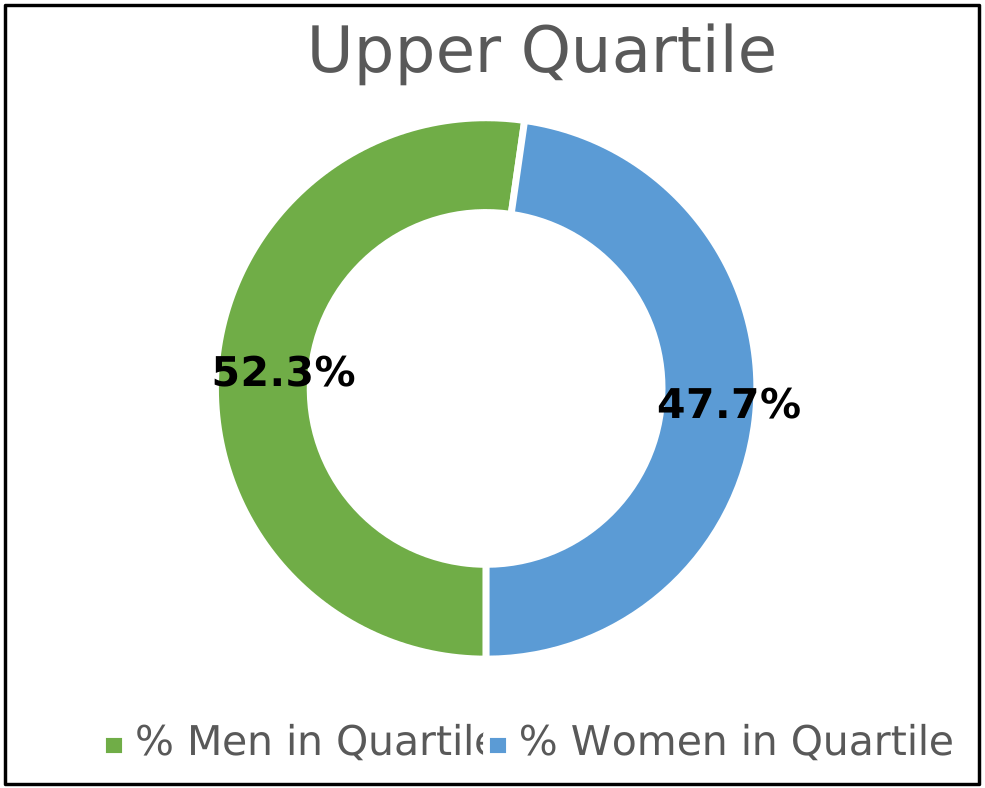
Women continue to make up more than 50% of the Ofqual workforce across all pay quartiles except the upper quartile, which is 47.7% as of 31 March 2025. Overall, the number of women at Ofqual fell in 2024 to 2025 from 66.6% of the workforce in 2024 to 64.2% in 2025.
The mean bonus gap figure for 2025 is -0.3% which is a 4.5% decrease on the previous year. The median bonus gap is 0%, consistent with the position reported in the previous year.
Introduction
Organisational context
Ofqual is a non-ministerial department that regulates qualifications, examinations and assessments in England.
Parliament created Ofqual to:
- secure standards in qualifications so they give a reliable and consistent indication of knowledge, skills and understanding
- promote the development and implementation of national assessments that give a reliable and consistent indication of achievement
- promote public confidence in qualifications and national assessments
- promote public awareness and understanding of the range and benefits of regulated qualifications
- secure that qualifications are provided efficiently and represent value for money
Ofqual first exceeded the 250-employee threshold for reporting in 2021. The headcount of Ofqual’s workforce as of 31 March 2025 was 358. Ofqual remains a relatively small organisation in comparison with many other government departments and it is, therefore, important to note that any small changes to the organisational structure regarding staffing can have a large impact on the gender pay gap reporting statistics, both positively and negatively.
This report provides information on Ofqual’s gender pay gap for the year 2024 to 2025, with data to 31 March 2025 and comparable information for the previous year where relevant.
Approach to diversity and inclusion
Building a diverse and inclusive workforce that reflects the people we serve is one of the Civil Service’s top workforce priorities. Ofqual aims for a diverse workforce at all levels including Senior Civil Service (SCS) posts and has robust monitoring in place at each stage of the recruitment and selection process to aid this and allow us to understand underrepresented groups that should be addressed.
Organisational structure
This report includes data relating to Ofqual employees only.
Ofqual’s pay grades range from administrative officer to senior civil servants. Grades vary according to the level of responsibility that individuals have, and each grade has a set pay range as per the table on page 6. Ofqual’s gender split as of 31 March 2025 was 35.8% male staff and 64.2% female staff. 97.2% of Ofqual’s employees are Midlands based.
Table 1: Breakdown of men and women represented in each grade (31 March 2025)
| Grade | Number of men (% of total workforce) | Number of women (% of total workforce) | % of women in each grade |
|---|---|---|---|
| SCS | 16 (4.5%) | 6 (1.7%) | 27.3% |
| G6 | 16 (4.5%) | 24 (6.7%) | 60.0% |
| G7 | 38 (10.6%) | 60 (16.8%) | 61.2% |
| SEO | 31 (8.7%) | 52 (14.5%) | 62.7% |
| HEO | 21 (5.9%) | 67 (18.7%) | 76.1% |
| EO | 4 (1.1%) | 18 (5.0%) | 81.8% |
| AO | 2 (0.5%) | 3 (0.8%) | 60.0% |
Gender pay gap report
The gender pay gap is the difference in the average earnings between all men and women in an organisation.
From April 2017, employers with 250 or more employees must publish information on their gender pay gap. The pay gap must be reported on in 6 different ways:
- the mean gender pay gap
- the median gender pay gap
- the mean gender bonus gap
- the median gender bonus gap
- the proportion of men and women who received bonuses
- the proportion of men and women according to quartile pay bands
The mean gender pay gap is the difference between the mean hourly rate of pay of male full-pay relevant employees and that of female full-pay relevant employees.
The median gender pay gap is the difference between the median hourly rate of pay of male full-pay relevant employees and that of female full-pay relevant employees.
The gender pay gap is different to equal pay. Equal pay deals with the pay differences between men and women who carry out the same jobs, similar jobs, or work of equal value. It is unlawful to pay people unequally because they are a man or a woman.
The existence of a Gender Pay Gap may not equate to the existence of an equal pay problem, but it may be a trigger for further investigation about why the gap exists.
For this report, hourly rates have been calculated in line with the Annual Civil Service Employment Survey requirements and regulations as follows:
- a calculation of March pay for each employee
- a calculation of March hours for each employee
- a calculation of the gender pay gap compliant hourly wage
Table 2: Gender pay and bonus gap in 2025
| Difference between men and women | Mean | Mean (%change from 2024) | Median (Middle) | Median (%change from 2024) |
|---|---|---|---|---|
| Gender Pay Gap | 17.40% | -0.7% | 15.80% | -1.5% |
| Gender Bonus Gap | -0.3% | -4.5% | 0.00% | 0.00% |
The median and mean gender pay gap for the Civil Service is 6.4% and 6.9%, down from 8.5% and 7.4% in 2024 respectively[footnote 1].
Pay ranges
Ofqual aims to appoint new external staff into post on the minimum salary for the grade. For internal promotion purposes, individuals are eligible to have their pay adjusted to reward promotion. This is based on the higher of the following:
- the pay band minimum of the higher grade
- existing basic salary + 10% (providing it is at or below the pay band maximum for the current grade)
Any variation to this must be approved by the Executive Director Finance and Operations and consideration during this process is given to comparative roles in the organisation alongside the gender profile for the grade. Pay on appointment must not exceed the maximum for the grade.
There is no incremental progression through the salary range but pay may increase if an annual consolidated pay award is made. In the 2024 to 2025 pay award, in line with central government pay guidance, Ofqual issued a 5% increase to all staff from AO to SCS.
Table 3: Ofqual grades and pay bands as of 31 March 2025
| Grade | Minimum £ | Maximum £ |
|---|---|---|
| Administrative Officer (AO) | £20,888 | £22,705 |
| Executive Officer (EO) | £24,745 | £28,917 |
| Higher Executive Officer (HEO) | £33,540 | £39,413 |
| Senior Executive Officer (SEO) | £41,113 | £48,088 |
| Grade 7 | £50,882 | £62,011 |
| Grade 6 | £68,161 | £76,577 |
| SCS1 | £76,000 | £117,800 |
| SCS2 | £98,000 | £162,500 |
| SCS3 | £128,000 | £208,100 |
Grading structure
Table 4: Comparison of the percentage of women by job grade in Ofqual
| Grade | 2025 | 2024 | Difference |
|---|---|---|---|
| AO | 60.0% | 55.6% | 4.4% |
| EO | 81.8% | 87.0% | -5.1% |
| HEO | 76.1% | 75.9% | 0.3% |
| SEO | 62.7% | 70.4% | -7.7% |
| G7 | 61.2% | 61.2% | 0.0% |
| G6 | 60.0% | 61.1% | -1.1% |
| SCS | 27.3% | 26.3% | 1.0% |
| Total | 64.2% | 66.6% | -2.4% |
The number of women at AO, HEO, SCS has increased by 4.4%, 0.3% and 1.0% respectively in the last 12 months. The proportion of women in EO, SEO, and G6 has decreased by 5.1%, 7.7% and 1.1%. The proportion of women in G7 has remained the same.
Ofqual employee gender profile
Table 5: Gender profile of employees at Ofqual
| Gender | 2025 | 2024 |
|---|---|---|
| Female | 64.2% | 66.6% |
| Male | 35.8% | 33.4% |
Over the period 2024 to 2025 we have seen a decrease in the proportion of female employees, falling from 66.6% to 64.2%. This change is explained by a higher number of female leavers during the year, combined with a proportionally higher number of male starters. It remains 9.6% higher than the Civil Service average of 54.6%[footnote 2].
Analysis of the pay gap at Ofqual
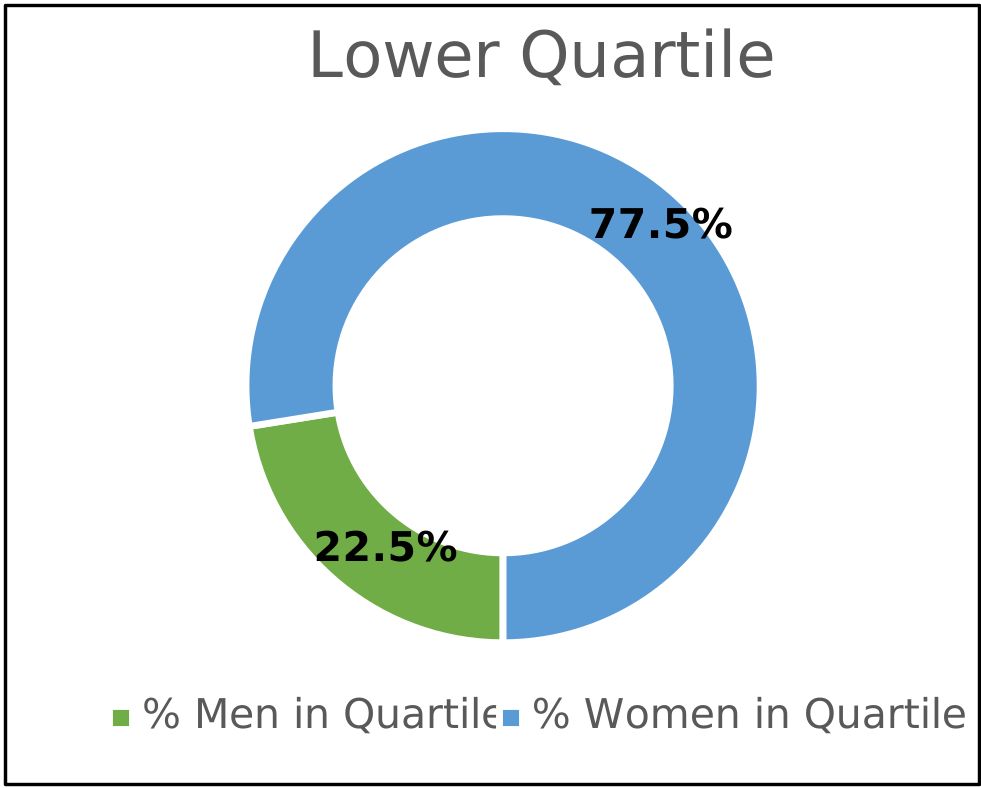
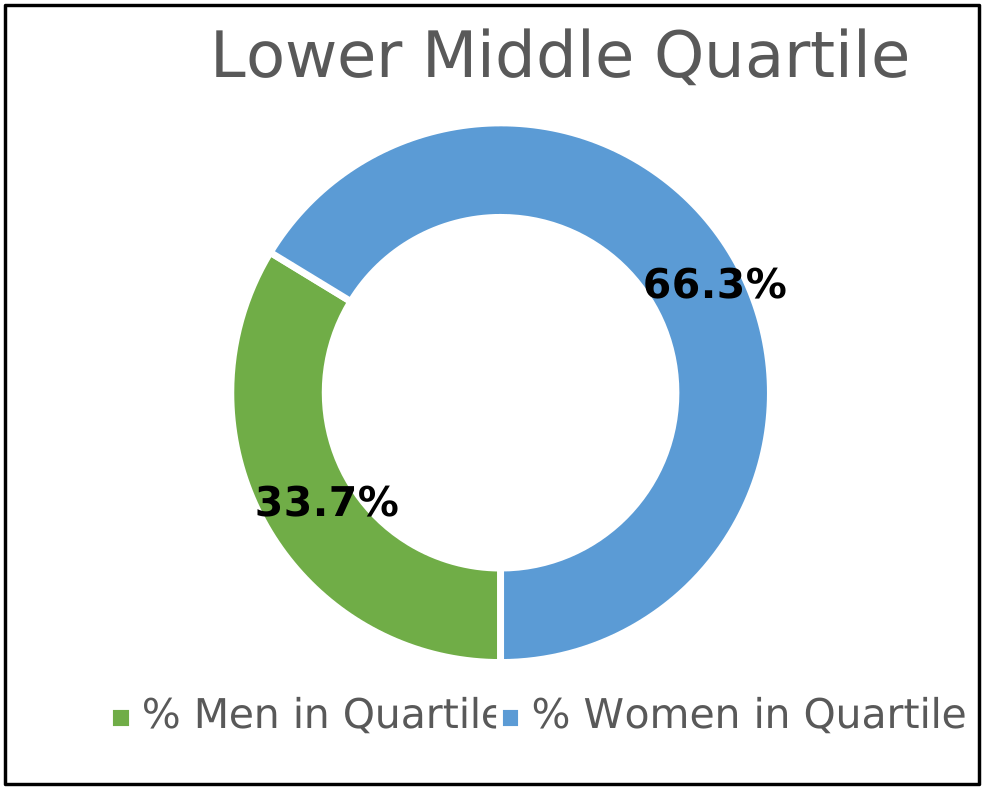
While there are more women than men in all grades, except SCS, there is a larger proportion of women in grades EO to SEO and, therefore, significantly more women than men in the lower pay quartiles.
There has been a pay gap decrease of 0.7% since the last reporting period based on the mean data and 1.5% based on median data.
Table 6: Ofqual gender pay and bonus gap
| Year | Pay gap mean | Pay gap median | Bonus gap mean | Bonus gap median |
|---|---|---|---|---|
| 2025 | 17.4% in favour of men | 15.8% in favour of men | -0.3% in favour of women | 0.0% |
| 2024 | 18.1% in favour of men | 17.3% in favour of men | 4.2% in favour of men | 0.0% |
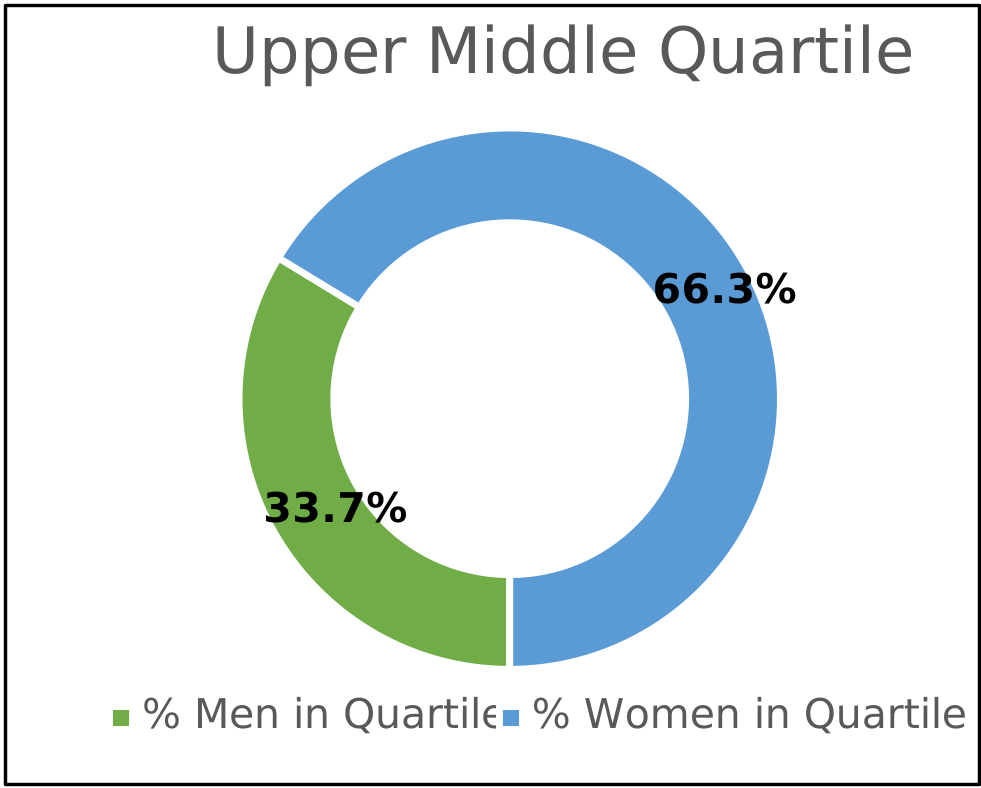
Table 7: Percentage of women by pay quartile at Ofqual
| Year | Lower | Lower middle | Upper middle | Upper |
|---|---|---|---|---|
| 2025 | 77.53% | 66.29% | 66.29% | 47.73% |
| 2024 | 78.40% | 69.00% | 68.20% | 49.40% |
Analysis of the bonus gap
The bonus gap for 2025 is -0.3% (mean) in favour of women and 0.0% (median).
The calculation for the bonus gap is based on In Year Awards which are non-consolidated cash awards focusing on organisational performance.
In making an award for bonus payments, a reference period is used as the basis for calculations alongside a set criterion which pro-rates awards based on working patterns and excludes periods of probation, long-term sickness, and family leave.
Points to note when reviewing the bonus gap include:
- a higher proportion of women were affected by pro-rating as there was a higher proportion of women working part time hours in comparison with men
- a higher proportion of women were affected by pro-rating due to absence in comparison to men
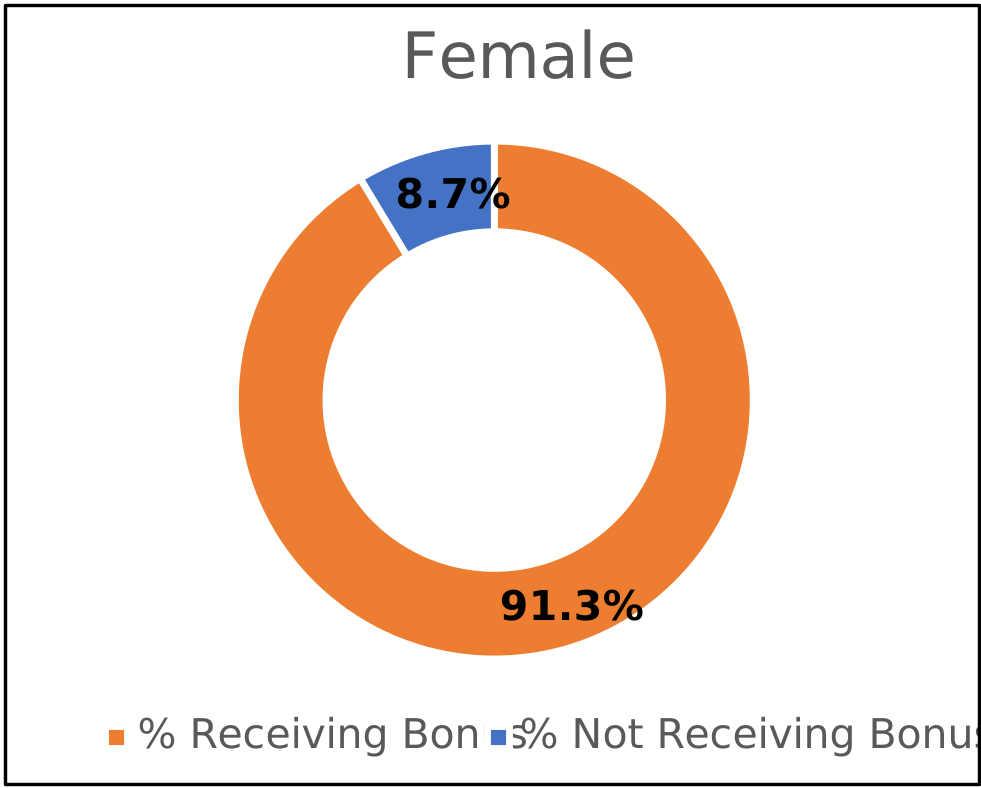
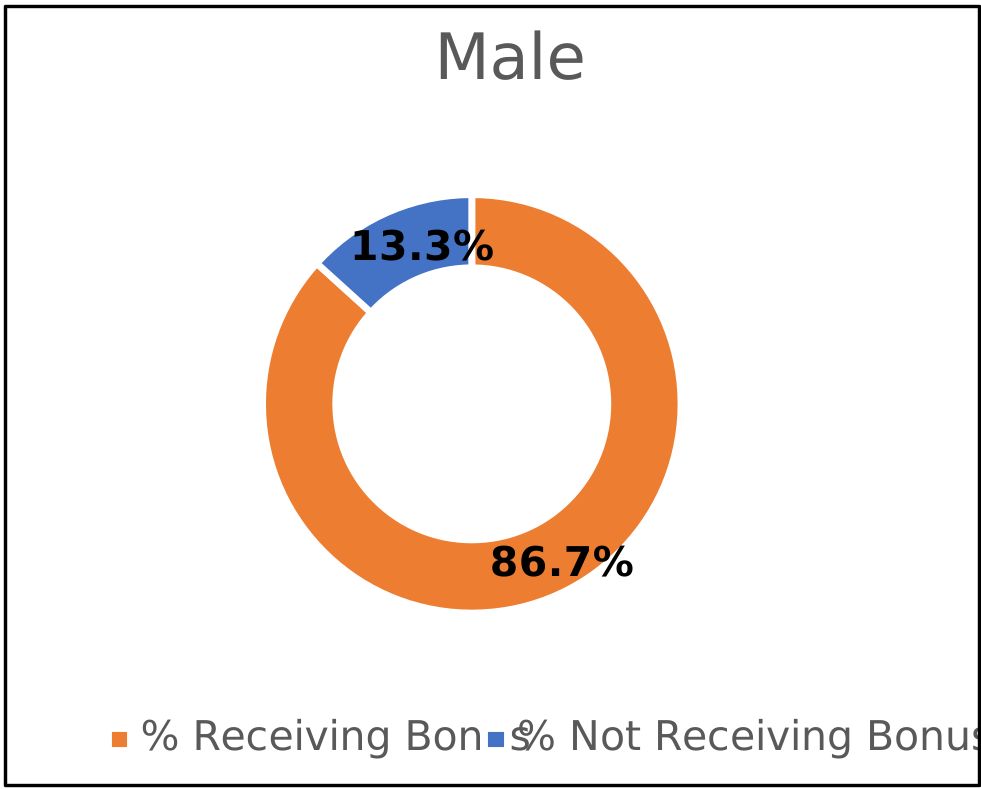
Table 8: Percentage of men and women receiving a bonus at Ofqual
| Year | Men | Women |
|---|---|---|
| 2025 | 86.72% | 91.34% |
| 2024 | 92.40% | 95.69% |
Actions undertaken since the last reporting period
Since the last publication Ofqual has taken the following steps in response to gender pay gap analysis:
- continued review of recruitment practices and processes, with EDI committee members shadowing recruitment campaigns to assure lack of bias and offer recommendations
- review and uplift of pay bands including minima and maxima
- continued review of pay anomalies across the organisation with a particular focus on gender
- deep dive into the drivers for the gender pay gap in conjunction with Ofqual’s Research directorate
Further actions to be taken
Ofqual will continue to monitor the gender pay gap and explore more ways to encourage the development of female employees to enable progression to more senior positions within the organisation.
To this end, senior leadership training programmes have been secured for a selection of high performing senior managers to support and develop their leadership skills, enhancing the potential for promotion within Ofqual where opportunities arise. Furthermore, a talent programme is being developed to offer exposure to broader strategy and senior leadership activity. While these initiatives are primarily considered based on potential and merit, active consideration is also given to ensuring a diverse and representative mix of gender and ethnicity among participants. Ofqual is supporting just over 7% of its workforce to develop vital skills for the future, with women making up 60% of those participating.
Declaration
We confirm that data reported by the Office of Qualifications and Examinations Regulation (Ofqual) is accurate and has been calculated according to the requirements and methodology set out in the Equality Act 2010 (Specific Duties and Public Authorities) Regulations 2017.
Name: Tony Bishop
Job title: Interim Director of People and Culture