Stakeholder Forum Papers: Infrastructure - IPTV ecosystem readiness
Published 23 June 2026

© Crown copyright 2026
This publication is licensed under the terms of the Open Government Licence v3.0 except where otherwise stated. To view this licence, visit nationalarchives.gov.uk/doc/open-government-licence/version/3 or write to the Information Policy Team, The National Archives, Kew, London TW9 4DU, or email: psi@nationalarchives.gov.uk.
Where we have identified any third party copyright information you will need to obtain permission from the copyright holders concerned.
This publication is available at https://www.gov.uk/government/publications/future-of-tv-distribution-stakeholder-forum-papers/stakeholder-forum-papers-infrastructure-iptv-ecosystem-readiness
A paper independently produced by the Infrastructure Working Group of the Stakeholder Forum and edited by the chair - Richard Lindsay-Davies
Purpose
Through structured thematic contributions and evidence-based analysis, this paper aims to guide future decisions about television delivery in the UK, and how smooth inclusive sustainable IPTV delivery can be supported. It does not address whether such a transition to IP should occur.
Conclusion and forward look
This paper concludes that the UK’s IP ecosystem is technically capable of supporting a full transition from Digital Terrestrial Television (DTT) and Direct-to-Home Satellite (DSAT) to exclusively IP-based television distribution, provided certain conditions and dependencies are met. Although IP-only delivery is technically viable and increasingly reliable, the paper highlights specific areas for improvement, which policymakers may wish to investigate further to provide greater certainty for viewers during a switchover scenario. To fully uphold public service broadcasting objectives, maintain audience trust, and ensure no viewers are left behind, policymakers and industry stakeholders should consider:
-
Promoting efficient and interoperable infrastructure use.
-
Using agreed industry standards to build devices, apps and platforms, and clearly communicating how long products will be supported, so they last as long as possible and can be easily upgraded when needed.
-
Enhancing resilience through shared industry obligations and consumer clarity.
-
Clarifying Public Service Broadcasting delivery obligations and responsibilities and, where necessary, reviewing regulations to support those.
Background and context
The Department for Culture, Media & Sport (DCMS), working with DSIT, Ofcom and industry stakeholders, established the Future of TV Distribution Stakeholder Forum in November 2024. The forum aims to refine policy options, enhance evidence bases for future TV distribution models, and build industry consensus. The forum has been asked to consider a range of options for the future of TV Distribution including whether it would be feasible to transition to deliver TV fully via IP distribution. A key aspect is consideration of the technical possibility, both in the core delivery of content to and within homes, and the consumer affordability and usability of any solution relative to the existing hybrid broadcast/IP system. The core aims of the group will be
to ensure that no one is left behind amid a shift towards online viewing, and to establish a sustainable television ecosystem that works for both audiences and the industry.
Introduction and editorial approach
This paper evaluates how prepared the UK’s IP ecosystem is to handle a full transition from DTT and DSAT to exclusively IP-based broadcast distribution. The paper employs a structured editorial approach, with thematic sections drafted by sector-specific leads drawing on industry expertise. The Lead Editor oversaw the integration to help ensure balance, coherence, accuracy, and evidence transparency, supported by a shared reference library to maintain consistency.
While focusing on IP delivery, the paper briefly outlines the characteristics, benefits, and limitations of traditional broadcast services to frame the comparison, concentrating on Public Service Broadcasting (PSB) while recognising broader audiovisual content delivery ecosystems. It identifies systemic dependencies, challenges and weaknesses of IP delivery and proposes improvement opportunities.
Framing the transition: broadcast versus IP
Traditional broadcast platforms DTT and DSAT have provided consistent reliability and extensive coverage to UK audiences for several decades. While DTT typically delivers highly dependable service, it can be affected by environmental disruptions, such as severe weather, atmospheric conditions or infrastructure incidents like the Bilsdale transmitter fire. Satellite broadcasting also generally offers robust coverage but requires accurate dish alignment and can experience weather-related interference. Both platforms face ‘last mile’ challenges, notably aerial or dish misalignment, damage, or distribution issues within multiple dwelling units[footnote 1].
Despite their historic reliability, traditional broadcast platforms face growing affordability and adoption hurdles. The TV licence fee (£169 per year) offers limited discounts or exemptions, primarily restricted to households with occupants aged over 75 receiving Pension Credit[footnote 2]. Additionally, Ofcom highlight a continued decline in DTT installations, reflecting shifting viewer preferences towards IP-based services.
IP-based television delivery, in contrast, operates via shared broadband infrastructure, supporting personalised content and flexible viewing options. The Department for Science, Innovation and Technology (DSIT) predicts gigabit broadband coverage will reach 99% by 2032, driven by significant industry investment and the government’s Project Gigabit programme (DSIT Project Gigabit). Current superfast broadband coverage (98.3%) already meets the capacity requirements for multiple simultaneous HD streams, offering service quality comparable to DTT.
Nevertheless, IP delivery is subject to network congestion during peak times, potentially impacting service consistency, and can suffer from localised or wider broadband outages. Furthermore, the broadband market shows signs of maturing, with declining subscriber growth (Enders Analysis, 2024). Affordability and digital inclusion remain significant barriers, particularly for households reliant solely on traditional broadcast services. However[footnote 3], broadband social tariffs are now available, presenting potential savings for households transitioning to IP services (Ofcom Broadband Social Tariffs).
To achieve a complete transition to IP-based television, policymakers and industry stakeholders must proactively address issues surrounding network reliability, broadband availability, affordability, and digital inclusion to ensure an equitable and smooth switchover.
Current state of the UK IP ecosystem
Network infrastructure providers (Annexes 3.1, 4.6) Significant progress in broadband infrastructure includes extensive fibre-to-the-premises (FTTP) deployment, now covering over approximately three-quarters of UK premises[footnote 4], with gigabit-capable broadband projected to reach 99% coverage by 2032. Fixed Wireless Access (FWA) and satellite solutions supplement connectivity in rural areas, despite limitations in latency and scalability. This expanded broadband availability will be essential for supporting a potential nationwide transition to IPTV, subject to resolving current issues of affordability and digital inclusion.
Consumer broadband providers (Annex 3.2) Broadband coverage is strong, with 98% of premises capable of accessing superfast broadband (30Mbps). Challenges remain around affordability and digital exclusion, affecting around three million households, necessitating targeted intervention and digital inclusion programmes.
Remote and hard-to-reach homes (Annex 3.3) Satellite broadband and Fixed Wireless Access (FWA) have successfully provided connectivity to around 576,000 remote premises, yet scalability, reliability, and affordability require ongoing attention and support from both industry and government.
Interconnection, transit, and CDN ecosystem (Annexes 3.4, 3.5) Robust Content Delivery Network (CDN) deployment and interconnection arrangements among ISPs and content providers can significantly reduce ISP network congestion and enhance user experience, especially during peak demand. The impact of recent CDN business failures and market consolidation should be assessed.
Consumer electronics and in-home distribution (Annexes 3.6, 3.7) Rapid adoption and diversity of connected devices highlights the possible benefits of baseline adoption of a set of[footnote 5] common standards and interoperability, rather than advocating a single, prescriptive IP device standard. A clear consumer certification programme for the horizontal market, such as a Connected TV[footnote 6] Digital Tick and Help Scheme[footnote 7] for the vulnerable could support consumer confidence while preserving the ability of the consumer electronics industry to differentiate products. Additionally, providing consistent and intuitive paradigms for navigation and accessibility will be essential to meet the needs of all audiences, particularly those requiring enhanced usability.
Advances in home Wi-Fi, mesh networks, and broadband backup continue to significantly improve IPTV reliability.
Viewer experience determinants (Annexes 3.8, 4.5) IPTV service quality depends on a range of factors across the entire delivery ecosystem, not solely on the underlying internet connection. Key influencing factors include codec efficiency, technology choices made by content and application providers (such as adaptive bitrate (ABR) streaming), the setup and configuration of in-home distribution, and device performance. Device and application performance impacts not only playback smoothness but also the responsiveness and ease of user navigation and interaction. Adopting advanced codecs and adaptive streaming technologies can further optimise network bandwidth, enhance service reliability, and ensure a high-quality viewer experience.
Real-life case studies (Annex 3.9) Global case studies illustrate the successful delivery of major events over IPTV through cloud-based distribution and proactive CDN traffic management. Currently, effective implementation depends heavily on coordination between content providers and network operators. As more content transitions to IP, average demand is likely to stabilise, simplifying routine planning. However, major national events, such as the World Cup, Euros, or Royal ceremonies, and unexpected breaking news will continue to require dedicated management. Annex 4.1 identifies ongoing challenges around content clashes, notably large-scale gaming downloads coinciding with live broadcasts, posing planning difficulties for ISPs.
Gaps, challenges, and opportunities
Content clashes and live event traffic management (Annexes 4.1, 4.2) Significant challenges arise from simultaneous high-demand events, such as major gaming updates coinciding with live sports or entertainment. Enhanced industry coordination, clarified regulation, and prioritisation frameworks are recommended to mitigate network congestion and ensure service reliability during peak periods.
Network dimensioning (Annex 4.3) Effective network dimensioning involves forecasting, planning, and managing network capacity to meet IPTV demands. Collaboration between ISPs, content providers and CDNs, during high-demand events can contribute significantly to improving network performance.
Platform and application quality (Annex 4.4) Standards for application quality, supported by robust testing frameworks and clear minimum performance standards, are essential to ensure consistent and sustainable viewer experiences across devices. The impact of product, service and application lifecycles, together with their inevitable obsolescence and a planned upgrade path should be considered.
Right-sizing and efficiency (Annex 4.5) It is in the interest of all parties in the IP ecosystem to ensure that networks are used efficiently. The use of particular types of technology, as well as behaviours/policies can have a significant impact on efficiency. For example, adaptive streaming tailored to device capability and network conditions is recommended to prevent unnecessary bandwidth use, maintaining service efficiency and quality.
Resilience and service continuity (Annex 4.6) Robust backup systems, including mobile tethering and integrated mobile backup solutions, enhance IPTV resilience and maintain continuity, especially in emergency situations.
Consumer take-up of IPTV services Consumer adoption of IPTV is steadily increasing in the UK, driven by IP-first television services, broadband access, affordability, and demand for personalised content. However, significant adoption gaps remain among older, lower-income, and rural households. Industry initiatives to boost digital inclusion and affordability, combined with clearer usability standards and consumer education, are key to addressing these gaps. As with the broadcast digital switchover, early and decisive action by government will significantly encourage broader consumer adoption.
Consumer clarity and accountability (Annex 4.7) Clear, structured support schemes will be essential to ensure the UK’s readiness to assist consumers if a transition occurs. Recommended measures include comprehensive pilot programmes, public information campaigns, and clearly defined service-level agreements to ensure consumer support is accessible and consistent throughout any potential transition.
Annexes
Annex 3.1: Network infrastructure providers
Lead: BT
Contributors: DTG, Inca, Sky & VMO2, Arqiva, LG
a. Current state overview
Broadband networks:
-
Regarding broadband availability now, as at January 2024, according to Ofcom’s Connected Nations report. Superfast broadband coverage across the UK overall is at 98%.[footnote 8]
-
Under the government’s Project Gigabit Programme, 99% of premises will have access to gigabit speeds by 2032,[footnote 9] which exceeds today’s DTT coverage of 98.5%.
-
Average residential download speeds have continued to increase. According to Ofcom’s May 2023 Interactive Connected Nations report, the average (mean) UK download speed was 151 Mbit/s[footnote 10] at that time, significantly higher than the 69.4 Mbit/s median figure seen in March 2023. The lower median reflects widespread copper-based (FTTC/ADSL) connections, while the higher mean is boosted by the growing uptake of ultrafast services including full fibre, a 10.1 Mbit/s (17%) increase year-on-year, as people upgraded to higher-bandwidth services. Ofcom’s Connected Nations report shows that average maximum download speed (from provider-reported data, not user-experience median) rose from 170 Mbit/s in 2023 to 223 Mbit/s in 2024. This is faster than the 30 Mbps threshold DCMS set out in its Key Assumptions paper at the start of its Stakeholder Forum series, as the broadband speed needed for IPTV now and in the future. Additionally, the ongoing statutory review of the Broadband Universal Service Obligation (USO), triggered as uptake of 30 Mbps broadband surpassed 75% is considering whether the USO’s current definition of “decent broadband” (10 Mbps download, 1 Mbps upload) remains appropriate given these higher expectations and advancements (see DCMS consultation here).
-
Network providers have to report some categories of outages to Ofcom’s general guidance: General statement of policy under section 105Y of the Communications Act 2003 are 10,000 households for 8 hours or 100,000 households if for only one hour.
Fixed Wireless Access (FWA)
Fixed Wireless Access (FWA) could serve as a pivotal solution for households without access to fixed broadband, especially in rural areas not covered by Project Gigabit. Ofcom reports approximately half a million FWA connections currently exist across Mobile Network Operators (MNOs) and Wireless Internet Service Providers (WISPs). Notably, these connections are not limited to rural edge-case areas; FWA solutions are also employed by some urban and suburban households due to their relatively low cost.
Mobile Networks
Mobile networks currently carry about 2% of all data traffic consumed in the UK[footnote 11], and, as such, are very unlikely to have enough capacity to support the vast majority of TV viewers’ usage, except perhaps in specific cases. For instance, mobile connectivity could offer essential backup in situations such as an access network fault affecting a single or small number of premises, allowing homes to continue accessing IPTV. Additionally, 5G is likely to expand the overall streaming TV market by providing improved capability and capacity, enhancing user experiences for viewing on-demand and live-streamed content, particularly for consumers on the move watching events like major sporting broadcasts.
LEO satellite
Low Earth Orbit (LEO) satellite constellations are increasingly providing broadband-type connectivity to a growing number of consumers. However, from a techno-economic perspective; that is, considering both their technological performance (such as achievable speeds, latency, and capacity) and their economic viability (including costs of deployment, maintenance, and affordability) - LEO satellite broadband will not match the performance and cost advantages of full-fibre networks. Nevertheless, LEO satellites could serve as a valuable supplementary option in specific geographical areas where deploying fixed broadband or Fixed Wireless Access (FWA) networks is prohibitively expensive. The feasibility of using LEO satellite broadband for IPTV depends heavily on future developments in network capacity and performance, which remain uncertain.
GSO Satellite Broadband
Geostationary Orbit (GSO) satellites continue to provide broadband connectivity to UK consumers, particularly in rural and remote regions underserved by traditional fixed broadband and FWA solutions. GSO satellite broadband typically offers moderate speeds (up to around 100 Mbps download) but faces inherent latency limitations (approximately 600ms round-trip), negatively impacting the user experience for streaming television, particularly with interactive or live content. While GSO satellite broadband is unlikely ever to match the techno-economic advantages of fibre, it remains a viable option for specific rural or isolated communities, enabling households without other broadband connections to access IPTV, albeit subject to capacity, latency, and performance constraints.
b. Evidence-based analysis
Ofcom’s Connected Nations 2024 UK report confirms that today’s superfast broadband coverage is 98%.[footnote 12] DCMS’ Key Assumptions paper, produced at the start of its Stakeholder Forum series, confirms that it considers superfast broadband (30 Mbps download speed) to be sufficient for IPTV now and in the future. Moreover, in any case, under the government’s Project Gigabit Programme, 99% of premises are expected to have access to gigabit speeds by 2032. Subject to tackling issues relating to digital poverty and literacy, the total share of households subscribing to broadband could exceed DTT coverage of 98.5%.[footnote 13]
It is important to recognise that broadband coverage and DTT coverage are not directly interchangeable. The two technologies serve different geographies and communities, meaning that 99% broadband coverage does not necessarily reach the same individuals as the 98.5% DTT footprint. This could result in two distinct groups of digitally excluded households. Moreover, coverage does not guarantee uptake. Ofcom data shows that actual broadband adoption continues to lag behind availability, particularly among older demographics, low-income households, and those affected by digital exclusion. Therefore, a targeted, publicly-funded program to support digitally excluded viewers to become online would be needed if DTT was switched off (although DTT itself is also not available for those who cannot afford a TV licence, except those aged over 75).[footnote 14]
As with the DTT network, the security and resilience of ISP networks is very high. For example, BT publicly states that its core broadband network consistently achieves availability levels exceeding 99.99% to local exchange level, equating to fewer than 53 minutes of downtime per year[footnote 15]. This reliability is regularly detailed in Ofcom’s annual Connected Nations reports, which evaluate ISP network performance and availability across the UK. This is achieved through a combination of (i) multiple interconnected locations, (ii) duplicated equipment, (iii) vendor diversity and (iv) diverse and physically separate connection routes. And BT also offers ‘unbreakable broadband’ which includes mobile back-up connectivity for BT’s Halo products, ensuring customers have service even if their fixed broadband connection goes down.
While core ISP networks such as BT’s demonstrate strong levels of technical resilience, consumer experience at the end-user level is also affected by the reliability of the local access network (from the local exchange to the home), in-home cabling and WiFi and end user devices. According to Citizens Advice, c.35,500 (c.0.1%) people contacted the charity in 2024 to report mobile and broadband technical faults. 21% of these complaints related to equipment failures, outages and poor connectivity. These issues, such as power outages that are beyond the control of consumers, and at times ISPs that can take significant time to resolve. . The majority of ISPs automatically compensate if the service is not fixed within the contractual repair standard which is normally next working day.
Ofcom’s 2025 Comparing Customer Service report highlights similar concerns. In 2024, 23% of broadband customers reported having a reason to complain about their service - up from 20% in 2022. Of those, nearly two-thirds (63%) cited service-related issues such as slow speeds or total loss of connection, and only 44% of complaints were fully resolved on first contact.
However, DTT viewers also experience variations in service, with DTT services affected by weather conditions, and some high-profile DTT outages such as in Bilsdale in 2021-22.16[footnote 16]
Full fibre (FTTP) local access networks are being rolled out across the UK and increasingly adopted by consumers that are significantly more reliable than full copper (ADSL) and part copper (Fibre to the Cabinet, FTTC) networks with Openreach reporting Full Fibre[footnote 17] having a 60% lower fault rate compared to copper. This means IP network reliability will improve even further as full fibre is even more widely adopted.
Mobile
5G has been extensively rolled out across the UK, initially using Non-Standalone (NSA) technology since 2019, with Standalone (SA) deployments beginning in 2023 and still ongoing. Ofcom has confirmed that 5G, particularly SA deployments, can deliver significantly faster speeds and enhanced network quality compared to previous technology generations, though performance may vary depending on the specific network implementation.[footnote 18]
Satellite
Starlink claims that its users typically experience download speeds between 25 and 220 Mbps, with a majority of users experiencing speeds over 100 Mbps.[footnote 19] Amazon’s Project Kuiper Protoflight mission reportedly included successfully conducting demonstrations of 4K video streaming and two-way video calls over its network.[footnote 20] Although the price of LEO satellite services is higher than that of fixed broadband, which might exclude some groups, it is possible that prices will reduce in the future as a result of competition.[footnote 21]
The reliability characteristics, SLA and service credits of IP and DTT distribution require deeper investigation due to their complexity. DTT transmission reliability encompasses distinct tiers (Platinum, Gold, and Bronze) across 1,154 transmitter sites, each with defined characteristics concerning uptime, redundancy, Mean Time Between Failures (MTBF), and disaster recovery. Moreover, CPE (Consumer Premises Equipment) reliability, and the hardware/software lifecycle significantly affect in-home reliability. DTT failures typically manifest as digital “on/off” events.
In contrast, IP distribution reliability is more intricate, incorporating not only uptime and redundancy but also factors such as throughput, latency, scalability, and cybersecurity. Given the fundamental differences between DTT and IP distribution reliability - comparing apples to pears - a comprehensive, independent analysis is strongly recommended. This analysis should clarify the complex reliability characteristics and SLAs of both systems, ensuring that policy decisions are evidence-based and thoroughly informed.
The same approach could be applied to GSO, LEO Satellite, FWA and Mobile networks.
c. Gaps, risks and vulnerabilities
Although the technology exists to offer a reliable IPTV service to viewers, some users may need support to adopt this technology. This is particularly the case for digitally excluded viewers who do not currently have a broadband connection, often because they lack digital skills, confidence, motivation, or the financial resources to get online. Existing affordability schemes, such as social tariffs, play an important role in enabling these viewers to access broadband. However, Citizen Advice and Ofcom’s latest customer service report highlights ongoing risks and vulnerabilities, including inconsistent broadband reliability, insufficient customer support, unclear contract terms, difficulties switching providers, and persistent affordability issues.
Addressing these challenges through targeted and publicly funded support programmes could empower more digitally excluded viewers to reap the benefits of being part of a digital society. The recent DTG/i2Media Project for Ofcom due to report in July, has shown that with relatively simple changes, usability challenges in all digital television - including IPTV - can be substantially improved, transforming how older and digitally less-confident users experience TV. Small, user-centred design enhancements can significantly boost users’ confidence and independence, enabling them to not just navigate services with ease but also discover and delight in new features and content. Such accessible and inclusive design is an opportunity for the industry to ensure all viewers, regardless of age or digital skills, fully benefit from today’s innovative television offerings.
Although DTT generally offers robust broadcast coverage, it is not without vulnerabilities. High-pressure weather conditions periodically cause significant service disruptions through atmospheric interference, leading to temporary loss of signal for viewers. Additionally, transmitter infrastructure incidents, such as the Bilsdale transmitter fire in 2021, have demonstrated that single points of failure can disrupt large areas for extended periods. Furthermore, Ofcom’s licensing terms acknowledge variable reliability standards for relay transmitters, ranging from the standard 99% down to as low as 90% availability in remote or challenging locations.
Geostationary orbit (GSO) satellite distribution currently provides extensive coverage for both traditional satellite broadcast services and IP-based television. GSO satellite broadband can be particularly beneficial in regions difficult to serve by terrestrial means. However, this technology is subject to higher latency, which can affect real-time applications, including IPTV, and susceptibility to weather-related service interruptions.
Household-level reliability issues also exist, as external aerials and satellite dishes are susceptible to weather damage, misalignment, or obstruction by foliage or buildings.
Currently, mobile networks can support TV viewing for some users, particularly with ongoing 5G Standalone (5GSA) rollouts that significantly improve capacity and quality. Nevertheless, widespread reliance on mobile networks alone would be challenging due to bandwidth constraints, making mobile more suitable for specific edge cases, such as highly rural locations beyond Project Gigabit’s reach but within mobile coverage areas. Further clarity is needed to precisely define these very hard-to-reach premises, typically referred to as the final 1%.
LEO satellite broadband could potentially enable people without a fixed broadband connection to watch IPTV in the future; however, its applicability depends heavily on the uncertain future capacity and performance of these satellite constellations. In contrast to GSO satellite broadband, LEO satellite broadband typically offers lower latency, potentially improving IPTV user experiences, but future capacity, reliability, and economic viability remain uncertain.
d. References and evidence sources
1. Ofcom (2024), Connected Nations UK Report 2024. Available at: https://www.ofcom.org.uk/
2. DCMS (2025), Project Gigabit: Programme overview. Available at: https://www.gov.uk/guidance/project-gigabit
3. DCMS (2025), Reviewing the Broadband Universal Service Obligation (USO). Available at: https://assets.publishing.service.gov.uk/media/651d79f7e4e658000d59d96b/r
4. Ofcom (2024), Communications Market Report 2024. Available at: https://www.ofcom.org.uk/
5. Starlink (2025), Starlink Specifications - GB United Kingdom. Available at: https://www.starlink.com
6. Amazon (2023), Project Kuiper Protoflight mission: All systems go. Available at: https://www.aboutamazon.com/news/innovation-at-amazon/all-systems-go-am
7. Citizens Advice (2024), Annual Report on Broadband and Mobile Complaints.
8. Ofcom (2025), Comparing Customer Service: Broadband and Mobile 2025. Available at: https://www.ofcom.org.uk
- BT (2024), Network Reliability and Availability Report.
e. Notes and open issues for further review
-
Further analysis required on the comparative reliability and service-level agreements (SLAs) of IPTV versus traditional broadcast distribution (DTT and satellite).
-
Additional investigation into the real-world resilience and outage impacts for end-users, particularly around broadband and mobile network reliability.
-
Clarification needed on precise identification and quantification of digitally excluded households to inform targeted interventions and public funding decisions.
-
Assessment of future developments in LEO satellite broadband capacity and economic viability, particularly as it relates to IPTV delivery capabilities.
-
Ongoing monitoring of mobile network capacity expansion (particularly 5G Standalone) and its practical suitability for broader IPTV adoption in rural and underserved areas.
-
Review of affordability schemes and consumer support initiatives to ensure they effectively address the needs identified in the Citizens Advice and Ofcom customer service reports.
Annex 3.2: Consumer broadband providers
Lead: BT & VMO2
Contributors: DTG, INCA & Sky
a. Current state overview and (b) evidence-based analysis
Scope
This annex provides a comprehensive analysis of the current state of consumer broadband provision in the UK, focusing on fixed-line and mobile broadband markets. It evaluates market competition, service availability, consumer choice, and innovation in broadband technology, particularly concerning speed, coverage, and reliability to support IPTV distribution. Additionally, it examines regulatory frameworks that protect consumer rights and service standards, identifies gaps and vulnerabilities - especially affordability and digital exclusion - and highlights opportunities for enhancing digital inclusion. The annex concludes by proposing practical improvements and outlines an implementation roadmap to achieve widespread broadband access by 2034, underpinning a successful transition to IPTV.
Market overview
Fixed line
The UK fixed broadband market exhibits strong competition, with consumers benefiting from a high level of choice of retail provider[footnote 22] and some of the lowest monthly subscription prices in Europe. In addition to a choice of retail provider, 74% of premises have a choice of at least two underlying networks (Openreach plus another provider’s network), and 27% of premises have a choice of at least three networks, as of January 2025[footnote 23].
This high level of choice extends to speed (or service specification) with 98% of residential premises being able to access a service delivering at least superfast speeds (30Mbps)[footnote 24], which DCMS has said should be fast enough to support Internet-based TV now and in the future in its Key Assumptions paper, and 86% of residential premises having the option to subscribe to download speeds of at least 1 Gigabit per second (1Gbps). The UK government has set out an ambition for nationwide (defined as at least 99% of premises) availability of Gigabit capable services by 2032, supported by public funding where needed.
As of January 2025, 48,000 premises[footnote 25] do not have access to a ‘decent’ broadband connection (defined as 10Mbps download/1Mbps upload) via a fixed network or a fixed wireless access service. However, it is important to note that the DCMS Future of TV project references a minimum speed of 30 Mbps as necessary for reliable IPTV delivery (see annex 3.1). The number of premises without access to decent broadband is reducing over time as government initiatives and technology enhancements expand availability. (Note that this figure does not take account of the availability of satellite broadband services). It is also far lower than the number of premises without DTT access, which is approximately 0.5m.[footnote 26]
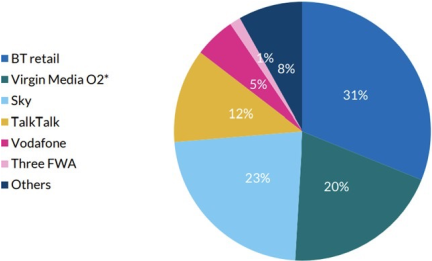
Retail market shares
The top five retail fixed broadband providers (BT EE, Sky, VMO2, TalkTalk and Vodafone) account for more than 90% of the connections provided to consumers, with a long tail of smaller providers, including growing altnets, making up the remainder.
Source: Enders Analysis, June 2025
Mobile
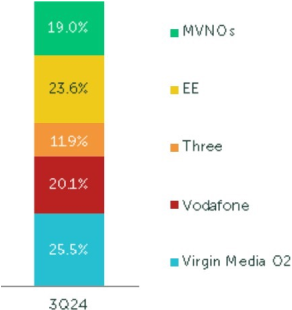
The UK mobile market similarly exhibits strong competition, with consumers benefiting from a high level of choice of retail provider and, again, prices at the low end of international comparisons. The market comprises of three mobile network operators (MNOs), who own/operate their own networks and also offer services at the retail level. These are EE/BT, Virgin Media O2 and Vodafone Three. In addition, consumers can choose to subscribe to a wide range of mobile virtual network operators (MVNOs), who deliver their (retail) services over the networks of the three MNOs[footnote 27].
Consumers can choose from a broad range of retail tariffs and product propositions, including combined handset/airtime bundles, SIM (airtime)-only propositions, eSIM options, pre-pay and pay-as-you-go tariffs. It is common for tariffs to include a data (and call/text) allowance in the price charged to customers, although most retailers also offer unlimited data packages. Propositions now largely include support for 5G services, with MNOs increasingly deploying 5G standalone networks (the variant of 5G technology that realises its full capabilities) across the UK.
Market shares
Following the recent completion of the merger, Vodafone Three has the largest share of the UK market (by number of subscriptions):
Source: CCS Insight, May 2025
Of the MVNOs active in the UK market, the five most popular providers account for approximately 85% of MVNO subscriptions:
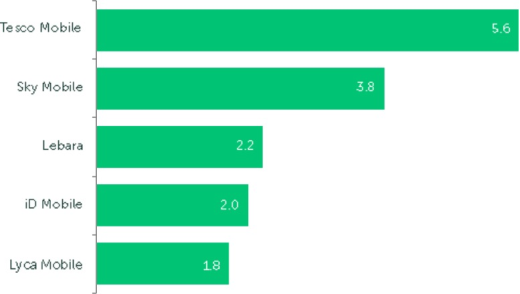
(Chart shows millions of subscribers)
Source CCS Insight, May 2025
{Note: See (e.) for reference statistics at end as are numerous versions in circulation - although differences not considered material}
Regulation supporting consumer rights and minimum service standards
Consumers benefit from a number of rights and protections in relation to broadband and mobile services.
Ofcom General Conditions of Entitlement
In addition to general consumer protection and other non-sector specific legislation and regulation, all broadband and mobile retailers operating in the UK must adhere to Ofcom’s General Conditions of Entitlement. These are the ‘regulatory rules’ covering multiple aspects of service delivery and provision. They comprise three main categories: (i) network functioning conditions, (ii) numbering and other technical conditions and (iii) consumer protection conditions.
Consumer rights and minimum service standards exist, in the main, in category (iii). Key rights and protections provided for include:
-
Requirement for providers to provide clear and accurate information about the service being provided
-
Requirement to provide accurate speed estimates during the sales process
-
Prohibitions on providers imposing non-beneficial contractual changes on customers
- Penalty free termination rights in the event that a provider wishes to make certain amendments to a contract/service
- Penalty free termination rights in certain instances of service failure or poor service performance
-
Right to automatic compensation in the event of certain service outages/service degradation, for providers who have signed up to Ofcom’s automatic compensation scheme. These providers serve the vast majority of customers today.
-
Right to access dispute resolution services
-
Requirement for providers to ensure that bills are accurate
- Additional requirements on providers relating to the support and protection of vulnerable consumers
- Requirement for providers to ensure that switching between providers is straightforward and swift
Consumer Law
Ofcom’s General Conditions of Entitlement complement the broader consumer protection provisions in the Consumer Rights Act 2015, and the Consumer Contracts (Information, Cancellation and Additional Charges) Regulations 2013. In addition to the Ofcom rules, these pieces of legislation afford consumers rights and protections including:
-
Right to a fair contract
-
14-day cooling off period
-
Rights to information
-
Protection against additional charges
Note: Although out of scope for this paper some protections extend to SMEs and non-profit organisations.
Digital Markets, Competition and Consumers Act 2024
The Digital Markets, Competition and Consumers Act 2024 includes enhancements to consumer rights, such as prohibitions on unfair commercial practices, fake reviews, and “drip pricing” Note: The CMA has clarified that these rules will not duplicate existing rules that apply to telecom services. It also affords consumers more control over, and clarity about subscription services.
Broadband Speeds Code of Practice
The Broadband Speeds Code of Practice aims to ensure that consumers receive accurate information about expected broadband speeds and have recourse if those speeds are, in practice, significantly below what was promised. It requires providers to offer clear speed estimates at the point of sale and to allow customers to exit their contracts without penalty if speeds consistently fall below a minimum guaranteed level and the provider cannot resolve any technical issue within 30 days.
The Code of Practice is voluntary but is endorsed by Ofcom and complements certain mandated requirements contained within the General Conditions of Entitlement. The following providers have signed up to the Code of Practice:
-
BT
-
EE
-
NOW Broadband
-
Plusnet
-
Sky
-
TalkTalk
-
Utility Warehouse
-
Virgin Media
-
Zen Internet
b. Gaps, risks and vulnerabilities
Affordability and digital skills
In DCMS’ 2025 audience survey, the cost of broadband was a perceived barrier amongst some participants.[footnote 28] This is despite the widespread availability of social tariffs today.
BT commissioned three experts, Frontier Economics, Yonder Consulting and charity AbilityNet, to provide insights into overlooked or misunderstood aspects of the challenges, who published their findings in Autumn 2023[footnote 29]. Key insights are:
-
Of the three million households without broadband, at least one million are estimated to live in households with incomes so low, they are unlikely to be able to afford 29any connectivity at all.
-
Few households with children and even fewer pensioners are in this ‘cannot afford’ group
-
Most in this ‘cannot afford’ group (73%) are working age, not working and receive all their income from the government
-
-
But affordability of connectivity is never the only barrier: for most digitally excluded people a combination of low confidence, low skills and low motivation play a big role.
-
Of the three million households without broadband, at least two million are older people: 90% of those contacting AbilityNet for help are over the age of 55 (other research shows the older you are the less likely you are to be online) and 81% said they had a disability or impairment.
-
Some people have zero digital skills (have never used a computer or smartphone) while others are connected in some aspects of their lives but are struggling with other digital services.
-
Specific goals (e.g. making a doctor’s appointment) drives motivation better than an abstract offer (e.g. to learn digital skills) and structuring support around these personal goals generates better outcomes as the benefits are tangible to the individual.
c. Recommended improvements and opportunities
Consult across industries and sectors that have a stake in digitisation, including banking, rail, healthcare, social care, education, workforce development to develop a funded cross-industry plan to support digital inclusion, which considers providing broadband connections and device upgrades, standardising equipment and simplifying websites and other customer facing interfaces, digital skills support, awareness campaigns and reform of connectivity social tariffs for those at risk of being digitally excluded.
A targeted, publicly-funded program to support digitally excluded viewers to become online could enable them to use IPTV technology and reap the benefits of being part of a digital society. This would in turn generate wider economic benefits: Deloitte and the Digital Poverty Alliance estimate that interventions in digital poverty can unlock billions each year for individuals, government, and businesses. Their research estimates that improved digital skills could be worth a collective £17 billion in additional earnings for individuals (though this could be partially offset by lower benefit income and depends on employer demand), while reducing social exclusion could create £2 billion in additional welfare benefits to individuals.
TV-only broadband could provide a cost-effective way of offering broadband to those without a regular broadband subscription. The TV offered over these connections could be either ‘Over The Top’ or via the ISP’s TV platform. In the case of the former, ISPs will need a means to identify accurately TV content by content providers tagging content, if the intention is to provide users with access to TV content but not other content on the Internet.
d. Roadmap for implementation
By 2034, we expect the overwhelming majority of homes will have a consistent Wi-Fi connection throughout the home using technologies, although there may be some households who still face challenges with getting online for the reasons described above. However, with a targeted, publicly-funded program to support digitally excluded viewers to become online, we believe that this could rise to 100%.
74% of premises have a choice of at least two underlying networks (Openreach + another)Ofcom’s Connected Nations spring 2025 update confirms: ‘Nearly three-quarters of UK homes (22.5 million or 74%) can access a fullfibre broadband service.’ Research BriefingsThe Scottish Sun+10www.ofcom.org.uk+10www.ofcom.org.uk+10.
98% of residential premises can access superfast speeds (30 Mbps+)
ISPReview reports: According to Ofcom’s latest data to January 2025, some 98% of UK premises can access a 30 Mbps+ (‘superfast’) connection (up from 97% last year) ConsumerScotland+3ISPreview UK+3ISPreview UK+3.
86% of residential premises can subscribe to speeds of at least
Ofcom spring 2025 update notes: The number of homes able to get Gigabit-capable broadband has increased to 25.9 million (86% of the UK’s 30.2 million homes) ISPreview UK+2www.ofcom.org.uk+2The Scottish Sun+2.
Government ambition: nationwide availability of gigabit-capable services
The UK government’s Wireless Infrastructure Strategy[footnote 30] has set clear milestones for gigabit-capable broadband availability:
-
At least 85% of premises to have gigabit-capable connectivity by 2025.
-
Over 99% nationwide coverage by 2030
These targets aim to ensure widespread, reliable broadband access, critical to supporting IPTV delivery across the UK.
f. Notes and open issues for further review
Further work should include considering how, practically speaking, IPTV migrations could be supported by a digital skills and awareness-raising campaign. More practical thinking in this space could make it easier to assess the feasibility of supporting IPTV migrations, which in turn could help with choosing between different options for the future of TV distribution.
Annex 3.3: Remote and hard-to-reach homes
Lead: INCA Contributors: BT, DTG, Sky & VMO2, Openreach
Serving Remote and Hard-to-Reach Homes
Delivering TV over IP to the UK’s most remote and hard-to-reach homes presents unique challenges. These areas - often sparsely populated rural or island communities - are disproportionately expensive to reach with fibre. This is because the costs of deploying fixed networks are largely invariant to the number or premises able to be served by that network (crudely, it costs almost the same to roll out a fixed network down 100 metres of a street irrespective of whether there is one premises passed or ten). In remotely populated areas, this can make the commercial case for rolling out a fixed network uneconomic (revenues earned from the network would never fully cover the investment costs).
Via its BDUK programme, government has sought to part subsidise the roll out of, first, FTTC, and more recently, FTTP, in uneconomic areas in order to drive towards near-universal availability of faster broadband.
According to Ofcom’s latest[footnote 31] Connected Nations update (Spring 2025), as of January 2025 there are approximately 48,000 residential premises across the UK without access to a ‘decent’ broadband service (defined as at least 10 Mbit/s download and 1 Mbit/s upload).
Within this total, a significant proportion comprises rural and remote properties that commercial fibre rollouts and fixed wireless providers have not yet reached. Targeted solutions, such as Fixed Wireless Access (FWA) or Low Earth Orbit (LEO) satellite broadband, may be required to bring these hardest-to-reach premises online and support IPTV services. The 226,000 urban residential premises were also reported by Ofcom as not covered by broadband >24Mbit/s and these premises must be evaluated as part of the proportion of hard-to-reach homes.
Ofcom also reports that an additional 72,000 rural and urban residential premises were unclassified with respect to their potential current broadband speed. (Ofcom).
The UK government estimates that fewer than 100,000 premises (roughly the final 0.3% of the country) may be ‘Very Hard to Reach’ and require alternative connectivity solutions beyond fibre (ISPReview).
This mirrors international experiences: even with ambitious broadband programmes, countries find that conventional fixed networks alone will not cover 100% of households, and the last few percent are the costliest to serve (Point Topic). To bridge this gap and ensure everyone can stream TV and video services, Fixed Wireless Access (FWA) and
Low-Earth-Orbit (LEO) satellite broadband are emerging as the primary IP-based options,
alongside continued upgrades to 4G/5G mobile coverage. Good examples from abroad underline a mixed-technology approach to universal broadband coverage - for instance, Australia’s NBN was originally designed to reach 93% of premises with fibre and the remaining ~7% via fixed wireless and satellite links (Wiki), and Canada’s universal service strategy likewise leans on FWA and satellites to connect its vast rural territories (Opensignal).
Fixed Wireless Access (FWA) for underserved areas
FWA delivers broadband to homes using radio links from nearby wireless base stations, instead of via cables. In practice, this usually means leveraging dedicated wireless ISPs or 4G/5G cellular networks to provide a fixed internet router in the home. The UK already has dozens of regional wireless internet providers covering rural pockets - using masts on hilltops, church spires, and other high points to beam connectivity to hard-to-reach communities (UKWISPA/Intellegens report). For example, numerous fixed-wireless networks (shown in pink on the map below) are deployed across southern Britain.
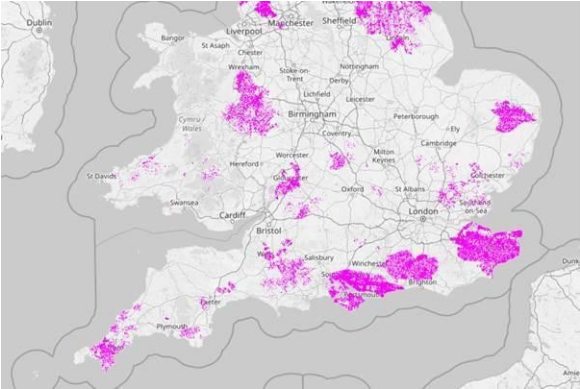
Figure 1: Map of Southern UK Fixed Wireless Access (FWA) service networks (shown in purple), offered by over 20 different providers. Source: www.thinkbroadband.com
These FWA providers serve scattered villages and farms, demonstrating how wireless links can fill broadband gaps where fibre rollout is impractical
FWA can often be deployed faster and at lower cost per premises than laying new cables in low-density areas. An industry report in 2024 (UKWISPA) argued that expanding modern FWA could accelerate gigabit coverage to 1.8 million rural UK homes, potentially saving taxpayers ~£1 billion in subsidies and delivering £3+ billion in economic benefit by bridging the gap sooner. In the UK’s gigabit programme, FWA is seen as a ‘complement and synergistic counterpart’ to fibre, not a replacement - it can extend coverage outward while fibre builds continue, and even provide resilience by diversifying access networks.
Modern 5G-based FWA is capable of very fast speeds: many providers advertise 100-300 Mbps plans, and some 5G hubs offer peak rates up to 500 Mbps under ideal conditions.
Moreover, Gigabit speeds are already possible and have been deployed by alternative providers in some parts of the UK, operating in mid-band and mmWave spectrum. Latency on FWA is low - on the order of 20-40ms (similar to regular mobile or fixed broadband) - supporting live streaming and interactive services comfortably. The technology is evolving too: upcoming 5G releases and possibly 6G in the early 2030s promise improved range and capacity, and there are trials of using lower frequency bands (e.g. sub-1GHz) to reach further into rural zones. In the UK the availability and use of Shared Access Licences will offer WISPs secure frequencies and enable higher uptime and SLAs.
That said, FWA has its limitations. Coverage depends directly on having an unobstructed view between homes and the towers or relay radios transmitting the signal. Remote regions that lack mobile masts will need infrastructure investment. Signals can be affected by terrain and obstacles - clear line-of-sight is essential for gigabit-type advanced wireless services using millimetre-wave (mmW) connections, meaning hills or thick foliage can block service. Capacity is also shared: if many homes use the same cell sector for heavy video streaming, they contend for bandwidth. As data consumption rises toward 2030, operators might need to dedicate more spectrum or enforce data caps for FWA users to prevent congestion. While many existing Fixed Wireless Access (FWA) networks have been deployed in rural areas, early evidence shows that higher-capacity technologies like 5G FWA are following a similar economic logic to fibre, focusing on higher density areas first. As a result, the most isolated communities may lack both fibre and the latest generation of wireless connectivity in the initial stages of deployment. Nonetheless, FWA offers a highly flexible, locally controlled solution. It can be scaled by adding new base stations or sectors, and is operated by UK-based providers using licensed spectrum under Ofcom’s oversight. This local control and upgradability make FWA a cornerstone option for ensuring rural areas are not left offline as TV moves to IP delivery.
Note: The level of “contention” can vary considerably depending on the medium and technology. Comparing 32 users in an 800MHz wireless channel to 32 users on a 10Gbps PON would have a very different experience.
Low Earth Orbit (LEO) satellite broadband in rural areas
Satellite broadband is the other key tool for reaching the unreachable. Traditional geostationary (GEO) satellites 36,000 km above Earth have long provided internet to remote users (including some UK rural broadband users via services like Avanti or Viasat), but GEO connections suffer from very high latency (~600ms) and limited capacity.
Latency refers to the time it takes for data to travel between a user and the internet, and back again. High latency creates noticeable delays in interactive services such as video calls, online gaming, and live-streamed IPTV. It can also degrade the quality of streaming services by increasing buffering and reducing responsiveness. Additionally, GEO satellites offer limited overall capacity, which constrains connection speeds and user numbers.
The new generation of Low Earth Orbit (LEO) satellite constellations, orbiting a few hundred kilometers up, offers much faster and more responsive connections. Services like SpaceX’s
Starlink (active) and OneWeb’s network can deliver tens of Mbps to each user with latency in the ~30-50ms range - a dramatic improvement over older satellites (Point Topic). A typical Starlink user in the UK can stream HD or 4K video, with advertised download speeds of 50-200 Mbps and upload ~10-20 Mbps, which meets the needs of most online TV services. In trials and early deployments worldwide, LEO satellite internet has enabled broadband in places terrestrial networks can’t reach - from remote Highlands and islands to ships at sea. Crucially, satellites require no local infrastructure in the community; as long as a user can install a small dish and has power, they can be connected, which is why this technology is often touted as a solution for the final few percent of coverage.
However, LEO satellite broadband comes with its own set of caveats that likely relegate it to a complementary, edge-case solution rather than a blanket replacement for terrestrial networks. Cost is a major factor. The space segment (satellites and launch) represents a huge upfront investment by the provider. While some GEO satellite ISPs have brought equipment costs down (e.g. Eutelsat’s service cites ~£200 for the kit, LEO terminals are more complex advanced antennas and remain expensive. Monthly subscription fees for LEO broadband (often £70-£100) are higher than mainstream fibre broadband, FWA or 5G tariffs, which could be a barrier for consumers in remote, lower-income areas. Governments can consider targeted subsidies - indeed, evidence from other countries shows that subsidy programs for satellite broadband can improve uptake by levelling costs with other options (gov.uk).
Network capacity and scalability are perhaps the biggest concerns with relying on LEO for wide-scale use. Each satellite has a finite throughput (Throughput is the amount of usable internet speed you actually get - it affects how well things like streaming or video calls work) that is shared by all users in its footprint, and there is a technical limit to how many concurrent HD video streams a satellite constellation can support in a given area. Studies have modelled this and found stark results: if user density in a satellite’s coverage area increases from very sparse (0.1 users per km²) to just 1 user per km², the average capacity per user on Starlink could drop from ~25 Mbps down to around 2.5 Mbps[footnote 32]. In other words, LEO constellations can deliver great performance in lightly subscribed areas, but they cannot scale up to serve everyone in a region with the high-bit-rate streams necessary for IPTV viewing simultaneously. The LEO operators themselves acknowledge they are not designed to connect every household, but to fill niche gaps. This contrasts with terrestrial solutions: FWA or mobile cells can in principle be densified (more towers, more spectrum) to add capacity if demand rises, whereas a satellite network has more rigid capacity constraints. If IP television delivery were to rely heavily on LEO in a particular rural region, a popular live event (e.g. a sports final) could overwhelm the satellite bandwidth if many homes there all try to stream in HD. Thus, for the UK’s purposes, LEO is best seen as an essential part of the toolkit for the very hardest-to-reach locales, but not a scalable primary solution for most of the population.
Reliability and operational considerations also differ for satellites. On one hand, space-based delivery is immune to terrestrial disasters such as fibre cable cuts or mobile mast failures, a satellite can continue to serve an area even if local ground infrastructure is disrupted. This inherent diversity could enhance resilience for critical broadcast content (for example, emergency alerts) in remote regions. On the other hand, satellites introduce additional points of vulnerability: gateway earth stations (which link satellite networks to the internet backbone) must remain operational, weather conditions such as heavy rain or snow can degrade signal quality (similar to terrestrial microwave radio links), and “space weather” events, including geo-magnetic storms or solar flares, can significantly disrupt satellite operations.
DTT alone does not achieve universal 100% coverage; it currently reaches approximately 98.5% of households. It is widely accepted that DSAT complements DTT by filling this remaining coverage gap. Similarly, LEO satellites and FWA services could play an equivalent role by addressing coverage shortfalls left by fixed broadband rollouts, echoing the function historically fulfilled by legacy broadcast infrastructure. However, LEO services require a clear line-of-sight to the sky; properties located in deep valleys or dense forested areas might struggle to achieve a consistent satellite connection unless a dish is mounted on a high mast or alternative solutions are adopted.
Furthermore, the current LEO options are provided by international operators - e.g. Starlink is U.S.-owned, and OneWeb (while headquartered in the UK) is now part of a joint UK/European venture. Relying on foreign-owned constellations for nationwide TV delivery raises strategic concerns about sovereignty and service assurance. Indeed, the UK government’s 2020 investment in OneWeb was partly aimed at securing a domestic foothold in satellite broadband capability for remote regions (Business Broadband Hub Comparison of FWA vs LEO (Cost, Latency, Scalability, Reliability)).
Both FWA and LEO satellites will play important roles in extending IP video services to every corner of the country, but they have different strengths and trade-offs. Table X summarises the key considerations when comparing these two approaches for hard-to-reach areas:
-
Cost: FWA can often be deployed incrementally by upgrading existing mobile networks or installing small local relays, making it cost-effective for reaching clusters of premises. Wireless ISPs have demonstrated that fixed wireless can deliver gigabit-capable service more cheaply in some rural scenarios, potentially saving public funds in subsidy programs ispreview.co.uk. By contrast, LEO satellite service entails high capital expenditure in satellite infrastructure and higher consumer costs. User equipment for satellite is several times more expensive than a typical router (hundreds of pounds vs. tens), and monthly tariffs are higher than for fixed or FWA broadband. Some governments (and satellite operators) may need to subsidise hardware costs to make it viable for consumers gov.uk. On the upside, the satellite’s cost to cover one additional home is near-zero once the system is in orbit - coverage is ubiquitous but the per-user bandwidth cost increases as more users join (since they share finite capacity).
-
Latency: Both modern FWA and LEO networks offer low latency suitable for live streaming and interactivity. Latency here refers specifically to the round-trip delay experienced by users when requesting content from its original source (content origin), which directly impacts user experience, particularly in interactive or real-time applications. A 5G FWA connection via a nearby mast typically adds around ~20 ms of latency (plus core network routing), comparable to fixed-line broadband. LEO satellite connections generally experience latency of around ~30-50 ms, significantly outperforming legacy geostationary (GEO) satellite services. Practically, this means both network types can comfortably support video conferencing, online gaming, and real-time streaming. However, FWA might offer more consistent latency due to shorter terrestrial signal paths, whereas LEO satellite connections could experience occasional variability from signal switching between satellites and longer routes via distant ground stations. Crucially, both solutions still represent substantial improvements over traditional high-orbit satellite links, offering responsiveness well-aligned with IP-based application requirements.
-
Scalability & Capacity: FWA networks can grow by adding more equipment on the ground - such as extra antennas, coverage areas, or radio frequencies - to serve more users or boost capacity as demand grows. The capacity per user on FWA will dip at peak times if many users share a cellular area (served by a base station), but operators can often increase network capacity by upgrading mobile base station backhaul, densifying the network by introducing more mobile base stations or connecting locally into Altnet/Incumbent’s fibre networks if justified by usage. LEO satellite capacity is a more finite resource. Studies show significant capacity limits for LEO networks when user density increases: In plain terms, LEO can serve a scattered handful of homesteads very well, but it would struggle if an entire rural town relied on it at once. This inherent scalability disadvantage means LEO is best used selectively (or in combination with terrestrial technologies) rather than as a sole solution for large populations. FWA, being an extension of the terrestrial network, is more naturally scalable by incremental upgrades - although it, too, might face spectrum and backhaul constraints in very remote regions.
-
Reliability & Resilience: No network is 100% immune to outages, but the failure modes of FWA vs LEO differ. FWA (like any ground network) can be vulnerable to local disruptions - a storm knocking out power or damaging a tower could cut service to a village until repairs are made. However, these failures tend to be localised, and the rest of the network remains unaffected (there’s no single point of failure that can darken an entire region, unlike a large TV transmitter outage in broadcast). LEO satellites offer a form of diversity: a disaster on the ground (flood, fire, etc.) that takes out terrestrial links would not affect a satellite passing overhead. For public service and emergency broadcasting, this diversity could be life-saving. On the other hand, satellites introduce reliance on a complex global network - issues with spacecraft, space weather, or the ground segment could interrupt service in ways that users cannot fix locally. There have been instances of brief Starlink outages due to software issues, for example, which impacted all users simultaneously. Moreover, from a sovereignty and control (and TSA) perspective, FWA networks are operated by domestic providers and regulated under UK laws, whereas LEO services depend on foreign-operated constellations (Starlink, for instance, routes user traffic via gateways and infrastructure that the UK doesn’t directly control). The UK’s move to secure a stake in OneWeb highlights the desire to mitigate this risk. In terms of maintenance, installing or repairing an FWA connection requires technician visits (which can be slow in remote areas), while satellite service maintenance is largely centralised (satellite upgrades happen in space or at gateways, with the user terminal being the only on-site component). Each approach has reliability merits: ideally, a combination - with FWA as primary and satellite as backup (or vice versa) - could provide robust always-on coverage for critical services in hard-to-reach locales.
Outlook to 2034: Integration and resilience
Looking ahead, the optimal strategy for serving hard-to-reach areas will likely integrate both terrestrial and satellite solutions to achieve near-universal coverage with resilience.
International trends indicate that no single technology will solve rural connectivity: instead, multi-layered networks are evolving. For example, Europe’s Digital Decade program explicitly anticipates using 5G/FWA and satellite to reach the last few percent of homes. In the UK, policymakers are encouraged to support a mixed approach: continued fibre rollout deep into rural areas, extensive 4G/5G coverage expansion (the Shared Rural Network is aiming for 95% geographic 4G coverage by 2025 (DSIT), and targeted use of wireless and satellite for the remainder. Notably, both FWA and LEO are becoming more capable through technical advances - higher-altitude platform systems (HAPS) and new spectrum for FWA (especially Shared Access Licences at 3.8Ghz and 26Ghz), and next-generation satellites with improved throughput - but both will also face higher demand as video consumption and data needs grow. By 2030-2034, data traffic may be several-fold higher than today, which will magnify the capacity limitations of wireless solutions if not addressed. This underscores the importance of continued investment and policy support to strengthen these technologies: incentivising rural mobile mast construction, allocating spectrum for FWA backhaul, subsidising user equipment where needed, and maintaining a stake in satellite capabilities.
In summary, while technologies like FWA and LEO are technically capable of delivering IP-based TV today, they generally do so on a best-effort basis without guarantees of reliability. Delivering TV content over IP to a prescribed standard or quality of service - especially at national scale and in harder-to-reach locations - will require more than just market-led rollout. This latter point is particularly pertinent to the delivery of Public Service Broadcasting (PSB) content, which is currently subject to service standards when delivered over the DTT network.
A layered approach using Fixed Wireless Access (FWA) and potentially Low Earth Orbit (LEO) satellite solutions could provide effective connectivity for the hardest-to-reach 0.3% of premises. However, given that broadband availability potentially exceeds current DTT coverage, it is recommended that policymakers first undertake a comprehensive assessment comparing the overall reliability, quality, and consumer experience of IPTV against DTT. Only after understanding this comparative analysis should further measures, such as targeted affordability support or digital literacy initiatives, be considered to ensure these households can effectively adopt IPTV services.
The UK’s best course appears to be maximising terrestrial (and preferably UK-owned) infrastructure for primary delivery - through FWA and extended mobile networks - and using LEO satellite connectivity as a complementary, ‘last resort’ service for those truly off the fibre and mobile grid. This layered approach plays to the strengths of each: FWA’s
cost-effectiveness and local control, and LEO’s ability to cover any location. By
acknowledging and planning for the limitations (contention, cost, and reliability issues), the UK can ensure that even the hardest-to-reach audiences will be served in the all-IP future of television, without leaving anyone behind. The experiences of other countries validate this direction - a mix of fixed and wireless methods, combined for resiliency, is key to a truly universal communications ecosystem by 2034.
Annex 3.4 & 3.5: Interconnection, Transit and Content Distribution Networks
Lead: Sky
Contributors: BT, DTG, Inca, VMO2, Akamai, BBC
This paper sets out the role of Interconnection, Transit and Content Distribution Network (CDN) arrangements between Internet Service Providers (ISPs) and Content Application Providers (CAPs) and their intermediaries play in the readiness of the IP Ecosystem for the distribution of TV services.
a. Current state overview
For fixed broadband and mobile end users to access internet-based content, including IPTV services such as Video On Demand (VOD) and linear live TV, their broadband or mobile provider (Internet Service Provider, ISP) connects its network to sources of content, known as Content and Application Providers (CAPs). CAPs include traditional broadcasters as well as streaming and on-demand video services. Users initiate requests using their devices (e.g., smartphones, laptops, smart TVs, and set-top boxes) to access specific content. These requests are passed by the ISP to the CAP, which delivers the requested content through the ISP’s network back to the end user. In limited circumstances, these requests can be initiated automatically by the end user’s applications.
The term “Content and Application Providers creators (CAPs[footnote 33])” is intentionally broader than “broadcasters,” reflecting the diverse range of providers delivering IPTV content. The term “broadcaster” is typically associated specifically with linear live TV transmission, whereas IPTV also encompasses Video On Demand and streamed services, which are not broadcast in the traditional sense. For example, Netflix is not primarily a broadcaster, as it does not deliver linear live TV channels. Nevertheless, Netflix caches content within ISP networks, and its streaming application forms an integral component of IPTV services such as Sky Stream and Sky Glass. IP content delivered between CAPs and ISPs via technologies like Content Delivery Networks (CDNs) typically makes no differentiation between linear broadcast, VOD, or other video content.
CAPs can deal directly with ISPs and/or use intermediaries to act on their behalf[footnote 34]. These intermediaries aggregate and cache content on behalf of multiple CAPs.
Typically, the playout of content from wherever a CAP hosts (‘caches’) its content to the end user is ‘unicast’, meaning that there is a single stream of data generated per end user requesting access (‘multicast’ content distribution which we discuss later is an exception to this). The distribution of content by CAPs to their caches, however, takes up one data stream (irrespective of the number of end users served from that cache). This means that, for popular content that generates high volumes of concurrent end-user access requests, hosting that content closer to the end users reduces the volume of unicast streams in parts of the ISP network and its interconnects with other networks - which in turn reduces the network capacity required to serve that content.
As broadband and mobile data penetration and data usage per user has increased, ISPs and large CAPs have collaborated to cache content closer to end users in order to reduce network capacity requirement and minimise the risk of network congestion and poor end user experiences.
ISPs can connect to CAPs in a variety of ways:
-
Transit - CAPs and ISPs connect indirectly via a ‘backbone’ ISP network. These are large, high-capacity networks that connect to many networks and data centres in many regions, providing general connectivity to the large number of networks that make up the internet. Often, the transit network charges the ISP and/or CAP for passing the traffic between them. Although transit operators can offer access to a wide range of internet content, typically, the quality of experience for end users is lower than the other connection methods described below.
-
Peering - where there is a large amount of internet traffic passing between an ISP network and a CAP, traffic may be exchanged directly between the ISP and CAP networks either through dedicated interconnection (Private Peering) or at an internet exchange point (Public Peering, essentially in a building where multiple ISPs and CAPs are present and can interconnect with each other’s networks). Often (but not always) peering is ˜settlement free’, i.e., neither the ISP nor the CAP pays for passing traffic between them (because the arrangement is considered mutually beneficial).
-
Content Distribution Networks (CDNs) - as content is delivered in individual traffic streams from wherever the internet content is hosted (‘cached’) to each end user that requested it, it may be even more efficient for popular content to be cached even closer to end users, e.g., on dedicated servers within (or at the edge of) an ISP’s network. Content can be uploaded to the CDN cache over a single traffic stream and only onward routed in multiple traffic streams from the cache to requesting end users. This significantly reduces the number of traffic streams in the ISP network and over its interconnections with other networks and therefore reduces congestion and network capacity requirements. The quality of service for end users can be better as a result. CAPs may provide their own caches (e.g. Netflix and Google) or pay to host their content on third party CDNs (e.g., Akamai and AWS). Third party CDNs can be dedicated solely to a particular CAPs content or aggregate content from multiple CAPs. Some ISPs who are also CAPs to their end users operate their own CDNs in their networks (e.g. Sky) and in other ISP networks (e.g., Sky). CDN operators may pay ISPs for locating their caches
in an ISP network based on (i) the cost of the space and power consumed in the ISP network, or (ii) the amount of data capacity required. Sometimes CDNs have revenue share arrangements with ISPs with respect to the revenues they earn from their CDNs embedded in the ISP network. Having many CDNs hosted within ISP networks, however, can create other complications of space, power, and cooling. Deployment of caches deep within the ISP network benefits both ISP and subscriber through a reduction in ISP network peak transit costs and improved subscriber quality of experience but, comes at the cost of additional capital investment at multiple ISP network edge locations. To avoid replicating investment in multiple CDN and CAP caches at each ISP network edge, the streaming video industry has adopted a federated multi-tenant standard called ‘Open Caching’ from the SVTA. The Open Caching model has been commercially proven and is expected to be universally implemented by third party CDNs to reduce the burden on ISPs.
- Multicast - ISPs can also implement multicast IPTV solutions into their networks to further reduce the amount of individual traffic streams in their networks. Multicast sends a single stream of live content far closer to groups of end users than other CDN solutions e.g., end users served from the same ISP local exchange. Where multicast platforms are fully controlled and operated by the ISP they are mostly used for the distribution of the ISP’s own IPTV retail service. Newer forms of multicast technology are emerging that enable CAPs to utilise an ISP’s multicast (or compute and storage) infrastructure to operate their own IPTV services virtually (e.g. BT’s MAUD service).
CAPs and ISPs may use more than one of these ways of connecting with each other in order to maintain flexibility and resilience in the event that one connection mechanism fails or becomes overloaded. Therefore, the same content can ingress and egress an ISP network via more than one interconnection method.
b. Evidence-based analysis
As broadband and mobile data take up increased, data usage has grown and popular content has become concentrated to a small number of large CAPs, CDNs and private peering have become the dominant means by which CAPs and ISPs connect with each other. Video content uses a relatively high amount of data compared to some other internet traffic and, for linear live TV, also requires timely delivery to end user devices free of undue delays for a satisfactory viewing experience. For these reasons, large IPTV CAPs are likely to rely heavily on CDN and Private Peering arrangements with ISPs.
Amongst the major UK ISPs, just over 50% of content traffic is delivered via CDNs in their networks, just under 40% via private peering, around 7% via IP Transit and around 4% via public peering.[footnote 35]
During the period of growing broadband penetration and increased viewing of streamed content that occurred in the 2010s, peak data traffic on ISP networks increased by between 20% - 40% per annum (with a similar story for mobile networks). However, during the 2020s post-COVID growth in broadband penetration and the viewing of streamed content plateaued and this has contributed to annual peak data traffic growth on ISP networks declining to c.10% (despite an increasing shift of linear live content being delivered over IP) (source: Enders: UK/Global Telecoms: The mysterious case of disappearing data volume growth, May 2025).
Ofcom estimates that around 50% of the data traffic on the UK’s major fixed ISP networks during the busiest hour of the day relates to five large CAPs (Amazon, Facebook, Google, Netflix and Sky) and two CDN operators (Amazon Web Services and Akamai)[footnote 36].
TV services are delivered over IP networks via the arrangements described in the preceding section. These TV services include combined linear TV and VOD services (including PSB content) - examples include the IPTV offerings of some of the major UK ISPs (EE TV, Sky Stream and Sky Glass, Virgin Media Stream). While some of these services require consumers to also purchase the ISP’s broadband service (Virgin Media) and therefore that IPTV service is only distributed within a single ISP network, other services such as Sky Stream and Sky Glass are ‘broadband network agnostic’. Sky no longer actively sells satellite (DSAT) based TV services, with all new sales made on its suite of IPTV services.
On the most part, ISPs and large CAPs and large CDN operators collaborate to implement technical solutions so that internet content is distributed effectively to end users. Most large CAPs and CDN operators regularly meet with ISPs to share their forecast demand for their internet services and ensure that the technical solutions are dimensioned to meet this future demand. Demand forecasts take account of the drivers of peak demand - including anticipated demand for viewing of IPTV services where appropriate. There is a strong incentive on both sides for internet services to run smoothly over broadband and mobile networks and bilateral CDN planning is a key component in ensuring this happens.
c. Gaps, risks, and vulnerabilities
Commercial/economic risks
A well-functioning interconnection, transit and CDN regime is dependent on the continued, mutually beneficial participation of CAPs and ISPs.
Piracy (of content) over IP networks is common. As more end users move away from DTT only to IP-based viewing, the “addressable market’ for pirated content will grow.
The UK’s largest ISPs, accounting for over[footnote 37] 80% of household broadband connections, have established peering and CDN arrangements with major CAPs. However, recently new alternative fibre networks (‘altnets’) have been rolled out with their own retail brands.
Historically, major ISPs had limited presence on alternative fibre networks (altnets), despite these now covering around 15m-17m UK premises. However, the wholesale broadband market is evolving rapidly, with ISPs increasingly establishing bilateral agreements. Recent examples include Sky’s deal with CityFibre, Netomnia partnering with PXC, and Zen Internet’s agreements with multiple altnet providers.
The lack of scale of these networks means that CDNs and private peering arrangements may not always be cost-effective solutions for the more efficient routing of the largest sources of internet traffic. However, given the lower volume of end users on these networks, it may not be necessary for CDNs to be hosted in these networks or for direct peering to be established.
Technical risks - CDN caching impacts on live TV experience
Linear live TV delivered via IP can experience greater latency compared to traditional broadcast (DTT and DSAT). During live sports events especially, even small delays can negatively affect the viewer experience. A significant proportion of live IP content is delivered through CDN caches, which helps manage network demand but can introduce additional latency, further affecting viewing satisfaction.
Given the ecosystem has been successful over many years in ensuring end users can be satisfactorily connected to increasing amounts of internet content including IPTV, it is reasonable to expected that it will meet future organic demand growth as more TV consumption is over IP (to the extent that that growth is predictable and planned for amongst the players in the value chain - as it has been to date). However, issues could arise if there are unforeseen, unplanned significant increases in demand - for instance, if a significant volume of remaining DTT viewers in 2034 were to shift to IPTV viewing en masse overnight without any preparation and planning for such a step change in additional demand on IP networks. The extent to which delivery to a standard beyond ‘best efforts’ may be required will also be a factor in the preparedness of the IP ecosystem.
d. Recommended improvements and opportunities
Policy decisions must allow IPTV ecosystem time to scale for increased demand
Any policy decisions regarding the future of TV distribution that would significantly accelerate IPTV adoption - particularly through the mass migration of households currently reliant solely on DTT, such as might occur around 2034 - should provide sufficient advance notice to all IPTV stakeholders. ISPs and Content and Application Providers (CAPs) would require adequate lead time to dimension their networks, caching solutions, and CDN infrastructures effectively, especially given that popular live content is the primary driver of peak capacity demands.
e. Roadmap for implementation
Typically, large CAPs and ISPs plan for forecast demand one to two years in advance. The more significant the change in demand, the longer in advance requirements should be discussed.
Policy shifts towards IPTV must consider cost, neutrality, and notice periods
If UK policy materially accelerates the structural shift towards IPTV, such as by switching off DTT or DSAT and actively migrating viewers to IPTV, CAPs and ISPs would require at least two years’ advance notice to prepare. Given that the Future of TV Distribution project is informing government decisions now, at least eight years before any significant re-dimensioning or closure of DTT, adequate notice should be achievable for stakeholders to dimension their interconnection, transit, and CDN infrastructure.
However, the costs associated with migrating remaining DTT-only households to IPTV should be explicitly assessed when comparing this option with maintaining an efficient, scaled-down DTT service. Additionally, considerations around net neutrality, potential charging frameworks, and questions regarding cost allocation among stakeholders may become increasingly relevant. While current regulations do not prohibit charging arrangements, there are differing views among ISPs and content providers about the appropriateness and necessity of any future frameworks. Such differences in perspective, as highlighted in earlier inputs from BT, Sky, and VMO2, should be transparently factored into future economic modelling to ensure balanced and evidence-based policy decisions.
g. Notes and open issues for further review
Further research and industry consultation are recommended in several key areas:
-
Economic implications of migration to IPTV - Additional detailed modelling is required to assess the full costs associated with migrating remaining DTT-only households onto IPTV compared to maintaining a scaled-down, efficient DTT service.
-
The IP network dependencies and requirements upon which a successful transition of DTT to IP delivery is contingent - Including the potential need for policy and regulatory reform, and economic factors. Impact of multicast technologies - Deeper analysis is needed to establish the feasibility, benefits, and costs associated with wider deployment of multicast solutions, particularly new virtual multicast approaches.
-
Altnet capacity planning - Further review should determine if smaller alternative fibre networks (altnets) can sustainably implement CDN caching or direct peering, balancing cost-effectiveness against service quality and resilience.
-
Live IPTV latency - Linear live TV delivered via IP typically experiences greater latency compared to traditional broadcast platforms (DTT and DSAT). During live sports events especially, even minimal latency can negatively affect viewer satisfaction. While Content Distribution Networks (CDNs) do not inherently introduce more latency than transit or peering connections, further technical studies should quantify IP-delivery latency relative to DTT and DSAT benchmarks and investigate effective strategies to mitigate these delays, ensuring optimal viewing experiences.
-
-
Stakeholder views currently differ notably regarding:
-
The optimal timing required for ecosystem preparation in response to policy-led shifts towards IPTV.
-
Appropriate cost allocation models among ISPs, CAPs, and end-users as IPTV becomes the primary delivery mechanism.
-
Addressing these issues through focused industry collaboration and robust evidence gathering will be essential for future policy decisions.
Annex 3.6: Consumer electronics
Lead: DTG
Contributors: BT, Inca, Sky & VMO2, AMLogic, MediaTek, LG, TechUK CE WG, Roku, ETV
a. Current state overview
The current UK IP ecosystem for consumer electronics involves a series of interconnected components responsible for delivering IPTV services from the content source directly to consumer devices in the home. Key elements of this ecosystem include:
-
Content and Metadata Servers: The origin points where IPTV content and associated metadata are stored and managed.
-
Business-to-Business (B2B) Distribution Networks: Infrastructure such as Content Delivery Networks (CDNs) that efficiently distribute content to Internet Service Providers (ISPs).
-
Consumer Distribution Networks: ISPs delivering content to consumer premises through managed and unmanaged IP connections (Over-The-Top, OTT).
-
Home Service Termination: Consumer premises equipment (CPE) such as broadband routers or hubs that manage incoming connections and distribute content within the home.
-
Home Distribution Systems: Internal networks, typically Wi-Fi or wired Ethernet connections, providing IP connectivity to various consumer electronics devices.
-
Consumer Electronics Devices:
-
Smart TVs, which integrate flat-panel displays, audio systems, and TV Operating Systems (OS) to manage IPTV apps and content interaction.
-
External streaming devices, including plug-in HDMI sticks (e.g., Amazon Fire Stick, Roku Streaming Stick) and standalone set-top boxes (STBs), enhancing the capabilities of non-smart or legacy televisions.
-
The TV Operating System platform within consumer devices is increasingly critical to the ecosystem, especially as it manages how display devices interact within the home, enabling coordinated, seamless user experiences across multiple screens.
Annual sales of connected televisions in the UK are 5.6m with prices from sub £100 and an average of £416 (NIQ powered by GfK Intelligence, Panelmarket, MAT May 2025). The market is almost 100% connected TVs, although app and service availability varies.
Recent market reports indicate over 85% of UK homes have connected TVs capable of IP content reception. The rapid adoption of UHD, HDR, and smart functionalities reflects robust market readiness for further transition towards IP-only content delivery.
Current adoption levels
By the end of 2023, 86% of primary TV sets in UK households were internet-capable, enabling online content viewing if connected.[footnote 38]
As of 2024, approximately 30 million smart TVs were present in UK households, equating to about 109% of TV households, reflecting that many homes own more than one smart TV. Around 24 million internet-connected set-top boxes were in use, covering roughly 88% of UK TV households.
Additionally, approximately 10 million streaming devices (e.g., streaming sticks or dongles) were used, representing about 36% of UK TV households.
Projected growth and market size
The UK Smart TV market is projected to grow from approximately £7.9 bn (USD 10.8 bn) in 2024 to around £34.6 bn (USD 47 bn) by 2035 ((Market Research Future), reflecting a compound annual growth rate (CAGR) of 14.3% . This estimate encompasses several distinct revenue streams, notably:
-
Hardware - sales of internet-connected television sets and related devices.
-
Platform licensing - operating systems and embedded software (e.g., Android TV, Tizen, WebOS).
-
Connected TV advertising - including both on-platform and targeted content-based ads.
-
Subscription and transactional services - revenue from IPTV and OTT services accessed via Smart TVs.
Further breakdown is required to quantify the contribution of each segment - such as hardware sales vs platform and content revenue, to enable more nuanced forecasting and analysis.
UK Connected TV (CTV) market revenue is estimated at approximately £7.4 million in 2024, forecast to reach around £13.5 million by 2030, representing a compound annual growth rate (CAGR) of ~11.2% from 2025 to 2030 (eMarketer).
The UK Smart TV market is projected to grow from around £7.9 billion in 2024 to approximately £34.6 billion by 2035, reflecting a CAGR of 14.3% (Market Research Future).
Adoption trends and forecasts
IP only households (no traditional broadcast): projected to climb from 5.3 million in 2023 (~19% of the 27.4 million UK TV households) to 17.8 million by 2035 (~65%) ofcom.org.uk.
By 2040, an estimated 95% of UK homes (~26 million households) will rely on internet-delivered TV, leaving just 5% (~1.4 million households) dependent solely on traditional terrestrial services. Future of TV Distribution report for DCMS Oct 2024. standard.co.uk+9assets.publishing.service.gov.uk+9ispreview.co.uk+9.
Drivers and market dynamics
The growing adoption of 4K and 8K Smart TVs, alongside the expansion of streaming services, cloud gaming, voice assistants, edge AI, gesture control, and voice control, will introduce new applications and enriched viewing experiences, further driving market growth.
Advertising on Connected TV (CTV) is also experiencing strong growth. UK CTV advertising spend, specifically referring to ads delivered via IP-based video-on-demand (VoD) and linear streaming services rather than traditional broadcast (DTT), is projected to reach £1.2bn by 2025. This growth is supported by the widespread adoption of CTV devices, with nearly[footnote 39] 20 million UK households expected to own internet-enabled, connected TVs capable of accessing IPTV services.
Summary table
| Metric | Current (2023/24) | Forecast |
|---|---|---|
| TV sets connected online | 86% of TV households | Increasing |
| Smart TVs in UK households | 30 million (~109% of TV households) | Continued growth expected |
| Internet-connected set-top boxes | 24 million (~88% of TV households) | Continued growth expected |
| Streaming devices (sticks/dongles) | 10 million (~36% of TV households) | Continued growth expected |
| UK Connected TV (CTV) market revenue | £7.4 million (2024) | £13.5 million (2030), CAGR ~11.2% |
| UK Smart TV market revenue | £7.9 billion (2024) | £34.6 billion (2035), CAGR ~14.3% |
| Connected-TV-only households | 5.3 million (~19% of TV households) | 17.8 million (~65% by 2035) |
b. Evidence-based analysis
Technical analysis confirms that current UK consumer electronics adequately integrate IP functionalities sufficient for today’s IPTV requirements. It should not be assumed that consumer electronics manufacturers will inherently adopt new technologies simply to keep pace with developments; instead, manufacturers prioritise building products that are
fit-for-purpose, avoiding unnecessary features or over-engineering that would add cost without clear consumer benefits. Benchmarking against DTG’s D-Book standards ensures interoperability and performance, although consumer reliance on stable broadband introduces variability in service quality.
While IP-based solutions offer enhanced personalisation and simplified hardware requirements compared to traditional broadcast systems (DTT/DSAT), recent outages (such as the DAZN streaming disruptions in Italy in 2022) demonstrate that IP-only infrastructures need planning and investment - the recent successful cloud delivery of the FIFA Club World Cup by DAZN/M2A media is testament to the importance of planning.
Emerging trends, such as modular hardware designs and adaptable software frameworks, enhance device longevity, upgradeability, and compatibility. Innovations leveraging AI technologies significantly enhance user experience through improved content personalisation and simplified user interactions.
Cost Implications: Removing DVB-T tuners from TVs will significantly reduce manufacturing costs, a position broadly supported by major TV brands and Original Design Manufacturers (ODMs). Further cost reduction opportunities include reduced memory requirements, addressing the UK’s relatively high memory footprint in comparison to other markets, notably the USA. Recent[footnote 40] DDR price trends underline the urgency of addressing memory optimisation.
Time-to-Market Benefits: ODM project development cycles can be shortened by removing DVB-T elements, as certain testing procedures specific to DVB-T hardware can be eliminated, accelerating product launches.
Industry Alignment: OS providers and ODMs express general support for IP-only devices. Collaboration with major operating system companies could further enhance retailer engagement and consumer acceptance.
c. Gaps, risks and vulnerabilities
Technical:
- Service consistency is highly dependent not only on broadband quality, but also other elements in the IP delivery chain.
- Consumer awareness of network setup and broadband performance requirements need to be improved.
- Lack of real-world simulation of IP-only national events in scenarios without stable broadband.
Operational:
- Fragmented or inconsistent software update processes across devices leading to security vulnerabilities and degraded user experiences.
- Risk of early product obsolescence due to limited in-market hardware or software upgrade pathways.
It is important that all televisions have fully tested, reliable upgrade paths using HDMI, ensuring ongoing compatibility with evolving applications, software, and hardware throughout the lifespan of the TV.
Regulatory:
- Ambiguity in regulatory classification for diverse internet-connected display devices, including tunerless TVs, tablets, laser projectors, and other innovative screen formats, creating potential inconsistencies in oversight and consumer protection.
Consumer-related:
- Digital exclusion risks arising from setup complexity and usability challenges, particularly for older or less digitally skilled populations. (Note: Recent research by the DTG/i2Media for Ofcom shows that this can be overcome with user-centric design and simple, TV-like user interfaces).
- Inconsistent or prematurely discontinued support by content providers for broadcaster VoD applications, causing consumer dissatisfaction.
- Variability in user interface designs across devices leading to inconsistent user experiences. Although complexity is subjective, competitive differentiation in UI design allows consumer choice at the point of purchase, but this diversity can increase support complexity.
Consumer Awareness and Behaviour:
- Retailer Role: Increased retailer involvement, particularly from major outlets such as Argos and Currys (representing over 50% of UK TV sales), is critical. Retailer-led campaigns are essential to reassure consumers about the viability of[footnote 41] tunerless, IP-only televisions.
- Service Companies: Ensuring ODM service companies effectively demonstrate IPTV setup during installation will significantly improve consumer acceptance and usability.
Impact of tunerless televisions
The shift from broadcast-supported televisions (with DTT/DSAT tuners) to IP-only screens will require revised regulatory frameworks or guidelines, industry technical standards for interoperability and consumer education. As IP-based hardware is simpler to manufacture, the market will likely diversify into multiple home-display form factors beyond traditional televisions, necessitating flexible and future-proof regulatory approaches.
The ongoing support for traditional broadcast infrastructure in other regions (e.g., the EU) may impact the UK’s ability to transition entirely to IP-only solutions rapidly.
Hybrid Broadcast Broadband TV (HbbTV) may remain relevant across linear TV distribution, whether delivered via DTT, DSAT, or IP. Its significance may not diminish simply due to the removal of broadcast tuners; rather, HbbTV’s continued relevance primarily depends on the ongoing popularity and consumption of linear TV services, including those delivered exclusively over IP.
Minimum broadband quality specifications comparable to existing standards for DTT/DSAT broadcast reception could be used to clearly define consistent IPTV service delivery.
d. Recommended improvements and opportunities
1. Define minimum broadband performance standards necessary to reliably support IPTV services (Urgent).
- Clarify the essential broadband service specifications required specifically for IPTV, establishing whether / how these standards align or differ from existing broadband quality benchmarks for general internet applications. This should include consideration of the cost and other implications for ISPs in meeting such standards. Provide comparative context against established benchmarks for traditional broadcast technologies (DTT and DSAT) where applicable.
2. Evaluate the need to standardise firmware update processes for consumer electronics (High impact).
3. Conduct an assessment to determine whether the current variety of approaches to firmware updates among manufacturers creates genuine issues, such as security vulnerabilities or poor user experiences. Standardisation could be considered if there is clear evidence that fragmentation in update processes leads to consumer or industry problems.Clarify regulatory definitions and technical standards for IP-only TVs and devices (Strategic long-term).
- Develop a clear definition and common technical specifications for IP-only consumer electronics. Consider leveraging existing open horizontal standards - such as DVB-I combined with HbbTV profiles, currently undergoing standardisation in parts of the EU - to support interoperability and industry alignment. Industry initiatives such as Freely, DVB-I, and HbbTV continue to evolve, and manufacturers’ support for these standards may vary or change over time. Regular consultation with manufacturers and ongoing assessment of industry adoption will therefore be essential to ensure chosen standards gain widespread support and facilitate interoperability.
4. Expand digital literacy programmes to improve consumer adoption and usability (High impact).
5. Encourage industry efforts towards simplified user interfaces and usability improvements (High impact).
- Acknowledge current market-driven initiatives and support ongoing industry differentiation, focusing on maintaining consumer choice and simplicity.
6. Explore the feasibility and benefits of independent certification for IP-ready streaming devices for new TV sales (Strategic).
- Investigate whether horizontal consumer electronics manufacturers require a unified technical specification for developing and certifying IP-ready devices. Clarify that certification would be industry-led rather than consumer-driven.
7. Support enhancements in device modularity and upgradability to extend product lifecycle and adaptability (Strategic long-term).
8. Retailer and Service Provider Training: Initiate retailer education campaigns and service company training programmes focused explicitly on IPTV setup and consumer education.
9. DTG Industry Collaboration with ODMs and OS Providers: Mediatek and similar companies to actively promote IP-only technology adoption through industry-wide collaboration, leveraging their expertise in both television and mobile technology to optimise SOC solutions for full IP-based services. (Mediatek comment)
10. Certification: Discuss mandatory IP and DVB-T tuner requirements from BBC, DTG, ETV to accelerate time to market and not impede IP-only adoption.
11. Clearly define responsibilities across the IPTV distribution chain to ensure effective consumer support (Strategic).
- Develop comprehensive, end-to-end definitions of distribution network responsibilities, providing consumers with transparent guidance on points of contact for support and issue resolution.
e. Roadmap for implementation
Short-term (0-12 months):
-
Establish minimum technical criteria for broadband performance necessary to satisfactorily support IPTV services. These criteria are intended as guidance to clarify IPTV requirements rather than as mandatory minimum broadband standards imposed on ISPs. Additionally, the cost implications and other practical considerations associated with meeting these technical criteria should be fully explored. Regulatory clarity for IP-ready and tunerless TVs and identification of these in the consumer market.
-
Publish simplified user interface guidelines
-
Clarify regulatory requirements around Freely certification.
-
Launch retailer awareness and consumer education initiatives.
Medium-term (12-36 months):
-
Firmware update protocols rollout.
-
Pilot digital literacy initiatives.
-
Rollout ODM/service provider IPTV training.
-
Implement modular and memory-optimised hardware designs to reduce costs.
-
Implement simplified interfaces.
Long-term (3-5 years):
-
Regulatory frameworks fully implemented.
-
Comprehensive digital literacy programmes.
-
Adoption of sustainable device practices.
-
Achieve widespread consumer acceptance and comprehensive IPTV readiness.
-
Fully adopt streamlined and updated regulatory frameworks.
Dependencies:
-
Industry-wide collaboration.
-
Consumer education initiatives.
f. References and evidence sources
1. DCMS Future of TV Distribution Report, 2024
2. DCMS FoTVD Infrastructure Readiness Report, 2024
3. DTG D-Book compliance reports, 2024
4. Ofcom Connected Nations Report, 2024
5. DCMS Key Policy Assumptions, 2024
g. Notes and open issues for further review
The following areas could benefit from additional research, industry consultation, or regulatory clarification to fully assess the UK’s consumer electronics readiness for a transition to IP-only television distribution:
- Real-world broadband performance and consumer impact:
Further evidence is required on actual broadband performance levels experienced in UK homes, particularly during peak demand scenarios. Analysis should evaluate how variability in broadband quality affects user experience with IPTV, including live and major event viewing, to inform minimum required broadband standards.
- Standardisation of firmware updates:
Additional industry consultation is needed to determine whether fragmented or inconsistent firmware update processes for IP-connected devices result in measurable security risks or degraded consumer experiences. Clarification on the benefits versus potential constraints on innovation is required before recommending industry-wide standardisation.
- Modular and upgradeable device architectures:
Research into the economic viability and consumer acceptance of modular hardware designs, enabling component-level upgrades and reducing obsolescence, is recommended. Analysis should assess the impact on product longevity, electronic waste, and consumer affordability.
- Impact of UI fragmentation on consumer support:
Further investigation is needed into whether the diversity of user interface designs across consumer devices significantly complicates consumer support. This should include assessment of whether standardisation or guidelines are necessary or whether consumer choice and differentiation should remain prioritised.
- Consumer attitudes towards tunerless TVs and IP-only displays:
Further behavioural analysis is required to understand consumer perceptions, adoption readiness, and potential barriers associated specifically with tunerless televisions and IP-only display technologies.
- Clarification of regulatory definitions and standards:
Ongoing consultation with regulators and industry stakeholders is needed to refine and clearly define the regulatory classification, technical standards, and oversight processes for new forms of IP-only consumer electronics, particularly tunerless screens.
Annex 3.7: In-home distribution
Lead: BT
Contributors: DTG, Inca, Sky, CAI & VMO2
For TV viewers to migrate from DTT to IPTV, they will need to be able to connect to the internet from the areas of their homes where they locate client devices for watching TV, including existing TVs. Typically, this will entail establishing a connection from the client device to the end user’s broadband router (which may not be located in the same area of the end user premises as the client viewing device). In some cases, this connection will be provided by Ethernet cable or power-line connectivity; however, for many viewers, Wi-Fi will be a more attractive option to avoid internal re-wiring, for portable devices and to serve new locations in the home. For Wi-Fi to provide a better in-home experience than DTT, it needs to offer a more consistent performance than DTT and Wi-Fi coverage needs to be in at least the parts of homes where viewers locate TVs. Particular focus from ISPs on the QoS of live streaming is critical.
There are at least three types of innovations[footnote 42] relevant to Wi-Fi connectivity:
1. Improvements in Wi-Fi coverage - such as more powerful routers, signal boosters, and mesh networks that help spread Wi-Fi evenly around the home.
2. Faster and more reliable Wi-Fi performance - including the latest Wi-Fi 7 standard, which allows more devices to connect quickly and reliably at the same time, and additional frequency bands that help reduce interference.
3. More dependable broadband connections - such as routers that automatically switch to a mobile network if your main broadband connection goes down, keeping you online.
Many of these solutions are readily available to consumers today at a relatively low cost and address some of the perceived challenges around in-home factors for connectivity, outlined in DCMS’ 2024 Future of TV research report.[footnote 43]
On Wi-Fi coverage innovations, many ISPs offer a complete Wi-Fi guarantee at relatively low cost, guaranteeing Wi-Fi coverage in every room of the home or money back, enabled by mesh networks or Wi-Fi extenders. These commitments are widespread. See, for example, here, here, here and here.
On Wi-Fi performance innovations, EE has also recently launched ‘stream mode’ (a Wi-Fi enhancer service) which prioritises streaming apps to ensure the smooth running of programmes even when the entire household is online.[footnote 44]
On underlying broadband connection innovations, some ISPs offer ‘unbreakable broadband’ which includes mobile back-up connectivity for their broadband routers, ensuring customers have service even if their fixed broadband connection goes down. See, for example, here and here.
New build and refurbishment building regulations can make Wi-Fi distribution potentially challenging, particularly through internal and external walls consisting of foil backed board as a vapour barrier, creating problems with Wi-Fi and mobile signal internally and threatening mobile back up service for when broadband fails. Low-emissivity (low-E) coated thermal glass has a similar impact via windows in new build and refurbished property, also threatening mobile backup service.
However, Wi-Fi innovations such as Wi-Fi extenders, mesh networks and Wi-Fi 7 can overcome these problems, though when desired, structured cabling can provide a more reliable alternative solution. Technology solutions also already exist to convert legacy TV coax cabling to carry IP services. This can be particularly useful when new cabling cannot easily be installed and/or where Wi-Fi is presenting problems.
That said, the majority of broadband users successfully use Wi-Fi regularly today. In addition, as noted below, EE sees no significant difference in the propensity to fault between its wired and Wi-Fi connected TV set-top boxes. This demonstrates the reliability of live TV delivered at scale over Wi-Fi in a wide range of housing types.
b. Evidence-based analysis
On Wi-Fi performance innovations, Wi-Fi 7 technology gives a faster connection, to more devices at the same time, more consistently throughout the home[footnote 45]. Moreover, even without Wi-Fi 7, overall Wi-Fi technology has improved in recent years to become more reliable than DTT. For example, BT analysis from March to June 2024, which is detailed more fully in section (f) below, found that:
- Less than 1% of BT customers’ Wi-Fi performance hits a threshold that could be considered a failure (See Figure 1).
- Content watched over broadband has an error rate 2 times lower than content over DTT.
- 3% of BT’s broadband customers are impacted by content delivery errors, compared to 5% over DTT (See Figure 2).
Figure 1.
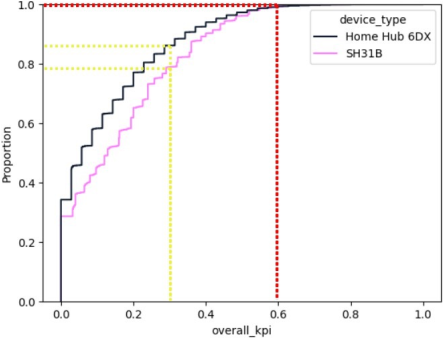
Figure 2.
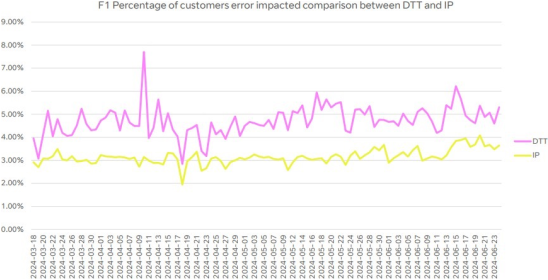
In addition, EE sees no significant difference in the propensity to fault between its wired and Wi-Fi connected TV set-top boxes. This demonstrates the reliability of live TV delivered at scale over Wi-Fi in a wide range of housing types.
c. Gaps, risks and vulnerabilities
The digital skills gap is narrowing, but will likely still need government intervention.
As surveyed by Lloyds Bank in the 2024 Digital Consumer Index, the proportion of individuals with the lowest digital skills has reduced from 25% to 23% between 2023 and 2024, representing almost one million people. Over the last five years, there are 4.8 million fewer people with very low digital skills.[footnote 46]
Digital skills gaps can be managed through a technology transition program.
As DCMS’ 2025 audience survey noted, some people have not explored ways to improve their connection, such as using an ethernet cable or Wi-Fi booster, contributing to concerns about IPTV reliability.
Although the technology exists to offer a reliable Wi-Fi connection throughout viewers’ homes, some users may need support to adopt this technology. This is particularly the case for digitally excluded viewers who do not currently have a broadband connection, often because they lack the digital skills, confidence, motivation or in some cases finances to get online. As described below, a targeted programme to support digitally excluded viewers to get online could enable them to use this technology.
Recommended improvements and opportunities
A targeted, publicly-funded program to support digitally excluded viewers to get online could enable them to use this technology and reap the benefits of being part of a digital society.
This would in turn generate wider economic benefits: Deloitte and the Digital Poverty Alliance estimate that interventions in digital poverty can unlock billions each year for individuals, government, and businesses. Their research estimates that improved digital skills could be worth a collective £17 billion in additional earnings for individuals (though this could be partially offset by lower benefit income and depends on employer demand), while reducing social exclusion could create £2 billion in additional welfare benefits to individuals.[footnote 47]
Raising awareness and funding for charities such as AbilityNet to provide technical support for users to IPTV would also be beneficial.[footnote 48]
e. Roadmap for implementation
By 2034, BT anticipates the majority of homes will have consistent Wi-Fi connectivity enabled by the technologies described above. However, this forecasted outcome, reliable Wi-Fi throughout nearly all homes by 2034, is contingent upon successful adoption of these technologies by consumers, supported where necessary by targeted intervention programmes.
f. References and evidence sources
Further Background to BT’s Wi-Fi Reliability Stats (summarised in section (b) above)
BT’s overall KPI measures holistic Wi-Fi performance in the in-premise environment, over a rolling week. It is one of the main measures BT uses to support improving the in-home setup.
BT’s overall KPI is calculated from 5 different KPIs:
1. Channel Load - how congested the Wi-Fi radio space is within the physical environment; the more Wi-Fi networks the higher the load on the radio channel
2. Changing Bands - this measures the frequency that client devices are switching bands, from 2.4GHz to 5GHz
3. Connected Devices - the count of client devices connected to the Wi-Fi network
4. Edge of Range - this measures how often client devices are at poor coverage
5. Preferred Connection - this measures how sticky client devices are to the 2.4GHz band, ideally we want every device to be on the 5GHz band
When BT splits the Wi-Fi population into device types, BT sees that, for both device types, less than 1% of customers have a red (fail) overall KPI score.
BT has reported data derived from BT set-top boxes, showing that on average, 3% of BT broadband customers experience complete loss-of-service errors when viewing IP-delivered content, compared to 5% when viewing via DTT. However, it is important to note that these figures represent performance on BT’s managed set-top boxes, where the end-to-end delivery of IPTV content, including network connection and viewing devices, is directly controlled and optimised by BT.
Industry feedback, notably from the CAI (Confederation of Aerial Industries), has indicated that these findings may not fully represent the broader UK viewing experience. Specifically, the majority of UK DTT users access content through independently installed aerial systems and not via third-party managed platforms, and typically experience very high levels of service availability. Additionally, broadband-based delivery performance outside BT’s managed ecosystem, where users independently select ISPs, viewing devices, and connection methods, may vary significantly. Real-time outage data available from sources like Downdetector.co.uk offers a broader perspective on service availability across different delivery methods.
Nonetheless, BT’s data remains relevant, especially given the growth of managed TV platforms such as Freely, where end-to-end control may become increasingly common, potentially resulting in performance comparable to BT’s reported figures.
g. Notes and open issues for further review
Further work should include considering how, practically speaking, IPTV migrations could be supported by a digital skills and awareness-raising campaign. More practical thinking in this space could make it easier to assess the feasibility of supporting IPTV migrations, which in turn could help with choosing between options for the future of TV distribution.
Annex 3.8: Viewer experience determinants
Lead: VMO2
Contributors: BT, DTG, Inca & Sky
*note usability is outside of the scope of this section
a. Current state overview
Numerous factors can affect viewer experience when consuming TV content via IP. These factors span multiple domains or sub-ecosystems, many of which lie outside the direct control of the internet service provider or network operator delivering the service. This is similarly the case for providers of traditional broadcast platforms, such as DTT and DSAT, who also do not have end-to-end control over all elements influencing the viewer experience. For example, viewer experience can be affected by the equipment being used to consume the content, in-home distribution factors, the quality, specification and status of the (local) internet connection, and configurations and equipment deeper in the network path (e.g. CDNs, interconnect links).
Factors affecting the viewing experience
Quality of Experience: The challenge for IP broadcast TV is to match the aspirational uptime of [footnote 49]DTT, to ensure the same customer experience and reliability. The following implementations can help improve reliability:
- Redundant TV platforms and network components with diverse paths and no single points of failure across the full end-to-end delivery chain, with automated failover mechanisms to ensure continuous service during outages or technical failures.
- Geographically separated disaster recovery (DR) sites and comprehensive disaster recovery plans to restore services in case of disruptions in the quickest possible time frame.
- Latest security measures applied to all components in the end-to-end delivery chain to protect against attacks that could disrupt broadcasting services.
- Real-time monitoring tools to track service performance & reliability issues and operational processes to address them quickly.
- Quality of Service protocols to prioritise critical broadcast traffic and ensure consistent delivery.
Codecs: The latest TV codecs, such as HEVC (H.265), provide better picture quality compared to older codecs like H.264, thereby providing a better customer experience for TV consumed over IP, however, they place greater processing demands on some backend components, e.g., Transcoders. Key benefits to IPTV consumers from using the latest codecs are:
- Better compression technology resulting in high-quality video with less bandwidth usage.
- Support for higher video resolutions, including 4K and 8K, which are becoming more common in modern TVs.
- Improved Video Quality: Newer video formats, such as HEVC, use advancedvmethods to predict and smooth movement within the video, reducing visual glitches and resulting in clearer, sharper pictures. The latest codecs are optimised for being performant at lower bitrates, making them ideal for streaming high-quality video over the internet.
‘Glass-to-glass’ delay (a form of latency) can impact the viewer’s experience of live events and time-based content by delaying the delivery of live content, e.g., live sports and news. Consistent delays for real-time events can reduce viewer engagement and satisfaction.
Decreasing glass-to-glass delay comes with compromises, e.g., less tolerance of network glitches in the end-to-end delivery chain that result in poor customer experience and reduction in quality to drive time-based efficiencies in transcoders/ packagers. Low delay transcoder options can come at the expense of quality.
Technology options for improving delay include:
- Use of advanced encoding techniques to reduce the time taken to process video for transmission and playback.
- Improvement or upgrade of network infrastructure to handle higher traffic volumes and reduce congestion. This includes using high-speed internet connections and optimising network routes.
- Use of video players that handle buffering efficiently and are optimised for low latency.
Technology options for improving delay with customer experience trade-offs:
- Reduce Video Quality: Lowering the resolution and bitrate can reduce delay but may compromise the viewing quality.
- Prioritise Bandwidth: In theory, giving priority to TV streaming traffic could reduce delays, but under net neutrality regulations, broadband providers should treat all internet traffic equally without favouring specific services.
Influence of broadband access speed
IP broadcast delivery is reliant upon a linked chain of components (including TV delivery platforms, routers, switches, load balancers, firewalls) through to the end customer’s home broadband device, from where the signal is transmitted to the TV via a wired link or Wi-Fi. Factors that determine the reliability and quality of IPTV service include
- The end-to-end overall speed of the network from the content provider to the end user. The higher the speed, the less chance of delay and buffering, resulting in a good quality viewing experience for the customer.
- The speed of the end user’s broadband[footnote 50] directly impacts streaming quality, with faster connections enabling higher resolutions and more stable video streams. For context, DSIT has indicated that a connection of at least 30 Mbps should be sufficient for reliable IPTV services. In practice, major UK streaming providers recommend minimum speeds of approximately 8 Mbps for HD content and 25 Mbps for UHD or 4K content (e.g., DAZN, BBC iPlayer, Netflix). Wired connections typically offer more stable and faster speeds compared to Wi-Fi, which can be subject to interference and signal degradation.
Platform/application design
TV platforms need to be designed and scaled for resilience, redundancy and disaster recovery (DR). The design should ensure the platform can handle failures and recover in an automated fashion where possible to maintain service continuity. The designs should be clearly documented and included in the handover to the operational teams for maintenance and management of the platforms once live.
End-user applications should be designed to minimise delays and be user-friendly. Efficient buffering, quick load times, and intuitive interfaces lead to a positive customer experience. IPTV platforms offer an IP return path which delivers the possibility of enhanced functionality compared to DTT, e.g. Deep linking, replay functions, clever search
For traditional TV viewers or older demographics, a device that autoboots to a live TV channel may present a lower barrier to starting viewing, compared to a more app-centric approach. Devices and apps with a ‘Simple mode’ option may then appeal to broader cohorts of customers needing to migrate to IP-based viewing. Requiring a login for PSB i.e.
-
DAZN:
-
Standard Definition (SD): 8 Mbps
-
High Definition (HD): 16 Mbps
-
Ultra High Definition (UHD/4K): 25 Mbps
-
-
-
BBC iPlayer:
-
Standard Definition (SD): 1.5 Mbps minimum, 2.8 Mbps recommended
-
High Definition (HD 720p): 5 Mbps
-
High Definition (HD 1080p): 7 Mbps
-
Ultra High Definition (UHD/4K): 24 Mbps
-
-
Netflix:
-
Standard Definition (SD): 3 Mbps
-
High Definition (HD 1080p): 5 Mbps
-
Ultra High Definition (UHD/4K): 15 Mbps
-
free-to-air content seems disproportionate in this situation and could be skipped for ‘Simple mode’.
Subtitles, audio description and accessibility modes are key to many viewers’ experience and need to be assured as the transition to IP accelerates.
Interconnect quality
IP delivered TV is carried over a complex network chain. The end-to-end network chain, including IP interconnects, need to be designed and scaled for resilience & redundancy with no single point of failure to ensure it can cope with spikes in demand for popular
‘must-watch’ events.
- The quality of switches, routers, and firewalls affects the reliability and speed of data transmission. High-quality, well-maintained infrastructure reduces packet loss and latency.
- Efficient IP interconnection between different networks ensures smooth data flow and reduces bottlenecks. IP Peering links are generally upgraded in advance of saturation. This needs to be maintained
- Peering connections between broadcasters and operators need fallback mechanisms and multiple, geographically diverse connections
Use of CDNs and Transparency: Broadcasters often deliver content via their own or third-party Content Delivery Networks (CDNs). Compared to direct peering - where broadcasters and Internet Service Providers (ISPs) connect directly - this indirect approach reduces the visibility ISPs have over exactly how content reaches their networks. To maintain effective network management and minimise potential issues, broadcasters should regularly inform ISPs about which CDNs they are using.
Quality of the content (e.g. SD, HD, 1080p, 4k etc)
The quality of IP broadcast TV to the end user is dependent on the quality of source content and how much processing of the content is required before delivery to the end user. New AI technologies are emerging for upscaling source content which could be used in the future.
There is a dependency on high-quality end-to-end delivery across the full chain for a high-quality customer experience. IPTV opens the possibility to deliver high-quality content that would not be available on DTT, e.g., UHD/HDR content.
- Higher resolutions (e.g., HD, 4K) require more bandwidth but provide better visual quality. The end-to-end network capability and the user’s broadband speed must support these higher bitrates.
- Using adaptive bitrate streaming helps maintain quality by adjusting the video quality in real-time based on the available bandwidth.
- Ultimately, IP network operators typically see these video streams as unicast - individual streams where bandwidth varies over time - unless multicast technology is used. Multicast allows operators to efficiently deliver the same content simultaneously to many viewers, significantly reducing network traffic.
Device capability/specification
A wide selection of CPEs with varying degrees of capability will impact the customer experience of IP broadcast TV. Slow & underperforming CPEs will struggle with
high-quality/bitrate-demanding streams, resulting in a poor customer experience. Although that could also be said of low-quality DTT CPE.
- The capabilities of residential home gateway internet routers and set-top boxes (STBs) at the user’s end can significantly impact the quality of experience, especially in relation to Wi-Fi standards. Devices must support the required resolutions and have sufficient processing power.
- Ensuring devices are compatible with the latest standards and regularly updated can prevent performance issues.
- Devices and software embedded within them undergo lifecycle changes. Software and hardware will reach an end-of-life state, particularly if security patches cannot be deployed any longer. Device longevity risks could pose an issue to broadcasters seeking to move to IP delivery. Apps cannot be supported across a wide variety of device types and a wide spread of device vintage. For some customer cohorts, understanding this in the content of broadcast TV viewing may be a challenge. Devices may need to be depreciable to a ‘simple mode’ where live TV viewing can be maintained longer, subject to device security.
In home performance / Wi-Fi performance
OTT IPTV services are predominantly delivered via Wi-Fi in viewers’ homes. Data from VMO2 indicates that around 80% of IPTV set-top boxes are connected using Wi-Fi rather than wired Ethernet connections. The quality and reliability of this home Wi-Fi connection significantly affect the viewer’s overall TV experience, as poor Wi-Fi can cause interruptions, buffering, or degraded video quality. To mitigate these potential issues, OTT providers typically incorporate a buffering delay of 8 to 20 seconds (or sometimes longer), which helps smooth out short-term connectivity issues both in-home and across the wider network.
However, this buffering approach can negatively impact viewer satisfaction during live broadcasts, such as sports events, where minimal delay is particularly important.
STB and home Wi-Fi gateway placement is key as Wi-Fi performance can be very variable depending on house build materials, age, layout and size. Operators need to ensure customers have consistent and reliable connectivity in every area of the house for TV services to work (c.f. the Wi-Fi mesh network devices VMO2 and other providers offer as part of their Wi-Fi guarantees). The migration to IP delivery may bring Wi-Fi challenges for many bedroom or garage TV sets that are more distant from the main Wi-Fi gateway.
Large investments have been made by distributors in the full end-to-end IPTV delivery platforms and IP network infrastructure to ensure reliable, high-quality transmissions to end users. Also recognising the historical large investments that have been made by distributors in traditional broadcast infrastructure (DTT/DSAT) to ensure reliable and high-quality transmission to end users.
The last leg of transmission of the TV ‘signal’ from the broadband router to the TV is outside of the control of the broadcaster and hence is subject to challenges like Wi-Fi that could result in the greatest effect.
- Consistently high-speed and stable network connections are fundamental to a good quality end-user experience.
- The resolution and bitrate of the content have a direct impact on the viewing experience.
- The capabilities of the user’s end devices play a crucial role in delivering high-quality content.
Measurement, reporting, and consumer agency
Good quality tools for regular measurement of key performance indicators (KPIs) such as latency, buffering rates, and resolution can help identify and address issues, resulting in a good customer experience. Transparent reporting of performance metrics to consumers builds trust, and allows users to make informed decisions. Actively seeking and incorporating consumer feedback can help improve services and address user concerns.
Older audiences and the loss of ‘recordings’
VMO2’s strategic move towards IPTV has met with some resistance from segments of our existing customer base. This reluctance stems primarily from IPTV devices no longer including a built-in local Hard Disk Drive (HDD), which means viewers lose the familiar ability to record and store programmes directly onto their own set-top box (Personal Video Recording, or PVR). Instead, IPTV typically relies on cloud-based or catch-up services, a shift that some users perceive as reducing their control and convenience, making them hesitant to switch away from traditional TV platforms. Although broadcasters, including PSBs, provide apps offering access to their non-linear (on-demand) content, viewers often find navigating multiple standalone applications and ecosystems confusing, fragmented, and less reliable. The transition from DTT to IPTV could be made smoother and more attractive to consumers if broadcasters allowed greater integration of their on-demand services into operators’ platforms - for example, enabling providers to aggregate content from services such as BBC iPlayer, ITVX, and Channel 4 into unified programme guides, search functions, and menus. At present, PSBs typically require viewers to use their dedicated apps separately, limiting operators’ ability to offer a seamless and simplified experience. Enhanced integration, achievable through commercial negotiation, could improve accessibility, reduce viewer confusion, and provide a more consistent and user-friendly experience. However, such integration, especially involving PSBs, would need careful consideration within broader policy contexts to ensure it supports, rather than undermines, PSB sustainability - an important point highlighted by Ofcom.
Factors Affecting the Viewing Experience
-
QoE, Latency, Codecs…
-
Influence of access speed
-
Platform/app design
-
Interconnect quality
-
Quality of the content (e.g. SD, HD, 1080p, 4k etc)
-
Device capability/specification
a. Current state overview
Viewer experience of IPTV is influenced by multiple interconnected factors, including broadband speed, device capability, content quality, network infrastructure, platform design, and home Wi-Fi performance. Currently, IPTV services achieve reliability close to traditional broadcast standards.
b. Evidence-based analysis
- Research and operational data from BT, VMO2, DTG, Inca, and Sky highlight critical determinants impacting viewer experience:
- Network performance: DSIT guidelines suggest broadband speeds of at least 30 Mbps are suitable for reliable IPTV delivery. In practice, streaming service providers such as Netflix typically recommend lower speeds (approximately 15 Mbps for UHD), whereas Sky recommends broadband speeds of around 25-30 Mbps for optimal performance on its Sky Glass and Sky Stream products. Device capability: Older or less capable customer premises equipment (CPE) negatively impacts experience through poor handling of high-resolution video streams.
- Latency: ‘Glass-to-glass’ delay significantly impacts viewer satisfaction, especially for live events. Reducing latency often requires trade-offs with content quality.
- In-home connectivity: Data from VMO2 indicates approximately 80% of IPTV set-top boxes use Wi-Fi, underscoring the critical role of robust home networking.
c. Gaps, risks and vulnerabilities
- Network resilience: Potential single points of failure in interconnect links and home Wi-Fi setups.
- Device lifecycle: Variability in CPE quality and capabilities can lead to inconsistent viewer experiences.
- Latency trade-offs: Limited industry consensus on balancing low latency and acceptable quality degradation.
- Integration issues: PSB on-demand services lack full integration into unified platforms, impacting user experience.
- Resistance to cloud-based recording: Older demographics show reluctance to transition away from familiar local storage (PVR) methods.
Risk categorisation:
-
Technical: Network and device performance variability.
-
Operational: Inadequate disaster recovery protocols.
- Consumer-related: Viewer resistance to IPTV due to unfamiliar features and fragmented user experiences.
- Recommended improvements and opportunities
- Enhance network infrastructure resilience, including redundant and geographically diverse pathways.
- Adopt advanced encoding technologies and multicast protocols to balance latency and quality.
- Standardise performance metrics to build consumer confidence through transparency.
- Accelerate industry collaboration to improve integration of PSB content into IPTV platform interfaces.
- Offer user-friendly features (e.g., “simple mode” interfaces) for easier migration to IPTV, particularly among older audiences.
- Investigate AI-driven upscaling solutions to enhance source content quality.
d. Recommended improvements and opportunities
Prioritisation:
- Urgent: Conduct a detailed assessment to confirm whether improvements in network resilience and latency management are necessary, based on clear evidence of current viewer experience issues or identified risks.
- High impact: Enhanced PSB content integration, standardisation of performance metrics.
- Long-term strategic: AI-driven content enhancements, multicast deployment
e. Roadmap for implementation
Short-term (0-12 months):
-
Conduct an assessment to determine if immediate enhancements to interconnect redundancy are required, based on clear evidence of existing vulnerabilities or identified risks to IPTV service reliability. Establish performance metric standards through cross-industry collaboration.
-
Initiate user research and trials for simplified interfaces and cloud-based PVR solutions.
Medium-term (1-3 years):
-
Broader adoption of advanced codecs and multicast distribution.
-
Comprehensive integration of PSB content into IPTV platforms.
-
Deployment of enhanced in-home Wi-Fi solutions and mesh networks.
Long-term (3-5 years):
-
Industry-wide rollout of AI-driven video quality enhancements.
-
Full standardisation and consumer transparency in IPTV performance reporting.
-
Transition strategy finalisation for remaining legacy TV consumers.
f. References and evidence sources
- DSIT Broadband Speed Recommendations for IPTV [https://www.gov.uk/guidance/broadband-speed-recommendations].
- VMO2 internal operational data on IPTV Wi-Fi usage [Internal VMO2 document - restricted access].
- BT/VMO2 resilience and network uptime reports [Internal BT/VMO2 operational reports - restricted access].
- Technical specifications and performance studies for HEVC codecs [https://mpeg.chiariglione.org/standards/mpeg-h/high-efficiency-video-coding].
- Ofcom policy documents on net neutrality and IPTV service prioritisation [https://www.ofcom.org.uk/ data/assets/pdf_file/0016/100771/net-neutrality.pdf].
- DTG usability and accessibility research reports [https://dtg.org.uk/publications/usability-and-accessibility-research-reports].
- Sky and Inca platform infrastructure and performance benchmarking reports [Internal Sky/Inca documentation - restricted access].
g. Notes and open issues for further review
Further research required - Additional analysis needed on viewer acceptance of cloud-based recording solutions versus traditional personal video recorders (PVRs). Understanding potential viewer resistance, particularly among older demographics, will inform smoother transitions.
Industry consultation recommended - Stakeholder engagement should address improved integration of public service broadcasters’ (PSB) on-demand services within IPTV platforms, considering policy implications, commercial viability, and user experience.
Latency and viewer satisfaction - Further evidence is required on the viewer impact of latency during live events and acceptable trade-offs between reduced delay and potential quality degradation.
Multicast viability assessment - Industry-wide clarity needed regarding the feasibility and practical deployment of multicast solutions, including infrastructure readiness and potential impacts on network efficiency.
Performance metrics standardisation - Collaborative development of common measurement methodologies and transparent reporting practices is recommended to build consumer confidence in IPTV services.
Stakeholder differences and evidence gaps - Stakeholders currently differ on the representativeness of managed platform data versus broader DTT and IPTV consumer experiences. Independent research is required to reconcile these differing views and provide comprehensive evidence to guide decisions.
Annex 3.9: Real life case studies
Lead: BT, DTG & VMO2
Contributors: Inca, M2AMedia, BBC & Sky
Introduction
To successfully transition to IP-based television delivery, it is critical that the industry proactively learns from real-life case studies of events involving high concurrent viewing of live TV over IP. Experiences from these IPTV events offer valuable insights that can enhance future readiness, reduce operational risks, and support positive viewer experiences. This paper summarises lessons learned from notable real-world examples specifically focused on live, high-demand events, and recommends a structured mechanism for sharing this best practice industry-wide.
Key real-life case studies
Recent major IPTV events involving high concurrent viewing have provided important lessons regarding network preparation, content provider collaboration, viewer experience management, and operational efficiency. Notable examples include:
-
Amazon Prime Video - Premier League football: demonstrated the necessity of proactive planning, CDN readiness, and robust network management to cope with predictable spikes in viewer traffic.
-
Netflix - Fury Boxing event: highlighted the value of structured communication and collaboration between ISPs and streaming providers.
-
UTR Sports - Cloud-based IPTV delivery: showcased how cloud solutions effectively deliver extensive live sports coverage globally, emphasising scalability, operational efficiency, and integration simplicity.
-
FIFA Club World Cup 2025 (see detail below) (13 July 2025 - the most recent cloud delivered event): anticipated to provide further insights into managing peak demand and ensuring consistent viewer experiences during global live sporting events.
-
BBC - State funeral of Queen Elizabeth II: demonstrated extensive planning and execution involving coordinated IP-based broadcast infrastructure, highlighting the importance of robust contingency strategies and network resilience during globally significant live events.
-
Unscheduled events (e.g., significant news announcements): underlined the need for networks to maintain resilience and have robust contingency strategies in place.
Key insights from experience
Analysis of these high concurrent viewing events has surfaced recurring themes and key learnings:
-
Advanced preparation and coordination: ISPs and content providers must establish clear, structured communication channels to adequately prepare for high-traffic events.
-
Importance of multicast and CDN strategies: Efficient distribution technologies, including multicast and strategically managed CDNs, significantly improve network efficiency and viewer experience during peak events.
-
Operational transparency and data sharing: Open exchange of performance data and viewer experience metrics between broadcasters, streaming providers, and ISPs enhances responsiveness and continuous improvement.
-
Impact of technology innovation: Cloud-based solutions, advanced encoding, and adaptive bitrate streaming technologies effectively address operational challenges and viewer expectations.
a. Evidence-based analysis
We have included below an example chart showing CDN throughput during a recent UEFA Champion’s League match streamed on Amazon Prime. This demonstrates that demand for particular sources of content can be very ‘spiky’.
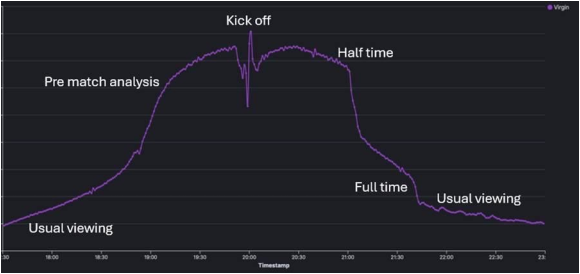
b. Gaps, risks and vulnerabilities
-
Operational risk: Engagement with broadcasters and other OTT traffic generators is today ad-hoc and unstructured. While some ISPs occasionally face challenges identifying contacts within relevant organisations to discuss upcoming events, Sky’s experience indicates that most major content providers engage responsibly and collaboratively, enabling effective preparation and coordination.There are pockets of best practice; one SVoD provider that also hosts live events provides a post-event report of the Quality of Experience and statistics for the viewers on ISP footprints. This two-way engagement and sharing of data on the mutual customer base is to be applauded and encouraged. (BT)
-
Operational risk: Currently, there is no centralised mechanism for identifying risks to telecom network resilience and capability. During the Covid pandemic, Ofcom facilitated weekly calls with major broadband and mobile network operators to monitor traffic levels and resilience. However, this was an exceptional circumstance.
Industry feedback indicates targeted measures - such as Netflix temporarily reducing its streaming bitrate - effectively addressed traffic concerns without requiring ongoing central coordination. Routine centralised coordination for managing regular operational risks is considered neither proportionate nor necessary by some working group members, but views differ on this.
-
Operational risk: The greatest operational risk today is an event clash - for example, a major football match coinciding with an unscheduled video game release. Currently, such risks can be managed through exceptional traffic management provisions outlined in Ofcom’s net neutrality guidance. However, while Ofcom’s updated 2023 guidance is a step forward, it does not fully address some ISPs’ concerns. If ISPs are to become the primary method of delivering TV services, some ISPs consider that there may need to be a legislative review of net neutrality rules (although not all ISPs - particularly those who have significant interests as content providers - share this view). This would potentially grant ISPs greater flexibility (within clearly defined limits) to manage network traffic efficiently, ensuring viewers consistently receive an acceptable service experience. Ofcom’s 2023 statement concludes that there may be a case for giving ISPs further flexibility in future, which is not permitted under the current rules, acknowledging that this is a matter for government (since it would require legislative change).
-
Techno-economic risk: In a post-DTT environment, mass live-viewing events could generate substantial, short-term spikes in network traffic, typically lasting around 2 to 3 hours. Evidence from current major streaming events, such as Premier League football matches and major international sporting events, already shows peak traffic volumes significantly exceeding average daily consumption, with peaks reaching up to five times the typical evening usage levels (Ofcom Connected Nations Report, 2024). However, further analysis is required to confirm (i) whether these peak-to-average traffic ratios would materially increase beyond today’s observed levels if IPTV fully replaces DTT, and (ii) whether IP network operators would be economically or technically constrained in scaling their networks sufficiently to accommodate these infrequent but predictable peaks in demand.
-
Market failure risk: Third-party Content Delivery Networks (CDNs), such as those operated by Akamai and AWS, have been integral to the IP industry for at least two decades and continue to thrive commercially. However, the recent bankruptcy and shutdown of Edgio CDN in January 2025 highlights potential vulnerabilities in relying on this internationalised sector of the ecosystem. The primary concern, therefore, may not solely be the overall economic viability of CDNs, but rather the risks arising from market consolidation, including single points of failure and excessive market power, should the CDN market become overly concentrated around one or two dominant providers. Such concentration could expose broadcasters and ISPs to heightened risks related to reliability, resilience, and dependency.
c. Recommended improvements and opportunities
- Multicast solutions could be explored as one potential approach to deliver popular live TV channels effectively and at scale. While adopting common, non-proprietary standards developed collaboratively across telecoms and broadcasting sectors may aid interoperability, caution is advised to ensure such standards do not inadvertently restrict innovation, competition, or consumer choice. A “National” or “Federated” set of Operator CDNs could be considered as one possible model to optimise the carriage of broadcaster traffic. However, the need for such a centralised, coordinated, and standardised CDN framework has not yet been clearly established. If explored further, the benefits of any standardised approach, including potentially lower barriers for individual broadcasters compared to reliance on third-party CDN operators would need to be weighed carefully against the risks of limiting flexibility, innovation, and competition. A mechanism to give clarity on the timetable for DTT shutdown, based on gradual, phased decommissioning, including the anticipated cohorts of migrations of customers, to give certainty and stability to IP Network operators making investments in network capacity and mitigation technologies such as Multicast.
Encouraging non-real-time traffic generators, such as gaming providers, to adopt pre-release delivery techniques could further spread network load. This practice has been adopted by some gaming providers in recent years, and where followed it naturally reduces the impact of gaming-related traffic spikes. Given that market-led solutions and existing regulatory provisions, such as Ofcom’s current Net Neutrality framework provide some scope for ISPs to manage exceptional traffic spikes,, it is recommended that a thorough assessment is undertaken to determine whether additional regulatory or legislative intervention, such as requiring third-party CDN operators to offer low-cost bulk tariffs for non-real-time traffic, would be necessary or beneficial.
- Bi-lateral and collaborative engagements between the OTT providers/broadcasters and ISPs to investigate innovations over the coming years to manage short duration, peak viewing events to provide better customer experiences.
d. Roadmap for implementation
Significantly in advance of any DTT shutdown, establishing a common calendar showing, for the key broadcasters, migration and shutdown dates per TV channel, so that IP network operators can plan for the long term. Broadcasters can change their plans, but IP network operators must be kept informed
e. References and evidence sources
-
Amazon Prime Video - Premier League football [https://www.amazon.co.uk/primevideo]
-
Netflix - Fury Boxing event [https://www.netflix.com]
-
UTR Sports - Cloud-based IPTV delivery [https://www.universaltennis.com]
-
FIFA Club World Cup 2025 (13 July 2025) - Awaiting publication of detailed analysis [https://www.fifa.com/fifaplus/en/tournaments/mens/clubworldcup]
-
BBC - State funeral of Queen Elizabeth II [https://www.bbc.co.uk/news/uk-62890879]
-
Ofcom Connected Nations Report (2024) - Peak traffic analysis [https://www.ofcom.org.uk/research-and-data/multi-sector-research/infrastructure-res earch/connected-nations-2024]
-
Ofcom Net Neutrality Guidance Update (2023) - Traffic management provisions [https://www.ofcom.org.uk/consultations-and-statements/category-2/net-neutrality-revi ew]
-
CDN throughput data - UEFA Champion’s League match streamed by Amazon Prime [https://www.amazon.co.uk/primevideo]
-
Edgio CDN bankruptcy announcement (January 2025) [https://www.edg.io]
f. Notes and open issues for further review
Recommended actions
To institutionalise these learnings and ensure continuous improvement, the DTG, in collaboration with key industry stakeholders, could establish a formal mechanism for:
- Regular capture of best practice: Systematically document lessons from significant high concurrent viewing IPTV events, including preparation strategies, technical implementations, and viewer experience outcomes.
- Industry-wide dissemination: Publish accessible and actionable guidelines to encourage widespread adoption of best practice.
- Structured discussion and collaboration: Facilitate ongoing industry dialogue through workshops, forums, and roundtables, enhancing collective readiness and capability.
- This structured approach could mirror DTG’s successful historical initiatives for HDTV, which provided clarity, drove standards adoption, and ultimately enhanced viewer experiences across the sector.
- Implementation roadmap
Short-term (0-6 months): Initiate industry consultation and establish a working group to define scope, processes, and responsibilities.
Medium-term (6-12 months): Develop initial best practice guidelines and host industry events to discuss and refine recommendations.
Long-term (12+): Regularly update best practice documentation based on emerging high concurrent viewing case studies and industry advancements, maintaining relevance and driving continuous improvement.
Conclusion
By proactively capturing and sharing best practice from real-life IPTV deployments involving high concurrent viewing of live TV events, the DTG and its industry partners will enhance the reliability, scalability, and viewer experience of future IP television services. The recommended structured mechanism, inspired by proven DTG-led approaches, offers an effective pathway towards a resilient and viewer-focused IPTV ecosystem.
Annex 4.1: Content clashes and shared infrastructure
Lead: BT
Contributors: DTG, Inca, Sky & VMO2
a. Current state overview
ISPs strive to ensure networks have sufficient capacity to manage anticipated peak internet usage, particularly when significant data traffic occurs simultaneously from multiple sources - such as popular live TV broadcasts and major gaming releases. Effective collaboration between ISPs and content application providers (CAPs) allows accurate forecasting and planning for these peaks, ensuring adequate network capacity and suitable content distribution network (CDN) arrangements. This proactive approach typically manages planned events, such as major live IPTV sports broadcasts, efficiently.
However, challenges arise when substantial content releases, notably large gaming downloads, occur without sufficient advance notice to ISPs. These unplanned or poorly coordinated releases, if coinciding with other high-demand scheduled events, create a risk of content clashes. Such unexpected clashes may cause network congestion, negatively impacting the quality of broadband and mobile services experienced by end users.
Additionally, inefficient distribution methods for live special-event content - such as unicast rather than multicast delivery - can result in larger peaks in network traffic. This can lead to higher costs for ISPs increased energy consumption and potential service degradation than under multicast. While the primary focus of this annex is on mitigating unplanned content clashes across multiple content sources, it also emphasises the importance of employing efficient distribution methods for planned events to effectively manage overall network demand.
Daily internet traffic follows a typical pattern of reasonably busy during working hours, a peak in the evenings as people relax watching TV content via streaming and gaming (see chart below). However, these daily peaks are now sometimes dwarfed by a ‘super peak’ of traffic, which typically happens when a popular sporting event coincides with an update for a popular video game such as Call of Duty. These peaks:
1. Drive costs for network providers - where networks build capacity to meet these occasional peaks
2. Use more energy than necessary - creating and maintaining additional internet delivery capacity generates extra financial and energy costs. While networks have historically been dimensioned to meet regular peak demand, occasional, exceptional peaks, such as simultaneous popular gaming releases and major live events can lead to inefficiencies. Sky notes that the ratio between these peaks and average usage is not increasing, referencing Ofcom’s evidence that although peaks occur more frequently, their magnitude relative to average traffic remains steady. However, VMO2 points out that networks, including voice networks historically, have never been built specifically to accommodate such exceptional peaks, nor is it economically feasible to do so. These peaks drive service issues for all broadband and mobile customers - gaming downloads in particular are programmed to find and use all spare network capacity. And this behaviour means there is no slack when other services have an issue, making it more likely that, for instance, a Zoom call will be glitchy or viewing of sport or a TV series by streaming is more likely to be delayed or skipped.
b. Evidence-based analysis
Figure 1. Peak on 6 December 2023 caused by six premier league football matches, a Call of Duty update and a Fortnite gaming download
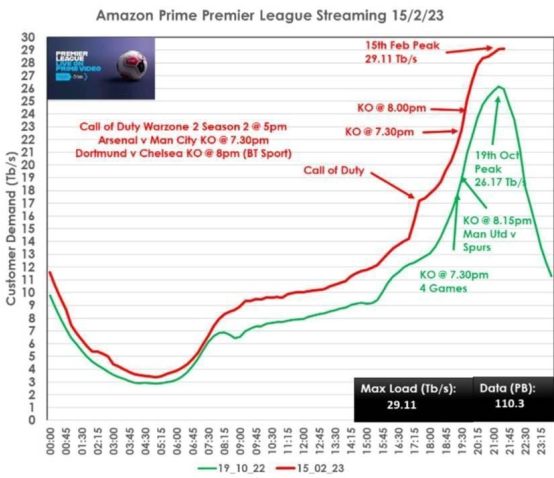
On Weds 16 February, BT’s network carried a new record peak for broadband traffic - 29.11 Tbps - which was more than 10% higher than the previous peak.
Key events leading to new peak:
-
Streaming of two Champions League games
-
Top of the table clash in the Premier League
-
Call of Duty new season release
-
Usual evening (half term) traffic
Figure 2. Peaks in BT’s network between November 2019 and November 2023
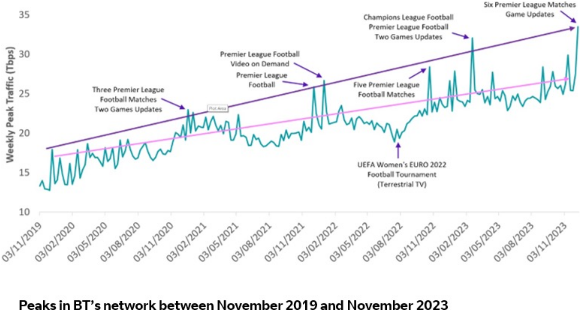
N.B. VMO2 have also included graphs of peak live events in Annex 3.9 which also evidences peaks driven by live TV traffic
c. Gaps, risks and vulnerabilities
Traffic peaks
The large unexpected traffic peaks ISPs see on their networks are caused by inefficient and uncoordinated content distribution.
ISPs build networks that meet growing demands but it’s everyone’s responsibility to make sure those networks are used fairly. If we want a sustainable digital world that will meet growing demand in the future, we need to make sure all players are working together.
Like all businesses, ISPs want to make investment where it’s most needed and to make sure that it is both cost and energy efficient. Expanding next generation networks like fibre and 5G will make a huge difference to people’s lives.
Without change, there is a risk that ISPs will need to direct more investment towards expanding capacity in areas where sufficient networks already exist. BT highlights that as viewing potentially shifts from traditional broadcast (DTT) to IPTV, peaks driven by live TV special events could grow significantly. This shift, especially if combined with simultaneous major gaming downloads, may result in higher ‘super-peaks’ of demand, potentially leading to customer experience issues unless ISPs undertake investment in additional network capacity, which could be economically and environmentally inefficient. However, Sky points out that ISPs have historically managed to increase capacity effectively, even during periods of higher data growth than seen currently, by leveraging network efficiencies. Sky also notes that core network capacity investment is relatively minor compared to other ISP investment areas such as last-mile infrastructure, and argues that UK ISPs already routinely manage such peaks successfully.
d. Recommended improvements and opportunities
Recommendation Improvements
Consider steps to drive content producers holding popular live sports rights - the listed events and other key tournaments such as the Premier League and Champion’s League - to work with network operators to ensure live sport content delivery arrangements are as reliable and efficient as possible.
Delivering popular live content such as sports over IP is a different challenge from other video streaming. In order for these services to be delivered at appropriate quality to end users, content application providers and ISPs need to work together to forecast traffic and plan efficient solutions to meet demand. Originators of other popular content, such as gaming downloads, should provide ISPs with sufficient notice of any major releases and time these to avoid coinciding at least with listed events, to avoid ‘content clash’ which jeopardises the performance of the end user’s broadband or mobile services.
e. Roadmap for implementation
The recommendations in part (d) above should be implemented as soon as possible and before 2034.
Annex 4.2: Live event traffic management
Lead: BT
Contributors: DTG, Inca, Sky, VMO2 & Vodafone
a. Current state overview
BT anticipates continued growth in peak traffic on core fixed networks, driven predominantly by live event viewing via IPTV, potentially becoming the primary method for viewing live special events, shifting away from DTT. While the exact scale of this future peak traffic growth remains uncertain, projections suggest it could increase significantly by 2030.
Ofcom’s Connected Nations reports and Net Neutrality consultation annexes provide relevant context and forecasts for this growth, although the anticipated rate greatly exceeds current annual growth rates (~10% per annum forecast by BT Openreach for 2024)[footnote 51].
Historically, telcos have consistently invested in expanding network capacity, often accommodating even higher rates of growth without significant real-term increases in retail prices, in part because of the high levels of competition in the retail market, and the amortisation of capacity expansion costs over long period. This ongoing investment has generally resulted in improved customer experience, service quality, and resilience, evidenced by faster broadband speeds and enhanced video quality. Nevertheless, a substantial rise in concurrent IPTV viewing for live events could potentially have implications for network pricing structures, customer experience, or network resilience, highlighting the need for efficient utilisation of fixed network resources. Moreover, a change to the existing ‘best efforts’ approach to IP delivery of content (for example, a requirement for a defined level of quality or resilience to underpin Public Service Broadcasting availability/delivery obligations) could also have a significant impact on these factors. Fixed network resources must be used efficiently to maintain network resilience and deliver the highest possible user experience to customers. ISP capital resources are not unlimited, and investments are subject to viable business cases, including the need to make a reasonable return.
b. Evidence-based analysis
BT’s analysis below indicates that peak traffic volumes will increase significantly by the 2030s, largely driven by live TV special events shifting from primarily DTT viewing today towards IPTV. This projected growth aligns with historical trends where annual peak traffic increased in some periods by 20-40% and which were previously accommodated by network providers without compromising quality. However, it isn’t guaranteed that in future the per-Gbps cost of carrying traffic will reduce by a similar rate to the rate at which peak traffic is growing (as it has in the past), which could make accommodating this peak traffic less affordable without raising prices or reducing network resilience (if we allow headroom to reduce). The CAGR for a fivefold increase in peak traffic volumes over five years (2025 to 2030) is approximately 37.97% per annum.
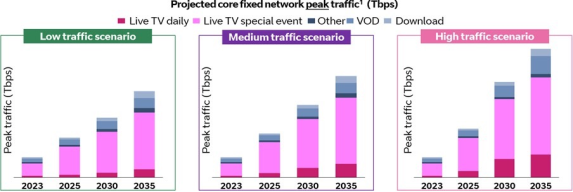
c. Gaps, risks and vulnerabilities
As demand increases networks will need to continue to invest in increasing network capacity and collaborating with content application providers (CAPs) to ensure end users experience good quality IPTV services, including for live events. Popular live TV events are the key drivers of network traffic peaks. Some CAPs and ISPs already collaborate to reduce ISP network congestion and capacity requirements by caching popular IPTV content closer to the ISP’s end users via content distribution networks (CDNs). This in turn reduces the amount of network investment ISPs need to make in core network capacity.
However, CAPs may not necessarily prioritise efficient network routes or technologies which can lead to network congestion. While ISPs endeavour to plan ahead for mass TV viewing events, this is not always possible if CAPs choose inefficient network routes, or if popular TV events coincide with popular games downloads.
Recommended improvements and opportunities
As described above, CDNs can be a more efficient way to deliver popular IPTV content including live events and therefore reduce ISP network investment costs. Multicast is a type of CDN solution that is particularly suited to delivering some IPTV services:
-
BT Group’s MAUD (multicast-assisted unicast delivery) is up to 10 times more efficient in delivering live content than unicast and makes the adoption of emerging multicast technology even easier for content providers, while also driving down energy usage[footnote 52]:
-
Innovations mean MAUD could support personalisation through techniques like
-
Emerging multicast technologies could be available to all ISPs, even those who don’t wish to deploy multicast in their own core networks.
-
MAUD improves energy efficiency and therefore supports ESG objectives.[footnote 53]
-
We estimate that adopting emerging multicast technologies for live TV distribution will educe BT’s energy consumption by 24-29 GWh per year by 2030, based on a medium traffic scenario and assuming multicast applies to 50%-60% of all live TV.[footnote 54] This is enough to power 6.5 - 7.8k average households per year by 2030.[footnote 55]
To support the outcomes of adopting efficient technologies, network capacity investment, and broadband adoption, consideration should be given to how, if at all, the regulatory/policy environment needs to evolve. There are differing industry views on the necessity and scale of these changes.
Recommendations for policymakers to consider include:
-
Assessing expectations for adopting efficient technologies and stimulating network investment for IPTV delivery, including potential promotion of emerging multicast solutions for live concurrent TV. Policymakers could explore using their convening powers and, where supported by evidence, policy mechanisms to incentivise efficient delivery of live TV traffic and explore the relative bargaining powers within the value chain to ensure efficient delivery of live television. However, it is important to note that some stakeholders, such as Sky, disagree with the necessity of policy intervention. They argue that efficient technology adoption, network capacity investment, and broadband adoption have already been substantial under the current regulatory framework. According to Sky, existing data (e.g., from Enders, Comms Chambers, ARCEP) suggests that current and anticipated growth in peak IPTV traffic remains manageable within the existing ecosystem and regulatory regime.
-
Considering whether legislative measures should require non-time-critical, high-volume traffic (e.g., gaming downloads) to shift to off-peak times to alleviate pressure on networks during peak usage periods.
-
Conducting a thorough analysis to determine the timing of a potential “tipping point” when maintaining DTT channels may no longer be economically beneficial compared to reallocating spectrum for mobile use. This would minimise costs or inefficiencies and maximise consumer benefits.
-
Monitoring the transition speed to IPTV delivery closely, leveraging data from Ofcom and BARB regarding broadband uptake, DTT and IP usage patterns, and viewing habits. This monitoring could inform government decisions on potential broadband funding to address digital divides proactively.
-
In 2023, Ofcom recognised potential benefits in permitting differentiated treatment of content (such as content-specific retail offers providing lower jitter for certain applications), provided risks are managed through careful monitoring and enforcement frameworks.[footnote 56] Legislative changes may be required to facilitate these types of offers, potentially enabling better management of network resources during demand surges.
Overall, while some stakeholders see merit in evolving the regulatory and policy landscape to facilitate the transition to IPTV and manage growing network demands efficiently, others maintain that current systems and regulatory frameworks adequately support current and anticipated future needs.
e. Roadmap for implementation
The time for implementing the policy recommendations listed above is now. This is because an inclusive transition would take 8-10 years, so action is needed as soon as possible so that industry can be ready for any changes by the early 2030s.
f. References and evidence sources
Publicly Available Sources:
1. DSIT Broadband Speed Recommendations for IPTV
https://www.gov.uk/guidance/broadband-speed-recommendations
2. Ofcom Policy Document on Net Neutrality and IPTV Prioritisation
https://www.ofcom.org.uk/ data/assets/pdf_file/0016/100771/net-neutrality.pdf
3. DTG Usability and Accessibility Research Reports
https://dtg.org.uk/publications/usability-and-accessibility-research-reports
4. MPEG Technical Specifications and Performance for HEVC (H.265) Codecs
https://mpeg.chiariglione.org/standards/mpeg-h/high-efficiency-video-coding
Internal Industry Sources (restricted access):
-
VMO2 Internal Operational Data on IPTV Wi-Fi Usage
-
BT/VMO2 Resilience and Network Uptime Reports
-
Sky and Inca Infrastructure and Performance Benchmarking Reports
(Note: These sources are internal company documents and not publicly accessible, but have informed the analysis presented in this annex.)
Notes for open issues for further review
The following areas require additional analysis, consultation, or clarification to ensure comprehensive assessment of viewer experience determinants for IPTV:
- Cloud-based recording acceptance:
Further research is needed to assess consumer acceptance and potential resistance to cloud-based recording versus traditional personal video recorders (PVRs), particularly among older and less digitally engaged demographics.
- Integration of PSB on-demand content:
Industry consultation is recommended to explore enhanced integration of Public Service Broadcasters’ (PSBs) on-demand services into IPTV platforms. This should address policy considerations, commercial viability, and impacts on viewer experience.
- Latency impacts and acceptable quality trade-offs:
Additional studies should quantify the impact of latency on viewer satisfaction during live events and determine acceptable trade-offs between reducing latency and maintaining video quality.
- Viability of multicast deployment:
Further investigation is required to clarify the practical feasibility, network-readiness, cost-benefit, and scalability of multicast solutions within the UK IPTV ecosystem.
- Standardisation of performance metrics:
Industry collaboration should focus on developing common measurement methodologies and transparent reporting practices to strengthen consumer trust and informed choice.
- Stakeholder perspectives and evidence gaps:
Independent research is necessary to reconcile differing stakeholder views regarding the representativeness of managed IPTV platform data compared with broader consumer experiences across DTT and IPTV platforms.
Annex 4.3: Network dimensioning
Lead: VMO2
Contributors: BT, DTG, Inca & Sky
What is Network Dimensioning?
Summary
Network dimensioning is how internet service providers (ISPs) make sure their networks have enough capacity to handle the amount of data flowing over them. Essentially, it’s about ensuring the network is appropriately sized to avoid congestion and provide a smooth, consistent end user experience, while at the same time making sure that network resources are allocated and utilised efficiently. The amount of data traffic flowing over an ISP network fluctuates but ISPs will aim to dimension their networks to be capable of handling smoothly peak demand at the busiest hour. Providers must predict how many end users they’ll have, how much data those users will consume (and generate), the demand profile and when that demand might spike, such as during a popular sports event. They must also consider anticipated developments in technology (such as advances in data compression and adaptive bitrate techniques), evolving end-user behaviour, and changes in content provider or intermediary practices (such as the introduction of new content distribution networks or new interconnection arrangements). While these factors influence how ISPs forecast future network requirements, they form inputs to the planning phase rather than part of the dimensioning process itself.
Key elements of the dimensioning process include determining a network’s optimal topology/configuration, establishing data traffic routing plans (i.e. the path that data takes through the network) and resource allocation (such as determining where and how to deploy different equipment and functions across the network) in order to meet the anticipated usage demand.
ISPs typically take a forward-looking view across a 3 - 60 month time horizon to anticipate future capacity requirements. To ensure an optimal and efficient deployment of costs and other resources, they aspire to implement any required capacity upgrades (and therefore to invest) ‘just ahead of demand’. This process entails real-time monitoring of individual network components (circuits, network routers and so on).
Once peak utilisation of a component passes a specified threshold, the ISP will take steps to increase the capacity in that area of the network.
As TV increasingly moves online (IP-based), networks must continue to be sized correctly so they don’t slow down or become unreliable, especially during peak viewing times. Good network dimensioning ensures viewers have a smooth and enjoyable experience, no matter how busy the internet gets.
We explain how ISPs go about dimensioning their networks in more detail below.
How do ISPs dimension their networks to ensure there is enough capacity?
ISPs approach network dimensioning in four stages (monitor, forecast, plan and build).
Monitor
ISPs continually monitor the performance and capacity utilised of their networks through a variety of network monitoring tools.
Forecast
They then forecast future traffic demand based on specific drivers such as:
-
volume of end users (i.e., number of ISP’s broadband and mobile subscribers);
-
per subscriber data usage;
-
historic trends in data consumption growth by end users and in aggregate;
-
patterns of peak demand;
-
technology and industry trends used by content providers e.g. codecs, data compression developments and adaptive bit rate (ABR) techniques;
-
if the ISP is also a content provider to its end users, anticipated traffic as a result of end user consumption of its content; and
-
discussions with leading content providers and CDNs to understand and align on demand expectations and CDN deployments.
Plan
ISPs use their forecast traffic demand to plan their future network capacity, topology (including interconnect and caching strategy), infrastructure, technology, data centre state and supply chain.
Build
The build phase implements the steps necessary to increase network capacity to meet forecast demand in accordance with the plan.
Resources are optimised and continually monitored to ensure that infrastructure utilisation is as technologically and economically efficient as possible. This means that additional capacity is only created when existing capacity is nearing full utilisation (‘just ahead of demand’, as described earlier) and the plan may change to reflect actual demand and performance (versus forecast). Typically, ISPs will design and build in some agility so that they have some scope to react to differences between forecast and actual demand (albeit, if actual demand is significantly higher than forecast (plus any additional contingency headroom in network capacity), then there could be network congestion).
Collaboration with large content providers and CDN operators helps ISPs dimension their networks
As described above, ISPs forecast and plan for traffic demand on the basis of a number of key drivers. ISPs are often best placed to understand these drivers (e.g. the forecast numbers of their end users, average data usage of end users etc.) whereas to understand other drivers of traffic demand, ISPs will also liaise with large content providers and CDN operators. This may include discussions on:
-
demand forecasts for specific services, including future content provider live events (which can be a key driver pf peak demand and may be subject to specific live event planning between the ISP and the content provider, including standing up joint operations during the event);
-
content provider or CDN operator interconnection strategy with respect to the ISP (capacity and locations of peering interconnects and caches); and
-
content provider planned encoding formats and adaptive bitrate rules - simply, the data rate at which the content provider transmits its video content, as this will help determine the capacity requirements for the ISP network (e.g. the greater the level of data compression or the lower the bit rate (how many ‘bits’ are transmitted per second) then the less capacity in the ISP network that content providers’ services will consume).
Content providers control how much they compress their data (known as encoding) to reduce the amount of data that content contains - the compression standard they utilise is known as a codec.
Content providers are also responsible for defining their adaptive bit rate (ABR) rules. ABR is a technique used by content providers to adjust in real time the data rate at which a stream of its content is transmitted, i.e. how many ‘bits’ per second. Adjusting bit rates is often done to optimise content delivery in light of the levels of network congestion (either in the ISP network or elsewhere). For instance, if a network is experiencing high levels of congestion, ABR can be used to reduce the data rate at which the content provider’s services are delivered which in turn reduces the amount of capacity the services require in the (already busy) network which leads to improved quality. Conversely, where there is no network congestion, ABR can be deployed to increase the data rate of content.
Unforecast and unplanned high-traffic events risk ISP network congestion, particularly if they coincide with other planned live events
Where traffic growth is predictable and planned for, ISPs are able to dimension their networks in time to meet that demand. ISPs and responsible content providers have overseen significant increases in peak data demand ever since broadband and mobile data services were first launched in the UK over twenty years ago. Consumer adoption of broadband and mobile data is now near universal, and increasing amounts of audio-visual content are consumed online, including popular live events, to ever increasing levels of quality. Generally, ISPs and content providers share a common goal of ensuring that IP content is delivered at high quality, and this fosters strong collaboration.
However, the key risk to ISPs’ network quality comes from un-forecast, un-planned for high traffic events from less responsible actors in the value chain. Ostensibly, these events relate to popular gaming and software downloads - such as Call of Duty and Fortnite updates and releases. The content providers and their CDN partners responsible for these events do not provide ISPs with any or sufficient notice (at best, just a few days) to dimension their networks to meet the traffic demand required if these events occur simultaneously with other popular events (which have been planned for and forecast several months in advance).
Ofcom’s Net Neutrality guidance allows ISPs to take action against routes into their networks which become congested[footnote 57] (for instance, as a result of gaming downloads) and threaten the integrity of network and services - and this can enable ISPs to temporarily throttle services that use those routes in order to maintain quality throughout the network.
Annex 4.4: Platform/app quality
Lead: DTG
Contributors: BT, Inca, Sky, VMO2, LG
a. Current state overview
The streaming application landscape has matured significantly, with major platform providers delivering consistently reliable and robust app experiences. Recent DTG tests demonstrate variability in performance across devices and network conditions. This complexity contrasts traditional non-connected TVs, rigorously tested against industry standards (DTG D-Book, DTG Testing Test Suites), highlighting a gap in uniformity for connected TVs.
Interoperability standards, supported by rigorous testing environments, are critical to ensuring the success and growth of the consumer electronics and content application ecosystem. Clear standards enable diverse consumer devices to reliably interact with a wide range of streaming applications, delivering a consistent and seamless viewing experience across different platforms and manufacturers. Effective testing, such as that conducted through industry frameworks like the DTG D-Book and DTG Testing Test Suites, HbbTV and Freely helps identify and mitigate inconsistencies or compatibility issues before devices reach consumers, thereby enhancing user trust and satisfaction.
Currently, the connected TV market involves a range of application development methods. Standards based approaches like HbbTV (Hybrid broadcast broadband TV) promote interoperability and consistency across devices from multiple manufacturers.
Manufacturer-specific applications built using Software Development Kits (SDKs) - a set of software tools, libraries, and documentation provided by manufacturers - allow developers to optimise app performance specifically for those devices. Hybrid variants, such as HbbTV Operator Applications (OpApps), blend standards with potential manufacturer-level optimisation. However, the practical impact of these optimisations may not always be evident to application providers, for example, the Freely Operator Application currently deploys a single version across all partner devices, with any manufacturer-specific optimisations generally remaining invisible to the app provider. Without robust interoperability standards and systematic testing, there remains a risk that diverse approaches could lead to fragmented user experiences, potentially undermining consumer confidence and adoption. It also should be noted that connected TVs are not the only means via which consumers can view TV content via IP. Consumers have a broad choice of other devices and platforms (for example Sky Stream, Virgin Stream, Amazon Firestick). These alternatives may not use HbbTV - and indeed may not be suited to its use.
b. Evidence-based analysis
2025 ISO 17025 DTG test results available for audit purposes.
Comparisons with legacy DTT show that IPTV offers richer functionality but can suffer from higher latency, variability in responsiveness, and inconsistencies across different TV operating systems. It is important to note that these performance issues are not necessarily attributable solely to broadband or Wi-Fi connection quality. Differences in responsiveness and user experience can arise due to variations in hardware, software optimisation, operating system and app integration across different TV manufacturers. For example, the same version of an app may deliver a smooth and responsive experience on one manufacturer’s device but appear slow and unresponsive on another, despite comparable broadband conditions.
c. Gaps, risks and vulnerabilities
Technical Risks:
-
Software and hardware planned EOL critical but not implemented.
-
BVoD Application withdrawal within the useful life of a television.
-
Importance of television upgrade paths and mandated, fully tested HDMI ports.
-
Critical functionality failures in specific integration combinations are untested.
-
Hardware-software compatibility issues due to complex SoC integrations.
-
TVOS fragmentation causing variations in interoperability capability,
Operational Risks:
-
Performance degradation under inconsistent network conditions.
-
Dependence on limited semiconductor foundries.
Consumer-related Risks:
-
Risk of decreased consumer confidence due to functional failures.
-
No trust mark analogous with the DCMS Digital Tick for connected television
d. Recommended improvements and opportunities
Urgent:
-
Conduct evidence-based analysis to demonstrate specific gaps and issues in current performance, reliability, and interoperability. Based on this analysis, consider establishing industry-wide standardised benchmarks and testing frameworks analogous to the DTG D-Book as the least intrusive intervention to improve consistency.
-
Evaluate consumer and market impacts of introducing a [footnote 58]Connected TV Digital Tick to enhance consumer confidence, supported by evidence that lack of consumer trust currently impedes adoption.
High Impact:
-
Review performance data to confirm the scale and frequency of streaming issues, demonstrating that universal implementation of Adaptive Bitrate (ABR) streaming represents a proportionate and minimally intrusive solution.
-
Implement regular, rigorous testing cycles and proactive rectification processes informed by performance data, consumer feedback, and identified recurring technical issues.
-
Explore modular chiplet architectures - where TV System-on-Chip (SoC) designs use smaller, interchangeable hardware modules (“chiplets”) rather than traditional monolithic chips to mitigate hardware complexity. This modular approach simplifies hardware upgrades, enhances supply-chain resilience, reduces risks associated with semiconductor obsolescence, and streamlines compatibility testing. Given current challenges where integrated hardware complexity often leads to performance variability and compatibility issues, modular chiplet architectures provide a targeted and flexible solution without significantly constraining innovation.
Long-term Strategic:
-
Engage in detailed stakeholder consultation to examine potential benefits and trade-offs of standardising hardware capabilities and TV operating systems (TVOS), ensuring this approach does not inhibit the innovation that has characterised the IP ecosystem.
-
Research consumer and market readiness for a strategic transition towards tunerless TVs, ensuring alignment with broadband infrastructure maturity, market evolution, and consumer preferences, clearly demonstrating benefits to justify such a transition.
e. References and evidence sources
-
DTG App Test Report (June 2025) (Confidential but available to DCMS and Ofcom officials on request)
-
DTG IPTV Quality Assessment Report (May 2025)
-
DTG Test Results Summary (June 2025)
f. Notes and open issues for further review
-
Consumer research on tolerance for functional failures required.
-
Stakeholder consultation needed on legacy hardware support standards.
-
Broader industry dialogue on TVOS interoperability strategies necessary.
Annex 4.5: Right-sizing and efficiency
Lead: DTG
Contributors: BT, Inca, Sky & VMO2
a. Current state overview
The distribution of optimal resolution and file compression formats to TV homes is essential for maintaining viewer satisfaction and efficient broadband utilisation. Demand on UK broadband networks continues to evolve, influenced by multiple factors including the growth of high-definition (HD), ultra-high-definition (UHD/4K), and HDR content, alongside other data-intensive applications. ISPs have historically managed consistent growth in data consumption effectively; indeed, current growth rates are lower than previous historical peaks. Adaptive bitrate streaming (ABR) technology is widely deployed to help manage this demand; however, ensuring optimal resolution and compression tailored to available broadband speeds and household device capabilities remains a technical consideration.
Baseline data confirms significant increases in average UK broadband speeds, but variability persists across geographic regions and different ISP networks. Continued investment and network optimisation remain integral to managing these ongoing and expected demands effectively.
b. Evidence-based analysis
Recent technical benchmarks indicate significant improvements in video compression formats such as AV1, VVC, and LCEVC, offering up to 40% bandwidth efficiency gains compared to legacy codecs like H.264/AVC. However, deployment of these advanced codecs has been hindered by fragmentation across service providers and devices, complex intellectual property rights issues beyond H.264, and the practicality of using these codecs for real-time streaming, given their high computational requirements. However, distribution and implementation of these advanced codecs remain fragmented across service providers and devices.
Comparative studies with legacy broadcasting technologies, such as DTT and DSAT, demonstrate that IP-based distribution systems offer greater flexibility but require dynamic adaptation to manage bandwidth efficiently. Adaptive streaming technologies (such as DASH and HLS) continuously adjust the quality of streams based on real-time network conditions to prevent viewers experiencing service interruptions or buffering. Under normal network conditions, audiences typically receive full resolution and quality; however, during periods of congestion, stream quality temporarily reduces as an alternative to rebuffering or loss of the stream altogether. Data visualisations show that network conditions vary significantly within peak and off-peak periods, highlighting the necessity for adaptive and right-sized encoding practices.
c. Gaps, risks and vulnerabilities
Technical:
- Variability in broadband availability - including factors such as speed, reliability, latency, and overall quality of service - particularly in rural, underserved areas, or those dependent on technologies such as copper, Fixed Wireless Access (FWA), or satellite.
Operational:
- Fragmentation in codec implementation and adaptation.
Consumer-Related:
- Device compatibility issues.
Regulatory:
- Lack of mandated standards for compression quality.
d. Recommended improvements and opportunities
1. Standardisation of Compression Formats: Investigate the necessity for industry-wide codec adoption and guidelines, based on clear evidence that current and future ecosystems would otherwise face significant challenges. This assessment should particularly consider existing barriers such as intellectual property complexities and the high computational costs of advanced codecs.
2. Enhanced Adaptive Bitrate (ABR) Mechanisms: Evaluate the benefits of AI-driven ABR for dynamic optimisation, ensuring clear evidence supports its deployment as an improvement over existing ABR solutions.
3. Consumer Device Compatibility: Assess whether broader codec compatibility in consumer hardware is genuinely required, based on demonstrable evidence of current or foreseeable compatibility gaps that the market will not address independently.
e. Roadmap for implementation
Short-term (2025-2026):
- Codec adoption forums and consumer awareness.
- Good Citizen AV distribution Guidelines
Medium-term (2027-2029):
- Codec compatibility testing and enhanced ABR deployment.
Long-term (2030 onwards):
- Integration of AI-driven ABR and widespread hardware compatibility.
f. References and evidence sources
1. DTG Technical Reports: Efficiency of Advanced Codecs (2025).
2. Ofcom Broadband Performance Report (2025).
3. BT Research: Adaptive Bitrate Streaming Efficiency (2024).
4. Sky Network Optimisation Studies (2024-2025).
5. VMO2 Device Compatibility Reports (2025).
Detailed evidence and data points available via the shared IP Readiness evidence log.
g. Notes and open issues for further review
-
Regional broadband capability improvements require further clarity.
-
Differences in stakeholder views on codec vs infrastructure prioritisation.
-
Additional consultation needed on regulatory incentives for codec standardisation.
Annex 4.6: Reliability and continuity of service in an IP-based TV ecosystem
Lead: INCA
Fixed Broadband Infrastructure and Coverage
The underlying IP infrastructure has seen significant improvements in reach, capability and robustness. Gigabit-capable broadband now covers over four-fifths of UK premises as of mid-2024 (techuk.org) - a remarkable jump from just 6% in 2019 (gov.uk). Full-fibre networks (FTTP) are available to roughly 69% of households (about 20.7 million) by mid-2024 (techuk.org), and superfast broadband (≥30 Mb/s) reaches 97% of homes (gov.uk). This widespread access to high-speed, fibre-based connectivity is critical to delivering television over IP with the reliability that audiences expect. Notably, the gap between urban and rural connectivity is closing: ~55% of rural premises had full-fibre by early 2025 (up from ~50% in 2023) compared to ~76% in urban areas (computerweekly.com). Only about 0.2% of UK premises (under 60,000 sites) still lack access to a decent broadband service (10 Mb/s down, 1 Mb/s up) (techuk.org). The latest Ofcom Connected Nations Report (May 2025) cites a further improvement on these numbers (Connected Nations update: Spring 2025 - Ofcom )
Government-funded programmes like Project Gigabit continue to target these hard-to-reach areas, aiming to halve this number by 2025 (techuk.org). For the most remote locations, alternative technologies (e.g. Low Earth Orbit satellite broadband) are emerging - satellite broadband connections in the UK more than doubled to 87,000 in 2024, mostly in rural homes with no decent terrestrial broadband service (techuk.org). Together, these developments indicate that the vast majority of households can now rely on an internet connection capable of sustaining high-quality IPTV, with ongoing efforts to close the remaining coverage gaps.
Investments in fibre infrastructure are also improving reliability in the access network. Fibre technology is inherently more resilient and stable than copper-based broadband - it is less susceptible to electromagnetic interference or water damage and offers more consistent speeds. BT’s infrastructure arm Openreach surpassed 17 million premises passed with FTTP in 2024, closely matched by Altnets at 16.8 million. Virgin Media O2, the UK’s second-largest fixed network, has also committed to converting its entire cable network to full fibre by 2028, replacing legacy coaxial systems to boost resilience and performance (news.virginmediao2.co.uk). This ongoing shift towards universal fibre access, supplemented by investment from alternative providers, is expected to enhance uptime and reduce faults. Gigabit networks (including cable and fibre) have already reached 83% of UK households by mid-2024 (techuk.org), aligning with the government’s targets of 85% coverage by 2025 and 99% nationwide availability by 2032. By comparison, the Digital Terrestrial Television (DTT) network was specifically engineered to provide coverage to around 98.5% of UK households, with the remaining 1.5% typically located in rural or geographically challenging areas blocked by hills, cliffs, or buildings. Digital Satellite Television (DSAT) similarly reaches approximately 98% of homes, and collectively these traditional broadcast networks serve the vast majority, but not all, UK households. Concurrently, broadband operators and ISPs are strengthening their core and backhaul infrastructure to accommodate continuing increases in traffic volumes, while prioritising continued service reliability and continuity.
Overall, the UK’s fixed broadband infrastructure in 2025 is far more capable and robust than even a few years ago, forming a strong foundation for mass IP-based TV delivery.
Despite improvements, broadband networks involve multiple components that can potentially fail compared to traditional broadcast transmission. An IP stream’s journey traverses local access links, exchange routers, backhaul circuits, content caches, home Wi-Fi, and user equipment, each adding complexity and potential vulnerability. While this complexity does not inherently mean IP-based television is less reliable, it requires robust resilience measures and redundancy throughout the end-to-end delivery chain. Digital terrestrial TV (DTT) networks have historically been engineered to exceptionally high reliability standards), featuring robust transmitters and backup power. However, they are vulnerable to certain single points of failure, notably transmitter masts. For example, on 10th August 2021, a fire severely damaged the Bilsdale transmitter mast, resulting in a complete loss of services for over 670,000 households. It took ten days to restore services to approximately 400,000 households through additional smaller transmitters and increased power at others. A temporary 80m mast partially restored coverage to 643,000 households by mid-October, with further incremental coverage improvements until March 2022. Full service was only restored with the commissioning of a new permanent mast in May 2023. Additionally, environmental factors also impact DTT reliability. For instance, between 17th and 19th January 2025, a high-pressure weather event disrupted DTT reception across the UK, one of around 20 such incidents since the start of that year. Similarly, Storm Eowyn caused power outages affecting about 100 relay transmitters in January 2025. These examples highlight that both IPTV and DTT face distinct reliability challenges, reinforcing the importance of ongoing resilience and redundancy efforts across both distribution methods.
Typical broadband services generally achieve reliability levels of around 99.9% uptime, translating to a few hours of potential downtime per year - a gap noted by recent studies. However, unlike traditional broadcast networks, broadband providers are not subject to formal reliability obligations. Indeed, the Future of TV Distribution report (Exeter/Leeds, 2024) noted a lack of current research quantifying IPTV vs. DTT reliability and suggested that if broadcast content moves primarily to IP networks, reliability levels should ideally match those of DTT, or standards may need revisiting. It also highlighted that residential broadband typically has no built-in redundancy -[footnote 59] most households have a single connection - making them vulnerable to access network outages. Any failure in the local access (or even the home Wi-Fi) will interrupt the TV service. While IPTV delivery involves multiple components, the total number of potential failure points does not inherently determine overall reliability, which depends on the resilience measures in place across the entire delivery chain. Legacy platforms such as DTT typically have fewer network elements between the source and viewer. However, many households rely on just one transmitter and receiving aerial (or one satellite dish for DSAT), creating their own single ‘last mile’ points of failure, similar in principle to broadband’s reliance on a single connection. Additionally, in multi-dwelling units, distribution amplifiers can introduce further vulnerabilities. Although legacy broadcast networks are generally highly reliable, they can still experience significant and prolonged outages. Similarly, IP-based distribution presents its own distinct reliability challenges. The critical factor is overall reliability, not simply the number of potential points of failure. Ensuring continuity of service, therefore requires comprehensive resilience planning and robust redundancy, regardless of the delivery method employed.
Empirical data on outages and network incidents illustrate that reliability challenges exist across both broadband and traditional broadcast infrastructures. Ofcom’s latest resilience monitoring reported 1,523 significant network incidents across fixed and mobile networks in the year to August 2024, a 26% increase from the previous year (techuk.org). While this rise was partly due to improved reporting practices and several severe weather events, it highlights ongoing vulnerabilities in telecom networks, including fibre cuts, hardware failures, and power disruptions. For instance, storms and adverse weather have caused localised broadband and mobile outages, an issue expected to intensify with climate change, leading to more frequent extreme weather events (Connected Nations 2024). High-profile broadband outages have also occurred; for example, in April 2023, one of the major broadband providers suffered an outage leaving tens of thousands of customers without internet access for several hours (reuters.com).
However, it’s important to contextualise these incidents alongside significant disruptions on traditional broadcast networks. In August 2021, a fire at the Bilsdale transmitter mast resulted in over 670,000 households losing all DTT services, with more than 200,000 households without coverage for nearly two weeks, and thousands facing disruptions for months. Full restoration, requiring a new permanent mast, was completed only in May 2023, almost two years later, underscoring that traditional broadcast platforms can also experience severe and prolonged outages, well beyond typical telecom service disruptions (BBC News, 2021; 2022).
In response, both broadcast and telecom operators are prioritising enhanced resilience. ISPs and network operators are investing in more robust infrastructure, such as diverse fibre routes, resilient architectures, improved network monitoring, and rapid fault detection systems. Some broadband providers also now offer failover solutions for critical users, integrating 4G/5G mobile backup connections into home routers, to maintain IPTV and voice services during local outages at reduced speeds until fixed-line connections are restored. Similarly, the broadcast industry has implemented measures like temporary transmitters, redundant equipment, and viewer assistance programmes in response to major incidents like Bilsdale.
Collectively, these efforts are progressively improving reliability, yet perceptions regarding the reliability of internet-based TV may persist until such measures become universally deployed and proven at scale.
Resilience measures in telecoms and broadcast networks
Ofcom’s guidance on network resilience (September 2024) recognises that building robust access networks can be costly, with incidents typically affecting a limited number of users compared to broadcast transmitter outages. For context, the 2021 Bilsdale transmitter fire caused over 670,000 households to lose broadcast TV for several weeks, with thousands affected for months afterwards - a scale and duration of disruption unmatched by recent telecoms outages.
Telecoms operators are increasingly deploying resilience measures, including diverse fibre routes to reroute traffic, redundant equipment at key network points, and enhanced fault monitoring systems. Additionally, some providers offer routers with integrated 4G or 5G backup connections, enabling IPTV and essential voice services to continue during fixed-line outages, albeit at reduced speeds.
Although significant progress has been made, perceptions of broadband as less reliable than traditional broadcast methods persist among some users. According to Ofcom’s Connected Nations Spring 2025 update, recent telecoms outages have generally affected fewer customers and for shorter durations than major broadcast disruptions. Wider adoption and proven effectiveness of resilience solutions at scale will be crucial in addressing ongoing perceptions around reliability gaps between IPTV and traditional broadcast services.
Mobile network resilience and Emergency Services
The UK’s wireless networks provide an increasingly strong safety net for connectivity, which is vital for both day-to-day streaming and resilience in emergencies. 4G mobile coverage is now effectively universal across populated areas: as of 2024, over 99% of UK premises are covered by at least one 4G operator, and 4G geographic coverage has reached 95% of the UK’s landmass (delivered early under the Shared Rural Network programme) (Ofcom Connected Nations Report 2024). This extensive coverage means that even if a fixed connection fails, many households have the option to tether to mobile data or use a smartphone to access IP services. The 5G rollout is also progressing quickly - by mid-2024 around 90-95% of premises (outdoors) had a 5G signal from at least one operator, though areas where all four MNOs provide 5G are more limited (around 38% of premises by mid-2024). The government’s Wireless Infrastructure Strategy (2023) set a goal of nationwide Standalone 5G coverage to all populated areas by 2030, which industry is working towards. In the interim, 4G remains the workhorse - carrying ~78% of mobile data traffic - and continues to be upgraded in rural regions via mast sharing and new sites to eliminate ‘not-spots. The improving reach and capacity of mobile networks strengthen the continuity of IP services, by providing alternative routes for content delivery (e.g. streaming over 5G if home broadband drops) and enabling new forms of broadcasting such as cellular multicast or 5G broadcast trials in the future.
Power resilience for telecoms is a critical aspect of service continuity, especially during civil emergencies or widespread outages. Unlike traditional broadcast transmitters (which often have substantial backup generators and fuel reserves), most telecom network elements - from street-side cabinets to mobile base stations - rely on mains power with only battery backups for short durations. Full fibre networks can have much higher power resilience - for example, infrastructure in Openreach exchanges has the option of resilient power with battery and generator backup to provide much longer than 4 hours. This has prompted
concern about how an all-IP television system would function during extended power cuts, but this applies equally to in-home reception of broadcast television. Ofcom and the industry have been actively studying this issue. Recent analysis shows that only roughly 20% of mobile masts in the UK have at least an hour of backup power on site; as a result, an outage up to 1 hour would still allow about two-thirds of the population to make calls (since some cells stay online and phones can roam to any available network for 999 calls) (ispreview.co.uk) . However, in a prolonged outage of 6 hours, the portion of consumers with mobile service drops dramatically - far fewer sites (around 5%) can hold out to 6+ hours without power. Ofcom estimates that ensuring almost everyone could reach emergency services for a 4-hour power loss would require around £1 billion in investment for additional batteries/generators at sites. The proportionality of such upgrades is now under consideration, with regulators weighing costs and international examples, which should extend to consideration of the role that electricity suppliers should play in minimising the duration of power outages (prioritisation of power restoration to mobile sites).
From a continuity of TV service perspective, a mains power outage will of course disable most consumer equipment (TVs, routers) unless the household has its own backup supply. This means the primary focus during power cuts is on ensuring people can access news and emergency information via battery-powered devices (like smartphones or portable radios). The UK’s new Emergency Alerts system, launched in 2023, leverages cell broadcast across all 4G/5G networks to push critical messages to mobile.
How emergency alerts work - GOV.UK
This system was successfully tested nationwide (April 2023) and has already been used in real incidents (e.g. a severe flood warning and a bomb alert in early 2024) to warn the public. Its effectiveness depends on the resilience of mobile networks under strain - thus, keeping cell sites running during crises is a high priority for government and operators.
In parallel, the ongoing PSTN switchoff, moving landline services to VoIP by 2025-27, has raised concerns, particularly for vulnerable users dependent on landline telephones with built-in power. Telecom providers have responded by introducing solutions such as battery backup units for home routers and fallback mobile connections for emergency calls if broadband-based phone services fail. The migration to digital voice was paused in 2023 to ensure critical services, including telecare alarms, had appropriate safeguards before the retirement of copper lines. Additionally, emergency alerts delivered directly to smartphones via mobile networks were successfully tested nationally in April 2023, with another nationwide test scheduled for September 2025. Collectively, these initiatives underline a broader industry commitment: as the UK transitions to an IP-based communications and broadcast ecosystem, resilience and continuity are being proactively prioritised.
Content Delivery Networks and Service Continuity
On the content distribution side, the broadcasting industry and CDN providers have undertaken extensive work to ensure that TV over IP can meet high reliability standards. Modern Content Delivery Networks (CDNs) are architected with global redundancy and intelligent traffic management to prevent single points of failure. Content is replicated across numerous servers (edge caches) in diverse locations - if one server or data centre goes
offline, user requests are automatically rerouted to the next closest cache, typically with minimal disruption (blog.blazingcdn.com). This multi-layered redundancy, coupled with load balancing algorithms, allows CDNs to handle surges in demand (for example, during a popular live sports event) without collapsing. Major streaming services and broadcasters employ multiple CDN partners and dynamically switch between them if one network has issues. For instance, the BBC’s iPlayer and other OTT platforms routinely use multi-CDN setups for live events and have contingency plans to lower stream bitrates or switch protocols to keep video flowing to viewers under adverse network conditions. These techniques were not needed in traditional DTT or satellite broadcasting (which simply multicast the same signal to everyone), but in an IP world, they are essential to improving reliability. CDN and streaming technology is continually improving - advances like Adaptive Bitrate streaming over HTTP can adjust quality on the fly to suit network conditions, avoiding complete dropout as long as some connectivity exists. Likewise, emerging standards such as DVB-I and HbbTV are exploring ways to blend broadband and broadcast seamlessly, so that a TV set might fail over to broadband streaming if a DTT signal is lost, or vice versa, without user intervention. These hybrid approaches (including trials of multicast ABR delivery to reduce bandwidth strain) are still in development, but they point towards a future ecosystem where reliability is reinforced by using all available delivery paths intelligently.
Crucially, the human element and user perception of reliability are being addressed as well. Research into DTT-only households (commissioned by DCMS in 2024-25) found that concerns about internet reliability are a key barrier for some viewers in adopting IPTV (advanced-television.com). Many of these users actually have broadband at home, yet they fear that streaming might not work consistently - due to past experiences with buffering or outages - and thus stick with terrestrial TV for its perceived stabilityadvanced-television.com. Others lack broadband entirely (often for financial reasons) and rely on linear TV and radio which have no usage caps or monthly fees.
From a policy perspective, several initiatives are reinforcing the reliability and security of IP networks. The Telecoms Security Act 2021 introduced a new framework of obligations on UK telecom operators to harden their networks against outages and cyber-attacks. Under regulations enacted in 2022, large providers had to meet an initial set of security and resilience measures by March 2024 (osborneclarke.com) - including improved risk assessment, network monitoring, and incident response plans - with further requirements phasing in over the coming years. Ofcom, as the regulator, has issued updated Network and Service Resilience Guidance (September 2024) to clarify best practices operators should follow (Connected Nations 2024). This guidance covers architectural and operational steps for robust telecoms networks, such as avoiding single points of failure, building in diversity of connections, maintaining backup power where appropriate, and rapidly restoring services when disruptions occur. It also highlights the heightened expectations for ‘critical’ services like emergency call handling and digital landlines, which should have additional safeguards (ofcom.org.uk).
In early 2025, Ofcom further released a technical report on mobile power resilience (as noted above) and is consulting on possible rules or targets to ensure a minimum backup duration at some cell sites.
The government, through DCMS/DSIT, continues to monitor telecoms resilience - for example, periodic updates on the Wireless Infrastructure Strategy and Project Gigabit include assessments of network reliability alongside coverage progress.
All stakeholders recognise that as television distribution increasingly migrates to IP, ensuring an appropriate level of service continuity will be important. This raises questions about whether reliability standards traditionally applied to broadcast transmitters should also extend to CDN and ISP networks (and if so, who should be responsible for meeting the costs and satisfying other obligations stemming from such an extension), and whether reporting frameworks for outages need strengthening for greater transparency. However, it remains open to debate whether future service continuity requirements should match perceived broadcast levels of 99.999%, a figure which, in practice, can be significantly lower, dropping to around 90% for remote relay sites, or if a lower standard (e.g., 98-99% reliability) could become acceptable across platforms. Such a reduction in resilience might offer cost savings that contribute to the ongoing viability of broadcast platforms post-2034, although this potential trade-off would require careful evaluation. Establishing appropriate reliability standards for IP distribution should therefore involve deliberate and evidence-based discussions among stakeholders. In summary, ensuring that viewers can consistently access content - be it breaking news, live events or daily entertainment - is a core focus of the Working Group. The latest data shows substantial strides in network resilience and coverage but also flags areas (like power backup and in-home setup) where ongoing improvements and vigilance could improve reliability.
By combining infrastructure upgrades, technical innovation, and supportive policy, the UK is laying the groundwork for an IP-based TV ecosystem with reliability approaching that of traditional broadcast.
Annex 4.7: Consumer clarity and accountability
Lead: DTG
Contributors: BT, Inca, Sky & VMO2, Mova
a. Current state overview
With the potential transition to an IP-only television environment, the majority of UK households are expected to be using IP-based services by 2034. The primary readiness challenges will therefore centre on supporting and encouraging the remaining households currently reliant on DTT to successfully transition to IPTV. This will require coordinated action across retailers, broadcasters, government agencies, device manufacturers, television manufacturers, and ISPs, particularly to assist consumers who may be less able or less willing to migrate to IPTV services. In the past, the UK has used neutral, trusted, help schemes with government, regulatory, industry and interest-group oversight to guide and help viewers. Similar initiatives may be necessary across the IPTV ecosystem to facilitate the full transition to IPTV, particularly aimed at assisting those less able or willing to migrate from DTT to IPTV.
Examples of previous successful initiatives include Digital Switchover (DSO) help scheme, 4G/ TV co-existence support, 700 Clearance and more recently, smaller scale work to restore DTT to viewers impacted by loss of service at the Bilsdale transmitter and the BBC’s cessation of Standard Definition Freesat.
These schemes reduced confusion, provided structured consumer support, and protected vulnerable people.
Today, support for IPTV is distributed across ISPs, device makers, retailers, broadcasters and streaming platforms and therefore any future industry and government support initiatives would need to reflect the make up of this ecosystem.
b. Evidence-based analysis
Evidence shows that structured, neutral help schemes can be effective.
From 2009 to 2012, 1.3 million households were supported through the [footnote 60]Digital Switchover Help Scheme, including 250,000 in-home installations, while transitioning 98.5% of UK households on time and under budget with high satisfaction rates. Public information campaigns achieved over 95% regional awareness before switchover dates, demonstrating that clear communication and structured help enable consumers to adapt confidently.
Since 2013, the ongoing 4G / TV co-existence programme, agreed between the mobile operators, broadcasters and Ofcom, has handled over 500,000 calls to its contact centre and restored digital TV to an estimated 330,000 individual households, using targeted communication and support, and average viewer satisfaction at over 98%. The scheme is delivered by DMSL now known as Mova on behalf the mobile operators. (Mova data).
From 2017 to 2020, 700 MHz clearance saw over 32 million households required to retune televisions, 297,000 households contact advice line support and 33,000 households visited by an engineer to ensure TV reception, with 94% of those surveyed satisfied with support. The scheme was jointly delivered by EveryoneTV and Mova. (Freeview Advice Line and Mova data).
From November 2021 to September 2023, a help scheme to restore TV to viewers impacted by the loss of the Bilsdale TV transmitter was operated by Mova with average viewer satisfaction of 93%. Home visits to realign TV aerials and/or vouchers to use Freesat boxes were offered. The scheme was delivered by Mova and scheme data owned by Arqiva.
The BBC offered a support scheme as it discontinued Freesat standard definition services. Delivered by Mova, this ran from 2023 to 2024 and 21,000 households contacted the scheme which had a viewer satisfaction rating of 97% (Mova data).
Data from these schemes illustrate that viewers do engage with help schemes when they are available, and that such schemes resolve issues efficiently. There is evidence from digital switchover, 700 clearance, and the Freesat programme that until services completely stop, a minority of impacted households take no action, irrespective of prior communication aimed at maintaining continuous access to TV.
Past schemes show that most consumers self-resolve when faced with a technology transition. Schemes offering support to those who need it deliver highest satisfaction when contact centre staff listen to individual circumstances and deliver tailored help when required.
On TV support schemes to date, there has been no evidence of the public exploiting free home support when the opportunity to self-help has been clearly communicated. (Mova data). The schemes listed above all worked within original budget estimates.
c. Gaps, risks and vulnerabilities
-
There is a high risk of some consumer confusion if a full IPTV transition is not supported by a clear, trusted help scheme.
- Different parts of the delivery chain may not have the complete information needed to resolve household problems.
-
Retailers, ISPs, and device makers cannot always fully diagnose issues alone.
-
Costs of helping consumers will arise, which will require a clear plan for who will pay.
-
Without a central support system, there is a risk of fragmentation, technical failures, and digital exclusion, especially for people without digital skills or reliable broadband.
-
Past transitions show that structured support models proactively reduce fragmentation and confusion.
-
The most vulnerable consumers are overall less bothered about improvements offered by - or ancillary benefits of - a technology transition, but are concerned most about not losing their existing service and experience of watching TV.
-
Any future TV distribution should aim to ensure that it includes the ability to maintain as near as possible an identical TV viewing experience to that offered by free-to-air broadcast channels today.
-
A future IPTV distribution mechanism should consider how delivery may be achieved to households whose members have no email or mobile phone and for whom ‘signing-up’ to receive a service, apart from TV licence requirements, has never been required. (See TVWG Usability Paper.)
-
Ofcom’s paper on the Future of TV distribution from May 2024 stated then that currently: around 3.3 million UK households (12% of households) rely solely on DTT for TV services and do not have broadband-connected TV, with a significant portion likely having no broadband access at all.
- Ofcom’s Spring 2025 Connected Nations update stated that: the number of premises without access to decent broadband (at least 10 Mbit/s download and 1 Mbit/s upload speed) from a fixed line or FWA network has dropped from 58,000 to 48,000 premises. Ofcom estimates around 41,000 of these premises not to be covered by the rollout of publicly funded schemes within the next twelve months.
d. Recommended improvements and opportunities
We recommend a forward look to estimate DTT HHs by 2034, alongside gathering and analysing up-to-date, accurate data on the current number of DTT-only households in the UK without access to a broadband service able to deliver linear IPTV equivalent to DTT, alongside detailed assessments of households in demographics least able to afford broadband services. This should include regional, socioeconomic, age, and health-related factors to pinpoint which communities are most at risk of digital exclusion if a transition to IPTV occurs. It is essential to understand how these numbers and the underlying challenges may evolve over the next two years due to market, policy, and economic changes, ensuring planning is based on realistic and current evidence. This data will be critical for informing a fair, inclusive, and sustainable IPTV transition that considers the needs of all households.
We further recommend forming a cross-industry, government-backed working group to design a comprehensive pilot scheme to test the transition of a defined area of the UK to full IPTV delivery by 2029. This pilot would provide practical insights into technical requirements, infrastructure capacity, consumer communication needs, support system structures, and affordability issues. It will allow government, industry, and community stakeholders to understand the real-world impacts on different consumer groups, especially those currently reliant on DTT and those lacking digital confidence or stable broadband, ensuring no one is left behind in the process.
This work has clear potential to be linked to the government’s Digital Inclusion Action Plan, launched in February 2025 by the Secretary of States for Science, Innovation and Technology; Health and Social Care; Secretary of State for Education; Secretary of State for Work and Pensions and the Deputy Prime Minister and Secretary of State for Housing, Communities and Local government.
e. Roadmap for implementation
Short-Term (0-12 months):
- Begin collecting and analysing data on DTT-only without broadband or with broadband affordability challenges and how this varies on a reginal basis. Start stakeholder discussions and initial planning for a pilot, while engaging communities to understand local needs and raise early awareness.
Medium-Term (1-3 years):
- Establish a working group with broadcasters, ISPs, device makers, community groups, and government to design a pilot scheme for a 2029 transition in a selected region. Plan for network readiness, consumer support structures, affordability interventions, and clear communications with the chosen community.
Long-Term (3-5 years):
- Run the IPTV pilot in the selected region, testing consumer support, technical delivery, and communications processes. Collect data on user experiences and system performance to refine plans. Use insights from the pilot to prepare for a phased,
region-by-region IPTV rollout across the UK, aligning technical and consumer readiness while protecting vulnerable groups and maintaining public trust.
f. References and evidence sources
g. Notes and open issues for further review
Further research needed on interoperability standards, additional stakeholder consultation, identification of third sector partners required.
References and evidence sources
Government reports and guidance
Department for Science, Innovation and Technology (DSIT), Project Gigabit: Programme Overview, 2025. gov.uk/guidance/project-gigabit
DCMS, Reviewing the Broadband Universal Service Obligation (USO), 2025. gov.uk/reviewing_broadband_USO
Ofcom, Connected Nations Report 2024, 2024. ofcom.org.uk/connected-nations-2024
Ofcom, Net Neutrality Guidance, 2023. ofcom.org.uk/net-neutrality-review
Ofcom, Comparing Customer Service: Broadband and Mobile 2025, 2025. ofcom.org.uk
Ofcom, Communications Market Report 2024, 2024. ofcom.org.uk/comms-market-report-2024
Ofcom, Mobile Matters 2024, 2024. ofcom.org.uk/mobile-matters-2024
Industry research and technical reports
BT, Network Reliability and Availability Report, 2024. (Internal BT report)
BT, Digital Inclusion: New Insights and Finding a Sustainable Way Forward, 2023. (Internal BT analysis)
BT, Adaptive Bitrate Streaming Efficiency, 2024. (Internal BT research) Virgin Media O2, IPTV Wi-Fi Usage Data, 2025. (Internal VMO2 document)
Sky, Network Optimisation Studies, 2024-2025. (Internal Sky documentation)
Enders Analysis, UK Telecoms: Disappearing Data Volume Growth, May 2025. (Internal industry report)
CCS Insight, UK Mobile Market Shares, May 2025. (Internal industry report)
NIQ powered by GfK Intelligence, UK Connected TV Market Data, May 2025. (Internal market report)
Market Research Future, UK Smart TV Market Forecast (2024-2035), 2024. eMarketer, UK Connected TV Market Revenue, 2024.
DTG, IPTV Quality Assessment Report, May 2025. (Internal DTG report) DTG, App Test Report, June 2025. (Confidential DTG report)
DTG, D-Book Compliance Reports, 2024. (Internal DTG reports)
DTG, Technical Report: Efficiency of Advanced Codecs, 2025. (Internal DTG report)
DTG Testing, ISO 17025 Test Results Summary, June 2025. (Available for audit purposes)
Mova (formerly DMSL), Viewer Satisfaction Data on UK Digital Switchover and Related Help Schemes, 2009-2024. (Internal Mova data)
techUK, UK Broadband Infrastructure Data, 2024. techuk.org
Networks and Applied Research, Energy Consumption in the UK 2020, 2020. rensmart.com Advanced Television, DTT-only Household Research, 2024-2025. advanced-television.com
Case studies and real-world examples
Amazon, Project Kuiper Protoflight Mission Success, 2023. aboutamazon.com
Starlink, Starlink Specifications - GB United Kingdom, 2025. starlink.com
FIFA, Club World Cup Cloud-Based Delivery, July 2025. fifa.com
BBC, State Funeral of Queen Elizabeth II Broadcast Infrastructure, September 2022. bbc.co.uk
Standards and interoperability
MPEG, HEVC (H.265) Codec Technical Specifications, 2024. mpeg.chiariglione.org
DVB, DVB-I and HbbTV Profiles for IPTV Standardisation, 2024-2025. (Internal DVB industry documentation)
Consumer and regulatory insights
Citizens Advice, Annual Report on Broadband and Mobile Complaints, 2024. citizensadvice.org.uk
Digital Poverty Alliance & Deloitte, Digital Poverty and Inclusion Research Report, 2023. digitalpovertyalliance.org
Ofcom, Future of TV Distribution: Audience Survey, May 2024. Lloyds Bank, Digital Consumer Index, 2024. lloydsbank.com
DSIT/DCMS, Digital Inclusion Action Plan, February 2025. (government publication)
Historical references and prior schemes
EveryoneTV (formerly Digital UK), 700 MHz Clearance Scheme Data, 2017-2020.
RestoreTV (Mova), 4G/TV Co-Existence Programme Data, 2013 onwards. restoretv.uk
Arqiva & Mova, Bilsdale TV Transmitter Outage Support Scheme, 2021-2023.
BBC/Mova, Freesat Standard Definition Service Cessation Support Scheme, 2023-2024
-
Connected Nations UK report 2024 ↩
-
Get a free or discounted TV licence - GOV.UK ↩
-
Social tariffs: Cheaper broadband and phone packages - Ofcom ↩
-
Building Digital UK - GOV.UK ↩
-
E.g. the universally adopted D-Book - DTG ↩
-
E.g. Digital Broadcast switchover certification mark House of Commons - Culture, Media and Sport - Minutes of Evidence ↩
-
Digital Broadcast switchover help scheme are useful references, including: Helping older and disabled people switch to digital TV ↩
-
Ofcom (2024), Connected Nations 2024 - Ofcom ↩
-
Gov UK (2025) Project Gigabit - GOV.UK ↩
-
Connected Nations UK report 2024 ↩
-
Ofcom (2024), Communications Market Report 2024, page 3, dividing average mobile monthly data usage (9.9 GB) by average fixed and mobile monthly data usage (535 GB + 9.9 GB). ↩
-
Ofcom (2024), Connected Nations 2024 UK Report, Table 2.6 ↩
-
Gov UK (2025) Project Gigabit - GOV.UK ↩
-
Struggling to pay for your TV Licence? - TV Licensing ↩
-
Connected Nations update: Spring 2025 - Ofcom ↩
-
Bilsdale mast fire: Hundreds of households still affected by signal loss - BBC News ↩
-
Openreach business briefing - presentation slides, slide 10 ↩
-
Ofcom (2024), Mobile Matters 2024, page 4. ↩
-
Starlink (2025), ‘Starlink Specifications’ for ‘GB - United Kingdom’ ↩
-
Amazon (2023), ‘All systems go: Amazon confirms 100% success rate for Project Kuiper Protoflight mission’ ↩
-
Starlink (2025), Starlink homepage ↩
-
Some providers do not have their own network and rely on the network of a third party (e.g. Openreach or City Fibre) to deliver their services, purchasing ‘network access’ on a wholesale basis. Other providers are vertically integrated and deliver their services via their own networks (e.g. BT Retail/EE, Virgin Media and Community Fibre). ↩
-
Source: Ofcom (2025), Connected Nations Spring 2025 update, summary tables ↩
-
Ofcom Connected Nations Annual Report, 5 December 2024. ↩
-
Ibid. ↩
-
98.5% of households in the UK have DTT access according to Ofcom (2024), ‘Future of TV Distribution: Early market report to government’, paragraph 5.3. Multiplying the 1.5% of households without DTT access by the number of premises in the UK implies c. 0.5m premises do not have DTT access. ↩
-
Via the provision of wholesale access services by the three MNOs ↩
-
DCMS (2025), Future of TV Distribution ↩
-
The reference in the BT-commissioned report specifically relates to households not being able to afford any connectivity at all, meaning it covers both broadband connections (such as fixed-line broadband or mobile data services) and devices (such as computers, tablets, or smartphones). ↩
-
Project Gigabit - GOV.UK ↩
-
Connected Nations UK report 2024 ↩
-
point-topic.com ↩
-
In an IPTV context, the term ‘broadcaster’ typically refers specifically to providers delivering linear, scheduled live TV programmes. However, IPTV encompasses a broader range of video services, including Video On Demand (VOD) and streaming platforms, which do not necessarily involve traditional broadcast delivery. For instance, services like Netflix predominantly offer on-demand content rather than linear live channels, yet their content distribution methods - such as caching via Content Delivery Networks (CDNs) - integrate similarly with ISPs and form a key component of IPTV ecosystems like Sky Stream or Sky Glass. ↩
-
This distinction particularly affects smaller CAPs (Content and Application Providers), which typically lack the resources to embed their own caches within ISP networks. However, smaller CAPs can mitigate this disadvantage by using intermediaries, such as CDN operators (e.g., Akamai), that aggregate content from multiple providers to achieve the scale necessary to justify embedding caches. Additionally, smaller CAPs indirectly benefit from caches embedded by larger CAPs, as these reduce congestion across ISP networks, thus enhancing overall service quality. ↩
-
Paragraph 3.25, Net Neutrality Review - Consultation, Ofcom, 21 October 2022 ↩
-
Consultation: Net neutrality review ↩
-
Broadband market share in the UK ↩
-
https://www.ofcom.org.uk/siteassets/resources/documents/tv-radio-and-on-demand/digital-tv/research/connected-tv-update/the-connected-tv-platform-market-report.pdf ↩
-
Almost 70% of UK households subscribe to a streaming service ↩
-
Global DDR4 Memory Prices Surge 132% in Three Months - OSCOO ↩
-
Comment from MediaTek - market TV leading system on a chip supplier with 70% global market share ↩
-
Wi-Fi coverage innovations are improvements that help your home Wi-Fi reach every corner more reliably. This can mean using better Wi-Fi routers (also known as hubs), devices that boost your signal called Wi-Fi extenders, or mesh networks, which use multiple devices working together to create stronger Wi-Fi coverage throughout your home. Wi-Fi performance innovations refer to upgrades that help your Wi-Fi operate faster and more smoothly, such as Wi-Fi 7 technology, which uses advanced techniques like Multi-Link Operation (MLO) - allowing your devices to connect using multiple pathways simultaneously - and spectrum puncturing, which makes Wi-Fi signals smarter and better able to avoid interference. ↩
-
DCMS (2024) FUTURE OF TV DISTRIBUTION ↩
-
EE (2025) EE UNVEILS ‘STREAM MODE’, OFFERING THE BEST IN HOME STREAMING EXPERIENCES - FOR YOUR FAVOURITE BOXSETS, BLOCKBUSTERS AND LIVE SPORT ↩
-
See, for example, https://ee.co.uk/broadband/wifi-7 ↩
-
Lloyds (2024) lb-consumer-digital-index-2024-report.pdf ↩
-
Digital Poverty Alliance (2023), ‘Up to 19 million face digital poverty, Deloitte & Digital Poverty Alliance report reveals’ ↩
-
Ability Net (2025) Free Tech Support & Information AbilityNet -
Although often quoted in practice, achieving a true 99.999% (“five-nines”) uptime for Digital Terrestrial Television (DTT) is highly ambitious and does not always reflect the real-world experience of viewers. While broadcast transmission infrastructure can be designed to extremely high reliability standards, in reality, factors such as equipment failures, maintenance periods, adverse weather conditions, signal interference, and local reception issues mean that actual DTT service availability can fall short of a strict five-nines benchmark. Typically, broadcast networks such as DTT target high reliability - often between 99.9% (“three-nines,~8.8 hours downtime per year) and 99.99% (“four-nines,” ~52 minutes downtime per year) - but publicly documented evidence of a sustained 99.999% uptime for DTT in practice is limited. It’s more accurate to say that DTT is generally highly reliable but may not consistently meet the theoretical 99.999% availability due to these practical limitations.Therefore, it is more appropriate in the paper to clarify that 99.999% is an aspirational target or benchmark rather than a consistently achieved operational reality for DTT. ↩
-
The specific broadband speed recommendations provided by DAZN, BBC iPlayer, and Netflix in the UK ↩
-
BT Internal Analysis ↩
-
BT Internal Analysis ↩
-
Networks and Applied Research (2020) Energy consumption in the UK 2020, KWH-to-CO2 (rensmart.com). ↩
-
Assumes 3.7MWh per household per year and between 50% and 60% of Live TV over efficient solutions ↩
-
BT Internal Analysis ↩
-
Ofcom (2023), Net Neutrality Statement ↩
-
https://www.ofcom.org.uk/data/assets/pdf_file/0024/5902/net-neutrality-statement.pdf ↩
-
Department of Trade and Industry launched the Digital Tick certification mark in September 2004, licensed to manufacturers, retailers, and other parties to help consumers identify devices suitable for switchover. By 2005-2007, used by over 32 manufacturers and found in over 2,300 retail outlets. ↩
-
https://www.ofcom.org.uk/siteassets/resources/documents/research-and-data/broadband-research/broadband-speeds/home-broadband-performance-september-2023/march-23-home-broadband-performance.pdf According to Ofcom, 86% of UK households have a fixed broadband subscription - indicating that most homes maintain a single internet connection rather than multiple concurrent services. ↩
-
Helping older and disabled people switch to digital TV ↩