Environmental Indicator Framework Theme H (Biosecurity, Chemical and Noise)
Updated 13 February 2026
Applies to England

© Crown copyright 2026
This publication is licensed under the terms of the Open Government Licence v3.0 except where otherwise stated. To view this licence, visit nationalarchives.gov.uk/doc/open-government-licence/version/3 or write to the Information Policy Team, The National Archives, Kew, London TW9 4DU, or email: psi@nationalarchives.gov.uk.
Where we have identified any third party copyright information you will need to obtain permission from the copyright holders concerned.
This publication is available at https://www.gov.uk/government/publications/environmental-indicator-framework-theme-h-biosecurity-chemical-and-noise/environmental-indicator-framework-theme-h-biosecurity-chemical-and-noise
H1: Abatement of the number of invasive non-native species entering and establishing against a baseline
Short Description
Biosecurity measures to prevent the establishment of invasive non-native species are a key element of protecting against their significant economic, environmental and social impacts. This indicator will show how the number of invasive non-native species entering Great Britain has been abated (reduced) by comparing a predicted trend for establishment of invasive non-native species against actual establishment. Establishment of invasive species depends on factors such as trade and climate change. The difference to the trend in actual establishment then provides a measure of the success of biosecurity measures.
The indicator will draw on data from the Non-Native Species Information Portal, overseen by the ‘Great Britain Non-Native Species Secretariat’, which maintains an early detection, surveillance and monitoring mechanism that facilitates management, including rapid response. This indicator requires significant development, including deciding on which species to include and establishing a baseline for the predicted and established trend.
Readiness and Links to Data
This indicator shows trends in the number of established non-native species in Great Britain. These data are published annually as UK Biodiversity Indicator – Pressure from invasive species.
There are 3,343 non-native species in Great Britain, 2,074 of which are classified as established (reproducing in the wild). The indicator contains 200 non-native species (49 freshwater, 40 marine and 111 terrestrial) that are considered to be exerting a negative impact on native biodiversity and are therefore termed invasive. In total, 108 of these invasive non-native species (14 freshwater, 30 marine and 64 terrestrial) are established across or along 10% or more of the land area or coastline of Great Britain and are hence included in this interim indicator. Further development is required to compare these data against a predicted trend.
New exploratory work is ongoing to consider the future finalisation of this indicator in terms of both scope and methodological design.
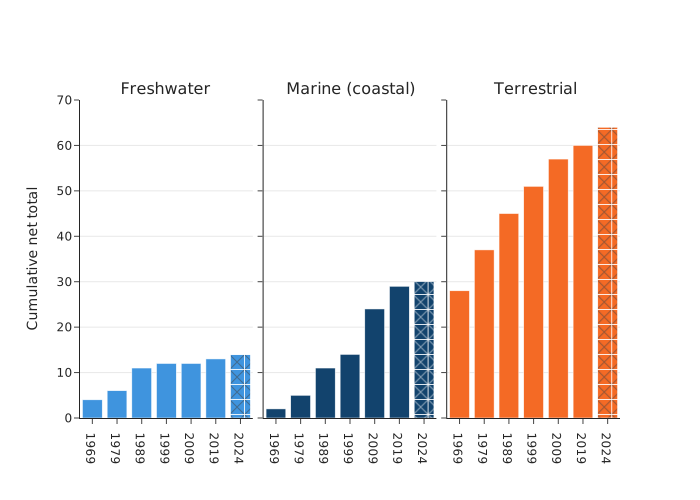
H1: Cumulative net total number of invasive non-native species established across or along 10% or more of the land area or coastline of Great Britain, 1969 to 2024
Source: Joint Nature Conservation Committee
Download the data for this chart in .csv format
Notes on Component
The bars show the cumulative net totals of all invasive non-native species established across or along 10% or more of the land area or coastline of Great Britain minus any eradications as at 31 December of the years shown.
Reviews of the species lists in recent years have resulted in changes in the extent categories for a small number of species. Please see the UK Biodiversity Indicator for more information.
The most recent bars for each category cover a shorter additional time period than the other bars (currently 5 years, 2020 to 2024).
Trend Description
Between 1969 and 2024, the number of invasive non-native species established in or along 10% or more of Great Britain’s land area or coastline has increased in the freshwater, terrestrial and marine (coastal) environments, with the greatest increases in numbers having been observed in the marine and terrestrial environments (increasing by 28 and 36 species respectively).
Assessment: H1
This indicator reports one cumulative net total data point for each 10-year period included within the indicator, unlike the majority of other indicators in the Environmental Indicator Framework that report annually. Therefore, it is only possible to assess long-term trends as there are insufficient data points to establish trends over the medium- and short-term time periods, or since 2018. An increase (deterioration) was observed over the long term for freshwater, marine and terrestrial invasive non-native species.
Further information on this assessment, along with details on the methodology, is provided in the Assessment guide page. Summaries by Environmental Improvement Plan goal and information on indicator links are presented in the Assessment results pages.
| Component | Subcomponent | Period | Date range | Percentage change | Smoothing function | Assessment of change |
|---|---|---|---|---|---|---|
| H1 | Freshwater | Short term | N/A | N/A | N/A | Not assessed |
| H1 | Freshwater | Medium term | N/A | N/A | N/A | Not assessed |
| H1 | Freshwater | Long term | 1969 to 2024 | 250.00 | Unsmoothed | Deterioration |
| H1 | Marine (coastal) | Short term | N/A | N/A | N/A | Not assessed |
| H1 | Marine (coastal) | Medium term | N/A | N/A | N/A | Not assessed |
| H1 | Marine (coastal) | Long term | 1969 to 2024 | 1,400.00 | Unsmoothed | Deterioration |
| H1 | Terrestrial | Short term | N/A | N/A | N/A | Not assessed |
| H1 | Terrestrial | Medium term | N/A | N/A | N/A | Not assessed |
| H1 | Terrestrial | Long term | 1969 to 2024 | 128.57 | Unsmoothed | Deterioration |
Note that each data point reported for this indicator represents the cumulative net total at that point in time rather than annual data. Percentage change in Table H1 refers to the difference seen between the first and last year in the specified date range.
Metadata
| Primary Goal | Biosecurity |
|---|---|
| Relevant Goals | Biosecurity |
| Relevant Targets | Managing and reducing the impact of existing plant and animal diseases; lowering the risk of new ones and tackling invasive non-native species |
| Natural Capital | Pressure on natural capital assets |
| Related Commitments | May provide evidence in support of Climate Change Risk Assessments under the Climate Change Act (2008) |
| Geographical Scope | Great Britain |
| Development Status | Interim |
| First Reported | 2019 |
| Latest Data | 2024 |
| Last Updated | Feb 2026 |
Return to Environmental Indicator Framework Collection Page
H2: Distribution of invasive non-native species and plant pests and diseases
Short Description
This indicator will show changes in the distribution of non-native invasive species and plant pests that have already established in England. Preventing the spread of invasive non-native species limits their ability to disrupt ecosystems and cause economic damage. Plant pests and diseases cause significant negative impacts and it is often more difficult to prevent their entry and establishment, therefore limiting spread is critical in preventing negative impact on native species and ecosystems. This indicator will utilise distribution data for a reference subset of priority invasive species and plant pests and diseases as an indication of the success of biosecurity measures in controlling their spread.
Readiness and Links to Data
This indicator shows trends in the number of tree pests and diseases becoming established in England since the year 2000. These data are published in the Forestry Commission’s Key Performance Indicators Reports.
Further work is required to develop the indicator drawing on existing data (for example, data on the change in distribution of invasive non-native species in freshwater, marine (coastal), and terrestrial environments in GB is available in UK Biodiversity Indicator - Pressure from invasive species). Exploratory work is ongoing to consider the future finalisation of this indicator in terms of both scope and methodological design.
Notes on Indicator
This indicator enumerates those additional tree pests and diseases formally considered as becoming ‘established’ by the UK Plant Health Risk Group within a rolling 10-year period. Establishment is defined as ‘perpetuation, for the foreseeable future, of a pest within an area after entry’. This is the definition produced by the Secretariat of the International Plant Protection Convention.
It is not possible to sum the number of additional tree pests and diseases becoming established within each 10-year period to calculate the total number becoming established since 2000. This is because each tree pest or disease is included in up to 10 rolling 10-year time periods; adding them together would result in a greatly inflated total for the time period covered by this indicator.
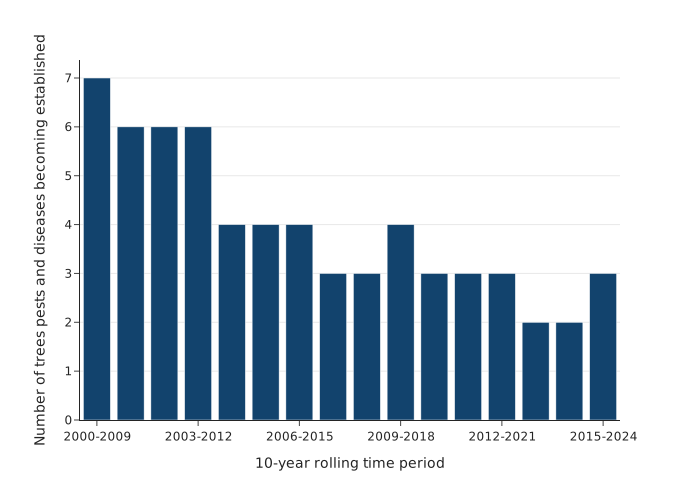
H2: Number of additional tree pests and diseases becoming established in England, 2000-09 to 2015-24
Source: Forestry Commission
Download the data for this chart in .csv format
Notes on Figure
Data are presented in rolling 10-year time periods.
There have been various revisions in the underlying data for this indicator since the previous release.
Trend Description
The number of additional tree pests and diseases becoming established in England within a rolling 10-year period fell from a peak of 7 in 2000-09 to 3 in 2007-16. It increased to 4 in 2009-18, before reducing to 3 in 2010-19, remaining at this level until reducing to 2 in 2013-22 and 2014-23. The most recent statistic was 3 in 2015-24. In total, 11 tree pests and diseases became established in England in the years from 2000 to 2024. Examples include the Oriental chestnut gall wasp (Dryocosmus kuriphilus), considered established in 2016, and the Elm zigzag sawfly (Aproceros leucopoda), considered established in 2018, and most recently the plane lace bug (Corythucha ciliata) considered established in 2024.
Assessment: H2
There has been a decrease (improvement) in the number of additional tree pests and diseases becoming established over the medium- and long-term time periods, and little or no change over the short-term time period.
Change since 2018 has also been assessed. There has been a decrease (improvement) in number of additional tree pests and diseases becoming established since 2018.
Further information on this assessment, along with details on the methodology, is provided in the Assessment guide page. Summaries by Environmental Improvement Plan goal and information on indicator links are presented in the Assessment results pages.
| Component | Period | Date range | Percentage change | Smoothing function | Assessment of change |
|---|---|---|---|---|---|
| H2 | Short term | 2010-2019 to 2015-2024 | 0.00 | Unsmoothed | Little or no change |
| H2 | Medium term | 2005-2014 to 2015-2024 | -25.00 | Unsmoothed | Improvement |
| H2 | Long term | 2000-2009 to 2015-2024 | -57.14 | Unsmoothed | Improvement |
Note that percentage change refers to the difference seen from the first to last 10-year rolling time period in the specified date range.
Metadata
| Headline | Exotic and invasive non-native species |
|---|---|
| Primary Goal | Biosecurity |
| Relevant Goals | Biosecurity |
| Relevant Targets | Managing and reducing the impact of existing plant and animal diseases; lowering the risk of new ones and tackling invasive non-native species, Reaching the detailed goals to be set out in the Tree Health Resilience Plan of 2018 |
| Natural Capital | Pressure on natural capital assets |
| Related Commitments | May provide evidence in support of Climate Change Risk Assessments under the Climate Change Act (2008) |
| Geographical Scope | England |
| Development Status | Interim |
| First Reported | 2019 |
| Last updated | May 2025 |
| Latest Data | 2024 |
Return to Environmental Indicator Framework Collection Page
H3: Emissions of mercury and persistent organic pollutants to the environment
Short Description
This indicator shows changes in emissions of mercury and persistent organic pollutants (POPs) to air, land, and water from measured, calculated, and modelled sources.
Mercury is toxic, causes damage to human health and accumulates in the environment and the food chain. For mercury, which is covered by the Minamata Convention, combustion sources are particularly significant, and information on emissions is provided annually by larger industrial sites. Other major sources of mercury to air will be gathered from different data sources.
POPs are chemicals that are extremely persistent in the environment, become widely distributed geographically, are able to accumulate in the tissues of humans and wildlife, and have harmful impacts on human health and the environment. POPs within this indicator refers to pollutants listed under Annex C (unintentional produced) of the Stockholm Convention. The Convention covers a range of substances spanning industrial uses, pesticides, and unintentionally produced substances.
Readiness and Links to Data
The data presented here show annual England-level emissions of (a) mercury from larger industrial sites and crematoria, and (b) 7 unintentionally produced POP substances (as listed in the Stockholm Convention Annex C): polychlorinated biphenyls; dioxin-like polychlorinated biphenyls; dioxins and furans; hexachlorobenzene; polychlorinated naphthalenes; pentachlorophenol; and pentachlorobenzene from a wide range of sources to air, land, and water. These POPs data are a disaggregation of the annual UK-level data previously presented in this indicator.
Some information is already published: Pollution Inventory, National Atmospheric Emissions Inventory, Persistent Organic Pollutants Multimedia Emissions Inventory (Report CX0115), and National Reports for the Stockholm Convention, Persistent organic pollutants triennial report 2019 to 2021. Population estimates used to apportion some UK emissions of POPs at an England level are also published annually.
For further information on the methodology used to produce this indicator email chemicalrestrictions@environment-agency.gov.uk.
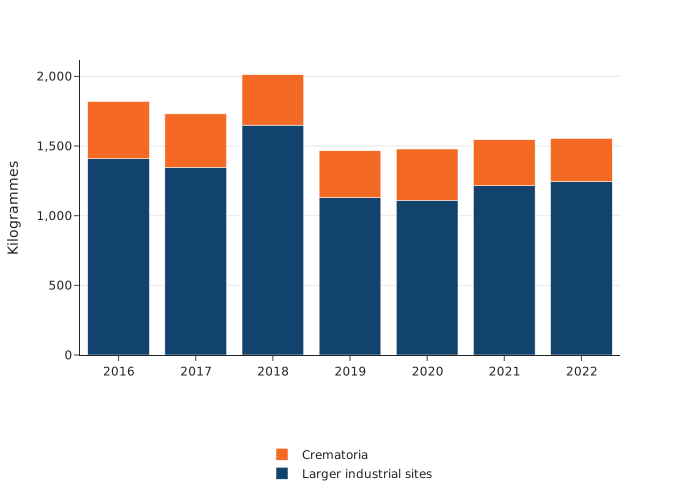
H3a: Emissions of mercury to air, land and water, England, 2016 to 2022
Source: Environment Agency
Download the data for this chart in .csv format
Notes on Figure
Emissions of mercury from larger industrial sites (including primary ferrous and non-ferrous metal production, cement production, oil refining and combustion activities over 50 megawatts [coal-fired power stations]) are to air, land and water; emissions from crematoria are to air only. At a UK level, these sources together account for approximately 85% of total mercury emissions. The balance of emissions come from consumer product waste and contaminated sites; these are not currently included in this indicator.
Trend Description
In 2022, emissions of mercury from larger industrial sites and crematoria in England totalled 1,554 kg, with larger industrial sites accounting for 80% of this figure.
Assessment: H3a
Emissions of mercury from crematoria and larger industrial sites decreased (showed an improvement) in the short-term assessment period. Medium- and long-term assessments were not carried out as a suitable time series is not yet available.
Change since 2018 has been assessed. Since 2018 there has been a decrease (improvement) in the emissions of mercury from crematoria and larger industrial sites. However, this is based on only 5 data points so should be considered as indicative and not evidence of a clear trend.
| Component | Subcomponent | Period | Date range | Percentage change | Smoothing function | Assessment of change |
|---|---|---|---|---|---|---|
| H3a | Crematoria | Short term | 2017 to 2022 | -20.36 | Loess | Improvement |
| H3a | Crematoria | Medium term | N/A | N/A | N/A | Not assessed |
| H3a | Crematoria | Long term | N/A | N/A | N/A | Not assessed |
| H3a | Larger industrial sites | Short term | 2017 to 2022 | -16.68 | Loess | Improvement |
| H3a | Larger industrial sites | Medium term | N/A | N/A | N/A | Not assessed |
| H3a | Larger industrial sites | Long term | N/A | N/A | N/A | Not assessed |
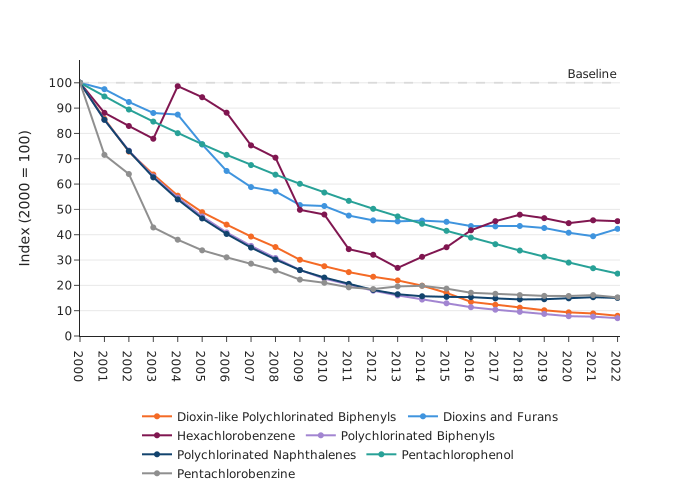
H3b: Emissions of persistent organic pollutants to air, land and water, England, 2000 to 2022
Source: Environment Agency
Download the data for this chart in .csv format
Notes on Figure
Emissions of POPs are to air, land and water. POPs are also present in landfill and other waste streams, which are not currently included in these data. Historical data are available which show significantly reduced emissions prior to 2000; data are presented here from 2000 onwards to focus upon recent trends. The England-level POPs emissions presented in Figure H3b have been calculated from UK data by attributing emissions on a population basis. This approach is considered to give the best available figures for England within the UK context.Due to a recalculation of modelled figures following an update to the EA inventory of PCB equipment, the time series has been revised for some POPs in the 2025 update of this indicator. This means that some figures reported in previous updates to this indicator may have changed.
Trend Description
Emissions attributed to England for all 7 POPs included within this indicator have fallen between 2000 and 2022.
Dioxins and furans are a family of chemicals strongly associated with thermal processes linked to combustion (particularly of waste) and manufacture of metals. Their emissions were already reduced by over 60% between 1990 and 2000, with improvements in technology and tighter environmental regulations contributing to this fall. Between 2000 and 2010, emissions of dioxins and furans fell by a further 49%, before falling more gradually up until 2022. Emissions post-2010 are largely linked to more diffuse sources such as domestic combustion of solid fossil fuels, accidental fire, and illegal burning of waste. From 2021 to 2022, emissions of dioxins and furans showed a slight uptick from 39% to 42%. This is likely due to industry and society returning to normal rates of activity following the COVID-19 lockdown period in 2020, though this is uncertain, and recent trends should be interpretated with care. Future data will aid interpretation.
By 2013, emissions of hexachlorobenzene had fallen to 27% of their 2000 baseline figure but they have risen since then to reach 48% of the baseline by 2018. This is linked to waste incineration and the increasing use of a specific pesticide (chlorothalonil) for which it is a by-product. Since 2019, chlorothalonil is no longer an approved active substance in Great Britain, as such a decrease has been observed down to 45% of the baseline in 2022. Emissions of pentachlorophenol have fallen consistently since 2000 to reach 25% of their baseline figure in 2022. Emissions of the remaining 4 POPs have followed a very similar pattern to each other, falling sharply in the first 10 years and then levelling out to between 8% and 15% of their baseline figures in 2022. In particular for polychlorinated biphenyls and dioxin-like polychlorinated biphenyls, this relates to remaining final in-use stocks of heat-transfer fluids in di-electric equipment in the energy transmission networks.
Assessment: H3b
Over the medium- and long-term assessment periods, a decrease (improvement) was observed for all emissions of persistent organic pollutants (POPs) to air, land and water covered by the interim H3 indicator - except hexachlorobenzene, which increased (deteriorated) over the medium term.
Over the short-term assessment period, most of the 7 POPs decreased (improved) - except hexachlorobenzene and polychlorinated naphthalenes, which increased (deteriorated).
Change since 2018 has also been assessed. Since 2018, there has been a mixed picture with 4 POPs decreasing (improving), dioxins and furans showing little or no change, and hexachlorobenzene and polychlorinated naphthalenes increasing (deteriorating).
Smoothing is applied across the whole time series in our assessments to account for natural interannual variability. The assessment of these smoothed trends therefore may differ from the percentage changes over the same year ranges for the unsmoothed time series.
Further information on this assessment, along with details on the methodology, is provided in the Assessment guide page. Summaries by Environmental Improvement Plan goal and information on indicator links are presented in the Assessment results pages.
| Component | Subcomponent | Period | Date range | Percentage change | Smoothing function | Assessment of change |
|---|---|---|---|---|---|---|
| H3b | Dioxin-like Polychlorinated Biphenyls | Short term | 2017 to 2022 | -39.62 | Loess | Improvement |
| H3b | Dioxin-like Polychlorinated Biphenyls | Medium term | 2012 to 2022 | -65.67 | Loess | Improvement |
| H3b | Dioxin-like Polychlorinated Biphenyls | Long term | 2000 to 2022 | -91.88 | Loess | Improvement |
| H3b | Dioxins and Furans | Short term | 2017 to 2022 | -4.15 | Loess | Improvement |
| H3b | Dioxins and Furans | Medium term | 2012 to 2022 | -11.22 | Loess | Improvement |
| H3b | Dioxins and Furans | Long term | 2000 to 2022 | -60.44 | Loess | Improvement |
| H3b | Hexachlorobenzene | Short term | 2017 to 2022 | 26.23 | Loess | Deterioration |
| H3b | Hexachlorobenzene | Medium term | 2012 to 2022 | 43.83 | Loess | Deterioration |
| H3b | Hexachlorobenzene | Long term | 2000 to 2022 | -46.16 | Loess | Improvement |
| H3b | Pentachlorobenzine | Short term | 2017 to 2022 | -9.29 | Loess | Improvement |
| H3b | Pentachlorobenzine | Medium term | 2012 to 2022 | -20.34 | Loess | Improvement |
| H3b | Pentachlorobenzine | Long term | 2000 to 2022 | -83.11 | Loess | Improvement |
| H3b | Pentachlorophenol | Short term | 2017 to 2022 | -31.86 | Loess | Improvement |
| H3b | Pentachlorophenol | Medium term | 2012 to 2022 | -50.87 | Loess | Improvement |
| H3b | Pentachlorophenol | Long term | 2000 to 2022 | -75.29 | Loess | Improvement |
| H3b | Polychlorinated Biphenyls | Short term | 2017 to 2022 | -28.48 | Loess | Improvement |
| H3b | Polychlorinated Biphenyls | Medium term | 2012 to 2022 | -58.79 | Loess | Improvement |
| H3b | Polychlorinated Biphenyls | Long term | 2000 to 2022 | -92.53 | Loess | Improvement |
| H3b | Polychlorinated Naphthalenes | Short term | 2017 to 2022 | 10.46 | Loess | Deterioration |
| H3b | Polychlorinated Naphthalenes | Medium term | 2012 to 2022 | -13.82 | Loess | Improvement |
| H3b | Polychlorinated Naphthalenes | Long term | 2000 to 2022 | -83.89 | Loess | Improvement |
Note that assessment categories for the short, medium and long term were assigned based on smoothed data, so percentage change figures in Tables H3bi to H3bvii may differ from unsmoothed values quoted elsewhere. Percentage change refers to the difference seen from the first to last year in the specified date range.
Metadata
| Headline | Exposure of people and wildlife to harmful chemicals |
|---|---|
| Primary Goal | Chemicals |
| Relevant Goals | Chemicals |
| Relevant Targets | Fulfilling our commitments under the Stockholm Convention as outlined in the UK’s most recent National Implementation Plan, Reducing land-based emissions of mercury to air and water by 50% by 2030, Seeking in particular to eliminate the use of Polychlorinated Biphenyls (PCBs) by 2025, in line with our commitments under the Stockholm Convention, Substantially increasing the amount of Persistent Organic Pollutants (POPs) material being destroyed or irreversibly transformed by 2030, to make sure there are negligible emissions to the environment |
| Natural Capital | Pressure on natural capital assets |
| Related Commitments | UNEP Stockholm Convention (Article 15 - Reporting), UNECE Convention on Long-Range Transboundary Air Pollution (CLR-TAP) via the European Monitoring and Evaluation Programme (EMEP), National Emission Ceilings Regulations, UK Regulation on Pollutant Release and Transfer Registry, Assimilated Regulation (EU) 2019/2021 on Persistent Organic Pollutants 2019, UNEP Minamata Convention on Mercury |
| Geographical Scope | England |
| Development Status | Final |
| First Reported | 2021 |
| Last updated | May 2025 |
| Latest Data | 2022 |
Return to Environmental Indicator Framework Collection Page
H4: Exposure and adverse effects of chemicals on wildlife in the environment
Short Description
This indicator tracks changes in the exposure of wildlife to chemicals in the environment over time and considers the potential risks to wildlife from chemicals in terrestrial, freshwater and marine ecosystems. Data are currently available for selected chemicals – representative of those highlighted for attention – in surface waters and in certain species of birds of prey, fish, mammals, and mussels. Work is ongoing to improve the exposure metrics and to understand better the effects of chemicals on wildlife populations and individuals.
This indicator is complementary to other indicators within the framework that give data on environmental pressures from chemicals, for example B1: Pollution loads entering waters and 'H3: Emissions of mercury and persistent organic pollutants to the environment'.
Readiness and Links to Data
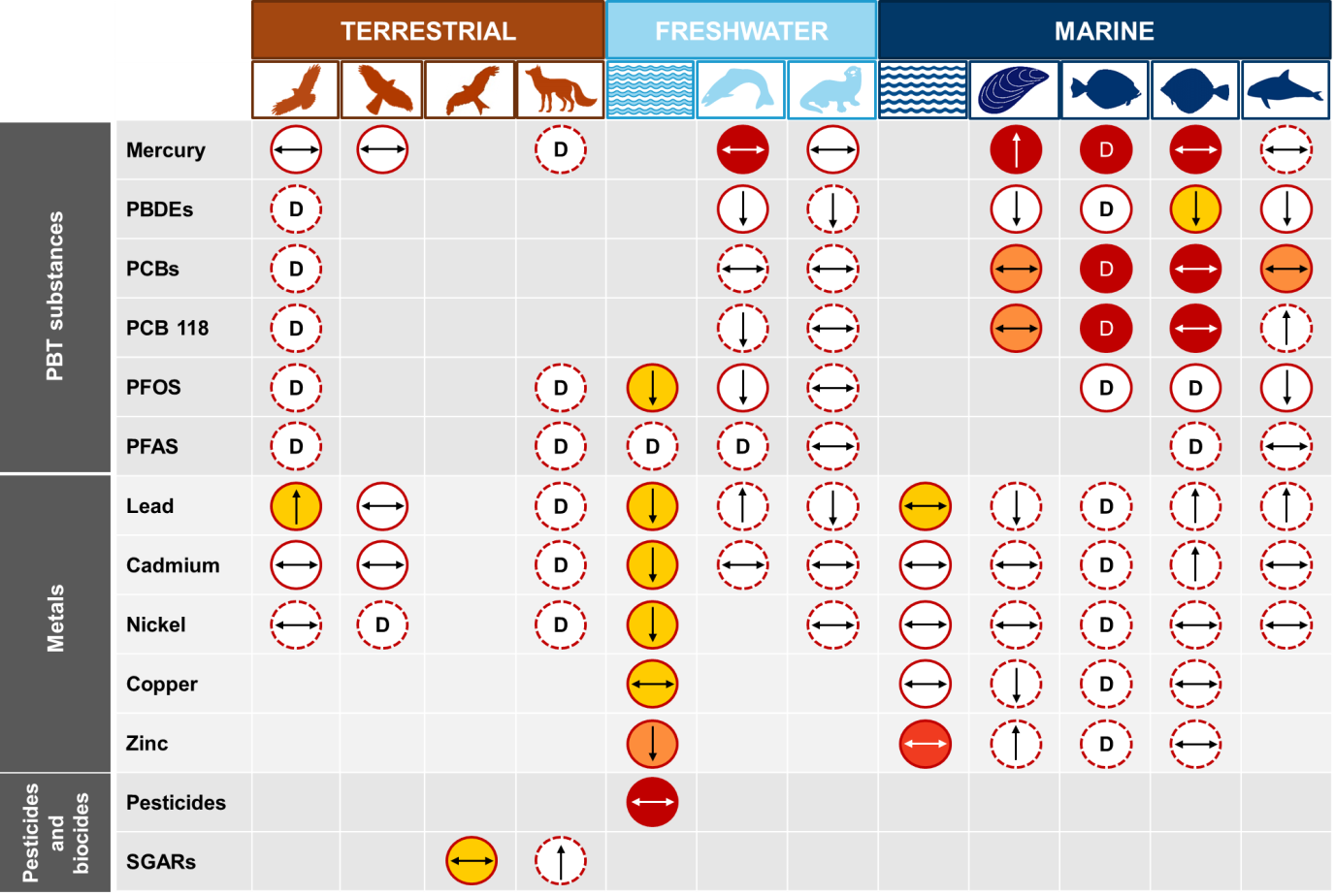
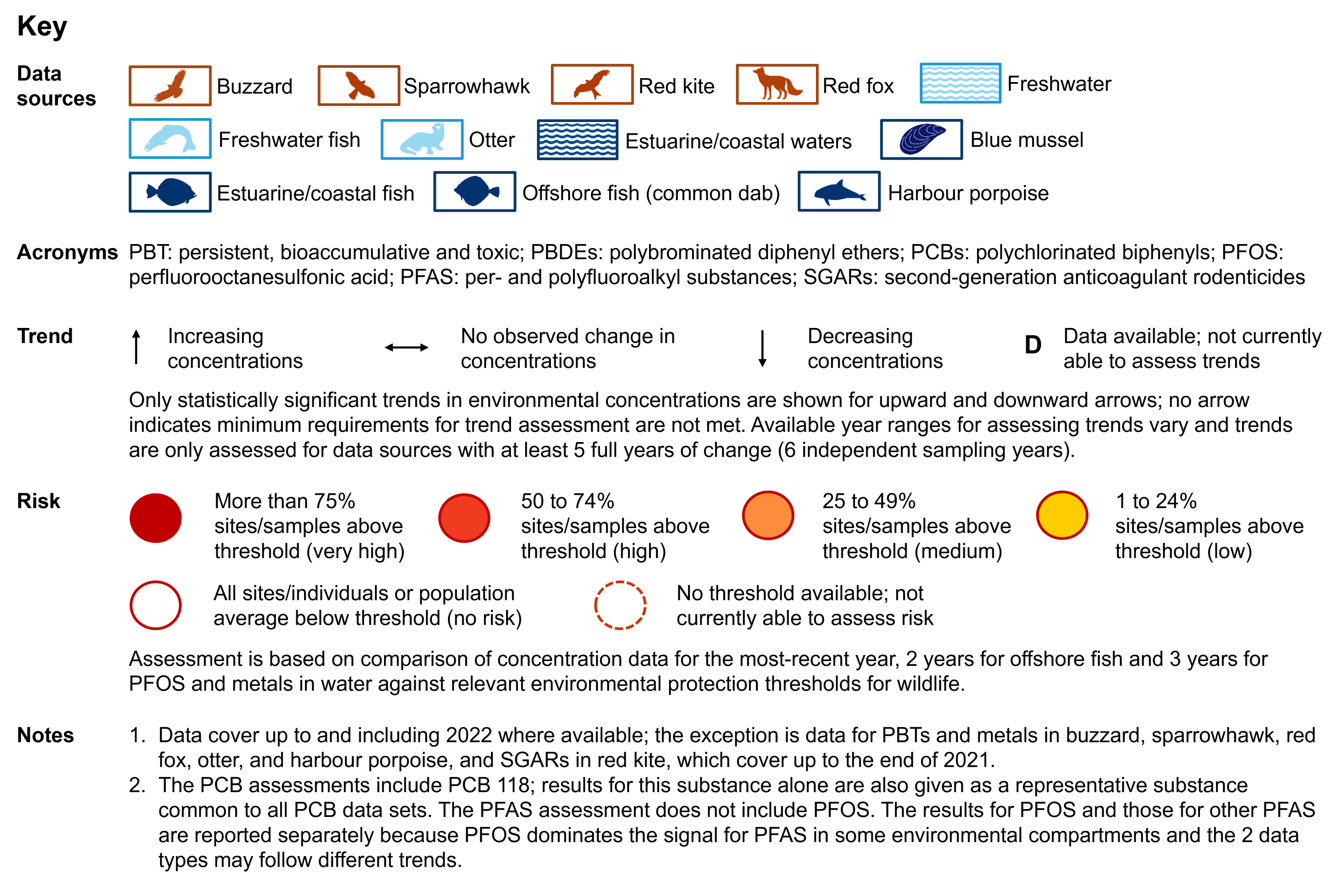
The interim indicator presented here reflects that published in 2024, which was a major update of the 2021 version. It covers the exposure of wildlife to chemicals in the environment and, where feasible, the potential risk from different types of chemicals to wildlife on land and in water. The indicator is based on chemical concentrations found in surface waters and in different organisms – common buzzard, sparrowhawk, red kite, red fox, freshwater fish, otter, blue mussel, estuarine and coastal fish, offshore fish (common dab), and harbour porpoise. It covers 3 environmental compartments: terrestrial, freshwater and marine (estuarine, coastal and offshore).
The chemicals are representative of 3 groups highlighted for attention under the 25 Year Environment Plan and its first revision, the Environmental Improvement Plan 2023: (1) persistent, bioaccumulative – the accumulation of a substance over time in a living organism – and toxic (PBT) substances, (2) metals, and (3) pesticides and biocides. There are no new assessments to report in 2025.
We welcome any feedback on these statistics, particularly on their usefulness and value, via environmentalindicators@defra.gov.uk.
Further details on the data analysis used for the presented indicator are given in the supporting H4 indicator report. Some data relevant to this indicator are also published on the following data platforms:
• British Oceanographic Data Centre - Monitoring and Assessment National Database (MERMAN)
Since the publication of the interim H4 indicator in 2021, the analysis of archived and newly collected samples has enhanced our ability to report exposure trends, addressed data gaps and helped to provide a better picture across environmental compartments. New matrices – buzzards, and estuarine and coastal fish – are included; baseline data for these species are still being established.
We have introduced the polychlorinated biphenyl (PCB) congener 118 and expanded the number of per- and polyfluoroalkyl substances (PFAS) under the indicator. The former is included to show information for a PCB which is common across all of our data sets and which is likely to be present in the environment because of its historical use in commercial mixtures and how it behaves in the environment. Because PFAS are of growing environmental concern, these are now further represented under the indicator despite challenges in reporting what is a broad class of substances. Perfluorooctanesulfonic acid (PFOS), a PFAS, was already included in the indicator as a key known contaminant. We present the results for PFOS separate to those for other PFAS, which are grouped. This is because when PFOS is included under PFAS, it dominates the concentrations observed for the group in some environmental compartments, and PFOS and other PFAS may follow different trends. The PFAS metrics are still under development.
We use readily available data where possible. Legislative drivers for the environmental monitoring that produces such data on chemicals have historically focussed on freshwater and marine environments. We continue to look at the best ways to monitor for chemicals and build a baseline for the terrestrial environment. The terrestrial assessments are, therefore, still under development.
Research and development work is underway to improve the indicator in terms of harmonising our trend assessments, exploring how we assess risk further, and understanding emerging risks and how to capture these. We have initiated the development of metrics for emerging chemical risks. This includes integrating results from the Prioritisation and Early Warning System (PEWS) for chemicals, which considers risks posed by emerging contaminants to surface and groundwaters, biota, soils, and sediments. The approach to emerging risks also aims to consider broader chemical topics, beyond PEWS. As our understanding of these risks develops, work is required to determine the potential for incorporating them into H4 indicator reporting or elsewhere.
We are investigating methods for assessing chemical contaminant effects on wildlife to improve our understanding of environmental impacts and the potential to report these under the indicator.
In addition, the specific monitoring activities that we depend on for these data have undergone challenges in recent years with the amount of available data decreasing. This is due to a range of issues, including pressures on the animals we monitor, the impact of the COVID-19 pandemic, rising costs to deliver the same monitoring, and extreme weather events that have stopped us from being able to do some of the surveys we depend on. Further work is needed to establish the optimal way to collect data to reflect changes in chemical presence in the environment owing to action taken to manage these substances.
Further information on the development of the indicator can be found in the H4 indicator supporting report.
Notes on Indicator
The data for each chemical in a particular matrix run to the end of 2022, where possible. The exception is data for PBTs and metals in buzzard, sparrowhawk, red fox, otter, and harbour porpoise, and second-generation anticoagulant rodenticides (SGARs) in red kite, which cover up to the end of 2021.
For the trend assessments, a minimum of at least 5 full years of change within the data (6 independent sampling years) is required for reporting. The corresponding results in the dashboard relate to the full time periods of the available data sets. The length of these varies from the minimum required number of years to data sets that cover 18 sampling years within the period from 2001 to 2022. Not all data sets comprise information for consecutive years.
Where available, thresholds for wildlife have been used to provide context on potential risk through comparison with national concentrations from the most-recent year available (or 2 and 3 years in the case of offshore fish and water concentration data, respectively). These thresholds are given in the supporting report to this indicator. They are not statutory values within the indicator. Their use to indicate potential risk does not represent a compliance assessment. Therefore, the results should not be compared with other regulatory reporting regimes, such as those obtained under the Water Environment (Water Framework Directive) (England and Wales) Regulations 2017, which may use values with different protection goals. The approach for selecting thresholds is specific to the wildlife or environmental matrix being considered because of the data available and the purpose for which it was gathered.
There is some variability across the different data sets in terms of the substances reviewed under the groups polybrominated diphenyl ethers (PBDEs), PCBs and PFAS and in the treatment of results below detection limits.
Monitoring networks, analytical methods and thresholds can change over time. Since reporting the indicator in 2021:
• Monitoring has reduced for water samples taken from freshwater and estuarine and coastal waters, and for freshwater fish and mussels. Notable impacts of this are given in the description of the indicator. Monitoring networks have also changed for water samples with the introduction of the River Surveillance Network (RSN) under the Natural Capital and Ecosystem Assessment Programme (NCEA) which considers broadscale condition of the environment rather than likely impacted locations.
• Coverage of sparrowhawks has decreased with a move toward buzzard data. The transition between these 2 species is under development.
• Investigations are ongoing into sources of red foxes for assessments and how representative they are of the general fox population. Use of these data sources within the indicator is still under development.
• The introduction of PFAS includes datasets within which the numbers of substances analysed have varied over time. Because archived samples are analysed in some cases, this does not necessarily mean an increase in PFAS over the years the samples represent. This is relevant predominantly for offshore fish and harbour porpoise. The PFAS reporting is still under development.
• The freshwater assessment for pesticides is based on a threshold relating to the potential risk of long-term toxic effects. This is a change from the approach used in 2021, which looked at risks from acute exposure, and is now consistent with similar assessments within the indicator.
For some matrices, additional data are available and are provided in the supporting report, but they cannot be incorporated into the dashboard at present. This largely relates to some PBT substances and metals in buzzards, red fox, and estuarine and coastal fish. It also includes PFAS in freshwater, freshwater fish and offshore fish; PFOS data for offshore fish are available too.
The H4 indicator supporting report additionally contains information on spatial variation in the results for freshwater metals monitoring sites and for marine fish.
H4: Exposure of wildlife to chemicals in the environment in England and, for some marine components the UK; up to 2022 where available
Source: Environment Agency
Download the data for this chart in .csv format
Trend Description
i) Persistent, bioaccumulative and toxic substances:
For PBT substances, downward trends for PBDEs and PFOS are observed in freshwater and marine wildlife, except for PFOS in otters which shows no trend. The downward trend for PBDEs in mussels has lower certainty. Downward trends are also seen for PFOS in freshwater. No trends are observed for PCBs as a group; however, for the congener PCB 118, levels are decreasing in freshwater fish, but upward trends are seen in harbour porpoise. An upward trend is also seen for mercury in mussels, though this may be influenced by recent reductions in monitored sites. It should be noted that the results for PBTs in offshore fish (common dab) and harbour porpoise in the interim indicator are generally based on well-established data sets covering long periods (greater than 10 sampling years). Within those data sets, PBDEs and PCBs in offshore fish and PBDEs and PFOS in harbour porpoise show levelling off or increasing concentrations in more-recent years.
The percentage of sites or samples exceeding thresholds is very high for mercury in the freshwater and marine environments, although this is either not observed or not known for top predators in all compartments. The result for mercury in offshore fish (common dab), however, is based on a threshold that could be considered over-precautionary for reasons given in the supporting report. Medium to very high potential risk is presented by PCBs; thresholds were only available for the marine environment for this assessment. Low potential risk is observed for PBDEs and PFOS in offshore fish and freshwater, respectively.
ii) Metals:
For metals, the trends over time are varied. Downward trends are observed for lead, cadmium, nickel, and zinc in freshwater, for lead in otters, and for lead and copper in mussels, though the result for copper in mussels has lower certainty. Lead also presents the majority of upward trends, which are seen in buzzards, freshwater fish, offshore fish (common dab), and harbour porpoise. Cadmium and zinc also have upward trends in offshore fish and mussels, respectively. Further investigation and increased monitoring may help provide a better understanding of the trends seen. The results for metals in offshore fish and harbour porpoise in the interim indicator are based on well-established data sets covering long periods (greater than 10 sampling years). Within those data sets, data for more-recent years for all metals in offshore fish, and for lead and nickel in harbour porpoise, suggest the need to review the situation over time as upward trends are observed.
The lack of thresholds relevant to many of the matrices covered in the indicator means it is often not possible to assess the potential risks that metals pose to wildlife. Recent levels of lead in buzzards and estuarine and coastal waters, and freshwater concentrations for lead, cadmium, nickel, and copper, show some but low potential risk. A medium to high percentage of freshwater and estuarine and coastal water sites exceed thresholds for zinc. However, there has been more bias towards freshwater sampling sites affected by abandoned metal mines in recent years in the freshwater monitoring, and the number of sites assessed for metals in estuarine and coastal waters is substantially lower compared with previous reporting.
The freshwater sites from which water samples are taken can be split into 2 types: those located in waters polluted by metals from abandoned metal mines – as mentioned above – and those in other locations. Over the period from 2014 to 2022 for waters affected by abandoned metal mines, all metals show upward trends. For the same period in other waters not affected by abandoned metal mines, metal concentrations show overall downward trends. For waters affected by abandoned metal mines, their elevated levels of metals mean that they comprise a high proportion of those sites which exceed available thresholds; very few ‘other’ sites are above the corresponding thresholds.
iii) Pesticides and biocides:
Pesticides in freshwater and the biocidal SGARs in red kites show no statistically significant changes in concentrations over time. For SGARs in red foxes, a statistically significant upward trend is seen, although data for some years are few, increasing the uncertainty.
Percentage threshold exceedance suggests very high potential risk for pesticides in freshwater. Some of these substances may have environmental presence because of sources other than their use as plant protection products, for example imidacloprid is now primarily used as a veterinary medicine. Potential risk is indicated for less than a quarter of individuals considered for assessing SGARs in red kites. In this case only, the risk is assessed using an approach which includes looking at related SGAR effects observed in the birds, as opposed to solely assessing exceedances of threshold concentrations. Therefore, the trend in potential risk does not necessarily match that relating to concentration levels over time. Indeed, a statistically significant decrease in potential risk is observed in contrast to the steady levels of SGAR concentrations seen in these birds.
Assessment: H4
No assessment of change was undertaken for this indicator as a suitable time series is not yet available in the Environmental Indicator Framework.
Metadata
| Headline | Exposure of people and wildlife to harmful chemicals |
|---|---|
| Primary Goal | Restored nature |
| Relevant Goals | Restored nature, Chemicals |
| Relevant Targets | No specific target |
| Natural Capital | Pressure on natural capital assets |
| Related Commitments | Marine Strategy Regulations 2010 and the assessment of Good Environmental Status in Regional Seas, Convention for the Protection of the Marine Environment of the North-East Atlantic (OSPAR), Water Environment (Water Framework Directive) Regulations 2017, Water Framework Directive (Standards and Classification) Directions (England and Wales) 2015 |
| Geographical Scope | England and UK for some marine components |
| Development Status | Interim |
| First Reported | 2021 |
| Last updated | May 2025 |
| Latest Data | 2022 |
Return to Environmental Indicator Framework Collection Page
H5: Exposure to transport noise
Short Description
This indicator will track changes in the exposure of people to noise from transportation sources. It does not include neighbour and neighbourhood noise. The indicator will show the estimated number of people exposed to noise levels from road, rail and aircraft sources. The health costs (and hence burden to the economy) of noise can be estimated from health outcomes associated with noise exposure (such as annoyance, sleep disturbance, and cardiovascular effects). The data for this indicator are derived through strategic noise mapping undertaken at 5-year intervals using Defra’s noise modelling system. Future rounds of mapping will be used to update this indicator accordingly.
Readiness and Links to Data
This indicator presents data derived from the mapping of 3 separate sources of transport noise: road (H5ai, H5aii), rail (H5bi, H5bii) and aircraft (H5ci, H5cii), with noise measured in decibels (dB), a unit used to measure the intensity of sound on a logarithmic scale. This means an increase of 10 dB equates to 10 times greater sound power. Similarly, a halving of sound power corresponds to a reduction of roughly 3 dB. The decibel scale can be weighted to reflect the non-linear response of average human hearing measured in dB(A); this is known as A-weighting. The number of people exposed to noise has been determined by overlaying a population dataset onto the strategic noise mapping for each source. Further work is underway creating a combined metric for exposure across all three sources of noise.
The day-evening-night level (Lden) is a noise indicator (used for H5ai, H5bi and H5ci) based on annual average A-weighted long-term sound over 24 hours with a 5 dB(A) penalty for evening noise (7pm to 11pm) and a 10 dB(A) penalty for nighttime noise (11pm to 7am).
The night level (Lnight) is a nighttime noise indicator (used for H5aii, H5bii and H5cii) based on annual average A-weighted long-term sound over the night period (11pm to 7am) which contains the same sound energy as the actual fluctuating sound across the same period.
The model for producing these data and additional noise exposure data for Defra depicts the soundscape of the nation by mapping every public road and railway at a 100m2 resolution. It enables health and biodiversity impacts to be assessed, the potential for soundscape and tranquil areas evaluations, and much more. Data for noise exposure are published as part of the strategic noise mapping.
Notes on Indicator
For reference, example instantaneous sound levels have been provided. Exact values may vary, but these provide an indication of people’s exposure to transport noise.
-
20 dB(A) – Whisper
-
40 dB(A) – Library
-
50 dB(A) – Moderate Rainfall
-
60 dB(A) – Busy Office
-
70 dB(A) – Vacuum Cleaner
-
80 dB(A) – Alarm Clock
-
100 dB(A) – Concert
-
120 dB(A) – Jet take-off
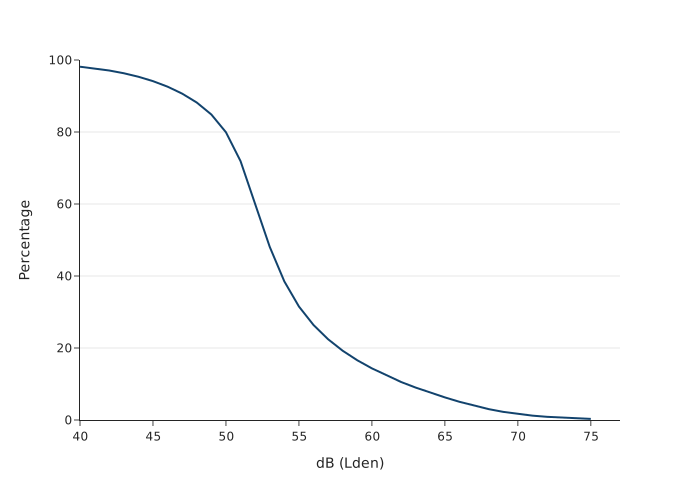
H5ai: Percentage of the population exposed to road transport noise across day, evening and night (Lden) in England, 2022
Source: Department for Environment, Food & Rural Affairs
Download the data for this chart in .csv format
Notes on Figure
Data represents the reverse cumulative percentage of the population exposed to road traffic noise pollution over a weighted average 24-hour period.
Trend Description
In 2022, the median exposure to a 24-hour weighted average noise level (Lden) from road traffic was 52 dB.
Assessment: H5ai
No assessment of change was undertaken for this indicator as a suitable time series is not yet available in the Environmental Indicator Framework.
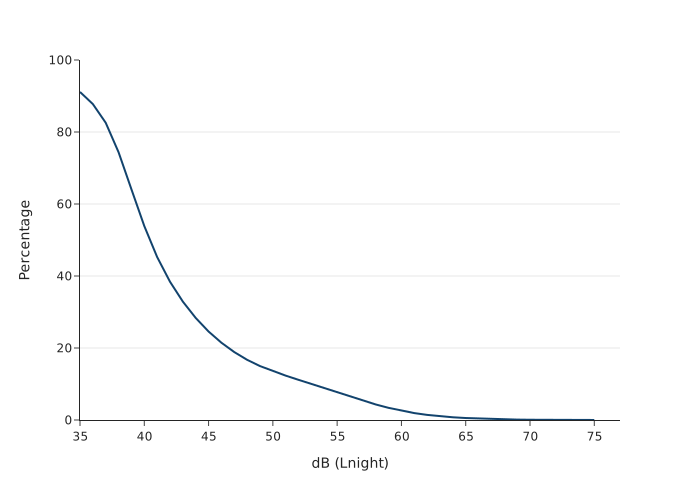
H5aii: Percentage of the population exposed to road transport noise at night (Lnight) in England, 2022
Source: Department for Environment, Food & Rural Affairs
Download the data for this chart in .csv format
Notes on Figure
Data represents the reverse cumulative percentage of the population exposed to road traffic noise pollution at night.
Trend Description
In 2022, the median exposure to nighttime noise (Lnight) from road traffic was 40 dB.
Assessment: H5aii
No assessment of change was undertaken for this indicator as a suitable time series is not yet available in the Environmental Indicator Framework.
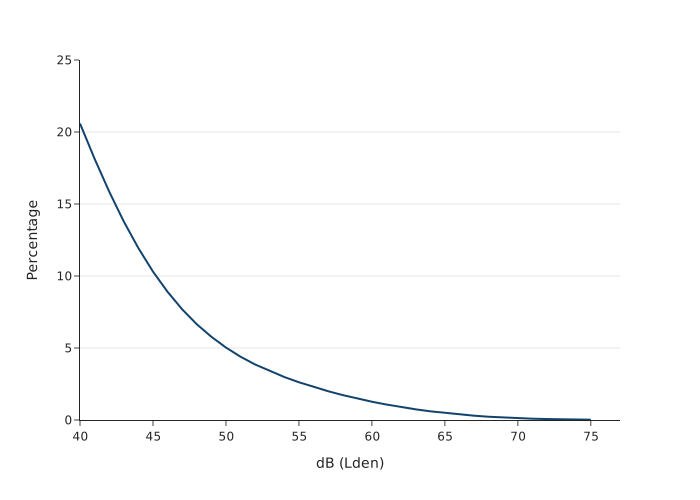
H5bi: Percentage of the population exposed to rail transport noise across day, evening and night (Lden) in England, 2022
Source: Department for Environment, Food & Rural Affairs
Download the data for this chart in .csv format
Notes on Figure
Data represents the reverse cumulative percentage of the population exposed to railway noise pollution over a weighted average 24-hour period.
Trend Description
Although the percentage of the population exposed to railway noise has been mapped, there are insufficient data to calculate the median person’s exposure to a 24-hour weighted average noise level (Lden) from railway noise in 2022.
Assessment: H5bi
No assessment of change was undertaken for this indicator as a suitable time series is not yet available in the Environmental Indicator Framework.
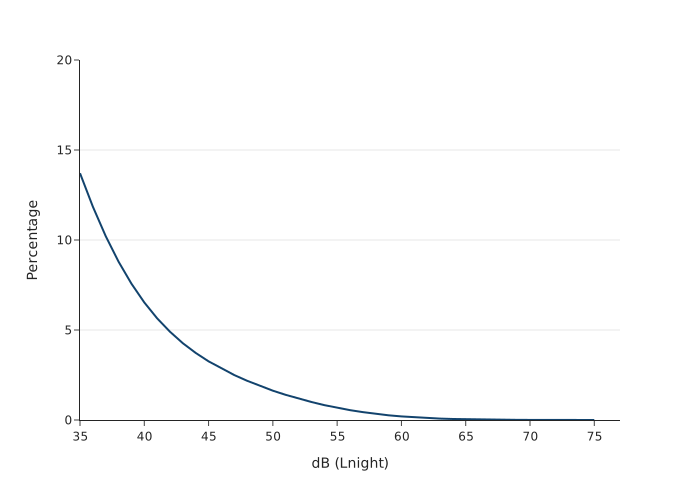
H5bii: Percentage of the population exposed to rail noise at night (Lnight) in England, 2022
Source: Department for Environment, Food & Rural Affairs
Download the data for this chart in .csv format
Notes on Figure
Data represents the reverse cumulative percentage of the population exposed to railway noise pollution at night.
Trend Description
Although the percentage of the population exposed to railway noise has been mapped, there are insufficient data to calculate the median person’s exposure to a nighttime noise level (Lnight) from railway noise in 2022.
Assessment: H5bii
No assessment of change was undertaken for this indicator as a suitable time series is not yet available in the Environmental Indicator Framework.
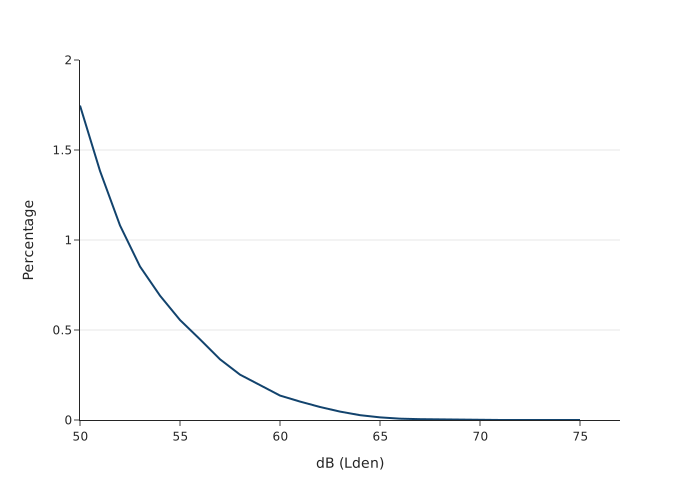
H5ci: Percentage of the population exposed to air transport noise across day, evening and night (Lden) in England, 2022
Source: Department for Environment, Food & Rural Affairs
Download the data for this chart in .csv format
Notes on Figure
Data represents the reverse cumulative percentage of the population exposed to aircraft noise pollution over a weighted average 24-hour period.
Trend Description
Although the percentage of the population exposed to aircraft noise has been mapped, there are insufficient data to calculate the median person’s exposure to a 24-hour weighted average noise level (Lden) from aircraft noise in 2022.
Assessment: H5ci
No assessment of change was undertaken for this indicator as a suitable time series is not yet available in the Environmental Indicator Framework.
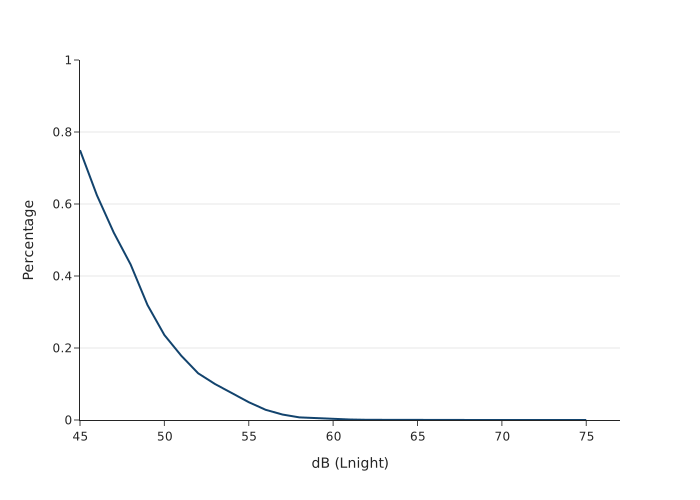
H5cii: Percentage of the population exposed to air transport noise at night (Lnight) in England, 2022
Source: Department for Environment, Food & Rural Affairs
Download the data for this chart in .csv format
Notes on Figure
Data represents the reverse cumulative percentage of the population exposed to aircraft noise pollution at night.
Trend Description
Although the percentage of the population exposed to aircraft noise has been mapped, there are insufficient data to calculate the median person’s exposure to a nighttime noise level (Lnight) from aircraft noise in 2022.
Assessment: H5cii
No assessment of change was undertaken for this indicator as a suitable time series is not yet available in the Environmental Indicator Framework.
Metadata
| Headline | Not applicable |
|---|---|
| Primary Goal | Access to nature |
| Relevant Goals | Access to nature |
| Relevant Targets | No specific target |
| Natural Capital | Pressure on natural capital assets |
| Related Commitments | Environmental Noise (England) Regulations (as amended) 2006 |
| Geographical Scope | England |
| Development Status | Interim |
| First Reported | 2024 |
| Last updated | May 2025 |
| Latest Data | 2022 |