Country policy and information note: internal relocation, Colombia, March 2026 (accessible)
Updated 19 March 2026

© Crown copyright 2026
This publication is licensed under the terms of the Open Government Licence v3.0 except where otherwise stated. To view this licence, visit nationalarchives.gov.uk/doc/open-government-licence/version/3 or write to the Information Policy Team, The National Archives, Kew, London TW9 4DU, or email: psi@nationalarchives.gov.uk.
Where we have identified any third party copyright information you will need to obtain permission from the copyright holders concerned.
This publication is available at https://www.gov.uk/government/publications/colombia-country-policy-and-information-notes/country-policy-and-information-note-internal-relocation-colombia-march-2026-accessible
Executive summary
In general, a person fearing ‘rogue’ state actors and non-state actors is likely to be able to internally relocate to another area of Colombia, particularly to larger cities such as Bogotá, Barranquilla, Cali, Cartagena and Medellin. Decision makers must take into account a person’s individual circumstances and consult relevant CPINs on Colombia when considering whether internal relocation is reasonable.
Where the person has a well-founded fear of persecution or serious harm from the state, they are unlikely to be able to relocate to escape that risk.
Colombia’s population is approximately 50 million, with Bogotá, Medellin and Cali being the most populous cities. The law provides for freedom of movement, which is generally possible but may be restricted in areas controlled by armed groups, with violence, confinement and illegal checkpoints posing challenges.
Social welfare programmes exist and primary and secondary education is free and available to all. Colombia’s healthcare system reportedly reaches 99% of the population. Rural areas experience a housing deficit, although government initiatives are in place to address housing challenges and assist vulnerable groups.
Colombia’s GDP grew in 2024 and whilst the overall unemployment rate increased between 2023 and 2024, employment in large cities grew. Generally, large urban cities offer more job opportunities, higher salaries and better access to essential services when compared with their rural counterparts.
Assessment
Section updated: 18 December 2024
About the assessment
This section considers the evidence relevant to this note – that is the country information, refugee/human rights laws and policies, and applicable caselaw – and provides an assessment of whether, in general, those with a well-founded fear of persecution or serious harm from non-state actors can internally relocate within Colombia.
Decision makers must, however, consider all claims on an individual basis, taking into account each case’s specific facts.
1. Material facts, credibility and other checks/referrals
1.1 Credibility
1.1.1 For information on assessing credibility, see the instruction on Assessing Credibility and Refugee Status.
1.1.2 Decision makers must also check if there has been a previous application for a UK visa or another form of leave. Asylum applications matched to visas should be investigated prior to the asylum interview (see the Asylum Instruction on Visa Matches, Asylum Claims from UK Visa Applicants).
1.1.3 In cases where there are doubts surrounding a person’s claimed place of origin, decision makers should also consider language analysis testing, where available (see the Asylum Instruction on Language Analysis).
Official – sensitive: Not for disclosure – Start of section
The information on this page has been removed as it is restricted for internal Home Office use.
Official – sensitive: Not for disclosure – End of section
1.2 Exclusion
1.2.1 Decision makers must consider whether there are serious reasons for considering whether one (or more) of the exclusion clauses is applicable. Each case must be considered on its individual facts and merits.
1.2.2 If the person is excluded from the Refugee Convention, they will also be excluded from a grant of humanitarian protection (which has a wider range of exclusions than refugee status).
1.2.3 For guidance on exclusion and restricted leave, see the Asylum Instruction on Exclusion under Articles 1F and 33(2) of the Refugee Convention, Humanitarian Protection and the instruction on Restricted Leave.
Official – sensitive: Not for disclosure – Start of section
The information on this page has been removed as it is restricted for internal Home Office use.
Official – sensitive: Not for disclosure – End of section
2. Internal relocation
2.1.1 In general, a person fearing ‘rogue’ state actors and non-state actors is likely to be able to internally relocate to another area of Colombia, particularly to larger cities such as Bogotá, Barranquilla, Cali, Cartagena and Medellin which are urban centres characterised by better employment opportunities and greater access to essential services. Where the person has a well-founded fear of persecution or serious harm from the state, they are unlikely to be able to relocate to escape that risk. The law provides for freedom of movement, which is generally possible but may be restricted in areas controlled by armed groups, with violence, confinement and illegal checkpoints posing challenges.
2.1.2 While the onus is on the person to establish a well-founded fear of persecution or a real risk of serious harm, decision makers must demonstrate that internal relocation is reasonable (or not unduly harsh) having regard to the individual circumstances of the person.
2.1.3 Colombia is a culturally and ethnically diverse country with a population of approximately 50 million. The country comprises 32 departments and 1 capital district. The most populous city is Bogota, with around 15.86% (approximately 7.93 million) of the population, followed by Medellin with around 5.24% (approximately 2.62 million) and Cali with around 4.6% (approximately 2.3 million) (see Geography, Demography).
2.1.4 Colombia has experienced economic growth, with its GDP per capita reaching a record high in 2023 as well as a 2% GDP increase in Q3 2024. In 2023, the poverty rate fell from 36.6% (approximately 18.3 million people) to 33% (approximately 16.5 million people), though 15% of the population (approximately 7.5 million) are still estimated to live in extreme poverty. Official data shows that poverty levels vary geographically, with a 60.1% poverty rate in the pacific city of Quibdo and a 17.6% poverty rate in Manizales. Sources reported that indigenous and Afro-Colombian populations are more likely to experience poverty. Whilst persons with disabilities are more likely than non-disabled persons to face multidimensional poverty, the government has increased quotas at universities and provided legal and tax incentives for employers to hire persons with disabilities. Official data also shows that households headed by women experience higher poverty rates (37.5%) compared to those led by men (29.5%) (see Economy).
2.1.5 Colombia’s minimum wage reportedly increased by 12% in 2024 bringing it to the equivalent of approximately £269 per month. The average monthly salary is approximately £554, though this varies significantly by industry, region, and job type. Urban centres like Bogotá, Medellín, and Cali offer higher salaries than rural areas. Formal employment generally provides better salaries, benefits and security compared to informal employment, which affects a large part of the population (approximately 58%). Unemployment increased to 11.3% in March 2024, up from 10% in 2023. Cities like Bogotá have lower unemployment (10.6%), while Quibdó (29.7%) and Riohacha (21.8%) face the highest unemployment rates. Between March 2023 and March 2024, employment grew in large cities but declined in smaller towns and rural areas. Employment rates remain unequal, with approximately 48% of working-age women employed in comparison to 74% of working-age men, with the gender gap wider in rural areas. Ethnic minorities are reported to experience barriers in gaining employment, including due to implicit racial bias (see Employment).
2.1.6 Colombia’s General System of Social Security in Health (GSSSH) provides health coverage to all employed persons, retirees and their dependents. It also co-finances the Solidarity Guarantee Fund, which subsidizes coverage for vulnerable groups, such as older persons and the poor, as well as students and others who are not covered. The GSSSH is estimated to reach 99% of residents. With 49.7% being insured through the subsidized regime, accessing health services in a timely and efficient manner is still reported to be challenging for some. Mental healthcare is recognised as a fundamental right, but access and quality is reportedly uneven, with only 2.5 psychiatrists for every 100,000 people (see Healthcare).
2.1.7 Colombia has a robust social protection system linked to social security contributions. Non-contributory benefits are available for low-income individuals identified through the SISBÉN system. Although sources reported asymmetries in quality of service across the country, in 2024 the Renta Ciudadana program was launched, providing cash transfers to the most vulnerable families in extreme poverty to improve living conditions, benefiting around 3 million citizens (see Social support).
2.1.8 Colombia faces a significant housing deficit, affecting 3.7 million households and over a quarter of the population, with rural areas disproportionately affected. The government’s National Development Plan (2023-2026) prioritizes housing for low-income and vulnerable groups, and the ‘Mi Casa Ya’ program offers subsidies for down payments and interest payment support. Approximately 98.2% of the population has access to electricity, although some rural areas, such as those along the Pacfic coast, still lack access. Some areas, such as the La Guajira peninsula, lack access to clean water, although programmes run by organisations such as UNICEF and WaterAid operate in the region to address this issue and provide essential water and sanitation services. The government has shown a willingness to improve water access nationwide, as set out in the National Development plan (see Housing and living conditions).
2.1.9 Primary and secondary education are free and available to all. There are disparities between urban and rural areas regarding the quality of education, with less rural, Indigenous and Afro-Colombian children completing primary and secondary education than their urban counterparts. Projects exist to re-integrate children who were out of school due to internal armed conflict and the government is working to recognise indigenous education systems. Higher education is available, with most universities located in Bogota and other major cities (see Education).
2.1.10 As of 2023, there were approximately 7 million internally displaced persons (around 14% of the population) in Colombia, largely due to internal armed conflict and violence in rural areas. 293,000 people (approximately 0.59% of the total population, 4.1% of the displaced population) were newly displaced in 2023, a decrease from 339,000 (0.68% of the total population, 4.8% of the displaced population) in 2022, partly explained by ceasefires between the government and various non-state armed groups. Indigenous people and Afro-Colombians are particularly affected by conflict-related displacement, due to living in resource-rich strategic regions such as the departments of Bolivar, Chocó, Cauca, Valle de Cauca, and Nariño. Conflict-related sexual violence and child recruitment have also contributed to displacement (see Internally displaced persons (IDPs)).
2.1.11 Storms, floods and wildfires also triggered displacements in 2023. The areas worst affected were the northern departments of Bolivar (82,000 displacements) and La Guajira (95,000), and the eastern department of Arauca (62,000). Whilst the government runs humanitarian assistance programmes for IDPs, current provision is reportedly insufficient to meet their needs (see Internally displaced persons (IDPs)).
2.1.12 The law provides for freedom of movement, although there are some restrictions due to military operations in rural areas including, among others, Caquetá, Cauca, Córdoba, Chocó, Meta, Antioquia, Nariño, Norte de Santander, Santander, Guaviare, Arauca, and Putumayo. Freedom of movement remains restricted by ongoing violence, confinement and illegal checkpoints operated by armed groups in certain regions. These groups may also issue IDs to those who live in territories under their control, for example in the areas of Meta, Nariño, Antioquia, Cauca, Tolima, and Huila (see Freedom of movement).
2.1.13 For an assessment of whether, in general, a person fearing an armed group or criminal gang can internally relocate within Colombia, see the Country Policy and Information Note, Colombia: Armed groups and criminal gangs.
2.1.14 Decision makers must give careful consideration to the relevance and reasonableness of internal relocation taking full account of the individual circumstances of the particular person.
2.1.15 For further guidance on considering internal relocation and factors to be taken into account see the Asylum Instruction on Assessing Credibility and Refugee Status.
Country information
About the information
This contains publicly available or disclosable country of origin information (COI) which has been gathered, collated and analysed in line with the research methodology. It provides the evidence base for the assessment.
The structure and content of this section follow a terms of reference which sets out the general and specific topics relevant to the scope of this note.
This document is intended to be comprehensive but not exhaustive. If a particular event, person or organisation is not mentioned this does not mean that the event did or did not take place or that the person or organisation does or does not exist.
The COI included was published or made publicly available on or before 17 February 2026. Any event taking place or report published after this date will not be included.
Decision makers must use relevant COI as the evidential basis for decisions.
Some country information quoted in this CPIN was published in Spanish and has been translated using free online translation tools, therefore 100% accuracy cannot be guaranteed. Translated information is clearly signposted throughout.
NOTE: The maps in this CPIN are not intended to reflect the UK Government’s views of any boundaries.
3. Geography
3.1 Size and capital
3.1.1 Colombia’s surface area is 1,141,748 square kilometres.[footnote 1] This is more than 4.5 times the area of the UK.[footnote 2] The capital is Bogotá.[footnote 3]
3.2 States and regions
3.1.2 Colombia’s administrative divisions consist of 32 departments and 1 capital district: Amazonas, Antioquia, Arauca, Atlantico, Bogota (capital district), Bolivar, Boyaca, Caldas, Caqueta, Casanare, Cauca, Cesar, Choco, Cordoba, Cundinamarca, Guainia, Guaviare, Huila, La Guajira, Magdalena, Meta, Narino, Norte de Santander, Putumayo, Quindio, Risaralda, San Andres y Providencia, Santander, Sucre, Tolima, Valle del Cauca, Vaupes, Vichada.[footnote 4]
3.1.3 These departments are also sub-divided into municipalities.
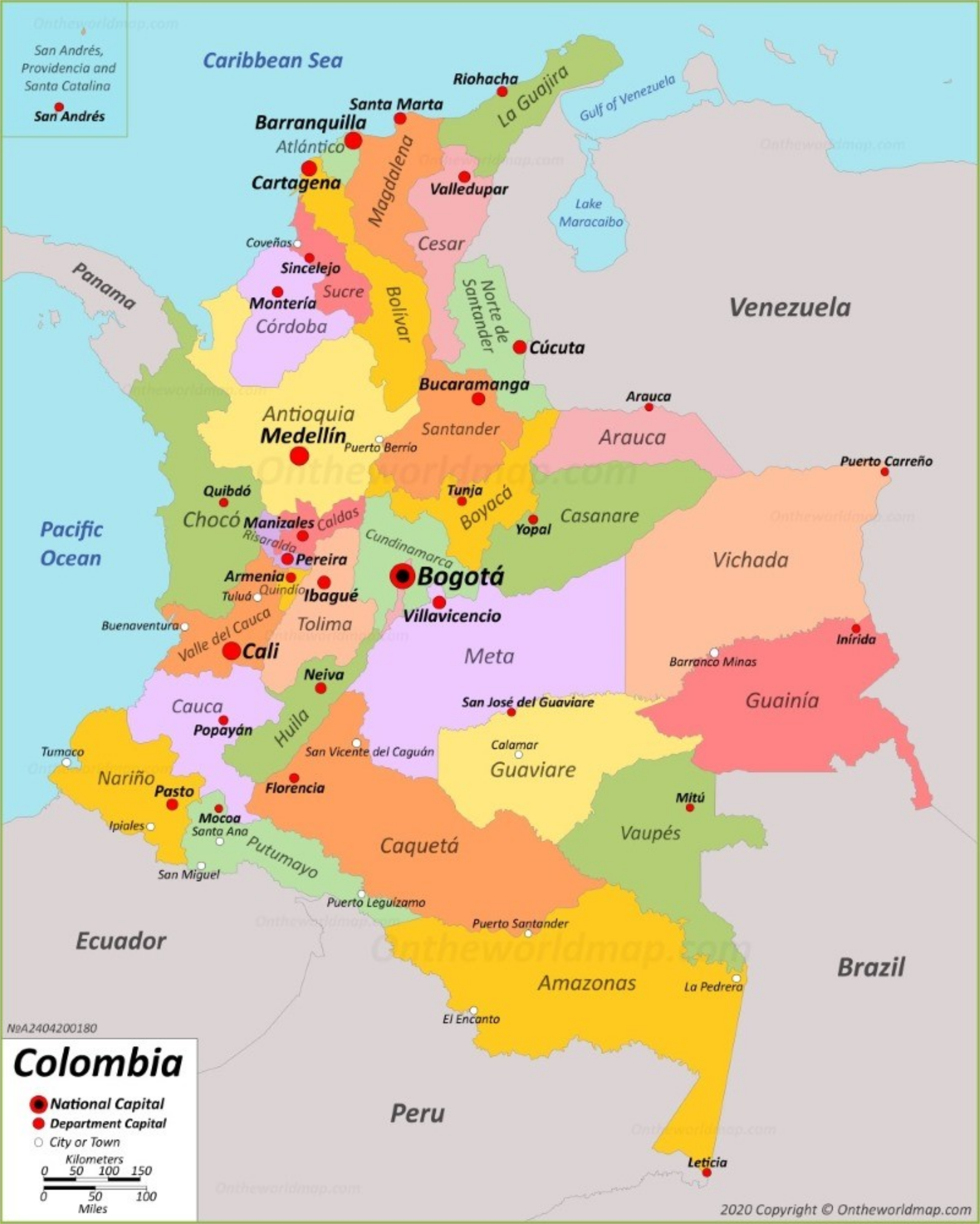
3.1.4 OnTheWorldMap, a collection of maps created by cartographers[footnote 5], published the following map of Colombia showing its international boundaries, its departments’ boundaries and their capitals, and the national capital[footnote 6]:
4. Demography
4.1 Population
4.1.1 According to United Nations estimates, as of 2025 Colombia had a population of 53,426,000.[footnote 7]
4.2 Population density and distribution
4.2.1 According to Encyclopaedia Britannica, the urban population was estimated to consist of 82.9% of the total population in 2025.[footnote 8]
4.2.2 The same source noted that:
‘Colombia can be divided into five traditional geographic regions: the Atlantic lowlands, the Pacific coastal region, the Andean region, the Llanos, and the Amazonian rainforest …
‘… the Atlantic lowlands are now second to the Andean region in population … The area is home to one-fifth of Colombia’s population, partly concentrated in Barranquilla, Cartagena, and Santa Marta, the country’s principal Caribbean ports …
‘The Pacific coast, including the department of Chocó … is sparsely inhabited … It has little commercial activity. The coastal city of Buenaventura is the … main population centre.
‘The Andean region … [has] most of the country’s population and large cities, including Bogotá, Medellín, and Cali, the three most populous …
‘Although the Llanos and the Amazonian rainforest together make up nearly two-thirds of the country’s land area, they contain only a tiny fraction of the population.’[footnote 9]
4.2.3 UN data estimated the population growth rate in 2025 to be 1%, with life expectancy to be 80.8 years and 75.4 years for females and males respectively.[footnote 10] Citing UN data, the World Bank estimated the birth rate to be 13 births per 1,000 persons in 2023[footnote 11], and the death rate to be 5 deaths per 1,000 persons in the same year.[footnote 12]
4.2.4 Statista, a global data and business intelligence platform[footnote 13], noted on 28 November 2025 that ‘As of 2024, an estimate of 7.93 million people lived in Bogotá — the capital of Colombia and most populated city in the country. With 2.62 million, Medellín ranked second that year in the list of largest Colombian cities. Cali, located at the southwest of the country, followed closely behind with nearly 2.3 million inhabitants.’[footnote 14]
4.2.5 Geo-ref.net[footnote 15] shared the below map showing Colombia’s population density per square kilometre of each department, based on 2023 estimates[footnote 16]:

4.2.6 The United States International Trade Administration (US ITA)[footnote 17] noted that ‘Colombia has five major municipal areas: Barranquilla, Bogotá, Cali, Cartagena and Medellin, with more than one million inhabitants. Moreover, there are several mid-sized cities that are within the commercial orbit of these major areas.’[footnote 18]
4.3 Age structure
4.3.1 Encyclopaedia Britannica estimated that, in 2025: 22.1% of the population was between 0 and 14 years old; 22.9% was between 15 and 29; 21.9% was between 30 and 44; 16.7% was between 45 and 59; 12.1% was between 60 and 74, and 4.3% was 75 or over.[footnote 19] UN data estimated the median age of the population to be 32.5 years in 2025.[footnote 20]
4.4 Ethnic groups
4.4.1 World Atlas, an online resource in geography, sociology, demography and the environment[footnote 21], noted in a July 2019 article that: ‘The majority of Colombians identify as being of either European or of mixed European and American Indian ancestry. The ethnic diversity of Colombia is a result of interactions between indigenous peoples, Spanish colonizers, and African slaves. Colombia boasts an ethnic diversity of around 85 different ethnic groups. Most Colombians identify with the various ethnicities on the basis of skin color, ancestry or social status.’[footnote 22]
4.4.2 Minority Rights Group (MRG), a ‘human rights organization working with ethnic, religious and linguistic minorities, and indigenous peoples worldwide’[footnote 23], noted in a June 2023 update on Afro-Colombians that:
‘Colombia has one of the largest Afro-descendant populations in Latin America. According to a post-census survey, the government estimates that Afro-Colombians constitute 10 per cent of the total population, which translates to approximately 4.67 million Afro descendants. This estimation was made in response to concerns about the 2018 census, which reduced the Afro-Colombian population by 30 per cent, compared to the previous census from 2005. Census figures also continue to be disputed by Afro-Colombian leaders such as Luis Gilberto Murillo Urrutia, former Governor of the department of Chocó, who states that the Afro-Colombian population is as high as 36-40 per cent. Similarly, Francia Márquez Mina, the first black woman Vice President of Colombia, argues that there are about 15 million Afro-descendants in Colombia.
‘Afro–Colombians are present in every major city in the country. It is thought that there are one million living in the capital Bogotá. Coastal regions of Colombia can have significant Afro-Colombian populations that are as high as 90 per cent in the case of the Pacific or 60 per cent on the Atlantic coast. The department of Valle del Cauca is the most populous Afro-Colombian state, followed by Bolívar, Antioquia, Nariño and Chocó. The combined total of the first three of these departments with the highest number of Afro-Colombians amounts to 59.2 per cent of the country’s Afro-descendant population.’[footnote 24]
4.4.3 The same source stated: ‘According to the 2018 census 1,905,617 (4.4 per cent) people belong to various indigenous peoples; 4,671,160 (9.34 per cent) Afro-Colombian and 2,649 (0.01 per cent) Romaní people.’[footnote 25]
4.5 Languages
4.5.1 The official language of Colombia is Spanish.[footnote 26]
4.5.2 The non-profit organisation Clear Global, which works to help people around the world access information in their own language[footnote 27], stated on its webpage ‘Language data for Colombia’ that:
‘According to the 2005 Census of Colombia, the country has 37 major languages. More than 99.5% of Colombians speak Spanish. English has official status in the San Andrés, Providencia and Santa Catalina Islands. In addition to Spanish, there are several other languages spoken in Colombia. Sixty-five of these languages are Amerindian in nature. Amerindian languages are groups of Indigenous languages of the Americas. The 65 Amerindian languages spoken in Colombia can be grouped into 12 language families, including Arawakan, Cariban, Tupian, and Quechuan. The wording of questions asked in the census makes it impossible to verify whether any sections of the population are monolingual in languages other than Spanish.’[footnote 28]
4.5.3 World Atlas noted in its July 2019 article on ethnic groups in Colombia that:
- The Mestizo ethnic group mostly speak Spanish
- The Afro-Colombian Palenquero ethnic group speak the Creole language of Palenquero
- The Afro-Colombian Raizal ethnic group speak the San-Andres-Providencia Creole language
- The 102 indigenous communities speak their own native languages
- The Romani people speak the Romany language.[footnote 29]
4.5.4 For more information on each living language of Colombia, see Ethnologue: Languages of the World: Colombia.
4.6 Religion
4.6.1 The United States Department of State (USSD)’s ‘2023 Report on International Religious Freedom: Colombia’, published on 26 June 2024 and covering 2023, stated that:
‘According to a 2023 survey by the NGO Latinobarometer, 64 percent of the population is Roman Catholic, 17 percent Protestant, 2 percent atheist or agnostic, and 14 percent practices no religion. Groups that together constitute less than 2 percent of the population include nondenominational worshipers, Jews, Muslims, Jehovah’s Witnesses, Seventh-day Adventists, members of The Church of Jesus Christ of Latter-day Saints (Church of Jesus Christ), members of the Church of God Ministry of Jesus Christ International, Mennonites, Baha’is, and Buddhists. There are between 85,000 and 100,000 Muslims, according to a 2018 Pew research study, the latest available. According to Baha’i leaders, there are approximately 60,000 followers; a Buddhist representative estimates there are 9,000 adherents. The CJCC [Confederation of Jewish Communities of Colombia] estimates there are approximately 5,500 Jews. A small population of Indigenous persons blend syncretic beliefs with traditional spiritual practices and ancestral religious beliefs. A small percentage of the population practices LaVeyan Satanism, the doctrines of which are based on materialism, rejecting the existence of supernatural beings, body-soul dualism, and life after death. Adherents do not believe that Satan literally exists and do not worship him.
‘Some religious groups are concentrated in specific geographic regions. Most of those who blend Catholicism with elements of African traditional beliefs are Afro-Colombians and reside on the Pacific coast. Most Jews reside in major cities (approximately 70 percent in Bogota). Most Muslims live on the Caribbean coast, and most adherents of Indigenous religions live in remote rural areas. A small Taoist community is located in a mountainous region of Santander Department.’[footnote 30]
5. Economy
5.1 Main indicators
5.1.1 Trading Economics, an online platform that ‘provides its users with accurate information for 196 countries including historical data and forecasts for more than 20 million economic indicators…’[footnote 31], noted that:
‘The Gross Domestic Product per capita [‘Gross domestic product (GDP) per capita is an economic metric that breaks down a country’s economic output to a per-person allocation.’[footnote 32] in Colombia was last recorded at 6850.20 US dollars [approximately £5,415.07[footnote 33]] in 2023. The GDP per Capita in Colombia is equivalent to 54 percent of the world’s average. GDP per Capita in Colombia averaged 3958.95 USD [approximately £3,129.41[footnote 34]] from 1960 until 2023, reaching an all time high of 6850.20 USD [approximately £5,415.07[footnote 35]] in 2023…’[footnote 36]
5.1.2 In an overview of Colombia, last updated on 9 October 2024, the World Bank noted that ‘The economy expanded 0.6% in 2023, as the needed un-winding of stimulus policies and heightened policy uncertainty affected fixed investment. The official poverty and extreme poverty rates declined in 2023, marked by higher labor market earnings. The economy is projected to expand 1.5 percent in 2024 and slightly above the 2.9 percent potential growth rate in the following years, as inflation and interest rates recede.’[footnote 37]
5.1.3 Trading Economics noted on 18 November 2024 that:
‘Colombia’s gross domestic product grew by 2% year-on-year in Q3 2024, slightly down from the 2.1% increase in Q2 2024 and missing expectations of a 2.4% expansion. The growth was driven by a significant rise in gross fixed capital formation (22.7%, up from 1.7% in Q2) and a slight acceleration in household consumption (1.6%, up from 1.5%). However, government spending contracted by 4.3%, reversing a 2% gain in the previous quarter. On the external front, exports grew at a slower pace of 3.8%, compared to 4.8% in Q2, while imports surged by 11.0%, up from 2.2%. On the production side, sectors such as agriculture (10.7%), finance and insurance (4.4%), construction (4.1%), public defense, education, and health (4.8%), and real estate (2%) contributed to growth, while mining (-7.1%) and manufacturing (-1.3%) saw declines. On a seasonally adjusted basis, the economy grew by 0.2% quarter-on-quarter.’[footnote 38]
5.2 Poverty, wealth and inequality
5.2.1 Finance Colombia, an English language financial news outlet[footnote 39], reported in an article dated 14 August 2023 that: ‘According to the United Nations Economic Commission for Latin America and the Caribbean (ECLAC), ‘Colombia ranks fourth among studied countries in the region [of South America] with the highest percentage of people living in conditions of extreme poverty (15%), only surpassed by Honduras (20%), Nicaragua (18.3%), and Guatemala (15.4%). Likewise, it would be fifth in terms of having the most inhabitants living in poverty.’[footnote 40]
5.2.2 Colombia Reports, an English language not-for-profit Colombian online newspaper[footnote 41], reported on 25 September 2023 that:
‘Poverty in Colombia decreased… last year after a major surge caused by the coronavirus pandemic in 2020.
‘Colombia[‘s] poverty rate dropped slightly in 2022, the statistics agency DANE [the Colombian government’s National Administrative Department of Statistics[footnote 42]] said in its annual report.
‘According to the DANE, almost 19 million people lived off less than [US] $97.94 (COP396,864) [approximately £77.37[footnote 43]] per month last year.
‘Some 13.8% of the population earned less than [US] $49 (COP198,698) [approximately £38.71[footnote 44]] per month in 2022.’[footnote 45]
5.2.3 ColombiaOne.com, an independent English language media outlet on Colombia[footnote 46], reported on 17 July 2024 that:
‘Colombia reduced poverty in 2023 by more than three percent, reveals a study published yesterday. According to official data, last year’s poverty rate stood at 33 percent, compared to 36.6 percent in 2022. This represents a 3.6 percent reduction in the number of people living below the breadline.
‘According to the report, which was published by the National Administrative Department of Statistics (DANE), approximately 1.6 million Colombians came out of poverty in 2023…
‘The report examines poverty rates amongst individuals and households (which on average consist of four people). It also distinguishes between two types of poverty.
‘The government attributed the country’s reduced poverty rates to the state’s aid policy. The Colombian president, Gustavo Petro, said that “from 2022 to 2023 we have taken 1,400,000 people out of monetary poverty and 1,120,000 people out of extreme poverty. These are the figures of a government of resounding change”…
‘The report also revealed that Colombian households headed by women had a higher incidence of monetary poverty (37.5 percent) and extreme poverty (13.9 percent) than households headed by men, where rates sat at 29.5 percent.
‘Poverty levels also varied geographically, with a particularly marked difference in some areas of the country. Quibdo, the capital of Choco Department in the Colombian Pacific, had the highest poverty rate of all Colombian cities. At 60.1 percent, its poverty rate is almost double the national average. However, poverty dropped by 2.2 percent in this area between 2022 and 2023.
‘At the other extreme, Manizales, has the lowest poverty rates. The capital of Caldas Department, the city has a poverty rate of 17.6 percent, a reduction of 3 points from 2022.’[footnote 47]
5.2.4 The same source added ‘Lowering poverty and income inequality in Colombia are most visibly urgent when looking at the country’s undernourishment rate.
‘This scourge wasn’t really addressed until former government of President Juan Manuel Santos took office in 2010, but policies lost effect after President Ivan Duque took office in 2018.’[footnote 48]
5.2.5 A population health science article authored by academics Mónica Pinilla-Roncancio and others, published in March 2024 and based on data collected between 2018 and 2022[footnote 49], noted that:
‘In Colombia, more than 4 per cent of the population lives with disability…
‘Persons with disabilities in Colombia represent a group that is frequently omitted from poverty reduction policies and programmes even though persons with disabilities usually face barriers when accessing health, education and employment,t [sic] and these barriers impact their ability to participate fully in society. Studies analysing the poverty levels of persons with disabilities in Colombia have found that this group presents higher multidimensional poverty levels and faces higher deprivation in health, employment and education indicators. In Colombia, the largest gaps in indicators exist between persons with and without disabilities related to education and employment.’[footnote 50]
5.2.6 The same source noted that:
‘When we analyse the characteristics of persons with disabilities and their households… on average, persons with disabilities have one year of education less than persons without disabilities. In addition, the percentage of persons with disabilities who are older than 60 years is, on average, 15 percentage points (pp) higher than for persons without disabilities, and the percentage of persons with disabilities who are employed is between 10 and 14 pp lower than for persons without disabilities. These differences are maintained over time and are significant in all cases…
‘…we found that, on average, households with members with disabilities face higher levels of multidimensional poverty compared to households without members with disabilities… By contrast, the levels of income poverty for households with members with disabilities were lower compared to households without. Furthermore, after the Covid-19 pandemic, households with members with disabilities faced significantly higher income poverty levels than those without members with disabilities. The percentage of households with members with disabilities who are subjectively poor is lower in all the years compared to those without disabilities…
‘Finally, the percentage of households with members with disabilities who are falling into poverty is larger than the percentage of households with members with disabilities going out of poverty… this group [persons with disabilities] has a high risk of being left behind and presents higher risks of being poor in all its dimensions.’[footnote 51]
5.2.7 The USSD’s ‘Country Report on Human Rights Practices: Colombia’, published in 2024 and covering events throughout 2023 (USSD 2023 Report), noted that:
‘Persons with disabilities did not have access to education, employment, health services, public buildings, and transportation on an equal basis with others. The law prohibited arbitrary restriction on the full exercise of the rights of persons with disabilities or harassment of persons with disabilities; however, enforcement was rare. The law prohibited discrimination against persons with physical and mental disabilities but did not explicitly prohibit discrimination against persons with sensory or intellectual disabilities. No law mandated access to information and telecommunications for persons with disabilities.
‘According to the NGO Somos Defensores, government authorities seldom enforced laws providing rights to individuals with disabilities. Access of persons with disabilities to education, health services, public buildings, and transportation was generally not on an equal basis with other persons. Persons with disabilities were unemployed at a much higher rate than the general population. A senior government official estimated 85 percent of persons with disabilities were unemployed.
‘The government made efforts to improve and address disability rights. The recently created Ministry of Equality and Equity housed the Vice Ministry of Diversity, which managed the Persons with Disabilities portfolio. The National Development Plan included measures to address and close gaps that prevented persons with disabilities from fully enjoying their rights. The government also increased student quotas at universities for persons with disabilities and provided legal and tax incentives for employers to hire persons with disabilities.’[footnote 52]
5.2.8 Bertelsmann Stiftung’s Transformation Index 2024 (BTI 2024) covers the period from February 1, 2021 to January 31, 2023. The BTI assesses movements toward democracy and market economy around the world.[footnote 53] This report noted that noted that:
‘Inequality levels remain high in Colombia… Yawning differences in socioeconomic conditions between urban and rural areas persist. Whereas the incidence of multidimensional poverty in urban areas in 2021 was 11.5%, the figure was 31.1% in rural environments. Similarly, there are marked differences in the levels of socioeconomic development across subnational units. For instance, the department of La Guajira registered the highest incidence of monetary poverty in 2021, at 67.4%. In contrast, the department of Cundinamarca had the lowest such rate, at 22.8%. Poverty and social exclusion are structurally ingrained and are more commonly found within Indigenous groups, Afro-Colombian communities, rural populations, women and children, and victims of the armed conflict.’[footnote 54]
5.3 Development challenges and reforms
5.3.1 Global Financial Integrity (GFI) is a non-profit organisation and think tank ‘focused on illicit financial flows, corruption, illicit trade and money laundering’.[footnote 55] GFI noted in a report entitled ‘An Analysis of Colombia’s National Development Plan’, dated 20 April 2023, that the National Development Plan (Plan Nacional de Desarrollo, PND):
‘… is a key policy document, establishing a national strategy for the next four years of the presidential administration. The PND is enshrined in the country’s constitution, as well as in Law 152 of 1994. Each presidential administration develops its own PND, led by the National Planning Department (Departamento Nacional de Planeación, DNP). The plan is subsequently debated by Congress, civil society and unions, during which process it may undergo changes. The final version of the PND is approved by the Congress of the Republic.’[footnote 56]
5.3.2 Originally in Spanish, the Colombian government stated in an undated entry on its PND webpage:
‘The PND 2022 – 2026 is one of the most democratic plans in history. It is the result of a participatory process that received more than 6,500 proposals and whose bases are inspired by the proposals submitted by the more than 250,000 Colombians who participated in the 51 Binding Regional Dialogues.
‘[It is] Also of a process of socialization with citizens, interest groups, congressmen, and the National Planning Department (DNP), spaces that enriched the roadmap proposed by the national government for the next four years.’[footnote 57]
5.3.3 The same source added that the goals of the National Development Plan 2022-2026 include major transformations in the following five areas:
- ‘[The] Human Right to Food
- ‘Territorial Planning around Water
- ‘Human Security
- ‘Productive Economy for Life
- ‘The Fight against Climate Change and Regional Convergence.’[footnote 58]
5.3.4 The research service of Banco Bilbao Vizcaya Argentaria (BBVA)[footnote 59], a global financial services group[footnote 60], noted in its economic outlook for Colombia, published in March 2024, that:
‘Colombia’s growth outlook hinges on four major determinants. On the upside, increased household savings and improved financial conditions (lower interest rates and expanded credit). Conversely, potential obstacles include sluggish growth among major trading partners and an anticipated decline in job creation.
‘Colombia experienced a pronounced slowdown in 2023. These low activity levels will persist early in the year, gradually improving from mid-2024 onwards. Enhanced consumption, particularly in goods, will drive investment, production, and goods trade in the latter half of the year. The housing sector will contribute to these positive trends from late in the year. By 2025, as the performance of domestic demand and construction solidifies, GDP growth will marginally surpass the economy’s potential.
‘Inflation will continue to gradually decline, from 9.3% at the end of 2023 to 5.4% in December 2024 and further to 3.8% by the close of 2025. Food inflation will remain controlled after a substantial downward correction. The burden of additional inflation reduction will fall on non-food prices. The Banco de la República [Central Bank of Colombia[footnote 61]] will adjust its rate to 7.00% by December 2024 and 5.50% by mid-2025, where it will stabilize for an extended period. This decision, coupled with persistent macroeconomic imbalances, will lead to currency devaluation in the coming quarters.’[footnote 62]
5.3.5 Business magazine and global media company Forbes[footnote 63] reported in an article dated 20 March 2024 that ‘Colombia’s economy continues to struggle under the leadership of controversial populist President Gustavo Petro. Colombia’s economy grew by around 1 percent in 2023… But Colombia’s economy is expected to grow by 1.5 percent in 2024 and 2.8 percent in 2025.’[footnote 64]
5.3.6 Regarding the effect of the security on the economy, the same source added that ‘executives at foreign companies who are watching the peace process evolve and scouting potential investment opportunities in Colombia still need to be wary of ongoing risks.’[footnote 65]
5.4 Employment
5.4.1 TimeCamp, a task-management platform which provides information on average salaries worldwide[footnote 66], noted that average salaries in Colombia:
‘…can vary widely depending on a range of factors including industry, experience, education, and location. Despite this variability, there are some general trends that can be observed within the country’s job market.
‘… the average monthly salary in Colombia hovers around 2,700,000 Colombian pesos (COP) per month. This figure translates into approximately USD 700 [approximately £554.08[footnote 67]], considering the exchange rate fluctuations. However, this average can be misleading without context as there is a significant disparity between different sectors and regions. Urban centers such as Bogotá, Medellín, and Cali often feature higher average wages than rural areas due to the concentration of businesses and advanced services in those cities.
‘The average salary in Colombia also reflects the country’s economic focus. For instance, sectors such as oil and gas extraction, mining, finance, and telecommunications are known to offer salaries above the overall average. Conversely, agriculture and some manufacturing roles might provide compensation that is below the national average.
‘It is also important to note that the average monthly salary can be influenced by the formal and informal job sectors. The formal sector often provides higher salaries along with benefits and job security, while the informal sector, which includes a large portion of the Colombian workforce, typically has lower wages and lacks benefits and stability. As a result, the reported average salary figures generally relate to the formal employment sector.’[footnote 68]
5.4.2 The same source observed that the annual average wage growth in Colombia:
‘…has experienced fluctuations over the years, often impacted by the country’s economic health, global market trends, inflation rates, government policies, and other external factors…
‘Historically, Colombia has aimed to balance wage growth with employment rates, striving to increase wages without negatively impacting job creation. Policymakers, employers, and workers all play roles in negotiating and adapting to changing wage growth patterns, which can have far-reaching implications for the economy and individual livelihoods.’[footnote 69]
5.4.3 The same source provided a list of the highest paying occupations in Colombia, many of which require advanced levels of education and additional professional qualifications:
- Medicine and Healthcare
- Information Technology (IT) and Cybersecurity
- Energy Sector Professionals
- Financial Services
- Legal Professionals, particularly those working in corporate law, intellectual property, or international law firms
- Business Executives
- Marketing and Sales Directors
- Engineering (chemical, petroleum, aerospace and electrical engineering)
- Aerospace (pilots and aviation managers)
- Telecommunications (engineering and management positions)[footnote 70]
5.4.4 Reuters reported on 30 December 2023 that:
‘Colombia’s minimum wage will increase by 12% in 2024, Labor Minister Gloria Ines Ramirez said on Friday [29 December 2023], taking the figure to 1.3 million pesos ($340) [approximately £269.25[footnote 71]] per month.
‘The increase in the minimum wage represents a hike of 140,000 pesos ($36.63) [approximately £29.01[footnote 72]] per month.
‘The wage increase comes as the country battles persistently high inflation and an ailing economy. Twelve-month inflation to the end of November [2023] hit 10.15%.’[footnote 73]
5.4.5 BBVA noted in a report on Colombia’s labour market, published on 3 May 2024, that:
‘In March [2024], the national unemployment rate was 11.3%, up from 10.0% a year ago…
‘Annual job creation went from 1.2% in February to -0.7% in March [2024]. This deceleration in annual job creation between February and March of this year was largely explained by the significant increase in employment that occurred last year between February and March [2023], the base year for comparison for the calculation of annual growth.
‘In the last year, as of March [between March 2023 and March 2024] 149 thousand jobs were lost. The sectors that contributed most to the drop in employment were Agriculture (207 thousand jobs lost) and Hotels and Restaurants (99 thousand jobs lost). The main generators of employment during the year were Public Services (132 thousand jobs created) and Retail (120 thousand jobs created).
‘By category, the annual employment created as of March [2024] was mainly in private companies, which created 235 thousand jobs (growing at 2.4% annually). Regionally, large cities created 166 thousand jobs (growing at 1.5% annually) and small cities destroyed 273 thousand jobs (falling at 4.5% annually), as well as the countryside, which destroyed 58 thousand jobs (falling at 1.2% annually).’[footnote 74]
5.4.6 Trading Economics noted that the ‘Employment Rate in Colombia increased to 58.27 percent in August from 57.80 percent in July of 2024. Employment Rate in Colombia averaged 58.10 percent from 2001 until 2024, reaching an all time high of 64.01 percent in October of 2011 and a record low of 42.50 percent in April of 2020.’[footnote 75]
5.4.7 Statista noted on 2 December 2024 that ‘From January to March 2024, the cities with the highest unemployment rate were Quibdó with 29.7 percent and Riohacha with a rate of 21.8. In contrast, Bogotá ranked with the lowest unemployment with 10.6 percent.’[footnote 76]
5.4.8 Originally in Spanish, a 23 January 2023 article in the magazine of The National University of Colombia (Universidad Nacional de Colombia, UNAL)[footnote 77], authored by academics José G. Aguilar and Ronal E. Mahecha, stated that:
‘Despite having, in some cases, a formal education, people have to resort to informal jobs which range from door-to-door sales, or one day labor…
‘Informal workers are characterized by a precarious labor situation, absence of work contracts, low access to social security benefits, lack of proprietary rights, and low income. This makes them highly vulnerable. The trade units belonging to the informal sector are generally low-scale, with basic organization, and are less efficient and productive…
‘…data shows the relevance of self-employed workers in the Colombian economy; however, housekeeping, other occupations, and self-employment are the ones with a greater population in informality concerning the total workers in each occupation, and in the first two the weight of informality has increased in the last 30 years…
‘Among the programs that tend to the informality issue in Colombia, are Ingreso Solidario; which provides bimonthly additional income to people in vulnerable situation, including informal workers and the unemployed; Familias en Acción, which provides monetary contributions to improve the economic, social and educational quality to more than 2.6 million vulnerable households; Colombia Mayor, which economically supports vulnerable people over 50 years of age, among others.
‘Generally, the measures taken by the government to fight informality have a short-term effect and are far from eradicating the issues linked to informality, such as low fiscal collection rates and a culture of legality, as the increased corruption.’[footnote 78]
5.4.9 The same source added that:
‘On average, salaried workers are younger and have greater education both in formal and informal employment; however, the salary of an informal worker is greater than an informal self-employed. Likewise, informal salaried workers typically work more hours than informal self-employees, while formal self-employees work more hours than formal salaried workers but there are more informal self-employed than salaried workers…
‘It is estimated that in the trade sector, there are 1.5 informal workers for every formal worker. In the service sector, 1.15. But, for instance, in the industrial sector, there are 0.59 informal workers for every formal worker. Some analyses seem to point out the existence of a gap in costs and the value workers confer on these benefits, and therefore in their decisions and also businesses…
‘Informality depends on the individual characteristics of the working person and the value of their marginal productivity. Characteristics such as age, gender, and educational level also have a great impact on choosing the formal or informal sector.’[footnote 79]
5.4.10 The BTI 2024 stated that: ‘Based on data from August to October 2022, the National Administrative Department of Statistics (DANE) estimated that 58% of Colombia’s population earns their livelihoods in the informal economy. Informal employment occupies 45.3% of the labor force in the country’s 23 cities and metropolitan areas.’[footnote 80]
5.4.11 Regarding gender and ethnicity in employment, TimeCamp noted in its 2023 article that:
‘…Unfortunately, disparities based on gender and ethnicity exist in the Colombian wage structure. Women and minority groups often face wage gaps compared to their male and non-minority counterparts for similar work, though there are ongoing efforts to address these inequities…
‘In Colombia, the gender wage gap is an ongoing challenge that reflects broader social and economic disparities between men and women. Despite progress in recent years, there exists a persistent wage gap where women generally earn less than men for comparable work. This wage gap is influenced by a variety of factors, including gender discrimination, differences in industry and occupation, gaps in experience or education, and the impact of maternity and domestic responsibilities.
‘Statistically, Colombian women earn approximately 13% to 15% less than their male counterparts, according to various studies and labor reports. This disparity is even more pronounced in rural areas and among older women. The wage gap also tends to widen in higher-paying jobs and leadership positions, highlighting the “glass ceiling” that many women face in the workplace.
‘The factors contributing to the gender wage gap in Colombia include:
‘Labor Market Segregation:
- ‘Women and men often work in different sectors and types of jobs, with women more frequently employed in lower-paying roles and industries.
‘Educational and Occupational Choices:
- ‘Gender norms and cultural expectations can influence educational and career paths, leading women to pursue professions that typically offer lower salaries compared to those dominated by men.
‘Work Experience:
- ‘Women’s career progression may be interrupted due to childcare and family responsibilities, resulting in less work experience over time, which affects earning potential.
‘Part-Time Work:
- ‘A higher proportion of women work part-time, either voluntarily or due to the need to balance work and family duties. Part-time jobs usually offer lower hourly rates and fewer opportunities for advancement.
‘Lack of Representation:
- ‘Women are underrepresented in executive and senior management roles, which tend to be the highest-paid positions within organizations.
‘Discrimination:
- ‘There is evidence of both direct and indirect discrimination against women in hiring, pay, promotions, and other employment practices.
‘Social and Cultural Norms:
- ‘Traditional views on gender roles can perpetuate the undervaluation of work traditionally performed by women, both in the home and in the workforce.
‘The Colombian government and various organizations have been working to address the gender wage gap through initiatives aimed at promoting gender equality in the workplace, offering support for women’s entrepreneurship, implementing laws that promote equal pay for equal work, and developing programs to help balance professional and family responsibilities for working women.
‘Despite these efforts, much work remains to be done to achieve true wage equality. Addressing the complex social and economic factors that contribute to the gender wage gap requires sustained attention and action from both the public and private sectors in Colombia.’[footnote 81]
5.4.12 The Organisation for Economic Co-operation and Development[footnote 82] (OECD)’s ‘Gender Equality in Colombia’ report, published on 28 September 2023, noted that:
‘In Colombia, 48% of all women of working age (15-64 years old) were employed in 2021, compared to close to 74% of men. The resulting gender employment gap of 26 percentage points exceeds the OECD average by 12 percentage points. The national figures mask the presence of considerable variations. In some rural areas, the gender gap in labour force participation is more than twice the level of the urban centres. In Caldas, Caquetá, and Huila, for example, the gap measures 29%, which compares to 13% in Bogota.’[footnote 83]
5.4.13 The same report further noted that:
‘Women are less likely to work for pay, and to do so full-time. Instead, they typically spend more hours looking after children, elderly relatives, and relatives with disabilities, and doing housework. On average women in Colombia spend 22 more hours per week on unpaid tasks than men do, well above the OECD average (15 hours). At the same time, Colombian men devote 23 more hours to paid work activities per week than women do, again higher than the OECD average (12 hours).’[footnote 84]
5.4.14 The July 2024 ColombiaOne article noted that the 2023 DANE study ‘… also examined the labor contribution of women in Colombia. It found that between 2021 and 2023, women spent 65 percent of their time working. This equates to 54,902 hours per year, or 57.1 percent of the national total.’[footnote 85]
5.4.15 The same article further noted that ‘It was estimated that women in employment worked a total of 73 hours per week, spread across paid work and unpaid domestic labor. Men spent 65 hours per week across paid and domestic work.
‘Women in Colombia spent an average of 35,000 hours per year on unpaid domestic and care work.’[footnote 86]
5.4.16 The Inter-American Development Bank (IDB), which ‘provide[s] financial and technical support to national and sub-national governments and other entities in [Latin America and the Caribbean]’[footnote 87], published a working paper in March 2024 entitled ‘Measuring racial bias in employment services in Colombia’. This paper drew on analysis of administrative data as well as interviews with 349 job counselors in 81 job centers, including a Race Implicit Association Test. The authors stated that:
‘…we document de facto, implicit, and explicit racial biases within the public employment service in Colombia…
‘We find that job counselors are 15% less likely to refer Afro-descendants for an opening than non-Afro-descendants… By combining the administrative data with the survey to job counselors, we find that the difference in the forwarding rates between Afro- and non-Afro-descendants correlates with the implicit bias of job counselors. In fact, Afro-descendants are less likely to be referred to an opening only if the median job counselor of a given job center has a high level of bias against Afro-descendants…’[footnote 88]
5.4.17 The OECD’s 2024 economic survey of Colombia stated that: ‘Poverty and lower incomes particularly affect ethnic minorities and people displaced by Colombia’s historical internal conflict, who are disproportionally concentrated in rural areas, as well as migrants, in particular from Venezuela. Women are also disproportionally affected by poverty, having lower employment levels and wages and a higher rate of informality when compared to men.’[footnote 89]
5.4.18 For further information on salary projections and employment, see Looking Ahead 2024: Colombia by global legal intelligence platform Lexology.[footnote 90]
6. Social support
6.1.1 The TimeCamp 2023 article noted that:
‘Compensation costs for Colombian workers are comprised of both direct wages and a variety of legally mandated and voluntary benefits. Direct wages are the salaries that employees take home before taxes, while legally mandated benefits include health insurance, pensions, and severance pay. Voluntary benefits may consist of additional health care plans, life insurance, food assistance, and more, depending on the employer…
‘Health Insurance Contributions:
- ‘Employers are required to contribute a percentage of each employee’s salary to the health care system, providing access to medical services.
‘Pension Contributions:
- ‘Similar to health insurance, employers must also contribute to the employee’s pension fund, which serves as a retirement benefit.
‘Severance Pay (Cesantías):
- ‘This is a form of savings contribution that employers must make on behalf of their employees, equivalent to one month’s salary per year, payable upon termination of employment or under specific circumstances during employment’.[footnote 91]
6.1.2 A 2021 report by the UN Economic Commission for Latin America and the Caribbean (ECLAC) and other international organisations stated that: ‘The Family Subsidy is a social allowance payable in money, in kind and services to workers with lower and medium incomes, in proportion to the number of their dependants … without being considered as a salary or a factor thereof.’[footnote 92] The same source further noted that ‘its purpose is … to subsidize the economic burdens of the affiliated worker from supporting a family.’[footnote 93]
6.1.3 The same report noted that: ‘… the Family Subsidy System … has been extended across the national territory through 43 Family Compensation Funds [non-profit legal entities with state oversight[footnote 94]] and reaches over 9 million affiliated workers. In total, the Family Subsidy System serves 20 million people through the programmes and services provided by the Funds …’[footnote 95]
6.1.4 The BTI 2024 stated that:
‘Social safety nets are well developed in design but deficient in practice. The provision of public health and education is based on a universal model, while access to benefits such as old age and disability pensions, paid maternity and paternity leave, and unemployment support is linked to social security contributions. Eligibility for noncontributory benefits in the form of subsidies and social transfers depends on socioeconomic criteria, largely targeting individuals living in poverty and extreme poverty. The System for Selecting Beneficiaries of Social Spending (Sistema de Identificación de Potenciales Beneficiarios de Programas Sociales, SISBÉN) is a national survey of household income and assets used by the government to determine eligibility for social assistance programs.
‘Successive Colombian governments have increased public social spending and developed programs to alleviate poverty and improve health care and education coverage. However, asymmetries in infrastructure and the quality of service provision across the country, as well as corruption, clientelism and funding constraints, hamper the development of the welfare system.’[footnote 96]
6.1.5 Originally in Spanish, in October 2024, media outlet El Pais[footnote 97] reported that:
‘The Citizen Income [Renta Ciudadana] is a program of the Colombian State aimed at providing a subsidy to the most vulnerable families in the country. The aim is to reduce poverty and improve the living conditions of those in precarious situations. “It is the first time that a cash transfer assistance program serves the entire population in extreme poverty,” Laura Sarabia, the director of the Department of Social Prosperity and the president’s right-hand woman, said last February. This 2024, the transfer of the monetary subsidy to the population belonging to group A of the System for the Identification of Potential Beneficiaries of Social Programs (Sisbén), that is, to households in situations of extreme poverty. About 3 million citizens have received cash transfers as part of the social program, according to the government.’[footnote 98]
6.1.6 For further information on social security programmes in Colombia, see Social Security Programs Throughout the World: The Americas, 2019.
7. Food security
7.1.1 The World Food Programme (WFP) noted in a report published on 29 February 2024, entitled ‘Colombia sees a modest improvement in food security but half of the population remains exposed to climatic and economic risks’, that:
‘…Colombia shows a 5 percent reduction in food insecurity, with 13 million people facing moderate or severe food insecurity - down from 15 million the previous year [2023].
‘Despite progress in collective actions to address food insecurity in the country, the Food Security Assessment among the Colombian Population - carried out in late 2023 - also reveals that half of Colombian households are in a situation of marginal food security and are at risk of sliding into a more severe situation as a result of external shocks. These include the impact of El Niño and La Niña which bring variations in river flows and forest fire risk, and the economic slowdown which causes food prices instability which can affect access to food, especially for the poorest.
‘Although household capacity to purchase food has improved since the previous assessment in 2022, many families are forced to spend their savings, buy on credit or cut on health expenditures to be able to put food on their tables. 43 percent of the households surveyed reported difficulties in accessing food in the last six months.
‘WFP’s assessment shows that only one-in-three Colombians have acceptable levels of food consumption, while slightly more than half of the population often resort to consuming less preferred foods, eating less, and reducing the number of meals per day. In some extreme cases, adults forfeit their portions so that children can eat – and some even go days without eating.
‘The armed conflict continues to be a major driver of food insecurity in Colombia…
‘“The assessment highlights problems with access to food, lack of important micronutrients, high economic vulnerability, and the use of copying [sic] mechanisms such as reducing the size and frequency of meals. We must address the underlying drivers that continue to affect food security in Colombia, by strengthening food systems to boost the resilience and decrease the vulnerability of the population,” said Carlo Scaramella, WFP’s Country Director in Colombia.
‘The assessment notes that the highest level of food insecurity persists in La Guajira (59 percent). The department with the lowest rate is San Andres and Providencia, in the Caribbean (3 percent). Rural areas are more food insecure (31 percent) than urban areas (24 percent) due to precarious incomes and the greater impact of extreme weather events. However, the total number of food insecure people is still higher in urban areas, as the population is concentrated in cities. In the case of the district of Bogota, one million people are food insecure, representing 13 percent of the population of the capital.
‘In response to this situation, WFP works hand in hand with institutions and communities to help address hunger and poverty, through development programs that provide opportunities for the most vulnerable communities to build their livelihoods. Training, seed funding, technical assistance, and socio-entrepreneurial support are some of the initiatives that WFP has been rolling out in this regard.’[footnote 99]
7.1.2 A 27 June 2024 report of the UN Verification Mission in Colombia noted that:
‘The Agency for Rural Development and the Agency for Territorial Renewal announced investments amounting to $44.5 million [approximately £35.2 million[footnote 100]] in development programmes with territorial focus. In addition, the Agency for Rural Development allocated $7.8 million [approximately £6.2 miliion[footnote 101]] for rural women’s projects. The Agency for Rural Development also established a new programme, the National Agrifood Alliance, to stimulate overall regional food production and commercialization.’[footnote 102]
7.1.3 Smaller-scale programmes exist to support local communities in addressing food insecurity. For example, the Food and Agriculture Organization of the United Nations (FAO)’s[footnote 103] ‘State of Food Security and Nutrition in the World’ report, published in 2024, noted:
‘In Colombia, an IPAF [Indigenous Peoples Assistance Facility[footnote 104]] project specifically focused on the preservation and promotion of potato varieties with great potential to both improve marketing as well as food security and nutrition of Pastos Indigenous communities in the territory of Gran Cumbal. The project conducted research and identified over 36 varieties of native potato and five select varieties with great production potential. Furthermore, it established seed banks and promoted traditional techniques for organic potato production (“shangra”), sowing, cultivation, harvesting and storage in experimental units covering a territory of 15 hectares.’[footnote 105]
8. Housing and living conditions
8.1 Housing
8.1.1 A World Bank blog post entitled ‘Strengthening housing and urban development in Colombia’, published on 26 July 2023 noted:
‘Having access to a home is one of the major challenges to reduce poverty and protect people’s safety and quality of life. In Colombia, around 3.7 million households (more than a quarter of the country’s total) face a housing deficit. Moreover, 2 out of every 3 of these families need to carry out structural improvements to their homes. The lack of decent housing with proper plumbing and water supply is more widespread in rural areas, where more than 2 million families need to find an urgent solution to their housing problems.
‘The government of Colombia has acknowledged the importance of closing this gap and is now redirecting the focus of its housing programs away from catering for new housing and rent-to-buy schemes towards different initiatives to help improve the structural quality of housing and whole neighborhoods . The current challenge, enshrined in the National Development Plan 2023-2026, focuses on increasing access to housing by awarding priority to lower-income households and those living in vulnerable socio-economic conditions, by carrying out works in smaller cities and rural areas, and by fostering participation by communities themselves in the execution and planning of housing projects.
‘Some of the tasks facing the government include scaling up the scope of home improvement programs to structural improvement in urban and rural areas, developing lines of credit for the acquisition and restoration of housing for the vulnerable population, promoting community participation in housing construction, and guaranteeing the improvement of neighborhoods and informal areas in the cities. To achieve this, the Colombian authorities propose to carry out several actions that include:
(i) ‘Accelerate the use of sustainable alternatives for constructing and improving housing in urban and rural areas
(ii) ‘Combine housing improvement subsidies with loans using efficient processing schemes
(iii) ‘Boost self-construction and the participation of existing social organizations in housing production and/or construction
(iv) ‘Scale up the rural housing programs through the use of alternative systems of sustainable construction
(v) ‘Combine the social cohesiveness component into the neighborhood improvement program to promote better relations between communities and migrants
‘The World Bank, through the Colombia: Resilient and Inclusive Housing Project, supports these actions. At present progress is being made to improve around 6000 urban and rural dwellings, including municipalities with large vulnerable populations such as Quibdó, Maicao and Villa del Rosario.
‘Plans have been drawn up for implementing 4 Comprehensive Neighborhood Improvement projects and 10 public space projects in municipalities with a high number of vulnerable families, including migrant families that have arrived in the areas over the last few years. The Project also includes a first pilot program to be carried out in Bogotá aimed at providing renting solutions for migrant families, and technical assistance related to alternative construction methods for more distinctive and cultural-interest housing.
‘In the medium term, it is vital to ensure continued collaboration between the national and subnational authorities in future mandates in order to continue to scale up the programs in urban and rural areas. At the same time, this agenda must include the strengthening of habitat and housing information systems and improve the technical capacities of municipalities to manage projects with legal tenure and public services. It is also important to prioritize resilient infrastructure works and neighborhood improvements to enable them to adapt to climate change, as well as engage communities in implementing habitat and housing projects.
‘Finally, it is necessary to include elements of urban regeneration, adaptation, resilience and climate change mitigation to achieve a real impact in the medium and long term.’[footnote 106]
8.2 Ownership, rent, and affordability
8.2.1 A May 2024 blog post by the Borgen Project discussed the ‘Mi Casa Ya’ (my house now) program:
‘Mi Casa Ya is a government assistance program that serves to aid low-income families with the purchase of their first property by granting housing subsidies. Originally, Mi Casa Ya only served in three cities: Barranquilla, Bogota and Cali. However, under the Petro administration, the MVCT [Ministry of Housing, City and Territory] announced that starting in 2024, the program would expand nationwide and prioritize the country’s most vulnerable populations, particularly the homeless.
‘To qualify for Mi Casa Ya, the applicant must meet the following criteria. First, the applicant must not own a home in Colombia. Second, they must not have previously received any sort of housing subsidiary. Third, the applicant must have been approved for a mortgage credit. Finally, they must be registered in the Sisbén IV, the System of Identification of Potential Beneficiaries of Social Programs, which classifies Colombian citizens based on their socioeconomic status.
‘… An applicant’s ranking in the Sisbén IV determines how much monetary assistance they will receive with the most economically vulnerable granted the highest amount of financial aid …
‘Since its inception in 2015, the MVCT has allocated 50,000 Mi Casa Ya subsidies annually. This initiative aims to provide the impoverished with the opportunity to own homes and build generational wealth in Colombia. About 90% of the recipients fall under the Sisbén IV categories of extreme poverty, moderate poverty and vulnerable populations.’[footnote 107]
8.3 Land, agriculture, and construction
8.3.1 The Freedom House (FH) ‘Freedom in the World 2024’ report (FH 2024 report), published on 25 April 2024 and covering events throughout 2023, noted that:
‘Progress remains slow on the implementation of the 2011 Victims and Land Law, which recognized the legitimacy of claims by victims of conflict-related abuses, including those committed by government forces. While affected citizens continue receiving compensation and modest progress has been made on land titling, the legal process for land restitution is heavily backlogged, and the resettlement of those who were displaced during the conflict moved slowly during the Duque administration.
‘In 2022, the newly elected Petro administration promised to accelerate the process, and that October, the government agreed to a series of land purchases, which will be distributed at a subsidized price to those displaced by the conflict.’[footnote 108]
8.3.2 The Institute for Poverty, Land and Agarian Studies (PLAAS) of the University of the Western Cape[footnote 109] noted in a report dated 8 May 2024 that:
‘… the Colombian state under President Gustavo Petro has legal authority to seize not only bank accounts and moveable equipment, but also farms and industrial property [that had previously been proceeds of illicit drug trafficking and money laundering]. Since the Peace Agreement of 2016 (PA) between the government and main guerrilla movement the Revolutionary Armed Forces of Colombia (FARC), properties have been confiscated in this way and are held in the interim by a state agency that manages assets of crime, the SAE [Sociedad de Activos Especiales, Special Assets Company].
‘In support of agrarian reform, narco-traffickers’ farms that once enabled them to launder fortunes and establish control over territory have now been promised to be used for land reform and to house people displaced by war.’[footnote 110]
8.3.3 The 27 June 2024 report of the UN Verification Mission in Colombia noted that:
‘The National Agrarian Reform System, driven by the Ministry of Agriculture, established relevant policy guidelines and planned coordinated State interventions, including through the establishment of 100 of the 200 planned rural reform committees at the local level. Further progress requires the full engagement of State institutions and ministries beyond the agricultural sector. In May [2024], President Petro participated in a high-level event on the implementation of the National Agrarian Reform System, during which a nationwide programme with a budget of $657 million [approximately £520.5 million[footnote 111]] was launched to boost rural productive partnerships…
‘The new leadership of the National Land Agency adjusted land acquisition criteria, prioritizing large-scale land purchases. It signed agreements to purchase 200 large-scale plots from the Special Assets Administration and the Victims’ Compensation Fund. In addition, the Agency committed to purchasing 100 plots as part of an agreement with the Colombian Federation of Cattle Ranchers.
‘It will be important to accelerate the pace of land acquisition and formalization processes in order to meet the Government’s goals for 2024. According to the National Land Agency, acquisitions for the Land Fund, established by the Final Agreement, reached 12,194 hectares during the reporting period, totalling 266,156 hectares under the current Administration; of these, 85,002 hectares have been adjudicated. In addition, 35,902 hectares were formalized during the reporting period, totalling 1,128,982 hectares since August 2022. Despite these developments, greater efforts are needed to move forward with the formal adjudication of land with productive assets…
‘The Land Restitution Unit is adopting new strategies to accelerate the restitution of land to victims. For example, the Unit created a collective track for peasant organizations affected by mass displacement, identifying 17 pilot cases nationwide, including an all-women organization. New requests for restitution were made for more than 45,950 hectares, with another 13,777 hectares handed over to beneficiaries.’[footnote 112]
8.3.4 The UN Verification Mission in Colombia’s September 2024 report noted:
‘During the reporting period [27 June 2024 to 26 September 2024[footnote 113]] there were renewed efforts to accelerate the implementation of the comprehensive rural reform. The newly appointed Minister of Agriculture, Martha Carvajalino, has prioritized this agenda and began fostering dialogue with key stakeholders during visits to various regions …
‘Dialogue was established between the Government and national peasant platforms to address recent protests and demands for tangible progress in land delivery … Dialogue between the Government and the private sector sought to enhance the role of the latter in relation to rural reform, while discussions between the Government and legislators focused on advancing key bills …’[footnote 114]
8.3.5 For further information on land tenure and agrarian reform, see Grain’s 2023 article: Agrarian reform and land tenure in Colombia.
8.4 Electricity and energy supplies
8.4.1 The OECD noted in a working paper on distributed renewable energy in Colombia, dated 11 May 2023, that:
‘The Government of Colombia has already taken several successful steps to drive new investment in renewable energy in non-interconnected zones. In 2019, the Ministry of Mines and Energy’s Planning Unit (Unidad de Planeación Minero Energética, UPME) published expansion plans outlining the role of distributed renewable energy solutions in expanding electricity coverage in the country’s noninterconnected zones. Most recently, the electricity tariff and subsidy regulations have been updated to improve cost recovery on operation and maintenance. These policies’ effects are already seen through the deployment of solar PV home systems between 2020 and 2022, which have increased the renewable energy capacity in non-interconnected zones from to 16 MW to 46 MW.’[footnote 115]
8.4.2 The same source added that:
‘Colombia has a high level of electrification, reaching 98.2% of its 51 million population in 2020… Access to electricity is particularly high in urban areas (99%) but falls to 86% in rural zones… Parts of the country connected via the national electricity grid (Sistema Interconectado Nacional, SIN) have the highest electrification rates, although some rural zones within the SIN’s territory have little or no access.
‘While only 4% of the population lives out of the reach of national electricity grid, non-interconnected zones (zonas no-interconnectadas, ZNI) cover just over half the national territory (52%). In these zones, technical, financial or environmental challenges have created barriers to extending transmission and distribution infrastructure. In some cases, these challenges are the legacy of social conflict. In 2022, around 250 thousand “users”, which include households and public or private buildings such as schools, had access to electricity services through small local grids or standalone solutions… A remaining 450 thousand users do not yet have access this electricity…
‘There has been a significant restructuring of the electricity market since the early 1990s with a priority on improving access to reliable and affordable electricity supply. Law 142 of 1994 (later modified by Law 689 of 2001) and Law 143 of 1994 established the regime for core public services, regulatory commissions, market competition rules and standards, which support private investment in generation capacity. These reforms led Colombia towards a liberalised energy market, characterised by unbundled generation, transmission, distribution and commercialisation.
‘In 2022, Colombia had around 18 GW of installed power generation capacity connected to the national grid… Abundant water resources have played a central role in developing Colombia’s low-cost power system, with large hydropower representing nearly two-thirds of the total installed capacity. This is reflected in the sector’s carbon intensity, which averaged around 160 grammes of CO2 per kWh (gCO2/kWh) over the last two decades, compared to a world average of about 475 gCO2/kWh in 2018.
‘Of users with access to electricity (excluding those only connected by solar home system), in 2022, 35% received 24 hours of electricity service. A further 6% received between 10 to 20 hours, 46% between 5 to 10 hours and 16% received less than 5 hours of service… Electricity services are most reliable in more populated ZNI areas, such as departmental or municipal centres. For example, the municipality of Leticia, which has more than 10 000 users, has electricity 24 hours a day via an isolated diesel mini-grid. But nearly 90% of ZNI localities with fewer than 300 connected users had an average of fewer than 6 hours of electricity per day in 2018, often linked to limitations or disruptions to the fuel supply.
‘A further 1.5 million people still lack access to electricity, which UPME’s expansion planning in 2019 has identified to be 500 thousand users (households and other buildings)… This number has since dropped to 450 thousand users largely thanks to solar home systems… A large share of the population without access to electricity lives in areas along the Pacific coast, in the Amazon, in the Orinoquia and Guajira regions, and on islands, where the renewable potential for wind and solar are at the highest, and where there can also be good potential for small hydro and bioenergy.
‘The government of Colombia has set targets to provide all communities with access to basic electricity services, and distributed renewables represent an opportunity to improve the quality of service. Subsidies for standalone solar solutions only start for units over 50 W, which, with at least 4 hours of sunlight, can provide up from 200 Wh, giving access to electrical lighting and multiple appliances such as a fan, a television and phone charging.’[footnote 116]
8.4.3 The World Bank noted that, as of 2023, 98.7% of the population had access to electricity[footnote 117], comprising 100% of the urban population[footnote 118] and 94.8% of the rural population.[footnote 119]
8.5 Water, sanitation and hygiene (WASH)
8.5.1 Sanatation and Water for All (SWA), ‘a multi-stakeholder partnership of governments and their partners from civil society, the private sector, UN agencies, research and learning institutions and the philanthropic community’[footnote 120], noted on its Colombia webpage that:
‘Colombia joined SWA in 2020. Colombia’s WASH sector has as its strategic axis:
- ‘to reduce morbidity associated with limited access to water, sanitation and hygiene
- ‘to maintain or improve school retention and to reduce gender-based violence.
‘Actions include rehabilitation and sometimes construction of water, sanitation and hygiene services; implementation of strategies for the promotion of key hygiene practices including hand washing, water treatment at the point of consumption, solid waste management, water quality surveillance and monitoring, among others. The NDP [National Development Plan] proposes necessary actions to increase the percentage of domestic urban wastewater treated safely to 54.3% in 2022 and to reach 100% of coverage in access to drinking water.’[footnote 121]
8.5.2 WaterAid, a non-profit organisation dedicated to provision of clean water, sanitation, and hygiene[footnote 122], noted in an undated report that ‘WaterAid launched its program in Colombia in early 2016 after joining forces with Aguayuda Inc., a small but committed organization with ten years of experience in the region. Our central office is located in Riohacha, the capital of La Guajira, since a large part of our is focused in that department.’[footnote 123]
8.5.3 A news article published by the water management company Aqualia[footnote 124] on 20 July 2023 noted that ‘… Aqualia has begun operating the end-to-end water cycle in Riohacha, capital of the Colombian department of La Guajira, in the Caribbean region, in the north-east of the country…
‘… In the field of the end-to-end water management it is already present in 32 municipalities belonging to 8 departments of the country, where it provides service to 1,241,000 inhabitants …’[footnote 125]
8.5.4The United Nations International Children’s Emergency Fund (UNICEF)[footnote 126] published a report on 31 August 2023 on water, sanitation, and hygiene in Colombia which stated that:
‘In partnership with UNICEF, the Halü Foundation and the indigenous Wayúu people of northern Colombia, the Baxter International Foundation is helping bring safe water and sanitation to thousands. The results offer a roadmap for increased success.
‘The ancestral lands of the indigenous Wayúu people in northern Colombia are dry, windy and dotted with the candelabra-like arms of cardon cacti. Scrub bushes and trees give way to vast fields of salt, which is mined and used to supply more than half the country.
‘Though it’s surrounded by the Caribbean Sea and the Gulf of Venezuela, water safe enough for drinking or hygiene is hard to come by on La Guajira Peninsula. In some remote communities, only 4 percent of Wayúu people and their children have access to quality water sources, according to the Colombian Government’s Department of Statistics. This is often compounded by the lack of access to adequate water, sanitation and hygiene (WASH) services in health care facilities.
‘Without taps to turn, residents are forced to pay for water to be trucked in. For those who can’t afford the cost, women and girls collect water from nearby creeks. The brackish water has high levels of salt and other contaminants, which leave children under 5 especially susceptible to diseases and acute diarrhea.
‘But as a unique partnership between UNICEF and the Baxter International Foundation continues into its third year, not only are thousands of families here being reached with rehabilitated water systems, they are also making strides toward operating and sustaining them themselves. In particular, women and girls are taking on leadership roles in local water committees.’[footnote 127]
9. Healthcare
9.1 Access to healthcare
9.1.1 The US ITA noted in an undated report on healthcare that ‘Colombia has the most extensive health insurance system and medical financial protection in Latin America. In 1993, Law 100 created the social security system and covers standards governing the general system of social security in health, which covers 96% of the population.’[footnote 128]
9.1.2 A scientific research article published on 6 December 2023, authored by academics Germán Andrés Alarcón Garavito and others, noted that:
‘In 1993, the National Law 100 determined that healthcare services must be administered and partially operated by healthcare insurers (Empresas Promotoras de Salud [EPS] in Spanish), and the population was divided into two income-based schemes; subsidised and contributory…
‘This law established a legal right to healthcare based on opportunity, quality, and comprehensive coverage. Healthcare coverage increased from 23% to 97%, with a benefits package affordable for most of the population.’[footnote 129]
9.1.3 The same source further noted that ‘Healthcare services became increasingly urban-based due to the intensified violence that led to the reduction of healthcare centres in conflict-affected rural areas, and many people stopped accessing care due to mobility limitations and financial hardship.’[footnote 130]
9.1.4 Online healthcare research magazine Pharmaceutical Technology[footnote 131] noted in an analytical commentary, dated 24 February 2023, that:
‘After months of speculation, Colombia’s government has finally presented a long-awaited draft healthcare reform to congress. It includes a radical overhaul of the public healthcare insurance sector, doing away with the role of the Health Promoting Entities (Entidades Promotoras de Salud, EPS) as intermediaries. The reform also includes extensive measures to shift the focus of the health system towards primary and preventative care, particularly in rural and suburban areas of the country that are currently underserved.
‘The EPS currently collect compulsory monthly payments from employees and the government. This funding is used to contract health providers to care for beneficiaries. There are numerous EPS in the country that have fulfilled this role as financial intermediaries for over two decades. However, these EPS have recently become heavily indebted and accused of delaying payments to health providers. Several have also gone bankrupt. Last year, left-wing President Gustavo Petro was elected on a reformist platform that aimed to reduce inequality and increase welfare spending. Petro and his Minister of Health, Carolina Corcho, are both strongly against the concept of private entities being responsible for the management of public funds.
‘They have, therefore, used the EPS’s financial instability as a justification for the health reform, which proposes that all spending should be centralised under a single public entity that would pay healthcare providers directly.’[footnote 132]
9.1.5 Global insurance brokers Expat Financial[footnote 133] noted on their webpage on Colombia’s healthcare system that:
‘The Colombian government has… made extensive efforts to ensure that a comprehensive healthcare plan covers everyone who lives and works in the country…
‘Colombia’s latest constitution, which came into effect in 1991, has made healthcare one of the fundamental rights of all the citizens… living in Colombia…
‘The Colombia healthcare system has, over the years, become way superior to that of several developed countries like Germany, Australia, Canada, and even the United States. In addition to that, as many as 4 Colombian hospitals have secured the Joint Commission International accreditation, which is considered the gold standard in world health…
‘Colombia’s public healthcare system has continued to maintain high standards over several years, despite isolated instances of inconsistencies in treatment surfacing now and then…
‘The Colombia healthcare system is funded primarily by the compulsory payment made by people living or working in the country. The benefits of the system are passed on to all of them through subsidized treatment at public hospitals. However, free healthcare is only available to the homeless and those who have a very meagre income.’[footnote 134]
9.1.6 The BTI 2024 stated that:
‘The 1991 constitution stipulated the right of all Colombians to health care as a public service. Health care is provided by both the private and public sectors. Law 100 of 1993 is the cornerstone of the health care system. It introduced mandatory health insurance and established the General Social Security Health System (SGSSS), which has both a contributory and a subsidized regime. The system is financed via a mix of payroll contributions and general taxation. The contributory regime is financed by members, who are able to afford health care provision. The subsidized regime covers poor and disadvantaged people and is funded by a combination of state contributions and resources from the contributory regime. Health-promoting entities (entidades promotoras de salud, EPS) are insurance companies responsible for managing and delivering health care to the population. According to the Ministry of Health, as of November 2022, 99% of the population was insured, with 49.7% affiliated through the subsidized regime. Due to the gap between the financing supplied via the contributory regime and the expenses required to afford universal coverage, the system’s financial sustainability faces serious challenges. Complicating matters, the health care system has been deeply affected by corruption, embezzlement and fraud.’[footnote 135]
9.1.7 The same source also noted that ‘In terms of health care provision, about 99% of Colombians are covered by the national social security health system. Although the government has made strides toward the achievement of universal health coverage, and toward ensuring that a majority of the population is formally insured, a noteworthy portion of the public still faces obstacles in accessing health services in a timely and efficient manner.’[footnote 136]
9.1.8 The UK Foreign, Commonwealth and Development Office (FCDO) provided a list of medical facilities in Colombia.
9.1.9 The Colombian government’s Health Promoting Entities (EPS) also provided a directory of clinics and hospitals.
9.1.10 For further information on expanding social protection in Colombia, see 2022 OECD Working Paper.
9.2 Mental healthcare
9.2.1 Borgen Magazine, produced by the Borgen Project, a non-profit humanitarian organisation[footnote 137], noted in an article published in 2020 that ‘In January of 2013, mental healthcare was designated as a fundamental right by Law 1616. It places responsibility on the federal government to implement promotion, prevention and intervention for mental health.’[footnote 138]
9.2.2 The Guardian reported on 10 March 2023 that ‘There are… 1,200 psychiatrists to serve a population of 51 million – equivalent to 2.5 psychiatrists for every 100,000 people, a quarter of the WHO [World Health Organisation] recommended 10 for every 100,000.’[footnote 139]
9.2.3 The December 2023 research article by Germán Andrés Alarcón Garavito and others noted that:
‘Colombia has suffered decades of violence which has had a major impact on Colombians’ mental health… War tactics like massacres, anti-personnel landmines, and gender-based and sexual violence drove… the escalation of substance abuse. These circumstances can also trigger a plethora of mental health difficulties among victims (including legal and illegal armed forces, civilians, and foreigners).
‘According to the National Health Institute of Colombia, the consequences of armed conflict on mental health include high rates of post-traumatic stress disorder (PTSD), depression, anxiety, and suicidal behaviour. Additionally, the conflict directly affected human healthcare resources due to direct attacks on the workforce, causing a cessation in the training of new healthcare professionals (HCPs) in some regions such as Arauca, Guaviare, Caquetá and Putumayo, which were the regions with the highest indicators of violent conflict intensity.’[footnote 140]
9.2.4 The same source stated that ‘The 1990 Caracas declaration proposed a shift towards decentralised community mental health services and interventions based on the recovery approach and emphasis on social determinants of mental health in the Americas. Colombia has adopted these approaches in its legal and practical framework in recent years, but implementation has been uneven.’[footnote 141]
9.2.5The same source added that:
‘One of these reforms was the first version of the National Mental Health Policy in 1998, strengthened with the Mental Health Law in 2013.These legal and strategic frameworks aimed to improve access, quality, and coverage. However, their local implementation has been limited and insufficient. According to Holguín and Sanmartín-Rueda (2018) current mental health services in Colombia are centred on financial profitability for insurers, and due to weak inspection and regulation, numerous deficiencies in the flow of financial assets, and corruption lawsuits, the legal right to healthcare has been undermined.
‘In parallel at the social level, stigma, which compromises service quality worldwide, has been categorised as one of the most notable factors that prevent accessing mental health services in Colombia. According to Campo-Arias, Oviedo and Herazo (2014) the most common sources of stigma are the surrounding community, family, employees and colleagues, and media…
‘Thus, both the National Mental Health Law and Policy have represented an opportunity for Colombia to develop integrated mental health models and frameworks based on national evidence, and community approaches and consider the social determinants of mental health (SDMH). However, multiple studies, independent reports and civil complaints spell out the decay of mental health services and how they are failing to satisfy mental health care needs, demonstrating that this supportive policy environment does not automatically translate into effective and accessible services in practice.’[footnote 142]
9.2.6 Availability of psychiatric treatment, for example for schizophrenia and related disorders, was discussed in a scientific research article authored by academics Janet Song and others on 21 February 2024. This article noted that a study carried out between the years of 2005 and 2018 indicated that comprehensive mental healthcare was available for one million inhabitants from the Caldas region, at the Clínica San Juan de Dios Manizales (CSJDM) hospital. Indications from the study showed that ‘…individuals receiving outpatient care mainly live relatively near the facility. Those receiving inpatient care live throughout the region, but cluster in a few scattered locations.’[footnote 143]
9.2.7 The international database Drugs.com, ‘powered by several independent leading medical-information suppliers’[footnote 144], noted the following examples of anti-psychotic medicines (used to treat Schizophrenia and related psychotic conditions) which are approved for use in Colombia under various brand names: - Aripiprazole[footnote 145] - Ariprax, Ariprazole, Ipipral Humax[footnote 146] - Risperidone[footnote 147] - Isperin Procaps, Peridon Garmisch, Rispen Bagó, Risperdal, Risperdal Consta, Risperidona MK, Rispsiq Blaskov, Tralinex Incobra, Risdonal Humax[footnote 148] - Olanzapine[footnote 149] - Meflax Siegfried, Nervix, Olanzapina La Santé, Olazap Garmisch, Prolanz Procaps, Zelta 5 y 10 Bussié, Zyprexa[footnote 150] - Quetiapine[footnote 151] - Ketian XR, Quetiapina MK, Quetidin Abbott, Quetidin XR Abbott, Quetisfren Blaskov, Quitide Novamed, Tiamax Garmisch, Tiapinan Sanofi-Aventis.[footnote 152]
10. Education
10.1 Education system and funding
10.1.1 Colombiaeducation.info, an online guide to education and funding[footnote 153], noted on its webpage on the Colombian K-12 education system that:
‘The Ministry of National Education (Ministerio de Educacion Nacional - MEN) administers the K-12 education system in Colombia. K-12 education system in Colombia comprises of following levels:
- ‘Preschool education (la educacion preescolar)
- ‘Basic education (la educacion basica): This level encompasses primary (educacion basica primaria) and basic secondary/ lower secondary education (educacion basica secundaria)
- ‘Secondary education (la educacion media)
‘All levels of K-12 education are free of charge at public educational institutions/schools and subsidized by the Colombian government. In Colombia, there are both public and private schools.’[footnote 154]
10.1.2 The same source stated that:
‘Pre-school education in Colombia is for children aged 3 to 6 years… The first 2 years of K-12 educational level are not compulsory, and the final year is compulsory as it is considered to be the preparation stage for primary education…
‘Basic education in Colombia is compulsory for children aged 6 to 14…
‘…In Grade 5, all the pupils must undertake the national SABER test (Pruebas SABER). This test assesses the basic knowledge and skills in mathematics, civics, language and sciences…
‘… Secondary basic education is compulsory to attend. Students who have completed primary/elementary education are eligible for the basic secondary education…
‘…Upon successful completion of the basic education, students are awarded the Certificate of Basic Secondary School Studies (Certificado de estudios de bachillerato basico).
‘Students who pass grade 9 have 3 options: carry on with their studies at the upper secondary education; join a technical apprenticeship programme; or enter workforce.
‘…Upper secondary education in Colombia is not compulsory to attend. Students must have completed Grade 9 for entry into the upper secondary educational level. The actual programme of study at this level is known as bachillerato or baccalaureate.
‘Duration: 2 years…
‘According to the General Law of Education (1994), this level is divided into two streams/orientations
‘Academic
‘Technical…
‘After completion of the secondary education, students must appear for the State Examination (Examen de Estado para Ingreso a la educacion superior) in order to gain admittance to higher education institutions in Colombia.’[footnote 155]
10.1.3 From 2022 data on participation in education, the OECD noted that:
‘The enrolment rate of 6-14 year-olds in Colombia is one of the lowest among OECD and partner countries with available data. (94%…)
‘The enrolment rate among 15-19 year-olds in Colombia is one of the lowest among OECD and partner countries with available data. (62.2%…)
‘The enrolment rate of 20-24 year-olds in Colombia is one of the lowest among OECD and partner countries with available data. (25.2%…)’[footnote 156]
10.1.4 The BTI 2024 stated that:
‘The education and training system in Colombia is substandard, with notable gaps between private and public schools and between urban and rural areas. The country has made progress in reducing illiteracy rates and improving school enrollment rates. According to survey data from the National Administrative Department of Statistics (DANE), the literacy rate was 95.1% in 2020. The youth literacy rate was 98.8%, and net enrollment rates in primary and secondary education were respectively 94% and 82.3%. However, education quality remains a problem…
‘There are several inequalities in attainment and educational quality. Rural children face more barriers to accessing education, particularly with regard to poor infrastructure and quality. According to the UNESCO Worldwide Inequality Database, children in urban areas perform better than children in rural areas on all indicators – primary completion rate: 95% versus 85%, and secondary completion rate: 79% versus 46%. There is also a significant gap in completion rates between the wealthiest children (98% at the primary level and 95% at the secondary level) and the poorest children (82% at the primary level and 38% at the secondary level). Completion rates are lower for children from Indigenous and Afro-Colombian communities.’[footnote 157]
10.1.5 The OECD September 2023 report on Gender Equality noted that:
‘Educational attainments have progressed at all levels for women, encouraged by higher returns to education and the prospect of greater labour market inclusion. Today young women out-perform young men in terms of educational attainments: among 25-34 year-olds, the share of tertiary graduates is 35% for women and 27% for men…
‘At primary and secondary levels of education, the gap in participation rates between men and women reaches 33 and 20 percentage points, respectively, compared to 7 percentage points at high level of education.’[footnote 158]
10.1.6 Originally in Spanish, in March 2023, Colombian newspaper El Tiempo[footnote 159] reported on the ‘Viva la Escuela’ project, run by Colombia’s Ministry of Education, which ‘consists of linking normal schools, faculties of bachelor’s degrees, social work, psychology, administration and the like, to rural schools and the secretariats of education.’[footnote 160]
10.1.7 Regarding the same project, the Organization of Ibero-American States (OEI), a ‘multilateral cooperation body between Spanish- and Portuguese-speaking Ibero-American countries’[footnote 161], stated in May 2024, originally in Spanish, that
‘The Covid-19 pandemic generated a worrying educational situation in Colombia; the obstacles that Educational Institutions had to face during this period generated learning lags and gaps among children and adolescents in the country. Rural schools were the most affected due to the lack of technological resources and, consequently, the insufficient academic activities that were carried out during the pandemic.
‘As a shock measure to address this problem, the Ministry of National Education, the OEI and ICETEX [Instituto Colombiano de Crédito Educativo y Estudios Técnicos en el Exterior, ‘a Colombian public entity that promotes higher education through the granting of educational loans’[footnote 162] implemented, since 2023, the Viva la Escuela program with the aim of reducing the learning loss of children and adolescents in the country, specifically in targeted rural areas …
‘In its first two periods, Viva la Escuela has benefited more than 7500 boys and girls, as well as 880 students in the internship period, who have supported educational processes in 86 focused education institutions; The program has been deployed in 15 departments and 56 municipalities of the country. Also, the participation of 36 teacher training colleges and 35 universities stands out.’[footnote 163]
10.1.8. Debates Idigenas, a digital magazine focussing on indigenous peoples’ issues[footnote 164], noted in April 2025 that:
‘In 2024, Colombia became the first country in the Americas to recognize the fundamental right to an education that respects the social, cultural, linguistic, and territorial specificities of Indigenous Peoples …
‘… the Indigenous movement has solidified a concept developed by the communities themselves: Educación Propia (Self-determined Education). This concept has guided the development of the Indigenous Self-Education System (Sistema Educativo Indígena Propio, SEIP), a national public policy designed by and for Indigenous Peoples—something unequaled elsewhere in the region …
‘This alternative education project … was part of broader Latin American initiative aimed at affirming Indigenous cultures and languages. What distinguished it was the centrality of its political character and the guiding principle of autonomy in all educational processes. Educación Propia was defined not so much in terms of ownership, but through the concepts of relevance and self-determination …
‘Another key element that contributed to the advancement of Educación Propia in Colombia was the Proyecto Educativo Comunitario (PEC, or Community-Based Education Project), which was extended not only to Indigenous communities but also to other ethnic groups such as the Romani people and Afro-descendant communities. The PEC involved the development of educational guidelines rooted in a community-based perspective and reoriented education to reflect the worldviews of local cultures and communities …
‘This work led … to the drafting of a legal framework to guarantee the fundamental right to Educación Propia for the 115 Indigenous peoples officially recognized in Colombia. In 2024, with the formal adoption of this legislation, Colombia became the first country in the Americas to recognize the fundamental right of Indigenous peoples to an education that respects their social, cultural, linguistic, and territorial specificities.
‘One of the defining characteristics of the organizational and educational dynamics of the Indigenous movement in Colombia has been the relative openness of the State, which has led to the formal recognition of a range of Indigenous rights …
‘… Today, Colombia is home to a special-status Indigenous university: the Universidad Autónoma Indígena Intercultural (UAIIN). Across Indigenous territories, diverse educational processes are flourishing …’[footnote 165]
10.1.9 Encyclopaedia Britannica stated that ‘The majority of the country’s universities are located in the capital city, although there also are colleges in other major cities such as Medellín, Barranquilla, Cartagena, Popayán, and Cali.’[footnote 166]
10.2 Persons with disabilities
10.2.1 The USSD 2023 Report noted that ‘Although children with disabilities attended school at all grade levels, advocates noted most teachers and schools were neither trained nor equipped to successfully educate children with disabilities. Advocacy groups also stated children with disabilities entered the education system later than children without disabilities and dropped out at higher rates.’[footnote 167]
10.2.2 Originally in Spanish, the Colombian government’s updated press realease of 1 April 2024 noted that:
‘… an alliance called Fondo en Administración, “Financial support for students with disabilities in Higher Education”, has been established between the Ministry of National Education, ICETEX and the Saldarriaga Concha Foundation, through which people with disabilities can receive support in the payment of tuition or support for their training program in higher education at any of its levels.
‘Likewise, constant technical advice is provided to higher education institutions that have a population with disabilities, complying with both the existing regulatory framework, in particular what is set forth in CONPES [Consejo Nacional de Politica, Economica y Social, The National Council for Economic and Social Policy] 166 of 2013 and Statutory Law 1618 of 2013, “through which the provisions are established to guarantee the full exercise of the rights of persons with disabilities” and where there is a specific article for the level tertiary education.
‘The Vice-Ministry of Higher Education also has the active participation of the Vice-Ministry of Higher Education in fundamental scenarios to comply with the Policy for the Inclusion of the Population with Disabilities, such as: the National Council on Disability and the Colombian Network of Higher Education Institutions for Disability.’[footnote 168]
11. Insecurity and criminal groups
11.1.1 See Country Policy Information Note Colombia: Armed groups and criminal gangs.
12. Political system
12.1.1 The FH 2024 Report noted that:
‘Colombia’s historically rigid two-party system has opened and diversified in recent years. In 2023, candidates representing a wide range of parties freely competed in local elections. The CNE [National Electoral Council] reported in 2023 that there were 35 legally recognized parties in Colombia, up from 18 in 2018. Some were new, others emerged following a series of court rulings that facilitated the relaunching of extinct parties that were active during the most violent years of Colombia’s armed conflict…
‘Democratic transfers of power between rival parties are routine at the national level and in many regions, though significant areas remain under the long-term control of machine-style political clans with ties to organized crime. Following the 2022 presidential elections, opposition leader Gustavo Petro became Colombia’s first leftist president and his PH [left-wing Historic Pact] party left the congressional opposition to lead the new governing coalition. Numerous prominent politicians represent parties other than the PH and CD [Democratic Centre].’[footnote 169]
12.1.2 Regarding the judiciary, the same source added that:
‘The courts play a fairly independent role in checking the power of the president, government branches, and the military, and in protecting civil rights. However, aspects remain compromised by corruption, extortion, and severe inefficiency. The Constitutional Court, the Council of State, and the Supreme Court have exhibited independence from the executive, though corruption allegations involving members of the courts have damaged their credibility in recent years…
‘Colombia’s prosecutorial service is relatively professional, but watchdog groups suggest that key oversight institutions, including the Attorney General’s Office, became less independent during the Duque administration. Due process protections remain weak, and trial processes move very slowly.’[footnote 170]
12.1.3 For further information on law enforcement and the judiciary, see Country Policy Information Note Colombia: Actors of protection.
13. Freedom of movement
13.1.1 The USSD 2023 Report noted that:
‘The law provided for freedom of internal movement, foreign travel, emigration, and repatriation… Military operations and insecurity in certain rural areas restricted freedom of movement…
‘International and civil society organizations reported armed groups restricted movement of rural communities through roadblocks, curfews, car bombs along egress routes, and improvised explosive devices in areas where illicit crop cultivation and narcotics trafficking persisted.
‘…During the same period [1 January 2023 to 31 July 2023], the United Nations registered a 2 percent increase in incidents where armed groups confined communities. Communities that suffered restricted movement due to armed incidents and geographical factors had limited access to essential goods and services.’[footnote 171]
13.1.2 The FH 2024 Report noted that ‘Freedom of movement improved substantially in tandem with the peace process, but it remains restricted by ongoing violence in certain regions, many of which are home to marginalized groups. Travel in some remote areas is further limited by illegal checkpoints operated by criminal and guerrilla groups.’[footnote 172]
13.1.3 InSight Crime, ‘a think tank and media organization that seeks to deepen and inform the debate about organized crime and citizen security in the Americas’[footnote 173], noted in a report dated 21 June 2024 that:
‘One of the main forms that this control has taken is “carnetización” — the issuing of IDs to inhabitants in territories where the groups have a presence — to control the entry and exit of people. During the year, the Ombudsman’s Office and other institutions announced an increase in the number of people being given IDs by FARC dissidents in the departments of Meta, Nariño, Antioquia, Cauca, Tolima, and Huila, among others.
‘In addition, the groups have increased mobility restrictions in departments such as Caquetá, Cauca, Córdoba, Chocó, Meta, Antioquia, Nariño, Norte de Santander, Santander, Guaviare, Arauca, and Putumayo.
‘Restrictions on mobility and/or access are part of the strategy to control NSAGs, including the control of businesses, restrictions on movement, limitations on access to cultivation areas, and in some cases, the carnetización of people,” OCHA said.
‘As with enforced IDs and restrictions on movement, confinement is aimed at controlling the entry and exit of people, goods, and services into and out of a territory. This gives the groups enforcing confinement greater territorial control and allows them to mobilize troops and illegal resources without major impediments. An example of this are the armed strikes that the ELN launched against the Gaitanistas in Chocó in February [2024], which affected approximately 24,000 people.
‘In other cases, confinements occur because victims of violence prefer not to move, said Manuela Barrero, a researcher who has studied the topic extensively.’[footnote 174]
13.1.4 The BBC 15 August 2024 article further noted that:
‘One tactic used by the armed groups as a show of strength is to declare so-called “paros armados” (armed strikes), during which they order the civilian population to stay at home and refrain from going to work.
‘This does not just cause disruption to the community thus “shut down”, it also deprives family breadwinners of their income and prevents children from going to school…
‘Mr Egeland [head of the Norwegian Refugee Council] described meeting members of the Eperara Siapidaria indigenous group in south-western Nariño province who told him of their fears for the survival of their culture amid the threats and restrictions imposed by armed groups.
‘Already displaced by previous flare-ups of armed conflict, the group lives in a hard-to-reach jungle area north of the town of Tumaco.
‘Roadblocks and mines placed by warring groups fighting in the region means they cannot move freely and are unable to hunt.’[footnote 175]
13.1.5 For more information on freedom of movement in areas controlled by armed groups and criminal gangs, see , Country Policy Information Note Colombia: Armed groups and criminal gangs.
14. Women
14.1.1 The USSD 2023 Report noted that:
‘Although women had the same legal rights as men, discrimination against women persisted. The Office of the Advisor for the Equality of Women had primary responsibility for combating discrimination against women, but advocacy groups reported the office was not always effective. The government continued its national public policy promoting gender equity. The law did not specifically require equal pay for equal work, and there were legal restrictions on women’s employment in some industries. Unemployment disproportionately affected women, who faced hiring discrimination and received salaries that generally were not commensurate with their education and experience.’[footnote 176]
14.1.2 The same source added that:
‘Gender-based violence, as well as impunity for perpetrators, was a problem. The law required the government to immediately protect survivors of domestic violence from further physical or psychological abuse, but the law was not always enforced, particularly in rural areas.
‘The law prohibited FGM/C [female genital mutilation/ cutting], but incidents were reported in several Indigenous communities. Two-thirds of women from the Embera community underwent FGM/C, according to the UN Population Fund. Local officials confirmed a high level of underreporting on a regional and national scale.
‘By law, femicide was punishable with penalties of 21 to 50 years in prison. The law augmented both imprisonment and fines if a crime caused “transitory or permanent physical disfigurement,” such as in the case of acid attacks, which had a penalty of up to 50 years in prison. The government did not always enforce the law effectively.
‘The law provided for measures to deter and punish harassment in the workplace such as sexual harassment, verbal abuse or derision, aggression, and discrimination. The government did not always enforce the law effectively.’[footnote 177]
14.1.3 The FH 2024 Report noted that:
‘Women enjoy equal political rights, and at least 30 percent of the candidates on party lists must be women. Following the March 2022 legislative elections, the share of congressional seats held by women increased to 29 percent. In the October 2023 regional elections, women won 146 municipal mayorships (out of 1,102) and six governorships (out of 32), a slight increase from 2019 but still far from equal representation. Following the 2022 presidential elections, Francia Márquez became the first Afro-Colombian vice president and the second woman to hold the post. Colombia’s Congress has historically disregarded women’s issues, but in 2021 legislators passed several laws intended to improve social and economic conditions for women, including on issues of family violence and employment opportunity.’[footnote 178]
14.1.4 The same source added, however, that ‘Women face employment discrimination and sexual harassment in the workplace, as well as gender-based violence. In June 2023, President Petro signed a law establishing a new Ministry of Equality and Equity, with vice ministries for groups including women, youth, various ethnic groups, and campesino communities.’[footnote 179]
15. Internally displaced persons
15.1.1 The Internal Displacement Monitoring Centre (IDMC), a non-profit organisation based in Geneva, Switzerland[footnote 180], noted in its overview of Colombia, last updated on 27 August 2024, that:
‘Colombia has faced one of the world’s most acute internal displacement situations associated with conflict and violence for five decades. The government and the Revolutionary Armed Forces of Colombia (FARC), the country’s largest non-state armed group, signed a peace agreement in 2016, which was a significant development and a prerequisite for achieving durable solutions for the country’s IDPs. Seven years into its implementation, however, violence has continued in regions historically affected by conflict, triggering further displacement. The country is also highly prone to a range of natural hazards, particularly floods and landslides, which displace thousands of people each year.
‘The country continued to report the highest number of conflict displacements in the Americas in 2023, at 293,000, down from 339,000 in 2022. The decrease is partly explained by ceasefires agreed between the government and different non-state armed groups (NSAGs). They included the National Liberation Army (ELN), the country’s oldest NSAG, and the Central General Staff (EMC), made up of dissidents from the demobilised Revolutionary Armed Forces of Colombia (FARC).
‘The number of clashes between government forces and NSAGs fell by 33 per cent compared with 2022 as a result. Most displacements were triggered by direct attacks against civilians and by clashes between NSAGs trying to expand their territorial presence and their activities, including drug production and trafficking, and illegal logging and mining.
‘Based on government data, more than half of the internal displacements associated with conflict and violence took place in the Pacific region, where African-Colombian and indigenous communities continued to be disproportionately affected.
‘A notable increase in internal displacement associated with conflict and violence was also recorded in the northern departments of Antioquia and Bolívar and the southern department of Putumayo. Conflict and disasters overlapped in most of these departments, aggravating the impacts of displacement.
‘Around 5.1 million people were living in internal displacement as a result of conflict and violence in Colombia at the end of 2023, up from 4.8 million in 2022 and the fourth highest figure globally.
‘The country also recorded the second highest number of disaster displacements in the Americas in 2023, with 351,000. This was a 25 per cent increase on 2022 and the highest figure in more than a decade, in part the result of more data being available. The departments of La Guajira, Bolívar and Arauca accounted for more than two-thirds of the total.
‘La Guajira, in the north of the country, was worst affected, with storms and floods triggering 95,000 displacements. Around 64,000 were reported in June and July [2023]. These displacements took place against the backdrop of a social, economic and ecological emergency declared by the government in July after drought conditions increased humanitarian needs.
‘Storms and floods triggered around 57,000 movements in Bolívar in the north, many of them in January and October. The department also recorded 17,000 wildfire displacements during the dry season in January and more than 8,000 again in March, accounting for more than half of the countrywide total of 47,000.
‘The eastern department of Arauca reported around 62,000 displacements, all of which were triggered by floods. Half took place in June and August and the rest in December. Many of the same areas were hit by floods in 2022 and were home to people previously affected by conflict and violence.’[footnote 181]
15.1.2 The USSD 2023 Report noted that:
‘In August [2023], the UN Office for the Coordination of Humanitarian Affairs reported a 33 percent decrease in the number of persons displaced between January and June, compared with the same period in 2022…
‘There were approximately 6.7 million IDPs living in the country, largely because of the armed conflict and violence in rural areas. Threats posed by armed groups created internal displacement in both remote areas and urban settings. Many IDPs lived in poverty in unhygienic conditions and with limited access to health care, education, shelter, and employment.
‘The government, international organizations, and civil society groups identified various factors causing displacement and confinements, including threats, extortion, and physical, psychological, and sexual violence by armed groups against civilian populations, particularly against women and girls. Other causes included competition and armed confrontation among and within armed groups for resources and territorial control; confrontations among security forces, guerrillas, and criminal gangs; and forced recruitment of children or threats of forced recruitment by illegal armed groups. Drug trafficking, illegal mining, and large-scale commercial ventures in rural areas also contributed to displacement.
‘The NGO National Association of Displaced Afro-descendants stated threats and violence against Afro-Colombian leaders and communities caused high levels of forced displacement, especially in the Pacific coast region.
‘Local institutions in many areas lacked the capacity to protect the rights of and provide public services to IDPs and communities at risk of displacement. Consequently, the government struggled to provide adequate protection and humanitarian assistance to newly displaced populations.’[footnote 182]
15.1.3 The Overseas Development Institute (ODI), an independent global affairs think tank[footnote 183], noted in a report entitled ‘Social protection responses to forced displacement in Colombia’, dated 21 June 2022, that:
‘Assistance programmes for host and displaced communities in Colombia are largely run by government rather than international agencies. Many internally displaced households in our sample received transfers, in part reflecting their preferential access to state assistance under the 2011 Victims’ Law…
‘Although limited in size relative to national provision, the international response to internal displacement has linked closely with government systems.
‘Where linking of national and international systems has occurred, it has been driven by the urgency, magnitude, and long-term horizon of the displacement crises, and the government’s political will, strong and accepted coordination role and progressive overall policies towards the IDP … populations. Sub-national government participation and the Covid-19 crisis also played catalysing roles.
‘Assistance to displaced populations helps them meet their basic needs, but improved programme design that better addresses long-term needs and promotes longer-term economic agency is required. Current provision is not seen as a sufficient source of financial stability to plan for the future or overcome socio-economic vulnerabilities.’[footnote 184]
15.1.4 A 29 April 2024 report by humanitarian organisation CARE International[footnote 185] noted that:
‘Those who were displaced from rural settings to urban areas expressed [in interviews] strong anxiety that they were now forced to purchase all food items whereas in the past they could farm, gather, or hunt at least some of their diet. However, they had no training or experience to help them secure jobs in the city and therefore felt they had few livelihood prospects. For indigenous people, the effects of displacement were noted as particularly dire. Participants explained that conflict induced displacement from their ancestral lands and livelihoods entailed great, even generational trauma.
‘In new urban environments, there were countless struggles to adapt which ranged from the quotidian – such as not recognizing or knowing how to prepare the food offered in stores – to the existential such as having no access to services in their language. Furthermore, key informant interviewees estimated that indigenous communities’ strong attachment to their ancestral lands meant that they were more likely to resist displacement and would consequently weather more extreme forms of deprivation or risk. This implies that indigenous people who are displaced have even fewer remaining assets and positive coping strategies available to them.’[footnote 186]
15.1.5 The FH 2024 Report noted that:
‘Almost 19,000 individuals were displaced during the first six months of 2023, mostly due to threats from armed groups…
‘Afro-Colombians, who account for as much as 25 percent of the population, make up the largest segment of the more than 7 million people who have been displaced by violence. Areas with concentrated Afro-Colombian populations continue to suffer vastly disproportionate levels of abuse by guerrillas, security forces, and criminal groups, as well as higher poverty and lack of public services. UN officials have reported that impunity is nearly absolute for killers of Afro-Colombian and Indigenous ex-combatants and social leaders.
‘Most of Colombia’s Indigenous inhabitants, who make up more than 3 percent of the population, live on approximately 34 million hectares granted to them by the government, often in resource-rich, strategic regions that are highly contested by armed groups. Indigenous people have been targeted by all sides in the country’s various conflicts. In 2023, Indigenous communities in the departments of Chocó, Cauca, Valle de Cauca, and Nariño continued to suffer widespread violence and displacement perpetrated by former FARC members, paramilitary successors, and criminal groups.’[footnote 187]
15.1.6 The 27 June 2024 report of the UN Verification Mission in Colombia noted that:
‘Between January and May 2024, the Office for the Coordination of Humanitarian Affairs recorded 28,151 people affected by mass displacement and 53,065 people in confinement in 52 municipalities of 11 Departments, mainly in Bolívar, Cauca, Chocó and Nariño Departments. In addition, 32,000 individual displacements were registered. Displacement and confinement affected ethnic peoples disproportionately (61 per cent). The Office of the Ombudsman recently highlighted, within its early warning system, the continued use by all armed actors of gender-based and conflict-related sexual violence targeting women and girls in Cauca and Chocó Departments.’[footnote 188]
15.1.7 The New Humanitarian, an independent, non-profit news agency[footnote 189], reported on 15 July 2024 that:
‘Just a few kilometres from President Gustavo Petro’s palace in downtown Bogotá, hundreds of mostly Emberá Indigenous people live in a makeshift tent community in one of the Colombian capital’s most iconic parks…
‘Roughly 600 people, displaced by conflict from their rural homes in Chocó, Risaralda, and Antioquia – in central and western Colombia – now live here in the Parque Nacional, in the shadows of skyscrapers, begging or selling their artisanal jewellery to survive…
‘This rising displacement is due to threats or active fighting between the dozens of armed groups that stepped into the vacuum when FARC fighters disarmed en masse.
‘Most victims of the conflict live in rural parts of Colombia, in areas that lack the investment and infrastructure that urban centres like Bogotá enjoy.
‘Too easily ignored in their native regions, the Emberá have become a symbol that politicians in the capital find harder to overlook – one that underlines the government’s unkept promises to invest in communities still suffering the effects of conflict.’[footnote 190]
15.1.8 As part of its 2024 strategy, the UN High Commissioner for Refugees (UNHCR) aims to ‘…provide lifesaving assistance, promote access to rights and find solutions for the people with and for whom we work including internally displaced people (IDPs), [and] other people affected by conflict…’[footnote 191]
15.1.9 UNHCR further noted that ‘Despite ongoing peace negotiations, clashes between armed groups persist, resulting in the increased internal forced displacement of 6.9 million people and community confinement. UNHCR’s efforts include supporting conflict-affected communities in their efforts to return, relocate, and formalize urban settlements.’[footnote 192]
For further information, see ODI’s full report on Social protection responses to forced displacement in Colombia
16. Documentation
16.1 Official national identity cards and passports
16.1.1 In a response to an information request on the procedures to obtain national identity cards, published on 7 March 2022, the Immigration and Refugee Board of Canada (IRBC) noted that:
‘According to the Ministry of Foreign Affairs in Colombia (Cancillería de Colombia), the national ID card is the identification document used by Colombian citizens who are over 18 years of age; the National Civil Registry (Registraduría Nacional del Estado Civil) is the authority responsible for issuing and delivering national ID cards… The same source notes that Colombian citizens [translation] “by birth or adoption” who have never been issued the national ID card may apply at no cost… The National Civil Registry website indicates that applicants must apply in person at [translation] “any” Registry office or Consulate… some offices require appointments in advance… Government sources note that applicants must meet the following requirements:
- ‘Be over eighteen years old…
- ‘For Colombians by birth: Submit a civil registry of birth (registro civil de nacimiento) and identity card (if they have one)… or either a copy of the civil registry of birth “with space for notes” or an original biometric identity card… Individuals born before 15 June 1938 can use their baptism certificate [translation] “with attestation of competence” as proof…
- ‘Children born in Colombia to foreigners: Submit a copy of the civil registry of birth; if that document does not include a marginal note reading “Valido para demostrar nacionalidad” (Valid as proof of nationality), other proof must be provided, such as the mother or father’s home address in Colombia at the time of [the applicant’s] birth…
‘The National Civil Registry website indicates that while some registries require photographs, others do not as [translation] “some offices” have a digital registration system and do not accept “physical photographs”; however, an individual “must always” provide photographs if making an application at a Colombian consulate…
‘If a national ID card is lost, stolen, or damaged, an individual who is over 18 years of age can request a replacement from the National Civil Registry in one of the following three ways:
1. ‘Online through the National Civil Registry website with electronic payment.
An individual can submit their application online as long as the bank account is [translation] “enabled to make online payments” and their initial national ID card was the yellow version with “latest holograms.” The applicant may claim their replacement card at their chosen National Civil Registry office where a “replica” of their previous card will be issued to them.
2. ‘In person through the National Civil Registry website with in-office assistance. An individual who was issued the yellow card with holograms and has “original proof of payment” can apply for a replacement card “in capital cities and zoned municipalities.” A replica of the previous document will be issued.
3. ‘In person with “data collection.” This process involves “complete” data collection and is meant for citizens who need a replacement card to apply for a passport, for updating the photograph, or for applying at a consulate. If an individual requires a replacement ID card for one of these reasons, they must inform the National Civil Registry official before arriving at the office, so that their application can be appropriately processed…
‘Colombian citizens by birth or adoption who reside abroad and whose ID card is lost or stolen [translation] “must” apply in person for a replacement at a Colombian consulate and provide the following:
- ‘National ID card number
- ‘Document “identifying them as Colombian”
- ‘Three 4x5-cm colour photographs with the subject wearing dark clothes and looking straight at the camera on a white background (or a blue background for those with white or very pale hair)
- ‘Blood type and Rh factor
- ‘Payment for the replacement fee.’[footnote 193]
16.1.2 The same source added that:
‘As of December 2020, the Government of Colombia has begun issuing personalized polycarbonate security cards and digital citizenship cards, which individuals can store in their smartphones if they download the “CEDULA DIGITAL COLOMBIA” application. This document relies on Automated Biometric Identification System (ABIS) technology, which makes it possible to [translation] “automatic[ally]” verify a person’s identity using “facial morphology.” The card has two components. First, the physical card is issued and delivered to an individual. With the physical card in hand, the person can generate the digital card, which will be “activated with facial biometrics” in the individual’s smartphone and “will be displayed in the same way as the physical version.” Therefore, a Colombian citizen must first have the physical card before they can apply for the digital version. The latter is “functionally equivalent” to its physical counterpart…’[footnote 194]
16.1.3 Global Citizen Solutions, a law and migration consultancy service[footnote 195], noted on its website page on the Colombian passport, updated on 30 April 2024, that the requirements to obtain a Colombian passport are to:
- ‘Be a Colombian citizen: You must be a Colombian citizen by birth, descent, or naturalization
- ‘Have a Colombian national identification card (Cedula): You must have a valid Cedula issued by the Colombian government. If you do not have a Cedula, you must apply for one before applying for a passport
- ‘Be at least 18 years old: If you are under 18 years old, you must have consent from your parents or legal guardian to apply for a passport.’[footnote 196]
16.1.4 See also Colombia Visa Services for further information on procedures regarding Colombian citizenship and passports.
17. Returnees
17.1.1 Colombia’s Ministry of Foreign Affairs described the Return Home Plan on a webpage last updated on 17 February 2026:
‘The aim of this Plan is to provide alternatives and assistance for migrants to return to Colombia in immediate support, job insertion and enterprise training.
‘Inter-institutional Networks are formed through Migrant Service Offices in the territorial entities with most experience in international migration (Bogota and Antioquia, Nariño, North Santander, Risaralda, Quindio, Putumayo and Valle del Cauca Departments) in order to implement assistance strategies for the return of Colombians abroad.
‘Specific Objectives
- Immediate assistance in a situation of vulnerability
- Guidance for Job Insertion
- Training in Enterprise and Business.
‘Immediate assistance in a situation of vulnerability. This is to help migrants who return home in a situation of vulnerability, for which there is psycho-social guidance to facilitate their insertion into Colombian society. Legal advice is also provided for nationals who need it. It is important to note that this assistance may include reception at the migrant control post (air or land).
‘Lack of knowledge or non-existence of family references. When Colombian nationals have to return home, have informed the Ministry of Foreign Affairs or the Migrant Assistance Offices previously of their lack of family contacts and they have proven that they have no resources, they will be received at the migratory control post and provided with the necessary assistance.
‘Health problems. In cases in which a Colombian national returns with an illness that requires medical attention, this will be provided through the Airport Health Service and, if necessary, care will be articulated with the respective Health Division in order to transfer the patient.
‘Deported persons. Usually, in a deportation process, Consulates inform the Ministry of Foreign Affairs, providing the migration authority of the country of destination has contacted the consulate; however, there are cases in which this is only made known when the Colombian arrives at the migrant control post, because Colombia Migration (Migración Colombia) informs the Ministry or the Migrant Assistance Offices of cases in which immediate assistance is required.
‘Guidance for work insertion. To help persons returning to find jobs, there is, in the first instance, the National Apprenticeship Service (SENA) through the National Job Service (SNE). In addition, there will be public and private organization who, through alliances, offer vacancies which are, as far as possible, in line with the profiles of those returning. Before referring the beneficiaries, the work conditions of each allied entity will be verified.
‘Training in business ventures and management. For those who wish to create productive projects in alliance with the National Apprenticeship Service (SENA) will receive training in business ventures or in the different courses provided by it in order to gain access to Bancoldex Special Credit and the Ministry of Foreign Affairs Rotating Fund.
‘In addition, affiliation to the Return Home Plan of the Chambers of Commerce Social Development Divisions, the Family Welfare Funds and different financial intermediaries which are able to provide productive opportunities for Migrant entrepreneurs and micro-entrepreneurs.’[footnote 197]
17.1.2 In September 2025, a World Bank blog post noted that: ‘In Colombia … Centros Intégrate bring together legal, social, and economic services in one place.’[footnote 198]
17.1.3 Originally in Spanish, the Government of Colombia noted on an undated webpage that:
‘Intégrate Centers are a national strategy led by the Ministry of Equality and Equity in coordination with local governments, which responds to the needs of migrants, returnees and Colombians in host communities. These spaces guarantee access to fundamental rights, promote participation, knowledge and integration, based on empathy and dignity.
‘Currently, there are 16 Intégrate Centers in 11 cities and 3 municipalities: Arauca, Barranquilla, Bogotá1, Bucaramanga, Cali, Cartagena, Cúcuta, Juradó, Maicao, Medellín, Necoclí, Riohacha, Santa Marta and Soacha. These centers bring together the offer of services available in each city to support migrants and returnees in their construction of life in Colombia …
‘The care in the Intégrate Centers is free, inclusive, participatory, and designed to improve the living conditions of migrants, returnees, and Colombians in the host communities.
‘These centers have specific routes for women, girls, boys, adolescents, LGBTIQ+ people and people with disabilities … in addition to care routes in cases of gender-based violence and other protection needs.’[footnote 199]
17.1.4 The same source noted that the Integrate Centers provide:
‘… basic services, as well as cultural, recreational and training activities …
‘The first service that people who come to the Intégrate Centers receive is the general orientation service, in which a 360-degree characterization of their needs is made and a work plan is designed.
‘Once the work plan has been designed and according to the needs of each person, services are provided:
‘In the area of health, medical care is provided … access to medicines, sexual and reproductive health services, rapid HIV and tuberculosis tests, and affiliation to the Colombian health system.
‘Education and employment, facilitating access to technical and vocational training, validation of degrees, labour intermediation and employability workshops.
‘Legal advice …
‘For the protection of vulnerable groups … activation of care routes in cases of gender violence and human trafficking, as well as protective spaces for children and adolescents.
‘Promotion of community integration through recreational and cultural activities and social cohesion strategies between migrants and host communities.
‘These services are provided by entities of the national government, local governments, international cooperation and the private sector, based on an inter-institutional articulation strategy that is led by the Ministry of Equality and Equity, through the coordination of each of the Centers. Effective access to services is monitored by the follow-up and case management liaisons set up at each of the centres.’[footnote 200]
Research methodology
The country of origin information (COI) in this note has been carefully selected in accordance with the general principles of COI research as set out in the Common EU [European Union] Guidelines for Processing Country of Origin Information (COI), April 2008, and the Austrian Centre for Country of Origin and Asylum Research and Documentation’s (ACCORD), Researching Country Origin Information – Training Manual, 2013. Namely, taking into account the COI’s relevance, reliability, accuracy, balance, currency, transparency and traceability.
All the COI included in the note was published or made publicly available on or before the ‘cut-off’ date(s). Any event taking place or report/article published after these date(s) is not included.
Sources and the information they provide are carefully considered before inclusion. Factors relevant to the assessment of the reliability of sources and information include:
- the motivation, purpose, knowledge and experience of the source
- how the information was obtained, including specific methodologies used
- the currency and detail of information
- whether the COI is consistent with and/or corroborated by other sources
Wherever possible, multiple sourcing is used and the COI compared and contrasted to ensure that it is accurate and balanced, and provides a comprehensive and up-to-date picture of the issues relevant to this note at the time of publication.
The inclusion of a source is not, however, an endorsement of it or any view(s) expressed.
Each piece of information is referenced in a footnote.
Full details of all sources cited and consulted in compiling the note are listed alphabetically in the bibliography.
Terms of reference
A ‘Terms of Reference’ (ToR) is a broad outline of the issues relevant to the scope of this note and forms the basis for the country information.
The Home Office uses some standardised ToR, depending on the subject, and these are then adapted depending on the country concerned.
For this particular CPIN, the following topics were identified prior to drafting as relevant and on which research was undertaken:
- Geography and demography
- Economy
- Freedom of movement
- Legal provisions
- Documentation required for internal and international travel
- Legal, physical or other restrictions on movement
- Areas of insecurity
- Gang controlled areas
- Treatment of returnees on and after arrival
- Humanitarian situation. Access to:
- Food
- Housing
- Healthcare
- Employment
- Education
- Welfare
Bibliography
Sources cited
100,000 Strong in the Americas, ICETEX (Instituto Colombiano de Crédito Educativo y Estudios Técnicos en el Exterior), no date. Accessed: 17 December 2024
Aqualia:
-
About Aqualia, no date. Accessed: 17 February 2026
-
Aqualia takes over water management in Riohacha, capital of the department of La Guajira, and exceeds 1.2 million inhabitants served in Colombia, 20 July 2023. Accessed: 17 February 2026
Banco Bilbao Vizcaya Argentaria (BBVA):
-
BBVA in brief, no date. Accessed: 17 December 2024
-
About us, no date. Accessed: 17 December 2024
-
Colombia Economic Outlook, updated 19 March 2024. Accessed: 17 December 2024
-
Colombia: In March 2024, the labor market continues to show deterioration, 3 May 2024. Accessed: 17 December 2024
Banco de la Republica, Homepage, no date. Accessed: 17 December 2024
Bertelsmann Stiftung’s Transformation Index (BTI):
-
Who we are, no date. Accessed: 18 December 2024
-
Colombia Country Report 2024, 2024. Accessed: 18 December 2024
Borgen Project:
-
About us, no date. Accessed: 17 December 2024
-
The Future of Mental Health in Colombia, 18 November 2020. Accessed: 17 December 2024
-
One Home at a Time: Building Generational Wealth in Colombia, 25 May 2025. Accessed: 17 February 2026
British Broadcasting Corporation (BBC):
- Millions more Colombians living in conflict zones – NGO, 15 August 2024. Accessed: 17 December 2024
CARE International:
-
About us, no date. Accessed: 17 February 2026
-
Breaking the Cycle: Food Insecurity, Protection and Armed Conflict in Colombia, 29 April 2024. Accessed: 17 February 2026
Clear Global:
-
Language data for Colombia, no date. Accessed: 17 December 2024
-
Who we are, no date. Accessed: 17 December 2024
Clinicas & Hospitales de Colombia, Index of Clinics & Hospitals by City, no date. Accessed: 17 December 2024
Colombiaeducation.info:
-
Colombia education guide: Schooling, Higher Education and Funding, no date. Accessed: 17 December 2024
-
K-12 Education System of Colombia, no date. Accessed: 17 December 2024
ColombiaOne.com:
-
About, no date. Accessed: 17 December 2024
-
Colombia Reduced Poverty in 2023, 17 July 2024. Accessed: 17 December 2024
Colombia Reports:
-
About, no date. Accessed: 17 December 2024
-
Poverty and inequality, 25 September 2023. Accessed: 17 December 2024
Colombia Visa Services, Colombian Citizenship, no date. Accessed: 17 December 2024
Colombian Ministry of Foreign Affairs, Return Home Plan, updated 17 February 2026. Accessed: 17 February 2026
Debates Indigenas:
-
Self-Governed Education in Colombia: An Educational Policy Shaped by Indigenous Communities and Their Organizations, 1 April 2025. Accessed: 17 February 2026
-
Who are we?, no date. Accessed: 17 February 2026
Drugs.com:
-
About us, no date. Accessed: 17 December 2024
-
Aripiprazole (International), no date. Accessed: 17 December 2024
-
Olanzapine (International), no date. Accessed: 17 December 2024
-
Quetiapine (International), no date. Accessed: 17 December 2024
-
Risperidone (International), no date. Accessed: 17 December 2024
El Pais:
-
Homepage, no date. Accessed: 17 December 2024
-
How does the Citizen Income calculator work in Colombia?, 4 October 2024. Accessed: 17 December 2024
El Tiempo:
-
Homepage, no date. Accessed: 17 February 2026
-
‘Viva la Escuela’, the Government’s plan to recover learning, kicked off, 27 March 2023. Accessed: 17 February 2026
Encyclopaedia Britannica:
-
Colombia, updated 6 February 2026. Accessed: 17 February 2026
-
list of cities and towns in Colombia, 18 March 2016. Accessed: 17 February 2026
Ethnologue, Colombia, no date. Accessed: 17 December 2024
Expat Financial:
-
About, no date. Accessed: 17 December 2024
-
Colombia Healthcare System and Insurance Options for Expatriates, no date. Accessed: 17 December 2024
Finance Colombia:
-
About us, no date. Accessed: 17 December 2024
-
Colombia Making Progress in Fight Against Extreme Poverty but Still Lags Behind Latin American Peers, 14 August 2023. Accessed: 17 December 2024
Forbes:
-
Home, no date. Accessed: 17 December 2024
-
Will Security Problems Hurt Colombia’s Economy In 2024?, 20 March 2024. Accessed: 17 December 2024
Freedom House, Freedom in the World 2024 – Colombia, 25 April 2024. Accessed: 17 December 2024
Geo-ref.net:
-
Home, no date. Accessed: 17 December 2024
-
Republic of Colombia, 28 February 2023. Accessed: 17 December 2024
Germán Andrés Alarcón Garavito and others, Mental health services implementation in Colombia–A systematic review, 6 December 2023. Accessed: 17 December 2024
Global Citizen Solutions:
-
About us, no date. Accessed: 17 December 2024
-
The Colombian Passport: Everything You Need to Know, updated 30 April 2024. Accessed: 17 December 2024
Global Financial Integrity (GFI):
-
About, no date. Accessed: 17 December 2024
-
An Analysis of Colombia’s National Development Plan, 20 April 2023. Accessed: 17 December 2024
Government of Colombia:
-
National Development Plan 2022-2026, no date. Accessed: 17 December 2024
-
Program: Roots in Movement: Program for Safe Migration and Welcoming in Dignity, no date. Accessed: 17 February 2026
Grain:
-
About us, no date. Accessed: 17 December 2024
-
Agrarian reform and land tenure in Colombia, 30 November 2023. Accessed: 17 December 2024
Immigration and Refugee Board of Canada (IRBC), Responses to Information Requests, 7 March 2022. Accessed: 17 December 2024
Insight Crime:
-
About us, no date. Accessed: 17 December 2024
-
What Is Behind Increased Violence in Colombia?, 21 June 2024. Accessed: 17 December 2024
Inter-American Development Bank:
-
About the IDB, no date. Accessed: 6 February 2024
-
Measuring racial bias in employment services in Colombia, 2024. Accessed: 17 February 2026
Institute for Poverty, Land and Agarian Studies (PLAAS):
-
Colombia’s expropriation without compensation and lessons from South Africa, 8 May 2024. Accessed: 17 December 2024
-
Who we are, no date. Accessed: 17 December 2024
Internal Displacement Monitoring Centre (IDMC):
-
About us, no date. Accessed: 17 December 2024
-
Country Profile, Colombia, updated 27 August 2024. Accessed: 17 December 2024
International Fund for Agricultural Development (IFAD), Indigenous Peoples Assistance Facility, no date. Accessed: 17 December 2024
Investopedia, GDP Per Capita: Definition, Uses, and Highest Per Country, 31 March 2024. Accessed: 17 January 2025
Janet Song and others, Geospatial investigations in Colombia reveal variations in the distribution of mood and psychotic disorders, 21 February 2024. Accessed: 17 December 2024
José G. Aguilar and Ronal E. Mahecha, Labor informality in Colombia, the need to explore diverse and atypical forms, 23 January 2023. Accessed: 17 December 2024
Lexology:
-
About us, no date. Accessed: 17 December 2024
-
Looking Ahead 2024: Colombia, 19 January 2024. Accessed: 17 December 2024
Minority Rights Group (MRG):
-
About us, no date. Accessed: 17 December 2024
-
Colombia, updated June 2023. Accessed: 17 December 2024#
-
Afro-Colombians in Colombia, updated June 2023. Accessed: 17 February 2026
Mónica Pinilla-Roncancio and others, Changing levels of income and multidimensional poverty among persons with disabilities in Colombia: A pseudo panel analysis, March 2024. Accessed: 17 December 2024
National Administrative Department of Statistics (DANE), Home, no date. Accessed: 17 December 2024
National Health Service (NHS):
-
About aripiprazole, reviewed 6 April 2023. Accessed: 17 December 2024
-
About quetiapine, reviewed 6 July 2022. Accessed: 17 December 2024
-
Olanzapine), reviewed 27 July 2021. Accessed: 17 December 2024
-
Risperidone, reviewed 25 August 2021. Accessed: 17 December 2024
OnTheWorldMap:
-
About Us, no date. Accessed: 17 February 2026
-
Colombia Map, 2020. Accessed: 17 February 2026
Organisation for Economic Co-operation and Development (OECD):
-
About, no date. Accessed: 17 December 2024
-
Distributed renewable energy in Colombia, 11 May 2023. Accessed: 17 December 2024
-
Gender Equality in Colombia, 28 September 2023. Accessed: 17 December 2024
-
Education GPS Colombia, 2024. Accessed: 17 December 2024
-
Economic Surveys: Colombia 2024, 17 September 2024. Accessed 6 February 2024
Organization of Ibero-American States (OEI):
-
About the OEI, no date. Accessed: 17 February 2026
-
Viva la Escuela: the program that is committed to strengthening education in Colombia, 27 May 2024. Accessed: 17 February 2026
Overseas Development Institute (ODI):
-
About, no date. Accessed: 17 December 2024
-
Social protection responses to forced displacement in Colombia, 21 June 2022. Accessed: 17 December 2024
Pharmaceutical Technology:
-
About us, no date. Accessed: 17 December 2024
-
Colombian healthcare reform aims to upend insurance and shift focus to primary care, 24 February 2023. Accessed: 17 December 2024
Reuters:
- Colombia to hike minimum wage by 12% in 2024, 30 December 2024. Accessed: 17 December 2024
Sanitation and Water for All (SWA):
Statista:
-
About us, no date. Accessed: 17 December 2024
-
Unemployment rate in Colombia in 1st quarter 2024, by city, 2 December 2024. Accessed: 17 December 2024
-
Most populated cities in Colombia in 2024, 2 December 2024. Accessed: 17 December 2024
The Economist, Clínica San Juan de Dios Manizales (CSJDM) hospital, no date. Accessed: 17 December 2024
The Guardian, ‘Simple but effective’: Colombia turns to algorithms to bolster mental health services, 10 March 2023. Accessed: 17 December 2024
The New Humanitarian:
-
About Us, no date. Accessed: 17 December 2024
-
When Colombia’s conflict-displaced come to the capital, 15 July 2024. Accessed: 17 December 2024
TimeCamp:
-
Average Salary in Colombia, 2023. Accessed: 17 December 2024
-
Home, no date. Accessed: 17 December 2024
Trading Economics:
-
About us, no date. Accessed: 17 December 2024
-
Colombia Employment Rate, no date. Accessed: 17 December 2024
-
Colombia GDP Annual Growth Rate, 18 November 2024. Accessed: 17 December 2024
-
Colombia GDP per capita, no date. Accessed: 17 December 2024
UK Foreign, Commonwealth and Development Office, Colombia: medical facilities, updated 10 January 2024. Accessed: 17 December 2024
UK Home Office, Country Policy Information Note Colombia: Armed groups and criminal gangs, November 2024. Accessed: 20 January 2025
United Nations (UN) Data:
-
Colombia, no date. Accessed: 18 February 2025
-
United Kingdom, no date. Accessed: 18 February 2025
United Nations Department of Economic and Social Affairs, World Population Prospects: The 2024 Revision, 2024. Accessed: 18 February 2025
United Nations Economic Commission for Latin America and the Caribbean (UN ECLAC), Public-Private Partnerships for Reducing Inequality in Latin America and the Caribbean: the cases of Colombia and Mexico, 2021. Accessed: 17 February 2026
United Nations Food and Agriculture Organization (FAO):
-
Home, no date. Accessed: 17 December 2024
-
State of Food Security and Nutrition in the World 2024, 2024. Accessed: 17 February 2026
United Nations High Commissioner for Refugees (UNHCR), Colombia, no date. Accessed: 17 December 2024
United Nations International Children’s Emergency Fund (UNICEF):
-
About UNICEF, no date. Accessed: 17 December 2024
-
Water, Sanitation and Hygiene, 31 August 2023. Accessed: 17 December 2024
United Nations Verification Mission in Colombia:
-
Report of the Secretary-General, 27 June 2024. Accessed: 17 February 2026
-
Report of the Secretary-General, 26 September 2024. Accessed: 17 February 2026
United States Department of State (USSD):
-
2023 Country Reports on Human Rights Practices: Colombia, 23 April 2024. Accessed: 17 December 2024
-
2023 Report on International Religious Freedom: Colombia, 30 June 2024. Accessed: 17 December 2024
United States International Trade Administration (US ITA):
-
About, no date. Accessed: 17 December 2024
-
Colombia Five Major Cities, no date. Accessed: 17 December 2024
-
Healthcare Resource Guide - Colombia, no date. Accessed: 17 December 2024
United States Social Security Administration, Social Security Programs Throughout the World: The Americas, 2019, 2019. Accessed: 17 December 2024
Universidad Nacional de Colombia, Periodico UNAL, no date. Accessed: 17 December 2024
WaterAid:
-
Our history, no date. Accessed: 17 December 2024
-
WaterAid Colombia, no date. Accessed: 17 December 2024
World Atlas:
-
About World Atlas, no date. Accessed: 17 December 2024
-
Ethnic Groups of Colombia, 18 July 2019. Accessed: 17 December 2024
World Bank:
-
Strengthening housing and urban development in Colombia, 26 July 2023. Accessed: 17 December 2024
-
The World Bank in Colombia, Overview, 9 October 2024. Accessed: 17 December 2024
-
Returning home: Stories and policies for productive reintegration in Latin America, 9 September 2025. Accessed: 17 February 2026
-
Access to electricity (% of population) - Colombia, 2023. Accessed: 17 February 2026
-
Access to electricity, rural (% of rural population) - Colombia, 2023. Accessed: 17 February 2026
-
Access to electricity, urban (% of urban population) - Colombia, 2023. Accessed: 17 February 2026
-
Birth rate, crude (per 1,000 people) - Colombia, no date. Accessed: 17 February 2026
-
Death rate, crude (per 1,000 people) - Colombia, no date. Accessed: 17 February 2026
World Food Programme (WFP), Colombia sees a modest improvement in food security but half of the population remains exposed to climatic and economic risks, 29 February 2024. Accessed: 17 December 2024
Worldometer, Colombia Population (live), 11 December 2024. Accessed: 17 December 2024
Xe.com:
-
340 USD to GBP, 13 December 2024. Accessed: 13 December 2024
-
36.63 USD to GBP, 13 December 2024. Accessed: 13 December 2024
-
44,500,000 USD to GBP, 13 December 2024. Accessed: 13 December 2024
-
657,000,000 USD to GBP, 13 December 2024. Accessed: 13 December 2024
-
7,800,000 USD to GBP, 13 December 2024. Accessed: 13 December 2024
-
700 USD to GBP, 13 December 2024. Accessed: 13 December 2024
-
3,958.95 USD to GBP, 13 December 2024. Accessed: 13 December 2024
-
49 USD to GBP, 13 December 2024. Accessed: 13 December 2024
-
6,850.2 USD to GBP, 13 December 2024. Accessed: 13 December 2024
-
97.94 USD to GBP, 13 December 2024. Accessed: 13 December 2024
Sources consulted but not cited
Amazon Coorporation Treaty Organization (ACTO), Colombia, no date. Accessed: 22 July 2024
Bloomberg UK, In Colombia, a Well-Oiled Health-Care System Is at Risk, 5 December 2023. Accessed: 6 August 2024
European Union Agency for Asylum (EUAA), Colombia: Country Focus, 16 December 2025. Accessed: 17 February 2026
Government of the Netherlands, General Country of Origin Information Report on Colombia, 24 June 2024. Accessed: 17 February 2026
Reuters, Colombia poverty fell in 2022, extreme poverty rose slightly, government says, 23 September 2024. Accessed: 25 July 2024
Version control and feedback
Clearance
Below is information on when this note was cleared:
- version 2.0
- valid from 12 March 2026
Official – sensitive: Not for disclosure – Start of section
The information on this page has been removed as it is restricted for internal Home Office use.
Official – sensitive: Not for disclosure – End of section
Changes from last version of this note
Updated per IAGCI review.
Feedback to the Home Office
Our goal is to provide accurate, reliable and up-to-date COI and clear guidance. We welcome feedback on how to improve our products. If you would like to comment on this note, please email the Country Policy and Information Team.
Independent Advisory Group on Country Information
The Independent Advisory Group on Country Information (IAGCI) was set up in March 2009 by the Independent Chief Inspector of Borders and Immigration to support him in reviewing the efficiency, effectiveness and consistency of approach of COI produced by the Home Office.
The IAGCI welcomes feedback on the Home Office’s COI material. It is not the function of the IAGCI to endorse any Home Office material, procedures or policy. The IAGCI may be contacted at:
Independent Advisory Group on Country Information
Independent Chief Inspector of Borders and Immigration
3rd Floor
28 Kirby Street
London
EC1N 8TE
Email: chiefinspector@icibi.gov.uk
Information about the IAGCI’s work and a list of the documents which have been reviewed by the IAGCI can be found on the Independent Chief Inspector’s pages of the GOV.UK website.
-
UN Data, United Kingdom, no date ↩
-
Encyclopaedia Britannica, list of cities and towns in Colombia, 18 March 2016 ↩
-
OnTheWorldMap, Colombia Map, 2020 ↩
-
Encyclopaedia Britannica, Colombia (Settlement patterns), last updated 17 February 2026 ↩
-
Encyclopaedia Britannica, Colombia (Settlement patterns), last updated 17 February 2026 ↩
-
World Bank, Birth rate, crude (per 1,000 people) - Colombia, no date ↩
-
World Bank, Death rate, crude (per 1,000 people) - Colombia, no date ↩
-
Statista, Most populated cities in Colombia in 2024, 28 November 2025 ↩
-
Geo-Ref.net, Republic of Colombia, 28 February 2023 ↩
-
US ITA, Colombia Five Major Cities, no date ↩
-
Encyclopaedia Britannica, Colombia (Demographic trends), last updated 17 February 2026 ↩
-
UN Department of Economic and Social Affairs, World Population Prospects… 2024 Revision, 2024 ↩
-
World Atlas, About World Atlas, no date ↩
-
World Atlas, Ethnic Groups of Colombia, 18 July 2019 ↩
-
Minority Rights Group, Afro-Colombians in Colombia, updated June 2023 ↩
-
Encyclopaedia Britannica, Colombia, last updated 17 February 2026 ↩
-
Clear Global, Who we are, no date ↩
-
Clear Global, Language data for Colombia, no date ↩
-
World Atlas, Ethnic Groups of Colombia, 18 July 2019 ↩
-
USSD, 2023 Report on International Religious… (Religious Demography), 30 June 2024 ↩
-
Investopedia, GDP Per Capita: Definition, Uses, and Highest Per Country, 31 March 2024 ↩
-
Xe.com, 6,850.2 USD to GBP, 13 December 2024 ↩
-
Xe.com, 3,958.95 USD to GBP, 13 December 2024 ↩
-
Xe.com, 6,850.2 USD to GBP, 13 December 2024 ↩
-
Trading Economics, Colombia GDP per capita, no date ↩
-
World Bank, The World Bank in Colombia, Overview, 9 October 2024 ↩
-
Trading Economics, Colombia GDP Annual Growth Rate, 18 November 2024 ↩
-
Finance Colombia, Colombia Making Progress in Fight Against…, 14 August 2023 ↩
-
Xe.com, 97.94 USD to GBP, 13 December 2024 ↩
-
Xe.com, 49 USD to GBP, 13 December 2024 ↩
-
Colombia Reports, Poverty and inequality (Colombia’s poverty rate), 25 September 2023 ↩
-
ColombiaOne.com, Colombia Reduced Poverty in 2023, 17 July 2024 ↩
-
Colombia Reports, Poverty and inequality (Undernourishment), 25 September 2023 ↩
-
Mónica Pinilla-Roncancio and others, Changing levels of income… (Methods), March 2024 ↩
-
Mónica Pinilla-Roncancio and others, Changing levels of income…, March 2024 ↩
-
Mónica Pinilla-Roncancio and others, Changing levels of income…, March 2024 ↩
-
USSD, 2023 Country Reports on Human Rights Practices: Colombia, 23 April 2024 ↩
-
BTI, Who we are, no date ↩
-
BTI, Colombia Country Report 2024 (Socioeconomic Development), 2024 ↩
-
GFI, An Analysis of Colombia’s National Development Plan, 20 April 2023 ↩
-
Government of Colombia, National Development Plan 2022-2026, no date ↩
-
Government of Colombia, National Development Plan 2022-2026, no date ↩
-
BBVA Group, BBVA in brief, no date ↩
-
BBVA, Colombia Economic Outlook, updated 19 March 2024 ↩
-
Forbes, Will Security Problems Hurt Colombia’s Economy In 2024?, 20 March 2024 ↩
-
Forbes, Will Security Problems Hurt Colombia’s Economy In 2024?, 20 March 2024 ↩
-
Xe.com, 700 USD to GBP, 13 December 2024 ↩
-
TimeCamp, Average Salary in Colombia, 2023 ↩
-
TimeCamp, Average Salary in Colombia, 2023 ↩
-
TimeCamp, Average Salary in Colombia, 2023 ↩
-
Xe.com, 340 USD to GBP, 13 December 2024 ↩
-
Xe.com, 36.63 USD to GBP, 13 December 2024 ↩
-
Reuters, Colombia to hike minimum wage by 12% in 2024, 30 December 2024 ↩
-
BBVA, Colombia I In March 2024, the labor market continues to show deterioration, 3 May 2024 ↩
-
Trading Economics, Colombia Employment Rate, no date ↩
-
Statista, Unemployment rate in Colombia in 1st quarter 2024, by city, 2 December 2024 ↩
-
Universidad Nacional de Colombia, Periodico UNAL, no date ↩
-
José G. Aguilar and Ronal E. Mahecha, Labor informality in Colombia…, 23 January 2023 ↩
-
José G. Aguilar and Ronal E. Mahecha, Labor informality in Colombia…, 23 January 2023 ↩
-
BTI, Colombia Country Report 2024 (Market and Competition), 2024 ↩
-
TimeCamp, Average Salary in Colombia, 2023 ↩
-
OECD, Gender Equality in Colombia (page 8), 28 September 2023 ↩
-
OECD, Gender Equality in Colombia (page 8), 28 September 2023 ↩
-
ColombiaOne.com, Colombia Reduced Poverty in 2023, 17 July 2024 ↩
-
ColombiaOne.com, Colombia Reduced Poverty in 2023, 17 July 2024 ↩
-
Inter-American Development Bank, About the IDB, no date ↩
-
IDB, Measuring racial bias in employment services in Colombia (pages 1-2), 2024 ↩
-
OECD, Economic Surveys: Colombia 2024 (page 99), 17 September 2024 ↩
-
TimeCamp, Average Salary in Colombia, 2023 ↩
-
UN ECLAC, Public-Private Partnerships for Reducing Inequality in Latin America… (page 2), 2021 ↩
-
UN ECLAC, Public-Private Partnerships for Reducing Inequality… (page 2), 2021 ↩
-
UN ECLAC, Public-Private Partnerships for Reducing Inequality… (page 3), 2021 ↩
-
UN ECLAC, Public-Private Partnerships for Reducing Inequality… (pages 3, 4), 2021 ↩
-
BTI, Colombia Country Report 2024 (Welfare Regime), 2024 ↩
-
El Pais, How does the Citizen Income calculator work in Colombia?, 4 October 2024 ↩
-
WFP, Colombia sees a modest improvement in food security…, 29 February 2024 ↩
-
Xe.com, 44,500,000 USD to GBP, 13 December 2024 ↩
-
Xe.com, 7,800,000 USD to GBP, 13 December 2024 ↩
-
UN Verification Mission in Colombia, Report of the Secretary-General (page 5), 27 June 2024 ↩
-
IFAD, Indigenous Peoples Assistance Facility, no date ↩
-
FAO, State of Food Security and Nutrition in the World 2024 (page 128), 2024 ↩
-
World Bank Blogs, Strengthening housing and urban development in Colombia, 26 July 2023 ↩
-
The Borgen Project, …Building Generational Wealth in Colombia, 25 May 2025 ↩
-
OECD, Distributed renewable energy in Colombia (page 16), 11 May 2023 ↩
-
OECD, Distributed renewable energy in Colombia (pages 30-34), 11 May 2023 ↩
-
World Bank, Access to electricity (% of population) - Colombia, 2023 ↩
-
World Bank, Access to electricity, urban (% of urban population) - Colombia, 2023 ↩
-
World Bank, Access to electricity, rural (% of rural population) - Colombia, 2023 ↩
-
UN Verification Mission in Colombia, Report of the… (page 4), 26 September 2024 ↩
-
UN Verification Mission in Colombia, Report of the… (page 4), 26 September 2024 ↩
-
OECD, Distributed renewable energy in Colombia (page 16), 11 May 2023 ↩
-
OECD, Distributed renewable energy in Colombia (pages 30-34), 11 May 2023 ↩
-
World Bank, Access to electricity (% of population) - Colombia, 2023 ↩
-
World Bank, Access to electricity, urban (% of urban population) - Colombia, 2023 ↩
-
World Bank, Access to electricity, rural (% of rural population) - Colombia, 2023 ↩
-
WaterAid, Our history, no date ↩
-
WaterAid, WaterAid Colombia, no date ↩
-
Aqualia, About Aqualia, no date ↩
-
Aqualia, Aqualia takes over water management…, 20 July 2023 ↩
-
UNICEF, About UNICEF, no date ↩
-
UNICEF, Water, Sanitation and Hygiene, 31 August 2023 ↩
-
US ITA, Healthcare Resource Guide - Colombia, no date ↩
-
Germán Andrés Alarcón Garavito and others, Mental health services…, 6 December 2023 ↩
-
Germán Andrés Alarcón Garavito and others, Mental health services…, 6 December 2023 ↩
-
Pharmaceutical Technology, Colombian healthcare reform aims…, 24 February 2023 ↩
-
Expat Financial, Colombia Healthcare System and Insurance Options for Expatriates, no date ↩
-
BTI, Colombia Country Report 2024 (Welfare Regime), 2024 ↩
-
BTI, Colombia Country Report 2024 (Stateness), 2024 ↩
-
Borgen Magazine, The Future of Mental Health in Colombia, 18 November 2020 ↩
-
The Guardian, ‘Simple but effective’: Colombia turns to…, 10 March 2023 ↩
-
Germán Andrés Alarcón Garavito and others, Mental health services…, 6 December 2023 ↩
-
Germán Andrés Alarcón Garavito and others, Mental health services…, 6 December 2023 ↩
-
Germán Andrés Alarcón Garavito and others, Mental health services…, 6 December 2023 ↩
-
Janet Song and others, Geospatial investigations in Colombia…, 21 February 2024 ↩
-
NHS, About aripiprazole, reviewed 6 April 2023 ↩
-
Drugs.com, Aripiprazole (International), no date ↩
-
NHS, Risperidone, reviewed 25 August 2021 ↩
-
Drugs.com, Risperidone (International), no date ↩
-
NHS, Olanzapine), reviewed 27 July 2021 ↩
-
Drugs.com, Olanzapine (International), no date ↩
-
NHS, About quetiapine, reviewed 6 July 2022 ↩
-
Drugs.com, Quetiapine (International), no date ↩
-
Colombiaeducation.info, Colombia education guide…, no date ↩
-
Colombiaeducation.info, K-12 Education System of Colombia, no date ↩
-
Colombiaeducation.info, K-12 Education System of Colombia, no date ↩
-
OECD, Education GPS Colombia, 2024 ↩
-
BTI, Colombia Country Report 2024 (Sustainability), 2024 ↩
-
OECD, Gender Equality in Colombia (page 9), 28 September 2023 ↩
-
El Tiempo, ‘Viva la Escuela’, the Government’s plan to recover learning, kicked off, 27 March 2023 ↩
-
OEI, About the OEI, no date ↩
-
OEI, Viva la Escuela…, 27 May 2024 ↩
-
Debates Indigenas, Who are we?, no date ↩
-
Debates Indigenas, Self-Governed Education in Colombia…, 1 April 2025 ↩
-
Encyclopaedia Britannica, Colombia (Education), updated 16 December 2024 ↩
-
USSD, 2023 Country Reports on Human Rights Practices: Colombia, 23 April 2024 ↩
-
Government of Colombia, Inclusive and intercultural education, updated 1 April 2024 ↩
-
FH, Freedom in the World 2024 – Colombia (B1, B2), 25 April 2024 ↩
-
FH, Freedom in the World 2024 – Colombia (F1, F2), 25 April 2024 ↩
-
USSD, 2023 Country Reports on Human Rights Practices: Colombia (Section 2), 23 April 2024 ↩
-
FH, Freedom in the World 2024 – Colombia (G1), 25 April 2024 ↩
-
InSight Crime, What Is Behind Increased Violence in Colombia?, 21 June 2024 ↩
-
BBC, Millions more Colombians living in conflict zones – NGO, 15 August 2024 ↩
-
USSD, 2023 Country Reports on Human Rights Practices: Colombia (Section 6), 23 April 2024 ↩
-
USSD, 2023 Country Reports on Human Rights Practices: Colombia (Section 6), 23 April 2024 ↩
-
FH, Freedom in the World 2024 – Colombia (B4), 25 April 2024 ↩
-
FH, Freedom in the World 2024 – Colombia (F4), 25 April 2024 ↩
-
IDMC, Country Profile, Colombia, updated 27 August 2024 ↩
-
USSD, 2023 Country Reports on Human Rights Practices: Colombia (Section 2), 23 April 2024 ↩
-
ODI, Social protection responses to forced displacement in Colombia, 21 June 2022 ↩
-
CARE International, Breaking the Cycle: Food Insecurity…, 29 April 2024 ↩
-
FH, Freedom in the World 2024 – Colombia (G1, F4), 25 April 2024 ↩
-
UN Verification Mission in Colombia, Report of the Secretary-General (page 9), 27 June 2024 ↩
-
The New Humanitarian, When Colombia’s conflict-displaced come to the capital, 15 July 2024 ↩
-
IRBC, Responses to Information Requests, 7 March 2022 ↩
-
IRBC, Responses to Information Requests, 7 March 2022 ↩
-
Global Citizen Solutions, The Colombian Passport…, updated 30 April 2024 ↩
-
Colombian Ministry of Foreign Affairs, Return Home Plan, updated 17 February 2026 ↩
-
World Bank Blogs, …Stories and policies for productive reintegration…, 9 September 2025 ↩
-
Government of Colombia, …Program for Safe Migration and Welcoming in Dignity, no date ↩
-
Government of Colombia, …Program for Safe Migration and Welcoming in Dignity, no date ↩