Fisheries management plan for cockle in English waters
Updated 16 December 2025
Applies to England

© Crown copyright 2025
This publication is licensed under the terms of the Open Government Licence v3.0 except where otherwise stated. To view this licence, visit nationalarchives.gov.uk/doc/open-government-licence/version/3 or write to the Information Policy Team, The National Archives, Kew, London TW9 4DU, or email: psi@nationalarchives.gov.uk.
Where we have identified any third party copyright information you will need to obtain permission from the copyright holders concerned.
This publication is available at https://www.gov.uk/government/publications/cockle-fisheries-management-plan-fmp/cockle-fisheries-management-plan--3
Executive summary
What is an FMP?
An FMP is an evidence-based action plan that supports delivery of sustainable fisheries for current and future generations. The FMP is a long-term plan that must be reviewed and, if necessary, revised at least once every 6 years. It sets out both:
-
a longer-term vision and goals for the fishery (or fisheries)
-
the policies and management interventions necessary to achieve these goals in the shorter term
To remain effective, plans will be regularly reviewed and updated to ensure they respond to new evidence and practical experience.
Why an FMP for cockle?
Cockles have been prioritised for an FMP due to:
-
the stock’s vulnerability to over-exploitation
-
the economic value of the fishery (currently estimated at an annual value of £10.3 million)
-
the environmental benefits that cockle stocks bring to habitat health and wider biodiversity
Cockle fisheries contribute culturally, socially and economically to coastal communities through employment and recreational fishing interests. Cockle stocks protect marine ecosystems through water filtration. Cockles also:
-
protect sediments
-
create habitats
-
support nationally and internationally important wild bird populations
-
help with biodiversity within food webs
There is insufficient scientific evidence to make an assessment of the stock’s maximum sustainable yield (MSY), as defined in the Fisheries Act and as commonly understood. However, we do have appropriate evidence on stock status that allows the Inshore Fisheries and Conservation Authorities (IFCAs) to use other management approaches.
Evidence on the status of the main cockle stocks is gathered by the IFCAs as part of their annual stock assessments. This evidence feeds into annual adaptive management, which must consider carefully interactions with the wider environment.
In areas with commercially viable cockle beds, the stocks are not data poor and are managed well. Stock abundance varies from year to year due to a variety of factors, including high natural mortality, with some areas also subject to atypical (unusual) mortalities, whose cause has not been identified. The status of cockle beds in non-fished and offshore areas is unknown.
The FMP sets out policy goals and actions that aim to link local cockle management within a national framework. This framework will help address wider policy considerations relevant to all cockle fisheries in English waters.
Some of the issues specific to cockle fisheries that we have identified during the drafting of the FMP include issues with national and local data, which limit our capacity to develop socio-economic approaches and to detect emerging inshore and offshore cockle fisheries.
We also need to improve the evidence base to further develop an ecosystem-based approach and better understand private fisheries and their effect on stocks.
Stakeholder engagement
The cockle FMP has been prepared in partnership with the Association of Inshore Fisheries and Conservation Authorities (AIFCA), in collaboration with the cockle FMP Evidence Group (cockle FMP EG). The evidence group comprises scientists and managers from:
-
Kent and Essex IFCA (KEIFCA)
-
North Western IFCA (NWIFCA)
-
Southern IFCA (SIFCA)
-
Eastern IFCA (EIFCA)
FMP vision
The long-term vision for cockles is to ensure fisheries in English waters are managed to achieve environmental, social and economic sustainability for the benefit of coastal communities and wider society.
Policy goals
The cockle FMP uses the best available evidence on cockle fisheries in those IFCAs where commercially viable cockle beds exist. This is to assess the status of the stocks, to identify existing management approaches and set out policies and actions used to manage the cockle fishery now and in the future.
This FMP sets out 3 policy goals to manage cockles in English waters. These are:
-
Maintain stocks at levels that are environmentally sustainable in the long term and are not overexploited by continuing with the current management approach.
-
Improve the evidence base to ensure identified fisheries are managed with adaptive management cycles using an ecosystem-based approach.
-
Deliver a framework to support the cockle industry, recognising their contribution to coastal communities and the skilled employment they provide.
The plan sets out 5 actions to deliver the policy goals. These are:
-
action 1 (goals 1 and 3) develop a framework to support the role of the FMP in realising sustainable cockle fisheries in English waters
-
action 2 (goals 1 and 2) consider developing national monitoring and reporting mechanisms to detect inshore and offshore emerging fisheries if they exist
-
action 3 (goal 2) review the data collection framework and evidence base relating to interactions between cockle fisheries and designated bird prey requirements
-
action 4 (goals 1, 2 and 3) assess the data collection framework for social and economic data used to inform management decisions
-
action 5 (goals 1, 2 and 3) consider establishing a national cockle FMP forum
The cockle FMP has identified evidence needs associated with each action as well as additional activities. These are detailed in the ‘policy goals and actions for cockle fisheries in English waters’ section of this document.
This FMP also summarises wider environmental considerations which are set out in the environmental considerations section of the plan.
IFCAs have an existing legislative framework at the scale relevant to their cockle fisheries. Therefore, the cockle FMP is not proposing new or additional management measures within this iteration.
Introduction
The UK government has responsibilities under international law and is committed to managing our fisheries in a sustainable way. Meeting our responsibilities will support vibrant, profitable, and sustainable fishing industries alongside a healthy and productive marine environment.
This FMP has been prepared and published for the purposes of the Act, in accordance with the policies and proposals in the Joint Fisheries Statement (JFS) and to meet the requirements of the Environmental Assessment of Plans and Programmes Regulations 2004, also known as the Strategic Environmental Assessment regulations (SEA regulations). The cockle FMP applies to English waters only and the relevant authority for this FMP is Defra.
In addition to meeting the requirements of the Act for FMPs, this FMP also supports the implementation of wider commitments to:
-
protect the marine environment
-
restore biodiversity
-
address climate change
In particular, the Environment Improvement Plan 2025 restated the commitment to deliver FMPs. Each FMP also supports commitments under the:
- marine wildlife bycatch mitigation initiative
The cockle FMP was developed by the AIFCA in collaboration with the cockle FMP Evidence Group (EG) on behalf of Defra. The cockle FMP EG brought together scientists and managers from the regions with significant fisheries to aid the drafting of objectives, which were then consulted on with industry and wider stakeholders.
The AIFCA undertook extensive stakeholder engagement and developed a dedicated website to support further engagement with the wider sector and interested bodies.
The cockle FMP aims to put in place the foundations of a national framework to support the existing management of the cockle fisheries to ensure the long-term sustainability of cockle stocks.
It also aims to deliver social and economic benefits to coastal communities from a productive and profitable fishery, while maintaining public confidence in the management of this important resource.
Scope of the cockle FMP and status of the cockle fishery
Species
The cockle FMP applies to the common cockle (Cerastoderma edule).
Cockles are edible marine bivalve molluscs growing up to 50 millimetres (mm) in length, with an average lifespan of 5 to 10 years.
Cockles are filter feeders that bury themselves in the top few centimetres of sediments. As such, they are easily dislodged by storms and can be washed away during winter gales. The cockle fishery therefore has a short-lived nature which does not always provide a consistent supply to meet market demands.
Cockles provide an important food source for a range of wildlife species, such as the oystercatcher, the shore crab and flatfish.
The above species information comes from The Wildlife Trust’s cockles page and the Marine Life Information Network’s cockles page.
Scope of the FMP
The cockle FMP applies to all cockle fishing activity in English waters. This includes activity from other UK, EU, and other coastal state vessels in English waters. Currently we do not have evidence of cockle fishing taking place in offshore waters. If evidence of offshore cockle fishing emerges, we may consider introducing management, as appropriate.
Cockle fishing typically occurs within the 6 nautical mile (nm) zone from the coast, also referred to in the FMP as inshore waters. Management of inshore waters falls under the jurisdiction of the IFCAs. Although autonomous, all IFCAs have a shared ‘vision’ to “lead, champion and manage a sustainable marine environment and inshore fisheries, by successfully securing the right balance between social, environmental and economic benefits to ensure healthy seas, sustainable fisheries and a viable industry”.
Current management framework
As the cockle FMP only applies to the management of cockle fisheries in English waters, the devolved fisheries governments have no formal responsibility for the delivery of this plan. However, devolved governments with identified transboundary considerations specific to cockle fisheries have been consulted in the development of the cockle FMP.
The Marine Management Organisation (MMO) in England has designated authority to manage fisheries and carry out enforcement activities in English waters. MMO has the power to make byelaws within 0nm to 200nm and leads on management of fishing activities between 6nm to 200nm.
Ten IFCAs have the power, in English waters, to deliver fisheries management within the inshore 0nm to 6nm zone. The MMO has the power to make byelaws to manage fishing activity within an IFCA district and quality assures all IFCA byelaws prior to submission to the Secretary of State for confirmation under section 155(3) of the Marine and Coastal Access Act 2009 (MACAA 2009).
The Association of Inshore Fisheries and Conservation Authorities (AIFCA) aims to represent and support the 10 IFCAs. While it holds no statutory functions relevant to fisheries management, the AIFCA has led on the development of the cockle FMP in collaboration with the IFCAs and wider stakeholders.
The current management framework is varied and, depending on the area and nature of the fishery (aquaculture or wild), it is implemented by byelaws and several, regulating (and hybrid) Orders (SROs). Most of the cockle fisheries occur within:
-
marine protected areas (MPAs)
-
special protection areas (SPAs)
-
special areas of conservation (SACs)
Alongside the day-to-day management of the fishery seeking to protect the species and the economic viability of the sector, the IFCAs also have a statutory duty to protect designated MPA, SPA or SAC features such as migrating and overwintering birds. These fisheries primarily occur within MPAs, so their stock status, fishing opportunities and consideration of wider environmental factors are intrinsically linked in the IFCAs’ adaptive cockle management approaches. Management approaches are subject to assessment and consultation with statutory nature conservation bodies (SNCBs) to ensure the IFCAs meet both their fishery management requirements and wider environmental obligations.
Overview of the fishery
Cockles are widely distributed around the UK. In English waters, active and regulated fishing grounds are typically located within the 6nm zone from the coast. The most commercially viable cockle fisheries are found within MPAs. We have no evidence of offshore cockle fishing activity outside the 6nm zone boundary.
Additionally, there is no data on inshore recreational cockle catches, but activity is known to exist. Examples of approaches to the recreational gathering of intertidal species, not just cockles, include bag limits and voluntary codes of conduct.
Cockle fleet characteristics are diverse, reflecting the regional differences in harvesting techniques and management frameworks. Vessel sizes range from vessels under 8 metre (m) vessels to larger vessels in the range of 12m to 17.99m. Fishing is almost exclusively done with variations of dredging gears such as:
-
suction (hydraulic) dredging
-
pump scoop
-
prop washing
-
box dredges
-
hand-gathering techniques
Due to the local variation in vessel sizes and gathering techniques, confidence in cockle information held in national data sets is considered low. The disparity between national and regional records of landings is identified as an evidence need in this FMP.
Recognising the evolution of cockle management, as well as changes in harvesting methods and market drivers over time, a reference period of 2016 to 2022 is presented within this FMP. Landings data reported within this FMP consist of data provided by the IFCAs. Landings values are based on an estimate of £900 per tonne, however it is understood that this value can vary greatly.
The most significant commercial cockle fisheries in English waters are found in the following IFCA districts:
-
Kent and Essex IFCA
-
Eastern IFCA
-
North Western IFCA
-
Southern IFCA
These IFCAs collect cockle specific fishing activity data as a condition of permit or order licensing schemes. Their combined average annual landings between 2016 and 2022 were 11,468 tonnes, with an estimated value of £10.3 million. Regional descriptions of landings trends are discussed in the ‘Management measures in the main cockle fishery areas’ section of this document. There is currently a modest domestic market for cockles. Export markets are significant but exact data for cockles, such as export value, is aggregated with data from other species.
The remaining 6 IFCAs report no significant fishery in the IFCAs for:
-
Northumberland
-
North Eastern
-
Sussex
-
Devon and Severn
-
Cornwall
-
Isles of Scilly
However, due to the widespread distribution of cockles around the English coast, some of these IFCAs have legislation or byelaws in place relevant to the cockle FMP.
Regulatory mechanisms in cockle management
Cockle fisheries occur predominantly within the inshore, 0nm to 6nm zone, which are regulated by the IFCAs. There are no consistent national management approaches for cockles in England. Different IFCAs implement different assessment methods for the stocks and use different management approaches depending on the needs of the stocks and their immediate marine environment.
Such bespoke, local approaches have created a varied legislative landscape. A summary of the various IFCA regulatory mechanisms used in the management of the cockle fishery to date is provided below. Further details can be found at relevant IFCA webpages accessible through the AIFCA website.
IFCAs use a range of:
-
input controls (measures that restrict the number and size of fishing vessels, the amount of time fishing vessels are allowed to fish, or the product of capacity and usage)
-
output controls (direct limits on the volume of fish coming out of a fishery)
These include catch limits which have been developed in collaboration with the industry over decades and at scales relevant to their fisheries.
There is no national minimum conservation reference size (MCRS) for cockles. Different IFCAs have introduced their own MCRSs in response to the specific management needs of local cockle stocks.
Several, regulating (and hybrid) orders
The Sea Fisheries (Shellfish) Act 1967 (as amended) contains provisions to encourage the establishment and management of private and natural shellfisheries in UK seas or tidal waters through what are known as several, regulating (and hybrid) orders (SROs). Under this legislation, SROs may grant exclusive fishing or management rights over one or more named species of shellfish within a designated area of UK coastal waters and over a specified period. SROs can be made for up to 60 years; however, 10 to 20 years is more common for the former, with 20 to 30 years for the latter.
Prior to the introduction of the MACAA, SROs were sometimes established to facilitate the management of inshore shellfish fisheries, including cockles, by the sea fisheries committees and other regulatory authorities with appropriate jurisdiction.
The establishment of the IFCAs under the MACAA, including their byelaw making powers, have reduced the necessity of using this regulatory mechanism, with more flexible byelaws often being implemented instead. Cockles, while listed as a species subject to management under an SRO, may not always be actively fished or have their status assessed, if they are not present.
IFCA byelaws
IFCAs were created under MACCA with the responsibility to ensure the inshore exploitation of sea fisheries resources is undertaken sustainably, while balancing socio-economic benefits with the need to protect the marine environment. The IFCAs have duties and powers to introduce byelaws under MACAA (s.155) for the management of fishing activities in their district.
In addition to the powers in MACAA 2009 relating to marine conservation zones (MCZs), as detailed in Part 6, section 153(1) and (2) and section 154(1) of MACAA, IFCAs are also a competent authority for the management of fishing activities within the inshore 0nm to 6nm zone with regard to other relevant MPA legislation. As such, IFCAs must take the necessary steps to ensure that the conservation objectives of MPAs are furthered. This is of particular relevance to the cockle FMP as cockle fisheries typically occur within MPA boundaries.
A diverse and often complex range of approaches has been used by IFCAs to manage fishing activities both outside and within MPAs. Management measures may focus on:
-
an individual or group of species
-
a particular gear type or harvesting method
-
a specific area, due to the sensitivity of the habitats present in English inshore waters
While some byelaws are in place for the direct management of cockle stocks, others may contribute indirectly to their sustainability or provide mechanisms for managers to implement adaptive approaches based on the best available evidence. Common examples of byelaws introduced to manage bivalve fisheries, or their potential impacts include:
-
regulation or protection of shellfish beds
-
introduction or re-deposit of shellfish
-
regulation of or area closures for specific gears or gathering activities used to harvest cockles in other regions (particularly dredges and hand-gathering tools)
-
vessel size and engine power restrictions
-
catch reporting requirements
Voluntary agreements including codes of practice or conduct are non-regulatory options also available to the fishing sector. Such approaches incentivise best practice and stimulate innovation, ensuring businesses take actions that meet environmental objectives and bring commercial gains.
Harvest and assessment methodology
We are not seeking to establish MSY for cockle stocks.
For these stocks it is not considered appropriate to use traditional MSY type evaluations. While not a traditional MSY evaluation approach, the approaches used for cockles in existing fisheries are appropriate for high long-term yields.
There is insufficient scientific evidence to make an assessment of the stock’s MSY, as defined in the Fisheries Act and as commonly understood. However, we do have appropriate evidence on stock status that allows the IFCAs to use other management approaches, explained below, based on survey derived annual biomass levels to achieve high long-term yields.
There are no geographically defined stock unit areas for cockles. While there is some anecdotal evidence of cockle beds occurring outside the 6nm zone boundary, all current fisheries target inshore stocks. These stocks are found within IFCA jurisdictions and predominantly within MPAs.
Assessing cockle stocks through MSY is not considered suitable due to the very high natural mortality, extremely variable recruitment, and the spatial characteristics of cockle populations. The IFCAs have developed management approaches for cockle fisheries. For example, the rule of thirds aims to allow:
-
one-third of the biomass for harvesting
-
one-third as food for birds and other marine species
-
one-third to restock the cockle population
There is also catch per unit effort (CPUE), which aims to maintain or increase the levels of the stocks.
These management approaches take into account interactions with co-located bivalve fisheries. They also ensure management is consistent with environmental obligations, particularly in relation to migratory, overwintering birds which rely on cockles for food.
For the above reasons, we do not propose to take steps to try to obtain the evidence necessary to enable an assessment of MSY. However, we intend to continue using the rule of thirds and other evidence-based management approaches and to improve assessments through the policies in the FMP.
Evidence on the status of the main cockle stocks is gathered by the IFCAs as part of their annual stock assessments. This evidence feeds into annual adaptive management, which carefully considers interactions with the wider environment. In areas with commercially viable cockle beds, the stocks are not data poor and are managed well. The health of the stocks varies from year to year because of natural variability in the stock populations and, in some areas, atypical mortality. In addition, the status of non-fished and offshore areas with cockle beds is not known.
Management of the cockle fishery has evolved regionally in response to:
-
local stock dynamics
-
wider ecological requirements
-
the needs of local industry
As noted above, all of the major fisheries operate within MPAs. In applying the ecosystem approach, and to ensure that management is consistent with the requirements of environmental legislation, the IFCAs undertake assessments of the wider ecological needs and impacts of these fisheries. These assessments are reviewed, and site-specific advice is provided by Natural England (NE).
A factor which strongly influences the sustainable management of the major cockle fisheries is the impacts on designated bird species which prey on cockles as a food source. Models of how much biomass of cockles is required by birds as food are available for some, but not all, fishery areas. In the absence of this evidence, a precautionary approach must be taken.
The need to provide sufficient biomass to meet bird prey requirements has influenced UK research and management for cockle fisheries over decades. A well-established sustainability proxy for intertidal stocks which takes these wider ecological needs into consideration is the one-third rule. Harvests at this level would not be expected to increase overall cockle mortality beyond background levels. The theoretical basis for this figure was developed based on evidence from the Burry Inlet hand-raking fishery in Wales (Bell et al, 2001) and further developed for cockle fisheries in England.
By constraining fishing pressure and ensuring that in each year at least two-thirds of the stock is not harvested, management ensures that the productivity of the stock is maintained. As the stocks have different needs from area to area, this rule does not have to be applied to all cockle fisheries. However, if used it should be regarded as the upper limit (proxy F-lim) for sustainable exploitation and not a target (Bannister and Bell, 2023). By proxy F-lim we mean the estimated fishing mortality rate above which overfishing is said to be occurring, and the stock biomass would be declining or depleting.
To manage the cockle stocks sustainably, IFCAs undertake annual surveys of individual beds within management areas to determine stock biomass and recruitment levels on which to base decisions. The distribution and density of cockles inform estimates of population size, which can then be compared with previous years’ data to inform and assess the management strategy. Details of the harvest strategies used by the IFCAs within the ‘Management measures in the main cockle fishery areas’ section of this document.
The high natural variability in cockle populations can result in beds that last for a very short period of time. Through consultation, industry stakeholders have stressed the need for management to be flexible, adaptable and responsive to local conditions and developing fishing opportunities. These needs must be balanced to ensure both the productivity of the stocks and the wider ecological considerations.
There are a number of third-party assessment methodologies that have been applied to English fisheries, including cockles. The assessment methodologies were not developed specifically to address the compliance of the FMPs with the objectives as outlined in the Fisheries Act. Below we provide a brief outline of 2 such methodologies.
Management for many of the fisheries has developed over decades in consultation with industry through the IFCA framework, with additional harvest control rules applied to further support sustainable harvesting. There is no agreed assessment framework for cockle fisheries in England, although a number of regional industry groups seek Marine Stewardship Council (MSC) certification at a cost for market reasons. The MSC certification process assesses fisheries on 3 principles:
-
sustainability of the stocks
-
ecosystem impacts
-
management effectiveness
See details of the MSC fisheries standards.
The Marine Conservation Society (MCS) also produces a Good Fish Guide, which rates fishery sustainability based on:
-
stock status
-
management
-
capture method
See how the Marine Conservation Society ratings system works
Management measures in the main cockle fishery areas
In this section we present information on the management and status of the 4 main commercial cockle fisheries in English inshore waters. This is to allow us to understand the diversity of management approaches used in these IFCAs to achieve sustainable fisheries.
Current management of these 4 commercial cockle fisheries aims to maintain stocks at levels to ensure that cockle fisheries are environmentally sustainable in the long term, while:
-
being managed to achieve economic, social and employment benefits
-
having regard to wider ecosystem considerations
Additional pressures exerted on cockle populations and wider ecosystem requirements are understood to have further impacts on stock levels, including:
-
predation
-
climate change
-
atypical mortality
These factors require that adaptive and flexible approaches are taken into account in decision making processes.
Kent and Essex IFCA

Figure 1: area of cockle management in the Kent and Essex IFCA district (contains OS data © Crown copyright and database right 2024. Office for National Statistics licensed under the Open Government Licence)
Figure 1 is a map of the south-east coast of England. The ports of Brightlingsea, Southend-on-Sea, Ramsgate and Dover are marked. The map shows the 2 main cockle management areas in the Kent and Essex IFCA district:
-
the Thames Estuary Cockle Fishery Order, spanning the main extent of the Thames Estuary
-
the permit management scheme covering the remainder of the district
The main cockle fishery in the KEIFCA district is managed under a regulating order, the Thames Estuary Cockle Fishery Order 1994 (TECFO), which expired in 2024. The 1994 Order was replaced by a new order at the end of 2024 (the Thames Estuary Cockle Fishing (No2) Order). Outside of the TECFO area, cockle harvesting is managed in the district through the Cockle Fishery Flexible Permit Byelaw.
Harvesting methods have evolved over decades and suction dredges are the primary capture method today. An MCRS of 16mm is enforced either explicitly, as in the permit byelaw, or through gear restrictions in the TECFO fishery. A maximum vessel size of 14m length and 5m width applies to both regulations.
Fourteen licences are issued annually for the TECFO fishery, among vessels with lengths ranging from over 10m up to the limit of 14m, however most vessels are within the 12m to 14m range.
The number of vessels in the permit fishery varies by year, depending on the number of applicants with permits issued under the conditions contained within the flexible byelaw. The length of vessels typically used in the permit fishery are primarily in the 12m to 14m range, with a smaller number in the 10m to 12m range, although a small number of permits have been issued to under 10m vessels in the past.
Average annual landings for the TECFO were 5,944 tonnes with an estimated value of £5.3 million. Landings for the smaller permit fishery were less than 300 tonnes between 2017 and 2019. There were no landings in 2016, or between 2020 and 2022, due to the fishery being closed to protect stocks.
An annual total allowable catch (TAC) is determined based on the rule of thirds. Reference points have been determined for the stock, with harvest control rules applied when catch rates fall below 1 tonne of cockles per hour (equivalent to a density of 45 cockles per square metre). The overall abundance and spatial distribution of the stock, annual recruitment and fishery removals are carefully monitored. While stock size has fluctuated over time, the largest fluctuations are understood to be associated with variations in recruitment. The fishery is subject to an annual MPA assessment.
Supporting evidence
Kent and Essex IFCA’s online repository of annual stock reports. ]
The TECFO fishery is currently certified by the MSC. See details of Kent and Essex IFCA’s MSC certification.
Eastern IFCA
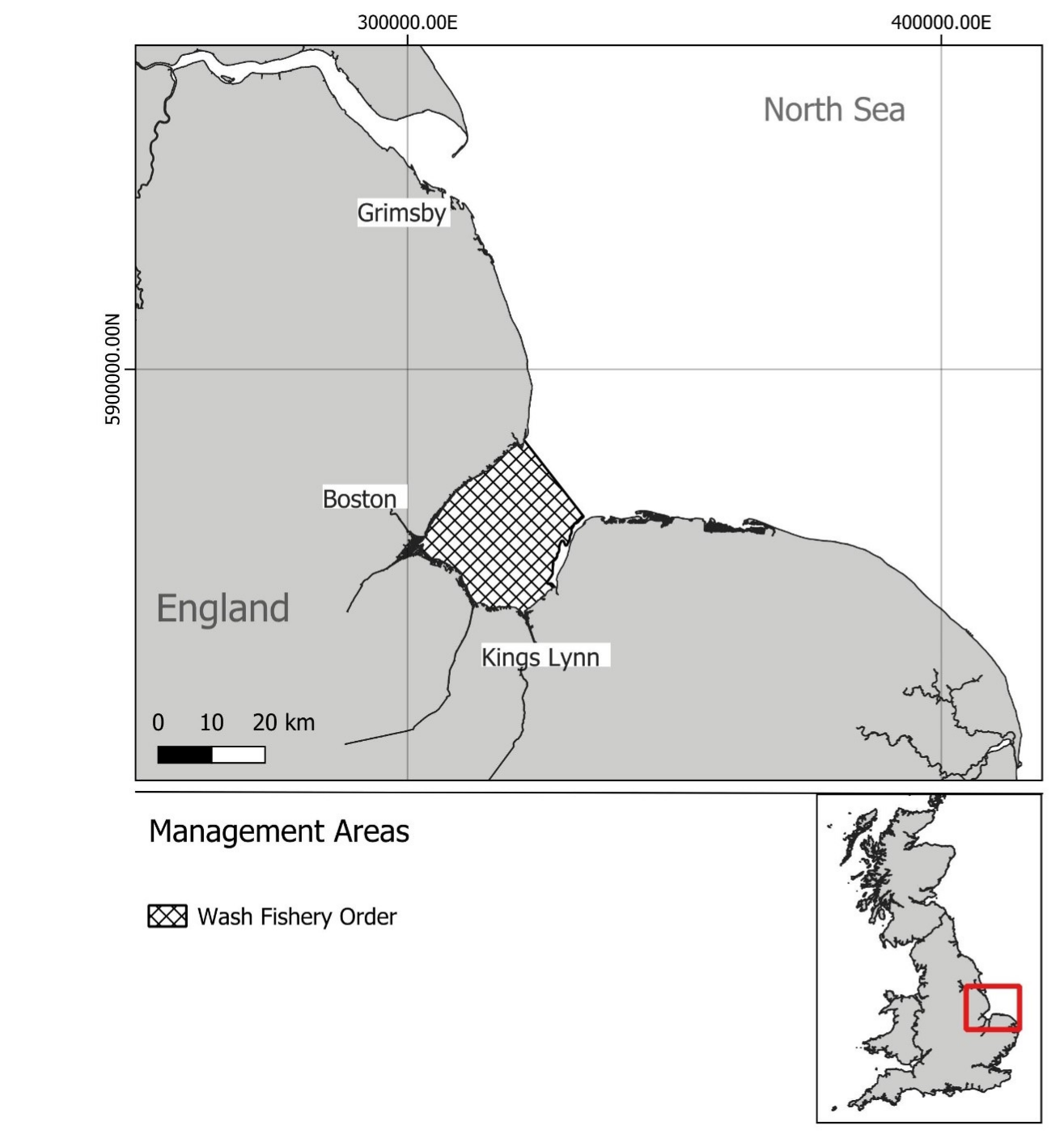
Figure 2: area of cockle management in the Eastern IFCA district (contains OS data © Crown copyright and database right 2024. Office for National Statistics licensed under the Open Government Licence)
Figure 2 is a map of the east coast of England. The ports of Grimsby, Boston, and King’s Lynn are marked. The map shows the area of the Wash Fishery Order within the Eastern IFCA district, filling most of the Wash up to Gibraltar Point and Gore Point.
Cockle fisheries in the Eastern IFCA (EIFCA) district are found within the Wash and were managed under a hybrid order, the Wash Fishery Order 1992 (WFO), which expired in January 2023. Transitional arrangements are in place through a legacy byelaw which enables continuation of fishing associated with existing active licences and lay holders. The legacy byelaw will continue to be in place while regulations to replace the WFO are developed.
The transitional arrangements include a temporary closure of a restricted area under Byelaw 8: Temporary Closure of Shellfish Fisheries. A replacement regulation is in the final stages of development to ensure fishery continuity.
There are a limited number of lays leased (leases for the purposes of private shellfish cultivation). These are allocated on the basis that there is no natural settlement of shellfish in these areas, to prevent impact on the public fishery. The WFO manages fishing for mussels as well as cockles. Mussels are not included in the scope of this FMP. A WFO licence is required to fish for cockles in the Wash, and licences are issued to individuals with an entitlement. There are currently 61 entitlements.
Harvesting methods in the Wash have also evolved over time. The fishery is predominantly a hand-gathered fishery. However, fishers now use a technique known as ‘prop-washing’ to facilitate harvesting. This technique uses a vessel’s propeller to manoeuvre it in circles, clearing the sand underneath it and pushing cockles into heaps to be harvested by hand at low water. This method has developed as an alternative to historic methods due to seabed disturbance issues. Vessel sizes range from under 10m to over 14m, but each is subject to the same daily quota. Vessels over 14m can only be used subject to derogation based on historic use.
Average annual landings for the WFO between 2016 and 2022 were 4,582 tonnes with an approximate annual value of £4.1 million. A declining trend in landings since 2016 has stabilised and landings between 2019 and 2022 range from 3,661 tonnes to 3,421 tonnes.
An annual TAC is determined based on the rule of thirds, with minimum threshold values applied relating to total cockle stock and spawning stock biomass. Minimum shellfish biomass thresholds are also applied to support the overwintering bird populations. The overall abundance and spatial distribution of the stock, annual recruitment and fishery removals are carefully monitored. The fishery is subject to an annual MPA assessment.
Natural mortalities among the Wash cockle stocks are frequently high. Over-crowding in high-density patches can cause high levels of localised mortality known as ‘ridging out’. Since 2008, the cockles in the Wash have also suffered high levels of ‘atypical mortality’, a phenomenon that causes widespread die-offs among cockles that have attained spawning size . Frequently, the combination of ridging out and atypical mortality results in natural mortalities that greatly exceed the mortality associated with fishing activities. Further evidence into the potential causes of the atypical mortality observed within the Wash is currently underway.
Supporting evidence
The Wash cockle fishery was most recently considered at the 52nd EIFCA meeting in June 2023.
You can view supporting documents from the 52nd Eastern IFCA meeting including the most recent stock survey report, as well as stock assessments published by Eastern IFCA.]
North Western IFCA
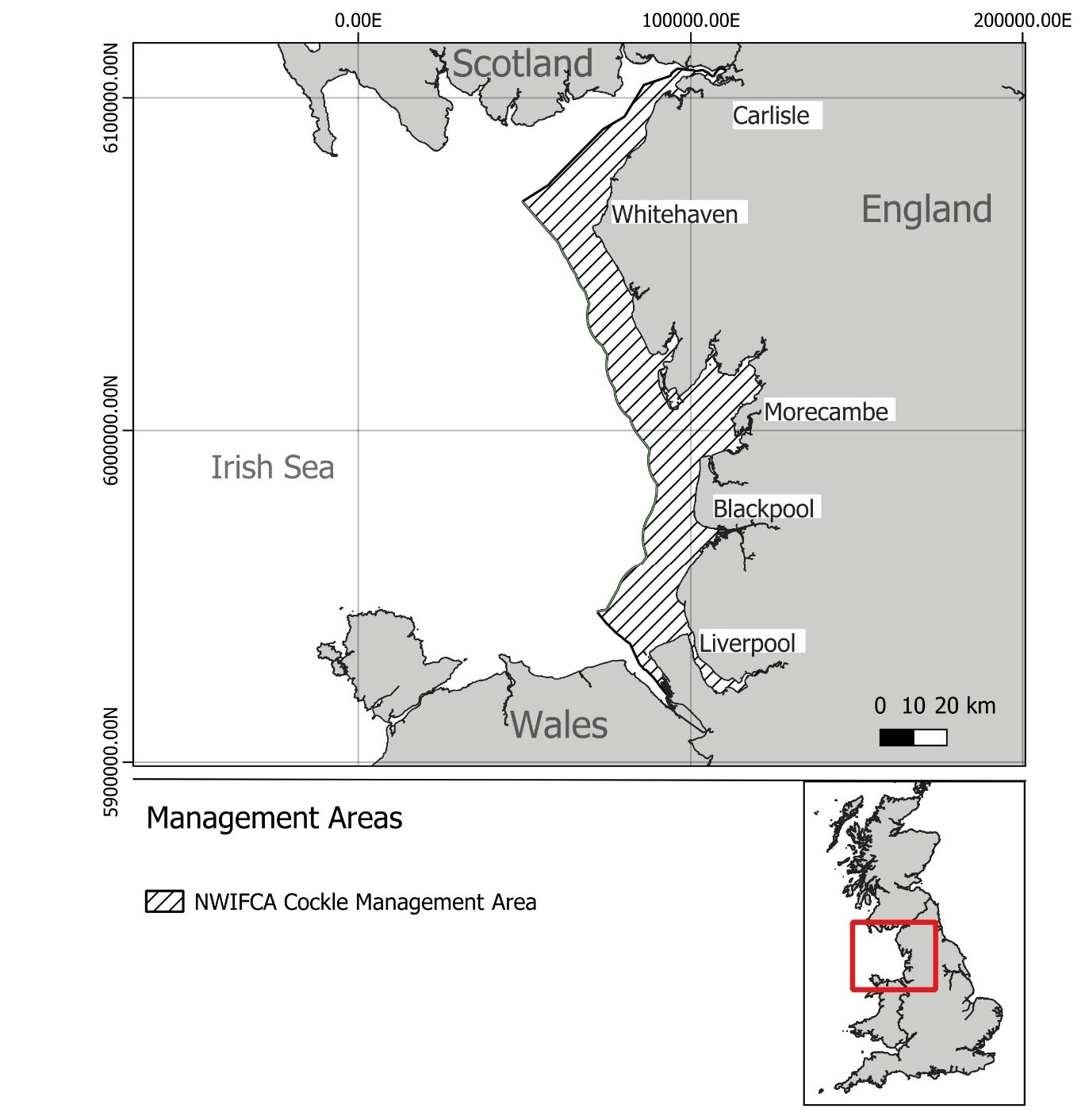
Figure 3: area of cockle management in the North Western IFCA district (contains OS data © Crown copyright and database right 2024. Office for National Statistics licensed under the Open Government Licence)
Figure 3 is a map of the north-west coast of England. The ports of Whitehaven, Carlisle, Morecambe, Blackpool and Liverpool are marked. The map shows the cockle management area in the North Western IFCA (NWIFCA) district, running along the coast from Solway Coast north of Carlisle to the River Dee south of Liverpool.
The cockle fishery in the NWIFCA district is entirely a hand-gathered fishery that does not use vessels. Cockles and mussels are managed through a flexible permit byelaw, Byelaw 3 Cockle and Mussel Hand Fishing Permit 2019. Mussels are not included in the scope of this FMP. Under this byelaw, a maximum of 150 permits are issued annually. An MCRS is enforced through the use of a square gauge having with an opening measuring 20mm.
Landings data are collected by NWIFCA for the fisheries of:
-
Morecambe Bay
-
Wirral
-
Ribble
-
Solway Firth
Independent annual fishery stock assessment surveys are undertaken at a higher resolution, at individual bed level, to inform management decisions. Morecambe Bay is the largest fishery area by landings, although all fishery areas report zero landing years between 2016 and 2022, due to fishery closures.
The fishery in Morecambe Bay was closed during 2016 and 2017. Between 2018 and 2022, landings have been highly variable, ranging from 1,727 tonnes to 112 tonnes. Over the same reference period, landings for the Wirral only occurred in 2 years, 866 tonnes in 2018 and 174 tonnes in 2020. Likewise, in the Ribble, landings of 124 tonnes were reported in 2019 and 373 tonnes in 2022. No cockles were taken from the Solway Firth fishery between 2016 and 2022.
The overall abundance and spatial distribution of the stock, annual recruitment and fishery removals are carefully monitored. Decisions to open cockle beds are determined by the NWIFCA Technical Science and Byelaw Committee, with input from local industry members.
A flexible byelaw has been in place since September 2022 to manage cockle harvesting. It includes gear restrictions and a general closed season over the summer spawning period. The byelaw also allows the IFCA to:
-
use spatial and temporal restrictions
-
implement total catches limits
While the IFCA has adopted a set of principles for sustainable fisheries adopted from those developed by the MSC, there is no published management strategy or plan which outlines how the cockle fishery will be managed. There are no reference points or threshold values linked to harvest control rules and cockle fisheries have not historically been subject to a TAC. It is noted that the current 2023 to 2024 Southport (Ribble) cockle fishery is subject to a TAC based on the rule of thirds.
The fishery in Morecambe Bay is subject to an annual MPA assessment. The IFCA has worked closely with regional NE to ensure fishery assessments address wider ecological considerations. However, significant evidence gaps surrounding the food requirements for bivalve-eating birds have resulted in precautionary approaches being implemented, including keeping beds closed. There is also uncertainty surrounding the sources of spawning stocks within the district, with consistently low biomass levels of spat recorded compared to recruit stocks. These evidence needs require further investigation.
Supporting evidence
See technical, science and byelaws sub-committee meeting - IFCA North West
Dee Estuary Cockle Fishery Order 2008 (Several Order)
The Dee Estuary cockle fishery is a hand-gathered fishery located in the river Dee estuary between Flintshire in north-east Wales and the Wirral Peninsula in north-west England. Within the estuary there are currently 9 cockle beds:
-
West Kirby
-
Thurstaston
-
Mostyn
-
Mostyn Deep
-
Talacre
-
Caldy
-
No.3 Buoy
-
Salisbury Middle
-
Salisbury
These beds vary spatially according to spatfall, exploitation, sediment changes and other external factors. As such, it is possible their size and the extent of the fishery may change in the future.
The management of the cockle fishery in the Dee Estuary is carried out according to provisions laid out in the Dee Estuary Cockle Fishery Order (2008).
Management responsibility was originally shared between the Environment Agency Wales and the Environment Agency England (EA). On 1 April 2013, Natural Resources Wales (NRW) was formed from a merger of:
-
Environment Agency Wales, currently known as Natural Resources Wales
-
the Forestry Commission Wales, currently known as Natural Resources Wales
Since 2013, NRW and EA have retained joint responsibility, as 2 separate grantees, for the management of the Dee cockle fishery, in accordance with the Dee Estuary Cockle Fishery Order 2008 (‘the Dee Order’). NRW became the grantee in relation to that area of the cockle fishery located in Wales, with EA the grantee for that area of the cockle fishery located in England.
As joint grantees under the Dee Order, NRW and EA have powers to regulate the fishery until 30 June 2028. To ensure continuity of the management and regulation across the fishery, NRW and EA have agreed NRW take the lead on the day-to-day management and regulation for the whole of the cockle fishery in the River Dee.
The part of the fishery that is in English waters is found within the jurisdictional boundaries of the North Western Inshore Fisheries Conservation Authority (NWIFCA). Natural Resources Wales, Welsh Government and NWIFCA will work together to agree a management approach for the Dee Estuary cockle fishery after the Dee Order expires in 2028 .
Southern IFCA
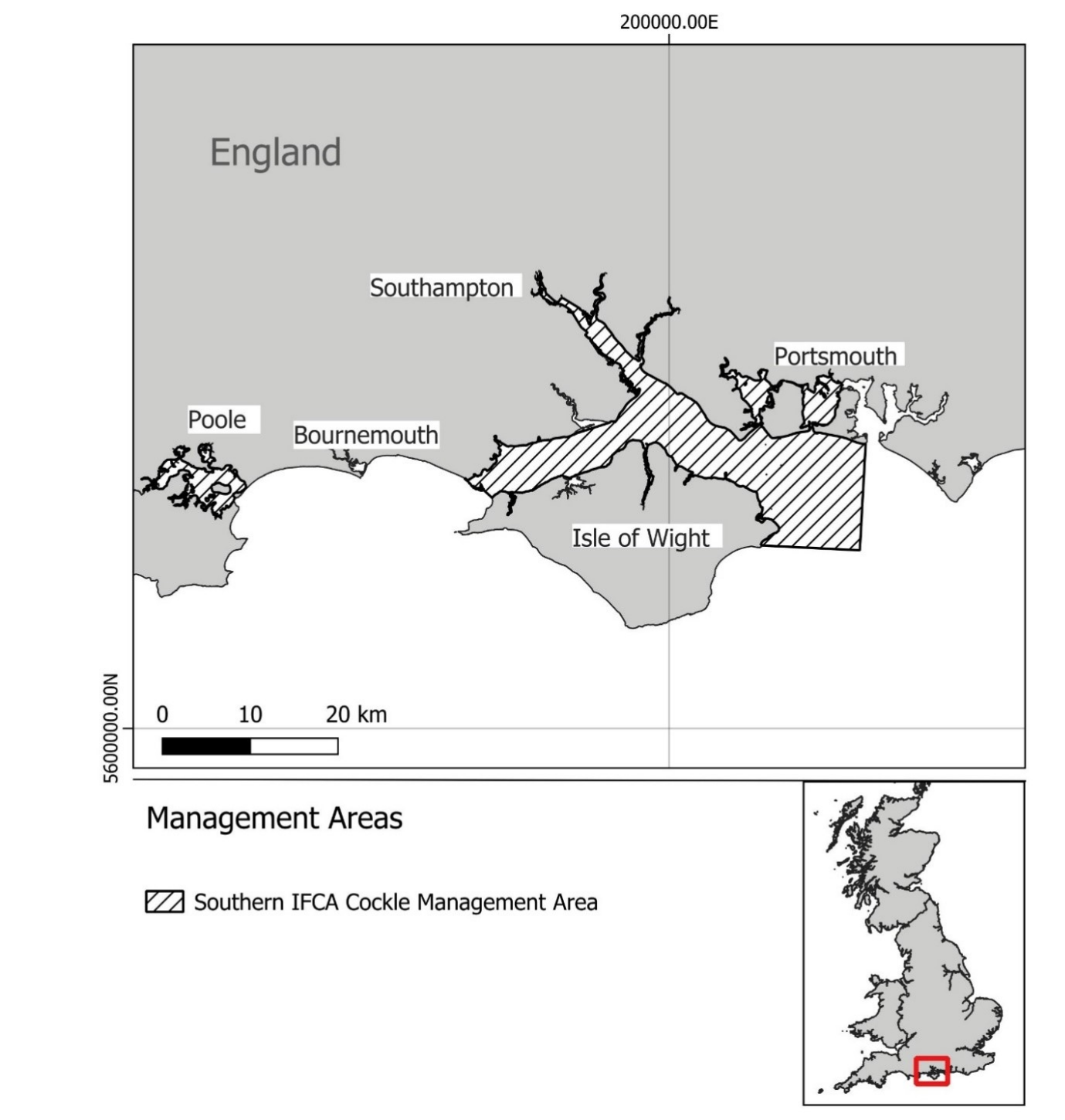
Figure 4: area of cockle management in the Southern IFCA district (contains OS data © Crown copyright and database right 2024. Office for National Statistics licensed under the Open Government Licence)
Figure 4 is a map of the central portion of the south coast of England. The ports of Poole, Bournemouth, Southampton and Portsmouth, as well as the Isle of Wight, are marked. The map shows the cockle management area in the Southern IFCA district, covering:
-
Pool Harbour
-
the Solent, from Hurst Point in the west to the eastern side of Hayling Island
The main fishing area for cockles within the Southern IFCA (SIFCA) district is located within Poole Harbour. The fishery is managed under the Poole Harbour Dredge Byelaw, with 45 permits issued annually. All vessels are small, open vessels under 9m in length using pump-scoop dredges.
Average annual landings for the Poole Harbour permit fishery were 35 tonnes, ranging from 11 tonnes to 80 tonnes over the reference period 2016 to 2022 mentioned above. It should be noted that Manila clams represent a far larger proportion by weight within the Poole Harbour fishery, averaging over 300 tonnes per year. Manila clams are not included in the scope of this FMP.
The Poole Harbour fishery has been surveyed annually since 2016. Both size (length) and CPUE data is collected for cockles and Manila clams using a pump-scoop dredge consistent with normal fishing practices in the area. CPUE is calculated as weight of shellfish (kg) per metre of dredge per hour and compared to previous years. There is an ambition to develop empirical reference points based on the developing timeseries of data within this fishery.
Aquaculture is also undertaken within Poole Harbour and is managed under a several order, the Poole Harbour Fishery Order 2015 (‘the Poole Order’), which will expire in 2035. Aquaculture within the harbour is currently focused on Pacific oysters and mussels. Native oysters, clam species and cockles have been farmed and cultivated in the past. The Poole Order provides flexibility in the management of potential future aquaculture of shellfish species within the harbour.
General fishing for cockles in the SIFCA district is controlled through the Fishing for Cockles Byelaw. This byelaw includes:
-
a closed season
-
harvesting method and gear restrictions for dredge fishing or hand working
-
an MCRS using a square gauge with an opening measuring 23.8mm
Bivalve fisheries in the Solent and adjacent waters are managed through a suite of byelaws including the Solent Dredge Permit Byelaw. Target species including cockles have varied throughout the years and the fleet has adapted to new and emerging opportunities based on the available fisheries. The modern fishery primarily targets the Manila clam due to its abundance and high sale price using a box dredge.
Fishery-dependent stock surveys have been undertaken since 2017 on chartered industry vessels using a box dredge consistent with normal fishing practices in the area. Analysis has focused on the Manila clam as the primary focus of the fishery, but cockles may be targeted in the future. No cockle landings have been reported since the introduction of the permit byelaw in late 2021.
Supporting evidence
See details of the Poole Harbour clam and cockle fishery, including fishery monitoring and stock assessments.
The Poole Harbour clam and cockle fishery is currently certified by the Marine Stewardship Council (MSC). See details of the Poole Harbour clam and cockle fishery’s MSC certification.
See details of the Solent dredge fishery, including fishery monitoring and stock assessments.
Wider policy considerations
Shellfish health sampling requirements
There is a current regulatory requirement to monitor classified shellfish production areas to check for:
-
microbiological contamination
-
marine biotoxins
-
harmful algae
-
chemical contaminants
In England, the Food Standards Agency (FSA) is the central competent authority (CCA) with overall responsibility for the implementation and delivery of the shellfish official control monitoring programmes.
The Centre for Environment, Fisheries and Aquaculture Science (Cefas) is the contracted laboratory with responsibility for:
-
the coordination of the toxin and chemical contaminants monitoring programme
-
the delivery of all associated shellfish and water testing (where relevant)
Local enforcement authorities (LEAs), the competent authorities (CAs), are responsible for collecting shellfish (and water) samples from the designated representative monitoring points in harvesting areas.
For details of the shellfish classification and microbiological monitoring programme, visit:
-
Cefas’s page on shellfish classification and microbiological monitoring programme
-
the FSA’s page on shellfish classification and microbiological monitoring programme
Private fisheries
These are areas of the sea owned by private individuals with rights to the resources within them. Such areas are more difficult for public authorities to manage.
Cockles are harvested from wild shellfisheries, where populations occur naturally. Private shellfisheries established to produce commercially valuable species such as oysters, mussels and clams also contain wild populations of cockles within their grounds. Such cockle stocks may be harvested and landed at the same time as farmed shellfish.
Such stocks contribute to the wider stock abundance within inshore waters and beyond. It’s important that the government understands the health of wild cockle populations within private fisheries to inform wider management.
Information on private cockle fisheries is currently limited. There is a need to understand better how many private fisheries exist as well as their impact on stock levels and stock sustainability.
FMP policies
This section sets out 3 overarching policy goals and 5 actions for the first iteration of the FMP under an overarching vision for the English cockle fishery. Each action identifies potential activities that will help deliver it, and how it links to the objectives in the Act. The rationale shows the thinking and policy drivers behind the proposed activities.
The policy goals, actions and activities were drafted by the AIFCA and the cockle FMP EG. They were further developed through consultation with a wide range of stakeholders. The proposed approach aims to:
-
help maintain stock levels so that they continue to be harvested sustainably
-
create a framework for regulators to consider management of emerging cockle fisheries
Responsibility for delivery of these policy goals will sit across industry groups, fisheries authorities, and government. They may need to be prioritised to support the phased approach of the FMP towards supporting the implementation of the JFS and the Act.
Each action has proposed timeframes that indicate an initial estimate of the time required to deliver the proposed activities. Timeframes for the actions are:
-
short term – within 1 to 2 years of publication of the plan
-
medium term – in the next 3 to 5 years
-
long term – more than 5 years (to reflect the more complex work required to develop them)
Vision
The long-term vision for cockles is to ensure fisheries in English waters are managed to achieve environmental, social and economic sustainability for the benefit of coastal communities and wider society.
Policy goals
-
Maintain stocks at levels that are environmentally sustainable in the long term and are not overexploited by continuing with the current management approach.
-
Improve the evidence base to ensure identified fisheries are managed with adaptive management cycles, using an ecosystem-based approach.
-
Deliver a framework to support the cockle industry, recognising their contribution to coastal communities and the skilled employment they provide.
Actions to achieve the policy goals
Action 1: develop a framework to support the role of the FMP in realising sustainable cockle fisheries in English waters
The above action will support policy goals 1 and 3.
Likely timeframe and current feasibility
Long term
Rationale
The evolution of management, harvesting methods and market forces has created 4 distinct and locally specific cockle fisheries. These fisheries are not distributed over wide areas and do not cross fisheries regulator boundaries.
Stock assessments have been regularly undertaken and feed into annual adaptive management measures, which run under byelaw or regulating order legislation that has been approved by government. We are proposing to develop a national survey and stock assessment framework to provide guidance from current IFCA cockle stock assessment methodologies to those regulators whose cockle fisheries are emerging . The framework will link together the local work of the IFCAs with national priorities, namely the need to deal effectively with emerging inshore and offshore cockle and co-located bivalve fisheries.
In a national context, IFCA stock assessment work can be used as the blueprint for a national cockle fishery framework. This will give regulators an understanding of a possible process to follow when new cockle and other bivalve fisheries could potentially emerge.
We recognise the need to link local management to a national, flexible, strategic approach that can address other issues common to all cockle fisheries in English waters. Such issues may include:
-
emerging, private or unregulated fisheries
-
unfished cockle beds
-
shellfish certification
-
water quality issues
Potential activities
Fisheries authorities should:
-
consider developing adaptive management cycles using an ecosystem-based approach for all publicly managed and commercially viable cockle beds
-
demonstrate (in review or renewal of regulating mechanisms) that:
-
the best available scientific evidence has been used
-
governance structures allow for, and encourage, stakeholder participation in decision-making
-
all proposed measures are subject to public consultation
Evidence needs
There is a need to:
-
investigate discrepancies between national and regional data collection programmes
-
understand how a national survey and assessment framework could incorporate emerging fisheries when identified
-
continue to develop knowledge and evidence relating to climate change impacts to cockle fisheries to inform an ecosystem-based approach to management
Relevant Fisheries Act 2020 objectives
The relevant Fisheries Act objectives are the:
-
sustainability objective
-
ecosystem objective
-
scientific evidence objective
Indicators
The appropriate indicators are:
-
agreed stock boundaries (or functional units), where appropriate
-
a national survey and stock assessment framework is developed
Action 2: consider developing national monitoring and reporting mechanisms to detect inshore and offshore emerging fisheries if they exist
The above action will support policy goals 1 and 2.
Likely timeframe and current feasibility
Long term
Rationale
Commercially viable beds require stock sampling at appropriate spatial and temporal scales to ensure harvesting does not adversely affect their continued productivity.
There may be unidentified beds that fall outside existing management measures and sampling regimes. The risk is that any unidentified beds may be subject to unsustainable harvest levels should commercial harvesting begin.
There are data issues between national and local reporting systems that prevent us from strategically identifying emerging fisheries.
Potential activities
Fisheries authorities should:
-
consider reviewing data collection processes, to ensure accurate representation of commercial cockle landings in English waters
-
consider assessing risks of unregulated fisheries
-
consider a national prohibition on commercial capture of cockles outside existing management structures
Evidence needs
There is a need to:
-
identify the discrepancies between current regional and national data collection mechanisms, to ensure fisheries authorities use best available evidence in management decisions
-
identify emerging cockle fisheries at appropriate spatial resolutions
-
understand the number and location of private fisheries in English waters and their methods of management used for cockles
Relevant Fisheries Act 2020 objectives
The relevant Fisheries Act objectives are the:
-
sustainability objective
-
precautionary objective
-
scientific evidence objective
-
equal access objective
Indicators
The appropriate indicators are:
-
a register of private fisheries in English waters is created
-
guidelines for regulators when considering emerging commercial inshore and offshore fisheries are develope d
Action 3: review the data collection framework and evidence base relating to interactions between cockle fisheries and designated bird prey requirements
The above action will support policy goal 2.
Likely timeframe and current feasibility
Long term
Rationale
Current fisheries management must take into account impacts on designated features of MPAs. Regional English cockle fisheries have a proven track record of incorporating these considerations into management decisions.
To fully develop an adaptive management approach, the data collection framework assessing annual variation of designated bird requirements should be further developed. Currently developing natural capital approaches could usefully provide enhanced integration of identified ecological requirements by providing regulators with improved data.
Potential activities
Fisheries authorities should:
-
consider further developing mechanisms to provide regulators with accurate and timely estimates of bird food prey requirements
-
consider investigating the evidence of designated birds’ reliance on cockles as a primary food source
-
consider investigating how natural capital approaches can be further integrated into cockle fisheries management decision-making processes
-
consider investigating how current reporting mechanisms can better reflect societal benefits achieved through appropriate management of ecosystem services
Evidence needs
There is a need to:
-
better understand the data collection framework informing designated bird abundance estimates
-
review the available evidence on designated birds’ reliance on cockles as a primary food source
Relevant Fisheries Act 2020 objectives
The relevant Fisheries Act objectives are the:
-
sustainability objective
-
precautionary objective
-
ecosystem objective
-
scientific evidence objective
-
national benefit objective
-
climate change objective
Indicators
The appropriate indicators are:
-
produce a review of the evidence base used for the bird food model supporting the main cockle fisheries
-
following on from the above, make recommendations on the mechanism used to provide regulators with advice
Action 4: assess the data collection framework for social and economic data used to inform management decisions
The above action will support policy goals 1, 2 and 3.
Likely timeframe and current feasibility
Long term
Rationale
Cockles export trade data is currently aggregated with clams and other arc shells. Disaggregated trade data is needed to better understand trends in the trade balance of cockles. Employment data for the distinct dredge fisheries for cockles are currently aggregated with other similar gear types, such as scallop dredges. Disaggregated employment data will better help inform management decisions.
Landings, trade and employment data for hand-gathered fisheries is not representative of the major commercial fisheries. Industry has indicated limited market opportunities resulting from the current shellfish certification process. A flexible, adaptive approach is required to support industry development.
Potential activities
Fisheries authorities should:
-
consider working with regulators to understand the connectivity between regional and national data collection programmes, and to address identified data gaps and discrepancies such as landings and registered buyers and sellers’ requirements
-
consider exploring the benefit of disaggregating socioeconomic data to better inform management decisions
-
consider exploring the use of alternative data sources to understand the potential of streamlining the shellfish certification process
-
consider investigating alternative solutions to alleviate economic burdens on businesses associated with shellfish health sampling and export certification
Evidence needs
There is a need to:
-
understand the balance of trade, both imported and exported, in cockles to identify market opportunities and limitations
-
understand employment numbers both within cockle fisheries but also associated businesses
-
ensure that data related to hand-gathered commercial fisheries is adequately captured
Relevant Fisheries Act 2020 objectives
The relevant Fisheries Act objectives are the:
-
sustainability objective
-
national benefit objective
Indicators
The appropriate indicators are:
-
a report is produced that investigates the economic burdens on businesses associated with shellfish health sampling and export certification
-
guidelines are developed for regulators when considering how emerging commercial inshore and offshore fisheries should be managed
Action 5: consider establishing a national cockle FMP forum
The above action will support policy goals 1,2 and 3.
Likely timeframe and current feasibility
Short to medium term
Rationale
The establishment of a national cockle forum will help share best practice and identify common issues that have an impact on all English cockle fisheries.
Due to the geographic scope and inshore nature of the commercially viable and publicly managed fisheries, the regional IFCAs operate at an appropriate scale. This will allow them to manage the sustainable harvest of cockles while considering wider ecological and socio-economic considerations.
Wider considerations that impact all cockle fisheries, such as shellfish water classification testing and fishery interactions with other bivalve fisheries, could be usefully considered within a national forum to further industry participation. The national forum could also consider possible interactions between cockle fisheries and maritime heritage assets, such as underwater archaeological structures and wrecks.
Potential activities
Fisheries authorities should:
-
establish a national forum
-
understand how the cockle fishery interacts with the management of other bivalve mollusc fisheries
Evidence needs
There is a need to:
-
understand potential alternative approaches of using existing shellfish classification data to manage the harvesting of cockles
-
understand how cockle fishery management may interact with the management of other species, particularly other bivalve species
Relevant Fisheries Act 2020 objectives
The relevant Fisheries Act objectives are the:
-
sustainability objective
-
national benefit objective
Management strategy
The cockle FMP sets a pathway for our vision of long-term sustainable fishery management. The cockle actions and respective activities aim to support the development of a framework for those management aspects currently not addressed, for instance, emerging fisheries.
IFCAs have management strategies for cockle fisheries in English inshore waters. These strategies are based on the needs of local stocks, ensure compliance with environmental regulations and balance the needs of local fishing fleets and communities. Existing harvest strategies based on the rule of thirds or other approaches are used to ensure that fishing mortality is managed at a level that enables long-term sustainable exploitation .
Recognising the need for good management, the future fishery management strategy for cockles needs to be adaptive and build on good practice from existing models of current legislation and management approaches.
Cockle stocks are understood to vary geographically, largely due to differences in abundance. Any future management interventions of cockle fisheries in English waters should consider the specific needs of local fisheries to ensure that the effects of management decisions are appropriate. While the FMP provides a national-level strategic management plan, its implementation will require tailored approaches to reflect the local needs of cockle stocks and local fleets.
Environmental considerations
All FMPs are subject to legal obligations for environmental protection arising from the:
-
Conservation of Offshore Marine Habitats and Species Regulations 2017
-
Environmental Assessment of Plans and Programmes Regulations 2004 (the SEA regulations)
-
biodiversity duty of the Environment Act 2021
-
Environmental Principles policy statement for the Environment Act 2021
The cockle FMP will contribute to the commitments to improve our marine ecosystem set out in the Environmental Improvement Plan 2025 and the UK Marine Strategy.
Defra commissioned advice from the SNCBs, Joint Nature Conservation Committee (JNCC) and NE, on:
-
the wider environmental risks that need to be considered when implementing the cockle FMP
-
developing future management interventions for these fisheries
The advice provides information on the risks arising from the fisheries and fishing gears incorporated within the cockle FMP to the designated features of MPAs in English waters and to the UK Marine strategy (UKMS) descriptors.
The Environmental Report provides the findings of the Strategic Environmental Assessment, setting out how environmental risks have been considered in line with the Environmental Assessment of Plans and Programmes Regulations 2004.
Risks relating to the designated features of English MPAs
The cockle fisheries pose the following main environmental risks of cockle fishing activity inside MPA boundaries:
-
abrasion or disturbance of the substrate on the surface of the seabed
-
targeted or bycatch of prey of designated features
Assessment of the impact of fishing activity occurring within MPAs in English waters has or will be carried out by the IFCAs or MMO. Therefore, appropriate environmental management should either be in place or introduced soon to ensure any fishing within MPAs is compatible with the MPAs’ conservation objectives. Current management measures already in place are detailed on the MMO’s website and relevant IFCAs’ websites.
Therefore, if existing assessments and associated management pathways mitigate risks arising from cockle fishing activity within English MPA boundaries, no additional action is suggested for the FMP within MPA site boundaries. However, in this iteration of the cockle FMP we have identified certain evidence needs to further facilitate adaptive management approaches.
Environmental risks outside MPA boundaries
The cockle fisheries pose the following main environmental risks of cockle fishing activity outside MPA boundaries:
-
risk of bycatch of mobile species that are designated features of MPAs
-
risk to the designated features of MPAs through the removal of a prey species
These risks on the designated features of MPAs arise from fishing activity outside MPA site boundaries that can affect mobile and prey species of MPAs. Both risks are currently considered low in the cockle fishery, based on available evidence.
Risks to UK Marine Strategy descriptors
The UKMS requires management action to be taken to achieve or maintain good environmental status (GES). The Act enables regulators to deliver on this ambition through the ecosystem objective, which states that fish and aquaculture activities should be managed using an ecosystem-based approach, which is in part defined in the Act by the achievement of GES. Equally, the recently published JFS lays out the ambition across UK administrations to take action to achieve or maintain GES in all UK waters.
Previous work by NE investigated the impact of the pressures associated with fishing activities across all 11 descriptors of GES as set out in the UKMS. It highlighted that risks arising from fisheries to 5 of the 11 UKMS descriptors are of most immediate concern:
-
D1 (Biodiversity)
-
D3 (Commercial fish and shellfish)
-
D4 (Foodwebs)
-
D6 (Seafloor integrity)
-
D10 (Marine litter)
The main impacts arising from the cockle FMP have been identified as low risk to the following UKMS descriptors:
-
D1 (Biodiversity)
-
D4 (Foodwebs)
-
D6 (Seafloor integrity)
-
D10 (Marine litter)
Climate change, mitigation and adaptation
Changing climatic conditions have the potential to affect the fishing industry and the wider environment. The anthropogenic emissions of CO2 associated with fossil fuel usage drives climate change, leading to increased sea surface temperature, ocean acidification, and fluctuations within large-scale weather and climate patterns that can impact ecological baselines.
Under the Act climate objective, and net zero ambitions, the UK government is committed to reducing CO2 emissions within the fishing fleet, and to improving resilience to climate-driven impacts across the sector. By mitigating and reducing the impacts from changing climatic conditions, this will contribute to climate change, ecosystem and national benefit objectives outlined in the Act.
Climate impacts in the cockle fishery are not well understood. Further research on the impact of climate change on the cockle fisheries under this FMP is needed. However, it is not currently within scope of this iteration of the FMP to deliver mitigation strategies against climate impacts but may be within its remit to support fisheries through national transition to low-carbon fishing and related policies. The cockle FMP, however, contains actions to develop an appropriate, adaptive and resilient management framework for emerging fisheries using an ecosystem-based approach to support all publicly managed and commercially viable cockle beds.
This FMP should be reviewed and adapted as research into climate change on cockle fisheries and on the wider marine ecosystem develop together with new methods to address challenges from climate change, as they become available.
Implementation, monitoring and review
Implementation
The cockle FMP sets out a vision and goals for the cockle fishery, together with the policies and actions necessary to achieve these goals.
The FMP proposes new policies which will be tested through the consultation process, and they may need to be updated later following views from stakeholders.
Specific timings on the implementation of the proposed policies and actions will depend on the costs and benefits of the proposals and the length of time required for implementation.
Subsequent implementation roadmaps will be subject to regular monitoring and review to ensure progress. The cockle FMP is subject to a statutory review process at least 6 years after publication, at which point it will be necessary to show evidence of what has been achieved through the implementation of those policies and actions. In line with the strategic environmental assessment developed alongside this FMP, this review process will build in monitoring for potential environmental effects, to help establish whether any changes are needed in the management of the respective fisheries.
Monitoring indicators
This is the first version of the cockle FMP. It sets out the first steps in a long-term vision necessary for sustainable management of this fishery. FMPs will take time to develop and implement. They are intended to allow an adaptive approach and will be reviewed and improved over time as we collect more evidence and collaborate with the fishing sector and wider interests on the sustainable management of these fisheries.
The cockle FMP is subject to a statutory review process at a maximum of 6 years after publication.
Delivery of the policies and actions for the cockle FMP will be monitored and assessed against a set of indicators to ensure the overarching outcomes and actions are effective in achieving the FMP goals and the requirements of the Act.
The actions within the cockle FMP have their own indicators but the overall indicator that will determine the effectiveness of this plan is maintaining fishing pressure within sustainable levels by reference to the stock assessments carried out by the relevant IFCAs.
In this first iteration of the plan, we are also proposing that the ‘establishment of the national cockle forum’ is included as an initial, short to medium-term indicator. This indicator has been selected for its relative ease of implementation and measurement.
We envisage that the forum, when established, will be the medium through which various FMP actions and activities are explored further. The forum, we envisage, will need to develop a programme of work in which the actions and their respective activities may need to be prioritised.
Review of the cockle FMP
The cockle FMP must be reviewed when appropriate, and at least every 6 years. This formal review will assess how the FMP has performed in terms of delivering against the objectives of the Act.
The findings of these reviews will inform the development of subsequent iterations of the cockle FMP. Furthermore, the FMP will be assessed in the round as part of the process to report on the contribution of FMPs to the delivery of the JFS. The Act requires fisheries policy authorities to:
-
report on the JFS every 3 years
-
review the JFS whenever deemed appropriate, or at least within 6 years of publication
The Act requires that the report on every 3-year period should also report on the extent to which the policies contained in a relevant fisheries management plan have been implemented and have affected the levels of stocks of sea fish.