Clean flexibility roadmap: July 2026 update (accessible webpage)
Updated 13 July 2026

© Crown copyright 2026
This publication is licensed under the terms of the Open Government Licence v3.0 except where otherwise stated. To view this licence, visit nationalarchives.gov.uk/doc/open-government-licence/version/3 or write to the Information Policy Team, The National Archives, Kew, London TW9 4DU, or email: psi@nationalarchives.gov.uk.
Where we have identified any third party copyright information you will need to obtain permission from the copyright holders concerned.
This publication is available at https://www.gov.uk/government/publications/clean-flexibility-roadmap/clean-flexibility-roadmap-july-2026-update-accessible-webpage
Executive summary
Context: the 2025 Clean Flexibility Roadmap
In July 2025, government set out its detailed vision for clean flexibility in the Clean Flexibility Roadmap:[footnote 1] powering Great Britain through the transformation to an efficient, secure, and decarbonised electricity system with home-grown, clean flexibility at its core. The Roadmap built on the Clean Power 2030 Action Plan for the whole power system and is fundamental to government’s Clean Energy Superpower Mission.
Based on NESO scenario modelling, we could see an eight-fold increase in clean flexibility capacity from 2024 to 2050, which will empower consumers with greater control over their energy use and unlock tangible savings without disrupting their everyday lives. Businesses and households alike will benefit from a more predictable and affordable energy landscape. The July 2025 Clean Flexibility Roadmap, jointly published by DESNZ, Ofgem and NESO, is a comprehensive and actionable plan for how to achieve the flexibility required to deliver clean power by 2030 and net zero by 2050.
The Roadmap’s scope includes short and long duration flexibility technologies, as well as broader policies to accelerate the growth of flexibility capacity, and contains actions for DESNZ, other government departments, Ofgem, NESO and industry. Crucially, the Roadmap established a governance framework to ensure that all parties deliver on their actions and take on new actions where needed. We committed to ensuring that the publication marked the beginning of the journey to clean energy flexibility, not the end.
Progress to date
The government appointed Cathy McClay as Flexibility Commissioner in December 2025 to accelerate clean flexibility delivery across boundaries. Cathy has chaired quarterly industry meetings to update on Roadmap commitments and gather feedback, and a consumer-led flexibility advisory group, supported by ADE, to canvas new ideas. To meet our commitments in the 2025 Roadmap, DESNZ, Ofgem and NESO are also running a summer 2026 Roadmap Forum in July 2026 to adopt and take forward together the new approaches, progress indicators and commitments outlined in this document.
Since July 2025, the country has made huge steps forwards towards the government’s flexibility vision. Government published the Warm Homes Plan,[footnote 2] which will deliver £15bn of public investment in heat pumps, solar panels, batteries and more, to upgrade up to 5m homes and lift up to a million families out of fuel poverty by 2030. The government also announced an innovative trial to offer discounted power during constrained periods so that more of the extra electricity can be used rather than wasted.[footnote 3] There has also continued to be significant growth in grid-scale battery deployment, with the UK continuing to have the greatest capacity in Europe. UK grid-scale battery storage power capacity reached 7.5GW in 2025, with a record new 2.3GW energised in 2025 alone.[footnote 4]
In March 2026 the government also published with Ofgem an Energy Digitalisation Framework[footnote 5] to harness and coordinate the crucial digitalisation programmes that serve as a key enabler for clean flexibility. Then in June 2026 UKRI invited tenders for up to £25m of initial funding for innovation in consumer-led flexibility, including from digitalisation and AI, from its R&D Clean Energy Superpower Mission Accelerator Programme.[footnote 6]
By mid-June 2026, Ofgem and Elexon had overseen the migration of more than 11.3 million smart meters to half-hourly settlement, laying the foundations for a national transition to flexible consumer tariffs, which will offer households the opportunity to control their demand to lower their bills. A third of Britain’s electricity metering systems now operate under half-hourly settlement arrangements.[footnote 7] Elexon has published its Market Facilitator Delivery Plan to coordinate and align flexibility markets across Great Britain. And Ofgem has published an updated and improved RIIO-ED3 methodology for a more balanced ‘build and flex’ approach in the future regulation of electricity distribution networks.
On 26 June 2026, Ofgem published its minded to position to provide cap and floor investment support schemes to 7.6GW of new Long Duration Electricity Storage (LDES) projects.[footnote 8] The 16 projects involved collectively represent 137GWh of new electricity storage capacity, a significant contribution to the clean and cost-effective integration of home-grown renewable generation into the electricity system. The new storage capacity is mostly made up of pumped storage hydro and lithium-ion batteries, but also includes a compressed air energy storage project and a vanadium redox flow battery. Ofgem’s announcement delivers on the LDES cap and floor scheme investment policy that government published in October 2024, and will kick start the building of LDES for the first time in over four decades.
In December 2025, NESO set an annual target for new industrial and commercial flexibility to be delivered through NESO Markets by 2030; its first-year target of 170MW has been met. NESO expanded the scope of the Demand Flexibility Service by providing access to demand turn up. It also continued delivery against its Routes to Market review, including by removing barriers to the Balancing Mechanism, extending the Local Constraints Market and revising dispatch flexibility rules. Further, NESO has made significant progress on reducing skip rates across all technologies, which as of May 2026 are consistently at a rate of between 8 and 12 percentage points lower than in 2025.[footnote 9]
2026 Roadmap update
This 2026 Clean Flexibility Roadmap update shifts focus from the delivery of important but intermediate milestones to the longer-term outcomes we envision for consumers and the wider electricity system. We have developed a theory of change with metrics for each source of flexibility, to map the links between the activities of government, Ofgem, NESO and others to these outcomes.
We also commit to a number of new, high-impact actions to address evolving challenges and maintain ambition. These include the following commitments:
- Government will rapidly assess the feasibility of consumers accessing government support for low carbon technologies to do so using a flexible tariff, with the option for the consumer to opt out.
- Government will take primary legislative powers when parliamentary time allows to enable removal of final consumption levies for demand turn up, supporting the use of consumer-led flexibility in addressing network constraints and boosting the commercial case for bidirectional electric vehicle chargers and domestic batteries.
- Government will also take primary legislative powers to enact the hydrogen to power business model and provide more certainty for investors, helping to accelerate the deployment of hydrogen to power.
- Government will future-proof technical specifications for energy smart appliance interoperability to ensure they can be expanded to incorporate bidirectional electric vehicle charging and Home Energy Management Systems.
- The Government Commercial Agency is designing the next generation of procurement frameworks to supply schools, hospitals and government buildings with energy that will include a range of clear routes for public bodies to access flexibility-enabled supply arrangements, including flexible tariffs and aggregator-led service models.
- Ofgem will set out the immediate priority steps for adapting its regulatory frameworks for consumer-led flexibility innovation and diversification of flexibility propositions.
- Ofgem will support the delivery of window 1 LDES Cap and Floor projects, including through published regulatory instructions and guidance.
- NESO will publish skip rate figures for CLF behind thermal constraints by Q3 2026 and assess the impact of previously delivered load response actions to determine next steps.
- NESO, and where relevant government and Ofgem, will ensure that in impact assessments and cost-benefit analysis for Reformed National Pricing (RNP) Programme balancing and settlement reform, options are assessed against prevalent consumer-led flexibility business models for accessing markets, such as virtual power plants made up of multiple small assets.
- NESO will ensure that consumer-led flexibility (including demand turn up) and electricity storage participation is modelled in all RNP dispatch reform and network constraint management options.
- NESO will also include an assessment of regional flexibility market development within its RNP Constraints Management Market and dispatch reform option analysis.
- NESO will, for better consumer-led flexibility forecasting, connect the CrowdFlex innovation project outputs within a sandbox environment to live and near-real-time data sources by June 2027.
Chapter 1: consumer-led flexibility and markets
Theory of change and metrics
Consumer-led flexibility (CLF) involves the voluntary shifting of electricity use away from peak periods or increasing demand during times when supply is more abundant, cheaper and cleaner. This can reduce electricity bills for consumers who choose for their usage to be flexed (which can be done through automation), while also reducing system costs to the benefit of all billpayers. However, realising these benefits at scale is a systems challenge. Unlike other flexibility technologies, which are typically installed and managed by a small number of actors, CLF has the potential to be sourced from millions of households, businesses and public institutions for use in dozens of markets. It also necessitates ensuring that space for CLF is not crowded out by overbuild of generation and network assets that CLF could substitute for. There are many interconnected enabling factors that will contribute to the successful delivery of CLF capabilities. As a result, the CLF theory of change below is the most complex in this document.
The primary desired outcome for CLF is scaling to maximise benefits to the electricity system and consumers. Realising this primary outcome relies on achieving a series of enabling outcomes: these are the coordinated set of behaviours from a range of actors that will unlock CLF at scale. To deliver these outcomes, government and delivery partners are working on a wide range of activities across three themes:
- Markets
- Consumer experience
- Policy and regulatory incentives
This includes both the milestones contained in the 2025 Roadmap, and “follow-on” and new actions described in the rest of this chapter. Given the number of ongoing activities, the summary theory of change below highlights only a few key workstreams.
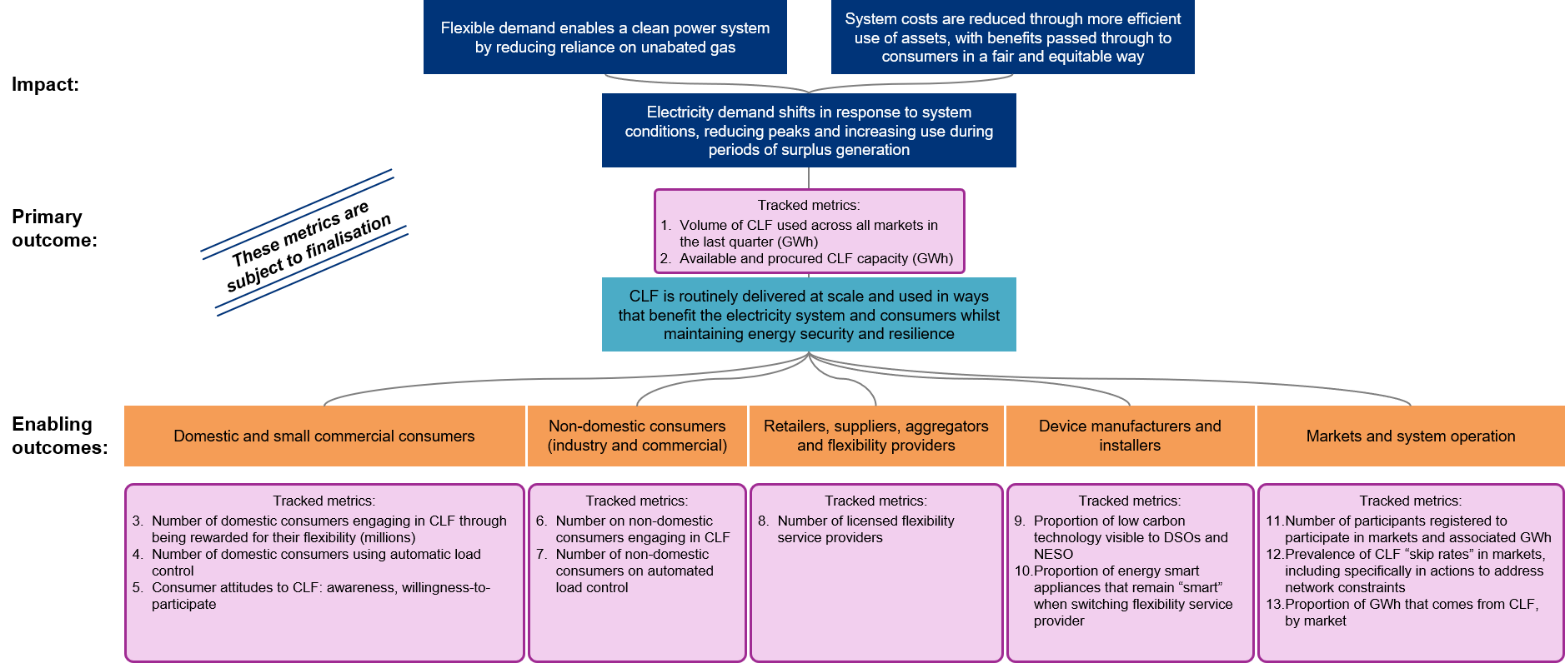
Within the CLF theory of change, a range of metrics have been provisionally defined, enabling government, Ofgem, and NESO to track and report on progress more frequently than headline GW or GWh capacities. This will allow us to better identify areas where further measures are needed to meet our desired outcomes. The intention is that government, Ofgem and NESO will report on available key metrics publicly at quarterly industry meetings.
The metrics provisionally outlined have been selected to cover the range of key enabling outcomes identified in the theory of change, allowing the monitoring of progress across all five categories of enabling outcomes. Some of the metrics can be drawn from readily-available, published data sets collected by NESO and Ofgem, while others are still subject to scoping. DESNZ will confirm a full set of metrics by the end of 2026 with publication of the earliest available metrics expected to commence in Autumn 2026 (new milestone 52b). Metrics will be updated and reviewed on a quarterly basis wherever possible, and on an annual or ad-hoc basis otherwise.
Figure 1: consumer-led flexibility theory of change
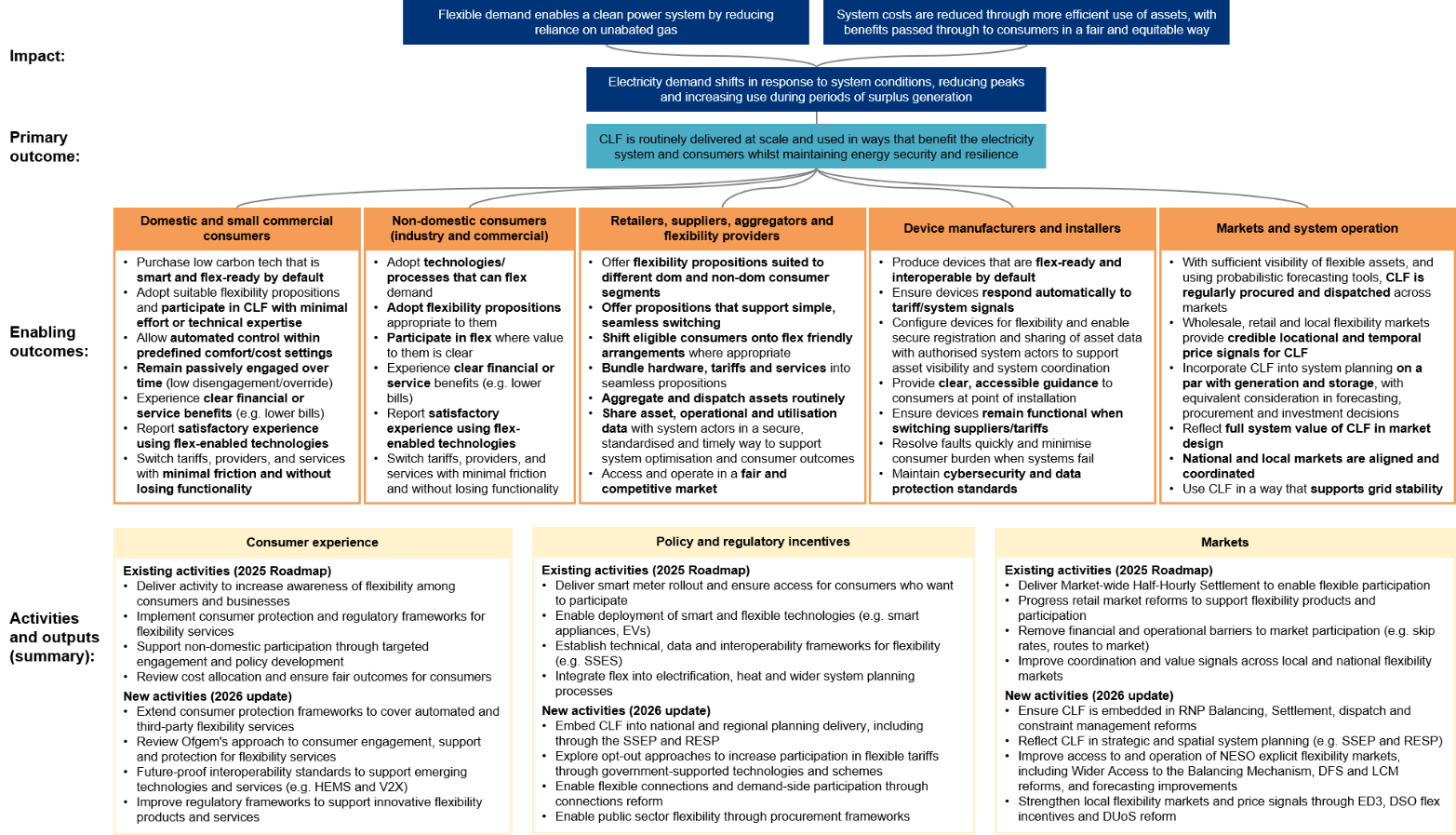
Figure 2: consumer-led flexibility metrics
Key achievements and follow-on activities
Markets
Over the past year, delivery partners have focused on removing barriers to CLF across markets and creating the conditions for its value to be realised. Central to this is understanding and signalling the system value of CLF. Government committed in the 2025 Roadmap to update the 2026 Forum on its CLF value modelling work (milestone 6a). This work is underway, but has been impacted by changes in DESNZ’s modelling tools, so we are now aiming to finalise it by Q2 2027.[footnote 10] Over the next six months, government is exploring using improvements to new modelling tools to better capture CLF benefits across gaps: distribution networks, transmission constraints, demand turn up, vehicle-to-grid bidirectional EV charging and domestic batteries.
Further work has been completed on modelling the potential for storage heater flexibility (milestone 11e). Initial analysis from this project has shown that electric storage heaters create a higher burden on the electricity system than heat pumps, even when accounting for the greater potential to use electric storage heaters flexibly. This analysis has considered the relatively lower capital costs of storage heaters compared to heat pumps and will inform government’s approach to shaping the deployment of low carbon technologies in a way that minimises the cost of electricity for consumers.
In the retail market, Market-wide Half-Hourly Settlement (MHHS) will incentivise energy suppliers to offer consumers new flexible products. A ministerial-led Board has overseen progress over the past 12 months and by mid-June 2026, Ofgem and Elexon had managed the migration of more than 11.3 million smart meters to half-hourly settlement. A third of Britain’s electricity metering systems now operate under half-hourly settlement arrangements.[footnote 11] The Programme remains on track to migrate all meters by May 2027. In addition, as per Roadmap milestone 1a, Ofgem introduced code modification P487 in May 2026, suspending suppliers from taking on new customers if they do not migrate electricity meter points by May 2027. Ofgem remains committed to meet milestone 1c (producing an MHHS benefits realisation plan) by October 2026 to ensure MHHS benefits are realised.
In March 2026, Ofgem published a call for input on reflecting MHHS in the price cap, setting out initial views on how the cap may need to change as CLF grows (milestone 3b). This set out three considerations to inform direction of travel: how the cap is set for single-rate customers; the design of at least one time-of-use variant; and whether further mitigations are required to address greater cost diversity across the market. Ofgem will further engage stakeholders in summer 2026 to develop proposals for the price cap from 2027 and DESNZ and Ofgem will consider the longer-term direction.
In July 2025, Ofgem issued a call for input on the Cost Allocation and Recovery Review (CARR) which explored how energy costs could be allocated in the future, completing milestone 3d. Its December 2025 update noted mixed stakeholder views and key themes of affordability, fairness and consumer protection. Depending on its direction, CARR could support CLF by encouraging low carbon technology uptake and sharper price signals. Ofgem has tested emerging thinking through spring and summer 2026 workshops and plans to publish its proposed direction of travel later in 2026 (new milestone 3e).
The Reformed National Pricing (RNP) programme has been established and will include setting the long-term direction for the wholesale market and balancing reforms.
Since 2024, Virtual Trading Parties (VTPs), also known as aggregators, have been able to participate in the wholesale market, enabling new entrants to bring forward innovative CLF consumer propositions. Government and Ofgem committed to review how suppliers, aggregators and other non-licensed entities interact and report on findings at the 2026 Roadmap Forum (milestone 31a). As a first step, government and Ofgem have established working group which has identified three immediate issues: compensation arrangements for aggregator participation, duplicate claims over the same asset or meter point, and supply contract terms that may block non-domestic customers from working with aggregators. However, we acknowledge that there is more to do in this important area for the sector. In line with its regulatory duties, Ofgem is leading further work to resolve these issues and ensure a coherent approach across markets. This includes considering Balancing and Settlement Code (BSC) Modifications relating to compensation arrangements (P415, P502, P509, P510 and P511); and further examining whether supply contracts are restricting aggregator access for non-domestic consumers. The Market Facilitator is developing an aligned process for managing multiple claims to the same asset and enabling consistent re-allocation of assets, with preparatory work already underway as instigated by government.
In October 2025, Ofgem issued a call for input[footnote 12] seeking views on the reselling of gas and electricity, and whether the Maximum Resale Price (MRP) protects consumers, enables investment, and provides fair pricing (milestone 12a). The call for input contained questions asking for input on a range of issues including how changes to the MRP could be made to encourage the take up of flexible tariffs and investment in renewable technologies. Ofgem will publish a policy consultation later in 2026 with a summary of the responses and proposals for changes to the resale regulatory framework (new milestone 12d). The consultation will aim to strengthen consumer protections, for example by improving billing transparency and implementing a stronger enforcement framework. Ofgem is also considering whether it can better align the MRP with net zero objectives, for example by facilitating investment and innovation in renewable technology, EVs and marine craft.
The Capacity Market remains an important market for CLF, with 2.6GW and 0.7GW derated capacity securing agreements in the last T4 and T1 auctions respectively. In October 2025, government published a summary of responses to the call for evidence on CLF in the Capacity Market,[footnote 13] completing milestone 32a, alongside a consultation on Prequalification 2026 changes, responded to in May 2026.[footnote 14] The confirmed changes will strengthen delivery assurance and enforcement, improve understanding of the security of supply value of different CLF technologies, and reduce administrative burdens where appropriate.
NESO has also continued to reduce barriers to entry into its national explicit flexibility markets for CLF through the Routes to Market review, supporting market participants to capture more value from these markets (milestone 33a). Since Q4 2025, NESO has provided quarterly updates, with the Q2 2026 update highlighting progress on access to the Balancing Mechanism, including completion of the Phase 1 Operational Metering Review,[footnote 15] which relaxed metering requirements for demand-side assets. Updates to the Demand Flexibility Service and Static Firm Frequency Response have also lowered eligibility criteria for sub-MW participation, supporting greater competition and a more level playing field for demand-side assets in NESO markets, including the Balancing Mechanism.
In addition, NESO has made significant progress on reducing skip rates, which were 9% lower across January-June 2026 than the same period in 2025, when averaged across all technologies. For batteries, skip rates have fallen from an average of 49% across H1 2025 to 38% for the same period in 2026. Likewise, pumped storage skip rates are down from 59% to 49%. Load response has not seen similar progress, and NESO is working to understand what more can be done in this area.[footnote 16] Through its work, NESO has set an average skip rate target of 30% from January to June, delivered its Root Cause Analysis, outlining the different components causing skips, and in March published its methodology for skip rates behind constraints (milestone 33b).[footnote 17]
A focus on tackling constraint costs and enabling consumers to benefit from low-cost renewables has meant that demand turn up (DTU) has been a key priority for all three organisations this year. Wind farms are currently paid to switch off when grid capacity cannot move electricity to where demand is located. Ofgem has reviewed DTU barriers with industry (milestone 5a) and is taking forward work considering Use of System charges (in particular Balancing Services Use of System charges) and RIIO-ED3 policy. NESO has also updated the Demand Flexibility Service to include DTU actions and improved conflict reporting between NESO and DSOs. Further detail will be provided in a DTU webinar on 22 July 2026.
In March 2026, DESNZ and UKRI also announced[footnote 18] an up to £20m trial to test how removing Final Consumption Levies (FCLs) could incentivise businesses and households to participate in DTU on a more level playing field with wind turn down or gas turn up. The 18-month trial will start in winter 2026 and cover two winters, informing DESNZ’s longer-term policy thinking on the value of removing FCLs for DTU, which could allow consumers to benefit from otherwise “wasted wind” energy at lower cost or even for free.
In December 2025, as part of milestone 7a in the Clean Flexibility Roadmap, NESO published a target[footnote 19] to secure an additional 750MW of non-domestic flexibility in its services and markets by 2030. This set a clear ambition to increase participation from industrial and commercial consumers, recognising the important role that larger energy users can play in providing demand-side flexibility to support a secure, low-cost and decarbonised electricity system. NESO is supporting delivery of this target through continued engagement with businesses, aggregators and flexibility providers.
Consumer experience
Milestone 8a committed government to publish a response to its consultation on the best approach to engage consumers on CLF. The response, published alongside this document, sets out government’s approach. As part of this, government will seek to mainstream messaging on CLF into existing and future information campaigns for domestic consumers, while Ofgem will take forward a bi-annual consumer engagement forum to convene stakeholders to identify emerging risks or opportunities to support effective consumer engagement. Greater awareness of flexible tariffs could allow consumers to benefit from both lower electricity bills and greater control over their bills.
The Smart Secure Electricity Systems (SSES) Programme is creating the technical specifications and licensing framework to ensure that key energy smart appliances (ESAs) are interoperable with service providers. This means that consumers will be able to access any tariff or flexibility service without needing to change their device (milestone 11d). Over the past year, the programme has shifted from design to delivery, including:
- Detailing the legislative and licencing framework: government has consulted on draft legislation setting out proposals to introduce a ‘smart mandate’ for electric heating appliances and setting minimum standards for smart battery energy storage systems, as well as improvements to the current regulatory framework for smart EV chargepoints. The Department has also consulted on draft legislation and licence conditions for load controllers and Flexibility Service Providers, which will strengthen consumer protections and energy system cyber security. Government expects to introduce secondary legislation in Parliament later in 2026.
- Implementing time-of-use tariff interoperability: government has taken the next step in delivering its commitment to standardise how energy suppliers share time-of-use tariff data. Government has consulted on implementation and published its response. Government has also modified industry codes and suppliers’ licence conditions to start implementing it, with the first phase due to be delivered in February 2027.
- Delivering longer-term Energy Smart Appliance interoperability: government has established a Companion Specification Working Group, comprised of government and industry experts, which is currently drafting the technical specification to ensure ESA interoperability, with a view to testing the specification more widely with industry over the coming months.
- Establishing industry-led enduring governance: working in partnership with Elexon, government has modified the Balancing and Settlement Code for Elexon to deliver the enduring governance arrangements for maintaining SSES technical and security frameworks together with industry representatives, Ofgem and the Office for Product Safety and Standards. Elexon has launched the elections process for industry membership of the governance groups, which are expected to go live later in 2026.
Through the SSES Programme, government will require relevant ESA manufacturers to provide flexibility guidance with devices at point of sale. In light of this, government has concluded not to take forward a separate “CLF-ready” label proposal for ESAs (milestone 8d). Government will continue to be supportive of any industry-based measures aimed at providing consumers with more information and choice over flexibility services for devices.
NESO has made significant progress in engaging non-domestic consumers and intermediaries, moving into active market delivery. This has included setting a 750MW target for industrial and commercial (I&C) flexibility to be available through its markets by 2030. Building on the completion of its 2025 Roadmap milestones (7a-d), NESO’s activity has focused on generating real participation and a credible pipeline of industrial and commercial flexibility. This is now evidenced by sustained and scaled market activity:
- Extensive engagement across the market: NESO’s Power Responsive programme has delivered over 550 engagements to date, including 255 engagements in 2026 alone, supported by a programme of 17 targeted events. This reflects a step change in direct interaction with industrial and commercial energy users, suppliers, aggregators, and trade bodies.
- A growing and active pipeline: these engagements are translating into tangible opportunities, with over 140 identified industrial and commercial business leads in 2026 YTD. A significant proportion of these are progressing into deeper feasibility discussions and onboarding pathways, demonstrating a clear shift from awareness to project development. This marks a move from notional interest to real participation journeys.
- Year 1 target met: NESO’s Power Responsive can report that 170MW of new CLF is now dispatchable across its markets (specifically BM and DFS).[9]
- Barrier removal grounded in delivery experience: insights from the growing volume of engagement and onboarding activity are directly informing improvements to processes, market design, and digital journeys, ensuring changes are driven by real participant experience.
This demonstrates a clear shift from strategy to execution, with NESO actively building a visible and progressing pipeline of industrial and commercial flexibility, underpinned by sustained engagement and increasing market conversion. NESO will work towards meeting its target of 750MW of industrial and commercial CLF available in its markets by 2030, providing an update each year at the annual Roadmap Forum on progress against its annual interim targets (new milestone 7f). To deliver this, the next phase of NESO’s work in this area will focus on scaling this momentum and converting pipeline into dispatchable capacity:
- Expanding targeted engagement in priority sectors to build on the current pipeline of leads.
- Progressing existing 140+ leads through to firm participation and market entry.
- Formalising onboarding pathways to support increasing volumes of participants.
- Embedding flexibility growth into market reform and product development.
- Tracking and reporting progress against the 2030 750MW ambition.
While this level of engagement and pipeline development demonstrates strong market appetite, participants consistently point to the need for greater revenue certainty, simplicity, and clearer long-term signals to unlock investment. There is potential to accelerate delivery beyond the current trajectory, building on the strong foundation established through NESO’s engagement and onboarding activity, by ensuring that market signals support investable propositions. Enabling efficient competition and reducing whole-system costs will strengthen revenue certainty to avoid under-developing lower-cost demand-side options in favour of more expensive system interventions, ultimately reducing costs for consumers.
Policy and regulatory incentives
As set out in our theory of change, policy and regulation can create important incentives for consumers and market participants to undertake more CLF activity. Government also has a leadership role in convening partners across the system. To this end, government has worked with industry to set up a new Consumer-Led Flexibility Advisory Group chaired by the Flexibility Commissioner and supported by ADE, bringing together senior officials from DESNZ, Ofgem, NESO and Elexon and CLF industry representatives to help make further progress on CLF and markets actions in the Roadmap.
The government’s Warm Homes Plan,[footnote 21] published in January 2026, sets out an ambitious agenda to upgrade 5m British homes with solar panels, batteries and heat pumps to help families save hundreds of pounds a year (milestone 11f). This rapid drive for home electrification has the potential to be a game changer for CLF, creating new opportunities for millions more consumers to access further savings on their energy bills through flexing the use of low carbon technologies supported by funding and regulation in the Plan, such as the expanded Boiler Upgrade Scheme (BUS).
Government is also reforming Energy Performance Certificates (EPCs). Four complementary headline metrics will be introduced for domestic EPCs: Fabric Performance, Heating System, Smart Readiness, and Energy Cost. The new Smart Readiness metric will measure a home’s ability to generate energy, optimise energy consumption, and manage energy flexibly. EPC reforms will be launched in the second half of 2027 (milestone 11g). In addition to providing important information for home buyers, the new EPC metrics will be used for higher Minimum Energy Efficiency Standards (MEES) for private rented homes. Landlords will be required to ensure their properties meet a minimum score of EPC C against the fabric performance metric and either the heating system or smart readiness metric by 1 October 2030, unless a valid exemption applies. Utilising the Smart Readiness metric in this way will drive significant uptake of smart measures in the sector, improving energy flexibility and lowering energy bills for tenants.
In August 2025, government consulted on regulatory interventions to improve the consumer experience of smart metering.[footnote 22] This included new obligations for energy suppliers to take all reasonable steps to: ensure meters are back working in smart mode as soon as possible and no later than 90 days; pre-emptively replace smart metering assets so they can continue to work with the 4G mobile network after the 2G/3G switch-off and other network service end dates; and to take all reasonable steps to complete the domestic smart meter rollout by the end of 2030. New regulations and amendments enacting these changes were signed into force in May 2026, completing milestone 10b. These changes are expected to deliver a net benefit of ~£600m to ~£1.8bn for consumers, suppliers and the environment, by, for example, lowering energy usage through behavioural change and reducing the time consumers spend interacting with the energy system.
The Warm Homes Plan also set out government’s vision for low carbon heat networks, backed by £1.1bn of funding across this parliament, which recognises the strategic benefit of flexibility (milestone 14a.) Building on this, government has published research on thermal energy storage in heat networks,[footnote 23] which found significant potential to increase grid flexibility and reduce bills. The research found that the prospects for thermal storage appear promising and policies, such as Reformed National Pricing (RNP), Regional Energy Strategic Plans (RESPs), the Strategic Spatial and Energy Plan (SSEP), and Heat Network Zoning, could enhance the value proposition of thermal storage by better recognising its benefits to the grid (milestone 14b). Government continues to review new evidence on barriers to heat networks accessing flexibility markets and will work with Ofgem and NESO to identify practical routes to scale deployment (milestone 14c). This will help give developers, operators and investors greater certainty on the market arrangements, revenue opportunities and system value needed to invest in heat network flexibility.
In May 2026, Ofgem published its Sector Specific Methodology Decision (SSMD) for RIIO-ED3, which establishes the strategic and methodological framework for the ED3 electricity distribution price control. This decision confirmed that flexibility will play a central role alongside physical network reinforcement. The SSMD promotes a balanced ‘build and flex’ approach, using flexibility and other smart alternatives to optimise the existing capacities of the network and in doing so help to manage uncertainty over the timing and location of future demand.
Introducing more time granularity into Renewable Energy Guarantees of Origin (REGOs) could better support CLF and other clean flexibility through better reflecting the carbon value of CLF. Government has assessed how REGOs affect flexibility markets (milestone 2a) and whether scheme changes may be needed (2b). Evidence from market participants suggests the current annual matching approach has limited impact on flexibility because it does not signal when renewable electricity is generated or used. Respondents to the consultation were generally positive about introducing more time granularity to REGOs, despite the potential implementation challenges and costs. DESNZ will continue to consider next steps on these milestones, providing an update in Q3 2027, and will take primary legislative powers when parliamentary time allows to make future changes to the REGO regime (new milestone 2c).
Electric vehicle (EV) smart charging and V2X (vehicle-to-everything) bidirectional charging are expected to unlock significant flexibility from EVs over the coming years, whilst reducing the cost of charging for consumers. Government has taken a range of steps to support increased EV smart charging in both private and public settings. This has included informal consultation with industry on steps to ensure that charge points have the necessary communication standards to enable more optimised smart charging and support the rollout of V2X (milestone 12c). This will be followed by a formal consultation on this issue by the end of 2026. DESNZ and DfT have also developed guidance for local authorities to help them support the increased provision of smart charging at public charge points (milestone 12b).
Government has also taken crucial steps to support the rollout of V2X technology. In addition to its work to ensure that charge points have the necessary standards, government is also seeking to encourage V2X capability in vehicles (milestone 13a), including through considering links with the Zero Emission Vehicle (ZEV) mandate. Government has also developed a comprehensive understanding of V2X grid connection challenges (milestone 13b) from which several actions to unlock this barrier to rolling out V2X at scale will be taken forward to make the process of connecting V2X systems to the grid easier to navigate and more consistent for manufacturers, installers, and consumers.
In addition, government is supporting the commercialisation of V2X (and domestic batteries) through the inclusion of primary legislative powers when parliamentary time allows to remove final consumption levies from re-exported electricity (milestone 4a). The removal of final consumption levies is a key ask of industry which, when implemented, will boost the financial viability of V2X and encourage more consumer propositions. Further work will be undertaken on the detailed implementation of the policy, which will involve a future consultation and the development of secondary legislation.
Innovation will help scale CLF by bringing forward new technologies and business models. UKRI has committed £74m to the CLF Challenge, aiming to deliver at least 2GW of flexibility by 2030. In June 2026, UKRI launched a £25m competition for AI and digital solutions to increase CLF capacity,[footnote 24] with projects expected to begin in January 2027. An Innovator Support Programme, launching in November 2026, will help successful projects scale. Together, this will support real-world delivery, reduce bills and make better use of renewable generation.
New actions
The new actions below for this 2026 Roadmap update build on the commitments set out in the 2025 Roadmap and respond to gaps identified through the theory of change, delivery to date and ongoing engagement with industry. However, government, Ofgem and NESO recognise that there is more to do to clarify the vision for consumer-led flexibility, particularly where we expect to see the value emerge across different markets and the roles that different types of technologies and consumers can play.
As a package, the new actions below are designed to make progress across all areas of the theory of change. Firstly, by creating clearer routes to market and better value signals; secondly, improving the consumer experience and protections needed for participation at scale; thirdly, aligning policy and regulatory incentives so CLF is considered consistently in wider system decisions; and finally, continuing to strengthen measurement so progress can be tracked and further interventions targeted where needed.
Markets
Retail market
The retail market is how domestic and non-domestic consumers interact with CLF; whether directly through offers from electricity suppliers to move on to a flexible tariff or benefit from cheaper electricity, including by signing up for their flexible load to participate in a virtual power plant. By reforming the retail market, we want to continue to incentivise the creation and adoption of innovative flexible propositions, and remove barriers where this makes sense, to enable and encourage more consumers to access the benefits of CLF.
As an important step towards this, Ofgem will take forward work to remove barriers in its regulatory frameworks to CLF innovation and diversification of flexibility propositions, ensuring the regulatory approach is fit for purpose for new products and services such as time-of-use tariffs (TOUTs) and non-tariff flexibility offerings and for domestic and non-domestic consumers. Ofgem will set out the immediate priority steps for adapting its regulatory frameworks for CLF innovation and diversification of flexibility propositions by the end of 2026 (new milestone 3f).
Government schemes through the Warm Homes Plan will be supporting millions of households to cut their energy bills and reduce their exposure to fossil fuels by accessing low carbon technologies (LCTs), such as batteries, solar panels and heat pumps. While we must maintain the important principle that CLF should be voluntary and consumers are protected, in most cases these consumers can benefit directly further by flexing these large loads within set bounds of comfort and convenience in response to a flexible tariff or arrangement (which could involve automation). Government will rapidly assess the feasibility of consumers accessing government support for low carbon technologies to do so using a flexible tariff, with the option for the consumer to opt out, and set out plans by Q1 2027 (new milestone 3g).
Reformed National Pricing
The wholesale and balancing markets are vital sources of value for CLF – sending signals for both implicit flexibility in response to time-of-use tariffs, and explicit flexibility in national markets. We need CLF to be able to compete on a level-playing field with generation and storage in these markets if we are to reduce our reliance on fossil fuels and unlock the full benefits of low-cost renewables. NESO, and where relevant government and Ofgem, will ensure that in impact assessments and cost-benefit analysis for RNP Programme balancing and settlement reform, options are assessed against prevalent CLF business models for accessing markets, such as virtual power plants made up of multiple small assets (new path building action and milestone 53a).
The CLF theory of change sets out the need for CLF to be considered on a par with generation and storage in system planning and market design. NESO will ensure that CLF (including DTU) and electricity storage participation is modelled in all RNP dispatch reform and network constraint management options (new milestone 53b). And NESO will include an assessment of regional flexibility market development within its RNP Constraints Management Market and dispatch reform option analysis (new milestone 53c).
Explicit flexibility markets today
While RNP will reform markets over the medium-long term, NESO will continue to improve the practical routes through which CLF can participate in national explicit flexibility markets. This means making market access simpler, reducing operational barriers, improving clarity on future market roles, and helping providers understand the revenue opportunities available across NESO. NESO will take forward a package of actions to enable this as follows:
- NESO will remove key barriers to enable Wider Access (WA) participants (Virtual Lead Parties and suppliers) to join and operate more easily in the BM by Q3 2027 (new milestone 33e). This will be achieved by establishing clear ownership and governance within NESO, including a single point of entry and onboarding process, and digital-first onboarding with improved APIs.
- NESO will set out the future direction for the Local Constraints Market (LCM) and Demand Flexibility Service (DFS) by the end of 2026 (new milestone 33f). This will be in the context of dispatch, balancing and constraint management and the RNP Programme.
- NESO will publish skip rate figures for CLF behind thermal constraints by Q3 2026 and complete an impact assessment of previously delivered load response actions to determine next steps by October 2026 (new milestone 33g).
- NESO will aim to implement CrowdFlex outputs into its operations following testing and evaluation, focusing on forecasting tools. This will be done in phases. Phase 1 will integrate the Available Flexibility Model (AFM) and Expected Delivery Model (EDM) within a sandbox environment by October 2026. Then in Phase 2, NESO will connect the CrowdFlex AFM and EDM tools within a sandbox environment to live and near-real-time data sources by June 2027 for parallel running and real-time evaluation (new milestone 33h). In parallel, NESO will develop a high-level design, operating model, and data strategy by June 2027 for further integration of the CrowdFlex models into future NESO systems and embedding into the real-time operational environment (new milestone 33i).
- NESO will develop a Market Navigator Tool in 2027 to address market opportunities, stacking barriers and provide potential revenue clarity regarding participation in NESO’s markets, including the BM (new milestone 33j). By bringing together data from both NESO and the Market Facilitator, this collaborative tool will enable providers to input information about their operations or assets, informing through a dedicated commercial profile of potential revenues, based on historical data, that is available within NESO’s markets.
Alongside this, Elexon (Market Facilitator) will explore further alignment between the Flexibility Market Catalogue, Flexibility Market Data Portal and NESO’s Market Navigator Tool by the 2027 Summer Roadmap Forum (new milestone 33k).
Distribution level flexibility
Alongside reforms to national markets, distribution-level arrangements will be increasingly important as more flexible demand and distributed assets connect to local networks. The focus here is on ensuring that Distribution System Operator (DSO) markets, network charging and ED3 incentives work together so CLF can be used where it provides local network value, rather than being treated separately from wider network planning and investment decisions.
The move to “build and flex” will ensure the funding and incentives approach to RIIO-ED3 sufficiently supports and realises the value of CLF within DSO markets, with DSOs’ ED3 business plans, including build and flex strategies, due in December 2026. Ofgem will report on the findings of its review into the DSOs’ use of flexibility in ED2 and will share its findings by Autumn 2026 via the relevant ED3 stakeholder working groups (new milestone 39b).
The Distribution Use of System (DUoS) network charge, and related mechanisms, can also act as a key signal for CLF in DSO-level flexibility. Ofgem will work with stakeholders to define the challenges and the target outcomes for CLF that DUoS reform and related mechanisms should address by Autumn 2026 (existing milestone 39a).
Consumer experience
The CLF theory of change identifies consumer experience as a core enabler of CLF: consumers need confidence that flexible products are simple, accessible and appropriately protected. The actions below therefore focus on strengthening protections and futureproofing technical standards so participation can scale as new products and technologies develop.
Consumer protection will remain an important pillar of our approach to CLF, including through the new SSES programme load control licence. Building on the existing protections, Ofgem will address any residual immediate consumer protection gaps within the electricity supply licence framework as part of its strategic direction on outcomes-based regulation,[footnote 25] commencing the implementation of the consumer outcome related to informed decision making. Ofgem will consult on the implementation of the consumer outcome related to informed decision making for the electricity supply licence by the end of 2026, which will include a wider review of CLF engagement, support and protection needs (new milestone 9c).
Building on the progress across the SSES Programme over the past year, DESNZ will future-proof technical specifications for interoperability in 2027 to ensure they can be expanded to incorporate V2X charging and Home Energy Management Systems (HEMS) in due course (new milestone 11h).
Policy and regulatory incentives
As government takes a more active role in planning the energy system, it must ensure that CLF is embedded in national and local spatial planning. This means modelling demand and its potential to flex accurately, so reducing the risk of overbuilding energy infrastructure and incurring unnecessary costs. Recognising the importance of this, DESNZ will work with NESO to explore how the modelling methodology for the second iteration of the Strategic Spatial Energy Plan (SSEP) could treat CLF as a core component to be optimised alongside new infrastructure options, rather than as an exogenous assumption (new milestone 49c).
At a regional level, Regional Energy Strategic Plans (RESPs) will help DSOs consider consistently CLF when modelling future needs as part of their network planning. To support consistent planning, NESO will set out the approach to develop assumptions on CLF and consumer behaviour and will ensure CLF stakeholders are engaged in the RESP process through the proposed Consumer and Commercial Demand Working Group. NESO will set out its approach to CLF in its RESP methodology, due to be published in Summer 2026 (existing milestone 49a).
Connections are a critical lever for putting system planning into action. Demand connections reform will be critical to support timely access to grid capacity for flexible demand across both distribution and transmission networks, and to ensure more efficient use of constrained networks. A significant programme of reforms is underway including strengthened queue management (‘Curate’ measures being developed by Ofgem) and prioritisation of strategic demand projects (‘Plan’ measures led by government).[footnote 26] Under the ’Connect’ workstream, government is working closely with Ofgem, NESO, and industry to develop a coordinated package of measures to accelerate demand connections while maintaining system operability. This includes flexibility measures such as alternative connection agreements, voluntary flexibility services, and operational control measures. Ofgem, working with government and NESO, will update on key elements of the package of measures to accelerate demand connections while maintaining system operability through flexibility measures in Autumn 2026 (new path building action and milestone 54a).
Building on the work we are doing in energy markets, government procurement is another key lever we can use to stimulate demand for flexibility and creating investable, scalable markets, directly supporting the CLF theory of change by strengthening routes to market and increasing participation. The Government Commercial Agency is designing the next generation of energy procurement frameworks for schools, hospitals and government buildings, and will ensure it includes a range of clear routes for public bodies to access flexibility-enabled supply arrangements, including flexible tariffs and aggregator-led service models (new path building action and milestone 55a).
Measuring impact
These changes are all designed to help unlock the value of CLF across markets, making it simpler and easier for consumers to participate, and ensure that our policy and regulatory approach is aligned. However, it is vitally important that we monitor and measure the impact. Government has set out above its approach to monitoring CLF, including new milestone 52b. Alongside this, we will also continue to engage with ADE:Demand to develop its CLF Dashboard to help understand the deployment of CLF across the GB market.
Chapter 2: grid-scale electricity storage
Theory of change and metrics
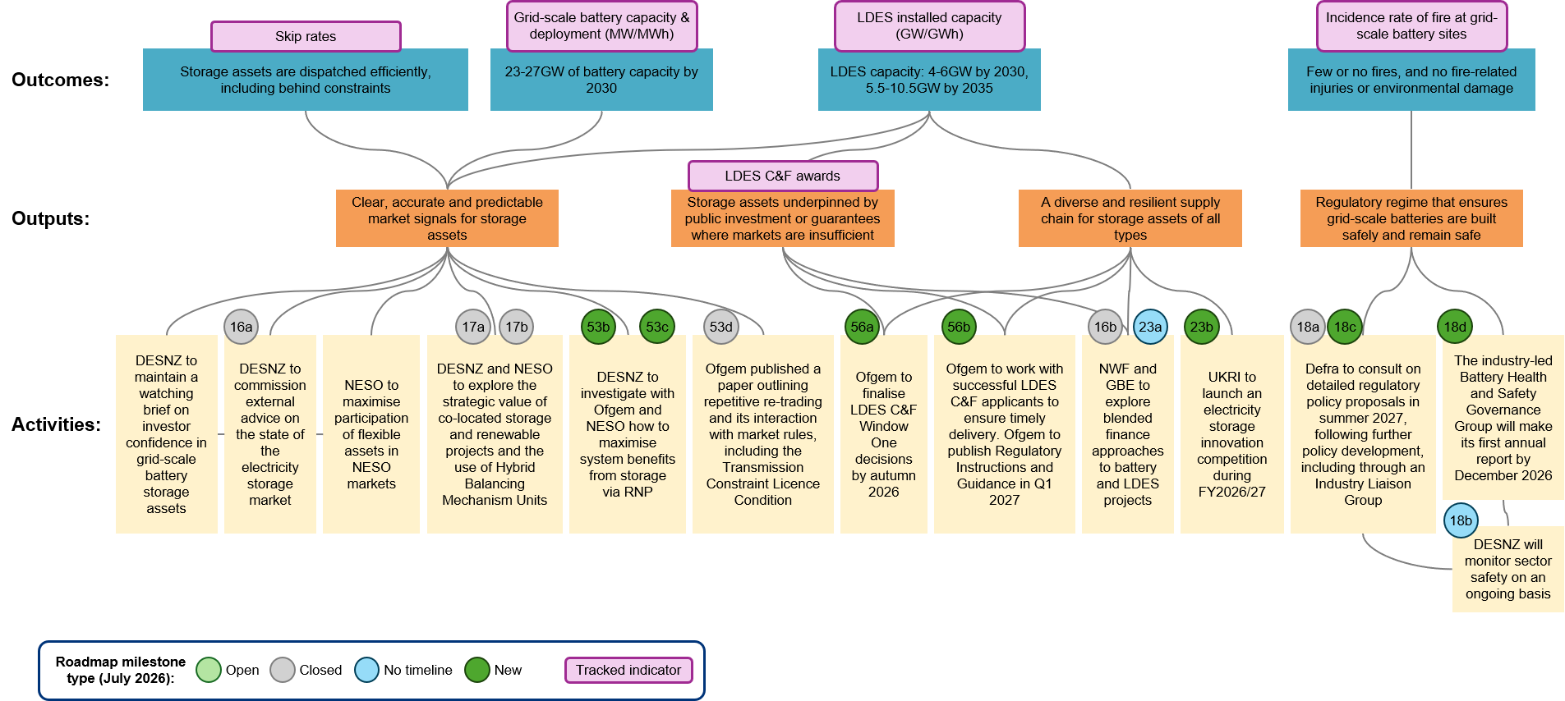
Both grid-scale batteries (of durations up to eight hours) and long duration electricity storage (LDES) play a critical role in balancing the power system, especially as electricity demand rises and supply becomes more intermittent. This is reflected in three of the four outcomes in the theory of change below, starting with a capacity ambition for both, as set out in the Clean Power 2030 Action Plan and Clean Flexibility Roadmap. Storage’s contribution to the electricity system is not however simply a function of how much is deployed; it must also be used well. Government sees efficient dispatch of storage assets, including behind constraints, as an important outcome. Finally, lithium-ion batteries - the technology accounting for almost all grid-scale battery storage at present as well as a significant portion of the LDES pipeline - poses a small but material risk of fire, and it is vital that this risk remains appropriately managed to maintain public safety and trust.
These outcomes can only be achieved if the right economic signals are provided, reflecting as far as possible the system value that storage provides and thereby incentivising it to be built, located, and operated in the way that most benefits energy users. Economic signals also provide private developers with sufficient confidence in the revenues they can make for projects to invest, without insulating them inappropriately from risks that need to be managed. In cases where merchant market signals to private developers are currently insufficient, as with LDES, public investment support must be provided. And delivery of projects of all storage technologies is necessarily underpinned by a robust supply chain. As the grid-scale battery sector expands and innovates, government is maintaining safety and minimising risks to the public by delivering an effective regulatory regime of cross departmental, national and local frameworks, closely monitoring industry and continuously improving the governance of battery safety. These activities will coalesce into grid-scale storage that delivers at pace and at best value to the system and billpayer alike.
Figure 3: grid-scale storage theory of change
The table below shows how we intend to track progress towards these outcomes:
| Metric | Source | Update frequency | Publication approach | Latest figure |
|---|---|---|---|---|
| Grid-scale battery capacity (GW/GWh) | Modo Energy | Monthly | Already published (by Modo); noted in annual Roadmap Forum | 7.3GW, June 2026 |
| LDES capacity (GW/GWh) | NESO | When new assets commissioned | Annual Roadmap Forum | 2.8GW/ 23.9GWh, June 2026 |
| Storage ‘skip rates’ | NESO | Daily | NESO skip rate dashboard | 35% battery skip rate; 49% pumped storage skip rate, May 2026 |
| LDES Cap and Floor awards | Ofgem | Annual | Annual Roadmap Forum | 7.6GW/ 137GWh[footnote 27] |
| Incidence rate of fire at grid-scale battery sites | DESNZ | Annual | Annual Roadmap Forum | 0.7 over five years to 24/25 vs 0.8 for non-domestic buildings in general |
Key achievements and follow-on activities
2026 has been a monumental year for grid-scale electricity storage. Chiefly, it has seen Ofgem publish minded-to decisions on the first window of its LDES Cap and Floor regime, supporting 7.6GW across 16 projects amounting to 137GWh of electricity storage capacity. The 16 projects include a diverse range of mature and more novel technologies including pumped storage hydropower, long duration lithium-ion batteries, a vanadium flow battery and a compressed air energy storage site. While subject to final consultation and confirmation in autumn 2026, this is a major milestone in the government’s clean power plans, creating a pathway to delivery for LDES assets that will play a critical role in system security, providing electricity more cheaply, efficiently and reliably that it would otherwise. It is the first significant step in LDES construction in over four decades. Ofgem expects to consult on the design of future Cap and Floor windows in 2026 and confirm its position on future windows and their timings by 2027.
2025 was a very significant year for grid-scale batteries: UK grid-scale battery storage power capacity reached 7.5 GW by the end of 2025, with a record new 2.3 GW energised during the year.[footnote 28] This deployment remains largely merchant-driven, and LCP Delta and Frontier Economics has advised the Department further on the health of markets for storage, which marks the completion of milestone 16a. This sector is also seeing increasing involvement from public finance institutions, with (for example) the National Wealth Fund (NWF) committing an initial £200m to Fidra Energy’s 1.4GW Thorpe Marsh project in September 2025.[footnote 29] In January 2026, the National Wealth Fund published its five-year strategy[footnote 30] in which it stated that it will continue to look to invest in the battery sector as needed, focusing on using debt and guarantees to address private finance capacity gaps within the sector. This marks the completion of Roadmap milestone 16b and contributes towards the public investment output which supports the growth of battery capacity.
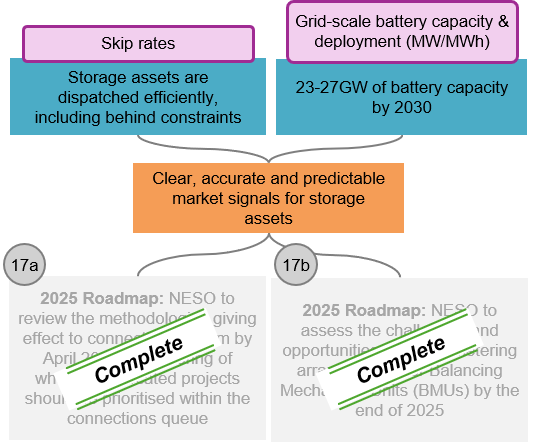
The government’s efforts to unblock storage delivery include work to make it easier, where appropriate, for storage to ‘co-locate’ with renewable generation: this typically involves a battery sharing a site with solar power, allowing it to charge during the day and discharge at night, smoothing the site’s overall generation profile while making efficient use of scarce grid infrastructure. A key challenge is making sure that, in that example, solar assets with a Contract for Difference are paid fairly for their generation despite sharing a connection with another asset. To help address this, NESO published its report on Hybrid Balancing Mechanism Units (HBMUs – used to measure the output of each generator), alongside a detailed impact assessment, examining the challenges and opportunities associated with these, marking the completion of Roadmap milestone 17a. NESO’s report noted that many of the outcomes developers are seeking can already be achieved under existing co-location guidance, which maintains operational visibility through separate BMUs without requiring major industry process changes or increasing consumer risk. NESO has gone further to consider how co-location can be achieved without the need for HBMUs, publishing Guidance[footnote 31] on Enabling Asset Metering which explores a scenario for Solar and Battery co-location, marking the completion of milestone 17b. These activities will help to identify the value of making wider market changes for batteries to support the growth of battery capacity.
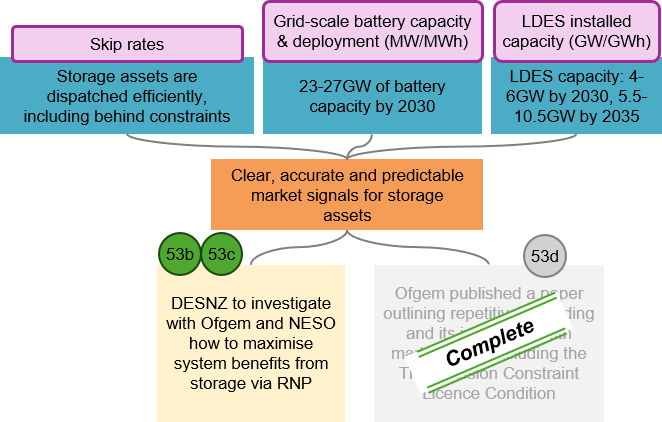
To increase the efficiency of storage asset dispatch, DESNZ will work closely with NESO and Ofgem to understand the benefits of storage technologies holistically, and investigate options aimed at better incentivising energy storage maximising the benefits of storage technologies in reducing system costs. This work will take place as part of the wider Reformed National Pricing Programme (see new NESO milestones 53b and 53c in the CLF chapter, which are equally relevant to electricity storage). This output has been supported by Ofgem publishing a document providing a description of the issue of repetitive re-trading and its interactions with market rules, including the Transmission Constraint Licence Condition (which prohibits licensed generators – including electricity storage – from obtaining an excessive benefit in constraint periods).[footnote 32]
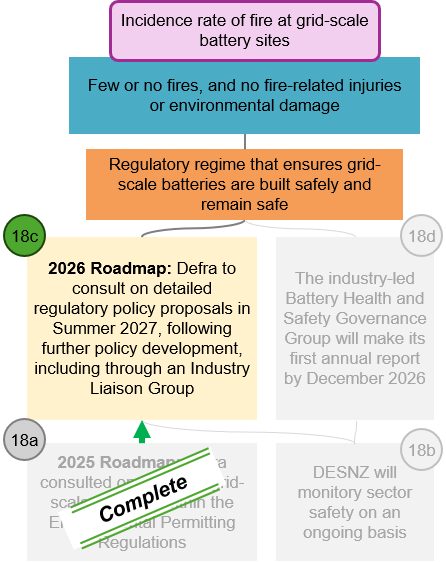
The past twelve months have also seen DESNZ and Defra follow through with commitments on battery safety. In the Clean Flexibility Roadmap, Defra committed to consulting on including grid-scale batteries within the Environmental Permitting Regulations (milestone 18a). Defra published the consultation[footnote 33] in August 2025 and its response[footnote 34] in April 2026. The consultation found overall support from respondents for stronger regulation on fire risk and impacts at grid-scale battery sites. Defra plans to consult in summer 2027 on detailed regulatory policy proposals, following further policy development, including through an Industry Liaison Group (new milestone 18c).
New actions
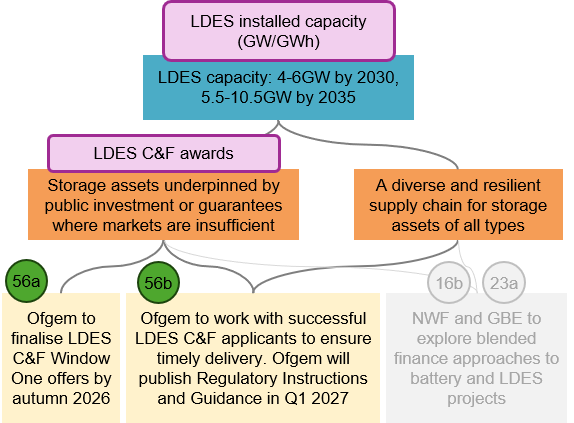
Ofgem will finalise its decisions on the first window of the LDES Cap and Floor by autumn 2026 (new path building action and milestone 56a). However, there will still be much work to do to beyond that for projects to reach final investment decision, be built, connected to the grid and operationalised. Ofgem will therefore work with industry, DESNZ and NESO to ensure timely delivery of these projects. This will be supported by licence provisions on delivery monitoring and milestone management. As part of this, Ofgem will publish Regulatory Instructions and Guidance following the regime award and licence decisions by Q1 2027 (new milestone 56b). This will support progress towards the 2030 LDES capacity ambitions and the associated impact on consumer bills, security of supply, and the government’s Clean Energy Superpower Mission.
While the LDES sector already encompasses a broad base of competitive technologies, government remains invested in nurturing the pipeline of research and development that could unlock potentially even better ways of providing LDES in future. In this vein, UKRI will launch an electricity storage innovation competition under its R&D Clean Energy Superpower Mission Accelerator Programme during FY2026/27 (new milestone 23b).
Finally, there will be changes to the way in which government works with industry to keep batteries. The industry-led Battery Health and Safety Governance Group will make its first formal annual report by December 2026 (new milestone 18d).
Chapter 3: interconnection
Theory of change
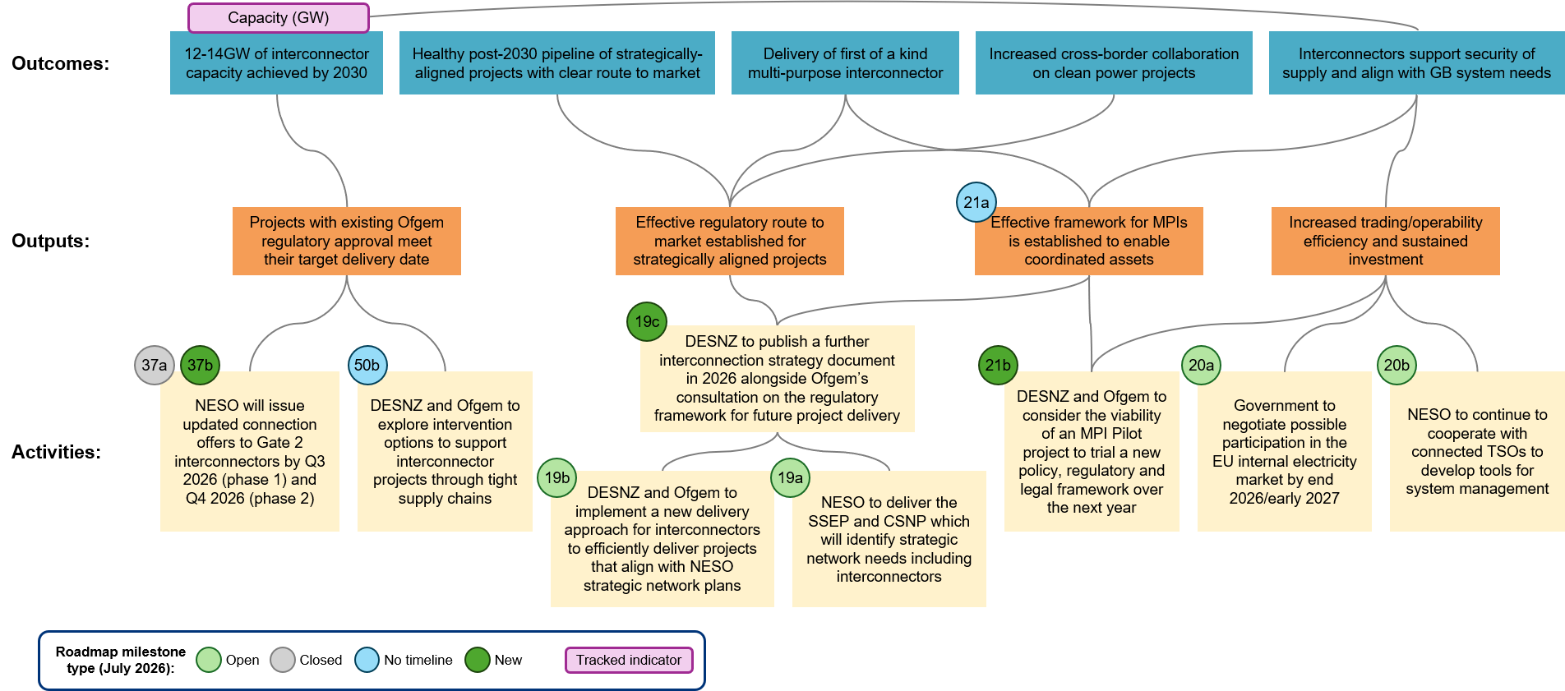
The theory of change for interconnection outlines five outcomes which contribute towards a range of system benefits. These benefits include diversifying our generation mix, enabling access to markets with potentially lower-cost electricity for GB consumers, supporting European decarbonisation, and increasing flexibility via import and export capability. The primary outcomes supporting these benefits are the shorter-term delivery of 12-14GW of interconnection capacity by 2030, as laid out in the Clean Power 2030 Action Plan, and, given the lead times for interconnector projects, developing the healthy post-2030 pipeline of strategically aligned projects.
Our work to support the delivery of interconnector projects also contributes to other desired outcomes, such as supporting the system needs of the UK by providing a rapid and reliable source of electricity flexibility to enhance the security of our energy supply, and increasing our cross-border collaboration on interconnection. This collaboration was demonstrated through the Hamburg Declaration, agreed in January 2026, which set out North Sea countries’ target to deliver up to 100GW of offshore wind power through joint projects. Government is driving forward the development and shared financing of hybrid interconnection assets to help support these ambitions and decarbonise together with our European neighbours.
A significant outcome of the government and Ofgem’s work would be delivering the first multi-purpose interconnector (MPIs), in line with Hamburg commitments. MPIs can help us achieve our energy needs by more efficiently integrating renewable energy onto the grid, providing access to a diverse generation pool, and decreasing the impact of new infrastructure on coastal communities and the environment. This focus on a post-2030 outcome will be increasingly important as the proportion of intermittent renewable generation accelerates. The government is actively considering the case for a potential MPI pilot, including whether this would be in consumers’ interests and whether it is necessary for the delivery of an enduring MPI regime.
These outcomes will be achieved via a series of outputs from the activities of government, Ofgem, NESO, other delivery bodies, and industry supporting the whole lifecycle of an interconnector. This includes establishing a framework for technological development, providing a route to market, delivering interconnectors on time, and increasing the efficiency of operation.
Figure 4: interconnection theory of change
Key achievements and follow-on activities
Following the publication of the Clean Flexibility Roadmap in July 2025, significant progress has been made on a range of activities contributing to interconnection outcomes. GB continues to progress towards the government’s Clean Power ambition, with a current interconnection capacity of 10.3GW and the NeuConnect interconnector (1.4GW) to Germany due to become operational in 2028. Over 6GW of further projects have GB regulatory approval, including MaresConnect (0.75GW) which is expected to receive a decision from the Irish regulator shortly.
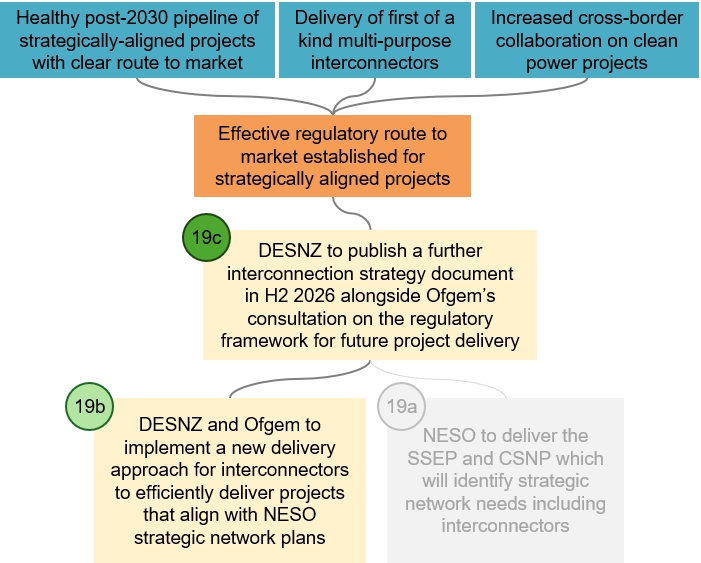
In March, government published its Next Steps for Electricity Interconnection in Great Britain[footnote 35] document, alongside Ofgem’s Call for Input on the Future Strategic Approach to Interconnection[footnote 36] as part of Roadmap milestone 19b. These documents set out our future approach to delivering interconnection projects that will best support the GB system and its consumers. Later this year, we will provide further detail on how this will work in practice and seek stakeholder views on future interconnection project delivery that is aligned with the outputs of strategic planning. Government will publish a further interconnection strategy document in the second half of 2026 and Ofgem will consult on the regulatory framework for future project delivery alongside this, with both publications building on the documents published in March of this year (new milestone 19c). These will help further develop and establish strategic direction for a regulatory route to market for strategically aligned interconnector projects (including MPIs), accelerating the onboarding of new capacity.
May 2026 marked the start of negotiations between the UK and the European Commission on the UK participation to the EU Internal Electricity Market, following the publication of the EU-UK Common Understanding[footnote 37] in December 2025. NESO is also collaborating with transmission system operators from connected countries to enhance current and develop new balancing tools, which will increase interconnection efficiency to optimise security of supply and better align interconnectors to system needs. This also aligns with NESO’s engagement with the EU on system security concerns resulting in the recent implementation of limits to the cross-border trading volumes available to NESO[footnote 38] as a short-term measure, whilst work continues to achieve a more coordinated approach to interconnector capacity management.
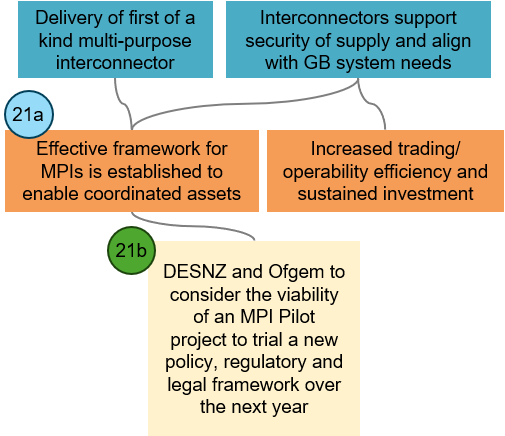
In the 2025 Clean Flexibility Roadmap, Ofgem and DESNZ committed to developing the policy, regulatory and legal framework to unblock barriers to MPI delivery (milestone 21a). Since then, government has run various workshops, engaged bilaterally, and held an industry group, providing stakeholders with an update on progress against the framework and indicative timelines. Over the next year, the government and Ofgem will consider the viability of an MPI Pilot project to trial the new policy, regulatory and legal framework (new milestone 21b). This will help establish the route to market for strategically-aligned MPI projects, contributing to a healthy post-2030 pipeline of projects to reinforce the long-term expansion of flexibility capacity and its impact on consumer bills, clean power ambitions and energy security.
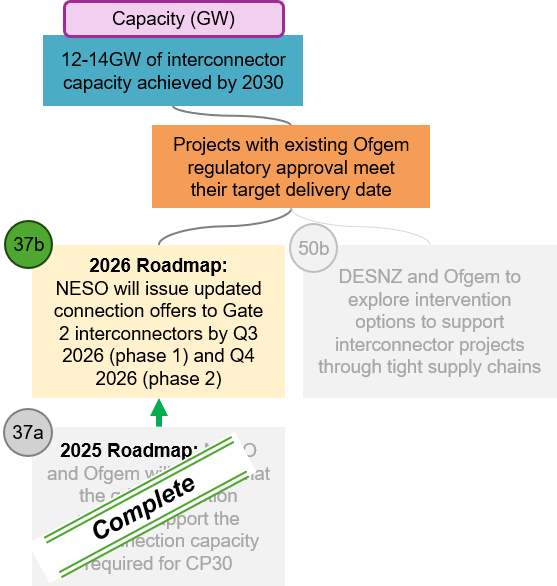
In December 2025, NESO issued queue formation outcomes to all interconnector developers, marking the completion of Roadmap milestone 37a. Next, NESO will issue updated connection offers to Gate 2 interconnectors by Q3 2026 (phase 1) and Q4 2026 (phase 2) (new milestone 37b). This will help ensure that projects meet their target delivery date, contributing to government’s 2030 and post-2030 interconnection capacity ambitions and the associated flexibility outcomes.
Chapter 4: low carbon dispatchable power
Hydrogen to power (H2P)
Theory of change
After 2030, low carbon dispatchable power such as hydrogen to power (H2P) will increasingly displace the residual role of unabated gas, which will move to a back-up role to be called upon only in instances where clean alternatives are unable to meet demand. H2P will provide a source of long-duration flexibility capable of generating low carbon electricity continuously over days and weeks, to complement more duration-limited technologies such as batteries and LDES. H2P deployment will help maintain security of supply, whilst reducing emissions and reliance on volatile international energy sources. As a result, the primary outcomes outlined in the H2P theory of change are the deployment of H2P capacity and the resulting reduction in emissions.
Three outputs are required from the activities of government and its delivery partners to drive the UK towards these outcomes: developing the infrastructure to produce, transport, and store hydrogen at scale, and delivering hydrogen-fired power stations through the H2P business model. Once H2P power plants become operational, their dispatch of low carbon generation will provide clear signals on their role in a clean power system and provide signals to investors.
Figure 5: hydrogen to power theory of change
Key achievements and follow-on activities
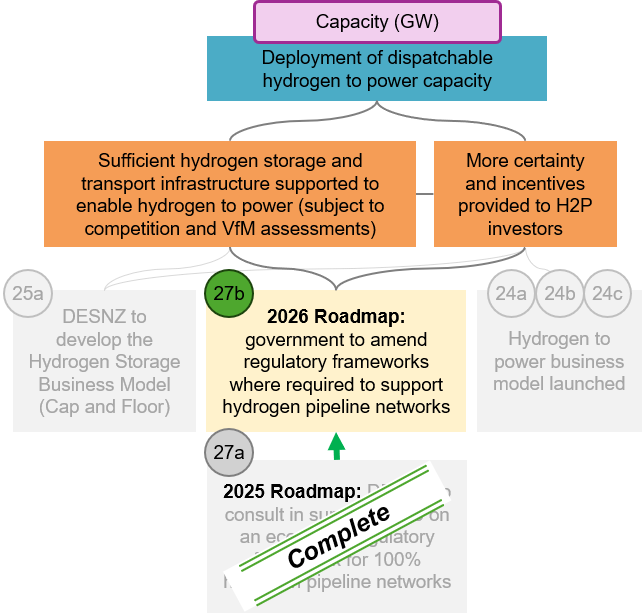
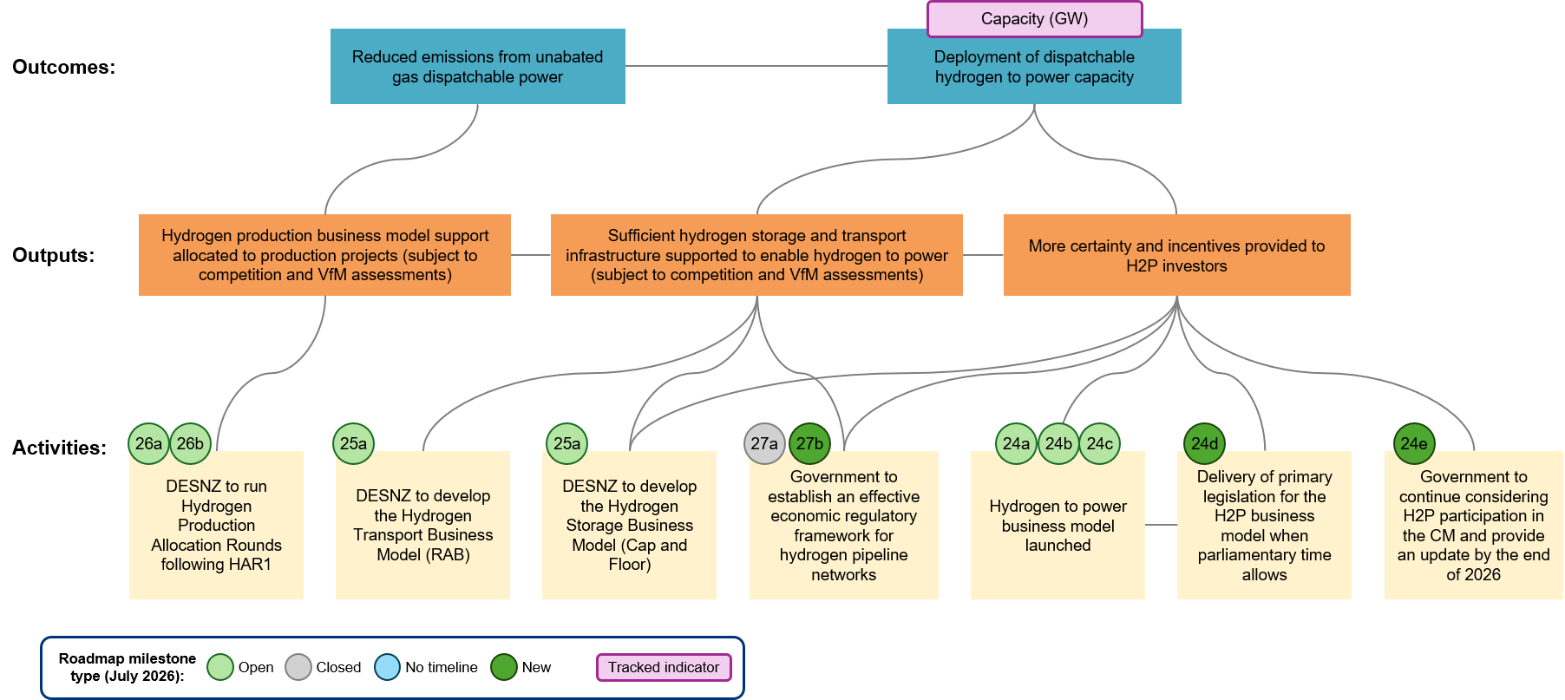
From July to September 2025, government consulted on developing an effective market framework for hydrogen pipeline networks,[footnote 39] marking the completion of milestone 27a from the Clean Flexibility Roadmap. In December 2025, government published its response to this consultation,[footnote 40] in which government announced taking forward a range of new actions, including introducing secondary legislation to exempt hydrogen supply to premises from supplier licensing requirements and developing a new hydrogen network code, which will support the rollout of hydrogen storage and transport infrastructure and therefore H2P capacity (new milestone 27b).
Government support through the Hydrogen Production Business Model (HPBM) has already accelerated the deployment of hydrogen production infrastructure. Projects that were successful in Hydrogen Allocation Round 1 (HAR1) are now moving through to the final investment decision, construction and operation phases. In October 2025, SSE, Equinor, and Siemens Energy continued their “Mission H2 Power” collaboration to expand testing capability for 100% hydrogen-fuelled gas turbines. Also in October 2025, Centrica and National Gas successfully completed a trial blending 2% of green hydrogen into the gas grid to generate power at Centrica’s Brigg Power Station – producing electricity directly into the power grid.[footnote 41] This achievement confirms the viability of a step towards hydrogen power, providing investors more confidence to support the development of H2P capacity.
New actions
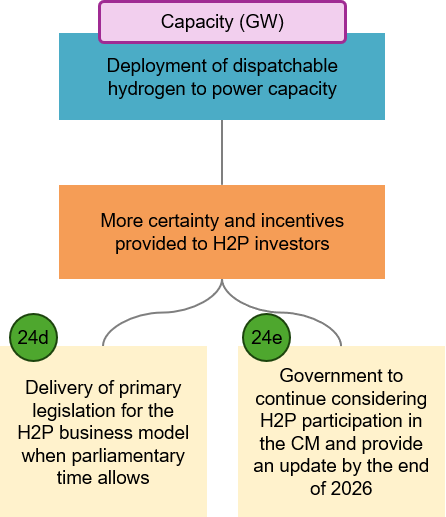
In May 2026, DESNZ published its response to the call for evidence on enabling H2P to participate in the Capacity Market (CM)[footnote 42] which ran between October and November 2025. The response commits government to continue considering H2P participation in the CM and provide an update by the end of 2026 (new milestone 24e). In addition, government will deliver primary legislation for the H2P business model when parliamentary time allows (new milestone 24d). These milestones will provide more certainty for investors, helping to accelerate the deployment of hydrogen to power and realising the resulting benefits.
Power carbon capture and storage (power CCUS)
Theory of change
The primary outcome of power CCUS is supporting the decarbonisation of the UK’s energy system by generating low carbon electricity continuously over days and weeks, to complement more duration-limited technologies such as batteries and LDES. Power CCUS can therefore help maintain a reliable electricity supply during prolonged periods of high electricity demand and/or low renewable output, sometimes referred to as “dunkelflaute”.
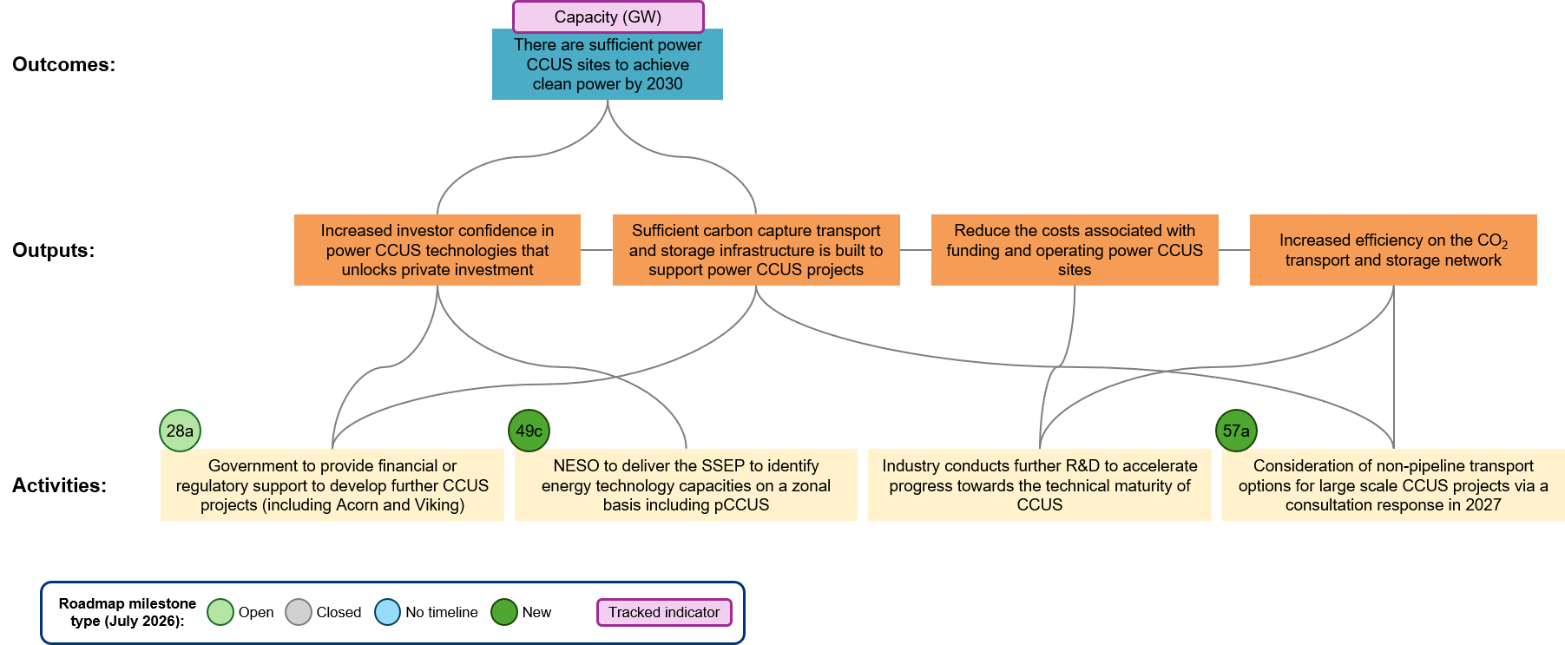
The outputs needed to support this outcome centre on the investment environment and the carbon transport and storage infrastructure. Government, NESO and industry are working together to increase investor confidence in power CCUS and reduce funding and operating costs to unlock private investment. This will accelerate a virtuous circle with transport and storage infrastructure, where increased investment will improve efficiency, enhancing the business case for further investment.
Figure 6: power carbon capture and storage theory of change
Key achievements and follow-on activities
Government has taken forward key steps to develop the market, including:
- progressing development expenditure decisions for Acorn and Viking clusters
- publishing a consultation on non-pipeline transport (NPT) in February 2026
- launching the East Coast Cluster (Teesside) expansion process (November 2025)
- launching the NPT Pathfinder competition (May 2026)
These steps create a pipeline of potential projects and support new routes to connect emitters to transport and storage infrastructure.
New actions
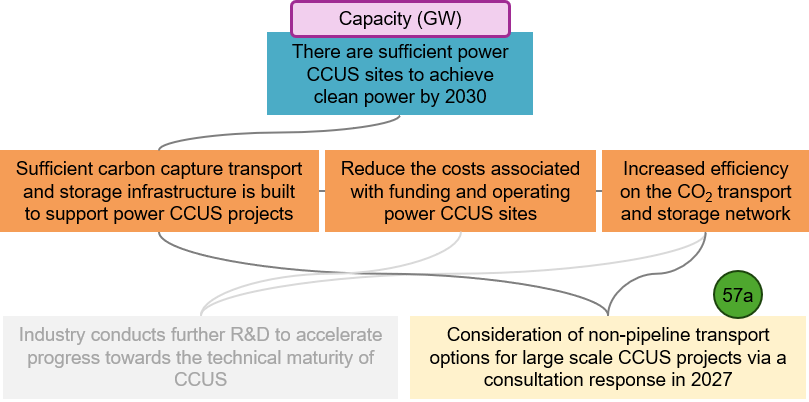
Government will respond to its non-pipeline transport consultation[footnote 43] in 2027, to accelerate the development of delivery mechanism support (new path building action and milestone 57a). This will address a gap in the workstreams outlined in the Clean Flexibility Roadmap to increase efficiency on the CO2 transport and storage network as well as ensure sufficient transport and storage infrastructure is built. This will bring us closer to the delivery of the UK’s first CCUS plant and the resulting benefits to consumers of lower carbon emissions.
Biomethane
Biomethane is a low carbon gas that can be produced domestically and is currently used to decarbonise heating and transport. However, it also has the potential to be used flexibly across many different end-uses, including industry, and low carbon dispatchable power generation at gas-fired power plants.
It is important that government, Ofgem and NESO have a shared, evidence-based view on how sustainable biomethane can cost-effectively contribute to clean power by 2030 and beyond, incorporating views from industry. In tandem, the regulatory and delivery route to market must be assessed to ensure that the optimal role of biomethane is feasible in practice. Assessing biomethane’s role in power should be considered alongside its role in the broader energy system. Once this role is determined, government can communicate its desired flexibility-related outcomes to form a comprehensive theory of change on how biomethane can contribute to clean power 2030.
As part of this process, government is considering how to support the biomethane sector after 2028 and how to address a range of investment barriers (Roadmap milestone 29a). As part of this, consideration is being given to the optimum scale, sustainability and delivery pathways for biomethane to power and other end-uses. In parallel, NESO is developing further evidence on biomethane’s role in the energy system, including consideration of scale, infrastructure considerations and end-uses. Together, this will contribute to the government’s assessment of the appropriate scale and system value of biomethane for low carbon dispatchable power.
In December 2025, Ofgem published its RIIO-3 Final Determinations,[footnote 44] marking the completion of milestone 30a. This included the announcement that National Gas Transmission (NGT) and the Gas Distribution Networks (GDNs) will now be funded to facilitate biomethane connections. In Gas Distribution, the Biomethane Use It Or Lose It (UIOLI) funding mechanism will focus on funding reinforcement work, whilst in Gas Transmission, the Biomethane UIOLI will fund connection costs of new connections that are not funded through the Green Gas Support Scheme. Ofgem will continue to monitor the effectiveness of this funding, which will support the injection of biomethane into the gas network, enabling further growth in the sector.
Glossary of terms
| Acronym | Term |
|---|---|
| ADE | Association for Decentralised Energy |
| AFM | Available Flexibility Model |
| BM | Balancing Mechanism |
| bn | Billion |
| BSC | Balancing and Settlement Code |
| BUS | Boiler Upgrade Scheme |
| C&F | Cap and Floor |
| CARR | Cost Allocation and Recovery Review |
| CCUS | Carbon capture, usage and storage |
| CLF | Consumer-led flexibility |
| CM | Capacity Market |
| DESNZ | Department for Energy Security and Net Zero |
| DFS | Demand Flexibility Service |
| DfT | Department for Transport |
| DSO | Distribution Service Operator |
| DTU | Demand turn up |
| DUoS | Distribution Use of System |
| EDM | Expected Delivery Model |
| EPC | Energy Performance Certificate |
| ESA | Energy Smart Appliance |
| EU | European Union |
| EV | Electric vehicle |
| FCL | Final consumption levy |
| GDN | Gas Distribution Networks |
| H2P | Hydrogen to power |
| HAR | Hydrogen Allocation Round |
| HBMU | Hybrid Balancing Mechanism Unit |
| HEMS | Home Energy Management Systems |
| HPBM | Hydrogen Production Business Model |
| I&C | Industrial and Commercial |
| LCM | Local Constraint Market |
| LCT | Low carbon technology |
| LDES | Long Duration Electricity Storage |
| m | Million |
| MEES | Minimum Energy Efficiency Standards |
| MHHS | Market-wide Half-Hourly Settlement |
| MPI | Multi-purpose interconnector |
| MRP | Maximum Resale Price |
| NESO | National Energy System Operator |
| NGT | National Gas Transmission |
| NPT | Non-pipeline transport |
| NWF | National Wealth Fund |
| R&D | Research and development |
| REGO | Renewable Energy Guarantees of Origin |
| RESP | Regional Energy Strategic Plan |
| RIIO-ED3 | Revenue = Incentives + Innovation + Outputs Electricity Distribution 3 |
| RNP | Reformed National Pricing |
| SSEP | Strategic Spatial Energy Plan |
| SSES | Smart Secure Electricity Systems |
| SSMD | Sector Specific Methodology Decision |
| TOUT | Time-of-use tariff |
| UIOLI | Use It Or Lose It |
| UKRI | United Kingdom Research and Innovation |
| V2X | Vehicle-to-everything |
| VfM | Value for money |
| VTP | Virtual Trading Party |
| WA | Wider access |
| YTD | Year to date |
| ZEV | Zero Emission Vehicle |
-
Government to make ‘plug-in solar’ available within months, GOV.UK (March 2026) ↩
-
Energy digitalisation framework: a vision for a coordinated and connected energy system, GOV.UK (March 2026) ↩
-
Consumer Led Flexibility for the Clean Energy Superpower Mission, Funding Competition, GOV.UK (June 2026) ↩
-
Calendar years are used throughout the document ↩
-
Reselling gas and electricity: Maximum Resale Price direction, call for input, Ofgem (October 2025) ↩
-
Capacity Market: consumer-led flexibility, call for evidence outcome, GOV.UK (October 2025) ↩
-
Capacity Market: proposed changes for Prequalification 2026, consultation outcome, GOV.UK (May 2026) ↩
-
Briefing Note: BM Operational Metering Changes, NESO (October 2025) ↩
-
Skip Rates Behind Active Thermal Constraints, NESO (March 2026) ↩
-
Government to make ‘plug-in solar’ available within months, GOV.UK (March 2026) ↩
-
Clean Flexibility Roadmap Action 7a: I&C Flexibility Target for NESO Market, NESO (December 2025) ↩
-
Smart metering policy framework post 2025, consultation outcome, GOV.UK (August 2025) ↩
-
Exploring the take-up and usage of thermal energy storage in heat networks, GOV.UK (August 2025) ↩
-
Consumer Led Flexibility for the Clean Energy Superpower Mission, Funding Competition, GOV.UK (June 2026) ↩
-
Accelerating electricity network connections for strategic demand - GOV.UK (April 2026) ↩
-
Unlocking the UK’s Future: our Five-Year Strategic Plan to 30/31, National Wealth Fund (January 2026) ↩
-
Guidance on Enabling Asset Metering for Co-located Assets - NESO (October 2025) ↩
-
Repetitive Re-trading by electricity storage in transmission constraint periods - Ofgem (June 2026) ↩
-
Consultation on modernising environmental permitting for industry, Defra (August 2025) ↩
-
Summary of responses and government response, Defra (April 2026) ↩
-
Next Steps for Electricity Interconnection in Great Britain, GOV.UK (March 2026) ↩
-
Future strategic approach to interconnection – call for input, Ofgem (March 2026) ↩
-
UK-EU Summit – Common Understanding, GOV.UK (December 2025) ↩
-
Interconnector trading restrictions for NESO - NESO (May 2026) ↩
-
Hydrogen economic regulatory framework: developing an effective market framework for 100% hydrogen pipeline networks, GOV.UK (December 2025) ↩
-
Hydrogen Economic Regulatory Framework: developing an effective framework for pipeline networks - government response, GOV.UK (December 2025) ↩
-
Brigg Breakthrough: Hydrogen Blending Powers Up UK’s Net Zero Ambitions, Centrica (October 2025) ↩
-
Capacity Market: Hydrogen to Power and interconnectors - GOV.UK (May 2026) ↩
-
Carbon capture, usage, and storage (CCUS): consultation on non-pipeline transport, GOV.UK (February 2026) ↩
-
RIIO-3 Final Determinations for the Electricity Transmission, Gas Distribution and Gas Transmission sectors, Ofgem (December 2025) ↩