Country medical note: China, November 2026 (accessible)
Updated 20 November 2026

© Crown copyright 2026
This publication is licensed under the terms of the Open Government Licence v3.0 except where otherwise stated. To view this licence, visit nationalarchives.gov.uk/doc/open-government-licence/version/3 or write to the Information Policy Team, The National Archives, Kew, London TW9 4DU, or email: psi@nationalarchives.gov.uk.
Where we have identified any third party copyright information you will need to obtain permission from the copyright holders concerned.
This publication is available at https://www.gov.uk/government/publications/china-country-policy-and-information-notes/country-medical-note-china-november-2026-accessible
Version 2.0, November 2026
About this note
Purpose
This Country Medical Note (CMN) provides country of origin information (COI) for Home Office decision makers handling cases where a person claims that removing them from the UK would be a breach of Articles 3 and/or 8 of the European Convention on Human Rights (ECHR) because of an ongoing health condition.
For general guidance on considering claims based on a breach of Article 3 and/or 8 of the ECHR because of an ongoing health condition, see the instruction on Human rights claims on medical grounds.
Decision makers must use relevant COI as the evidential basis for decisions.
About the country information
This section contains publicly available or disclosable COI. For details on how the Country Policy and Information Team (CPIT) gathers and presents country information, its research methodology and disclaimers and explainers on coverage, source selection, maps, translations and the use of Artificial Intelligence (AI) in developing CPIT products, see Purpose, methodology and use.
The structure and content follow a terms of reference which sets out the general and specific topics relevant to the scope of this note.
This CMN is intended to provide a comprehensive but not exhaustive survey of healthcare in China.
The COI included was published or made publicly available on or before 6 October 2026. Any information or report published after this date will not be included.
Some country information quoted was published in languages other than English and has been translated using free online translation tools. Sources originally published in other languages are clearly signposted throughout.
Country information
1. Overview of the healthcare system
1.1 Structure of the healthcare system
1.1.1 The Commonwealth Fund, a US-based independent private foundation which supports and publishes research on healthcare in the US and internationally[footnote 1], noted in their country profile on China, dated May 2026, that:
‘The central government has overall responsibility for national health legislation, policy, and administration. Local governments — in provinces, prefectures, cities, counties, and towns — are responsible for organizing and providing these services.
‘… Public hospitals are owned and managed by various levels of government agencies. The National Health Commission plays a central regulatory and administrative role in the health system, but it doesn’t directly control all hospitals — especially those affiliated with medical universities, which operate independently. Local health commissions and government departments at the provincial, city, and county levels often own public hospitals and exercise administrative authority over them. Additionally, national universities (which are directly administered by the Ministry of Education) maintain affiliated hospitals outside the National Health Commission’s direct control.’[footnote 2]
1.2 Funding and capacity
1.2.1 The Commonwealth Fund China country profile noted that:
‘National reforms to improve access and reduce pressure on hospitals have increased primary care funding substantially. Since 2009, per capita subsidies for essential public health services rose from CNY 15 (USD 2) [£1.69[footnote 3]] to CNY 89 (USD 12) [£10.03[footnote 4]] by 2023. These funds support service delivery, infrastructure, and staff salaries, with additional subsidies and central transfers targeted to underserved regions.
‘This funding increase is reflected in the growing workforce.’[footnote 5]
2. Organisation and provision of healthcare
2.1 Public healthcare
2.1.1 The Commonwealth Fund China country profile noted that:
‘Primary care is delivered through a tiered system that includes community health centers in cities and township health centers and village clinics in rural areas. These facilities offer basic medical care, chronic disease management, and public health services, with general practitioners (GPs) responsible for diagnosing and treating everyday health problems.
‘… China’s health care system is structured into three levels of care:
- Primary care provides basic health care and preventive services to the community. These are delivered by local hospitals and clinics.
- Secondary care provides regional comprehensive health services, with secondary care hospitals taking in referrals from primary hospitals. Secondary care hospitals also carry out medical teaching and research.
- Tertiary care provides advanced and specialist care. This is offered by large urban hospitals that serve as medical hubs for multiple regions.’[footnote 6]
2.1.2 The article by Xiang Tan and others on ‘Cross-sectional study on the current status of county-level cancer prevention and treatment capabilities in the four southwestern provinces of China’ published in March 2026 contained the below diagram which shows the hospital classification system for the 3 levels of care:[footnote 7]
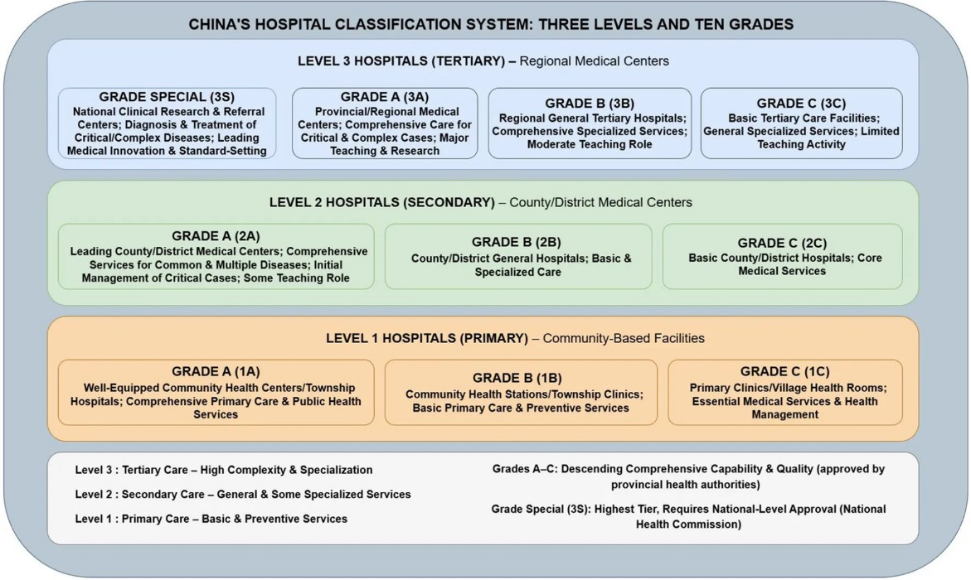
China’s Hospital Classification System: Three Levels and Ten Grades
Level 3 Hospitals (Tertiary) – Regional Medical Centers
Grade Special (3S)
National Clinical Research & Referral Centers; Diagnosis & Treatment of Critical/Complex Diseases; Leading Medical Innovation & Standard-Setting
Grade A (3A)
Provincial/Regional Medical Centers; Comprehensive Care for Critical & Complex Cases; Major Teaching & Research
Grade B (3B)
Regional General Tertiary Hospitals; Comprehensive Specialized Services; Moderate Teaching Role
Grade C (3C)
Basic Tertiary Care Facilities; General Specialized Services; Limited Teaching Activity
Level 2 Hospitals (Secondary) – County/District Medical Centers
Grade A (2A)
Leading County/District Medical Centers; Comprehensive Services for Common & Multiple Diseases; Initial Management of Critical Cases; Some Teaching Role
Grade B (2B)
County/District General Hospitals; Basic & Specialized Care
Grade C (2C)
Basic County/District Hospitals; Core Medical Services
Level 1 Hospitals (Primary) – Community-Based Facilities
Grade A (1A)
Well-Equipped Community Health Centers/Township Hospitals; Comprehensive Primary Care & Public Health Services
Grade B (1B)
Community Health Stations/Township Clinics; Basic Primary Care & Preventive Services
Grade C (1C)
Primary Clinics/Village Health Rooms; Essential Medical Services & Health Management
Key
- Level 3: Tertiary Care – High Complexity & Specialization
- Level 2: Secondary Care – General & Some Specialized Services
- Level 1: Primary Care – Basic & Preventive Services
- Grades A–C: Descending Comprehensive Capability & Quality (approved by provincial health authorities)
- Grade Special (3S): Highest Tier, Requires National-Level Approval (National Health Commission)
2.2 Private healthcare
2.2.1 The Australian Government’s Department for Foreign Affairs and Trade (DFAT)’s Country Information Report – People’s Republic of China, dated 27 December 2024 (2024 DFAT report), based on public and non-publicly available sources including on-the-ground knowledge and discussions with a number of sources[footnote 8], noted that: ‘In major cities, private healthcare facilities staffed by Western-trained physicians were also readily available for those who could afford it, but at more expensive rates.’[footnote 9]
3. Infrastructure and staffing
3.1 Hospitals and clinics
3.1.1 China Association of Clinical Laboratory Practice Expo (CACLP), a China-based international exhibition and conference platform focused on the in vitro diagnostics industry[footnote 10], using information from the China’s National Health Commission 2024 statistical bulletin on the development of China’s health sector (NHC 2024 bulletin), noted that:
‘By the end of 2024, the total number of medical and health institutions nationwide reached 1,093,551, an increase of 22,766 compared to the previous year. This includes 38,710 hospitals, 1,040,023 primary healthcare institutions, and 10,547 specialized public health institutions. Compared to the previous year, there was an increase of 355 hospitals and 23,785 primary healthcare institutions.
‘Within the category of hospitals, there were 11,754 public hospitals and 26,956 private hospitals. Hospitals were classified into three levels: 4,111 were Grade III hospitals (including 1,876 Grade III-A hospitals), 12,294 were Grade II hospitals, 13,287 were Grade I hospitals, and 9,018 were unclassified hospitals.’[footnote 11]
3.1.2 For information on the classification system, see Public healthcare.
3.1.3 The Commonwealth Fund China country profile noted that:
‘Outpatient specialists are employed by and usually work in hospitals. Patients typically select specialists through hospital-based outpatient appointment systems, particularly in tertiary public hospitals
‘… Hospitals can be public or private, nonprofit or for-profit. Rural township hospitals and urban community hospitals are often seen as primary care facilities.
‘In 2023, there were 26,583 private hospitals and 11,772 public hospitals. Public hospitals provide the vast majority of care, accounting for 84.2 percent of outpatient visits and 81.4 percent of hospitalizations in 2021.’[footnote 12]
3.1.4 For a list of medical facilities in China see the UK Foreign, Commonwealth and Development Office’s List of medical facilities in China and the National Health Commission of the People’s Republic of China’s page on Hospitals. Both of these sources are aimed at British or international patients but give details of medical facilities available in different provinces.
3.2 Capacity
3.2.1 The Commonwealth Fund China country profile noted that: ‘In 2023, there were 563 hospital beds per 100,000 people.’[footnote 13]
3.3 Healthcare workforce
3.3.1 CACLP, using information from the NHC 2024 bulletin, noted that:
‘By the end of 2024, the total number of health personnel in the country was 15.78 million, an increase of 542,000 (3.6%) compared to the previous year. Among these health personnel, there were 5.082 million practicing (assistant) physicians and 5.855 million registered nurses. The distribution of health personnel at the end of 2024 was as follows: 9.374 million in hospitals (accounting for 59.4%), 5.257 million in primary healthcare institutions (accounting for 33.3%), and 1.005 million in specialized public health institutions (accounting for 6.4%).’[footnote 14]
3.3.2 The Commonwealth Fund China country profile noted that:
‘Between 2012 and 2021, the number of GPs increased from 109,794 to 434,868, reaching 30.8 for every 100,000 people in 2021. By 2023, there were 39.9 GPs for every 100,000 people; this figure is projected to rise to 49 by 2026, meeting the government’s 2030 target ahead of schedule. In 2022, there were 311 doctors for every 100,000 people, above the average in countries across the Western Pacific (232).
‘… In 2022, there were 367 nurses and midwives per 100,000 people (fewer than the Western Pacific average of 434).’[footnote 15]
4. Access to treatment
4.1 General access to treatment
4.1.1 The 2024 DFAT report noted:
‘In-country sources told DFAT in 2023 that public healthcare in China was generally comparable to international standards, however quality and access to services varied significantly between urban and rural areas. Urban centres generally had better quality healthcare, especially in advanced cities like Beijing, Shanghai, Guangzhou, and Shenzhen. China’s ageing population also placed significant strain on the public healthcare system.
‘… Due to recent reforms to the hukou [household registration] system, access to healthcare services had improved since 2020 for domestic migrant workers who had moved from their province of birth to access employment, especially in cities on the east coast and around the Pearl River delta. Under hukou reforms, local governments had the ability to implement their own migration policies and had begun selectively issuing “temporary hukou” to allow migrant workers similar entitlements to locals. These entitlements often included subsidised health insurance and access to local hospitals for treatment, although this may not have applied to the children of domestic migrants.’[footnote 16]
4.1.2 CACLP, using information from the NHC 2024 bulletin, noted that:
‘In 2024, the total number of medical visits in China was 10.15 billion, an increase of 0.6 billion (6.2%) compared to the previous year.
‘Among the total number of medical visits in 2024, Grade III hospitals accounted for 2.87 billion visits (28.3%), Grade I hospitals, Grade II hospitals, and primary healthcare institutions for 6.76 billion visits (66.6%), unclassified hospitals for 0.17 billion visits (1.7%), and other healthcare institutions for 0.35 billion visits (3.4%). Compared to the previous year, Grade III hospital visits increased by 0.24 billion, while visits to Grade I hospitals, Grade II hospitals, and primary healthcare institutions increased by 0.35 billion.
‘In 2024, public hospitals had 3.77 billion medical visits (83.7% of the total hospital visits), and private hospitals had 0.73 billion medical visits (16.3% of the total hospital visits).
‘In 2024, township health centers and community health service centers (stations) had 3.98 billion medical visits, an increase of 0.23 billion compared to the previous year.’[footnote 17]
4.1.3 The Commonwealth Fund China country profile noted that:
‘GP registration isn’t mandatory, and residents can access outpatient care at higher-level hospitals without a referral. Some regions promote voluntary contracts between patients and family doctor teams to improve continuity of care.
‘… a lack of gatekeeping mechanisms means that patients don’t need to be referred by their primary care practitioners to access secondary or specialist care. Instead, they can visit these hospitals directly. This open-access system has contributed to a steady increase in outpatient volumes: Between 2012 and 2018, outpatient visits to hospitals grew at an average annual rate of 5.7 percent.
‘… There are no official data for the number of specialist medical practitioners or the proportion who work publicly versus privately.’[footnote 18]
4.2 Regional access to treatment
4.2.1 The Commonwealth Fund China country profile noted that:
‘Despite the rising numbers, rural areas lack qualified GPs. “One of the main challenges is training enough GPs — or nonphysicians like nurses, and nurse practitioners — to deliver preventive care, health promotion, and health management in community health centers and rural clinics,” says Winnie Yip, professor of global health policy and economics at Harvard School of Public Health. Reforms under the Healthy China 2030 strategy aim to enhance rural care infrastructure, “but medically trained professionals often prefer to work in urban areas, which contributes to uneven access,” Yip explains.
‘… rural and remote areas have a shortage of qualified health professionals. Between 2021 and 2022, 55.6 percent of village doctors said there was insufficient staffing and 67.7 percent identified lack of skills in medical staff. They also said there were limited opportunities for further training and advancement, which has made retention more difficult in some regions.’[footnote 19]
4.3 Cost of treatment
4.3.1 The 2024 DFAT report noted: ‘Healthcare in China was relatively cheap for locals in 2023, with costs heavily subsidised by the [basic health insurance] BHI system. In July 2023, in-country sources reported the cost to see a doctor in Beijing was around RMB 19 (approximately AUD 4) [footnote 20].’[footnote 21]
4.3.2 The Commonwealth Fund China country profile noted that:
‘Patients pay deductibles and copayments to hospitals for their primary care, specialty physician office visits, and hospital admissions at the point of service. Hospitals bill insurers directly (through electronic billing systems) for the remaining payment.
‘Since 2019, there’s been a steady transition away from traditional fee-for-service reimbursement and a move toward bundled payments, using diagnosis-related groups (DRG) and diagnosis intervention packets (DIP). Under DRGs, a fixed payment rate is set based on diagnosis, treatment, and patient categories. Under the DIP, the final amount paid depends on the range and severity of the treatment, as well as the service volume (the services delivered).
‘… Total medical expenses are not entirely covered by health insurance; there is also some level of cost sharing involved, with patients expected to pay copayments or other out-of-pocket expenses depending on the type of care they receive and their insurance coverage.
‘Outpatient services, such as clinic visits, diagnostics, and prescriptions, typically have a higher cost-sharing element than does inpatient care. The latest government data show that 70 percent of inpatient and about 50 percent of outpatient costs were covered by public insurance. Some regions have deployed measures to alleviate this burden for patients. In 2023, outpatient services in Wuhan were reimbursed at 50 to 68 percent under the city’s 2023 outpatient mutual aid policy, which also set annual caps of CNY 3,500 (USD 487) [£391[footnote 22]] for working individuals and CNY 4,000 (USD 556) [£447[footnote 23]] for retirees.
‘These local reforms were part of a broader effort to improve affordability and reduce avoidable hospitalizations. The 2021 outpatient coordination reform addressed structural inefficiencies by redirecting employer insurance contributions from underused personal medical accounts into a pooled fund. This allowed inpatient and outpatient claims to be reimbursed from the same source. The reform benefited patients with chronic illnesses who rely on regular outpatient care and medications.’[footnote 24]
5. Health insurance
5.1 Public health insurance
5.1.1 The World Health Organization (WHO), in an undated article on health financing in China, noted: ‘In China, the basic health insurance system covers over 95% of the population. In 2018, the National Healthcare Security Administration was established, managing all basic health insurance schemes in China. Its establishment is a milestone in China’s health sector reform and represents opportunities to further improve the efficiency of the health system on cost containment, quality of services and better value for money.’[footnote 25]
5.1.2 The Commonwealth Fund China country profile noted that:
‘As of 2023, the basic medical insurance system (comprising the [Urban Employee Basic Medical Insurance] UEBMI and the [Urban and Rural Resident Basic Medical Insurance] URRBMI) … covered 1.3 billion people — more than 95 percent of the population — including 371 million urban employees and 963 million rural and nonworking urban residents. This marks a dramatic expansion from just 13.4 percent coverage in 2003.
‘China’s public health insurance is built around two programs:
- The UEBMI is mandatory for urban employees and is funded jointly by employers and employees through payroll taxes.
- The URRBMI is a program that provides coverage for all rural residents and for urban residents who are not formally employed, such as children, students, the elderly, and unemployed residents. The program is voluntary (people are not automatically enrolled by the government).
‘Together, the two programs form China’s basic medical insurance. Citizens and permanent residents are covered by both, but visitors and undocumented immigrants are excluded.
‘The programs’ funding structures differ. Employers contribute monthly to the UEBMI, with the rates, which are set by local authorities, ranging from 7 to 10.5 percent, depending on location. For example, in Shanghai, employers contribute 10.5 percent; in Guangzhou, it’s 7 percent. Employees always contribute 2 percent, which is deducted directly from their salaries.
‘The URRBMI is primarily supported by government subsidies, with insured people making relatively small fixed annual contributions. As of 2021, government funding covered about 67 percent of total yearly costs, with subsidies amounting to CNY 580 (USD 80.7) [£63.27[footnote 26]] per person per year. The remaining yearly costs, CNY 320 (USD 44) [£34.91[footnote 27]] per person, were covered by individual enrollees.
‘Contributions are collected annually, and local governments have the authority to increase subsidy levels or adjust premiums based on local conditions. In Beijing, for instance, government subsidies covered up to 90 percent of the total premium for children and seniors in 2021.
‘… The following services are covered under the basic medical insurance system:
- Inpatient care (partial coverage)
- Outpatient care (partial coverage)
- Primary care
- Pharmaceuticals (only those included in the National Reimbursement Drug List[footnote 28]
- Mental health care
- Dental care (only for emergencies)
- Eye care (partial coverage for certain inpatient procedures)
- Rehabilitation (coverage for physical therapy)
- Home visits (only in some cities through pilot programs)
- Assistive devices (limited, region-specific coverage)
- Traditional Chinese medicine (partial coverage).
‘Preventive services, such as immunizations, disease screening, and preventive traditional Chinese medicine, are included in a separate public health benefit package funded by central and local governments. Every resident is entitled to these services, which have no copayments or deductibles.
‘Inpatient and outpatient care, including prescription drugs, are subject to different deductibles, copayments, and reimbursement ceilings depending on the insurance program, region, type of hospital (community, secondary, or tertiary), and other factors.
‘Certain procedures such as cataract surgery are partially reimbursed, but no other eye care services are covered. Emergency dental services are covered, but routine care is paid out of pocket.
‘The following services are not covered:
- Maternity care
- Palliative care
- Long-term care.
‘Maternity care is covered by a separate insurance program, but in 2019 the government announced that it was going to be merged into the basic medical insurance. The aim is for the basic medical insurance program to provide the financial support needed to keep the maternity insurance fund sustainable amid the rising costs of policies aimed at encouraging childbirth. For instance, in 2019, the urban employees’ medical insurance fund in Jiangsu Province had a total balance of CNY 182 billion (USD 25.3 billion) [£20 billion[footnote 29]], compared with just CNY 3.5 billion (USD 486.9 million) [£384.6 million[footnote 30]] in the maternity insurance fund.
‘Long-term care is covered under a separate insurance program that’s being piloted in selected cities.’[footnote 31]
5.1.3 In March 2026, Xinhua, the official state news agency of the People’s Republic of China[footnote 32], reported that at:
‘… the end of 2025, over 1.33 billion people were covered by China’s basic medical insurance, with the coverage rate remaining stable at around 95 percent. Enrollment rose by 4.06 million year on year, data from China’s National Healthcare Security Administration (NHSA) showed on Monday [16 March 2026]. In 2025, the basic medical insurance fund, including maternity insurance, recorded nearly 3.59 trillion yuan (about 520 billion U.S. dollars) [£391 billion[footnote 33]] in revenue and three trillion yuan [335.7 billion[footnote 34]] in expenditure.
‘… From the beginning of 2025, China began covering certain assisted reproductive treatments, such as egg retrieval and artificial insemination, under medical insurance, and 30 provincial-level regions included pain relief during labor under medical insurance coverage. In 2025, medical insurance covered over 3 million assisted reproductive treatments, helping more than 1.6 million people across the country, according to NHSA data. In rural areas, over 99 percent of the low-income population and those lifted out of poverty are now covered by medical insurance in China, said the NHSA.’[footnote 35]
5.2 Private insurance
5.2.1 The Commonwealth Fund China country profile noted that:
‘Private health insurance can be purchased individually or offered by employers as a benefit, especially in multinational corporations and large domestic firms. However, it plays a minor role in health care financing, covering only 5 percent of medical costs in 2020, compared with 44 percent from out-of-pocket expenses and 50 percent from basic medical insurance. Low enrollment in private insurance — with only about 4 percent of the population holding private policies — is due to high premiums, strict reimbursement policies, and short coverage periods.
‘To address these challenges, in 2015, Huimin Insurance, a government-backed model of private supplementary insurance, was introduced at the local level before expanding across the country in 2020. It offers low premiums, broad coverage, and open enrollment and covers deductibles, copayments, and services not reimbursed by basic medical insurance. By 2022, 140 million people (10% of the population across 244 cities and 28 provinces) had enrolled in this coverage, generating CNY 14 billion (USD 1.9 billion) [£1.5 billion[footnote 36]] in premiums.
‘Huimin Insurance is operated as a public-private partnership. Local governments work with private insurers by sharing basic medical insurance data and facilitating integrated payment systems. In exchange, insurers agree to higher payout rates and profit caps to keep the plans affordable and accessible.’[footnote 37]
5.2.2 Swiss Re Institute, the research division of Swiss Re, a global reinsurance company undertaking research and analysis on economic, insurance and risk trends[footnote 38], noted in an article published on 21 July 2025 that:
‘As China continues to deepen its medical and health system reforms to strengthen public health provision, individuals, particularly from middle and high income groups, are increasingly demanding services beyond those available under basic cover. Commercial health insurance has played an expanding role in bridging some of this gap. Commercial health insurance premiums were USD 133.9 billion [£99.8 billion[footnote 39]] in 2023, up 20% [compound average growth rate] CAGR from 2014, the share of GDP [Gross Domestic Product] rising to 0.7% from 0.2% over the same period. Claims grew to USD 54 billion [£40.2 billion[footnote 40]] in 2023 (4.2% of total healthcare expenditures) from USD 9.2 billion [£6.8 billion[footnote 41]] in 2014.’[footnote 42]
6. Pharmaceutical sector
6.1 Access to medication
6.1.1 The 2024 DFAT report noted:
‘To improve access to medicines, China has increased research and development funding for generic drugs. All medicines on China’s National Essential Medicines List were now reimbursable under health insurance as at 2022. In-country sources told DFAT in 2023 that most medicines were readily available in urban centres, although could be harder to source in rural areas. More difficult-to-source brand-name medicines were often substituted by lower-cost generics of similar quality.’[footnote 43]
6.1.2 In July 2026, China updated its national essential drug list. The list contains essential medicines that meet basic healthcare needs and are accessible and affordable.[footnote 44] The medicines available on the national essential drugs list can be found at Annex A National essential medicines list (2026 edition).
6.1.3 Drugs.com can be used to search for international brand names of common drugs. It may also indicate whether a drug is licensed in China, but it does not necessarily mean that a drug is actually available.
6.2 Costs of medication
6.2.1 The Commonwealth Fund China country profile noted that:
‘Medication copayments vary, but many prices were significantly reduced after being included in the National Reimbursement Drug List in 2023. That year, pharmaceutical manufacturers secured national coverage for 111 new products by agreeing to price cuts of 60.1 percent on average, which reduced costs for patients across a wide range of therapies. For example, the price of a rare disease drug used to treat spinal muscular atrophy dropped from CNY 63,800 (USD 8,874) [£6,960[footnote 45]] to CNY 3,780 (USD 526) [£412[footnote 46]] per bottle — a 94 percent reduction — after it was added to the National Reimbursement Drug List.
‘… Since 2018, the National Healthcare Security Administration has been leading a major reform to reduce drug prices through a system known as centralized, volume-based procurement. Under this program, the government pools demand from public hospitals across the country and organizes national bidding rounds where pharmaceutical companies compete to supply large amounts of commonly used, off-patent drugs. In exchange for guaranteed sales, the companies offer significantly lower prices. This approach has significantly reduced costs: By 2024, average prices had dropped by more than 70 percent across 10 procurement rounds, with some drug prices going down by more than 90 percent.’[footnote 47]
7. Blood and immune system conditions, including sickle cell disease
7.1 National programmes for blood and immune system conditions
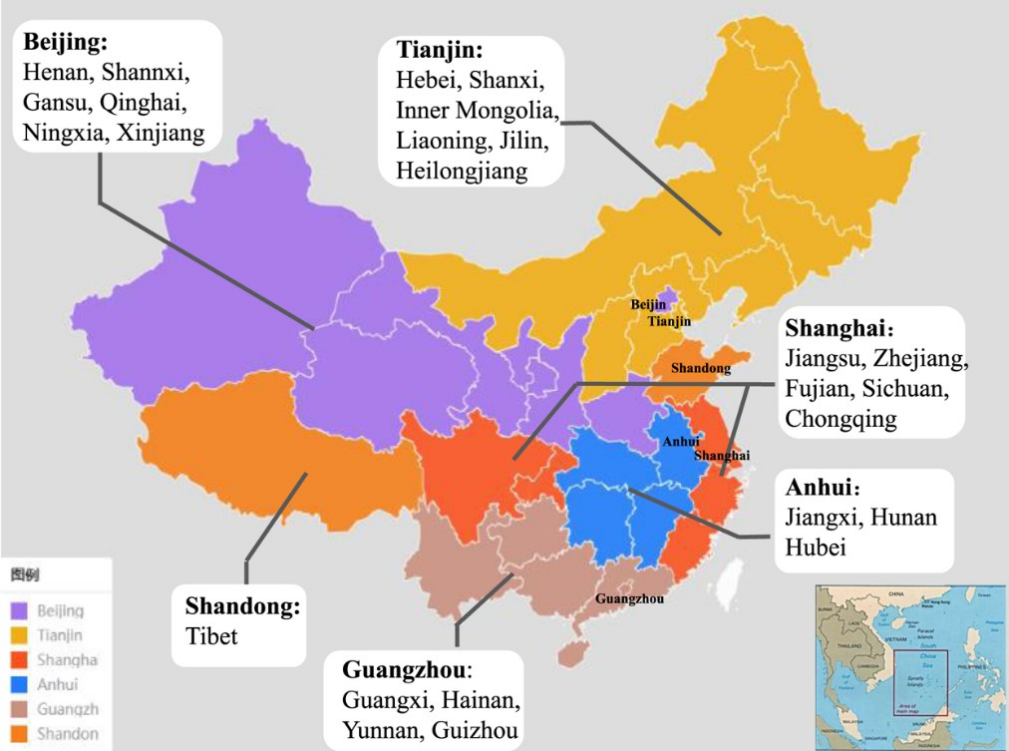
7.1.1 A 2019 article in the American Society of Hematology’s publication Blood Advances, authored by Renchu Yang and others, noted: ‘In 2009, the Chinese Ministry of Health (MOH) established a national hemophilia registration system with the Institute of Hematology and Blood Diseases Hospital, Chinese Academy of Medical Sciences, as the national hemophilia registry center, with 1 [Haemophilia Treatment Centre] HTC in each of the 31 provinces as a provincial registry center to facilitate identification of patients who live in the provinces.[footnote 48]
7.1.2 The below map is taken from the same source and shows the areas covered by the 6 core Haemophilia Treatment Centres:[footnote 49]
7.2 Health facilities for the treatment of haematology conditions
7.2.1 The Institute of Hematology & Blood Diseases Hospital in Tianjin is China’s largest national research hospital in haematology. The hospital website noted:
‘With 1,540 beds and 14 clinical centers, the annual number of patients diagnosed and treated at [Institute of Hematology & Blood Diseases Hospital, Chinese Academy of Medical Sciences] IHCAMS exceeded 318,000 in 2025. The mission of IHCAMS is to set the standard for excellence in medical and patient-centered clinical care and to make major contributions to scientific research that enhances human health in hematology and beyond. As the base for the National Clinical Research Center for Blood Diseases and the National Laboratory of Blood Science, IHCAMS is continually exploring innovative developments in the field of hematology. IHCAMS has been the top-ranked specialty hospital for both clinical care and scientific impact in hematology in China for consecutively 14 years and 11 years respectively.’[footnote 50]
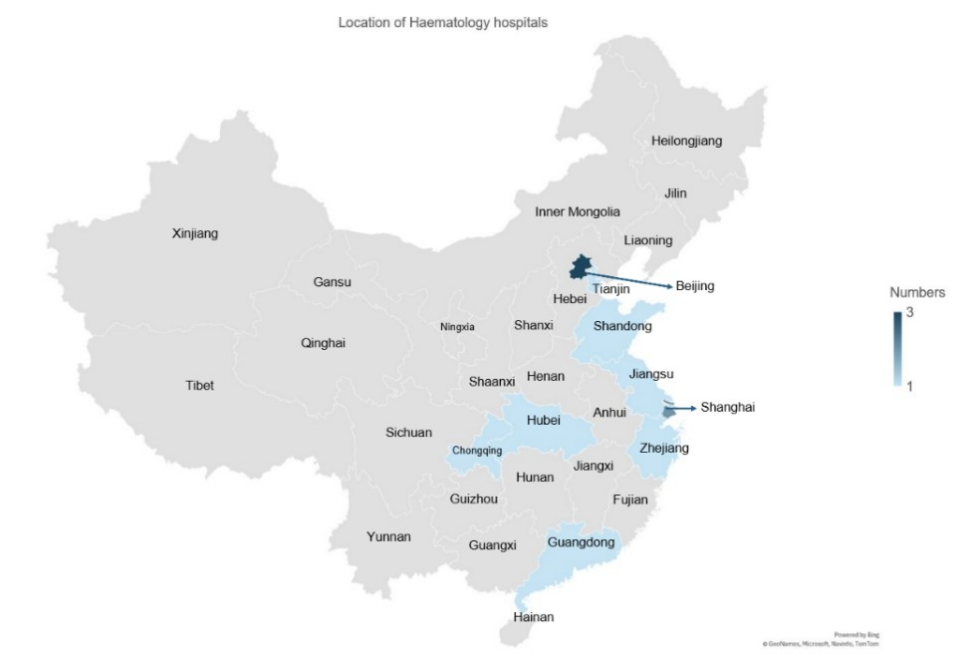
West China Med, an independent concierge service aimed at medical tourists[footnote 51], gives details of the Top 10 Hematology Hospitals in China. Medora, a company who help international patients access China’s best medical care[footnote 52], published the 2025 Fudan Hospital rankings, which is used to give details on the top 100 ranked hospitals as a guide for international patients.[footnote 53] Medora break down the list by medical speciality with details of the Top Hospitals for Hematology. CPIT have used the information in these sources to produce the map below, which shows the location of these hospitals:
7.3 Medication for blood and immune system conditions
7.3.1 For medicines included on the Essential Medicines List that are specifically used to treat haematological conditions, see the section on Haematological System Drugs in Annex A.
8. Cancer
8.1 Prevalence of cancer
8.1.1 A research article by Tan X and others titled ‘Cross-sectional study on the current status of county-level cancer prevention and treatment capabilities in the four southwestern provinces of China’, published in March 2026 (Tan X and others 2026 study), noted that: ‘In 2022, China reported approximately 4.8 million new cancer cases (24% of global total) and 2.6 million cancer deaths (26.7% of global total), both ranking first worldwide.’[footnote 54]
8.1.2 A 2024 multicentre cross-sectional survey of county hospitals in China, conducted by Wang and others. and published in the medical journal Holistic Integrative Oncology, examined the availability and capacity of cancer diagnosis and treatment services in county-level hospitals. The survey noted that: ‘Over the past five years, the prevalent cancers consistently reported in tertiary hospitals were lung cancer, breast cancer, gastric cancer, colorectal cancer, and thyroid cancer. Similarly, secondary hospitals have also observed a high incidence of lung cancer, colorectal cancer, gastric cancer, breast cancer, and liver cancer during the same period.’[footnote 55]
8.2 National programmes for cancer
8.2.1 The 2024 Wang and others survey reported that:
‘Apart from breast and cervical cancer screening, China has yet to establish a comprehensive national screening program for various cancer types. Notably, since 2006, the Chinese government has initiated targeted cancer screening projects for breast, colorectal, lung, stomach, esophageal, and nasopharyngeal cancers, specifically focusing on populations in high-risk regions. These endeavors reflect a broader effort to enhance cancer screening and early diagnosis. A notable uptick in public awareness and educational initiatives regarding the significance of cancer screening has been observed. Concurrently, numerous hospitals and healthcare facilities in China have upgraded their screening and diagnostic capabilities, leveraging advanced imaging technologies and other diagnostic tools.’[footnote 56]
8.3 Availability of treatment for cancer
8.3.1 The 2024 Wang and others. survey reported that:
‘The impact of cancer is notably pronounced in rural areas, where limited access to healthcare services and resources prevails. Residents in rural settings experience significantly higher incidence and mortality rates for all cancers combined compared to their urban counterparts. Insufficient access to healthcare facilities and specialized cancer care in rural regions often leads to delayed diagnoses and treatments. The absence of cancer screening initiatives and awareness campaigns further contributes to a higher prevalence of advanced-stage cancers at the time of diagnosis. Socioeconomic factors, including poverty and restricted health insurance access, exacerbate the disparities in cancer treatment between rural and urban areas.
‘… While the Chinese government has exhibited considerable attention and support for advancing cancer care in county-level healthcare institutions, challenges persist when compared to larger cities. First and foremost, county-level medical institutions often grapple with personnel and equipment limitations. Many lack specialized oncologists and advanced equipment, resulting in an uneven quality of diagnosis and treatment. This imbalance impedes effective disease management. Secondly, there is a discernible disparity in medical insurance policies for cancer diagnosis and treatment in county-level areas. Reimbursement standards and coverage for cancer-related treatments vary across regions, impacting patient choices and imposing financial burdens on those seeking medical assistance.’[footnote 57]
8.4 Health facilities for cancer treatment
8.4.1 In June 2025 the Guangzhou Fuda cancer hospital published a list of the top comprehensive cancer hospitals in China.
8.4.2 In July 2026, CancerFax, a website that helps patients access information on oncology treatments[footnote 58], produced an article on the Best Cancer Hospitals in China (2026) — Leading Oncology Centres. This article gives details of the hospitals and the programmes and treatments offered at those hospitals.
8.4.3 West China Med gives details of the Top 10 Cancer Hospitals in China. Medora gives details of the 2025 Fudan Hospital rankings broken down by medical speciality - Best Cancer Hospitals in China.
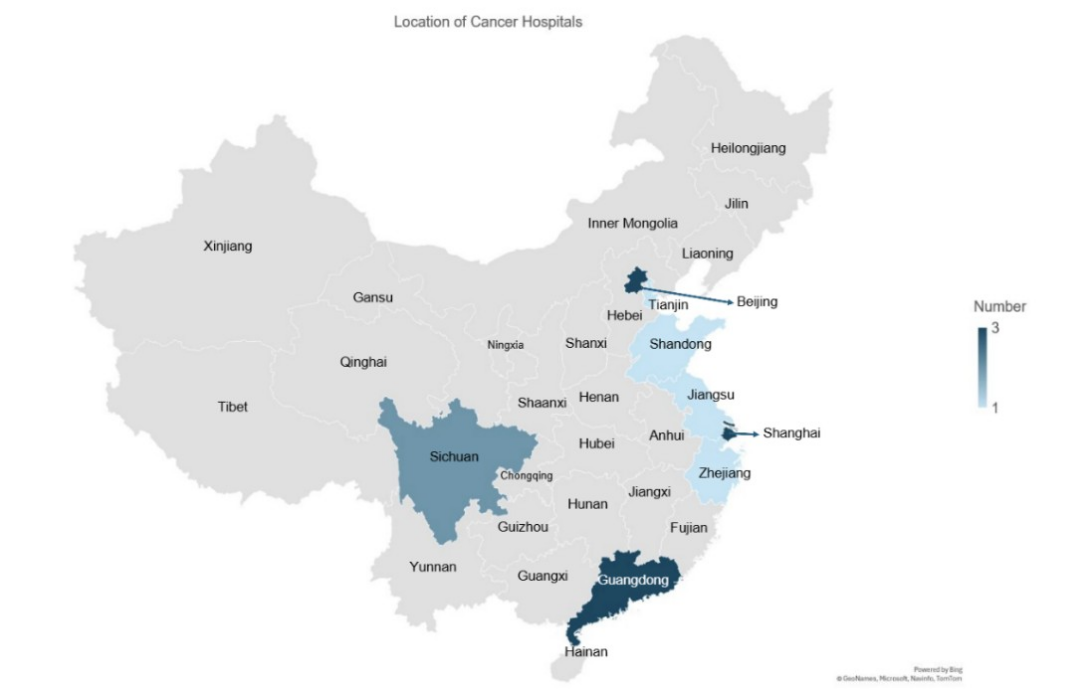
8.4.4 CPIT have used the information from the sites mentioned above to produce the map below showing the locations of these hospitals:
8.5 Treatment in southwest China
8.5.1 The Tan X and others 2026 study noted there were 470 district and county (city) level hospitals across four provinces in Southwest China (Yunnan, Sichuan, Guizhou, and Guangxi) of these 198, across 146 counties, had established oncology departments- Yunnan (68, 34.3%), Sichuan (81, 40.9%), Guangxi (28, 14.1%), and Guizhou (21, 10.6%).[footnote 59]
8.5.2 CPIT have used the information from the study[footnote 60] to produce the map below which shows the number of hospitals in the southwest of China with oncology departments:
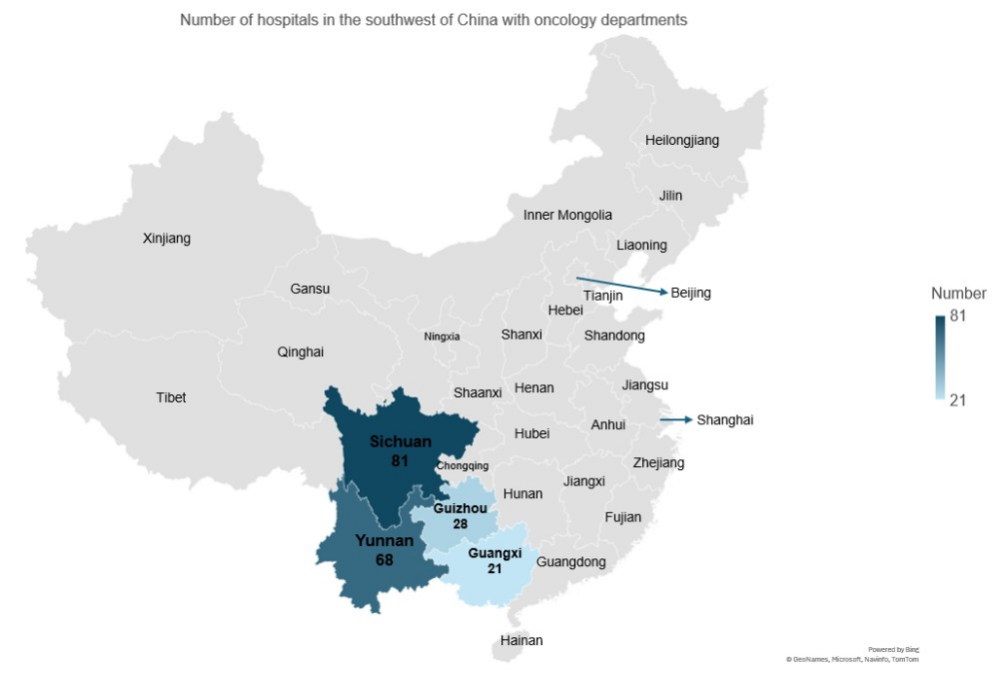
8.5.3 The below table, taken from the research article by Tan X and others, shows the cancer services available across the 198 hospitals in Southwest China that have an oncology department:[footnote 61]
| All Hospitals | Tertiary Hospitals | Secondary Hospitals | |
|---|---|---|---|
| Chemotherapy | 188 (94.9%) | 121 (96%) | 67 (93.0%) |
| Endocrine therapy | 164 (82.8%) | 109 (86.5%) | 55 (76.3%) |
| Targeted therapy | 192 (97.0%) | 123 (97.6%) | 68 (94.4%) |
| Immunotherapy | 171 (86.4%) | 116 (92.0%) | 55 (76.3%) |
| Radical Surgery | 154 (77.8%) | 111 (88.0%) | 43 (59.7%) |
| Radiotherapy | 67 (33.8%) | 56 (44.4%) | 11 (15.2%) |
| Interventional Tumour Therapy | 108 (54.5%) | 77 (61.1%) | 31 (43.0%) |
| Hyperthermia for tumours | 73 (36.9%) | 59 (46.8%) | 14 (19.4%) |
| Palliative care | 103 (52%) | 75 (59.5%) | 28 (38.8%) |
| Multidisciplinary Team (MDT) | 112 (56.6%) | 83 (65.8%) | 29 (40.2%) |
| Hospice care | 73 (36.9%) | 58 (46.0%) | 15 (20.8%) |
| Lung puncture biopsy | 147 (74.2%) | 106 (84.1%) | 41 (56.9%) |
| Ultrasound-guided tumour biopsy | 24 (62.6%) | 91 (72.2%) | 33 (45.8%) |
| Bronchoscopic tumour biopsy | 169 (85.4%) | 116 (92.1%) | 53 (73.6%) |
| Gastroenteroscopic tumour biopsy | 165 (83.3%) | 115 (91.3%) | 50 (69.4%) |
8.6 Medication for cancer
8.6.1 For medicines included on the Essential Medicines List that are specifically used to treat cancer, see the section on Cancer drugs in Annex A.
9. Cardiovascular conditions
9.1 Prevalence of cardiovascular conditions
9.1.1 The China National Center for Cardiovascular Diseases (NCCD), in its 2024 ‘Report on Cardiovascular Health and Diseases in China 2023: An Updated Summary’, stated that:
‘The prevalence of [Cardio Vascular Disease] CVD has been growing in China, and the number of patients with CVD is estimated to be 330 million: 13 million with stroke, 11.39 million with coronary heart disease (CHD), 8.9 million with heart failure (HF), 5 million with pulmonary heart disease, 4.87 million with atrial fibrillation, 2.5 million with rheumatic heart disease, 2 million with congenital heart disease, 45.3 million with peripheral arterial disease (PAD), and 245 million with hypertension.
‘… According to the China Health Statistics Yearbook 2022, CVD ranks first among the composition ratios of diseases causing deaths among urban and rural residents. In 2021, CVD accounted for 48.98% and 47.35% of the causes of death in rural and urban areas, respectively. The mortality rate of CVD in rural areas has exceeded and remained higher than that in urban areas since 2009.’[footnote 62]
9.1.2 The NCCD ‘Annual Report on Cardiovascular Health and Diseases in China 2024’, published in 2025, noted:
‘According to data from the Global Burden of Disease (GBD) study, the number of CVD cases, incidence rate, and standardized incidence rate in China’s total population increased from 5.3007 million cases, 447.81 per 100,000, and 646.20 per 100,000 in 1990 to 12.3411 million cases, 867.65 per 100,000, and 652.21 per 100,000 in 2019, respectively.
‘… In 2021, CVD was the leading cause of death in both urban and rural areas, accounting for 48.98% of total deaths in rural regions and 47.35% in urban areas.’[footnote 63]
9.2 Access to treatment for cardiovascular conditions
9.2.1 US China Healthcare, a reference library intended to explain how the US and Chinese healthcare systems work[footnote 64], noted that:
‘China’s cardiovascular system cannot be understood only through general hospitals. Specialty institutions such as Fuwai and Beijing Anzhen concentrate cardiac surgery, interventional cardiology, electrophysiology, structural heart disease, congenital heart disease, heart failure, hypertension, cardiovascular imaging, vascular disease, anesthesia, and prevention. These centers often influence national clinical norms because they combine high procedure volume, expert networks, clinical registries, training, and research platforms.
‘Cardiovascular disease is also a public-health problem, not only a hospital specialty. The National Center for Cardiovascular Diseases traces its prevention role to a Ministry of Health-approved cardiovascular prevention and treatment office in 1987 and its formal center status to 2009. That dual identity, tertiary care plus prevention, is important for hypertension, stroke prevention, coronary disease, heart failure, arrhythmia management, and risk-factor control.
‘… Specialty centers also create uneven geography. Beijing and Shanghai may have nationally visible cardiovascular hospitals, but many patients receive cardiovascular care in provincial or municipal general hospitals. National centers may shape standards and specialist training, while regional adoption depends on whether lower-tier institutions can reproduce the workflow safely and affordably.’[footnote 65]
9.3 Health facilities for the treatment of cardiovascular conditions
9.3.1 China Heart House, a Suzhou industrial park (SIP) based research institution[footnote 66], & Chest Pain Professional Committee’s ‘Summary of the Chest Pain Center Quality Control Report (2024)’, published in 2025, originally in Mandarin, noted:
‘In recent years, the number of chest pain centers built in China has rapidly and steadily increased. As of December 2024, there are 5,947 registered chest pain centers nationwide, with 2,994 having passed acceptance. According to the Chest Pain Center data reporting platform, as of April 2025, chest pain centers nationwide have treated a total of 18.34 million acute chest pain patients. In 2024, the National Chest Pain Center treated over 3.62 million acute chest pain patients, including over 770,000 acute myocardial infarction cases, achieving positive results: significantly increasing the proportion of reperfusion treatment for acute ST-segment elevation myocardial infarction patients, ensuring timely treatment for myocardial infarction patients, shortening hospital stays, and reducing hospitalization costs and mortality rates.’[footnote 67]
9.3.2 The below diagram taken from a research article by Yilin Li and others titled ‘Reductions in acute myocardial infarction burden linked to short-term PM2.5 exposure: Evidence from the Chinese CCA Registry’, published in August 2025, shows the distribution of chest pain centres across China.[footnote 68]
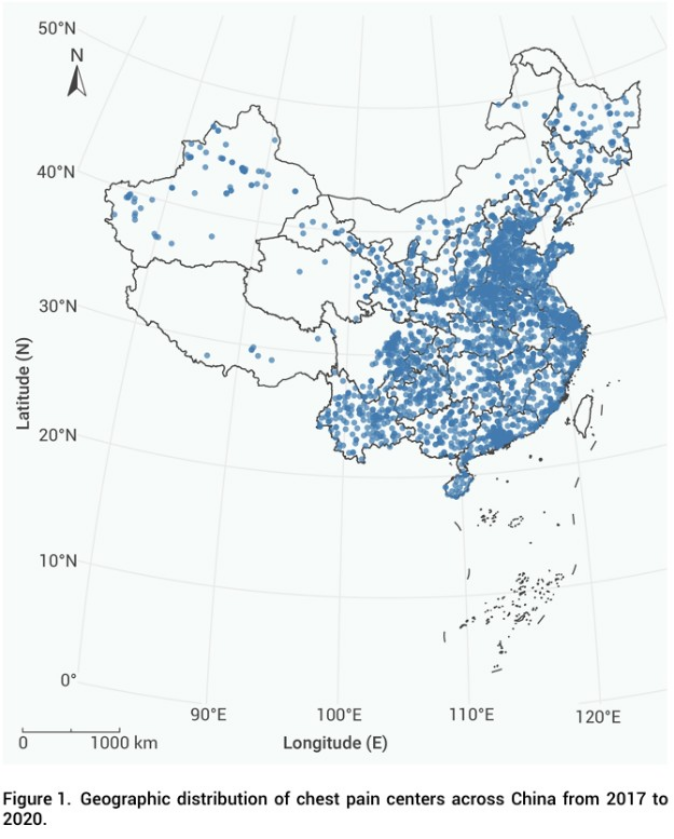
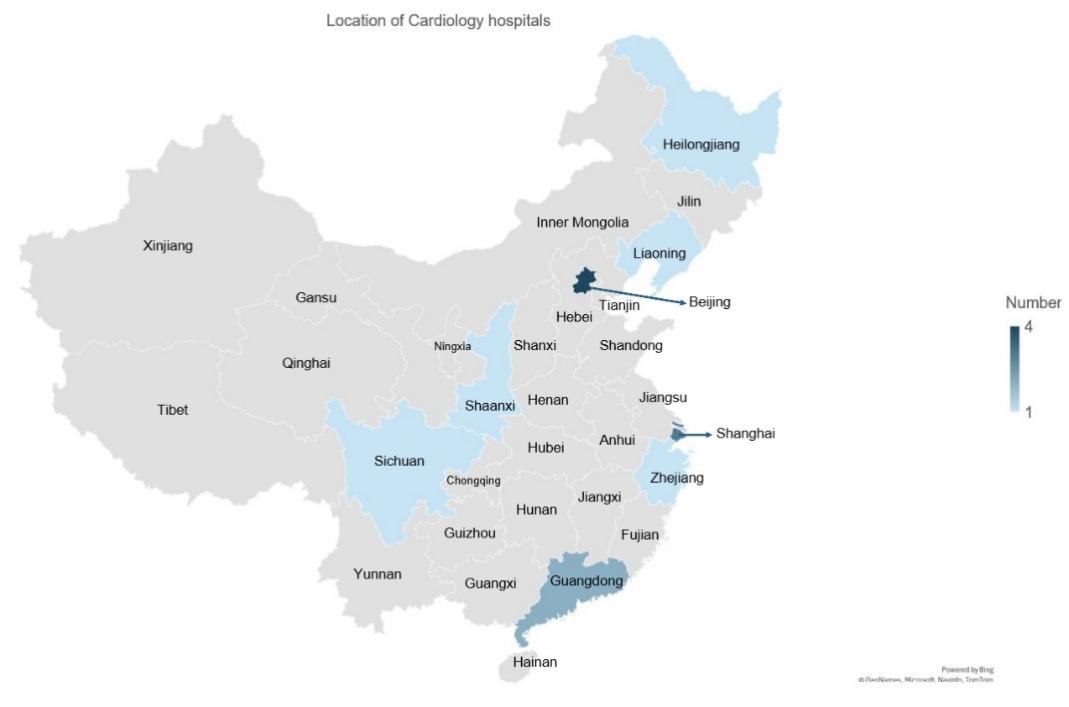
9.3.3 West China Med gives details of the Top 10 Cardiology Hospitals in China. Medora gives details of the 2025 Fudan Hospital rankings broken down by medical speciality: Best Cardiology Hospitals in China. CPIT have used information from these sources to produce the map below showing the locations of the mentioned cardiology hospitals:
9.3.4 Lu and others., in a 2023 article published in the peer-reviewed journal ‘Frontiers in Public Health’, examined healthcare costs associated with cardiovascular disease among more than 27,000 patients treated in 14 tertiary Grade A hospitals in China between 2018 and 2020.[footnote 69] CPIT have reproduced the table below from the article, which gives the average costs of cardiovascular treatment. The costs consist of insurance-covered cost and out-of-pocket cost:
| Cost category | Average cost CNY | Average cost GBP[footnote 70] |
|---|---|---|
| All CVDs | 41,281.82 | £4,541 |
| Common diseases | ||
| Hypertensive disease | 14,692.67 | £1,616 |
| Coronary artery disease (CAD) | 33,139.49 | £3,645 |
| Cardiomyopathy | 44,121.59 | £4,853 |
| Heart failure | 30,065.85 | £3,307 |
| Stroke | 37,330.03 | £4,106 |
| Congenital heart disease (CHD) | 41,675.50 | £4,584 |
| Myocardial infarction (MI) | 56,117.76 | £6,172 |
9.4 Medication for cardiovascular conditions
9.4.1 For medicines included on the Essential Medicines List that are specifically used to treat cardiovascular conditions, see the section on Cardiovascular drugs in Annex A.
10. Diabetes and other endocrinal, nutritional and metabolic conditions
10.1 Prevalence of diabetes and endocrinological conditions
10.1.1 The Chinese Diabetes Society and the Office for Primary Diabetes Care of the National Basic Public Health Service Program, in their ‘Guidelines on primary healthcare for type 2 diabetes in China’, published in Family Medicine and Community Health (FMCH) in December 2025, stated that: ‘The prevalence of diabetes in China has increased significantly in recent years, and approximately 11.9% of Chinese adults had diabetes in 2020. Moreover, onset is occurring in younger patients, and prevalence in rural areas is also increasing rapidly.’[footnote 71]
10.2 National programmes for diabetes and endocrinological conditions
10.2.1 A December 2024 review article published in The Lancet Public Health, authored by researchers including Yu Xu, Jieli Lu and Mian Li, noted that:
‘Building on accumulating evidence, the Healthy China 2030 Action Plan aims to enhance national physical activity levels by providing comprehensive support, such as increasing the construction of public sports facilities, issuing physical activity guidelines, formulating targeted health intervention plans for key populations and in different settings, particularly for adolescents and in schools to curb the increasing prevalence of young-onset type 2 diabetes, and continuously increasing the per capita length of urban jogging trails and greenways. Large cities, such as Beijing and Shanghai, promote cycling and walking by improving road network density, establishing a composite lane system, and creating convenient connectivity with public transit. In addition, China has implemented a series of mandatory measures to address the smoking epidemic, including tobacco taxation, packaging warnings, advertising bans, public smoking bans, and smoking cessation services.
‘One of the 15 special campaigns in the Healthy China 2030 Action Plan targets primary and secondary school students (ie, children aged 6–18 years). This campaign aims to curb the increasing prevalence of obesity and type 2 diabetes in children and adolescents by leveraging efforts from the individual themself, their family, and their school to improve health literacy, promote balanced nutrition and adequate physical activity, and advance mental health. Specifically, schools are required to educate students about healthy behaviours and lifestyle, schedule more than 1 h of outdoor physical activity per day, limit access to sugar-sweetened beverages and high-sugar or high-fat food, and promote mental health. Guidelines for physical activity in Chinese children and adolescents recommend at least 60 min of moderate-to-vigorous-intensity physical activity per day and vigorous-intensity physical activity and muscle-strengthening activity (eg, resistance training) at least 3 days per week, to promote cardiometabolic health and physical fitness. The Dietary Guidelines for Chinese School-aged Children highlight the promotion of nutritional literacy, cultivating healthy dietary behaviours and targeted for different age groups.
‘The Healthy Diet Campaign, the Physical Activity Campaign, and the Tobacco Control Campaign are all part of the Healthy China 2030 Action Plan to improve factors affecting chronic diseases, including diabetes. In addition to these initiatives, countermeasures targeting sociopsychological and environmental contributors are also included in the Mental Health Promotion Campaign and the Healthy Environment Promotion Campaign (also components of the Healthy China 2030 Action Plan) to curb essential modifiable risk factors that contribute to the growing diabetes epidemic in China.’[footnote 72]
10.3 Access to treatment for diabetes and endocrinological conditions
10.3.1 A March 2024 article published in the peer-reviewed journal BMC Primary Care, authored by researchers including Tao X, Mao L, Zhang P and others, noted that: ‘In China, [primary healthcare] PHC facilities are commonly the first contact point for patients with the national health system and patients with [type 2 diabetes] T2DM receive most of their healthcare services in PHC facilities.’[footnote 73]
10.4 Health facilities for the treatment of diabetes and endocrinological conditions
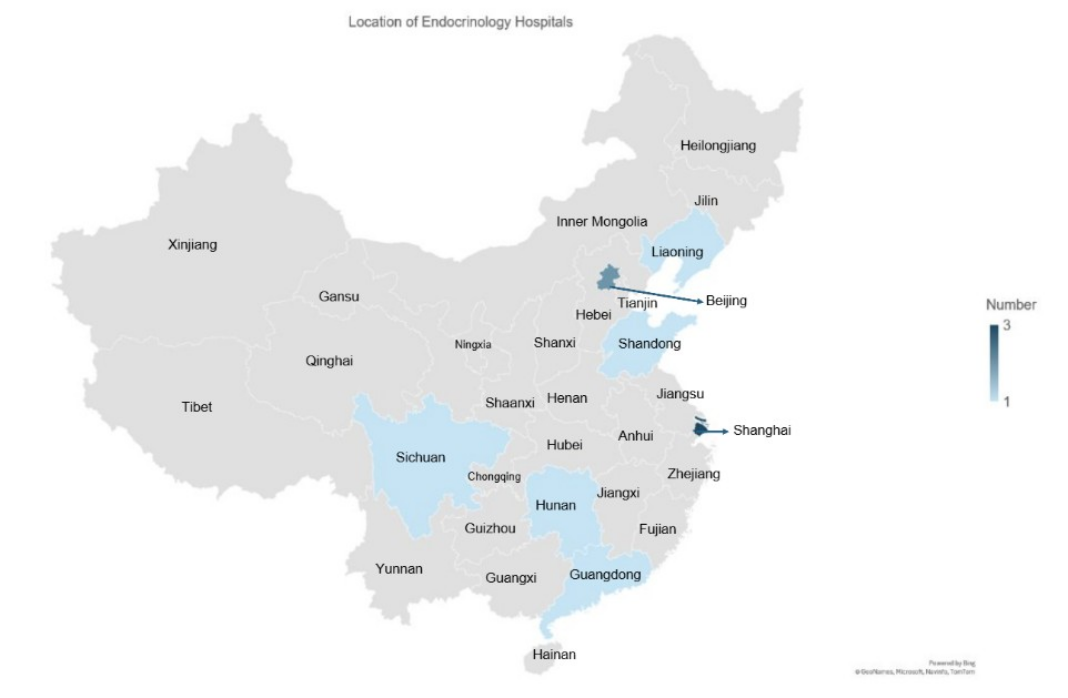
10.4.1 West China Med gives details of the Top 10 Hospitals for Endocrinology in China. Medora gives details of the 2025 Fudan Hospital rankings broken down by medical speciality - Best Endocrinology Hospitals in China - Diabetes & Thyroid. CPIT have used information from these sources to produce the map below, showing the locations of the mentioned hospitals:
10.5 Medication
10.5.1 Social Survey Research Information (SSRI China), a Shanghai-based independent agency specialising in healthcare market research[footnote 74], referencing a China Daily article, noted in 2024 that:
‘China rolled out a bulk buy program targeting insulin injections in late 2021, leading to an average price cut of 48 percent. Insulin products chosen by the program became available at reduced prices in May 2022.
‘The administration said that about 650 million insulin doses involved in the program have been used at public hospitals nationwide since then. The annual usage amount has reached 350 million, compared with 250 million before the program was launched. “The data suggests that as the financial burden of medications has been alleviated, diabetes patients have easier access to insulin therapies and have complied with standard regimens more strictly,” said the administration. The program has also narrowed price differences between advanced, third-generation insulin products and older versions. “The usage ratio of third-generation insulin doses rose from 58 to 78 percent after the program, nearing the level seen in European countries,” it said.’[footnote 75]
10.5.2 For medicines included on the Essential Medicines List that are specifically used to treat endocrinal conditions, see the section on Hormones and Endocrine Medicines in Annex A.
11. Ear, nose and throat conditions (ENT)
11.1 Prevalence of ENT conditions
11.1.1 A research article on ‘Temporal trends in prevalence and years of life lived with disability for hearing loss in China from 1990 to 2021: an analysis of the global burden of disease study 2021’, by Yuhuan Sun and others, published in March 2025, noted that the number of hearing loss cases in China increased from 197,913,077 in 1990 to 445,413,952 in 2021, an increase of 125.06%.[footnote 76]
11.2 National programmes for ENT conditions
11.2.1 Originally in Mandarin, in 2024, the General Office of China’s National Health Commission stated that to prevent the slow occurrence of hearing loss in the elderly and promote healthy ageing, the commission had decided to organise the nationwide Elderly Hearing Health Promotion Action from 2024 to 2027. The action’s objectives were to enhance awareness of hearing health, promote early screening and early intervention and improve the prevention and control level or elderly hearing loss and elderly hearing health service capabilities.[footnote 77]
11.3 Medical personnel and health facilities for the treatment of ENT conditions
11.3.1 The research article ‘Global Otolaryngology- Head and Neck Surgery Workforce’, by Beatriz Petrucci and others, published in August 2023, noted that there were 40,000 otolaryngology and head-and-neck surgery clinicians in China, equivalent to 2.84 per 100,000 population.[footnote 78]
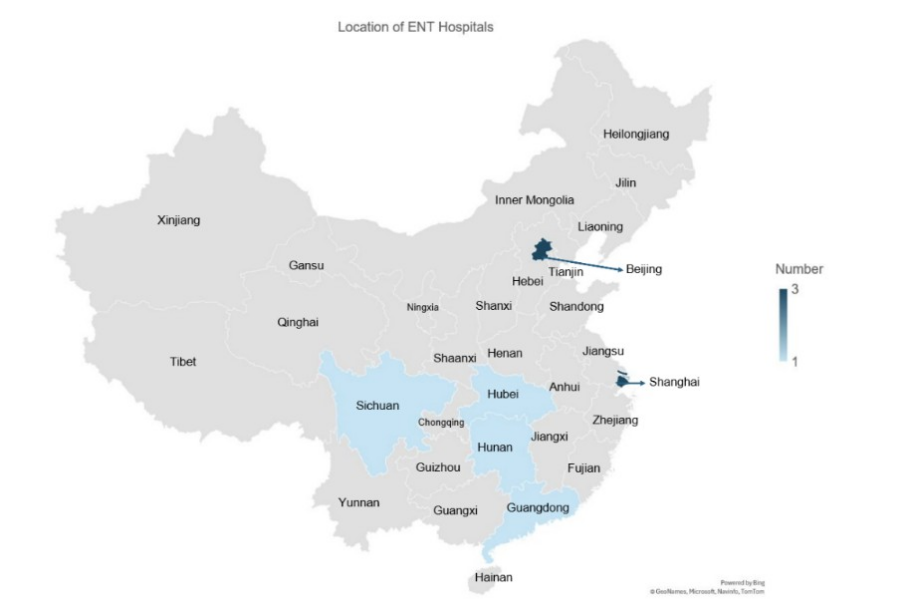
11.3.2 West China Med gives details of the Best ENT Hospitals in China. Medora gives details of the 2025 Fudan Hospital rankings broken down by medical speciality- Otolaryngology (ENT)- Top Hospitals in China. CPIT have used information from these sources to produce the map below, showing the locations of the mentioned hospitals:
11.4 Medication for ENT conditions
11.4.1 For medicines included on the Essential Medicines List that are specifically used to treat ENT conditions, see the section on ENT Medications in Annex A.
12. Eye conditions
12.1 Prevalence of eye conditions
12.1.1 A 2026 article in the British Journal of Ophthalmology on the ‘Nationwide age, sex, cause-specific burden of blindness and vision impairment in China’, authored by Guo X and others, noted that in 2021 there were 767.4 million people with VI (vision impairment) in China. The 764 million cases were comprised of 324.4 million uncorrected presbyopia, 4.1 million moderate VI cases, 46.7 million severe VI cases and 8.6 million cases of blindness. According to the article, there were more cases of women with VI (53.79% of cases) and: ‘Population ageing emerged as the predominant driver, accounting for 164.25% of the cataract-related burden increase … Uncorrected refractive errors and cataracts were the leading aetiologies, constituting 50.65% of moderate VI and 35.08% of blindness.’[footnote 79]
12.2 National programmes for eye conditions
12.2.1 In August 2026, the National Health Commission of China, the National Administration of Traditional Chinese Medicine, and the National Disease Control Administration of China jointly formulated the ‘Work Plan for Accelerating the Provision of High-Quality and Efficient Eye Health Services (2026–2030)’ (originally in Mandarin). The main goals of the plan are that by 2030 there will be:
- more than 4,000 cataract operations per million of the population each year
- more than 5.3 licensed ophthalmologists and assistant physicians per 100,000 people
- ophthalmology or combined eye, ear, nose and throat departments in more than 93% of county-level general hospitals
- independent diagnosis and treatment of common eye diseases in more than 95% of counties
- availability of cataract surgery in every county
- continued increases in screening and effective correction of refractive errors.[footnote 80]
12.3 Medical personnel and health facilities for the treatment of eye conditions
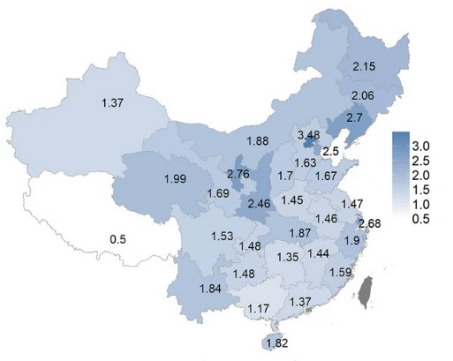
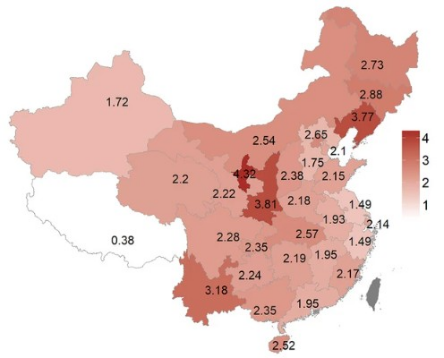
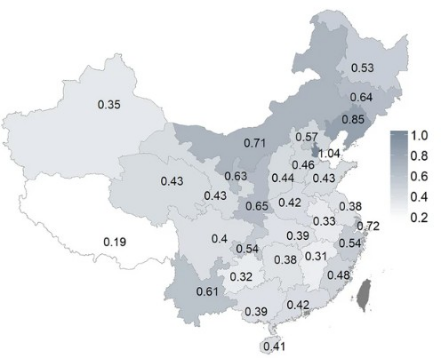
12.3.1 An article in the peer-reviewed journal BMC Health Services Research, titled ‘National-wide survey of ophthalmic human resources in China in 2021’, authored by Jin-Da Wang and others, noted that in China in 2021 there were 48,652 ophthalmologists, 64,495 ophthalmic nurses, and 14,320 optometrists.[footnote 81] The article also noted that: ‘On average, for every 50,000 people in mainland China, there were 1.70 ophthalmologists, 2.25 ophthalmic nurses, and 0.47 optometrists.’[footnote 82]
12.3.2 The below map, taken from the article by Jin-Da Wang and others[footnote 83], shows the number of ophthalmologists per 50,000 of the population in each province:
12.3.3 The below map, taken from the article by Jin-Da Wang and others[footnote 84], shows the number of ophthalmic nurses in each province:
12.3.4 The below map, taken from the article by Jin-Da Wang and others[footnote 85], shows the number of optometrists in each province:
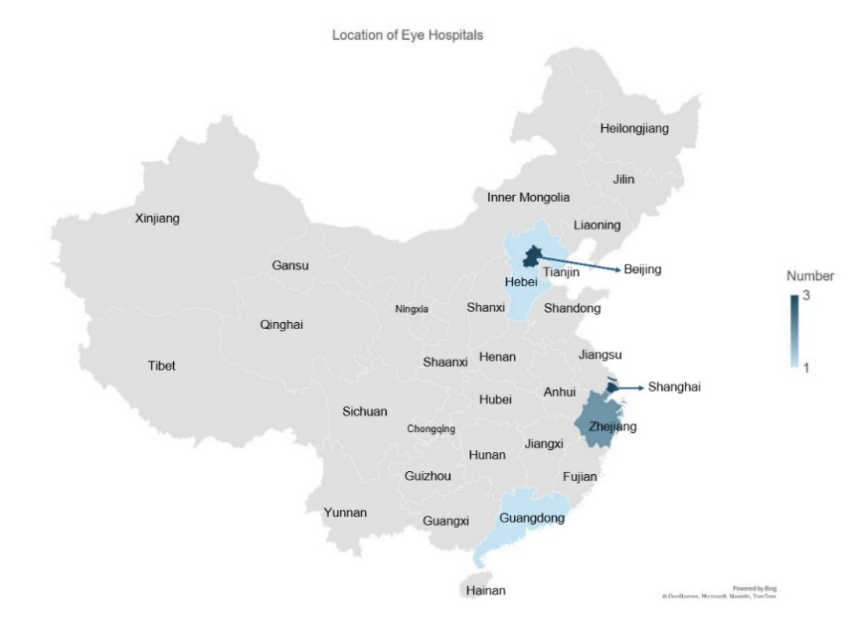
12.3.5 West China Med gives details of the China’s Top 10 Ophthalmology Hospitals. Medora gives details of the 2025 Fudan Hospital rankings broken down by medical speciality - Best Eye Hospitals in China — Ophthalmology & LASIK. CPIT have used information from these sources to produce the map below, showing the locations of the mentioned hospitals:
12.4 Medication for ENT conditions
12.4.1 For medicines included on the Essential Medicines List that are specifically used to treat eye conditions, see the section on Eye medications in Annex A.
13. Gastroenterology
13.1 Prevalence of gastroenterology
13.1.1 The Chinese Medical Journal published a research article titled ‘Summary of the 2024 report on gastroenterology and digestive endoscopy in China’, authored by Zheran Chen and others. The article analysed data from China’s National Clinical Improvement System (NCIS) and the Hospital Quality Monitoring System (HQMS). Information from NCIS included data from 4,620 hospitals (1,574 public tertiary general hospitals, 2,245 public secondary general hospitals, 621 private general hospitals, 37 children’s hospitals, 81 cancer hospitals, and 54 other specialty hospitals). Information from the HQMS database covered 7,074 hospitals (including 2,346 tertiary and 4,728 secondary hospitals).[footnote 86] The article noted that:
‘In 2023, the NCIS reported 89.0 million outpatient visits nationwide. On average, 19,252.4 outpatients per hospital nationwide, 39,297.8 in tertiary general hospitals, and 9184.7 in secondary general hospitals were observed.
‘In 2023, the HQMS included 11.4 million hospitalizations with a primary diagnosis of digestive diseases who were discharged from the Department of Gastroenterology. On average, 1615.2 hospitalizations per hospital nationwide were observed, with 3308.8 and 774.8 hospitalizations in tertiary and secondary hospitals, respectively. The most common diagnoses were colorectal polyps or benign neoplasms (17.7%), cirrhosis (6.3%), and gastric or duodenal polyps (5.8%) in tertiary hospitals and noninfectious gastroenteritis and colitis (26.6%), colorectal polyps or benign neoplasms (10.2%), and GI bleeding (6.1%) in secondary hospitals.’[footnote 87]
13.2 Medical personnel and health facilities for the treatment of gastrointestinal conditions
13.2.1 The Zheran Chen and others article noted:
‘In 2023, the NCIS included 172,172 gastroenterology beds and 44,166 gastroenterologists nationwide, of whom 70.3% … were qualified to perform endoscopic procedures. On average, 37.3 gastroenterology beds, 9.6 gastroenterologists, and 6.7 endoscopists per hospital were observed. Tertiary general hospitals possessed more abundant medical resources (58.4 gastroenterology beds, 16.5 gastroenterologists, and 12.6 endoscopists per hospital) than secondary general hospitals (27.0 gastroenterology beds, 5.9 gastroenterologists, and 3.7 endoscopists per hospital).’[footnote 88]
13.2.2 Originally in Mandarin, iGastro, the website of China’s National Clinical Research Center for Digestive Diseases[footnote 89], noted that:
‘The National Clinical Medical Research Center for Digestive System Diseases is a three-tier platform clinical research network system for digestive system diseases, led by the Digestive Disease Hospital of the First Affiliated Hospital of the Fourth Military Medical University, with 24 core units including Peking University People’s Hospital and 219 nationwide collaborative units, under the guidance of national science and technology departments and health departments and academic committees. Relying on the Collaborative Innovation Center for Digestive System Disease Research, the State Key Laboratory of Tumor Biology, and the National Clinical Pharmacology Base, the center integrates basic research achievements and joins forces with various strengths to jointly develop new drugs and methods for diagnosing and treating digestive system diseases. The director of this center is Academician Fan Daiming of the Chinese Academy of Engineering.’[footnote 90] A list of all the collaborating units can be found here.
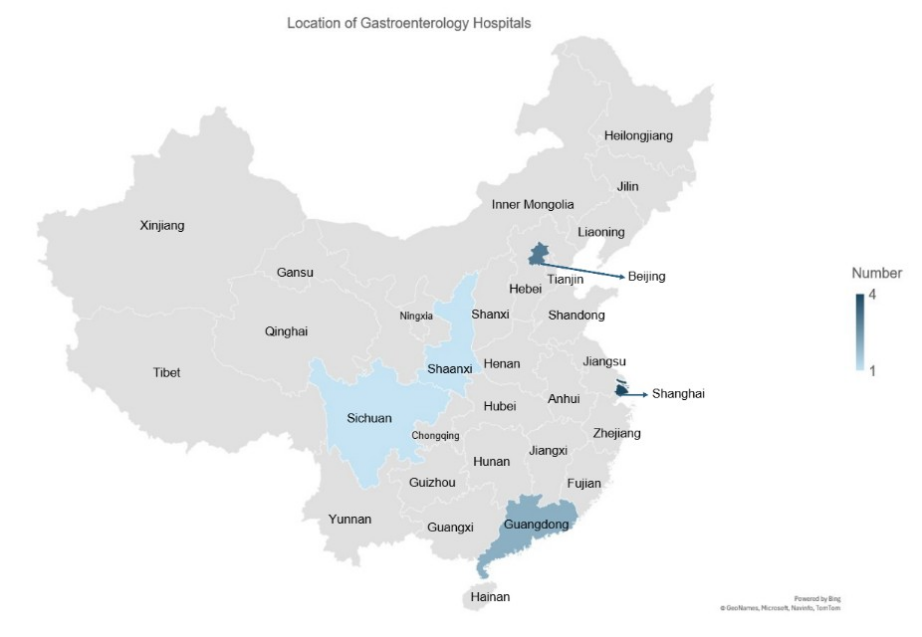
13.2.3 West China Med gives details of the Best Gastroenterology Hospitals in China. Medora gives details of the 2025 Fudan Hospital rankings broken down by medical speciality - Best Gastroenterology Hospitals in China. CPIT have used information from these sources to produce the map below, showing the locations of the mentioned hospitals:
13.3 Medication for gastroenterology
13.3.1 For medicines included on the Essential Medicines List that are specifically used to treat Gastroenterological conditions, see the section on Digestive System Drugs in Annex A.
14. Gynaecological conditions
14.1 Prevalence of gynaecological conditions
14.1.1 In 2024, Tian T and others published an article in the Journal of Global Health on ‘Prevalence and disparities in sexual and reproductive health of women of reproductive age (20–49 years) in China’. The study conducted a national cross-sectional survey which took sampling from across 15 provinces of China from May 2019 to April 2021. A total of 12,815 women of reproductive-aged (20–49 years) were involved. Approximately 50% of participants reported a history of gynaecological diseases, with vulvovaginitis (31.6%), cervicitis (20.6%), pelvic inflammatory or infection diseases (13.2%) and uterine fibroids (8.2%).[footnote 91]
14.2 National programmes for gynaecological conditions
14.2.2 The State Council of the People’s Republic of China referencing a February 2023 China Daily article noted:
‘The central government has outlined a long-term plan to accelerate the elimination of cervical cancer by 2030 via an initiative aimed at boosting vaccination rates among girls, stepping up screening efforts among women and offering more wide-ranging treatments to patients. The action plan was put forward by 10 central government departments on Jan 21 [2023] as China seeks to curb incidences of the disease, reduce the death rate and alleviate the burden on the society.’[footnote 92]
14.2.3 China Global Television Network (CGTN), an international media organisation[footnote 93], reported in September 2025 that:
‘China’s prevention and treatment of cervical and breast cancer have focused on inclusiveness and precision from the very beginning. As early as 2009, the state began offering free screenings for cervical and breast cancer to rural women through major public health service projects. Jointly promoted by the [National Health Commission] NHC and the All-China Women’s Federation, these projects provide free screening services for eligible women aged 35 to 64. According to data from the NHC, by 2023, nearly 290 million free cervical cancer screenings had been conducted nationwide, detecting 902,000 cases of cervical cancer and precancerous lesions. Meanwhile, 190 million free breast cancer screenings were conducted, identifying 149,000 cases of breast cancer.
‘… In January 2023, the release of the “Action Plan for Accelerating the Elimination of Cervical Cancer (2023-2030)” marked a significant step toward comprehensive protection against these two types of cancer. Aligning with the requirements of the “Healthy China 2030 Planning Outline” and responding to the World Health Organization’s global strategy for eliminating cervical cancer, this plan specifies three-level prevention measures – promoting human papillomavirus (HPV) vaccination, cervical cancer screening, and standardized treatment – to build a health shield for women at all stages of life.’[footnote 94]
14.3 Access to treatment for gynaecological conditions
14.3.1 A 2026 study by Yang H, Sun B, Pei C and others., published in BMC Health Services Research, conducted a national cross-sectional survey from February 2024 to December 2024 across 31 provinces, municipalities, and autonomous regions in mainland China. They surveyed 376 public hospitals and participants, including gynaecological physicians and patients, to research disparities in gynaecological care capacity in China. The study noted that:
‘Existing evidence reveals substantial differences in gynecological service capacity across regions and hospital tiers. Essential equipment-including ultrasound systems, laparoscopes, and hysteroscopes-is far less available in rural and county-level hospitals than in tertiary urban institutions. Similarly, access to essential medicines and the implementation of standardized clinical protocols differ considerably across regions. Patients in western provinces and those treated in primary facilities consistently experience poorer outcomes than those in eastern regions or higher-tier hospitals. Concentration of resources in economically developed urban centers has created a dual-tier system that entrenches quality inequities.’[footnote 95]
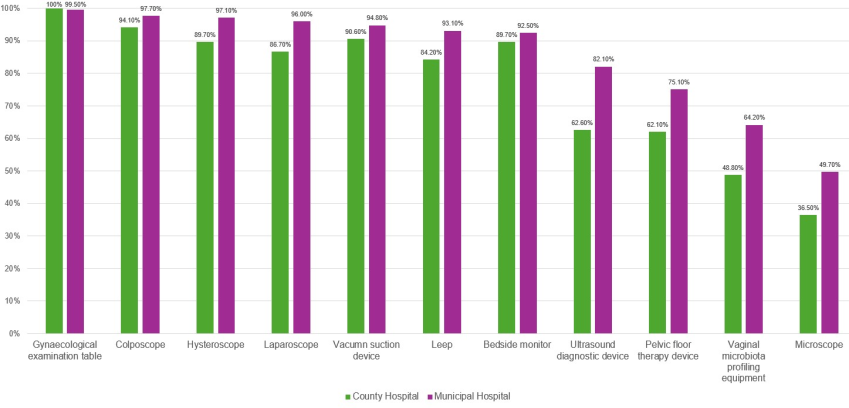
14.3.2 The study by Yang H and others. included information on the availability of key medical equipment. The study surveyed 203 county level hospitals (rural) and 173 municipal level hospitals (urban institutions). Using information from the study, CPIT have reproduced the graph below:[footnote 96]
14.4 Facilities, beds and personnel
14.4.1 The study by Yang H and others. found that the median number of staff members in gynaecology departments in 2023 was 27 staff members, with around half of hospitals having between 20 and 39 staff members. Across the 376 surveyed hospitals, the median number of gynaecologists per hospital was 12 with around half of hospitals having between 9 and 18 gynaecologists.[footnote 97]
14.4.2 The same study also noted that across the 376 hospitals surveyed there were a median of 38 available beds, with around half of hospitals having between 25 and 50 available beds.[footnote 98]
14.4.3 The below table, compiled by CPIT using information from the study by Yang H and others[footnote 99], shows the number of staff members in genealogical departments, the number of gynaecologists and the number of available beds in hospitals surveyed, broken down by region:
| Eastern region (120 hospitals) | Central region (124 hospitals) | Western region (132 hospitals) | |
|---|---|---|---|
| Number of staff members in gynaecology departments in 2023 | Median of 32 staff members. Around half of hospitals had between 24.5 and 49 staff members. | Median of 25 staff members. Around half of hospitals had between 18 and 37 staff members. | Median of 24 staff members. Around half of hospitals had between 17 and 32 staff members. |
| Number of gynaecologists | Median of 15.0 gynaecologists. Around half of hospitals had between 11 and 25 gynaecologists. | Median of 12 gynaecologists. Around half of hospitals had between 8 and 17 gynaecologists. | Median of 10 gynaecologists. Around had of hospitals had between 8 and 14 gynaecologists. |
| Number of available beds | Median of 41.5 available beds. Around half of hospitals had between 30 and 60 available beds. | Median of 39 available beds. Around half of hospitals had between 25.8 and 54.2 available beds. | Median of 32 available beds. Around half of hospitals had between 25 and 43 available beds. |
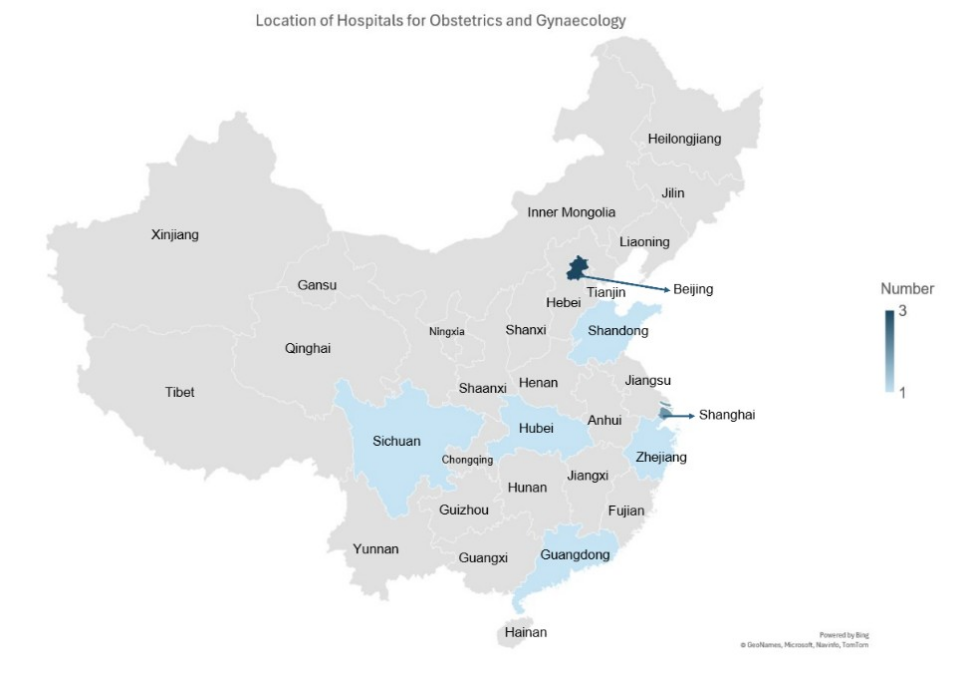
14.4.4 West China Med gives details of the Top 10 OB-GYN Hospitals in China. Medora gives details of the 2025 Fudan Hospital rankings broken down by medical speciality - Best Gynecology Hospitals in China. CPIT have used this information from these sources to produce the map below, showing the locations of the mentioned hospitals:
14.5 Medication for gynaecological conditions
14.5.1 For medicines included on the Essential Medicines List that are specifically used to treat gynaecological conditions, see the section on Gynaecology in Annex A.
15. HIV/AIDS
15.1 Prevalence of HIV/AIDS
15.1.1 The 2024 DFAT report noted:
‘Official statistics released by the WHO in 2018 (most recent data available) showed there were approximately 1.25 million people living with HIV in China. The Chinese Center for Disease Control and Prevention, as well as in-country sources, reported that the number of cases of HIV/AIDS had dropped by 13 per cent during the COVID-19 pandemic, primarily due to reduced interpersonal contact because of social distancing restrictions. In-country sources told DFAT that overall HIV infection rates continued to decline in 2023.’[footnote 100]
15.1.2 A 2025 article in the peer-reviewed journal BMC Infectious Diseases, titled ‘Challenges of integrating HIV prevention and treatment in China’s border mountain regions: a grounded theory study’, authored by Du S and others, noted:
‘HIV prevention and treatment in China face ongoing challenges, particularly in resource-limited areas and high-risk populations. According to data provided by the National Center for AIDS and Sexually Transmitted Disease Control and Prevention, Chinese Center for Disease Control and Prevention, as of December 31, 2024, a total of 1,355,017 cases of currently living HIV-infected individuals/AIDS patients were reported across 31 provinces (autonomous regions, municipalities directly under the central government) in China (excluding Hong Kong, Macau, and Taiwan), with 491,437 reported deaths. Among the living HIV-infected individuals, 749,839 cases were reported, while 605,178 cases were AIDS patients.’[footnote 101]
15.1.3 The below map is taken from Kefeng Qin’s chapter ‘Epidemiology and Therapy of People Living with HIV in Various Provinces of China’, in Aldemir B. Oliveira-Filho and Ricardo Roberto de Souza Fonseca’s ‘Global Response to HIV/AIDS: From Epidemiology to Mental Health and Clinical Management,’ published on 9 February 2026. The map shows the Provincial-level HIV/AIDS incidence rate in China, in 2024 (per 100,000 population):[footnote 102]
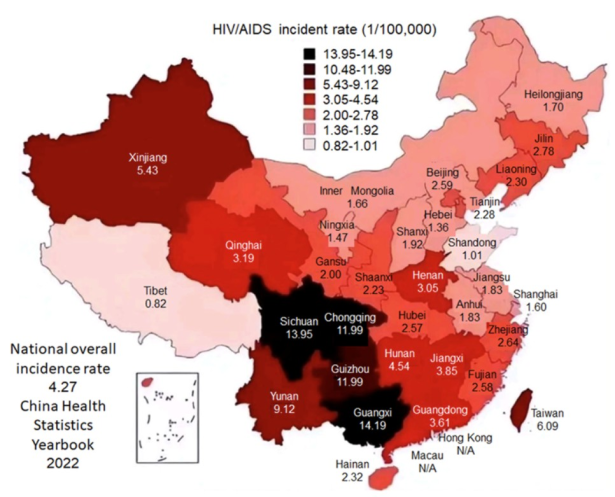
15.1.4 For more information on the prevalence rates in each province see the chapter on Epidemiology and Therapy of People Living with HIV in Various Provinces of China by Kefeng Qin.
15.2 National programmes for HIV/AIDS
15.2.1 The 2024 DFAT report noted:
‘The Government of China provides subsidised testing and treatment of people living with HIV and AIDS and funds infection control programs. Following transmission of HIV through plasma donation at blood collection centres, the National Free Antiretroviral Therapy Program was introduced in 2003, which increased antiretroviral therapy coverage among HIV-infected patients. A focus on early detection has meant that HIV/AIDS no longer needed to be fatal in 2023 and was instead considered a chronic disease in China that could be managed with long-term treatment.
‘At the district level, government and provincial authorities jointly fund “Volunteer Associations of STD/AIDS Prevention and Control” centres that provide public health education on HIV/AIDS. These centres also provide advice on treatment options and how to obtain free anti-retroviral drugs. Eligibility for services in 2023 was based on physical residence, study, or employment location, not hukou registration. Online apps, such as ‘Blued’, also played an important role in promoting HIV services on the internet in 2023. Apps provided information on HIV prevention that could be accessed discretely through chat rooms, online partner notifications, online test slips, banner ads, and interactive targeted interventions and websites that focused on populations at higher risk of HIV.’[footnote 103]
15.2.2 The Du S and others 2025 article noted:
The prevention, control, and treatment of AIDS in western China’s economically underdeveloped regions face significant challenges due to rising infections and limited medical resources. In response, the Chinese government has adopted a “medicine and prevention integration model,” drawing from its experience in managing public health emergencies like COVID-19. Introduced in 2018 through the “Contracted Services of Family Doctors,” this model focuses on integrating medical care and preventive services, emphasizing collaboration between patients, general practitioners, medical institutions, disease control centers, and government agencies. In December 2023, the National Health Commission further refined this approach by strengthening county-level medical communities, particularly for vulnerable groups like those with chronic diseases, the elderly, and individuals with infectious diseases. This model specifically addresses AIDS by integrating prevention, screening, diagnosis, treatment, and management, ensuring a coordinated approach that reduces transmission and prevalence through optimized service delivery.’[footnote 104]
15.3 Health facilities for the treatment of HIV/AIDs
15.3.1 Xinhua reported in November 2023 that: ‘The number of HIV screening laboratories and testing sites nationwide has expanded to over 50,000. China has established a national HIV/AIDS treatment and drug supply system covering 2,517 counties. More than 90 percent of HIV carriers have received antiretroviral therapy, and more than 95 percent have achieved success in their treatment.’[footnote 105]
15.3.2 Kefeng Qin’s ‘Epidemiology and Therapy of People Living with HIV in Various Provinces of China’, published in 2026, noted that in Huzhou city in northern Zhejiang there is a fully government funded, city-wide Highly Active Antiretroviral Therapy (HAART) program which has been running there since 2005. The source further noted: ‘Treatment is free of charge to all residents and documented temporary residents; written, informed consent is required. The program covers the entire prefecture (population: 3.4 million) and is embedded in the national AIDS information system of China for seamless record-keeping.’[footnote 106]
15.4 Medication for HIV/AIDS
15.4.1 Kefeng Qin’s chapter on ‘Epidemiology and Therapy of People Living with HIV in Various Provinces of China’ noted:
‘The free antiviral drugs provided to people living with HIV (PLWH) in China mainly include the following:
Zidovudine (AZT): May cause side effects such as anemia.
Lamivudine (3TC): Relatively few side effects.
Stavudine (d4T): May cause peripheral neuropathy.
Tenofovir (TFV): May cause bone density loss.
Abacavir (ABC): May cause allergic reactions.
Efavirenz (EFV): May cause central nervous system side effects, such as insomnia, vivid dreams, and rashes.
Nevirapine (NVP): May cause rashes and liver function abnormalities.
Lopinavir + Ritonavir (LPV/r): Used for antiviral treatment.
‘In addition, the domestic antiviral drug Efavirenz/Emtricitabine/Tenofovir Disoproxil Fumarate (EFV/FTC/TDF) Tablets (brand name “Norlay”) has also been included in the national free drug catalog. Patients only need to take one tablet per day to achieve stable treatment effects.’[footnote 107]
15.4.2 The same source noted:
‘The following are some common self-paid drugs and their prices [costs have been converted with conversion rate of 1 CNY = 0.1124 GBP[footnote 108]]:
Taidou (Lamivudine + Tenofovir) (3TC + TDF): 780 Yuan [£87.67].
Truvada (Emtricitabine + Tenofovir) (FTC/TDF): 1,980 yuan [£222.52].
Rilpivirine (RPV): 1,200 yuan [£134.88], covered by medical insurance in some cities.
Isentress (Raltegravir): 1,980 yuan [£222.52].
Tivicay (Dolutegravir) (DTG): 1,980 yuan [£222.52].
Triumeq (Abacavir/Lamivudine/Dolutegravir) (ABC/3TC/DTG): 2,880 yuan [£323.71].
Stribild (Elvitegravir/Cobicistat/Emtricitabine/Tenofovir): 1,290 yuan [£144.99], covered by medical insurance in some cities.
Biktarvy (Bictegravir/Emtricitabine/Tenofovir Alafenamide) (BIC/FTC/TAF): 3,680 yuan [£413.63].
Doravirine (DOR): 2,280 yuan [£256.27].’[footnote 109]
15.4.3 The same source also noted, with reference to drugs available via medical insurance, that:
‘There are nine HIV drugs in China’s medical insurance catalog, specifically:
Efavirenz (EFV)/Cobicistat/Tenofovir Alafenamide (TAF) Tablets (Brand Name: Jiefukang): Included in the medical insurance catalog in 2019, it is a single-tablet regimen for HIV treatment.
Lamivudine/Dolutegravir (3TC/DTG) Tablets (Brand Name: Dovato): China’s first complete single-tablet regimen for HIV treatment consisting of two drugs.
Ainovir (ANV) Tablets (Brand Name: Aibangde): A new generation of non-nucleoside reverse transcriptase inhibitors.
Bictegravir/Emtricitabine/Tenofovir Alafenamide (BIC/FTC/TAF) Tablets (Brand Name: Biktarvy): Included in the medical insurance catalog starting January 1, 2022.
Albuvirtide for Injection (Brand Name: Aikening): Included in medical insurance in 2021, with a payment standard of 532 yuan per vial.
Aino Metite Tablets (Brand Name: Fubangde): The first domestically developed triple-combination single-tablet regimen for HIV treatment with independent intellectual property rights.
Doravirine/Lamivudine/Tenofovir Disoproxil (DOR/3TC/TDF) Tablets (Brand Name: Deszhuo): A triple-combination single-tablet regimen containing a non-nucleoside reverse transcriptase inhibitor.
Azvudine (FNC) Tablets: Used for the treatment of HIV, they were included in the medical insurance catalog on January 18, 2023, with a price of 11.58 yuan per tablet (3 mg).
Nevirapine/Zidovudine/Lamivudine Tablets: Used for the treatment of HIV.’[footnote 110]
15.4.4 For medicines included on the Essential Medicines List that are specifically used to treat HIV, see the section on Antiviral drugs in Annex A.
16. Kidney conditions
16.1 Prevalence of kidney conditions
16.1.1 In June 2025, peer-reviewed journal Kidney International published an article titled ‘Executive summary for the China Kidney Disease Network (CK-NET) 2017–2018 Annual Data Report’, authored by Chao Yang and others. The article noted:
‘The findings of the Sixth China Chronic Disease and Risk Factor Surveillance revealed that the prevalence of [chronic kidney disease] CKD among the adult population of this country was 8.2% during the period of 2018 to 2019 … Patients with CKD accounted for 4.95% of all inpatients in 2017 and 4.59% in 2018, with an overall fluctuating trend over the past 5 years. The prevalence of CKD was particularly high among people with diabetes and hypertension.’[footnote 111]
16.1.2 The International Registry on Organ Donation and Transplantation recorded 11,832 deceased-donor and 3,555 living-donor kidney transplants in China in 2024.[footnote 112]
16.2 Medical personnel and health facilities for the treatment of kidney conditions
16.2.1 Wu J and others published an article in August 2023 titled ‘Nephrology workforce in China: describing current status and evaluating the optimal capacity based on real-world data’ in Human Resources for Health. The article noted: ‘A total of 12 894 nephrologists were identified, 4258 (33.0%) of whom are located in East China. Consequently, there were 9.13 nephrologists per million population (pmp) in practice, with considerable city-level variation ranging from 0.16 to 88.79 (Fig. 1A)
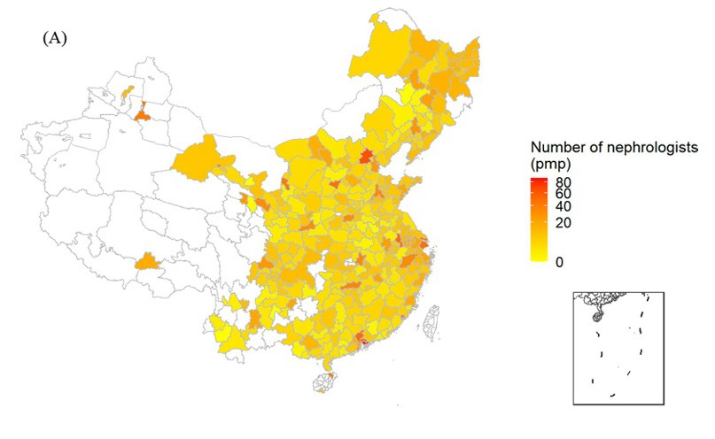
16.2.2 West China Med gives details of the Top 10 Hospitals for Nephrology in China. Medora gives details of the 2025 Fudan Hospital rankings broken down by medical speciality - Best Nephrology & Kidney Hospitals in China - Dialysis & Transplant. CPIT have used information from these sources to produce the map below, showing the locations of the mentioned hospitals:
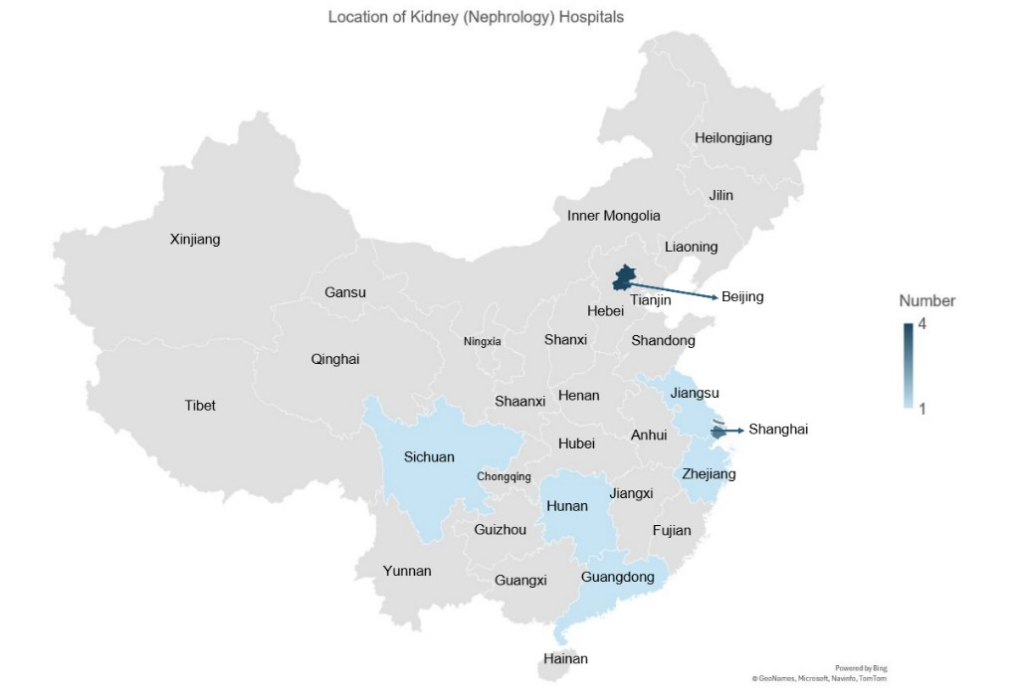
16.3 Medication for kidney conditions
16.3.1 The article by Chao Yang and others in Kidney International noted:
‘The medical expenditure per person per year was 26,923 renminbi (RMB) (∼3988 USD) [£3,031[footnote 114]] in 2017 and 27,115 RMB (∼4099 USD) [£3,053[footnote 115]] in 2018. In patients with CKD, heart failure, and diabetes, medical costs increased significantly. With the increase of age, the hospitalization cost for patients generally showed an upward trend. The length of hospital stay per person per year was 19.22 days in 2017 and 18.59 days in 2018, respectively. The length of hospital stay of patients with CKD was longer than that of those with diabetes and those without CKD, and this trend existed across different subgroups of sex and age.
‘… The direct costs related to dialysis were the primary expenses for both patients on [hemodialysis] HD and [peritoneal dialysis] PD (34.29% vs. 32.78%), followed by medication costs (19.15% vs. 20.70%). The median annual cost per patient for 2017 (82,213 RMB {∼12,179 USD}) [£9,257[footnote 116]] had decreased compared with 2016 (87,776 RMB {∼12,908 USD}) [£9,883[footnote 117]]. In contrast to patients on PD, those on HD had higher outpatient expenditures (51,622 RMB {∼7645 USD} vs. 56,453 RMB {∼8361 USD}) [£5,812 vs £6,356[footnote 118]]; nevertheless, patients on PD had higher inpatient expenditures (46,446 RMB {∼6880 USD} vs. 31,186 RMB {∼4619 USD}) [£5,229 vs £3,511[footnote 119]]. Medication was the largest expense for patients receiving HD and PD during hospital stays (21.38% vs. 21.44%), whereas direct costs associated with dialysis ranked highest (53.86% vs. 52.69%) among outpatient expenses.’[footnote 120]
17. Liver conditions, including hepatitis
17.1 Prevalence of liver conditions
17.1.1 The World Health Organization noted on an undated webpage that: ‘There are 87 million people who are chronic carriers of the hepatitis B virus in China, accounting for about one-third of all hepatitis B virus chronic carriers in the world. An estimated 7.6 million people in China are living with chronic hepatitis C.’[footnote 121]
17.1.2 The same source noted that: In China, less than 25% (18 million) of people with chronic hepatitis B and C infection have been diagnosed.’[footnote 122]
17.1.3 The Coalition for Global Hepatitis Elimination, a non-profit pursuing the elimination of viral hepatitis[footnote 123], noted that in 2020 only 19% of persons living with HBV [hepatitis B virus] and 25% of persons living with HCV [hepatitis C virus] had been diagnosed.[footnote 124]
17.1.4 The same source noted that in 2021 there were 976,233 new HBV (hepatitis B) infections and 202,771 HCV (hepatitis C) infections.[footnote 125]
17.1.5 The same source also noted that in 2021 there were 218,550 HBV deaths and 51,637 HCV deaths. These included deaths where the person died due to other diseases, such as liver cancer, caused by HBV and HCV.[footnote 126]
17.1.6 The International Registry on Organ Donation and Transplantation recorded 6,242 deceased-donor and 944 living-donor liver transplants in China in 2024.[footnote 127]
17.2 National programmes for liver conditions
17.2.1 In 2025, China’s National Center for Disease Control and Prevention and nine other departments jointly formulated the ‘China Action Plan for the Prevention and Control of Viral Hepatitis (2025-2030)’. The goal of the plan is to: ‘Continue to strengthen the immune barrier, continuously improve detection, diagnosis, and treatment rates, continuously reduce new infections, effectively control the prevalence of viral hepatitis, reduce the incidence of viral hepatitis-related cirrhosis and liver cancer, and the resulting deaths …’[footnote 128]
17.3 Access to treatment for liver conditions
17.3.1 Peer-reviewed journal Infectious Diseases and Therapy published an article in July 2022 titled ‘Eliminate Hepatitis C as a Public Health Threat: A Narrative Review of Strategies, Gaps, and Opportunities for China’, authored by Yuanyuan Song and others. The article noted:
‘Although China’s primary health care system has been strengthened through reforms of the healthcare system since 2009, the capacity to treat [hepatitis C] HCV infection is still inadequate in primary care. Treatment is still mainly provided by large speciality and general hospitals. Patients in less developed areas still need to go through one or more referral procedures to access effective treatment. These obstructions in the referral system further reduce the treatment rate. The complexity of the current treatment model for HCV and the inadequate capacity of primary care are the major barriers to primary care playing an important role in the management of HCV. This lack of good-quality primary care physicians with a sufficient knowledge of HCV to diagnose the infection and initiate antiviral treatment is linked to a high proportion of HCV treatments still being dominated by herbal treatments for liver protection.’[footnote 129]
17.3.2 The Coalition for Global Hepatitis Elimination noted that, in 2022, only 15% of those diagnosed with HBV were receiving the appropriate treatment (the appropriate treatment refers to one year of standard antiviral treatment per person). They also noted that in 2021 there were 3,000,000 treatments for HBV.[footnote 130]
17.4 Health facilities for the treatment of liver conditions
17.4.1 Since 2010, China has designated a number of sentinel hospitals in different provinces as centers for HCV management. Such hospitals manage blood donors, health examiners, patients receiving invasive diagnoses and interventions, hemodialysis patients, and those attending family planning sessions. Currently, there are 87 HCV sentinel hospitals nationwide, including 31 for blood donors in 31 provinces, 20 for health examiners in 16 provinces, 13 for patients receiving invasive diagnoses and interventions in 13 provinces, 12 for hemodialysis patients in 12 provinces, and 11 for family planning outpatients in 11 provinces.’[footnote 131]
17.4.2 West China Med gives details of Liver Cancer Treatment in China. Medora gives details of the 2025 Fudan Hospital rankings broken down by medical speciality - Chronic Hepatitis B - Treatment in China, Chronic Hepatitis C - Treatment in China, Liver Cirrhosis - Treatment in China and Liver Cell Carcinoma - Treatment in China. CPIT have used information from these sources to produce the map below, showing the location of the above-mentioned hospitals:
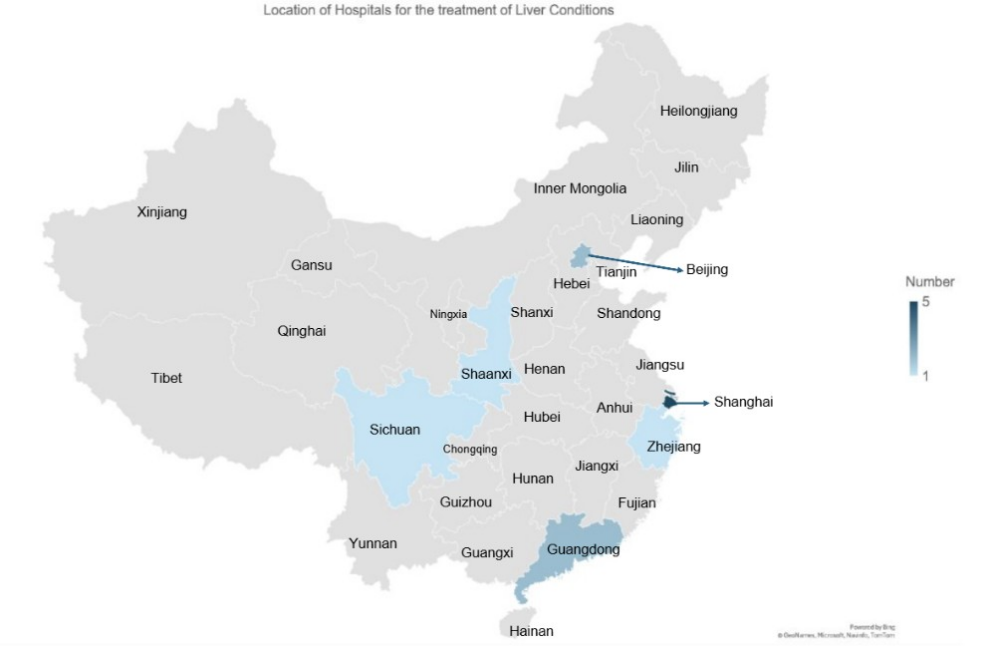
17.5 Medication for liver conditions
17.5.1 The 2022 article by Yuanyuan Song and others noted:
‘At present, the cost of [direct-acting antiviral agents] DAA treatment for HCV in China is its lowest level ever, which means that most patients do not have to make catastrophic payments for treatment. However, hundreds of dollars of out-of-pocket payments may still be a large expense for patients in financial hardship. According to the civil affairs statistics published in 2021, 34,892,000 people in China were still living under the poverty line, and the average minimum government subsidy is only $75 [£56.67[footnote 132]] per person per month. For type 1b HCV patients, even those who are treated with the DAAs at the lowest price level of $200 [£151.14[footnote 133]] per 3-month period, with the additional cost of genotype testing, which is not reimbursed in the basic health insurance program, the amount to be paid out-off-pocket is almost equivalent to nearly 2 months of the minimum living subsidy. Patients with HCV other than type 1b infections will encounter an even heavier financial burden of $1500 [£1,133.55[footnote 134] per 3-month period.’[footnote 135]
17.5.2 For medicines included on the Essential Medicines List that are specifically used to treat liver conditions, see the section on Drugs for Liver Disease in Annex A.
18. Mental health, behavioural and neurodevelopmental conditions
18.1 Prevalence of mental health, behavioural and neurodevelopmental conditions
18.1.1 The 2024 DFAT report noted:
‘The WHO estimated that approximately 4 per cent of people in China are living with depression, and 3 per cent with an anxiety disorder. Although demand for mental health services is growing, many people remain reluctant to seek help due to stigma. According to a study exploring mental health stigma and mental health knowledge amongst China’s population published in BMC Psychology in 2020, approximately 45 per cent of participants thought most people would not accept a former patient of a mental health facility as a close friend, 70 per cent thought that most young women would not date a man who had been hospitalised with a serious mental health condition, and almost 55 per cent of participants would not employ a person who was a former patient of a mental health facility.’[footnote 136]
18.2 National programme for control and treatment
18.2.1 The 2024 DFAT report noted:
‘China’s Mental Health Law (2012) is aimed at protecting the human rights of people living with mental health conditions by requiring psychiatric treatment to be voluntary in the majority of circumstances, and noting seclusion and restraints should only be used if there were no alternatives. However, a 2022 study published in the International Journal of Mental Health Systems reported that involuntary admission to psychiatric hospitals continued to occur in 70 per cent of cases, while a 2016 study published in the Psychiatry Research journal stated that physical restraints were still used in 22 per cent of cases in psychiatric hospitals.
‘… The Government of China has increased investment in mental health services in recent years and stated plans for at least 80 per cent of people living with depression to have access to treatment by 2030 …’[footnote 137]
18.2.2 The Commonwealth Fund China country profile noted that:
‘Since 2009, there have been significant efforts to expand and integrate mental health care into the broader health system. That year marked the incorporation of community-based mental health services into basic medical insurance, including follow-up care and rehabilitation guidance for patients with severe mental disorders. The 2012 Mental Health Law formalized patients’ rights and outlined who was responsible for service provision.
‘… As part of the Healthy China 2030 strategy, in 2019, China launched the Healthy China Action (2019–2030) initiative, which is centered on prevention and health promotion. It focuses on prevailing health determinants, at-risk populations, and leading health concerns. In 2023, the government set a target for 95 percent of schools and universities to be staffed with psychology teachers by 2025, alongside mental health evaluations for students and expanded counseling services. [CPIT could not find any published national data confirming whether this target was met].
‘To further improve access, a nationwide psychological support hotline was rolled out in early 2025. By May 2025, the hotline was operational in all 31 provinces. Additionally, the central government plans to implement outpatient services for psychological and sleep disorders in at least one hospital in every prefecture and city by 2025.’[footnote 138] China Food and Drug Network, a news source focusing on national measures in the supervision and management of the food and drug sector originally in Mandarin[footnote 139], noted in December 2025 that: ‘… 87 districts and counties across 333 prefecture-level cities and municipalities nationwide have completed the establishment of psychological and sleep clinics…’[footnote 140]
18.3 Mental health facilities, beds and personnel
18.3.1 Using information from a 2022 study by Fan X, Zhang W and others., published in BMC Health Services Research, examining the distribution of mental health beds in China between 2011 and 2020[footnote 141], CPIT produced the below table showing the number of mental health beds per province in China in 2020:
| Province | Total mental health beds (2020) |
|---|---|
| Beijing | 8,777 |
| Tianjin | 6,856 |
| Hebei | 18,806 |
| Liaoning | 26,577 |
| Shanghai | 13,577 |
| Jiangsu | 26,091 |
| Zhejiang | 27,945 |
| Fujian | 22,313 |
| Shandong | 39,871 |
| Guangdong | 56,301 |
| Hainan | 6,798 |
| Shanxi | 9,610 |
| Jilin | 12,044 |
| Heilongjiang | 16,519 |
| Anhui | 25,041 |
| Jiangxi | 21,445 |
| Henan | 25,322 |
| Hubei | 23,105 |
| Hunan | 44,731 |
| Inner Mongolia | 6,292 |
| Chongqing | 21,733 |
| Guangxi | 31,879 |
| Sichuan | 76,108 |
| Guizhou | 29,964 |
| Yunnan | 23,902 |
| Tibet | 131 |
| Shaanxi | 12,462 |
| Gansu | 7,696 |
| Qinghai | 424 |
| Ningxia | 1,801 |
| Xinjiang | 8,642 |
18.3.2 Using information from the same study[footnote 142], CPIT produced the below map showing the distribution of mental health beds in China per province, per 10,000 of the population, in 2020:
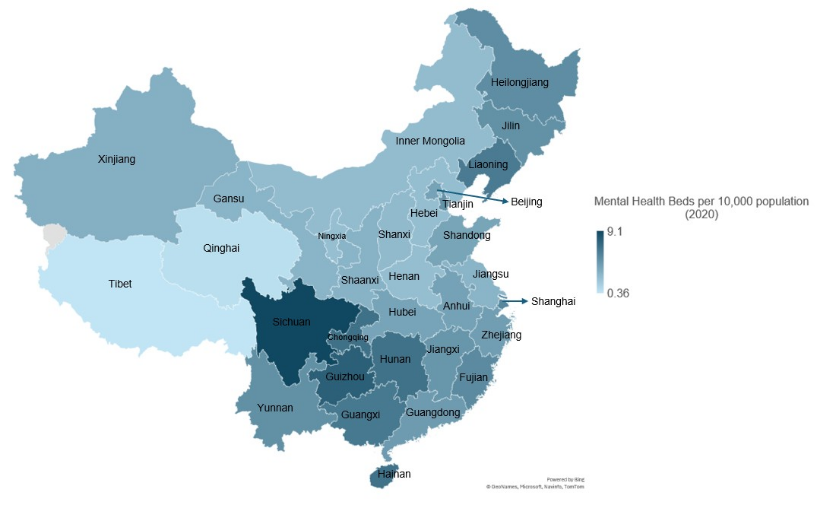
18.3.3 The Commonwealth Fund China country profile noted that:
‘In 2020, there were 35 mental hospital beds per 100,000 people, significantly higher than the 18-bed average in upper-middle-income countries.
‘In 2020, there were three psychiatrists per 100,000 people, higher than the average of two in upper-middle-income countries.
‘In 2020, there were nine mental health professionals per 100,000 people, lower than the average of 15 in upper-middle-income countries
‘The diagnosis, treatment, and rehabilitation of mental health conditions are undertaken in special psychiatric hospitals and in the psychology departments of tertiary hospitals. Patients with mild illnesses are often treated at home or in community clinics; only severely ill patients are treated in mental hospitals.’[footnote 143]
‘… By 2020, psychiatric departments had been established in over 3,000 general hospitals — four times the number in 2010 — and the number of psychiatrists had increased by nearly 145 percent.’[footnote 144]
18.3.4 Lui Z and others, in a study titled ‘A minority among Chinese psychiatrists: the current state of development of child and adolescent psychiatrists’, published in 2025 in peer-reviewed journal Frontiers in Psychiatry, noted:
‘According to the “China Health and Wellness Statistical Yearbook 2023”, by the end of 2022, there were a total of 2,277 mental hospitals across the country, with a total of 840,871 beds (accounting for 8.62% of all beds in medical and health institutions), and a total of 56,166 registered practicing (assistant) psychiatrists, among whom 50,005 were practicing psychiatrists, accounting for 1.7% of the total number of physicians in the country. There are 33 mental health prevention and treatment institutions (stations, centers) nationwide, with 314 registered practicing psychiatrists. As of 2022, the number of registered psychiatric nurses across the country was 146,451, an increase of approximately 5% compared to 2020.’[footnote 145]
18.3.5 The same source went on to note that despite improvements to mental health services: ‘… mental health services are still unevenly distributed, with rural and less-developed regions facing shortages in trained personnel and infrastructure. Psychotherapy services, in particular, are underdeveloped because of a lack of standardized training, unclear pricing mechanisms, and limited integration into public health coverage.’[footnote 146]
18.4 Access to treatment for mental health conditions
18.4.1 The 2024 DFAT report noted:
‘While mental health services were typically covered under [basic health insurance] BHI, availability and quality varied depending on location. … The majority of mental health resources were found in provincial capitals in the more developed east coast of the country. Mental health services were generally concentrated in large specialty hospitals, rather than within the community and primary healthcare sector. The workforce was primarily made up of psychiatrists and nurses, with few counsellors or therapists generally available. Services were typically provided on an outpatient basis. International academics reported that the centralised system of mental healthcare was not adequate to meet China’s mental healthcare needs in 2022.’[footnote 147]
18.5 Medication for mental health conditions
18.5.1 The 2024 DFAT report noted: ‘Required medications to treat most mental health conditions were generally available in 2023.’[footnote 148]
18.5.2 For medicines included on the Essential Medicines List that are used to treat mental health conditions, see the section on Drugs for mental health disorders in Annex A.
19. Musculoskeletal conditions (including orthopaedic and rheumatological conditions)
19.1 Prevalence of musculoskeletal conditions
19.1.1 In March 2026, Hu Y and others, in an article on ‘Current status and Joinpoint regression analysis of the burden of musculoskeletal diseases in China from 1990 to 2023’, noted: ‘In 2023, the five major musculoskeletal diseases collectively accounted for approximately 25.0% of all-cause prevalence in China. Among these, osteoarthritis contributed the most (11.68%), followed by low back pain (6.89%) and neck pain (3.52%). Gout (1.28%) and rheumatoid arthritis (0.36%) had relatively lower contributions.’[footnote 149]
19.2 Health facilities for treatment of orthopaedic and rheumatological conditions
19.2.1 West China Med gives details of the Best Orthopedic Hospitals in China: Spine, Joint & Trauma and The Top 10 Rheumatology Hospitals in China. Medora gives details of the 2025 Fudan Hospital rankings broken down by medical speciality - Rheumatology - Top Hospitals in China and Best Orthopedic Hospitals in China - Joint & Spine Surgery. CPIT have used information from these sources to produce the map below, showing the locations of the mentioned hospitals:
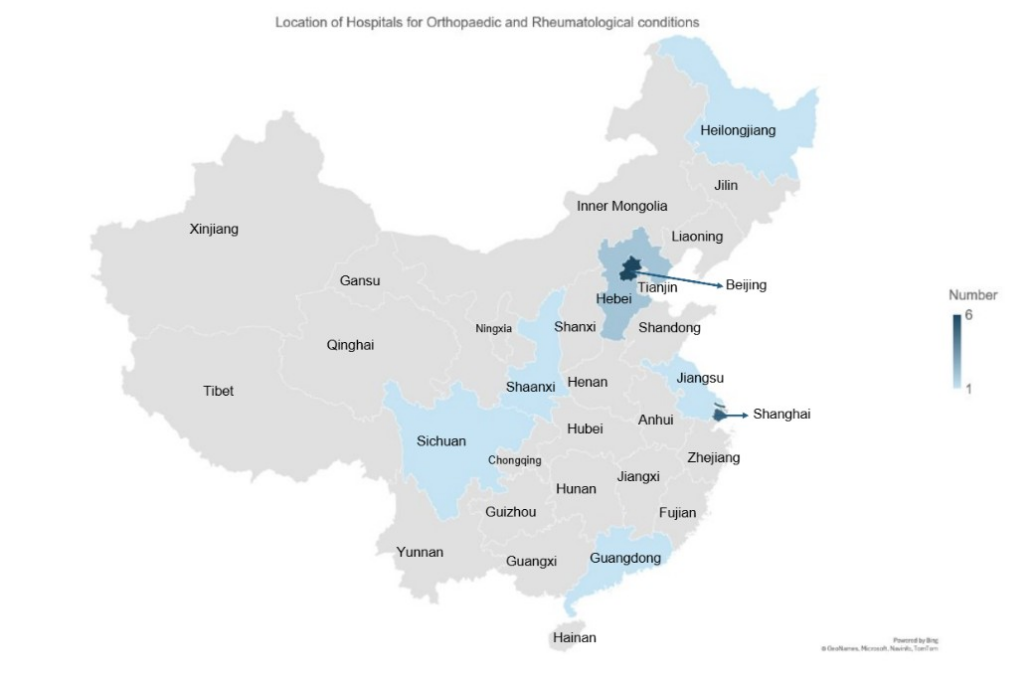
19.3 Medication for musculoskeletal conditions
19.3.1 For medicines included on the Essential Medicines List that are specifically used to treat pain, see the section on Pain relief, fever reduction, anti-inflammatory, anti-rheumatic, anti-gout medicine in Annex A.
20. Oral and dental conditions
20.1 Prevalence of oral and dental conditions
20.1.1 The World Health Organization gave the following information on the prevalence of oral diseases in China in 2019, and the prevalence of lip and oral cancers in 2020:[footnote 150]
ORAL DISEASE BURDEN
Prevalence of oral diseases (2019)
| Measure | % |
|---|---|
| Prevalence of untreated caries of deciduous teeth in children 1–9 years | 47.2 |
| Prevalence of untreated caries of permanent teeth in people 5+ years | 24.6 |
| Prevalence of severe periodontal disease in people 15+ years | 17.5 |
| Prevalence of edentulism in people 20+ years | 5.7 |
Lip and oral cavity cancer, all ages (2020)
| Measure | Female | Male | Total |
|---|---|---|---|
| Number of new cases | 11 571 | 18 546 | 30 117 |
| Incidence rate (per 100 000 population) | 1.0 | 1.7 | 1.3 |
20.2 Medical personnel and health facilities for the treatment of dental conditions
20.2.1 The World Health Organization noted that in 2017 there were 637,000 dentists in China.[footnote 151]
20.2.2 Originally in Mandarin, Zhang Xueyuan and others, in an article published in the Chinese Journal of Stomatology on 9 November 2022, titled ‘Analysis of the Fairness in the Number, Structure, and Allocation of Human Resources Among Stomatologists in China’, noted: ‘In 2020, the total number of dental practitioners (assistants) reached 278,000.’[footnote 152]
20.2.3 West China Med gives details of the China’s Top 10 Dental Hospitals. Medora gives details of the 2025 Fudan Hospital rankings broken down by medical speciality - Stomatology - Top Hospitals in China. CPIT have used information from these sources to produce the map below, showing the locations of the mentioned hospitals:
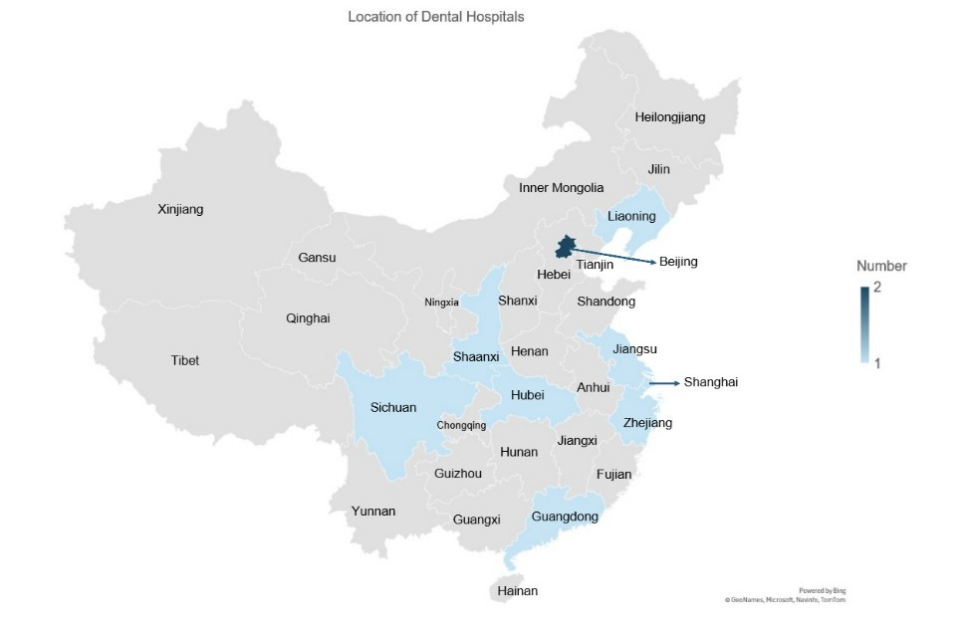
21. Neurological conditions
21.1 Prevalence of neurological conditions
21.1.1 Xinhua, in an article published by the State Council, noted in 2025 that:
‘The total number of people suffering from Alzheimer’s disease, the most common type of dementia, and other kinds of dementia across the country surpassed 16 million in 2021, according to an official report released in 2024.
‘The number of dementia patients in China accounts for nearly 30 percent of the global total, the report showed.
‘Alzheimer’s disease shows a high prevalence rate but is accompanied by low rates of screening, diagnosis and treatment, according to Shi Jiong, a dementia expert.’[footnote 153]
21.1.2 According to the World Health Organization, strokes were the leading cause of deaths in China in 2021, with 177.8 deaths per 100,000 people.[footnote 154]
21.1.3 Chen Zhang and others, in a 2025 article titled ‘Burden of neurological disorders in China and its provinces, 1990–2021: Findings from the global burden of disease study 2021’ noted that:
‘In 2021, the estimated number of prevalent cases of neurological disorders was 468.29 million in China, accounting for 32.91% of the total Chinese population and 34.35% of the total prevalence from all causes in China … The number of deaths caused by neurological disorders was 3.28 million in China, accounting for 28.04% of total deaths from all causes.
‘… Among neurological disorder categories in 2021, the five most prevalent diseases were tension-type headache (TTH) …, migraine …, ischemic stroke …, Alzheimer’s disease (AD) and other dementias …, and Parkinson’s disease (PD) … The five leading causes of death were intracerebral hemorrhage …, ischemic stroke …, AD and other dementias …, PD …, and subarachnoid hemorrhage …’[footnote 155]
21.1.4 Research articles note that there are approximately 10 million people in China with epilepsy.[footnote 156] [footnote 157]
21.2 National programmes for neurological conditions
21.2.1 In 2005, China launched the China Rural Epilepsy Management Project (CREMP). The project established a national model for epilepsy management in rural areas.[footnote 158]
21.2.2 Xinhua, in an article published by the State Council, noted in 2025 that:
‘China has rolled out a national action plan to address senile dementia, which poses significant challenges to the well-being of elderly people and their families, amid a rapidly aging population in the country.
‘The action plan, jointly launched by 15 Chinese institutions including the National Health Commission and the National Development and Reform Commission, outlines seven key tasks to combat senile dementia and sets a series of targets to be achieved by 2030.
‘According to the plan, a comprehensive and continuous prevention and control system for dementia, covering prevention, screening, diagnosis, treatment, rehabilitation and care, will be established by 2030.’[footnote 159]
21.3 Health facilities for the treatment of neurological conditions
21.3.1 Lu L and others in an article on ‘National Strategies on Bridging Gaps and Health Equity in Epilepsy Care’, published in March 2026, noted that:
‘By 2021, CREMP achieved full nationwide coverage, operating in 310 counties across all 32 provincial-level regions. The program screened over 300,000 individuals and provided long-term follow-up for 66,607 patients with convulsive epilepsy … The program [CREMP] addressed the human resource gap by cumulatively training 23,892 primary care doctors through an average of 89 specialized training sessions annually, establishing a permanent epilepsy care network in rural China.’[footnote 160]
21.3.2 Alzheimer’s & Dementia, The Journal of the Alzheimer’s Association, published an article in September 2024 on ‘Current status of professional memory clinics, inpatient services, and health professionals in China’ by Jinghuan Gan and others. The article contained the maps below which show the distribution of dementia‐specific clinics (DSCs) and dementia‐specific inpatient departments (DSIDs) across regions in China. The measurement value represents the proportion (%) of those facilities, with the colours ranging from light to dark, where dark indicates more facilities in that area:[footnote 161]
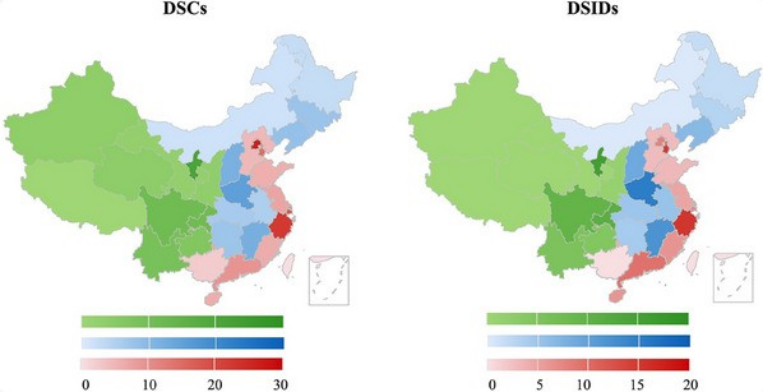
21.3.3 West China Med gives details of the Top 10 Hospitals for Neurology in China. Medora gives details of the 2025 Fudan Hospital rankings broken down by medical speciality - Best Neurology & Neurosurgery Hospitals in China. CPIT have used information from these sources to produce the map below, showing the locations of the mentioned hospitals:
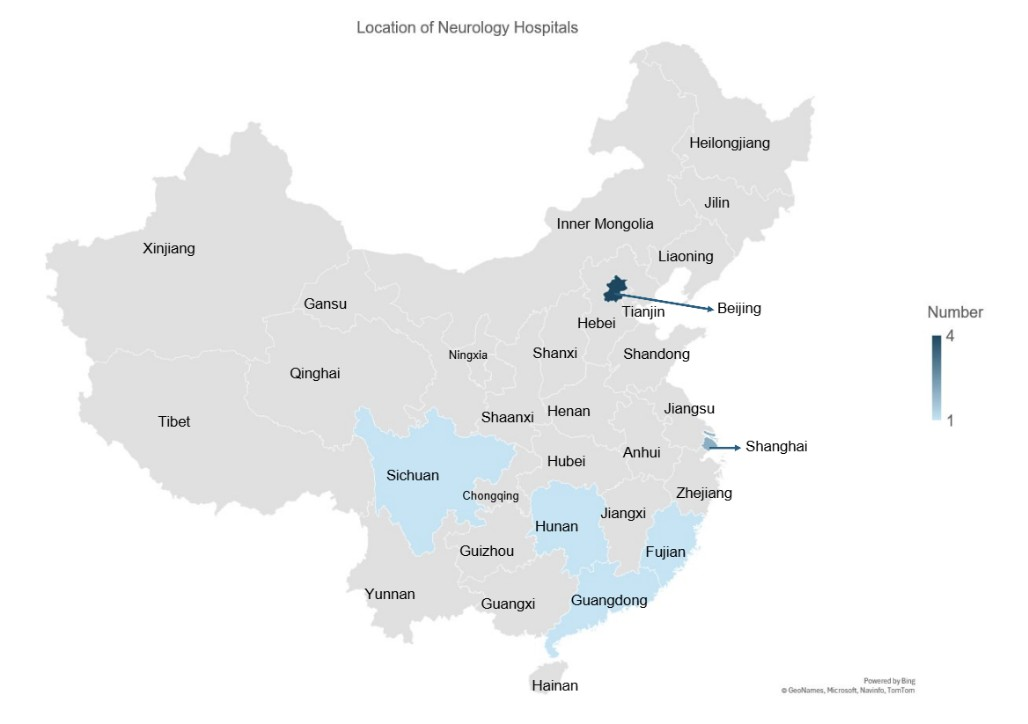
21.4 Medication for neurological conditions
21.4.1 For medicines included on the Essential Medicines List that are specifically used in neurological conditions, see the section on Nervous System Drugs in Annex A.
21.4.2 For information on strokes, see Cardiovascular conditions.
22. Palliative care
22.1 National programmes for palliative care
22.1.1 The Asia-Pacific Journal of Oncology Nursing published an article on ‘Advancements in hospice and palliative care in China: A five-year review’ authored by Yuhan Lu and others and published in March 2024. The article noted:
‘The government has shown significant interest in the development of hospice care, evident in the issuance of the “Healthy China 2030 Outline,” which explicitly states the need to strengthen the construction of hospice care and other medical institutions to achieve comprehensive health services from fetuses to the end of life. Under the guidance and impetus of the government, hospice and palliative care in China have experienced accelerated development in institutional construction, drug supply, health provider training, and public education.
‘… The Chinese government has provided robust policy support to facilitate the organized advancement of hospice care. In February 2017, the National Health Commission of the People’s Republic of China issued documents regarding the basic standards, management norms, and practice guidelines for constructing hospice care centers, offering clear policy guidance on the structure, facilities, environment, and service content of hospice care institutions.
‘In September of the same year, the National Health Commission released a “Notice on Conducting Pilot Hospice and Palliative Care Programs” designating Beijing’s Haidian District, Shanghai’s Putuo District, Changchun City in Jilin Province, Luoyang City in Henan Province, and Deyang City in Sichuan Province as the first pilot centers, aiming to develop a model of hospice care service that will serve as models across China.
‘… In 2019 and 2023, the government initiated more pilot institutions for hospice and palliative care, covering multiple provinces and a total of 185 cities (districts). The government-led pilot plan not only promoted the development of hospice care in various provinces and cities but also effectively increased the accessibility of hospice and palliative care services to the Chinese population.’[footnote 162]
22.2 Access to palliative care
22.2.1 The 2024 article by Yuhan Lu and others noted: ‘With a large population and vast geographical expanse, there remains a gap between the resources for hospice care services for terminal patients and the demand for end-of-life care in China. Despite the gradual increase in hospice care institutions nationwide, which has alleviated the pressure on large hospitals by receiving late-stage cancer patients, further efforts are needed to achieve a balanced distribution of resources.’[footnote 163]
22.3 Palliative care facilities
22.3.1 In May 2024, Sixth Tone, an English-language media website covering news and contemporary issues in China[footnote 164], published an opinion piece on hospice care by Tu Jiong, a professor of medical sociology based in Guangzhou.[footnote 165] The article noted:
‘… the number of medical and health institutions in China with hospice care departments increased from 276 in 2018 to 4,249 by the end of 2022.
‘… There are still only a few thousand hospice care institutions in China, most of which are embedded in hospitals. However, due to the fact that many hospice services are not currently included in the country’s medical insurance system, all of the existing hospice care institutions I surveyed face difficulties funding their work. Doctors joke that anyone who specializes in hospice care will go broke. Medical institutions prioritize curative treatment when allocating resources, while limiting the number of beds and the manpower they invest into their hospice units or else treating it as a luxury service for wealthy patients.
‘… Many hospitals that offer hospice care choose to integrate it into relevant departments of oncology, geriatrics, and rehabilitation, for instance. One hospice care department at a hospital my team and I surveyed initially only admitted critically ill patients, but later began to work on cancer rehabilitation. The medical staff there said that this allowed them to feel like they could still do something for the patients, and it also better met the expectations of the patients’ families. Given the cultural taboos surrounding death in China, as well as the ethics of filial piety, such vague and mixed practices make it easier for patients and their families to choose and receive hospice care.’[footnote 166]
22.4 Medication
22.4.1 The 2024 article by Yuhan Lu and others noted: ‘Over the past five years, there has been a gradual standardization of drug management for hospice and palliative care in China. This process ensures a reliable supply of analgesic medications for cancer pain patients while preventing the illegal circulation and misuse of opioid drugs.’[footnote 167]
22.4.2 For medicines included on the Essential Medicines List that are specifically used to treat pain, see the section on Pain relief, fever reduction, anti-inflammatory, anti-rheumatic, anti-gout medicine in Annex A.
23. Paediatric conditions
23.1 National programmes for paediatric conditions
23.1.1 The China National Program for Child Development (2021-2030) looks at improving 7 key aspects of child development. One aspect is specifically related to healthcare and includes improving children’s access to health services, improving the capacity of children’s health services, preventing and treating birth defects, prevention and control of key children’s diseases and the protection of children’s physical and mental health.[footnote 168]
23.2 Paediatric health facilities and personnel
23.2.1 China’s National Bureau of Statistics’ reporting on the implementation of the National Program for Child Development (2021-2030) noted in January 2024 that: ‘As of the end of 2022, the number of maternity and child care institutions amounted to 3,031 and the number of children’s hospitals amounted to 158 across China. The number of staff of the maternity and child care institutions increased to 627,000 and the population of pediatric doctors reached 226,000 with the number of pediatric beds of up to 568,000.’[footnote 169]
23.2.2 West China Med gives details of the Top 10 Pediatric Internal Medicine Hospitals in China and Top 10 Pediatric Surgery Hospitals in China. Medora gives details of the 2025 Fudan Hospital rankings broken down by medical speciality - Best Children’s Hospitals in China - Pediatric Care & Surgery and Pediatric Surgery - Top Hospitals in China. CPIT have used information from these sources to produce the map below, showing the locations of the mentioned hospitals:
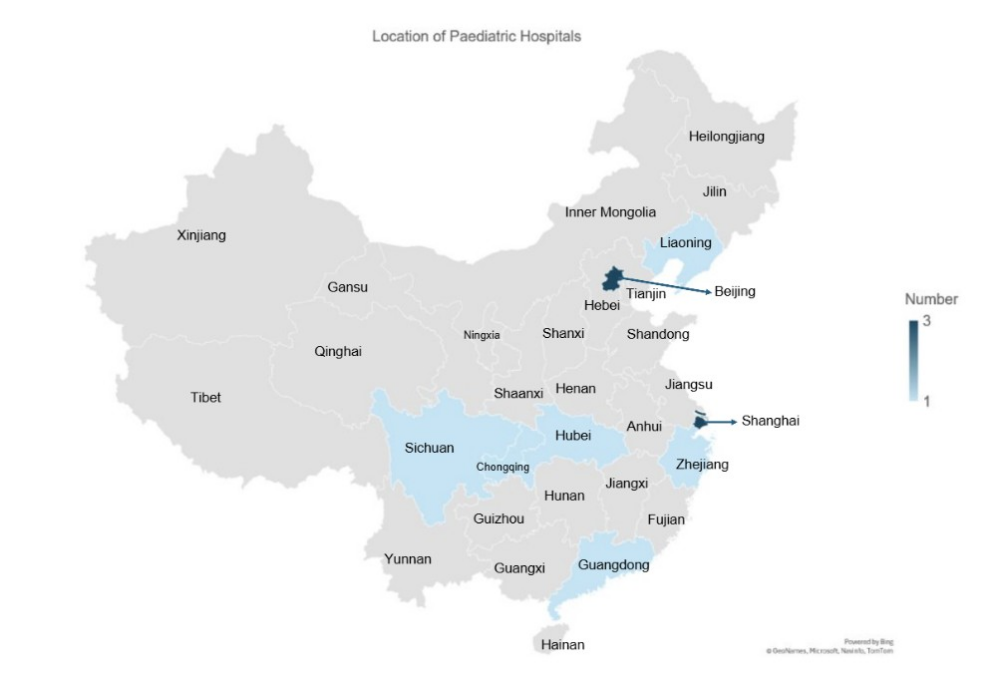
23.3 Medication for paediatric conditions
23.3.1 For medicines included on the Essential Medicines List that are specifically used in paediatrics, see the section on Paediatrics medicine in Annex A.
24. Respiratory conditions, including tuberculosis (TB)
24.1 Prevalence of respiratory conditions
24.1.1 China CDC Weekly, the national public health bulletin for China[footnote 170], reported in November 2025 that:
‘… chronic obstructive pulmonary disease (COPD) ranks as the third most prevalent non-communicable disease in China … and currently affects 99.9 million people. Substantial regional disparities in disease burden exist, with higher prevalence rates observed in rural areas and among populations with lower educational attainment. At the provincial level, economically less developed regions demonstrate elevated COPD prevalence. The disease burden increases markedly with age, particularly in adults aged 50 years and above, with prevalence rates of 12.8% in males and 5.7% in females.’[footnote 171]
24.1.2 In March 2026, peer-reviewed journal Tropical Medicine and Health published an article on ‘Tuberculosis incidence and mortality trends in mainland China, 2004–2024: control program and elimination progress’, authored by Caini Mu and others. The article noted that: ‘In 2023, 741,000 TB cases were reported in mainland China, with a mortality rate of 0.283 per 100,000 population. The incidence rate declined to 49 per 100,000 population in 2024, which, although significantly lower than that in 2004 (74.644 per 100,000 population), still ranks China as the fourth-highest TB-burden country globally.’[footnote 172]
24.2 National Programmes for respiratory conditions
24.2.1 China CDC Weekly noted:
‘Over the past decade, China has implemented a comprehensive series of policy interventions and public health initiatives designed to improve COPD prevention, diagnosis, and management outcomes nationwide. … The inclusion of COPD management within the National Basic Public Health Programme represents another important milestone toward achieving Healthy China 2030 goals. These include an anticipated decline in premature death rates from respiratory diseases to 8.1 per 100,000 and a potential increase in disease awareness to 30%. This policy enables China’s primary care services to assume a pivotal role in addressing the COPD burden, reflecting a broader structural shift toward preventive and equitable healthcare delivery.’[footnote 173]
24.2.2 The WHO noted that since 2021 China has implemented a strong national framework for tuberculosis preventive treatment (TPT).[footnote 174]
24.3 Costs of treatment8 for respiratory conditions
24.3.1 In March 2023, China CDC Weekly noted:
‘Tuberculosis (TB) is often regarded as “a disease of poverty”. In China, a basic package of free services (including chest radiography, sputum smear test, and first-line drugs) is provided to TB cases, while other costs are covered by public-funded medical insurance schemes. However, there is limited information available on whether the current policy is sufficient to avoid the heavy economic burden of TB care. To address this, a cross-sectional study involving primary data collection was conducted in 41 counties in China in 2020 to obtain a nationally representative assessment of the financial burden of TB care. The results showed that the direct costs, indirect costs, and total costs due to TB care were 1041.3 USD [£786.91[footnote 175]], 12.7 USD [£9.59[footnote 176]], and 1185.5 USD [£895.88[footnote 177]] per patient, respectively. Direct costs accounted for 88% and 37% of costs incurred before patients arrived at TB-designated hospitals.’[footnote 178]
24.3.2 Frontiers in Public Health published an article on ‘The patient-level economic burden of COPD in China: a systematic review of determinants and consequences’, authored by Jian Tian and others, in June 2026. The article noted:
‘For individuals and their families, a diagnosis of COPD is associated with a significant and sustained patient-level economic burden. This burden includes direct medical costs related to recurrent hospitalizations, long-term oxygen therapy, inhaled maintenance medications, and regular outpatient care. Indirect costs, including productivity loss, disability-related income reduction, and caregiver burden, may further exacerbate household financial strain. As COPD is a chronic and progressive condition, these costs often accumulate over time, generating persistent financial strain that can escalate into catastrophic health expenditure for households. The extent of this economic burden is strongly influenced by healthcare financing structures, insurance reimbursement policies, and access to chronic disease management services. In China, regional disparities in healthcare financing and insurance reimbursement may further exacerbate the economic impact of COPD on affected households. Although public insurance schemes have expanded population coverage, high out-of-pocket (OOP) payments for outpatient medications and long-term care remain common, particularly in rural areas.’[footnote 179]
24.4 Health facilities for the treatment of respiratory conditions
24.4.1 West China Med gives details of the The Top 10 Respiratory Hospitals in China. Medora gives details of the 2025 Fudan Hospital rankings broken down by medical speciality - Pulmonology - Top Hospitals in China and Best Respiratory & Lung Hospitals in China - Pulmonology. CPIT have used information from these sources to produce the map below, showing the locations of the mentioned hospitals:
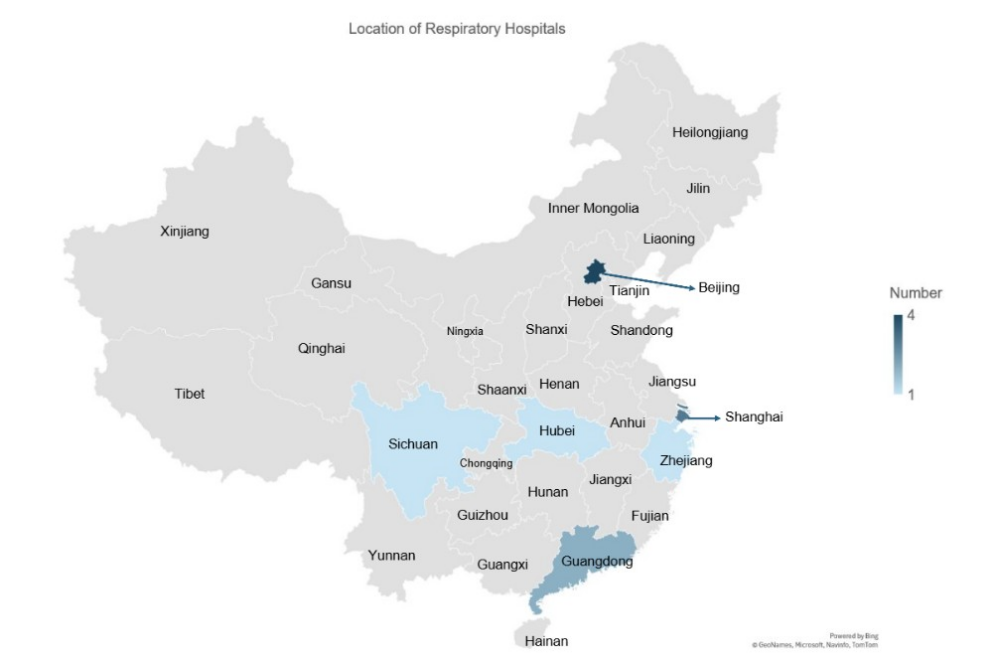
24.5 Medication for respiratory conditions
24.5.1 For medicines included on the Essential Medicines List that are specifically used to treat respiratory conditions, see the section on Respiratory System Drugs in Annex A.
25. Skin conditions
25.1 Health facilities for the treatment of skin conditions
25.1.1 West China Med gives details of the Best Dermatology Hospitals in China for Foreign Patients. Medora gives details of the 2025 Fudan Hospital rankings broken down by medical speciality - Dermatology - Top Hospitals in China. CPIT have used information from these sources to produce the map below, showing the locations of the mentioned hospitals:
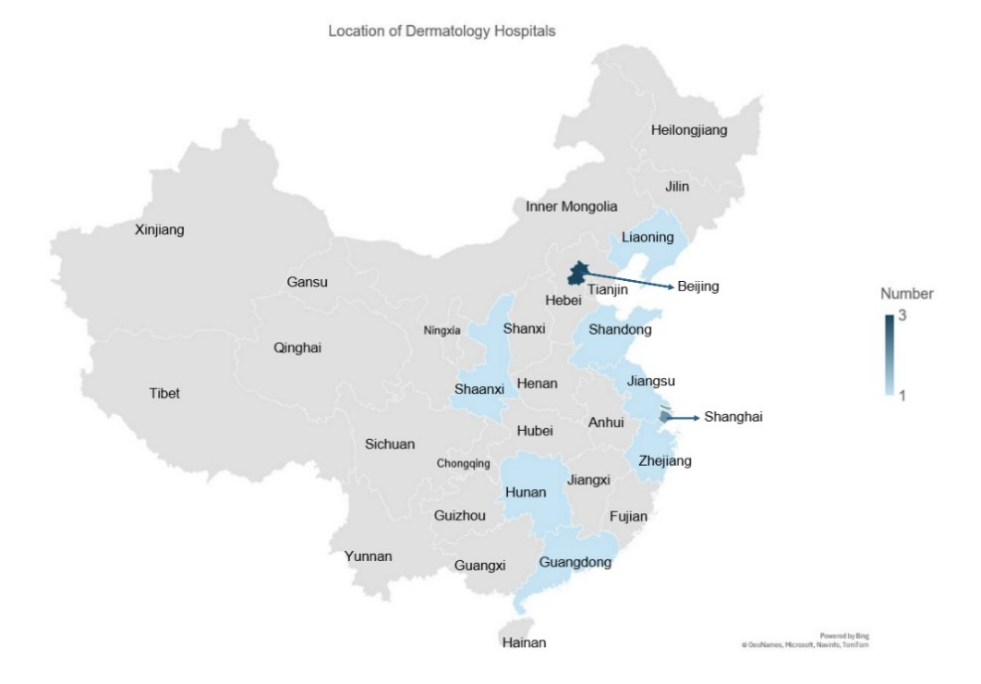
25.2 Medication for skin conditions
25.2.1 For medicines included on the Essential Medicines List that are specifically used to treat dermatological conditions, see the section on Dermatological Medicines in Annex A.
26. Urological conditions
26.1 Medical personnel and health facilities for the treatment of urological conditions
26.1.1 The Asian Journal of Urology published an article in December 2019 titled ‘Census report on Chinese urological surgeons’, authored by Yinghao Sun and others. The article reported that there were 18,981 urological surgeons in China in 2015, of whom 15,875 participated in the study. CPIT created the map below using data from the article[footnote 180] to show the geographical distribution of the 15,875 participating urological surgeons (as a %).
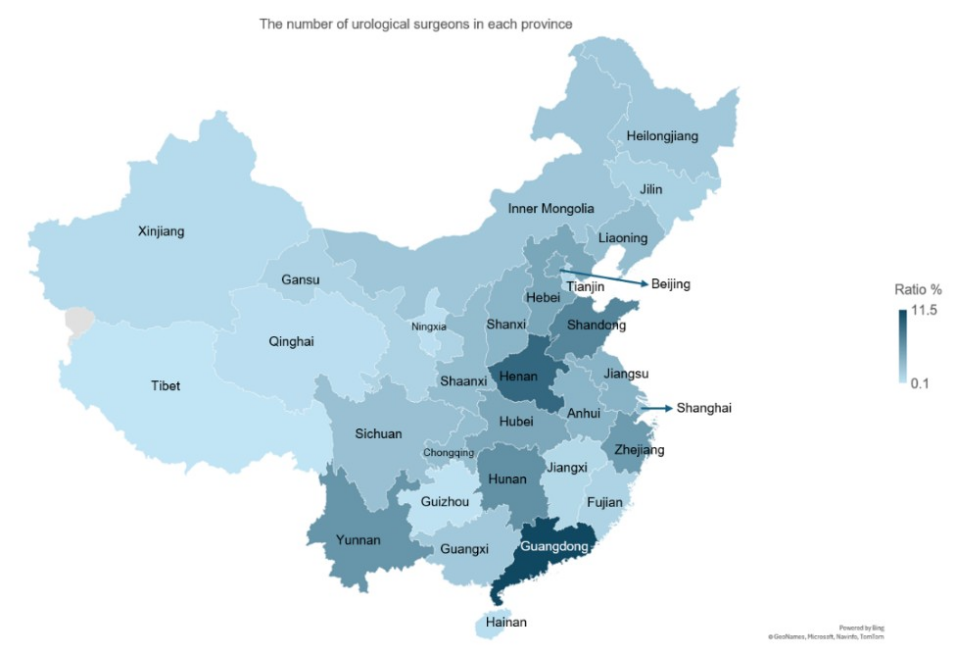
26.1.2 The 2019 article by Yinghao Sun and others noted that: ‘Among 25 860 hospitals in China, 2 602 hospitals (10.06%) possessed the department of urology and were able to carry out the urological surgery.’[footnote 181] The graph below is taken from the 2019 article and shows the proportion of hospitals with a urology department in each province.
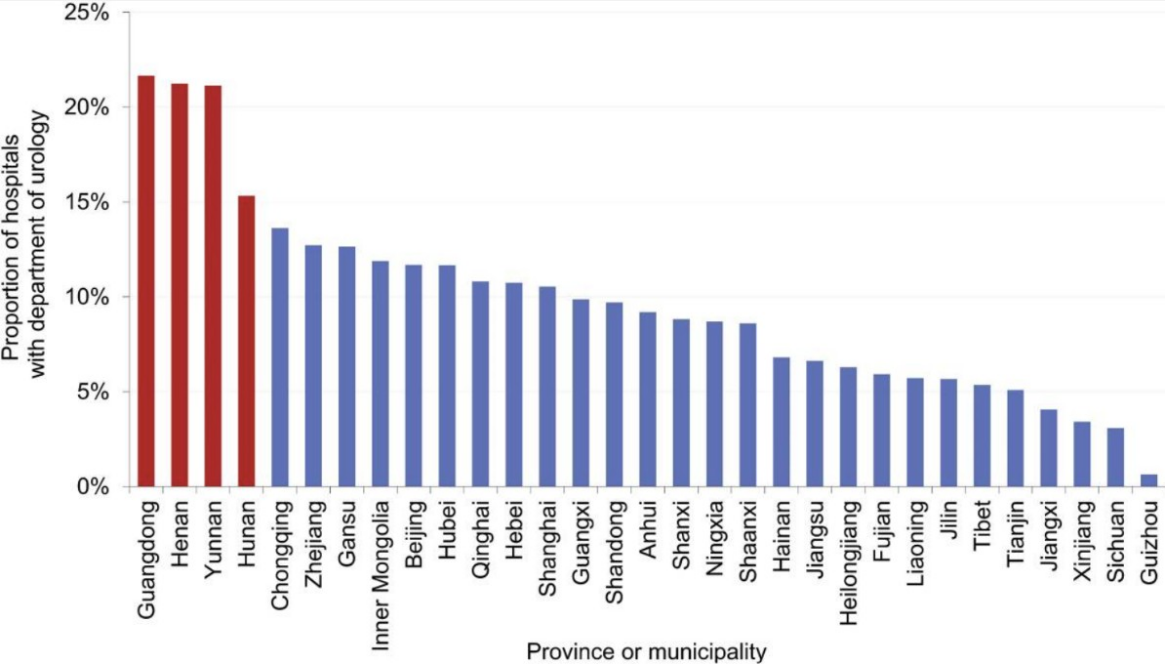
26.1.3 West China Med gives details of the Top 10 Hospitals for Urology in China. Medora gives details of the 2025 Fudan Hospital rankings broken down by medical speciality - Urology - Top Hospitals in China. CPIT have used information from these sources to produce the map below, showing the locations of the mentioned hospitals:
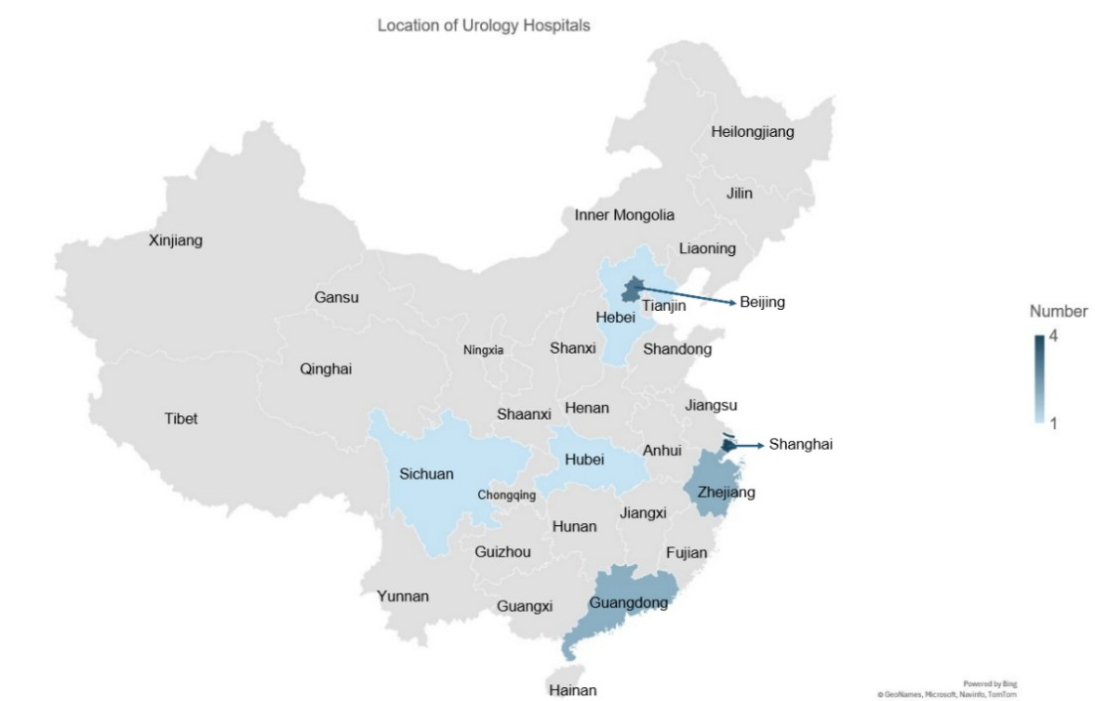
26.2 Medication for respiratory conditions
26.2.1 For medicines included on the Essential Medicines List that are specifically used to treat urological conditions, see Urinary System Drugs in Annex A.
Annex A National essential medicines list (2026 edition)
The below table has been compiled using information taken from the 2026 national essential medicines list.[footnote 182] The National Health Commission stated that essential medicines are medicines that meet basic healthcare needs and should be available, accessible and affordable. The National Essential Medicines List guides the medicines used by medical institutions.[footnote 183] The names of drugs are included in the list in English. The other details in the list were originally published in Mandarin and have been translated using free online translation tools.
△ indicates that the medicine should be used by a doctor with the appropriate prescribing qualifications or under the guidance of specialists, with increased monitoring and evaluation. The antimicrobial drugs listed in the directory must be managed in accordance with relevant regulations governing the clinical application management of antimicrobial drugs.
Antimicrobial Drugs
| Penicillins | Dosage form and strengths |
|---|---|
| Benzylpenicillin | Potassium salt, sterile powder for injection: (400,000 units) 0.5 g (800,000 units) Sodium salt, sterile powder for injection: 0.24 g (400,000 units) 0.48 g (800,000 units) 0.96 g (1.6 million units) 2.4 g (4 million units) |
| Benzathine Benzylpenicillin | Sterile powder for injection 600,000 units, 1.2 million units |
| Oxacillin | Tablets, capsules: 0.25 g Sterile powder for injection: 0.5 g, 1.0 g, 2.0 g |
| Ampicillin | Sterile powder for injection: 0.5 g, 1.0 g, 2.0 g |
| Piperacillin | Sterile powder for injection: 0.5 g, 1.0 g, 2.0 g, 4.0 g |
| Amoxicillin | Tablets, capsules, granules, dry suspension: 0.125 g, 0.25 g |
| Amoxicillin and Clavulanate Potassium | Tablets Amoxicillin: Clavulanate = 2:1, Amoxicillin: Clavulanate = 4:1, Amoxicillin: Clavulanate = 7:1 Granules 125 mg: 31.25 mg (4:1), 200 mg: 28.5 mg (7:1) Dry suspension 250 mg: 62.5 mg (4:1), 200 mg: 28.5 mg (7:1) Sterile powder for injection 250 mg: 50 mg (5:1), 500 mg: 100 mg (5:1), 1000 mg: 200 mg (5:1) (Amoxicillin: Clavulanate) |
| Piperacillin Sodium and Tazobactam Sodium | Sterile powder for injection 2.25 g (Piperacillin 2.0 g + Tazobactam 0.25 g), 4.5 g (Piperacillin 4.0 g + Tazobactam 0.5 g) |
| Cephalosporins | Dosage form and strengths |
|---|---|
| Cefazolin | Sterile powder for injection 0.5 g, 1.0 g |
| Cefradine | Capsules 0.25 g, 0.5 g |
| Cefalexin (Cephalexin) | Tablets, capsules: 0.125 g, 0.25 g |
| Granules: 0.05 g, 0.125 g | |
| Cefuroxime | Cefuroxime axetil tablets, dispersible tablets, capsules, dry suspension: 0.125 g, 0.25 g Cefuroxime sodium sterile powder for injection: 0.25 g,0.5 g, 0.75 g,1.5 g |
| Cefixime △ | Tablets: 50 mg, 100 mg Dispersible tablets: 100 mg Capsules: 100 mg Granules: 50 mg Dry suspension: 50 mg, 100 mg |
| Ceftriaxone | Sterile powder for injection: 0.25 g, 0.5 g, 1.0 g, 2.0 g |
| Ceftazidime △ | Sterile powder for injection: 0.25 g, 0.5 g, 1.0 g, 2.0 g |
| Aminoglycosides | Dosage form and strengths |
|---|---|
| Amikacin | Injection 1 ml: 0.1 g (100,000 units), 2 ml: 0.2 g (200,000 units) |
| Gentamicin | Injection 1 ml: 40 mg (40,000 units), 2 ml: 80 mg (80,000 units) |
| Tetracyclines | Dosage form and strengths |
|---|---|
| Doxycycline | Tablets 50 mg, 100 mg |
| Minocycline | Tablets: 50 mg Capsules: 50 mg, 100 mg |
| Macrolides | Dosage form and strengths |
|---|---|
| Erythromycin | Enteric-coated tablets/capsules: 0.125 g (125,000 units), 0.25 g (250,000 units) Erythromycin ethylsuccinate tablets/capsules: 0.125 g, 0.25 g Sterile powder for injection: 0.25 g (250,000 units), 0.3 g (300,000 units), 0.5 g (500,000 units) |
| Azithromycin | Tablets, capsules: 0.25 g (250,000 units) Granules, dry suspension: 0.1 g (100,000 units) Sterile powder for injection: 0.5 g (500,000 units) |
| Clarithromycin | Tablets, granules: 0.125 g (125,000 units), 0.25 g (250,000 units) |
| Other Antibiotics | Dosage form and strengths |
|---|---|
| Clindamycin | Clindamycin hydrochloride capsules: 0.075 g, 0.15 g Clindamycin hydrochloride palmitate granules: 75 mg Clindamycin phosphate injection: 1 ml: 150 mg, 2 ml: 300 mg, 4 ml: 600 mg, 6 ml: 900 mg |
| Fosfomycin | Fosfomycin sodium sterile powder for injection: 1.0 g (1 million units), 2.0 g (2 million units), 4.0 g (4 million units) Fosfomycin trometamol powder: 3.0 g (3 million units) |
| Fusidic Acid △ | Sterile powder for injection 0.125 g, 0.25 g, 0.5 g |
| Sulfonamides | Dosage form and strengths |
|---|---|
| Compound Sulfamethoxazole | Tablets: 400 mg: 80 mg Injection: 5 ml: 400 mg: 80 mg (Sulfamethoxazole: Trimethoprim) |
| Sulfadiazine | Tablets: 0.5 g Injection: 2 ml: 0.4 g, 5 ml: 1 g |
| Quinolones | Dosage form and strengths |
|---|---|
| Norfloxacin | Tablets, capsules 0.1 g |
| Ciprofloxacin | Ciprofloxacin hydrochloride tablets: 0.25 g, 0.5 g Ciprofloxacin lactate sodium chloride injection:100 ml: 0.2 g |
| Levofloxacin | Tablets: 0.25 g, 0.5 g Sodium chloride injection: 50 ml: 0.25 g, 100 ml: 0.5 g |
| Moxifloxacin | Tablets: 0.4 g Sodium chloride injection: 250 ml (0.4 g moxifloxacin + 2.0 g sodium chloride) |
| Nitroimidazoles | Dosage form and strengths |
|---|---|
| Metronidazole | Tablets, capsules: 0.2 g Sodium chloride injection: 100 ml: 0.5 g |
| Tinidazole | Tablets 0.5 g |
| Nitrofurans | Dosage form and strengths |
|---|---|
| Nitrofurantoin | Enteric-coated tablets 50 mg |
| Anti-Tuberculosis Drugs | Dosage form and strengths |
|---|---|
| Tuberculosis Medicines △ | (Note 1 - Tuberculosis medication refers to the drugs used for treating tuberculosis that are listed in the national tuberculosis prevention and control technical guidelines). |
| Anti-Leprosy Drugs | Dosage form and strengths |
|---|---|
| Dapsone | Tablets 50 mg, 100 mg |
| Antifungal Drugs | Dosage form and strengths |
|---|---|
| Fluconazole | Tablets, capsules: 50 mg, 100 mg, 150 mg Sodium chloride injection: 100 ml: 0.2 g |
| Itraconazole | Dispersible tablets: 0.1 g Granules: 0.1 g Capsules: 0.1 g Oral solution: 150 ml: 1.5 g |
| Amphotericin B | Sterile powder for injection: 5 mg (5,000 units), 25 mg (25,000 units), 50 mg Liposomal injection: 50 mg (50,000 units) |
| Caspofungin | Sterile powder for injection 50 mg, 70 mg |
| Other Antibacterial Drugs | Dosage form and strengths |
|---|---|
| Berberine | Tablets 50 mg, 100 mg |
| Antiviral Drugs | Dosage form and strengths |
|---|---|
| Aciclovir (Acyclovir) | Tablets: 0.1 g, 0.2 g Capsules: 0.2 g Sterile powder for injection: 0.25 g |
| Ganciclovir | Sterile powder for injection 0.05 g, 0.15 g, 0.25 g, 0.5 g |
| Oseltamivir | Capsules: 30 mg, 45 mg, 75 mg Granules: 15 mg, 25 mg Dry suspension: 0.36 g |
| Entecavir △ | Tablets, dispersible tablets: 0.5 mg, 1 mg Capsules: 0.5 mg Oral solution: 210 ml: 10.5 mg |
| Ribavirin | Tablets, capsules 0.1 g |
| Sofosbuvir and Velpatasvir △ | Tablets, each tablet contains: Sofosbuvir 400 mg, Velpatasvir 100 mg |
| Tenofovir Disoproxil △ | Tablets, capsules 0.3 g |
| Tenofovir Alafenamide △ | Tablets 25 mg |
| Human Interferon △ | Human Interferon α1b Injection: 10 μg/0.5 ml; 30 μg/1 ml Sterile powder for injection: 10 μg; 30 μg Human Interferon α2a Injection or sterile powder: 3 million IU, 5 million IU Human Interferon α2b Injection or sterile powder: 3 million IU, 5 million IU |
| HIV/AIDS Medicines △ | (Note 2- “AIDS Medications” include both anti-retroviral drugs and medications for treating opportunistic infections associated with AIDS. Anti-retroviral drugs refer to medicines provided under the national free AIDS treatment program; while medications for opportunistic infections are those used, according to regulations, to treat opportunistic infections in AIDS patients). |
| Antiparasitic Drugs | Dosage form and strengths |
|---|---|
| Chloroquine | Tablets: 250 mg Injection: 5 ml: 322 mg |
| Hydroxychloroquine △ | Tablets- 0.1 g, 0.2 g |
| Primaquine | Tablets- 13.2 mg |
| Pyrimethamine | Tablets- 6.25 mg |
| Artemisinin drugs | (Note 3. “Artemisinin drugs,” refers to artemisinin-based combination preparations, drugs used in combination regimens, and artemisinin-based injections that are listed in the ‘Principles and Treatment Regimens for the Use of Antimalarial Drugs [Revised Draft]’*) |
| Anti-amoebic and Anti-trichomonal Drugs | Dosage form and strengths |
|---|---|
| Metronidazole | Tablet, capsule: 0.2g Sodium chloride injection: 100ml: 0.5g |
| Anti-leishmaniasis drugs | Dosage form and strengths |
|---|---|
| Sodium Stibogluconate | Injection- 6 ml containing 0.6 g antimony (approximately equivalent to 1.9 g sodium stibogluconate) |
| Anti-schistosomiasis medicine | Dosage form and strengths |
|---|---|
| Praziquantel | Tablets- 0.2 g |
| Worm medicine | Dosage form and strengths |
|---|---|
| Albendazole | Tablets, capsules: 0.1 g, 0.2 g |
Anaesthetic Drugs
| Local Anaesthetics | Dosage form and strengths |
|---|---|
| Lidocaine | Carbonate injection: 5 ml: 86.5 mg, 10 ml: 0.173 g Hydrochloride injection: 2 ml: 4 mg, 5 ml: 0.1 g, 10 ml: 0.2 g Gel: 2% Oral/Topical paste: 10 g: 0.2 g |
| Bupivacaine △ | Injection- 5 ml: 25 mg, 5 ml: 37.5 mg, 10 ml: 75 mg |
| Ropivacaine △ | Hydrochloride injection- 10 ml: 75 mg, 10 ml: 100 mg |
| Tetracaine △ | Sterile powder for injection: 10 mg, 25 mg, 50 mg Gel: 1.5 g: 70 mg |
| General Anaesthetics | Dosage form and strengths |
|---|---|
| Ketamine △ | Injection- 2 ml: 0.1 g, 10 ml: 0.1 g |
| Propofol △ | Emulsion injection- 10 ml: 0.1 g, 20 ml: 0.2 g, 50 ml: 0.5 g, 50 ml: 1 g |
| Remifentanil △ | Sterile powder for injection: 1mg, 2mg, 5mg |
| Sevoflurane △ | Inhalation solution: 100ml, 12ml, 250ml |
| Muscle Relaxants | Dosage form and strengths |
|---|---|
| Rocuronium Bromide △ | Injection- 2.5 ml: 25 mg, 5 ml: 50 mg |
| Suxamethonium (Succinylcholine) Chloride | Injection- 1 ml: 50 mg, 2 ml: 100 mg |
| Vecuronium Bromide | Sterile powder for injection- 4 mg |
Pain relief, fever reduction, anti-inflammatory, anti-rheumatic, anti-gout medicine
| Analgesics | Dosage form and strengths |
|---|---|
| Fentanyl △ | Injection: 2 ml: 0.1 mg Transdermal patch |
| Pethidine (Meperidine) △ | Injection- 1 ml: 50 mg, 2 ml: 100 mg |
| Morphine △ | Tablets Sustained-release tablets Oral solution Injection |
| Oxycodone △ | Sustained-release tablets: 5 mg, 10 mg, 40 mg Injection: 1 ml: 10 mg |
| Pregabalin | Capsules: 75 mg, 150 mg Oral solution: 100 ml: 2 g |
| Antipyretic, Analgesic, Anti-inflammatory and Antirheumatic Drugs | Dosage form and strengths |
|---|---|
| Paracetamol (Acetaminophen) | Tablets: 0.3 g, 0.5 g Oral solution: 100 ml: 2.4 g Granules Suspension Dry suspension Suppository |
| Aspirin | Tablets: 0.3 g, 0.5 g Enteric-coated tablets: 0.3 g |
| Ibuprofen | Tablets/granules: 0.1 g, 0.2 g Capsules: 0.2 g Sustained-release tablets/capsules: 0.3 g Suspension: 60 ml: 1.2 g, 100 ml: 2 g |
| Diclofenac Sodium | Enteric-coated tablets: 25 mg Sustained-release tablets: 50 mg, 75 mg, 100 mg Sustained-release capsules: 50 mg, 100 mg |
| Loxoprofen Sodium | Tablets- 60 mg |
| Flurbiprofen Axetil | Injection- 5 ml: 50 mg |
| Indometacin (Indomethacin) | Suppositories- 25 mg, 50 mg, 100 mg |
| Hydroxychloroquine △ | Tablet: 0.1g, 0.2g |
| Leflunomide △ | Tablets- 5 mg, 10 mg, 20 mg |
| Mesalazine | Enteric-coated tablets: 0.25 g, 0.5 g Sustained-release tablets: 0.5 g Suppositories: 0.5 g, 1 g Sustained-release granules: 0.5 g Enema: 60 g: 4 g |
| Penicillamine △ | Tablets- 0.125 g |
| Anti-Gout Drugs | Dosage form and strengths |
|---|---|
| Allopurinol | Tablets- 0.1 g |
| Febuxostat | Tablets- 20 mg, 40 mg, 80 mg |
| Colchicine | Tablets- 0.5 mg |
| Benzbromarone | Tablets/Capsules- 50 mg |
Nervous System Drugs
| Anti-Parkinson Drugs | Dosage form and strengths |
|---|---|
| Amantadine | Tablets- 0.1 g |
| Trihexyphenidyl | Tablets- 2 mg |
| Levodopa and Benserazide Hydrochloride | Tablets/Capsules- 0.125 g (100 mg/25 mg), 0.25 g (200 mg/50 mg) |
| Pramipexole △ | Tablets: 0.125 mg, 0.25 mg, 1.0 mg Sustained-release tablets: 0.375 mg, 0.75 mg, 1.5 mg, 3.0 mg, 4.5 mg |
| Entacapone | Tablets- 0.2 g |
| Bromocriptine | Tablets- 2.5 mg |
| Anti-Myasthenia Gravis Drugs | Dosage form and strengths |
|---|---|
| Neostigmine | Injection- 1 ml: 0.5 mg, 2 ml: 1 mg, 4 ml: 2 mg |
| Pyridostigmine Bromide | Tablets- 60 mg |
| Antiepileptic Drugs | Dosage form and strengths |
|---|---|
| Carbamazepine | Tablets: 0.1 g, 0.2 g Sustained-release tablets: 0.1 g, 0.2 g, 0.4 g |
| Oxcarbazepine | Tablets: 0.15 g, 0.3 g Oral suspension: 60 mg/ml |
| Sodium Valproate | Tablets: 0.1 g, 0.2 g Sustained-release tablets: 0.5 g Oral solution: 300 ml: 12 g Concentrated injection: 3 ml: 0.3 g, 4 ml: 0.4 g, 5 ml: 0.5 g |
| Phenytoin Sodium | Tablets- 50 mg, 100 mg |
| Phenobarbital | Tablets: 15 mg, 30 mg, 100 mg Injections: 1 ml: 0.1 g, 2 ml: 0.2 g Sterile powder for injection: 0.1 g |
| Lamotrigine | Tablets: 25 mg, 50 mg, 100 mg Dispersible tablets: 25 mg, 50 mg |
| Levetiracetam | Tablets: 0.25 g, 0.5 g Sustained-release tablets: 0.5 g, 0.75 g Oral solution: 100 ml: 10 g, 150 ml: 15 g, 300 ml: 30 g Concentrated injection: 5 ml: 0.5 g |
| Drugs for Cerebrovascular Disorders and Intracranial Pressure | Dosage form and strengths |
|---|---|
| Nimodipine | Tablets/capsules: 20 mg, 30 mg Injection: 50 ml: 10 mg |
| Mannitol | Injection- 50 ml: 10 g, 100 ml: 20 g, 250 ml: 50 g Irrigation solution: 3000 ml: 150 g |
| Betahistine | Betahistine hydrochloride tablets: 4 mg Betahistine mesylate tablets: 6 mg |
| Flunarizine | Tablets/Capsules- 5 mg |
| Butylphthalide △ | Soft capsules: 0.1 g Sodium chloride injection: 100 ml: 25 mg |
| Edaravone and Dexborneol △ | Concentrated injection 5 ml containing: Edaravone 10 mg, Dexborneol 2.5 mg |
| Central Nervous System Stimulants | Dosage form and strengths |
|---|---|
| Citicoline Sodium | Injection- 2 ml: 0.25 g, 4 ml: 0.5 g |
| Nikethamide | Injection- 1.5 ml: 0.375 g, 2 ml: 0.5 g |
| Lobeline | Injection- 1 ml: 3 mg, 1 ml: 10 mg |
| Anti-Dementia Drugs | Dosage form and strengths |
|---|---|
| Huperzine A | Tablets/Capsules 50 μg |
| Donepezil | Tablets: 5 mg, 10 mg Dispersible tablets: 5 mg Orally disintegrating tablets: 5 mg |
Drugs for Mental Disorders
| Antipsychotic Drugs | Dosage form and strengths |
|---|---|
| Perphenazine △ | Tablet: 2mg, 4mg Injection: 1ml: 5mg |
| Chlorpromazine | Tablet: 12.5mg, 25mg, 50mg Injection: 1ml: 10mg, 1ml: 25mg, 2ml: 50mg |
| Haloperidol △ | Tablet: 2mg, 4mg Injection: 1ml: 5mg |
| Sulpiride | Tablet: 10mg, 50mg, 100mg |
| Amisulpride △ | Tablet: 50mg, 200mg |
| Fluphenazine Decanoate △ | Injection: 1ml: 25mg |
| Clozapine △ | Tablet: 25mg, 50mg Orally disintegrating tablet: 25mg, 100mg |
| Olanzapine △ | Tablet: 5mg, 10mg Orally disintegrating tablet: 5mg |
| Risperidone △ | Tablet: 1mg, 2mg Orally disintegrating tablet: 1mg Oral solution: 0.1% |
| Paliperidone △ | Extended-release tablet: 3mg, 6mg, 9mg (Palmate) Injection: 0.75ml: 75mg, 1.0ml: 100mg, 1.5ml: 150mg |
| Quetiapine △ | Tablet: 25mg, 100mg |
| Aripiprazole △ | Tablet: 5mg, 10mg |
| Penfluridol △ | Tablet: 20mg |
| Lurasidone △ | Tablet: 20mg, 40mg, 80mg |
| Antidepressants | Dosage form and strengths |
|---|---|
| Paroxetine △ | Tablet: 20mg Enteric-coated extended release tablets: 12.5mg, 25mg, 37.5mg |
| Fluoxetine △ | Tablet: 10mg Capsule: 20mg Dispersible tablet: 20mg |
| Amitriptyline | Tablet: 25mg |
| Doxepin △ | Tablet: 25mg |
| Mirtazapine △ | Tablet: 15mg, 30mg |
| Clomipramine △ | Tablet: 10mg, 25mg Injection: 2ml: 25mg |
| Escitalopram △ | Tablet: 5mg, 10mg, 20mg |
| Venlafaxine △ | Tablet, capsule: 25mg, 50mg Extended-release tablet: 75mg Extended-release capsule: 75mg, 150mg |
| Sertraline △ | Tablet: 25mg, 50mg, 100mg Capsule: 50mg |
| Anti-anxiety medication | Dosage form and strengths |
|---|---|
| Diazepam △ | Tablets: 2.5 mg, 5 mg Injection: 2 ml: 10 mg |
| Clonazepam △ | Tablets: 0.5 mg, 2 mg |
| Lorazepam | Tablets 0.5 mg, 1 mg |
| Estazolam | Tablets 1 mg, 2 mg |
| Alprazolam | Tablets 0.4 mg |
| Tandospirone | Tablets/Capsules 5 mg, 10 mg |
| Buspirone | Tablets 5 mg |
| Mood stabilizers | Dosage form and strengths |
|---|---|
| Lithium Carbonate △ | Tablets: 0.25 g Sustained-release tablets: 0.3 g |
| Tranquilizer | Dosage form and strengths |
|---|---|
| Diazepam | Tablet: 2.5mg, 5mg Injection: 2ml: 10mg |
| Zopiclone | Tablets 3.75 mg, 7.5 mg |
| Dexzopiclone | Tablets 1 mg, 2 mg, 3 mg |
| Midazolam △ | Tablets: 15 mg Oral solution: 0.2% Injection: 1 ml: 5 mg, 2 ml: 10 mg |
| Zolpidem △ | Tablets 5 mg, 10 mg |
Cardiovascular Drugs
| Antianginal Drugs | Dosage form and strengths |
|---|---|
| Nitroglycerin | Tablets: 0.5 mg Sublingual tablets: 0.6 mg Injection: 1 ml: 5 mg |
| Isosorbide Dinitrate | Tablets: 5 mg Injection: 10 ml: 10 mg Sodium chloride/glucose injection: 100 ml: 10 mg |
| Isosorbide Mononitrate | Tablets: 10 mg, 20 mg Sustained-release tablets: 30 mg, 40 mg, 50 mg, 60 mg Sustained-release capsules: 40 mg, 50 mg Injection: 1 ml: 10 mg, 5 ml: 20 mg |
| Nifedipine | Tablets 5 mg, 10 mg |
| Diltiazem | Tablets: 30 mg Sustained-release capsules: 90 mg |
| Nicorandil | Tablets 5 mg |
| Trimetazidine | Tablets: 20 mg Sustained-release tablets: 35 mg |
| Antiarrhythmic Drugs | Dosage form and strengths |
|---|---|
| Mexiletine | Tablets 50 mg, 100 mg |
| Propafenone | Tablets: 50 mg, 100 mg, 150 mg Injection: 10 ml: 35 mg, 20 ml: 70 mg |
| Propranolol | Tablets 10 mg |
| Atenolol | Tablets 12.5 mg, 25 mg, 50 mg |
| Metoprolol | Metoprolol Tartrate tablets: 25 mg, 50 mg Metoprolol Succinate sustained-release tablets/capsules: 47.5 mg Injection (tartrate): 5 ml: 5 mg |
| Esmolol | Injection- 1 ml: 0.1 g, 2 ml: 0.2 g, 10 ml: 0.1 g |
| Sotalol | Tablets 80 mg |
| Amiodarone | Tablets: 0.2 g Injection: 2 ml: 0.15 g, 3 ml: 0.15 g |
| Verapamil | Tablets: 40 mg Injection: 2 ml: 5 mg |
| Ibutilide △ | Injection 10 ml: 1 mg |
| Moracizine | Tablets 50 mg |
| Drugs for Heart Failure | Dosage form and strengths |
|---|---|
| Digoxin △ | Tablets: 0.25 mg Oral solution: 10 ml: 0.5 mg, 30 ml: 1.5 mg, 50 ml: 2.5 mg, 100 ml: 5 mg Injection: 2 ml: 0.5 mg |
| Deslanoside | Injection 2 ml: 0.4 mg |
| Ivabradine | Tablets 5 mg, 7.5 mg |
| Milrinone △ | Injection 5 ml: 5 mg, 10 ml: 10 mg |
| Anti-hypertensive Drugs | Dosage form and strengths |
|---|---|
| Captopril | Tablets 12.5 mg, 25 mg |
| Enalapril | Tablets 2.5 mg, 5 mg, 10 mg (Note 4- “Enalapril” includes enalapril and enalapril-folic acid) |
| Lisinopril | Tablets/Capsules 5 mg, 10 mg |
| Perindopril tert-Butylamine | Tablets 2 mg, 4 mg, 8 mg |
| Valsartan | Tablets/Capsules 80 mg |
| Telmisartan | Tablets: 20 mg, 40 mg, 80 mg Capsules: 40 mg |
| Irbesartan | Tablets: 75 mg, 150 mg Dispersible tablets: 150 mg |
| Valsartan and Amlodipine | Tablets- Type I: Valsartan 80 mg + Amlodipine 5 mg Type II: Valsartan 160 mg + Amlodipine 5 mg |
| Sodium Nitroprusside | Sterile powder for injection 50 mg |
| Magnesium Sulfate | Injection- 2 ml: 1 g, 10 ml: 1 g, 10 ml: 2.5 g, 10 ml: 5 g, 20 ml: 10 g |
| Nitrendipine | Tablets 10 mg |
| Nifedipine | Tablet: 5mg, 10mg Extended release tablet: 10mg, 20mg, 30mg |
| Felodipine | Tablets/Sustained-release tablets 2.5 mg, 5 mg |
| Amlodipine | Tablets 5 mg |
| Levamlodipine | Besylate tablets: 2.5 mg, 5 mg Maleate tablets: 2.5 mg |
| Bisoprolol | Tablets 2.5 mg, 5 mg |
| Labetalol | Tablets 50 mg, 100 mg |
| Urapidil | Sustained-release tablets/capsules: 30 mg Injection: 5 ml: 25 mg, 10 ml: 50 mg |
| Indapamide | Tablets: 2.5 mg Sustained-release tablets: 1.5 mg |
| Phentolamine | Injection: 1 ml: 10 mg Sterile powder for injection: 10 mg |
| Prazosin | Tablets 1 mg, 2 mg |
| Bosentan △ | Tablets: 125 mg Dispersible tablets: 32 mg |
| Anti-Shock Drugs | Dosage form and strengths |
|---|---|
| Epinephrine (Adrenaline) | Injection 1 ml: 1 mg |
| Norepinephrine | Injection 1 ml: 2 mg, 2 ml: 10 mg, 4 ml: 8 mg |
| Isoprenaline | Injection 2 ml: 1 mg |
| Metaraminol | Injection- 1 ml: 10 mg, 5 ml: 50 mg |
| Dopamine | Injection- 2 ml: 20 mg, 2.5 ml: 50 mg, 5 ml: 100 mg, 5 ml: 200 mg |
| Dobutamine | Injection- 2 ml: 20 mg, 5 ml: 100 mg |
| Lipid-Lowering and Anti-Atherosclerotic Drugs | Dosage form and strengths |
|---|---|
| Simvastatin | Tablets 10 mg, 20 mg |
| Atorvastatin | Tablets 10 mg, 20 mg |
| Rosuvastatin | Tablets/Capsules 5 mg, 10 mg, 20 mg |
| Fenofibrate | Tablets/Dispersible tablets: 0.1 g <>br> Capsules: 0.1 g, 0.2 g |
| Ezetimibe | Tablets 10 mg |
Respiratory System Drugs
| Expectorants | Dosage form and strengths |
|---|---|
| Bromhexine | Tablet: 8mg Oral solution: 40ml: 80mg Injection: 2ml: 4mg |
| Ambroxol | Tablet, dispersible tablet, capsule: 30mg Oral solution: 0.3%, 0.6% Inhalation solution: 2ml: 15mg <>br> Injection: 2ml: 15mg |
| Eucalyptol, Limonene and Pinene | Enteric-coated capsule: 0.12g, 0.3g |
| Carbocysteine | Tablet: 0.1g, 0.25g Oral solution: 10ml: 0.2g, 10ml: 0.5g |
| Acetylcysteine | Granules: 0.1g, 0.2g Effervescent tablet: 0.6g Inhalation solution: 3ml: 0.3g |
| Antitussives | Dosage form and strengths |
|---|---|
| Compound Liquorice Preparation | Tablet, oral solution |
| Pentoxyverine | Tablet: 25mg |
| Codeine △ | Tablet: 15mg, 30mg |
| Dextromethorphan △ | Tablet: 15mg Granules: 15mg Oral solution: 10ml: 15mg |
| Compound Methoxyphenamine Hydrochloride Capsules | Capsule: each tablet contains methoxyphenamine hydrochloride 12.5mg, |
| Bronchodilators | Dosage form and strengths |
| Aminophylline | Tablet: 0.1g, 0.2g Extended-release tablet: 0.1g Injection: 2ml: 0.25g, 2ml: 0.5g, 10ml: 0.25g |
| Theophylline | Extended-release tablet: 0.1g |
| Salbutamol | Inhaler: 200 press: every press 100μg, 200 press: every press 140μg Inhalation solution: 2.5ml: 5mg |
| Ipratropium Bromide | Aerosol: 14g: 8.4mg Inhalation solution: 2ml: 0.5mg |
| Tiotropium Bromide | Inhaler: 18μg |
| Montelukast | Tablets: 10 mg Chewable tablets: 4 mg, 5 mg Granules: 4 mg Oral dissolving film: 4 mg, 5 mg |
| Fluticasone Propionate | Inhalation aerosol: 50 μg per actuation, 125 μg per actuation Nebuliser suspension: 2 ml: 0.5 mg |
| Budesonide | Inhalation aerosol: 100 actuations per inhaler, 200 μg per actuation, 200 actuations per inhaler, 100 μg per actuation Inhalation powder: 0.1 mg/inhalation, 0.2 mg/inhalation Nebuliser suspension: 2 ml: 1 mg |
| Budesonide and Formoterol | Inhalation powder- 80 μg / 4.5 μg per inhalation, 160 μg / 4.5 μg per inhalation, 320 μg / 9 μg per inhalation |
| Indacaterol and Glycopyrronium | Inhalation powder 110 μg / 50 μg per capsule |
| Budesonide, Glycopyrronium and Formoterol | Inhalation aerosol 120 actuations per inhaler Each actuation contains: Budesonide 160 μg, Glycopyrronium 7.2 μg, Formoterol fumarate 4.8 μg |
| Others | Dosage form and strengths |
|---|---|
| Tetrandrine △ | Tablets: 20 mg Injection: 2 ml: 30 mg |
| Nintedanib △ | Soft capsules 100 mg, 150 mg |
Digestive System Drugs
| Antacids and Anti-Ulcer Drugs | Dosage form and strengths |
|---|---|
| Compound Aluminium Hydroxide | Tablets |
| Ranitidine | Tablets/capsules: 0.15 g Injection: 2 ml: 50 mg |
| Famotidine | Tablets/capsules: 20 mg Injection: 2 ml: 20 mg Sterile powder for injection: 20 mg |
| Omeprazole | Enteric-coated tablets/capsules: 10 mg, 20 mg Sterile powder for injection: 40 mg |
| Esomeprazole | Enteric-coated tablets/capsules: 20 mg Enteric-coated dry suspension:10 mg, 20 mg, 40 mg Sterile powder for injection: 40 mg |
| Rabeprazole | Enteric-coated tablets 10 mg, 20 mg |
| Bismuth Potassium Citrate | Tablets/capsules: 0.3 g (containing 0.11 g bismuth) Granules: each sachet contains 0.11 g bismuth |
| Colloidal Bismuth Pectin | Capsules: 50 mg (as bismuth), 100 mg (as bismuth) Granules: 150 mg (as bismuth) |
| Hydrotalcite | Chewable tablets 0.5 g |
| Digestive Enzymes | Dosage form and strengths |
|---|---|
| Lactasin | Tablets 0.15 g, 0.3 g |
| Pancreatin | Enteric-coated tablets: 300 mg Enteric-coated capsules: 150 mg |
| Gastrointestinal Antispasmodics and Prokinetics | Dosage form and strengths |
|---|---|
| Anisodamine | Tablets (including racemate): 5 mg, 10 mg Injection (including racemate): 1 ml: 2 mg, 1 ml: 10 mg |
| Atropine | Tablets: 0.3 mg Injection: 1 ml: 0.5 mg, 1 ml: 1 mg, 1 ml: 5 mg, 2 ml: 1 mg |
| Domperidone | Tablets 10 mg |
| Metoclopramide | Tablets: 5 mg Injection: 1 ml: 10 mg, 2 ml: 10 mg |
| Mosapride | Tablets 5 mg |
| Pinaverium Bromide | Tablets 50 mg |
| Antiemetics | Dosage form and strengths |
|---|---|
| Ondansetron | Tablets: 4 mg, 8 mg Injection: 2 ml: 4 mg, 4 ml: 8 mg |
| Laxatives and Anti-diarrheal | Dosage form and strengths |
|---|---|
| Enema Preparation | Contains glycerine and sorbitol |
| Lactulose | Oral solution- 15 ml: 10 g, 100 ml: 66.7 g, 200 ml: 133.4 g |
| Loperamide | Capsules 2 mg |
| Montmorillonite | Granules 3 g |
| Macrogol | Granules |
| Drugs for Liver Disease | Dosage form and strengths |
|---|---|
| Arginine | Injection 20 ml: 5 g |
| Bifendate | Tablets: 25 mg Pills: 1.5 mg |
| Diammonium Glycyrrhizinate | Capsules 50 mg |
| Silymarin | Tablets: 70 mg Capsules: 140 mg |
| Polyene Phosphatidylcholine △ | Capsules: 228 mg Injection: 5 ml: 232.5 mg |
| Probiotics | Dosage form and strengths |
|---|---|
| Live Bacillus licheniformis | Capsules: 0.25 g Granules: 0.5 g |
| Live Combined Bacillus subtilis and Enterococcus faecium | Enteric-coated capsules: 250 mg |
| Bifid Triple Viable Bacteria | Capsules/enteric-coated capsules: 0.21 g |
| Live Combined Bifidobacterium, Lactobacillus, Enterococcus and Bacillus cereus | Tablets: 0.5 g |
| Choleretic Drugs | Dosage form and strengths |
|---|---|
| Ursodeoxycholic Acid | Tablets: 50 mg, 250 mg Capsules: 250 mg Suspension: 250 ml: 12.5 g |
| Inflammatory Bowel Disease Drugs | Dosage form and strengths |
|---|---|
| Sulfasalazine | Enteric-coated tablets: 0.25 g Suppositories: 0.5 g |
Urinary System Drugs
| Diuretics and Dehydrating Agents | Dosage form and strengths |
|---|---|
| Furosemide | Tablets: 20 mg Injection: 2 ml: 20 mg |
| Torasemide | Tablets: 5 mg, 10 mg, 20 mg Injection: 2 ml: 10 mg, 4 ml: 20 mg |
| Hydrochlorothiazide | Tablets: 6.25 mg, 10 mg, 25 mg |
| Spironolactone | Tablets: 12 mg, 20 mg |
| Triamterene | Tablets: 50 mg |
| Finerenone | Tablets: 10 mg |
| Glycerol Fructose | Sodium chloride injection: 250 ml, 500 ml |
| Drugs for Benign Prostatic Hyperplasia | Dosage form and strengths |
|---|---|
| Tamsulosin | Sustained-release capsules: 0.2 mg |
| Terazosin | Tablets/capsules: 2 mg |
| Finasteride | Tablets/capsules: 5 mg |
| Dialysis Drugs | Dosage form and strengths |
|---|---|
| Peritoneal Dialysis Solution | Injection (for peritoneal dialysis) |
Haematological System Drugs
| Anti-Anaemia Drugs | Dosage form and strengths |
|---|---|
| Ferrous Sulfate | Tablet: 0.3g Extended-release tablet: 0.45g |
| Iron Dextran | Oral solution: 5ml: 25mg (Fe), 10ml: 50mg (Fe) Injection: 2ml: 50mg (Fe), 2ml: 100mg (Fe) |
| Ferrous Succinate | Tablet: 0.1g |
| Vitamin B12 | Injection: 1ml: 0.25mg, 1ml: 0.5mg |
| Folic Acid | Tablet: 0.4mg, 5mg |
| Cobamamide | Tablet: 0.25mg Capsule: 0.5mg |
| Mecobalamin | Tablet, capsule: 0.5mg Injection: 1ml: 0.5mg |
| Human Erythropoietin | Injection: 2000IU, 3000IU, 10000IU |
| Roxadustat | Capsule: 20mg, 50mg |
| Antiplatelet Drugs | Dosage form and strengths |
|---|---|
| Aspirin | Enteric-coated tablet 25mg, 50mg, 0.1g, 0.3g |
| Clopidogrel | Tablet: 25mg, 75mg |
| Indobufen | Tablet: 0.1g, 0.2g |
| Ticagrelor | Tablet: 60mg, 90mg |
| Cilostazol | Tablet: 50mg, 100mg |
| Haemostatic medicine | Dosage form and strengths |
|---|---|
| Thrombin | Powdered medicine: 200 unit, 500 unit, 2000 unit |
| Vitamin K₁ | Injection: 1ml: 10mg |
| Menadiol | Tablet: 2mg, 4mg |
| Aminomethylbenzoic Acid | Injection: 10ml: 0.1g, 5ml: 50mg |
| Tranexamic Acid | Injection: 2.5ml: 0.25g, 5ml: 0.25g, 5ml: 0.5g |
| Protamine | Injection: 5ml: 50mg, 10ml: 0.1g |
| Haemophilia Medicines △ | (Note 5 “Hemophilia medications”, includes human coagulation factor VIII, human prothrombin complex, and human fibrinogen.) |
| Anticoagulants and Thrombolytics | Dosage form and strengths |
|---|---|
| Heparin | Calcium heparin injection: 1 ml: 5,000 units, 1 ml: 10,000 units Sodium heparin injection: 2 ml: 5,000 units, 2 ml: 12,500 units |
| Low Molecular Weight Heparin | Injection |
| Warfarin △ | Tablets 1 mg, 2.5 mg, 3 mg, 5 mg |
| Urokinase △ | Sterile powder for injection 100,000 units, 250,000 units |
| Dabigatran Etexilate | Capsules 110 mg, 150 mg |
| Rivaroxaban | Tablets 10 mg, 15 mg, 20 mg |
| Recombinant Human Tissue-Type Plasminogen Activator Derivative △ | Sterile powder for injection 18 mg |
| Volume expander | Dosage form and strengths |
|---|---|
| Hydroxyethyl Starch 130/0.4 | Sodium chloride injection 250 ml: 15 g, 500 ml: 30 g |
| Others | Dosage form and strengths |
|---|---|
| Eltrombopag Olamine △ | Tablets 25 mg |
| Human Granulocyte Colony-Stimulating Factor △ | Injection 75 μg, 100 μg, 150 μg, 200 μg,300 μg |
Hormones and Endocrine Medicines
| Pituitary and Hypothalamic Hormones | Dosage form and strengths |
|---|---|
| Chorionic Gonadotrophin | Sterile powder for injection 500 units, 1,000 units, 2,000 units, 5,000 units |
| Desmopressin | Tablets: 0.089 mg, 0.178 mg Oral solution: 15 ml: 5.4 mg Injection: 1 ml: 3.56 μg, 1 ml: 13.35 μg |
| Human Growth Hormone △ | Sterile powder for injection 0.85 mg, 1.0 mg, 1.2 mg, 1.33 mg, 1.6 mg, 2.0 mg, 3.7 mg, 4.0 mg |
| Somatostatin | Sterile powder for injection 3 mg |
| Adrenal Cortex Hormones | Dosage form and strengths |
|---|---|
| Hydrocortisone | Tablets: 10 mg, 20 mg Injection: 2 ml: 10 mg, 5 ml: 25 mg, 20 ml: 100 mg Hydrocortisone sodium succinate sterile powder: 50 mg, 100 mg |
| Prednisone | Tablets 5 mg |
| Methylprednisolone | Tablets: 4 mg Methylprednisolone sodium succinate sterile powder: 40 mg, 125 mg, 500 mg |
| Dexamethasone | Tablets: 0.75 mg Injection: 1 ml: 2 mg, 1 ml: 5 mg |
| Insulin and Antidiabetic Medicines | Dosage form and strengths |
|---|---|
| Insulin | Injection, Short-acting, intermediate-acting and premixed (30R) 300 units, 400 units |
| Insulin Glargine | Injection 3 ml: 300 units |
| Insulin Aspart | Injection 3 ml: 300 units |
| Insulin Degludec | Injection 3 ml: 300 units |
| Metformin | Tablets, enteric-coated tablets/capsules, sustained-release tablets: 0.25 g, 0.5 g |
| Capsules and sustained-release capsules: 0.25 g | |
| Glibenclamide | Tablets 2.5 mg |
| Glipizide | Tablets, Sustained-release tablets, Capsules 5 mg |
| Glimepiride | Tablets 1 mg, 2 mg |
| Gliquidone | Tablets 30 mg |
| Gliclazide | Tablets: 80 mg Sustained-release tablets: 30 mg, 60 mg |
| Acarbose | Tablets/Capsules 50 mg |
| Dapagliflozin | Tablets 5 mg, 10 mg |
| Empagliflozin | Tablets 10 mg, 25 mg |
| Liraglutide | Injection 3 ml: 18 mg |
| Semaglutide | Injection (pre-filled pen) 1.34 mg/ml, 1.5 ml, 1.34 mg/ml, 3 ml |
| Repaglinide | Tablets 0.5 mg, 1 mg, 2 mg |
| Pioglitazone | Tablets/Capsules 15 mg, 30 mg |
| Sitagliptin | Tablets 25 mg, 50 mg, 100 mg |
| Linagliptin | Tablets 5 mg |
| Thyroid and Antithyroid Medicines | Dosage form and strengths |
|---|---|
| Thyroid Tablets | Tablets 40 mg |
| Levothyroxine Sodium | Tablets 25 μg, 50 μg, 100 μg |
| Thiamazole (Methimazole) | Tablets 5 mg, 10 mg |
| Propylthiouracil | Tablets 50 mg, 100 mg |
| Antiparathyroid Medicines | Dosage form and strengths |
|---|---|
| Cinacalcet △ | Tablets 25 mg, 75 mg |
| Androgens and Anabolic Steroids | Dosage form and strengths |
|---|---|
| Androgens and Anabolic Steroids | Injection 1 ml: 25 mg |
| Testosterone Undecanoate | Soft capsules: 40 mg Injection: 2 ml: 0.25 g |
| Oestrogens, Progestogens and Anti-progestogens | Dosage form and strengths |
|---|---|
| Nilestriol | Tablets 1 mg, 2 mg, 5 mg |
| Estradiol | Gel 0.06% |
| Progesterone | Capsules: 50 mg Soft capsules: 100 mg, 200 mg Injection: 1 ml: 10 mg, 1 ml: 20 mg |
| Medroxyprogesterone △ | Tablets: 2 mg, 4 mg, 100 mg, 250 mg Capsules: 100 mg |
| Dydrogesterone | Tablets 10 mg |
| Dienogest | Tablets 2 mg |
| Calcium Metabolism Regulators and Anti-Osteoporosis Medicines | Dosage form and strengths |
|---|---|
| Alfacalcidol | Tablets/capsules/soft capsules: 0.25 μg, 0.5 μg |
| Drops: 20 ml: 40 μg △ | |
| Vitamin D₂ | Soft capsules: 0.125 mg (5,000 units), 0.25 mg (10,000 units) Injection: 1 ml: 5 mg (200,000 units), 1 ml: 10 mg (400,000 units) |
| Calcium Carbonate and Vitamin D₃ | Tablets containing: Calcium carbonate 1.5 g, Equivalent calcium 600 mg, Vitamin D₃ 125 IU Granules containing: Calcium carbonate 1.25 g Equivalent calcium 500 mg Vitamin D₃ 200 IU (5 μg) |
| Alendronate Sodium △ | Tablets 10 mg, 70 mg |
Anti-allergy Medicines
| Anti-allergy Medicines | Dosage form and strengths |
|---|---|
| Chlorphenamine | Tablet: 1mg, 4mg |
| Diphenhydramine | Tablet: 25mg Injection: 1ml: 20mg |
| Cyproheptadine | Tablet: 2mg |
| Promethazine | Tablet: 12.5mg, 25mg Injection: 1ml: 25mg, 2ml: 50mg |
| Loratadine | Tablet: 10mg Capsule: 5mg, 10mg Syrup: 1mg/ml |
| Cetirizine | Tablet: 10 mg Oral solution: 1mg/ml Drops: 10 mg/ml |
Immunosuppressants
| Immunosuppressants | Dosage form and strengths |
|---|---|
| Azathioprine | Tablets 50 mg, 100 mg |
| Ciclosporin △ | Capsules, soft capsules, oral solution |
| Tacrolimus △ | Capsules/sustained-release capsules: 0.5 mg, 1 mg Granules: 1 mg |
| Mycophenolate Mofetil △ | Tablets/dispersible tablets: 0.25 g, 0.5 g Capsules: 0.25 g |
| Telitacicept △ | Sterile powder for injection: 80mg |
| Adalimumab △ | Injection: 0.8ml: 40mg |
| Tofacitinib △ | Tablet: 5mg Extended-release tablet: 11mg |
Anti-cancer drugs
| Alkylating agent | Dosage form and strengths |
|---|---|
| Semustine △ | Capsule: 10mg, 50mg |
| Cyclophosphamide △ | Tablet: 50mg Sterile powder for injection: 100mg, 200mg, 500mg |
| Ifosfamide △ | Sterile powder for injection: 0.5g, 1.0g |
| Busulfan △ | Tablet: 0.5g, 2mg Injection: 10ml: 60mg |
| Temozolomide △ | Capsule: 20mg, 100mg Sterile powder for injections: 100mg |
| Antimetabolite | Dosage form and strengths |
|---|---|
| Methotrexate △ | Tablet: 2.5mg Injection: 2ml: 50mg, 10ml: 1g Sterile powder for injection: 5mg, 100mg |
| Pemetrexed △ | Sterile powder for injection: 0.1g, 0.2g, 0.5g |
| Mercaptopurine △ | Tablet: 25mg, 50mg |
| Cytarabine △ | Sterile powder for injection: 50mg, 100mg, 500mg |
| Hydroxycarbamide △ | Tablet: 0.5g |
| Fluorouracil △ | Injection: 10ml: 0.25g, 10ml: 0.5g |
| Gemcitabine △ | Sterile powder for injection: 0.2g, 1.0g |
| Anti-tumour antibiotics | Dosage form and strengths |
|---|---|
| Etoposide △ | Injection: 2ml: 40mg, 5ml: 100mg |
| Doxorubicin △ | Sterile powder for injection: 10mg |
| Daunorubicin △ | Sterile powder for injection: 20mg |
| Bleomycin A5 △ | Sterile powder for injection: 4mg, 8mg |
| Anti-tumour plant compounds medicine | Dosage form and strengths |
|---|---|
| Vincristine △ | Injection: 1ml: 1mg Sterile powder for injection: 1mg |
| Paclitaxel △ | Injection: 5ml: 30mg, 10ml: 60mg (Albumin-bound) Sterile powder for injection: 100mg |
| Homoharringtonine △ | Injection: 1ml: 1mg, 2ml: 2mg |
| Anti-tumour hormones | Dosage form and strengths |
|---|---|
| Tamoxifen △ | Tablet: 10mg |
| Letrozole | Tablet: 2.5mg |
| Other Antitumour medicines | Dosage form and strengths |
|---|---|
| Cisplatin △ | Injection: 1 mg/ml, 5 mg/ml Sterile powder for injection: 10 mg, 20 mg, 30 mg |
| Oxaliplatin △ | Injection: 10 ml: 50 mg Sterile powder for injection: 50 mg, 100 mg |
| Carboplatin △ | Injection: 10 ml: 100 mg Sterile powder for injection: 50 mg, 100 mg |
| Arsenic Trioxide △ | Injection: 5 ml: 5 mg; 10 ml: 10 mg Sterile powder for injection: 5 mg, 10 mg |
| Asparaginase △ | Sterile powder for injection 5,000 units, 10,000 units |
| Calcium Folinate △ | Injection: 10 ml: 100 mg Sterile powder for injection: 3 mg, 25 mg, 50 mg, 100 mg |
| Tretinoin △ | Tablets 10 mg |
| Capecitabine △ | Tablets 0.15 g, 0.5 g |
| Bortezomib △ | Sterile powder for injection 1 mg, 2.5 mg, 3.5 mg |
| Detoxifying drugs for anti-tumour treatment | Dosage form and strengths |
|---|---|
| Mesna △ | Injection: 2ml∶0.2g, 4ml∶0.4g |
| Anti-tumour targeted drugs | Dosage form and strengths |
|---|---|
| Gefitinib △ | Tablets: 0.25 g |
| Imatinib △ | Tablets: 0.1 g, 0.4 g |
| Capsules: 0.05 g, 0.1 g | |
| Icotinib △ | Tablets: 125 mg |
| Osimertinib △ | Tablets: 40 mg, 80 mg |
| Rituximab △ | Injection: 100 mg/10 ml, 500 mg/50 ml |
| Trastuzumab △ | Sterile powder for injection: 60 mg, 150 mg, 440 mg |
| Bevacizumab △ | Injection: 4 ml: 100 mg, 16 ml: 400 mg |
| Olaparib △ | Tablets: 100 mg, 150 mg |
Vitamins and Minerals
| Vitamins | Dosage form and strengths |
|---|---|
| Vitamin B1 | Injection: 2 ml: 50 mg, 2 ml: 100 mg |
| Vitamin B2 | Tablets: 5 mg, 10 mg |
| Vitamin B6 | Tablets: 10 mg |
| Injection: 1 ml: 50 mg, 2 ml: 100 mg | |
| Vitamin C | Injection: 2 ml: 0.5 g, 5 ml: 1 g |
| Multivitamin (12) △ | Sterile powder for injection |
| Minerals | Dosage form and strengths |
|---|---|
| Calcium Gluconate | Tablets: 0.5 g Injection: 10 ml: 1 g |
| Compound Potassium Hydrogen Phosphate | Injection 2 ml containing: Potassium dihydrogen phosphate 0.4354 g Dipotassium hydrogen phosphate 0.639 g |
Nutritional Preparations
| Parenteral Nutrition | Dosage form and strengths |
|---|---|
| Compound Amino Acid Injection (18AA) | Various adult and paediatric amino acid formulations. |
| Fat Emulsion, Amino Acids and Glucose Injection △ | Multi-compartment parenteral nutrition formulations. |
| Medium and Long Chain Fat Emulsion △ | Injection 250 ml formulations containing soybean oil and medium-chain triglycerides. |
| Enteral Nutrition | Dosage form and strengths |
|---|---|
| Intacted Protein Enteral Nutrition Powder△ | Powder 320 g per can |
Medicines for Water, Electrolyte and Acid-Base Balance
| Water and Electrolyte Regulators | Dosage form and strengths |
|---|---|
| Oral Rehydration Salts | Formulations I, II and III |
| Sodium Chloride | Injection- 0.9%: 10 ml, 50 ml, 100 ml, 250 ml, 500 ml, 1000 ml |
| 10%: 10 ml, 100 ml | |
| Glucose | Injection 5%, 10%, 25% and 50% formulations Various container sizes |
| Glucose and Sodium Chloride Injection | 50 ml, 100 ml, 250 ml, 500 ml |
| Compound Sodium Chloride Injection | 250 ml, 500 ml |
| Potassium Chloride | Sustained-release tablets: 0.5 g Injection: 10 ml: 1 g, 10 ml: 1.5 g Granules |
| Acid-Base Balance Regulators | Dosage form and strengths |
|---|---|
| Sodium Lactate Ringer’s Injection | 500 ml |
| Sodium Bicarbonate | Tablets: 0.3 g, 0.5 g Injection: 10 ml: 0.5 g, 50 ml: 4.2 g, 100 ml: 1.4 g, 250 ml: 12.5 g |
| Sevelamer △ | Tablets 0.8 g |
Antidotes
| Cyanide Poisoning | Dosage form and strengths |
|---|---|
| Sodium Thiosulfate | Injection: 10 ml: 0.5 g, 20 ml: 1 g, 20 ml: 10 g |
| Sterile powder: 0.32 g, 0.64 g |
| Organophosphate Poisoning | Dosage form and strengths |
|---|---|
| Pralidoxime Chloride | Injection: 2 ml: 0.25 g, 0.5 g |
| Pralidoxime Iodide | Injection: 20 ml: 0.5 g |
| Penehyclidine | Injection: 1 ml: 0.5 mg, 1 ml: 1 mg, 2 ml: 2 mg |
| Nitrite Poisoning | Dosage form and strengths |
|---|---|
| Methylene Blue (Methylthioninium Chloride) | Injection: 2 ml: 20 mg, 5 ml: 50 mg, 10 ml: 100 mg |
| Opioid Poisoning | Dosage form and strengths |
|---|---|
| Naloxone | Injection: 1 ml: 0.4 mg, 1 ml: 1 mg 2 ml: 2 mg Sterile powder: 0.4 mg, 1 mg, 2 mg |
| Acetamide | Injection: 2 ml: 1 g, 5 ml: 2.5 g, 10 ml: 5 g |
| Other Antidotes | Dosage form and strengths |
|---|---|
| Flumazenil | Injection: 2 ml: 0.2 mg, 5 ml: 0.5 mg, 10 ml: 1 mg |
| Penicillamine △ | Tablet: 0.125g |
Biological Products
| Biological Products | Dosage form and strengths |
|---|---|
| Tetanus Antitoxin | Injection: 1,500 IU, 10,000 IU |
| Rabies Antiserum | Injection: 400 IU, 700 IU |
| Antivenom Serum | Injection (Note 6- “Antivenom,” includes antivenom for pit viper, antivenom for five-step snakes, antivenom for banded krait, and antivenom for cobras). |
| Human Tetanus Immunoglobulin | Injection: 250 IU (2.5 ml), 500 IU (5 ml) |
| National Immunization Programme Vaccines | (Note 7- “Vaccines for the National Immunization Program”, refers to vaccines that are part of the national immunization schedule). |
Diagnostic Agents
| Contrast Media | Dosage form and strengths |
|---|---|
| Barium Sulfate | Dry suspension (Types I and II) |
| Iodised Oil | Injection: 10 ml |
| Iohexol | Injection: 20 ml: 6 g iodine, 50 ml: 15 g iodine, 100 ml: 30 g iodine, 100 ml: 35 g iodine |
| Ioversol | Injection: 20 ml: 6.4 g iodine, 50 ml: 16 g iodine, 100 ml: 32 g iodine, 100 ml: 35 g iodine |
| Gadobutrol | Injection: 7.5 ml, 10 ml, 15 ml |
| Other Diagnostic Agents | Dosage form and strengths |
|---|---|
| Purified Protein Derivative (PPD) Tuberculin | Injection |
Dermatological Medicines
| Anti-Infective drugs | Dosage form and strengths |
|---|---|
| Erythromycin | Ointment: 1% |
| Aciclovir (Acyclovir) | Cream: 3% |
| Silver Sulfadiazine | Cream: 1% |
| Miconazole | Cream: 2% |
| Terbinafine | Tablets: 0.125 g, 0.25 g |
| Cream: 1% | |
| Triamcinolone Acetonide and Econazole | Cream: 1g (Triamcinolone 1mg with Nitrate Itraconazole 10mg), 10mg, (Econazole nitrate 0.10g with Triamcinolone 10mg), 15g (Nitrate Itraconazole 0.15g with Triamcinolone 15mg, Triamcinolone Acetonide 16.5mg with Isoconazole Nitrate 150mg) |
| Mupirocin | Ointment: 2% |
| Keratolytics | Dosage form and strengths |
|---|---|
| Urea | Ointment/Cream: 10%, 20% |
| Ichthammol | Ointment: 10% |
| Salicylic Acid | Ointment: 2%, 5% |
| Corticosteroids | Dosage form and strengths |
|---|---|
| Hydrocortisone | (Acetate) Cream: 1% |
| (Butyrate) Cream: 0.1% | |
| Mometasone Furoate | Cream: 0.1% |
| Others | Dosage form and strengths |
|---|---|
| Calamine | Lotion |
| Tretinoin | Cream: 0.025%, 0.05%, 0.1% |
| Ethacridine | Topical solution: 0.1% |
| Stapokibart △ | Injection: 2ml: 300mg |
Eye Medications
| Eye Medications | Dosage form and strengths |
|---|---|
| Erythromycin | Eye ointment: 0.5% |
| Chloramphenicol | Eye drops: 8ml: 20mg |
| Levofloxacin | Eye drops: 0.3%, 0.488% |
| Gatifloxacin | Eye drops, Eye gel: 0.3% |
| Aciclovir | Eye drops: 8ml: 8mg |
| Rifampicin | Eye drops: 10ml: 5mg, 10ml: 10mg |
| Glaucoma medication | Dosage form and strengths |
|---|---|
| Pilocarpine | Injection: 1ml: 2mg Eye drops |
| Tafluprost | Eye drops: 0.0015% |
| Timolol | Eye drops: 5ml: 12.5mg, 5ml: 25mg |
| Acetazolamide | Tablet: 0.25g |
| Others | Dosage form and strengths |
|---|---|
| Atropine | Eye ointment: 1% |
| Cortisone | Eye ointment: 0.25%, 0.5%, 1% Eye drops: 3ml: 15mg |
| Compound Tropicamide | Eye drops: 1ml (Topiramate 5mg, Desoxynorepinephrine hydrochloride 5mg), 5ml (Topiramate 25mg, Naphazoline hydrochloride 25mg) |
| Conbercept △ | Eye injection: 10mg/ml, 0.2ml branch: 10mg/ml, 0.05ml branch (pre-filled) |
ENT Medications
| ENT Medications | Dosage form and strengths |
|---|---|
| Ephedrine | Nasal spray: 1% |
| Ofloxacin | Ear drops: 5ml: 15mg |
| Difenidol | Tablet: 25mg |
| Oxymetazoline | Nasal spray: 3ml: 1.5mg, 5ml: 2.5mg, 10ml: 5mg |
| Spray: 5ml: 1.25mg, 10ml: 5mg | |
| Fluticasone Propionate | Nasal spray: 0.05% (50μg/spray) |
| Mometasone Furoate | Nasal spray: 50μg/ spray (0.05%) |
| Stapokibart △ | Injection: 2ml: 300mg |
Gynaecology and obstetrics medications
| Uterine contraction medication | Dosage form and strengths |
|---|---|
| Oxytocin | Injection: 1ml: 5 unit, 1ml: 10 unit |
| Ergometrine | Injection: 1ml∶ 0.2ml, 1ml∶ 0.5mg |
| Posterior Pituitary Injection | Injection: 0.5ml 3 unit, 1ml: 6 unit |
| Mifepristone | Tablet: 10mg, 25mg, 200mg |
| Misoprostol | Tablet: 200μg |
| Ethacridine | Injection: 2ml: 50mg |
| Carboprost Methylate | Suppository: 0.5mg, 1mg |
| Others | Dosage form and strengths |
|---|---|
| Miconazole | Suppository: 0.2g, 0.4g Vaginal soft capsule: 0.4g |
| Metronidazole | Suppository: 0.5g Vaginal effervescent tablet: 0.2g |
| Clotrimazole | Suppository: 0.15g Vaginal tablet: 0.5g |
| Bromocriptine | Tablet: 2.5mg |
| Birth control pill | (Note 8- “Birth control pill” refers to contraceptive drugs included in the national basic public health services, which are centrally procure by the government and provided for free) |
Paediatric Medicine
| Paediatric Medicine | Dosage form and strengths |
|---|---|
| Caffeine △ | (Citrate) Injection: 1ml: 20mg |
| Calf Pulmonary Surfactant △ | Sterile powder for injection: 70mg |
| Pegaspargase △ | Injection: 2ml∶1500IU, 5ml∶ 3750IU |
| Chloral Hydrate △ | Syrup: 10ml: 1g Syrup combo pack: Chloral hydrate concentrate 1.342g∶1g/syrup (dilution), 9ml, Chloral hydrate concentrate 0.671g∶ 0.5g/syrup (dilution) 4.5ml Enema: 1.34g∶0.5g |
| Methylphenidate △ | Tablet: 10mg, 100mg Extended-release tablet: 18mg,27mg, 36mg Extended-release capsule: 5mg,10mg,20mg,30mg, 40mg △ |
Terms of reference
A ‘Terms of Reference’ (ToR) is a broad outline of the issues relevant to the scope of this note and forms the basis for the country information.
The following topics were identified prior to drafting as relevant and on which research was undertaken:
- overview of the structure of the healthcare system including patient access to:
- public - free or subsidised at point of entry
- private - pay at point of entry
- health insurance system - private, public and community based insurance systems, cost and contributions
- non-government organisation (NGO) provision and assistance
- costs to: consult a general practitioner, consult a specialist and receive treatment, contribute to an insurance scheme
- infrastructure and staffing
- number, location and type of medical facility (and specialism) - primary, secondary and tertiary
- number and location in absolute and per head of population of nurses and doctors, including specialists
- provide links to medical, dental and other healthcare practitioners, and hospitals
- pharmaceutical sector
- availability of therapeutic drugs
- accessibility of therapeutic drugs, cost and other factors affecting access
- number and location of pharmacies
- specific diseases/conditions in alphabetical order including:
- cancer
- national programme for control and treatment
- availability of treatment: facilities, personnel and location
- accessibility: cost of treatment and other factors affecting access, such as location of particular treatment centres
- support in obtaining treatment from state, private or civil society sectors
- cancer
[For each subsequent health condition research information as set out for cancer above. Note: some conditions may fit under more than one heading, for example, liver cancer]
- blood and immune system conditions, including sickle cell disease
- cardiovascular conditions
- Diabetes and other endocrinal, nutritional and metabolic conditions
- digestive tract conditions
- eye conditions
- gynaecological conditions
- HIV/AIDS
- kidney conditions
- liver conditions, including hepatitis
- mental health, behavioural and neurodevelopmental conditions
- musculoskeletal conditions
- oral and dental conditions
- neurological conditions
- palliative care
- paediatric conditions
- respiratory conditions, including Tuberculosis
- skin conditions
- urological conditions
Bibliography
Sources cited
Australian Department of Foreign Affairs and Trade (DFAT):
-
Country Information Reports, no date. Accessed: 4 November 2026
-
Country Information Report- China, 27 December 2024. Accessed: 14 August 2026
CACLP:
-
About CACLP, no date. Accessed: 7 September 2026
-
Statistical Communiqué of the People’s Republic of China on the 2024 National Medical and Healthcare Development, 15 December 2025. Accessed: 7 September 2026
CancerFax:
-
About CancerFax, no date. Accessed: 7 September 2026
-
Best Cancer Hospitals in China (2026) — Leading Oncology Centres, 27 July 2026. Accessed: 7 September 2026
Chen Z, Xu Y, Xin L, Song Y, Xu J, Chu C, Yu C, Gao Y, Ma X, Li Z, Wang L, in the Chinese Medical Journal, Summary of the 2024 report on gastroenterology and digestive endoscopy in China, 17 September 2025. Accessed: 29 September 2026
China CDC Weekly:
-
About CCDC Weekly, no date
-
Investing in Primary Care to Reduce the Burden of Chronic Obstructive Pulmonary Disease, 20 November 2025. Accessed: 5 October 2026
China Daily, New government plan to speed up elimination of cervical cancer, 8 February 2023. Accessed: 21 September 2026
China Food and Drug Network:
-
About Us, no date. Accessed: 4 November 2026
-
By 2025, the number of psychological and sleep outpatient visits will increase by 17% and 39% respectively, and nearly ten thousand psychological hotlines have successfully intervened in crises, 26 December 2025. Accessed: 4 November 2026
China Global Television Network (CGTN):
-
About us, no date. Accessed: 21 September 2026
-
Her health matters: China’s drive to prevent cervical, breast cancer, 29 September 2025. Accessed: 21 September 2026
-
China Heart House & Chest Pain Professional Committee, Summary of the Chest Pain Center Quality Control Report (2024), 2025. Accessed: 8 September 2026
Coalition for Global Hepatitis Elimination:
-
About the Coalition, no date. Accessed: 4 November 2026
-
National Hepatitis Elimination Profile China March 2025, 21 March 2025. Accessed: 30 September 2026
Commonwealth Fund:
-
Country profile China, 1 May 2026. Accessed: 26 August 2026
-
About Us, no date. Accessed: 4 August 2026
Drugs.com, International Drug Names, no date. Accessed: 8 September 2026
Du S, Niu H, Jiang F, Gong L, Zheng S, Cui Q, Yang X, He J, Dai R, Luo Q, Yang Y in BMC Infectious Diseases, Challenges of integrating HIV prevention and treatment in China’s border mountain regions: a grounded theory study, 9 May 2025. Accessed: 29 September 2026
Fan X, Zhang W, Guo y, Cai J, and Xie B in BMC Health Services Research, Equity assessment of the distribution of mental health beds in China: based on longitudinal data from 2011 to 2020, 2022. Accessed: 9 September 2026
Gan J, Xin J, Wang G, Pan X, Ren Z, Xu Y, Peng G, Sun L, Zhang M, You Y, Chen X, Li X, Ji Y, Chen X in Alzheimers and Dementia, The Journal of the Alzheimers Association, Current status of professional memory clinics, inpatient services, and health professionals in China, 26 September 2024. Accessed: 5 October 2026
Guangzhou Fuda Cancer Hospital, Top Comprehensive Cancer Hospitals in China, 20 June 2025. Accessed: 7 September 2026
Guo X, Xiong R, Yao J, and others in the British Journal of Ophthalmology 2026, Nationwide age-, sex-, cause-specific burden of blindness and vision impairment in China, 20 August 2026. Accessed: 28 September 2026
iGastro, Collaborative Medical Care and Research Network for Digestive System Diseases at the National Clinical Medical Research Center, no date. Accessed: 29 September 2026
Hu Y, Hu L, Liu Q, Xiong Q, Li J, Yang C, Fu W, Current status and Joinpoint regression analysis of the burden of musculoskeletal diseases in China from 1990 to 2023, March 2026. Accessed: 30 September 2026
Institute of Hematology & Blood Diseases Hospital (IHCAMS), Institute of Hematology & Blood Diseases Hospital, Chinese Academy of Medical Sciences,Peking Union Medical College, no date. Accessed: 22 September 2026
International Registry in Organ Donation and Transplantation (IRODat), IRODaT database- China, no date. Accessed: 30 September 2026
Jia W, Zhu D, Guo L, Chen L, Cai C and Song J in Family Medicine and Community Health, volume 13, issue 4, Guidelines on primary healthcare for type 2 diabetes in China, 2025, 30 December 2025. Accessed: 14 September 2026
The Lancet Neurology, Epilepsy in China: major progress in the past two decades, April 2021. Accessed: 5 October 2026
Li Y, He G, Zhu Q, Xiao X, Li Y, Huang Y, Yu S, Chen Z, Zhu Y, Peng W, Yang S, Hu J, Lin Z, Huang K, Liu T, and Ma W, Reductions in acute myocardial infarction burden linked to short-term PM2.5 exposure: Evidence from the Chinese CCA Registry, August 2025. Accessed: 8 September 2026
Liu Z, Cui S, Liu K, Yao G, Liu Y, Liu H. in Front Psychiatry, A minority among Chinese psychiatrists: the current state of development of child and adolescent psychiatrists, 24 July 2025. Accessed: 9 September 2026
Lu L, Xiong W, Lin Y, Koubeissi MZ, Hogan RE, Zhou D, National Strategies on Bridging Gaps and Health Equity in Epilepsy Care, 13 March 2026. Accessed: 5 October 2026
Lu, M., Gao, H., Shi, C., Xiao, Y., Li, X., Li, L., Li, Y. and Li, G in Frontiers in Public Health, Vol. 11, Health care costs of cardiovascular disease in China: a machine learning-based cross-sectional study, November 2023. Accessed: 9 September 2026
Lu Y, Yu W, Zhang J and Li R in the Asia-Pacific Journal of Oncology Nursing, Advancements in hospice and palliative care in China: A five-year review, March 2024. Accessed: 6 October 2026
Medora:
-
About Medora, no date
-
Fudan Hospital Rankings 2025, 2025. Accessed: 22 September 2026
-
Top Hospitals for Hematology, no date. Accessed: 22 September 2026
-
Best Gynecology Hospitals in China, no date. Accessed: 22 September 2026
-
Best Cancer Hospitals in China, no date. Accessed: 22 September 2026
-
Best Cardiology Hospitals in China, no date. Accessed: 22 September 2026
-
Otolaryngology (ENT)- Top Hospitals in China, no date. Accessed: 22 September 2026
-
Best Gastroenterology Hospitals in China, no date. Accessed: 23 September 2026
-
Pulmonology — Top Hospitals in China, no date. Accessed: 23 September 2026
-
Best Respiratory & Lung Hospitals in China — Pulmonology, no date. Accessed: 23 September 2026
-
Best Children’s Hospitals in China - Pediatric Care & Surgery, no date. Accessed: 23 September 2026
-
Pediatric Surgery - Top Hospitals in China, no date. Accessed: 23 September 2026
-
Best Neurology & Neurosurgery Hospitals in China, no date. Accessed: 23 September 2026
-
Stomatology - Top Hospitals in China, no date. Accessed: 23 September 2026
-
Urology - Top Hospitals in China, no date. Accessed: 23 September 2026
-
Best Nephrology & Kidney Hospitals in China - Dialysis & Transplant, no date. Accessed: 23 September 2026
-
Best Eye Hospitals in China — Ophthalmology & LASIK, no date. Accessed: 23 September 2026
-
Dermatology — Top Hospitals in China, no date. Accessed: 23 September 2026
-
Best Endocrinology Hospitals in China - Diabetes & Thyroid, no date. Accessed: 28 September 2026
-
Chronic Hepatitis B - Treatment in China, no date. Accessed: 28 September 2026
-
Chronic Hepatitis C - Treatment in China, no date. Accessed: 28 September 2026
-
Liver Cirrhosis - Treatment in China, no date. Accessed: 28 September 2026
-
Liver Cell Carcinoma - Treatment in China, no date. Accessed: 28 September 2028
-
Rheumatology - Top Hospitals in China, no date. Accessed: 28 September 2026
-
Best Orthopedic Hospitals in China - Joint & Spine Surgery, no date. Accessed: 28 September 2026
Mu C, Jia Y, Feng M, Zhao S F, Li X in Tropical Medicine and Health, Tuberculosis incidence and mortality trends in mainland China, 2004–2024: control program and elimination progress, 2 March 2026. Accessed: 5 October 2026
National Administration for Disease Control and Prevention (NADCP) and others:
- Chinas Action Plan for the Prevention and Control of Viral Hepatitis 2025-2030, 3 September 2025. Accessed: 30 September 2026
National Bureau of Statistics of China, Statistical Monitoring Report of China National Program for Child Development (2021-2030) in 2022, 1 January 2024. Accessed: 28 September 2026
National Center for Cardiovascular Diseases- The Writing Committee of the Report on Cardiovascular Health and Diseases in China, Report on Cardiovascular Health and Diseases in China 2023: An Updated Summary, September 2024. Accessed: 7 September 2026
National Center for Cardiovascular Diseases, Annual Report on Cardiovascular Health and Diseases in China 2024, 2025. Accessed: 7 September 2026
National Healthcare Security Administration, Notice from the National Healthcare Security Administration and the Ministry of Human Resources and Social Security on Issuing the “National Basic Medical Insurance, Maternity Insurance, and Work Injury Insurance Drug List” and the “Commercial Health Insurance Innovative Drug List” (2025), 7 December 2025. Accessed: 4 November 2026
National Health Commission of the People’s Republic of China:
-
Notice from the General Office of the National Health Commission on Carrying Out the Elderly Hearing Health Promotion Action (2024-2027), 25 June 2024. Accessed: 28 September 2026
-
Notice on Issuing the National Essential Medicines List (2026 Edition), 9 July 2026. Accessed: 25 August 2026
-
Notice on Issuing the Work Plan for Accelerating the Provision of High-Quality and Efficient Eye Health Services (2026–2030), 7 September 2026. Accessed: 28 September 2026
OANDA:
-
Historical Currency Converter 24 August 2026 CNY = 0.1091 GDP, 26 August 2026. Accessed: 26 August 2026
-
Historical Currency Converter 1 September 2026 CNY = 0.1099 GDP, 2 September 2026. Accessed: 2 September 2026
-
Historical Currency Converter 1 USD = 0.7557 GBP, 29 September 2026. Accessed: 30 September 2026
-
Historical Currency Converter 1 CNY = 0.1126 GBP, 29 September 2026. Accessed: 30 September 2026
-
Historical Currency Converter 5 October 2026 CNY = 0.1128 GDP, 6 October 2026. Accessed: 6 October 2026
-
Historical Currency Converter 3 November 2026 CNY = 0.1119 GDP, 4 November 2026. Accessed: 4 November 2026
-
Historical Currency Converter 3 November 2026 USD = 0.7454 GDP, 4 November 2026
Petrucci B, Okerosi S, Patterson RH, Hobday SB, Salano V, Waterworth CJ, Brody RM, Sprow H, Alkire BC, Fagan JJ, Tamir SO, Der C, Bhutta MF, Maina IW, Pang JC, Daudu D, Mukuzi AG, Srinivasan T, Pietrobon CA, Hao SP, Nakku D, Seguya A, Din TF, Mbougo OD, Mokoh LW, Jashek-Ahmed F, Law TJ, Holt EA, Bangesh AH, Zemene Y, Ibekwe TS, Diallo OR, Alvarado J, Mulwafu WK, Fenton JE, Agius AM, Doležal P, Mudekereza ÉA, Mojica KM, Rueda RS, Xu MJ in JAMA Otolaryngol Head Neck Surg, The Global Otolaryngology-Head and Neck Surgery Workforce, 31 August 2023. Accessed: 28 September 2026
Qin, K, (in Oliveira-Filho, A. B. and Fonseca, R. R. de S. Global Response to HIV/AIDS: From Epidemiology to Mental Health and Clinical Management), Epidemiology and Therapy of People Living with HIV in Various Provinces of China, 9 February 2026. Accessed: 29 September 2026
Sipac, China Heart House to donate second batch of anti-epidemic supplies to Iran and Italy Life & Culture, 23 March 2020. Accessed: 4 November 2026
Sixth Tone:
-
About Us, no date. Accessed: 6 October 2026
-
Tu Jiong, no date. Accessed: 4 November 2026
-
Is China Ready for Hospice Care?, 1 May 2024. Accessed: 6 October 2026
Song Y, Li Y, Cheng H, Du X, Mi J, Le, L-V, Chen Z, Chan P and Sun J in Infectious Diseases and Therapy Volume 11, Eliminate Hepatitis C as a Public Health Threat: A Narrative Review of Strategies, Gaps, and Opportunities for China, 11 July 2022. Accessed: 30 September 2026
Social Survey Research Information China (SSRI China):
-
About SSRI China, no date. Accessed: 4 November 2026
-
Diabetics in China have access to affordable treatment, 2024. Accessed: 9 September 2026
The State Council of the Peoples Republic of China, China’s basic medical insurance covers 1.33 bln people, 16 March 2026. Accessed: 26 August 2026
Sun Y, Yi Y, Huang G, Jiang S, Zhou Y, Chen H and Wang D in Front Public Health volume 13, Temporal trends in prevalence and years of life lived with disability for hearing loss in China from 1990 to 2021: an analysis of the global burden of disease study 2021, 4 March 2025. Accessed: 28 September 2026
Sun Y, Zhou L, Zhang J, Xing N, Zhang Q, Hu X, Wang L, Guo Y in Asian Journal of Urology, Census report on Chinese urological surgeons, 10 December 2019. Accessed: 6 October 2026
Swiss Re Institute:
-
About us, no date. Accessed: 26 August 2026
-
The growing role of commercial health insurance in China, 21 July 2025. Accessed: 26 August 2026
Tan X, Du C, Cai H, Xu J, Zhang Y, Li Y, Lin H, Li C, Liang H and Xiang X, Cross-sectional study on the current status of county-level cancer prevention and treatment capabilities in the four southwestern provinces of China, 27 March 2026. Accessed: 2 September 2026
Tao X, Mao L, Zhang P, Ma X, Liang Z, Sun K, Peiris D in BMC Primary Care Volume 25 article 84, Barriers and facilitators to primary care management of type 2 diabetes in Shijiazhuang City, China: a mixed methods study,13 March 2024. Accessed: 14 September 2026
Tian J, Zhao Y, Qu Z, Wang C, Yang R in Frontiers of Public Health, The patient-level economic burden of COPD in China: a systematic review of determinants and consequences, 29 June 2026. Accessed: 5 October 2026
Tian T, Yang R, Fu Y, Zhou Z, Qian W, Zhang J, Wu Z, Jin L, Wu X, Zhang, C, Zheng B, Tan J, Zhao Z, Luo S, Wang Y, Li R, Liu P, Qiao J in the Journal of Global Health 2024, Prevalence and disparities in sexual and reproductive health of women of reproductive age (20–49 years) in China: A national cross-sectional study, 20 September 2024. Accessed: 21 September 2026
US China Healthcare:
-
About USChinaHealthcare.com, no date. Accessed: 8 September 2026
-
Cardiovascular Hospitals in China, no date. Accessed: 8 September 2026
Yang C, Gao B, Wang F, Chu H, Wang J, Sun X, Zhang P, Xu H, Mao H, Xing C, Chen M, Zuo L, Wang YY, Yu Feng, Zhang H, Wang H, Chen J, Zhang L, Zhao M-H on behalf of the China Kidney Disease Network Group, in Kidney International, Executive summary for the China Kidney Disease Network (CK-NET) 2017–2018 Annual Data Report, June 2025. Accessed: 30 September 2026
Yang H, Sun B, Pei C, Wang G, Xiao X, Lui X, Du X, Sun P & Yang J, in BMC Health Services Research, volume 26, article 598, Disparities in gynecological care capacity in China: a national cross-sectional survey, 29 April 2026. Accessed: 21 September 2026
Yang R, Poon M, Hung K, Zhao Y, Sun J, Wang X, Wu R, Chen L, Zhang X, Wu J; in American Society of Hematology- Blood Advances, Building a network for hemophilia care in China: 15 years of achievement for the Hemophilia Treatment Center Collaborative Network of China, 6 December 2019. Accessed: 22 September 2026
Yumeng Wang, Tao Sun, Zhiyong He, Zhimi Liu, Shifeng Zheng, Zhao Yan, Ying Wang- Holistic Integrative Oncology, Current situation and capacity of cancer diagnosis and treatment in county hospitals in China: a multicenter cross-sectional survey, 11 November 2024. Accessed: 2 September 2026
Wang JD, Chen CX, Liu MR, Zhang LJ, Sun Y and Cao K in BMC Health Services Research 24, 1490 (2024). National-wide survey of ophthalmic human resources in China in 2021, 29 November 2024. Accessed: 28 September 2026
West China Med:
-
About West China Med, no date. Accessed: 22 September 2026
-
Top 10 Cancer Hospitals in China, 22 June 2026. Accessed: 22 September 2026
-
Top 10 Cardiology Hospitals in China, 24 June 2026. Accessed: 22 September 2026
-
Top 10 Hematology Hospitals in China, 23 June 2026. Accessed: 22 September 2026
-
Top 10 OB-GYN Hospitals in China, 25 July 2026. Accessed: 22 September 2026
-
Best ENT Hospitals in China, 27 July 2026. Accessed: 22 September 2026
-
Best Gastroenterology Hospitals in China, 5 August 2026. Accessed: 23 September 2026
-
The Top 10 Respiratory Hospitals in China, 5 August 2026. Accessed: 23 September 2026
-
Top 10 Pediatric Internal Medicine Hospitals in China, 26 June 2026. Accessed: 23 September 2026
-
Top 10 Pediatric Surgery Hospitals in China, 26 June 2026. Accessed: 23 September 2026
-
Top 10 Hospitals for Neurology in China, 7 July 2026. Accessed: 23 September 2026
-
China’s Top 10 Dental Hospitals, 17 July 2026. Accessed: 23 September 2026
-
Top 10 Hospitals for Urology in China, 5 August 2026. Accessed: 23 September 2026
-
Top 10 Hospitals for Nephrology in China, 5 August 2026. Accessed: 23 September 2026
-
China’s Top 10 Ophthalmology Hospital, 5 August 2026. Accessed: 23 September 2026
-
Best Dermatology Hospitals in China for Foreign Patients, 5 August 2026. Accessed: 23 September 2026
-
Top 10 Hospitals for Endocrinology in China, 13 July 2026. Accessed: 28 September 2026
-
Liver Cancer Treatment in China, 21 September 2026. Accessed: 28 September 2026
-
Best Orthopedic Hospitals in China: Spine, Joint & Trauma, 23 September 2026. Accessed: 28 September 2026
-
The Top 10 Rheumatology Hospitals in China, 5 August 2026. Accessed: 28 September 2026
World Health Organization (WHO):
-
Hepatitis, no date. Accessed: 29 September 2026
-
Health financing in China, no date. Accessed: 5 August 2026
-
Oral health China 2022 country profile, 2022. Accessed: 30 September 2026
-
China, no date. Accessed: 5 October 2026
-
TB preventive treatment in China, no date. Accessed: 5 October 2026
Wu J, Li Q, Bao C, Yang C, Li P, Zhang L in Human Resources for Health, Nephrology workforce in China: describing current status and evaluating the optimal capacity based on real-world data, 8 August 2023. Accessed: 30 September 2026
Xinhua:
-
About the Xinhua News Agency, no date. Accessed: 26 August 2026
-
HIV infection, mortality rates in China stand at low level globally, 20 November 2023. Accessed: 29 September 2026
-
China launches action plan to tackle dementia amid aging population challenge, 4 January 2025. Accessed: 5 October 2026
-
China updates national essential drug list after 8 years, 10 July 2026. Accessed: 25 August 2026
Xu Y, Lu J, Li M, Wang T, Wang K, Cao Q, Ding Y, Xiang Y, Wang S, Yang Q, Zhao X, Zhang X, Xu M, Wang W, Bi Y, Ning G in The Lancet Public Health- Volume 9, Issue 12, Diabetes in China part 2: prevention, challenges, and progress, December 2024. Accessed: 14 September 2026
Zhang C, Yang X, Wan D, Ma Q, Yin P, Burden of neurological disorders in China and its provinces, 1990–2021: Findings from the global burden of disease study 2021, 8 August 2025. Accessed: 3 September 2026
Zhang Xueyuan, Xie Chenmei, Wang Junren, Jia Jizhong in the Chinese Journal of Stomatology, Analysis of the Fairness in the Number, Structure, and Allocation of Human Resources Among Stomatologists in China - Chinese Journal of Stomatology, 9 November 2022. Accessed: 30 September 2026
Sources consulted but not cited
AIDS Healthcare Foundation Asia:
-
Effectives Strategies and Lessons Learned 2025, 2025. Accessed: 29 September 2026
-
Q3 2025 Report, 2025. Accessed: 29 September 2026
China Daily, Over 1.32b Chinese had basic medical insurance by end of 2024, 14 July 2025. Accessed: 26 August 2026
CMS, China has Renewed the National Reimbursement Drug List and Released the First Commercial Reimbursement List for Innovative Drugs, 9 January 2026. Accessed: 7 September 2026
Fierce Pharma, With big discounts, 100+ drugs win national coverage in China, 18 January 2023. Accessed: 7 September 2026
WHO, Expert Committee on Selection and Use of Essential Medicines, no date. Accessed: 7 September 2026
Yang M, Zhang B, Burden and Trends of Six Gynecological Diseases Among Chinese Women Aged 15–49 Years, 1990–2021: Evidence from GBD 2021, 6 June 2026. Accessed: 4 November 2026
Version control and feedback
Clearance
Below is information on when this note was cleared:
- version 2.0
- valid from 10 November 2026
Official – sensitive: Not for disclosure – Start of section
The information in this section has been removed as it is restricted for internal Home Office use.
Official – sensitive: Not for disclosure – End of section
Changes from last version of this note
Updated country information.
Feedback
We welcome feedback on how to improve our products. If you would like to comment on this note, please email the Country Policy and Information Team.
-
Commonwealth Fund, Country profile China, 1 May 2026 ↩
-
OANDA, Historical Currency Converter 5 October 2026 CNY = 0.1128 GDP, 6 October 2026 ↩
-
OANDA, Historical Currency Converter 5 October 2026 CNY = 0.1128 GDP, 6 October 2026 ↩
-
Commonwealth Fund, Country profile China, 1 May 2026 ↩
-
Commonwealth Fund, Country profile China, 1 May 2026 ↩
-
Tan X, and others, Cross-sectional study on the current status of county-level …, 27 March 2026 ↩
-
DFAT, Country Information Reports, no date ↩
-
DFAT, Country Information Report- China (paragraph 2.38), 27 December 2024 ↩
-
CACLP, Statistical Communiqué of the People’s Republic of China on the …, 15 December 2025 ↩
-
CACLP, Statistical Communiqué of the People’s Republic of China on the …, 15 December 2025 ↩
-
Commonwealth Fund, Country profile China, 1 May 2026 ↩
-
Commonwealth Fund, Country profile China, 1 May 2026 ↩
-
CACLP, Statistical Communiqué of the People’s Republic of China on the …, 15 December 2025 ↩
-
Commonwealth Fund, Country profile China, 1 May 2026 ↩
-
DFAT, Country Information Report- China (paragraph 2.38-2.39), 27 December 2024 ↩
-
CACLP, Statistical Communiqué of the People’s Republic of China on the …, 15 December 2025 ↩
-
Commonwealth Fund, Country profile China, 1 May 2026 ↩
-
Commonwealth Fund, Country profile China, 1 May 2026 ↩
-
OANDA, Historical Currency Converter 24 August 2026 CNY = 0.1091 GDP, 26 August 2026 ↩
-
DFAT, Country Information Report- China (paragraph 2.38), 27 December 2024 ↩
-
OANDA, Historical Currency Converter 3 November 2026 CNY = 0.1119 GDP, 4 November 2026 ↩
-
OANDA, Historical Currency Converter 3 November 2026 CNY = 0.1119 GDP, 4 November 2026 ↩
-
Commonwealth Fund, Country profile China, 1 May 2026 ↩
-
WHO, Health financing in China, no date ↩
-
OANDA, Historical Currency Converter 24 August 2026 CNY = 0.1091 GDP, 26 August 2026 ↩
-
OANDA, Historical Currency Converter 24 August 2026 CNY = 0.1091 GDP, 26 August 2026 ↩
-
National Healthcare Security Administration, Notice from the National …, 7 December 2025 ↩
-
OANDA, Historical Currency Converter 1 September 2026 CNY = 0.1099 GDP, 2 September 2026 ↩
-
OANDA, Historical Currency Converter 1 September 2026 CNY = 0.1099 GDP, 2 September 2026 ↩
-
Commonwealth Fund, Country profile China, 1 May 2026 ↩
-
Xinhua, About the Xinhua News Agency, no date ↩
-
OANDA, Historical Currency Converter 24 August 2026 CNY = 0.1091 GDP, 26 August 2026 ↩
-
OANDA, Historical Currency Converter 3 November 2026 CNY = 0.1119 GDP, 4 November 2026 ↩
-
The State Council, China’s basic medical insurance covers 1.33 bln people, 16 March 2026 ↩
-
OANDA, Historical Currency Converter 24 August 2026 CNY = 0.1091 GDP, 26 August 2026 ↩
-
Commonwealth Fund, Country profile China, 1 May 2026 ↩
-
OANDA, Historical Currency Converter 3 November 2026 USD = 0.7454 GDP, 4 November 2026 ↩
-
OANDA, Historical Currency Converter 3 November 2026 USD = 0.7454 GDP, 4 November 2026 ↩
-
OANDA, Historical Currency Converter 3 November 2026 USD = 0.7454 GDP, 4 November 2026 ↩
-
Swiss Re Institute, The growing role of commercial health insurance in China, 21 July 2025 ↩
-
DFAT, Country Information Report- China (paragraph 2.40), 27 December 2024 ↩
-
Xinhua, China updates national essential drug list after 8 years, 10 July 2026 ↩
-
OANDA, Historical Currency Converter 24 August 2026 CNY = 0.1091 GDP, 26 August 2026 ↩
-
OANDA, Historical Currency Converter 24 August 2026 CNY = 0.1091 GDP, 26 August 2026 ↩
-
Commonwealth Fund, Country profile China, 1 May 2026 ↩
-
Renchi Yang and others, Building a network for hemophilia care in China: 15 …, 6 December 2019 ↩
-
Renchi Yang and others, Building a network for hemophilia care in China: 15 …, 6 December 2019 ↩
-
IHCAMS, Institute of Hematology & Blood Diseases Hospital, Chinese Academy of …, no date ↩
-
West China Med, About West China Med, no date ↩
-
Medora, About Medora, no date ↩
-
Medora, Fudan Hospital Rankings 2025, 2025. Accessed: 22 September 2026 ↩
-
Tan X and others, Cross-sectional study on the current status of county-level…, 27 March 2026 ↩
-
Wang and others, Current situation and capacity of cancer diagnosis and …, 11 November 2024 ↩
-
Wang and others, Current situation and capacity of cancer diagnosis and …, 11 November 2024 ↩
-
Wang and others, Current situation and capacity of cancer diagnosis and …, 11 November 2024 ↩
-
CancerFax, About CancerFax, no date ↩
-
Tan X, and others, Cross-sectional study on the current status of county-level …, 27 March 2026 ↩
-
Tan X, and others, Cross-sectional study on the current status of county-level …, 27 March 2026 ↩
-
Tan X, and others, Cross-sectional study on the current status of county-level …, 27 March 2026 ↩
-
National Center for Cardiovascular Diseases, Report on Cardiovascular Health…, September 2024 ↩
-
National Center for Cardiovascular Diseases, Annual Report on Cardiovascular Health …, 2025 ↩
-
US China Healthcare, About USChinaHealthcare.com, no date ↩
-
US China Healthcare, Cardiovascular Hospitals in China, no date ↩
-
Sipac, China Heart House to donate second batch of anti-epidemic supplies to …, 23 March 2020 ↩
-
China Heart House & Chest Pain Professional Committee, Summary of the Chest Pain…, 2025 ↩
-
Yilin Li and others, Reductions in acute myocardial infarction burden linked to …, August 2025 ↩
-
Lu and others, Health care costs of cardiovascular disease in China: a machine …, November 2023 ↩
-
OANDA, Historical Currency Converter 8 September 2026 CNY = 0.1100 GDP, 9 September 2026 ↩
-
Jia and others, Guidelines on primary healthcare for type 2 diabetes in …, 30 December 2025 ↩
-
Xu Y, Lu J, Li M and others, Diabetes in China part 2: prevention, challenges, …, December 2024 ↩
-
Tao X, Mao L and others, Barriers and facilitators to primary care management …, 13 March 2024 ↩
-
SSRI China, About SSRI China, no date ↩
-
SSRI China, Diabetics in China have access to affordable treatment, 2024 ↩
-
Sun Y and others, Temporal trends in prevalence and years of life lived with…, 4 March 2025 ↩
-
National Health Commission, Notice from the General Office of the National …, 25 June 2024 ↩
-
Beatriz Petrucci and others, The Global Otolaryngology-Head and Neck …, 31 August 2023 ↩
-
Guo X, Xiong R, Yao J, and others, Nationwide age-, sex-, cause-specific …, 20 August 2026 ↩
-
National Health Commission, Notice on Issuing the Work Plan for …, 7 September 2026 ↩
-
Wang JD and others, National-wide survey of ophthalmic human resources …, 29 November 2024 ↩
-
Wang JD and others, National-wide survey of ophthalmic human resources …, 29 November 2024 ↩
-
Wang JD and others, National-wide survey of ophthalmic human resources …, 29 November 2024 ↩
-
Wang JD and others, National-wide survey of ophthalmic human resources …, 29 November 2024 ↩
-
Wang JD and others, National-wide survey of ophthalmic human resources …, 29 November 2024 ↩
-
Chen Z and others, Summary of the 2024 report on gastroenterology and …,17 September 2025 ↩
-
Chen Z and others, Summary of the 2024 report on gastroenterology and …,17 September 2025 ↩
-
Chen Z and others, Summary of the 2024 report on gastroenterology and …,17 September 2025 ↩
-
iGastro, Collaborative Medical Care and Research Network for Digestive System…, no date ↩
-
iGastro, Collaborative Medical Care and Research Network for Digestive System …, no date ↩
-
Tian T and others, Prevalence and disparities in sexual and reproductive …, 20 September 2024 ↩
-
China Daily, New government plan to speed up elimination of cervical cancer, 8 February 2023 ↩
-
CGTN, Her health matters: China’s drive to prevent cervical, breast cancer, 29 September 2025 ↩
-
Yang H and others, Disparities in gynecological care capacity in China: a national …, 29 April 2026 ↩
-
Yang H and others, Disparities in gynecological care capacity in China: a national …, 29 April 2026 ↩
-
Yang H and others, Disparities in gynecological care capacity in China: a national …, 29 April 2026 ↩
-
Yang H and others, Disparities in gynecological care capacity in China: a national …, 29 April 2026 ↩
-
Yang H and others, Disparities in gynecological care capacity in China: a national …, 29 April 2026 ↩
-
DFAT, Country Information Report- China (paragraph 2.44), 27 December 2024 ↩
-
Du S and others, Challenges of integrating HIV prevention and treatment in …, 9 May 2025 ↩
-
Qin, K, Epidemiology and Therapy of People Living with HIV in Various …, 9 February 2026 ↩
-
DFAT, Country Information Report- China (paragraph 2.45- 2.46), 27 December 2024 ↩
-
Du S and others, Challenges of integrating HIV prevention and treatment in …, 9 May 2025 ↩
-
Xinhua, HIV infection, mortality rates in China stand at low level globally, 20 November 2023 ↩
-
Qin, K, Epidemiology and Therapy of People Living with HIV in Various …, 9 February 2026 ↩
-
Qin, K, Epidemiology and Therapy of People Living with HIV in Various …, 9 February 2026 ↩
-
OANDA, Historical Currency Converter 1 CNY = 0.1124 GBP, 28 September 2026 ↩
-
Qin, K, Epidemiology and Therapy of People Living with HIV in Various …, 9 February 2026 ↩
-
Qin, K, Epidemiology and Therapy of People Living with HIV in Various …, 9 February 2026 ↩
-
Yang C and others, Executive summary for the China Kidney Disease Network …, June 2025 ↩
-
IRODat, IRODaT database- China, no date ↩
-
Wu J and others, Nephrology workforce in China: describing current status and …, 8 August 2023 ↩
-
OANDA, Historical Currency Converter 1 CNY = 0.1126 GBP, 29 September 2026 ↩
-
OANDA, Historical Currency Converter 1 CNY = 0.1126 GBP, 29 September 2026 ↩
-
OANDA, Historical Currency Converter 1 CNY = 0.1126 GBP, 29 September 2026 ↩
-
OANDA, Historical Currency Converter 1 CNY = 0.1126 GBP, 29 September 2026 ↩
-
OANDA, Historical Currency Converter 1 CNY = 0.1126 GBP, 29 September 2026 ↩
-
OANDA, Historical Currency Converter 1 CNY = 0.1126 GBP, 29 September 2026 ↩
-
Yang C and others, Executive summary for the China Kidney Disease Network …, June 2025 ↩
-
Coalition for the Global Hepatitis Elimination, About the Coalition, no date ↩
-
Coalition for Global Hepatitis Elimination, National Hepatitis Elimination Profile …, 21 March 2025 ↩
-
Coalition for Global Hepatitis Elimination, National Hepatitis Elimination Profile …, 21 March 2025 ↩
-
Coalition for Global Hepatitis Elimination, National Hepatitis Elimination Profile …, 21 March 2025 ↩
-
IRODat, IRODaT database- China, no date ↩
-
NADCP and others, Chinas Action Plan for the Prevention and Control of …, 3 September 2025 ↩
-
Song Y and others, Eliminate Hepatitis C as a Public Health Threat: A Narrative …, 11 July 2022 ↩
-
Coalition for Global Hepatitis Elimination, National Hepatitis Elimination Profile …, 21 March 2025 ↩
-
Coalition for Global Hepatitis Elimination, National Hepatitis Elimination Profile …, 21 March 2025 ↩
-
OANDA, Historical Currency Converter 1 USD = 0.7557 GBP, 29 September 2026 ↩
-
OANDA, Historical Currency Converter 1 USD = 0.7557 GBP, 29 September 2026 ↩
-
OANDA, Historical Currency Converter 1 USD = 0.7557 GBP, 29 September 2026 ↩
-
Song Y and others, Eliminate Hepatitis C as a Public Health Threat: A Narrative …, 11 July 2022 ↩
-
DFAT, Country Information Report- China (paragraph 2.42), 27 December 2024 ↩
-
DFAT, Country Information Report- China (paragraph 2.41 and 2.43), 27 December 2024 ↩
-
Commonwealth Fund, Country profile China, 1 May 2026 ↩
-
China Food and Drug Network, By 2025, the number of psychological and …, 26 December 2025 ↩
-
Fan X, Zhang W and others, Equity assessment of the distribution of mental health beds …, 2022 ↩
-
Fan X, Zhang W and others, Equity assessment of the distribution of mental health beds …, 2022 ↩
-
Commonwealth Fund, Country profile China, 1 May 2026 ↩
-
Commonwealth Fund, Country profile China, 1 May 2026 ↩
-
Liu Z and others, A minority among Chinese psychiatrists: the current state of …, 24 July 2025 ↩
-
Commonwealth Fund, Country profile China, 1 May 2026 ↩
-
DFAT, Country Information Report- China (paragraph 2.43), 27 December 2024 ↩
-
DFAT, Country Information Report- China (paragraph 2.43), 27 December 2024 ↩
-
Hu Y and others, Current status and Joinpoint regression analysis of the burden of …, March 2026 ↩
-
WHO, Oral health China 2022 country profile, 2022 ↩
-
WHO, Oral health China 2022 country profile, 2022 ↩
-
Zhang Xueyuan and others, Analysis of the Fairness in the Number, …, 9 November 2022 ↩
-
Xinhua, China launches action plan to tackle dementia amid aging population …, 4 January 2025 ↩
-
Chen Zhang and others, Burden of neurological disorders in China and its …, 8 August 2025 ↩
-
The Lancet Neurology, Epilepsy in China: major progress in the past two decades, April 2021 ↩
-
Lu L and others, National Strategies on Bridging Gaps and Health Equity in… , 13 March 2026 ↩
-
Lu L and others, National Strategies on Bridging Gaps and Health Equity in …, 13 March 2026 ↩
-
Xinhua, China launches action plan to tackle dementia amid aging population …, 4 January 2025 ↩
-
Lu L and others, National Strategies on Bridging Gaps and Health Equity in …, 13 March 2026 ↩
-
Gan J and others, Current status of professional memory clinics, inpatient …, 26 September 2024 ↩
-
Lu Y and others, Advancements in hospice and palliative care in China: A five-year …, March 2024 ↩
-
Lu Y and others, Advancements in hospice and palliative care in China: A five-year …, March 2024 ↩
-
Sixth Tone, Is China Ready for Hospice Care?, 1 May 2024 ↩
-
Lu Y and others, Advancements in hospice and palliative care in China: A five-year…, March 2024 ↩
-
National Bureau of Statistics of China, Statistical Monitoring Report of China …, 1 January 2024 ↩
-
National Bureau of Statistics of China, Statistical Monitoring Report of China …, 1 January 2024 ↩
-
China CDC Weekly, About CCDC Weekly, no date ↩
-
China CDC Weekly, Investing in Primary Care to Reduce the Burden of …, 20 November 2025 ↩
-
Mu C and others, Tuberculosis incidence and mortality trends in mainland China…, 2 March 2026 ↩
-
China CDC Weekly, Investing in Primary Care to Reduce the Burden of …, 20 November 2025 ↩
-
WHO, TB preventive treatment in China, no date ↩
-
OANDA, Historical Currency Converter 1 USD = 0.7557 GBP, 29 September 2026 ↩
-
OANDA, Historical Currency Converter 1 USD = 0.7557 GBP, 29 September 2026 ↩
-
OANDA, Historical Currency Converter 1 USD = 0.7557 GBP, 29 September 2026 ↩
-
China CDC Weekly, Financial Burden of Tuberculosis Patients — China, 2020, 23 March 2023 ↩
-
Tian J and others, The patient-level economic burden of COPD in China: a …, 29 June 2026 ↩
-
Sun Y and others, Census report on Chinese urological surgeons, 10 December 2019 ↩
-
Sun Y and others, Census report on Chinese urological surgeons, 10 December 2019 ↩
-
National Health Commission, Notice on Issuing the National Essential Medicines List, 9 July 2026 ↩
-
Xinhua, China updates national essential drug list after 8 years, 10 July 2026 ↩