Carbon budget and growth delivery plan: technical annex (accessible webpage)
Updated 23 June 2026

© Crown copyright 2026
This publication is licensed under the terms of the Open Government Licence v3.0 except where otherwise stated. To view this licence, visit nationalarchives.gov.uk/doc/open-government-licence/version/3 or write to the Information Policy Team, The National Archives, Kew, London TW9 4DU, or email: psi@nationalarchives.gov.uk.
Where we have identified any third party copyright information you will need to obtain permission from the copyright holders concerned.
This publication is available at https://www.gov.uk/government/publications/carbon-budget-and-growth-delivery-plan/carbon-budget-and-growth-delivery-plan-technical-annex-accessible-webpage
1. This annex provides an overview of the methodological approach taken to emissions analysis throughout the Carbon Budget and Growth Delivery Plan (CBGDP) package, including the UK’s Methane Action Plan. It explains the modelling approach and the uncertainty underpinning the quantified emission savings presented.
2. The Baseline Emissions section details the approach to accounting for greenhouse gases and the approach to baseline modelling. The Emissions Analysis section details the approach to calculating emissions savings from policies and proposals captured within Appendix B. The Sector Modelling section sets out further detail on the approach to emissions modelling adopted for each sector and how the policies and proposal have been quantified. The Wider Analysis section includes detail of the methodology used for non-emissions analysis captured across the CBGDP package including in the Good Jobs and Economic Growth chapter of ‘Unlocking the benefits of the clean energy economy’.
Baseline emissions
Accounting framework
UK greenhouse gas inventory
3. The Greenhouse Gas Inventory (GHGI) provides estimates of UK territorial greenhouse gas (GHG) emissions and removals going back to 1990. Figures for all years since 1990 are revised annually to incorporate methodological improvements, new data and changes to international guidelines. These statistics are published annually in February, for the whole timeseries up to two years prior.
4. Emissions from each GHG (carbon dioxide, methane, etc) are weighted by its Global Warming Potential (GWP) so that total emissions can be reported on a consistent basis in terms of carbon dioxide equivalent (CO2e). GWP values are set out in Intergovernmental Panel on Climate Change (IPCC) assessment reports. In November 2021, it was agreed by the international community at COP26 (2021 United Nations Climate Change Conference) that emissions shall be reported under the Paris Agreement transparency framework using 100-year GWPs from table 8.A.1 of the IPCC Fifth Assessment Report (without climate-carbon feedback). Reference 1 Emissions estimates are reported on this basis in this publication.
5. In accordance with section 89 of the Climate Change Act (CCA) 2008, emissions from the UK territory (including UK coastal waters and UK sector of the continental shelf) are in scope of UK carbon budgets and net zero. Reference 2 Therefore, emissions estimates presented in this publication are on this basis and do not include emissions from UK Crown Dependencies and Overseas Territories (CDOTs). An adjustment to the UK’s reported performance against the 2030 and 2035 Nationally Determined Contribution (NDC) targets has been made based on the current emissions levels of the CDOTs formally in scope of the UK’s NDC targets.
6. In addition, estimates of emissions from the UK’s share of international aviation and shipping (IAS) have been included from 2033 as these emissions are included in the Sixth Carbon Budget (CB6). Carbon Budgets 1 to 5 did not formally include the UK’s share of IAS emissions, but were set such that headroom was left for them. Under current reporting guidelines agreed by the UNFCCC, these emissions are not included in the UK’s emissions total that is submitted to the UNFCCC but are reported as ‘memo’ items in national GHGIs, including the UK’s. In line with UNFCCC reporting guidelines, the UK’s 2023 GHGI estimates the UK’s share of IAS from refuelling from bunkers at UK airports and ports, whether by UK or non-UK operators. The same approach is taken for the 2023 Energy and Emissions Projections (EEP). However, future EEP estimates will adopt an activity-based approach to estimating emissions from the UK’s share of international shipping, and this approach has been implemented for international shipping’s adjusted baseline emissions projection.
7. Section 30 of the CCA 2008 requires that the Secretary of State for Energy Security and Net Zero make provision by regulations as to the circumstances in which, and the extent to which, emissions from the UK’s share of IAS are to be included in carbon budgets. The UK government intends to legislate for IAS inclusion in CB6 at a convenient opportunity, subject to Parliamentary scheduling.
Table 1: Accounting basis of UK greenhouse gas emissions reduction targets [footnote 1]
| Carbon Budget 4 | 2030 NDC [footnote 2] | Carbon Budget 5 | 2035 NDC [footnote 2] | Carbon Budget 6 | |
|---|---|---|---|---|---|
| Years | 2023-2027 | 2030 | 2028-2032 | 2035 | 2033-2037 |
| MtCO2e limit (average annual equivalent) | 1,950 (390) | % based target (approx. 260) | 1,725 (345) | % based target (approx. 155) | 965 (193) |
| International Aviation and Shipping (IAS) | Excluded | Excluded | Excluded | Excluded | Included |
| Geographic coverage | UK only | UK plus Crown Dependencies and Overseas Territories that have had the UK’s ratification of the Paris Agreement extended to them [footnote 3] | UK only | UK plus Crown Dependencies and Overseas Territories that have had the UK’s ratification of the Paris Agreement extended to them [footnote 4] | UK only |
| Base year emissions (MtCO2e) [footnote 4] | 813 | 813 | 813 | 813 | 837 |
| Percentage reduction on base year emissions | Approx. 52% | 68% | Approx. 58% | 81% | Approx. 77% |
| Emissions estimates for final target accounting | UK 1990-2027 GHG Inventory | UK 1990-2030 GHG Inventory | UK 1990-2032 GHG Inventory | UK 1990-2035 GHG Inventory | UK 1990-2037 GHG Inventory |
8. The UK’s carbon budget performance is assessed against the ‘net carbon account’, which in addition to UK net territorial emissions also includes the purchases/sales of international carbon units, if any. Carbon units can include allowances issued under cap-and-trade systems, and international carbon credits issued under international schemes. Any carbon units, such as use of CORSIA credits (see paragraph 12) used to calculate the ‘net carbon account’ would need to be defined in legislation in regulations under sections 26 and 27 of the CCA 2008.
Carbon markets
9. Calculations of emissions figures against our carbon budgets until 2020 followed an accounting framework that adjusted for the UK’s net purchases/sales of international carbon units. For the years 2008-2020, when the UK was a member of the European Union (EU) Emission Trading Scheme (ETS), the net carbon account included adjustments for net trading of EU ETS emissions allowances between UK and EU operators. Further information on the adjustment approach taken is provided in the Annual Statement of Emissions for 2020. Reference 3 As a result of the UK no longer participating as a member in the EU ETS from 1 January 2021 and following the launch of the UK ETS, no adjustments from 2021 onwards for the traded sectors were required in carbon budget modelling with the UK ETS and EU ETS operating as separate schemes.
10. The intention to link the UK and EU ETS schemes was announced on 19th May 2025. Reference 4 When operational, a link will likely have implications for territorial UK emissions in scope of the traded sectors as operators will be allowed to buy and sell ETS allowances registered in both the UK and the EU. As such, we will need to consider adjusting for the effects of carbon markets in the future in the context of the negotiations to link the UK and EU ETS. Where required, adjustments would likely be implemented through a bilateral agreement between the UK and EU to account for cross-border flows of allowances, following the principles of Article 6.2 of the Paris Agreement. This will be subject to negotiations with the EU and is not yet agreed. We would then reflect the negotiated outcomes in Carbon Accounting Regulations so these adjustments can be made for carbon budgets under the CCA 2008.
11. Within this analysis, no direct adjustments have been made to account for potential future flows of ETS allowances between the UK and EU due to uncertainty in the size and direction of future net flows. Further detail on how forecast emission savings that are in scope of the UK ETS have been accounted for is captured within the sector modelling section below.
12. The UK intends to meet its climate targets through domestic action, with the following limited exception: for carbon budgets which include IAS, we intend to account for credits purchased by UK airlines for UK departing flights under the International Civil Aviation Organization’s Carbon Offsetting and Reduction Scheme for International Aviation (CORSIA), where we are satisfied that they meet high integrity principles, including that the credits credibly represent emissions reduced or removed from the atmosphere and are sourced from countries that have ambitions consistent with the Paris Agreement temperature goal. Any contribution of these credits to carbon budget delivery will be in line with relevant provisions in the CCA. The UK will continue to lead and work internationally to deliver high integrity outcomes and strengthen CORSIA and the broader international carbon markets regime.
Latest GHG inventory figures
13. The latest UK GHGI includes emissions estimates up to 2023. Reference 5 Due to the timing of this analysis and the EEP publication utilised for the baseline, we have not been able to fully account for the impact of the latest GHGI estimates on projected emissions. Estimates from the latest GHGI up to 2023 are used as our reference years for this analysis. Projected years (i.e. 2024 onwards) are consistent with the EEP 2023 to 2050, which is aligned with emissions estimates from the UK 1990 to 2022 GHGI.
14. Differences between the projected emissions figure for 2023 in our planned scenario and the estimate of the UK’s emissions in 2023 from the latest 1990 to 2023 GHGI (used in this analysis) are shown below. This shows that carbon budget performance could be expected to be better if this difference is sustained through the time series because the latest estimates in the 1990 to 2023 GHGI for the year 2023 are 0.6MtCO2e less than the residual emissions figure calculated for the year 2023. No specific adjustment has been made to account for this difference for 2024 and beyond as it is uncertain the extent to which this change in emissions is sustained throughout the time series to 2037, impacting carbon budget performance.
15. As GHGI estimates are largely based on statistical data, they will always have a degree of uncertainty associated with them. Furthermore, changes to international guidelines and methodological improvements can lead to further future upward or downward revisions in the GHGI. When looking at statistical uncertainty alone, the government estimates that current total UK GHGI emission estimate could be around 3% higher or lower [footnote 5]. There is greater uncertainty associated with the estimates of emissions of the non-CO2 greenhouse gases. This means there is greater scope for error with Land Use, Land Use Change and Forestry (LULUCF), Agriculture, Waste, and F-gas sectors. The GHGI estimates that will be used for final assessment of targets are listed in Table 1, irrespective of later revisions.
Table 2: Difference between UK GHG Inventory 1990 to 2023 and first projected year of emissions in this analysis, MtCO2e
| Sector | 2023 forecast emissions (MtCO2e) based on EEP and planned savings | 2023 emissions (MtCO2e) estimate from GHGI 1990-2023 | Difference |
|---|---|---|---|
| Agriculture & LULUCF | 45.6 | 47.7 | 2.2 |
| Buildings | 74.7 | 74.1 | -0.6 |
| Domestic Transport | 109.4 | 110.3 | 0.9 |
| Fuel Supply | 18.6 | 18.2 | -0.4 |
| Industry | 64.7 | 64.1 | -0.6 |
| Power | 45.3 | 43.9 | -1.3 |
| Waste & F-gases | 26.1 | 26.7 | 0.6 |
| Engineered removals | 0.0 | 0.0 | 0.0 |
| International Aviation & Shipping (IAS) | 40.6 | 39.5 | -1.1 |
| Total | 425.0 | 424.4 | -0.6 |
Baseline emissions projections
16. While the GHGI is the source for historical emissions data, a combination of the EEP 2023 to 2050 reference case Reference 6 , sector modelling and wider factors are used to project future baseline emissions, from which government evaluates the impact of the policies and proposals in this analysis. This section sets out the assumptions about the baseline used for the purpose of this analysis, and where we have made adjustments to the EEP 2023 to 2050.
17. The EEP 2023 to 2050 projects GHG emissions considering several factors and developed policies. It incorporates a range of updated scientific evidence, statistics, and projections of economic and demographic drivers, as well as updated estimates of policy impacts and improvements to projections methodology and modelling. This includes using the latest published future price assumptions for electricity and fossil fuels. The projections are aligned with emissions estimates from the UK 1990-2022 GHGI. The full details of the assumptions underpinning the EEP projections can be found in the published report released in December 2024. Reference 7
18. The projection of future emissions within the EEP 2023 to 2050 reference case is based on HMG central assumptions for key drivers such as population growth, Gross Domestic Product (GDP) growth and fuel prices. This provides a consistent analytical approach in line with government appraisal guidance and enables us to isolate and report the impact of policy uncertainty on future emissions. The reference case assumes no further government policy action beyond policies that are in very late stages of development or have already been implemented. These are known as ‘EEP-ready policies’. [footnote 6] Their emission savings are included in the reference case, forming part of the baseline. The EEP 2023 to 2050 reference case provides a baseline view of emissions projections, upon which the impact of additional policies can be assessed.
19. As part of the EEP’s estimate for reference case baseline emissions, it provides projections for total emissions traded in the UK ETS (traded emissions), and total non-traded emissions. To do this, the EEP uses verified emissions data from the UK registry for Great Britain, taken from UK Emissions Trading Registry, Reference 8 alongside NI verified emissions from the EU-ETS, to estimate the proportion of UK emissions in industry subsectors, services, power and refineries which are UK-ETS traded. The method used by the EEP is to allocate individual ETS sites to sectors described in the Digest of UK Energy Statistics (DUKES) and then sum emissions across sectors. The EEP assumes that these “traded shares” remain constant in each sector in future years. This means that as projected future emissions in these sectors vary, the traded emissions vary proportionately.
Modelling adjustments to EEP 2023 to 2050 to produce the baseline
20. The EEP 2023 to 2050 reference case projection provides the basis for the baseline used in the assessment for the CBGDP, but some adjustments have been made for some sectors to better align with sectoral modelling. Put together, these adjustments lead the adjusted baseline emissions to be c.3.3MtCO2e/year lower over CB6 than the EEP 2023 to 2050 reference case. Figure 1 shows the impact of these adjustments on the baselines both with and without IAS. Figure 2 compares the EEP 2023 to 2050 reference case with the final adjusted baseline (including IAS from 2033) and Table 3 summarises the differences. Adjustments cover the following sectors:
i. IAS: Emissions baselines modelling for this sector is conducted by the Department for Transport (DfT), who have updated their modelling since EEP 2023-2050. We use the updated baseline from DfT to ensure consistency with the modelling of emissions savings.
ii. Domestic Transport: Emissions baselines modelling for this sector is conducted by DfT, who have updated their modelling since EEP 2023 to 2050. We use the updated baseline from DfT to ensure consistency with the modelling of emissions savings.
iii. Waste: An adjustment has been made to the 2023 to 2050 landfill emissions baseline to include updated forecasts of residual waste arisings and of capacity in non-landfill residual waste disposal infrastructure, i.e. energy from waste (EfW) and exports of refuse derived fuel (RDF). The expected effect on methane capture of the cessation from 2027 of Renewables Obligation (RO) support for landfill gas energy is also captured in this adjustment. [footnote 7] Collectively, this has led to a net upward adjustment in emissions relative to EEP 2023 to 2050 over Carbon Budget 4 (CB4) and Carbon Budget 5 (CB5), and a reduction in baseline emissions over CB6.
iv. Industry: An adjustment to the CBGDP baseline has been made to account for minor discrepancies between the DESNZ Cost Optimisation Model for Industrial Technologies (COMIT), used to model emission savings in the industry sector, and the EEP 2023 to 2050. This alignment is needed to calibrate subsector breakdowns in both EEP 2023 to 2050 and COMIT.
v. LULUCF: New data leading to improvements in the methodology for calculating greenhouse gas emissions from peat which results in reduced estimated baseline emissions relative to those currently reported in the EEP by -0.68MtCO2e/year. The baseline adjustment is based on the findings of two currently unpublished pieces of research Reference 9 , Reference 10 that have reported this year and will be included in the National GHGI in forthcoming updates. In addition, a further -0.02MtCO2e/year adjustment is made over the CB6 period to reflect the market-led increase in the domestic planting of miscanthus not already captured within the EEP baseline.
21. Taken together, these changes lead to an ‘adjusted baseline’ which is used in the carbon budget assessment. These adjustments are separate to any consideration of wider factors to affect baseline emissions, such as the potential for social trends to evolve or technological breakthroughs to occur independently of government action. Further detail on these wider factors and their influence on the adjusted baseline is outlined later on in this annex.
Table 3 – Adjustments to EEP 2023 to 2050 reference case to produce baseline (MtCO2e per year) [footnote 8]
| Sector | CB4 [footnote 9] | CB5 | CB6 |
|---|---|---|---|
| Waste | 0.8 | 0.5 | -0.9 |
| LULUCF | -0.7 | -0.7 | -0.7 |
| Industry | -1.7 | -1.2 | -1.1 |
| Domestic Transport | 0.8 | 3.9 | 5.2 |
| International Aviation and Shipping | -1.5 | -3.2 | -5.8 |
| Total Impact (excl. IAS) | 0.9 | 2.4 | 2.5 |
| Total Impact (incl. IAS) | -2.4 | -0.7 | -3.3 |
Figure 1: A comparison of the CBGDP adjusted baseline against the Energy and Emissions Projections (EEP) 2023 to 2050 reference case before adjustments, with and without International Aviation and Shipping (IAS), MtCO2e
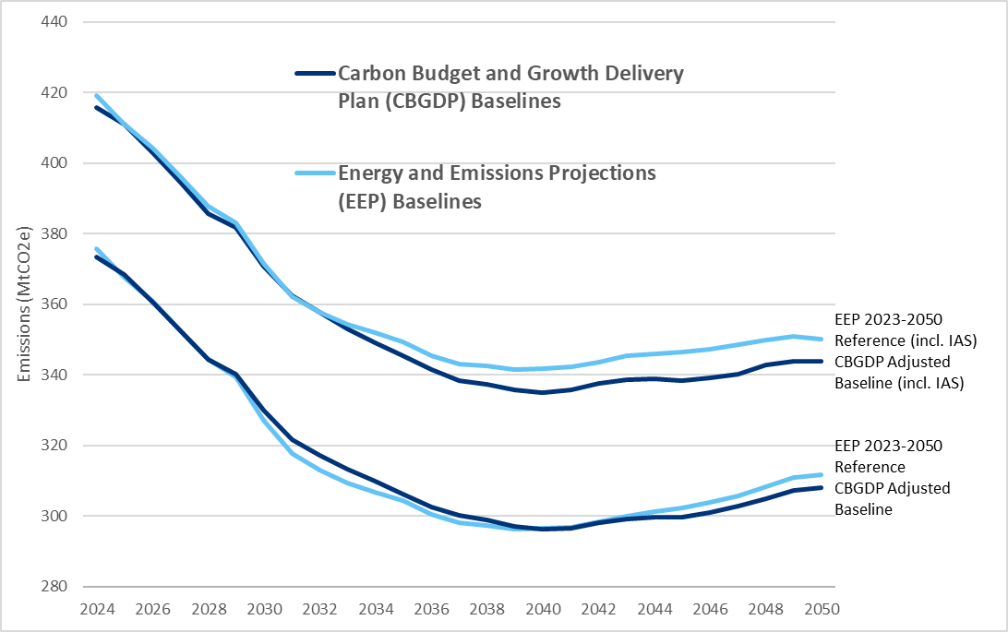
Source: Energy and Emissions Projections 2023 – DESNZ Internal Analysis, 2025
Figure 2: A comparison of the CBGDP adjusted baseline against the Energy and Emissions Projections (EEP) 2023 to 2050 reference case before adjustments, with International Aviation and Shipping (IAS) included from 2033 onwards, MtCO2e.
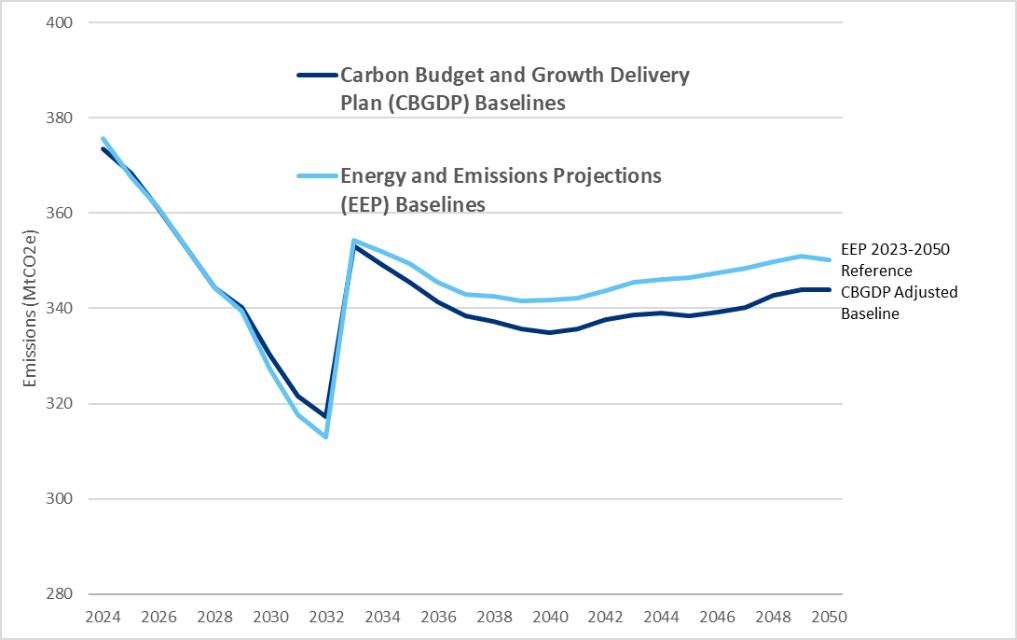
Source: Energy and Emissions Projections 2023 – DESNZ Internal Analysis, 2025
Comparison to Carbon Budget Delivery Plan 2023 baseline
22. We can also compare the adjusted baseline to the baseline used in the Carbon Budget Delivery Plan 2023. Figure 3 shows that the adjusted baseline used in this analysis has lower emissions than the baseline used in previous advice, with IAS emissions from 2033. A number of policies that were previously included in the Delivery Plan have now been moved into the EEP baseline as they have now been implemented or developed – this has caused the baseline to fall.
23. More specifically, lower baseline emissions are driven by notable improvements to the industry baseline driven by the inclusion of policies in the EEP after reaching the required level of development, and changes to the modelling of iron and steel emissions. Agriculture & LULUCF and Waste & F-Gas sectors also saw reductions in baseline emissions due to changes in modelling assumptions. Buildings saw lower emissions in their baseline due to higher savings from EEP policies. Power also saw decreased emissions in the baseline driven by revisions to power sector modelling. Domestic transport saw reductions in baseline emissions due to the inclusion of the Zero Emission Vehicle (ZEV) Mandate. IAS saw reductions due to the inclusion of the Sustainable Aviation Fuel (SAF) Mandate.
24. The adjusted EEP 2023 to 2050 baseline is lower by 15.4MtCO2e in Carbon Budget 4, 29.1MtCO2e in Carbon Budget 5 and 46.1MtCO2e in Carbon Budget 6 (including IAS).
Figure 3: A comparison of the CBGDP Adjusted baseline against the baseline used in the Carbon Budget Delivery Plan 2023, with International Aviation and Shipping (IAS) included from 2033 onwards, MtCO2e.
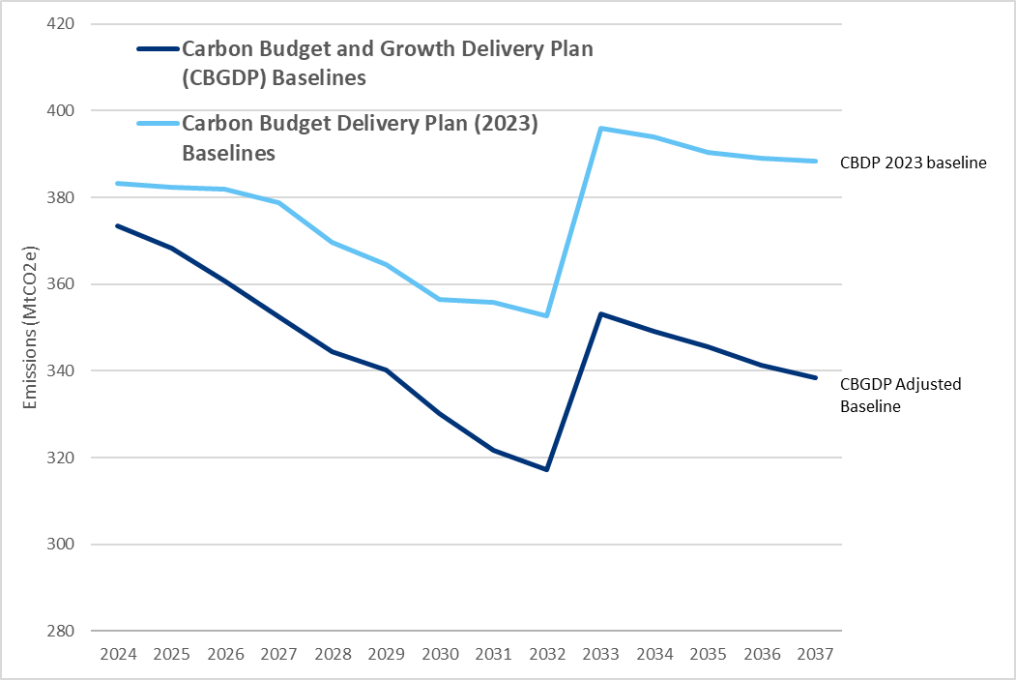
Source: DESNZ Internal Analysis, 2025
Baseline uncertainty
25. EEP projections are sensitive to uncertainty in macro-economic conditions and other input assumptions. To assess the impact of these sources of uncertainty on the projections, we have applied Monte Carlo analysis. This works by running the model thousands of times, each time varying key inputs based on probability distributions that reflect real-world uncertainty. This produces a range of possible projections, helping us understand confidence levels, and the likelihood of different outcomes.
26. Our corresponding uncertainty range for emissions reflects uncertainty within:
i. Future macro-economic trends (such as economic growth, population size and fossil fuel prices)
ii. The impacts of existing policies on emissions
iii. The current evidence base on emissions (such as land use emissions)
27. The analysis reflects a 95% confidence interval range (the grey area) around the EEP central reference case (the dark blue line), as illustrated in Figure 4 below. The analysis indicates that drivers such as GDP growth and fuel prices can have a significant impact on future emissions. In turn, this has implications for meeting carbon targets, increasing or decreasing the scale of additional savings required.
28. The territorial emissions forecasts are shown with a 95% confidence interval until the start of Carbon Budget 6 (2033 to 2037). After this point the territorial emissions are added to the emissions from IAS. After 2033, the range (grey area) represents the sum of the 95% confidence intervals for territorial and IAS. This provides an indicative range within which emissions are likely to fall.
29. While central assumptions for these factors are used to determine the baseline for policy analysis, the uncertainty range underpins the importance of regularly reviewing the latest projections of these factors, and their impact on emissions, to assess performance against carbon budgets.
Figure 4: Uncertainty around UK projected baseline emissions based on EEP Monte Carlo analysis (International Aviation and Shipping included from 2033), MtCO2e [footnote 10]
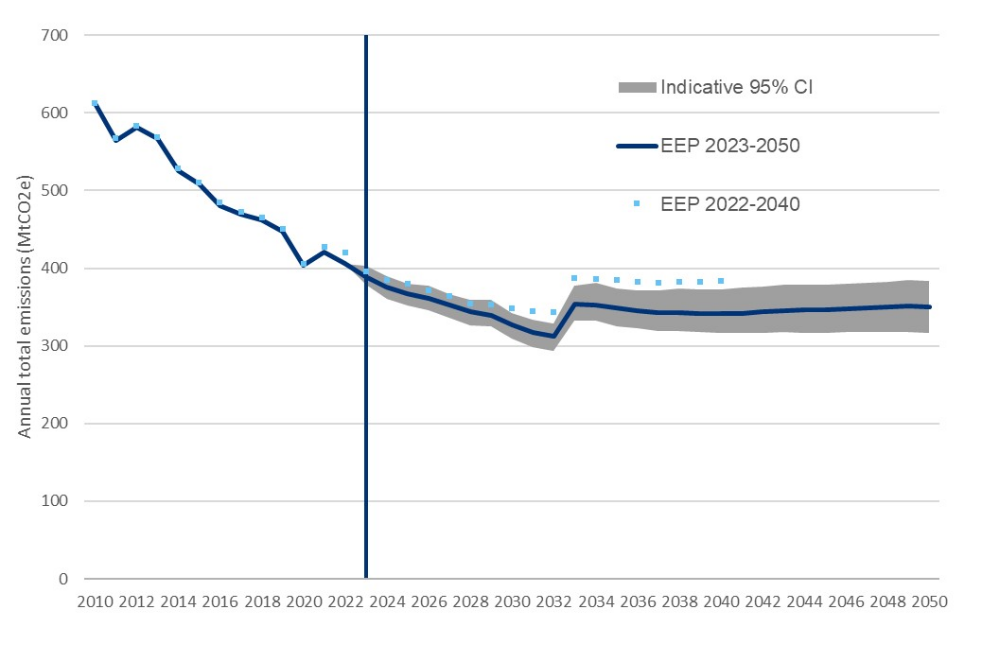
30. It should be noted that this uncertainty analysis presented in Figure 4 excludes the electricity supply industry and possible significant changes in society or the economy which might affect emissions. As a result, there is the potential for additional uncertainty beyond these 95% confidence intervals which is not captured in this Monte Carlo analysis. For example, the baseline does not account for potential changes in technology or consumer behaviours which could affect future emissions.
Wider factors and baseline uncertainty
31. In addition to the elements considered in the EEP baseline, there are wider factors not currently captured by the EEP which will affect baseline emissions. The EEP baseline projections are extrapolations which assume that current relationships between macro variables will continue indefinitely into the future and thus do not fully consider the potential for social trends to evolve or technological breakthroughs to occur independently of government action.
32. Technological progress and adoption are inherently uncertain but are likely to generate savings additional to baseline projections. The rapid progression of Artificial Intelligence (AI), for example, is likely to have a significant impact on emissions. It is likely to improve energy efficiency, help integrate renewable energy generation, and support sustainable practices, but this will be partially offset by increased energy demand from the AI itself. Similarly, the adoption of other digital technologies could boost energy and resource efficiency across a range of sectors. These matters are not currently factored into the EEP baseline.
33. Societal trends can also diverge from EEP assumptions. Public attitudes, values and social norms underpin a large proportion of the emission savings required to meet carbon budgets. By way of example, the Climate Change Committee (CCC) has calculated that household low-carbon choices could contribute to 37% of all emissions reduction in 2040. Within this, the CCC estimate that 6% of all emissions reduction in 2040 could be delivered by changes in behaviour away from high-emission activities, some of which reflects the continuation of current trends. While EEP modelling implicitly captures some consumer behaviour trends, there is credible evidence that others, not currently captured, will progress independently of government action, and generate savings beyond those assumed in our baseline and sectoral modelling.
34. Not all these factors are additive, and there is considerable uncertainty over the extent, and pace, to which they could materialise. Such measures could also affect estimates of policy savings, because there is likely to be a degree of overlap with some measures included in the policy package, and a lower baseline could mean policies deliver lower savings than when estimated against a higher baseline.
35. We have reviewed evidence from the CCC, academia, consultancies and research institutes to quantify these wider factors that are not yet incorporated into EEP modelling. These include factors that will increase, as well as those that will reduce, baseline emissions. We applied strict sifting criteria to ensure that the evidence we quantify is credible and supported by multiple sources. Our quantification method involved:
- Identifying studies that are additive and suitable for quantification
- Applying estimated proportionate emission savings to relevant sector and sub-sector baselines
- Adjusting for double-counting by subtracting policy-related savings
- Accounting for reduced baselines by proportionately reducing policy savings and subtracting this from the wider factors impact
36. These savings have been broken down into contributions from Technological Growth and Consumer Behaviour.
37. Technological growth: Technology can aid in providing better information and understanding, enabling the design of smarter systems that reduce or replace the need for fossil fuels. There are several digital technologies that are already being deployed, with the potential for significant growth, discussed in the literature, including AI and Big Data Analytics, supported by satellite-enabled communication technology and the Internet of Things. As well as offering the potential to reduce emissions through optimising existing processes, these technologies can also spur innovation to deliver further emissions savings, for example in mobility.
38. Consumer behaviour: Consumer behaviour underpins a significant proportion of emissions reductions needed to meet carbon budgets, both in terms of adoption of new technologies as well as changes in habit. There are opportunities where wider societal and voluntary consumer behaviour changes can directly impact emission reductions, independent of government policy, for example energy-saving behaviour in homes.
39. Collectively, our analysis finds that the impact on baseline emissions could reduce emissions by 20MtCO2e per year on average over CB6, the equivalent of a 6% reduction on the expected baseline in that year.
40. There is clearly scope for additional reductions beyond this level, as well as the potential for not all of these reductions to be realised, illustrating the uncertainty over how technology will develop and be deployed, and how consumer behaviour could change. However, our assessment is that it is reasonable to assume that these factors could reduce future emissions, and the assumption here reflects a cautious approach to capturing their potential scale.
Emissions analysis
Introduction to emissions analysis
41. The carbon budget assessment includes quantitative analysis of the impact on GHG emissions from the package of policies and proposals. These reflect the additional policies and proposals not captured within the adjusted baseline, as detailed in the Baseline Emissions section above. These policies, as set out in Table 4 of Appendix B of the CBGDP, are assessed using central assumptions of key drivers of emissions such as GDP and fossil fuel prices. These factors are also used to determine the adjusted baseline, which provides a projection of emissions out to 2050. When we sum the savings across all modelled policies and proposals, subtract these from the baseline, incorporating any additional wider factors and cascade effects (covered later in this chapter), we can assess our performance against carbon budgets. [footnote 11]
42. The 2021 Net Zero Strategy (NZS) set out indicative ‘delivery pathways’ of emissions reductions to meet our climate targets up to and including Carbon Budget 6 (2033 to 2037). This is based on our understanding of the potential for each sector to reduce emissions, considering the balance between sectors that is optimal for the entire economy. The indicative delivery pathways as set out in the NZS have not changed, and the sector ranges continue to provide direction for sector level policy development.
43. As the NZS delivery pathways are indicative only, the exact path we take, and the contribution of each sector to achieving carbon budgets, is likely to differ from the pathways and must respond flexibly to changes that arise over time. While we continue to use the pathways as a means of developing and testing policy, our conclusion that the package of policies and proposals set out in the CBGDP will enable carbon budgets to be met does not depend on the specific NZS delivery pathways.
44. The policies and proposals set out in the CBGDP show the current planned package of policies and proposals and their projected emissions savings. Estimates for policy level savings are presented on a sector basis. Quantified policy emission savings are estimated using sector-based modelling from across DESNZ and other government departments. They are estimated using a variety of different models and analytical approaches, appropriate to both the sector and the policy intervention, consistent with relevant government appraisal guidance where appropriate, including the use of central macroeconomic assumptions.
45. The basic approach is to model the impact of policy on real-world outcomes and then estimate the carbon savings associated with these outcomes. For example, policy to incentivise the uptake of heat pumps would be assessed to determine the resulting level of heat pump installations, and the subsequent emissions savings of these would be estimated given standard assumptions about counterfactual energy usage to heat homes in the absence of heat pump installation. Appendix C in the CBGDP sets out deployment assumptions which illustrate the ‘real-world outcomes’ consistent with the quantified policies and emission savings.
46. Some policies in the CBGDP return negative emissions savings numbers. This means that these policies and proposals generate additional emissions for the UK despite being designed for the decarbonisation of the UK economy. This arises through two predominant avenues.
i. The first is that emissions are generated as a necessary part of increasing production of low-carbon fuels. For example, while hydrogen production supports decarbonisation across sectors and delivers net emission savings, it can result in some emissions during its manufacture under certain processes.
ii. The second avenue is when there’s an inter-temporal element to the savings. This can occur when emissions savings are realised over a longer timeframe, and often after some emissions have been produced upon the implementation of the policy. For example, there can be operational emissions generated during the creation of woodlands from the machinery used and soil disturbance, which means there are a small amount of negative carbon savings over CB4. However, this policy generates emissions savings over CB5, CB6 and beyond as more emissions are sequestered by trees over time.
47. More information on the sector-specific methodologies, key assumptions and the evidence base used in calculating policy emission savings can be found in the ‘sector modelling’ section of this annex.
Delivery risk and modelled policy-level uncertainty
48. Given the complexity of the economy-wide transition necessary to meet carbon budgets and net zero, there is considerable inherent uncertainty, with outcomes dependent on a variety of factors. We recognise that there are both upside and downside risks which could make it easier or harder to meet future carbon budgets. Some of these risks impact our baseline level emissions, for example annual revisions to the GHG inventory due to measurement or methodology changes, which are discussed separately in the ‘accounting framework’ section above.
49. The extent to which policies and proposals can deliver expected savings is also uncertain, for a range of different reasons. For example, higher levels of delivery risk could reflect the stage of policy development, where it is not yet clear what the detailed policy instrument or further design details will be. Part of this could reflect uncertainties over the choices and preferences of decision-makers to shape policies or aspects thereof. Although this uncertainty will reduce as the policy progresses through the development cycle, changes will likely have an impact (positive or negative) on the estimated level of savings delivered by the policy. Figures for emission savings from policies presented in this report may therefore differ from those that are achieved when the policy is enacted.
50. In addition, policy uncertainty could also reflect underlying factors such as consumer behaviour or technology performance. This outcome uncertainty is the degree to which emission savings can be realised or exceeded in the ‘real-world’ commensurate to the original projections. For example, faster cost reductions than assumed in the policy analysis could lead to greater emission reductions than projected. There could also be various dependencies that will determine the likely success of policies to deliver expected savings, especially in a system-wide transition where sectors rely on each other.
51. Furthermore, policymaking will continue after the analysis in this report was completed. This report represents only a “snapshot” of current policies and proposals at this time. The scope of some policies in this report will be expanded, or delivery may be brought forward in time. Other policies may be scaled back or delayed. This uncertainty particularly affects emissions modelling in later carbon budget periods.
52. The extent of policies’ emission savings is determined by relevant policy and analyst officials within government against the adjusted EEP baseline. Policy savings and emissions can be affected by underlying factors such as population, GDP growth and fuel prices. This analysis uses central assumptions for these factors, consistent with the adjusted baseline. The impact on emissions of uncertainty in these ‘macro’ factors is presented in the ‘Baseline Uncertainty’ section above. Further ‘wider factors’ deemed to impact baseline emissions, such as changes in technological development and consumer behaviour, are also considered alongside this in the ‘Wider factors and Baseline Uncertainty’ section above.
53. The emission savings for the current package of policies put forward do not necessarily reflect the “most likely” trajectory for the UK’s emissions. Rather, it presents the ‘planned’ scenario that reflects a credible level of emission savings associated with policies in this advice, using central assumptions and provided they are adopted, implemented according to timeframes specified, risk mitigations are successfully implemented, and appropriately supported through funding and public uptake. As such, any references to ‘planned’ scenario emission savings throughout this annex are defined on this basis.
54. We have also factored the risk that a policy or proposal will underdeliver, after having been implemented, into our assessment of the projected savings of non-EEP policies and proposals. While the risks and uncertainty facing each sector is different, we have factored in the potential for differences in technological developments (e.g. changes in costs), policy or project delay (e.g. acceleration or delays in supply chain), consumer uptake and public behaviour (e.g. uptake of key technologies) and the impact of funding variation on emissions savings where appropriate, alongside any other significant sector-specific factors. We have also considered the potential for over-delivery within a policy or proposal, after having been implemented, by factoring in the same factors as listed above to our assessment and considered steps that can be taken to promote it.
55. Some measures have been identified but at this stage are not possible to be quantified to the same level of robustness and these are captured in Table 6 of Appendix B. Our approach to these policies is set out below in the ‘modelling of other early-stage policies and proposals’ section.
Confidence in modelled savings
56. Wherever possible, consistent assumptions have been used across sectoral modelling. Assumptions and modelling approaches are consistent with appropriate government analytical guidance and is based on the best evidence available at the time of its production. Analysis has undergone robust quality assurance in line with best practice and Aqua Book guidance Reference 11. The Aqua Book is guidance published by the UK government about how to produce robust, fit for purpose analysis.
57. While assumptions vary by policy, the savings presented generally are a more cautious overall forecast than the maximum feasible emissions savings that are possible from each policy. This reflects the fact that analysis of future policy savings often depends on the values chosen for certain variables, such as future technology costs or consumer or business behaviour. Varying the values of these variables will lead to higher or lower savings.
58. For a minority of policies and proposals, mostly in the agriculture sector, the savings presented are close or equal to the assessed maximum feasible savings. This reflects the underlying analytical approach to develop a set of valid assumptions based on an assessment of factors that constrain what is feasible and should not be confused with ‘maximum theoretical potential’, where emission savings would be assessed without any consideration of factors that may in practice constrain potential savings. For example, the presented pathway for Agriculture policies and proposals are based on the best currently available evidence and were informed by an independently peer reviewed scientific assessment of the technologies’ ability to mitigate emissions alongside stakeholder engagement on feasible rates of adoption of those technologies. Reference 12 While ambitious, they are based on achieving the feasible adoption of these technologies, which is underpinned by assumptions on future full government funding being in place to support delivery, the identification of appropriate delivery vehicles where these are not yet known and the implementation of mitigation actions for each policy to overcome known policy risks. Based on these factors being realised, we are confident that it is credible that the policies will generate their maximum feasible savings as set out in the planned scenario. Further detail on the specific policy modelling methodology is outlined below in the sector modelling section.
Modelling of other early-stage policies and proposals (with additional savings)
59. There are other early-stage policies and proposals (OESPs) in the package (listed in Table 5 of Appendix B) that we expect to deliver emissions savings. However, we cannot currently model annual savings projections for these with the same robustness that we do for the modelled policies and proposals. This is because they are early-stage policies and proposals where we are still assessing the available evidence necessary for robust quantification.
60. Nevertheless, we are confident that these policies and proposals will generate savings additional to those quantified above in the CB6 period (or earlier in instances where OESPs are stated to commence prior to CB6). The precise level of savings realised is subject to delivery risk uncertainty with these policies generally having higher implementation risk [footnote 12] due to their early-stage status alongside higher effectiveness risk as we require further evidence to robustly estimate their precise emissions impact.
61. These were previously included in the package as ‘unquantified’ policies. For the first time, we have provided an indicative estimate, where possible, of the scale of savings each OESP will generate based on currently available evidence. For all OESPs quantified, estimates have been provided for the CB6 period on an average annual basis. OESP savings for supporting increased methane capture from landfill gas sites have also been included from 2027 to 2032, in addition to the CB6 period. Savings for this OESP are presented as part of OESP 1 in Policy Table 5 of Appendix B.
62. This indicative assessment of emission savings by sectors has largely been based on the current level of emissions in the relevant category of the GHG Inventory which the OESP is expected to target, with some limited information to inform assumptions around the amount of abatement that can be achieved from intervention. These assumptions have been informed by external evidence where available, such as that gathered from the CCC and published research.
63. We have estimated the scale of savings each early-stage policy will generate in the CB6 period based on currently available evidence. Sector teams returned point estimates for some early-stage policies, such as in the Agriculture & LULUCF and Waste & F-gas sectors. Where this was not possible, sector analysis has produced ranges of likely savings.
64. In instances where the indicative estimates were given as a range of emission savings, we have used the midpoint of the range as a reasonable point estimate, as we consider it reasonable to assume that outcomes will be normally distributed within the indicative ranges.
65. OESPs development is ongoing across government. Where policies and proposals are too nascent to be quantified at this stage, we have not included them in the CBGDP, and they do not form part of this assessment.
Cascade effects
66. We have also assessed the potential for cascade effects, which could result in over or under delivery of emissions savings modelled in the package. Cascade effects occur when changes in one part of the system propagate through connected systems, in some cases amplifying or enabling change. For example, in energy systems, the rise of renewables does not merely displace fossil fuels but also reshapes markets for energy storage, grid infrastructure, and industrial processes. These cross-system effects are often not captured in sectoral modelling, which typically assess the emissions impacts of policies within individual sectors, without considering wider interactions. Recognising and accounting for these interactions assists in determining a credible emissions outcome from the policy package.
67. Whilst no particular cascade effect is guaranteed to occur, we have explained where we think it is reasonable that cascade effects will have an impact on emissions savings, and the emissions savings we expect to emerge as a result.
68. To identify cascade effects, we carried out a comprehensive review of potential interactions and interdependencies across the net zero system. These were identified through three primary sources:
- A literature review of external reports and papers detailing cross-system interactions.
- Using the DESNZ Net Zero Systems Tool, an interactive whole systems map of net zero. This maps the interconnections between the Energy, Land Use, Buildings, Industry and Transport systems.
- Commissioning sector teams and DESNZ sector experts to identify examples of cascade effects.
69. This review generated a longlist of cascade effects, which had the potential to support over and under-delivery of policies in the carbon budgets policy package. Each effect was then assessed against two criteria to determine its potential for quantification. These criteria were:
i. Whether the effect was already captured in sectoral modelling: To avoid double counting, we asked sectors to identify whether cascade effects were already accounted for in their carbon budgets modelling. If they were, we did not consider them here.
ii. Strength of evidence: The quality and quantity of sources supporting the existence of the cascade, including peer-reviewed literature, academic sources and studies.
70. A subset of cascade effects was then shortlisted and quantified through this process, based on credible evidence of impact within the CB6 period.
71. Quantified cascade effects include a feedback loop associated with growing adoption of green technologies which reduce perceived risks to consumers, and access to lower running costs through flexible energy use and Time of Use tariffs.
72. Five cascade effects were not identified to impact emissions outcomes in the CB6 period. This includes cascades related to biomass supply constraints, green hydrogen spillovers and circular economy impacts.
73. Based on the available evidence on cascade effects, we have estimated that these could provide 4.7MtCO2e per year in the CB6 period, over and above the savings modelled in the planned scenario for policies and proposals in the carbon budgets policy package.
Uncertainty within devolved government savings
74. The scope of policies in this analysis primarily reflects policies led by the UK government. However, across the UK, actors at all levels of government have committed to achieving net zero emissions. For example, each devolved government (DG) has a net zero target (2050 for Northern Ireland and Wales, 2045 for Scotland) with ambitious interim targets along respective DG pathways. As such, a significant degree of policy effort across all levels of government within the UK will be required to meet these targets, supported by UK government policies.
75. In this analysis, assumptions have been made on the savings delivered from DGs in the Buildings and Natural Resources, Waste and F-gas sectors. Commensurate policies modelled at a sub-UK level are ‘scaled’ to reflect similar action across the UK by the DGs. Full details of the sector specific approach are captured within the sector modelling section below.
76. UK scaling assumptions for heat and buildings: Scalars are applied to the emission savings estimated for England, England and Wales or GB policies, and are included in the savings estimate of each relevant policy line. Scalars are only used where it is reasonable to do so, reflecting that policy responsibility in heat and buildings is a mix of reserved and devolved responsibilities. The value of the scalar varies according to the nature of the policy, reflecting relative population or household numbers, or share of UK gas demand. For example, for The Warm Homes Social Housing Fund (WH: SHF) Wave 3 policy (48), a DG scalar of is 20% based on Office for National Statistics projections of household numbers by UK nation. This is a reasonable proxy for devolved ambition assuming that commensurate Energy Efficiency policies are rolled out in households across all UK nations assuming that there is a similar housing stock across the UK, i.e. that Energy Efficiency measures when implemented would deliver a similar relative level of savings across the UK.
77. UK scaling assumptions for agriculture and LULUCF, and waste and F-gas policies: Scalars are applied to the emission savings estimated for England (Agriculture & LULUCF and Waste) as fully devolved policy areas. The majority of F-gas policies are modelled on a GB-wide basis and scalars only represent additional policy savings from Northern Ireland, with the exception of policy 161 which is modelled on an England basis and scaled up to a UK-wide level. These estimates are presented separately from the England-only policy savings as DG emissions savings. Policy 32 reflects the combined DG scaled savings for the Agriculture and LULUCF sector, and policy 169 reflects the DG scaled savings for the Waste and F-gas sector). This is because within these sectors, DG emissions are a relatively higher proportion of the UK total, due to differences in natural environment and land use in different UK nations affecting, for example, the potential for afforestation and peatland restoration. The following scaling assumptions are used to calculate devolved savings in these areas:
i. For agriculture, DG GHG emissions are assumed to reduce by the same proportion relative to 2020 levels as Defra’s projections for English agricultural greenhouse gas emissions.
ii. For forestry and peat, DG afforestation and peatland restoration are assumed to follow the same proportions relative to English afforestation and peatland restoration as used in the CCC’s Balanced Net Zero pathway for CB6.
iii. F-gas emissions savings for policies 164 and 165 are modelled for Great Britain only as Northern Ireland remains within the EU F-gas system. Northern Irish F-gas emissions are assumed to reduce by the same proportion relative to 2015 levels as projections for F-gas emissions in Great Britain. Policy 163 is modelled on an England-only basis due to the scope of this policy and savings have been scaled up to a UK-wide level based on the England to UK share of F-gas emissions.
Methane Action Plan
78. Emissions analysis captured within the UK’s Methane Action Plan mirrors the underlying emissions analysis from the CBGDP, as described within this Technical Annex. Methane emissions presented over the period of 1990 to 2023 reflect the latest UK territorial methane emissions from the GHG Inventory. Projections of methane emissions post 2024 are based on an adjusted version of the EEP 2023 to 2050 reference case, with an adjustment made for the waste sector in line with Table 3 of this annex.
79. The methane pathway presented utilises this adjusted baseline and incorporates planned scenario methane emission savings from quantified policies and OESPs within the CBGDP.
80. Collectively, these policies span the Agriculture, LULUCF, Fuel Supply and Waste sectors. Further detail on the modelling approach to the relevant policies is captured below within the sector modelling section.
Sector modelling
Power
81. To estimate emissions savings in the power sector (policy 118 in Table 4 of Appendix B), DESNZ models the power sector using the Dynamic Dispatch Model (DDM), an electricity supply model that simulates the GB electricity market out to 2050. It is a bottom-up, agent-based simulation model that dispatches and makes investment decisions based on power plants’ projected profits. Unlike optimisation models, it does not assume perfect foresight, aiming instead to best simulate real-world investor behaviour. Table 4 shows how the DDM was used to model carbon budget scenarios.
Table 4: Modelled power sector scenarios
| Scenario | Description | Notes |
|---|---|---|
| 1. Planned Net Zero (‘planned’) | This reflects the package of measures intended to meet sector targets. | This assumes that the policies listed in Appendix B, Table 4 (for both power and other sectors) have their desired impact. It uses best available evidence on technology technical assumptions (for example load factors and cost assumptions), as well as future capacity deployment assumptions which, while ambitious, reflect credible trajectories based on sector pipelines and supply chain constraints. |
| 2. Known Policy | This outlines what the power sector would look like if the government made no further interventions beyond what has already been implemented or adopted as defined in the EEP. [footnote 13] It is the equivalent sectoral baseline for power. | EEP-ready policies in the power sector include the pipeline of renewable capacities from future Contract for Difference (CfD) rounds, one pilot Carbon Capture and Storage (CCS) plant and the nuclear plants Sizewell C (SZC) and Hinkley Point C. |
82. To model our planned scenario, we took the following steps with the DDM:
i. Inputted the level of electricity demand consistent with the wider electrification of the economy required to hit overall carbon budgets. (In this scenario, demand more than doubles between now and 2050).
ii. Inputted existing plants and capacities, known plants that are coming on-line and policy committed plants.
iii. Ran the DDM multiple times, to test different future input capacity mixes in terms of the quantity of renewables, storage and low carbon flex that is added to the system, in key years. The DDM ‘fills in the gaps’ in order to provide security of supply, by building unabated gas plants.
iv. Selected the best mixes in terms of the lowest or low appraisal system costs [footnote 14] that were compliant with emissions targets.
v. Ran the preferred mixes again covering the full time horizon, to select the final scenario.
83. Our planned scenario models a relatively low-cost pathway, achieving net zero targets including CB6 using a balanced mix of technologies. The capacity of any given technology within a net zero consistent capacity mix can however vary significantly, and the government is not targeting a specific capacity mix for CB6 and net zero by 2050. Instead, ministers and policy experts have put in place a policy framework that enables a broad range of electricity infrastructure to deliver to levels that maintain optionality while keeping system costs low.
84. To model our Known Policy scenario, we took the following steps with the DDM:
i. Inputted the level of electricity demand consistent with EEP-ready policies only. These are policies that have been adopted, implemented, and those that are planned where the level of funding has been agreed and the policy is near final.
ii. Inputted existing plants and capacities, known plants that are coming on-line and policy committed plants.
iii. Let the DDM ‘fill in the gaps’ in order to provide security of supply, by building unabated gas plants or additional renewables on a merchant basis.
Calculation of Emissions Savings
85. As illustrated in Box 1, emissions savings from individual policies in the power sector are non-additive, that is, calculating the emissions savings of each policy in isolation yields a different total emissions savings figure than looking at all policies collectively. In this context, attempting to calculate emissions savings for individual policies is likely to be both misleading and inaccurate. We therefore only provide a single aggregate figure for the power sector. This is in line with the reporting approach taken by the CCC.
Box 1: Calculation of Emissions Savings from Two Policies
In this calculation we look at the emissions savings in 2035 from two hypothetical policies:
1. One that will increase offshore wind capacity from 50.0 GW to 67.5 GW, and
2. One that will increase nuclear capacity from 4.5 GW to 9.4 GW.
For simplicity, the capacities of all other low carbon technologies (e.g. solar) are the same, with only unabated gas and battery capacity allowed to change to ensure security of supply.
These two policies then lead to the following capacity scenarios, with their subsequent emissions:
| Description | Wind | Nuclear | Emissions |
|---|---|---|---|
| Neither policy delivers | 50.0 GW | 4.5 GW | 10.1 MtCO2e |
| Nuclear policy only delivers | 50.0 GW | 9.4 GW | 9.4 MtCO2e |
| Wind policy only delivers | 67.5 GW | 4.5 GW | 9.2 MtCO2e |
| Both policies deliver | 67.5 GW | 9.4 GW | 8.7 MtCO2e |
To determine the emissions impact of either policy there are two options:
1. Determine the emissions savings of that policy alone relative to the case where neither policy delivers (an ‘Additive’ approach), or
2. Determine the additional emissions that would arise if that policy didn’t deliver relative to the scenario where both policies deliver (a ‘Subtractive’ approach).
Doing this yields the following emissions savings for the wind and nuclear policies:
| Emission Comparison (MtCO2e) | Initial | Final | Savings |
|---|---|---|---|
| Wind – Subtractive Wind – Additive |
9.4 10.1 |
8.7 9.2 |
0.7 0.9 |
| Nuclear – Subtractive Nuclear – Additive |
9.2 10.1 |
8.7 9.4 |
0.5 0.7 |
As this table demonstrates, the calculated emission savings for a given policy is dependent on how the savings are calculated, with the Additive approach yielding higher emissions savings. Furthermore, for every additional policy included in the appraisal, the difference between these Additive and Subtractive savings will increase in a non-linear fashion, making it difficult to estimate either an emissions range or average emissions savings for any single policy.
The difference in emissions savings arises because there is both significant exporting of electricity and curtailment of low carbon generation in the Net Zero scenario. While removing some low carbon capacity (be that nuclear or offshore wind) will lead to some additional gas generation, a lot of lost generation is made up by generation from other low carbon capacity already in the system – generation that would otherwise be exported or curtailed in the Net Zero scenario. However, as increasingly more low-carbon capacity is removed from the system the amount that can be made up by the excess generation from other low carbon capacity falls, leading to higher and higher proportions of gas generation and correspondingly higher emissions.
Fuel Supply and Hydrogen
Hydrogen
86. Policy 81 in Table 4 of Appendix B is the only quantified policy in scope of the hydrogen subsector. Hydrogen is expected to have a role in decarbonising hard to electrify parts of the industry, power, and transport sectors; overall hydrogen demand - consistent with the policies in Table 4 of Appendix B for these sectors - was estimated as set out in the other sector modelling descriptions in this annex.
87. Estimates of the hydrogen production capacity that could be needed to meet demand have been calculated assuming Carbon Capture, Usage and Storage-(CCUS) enabled (blue) hydrogen production plants run at a 90% load factor and electrolytic (green) hydrogen production plants run at 60%, on average. The load factor of hydrogen production plants is dependent on the hydrogen supply mix and availability of low carbon power, which is uncertain at this time. A higher load factor would lead to a lower capacity requirement, and vice versa. However, our load factor assumptions reflect CCUS-enabled hydrogen running at near-baseload, with potential downtime, given the high capital costs, requiring high utilisation to reduce levelized cost, as well the impact of intermittent operation on CCUS systems, which can reduce efficiency and per-tonne CO2 costs. For green hydrogen, this assumes electrolysers are able to run flexibly and respond to power market signals. The policies and proposals required to bring forward this capacity, in particular the Net Zero Hydrogen Fund, and Hydrogen Production, Transport and Storage Business Models are set out in Table 4 of Appendix B.
88. The government is working to publish a new Hydrogen Strategy, illustrating the role and scale government sees for the future hydrogen economy and infrastructure required for this role to be met. In this analysis, we have assumed that hydrogen supply is always equal to the hydrogen demand from the industry, power, and transport sectors in both high blue and green hydrogen scenarios. This reflects current Hydrogen Production Business Model design, where any successful producer needs a contracted offtaker before receiving a subsidy. We are doing more work to understand the long-term role of imports and exports within the hydrogen economy. This could mitigate the risk of domestic supply not matching demand if there is potential to import/export hydrogen abroad to ensure demand-supply alignment.
89. Emissions from blue hydrogen production are calculated using standard emissions factors for natural gas and assume a 95% carbon capture rate Reference 13. Energy demand estimates are calculated using efficiency assumptions. These estimates are also illustrative and uncertain but are in line with latest DESNZ assumptions, and depend on the hydrogen supply mix, load factors and efficiencies of plants.
90. Blue hydrogen deployment has been modelled to reflect the blue projects currently in negotiations with government. In order to ensure continuity in production not overshooting modelled demand and green production not decreasing, the blue projects have been modelled as starting in 2029 and 2032, with the first project ramping up over a two-year period to full capacity in 2031, and the second project ramping up over two years with half capacity in year one. This reflects the likely requirement for large scale blue projects to ramp up over time.
91. Up to 2033, green production is dictated by the remainder of demand after the production volume from the blue projects currently in negotiations with the government and Bioenergy with Carbon Capture and Storage (BECCS) has been removed. After 2033, two scenarios were modelled, where the green blue split is modelled as the ratio of technologies in the high blue scenario, while blue production stops increasing past 2033 in the high green scenario, with extra demand fulfilled by green production supported through future hydrogen allocation rounds.
92. Our emissions figures are inherently uncertain; hydrogen demand is dependent on a range of factors including the relative cost of hydrogen compared to other fuels; hydrogen availability and infrastructure rollout; and policy decisions around the role of hydrogen for heat. Demand could be higher or lower than this range, which would lead to a higher or lower production capacity requirement. However, the demand pathways set out within industry, power and transport show where we expect essential hydrogen demand to be within the energy system with current, up-to-date understanding of hydrogen costs. Demands are broadly in line with external evidence, including CCC demand ranges and National Energy System Operator’s Future Energy Scenarios.
93. Government policies and proposals on hydrogen, such as the Net Zero Hydrogen Fund and Hydrogen Production Business Model, support the development of hydrogen production. However, emission savings from these technologies would be realised and accounted for in downstream sectors, such as the industry sector, where hydrogen will displace high-carbon fuels in some subsectors. These savings are reported against policies and proposals in those end-use sectors in Table 4 of Appendix B. Because of this, the hydrogen production row 83 in Table 4 shows the direct emissions from blue hydrogen production only and exclude indirect emissions from electricity use for green hydrogen production (as emissions from green hydrogen production have been accounted for in the Power sector estimates).
Upstream Oil and Gas
94. Policies 89 and 90 are in scope of the upstream oil and gas subsector. Emissions savings for these policies uses scenarios from offshore electrification and flaring and venting provided by the North Sea Transition Authority (NSTA). [footnote 15] The modelling is based on the 2024 Emissions Monitoring Report (EMR), the latest available at the time of scenario development.
95. Since this, the 2025 EMR has been published with lower savings from electrification but slightly higher savings for flaring and venting. Reference 14 This has not been reflected in our oil and gas emissions pathway due to timing and processing between publication dates. The NSTA has not carried out any additional modelling or adjustments to the 2024 EMR data used.
Electrification
96. Estimates of potential abatement from offshore electrification (policy 90) come from data set out in the NSTA’s 2024 EMR. Reference 15 Facilities assessed in the 2024 EMR reflect the latest data available to the NSTA at the time [footnote 16], Reference 16, Reference 17 and NSTA’s in-house expertise. These estimates are scope 1 emissions only. [footnote 17]
97. Using historical emissions data, key technical variables and assumptions, the NSTA models low-, mid- and high-case scenarios of GHG emissions abatement from a mix of offshore installation electrification solutions, with some installations being partially electrified and others being fully electrified.
98. Key scenario variables include installation scope (i.e. considered capable of meeting OGA Plan requirements); electrification status (full or partial); electrification start year (first power); annual power demand and expected year of cessation of production (CoP).
99. DESNZ adopted its mid-case, which assumed eight offshore assets are fully electrified, with power demand provided by electrification powered by shore in 2030, and includes projected new fields/ projects with major infrastructure. It is assumed that full abatement starts a year after project completion and that electrification of the installation would not affect previously reported economic CoP dates.
100. The electrification of brownfield offshore assets has never been completed in the UK. Current potential projects are both complex and relatively immature therefore reliable data is sparse. Thus the approach adopted by the NSTA focuses on using the most up to date available intelligence from projects currently being worked on by technical team. The potential abatement scenario for electrification is based on expert evaluation from NSTA stewardship surveys, and consider factors such as the maturity and complexity of project proposal, alignment of project participants and rate of progress at the time of publication (September 2024).
Routine flaring and venting abatement
101. For the planned scenario, the estimate of emissions abatement via Zero Routine Flaring and Venting (ZRFV) reduction (policy 89) was developed assuming that zero routine flaring will be in place across all UK Continental Shelf (UKCS) assets in 2030. Routine flaring is assumed to be consistent with category 1 flaring – now defined by the NSTA as category A flaring. Future expected flaring and venting volumes were based on estimates provided by operators with data taken from the UKCS Stewardship Survey. Reference 18 It is assumed that the abatement will peak in 2030, based on external influencing policies such as the ZRFV guidance of OGA Plan. Reference 19 Therefore, a credible estimate of abatement can be made by tapering this peak evenly back to 2025. The NSTA assigns 20% of the peak to 2025, 40% to 2027, 60% to 2028 and 80% to 2029.
102. Flared gas values, in both mass and volume units, have been converted to CO2 equivalent emissions using emission factors observed in published datasets (e.g. EEMS). Reference 20
Midstream Gas
103. Policy 87 is the only policy in scope of the midstream gas subsector. The emissions savings for this policy are based on modelling by the gas distribution networks (GDN) delivering the iron mains risk replacement programme (IMRRP).
104. The GDNs used the industry standard Shrinkage and Leakage Model (SLM) as the basis for the forecasts to calculate emissions savings. Reference 21 Within the SLM, there are several assumptions that are applied universally by all GDNs, which have been approved by Ofgem (the regulator of the GB energy market) and allow GDNs to calculate the rates for each Shrinkage and Leakage category. These assumptions cover the following performance measures: Leakage Volume (GWh), Own Use Gas Volume (GWh), Theft Volume (GWh), Cost of Gas (p/kWh), Prior Year Cost Adjustment (£m) and Shrinkage Cost (£m). The modelling also isolates the impact of the IMRRP.
105. The GDNs’ residual midstream emissions are calculated by taking each GDN’s baseline emissions without IMRRP (an output from the SLM), and subtracting the GDN’s modelled emissions savings with IMRRP. The difference between the EEP baseline emissions for the midstream sector and the GDN’s residual midstream emissions then provides us with our carbon budget midstream emissions savings.
Biomethane
106. Policy 80 is the only policy in scope of the biomethane subsector within the fuel supply sector. Emissions savings are derived from the production of biomethane via deployment of anaerobic digestion (AD). AD deployment is estimated based on historic evidence from the Renewable Heat Incentive (RHI), commercial intelligence and forecasts, assuming that future policy provides the regulatory and financial support required to incentivise deployment. The amount of heat generated is estimated by combining the resulting plant deployment with estimates of biomethane injection as a proportion of capacity.
107. For fuel supply, the internal DESNZ Biomass Heat Pathways Tool provides assumptions on bio-generation emissions. Full methodology and assumptions for AD deployment emissions savings can be found in the final stage impact assessment for the Green Gas Support Scheme (GGSS).
CCUS
108. The policy in scope of this subsector is 79 (CCUS Contributions to Fuel Supply). Estimates of emissions savings from gas terminal CCUS projects were collected and analysed from data provided by the CCUS clusters. Savings are expected to deliver from 2034 in line with the understanding of project deployment timelines as at the Spending Review 2025 (SR25).
Industry
109. The policies and proposals set out in Table 4 of Appendix B for industry covers 17 subsectors. The policies and proposals are quantified using the COMIT [footnote 18] and a range of other policy specific modelling, research and analysis.
Developed policies
110. For developed polices whose quantified savings are not already included in the baseline – industrial CCUS (policy 101), Industrial Energy Transformation Fund (policies 110 and 111), Hydrogen Allocation Rounds (policies 105 and 106) and CCUS-enabled hydrogen (policies 103 and 104) –emissions savings are informed by business cases based on bespoke modelling. These bespoke models are designed to quantify the impact of government interventions on the deployment of CCUS, fuel switching and energy efficiency measures displacing carbon-intensive activity.
111. We have used these developed policy estimates in conjunction with our industrial decarbonisation technical potential estimates to calculate a planned scenario affecting industrial emission savings between now and 2050. Details of how we have modelled the technical potential for further emission savings are described below.
Fuel switching and CCUS technical potential
112. Technical potential for industry fuel switching (policy 107) and industrial CCUS (policy 102) are evidenced by COMIT. COMIT is a least cost optimisation model, i.e. it finds the lowest cost pathway for the industrial sector to generate a certain output given a range of potential available technologies. COMIT reveals the additional savings that are deemed technically and socially cost effective above and beyond the savings identified by the developed policies.
113. COMIT was developed by DESNZ, with input and consultation from the CCC and UK Energy Research Centre. The CCC used COMIT to underpin the industry chapter in their most recent Seventh Carbon Budget report. Reference 22
114. COMIT uses carbon values to incentivise decarbonisation; the higher the carbon value, the greater the benefit of adopting a low carbon technology in comparison to other technologies. The model calculates the technically feasible pathway for a range of technologies, taking capital and operating costs (capex and opex), fuel costs, hydrogen and CCUS transport and storage costs and availability, and carbon values. Key technology modelling assumptions were last updated in April 2025 based on a technoeconomic study by Guidehouse. Reference 23
115. In our planned scenario until 2030 for the traded industrial sector we apply central carbon values (based on a projected ETS price) and for the non-traded industrial sector we apply zero carbon values, reverting to the social costs of carbon by 2035 for the entire industrial sector. Similarly, until 2030 we assume the price of electricity follows a projection of retail prices and then adjust to reach prices reflecting long-run variable costs by 2040.
116. This approach credibly models industrial decarbonisation by assuming that carbon values and prices reflect current conditions in the short term. In the medium-term, policy supports a relative change in prices between fossil fuels and low-carbon technologies.
Efficiency Measures
117. Industrial resource efficiency (RE, policy 109) measures reduce the volumes of, or substitute, materials needed to deliver a given volume of industrial output (in essence, creating more with less). The estimates of emissions savings from RE are based on the potential emissions savings that could be delivered through achieving the technical potential of specific RE measures, rather than projected emission savings resulting from specific policy interventions.
118. A carbon savings trajectory for RE measures was informed by research and stakeholder engagement with 11 industrial sectors. Reference 24 The research identified approximately 80 RE measures, of which 40 are modelled in the RE emissions saving profile (some measures were excluded due to a lack of evidence or risk of double counting). For each measure, the research estimated the current level of efficiency, business-as-usual (BAU) level of efficiency, and the maximum technical potential (MTP) level of efficiency based on evidence collected from literature reviews and qualitative research with experts from industry and academia. The University of Leeds UK Multiregional Input-Output Model (a modelling approach which tracks flows between economic sectors) is used to estimate the emissions savings that could be achieved from these RE measures.
119. For the planned scenario, modelled figures for RE represent a higher ambition ‘central’ scenario which we believe to be ambitious and feasible. This profile follows a BAU pathway until 2030 followed by an ambitious 5-year period of delivery that transitions the profile to a higher-level of ambition between BAU and MTP assuming the delivery of supporting RE policies. Although this delivers modest RE improvements in the short term, this delay reflects the lack of funding for RE measures, and the anticipated time it would take for new non-spend RE policy (e.g. regulation, standards, taxation) to be implemented and take effect.
120. Industrial energy efficiency (EE, policy 108) measures reduce the energy requirements associated with production processes. The modelling behind EE emissions savings is based on research conducted by the Ricardo consultancy. The model applies data gathered from literature and stakeholder engagement across seven high emitting industrial sectors and an eighth sector termed ‘Other Manufacturing’ by assessing savings from cross-cutting EE measures. Emission savings from the refinery sector were collected and analysed separately by the sector association, Fuels Industry UK (FIUK), through surveys and engagement with their trade association members.
121. A BAU and MTP trajectory for EE were derived from information provided by stakeholders regarding key EE measures they believe their sector would install based on current economic projections and policy mix at the time of the research (the BAU scenario), and what the sector could technically install putting non-technical/ economic barriers to one side (the MTP scenario).
122. Key data collected from stakeholders included the percentage energy savings EE measures could achieve for a given sectoral process, the adoption rate of the EE measure across the sector and the potential change in adoption rates of the measure out to 2050 in 10-year increments. The adoption rate refers to the proportion of UK sectoral output that has applied the EE measure in question.
123. The modelled EE savings figures represent a BAU trajectory until 2032 and then reaches the Higher Ambition scenario level of EE savings by 2035 following a linear profile. From 2035, the EE savings then follow at the higher ambition trajectory until 2050. This Higher Ambition scenario was selected as it was deemed a realistic yet ambitious level of emissions savings which the development of new or expanded policy could achieve above the BAU whilst recognising some non-technical / economic barriers are unlikely to be overcome in a feasible way to reach the MTP.
Industrial Off-Road Machinery (ORM) and Construction
124. To present a plausible decarbonisation pathway for Industrial ORM (policy 113), a least social cost model developed by Environmental Resources Management consultancy (and internally refined to reflect stakeholder feedback) was used. This is a stock and flow model based on National Atmospheric Emissions Inventory (NAEI) estimated / modelled data of UK ORM fleet. Machines ‘flow out’ of the model at end of life and ‘flow in’ through new sales. There is no early scrappage assumed. The lowest total cost of ownership over machine lifetime considers capex, opex, infrastructure and carbon costs.
125. The planned pathway assumes that in the short term, until 2030, only privately economically rational decarbonisation will occur, with no carbon cost modelled. From 2035, we assume the carbon values reflect the social cost of carbon. The interim period (2030 to 2035) represents a transitional period.
126. The modelled pathway reflects the current ORM policy landscape. In the near term, ORM is not facing the social cost of carbon and, consequently, is expected to decarbonise only to the extent that it is economically rational from a private perspective. In the medium term, the government has committed to produce an ORM Decarbonisation Strategy that will set out how the sector can further decarbonise and it is assumed that policy could then support decarbonisation that reflects the social costs of carbon.
Steel
127. The estimates of emissions savings from steel sector decarbonisation (policy 112) are based on potential emissions savings that could be delivered through decarbonisation of steel making in the UK in the 2030s, switching from carbon intensive integrated blast furnace-basic oxygen furnace production, to electric arc furnaces. The central scenario is therefore based on the continued electrification of steelmaking, which will be further addressed in our upcoming steel strategy.
Industrial Buildings
128. For policy 100 in Table 4 of Appendix B and early-stage policy 12 in Table 5, industrial buildings have been modelled alongside, and in the same way as, commercial and public buildings. Details on the approach used can be found under the section heading “Non-Domestic Buildings – commercial and public” in the Heat and Buildings modelling description.
Heat and Buildings
129. Modelled emission savings for heat and buildings policies and proposals are estimated based on the deployment of individual low carbon measures assumed by the policies and proposals included for domestic and non-domestic buildings. We take a credible approach to modelling emissions, deploying established, calibrated and quality assured models, incorporating the best available evidence. The modelling captures the interactions between policies to avoid double-counting and account for overlaps between policies and proposals. Our scenario design captures a range of potential future uncertainties, reflecting plausible variability in underlying assumptions to produce sensible high and low assumptions.
130. For low carbon heat deployment, the modelling assumes that the average heating system replacement cycle is 15 years, equivalent to the lifetime of typical fossil fuel heating appliance. Our model assumes that the vast majority of replacement heating systems will be low carbon from 2035.
131. The policy mix to support this transition will be subject to future consultation. For domestic buildings, we want to create the conditions for households to benefit from lower lifetime costs, versus fossil fuel equivalents, when switching to a clean heating system. We also want to make it easier for all households to make the switch, ensuring that each stage of the consumer journey is as seamless as possible and delivering consistently high-quality installations and consumer protections.
132. For non-domestic buildings, we will focus policy interventions on key segments of the building stock, for example based on tenure or building use. The emissions savings attached to policies and proposals in the buildings sector are dependent on strategic decisions. Therefore, savings for individual policies and proposals vary depending on the level of deployment of different low-carbon heating technologies across the economy.
133. The modelling does not include any use of hydrogen for heating at present. Government plans to consult in due course on the potential role of hydrogen in heating buildings. Equivalent deployment of low carbon heating could be met through a combination of heat pump deployment and conversion of some proportion of on gas grid buildings to hydrogen heating.
134. The planned scenario assumes the level of retrofit heat pump deployment grows from around 44,000 in 2024 to be able to meet the turnover of vast majority fossil fuel systems in 2035. The long-term trajectory sets out the deployment potential of heat pumps in the UK assuming sustained policy action. It does not reflect the deployment of heat pumps from specific policy measures but is instead used to inform the direction of future policy decisions.
Domestic Energy Efficiency
135. Modelling of domestic energy efficiency (policies 43 to 49) was carried out using National Buildings Model (NBM). The NBM estimates the impact of installing different energy efficiency measures in different properties by applying the Reduced Standard Assessment Procedure to a representative sample of the housing stock based on the English Housing Survey.
136. This model is applied to those policies and proposals that directly support the installation of energy efficiency measures and heat pumps (such as the WH: SHF and Warm Homes: Local Grant and the Energy System Obligation, which is assumed to support the rollout of heat pumps, solar and batteries) or indirectly encourage homeowners and landlords to install measures (such as Private Rented Sector and Social Rented Sector minimum energy efficiency standards).
137. From this, emission savings for each proposal or policy are then derived. Further adjustments are then made to modelled savings to account for factors such as the real-life performance of policies and people heating their homes to a more comfortable temperature when their energy bills are reduced.
Non-Domestic Buildings - commercial and public
138. Modelling of non-domestic buildings policies and proposals (35, 54 and 55) was created using the DESNZ Non-Domestic Buildings Model (NDBM). This was used to model the deployment of low carbon heating and energy efficiency measures in non-domestic buildings (policies 35 and 55), which is then used to estimate projected emission savings from each proposal or policy.
139. The NDBM uses building stock characteristics and potential energy efficiency information from the Building Energy Efficiency Survey (BEES) dataset. Data on energy consumption and emissions come from the DUKES, EEP and Energy Consumption UK statistics.
140. The model has been supplemented with updated information on off-gas grid buildings from the Non-domestic National Energy Efficiency Data-Framework (ND-NEED); and updated efficiency assumptions for Heating Ventilation and Cooling (HVAC) technologies in non-domestic buildings.
141. The on and off gas grid policy for non-domestic buildings has been quantitatively modelled utilising the same datasets as the Non-Domestic Buildings Model (NDBM). For this modelling, electricity and gas tariffs are adjusted to a point where the resulting cost differential is sufficient to drive widespread adoption of low-carbon heating technologies. The model incorporates an annual constraint on the number of buildings permitted to transition to clean heat, which is aligned with the replacement rate of fossil fuel-based systems. The resultant emissions savings are calculated based on the displacement of fossil fuel systems by clean heat alternatives.
142. Modelling assumptions for public sector buildings policies have been further refined through monitoring the on-going rollout of the Public Sector Decarbonisation Scheme (PSDS). For public sector, funding is the main delivery driver within the PSDS, and the carbon emissions abated by the policy are directly proportional to budget.
Products Policy
143. Modelling of product energy efficiency standards (policy 37) compares the average energy consumption of products currently on the market with the average energy consumption following the introduction of new efficiency standards. This is used to forecast energy and carbon savings, taking into account product lifetime, usage and different technology types.
144. Assumptions on efficiencies, cost, usage, sales, lifetime, range of products on the market and number and make up of UK manufacturers is taken from published government statistics, consultation with trade associations and research provided by external contractors to develop the evidence base (as well as the source information listed above on energy efficiency).
Domestic Heat Pumps
145. The emissions savings from Boiler Upgrade Scheme (BUS) and Clean Heat Market Mechanism (CHMM) (policies 40 to 42), are derived from the deployment of heat pumps (and in limited circumstances, biomass boilers in the case of BUS).
146. Emissions savings are calculated by estimating the reduction in energy demand resulting from the installation of low-carbon heating systems like heat pumps and applying Green Book emission factors to the difference in fuel use between the low-carbon heating system and the counterfactual (fossil fuel) heating systems displaced. It is expected that the BUS budgets in each year will be spent, with the CHMM playing a role in enabling the full utilisation of these BUS budgets and those of other heat pump deployment schemes. A proportion of heat pumps receiving a BUS subsidy are therefore attributed to the CHMM where they exceed historic trend growth in BUS deployment volumes.
147. Projected deployment of retrofit domestic heat pumps after 2029 is carried out in the NBM, assuming a year-on-year increase in the deployment of heat pumps consistent with the typical boiler replacement cycle of 15 years to remove all fossil fuel heating by 2050. Hence from 2035 the vast majority of replacement heating systems are assumed to be low carbon. Homes which are expected to connect to a heat network instead are excluded from individual heat pump installations.
Heat Networks
148\ Heat network emission savings (policies 50 to 53) are derived from the fuel demand changes from deploying low-carbon heat networks compared to a predominately gas counterfactual, as well as from improving the efficiency of existing networks.
149. Heat network deployment, i.e. the volume of heat supplied by heat networks, is estimated using outputs from the National Zoning Model and the National Comprehensive Assessment research on opportunity areas for district heat networks, assuming all medium and large zone opportunities are realised. These outputs are refined based on the modelled trajectories of capital support programmes and proposed policies based on expected costs and performance, as well as partly informed by research from the Heat Networks Zoning Pilot and the Advanced Zoning Programme.
150. It assumes some buildings will apply for exemptions from the requirement to connect, whilst others will voluntarily connect to zones. These assumptions are based on internal modelling and research findings. Reference 25
151. Assumptions on technology mix, performance and improvement measures are informed by the National Comprehensive Assessment research on opportunity areas for district heating networks, Heat Network Investment Projects, the Heat Network Optimisation Opportunities project, Green Heat Network Fund projects and expert judgement.
152. Heat network emission savings achieved as part of the on and off gas grid policy for non-domestic buildings (policy 55) are derived from the fuel demand changes as existing heat networks replace existing fossil fuel systems with clean heat alternatives and from the deployment of small zone opportunities identified by the National Zoning Model. The technology mix and fuel demand of existing heat networks are estimated from notifications received under the Heat Network Metering and Billing Regulations. This assumes all existing heat networks decarbonise by 2045.
Biomethane
153. Emissions savings from policy 36 are derived from the production of biomethane via deployment of AD. AD deployment is estimated based on historic evidence from the RHI, commercial intelligence and forecasts, assuming that future policy provides the regulatory and financial support required to incentivise deployment. The amount of heat generated is estimated by combining the resulting plant deployment with estimates of biomethane injection as a proportion of capacity.
154. Downstream greenhouse gas emissions savings linked to the displacement of natural gas with biomethane, are estimated using emissions factors provided in the HMT Green Book supplementary guidance. The internal DESNZ Biomass Heat Pathways Tool provides assumptions on bio-generation emissions. For AD-derived biomethane, Rothamsted Research has provided assumptions on upstream carbon savings, linked to diverting feedstocks from counterfactual uses to AD and ammonia impacts. Full methodology and assumptions for AD deployment emissions savings can be found in the final stage impact assessment for the GGSS.
New Build
155. Emissions savings from policies 33 and 34 are calculated by appraising the savings from deployment of clean heat and energy efficiency measures in new build houses, driven by introduction of the Future Homes Standards (FHS) and Future Buildings Standards (FBS). As the FHS is implemented through regulation and enforced by the building regulations, dwellings will only be signed off by building control where they are seen to be compliant with Part L standards so there is assumed to be full compliance with the regulations.
156. Evidence in this area is limited, but there is no indication that there will be a systematic gap above this level. Exceeding the standards is not discouraged but we expect relatively few developers to exceed the standards, due to the additional cost. Some local authorities set standards which may exceed the FHS, however this is currently not widespread enough to incorporate into the analysis.
Transport
118. The policies and proposals set out in Appendix B, Table 4 for domestic transport cover road transport, rail, domestic shipping and domestic aviation whilst those for IAS cover international aviation and international shipping.
119. We take a credible approach to modelling transport emissions from policies, deploying well-established, calibrated and quality assured models and incorporating the best available evidence. The modelling is underpinned by assumptions sourced from reputable, authoritative bodies including government publications. Our scenario design captures a wide range of potential future uncertainties, reflecting plausible variability in key drivers to produce sensible high and low assumptions.
Road Transport
120. The quantified savings for road transport policies 60, 61, 65 and 70 to 77 reflect a variety of policy mechanisms which are estimated to deliver carbon savings from road transport, based on our understanding of how these policy interventions will change behaviour and encourage the uptake of new technologies to facilitate a switch away from existing carbon-intensive modes of transport. This includes measures to increase the sale of ZEVs, and limit emissions from non-ZEVs – for example, the car and van ZEV Mandate. The modelled effect of these measures is to reduce the sales and accelerate the replacement of fossil fuel vehicles, changing the carbon-intensity of the vehicle fleet over time and thereby reducing transport emissions.
121. It also includes measures which encourage alternative (low or zero carbon) modes of transport or greater vehicle utilisation – for example, investment in active travel. The modelled effect of these interventions is to reduce the required amount of road transport trips, compared to the baseline without these measures, thereby reducing emissions.
122. The modelling of vehicle sales and vehicles in the fleet is undertaken using the Road Carbon and Fuel Fleet model (RoCaFF). It uses DfT licensing statistics to define the current vehicle fleet and to estimate vehicle scrappage rates Reference 26 It also uses licensing statistics to estimate new vehicle emissions (gCO2 per km) as measured on test cycles. These are then adjusted to real world emissions estimates based on International Council on Clean Transportation data. Reference 27 Demand for road transport vehicles is projected using the National Transport Model (NTM), Reference 28 which projects road transport demand (i.e. vehicle km) based on socio-economic variables including GDP, population growth and fuel prices. Outputs from NTM runs have been adjusted to reflect fuel prices aligned with EEP 2024 to 2040 and updated evidence on real world emissions including from Plug-in Hybrid Electric Vehicles. ZEV policy is designed to deliver a stated ZEV sales trajectory, which is then used to estimate the emissions savings for these policies (e.g. car and van ZEV mandate). For measures that encourage alternative modes of transport, estimates are made of the reduction in mileage consistent with the intervention. The vehicle mileage projections are then modified accordingly, reducing emissions. Road transport measures are modelled sequentially to ensure that overlaps are accounted for and that carbon savings are not double counted.
Rail
123. The quantified savings for rail (policies 62 to 64) are estimated using a model developed by the Great British Rail Transition Team (GBRTT) and now owned by Network Rail. For diesel train replacement, quantified savings reflect the introduction of non-diesel trains, along with deployment infrastructure, as the existing diesel fleet for various operators reaches end of life.
124. Policy savings for freight electrification reflect extending existing overhead line electrification to freight terminals at London Gateway and Felixstowe enabling Freight Operating Companies to use electric or multimode locomotives, while savings for future electrification reflect full electrification on the remainder of the Midland Mainline (Leicester-Sheffield/Nottingham).
Aviation
125. The quantified savings for aviation (policies 66 to 69 and 95 to 99) are estimated based on the same range of measures outlined in the NZS but utilising updated evidence and assumptions. International and domestic aviation carbon savings are estimated using the DfT Aviation model. This model is an established suite of interrelated components used to produce forecasts for aviation demand at the national level and the associated passenger numbers, aircrafts and CO2 emissions from flights departing from UK airports. Reference 29 Four abatement measures are considered within the modelling: system efficiencies, SAFs, carbon pricing and zero emission aircraft. The policy interventions set out in the Table 4 of Appendix B are designed to facilitate the deployment of these abatement measures, which, by reducing the carbon-intensity of aviation, deliver carbon savings. The quantified savings presented for domestic aviation align with the approaches developed for international aviation. Policy 97 estimates and accounts for Eligible Emissions Units purchased by UK airlines to offset CORSIA obligations on UK-departing flights between 2033 and 2037.
Shipping
126. The quantified savings for domestic and international shipping policies 56 to 59 and 91 to 94 are based on DfT’s maritime emissions model. Reference 30 This model uses a base year of 2019 shipping emissions, with activity-based definitions of domestic and international shipping. The development of the shipping fleet is modelled based on the forecasted demand for shipping, the costs and effectiveness of different fuels and technologies, and the policies that are assumed to be in place in each year. The take-up of fuels and technology assumes that ships adopt a cost minimisation approach when deciding how to comply with policies. The modelled policies take into account existing policies, expected developments of EU and International Maritime Organization (IMO) policies and the policies set out in the published Maritime Decarbonisation Strategy, Reference 31 which are designed to meet the GHG emission reduction goals set in the strategy. The modelled policies have been updated following the publication of the Maritime Decarbonisation Strategy. These updates reflect two key developments: the approval of draft regulations for the IMO Net-Zero Framework during the 83rd session of the IMO’s Marine Environment Protection Committee in April 2025 Reference 32, and the UK-EU Summit in May 2025, where a Common Understanding was reached to begin negotiations on linking the UK ETS and EU ETS. Reference 33
Natural Resources and Waste
Agriculture
127. The policies 1 to 6, 9 to 26, 28 and 32 are in scope of the agriculture sector. The emissions savings attributed to the majority of these policies and proposals are based upon research which reviewed the most up-to-date evidence in 2021, ahead of the CBGDP. This involved an independently peer reviewed scientific assessment of the technologies’ ability to mitigate emissions as well as stakeholder engagement on the feasibility to deploy these technologies. Reference 34 The data informing the projected emissions savings for these measures have been updated to reflect the latest independently peer-reviewed data.
128. For the majority of measures, a high technical emissions mitigation potential was assessed through an expert review of published literature and the results modelled to scale up experimental data to the national level. Detailed fiches are available specifying the methodology and assumptions used for each measure. Reference 35 The approach was similar to that carried out for previous analyses by the CCC. The results provide a sound basis for determining emission savings which could be achieved if these measures were implemented in line with their technical potential across the entirety of the suitable agricultural production system in England.
129. The emissions savings that can be realised in practice depend on the degree to which they can be deployed on the ground. Academic, industry and policy experts were consulted to establish feasible deployment rates, lead-in times and uptake rates for each technology; as well as to gather expert views on technology readiness and barriers to their adoption, to inform the pace at which uptake may occur. This information was then used to inform the calculation of projected emissions savings. Where feasible to do so, emission savings projections have subsequently been updated due to developments in policy design and delivery (e.g. for methane suppressing feed additives). Savings for policy 28, reflecting the upstream emissions savings from the production of biomethane via deployment of AD are modelled to be consistent with the deployment levels modelled as part of policies 80 and 36.
130. The projections have then been adjusted to take account of the outcomes from the SR25. The approach presented above to model the Agriculture planned scenario has been informed by independently peer reviewed research. The evidence base has received review through the relevant Defra quality assurance and governance processes. This scenario reflects the current evidence base and is in line with internal modelling guidance.
Biomass
131. There are no government-led domestic biomass planting policies included within Table 4 of Appendix B. This modelling description is supplementary text underpinning the biomass component of the LULUCF baseline adjustment which reflects the emissions savings expected from delivering domestic planting of biomass related crops. A high-level analysis of land availability has been undertaken, indicating that the deployment profile from a market-led scenario is feasible.
132. To calculate changes in the stock of carbon contained in biomass crops, a linear approach to modelling has been adopted based on an indicative technical assessment that assumes optimal matching between species, sites and climate. For all crops, appropriate biomass expansion coefficients were applied to account for branches and/or roots, as appropriate. Biomass was converted to carbon, assuming 50% is made up of carbon. Emissions savings are modelled as the time-averaged increase in biomass carbon stocks across multiple rotations resulting from planting of the crop, assuming the land use change is permanent.
Forestry
133. The contribution of conventional woodland creation to policy 27 is underpinned by the Nature for Climate Fund and Environment Land Management schemes which are designed to provide grants and incentives to increase tree canopy and woodland cover to ultimately meet the ambition to cover 16.5% of total land area in England by 2050. To estimate the Greenhouse Gas Removals (GGRs) that these proposals and polices will deliver, we use output from Forest Research’s Carbon Stock and Greenhouse Gas Output Rotation Tool (CSORT) model, an off-line version of Carbine, which is the GHG accounting model used to calculate the forestry contribution to the UK LULUCF GHGI. Reference 36 The model enables us to estimate the emission savings for the level of additional forestry, given the types of trees expected to be planted, consistent with the policies and proposals.
134. Three indicative woodland types are represented in the model: productive conifer, productive broadleaf, and unmanaged. Conventional woodland comprises 92% of the total area planted by 2050 to achieve the target. Conifer woodland comprised 30% of the woodland planted, whilst the remaining 70% of conventional woodland is split evenly between “broadleaf” woodland managed commercially and a slower growing native woodland managed for biodiversity objectives. The balance between broadleaf and (productive) conifer afforestation in England reflects the likely drivers for landowners to change land use (biodiversity, carbon markets and timber production) if projected planting rates are to be achieved and broadly represents the existing character of woodland and forests in England. 8% of the total hectares planted by 2050 are assumed to be high-density silvo-pasture agroforestry systems. The assumed split of forestry type affects the level of emissions that are sequestered.
135. The modelled abatement is for England only Reference 37 and is the net of abatement from afforestation represented in the adjusted EEP baseline. The deployment trajectory for England assumes that the 16.5% Environment Act tree canopy and woodland cover target is achieved by 2050, requiring that an additional 230,000 hectares of tree and woodland canopy is established. Linear expansion of afforestation, supported by government tree planting policy, is assumed between 2025 and 2035.
136. Despite having ambitious tree planting aspirations, the DGs do not have legally binding targets for woodland expansion. These aspirations are reflected as DG carbon savings in this analysis by applying a scalar to the carbon sequestration associated with afforestation policies in England, as described above; as such, total UK carbon sequestration, including abatement represented for afforestation in England in the EEP, are three times the modelled savings for England. Further detail on the scaling approach is captured in the DG scaling section of this annex.
137. This approach to modelling Forestry aligns and updates the planting profiles required to meet the statutory target for tree canopy and woodland cover in England, with the planting profile represented in the EEP reference scenario. It also provides a conservative methodology, consistent with the estimation of policy savings associated with afforestation in England, to calculate policy savings in Scotland and Wales that are not represented in the EEP reference scenario, as they cannot be confirmed as firm and funded policies, given the long timeframe and multiple Spending Review periods involved. It is appropriate to use the approach set out above (generic woodland type and average growth rates) as we cannot, at this stage provide detailed projections of the species that will be planted nor the soils or environmental conditions of the planting sites.
Silvo-pasture agroforestry
138. The contribution of silvo-pasture agroforestry to policy 27 is outlined within this section. 8% of the total hectares afforested by 2050 are assumed to be silvo-pasture agroforestry systems, the practice of integrating trees with forage grassland and livestock production. This assumption reflects the fact that there has so far been little historical uptake of such agroforestry in the UK. It is also assumed that silvo-pasture agroforestry will meet the UK-definition of woodland: more than 0.5ha in area, 20m in width, achieves a canopy cover of 20% and a height of 5m. Meeting this definition means it contributes to the statutory tree canopy and woodland cover target, even though it is at a much lower planting density than conventional woodland creation. Agroforestry systems generally have fewer trees per hectare than conventional woodland and so sequester less carbon.
139. Modelling of silvo-pasture agroforestry systems has been achieved using Forest Research’s CSORT model, as used for modelling conventional woodland creation. 2.5m spacing between trees is assumed, adjusted to the lower stocking density typical of agroforestry systems by using a conversion factor derived from yield tables for widely spaced poplar, the species represented in the growth and yield models at wide spacing.
140. Only site-specific data are available for UK conditions and no comprehensive growth and yield models have been developed for silvo-pastoral agroforestry systems; the modelling approach is conservative and allows estimates of future emissions savings to be made for a practice that is not currently commonplace.
Silvo-arable agroforestry
141. The Environmental Land Management schemes will be designed to provide incentives to increase silvo-arable agroforestry as part of policy 7 to cover 10% of all arable land by 2050, in line with the CCC’s recommendation. The emission savings that this policy 7 will deliver are estimated using modelling which utilises three in-field planting [footnote 19] designs representing lower, middle and higher numbers of trees per hectare. To reflect the early-stage nature of the policy, with the necessary Sustainable Farming Incentive (SFI) standard for agroforestry yet to be implemented, the assumed uptake rates for the three design options match the uptake rates for the three levels of the SFI hedgerow standard, a similar standard aimed at similar farmers.
142. A range for carbon savings from agroforestry policy is provided by adopting two models: Woodland Carbon Code look-up tables and the managed broadleaf option in Forest Research’s CSORT model also used for modelling conventional woodland creation. Reference 38 2.5m spacing between trees is assumed, adjusted to the lower stocking density typical of agroforestry systems by using a conversion factor derived from yield tables for widely spaced poplar, representing the design with the highest proportion of land sharing and highest stocking density. Carbon savings were further downscaled to reflect the two other designs with fewer trees per hectare. Soil carbon sequestration is assumed at a conservative rate of 1 tCO2/ha per year, based on measured soil sequestration for abandoned arable land over a period of 120 years. Reference 39 This is applied to the area of uncultivated land in each of the three agroforestry system designs modelled, which ranges from 3.3% to 10%.
Hedgerows
143. The modelling for policy 8 assumes new hedgerow creation on 1% of UK grassland by 2050. This equates to a 10% increase in the hedgerow length versus their peak levels in 1984. The length of new hedgerow was converted to area using a factor of hedgerow length per unit of agricultural grassland and an assumed width of 1.5m (a width that Defra analysts consider usual for hedgerows). By assuming a linear growth rate (up to the 1% grassland coverage by hedgerow target), this equates to a total of 696ha and 2,262ha of grassland converted to hedgerows in CB4 and in CB5 respectively.
144. The carbon savings were then calculated by multiplying the area of new hedge by the increase in emission savings that would be generated from new hedges (versus grassland). No adjustment was made to account for the fact that new hedges would sequester less carbon when initially planted. Modelling assumed there is no change in the sequestration of CO2 under hedgerows, as there is currently no scientific evidence for either losses or gains.
Peatland
145. Emissions modelling of peatland policies (policies 29 to 31) in England assumed that all upland peat is restorable. “Wasted” peat (less than 40cm in depth and in decline) in the lowlands is assumed to be restorable under intensive grassland but not under cropland. The following ambitious but reasonable assumptions as to the area of peat in England to be restored/rewetted were then made:
i) 167,000ha of upland peat would be restored from 2025 to 2050 (almost all of the area of remaining upland peat in need of restoration).
ii) 16,000ha of peat restoration on cropland from 2025 to 2050.
iii) 9,000ha of peat rewetting on cropland (without restoration) from 2025 to 2050.
iv) 64,000ha of peat restoration on grassland currently used for agriculture (“intensive grassland”) from 2025 to 2050 (almost all of the area of intensive grassland).
v) 6,500ha of peat rewetting on intensive grassland without restoration from 2025 to 2050.
146. As evidence is strengthened through research and development, the funded pilot schemes and the ongoing mapping work, emissions savings will be updated. Emissions savings from peatland restoration measures are calculated using emission factors obtained from the National Inventory. These are applied to the peatland restoration profiles, to be delivered via blended finance (public and private) from 2025 to 2050. The uptake of restoration over the period 2025 to 2029 comes from a new model co-development with stakeholders. This model is then extended to 2049 using a 3% restoration sector growth from 2030 to 2045 with the sector capped at 12,500ha per year, resulting in a flat profile from 2045 to 2049.
147. The modelling covers responsible management measures. This is activity that does not seek to re-establish peat habitats, but which significantly reduces the impact of using peatland for its current purpose through raising the water table (rewetting). The emission reductions are estimated using the site-specific methodology proposed in Evans et al 2022. Reference 40 The uptake of responsible management over the period 2025 to 2032 comes from a new model co-development with stakeholders. The model is then extended to 2050 assuming uptake continues at the mean of the 2025 to 2032 rate.
148. Anticipated future changes in the estimation of emissions from peat in England have been calculated based on findings from research projects that are due to be or have been published in 2025. This includes changes to the emission factors for cropland on deep and wasted peat Reference 41 and the reallocation of land in the historic domestic extraction peat class which was found to be describing a previous land use and not describing the current land use and its associated emissions. Reference 42
149. This modelling is based on the latest best available evidence with reasonable assumptions. We have an ongoing programme of research to continue to improve the evidence base, and the modelling approach will continue to be updated as this new evidence becomes available.
Circular Economy: Waste
150. The emissions savings pathway reflects the Collection and Packaging Reforms (CPR) policy package (policy 164) to divert biodegradable municipal waste (BMW) from landfill, plus an OESP measure to support increased landfill gas capture. Currently, we forecast that BMW will be almost completely diverted from landfill by CPR alone. Analysis is derived from multiple models, the first being the W1A model. This assumes that CPR will reduce the municipal residual waste arisings and calculates the direct savings from this. There is a separate model used to forecast total baseline emissions from landfill which aligns with this, with the difference from the EEP 2023 baseline outlined in the baseline adjustment section of this annex.
151. These models are then used together to forecast a final landfill emissions trajectory with CPR, and the difference between the final landfill emissions trajectory within the planned scenario and central baseline provides the savings for policy 164. The additional OESP to support increased landfill gas capture has been modelled at a high level, combining a range of sources of evidence on the level of capture which is likely to be achievable. All of these models are England only; the results of the W1A and baseline models are scaled up to the UK using the ratio of UK to England emissions from 2023, Reference 43 while the savings from increasing landfill gas capture are presented at England level. These models rely on a number of assumptions and input forecasts detailed below.
Waste Baseline Modelling
152. A baseline model is used to forecast the baseline 2023 to 2050 landfill emissions from all waste (not just municipal) without the impact of the CPR policies. The baseline model uses the same historical input data as the NAEI so is aligned with reported emissions up to 2023.
153. An adjustment has been made to this modelling to include updated forecasts of residual waste arisings Reference 44 and of capacity in non-landfill residual waste disposal infrastructure Reference 45, i.e. EfW and exports of RDF. We also include an adjustment for an expected reduction in methane capture rate due to the cessation from 2027 of the RO support for landfill gas energy. The overall net effect of this is an upward adjustment in emissions relative to EEP 2023-2050 on average across CB4 and CB5, and a downward adjustment in emissions beyond that. However, note that there is an OESP measure (captured as part of Policy 1 of Table 5 in Appendix B) to maintain and increase the rate of landfill gas which mitigates this and is discussed below.
154. The baseline and W1A models use consistent waste arisings and waste infrastructure projections. Changes to the Methane Emissions from Landfill model (MELMod Reference 46 and the methane capture rate used mean that the modelling continues to be in alignment with the NAEI. However, there is some inconsistency between the municipal waste compositions used in the baseline and W1A models (which apply the same 2017 municipal residual waste composition published by the Waste and Resources Action Programme) and the composition used in the national inventory up to 2023 (which uses the composition from MELMod measured in 2010/11). Reference 47
155. This inconsistency means that there is potentially an underestimate, or overestimate, of final emissions because the historical tonnages assume that municipal waste has a different proportion of biodegradable material than has been seen in more recent studies. Since waste takes time to decay in landfill, this feeds through into the emissions projections for the planned scenario. This is not quantified in our modelling due to the variety of ways in which the true composition of landfilled waste could differ from the estimate used. A composition with higher biodegradable content than currently reflected in the projections would increase emissions because there would be more waste degrading in landfill. Additionally, it would increase the emissions savings attributed to W1A because diverting more degradable waste from landfill is more beneficial from an emissions perspective. The opposite would happen if the composition had lower biodegradable content.
W1A Model
156. Figure 5 shows the structure of the modelling for the savings of policy 164, showing how the main sources of data and assumptions feed into the calculations.
Figure 5: The structure of the W1A model. Data and assumption inputs are shown in yellow, spreadsheet calculations in blue, the MELMod methane generation calculator in orange and the final output in navy.
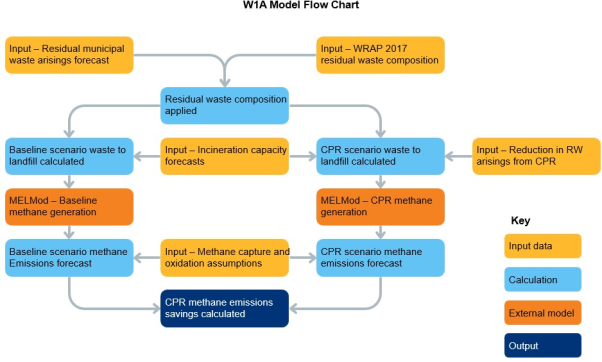
Source: Defra Analysis, 2025
157. A baseline (without CPR) municipal residual waste arisings forecast is estimated using a regression model Reference 48. The impact forecasts of each CPR policy on municipal waste arisings use the central estimates from the final impact assessments Reference 49, Reference 50, Reference 51, Reference 52 for these policies. The EfW infrastructure capacity forecasts for the baseline and CPR scenarios are estimated using proposed EfW plants with a restriction that infrastructure will only be constructed if there is waste available to be incinerated. RDF exports are also forecast in both scenarios, and both are combined to estimate residual waste diverted from landfill to incineration forecasts. These forecasts can be found in the residual waste infrastructure capacity note, with this analysis is regularly updated. Reference 53
158. The model takes these input forecasts and estimates the municipal waste sent to landfill in the baseline and CPR scenarios. The baseline scenario is calculated by taking the waste arisings forecast and applying an assumed municipal residual waste composition and removing the waste diverted to incineration. Reference 54 Building on the baseline analysis, the CPR scenario is modelled to take account of the further residual waste which is estimated to be diverted to recycling or prevented from arising by the CPR policies.
159. These projections are then used as an input to MELMod, which then makes a number of assumptions to determine the amount of methane generation associated with different waste types in landfill and is aligned with the IPCC methodology. More detail is available from the NAEI. We use a copy of the MELMod version which produced the emissions estimates for the 1990 to 2023 inventory. Reference 55
160. Total methane emitted is then calculated using the equation below where methane generation is the quantity estimated by MELMod, the methane capture rate is the proportion of methane captured to be utilised in gas engines or flares, and the oxidation rate is the proportion of methane estimated to be oxidised by microorganisms in the surface layer of soil which covers the surface of landfills. The assumed methane capture and oxidation rates are taken from the most recent year in the NAEI. This will be calculated retrospectively based on any future amendments so may not match future publications.
Methane emitted = Methane Generated * (1 - Methane Capture Rate) * (1 - Oxidation Rate)
161. There is also an estimate of how landfill gas capture will be affected by the ending of RO support for most landfill gas to energy from 2027, which is based on an unpublished report from consultants WSP. This assumed decrease in methane capture is applied to the methane capture rate from 2027 onwards, reducing methane capture in England from ~54% to ~49%. This assumption has been made to ensure that there is no double counting of benefits in the modelling for the OESP to support increased landfill gas capture following the cessation of RO. The estimated savings for this OESP have been derived from the assumption that gas capture at English landfill sites could be increased to 75% in the CB6 period.
162. This level of methane capture is consistent with findings from numerous published studies, as well as rates and commitments adopted by professional and industry bodies. Specifically, the Association for Renewable Energy and Clean Technology (REA) Landfill Gas Members estimate that open landfill sites producing above 1 MW could capture 70% of gas and other closed sites of all energy generation potential (collectively responsible for more than half of methane generation) could capture up to 80% of gas Reference 56 Additionally, although based on a limited sample, estimated capture rates for a small number of sites using LiDAR measurements, modelled generation estimates, and meteorological data published by Defra (2014) ranged from 71% to 91% Reference 57. The assumption is also more conservative than the commitment by the Environmental Services Association (a trade body for the waste management sector) to a landfill methane capture rate of 85% by 2030 Reference 58.
163. Overall, this approach to modelling Waste in the planned scenario uses the best available evidence on the impact of the policies (in line with the published impact assessments which have been scrutinised by the Regulatory Policy Committee). It makes assumptions around future waste volumes which are based on published analysis and reuses components of the methane generation modelling used for the NAEI where possible. Furthermore, where additional assumptions are made, they have been based on published evidence and/or feedback from industry stakeholders.
164. An updated study on waste composition is currently underway. We expect new waste composition data to be available in late 2025, at which point all models will be reviewed and updated composition data, and if of sufficient quality, will be incorporated into future modelling. Updated data, once quality assured, will be provided to NAEI steering and executive committees with potential for use to inform recent historical emission projections from landfill and EfW.
Wastewater
165. Emissions savings attributed to municipal wastewater policies and proposals 165 to 168 use the Carbon Accounting Workbook developed by UK Water Industry Research to estimate operational GHG emissions across the industry. The workbook has been in place since 2004 and is updated annually to reflect the needs of the industry, including changes in carbon accounting practices with updated emission factors to align with the latest UK and international data. From this, emissions savings for each proposal or policy are then derived. There remain gaps in our understanding of the magnitude and main sources of these.
166. The Water UK Routemap to 2030 sets out industry plans to achieve net zero by 2030. Reference 59 This Routemap has been used as the basis for Defra to develop net zero consistent policies and proposals, such as on wastewater treatment and management. For example, using credible assumptions from industry on cost and feasibility of policy deployment. Water companies are making concerted efforts to start monitoring and detection of GHG emissions across a range of sites, taking a strategic approach to sampling.
F-Gases
167. Each of the different F-gas policies (161 to 163) is underpinned by different models and analysis.
168. Policy 161 is modelled by the NHS, which calculates emissions savings from specific high Global Warming Potential (GWP) medicines. Emissions savings are calculated from 2019 baseline year and reported as scope 1 emissions savings per year against this baseline. Savings are largely driven by the adoption of Next Generation Propellant (NGPs) medicines with lower GWP. This scenario relies on assumptions derived from publicly available, supplier-reported commitments and information regarding the innovation and use of NGPs in their products, including from carbon reduction plans, annual reports and press statements. We assume this information is a reliable indicator of their future product adoption and any deviations would change the emission savings estimates. For suppliers who have provided firm commitments and a timeline to transition their products to NGPs, dates of expected market entry and transition completion follow those outlined by the supplier.
169. For suppliers who have provided commitments to explore the use of NGPs within their products but where no transition timeline could be located via publicly available information, we have assumed that their first NGP products will come to market in 2030 and 100% transition to NGPs will complete in 2050.
170. For suppliers who have not publicly committed to exploring the use of NGPs within their products nor to transitioning their portfolios to NGPs, we have assumed that they do not change propellant type within their respective portfolios.
171. The scope 1 emission reduction for the use of HFA-152a is 90% and for HFO-1234ze(E) it is 99%. For suppliers where the NGP is being or has been trialled for use is known, the emission reduction applied is in accordance with this propellant type. For suppliers who have committed but where no transition timeline is available, we have assumed an average scope 1 carbon emission reduction of 95%, a reasonable assumption as the midpoint between the 90% and 99.9% reduction of HFA-152a and HFO-1234ze(E) respectively.
172. The planned scenario assumes that the underlying historical trends, seasonal patterns, certain respiratory conditions and relationships between specific medicine types will largely continue into the future. This includes the 2025 NICE Guidelines impact, as observed between January and May 2025. Changing market share is not modelled and post-2030 and medicine volumes are driven by population growth in England using ONS population forecasts (2022 edition) Reference 60.
173. Policy 162 contains the extra savings of the Kigali Amendment to the Montreal Protocol when compared to the current GB phasedown. The current GB phasedown follows the Regulation (EU) No 517/2014 and was adopted as secondary legislation after the UK exited the EU. The Kigali Amendment to the Montreal Protocol stipulates an 85% reduction in Hydrofluorocarbons (HFCs) placed on the market by 2036 for non-article 5 countries (which includes the UK). This is based off respective reference values, notably the UK’s baseline HFC consumption and production between 2011 and 2013. The UK is assumed to adhere to the international obligation of the Kigali Amendment. This modelling was undertaken using the Gluckman HFC Outlook Model. This a bottom-up modelling platform designed to assess GHG emissions associated with the use of refrigerants in refrigeration, air-conditioning and heat pump (RACHP) systems across the EU and UK.
174. The model disaggregates the RACHP market into over 50 sub-sectors, encompassing both HFC and non-HFC applications such as technical aerosols and foams. This granular approach allows for a detailed understanding of refrigerant demand and emissions across various equipment types and applications. The model tracks the stock of equipment (existing installations) and the flow of new installations, accounting for factors such as equipment lifetime, replacement rates and the introduction of low-GWP alternatives. This dynamic approach enables projections of future refrigerant demand and emissions under different policy scenarios. The model integrates updated market growth forecasts, particularly concerning the adoption of heat pumps and technological advancements in refrigerant management. This includes the potential for reducing leakage rates and maximising refrigerant recovery and reuse, which are critical for achieving emissions reductions. Beyond direct emissions from refrigerants, the model also assesses energy-related GHG emissions from RACHP systems. This comprehensive approach provides a holistic view of the climate impact of refrigerant use, considering both direct and indirect emissions.
175. Policy 163 is the proposed extension of the HFC phasedown to 98.6% of consumption emissions by 2048. Indicative estimates have been calculated at this stage, which considers the remaining residual emissions left in the F-gas sector once accounting for 161 and 162, then reviewing the technical potential profile for further savings. Policy 163 is the difference between these two points. The level of remaining residual emissions left in the sector is consistent with the CCC’s CB7 pathway, when utilising similar levers to tackling HFC emissions. There is a high level of confidence in this assumption, based primarily on near full utilisation of the primary lever for HFC decarbonisation (163). Due to the lagged nature of F-gas emissions we assume benefits from the new measure won’t be realised until CB6.
176. This approach to modelling F-gas emissions savings combines sector-specific, bottom-up models grounded in transparent data and internationally recognised methods. The NHS-led modelling of specific medicines (policy 161) uses verified supplier commitments and health data to capture realistic transitions to next-generation propellants. The Gluckman HFC Outlook Model (policy 162) provides a detailed, dynamic representation of refrigerant use across the RACHP sector, incorporating equipment stocks, leakage rates and low-GWP adoption under the Kigali Amendment. The extended phase-down scenario, policy 163 aligns residual emissions with the CCC’s carbon budget pathway, ensuring consistency with long-term decarbonisation objectives. Together, these elements provide a robust, evidence-based framework that reflects real-world market behaviour and offers credible, policy-relevant estimates of emissions savings across the F-gas pathway.
Greenhouse Gas Removals
177. The overarching policy is to deploy engineered Greenhouse Gas Removal (GGR) technologies to balance anticipated residual emissions. The specific technologies that have been quantified for Carbon Budget periods 5 to 6 under policy 78 include: Direct Air Carbon Capture and Storage (DACCS), Power Bioenergy with Carbon Capture and Storage (Power BECCS), Industry BECCS, EfW CCS (waste incinerators with CCS technology retrofit), BECCS applications based on advanced gasification technologies (Hydrogen generation with waste, and Hydrogen generation with biomass (H2BECCS), biomethane production with CCS (Biomethane BECCS), as well as small potential from non-CCS engineered removal technologies (biochar and enhanced rock weathering).
178. Other engineered removals solutions that have not been quantified for Carbon Budget periods 4 to 6 include biofuels, biogas, as well as carbon-negative cements and ocean carbon sequestration.
179. The emissions removals quantified for Carbon Budgets 4 to 6 have been developed through a combination of bottom-up sectoral modelling, which includes models such as COMIT and whole-system modelling (using UKTIMES) to ensure they are consistent with policies and proposals covered by other sectors. The analysis relies on assumptions (including on build rates, energy demand and costs) from published sources on BECCS and DACCS, alongside a benchmarking study commissioned by BEIS (now DESNZ) Reference 61. The benchmarking study presented evidence based on an original review of the published literature, feedback received through the GGR Call for Evidence Reference 62, GGR projects: request for information Reference 63 and additional stakeholder engagement.
180. Small-scale Power BECCS (plant size capacity <100MW) assumptions are quantified for Carbon Budget periods 5 to 6. This deployment profile reflects the latest understanding of projects eligible for GGRs Business Model support through the HyNet Buildout process. Beyond known projects, additional removals potential has been modelled based on data for existing small-scale biomass generators.
181. Biomethane BECCS represents the deployment of new AD sites installing CCUS technology.
182. A typical investment lead-in time of three years from financial investment decision (FID) is assumed for large and small-scale power BECCS, three years for hydrogen BECCS, and two-and-a-half years for DACCS. Power and hydrogen generation with BECCS are assumed to operate at baseload. DACCS is assumed to rely on low-carbon energy inputs.
183. The specific deployment pathway of each GGR technology may in practice deviate from this technical assessment, as actual deployment will depend on commercial negotiations and the relative progress of each technology (in terms of performance and cost). In August 2025, DESNZ published an updated GGR Business Model Summary, the draft Front End Agreement, and Standard Terms and Conditions. Reference 64 The GGRs Business Model is designed to enable a portfolio of GGR technologies to deploy at commercial scale and to help mitigate the risks of dependency on one technology.
184. The GGR deployment pathway is credible, grounded in current evidence on technology readiness levels, technical potential of existing and new projects, and infrastructure incentivised by UK policy to support GGR deployment. Future GGR deployment will rely on the availability of CCUS capacity and infrastructure, project and technology readiness and continued development of policies to support GGR deployment. This analytical approach provides a coherent and evidence-based rationale for credibility, even as specific deployment trajectories, and the mix of technologies, may evolve over time.
Wider analysis
Estimation of jobs impacts
185. This analysis builds on the DESNZ estimates published in Clean Energy Jobs Plan and where possible, extending the assessment out to 2035. Reference 65 This assessment covers jobs in power generation, electricity networks, GGRs, clean heat and energy efficiency.
186. There is inherent uncertainty in estimating the size of the clean energy workforce to 2035. The future size and geographic spread of the clean energy workforce will be dependent on delivery and final location of the pipeline of projects required to deliver emission savings out to 2037, the ability to recruit into the sector, cost assumptions, any assumptions made about the ability of UK businesses to export overseas and the validity of the assumptions made around the workers required to deploy a particular amount of technology. These estimates do not represent precise predictions; they are indicative of the orders of magnitude the clean energy workforce will need to increase by 2035 to meet demand in UK clean energy sectors and their supply chains. For further details see the Clean Energy Jobs Plan technical annex (Table 1).
187. Jobs estimates for offshore wind, CCUS, hydrogen and industry are based on analysis using the Energy Innovation Needs Assessment (EINA) economic opportunity calculators. A detailed methodology note on the offshore wind estimates was published in June 2025. Reference 66 The estimates for other DESNZ sectors using the economic opportunity calculators follow a similar schema as set out in Figure 6 below. This has also been used to estimate the gross value added (GVA) impact of the CCUS sector.
188. These estimates cover both direct and indirect jobs, i.e. the employment supported lower down the supply chain. These estimates do not capture induced effects; employment resulting from the spending of wages by workers in direct and indirect employment, leading to increased demand in other sectors.
Figure 6: Employment estimate calculation process. This schema displays how data inputs and assumptions are combined to calculate ‘calculated values’ (intermediate outputs) and eventually the calculators’ primary and secondary outputs related to jobs and GVA.
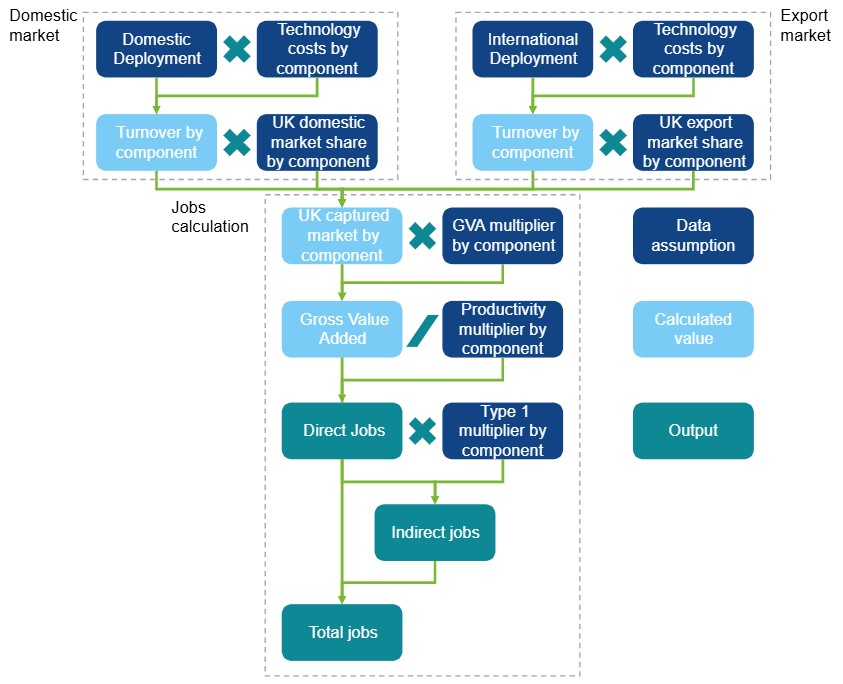
Source: Clean Job estimates for wind generation by 2030: methodology note, Published 23 June 2025
189. This analysis measures jobs supported, it does not measure net additional jobs created across the economy. The analysis also does not capture replacement demand i.e., the workers required to replace workers that leave the clean energy workforce.
Estimation of investment
190. In 2024, UK low-carbon investment accounted for £51 billion, equivalent to 1.8% of GDP. Reference 67 Over £50 billion in private investment has been announced into the UK’s clean energy industries since July 2024, Reference 68 and government has committed £63 billion in capital funding for clean energy, climate and nature, including nuclear, over the five years from 2025 to 2026 and 2029 to 2030. Reference 69
191. In this analysis, to estimate investment underpinning sectoral emissions reductions presented in this plan, investment is measured as the gross capex for the deployment of key technologies over CB6 (2033 to 2037) in the following sectors: power, industry, hydrogen, CCUS and GGRs. These estimates can be found in Appendix F of this delivery plan. Total capex costs include pre-development, construction and installation costs incurred by households, private businesses and the public sector. Expenses such as operational, maintenance, and financing costs are excluded.
192. This measure of investment is presented in undiscounted 2024 prices as the total cost underpinning the deployment to achieve the quantified emissions savings in this delivery plan. The estimates do not represent additional capex relative to our baseline scenario.
193. Total capex in DESNZ sectors is presented as an annual average over CB6 (2033 to 2037). This smooths volatility of in-year differences and does not claim certainty in point estimates of cost in a given year.
Power
194. Investment in generation assets were estimated based on our planned scenario for the power sector using DESNZ’s DDM. The DDM simulates the operation of the electricity generation market and the investment decisions of market participants in response to a given demand profile, power sector policies and other market conditions. It is a profit-maximisation model and projects total generating capacity, plants built and the economics of their operations. A model run may typically project 25 years into the future in half-hourly demand segments. For every half-hour it determines which plants will be generating, the amount of greenhouse gas emissions they will produce, the wholesale electricity price and other econometric metrics. Deployment capex includes pre-development, construction and infrastructure costs, excluding financing and operational costs. Capex estimates also come from generation cost report Reference 70, sector research and cost estimates for specific projects. Indicative estimates based on commercial project data have been used in the case of Small Modular Reactors and therefore are subject to change.
195. Investment required to reinforce the electricity distribution network was estimated using DESNZ’s Distribution Network Model (DNM). The DNM is a techno-economic model which forecasts the infrastructure required by the GB onshore distribution network to deal with rising electricity demand and the consequential increases in distributed generation and storage. These demand and generation inputs are derived from the DDM. The model identifies network constraints in each modelled year and deploys the optimal piece of infrastructure to alleviate these constraints. Each piece of infrastructure has an upfront capex cost associated with it and only accounts for load-related investment, not investment required to replace old or aging distribution network assets. These capex costs were summed across carbon budget periods and an annual average was calculated.
Industry
196. Investment estimates for industrial decarbonisation cover the total capital cost of installing fuel switching technologies (i.e. hydrogen and electrification), CCS capture technology (onsite), EE and RE measures. Capex associated with fuel switching and onsite CCS are taken from COMIT and reflect the total capital investment in technologies needed to switch to low carbon fuels such as hydrogen, electricity and bioenergy. EE capex estimates were established using sector stakeholder expertise via workshops and RE capex estimates have been derived from these EE costs.
197. Costs associated with steel decarbonisation, CCS infrastructure (e.g. transport and storage networks) and ORM are excluded because their associated costs and supporting policy are evidenced and reported in other sectors or due to costs being distributed.
Heat and Buildings
198. Investment figures are based on gross capex estimates, which are individually modelled for each policy within the Heat and Buildings sector. Estimates include both public investment through spending review settlements and private investment, for example Housing Association Co-funding.
199. The gross capex for each policy is calculated based on measures costs; it therefore does not include additional costs needed to administer policies. Expenditure is calculated based on the geographical scope of the policy, however, where DGs are expected to take similar actions, an appropriate scaling factor is applied to the gross capex to account for this.
Hydrogen
200. Hydrogen production capex requirements are estimated up to 2037. Projected hydrogen deployment costs for initial blue and green hydrogen projects were spread out to reflect the deployment of these technologies in the carbon budget. Any future green hydrogen capex beyond that was estimated based on an average cost per MW from later funding rounds. In order to align with carbon budgets, the timelines of capex vary slightly from actual Hydrogen Allocation rounds and CCUS business models.
201. Hydrogen transport & storage (T&S) requirements were estimated over the CB6 period using project intelligence. Estimates were then averaged over the construction period to give an illustrative annual investment estimate. Investment for hydrogen T&S is highly uncertain and dependent on which projects are taken forward.
GGRs and CCUS
202. Investment requirement for engineered GGRs are estimates using a combination of project data and economic assumptions from industrial and academic literature. Reference 71 Using the deployment trajectories for the planned scenario assumes gross emissions removals (MtCO2 per year) for each GGR technology [footnote 20], which are derived from a technology level assessment for GGR delivery.
203. Capex estimates are given as part of the total levelised cost (£/tCO2) for GGR deployment. Annual capital capex is calculated by multiplying yearly deployment (tCO2pa) with a profile factor, resulting in investment requirements distributed evenly across the asset’s lifetime, rather than concentrated in the construction period. This likely understates actual capex needs during initial investment and construction due to limited project data and staggered project timelines assumed during CB6.
204. CCUS is not modelled as its own sector in carbon budgets; forecast investment in emitter projects which rely on CCUS (such as most GGRs) is captured in the relevant sector returns above. The investment figures here relate to investment in the Transport and Storage infrastructure only and the level of deployment is that which is required to meet the sector ambitions in individual sectors. Costs are based on DESNZ modelling and assumptions of network costs, with costs for future deployment estimated with proxy data. Costs are attributed to the year in which the networks’ Commercial Operation Date fall, meaning some construction costs outside the CB6 period itself are included.
Reference documents
1. Intergovernmental Panel on Climate Change (2018), Working Group 1 for Fifth Assessment Report. ↩
2. UK Government (2008), Climate Change Act, 2008. ↩
3. UK Government (2023), Annual statements of emissions. ↩
4. European Commission (2025), A renewed agenda for European Union - United Kingdom cooperation Common Understanding. ↩
5. UK Government (2023), Final UK greenhouse gas emissions statistics: 1990 to 2023 - GOV.UK. ↩
6. UK Government (2023), Energy and emissions projections: 2022 to 2040 - GOV.UK. ↩
7. Department for Energy Security and Net Zero (2024), Energy and emissions projections: 2023 to 2050 - GOV.UK. ↩
8. UK Government (2023), UK Emissions Trading Registry. ↩
9. Evans, C. (2025), DESNZ Wasted Peat Project. Presentation to Land Use, Land Use Change and Forestry Scientific Steering Committee. ↩
10. Clilverd, H., Nickerson, R., Jovani-Sancho, A. J., Thomson, A. & Evans, C. (unpublished), Assessing the status of historic domestic fuel peat extraction sites. Report to Defra. ↩
11. HM Treasury (2025), The Aqua Book. ↩
12. Department for Environment Food and Rural Affairs (2021), Defra R&D project SCF0120: Delivering Clean Growth Through Sustainable Intensification (CGSI). ↩
13. Department for Energy Security and Net Zero (2021), Analytical Annex to the Hydrogen Strategy - GOV.UK. ↩
14. North Sea Transition Authority (2025), Emissions Monitoring Report 2025. ↩
15. North Sea Transition Authority (2024), Emissions Monitoring Report 2024. ↩
16. GOV.UK (2024), Environmental and Emissions Monitoring System (EEMS). ↩
17. North Sea Transition Authority (2023), UK Stewardship Survey. ↩
18. North Sea Transition Authority (2024), UK Continental Shelf Stewardship Survey. ↩
19. North Sea Transition Authority (2024), OGA Plan – Emissions reduction. ↩
20. Department for Energy Security and Net Zero (2024), Oil and gas: Environmental and Emissions Monitoring System database. ↩
21. Joint Office of Gas Transporters, Shrinkage and Leakage Model assumptions. ↩
22. Climate Change Committee (2025), The Seventh Carbon Budget. ↩
23. GOV.UK (2024), Contract for Refresh of Industry Decarbonisation Technology Modelling Assumptions. ↩
24. Department for Energy Security and Net Zero (2024), Unlocking Resource Efficiency, https://www.gov.uk/government/publications/unlocking-resource-efficiency. ↩
25. Department for Energy Security and Net Zero (2022), Heat Networks Zoning Social Research. ↩
26. Department for Transport (2025), Vehicle licensing statistics data tables. ↩
27. International Council on Clean Transportation (2022), Real-world usage of plug-in hybrid vehicles in Europe: A 2022 update on fuel consumption, electric driving, and CO2 emissions. ↩
28. Department for Transport (2022), National road traffic projections. ↩
29. Department for Transport (2017), [UK Aviation Forecasts] (https://www.gov.uk/government/publications/uk-aviation-forecasts-2017). ↩
30. Department for Transport (2025), Maritime emissions modelling framework. ↩
31. Department for Transport (2025), Maritime decarbonisation strategy. ↩
32. International Maritime Organisation (2025), IMO approves net-zero regulations for global shipping. ↩
33. UK Government, Scottish Government, Welsh Government and Department of Agriculture, Environment and Rural Affairs for Northern Ireland (2025), UK Emissions Trading Scheme Scope Expansion: Maritime – Interim Response. ↩
34. Department for Environment Food and Rural Affairs (2018-2021): Delivering Clean Growth Through Sustainable Intensification - SCF0120. ↩
35. Department for Environment Food and Rural Affairs (2018-2021): Work Package 1 Mitigation Measure Fiches, annex to Defra R&D project SCF0120: Delivering Clean Growth Through Sustainable Intensification (CGSI). ↩
36. Forest Research (1988-present), Forest carbon dynamics – The CARBINE carbon accounting model. ↩
37. Climate Change Committee (2020), Sixth Carbon Budget: Agriculture & land use, land-use change & forestry (LULUCF). ↩
38. Forest Research, Matthews, B. (2009), The potential of UK forestry to contribute to government’s emissions reduction; Morison et al. (2012), Understanding the carbon and greenhouse gas balance of forests in Britain. ↩
39. Poulton, P.R. (1996), Geescroft Wilderness, 1883-1995. In: Evaluation of soil organic matter models using existing long-term datasets, eds D.S. Powlson, P. Smith and J.U. Smith. NATO ASI Series I, vol.Springer-Verlag, Berlin, 385-390. ↩
40. Department for Environment Food and Rural Affairs (2021-2022), Aligning The Peatland Code With The UK Peatland Inventory - SP0822. ↩
41. Evans, C. (2025). Wasted Peat Project. Presentation to the Land Use, Land Use Change and Forestry Scientific Steering Committee. ↩
42. Department for Environment Food and Rural Affairs (2021-2022): Assessing the status of historic domestic fuel peat extraction sites. To be published on Science Search. ↩
43. National Atmospheric Emissions Inventory (2025), Greenhouse Gas Inventories for England, Scotland, Wales and Northern Ireland: 1990–2023. ↩
44. UK Government (2023), The Environmental Protection (Plastic Plates etc. and Polystyrene Containers etc.) (England) Regulations 2023 – Impact Assessment. ↩
45. WRAP (2020), Quantifying the Composition of Municipal Waste. ↩
46. National Atmospheric Emissions Inventory (2025), UK Greenhouse Gas Inventory 1990–2023: Annual Report for Submission under the Framework Convention on Climate Change. ↩
47. Department for Environment Food and Rural Affairs (2025), Assessing the Impact of Future Waste Policy Scenarios on Waste Arisings and Management – Science Project SC220018. ↩
48. Department for Environment, Food and Rural Affairs (2021), Future Waste Arisings. ↩
49. Department for Environment, Food and Rural Affairs (2023), The Environmental Protection (Plastic Plates etc. and Polystyrene Containers etc.) (England) Regulations 2023. ↩
50. Department for Environment, Food and Rural Affairs (2024), Impact Assessment: The Environmental Protection (Packaging and Packaging Waste) Regulations 2024. ↩
51. Department for Environment, Food and Rural Affairs (2024), Simpler Recycling in England: Impact Assessment. ↩ {:#ednref51}
52. Department for Environment, Food and Rural Affairs (2025), The Deposit Scheme for Drinks Containers (England and Northern Ireland) Regulations 2025: Impact Assessment. ↩
53. Department for Environment, Food and Rural Affairs (2024), Residual waste infrastructure capacity note. ↩
54. WRAP (2020), Quantifying the composition of municipal waste.↩
55. UK National Atmospheric Emissions Inventory (2023). ↩
56. The Association for Renewable Energy and Clean Technology (REA) (2024), Landfill Gas Methane Capture Considerations. ↩
57. Department for Environment, Food and Rural Affairs (2014), Review of Landfill Methane Emissions Modelling – WR1908. ↩
58. Environmental Services Association (2023), Supporting a Net Zero Recycling & Waste Sector, 01072023. ↩
59. Water UK (2020), ‘Net Zero 2030 Routemap’. ↩
60. Office for National Statistics (2025) National population projections: 2022-based. ↩
61. Department for Business, Energy and Industrial Strategy, HM Treasury (2020), Greenhouse gas removals: call for evidence. ↩
62. Department for Business, Energy and Industrial Strategy, HM Treasury (2020), Greenhouse gas removals: call for evidence. ↩
63. Department for Energy Security and Net Zero., Department for Business, Energy and Industrial Strategy (2022), Greenhouse gas removals (GGR): business models. ↩
64. Department for Energy Security and Net Zero (2023), Greenhouse gas removals (GGR): business model. ↩
65. Department for Energy Security and Net Zero (2025), Clean energy jobs plan: technical annex. ↩
66. Department for Energy Security and Net Zero (2025), Job estimates for wind generation by 2030: methodology note. ↩
67. BloombergNEF Energy Transition Investment Trends (2025), Department for Energy Security and Net Zero analysis and converted to GDP using OECD exchange rates. GDP data from IMF World Economic Outlook. ↩
68. GOV.UK (2025), Investment in UK clean energy industries since July 2024. ↩
69. HM Treasury (2025), Spending Review 2025. ↩
70. Department for Energy Security and Net Zero (2025), Energy generation cost projections. ↩
71. Energy Systems Catapult (2023) Direct Air Carbon Capture and Storage (DACCS). ↩
-
Estimates of UK GHG emissions (back to 1990) are revised annually to incorporate methodological improvements, updated data and changes to international guidelines. Base year emissions and percentage reductions implied by CB levels are therefore subject to change. ↩
-
Accounting for the UK’s Nationally Determined Contribution is different from that for carbon budgets. In particular, the NDC is a single year fixed percentage reduction target. This means that any changes to the GHG inventory base year will change the NDC target level equivalent in MtCO2e. ↩ ↩2
-
The UK is committed to extending its ratification of the Paris Agreement to the UK’s Crown Dependencies and Overseas Territories who are eligible, and who request it. Extending the Paris Agreement would bring CDOTs into scope of the UK’s Nationally Determined Contributions. To date, the UK’s ratification of the Paris Agreement has been extended to the Bailiwick of Jersey, Isle of Man, Guernsey and Gibraltar. Figures in this publication exclude emissions from CDOTs, such as the base year figures provided, except for the NDC performance figures provided where an adjustment has been made. ↩
-
Base year emissions are calculated as emissions of CO2, N2O and CH4 in 1990, and fluorinated gases in 1995. Base year emissions for CB6 includes 24 MtCO2e for IAS. Base year information is reported from the 1990-2023 GHG Inventory. ↩ ↩2
-
Subject to a 95% confidence interval. ↩
-
EEP-ready policies are defined as policies that have been implemented and those that are planned where the level of funding has been agreed and the design of the policy is near final. Policies outside the power sector were included if they had reached the EEP-ready stage of development by June 2023. Power sector policies are included if they had reached the EEP-ready stage by July 2023. A full list of EEP-ready policies is included in Table 3 of Appendix B. ↩
-
While cessation of the RO scheme is captured via a baseline adjustment, policy development for increasing methane capture from landfill has been captured as a non-baseline OESP policy in this analysis from 2027 to 2037. This is presented as part of policy 1 within Table 5 of CBGDP Appendix B. For further detail, see the waste chapter of the sector modelling section of this annex. ↩
-
Negative values denote emission savings, i.e. a reduction in baseline emissions versus the EEP 2023 to 2050. ↩
-
Due to a time lag in calculating historic emissions data, the baseline runs from 2024. This baseline adjustment therefore partially covers the CB4 period of 2023 to 2027. ↩
-
The uncertainty ranges are indicative and are based on modelling from EEP 2024. The chart includes LULUCF. ↩
-
Due to presentational rounding, the sum of individual policy savings may not exactly match aggregated totals shown within the CBGDP. ↩
-
Implementation risk is the risk that a proposal or policy will not come into effect according to its current design, for example due to a policy or funding lever not being identified. Effectiveness risk is that risk that affects whether or not a proposal or a policy will achieve the ‘planned’ emissions savings if implemented as planned. ↩
-
The Known Policy scenario is based on modelling and assumptions consistent with the most recent EEP baseline: Energy and emissions projections: 2023 to 2050 - GOV.UK. The planned scenario includes a number of evidence and assumptions updates since that modelling was carried out, and as a result some of the underlying baseline deployment figures differ. ↩
-
Appraisal System cost is a measure of the total cost of the electricity system including the operating and capital costs of power plants, the costs of the transmission network, the appraisal cost of carbon and the value of lost load. ↩
-
The NSTA license, regulate and influence the UK oil and gas, offshore hydrogen, and carbon storage industries. ↩
-
Industry-submitted Environment and Emissions Monitoring System (EEMS) data (up to and including 2023) and UK Stewardship Survey 2023 data. ↩
-
Scope 1 emissions are defined as those directly arising from the source in question (either owned or controlled sources), rather than indirect emissions caused when generating the energy it uses (scope 2) or those occurring elsewhere within the value chain, either upstream or downstream (scope 3). ↩
-
COMIT was formerly called the Net Zero Industrial Pathways (NZIP2) model. ↩
-
Also known as alley-cropping. ↩
-
Large- and small-scale power BECCS, DACCS, EfW CCS, Hydrogen-BECCS, Industry-BECCS, and non-CCS engineered GGRs (biochar and enhanced rock weathering). ↩