
Hull and East Riding abstraction licensing strategy
Updated 12 January 2026

© Crown copyright 2026
This publication is licensed under the terms of the Open Government Licence v3.0 except where otherwise stated. To view this licence, visit nationalarchives.gov.uk/doc/open-government-licence/version/3 or write to the Information Policy Team, The National Archives, Kew, London TW9 4DU, or email: psi@nationalarchives.gov.uk.
Where we have identified any third party copyright information you will need to obtain permission from the copyright holders concerned.
This publication is available at https://www.gov.uk/government/publications/cams-hull-and-east-riding-abstraction-licensing-strategy/hull-and-east-riding-abstraction-licensing-strategy
1. About the licensing strategy
This strategy sets out our approach to managing new and existing abstractions and impoundments within the Hull and East Riding catchment in the Humber river basin district.
Our approach ensures that we:
- meet river basin management plan objectives for water resources activities
- avoid deterioration within this catchment
These requirements are set out by the Water Environment (Water Framework Directive) (England and Wales) Regulations 2017 (referred to as the Water Framework Directive 2017). We apply this approach to the water body in which the abstraction or impoundment is located.
It also applies to:
- all downstream surface water bodies that may be affected by any reduction in abstraction related flow
- adjacent groundwater bodies affected by any reduction in groundwater level
The strategy also sets out local approaches to the sustainable management of water resources in collaboration with partners.
Our guidance on managing water abstraction gives the technical explanation, legal and policy requirements behind the abstraction licensing strategies (ALS).
Please see our guidance if you need to:
- check if you need a licence to abstract water
- check if you need a licence to impound water
- apply for an abstraction or impounding licence
We continuously update our assessment tools. As a result, some details in this document, for example hands off flow (HoF) values, may be out of date. You can contact the Environment Agency for the latest data.
1.1 Collaborative and sustainable water management
Our long term goal is to develop a stronger catchment focus for water resources. We are working with abstractors and catchment groups to:
- develop local solutions to existing pressures
- prepare for the future
Catchment groups may include a variety of different partnership groups such as:
- abstractor groups
- local catchment partnerships
- priority catchment groups
- environmental groups
Regional water resources groups are taking forward strategic multi-sector regional plans which consider environmental needs for long term planning. We are working with these groups to improve the connection between regional planning and catchment scale planning and delivery. Further information on regional planning is on our website for the National Framework.
This strategy is a tool to make informed decisions on the choices abstractors make about their use of water. We want this strategy to help abstractors plan their water use and become more resilient in the face of climate change.
2. Catchment overview
The Hull and East Riding ALS catchment is located on the east coast in East Yorkshire. The catchment stretches from Bridlington in the north to Kingston Upon Hull in the south, and from Howden in the west to Withernsea in the east. It is bordered by North Yorkshire to the north and west, and South Yorkshire to the south-west. The lower tidal Ouse and River Humber are to the south, and the North Sea coastline is to the east.
It includes the surface water catchments of a number of large, significant watercourses. The River Hull flows for approximately 45km from Driffield to the River Humber. It drains waterways including the Driffield Canal and Frodingham Beck in the north, and Beverley Beck and the Leven Canal in the south. The middle and lower reaches of the River Hull downstream of Hempholme Weir are influenced by the tide.
In the west of the ALS catchment, the River Foulness, Market Weighton Canal and Mires Beck drain into the River Humber. The Gypsey Race drains the northern part of the ALS catchment into the North Sea at Bridlington. The Chalk aquifer, covering a large proportion of the catchment, provides much of the baseflow of the River Hull and its headwaters and the Gypsey Race. The Gypsey Race is a seasonally flowing watercourse controlled by groundwater levels in the Chalk. The upper and lower reaches are commonly flowing but may run dry in prolonged dry weather, while the middle reaches only flow after long periods of high rainfall.
Man-made drainage systems are also prevalent throughout the catchment. In the River Hull catchment these are often at a lower elevation than the river and water is discharged into the River Hull via pumping stations. Elsewhere, most of these systems are either pumped or controlled manually and water levels are often influenced by tide locking, with sluices at the boundary with the River Humber. Map 1 shows the Hull and East Riding ALS area.
Map 1: Hull and East Riding ALS area.
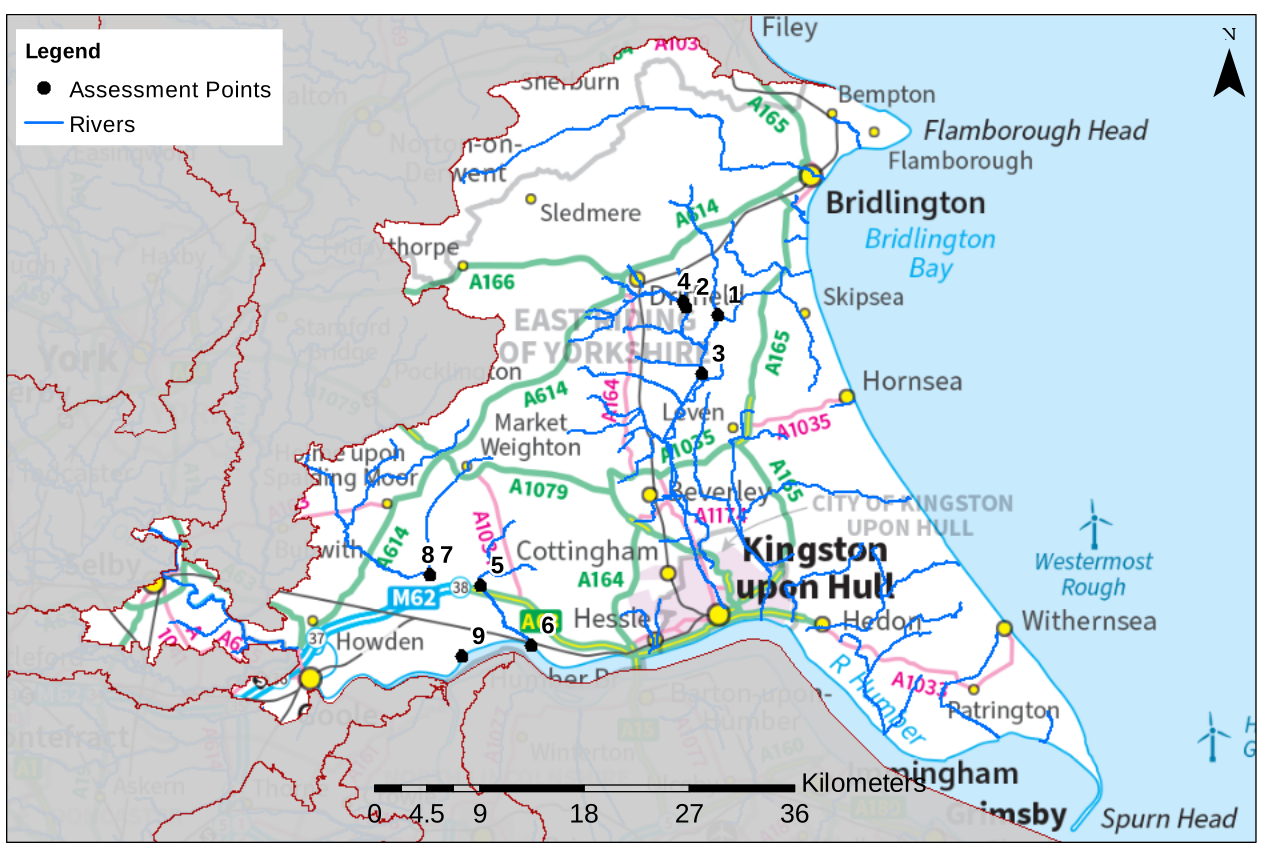
There is little variation in rainfall across the catchment, which receives an average of 667mm of rainfall per year. River flow in the upper Hull, the Mires Beck and upper Foulness are driven by chalk groundwater levels influenced by prolonged rainfall patterns over several months yet also show a surface water runoff response to heavy rainfall events.
There is a strong seasonal variation reflecting winter recharge and summer recession. River levels in the downstream watercourses and man-made drainage systems are influenced by tidal cycles, artificial controls and the volume of flow that accumulates in prolonged wet periods.
More information about the Hull and East Riding ALS catchment is on the Catchment Data Explorer.
2.1 Landscape and land use
The Hull and East Riding ALS catchment covers an area of approximately 2,500km². It is dominated by flat, low-lying land, most of which is only just above average sea level. Most of the catchment is sparsely populated. Urban settlements include:
- the city of Kingston Upon Hull
- the seaside resorts of Bridlington, Hornsea and Withernsea
- the market towns of Driffield and Market Weighton
- the historic town of Beverley
The Hull and East Riding ALS catchment has:
- a population of 342,200 people in 2021 (Office for National Statistics 2021 data)
- 1,718 farms covering 191,359 hectares of farmland (Defra farming statistics)
Table 1: Land use statistics based upon LCM2019 © NERC (UKCEH) 2020
| Landcover | Proportion of catchment (%) |
|---|---|
| Woodland | 3.2 |
| Arable | 69.3 |
| Grassland | 13.1 |
| Urban | 9.3 |
| Total other | 5.0 |
The area between the River Hull and the North Sea in the east of the catchment is generally referred to as Holderness. It forms a wide low-lying coastal plain area of rich agricultural land. A slight rise towards the eastern edge of the catchment forms the watershed between streams draining into the North Sea and those draining into the Humber Estuary.
To the west of Holderness is the Yorkshire Wolds. A curve, crescent in shape, of gently rolling chalk plateau crossed by a complicated system of steep and deep valleys stretching from the chalk cliffs at Flamborough to the River Humber at Hessle.
The geology is made up of older Triassic (around 248 million years ago) and Jurassic (around 199 million years ago) marine clays, limestones and sandstones in the south-west. Younger Cretaceous (around 144 million years ago) Chalk rocks underly the majority of the ALS area. The land surface loses altitude towards the east until the chalk becomes confined under thick clay deposits.
Groundwater within the outcrop area is of high quality and can be used for many purposes without treatment. Once confined beneath the clay, the groundwater rapidly becomes mineralised and is less heavily abstracted because it is unfit for many uses.
2.2 Water Resources
There are 7 distinct, and often discrete, surface water operational catchments assigned to this ALS, which are:
- Gypsey Race (containing 1 water body)
- Barmston Sea Drain (containing 7 water bodies)
- Hull Upper (containing 11 water bodies)
- Hull Lower (containing 16 water bodies)
- Foulness (containing 5 water bodies)
- Burstwick and Eastern Drains (containing 8 water bodies)
- Ouse Lower-River Humber
The winterbourne Gypsey Race in the north of the catchment starts at Duggleby in the west and flows intermittently in an easterly direction to Bridlington harbour on the North Sea coast. Passing through villages that include Kirby Grindalythe, Burton Fleming, and Boynton. The groundwater level controls the surface water flow which can sink back underground during dry periods. Most of the licensed abstraction in the Gypsey Race catchment is for agriculture, followed by industrial use. This catchment is not assessed as part of the catchment abstraction management strategy (CAMS) process. Given the connectivity of the groundwater and surface waters here, water availability is restricted for any new abstraction licences.
Barmston Sea Drain, located on the east coast from Bridlington to Mappleton, immediately south of Hornsea, borders the operational catchments of the Gypsey Race, Hull Upper, and Hull Lower. The land is heavily modified and dominated by drainage networks and small waterbodies. This artificial nature means there is no natural baseflow and groundwater does not stimulate flow. Flow is dependent on upstream inputs, from the west of this catchment, draining towards the North Sea. This catchment is not assessed as part of the CAMS process and any new abstraction licences will be reviewed on a case-by-case basis.
Located on the upper Yorkshire Wolds area, the Hull Upper catchment centres on Driffield and its surrounding area and is characterised by rolling Chalk hills and dry valleys. It is sourced from the Chalk streams located to the north, around Langtoft and Kilham, and to the west around Great Kendale, Tibthorpe and North Dalton. These Chalk streams flow into Driffield Beck and Driffield Trout stream that merge into West Beck and becomes the River Hull. Foston Beck, becoming Frodingham Beck, drains the eastern portion of this catchment, joining the River Hull close to North Frodingham. Old Howe is currently diverted into Frodingham Church Drain and the low-level drainage system.
The Hull Upper continues into the Hull Lower, downstream of Tophill Low. It covers the area from Watton in the north to Kingston upon Hull and the River Humber in the south, and from Bishop Burton in the west to Great Cowden on the North Sea coastline in the east. The Hull Lower is tidal with much of the surrounding land at or below sea level with drainage schemes on both sides of the River Hull: Holderness Drain system located to the east and the Beverley and Barmston Drain system to the west.
The Foulness catchment, located in the south-west of the Hull and East Riding ALS area, covers Spaldington in the west to Sancton in the east, and from Market Weighton in the north to the River Humber on the south centring on Blacktoft. Man-made drainage networks are in abundance throughout, with the main waterbodies of the Back Delfin, River Foulness, Market Weighton Canal, and Ings Beck-Mires Beck-Ellerker Drain draining into the River Humber. Chalk springs feed the uppermost reaches of the catchment with the flow supplemented by the drainage networks. Resulting in river flows being directly related to the amount of rainfall. Discharge from Market Weighton wastewater treatment works makes a significant contribution to the Back Delfin during low flow periods.
The flat, low-lying land of Burstwick and Eastern Drains is located in the south-east of the Hull and East Riding ALS area. It covers Aldbrough in the north to Hedon in the west and follows the Humber Estuary and North Sea Coastline to the south and east. There are very few abstraction licences in the catchment. This catchment is not assessed as part of the CAMS process and any new abstraction licences will be reviewed on a case-by-case basis.
The Ouse Lower-River Humber does not directly impact on the Hull and East Riding ALS area. It encompasses the drains and ditches of the lower tidal River Ouse that are not connected to the major river catchments of North Yorkshire, plus the tidal River Humber. It covers the area from Selby in the north, Gateforth in the west, Hemingbrough in the east, and Camblesforth in the south. This area is not assessed as part of the CAMS process and any new abstraction licences will be reviewed on a case-by-case basis.
Table 2: Proportion of abstraction licences within each operational catchment (%)
| Operational catchment | Surface water abstraction licences (%) | Groundwater abstraction licences (%) |
|---|---|---|
| Gypsey Race | 10% | 90% |
| Barmston Sea Drain | 6% | 94% |
| Hull Upper | 16% | 84% |
| Hull Lower | 13% | 88% |
| Foulness | 49% | 51% |
| Burstwick and Eastern Drains | 18% | 82% |
| Ouse Lower-River Humber | 28% | 72% |
The Hull and East Riding ALS catchment abstraction summary is as follows:
- 520 abstractions in the area
- 78% of all abstractions are from a groundwater source
- 29 licences with HoF restrictions at 9 gauging stations
- 86% of the catchment underlain by principal aquifer
125.7 million m3 per year of water is consumed by abstraction (based on 2016 to 2021 average).
The main uses for abstracted water are power generation, agriculture, public water supply and industry. Arable farming is the primary agricultural land use, but pig and poultry farming are also present in the catchment.
Table 3: Proportion of different sectors abstraction based on the total full licensed abstraction volume for the Hull and East Riding ALS area
| Abstraction licence sector | Total number of abstraction licences | Proportion of total licensed abstraction volume (%) |
|---|---|---|
| Agriculture | 419 | 7% |
| Amenity or environmental | 4 | <1% |
| Industry | 68 | <6% |
| Power generation | 6 | 80% |
| Public water supply and other potable uses | 23 | 7% |
2.3 Climate change
Climate change is likely to affect the quantity and seasonal availability of water resources within the Hull and east Riding ALS area. The Environment Agency climate impacts tool provides a simple description of current and potential future challenges.
2.4 Partnership working
The Hull and East Riding ALS operates a catchment based approach (CaBA) partnership. Hosted by the Yorkshire Wildlife Trust with support from the East Yorkshire Rivers Trust as Joint Host, a further 13 other organisations take part in the partnership.
The Network aims to:
- focus on developing collaborative approaches to water resources management and planning
- engage with stakeholders to find solutions to water scarcity within the catchment which brings together stakeholders from a range of backgrounds to address issues in the catchment
A full list of the member organisations and further information on the CaBA for the area is on the CaBA website.
3. Water resource availability in the Hull and East Riding catchment
3.1 Surface water availability
The method for calculating the water resource availability is explained in managing water abstraction. Water availability is calculated at selected assessment points (AP). The maps show the water availability calculated at each AP. At a water body scale, the availability may differ.
There are 9 APs in the Hull and East Riding ALS:
- AP1 covers Kelk Beck and its tributaries from its source to Foston Mill gauging station, approximately 1.2km upstream of the confluence with Frodingham Beck – Kelk Beck changes name as it works downstream, and may be referenced as Lowthorpe Beck, Kelk Beck or Foston Beck
- AP2 covers the Upper West Beck catchment to Wansford Snakeholm Lock gauging station – Chalk springs feed the source of the watercourses in the upper catchment, such as Driffield Beck and Driffield Trout Stream, that combine to form West Beck
- AP3 covers the Upper Hull from AP1, AP2 and AP4 to Hempholme Weir gauging station – there are no APs for the Lower Hull catchment below Hempholme Weir due to its tidal nature
- AP4 covers the Driffield Canal from its source to Nafferton Beck, utilising data from Wansford Snakeholm Lock (canal side) up to April 2010 and Wansford Bridge gauging station thereafter
- AP5 covers Upper Mires Beck and its tributaries from its source to North Cave gauging station – Mires Beck changes name as it flows downstream from its source and includes Ings Beck, Mill Beck, Hotham Beck and North Cave Beck
- AP6 covers Lower Mires Beck and surrounding drainage networks downstream of AP5 to the River Humber at Ellerker Clough – Mires Beck continues to change name as it flows downstream of AP5 and includes Mill Beck, Sands Drain or Ellerker Drain
- AP7 covers Back Delfin and surrounding drainage networks from its source at Market Weighton to the confluence with the River Foulness – Back Delfin changes name to Market Weighton Canal approximately 1.8km upstream of AP7 at Wholsea Grange gauging station
- AP8 covers the River Foulness and surrounding drainage networks from its source at Everingham to the confluence with the Market Weighton Canal, using data from Holme House Farm gauging station in the middle catchment
- AP9 covers the Market Weighton Canal and surrounding drainage networks from the River Foulness-Market Weighton Canal confluence to the River Humber
The Hull and East Riding ALS area contains a level dependent environment. Section 4.3 provides further information on these.
3.2 Water resource availability colours and implications for licensing
The water resource availability is calculated and the colour assigned at four different flows:
- Q30 – the flow of a river which is exceeded on average for 30% of the time, therefore you would expect the river flow to be lower than Q30 on 256 days in an average year, that is, a higher flow
- Q50 – the flow of a river which is exceeded on average 50% of the time, therefore you would expect the river flow to be lower than Q50 on 183 days in an average year
- Q70 – the flow of a river which is exceeded on average for 70% of the time, therefore you would expect the river flow to be lower than Q70 on 110 days in an average year
- Q95 – the flow of a river which is exceeded on average for 95% of the time, therefore you would expect the river flow to be lower than Q95 on 18 days in an average year, that is, a low flow
We use colours to represent different surface water availability at these flows:
High hydrological regime
Blue

There is more water than required to meet the needs of the environment. However, due to the need to maintain the near pristine nature of the water body, further abstraction is severely restricted.
Water available for licensing
Green

There is more water than required to meet the needs of the environment.
New licences can be considered depending on local and downstream impacts.
Restricted water available for licensing
Yellow

Full licensed flows fall below the environmental flow indicators (EFI).
If all licensed water is abstracted there will not be enough water left for the needs of the environment. No new consumptive licences would be granted. It is likely we will be taking action to reduce full licensed risks. Water may be available if you can ‘buy’ (known as licence trading) the entitlement to abstract water from an existing licence holder.
Water not available for licensing
Red

Recent actual flows are below the EFI (or have been overridden by a downstream AP where flows are below the EFI).
This scenario highlights water bodies where flows are below the indicative flow requirement to help support a healthy ecology in our rivers. We will not grant further licences in these water bodies.
We are currently taking action in these water bodies. Water may be available if you can buy (known as licence trading) the amount equivalent to recently abstracted from an existing licence holder.
Heavily Modified Water Bodies (and discharge rich water bodies)
Grey

These water bodies have a modified flow that is influenced by reservoir compensation releases, or they have flows that are augmented. These are often known as ‘regulated rivers’. They may be managed through an operating agreement, often held by a water company. The availability of water is dependent on these operating agreements. More detail, if applicable, is in section 4.1.
There may be water available for abstraction in discharge rich catchments. You need to contact the Environment Agency to find out more.
No assessment point
White

This scenario highlights water bodies where there is no AP.
New applications may be considered on a case-by-case basis. For these waterbodies, a local assessment will be required to determine whether there is resource available.
3.3 Water availability maps
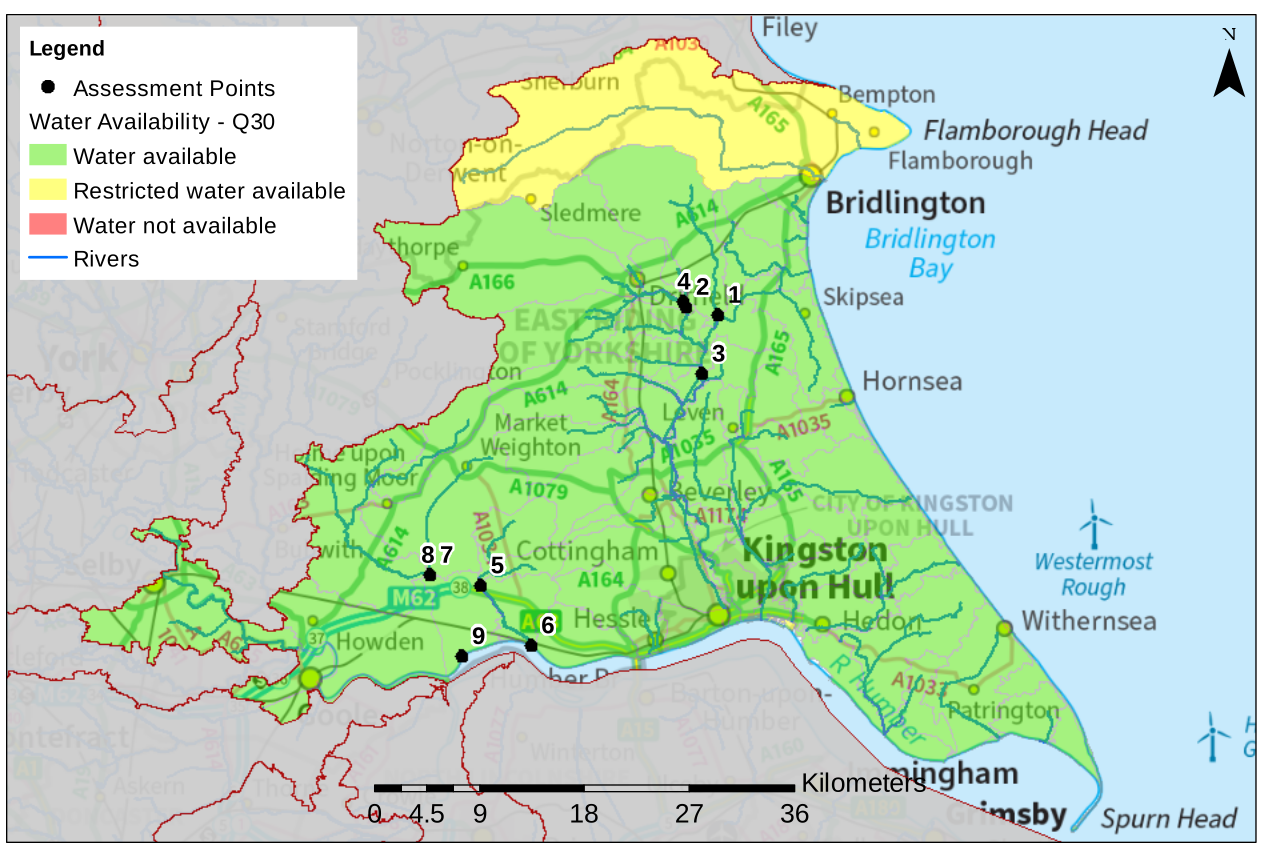
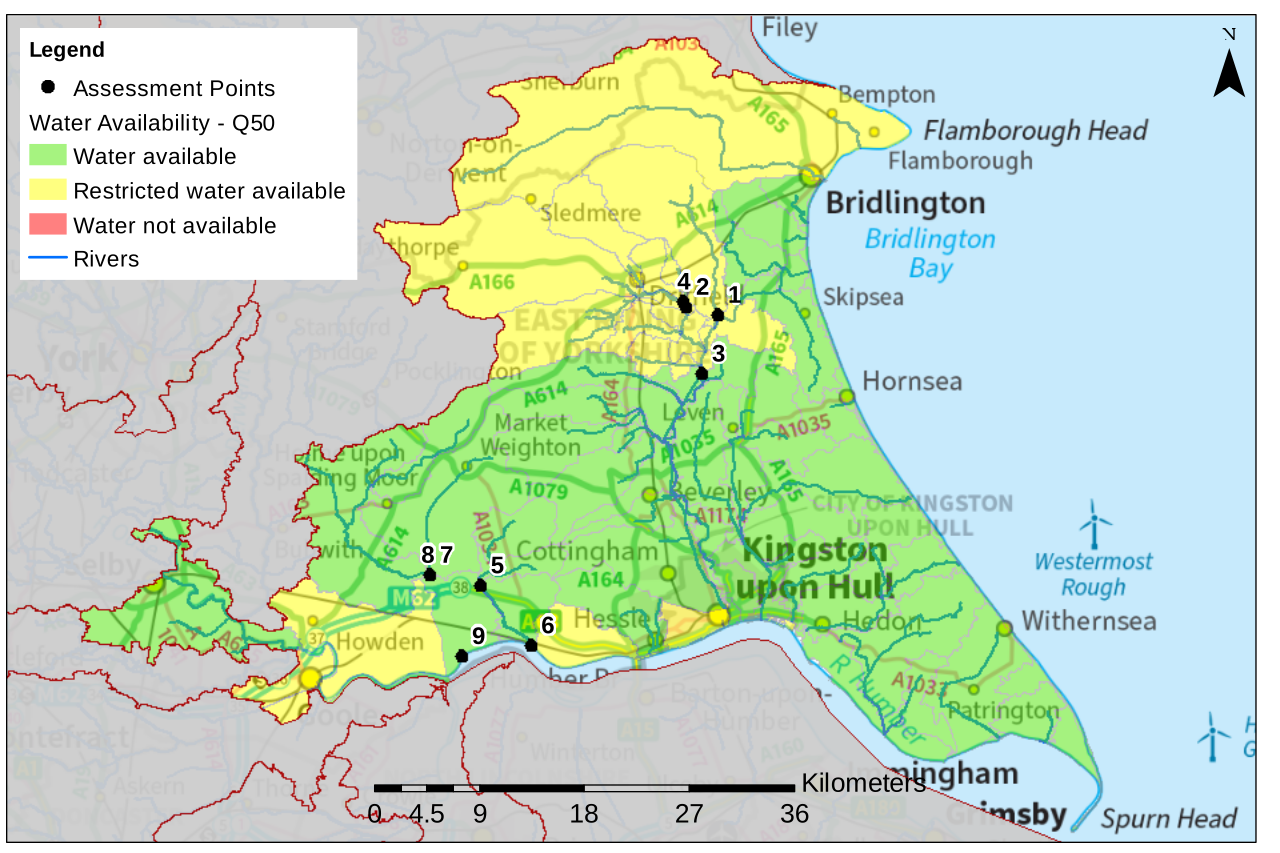
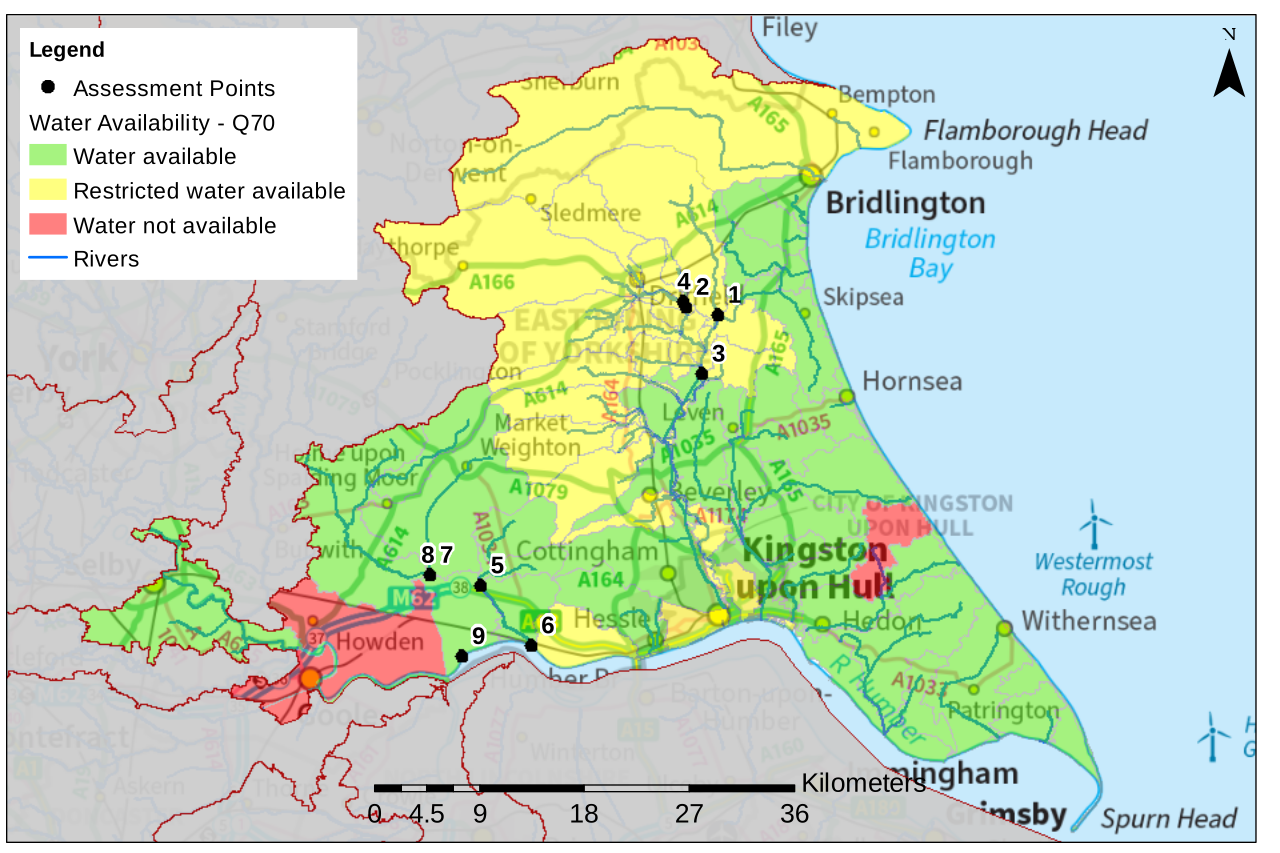
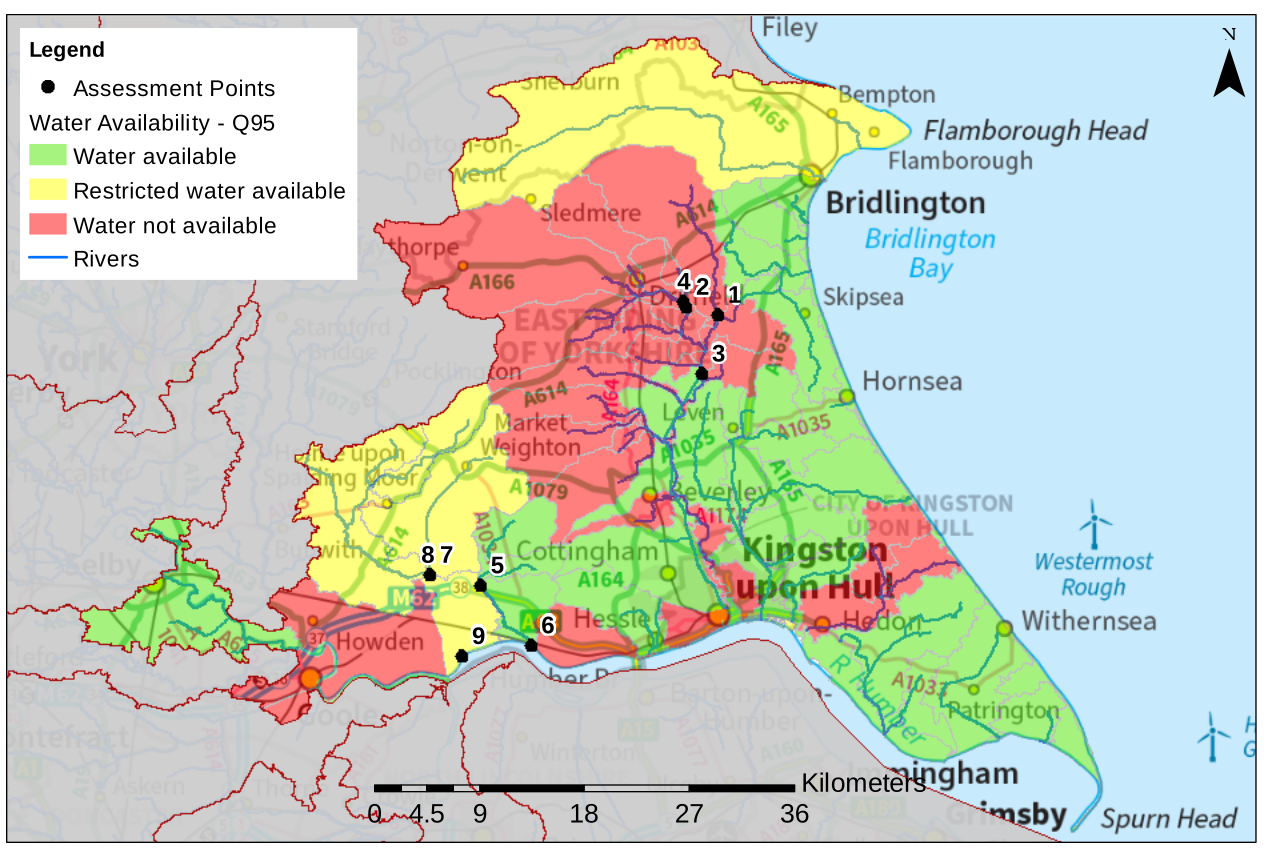
The water availability colours for the Hull and East Riding catchment are presented in maps 2 to 5.
Table 4. Summary of maps 2 to 5 water availability at each AP by flow category
| Assessment Point and name | Q30 | Q50 | Q70 | Q95 |
|---|---|---|---|---|
| 1. Kelk Beck | Water available | Restricted water available | Restricted water available | No water available |
| 2. Upper West Beck | Water available | Restricted water available | Restricted water available | No water available |
| 3. Upper Hull | Water available | Restricted water available | Restricted water available | No water available |
| 4. Driffield Canal | Water available | Restricted water available | Restricted water available | No water available |
| 5. Upper Mires Beck | Water available | Water available | Water available | Water available |
| 6. Lower Mires Beck | Water available | Water available | Water available | Water available |
| 7. Back Delfin | Water available | Water available | Water available | Restricted water available |
| 8. River Foulness | Water available | Water available | Water available | Restricted water available |
| 9. Market Weighton Canal | Water available | Water available | Water available | Restricted water available |
Map 2. Water resource availability colours at Q30 for the Hull and East Riding ALS
Map 3. Water resource availability colours at Q50 for the Hull and East Riding ALS
Map 4. Water resource availability colours at Q70 for the Hull and East Riding ALS
Map 5. Water resource availability colours at Q95 for the Hull and East Riding ALS
3.4 Groundwater resource availability
Abstracting groundwater can impact on overlying surface water bodies and groundwater dependent ecosystems. This impact is measured at the surface water AP. We cannot grant new groundwater licences where abstraction is reducing flows to below the indicative flow requirement to help support a healthy ecology. This is based on Q95 flows.
We must also account for:
- the available resource in the aquifer
- the impact of abstraction on protected sites
- the risk of saline intrusion
3.5 Groundwater resource availability colours and implications for licensing
We use colours to represent different groundwater availability:
Water available for licensing
Green
Groundwater management unit balance shows groundwater available for licensing.
New licences can be considered depending on impacts on other abstractors, designated ecological sites and on surface water.
Restricted water available for licensing
Yellow
Groundwater management unit balance shows more water is licensed than the amount available. Or it shows that there are known local impacts on dependent wetlands, surface water bodies, groundwater levels or potential for saline intrusion.
In restricted groundwater management units, no new consumptive licences will be granted. It may also be appropriate to investigate the possibilities for reducing fully licensed risks. Water may be available if you can ‘buy’ (known as licence trading) the entitlement to abstract water from an existing licence holder.
Water not available for licensing
Red
Groundwater management unit balance shows more water has been abstracted based on recent amounts than the amount available.
We will not grant further licences.
Water availability reviewed on a case-by-case basis
Blue
Groundwater management unit is at risk.
Any new application will be assessed on a case-by-case basis.
3.6 Groundwater availability maps
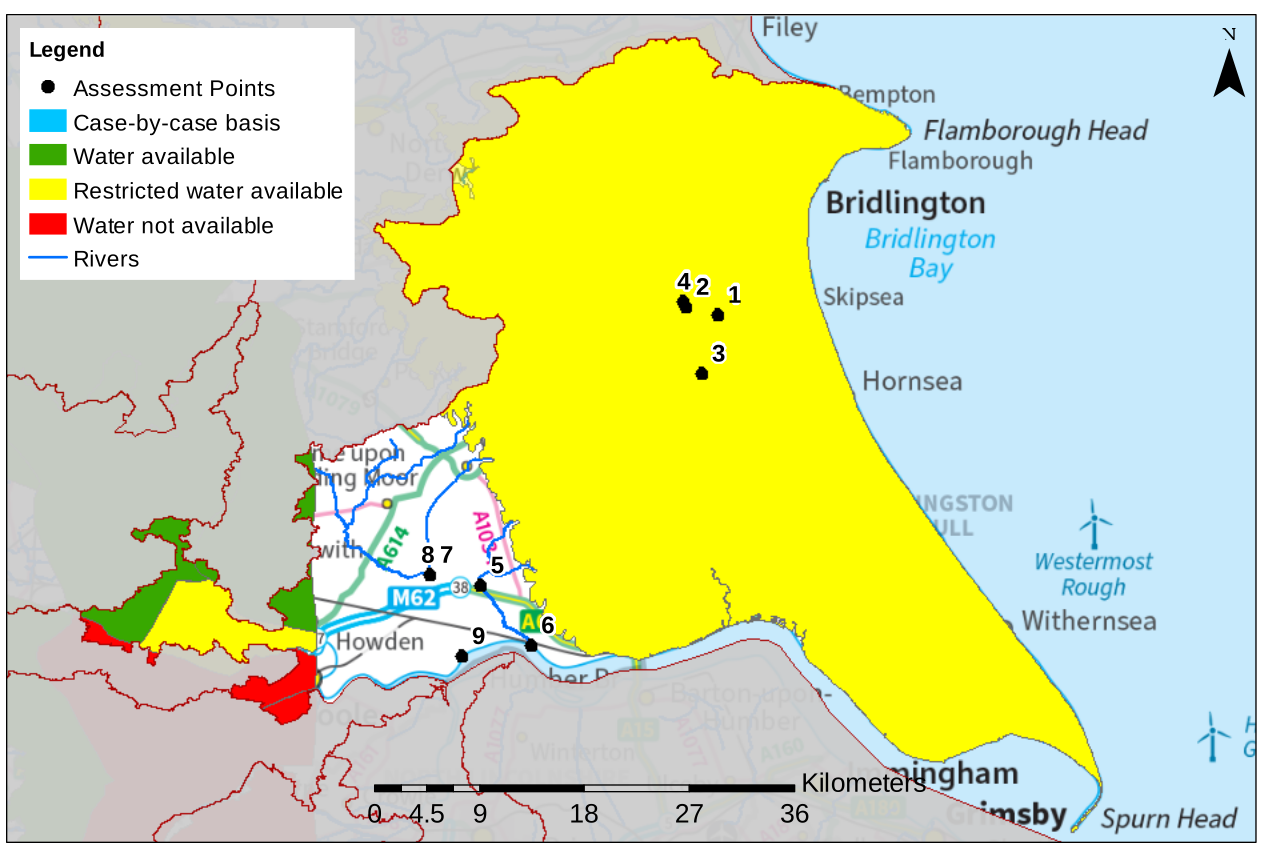
Map 6 shows the groundwater management unit availability in the Hull and East Riding area. In this catchment, water is restricted in the Chalk, an area spanning most of the ALS catchment. Any new applications in the Sherwood Sandstone in the west of the area will be based on the location and the water resource availability status.
Map 6. Water resources availability colours for groundwater management units
3.7 Resource reliability
If you want to apply for a licence, it is worth considering the reliability of your abstraction.
By assessing the quantity of water available at different flows it is possible to see:
- when there is a surplus or deficit of water
- the associated reliability of an abstraction
This is an indication only. Actual reliability of a licence will be discussed when you apply.
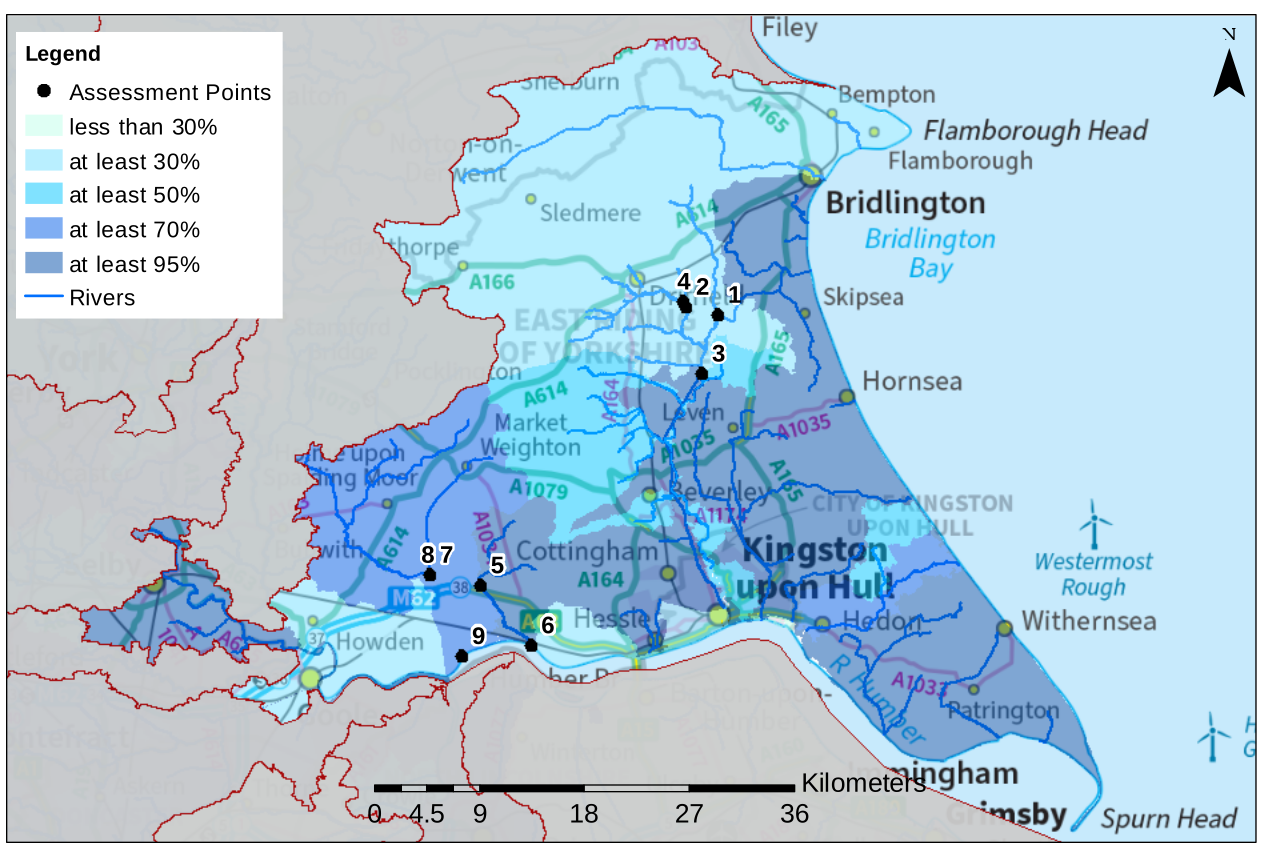
Map 7 gives an indication of the resource availability for consumptive abstraction in the Hull and East Riding area expressed as a percentage of time. In this catchment:
- consumptive abstraction is available at least 30% of the time for AP1, AP2, AP3 and AP4
- consumptive abstraction is available at least 70% of the time for AP7, AP8 and AP9
- consumptive abstraction is available at least 95% of the time for AP5 and AP6
Map 7. Water resource reliability of the Hull and East Riding ALS expressed as a percentage of time available
3.8 Other considerations for resource availability and reliability
When we grant a licence, it does not mean that we guarantee a supply of water.
We may have to add constraints to licences such as a HoF or hands off level (HoL) condition to protect the environment and the rights of other abstractors. These conditions specify that if the flow or level in the river drops below what is needed to protect the environment, abstraction must reduce or stop. In dry years, restrictions are likely to apply more often, which will affect the reliability of supply.
One factor is water quality in the Lower Ouse and River Humber and its potential to impact on protected species. To ensure dissolved oxygen levels support the passage of migratory fish, HoF or HoL conditions may be applied to a licence.
Whilst this document may say that water is available for abstraction, this does not guarantee that all applications will be successful. This is because we must determine each application on its own merits, and local factors may mean we are either unable to grant a licence as applied for, or even at all.
New licences within an ALS are usually given a common end date (CED), which allows them to be reviewed at the same time.
The next CED for this ALS is 31 March 2037, and the subsequent one is 31 March 2049.
3.9 Impoundments
Applications for impounding licences will be dealt with on a case-by-case basis and take into account the requirements of our obligations under the Habitats Regulations (2017) and Water Framework Directive (WFD) Regulations (2017).
An impoundment is a dam, weir or other construction in an inland waterway that obstructs or impedes flow. Our assessment of an impounding licence application takes into consideration its potential impacts on the environment (such as fish migration), flood risk, downstream water users and flow modification. In line with current legislation, we do not time limit impounding licences.
You must have an impounding licence before you start to construct, alter, repair or remove an impounding structure, even in an emergency. However, certain exemptions may apply and if we deem there is little or no impact on the environment and other water users, you may not need a licence. Please contact the Environment Agency if you intend to construct, alter, repair, or remove an impounding structure so that we may advise you whether a licence is required.
There is more information in our guidance on how to check if you need a licence to impound water.
4. How we manage water availability in the Hull and East Riding ALS
4.1 Surface water
We assess surface water flows at each AP, which are significant points on a river, often where 2 major rivers join or at a gauging station. An AP can cover multiple surface water bodies.
Where groundwater abstractions directly impact on surface water flows, the impact is measured at the surface water AP.
Table 5 gives an indication of:
- whether there is water available for further abstraction
- the associated restrictions we may have to apply to new and varied abstraction licences from the main river
Depending on the nature of the catchment, tributaries to the main river may be subject to different restrictions and quantities. This may be assessed locally on a case-by-case basis.
Each HoF is linked to an AP, or its nearest gauging station, and is dependent on the resource availability. In some cases, additional restrictions may apply to licences where there is a more critical resource availability downstream to protect the ecological requirements of the river and other water users. This has been considered in the figures given in Table 5.
All abstraction licence applications are subject to an assessment. This takes account of any local and downstream issues and may be subject to further restrictions.
Table 5 shows the AP in the Hull and East Riding ALS area. Each column shows the potential reliability of a new licence. In cases where there is water available at all flows, we may apply a minimum residual flow (MRF) equal to 75% of Qn99 flows in the water body to protect very low flows. We will decide this on a case-by-case basis.
Table 5. Summary of licensing approach for the APs of the Hull and East Riding ALS
| Assessment Point and name | AP National Grid Reference | Water resource availability | Is there a gauging station at this AP? | Additional restrictions |
|---|---|---|---|---|
| 1. Kelk Beck | TA 09381 54865 | Water may be available at moderate and high flows. New licences could be considered. | Yes. Foston Mill. | Assessment will be made on a case-by-case basis. A HoF will be applied at a suitable gauging station to protect flows at the critical AP3 downstream. |
| 2. Upper West Beck | TA 06628 55581 | Water may be available at moderate and high flows. New licences could be considered. | Yes. Wansford Snakeholm Lock – West Beck. | A HoF will be applied at a suitable gauging station to protect flows at the critical AP3 downstream. |
| 3. Upper Hull | TA 07983 49900 | Water may be available at moderate and high flows. New licences could be considered. | Yes. Hempholme Weir. | Critical AP for licensing. A HoF will be applied at Hempholme Weir to protect the environment. |
| 4. Driffield Canal | TA 06441 56054 | Water may be available at moderate and high flows. New licences could be considered. | Yes. Wansford Bridge. | A HoF will be applied at a suitable gauging station to protect flows at the critical AP3 downstream. |
| 5. Upper Mires Beck | SE 89020 31608 | Water may be available at all flows subject to local assessment. New licences could be considered. | Yes. North Cave. | A HoF will be applied at a suitable gauging station to protect flows at the critical AP6 downstream. |
| 6. Lower Mires Beck | SE 93428 26549 | Water may be available at all flows subject to local assessment. New licences could be considered. | No | Critical AP for licensing. A HoF will be applied at a suitable gauging station to protect the environment. |
| 7. Back Delfin | SE 84708 32578 | Water may be available at moderate and high flows. New licences could be considered. | No | A HoF will be applied at a suitable gauging station to protect flows at the critical AP9 downstream. |
| 8. River Foulness | SE 84719 32535 | Water may be available at moderate and high flows. New licences could be considered. | No | A HoF will be applied at a suitable gauging station to protect flows at the critical AP9 downstream. |
| 9. Market Weighton Canal | SE 87479 25610 | Water may be available at moderate and high flows. New licences could be considered. | No | Critical AP for licensing. A HoF will be applied at a suitable gauging station to protect the environment. |
4.2 Groundwater
For principal aquifers we may divide the area into groundwater management units (GWMU), which are sub-divisions of the groundwater bodies. In these cases, we use the information and assessments on these units to determine water availability and licence restrictions.
Where groundwater abstractions directly impact on surface water flows, including reduction of base flow, the impact is measured at the surface water AP. In these cases, restrictions may be applied to licences, such as groundwater HoL conditions. The HoL is a groundwater level below which an abstractor is required to reduce or stop abstraction. Where there is known connectivity between surface water and groundwater, we may apply a HoF condition to the groundwater licence. This will relate to an appropriate surface water gauge.
Other restrictions may apply where availability is limited or to protect the environment, for example to prevent saline intrusion.
4.3 Summary of groundwater licensing approach for the APs of Hull and East Riding ALS
Sherwood Sandstone GWMU
The Sherwood Sandstone provides one of the major groundwater resources of Yorkshire and is extensively developed for public supply. The agricultural and industrial sectors also utilise the Sherwood Sandstone in this area for abstraction. The Sherwood Sandstone covers the far west of the Hull and East Riding ALS area and consists of a thick sequence (up to 300 metres) of fine to medium-grained sandstones with frequent marly layers.
Natural groundwater flow within the Sherwood Sandstone is generally eastwards. Most of the area where it crops out is low-lying, resulting in low hydraulic gradients within the aquifer. Between the 1970s and mid-1990s there was an observed general decline in the groundwater level across the aquifer as abstraction activity increased during this period. Our groundwater level information suggests that the level has remained relatively stable during recent years away from the concentrated areas of groundwater abstraction. However, it is still below sea level in some areas, which we consider to be an unnatural situation.
Map 8 shows the Selby Sherwood Sandstone aquifer area which covers the following ALS areas:
- Derwent
- Wharfe and Lower Ouse
- Aire and Calder
- Don and Rother
- Hull and East Riding
The line plotted on the map represents where the general groundwater level within the Selby Sherwood Sandstone aquifer is approximate to sea level. To the north of this line the groundwater level is considered to be above sea level. To the south of the line groundwater level is considered to be below sea level. However, we may use site specific groundwater level information to determine this and therefore how we would licence groundwater at such a location.
Map 8. Selby Sherwood Sandstone aquifer
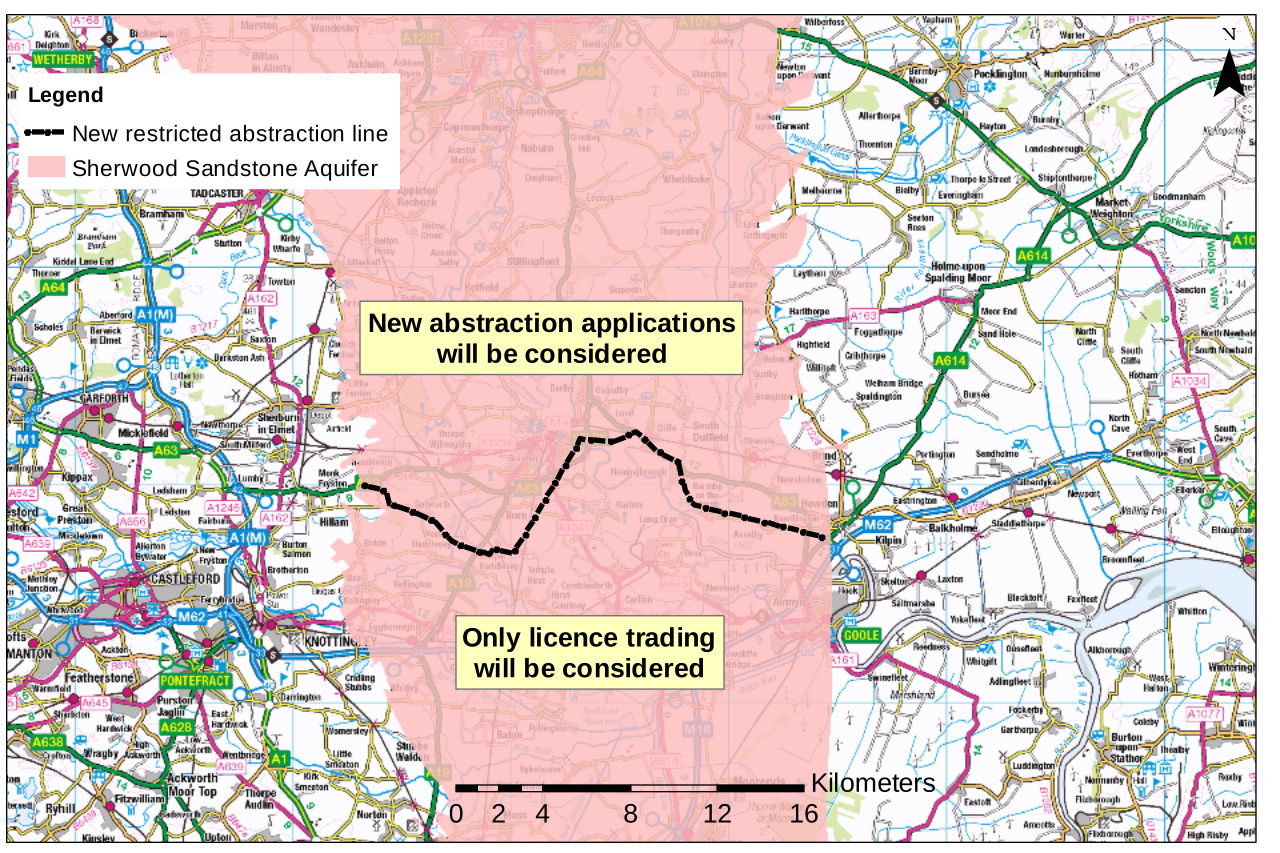
The Hull and East Riding Sherwood Sandstone GWMU straddles either side of the general groundwater line that is approximate to sea level. Our approach to licensing within this GWMU will be based on which side of the line a new abstraction proposal falls. To the north of the line, we will consider applications for new abstraction on a case-by-case basis (subject to assessment of local conditions and dependent on the outcome of groundwater pumping tests). To the south of the line there is a risk that proposals for new abstraction could further draw down the groundwater level. This places a risk on the availability of water to existing licence holders and may lead to the ingress of poorer quality water entering into the freshwater zone of the aquifer that is current utilised for abstraction. We do not consider this to be acceptable. It means the water may become unfit for certain uses and that we have a legal duty to protect the rights of existing abstractors.
Therefore, the moratorium imposed on allowing new abstraction will remain in place within the Hull and East Riding Sherwood Sandstone GWMU to the south of the line although:
- for the area defined as ‘restricted water available’ – we may consider licence trading where there is no net increase in fully licensed abstraction and where it is demonstrated that there is no overall detrimental impact to the aquifer
- for the area defined as ‘water not available’ – we may consider licence trading where there is no net increase in actual abstraction and where it is demonstrated that there is no overall detrimental impact to the aquifer (these will be subject to assessment of local conditions and dependent on the outcome of groundwater pumping tests)
Chalk GWMU
Hard Cretaceous chalk forms the prominent ridge of the Yorkshire Wolds. The chalk is a principal aquifer of national importance. It is used extensively for public water supply, industry, agriculture and private water supply. Groundwater from the chalk aquifer provides the primary source of the baseflow for headwaters of the River Hull and for the Gypsey Race.
Water is restricted for licensing. Due to the connectivity of groundwater and surface waters, the resource availability of one may override the other. This means that licences could contain conditions that link groundwater abstraction to surface water flows. HoL or HoF conditions may be written into licences to ensure that abstraction stops if groundwater levels in the chalk aquifer fall too low.
The area in and around Hull was subject to extensive groundwater abstraction from the chalk aquifer during the 1800s and 1900s due to the growth of industries in the city. A legacy of this abstraction was that saline rich groundwaters were drawn into the aquifer underneath Hull which have remained to the present day. Therefore, no new consumptive abstraction from the chalk aquifer will be allowed within Hull due to the risk of exacerbating saline intrusion. Proposals for new groundwater abstraction involving non-consumptive uses may be considered though.
4.4 Level dependent environments
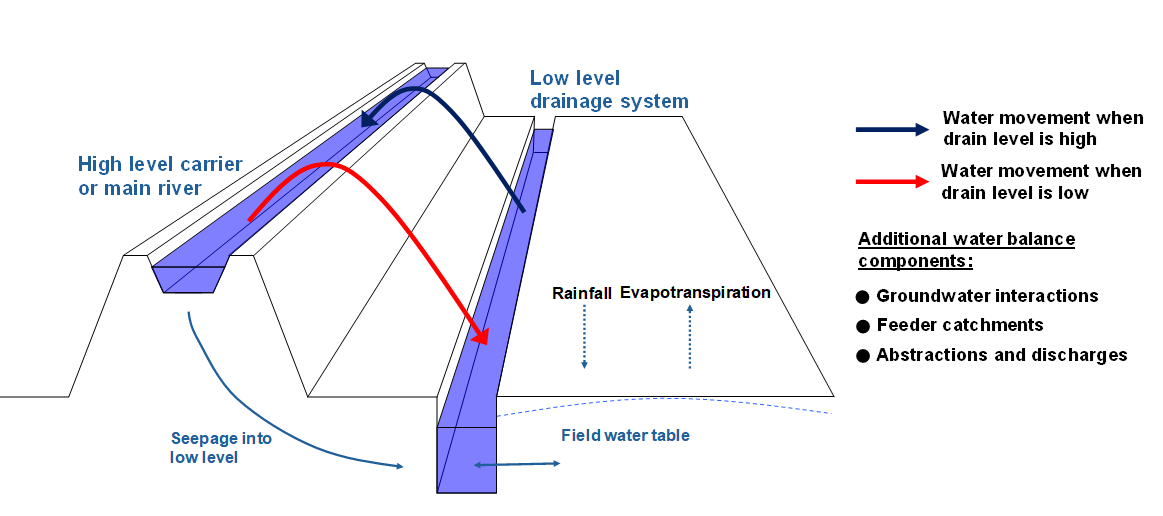
The Hull and East Riding ALS contains level dependent environments (LDEs). Covering approximately 769km2, the LDE consists of man-made drainage systems which are often not linked. The area is dominated by flat, low-lying land, most of which is only just above average sea level and most of these systems are pumped or controlled manually, and water levels are often influenced by the tide. Figure 1 shows the general components of a LDE.
Figure 1: The general components of a LDE
Towards the eastern edge of the catchment, a slight rise forms the watershed between streams draining into the North Sea and those draining into the Humber Estuary.
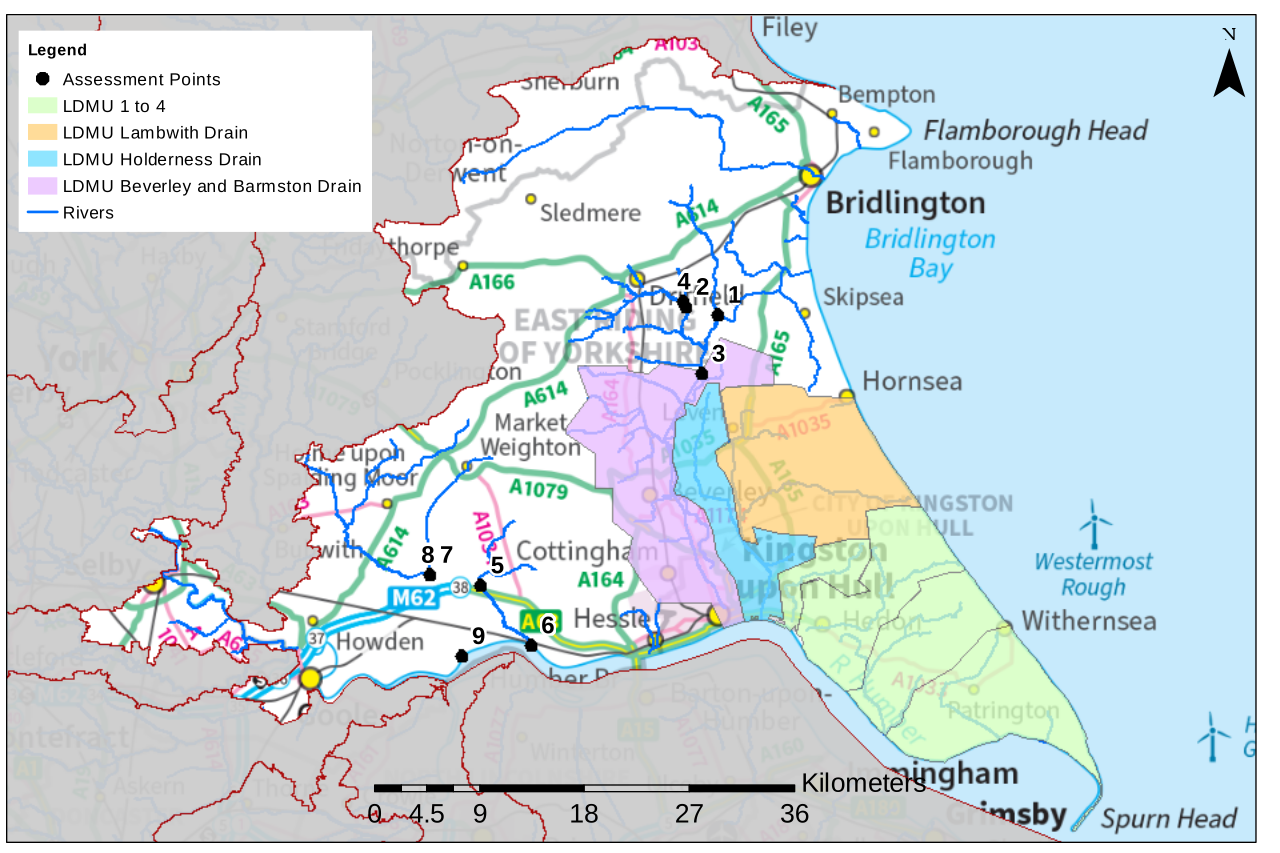
The Hull LDE is divided up into 7 management units, or Level Dependent Management Units (LDMUs). Only 3 of these units have been assessed as part of this strategy: Beverley and Barmston Drain, Holderness Drain and Lambwith Drain. These are shown on Map 9.
There are very few abstraction licences in this area, and groundwater licence applications are generally refused due to saline intrusion. We will assess licence applications on a case-by-case basis in the LDMUs.
LDMU unit 1 to LDMU unit 4: Not assessed as part of this ALS
Abstraction licence applications will be assessed on a case-by-case basis.
LDMU unit 5: Lambwith Drain
Abstraction licence applications will be assessed on a case-by-case basis.
LDMU unit 6: Holderness Drain
Abstraction licence applications will be assessed on a case-by-case basis.
LDMU unit 7: Beverley and Barmston Drian
Abstraction licence applications will be assessed on a case-by-case basis.
Map 9: LDEs in the Hull and East Riding ALS
4.5 Coasts and estuaries
The Humber Estuary is a nationally and internationally important site due to the habitats and species it supports. Habitats include intertidal mudflats and sandflats, coastal saltmarsh, saline lagoons, sand dunes and standing waters. The site is also of national importance for the geological interest at South Ferriby Cliff and for the coastal geomorphology of Spurn.
The Humber Estuary supports a full range of saline conditions from the open coast to the limit of saline intrusion on the tidal rivers of the Ouse and Trent. The range of salinity, substrate and exposure to waves influences the estuarine habitats and the range of species that use them. The estuary supports important populations of wintering waterfowl and waders, and a mix of breeding birds in the lowland open waters and their margins. It is also home to an important breeding colony of grey seals, river and sea lamprey and collections of plants and invertebrates.
The far west of the Hull and East Riding ALS area around Howden is tidal in nature. This means we are unable to assess surface water availability using the standard CAMS framework. Applications for licences around Howden and in other tidal and estuarine areas will be assessed on a case-by-case basis.
4.6 Heavily modified water bodies
For water resources, heavily modified water bodies (HMWB) are classified if they contain a lake or reservoir that influences the downstream flow regime of the river. The one HMWB in the Hull and East Riding ALS area is a stretch of the River Hull from West Beck to Arram Beck - GB104026067000, located immediately below AP3 Upper Hull. There are no reservoirs within the Hull and East Riding ALS area.
However, there are a number of water bodies that are designated HMWB for reasons other than water resources. These are designated for reasons including:
- flood protection
- land drainage
- recreation
- urbanisation
- wider environment
4.7 Protected sites
The Conservation of Habitats and Species Regulations 2017 (Habitats Regulations) provides a very high level of protection to:
- Special Areas of Conservation (SAC), which contribute to biodiversity by maintaining and restoring habitats and species
- Special Protection Area (SPA), which provides protection to birds and their nests, eggs and habitats
Government policy treats Ramsar sites (internationally important wetland sites) in the same way as SACs and SPAs. Ramsar sites, SACs and SPAs are referred to collectively as European sites. Sites of Special Scientific Interest (SSSI) also carry a high level of environmental importance.
Conservation objectives are the overarching objectives for European and SSSI protected sites to maintain at, or to reach, favourable condition. These are set by Natural England. The process for setting targets that underpin these objectives is described through the Joint Nature Conservation Committee approved revised Common Standards Monitoring Guidance (rCSMG). Natural England use rCSMG targets to assess the condition of European and SSSI protected sites. Natural England consider these quantitative targets a pre-requisite for achieving the conservation objectives for European or SSSI designated sites. We have a duty to have regard to Natural England’s advice when determining licence applications that may impact on a designated site.
We may need more detailed supporting information when a licence application could impact on a designated conservation site. This will allow us to complete the required statutory assessment.
Further information on protected sites and species is on Natural England’s website.
With 39 SSSI, 2 SAC, 4 SPA, one Ramsar site and one rCSMG Riverine SSSI Non-European Site, the Hull and East Riding ALS catchment is of significant ecological importance. Nationally important fish species, numerous relic wetlands, habitat for farmland bird assemblages, and a significant population of water vole are present. Along with other notable species include greater water parsnip, a wide range of mayflies, caddis flies and other aquatic insects.
Chalk streams are also one of the rarest freshwater habitats on Earth, and England is home to approximately 85% of them. The River Hull Headwaters SSSI complex is the most northerly chalk river system in England. Chalk streams should be protected and enhanced to support the recovery of nature. This, and many of the catchment’s key attributes, reflect the diversity and uniqueness of the Hull and East Riding ALS area.
Using the ‘Land Based Designations’ layer on Defra’s Magic Map can help you explore the locations of the protected sites for the Hull and East Riding ALS and download information about the catchment and water environment.
5. Managing the catchment together
5.1 Action on unsustainable abstraction
Our guidance on managing water abstraction gives details on:
- what an unsustainable abstraction is
- the measures available to resolve environmental issues caused by abstraction
WFD Regulations 2017 helps us to focus on the ecological ‘health’ of our water environment. Its primary objectives are:
- to prevent deterioration of ecological status or potential (for HMWB)
- to restore ‘good ecological status or potential’ for surface water or ‘good status’ for groundwater (where necessary)
The flow regime is a supporting element to attaining good ecological status.
We will investigate where reduced water flow is contributing to environmental concerns attributed to licensed abstraction. Investigations into the impact caused by these licences may result in options being developed with licence holders on how to improve the sustainability of their abstraction.
5.1.1 Reducing underused or revoking unused licences
The Environment Agency’s unused licences programme is addressing the large amount of water licensed that is not abstracted each year. We are contacting abstractors who only use a small portion of their licensed volumes or who are not using their licensed volumes. We are asking if they still require the water and for what purpose. In these circumstances, abstractors need to supply justification for underusing their licences and provide the evidence to retain their licence. We can reduce volumes or revoke licences where there is not sufficient evidence of need.
Two groundwater abstractions have been altered as a result of this programme. One licence has been reduced while the other has been revoked, reducing the total licenced abstraction volume from 167,800m3 per year to 60,000m3 per year.
5.1.2 Reviewing and renewing of time limited licences
We are managing time limited licence renewals to ensure abstraction is not having a negative impact on the environment now or in the future. When we review the renewal of a licence, we consider whether a licence is currently, or may in the future, pose a risk of deterioration in ecological status or whether the abstraction quantities are no longer justified. When we consider the renewal of abstraction licences, we apply three tests:
- environmental sustainability
- justification of need
- efficient use of water
We have reviewed 125 licences time limited to 2025, 20 licences time limited to 2027, one licence time limited to 2029, and 2 licences time limited to 2030.
5.1.3 Managing licence variations
We are managing licence variations to ensure abstraction is not having a negative impact on the environment now or in the future. If your water needs have changed, you may want to vary your licence. We will assess all proposals on a case-by-case basis based on the justification of need for the variation provided in your application and consider the impact of the changes on the environment, protected sites and other abstractors.
5.2 Approaches to sustainable water management
This section outlines options initiated in this catchment for future approaches to water management, including collaboration and sharing which may be of interest to both new and existing abstractors:
Future management of water resources in this catchment will focus on:
- water industry national environment programme
- Water Resources North
5.2.1 Water industry national environment programme
The water industry national environment programme (WINEP) is the programme of work that water companies in England are required to do to fulfil their obligations arising from environmental legislation and UK government policy.
We worked with Yorkshire Water to investigate and address the impact of their abstractions on the environment in the Hull and East Riding ALS area.
Table 6: The six WINEP investigations which occurred during the 2020 to 2025 period
| Downstream AP | WINEP watercourse catchment |
|---|---|
| AP1 Kelk Beck | Lowthorpe Beck-Kelk Beck-Foston Beck from source to the confluence with Frodingham Beck |
| AP2 Upper West Beck | Driffield Trout Stream from source to the confluence with Driffield Beck |
| AP4 Driffield Canal | Water Forlorns from source to Driffield |
| N/A | Gypsey Race from source to Bridlington |
| N/A | High Hunsley from source to Arram |
| N/A | Scorborough Beck from source to the confluence with Bryan Mills Beck |
No changes to the licences within the WINEP investigation areas are planned during the asset management plan period 8 (AMP8) which occurs during 2025 to 2030.
5.2.2 Water Resources North
Water Resources North (WReN) is a group designed to oversee water resources planning for Yorkshire and the North East of England. Members include Northumbrian Water, Yorkshire Water, Hartlepool Water, Environment Agency, Natural England, Canal and Rivers Trust, and stakeholders from the energy, agriculture, environment and industry sectors. Further information on WReN is on the WReN website.
5.3 Water rights trading
We want to make it easier to trade water rights. A water rights trade is where a person sells all or part of their water right, as defined by their abstraction licences, to another person on a permanent or temporary basis. In many cases a trade will involve a change in abstraction location or use which we will need to approve through the issue or variation of abstraction licences.
In licensing trades, as with new abstraction licences, we need to make sure that we do not cause any deterioration in water body status within the water bodies where the trade will take place and to downstream water bodies.
This section provides a guide to the potential for trading in water bodies of a particular ALS water resource availability colour, as shown on maps 2 to 5.
High hydrological regime
Blue
Opportunities for trading water rights will be limited.
Water available for licensing
Green
There may be opportunities to allow trades of recent actual abstraction and licensed abstraction. But little demand for trading is expected as water is available for new abstractions.
Restricted water available for licensing
Yellow
There may be opportunities for licence holders to trade up to their full licensed quantities. But the quantities of water available to trade may be restricted once levels of actual abstraction reach sustainable limits. We will not permit licence trades in water bodies where we are taking action to prevent deterioration. The exception to this is if the trade is consistent with achieving water body objectives.
Water not available for licensing
Red
We will only trade recent actual abstraction but no increase in recent actual abstraction is permitted in the water body. Licensed abstraction will be recovered for the environment.
HMWBs
Grey
Opportunities for trading will depend on local operating agreements and local management.
To find out more about licence trading, use our guidance on trading water abstraction rights.
6. Glossary
Abstraction: Removal of water from a source of supply (surface or groundwater).
Abstraction licence: The authorisation granted by the Environment Agency to allow the removal of water.
Assessment point: A significant point on a river, often where two major rivers join or at a gauging station.
Catchment: The area from which precipitation and groundwater will collect and contribute to the flow of a specific river.
Catchment based approach: Partnership working at the river catchment scale to deliver a range of environmental, social, and economic benefits while protecting our precious water environments for the benefit of all.
Consumptive abstraction: Abstraction where a proportion of the water is not returned either directly or indirectly to the source of supply after use. For example, for the use of spray irrigation, general agriculture, domestic use, public water supply and water bottling.
Discharge: The release of substances (for example, water, treated sewage effluent) into surface waters.
Environmental flow indicator: Flow indicator to prevent environmental deterioration of rivers, set in line with new UK standards set by UK Technical Advisory Group.
Gauging station: Site established and used for continuous measurement of river flow.
Groundwater: Water that is contained in underground rocks.
Groundwater management unit: A defined sub-division of a groundwater body used in assessing water availability and relevant licence conditions.
Hands off flow: A condition attached to an abstraction licence which states that if flow (in the river) falls below the rate specified on the licence, the abstractor will be required to reduce or stop the abstraction.
Hands off level: A condition attached to an abstraction which states that if level (in the river or groundwater aquifer) falls below the level specified on the licence, the abstractor will be required to reduce or stop abstraction.
Impoundment: A structure that obstructs or impedes the flow of inland water, such as a dam, weir, or other constructed works.
Level Dependent Environment: A network of (raised) river channels flowing, although often ponded, above the level of surrounding land. The lower-lying land has a network of drainage ditches, which remove water from the lower-lying land into the main river channels during the winter and provide an irrigation resource during the summer, during which time the ditches are topped up from the main river channels. Pumps, lateral off-take sluices (slackers), siphons, and other structures connect the main river channels and the drainage ditch networks.
Non consumptive abstraction: Abstraction where a significant proportion of the water is returned either directly or indirectly to the source of supply after use. For example, for hydropower.
Surface water: This is a general term used to describe all water features such as rivers, streams, springs, ponds, and lakes.
Water body: Units of either surface water or groundwater which we use to assess water availability.
Water Environment (Water Framework Directive) (England and Wales) Regulations 2017 (referred to as the WFD Regulations 2017): Regulations that provide a framework for managing the water environment in England and Wales.
Water Industry National Environment Programme: Regulatory framework that outlines the environmental obligations for water companies. It is developed by the Environment Agency (EA), Defra, Natural England (NE) and Ofwat. It sets out the water industry’s contribution to delivering the wider national objectives for the natural environment as set out in the River Basin Management Plans (RBMPs) and other statutory plans.
Winterbourne: A stream or river, typically on chalk or limestone, that flows from a spring or after wet weather. Although, the term can also be used for all-year water courses.