Building Safety Remediation: monthly data release - January 2026 (Accessible Version)
Updated 25 March 2026
Applies to England

© Crown copyright 2026
This publication is licensed under the terms of the Open Government Licence v3.0 except where otherwise stated. To view this licence, visit nationalarchives.gov.uk/doc/open-government-licence/version/3 or write to the Information Policy Team, The National Archives, Kew, London TW9 4DU, or email: psi@nationalarchives.gov.uk.
Where we have identified any third party copyright information you will need to obtain permission from the copyright holders concerned.
This publication is available at https://www.gov.uk/government/publications/building-safety-remediation-monthly-data-release-january-2026/building-safety-remediation-monthly-data-release-january-2026-accessible-version
Date of next publication: 9.30am on Wednesday 25th March 2026
All figures in this release can also be found in an interactive dashboard.
Headlines
Overall remediation
As at the end of January 2026, there are 4,191 residential buildings 11 metres and over in height identified with unsafe cladding whose remediation progression is being reported on in this release, an increase of 65 since the end of December 2025. This is an estimated 49-73% of all buildings 11 metres and over in height expected to be remediated as part of MHCLG’s remediation programmes. An additional 1,200 social sector buildings have applied to the Cladding Safety Scheme (CSS) and are progressing through eligibility checks.
Since the department first began reporting on all five remediation programmes in October 2023, the overall number of 11m+ buildings with unsafe cladding whose remediation progress is being monitored by MHCLG has increased by 394.
Overall, 2,195 buildings (52%) have either started or completed remediation works. Of these, 1,500 buildings (36%) have completed remediation works.
Figure 1: 4,191 11m+ buildings have been identified with unsafe cladding, and there are an estimated 1,500-4,400 11m+ buildings expected to be remediated as part of MHCLG’s remediation programmes yet to be brought into a remediation programme, including 1,200 social sector buildings progressing through CSS funding eligibility checks.
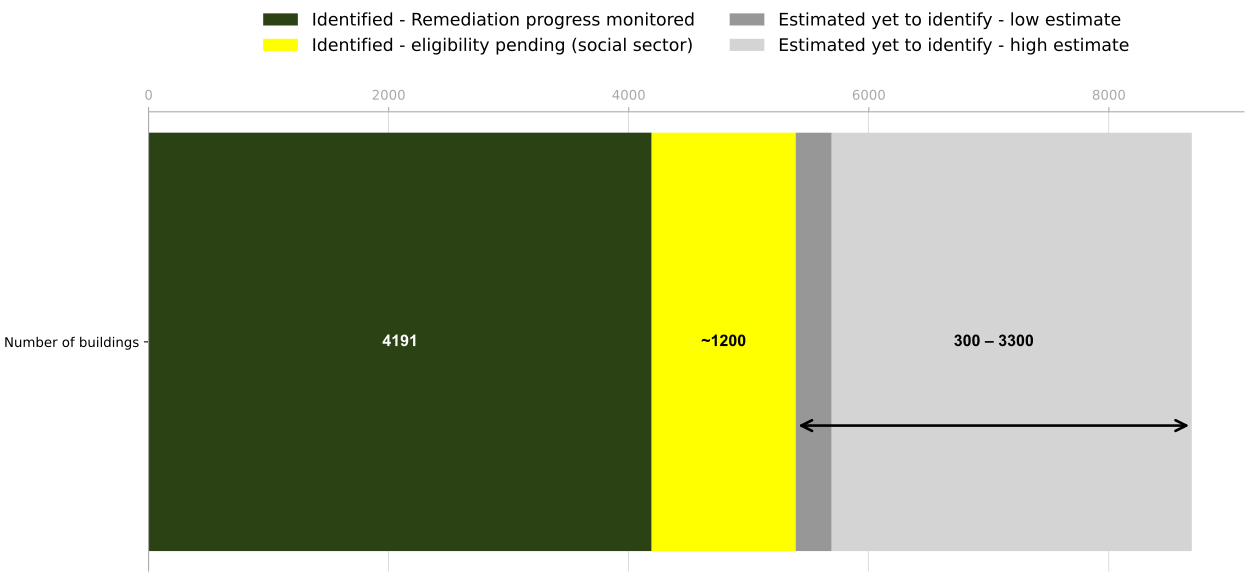
Figure 2: Of the 4,191 buildings identified with unsafe cladding, 2,195 (52%) have started or completed remediation works, of which 1,500 (36%) have completed remediation works. A further 1,200 social sector buildings have applied to the CSS and are progressing through funding eligibility checks.
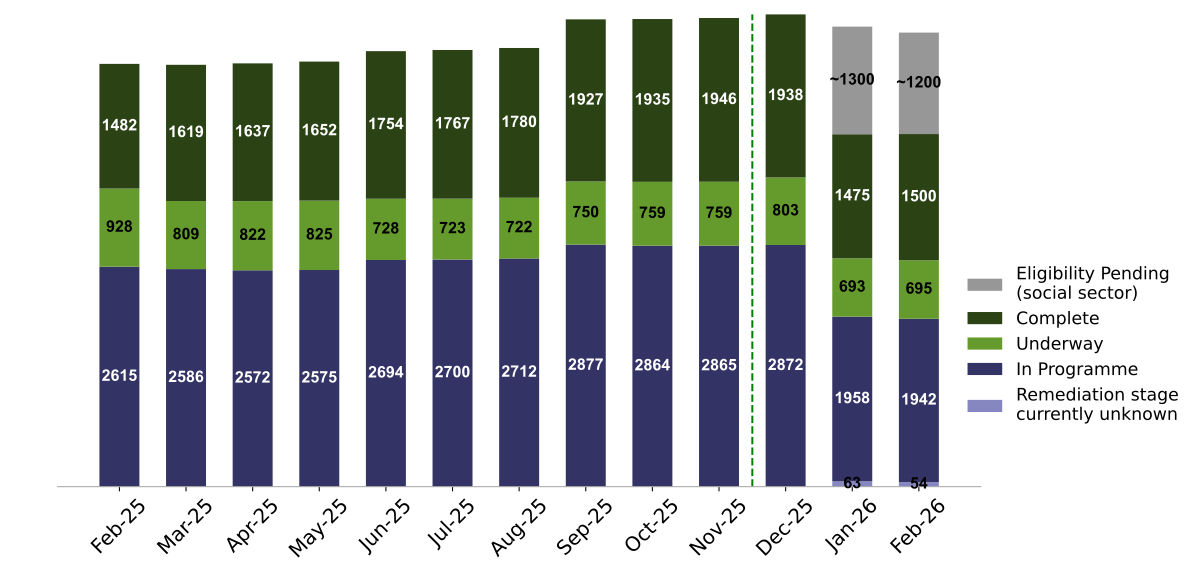
Note: The total number of buildings identified with unsafe cladding, reported in the Overall Remediation section of the data release, does not sum to the total number of buildings in each remediation programme, reported in each respective section of the data release. This is due to some buildings appearing in more than one remediation programme.
The total number of 11m+ buildings identified with unsafe cladding decreased between November 2025 and December 2025 due to a change in the data collection and categorisation of social sector buildings used in our monitoring and reporting. The overall remediation progress figures from December 2025 are therefore not directly comparable to prior months. Fluctuations in the social self-funded data are expected over the coming months, which will affect the overall remediation progress figures. Further information is available in the technical note.
ACM remediation – monthly update (as at end January 2026) since previous publication.
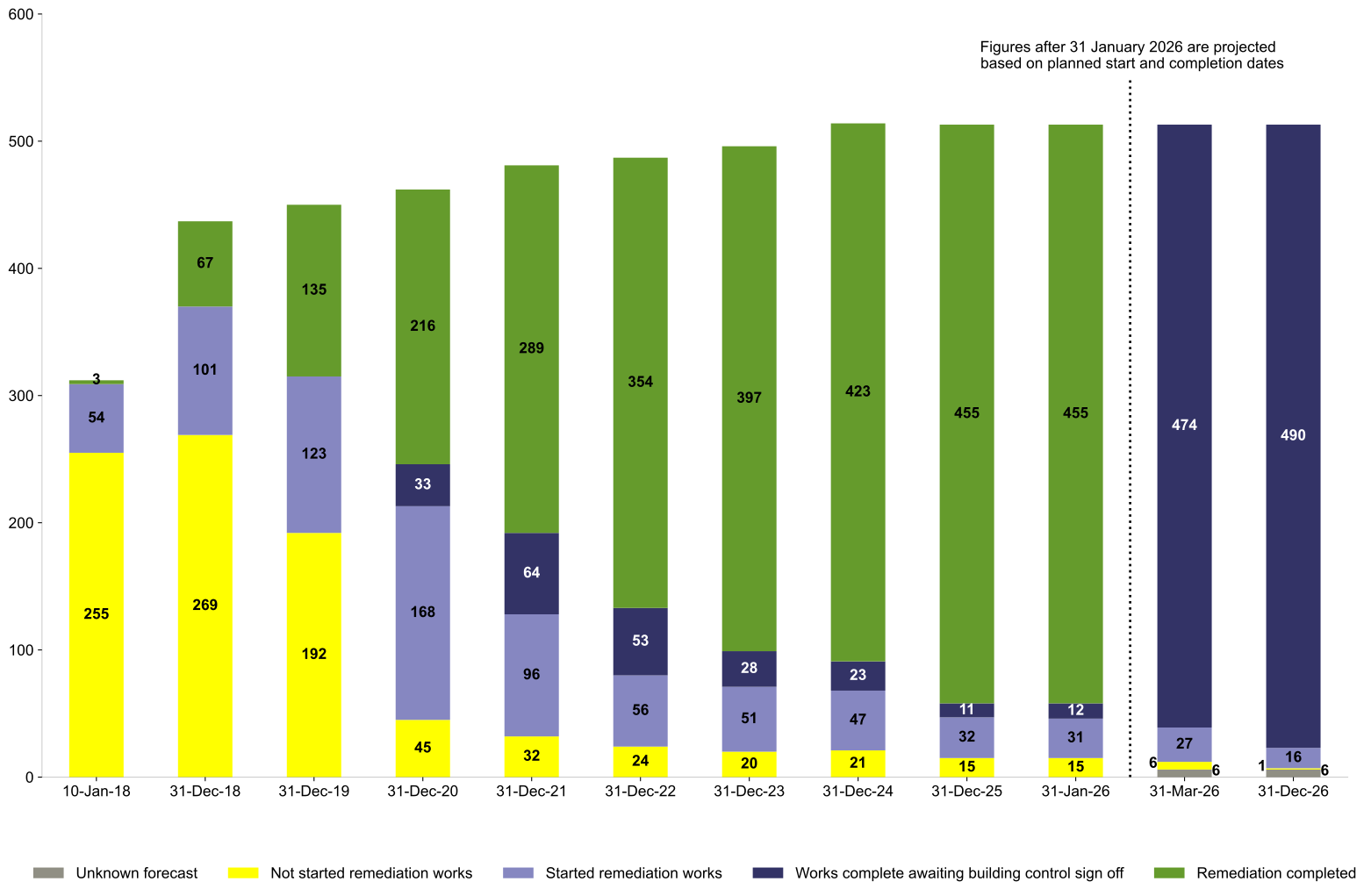
As at 31 January 2026, of the 513 high-rise (18 metres and over in height) residential and publicly owned buildings with ACM cladding systems, unlikely to meet Building Regulations, 498 (97%) have either started or completed remediation works, no change since the end of December.
Of these, 467 buildings (91%) have completed ACM remediation, including those awaiting building control sign-off, an increase of one since the end of December.
There are 15 buildings yet to start ACM remediation (3% of all buildings), no change since the end of December. One building is vacant so does not pose a risk to resident safety, eight occupied buildings have forecast start dates, a further building has had local authority enforcement action taken against them and the remaining five buildings came into scope in 2025.
Building Safety Fund (BSF) – monthly update (as at end January 2026) since previous publication.
As at 31 January 2026, of the 698 high-rise (18 metres and over in height) residential buildings proceeding with an application for funding through the Building Safety Fund, 462 buildings (66%) have completed remediation works, including those awaiting building control sign-off, and 89 buildings (13%) have started remediation works on unsafe non-ACM cladding.
Overall, 551 high-rise buildings (79%) in the BSF have either started or completed remediation works on non-ACM cladding, no change since the end of December. Of these, 462 buildings (66% of buildings) have completed remediation works, an increase of three since the end of December.
Cladding Safety Scheme (CSS) – monthly update (as at end January 2026) since previous publication.
As at 31 January 2026, 1,051 buildings 11 metres and over in height have been assessed as eligible for the Cladding Safety Scheme (including 229 buildings that have transferred from the BSF), an increase of 71 since the end of December. Of these, 225 buildings (21%) have either started or completed remediation works, an increase of 19 since the end of December. Of these, 72 buildings (7%) have completed remediation works, including those awaiting building control sign-off, an increase of five since the end of December.
The CSS continues to investigate and pull in potentially eligible buildings. There are a further 2,645 buildings 11 metres and over in height in the pre-eligible stages of the CSS, which launched fully in July 2023. Of these, 1,400 buildings are progressing through eligibility checks, and 1,245 buildings are in the pre-application stage.
Developer remediation – data received from developers as at 31 October 2025. Data received from other programmes relating to developer-led remediation is as at 31 January 2026.
As at 31 January 2026, 2,497 buildings 11 metres and over in height have been identified as having life-critical fire safety defects (including cladding and non-cladding defects) which developers have committed to remediate or pay to remediate (where the cladding remediation works are being carried out in a government funded remediation programme), no change since reported in the December data release.
Of these, developers reported that 1,085 (43%) have either started or completed remediation works, no change since reported in the December data release. Of these, 516 (21% of buildings) are reported to have completed remediation works, no change since reported in the December data release.
When excluding buildings reported with only non-cladding defects, there are 1,805 buildings which developers have reported as having unsafe cladding, no change since reported in the December data release. Of which 893 (49%) are reported to have started or completed remediation, no change since reported in the December data release, including 441 (24% of buildings) which are reported to have completed remediation, no change since reported in the December data release.
Social self-funded remediation – monthly update (as at end January 2026) since previous publication.
As at 31 January 2026, there are 564 social buildings identified with unsafe cladding where remediation is self-funded by registered providers of social housing, an increase of one since the end of December.
Of these, 360 (64%) are reported to have started or completed remediation works, an increase of 10 since the end of December. Of these, 300 (53% of buildings) are reported to have completed remediation works, an increase of 16 since the end of December.
Registered providers of social housing are working with Homes England to finish compiling their records of buildings requiring remediation on the digital platform, the National Remediation System (NRS). While work is underway to migrate data to the NRS, fluctuations in the remediation progress figures for social buildings where registered providers are self-funding remediation is expected. Further information is available in the technical note.
Enforcement – monthly update (as at 19 January 2026) since previous publication
As at 19 January 2026, local authority enforcement action has been, or is being, taken under the Housing Act 2004 against 805 buildings over 11m with suspected unsafe cladding, an increase of 60 since the end of December.
Introduction
This Data Release provides data on:
-
The estimated number of residential buildings 11 metres and over in height in England that have or had unsafe cladding requiring remediation and the estimated cost to remediate them.
-
Remediation progress across MHCLG’s Building Safety Remediation portfolio, covering buildings in the ACM programme, Building Safety Fund, Cladding Safety Scheme, developer remediation contract and reported by registered providers of social housing.
-
Progress with remediation of high-rise (18 metres and over in height) residential buildings (including student accommodation and hotels) and publicly owned buildings with ACM cladding systems unlikely to meet Building Regulations in the ACM programme.
-
Progress with the applications for and remediation of medium-rise (11 – 18 metres in height) and high-rise residential buildings in England, and Northern Ireland, with non-ACM cladding systems in the Cladding Safety Scheme.
-
Progress of remediation of residential buildings 11 metres and over in height with life-critical fire safety risks under the developer remediation contract.
-
Progress of remediation of residential buildings 11 metres and over in height with unsafe cladding reported by registered providers of social housing as being self-funded.
-
Enforcement action taken by local authorities against high-rise residential buildings with unsafe cladding under the Housing Act 2004.
-
In additional management information tables only, the progress of the Waking Watch Relief Fund and Waking Watch Replacement Fund. From June 2025 this includes data on the Waking Watch Replacement Fund 2023.
The data in Figures 1 and 2 and the overall remediation progress section of the data release, shows the combined remediation progress across MHCLG’s Building Safety Remediation portfolio, covering buildings and accounting for crossover in the ACM programme, Building Safety Fund, Cladding Safety Scheme, developer remediation contract and reported by registered providers of social housing as being self-funded.
The figures in this publication are correct as at the specified dates. Remediation progress on the ACM programme, BSF, CSS and social self-funded buildings will be updated monthly, and remediation progress on the developer remediation contract will be updated quarterly.
From June 2025 the Building Safety Remediation data release includes estimates on the number of residential buildings 11 metres and over in height in England with unsafe cladding requiring remediation. These estimates are not expected to change frequently.
From November 2025 the Building Safety Remediation data release includes estimates on the cost of external wall system remediation of residential buildings 11 metres and over in height in England. These estimates are not expected to change frequently.
Enquiries
Contact: BuildingSafetyData2@communities.gov.uk
Media enquiries: 0303 444 1209
User Engagement
We are committed to improving and broadening this data release further in the months ahead and would welcome feedback both on the revised content of this data release and what could be further done in the future. Please contact BuildingSafetyData2@communities.gov.uk
Dates of future publications
The publication dates for the next three months are:
-
25 March 2026
-
29 April 2026
-
27 May 2026
Building safety overview
This data release publishes data across all government remediation activities to give an overview of the status of progress to remediate unsafe cladding on residential buildings over 11m in England. This includes:
-
Estimates of the number of buildings that have or had unsafe cladding to be remediated in a government remediation programme.
-
Estimates of the total cost to remediate buildings that have or had unsafe cladding by funding source.
-
Data relating to the Aluminium Composite Material (ACM) cladding programme – those highest risk buildings that are high-rise buildings with unsafe, ‘Grenfell-style’ ACM cladding.
-
Data relating to the Building Safety Fund, which funds the remediation of eligible high-rise residential buildings with other forms of unsafe cladding.
-
Data relating to the Cladding Safety Scheme, which funds the remediation of residential buildings over 11m in height with unsafe cladding.
-
Data relating to developer-led remediation, which reports on those buildings that developers have agreed to remediate.
-
Data on social buildings over 11m in height whose cladding remediation is funded by registered social housing providers.
Estimated number of buildings with unsafe cladding
Key statistics:
MHCLG’s best estimates, as of January 2025, are that there are between 5,900 and 9,000 residential buildings, containing dwellings, 11 metres and over in height that have or had unsafe cladding requiring work in England. This equates to an estimated 12-13% of the residential building stock, containing dwellings, over 11 metres in England.
Of these:
-
An estimated 2,900 - 5,800 buildings are 11-18m (7-10% of the estimated 39,000 - 59,000 11-18m buildings).
-
An estimated 2,900 - 3,200 buildings are 18m+ (24-27% of the estimated 12,000 18m+ stock).
Of the 11-18m buildings requiring work:
-
78% are 11-<14m buildings (7-8% of the estimated 35,000 - 53,000 11-<14m buildings).
-
22% are 14-18m buildings (15-19% of the estimated 4,000 - 7,000 14-18m buildings).
The estimates of the number of 11-18m buildings in England and the subset of those with unsafe cladding, as of January 2025, replace the estimates first published in 2021 and in 2022. New estimates use the recently released Ordnance Survey National Geographic Database (OS NGD) data which was not available when the first estimates were calculated. More information on the methodology is available in the Technical Note.
Estimates of buildings to be remediated in MHCLG’s remediation programmes:
MHCLG estimate there to be between 5,700 and 8,600 residential buildings, 11 metres over in height that have or had unsafe cladding that will be or have been remediated or mitigated as part of the department’s five remediation programmes, and therefore will be or are already monitored in the Building Safety Remediation monthly data release.
These figures differ from those in the Key Statistics section above because:
-
18m+ hotels, student accommodation or public buildings identified with unsafe ACM cladding are included in the estimates in this section, because these buildings are remediated through the ACM programme, but are excluded from the Key Statistics section above because the buildings do not contain dwellings. At the time the estimate was made there were 98 of these buildings.
-
The estimated number of 11m+ buildings which are assumed to be remediated privately, outside of one of the department’s remediation programmes, are included in the Key Statistics section above but excluded from the estimates in this section.
Of these:
-
An estimated 2,800 - 5,400 buildings are 11-18m.
-
An estimated 3,000 - 3,200 buildings are 18m+.
Table 1: Estimated number of residential buildings with unsafe cladding expected to be remediated or mitigated as part of MHCLG’s remediation programmes, over 11 metres with unsafe cladding, by height, England, January 2025. These figures include non dwelling 18m+ buildings with unsafe cladding, and excludes buildings assumed to be remediated outside of a remediation programme. Totals do not sum due to rounding.
| Height | Low Estimate | High Estimate |
| 11-18m | 2800 | 5400 |
| 18m+ | 3000 | 3200 |
| Total 11m+ | 5700 | 8600 |
Table 2: Estimated proportion of buildings with unsafe cladding expected to be remediated or mitigated in a government remediation programme that are currently monitored in a government remediation programme, 31 January 2026. Proportions are calculated from unrounded estimates so may not be derivable from rounded estimates in the data release.
| Height | Number of buildings currently monitored | As a proportion of the low estimate | As a proportion of the high estimate |
| 11-18m | 1836 | 66% | 34% |
| 18m+ | 2355 | 80% | 74% |
| Total 11m+ | 4191 | 73% | 49% |
As at the end of January 2026, MHCLG is monitoring the remediation progress of an estimated 49-73% of residential buildings with unsafe cladding expected to be remediated or mitigated in the department’s remediation programmes. More information on the remediation progress of buildings MHCLG are currently monitoring can be found in the Overall Remediation section of the data release.
These figures include buildings that have already completed remediation or mitigation of unsafe cladding.
Estimated cost of external wall system remediation of 11m+ residential buildings in England
Key statistics:
As of March 2025, MHCLG estimates that it will cost between £11.8bn and £22.7bn to remediate residential buildings, containing dwellings, 11 metres and above in height that have or had unsafe cladding in England.
Of this total estimated capital cost:
-
An estimated £6.7bn - £15.2bn will have been funded by government once all works have been completed (56% - 67% of the total capital costs);
-
An estimated £5.2bn - £7.4bn will have been funded by non- government actors once all works have been completed (33% - 44% of the total capital costs). This includes developers, registered providers of social housing and other actors.
These costs relate to buildings which will be or have been remediated or mitigated as part of the department’s five remediation programmes. The costs also include an estimated number of 11m+ buildings which are assumed to be remediated privately, outside of one of the department’s remediation programmes. They include the estimated cost of works to-date as well as future works. The estimates account for the change in funding eligibility criteria where social landlords will now receive equal access to government remediation funding as private landlords. They exclude costs which fall outside the scope of remediating buildings 11 metres and above in height that have or had unsafe cladding in England.
These estimates represent our current best estimates and will be subject to change as more information becomes available. They update estimates previously published in the National Audit Office (NAO) report “Dangerous cladding: the government’s remediation portfolio” in November 2024.
More information on the methodology is available in the Technical Note.
Table 3: Estimated capital cost of external wall system works to residential buildings over 11 metres with unsafe cladding to be, and which have been, remediated or mitigated, by funding source, England, March 2025, £bn (nominal terms, nearest £0.1bn).
| Funding Source | Low Estimate | Central Estimate | High Estimate |
| Government Programmes | 6.7 | 8.9 | 15.2 |
| Non-government actors | 5.2 | 6.1 | 7.4 |
| Total | 11.8 | 15.1 | 22.7 |
Table 4: Estimated proportion of capital costs of external wall system works to buildings over 11 metres with unsafe cladding expected to be, and which have been, remediated or mitigated, by funding source, England, March 2025.
| Funding Source | Low Estimate | Central Estimate | High Estimate |
| Government Programmes | 56% | 59% | 67% |
| Non-government actors | 44% | 41% | 33% |
| Total | 100% | 100% | 100% |
Funding sources available to MHCLG for remediation:
It is estimated that under current plans, MHCLG will have £9.2bn available to fund the remediation of external wall system defects.
This includes:
-
a £5.2bn Exchequer contribution;
-
an estimated £0.7bn in refunds from developers;
-
a £3.4bn Building Safety Levy revenue target.
As cost estimates continue to be updated, the Levy revenue target will be reviewed and adjusted such that funding available for remediation aligns to government expenditure.
Overall remediation progress
Figure 3: 2,195 residential buildings (52% of identified buildings) have started or completed remediation on unsafe cladding, of which 1,500 (36% of identified buildings) have completed remediation works.
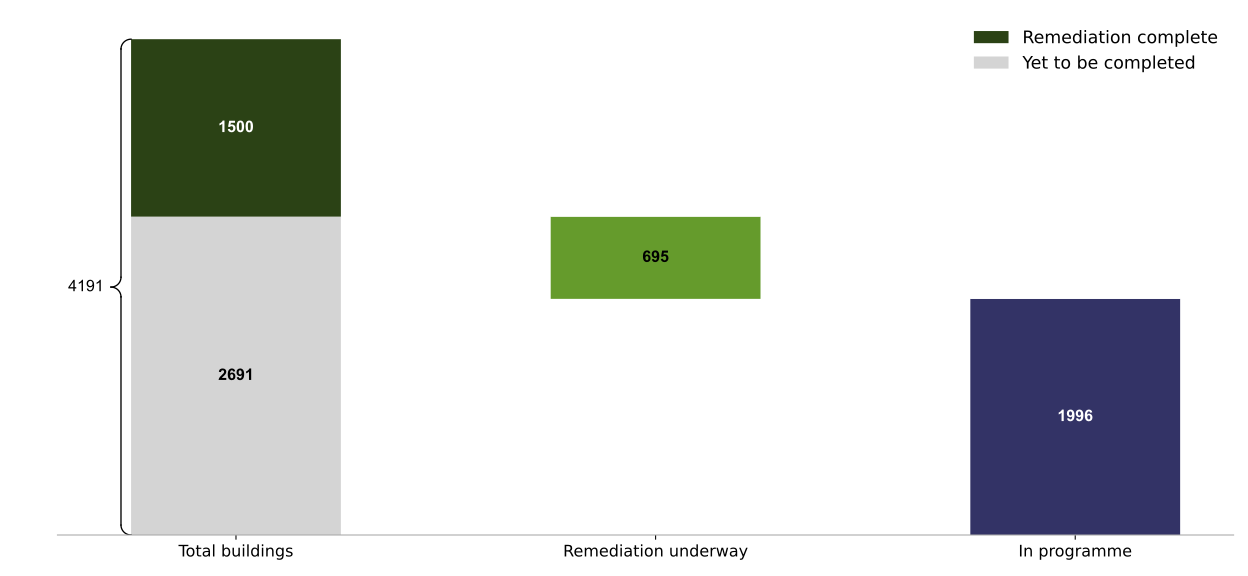
Table 5: Remediation progress for 11m+ buildings identified with unsafe cladding which are in the ACM programme, eligible for the Building Safety Fund and the CSS, remediated under the developer remediation contract and self-funded by registered providers of social housing, England, January 2026
| Remediation Stage | Number of buildings | Percentage | Cumulative Number | Cumulative Percentage |
| Remediation complete | 1500 | 36% | 1500 | 36% |
| Remediation underway | 695 | 17% | 2195 | 52% |
| In programme | 1996 | 48% | 4191 | 100% |
| Total | 4191 | 100% | 4191 | 100% |
The in programme figures currently include 54 social self-funded buildings where their remediation status is unknown as registered providers are yet to provide remediation dates. We expect buildings with unknown remediation status to be confirmed in coming months as further data is collected through engagement with Homes England.
Overall remediation: key statistics
Of the 4,191 residential buildings 11 metres and over in height with unsafe cladding the department is monitoring, as of 31 January 2026:
-
1,500 buildings (36%) have completed remediation, including those awaiting building control sign off
-
695 buildings (16%) have started remediation
-
1,996 buildings (48%) have not started remediation
Since the end of December 2025:
-
The department is monitoring the remediation progress of 65 more buildings.
-
27 more buildings are known to have started or completed remediation, and 25 more buildings are known to have completed remediation.
There are an estimated 231,000 dwellings in the occupied private and social sector 11m+ residential buildings with unsafe cladding that the department are monitoring. Of these an estimated 93,000 dwellings are in buildings that have completed remediation, and an estimated 41,000 additional dwellings are in buildings that have started remediation. An estimated 98,000 dwellings are in buildings that have not started remediation.
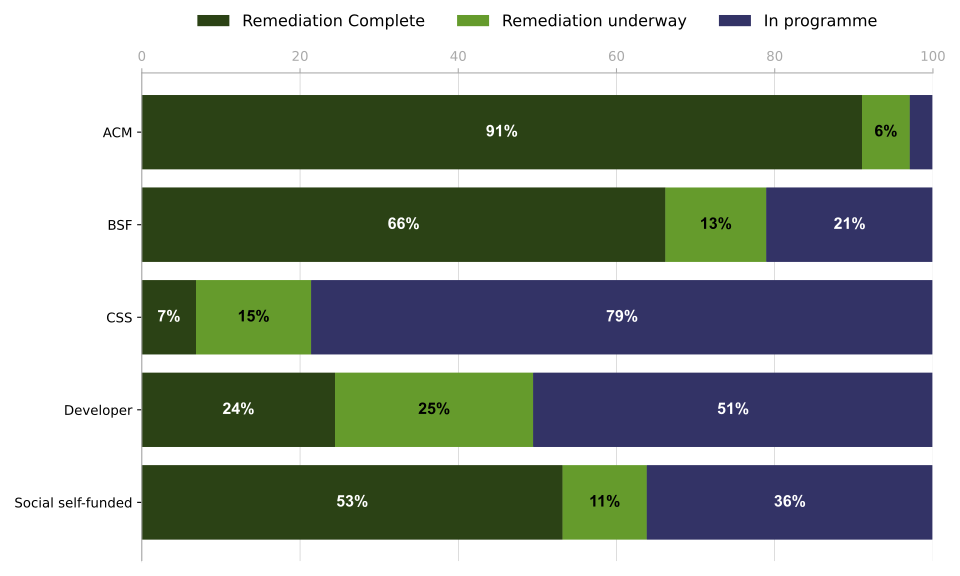
Figure 4: Progress of remediating unsafe cladding differs across the programmes and monitoring routes due to the differing maturity of the programmes.
Overall remediation by height
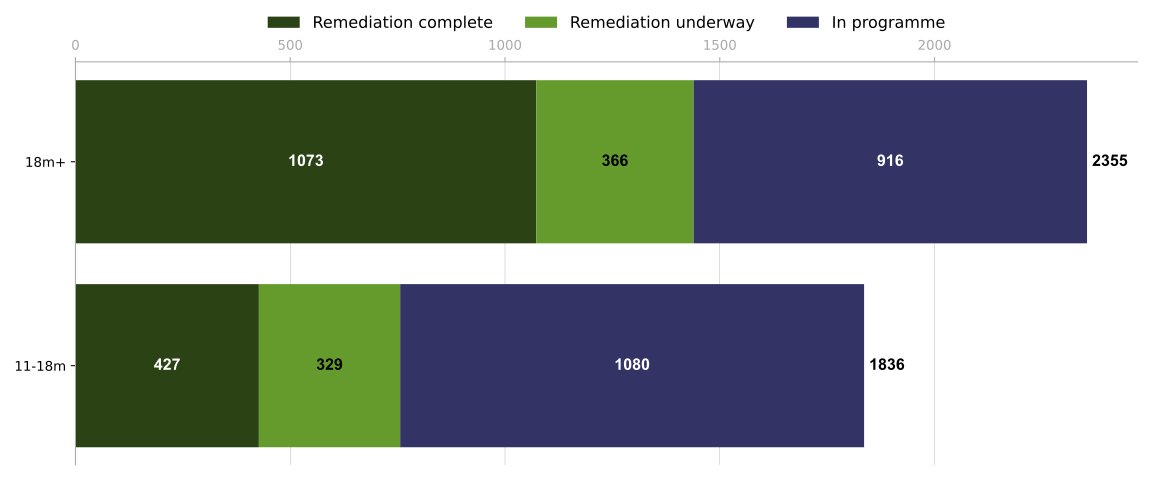
Figure 5: 61% of the 18m+ buildings the department is monitoring the remediation progress of have started or completed remediation on unsafe cladding, compared to 41% of 11-18m buildings.
Overall remediation by tenure
Figure 6: 55% of the social buildings the department is monitoring the remediation progress of have started or completed remediation on unsafe cladding, compared to 49% of the private buildings.
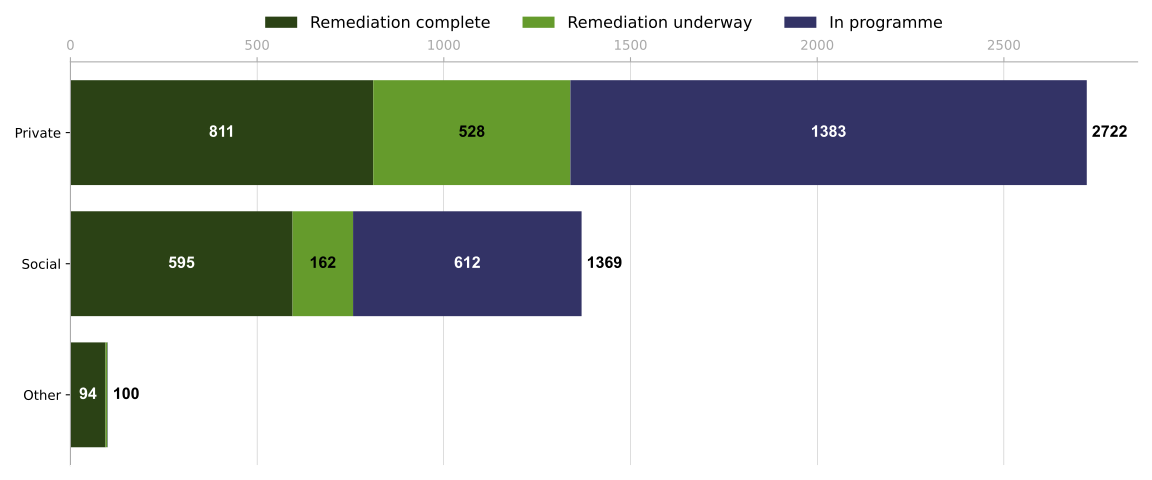
The ‘Other’ bar includes high-rise buildings with unsafe ACM that are hotels, student accommodation and public buildings.
Overall remediation by location
Figure 7: Most buildings that the department are monitoring the cladding remediation of are concentrated around urbanised areas in England, particularly the urban areas of Greater London, Greater Manchester, West Yorkshire and the West of England.
England, 31 January 2026
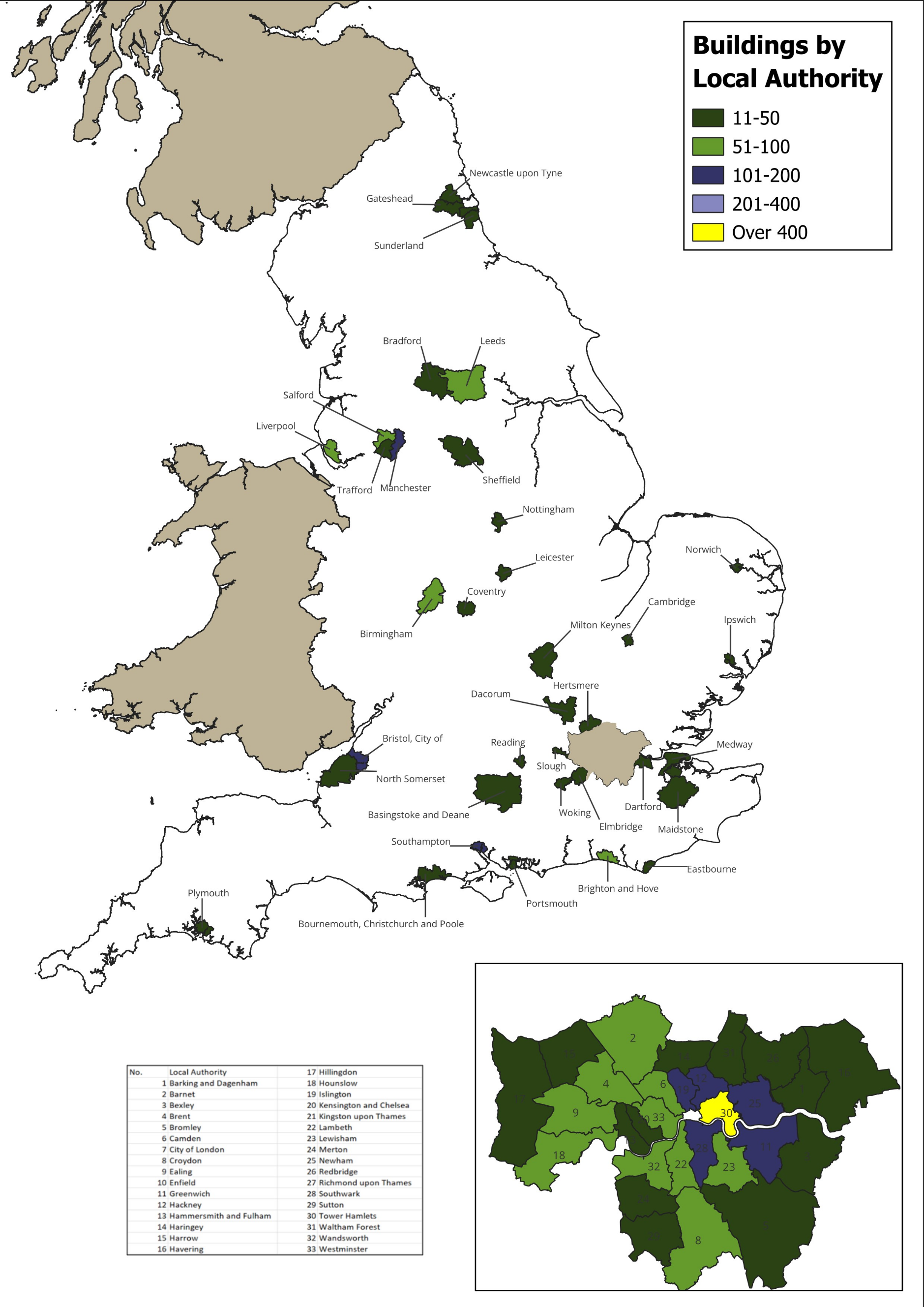
Local authorities with 10 or fewer 11m+ buildings monitored with unsafe cladding are excluded from this map as their inclusion could lead to the identification of buildings with unsafe cladding.
ACM remediation
Information in this section is correct as at 31 January 2026 and shows a monthly update from the previous publication.
Figure 8: 97% of the 513 identified ACM clad high-rise buildings have started or completed remediation, with 95% having had their ACM cladding removed and 91% having completed remediation, including those awaiting building control sign-off.
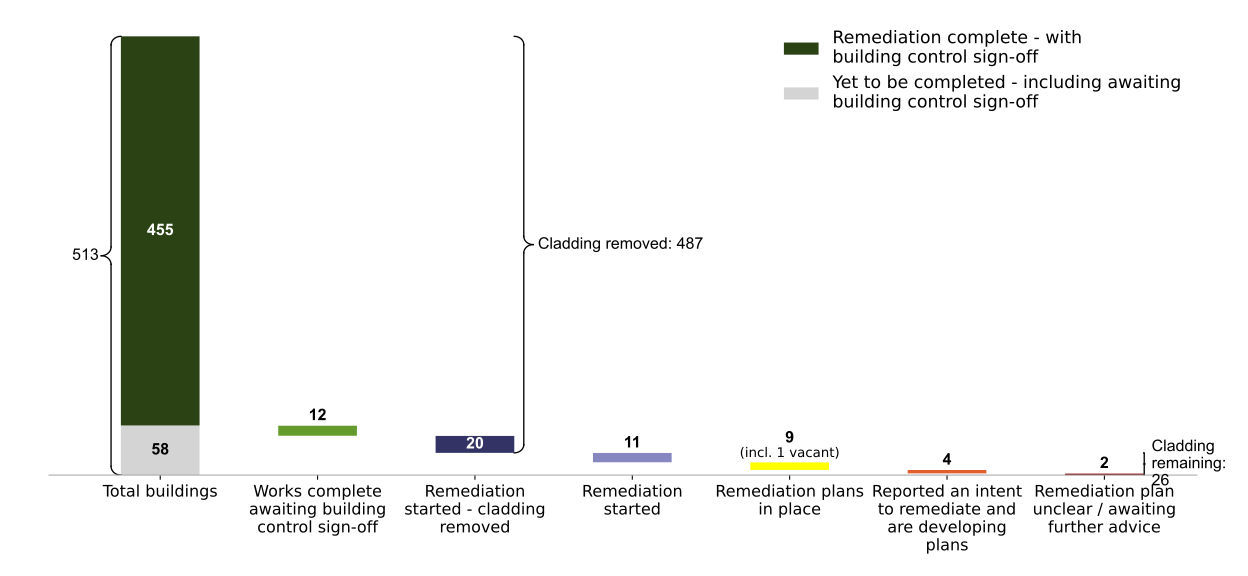
Table 6: Remediation status of buildings with ACM cladding systems unlikely to meet Building Regulations, 31 January 2026
| Remediation Stage | Number of buildings | Percentage | Cumulative Number | Cumulative Percentage |
| Completed Remediation | 455 | 89% | 455 | 89% |
| Remediation complete awaiting building control signoff | 12 | 2% | 467 | 91% |
| Remediation started - cladding removed | 20 | 4% | 487 | 95% |
| Remediation started | 11 | 2% | 498 | 97% |
| Remediation plans in place | 9 | 2% | 507 | 99% |
| Intent to remediate | 4 | 1% | 511 | <100% |
| Remediation plan unclear | 2 | <1% | 513 | 100% |
| Total | 513 | 100% | 513 | 100% |
ACM Remediation: key statistics
As of 31 January 2026, the department has identified 513 high-rise residential and publicly owned buildings identified with ACM cladding systems unlikely to meet Building Regulations, no change since the end of December.
-
467 buildings (91% of all buildings) have completed ACM remediation – an increase of one since the end of December. Of these, 455 buildings (89% of all buildings) have received building control sign off – no change since the end of December.
-
498 buildings (97% of all buildings) have started or completed ACM remediation – no change since the end of December. Of these, 487 buildings (95% of all buildings) have removed ACM cladding – no change since the end of December.
There are an estimated 28,800-32,100 dwellings in private and social sector buildings that have completed remediation, and a further 3,300-3,400 dwellings in occupied private and social sector buildings that have yet to be remediated.
Driving ACM remediation forward
There are 15 buildings yet to start ACM remediation (3% of all buildings) - no change since the end of December. One building is vacant so does not pose a risk to resident safety.
Table 7: Enforcement action and forecast start dates for occupied high-rise buildings yet to start ACM remediation, 31 January 2026
| Occupied buildings that have: | Undergone enforcement action | Undergone enforcement action supported by Joint Inspection Team | Forecast start available | Forecast to start by the end of March 2026 |
| Total | 6 | 3 | 8 | 3 |
Of the 14 high-rise occupied buildings yet to start ACM remediation:
-
Three buildings are forecast to start works by the end of March 2026, and one of these has had local authority enforcement action taken against it.
-
An additional four buildings are forecast to start works by the end of December 2026, and three of these have had local authority enforcement action taken against them.
-
One building is forecast to start works in 2027 and has had local authority enforcement action taken against it
-
One building without a forecast start date has had local authority enforcement action taken against it.
-
The remaining five buildings were determined as in scope of the ACM monitoring programme in 2025. The department continues to engage with building owners to ensure their remediation is progressed.
These forecast estimates are based on information provided by building owners and agents and may change as further information is received. These estimates can also change as a result of buildings being newly identified. The department continues to engage with building owners to start remediation works on site as soon as possible, and will continue to support local authorities and fire and rescue services in the use of their enforcement powers.
Figure 9: 98% of buildings are forecast to have started or completed ACM remediation works by the end of March 2026.
ACM remediation progress by year of identification
Figure 10: 98% of buildings identified at 31 December 2024 have started or completed remediation compared to 97% of all buildings in the programme.
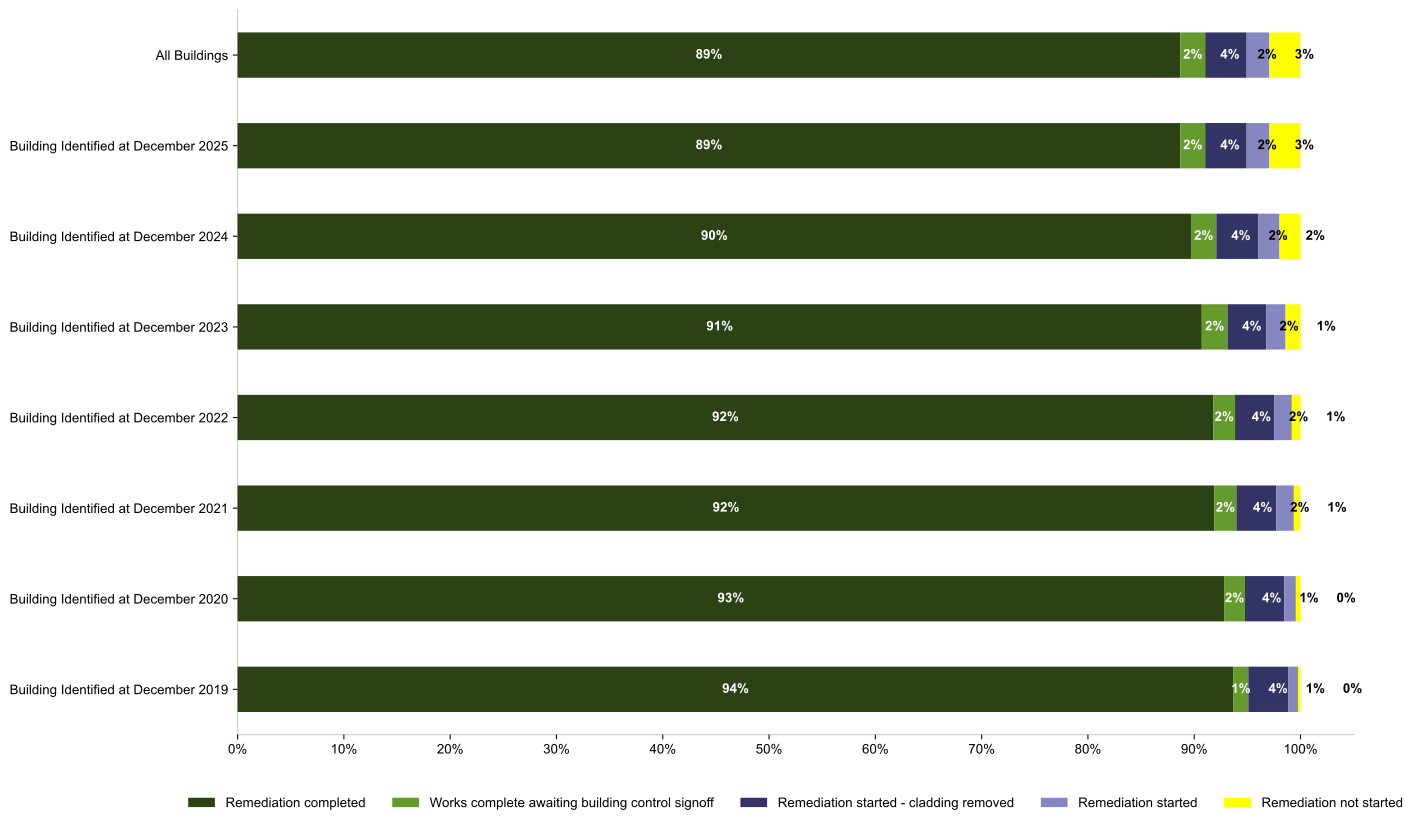
Since 31 December 2021, 32 further high-rise residential buildings have been identified with ACM cladding systems unlikely to meet Building Regulations and have moved into scope of the Building Safety Programme. Of these, six buildings were identified in 2022, eight buildings were identified in 2023, 10 buildings were identified in 2024 and eight buildings were identified in 2025.
Table 8: Buildings with unsafe ACM cladding by year of identification, 31 January 2026
| Year of identification | Number of buildings identified | Cumulative number |
| 2017 - 2019 | 428 | 428 |
| 2020 | 31 | 459 |
| 2021 | 22 | 481 |
| 2022 | 6 | 487 |
| 2023 | 8 | 495 |
| 2024 | 10 | 505 |
| 2025 | 8 | 513 |
| 2026 | 0 | 513 |
| Total | 513 | 513 |
ACM remediation by sector
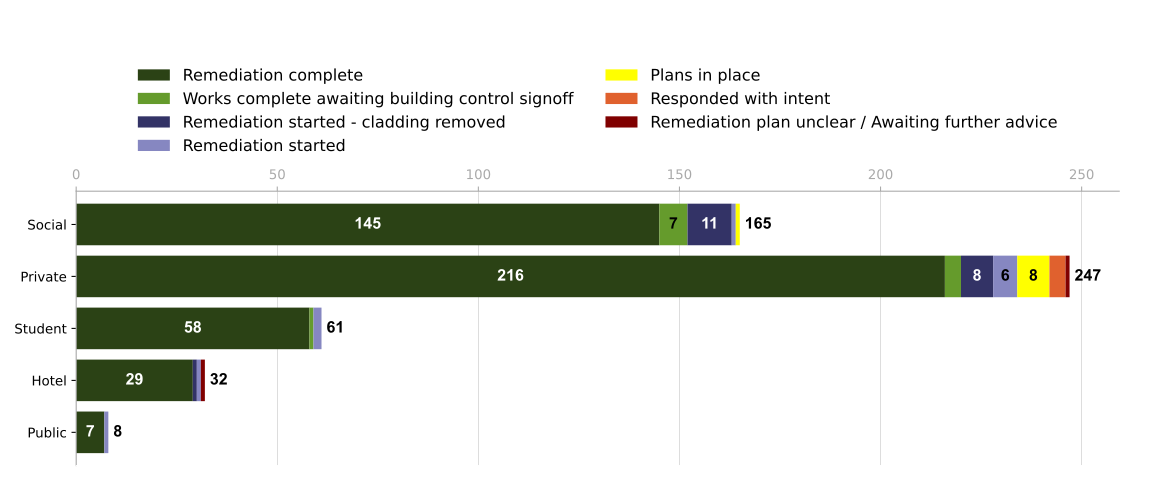
Figure 11: 99% of the 165 social sector residential buildings in the ACM programme have started or completed remediation, compared to 95% of the 247 private sector residential buildings.
Building Safety Fund
Information in this section is correct as at 31 January 2026 and shows a monthly update from the previous publication.
Figure 12: 79% of buildings proceeding with an application for funding in the BSF have started or completed remediation, with 66% having completed remediation, including those awaiting building control sign-off.
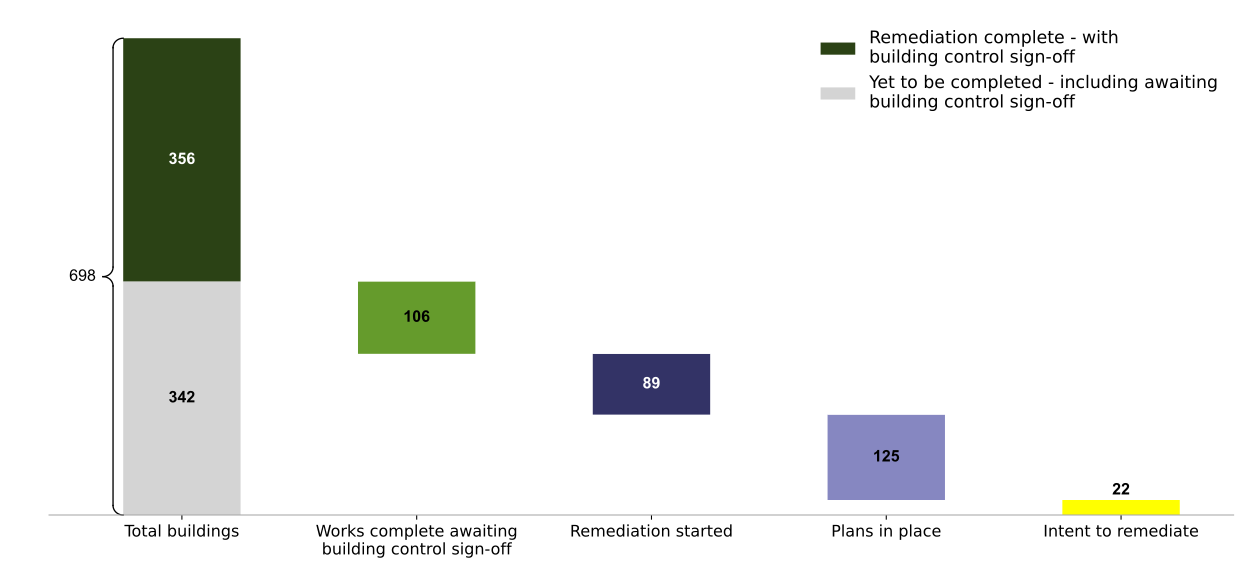
Table 9: Remediation status of buildings within the Building Safety Fund, 31 January 2026
| Remediation Stage | Number of buildings | Percentage | Cumulative Number | Cumulative Percentage |
| Remediation complete | 356 | 51% | 356 | 51% |
| Remediation complete: awaiting building control sign-off | 106 | 15% | 462 | 66% |
| Remediation started | 89 | 13% | 551 | 79% |
| Remediation plans in place | 125 | 18% | 676 | 97% |
| Intent to remediate | 22 | 3% | 698 | 100% |
| Total | 698 | 100% | 698 | 100% |
BSF remediation: key statistics
As at 31 January 2026, 698 buildings were assessed as eligible and are proceeding with an application for funding from the Building Safety Fund. The remaining 3,012 buildings registered with the fund are either ineligible (1,117), withdrawn (1,628), in review or have given insufficient evidence (2), have transferred to the Cladding Safety Scheme (253), or have been retained by the Cladding Safety Scheme (12).
Of the 3,012 buildings that registered with the Building Safety Fund and are not currently proceeding with an application for funding, 461 buildings which were assessed as eligible have been transferred to developers.
As at 31 January 2026, 253 buildings have been transferred to the Cladding Safety Scheme for their remediation and are progressing through the CSS fund, an increase of five buildings since reported at the end of December. Of these, 250 buildings had not started remediation works before transferring to the CSS.
The number of buildings reported as transferred from the BSF to the CSS in this section of the data release may not be the same as the number of eligible CSS buildings that have transferred from the BSF in the CSS section of the data release. This is because transferred buildings will go through CSS eligibility checks before buildings are included in the eligible CSS figures. Different programmes may also define buildings differently due to how they operate. Two buildings have also withdrawn from the CSS since transferring from the BSF.
Of the 698 buildings proceeding with an application for funding in the Building Safety Fund:
-
174 buildings (25%) are remaining in the fund with developers set to reimburse the cost of remediation.
-
Four buildings (1%) are anticipated to be transferred to developers.
Of the 698 buildings proceeding with an application for funding, 132 buildings have been assessed with a Fire Risk Appraisal for External Walls (FRAEW), and 566 have been assessed under the BSF 2020 CAN criteria. It is possible for a building to submit a new application to the fund after having completed remediation, if it originally applied under the BSF 2020 CAN criteria. Therefore, buildings could be double counted. As of 31 January 2026 one building had undertaken remediation work from both application periods, so is double counted. Further details are available in the technical note.
Of the 698 buildings proceeding with an application for funding, 551 buildings (79%) have either started or completed remediation works – no change since the end of December.
Of the 551 buildings that have started or completed remediation as at 31 January 2026:
-
89 buildings (13% of all buildings) have started remediation.
-
462 buildings (66% of all buildings) have completed remediation – an increase of three since the end of December. Of these, 356 buildings (51% of all buildings) have received building control sign off.
There are 147 eligible buildings proceeding with an application for funding that have not started remediation, of which:
-
125 (18% of all buildings) have remediation plans in place.
-
22 (3% of all buildings) have reported an intent to remediate.
There are an estimated 59,000 dwellings in buildings that are eligible and proceeding with an application for funding in the BSF.
BSF remediation progress over time
Figure 13: 29 more buildings proceeding with an application for funding in the BSF have started or completed remediation since the end of January 2025
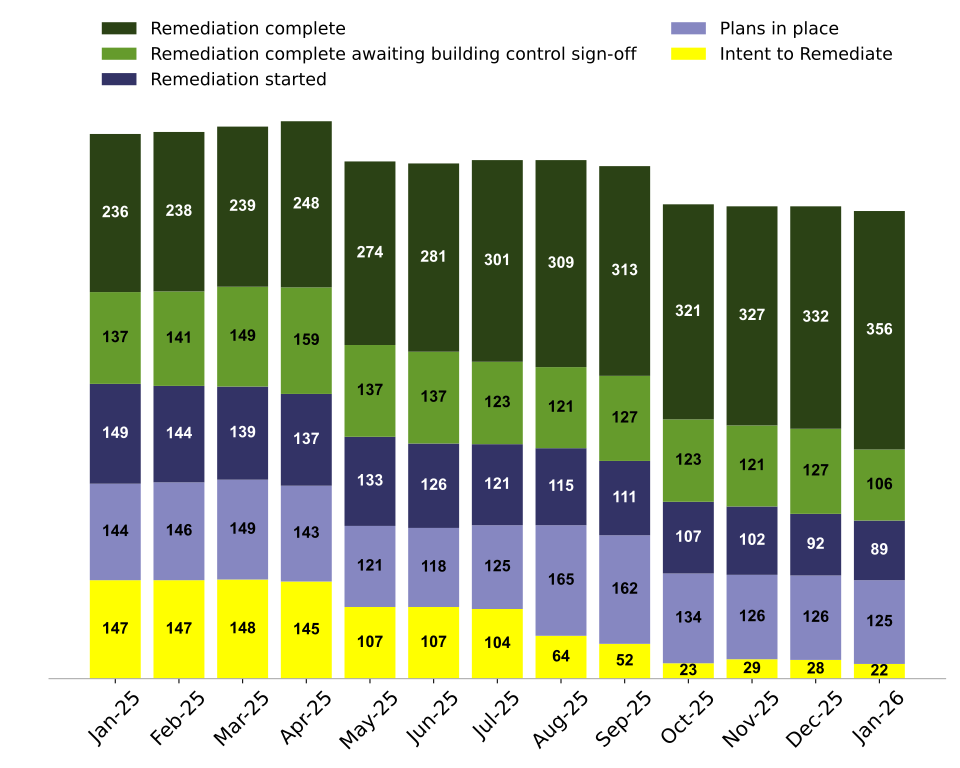
Compared to the end of January 2025:
-
115 fewer eligible buildings are proceeding with an application for funding from the Building Safety Fund.
-
29 more eligible buildings have started or completed remediation.
-
89 more eligible buildings have completed remediation.
BSF remediation by tenure
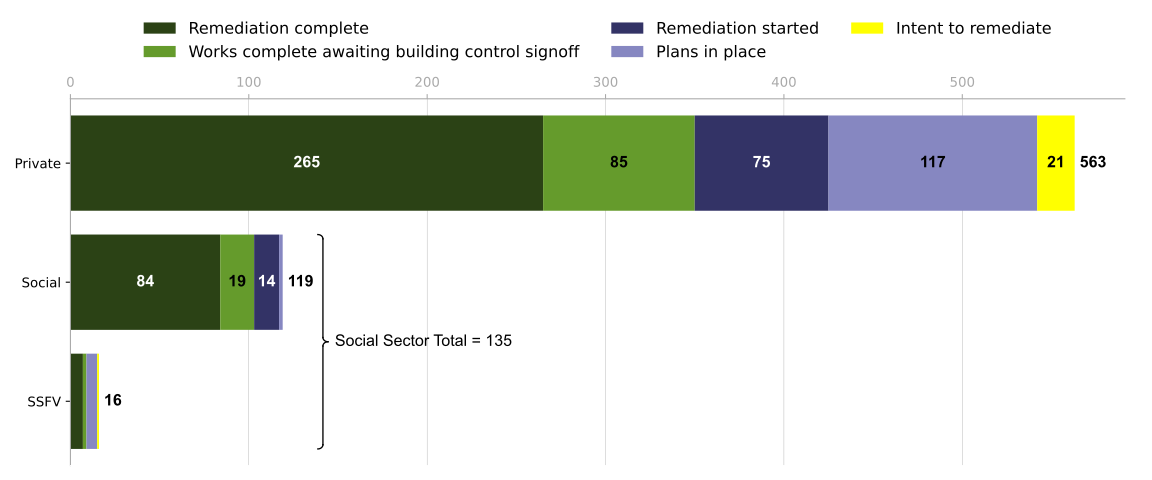
Figure 14: 93% of social sector buildings in the BSF, including buildings with a financial viability claim, have started or completed remediation compared to 75% of private sector buildings.
Cladding Safety Scheme
Information in this section is correct as at 31 January 2026 and shows a monthly update from the previous publication.
Figure 15: There are 3,696 buildings at different stages of the Cladding Safety Scheme, including 1,400 buildings with live applications and 1,051 eligible buildings, of which 225 buildings have started or completed works, with 72 having completed works.
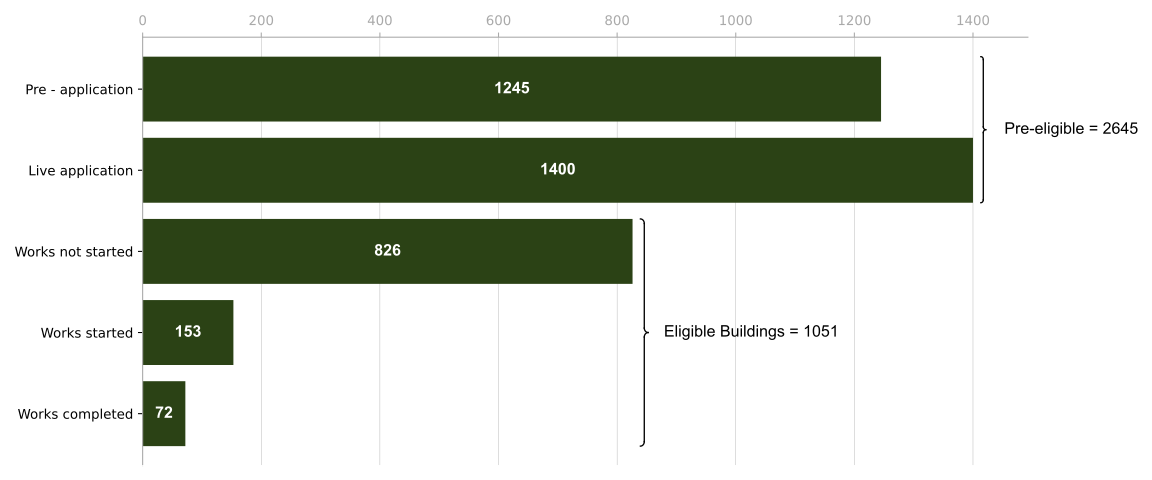
Table 10: Remediation status for buildings within the Cladding Safety Scheme, 31 January 2026
| Remediation Stage | Number of buildings | Percentage | Cumulative Number | Cumulative Percentage | |
| Remediation complete | 72 | 7% | 72 | 7% | |
| Works started | 153 | 15% | 225 | 21% | |
| In programme | 826 | 79% | 1051 | 100% | |
| Total | 1051 | 100% | 1051 | 100% |
Cladding Safety Scheme: Key statistics
As at the end of January 2026, there were 3,696 buildings in the different stages of the Cladding Safety Scheme (1,051 eligible buildings and 2,645 pre-eligible buildings). Of the 2,645 pre-eligible buildings:
-
1,245 buildings are in the pre-application stage.
-
1,400 buildings have a live application and are progressing through the eligibility stages.
There are 1,051 eligible buildings as at the end of January 2026, an increase of 71 since the end of December. One of the newly eligible buildings this month has been transferred from the BSF. In total, 229 of the eligible buildings in the CSS have been transferred from the BSF.
The number of eligible CSS buildings reported as transferred from the BSF to the CSS in this section of the data release may not be the same as the number of buildings that have transferred from the BSF to the CSS in the BSF section of the data release. This is because transferred buildings will go through CSS eligibility checks before buildings are included in the eligible CSS figures. Different programmes may also define buildings differently due to how they operate. Two buildings have also withdrawn from the CSS since transferring from the BSF.
Of the 1,051 eligible buildings:
-
980 buildings (93% of eligible buildings) have signed Grant Funding Agreements (GFA) - an increase of 36 since the end of December.
-
Of these, 776 buildings (74% of all eligible buildings) have received a pre-tender support payment – an increase of 73 since the end of December.
-
225 buildings (21% of all eligible buildings) have started or completed remediation works on site – an increase of 19 since the end of December.
-
Of these, 72 buildings (7% of all eligible buildings) have completed remediation works on site, including those awaiting building control sign-off – an increase of five since the end of December.
Four eligible buildings are in Northern Ireland, with the remainder in England.
Height breakdown
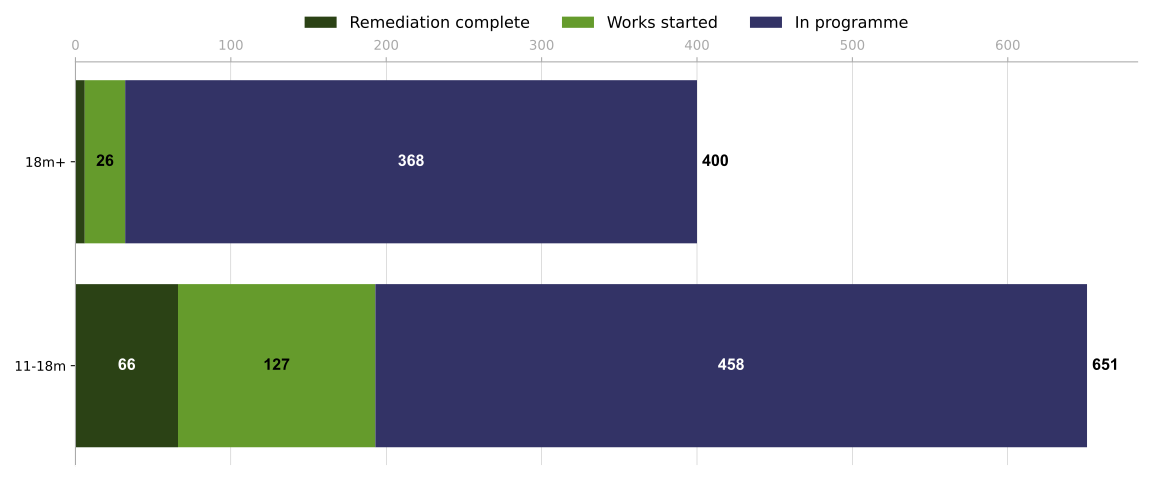
Figure 16: 30% of eligible 11-18m buildings in the CSS have started or completed remediation, compared to 8% of eligible 18m+ buildings.
Tenure breakdown
Figure 17: 18% of eligible social sector buildings in the CSS have started or completed remediation, compared to 23% of eligible private sector buildings.
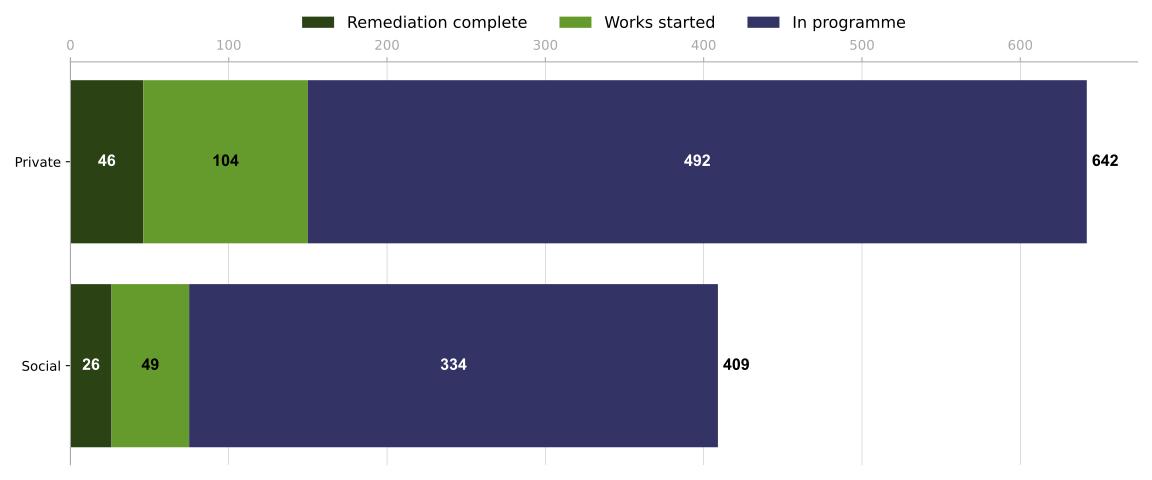
Social housing funding eligibility criteria changed in June 2025, allowing more social housing buildings to access government funding from the CSS. Therefore, we expect more eligible social buildings will appear on the social bar of this graph over time. As of the end of 31 January 2026, of the pre-eligible CSS buildings with a live application, 86% are social, 10% are private, and for 4% of buildings their tenure is currently unknown.
Developer-led remediation
Information in this section received by developers is correct as at 31 October 2025 and remains unchanged from the previous publication.
The estimates in this section include some buildings which are also included in other sections of this data release, for example those reported under the following sections: ‘ACM Remediation’, ‘Building Safety Fund’ and ‘Cladding Safety Scheme’.
Figure 18: 43% of buildings in the developer remediation contract have either started or completed remediation works on life-critical fire safety risks, with 21% having completed remediation works, including those awaiting building control sign-off.
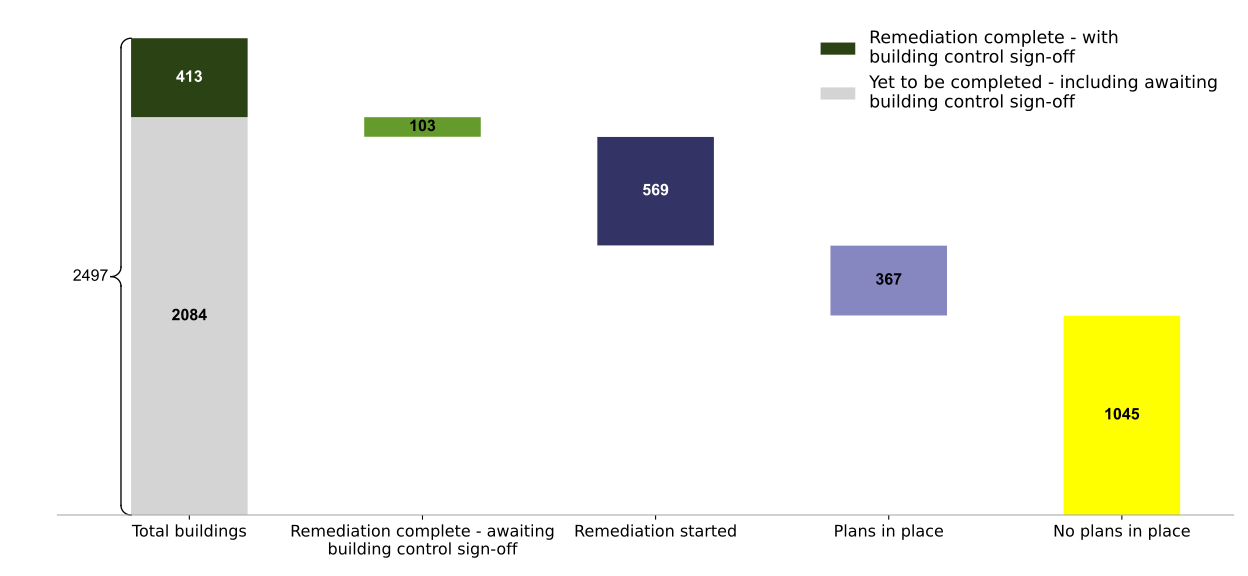
Table 11: Remediation status of buildings requiring works under the developer remediation contract, 31 January 2026. Percentages may not sum to 100% due to rounding.
| Remediation Stage | Number of buildings | Percentage | Cumulative Number | Cumulative Percentage |
| Remediation complete | 413 | 17% | 413 | 17% |
| Remediation complete – awaiting building control sign-off | 103 | 4% | 516 | 21% |
| Remediation started | 569 | 23% | 1085 | 43% |
| Remediation not started – plans in place | 367 | 15% | 1452 | 58% |
| Remediation not started – no plans in place | 1045 | 42% | 2497 | 100% |
| Total | 2497 | 100% | 2497 | 100% |
Developer remediation: key statistics
The estimates in this section are based on a combination of self-reported data submitted by developers and information that has been imputed from Building Safety Fund (BSF), Cladding Safety Scheme (CSS) and ACM programme data. A building is identified with life-critical fire safety defects if:
-
The developer has self-reported that works are (or were) required on the building
-
The developer has reported a remediation status of planned, started or complete
-
The building is eligible for funding in the BSF, Cladding Safety Scheme (CSS) or is being monitored under the ACM programme (including buildings developers have agreed to reimburse taxpayers for);
-
The building has had money paid out by the BSF or ACM remediation funds.
Furthermore, where a building has been identified with life-critical fire safety defects but the developer has not reported a defect type in the question ‘What do the issues relate to’ it is assumed that the defect type relates to cladding.
Other data, unless otherwise stated, is based on self-reported data by developers in their latest data report.
As at 31 January 2026, 53 developers have signed the developer remediation contract. There are 4,679 buildings covered by the developer remediation contract. Of these, 2,497 have been identified as having life-critical fire safety defects that developers are obligated to remediate or pay to remediate – no change since the December data release.
Of the 2,497 buildings identified as having life-critical fire safety risks:
-
516 (21%) are reported to have completed remediation – no change since the December data release. Of the 516 buildings that are reported to have completed remediation, 413 buildings (17% of all buildings with defects) are reported to have received building control sign-off.
-
1,085 (43%) are reported to have started or completed remediation – no change since the December data release.
-
367 (15%) are reported to have not started remediation but have plans in place – no change since the December data release.
-
1,045 buildings (42%) have not started and have no plans in place - no change since the December data release.
Although information from developers is received quarterly, these statistics are subject to change and are updated monthly as information from other programmes which relate to remediation is updated monthly.
The 2,497 buildings identified as requiring remediation have an estimated cost of remediation of around £4.2 billion. This has not changed compared to the December data release. This cost is based on the self-reported cost of works in the developer data report. However, if the cost is not known it is imputed based on the average known reported cost by developers by height band of building.
There are an estimated 153,000 dwellings in buildings with defects that developers are committed to remediate. Of these, there are an estimated 71,000 dwellings in buildings that are reported as having either started or completed remediation works.
Based on start and completion dates reported by developers, 545 buildings which have not yet started are reportedly expected to start works between 1 November 2025 and 31 October 2026, and 352 buildings which have not yet completed are reportedly expected to complete their remediation between 1 November 2025 and 31 October 2026.
450 buildings have transferred from the Building Safety Fund to developers, no change since the December data release:
-
68 (15%) have completed remediation - no change since the December data release. Of these 68, 46 buildings (10% of all buildings) are reported to have received building control sign-off.
-
196 (44%) have started or completed remediation – no change since the December data release.
-
107 (24%) are reported to have not started remediation but have plans in place – no change since the December data release.
-
84 (19%) are reported to have not started remediation and have no plans in place – no change since the December data release.
-
63 (14%) have not been identified by developers as having life-critical fire-safety defects – no change since the December data release.
The 450 buildings in the developer remediation contract differs from the 461 reported in the Building Safety Fund section of the data release, due to developers defining buildings differently to in the Building Safety Fund. The same building structures are included in both sections of the release.
Height breakdown
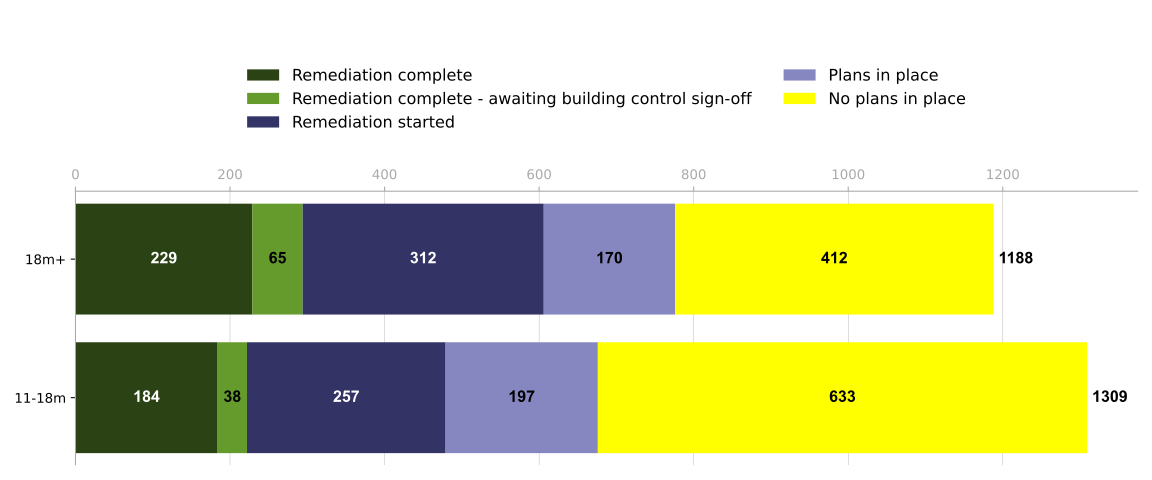
Figure 19: 51% of the 18m+ buildings have started or completed remediation, compared to 37% of the 11-18m buildings.
Cladding defects
The estimates in this section are based on a combination of self-reported data submitted by developers and information that has been imputed from Building Safety Fund (BSF) and ACM programme data (please see above for further details).
Where a building has been identified with life-critical fire safety defects but the developer has not reported a defect type in the question ‘What do the issues relate to’ it is assumed that the defect type relates to cladding.
Some remediation being undertaken by developers on buildings with life-critical fire safety risks relate to non-cladding defects. When excluding buildings reported to have only non-cladding defects, there are 1,805 buildings which developers have reported as having unsafe cladding – no change since the December data release. Of these:
-
441 (24%) are reported to have completed remediation– no change since the December data release. Of the 441 buildings that are reported to have completed remediation, 345 buildings (19% of all buildings with defects) are reported to have received building control sign-off.
-
893 (49%) are reported to have started or completed remediation – no change since the December data release.
-
306 (17%) are reported to have not started remediation but have plans in place – no change since the December data release.
-
606 (34%) are reported to have not started remediation but have plans in place – no change since the December data release.
These estimates are subject to change each month due to the monitoring of buildings under the developer remediation contract in other remediation programmes.
Self-reported information
The figures reported for developers above combine information received directly from developers as well as information held by the department from other programmes which relate to remediation. This is to help better estimate a figure for buildings requiring remediation under the developer remediation contract. The figures reported above will also include buildings which are being remediated solely under a government remediation scheme, for which the developer will reimburse taxpayers.
The estimates in this section report on buildings which have been self-reported by developers as requiring remediation to life-critical fire safety risks. Furthermore, this section reports on buildings which are being remediated by the developer directly, rather than being remediated through a government fund and being reimbursed to taxpayers. However, some buildings being remediated under a government remediation programme will be included if other relevant fire safety defects have been found, which were not eligible for a government remediation programme and which the developer is remediating themselves. Developers have self-reported that 2,354 buildings require life-critical fire safety remediation, which will be directly remediated by the developer, no change since the December data release.
Buildings that are being remediated in the BSF, ACM or CSS programme, but are also reported to have other non-EWS life-critical fire safety defects by the developer will be included in these statistics. Of these 2,354 buildings being directly remediated by the developer:
-
444 buildings (19%) have completed remediation, no change since the December data release. Of these, 356 buildings (15% of all buildings with defects) are reported to have received building control sign-off.
-
968 buildings (41%) have started or completed remediation, no change since the December data release.
-
366 buildings (16%) have not started remediation but have a plan in place, no change since the December data release.
-
1,020 buildings (43%) have not started and have no plans in place, no change since the December data release.
Further information on the progress developers have made regarding the buildings they’ve reported on is available in the accompanying management information tables and quarterly Developer remediation contract data release. From August 2025 these include an update against the commitments set out in the joint plan to accelerate developer-led remediation and improve resident experience, which was published alongside the department Remediation Acceleration Plan (RAP).
Additionally, alongside the Building Safety Remediation Data Release, MHCLG publishes a ‘developer progress chart’ which allows you to compare the progress developers have made on determining whether works are required on buildings they are responsible for, as well as progress being made on buildings requiring works that have started on site. This chart represents the self-reported information shown above and is published in the accompanying dashboard.
Social housing self-funded remediation
Data quality
Homes England are continuing to work with registered providers to review records of their 11m+ buildings which have or had unsafe cladding to the NRS. While this work is underway, fluctuations in the remediation progress figures for social buildings where registered providers are self-funding cladding remediation are expected. Once this work is complete, we expect to be able to provide more accurate and frequent information on social housing remediation progress. Further information on the data collection of social self-funded buildings is available in the technical note.
Social Housing self-funded remediation: Key statistics
Figure 20: 64% of social self-funded buildings reported to have unsafe cladding have started or completed remediation works, with 53% (of identified buildings) having completed remediation works.
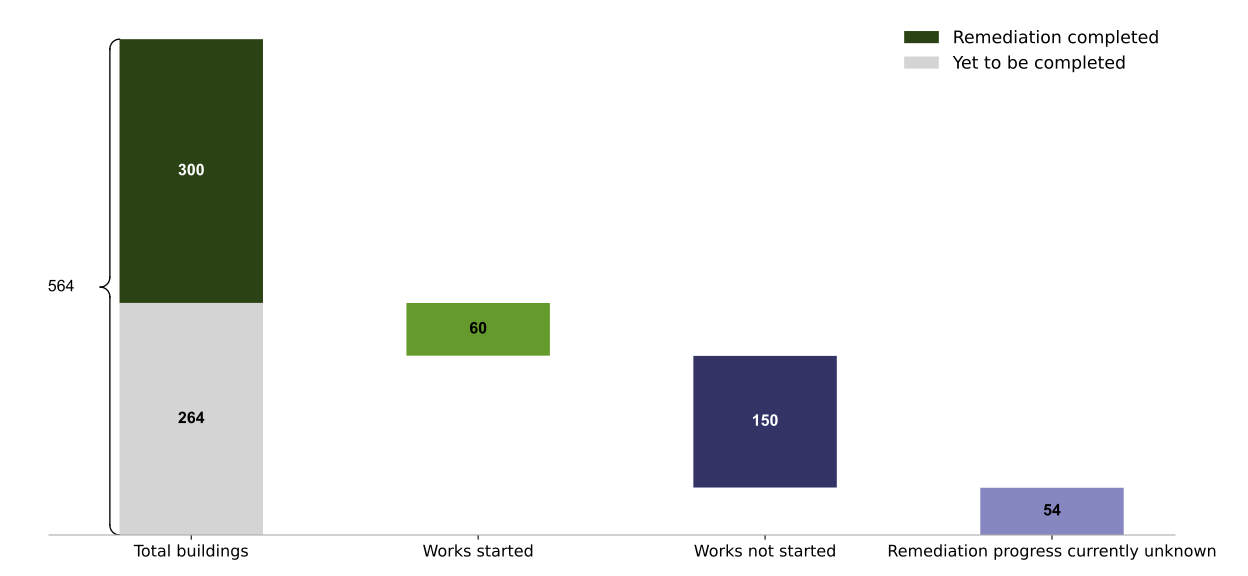
Table 12: Remediation status of social self-funded buildings with unsafe cladding, 31 January 2026.
| Remediation Stage | Number | Percentage | Cumulative Number | Cumulative Percentage |
| Remediation completed | 300 | 53% | 300 | 53% |
| Works started | 60 | 11% | 360 | 64% |
| Works not started | 150 | 27% | 510 | 90% |
| Remediation progress currently unknown | 54 | 10% | 564 | 100% |
| Total | 564 | 100% | 564 | 100% |
As at 31 January 2026, there are 564 11m+ social buildings identified with unsafe cladding which registered providers are self-funding the remediation of, an increase of one since the end of December 2025. This includes social buildings that registered providers reported to be self-funding the cladding remediation of in the NRS, that were not identified in another remediation programme, and 19 social buildings monitored in the ACM programme where registered providers have self-funded ACM remediation.
Of these 564 11m+ social buildings where registered providers are self-funding remediation:
-
300 (53%) are reported to have completed remediation – an increase of 16 since the end of December 2025.
-
360 (64%) are reported to have started or completed remediation – an increase of 10 since the end of December 2025.
-
150 (27%) are reported to have not started remediation – no change since the end of December 2025.
-
The remediation status of 54 (10%) buildings is currently unknown as registered providers are yet to provide remediation dates on the NRS – a decrease of nine since the end of December 2025. We expect buildings with unknown remediation status to be confirmed in coming months as further data is collected.
As at the end of January 2026, there are an additional 191 buildings that registered providers have reported on the NRS as self-funding the remediation of, which are at the early stages of submitting their data entry on the NRS. These buildings will be included in the social self-funded reporting if the data entries are finalised and they are confirmed as being 11m+ with unsafe cladding which registered providers are self-funding the remediation of.
Height breakdown
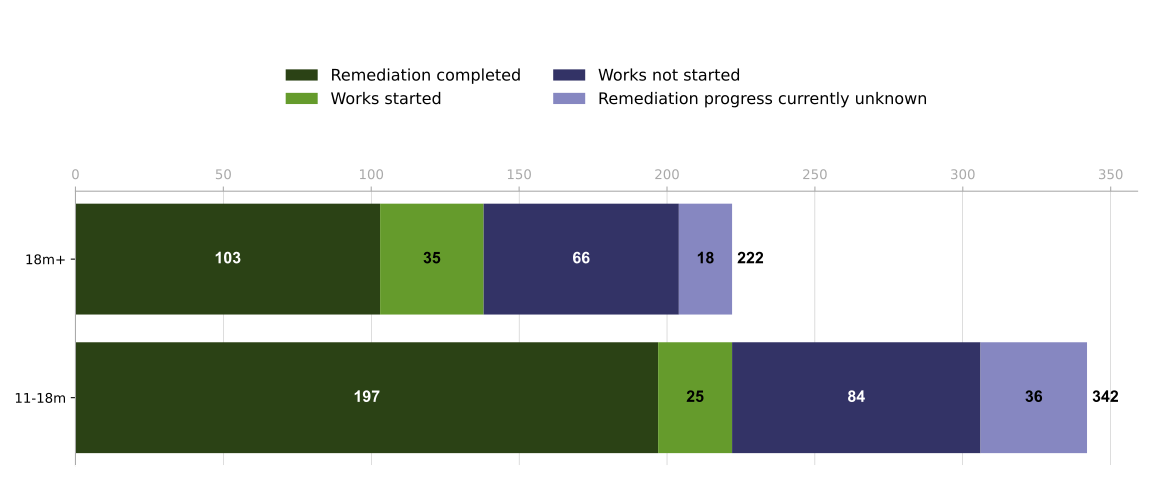
Figure 21: 65% of the 11-18m social self-funded buildings are reported to have started or completed remediation compared to 62% of the 18m+ social self-funded buildings.
Enforcement
Information in this section is correct as at 19 January 2026 and shows a monthly update from the previous publication.
This section includes local authority enforcement action on buildings 11 metres or over in height. Up until June 2024 only enforcement action taken on buildings over 18m in height was reported on.
Local authority enforcement action: key statistics
As at 19 January 2026, enforcement action has been, or is being, taken under the Housing Act against 805 buildings over 11m with suspected unsafe cladding - an increase of 60 since the end of December. Of these, 185 buildings have had 188 inspections with Joint Inspection Team support – an increase of three inspections since the end of December.
Of the 805 buildings where a local authority had undertaken an inspection, we are aware that:
-
145 had a Category 1 HHSRS rating
-
584 had a Category 2 HHSRS rating
As several buildings have now had two or more inspections, from August 2024, only the most recent inspection’s category rating is reported on, as this is used to gauge the risks of the buildings in each Local Authority’s portfolio. Additional inspections are still reported as enforcement action.
Of the 805 buildings, we are aware that at least 242 improvement notices, 99 hazard awareness notices and 1 prohibition order have been served to date. Some buildings may have received multiple notices. We understand that 60 of the improvement notices have been subject to appeals.
Accompanying dashboard
An additional interactive dashboard showing the information in this release is available.
Accompanying tables
Additional management information tables are available.
The tables provide data on:
-
The estimated number of residential buildings 11 metres and over with unsafe cladding and the estimated cost to remediate them,
-
the remediation progress of high-rise (18 metres and over) residential buildings identified with unsafe Aluminium Composite Material (ACM) cladding systems,
-
the remediation progress of high-rise residential buildings with unsafe non-ACM cladding systems that are pursuing successful applications from their Building Safety Fund (BSF) Registration,
-
data on buildings in the Cladding Safety Scheme (CSS),
-
the remediation progress of buildings covered by the developer remediation contract, including a developer-by-developer breakdown,
-
the remediation progress of social housing buildings reported by registered providers as being self-funded,
-
the progress of the Waking Watch Relief Fund and Waking Watch Replacement Fund, and
-
building safety enforcement action undertaken by Local Authorities in England.
Related statistics
BRE Testing
Previously, MHCLG published a table on samples received by BRE for testing which has been discontinued as of October 2019 (see technical notes document). The data table of descriptions of large-scale system tests undertaken by the BRE and the number of buildings with similar cladding systems was discontinued in November 2020.
Developer Data
MHCLG has published data provided by developers who have signed the developer remediation contract. This release provides information on the number of buildings in scope of the contract, assessments in place, number of buildings requiring remediation works and status of those works by developer.
English Housing Survey: Feeling Safe from Fire
MHCLG has published the English Housing Survey 2020 to 2021: Feeling Safe from Fire report, providing information on the extent to which people feel safe from fire in their homes.
Estimating the prevalence and costs of external wall system life-safety fire risk in mid-rise residential buildings
MHCLG has published data on the prevalence of external wall system life-safety fire risk in mid-rise (11-18m) residential buildings in England, and the estimated cost as at July 2021 to remediate or mitigate these buildings. On 17th July 2025, MHCLG published an updated estimate of the prevalence of external wall system fire risk in mid-rise buildings. Should these figures change further, MHCLG will publish a new update.
EWS1 requirements on residential buildings in England
MHCLG publishes quarterly data on the numbers of EWS1 forms (or equivalent) that have been required on mortgage valuations for flats.
Population and Dwelling Numbers
Previously, MHCLG published estimates on population and dwelling numbers of residential buildings in the Building Safety Programme data release. Should these figures change, MHCLG will publish a new update. On 17 July 2025, MHCLG published an updated estimate of the number of 11-18m residential buildings in England. Should these figures change further, MHCLG will publish a new update.
RSH publication
On 18 December 2025, the Regulator of Social Housing published findings from the Fire Safety Remediation Survey (FRS) collected from Registered Providers of Social Housing for buildings 11 metres and over in height as at 30 September 2025.
Waking Watch costs
On 16 October 2020, MHCLG published information on Waking Watch costs based on data collected through a range of external stakeholders from July to September 2020.
Cladding remediation unit costs
On 19 December 2025, MHCLG published data on cladding remediation unit costs, providing data on costs per square metre of cladding remediated for high-rise and mid-rise non-ACM buildings, including analysis by cladding area and cost categories.
Technical note
Please see the accompanying technical notes document for further details.