Border Security Commander’s annual report 2025 to 2026 (accessible)
Updated 6 August 2026

© Crown copyright 2026
This publication is licensed under the terms of the Open Government Licence v3.0 except where otherwise stated. To view this licence, visit nationalarchives.gov.uk/doc/open-government-licence/version/3 or write to the Information Policy Team, The National Archives, Kew, London TW9 4DU, or email: psi@nationalarchives.gov.uk.
Where we have identified any third party copyright information you will need to obtain permission from the copyright holders concerned.
This publication is available at https://www.gov.uk/government/publications/border-security-commanders-annual-report-2025-to-2026/border-security-commanders-annual-report-2025-to-2026-accessible
July 2026
Ministerial foreword
In the years before this government took office, the United Kingdom’s borders were left exposed. The most visible manifestation of this failure was seen in the Channel, where small boat crossings soared. This put lives at risk, undermined our security and enriched criminal gangs.
This situation was utterly unacceptable, which is why in our manifesto we promised to create a new Border Security Command (BSC). This new organisation would mobilise the full power of the state against the challenges and threats we face. As the Border Security Commander’s first annual report shows, we are making progress.
I must note that, alongside the BSC, the National Crime Agency (NCA) has played a pivotal role in ramping up law enforcement action on organised immigration crime (OIC). Arrests and disruptions are up, while hundreds of boats and engines have been seized.
By taking down the criminals driving this vile trade and denying them access to the equipment they rely on, we restrict their ability to target us long before they are in reach of our shores. Our agencies are now better equipped to do this thanks to the counter-terror style powers this government introduced via the Border Security, Asylum and Immigration Act.
Illegal migration is a global challenge. We cannot deliver secure borders unless we work with our international partners. Over the last two years, we have greatly enhanced our co-operation with source, transit and destination countries, strengthening existing partnerships, securing groundbreaking new agreements and hosting a landmark summit.
No partnership in this arena matters more than that between the United Kingdom and France. Working with French law enforcement, we have prevented tens of thousands of small boat arrivals. In April, I struck a new agreement to step up patrols and intelligence operations in France. This included the introduction, for the first time, of a model of funding that links payment to performance. Our work with the French is bearing fruit, preventing over 20,000 crossing attempts in the last financial year; and over 40,000 since the Command was created.[footnote 1]
Alongside work overseas, we have acted to reduce the pull factors that draw people here illegally. That includes changes to refugee protection, tackling illegal working, ending the use of asylum hotels this parliament, and a significant increase of removals of those with no right to be here.
It has been a strong start – but that is all it is. I am clear that we need to go further and faster to tackle illegal migration and restore order and control at the border. That means keeping up the pressure on the criminal gangs. It means bearing down on the incentives that encourage people to make dangerous and illegal journeys to this country. And it means building a fair but firm asylum system that commands the confidence of the public. In all these areas, we must and will be unrelenting. In its first year, the Border Security Command has been essential to that work. In the years to come, it will only become more so.
Finally, I want to thank the Border Security Commander, his predecessor Martin Hewitt, and everyone who has contributed to the achievements set out in this report. Our borders are more secure, and our nation safer, because of their efforts.
The Rt Hon Shabana Mahmood MP, Home Secretary
Border Security Commander statement
As Border Security Commander I am pleased to present my first Annual Report, which sets out how the responsibilities of the Commander have been exercised over the past financial year and my view on how border security system partners worked together to deliver on border security priorities. This report shows what an established Command can achieve with a strategy and system that acts as one.
Tackling OIC and, in particular, stopping small boat crossings has been and remains the top priority. I know just how dangerous and exploitative these journeys are from previously leading our maritime response: flimsy and unseaworthy boats crossing one of the world’s busiest maritime routes, dangerously overcrowded with people often arriving with fuel burns and hypothermia, and with the ever-present risk of boat collapse, deflation and sinking, resulting in a mass casualty event.
Stopping small boats is a complex challenge that is made difficult by: a low-tech, adaptable, criminal business model with low barriers to entry; most activity taking place on foreign soil; and the willing criminal exploitation of people with high risk tolerance. There is no single action or silver bullet that can solve this problem.
The BSC was created in July 2024 to mobilise, cohere and scale a whole-system approach to tackle this threat, exerting maximum pressure on criminal networks, guided by the best available intelligence and evidence. We are leveraging all available levers across government to deliver a holistic response through our 4P approach (Prevent, Pursue, Protect, Prepare), working with government departments, law enforcement and intelligence agencies, and international partners. We work closely with the NCA, who lead the law enforcement response to OIC, supporting them as they increasingly bring their significant capability and experience to bear on this threat.
In the first 18 months, the BSC has established the foundations of a stronger, more effective border security system. We have established clear cross-system priorities and secured increased system funding to deliver on them, while strengthening governance and accountability. We developed new offences and powers to act decisively. With partners, we have enhanced intelligence and law enforcement capabilities at home, while building deeper partnerships overseas. We have built a strong system at pace, and this report shows it is having an impact.
While we work to reduce these crossings, we are also managing risk to the public. Mandatory security checks are an essential part of our border controls and are conducted on all small boat arrivals. Where threats are identified we work with law enforcement partners and other authorities to take action.
The statutory basis for this role is broader than small boats, requiring me to assess threats to border security and prioritise accordingly. Many of these threats have very mature risk management systems and countermeasures in place, but there is more to do. I look forward to widening my focus once I am satisfied that our strategy is delivering the right level of impact.
Arrivals have begun to fall this year compared with last year – but there is more to do. Our goal is to make illegal migration to the UK by small boat undesirable and unviable, and we will continue to scale up, build strategic relationships overseas and take action for the greatest impact in the shortest time.
I am proud of the work of the BSC and grateful for the excellent progress delivered by my predecessor, Martin Hewitt, and partners across government and overseas to get us here; I am confident that our strategy is right and through our collective efforts we will fundamentally disrupt this dangerous practice.
Duncan Capps CBE, Border Security Commander
Executive summary
This report sets out how the Border Security Commander exercised the statutory responsibilities under the Border Security, Asylum and Immigration (BSAI) Act 2025, and assesses the delivery and impact of the UK’s border security system to tackle organised immigration crime enabled by small boats over the financial year 2025/26.
A secure UK border is critical for our national security, enabling lawful travel and trade while countering serious threats from OIC, terrorism, and illicit goods. OIC, and particularly stopping small boat crossings, remain the top priority for the Border Security Command. This requires sustained, system-wide action to deter migrants, dismantle criminal networks, and save lives.
The BSC has led work across government to deliver a step change in the UK’s response to OIC.
The BSC has established a more coherent, comprehensive and effective border security system to drive work to stop small boats. It has established a mature strategic framework, increased funding, improved governance and driven clear priorities. The system has scaled and accelerated activity to tackle OIC, focusing on reducing small boat arrivals to the UK as the Commander’s top priority. The BSC has:
-
Increased scale and intensity. Law enforcement partners, led by the NCA as operational system leader for OIC, intensified operations against OIC, delivering 46% more disruptions[footnote 2], 74% more arrests[footnote 3] in the UK and overseas, and seizing hundreds of boats and engines[footnote 4]. This sustained law enforcement pressure is forcing criminal networks to adapt their methods, making their operations more costly, complex and risky.
-
Expanded its reach. The BSC has worked closely with the Foreign, Commonwealth & Development Office to increase international collaboration along key illegal migration routes. We have established three international taskforces on key migrant routes and strengthened European partnerships. This has delivered stronger intelligence, law enforcement and returns cooperation and improved border security upstream and across Europe to disrupt criminals and illegal migrants before they reach the UK border.
-
Improved capability and coherence. System capability to generate, share and act on intelligence has improved, enabling more effective targeting and coordination of interventions across domestic and international partners. Domestically new tasking structures, additional investment and enhanced powers strengthened the UK’s response to OIC.
-
Achieved real impact. There is evidence we are making a difference with signs of impact across our outcomes; such as how organised crime groups (OCGs) operate including changing equipment and routes used. This is notwithstanding projects and operations that will further scale up in the year ahead and the huge challenges of evaluation in a complex area with an evolving evidence base.
Small boat crossings have started to fall but remain a persistent and adaptive threat.
Small boat crossings rose by 3% in FY2025/26 compared with the previous financial year, but numbers started to fall in the second half of the year,[footnote 5] a trend which has continued into the start of this FY; arrivals in April and May and June 2026 were 44% lower than last year[footnote 6].
-
Upstream disruption is increasing, with international enforcement driving a 50% rise in arrests overseas[footnote 7], significant seizures of small boat equipment, and strengthened partner capability—though evidence of long-term impact on criminal business models remains limited so far.
-
Robust prevention efforts through our partnership with France is showing evidence that France is a less viable launch point for small boat crossings to the UK, despite more aggressive, dangerous and complex tactics used by OIC facilitators.
-
Domestically, intensified multi-agency action has delivered record disruptions and dozens of convictions of OIC offenders in UK courts as a result of NCA investigations alone, supported by the Crown Prosecution Service (CPS), but sustained effort and ongoing assessment is required to confirm whether these efforts are dismantling networks for good.
Despite falling arrivals and positive progress, we remain cautious; the small boat business model is resilient, and the drivers of illegal migration persist. OCGs remain highly adaptable, adjusting routes, tactics and supply chains in response to enforcement activity. The international nature of the threat, combined with sustained global migration pressures, limits the impact of unilateral UK action. No single intervention or nation will succeed in isolation; maximum effort, in tandem with international partners, across the migrant journey and OCG operating model needs to be sustained to improve our impact and further reduce arrivals.
We will continue to drive down arrivals in the year ahead.
In FY2025/26, we built greater law enforcement and border security capacity with stronger partnerships overseas, unlock more returns, deliver more high impact operational disruptions and stem the flow of migrants arriving in northern Europe. While recent reductions in arrivals are encouraging, the future remains uncertain and variable; the summer months could see OCGs adapt tactics and the demand for, and number of, crossings may increase again.
We will maximise the impact of UK-funded interventions in France, while strengthening cooperation with other European neighbours to tackle alternate launch points and in-land logistics. At home, we will maintain maximum pressure on facilitators and enablers operating on our soil, while fundamentally changing our asylum system to reduce demand for illegal entry to the UK.
The border security system now has stronger foundations, greater capability and a clearer strategic direction. Led by the BSC, the border security system will continue to maximise delivery against the Commander’s strategic priorities, responding to evolving OCG tactics, mitigating the risk of seasonal surges, and working to further drive down arrivals and develop permanent solutions to this threat.
Delivering a step-change in the border security system’s response to small boat crossings[footnote 8]
Partners across government, including the Home Office, National Crime Agency, National Police Chief’s Council and policing, Foreign, Commonwealth and Development Office, and a broad range of other departments and agencies have delivered a stronger and more coordinated approach that uses every available lever across HMG to drive down these crossings.
To deliver:
Relentless pressure on criminal gangs
- 46% increase in OIC disruptions and 29% increase in major disruptions in FY25/26.
- Record arrests of facilitators and seized over 500 items of small boats equipment in 2025.
- Criminal operations more costly, complex and risky.
More returns and stronger deterrents
- Improved returns arrangements for three common small boat nationalities to speed up removals
- 2,750 returns of small boat arrivals (+16%)
- Pilot with France that returned 400+ migrants in FY25/26 and over 1000 as of June 26.
Global reach and stronger relationship
- 40+ countries mobilised through worldleading OIC summit.
- International taskforces mobilising and supporting partners across key migration routes.
Stopping crossings before they happen
- 20,000+ crossing attempts prevented by France with funding and support from UK (40,000+ since BSC created)
- New and ambitious deal to go further, with more officers, more flexibility and more specialist units.
Domestic enforcement at scale
- New criminal offences, including supplying and advertising OIC, and endangerment.
- National OIC taskforce integrating 43 police forces, NCA, IE and others delivering more than 1000 arrests, 100s of civil penalties and securing millions in assets to tackle the OIC footprint in the UK.
Saving lives and securing the border
- 99.9% of small boats safely intercepted in UK waters.
- Controlled arrivals and mandatory security checks.
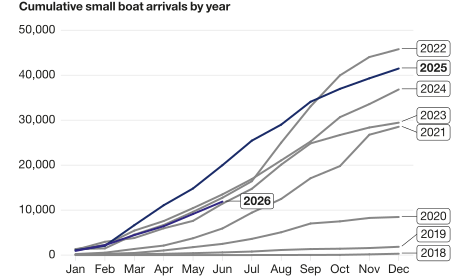
Line chart showing small boat arrivals by year. The graph highlights that 2026 arrivals are lower than 2025 arrivals for comparative year to date periods.
Threats to UK border security
The UK border is a unique and vital intervention point in tackling threats from SOC, including OIC, as well as terrorism, hostile state actors and harmful goods such as drugs and firearms. An effective border ensures the efficient and lawful movement of people and goods, while also crucially safeguarding against illicit activity.
The UK has substantial capabilities and risk management systems in place to protect against cross-border threats, though vulnerabilities remain. Strengthening our defences - particularly at the border - is essential to enhancing national security, economic resilience and public safety.
The threat landscape is rapidly evolving, shaped by global instability, failing and repressive regimes, new technologies and the proliferation of illicit commodities. These conditions drive the displacement of people, enable organised criminal networks and fuel the production and trafficking of harmful goods.
The Border Security Commander is charged with providing a clear and long-term vision for border security, and with bringing together and providing leadership to all parts of the system that work to maintain the integrity of both our border and immigration systems, domestically and internationally. The Commander sets the government’s strategic priorities for border security, with the consent of the Home Secretary, and, through the Border Security Command, leads and drives forward the required step change in the UK’s approach.
Effective border security requires a coordinated, multi-pronged response that crosses organisational boundaries. The Border Security System consists of the organisations, people and their interactions that work together to improve border security through this integrated approach. The System also includes all public authorities with functions relating to threats to the border.
The Border Security Commander’s current priority is to mobilise the UK Border Security System to deliver a step-change in tackling OIC, focusing on reducing small boat arrivals as the most prevalent and dangerous method of illegal entry to the UK, and as one of the greatest concerns to the public. While the system is prioritising activities to reduce small boat arrivals, it continues to identify and combat broader threats to border security as appropriate. Other methods of illegal entry have well-established countermeasures in place, for example Border Force running juxtaposed controls that enable checks on lorries entering the UK by ferry.
Figure 2: UK border security system
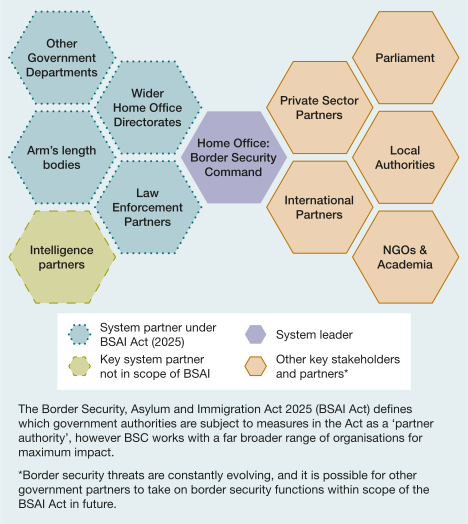
The diagram shows the Border Security Command as the System Leader at the centre. On the left are the core government partners responsible for border security such as central government departments and law enforcement; intelligence partners are marked as not in scope of the BSAI. On the right are a broader range of stakeholders and partners; private sector, international partners, parliament, local authorities, and NGOs & academia.
The threat from organised immigration crime
OIC is a form of SOC that facilitates the illegal movement of migrants across borders, in return for payment or work in-kind. OCGs are ruthlessly profit-driven and often operate as highly adaptable networks that can quickly replace members, adjust routes and modify tactics when under pressure. This adaptability is why consistent, concurrent pressure must be applied across their business model to deliver lasting impact.
Drivers of illegal migration to the UK and the demand for OIC
There are many drivers of the displacement of people and ultimately illegal migration, including conflict, poverty and persecution in home countries. These drivers are only set to continue, as we contend with geopolitical volatility, global inequality and economic shocks, including loss of livelihoods due to climate change. Hardening attitudes and policies toward asylum seekers and migrants in Europe and elsewhere will also continue to drive onward movement (termed secondary migration) to the UK of those unwilling or unable to settle.
As a prosperous, democratic and safe country, and sharing close cultural, linguistic and historic ties with hundreds of millions of people worldwide, the UK is an attractive destination for many. Most migrants come to the UK safely and legally; some, however, will seek to circumvent legal routes and come regardless of eligibility.
Our robust border and immigration systems are not easily exploited by lone actors, which creates a demand for services from criminals who facilitate illegal entry. These criminals are also involved in trafficking migrants, some of whom do not have a choice in their destination, and sometimes are brought here against their will for onward criminal exploitation in the UK such as modern slavery.
Figure 3: Illegal or fraudulent entry routes to the UK[footnote 9], [footnote 10]
Illegal entry routes (% of detected arrivals FY25/26)
Small boats (90%)
Crossing the channel in rigidhulled inflatable boats (RHIBs) and dinghies.
Inadequately Documented Arrivals (IDAs - 6%)
Entering via commercial air travel without required documentation (e.g. passports, visa).
Clandestine and other illegal entry (4%*)
Entering the UK without being detected such as concealment on roll-on/rolloff freight from Europe or crossing the land border from Ireland.
*The true percentage will be higher as migrants entering by this route routinely attempt to avoid detection even once they have entered the UK.
Fraudulent entry
Abuse of legitimate routes
Entering the country under a false pretence (e.g. study, tourism) then remaining illegally or claiming asylum.
The number of migrants entering the UK with false intentions is not known however 39% of asylum seekers in the year to Mar 26 had previously entered the UK on a visa or other leave with relevant documentation.
Sources: How many people come to the UK via illegal entry routes? - GOV.UK and How many people claim asylum in the UK? - GOV.UK
The impact of OIC on the UK
OIC enables criminal networks to exploit vulnerable people for profit, often exposing them to dangerous journeys, abuse and even loss of life. It undermines border security and fuels wider criminality, as the same networks are frequently involved in other serious offences. OIC also places pressure on public services and asylum systems, provides an illegal labour force for the grey economy and undermines our ability to manage migration in a safe, legal, and controlled way. In turn, it also damages social cohesion and raises community tensions.
The direct economic impact of OIC is substantial, including the costs of investigating and disrupting OCGs; detaining, housing, processing and removing illegal migrants; and supporting victims of exploitation. For context, 52% of asylum claims are from individuals who have entered the UK illegally,[footnote 11] and a large number of those go into supported accommodation. The National Audit Office (NAO) estimates the direct cost of the asylum system at £4 billion (FY2024/25).[footnote 12]
Illegal routes to the UK are also often inherently dangerous and can result in serious injury or death for those attempting them, with the International Organisation for Migration (IOM) reporting 282 missing or deceased migrants across the English Channel entry route between 2018 and March 2026. [footnote 13]
Key challenges of the small boats model
Small boat crossings emerged as a major route from 2020 onwards, becoming significant during COVID-19 when other entry routes were constrained. The success rate of the method caused a surge over the following years. The low cost and relative simplicity of small boat crossings proved an attractive alternative for criminals, and small boat crossings today are the predominant method of illegal entry to the UK. Almost all of these crossings are facilitated by OCGs.
Reducing small boat crossings is the top priority for the border security system, however the nature of the business model poses particular challenges for HMG compared to other forms of OIC:
-
The small boat OIC business model has low barriers to entry: Small boat equipment and secure electronic communications that underpin facilitation are legal (when used for legitimate purposes), simple and cheap.
-
OIC networks are adaptable and resilient: The small boats market is spread across networks of small criminal groups and facilitators, most of whom are readily replaceable, attracted by the profitability of the trade. New smuggling routes for migrants and equipment are created in response to law enforcement pressure, and tactics on the beaches continue to evolve. OCG tactics to maximise successful crossings now include simultaneous launches, diversions, overloading, and the dangerous practice of ‘taxi boats’ that pick up multiple smaller groups of migrants from shallow waters.
-
Most activity takes place abroad: The UK has strong law enforcement capabilities, but taking action overseas depends on the collaboration and support of foreign governments and their agencies. We continue to build joint consensus and urgency for action; however, some partners may have other priorities or are constrained by their legislation or capacity.
-
Interventions in the Channel are extremely dangerous: The boats used are extremely fragile and overloaded with immediate risk of collapse and mass casualties from any attempt to intervene physically once further away from shore[footnote 14]. The UK fulfils international commitments to Safety of Life at Sea (SOLAS) by rescuing those in the Channel in unsafe vessels, but this can only be done safely with the consent of those onboard.
-
Exploitation of large numbers of people with high risk tolerance: Migration is often a reaction to economic hardship and instability. By the time migrants reach Europe heading for the UK, most have already spent considerable money and effort, many have overcome significant dangers and are determined to make a life here.
We are overcoming these challenges by harnessing every available government lever to deter migrants from attempting to enter the UK illegally and to neutralise the small boat business model. In doing so we will continue to uphold our democratic values and avoid loss of life, while delivering results that retain public confidence.
Broader threat awareness
The BSC continually monitors the broader OIC and border security threat environment to identify emerging risks to the UK, including any displacement of migrants from small boats into other methods of entry. The BSC draws on intelligence assessments from a range of organisations, such as the National Strategic Assessment of SOC compiled by National Assessments Centre (NAC) in the NCA with input from organisations across government, as well as key indicators and insights products[footnote 15]. These early warning signs inform regular reviews of strategic priorities, which are outlined in the following chapter.
Figure 4: OIC threats to border security
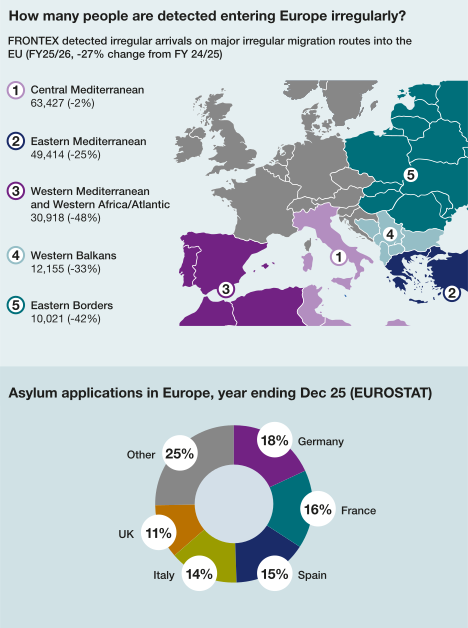
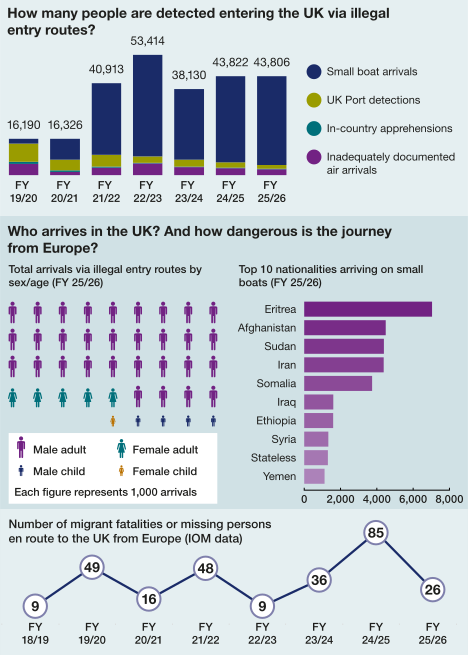
This infographic summarises data on three frequently asked questions (FAQ) about migrant arrivals to the UK and British border security: Question 1. How many people are detected entering Europe irregularly? Across each of the five main routes into Europe, detected arrivals are lower in 25/26 than FY24/25. The Central Mediterranean route had the most detections. Data from EUROSTAT shows in the year ending December 2025 Germany received the most asylum applications within Europe, accounting for 18% of applications, while the UK received the 5th most applications at 11%. Question 2. How many people are detected entering the UK via illegal entry routes? Numbers have been persistently high since FY21/22, with small boats the predominant method of entry since FY20/21. Question 3. Who arrives in the UK? And how dangerous is the journey from Europe? The top small boat nationalities are from the horn of Africa, the Middle East or Asia. Adult males are a large majority of arrivals across all entry routes. International Organisation of Migration's data show yearly fatalities or missing persons en route to the UK from Europe, with a peak in FY 24/25.
Responding as a system
Our strategic framework
We adopted the tried and tested ‘4P’ framework that has been the basis for the world-leading UK Counter Terrorism strategy, CONTEST, for over two decades, and also forms the basis for the UK’s counter SOC strategy. This comprehensive, structured cross-government approach is based around four mission statements: Prevent, Pursue, Protect, Prepare. The BSC uses this framework, including the underpinning OIC outcomes (see below), to bring new unity and clarity of purpose to the border security system, embedding it throughout our strategy, programmes and governance and across the three broad geographic theatres of upstream, France and near neighbours, and domestic.
We also develop and leverage key enablers that cut across the 4Ps, such as international engagement with key partner countries (cohered under international taskforces), and comprehensive legislation such as the BSAI Act (2025). In November 2025 the BSC expanded to take on a new operational role, through the transfer of Home Office Intelligence and Maritime and Small Boat Operations.
Monitoring delivery and measuring success
The Commander’s current focus is to make illegal migration to the UK by small boat untenable, and the primary measure of success is the number of arrivals. However, as this report shows, the final number of small boat arrivals is the result of a number of factors, not all within HMG’s control. To guide system activity and performance towards reducing that final number and hold the system to account, BSC uses targets, milestones and evaluation to understand how the system is delivering on key outputs, outcomes and priorities across the full migrant journey and small boat business model.
Learning and adapting as a system
Border security threats are constantly evolving in response to global trends or adapting to our actions, so it is vital that HMG rapidly identifies any change and learns from what works to improve our response. Evaluation of the strategic framework is part of that, with changes in our monitoring metrics, broader research and intelligence all areas that can be the first signs of a strategic shift. Evaluation of projects and operations also often come with recommendations to improve our approach.
The BSC and other system partners invest significant effort and resource to improve operational and strategic intelligence to identify threats and better guide our approach. This allows us to rapidly pivot activity, for example, supporting a rapid response to launches from Belgium as soon as the first launches were detected, or evolving diplomatic focus as we see changes in routes to Europe. HMG also partners with companies, Non-Government Organisations and academic institutions to deliver targeted research to better understand threats to the border, and how we can maximise our impact.
Organised immigration crime 4P outcome framework
The Commander’s vision for the border security system is to deliver a secure and effective border.
Prevent mission statement: Disincentivise individuals and deter organised crime groups from participating in the illegal cross-border movement of people and goods
-
OIC Outcome A1.1: Migrants have lower aspirations to migrate illegally to the UK as it is perceived to be a less viable destination.
-
OIC Outcome A1.2: Push factors leading to illegal migration are reduced.
-
OIC Outcome A1.3: Pull factors leading to illegal migration are reduced.
-
OIC Outcome A2.1: The UK is perceived by OCGs to be a less viable destination to facilitate to.
Pursue mission statement: Disrupt criminals and criminal activity leading to the illegal cross-border movement of people and goods
-
OIC Outcome B1.1: OCGs have fewer resources, equipment and funds to facilitate illegal migration and profit.
-
OIC Outcome B1.2: OCGs find it harder to communicate their offer to their target audience.
Protect mission statement: Detect and act on the illegal cross-border movements of people and goods
-
OIC Outcome C1.1: Migrants attempting to enter the UK illegally and OCGs facilitating illegal migration are intercepted at and near the UK border.
-
OIC Outcome C1.2: Migrants on major illegal migration routes to the UK and OCGs facilitating illegal migration are intercepted at key border crossings upstream.
Prepare mission statement: Manage, learn from and adapt the UK’s response to the illegal cross-border movement of people and goods
-
OIC Outcome D1.1: Intelligence and evidence informs the policy and operational response to illegal migration in the short and long term
-
OIC Outcome D1.2: Effective systems are in place to identify and safeguard vulnerable people.
-
OIC Outcome D1.3: Asylum system is streamlined and efficient, with minimised waiting times.
-
OIC Outcome D1.4: Returns are quick and efficient.
Cross cutting enablers: International engagement, intelligence and assessment, policy, legislation, data and technology, people and skills.
Border Security System strategic priorities
To mature, cohere and drive the border security system for the best possible response to threats, the BSC and the Border Security Commander has developed effective systems leadership levers over the past 18 months, including systems governance and project portfolio management capabilities, to ensure strategic alignment, enhance coherence, manage dependencies and risk, drive delivery and ensure value for money.
Under the BSAI Act 2025, the Border Security Commander has the duty to identify the principal threats to the border and routinely set priorities for a focused and coherent system-wide response. Partner authorities then have a duty to co-operate and have regard to the priorities.
The Home Secretary and the Border Security Commander set tackling OIC enabled by small boats as the top priority for the system. To achieve this, the Commander set specific priorities across the 4Ps where the system needs to focus for the best possible impact on achieving our outcomes and reducing small boat arrivals.
The Commander’s seven priorities to tackle small boats are:
-
Deter migrants from travelling to the UK by maximising enforced returns [Prevent]
-
Reduce the most significant pull factors for illegal migration to the UK [Prevent]
-
Disrupt OCGs and facilitators, scaling and integrating HMG action for best effect, and working more effectively with international partners [Pursue]
-
Enhance and optimise intelligence capabilities to support better operational impact [Prepare]
-
Generate a highly effective law enforcement response to launches from northern Europe, working with France and other near neighbour states. [Protect]
-
Reduce the upstream flow of migrants to northern Europe. [Prevent and Protect]
-
Identify and manage potential threats from small boat arrivals to protect the public & maintain confidence. [Prepare]
These strategic priorities have informed the development of a growing portfolio of projects across the full span of the migrant journey. They are supported by up to an additional £280 million per year invested in border security by FY2028/29.
Border Security System delivery against small boats
The Border Security System is delivering operations and programmes across the globe with the aim of delivering end-to-end impact across the 4Ps and illegal migration routes to the UK to reduce small boat arrivals.
Delivery is divided into three geographic theatres for more practical reporting and collaboration: Upstream, France and near neighbours, and domestic. This report highlights a selection of work from partners across government, including the NCA, the NPCC and policing, the FCDO, and the Home Office, as well as a broad range of other departments and agencies that ensure every available lever is being used to tackle this threat.
Figure 6: Global delivery to tackle small boats

A diagram showing how border security system delivery against small boats is divided across the globe. The diagram provides a table of the top 10 nationalities of small boat arrivals to the UK: Eritrea; Afghanistan, Sudan, Iran, Somalia, Iraq, Ethiopia, Syria, Stateless, Yemen. Delivery is aligned to the top nationalities of arrivals and major migration routes to UK resulting in illegal Channel crossings – these countries are highlighted on the map and the colour indicates if activity in these countries are part of the Domestic, France and near neighbours or Upstream programmes.
Upstream
Upstream delivery includes all HMG activity from the source countries where migrants start their journey and along the key irregular migration routes to the borders of the EU where a large proportion of OIC networks operate.
Three international taskforces lead upstream delivery through a route-based, end-to-end approach that coheres and coordinates cross-HMG activity to counter illegal migration and OIC. These taskforces cover routes through the Balkans, Middle East and North and East Africa. There are also focused programmes to address key source countries in Asia. These routes were selected as they represent the most significant migration corridors impacting the UK, where organised immigration crime is most active and where upstream intervention can most effectively reduce downstream pressure. Although geographically distinct, they all operate across the 4Ps:
- Prevent illegal migration at source, tackling the drivers of migration where we can and deterring key migrant groups at the earliest possible stage, including through securing improved returns agreements and implementation, amplified with targeted messaging.
- Pursue the OIC networks facilitating illegal migration in source and transit countries, using diplomatic levers to secure cooperation and prioritisation, working with international law enforcement and judicial systems to develop their capacity, sharing intel and collaborating operationally to actively disrupt the gangs’ operations, supply chains and finances upstream, breaking the business model.
- Protect key borders upstream to reduce migrant flows to northern France, supporting partners to bolster border security measures, especially at EU external borders.
- Prepare and improve our response through enhanced intelligence and data sharing with partners to support global law enforcement efforts and removals from the UK, as well as field research to understand migrant motivations and map OCG operations upstream.
Building joint interests with our international partners is critical for success and the impact we have had this year reflects the strong relationships and operational support provided by Home Office, FCDO, justice system and law enforcement (LE) partners. The NCA leads on law enforcement overseas and the work of overseas diplomatic posts, upstream law enforcement networks and NCA liaison officers, as well as Home Office International Operations (HOIO) is particularly important for building trust and delivering impact. However, not every government has capacity to move at our pace and many face significant regional security challenges that compete for their time and attention. Many common source countries are unsafe, limiting options to return migrants and cooperate with LE agencies.
Key system achievements in FY2025/26:
-
Brought over 40 countries together at the world’s first OIC summit to build consensus that this is a global problem, while agreeing actions to secure our collective borders, improve intelligence sharing to tackle OCGs and protect the vulnerable.
-
Stood up and matured cross-government taskforces to deliver a coordinated whole-of-route response to OIC targeted to local conditions and challenges.
-
Achieved improved cooperation with common source and transit countries across a range of objectives, including border security, law enforcement, intelligence sharing and returns.
-
Delivered high impact global operations, led by the NCA, in collaboration with UK and international intelligence, border security and law enforcement partners and the CPS resulting in hundreds of OIC disruptions. This includes arresting key OIC facilitators across migration routes and for supplying SBE; and seizing over 500 boats and engines in 2025, potentially stopping up to 33,000 more attempts to cross the Channel.
-
Sanctioned 38 individuals, gangs and companies linked to OIC through the FCDO’s world-first sanctions regime to specifically target people smuggling and human trafficking.
-
Delivered capacity building to improve border security and law enforcement capabilities, including training and equipment delivered through NCA and HOIO.
-
Delivered a coordinated and targeted global deterrence comms campaign that has reached tens of millions of potential migrants to combat misinformation surrounding illegal migration to the UK.
Case study: Disrupting a key small boat equipment supplier
Adem Savas, a Turkish national, was identified by the NCA as one of the most significant enablers of small boat crossings to the UK. Between 2019 and 2024, Savas supplied inflatable boats, outboard engines and equipment to OIC networks across Europe, enabling thousands of crossings, including around half of all Channel crossings in 2023, generating millions of pounds in profit.
On 7 January 2026, after a coordinated international effort, Savas pleaded guilty in Bruges to people smuggling and being a member of an organised crime group and was sentenced to 11 years’ imprisonment and a €400,000 fine. Co-defendants received combined sentences of 38 years.
Savas was first identified through the NCA investigation into Kurdish crime boss Hewa Rahimpur; himself responsible for a Europe-wide smuggling ring thought to be behind the movement of more than 10,000 migrants in small boat crossings. Analysis of seized devices revealed Savas as Rahimpur’s primary equipment supplier, maintaining regular contact and providing large-scale shipments. These goods were sourced internationally, transported from Turkey through Bulgaria, and stored in Germany before onward distribution to smuggling networks in Belgium and France. A Netherlands-based haulage firm facilitated logistics.
A coordinated international effort drawing together the NCA alongside Belgian, Dutch and wider European partners combined intelligence development, financial investigation and covert capabilities to enable his arrest on 13 November 2024.
Subsequent enforcement activity amplified the disruption effect. A Europol Joint Action Day in December 2024 resulted in 25 searches in Germany and the seizure of equipment and cash. Notably, intelligence indicated a sharp reduction in equipment flows in early 2025. The long prison sentences handed down in 2026 send a clear message to other facilitators of the severity and consequences of these crimes.
France and near neighbours
The UK and France have a strong border security partnership and have worked together to combat small boat crossings since the phenomenon began in 2018. OIC networks have since matured across Europe, agilely moving people and equipment to the beaches of Europe, and facilitating launches exploiting more than 100 miles of coastline and evolving their tactics to frustrate law enforcement. The UK’s response has also matured and broadened, strengthening cooperation and intelligence sharing with European states and EU authorities to disrupt small boat launches, from the in-land logistics to the beaches:
- Prevent crossings by establishing a deterrent and lawful alternatives, returning arriving migrants directly back across the Channel and diverting migrants from dangerous Channel crossings into safe and lawful alternatives in partnership with France.
- Protect our border, working with France and Belgium to secure the beaches and transit corridors / supply chains to stop migrants and small boats equipment (SBE) reaching the water; intervening against launches in progress, and, where it is safe and legal, stopping boats in the water.
- Pursue OIC subjects in near European countries, fully exploiting data, intelligence and analysis to better target disruptions and secure convictions of criminals essential for the final logistics of small boat crossings.
- Prepare and improve our response, by understanding emerging tactics, demographics, motivations and perceptions of those participating in small boat crossings so we can work with European partners to pivot and plan more effective operational and policy responses.
Our legal and law enforcement systems are different, but NCA, BSC Maritime, Home Office policy teams, overseas diplomatic posts, law enforcement liaison officers and the CPS continue to improve cooperation, build consensus and support our partners to take action on the ground. Adaptability is critical to our success as OCGs will move operations across Europe to take advantage of gaps in legislation or law enforcement posture and deliberately put migrants in danger to limit enforcement options.
Key system achievements in FY2025/26:
- Our work with France prevented over 20,000 crossing attempts last year; with over 40,000 crossing attempts prevented in total since the Command was created[footnote 16].
- Funded specialist units to combat OIC in addition to an average of 907 UK-funded personnel deployed on patrols and intelligence-led operations to prevent launches from French beaches.
- Joint action between the UK and France led to the arrest of 48 OIC facilitators in 2025, enabled by close collaboration between the NCA and specialist French law enforcement and coordination units.
- Agreed a trial pilot to deter illegal journeys across Europe to the UK and dangerous small boat crossings that returned more than 400 small boat arrivals to France in FY25/26 and over 1,000 in total as of June 26[footnote 17].
- Developed a new agreement with France to strengthen operations to prevent crossings including increasing personnel deployed by 53%, as well as a specialist Compagnies Républicaines de Sécurité (CRS) unit and new technologies to reduce the number of departures of small boats, in particular taxi boats[footnote 18].
- Successfully lobbied French officials to, for the first time, implement a new maritime doctrine enabling them take action against taxi boats at sea.
- Delivered a rapid response to launches from Belgium, establishing a new Taskforce as a single mechanism to coordinate policy, operational and international engagement, working closely with Belgian authorities.
- Delivered the UK-Germany Joint Action Plan which has achieved robust operational cooperation against OCGs, with Germany amending its legislation to make clear that activities which facilitate migrant smuggling towards the UK constitute a criminal offence.
Case study: UK France collaboration to prevent small boat launches
Following a sharp increase in small boat arrivals to the UK in the first half of 2025,[footnote 19] increased violence towards French internal security forces and use of ‘taxi-boats’, a new approach and additional specialist resources was endorsed at the UK-France Summit in July 2025.
These improvements included: more officers deployed on the front line, specialist law enforcement and judicial investigation units, improved communications technology and mobility, and better coordination. Close collaboration between UK and French officials and officers has improved the intelligence and investigative support we provide. Evaluations are ongoing, but there are signs the approach is having an impact including the examples this year of taxi boats departing from less convenient locations on the Belgian coast, indicating criminals are trying to avoid the stronger law enforcement response in France.
Domestic
While the UK must mobilise international partners to combat the small boat business model overseas, there are UK-based facilitators and enablers that support these crossings. The OIC Domestic Taskforce, led by the NPCC in close collaboration with the NCA, leads a multi-agency, coordinated law enforcement response to tackle OIC on UK soil that facilitates and enables illegal migration.
Where possible, ‘pull factors’ that attract migrants to the UK like our asylum system are being changed. Those migrants who do arrive in UK waters must be rescued, in line with our values and international commitments to protect life at sea, but also screened to ensure that any potential risks to the UK are managed.
Our 4P approach is to:
- Prevent the UK being seen as an easy target by working with other parts of the Home Office to implement the reforms outlined in the Restoring Order and Control statement and correcting misinformation online that the UK system is easy to exploit[footnote 20].
- Pursue OCGs and facilitators based in the UK, with intelligence-led, integrated cross-government action targeting facilitators and enablers of OIC on UK soil, such as criminal finances, as well as intersections with other types of SOC.
- Protect the people of the UK by intercepting all small boat arrivals and screening them to identify potential threats, then ensuring risks are mitigated appropriately.
- Prepare for impacts and improve our response by building and maturing our intelligence enterprise as a fundamental enabler for action, including improving intelligence gathering from new arrivals.
While Home Office partners are leading on reforms to our asylum system to tackle pull factors, our domestic law enforcement response is coordinated through a dedicated OIC taskforce that has enhanced the way in which the NPCC and the police work with the NCA, Immigration Enforcement (IE), BSC and Border Force (BF) officers, as well as other government organisations like HMRC, to tackle OIC gangs operating from the UK, through better information-sharing, prioritisation and co-ordinated tasking.
Key system achievements in FY2025/26
- Introduced new powers and offences through the BSAI Act 2025 including new offences for arranging small‑boat crossings, advertising illegal migration services online and endangering lives at sea; as well as expanded powers to seize electronic devices and share data across government.
- Stood up the OIC domestic taskforce, led by the NPCC and NCA, to deliver a rapid, intense and targeted multi-agency response to UK-based OIC, coordinating intensified law enforcement activity, improving intelligence sharing and establishing a unified performance framework. NCA, Policing and IE partners have delivered more than 1,000 arrests[footnote 21], issued 100s of civil penalties and secured millions in assets to disrupt facilitators and enablers of illegal migration and OIC in the UK.
- Increased dedicated intelligence and investigative capacity, with hundreds more officers already in place and further recruitment planned, contributing to a 77% annual increase in UK OIC arrests overall[footnote 22].
- Created a more coherent information picture, with improved data, intelligence, information dissemination and analysis to support operational and strategic decision making.
- Managed risk to the UK by ensuring that all small boat arrivals that enter the UK are subject to identity and security checks.
The Border Security System has delivered a comprehensive, coherent and effective global response across the 4Ps to tackle small boat arrivals over the last year. We built trust, capability and delivered impact with partners upstream, innovated and improved interventions near the coast and redoubled efforts at home.
The positive progress we made this year is only the beginning; the scale, adaptability and international nature of the threat mean that breaking the small boat business model will take time. The system must continue to build on these strengthened foundations, continue to scale what works and ensure that delivery continues to be tightly targeted, evidence-led and outcome-focused.
Case Study: New endangerment at sea offence
Migrants risk serious injury and death when crossing the Channel in poorly constructed vessels. Dangerous actions of those onboard attempting to continue a dangerous journey at all costs can further increase that risk.
The piloting of the boat itself can be sufficient to constitute endangerment to the life of others, with aggravating factors including: piloting overcrowded boats, continuing journeys despite serious injuries or fatalities onboard, adverse weather conditions or failure of the boat (e.g. engine failure or deflation), steering away from rescue operations or other dangerous steering such as crossing shipping lanes.
Between 5 January 2026, when the measure commenced in law, and 10 June 2026 when the first sentences were handed down, Immigration Enforcement, the CPS and the NCA have secured 15 charges of endangerment for individuals identified as small boat pilots. [footnote 23]
The first two cases to be sentenced under this offence received two years and 27 months in jail respectively. This is more than twice what convicted small pilots commonly received before this offence was introduced.
UK maritime response to small boats in the Channel
Small boat crossings are a border security threat requiring a law enforcement response, but intervening to physically stop boats once at sea is almost always unsafe and in breach of international treaty obligations. Maritime teams across government have explored numerous options to prevent maritime arrivals progressing through UK waters and found them ineffective and dangerous. Small boats are far too overcrowded and fragile for direct intervention, with immediate risk of a mass casualty event.
For these reasons, the focus of our small boat response in the Channel and Kent is to save lives by providing a Search and Rescue response, gathering evidence for later identification and arrest of OIC facilitators, and managing immediate impacts on the UK.
BSC Maritime is the main organisation tasked by Maritime and Coastguard Agency (MCA) to interdict and rescue migrants crossing the Channel (over 90% in FY25/26). While rescues in UK waters have the consent of migrants onboard, these operations are still extremely risky, and vessels can (and have) rapidly failed during rescues.
Since 2022, 99.9% of small boats that have reached UK waters have been interdicted so that rescued migrants are secured and brought to shore. The first concern under the Search and Rescue mission is humanitarian, to meet our SOLAS responsibilities, and as many of those who arrive are vulnerable and/or suffering from fuel burns and hypothermia. There is a critical additional layer to the BSC Maritime at-sea operation, namely Intelligence Surveillance and Reconnaissance, to ensure the prevention of beach landings and to support the identification and prosecution of offenders.
Once the situation is safe, UK authorities will (on land) attempt to establish who has been rescued at sea by examining available documentation, conducting interviews, taking biometrics and running security checks. Authorities will identify both vulnerable individuals requiring particular support or potential threats to the UK requiring appropriate risk management. During this time, personal effects will be searched for contraband, dangerous items or evidence. Electronic devices may be seized and evidence of facilitation, organised immigration and other criminality relating to small boats crossings will be secured to support ongoing investigations and intelligence development.
Facilitators identified or those who have committed other crimes are arrested and charged, often in cooperation with French authorities. With the new offences provided by the BSAI Act 2025 and continued investment in evidence gathering capability, system partners such as Immigration Enforcement Criminal and Financial Investigations (CFI) are enabled to increase these arrests and secure higher sentences.
Figure 7: Targeting every stage of the migrant journey
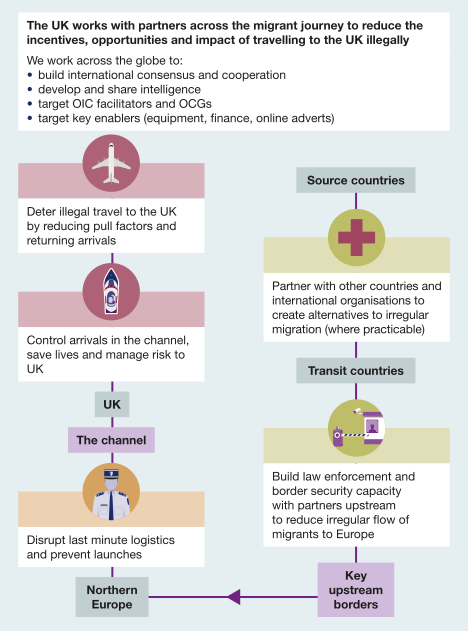
This diagram shows the primary interventions to stop illegal migration to the UK by small boat at every stage of the migrant journey including across source & transit countries, key upstream borders, northern Europe, the Channel, and the UK. There is also a list of cross-cutting activity, such as targeting OIC facilitators and networks wherever they operate.
Border Security System impact
Border Security Commander’s perspective:
The Border Security System, led by the BSC, has delivered real change in the scale and coordination of border security interventions to combat OIC enabled by small boats[footnote 24]. There is a vital need to independently measure and assess the systems contributions to ensure that all of the hard work and interventions across government, and internationally, lead to us delivering a secure and effective border[footnote 25]. Evaluation is used to generate evidence that guides our decisions on future interventions and supports decisions to fund activities that will deliver our intended outcomes.
We have seen already how a better cohered system can have an impact on numbers of arrivals and on the gangs that facilitate these dangerous journeys. The number of disruptions are increasing year on year; the number of arrests made by the NCA have increased significantly; and we are making real progress in identifying and stopping the movement of small boat equipment, working closely with law enforcement agencies across Europe and beyond. Beyond this we have moved the dial in our international agreements, such as the landmark agreement signed with the Government of Iraq to boost returns, and through the pilot with France enabling us to return individuals back across the channel. This is the first Annual Report of this new command and it is to be expected that evidence of impact will be limited given the time the BSC has had to deliver change. This chapter provides emerging evidence of our contributions towards that impact.
Impact of the Border Security System on OIC in numbers[footnote 26]
Small boats arrivals
Small boat arrivals increased by 1,248 in FY25/26 - up 3%, but lower than the increase between 23/24 and 24/25 which was 22%.
Equipment seizures
In 2025, working with partners in the HO and across Europe, NCA seized over 500 boats or engines.
OIC disruptions
3,766 UK-led OIC related disruptions in 2025/26 (a 46% increase)
Major OIC disruptions
108 major OIC disruptions in FY25/26 - a 29% increase.
OIC arrests
Almost 2000 OIC arrests delivered in the UK and overseas in FY25/26 - a 74% increase.
French preventions
More than 20,000 migrant crossing attempts were prevented in 2025/26.
Small boat returns
In 25/26, returns of small boat arrivals rose by 16% compared to the previous year, reaching 2,750.
Summary of impact
Positive progress has been made towards the outcomes that the Border Security System is aiming to achieve. There are early signs of impact across all geographic areas, notwithstanding the challenges of evaluating a complex area and the need for further evidence. Since the BSC was established, the Border Security System has a larger and more unified operational response, and this has facilitated more disruptions of OIC, more seizures of small boat equipment (SBE) and strengthened collaboration with European partners. Positive developments have been observed in deterrence interventions and communication campaigns; however, evidence is weaker on the extent to which these translate into behavioural change for migrants and OCGs facilitating small boat crossings.
Moderate evidence is most consistently seen where outcomes are linked to observable law enforcement activity, particularly in the disruption of OCGs upstream and domestically. Collaboration with France on preventing launches has continued to develop, with a sustained law enforcement response along the coast. In these areas, there is clearer evidence of progress, underpinned by measurable outputs such as disruptions and interdictions.
By contrast, much of the evidence remains emerging where outcomes relate to deterrence, behavioural change or more complex system effects. This includes reducing migrants’ aspirations to migrate illegally and degrading OCG capability to facilitate small boat crossings. These areas are inherently harder to measure, and the current evidence base is less developed. Therefore, we must prioritise strengthening the evidence base to better target interventions, particularly on deterrence, migrant decision-making, and the longer-term impact of disruptions on OCG resilience.
Evidence of impact has been mapped to a set of outcome statements that reflect what we would expect to see if the approach in the Theory of Change is working over time. Using multiple data sources, an overall assessment is made on how much the Border Security System has contributed to these outcome statements. Evidence for each outcome statement is scored based on the below ratings with the table below setting a summary against these outcome statements, and the assessed strength of contribution:
- Strong evidence – There is clear and consistent evidence that the Border Security System interventions made a significant contribution to the observed outcomes.
- Moderate evidence – There is a reasonable amount of evidence suggesting the Border Security System interventions contributed to outcomes, though some uncertainty remains.
- Emerging evidence – There are some signs that the Border Security System interventions contributed to outcomes, but the information is limited and not yet conclusive.
- No evidence – There is no evidence that the Border security system interventions contributed to the outcomes.
| Location | Outcome statement | Associated OIC outcome | Evidenced strength of contribution |
|---|---|---|---|
| Upstream | The UK has strengthened upstream intelligence and evidence on irregular migration, informing policy and operational responses. | Prepare - D1.1 Intelligence and evidence informs the policy and operational response to illegal migration in the short and long term | Emerging Evidence |
| Upstream | Migrants are disincentivised from migrating irregularly to Europe and the UK. | Prevent - A1.1 Migrants have lower aspirations to migrate illegally to the UK as it is perceived to be a less viable destination. A1.2 Push factors leading to illegal migration are reduced |
Emerging Evidence |
| Upstream | OCGs operating upstream are disrupted, making OCG facilitation of irregular migration to Europe less viable. | Pursue - B1.1 OCGs have fewer resources, equipment and funds to facilitate illegal migration and profit. | Moderate Evidence |
| Upstream | Returns are quick and efficient. | Prepare - D1.4 Returns are quick and efficient | Emerging Evidence |
| France and near neighbours | France is a less viable launch point for small boat crossings to the UK | Protect - C1.1 Migrants attempting to enter the UK illegally and OCGs facilitating illegal migration are intercepted at and near the UK border. | Moderate evidence |
| France and near neighbours | OCG capability to facilitate small boat crossings from France is degraded | Pursue - B1.1 OCGs have fewer resources, equipment and funds to facilitate illegal migration and profit. Protect - C1.2 Migrants on major illegal migration routes to the UK and OCGs facilitating illegal migration are intercepted at key border crossings upstream. |
Emerging evidence |
| France and near neighbours | Migrants in France are deterred from making a small boat crossing | Prevent - A1.1 Migrants have lower aspirations to migrate illegally to the UK as it is perceived to be a less viable destination. | Emerging evidence |
| Domestic (UK) | Smuggling networks within the UK are disrupted | Pursue - B1.1 OCGs have fewer resources, equipment and funds to facilitate illegal migration and profit. | Moderate evidence |
| Domestic (UK) | The enablers of OIC are degraded | Pursue - B1.1 OCGs have fewer resources, equipment and funds to facilitate illegal migration and profit. Pursue - B1.2. OCGs find it harder to communicate their offer to their target audience. |
Emerging evidence |
Introduction to impact evaluation
The evaluation of the Border Security System has been undertaken independently by Home Office Analysis and Insight (HOAI). This evaluation uses contribution analysis to assess how activities delivered by the Border Security System may be contributing to the outcomes HMG is seeking to achieve. This approach uses a Theory of Change to outline the logic of how change is expected to occur. Given the complexity of migration, where outcomes are influenced by multiple factors, it is not possible to directly attribute changes in small boat arrivals to any single government intervention. This initial assessment focuses on the most mature and well-evidenced areas. Further work is required to strengthen the evidence base for harder-to-measure outcomes (A2.1, D1.2 and D1.3).
Impact of upstream interventions
HMG delivery upstream, alongside EU and member state interventions, has helped shape and reduce illegal migration to Europe and the UK. While attempts to cross the UK border remain high in early 2026, in part reflecting secondary migration within Europe, detections of irregular crossings at Europe’s external borders decreased significantly in 2025/26.[footnote 27] The border security system, led by our international taskforces, has supported international partners to disrupt OCGs, expanded international cooperation and improved capability of upstream partners to tackle OIC. The UK has made progress towards improving upstream data generation and intelligence sharing through new data and intelligence-sharing arrangements, multi-lateral forums and partner-led monitoring programmes. Evidence suggests that interventions focused solely in northern France are not in itself sufficient to prevent overall volumes, as it can result in displacement to other routes or methods to illegally enter the UK. This highlights the importance of complementary upstream activity to disrupt criminal networks and reduce flows earlier in the journey.
OCGs operating upstream are disrupted, making OCG facilitation of irregular migration to Europe less viable
There is moderate evidence that OCGs operating upstream are disrupted, making OCG facilitation of irregular migration to Europe less viable. NCA and Home Office International Operations (HOIO) working with international partners, delivered successes in disrupting smuggling networks and supply chains, whilst improving the capability of upstream border security agencies and law enforcement to tackle OIC. Further evidence is needed to demonstrate long-term impact on OCG business models. [Outcome B1.1 and C1.2]
- Since the BSC was established, NCA, HOIO and international partners have delivered a sizeable increase in OIC-related arrests. In 2025/26, the system delivered a 50% increase in international arrests compared to the previous year[footnote 28].
- Law enforcement activity with European partners is disrupting small boat and engine supplies, making it more difficult and costlier for OCGs to source equipment. In 2025, NCA worked with UK intelligence and law enforcement agencies, and international partners to seize 533 items of small boat equipment, significantly hindering OCGs’ ability to move boats. If this equipment had reached France, more attempts could have been made to cross the Channel.
- HMG funded programmes have built capacity upstream to investigate and disrupt OCGs and better secure maritime and land borders. For example, in Ethiopia, the NCA delivered training to improve the capacity of financial analysts to identify and confiscate financial assets and as a result Ethiopian investigation and financial partners collaborated to arrest 28 members of an OCG who received over £9 million in payments of OIC facilitation. HOIO-trained border security officers have identified forged documents and imposters heading towards Northern Africa.
- OIC networks are highly adaptive, therefore operational and analytical professions across HMG continuously assess if current enforcement actions have the breadth and depth to effectively dismantle smuggling networks in the long-term. Assessments include quarterly statistics, irregular migration trends analysis, intelligence assessments, and delivery monitoring.
Case study: NCA and Home Office collaboration with European partners to seize small boats equipment (SBE)
The NCA identified the Bulgarian border as a key route for SBE smuggling into Europe and secured the agreement of the Bulgarian authorities to develop their capabilities to detect and seize shipments. Home Office Intelligence targeting teams, using Customs data secured through collaboration with HMRC, identified the movement of SBE into the EU, with the NCA leading the intel-led operational response to identify and intercept these shipments, working with Bulgarian authorities and HOIO.
In summer 2025, in one NCA-led three-week intensification exercise alone, two major consignments of SBE were seized moving into Europe. Officers recovered 25 inflatable boats concealed in one lorry, followed by a further 20 boats in a second vehicle travelling towards the Netherlands, a known route for equipment destined for northern France. The boats would typically have been used to carry approximately 50 or 60 people in each.
Hundreds of items of SBE have been seized at this key border since cooperation began and intelligence shows that OCGs tested new supply routes to avoid stricter controls at the Bulgarian border, suggesting that UK law enforcement work with European partners is forcing OCGs to adapt less direct, more expensive smuggling routes – impacting their operations and profits.
Where shipments cannot be prevented from entering the EU, our law enforcement and intelligence agencies work with partners along internal logistics routes towards the French coast to seize SBE and disrupt OCG operations.
This operational phase represented the culmination of a campaign that brought the full range of law enforcement capabilities together and built on efforts to criminalise facilitation to the UK in key EU states, disrupting a key offender group.
Case study: Strengthening borders through mobile coastal surveillance vehicles
The BSC invested in the border management of a key upstream partner through the provision of training in peripheral, zonal systems and drones, and the delivery of eight Mobile Coastal Surveillance Vehicles.
This initiative aims to ensure full protection and control along the maritime border, thereby facilitating the early detection of irregular migration activities. Between January and March 2026, 1,160 irregular migrants were apprehended, of which 60% were detected using BSC-funded vehicles. Since the deployment of these vehicles, there has been a significant reduction (~35% compared to the previous year) in the number of apprehended irregular migrants, thereby signalling an enhanced operational response capacity.
In addition, according to figures provided by our international partner, 49 migrant smugglers were apprehended in Q1 of 2026, a reduction of 51% from the same period in 2025. This suggests that enhanced surveillance and rapid response have constrained the operational space of OCG networks and deterred irregular migration attempts.
The UK has strengthened upstream intelligence and evidence on irregular migration, informing policy and operational responses
There is emerging evidence that the UK has strengthened upstream intelligence and evidence on irregular migration, informing policy and operational responses. Data generation and intelligence sharing with international partners improved through multilateral forums, international agreements, and partner‑led monitoring programmes. [Outcome D1.1]
- HMG has established new data and intelligence sharing arrangements with a number of key countries, including an Enhanced Migration Partnership with Vietnam, improving bilateral exchange. The UK has also expanded cooperation with European partners on reducing irregular migration by directly increasing NCA resource in the relevant EUROPOL body to enable enhanced intelligence sharing, and simultaneously leading key actions in both operational and policy forums.
- UK law enforcement agencies have improved their intelligence collection capabilities and intelligence sharing with international partners. The BSC has invested in uplifting overseas law enforcement networks (including NCA liaison officers and HOIO officers) in key source and transit countries, enabling NCA and HOIO to perform operational work with international partners.
- Upstream programmes implemented with partners, such as IOM and UNHCR have strengthened our understanding of illegal migration and local ability to intervene. For example, in Libya, trafficking analysis and displacement monitoring provide detailed insights on migration routes, exploitation patterns, and evolving risk profiles. At the same time, capacity building and improvements to document verification systems are strengthening the ability of authorities to identify trafficking cases and collect intelligence at borders.
- As many initiatives are recent, we cannot yet fully understand the impact of this improved data and intelligence picture, but there is clear progress in building the required systems and partnerships for data and intelligence sharing to support our efforts to disrupt and degrade OCG operations.
Case study: Joint Migration Taskforce (JMTF)
The JMTF was established in 2023 to facilitate intelligence sharing and operational collaboration with Albania (with Kosovo joining in 2024). Under BSC oversight, the JMTF has expanded to include Montenegro and North Macedonia, while Serbia and Bosnia and Herzegovina signalled plans for technical cooperation in 2025. The JMTF has evolved into a structured forum for generating, sharing and acting on intelligence on irregular migration and OIC, strengthening coordinated law enforcement action across the Western Balkans.
Monitoring data shows that JMTF-led intelligence sharing pathways are complemented by bilateral operational activity, including returning 1,700 Albanian nationals in 2025/26. Shared intelligence supported further operational outcomes, including the detection of over 100 forged travel documents, preventing travel through Europe and onward attempts to enter the UK. Joint activity under the JMTF also generated insight into financial flows associated with OIC and migratory flows from region towards the UK.
In 2026/27, the BSC is funding the JMTF country’s joint operations and the development of improved information and data sharing between participants, indicating progress towards a more integrated intelligence system.
Returns are quick and efficient
There is emerging evidence that returns are quicker and more efficient. New returns agreements with international partners and increased removals from the UK increased this potential deterrent. Further data and analysis is needed to fully evaluate any changes in the speed and efficiency of returns. [Outcome A1.1 and D1.4]
- In 2025/26, there were 2,750 enforced returns of small boat arrivals, an increase of 16% compared with the previous year.[footnote 29] While the increase in enforced and voluntary returns is driven by multiple factors, including increases in asylum-related returns and schemes to remove foreign national offenders, UK returns agreements with origin and transit countries are a contributing factor. International engagement is essential to creating the necessary enabling conditions for returns, as they cannot occur without partner cooperation.
- The UK-Vietnam Enhanced Migration Partnership Plan (EMPP) was signed by the Home Secretary and Vietnam’s Minister for Public Security in October 2025. The agreement commits both countries to a range of measures to tackle illegal migration from Vietnam, including streamlining the returns process. The Government of Vietnam has committed to reduce returns processing times for all cases with strong supporting evidence by almost 90% compared with the previously agreed timescales.
- HMG has also recently signed agreements to improve returns with governments in the Middle East and Africa including countries of key small boat arrival nationalities.
- Substantial increases in returns have also been supported by changes to asylum-related returns and schemes to remove foreign national offenders.
- It is important to note, however, that the UK’s ability to facilitate returns is highly dependent on external factors, including partner willingness to cooperate on returns and many of those who arrive on small boats are from unsafe countries and cannot be returned under international law even if unsuccessful in their claim for asylum.
Migrants are disincentivised from migrating irregularly to Europe and the UK
There is emerging evidence that communication and community engagement campaigns in key countries have disincentivised migrants from migrating irregularly to Europe and the UK. These programmes delivered reach and increased awareness of migration risks in key countries. Further evidence is needed to demonstrate sustained behaviour change. [Outcome A1.1]
- Campaigns delivered through digital media, local platforms and trusted diaspora networks are estimated to have reached millions of individuals, including over 20 million in Vietnam and almost five million in the Kurdistan Region of Iraq (KRI).
-
System partners also delivered more targeted, community‑based approaches to reinforce messaging and engagement at a local level.
- Evidence suggests these programmes contribute to increased awareness of migration risks, however, further evidence is needed to demonstrate behaviour change, and sustained impact is likely to depend on continued alignment with enforcement activity and broader interventions addressing underlying drivers of migration.
Impact of interventions in France and near neighbours
The UK has built trust and capacity with France to intercept migrants and OCG members before they reach the French coastline. Joint activity has contributed to constraining OCGs’ capability and dissuading migrants from crossing. Attempted and successful crossings fell in the second half of 2025/26 compared to 2024/25, however arrivals remain high.[footnote 30] Future evaluation will be strengthened by more monitoring data from France agreed under our renewed partnership.[footnote 31]
France is a less viable launch point for small boat crossings to the UK
There is moderate evidence that the Border Security System has contributed to making France a less viable launch point for small boat crossings to the UK. French-led prevention efforts consistently intercept around a third of attempted crossings in recent years, even as overall attempt volumes remain high[footnote 32]. While OCGs have adapted their tactics, the sustained level of interdiction indicates a robust prevention effort in the face of evolving methods. [Outcome C1.1]
- In the last two years, France has prevented roughly one third of attempts by migrants to reach the UK by small boat (34% in 2025/26)[footnote 33], [footnote 34]. The data on preventions for migrants includes individuals who are prevented from departing France, or those who return to France, but do not include broader work by French authorities to disrupt launches such as dispersing groups of migrants in transit to the coast or clearing camps nearby.
- During this time, UK and French law enforcement improved capability and tactics, for example deploying specialist investigative units and surge enforcement teams to target migrant smuggling operations.
- Building on intelligence flowing into the multi-agency Joint Fusion Cell housed in the NCA, officers are championing new approaches to rapidly sharing intelligence with French partners to enable timely, dynamic interventions against facilitators operating on the near continent.
- In response to this pressure, smugglers have changed their tactics to include multiple simultaneous launches to overwhelm French law enforcement capacity, resorting to violence at departure sites, and the use of ‘taxi-boats’, where boats launch from inland waterways in France and pick up migrants in shallow offshore waters. Average numbers per small boat have also increased over time, reaching a high of 63 in 2025/26. [footnote 35]
- With a consistent level of prevention over time, changes in OCG tactics suggest law enforcement on the French coast is making departures more difficult, but attempted journeys continue despite these constraints.
Figure 8: Number of recorded small boat arrivals and migrants prevented, 2021/22 to 2025/26.

A line-chart showing that recorded small boat arrivals and migrant preventions fluctuate, with higher numbers recorded in summer months.
Source: Small boat activity in the English Channel - GOV.UK[footnote 36]
Note: Provisional prevention data is published on a weekly basis and therefore the data in this chart has been aggregated based on the final date of the week
For further notes and caveats refer to the source.
OCG capability to facilitate small boat crossings from France is degraded
There is moderate evidence that OCG capability to facilitate small boat crossings from France is degraded. Joint UK–France law enforcement action is disrupting OIC networks and supply chains beyond the immediate coastline. OCGs have adapted to this pressure with new tactics. [Outcomes C1.1 and B1.1]
-
Enhanced funding has strengthened the long-standing UK–France intelligence and operational capability provided by the Joint Intelligence Cell and Unité de Renseignement Opérationnel (JIC/URO), established by the NCA with French law enforcement several years ago, and the Office de lutte contre le trafic illicite de migrants (OLTIM), to support coordinated investigations and information-sharing to disrupt OIC networks.
-
This cooperation delivered 48 arrests of OIC facilitators made in France in 2025, many of whom performed critical roles in organising boat departures or supplying boats and engines.
-
OCGs have adapted by using bunkering and storage facilities to deliver SBE just-in-time, while making the most of available supplies by dangerously overloading vessels adding to an already dangerous methodology.
-
There are also signs of potential geographic displacement with some launches occurring from beaches further south in France and a small number further north in Belgium. This suggests enforcement is making launches more difficult, but not preventing crossings altogether.
Migrants in France are deterred from making a small boat crossing
There is emerging evidence that migrants in France are deterred from making a small boat crossing. Deterrence is difficult to observe and currently relies on trying to quantify journeys which do not take place through indirect proxy indicators. While some migrants may be dissuaded, further evidence is needed to demonstrate sustained deterrence or behavioural change. [Outcome A1.1]
-
The UK and French governments work closely to provide on-the-ground support to discourage dangerous crossings by offering migrants accurate information and helping them to access safer options, such as claiming asylum in France or taking a voluntary return.
-
Under the new returns pilot (see below), the French government accept a proportion of people reaching the UK on small boats. In return the UK accept an equal number of asylum seekers directly from France, on a safe and legal route, for expedited processing in the UK via the UK/European Application Transfer Scheme (UEATS).
-
Together, these interventions aim to reduce small boat arrivals to the UK and disrupt OCGs profiting from this situation. The pilot has been extended to October 2026.
Case study: UK-France returns pilot
In 2025, the UK and French governments agreed to a pilot scheme targeting migrants arriving in the UK in small boats, rapidly returning them back to France to undermine the business model behind these crossings.
The BSC, Home Office international teams, FCDO, Border Force, Immigration Enforcement and French authorities have overcome significant legal and operational barriers to deliver this innovative pilot and have steadily increased numbers returned and transferred each week.
Evaluation of the pilot is in progress and it is too early to see significant impacts on migrant/OCG intent as the trial is still scaling up. Some benefits are already clear: this pilot creates the opportunity to remove people from the UK who have historically been very difficult to return to their countries of origin. The Home Office can also deliver faster returns and quicker asylum decision-making for individuals removed through this pilot compared with business as usual. Small boat arrivals returned to France under the pilot were removed over four times faster than similar cases from the same period in 2024/25 (two months versus nine months).
Impact of domestic interventions
The UK’s domestic response to OIC is more active, coherent and is delivering more, with confirmed, multi-year funding and better intelligence sharing. The OIC domestic taskforce led by DCC Wendy Gunney has been highly visible across the UK, including tackling links to high-street crime and illegal working. Most of the BSAI Act 2025 offences commenced in January 26, but the border security system has delivered operations and arrests almost from the first day to deter small boat pilots, and tackle financial and online enablers. Domestic interventions alone will not be decisive due to the limited OCG footprint in the UK, but by taking action against OIC facilitators and enablers both at home and overseas, the system continues to degrade OCG capability and make illegal entry less appealing.
Smuggling networks within the UK are disrupted
There is moderate evidence that smuggling networks within the UK are being disrupted. Increased investment, collaboration and operations, along with new powers and offences, have delivered record OIC disruptions and arrests. [Outcome A2.1 and B1.1]
-
Through the OIC domestic taskforce, led by the NPCC and NCA, the BSC has mobilised a co-ordinated, multi-agency law enforcement response. This increased investment has intensified UK law enforcement activity contributing to higher levels of OIC disruption.
-
Coordinated UK law enforcement operations, including joint raids and inspections, led to 3,766 UK-led OIC related disruptions in 2025/26 (a 46% increase) with dozens of OIC offenders convicted in UK Courts as a result of NCA investigations alone, with support from CPS[footnote 37].
-
The BSC has supported changes in law through the BSAI Act which introduced a new set of offences focused on OIC, with the first sentencing under this new law due to be implemented on June 10th.
-
Continued assessment is needed to understand if these enforcement actions and disruptions are effectively dismantling and degrading smuggling networks in the long term.
The enablers of OIC are degraded
There is emerging evidence that the enablers of OIC are being degraded. Targeting people-smuggling networks’ use of social media and illicit finance has led to more online content being removed and assets denied. [Outcome B1.1 and B1.2]
-
Social media is an increasingly critical enabler of OIC, with smugglers promoting their illegal services online and using it to communicate with potential customers.
-
The NCA has led intensified efforts to identify and take down this online content by proactively scanning social media and referring potentially criminal posts to social media companies for removal. This sustained effort has led to a record year of removals of online posts, accounts, pages and websites as a result of NCA referrals, over 12,000 takedowns in 2025/26 - an increase of over a third compared to 2024/25.
-
The NCA has also worked with HMRC and local police forces to conduct financial investigations and freeze, seize or confiscate proceeds linked to OIC. These steps aim to deny smugglers access to illicit profits and make the small boats business model logistically and economically unviable by degrading their ability to finance boat purchases or pay facilitators. The NCA has denied OIC networks more than £3 million in criminal profits in 2025/26, alongside a range of freezing and recovery orders.
-
Whilst vital to investigations, ongoing assessment is required to understand if this work degrades OCG resources sufficiently to undercut their operations or if they will move to less visible, encrypted platforms given their adaptability.
Figure 9: Disruptions of OIC, by impact level, January 2023 to March 2026
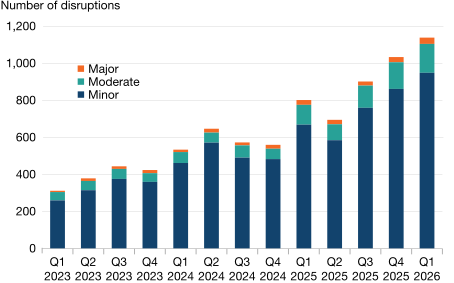
A stacked bar chart showing quarterly OIC disruptions by level of impact (minor, moderate, major) from January-March 2023 to January-March 2026. Disruptions increase overall across the period, rising from just over 300 in early 2023 to more than 1,100 by January-March 2026. Minor disruptions make up the majority in every quarter while moderate and major disruptions remain comparatively small. Growth accelerates during 2025, reaching the highest level in the final quarter shown.
Case study: The OIC domestic taskforce
In May 2025, the Home Office established the OIC Domestic Taskforce, led by policing, bringing together all 43 police forces and key operational partners to strengthen the UK response to OIC and other criminal activities that enable illegal migration. It is intelligence-led, and has increased patrols, strengthened checks and delivered high-impact operations to tackle OIC. The taskforce has delivered high numbers of seizures, arrests, fines and penalties and improved our understanding of OIC and illegal migration in the UK to better target facilitators and enablers.
One strand of work is to target rogue employers and illegal working which can attract or enable unlawful stay. In July and November 2025, there were nearly 400 visits and over 450 immigration arrests through Taskforce-coordinated operations. Policing partners added a further 14 arrests and seized 75 vehicles.
In October 2025 a multi-agency intensification began, targeting cash-intensive business sectors suspected of facilitating money laundering, with more than 2,700 premises visited and raided, over 900 arrests achieved and secured over £12 million in assets. Furthermore, 341 Referral Notices for illegal working and renting were issued leaving businesses and landlords facing significant fines.
Tackling illegal working is just one strand of Taskforce activity. In September 2025, it led a multi-agency OIC road network operation on the M1, resulting in 18 immigration arrests, 17 other arrests and over 40 vehicle seizures. It also recovered £167,000 in civil penalties, issued £28,000 in fines, bearing down on illegal migration and attempted clandestine entry.
It is also tackling Common Travel Area (CTA) abuse, identifying and intercepting individuals seeking to undermine our border security. In February 2026, a collaborative operational effort co-ordinated by the Taskforce to deter and disrupt OIC activity within the CTA across air, rail, sea, and road, resulted in 58 arrests, including for breaches of deportation orders, and 41 refusals of entry to the UK.
These examples highlight the Taskforce’s sustained impact in driving action across OIC, targeting criminal networks that threaten the integrity of our immigration system. It demonstrates policing’s leadership and central role in coordinating partners and delivering tangible cross-agency successes.
Next steps on impact
The Border Security Commander is committed to robustly evaluating the impact of activities delivered across the border security system, to ensure the most effective approaches are utilised to tackle OIC. BSC and HOAI will work closely to:
-
Continue to evaluate the activities and interventions domestically, in Europe and further upstream to understand the impact these have and to what extent they are contributing to the achievement of our outcomes.
-
Improve the data used to monitor the delivery and outputs of activities to support evaluation and contribution analysis methodologies as we seek to attribute impact to specific activities.
-
Proactively seek to fill gaps in our evidence base on OIC, including through primary research, to continue to enhance our understanding of the scale and nature of OIC and irregular migration.
-
Work internationally with governments and partners through bilateral conversations, the European Migration Network, IOM, UNHCR and others.
Outlook for FY2026/27
We are in a vastly better place than 18 months ago. As of June 2026, the number of migrants reaching the UK by small boat is down by 41% (year-to-date compared to 2025)[footnote 38]. This number of small boat arrivals is the lowest at this point in the year since 2023. Record disruptions, arrests and seizures are ramping up pressure on OCGs across their operating model, with the NCA alone leading over 100 operations targeting OIC networks. But we are still cautious.
The BSC has rapidly established a strong and coordinated border security system focused on driving down small boat arrivals as the Commander’s top priority. We have invested in more intelligence and investigative officers dedicated to combatting OIC, built taskforces that multiply our international impact, and secured a multi-year funding settlement so we can deliver a global programme of interventions targeted at what will have the best impact. With these strong foundations, system partners, led by the BSC, will maximise delivery against the Commander’s strategic priorities to reduce arrivals and seek permanent solutions, while remaining alert to changes in the threat environment.
We will continue to work upstream with international partners to combat OIC while building trust, capability and urgency. We will drive the system to:
-
Build international consensus and systems to rapidly return those who do arrive with no right to be here to fundamentally undermine the business model and motivation for small boat crossings. To support this, we will negotiate more returns agreements with international partners and deliver domestic reforms to speed up returns, agreeing a UK letters approach wherever possible.
-
Work with countries, companies and EU agencies to criminalise and disrupt the production, sale and distribution of dangerous small boat equipment to destroy the SBE supply chain.
-
Build on our law enforcement partnerships to deliver joint action against OIC facilitators and enablers across the world, ramping up law enforcement pressure across their operations in line with our theory of change.
-
Support international partners with new capabilities and actionable intelligence to harden key borders upstream and provide alternatives to illegal migration to stem the flow arriving in northern Europe.
-
Support all of our actions with robust deterrence communication that corrects misinformation and makes consequences clear, to change motivations and intentions for migrants and criminals.
The new funding agreement with France will strengthen operations to combat illegal migration in northern France to prevent crossings to the United Kingdom with a significant increase in dedicated human, technological and intelligence resources. HMG also already ramped up cooperation with our Belgian partners to clamp down on launches from their territory; itself a positive indication that the pressure we are putting on OCGs in France is forcing them into less desirable tactics. In the year ahead we will:
-
Maximise the impact of the UK-funded interventions in France, supporting French authorities with improved intelligence and imagery. We will work together to jointly evaluate our work to identify and support the best opportunities. At the same time, we will do all we can to support French authorities to take action against taxi boats, and strengthen joint actions against illegal migration upstream.
-
Improve our relationship and the capabilities we offer in support of Belgian partners to further crack down on launches through a new Belgium taskforce.
-
Increase the numbers of small boat arrivals returned to France to deter migrants and undermine the business model.
At home we will continue to strengthen our own capabilities and take decisive action against OCGs with a footprint in the UK, while reducing key pull factors to the UK and improving risk management of those who do arrive. We will drive the system to:
-
Improve our LE response to OIC in the UK through the Domestic Taskforce, delivering high-impact, intelligence-led operations to disrupt facilitators and enablers.
-
Maximise the use of BSAI Act offences and powers to crack down on OIC, including working with the NCA and other intelligence and law enforcement partners to deliver more seizures and ensure exploitation of electronic devices to maximise intelligence dividends and law enforcement impact.
-
Continue to mature and improve the OIC intelligence enterprise by further increasing coherence, procuring new capabilities, hiring and training officers, and improving access and use of intelligence to deliver operational effect.
-
Support legislative change and implementation that reduces the attractiveness of the asylum system as a key pull factor to the UK.
-
Continue to improve our screening and monitoring of those who do arrive in the UK, including increasing intelligence collection.
Arrival numbers have reduced in the first half of 2026, but it is not definitive and we must not slow down. Recent numbers are positive, but this could change rapidly, particularly given the likelihood that OCGs will adapt their tactics and seek to drive renewed flows, especially over the summer months when conditions are more favourable. We live in an increasingly unstable world, and we must focus on areas we can control to deliver the impact the public want to see. We have steadily forced organised crime groups into a less advantageous position, but we should be prepared for them to innovate to protect their profits.
HMG does not control all the levers required to stop OIC; we must continue to build joint purpose and support our international partners to prioritise and invest in combatting this threat where it operates overseas. We will continue to evaluate the impact of the activities delivered by system partners to tackle OIC whilst proactively improving our data and evidence base on OIC; ensuring that strategic, policy and operational decisions are grounded in robust intelligence and evidence on where and how to have the best possible impact on reducing arrivals.
We have made excellent progress, but there is far more to do. We are confident that our strategy remains the correct one and that through our collective efforts, focused on the Commander’s priorities, we will drive down small boat arrivals, while remaining alert and responsive to broader threats.
Glossary
4P Framework (Prevent, Pursue, Protect, Prepare)
Strategic framework used by parts of government to ensure complex threats are tackled holistically.
Border Security, Asylum and Immigration (BSAI) Act 2025
Key legislation providing statutory powers to the Border Security Commander as well as new powers and offences to tackle OIC.
Border Security Command (BSC)
Directorate within the Home Office providing strategic leadership across the Border Security System.
Border Security Commander
Statutory office holder responsible for leading the border security system.
Border Security System
Organisations with functions relating to border security, including both HMG and external organisations.
Disruption
Law enforcement action that demonstrably impacts on individuals or groups involved in serious and organised crime. Disruptions may include asset seizures, equipment seizures, revocation of licenses, arrests, convictions or sentences.
Enforced Returns
Administrative removal or deportation of individuals with no legal right to remain in the UK.
Evaluation
Systematic assessment of a programme’s design, implementation and results.
Grey Economy
Informal or unregulated economic activity, often associated with illegal working.
Illegal Entry
The act of entering into the UK unlawfully.
Illegal Migration
Movement of individuals into the UK without lawful authority.
Irregular Migration: refers to the situation where a person enters, stays in or leaves the territory of a country without the necessary legal basis or authorisation. This may not always be illegal but is not managed.
Organised Crime Group (OCG)
Individuals, working together, with the intent and capability to commit serious crime on a continuing basis, which includes elements of planning, control, coordination, structure and group decision-making.
Organised Immigration Crime (OIC)
Criminal offences which have the effect of exploiting vulnerable migrants by smuggling them across borders for profit.
Preventions
Actions taken to stop illegal migration before departure or arrival.
Pull Factors
Conditions that increase the likelihood of irregular migration to the UK (e.g. economic opportunity, established diaspora communities, English language, and positive perceptions of the UK asylum processes).
Push Factors
Conditions that increase the likelihood of migrants leaving their country of origin or host country (conflict, persecution, poverty, climate change, and secondary migration within Europe).
Small Boats Equipment (SBE)
Boats, engines and equipment used in illegal crossings.
Secondary Movement
The movement of a migrant or migrants from one territory to another (often crossing national borders) via unofficial, unsanctioned or clandestine means, having previously settled or having unsuccessfully claimed asylum elsewhere.
Small Boat Crossings
An illegal route of entry to the UK typically facilitated by organised crime.
Serious and Organised Crime (SOC)
Individuals planning, co-ordinating and committing serious offences, whether individually, in groups and/or as part of transnational networks.
Theory of Change
A logical framework that explains how and why a desired change is expected to happen in a particular context. It maps the causal pathway from inputs and activities to outputs, outcomes, and impact, including assumptions and risks.
-
These figures refer to an an ad-hoc statistical release, published alongside this report. ↩
-
These figures refer to an an ad-hoc statistical release, published alongside this report. ↩
-
Unreferenced figures throughout this report are derived from internal HO, NCA, NPCC, FCDO and wider HMG management information ↩
-
How many people come to the UK via illegal entry routes? - GOV.UK ↩
-
These figures refer to an ad-hoc statistical release, published alongside this report. ↩
-
Data in this figure comes from multiple sources including Immigration System Statistics – GOV.UK, ad-hoc statistical releases published alongside this report, and operational figures. ↩
-
How many people come to the UK via illegal entry routes? - GOV.UK ↩
-
IOM Missing Migrant Project, as of 7 July 2026; IOM reports on missing migrants and fatalities on the ‘mainland Europe to UK’ route, which includes fatalities which occur in or around road transportation, due to violence from smugglers or are linked to harsh environmental conditions (lack of access to healthcare, shelter, food or water). ↩
-
The UK continues to support French authorities to intervene to prevent small boats from crossing. However, the risk to life can be high making these complex and high-risk operations. ↩
-
These figures refer to an ad-hoc statistical release, published alongside this report. ↩
-
New UK-France agreement to reduce illegal crossings - GOV.UK ↩
-
How many people come to the UK via illegal entry routes? - GOV.UK ↩
-
This figure refers to an ad-hoc statistical release published alongside this report. ↩
-
This figure refers to an ad-hoc statistical release published alongside this report. ↩
-
This data has been extracted from live operation databases and therefore may be subject to change. ↩
-
Analysis in this section uses the financial year (FY) when referring to time periods, unless otherwise specified. ↩
-
The evidence in this section has been informed by the independent holistic BSC evaluation undertaken by Home Office Analysis and Insight in line with government guidance - The Magenta Book - GOV.UK ↩
-
Data in this figure comes from multiple sources including Immigration System Statistics – GOV.UK, ad-hoc statistical releases published alongside this report, and operational figures. ↩
-
This figure refers to an ad-hoc statistical release published alongside this report. ↩
-
New UK-France agreement to reduce illegal crossings - GOV.UK ↩
-
This is calculated by comparing the proportion of attempted crossings that were prevented to the number of successful arrivals to the UK. Data on preventions are operational estimates collected and provided to the UK by French authorities. The data on preventions for migrants includes individuals who are prevented from departing France, or those who return to France. ↩
-
Small boat activity in the English Channel - GOV.UK. For notes and caveats refer to the source. ↩
-
How many people come to the UK via illegal entry routes? – GOV.UK for further notes and caveats refer to the source ↩
-
Small boat activity in the English Channel - GOV.UK. For notes and caveats refer to the source. ↩
-
This figure refers to an ad-hoc statistical release, published alongside this report. ↩