ACMD review of the evidence on the use and harms of etomidate (accessible)
Updated 6 February 2026

© Crown copyright 2026
This publication is licensed under the terms of the Open Government Licence v3.0 except where otherwise stated. To view this licence, visit nationalarchives.gov.uk/doc/open-government-licence/version/3 or write to the Information Policy Team, The National Archives, Kew, London TW9 4DU, or email: psi@nationalarchives.gov.uk.
Where we have identified any third party copyright information you will need to obtain permission from the copyright holders concerned.
This publication is available at https://www.gov.uk/government/publications/acmd-review-of-the-evidence-on-the-use-and-harms-of-etomidate/acmd-review-of-the-evidence-on-the-use-and-harms-of-etomidate-accessible
1. Introduction
Etomidate is a drug that has sedative effects and is used medically as an intravenous general anaesthetic. In recent years evidence of significant levels of misuse of etomidate and related compounds has emerged in Asia, particularly by administration from vaping devices.
Medical Use
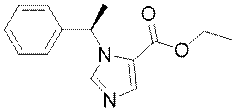
1.1. Etomidate (ethyl-1-((R)-1-phenylethyl)imidazole-5-carboxylate) is a compound that acts as a positive allosteric modulator of the gamma aminobutyric acid-A (GABA-A) receptor, resulting in central nervous system (CNS) depressant (sedative) effects [Etomidate SmPC].
1.2. It is licensed for use in humans as an ultra-short-acting (rapid onset and rapid offset) intravenous drug for the induction of anaesthesia, although because of it unwanted effects, it is typically only used in “high-risk patients” as it does not cause significant respiratory or cardiovascular depression [Valk 2021].
1.3. The major adverse effect of etomidate is dose-dependent inhibition of the enzyme 11β-hydroxylase, which leads to decreases in the adrenal synthesis of cortisol, corticosterone and aldosterone for 6 to 8 hours after a single dose of etomidate. Longer-term use, such as continuous infusion to maintain anaesthesia during prolonged surgery or sedation for intubation in intensive care units, can increase morbidity and mortality from associated steroid deficiency.
1.4. Its action as a potent adrenocortical suppressant has also led to its use for treating Cushing’s syndrome [Carrol 2018; Dzialach 2025].
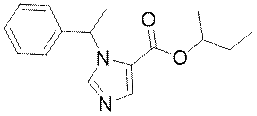
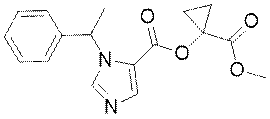
1.5. There are also other compounds that have structural similarity to etomidate, including propoxate, isopropoxate, metomidate, sec-butomidate, TF-etomidate, 4F-etomidate and cyclopropyl-methoxycarbonyl metomidate (CPMM, also called APB-700), MOC-etomidate and MOC-carboetomidate (Annex A). CPMM has been studied as an alternative short-acting anaesthetic/sedative to etomidate as it does not have the same effects on the enzyme 11β-hydroxylase, but currently it is not licensed for medicinal use [Valk 2021; Ge 2014].
1.6. There have been reports of analytically confirmed deaths (suicides) by the intentional self-administration of etomidate in three healthcare workers (a female nurse in the US, a male flight nurse in the US and a male paramedic in Poland) [Smędra 2021; Detweiler 2014; Molina 2008].
Non-medical use
1.7. Since 2010 there has been an increase in reports of non-medical use of etomidate in a number of countries in Asia (China, Hong Kong, Taiwan and Republic of Korea) and New Zealand. [Uhm 2024; Liying 2024; Wu 2024; Chen 2024a; High Alert 2025] There is anecdotal evidence that the non-medical use is due to the “rapid onset/offset” of desired effects. In Asia, as well as anecdotally in New Zealand, the vaping of etomidate is referred to as using ‘Space Oil’ due to this rapid onset/offset of desired effects. Increasingly, etomidate has also been detected in liquids formulated for vaping, particularly in urban centres [Thomson 2024; Cheung 2025; Chen 2024a]. Reports from Asia in particular have significantly increased over the last 2 to 3 years [Uhm 2024; Liying 2024; Wu 2024; Chen 2024a].
1.8. Some of this more recent increase in non-medical use has followed the control of propofol, a drug used for the induction and maintenance of general anaesthesia, in those countries. Etomidate analogues have been detected in both seized material and toxicology cases, in countries where etomidate is now regulated to prevent non-medical use. Reports of acute harm related to these substances in these countries have also been reported [Cheung 2024; UNODC 2025a].
1.9. Horizon scanning by the ACMD led to awareness of this misuse of etomidate and related harms being reported from Asia and New Zealand. Subsequently the ACMD self-commissioned a review into the potential harms of etomidate and related compounds, to determine whether etomidate and related compounds had the potential to cause harms in the UK and should be controlled via the Misuse of Drugs Act 1971.
2. Chemistry
2.1. Etomidate, a non-barbiturate imidazole hypnotic agent, is used as an intravenous anaesthetic for the induction of anaesthesia. Originally synthesised as a racemic mixture, the R(+)-enantiomer was found to have significantly greater potency and this enantiomer is now used clinically [Janssen 1971]. Etomidate is a weak base (pKa 4.5), meaning that it is poorly soluble in water at physiological pH and is formulated either in propylene glycol or as a lipid emulsion [Valk 2021]. At the body’s naturally slightly alkaline pH, more etomidate is in its non-ionised or active form, so it is more able to cross the blood-brain barrier leading to a fast onset of anaesthesia. [Doenicke 1994].
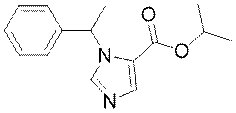
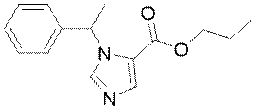
2.2. Several etomidate analogues are listed in Annex A, including the non-barbiturate imidazole metomidate, which is a des-methyl analogue of etomidate [Dai 2024]. Metomidate also exerts inhibitory effects on the central nervous system (CNS) [Lin 2025]. Propoxate is also an etomidate analogue which is synthesised by substituting the ethyl group of etomidate with the n-propyl group or by substituting the methyl group of metomidate with the n-propyl group [Thienpont 1965; Qian 2025; Tang 2025]. Isopropoxate, an isopropyl analogue of etomidate, is a structural isomer of propoxate. [Qian 2025] Isopropoxate has been identified as an impurity in etomdiate in the European Pharmacopoeia [Hammitzsch 2006].
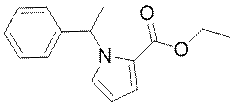
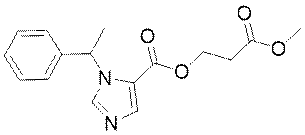
2.3. Efforts to mitigate etomidate’s main side-effect, adrenocortical suppression, led to the development of analogues like carboetomidate and methoxycarbonyl-etomidate (MOC-etomidate). MOC-etomidate can be described as a “soft drug” as it is designed to be rapidly metabolised into inactive metabolites after it has had its desired therapeutic effects [Cotten 2009]. Unlike etomidate, 30 minutes after administration, MOC-etomidate did not reduce corticosterone levels, which are stimulated by endogenous adrenocorticotropic hormone (ACTH). Following the administration of a single intravenous dose, metabolites showed negligible effects. The effects of longer-term doses (e.g., repeated or continuous doses) have not been determined and require further investigations [Pejo 2014]. A further analogue, cyclopropyl-methoxycarbonyl metomidate (CPMM, also called APB-700) formulated as a 10 mg/mL solution using sulfobutylether-β-cyclodextrin, has shown promise with bolus doses of 0.25 to 0.35 mg/Kg and a suggested infusion rate of 50 microgram/kg/min balancing efficacy and side effects. CPMM has not been approved for use as an anaesthetic/sedative, and remains under clinical development [Valk 2018; Struys 2017].
2.4. In March 2025, the United Nations Office on Drugs and Crime (UNODC) issued an alert on the increasing detection of etomidate and analogues in e-liquids across East and Southeast Asia and Oceania, as well detection in samples submitted for drug checking in the UK [UNODC 2025a]. They reported that the etomidate was likely to be illegally produced rather than diverted from legal sources due to large volume seizures and etomidate production equipment in Bangkok, Thailand in 2024 [UNODC 2025b].
3. Pharmacology
Structure-activity relationship (SAR) of etomidate and its analogues
3.1. Etomidate possesses a single chiral centre. The R-enantiomer is known to be clinically relevant with regards to its potency and efficacy at the α and β subunits of the gamma-aminobutyric acid subtype A (GABA-A) receptor to produce both sedative and hypnotic effects [Tomlin 1998]. It is not fully understood whether both etomidate enantiomers (R- and S- enantiomers) have different potencies to suppress the adrenocortical function in vivo. It is assumed, however, that they might have different potencies in a similar way to metomidate enantiomers. Modification of the imidazole ring and the ester moiety may have a great impact on the extent of adrenocortical suppression [Husain 2012; Cotten 2009; Cotten 2010; Ge 201].
3.2. Pejo et al (2014) demonstrated through in vitro studies that the pharmacological effects of the R- enantiomer and selectivity at the β2 or β3 subunits (higher potency at the β2 or β3 subunits compared to the β1 subunit) of the GABA-A receptor, can be modified with alterations to the structure of the chiral centre. Further, alterations to the structure of the chiral centre may also impact the potencies of the hypnotic and adrenocortical suppression effects.
3.3. Pharmacokinetics of etomidate (in adults)
Absorption
In medical settings, etomidate is primarily administered intravenously although it is well absorbed via the oral transmucosal route in experimental settings [Etomidate SmPC 2025].
Distribution
Etomidate rapidly dissociates from lipid carriers upon injection, resulting in plasma concentrations similar to those produced by aqueous formulations. It is approximately 75% bound to plasma proteins, mainly albumin, though this binding decreases in renal or hepatic impairment. Etomidate is quickly distributed to the brain and other tissues, with a large total volume of distribution (~4.5 L/kg), a plasma half-life of 2 to 11 hours and plasma clearance of 9 to 18 ml/min/kg [Etomidate SmPC]. After administration, plasma levels decline rapidly for about 30 minutes due to redistribution into peripheral compartments, followed by a slower decline as elimination proceeds [Etomidate SmPC]. It may cross the placenta and is excreted into breast milk [Etomidate SmPC].
Biotransformation and elimination
Etomidate is primarily metabolised in the liver through hydrolysis of its ethyl ester, with a minor contribution from oxidative N-dealkylation; all resulting metabolites are pharmacologically inactive. Despite a high hepatic extraction rate, etomidate has a relatively long elimination half-life (2–5 hours) due to slow redistribution from peripheral compartments. Approximately 75% of the administered dose is excreted in urine within 24 hours, mainly as metabolites, with only about 2% excreted unchanged. The main urinary metabolite is R-(+)-1-(α-methylbenzyl)-5-imidazolecarboxylic acid. Some etomidate is excreted in the bile. Etomidate does not accumulate with repeated dosing [Etomidate SmPC 2025].
3.4. Pharmacodynamics of etomidate
Etomidate binds with high affinity to GABA-A receptors in the brain, enhancing their activity to produce sedation. Following intravenous administration, its onset is rapid, and the duration of action is brief [Lin 2025]. Etomidate acts as a GABA-A receptor agonist to induce anaesthesia, offering the key advantage of cardiovascular stability. At standard induction doses (0.3 mg/kg), it typically does not cause significant hypotension due to its minimal effect on sympathetic tone and its preservation of autonomic reflexes, including the baroreflex [Ebert 1992]. Additionally, etomidate activates α2-adrenoceptors, especially the α2B subtype, promoting peripheral vasoconstriction, which further supports haemodynamic stability [Paris 2003]. Etomidate causes minimal changes in heart rate (less than 10%) and maintains stable parameters such as central venous pressure, pulmonary artery pressure, cardiac index, and systemic vascular resistance. This pharmacodynamic profile makes it especially suitable for anaesthesia induction in patients with cardiovascular conditions [Wu 2024].
Etomidate has a rapid onset of action, inducing loss of consciousness within 30–60 seconds after a 0.3 mg/kg intravenous dose, with hypnosis lasting 3–5 minutes due to rapid redistribution and metabolic inactivation. It should be noted that there are no data on the pharmacodynamic effects of etomidate when used by vaping, the predominate route of use in the illicit cases reported from Asia and elsewhere. It does not provide analgesia, so co-administration with an analgesic is necessary for surgical procedures. Etomidate suppresses adrenal cortex function by reversibly inhibiting 11-β-hydroxylase, leading to a reversible and concentration-dependent ACTH-unresponsive cortisol suppression that can last up to 8 hours after a single dose. Involuntary muscle movements (e.g. myoclonus) may occur due to disinhibition of diencephalic activity. Additionally, etomidate has anticonvulsant properties and offers some neuroprotection against hypoxic injury [Etomidate SmPC 2025].
Etomidate, and carboetomidate, have also been found to be antagonists at 5HT-3 receptors. They both reduced currents evoked by 5HT-3 receptor activation in human embryonic kidney (HEK) cells at low micromolar concentrations [Desai 2013].
Other pre-clinical evidence suggests that etomidate might be neuroprotective in a rat model of stroke [Koorn 1994].
There has been very little pre-clinical behavioural pharmacology done on etomidate and related compounds studying their anaesthetic or sedative effects. However, a recent paper has tested etomidate in rodent models of drug-seeking and drug-taking behaviour [Kuai 2025]. In male mice, conditioned place preference (drug-seeking behaviour) was seen at the relatively low doses of 3 and 6 mg/kg administered intraperitoneally. Similarly, intravenous drug-self administration of etomidate was seen at low doses, with 0.075 mg/kg/infusion evoking optimal drug taking behaviour. These data clearly show that etomidate has addictive liability. However, when compared with ketamine, etomidate evokes conditioned place preference at similar doses, but does not appear to be as rewarding as ketamine, where rats will work much harder for ketamine than etomidate in self-administration studies [Li 2022]. Neurochemical evidence also suggests that etomidate is not as rewarding as ketamine. Ketamine doubled dopamine efflux in rat brain while etomidate had little effect [Lesser 1999; Sasaki 2025].
3.5. Toxicity
Etomidate toxicity is of particular concern in patients with renal impairment, as the drug is primarily excreted via the kidneys. Generally, elderly individuals are at higher risk due to age-related declines in renal function, necessitating cautious dosing and monitoring. In paediatric populations, preclinical studies have shown that anaesthetics enhancing GABA activity, like etomidate, may cause neurotoxicity, including increased neuronal apoptosis and long-term cognitive deficits during brain development. There are no clinical or other data on the neurotoxic effects in children and young adults, the predominate group who are reported to be misusing etomidate by vaping in Asia [Gao 2025]. Overdose can result from rapid or repeated injections, leading to hypotension and cardiorespiratory depression. There is no specific antidote for etomidate. Management of toxicity in these cases involves discontinuing the drug, ensuring airway protection, and providing oxygen with assisted ventilation if needed [Williams 2023].
4. Legal control in the UK
4.1. In the UK etomidate is a licensed Prescription only Medicine (POM) used for induction of anaesthesia [Etomidate SPC]. The standard single intravenous dose for anaesthesia induction is 0.3 mg/kg, and this produces hypnosis lasting 5 to 10 minutes. Alternative routes of administration, such as oral transmucosal and rectal administration, have also been explored but are not used therapeutically [Linton 1983; Streisand 1998]. Anaesthesia and/or sedation can be maintained by ongoing intravenous infusion of etomidate.
4.2. Etomidate and related compounds are not currently controlled under the Misuse of Drugs Act 1971 (MDA). Etomidate would be defined as a medicinal product under the Human Medicines Regulations 2012 and therefore would be exempt from the Psychoactive Substance Act 2016. The related compounds of etomidate, however, are likely to be subject to the provisions of the Psychoactive Substances Act 2016 since they have psychoactive effects. Therefore, their import, supply, possession with the intent to supply and possession in a custodial institution for human use are likely to be offences under the Psychoactive Substances Act 2016.
5. International legal control
5.1. Etomidate, its derivatives and related compounds are not currently listed in the UN Drug Conventions. Etomidate is typically controlled by individual countries through national or international medicines legislation as it is a Prescription only Medicine.
5.2. However more stringent controls have been introduced by some individual nations in East Asia where misuse has been experienced, and these include:
China
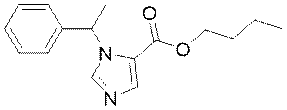
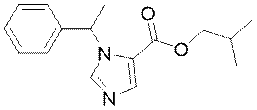
Etomidate was controlled in October 2023, followed by controls on metomidate, propoxate and isopropoxate in March 2024. The emergence of further variants prompted the addition of another seven materials to China’s controlled drugs list in July 2025, the four-carbon homologues butomidate, isobutomidate and sec-butomidate, the halogenated variants 4-fluoroetomidate, 2,6-dichloro-3-fluoro-etomidate and 2,2,2-trifluoroethyl-etomidate as well as the 1-(methoxycarbonyl) cyclopropyl derivative (known as CPMM or ABP-700).
Hong Kong
Etomidate, metomidate, propoxate and isopropoxate were controlled in February 2025. In July 2025, the specific Dangerous Drugs Ordinance controls on metomidate, propoxate and isopropoxate were replaced by a generic control on etomidate derivatives, worded as follows:
“Any compound….structurally derived from etomidate by modification in any of the following ways-
i) By replacement of the ethoxycarbonyl by any other alkoxycarbonyl or any haloalkoxycarbonyl group;
ii) By substitution in the phenyl ring to any extent with alkyl, alkoxy, aryloxy, halogeno or haloalkyl substituents.”
Taiwan
Etomidate was controlled as a narcotic in November 2024, and metomidate, propoxate and isopropoxate were subsequently also controlled. In July 2025, control was further expanded to cover other variants including butomidate, trifluoroethyl etomidate and 4-fluoroetomidate.
Singapore
All vapes and vaping products are banned in Singapore, and are controlled under their Tobacco (Control of Advertisements and Sales) Act. Examination of over 100 seized vapes revealed that around one third contained etomidate. It was therefore announced in July 2025 that etomidate was to be controlled under their Misuse of Drugs Act as a Class C drug.
South Korea
Etomidate had been listed as a “drug that may cause concerns of misuse or abuse” in 2020 and in February 2025 this was upgraded to listing as a narcotic (controlled) drug.
Thailand
Etomidate is not a controlled drug in Thailand. However, in December 2024 four Chinese nationals were arrested for importing precursor chemicals from China sufficient to produce 200 kg of etomidate in Bangkok, believed to be intended for supply to the Chinese market. The Thai Office of Narcotics Control Board are monitoring for evidence of use within the country and intend to control etomidate as a Schedule 2 substance if the trend is detected.
Australia
While Australia has not yet formally scheduled etomidate or its analogues under its federal or state-based controlled substances legislation, emerging reports suggest a growing concern. The Australian Therapeutic Goods Administration (TGA) currently lists etomidate as a Schedule 4 (Prescription-only) medicine under the Poisons Standard. While prevalence is still considered low, Australia’s proximity to East Asia means that increased trafficking or recreational use could see an emergence of etomidate analogues.
New Zealand
New Zealand currently does not list etomidate or its analogues under its Misuse of Drugs Act 1975. The analogues of etomidate would be subject to the Psychoactive Substances Act 2013; etomidate itself would not be subject to this as it would be exempted as a ‘medicine’ (Paragraph 9(3)(c) of the Act). Etomidate is available as a Schedule 1 prescription medicine for clinical use in hospitals, but is not routinely monitored outside of scheduled anaesthesia contexts.
Pacific Island Nations
Pacific Island countries have very limited capacity for toxicological testing and drug trend surveillance, which may delay detection of emerging substances such as etomidate analogues. While no current evidence exists of etomidate misuse in these jurisdictions, their proximity to East and Southeast Asia—as well as established drug trafficking routes—places them at potential risk. Additionally, the relatively lower level of border control infrastructure may make these countries vulnerable to becoming transit points or receiving markets for such substances.
Regional risk considerations
-
Oceania’s increasing alignment with East Asian drug markets raises the likelihood of parallel trends in NPS misuse.
-
Vaping as a method of drug administration is rapidly growing among young adults in Australia and New Zealand, offering a convenient vector for etomidate exposure.
-
The emergence of etomidate analogues (e.g., propoxate, isopropoxate) in response to scheduling actions in Asia could encourage early, covert distribution into neighbouring markets like Oceania where controls are currently absent.
6. Misuse
6.1. Historically there have been few reports of etomidate being identified in drug seizures and toxicology cases, often in combination with other drugs. Over the last few years, however, in Southeast Asia and New Zealand it has been detected as a drug in its own right being used via e-cigarettes and vaping devices [UNODC 2025a; UNODC 2025b].
6.2. Misuse of etomidate began to appear in Korea in 2011, following the decision to schedule propofol as a controlled drug, which led to etomidate also becoming a narcotic (controlled) drug in 2020.
6.3. Misuse of etomidate in vaping products was subsequently identified in China in 2021, possibly associated with the introduction of a broad generic control of synthetic cannabis receptor agonists. This rapidly became a significant trend, and similar misuse via e-cigarettes and vaping devices began to be reported in Hong Kong, Taiwan and Singapore, with the smokable products being referred to locally as ‘Space oil’ or ‘kpods’.
6.4. Etomidate-containing e-cigarettes have also been discovered in Thailand, referred to there as ‘zombie cigarettes’ and a largescale facility for the illicit synthesis of etomidate was identified in Bangkok in December 2024, with the capability of producing over half a million e-cigarettes.
6.5. Within Southeast Asia, misuse of etomidate and related materials has grown rapidly with, for example, Hong Kong police reporting that the proportion of drug users reporting use of ‘Space oil’ has increased from 1.4% in the first quarter of 2024 to 12% in the first quarter of 2025. In Taiwan, recreational use of etomidate now accounts for around 5% of all drug cases. In 2024, of 88,000 people identified in China as using NPS, etomidate was the most commonly abused material, used by 38.5% of individuals (how these people were identified was not specified) [Thomson 2024; Narcotics Division 2025; ONNCC 2025].
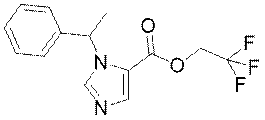
6.6. The rapid development of this trend has led to local legislative actions, first addressing etomidate itself and then its closely related homologues metomidate, propoxate and isopropoxate which had appeared following control of etomidate (see section above). However, further homologues such as iso-butomidate and sec-butomidate have now been identified in China, as well as halogenated variants such as 4F-etomidate, 2,6-dichloro-3-fluoro-etomidate and TF-etomidate (the 2-trifluoroethyl variant of etomidate).
6.7. Within Southeast Asia, misuse of etomidate and related materials is concentrated amongst younger people and is primarily conducted by means of inhaling or vaping of liquids containing etomidate from e-cigarettes and vaping devices. There have also been reports of injection of etomidate for recreational use [Lin 2025; Uhm 2024].
6.8. In South Korea, there have been reports of healthcare staff diverting hospital supplies and gangs involved in the trafficking large volumes of etomidate. In addition, there are reports of etomidate being used among celebrities. US and Korean reports described recreational self-administration, illegal hospital sales and/or diversion and deaths following etomidate or metomidate exposure [Uhm 2024].
6.9. Modern analytical methods including LC MS/MS methods were developed and assisted in the forensic detection of both etomidate and metomidate in various matrices such as blood, urine and hair and seized e-liquids. These analyses were used to provide insight into single, repeated or chronic exposure even when clinical suspicion is low. However, routine screening for etomidate in many clinical and forensic settings is rare, often requiring targeted analysis with low limits of quantitation to report a positive result. These analyses have also informed post-mortem cases due to poisonings [Uhm 2024].
7. Legitimate uses
7.1. The ACMD Secretariat contacted the Medicines and Healthcare products Regulatory Agency (MHRA) for any information on the legitimate use, clinical trials and/or marketing authorisation applications of etomidate and related compounds.
7.2. Etomidate is approved for use in humans in the UK for the induction of anaesthesia; it has also been used for the maintenance of anaesthesia and sedation in intensive care unit settings. Etomidate is very rarely used in general anaesthesia; typically, it is used in fewer than 10% of cardiac surgery related operations, and these are “high-risk” or “unstable” mitral or aortic stenosis related cardiac surgery.
7.3. The MHRA last received notifications of intent (NOIs) to import etomidate on 13 August 2020.
7.4. The Veterinary Medicines Division have confirmed that none of the following compounds are authorised as veterinary medicines in the UK: etomidate, metomidate, propoxate, isopropoxate, and cyclopropyl-methoxycarbonyl metomidate (CPMM).
8. Health harms
Acute toxicity
8.1. The adverse effects outlined in the SPC for etomidate are in the list below. [Etomidate SmPC] Adverse effects can be categorised based on their reported frequency: i) very common – occur in ≥ 10 patients treated; ii) common – occur in between ≥ 100 and < 10 patients treated; iii) uncommon – occur in ≥1,000 and < 100 patients treated; and iv) rare – occur in ≥ 10,000 and < 1,000 patients. The unwanted effects of etomidate effects include:
-
Endocrine disorders: very common – cortisol decreased
-
Nervous system disorder: very common – dyskinesia; common – myoclonus; uncommon – hypertonia, muscle contractions, nystagmus, shivering
-
Cardiac disorders: uncommon – bradycardia, extrasystoles, ventricular extrasystoles
-
Vascular disorders: common – hypotension; uncommon – hypertension
-
Respiratory disorders: common – apnoea, hyperventilation, stridor; uncommon – hypoventilation, hiccups, cough; rare – laryngospasm
-
Gastrointestinal disorders: common – vomiting, nausea; uncommon – salivary hypersalivation
-
Skin disorders: common – rash; uncommon – erythema
-
Musculoskeletal disorders: uncommon – muscle rigidity
8.2. There have been five case series detailing 111 cases of acute toxicity related to the self-reported non-medical use and/or analytically confirmed non-medical use of etomidate in Hong Kong, mainland China and Taiwan [Cheung 2025; Chung 2025; Qian 2025; Wong 2025; Wu 2024]. Eight of these reports involved the vaping of etomidate.
8.3. In some of these cases, in addition to etomidate, the related compounds propoxate, isopropoxate and/or metomidate were detected in some patients. In a case series of 29 patients from Hong Kong where urine toxicology screening was undertaken, etomidate was detected in 20 urine samples and propoxate or isopropoxate were detected in 17 samples; of these 29 patients, five were positive for both etomidate and propoxate/isopropoxate [Cheung 2025]. Similarly, in a further case series of 29 patients from Taiwan, both etomidate and medetomidine were detected in 4 patients and both medetomidine and isopropoxate was detected in 1 patient [Chung 2025]. It is not clear from the information available whether the individuals had used a product that had contained a combination of etomidate and a related compound, or if they had used different products/drugs containing the detected drugs separately.
8.4. Additionally, other drugs such as methamphetamine, cocaine, ketamine and synthetic cathinones were detected, which may have contributed to some of the clinical features reported. In a case series of 29 patients in Hong Kong where etomidate, propoxate or isopropoxate were detected on urine screening, methamphetamine was detected in 25 (86%) of urine samples and cocaine was detected in 15 (52%) of urine samples [Cheung 2025]. In a further report from Taiwan of 21 patients where etomidate was detected, ketamine was detected in 12 (57%), synthetic cathinones in 12 (57%) and methamphetamine in 10 (48%) [Chung 2025]. This suggests that etomidate may be being used in the setting of “poly-drug use”, where individuals may be combining both etomidate and related drugs with a stimulant drug such as methamphetamine or cocaine, potentially to counteract some of the unwanted effects of the etomidate or related compound.
8.5. The terminology used to report symptoms differed between case series, but in summary the commonly reported symptoms in 108 patients from four case series included impaired cognition/confusion (20), fluctuating/reduced consciousness (19 patients), tachycardia (15), emotional instability (14), delirium (10), tremor (10), agitation/aggression (7), unsteady gait (7), slurred speech (2), dizziness (2), muscle rigidity (1), and myoclonus (1) [Cheung 2025; Chung 2025; Qian 2025; Wong 2025].
8.6. Hypokalaemia as a potential complication related to 11-β-hydroxylase inhibition by etomidate or related compounds was reported in 47 of 76 patients [Cheung 2025, Wong 2025, Wu 2024]. The lowest reported potassium concentration in these patients was 1.69 mmol/L (the normal serum potassium concentration is 3.5-4.5 mmol/L). Two patients who had been vaping etomidate for about six months presented with “lower limb weakness” which could be directly related to severe hypokalaemia of 1.69 and 1.80 mmol/L [Wu 2024].
8.7. In one case series of 29 patients from Hong Kong, features of hyperandrogenism potentially related to 11-β-hydroxylase inhibition by etomidate were reported; these were hirsutism (1/29), amenorrhoea (1/29) and acne (1/29), although it was not clear from the report whether this was one patient with all symptoms or multiple patients with one or more symptom(s) [Cheung 2025].
8.8. There have been case reports of four individuals in China with clinical and biochemical features consistent with acquired inhibition of 11β-hydroxylase related to e-cigarette use of etomidate. Biochemical testing of these individuals showed either significantly elevated concentrations of intermediate adrenocortical steroid hormone metabolites (such as 11-deoxycortisol, 11-deoxycorticosterone, 17α-hydroxyprogesterone, tetrahydro-11-deoxycortisol and/or tetrahydro-deoxycorticosterone) or reduced concentrations of cortisol, in keeping with etomidate-related acquired inhibition of 11β-hydroxylase [Qin 2024; Lau 2024; Liang 2025].
8.9. The US FDA Adverse Events Reporting System (FAERS) listed six abuse cases between 2007 and 2022, five of which were in the last five years, and all were male. Symptoms recorded were either respiratory arrest or death [FAERS].
Dependence and withdrawal
8.10. Similar to other sedatives, there is the potential for etomidate to be associated with tolerance and dependence, which may mean individuals who are using it on a regular basis may develop withdrawal on cessation of use.
8.11. There is a report from Taiwan of a 21-year-old female previously dependent on benzodiazepines who subsequently developed etomidate dependency and associated withdrawal [Lin 2024]. She was using one e-cigarette cartridge every 3 days to help her sleep which rapidly escalated to 3 to 5 cartridges per day within 2 months. On cessation of use she developed anxiety, irritability, visual hallucinations, severe mood swings, suicidal ideation and a strong craving for etomidate. These symptoms were managed over three days with oxazepam and aripiprazole.
8.12. There is a further report from Taiwan of dependency related to the use of isopropoxate by an electronic vaporizer, with similar symptoms on cessation of use (irritability, insomnia, restlessness and cravings), which were managed with a tapering course of lorazepam [Ho 2025].
Deaths
8.13. There have been published reports of seven deaths related to etomidate or related compounds in Asia and two deaths in the United States [Chen 2024a, Detweiler 2014, Yum 2021, Qian 2025, Wong 2025; Molina 2008]. Five reports included information of the circumstances of death and post-mortem analytical confirmation of use and are summarised below.
8.14. A 44-year-old female checked herself into a hotel and was subsequently found unconscious in the bathtub with empty bottles of wine and infusion bags and syringes and several self-inserted intravenous cannula. She was pronounced deceased on arrival of the emergency services. Post-mortem analysis detected etomidate in femoral blood, bile and vitreous fluid; alcohol was also detected in femoral blood [Molina 2008].
8.15. A 42-year-old male was found “sitting on a recliner with an intravenous needle inserted into a vein on his left dorsal hand”. Toxicologic blood analysis detected etomidate, along with vecuronium and ethanol; the cause of death was determined to be due to “respiratory failure secondary to vecuronium administration exacerbated by sedation secondary to etomidate and alcohol use” [Detweiler 2014].
8.16. A 47-year-old male in China drank from a “coffee bottle”, which was subsequently found to contain etomidate at a concentration of 1.7 x 10⁵ µg/mL, lost consciousness and then had a cardiorespiratory arrest and could not be resuscitated. Post-mortem analysis detected etomidate in cardiac blood and stomach contents [Chen 2024b].
8.17. A 22-year-old woman in South Korea was found unconscious in a bath and following transfer and treatment in hospital, she eventually died. A witness revealed that the deceased had taken an “injection of etomidate”. Post-mortem analysis both etomidate and metomidate were detected in both femoral and cardiac blood; only alprazolam and escitalopram were additionally detected (specimen type not reported) [Yum 2021].
8.18. A 14-year-old female in China was found “sitting in the middle of the road during the early hours of the morning after being struck by a vehicle” and resuscitation in hospital was unsuccessful. Analysis of a post-mortem blood sample detected metomidate, propoxate, isopropoxate and etomidate acid [Qian 2025].
9. Social harms
9.1. There is no information on the social harms that may be caused by etomidate or related compounds.
9.2. The acute toxicity described with exposure to etomidate includes drowsiness and coma. Therefore, there is the potential that individuals may be exposed intentionally to etomidate and related compounds by other individuals with the intent of causing sedation to facilitate crimes such as robbery, assault and sexual assault [Qian 2025; Uhm 2024]. There is the potential that etomidate may increase the risk to the individual and the public when an individual is driving under the influence of etomidate.
10. UK Prevalence
10.1. To evidence the identification and prevalence of etomidate and related compounds in the UK, the ACMD’s New Psychoactive Substances (NPS) Committee wrote to stakeholders at the end of April 2025 requesting available data on their detections.
10.2. The UNODC has recommended that “drug testing and toxicology laboratories need to maintain up-to-date methods and consider routine screening processes to effectively identify etomidate and its analogues. Given the rapid spread of these substances, increased awareness and monitoring of early warning systems is crucial”.
10.3. Currently, in the UK, testing of vaping devices and liquids to be used in them for the presence of narcotic substances such as etomidate and related compounds is not routinely conducted. Similarly, routine testing of clinical and post-mortem samples does not typically include screening for etomidate. Therefore, it is possible that without testing for these drugs, the true prevalence of availability and use in the UK may be significantly under-estimated.
National Crime Agency (NCA)
10.4. The National Crime Authority (NCA) reported the detection of etomidate in 5 seizures during 2023. All instances involved etomidate in powder form, either found alone or in combination with heroin. In 2024, etomidate was detected in 11 seizures, primarily in powder form on its own or alongside heroin. Additionally, some of the 2024 seizures also involved the detection of etomidate in tablet form, which was most commonly found in combination with bromazolam.
Office for Health Improvement and Disparities (OHID) and Local Drug Information Systems (LDIS)
10.5. OHID was officially launched in October 2021 as a part of the Department of Health and Social Care, with the aim of tackling health inequalities across England and Wales.
10.6. In February 2023, there was a report of 2 drug-related deaths and 2 near fatal overdoses from Lancashire in the North West of England. There was analysis of a “brown heroin sample” found on one of the individuals who died. The sample was a described as being a 0.12 g package with heroin purity of 7%; also detected were caffeine and paracetamol and etomidate as a minor component (exact amount not quantified). No further information on the circumstances around this death have been provided, and there are no results of ante- or post-mortem analysis of biological samples from the deceased to confirm that etomidate was use and/or involved in the death. In addition, there was no further information or analysis of samples from the other death or the two near-fatal overdoses.
10.7. In June 2023 there was a reported seizure of 60 green tablets in the East Midlands with markings of ‘48’, ‘12’ and ‘V’ which on analysis were found to contain bromazolam, etomidate, N-pyrrolidinoprotonitazene and protonitazene. There was no reported quantification of any of the detected compounds.
Scottish Prison Service - Leverhulme Research Centre for Forensic Science/Public Health Scotland - Rapid Action Drug Alerts & Response (PHS-RADAR)
10.8. Two detections of etomidate in “white powders” analysed in 2023; no further information on whether other drug(s) were detected and/or quantification has been provided.
Scottish Police Authority -Forensic Drug seizure Detections
10.9. One detection in 2023 in a “white crystalline powder” and one detection in 2024 in the residual contents of a vape pen; no further information on whether other drug(s) were detected and/or quantification has been provided.
WEDINOS
10.10. Funded by Public Health Wales, WEDINOS provides laboratory testing of drug samples volunteered by the community. These are received anonymously by post from either individuals or participating organisations (such as substance misuse services, housing and hostels, youth clubs and young people’s services, education, night clubs and bars, mental health community teams). Anonymised test results are publicly available online. There is the potential limitation to the WEDINOS dataset as this is based on individuals sending samples to them for analysis. It is commonly used for tablet and powder analysis; individuals may be less likely to send in vape liquid for analysis.
10.11. The publicly available ‘sample results’ section on the WEDINOS website was searched in June 2025 to identify samples that had been analysed where etomidate or related substances were identified.
10.12. Etomidate has been detected in 9 samples (5 tablet and 4 powder/crystalline samples). A summary by year of detection, along with the total number of samples in each year, and the purchase intent is shown in Table 1. There have been no detections reported from WEDINOS since January 2024.
| Date | Total Samples Analysed | Etomidate Detected | Purchased Intent of the buyer |
|---|---|---|---|
| April 2022 to March 2023 | 7,744 | 4 | Oxycodone (2 *), Alprazolam (1), Etizolam (1) |
| April 2023 to March 2024 | 8,466 | 5 | Oxycodone (3 **), Etizolam (1), Heroin (1 ***) |
Table 1. Summary of WEDINOS analysed samples where etomidate was detected
*One of these samples contained protonitazene as well as etomidate
**All of these samples contained protonitazene as well as etomidate
***Colourless heroin powder also contained protonitazene and diazepam
10.13. Samples where etomidate has been detected have been reported from Scotland (1 sample in 2023) and England (7 samples in 2023 and 1 sample in 2024).
10.14. There were no samples analysed by WEDINOS where metomidate, propoxate, isopropoxate or CPMM have been detected.
10.15. The following stakeholders confirmed that they have not had any detections, cases of toxicity and/or deaths of etomidate or related compounds in the UK up to the time of the data request: Border Force, Crown Office and Procurator Fiscal Service (COPFS) and NHS Grampian, Emerging Drugs and Technology (EDAT) Project (previously known as the Forensic Early Warning System (FEWS) Project), EU-MADNESS, Eurofins, European Drug Emergencies Network Plus (Euro-DEN Plus) project, Identification Of Novel psychoactive substances (IONA) study, Laboratory of the Government Chemist (LGC), MANchester Drug Analysis and Knowledge Exchange (MANDRAKE), National Poisons Information Service (NPIS), National Programme on Substance Use Mortality (NPSUM), National Records of Scotland (NRS ), Northern Ireland Statistics and Research Agency (NISRA), Office of National Statistics (ONS), TIC TAC Communications. It is possible that this lack of reported detections by these stakeholders is in part due to lack of routine screening of samples for etomidate and related compounds, or the lack of ability in these services to routinely analyse vaping liquids and/or other products designed for vaping.
11. Conclusions
11.1. Etomidate is a modulator of the GABA-A receptor that is licensed for use in humans as an ultra-short-acting (rapid onset and rapid offset) intravenous drug for the induction of anaesthesia, although its use in clinical practice is limited by its dose-dependent inhibition of adrenal steroid synthesis. Currently, it is usually only used in patients with unstable or high-risk aortic stenosis or mitral stenosis surgery.
11.2. There are a number of related compounds that have structural similarities to etomidate and also have similar clinical effects, but some potentially do now have the unwanted effects reported with etomidate on adrenal steroid synthesis.
11.3. Since 2011 there have been reports of non-medical (recreational) use of etomidate, particularly from countries in Asia such as China, Hong Kong, Taiwan and the Republic of Korea, and New Zealand. This use is largely due to the “rapid onset/offset” of desired effects with no ongoing hangover effects after use, and because of this it is often known as “Space Oil”. These reports have increased significantly over the last 2 to 3 years.
11.4. Information on the acute toxicity of these compounds from case reports and series of non-medical use from Asia demonstrates that etomidate is associated with sedation, which can be clinically significant. In addition, both short and long-term non-medical use has been reported to be associated with clinical and biochemical features consistent with inhibition of adrenal steroid synthesis.
11.5. There have been only two published reports to date of dependency and associated withdrawal related to the long-term use of etomidate; both required hospital admission to manage the clinical effects of the withdrawal.
11.6. Due to their sedative effects individuals who themselves use etomidate or related compounds or are exposed intentionally to these compounds by other individuals with the intent of causing sedation to facilitate crimes, may be the victim of crimes such as robbery, assault and sexual assault. There is the potential that etomidate and related compounds may increase the risk to the individual and the public when an individual is driving under the influence of these compounds.
11.7. Where countries have tried to implement mechanisms to control etomidate due to its increased availability and use, there has subsequently been an increase in the detection of related, but uncontrolled, compounds such as metomidate, propoxate and isopropoxate.
11.8. Currently there is limited evidence of detection and/or use of etomidate and related compounds in the UK; however, this may in part be due to the lack of routine testing of e-liquids and other vaping related products, and so the true availability and use in the UK is likely to be significantly underestimated.
11.9. Given the reported harms of these products in other countries, and the potential risk that the availability and use of these etomidate and related compounds will increase in the UK, the ACMD advises that control of etomidate and related compounds via the Misuse of Drugs Act 1971 is required at this time, rather than waiting until there is an increase in reported harms related their use in the UK.
11.10. The ACMD review shows that the harms could be considered to be broadly equivalent to those of other sedatives such as benzodiazepines, zopiclone or pregabalin, so listing in Class C is recommended.
11.11. Etomidate is licenced for clinical use in areas, although the actual therapeutic use of etomidate for the induction of anaesthesia is relatively low. Therefore, the ACMD would recommend that etomidate is listed in Schedule 4 (Part 1) of the Misuse of Drugs Regulations 2001. As the other related compounds covered by the recommended generic control currently have no legitimate medical or other uses, the ACMD would recommend that these are listed in Schedule 1 of the Misuse of Drugs Regulations 2001.
12. Recommendations
Recommendation 1
Whilst there is currently limited evidence of detection and/or use of etomidate and related compounds in the UK, due to the potential risk that the availability and use of these etomidate and related compounds will increase in the UK, the ACMD advises that control of etomidate and related compounds via the Misuse of Drugs Act 1971 is required. The harms are broadly equivalent to those of other sedatives such as benzodiazepines, zopiclone or pregabalin, so listing in Class C is recommended.
As etomidate is licensed for use in medical practice, it should be listed in Schedule 4 (Part 1) of the Misuse of Drugs Regulations 2001 As there are a range of simple variants of etomidate which could be or have already been encountered, a small generic control, similar to that used in Hong Kong legislation, should be drafted and consulted on to cover these compounds. Since those compounds, apart from etomidate, have no legitimate medical or other use, those covered by the generic control should be listed in Schedule 1 of the Misuse of Drugs Regulations 2001. They should also be designated as controlled drugs to which section 7(4) of the 1971 Act applies.
Lead: Home Office.
Measure of outcome: The inclusion of the etomidate and related compounds in Class C of the Misuse of Drugs Act 1971, with etomidate in Schedule 4 (Part 1) and the other related compounds in Schedule 1 of the Misuse of Drugs Regulations 2001.
Recommendation 2
Due to limited testing of e-liquids seized at the border or by police, the true availability and use of etomidate and related drugs, which are widely reported in Asia and New Zealand to occur through vaping of e-liquids, is likely to be significantly underestimated at this time.
The ACMD would recommend that law enforcement bodies and Trading Standards should be encouraged to submit samples of seized vaping products for analysis in order to allow monitoring of this new route for drug administration. This should be coupled with an increase in the availability and capability of UK-based analytical services to enable wider testing of e-liquids in order to be able to determine the true threat to the UK public from drugs such as etomidate which can be consumed through vaping of e-liquids containing them.
Forensic science providers and others need to ensure that they have the ability and capacity to analyse e-liquids and other products designed for vaping, as well as the ability to detect etomidate and related compounds.
Leads: OHID, Home Office, Forensic Science Providers
Measure of outcome: Increased sampling and availability of testing of e-liquids and reporting of findings; in addition, forensic science providers need to ensure that there is testing of clinical, post-mortem and other samples for etomidate and related compounds that may be used by vaping.
Recommendation 3
Emerging evidence from Asia and Oceania indicates increasing use of etomidate and related analogues in vaping products, with limited current visibility in UK data. Given the rapid global spread of NPS, including those delivered via e-liquids, the ACMD recommends strengthening international collaboration and data sharing with key partners.
The ACMD recommends that there should be enhanced engagement with international drug monitoring systems (e.g. UNODC, EUDA), regional early warning networks, and forensic laboratories will support earlier detection and improved risk assessment of substances such as etomidate analogues entering the UK.
There needs to be monitoring of the impact of any national and/or international control of etomidate and related compounds on the emergence of other drugs to replace those that have been controlled.
Leads: OHID, Home Office, and UK Focal Point on Drugs
Measure of outcome: Increased participation in international NPS data exchanges; evidence of timely UK reporting and response to emerging etomidate-related threats identified abroad.
Recommendation 4
Currently there is no information for potential users of etomidate and related compounds, as well as healthcare professionals, on the acute health risks associated with the non-medical use of these compounds. In addition, due to the risk of inadvertent overdose this potentially puts individuals at risk of acquisitive crime due to their sedative effects.
The ACMD recommends that information on acute health risks of etomidate and related compounds, and on the risks of exposure to psychoactive materials in vaping products should be made available to the public and healthcare professionals.
Leads: Department for Education, Office for Health Improvement and Disparities, Local Government Association, FRANK, DAN 24/7 (Betsi Cadwaladr University Health Board), Know the Score (Scotland), National Poisons Information Service, Scottish Government Population Health Directorate, Welsh Government – Department for Education and Welsh Language, Department of Education (Northern Ireland).
Measure of outcome: Availability of information to the general public and healthcare professionals on the harms and risks of using etomidate and related compounds.
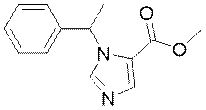
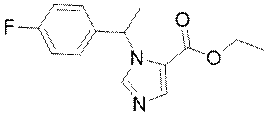
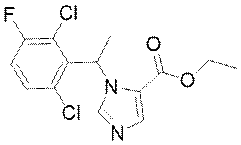
Annex A: The chemical structures for etomidate, metomidate, isopropoxate, propoxate, CPMM and other analogues.
- Etomidate
- Ethyl-1-((R)-1-phenylethyl)imidazole-5-carboxylate
- Metomidate
- Methyl-1-(1-phenylethyl)imidazole-5-carboxylate
- Isopropoxate
- Isopropomidate
- Isopropyl 1-(1-phenylethyl)-1H-imidazole-5-carboxylate
- Propoxate
- Propomidate
- Propyl-1-(1-phenethyl)imidazole-5-carboxylate
- Butomidate
- butyl 1-(1-phenylethyl)-1H-imidazole-5-carboxylate
- iso-butomidate
- isobutomidate
- 2-methylpropyl-1-(1-phenylethyl)imidazole-5-carboxylate
- sec-butomidate
- sec-butyl 1-(1-phenylethyl)-1H-imidazole-5-carboxylate
- TF-etomidate
- 2,2,2-trifluoroethyl 1-(1-phenylethyl)-1H-imidazole-5-carboxylate
- CF3-etomidate
- 4F-etomidate
- Flutomidate
- ethyl 1-(1-(4-fluorophenyl)ethyl)-1H-imidazole-5-carboxylate
- CPMM
- Cyclopropyl-methoxycarbonyl metomidate
- ABP-700
- Carboetomidate
- (R)-Ethyl 1-(1-phenylethyl)-1H-pyrrole-2-carboxylate
- Methoxycarbonyl-etomidate
- 3-methoxy-3-oxopropyl -1-(1-phenylethyl)-1H-imidazole-5-carboxylate
- 2,6-diCl-3F-etomidate
- 2,6-dichloro-3-fluoro-etomidate
- ethyl 1-(1-(2,6-dichloro,3-fluorophenyl)ethyl)-1H-imidazole-5-carboxylate
Annex B: Chair and Members of ACMD Etomidate and related compounds working group
Chair of Working Group
Professor David Wood: Professor of Clinical Toxicology and Consultant, Guy’s and St Thomas’ NHS Foundation Trust and King’s College London
Members of Working Group
Dr John Corkery*: Associate Professor in Pharmacy Practice at University of Hertfordshire; mortality and epidemiological lead for EU-MADNESS project
Professor Colin Davidson: Professor of Neuropharmacology, University of Central Lancashire
Professor Amira Guirguis: Professor of Pharmacy, MPharm Programme Director and Deputy Pro Vice Chancellor at Swansea University
Dr Helgi Johannsson*: Consultant Anaesthetist, Imperial College Healthcare NHS Trust, London and Elected Council Member, Royal College of Anaesthetists
Professor Roger Knaggs: Professor of Pain Management, University of Nottingham and Specialist Pharmacist in Pain Management, Primary Integrated Community Services
Dr Lorna Nisbet: Senior Lecturer and Principal Investigator for Forensic Toxicology at the Leverhulme Research Centre for Forensic Science, University of Dundee
Dr Jennifer Schumann*: Head of Drug Intelligence Unit Victorian Institute of Forensic Medicine, Associate Professor Department of Forensic Medicine, Monash University, Australia
Dr Richard Stevenson: Emergency medicine consultant, Glasgow Royal Infirmary
Professor Simon Thomas: Emeritus Professor of Clinical Pharmacology and Therapeutics, Newcastle University
Mr Ric Treble*: Retired Laboratory of the Government Chemist (LGC) expert
*denotes co-opted member of the ACMD working group
Annex C: ACMD Novel Psychoactive Substances Committee membership, at time of publication
Chair of NPS Committee
Professor Simon Thomas: NPS Committee Chair, Emeritus Professor of Clinical Pharmacology and Therapeutics, Newcastle University
Members of NPS Committee
Mr Paul Bunt**: Director of Casterton Event Solutions Ltd, Former Drug Strategy Manager for Avon and Somerset Constabulary
Mr Peter Cain**: Drugs Scientific Advisor, Eurofins Forensic Services
Dr Caroline Copeland: Senior Lecturer in Pharmacology and Toxicology, King’s College London. Director, National Programme on Substance Use Mortality
Dr John Corkery**: Associate Professor in Research (Psychoactive Substances’ Epidemiology, Toxicology and Mortality), University of Hertfordshire; mortality. Epidemiological lead for EU-MADNESS project
Professor Colin Davidson: Professor of Neuropharmacology, University of Central Lancashire
Professor Amira Guirguis: Professor of Pharmacy, MPharm Programme Director and Deputy Pro Vice Chancellor at Swansea University
Dr Hilary Hamnett: Associate Professor in Forensic Science and Forensic Toxicologist at the University of Lincoln
Professor Graeme Henderson: Honorary Professor of Pharmacology, School of Physiology, Pharmacology & Neuroscience, University of Bristol
Dr Simon Hill: Consultant in Clinical Pharmacology, Therapeutics and Clinical Toxicology. Honorary Clinical Senior Lecturer, Newcastle University
Professor Stephen Husbands: Professor of Medicinal Chemistry, University of Bath
Professor Roger Knaggs: Professor of Pain Management, University of Nottingham and Specialist Pharmacist in Pain Management, Primary Integrated Community Services
Professor Fiona Measham**: Professor and chair in criminology at the University of Liverpool; co-founder and co-director, the Loop
Dr Richard Stevenson: Emergency Medicine Consultant, Glasgow Royal Infirmary
Mr Ric Treble**: Retired Laboratory of the Government Chemist (LGC) expert
Professor David Wood: Professor of Clinical Toxicology and Consultant, Guy’s and St Thomas’ NHS Foundation Trust and King’s College London
**denotes co-opted member of ACMD Novel Psychoactive Substances Committee
Annex D: ACMD membership at the time of publication
Chair of ACMD
Professor Owen Bowden-Jones CBE: Consultant psychiatrist, Central North-West London NHS Foundation Trust
Members of ACMD
Professor Judith Aldridge: Professor of criminology at the University of Manchester
Professor Anne Campbell: Professor in substance use at Queens University Belfast School of Social Sciences, Education and Social Work
Dr Caroline Copeland: Senior Lecturer in Pharmacology and Toxicology, King’s College London and Director, National Programme on Substance Use Mortality
Professor Colin Davidson: Professor of Neuropharmacology, University of Central Lancashire
Professor Karen Ersche: Professor of Addiction Neuroscience, University of Cambridge
Mr Mohammed Fessal: Chief Pharmacist, Change Grow Live
Professor Amira Guirguis: Professor of Pharmacy, MPharm Programme Director at Swansea University Medical School
Dr Hilary Hamnett: Associate Professor in Forensic Science and Forensic Toxicologist at the University of Lincoln
Mr Jason Harwin: Director and Co‑founder of E‑T‑E Solutions Limited
Professor Graeme Henderson: Honorary Professor of Pharmacology, School of Physiology, Pharmacology & Neuroscience, University of Bristol
Professor Katy Holloway: Professor of Criminology at the University of South Wales
Dr Carole Hunter: Retired. Chair SDF Board and Doping Control Officer UK Antidoping
Professor Stephen Husbands: Professor of Medicinal Chemistry, University of Bath
Professor Sunjeev Kamboj: Professor of Translational Clinical Psychology, Research Department of Clinical, Educational and Health Psychology, University College London
Professor Roger Knaggs: Professor of Pain Management, University of Nottingham and Specialist Pharmacist in Pain Management, Primary Integrated Community Services
Mrs Sapna Lewis: Senior Lawyer, Welsh Government Legal Services Department
Dr Lorna Nisbet: Senior Lecturer and Principal Investigator for Forensic Toxicology at the Leverhulme Research Centre for Forensic Science, University of Dundee
Mr Jon Privett: Detective Sergeant, Metropolitan Police Service
Mrs Fiona Spargo‑Mabbs OBE: Director and Founder, Daniel Spargo‑Mabbs Foundation and Chair, Drug Education Forum
Dr Richard Stevenson: Emergency medicine consultant, Glasgow Royal Infirmary
Professor Paul Stokes: Professor of mood disorders and psychopharmacology, King’s College London
Professor Harry Sumnall: Professor in Substance Use, Liverpool John Moores University (LJMU)
Professor Simon Thomas: Emeritus Professor of Clinical Pharmacology and Therapeutics, Newcastle University
Professor Derek Tracy: Chief Medical Officer, South London and Maudsley NHS Foundation Trust
Ms Rosalie Weetman: Group Manager (Public Health Principal), Inclusion Public Health at Derbyshire County Council; currently on secondment to the Office for Health Improvement and Disparities as Programme Manager, Drug and Alcohol Improvement Support Team
Professor David Wood: Professor of Clinical Toxicology and Consultant Physician, Guy’s and St Thomas’ NHS Foundation Trust and King’s College London
Annex E: References
Carroll TB, Peppard WJ, Herrmann DJ, Javorsky BR, Wang TS, Patel H, Zarnecki K, Findling JW. Continuous Etomidate Infusion for the Management of Severe Cushing Syndrome: Validation of a Standard Protocol. J Endocr Soc. 2018; 3: 1-12.
Chen TS, Lin HC, Esme Y. ‘Zombie vape’ use increases 58-fold: prosecutors. Taipei Times. 2024a. Available from: https://www.taipeitimes.com/News/taiwan/archives/2024/10/28/2003825985 [Last accessed 6 October 2025]
Chen Y, Liu J, Song T, Zou X, Li L, Nie Q, Zhang P. A case of fatal poisoning caused by etomidate: evidence from pathological and toxicological analyses. Forensic Sci Med Pathol. 2024b; 20: 1453-1457.
Cheung YT, Yeung CW, Yu KYC, Lau CY, Tong HF, Chong YK. A recent increasing occurrence of etomidate and propoxate/isopropoxate misuse. Clin Toxicol (Phila). 2025; 63: 65-67.
Chung CT, Chen JY, Chen GY, Fang CC, Weng TI. Analytically confirmed use of etomidate and its analogues in emergency department patients. Clin Toxicol (Phila) 2025. 63 Suppl 2; 29
Cotten JF, Husain SS, Forman SA, Miller KW, Kelly EW, Nguyen HH, Raines DE. Methoxycarbonyl-etomidate: a novel rapidly metabolized and ultra-short-acting etomidate analogue that does not produce prolonged adrenocortical suppression. Anesthesiology. 2009; 111: 240-249
Cotten JF, Forman SA, Laha JK, Cuny GD, Husain SS, Miller KW, Nguyen HH, Kelly EW, Stewart D, Liu A, Raines DE. Carboetomidate: A pyrrole analog of etomidate designed not to suppress adrenocortical function. Anesthesiology 2010; 112: 637-644
Dai Y, Zhang X, Zhao K, Wang Y, Liu J, Gu J, Bai H, Hasegawa K, Wurita A. Detection and quantification of etomidate and metomidate in human hairs by ultraperformance liquid chromatography with triple quadrupole mass spectrometry (UPLC-MS/MS). Forensic Toxicol. 2024; 42: 232-241.
Desai R, Miller KW, Raines DE. The Pyrrole Etomidate Analog Carboetomidate Potently Inhibits Human 5-HT3A Receptor Function: Comparisons with Etomidate and Potential Implications for Emetogenesis. Anesth Analg. 2013; 116: 573-579.
Detweiler CJ, Mambo NC. Suicide with Vecuronium and Etomidate: A Case Report and Review of the Literature. Academic Forensic Pathology. 2014; 4: 244-250.
Dzialach L, Sobolewska J, Respondek W, Wojciechowska-Luzniak A, Kuca P, Witek P. Is there still a place for etomidate in the management of Cushing’s syndrome? The experience of a single center of low-dose etomidate and combined etomidate-osilodrostat treatment in severe hypercortisolemia. Endocrine. 2025; 87: 1305-1313.
Doenicke A, Roizen MF, Nebauer AE, Kugler A, Hoernecke R, Beger-Hintzen H. A comparison of two formulations for etomidate, 2-hydroxypropyl-β-cyclodextrin (HPCD) and propylene glycol. Anesth Analg. 1994; 79: 933-939.
Ebert TJ, Muzi M, Berens R, Goff D, Kampine JP. Sympathetic responses to induction of anesthesia in humans with propofol or etomidate. Anesthesiology. 1992; 76: 725-733.
Etomidate SmPC. Emc. 2025. Etomidate 2 mg/ml emulsion for injection. Accessed on 05/07/2025. Available at: https://www.medicines.org.uk/emc/product/15214/smpc [Last accessed 6 October 2025]
FAERS. FDA Adverse Event Reporting System (FAERS) Public Dashboard. Available from: https://www.fda.gov/drugs/fdas-adverse-event-reporting-system-faers/fda-adverse-event-reporting-system-faers-public-dashboard [Last accessed 6 October 2025]
Gao T, Jin M, Alibudbud R, Assanangkornchai S, Sun Y, Lu L. Etomidate misuse: a digital era threat to youth and a call for anticipatory control. Lancet Psychiatry. 2025; 12: 732-733.
Ge RL, Pejo E, Haburcak M, Husain SS, Forman SA, Raines DE. Pharmacological studies of methoxycarbonyl etomidate’s carboxylic acid metabolite. Anesth Analg 2012; 115: 305-308.
Ge R, Pejo E, Gallin H, Jeffrey S, Cotten JF, Raines DE. The pharmacology of cyclopropyl-methoxycarbonyl metomidate: a comparison with propofol. Anesth Analg. 2014; 118: 563-567.
Hammitzsch M, Rao RN, Scriba GK. Development and validation of a robust capillary electrophoresis method for impurity profiling of etomidate including the determination of chiral purity using a dual cyclodextrin system. Electrophoresis. 2006; 27: 4334-4344.
High Alert 2025. Space oil and kpods - what’s going on with etomidate in vapes? February 2025. Available from: https://www.highalert.nz/articles/space-oil-and-kpods-whats-going-on-with-etomidate-in-vapes/ [Last accessed 6 October 2025]
Ho YC, Kuo TC, Chang HM. Identification and clinical management of etomidate-like substance withdrawal. Clin Toxicol (Phila). 2025; 63: 368-369.
Husain SS, Pejo E, Ge R, Raines DE. Modifying methoxycarbonyl etomidate inter-ester spacer optimizes in vitro metabolic stability and in vivo hypnotic potency and duration of action. Anesthesiology 2012; 117: 1027-1036.
Koorn R, Brannan TS, Martinez-Tica J, Weinberger J, Reich DL. Effect of Etomidate on In Vivo Ischemia-Induced Dopamine Release in the Corpus Striatum of the Rat: A Study Using Cerebral Microdialysis. Anesth Analg. 1994; 78: 73-79.
Kuai L, Li X, Xu D, Zeng L, Xu P, Di B, Yan F, Wang D. Behavioral studies of the abuse potential and anesthetic and sedative effects of etomidate in male rodents. Psychopharmacology 2025; 242: 641-649.
Janssen PA, Niemegeers CJ, Schellekens KH, Lenaerts FM. Etomidate, R-(+)-ethyl-1-(-methyl-benzyl)imidazole-5-carboxylate (R 16659), a potent, short-acting and relatively atoxic intravenous hypnotic agent in rats. Arzneimittelforschung. 1971; 21: 1234-1243.
Lau CY, Cheung YTT, Han TMA, Chung CMJ, Chong YK, Chen PLS. Acquired 11beta-hydroxylase Deficiency by Inhaled Etomidate and its Analogues: A Mimic of Congenital Adrenal Hyperplasia. JCEM Case Rep. 2024; 2: luae207.
Lesser JB, Koorn R, Vloka JD, Kuroda MM, Thys DM. The interaction of temperature with thiopental and etomidate on extracellular dopamine and glutamate levels in Wistar-Kyoto rats subjected to forebrain ischemia. Acta Anaesthesiol Scand 1999; 43: 989-998.
Li F, Du H, Wu B, Wei J, Qiao Y, Lai M, Zhou W, Shen H, Wang Y, Xu P, Di B. 2-Fluorodeschloroketamine has similar abuse potential as ketamine. Addict Biol. 2022; 27: e13171.
Liang STH, Lam RPK, Chan NTJ, Leung MMK, Tsui SH, Rainer TH. Subclinical adrenal suppression and urine immunoassay detection of etomidate in an electronic cigarette user. Clin Toxicol (Phila). 2025; 63: 364-366.
Lin M, Zhang Z, He Q, Hao H, Xiang P, Zhao J. Rapid determination of etomidate and its structural analogues in e-liquid by probe electrospray ionization quadrupole time-of-flight mass spectrometry. J Pharm Biomed Anal. 2025; 256: 116677.
Linton DM, Thornington RE. Etomidate as a rectal induction agent. Part II. A clinical study in children. South Afr Med J. 1983; 64: 309-310.
Liying Z, Junbo Z, Wanting Z, Ping x, Yan S, Hejian W, Hui Y. Detection of “smoke powder” etomidate and its metabolite etomidate acid in blood and urine by UHPLC-MS-MS: application in authentic cases. J Anal Toxicol. 2024; 48: 701-709.
Molina DK, Hargrove VM, Rodriguez RG. Distribution of etomidate in a fatal intoxication. J Anal Toxicol. 2008; 32: 715-718.
Narcotics Division 2025. Security Bureau, The Government of the Hong Kong Special Administrative Region of the People’s Republic of China. Etomidate. Available from: https://www.nd.gov.hk/en/etomidate.html [Last accessed 6 October 2025]
Office of National Narcotics Control Commission (NNCC). China Drug Situation in 2024. Available from: https://www.mps.gov.cn/n2255079/n6865805/n7355748/n7355818/c10114681/content.html [Last accessed 6 October 2025]
Paris A, Philipp M, Tonner PH, Steinfath M, Lohse M, Scholz J, Hein L. Activation of alpha 2B-adrenoceptors mediates the cardiovascular effects of etomidate. Anesthesiology. 2003; 99: 889-895.
Pejo E, Santer P, Jeffrey S, Gallin H, Husain SS, Raines DE. Analogues of etomidate: Modifications around etomidate’s chiral carbon and the impact on in vitro and in vivo pharmacology. Anesthesiology. 2014; 121: 290.
Qian X, Zhou L, Wang X, Qiang H, Li J, Xiang P, Yan H. Rapid qualitative and quantitative analysis of etomidate and its structural analogs in blood by UPLC-MS/MS and application in six forensic cases. J Pharm Biomed Anal. 2025; 264: 116962.
Sasaki U, Irifune M, Kochi T, Mukai T, Nakamura Y, Imado E, Oda A, Kamio H, Imamura S, Oue K, Morioka N, Ago Y. Ketamine-induced pica behavior as nausea and vomiting involves dopamine and serotonin receptor activation in the area postrema of rats: A comparison with etomidate and pentobarbital. Eur J Pharmacol. 2025; 1005: 178068
Smędra A, Wochna K, Kaźmierski D, Berent J. Suicide committed by a paramedic using a cocktail of drugs: Morphine, etomidate, diazepam and rocuronium. Case report and review of literature. Leg Med (Tokyo). 2021; 52: 101915.
Streisand JB, Jaarsma RL, Gay MA, Badger MJ, Maland L, Nordbrock E, Stanley TH. Oral transmucosal etomidate in volunteers. Anesthesiology. 1998; 88: 89-95.
Struys MM, Valk BI, Eleveld DJ, Absalom AR, Meyer P, Meier S, den Daas I, Chou T, van Amsterdam K, Campagna JA, Sweeney SP. A Phase 1, Single-center, Double-blind, Placebo-controlled Study in Healthy Subjects to Assess the Safety, Tolerability, Clinical Effects, and Pharmacokinetics–Pharmacodynamics of Intravenous Cyclopropyl-methoxycarbonylmetomidate (ABP-700) after a Single Ascending Bolus Dose. Anesthesiology, 2017; 127: 20-35.
Tang Y, Xu L, Zhao J, Qian X, Qiang H, Xiang P, Yan H. Metabolic Profile of Etomidate and Its Three Analogs in Zebrafish, Human Liver Microsomes, Human Urine and Hair Samples Using UHPLC‐Q Exactive Orbitrap‐HRMS. Drug Test Anal. 2025; ePub ahead of print
Thienpont D, Niemegeers CJE. Propoxate (R7464): A New Potent Anaesthetic Agent in Cold-blooded Vertebrates. Nature 1965; 205: 1018-1019
Thomson J. 2024 What is etomidate and why is it turning up in vapes in Taiwan? Taiwan News. Available from: https://www.taiwannews.com.tw/news/5933071 [Last accessed 6 October 2025]
Tomlin SL, Jenkins A, Lieb WR, Franks NP. Stereoselective effects of etomidate optical isomers on gamma-aminobutyric acid type A receptors and animals. Anesthesiology 1998; 88: 708-717.
Uhm J, Hong S, Han E. The need to monitor emerging issues in etomidate usage: the misuse or abuse potential. Forensic Sci Med Pathol. 2024; 20: 249-260.
UNODC 2025a. Increasing detections of etomidate and analogues on illicit drug markets is becoming a global concern. UNODC: Vienna, Austria. Available at: https://www.unodc.org/LSS/Announcement/Details/8774c132-4b30-477c-9ceb-46ce384223fd [Last accessed 6 October 2025]
UNODC 2025b. Emergence of Etomidate in Synthetic Drugs in East and Southeast Asia Latest developments and challenges 2025 (pages 54-56). Available from: https://www.unodc.org/roseap/uploads/documents/Publications/2025/Synthetic_Drugs_in_East_and_Southeast_Asia_2025.pdf [Last accessed 6 October 2025]
Valk BI, Absalom AR, Meyer P, Meier S, den Daas I, van Amsterdam K, et al. Safety and clinical efect of i.v. infusion of cyclopropyl-methoxycarbonyl etomidate (ABP-700), a soft analogue of etomidate, in healthy subjects. Br J Anaesth. 2018; 120: 1401-1411.
Valk BI, Struys MM. Etomidate and its analogs: a review of pharmacokinetics and pharmacodynamics. Clin Pharmacokinet. 2021; 60: 1253-1269
Williams LM, Boyd KL, Fitzgerald BM. 2023. Etomidate. Available from: https://www.ncbi.nlm.nih.gov/books/NBK535364/ [Last accessed 6 October 2025]
Wong INK, Chan CK, Tse ML. Spread of ‘space oil drug’ (etomidate) abuse in Hong Kong and consequent emergency department presentations. Hong Kong Med J. 2025; 31: 173-174.
Wu W, Xia C, Gan L, Liao S, Yan Y. Etomidate-induced hypokalemia in electronic cigarette users: two case reports and literature review. Front Endocrinol (Lausanne). 2024; 15: 1321610.
Yum H, Jeong S, Jang M, Moon S, Kang M, Kim B, Kim D, Choe S, Yang W, Kim J, Han SB. Fast and reliable analysis of veterinary metomidate and etomidate in human blood samples by liquid chromatography-tandem mass spectrometry (LC-MS/MS) in a post mortem case. J Forensic Sci. 2021; 66: 2532-2538.