
Yorkshire Derwent abstraction licensing strategy
Updated 12 January 2026

© Crown copyright 2026
This publication is licensed under the terms of the Open Government Licence v3.0 except where otherwise stated. To view this licence, visit nationalarchives.gov.uk/doc/open-government-licence/version/3 or write to the Information Policy Team, The National Archives, Kew, London TW9 4DU, or email: psi@nationalarchives.gov.uk.
Where we have identified any third party copyright information you will need to obtain permission from the copyright holders concerned.
This publication is available at https://www.gov.uk/government/publications/abstraction-licensing-derwent-strategy/yorkshire-derwent-abstraction-licensing-strategy
1. About the licensing strategy
This strategy sets out our approach to managing new and existing abstractions and impoundments within the Yorkshire Derwent catchment in the Humber river basin district.
Our approach ensures that we:
- meet river basin management plan objectives for water resources activities
- avoid deterioration within this catchment
These requirements are set out by the Water Environment (Water Framework Directive) (England and Wales) Regulations 2017 (referred to as the Water Framework Directive 2017). We apply this approach to the water body in which the abstraction or impoundment is located.
It also applies to:
- all downstream surface water bodies that may be affected by any reduction in abstraction related flow
- adjacent groundwater bodies affected by any reduction in groundwater level
The strategy also sets out local approaches to the sustainable management of water resources in collaboration with partners.
Our guidance on managing water abstraction gives the technical explanation, legal and policy requirements behind the abstraction licensing strategies (ALS).
Please see our guidance if you need to:
- check if you need a licence to abstract water
- check if you need a licence to impound water
- apply for an abstraction or impounding licence
We continuously update our assessment tools. As a result, some details in this document, for example hands off flow (HoF) values, may be out of date. You can contact the Environment Agency for the latest data.
1.1 Collaborative and sustainable water management
Our long term goal is to develop a stronger catchment focus for water resources. We are working with abstractors and catchment groups to:
- develop local solutions to existing pressures
- prepare for the future
Catchment groups may include a variety of different partnership groups such as:
- abstractor groups
- local catchment partnerships
- priority catchment groups
- environmental groups
Regional water resources groups are taking forward strategic multi-sector regional plans which consider environmental needs for long term planning. We are working with these groups to improve the connection between regional planning and catchment scale planning and delivery. Further information on regional planning can be found on our website for the National Framework.
This strategy is a tool to make informed decisions on the choices abstractors make about their use of water. We want this strategy to help abstractors plan their water use and become more resilient in the face of climate change.
2. Catchment overview
The source of the Yorkshire Derwent ALS catchment lies within the North York Moors National Park. It starts life as a fast-flowing moorland stream, responding quickly to heavy rainfall, before making its way south through steep sided wooded valleys. It then flows into the Vale of Pickering and the Vale of York which are characterised by a flat, low-lying landscape of agricultural land and rural communities. The river then reaches the Lower Derwent Valley, a network of rare floodplain meadows before finally joining the River Ouse at Barmby Barrage at Barmby on the Marsh.
The Yorkshire Derwent ALS catchment boundary includes all the land from which precipitation and surface run-off drain into the River Derwent and its tributaries. The River Derwent is the largest single river catchment in Yorkshire and is predominantly a groundwater fed river with flows being dependent on levels in the main aquifers. During dry summers, the flow at West Ayton in the upper catchment can drop to zero as water runs into the Derwent Corallian Limestone principal aquifer via swallow holes in the riverbed upstream. This is a natural phenomenon. In the southern part of the catchment, the river flows over the Sherwood Sandstone aquifer.
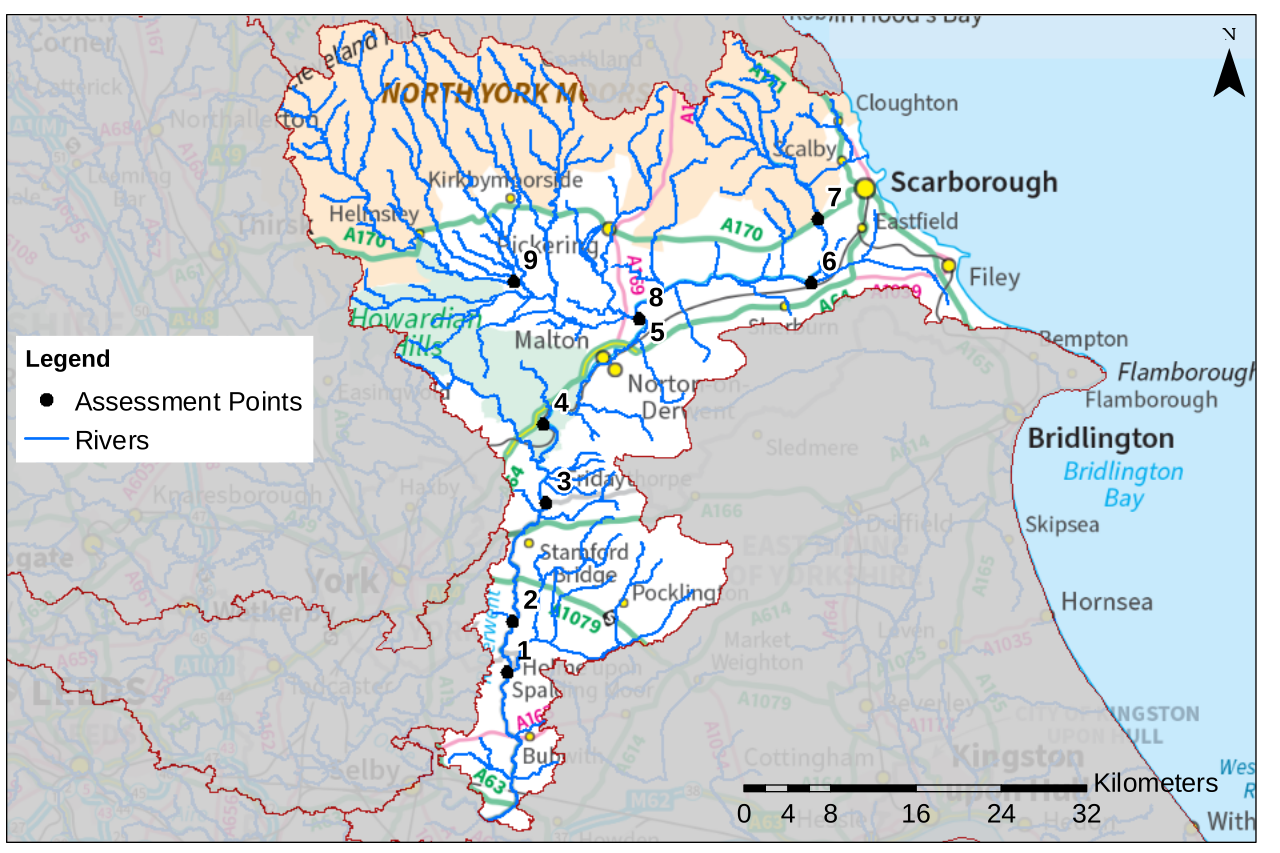
Significant tributaries of the River Derwent include the River Rye and Costa Beck, River Hertford, Bielby Beck with Blackfoss Beck, and the Pocklington Canal. The River Rye flows over the Derwent Corallian Limestone in the upper catchment and over low permeability clays in the Vale of Pickering. Water in the upper River Rye is also lost to the aquifer via swallow holes and reappears downstream. The headwaters of Bielby Beck and Blackfoss Beck are supplied by springs where the base of the Yorkshire Wolds Chalk escarpment meets the underlying Mercia Mudstone. These watercourses and the Pocklington Canal then flow over Mercia Mudstone and the Sherwood Sandstone aquifer. Map 1 shows the Yorkshire Derwent ALS area.
Map 1: Yorkshire Derwent ALS area
Rainfall in the catchment varies between the high ground of the North York Moors and the low lying area to the east of York. They on average receive around 850mm and 650mm per year, respectively. In the summer, the effective rainfall allowing for evaporation can virtually be zero.
More information about the Yorkshire Derwent ALS area can be found on the Catchment Data Explorer.
2.1 Landscape and land use
The Yorkshire Derwent ALS catchment covers an area of approximately 2,070km2 and much of the area is rural in character. The upper catchment is generally dominated by heather, grass moorland, bracken and coniferous woodland, particularly within the North York Moors National Park. The middle to lower part of the catchment is an undulating agricultural landscape. Significant urban settlements include:
- Pocklington
- Stamford Bridge
- Malton
- Pickering
- Helmsley
- Scarborough
- Filey
The Yorkshire Derwent ALS catchment has:
- a population of approximately 163,400 people in 2021 (Office for National Statistics 2021 data)
- 1,721 farms covering 155,177 hectares of farmland (Defra farming statistics)
Table 1: Land use statistics based upon LCM2019 © NERC (UKCEH) 2020
| Landcover | Proportion of catchment (%) |
|---|---|
| Woodland | 16.2 |
| Arable | 40.6 |
| Grassland | 29.7 |
| Urban | 4.0 |
| Total other | 9.5 |
The geology ranges in age from Triassic (around 248 million years ago) to Cretaceous (around 144 million years ago). Rocks are of sedimentary origin, consisting mainly of limestones and chalk, sandstones, mudstones and shales. Over most of the catchment, apart from the sandstone, aquifers are recharged quickly following rainfall due to the lack of drift cover.
2.2 Water Resources
There are 4 surface water operational catchments assigned to this ALS, which are:
- Derwent Upper (containing 17 water bodies)
- Rye (containing 36 water bodies)
- Derwent Middle (containing 7 water bodies)
- Derwent Lower (containing 11 water bodies)
The headwaters of the River Derwent originate in the North York Moors. The river flows predominantly south, through East and West Ayton, until meeting the River Hertford north of Ganton. It then flows west until reaching the confluence with the River Rye. The Derwent Upper has a total catchment area of approximately 557km2.
The headwaters of the River Rye originate near to Stony Moor. The river flows in a south to south-easterly direction through settlements including Helmsley, Nunnington, and Great Habton and significant tributary watercourses include the River Seph, River Riccal, River Dove, River Seven and Pickering or Costa Beck. The total catchment area of the River Rye is approximately 856km2.
The Derwent Middle, having a catchment area of 336km2, encompasses the River Derwent and its surrounding catchment from the confluence with the River Rye to Elvington Sluices. The sluices separate the upstream fluvial environment from the regulated Derwent Lower.
The Derwent Lower has a catchment area of approximately 319km2. It encompasses the River Derwent from Elvington Sluices to the confluence with the River Ouse at Barmby Barrage and includes the main tributary, the Bielby Beck-Pocklington Canal.
Table 2: Proportion of abstraction licences within each operational catchment (%)
| Operational catchment | Surface water abstraction licences (%) | Groundwater abstraction licences (%) |
|---|---|---|
| Derwent Upper | 31% | 69% |
| Rye | 22% | 78% |
| Derwent Middle | 37% | 63% |
| Derwent Lower | 22% | 78% |
The Yorkshire Derwent ALS catchment abstraction summary is as follows:
- 465 abstractions in the area
- 73% of all abstractions are from a groundwater source
- 54 licences with HoF restrictions at 10 gauging stations
- 34% of the catchment underlain by principal aquifer
100.6 million m3 per year of water is consumed by abstraction (based on 2016 to 2021 average)
The majority of abstraction licences are for agricultural use. However, power generation and public water supply abstract the highest volumes although the water for power generation is classed as ‘throughflow’ and is therefore non-consumptive. The most consumptive use is for public water supply, which accounts for approximately a fifth of the total full licensed annual volume.
Table 3: Proportion of different sectors abstraction based on the total full licensed abstraction volume for the Yorkshire Derwent ALS area
| Abstraction licence sector | Total number of abstraction licences | Proportion of total licensed abstraction volume (%) |
|---|---|---|
| Agriculture | 360 | 15% |
| Amenity or environmental | 16 | <1% |
| Industry | 19 | <1% |
| Power generation | 4 | 62% |
| Public water supply and other potable uses | 66 | 22% |
2.3 Climate change
Climate change is likely to affect the quantity and seasonal availability of water resources within the Yorkshire Derwent ALS area. The Environment Agency Climate impacts tool provides a simple description of current and potential future challenges.
2.4 Partnership working
The Yorkshire Derwent catchment partnership is active in this catchment, operating a catchment based approach (CaBA). Hosted by the Yorkshire Wildlife Trust, the partnership is made up of environmental non-governmental organisations (NGOs), local authorities, government agencies, landowner representatives and farmer representative bodies. The network aims to develop collaborative approaches to water resources management and planning as well as address issues in the catchment by:
- ensuring a resilient catchment through community engagement and promoting integrated, sustainable land management which benefits the rural economy
- improving water level management, reducing flood risk and preserving water resources
- securing better soil conservation and water quality
- creating extensive habitat connectivity and species resilience
- ensuring good partnership governance and develop a robust evidence base
Further information on the CaBA for the area can be found on the CaBA website.
3. Water resource availability in the Yorkshire Derwent catchment
3.1 Surface water availability
The method for calculating the water resource availability is explained in managing water abstraction. Water availability is calculated at selected assessment points (AP). The maps show the water availability calculated at the AP. At a water body scale, the availability may differ.
There are 9 APs in the Yorkshire Derwent ALS:
- AP1 covers the Bielby Beck-Pocklington Canal catchment to the confluence with the River Derwent at East Cottingwith
- AP2 covers the middle River Derwent and its tributaries from AP3 Buttercrambe Weir to Elvington Sluices – AP2 is the lowest AP on the River Derwent
- AP3 covers the middle Derwent for approximately 11km, and its tributaries, from AP4 Kirkham Bridge to Buttercrambe Weir, utilising data from Buttercrambe gauging station
- AP4 Kirkham Bridge covers the middle Derwent and its tributaries from the River Derwent-River Rye confluence to Kirkham Bridge
- AP5 covers the upper Derwent and its tributaries from AP6 River Hertford and AP7 West Ayton to Low Marishes at the River Derwent-River Rye confluence – data from Low Marishes gauging station, located approximately 3km upstream, is used for this AP
- AP6 covers the River Hertford and its tributaries from its source to the confluence with the River Derwent
- AP7 covers the upper River Derwent and its tributaries from its source to West Ayton, utilising data from West Ayton gauging station
- AP8 covers the River Rye catchment from AP9 Ness GS to the River Rye-River Derwent confluence, using data from both Low Marishes and Malton A64 gauging stations
- AP9 covers the upper River Rye catchment and its tributaries from its source to High Waterholmes, utilising data from Ness gauging station
3.2 Water resource availability colours and implications for licensing
The water resource availability is calculated and the colour assigned at 4 different flows:
- Q30 – the flow of a river which is exceeded on average for 30% of the time, therefore you would expect the river flow to be lower than Q30 on 256 days in an average year, that is, a higher flow
- Q50 – the flow of a river which is exceeded on average 50% of the time, therefore you would expect the river flow to be lower than Q50 on 183 days in an average year
- Q70 – the flow of a river which is exceeded on average for 70% of the time, therefore you would expect the river flow to be lower than Q70 on 110 days in an average year
- Q95 – the flow of a river which is exceeded on average for 95% of the time, therefore you would expect the river flow to be lower than Q95 on 18 days in an average year, that is, a low flow
We use the colours below to represent different surface water availability at these flows:
High hydrological regime
Blue

There is more water than required to meet the needs of the environment. However, due to the need to maintain the near pristine nature of the water body, further abstraction is severely restricted.
Water available for licensing
Green

There is more water than required to meet the needs of the environment.
New licences can be considered depending on local and downstream impacts.
Restricted water available for licensing
Yellow

Full licensed flows fall below the environmental flow indicators (EFI).
If all licensed water is abstracted there will not be enough water left for the needs of the environment. No new consumptive licences would be granted. It is likely we will be taking action to reduce full licensed risks. Water may be available if you can ‘buy’ (known as licence trading) the entitlement to abstract water from an existing licence holder.
Water not available for licensing
Red

Recent actual flows are below the EFI (or have been overridden by a downstream AP where flows are below the EFI).
This scenario highlights water bodies where flows are below the indicative flow requirement to help support a healthy ecology in our rivers. We will impose a restrictive condition or not grant further licences in these water bodies.
We are currently taking action in these water bodies. Water may be available if you can buy (known as licence trading) the amount equivalent to recently abstracted from an existing licence holder.
Heavily Modified Water Bodies (and discharge rich water bodies)
Grey

These water bodies have a modified flow that is influenced by reservoir compensation releases, or they have flows that are augmented. These are often known as ‘regulated rivers’. They may be managed through an operating agreement, often held by a water company. The availability of water is dependent on these operating agreements.
There may be water available for abstraction in discharge rich catchments. You need to contact the Environment Agency to find out more.
No assessment point
White

This scenario highlights water bodies where there is no assessment point.
New applications may be considered on a case-by-case basis. For these waterbodies, a local assessment will be required to determine whether there is resource available.
3.3 Water availability maps
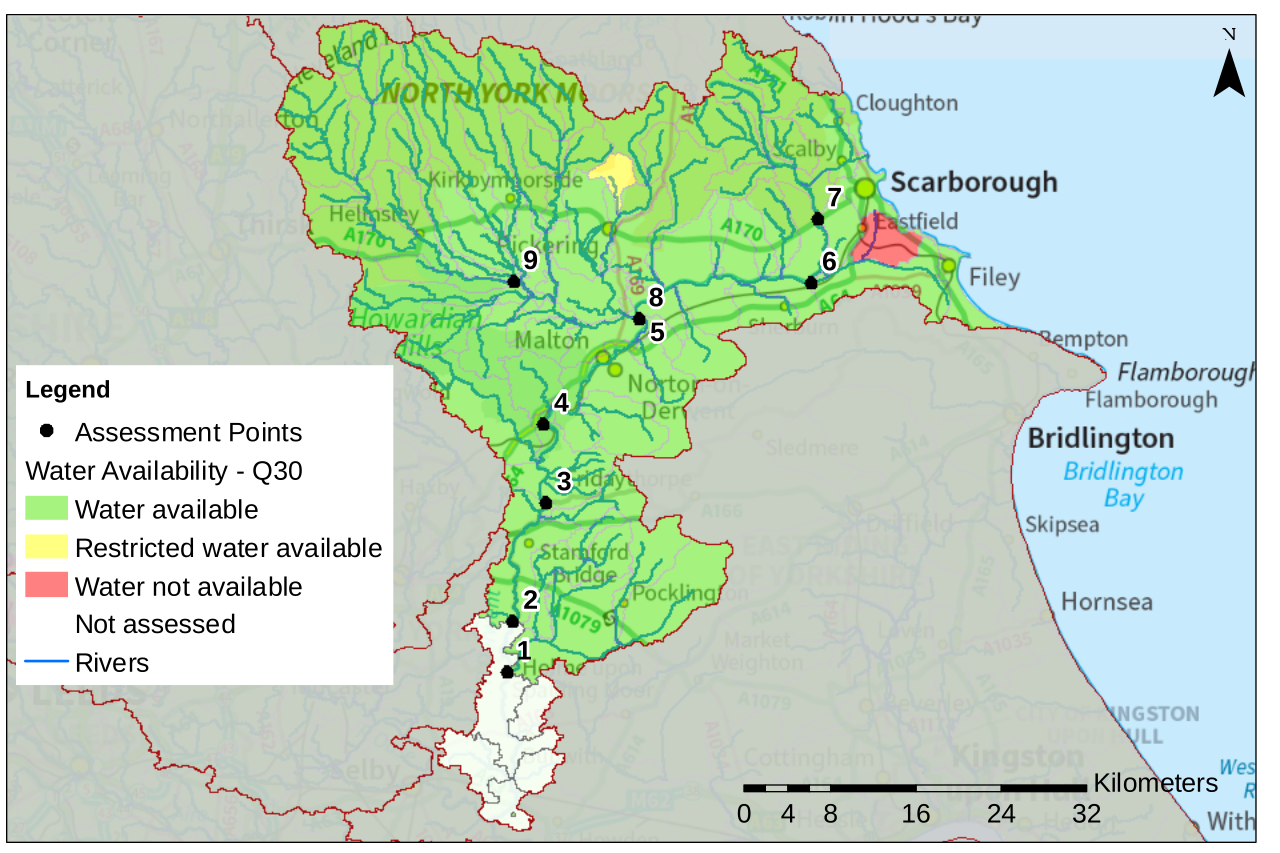
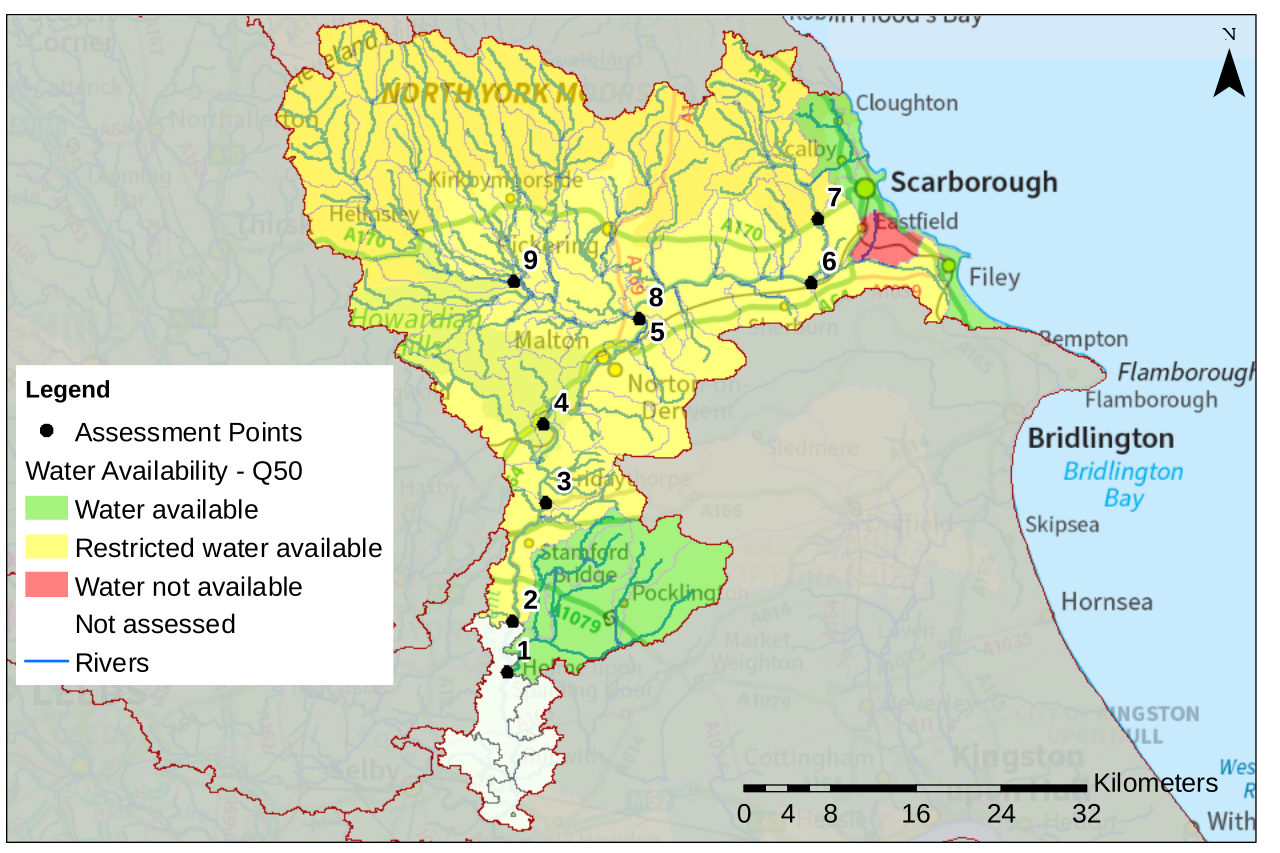
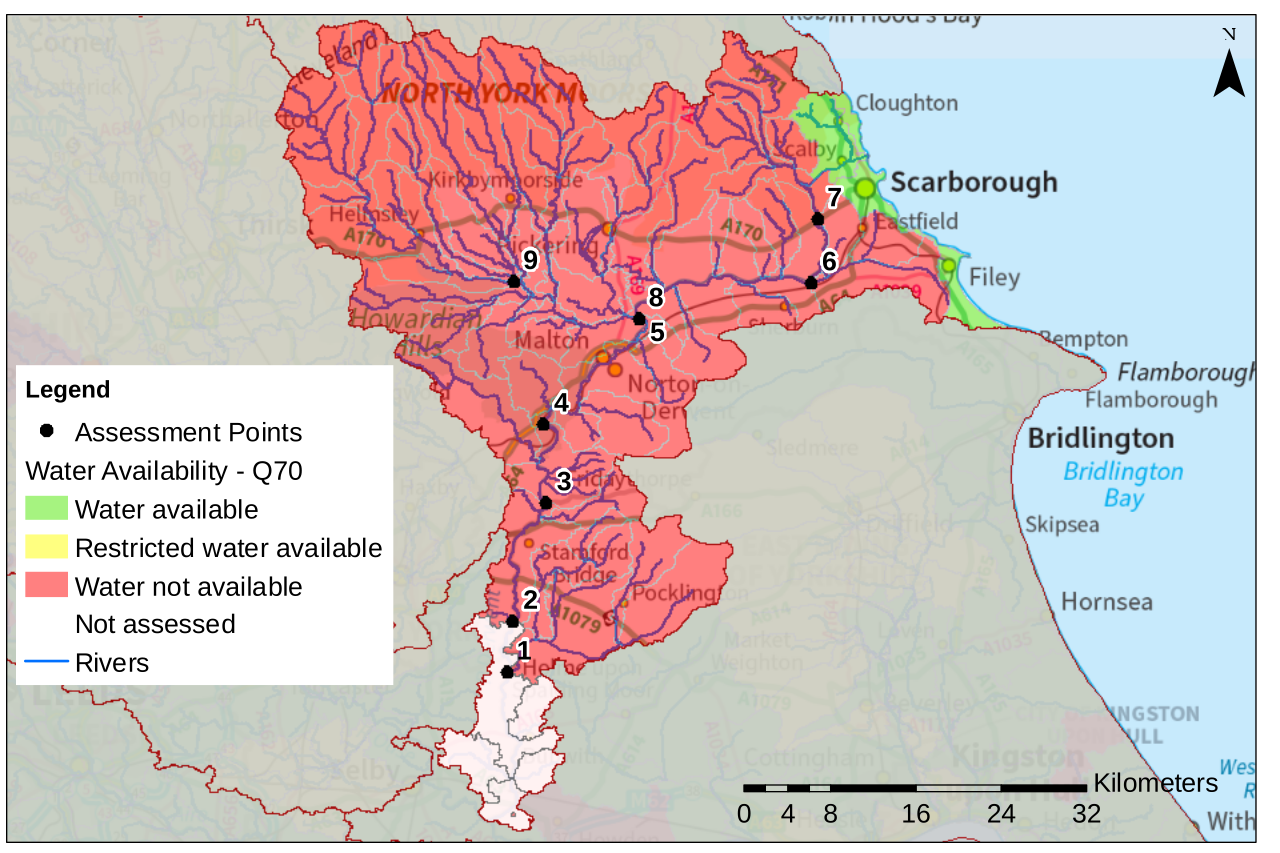
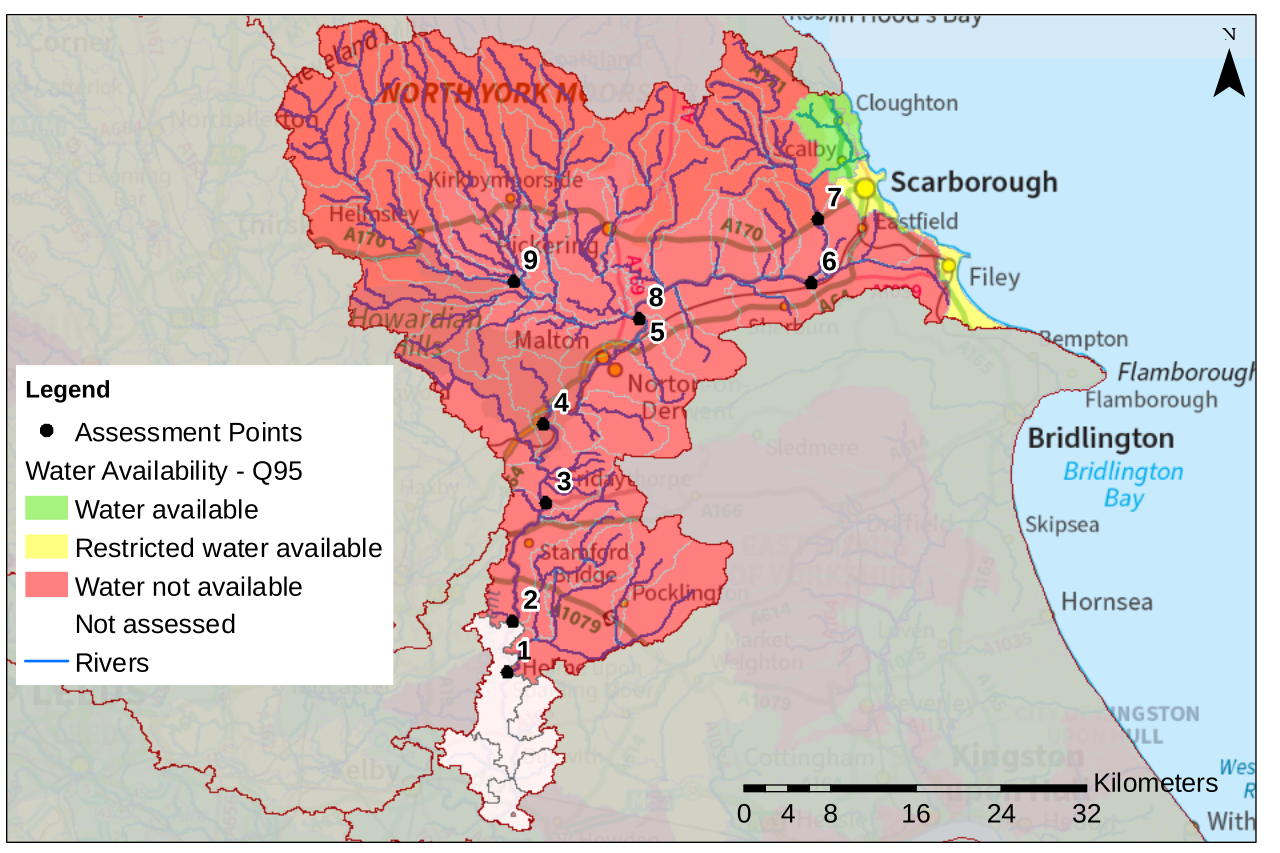
The water availability colours for the Yorkshire Derwent catchment are presented in maps 2 to 5.
Table 4. Summary of maps 2 to 5 water availability at each assessment point by flow category
| Assessment Point and name | Q30 | Q50 | Q70 | Q95 |
|---|---|---|---|---|
| 1 East Cottingwith | Water available | Water available | No water available | No water available |
| 2 Sutton upon Derwent | Water available | Restricted water available | No water available | No water available |
| 3 Buttercrambe Weir | Water available | Restricted water available | No water available | No water available |
| 4 Kirkham Bridge | Water available | Restricted water available | No water available | No water available |
| 5 Low Marishes | Water available | Restricted water available | No water available | No water available |
| 6 River Hertford | Water available | Restricted water available | No water available | No water available |
| 7 West Ayton | Water available | Restricted water available | No water available | No water available |
| 8 Howe Bridge | Water available | Restricted water available | No water available | No water available |
| 9 Ness GS | Water available | Restricted water available | No water available | No water available |
Map 2. Water resource availability colours at Q30 for the Yorkshire Derwent ALS
Map 3. Water resource availability colours at Q50 for the Yorkshire Derwent ALS
Map 4. Water resource availability colours at Q70 for the Yorkshire Derwent ALS
Map 5. Water resource availability colours at Q95 for the Yorkshire Derwent ALS
3.4 Groundwater resource availability
Abstracting groundwater can impact on overlying surface water bodies and groundwater dependent ecosystems. This impact is measured at the surface water AP. We cannot grant new groundwater licences where abstraction is reducing flows to below the indicative flow requirement to help support a healthy ecology. This is based on Q95 flows.
We must also account for:
- the available resource in the aquifer
- the impact of abstraction on protected sites
- the risk of saline intrusion
3.5 Groundwater resource availability colours and implications for licensing
We use colours to represent different groundwater availability:
Water available for licensing
Green
Groundwater management unit balance shows groundwater available for licensing.
New licences can be considered depending on impacts on other abstractors, designated ecological sites and on surface water.
Restricted water available for licensing
Yellow
Groundwater management unit balance shows more water is licensed than the amount available. Or it shows that there are known local impacts on dependent wetlands, surface water bodies, groundwater levels or potential for saline intrusion.
In restricted groundwater management units, consumptive groundwater abstractions will be subject to local assessment and will either be constrained or not granted. It may also be appropriate to investigate the possibilities for reducing fully licensed risks. Water may be available if you can ‘buy’ (known as licence trading) the entitlement to abstract water from an existing licence holder.
Water not available for licensing
Red
Groundwater management unit balance shows more water has been abstracted based on recent amounts than the amount available.
We will not grant further licences.
Water availability reviewed on a case-by-case basis
Blue
Groundwater management unit is at risk.
Any new application will be assessed on a case-by-case basis.
3.6 Groundwater availability maps
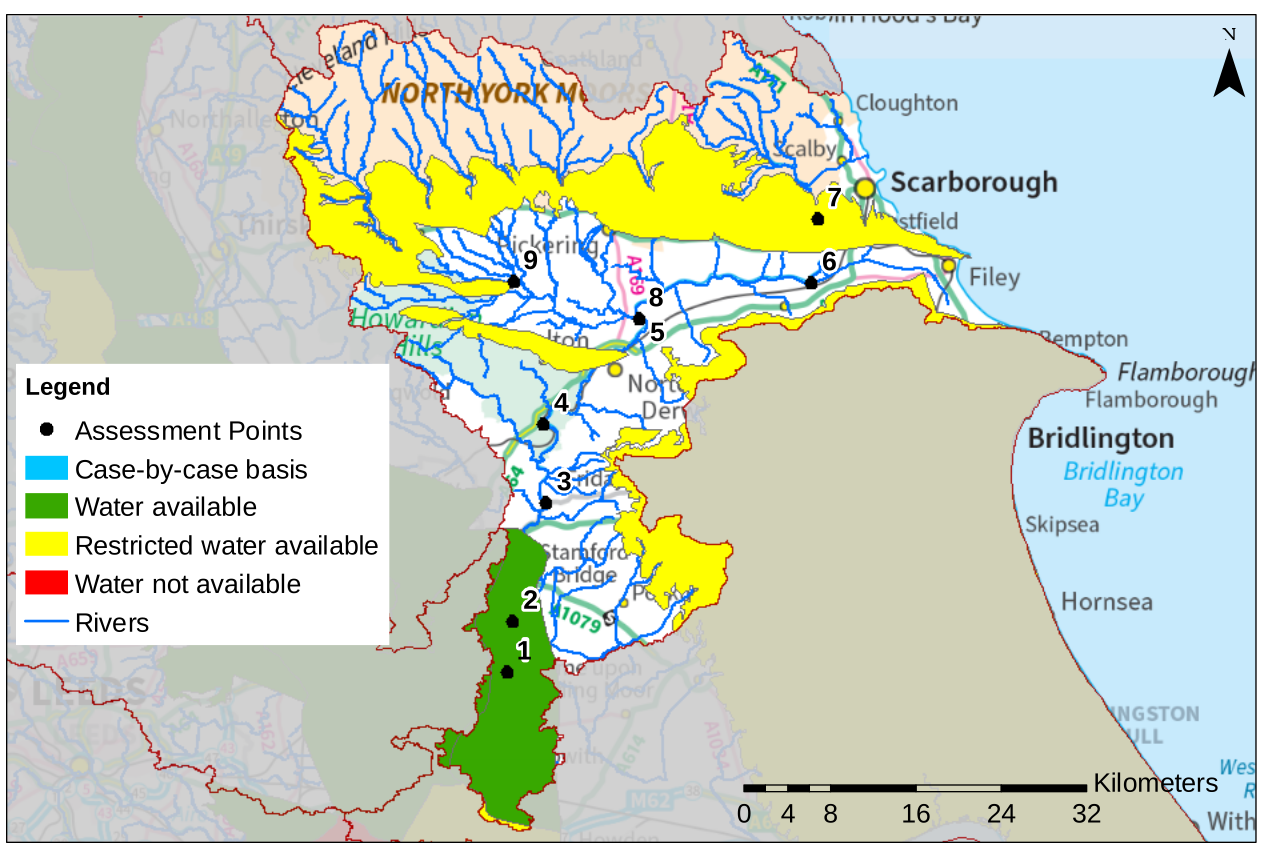
Map 6 shows the groundwater management unit availability in the Yorkshire Derwent area. In this catchment, water is restricted in the Derwent Corallian Limestone, an area spanning the northern parts of the Yorkshire Derwent ALS area. And restricted in the Chalk spanning the eastern catchment boundary. Any new applications in the Sherwood Sandstone in the south of the area will be assessed on a case-by-case basis.
Map 6. Water resources availability colours for groundwater management units
3.7 Resource reliability
If you want to apply for a licence, it is worth considering the reliability of your surface water or groundwater abstraction.
By assessing the quantity of water available at different flows it is possible to see:
- when there is a surplus or deficit of water
- the associated reliability of an abstraction
This is an indication only. Actual reliability of a licence will be discussed when you apply.
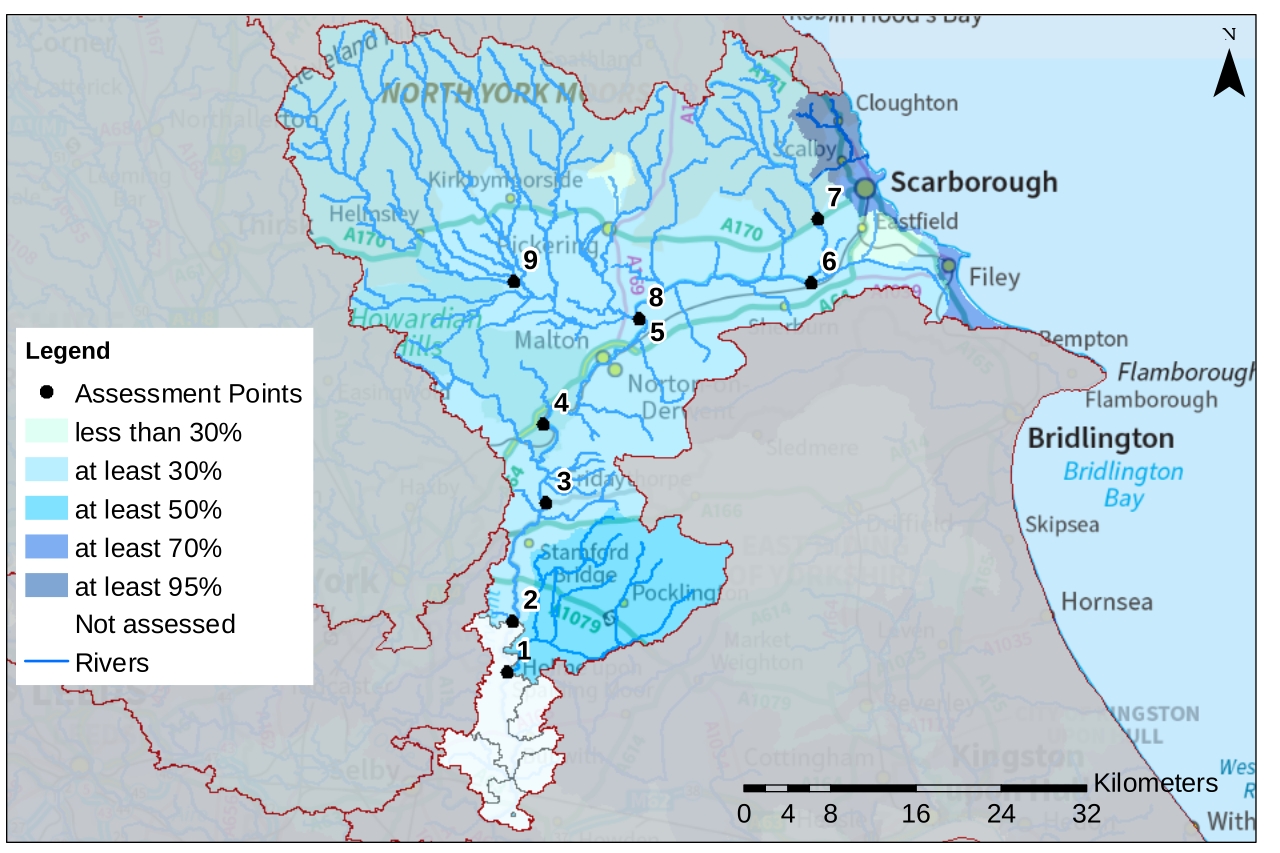
Map 7 gives an indication of the resource availability for consumptive abstraction in Yorkshire Derwent ALS area expressed as a percentage of time. In this catchment:
- consumptive abstraction is available at least 50% of the time for AP1
- consumptive abstraction is available at least 30% of the time for AP2, AP3, AP4, AP5, AP6, AP7, AP8 and AP9
Map 7. Water resource reliability of the Yorkshire Derwent ALS expressed as a percentage of time available
3.8 Other considerations for resource availability and reliability
When we grant a licence, it does not mean that we guarantee a supply of water.
We may have to add constraints to licences such as a HoF or hands off level (HoL) condition to protect the environment and the rights of other abstractors. These conditions specify that if the flow or level in the river drops below what is needed to protect the environment, abstraction must reduce or stop. In dry years, restrictions are likely to apply more often, which will affect the reliability of supply.
One factor is water quality in the Lower Ouse and River Humber and its potential to impact on protected species. To ensure dissolved oxygen levels support the passage of migratory fish, HoF or HoL conditions may be applied to a licence.
Whilst this document may say that water is available for abstraction, this does not guarantee that all applications will be successful. This is because we must determine each application on its own merits, and local factors may mean we are either unable to grant a licence as applied for, or even at all.
New licences within an ALS are usually given a common end date (CED), which allows them to be reviewed at the same time.
The next CED for this ALS is 31 March 2037, and the subsequent one is 31 March 2049.
3.9 Impoundments
Applications for impounding licences will be dealt with on a case-by-case basis and take into account the requirements of our obligations under the Habitats Regulations (2017) and Water Framework Directive (WFD) Regulations (2017).
An impoundment is a dam, weir or other construction in an inland waterway that obstructs or impedes flow. Our assessment of an impounding licence application takes into consideration its potential impacts on the environment (such as fish migration), flood risk, downstream water users and flow modification. In line with current legislation, we do not time limit impounding licences.
You must have an impounding licence before you start to construct, alter, repair, or remove an impounding structure, even in an emergency. However, certain exemptions may apply and if we deem there is little or no impact on the environment and other water users, you may not need a licence. Please contact the Environment Agency if you intend to construct, alter, repair, or remove an impounding structure so that we may advise you whether a licence is required.
There is more information in our guidance on how to check if you need a licence to impound water.
4. How we manage water availability in the Yorkshire Derwent ALS
4.1 Surface water
We assess surface water flows at each AP, which are significant points on a river, often where 2 major rivers join or at a gauging station. An AP can cover multiple surface water bodies.
Where groundwater abstractions directly impact on surface water flows, the impact is measured at the surface water AP.
Table 5 gives an indication of:
- whether there is water available for further abstraction
- the associated restrictions we may have to apply to new and varied abstraction licences from the main river
Depending on the nature of the catchment, tributaries to the main river may be subject to different restrictions and quantities. This may be assessed locally on a case-by-case basis.
Each HoF is linked to an AP, or its nearest gauging station, and is dependent on the resource availability. In some cases, additional restrictions may apply to licences where there is a more critical resource availability downstream to protect the ecological requirements of the river and other water users. This has been considered in the information given in Table 5.
All abstraction licence applications are subject to an assessment. This takes account of any local and downstream issues and may be subject to further restrictions.
Table 5 shows information for the APs in the Yorkshire Derwent ALS area. Each column shows the potential reliability of a new licence. In cases where there is water available at all flows, we may apply a minimum residual flow (MRF) equal to 75% of Qn99 flows in the water body to protect very low flows. We will decide this on a case-by-case basis.
Table 5. Summary of licensing approach for the assessment points of the Yorkshire Derwent ALS
| Assessment Point and name | AP National Grid Reference | Water resource availability | Is there a gauging station at this AP? | Additional restrictions |
|---|---|---|---|---|
| 1 East Cottingwith | SE 69859 42622 | Water may be available at moderate and high flows. New licences could be considered. | No | Assessment will be made on a case-by-case basis. A HoF will be applied at a suitable gauging station to conserve protected sites and meet flow targets. |
| 2 Sutton upon Derwent | SE 70473 47396 | Water may be available at high flows and restricted from moderate flows. New licences could be considered. | No | Assessment will be made on a case-by-case basis. A HoF will be applied at a suitable gauging station to conserve protected sites and meet flow targets. |
| 3 Buttercrambe Weir | SE 73561 58458 | Water may be available at high flows and restricted from moderate flows. New licences could be considered. | Yes - Buttercrambe | Assessment will be made on a case-by-case basis. A HoF will be applied at a suitable gauging station to conserve protected sites and meet flow targets. |
| 4 Kirkham Bridge | SE 73341 65825 | Water may be available at high flows and restricted from moderate flows. New licences could be considered. | No | Assessment will be made on a case-by-case basis. A HoF will be applied at a suitable gauging station to conserve protected sites and meet flow targets. |
| 5 Low Marishes | SE 82340 75735 | Water may be available at high flows and restricted from moderate flows. New licences could be considered. | Yes – Low Marishes | Assessment will be made on a case-by-case basis. A HoF will be applied at a suitable gauging station to conserve protected sites and meet flow targets. |
| 6 River Hertford | SE 98398 79065 | Water may be available at high flows and restricted from moderate flows. New licences could be considered. | No | Assessment will be made on a case-by-case basis. A HoF will be applied at a suitable gauging station to conserve protected sites and meet flow targets. |
| 7 West Ayton | SE 98975 85099 | Water may be available at high flows and restricted from moderate flows. New licences could be considered. | Yes – West Ayton | Assessment will be made on a case-by-case basis. A HoF will be applied at a suitable gauging station to conserve protected sites and meet flow targets. |
| 8 Howe Bridge | SE 82274 75729 | Water may be available at high flows and restricted from moderate flows. New licences could be considered. | No | Assessment will be made on a case-by-case basis. A HoF will be applied at a suitable gauging station to conserve protected sites and meet flow targets. |
| 9 Ness GS | SE 70491 79152 | Water may be available at high flows and restricted from moderate flows. New licences could be considered. | Yes – Ness GS | Assessment will be made on a case-by-case basis. A HoF will be applied at a suitable gauging station to conserve protected sites and meet flow targets. |
4.2 Groundwater
For principal aquifers we may divide the area into groundwater management units (GWMU), which are sub-divisions of the groundwater bodies. In these cases, we use the information and assessments on these units to determine water availability and licence restrictions.
Where groundwater abstractions directly impact on surface water flows, including reduction of base flow, the impact is measured at the surface water AP. In these cases, restrictions may be applied to licences, such as groundwater HoL conditions. The HoL is a groundwater level below which an abstractor is required to reduce or stop abstraction. Where there is known connectivity between surface water and groundwater, we may apply a HoF condition to the groundwater licence. This will relate to an appropriate surface water gauge.
Other restrictions may apply where availability is limited or to protect the environment, for example to prevent saline intrusion.
4.3 Summary of groundwater licensing approach for the assessment points of the Yorkshire Derwent ALS
Derwent Corallian Limestone GWMU
The Derwent Corallian Limestone aquifer stretches across the northern parts of the ALS area and varies in thickness from around 20m to 110m. It covers an area from the west of the River Rye, west of Helmsley, passing through the Vale of Pickering and southern portions of the North York Moors to the east coast at Filey.
The interaction between the groundwater and surface water is complex. A proportion of the river flow is lost naturally to the underlying aquifer through swallow holes. During dry summers, the flow in the River Derwent at West Ayton can, and does, naturally drop to zero. The River Rye flows over the aquifer in the upper catchment. Like the River Derwent, water in the River Rye is lost to the aquifer through swallow holes and reappears downstream, often at springs. Because of these complex relationships between the groundwater and surface water, we may apply restrictions to licences for groundwater in this GWMU.
Sherwood Sandstone GWMU
The Sherwood Sandstone provides one of the major groundwater resources of Yorkshire and is extensively developed for public supply. The Yorkshire Derwent contains a small proportion of the aquifer within the Lower River Derwent catchment from Stamford Bridge to Asselby. This GWMU is primarily utilised for abstraction by the agricultural and horticultural sectors.
Map 8 shows the Selby Sherwood Sandstone aquifer area which covers the following ALS areas:
- Derwent
- Wharfe and Lower Ouse
- Aire and Calder
- Don and Rother
- Hull and East Riding
The line plotted on the map represents where the general groundwater level within the Selby Sherwood Sandstone aquifer is approximate to sea level. To the north of this line the groundwater level is considered to be above sea level. To the south of the line groundwater level is considered to be below sea level. However, we may use site specific groundwater level information to determine this and therefore how we would licence groundwater at such a location.
Map 8. Selby Sherwood Sandstone aquifer
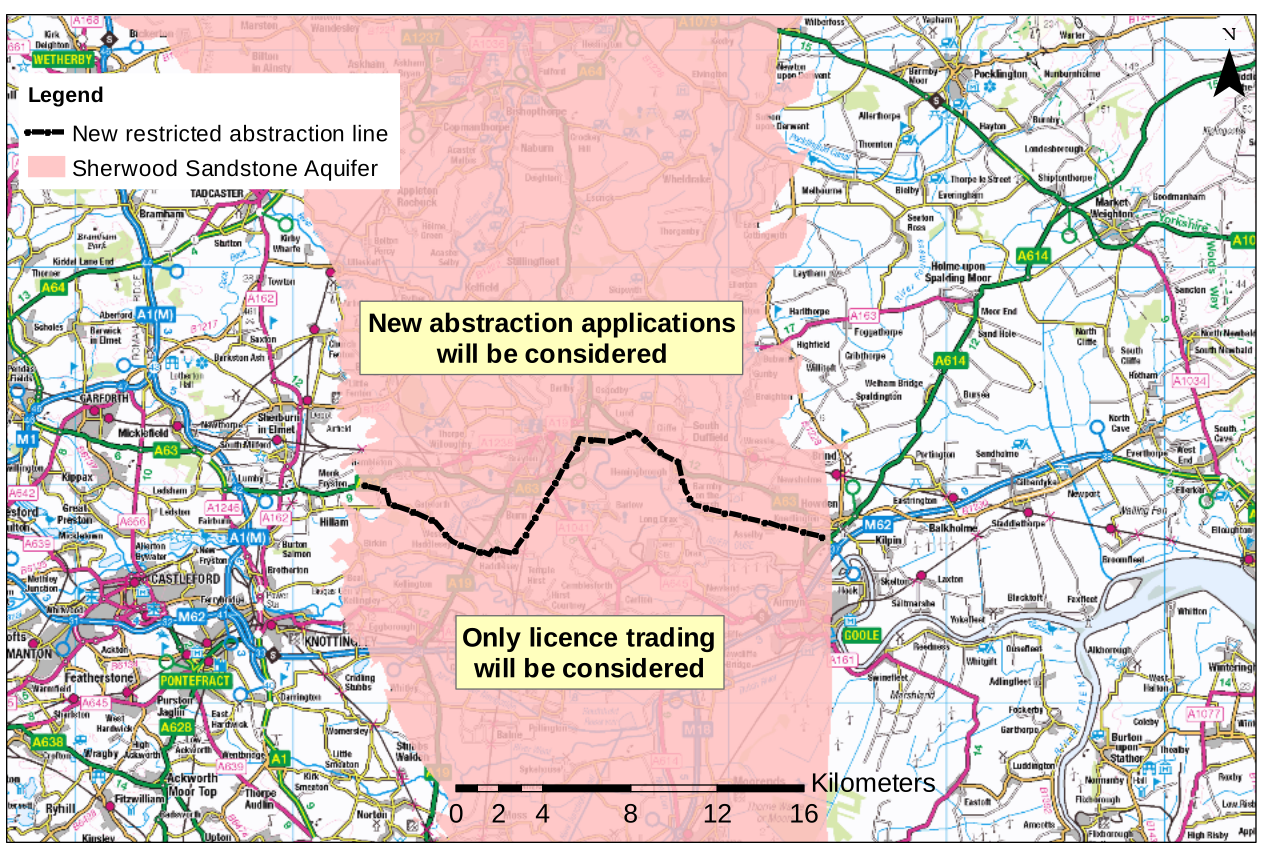
Most of the Derwent Sherwood Sandstone GWMU is located to the north of the general groundwater level line that is approximate to sea level. We therefore have two approaches to licensing in this GWMU based on which side of the line a new abstraction proposal falls. To the north of the line, we will consider applications for new abstraction on a case-by-case basis (subject to assessment of local conditions and dependent on the outcome of groundwater pumping tests). To the south of the line, there is a risk that proposals for new abstraction could further draw down the groundwater level.
This places a risk on the availability of water to existing licence holders and may lead to the introduction of saline water. We do not consider this to be acceptable because it means the water may become unfit for most uses and we have a legal duty to protect the rights of existing abstractors. This is an unnatural situation which we want to prevent occurring further in the Yorkshire Derwent ALS area.
Chalk GWMU
A small proportion of Chalk, a principal aquifer of national importance within the Hull and East Riding ALS, spans the eastern catchment boundary from Reighton on the coast down to Pocklington in the south. Any new licence applications from the Chalk will be assessed on a case-by-case basis.
4.4 Coasts and estuaries
The north-eastern edge of the Yorkshire Derwent ALS area contains approximately 23 miles of coastline from Cloughton, down past Scarborough and Filey, to Hunmanby. This area drains the smaller Becks and watercourses into the North Sea that do not connect with the River Derwent catchment and are not part of the catchment abstraction management strategy (CAMS) assessment.
Barmby Barrage, located at the southern edge of the ALS area, is sited at the mouth of the River Derwent where it joins the tidal River Ouse. The purpose of the barrage is to control water quality and levels in the lower River Derwent. Before its construction, Sutton Lock near Elvington was the tidal limit of the River Derwent. Construction of the barrage during the 1970s stopped tidal water from entering the River Derwent. This enabled abstraction of public water supplies from the river at Loftsome Bridge, reduced flood risk and maintained an adequate river level for navigation in the lower Derwent.
The relative water levels on the upstream and downstream sides of the barrage control its opening and closing. The tidal cycle means the barrage is closed for several hours a day. At times of low flows, the barrage can remain closed for extended periods. While the barrage is closed no flow passes from the River Derwent into the River Ouse. The regulated reach upstream of Barmby Barrage to Elvington Sluices, AP2, is not assessed as part of the CAMS process.
Water from the Yorkshire Derwent ALS area drains into the Humber Estuary which is protected under the Habitats Directive. The River Derwent and floodplains play a substantial role in the hydrological and ecological functioning of the estuary.
Licence applications in tidal and estuarine areas will be considered on a case-by-case basis.
4.5 Heavily modified water bodies
There is one water body reach designated as a heavily modified water body (HMWB) in the Yorkshire Derwent ALS area. The Lower Derwent Valley (Derwent from Elvington Beck to River Ouse – GB104027068311), downstream of Elvington Sluices, is under investigation for WFD hydrology failure due to the presence of Barmby Barrage. New applications will be considered on a case-by-case basis.
4.6 Protected sites
The Conservation of Habitats and Species Regulations 2017 (Habitats Regulations) provides a very high level of protection to:
- Special Areas of Conservation (SAC), which contribute to biodiversity by maintaining and restoring habitats and species
- Special Protection Area (SPA), which provides protection to birds and their nests, eggs and habitats
Government policy treats Ramsar sites (internationally important wetland sites) in the same way as SACs and SPAs. Ramsar sites, SACs and SPAs are referred to collectively as European sites. Sites of Special Scientific Interest (SSSI) also carry a high level of environmental importance.
Conservation objectives are the overarching objectives for European and SSSI protected sites to maintain at, or to reach, favourable condition. These are set by Natural England. The process for setting targets that underpin these objectives is described through the Joint Nature Conservation Committee approved revised Common Standards Monitoring Guidance (rCSMG). Natural England use rCSMG targets to assess the condition of European and SSSI protected sites. Natural England consider these quantitative targets a pre-requisite for achieving the conservation objectives for European or SSSI designated sites. We have a duty to have regard to Natural England’s advice when determining licence applications that may impact on a designated site.
We may need more detailed supporting information when a licence application could impact on a designated conservation site. This will allow us to complete the required statutory assessment.
Further information on protected sites and species can be found on Natural England’s website.
Containing 75 SSSI, 6 SAC, 3 SPA, and one Ramsar site, substantial areas of the Yorkshire Derwent ALS catchment are of significant ecological importance. Much of the upper catchment is part of the North York Moors National Park and designated a SPA, SAC and SSSI. The main River Derwent from downstream of the Rye-Derwent confluence to Barmby Barrage is a rCSMG riverine SSSI and SAC due to its important array of wildlife, including fish, plants, insects and breeding birds. The Lower Derwent Valley also supports a network of rare, species-rich floodplain meadows. These are a designated Wetland of International Importance under the Ramsar Convention, a SAC due to the rare hay-meadow plant community present in the area, and a SPA due to the large number of breeding and wintering bird communities the floodplain meadows support. The watercourses in the uppermost reaches of Pocklington Canal on Whitekeld Beck and Millington Beck, plus the lower reaches of Pocklington Canal itself below Canal Head, are a SSSI.
Using the ‘Land Based Designations’ layer on Defra’s Magic Map can help you explore the locations of the protected sites for the Yorkshire Derwent ALS and download information about the catchment and water environment.
5. Managing the catchment together
5.1 Action on unsustainable abstraction
Our guidance on managing water abstraction gives details on:
- what an unsustainable abstraction is
- the measures available to resolve environmental issues caused by abstraction
WFD Regulations 2017 helps us to focus on the ecological ‘health’ of our water environment. Its primary objectives are:
- to prevent deterioration of ecological status or potential (for HMWB)
- to restore ‘good ecological status or potential’ for surface water or ‘good status’ for groundwater (where necessary)
The flow regime is a supporting element to attaining good ecological status.
We will investigate where reduced water flow is contributing to environmental concerns attributed to licensed abstraction. Investigations into the impact caused by these licences may result in options being developed with licence holders on how to improve the sustainability of their abstraction.
5.1.1 Reducing underused or revoking unused licences
The Environment Agency’s unused licences programme is addressing the large amount of water licensed that is not abstracted each year. We are contacting abstractors who only use a small portion of their licensed volumes or who are not using their licensed volumes. We are asking if they still require the water and for what purpose. In these circumstances, abstractors need to supply justification for underusing their licences and provide the evidence to retain their licence. We can reduce volumes or revoke licences where there is not sufficient evidence of need.
5.1.2 Reviewing and renewing of time limited licences
We are managing time limited licence renewals to ensure abstraction is not having a negative impact on the environment now or in the future. When we review the renewal of a licence, we consider whether a licence is currently, or may in the future, pose a risk of deterioration in ecological status or whether the abstraction quantities are no longer justified. When we consider the renewal of abstraction licences, we apply 3 tests:
- environmental sustainability
- justification of need
- efficient use of water
We have reviewed 118 licences time limited to 2025 and 26 licences time limited to 2027.
5.1.3 Managing licence variations
We are managing licence variations to ensure abstraction is not having a negative impact on the environment now or in the future. If your water needs have changed, you may want to vary your licence. We will assess all proposals on a case-by-case basis based on the justification of need for the variation provided in your application and consider the impact of the changes on the environment, protected sites, and other abstractors.
5.2 Approaches to sustainable water management
This section outlines options initiated in this catchment for future approaches to water management, including collaboration and sharing which may be of interest to both new and existing abstractors:
Future management of water resources in this catchment will focus on:
- water industry national environment programme
- strategic resource option
- Environment Agency assets
- Water Resources North
5.2.1 Water industry national environment programme
The water industry national environment programme (WINEP) is the programme of work that water companies in England are required to do to fulfil their obligations arising from environmental legislation and UK government policy.
Along with Natural England, we have been working with Yorkshire Water to investigate and address the impact of their Elvington and Loftsome Bridge abstractions on the environment within the Lower River Derwent. This could include a potential licence reduction which has been identified in Yorkshire Water’s Water Resources Management Plan 2024 (WRMP24). This investigation will continue into their asset management plan period 8 (AMP8) which occurs during 2025 to 2030.
5.2.2 Strategic resource option
A strategic resource option (SRO) is part of the Regulators’ Alliance for Progressing Infrastructure Development (RAPID) gated process.
A joint SRO between Yorkshire Water, Northumbrian Water and United Utilities will investigate the potential to transfer water from the River Tees in Northumbria into the River Derwent and also into the North West region. This is to ensure water supply, Environmental Destination, and rCSMG flow target requirements for the lower River Derwent are met.
5.2.3 Environment Agency assets
Along with the Lower Derwent WINEP investigation and flow targets for the lower River Derwent, we will be investigating the long term sustainability of our assets at Barmby Barrage and Elvington Sluice.
5.2.4 Water Resources North
Water Resources North (WReN) is a group designed to oversee water resources planning for Yorkshire and the North East of England. Members include Northumbrian Water, Yorkshire Water, Hartlepool Water, Environment Agency, Natural England, Canal and Rivers Trust, and stakeholders from the energy, agriculture, environment, and industry sectors. Further information on WReN can be found on the WReN website.
5.3 Water rights trading
We want to make it easier to trade water rights. A water rights trade is where a person sells all or part of their water right, as defined by their abstraction licences, to another person on a permanent or temporary basis. In many cases a trade will involve a change in abstraction location or use which we will need to approve through the issue or variation of abstraction licences.
In licensing trades, as with new abstraction licences, we need to make sure that we do not cause any deterioration in water body status within the water bodies where the trade will take place and to downstream water bodies.
This section provides a guide to the potential for trading in water bodies of a particular ALS water resource availability colour, as shown on maps 2 to 5.
High hydrological regime
Blue
Opportunities for trading water rights will be limited.
Water available for licensing
Green
There may be opportunities to allow trades of recent actual abstraction and licensed abstraction. But little demand for trading is expected as water is available for new abstractions.
Restricted water available for licensing
Yellow
There may be opportunities for licence holders to trade up to their full licensed quantities. But the quantities of water available to trade may be restricted once levels of actual abstraction reach sustainable limits. We will not permit licence trades in water bodies where we are taking action to prevent deterioration. The exception to this is if the trade is consistent with achieving water body objectives.
Water not available for licensing
Red
We will only trade recent actual abstraction but no increase in recent actual abstraction is permitted in the water body. Licensed abstraction will be recovered for the environment.
HMWBs
Grey
Opportunities for trading will depend on local operating agreements and local management.
To find out more about licence trading, use our guidance on trading water abstraction rights.
6. Glossary
Abstraction: Removal of water from a source of supply (surface or groundwater).
Abstraction licence: The authorisation granted by the Environment Agency to allow the removal of water.
Asset management plan: Is the term given to the 5-year period covered by a water company’s business plan beginning on 1 April in years ending in 0 or 5.
Assessment point: A significant point on a river, often where two major rivers join or at a gauging station.
Catchment: The area from which precipitation and groundwater will collect and contribute to the flow of a specific river.
Catchment based approach: Partnership working at the river catchment scale to deliver a range of environmental, social, and economic benefits while protecting our precious water environments for the benefit of all.
Consumptive abstraction: Abstraction where a proportion of the water is not returned either directly or indirectly to the source of supply after use. For example, for the use of spray irrigation, general agriculture, domestic use, public water supply and water bottling.
Discharge: The release of substances (for example, water, treated sewage effluent) into surface waters.
Environmental Destination: A plan to resolve all unsustainable abstraction, informing short-, medium-, and long-term actions and water supply options. From 2025, water companies will begin making long term investments to resolve all their unsustainable abstractions by 2050.
Environmental flow indicator: Flow indicator to prevent environmental deterioration of rivers, set in line with new UK standards set by UK Technical Advisory Group.
Gauging station: Site established and used for continuous measurement of river flow.
Groundwater: Water that is contained in underground rocks.
Groundwater management unit: A defined sub-division of a groundwater body used in assessing water availability and relevant licence conditions.
Hands off flow: A condition attached to an abstraction licence which states that if flow (in the river) falls below the rate specified on the licence, the abstractor will be required to reduce or stop the abstraction.
Hands off level: A condition attached to an abstraction which states that if level (in the river or groundwater aquifer) falls below the level specified on the licence, the abstractor will be required to reduce or stop abstraction.
Impoundment: A structure that obstructs or impedes the flow of inland water, such as a dam, weir, or other constructed works.
Non consumptive abstraction: Abstraction where a significant proportion of the water is returned either directly or indirectly to the source of supply after use. For example, for hydropower.
Regulatory Alliance for Progressing Infrastructure Development: Established by Ofwat to help accelerate the development of new water infrastructure. It is comprised of representatives from Ofwat, the Environment Agency and the Drinking Water Inspectorate.
Strategic resource option: Water companies investigate and develop strategic water resource solutions that benefit customers, protect and enhance the environment and benefit wider society.
Surface water: This is a general term used to describe all water features such as rivers, streams, springs, ponds, and lakes.
Swallow hole: A depression in the ground surface or river bed where a surface stream or river disappears underground.
Water body: Units of either surface water or groundwater which we use to assess water availability.
Water Environment (Water Framework Directive) (England and Wales) Regulations 2017 (referred to as the WFD Regulations 2017): Regulations that provide a framework for managing the water environment in England and Wales.
Water Industry National Environment Programme: Regulatory framework that outlines the environmental obligations for water companies. It is developed by the Environment Agency, Defra, Natural England and Ofwat. It sets out the water industry’s contribution to delivering the wider national objectives for the natural environment as set out in the River Basin Management Plans and other statutory plans.
Water resources management plan: Sets out how water companies intend to achieve a secure supply of water for customers and a protected and enhanced environment.