Discussion paper on the potential risk(s) of Garcinia cambogia oral consumption
Updated 15 October 2026

© Crown copyright 2026
This publication is licensed under the terms of the Open Government Licence v3.0 except where otherwise stated. To view this licence, visit nationalarchives.gov.uk/doc/open-government-licence/version/3 or write to the Information Policy Team, The National Archives, Kew, London TW9 4DU, or email: psi@nationalarchives.gov.uk.
Where we have identified any third party copyright information you will need to obtain permission from the copyright holders concerned.
This publication is available at https://www.gov.uk/government/publications/20th-october-2026-committee-on-toxicity-meeting/discussion-paper-on-the-potential-risks-of-garcinia-cambogia-oral-consumption
This is a paper for discussion. This does not represent the views of the Committee and should not be cited.
Introduction
1. In March 2025, the French Agency for Food, Environmental and Occupational Health and Safety (ANSES) published an opinion on their assessment of adverse reactions to the consumption of food supplements containing Garcinia cambogia (G. cambogia) (document in French). Their official webpage provided an overview and advised consumers to not consume food supplements containing G. cambogia (ANSES, 2025).
2. Currently in the United Kingdom (UK), there are no safe levels or set limits established for the use of G. cambogia in food and drinks, including food supplements. In response to the ANSES review, the Food Standards Agency (FSA) and Food Standards Scotland (FSS) requested the Committee on Toxicity of Chemicals in Food, Consumer Products and the Environment (COT) to perform a review of the opinion published by ANSES and assess the risk(s) associated with consumption of Garcinia cambogia in food supplements. The Committee was also requested to consider whether a safe level or maximum limit of G. cambogia for use in food and drink, including food supplements can be derived based on the current available data. A scoping paper on the potential risk(s) of G. cambogia oral consumption was presented to the COT TOX.2025.41 - Scoping paper on Garcinia cambogia during their 21st of October 2025 meeting. Minutes from this meeting stated that (Minutes of the 21st October 2025 COT Meeting Committee on Toxicity) :
- COT Members noted that “there were data available on G. cambogia; however, they would need to be appropriately weighted before a key study and/or an endpoint from which to derive a health-based guidance value (HBGV) could be identified. The weight attached to a human clinical case report compared to randomised controlled trials would be particularly important.”
- In general, the occasional reports of differing adverse effects from human case studies could not always be attributed to G. cambogia or its extract, hydroxycitric acid (HCA), alone because some individuals were taking other supplements and/or had medical conditions. There was a data gap concerning potential long-term effects. This represents a key uncertainty in the assessment. COT Members also noted that “it was important to determine whether there were potential vulnerable groups.”
- The importance of chemical composition/identification, including an understanding of the manufacturing process, was discussed. The medicinal status of Garcinia food supplements containing HCA was also noted. These would not be in the remit of the FSA.
3. At the time of their initial review [21st of October 2025], the Committee was not in the position to agree or disagree with the conclusions reached by ANSES on the safety of G. cambogia food supplements. They noted that a thorough review of the data was required prior to forming conclusions. A restructuring of the scoping paper was requested to facilitate the review of the available data. In addition, details of the manufacturing process of G. cambogia food supplements were also requested.
4. In March 2026, the European Food Safety Authority (EFSA) launched a public consultation on the “Draft scientific opinion on the safety of hydroxycitric acid and plant preparations containing hydroxycitric acid” (PC-1842) (Draft scientific opinion on the safety of hydroxycitric acid and plant preparations containing hydroxycitric acid). The Secretariat gathered input from the Committee in response to the public consultation during their 31st of March 2026 meeting (TOX/2026/15 Draft Scientific Opinion on the safety of hydroxycitric acid and plant preparations containing hydroxycitric acid for public consultation). The minutes from this discussion state (Minutes of the 31st March 2026 COT meeting):
- “COT Members considered that the available dataset was insufficient to allow firm conclusions to be drawn on genotoxicity.”
- No data on metabolism were available, and thus the Committee were of the opinion “that this significantly undermined the interpretation of the safety data.”
- Evidence of testicular toxicity in animals was noted, but “highlighted the overall lack of data on reproductive and developmental endpoints.”
- “COT Members considered that the draft EFSA opinion did not provide sufficient evidence from the selected studies to justify its conclusions. They agreed that the opinion would benefit from greater transparency and detail to allow readers to understand how the conclusions were reached.”
- COT Members further noted that “the potential for drug-substance interactions was not addressed in the [draft] opinion.”
- COT Members agreed “that some of the data gaps and uncertainties identified by EFSA were not those that the COT would have highlighted.”
5. As a final note, the Members requested for the primary studies assessed in the EFSA draft opinion to be reviewed in detail in the next paper on G. cambogia. The Committee responded to the public consultation and these comments are shown in Annex A and were submitted by the consultation deadline (04th of May 2026).
6. This discussion paper (TOX/2026/36) has been prepared to fulfil the previous requests made by the Committee during their 21st of October 2025 and 31st of March 2026 discussions. It aims to collate the studies reviewed by authoritative bodies that have assessed the risk(s) of G. cambogia and/or its extract; HCA. A supplementary literature search was also conducted using the search terms “Garcinia cambogia” AND “toxicity” in PubMed, Science Direct and Google Scholar with a date filter of March 2026 until September 2026.
Background
Classification and Taxonomy
7. G. gummi-gutta (L.) N. Robson is commonly known as the Malabar tamarind tree. In the scientific literature or on the labelling of marketed products it is referred to as G. cambogia Desr., It belongs to the Clusiaceae family and has 18 genera. The genus Garcinia was reported to include approximately 404 species.
Botanical data and geographical distribution
8. Garcinia is widespread in tropical regions. G. cambogia Desr., is native to India, Sri Lanka and Nepal but has been introduced to other subtropical areas in Asia including China, Malaysia, Indonesia and the Philippines, as well as to West Africa and Polynesia.
History of use and associated economic activities
9. Indian populations have historic use of G. cambogia Desr., in several applications: medicinal, culinary, crafts and construction.
10. The fruits are edible; however, they are too acidic to eat raw and are processed into marmalade, vinegar or dried to use in condiments. The pericarp [rind] is sun-dried and sold as is or ground into powder. It is traditionally used as a spice to act as a flavour enhancer and/or a preservative. Other food uses for the rind include non-alcoholic drinks and syrup. The tree bark has been used to produce fermented alcoholic drinks, whilst the seeds can be extracted for vegetable oil.
11. In Indian folk medicine, G. cambogia Desr., has been used to treat oedema, delayed menstruation, digestive disorders (in particular, chronic diarrhoea). It is traditionally administered as a decoction, teas or juices. The emetic properties of G. cambogia Desr., have been described as treatment for intestinal parasites. Various decoctions have been described to treat rheumatism and management of cardiovascular conditions.
12. It was found that the literature attributed these food and medicinal uses to other species of Garcinia, thus it is difficult to definitively associate them with G. cambogia Desr.
13. In 2014-2015, the Indian industry was reported to have an annual use of ~300 tonnes (dry weight) of G. cambogia Desr., fruit. Exported quantities ranged from 100 to 5,000 tonnes per year between 2005-2015, where more than half was destined for the United States of America, and the remainder exported to South Korea, Japan, Germany and Australia.
14. A more recent market report by Market Reports World notes that Europe accounts for roughly 24% of global demand for G. cambogia extract. Germany, France, Italy, and the United Kingdom together generate over 62% of regional sales of nutraceutical products containing herbal ingredients. Standardized G. cambogia extracts with 50% and 60% HCA represent approximately 63% of products sold through both retail outlets and online platforms. Many retail products marketed for weight-management applications contain between 600 mg and 1,200 mg of 60% HCA extract per serving (Market Reports, 2026).
Regulatory assessments, statements, and status in different geographic regions
Australia
15. The Australian Department of Health, Disability and Ageing Therapeutic Goods Administration (TGA) have been aware of an increasing number of cases of liver injury reported in the scientific literature, by consumers who had taken products containing G. gummi-gutta or HCA. The risk of liver injury was also related to other ingredients that contain HCA: Garcinia quaesita, hydroxycitrate complex, calcium hydroxycitrate, sodium hydroxycitrate, or potassium hydroxycitrate. Information from their website states that persons to “immediately stop taking medicines or herbal supplements containing these ingredients” and to seek medical advice if any of the following symptoms are experienced: yellowing of the skin or eyes, dark urine, nausea, vomiting, unusual tiredness, weakness, stomach or abdominal pain, loss of appetite. In addition, individuals who have had or have liver problems, were advised to avoid medicines and herbal supplements containing Garcinia related ingredients (TGA, 2024a Medicines containing Garcinia gummi-gutta (Garcinia cambogia) or hydroxycitric acid (HCA)).
16. The TGA states that they will continue to monitor the issue and are considering further regulatory action following a consultation on proposed requirements for a label warning. The consultation has ended, and the final changes commenced on 1st of March 2025, and a 12-month transition period was given to ensure product compliance. These changes are: 1) replacing “rare” with “very rare”; 2) provisions relating to liver-related warnings, and 3) references to the plant part for G. gummi-gutta will be changed from “rind of the fruit” to “fruit peel” to align with the plant parts in the TGA Code Tables (TGA, 2024b).
Canada
17. In 2026, Health Canada published a safety review of G. gummi-gutta and HCA, specifically assessing the potential risk of hepatotoxicity (Health Canada, 2026).
18. G. gummi-gutta and hydroxycitric acid are authorized in Canada for use in natural health products (NHPs) to temporarily increase the feeling of fullness. They often appear alongside other weight-management or “metabolism support” supplements in health food stores, pharmacies, and online retailers.
19. Since 2003, Health Canada has authorized over 600 products containing G. gummi-gutta and/or hydroxycitric acid under the Natural Health Products Regulations. Authorized products are most commonly available in capsule form, with liquid and spray formulations also available. Most G. gummi-gutta- and/or HCA-containing NHPs also contain other medicinal ingredients.
20. Health Canda notes that the “evidence suggests that the risk of hepatotoxicity associated with Garcinia gummi-gutta or hydroxycitric acid appears to be idiosyncratic (not dependent on the dose or duration of use, and unpredictable in onset with risk factors not fully known). In most cases, the hepatotoxicity is reversible once use of the product is stopped.”
21. Health Canada’s review “found a possible link between the use of either Garcinia gummi-gutta or hydroxycitric acid, and the risk of hepatotoxicity.” Health Canada will and/or have updated the monographs G. gummi-gutta and HCA, ensuring all licensed products include the risk of hepatotoxicity. Licence holders for such products are expected to update their risk information on product labels to include information about warning signs and symptoms of hepatotoxicity, including yellowing of the eyes or skin, dark urine, nausea, vomiting and stomach pain; to advise consumers to stop using these products and consult a healthcare professional if symptoms occur, and advise consumers to consult a healthcare professional before use if they have a liver disorder or are taking medications.
Europe
22. The European Novel Status Catalogue does not consider the fruit of G. cambogia Desr., Garcinia gummi-gutta (L.) N. Robson and Garcinia mangostana L. as a novel food; however, the EU advises that other legislation may restrict the placing on the market as a food in the EU or in some Member States. However, the fruit peel of Garcinia mangostana L. is considered a novel food, as according to the information available to Member States’ competent authorities, this product was not consumed in the EU to a significant degree as a food before 15 May 1997. Therefore, a pre-market authorisation in accordance with Regulation (EU) 2015/2283 is required before it can be placed as food on the EU market (EC, 2023). Several European Union member states, including Belgium, Italy, and Hungary, have authorised the use of Garcinia cambogia Desr., in food supplements.
23. In May 2025, the European Standing Committee on Plants, Animals, Food and Feed published a summary reported on the French national measure on suspending the introduction, import and placing on the market in France of food supplements containing the plant G. cambogia Desr. and all preparations derived from parts of that plant. In this, the Commission noted that EFSA`s scientific assessment on HCA [which was expected in the coming months] did not flag imminent or serious safety concerns. The Commission further emphasised that “any decision on the use of the substance [HCA] in foods under the latter Regulation [Article 8 of Regulation (EC) No 1925/2006] would be based on the scientific opinion of EFSA. Furthermore, in accordance with Article 54 of Regulation (EC) No 178/2002, the Commission will have to take a decision on the possible extension, amendment or abrogation of the French interim measure. France may maintain its national measure until an EU measure is adopted (EC, 2025 Standing Committee on Plants, Animals, Food and Feed Section General Food Law 06 May 2025 ).
Great Britain
24. Some G. cambogia preparations may fall within the scope of the Novel Foods Regulations. Novel food status is assessed on a case-by-case basis and depends on the characteristics of the ingredient and evidence of its history of consumption prior to 15 May 1997 in the UK or the EU. Novel foods require pre-market authorisation before being placed on the market in Great Britain. Where uncertainty exists, food business operators may seek a determination from the FSA through the Article 4 consultation request process (FSA, 2018 Novel foods authorisation guidance).
25. The UK Medicines and Healthcare products Regulatory Agency (UK MHRA) deems that products containing G. cambogia are not classed as medicinal provided that they contain the whole herb and not the extract; HCA. The UK MHRA does not apply a specific HCA extract concentration threshold when making this determination. While the whole herb is not regarded as medicinal and is known to have common food uses, when HCA is extracted from the herb its concentration will greatly exceed that found in the natural fruit and it is regarded as a medicinal substance with a known ability to modify physiological functions.
26. This only applies to ingested products. Neither whole G. cambogia nor its HCA extract is known to be capable of exerting a pharmacological effect when used topically, for example in cosmetics. It is important to note that not all G. cambogia extracts are created using the same manufacturing process or have the same HCA inclusion rate in the final product.
France
27. The ANSM classifies G. cambogia Desr., as a medical product due to its hypoglycaemic and lipid-lowering effects associated with HCA. However, given the lack of proven therapeutic benefit and an unfavourable benefit/risk ratio due to adverse effects reported in the U.S. and Canada, the ANSM Director General issued a ban on 12 April 2012. The decision prohibits the import, preparation, prescription, and dispensing of preparations containing G. cambogia, as well as its use in humans (ANSES, 2025b).
28. The French “plants” decree which establishes the list of plants authorised for use in food supplements and their conditions of use, does not include G. cambogia Desr.,; however, the General Directorate for Competition, Consumer Affairs and Fraud Control (DGCCRF) registered it by mutual recognition under the incorrect name G. gummi-gutta (L.) Roxb. The latter appears on the list of plants permitted in food supplements (ANSES, 2025b).
ANSES
29. As aforementioned, ANSES issued “an alert strongly advising against the consumption of food supplements containing this plant.” This was based on the observation that consumption of G. cambogia Desr., food supplements can have severe adverse effects, in particular acute hepatitis, including in people with no previous history of medical problems (ANSES, 2025).
30. The ANSES assessment of adverse reactions to the consumption of food supplements containing Garcinia cambogia (G. cambogia) was previously summarised in TOX.2025.41 - Scoping paper on Garcinia Cambogia and was presented to the COT during their 21st of October 2025 meeting. Minutes from this meeting (Minutes of the 21st October 2025 COT Meeting Committee on Toxicity) are summarised in paragraph 2.
31. In brief, ANSES’ goal was to review the existing data on the physicochemical [and toxicological] properties of G. cambogia Desr., and analyse clinical cases from literature and vigilance reports to draw conclusions. Their assessment highlighted 38 cases of adverse effects reported between 2009 and March 2024 (as identified in the French nutrivigilance scheme). They further “identified several drug interactions that can lead to an increase in adverse effects or cause medicines to lose their efficiency.”, from their analysis of other vigilance systems and literature review.
32. From their review of the literature, adverse effects were observed in people with various health issues like psychiatric disorders, pancreatitis or hepatitis, diabetes, obesity or hypertension. Those on certain medications that affect liver function, antiretroviral treatments or antidepressants were also seen to be negatively affected by consumption of G. cambogia. Those without any previous medical problems were also reported to have severe health effects following consumption of G. cambogia.
Conclusions of ANSES
33. In brief, ANSES highlighted the inconsistency of the regulatory status of the plant G. cambogia Desr., (also known as G. gummi-gutta (L.) N. Robson) in France. ANSES further noted that since 2012, the import, preparation, prescription and dispensing of medicines or preparations containing G. cambogia Desr., have been prohibited in France, as these preparations have not proven their efficacy and may expose the patient to health risks.
34. Based on the conclusions of the Human Nutrition Expert Committee and the Plants WG, ANSES advises against using G. cambogia Desr., products in individuals with psychiatric disorders, cardiometabolic conditions (diabetes, obesity, hypertension), or a history of pancreatitis or hepatitis. Use is also discouraged for those on liver-affecting drugs, antiretrovirals, or antidepressants. Given reports of severe adverse reactions in consumers without prior medical history. ANSES extended its recommendation to the entire population. It advises against consuming food supplements made from this plant or preparations containing it.
35. In general, ANSES highlights the need for European harmonisation regarding authorised plants, plant parts, uses and doses in food supplements, along with related restrictions and warnings.
European Food Safety Authority (EFSA)
36. As mentioned in paragraph 4, EFSA launched a public consultation on the “Draft scientific opinion on the safety of hydroxycitric acid and plant preparations containing hydroxycitric acid” (PC-1842) (Draft scientific opinion on the safety of hydroxycitric acid and plant preparations containing hydroxycitric acid).
37. The scientific opinion was drafted in response to an EFSA query: EFSA-Q-2022-00805. The protocol of which has been published in 2023 (EFSA, 2023a). In July 2023, a call for evidence was issued and ended on the 12th of January 2024 (EFSA, 2023b). The EFSA Panel on Nutrition, Novel Foods and Food Allergens (NDA) assessed the safety of plant preparations containing (–)-HCA, i.e., G. gummi-gutta (L.) Roxb. (plant part: pericarp or aril) and G. indica (Thouars) Choisy (plant part: pericarp or aril). The safety of plant preparations containing (+)-allo-HCA, i.e., Hibiscus sabdariffa L. (plant part: calyx or petals) were also considered in scope. The summaries provided in this discussion paper focuses on the assessment of (–)-HCA i.e., G. gummi-gutta (L.) Roxb.
38. Exposure to (–)-HCA through the habitual diet, i.e. from the use of G. gummi-gutta or G. indica preparations as condiments could not be estimated owing to the lack of content and consumption data in the EFSA Comprehensive European Food Consumption Database.
39. The exposure to (–)-HCA from food supplements containing G. gummi-gutta preparations was estimated as mean dose/day based on the proposed uses from manufacturers extracted from the Mintel Global New Products Database (GNPD). The Mintel GNPD contained data on the concentration of HCA in foods, including food supplements, on the European market.
40. An expert-guided approach was used to weigh the evidence and draw conclusions regarding the relationship between the exposure to (–)-HCA and to preparations of G. gummi-gutta (L.) Roxb. and the toxicological endpoints considered. A summary of EFSA’s conclusions for these endpoints are included below. The studies reviewed by EFSA are summarised in the relevant toxicity section of this paper.
41. Regarding genotoxicity, the EFSA Panel on NDA considers that the lack of sufficient or reliable data does not allow conclusions to be drawn on the genotoxicity of (–)-HCA and G. gummi-gutta preparations. The genotoxicity studies reviewed by EFSA are summarised in Appendix F (pp. 152-160 of 176) of their draft opinion.
42. Regarding general toxicity, adverse effects on body weight or body weight gain in rodents were reported in several studies and were associated with the use of the trisodium salt of (–)-HCA, (–)-HCAL and SuperCitriMax™ HCA-600-SXS (HCA-SXS). Findings were not replicated in studies using a dry aqueous G. gummi-gutta pericarp preparation providing similar (–)-HCA doses. Mechanistic evidence shows that (–)-HCA inhibits ATP-citrate lyase in vivo and in vitro. This inhibition in rodents leads to reduced de-novo fatty acid synthesis, which increased glycogen stores in the liver, leading to lower feed intake and adverse effects on body weight. The Panel considers that adverse effects on body weight in rats mediated via inhibition of ATP-citrate lyase cannot be extrapolated to humans because of the differences in lipid metabolism and the importance of lipogenesis of these two species. Therefore, the Panel notes that ATP-citrate lyase-mediated effects on body weight in rodents cannot be used for hazard identification in humans.
43. Regarding reproductive toxicity, the reviewed rodent studies point towards an adverse effect of (–)-HCA directed primarily at Sertoli cells, leading to secondary, stage-specific loss of germ cells at meiotic and post-meiotic stages. These were localised within the seminiferous epithelium. The EFSA Panel on NDA noted that the potential for underlying genotoxic damage in germ cells, particularly at the vulnerable meiotic and post-meiotic stages of spermatogenesis could not be excluded. In female rats, adverse effects include atrophy of the ovary and lower number of corpora lutea. Exposure during pregnancy of a group of female rats who had previously been exposed to (–)-HCA via lactation led to a dose-dependent lower number of implantations, lower number of male foetuses and a lower mean litter size, while preimplantation losses and late resorptions were dose-dependently higher. However, the EFSA Panel on NDA noted that the study was poorly reported, so no conclusions could be drawn regarding safe dose during pregnancy.
44. Regarding neurotoxicity, only one study was retrieved, and it was unclear whether if the study investigated (–)-HCA or a G. gummi-gutta extract as these terms were used interchangeably. Therefore, the EFSA Panel on NDA were unable to draw conclusions from the study.
45. In humans, consumption of products labelled as containing G. gummi-gutta has been linked to idiosyncratic herb-induced liver injury; individuals in the general population who may be susceptible cannot currently be identified, and uncertainty remains as to whether (–)-HCA and G. indica preparations may also cause idiosyncratic liver injury. The randomised controlled trials and human case reports reviewed by EFSA are summarised in Appendix H (pp. 162-164 of 176) and I (pp. 167-171 of 176) of their draft opinion, respectively.
46. A safe dose for (–)-HCA, both in isolated form and in aqueous G. gummi-gutta pericarp preparations, could be established on the basis of data on testicular toxicity for the general, population, provided that concerns regarding genotoxicity are resolved; this dose may not protect susceptible individuals against idiosyncratic liver injury, for whom no safe level can be defined.
47. No toxicological studies are available for non-aqueous preparations of G. gummi-gutta, for preparations of G. gummi-gutta aril and of G. indica aril or pericarp; therefore, no safe dose could be derived.
48. The currently available data are insufficient to establish safe intake level for (–)-HCA, G. gummi-gutta or G. indica aril or pericarp preparations during human pregnancy or lactation.
49. The COT Members are informed that communication has been received from the Tea & Herbal Infusions Europe on the 27th of August 2026. It concerned their comments on the draft EFSA Opinion. Overall, their comments relate to Hibiscus rather than Garcinia species.
Germany
50. Although not an official published risk assessment by the BfR (German Federal Institute for Risk Assessment), a publicly available slide deck on “Risk Assessment Approaches and Methodology – an Overview” presented HCA from G. cambogia extracts as a case study (Hirsch-Ernst, 2022). In this, it was noted that HCA doses via supplements was up to 3,000 mg/day.
51. Three animal studies (two 90-day studies and a reproductive toxicity study; oral administration in rats – no references were cited) were summarised. It was observed that at high doses male rats showed signs of testicular toxicity and/or impaired spermatogenesis (i.e. sperm quality and sperm count).
52. In human intervention studies that assessed the safety of HCA intake, the observed adverse effects were mostly non-specific and were in similar occurrence as in control groups. The parameters of potential effects on spermatogenesis were not investigated.
53. The risk assessment was as follows. It was unclear whether the reproductive toxicological effects observed in male rats were due to the possible impurities in the extracts or were compound-specific to high doses of HCA intake. The lowest no-observed adverse effect level (NOAEL) was determined to be 389 mg HCA/kg bw per day (G. cambogia extract, 41.2% HCA). The human data were found to be inadequate with regards to considerations for the male reproductive system. The lack of specifications for HCA preparations/G. cambogia extracts added to food supplements was noted, and as such “transferability” of the above NOAEL to other preparations of food supplements may not be appropriate. Lastly, uncertainties regarding the health assessment of prolonged HCA intakes, especially at high doses (3,000 mg HCA/day) were noted.
54. A joint symposium hosted by BfR and other international European authoritative bodies included an abstract by Bakhiya et al., (2017) who reviewed the available literature and further reported on the toxic effects of HCA on male reproduction in animal models. In brief, the authors identified insufficient data on the safety of HCA, particularly regarding the male reproductive system and long-term use. A detailed summary of this publication can be found in the Review articles section.
Spain
55. In 2019, the Scientific Committee of the Spanish Agency for Food Safety and Nutrition (AESAN) reviewed the risk associated with the consumption of food supplements that contain G. gummi-gutta. It was found that different supplements marketed in Spain containing Garcinia and/or HCA were in the form of tablets, capsules, sachets or vials with differing compositions of G. cambogia and/or HCA content. The range of recommended daily allowances in these products was 30 – 2,070 mg of HCA.
56. AESAN noted that consumption of supplements containing Garcinia and/or HCA has been linked to toxic effects including hepatotoxicity, rhabdomyolysis, nephropathy, cardiovascular toxicity, hypomania and serotonin toxicity and psychosis; however, it has not been confirmed if Garcinia is the main toxicant, as it is often found in products with other ingredients.
57. AESAN concluded that there was “sufficient clinical evidence to establish a causal association between the consumption of garcinia and the duration of treatment, and the development of acute liver injury, with an obvious improvement in liver function after the withdrawal from the garcinia food supplement.” This conclusion was based on the literature reviewed by AESAN including Lunsford et al., (2016) (see paragraphs 230-231), Crescioli et al., (2018) (see paragraphs 221-227, 207), and Sharma et al., (2018) (see paragraphs 228-229), among others.
58. They state that it is recommended to not exceed a daily dose of 3,000 mg of standardised extract at 50-60% HCA (dose equivalent to 1,500 – 1,800 mg of HCA), administered orally in three “shots”, 30-60 minutes before three main meals.
59. Further to this, AESAN highlighted the importance of regulatory authorities to develop systems for post-market surveillance and for healthcare professionals, researchers and citizens to report adverse effects (AESAN, 2019).
Malaysia
60. The Ministry of Health Malaysia National Pharmaceutical Regulatory Agency (NPRA) states there are currently 156 traditional products containing G. cambogia, available either as single or multi-ingredient oral formulations registered with the Drug Control Authority [at the time of writing]. No products containing synthetically produced hydroxycitric acid are registered locally (NPRA, 2026).
61. The NPRA has received 16 reports with 39 adverse events suspected to be related to registered products containing Garcinia cambogia. Although there were no reports of hepatotoxicity, other liver-related adverse events were reported, including jaundice (n=2), transaminitis (n=2), acute hepatic failure (n=1), acute hepatitis (n=1), hepatitis (n=1), and hepatic enzyme increased (n=1). The reported time-to-onset ranged from 6 days to 1.5 years, involving patients aged between 29 to 68 years. Co-suspected or concomitant medications were reported in four (n=4) cases, and the patients’ outcomes were reported as recovered or recovering in five (n=5) cases (NPRA, 2026).
62. The NPRA states that it continues to review the safety issue and advises consumers to be “be aware of the potential risk of hepatotoxicity or other hepatic-related disorders associated with the use of Garcinia cambogia-containing products.” (NPRA, 2026).
United States
63. Several clinical trials had not revealed any health risks, and G. cambogia Desr., was used as an ingredient in food supplements, most notably in the Hydroxycut® range sold in the U.S. in the early 2000s. However, shortly after they were marketed, reports of hepatic, muscular, cardiac and neurological damage, sometimes serious, were reported in the United States and Canada. In 2009, the United States Food and Drug Administration (US FDA) requested the withdrawal of G. cambogia Desr., from Hydroxycut® preparations. It should be noted that consumers continued to use these products for several years following withdrawal from the market, due to remaining stock or illegal sales.
64. The United States National Centre for Complementary and Integrative Health (US NCCIH) states that “it may be unsafe to consume garcinia cambogia products, including multi-ingredient products containing garcinia cambogia extract. Several cases of liver damage have been reported. Some of these cases were severe, but this appears to be uncommon.”
65. Other reported side effects include headache, nausea, diarrhoea, and other gastrointestinal symptoms. Interactions between G. cambogia and some drugs affecting the liver and serotonin have been reported. Limited information is available on the safe use of G. cambogia during pregnancy or while breastfeeding (US NCCIH, 2025).
Chemical composition
66. The pericarp of G. cambogia Desr., contains 10 to 30% organic acids, calculated as citric acid equivalents, including less than 1% citric, oxalic, tartaric, and acetic acids; more than 4% malic acid; and up to over 15% HCA. It was identified that other Garcinia ssp., also contained HCA though typically at lower levels.
67. HCA (C6H8O8) is a derivative of citric acid that has an additional hydroxyl group on the second carbon, creating two chiral centres at positions C-2 and C-3. HCA exists as four stereoisomers: (-)-HCA (2S,3S), (+)-HCA (2R,3R), (+)-allo-HCA (2S,3R) et (-)-allo-HCA (2R,3S).
68. In G. cambogia Desr., this compound [HCA] appears in the (2S,3S) or (-)-HCA configuration and is as a competitive inhibitor of adenosinetriphosphate (ATP) citrate lyase, an enzyme that drives fatty acid cholesterol, and triglyceride synthesis. It also regulates the level of serotonin, which has been associated with satiety, increased oxidation of fat, and decreased gluconeogenesis (Semwal et al., 2015; Preuss et al., 2004). Each stereoisomer can cyclise to a γ-lactone. In G. cambogia Desr., HCA occurs in both its non-lactonic form and its lactonic form, known as garcinia lactone or (2S,3S)-3-hydroxy-5-oxo-2,3,4,5-tetrahydrofuran-2,3-dicarboxylic acid (see Figure 1). From the literature, it was described that the lactonic form of (2S,3S)-HCA inhibits ATP citrate lyase less effectively than the non-lactonic form. It is also less bioavailable.
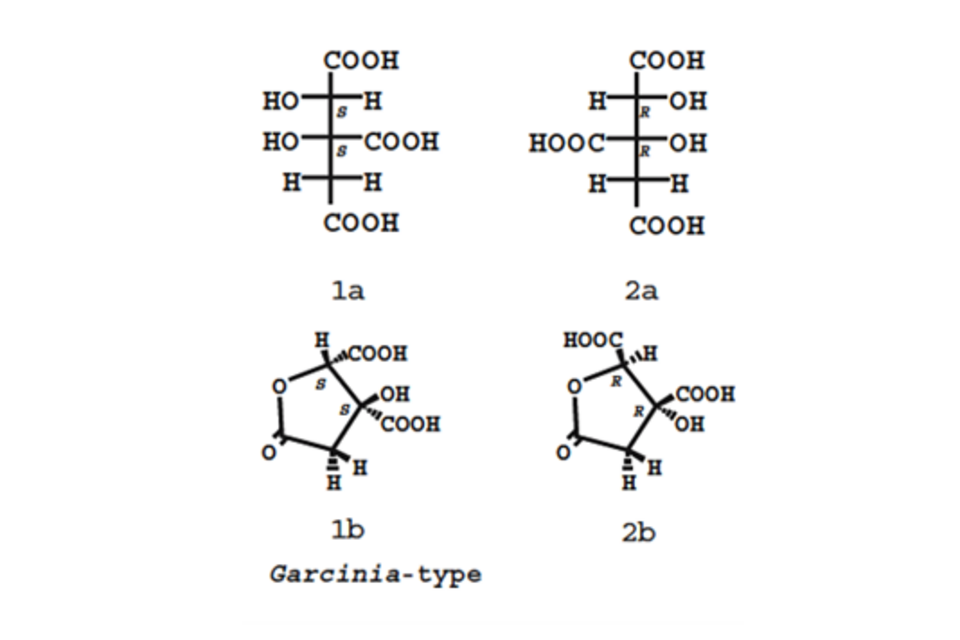
Figure 1 - Structures of HCA derived from Garcinia ssp. Upper and bottom structures show the non-lactone and lactone forms, respectively. (2S,3S)-HCA (a mixture of 1a and 1b) is found in G. cambogia. The other isomers (2R,3R)-HCA (a mixture of 2a and 2b) and (2R,3S)-HCA have not been isolated from natural sources (reproduced from Yamada et al., 2007).
69. Industrial processes generally stabilise HCA as a single, double, or triple salt to prevent its cyclisation into the lactone form. The most common are calcium, magnesium, or potassium salts because they offer greater stability, higher solubility, and lower hygroscopicity compared to sodium salts.
70. The fruit of G. cambogia Desr., contains 6.25% carbohydrates, 3.25% protein, less than 0.0060% amino acids, and 0.34% lipids. The dried pericarp of G. cambogia Desr., contains 14.4 mg vitamin C. The bark has also been reported to contain certain B-group vitamins: 48 μg vitamin B1, 275 μg vitamin B2, 45 μg vitamin B3 and 8.8 μg vitamin B12 per 100 g. The dried fruit bark also contains minerals: 2.8 mg sodium, 26.6 mg potassium, 12.7 mg calcium, 14.4 mg magnesium, 9 mg iron and 5.3 mg phosphorus per 100g.
71. G. cambogia Desr., has been described to contain polyisoprenylated benzophenones (precursors of xanthones) (see Figure 2). Studies have isolated garcinol, isogarcinol from the plant’s bark and fruit. Both compounds have been shown to have antitumour, antimicrobial, antioxidant, anti-inflammatory, and central nervous system effects, in vitro and in animal models.
72. The xanthone content of the fruit was estimated to be 1.96%. The total phenol content is estimated to be 3.26%. Flavone heterosides (apigenin, luteolin) and flavanols (kaempferol, quercetin) have been detected in G. cambogia Desr., fruits.
73. Glycosylated derivatives of caffeic acid (caffeoyl glucose), esterified with quinic acid (dicaffeoyl-quinic acid) as well as p-coumaroyl-quinic acid have also been detected in fruits.
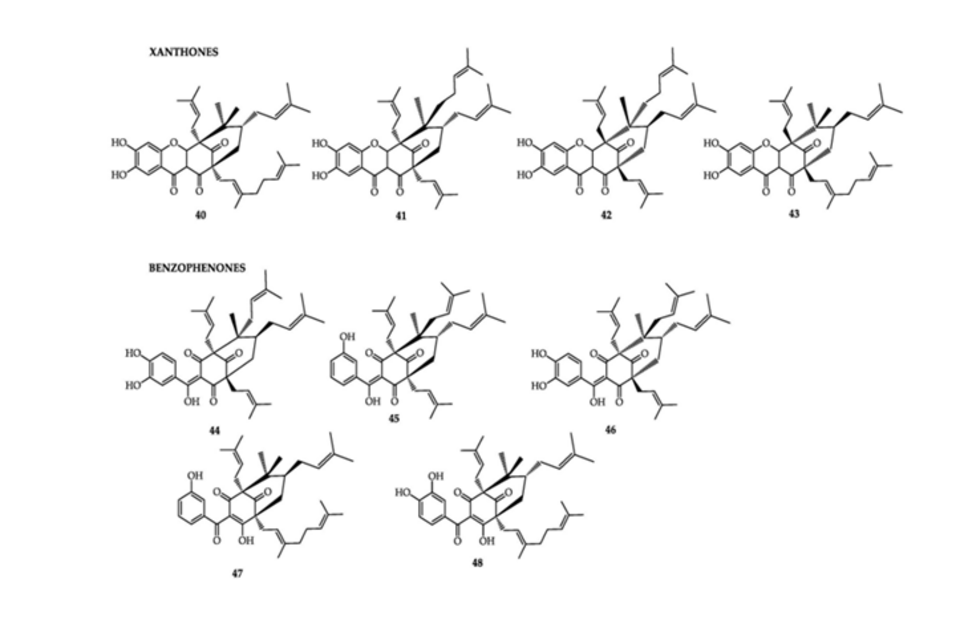
Figure 2 - chemical structures of the xanthone and benzophenone classes of bioactive compounds from G. cambogia. Xanthones: 40) oxy-guttiferone-i; 41) Oxy-guttiferone k; 42) Oxy-guttiferone k2 and 43) Oxy-guttiferone k. Benzophenones: 44) guttiferone-I; 45) guttiferone-j; 46) guttiferone-k; 47) guttiferone-n and 48) guttiferone-m (reproduced from Espirito Santo et al., 2020).
Proposed use
74. Various proposed therapeutic effects have been attributed to the Garcinia genus including anti-obesity, anti-ulcerogenic, antioxidant, anti-diabetes, anti-fungal, anti-inflammatory and anti-neoplastic (Chuah et al., 2013).
75. The anti-obesity properties (appetite suppressant effective in weight loss) of G. cambogia have been attributed to HCA, which is present in the rind or epicarp of the fruit at 10-30% by weight. Extracts can contain between 20–60% HCA (Semwal et al., 2015; Jakopin, 2019). HCA is susceptible to lactonization during manufacturing (evaporation and concentration), as such in commercially available samples of G. cambogia, HCA is present as its calcium salt for stability (Jena et al., 2002).
76. The COT’s assessment does not address the possible beneficial health effects of HCA and HCA-containing plant preparations.
Types of products
77. As part of TOX.2025.41 - Scoping paper on Garcinia cambogia, the Secretariat previously presented a brief market analysis of the types of G. cambogia products available in the UK market. From this it was found that G. cambogia supplements are either sold in capsules, tablets, or powder form with or without HCA. G. cambogia is marketed alone or is a component of a multi-ingredient dietary supplement (MIDS). An uncertainty was identified where the product description and labelling were inconsistent; some listings simply state ‘G. cambogia extract’ without describing whether it is HCA nor the standardised HCA content per serving.
Production process
78. It is important to note that not all G. cambogia extracts are created using the same manufacturing process or have the same HCA inclusion rate in the final product. The following paragraphs describe extraction methods of HCA from G. cambogia as the raw material.
# Methods described in the literature
79. Naveen et al., (2026) described a methodology for the extraction, isolation and purification of HCA. The dried rinds of G. cambogia fruits (500 g) were extracted with water at a 1:3 volume ratio at room temperature (three cycles of 3 hours each). Each extract wash was filtered through a Nutsche filter cloth, and the spent was separated. The three liquid extracts were combined and concentrated by distillation at 80-85 °C under vacuum in a rotary evaporator until the total dissolved solids (TDS) reached 15-20%. The pH of the resulting TDS liquid is adjusted to 7-7.5 using a salt mixture of potassium hydroxide (KOH), magnesium hydroxide (Mg (OH)₂), and calcium hydroxide (Ca (OH)₂) under stirring to achieve HCA stabilization and then maintained at 75-80°C for 1 hr under stirring to attain a stable pH. This mass solution of hydroxycitrate salts was quenched in methanol. The methanolic precipitate was filtered to obtain a clear wet precipitate, which was then dissolved in reverse osmosis water in a 1:5 ratio. The mixture was further heated to dissolve the wet mass completely, and charcoal was added to the solution, which was stirred at 75-80 °C for 1 hour. The charcoal solution was filtered through Hi-flow. The clear filtrate was distilled under vacuum at 80-85 °C, and the TDS was adjusted to 25-35%. The above mass solution was then passed through a Nutsche filter cloth, and the obtained clear filtrate was spray dried (Inlet Temperature: 180°C and Outlet Temperature: 90°C) and re-dried under vacuum tray dryer. The final weight obtained was noted, and the assay of HCA was measured by high-performance liquid chromatography (HPLC).
80. Edirisinghe et al., (2015) described their process for the extraction, crystallisation, preservation, pelletising and quantification of HCA from G. cambogia. Non salted, non-smoked ripen Garcinia fruits were taken, and the fleshy part was removed. Then the rind was taken and cut into small pieces and dried in dehydrator at 60°C for 24 hours. Three extraction methods were described:
i) Aqueous extraction method – Hot water (at 60°C) and cold water (room temperature) was used as the medium for the extraction process. In the process, 8g of Garcinia pieces were added to 50ml of distilled water and kept for 1hour. Then the extract was filtered out, and the filter cake was undertaken to the same process 3 times. Extraction process was repeated separately for the two temperature conditions, and they were maintained in the same temperature throughout the extraction time periods. The extracts were collected separately after filtering through filter paper. ii) Soxhlet extraction – 12.5g of dried Garcinia pieces were taken and was transferred to extraction thimble and plugged the end of the thimble with cotton wool. It was placed in soxhlet extraction apparatus, which was fixed to round bottom flask, filled with 100ml of distilled water and allowed to reflux for 5 hours at 60°C. iii) Distillation in pressure cooker – 10g of dried Garcinia rind pieces were taken and was cooked with about three volumes of water in an autoclave (10 lb/in2) for 15 minutes. The resulting extract was filtered through a paper filter and the extract was collected.
81. The authors noted that the most ‘productive’ extraction method was soxhelt extraction method; yielding 0.24g of acid extracted per 1g of Garcinia (without pectin).
82. Anthony et al., (2004) described the preparation of HCA from G. cambogia. Dried fruits of G. cambogia purchased from Konkan [region in India] were used as the raw material. Approximately 50 g of the rinds were added to 300 mL of distilled water in a round bottom flask – this was refluxed for 2 hours in a boiling water bath. The extract was taken in beaker, cooled, filtered and the filtrate collected. The residue was again refluxed with water. This process was repeated three times. All the extracts were combined and concentrated up to 50% of the TDS level. The product from this process was called the crude extract; yielding 23.5g. The crude extract was placed in a beaker; calcium hydroxide was added dropwise until the pH reached 8. Calcium hydroxycitrate was precipitated and collected by filtering under a vacuum. The residue was washed with water to remove excess calcium hydroxide (if any). The washed material was dried in an air oven at 110°C for 4-6 hours till the powder was free from moisture. The yield of calcium hydroxycitrate was ~10g. To produce potassium and sodium salts modifications to the above process were applied. For the preparation of potassium hydroxycitrate; the acid was neutralised (pH 8) by adding 10% potassium hydroxide solution. Potassium hydroxycitrate was separated by adding alcohol and the yield was 12.8g. For the preparation of sodium hydroxycitrate; the acid was neutralised (pH 8) by adding 10% sodium hydroxide solution. The yield was 11.5g.
83. Jena et al., (2002) published a review of the chemistry and biochemistry of (−)-HCA from Garcinia. This included summaries of isolation methods. The first that as described was by Lewis and Neelakantan (1965), who isolated (−)-HCA on a large scale from dried rinds of G. cambogia. Their method consisted of extracting the acid by cooking the raw material with water under pressure (10 lb/in2 for 15 minutes). The extract was concentrated, and pectin was removed by alcohol precipitation. The clear filtrate was neutralised by alkali, passed through cation exchange resin for the recovery of the acid, which was concentrated and dried. The crude dried mass was extracted with ether and recrystallised to give ‘small needle-shaped’ crystals of lactone. Lewis (1969) reported an isolation method that utilised acetone. The acetone extract was concentrated and the acid taken up in the water. The aqueous solution yielded the lactone on evaporation. Moffet et al., (1996) developed a process for the aqueous extraction of (−)-HCA from Garcinia rinds. The extract was loaded onto an anion exchange column for adsorption of (−) HCA and eluted with sodium/potassium hydroxide for release of (−)-HCA. The extract was passed through a cation exchange column to yield a free acid. Guthrie and Kierstead (1977, 1977) and Moffet et al., (1997) have reported the preparation of (−)-HCA concentrate from Garcinia rinds with 23-54% (−) HCA and 6-20% lactone.
84. Jayaprakasha and Sakariah (1998) determined organic acids in G. cambogia (Desr.) rinds by high-performance liquid chromatography. Rinds of G. cambogia were obtained from ‘local markets’; 25 g of the rinds were autoclaved at 5 lbs/inch2 pressure with 50 mL of water for 20 min and filtered. Autoclaving and filtration were repeated twice for ‘complete extraction’ of the acid. The dark brown extract was decolourised using activated charcoal and filtered. The decolourised extract was concentrated to 25 mL in vacuo and was treated with 50 mL of ethanol to remove pectinaceous material and centrifuged. The supernatant was concentrated under reduced pressure to 25 mL and stored at 4°C until further use. The acid content was found to be 17–19% (w/w) with respect to weight of rinds as determined by acid–base titration using phenolphthalein indicator.
85. Variability in extraction yields, arising from differences in extraction methodologies and the plant part(s) utilised, contributes to uncertainty regarding the composition of the various preparations. This uncertainty is further compounded by the scarcity of analytical information on commercially available products.
Google Patents
86. Google Patents describing specific extraction processes for obtaining HCA from G. cambogia were retrieved from publicly available sources and are presented in Annex B to provide additional context on the production of HCA extracts from G. cambogia rinds. These patents relate to proprietary extraction methodologies and, therefore, the information contained therein cannot be directly used for the toxicological evaluation of the substance; however, they may offer useful background on the manufacturing processes employed.
87. The majority of the documents associated with these patents are not in English. The summaries are based on the description provided on the translated Google Patent webpage. It should be noted that the summarised patents below may not show all patents recorded on this database.
Evidence on stability
88. Mutlu et al., (2022) determined the stability of HCA in solution (1% formic acid/water; n=4 replicates) that was refrigerated up to 47 days at ~2-8 °C. These were compared to matrix standards that were freshly prepared HCA in 1% formic acid/water. Analytes were found to be stable up to 47 days for both HCA and internal standard with measured concentrations ≥ 90% of the nominal concentrations (RSD ≤1.6 and ≤3.4 %, respectively).
89. Data submitted to EFSA as part of their review on the safety and efficacy of a feed additive consisting of a dried extract from G. gummi‐gutta (L.) Roxb. for use in cats and dogs described the typical shelf-life of Garcinia dry extract (~60% HCA) is at least 3 years when stored in closed containers protected from heat, light and humidity. Furthermore, stability studies showed that the loss of HCA (marker compound) was 1-6% in three batches of Garcinia dry extract after 3‐year storage (temperature not reported) (EFSA, 2021).
90. Gogoi et al., (2015) notes that the genus Garcinia contains 20-30% of (−)-HCA as its principal acid, which is susceptible to lactonization upon evaporation and concentration. Therefore, the preparation of stable derivatives is necessary: HCA salts (e.g., calcium, potassium, and sodium). Soluble metal double salts of (−)-HCA can also be prepared by treating aqueous extracts of (−)-HCA with different metal hydroxides and metal chlorides.
92. Soni et al., (2004) who performed a safety assessment of (−)-hydroxycitric acid and Super CitriMax®, a novel calcium/potassium salt noted that the stability data suggests that Super CitriMax® is stable over three years at temperature of 30°C and relative humidity of 65%.
93. Evidence regarding the stability of (−)-HCA is variable because of differences in preparation standardisation and extraction methodologies, thereby introducing uncertainty into the risk assessment.
Toxicokinetics
93. van Loon et al., (2000) investigated the acute effects of ingestion of HCA (“6-30 times the reported dosage applied in human weight-loss studies) on plasma HCA availability. They further investigated whether systemic HCA availability altered fat oxidation rates and plasma metabolite concentrations at rest and during moderate-intensity exercise in “endurance-trained” humans by assessing total fat and oxidation rate calculations. Ten cyclists presumed to be male (sex based on information from a pilot study (n=3 males; these males were not included in the main study); aged 25± 2 years; BMI 22.1 ± 0.5 kg/m2) received a total of 0.5 g/kg bw of a liquid G. cambogia extract - Citrimax HCA-450-LS (48% HCA), which was divided over 4 boluses. This resulted in 18 ± 0.4 g HCA being ingested by every subject in the HCA trial. The placebo was water; the number of subjects in the control group were not detailed. It should be noted that beverages (HCA drink or water) were provided in a randomised order. A blood sample was taken at rest, and subjects were provided with either HCA or water to drink 45 mins before exercise. Blood samples were taken at 15 minutes intervals until t=0. Subjects received their second dose 15 minutes before exercise. Following a warm-up period (5 minutes), subjects started cycling at a moderate intensity of 50% Wmax for 2 h (t = 0–120). During exercise, subjects received another bolus of test drink at t = 30 and at t = 60. During exercise, blood samples were taken at 30-min intervals (t = 30 and 60).
94. In the pilot study, it was determined that plasma HCA concentrations increased over time after ingestion of a single dose of HCA solution 4.4g over a 3.5-hours period. Maximal values were attained after 60-90 minutes at 0.12 ± 0.03 mmol/L, after which the concentration decreased. No HCA was detected in the samples collected in the placebo trial.
95. In the main study, plasma HCA concentrations increased up to 0.08 ± 0.01 mmol/L (16.6 mg/L) after the ingestion of 4.4 ± 0.1 g HCA at t = -45 and t = -15 during resting conditions. Plasma HCA concentrations increased further up to 0.39 ± 0.02 mmol/L (82.0 ± 4.8 mg/L) after the ingestion of 4.4 ± 0.1 g HCA after 30 and 60 min of exercise. It was concluded by the authors that plasma HCA availability does not increase energy expenditure or stimulate skeletal fat nor muscle fat oxidation at rest or during exercise.
96. Loe et al., (2001) dosed fasting humans (n=4; 3 males and one female, subjects were anonymised; age range 21-42; weight range 52.3-86.2 kg) with 2 g of HCA (in the form of CitriMax HCA-600-SXP capsules, ~500 mg) to assess the [bio]availability in humans using a novel gas chromatography/mass spectrometry (GC/MS) method. The subjects were all “healthy, non-smokers that had no history of cardiovascular disease or diabetes”. Blood samples were collected 30 minutes after ingestion of the supplement and every 30 minutes thereafter over a period of 3.5 to 4 hours. A 50 mL blood sample from a control subject (who did not take the supplement) was also collected to construct a standard curve. The peak plasma HCA concentration was observed 2 hours after administration, measuring 8.4 µg/mL, which demonstrated that HCA absorption is relatively fast.
97. Cruz et al., (2021) aimed to determine the main pharmacokinetic parameters of G. cambogia extract/HCA in “healthy” women (n=16 fasted period and n=13/16 for fed period; ages 21-41 years with BMI 20.29–25.82 kg/m2), and to evaluate the food effects on HCA absorption. Subjects received 1,500 mg G. cambogia, of which 750 mg is HCA extract under 8 hours of fasting. In the fed period, a high-calorie breakfast (~600 calories) was given after dosing. Plasma HCA concentrations were significantly higher in the fasted state (1.21 µg/mL) compared to the fed state (0.40 µg/mL). Overall, plasma concentrations ranged from 0.05 – 2.74 µg/mL. Peak plasma concentration (Cmax) and area under the curve time concentration (AUC0-10hrs) were 3-fold and 2-fold lower (p<0.001, 0.01), in the fed-condition, respectively. The maximum concentration for both groups was similar with 2 hours as the median. In the presence of food, it was observed that, HCA elimination was reduced (5 hours vs 3 hours under fasted conditions). The authors further noted substantial inter-individual variation for the different pharmacokinetic parameters in both periods. The authors suggested that “HCA might suffer an active absorption uptake and intense adsorption on food.”
98. Heymsfield et al., (1998) evaluated the efficacy of G. cambogia for body weight and fat mass loss in “overweight but otherwise healthy adults” (aged 18-65 years; BMI range 27 - 38 kg/m2). The total daily dose of G. cambogia extract was 3,000 mg, of which 1,500 mg was HCA or a placebo was received. Both groups were prescribed a high-fibre, low energy diet. A total of 135 subjects were randomised to either active HCA (n=66) or placebo (n=69) groups; 42 (64%) in the active HCA group and 42 (61%) in the placebo group completed 12 weeks of treatment (P=.74). It was found that the co-administration of HCA with a high-fibre diet and low-energy may have inhibited the gastrointestinal absorption of HCA. There was no significant difference in group weight loss (mean [SD], 3.2 [3.3] kg vs 4.1 [3.9] kg; P=.14) between the exposed and placebo groups.
99. Data from a patent submission notes that calcium and magnesium salts of HCA are “poorly absorbed” from the gastrointestinal tract because they are “poorly soluble” in aqueous media. In addition, both minerals are saponified by bile acids and fats in the gut and/or bound up by soluble and insoluble fibres or other substances in the diet or secreted during digestion (Patent number: US6447807B1).
100. In the literature, (2S,3S)-HCA has been described to inhibit the ATP-citrate lyase enzyme (Jakopin, 2019). This is the primary enzyme responsible for the synthesis of cytosolic acetyl-CoA in many tissues. The product, acetyl-CoA, serves several important biosynthetic pathways, including lipogenesis and cholesterogenesis. In nervous tissue, ATP citrate-lyase may be involved in the biosynthesis of acetylcholine (NCBI, 2025). Thus, it is believed that HCA is widely distributed.
101. No other data were available for distribution, metabolism and excretion. It is also unclear if different Garcinia species influences the bioavailability of HCA.
Drug interactions
Effects on P-glycoprotein (P-gp)
102. Suspected drug interaction between antiretroviral treatments and ingredients of the herbal tea blend Thé Catherine®, which includes G. cambogia, senna leaves and pods, and Chrysanthemum morifolium Ramat (see case no. 2021-129 in Table 4 of Appendix 3 in Annex B of (TOX.2025.41 - Scoping paper on Garcinia cambogia). A few days to weeks after consumption of the product, a 31-year-old woman with stage B3 HIV showed an increase in viral load. Ritonavir and darunavir (medication for HIV/AIDS) act as both substrates and inhibitors of P-glycoprotein (P-gp or MDR1; membrane efflux transporters).
103. Bolla et al., (2021) investigated the effect of garcinol (a polyisoprenyl benzophenone present in G. cambogia Desr.,). on the P-gp transporter in rats. Concomitant administration of garcinol to digoxin, a P-gp substrate, decreased the area under the curve of digoxin measured in rat plasma. The authors suggested that this was due to increased expression of the gene encoding P-gp in the brain and digestive tract. Thus, co-administration of Thé Catherine® with ritonavir and darunavir may reduce exposure to these antiviral treatments and therefore contribute to an increase in viral load. An in vitro study on a 95% ethanolic extract of G. cambogia in MDR1-MDCK epithelial cells showed an inhibitory effect at the highest dose tested (50 µg/mL) (Husain et al., 2023).
104. Boonyong et al., (2024) investigated the effects of guttiferone K (a polyisoprenylated benzophenone found in G. cambogia Desr.) in Caco-2 cells and its P-gp function. Results showed that guttiferone K could inhibit P-gp.
Effects on cytochrome P450 monooxygenases (CYP)
105. A drug interaction was suspected in a case where a 38-year-old woman developed hypokalaemia and cardiorespiratory arrest with no relevant medical or family history (see case no. 2021 in Table 4 of Appendix 3 in Annex B of (TOX.2025.41 - Scoping paper on Garcinia cambogia). The cardiorespiratory arrest due to hypokalaemia occurred two to three days after taking the food supplement Eafit Ultra Slim Burner® (with G. cambogia), combined with Maté®, Spasfon®, and Primpéran®. The Nutrivigilance WG highlighted the large number of cofactors potentially responsible for adverse reactions, including Primpéran® (metoclopramide), known to lengthen the QT interval, and Maté®, which is rich in caffeine, known for its arrhythmogenic effects.
106. In the study by Bolla et al., (2021) garcinol exhibited strong inhibitory effects on CYP2D6 (IC50 = 9,5 µM) and CYP1A2 (IC50=7.6 µM). Significant inhibitions were also reported for CYP2C9 (IC50 = 8.0 µM), 2B6 (IC50 = 2.1 µM) and 3A4 (IC50=5.1 µM).
107. Yu et al., (2017) examined the inhibitory effects of a G. cambogia extract on CYP enzymes. The results showed significant dose-dependent inhibitory effects of G. cambogia extract on CYP2B6 activity, effects that did not appear with HCA, which was also tested.
108. An in vitro study using recombinant cytochromes found that a hydro-alcoholic extract (95% ethanol) of G. cambogia weakly inhibited CYP3A4, with an IC50 around 25 µg/mL (Husain et al., 2023). Another in vitro study on human hepatocytes showed that the same type of extract induced over 50% activity of CYP3A4 and CYP1A2 at concentrations below 10 µg/mL (Haron et al., 2023).
Effects on nuclear receptors PXR and AhR
109. In an in vitro study conducted by Haron et al., (2023), an activating effect of the nuclear receptors PXR and AhR humans transfected into HepG2 cells (human hepatocytes) were also observed when exposed to a hydro-alcoholic extract (95% ethanol) of G. cambogia.
110. Another study describes the agonist effect of the same type of extract on PXR and AhR receptors in HepG2 liver cells and AhR-reporter cells respectively. The authors showed that G. cambogia was an activator of PXR and AhR (Husain et al., 2023).
Toxicity
Genotoxicity
(–)-Hydroxycitric acid
In vitro studies
- Lee & Lee (2007) evaluated the genotoxicity of HCA isolated from G. cambogia using three tests (see paragraph 114 below): the Ames test, the in vitro chromosomal aberration test, and an in vivo micronucleus test. The test item was described as “a natural, highly water-soluble, calcium-potassium salt of 60% HCA extract”; commercially known as SuperCitriMax™ HCA-600-SXS (HCA-SXS).
111. The Ames Salmonella mutation test was used according to the plate incorporation procedure described by Maron and Ames (1983). The five strains of Salmonella typhimurium (TA98, TA100, TA102, TA1535, and TA1537) were provided by Prof. B. N. Ames (University of California Berkeley). The assay was performed with and without metabolic activation using an S9 mixture. Negative and positive controls were used for each strain. The positive controls performed without metabolic activation were: 2-nitrofluorene (1 μg per plate) for TA98, sodium azide (1.5 μg per plate) for TA100 and TA1535, mitomycin (1 μg per plate) for TA102, and acridine mutagen (1 μg per plate) for TA1537. The positive controls performed with metabolic activation was 2-aminoanthracene (1 μg per plate) for all strains. Six concentrations of HCA-SXS were examined with triplicate plates per dose: 0, 20, 200, 500, 2,500, and 12,500 μM/plate. HCA-SXS did not induce mutagenic activity in any of the five bacterial strains tested, under any of the activation conditions examined (Lee & Lee, 2007).
112. For the chromosomal aberration test, the Chinese hamster ovary (CHO) cell line was provided by the Cancer Research Institute, Seoul National University, Korea. CHO cells were maintained under monolayer conditions in Eagle’s minimum essential medium supplemented with 10% foetal bovine serum, with L-glutamine and ampicillin at 37°C in a 5% CO2 atmosphere. For each treatment, 3 × 10⁵ cells were cultured in duplicate in 5 mL of culture medium in a 2.5-L flask. After the cells were incubated for 24 h, they were treated with an HCA-SXS 10 μL reaction volume. A 5-hr pulse treatment was then carried out with and without the S9 mixture (used at a final concentration of 10% in the treatment medium). Benzo[a]pyrene (BaP) was used as a positive control in the presence of S9. Mitomycin C (MMC) was used as a positive control in the absence of S9 mixture. Chromosomal aberration percentages included by HCA-SXS in the treated groups were >3% and 4%, respectively. In the positive control groups, the percentage of structural chromosome aberrations in the BaP and MMC-treated groups were >21% with S9 and >25% without S9, respectively. HCA-SXS was not observed to induce any cytotoxic effect (Lee & Lee, 2007). The authors concluded that HCA-SX was not found to be genotoxic by bacterial or by chromosome aberration testing.
In vivo studies
114. Lee & Lee, 2007 performed a micronucleus test in 7- to 8-week-old ICR male mice (n=5/group) which were acclimatised for at least 7 days prior to the start of the test. HCA-SXS were dissolved in dimethyl sulfoxide (DMSO). The groups were as follows: DMSO (negative control), 20, 100, 500, 2,500 or 12,500 HCA-SXS μmol/kg dissolved/suspended in DMSO, mitomycin C at 2 mg/kg (positive control). Animals were administered the treatments by intraperitoneal injection and were sacrificed by cervical dislocation 24 hours after the test substance administration. Numbers of micronucleated cells were determined by counting the number of polychromatic erythrocytes (PCEs) from at least 1,000 PCEs per animal. The micronucleated polychromatic erythrocytes (MNPCEs) that contained micronuclei were counted from at least 1,000 PCEs. No mortality was observed. MNPCE/1,000 PCEs were induced at the highest HCA-SXS dose (12,500 μmol/kg) and PCE/(PCE + NCE) ratios decreased with increasing dose. The authors note that HCA-SXS demonstrated “a weak mutagenic effect by micronucleus testing but did not induce structural chromosomal aberrations or significantly induce MNPCEs at the doses used”.
115. The article by Lee & Lee (2007) (as summarised in paragraphs 111-114) was refuted by Lau et al., (2008), stating that for the in vivo micronucleus test, the authors: i) selected an inappropriate route of administration intraperitoneal rather than the oral route; ii) the use of vehicle for the test item (DMSO) was not justified and varied to that of the positive control (water), as DMSO may react with the test compound to induce an adverse effect; iii) a dose-range finding test was not performed and the range of selected doses (separated by a factor of 5) differed from conventional dose levels used in toxicological studies; iv) discrepancy with reporting of results; v) “very weak” statistical analysis, where a t-test was utilised without performing a one-way analysis of variance previously; a regression or correlation analyses was also not performed.
Preparations from G. gummi-gutta (aril and pericarp)
In vitro studies
116. Data from the National Toxicology Program (NTP) that evaluated the genotoxic potential of G. cambogia extract in Salmonella/ Escherichia coli (E. coli) mutagenicity or Ames test was recently published (NTP, 2026). The extract [not further characterised] concentrations ranged from 0 to 6,000 µg/plate in S. typhimurium strains TA100 and TA98, and E. coli WP2 uvrA pKM101, both with and without metabolic activation (S9 mixture). It was observed that there was no increase in the number of mutant colonies in any tested strains at any concentration, either with or without S9.
117. Ghosh & Mukherjee (2017) evaluated the in vitro genotoxicity of HCA (50.9% HCA in calcium salt of HCA) in human lymphocytes. The following methods were used: trypan blue dye exclusion test, MTT assay, Comet assay and a DNA diffusion assay. The trypan blue and MTT assay were performed according to the test methods of Tennant (1964) and Mosmann (1983), respectively, with modifications by Sinha et al., (2014). The Comet assay was performed following the method of Tice et al., (2000), with modifications based on Sinha et al., (2014). Cells were exposed to HCA (0, 10, 20, 40 or 100 µg/mL) for 3 hours or 24 hours and processed for cytotoxicity and genotoxicity analyses. The effects of HCA on erythrocytes were determined by a haemolysis test using the same doses and exposure duration. Results from the trypan blue and MTT assay in human lymphocytes demonstrated the absence of significant induction of cytotoxicity when compared to the positive control groups. However, as observed in the Comet assay, HCA induced DNA damage that was statistically significant at concentrations of 40 and 100 µg/mL. The authors noted that these concentrations were “almost identical to and approximately double the maximum permitted dose [author does not detail if this the human equivalent dose] (i.e. 900 – 2,800 mg/day or 15 – 47 mg/kg/day, respectively).” Oxidative stress, as a potential mechanism of DNA damage was evaluated using DCFH-DA dye. A significant increase in reactive oxygen species (ROS) production was found at concentrations of 40 and 100 µg/mL at both time points compared to the respective controls. As for the effects on the erythrocytes, no haemolytic potential was observed. The authors concluded that HCA-induced genotoxicity may not lead to apoptotic/necrotic cell death. The observed DNA damage can be attributed to oxidative stress, which was independent of mitochondrial ROS generation.
118. Ono et al., (2006) [article in Japanese; included as reviewed in draft EFSA Scientific Opinion] conducted an in vitro chromosomal aberration test on a dry aqueous extract from G. gummi-gutta pericarp (65% (–)-HCA calcium) in Chinese hamster lung Ishii-Ueno subline (CHL/IU) cells, with and without metabolic activation (S9 mix). Cells were exposed to concentrations of 0 to 2,000 µg/mL for 6 hours followed by an 18-hours recovery period (short-term treatment) with and without metabolic activation (S9 mixture) or up to 4,000 µg/mL for 24 hours (long-term treatment) without S9 mixture. An increase in structural or numerical chromosome aberrations was not observed under any of the tested conditions. Cell proliferation rates were comparable to that of the controls, suggesting that there was minimal to no cytotoxicity/cytostasis occurred.
In vivo studies
119. Ono et al., (2006) [article in Japanese; included as reviewed in draft EFSA Scientific Opinion] also conducted an in vivo micronucleus test in male Slc:ddY mice using dry aqueous extract from G. gummi-gutta pericarp (65% (–)-HCA calcium). Animals received a single oral dose of 0, 500, 1,000, or 2,000 mg/kg bw, and bone marrow samples were collected 24 hours post-administration. MNPCE were scored in 2,000 PCE per animal, and the PCE/NCE ratio was calculated to assess cytotoxicity. There was no significant increase in MNPCE frequency or changes in PCE/NCE ratio were observed at any dose level.
Acute toxicity
120. Ohia et al., (2002) evaluated the safety of a calcium/potassium salt of 60% HCA extract from G. cambogia (commercial name: SuperCitriMax™ HCA-SXS) in male and female Albino rats. The protocol and study were conducted in compliance with US EPA Guidelines for Registering Industrial Chemicals in the US (Pesticide Assessment Guidelines, Subdivision F, Hazard Evaluation and Domestic Animals Section 81-1) and the Toxic Substances Control Act Health Effects Test Guidelines, 40 CFR 789.1175. A single dose of 5,000 mg HCA-SXS/kg was administered to fasted female and male rats (n=5 per sex) (via gastric intubation). Animals were fasted ~18-20 hours prior to dosing and returned to feeding (water and chow ad libitum) 3-4 hours after dosing. Control animals received the vehicle (not further described). Rats were observed for mortality and clinical signs for 14 days, after which rats were euthanised.
121. No deaths were observed. Clinical observations were minimal to scabbing of the dorsal head (one male from day 3 and for the remainder for the remainder of the study) and, soft stool and rales for one and two rats, respectively. The were no significant changes observed in body weights and examined tissues at necropsy (major organs of the cranial, thoracic and abdominal cavities). The authors concluded that the data indicated that the LD50 of HCA-SXS was greater than 5,000 mg/kg.
General toxicity
(–)-Hydroxycitric acid
Subchronic toxicity studies
122. Shara et al., (2003, 2004) evaluated the dose- and time-dependent effects of HCA-SXS in male and female Sprague-Dawley rats on body weight, hepatic and testicular lipid peroxidation, DNA fragmentation, liver and testis weight, expressed as such and as a percentage of body weight and brain weight, and histological changes over a period of 90 days. An animal research protocol (ARC# 0598) was obtained from Creighton University Medical Center. HCA-SXS “a natural, highly water-soluble”, calcium-potassium salt of 60% HCA extract from G. cambogia – commercially known as SuperCitriMax™ HCA-600 SXS was dissolved in water and administered by gavage at 0, 0.2, 2.0 and 5% of feed intake. Control animals received the vehicle (water). Food and water consumption were measured 2-3 times weekly. Mortality/morbidity was assessed once daily throughout the study period. Clinical signs were evaluated once to twice daily. Body weights were recorded on day 1, twice weekly thereafter and before necropsy. Animals were sacrificed on days 30, 60 and 90 of treatment and the target organs were either processed immediately, preserved in 10% buffered formalin for histopathology, or stored at -80ºC. The number of animals per dose group was not explicitly stated by the authors; however, it was detailed that all result values were reported as a mean ± standard deviation from 5-7 samples.
123. By day 90, feed intake was reduced by ~11.2, 12.4 and 15.8% in male rats following supplementation of HCA-SXS at the above doses (0 (water), 0.2, 2.0 and 5% of feed intake), respectively, when compared to their corresponding controls. In females, the values were 11.7, 18.1 and 13%, respectively. Regarding changes in body weight, ~11.2, 12.4 and 15.8% reduction in body weight in male rats following supplementation at the tested dose levels, respectively. For females these values were ~11.1, 18.1 and 13.0%, respectively. These were considered as significant by the authors. Regarding changes in testicular weight (expressed as a percentage of body weight and brain weight), a small but not statistically significant increase in testis weight with increasing age was observed in control animals. The testis weights in the exposed groups were similar to the control animals. Regarding the effects of HCA-SXS on hepatic and testicular lipid peroxidation, a time-dependent increase in hepatic lipid peroxidation was generally observed in all samples; however, these were not significant in the HCA-SXS exposed groups. A small but non-significant increase in testicular lipid peroxidation was observed in the control group as well as the HCA-SXS exposed group. Regarding the effects of HCA-SXS on hepatic and testicular DNA fragmentation, the results showed that there were no significant HCA-SXS treatment related effects on these parameters (in male rats for the latter) when compared with their respective controls. Histopathological analyses on the liver, brain and testis, revealed that HCA-SXS exposure did not cause any morphological alterations in these tissues. The authors were of the opinion that these results indicated that HCA-SXS was “safe and efficacious in weight management” under the test conditions.
124. Sekita et al., (2003) [poster presentation] dosed male Fischer 344 rats (n=10/group) of either a calcium HCA salt (99.5% purity) or 5% G. cambogia extract (66.2% purity) at the following levels for 28 days, respectively: 0.13, 0.66 and 3.31% in feed and 5% G. cambogia extract in feed (equivalent to 3.31% HCA in diet). Blood serum levels of inhibin B decreased, whereas there was an increase in follicle-stimulating hormone (FSH). At the 3.31% HCA and 5% G. cambogia extract groups, the following effects were observed: impaired spermatogenesis, decrease in decrease in epididymal weights; degenerative changes of Sertoli cell and elongated spermatid.
Preparations from G. gummi gutta (aril and pericarp)
Subchronic toxicity
125. Anno et al., (2003) [article in Japanese; included as reviewed in draft EFSA Scientific Opinion] compared the sub-chronic toxicity of a commercially available dry aqueous extract of G. gummi-gutta pericarp; (–)-HCA stabilised as a calcium salt (64.5%) and (–)-HCA in “free form” (41.5%). The two extracts were administered for 26 weeks to 6-7-week-old male F344 rats (n=20 per group) in feed at concentrations of 0, 0.2, 1.0 and 5.0% of feed. Based on calculations performed by EFSA, the amounts corresponded to 96, 480 and 2,400 mg/kg bw per day of G. gummi gutta extract containing around 40, 199 and 996 mg/kg bw per day (–)-HCA in the extract with the free form and around 63, 310 and 1,550 mg/kg bw per day (–)-HCA in the extract with the calcium salt. Ten rats each were studied after 10 and 26 weeks of administration of the extract. Histopathology of heart, spleen, lungs, liver, kidneys, testes, epididymides, seminal vesicles, prostate, pituitary, thyroid, adrenals, brain (cerebrum, cerebellum, brainstem) were investigated. Organ weights of the brain (including cerebellum and brainstem), pituitary, thyroid (with parathyroid), heart, thymus (26-week only), lungs (with bronchi), liver, adrenals, kidneys, spleen, testes, epididymides, seminal vesicles, and prostate were obtained.
126. Mortality was not observed for any of the treatment groups. Soft stools occurred in a dose-dependent manner in all dosed groups. There were no adverse effects on haematology and blood biochemistry, including liver enzyme concentrations. There were no adverse effects on body weight in the dosed groups, even though at some intermediate timepoints lower body weights were transitionally observed in the groups receiving the extracts. No biologically relevant adverse effects on organ weights and histopathology were observed except for effects on the testes in the calcium-salt 5% dose group.
Chronic toxicity studies
127. Inoue et al., (2002a) [article in Japanese; included as reviewed in draft EFSA Scientific Opinion] performed a 1-year chronic toxicity study in female and male F344 rats commissioned by the Japanese National Institute of Health Sciences. The test substance was a commercially available dry aqueous extract of G. gummi-gutta pericarp in which (–)-HCA (66.2%) was stabilised as calcium salt. At five weeks of age, 60 rats were randomised, stratified by sex, to four different groups (n=15 per sex) receiving diets to which the dried extract was added in concentrations of 0, 0.2, 1.0 and 5.0% of feed. At week 26, seven animals were examined and at week 52 eight, except in the 0.2% group of males in which only seven rats were available for examination at week 52. In male rats, the consumption amounted on average to 92, 463 and 2,461 mg/kg bw per day of the dried extract containing on average around 61, 306 and 1,629 mg/kg bw per day (–)-HCA. Female rats consumed on average 112, 560 and 2,865 mg/kg bw per day of the dried extract containing on average around 74, 370 and 1,897 mg/kg bw per day (–)-HCA.
128. Body weights and body weight gains as well as feed intakes were similar between groups. Body weight was statistically significantly lower in female rats of the highest dose group compared to control at week 52; however, the authors concluded that the difference was not biologically relevant. There were no adverse effects on haematological and serum biochemical parameters, including liver enzyme concentrations in both sexes. The brain, heart, lungs, liver, kidneys, spleen, testes/ovaries, and adrenal glands were weighed. There was no adverse effect of the administration of the G. gummi-gutta dry extract on the absolute or relative weight of these organs, except for the testes. The thymus, pancreas, thyroid, submandibular gland, spinal cord, urinary bladder, seminal vesicle, epididymis, uterus, lymph nodes (mesenteric), skeletal muscle, sciatic nerve, sternum, stomach, intestines, and any organs or tissues with visible macroscopic changes were removed and examined histopathologically. Except for the testes and the lungs, no histopathological alterations were observed in these organs that could be related to the exposure. In the lungs of males and females of the 5% dose group, white spots or nodules were observed. This concerned one male and three female rats.
Other studies in mammalian animals
129. Han et al., (2016) performed a 56-day study in male Sprague Dawley rats (n=15/group) to investigate the effects of a commercial G. gummi-gutta extract (56-58% (–)-HCA and (–)-HCA lactone) on body weight gain, protein synthesis and metabolic hormones. The extract was added to feed at doses of 0, 25, 50, and 75 g/kg diet. These were equivalent to 90, 180, and 270 mg/kg bw per day, respectively. A dose-dependent reduction in body weight gain together with an increase in feed consumption and feed conversion ratio across dosed groups was observed, but the differences in body weight between the treatment groups were considered not of biological relevance. No adverse effects on relative liver weights and concentrations of metabolic hormones were reported.
130. Roy et al., (2004) orally dosed Sprague-Dawley rats with a calcium-potassium salt of 60% HCA extract from G. cambogia (commercially known as Super Citrimax HCA-600-SXS) for 8 weeks (5 days a week) at a dose of 10 mg/kg and then performed transcriptomic analysis. A significant increase in the expression of genes encoding the serotonin receptors 5HT2A, 5HT3A, 5HT2B, 5HT4, and 5HT7, with expression levels in abdominal adipose tissue rising by a factor of 1.3.
131. Ohia et al., (2001) utilised the same extract (Super Citrimax HCA-600-SXS) in an ex vivo rat model (cortex sections) and it was shown to induce serotonin release at the highest concentration (300 µM) and an inhibition of the reuptake of this neurotransmitter (at 300 and 1 mM; following an 1 h exposure) (Ohia et al., 2002).
Mechanistic studies for general toxicity
132. Sullivan et al., (1974) investigated the effect of the trisodium salt of (–)-HCA on body weight and the potential underlying mechanisms for an effect in a series of studies. Female Crl:CD(SD) rats received a low-fat, high-carbohydrate diet. Lipogenesis was evaluated by administering [14C] alanine and [3H]2O and measuring the incorporation of [14C] and [3H] into lipids. Body fat was determined by saponification of carcasses. In general, the studies showed that the administration of (–)-HCA to rats for durations of 11 or 30 days led to a substantially lower body weight gain and body fat content in rats when doses were ≥137.4 mg/kg bw per day and were consumed for 30 days with no effects at a dose of 34.4 mg/kg bw per day.
133. Lowenstein (1971) reported an inhibition of de novo fatty acid synthesis in vivo of 50% following intraperitoneal administration of sodium (–)-hydroxycitrate to rats in a dose of 0.28 mM/kg bw (equivalent to 58.3 mg/kg bw). Rats [strain and sex, unspecified] were fed chow diet for 7-10 days [water ad libitum], then were fasted for 45 hours. A diet high in fructose (n=21) or glucose (n=18) followed for 10 to 15 days. Rats were injected with 0, 0.4, 0.8, 1.2, 2 and 4 mM sodium (–)-hydroxycitrate /kg bw “most of these injections were given intraperitoneally, but some administrations were made into the tail vein for comparison”. The control was isotonic sodium chloride. The number per animals per dose group is unclear; however, the total number of animals were 39. After 45 minutes, each rat was given 0.2mL of a solution containing about 1 mCi of 3H2O by injection into a tail vein. Animals were killed by decapitation 45 to 60 minutes after; blood was collected and the liver was excised. An intraperitoneal dose of as 0.1Mm/kg bw inhibited fatty acid synthesis by up to 30%. This is equivalent to about 2.9 mg of sodium (–)-hydroxycitrate per 150g rat.
134. Chee et al., (1977) reported that administration of (–)-HCA (10,950 mg/kg feed) to rats, led to a reduction of lipogenesis in the liver of up to 40% when compared to rats in the control group; however, lipogenesis in adipose tissue was not affected.
Carcinogenicity
135. No carcinogenicity studies were retrieved from the literature or through search from websites of authoritative bodies.
Reproductive and developmental studies
(–)-Hydroxycitric acid
136. Deshmukh et al., (2008a) evaluated the effects of a novel calcium/potassium salt of HCA on the reproductive systems of male and female rats, the postnatal maturation and reproductive capacity of their offspring, and possible cumulative effects through multiple generations. The study was performed in compliance with a standard study protocol based on the US FDA Redbook Guidelines for Reproductive Studies IV.C.9.a, and Guidelines for Developmental Toxicity Studies IV.C.9.B., Feed Additive Safety (US FDA, 1993), and the Organisation for Economic Co-operation and Development Principles of Good Laboratory Practice.
137. The test article, HCA-SXS, commercially known as Super CitriMax was mixed with powdered rodent diet to obtain three concentration levels. A small volume of diet premix was prepared, which was then mixed with the remaining portion of the diet in a mechanised ribbon blender for about 20 minutes to obtain the desired homogeneity of the test article concentration in diet. The experimental diets were prepared once a week based upon the results of the stability tests on HCA-SXS. The diet preparation procedure was subsequently validated by conducting stability studies and homogeneity on exposed diets.
138. Sprague-Dawley rats (n=30/sex per dose group) were administered feed containing HCA at dose levels of 0, 1,000, 3,000, or 10,000 ppm for 10 weeks prior to mating, during mating, and, for females, through gestation and lactation, across two generations. The control group of animals were fed normal diet. The male and female rats of the F0 generation from each dose group were mated and allowed to deliver normally. At weaning, one male and one female pup from each litter from the control and treatment dose groups were selected for the F1 generation. The selected F1 animals were exposed to HCA-SXS for 10 weeks before mating and then they were mated to produce a second generation F2a. During the period of study, animals were examined daily for signs of clinical toxicity, and their body weight and feed consumption (g/rat per day) were recorded twice a week. N.B. A discrepancy was noted where the abstract states the latter was performed twice a week recording, whilst the methods section describes one weekly recording. For the parents (F0 and F1) and the offspring (F1 and F2a), reproductive parameters such as fertility and mating, gestation, parturition, litters, lactation, sexual maturity, and development of offspring were assessed. At termination, necropsy and histopathological examinations were performed on all animals.
139. Data on feed consumption by the parental male and female rats of both (F0 and F1) generations during the premating and mating periods, for both sexes, and during gestation and lactation in the case of female rats, did not reveal any “remarkable” treatment-related changes in the average daily feed intake by the male and female rats compared to the respective control groups, across the different dose levels for each of the F0 and F1 generations and also when compared across these two generations. Based on feed intake, the resulting dose of HCA-SXS for the highest-dose groups of male and female was calculated as 813 and 1,205 mg/kg/day, respectively, for the F0 generation, while the same was respectively 1,018 and 1,524 mg/kg/day in the case of the F1 generation. The total daily dose of HCA-SXS for all groups are provided in Table 3.
Table 1 – Daily dose of HCA-SXS (mg/kg bw per day) during the premating period (reproduced from Deshmukh et al., (2008a).
| HCA-SX level in diet (ppm) | F0 Males (mg/kg bw per day | F0 Females (mg/kg bw per day | F1 Males (mg/kg bw per day | F1 Females (mg/kg bw per day |
|---|---|---|---|---|
| Control (0) | 0 | 0 | 0 | 0 |
| Low (1,000) | 80 | 109 | 89 | 135 |
| Mid (3,000) | 246 | 354 | 268 | 447 |
| High (10,000) | 813 | 1,205 | 1,018 | 1,524 |
140. Dietary exposure to all animals and offspring at the F0 and F1 generations, did not reveal significant incidence of mortality or abnormal clinical signs. Compared to the respective controls, the HCA treatment groups at all dose levels, did not have different feed consumption or body weight. All deaths and abnormal clinical signs observed in the rats during F0 and F1 generations, such as transient/reversible spells of emaciation, abdominal breathing, respiratory rates, hypoactivity, circling disorder, and lacrimation, were incidental and not test substance related.
141. The average bodyweight and body weight gains on the parental F0 and F1 generations up to all stages including lactation of female rats of the exposed groups at all doses, did not reveal any significant differences when compared to the respective control groups. Although, a mild but significant lowering of body weight gain in F1 male offspring was noted in the highest dose level after they were weaned, between 3 to 7 weeks of their life. For the duration of the study, the difference in body weights persisted; however, it was not significant, and the percentage gain in body weights between control and exposed groups of male rats was found to be comparable on week 31 (it was slightly higher in the high dose group than the control group). The authors did not count this as an adverse effect while deciding the NOAEL, as it was a likely effect of the pharmacological activity of HCA-SXS. There were other “occasional” instances of group mean values of exposed animals differing from those of the respective control; however, these were not considered of no toxicological significance due to the “small magnitude of variation”.
142. During the gestation period in all females exposed to HCA-SXS, no treatment-related adverse effects on reproductive performance in terms of fertility and mating, gestation, parturition, and the litters born were observed. The values of male fertility indices for the exposed groups in the F0 and F1 generations did not differ significantly from those of the controls and compared well with the historical control data at the test facility. The sperm motility of the F1 parents was lower than the F0 parents (in exposed groups). The authors did not consider this to be related to HCA-SXS exposure, as the lowering was also observed in the concurrent control group of rats.
143. All the gross and microscopic findings of the parental organ weights, necropsy and histopathology were incidental as the incidence was found to be comparable among the control group and the treatment groups, without any dose-dependent trend.
144. Offspring observations are hereby summarised. The body weights of some of the pups selected as parents for the next generation were recorded at ~4 weeks after they were weaned at the end of their lactation; in male offsprings exposed at the highest dose (10,000 ppm), the group mean body weights were significantly lower than those of the control group; however, this effect was not considered as an adverse effect [was considered as a pharmacological effect]. When compared with their respective controls, data on survival and clinical observations recorded for the offspring of both generations F1 and F2a during the lactation period of 21 days did not reveal any remarkable differences. Nor were there any adverse effects on their litter sizes, sex ratio of litters, live birth indices and the viability of litters, which were calculated on days 4, 7, 14 and 21 of lactation from parental females exposed to HCA-SXS at all dose levels. The sexual maturation [age at which there is balanopreputial separation in males and vaginal opening in females] was only measured for the F2a groups. It was observed that exposure to HCA-SXS at any of the dose levels did not affect the age of sexual maturity of the offspring belonging to the F2a generation. Exposure of the parental animals of both the F0 and F1 generation to HCA-SXS at the tested dose levels had no adverse effect on the physical development of their litters, compared to the respective control groups. The group mean values of absolute and relative weights of the brain, spleen, and thymus of the pups of the F1 and F2a generation did not significantly alter between the control and treatment groups. The study authors considered that all the gross and microscopic pathology findings in this study were accidental as the incidence was found to be comparable among the control group and the treatment groups, without any dose-dependent trend. HCA-SXS treatment did not cause any significant histopathological changes in any organ.
145. The authors noted that exposure to HCA-SXS did not affect reproductive performance as evaluated by sexual maturity fertility and mating, gestation, parturition, litter properties, lactation, and development of the offspring. Nor did it induce any systemic toxicity in the parental rats and their offspring at the tested concentration levels. Based on the results of this study, the authors determined a NOAEL to be greater than 10,000 HCA ppm in the diet or equivalent to 1,018 and 1,524 HCA mg/kg bw per day in male and female rats, respectively.
146. Deshmukh et al., (2008b) conducted a follow-up study to evaluate maternal toxicity and effects on the developing embryo in Sprague-Dawley rats (effects included death, structural abnormalities, and altered or retarded growth) when exposed to HCA-SXS. The study was performed as per the previous protocol in Deshmukh et al., (2008a) (summarised in paragraphs 136-145). A total of 30 males and 30 female pups per dose group (except the 3,000 ppm (mid) dose group where 25 of each sex were available), including the concurrent control group. The animals in this study were selected randomly after weaning from each F2b litter of the F1 generation from the two-generation reproductive toxicity study (summarised in paragraphs 136-145). Therefore, the rats in the treatment group were exposed directly to HCA-SXS via feed, prior to which they had indirect exposure to HCA during lactation. The dietary exposure levels were the same as those employed for the two-generation reproductive toxicity study: 0, 1,000, 3000, or 10,000 ppm. Following mating at maturity, the pregnant rats were observed twice daily for clinical signs of adverse effects, and body weight and feed consumption were recorded. On day 20 of gestation, animals were subjected to a necropsy and caesarean section to examine the uterus, ovaries, and foetuses for assessment of different parameters of pregnancy and embryo-foetal defects.
147. The daily amount of HCA-SXS consumed at dietary feed levels of 1,000, 3,000 or 10,000 (ppm) (equivalent to 0.1%, 0.3% and 1.1%) were calculated as 103, 352, or 1,240 mg/kg bw per day, respectively.
148. Comparison indices of sperm-positive females (mating behaviour), maternal deaths during pregnancy, number of pregnant/non-pregnant females, pregnancy rate (%), and females with resorptions (%) were evaluated between the control group and the HCA-SXS exposed groups. At the dose levels administered, no adverse effects were observed. Maternal body weight changes during gestation were recorded for the following periods: days 0, 7, 14 and 20. The group mean values of body weight gain for each period did not show any significant differences between the exposed and control groups. On the 20th day of gestation, a significant decrease (by 13%) in mean body weight of the rats maintained on the highest dose (10,000 ppm) was noted. During the study, no treatment-related clinical effects were observed in any of the groups. However, the following incidences were reported: i) wryneck and a transient period of emaciation were observed in females during the course of the study [was deemed to be not dose related by the authors]; ii) on day 17 of gestation, one pregnant female from the highest dose group died – profuse haemorrhage [by vaginal bleeding] was identified as the probable cause of death. No other mortalities were noted in any of the groups during the course of the study. Observations made on the gravid uteri of females euthanised on day 20 of gestation did not reveal any “remarkable” alterations indicative of adverse effects of HCA-SXS on absolute uterus weight, number of: corpora lutea, implantations, live and dead implants, early and late resorptions, and post-implantation losses (%). Observations made on the litters of females euthanised on day 20 of gestation did not reveal any remarkable treatment-related alterations in litter size, number of foetuses, sex ratios and foetal weights. The group mean litter size from the highest-dose group of HCA-SXS was significantly lower than the control group (p <0.05). However, these observations deemed to be not of biological significance by the authors as the changes were smaller in magnitude compared to the variation observed in the historical control data.
149. Observations in the foetal groups are summarised. The number of foetuses examined in the control, 1,000, 3,000 and 10,000 ppm dose groups were 226, 227, 158 and 160, respectively. The only “major malformation” was an omphalocele [birth defect, where the intestine or other abdominal organs stick out of the belly button], which was found in two foetuses: one in the control and high-dose groups. This was considered incidental by the authors. Two other “minor malformations” were observed. An incidence of a small haematoma at the tip of the tail in three foetuses: one in the control, low-dose and mid-dose groups. One foetus in the high-dose group was small (runt). No treatment-related significant incidence of soft tissue alterations in foetuses of dams exposed to HCA-SXS at the tested doses were noted (n=108, 106, 74, 76 for the control and each HCA-SXS dose groups, respectively). Small incidences of “minor anomalies” were observed including, globular heart and unilateral enlargement of the ventricle of the heart, mottled lungs, unilateral displacement of adrenal, and unilateral hypoplasia of kidney in foetal soft tissues. These were considered as incidental and of no toxicological significance by the authors. The only abnormal finding classified under “major anomalies” was unilateral cerebral hypoplasia observed in one of the foetuses in the low-dose group; this was considered to be incidental by the authors, in light of its isolated incidence (0.94%). There was no incidence of any significant and treatment related skeletal abnormalities in foetuses of dams exposed to HCA-SXS. Any abnormalities were considered incidental or of no toxicological significance due to either being a normal variant, minor in nature or the incidence was in isolation and/or comparable to the control dose group.
150. The authors concluded that HCA-SXS was not found to be teratogenic in Sprague-Dawley rats at dietary exposure levels of 1,000, 3000, and 10,000 ppm, equivalent to the dose levels of 103, 352, or 1,240 mg/kg/day, respectively. Based on the results of the study, the NOAEL of HCA-SXS was determined by the authors at 1,240 mg/kg per day.
Preparations from G. gummi-gutta (aril and pericarp).
Studies investigating adverse effects on male reproductive organs
151. A study by Inoue et al., (2002a) [article in Japanese; included as reviewed in draft EFSA Scientific Opinion] was described in paragraphs 127-128, the effects on male reproductive organs are highlighted in this section. At week 26 and 52, males in the 5.0% dose group exhibited statistically significant reductions in both absolute and relative testes weights compared with 5% control group. The decrease in relative testes weight was approximately 50% lower than those of the control group. Testicular atrophy was observed in all but one animal in the high-dose group at both time points and was bilateral in nature. The atrophy was associated with oedema. In the 0.2 and 0.1% of feed dose groups, one case each of unilateral testicular atrophy occurred in week 52. Histopathological examination of the testes and the epididymides mainly found atrophy of seminiferous tubules, loss of germ cells, vacuolar degeneration of Sertoli cells and a complete disappearance of sperm in the epididymal ducts in the 5.0% dose group at week 52, leading to compensatory Leydig cell hyperplasia.
152. A follow-up study was commissioned by the Japanese National Institute of Health Sciences (Inoue et al., 2002b). Five-week-old male F344 rats (n=24 per group, randomised) were administered doses of 0, 1.0 and 5.0% of feed, equivalent to an average of 0, 865 and 4,657 mg/kg bw per day G. gummi-gutta pericarp dry extract containing 0, 519 and 2,794 mg/kg bw per day (–)-HCA (66.2%) for 28 days. Eight rats were examined 3 times (every 2 weeks and after a 2 week-recovery period). There were no relevant differences in body weight or feed intake between groups. Absolute and relative weights of the testes were statistically significantly lower at all timepoints in the 5.0% dose group (2,794 mg/kg bw per day (–)-HCA) compared to control. Histopathological examination of the testes of the 5.0% dose group showed detachment and exfoliation of germ cells, an impaired germ cell development and vacuolar degeneration of Sertoli cells at all assessment timepoints. This was accompanied by immature Leydig cells and increased degenerative cell residues (debris) in the epididymis. Cell sorter and Forward Scatter (FSC)-DNA analyses showed that the administration of the extract caused loss and death of germ cells at multiple stages of sperm development which led to an overall decrease in the total number of testicular cells. Similar but less severe effects were also observed in the 1.0% dose group (519 mg/kg bw per day (–)-HCA).
153. A study by Anno et al. (2003) [article in Japanese; included as reviewed in draft EFSA Scientific Opinion] was described in paragraphs 125-126, the effects on the male reproductive organs are highlighted in this section. Ten rats each (per dose group: 0, 0.2, 1.0 and 5.0% of feed; where n=20) were studied after 10 and 26 weeks of administration of the dry aqueous extract of G. gummi-gutta pericarp; (–)-HCA stabilised as a calcium salt (64.5%) and (–)-HCA in “free form” (41.5%). In the calcium salt 5.0% dose group (1,550 mg/kg bw per day (–)-HCA), one animal had smaller testes, seminal vesicles and prostate than the control group. In addition, it had soft testes. In the same group, seven rats showed very slight or slight atrophy of seminiferous tubules at week 13 and at week 26 one animal had interstitial oedema in the testes, reduced sperm counts in the epididymis, and atrophy of the seminiferous tubules, the seminal vesicle and the prostate. Four animals showed very slight or slight atrophy of the seminiferous tubules. There were no adverse effects for the studied parameters when the dry extract with free (–)-HCA was administered at a dose of 5.0% of feed (996 mg/kg bw per day (–)-HCA), but also the (–)-HCA content of this extract was lower.
154. Kiyose et al., (2006a) dosed male Fischer 344/DuCrj rats with a dry aqueous extract from G. gummi-gutta pericarp via feed in amounts of 48.9 g/kg for 2 and 4 weeks. The (–)-HCA content was 41.2wt% and the ratio of its free to lactone form was 36.6 to 63.4. The control group was fed a control diet. Access to water was ad libitum. The number of animals in the 2-week exposure group were n=6/group. For the 4-week exposure group the number in the control group was n=6 and 7 in the (–)-HCA group. The study was carried out under the guidelines of the Animal Committee of Incorporated Administrative Agency, National Institute of Health and Nutrition (Tokyo, Japan). Four out of seven rats in the dosed group had more than 50% of degenerated germ cells. In the same rats, sperm and spermatids had disappeared. In the remaining three rats, the degeneration of germ cells was mild to moderate (between 3% and 50% of cells) and there was a decrease in the number of spermatozoa (and spermatids in one case). These effects were not found in the control group. Relative testes weights as well as body weights were significantly lower in the dosed group compared to control, but the difference in body weights was less than the 10% and considered to be not biologically relevant. The feed intake was similar in both groups. In the dosed group, statistically significant lower concentrations of inhibin-B and FSH were detected in the serum, respectively. Testis meiosis-activating sterol and follicular fluid meiosis-activating sterol were significantly lower in the testes of the dosed group compared to control with no differences in the cholesterol content of the testes.
155. Saito et al., (2005) investigated the ability of G. cambogia extract to suppress body fat accumulation in developing male Zucker obese (fa/fa) rats. 6-week-old rats (n=6 per dose group) were fed diets containing HCA powder (41.2 wt%: ratio of free to lactone form was 36.6 to 63.4) at 0, 4.9, 24.4, 48.9 or 73.3 g/kg feed diet for 92 or 93 days. All groups had free access to water. Each diet group was pair-fed to the 30.2 g HCA/kg diet group. On the last experimental day, the rats were allowed to consume three-quarters of the food intake of the previous day and were then killed by cardiac puncture. Liver, kidney, spleen, testis, and epididymal fat pads were excised, washed with isotonic saline and weighed. The tissues were prepared for histopathological examinations after haematoxylin-eosin staining. At the highest dose, there was significant suppression of epididymal fat accumulation in developing male Zucker obese rats, compared with the other groups. The higher dose groups (20.1 and 30.2 g HCA/kg diet) caused “potent” testicular atrophy and toxicity, whereas diets containing 10.1 g HCA/kg diet or less did not. The authors derived a NOAEL of 10.1 g HCA/kg diet equivalent to 389 mg HCA/kg BW per day.
156. Burdock et al., (2005) performed a “critical review” of the article by Saito et al., (2005) (as summarised in paragraph 155) and raised the following comments: (1) the form of HCA and toxicity; (2) experimental study design and results; (3) Zucker rat model and testicular toxicity; and (4) dietary ingredients and testicular toxicity. The form of HCA can vary its toxic profile, dietary supplements containing HCA consist of various salts, including HCA–sodium, –calcium, –potassium, –magnesium, or combinations thereof. Depending on the salt(s) used and the extraction process, the solubility, bioavailability, bioefficacy and lactone content can vary considerably.
157. Limitations on the experimental design were noted: the amount of food received by pair-fed animals was approximately 10% less (compared to ad libitum fed control, which was not included). Burdock et al., further state that HCA is known to affect satiety, effectively preventing consumption of food at high levels. Secondly, the investigators reported severe diarrhoea at the highest use levels (1,244 mg HCA/kg/day), which may have further affected the feed intake in this group and other groups (as a result of pair feeding). Thirdly, Saito et al., (2005) stated that Zucker obese rats (or models with higher lipogenic properties) may be insensitive to HCA at usual dietary levels; however, a biphasic effect of HCA on fat accumulation in the liver was noted. The selection of Zucker rat model was thought to be inappropriate since serum concentrations of testosterone in obese male Zucker rat at the age of 2-, 3- and 4-months were lower when compared to lean male Zucker rats. Testes morphology of Zucker rats was also found to be different from lean rats.
158. It was not made clear by Saito et al., (2005), whether dietary imbalance or nutritional imbalance (use of high levels of the extract, pair feeding) may have contributed to the observed testicular toxicity at the two highest doses of G. cambogia extract.
Studies investigating adverse effects on female reproductive organs
159. Kiyose et al., (2006b) dosed female Sprague-Dawley rats with a dry aqueous extract from G. gummi-gutta pericarp via feed in amounts of 48.9 g/kg for 2 and 4 weeks. The (–)-HCA content was 41.2wt% and the ratio of its free to lactone form was 36.6 to 63.4. The control group was fed a control diet. Access to water was ad libitum. The number of animals in the 2-week exposure groups were n=4/group. For the 4-week exposure groups the number was n=6/group. The study was carried out under the guidelines of the Animal Committee of Incorporated Administrative Agency, National Institute of Health and Nutrition (Tokyo, Japan). Animals were killed at the proestrus stage, determined by measuring the electrical impedance in the vagina, during the last week of the feeding period. After 2 and 4 weeks, the food intakes differed between the control and dosed group; however, this was not statistically significant. After 2 and 4 weeks, the body weight between the control and dosed group was also not statistically significant. After 4 weeks, the body weight of the (–)-HCA group was statistically lower when compared to the control group. (10% lower). The authors contributed this to “diminution of abdominal fat accumulation.” No evident morphological abnormalities in the follicle and corpus luteum were observed in (–)-HCA treatment groups for both exposure times. One out of six female rats in the (–)-HCA group (in 2- and 4-weeks exposure) had an atrophy of the ovary and a decrease in the number of corpora lutea. This did not occur in the control group. The levels of oestradiol, FSH, luteinising hormone (LH) and progesterone related to the oestrous cycle were measured, but there were no significant differences when compared to the control groups, after 2 or 4-weeks of exposure to (–)-HCA.
Mechanistic studies for reproductive toxicity
160. Saito et al., (2005) demonstrated in male Zucker obese (fa/fa) rats (n=6/dose group) receiving a diet containing 0, 4.9, 24.4, 48.9 and 73.3 g dry aqueous G. gummi-gutta extract per kg feed (for 92 or 93 days; free access to water) that the activity of ATP-citrate lyase in the liver was significantly higher in the two highest dose groups. Liver glycogen stores were reported to be two-fold higher in the highest two dose groups - when compared to the lower two dose groups and control group. The authors suggested that this indicated the inhibition of ATP-citrate lyase, which led to glucose being deposited as glycogen in the liver rather than used in de novo fatty acid synthesis.
161. Anno et al., (2005) proposed that reproductive toxicity is mediated by the complexation of zinc by (–)-HCA leading to zinc deficiency. A 28-day study in male F344/DuCrj rats were divided into four groups (n=10 per group) and were dosed a diet containing 5.0% of a dry aqueous extract of G. gummi-gutta pericarp with (–)-HCA as calcium salt (64% (–)-HCA) or the same extract with zinc supplementation (0.01% or 0.50%). In the group receiving G. gummi-gutta extract only, two out of 10 rats showed mild to moderate degeneration and necrosis of spermatids. There was mild bilateral multinucleated giant cell formation and slight vacuolation of Sertoli cells in one rat. None of these occurred in the zinc supplemented groups or in the control group. There was no atrophy of the seminiferous tubule in the G. gummi-gutta only group but one rat in each of the zinc supplemented groups showed atrophy of the seminiferous tubule. There was no difference in absolute and relative weights of testes across groups. Serum concentrations in zinc and inhibin B were significantly lower in the G. gummi-gutta only group which was not the case in the zinc supplemented groups or in the control group. Concentrations of FSH, LH, oestradiol and testosterone were similar among groups.
162. A 90-day study by Shara et al., (2003) was previously summarised in paragraphs 122-123, where it was reported that a small but non-significant increase in testicular lipid peroxidation was observed in the control group as well as the HCA-SXS exposed group. Histopathological analyses on the testis revealed that HCA-SXS exposure did not cause any morphological alterations in these tissues.
Neurotoxicity
163. Madhavi et al., (2014) investigated the antioxidant and anticholinesterase activities of (–)-HCA (50%) in male Wistar rats. The study protocol was approved by Institutional Animal Ethical Committee of Vaagdevi College of Pharmacy (Hanamkonda, Warangal, India). Animals were divided into six groups (n=6/group) and were dosed for 14 days: i) control (vehicle only – undefined), ii) phenytoin 25mg/kg i.p, iii) (–)-HCA (50%) alone at 400 mg/kg oral, (–)-HCA (50%) alone 800 mg/kg oral, v) phenytoin 25 mg/kg i.p and (–)-HCA (50%) 400mg/kg oral, vi) phenytoin (25mg/kg i.p) and Hydroxy citric acid (800mg/kg p.o) for 14 days. Cognitive performance, locomotor activity, brain AChE, oxidative stress markers, and histopathology were assessed. Phenytoin treatment induced cognitive impairment, evidenced by increased transfer latency in maze tests and reduced locomotor activity. Co-administration of (–)-HCA at the tested doses significantly attenuated these effects “in a dose-dependent manner” (p <0.001). It was unclear from the histological data whether there was a significant difference between the (–)-HCA treatment groups and the control.
Immunotoxicity and allergenicity
164. No immunotoxicity or allergenicity studies were retrieved from the literature or through search from websites of authoritative bodies.
Pharmacological efficacy studies
165. Louter-van de Haar et al., (2005) reported on the effects of food intake following exposure of different preparations containing (–)-HCA in adult male Wistar rats. All experimental protocols were approved by the Animal Experiments Ethical Committee DEC-Consult, Bilthoven, Netherlands. The (–)-HCA preparations were Regulator (97% HCA tri-potassium salt), Citrin K (50% HCA potassium salt) and Super CitriMax HCA-600-SXS (60% HCA calcium-potassium salt). Rats were fed water and lab chow ad libitum. (–)-HCA preparations were administered intragastrically as a single dose or repeated twice a day for 4 consecutive days.
166. For the single dose exposure: each (–)-HCA preparation was tested, in a group of 6 animals, at doses corresponding to 150 and 300 mg HCA/kg body weight. Thus, three groups of 6 animals were used to test Regulator at doses of 155 and 310 mg/kg, Citrin K at 300 and 600 mg/kg and CitriMax at 250 and 500 mg/kg, respectively. In the fourth group of 6 animals tri-potassium citrate, first, was tested at a dose of 475 mg per kg body weight (corresponding to the molarity of 300 mg/kg HCA) in comparison with vehicle treatment. Second, tri-potassium citrate (475 mg/kg) was tested in comparison with Regulator (310 mg/kg). Food and drink intakes were monitored at 1, 2, 3, 4, 5, 6, 12, 24 and 46 hours after administration.
167. For the repeated administration group: HCA preparations, HCA or vehicle was administered intragastric twice daily for 4 subsequent days. For “logistic reasons”, these studies were performed in two subsequent series of experiments. In the first set (n = 15, for each treatment n = 5) vehicle, Regulator and CitriMax and in the second set (n = 27, for each treatment n = 9) vehicle, Regulator and Citrin K were tested. All tested doses corresponded to the dose of 300mg HCA/kg body weight.
168. The results showed that Regulator and Citrin K significantly reduced food intake in both experimental setups, while Super CitriMax HCA-600-SXS was less effective. When administered for 4 subsequent days Regulator and Citrin K diminished body weight gain.
169. Ranjith et al. (2011) investigated potential adverse effects of a highly purified HCA lactone (HCAL; 98% purity). Wistar rats [presumed male] were administered a single oral dose of 5, 50, 300, 2,000 and 5,000 mg HCAL/kg bw (n=5/group) and were clinically observed for 14 days for: mortality, clinical signs of toxicity, body weight changes, gross necropsy findings and histopathology of kidney and testis. No treatment-related effects for the examined endpoints were observed. The authors classified HCA lactone as having very low acute toxicity.
170. Ranjith et al., (2011) also investigated the repeat-dose toxicity of HCA (trisodium salt; 99% purity measured by HPLC) and HCA lactone in male Wistar rats. There were seven groups in total (n=6/group): i) control (water), ii) (–)-HCA A 300 mg/kg, iii) (–)-HCA 1,000 mg/kg, iv) (–)-HCA 1,500 mg/kg; v) HCA lactone 212 mg/kg, vi) HCA lactone 708 mg/kg and vii) HCA lactone 1,063 mg/kg. Animals were orally dosed for 8 weeks and had free access to food and water. The following were observed: food consumption, body weight, clinical observations, clinical chemistry (plasma cholesterol, triglycerides and glucose), histopathology (heart, liver, kidney, spleen, testis). Reduced food intake and body weight for both treatment groups were observed in a dose-dependent manner; however, there were no adverse biochemical findings reported nor were there any treatment-related pathological lesions and histological changes. At week 8, the control group had gained on average 9.9 g per week. In the (–)-HCA groups, rats lost on average 5.2 g, 2.2 g and 10.5 g of body weight per week in the different dose groups, respectively. In the groups which received the lactone form, body weight loss was on average 7.7, 12.0 and 14.6 g per week, respectively.
171. Venkateswara Rao et al., (2010) performed an appetite suppression study of HCA lactone (98% purity) in male Wistar albino rats. There were seven groups in total (n=6/group): i) control (water), ii) (–)-HCA 209 mg/kg, iii) (–)-HCA 703 mg/kg, iv) (–)-HCA 1,045 mg/kg; v) HCA lactone 209 mg/kg, vi) HCA lactone 703 mg/kg and vii) HCA lactone 1,045 mg/kg. Animals were dosed for 8 weeks via oral gavage. In HCA lactone treatment groups, reduced feed intake in a dose-related manner was observed when compared to the controls. Reduced weight gain was also observed when compared with controls and HCA-treated groups.
172. Roy et al., (2004) and Bagchi et al., (2006) investigated the effects of Super Citrimax® (HCA-SXS; 60% HCA) on body weight of male Sprague-Dawley rats. Animals received a dose of 10 mg/kg bw/day or the control (vehicle; water) via oral gavage (n=7/group) 5 days/week for 8 weeks. Significant reduction in body weight gain was observed approximately 6 weeks of treatment, the effect persisted for the duration of the test. The authors interpreted this as a pharmacological effect rather than toxicity.
Human studies
Clinical trials
173. Amini et al., (2024) performed a systematic review and meta-analysis of RCTs on the use of G. cambogia (HCA) on serum leptin concentrations. Eight studies were included in the meta-analysis (see Table 2). Leptin is a peptide hormone that is produced and secreted by adipose tissue. It plays a role in appetite control, immune system modulation, insulin sensitivity, blood pressure regulation and energy homeostasis. The authors observed that several of the included studies found no adverse effects of supplementation. In one study, 38.4% of participants reported the following side effects during treatment: gastrointestinal symptoms, thirst, dizziness and diuresis with gastric discomfort being the commonly reported (Vasques et al., 2014). It was noted by the authors that the treatment period in the selected trials ranged from 11 days to 10 weeks and the long-term side effects of supplementation requires further evaluation as several case reports observed liver injury following G. cambogia supplementation.
174. Tutunchi et al. (2023) reported that no adverse effects were associated with administration of 3,000 mg/day of (–)-HCA consumed for 8 weeks in women (mean age: 34-years old) with overweight or obesity with a low-calorie diet (n=22/group). The women However, the methods did not describe how any adverse effects were recorded. Levels ALT, AST were reported at baseline. Renal or haematology parameters were not measured.
Table 2 – demographic characteristics of randomised controlled trial studies reviewed by Amini et al., (2024).
| Reference | Subjects | HCA dose | Duration | Adverse effects |
|---|---|---|---|---|
| Preuss et al., (2004a) | Healthy, both sexes (n=20) Median age: 35.5 yrs | 4,667 mg/day HCA-SXS (60% HCA) prov. 2,800 mg HCA/day | 8 weeks | GI symptoms, headaches, skin rash, menstrual bleeding. |
| Preuss et al., (2004b) | Healthy, both sexes (n=35) Median age: 35.5 yrs | 4,667 mg/day HCA-SXS (60% HCA) prov. 2,800 mg HCA/day | 8 weeks | No adverse effects. Method to measure undescribed. |
| Preuss et al., (2005) | Healthy, both sexes (n=54) Median age: 35.5 yrs | 4,667 mg/day HCA-SXS (60% HCA) prov. 2,800 mg HCA/day | 8 weeks | No significant adverse effects were observed. |
| Kovacs et al., (2006) | Healthy (sedentary lean), Male (n=10) Median age: 24 yrs | 1,447.5 mg HCA/day | 11 days | GI symptoms. |
| Kim et al., (2011) | Healthy, both sexes (n=58) Median age: 33.9 yrs | 2,000 mg/day G. cambogia extract (60% HCA) | 10 weeks | No serious adverse effects were reported. Data not shown. |
| Lu et al., (2012) | Healthy, both sexes (n=71) Median age: 27 yrs | 2,800 mg/day G. cambogia extract (1,380.4 mg HCA/day) | 8 weeks | AST decreased in HCA group. |
| Vasques et al., (2014) | Healthy, Female (n=43) Median age: 40 yrs | 2,400 mg/day G. cambogia extract (50% HCA) | 60 days | 38.4% of participants GI symptoms, thirst, dizziness and diuresis. |
| Tutunchi et al., (2023) | NAFLD, Female (n=39) Median age: 34 yrs | 3,000 mg HCA/day and low-calorie diet (1,200 kcal/day) | 8 weeks | No adverse effects. Method to measure undescribed. |
Abbreviations: AST - Aspartate aminotransferase; HCA – Hydroxycitric acid; GI – Gastrointestinal; NAFLD – Non-alcoholic fatty liver disease.
175. Onakpoya et al., (2010) performed a systematic review and meta-analysis of RCTs on the use of Garcinia extract (HCA) as a weight loss supplement. Twenty-three eligible trials were identified of which twelve were further analysed. Nine of the twelve trials provided data for statistical pooling (see Table 3). The dosage of HCA and the duration of the study were varied, ranging from 1-2.8 grams daily and from 2 to 12 weeks, respectively. The adverse effects reported in the RCTs included headache, skin rash, common cold, and gastrointestinal symptoms. In most of the studies there were no “major” differences in adverse events between the HCA treatment and placebo groups. Except for one trial where gastrointestinal symptoms were twice as frequent in the HCA group compared to the placebo group (Heymsfield et al., 1998).
176. In a phase I observational study, 10 healthy men aged 26-56 years with no digestive disorders received 3,000 mg/day of HCA for 30 days. Although the measured parameters: anthropometric indices, clinical examinations, and serum testosterone levels remained unchanged, two subjects experienced anorexia and a third reported a headache (Hayamizu et al., 2003).
177. Mattes and Bormann (2000) conducted RCTs on women on an energy-restricted diet i.e. under 1,200 kcal diet (n=89; n=42 in treatment group and n=47 in placebo group). Consumption of 2,400 mg of a G. gummi-gutta extract (plant part, solvent not reported, 50% HCA) for 84 days resulted in no significant difference between the intervention and control groups on scoring of thirst, stomach growl, headache, irritable and itchiness.
178. Several clinical trials have investigated the pharmacological effects of G. cambogia (Girola et al., 1996; Hayamizu et al., 2008; Heymsfield et al., 1998). Most patients either reported no adverse events or showed no significant difference from the control group.
179. Kriketos et al., (1999) reported that no adverse effects were associated with administration of 3,000 mg/day of (–)-HCA given for 3 days in a crossover design in men (41% obese; n=10 treatment and n=10 placebo). The methods did not describe how any adverse effects were recorded.
Table 3 – studies that were deemed to have adequate data for meta-analysis by Onakpoya et al., (2010).
| Reference | Randomised/Analysed | HCA dose and formulation | Duration | Adverse effects |
|---|---|---|---|---|
| Hayamizu et al., (2002) | n=40/40; mean age HCA and placebo: 37.1 and 36.5 yrs. | 1,000 mg HCA/day, tablets. | 8 weeks | No serious adverse effects reported. |
| Heymsfield et al., (1998) | n=135/135; mean age HCA and placebo: 38.6 and 39.4 yrs. | 1,5000 mg HCA/day, capsules. | 12 weeks | Headache, URTI & GI symptoms |
| Kovacs et al., (2001a) | n=11/11; mean age HCA and placebo: both 43 yrs. | 1,5000 mg HCA/day, unspecified. | 2 weeks | Not reported. |
| Kovacs et al., (2001b) | n=11/11; mean age HCA and placebo: both 47 yrs. | 1,5000 mg HCA/day, unspecified. | 2 weeks | Not reported. |
| Mattes and Bormann (2000) | n=167/89; mean age HCA and placebo: 41 and 44 yrs. | 1,2000 mg HCA/day, caplets. | 12 weeks | Thirst, GI, headache, irritable and itchiness. |
| Preuss et al., (2004a) | n=60/53; age range: 21-50 yrs. | 2,8000 mg HCA/day, unspecified. | 8 weeks | Gas, stomach burn, headache, skin rash. |
| Preuss et al., (2004b) | n=30/29; age range: 21-50 yrs. | 2,8000 mg HCA/day, unspecified. | 8 weeks | No serious adverse effects reported. |
| Ramos et al., (1995) | n=167/89; mean age HCA and placebo: 41 and 44 yrs. | 1,5000 mg HCA/day, capsules. | 8 weeks | Nausea, headache. |
| Roongpisu-thipong et al., (2007) | n=50/42; mean age HCA and placebo: 40 and 36 yrs. | Unclear, sachets. | 8 weeks | Not reported. |
Abbreviations: HCA – Hydroxycitric acid; GI – Gastrointestinal; URTI – Urinary tract infection.
Hepatotoxicity case reports
180. The EFSA draft opinion (Draft scientific opinion on the safety of hydroxycitric acid and plant preparations containing hydroxycitric acid) reviewed 14 publications on hepatotoxicity case reports; the reader is referred to Appendix I (pp. 165-171 of 176) of their draft opinion for additional details. In brief, the majority of the cases reported involved women aged 21-67 years, the severity of hepatotoxicity ranged from acute hepatitis to requiring transplantation, some individuals had underlying conditions and/or were taking concomitant medication. Some studies did not contain information on the dose, type of G. cambogia product or duration of consumption. Overall, the EFSA Panel on NDA considered it likely that the cases of liver injury could be attributed to the consumption of commercial products labelled as containing G. gummi-gutta preparations. They further noted that, the available evidence suggests an idiosyncratic form of herb-induced liver injury and therefore a dose below which this form of liver injury would not occur could not be determined.
181. At the time when ANSES performed their review 36 cases of liver damage were published (ANSES, 2025). These are detailed in Appendix 3 of Annex B of (TOX.2025.41 - Scoping paper on Garcinia cambogia) Readers are also referred to Table 9 of Annex A of (TOX.2025.41 - Scoping paper on Garcinia cambogia) for further information.
182. In brief, hepatitis of the cytolytic type were observed (86%), followed by cholestatic hepatitis (8%) and mixed hepatitis (6%). Grade 2 hepatitis was observed with elevation of transaminases (greater than 3 times the normal range) in the majority of cases; however, some were life-threatening (n=6), or even fatal (n=1). 60% of the reported cases involved women aged 37 years on average (35 years as the median; 19 – 64 years age range).
183. In 20 of the 36 publications, co-morbidities were reported, including hypertension, heart or kidney failure, diabetes, haemochromatosis, allergy, hypothyroidism, adenoma, chronic pain, dyslipidaemia, or hepatic steatosis. Authors of the publications identified risk factors for certain pathologies, including high BMI, hypocaloric diets, intense physical activity, a history of hepatitis, rapid and significant weight loss, alcohol use, and smoking.
184. In 29 of the 36 publications, the composition of the food supplements was of sufficient detail to identify other ingredients. Within these 29, 24 involved dietary supplements containing G. cambogia in combination with other hepatotoxic ingredients: caffeine, piperine or chromium. Most cases involving multi-ingredient products have been reported in the United States in people who have consumed products from the Hydroxycut® range. The composition of Hydroxycut® products in reported cases is often vague or entirely unknown.
DILIN network
185. The United States Drug-Induced Liver Injury Network (DILIN) have published several articles concerning herb related drug injury. Articles that referred to G. cambogia are summarised in chronological order.
186. In 2015, Navarro et al., noted that G. cambogia was implicated with herbal products in the DILIN database; however, the role of this herb in causing liver injury was difficult to assign since there was a lack of documentation of their chemical presence and purity, the possibility of contamination with other herbal products or mislabelling of the ingredients.
187. In 2022, Vuppalanchi et al., described the hepatotoxic effects of G. cambogia, either alone or in combination with green tea extract (catechins) consumption. Among the 1,418 patients enrolled in the DILIN from 2004-2018, it was identified that 22 cases of liver injury could be attributed to G. cambogia alone (n=5/22), in combination with green tea (n=16/22) or in combination with ashwagandha (n=1/22). Control groups consisted of 57 patients with liver injury from herbal and dietary supplements (HDS) containing green tea without G. cambogia and 103 patients from other HDS.
188. Patients who consumed G. cambogia were aged 17 and 54 years (n=22; 12 females and 10 males) with liver injury arising 13-223 days (median = 51 days) following the first dose. The doses for each product type were not made readily available, and it should be noted that although one of the products claimed the presence of Garcinia/HCA, it was not detected.
189. Of these patients, one died, one required liver transplantation and 20 were hospitalised. The liver injury was hepatocellular with jaundice. Peak values of aminotransferases were significantly higher (2,001 ± 1,386 U/L) in the G. cambogia group (P < .018), the median time for improvement in total bilirubin (TB) was significantly lower compared with the control groups (10 vs 17 and 13 days; P = .03).
190. The presence of HLA-B∗35:01 allele was significantly higher in the G. cambogia containing HDS (55%) compared with patients because of other HDS (19%) (P = .002) and those with acute liver injury from conventional drugs (12%) (P = 2.55 × 10⁻⁶). The authors concluded that liver injury caused by G. cambogia and green tea was clinically indistinguishable and hypothesised that there is possible association immune-mediated mechanism of injury via HLA-B*35:01 allele.
LATINDILI
191. Bessone et al., (2025) published a “comprehensive analysis” of patients enrolled into the Latin American DILI Network over a decade. Chemicals suspected of causing DILI were classified according to the Anatomical Therapeutic Chemical classification. Causality was assessed using the Roussel Uclaf Assessment method. Overall, 468 idiosyncratic DILI cases were analysed, it was observed that 62% were women (mean age 49 years). Of the cases, 4.1% had a fatal outcome, and 24 patients (12%) developed chronic DILI. The most common drug classes were systemic anti-infectives (31%), musculoskeletal agents (12%), antineoplastic and immunomodulating agents (11%), and herbal and dietary supplements (9%). A total of 6 cases were attributed to G. cambogia.
192. Bessone et al., (2022) analysed the Latin America-Drug Induced Liver Injury (LATINDILI) database, they found that out of 367 cases, 8% were attributed to herbal food supplements. Camellia sinensis [green tea], Herbalife® products, and G. cambogia—mostly used for weight loss—were the most frequently identified as causes.
Psychiatric disorders
193. Four of the eight cases involved people with a history of psychiatric disorders. This was identified to be a potential risk factor, although adverse reactions have also occurred in individuals without any known psychiatric history. The studies reviewed as part of the ANSES opinion are summarised in Table 4.
Table 4 - Summary of data on psychiatric disorders linked to the consumption of G. cambogia Desr., reported in the literature (adapted from the ANSES Opinion, 2025).
| Reference | Consumer profile | Consumption and context of use | Effects |
|---|---|---|---|
| Narasimha, 2013 | Man, 23 years old, no psychiatric history. No information on medications. | Hydroxycut® containing caffeine, guarana, G. cambogia, Gymnema sylvestre, glucomannan, green tea and willow bark. | Mania |
| Beecheno, 2016 | Woman, 33 years old, no psychiatric history. No medications. | Graviola® + spray containing levocarnitine, chromium, lipoic acid and dried fruit extracts from G. cambogia, leaves of Gymnema sylvestre, tea leaves and seeds of Avena sativa. | Psychosis |
| Hendrickson, 2016 | Man, 50 years old, type I bipolar disorder, no medications. | Food supplement based on G. cambogia. Diet or even exercise context. | Severe manic bipolar disorder (DSM-5)* |
| Hendrickson, 2016 | Man, 25 years old, no psychiatric history. No information on medications. | Food supplement based on G. cambogia. Diet or even exercise context. | Severe manic bipolar disorder (DSM-5)* |
| Hendrickson, 2016 | Woman, 34 years old. Type II bipolar disorder, hypomania induced by SSRIs: Aripiprazole, bupropion and topiramate. | Food supplement based on G. cambogia. Diet or even exercise context. | Severe manic bipolar disorder (DSM-5)* |
| Cotovio, 2017 | Woman, 51 years old. Stabilised type I bipolar disorder and occasional episodes of hypomania or moderate depression. Medication: Valproic acid and paroxetine. | Product contains G. cambogia calcium, chromium and potassium. | Hypomanic episode |
| Nguyen, 2019 | Woman, 22 years old. Traumatic episode in adolescence. Subdermal etonogestrel implant. | G. cambogia Plus®, containing G. cambogia extract with 60% HCA, and Cleanse and Detox®, containing raspberry ketone, liquorice root, pumpkin seeds, buckthorn root, cascara (Rhamnus purshiana), mango, rhubarb, citrus pectin, L. acidophilus, and Cape aloe. | Mania with psychosis |
| Guu, 2020 | Woman, 20 years old. History of overweight (BMI=25.6) and early-onset type 2 diabetes. Medication: Metformin. | G. cambogia extract | Autoimmune psychosis |
(*)Fifth Edition of the Diagnostic and Statistical Manual of Mental Disorders.
Abbreviations: HCA – Hydroxycitric acid; BMI – Body mass index; SSRIs – Selective serotonin receptor inhibitors.
Muscle disorders
194. Two cases of rhabdomyolysis following consumption of Hydroxycut® have been reported in the literature Mansi, (2004) and Dehoney (2009). During periods of consumption (prior to 2009 [when the US FDA requested the withdrawal of G. cambogia from the product – see paragraph 63]), ephedra, caffeine, chromium, G. cambogia and Gymnema sylvestre [gymnema] were part of the composition of Hydroxycut®. These cases involved women aged 18 and 54, were either overweight or had recently increased their physical activity. Information on the daily amount consumed was unknown/unreported, the duration of consumption was for a week and 1 month.
195. Hines et al., (2015) [abstract report] reported a 40-year-old man who developed rhabdomyolysis following consumption of a food supplement labelled “100% pure Garcinia cambogia” for two weeks. Elevated creatine kinase, liver enzymes, and troponin concentration levels were observed. The patient had no concomitant medication use, was not dehydrated or performed strenuous exercise. Information from the manufacturer’s website stated that the supplement contains standardised 60% (–)-HCA and contained calcium, chromium, and potassium.
Metabolic disorders
196. Roche et al., (2014) reported a case of hypoglycaemia (blood glucose at 33 mg/dl) leading to syncope in a 67-year-old woman. The woman had been taking the following medications: venlafaxine, lisinopril-hydrochlorothiazide and alprazolam. She had started taking a dietary supplement containing G. cambogia two days before the onset of hypoglycaemia. The symptoms disappeared after administration of glucose. The author suspected G. cambogia because of the temporality of the events and the nonrecurrence of similar events following discontinuation of the product.
197. Cheng et al., (2012) assessed the effects of a single oral HCA supplementation on postprandial glycogen synthesis in skeletal muscle in physically active men. Eight men aged on average 22-years-old (mean BMI 25.2 kg/m2) and in “apparent good health” were dosed with 500 mg of HCA, immediately after exercise. They noted an increase in fat oxidation after HCA supplementation and suggested this may present a risk of increased ketosis in patients with severe diabetes.
198. Bystrak et al., (2017) reported a case involving digestive complications in a 56-year-old consumer with diabetes, the patient developed diabetic ketoacidosis. The authors suggested G. cambogia may have triggered ketosis by increasing ketone body production.
199. Hossain et al., (2017) [case report slide] reported an 18-year-old woman who presented to the emergency room for 2 weeks of epigastric abdominal pain and 4 days of anorexia, nausea, and emesis. She has no “significant” past medical history. Results from urinalysis were positive for “large glucose and ketones despite a serum glucose of 95”. The patient was not diabetic nor were they on any oral medications for glycaemic control. She was resuscitated with intravenous fluids and placed on an insulin drip for presumed euglycemic diabetic ketoacidosis. When questioned, a week prior to the start of symptoms the patient began to take diet pills from Thailand that contained G. cambogia. Dose per pill, daily and duration of consumption were not reported.
Pharmacodynamic reactions
200. A 35-year-old woman developed serotonin syndrome marked by tremors, hot flushes, and diaphoresis after one month of taking a supplement containing G. cambogia, chromium, calcium, and potassium. She was also on escitalopram, baclofen, gabapentin, omeprazole, oxycodone, cannabinoids, silodosin, solifenacin, and diphenhydramine. Treatment was changed from escitalopram to sertraline, and the patient kept taking the dietary supplement. One week following change of medication, she was admitted to accident and emergency with a stammer and excessive sweating. On admission, she had tachycardia, hypertension, clonus, leucocytosis and hypokalaemia. The authors concluded that G. cambogia could be involved in a drug-drug interaction context without providing formal evidence (Lopez et al., 2014).
201. A review was carried out by Leite et al., (2021) on the concomitant use of plants with treatment with warfarin. Between 2016 and 2021, 114 medicinal plants were noted to interact with warfarin. G. cambogia (Gaertn.) Desr., (Incorrect designation) was identified as one of the plants that affected platelet activation by lowering adhesion, aggregation, and secretion, which raises the risk of bleeding.
202. Other authors have studied the toxicity of G. cambogia (Gaertn.) based products. Desr., (misnomer) and the mechanisms involved (Di Giacomo et al., 2023). Researchers examined several suspected hepatotoxic reactions linked to products containing G. cambogia (Gaertn.) Desr., based on reports collected through the Italian Phytovigilance System (IPS). Eight cases of hepatic adverse reactions associated with G. cambogia (Gaertn.) Desr., were reported to the IPS over a period of 20 years. One of these cases involves a fatal acute hepatitis in a 45-year-old woman who had taken a dietary supplement containing G. cambogia (Gaertn.) Desr., She was also taking montelukast to manage her asthma—a drug known to cause liver toxicity, frequently raising serum transaminase levels and, in rare cases, triggering hepatitis. An in vitro study was performed to assess the mechanisms possibly responsible for liver toxicity, focusing on modulation of oxidative stress and Nrf2 expression. Low cytotoxicity was observed. However, its combination with montelukast significantly reduced cell viability, increased intracellular levels of reactive oxygen species, and affected cytoplasmic expression of Nrf2, suggesting an impairment of antioxidant and cytoprotective defences.
Cardiovascular disorders
203. Two cases of cardiomyopathy (Allen et al., (2014); Joseph et al., (2014)) and one case of giant cell myocarditis (Lee et al., (2021)) have been reported in the literature. They are detailed in Appendix 3 of Annex B of (TOX.2025.41 - Scoping paper on Garcinia cambogia). The affected women (aged 28, 32 and 51) had no prior medical history. The daily amount consumed for all three were unknown/not reported. The duration ranged from 1 to 8 weeks. The clinical observations were deemed to be severe; one led to cardiac arrest, and the other caused high blood pressure with cardiac dysfunction, requiring ongoing cardiology follow-up.
Other types of disorders
204. A 35-year-old woman with no known medical history or medication use reported an ocular disorder unilateral vision loss and eye pain after taking over 1,500 mg of HCA daily from G. cambogia extract for one week (Cho et al., 2019). These ocular complications resolved after the extract was discontinued and treatment with topical and oral steroids was initiated.
205. Other publications of adverse reactions suspected to be related to consumption of G. cambogia provided little descriptive information on the product label and in general e.g. dose, exposure duration, presence of other hepatotoxic ingredients. Two studies (Sikka et al., (2016); Graf et al., (2020)) reported cases of thrombocytopenia in connection with taking dietary supplements containing G. cambogia. Li and Bordelon (2011) reported a case of nephropathy occurring in a 51-year-old woman with no previous medical history in association with one month’s consumption of a dietary supplement containing G. cambogia.
Mechanism of toxicity
206. The cause of hepatotoxicity from G. cambogia is unclear. In vitro studies suggest that HCA may be toxic to the liver in high doses, but the rare instances of acute liver injury that occur with G. cambogia suggest an idiosyncratic form of injury. The possibility of mislabelling or adulteration with hepatotoxic herbal products has been identified as an issue in herbal related injury.
207. In the literature review by Crescioli et al., (2018), it was noted that HCA mechanism of toxicity is not clearly defined; however, HCA increases hepatic collagen accumulation, lipid peroxidation, mRNA levels of genes related to oxidative stress (superoxide dismutase and glutathione peroxidase), and inflammatory responses (tumour necrosis factor- α and monocyte chemoattractant protein-1). It was suggested that certain patients could have genetic predisposition leading to hepatotoxicity, such as cytochrome P450 polymorphisms promoting toxic accumulation of metabolites. The information suggested that there is a potential causal relationship between G. cambogia product exposure and development of herb induced liver injury (HILI); however, these were limited by the lack of data on factors influencing the severity of HILI, especially for cases derived from the literature.
208. A study by Ghosh & Mukherjee (2017) (described in paragraph 117) proposed that the DNA damage observed following exposure to HCA extract was attributable to oxidative stress and occurred independently of mitochondrial ROS generation.
Health-based guidance values and safe limits
209. There are currently no internationally established HBGVs, acceptable daily intakes (ADIs), tolerable daily intakes (TDIs), or other authoritative safe intake levels for G. cambogia preparations or for its principal constituent, (–)-HCA. Regulatory and scientific bodies that have reviewed the available evidence (see Regulatory assessments, statements, and status in different geographic regions section) have generally concluded that the current database is insufficient to establish a definitive safe intake level owing to uncertainties relating to genotoxicity, reproductive toxicity, product characterisation and reports of idiosyncratic hepatotoxicity.
Data from literature search
210. A literature search was previously carried out for (TOX.2025.41 - Scoping paper on Garcinia cambogia). A supplementary literature search was carried out using the search string “Garcinia cambogia” AND “toxicity” in PubMed, Science Direct and Google Scholar with a date filter of March 2026 until September 2026.
211. One article was retrieved from PubMed concerning a 28‐year‐old male who developed lead poisoning after consuming G. cambogia for weight loss reported by Khanal et al., (2026). As this data highlights a contamination issue rather than intrinsic toxicity of G. cambogia or it’s extract, the case report is not further detailed.
212. Rosli et al., (2026) reported a 28-year-old male with non-ST segment elevation myocardial infarction, numbness of bilateral upper limbs and orthopnoea. He consumed a single dose of a 500 mg multi-extract capsule that contained G. cambogia for weight loss [%wt and (–)-HCA content not described]. No specific cofounders were reported. The authors concluded that there was a possible causality between consumption of the MIDS and the adverse effects.
213. A review by Fan et al., (2026) noted that G. cambogia and other tropical fruit extracts marketed for weight loss have been associated with hepatocellular injury; however, the mechanism remains poorly characterised. Such products were found to typically contain (–)-HCA and ‘other compounds’ that may interfere with liver metabolism or cause direct cellular toxicity. The authors note that liver toxicity appears to be idiosyncratic and may be influenced by product quality and formulation factors.
Review articles
214. Andueza et al., (2021) performed a review to investigate the effectiveness and side-effects of nutritional supplements based on G. cambogia to promote weight loss. The efficacy of other Garcinia species was also provided. They utilised the Cochrane and PubMed databases; 13/51 and 29/53 articles were selected for detailed review, respectively. They concluded that toxicity cannot be reliably attributed to Garcinia, as it is typically present in MIDS. The authors were of the opinion that case reports describing adverse effects usually reflect the associations between the observed toxicity and the intake of the dietary supplement, rather than causality. Furthermore, the authors note that the use of these supplements should be discouraged for pregnant and lactating women, since HCA can affect the production of fatty acids and cholesterol, which can directly influence the production of sterols and steroid hormones.
215. Data from the LiverTox database noted that studies in rats and other animal models have suggested that G. cambogia and HCA do not have significant toxicities, although testicular toxicity was found with high doses (Saito et al., 2005). In humans, Garcinia has been linked to rare reports of serotonin syndrome, rhabdomyolysis and hepatic toxicity; however, the role of Garcinia as opposed to other components of MIDS typically used in humans is yet to be fully elucidated. The frequency of hepatic adverse reactions was estimated to be 1:10,000 and it was concluded that consumption of G. cambogia is likely a rare cause of clinically apparent liver injury (NCBI, 2019).
216. Bakhiya et al., (2017) reviewed phytochemical compounds in sport nutrition which included HCA as an example for evaluation of possible health risks. They described the use of HCA as a slimming supplement, as it inhibits ATP citrate lyase [enzyme that has a key role in fatty acid synthesis]. From their review, they note that animal studies have raised concerns regarding the safety of HCA-containing supplements, as high doses of some G. cambogia extracts and HCA itself have been associated with potential testicular toxicity. They cited rat studies by Sekita et al., (2003), Shara et al., (2003; 2004), Saito et al., (2005), Kiyose et al., (2006), Deshkmukh et al., (2008) and Ranjith et al., (2011), which have been summarised in the Toxicity section of this discussion paper. From these subchronic animal studies, it was concluded that “administration of high doses of certain HCA-containing preparations led to testicular toxicity (i.e., testicular atrophy and impaired spermatogenesis). However, the authors not that the studies “are not uniform and partly contradictory and may depend on the G. cambogia product or HCA preparation tested.”
217. A review of “toxicologically relevant human studies” was also conducted by Bakhiya et al., (2017). Citing studies by Hayamizu et al., (2003a), Ishii et al., (2003), Hayamizu et al., (2003b), Hayamizu et al., (2008), Kim et al., (2011), Preuss et al., (2004a; 2004b; 2005), Heymsfield et al., (1998) and Vasques et al., (2014), which have been summarised in the Human studies section. The authors concluded that “human data are currently insufficient to conclude on the safety of HCA with regard to the human male reproductive system.”
218. Márquez et al., (2012) noted that caution should be exercised when interpreting the results from human studies as other randomized, placebo-controlled clinical trials have not reported the same outcomes. Furthermore, most studies in humans have been conducted on small samples and mainly in the short term. None of them have shown whether these effects persist beyond 12 weeks of intervention. Therefore, there is still little evidence to support the potential effectiveness and long-term benefits of G. cambogia extracts. Regarding toxicity and safety, it is important to note that except in rare cases, studies conducted in experimental animals have not reported increased mortality or significant toxicity. Furthermore, at the doses usually administered, no differences have been reported in terms of side effects or adverse events (those studied) in humans between individuals exposed to G. cambogia and controls.
219. Chuah et al., (2013) “critically assessed” the evidence from the in vitro, in vivo, and clinical trials on the safety of Garcinia/HCA as a dietary supplement for treating obesity. The methodology in which the authors collected and reviewed studies in the literature was not described. The following endpoints were considered: cytotoxicity, genotoxicity, acute toxicity (oral, dermal, dermal irritation and eye irritation), sub-chronic (90 days) toxicity and reproductive and teratogenic toxicity. The authors summarised that G. cambogia/HCA is generally safe and a NOAEL up to 1, 240 mg/kg per day based on a developmental toxicity study in rats by Deshmukh et al., (2008a) (see Developmental toxicity section). In experimental animal studies at up to 233x the human equivalency dose of HCA (1, 500 mg/day of HCA), toxicological studies revealed no death, significant body weight changes, or gross necropsy findings in Albino rats (Ohia et al., 2001). The authors note that G. cambogia extract has been a widely used anti-obesity herbal supplement for decades, around the world without a birth defect or reproductive problem, as such, they are of the opinion that HCA is unlikely to cause reproductive or developmental toxicity. However, they acknowledged that most randomised clinical trials (RCTs) have been conducted on a small scale and with short exposure duration.
Human data
Case reports
220. Al-Khazraji et al., (2020) [abstract only – poster for symposium] claimed to report the first human case report of G. cambogia induced autoimmune hepatitis. A 39-year-old female with no past medical history presented with fatigue and dark coloured urine. Clinical exam demonstrated a palpable liver and scleral icterus. The patient reported using a “slimming herbal tea supplement” containing pure GC for weight loss 5 weeks prior to presentation [no further information on dose or HCA content]. Elevated transaminase levels were observed and were considered significant: alanine transaminase (ALT) 1803 IU/L; aspartate aminotransferase (AST) 1026 IU/L; alkaline phosphatase (ALP) 139 mg/dL and TB 5.2 mg/dL. Further liver work up revealed an elevated anti-nuclear antibody (ANA) 1:160 titer; anti-smooth muscle antibodies (ASMA) 1:320; and immunoglobulin G 1,814. The normal range for these parameters were not detailed in the paper. A liver biopsy was performed, which demonstrated moderate mixed inflammatory cells including lymphocytes, plasma cells, neutrophils and “rare” eosinophils in the portal tracts. Interface hepatitis and cholestasis was also noted. The authors stated that findings were consistent with DILI with a background of autoimmune hepatitis. The patient was treated with steroids (Prednisone 40 mg orally, daily), upon tapering of her steroids; her liver function began to rise, and she was started on immunosuppressive therapy for long term maintenance with “good response”. The authors further stated that G. cambogia liver injury can last for 2–3 months with normalizing of liver function tests by 5 months.
221. Crescioli et al., (2018) presented four cases of acute liver failure in women taking G. cambogia extract for weight loss, and a literature review of clinical evidence about hepatic toxicity in patients taking dietary supplements containing G. cambogia extract.
222. For Case 1, a 61-year-old woman presented to the emergency department with symptoms of abdominal pain, nausea, progressive weakness, jaundice, dark urine, and acholic stools. The patient’s anamnesis denoted cholecystectomy, mixed dyslipidemia, and hypothyroidism in treatment with levothyroxine. There was no history of alcoholism or exposure to hepatotoxins; she also denied paracetamol abuse. She reported taking one envelope/daily of SUPER ANANAS SLIM®, for a period of 2 months to lose weight. This contained extracts of G. cambogia (HCA 60%), Ananas comosus (bromelain 334 GDU; gelatine dissolving units), and Ilex paraguariensis [Yerba mate] (caffeine 2%). Laboratory tests revealed that ALT, AST, TB, ALP, gamma-glutamyl transferase (GGT), direct bilirubin and albumin were higher than the normal total range at 1,629 U/L, 1,121 U/L, 22.5 mg/dL, 16.7 mg/dL and 2.2 g/dL, respectively. The normal range for each parameter is 0-35 U/L, 0-40 U/L, 0.2-1 mg/dL, 0-0.25 mg/dL and 3.5-5 g/dL, respectively. Serology was negative for hepatitis viruses or autoantibodies. A check-up 3-months prior had found these parameters to be normal. The abdominal computed tomography scan revealed a small peritoneal effusion, perihepatic lymphadenopathy, and a hepatic biopsy which was consistent with cholestatic hepatitis. Four weeks after the cessation of the supplement intake, patient symptoms and liver function tests gradually improved, and the patient was discharged with no need for liver transplant. Four months later, the levels of the previously tested markers reverted to normal values.
223. For Case 2, a 39-year-old woman presented to the emergency department with symptoms of jaundice, asthenia, loss of appetite, and right hypochondrial pain. Her anamnesis denoted arterial hypertension, obesity (BM 44.9 kg/m2), and hiatal hernia. Her medication at the time of admission were methyldopa 500 mg/day, domperidone 20 mg 3 times/day and omeprazole two 20 mg capsules/day. She also reported taking two dietary supplements for weight loss recommended by her dietician. The first, OBLESS®, contained in each capsule: C. aurantium [bitter orange] 140 mg of extract 10% (14 mg of synephrine), G. cambogia (72 mg of HCA), Orthosiphon stamineus [cat’s whiskers or Java tea] (0.2 mg of sinensetin), and Griffonia simplicifolia [African black bean] (75 mg of 5-hydroxy-l-tryptophan). The second dietary supplement was a magistral preparation containing in each capsule: C. aurantium [bitter orange] 350 mg of extract 6% (21 mg of synephrine), Rhodiola rosea [Roseroot or Goldenroot] 150 mg extract, and O. stamineus [cat’s whiskers or Java tea] 200 mg extract. The patient declared that she had been taking the first dietary supplement for the previous month (1 capsule/day) and the magistral preparation for 15 days (1 capsule/day), simultaneously. Laboratory tests performed revealed that ALT, AST and TB were higher than the normal ranges at 1,554 U/L, 1,071 U/L and 15.2 mg/dL, respectively. The normal range for each parameter is 0-35 U/L, 0-40 U/L, 0.2-1 mg/dL, respectively. Serology was negative for hepatitis viruses, cytomegalovirus, and varicella-zoster virus. Non-specific antinuclear antibodies and biliary antibodies were positive. Abdominal ultrasound was normal and did not reveal steatosis. Liver biopsy was not performed. Supplement intake was ceased. After 12 days of hospitalisation, the patient was discharged with no need of supplementary therapies, and a diagnosis of acute cholestatic hepatitis related to consumption of OBLESS® was made.
224. For Case 3, a 47-year-old woman was admitted to the emergency department with symptoms of severe abdominal pain (right hypochondrial). Her anamnesis denoted hyperthyroidism (treated with levothyroxine 100 µg/day), arterial hypertension (treated with enalapril 20 mg/day), and mild obesity. She also reported taking of THERMO GIALLO®, as self-medication for weight control. Each capsule contains 50 µg chromium and 400 mg G. cambogia of which 50% was HCA (200 mg), the patient reported that she had been consuming 2 capsules/day for a month. Laboratory tests revealed elevation of ALT, AST and TB at 299 U/L, 67 U/L and 0.7 mg/dL, respectively. The normal range for each parameter is 0-35 U/L, 0-40 U/L, 0.2-1 mg/dL, respectively. Serology was negative for hepatitis or autoantibodies. No clinical evidence of steatosis was observed, and a liver biopsy was not performed. During the patient’s hospital stay, after cessation of weight-loss supplement, the levels of TB spontaneously declined, and her symptoms and liver function tests “rapidly improved”, without the need of therapies. The patient was discharged with a diagnosis of acute hepatitis.
225. For Case 4, a 52-year-old woman was admitted to the emergency department and was diagnosed with acute hepatitis. No “significant” diseases and medication therapies were reported in anamnesis. However, she was taking two JILL COOPER BE SLIM® products (1 capsule/day for each product) for weight control, containing 400 mg G. cambogia of which 60% was HCA (240 mg), and 400 mg green coffee of which 50% was chlorogenic acid (200 mg), respectively. These products were purchased via T-commerce and were used for a month prior to the emergency department visit. Laboratory tests revealed elevation of ALT, AST, and TB at 1,819 U/L, 1,442 U/L and 14.7 mg/dL, respectively. The normal range for each parameter is 0-35 U/L, 0-40 U/L, 0.2-1 mg/dL. Serologies for hepatitis viruses and autoantibodies were also negative. No clinical evidence of steatosis was observed, and a liver biopsy was not performed. During the following days [number of days not specified] and cessation of the supplement products, liver parameters “spontaneously declined” and acute hepatitis “completely resolved” with no need of supplementary therapies.
226. Crescioli et al., (2018) also performed a literature review related of four areas: i) general information for G. cambogia; ii) its use in humans for weight control; iii) the safety of G. cambogia, iv) G. cambogia dietary supplements. The criteria were filtered for human case reports and series only, published between January 2000 and October 2017. The final selection were 24 case reports and 8 case series reporting adverse effects in a total of 66 patients who consumed G. cambogia extract. Five studies reported single cases of myocarditis (Allen et al., 2014), cardiomyopathy (Joseph et al., 2014), serotonin toxicity (Lopez et al., 2014), hypoglycaemia (Roche et al., 2014), and thrombocytopenic purpura (Sikka et al., 2016). Two patients presented acute pancreatitis (Sidhu & Khehra, 2016) and diabetic ketoacidosis (Bystrak et al., 2017), three patients experienced rhabdomyolysis (Dehoney & Wellein, (2009); Hines et al., (2015); Mansi & Huang, (2004)), and in five studies the authors described adverse events of mania (Cotovio & Oliveira-Maia, (2017); Narasimha et al., (2013); Hendrickson et al., (2016)) and multiple psychotic symptoms (Nguyen et al., (2017); Wong et al., (2016)). The patients were mostly women (62%) with no relevant medical history. Seventeen out of the 32 studies described cases of acute liver injury, liver failure, and hepatotoxicity, observed in 50 patients who consumed G. cambogia dietary supplements or G. cambogia “pure extract” (Actis et al., (2007), Chen et al., (2010), Corey et al., (2016), Dara et al., (2008), Elinav et al., (2007), Fong et al., (2010), Jones & Andrew (2007), Kothadia & Olivera-Martinez, (2016), Lunsford et al., (2016), McDonnell et al., (2009), Melendez-Rosado et al., (2015), Schoepfer et al., (2007), Shim & Saab, (2008), Smith et al., (2016), Stevens et al., (2005), Stickel et al., (2009), Vitalone et al., (2011).
227. According to Crescioli et al., (2018), all patients with hepatic adverse effects consumed their food supplements according to the manufacturer’s recommendations and yet developed similar symptoms, including jaundice, weakness, abdominal pain, dark urine, nausea, and vomiting, which were the most reported. The duration of exposure varied with some patients taking supplements for a few days or weeks to more than one year. Of the 50 patients, the symptoms of 38 improved, while 8 required liver transplantation, 1 was diagnosed with liver cirrhosis and 2 died.
228. Sharma et al., (2018) presented a case report with “severe” liver toxicity following exposure to Hydroxycut®. A 19-year-old man with no “significant” past medical history presented to a community medical centre with 2-day history of fever (103ºF/39.4ºC on presentation), severe fatigue, myalgia, arthralgias and an erythematous rash over his lower extremities. He started using Hydroxycut® [product formulation or HCA content not specified] approximately one week prior to presentation for fat burning and muscle building. He denied any smoking or alcohol use and was taking no other prescription or over the counter medication apart from Hydroxycut® and Myoflex® cream. Blood cultures, urine analysis, chest X-ray, abdominal ultrasound, computed tomography scan and magnetic resonance cholangiopancreatography results were normal. His liver appeared normal in size and texture and there was no evidence of mass, vascular compromise, stone disease, ascites or biliary ductal dilatation. The patient continued to have rising bilirubin levels over the next 3 days and despite antibiotics (Piperacillin and Tazobactum) had a persistent fever. On day 4, the patient was transferred to a hospital for possible urgent liver transplant evaluation due to rising TB of 12.7 mg/dL and a prothrombin time of 21.7 seconds. His hepatic profile showed AST at 27 U/L, ALT at 24 U/L, alkaline phosphatase at 152 U/L, bilirubin at 12.4 mg/dL, a prothrombin time of 15.4 seconds, ammonia at 38 µg/dL, a white blood cell count of 34.8 x 10(9)/L (71 neutrophils and 24 bands), haemoglobin level at 11.2 g/dL, and a platelet count of 237,000/µL. Repeat blood cultures and sputum cultures, as well as urine analysis showed no evidence of infection. Human immunodeficiency virus and Rapid plasma reagin tests were negative. Alpha-fetoprotein level was normal at 1 ng/mL. Iron studies were notable for mild iron deficiency and a ferritin level of 463 ng/mL. A comprehensive urine toxicity screen was negative for any drugs except for opiates which he was administered at the hospital for pain management. A liver biopsy done on the 7th day of hospitalization showed acute cholangitis with scant micro vascular fatty changes (<5%) and no evidence of lobulitis, hepatocytes necrosis, cholestasis, fibrosis, parasite, ova, vasculitis, thrombosis, viral inclusions or neoplasm. Infectious disease consultation was obtained, and Vancomycin was added to his antibiotic regimen. No infectious aetiology could be determined and the patient continued to have hyperbilirubinemia. He was started on Ursodiol 600 mg orally twice a day. His bilirubin level peaked at 18.6 milligram/dL, (direct at 10.2) and started to decrease after day 6 of hospitalization. Peak alkaline phosphatase was on day 3 of admission at 298 units/L and peak AST/ALT levels were 110/142 units/L respectively on days 11 and 13. All abnormal levels gradually started to decrease. Antibiotics were discontinued after a total of 14 days of therapy. The patient was discharged from hospital on day 17 with a bilirubin level of 6.8 mg/dL (direct at 3.2), AST level of 68 U/L, ALT level of 108 U/L, alkaline phosphatase level of 160 U/L. The patient had gradual recovery of liver functions and at 14 weeks after initial onset of symptoms his liver function tests had returned to normal.
229. The authors acknowledged that “whilst causation is difficult to prove in any drug induced injury, the temporal relationship after Hydroxycut® exposure and gradual improvement after withdrawing the involved medication plus the absence of any other aetiologies despite comprehensive testing would point to Hydroxycut® being the most likely possible cause for hepatotoxicity.”
230. Lunsford et al., (2016) reported “the first known case” of fulminant hepatic failure associated with dietary intake of a “pure” G. cambogia supplement. A 34-year-old Hispanic male presented with nausea, vomiting, abdominal pain, and dark urine. Testing revealed elevated transaminases and TB; however, imaging failed to demonstrate cirrhosis or anatomic abnormality. Hepatitis work-up, including testing for viral hepatitis, hemochromatosis, Wilson’s disease, and autoimmune hepatitis, was unremarkable with the exception of an elevated Ferritin level of 7,089 mg/dL. Genetic testing for hemochromatosis was negative. His medical history was only positive for occasional social alcohol use, and the drug toxicology testing was negative. He denied use of energy drinks, herbs, Chinese teas, or muscle milk. He was advised to discontinue alcohol use, which he did, and his symptoms initially seemed to abate. Six weeks later, the patient developed asterixis, jaundice, and confusion. Follow-up imaging was concerning for rapid onset of cirrhosis or infiltrative hepatocellular carcinoma. On admission, transaminases were elevated with AST 624 U/L, alanine ALT 520 U/L and TB of 34.7 mg/dL. Autoantibody titers demonstrated a positive antinuclear antibody, but no other positive autoantibodies. Evaluation of Wilson’s disease demonstrated normal ceruloplasmin and copper levels; however, 24-h urine copper was elevated. Serum ferritin but not transferrin was elevated. A liver biopsy was performed and demonstrated sub-massive necrosis with collapse of the hepatic architecture involving about 70% of the liver parenchyma. Mild lymphocytic inflammatory infiltration and minimal canalicular cholestasis were seen. No viral inclusions or other infectious agents were identified by histology or immunohistochemistry. No evidence of granuloma, tumour, or features of cirrhosis were demonstrated. Periodic acid-Schiff stain with diastase was negative for alpha-1 antitrypsin globules. Iron stain showed only mild iron deposition in Kupffer cells and hepatocytes. Quantitative tissue copper was within normal limits. Findings were suspected to be potentially related to drug-induced liver injury. After questioning, the patient confirmed intake of G. cambogia, purchased on the Internet. He was taking two 80 mg capsules of “Garcinia Cambogia 5:1 Extract” three times daily before meals for five months preceding initial presentation. Since not advised against intake, he continued the supplement after initial presentation. He denied any other medications or supplements and reported no alcohol intake for two months. An 80 mg tablet of a 5:1 concentrate of G. cambogia was determined to be equivalent to 400mg of standard preparation. Other listed ingredients include rice flour, gelatine, magnesium stearate, and silica. However, it was confirmed that the manufacturer does not perform assays to determine HCA concentration. The patient’s status declined and his mental status deteriorated; he was listed for liver transplantation and received an orthotopic liver transplant. Histopathologic examination of the explanted liver demonstrated near total hepatic necrosis with massive hepatocellular dropout and mixed inflammatory cell infiltrates, consistent with severe drug-induced liver injury.
231. The authors concluded that “while evidence from a case report rarely offers proof of causality, this case, in conjunction with known cases of hepatotoxicity and liver failure associated with other G. cambogia-containing supplements warrants a high index of suspicion.”
232. García-Cortés et al., (2016) reviewed the reported cases of hepatotoxicity by dietary supplements. Two case-studies were summarised relating to G. cambogia induced hepatotoxicity. Corey et al., (2015) reported a 52-year-old female requiring liver transplant after taking G. cambogia extract 936 mg (2 capsules per day) with 60% HCA (USA Nutra Labs) for 15 days. To note that the supplement also contained calcium (50 mg), chromium (200 µg), and potassium (50 mg) at the ingested amount.
233. Melendez-Rosado et al., (2015) reported a 42-year-old female with elevated transaminase levels (ALT at 1,277 U/L and AST at 2,792 U/L, which are 70 and 45 times the upper limit of normal, respectively) and coagulopathy. It should be noted that the woman had a medical history of hypertension, chronic kidney disease (stage V), diabetes mellitus type 2, chronic back pain, haemochromatosis, and obesity. Abdominal ultrasound showed mildly coarse hepatic echotexture with no intrahepatic or extrahepatic dilatation, and abdominal computed tomographic scan showed a surgically absent gallbladder and no hepatic parenchymal abnormalities. A week before presentation, the patient started taking “pure G. cambogia” for weight loss. The supplement was discontinued, and the patient was empirically treated with N-acetylcysteine due to concerns of acetaminophen toxicity. After several days of supportive care, the patient’s abdominal pain resolved, and liver enzymes recovered to baseline. The patient was discharged after 4 days. Four months later, the patient’s symptoms had not recurred, and normalisation of her liver function studies was noted. The authors were of the opinion that the development of acute abdominal pain with elevated liver enzymes in the setting of a baseline liver inflammation in combination with the use of acetaminophen and the introduction of a hepatotoxic herbal supplement makes the diagnosis of acute hepatitis secondary to G. cambogia “very likely”. No other information on the supplement, dose or exposure time could be obtained.
Exposure assessment
Occurrence levels
234. A brief market analysis was previously presented in (TOX.2025.41 - Scoping paper on Garcinia cambogia). In summary, the search was carried out using the search term on Google: “Garcinia cambogia buy UK”. This information was collated into Tables 4 and 5. The FSA’s Exposure Assessment Team (EAT) have quality assured this data by reviewing the transcription of the information in the table is correct according to the weblinks.
235. A new, detailed market analysis was not undertaken because the previous UK market analysis and exposure assessment completed in 2025 were considered to remain broadly representative of the current market. The EAT advised that, although some changes in product availability may have occurred since the original assessment, these differences were unlikely to be substantial or to materially affect the exposure estimates or associated uncertainties. Instead, a targeted validation exercise was conducted to confirm that no significant new or novel, G. cambogia products had entered the UK market, nor any significant changes to products included in the original assessment.
263. The FSA’s EAT noted the following minor changes and concluded that these have not affected the overall exposure assessment:
- Removal of ‘Woods supplement Garcinia cambogia 1000mg’ as it is no longer available from this retailer
- Himalaya, Organic Garcinia, 60 Caplets have been discontinued however the same product is available in a different quantity and therefore the name of the product in the tables has been updated to reflect this (changed to ‘Himalaya, Organic Garcinia, 120 Caplets’). The link has also been updated.
- ‘Paradise Herbs, Garcinia Extract, 500 mg, 60 Vegetarian Capsules’ have changed the recommended daily dose from 3 capsules a day to 2. G. cambogia concentration, HCA percentage, and exposure calculations have been updated for this product.
- ‘Holland & Barrett Garcinia Cambogia & Green Coffee Bean 100 Capsules’, the product has been rebranded and therefore the link has been updated.
- ‘Garcinia Cambogia 500mg’ is no longer stocked on the retailer website Swiss Bioenergetics, however the same product is available on Amazon, so the link has been updated.
237. The exposure assessment therefore remains based on the occurrence and market information available at the time of the original assessment, with confirmation that no significant market developments were identified that would warrant a full reassessment.
238. The Holland & Barret website states that “Most studies have been based on 900 mg to 3,000mg of HCA of garcinia cambogia daily. Dosage recommendations on commercially available pills are generally lower, around 300 mg – 1,600 mg daily.” (Holland & Barrett, 2019). At the time of writing, two products (each available in different pack sizes) were available that contained G. cambogia in MIDS: G. cambogia and green coffee bean capsules (600 mg G. Cambogia (fruit) per day (2 capsules)) in 60 or 100 capsule bottles; protein shakes (150 mg G. cambogia extract/55 g per scoop; instructions state to add 2 scoops per serving and recommends 1-3 servings daily – total of up to 900 mg G. cambogia extract/day) in 1 or 2 kg tubs (Holland & Barrett, 2025).
239. Other online retailers such as Amazon, Superdrug, Grape Tree, Natur House and various body building supplement & nutrition websites offer G. cambogia capsule products with daily doses of HCA ranging from 80 – 10,000 mg. However, the product description and labelling are inconsistent with some listings simply stating G. cambogia extract without describing whether it is HCA nor the standardised HCA content. A powdered product of G. Cambogia extract was also available, where half a teaspoon serving gave a dose of 500 mg HCA (60% standardised (Oils and Herbs, 2025). It may be possible that other (non-)UK retailers offer products with higher concentrations of HCA than identified in this discussion paper.
Consumption assessment
240|. A comprehensive exposure assessment using consumption data from years 1-11 of the National Diet and Nutrition Survey (NDNS) (Bates et al., (2014); Bates et al., (2016); Roberts et al., (2018); Bates et al., (2020)) was not possible, for the following reasons:
- Specific food supplements containing G. cambogia are not in the NDNS.
- Specific food/drink products containing G. cambogia are not in the NDNS. Whilst consumption estimates for food/drink products containing G. cambogia could be based on consumption of “normal” versions of the food in NDNS, it was noted these products are uncommon; this approach may have resulted in a significant overestimation of exposure.
- The use of the rind for culinary purposes was not in scope for the exposure assessment. In this instance, using the identified dose for use as a supplement was considered the most appropriate approach.
241. Therefore, the exposure estimates provided for the identified products of the market analysis are based on the recommended dose/serving size and the average body weights of adults (aged 19-64 years) and toddlers (aged 1.5-3 years) from the NDNS (78.6 and 14.6 kg, respectively).
242. Most products in the market analysis included warning information that recommended the product was suitable for adults only. However, consumption by other age groups could not be ruled out completely. Therefore, toddlers have been chosen as the age group for worst case exposure estimates.
243. The dosage information for G. cambogia only supplements, and G. cambogia MIDS, as sold in UK online retailers, are shown in Tables 2 and 3, respectively in Annex C of TOX/2026/36.
244. Table 3 and Table 4 provide the exposure estimates for adults (G. cambogia only and MIDS products respectively), while Table 5 and Table 6 provide the exposure estimates for toddlers (G. cambogia only and MIDS products respectively). There are exposure estimates for both G. cambogia and HCA, where possible. In some cases, insufficient information was provided to perform an exposure assessment for one or the other.
Table 5 - Exposure estimates for adults from G. cambogia only supplements, as sold in UK online retailers at the time of the assessment.
| Supplement name | G. cambogia concentration in a daily serving (maximum serving size*) (mg) | HCA content % (mg in maximum daily serving*) | Exposure to G. cambogia (maximum daily serving*) (mg/ kg bw/day) | Exposure to HCA (maximum daily serving*) (mg/ kg bw/day) |
|---|---|---|---|---|
| BodyBuilding Warehouse Pure Garcinia cambogia | 1000 | 60% (600) | 13 | 7.6 |
| UK Health House Garcinia Cambogia - High Strength - 1000mg Tablets 60% HCA Max | 2000 | 60% (1200) | 25 | 15 |
| HERBASENSE GARCINIA CAMBOGIA EXTRACT – 60% HCA by HPLC | 4500 | 60% (2700) | 57 | 34 |
| NOW Foods, Garcinia, 120 Tablets | 3000 | 50% (1500) | 38 | 19 |
| Fitimins Garcinia Cambogia Extract 1000mg Capsule | 2000 | 60% (1200) | 25 | 15 |
| BioTechUSA HCA - 100 caps | 3000 | 60% (1800) | 38 | 23 |
| Paradise Herbs, Garcinia Extract, 500 mg, 60 Vegetarian Capsules | 1000 | 50% (500) | 13 | 6.4 |
| Inlife Garcinia 1600 MG Capsules - 120 Capsules | 4800 | >60% (>2880) | 61 | 37 |
| Himalaya, Organic Garcinia, 120 Caplets’ | 1200 | 66% (792) | 15 | 10 |
| Swanson Garcinia Cambogia 5:1 Extract, 80mg - 60 caps | 80 | Not provided | 1.0 | Not provided |
| Sotya Garcinia | 750 | 60% (450) | 9.5 | 5.7 |
| DR WAKDE’S Garcinia Fruit Powder - 100g (3.5oz) Pure, Raw & Dried Powder Ayurvedic Herb Vegan Nothing Added, Nothing Removed Same Day Dispatch | 10,000** | Not provided | 130 | Not provided |
| Garcinia Cambogia 1500mg 120 Vegan Capsules High Strength 20:1 Whole Fruit Powder Premium Quality Supplement by Horbaach | 1500 | Not provided | 19 | Not provided |
| Black Swan Hydroxycitric Acid Capsules - 500mg HCA Garcinia Cambogia Enhanced Mood Weight Management Metabolic Support Natural Food Supplement - 30 Capsules 1 Month Supply | Not provided** | Percentage content not provided** (1000) | Not provided | 13 |
(*) Maximum serving assumes the maximum amount recommended on the packaging or website of the supplement. E.g. if recommended to take 1-2 capsules per day, this table assumes 2 capsules would be taken. Another example is if the website suggests a serving of 2 capsules a day, but the packaging suggests 3, then the highest suggestion has been used.
(**)An assumption has been made regarding the value, see Table 1 for more details.
Table 6 - Exposure estimates for adults from multi-ingredient G. cambogia dietary supplements, as sold in UK online retailers at the time of the assessment.
| Supplement name | G. cambogia concentration in a daily serving (maximum serving size*) (mg) | HCA content % (mg in maximum daily serving*) | Exposure to G. cambogia (maximum daily serving*) (mg/ kg bw/day) | Exposure to HCA (maximum daily serving*) (mg/ kg bw/day) |
|---|---|---|---|---|
| Swiss Bioenergetics Garcinia cambogia | 3000 | Not provided | 38 | Not provided |
| Nutralie Garcinia cambogia complex fat burner | 2000 | 60% (1200) | 25 | 15 |
| Holland & Barrett Garcinia Cambogia & Green Coffee Bean 100 Capsules | 600 | Not provided | 7.6 | Not provided |
| HERBASENSE Garcinia Cambogia Plus Jar – 60% HCA by HPLC + Green Coffee Bean + Green Tea Extracts | 4500 | 60% (2700) | 57 | 34 |
| Sensilab Essentials Garcinia Cambogia 1,800mg High Dose - Vegan, 90 Capsules | 1800 | 60% (1080) | 23 | 14 |
| Sensilab Garcinia Slim | 417 | 60% (250) | 5.3 | 3.2 |
| GARCINIA ULTRA BLEND (with Acai & Green Tea) 60 Vegetarian Capsules | 200 | 55% (110) | 2.5 | 1.4 |
| Garcinia Cambogia - 90 Capsules - 1500mg Daily Dosage - Premium Quality Supplement - UK formulated - Vegetarian & Vegan Suitable - Optimum Strength For Maximum Results - Garcinia Clean For Men & Women | 1500 | No provided | 19 | Not provided |
| Apple Cider Vinegar with Cayenne Pepper, Turmeric & Ginger Root + Garcinia Cambogia with Calcium, Potassium, Chromium, etc. - UK Formulated Food Supplements Capsules – Both Vegan & Vegetarian Suitable | 4500** | 15% (675)** | 25 | 8.6 |
| Prowise Healthcare Essentials Garcinia Cambogia High Dose - Vegan, 180 Capsules | 2000 | Not provided | 25 | Not provided |
| Troo Health Care Garcinia Cambogia Complex Supplement - 90 Capsules UK Manufactured | 1500 | Not provided | 19 | Not provided |
| Garcinia Cambogia 1500mg Daily Dosage –with Added Chromium Picolinate for Rapid Absorption – 30 Day Supply of The Super Strength Whole Fruit – Manufactured in The UK | 1500 | Not provided | 19 | Not provided |
(*) Maximum serving assumes the maximum amount recommended on the packaging or website of the supplement. E.g. if recommended to take 1-2 capsules per day, this table assumes 2 capsules would be taken. Another example is if the website suggests a serving of 2 capsules a day, but the packaging suggests 3, then the highest suggestion has been used.
(**)An assumption has been made regarding the value, see Table 1 for more details.
Table 7 - Exposure estimates for toddlers from G. cambogia only supplements, as sold in UK online retailers at the time of the assessment.
| Supplement name | G. cambogia concentration in a daily serving (maximum serving size*) (mg) | HCA content % (mg in maximum daily serving*) | Exposure to G. cambogia (maximum daily serving*) (mg/ kg bw/day) | Exposure to HCA (maximum daily serving*) (mg/ kg bw/day) |
|---|---|---|---|---|
| BodyBuilding Warehouse Pure Garcinia cambogia | 1000 | 60% (600) | 68 | 41 |
| UK Health House Garcinia Cambogia - High Strength - 1000mg Tablets 60% HCA Max | 2000 | 60% (1200) | 140 | 82 |
| HERBASENSE GARCINIA CAMBOGIA EXTRACT – 60% HCA by HPLC | 4500 | 60% (2700) | 310 | 180 |
| NOW Foods, Garcinia, 120 Tablets | 3000 | 50% (1500) | 210 | 100 |
| Fitimins Garcinia Cambogia Extract 1000mg Capsule | 2000 | 60% (1200) | 140 | 82 |
| BioTechUSA HCA - 100 caps | 3000 | 60% (1800) | 210 | 120 |
| Paradise Herbs, Garcinia Extract, 500 mg, 60 Vegetarian Capsules | 1000 | 50% (500) | 13 | 6.4 |
| Inlife Garcinia 1600 MG Capsules - 120 Capsules | 4800 | >60% (>2880) | 330 | 200 |
| Himalaya, Organic Garcinia, 120 Caplets’ | 1200 | 66% (792) | 82 | 54 |
| Swanson Garcinia Cambogia 5:1 Extract, 80mg - 60 caps | 80 | Not provided | 5.5 | Not provided |
| Sotya Garcinia | 750 | 60% (450) | 51 | 31 |
| DR WAKDE’S Garcinia Fruit Powder - 100g (3.5oz) Pure, Raw & Dried Powder Ayurvedic Herb Vegan Nothing Added, Nothing Removed Same Day Dispatch | 10,000** | Not provided | 680 | Not provided |
| Garcinia Cambogia 1500mg 120 Vegan Capsules High Strength 20:1 Whole Fruit Powder Premium Quality Supplement by Horbaach | 1500 | Not provided | 100 | Not provided |
| Black Swan Hydroxycitric Acid Capsules - 500mg HCA Garcinia Cambogia Enhanced Mood Weight Management Metabolic Support Natural Food Supplement - 30 Capsules 1 Month Supply | Not provided** | Percentage content not provided** (1000) | Not provided | 68 |
(*) Maximum serving assumes the maximum amount recommended on the packaging or website of the supplement. E.g. if recommended to take 1-2 capsules per day, this table assumes 2 capsules would be taken. Another example is if the website suggests a serving of 2 capsules a day, but the packaging suggests 3, then the highest suggestion has been used.
(**)An assumption has been made regarding the value, see Table 1 for more details.
Table 8 - Exposure estimates for toddlers from multi-ingredient G. cambogia dietary supplements, as sold in UK online retailers at the time of the assessment.
| Supplement name | G. cambogia concentration in a daily serving (maximum serving size*) (mg) | HCA content % (mg in maximum daily serving*) | Exposure to G. cambogia (maximum daily serving*) (mg/ kg bw/day) | Exposure to HCA (maximum daily serving*) (mg/ kg bw/day) |
|---|---|---|---|---|
| Swiss Bioenergetics Garcinia cambogia | 3000 | Not provided | 210 | Not provided |
| Nutralie Garcinia cambogia complex fat burner | 2000 | 60% (1200) | 140 | 82 |
| Holland & Barrett Garcinia Cambogia & Green Coffee Bean 100 Capsules | 600 | Not provided | 41 | Not provided |
| HERBASENSE Garcinia Cambogia Plus Jar – 60% HCA by HPLC + Green Coffee Bean + Green Tea Extracts | 4500 | 60% (2700) | 310 | 180 |
| Sensilab Essentials Garcinia Cambogia 1,800mg High Dose - Vegan, 90 Capsules | 1800 | 60% (1080) | 120 | 74 |
| Sensilab Garcinia Slim | 417 | 60% (250) | 29 | 17 |
| GARCINIA ULTRA BLEND (with Acai & Green Tea) 60 Vegetarian Capsules | 200 | 55% (110) | 14 | 7.5 |
| Garcinia Cambogia - 90 Capsules - 1500mg Daily Dosage - Premium Quality Supplement - UK formulated - Vegetarian & Vegan Suitable - Optimum Strength For Maximum Results - Garcinia Clean For Men & Women | 1500 | No provided | 100 | Not provided |
| Apple Cider Vinegar with Cayenne Pepper, Turmeric & Ginger Root + Garcinia Cambogia with Calcium, Potassium, Chromium, etc. - UK Formulated Food Supplements Capsules – Both Vegan & Vegetarian Suitable | 4500** | 15% (675)** | 310 | 46 |
| Prowise Healthcare Essentials Garcinia Cambogia High Dose - Vegan, 180 Capsules | 2000 | Not provided | 140 | Not provided |
| Troo Health Care Garcinia Cambogia Complex Supplement - 90 Capsules UK Manufactured | 1500 | Not provided | 100 | Not provided |
| Garcinia Cambogia 1500mg Daily Dosage –with Added Chromium Picolinate for Rapid Absorption – 30 Day Supply of The Super Strength Whole Fruit – Manufactured in The UK | 1500 | Not provided | 100 | Not provided |
(*) Maximum serving assumes the maximum amount recommended on the packaging or website of the supplement. E.g. if recommended to take 1-2 capsules per day, this table assumes 2 capsules would be taken. Another example is if the website suggests a serving of 2 capsules a day, but the packaging suggests 3, then the highest suggestion has been used.
(**)An assumption has been made regarding the value, see Table 1 for more details.
Risk Characterisation
245. Data from nutrivigilance programs/schemes of authoritative bodies and literature have reported the following adverse effects following consumption of supplements containing G. cambogia: hepatic, digestive (pancreatitis), cardiac and muscular (rhabdomyolysis) damage, psychiatric, metabolic disorders, as well as drug-drug interactions. However, the mode of action of G. cambogia and its extracts have yet to be fully elucidated.
246. Reviews undertaken by regulatory authorities indicate that the derivation of a health-based guidance value is further complicated by differences in the composition of commercial preparations, including variability in plant species, plant parts, extraction methods, HCA concentration, salt forms and the presence of other bioactive constituents. Consequently, toxicological findings generated using one preparation may not be directly applicable to other products available on the market.
247. The most recent draft scientific assessment by EFSA considered that, for aqueous G. gummi-gutta pericarp preparations and isolated (–)-HCA, a safe dose may potentially be established based on animal data relating to testicular toxicity, provided concerns regarding genotoxicity can be adequately resolved. However, the EFSA Panel on NDA highlighted that such a value may not be protective against idiosyncratic herb-induced liver injury, for which susceptible individuals cannot currently be identified and no threshold of exposure has been defined. The EFSA Panel on NDA noted the lack of sufficient or reliable data does not allow conclusions to be drawn on the genotoxicity of (–)-HCA and G. gummi-gutta preparations. They further concluded that insufficient data were available to establish safe intake levels during pregnancy or lactation, or for non-aqueous extracts and preparations derived from other plant parts.
248. Animal studies indicate that the male reproductive system may represent the most sensitive toxicological endpoint. Several studies in rats reported degeneration of Sertoli cells, loss of germ cells, impaired spermatogenesis and testicular atrophy following administration of G. gummi-gutta preparations. The lowest NOAEL identified in the available dataset was 389 mg HCA/kg bw per day, derived from a study in male Zucker rats in which adverse effects on the testes were observed at higher dose levels. This NOAEL was subsequently highlighted in a case study presented by the BfR as the critical point of departure available from the published literature. Nevertheless, uncertainties remain regarding the relevance of the animal model, the composition of the tested extract and the applicability of the findings to other commercial products.
249. Higher NOAELs have been reported in studies using alternative HCA preparations. Two-generation reproductive toxicity and developmental toxicity studies employing HCA-SXS, a calcium-potassium salt of HCA, reported no adverse effects on reproductive performance, development or fertility at the highest doses tested. The authors identified NOAELs of approximately 1,018-1,524 mg/kg bw per day and 1,240 mg/kg bw per day, respectively. The differences between these studies and those reporting reproductive toxicity may reflect variation in formulation, bioavailability, impurities, lactone content or other compositional characteristics of the tested materials, details of which are insufficient for full characterisation.
250. Human intervention studies have generally administered between approximately 1 and 3 g HCA per day for periods ranging from a few days up to 12 weeks. Adverse effects reported in clinical trials were typically mild and included gastrointestinal symptoms, headache, dizziness and thirst. However, these studies were not designed to detect rare adverse events, enrolled relatively small numbers of participants and were of limited duration.
251. A particular challenge for risk assessment is the occurrence of rare but potentially severe hepatotoxicity associated with products containing Garcinia. Assessments conducted by ANSES, Health Canada, TGA, AESAN and the US NCCIH have noted reports of acute hepatitis, liver failure, liver transplantation and fatal outcomes following consumption of Garcinia-containing products.
252. Reflecting these uncertainties (and those noted in the Uncertainties section), several jurisdictions have adopted precautionary risk-management measures rather than establishing formal safe intake limits. ANSES advises against the consumption of food supplements containing Garcinia cambogia, and France has implemented national measures restricting their marketing. In contrast, AESAN noted that intakes should not exceed 3,000 mg/day of standardised extract containing 50-60% HCA, corresponding to approximately 1,500-1,800 mg HCA/day, although this value was not derived as a formal health-based guidance value. Other regulatory authorities, including Health Canada and the TGA, have focused on strengthening warning labels and consumer information regarding hepatotoxicity rather than establishing safe intake thresholds.
Uncertainties
Exposure assessment
253. It should be highlighted that the UK market analysis of G. cambogia dietary supplements was performed in brief and as such, may not include all products that are available online. Thus, products with higher dosage recommendations and resulting in higher estimated exposures may exist on the UK market.
254. Some assumptions have been made where dosage recommendations are varied. In cases where the dosage is given as a range (e.g. 1-3 capsules per day), the highest possible amount has been assumed to be consumed (e.g. 3 capsules per day). Also, where there is a discrepancy between the packaging image and website instructions, the highest dosage has been assumed e.g. if the website suggests a serving of 2 capsules a day, but the packaging suggests 3, then the value of 3 has been used.
255. Some assumptions have been made where G. cambogia or HCA content has not been explicitly stated. For example, for pure G. cambogia it is assumed that 5g-10g of the powder is equal to 5000-10,000 mg of G. cambogia (1g = 1,000mg). I.e. it is assumed that no other ingredient(s) are present.
256. As stated in paragraph 242, most supplements in the market analysis, provided warnings on the website/ packaging recommending that that the product is only suitable for adults. However, exposures for other age groups could not be completely excluded. Toddlers have been selected as the age group for worst case exposure estimates, which are expressed on a per kg bodyweight basis. This is expected to be a conservative assessment and likely to be protective of other age groups under the age of 18 due to the average bodyweight of toddlers being lower than older children.
257. Infants have not been included in the assessment as it is assumed that supplements intended for weight loss and provided as small capsules or powders that could cause a choking hazard would not be used for infants.
Risk characterisation
258. The following uncertainties have been noted:
-
Dietary supplement labels often do not list the full scientific name/specie of G. cambogia nor the part of the plant that the extract(s) is/are derived from. This represents an uncertainty as it does not allow accurate determination of the components of the food product (including food supplements).
-
G. cambogia products have inconsistent labelling. Some are simply marketed as G. cambogia or G. cambogia extract without describing whether it is HCA nor the standardised HCA content. This poses an issue for both exposure and risk assessment as the HCA content is unknown.
-
The percentage of standardised HCA in G. cambogia extract or the salt form of HCA in food supplement products is not always disclosed and there is inconsistency in labelling of said products. Depending on the amount of concentrate and the form of HCA salt, the toxicological profile could potentially be different.
-
G. cambogia (and/or its extract; HCA) is more commonly present in MIDS that have other active compounds that may or may not be fully disclosed, which does not allow for a comprehensive risk assessment.
-
If G. cambogia (and/or its extract) is present in MIDS there is a potential synergistic effect of the mixture, the potential risk(s) of which is unknown.
-
Consumers may use more than one HIDS and/or in combination with prescription drugs. Incorrect dosing is also possible should the consumer not follow the manufacturers’ instructions.
-
Considerations for the presence of contaminants such as heavy metals, extraction solvents (from the manufacturing process), pesticides or any other chemicals that could pose a risk to health have not been considered in this assessment.
-
Case reports in the literature are limited to certain brands and formulations of G. cambogia and may not always provide the holistic state of the consumer: granularity on duration of exposure and dose, health status of the consumer (e.g., do they have suspected liver injury or immunocompromised or any other, fasting or non-fasting, physically active or not active), concomitant with other drugs or MIDS. Thus, identification of sensitive population and establishment of a mode of action for the toxicity observed in these cases is always not possible.
-
Possible drug-drug interactions have been reported in some case-studies (e.g., anti-depression (serotonergic drugs), drugs affecting the liver). However, there is little scientific information to be able to fully assess this potential risk. Furthermore, it is unknown if other types of medication can cause adverse drug interaction.
-
The long-term safety of G. cambogia (and/or its extract; HCA) has not been established.
Questions to the Committee
259. The Committee are asked to consider the following questions:
a) Based on the evidence provided, does the Committee agree with the conclusions reached by any of the assessments performed by authoritative bodies summarised in this discussion paper that an HBGV cannot be established?
b) Based on the current data, is the Committee able to identify a point of departure to derive a health-based guidance value?
i) If no, what additional information would the Committee require to provide a risk assessment?
c) Does the Committee have any other comments?
October 2026
Secretariat
Abbreviations
| Abbreviation | Definition |
|---|---|
| AESAN | Spanish Scientific Committee of the Spanish Agency for Food Safety and Nutrition |
| AhR | Aryl hydrocarbon receptor |
| AIDS | Acquired immune deficiency syndrome |
| ALP | alkaline phosphatase |
| ALT | Alanine transaminase |
| ANA | Anti-nuclear antibody |
| ANSES | French Agency for Food, Environmental and Occupational Health and Safety |
| ANSM | French National Agency for the Safety of Medicines and Health Products |
| ASMA | Anti-smooth muscle antibodies |
| ASP | Aspartate aminotransferase |
| ATP | Adenosinetriphosphate |
| BaP | Benzo[a]pyrene |
| BMI | Body mass index |
| CHO | Chinese hamster ovary cell line |
| COT | Committee on the Toxicity of Chemicals in Food, Consumer Products and the Environment |
| CYP | Cytochrome P450 |
| DCFH-DA | 2′− 7′- dichlorodihydrofluorescein diacetate |
| DGCCRF | General Directorate for Competition, Consumer Affairs and Fraud Control |
| DILIN | US Drug Induced Liver Injury Network |
| DMSO | Dimethyl sulfoxide |
| EAT | Exposure assessment team |
| FSA | Food Standards Agency |
| FSS | Food Standards Scotland |
| GGT | Gamma-glutamyl transferase |
| HCA | Hydroxycitric acid |
| HDS | Herbal and dietary supplements |
| HepG2 | Hepatocellular carcinoma cell line |
| HIV | Human immunodeficiency virus |
| IC50 | Half maximal inhibitory concentration |
| IPS | Italian Phytovigilance System |
| LATINDILI | Latin America-Drug Induced Liver Injury database |
| MDCK-MDR1 | Madin-Darby Canine Kidney-Human Multidrug Resistance gene-1 cell line |
| MHRA | Medicines and Healthcare products Regulatory Agency |
| MIDS | Multi-ingredient dietary supplements |
| MMC | Mitomycin C |
| MNPCE | Micronucleated polychromatic erythrocytes |
| MTT | 3-(4,5-dimethylthiazol-2-yl)-2,5-diphenyltetrazolium bromide |
| NCE | Normochromatic erythrocytes |
| NDNS | National Diet and Nutrition Survey |
| NOAEL | No observed adverse effect level |
| PXR | Pregnane X receptor |
| RCT | Randomised clinical trial |
| ROS | Reactive oxygen species |
| TB | Total bilirubin |
| TGA | Australian Department of Health, Disability and Ageing Therapeutic Goods Administration |
| UK | United Kingdom |
| US FDA | United States Food and Drug Administration |
| US NCCIH | United States National Centre for Complementary and Integrative Health |
| WG | Working Group |
| WHO | World Health Organisation |
References
AESAN. (2019) Report of the Scientific Committee of the Spanish Agency for Food Safety and Nutrition (AESAN) on the risk associated with the consumption of food supplements that contain Garcinia gummi-gutta as an ingredient. Reference number: AESAN-2019-005. Revista del Comité Científico de la AESAN, 30, pp: 11-28. Food Safety Areas Accessed: 11/06/2025.
Al-Khazraji, A., Novikov, A., Ahmed, M., Singh, B., Syed, U., Sharma, R., Bansal, R., Baum, J., Aron, J, Gurram, K. and Walfish, A. (2020) S2605 First Case of Garcinia Cambogia (GC)-Induced Autoimmune Hepatitis (AIH). The American Journal of Gastroenterology. 115:S1368-S1369, October 2020. October 2020 - Volume 115 - Issue 1 : Official journal of the American College of Gastroenterology ACG
Allen, S. F., Godley, R. W., Evron, J. M., Heider, A., Nicklas, J. M., and Thomas, M. P. (2014) Acute necrotizing eosinophilic myocarditis in a patient taking Garcinia cambogia extract successfully treated with high-dose corticosteroids. Canadian Journal of Cardiology, 30(12), 1732e1713-1732e1715. https://doi.org/10.1016/j.cjca.2014.08.025
Amini, M. R., Salavatizadeh, M., Kazeminejad, S., Javadi, F., Hajiaqaei, M., Askari, G. and Jekmatdoost, A. (2024) The effects of Garcinia cambogia (hydroxycitric acid) on serum leptin concentrations: A systematic review and meta-analysis of randomized controlled trials. Complementary Therapies in Medicine 84; 103060. https://doi.org/10.1016/j.ctim.2024.103060.
Andueza, N., Giner, R. M. and Portillo, M. P. (2021) Risks Associated with the Use of Garcinia as a Nutritional Complement to Lose Weight. Nutrients 2021, 13, 450. https://doi.org/10.3390/nu13020450.
Anno, T., Oono, H., Tomi, H., Kishida, K., Ishibashi, S., and Iwakura, K. (2003) [article in Japanese] フリータイプ及びCaタイプのガルシニアエキスの雄ラットを用いた26週間反復混餌投与毒性試験 [A 26-week repeated dietary administration toxicity study in male rats using free-type and Ca-type Garcinia extracts]. Japanese Journal of Food Chemistry, 10(2), 85-95.
Anno, T., Oono, H., and Tamura, K. (2005) Improvement of testicular toxicity in F344/DuCrj male rats fed Ca-type Garcinia cambogia extract by zinc supplemented diets. Japanese Journal of Food Chemistry and Safety, 12(3), 121-127. https://doi.org/10.18891/jjfcs.12.3_121.
ANSES. (2025a) Do not consume food supplements containing Garcinia cambogia. Do not consume food supplements containing Garcinia cambogia Agence nationale de sécurité sanitaire de l’alimentation, de l’environnement et du travail Accessed: 09/06/2025.
ANSES. (2025b) Opinion on the assessment of adverse reactions to the consumption of food supplements containing Garcinia cambogia (PDF in French). Avis relatif à l’évaluation des effets indésirables liés à la consommation de compléments alimentaires contenant du « Garcinia cambogia »
Antony, B., Varghese, W. and Elias, M. (2004) Preparation and evaluation of hydroxy citric acid from Garcinia cambogia extract using RP-amide HPLC. Indian Journal of Pharmaceutical Sciences 66(2):208-211.
Bagchi, M., Zafra-Stone, S., Sen, C. K., Roy, S., and Bagchi, D. (2006) DNA microarray technology in the evaluation of weight management potential of a novel calcium-potassium salt of (-)-hydroxycitric acid. Toxicology Mechanisms and Methods, 16(2-3), 129-135. https://doi.org/10.1080/15376520600558549.
Bakhiya, N., Hirsch-Ernst, K. I., Ziegenhagen, R. and Lampen, A. (2017) 7.29 Hydroxycitric acid (HCA) in dietary supplements intended to promote weight loss: risk assessment of toxic effects on reproduction. Past, Present and Future Challenges in Risk Assessment – Strengthening Consumer Health Protection Joint International Symposium – Abstract pp. 125. Joint International Symposium - Global Past, Present and Future Challenges in Risk Assessment - Strengthening Consumer Health Protection - Abstracts Accessed: 01/10/2026.
Bates, B., Lennox, A., Prentice, A., Bates, C., Page, P., Nicholson, S. and Swan, G. (2014) National Diet and Nutrition Survey (NDNS): results from Years 1 to 4 (combined) of the rolling programme for 2008 and 2009 to 2011 and 2012. NDNS: results from Years 1 to 4 (combined) - GOV.UK Accessed: 14/10/2024.
Bates, B., Cox, L., Nicholson, S., Page, P., Prentice, A., Steer, T. and Swan, G. (2016) National Diet and Nutrition Survey (NDNS): results from Years 5 and 6 (combined) of the Rolling Programme (2012/2013 – 2013/2014). NDNS: results from Years 5 and 6 (combined) - GOV.UK Accessed: 14/10/2024.
Bates, B., Collins, D., Jones, K., Page, P., Roberts, C., Steer, T. and Swan, G. (2020) National Diet and Nutrition Survey Results from years 9, 10 and 11 (combined) of the Rolling Programme (2016/2017 to 2018/2019). National Diet and Nutrition Survey Accessed: 14/10/2024.
Beecheno, M., Silver, B. and Titus, M. (2016). Natural weight loss supplements – Are they psychoactive? Australian & New Zealand Journal of Psychiatry 50 (7): 700- 701. https://doi.org/10.1177/0004867416634869.
Bessone, F., García-Cortes, M., Medina-Caliz, I., Hernandez, N., Parana, R., Mendizabal, M., Schinoni, M. I., Ridruejo, E., Nunes, V., Peralta, M., Santos, G., Andres, M., Chiodi, D., Tagle, M., Montes, P., Carrera, E., Arrese, M., Lizarzabal, M. I., Alvarez-Alvarez, I., Caballano-Infantes, E., Niu, H., Pinazo, J., Cabello, M. R., Lucena, M. I. Andrade, R. J. (2022) Herbal and Dietary Supplements-Induced Liver Injury in Latin America: Experience From the LATINDILI Network. Clin Gastroenterol Hepatol 20(3):e548-e563. https://doi.org/10.1016/j.cgh.2021.01.011.
Bessone, F., Hernandez, N., Medina-Caliz, I., García-Cortes, M., Schinoni, M. I., Mendizabal, M., Chiodi, D., Nunes, V., Ridruejo, E., Pazos, X., Santos, G., Fassio, E., Parana, R., Reggiardo, V., Tanno, H., Sanchez, A., Tanno, F., Montes, P., Tagle, M., Arrese, N., Brahm, J., Girala, M., Lizarzabal, M. I., Carrera, E., Zerega, A., Bianchi, C., Reyes, L., Arnedillo, D., Cordone, A., Gualano, G., Jaurequizahar, F., Rifrani, G., Robles-Díaz, M., Ortega-Alonso, A., Pinazo-Bandera, J. M., Stephens, C., Sanabria-Cabrera, J., Bonilla-Toyos, E., Niu, H., Alvarez-Alvarez, I., Lucena, M. I. and Andrade, R. J. (2025) Drug-induced Liver Injury in Latin America: 10-year Experience of the Latin American DILI (LATINDILI) Network. Clinical Gastroenterology and Hepatology, Volume 23, Issue 1, 89 – 102. https://doi.org/10.1016/j.cgh.2024.06.030.
Bolla, L., Srivastava, P., Ravichandiran, V. and Nanjappan, S. K. (2021) Cytochrome P450 and P-gp mediated herb-drug interactions and molecular docking studies of garcinol. Membranes 11 (12). https://doi.org/10.3390/membranes11120992.
Boonyong, C., N. Lertnitikul, C., Pattamadilok, S., Sitthigool, R., Suttisri, S., Jianmongkol, S. and Wongsakul, A. (2024) In vitro and in silico effects of the polyisoprenylated benzophenones guttiferone K and oblongifolin C on P-glycoprotein function. Journal of Applied Pharmaceutical Science 14 (2): 102-108. https://doi.org/10.7324/JAPS.2024.158877.
Burdock, G., Bachi, M. and Bagchi. D. (2005) Garcinia cambogia toxicity is misleading. Food and Chemical Toxicology Volume 43, Issue 11, November 2005, Pages 1683-1684. https://doi.org/10.1016/j.fct.2005.05.011.
Boonyong, C., Lertnitikul, N., Pattamadilok, C., Sitthigool, S., Suttisri, R., Jianmongkol, S. and Wongsakul, A. (2024) In vitro and in silico effects of the polyisoprenylated benzophenones guttiferone K and oblongifolin C on P-glycoprotein function. Journal of Applied Pharmaceutical Science 14 (2): 102-108. https://doi.org/10.7324/JAPS.2024.158877.
Bystrak, T., Cervera-Hernandez, M., Reddy, N., King, Z. and Bratberg. J. (2017) Garcinia Cambogia, Diabetic Ketoacidosis, and Pancreatitis. Rhode Island Medical Journal 100: 48-50.
Chee, H., Romsos, D. R., and Leveille, G. A. (1977) Influence of (-)-hydroxycitrate on lipogenesis in chickens and rats. The Journal of Nutrition, 107, 112-119. https://doi.org/10.1093/jn/107.1.112.
Cheng, I. S., Huang, S. W., Lu, H. C., Wu, C. L., Chu, Y. C., Lee, S. D., Huang, C. Y. and Kuo, C. H. (2012) Oral hydroxycitrate supplementation enhances glycogen synthesis in exercised human skeletal muscle. Br J Nutr 107 (7): 1048-55. https://doi.org/10.1017/s0007114511003862.
Cho, H-K., Han, Y. S. and Park, J. M. (2019) Ocular complications of Garcinia cambogia extract diet pills: Case report. European Journal of Ophthalmology 30 (6): NP21-NP26. https://doi.org/10.1177/1120672119872364.
Chuah, L. O., Ho, W. Y., Beh, B. K. and Yeap, S. W. (2013) Updates on Antiobesity Effect of Garcinia Origin (−)-HCA. Evidence-Based Complementary and Alternative Medicine Volume 2013, Article ID 751658. https://doi.org/10.1155/2013/751658.
Corey, R., Werner, K. T., Singer, A., Moss, A., Smith, M., Noelting, J. and Rakela, J. (2016) Acute liver failure associated with Garcinia cambogia use. Ann Hepatol 15 (1): 123-6. https://doi.org/10.5604/16652681.1184287.
Cotovio, G. and Oliveira-Maia, A. J. (2017) Hypomania induced by a Garcinia cambogia supplement. Australian & New Zealand Journal of Psychiatry 51 (6): 641- 642. https://doi.org/10.1177/0004867416667827.
Crescioli, G., Lombardi, N., Bettiol, A., Marconi, E., Risaliti, F., Bertoni, M., Ippolito, F. M., Maggini, V., Gallo, E., Firenzuoli, F. and Vannaci, A. (2018) Acute liver injury following Garcinia cambogia weight-loss supplementation: case series and literature review. Intern Emerg Med 13, 857–872 (2018). https://doi.org/10.1007/s11739-018-1880-4.
Cruz, A. C., Pinto, A. H. S., Costa, C. D. D., Oliveira, L. P., Oliveira-Neto, J. R. and Cunha, L. C. (2021) Food-Effect on (−) – Hydroxycitric Acid Absorption After Oral Administration of Garcinia cambogia Extract Formulation: a Phase I, Randomized, Cross-Over Study. J Pharm Sci, 110:693- 697. https://doi.org/10.1016/j.xphs.2020.10.035.
Dehoney, S. and Wellein, M. (2009) Rhabdomyolysis associated with the nutritional supplement Hydroxycut. Am J Health Syst Pharm 66 (2): 142-8. https://doi.org/10.2146/ajhp070640.
Deshmukh, N. S., Bagchi, M., Yasmin, T., and Bagchi, D. (2008a). [abstract only] Safety of a Novel Calcium/Potassium Salt of Hydroxycitric Acid (HCA-SX): I. Two-Generation Reproduction Toxicity Study. Toxicology Mechanisms and Methods, 18(5), 433–442. https://doi.org/10.1080/15376510802084030.
Deshmukh, N. S., Bagchi, M., Yasmin, T., & Bagchi, D. (2008b) [abstract only]. Safety of a Novel Calcium/Potassium Saltof (-)-Hydroxycitric Acid (HCA-SX): II. Developmental Toxicity Study in Rats. Toxicology Mechanisms and Methods, 18(5), 443–451. https://doi.org/10.1080/15376510802055022.
Di Giacomo, S., Di Sotto, A., Percaccio, E., Scuotto, E., Battistelli, C., Mazzanti, G., Menniti-Ippolito, F. and Ippoliti, I. (2023) Interaction of Garcinia cambogia (Gaertn.) Desr. and Drugs as a Possible Mechanism of Liver Injury: The Case of Montelukast. Antioxidants 12 (9): 1771.
EC. (2023) Food and Feed Information Panel Database Version 5.3.1. EU Novel Food status Catalogue. Garcinia cambogia Desr. Novel Food status Catalogue Food and Feed Information Portal Database FIP Accessed: 17/06/2025.
EC. (2025) Standing Committee on Plants, Animals, Food and Feed
Section General Food Law 06 May 2025. sante.g.3(2025)6598943. Summary report - 6 May 2025 - Standing Committee on Plants, Animals, Food and Feed - Section General Food Law Accessed: 21/08/2026.
EFSA. (2021) Safety and efficacy of a feed additive consisting of a dried extract from Garcinia gummi‐gutta (L.) Roxb. for use in cats and dogs (C.I.A.M.). EFSA J. 2021 Mar 8;19(3):e06444. https://doi.org/10.2903/j.efsa.2021.6444.
EFSA. (2023a) Protocol for the Scientific Opinion on the evaluation of the safety in use of hydroxycitric acid and plant preparations containing hydroxycitric acid. EFSA Supporting Publications Volume 20, Issue 9 8244E. https://doi.org/10.2903/sp.efsa.2023.EN-8244.
EFSA. (2023b) Call for data for the Scientific Opinion on the evaluation of the safety in use of plant preparations containing hydroxycitric acid. Call for data for the Scientific Opinion on the evaluation of the safety in use of plant preparations containing hydroxycitric acid EFSA Accessed: 04/07/2025.
EFSA. (2025) Scientific Panel on Nutrition, Novel Foods and Allergens 23rd Working Group meeting on substances other than vitamins and minerals (Art.8(2) of Regulation (EC) No 1925/2006). Minutes - Substances other than vitamins and minerals Accessed: 04/07/2025.
EFSA. (2026) Public consultations PC-1842. Draft scientific opinion on the safety of hydroxycitric acid and plant preparations containing hydroxycitric acid. Public Consultation: Accessed: 03/08/2026
Espirito Santo, B. L. S. D., Santana, L. F., Kato Junior, W. H., de Araújo, F. O., Bogo, D., Freitas, K.C., Guimarães, R. C. A., Hiane, P. A., Pott, A., Filiú, W. F. O., Arakaki Asato, M., Figueiredo, P. O. and Bastos, P. R. H. O. (2020) Medicinal Potential of Garcinia Species and Their Compounds. Molecules. 2020 Oct 1;25(19):4513. https://doi.org/10.3390/molecules25194513.
Fan, Y., Guo, X., Zhang, C., Huang, T., Huang, H-D. and He, Y. (2026) A comprehensive review of herb-induced liver injury: Mechanisms, clinical management, and future perspectives in natural product safety. Phytomedicine 150 157647. https://doi.org/10.1016/j.phymed.2025.157647.
FSA. (2018) Guidance Novel foods authorisation guidance. Novel foods authorisation guidance - GOV.UK Accessed: 04/08/2026.
García-Cortés, M., Robles-Díaz, R., Ortega-Alonso, A., Medina-Caliz, I. and Andrade, R. J. (2016) Hepatotoxicity by Dietary Supplements: A Tabular Listing and Clinical Characteistics. Int. J. Mol. Sci. 2016, 17(4), 537. https://doi.org/10.3390/ijms17040537.
Ghosh, I. and Mukherjee, A. (2017) In vitro cyto-genotoxicity of hydroxycitric acid: A weight-loss dietary supplement. Journal of Exploratory Research in Pharmacology 2017;2(2):41-48. http://dx.doi.org/10.14218/JERP.2017.00003.
Girola, M., Bernardi, M. and Contos, S. (1996) Dose effect in lipid lowering activity of a new dietary integrator (Chitosan, Garcinia cambogia extract, and Chrome). Acta Toxicol Ther 17: 25-40.
Gogoi, A., Gogoi, B. and Neog, B. (2015) Dubious anti-obesity agent HCA from Garcinia: A systematic review. Int J Pharm Pharm Sci, Vol 7, Issue 7, 1-8. DUBIOUS ANTI-OBESITY AGENT HCA FROM GARCINIA: A SYSTEMATIC REVIEW International Journal of Pharmacy and Pharmaceutical Sciences
Graf, C., Elmassry, M., Chu, V. M., Pawar, D., Tijani, L. (2020) Plexus Slim®-Induced Immune Thrombocytopenic Purpura. Cureus 12 (11): e11413. https://doi.org/10.7759/cureus.11413.
Guthrie, R. W. and Kierstead, R. W. (1977) Hydroxycitric acid derivatives. U.S. Patent 4005086.
Guthrie, R. W. and Kierstead, R. W. (1977) Hydroxycitric acid derivatives. U.S. Patent 4006166.
Guu, T. W., Tsai, S. T. and Su, K. P. (2020) Autoimmune psychosis in Taiwan: A case report and review of literature. Brain Behav Immun Health 3: 100055. https://doi.org/10.1016/j.bbih.2020.100055.
Han, N., Li, L., Peng, M., and Ma, H. (2016) (-)-Hydroxycitric acid nourishes protein synthesis via altering metabolic directions of amino acids in male rats. Phytotherapy Research, 30(8), 1316-1329. https://doi.org/10.1002/ptr.5630.
Haron, M. H., Dale, O., Martin, K., Avula, B., Chittiboyina, A. G., Khan, I. A., Gurley, B. J. and Khan, S. I. (2023) Evaluation of the Herb-Drug Interaction Potential of Commonly Used Botanicals on the US Market with Regard to PXR- and AhR-Mediated Influences on CYP3A4 and CYP1A2. Journal of Dietary Supplements 20 (5): 763-776. https://doi.org/10.1080/19390211.2022.2110351.
Hayamizu, K., Ishii, Y., Kaneko, I., Shen, M., Okuhara, Y., Sakaguchi, H., Shigematsu, N., and Shimasaki, H. (2002) [No-observed-adverse-effect level (NOAEL) and sequential-high-doses administration study of Garcinia cambogia extract in humans]. Journal of Oleo Science, 51(5), 365-369.
Hayamizu, K., Ishii, Y., Kaneko, I., Shen, M., Okuhara, Y., Shigematsu, N., Tomi, H., Furuse, M., Yoshino, G. and Shimasaki, H. (2003) Effects of garcinia cambogia (Hydroxycitric Acid) on visceral fat accumulation: a double-blind, randomized, placebo-controlled trial. Curr Ther Res Clin Exp 64 (8): 551-67. https://doi.org/10.1016/j.curtheres.2003.08.006.
Hayamizu, K., Y. Ishii, I., Kaneko, M., Shen, Y., Okuhara, N., Shigematsu, H., Tomi, M., Furuse, G., Yoshino and H. Shimasaki. (2003). Effects of garcinia cambogia (Hydroxycitric Acid) on visceral fat accumulation: a double-blind, randomized, placebo-controlled trial. Curr Ther Res Clin Exp 64 (8): 551-67. https://doi.org/10.1016/j.curtheres.2003.08.006.
Hayamizu, K., Tomi, H., Kaneko, I., Shen, M., Soni, M. G. and Yoshino, G. (2008) Effects of Garcinia cambogia extract on serum sex hormones in overweight subjects. Fitoterapia 79 (4): 255-61. https://doi.org/10.1016/j.fitote.2007.12.003.
Health Canada. (2026) Summary Safety Review - Garcinia gummi-gutta and Hydroxycitric Acid - Assessing the Potential Risk of Hepatotoxicity. Date modified:
2026-08-27. Summary Safety Review - Garcinia gummi-gutta and Hydroxycitric Acid - Assessing the Potential Risk of Hepatotoxicity - Drug and Health Products Portal Accessed: 27/08/2026.
Hendrickson, B. P., Shaikh, N., Occhiogrosso, M. and Penzner, J. B. (2016) Mania Induced by Garcinia cambogia: A Case Series. Prim Care Companion CNS Disord 18 (2). https://doi.org/10.4088/PCC.15l01890.
Heymsfield, S. B., Allison, D. B., Vasselli, J. R., Pietrobelli, A., Greenfield, D. and Nunez, C. (1998) Garcinia cambogia (hydroxycitric acid) as a potential antiobesity agent: a randomized controlled trial. JAMA 280(18):1596-600. https://doi.org/10.1001/jama.280.18.1596.
Hines, E., De Thomas, E., Melville, L. D., and Su, M. (2015) [Abstract. 234] Severe rhabdomyolysis associated with Garcinia cambogia. Clinical Toxicology, 53(7), 746-747.
Hirsch-Ernst, K. (2022) BfR-BVL Joint Meeting: “Super(?)foods and Supplements – Risky or Healthy?” 1st July 2022. Risk Assessment Approaches and Methodology – an Overview. Risk assessment approaches and methodology – an overview; Presentation from 01.07.2022 Accessed: 13/08/2025.
Holland & Barrett. (2021) Garcinia cambogia: Benefits, uses & side effects. Garcinia Cambogia: Benefits, Uses & Side Effects Holland & Barrett Accessed: 18/06/2025.
Holland & Barrett. (2025) Searching for “garcinia”. garcinia Holland & Barrett
Accessed: 18/06/2025.
Hossain, T., Fridman, D., & Rivera, P. (2017) Hydroxycitric acid present in Garcinia cambogia diet pills resulting in starvation ketoacidosis. Chest, 152(4), A284. https://doi.org/10.1016/j.chest.2017.08.310.
Husain, I., Dale, O. R., Martin, K., Gurley, B. J., Adams, S. J., Avula, B., Chittiboyina, A. G., Khan, I. A. and Khan, S. I. (2023) Screening of medicinal plants for possible herb-drug interactions through modulating nuclear receptors, drug-metabolizing enzymes and transporters. Journal of Ethnopharmacology 301. https://doi.org/10.1016/j.jep.2022.115822.
Inoue, T., Sekita, K., Kanno, J., Uchida, Y., Saito, M., Umemura, T., Matsushima, Y., Kawasaki, Y., Kaneko, T., and Ogawa, Y. (2002a) [article in Japanese] F344ラットによるガルシニアパウダーの1年間反復投与毒性試験法による長期投与効果(中間報告. [Interim report on the long-term effects of a 1-year repeated-dose toxicity study of Garcinia powder in F344 rats].
Inoue, T., Sekita, K., Kanno, J., Kitajima, S., Uchida, Y., Suzuki, S., and Ogawa, Y. (2002b) [article in Japanese] ガルシニアパウダーによるF344ラットの精巣毒性発生時期と初期像の捕捉1及び5%投与2,4週及び4週投与2週間回復検査. [Observation of the onset period and early morphological features of testicular toxicity in F344 rats caused by Garcinia powder: Examination after 1% and 5% administration for 2 and 4 weeks, and after 4-week administration followed by 2 weeks of recovery].
Ishii, Y., Kaneko, I., Shen, M., Hayamizu, K., Shigematsu, N., Tomi, H., Yoshino, G. and Shimaski, H. (2003) Safety of Garcinia cambogia extract in healthy volunteers: High-dose administration study II. Journal of Oleo Science 2003; 52(12): 663-671. Safety of Garcinia cambogia extract in healthy volunteers: High-dose administration study II. pdf
Jakopin, Z. (2019) Risks associated with fat burners: A toxicological perspective. Food and Chemical Toxicology 123, pp. 205-224. https://doi.org/10.1016/j.fct.2018.10.051.
Jaypraksha, G. K. and Sakariah, K. K. (1998) Determination of organic acids in Garcinia cambogia (Desr.) by high-performance liquid chromatography. Journal of Chromatography A, 806 (1998) 337–339. https://doi.org/10.1016/S0021-9673(98)00054-5.
Jena, B. S., Jayaprakasha, G. K., Singh, R. P. And Sakariah, K. K. (2002) Chemistry and Biochemistry of (-)-Hydroxycitric Acid from Garcinia. J. Agric. Food Chem. 2002, 50, 10-22. https://doi.org/10.1021/jf010753k.
Joseph, D., Joseph, M., and Levine, M. (2014). Stress induced cardiomyopathy after ingestion of Garcinia cambogia In: 2014 Annual Meeting of the North American Congress of Clinical Toxicology (NACCT). Clinical Toxicology, 52(7), 682-818. https://doi.org/10.3109/15563650.2014.940163.
Khanal, S., Panthee, S. R., Pathak, N. P., Bhattarai, P., Rayamajhi, B., Neupane, K. and Aryal. S. (2026) Lead Toxicity Associated With Over-The-Counter Slimming Supplements: A Case Report. Clin Case Rep. 2026 Mar 17;14(3):e72332. https://doi.org/10.1002/ccr3.72332.
Kim, J. E., Jeon, S. M., Park, K. H., Lee, W. S., Jeong, T-S., McGregor, R. and Choi, M-S. (2011) Does Glycine max leaves or Garcinia cambogia promote weightloss or lower plasma cholesterol in overweight individuals: a randomized control trial. Nutr. J. 2011, 10, 94–105. https://doi.org/10.1186/1475-2891-10-94.
Kiyose, C., Ogino, S., Kubo, K., Takeuchi, M., & Saito, M. (2006a). Relationship between Garcinia cambogia-induced impairment of spermatogenesis and meiosis-activating sterol production in rat testis. Journal of Clinical Biochemistry and Nutrition, 38(3), 180-187. https://doi.org/10.3164/jcbn.38.180.
Kiyose, C., Kubo, K., & Saito, M. (2006b). Effect of Garcinia cambogia administration on female reproductive organs in rats. Journal of Clinical Biochemistry and Nutrition, 38(3), 188-194. https://doi.org/10.3164/jcbn.38.188.
Kovacs, E. M., Westerterp-Plantenga, M. S., de Vries, M., Brouns, F. and Saris, W. H. (2001a) Effects of 2-week ingestion of (-)-hydroxycitrate and (-)-hydroxycitrate combined with medium-chain triglycerides on satiety and food intake. Physiol Behav. 2001 Nov-Dec;74(4-5):543-9. https://doi.org/10.1016/s0031-9384(01)00594-7.
Kovacs, E. M., Westerterp-Plantenga, M. S. and Saris, W. H. (2001b) The effects of 2-week ingestion of (–)-hydroxycitrate and (–)-hydroxycitrate combined with medium-chain triglycerides on satiety, fat oxidation, energy expenditure and body weight. Int J Obes Relat Metab Disord. 2001 Jul;25(7):1087-94. https://doi.org/10.1038/sj.ijo.0801605.
Kovacs, E. M., and Westerterp-Plantenga, M. S. (2006) Effects of (-)-hydroxycitrate on net fat synthesis as de novo lipogenesis. Physiology & Behavior, 88(4-5), 371-381. https://doi.org/10.1016/j.physbeh.2006.04.005.
Kriketos, A. D., Thompson, H. R., Greene, H., and Hill, J. O. (1999) (-)-Hydroxycitric acid does not affect energy expenditure and substrate oxidation in adult males in a post-absorptive state. International Journal of Obesity and Related Metabolic Disorders, 23(8), 867‐873. https://doi.org/10.1038/sj.ijo.0800965.
Lau, F. C., Bagchi, M. and Bagshi, D. (2008) Letter to the Editor. Journal of Toxicology and Environmental Health, Part A: Current Issues, 71:5, 348-349. https://doi.org/10.1080/15287390701738525.
Lee, J. H., Kim, A. R., Lee, S. E., Song, W. J., Kwon, H. S., Kim, T. B., Kim, J. J. and Cho, Y. S. (2021) Eosinophilic Myocarditis Progresses to Giant Cell Myocarditis Requiring Heart Transplantation: A Case Report. Allergy Asthma Immunol Res 13 (2): 353-355. https://doi.org/10.4168/aair.2021.13.2.353.
Lee, K. H. and Lee, B. Y. (2007) [abstract only] Evaluation of the Genotoxicity of (−)-Hydroxycitric Acid (HCA-SX) Isolated from Garcinia cambogia. Journal of Toxicology and Environmental Health, Part A, 70(5), 388–392. https://doi.org/10.1080/15287390600882192.
Leite, P. M., Martins, M. A. P., Carvalho, M. D. G. and Castilho, R. O. (2021) Mechanisms and interactions in concomitant use of herbs and warfarin therapy: An updated review. Biomed Pharmacother 143: 112103. https://doi.org/10.1016/j.biopha.2021.112103.
Lewis Y. S. (1969) Isolation and properties of hydroxycitric acid. In Methods in Enzymology. Colowick, S. P., Kaplan, N. O. (eds) Academic Press New York Vol. 13, pp 613-619.
Lewis, Y. S. and Neelakantan, S. (1965) (−)-Hydroxycitric acid. The principal acid in the fruits of Garcinia cambogia. Phytochemistry 4, 619-625. https://doi.org/10.1016/S0031-9422(00)86224-X.
Leite, P. M., Martins, M. A. P., Carvalho, M. D. G. and Castilho. R. O. (2021) Mechanisms and interactions in concomitant use of herbs and warfarin therapy: An updated review. Biomed Pharmacother 143: 112103. https://doi.org/10.1016/j.biopha.2021.112103.
Li, J. W. and Bordelon. P. (2011) Hydroxycitric acid dietary supplement-related herbal nephropathy. Am J Med 124 (11): e5-6. https://doi.org/10.1016/j.amjmed.2011.03.015.
Loe, Y. C., Bergeron, N., Rodriguez, N. And Schwarz, J. M. (2001) Gas chromatography/mass spectrometry method to quantify blood hydroxycitrate concentration. Anal Biochem. 2001 May 1;292(1):148-54. https://doi.org/10.1006/abio.2001.5046.
Lopez, A. M., Kornegay, J. and Hendrickson. R. G. (2014) Serotonin toxicity associated with Garcinia cambogia over-the-counter supplement. J Med Toxicol 10 (4): 399-401. https://doi.org/10.1007/s13181-014-0390-7.
Louter-van de Haar, J., Wielinga, P. Y., Scheurink, A. J., and Nieuwenhuizen, A. G. (2005) Comparison of the effects of three different (-)-hydroxycitric acid preparations on food intake in rats. Nutrition and Metabolism, 2, 23. https://doi.org/10.1186/1743-7075-2-23.
Lowenstein, J. M. (1971) Effect of (−)-hydroxycitrate on fatty acid synthesis by rat liver in vivo. Journal of Biological Chemistry, 246(3), 629-632. https://doi.org/10.1016/S0021-9258(18)62460-3.
Lu, C. H., Yang, T. H., Wu, C. C., Doong, J. Y., Lin, P. Y., Chiang, C. M., Lin, C. L., and Hsieh, S. L. (2012) Clinical Evaluation of Garcinia cambogia and Phaseolus vulgaris Extract for Obese Adults in Taiwan. 臺灣營養學會雜誌, 37(2), 75-84. https://doi.org/10.6691/NSJ.201206_37(2).0003.
Lunsford, K. E., Bodzin, A. S., Reino, D. C., Wang, H. L. And Busuttil, R. W. (2016) Dangerous dietary supplements: Garcinia cambogia-associated hepatic failure requiring transplantation. World J Gastroenterol. 2016 Dec 7;22(45):10071–10076. https://doi.org/10.3748/wjg.v22.i45.10071.
Madhavi M, Mamatha M and Priyanka T: Evaluation of Nootropic activity of Hydroxycitric acid in phenytoin treated rats. Int J Pharm Sci Res2014; 5(6): 2216-24. https://doi.org/10.13040/IJPSR.0975-8232.5(6).2216-24.
Mansi, I. A. and Huang, J. (2004) Rhabdomyolysis in Response to Weight-Loss Herbal Medicine. The American Journal of the Medical Sciences 327 (6): 356-357. https://doi.org/https://doi.org/10.1097/00000441-200406000-00011.
Market Reports World. (2026) Garcinia Cambogia Extract Market Size, Share, Growth, and Industry Analysis, By Type (0.5, 0.6, Other), By Application (Food Industry, Pharmaceuticals Industry, Other), Regional Insights and Forecast From 2026 To 2035. Garcinia Cambogia Extract Market Industry Size, Share, Regional Analysis To 2035 Accessed: 04/09/2026.
Márquez, F., Babio, N., Bulló, M. and Salas-Salvadó, J. (2012) [abstract only] Evaluation of the Safety and Efficacy of Hydroxycitric Acid or Garcinia cambogia Extracts in Humans. Critical Reviews in Food Science and Nutrition, 52(7), 585–594. https://doi.org/10.1080/10408398.2010.500551.
Mattes, R. D., and Bormann, L. (2000) Effects of (-)-hydroxycitric acid on appetitive variables [Journal article]. Physiology & Behavior, 71(1‐2), 87‐94. https://doi.org/10.1016/s0031-9384(00)00321-8.
Melendez-Rosado, J., Snipelisky, D., Matcha, G. and Stancampiano, F. (2015). Acute hepatitis induced by pure Garcinia cambogia. J Clin Gastroenterol. 2015 May-Jun;49(5):449-50. https://doi.org/10.1097/MCG.0000000000000303.
Moffett, S. A., Bhandari, A. K., Ravindranath, B. and Balasubra-Manvam, K. (1996) Hydroxycitric acid concentrate and food products prepared therefrom. U.S. Patent 5656316.
Moffett, S. A., Bhandari, A. K., Ravindranath, B. and Balasubra-Manvam, K. (1997) Hydroxycitric acid concentrate and food products prepared therefrom. U.S. Patent 5656314.
Mosmann, T. (1983) Rapid colorimetric assay for cellular growth and survival: application to proliferation and cytotoxicity assays. J Immunol Methods. 1983 Dec 16;65(1-2):55-63. https://doi.org/10.1016/0022-1759(83)90303-4.
Mutlu, E., Pierfelice, J., Cao, Y., Djonabaye, A., Gleason, S., Burback, B. and Waidyanatha, S. (2022) Development and Validation of an Analytical Method to Quantitate Hydroxycitric Acid, the Key Constituent in Garcinia cambogia Extract, in Rodent Plasma and Fetus. Anal Lett. 2022;55(9):1382-1397. https://doi.org/10.1080/00032719.2021.2005618.
Narasimha, A., Shetty, P. H., Nanjundaswamy, M. H., Viswanath, B. and Bada Math, S. (2013). Hydroxycut - Dietary supplements for weight loss: Can they induce mania? Aust N Z J Psychiatry 47 (12): 1205-6. https://doi.org/10.1177/0004867413493522.
Navarro, V. J., Khan, I., Björnsson, E., Seef, L. B., Serrano, J. and Hoofnagle, J. H. (2017) Liver injury from herbal dietary supplements. Hepatology 65(1):p 363-373. https://doi.org/10.1002/hep.28813.
Naveen, P., Shivakumar, N., Ali, S., Mayachari, A., Madhukumar, C.P., Mohan Kumar, N. C., Dayananda, S. N. and Sudeep, R. S. (2026) Optimized water extraction process of Garcinia Cambogia: Comprehensive evaluation of yield and hydroxycitric acid content. Journal of Pharmacognosy and Phytochemistry 2026; 15(4): 329-332. https://dx.doi.org/10.22271/phyto.
NCBI. (2019) LiverTox: Clinical and Research Information on Drug-Induced Liver Injury [Internet]. Garcinia Cambogia. Last Update: February 13, 2019. Garcinia Cambogia - LiverTox - NCBI Bookshelf Accessed: 18/06/2025.
NCBI. (2025) National Library of Medicine National Center for Biotechnology Information. ACLY ATP citrate lyase [Homo sapiens (human)]. ACLY ATP citrate lyase [Homo sapiens (human)] - Gene - NCBI Accessed: 12/06/2025.
Nguyen, D. C., Timmer, T. K., Davison, B. C. and McGrane. I. R. (2019) Possible Garcinia cambogia-Induced Mania With Psychosis: A Case Report. J Pharm Pract 32 (1): 99- 102. https://doi.org/10.1177/0897190017734728.
NPRA. (2026) Garcinia Cambogia and Hydroxycitric Acid: Risk of Hepatotoxicity. Garcinia Cambogia and Hydroxycitric Acid: Risk of Hepatotoxicity Accessed: 26/08/2026.
NTP. (2026) Garcinia cambogia extract (90045-23-1). Genetic Toxicity Evaluation of Garcinia Cambogia Extract in Salmonella/E.coli Mutagenicity Test or Ames Test. Study G05016. https://doi.org/10.22427/NTP-DATA-DTXSID8040191.
Ohia, S. E., Awe, S. O., LeDay, A. M., Opere, C. A. and Bagchi. D. (2001) Effect of hydroxycitric acid on serotonin release from isolated rat brain cortex. Res Commun Mol Pathol Pharmacol 109 (3-4): 210-6.
Ohia, S. E., Opere, C. A., LeDay, A. M., Bagchi, M., Bagchi, D. and Stohs, S. J. (2002) Safety and mechanism of appetite suppression by a novel hydroxycitric acid extract (HCASX). Mol Cell Biochem 238 (1-2): 89-103. https://doi.org/10.1023/a:1019911205672.
Oils and Herbs. (2025) Organic Garcinia Cambogia Extract Powder. Organic Garcinia Cambogia Extract Powder - 100% Natural & Pure Accessed: 19/06/2025.
Onakpoya, I., Hung, S, K., Perry, R., Wider, B. and Ernst, E. (2011) The Use of Garcinia Extract (Hydroxycitric Acid) as a Weight loss Supplement: A Systematic Review and Meta-Analysis of Randomised Clinical Trials. J Obes.14;2011:509038. https://doi.org/10.1155/2011/509038.
Ono, H., Tamura, H., Yamashita, Y., Tamura, K., & Iwakura, K. (2006) [article in Japanese] ガノレシニアエキスの in vitro 染色体異常試験および in vivo 小核試験 [In vitro chromosome abberation test and in vivo micronucleus test of Ca-type Garcinia extract]. Journal of the Food Hygienic Society of Japan (Shokuhin Eiseigaku Zasshi), 47, 80-84.
Preuss, H. G., Bagchi, D., Bagchi, M., Rao, C. V., Dey, D. K., & Satyanarayana, S. (2004a) Effects of a natural extract of (-)-hydroxycitric acid (HCA-SX) and a combination of HCA-SX plus niacin-bound chromium and Gymnema sylvestre extract on weight loss. Diabetes, Obesity & Metabolism, 6(3), 171‐180. https://doi.org/10.1111/j.1462-8902.2004.00328.x.
Preuss, H. G., Bagchi, D., Bagchi, M., Rao, C. V. S., Satyanarayana, S., & Dey, D. K. (2004b) Efficacy of a novel, natural extract of (-)-hydroxycitric acid (HCA-SX) and a combination of HCA-SX, niacin-bound chromium and Gymnema sylvestre extract in weight management in human volunteers: a pilot study. Nutrition Research, 24(1), 45‐58. https://doi.org/10.1016/j.nutres.2003.09.007.
Preuss, H. G., Garis, R. I., Bramble, J. D., Bagchi, M., Rao, C. V. and Satyanarayana. (2005) Efficacy of a novel calcium/potassium salt of (-)-hydroxycitric acid in weight control. International Journal of Clinical Pharmacology Research. 2005 ;25(3):133-144. Efficacy of a novel calcium/potassium salt of (-)-hydroxycitric acid in weight control - PubMed
Ramos, R. R., Saenz, J. L. and Aguilar, C. F. (1995) Extract of Garcinia cambogia in controlling obesity. Investigacion Medica Internacional. 1996;22(3):97–100.
Ranjith, D., Shiva Prakash, S., Karunakara, A. C., Diwakar, L. and Chandrasekara Reddy, G. (2011) Issue of testicular toxicity of hydroxycitric acid lactone. Current Science 100(1): 24-27.
Roberts, C., Steer, T., Maplethorpe, N., Cox, L., Meadows, S., Nicholson, S., Page, P. and Swan, G. (2018) National Diet and Nutrition Survey (NDNS): results from years 7 and 8 (combined) for 2014 to 2015 and 2015 to 2016. NDNS: results from years 7 and 8 (combined) - GOV.UK Accessed: 14/10/2024.
Roche, B., Chenoweth, J. A., Radke, J. B., Poppenga, R. H., Sutter, M. E. (2014) Hypoglycemia associated with Garcinia Cambogia ingestion. Clin Toxicol 52:736.
Roongpisuthipong, C., Kantawan, R. and Roongpisuthipong, W. (2007) Reduction of adipose tissue and body weight: effect of water soluble calcium hydroxycitrate in Garcinia atroviridis on the short term treatment of obese women in Thailand. Asia Pac J Clin Nutr. 2007;16(1):25-9. https://pubmed.ncbi.nlm.nih.gov/17215177/.
Rosli, S. H. M., Lim, X. Y., Krishnan, P., Ahmad, I. F., Voon, Y, L., Siau, T. C., Chan, J. S. W., Omar, M. H. and Tan, T. Y. C. (2026) Unveiling the safety, tolerability, and herb-drug interaction concerns of Hibiscus Sabdariffa L. (Roselle): A systematic scoping review of current evidence. Heliyon 12 e44583. https://doi.org/10.1016/j.heliyon.2026.e44583.
Roy, S., Rink, C., Khanna, S., Phillips, C., Bagchi, D., Bagchi, M. and Sen, C. K. (2004) Body weight and abdominal fat gene expression profile in response to a novel hydroxycitric acid-based dietary supplement. Gene Expr 11 (5-6): 251-62. https://doi.org/10.3727/000000003783992289.
Saito, M., Ueno, M., Ogino, S., Kubo, K., Nagata, J. and Takeuchi, M. (2005) High dose of Garcinia cambogia is effective in suppressing fat accumulation in developing male Zucker obese rats, but highly toxic to the testis. Food and Chemical Toxicology 43, pp.411-419. https://doi.org/10.1016/j.fct.2004.11.008.
Sekita, K., Ogawa, Y., Kitajima, S., Saito, Y. Nagata, T., Inoue, T. and Kanno, J. (2003) Toxicity study of Garcinia cambogia extract II: a 28-day dietary exposure of hydroxycitric acid, a principal ingredient of Garcinia cambogia extract, on testicular toxicity in rats. [Poster presentation at Proceedings of the 30th Annual Meeting]. J. Toxicol. Sci. 2003, 28, 294.
Semwal, R. B., Semwal, D. K., Vermaak, I. and Viljoen, A. (2015) A comprehensive scientific overview of Garcinia cambogia. Fitoterapia 102: 134-48. https://doi.org/10.1016/j.fitote.2015.02.012.
Shara, M., Ohia, S. E., Yasmin, T., Zardetto-Smith, A., Kincaid, A., Bagchi, M., Chatterjee, A., Bagchi, D. and Stohs, S. J. (2003) Dose- and time-dependent effects of a novel (-)-hydroxycitric acid extract on body weight, hepatic and testicular lipid peroxidation, DNA fragmentation and histopathological data over a period of 90 days. Molecular and Cellular Biochemistry 254: 339–346, 2003. https://doi.org/10.1023/a:1027358106407.
Shara, M., Ohia, S. E., Schmidt, R. E., Yasmin, T., Zardetto-Smith, A., Kincaid, A., Bagchi, M., Chatterjee, A., Bagchi, D. and Stohs, S. J. (2004) Physico-chemical properties of a novel (—)-hydroxycitric acid extract and its effect on body weight, selected organ weights, hepatic lipid peroxidation and DNA fragmentation, hematology and clinical chemistry, and histopathological changes over a period of 90 days. Mol Cell Biochem 260, 171–186. https://doi.org/10.1023/B:MCBI.0000026069.53960.75.
Sharma, T., Wong, L., Tsai, N. and Wong, R. D. (2018) Hydroxycut® (herbal weight loss supplement) Induced Hepatotoxicity: A Case Report and Review of Literature. Hawaii Med J. 2010 Aug;69(8):188–190.
Sikka, G., Gupta, A., Bachan, M. and Khan, Z. (2016). “Uber-Trim” Causes Immune Thrombocytopenic Purpura: A Life-Threatening Case Report. Chest 150 (4, Supplement): 392A. https://doi.org/https://doi.org/10.1016/j.chest.2016.08.405.
Sinha, S., Jothiramajayam, M., Ghosh, M. and Mukherjee, A. (2014) Evaluation of toxicity of essential oils palmarosa, citronella, lemongrass and vetiver in human lymphocytes. Food Chem Toxicol 2014; 68:71-77. https://doi.org/10.1016/j.fct.2014.02.036.
Soni, M. G., Burdock, G. A., Preuss, H. G., Stohs, S. J., Ohia, S. E., and Bagchi, D. (2004). Safety assessment of (-)-hydroxycitric acid and Super CitriMax, a novel calcium/potassium salt. Food and Chemical Toxicology, 42(9), 1513-1529. https://doi.org/10.1016/j.fct.2004.04.014.
Sullivan, A. C., Triscari, J., Hamilton, J. G., and Miller, O. N. (1974) Effect of (-)-hydroxycitrate upon the accumulation of lipid in the rat. II. Appetite. Lipids, 9(2), 129-134. https://doi.org/10.1007/bf02532137.
Tice, R. R., Argurell, E., Anderson, D., Burlinson, B., Hartmann, A. and Kobayashi, H. (2000) Single cell gel/comet assay: guidelines for in vitro and in vivo genetic toxicology testing. Environ Mol Mutagen 2000; 35:206-221. https://doi.org/10.1002/(sici)1098-2280(2000)35:3%3C206::aid-em8%3E3.0.co;2-j
Tennant, J. R. (1964) Evaluation of the trypan blue technique for determination of cell viability. Transplantation 1964; 2:685-694. https://doi.org/10.1097/00007890-196411000-00001.
TGA. (2024a) Medicines containing Garcinia gummi-gutta (Garcinia cambogia) or hydroxycitric acid (HCA). Medicines containing Garcinia gummi-gutta (Garcinia cambogia) or hydroxycitric acid (HCA) Therapeutic Goods Administration (TGA) Accessed: 09/06/2025.
TGA. (2024b) Proposed changes to the Permissible Ingredients Determination: Low-negligible risk changes 2024-25. Feedback updated 2 Dec 2024. Proposed changes to the Permissible Ingredients Determination: Low-negligible risk changes 2024-25 - Therapeutic Goods Administration - Citizen Space Accessed: 09/06/2025.
US NCCIH. (2025) Garcinia Cambogia. Garcinia Cambogia: Usefulness and Safety NCCIH Accessed: 09/06/2025.
Tutunchi, H., Arefhosseini, S., Nomi-Golzar, S., and Ebrahimi-Mameghani, M. (2023) Effects of hydroxycitric acid supplementation on body composition, obesity indices, appetite, leptin, and adiponectin of women with NAFLD on a calorie-restricted diet. International Journal of Clinical Practice, 2023, 6492478. https://doi.org/10.1155/2023/6492478.
van Loon, L. J. C., van Rooijen, J. J. M., Niesen, B., Verhagen, H., Saris, W. H. M. and Wagenmakers, A. J. M. (2000) Effects of acute (−)-hydroxycitrate supplementation on substrate metabolism at rest and during exercise in humans. Am J Clin Nutr, 72:1445-1450. https://doi.org/10.1093/ajcn/72.6.1445.
Vasques, C. A. R., Schneider, R., Klein-Júnior, L. C., Falavigna, A., Piazza, I. and Rossetto, S. (2014) Hypolipemic Effect of Garcinia cambogia in Obese Women. Phytother. Res. 2014, 28, 887–891. https://doi.org/10.1002/ptr.5076.
Venkateswara Rao. G., Karunakara, A. C., Santosh Babu, R. R., Ranjit, D and Chandrasekara Reddy, G. (2010) Hydroxycitric acid lactone and its salts: Preparation and appetite suppression studies. Food Chemistry 120 (2010) 235–239. https://doi.org/10.1016/j.foodchem.2009.10.014.
Vuppalanchi, R., Bonkovsky, H. L., Ahmad, J., Barnhart, H., Durazo, F., Fontana, R. J., Gu, J., Khan, I., Kleiner, D. E., Koh, C., Rockey, D. C., Philipps, E. J., Li, Y-J., Serrano, J., Stolz, A., Tillman, H. L., Seeff, L. B., Hoofnagle, J. H. and Navarro, V. J. (2022) Garcinia cambogia, Either Alone or in Combination With Green Tea, Causes Moderate to Severe Liver Injury. Clin Gastroenterol Hepatol. 2022 Jun;20(6):e1416-e1425. https://doi.org/10.1016/j.cgh.2021.08.015.
Yamada, T., Hida, H. and Yamada, Y. (2007) Chemistry, physiological properties, and microbial production of hydroxycitric acid. Appl Microbiol Biotechnol. 2007 Jul;75(5):977-82. https://doi.org/10.1007/s00253-007-0962-4.
Yu, J. S., Choi, M. S., Park, J. S., Rehman, S. U., Nakamura, K. and Yoo, H. H. (2017) Inhibitory Effects of Garcinia cambogia Extract on CYP2B6 Enzyme Activity. Planta Med 83 (11): 895-900. https://doi.org/10.1055/s-0043-104934.