Proposed changes to Gambling Commission fees
Updated 18 March 2026

© Crown copyright 2026
This publication is licensed under the terms of the Open Government Licence v3.0 except where otherwise stated. To view this licence, visit nationalarchives.gov.uk/doc/open-government-licence/version/3 or write to the Information Policy Team, The National Archives, Kew, London TW9 4DU, or email: psi@nationalarchives.gov.uk.
Where we have identified any third party copyright information you will need to obtain permission from the copyright holders concerned.
This publication is available at https://www.gov.uk/government/consultations/proposed-changes-to-gambling-commission-fees/proposed-changes-to-gambling-commission-fees
Executive summary
1. This consultation, which has been informed by advice and data provided by the Gambling Commission (‘the Commission’), seeks views on proposals for changes to Gambling Commission fees. It includes three options for increases to levels at which operating licence fees are set, which will determine the extent to which the Gambling Commission is able to recover its costs and exercise its functions, and where its resources would be focused. Option 1 represents the Commission’s recommendations, and Options 2 and 3 are alternatives proposed by the government, with Option 3 being preferred by the government.
2. Any changes will be brought into force by secondary legislation, with the intention for any adjustments to fee levels to come into effect from 1 October 2026.
3. A summary of the key proposals in this consultation is outlined below:
| Area | Key proposals |
|---|---|
| Annual fee changes | Increases to annual fees by one of three different options: Option 1: 30% Option 2: 20% Option 3: 20% + 10% ringfenced for tackling illegal markets and protecting licensed operators’ revenue from criminal activity. N.B. These percentages are overall increases and would not be distributed evenly across all types of licence. Refined approach to calculating fees, with fees based on market share and weighted by regulatory risk for all products other than: - General Betting Limited - External Lottery Manager - Society Lotteries These would receive a flat % increase under each of the three options, based on current fee levels. Category bandwidths for licensed products will be harmonised and revised where possible to allow for growth. Non remote Casino 1968 Act and Casino 2005 Act fees to be harmonised, further to the government’s commitment and the legislation which took effect in July 2025 on casino premises entitlements. |
| First annual, application and maintenance fee changes |
Operator application fees and first annual fees (charged at 75% of annual fees) will be increased in line with changes to annual fees depending on the option taken forward post-consultation. The fees for personal licences, variation and change of corporate control applications will be increased by 20% or 30%, depending on the option taken forward post-consultation. |
| Duration and implementation | Our intention is to implement any fee changes by Regulations which would take effect on 1st October 2026, in line with common commencement dates. This would remain in place until either changed again under this framework; or the development and implementation of the future fee-setting framework enabling the Commission to set its own fees, which will require primary legislation. |
Background
The Gambling Commission
4. The Gambling Commission exists to safeguard players and the wider public by ensuring gambling is fair, safe and free from crime. It has a statutory duty to aim to permit gambling insofar as the Commission thinks it reasonably consistent with the licensing objectives set out in the Gambling Act 2005. In accordance with its statement of principles, the Commission ensures that its regulatory approach does not impose unnecessary regulatory burdens in upholding the licensing objectives and does not unduly hinder the economic progress of licensees.
5. The Gambling Commission’s current annual income of £27.9 million (excluding income in relation to regulating the National Lottery) represents 0.21% of total industry gross gambling yield (GGY)[footnote 1].
The gambling market in Great Britain
6. As of March 2025, the Gambling Commission licenses 2,179 operators and around 19,300 personal licence holders.
7. Over the period 2020/21 to 2024/25, total gambling industry GGY (excluding the National Lottery) increased from £9.1 billion to £13.4 billion per annum, largely reflecting the non-remote sector’s recovery from the COVID-19 pandemic. Remote casino GGY increased from £3.2 billion in 2019/20 to £5 billion in 2024/25, while the Adult Gaming Centre (AGC) sector between 2022/23 and 2024/25 has reported its highest levels of GGY since the commencement of the Gambling Act 2005, reflecting growth in Category B3 machine revenue.
8. Official statistics from the Gambling Survey for Great Britain (GSGB, Year 2 Wave 4) show that the overall participation in any gambling activity amongst adults in the past 4 weeks was 46%. Excluding those who only took part in either a National Lottery draw or a society lottery draw, this figure was 28%, a figure which remained stable throughout 2024.
The need to review licence fees
9. Since operating licence fees were last reviewed in 2021, the Gambling Commission has increased its investment in areas including disrupting the illegal gambling market, implementing reforms from the Gambling Act Review White Paper and developing its data capabilities. As a result of this investment and additional pressures such as inflation, the Commission has operated with successive annual budget deficits and has eroded its financial reserves. In 2024 to 2025 the Commission utilised £3.1 million of its reserves, with a further £5 million forecast to be drawn down in 2025 to 2026. At the end of the 2025 to 2026 financial year the Commission will be close to its minimum reserve level of £4 million. Forecasted costs will increase in future years, and without a fee uplift in October 2026 the Commission’s reserves are expected to be completely exhausted during the 2026 to 2027 financial year. The Commission plans to absorb some future inflationary pressures, but without an uplift it forecasts a deficit of £7 million in 2027 to 2028, rising to £9.5 million in 2030 to 2031.
Proposed changes to the funding framework
10. The current fees structure and fee setting approach has been in place since 2017, when the basis for the majority of licence fees moved to GGY to reflect the regulatory risk and corresponding volume of regulatory activity. In 2021, a fee increase was applied, with remote fees receiving a 55% increase and non-remote fees a 15% increase to reflect the increased regulatory burden posed by remote gambling since 2017. Although the 2021 fee changes went some way to reflecting market share and regulatory effort for remote licences, increases were generically applied across licence types and remote sector growth has continued to outpace non-remote gambling. Since 2021, the income that the Gambling Commission receives in respect of some types of licence has drifted away from the actual costs of regulating them, and the costs to the Commission of regulation now increasingly exceeds the level of the fee set in 2021. These proposals would therefore reset the income required per type of licence so that it more closely reflects the cost to the Commission of carrying out regulatory activities associated with that kind of operating licence. In addition, harmonising fee category bandwidths where possible will improve consistency and enable growth.
11. When Parliamentary time allows, the government will remove the current requirement for the Secretary of State for Culture, Media and Sport to give effect to fee changes by statutory instrument. Instead, the Commission would be able to consult on its own proposals for changes to fees and put changes into effect, subject to any approvals that may be included in the new process. This would be similar to other regulators such as Ofcom and the Financial Conduct Authority, who have the authority to set fees for the industries they regulate.
12. Given that the opportunity to introduce new primary legislation has not arisen, DCMS is consulting on proposals for fee changes under the existing process.
Changes since the 2021 to 2022 fees increase
13. 1. Since the last fees review, the Gambling Commission has utilised its fee income to invest in addressing the regulatory challenges outlined in the 2021 consultation – industry innovation, globalisation of the gambling market and the increasing risks posed by the unlicensed market. It has also developed a new corporate strategy with updated areas of focus, including delivery of the policy agenda for gambling regulation as set out in the 2023 gambling white paper.
Disrupting illegal markets at scale
14. The Commission seeks to ensure that it is difficult to provide illegal gambling at scale to consumers in Great Britain. This minimises the risks of consumers being exposed to unlicensed gambling and supports legitimate economic growth, protecting tax and levy revenues by bringing expenditure back into the regulated sector.
15. Tackling illegal gambling requires investment in technology, training, and resources for the Gambling Commission’s dedicated Illegal Markets Team. It also requires research, data analysis, international engagement and partnerships, and senior leadership oversight.
16. Operationally, illegal operators continue to evolve their efforts to target Great Britain, but there are core elements which an illegal operator needs to operate at scale and which the Commission targets:
- the ability to process payments
- the ability to advertise or promote their services to attract customers
- access to the software, equipment, technical infrastructure and expertise needed to provide illegal gambling
- the ability to retain customers
- the ability to operate in a manner that evades enforcement activity.
17. In 2023/24, the Gambling Commission issued 384 cease and desist and disruption notices to unlicensed operators, resulting in 136 website restrictions through suspension or IP blocking. In 2024/25, it issued 516 cease and desist notices to unlicensed operators and a further 352 to advertisers and/or affiliates of unlicensed operators. Additionally, its collaboration with search engines and third-party technology companies enabled 95,705 illegal gambling URLs to be removed following referrals to search engines.
Delivery of regulatory change further to the white paper policies
18. The Commission continues to deliver and evaluate the policy proposals emanating from the 2023 gambling white paper for which it is responsible. These changes are aimed at strengthening protections and increasing transparency for consumers, including:
- improved consumer choice on direct marketing (in effect 1 May 2025)
- stronger age verification in premises (in effect 30 August 2024)
- ensuring online games are safer by design (in effect 17 January 2025)
- improved transparency on customer funds in the event of insolvency (in effect 31 October 2025)
- stronger requirements to further empower consumers online by making limit-setting more effective (most aspects in effect 31 October 2025, provisions on definitions of financial limits in effect 30 June 2026)
- rules on wagering requirements and incentives to ensure they are provided in a safe and transparent manner (in effect 19 January 2026).
19. Alongside these changes, the Commission is continuing to pilot financial risk assessments as a proposed way of identifying high-spending remote gambling customers who may be in financial difficulties, so that operators can act appropriately. The Commission has also consulted on measures designed to support and empower consumers to use gaming machines safely. As any new requirements are implemented, they necessitate additional compliance monitoring and, where required, guidance or enforcement.
20. The Gambling Commission continues to provide extensive policy support to DCMS in relation to recommendations from the 2023 white paper that the government is leading on. This often requires the Commission to obtain legal advice where it is responsible for delivering guidance around implementation, in addition to policy and market insight support.
21. Alongside work on implementation, the Commission has invested resources in joint work with DCMS and others to evaluate the impact of the Gambling Act Review measures. This is consistent with the government’s wider growth agenda and helps to ensure that where new regulations are introduced, they are evaluated to ensure they are effective and burdens on business are proportionate.
Data
22. The Commission is undertaking an ambitious data programme to make gambling regulation more effective. This requires investment in tools, technology and skills as part of a new data innovation hub. It aims to ensure that data-driven evidence is used more effectively to enable better regulation, which in turn will lead to improved outcomes for consumers, the public and licensees. The 2023 white paper supported the Commission’s strategy to regularly collect more detailed operator data. This will enable it to better understand gambling-related harms, which could in the future deliver more efficient approaches to compliance and risk for the benefit of operators and consumers.
Enhancing core operational functions
23. The Commission is in the process of reviewing and upgrading core technology, systems and processes to ensure it is equipped to regulate effectively in a digital age. Upgrades require investment, but if delivered, will create efficiencies in the way regulation works, freeing up resources to focus on priorities that best serve consumers, the industry and wider public.
24. The Commission recently piloted a revised relationship management approach where licensees are supported by a dedicated team, and it is continuing to enhance this service. It also established an Operator Engagement Forum with the dual aim of assisting the industry to remain compliant through sharing knowledge and peer-to-peer best practice, and to build more collaborative relationships between the Commission and industry.
Wider context of recent changes to gambling tax
25. On 26 November 2025, HM Treasury announced planned changes to the rates of gambling taxation. Remote gaming duty will increase for operators from 21% to 40% on 1st April 2026, and a higher rate of general betting duty will apply to remote bets at 25%. Bingo duty is due to be removed entirely.
26. The government acknowledges that these changes will increase costs for most gambling operators, and any increases to operating licence fees will compound this. However, the changes proposed to licence fees represent a very small proportion of total annual GGY for operators. Under the maximum proposed option, the collective amount paid in licence fees by operators as a proportion of total industry GGY would change from 0.21% to 0.28%.
27. The amount of regulatory effort invested in tackling the illegal gambling market and minimising risks to the licensed market from criminal activity is expected to increase. This could bring greater customer expenditure back into the regulated sector or otherwise prevent revenue leakage to illegal markets, supporting the sustainability of licensed operators.
HMT Grant-in-Aid for tackling illegal gambling
28. In the Autumn Budget it was announced that the Gambling Commission would receive £26 million in grant-in-aid over the next three years for the purposes of tackling illegal gambling. This recognises the ongoing risk that the illegal market poses to the regulated sector and consumers.
29. The Commission will use this additional funding to build its capabilities across three core elements - tackling illegal remote gambling, tackling illegal non-remote gambling and increasing its enforcement and legal capabilities to pursue criminal proceedings where necessary.
30. After the three years of grant-in-aid funding, the Commission would require significant additional resources to continue its work in this area. None of the options proposed in this consultation would deliver the funding required to maintain the same level of operations, but two of the three options (1 and 3) seek to ensure that the Commission has sufficient resources to prioritise the most critical elements of its illegal markets work.
31. Should it be deemed necessary, a further fees review could take place to further safeguard the regulated sector, or more fundamental changes introduced to the funding framework.
Reducing the administrative costs of regulation
32. In March 2025 the Department for Business and Trade (DBT) published its Regulation Action Plan, with a core commitment to cut the administrative burden of regulation on businesses by 25% by the end of the current Parliament.
33. Operating licence fees are considered a financial cost of regulation and therefore not within scope of this administrative burden reduction target. However, the Gambling Commission continues to explore areas where it can reduce the administrative cost burden for businesses seeking to comply with gambling regulations, which will form part of the government’s contribution towards delivering the target.
Options for changes to licence fees
An updated approach to fees setting
34. The Commission, as part of its corporate strategy, has invested in enhancing its capability to capture and utilise data to inform operational functions, and the proposed approach to fee-setting has been developed to build on this. This data-led approach aligns with the more fundamental changes to the fee-setting framework by:
- using market share and regulatory risk weightings
- improving fairness; refining fees for the modern regulated industry including reviewing economies of scale
- aligning category bandwidths, allowing for growth
35. The Commission has separately updated the fixed cost element which covers administration and systems costs. This will always disproportionately impact the smallest fees as the fixed cost element will be a bigger percentage of their overall fee.
A market share approach weighted by regulatory risk
36. The Commission’s core regulatory activity is driven by a risk-based approach to ensure that its resources are concentrated where they are needed most and can be most effective. In previous fees consultations, the principal driver of risk to the licensing objectives, and therefore the Commission’s regulatory effort, has been the volume of consumer gambling activity undertaken with licensed gambling operators. GGY or equivalent (annual gross sales in the case of gaming machine (technical) and gambling software licences) has been considered to be the best general measure for gambling volume and risk.
37. This fees review proposes to reset the proportion of annual fee income required per licence type by market share (which is largely a reflection of the relative GGY generated by each sector and licence type), which will align cost recovery to the areas of risk driving the most regulatory effort. For example, under each of the three consultation options, there would be significant fee increases for remote casino licensees. This would better reflect the recovery of the Commission’s costs from that cohort of licensee which generates one third of industry market share, and where many of the Commission’s strategic commitments (e.g. on activities such as illegal market disruption) are principally aligned. The current fees for remote casinos have fallen behind the Commission’s effort and strategic focus, and alignment with market share would therefore minimise the risk of cross-subsidy.
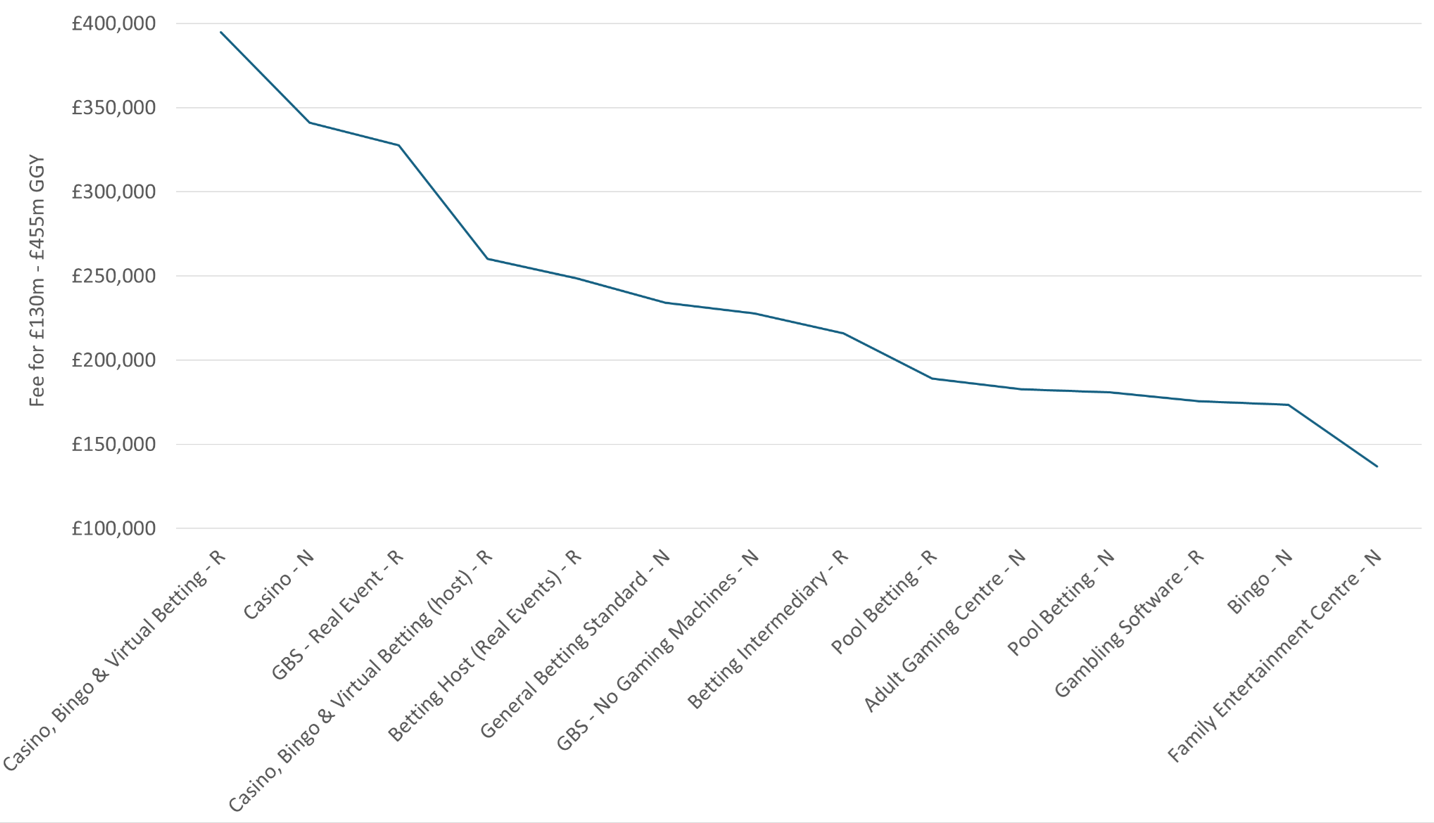
38. The market share basis is then weighted at a licence type level based on data relating to compliance effort; for example, by the different LCCP requirements for different licence activities and whether they are a Business-to-Customer or Business-to-Business operation, the gambling harms associated with the type of licence activity, and other regulatory requirements e.g. anti-money laundering risks. The chart below provides an illustration of the Commission’s hierarchy of regulatory effort between licensed activities, for operators with a GGY (or equivalent) between £130 million and £455 million. The chart shows that the highest levels of regulatory effort are associated with remote casino, bingo and virtual betting activities at these levels of GGY, while activities such as non-remote bingo and FEC are associated with much lower levels of regulatory effort.
Hierarchy of regulatory effort by type of activity based on £130 million to £455 million of GGY or equivalent
39. For example, under each of the consultation options, the amount of fees recovered from the overall cohort of non-remote bingo licensees would be smaller than the proportion of market share generated by bingo operators (i.e. around 2.7% of the Commission’s fee income would be generated from non-remote bingo licensees under the proposals, where those operators collectively generate around 4% of market share). This would reflect that the regulatory risks posed to the licensing objectives by this sector are relatively smaller than their market share, and lower than the risks posed by most other types of gambling business.
Improving fairness
40. The previous fee setting approach involved analysing costs by thematic workstreams to a level of detail that would enable the costs to be assigned to particular licence products. This created a fixed view of regulatory effort. The gambling industry is increasingly dynamic, and the fees framework proposed aims to ensure that regulatory effort is based on gambling volume and risk.
41. The existing fee approach also assumed economies of scale for the largest licensees. Rather than applying generic fee increases to existing fees, the Commission is taking the opportunity to realign its fees to reflect its regulatory effort, the scale of the licensed gambling industry and extent of the risks. The fee burden for different-sized operators who hold the same type of licence will generally shift from smaller operators to larger, to reflect a much fairer recovery of costs. For example, the fees for the very largest AGC and non-remote bingo operators currently represent around 0.05% of their GGY, while fees for a small AGC or bingo operator generating around £150,000 GGY per annum represent around 1% of their GGY. To deliver a fairer recovery of the Commission’s costs, the consultation options for these types of licensees generally propose that the fee as a percentage of GGY for the largest such operators would increase to around 0.15% of GGY while for those smaller operators, they would decrease to around 0.8% of GGY.
42. Many of the Commission’s costs exhibit very few economies of scale and therefore cost recovery should be set proportionately in relation to the volume of gambling generated by operators.
Fee category bandwidths
43. Whilst the number of licences and fee categories will remain unchanged, the fee category bandwidths for licences will be standardised across all licence types where possible. The revised categories allow for significantly higher levels of operator activity which reflects the changes to the size and shape of the industry, including notable mergers and acquisitions. The harmonisation of fee categories across licence types will enable a more transparent comparison of how much one type of operator pays for a certain amount of GGY compared to another type.
44. The new proposed structure will also remove anomalies that have emerged over the years with the existing fees model. For example, the current fee bands for remote casino and remote general betting (standard) (real events) licensees currently provide that a remote casino operator with £5 million GGY will pay £14,694 in annual fees compared to a remote betting operator with the same GGY paying £15,536. However, due to the inconsistent evolution of fee bands over the years, a remote casino operator with £20 million GGY would pay £20,626 while a remote betting operator with the same GGY pays £72,365. The proposed fee bands would more accurately capture regulatory costs associated with particular operating licence fees depending on the size of GGY.
45. Additionally, the levels of GGY generated at the upper end of the market are significantly greater than they were when the current fee category bandwidths were devised. The new proposed fee categories and fees would ensure that the Commission recovers a larger and fairer amount of costs from the largest operators, consistent with market share and regulatory effort. The proposals continue to provide “equations” at the top end of some fees bands, but which would reflect economies of scale better than the current equations. Given the levels of market consolidation since 2017, which are expected to continue, the proposed fee bands would help to future-proof the recovery of the Commission’s costs. Industry statistics show GGY growth from £11.4 billion in 2017/18 to £13.4 billion in 2024/25. Remote casino GGY alone has grown 72% since 2017/18 (£2.9 billion) to £5 billion in 2024/25. The detail of the proposed uniform fee categories is provided in Annex One.
Assessment of impact on operators
46. This section provides an illustration of the impact of the proposals on operators’ fees, by type of operating licence. Due to the significant changes in the proposed approach to fee setting, increases for certain types of licence could be significantly higher or lower than the overall % increase and some licence types will see a reduction in fees. Stakeholders should read the tables at Annex One to understand the proposed fees for each of the consultation options. Annex Two shows existing annual fees by licence type for comparison purposes.
47. The basis of the illustrations is data at a point in time, and does not take into account projections for gambling business growth or contraction. In light of the gambling duty changes, it is possible that GGY could alter significantly which could disrupt the level of industry fee funding that these proposals would generate.
48. Small operators, with GGY (or equivalent) of up to £15m per licence type, account for 96% of all types of licence. The proposed fees will result in an 8% increase in income (£713k) from this cohort, with the remaining 4% of licence types with GGY above £15m generating 92% of the increase.
49. The following tables illustrate the activity levels, current fee income and proposed fee income by sector and channel. At a summary level this shows the size and scale of the proposed changes by sector and channel for each of the uplift options:
| Sector/Channel | GGY 24/25 | Market share | Current Fee Income | Current Income % | 20% + 10% illegal market proposed fee income | Proposed Income % |
|---|---|---|---|---|---|---|
| Arcades - N | 753,828,600 | 4.4% | 1,208,581 | 4.6% | 1,635,426 | 4.7% |
| B2B Supply - N | 386,954,346 | 2.3% | 1,049,660 | 4.0% | 1,192,312 | 3.4% |
| B2B Supply - R | 904,214,107 | 5.3% | 4,622,346 | 17.6% | 3,638,676 | 10.4% |
| Betting - N | 2,609,298,218 | 15.3% | 2,305,355 | 8.8% | 2,948,581 | 8.5% |
| Betting - R | 2,774,175,417 | 16.3% | 6,160,781 | 23.4% | 6,493,488 | 18.6% |
| Bingo - N | 681,018,622 | 4.0% | 719,240 | 2.7% | 940,533 | 2.7% |
| Bingo - R | 166,934,076 | 1.0% | 369,442 | 1.4% | 473,423 | 1.4% |
| Casino - N | 1,048,096,111 | 6.1% | 2,094,371 | 8.0% | 1,942,748 | 5.6% |
| Casino - R | 5,654,321,352 | 33.2% | 6,178,381 | 23.5% | 13,746,577 | 39.4% |
| Lotteries - N | 507,710,140 | 3.0% | 666,877 | 2.5% | 778,117 | 2.2% |
| Lotteries - R | 1,569,604,571 | 9.2% | 962,116 | 3.7% | 1,099,909 | 3.2% |
| Grand Total | 17,056,155,561 | No data | 26,337,150 | No data | 34,889,791 | No data |
| Sector/Channel | GGY 24/25 | Market share | Current Fee Income | Current Income % | 30% proposed fee income | Proposed Income % |
|---|---|---|---|---|---|---|
| Arcades - N | 753,828,600 | 4.4% | 1,208,581 | 4.6% | 1,621,452 | 4.6% |
| B2B Supply - N | 386,954,346 | 2.3% | 1,049,660 | 4.0% | 1,190,276 | 3.4% |
| B2B Supply - R | 904,214,107 | 5.3% | 4,622,346 | 17.6% | 3,903,449 | 11.2% |
| Betting - N | 2,609,298,218 | 15.3% | 2,305,355 | 8.8% | 2,977,983 | 8.5% |
| Betting - R | 2,774,175,417 | 16.3% | 6,160,781 | 23.4% | 6,477,990 | 18.5% |
| Bingo - N | 681,018,622 | 4.0% | 719,240 | 2.7% | 921,823 | 2.6% |
| Bingo - R | 166,934,076 | 1.0% | 369,442 | 1.4% | 481,761 | 1.4% |
| Casino - N | 1,048,096,111 | 6.1% | 2,094,371 | 8.0% | 1,946,000 | 5.6% |
| Casino - R | 5,654,321,352 | 33.2% | 6,178,381 | 23.5% | 13,582,755 | 38.8% |
| Lotteries - N | 507,710,140 | 3.0% | 666,877 | 2.5% | 778,117 | 2.2% |
| Lotteries - R | 1,569,604,571 | 9.2% | 962,116 | 3.7% | 1,099,909 | 3.1% |
| Grand Total | 17,056,155,561 | No data | 26,337,150 | No data | 34,981,514 | No data |
| Sector/Channel | GGY 24/25 | Market share | Current Fee Income | Current Income % | 20% proposed fee income | Proposed Income % |
|---|---|---|---|---|---|---|
| Arcades - N | 753,828,600 | 4.4% | 1,208,581 | 4.6% | 1,530,936 | 4.7% |
| B2B Supply - N | 386,954,346 | 2.3% | 1,049,660 | 4.0% | 1,130,242 | 3.5% |
| B2B Supply - R | 904,214,107 | 5.3% | 4,622,346 | 17.6% | 3,516,243 | 10.9% |
| Betting - N | 2,609,298,218 | 15.3% | 2,305,355 | 8.8% | 2,628,111 | 8.1% |
| Betting - R | 2,774,175,417 | 16.3% | 6,160,781 | 23.4% | 6,029,233 | 18.6% |
| Bingo - N | 681,018,622 | 4.0% | 719,240 | 2.7% | 870,715 | 2.7% |
| Bingo - R | 166,934,076 | 1.0% | 369,442 | 1.4% | 472,672 | 1.5% |
| Casino - N | 1,048,096,111 | 6.1% | 2,094,371 | 8.0% | 1,796,308 | 5.6% |
| Casino - R | 5,654,321,352 | 33.2% | 6,178,381 | 23.5% | 12,642,373 | 39.1% |
| Lotteries - N | 507,710,140 | 3.0% | 666,877 | 2.5% | 719,217 | 2.2% |
| Lotteries - R | 1,569,604,571 | 9.2% | 962,116 | 3.7% | 1,015,301 | 3.1% |
| Grand Total | 17,056,155,561 | No data | 26,337,150 | No data | 32,351,351 | No data |
50. The proposed income % differs from market share due to the regulatory effort weightings based on the licence type level; for example, non-remote bingo, where regulatory effort/costs for this product are proportionately lower than the market share generated by the cohort.
Working examples by type of product
Remote casino (B2C)
51. Annual fees for the remote casino sector overall would more than double from £5.4 million to £12.2 million for the 30% uplift, £12.5 million for the 20%+10% ringfenced uplift and £11.5 million for the 20% uplift. This is a result of the market share basis for cost recovery, alongside the increased regulatory effort for this product.
52. Almost all remote casino operators would receive a fee increase, with the exception of around 15% of licensees where the proposed recalibration of fee categories would move those operators into a lower fee category based on their current GGY.
Example
53. The smallest fee currently paid by a remote casino operator is £4.2k (the current fee category F1). The smallest proposed fee is between c.£6.7k to £7.3k under the 3 consultation options. This means the fee as a percentage of GGY for the smallest remote casino operator would increase from approximately 1.5% to between 5.4% to 5.8%. This is largely due to the revised bandwidth for the lowest fee category; the current mid-point of the lowest band is £275k GGY, the proposed new one is £573k GGY with the element of fixed costs applied to fees being a disproportionately larger percentage of the smaller fees.
54. The largest fee currently paid by a remote casino operator is c. £600k; as a result of the consultation options, the fee would rise to c. £1 million to £1.2 million. This means the fee as a percentage of GGY for the largest remote casino operators would increase from approximately 0.08% to between 0.10% to 0.12%.
Remote general betting standard- real event
55. The total amount of fees payable by these licensees would increase from £6.2 million to £6.5 million for the 30% and 20%+10% options and decrease to £6 million for the 20% option. Around 104 operators would receive a fee increase and 39 operators would receive a decrease. By way of example:
- The current smallest fee paid is £5.3k and that will move to between £5k to £5.8k. This means the fee as a percentage of GGY would increase from approximately 1.9% to between 4% and 4.65%. This is largely due to the revised bandwidth for the lowest fee category; the current mid-point of the lowest band is £275k GGY, the proposed new one is £573k GGY.
- The current largest fee paid is £767k and that will move to between £925k to £1 million. This means the fee as a percentage of GGY would remain stable; it is currently 0.10% and would move to between 0.09% to 0.10%.
Overview of impact on other licence types
56. The proposals harmonise the fee bands and fees for Casino 1968 Act and Casino 2005 Act licences, further to the government’s consultation response on measures relating to the land-based sector. A number of 1968 Act casino operators will receive a fee increase due to the proposed adjustments of fee category bandings, but other operators will receive a reduction in fees as a result of that same proposal.
57. Society Lottery, External Lottery Managers and General Betting Limited fees will effectively receive a flat % uplift based on the 3 options. That is, under option 1 a flat 30% uplift would be applied and a 20% uplift under option 2. Under option 3, the fee increases for these licensees would be 30% to reflect both a 20% flat uplift plus an additional 10% based on market share (therefore the fees under options 1 and 3 for these licensees would be the same).
Operator example
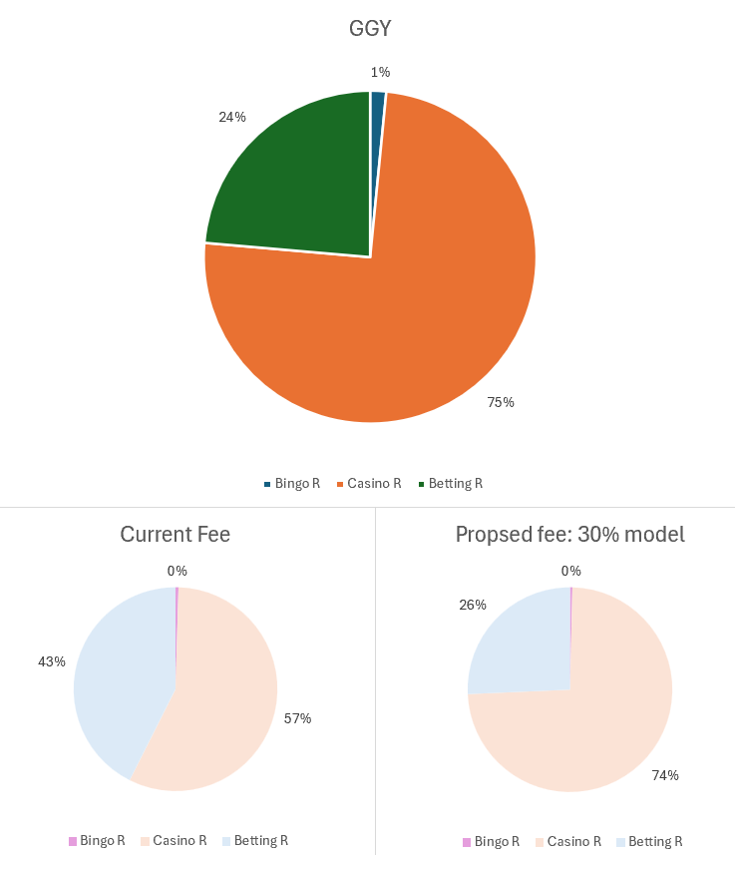
58. Below is a view of the proposed fee change for a large sized operator in the GB market who holds a remote casino and GBS Real Events licence. The charts show that under the proposed fee model, in this view we have used the 30% uplift option, that the percentage of the fee recovered per product has been updated to reflect the market share. This operator’s overall fee is currently £1.05 million and would increase to £1.56 million, which is a 48% increase. However, their market share is 5.2%, and if their current fee was purely based on this their fee would already be £1.4 million (before any uplift).
Option 1: A headline 30% increase
Gambling Commission preferred option
59. This option, at a headline level, would see a 30% average increase in operating licence fees (application and annual fees).
60. This option would enable the Gambling Commission to maintain its current programme of regulatory effort to manage risks to the licensing objectives. A 30% increase represents the shortfall between the Commission’s current fee income and the cost to the Commission of carrying out all its chargeable functions, adjusted for required efficiency savings. This option would therefore provide the level of funding required to maintain the Commission’s current work programme at a steady state, enabling it to continue to deliver its 2024 to 2027 corporate strategy and subsequent priorities. However, this option does not include any growth for the Gambling Commission or investment in additional regulatory functions.
61. The Commission recognises the role it has to play in the management of public money and the importance of maintaining its focus on driving efficiency savings. With a 30% uplift, it would still need to deliver efficiency savings of around £3.2 million. Given that any increase in fees would, subject to consultation, not be delivered by statutory instrument until October 2026, the Commission has already started to make cuts in its spending.
62. Legal resources are a vital component in enabling the Commission to effectively regulate in the public interest. The Commission has experienced challenges in being able to resource effectively in this area due to the increase in the number and complexity of legal cases (e.g. prosecutions, cross-jurisdictional issues, novel products). The Commission has employed external legal counsel to support its programme of work in a context where its pay remit limits the attractiveness of in-house vacancies. Given increasing costs in this area, the Commission needs to consider alternative options such as rolling recruitment and secondments from the Civil Service.
63. The Commission has extended its existing office lease until September 2029 but cannot extend its lease beyond this date. If in 2029/30 the Commission is required to move into a government hub, it currently expects its accommodation costs to double. This would require further savings of c.£3.5 million per year from 2030/31 which have not been included in these proposals.
64. The full year effect of a 30% increase in licence fees would be an additional £8.7 million in funding. Based on 2024/25 total industry GGY of £13.4 billion (Gambling Commission Industry Statistics, excluding National Lottery), a 30% increase would mean that the Commission’s total income (excluding National Lottery), as a proportion of total industry GGY, would increase from 0.21% to 0.28%. In relation to the increased fee burden on the gambling industry, a 30% uplift would therefore represent 0.07% of total industry GGY.
65. In line with the Commission’s corporate strategy and future priorities, the Commission intends to focus its resources in the following areas in the coming years:
Illegal markets
66. The Commission will seek to maintain its capacity, capability and means to identify and undertake high impact disruption activity against illegal gambling operators. Unless the illegal market is tackled, vulnerable customers will be given a route to gamble via unlicensed operators who often target the most vulnerable, such as people who have self-excluded.
67. The Commission’s illegal markets work is a key area of revenue protection for the legitimate, licensed industry. Whilst there are groups gambling in the illegal market who would not be able to gamble in the legitimate market at that point in time (e.g. the self-excluded, under-18s), there are cohorts gambling on the illegal market which are able to gamble in the legitimate market. This not only removes revenue from the legitimate market but avoids taxation and other legal requirements and protections.
68. So far, the Commission has used its reserves to allocate 14 FTE to tackling illegal gambling, compared to an actual funding allocation in the last fees review of 2 FTE. The Commission’s work has focused not only on B2C providers, but the B2B supply chain, to reduce the risk of games created by licensed operators emerging on unlicensed platforms. White label partners will also come under greater scrutiny, to prevent poor practices concerning activities linked to illegal market supply chains.
69. As part of its strategy, the Commission must maintain its collaborative work with domestic and international law enforcement bodies and regulators such as the National Crime Agency, Police Intellectual Property Crime Unit, HMRC and the International Association of Gaming Regulators. Maintaining a diverse and multi-faceted approach to disruption will assist with the prevention of money laundering, terrorist financing, fraud and sports betting integrity issues, by restricting access to illegal gambling in both remote and non-remote (online and offline) sectors.
70. In addition, the Crime and Policing Bill will soon provide the Commission with the powers to apply to the courts for IP address and domain name suspension orders. The Commission will need to be adequately funded to make use of these new powers, which will require it to maintain its enforcement and legal capacity.
Data
71. The continuation of the Gambling Commission’s data programme will enhance its capability to understand trends in the gambling market and consumer behaviour, and provide robust data to evaluate the impact of policy changes.
72. By using advanced analytics to spot trends and potential risks in consumer behaviour, the Commission’s long term data strategy will enable it to be more responsive to emerging issues, and thereby able to alert the industry at the earliest opportunity about potential risks to the licensing objectives.
73. A more data-driven and risk-based approach will help to deliver smarter and less burdensome regulation, by helping operators to channel their own resources to address risks of harm while also enabling the Commission to focus its own resources so that compliant operators are not burdened. This will in turn have benefits for consumers where data can be used to better identify customers at elevated risk while avoiding friction for those who are not - improving the customer journey.
74. The Commission’s plans for data and evaluation are also crucial for it to provide robust and objective evidence-based advice to the government, within a public policy debate that is often polarised.
Raising standards and supporting compliance at the earliest opportunity
75. Under this funding option, the Commission will be able to continue its programme of engagement activities and events with stakeholders, which are designed to help identify and address shared risks or opportunities.
76. Industry stakeholders have been clear that such engagement helps reduce the regulatory burden on them, by providing clarity on regulatory expectations. It also provides opportunities for stakeholders to set out their expectations of the Commission, with respect to its duties under the Regulator’s Code.
Ensuring a risk-based and proportionate approach to compliance and assurance
77. The Commission will continue to focus its compliance resources on those areas that have the greatest impact upon the licensing objectives. Using risk data and trends from wider compliance activities, the Commission will identify key areas for thematic assurance work, utilise compliance resources more effectively and target non-compliance faster.
78. Taken together, the Commission’s targeted approach to assurance and proactive industry engagement will help ensure that compliant operators bear a proportionately lower regulatory burden and are best positioned to pursue appropriate growth. Conversely, those that are not serving the interests of consumers or the wider public can be quickly brought into compliance, or otherwise removed from the market, to maintain high standards of regulation. The focus of the Commission’s enforcement work will increasingly fall on persistent, serious and wilful non-compliance.
Policy
79. Supported by its data approach, the Commission will maintain its capacity to evaluate new requirements and policies, a strategic commitment that is shared with the government. Working with third parties such as NatCen, the Commission will focus on evaluating the impact of changes from the 2023 gambling white paper that it has been responsible for delivering. This will enable the most effective policy interventions and demonstrate whether they are having the intended impact. A sharper focus on evaluation will ensure that regulatory requirements deliver consumer benefits and identify those requirements that do not, and where the regulatory burden can be removed from industry.
80. The Commission will also continue with its strategic commitments in respect of fairness and transparency in the regulated gambling market, targeting its resources and regulatory interventions on those issues which pose the greatest risks, for the benefit of consumers and the wider public.
Enhancing core operational functions
81. The Commission’s core technology systems are reaching the limit of their lifespan and capabilities. As a result the Commission is upgrading its technology systems and automated processes. There are numerous areas where the Commission does not have automated systems or case management systems for core operations, and this is being rectified.
Impact on GC Reserve position – Oct 2026 commencement of 30% fee increase
30% Fee Uplift From Oct 26
| 2025 to 2026 | 2025 to 2026 | 2026 to 2027 | 2027 to 2028 | 2028 to 2029 | 2029 to 2030 | 2030 to 2031 |
|---|---|---|---|---|---|---|
| £0 | £0 | £0 | £0 | £0 | £0 | |
| Income | 28,206 | 30,193 | 35,713 | 36,891 | 36,891 | 36,891 |
| Expenditure | 33,423 | 35,084 | 35,568 | 36,224 | 37,097 | 37,787 |
| Surplus/-Deficit | -5,217 | -4,891 | 145 | 667 | -206 | -896 |
| Available Reserve drawdown | -5,217 | -1,672 | 0 | 0 | -206 | -606 |
| Savings required/Surplus generated | 0 | -3,219 | 145 | 667 | 0 | -290 |
| Revised Expenditure | 33,423 | 31,865 | 35,713 | 36,891 | 37,097 | 37,497 |
Reserves position
| 2025 to 2026 | 2026 to 2027 | 2027 to 2028 | 2028 to 2029 | 2029 to 2030 | 2030 to 2031 | |
|---|---|---|---|---|---|---|
| Brought Forward | 9,689 | 5,672 | 4,000 | 4,145 | 4,812 | 4,606 |
| Provision Release | 1,200 | 0 | 0 | 0 | 0 | 0 |
| Surplus | 0 | 0 | 145 | 667 | 0 | 0 |
| Drawdown | -5,217 | -1,672 | 0 | 0 | -206 | -606 |
| Carry Forward | 5,672 | 4,000 | 4,145 | 4,812 | 4,606 | 4,000 |
Option 2: A headline 20% fee increase
82. In recent years, the Commission has been using its reserves to expand its regulatory activity, by investing in programmes of work such as disrupting illegal gambling, expanding its data and insight projects and renewing its digital platforms. This has happened alongside delivering reforms which were included in the 2023 gambling white paper, including changes to the regulatory framework and providing policy support to DCMS on measures that required legislative change.
83. With a 20% headline fee increase, the Commission would need to make savings of £15.8 million over the next six years to FY 2030/31. The levels of efficiencies associated with a 20% fee increase would require the Commission to reverse the expansion of its recent regulatory activity and revert to a level of regulation more consistent with its pre-white paper position.
84. Under this proposal, the Commission would need to reprioritise its work, resulting in the slowing or stopping of some areas in order to focus its resources on its statutory duties and core regulatory activities in the Gambling Act 2005 i.e. licensing, compliance and enforcement. Compliance and enforcement effort would need to be focused on more serious cases, meaning some suspected breaches of requirements would likely not be investigated. The Commission estimates that a headcount reduction of around 10% would also be needed under this option.
85. A 20% fees uplift would generate £3.1 million less income compared to a 30% uplift (Option 1), meaning a saving to the overall industry of 0.025% of GGY based on 2024/25 industry GGY of £13.4 billion.
86. There is a risk that the reductions in the Commission’s regulatory work that would be necessitated by £15.8 million cost savings may result in additional costs being incurred by the licensed gambling industry, alongside larger revenue loss to the unlicensed sector. For example:
- A reduction in the Commission’s work to disrupt illegal gambling in the long term, after the next three years of grant-in-aid funding from HM Treasury to address this area. This would enable greater levels of consumer spending with the unlicensed market, where that revenue might otherwise be protected and remain with the regulated industry.
- A reduction in stakeholder engagement might mean that operators need greater recourse to obtain independent advice.
- Curtailing the Commission’s data programme may also limit its ability to deliver less burdensome regulation.
87. The following are illustrations of where the Commission’s current work could be expected to reduce or otherwise where the Commission might be inhibited from pursuing action:
- Its work on disrupting the illegal gambling market, beyond the next three years of grant-in-aid funding. This includes both B2C unlicensed facilities and the B2B supply chain, which would need to be pared back to a minimum. This means it would only have capacity for some reactive work on complaints, and it would effectively end its proactive work in terms of issuing cease and desist and disruption notices to unlicensed operators, work with third parties to remove URLs, and interventions with the B2B supply chain to reduce the risk of games emerging on unlicensed platforms. It would have no capacity to utilise new powers proposed in the Crime and Policing Bill concerning domain name and IP address suspension orders, and no resources to pursue prosecutions of unlicensed facilities.
- It would have limited legal capacity to address challenges to the regulatory perimeter, including a much lower capacity to pursue prosecutions of illegal facilities or integrity threats to sport.
- The Commission would need to review its risk appetite for casework and its thresholds for intervention in compliance and enforcement work. This may mean for example that its compliance effort would need to concentrate on reactive caseloads. It would also not be able to support licensing authorities with local regulatory activity at the premises level and would be unable to support or deliver thematic interventions (e.g. self-exclusion provisions by AGCs).
- Reductions in the scale of its data work would limit the Commission’s evaluation capacity, affecting the quality and robustness of each assessment undertaken in respect of the white paper policy changes. A reduced data capacity, below the levels envisaged in its Corporate Strategy, would also necessarily mean significant reductions in the pace and scale of its operator data project. The potential benefits to operators and consumers from a fully funded data programme would be lost. For example, the Commission would need to revert to more generic interventions in the absence of being able to generate more risk-based approaches to regulation. There would be a reduced capability to respond strategically to emerging developments such as risks and opportunities emerging from AI or regulatory developments on cryptocurrencies.
- The Commission’s policy work would be limited to the necessary, ongoing maintenance of LCCP and the regulatory framework. This would mean the Commission has little capacity to support DCMS policy work, along with reductions in other policy development that would otherwise have been a strategic priority for the Commission, such as on fairness and transparency.
- There would be expected reductions in headcount across all of its corporate enabler ‘back office’ functions. This may affect risk appetite and tolerance in respect of things like cyber security, data and information management and procurement.
- The efficiencies necessitated by 20% fee increases would also inhibit the ambition of the Commission’s next Corporate Strategy 2027 to 2030.
88. This scenario includes redundancy costs in the order of c.£550,000, falling between 2026 to 2027 and 2027 to 2028. Further savings in the core regulatory, policy and corporate enabler functions would be necessary.
89. The table below shows the anticipated headline reductions in FTE by year that would be necessitated by this option.
20% uplift- removed FTE (cumulative)
| 25/26 Budget FTE | 25/26 | 26/27 | 27/28 | 28/29 | 29/30 | 30/31 |
|---|---|---|---|---|---|---|
| 397 | 7 | 21 | 30 | 40 | 40 | 40 |
Impact on GC Reserve position – Oct 2026 commencement of 20% fee increase
20% fee uplift from Oct 26
| 2025 to 2026 | 2026 to 2027 | 2027 to 2028 | 2028 to 2029 | 2029 to 2030 | 2030 to 2031 | |
|---|---|---|---|---|---|---|
| £0 | £0 | £0 | £0 | £0 | £0 | |
| Income | 28,206 | 29,531 | 33,211 | 33,847 | 33,847 | 33,847 |
| Expenditure | 33,423 | 35,084 | 35,568 | 36,224 | 37,097 | 37,787 |
| Surplus /-Deficit | -5,217 | -5,553 | -2,357 | -2,377 | -3,250 | -3,940 |
| Available Reserve drawdown | -5,217 | -1,672 | 0 | 0 | 0 | 0 |
| Savings required | 0 | -3,881 | -2,357 | -2,377 | -3,250 | -3,940 |
| Revised Expenditure | 33,423 | 31,203 | 33,211 | 33,847 | 33,847 | 33,847 |
Reserves position
| 2025 to 2026 | 2026 to 2027 | 2027 to 2028 | 2028 to 2029 | 2029 to 2030 | 2030 to 2031 | |
|---|---|---|---|---|---|---|
| Brought Forward | 9,689 | 5,672 | 4,000 | 4,000 | 4,000 | 4,000 |
| Provision Release | 1,200 | 0 | 0 | 0 | 0 | 0 |
| Drawdown | -5,217 | -1,672 | 0 | 0 | 0 | 0 |
| Carry Forward | 5,672 | 4,000 | 4,000 | 4,000 | 4,000 | 4,000 |
Option 3: A headline 20% fee increase, plus a 10% increase ringfenced for illegal markets, revenue protection and related activity
HM government preferred option
90. This option would deliver an overall 30% headline fee increase, but where one third of the additional fee income is ‘committed’ or ‘ringfenced’ for the Commission to use those funds on work associated with disrupting illegal markets and ensuring that consumer participation in gambling remains with licensed and compliant gambling operators, thereby protecting the revenue of licensed operators and the exchequer.
91. The approximate value of the ‘ringfenced’ funds would be expected to be around £2.6m, enabling a stronger focus on this work than would be possible under Option 1 (where circa £1.1 million to £1.2 million would be available). Option 3 would require the Commission to divert around £1.4 million to £1.5 million per annum from other areas of work in order to fund the ‘ringfenced’ illegal markets work.
92. Under this option, the c.£2.6 million in ringfenced funds would be used by the Commission to:
- ensure it is difficult to provide illegal gambling at scale to GB consumers. This is to protect consumers from the risks posed by unlicensed businesses and ensure consumer gambling spend remains with the licensed industry; and
- protect the integrity of the licensed gambling market from other criminal threats.
93. The scope of the ringfenced funds would be “illegal markets and revenue protection”, and would encompass elements of work on intelligence, legal resource and enforcement, with associated “back office” and Corporate Affairs support. Its Research and Statistics team is also vital in this area, as the Commission needs to be able to understand how the illegal market operates, who is engaging with it, why, at what scale, and how it is best disrupted.
94. Much of the Commission’s other work in respect of the licensing objective to keep crime out of gambling is beneficial to the licensed industry, where it helps to protect operators’ commercial revenue from market threats. In addition to funding its work on illegal market disruption, the ringfenced resources would therefore also be used to fund its work investigating match-fixing, suspicious betting activity and potential cheating offences.
95. Suspected criminal offences under the Gambling Act would be within scope including cheating offences under s.42 of the Act. The Commission’s action in this area typically protects the revenue of licensed operators. Suspected cheating offences typically pertain to suspicious betting activity undertaken with licensed operators and, similar to its work on match-fixing, investigations into cheating offences help to protect the integrity of the licensed market. The Commission’s recent investigations into alleged cheating include bets placed on the timing of the 2024 General Election and suspicious betting activity and alleged cheating linked to horseracing.
96. The Commission’s Sports Betting Integrity Unit (SBIU) frequently works with sports’ governing bodies to support investigations into match-fixing. In the last year alone, the SBIU team has supported match-fixing investigations in sports such as basketball, darts, table tennis, snooker and boxing. The Commission’s work here ensures that betting customers in Britain can have confidence that the markets they engage with are fair and free from corruption. But at the same time, it also provides benefits to licensed operators by ensuring the integrity of those betting markets offered by them - and therefore provides an element of revenue protection where bookmakers can void bets placed on corrupt markets.
97. As well as reliance on resources from various teams within the Commission, work to combat illegal gambling rests on its ability to maintain effective partnerships with law enforcement agencies, third parties such as search engines and payment service providers, and other jurisdictions.
98. With one third of a 30% increase ringfenced for illegal markets and revenue protection work, a 20% fee increase would be available for all other elements of the strategic commitments outlined previously (data, evaluation, policy, stakeholder engagement etc). The ringfenced option would therefore still necessitate efficiencies across the rest of the organisation commensurate with the 20% option above. Specialist skills and experience will be needed to support the increased focus on illegal markets work, but redeployment will be considered where possible.
99. DCMS and the Commission will agree an appropriate framework for providing assurance that the ringfenced funds are deployed as intended. This will include a mechanism for approving the use of ringfenced funds for urgent work which is not within the scope of “illegal markets and revenue protection” such as the collapse of a major operator or a widespread issue within the licensed industry.
100. The examples below illustrate work within the scope of the ringfenced funds.
- Compliance work with a licensed operator as well as enforcement work, where the compliance work relates to the prevention of crime and disorder and revenue protection. This would cover AML work with a licensed operator as there is a revenue protection angle in keeping illicit funds out of the regulated industry.
- Proceeds of Crime Act compliance and enforcement work with operators outside the AML-regulated sector such as betting and arcade operators.
- Work on cryptocurrencies: there are no legitimate licensed crypto casinos, and crypto presents a high risk in the Commission’s AML risk assessment on factors including traceability of funds and terrorist financing.
- Ensuring licensed operators do not facilitate, and are not associated with, unlicensed facilities (e.g. ensuring that all online games supplied to a licensed B2C come from licensed B2Bs; and similarly, that a licensed B2B’s games do not move through unlicensed supply/distribution chains or end up being made available on unlicensed B2C sites).
- Ensuring appropriate disposal or recycling of products (such as gaming machines and betting terminals) through the regulated sector in the event that a land-based operator was to cease trading, to prevent these being acquired by unlicensed B2Bs or being sited by unlicensed B2Cs/sited at unregulated venues. Similarly, ensuring that licensed operators do not make available for use a gaming machine supplied or manufactured by unlicensed entities.
- Tackling affiliates advertising illegal gambling.
- Supporting or training licensing authorities to tackle localised unlicensed gambling facilities.