North Sea Future Plan: government response (accessible webpage)
Updated 26 November 2025

© Crown copyright 2025
This publication is licensed under the terms of the Open Government Licence v3.0 except where otherwise stated. To view this licence, visit nationalarchives.gov.uk/doc/open-government-licence/version/3 or write to the Information Policy Team, The National Archives, Kew, London TW9 4DU, or email: psi@nationalarchives.gov.uk.
Where we have identified any third party copyright information you will need to obtain permission from the copyright holders concerned.
This publication is available at https://www.gov.uk/government/consultations/building-the-north-seas-energy-future/outcome/north-sea-future-plan-government-response-accessible-webpage
Foreword by the Secretary of State for Energy Security and Net Zero
The North Sea’s workers and communities have helped power our country and our world for decades. This is our plan to ensure they continue to do so for many decades to come.
The North Sea is Britain’s greatest asset in building our energy future. It is endowed with strong winds and vast waters, a highly skilled and experienced workforce, established offshore infrastructure, deep supply chains and 78 billion tonnes of carbon storage potential. As we take back control with homegrown clean power, the North Sea gives Scotland and the rest of Britain a chance to lead in offshore wind, carbon capture and storage, and hydrogen, alongside oil and gas production, which will continue to play an important role over the decades ahead.
We know the North Sea is a maturing oil and gas basin and production has been in natural decline for more than 20 years, with around a third of direct jobs lost in the last decade. [footnote 1] There is an urgent need to plan for the future. That is why earlier this year we launched a dialogue with workers, trade unions, industry and communities about managing existing oil and gas fields for their lifespan, while seizing the North Sea’s huge clean energy potential.
Our government is determined to create a global blueprint for a fair, managed and prosperous transition that acts in line with the science on fossil fuels. And we are committed to taking a much more interventionist approach to make it happen – actively scaling up clean energy industries and decommissioning as the basin matures. This is the route to energy security, good long-term jobs, and the best outcomes for workers and communities.
This plan implements our manifesto commitments to manage existing fields for the entirety of their lifespan and to not issue new licences to explore new oil and gas fields. We are determined to ensure a just and prosperous transition and show climate leadership.
We have already delivered the biggest investment in clean energy in history - including development funding for the Acorn, Viking and East Coast carbon capture clusters in the North Sea, alongside the UK’s first regional hydrogen network. We have established Great British Energy, headquartered in Aberdeen to ensure the communities that powered our past continue to power the future. And we have put clean energy at the centre of our industrial strategy, backed up by public investment including Great British Energy’s £1 billion supply chain fund, which will harness our industrial strength in oil and gas to drive the clean energy revolution.
We will need the skills and expertise of our North Sea workers to build this future, including our world class supply chains that are pivoting to serve the clean energy economy. And we will provide end-to-end support for the current workforce to access new opportunities in every step of the journey, from clarity on future roles to training to securing an offer for a good job. We will achieve this with a brand new North Sea Jobs Service matching workers to secure well-paid jobs.
This will be a world-leading national programme and builds on the expansion of the Energy Skills Passport to new roles and sectors, and up to £20 million funding for the Transition Training Fund from the UK and Scottish Governments, following the success of our Aberdeen skills pilot.
As we deliver this, we are determined to ensure that all energy jobs have the good pay and conditions our energy workers expect and deserve. That is why we are developing a new Fair Work Charter alongside the Clean Industry Bonus for offshore wind, to ensure the very best rights at work. We are also expanding offshore employment rights, promoting union recognition and collective bargaining, and for the first time giving the North Sea Transition Authority a statutory objective to consider workers, communities and supply chains in its decisions.
To deliver this landmark plan, we are today announcing the North Sea Future Board – a new partnership between government, industry, trade unions and regional groups to drive investment and action.
We are determined to build the North Sea’s future together.
Rt Hon Ed Miliband MP
Secretary of State for Energy Security and Net Zero
1. Background
The consultation on “Building the North Sea’s energy future” [footnote 2] ran from 5 March to 30 April 2025. This was a critical step forward in developing the framework for the government’s North Sea ambitions: to be an internationally-leading offshore clean energy industry, which ensures good, long-term jobs, growth and investment alongside a sustainable transition in oil and gas. [footnote 3] This Plan is our response to that consultation.
The government intends to take an active approach to building the North Sea’s energy future. It is an example of this government’s more interventionist approach to managing the energy transition, and of our Modern Industrial Strategy in action. We are signalling to investors, local supply chains, and the world that we are committed to sustaining and growing prosperity for our North Sea communities. We want the North Sea to be at the forefront of the UK’s energy transition, working hand-in-hand with business and workers. We will secure a sustainable transition for oil and gas, attract local supply chain investment, and ensure good jobs are at the heart of the region’s growth.
During the consultation period, DESNZ held twenty roundtables across the UK with key stakeholder groups to generate discussion and encourage submission of responses.
We received 375 responses to the consultation, split roughly evenly between organisations and individuals, plus 504 campaign responses and several petitions. The responses came from a broad range of commercial, public and third sector stakeholder organisations including upstream offshore and onshore oil and gas producers, renewable energy firms, companies working in the carbon capture usage and storage (CCUS) and hydrogen sectors, academics, trade unions, environmental groups, industry groups, education providers, community groups and individuals.
Several relevant reports have also been published since we published the consultation, including from the North Sea Transition Taskforce [footnote 4], Robert Gordon University (RGU) [footnote 5], the Just Transition Commission [footnote 6], Professor John Underhill (Aberdeen University) [footnote 7], Future Economy Scotland [footnote 8] and the Scottish Affairs Committee [footnote 9]. We have been very grateful for all these contributions, which have been considered carefully.
The key findings from the consultation are included throughout the main document. A more detailed summary of the responses question by question is included in the full consultation response analysis at Annex A.
2. Our strategy for the North Sea’s Future
2.1 Our starting position: the North Sea today
2.1.1 UK oil and gas production
As we set out in the consultation, oil and gas production in the North Sea has played a vital part in our country’s history. For decades, workers have overcome towering technological challenges to help power the world and our economy – particularly in Scotland.
The UK has a long history in oil and gas production, with North Sea workers, businesses and communities contributing to national and global energy needs for many decades. This means our offshore basin is mature – much more so than other areas of the world. While North Sea oil and gas production will continue to play an important role in the UK’s energy mix as the world embraces the drive to clean energy, production has been naturally declining over the past 25 years. Figure 1 presents the historical and projected trends in domestic oil and gas production, illustrating this. Most of the easily accessible resources have already been extracted.
Figure 1: Historical and projected UK oil and gas production. [footnote 10]
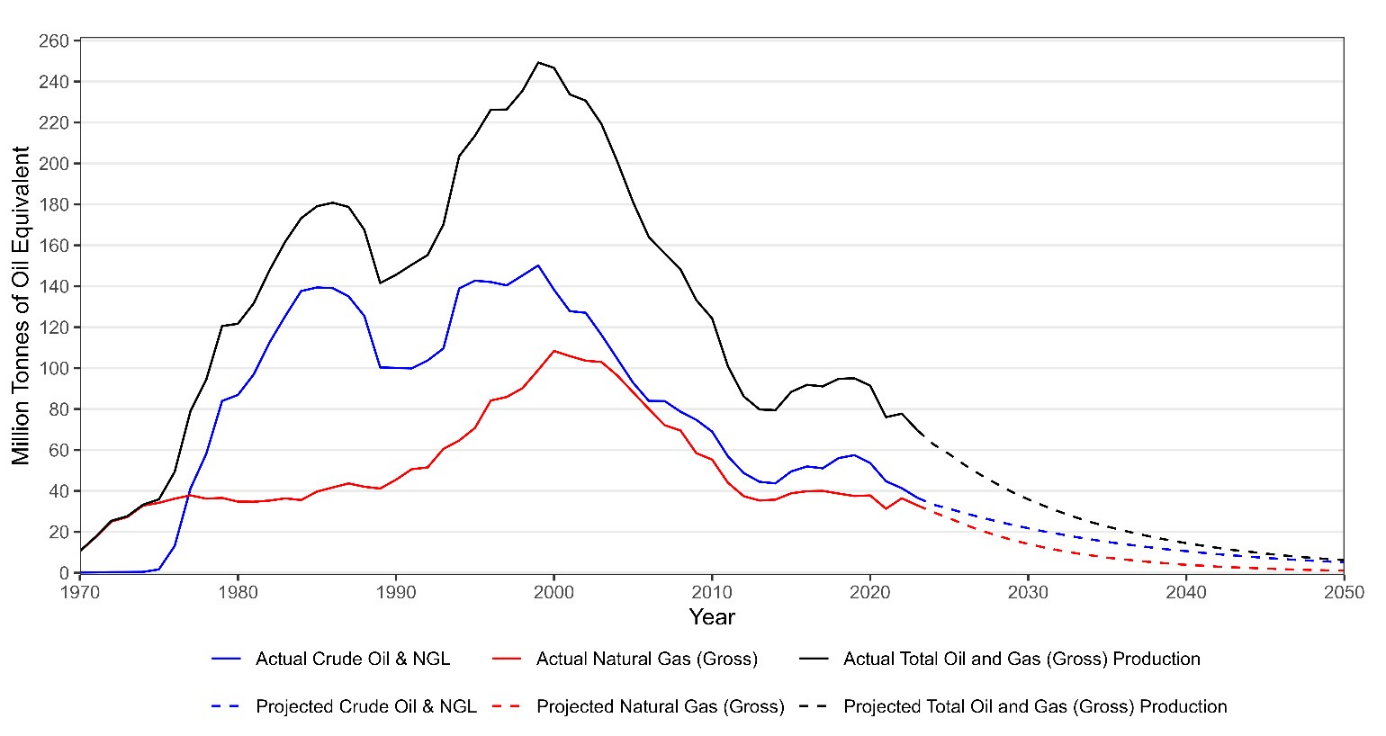
The natural decline of oil and gas in the North Sea is already having an impact on those jobs and will continue to do so. Office for National Statistics (ONS) figures show that direct jobs in oil and gas extraction fell by around a third between 2014 and 2023. [footnote 11] Responses to the consultation highlighted the importance of supporting workers and communities through a managed, orderly and prosperous transition for oil and gas workers into clean energy and other Industrial Strategy priority sector roles. Further analysis on this can be found in section 3.3.
2.1.2 International climate leadership
The UK has a proud history of demonstrating global leadership on climate change.
In 2015, the UK joined 195 nations in signing the Paris Agreement, committing to limit global temperature rise to well below 2°C, and pursuing efforts to limit warming to 1.5°C. The UK’s commitment to climate mitigation is underpinned by the Climate Change Act 2008 which sets out the UK’s legally binding Carbon Budgets and net zero by 2050 target.
Scientific evidence from the International Energy Agency [footnote 12] (IEA), United Nations Environment Programme (UNEP) [footnote 13], and Intergovernmental Panel on Climate Change [footnote 14] (IPCC) shows that new fossil fuel exploration risks exceeding the 1.5°C threshold. The IPCC warns that emissions from existing fossil fuel infrastructure alone could surpass the remaining global carbon budget, reinforcing the urgency to phase out fossil fuels.
At COP28 in 2023, the first global stocktake recognised that progress has been made towards the Paris Agreement goals, but these efforts are not yet on track. At COP30, the UK joined over 80 countries, civil society and businesses calling for more ambition transitioning away from fossil fuels. Brazil committed to launch a roadmap to help countries transition away from fossil fuels and scale up clean energy.
The UK, a long-standing leader in offshore oil and gas, now has the opportunity to lead in clean energy. This is both a national and global imperative. Significant progress has been made. The 2025 Emissions Monitoring Report [footnote 15] shows that production emissions from the UK’s offshore oil and gas industry decreased by 34% between 2018 and 2024. Several platform electrification projects are in development, and the government is working closely with the key regulators and industry to support delivery. Flaring dropped 4.8% in 2024 to 658 million cubic metres (mcm), the lowest level on record, and 51% lower than in 2018.
More generally, we’ve set targets for clean power by 2030. [footnote 16] Expanding our electricity generation and infrastructure is essential to support further electrification across the economy and reduce our reliance on fossil fuel imports.
In 2021, the government set in law the sixth carbon budget (CB6), limiting the volume of greenhouse gases emitted from 2033 to 2037. In October this year, the government published the Carbon Budget and Growth Delivery Plan setting out how the UK will continue to reduce emissions in a way that lowers bills and secures good jobs. Looking ahead, we will set Carbon Budget 7 by June 2026, in line with our statutory duties. This will set out the next phase of our pathway to net zero to continue to secure the economic and societal benefits of the net zero transition.
Internationally, we’ve set our 2030 [footnote 17] and 2035 [footnote 18] Nationally Determined Contributions which aims to reduce all greenhouse gas emissions (excluding international aviation and shipping) by at least 68% and 81% respectively compared to 1990 levels. This is a signal of the government’s commitment to restoring the UK’s global leadership on climate.
2.2 Our objectives for the North Sea’s Future
The consultation set out the overarching objective which guides our vision for the North Sea’s energy future.
To foster an internationally-leading offshore clean energy industry, which ensures good, long-term jobs, growth and investment in communities across the North Sea, in tandem with a sustainable transition in oil and gas – boosting the country’s economy and energy security, in line with our climate obligations.
It also made clear that to achieve this, we need to meet two supporting objectives.
First, to ensure our oil and gas workers and supply chain can take advantage of the opportunities of our clean energy transition, creating a global blueprint for a transition which supports prosperity, jobs, economic growth, communities and energy security.
Second, to take a globally standard setting, 1.5°C and climate science aligned approach to future oil and gas production.
2.3 Our vision for the North Sea
Alongside oil and gas production from existing fields, the North Sea’s energy future will be focused on three key clean energy sectors: offshore wind; carbon capture, usage and storage (CCUS); and hydrogen.
Many respondents to the consultation were clear that there is huge potential for the UK to take a globally leading role in these sectors. The government agrees. These technologies will be the cornerstones of the North Sea’s energy future. The existing oil and gas industry supply chains are uniquely positioned to secure growth in the key clean energy sectors, securing the transition of existing infrastructure and skills in local North Sea communities.
Not only are these sectors important for the North Sea, they are also vital to building a cleaner, more flexible and resilient energy system – supporting the ambitions set out in the Clean Power Action Plan and helping shape where and how energy infrastructure is developed through the Strategic Spatial Energy Plan.
2.3.1 Offshore wind
Offshore wind will have a particularly important role in the UK’s energy future – both as the backbone of the clean power system and as the biggest new energy industry in the North Sea.
Our offshore wind sector has already taken great strides. The UK has a strong pipeline of projects totalling around 95GW. [footnote 19] By 2030, we could see 43-50GW [footnote 20] of offshore wind built out and the sector supporting up to 100,000 direct and indirect jobs. [footnote 21]
The UK Continental Shelf (UKCS) has the world’s second largest offshore wind fleet. We have some of the world’s biggest individual offshore wind farms, including Dogger Bank off the North East coast of England and the Hornsea projects off the East coast.
The North Sea is at the global forefront of the development of floating offshore wind, a new technology that opens up access to deeper areas of seabed, which will be important in achieving long-term decarbonisation targets as shallower areas become increasingly spatially constrained. The UK has the largest floating wind pipeline with over 25GW of projects with confirmed seabed exclusivity already agreed [footnote 22], mostly in the North Sea.
Targeted support, such as through the Contracts for Difference scheme and early investment in the UK’s supply chain and port infrastructure, will help to leverage our early mover advantage into a world-leading floating wind sector.
This will stimulate economic growth and job creation, provide export opportunities for UK companies, and support a just transition of skilled workers from carbon intensive sectors. Consultation responses recognised the transferability of oil and gas workers’ skills in areas such as engineering, project management, offshore operations and subsea infrastructure including mooring systems and dynamic cabling.
Section 3.1.2 sets out what we are doing to build on this progress and fully realise the opportunities that will come from offshore wind.
2.3.2 CCUS
CCUS is expected to play a key role in meeting our climate commitments and delivering energy security. The independent Climate Change Committee has said “we cannot see a route to net zero that does not include CCS”. [footnote 23] Through CCUS, we can produce low-carbon power when renewable energy sources like wind and solar are not available and reduce emissions from existing, hard-to-decarbonise industrial processes.
The UKCS is estimated to have up to 78 billion tonnes of theoretical carbon dioxide (CO2) storage capacity [footnote 24] which is equivalent to around 200 years of current UK emissions. This includes storage capacity in depleted oil and gas fields, which could be repurposed for secure and permanent CO2 storage. With its high potential storage capacity, the UK is strongly positioned to capitalise on predicted global CCUS sector investment of up to £135 billion annually by 2035. [footnote 25]
The large potential CO2 storage capacity combined with the UK’s proximity to the European Union, also provides an opportunity to offer international CO2 storage services. As outlined in the Clean Energy Industries Sector Plan [footnote 26], we are committed to breaking down the barriers to investment by working with our partners in the European Union to agree a regulatory framework for enabling cross-border CO2 transport and storage networks in the North Sea, which can help the UK and EU to maximise economic benefits and achieve better value-for-money from CCUS projects.
There is also the growth potential that comes with building a new industry of the future. CCUS will create jobs and attract investment, positioning the North Sea as a hub for low-carbon technologies. Complementing our transition to homegrown clean energy, CCUS will safeguard our energy security and decarbonise power and industry in a way that drives growth, with the CCUS sector estimated to support up to 50,000 jobs across the supply chain and £2.8 billion (2022 prices) of GVA per annum by 2050. [footnote 27] Thanks also to existing strengths, the UK’s CCUS sector offers significant opportunities for the UK manufacturing supply chain and world-leading services industry.
Section 3.1.3 sets out what we are doing to address barriers, including on investing into supply chains for a nascent sector, and take advantage of the vast storage potential on the UKCS.
2.3.3 Hydrogen
Low carbon hydrogen is essential to achieve the government’s Clean Energy Superpower and Growth Missions. The future global hydrogen market size is likely to be in excess of $1 trillion by 2050. [footnote 28] It is vital for the decarbonisation of hard-to-electrify industrial sectors and heavy transport and will help to deliver new clean energy industries that can support good jobs across various sectors in our industrial heartlands and coastal communities, including in North Sea communities. As a source of flexible low carbon power generation, hydrogen can provide resilience, cleaner energy and savings to the wider power system, and very long duration energy storage.
Hydrogen is a pathway to securing existing, and creating new, critical jobs in the UK’s domestic industrial base. Sectors likely to require hydrogen, such as refining, glass, chemicals and ceramics, are mostly located around industrial clusters, including in Humberside, Teesside and Grangemouth. These sectors currently support 194,000 jobs and contribute £18 billion in GVA. [footnote 29] Hydrogen will be critical for the energy transition in North Sea communities, where much of the UK’s heavy industry is located.
The UK is well placed to be a global leader in both hydrogen deployment and supply chains, given existing strengths in engineering and procurement services, innovation, and our supportive policy environment. We have internationally recognised capability in electrolysis technologies and significant cavern capacity for hydrogen storage.
Hydrogen will support the repurposing of industrial assets, including ports (which offer the space, connectivity and logistical capabilities needed for hydrogen production, storage and distribution), and will draw on the skills of the oil and gas workforce.
Section 3.1.4 sets out the steps we are taking to put the UK in a strong position to capitalise on the full economic potential of its hydrogen sector.
2.4 Our approach to achieving our vision
We want to meet our obligations to future generations to tackle the climate crisis and our obligations to support today’s workers to secure good, skilled jobs.
We will support the growth of offshore wind, CCUS and hydrogen in the North Sea, and enable infrastructure, supply chains and capital currently supporting our world-class oil and gas sector to take advantage of the opportunities that growth in these sectors will create.
Oil and gas will remain an important part of our energy mix for decades to come, and production will continue while this future becomes reality. We will not issue new oil and gas licences to explore new fields. Taken together, this approach will:
- steward the future of the North Sea so that we build the industries that come next
- use existing oil and gas fields for their lifetime supported by a healthy supply chain and a highly skilled workforce, and
- meet our commitment to a managed, orderly and prosperous transition and to climate leadership.
We are determined to manage this transition so it works for workers and communities and to provide the support to ensure this happens.
The North Sea has played a hugely important role in our country’s history. We want to make sure it will continue to do so for decades to come – long after our reserves of oil and gas have been depleted. To do that, we need to:
- retain our outstanding North Sea workers, supply chains and communities, and
- support oil and gas workers, supply chains and communities to take advantage of opportunities in industries such as offshore wind, CCUS and Hydrogen as oil and gas production continues to decline.
Workers and supply chains in our oil and gas heartlands can support the clean energy transition if they are given the conditions and ability to do so. This will enable supply chain businesses to grow and take on new business here in the UK. For our clean energy ambitions, the expertise we have from decades of oil and gas production will be invaluable for delivering new technologies.
To support this, we will make sure that:
- Investment in clean energy industry deployment and supply chains happens at scale and at pace, while businesses have the ability to benefit from an integrated North Sea energy supply chain.
- Investment in existing oil and gas fields continues while those clean energy industries come online.
- Oil and gas workers have a clear, supported, end-to-end journey to a good job in critical industries, including clean power and wider Industrial Strategy sectors like advanced manufacturing and defence, supported by a new North Sea Jobs Service.
Oil and gas production will continue to play an important role in the UK in the decades to come. This is a long-term transition. Ongoing investment and continued opportunities in oil and gas – particularly in the next few years – are fundamental to our ambition to ensure that workers experience a fair, orderly and prosperous transition in the North Sea. We recognise the critical importance of the next five years, which RGU has called the ‘goldilocks’ zone (a time-critical period to retain and develop the skills and infrastructure needed for the transition). [footnote 30] Continued oil and gas production from existing fields will support a smoother transition and retain the skilled workforce we need in the UK as we ramp up cleaner technologies.
Alongside meeting our moral obligation to support today’s workers, we must also meet our moral obligation towards future generations by helping to tackle the climate crisis. To do that – as noted by several respondents – we need to consider our approach to oil and gas production.
Our commitment to not issue new licences to explore new fields responds to that obligation, demonstrating global climate leadership consistent with the science on limiting global average temperature rise to 1.5oC.
Realising our vision requires government intervention, which we set out in this plan, and partnership with industry and unions. The interventions will provide the support needed for attracting private investment and for securing local workforces, leading to long-term sustained growth for communities historically supported by oil and gas production.
2.4.1 Delivering on our plan through a new North Sea Future Board
The rest of this document sets out the barriers that the North Sea faces in reaching this vision, and the government’s plan for overcoming those hurdles.
But this document is not the end of the story. We will continue to work closely with industry, unions, civil society and many other stakeholders to deliver on that plan. Respondents noted that collaboration between the public and private sectors is a key driver of success.
We need to monitor and regularly review progress to ensure it is delivered effectively – as several respondents noted. Some respondents suggested establishing a dedicated group to oversee coordination and long-term planning, ensuring accountability and alignment among stakeholders. Such a group could play a central role in overseeing and managing the basin’s complexities and interconnections.
The government agrees. We will form a new Ministerial-led Board of experts, supported by DESNZ, who can bring a range of perspectives from diverse backgrounds working in and around the North Sea and who will bring a strong delivery focus.
The North Sea Future Board will meet regularly to:
- review progress against the actions in this government response document, so the clean energy transition is managed in partnership between central government, local organisations, industry and trade unions.
- identify and address barriers to delivering a clean energy transition by recommending and implementing industry-led actions that accelerate progress and maximise value for UK growth.
- help drive investment in all North Sea regions to build at pace the infrastructure and manufacturing sites that will create new jobs and accelerate clean energy deployment.
- identify and promote opportunities for supply chain companies to take advantage of the clean energy transition.
- drive progress and engagement in the package of measures to retain the highly skilled oil and gas workforce in jobs in growth-driving industries
- advocate for the strategic importance of the North Sea by influencing local policy and encouraging action.
The new Board will be chaired by government and have representation from important stakeholders including the North Sea Transition Authority (NSTA), industry and trade unions. In addition to representation on the North Sea Future Board (as set out in 3.2.4), a working-level trade union group will be convened regularly and will inform the Board, including in particular, on one of its first tasks - to focus on the supply chain.
This new group will convene people who hold the experience and levers needed to manage the energy transition across the whole of the North Sea area. It will be the central platform through which government, industry, and other key stakeholders including regional organisations and unions work together to deliver our ambition for the North Sea.
We will publish more details on this Board shortly, including memberships and Terms of Reference. We will also set out how it will work alongside other structures, for example the Great British Energy Aberdeen Taskforce [footnote 31] and the North Sea Transition Forum and Task Forces. [footnote 32] Through the Task Forces we know industry are already working innovatively and collaboratively to drive practical actions forward. We will also consider the role of the Aberdeen Energy Campus in supporting the work of the Board.
2.4.2 Delivering on our plan through work with international partners
As well as calling for stronger coordination and oversight domestically, respondents to the consultation advocated for stronger international cooperation, ensuring alignment with global energy transition efforts and to better share best practice. International collaboration in the North Seas is vital to unlock growth and private sector investment at scale, and only by working together in the region can we harness the immense renewable energy potential it holds.
The UK remains firmly committed to the ambitions set out in the Ostend Declarations on the North Seas, including the shared target of 300GW of offshore wind by 2050, of which 120GW is likely to be in UK territorial waters. [footnote 33]
Analysis conducted by Grant Thornton for DESNZ showed that investing in and developing North Seas energy infrastructure (such as low carbon hydrogen production, CCUS deployment, and electricity transmission infrastructure) in a holistic way with neighbouring countries, could yield consumer benefits across the whole North Seas region, stretching beyond the UK, of up to £18 billion, and up to £24 billion in system benefits by 2050. It could create up to 51,000 jobs and add up to £36 billion in GVA (gross value added) to the economy by 2030. It could also decrease carbon emissions by up to 46.3MtCO2 by 2050. [footnote 34]
Studies also demonstrate benefits of closer international collaboration in relation to reaching these targets. A recent Baringa study concluded that closer cooperation in the North Seas could lower investment costs by 16%. [footnote 35] Energy UK has also estimated that unlocking Offshore Hybrid Assets (OHAs) through greater UK-EU cooperation could take €13 billion off the cost of meeting the Ostend Declaration target of 300GW of offshore wind capacity by 2050. [footnote 36]
The North Seas Energy Cooperation (NSEC) is an excellent example of regional energy cooperation we are involved with. We work with NSEC partner countries to help create the regulatory environment that encourages and enables offshore investments, including OHAs which combine offshore wind farms with point-to-point electricity interconnectors. This reduces costs and environmental impact and maximises renewable resources. Further interconnection, which, as set out in the Clean Flexibility Roadmap [footnote 37] will be considered in strategic energy planning, can also offer a route to export markets for surplus GB wind power at times of high renewable energy production relative to demand. This allows us to capitalise on the international opportunities North Sea Transition offers. We are also preparing for the upcoming North Sea Summit taking place in Germany in January 2026.
We continue to work internationally to encourage and support others to reduce emissions in oil and gas production, especially for methane emissions. The UK will continue to act as a global leader in its role as the co-chair of the Climate and Clean Air Coalition (CCAC) alongside Brazil and as a Global Methane Pledge Champion. We are also funding the CCAC’s Fossil Fuel Regulatory Programme, which supports developing countries with formulating and implementing regulations to reduce methane emissions in their fossil fuel sectors. We also recently announced in our Methane Action Plan that the UK would initiate work to understand and address methane emissions associated with imported fossil fuels, in particular to support efforts to improve consistency in monitoring, reporting and verification practices.
At COP30, the UK co-hosted a summit with Brazil and China to increase collaboration on this issue and launched a statement [footnote 38], signed by 11 countries and supported by the European Commission, the Latin American Energy Organization (OLADE), IEA and UNEP. The statement commits to drastically reduce methane emissions in the global fossil fuels sector – sending signals to the market that will accelerate the commitments that have already been made to eliminate routine venting and flaring and achieve near zero methane intensity.
3. Our plan for the North Sea’s Future
In this section, we set out our plans to:
- Grow our clean energy industries in the North Sea;
- Support the management of existing oil and gas fields for their lifespan; and
- Help North Sea workers and communities make the transition into new priority sectors.
3.1 Growing our North Sea clean energy industries
The UK is in an incredible position to benefit from the economic opportunities that exist from a transition to renewable energy technologies – utilising the skilled workforce, supply chains and expertise of our historic North Sea industry. In many cases, they are already doing so: the supply chains supporting clean energy industries are often the same as those currently supporting oil and gas. Rystad’s report on supply chain opportunities in the energy transition estimates that the UK oil and gas supply chain could deliver 60-80% of the capabilities required for energy transition projects, including floating offshore wind, CCUS, and hydrogen, up to 2040. [footnote 39]
In June, the government published its Clean Energy Industries Sector Plan. [footnote 40] It sets out our ambition to create investment, growth, and good jobs in clean energy industries, as part of the UK’s Modern Industrial Strategy.
This section builds on that work. It sets out how we will leverage investment to support growth opportunities in CCUS, hydrogen and offshore wind in the North Sea. It enables the transition of existing infrastructure, workforce and supply chains into those sectors.
The policy and funding set out in this Plan will:
- Provide demand and investment certainty for clean energy industries
- Provide catalytic public investment that derisks investment into the transition of North Sea infrastructure and supply chains, that secures mobility of jobs and people into clean energy future, and drives the commercialisation of emerging clean energy technology.
- Remove regulatory barriers to deployment and investment
The rest of this subsection sets out how we will take these steps – first across all three cornerstone industries, then sector-by-sector, including oil and gas decommissioning.
3.1.1 Building the foundations
Policy and investment certainty
Key actions:
1. Developing a comprehensive guidance package for supply chain businesses and investors
2. Improving transparency of upcoming activity in the North Sea
Consultation respondents emphasised the need for clear, consistent policies and stable timelines to support investment and infrastructure development.
This document sets out:
- Our focus on three key technologies for the future of the North Sea – offshore wind, CCUS and hydrogen
- Our approach to supporting continued oil and gas production (see section 3.2).
This will support workers and supply chains to make decisions on their future. It comes in addition to several other moves in recent months to provide clarity on the forward direction of these industries, including:
- The Clean Power 2030 Action Plan, which set out our new targets and strategy to achieve clean power by 2030.
- The Clean Energy Industries, which sets out the means of leveraging the growth to make us a global leader by 2035, doubling investment levels across our clean energy industries to over £30 billion per year, providing policy and demand certainty, and an incentive to transition and expand supply chains.
- The Clean Energy Jobs Plan, which highlights the massive increase in the clean energy workforce needed by 2030 across the UK, with an expansion of over 400,000.
- The Clean Energy Map [footnote 41], a live tool that plots a range of active clean energy projects supported by government since July 2024, to showcase the jobs and investment benefits of the Clean Energy Superpower Mission across the UK.
We will take further steps to provide clarity to industry by:
- Working in partnership with industry and stakeholders, including through the North Sea Future Board, to develop a comprehensive guidance package for supply chain businesses and investors. This guidance will signpost existing support programmes, funding opportunities and advisory services to help companies adapt to new market demands, diversify their operations and upskill their workforce. By improving awareness and access to these resources, we aim to strengthen the resilience of supply chain companies, facilitate cross sector collaboration, and ensure that businesses of all sizes can play a full part in the UK’s clean energy future.
- Working with the NSTA to support greater transparency regarding upcoming activity in the North Sea. The NSTA will work with industry to develop a ‘basin-wide plan’ that will improve the visibility of operators’ future plans in the North Sea. This will build on their existing Decommissioning Data Visibility Dashboard and look to build in data from across other sectors operating in the North Sea. It will focus on the next five years – a critical window for investment, as highlighted by Robert Gordon University. [footnote 42] The work will support supply chains across the basin to understand what skills, technologies and resources will be in demand in the coming years. We will explore building out the ‘basin-wide plan’ to include data on renewables, providing even greater visibility to the supply chain on the near-term project pipeline and opportunities for diversification.
- Establishing a supply chain workstream as one of the first tasks for the new North Sea Future Board (as set out in 2.4.1). This will allow us to improve our evidence base and consider what further action needs to be taken. The new Board will be chaired by government and have representation from important stakeholders including the NSTA, industry and trade unions to ensure that supply chain businesses are supported to diversify, stay competitive and grow, while protecting and creating good jobs. Alongside the government’s commitment to develop guidance for the supply chain, this will consider how we can retain skilled workers and good jobs as the supply chain evolves to meet our future energy needs.
- Remaining committed to supporting local content and the creation of British jobs to promote a productive and resilient domestic supply chain.
Catalytic public investment
Key actions:
1. £63 billion capital funding allocated in the most recent Spending Review. This includes £9.4 billion for CCUS, including development funding for Acorn in Scotland and Viking in the Humber.
2. At the Spending Review, the government confirmed over £8.3 billion in capitalisation for Great British Energy and Great British Energy – Nuclear to invest in homegrown clean power.
3. Great British Energy’s £1 billion Supply Chain Fund will support the North Sea transition through strategic funding and a focus on utilising the UK’s existing industrial strengths in oil and gas to deliver the next generation of clean energy technologies.
4. National Wealth Fund’s £27.8 billion in capital, committing at least £5.8 billion over this Parliament to ports, hydrogen, carbon capture, gigafactories, and green steel.
5. Following publication of the Statement of Strategic Priorities [footnote 43], continue to work with Great British Energy as they develop and publish their Strategic Plan by mid-March 2026. The Strategic Plan will articulate how Great British Energy will deliver on the priorities set out in the Statement of Strategic Priorities.
In the consultation responses, the importance of catalytic public finance in renewable energy infrastructure and technologies was a recurring theme. Respondents stressed the importance of:
- greater alignment between new infrastructure projects and workforce readiness
- sufficient scale to absorb the oil and gas workforce and supply chain as production from the mature UKCS basin continues to decline
- place-based investment strategies.
The government recognises that it plays a crucial role in accelerating clean energy by providing funding, stability, and incentives for investment – as demonstrated by the publication of the Industrial Strategy and development of Public Finance Initiatives. Respondents also highlighted the importance of public-private partnerships as mechanisms to support investments in clean energy, ensuring projects deliver competitive financial returns to attract ongoing interest.
To deliver catalytic public investment across our cornerstone sectors, the government is taking action:
- Aberdeen-based Great British Energy is the government’s publicly owned energy development company. Alongside Great British Energy – Nuclear, the company has been set up to accelerate clean power deployment to create jobs, boost energy independence, and ensure UK taxpayers, billpayers, and communities reap the benefits of clean, secure, homegrown energy. Great British Energy and Great British Energy – Nuclear will invest more than £8.3 billion over the course of this Parliament in homegrown clean power.
- GBE’s newly established Aberdeen Taskforce will play a central role in consolidating GBE’s Aberdeen Strategy to ensure GBE investments in the region can deliver the greatest possible local benefit. The Taskforce will identify barriers to local delivery and co-develop practical solutions, with membership comprising local leaders across the energy sector. The North Sea Future Board will work with GBE and the Aberdeen Taskforce to drive activity and investment into clean energy sectors and to help the oil and gas supply chain to take advantage of the opportunities presented by the transition.
- GBE has been set a clear task through the Statement of Strategic Priorities – to ensure the UK seizes the full scale of opportunities presented by the green transition. A fundamental part of delivering this ambition will include creating opportunities for oil and gas supply chain companies to transition into low carbon and renewable energy sectors. Through its £1 billion Supply Chain Fund, GBE’s strategic funding will utilise and build upon the UK’s existing industrial strengths in oil and gas to deliver the next generation of clean energy technologies.
- The National Wealth Fund is the government’s principal investor and policy bank with a total £27.8 billion in capital and a mandate to catalyse private investment in capital-intensive projects, assets, and businesses. NWF priority sectors include clean energy and advanced manufacturing, as set out in the Clean Energy Industries Sector Plan, the NWF will commit at least £5.8 billion in five clean energy and advanced manufacturing sub-sectors over this parliament, including CCUS, gigafactories and electric vehicle supply chains, hydrogen, steel, and ports and their supply chains.
In May 2025 it was confirmed that the NWF is providing a £600 million loan to ScottishPower, a subsidiary of Iberdrola, as part of a larger £1.35 billion financing package to upgrade the power grid between Scotland and England. [footnote 44] This will support the construction of new subsea transmission cables and onshore upgrades, facilitating the transmission of electricity from Scottish wind farms to areas with higher energy demand. The Port of Nigg, located in the sheltered deep waters of the Cromarty Firth in the Scottish Highlands, is home to a new £350 million Sumitomo Electric cable factory and is projected to create an estimated 300 jobs for the local area.
The NWF supports regional and local government with commercial and financial advice and is expanding its role to provide early-stage development support helping places develop viable projects and build investment pipelines.
- The British Business Bank is the UK government’s economic development bank, focused on improving access to finance, particularly for smaller businesses. As set out in the Clean Energy Industries Sector Plan, it is significantly ramping up its equity investments, including in Clean Energy Industries, through the new £4 billion British Business Bank Industrial Strategy Growth Capital - crowding in £12 billion of private sector capital.
- More generally, the Clean Industry Bonus will support manufacturing in coastal and energy communities and cleaner, more sustainable supply chains, while increased transparency and predictability in future Contracts for Difference (CfDs) allocation rounds will support investment. CfDs incentivise investment in renewable energy by providing developers of projects with high upfront costs and long lifetimes with direct protection from volatile wholesale prices, and they protect consumers from paying increased support costs when electricity prices are high.
- UK Export Finance has up to £80 billion of finance capacity available to support UK exporters, including in our growth-driving sectors and is aiming to support £10 billion of clean growth finance between 2024 and 2029. This will help us gain a competitive advantage in clean energy exports and make it easier for companies to take advantage of this market.
Removing barriers to private investment
Planning and infrastructure were highlighted as priority barriers to the transition and growth of clean energy supply chains and deployment across the North Sea. Unblocking these will benefit the growth of clean energy industries directly – delivering increased confidence in the deployment pipeline and supply chain investments and driving growth across North Sea communities.
The government has already made great strides in reforming our planning system to accelerate expansion of our supply chain capacity and reach deployment targets. For the North Sea particularly, reforms to electricity infrastructure consenting in Scotland are taking place to enable a more streamlined and efficient framework for building infrastructure that is fit for purpose. We are also following through on our commitment to ensure benefits are delivered.
We are also taking a more strategic approach to spatial planning in the North Sea and building on the government-led Marine Spatial Prioritisation programme in England. This will consider all future demands on the marine space, will increase efficiency in the system and signal to industry where new supply chain and deployment infrastructure will be located. NESO’s Holistic Network Design recommended the transmission infrastructure required to connect 23GW of offshore wind to the grid and beyond to centres of demand by 2030. [footnote 45] The Beyond 2030 report recommends 21GW of connection, largely off the east coast of Scotland, highlighting the central role that North Sea communities will play. [footnote 46] In order to support a more actively planned approach to energy infrastructure across England, Scotland and Wales, land and sea between 2030 to 2050, NESO will publish its Strategic Spatial Energy Plan and its long term Centralised Strategic Network Plan further supporting investment certainty.
In addition, the Strategic Sites Accelerator is a pilot programme that will deploy a range of interventions to either assist, accelerate, or in select cases acquire sites alongside the private sector so that they are brought to market faster for strategic end-users. The programme was announced in the Industrial Strategy and will be mobilised from April 2026, with the selection of initial sites expected in the first half of the 26/27 financial year.
Consultation feedback underscored the UK’s role as a global competitor in exporting energy technologies and services, particularly in offshore wind and oil and gas sectors. This export capability was seen as a strength that bolsters the UK’s position in the international energy market and points to its leadership in renewable energy operations and technologies.
3.1.2 Offshore Wind
Key actions:
1. Work with the Offshore Wind Industry Council (OWIC) and Industrial Growth Plan (IGP) Strategy Board to introduce new metrics by the end of 2025 to determine the health and success of the supply chain.
2. Support investment in the floating offshore wind supply chain through the Contracts for Difference Clean Industry Bonus Allocation Round 7 (end 2025/start 2026).
Investment certainty
The UK already has a strong pipeline of projects totalling 95GW. [footnote 47] By 2030, we aim to deliver 43-50GW of offshore wind generation to help secure our clean power ambitions. [footnote 48] As at the end of Q2 2024 roughly 13.3 GW is currently operational in the Scottish and English North Sea and a further ~18.1 GW consented. [footnote 49]
We are already preparing for the longer term. The Crown Estate aims to bring to market an additional 20-30GW of offshore wind leasing opportunity by 2030, with projects expected to be built out from 2035 onwards. [footnote 50] The government has given a steer to The Crown Estate to help de-risk and accelerate this process, thus unleashing the potential for offshore wind development in the English sea, including the southern North Sea. The Crown Estate is also engaging with Welsh Government on the future opportunity in Welsh waters. The Scottish Government is also consulting on whether to increase its 2040 offshore wind ambition.
Respondents to the consultation frequently mentioned regions such as North East Scotland (especially Aberdeen), the Humber, and the Northeast of England as key locations for future investment, citing their developed port facilities and proximity to offshore wind resources.
The UK is one of the most attractive markets in the world for floating offshore wind, with our mission-led approach ensuring we can steer our way through global pressures and individual commercial decisions to reach our targets and launch Europe’s first commercial-scale offshore floating wind projects in the North Sea.
These opportunities can be efficiently leveraged as we continue to support the joining up of floating offshore wind to the oil and gas industry, and to decarbonise the oil and gas sector. Several decarbonisation projects are in development, including electrification projects via the Innovation and Targeted Oil and Gas (INTOG) leasing round.
Offshore and floating offshore wind will be driving much of the investment and job creation in the North Sea in the next decade, supporting thousands of skilled workers in engineering, construction and maintenance.
Public and private investment
Public and private investment will support the offshore wind sector as follows:
- Floating offshore wind: the Contracts for Difference Clean Industry Bonus Allocation Round 7 (end 2025/start 2026) will support investment in the floating offshore wind supply chain.
- Floating offshore wind manufacturing: in response to the consultation, there were calls for the UK to prioritise domestic manufacturing of renewable energy technologies, which they said could create high-quality jobs while reducing reliance on imports. The government has awarded more than £55 million Floating Offshore Wind Manufacturing Investment Scheme (FLOWMIS) funding to Port of Cromarty Firth to secure critical facilities needed for the rapid development of new floating offshore windfarms and ensure they are built from the UK.
-
Investment in offshore wind supply chains: following the Spending Review, the government and Great British Energy joined forces with industry and The Crown Estate to invest £1 billion in offshore wind supply chains. This includes:
- Up to £300 million from GBE to build UK manufacturing capacity for key constrained components for offshore wind and enabling-networks.
- £400 million from The Crown Estate to support new infrastructure (including ports, manufacturing, and research and testing facilities) and
- £300 million being developed by the offshore wind industry to deliver new investments into supply chains such as advanced turbines technologies, foundations and substructures.
This £1 billion fund will support thousands of additional jobs, mobilise private sector investment, and give long-term industrial certainty to transition sectors. This is supported by coordination with the Scottish Offshore Wind Energy Council (SOWEC) and the Scottish Government to maximise investment opportunities for offshore wind in the North Sea, including through the Scottish Government’s Strategic Investment Model. This investment will power the next generation of offshore wind in Britain, backing the manufacturing of turbines, floating platforms, High Voltage Direct Current (HVDC) cables, and cutting-edge technologies, alongside upgrading vital port infrastructure from Leith and Teesside. This will unlock thousands of jobs, kickstarting growth in coastal communities and industrial towns.
- Clean Industry Bonus: will be allocating extra Contracts for Difference (CfD) funding to developers investing in the offshore wind supply chain, including reserved funding for investments in the floating offshore wind supply chain, through CfD Allocation Round 7 projects. This policy will enable investments to be concentrated in the UK’s poorest communities – ex-industrial, port and coastal towns - and in cleaner manufacturing facilities. Funding will be confirmed after Allocation Round 7 results, which are expected end 2025/early 2026.
- Port infrastructure: The importance of port infrastructure in driving clean energy transition was highlighted by consultation respondents. The government recognises the critical role ports play in the deployment, operation, and maintenance of offshore wind farms, and that we do not currently have the capacity or capability of port infrastructure required to support key construction activities needed to enable the mass deployment of floating offshore wind. To address this need, as set out above, DESNZ is working closely with the National Wealth Fund, who will commit at least £5.8 billion in five clean energy and advanced manufacturing sub-sectors over this parliament, including ports. This is in addition to the work ongoing across government and with organisations such as The Crown Estate, devolved administrations and trade bodies to support investment in port infrastructure.
Supply chain development
The government will work with the Offshore Wind Industry Council (OWIC) and Industrial Growth Plan (IGP) Strategy Board to introduce new metrics by the end of 2025 to determine the health and success of the supply chain, based on the detailed supply chain analysis conducted for the IGP. Building on the industry’s previous work to develop a UK-content methodology, these metrics can provide the underpinning for industry-led UK local content goals for the offshore wind sector.
3.1.3 CCUS
Key Actions:
1. Continue to work with East Coast Cluster and HyNet Cluster to maximise deployment and fill the storage capacity of these projects.
2. Support for the Acorn and Viking clusters with government announcing that it is providing the development funding to advance their delivery. A final investment decision will be taken later this Parliament, subject to project readiness and affordability.
3. Working with our partners in the European Union to agree a regulatory framework for enabling cross-border CO2 transport and storage networks.
4. Publication of several calls for evidence and consultations, including on third-party access, economic regulation for CO2 storage and future networks.
5. Ensure supply chain development is a critical consideration in future CCUS policy.
Investment certainty
We are working to deliver a CCUS sector which grows the economy, contributes to the Clean Power Mission and is done at lowest cost to reach Net Zero. To achieve the Mission, we must work with industry and regulators to enable the scale up of CCUS deployment.
The UK is ideally positioned to lead the global development and deployment of CCUS, given its industrial experience and world-leading capital investment landscape. This represents an opportunity for UK supply chains in CCUS to develop new capabilities and secure a substantial global market share for these technologies.
We are working to develop our regulatory regime to support industry certainty. For example:
- Calls for evidence: We recently published the ‘Evolution of Economic Regulation for CO2 Storage’ call for evidence and ‘CCUS Future Networks’ call for evidence.
- Consultation: We intend to publish the ‘CCUS Third Party Access’ consultation shortly.
- Guidance: We have also been working closely with storage consenting bodies to develop a guidance documentation aimed to support developers through the consenting process for marine geological storage.
- International regulatory frameworks: with one of the largest potential CO2 storage capacities in Europe, the UK has an opportunity to offer international CO2 storage services. The government is working with our partners in Europe to agree a regulatory framework for enabling cross-border CO2 transport and storage networks. Cross-border CO2 transport and storage networks in the North Sea can help the UK and EU to maximise economic benefits and achieve better value-for money from CCUS projects, while supporting regional decarbonisation efforts.
Progress can be demonstrated by the agreement of the UK and EU Commission to work towards establishing a link between the United Kingdom Emission Trading Scheme (UK ETS) and the European Union Emission Trading System (EU ETS) which provides an opportunity to explore how cross-border CO2 transport and storage networks could be regulated and existing barriers overcome.
Public and private investment
CCUS will decarbonise power and industry in a way that drives growth. The £21.7 billion of CCUS funding announced in October 2024 will support thousands of jobs as the sector matures into the 2030s. Initial investment in the HyNet and East Coast Cluster is expected to support an average of 4,000 direct jobs annually.
In the recent Spending Review, the government allocated £9.4 billion in capital budgets over the Spending Review period. This will maximise deployment to fill the storage capacity of the East Coast Cluster and HyNet Cluster.
In July 2025, the government announced a £28.6 million National Wealth Fund equity investment in the Peak Cluster, a major carbon capture project. The government announced its support for Acorn and Viking – two key North Sea clusters – and is providing the development funding to advance their delivery.
Supply chain development
Developing and scaling up the CCUS supply chain in the UK will deliver long-term well-paid jobs across the country and is a priority of the government. The CCUS industry has a voluntary 50% UK Content, matching the NSTD’s 50% UK content target. We are considering how we can drive further investment in UK CCUS Supply Chains to ensure the UK secures the economic benefits of the investments it is making in the sector.
The NSTA currently already works with the CCUS Transport and Storage Companies on their Supply Chain Action Plans (SCAPs) as part of their license agreement. Both the SCAPs and Pathfinder initiative aim to increase supply chain transparency and opportunities for UK suppliers.
The CCS Association (CCSA) has also produced a Good Practice Guidance Document to outline how the UK can build a domestic CCUS supply chain which maximises both the local and national economic benefits of the CCUS cluster programme. The document set out a series of industry-led commitments (i.e. 50% UK content), including their approach to promoting UK supply chain opportunities, jobs created and sustained through CCUS projects and investment in training and skills.
3.1.4 Hydrogen
Key actions
1. Publish an updated UK Hydrogen Strategy.
2. Launch Hydrogen Allocation Round 3 in 2026 and Hydrogen Allocation Round 4 from 2028.
3. Launch new investment rounds, with the first transport and storage allocation rounds launch in Spring 2026, and the Hydrogen to Power business model in 2026.
Investment certainty
Hydrogen will be critical to regional growth. It will play a particularly important role in the UK’s industrial regions, including those on the North Sea in Scotland, the North East and Yorkshire and the Humber. The policies announced in the Clean Energy Industries Sector Plan on hydrogen will ensure the UK maximises the growth opportunity presented by the sector, delivering growth and offering a critical route to decarbonisation.
The UK has made significant progress in deploying hydrogen over the past few years. Our approach must continue to reflect the latest evidence to ensure that hydrogen achieves its unique role in our Clean Energy Superpower and Growth Missions. This is why we are:
- working to publish an updated UK Hydrogen Strategy. The Strategy will set out our vision and objectives for hydrogen. It will be grounded in evidence and set out clear priorities for collaboration with industry, to continue to transform ambition into action.
- like in CCUS, developing our regulatory regime for hydrogen to support industry certainty. The Energy Act 2023 introduced several regulatory mechanisms to support development of the hydrogen economy, including provisions for the Hydrogen Production, Transport, and Storage Business Models. In September 2023, the Petroleum Act 1998 and the Energy Act 2008 were amended to cover offshore hydrogen pipeline and transport infrastructure. As a result of these changes, offshore hydrogen pipelines and storage projects will be consented and regulated by the NSTA and OPRED, alongside the wider regulatory frameworks administered by the HSE and other relevant authorities. We will continue to work closely with the devolved administrations and regulators on offshore hydrogen regulation to ensure that frameworks remain suitable as the hydrogen economy develops.
- continuing international engagement on hydrogen and influencing the development of global hydrogen markets, rules, regulations, and frameworks. We are also working with international governments to unlock opportunities in established and emerging markets, establishing international partnerships to support UK commercial collaborations.
At this nascent stage for the UK’s hydrogen sector, our priority is establishing a strong hydrogen value chain to meet domestic demand across clean power, industry, and heavy transport. While significant international hydrogen trade is not expected this decade, we welcome early projects seeking to import without government subsidy. The government is also focused on delivering the enabling policy environment to facilitate the potential future trade of hydrogen and is already taking steps by engaging internationally on standards.
Public and private investment
The government:
- has confirmed over £500 million to support hydrogen infrastructure, which will enable the development of the first regional hydrogen network to be in operation from 2031, with FID expected to be reached during this Parliament. This network will facilitate the production, storage and transportation of low carbon hydrogen to support its use in key sectors locally. To support this, we will launch new investment rounds, with the first transport and storage allocation round launching in spring 2026, and the Hydrogen to Power business model launching in 2026. The supply chain and skills required to construct and operate the hydrogen network will likely be concentrated in industrial heartlands including in North Sea communities, offering a clear growth opportunity for the North Sea.
- is continuing with the Hydrogen Allocation Rounds (HARs), which allocate revenue support to low carbon hydrogen production projects across the UK. In December 2024, the first projects awarded support in HAR1 signed their Low Carbon Hydrogen Agreements, marking a major milestone in establishing a UK hydrogen industry. The first project is due to commence operations in early 2026. For HAR2, the government has shortlisted 27 projects for the due diligence stage of the HAR2 process and we expect to announce which projects will be awarded a Low Carbon Hydrogen Agreement in the first half of 2026. We aim to launch HAR3 in 2026 and HAR4 from 2028. Offshore projects are welcome to apply into the HARs.
Supply chain development
The hydrogen supply chain represents a critical growth opportunity for the UK. Suppliers are generally located in our industrial heartlands, including North Sea communities, making hydrogen a key transitional sector for suppliers in high-emitting sectors. Hydrogen will benefit from the Public Finance Initiatives set out earlier in this document, which will deliver catalytic public investment into the hydrogen supply chain. This will allow the government to leverage investment and boost growth in our North Sea communities.
UK companies are at the forefront of the clean energy transition and are already exporting their innovative technologies and world-renowned services to projects across the globe. We are working hard to ensure UK hydrogen and fuel cell companies continue to capitalise on the opportunities of the global clean energy transition, and to access high value opportunities in international markets. This includes working to remove trade barriers, as well as championing our world-leading hydrogen companies overseas.
To support the development of hydrogen supply chains and skills, we are:
- providing £400,000 of seed funding to Cogent Skills and the Hydrogen Skills Alliance to deliver a Hydrogen and Carbon Capture Skills Accelerator that will begin designing a comprehensive hydrogen and CCUS curriculum. Industry will play a central role in shaping this work, including by co-developing curriculum content and embedding industry expertise to ensure training is aligned with real-world needs. We will continue to collaborate closely with industry and support the wider work of the Hydrogen Skills Alliance and Carbon Capture and Storage Association to support skills development and anticipate future workforce demand.
- supporting developers to be aware of the suppliers available when making procurement decisions for critical components, including working with projects to deliver “Meet the Specifier” and “Meet the Buyer” events to stimulate supply chain competitiveness. These events will be complemented by the North Sea Transition Authority’s online supply chain matchmaking tool. [footnote 51]
The Clean Energies Industry Sector Plan also confirmed we are welcoming the industry-led voluntary ambition of 50% UK local content for hydrogen across the value chain from 2030. We will work with industry to introduce monitoring and evaluation to determine the health and success of the supply chain in relation to the existing industry voluntary content ambition, which could include exploring stronger incentives around reporting.
3.1.5 Oil and gas decommissioning
In addition to the clean energy sectors set out above, the oil and gas decommissioning sector provides significant opportunity for UK businesses and industry. Demand for decommissioning activities will ramp up in the next decade, as a large number of fields in the North Sea come to the end of their economic life.
Respondents felt that the decommissioning sector is an area of competitive strength for the UK and given its relative global infancy, provides high growth potential for UK companies.
Feedback from respondents highlighted three main reasons that timely decommissioning is important.
- First, delays to decommissioning increase costs for taxpayers. They also make it more likely that key infrastructure, such as jack-up rigs, leave the basin.
- Second, decommissioning can provide employment opportunities for oil and gas workers during the transition, alongside low-carbon energy sectors.
- Third, the UK is a signatory to several international agreements (such as UNCLOS and OSPAR) that govern decommissioning activity in the marine environment (see section 3.2.4 for the environmental aspects of decommissioning).
While decommissioning accounted only for around 15% of total oil and gas supply expenditure in the UKCS in 2024 [footnote 52], it is expected to become a major driver of activity in the UKCS oil and gas sector in the next decade. The UK decommissioning industry has been growing steadily thus far, with £8 billion spent on projects between 2017 and 2022. [footnote 53]
A key challenge is that some operators are falling behind schedule on agreed decommissioning programmes, creating a large backlog of work. This is increasing overall decommissioning costs due to the degradation of infrastructure, which in turn will increase the amount of tax relief required and consequently, the cost to the taxpayer. The NSTA estimates that it will cost £44 billion overall to decommission all existing offshore infrastructure, with more than half needed in the next 10 years. [footnote 54]
As noted by respondents, a further adverse impact from delayed decommissioning is the lack of activity for the domestic supply chain, which could result in a degradation of its capacity over time. If companies do not have a sufficient pipeline of decommissioning work, they are likely to reduce or relocate their equipment and workforce in the UK. Independent analysis from Westwood Research estimates that delayed decommissioning of wells in the UKCS could add £4.2 billion to total decommissioning costs, primarily due to a lack of rig availability.
In the longer-term, a strong domestic decommissioning industry will be well placed to transition to service the growing offshore wind sector, which will become an important market in the 2040s. It can also tap into growing global demand and become a leading international exporter.
In the UKCS, most decommissioning activity is regulated by OPRED based on powers established in the Petroleum Act 1998. However, the NSTA has powers to consider and advise the Secretary of State for Energy Security and Net Zero on (a) alternatives to decommissioning, such as preservation or reuse, and (b) options to minimise the cost of decommissioning programmes. The NSTA is also the regulatory authority responsible for the plugging and abandonment (P&A) of wells.
Well P&A will account for just over half of total decommissioning costs. [footnote 55] In 2023, the industry decommissioned only 126 out of a forecast 210 wells, well below the rate required to P&A the over 2,000 wells required in the next 10 years. [footnote 56] There are now over 500 wells awaiting decommissioning due to deferred activity. [footnote 57]
Following feedback, we are redoubling our efforts to make sure that well decommissioning happens in a timely fashion. We will provide the NSTA with new powers to ensure it can deliver on minimising costs, supporting the energy transition, and establishing a competitive market for decommissioning services. Specifically, these are to:
- Enable the NSTA to impose enforceable well decommissioning milestones on persons who have accrued decommissioning liabilities for well P&A under a petroleum licence.
- Extend the NSTA’s ability to take financial security:
- to subsea wells drilled before 2009 (existing NSTA financial security powers only extend to wells drilled after 1 January 2009).
- against failure to meet the enforceable well decommissioning milestones.
3.2 The ongoing role of oil and gas production through the transition
Actions
1. Cease issuing new oil and gas licences to explore new fields.
2. Introduce new ‘Transitional Energy Certificates’ to support the management of existing fields for their lifespan.
3. Develop a project to work with the owners of oil & gas terminals and major pipeline systems to better understand the complexity of interconnections.
4. Reform the NSTA’s principal objective to allow it to balance economic, environmental and transition factors in decision making.
5. Strengthen and clarify a number of the NSTA’s powers to strengthen its ability to support the transition.
This section considers the role of oil and gas production in the North Sea.
The government recognises the role it must play in supporting oil and gas workers, supply chains and communities as the natural decline of oil and gas production takes place. It must ensure that the transition is fair, orderly and prosperous. It also recognises the important role that oil and gas will play in our energy mix for decades to come, as highlighted by many respondents to the consultation, as well as its non-energy uses, such as in the petrochemicals industry.
As noted by several other respondents, the government also recognises the obligation it has to future generations to address the climate crisis.
Opinions varied significantly on how oil and gas production can meet these obligations. Some felt that we should maximise future oil and gas production, including through new exploration. Others felt that we should ‘wind down’ the North Sea as soon as possible.
Many respondents highlighted that, if we get the transition right, existing oil and gas workers and infrastructure can support the clean energy transition. They also noted that decommissioning activities, when ageing oil and gas assets reach the end of their economic life, could be used to provide employment opportunities and build on the existing skilled workforce, repurposing infrastructure for clean energy projects.
Our plan for future oil and gas production needs to meet both our obligations to today’s workers as well as our climate obligations to future generations. We are determined to meet our commitment to manage existing oil and gas fields for their lifetime and not to issue new oil and gas licenses to explore new fields. Our commitment not to issue new licenses to explore new fields sends a clear signal of the government’s commitment to the global 1.5oC goal, and shows the world that you can take bold but responsible steps to move away from fossil fuel production.
As set out below, we will introduce new ‘Transitional Energy Certificates’ to ensure existing fields can be managed for their full lifespan, whilst ensuring there is no new exploration on currently-unlicensed areas for oil and gas in the basin. This will support oil and gas workers, supply chains and communities – particularly in areas such as North East Scotland and the North East of England – by recognising the important role that oil and gas will continue to play for decades to come. It will smooth the transition as the mature basin continues to decline and while clean energy industries come online. This will help the UK retain these vital skills, which will be critical for reaching our net zero target.
This plan forms part of a wider suite of policy measures progressed by the government over the last few months to provide the oil and gas industry with certainty – something which consultation responses clearly identified as a need. Alongside this plan, the government has announced the post-2030 fiscal regime for extraordinary oil and gas prices. Coupled with the government’s response in June to its consultation on draft environmental impact assessment guidance for assessing the effects of scope 3 emissions [footnote 58], the government has taken important steps in recent months to provide long-term stability for investors. Such investment will be critical for protecting jobs, decarbonisation of the sector and driving timely decommissioning activity.
Our work to provide certainty across the sector will continue. Our midstream gas system update to the market [footnote 59] in June set out what we see as the main challenges facing the midstream gas system as the role of natural gas changes during the energy transition. It also outlined a programme of public engagement to respond to these challenges. The first publication of this programme, a consultation on ensuring gas security of supply has been launched. [footnote 60] This presents the main priorities for maintaining Britain’s gas security of supply in the coming decades. It also presents a range of policy actions that could be taken to maintain this security, seeking views on which are the most appropriate (if any) and why. As also announced in that update to market, we will undertake a Call for Evidence on gas network investment later this year, and a Call for Evidence on transitioning the gas system in a way that is fair, planned and orderly will be published in 2026.
As stated in Parliament in June, the government is also committed to the long-term future of the UK’s refining, and liquid fuel, sector. We are working closely with the entire fuel industry to best understand how to support its future, including through the energy transition.
3.2.1 Licensing
Offshore
The consultation yielded a range of views on the government’s commitment not to issue new licences to explore new fields. Some respondents felt that we should continue to allow new licensing so that we maximise the production of oil and gas from the North Sea. In contrast, some felt that we should not only end new licensing, but also not issue consents for new projects on areas which already have licences.
Our plans strike a balance. They enable us to provide global leadership in climate action in line with the science while ensuring a managed, prosperous and orderly transition, recognising the importance of oil and gas production for workers, supply chains and communities as we make that transition.
The government has two clear commitments: to enable existing fields to stay open for their lifetime, and not to issue new licences to explore new fields. We are determined to meet both commitments.
We will proceed with our plans not to issue new licences to explore new fields. This will include both Seaward Production Licences and Seaward Petroleum Exploration Licences. This will make us one of the world’s most prominent commercial producers of oil and gas to commit to not issuing any new licences for exploration.
Managing existing fields for their lifespan
As our consultation document made clear, awarding new licences to explore new fields would have a marginal impact on future production levels of oil and gas.
We also recognise that as existing fields decline, they can become less economic. For example, the closure of neighbouring fields can increase the cost of shared infrastructure such as pipelines. If we are to fulfil our commitment to manage existing fields for their lifetime, there is a case for some production in adjacent areas. We are determined to manage the transition in a way that ensures it is fair to North Sea communities.
So, to help ensure a managed, orderly and prosperous transition, we will introduce new ‘Transitional Energy Certificates’. They will give the holder exclusivity over a specific area of the seabed. These areas of the seabed must be adjacent to an existing licensed block [footnote 61] and will be managed on an ‘out of round’ basis by the NSTA.
For a Transitional Energy Certificate to be awarded, the NSTA must be satisfied that any eventual development on that site:
- Will not undertake any exploration, and
- Is for a block of acreage which is part of, or adjacent to (linked by a tieback [footnote 62]), an existing field, and
- The activity is necessary for a managed, prosperous and orderly transition.
Given that no exploration is permitted, the area should already be well-understood. That will mean that the area made available will typically be smaller than today’s initial-term licence blocks, as it can be tailored to the shape of the known hydrocarbon accumulation. We anticipate that Transitional Energy Certificates could lead to production more quickly than licences. It typically takes up to 10 years for the award of a licence to lead to production [footnote 63].
Incidental production
Feedback from the consultation process was clear that licences were not sought only to support oil and gas production – for example, for CCUS and hydrogen storage, where there is some incidental production of oil and gas in the development of a field for those purposes.
A Transitional Energy Certificate can also be issued to manage the unavoidable incidental production of oil and gas described above.
We are aware that Seaward Exploration Licences currently support CCUS, hydrogen and gas storage operators to undertake seismic and other activity which is not for the purposes of oil and gas exploration. We will act to ensure that the changes outlined above do not adversely impact these activities.
Next steps
The government will legislate in due course to introduce these changes.
Existing arrangements for current licence holders will remain in place. The NSTA will continue to be able to grant ‘licence extensions’ that extend the duration, term or phase applicable to previously awarded licences. The NSTA will also continue to be able to facilitate the ‘assignment’ (transfer) of previously awarded licences or licence equity between parties. These are important activities that facilitate the maintenance of existing fields. The NSTA will continue to manage licensing on behalf of the government in accordance with its new objectives. The NSTA will also continue to issue Carbon Storage Licences and Gas Storage Licences.
Onshore
We received limited onshore specific feedback from respondents. The feedback we did receive largely aligned with the range of views that were shared regarding offshore licensing. This included views that we should continue to allow new onshore licensing, while others felt that we should go further and not allow any development of existing onshore fields.
We are keeping the approaches to onshore and offshore licensing as consistent as possible. This means we will implement plans not to issue new onshore licences to explore new fields (in England) while current licences continue to be managed by the NSTA under the existing framework.
We do not believe there is a case to issue Transitional Energy Certificates to manage existing onshore fields for their lifespan. However, we will issue Certificates where appropriate to manage incidental production, as set out above.
This will also progress the government’s commitment to ban high volume hydraulic fracturing for shale gas extraction (‘fracking’). For existing onshore licences, the effective moratorium against the approval of fracking consents (“Hydraulic Fracturing Consent”) by the DESNZ Secretary of State will remain in place.
The government will deliver legislation in due course to end new future onshore licensing in England, while ensuring that a range of potential future non-petroleum activities related to the energy transition, such as gas, carbon dioxide or hydrogen storage, and geothermal energy are not impacted.
3.2.2 Responding to the complexity of the basin
In the consultation we sought evidence to help us further our understanding of the complexity of the basin. Responses highlighted the complex interconnections across assets; for example, they frequently share infrastructure such as pipelines, or are ‘tied back’ to each other. Managed poorly, these complex interconnections could present a potential risk of knock-on implications between assets as they reach the end of their life and close.
As a next step, the NSTA is developing a project to identify and manage the key interdependencies of core offshore infrastructure. The NSTA will select priority oil & gas terminals and major pipeline systems and engage with their owners throughout, ensuring they are collaborating appropriately to mitigate these knock-on impacts, and will consider any further action that may be required.
3.2.3 The future regulator
NSTA objectives
Given the government’s objectives for the North Sea and the changing nature of the basin we consulted on changing the NSTA’s objectives.
The consultation sought views specifically on the revision of the NSTA’s statutory principal objective of Maximising Economic Recovery of UK Petroleum (known as MER).
MER is about using a ‘single owner perspective’ for value for the UK as a whole: looking at matters from the point of view of the best use of the resources of the nation. However, it is sometimes interpreted as suggesting that the commercial return to individual companies should be maximised, which is not the case.
There were a wide range of views on the structure of the NSTA’s revised objectives and what they should cover.
To enable the NSTA to take a broader view across the transition beyond just oil and gas the government’s view is that the NSTA needs three balanced objectives. This will allow the NSTA to take into account a range of key considerations for the North Sea in its decision-making. One primary objective would likely be too broad – we need an approach that will enable the NSTA to balance and deliver its increasingly diverse functions whilst also providing the clarity and certainty that industry needs to support continued investment. The revised objectives for the NSTA will move beyond MER to cover economic, net zero and transition factors, thus still retaining an important focus on economic growth, which respondents highlighted as important.
The NSTA’s objectives will broadly cover:
Objective 1 (Economic) – To maximise societal economic value of a relevant activity.
The new economic objective is modelled on the NSTA’s current principal objective but aims to provide greater clarity and improve effectiveness. The revised objective is clearer to understand than MER and makes it explicit that under this objective the NSTA can consider ‘societal’ economic value, clarifying that the NSTA will look at the full societal carbon costs in the same way it already does under MER.
Objective 2 (Net Zero) – To assist the SoS in meeting the duty under section 1 and section 4(1)(b) of the Climate Change Act 2008 including supporting decarbonisation of relevant upstream activities.
This objective requires the NSTA to assist the SoS in meeting the net zero target and carbon budgets set under the Climate Change Act 2008. It is modelled on the NSTA’s current central obligation, ‘to take appropriate steps to assist the Secretary of State in meeting the net zero target, including by reducing as far as reasonable in the circumstances greenhouse gas emissions from sources such as flaring and venting and power generation, and supporting carbon capture and storage projects’. This objective elevates net zero considerations by providing them with statutory backing.
Objective 3 (Transition) – To enhance the long-term benefits of the transition to clean energy technologies in the UKCS by considering workers, communities and supply chains.
This objective adds to the NSTA’s current role and ensures that they consider transition benefits when making decisions. It is intended to address the process by which economic activity in the North Sea is transitioning from the oil and gas sector to other offshore energy sectors such as CCUS and offshore hydrogen pipeline transportation and storage.
The government also concludes that, in order to equip the NSTA to appropriately support the North Sea’s transition, the scope of these revised objectives should go beyond offshore petroleum. The NSTA’s revised objectives will therefore also apply to other areas within the NSTA’s offshore regulatory remit.
When taking regulatory decisions, the NSTA will have a balancing requirement to provide it with the ability to weigh up its objectives as it best sees fit, which is similar to approaches taken by other regulators including Ofcom, and the National Energy System Operator (NESO). This will allow the NSTA to take decisions even in cases when one or more of its objectives may need to be assessed against each other.
These revised objectives will be legislated for when parliamentary time allows. To ensure the NSTA can start making decisions as quickly as possible, the current statutory requirement for the NSTA to produce one or more strategies for the principal objective to be met will be removed. The NSTA will produce guidance to industry on how it will take decisions based on its new objectives. This will also bring the NSTA in line with other, similar regulators, reducing red tape and speeding up decision-making for industry.
NSTA powers
The government is committed to ensuring that the NSTA has a strong, robust and future-proofed regulatory framework to enable it to steward the basin for generations to come.
The consultation considered whether the regulator’s powers will remain appropriate for successful delivery of its future role. Respondents expressed support for measures that enhanced the NSTA’s ability to regulate, enforce, and oversee the energy transition effectively pointing to the importance of aligning the NSTA’s powers with the UK’s environmental goals, environmental legislation and net-zero commitments.
Many stakeholders thought that the NSTA should prioritise sustainability and decarbonisation and support the successful integration of renewable energy and carbon capture and storage projects.
The government is strengthening, clarifying and introducing several offshore oil and gas powers in addition to the NSTA’s suite of existing powers over offshore oil and gas operators. In addition to those outlined below in the decommissioning section:
Binding dispute resolution powers
The government is assessing the best way to strengthen the NSTA’s dispute resolution powers, including whether it would be appropriate to make them binding, to better equip the NSTA to unblock disputes which are related to the fulfilment of its objectives or activities carried out under an offshore petroleum license. This approach is intended to enable the NSTA to act effectively where disputes risk causing significant delays to projects and investments, while maintaining respect for existing contractual arrangements. Such delays could have broader consequences, such as undermining security of supply, increasing decommissioning costs or limiting progress on integration and the energy transition.
Financial penalties
The government agrees that any increase to financial penalties must be proportionate. The government has concluded that the NSTA’s maximum financial penalty should be increased from £1 million to £5 million with the potential to increase this to £10 million in the future, if it is deemed that the £5 million cap is not high enough to ensure compliance with key duties and obligations. Increasing the cap to £5 million will strike an appropriate balance between deterring non-compliance and ensuring continued investor confidence in the UKCS.
Fit and proper person test and withholding consents
As the basin continues to transition, the nature of ownership in the North Sea is changing, mirrored by a change to the commercial structures of partnerships and in the growing participation of smaller players, either independently or in partnership with larger, publicly listed operators. These smaller companies may also have more limited resources, which presents new challenges for the NSTA in supporting a diverse operator landscape. The proposed measures provide the clarity, accountability, and flexibility needed to support long-term resilience and investment. As the make-up of the basin changes, it is necessary to ensure that the powers of the regulator remain proportionate and responsive to evolving industry practices, technologies, and risks. The government is strengthening the NSTA’s fit and proper test to ensure that, where the NSTA considers that any party holding and/or in control of an offshore petroleum licence is no longer deemed fit and proper, it is able to remove that party from having control over the management of the licence. This will enable the NSTA to assess that these parties are fit and proper to deliver on the UK’s energy security, investment and energy transition priorities.
The government will also clarify in legislation the NSTA’s powers relating to withholding consents where the NSTA does not view a relevant person’s plans as being in line with an NSTA balanced view of its newly revised objectives.
Both of these changes will help to provide clarity to industry.
Decommissioning
As discussed in section 3.1.5, decommissioning represents significant opportunity for UK businesses. Following feedback from stakeholders we will introduce two new powers to strengthen the NSTA’s ability to ensure that decommissioning happens in a timely manner, meaning that UK companies can maximise the opportunity presented by this sector.
Financial Reserve
Alongside these powers we are exploring the case for introducing powers which would enable the NSTA to retain a certain amount of unspent levy to fund a new financial reserve. The main source of funding for the NSTA is an industry levy on offshore petroleum licence holders, with the level of the levy being set through regulations to cover its expected costs (not covered through other means) each year. The NSTA returns any unspent levy funding to levy payers at the end of each financial year. Litigation in the sectors is increasing, with the NSTA facing increased potential legal costs. This could lead to a situation where the NSTA pays levy back to industry at the end of one financial year only to then raise the levy to recoup it in future years. This would cause budget uncertainty for the NSTA, industry and DESNZ, have an impact on in-year projects, and generate additional administrative burden for the NSTA and industry. Any such powers would be governed by internal controls, capped annually, and reviewed as part of the NSTA’s annual budgeting process. We will work with the NSTA to consider such powers.
CCUS and hydrogen
The NSTA also plays an important role beyond oil and gas production. We will continue to assess the appropriateness of extending the NSTA’s CCUS and hydrogen powers as these industries develop. This may include increasing the scope of the NSTA’s CCUS powers, if deemed necessary in the future.
3.2.4 Reducing emissions and protecting the environment
Decommissioning and repurposing infrastructure
Aside from the economic benefits presented by the decommissioning sector (discussed in section 3.1.5), respondents emphasised that the UK is a signatory to several international agreements that govern decommissioning activity in the marine environment; the most relevant being OSPAR.
OPRED recently launched a consultation for the evaluation of ‘derogation cases’. By this we mean cases where full removal of infrastructure may not be appropriate. This ran from 5th September until the 14th of November 2025. The new methodology requires an initial assessment of whether full removal is reasonably achievable, against five defined criteria. If the assessment shows that full removal is not considered reasonably achievable against the five criteria, a derogation proposal can be progressed. This would help us demonstrate global leadership while keeping costs for taxpayers down and meeting our international obligations.
In addition to decommissioning, oil and gas assets could also be repurposed. Consultation responses showed mixed opinions on the role of asset repurposing and whether it can support an orderly transition of the basin. It is likely that the potential for and types of opportunities available for repurposing will vary for different assets, and options should be considered on a case-by-case basis. The NSTA will continue to steward the industry in assessing the potential uses for infrastructure and where it may be more appropriate for timely decommissioning to take place.
In particular, work will continue to monitor the need for using depleted oil and gas reservoirs and associated infrastructure for future CCUS purposes. We stand ready to step in as required in future to ensure that decommissioning plans contribute to the development of a low-carbon energy industry in the North Sea.
Case study: Hynet North West
The HyNet low carbon cluster will use hydrogen and CCUS to decarbonise industrial facilities across northwest England and north Wales. The project aims to capture CO₂ emissions from industry and store them in depleted gas fields offshore in Liverpool Bay, with capacity to capture 4.5 million tonnes of CO2 per year. Hynet will repurpose existing oil and gas infrastructure, reducing costs and enhancing energy resilience. As part of the contractual agreements signed at Financial Close, ENI UK will decommission named oil and gas assets from their current functions. Once certified by an Independent Certifier they will then be handed over to the CO2 Transport & Storage Company, Liverpool Bay CCS, who will re-purpose the assets ready for CCS. The asset list features onshore and offshore infrastructure, and includes injection wells and associated pipelines to the Hamilton, Hamilton North and Lennox Stores. The £21.7 billion of CCUS funding announced in October 2024 will support 2,000 jobs in the North West of England and Wales.
Decarbonisation
The oil and gas industry must continue the progress made to date on decarbonising production, with many responses to the consultation reaffirming the importance of this. Industry must rise to the challenge of delivering further abatement projects. The government supports the NSTA in implementing its OGA Plan, including on electrification of production. Where the NSTA considers that it is reasonable to electrify an existing asset, but relevant persons have chosen not to electrify, those relevant persons should have no expectation that the NSTA will approve Field Development Plans or Field Development Plan Addenda or issue any future decisions that give access to additional hydrocarbon resource on that asset. The government’s decisions on the future fiscal regime, regulatory regime and new Transitional Energy Certificates will give oil and gas operators the clarity and confidence they need to continue investing in existing assets, including for decarbonisation purposes.
We continue to support the NSTA as it holds industry to account on its pledge to reduce emissions by 10% by 2025, 25% by 2027 and 50% by 2030 (against a 2018 baseline), achieving net zero by 2050. [footnote 64] While the sector is on track to meet the 2030 target, emissions from offshore fields are projected to persist well beyond 2040 and, without further abatement projects, industry will not meet its 2040 target of reducing production emissions by 90%. Emissions from upstream oil and gas still account for just over 3% of total UK greenhouse gas emissions. [footnote 65] We are committed to supporting proactive and concerted emissions abatement measures, as these will be essential to meet longer-term goals.
Some responses to the consultation highlighted the progress made on methane reductions to date. In 2020 the UK committed to the World Bank’s ‘Zero Routine Flaring by 2030’ initiative and to end routine flaring and venting by 2030. The UK is also a participant in the Global Methane Pledge – a collective commitment to reduce methane emissions by at least 30% from 2020 levels by 2030. In its 2025 Emissions Monitoring Report, the NSTA estimates that absolute methane emissions from UK oil and gas production have fallen by more than 50%, and flaring reduced by 51%, between 2018 and 2024. As a result, the UK oil and gas sector has one of the lowest upstream methane emission intensities globally. UK industry achieved the Oil and Gas Climate Initiative’s (OGCI) 0.20% methane intensity target for 2025 at 0.18% in 2020, and the NSTA projects a decrease to 0.12% in 2024. This demonstrates the good work that many operators have been delivering, and we look forward to seeing further progress in the coming years.
In October 2025, government published a Methane Action Plan [footnote 66] to demonstrate our progress at home and internationally to tackle methane, recognising reducing methane emissions is a powerful tool to rapidly slow down the rate of global warming. The Methane Action Plan sits alongside our Carbon Budget and Growth Delivery Plan [footnote 67], which outlines the policies and proposals to deliver UK Carbon Budgets 4-6 and our Nationally Determined Contributions (NDC) on a pathway to net zero.
Combustion of hydrocarbons for offshore power generation made up an estimated 80% of production emissions from the oil and gas sector in 2024. [footnote 68] The NSTA’s OGA Plan on emissions reduction sets out expectations of industry, which includes the electrification of existing assets where the NSTA judges this to be reasonable (unless operators can demonstrate that alternatives would bring near-equivalent emissions reductions). A number of electrification projects are in development, and – as demonstrated by the introduction of Transitional Energy Certificates – we are supporting industry to maximise the use of shared and existing infrastructure, to ensure we reduce environmental disruption and capital expenditure. We look to industry to maintain momentum on electrification. We are also guiding the oil and gas sector to incorporate offshore wind where possible, including through the Crown Estate Scotland’s INTOG leasing round.
3.3 Supporting North Sea workers and communities to transition
Actions:
1. Use DESNZ levers to ensure a level playing field on job quality, including grant conditions and Fair Work Charter.
2. Support a smooth, end-to-end career transition journey for workers leaving the oil and gas industry to work in clean energy and other growth sectors, including through developing a new North Sea Jobs Service.
3. Reduce training burdens and costs for workers through the expanded Transition Training Fund.
4. Minimise qualification barriers between sectors, including through the Energy Skills Passport and a new collaborative group to address non-technical barriers.
5. Ensure workers and communities are involved in the development and delivery of this Plan, by engaging trade unions, and through representation on the North Sea Future Board.
As noted by many respondents, the UK’s oil and gas workers have deep energy expertise, built over generations and grounded in communities across the country. Over the coming years, the oil and gas sector will continue to directly employ tens of thousands of highly skilled workers across the UK. Supporting this sector to manage existing fields and fulfil our responsibilities, such as decommissioning infrastructure and restoring the environment in the North Sea, remains essential.
However, the natural decline of oil and gas production in the North Sea is already impacting jobs. The oil and gas industry has lost around a third of its direct workforce in the last decade. [footnote 69]
Oil and gas workers’ skills are a powerful asset for the country that is vital to our energy security and foundational to driving future growth. To achieve our vision for the future of the North Sea, the Clean Energy Superpower Mission and our Industrial Strategy, we need to make sure that our skilled oil and gas workers can take advantage of the opportunities of growth in clean energy, as well as broader critical sectors for future growth like construction, defence, advanced manufacturing, and life sciences. We must act decisively to ensure secure, well-paid, and good quality jobs for North Sea workers, harnessing their expertise to power the industries that will define the next generation.
In October we published the Clean Energy Jobs Plan [footnote 70], a first for UK government, marking a major step forward in preparing the nation for the clean energy transition. Delivering our Clean Energy Superpower Mission could see our clean energy workforce nearly double from around 440,000 in 2023 to around 860,000 jobs supported across clean energy sectors and their supply chains by 2030. The Plan sets out clear actions to ensure the necessary workforce is in place to support the transition. The Plan also highlights how we will ensure that these jobs are high-quality, well-paid, stable, inclusive, and safe, with good training, progression opportunities, and voice at work. They will be spread across the country, offering opportunities to all regardless of background or location. The roles include priority occupations such as plumbers, electricians, welders, engineers, and many more, and are central to building a skilled workforce capable of powering the UK’s clean energy future.
A key focus of the Jobs Plan is harnessing the potential of the North Sea workforce, recognising its critical role in advancing energy security and driving economic growth. The clean power potential of the North Sea is enormous, and Scotland at the very heart of it. Our analysis shows that 55,000-60,000 direct clean energy jobs will be located in Scotland by 2030. [footnote 71] We are backing the transition with the most significant programme of clean energy, climate, and nature investment in British history - allocating £63 billion in capital funding in the most recent Spending Review. This includes £9.4 billion for CCUS, including development funding for Acorn in Scotland and Viking in the Humber, which industry expect to support 15,000 and 20,000 jobs respectively at peak. [footnote 72]
These projects are not just creating jobs - they are creating good jobs that build on the transferable skills of the UK’s oil and gas workforce. DESNZ analysis has identified the high skills similarity between many carbon-intensive and clean energy sectors. [footnote 73] This is further supported by Robert Gordon University, who have estimated that over 90% of the current oil and gas workforce have strong skills transferability into offshore clean energy roles (in offshore renewables, hydrogen and CCUS). [footnote 74]
Clean power jobs are not the only destination where oil and gas workers’ skills are needed. Respondents to the consultation highlighted that many oil and gas workers have skills which could be deployed across the economy, e.g. project management, planning, logistics, digital, and data analysis. In addition, Skills England data shows that common occupations such as engineering technicians, mechanical engineers, or physical scientists will be in strong demand in other critical sectors: primarily defence, advanced manufacturing, life sciences, and construction. [footnote 75] DESNZ analysis of this data finds that oil and gas workers’ skills will be in high demand in these critical sectors, with around 70% of oil and gas workers already employed in occupations identified as a priority for them. [footnote 76]
It is essential, for workers, communities, and economic growth, that we support a managed, orderly and prosperous transition for oil and gas workers into these roles.
North Sea supply chains are important economic components and job creators. In many cases, moving across from oil and gas to growth industries should not mean having to leave a job and entering another one. Many companies, including some of those who responded to the consultation, already work across oil and gas and clean power industries. [footnote 77] The work described above, rooted in our Industrial Strategy and support for supply chains, will support more companies to do this, further integrating the supply chains as well as creating new jobs.
For workers who will enter new jobs, respondents to the consultation were clear that workers will need:
- Job quality – roles across both oil and gas and clean energy to be well paid, safe, inclusive and offer good working conditions.
- Transition support – clarity on the pipeline of future jobs and the process for moving into them.
- Cross-skilling support – for those workers who need training to transition, to address and overcome barriers to accessing that training.
- Involvement – to help shape the transition, rather than a sense that it is being ‘done to them’. This includes acting to reflect local and regional needs and growth.
The rest of this subsection outlines how government will address each of these issues in turn.
Delivering this for workers requires a coordinated approach between UK Government and devolved governments (skills funding is devolved), business, training providers and trade unions. It is vital that we get this right – otherwise, we risk losing our world-class North Sea workforce to other countries, or their skills untapped to support our ambitions to become a world-leading offshore clean energy industry.
3.3.1 Ensuring that jobs across the energy sector appeal to workers
Some respondents highlighted the role of job quality, including factors such as pay, contract length, location and work environment, in determining the attractiveness of current and new jobs.
To raise the bar on job quality across energy sectors, we will:
-
Extend social value requirements, covering fair work, skills, and green procurement, to grants and contracts, with flexibility on a case-by-case basis.
- We are piloting new approaches through initiatives like the Clean Industry Bonus (CIB) and Great British Energy, helping drive investment in quality jobs and skills to meet our 2030 targets.
- We are also exploring enhancements to future CIB rounds, including a proposed Offshore Wind Fair Work Charter, codeveloped with industry and trade unions. Discussions will begin ahead of Allocation Round 8, aiming for a full charter by Round 9.
- For skills, we are consulting on options for developers to either contribute to a collaborative skills fund or invest directly at project level.
- Amend the powers in employment legislation to extend rights to certain offshore workers, with the intention of reducing discrepancies between the offshore oil and gas and renewables industries, including on key rights such as National Minimum Wage (NMW).
- Support trade union recognition and promote collective bargaining across the clean energy sector. These are among the most effective ways to improve job quality, secure fair work, and build a resilient workforce and strong communities. The government recognises the importance of unions in shaping working conditions, including health and safety standards, and is committed to working in partnership with industry to strengthen their voice as the sector transforms. There has been progress in recent months, with a number of companies, such as EDF power solutions UK, signing recognition agreements. But there is more to be done. We want to build on reforms in the Employment Rights Bill to empower trade unions, making it easier for them to organise, represent, and collectively bargain on behalf of workers.
3.3.2 Supporting workers with clear pathways to destination jobs
Respondents noted that workers are often unclear about when new jobs will come available, and that there is a risk that workers who train up for new roles may not have vacancies to apply for. Respondents asked for clear pathways to destination vacancies. As noted above, relevant destinations where oil and gas workers’ skills are needed include clean power sectors (offshore wind, hydrogen, CCUS, electricity networks, nuclear) and wider critical sectors for future growth (defence, advanced manufacturing, life sciences, and construction).
The government will make sure that the path to ‘destination jobs’ is clear to workers. To do that:
- The UK government will work with industry and trade unions to support workers to secure good jobs, through a package of measures including a North Sea Jobs Service. This will be a world-leading national programme offering end-to-end career transition support for oil and gas workers looking to move into secure jobs in growing industries. It will be the most comprehensive national programme to do this and will set a new global standard for a fair transition for oil and gas workers. The North Sea Jobs Service will provide a bridge to jobs in critical sectors for oil and gas workers facing redundancy, building on learning from the Ministry of Defence’s Career Transition Partnership for armed forces leavers. It will work closely with industry to identify vacancies, match eligible workers to prospective employers, and identify ways to close any qualification gaps including through existing services, such as the Transition Training Fund, ensuring that workers are supported into jobs in critical sectors.
- Public Awareness Campaign: Energy & Utility Skills, with support from the Department for Energy Security and Net Zero and organisations including BEAMA, ECITB, Energy UK, EngineeringUK and RenewableUK, are leading a UK-wide industry-led awareness and attraction campaign on job and career opportunities, launching next year. In parallel, a deep dive will be undertaken on several priority occupations with critical workforce needs to improve understanding of, and overcome, specific barriers to entry, whether that be lack of visibility of career pathways or attractiveness of roles
3.3.3 Supporting workers to retrain
Workers may need additional training or qualifications to access that ‘destination role’. Consultation responses highlighted the role of government policy and services in minimising qualification and training barriers and making the path to securing new skills clear. Some respondents noted that retraining costs are a barrier, both for workers and employers.
The government has set out its plans for the transformation of the existing Apprenticeships Levy into a Growth and Skills offer. In June, Skills England was established to convene key partners to meet the skills needs of the next decade across all regions. This was followed in October with the publication of a long-term strategy for the post-16 education and skills system [footnote 78] in England, which will ensure government’s missions are at its heart, including clean energy. Whilst skills is a devolved policy area, we will continue to work collaboratively with the Scottish Government to ensure our respective skills strategies match the scale of ambition the North Sea’s future demands.
To help make cross-skilling pathways clear:
- The UK and Scottish Governments have supported the Energy Skills Passport, an industry-led initiative launched in January 2025 and overseen by RenewableUK and Offshore Energies UK, to help workers from carbon-intensive industries access opportunities in new clean energy sectors.
Building on this work, we will:
- Continue to support Renewable and Offshore Energies UK to expand the digital tool this financial year. This will include adding more offshore and onshore wind job roles and career pathways to the digital tool and expanding cross-sector career pathways for critical roles such as welding. We will also explore the inclusion of additional clean energy sectors, such as electricity networks and nuclear. [footnote 79]
To minimise qualification and training barriers, we will:
- Collaborate to remove barriers: The Office for Clean Energy Jobs will convene a new group bringing together industry leaders, trade unions, and training organisations. This collaborative effort will focus on identifying and removing unnecessary non-technical barriers that currently hinder skilled workers in carbon-intensive sectors from moving into clean energy careers. The group will explore solutions such as tailored redeployment programmes for critical workers and the creation of flexible pathways that support mobility across clean energy sectors. This work will build on valuable insights from the Grangemouth and Prax Lindsey Training Guarantees, as well as the Regional Skills Pilot intervention in Aberdeen, helping to ensure that workers are supported with practical, accessible routes into high-quality clean energy jobs.
To ease the burden of training costs, we will:
- Oil and Gas Transition Training Fund: Following the success of the Oil and Gas Transition Training Fund pilot in Aberdeen City and Aberdeenshire, we have announced up to £20 million in joint funding from the UK and Scottish Governments [footnote 80] to support the transition of North Sea workers into clean energy roles. This investment builds on the success of the pilot which launched in July 2025. So far this year, the UK government has contributed nearly £1 million, with an additional £450,000 from the Scottish Government, supporting at least 300 oil and gas workers to access careers advice and funding for training to move into sustainable energy roles. Looking ahead, we plan to significantly scale up this work, with up to £18 million in joint funding committed between 2026/27 and 2028/29. This expansion will extend the reach of the Transition Training Fund, enabling thousands more of Scotland’s highly skilled offshore oil and gas workers to access tailored careers advice and the training they need to thrive in clean energy roles - ensuring North Sea communities remain central to the UK’s energy future.
3.3.4 Involving workers and communities in the transition
For ongoing development and delivery of this Plan, we will:
- Include trade union and local representation on the North Sea Future Board: Trade union representation will be an important component of our new Ministerial-led Board to oversee and drive delivery of the North Sea plan. They will help to identify and promote opportunities for supply chain companies to take advantage of the clean energy transition.
- Embed trade unions within policymaking: Trade unions have a vital role to play, alongside industry and other stakeholders, in shaping policy-making to ensure that workers voices are at the heart of our Clean Energy Superpower Mission. We will continue to take steps to ensure that trade union and workers’ voices, alongside those from industry, are heard throughout the DESNZ policy-making process. In addition to the Board, other structures, such as a working-level trade union group, will also be used where appropriate.
We are committed to delivering a fair and equitable transition for our highly skilled energy workforce, drawing on the deep expertise of communities that have long been the backbone of the UK’s energy economy. By enabling workers to flexibly seize new opportunities in clean energy, we will ensure that no community is left behind. At the same time, we will continue to support the vital role that oil and gas will play in the coming decades, recognising its importance in maintaining energy security during the transition.
We have committed to ensuring communities directly benefit from the clean energy infrastructure they host. We have set out proposals to introduce a mandatory community benefit scheme for low carbon energy infrastructure in Great Britain, which would require developers to contribute a set amount to a community fund that can be spent flexibly on local priorities. We published a working paper in May to consult on these proposals. The consultation period ended in July 2025 and we will publish our response in due course.
As part of this we also published a call for evidence on the shared ownership of energy infrastructure, which includes how communities could own a stake in renewable energy infrastructure. The government will set out its next steps later this year.
Bringing the plan together: helping workers in transition
The North Sea Jobs Service will support and guide oil and gas workers through every step of their transition into new roles in clean energy or priority growth sectors. We will work with trade unions, employers and partners on the design. Key features include:
Awareness or referral
Workers can explore career pathways through online resources such as the Energy Skills Passport and self-refer to the Service. Employer and trade union participation will be crucial to maximise reach and could also refer workers to ensure prompt support.
Career guidance
Following referral, the first step is likely an appointment with a career’s adviser, who can help applicants assess existing skills and experience, identify target career pathways and vacancies, and understand whether training is required. The adviser can help identify courses and funding. Depending on circumstances, workers can also access career advice, training, CVs and interviews, such as the National Careers Service, Skills Development Scotland, Jobcentre Plus or DWP’s Rapid Response Service.
Training
The Service will look across the existing training offer to ensure workers get the support they need. The UK and Scottish Governments have made up to £20 million available to support North Sea workers through the expanded Oil and Gas Transition Training Fund. Other relevant funded training opportunities, depending on an individual worker’s location and circumstances, include Sector-based Work Academy Programmes (SWAPs), Skills Bootcamps, Skills Development Scotland offers, or industry initiatives such as ECITB’s retraining programme for wind or nuclear roles. The Service will work alongside existing advice services to help workers identify the most useful opportunities available to them.
Job Transition
Jobs boards and apps can be used to identify new roles of interest, such as the EU Skills Portal or Moblyze Me, an AI driven recruitment solution that matches candidates to energy sectors. In addition, the North Sea Jobs Service will provide job-matching to help oil and gas workers identify roles of interest. Some avenues may provide guaranteed interviews or placements with prospective employers.
Follow-Up
If workers become unemployed, further options for support and training become available – for example, Sector-based Work Academy Programmes (SWAPs) through Jobcentre Plus or the ECITB Work Ready Programme. These may include work experience and/or a guaranteed interview. The North Sea Jobs Service plans to follow-up post successful placement, with further support for workers or signposting to resources if needed.
4. Next steps
Delivering on the new actions outlined in this plan is a priority for the government, and over the coming months we will work at pace to lay the groundwork for delivering on our commitments. Our new North Sea Future Board will soon be in place and playing an active role at the heart of driving forward the plan for a fair and prosperous transition.
Where necessary, the government will take forward appropriate legislative measures to implement these commitments when parliamentary time allows.
Annex A – Consultation response analysis by question
DESNZ received a total of 375 substantive responses to the consultation, split roughly evenly between organisations and individuals plus a total of 504 campaign responses and several petitions.
Questions, response summaries and government responses
A summary of the responses against each of the questions asked and the government response is detailed below.
Question 1a: What role can government play to ensure that local workers can benefit from the growth of these new energy sectors?
Responses summary
Respondents emphasised the importance of using the expertise and transferable skills of the current oil and gas workforce to enable a smooth and stable energy transition. A recurring theme was the need for government support for workforce development, particularly through targeted training, upskilling, and education initiatives. Respondents highlighted the importance of aligning training programmes with industry demands and timelines, as well as providing financial incentives to support workers during retraining. Financial support and incentives for employers were also seen by some respondents as necessary to ensure fair wages, job security, and the overall viability of new energy sectors.
Enhancing transparency around job creation and skills demand were identified as important steps to build public confidence and to accelerate clean energy development.
The responses also highlighted the government’s role in ensuring that the economic benefits of clean energy development are retained within local communities. Prioritising and supporting local supply chains, encouraging local hiring practices and incorporating community benefits into clean energy projects were identified as effective strategies.
Government response
We recognise the important role the government can play in supporting local workers to benefit from clean energy sectors.
To achieve our vision for the future of the North Sea, the Clean Energy Superpower Mission, and the aims of our Industrial Strategy more generally, we need to make sure that our skilled oil and gas workers can take advantage of the opportunities of growth in clean energy, as well as broader critical sectors for future growth like construction, defence, advanced manufacturing, and life sciences.
In October we published the Clean Energy Jobs Plan [footnote 81], a first for UK government, marking a major step forward in preparing the nation for the clean energy transition. Delivering our Clean Energy Superpower Mission could see our clean energy workforce nearly double from around 440,000 in 2023 to around 860,000 jobs supported across clean energy sectors and their supply chains by 2030. The Plan will ensure that these jobs are high-quality, well-paid, stable, inclusive, safe, with good training, progression opportunities, and voice at work.
It sets out clear actions to ensure the necessary workforce is in place to support the transition, such as how this government is working with industry and unions on initiatives including:
- our package of up to £20 million to support the transition of North Sea workers;
- the expansion of the Energy Skills Passport; and
- developing a fair work charter to ensure clean energy jobs are always good jobs.
Further details on the specific measures to support oil and gas workers in transitioning to clean energy roles are outlined in Section 3.3 of this response, including the North Sea Jobs Service.
The government remains committed to supporting local content and the creation of British jobs to promote a productive and resilient domestic supply chain.
The Clean Energies Industry Sector Plan confirmed we are:
- working with the Offshore Wind Industry Council (OWIC) and Industrial Growth Plan (IGP) Strategy Board to introduce new metrics by the end of 2025 to determine the health and success of the supply chain, based on the detailed supply chain analysis conducted for the IGP.
- welcoming the industry-led voluntary ambition of 50% UK local content for CCUS across the value chain from 2030; and
- welcoming the industry-led voluntary ambition of 50% UK local content for hydrogen across the value chain from 2030.
Question 1b: In addition to the investments in clean energy industries outlined in this section, are there any other areas you think should be targeted for investment?
Responses summary
Many respondents supported further increases to investment in renewable energy sources, including those highlighted in the consultation document – offshore wind, CCUS and hydrogen. It was felt that targeted investments would enable a successful transition from the oil and gas sector towards cleaner energy solutions. Solar, tidal energy and geothermal energy were also mentioned in responses, as part of a diversified energy mix.
Another theme was the need to upgrade infrastructure to support the expansion of clean energy technologies. Respondents frequently pointed to the need to modernise the energy grid and expand supply chains – which were seen essential steps to integrate renewable energy sources.
Investment in the safe and sustainable decommissioning of oil and gas infrastructure was also identified.
Themes from the consultation questions on workforce and skills were also repeated. For example, respondents mentioned the need for robust education and training programmes to equip workers with the skills required for emerging roles in the renewable energy sector and to underpinning a seamless transition for the existing workforce.
Government response
The government recognises that a successful transition to a clean energy future requires broad and sustained investment across a diverse range of technologies and supporting infrastructure. Our approach is to create the right conditions for investment, innovation and growth in clean energy industries, ensuring that the benefits are felt by workers, communities and businesses across the UK.
As set out in the Clean Power 2030 Action Plan and the Clean Energy Industries Sector Plan, the government is investing in the deployment of clean energy technologies, including by doubling investment levels across our clean energy industries to over £30 billion per year. The government has set ambitious targets for solar deployment and is continuing to develop further information on how solar could be supported. The role of emerging renewable technologies such as tidal energy to contribute to the achievement of the UK’s longer-term decarbonisation objectives is also recognised. The government is working with industry to explore the potential of geothermal energy, including the launch of the recent UK Geothermal Platform, as part of an important first step to identify the role of geothermal in decarbonising the UK’s energy supply.
In early October, the National Energy System Operator (NESO) set out a new timeline for connections reform to provide certainty to investors and help deliver the 2030 Action Plan. Upgrades to the electricity grid and the development of the new transition infrastructure are central to unlocking the full potential of the UK’s renewable resources and ensuring reliable, affordable power for customers.
The publication of our Industrial Strategy also sets out how government will support businesses to better access capital through the development of Public Finance Initiatives (PuFins) such as the National Wealth Fund and British Business Bank.
In addition to technology-specific support, the government is investing in grid modernisation, digitalisation, and flexibility measures to ensure that new and existing clean energy projects can connect efficiently and deliver benefits to workers, communities and the economy.
Question 1c: What opportunities do you foresee for the oil and gas industry to invest into clean energy?
Responses summary
Respondents highlighted the importance of clear, consistent, and supportive policies to create the conditions necessary for long-term investments in clean energy. Regulatory certainty was frequently cited, with many mentioning the need for policies that strike a balance between maintaining oil and gas production whilst advancing the transition to cleaner energy sources. Some also highlighted the need to maintain oil and gas production so that industry can use cashflow from that to invest in clean energies.
Some consultation responses also pointed to opportunities for the oil and gas industry to reduce emissions from its current operations.
Many respondents recognised the opportunity for the growth in clean sectors, including CCUS, hydrogen and offshore wind (particularly floating offshore wind) to leverage the oil and gas industry’s existing expertise, infrastructure, and assets. In addition, geothermal energy was recognised as a complementary clean energy source that aligns well with the industry’s technical capabilities in subsurface exploration and drilling.
Government response
We know that certainty on policy and regulation is important for industry and investor sentiment. In June 2025, the Offshore Petroleum Regulator for Environment and Decommissioning (OPRED) published guidance on how end-use atmospheric (scope 3) emissions from the burning of the fuel produced should be assessed as part of the Environmental Impact Assessment (EIA) process for offshore oil and gas projects, in light of the 2024 Supreme Court judgment. [footnote 82]
The publication of this government response includes our framework for the future of the North Sea and position on oil and gas licensing. HM Treasury has also published the response to their consultation on the future of the oil and gas price mechanism.
The UK is one of the most attractive markets in the world for floating offshore wind and renewables will drive much of the investment and job creation in the North Sea in the next decade. There is opportunity for oil and gas to join up with floating offshore wind projects to electrify oil and gas production, and the UK is well-placed to leverage its existing expertise gained through the oil and gas industry to grow the clean energy sector. By providing investment and expertise to the new floating wind developments the oil and gas sector could directly support this growing industry, ensuring North Sea communities remain vibrant and enabling the wider energy transition.
Question 1d: Which locations offer the best opportunities for investment in clean energy industries?
Responses summary
Strategic locations such as Aberdeen, Teesside, Humberside and Grangemouth were frequently mentioned given their existing infrastructure, industrial heritage, geographical advantage and established energy expertise. More generally, the North East, North West and East of England were also recognised by some respondents for their skilled workforce, industrial activity and existing infrastructure.
Many respondents advocated for co-locating clean energy projects near oil and gas assets or industrial clusters where there is access to the supply chain, viewing this as a cost-effective strategy to accelerate the energy transition, as well as supporting decarbonisation efforts while driving economic growth.
Coastal areas with well-established port infrastructure were highlighted as pivotal hubs for clean energy development, particularly in the context of offshore wind. For offshore wind, respondents frequently identified regions such as North East Scotland (Aberdeen), the Humber, and the North East of England as key locations.
While larger-scale projects and investment dominated, respondents also mentioned the value of small-scale and community-based renewable energy initiatives nationwide.
Government response
We acknowledge that the locations identified through the consultation responses are particularly important for the UK’s energy future, as demonstrated by some of the investments and actions set out in section 3.1 of this document.
For example, the Carbon Budgets Growth and Delivery Plan and Clean Energy Industries Sector Plan both highlight the need for targeted investment in key regions such as North East Scotland, the Humber, Teesside and the North East of England, where existing infrastructure and skilled workforces can be leveraged to support the UK’s energy transition.
The UK government has now confirmed that £17.3 million will go to Aberdeen’s Energy Transition Zone to deliver the development of catalytic development sites to optimise Aberdeen South Harbour, allowing the port to become a leading hub in delivery of offshore renewable projects, as well as providing critical opportunity for inward investment and supply chain growth.
Industrial Strategy Zones give local leaders a long-term funding settlement – through business rates generated over 25-years to reinvest in the growth of the city region or cluster, and through grant funding. Freeports receive an initial £25 million in capital funding and are provided with generous tax incentives to unlock business investment into sites that have not historically been viable. Investment Zones receive up to £160 million over 10 years which can be split between tax reliefs and flexible spend. The North Sea coast has six Zones. Investment Zones in North East England and North East Scotland; Green Freeports at Inverness and Firth of Forth; and Teesside and Humber Freeports. Industrial Strategy Zones on the North Sea coast are leveraging their regions’ existing strengths and infrastructure to drive investment in clean energy industries
The government is committed to breaking down the barriers to investment and recognises the important role that coastal communities play in delivering of energy transition – many of which already have strong existing supply chains in place. We are therefore mobilising investment into ports through working with Public Finance Institutions to develop innovating financing solutions. The National Wealth Fund will commit at least £5.8 billion in five clean energy and advanced manufacturing sub-sectors over this parliament, including CCUS, gigafactories and electric vehicle supply chains, hydrogen, steel, and ports & their supply chains. This will help to unlock the significant economy potential ports provide to renewable energies such as offshore wind.
We are also supporting the Offshore Wind Industry Council’s (OWIC) and The Crown Estate’s Regional Growth Prospectuses, to better understand current and future capabilities across offshore wind clusters, and how ports can support growth priorities.
Question 2: What, if any, additional measures could help the oil and gas workforce to transition into clean energy and other industrial strategy sectors?
Responses summary
Government, industry, the workforce and educational institutions were identified as key stakeholders needing to collaborate in this transition. Respondents highlighted the importance of aligning training programmes with industry needs, pooling resources, and developing a unified strategy for retraining and upskilling. Financial support mechanisms such as government subsidies, grants, and low-interest loans were recommended to help overcome workforce barriers to acquiring these new skills.
There was a strong emphasis on the need for a gradual, managed transition to mitigate job losses and to provide current oil and gas workers with a clear route for moving into new roles. Supporting small and medium-sized enterprises and start-ups in the clean energy sector was viewed by some as vital to encourage innovation and generate more employment opportunities.
Introducing competitive compensation packages was seen as essential to incentivise oil and gas workers to move into new roles in the clean energy sector. Public awareness campaigns were also suggested to promote clean energy employment opportunities and to communicate the long-term benefits of moving into these industries.
Simplifying and standardising qualifications, accreditation and training pathways was seen as critical for workforce mobility and skills transferability across sectors. Establishing regional hubs was also proposed to address local workforce needs and encourage regional economic growth. Addressing earning disparities between oil and gas and clean energy roles was identified as a critical issue.
Finally, some respondents proposed the establishment of a national group or task force to oversee and coordinate this significant change, ensuring alignment and accountability.
Government response
Aligning employment and upskilling opportunities with industry needs is paramount. We will work closely with employers, accreditation institutions, trade unions and local and devolved governments (as well as other government departments) to ensure the job and upskilling opportunities are of a good standard and match industry needs and the needs of the workforce.
To achieve our vision for the future of the North Sea, the Clean Energy Superpower Mission, and the aims of our Industrial Strategy more generally, we need to make sure that our skilled oil and gas workers can take advantage of the opportunities of growth in clean energy, as well as broader critical sectors for future growth like construction, defence, advanced manufacturing, and life sciences.
In October we published the Clean Energy Jobs Plan [footnote 83], a first for UK government, marking a major step forward in preparing the nation for the clean energy transition. Delivering our Clean Energy Superpower Mission could see our clean energy workforce nearly double from around 440,000 in 2023 to around 860,000 jobs supported across clean energy sectors and their supply chains by 2030. The Plan will ensure that these jobs are high-quality, well-paid, stable, inclusive, and safe, with good training, progression opportunities, and voice at work.
It sets out clear actions to ensure the necessary workforce is in place to support the transition, for example how this government is working with industry and unions on initiatives like our package of up to £20 million to support the transition of North Sea workers; the expansion of the Energy Skills Passport; and developing a fair work charter to ensure clean energy jobs are always good jobs.
The Office for Clean Energy Jobs will convene a new group bringing together industry leaders, trade unions, and training organisations. This collaborative effort will focus on identifying and removing unnecessary non-technical barriers that currently hinder skilled workers in carbon-intensive sectors from moving into clean energy careers.
Further details on the specific measures to support oil and gas workers in transitioning to clean energy roles are outlined in Section 3.3 of this response, including the North Sea Jobs Service.
Question 3a: What support is required for oil and gas workers to transition into low carbon sectors that align with the UK’s longer-term environmental and economic ambitions, as proposed within this consultation? In your response, please consider the transition through different lenses, for example, by location (domestically and internationally) or by demographic.
Responses summary
Some respondents suggested that job creation in renewables is currently too slow to absorb oil and gas workers. Regional disparities in opportunity also remain a concern. Creating stable, well-paid jobs in low-carbon sectors is seen as essential for economic stability and to minimise disruption for workers and their families. Improved communication about future job opportunities, and providing clear transition pathways, were seen as critical for building trust and awareness.
A repeated theme was the need for thorough and accessible retraining and upskilling programmes that recognise prior experience. Training must be flexible and tailored to equip workers with skills for low-carbon roles. Financial incentives, such as subsidies for training and relocation and incentives for clean energy employers to recruit transitioning workers, were frequently mentioned. Some respondents also highlighted the need to improve tools like the Energy Skills Passport.
Mental health and emotional wellbeing support for workers facing uncertainty about career change was highlighted as important but often overlooked. Some specific demographic considerations were highlighted – older workers, for example, may have particular challenges and will require tailored training and financial help. Promoting diversity and inclusion in the low-carbon workforce was seen as necessary to ensure equal opportunity for underrepresented groups including women and minorities.
Government response
We recognise the importance of good, long-term jobs that are suitable for workers’ individual needs and availability of tailored training opportunities to access them. We will collaborate with devolved governments, industry and trade unions to support transitioning workers, minimising financial burdens where appropriate.
To achieve our vision for the future of the North Sea, the Clean Energy Superpower Mission, and the aims of our Industrial Strategy more generally, we need to make sure that our skilled oil and gas workers can take advantage of the opportunities of growth in clean energy, as well as broader critical sectors for future growth like construction, defence, advanced manufacturing, and life sciences.
In October we published the Clean Energy Jobs Plan [footnote 84], a first for UK government, marking a major step forward in preparing the nation for the clean energy transition. Delivering our Clean Energy Superpower Mission could see our clean energy workforce nearly double from around 440,000 in 2023 to around 860,000 jobs supported across clean energy sectors and their supply chains by 2030. The Plan will ensure that these jobs are high-quality, well-paid, stable, inclusive and safe, with good training, progression opportunities, and voice at work.
It sets out clear actions to ensure the necessary workforce is in place to support the transition, for example how this government is working with industry and unions on initiatives like our package of up to £20 million to support the transition of North Sea workers; the expansion of the Energy Skills Passport; and developing a fair work charter to ensure clean energy jobs are always good jobs.
Further details on the specific measures to support oil and gas workers in transitioning to clean energy roles are outlined in section 3.3 of this response, including the North Sea Jobs Service.
Question 3b: How do you think we should approach measuring the transition of workers from the oil and gas sector to low-carbon industries? Do you have a view on what metrics we could be using to measure the transition of workers from the oil and gas sector to low carbon sectors?
Responses summary
Respondents suggested a range of metrics to monitor the transition, covering:
- Worker-level measures (such as training participation, job placement, and mobility)
- Regional metrics (such as local economic impacts and community adaptation)
- Measures at company, sector, and government levels (such as job numbers, sector-specific employment trends and demographic data)
Standardised and inclusive data collection methods were considered essential to track progress accurately.
Government response
The government is committed to monitoring relevant clean energy jobs and skills trends to ensure timely and effective progress towards the Clean Energy Superpower Mission. All programmes and policies delivered by the Office for Clean Energy Jobs either have evaluation plans already in place, or those plans are being developed. Our commitments include:
- Monitoring clean energy jobs and skills trends: we will review publications and report clean energy jobs and skills trends annually to Ministers at the Clean Energy Jobs Steering Group.
- Developing additional metrics: in monitoring the Clean Energy Jobs Plan, we will work with relevant stakeholders to track progress against the objectives in that Plan and look to improve our jobs data. We will look to make this work public in the coming months and years.
- Enhancing data collection: Where data is not yet available or publishable, we are committed to developing a clear and streamlined framework and enhancing data collection processes. Over time, we will seek to provide a comprehensive view of the clean energy jobs market, covering employment, labour demand and labour supply and the pipeline. We could look to share this data with our new North Sea Future Board, allowing them the information they need to prioritise how they as a group will be best placed to drive forward the transition and ensure we are meeting our objectives.
Question 3c: How would you define a good work opportunity within the low-carbon economy? In your response, please consider fair remuneration, the role of trade unions and creating jobs that are inclusive and contracted with financial security
Responses summary
Respondents highlighted job security as fundamental for quality employment in clean energy. Stable, long-term contracts, not just short-term or temporary arrangements, were seen to provide financial certainty and give workers the confidence to make long-term plans. Opportunities for career advancement were also viewed as crucial to retaining talent and building a skilled workforce.
Fair, competitive pay was seen as essential to attract and keep skilled workers in the sector. Respondents emphasised that salaries and benefits must reflect the level of skill, experience, and the risks taken on the job. Many also stressed the need for a holistic approach combining competitive pay, comprehensive benefits, and reasonable work schedules. They said compensation packages should match industry standards, consider regional cost-of-living differences, and avoid pay discrimination.
The expansion of clean energy was seen to offer a chance to break down longstanding barriers and increase representation of underrepresented groups. Respondents called for deliberate efforts to ensure a fair distribution of opportunities and benefits, so all demographic groups can share in the advantages of the energy transition.
Some respondents stressed the importance of aligning job roles with personal values and passions, which can increase commitment to the job and the sector. Flexible working arrangements and support for work-life balance were singled out as important contributors to job quality and overall wellbeing.
Government response
We recognise the importance of fair, long-term and sustainable jobs. ‘Job quality’ encompasses a range of factors, and in our Clean Energy Jobs Plan [footnote 85] published October 2025, we introduced a taxonomy - shaped by stakeholder feedback - to assess it effectively.
We have outlined the measures we’re taking to promote high-quality clean energy jobs in both the Clean Energy Jobs Plan and Section 3.3 of this response. This includes embedding fair work and skills criteria into procurement and grant frameworks - including updates to the Social Value Model, adoption of sustainable procurement practices within DESNZ, and enhancements to the Clean Industry Bonus to support workforce protections in offshore wind.
The government is working with industry and trade unions to promote long-term, high-quality clean energy jobs. This includes expanding union recognition and collective bargaining and encouraging the use of national pay agreements such as NAECI. We are committed to supporting trade unions in representing workers’ voices. Workforce voice will be embedded in governance forums like the Net Zero Council and within the governance of Great British Energy. Great British Energy has established a Trade Union Advisory Committee to formalise union input; the committee’s Terms of Reference describe its role in shaping the skills strategy and fostering credibility with the union community. We are also mapping existing union agreements to support wider adoption and improve transparency across the sector.
Question 3d: What, if any, other key occupations not already listed could oil and gas workers transition into that you think are important to supporting the transition to a low carbon economy?
Responses summary
Most of the jobs highlighted by respondents were listed in the consultation document, with some respondents providing more detail on those roles.
Engineering and technical roles emerged as a central theme, with respondents noting that these professions are well positioned to contribute to the design, maintenance and optimisation of renewable energy systems. Subsea engineering expertise was highlighted as highly applicable to offshore renewable energy projects and CCUS infrastructure.
Expertise in underwater operations – such as the use of remotely operated vehicles – was also recognised as an asset for supporting both renewable energy and carbon capture initiatives.
Skills developed through offshore oil and gas activities were seen as directly transferable to the installation, maintenance and operation of offshore wind farms and marine energy projects. Workers experienced in pipeline engineering, gas processing and environmental monitoring were identified as critical to advancing CCUS technologies.
In addition to technical roles, respondents noted that oil and gas workers could transition into energy consulting and broader clean energy industry roles. These include project management, planning, logistics, market analysis, energy economics, supply chain management and decommissioning, all of which were mentioned frequently. The growing importance of technology in the energy sector also underscored the need for digital skills.
Training and education roles were identified as important pathways for workers transitioning into the clean energy economy, supporting the development of future talent and knowledge transfer across the sector.
Government response
We recognise that the UK already has a highly skilled energy workforce and various technical skills used in oil and gas are transferable to the renewable energy sector. Robert Gordon University estimate that over 90% of the UK’s oil and gas workforce have skills that have medium to high transferability to the offshore renewables, making them well-positioned to transition. [footnote 86]
In our Clean Energy Jobs Plan [footnote 87], we have identified 31 priority occupations. These priority occupations encompass a range of roles at a variety of different skill levels, such as plumbers and heating installers, electricians and electrical engineers, engineering professionals, and project managers which will be vital to meeting our clean energy ambitions.
We will continue to assess challenges and develop policy to ensure sufficient supply across all occupations required to deliver our ambitions, including those not included in this priority list and those that relate to indirect jobs.
Question 3e: Do you think the UK has a sufficient skills base to underpin the transition? What role will the oil and gas sector play in the availability of critical skills?
Responses summary
Many respondents recognised the UK’s strong skills base as an asset for the energy transition, particularly for knowledge-based roles in areas such as innovation, project management, operations and design. However, concerns were raised about whether the current skills base is sufficient to meet the scale and complexity of the transition to clean energy.
Respondents called for targeted investments to address shortages in key technical disciplines, including electrical engineering, renewable energy technology, installation and operations. Some suggested that international collaboration – learning from global best practices and bringing in expertise – could help the UK meet immediate skills needs.
The oil and gas sector was widely recognised as a key source of experience and skills that are valuable for the clean energy transition. However, responders highlighted that there is a risk that oil and gas workers might leave for other industries or move abroad if the UK does not offer enough incentives, job opportunities, or support during the transition.
Clear government policy was also stated as being important for retention of skilled staff within the energy sector. The ageing workforce was highlighted as a risk, as experienced staff near retirement may mean a loss of vital expertise. Areas historically reliant on oil and gas face added challenges. The timing of job growth in renewables needs to be fast enough to absorb those leaving oil and gas. Barriers such as the high cost of training or dual-certification, plus less attractive pay in some clean energy roles, can make it harder for workers to switch sectors.
Government response
We recognise the value that experienced oil and gas workers have added to the UK’s energy sector and the value they can continue to add to the renewable energy sector in the future. As stated in other parts of this document, Robert Gordon University estimate that over 90% of the UK’s oil and gas workforce have skills that have medium to high transferability to the offshore renewables, making them well-positioned to transition. [footnote 88]
We have outlined the measures we’re taking to support the reskilling and transition of the oil and gas workforce to clean energy jobs in both the Clean Energy Jobs Plan [footnote 89] and Section 3.3 of this response. This includes initiatives such as
- our package of up to £20 million to support the transition of North Sea workers;
- the expansion of the Energy Skills Passport; and
- our North Sea Jobs Service.
Question 4a: How can government and industry develop the Skills Passport into a meaningful and effective mechanism for workers to transition from oil and gas into other industries? What is the correct role for industry and government to make this happen?
Responses summary
Respondents stressed that the success of the Skills Passport –a tool to formally recognise training and experience across sectors – depends on it being credible, practical and aligned with professional standards. They felt it must also be “future-proofed”, so it evolves with changing industry needs. Integration with current qualifications and accreditation systems was seen as essential to establish its value and support easy movement between sectors. Some responses suggested that the Skills Passport should formally recognise both existing experience and new skills and connect directly with recruitment and human resources systems to encourage widespread adoption.
Respondents highlighted the need for government to lead collaborative action – bringing together industry, educators, unions and accreditation bodies to design, implement and promote an effective Skills Passport. It was also considered crucial for industry itself to help shape the Passport so that it reflects real job requirements and industry standards.
Investment in a centralised, digital platform for the Skills Passport was seen as vital. Respondents noted that the current app or system is underdeveloped and called for improvements to make it easier to access training, accreditations, and job opportunities. Respondents also mentioned that the Passport needs to clearly show how workers’ existing skills can transfer to new jobs and outline pathways into sectors such as renewables, carbon capture and hydrogen.
Some respondents suggested that effective communication is needed so that both workers and employers understand the full benefits of the Skills Passport and know how to take advantage of it.
Government response
The Energy Skills Passport is an industry led initiative overseen by RenewableUK and Offshore Energies UK and supported by the UK and Scottish governments. It helps workers from carbon-intensive industries access opportunities in new clean energy sectors. In autumn 2024, the Department for Energy Security and Net Zero became a project partner in the Energy Skills Passport initiative, which seeks to create a transferable and industry-recognised record of skills and qualifications for offshore energy workers. The initial version of the Passport was successfully launched by industry partners in January 2025.
The government will continue to support RenewableUK and Offshore Energies UK to expand the digital tool. This will include adding more offshore and onshore wind job roles and career pathways to the digital tool and expanding cross-sector career pathways for critical roles such as welding. We will also explore the inclusion of additional clean energy sectors, such as electricity networks and nuclear [footnote 90], to support oil and gas worker transitions and enable cross-sector mobility.
Question 4b: What can we do to further support specific local communities that are heavily reliant on oil and gas through the transition?
Responses summary
Respondents emphasised the importance of supporting communities – including their local economies and workers – that are heavily reliant on oil and gas as the UK increases growth of clean energies. Managing change gradually is critical to avoid sudden economic disruption. Respondents recommended phased approaches, including interim measures like temporary subsidies or tax incentives, to protect local economies during the transition.
Maintaining jobs and supporting employers in affected regions was seen as vital to ensuring a fair transition. It was suggested that repurposing existing oil and gas infrastructure for new clean energy projects can help preserve skills and expertise locally. Investment in clean energy hubs and clusters – especially those focused on innovation and manufacturing – was seen as a way of driving new job growth. Respondents also highlighted the value of supporting local SMEs and supply chain businesses as they adapt. Some called for retraining programmes, job placement and financial support for businesses moving into clean energy.
Effective transition planning should include active input and involvement from local governments, businesses, community groups and residents. Respondents advocated policies that give communities a real say in decision-making, help them take ownership of local clean energy projects, and ensure the benefits of transition – both economic and social – are shared fairly. Calls were made for stronger regulation to guarantee accountability and uphold commitments to a just transition.
The responses also highlight the government’s role in ensuring that the economic benefits of clean energy development are retained within local communities. Prioritising and supporting local supply chains, encouraging local hiring practices, and incorporating community benefits into clean energy projects were identified as effective strategies.
Government response
We have committed to ensuring communities directly benefit from the clean energy infrastructure they host. We have set out proposals to introduce a mandatory community benefit scheme for low carbon energy infrastructure in Great Britain, which would require developers to contribute a set amount to a community fund that can be spent flexibly on local priorities. We published a working paper in May to consult on these proposals. [footnote 91] The consultation period ended in July 2025 and we will publish our response in due course.
As part of this we also published a call for evidence on the shared ownership of energy infrastructure, which includes how communities could own a stake in renewable energy infrastructure. The government will set out its next steps later this year.
The government is determined to coordinate the scale-up of the industries which will shape the future of the North Sea, including offshore wind, CCUS, and hydrogen. This is vital for delivering the best outcomes for workers and communities.
We have already jointly launched the Oil and Gas Transition Training Fund, based in Aberdeen City/Aberdeenshire, as part of our programme of Regional Skills Pilots in 2025 to 2026, with nearly £1 million provided by the UK government and an additional £450,000 provided by the Scottish Government this year. This will fund retraining for at least 300 oil and gas workers to support their transition into renewable and sustainable sectors.
In future years, we will substantially scale up this work, with up to £18 million, jointly funded between the UK and Scottish governments [footnote 92], to extend and broaden the Oil and Gas Transition Training Fund over the next 3 years (2026 to 2027 to 2028 to 2029) – providing thousands more of Scotland’s valued offshore oil and gas workers with access to bespoke careers advice and funding for the training they need to access roles in sustainable energy.
We have outlined further measures we are taking to promote high-quality clean energy jobs in areas reliant on oil and gas in both the Clean Energy Jobs Plan and Section 3.3 of this response.
Question 4c: Are you aware of any examples of successful collaborations between regions or sectors that could serve as a model for facilitating worker transitions?
Responses summary
Respondents highlighted that successful transitions depend on working partnerships between local communities, businesses, government and industry. Examples included partnerships repurposing offshore oil and gas infrastructure for renewables and joint public-private ventures funding new energy hubs or training centres.
Some respondents noted that ensuring communities are meaningfully involved in decision-making leads to more equitable and sustainable outcomes. Respondents also suggested that placing a high value on community wellbeing and environmental sustainability will help create holistic, lasting benefits for all.
Government response
The government recognises that successful worker transitions are most effective when built on strong collaboration between industry, local authorities, trade unions and educational institutions. We welcome the examples shared by respondents, which have helped shape our approach to supporting workers through the North Sea transition.
In our Clean Energy Jobs Plan, we emphasised the importance of both regional and sectoral approaches. Delivering this will require local skills systems that are responsive to the specific needs of clean energy sectors in each area. While many skills challenges and policy solutions are shared across sectors, differences in market maturity and specialised skill requirements must be addressed.
We remain committed to working with local areas to ensure they have the tools to create skilled, high-quality jobs across the UK.
Question 5a: We would welcome any evidence you can share on any of the barriers mentioned in this section (pay, geography, policy uncertainty, employer incentive to support retraining, ageing workforce)
Responses summary
There were several key barriers to a successful workforce transition identified:
Pay
Some respondents highlighted that competitive salaries are needed in renewable energy positions to attract experienced oil and gas workers. They noted that as well as pay, wider benefits and working conditions are important. We heard views that regional wage disparities make it more difficult to attract and retain workers and the lack of clear benchmarks or career progression pathways is a further deterrent.
Geography
Many respondents felt it was important to make use of existing oil and gas hubs where possible to reduce relocation challenges and preserve local economies. Others felt that a more balanced and fair distribution of clean energy projects across regions is needed to avoid concentrating job losses or creating regional economic shocks. Barriers such as housing affordability, infrastructure gaps and poor digital connectivity – especially in rural or remote areas – were also noted as making new opportunities more difficult to access. Respondents called for targeted funding and investment in these areas
Policy challenges
As with several other questions, clear, stable and transparent policies were noted as being necessary to plan for the future. Without it, respondents said that there is a risk of undermining industry and workforce confidence, discouraging investment and misalignment of industry and government plans. Securing grid connections for renewables and better spatial planning were highlighted, particularly for the North Sea basin. Respondents saw potential in carbon dioxide sequestration and hydrogen export but said these are limited by the lack of cross-border business mechanisms with the European Union.
Employer incentives
High programme costs and economic uncertainty in the sector were flagged as reducing employer willingness to invest in workforce development. Administrative complexity and uneven apprenticeship funding across regions were also cited as deterrents.
Ageing workforce
Respondents said that older workers are less likely to engage with digital tools and training, which limits the available talent for new clean energy roles, yet their experience is vital for industry stability during transition. Poor knowledge transfer, lack of succession planning and difficulties attracting new, younger talent were highlighted as further risking skills gaps. Some respondents felt that the oil and gas industry faces a negative public image among young people, who often feel there are limited long-term prospects, making it hard to recruit new entrants. They also felt that there is a lack of early career opportunities, like apprenticeships.
Government response
The government is grateful for the detailed evidence provided by respondents on the barriers facing workers during the transition from oil and gas to clean energy sectors.
To achieve our vision for the future of the North Sea, the Clean Energy Superpower Mission, and the aims of our Industrial Strategy more generally, we need to make sure that our skilled oil and gas workers can take advantage of the opportunities of growth in clean energy, as well as broader critical sectors for future growth like construction, defence, advanced manufacturing, and life sciences. In October we published the Clean Energy Jobs Plan [footnote 93], a first for UK government, marking a major step forward in preparing the nation for the clean energy transition. Delivering our Clean Energy Superpower Mission could see our clean energy workforce nearly double from around 440,000 in 2023 to around 860,000 jobs supported across clean energy sectors and their supply chains by 2030. The Plan will ensure that these jobs are high-quality, well-paid, stable, inclusive and safe, with good training, progression opportunities, and voice at work.
It sets out clear actions to ensure the necessary workforce is in place to support the transition, for example how this government is working with industry and unions on initiatives like our package of up to £20 million to support the transition of North Sea workers; the expansion of the Energy Skills Passport; and developing a fair work charter to ensure clean energy jobs are always good jobs.
Further details on the specific measures to support oil and gas workers in transitioning to clean energy roles are outlined in Section 3.3 of this response, including the North Sea Jobs Service.
Question 5b: What, if any, additional barriers not already mentioned in this section are you aware of?
Responses summary
Some respondents felt that negative rhetoric about the oil and gas industry damages morale and makes it harder to recruit to that sector. But it was also felt that many workers see renewables as offering less stable or more seasonal employment than oil and gas, creating concerns about security and careers. Responses highlighted limited public understanding of the stability and long-term prospects of renewable energy jobs, which was felt to discourage movement into the sector.
Respondents suggested better communication about long-term career development in renewables is needed to address concerns about stability and future growth. It was also raised that unclear job roles, career pathways and opportunities for training make it difficult for workers to visualise their futures in clean energy.
The growing role of digital tools in clean energy was seen as a challenge for many workers, who lack the necessary access or training. While technology offers many possibilities, some respondents suggested it also brings complexity and makes it difficult to forecast the skills needed in the future.
Government response
We welcome respondents’ views on the additional barriers, including public perceptions of job stability in clean energy, digital skills gaps and the need for clearer career pathways.
To achieve our vision for the future of the North Sea, the Clean Energy Superpower Mission, and the aims of our Industrial Strategy more generally, we need to make sure that our skilled oil and gas workers can take advantage of the opportunities of growth in clean energy, as well as broader critical sectors for future growth like construction, defence, advanced manufacturing, and life sciences.
In October we published the Clean Energy Jobs Plan [footnote 94], a first for UK government, marking a major step forward in preparing the nation for the clean energy transition. Delivering our Clean Energy Superpower Mission could see our clean energy workforce nearly double from around 440,000 in 2023 to around 860,000 jobs supported across clean energy sectors and their supply chains by 2030. The Plan will ensure that these jobs are high-quality, well-paid, stable, inclusive and safe, with good training, progression opportunities, and voice at work.
It sets out clear actions to ensure the necessary workforce is in place to support the transition, for example how this government is working with industry and unions on initiatives like our package of up to £20 million to support the transition of North Sea workers; the expansion of the Energy Skills Passport; and developing a fair work charter to ensure clean energy jobs are always good jobs.
Furthermore, we are investing in port upgrades, training centres, and connectivity to ensure workers in remote or underserved areas can access clean energy jobs.
Further details on the specific measures to support oil and gas workers in transitioning to clean energy roles are outlined in Section 3.3 of this response, including the North Sea Jobs Service.
Question 5c: What do you think could be done to improve the pay and standards of the clean energy sector and help ensure a proper role for trade unions?
Responses summary
Many respondents pointed out that a profitable, resilient sector is necessary for employers to offer competitive wages and good working conditions. A stable and predictable pipeline of clean energy projects was highlighted as something which could boost company profits, strengthen supply chains, and support higher pay. It was felt that developing more manufacturing and supply chain capacity within the UK, and prioritising local suppliers, would foster growth and create good jobs. Encouraging local resourcing and considering policies such as public or worker ownership of enterprises were identified as potential ways to link profits more directly to workforce interests.
Respondents further noted that addressing high energy transmission costs and grid connection delays would help improve project profitability and, by extension, wages and job quality.
There was wide support for policies that encourage cooperation between government, employers and trade unions, ensuring fair pay and conditions throughout the transition. Streamlining regulations while maintaining high health and safety, and environmental standards could also reduce costs and help employers improve pay and conditions.
Trade unions are seen as essential partners in securing fair pay, safe working conditions and a collective worker voice in the evolving sector. Their involvement in shaping transition policy is widely supported, ensuring workers are protected as industries change. While most respondents value the role of unions, a minority believe that too much union involvement could slow sector progress and prefer a more market-driven approach.
Government response
The government is committed to ensuring that clean energy jobs are high quality, paid fairly and inclusive. We recognise the vital role of trade unions in representing workers and shaping the future of the sector.
We have outlined the measures we’re taking to promote high-quality clean energy jobs in both the Clean Energy Jobs Plan [footnote 95] and Section 3.3 of this response.
We are committed to supporting trade unions in representing workers’ voices. This includes expanding union recognition and collective bargaining and encouraging the use of national pay agreements such as National Agreement for the Engineering Construction Industry (NAECI). Workforce voice will be embedded in governance forums like the Net Zero Council and within the governance of Great British Energy. Great British Energy has established a Trade Union Advisory Committee to formalise union input; the committee’s Terms of Reference describe its role in shaping the skills strategy and fostering credibility with the union community. We are also mapping existing union agreements to support wider adoption and improve transparency across the sector.
Trade unions will be an important component of our new Ministerial-led North Sea Future Board to oversee and drive delivery of the North Sea plan. They will help to identify and promote opportunities for workers and supply chain companies to take advantage of the opportunities of the clean energy transition.
Furthermore, we will be embedding fair work and skills criteria into procurement and grant frameworks - including updates to the Social Value Model, adoption of sustainable procurement practices within DESNZ, and enhancements to the Clean Industry Bonus to support workforce protections in offshore wind.
Question 6: How can we enhance diversity within the sector? In your response, please consider the role of external organisations (such as employers and trade unions) and detail which group or persons this intervention would benefit.
Responses summary
Respondents identified several persistent barriers to achieving a more diverse clean energy workforce.
It was suggested that traditionally, the energy sector – especially offshore oil and gas – has been viewed as male-dominated, physically demanding and high-risk. These perceptions, along with the lack of diverse role models and inclusive pathways, discourage women, ethnic minorities and people from lower-income backgrounds to apply for roles.
Respondents felt that diversity is limited by the general underrepresentation of women and ethnic minorities in STEM (Science, Technology, Engineering, Mathematics) education, as well as limited access for those from disadvantaged backgrounds. Financial barriers, higher dropout rates and fewer opportunities to enter technical careers were cited as persistent challenges, compounded by geographic disparities in education and training access. Some respondents called for investment in local infrastructure, more training facilities, and targeted scholarships or grants for people from low-income or remote areas.
Offshore work often relies on established community and family networks, which can further exclude newcomers, especially those who are part of multiple marginalised groups. It was highlighted that support structures like flexible working, childcare and parental leave are inconsistent and some workers face discrimination based on gender, ethnicity, disability, or sexual orientation.
Some respondents raised that a shortage of mentorship and support networks, combined with workplace cultures that do not promote inclusion, makes it difficult for diverse talent to advance and feel like they belong.
Some respondents reported that inclusive recruitment practices, such as anonymised CV reviews and diverse interview panels, are not yet widespread.
Government response
Inclusive recruitment practices and jobs are essential. We also need to balance this with ensuring those workers and communities most affected by the transition from oil and gas to the renewable energy sector are supported adequately. We value diversity and inclusivity and welcome data on both in the sector. We will work with employers, trade unions, devolved and local governments and other government departments to ensure an inclusive workforce.
To support this, an industry-led Social Inclusion Forum, chaired by Energy and Utility Skills Partnership with support from POWERful Women and DESNZ, has been created to assess the impact of and allow better coordination between various equality, diversity and inclusion and social mobility initiatives. Initial actions include:
- Building on the success of POWERful Women, industry will coalesce quantitative and qualitative inclusive measurement tools to measure social inclusion, resulting in more robust data.
- The sector will refine recruitment practices, including using inclusive job descriptions with language to attract the widest possible talent pool and recruiting using talent pools that better reflect diversity in the wider market.
- Companies that are involved in the Social Inclusion Forum will undertake ethnicity and disability pay gap reporting a year earlier than it will be mandated for larger employers. Reporting remains an important mechanism to increase transparency and provide visibility around any inequalities, enabling these to subsequently be tackled by organisations. The Forum will report on progress annually.
Question 7a: Which parts of the oil and gas industry supply chain do you think will be most affected by the transition, and what impacts will it have on the workers within those businesses?
Responses summary
Respondents discussed the expected job losses in exploration, drilling and production, noting that companies focussing only on oil and gas are particularly vulnerable to decline or relocation. This includes well services, subsurface engineering, and vessel operators. Some respondents also suggested that for these sectors there was more limited crossover into renewables without retraining. Workers with skills that were seen to have limited transferability, such as drilling crews and mud engineers, were seen as at risk of redundancy or needing to relocate.
Respondents said that shutdown and turnaround services are declining, leaving scaffolders, riggers and coatings crews facing underemployment. They noted that helicopter and aviation services are reducing and some aircraft being relocated abroad. Offshore catering and ancillary services, including cleaners and deckhands have been impacted, with respondents predicting job losses.
Engineering roles were seen as more adaptable to other sectors, but some respondents highlighted that highly skilled workers, for example in geoscience and seismic surveying, could choose to relocate.
Respondents emphasised that SMEs and UK-only firms are disproportionately affected due to limited capital and slower diversification, with fabrication yards and equipment manufacturers at risk of closure or relocation. Specialist equipment suppliers, for example of pressure control and downhole tools, reportedly face reduced demand unless they pivot to CCUS or hydrogen.
Respondents stated that logistics and warehousing are suffering from falling oil and gas activity before renewables scale up. Ports and regional economies were described as exposed to economic pressure if renewables do not scale fast enough.
Finally, some respondents noted that decommissioning offers some opportunity but highlighted that it is capital heavy and not labour intensive, meaning that spend does not necessarily equate to sustained employment.
Government response
The government is committed to achieving a fair and inclusive transition – ensuring that businesses across the North Sea supply chain can benefit from the opportunities that transition provides.
The oil and gas supply chain will continue to support the management of existing oil and gas fields for the duration of their lifespan whilst clean energy alternatives scale up. We recognise that SMEs play a key role in the North Sea supply chain and the value they provide to local communities, the workforce and the economy.
In order to support the supply chain:
- The North Sea Future Board will include members who have knowledge of the supply chain. It will both work to drive investment into the North Sea regions, and to identify opportunities for supply chain companies to take advantage of. One of the first tasks for the Board will be a specific focus on supply chains. This will allow us to improve our evidence base and consider what further action needs to be taken in this area.
To provide policy clarity and pipeline visibility:
- The government is bringing about policy clarity and consistency through key strategies such as the Clean Power 2030 Action Plan, the Clean Energy Industries Sector Plan and the Centralised Strategic Networks Plan.
- The government and the NSTA will work with industry and other organisations to develop a ‘basin-wide plan’ that will improve the visibility of the project pipeline across sectors in the North Sea.
- The government will work with industry and other stakeholders to develop a comprehensive guidance package for supply chain businesses and investors.
- The Clean Industry Bonus will support manufacturing in coastal and energy communities and cleaner, more sustainable supply chains. Increased transparency and predictability in future Contracts for Difference allocation rounds will support investment.
- The Clean Energy Map is a live tool that plots a range of active clean energy projects supported by the government since July 2024, to showcase the jobs and investment benefits of the Clean Energy Superpower Mission across the UK.
To catalyse public investment:
- The publication of our Industrial Strategy sets out the importance of SMEs in the UK’s economy, including how government will support businesses to better access capital through the development of Public Finance Initiatives such as the National Wealth Fund and British Business Bank.
- Great British Energy and Great British Energy – Nuclear will invest £8.3 billion in homegrown clean energy, including £300 million funding for domestic offshore wind supply chain projects.
- Through its £1 billion Supply Chain Fund, GBE will support the North Sea transition through strategic funding and a focus on utilising the UK’s existing industrial strengths in oil and gas to deliver the next generation of clean energy technologies.
- The National Wealth Fund will commit at least £5.8 billion over this Parliament to ports, hydrogen, carbon capture, gigafactories, and green steel.
- The British Business Bank is ramping up its equity investments, including in Clean Energy Industries, through the new £4 billion British Business Bank Industrial Strategy Growth Capital - crowding in £12 billion of private sector capital.
- To access the international trading opportunities that exist from the transition, UK Export Finance is aiming to support £10 billion of clean growth finance between 2024 and 2029.
Additional sector specific initiatives can be found under question 7g of this annex. We have outlined the measures we’re taking to promote high-quality clean energy jobs in both the Clean Energy Jobs Plan [footnote 96] and Section 3.3 of this response.
Question 7b: What potential barriers exist for current oil and gas supply chains to transition to alternative sectors?
Responses summary
Respondents noted uncertainty around the clean energy project pipeline and emphasised the importance of clear timelines for major CCUS and offshore wind projects to support investment. Clean energy demand was considered by some to be insufficient to fully integrate the oil and gas supply chain and access to finance was noted as a particular challenge for SMEs. Respondents also noted that some firms remain focused on oil and gas due to established business models and internal risk assessments.
Perceived lower profit margins in renewables were seen as a challenge, and some raised concerns about procurement models that prioritise cost over local content or quality. Short-term contracts and variable revenue in clean energy were contrasted with longer-term frameworks in oil and gas, making retraining and capital investment more difficult.
Geographic mismatch between clean energy projects and existing oil and gas hubs was also raised, suggesting a need for targeted investment. Limited cross-sector collaboration and reputational concerns were mentioned as factors affecting supplier relationships. Workforce transition issues mentioned included the cost and time required for retraining, and the lack of a unified skills passport and alignment in certification mismatches.
Global competition and offshoring were reported, with many firms seeing stronger growth prospects abroad. Respondents also reported that support vessels are being relocated due to reduced offshore activity, with rising costs and reduced availability.
UK ports and fabrication yards were described as less developed than European counterparts, and respondents highlighted limited domestic manufacturing capacity in offshore wind
Finally, delays in grid connection and consenting were identified as barriers to delivery.
Government response
The government is committed to ensuring that the barriers that are preventing the supply chain from accessing the benefits of the North Sea Transition are minimised.
We have consolidated our policies to support the supply chain under question 7a of this Annex, with more sector specific policies outlined under 7g. Several of these directly relate to the barriers outlined above. This includes around providing policy clarity with key strategies such as the Clean Power 2030 Action Plan, the Clean Energy Industries Sector Plan and the Centralised Strategic Networks Plan, as well as project pipeline visibility via the ‘basin-wide plan’. We have also looked at how we will support businesses to better access capital through the development of PuFins. Workforce-related policies can be found under questions 3-6.
Question 7c: What additional measures can we take to support these supply chains during the transition?
Responses summary
Respondents emphasised the need to ensure long-term project pipeline visibility, calling for a clear, consistent pipeline of clean energy and decommissioning projects to retain workforce and attract private investment. Without this, it was suggested that UK capabilities may move abroad. The idea of a national clean energy supplier marketplace was put forward by respondents, who suggested a digital platform to connect supply chain firms with developers, improving visibility and early engagement.
Respondents called for strengthened government-industry collaboration, advocating for regular dialogue and shared planning. Respondents recommended changes to fiscal policy, including changes to the Energy Profits Levy (EPL), noting its influence on investment decisions.
Suggestions were made to improve innovation funding and R&D mechanisms, with calls for broader support across business sizes and improved access for larger firms. Enhancing public procurement and industrial strategy was another area of focus, with proposals to incorporate criteria such as fair employment practices, apprenticeships, and UK-based manufacturing in contract awards.
The need to mandate and incentivise local content was raised by several respondents, who called for stronger rules in Contracts for Difference. Respondents also called for investment in port and fabrication infrastructure, highlighting the need for upgrades to support floating offshore wind (FLOW).
Support for regional industrial clusters was recommended, with respondents calling for targeted investment in areas like Aberdeen, Humber, and Teesside. Some respondents proposed the creation of a dedicated transition support fund, ring fenced for retraining, certification, and equipment upgrades, especially for SMEs in energy clusters such as Aberdeen and Teesside.
Several respondents advocated for decommissioning strategies, proposing a national “Decommissioning Investment Strategy” to address inefficiencies and reduce foreign dominance in operations.
Finally, respondents urged investment in the circular economy and material recovery, including recycling infrastructure and reuse of decommissioned materials to reduce reliance on imports.
Government response
The government is committed to ensuring that the existing North Sea supply chain can benefit from the opportunities provided by the North Sea transition and we welcome respondents’ views on what we should be doing to further support the supply chain.
We have set our policies to support the supply chain under question 7a of this Annex. We have also included more sector specific policies under 7g. Many of these directly relate to the measures identified above, including around the need for policy certainty and visibility of the project pipeline, as well as access to finance. HM Treasury has also published the response to their consultation on the oil and gas price mechanism.
Question 7d: What are the current existing key strengths in the UK supply chains for these sectors?
Responses summary
The resilience and adaptability of the supply chain was praised by respondents, who noted its ability to pivot toward clean energy. Respondents highlighted cross sector flexibility, noting that firms operating across oil and gas, nuclear, chemicals and infrastructure can redeploy teams and assets to support seasonal and phased clean energy projects.
The UK’s global leadership in subsea and offshore engineering and technologies was emphasised by respondents, who pointed to UK hubs supplying systems for international CCUS and offshore wind projects.
Respondents praised the UK’s project delivery and engineering capability, highlighting its track record in delivering complex, capital-intensive projects globally.
Respondents cited the UK’s safety and regulatory excellence, noting the mature safety culture and experience in hazardous environments would be important for sectors like hydrogen and CCUS.
Some noted that the UK had a collaborative culture. They pointed to decades of structured labour-management agreements and co-developed safety programmes.
The strength of academic and R&D institutions was cited by respondents, who described partnerships with universities and research centres as essential to maintaining innovation and leadership. The use of innovation and digital tools was cited as a growing strength, with technologies like digital twins, drone inspections, and predictive maintenance helping reduce risk and cost.
Respondents pointed to industrial clusters and ecosystems in regions such as Aberdeen, Teesside, and Humberside, which combine port access, skilled labour, and academic institutions to enable rapid scale-up. They noted the UK’s advanced manufacturing and modularisation capabilities, with facilities producing high-spec components for offshore wind and CCS, and modular construction seen as a key strength.
The UK’s decommissioning expertise was repeatedly mentioned by respondents, who described it as a global leader in offshore decommissioning.
Respondents pointed to emerging strengths in the circular economy and sustainability, with ports and companies integrating circular practices into decommissioning to shorten lead times and reduce emissions.
Finally, respondents cited strong process engineering and systems design capabilities, particularly in areas like instrumentation and modular systems, which are directly applicable to hydrogen, ammonia and e-fuels.
Government response
The government recognises the many strengths of the UK supply chain. We remain committed to supporting local content and the creation of British jobs to promote a productive and resilient domestic supply chain.
The policy levers outlined in this document, and particularly under section 3.1 are designed to help these vital businesses diversify and grow as the energy transition evolves.
We have consolidated our key policies to support the supply chain under question 7a of this Annex, with sector-specific policy measured outlined under question 7g.
Question 7e: Do you think that UK supply chain companies will be competitive in accessing growing clean energy sectors in the North Sea? What role can government play in supporting them?
Responses summary
Respondents highlighted strong technical expertise in UK supply chains, particularly from the oil and gas sector, which can be applied to offshore wind, hydrogen, and CCUS. Many firms are diversifying into clean energy, with FLOW seen as a major opportunity.
Policy instability and fiscal uncertainty were identified as key factors discouraging investment and adversely impacting UK supply chain competitiveness. Respondents noted the importance of clear, long-term policy signals to support domestic engagement, observing that many firms are increasingly focusing on international markets for growth.
Infrastructure investment was identified as critical, particularly in upgrading ports, fabrication yards, and grid systems to support FLOW and hydrogen. Respondents also called for long-term funding envelopes, tax incentives, and strategic tools such as the National Wealth Fund and Clean Industry Bonus to de-risk investment and stimulate growth.
Skills shortages were flagged as a major barrier, with respondents stating the need for training and reskilling programmes to meet rising demand – especially given the expected tripling of the offshore wind workforce by 2030.
Early rig contract terminations and project delays were cited as indicators of potential long-term impacts on supply chain capacity. High energy costs and lack of manufacturing scale were also seen as disadvantages, with UK firms losing out to cheaper imports despite investing in green technologies.
Calls were made for stronger trade diplomacy and export finance to promote UK supply chain capabilities abroad – drawing comparisons with Norway’s more proactive approach. Collaborative procurement and alliance contracting were recommended to improve cost certainty and enable earlier engagement.
Innovation and intellectual property development were also highlighted, with respondents advocating for targeted funding to help SMEs scale up and compete globally. They stressed that traditional oil and gas commercial models do not currently translate well to clean energy, which typically offers lower margins and requires new approaches.
Finally, respondents called for a strategic, joined-up industrial policy that integrates infrastructure, skills, and innovation.
Government response
The government agrees with respondents that there is huge potential for the UK to take a globally leading role in sectors including offshore wind, CCUS, hydrogen and decommissioning. The technology and supply chains in these industries are uniquely positioned to secure growth in the transition of existing infrastructure and skills in local North Sea communities. We will make these sectors the cornerstones of the North Sea’s energy future.
We recognise the importance to competitiveness of providing policy and investment security to the supply chain, as outlined in section 3.1 of the consultation response. Our policies to support the supply chain are included under question 7a in this Annex, with more sector specific policies relating to offshore wind, CCUS, hydrogen and decommissioning found under question 7g.
Question 7f: What key export opportunities do you anticipate will be open to the UK supply chain, as a result of the development of clean energy sectors in the North Sea?
Responses summary
It was noted that UK companies are already being invited to work abroad due to their legacy in oil and gas and emerging clean energy capabilities. In manufacturing and fabrication, respondents noted that while major CAPEX projects may be built overseas, UK firms are already exporting components globally. Respondents also pointed to subsea infrastructure – such as cables, moorings, and anchoring systems – as key exportable strengths.
Offshore wind was identified as a major export opportunity, with respondents estimating that the UK could access a £3 trillion global market by 2050, with £25 billion in Gross Value Added (GVA) possible over the next decade if domestic manufacturing is scaled up. They noted the export potential for UK companies with experience in fixed-bottom and floating platforms in growing markets such as Taiwan and Japan. Respondents pointed to the UK’s early leadership in floating offshore wind through projects like Hywind and Kincardine.
Respondents cited studies projecting £4.3 billion in annual GVA from CCUS exports by 2050 [footnote 97], with a global market spend of £470 billion between 2024 and 2040. [footnote 98] On hydrogen, they referenced industry reports estimating that the UK could capture up to 10% of the global hydrogen market, valued at £590 billion by 2040. [footnote 99]
The UK’s first-mover advantage in offshore decommissioning was emphasised, with a projected $100 billion global market over the next decade.
The role of UK ports in exporting wind components, hydrogen, and green fuels, was emphasised by respondents. They noted growing demand for UK-built vessels for offshore energy installation and maintenance, pointing to opportunities in shipbuilding and vessel services. There was also brief mention of the UK’s extensive LNG and gas interconnector infrastructure making it uniquely placed to play a leading role in the future of hydrogen trade to mainland Europe.
Respondents described how UK legal and regulatory expertise developed in oil and gas is now supporting international clean energy projects. In consultancy and innovation, respondents shared examples of UK firms exporting services in CCUS, hydrogen, and offshore wind to markets such as Denmark, Abu Dhabi and Australia. In engineering and design services, respondents highlighted the UK’s capabilities as a gateway to £125 billion in export opportunities, particularly in offshore and low-carbon infrastructure.
Respondents identified digital and AI solutions – including digital twins, smart grids, and remote monitoring – as globally exportable technologies across CCUS, hydrogen and offshore wind sectors. Respondents highlighted geoscience and data services as another exportable capability, with UK expertise in subsurface data acquisition and geological modelling supporting offshore wind and carbon dioxide storage.
The potential for environmental monitoring and instrumentation was highlighted by respondents, who identified CO₂ monitoring and compliance systems as a globally underdeveloped area where the UK could lead.
Government response
The export opportunities provided by the North Sea industries are immense and the government is committed to supporting SMEs to be able to take advantage of them and highlight the UK as a leader in the energy transition.
UK Export Finance (UKEF) has up to £80 billion of finance capacity available to support UK exporters, including in our growth-driving sectors and is aiming to support £10 billion of clean growth finance between 2024 and 2029.
To provide practical advice and support for businesses wanting to access an expand into new markets, through DBT, the government provides a range of export support services.
The UK will continue to work closely with our international partners, such as through the North Seas Energy Cooperation – continuing to unlock opportunities and growth potential for UK businesses.
Further policies to support the supply chain have been set out under question 7a in this Annex.
Question 7g: Where do you see the main opportunities in offshore wind, floating offshore wind, CCUS (T&S), hydrogen, and decommissioning for the oil and gas supply chain?
Offshore wind
Respondents highlighted strong opportunities in fabrication and engineering, noting alignment with oil and gas capabilities in building offshore structures such as jackets, monopiles and substations. This was described by some as a natural progression for existing suppliers.
In subsea and marine operations, respondents emphasised the transferability of skills in subsea installation, cable laying, trenching and marine logistics, which closely match offshore wind requirements.
Operations and maintenance services were identified as a major opportunity. Respondents cited long term roles such as inspection, rope access coatings, and asset integrity as well suited to existing offshore teams.
Respondents pointed to the importance of port and logistics infrastructure, with ports like Blyth and Tyne seen as well positioned to support turbine assembly, transport and cable handling.
Respondents noted the environmental benefits of innovations like the Gravity Tripod, including reduced carbon emissions, avoidance of piling noise and habitat creation in addition to enabling deeper water deployment. The use of low carbon concrete was seen as supporting circular economy goals.
Decommissioning synergies were identified by respondents, who noted growing opportunities in offshore wind decommissioning and parallels with oil and gas practices.
Respondents saw strong potential in project management and advisory services, including permitting, environmental and social governance advisory, legal services and stakeholder engagement, building on oil and gas project experience.
Finally, respondents identified innovation and research and development opportunities in hybrid systems such as wind combined with hydrogen, energy storage, and advanced materials recycling, describing these as promising future growth areas for the UK supply chain.
Floating offshore wind
Specifically on floating offshore wind, respondents identified mooring systems and dynamic cabling as top opportunities, leveraging deepwater oilfield experience. They highlighted the direct transferability of expertise in floating production storage and offloading (FPSO) mooring and dynamic umbilicals.
Fabrication and modular assembly of floating platforms was described as a major opportunity, with large-scale projects expected to generate substantial employment and regional investment, particularly in coastal manufacturing hubs.
Electrification of offshore oil and gas platforms using floating wind was seen as a strategic decarbonisation route. Respondents cited projects aiming to power offshore operations with renewable energy, reducing emissions and extending asset life.
Floating wind test and innovation centres were identified as important. Respondents advocated for national facilities to reduce technology risk and accelerate deployment, with some centres already receiving investment. Some respondents stressed the need for mandated local content to ensure domestic value capture and avoid repeating past losses in fixed-bottom wind.
Standardisation and scalability were seen as key to cost reduction. Unlike bespoke oil and gas platforms, floating wind structures can be replicated, enabling manufacturing efficiencies similar to those in automotive production.
Export potential was considered significant, with early opportunities in deepwater markets such as Japan and Norway, where UK subsea and engineering expertise is already recognised.
CCUS
Respondents highlighted a strong technical overlap with oil and gas, noting that CCUS transport and storage leverages existing skills in subsurface engineering, pipeline operations, reservoir management, and offshore infrastructure. Capabilities in subsea systems, drilling, and project engineering were described as directly transferable.
Opportunities in compression and injection technologies were highlighted, with respondents expecting major contracts for carbon dioxide compression and injection well drilling, building on core oil and gas competencies.
Cluster development and regional growth were emphasised. Respondents described projects such as Net Zero Teesside and Acorn as catalysts for economic development, with the potential to generate significant gross value added and safeguard thousands of jobs.
Growing interest in carbon dioxide shipping and cross border transport was noted by respondents, who advocated for regulatory alignment with the European Union to unlock international storage markets. Respondents stressed the need for improved data access and cross border collaboration on geological formations suitable for carbon dioxide storage.
Respondents identified mobile offshore drilling units and vessel deployment as essential for drilling carbon dioxide injection and monitoring wells. Planned use of jack up rigs was expected to create long term demand for offshore services.
Monitoring and verification services were described as growth areas. Respondents noted that reservoir monitoring, data management and integrity assurance are well suited to existing oil and gas expertise.
Respondents emphasised the importance of accelerated deployment, calling for faster project approvals and investment to avoid losing supply chain capacity. They warned that current progress may fall short of national storage targets.
Port and logistics opportunities were noted. Respondents described ports such as Peterhead and Sunderland as positioning to become CCUS hubs, supporting carbon dioxide import, export, and infrastructure staging.
Integration of CCUS with hydrogen production and decommissioning was seen as a broader transition pathway.
Hydrogen
Respondents identified strong potential in repurposing existing oil and gas infrastructure, including pipelines, platforms and terminals for hydrogen transport, storage, and production. This was described by some as technically feasible and cost effective.
Respondents described hydrogen as a pathway to retain and redeploy oil and gas workers, particularly in process engineering, safety, and operations roles. Storage and safety engineering were described as areas where oil and gas expertise is directly applicable.
Respondents highlighted that engineering and procurement services for hydrogen production projects align closely with oil and gas expertise. This includes design, construction, and commissioning capabilities.
Electrolyser manufacturing and innovation were seen as growth areas. Respondents called for localising production, particularly in regions such as Scotland.
Blue hydrogen was described as a transitional opportunity. Respondents noted that it leverages existing gas reforming infrastructure and oil and gas skills, though its success depends on effective carbon capture and regulatory safeguards.
The export market potential for hydrogen was emphasised by respondents who noted that the UK could export to countries with limited domestic production and strong import strategies.
The development of hydrogen hubs and industrial clusters was identified as a key opportunity. Respondents pointed to regions such as Teesside, the North East, and the East of England as ideal locations due to existing infrastructure and proximity to offshore wind Port and maritime opportunities were highlighted, including hydrogen ready ports, bunkering infrastructure, and vessel cold ironing. Respondents saw strong potential in port centric regions for hydrogen logistics and services.
Decommissioning
Respondents see decommissioning as a top transition pathway, with the domestic decommissioning market in the UKCS seen as substantial. Respondents noted that the sector is expected to generate tens of billions in activity over the coming decades, with well plugging and abandonment making up a significant portion of the spend and offering long term work for the supply chain.
Some respondents highlighted the strong export potential across energy sectors and a multi-billion-pound market for UK capabilities in subsea operations, engineering and project management.
Innovation and technology development were identified as growth areas. Respondents pointed to robotics, artificial intelligence and automation as tools to reduce costs and improve safety in decommissioning operations.
Ports such as Blyth and Sunderland were identified by respondents as licensed and equipped for decommissioning, with potential to become regional hubs supporting dismantling, staging, and logistics. Geographic clustering of investment was recommended by respondents to maximise reuse and minimise disruption. They suggested aligning decommissioning activity with existing industrial infrastructure.
There was strong support among respondents for repurposing infrastructure, including converting oil and gas assets for CCUS, hydrogen production, or geothermal use. Examples included reusing platforms and pipelines for new energy applications.
Some respondents noted potential in refurbishing and exporting decommissioned equipment, though they also raised concerns about health and safety standards in recipient countries.
Respondents saw opportunities in integrated service offerings, including cutting, waste handling, hazardous material removal, and environmental and social governance advisory. These were described as areas where UK firms could lead.
Government response
We welcome the evidence provided here and have set out our policies to support the supply chain more broadly under question 7a in this Annex. There are some key sector-specific policies outlined below.
Offshore wind and Floating offshore wind
The government and Great British Energy have joined forces with industry and The Crown Estate to commit to investing £1 billion in offshore wind supply chains.
We will work with the Offshore Wind Industry Council (OWIC) and Industrial Growth Plan (IGP) Strategy Board to introduce new metrics by the end of 2025 to determine the health and success of the supply chain.
We will be allocating extra Contracts for Difference funding to developers investing in the offshore wind supply chain, including reserved funding for investments, through Contracts for Difference Allocation Round 7 projects. Funding will be confirmed after Allocation Round 7 results which are expected at the end 2025 or early 2026.The government has awarded more than £55 million Floating Offshore Wind Manufacturing Investment Scheme (FLOWMIS) funding to Port of Cromarty Firth to secure critical facilities needed for the rapid development of new floating offshore windfarms and ensure they are built from the UK.
The government recognises the critical role ports play in the deployment, operation, and maintenance of offshore wind farms, noting that we do not currently have the capacity or capability of port infrastructure required to support key construction activities needed to enable the mass deployment of floating offshore wind. To address this need DESNZ is working closely with the National Wealth Fund, who will commit at least £5.8 billion in five clean energy and advanced manufacturing sub-sectors over this parliament, including ports. This is in addition to the work ongoing across government and with organisations such as The Crown Estate, devolved administrations and trade bodies to support investment in port infrastructure.
CCUS
The government recently allocated £9.4 billion in capital budgets over the Spending Review period. This will maximise deployment to fill the storage capacity of the East Coast Cluster and HyNet Cluster.
In July 2025, the government announced a £28.6 million National Wealth Fund equity investment in the Peak Cluster, a major carbon capture project. The government announced its support for Acorn and Viking – two key North Sea clusters – and is providing the development funding to advance their delivery.
The government is working to develop the regulatory regime to support industry certainty for CCUS. We have published the ‘Evolution of Economic Regulation for CO2 Storage’ call for evidence and ‘CCUS Future Networks’ call for evidence. We intend to publish the ‘CCUS Third Party Access’ consultation shortly.
Developing and scaling up the CCUS supply chain in the UK will deliver long-term well-paid jobs across the country. The CCUS industry has a voluntary 50% UK content, matching the North Sea Transition Deal’s (NSTD) 50% UK content target. We are considering how we can drive further investment in UK CCUS supply chains to ensure the UK secures the economic benefits of the investments it is making in the sector. The NSTA works with the CCUS transport and storage companies on their Supply Chain Action Plans as part of their license agreement.
We have been working closely with storage consenting bodies to develop a guidance documentation aimed to support developers through the consenting process for marine geological storage. The CCS Association (CCSA) has also produced a Good Practice Guidance Document to outline how the UK can build a domestic CCUS supply chain which maximises the economic benefits the CCUS cluster programme will bring both to the local and national economy.
Hydrogen
To provide certainty to the sector we will publish a refreshed UK Hydrogen Strategy, setting out our vision and objectives for hydrogen.
The government has confirmed over £500 million to support hydrogen infrastructure, which will enable the development of the first regional hydrogen transport and storage network.
The Clean Energies Industry Sector Plan also confirmed the industry-led voluntary ambition of 50% UK local content for hydrogen across the value chain from 2030. We will work with industry to introduce monitoring and evaluation to determine the health and success of the supply chain in relation to the existing industry voluntary content ambition, which could include exploring stronger incentives around reporting.
We are also supporting developers to be aware of the suppliers available when making procurement decisions for critical components, including working with projects to deliver “Meet the Specifier” and “Meet the Buyer” events to stimulate supply chain competitiveness. These events will be complemented by the North Sea Transition Authority’s online supply chain matchmaking tool.
We are providing £400,000 of seed funding to Cogent Skills and the Hydrogen Skills Alliance to deliver a Hydrogen and Carbon Capture Skills Accelerator that will begin designing a comprehensive hydrogen and CCUS curriculum.
Decommissioning
The decommissioning sector provides significant opportunity for UK business and industry.
We are redoubling our efforts to make sure that well decommissioning happens in a timely fashion. We will do this by providing the NSTA with stronger powers to ensure it can deliver on minimising costs, supporting the energy transition, and establishing a competitive market for decommissioning services.
Question 8: How can we improve our understanding of the interconnected basin, including its opportunities and risks? Do you have any evidence you can share about this?
Responses summary
Respondents mentioned the need for collaboration among stakeholders and between multi-stakeholder partnerships to address the basin’s challenges and opportunities effectively. They felt this would ensure a cohesive approach to managing the complexities of the North Sea.
Knowledge sharing was frequently cited as essential for improving understanding of the basin’s interconnected systems. Respondents called for open access to data and research findings to enhance decision-making and foster innovation. There was support for addressing data gaps, particularly in ecological, economic and technical domains. Investment in digital tools and modelling systems was also recommended to better understand basin interdependencies and inform strategic planning.
Respondents mentioned the importance of evaluating the risks and opportunities associated with ageing infrastructure, including its safety, environmental and economic implications. Planning for co-located offshore infrastructure (such as energy hubs that integrate multiple uses like offshore wind farms and CCUS) was seen to optimise space and resources while reducing operational conflicts.
Strategic spatial planning was another recurring theme in the responses. Stakeholders frequently advocated for a systematic spatial planning framework to balance competing uses of the basin, optimise seabed usage, and resolve conflicts. Such a framework was seen as essential for balancing energy development with marine environmental protection.
Cross-border and international collaboration was particularly seen as essential for aligning infrastructure standards, harmonising policy frameworks and advancing shared energy projects.
Government response
The NSTA will continue to steward the industry in assessing the potential uses for infrastructure as oil and gas assets reach the ends of their lifetimes.
The NSTA will work with industry to develop a ‘basin-wide plan’ that will improve the visibility of operators’ future plans in the North Sea. This will build on their existing Decommissioning Data Visibility Dashboard [footnote 100] and look to build in data from across other sectors operating in the North Sea. It will focus on the next five years – a critical window for investment. The work will support supply chains across the basin to understand what skills, technologies and resources will be in demand in the coming years. The government remains committed to supporting local content and the creation of British jobs to promote a productive and resilient domestic supply chain. We will explore building out the ‘basin-wide plan’ to include data on renewables, providing even greater visibility to the supply chain on the near-term project pipeline and opportunities for diversification.
The NSTA is also developing a project to work with the owners of oil and gas terminals and major pipeline systems to identify further opportunities for co-operation and collaboration. This will look across sites to manage existing fields for their lifespan and support our energy security. The NSTA will be selecting priority locations to examine and test the activity that is being undertaken and to seek further action if needed.
Furthermore, the government is taking a more strategic approach to spatial planning through the Strategic Spatial Energy Plan (SSEP). The SSEP will support a more actively planned approach to energy infrastructure across England, Scotland and Wales, land and sea between 2030 to 2050. It will do this by assessing and identifying the optimal locations, quantities and types of energy infrastructure required for generation and storage, as well as relevant hydrogen assets, for GB, to meet our future energy demand with the clean, affordable and secure supply that we need. We expect the SSEP to move towards a whole energy system plan in future iterations.
The outputs from the SSEP will directly feed into, and be published in time for, the Centralised Strategic Network Plan (CSNP) which NESO is also developing. The CSNP will provide assessments of transmission network needs, primarily for the transfer of energy across electricity transmission, gas transmission, and hydrogen, both onshore and offshore, initially to 2050 but with a rolling 25-year time horizon. It will assess options for achieving the net zero target and recommend optimal options for a shorter-term delivery, and a longer-term range of potential options for future delivery.
The UK will also continue to work closely with our international partners, such as through the North Seas Energy Cooperation – continuing to unlock opportunities and growth potential for UK businesses.
Question 9: How can we manage future oil and gas production from existing fields, in a way that accounts for the interdependencies across existing assets and supports an orderly transition across the basin? We would welcome examples of technical or commercial dependencies including timing-related considerations if relevant.
Responses summary
Respondents expressed the need to balance future oil and gas production, infrastructure interdependencies and the overarching objectives of a managed energy transition. Respondents mentioned that maintaining assets is key to preventing cascading failures across interconnected systems and safeguarding the reliability of the basin during the transition period.
Some respondents mentioned the importance of implementing fiscal and policy measures to encourage oil and gas operators to actively participate in renewable energy initiatives and CCUS projects. Such measures were seen as essential not only to accelerate the energy transition but also to preserve the expertise of the existing workforce and the capabilities of the supply chain. The shared use of infrastructure (such as pipelines, platforms and ports) was frequently cited as a way of optimising costs and enhancing resource efficiency. This was particularly in the context of integrating oil and gas operations with renewable energy systems.
Proposals for integrated offshore energy hubs, combining production, storage and transmission across multiple energy sources, were mentioned as a means of maximising efficiency and minimising environmental impacts.
Advanced technologies, such as digital twins and spatial mapping tools, were also identified as enablers for optimising planning, modelling interdependencies and improving decision-making processes.
Government response
The government welcomes the evidence submitted in response to this question. The insights provided have been noted and will inform our ongoing analysis and policy considerations.
The government recognises the complex nature of interconnections within the oil and gas sector – both physically between assets and in a variety of other ways, including commercial dependencies and supply chain interactions. This is why the NSTA is developing a project to work with the owners of oil and gas terminals and major pipeline systems to identify further opportunities for co-operation and collaboration.
The government notes that integrated offshore energy hubs could bring multiple benefits, such as reducing environmental impacts and lowering costs. Respondents gave several examples of energy hub projects being considered, which had varying characteristics and incorporated different sectors in different ways. This demonstrates that developers may make decisions on project models in response to different geographical, geological and commercial factors. The government will continue to engage with industry and the NSTA’s new objectives will allow them to take a holistic view when managing the UK Continental Shelt (UKCS).
Question 10: How can decarbonisation projects or asset repurposing support an orderly transition of the basin, or vice versa? Please share any evidence to support your suggestions.
Responses summary
There were mixed opinions on the roles of decarbonisation and asset repurposing and whether they can support an orderly transition of the basin.
While some respondents emphasised that the opportunities for different technologies will vary, several possible benefits of asset repurposing were identified. These included lower costs, faster deployment, reduced environmental footprints, a more efficient regulatory process (due to the reduced need for permitting and consenting activities), less public resistance to projects and lower consumer bills. The potential for repurposing projects to smooth the transition by maintaining jobs in areas where oil and gas jobs may decline was also mentioned.
Many respondents highlighted that intervention or support might be required to enable repurposing, for example through strategic planning, risk management, consideration of physical and commercial interdependencies, a stable regulatory framework and government policies to incentivise low carbon technology rollout and enable market-driven decisions. The importance of timing during the transition was frequently cited, including the visibility of this timing (for instance so that assets can be switched to a different use with minimal lag time). Specific suggestions included requiring oil and gas licence holders to assess asset repurposing feasibility in advance of decommissioning decisions.
Those who had negative views on repurposing thought that it could lead to higher costs, while also raising concerns about technical complexity, infrastructure suitability, safety and environmental issues as well as unnecessary delays to decommissioning of assets.
Decarbonisation of oil and gas production also brought mixed views, particularly in relation to electrification of oil and gas assets. Proponents of oil and gas decarbonisation thought that this would be preferable to actions that might cause oil and gas operations to shut down early. They highlighted that decarbonisation projects could lead to valuable exports and help to drive down emissions in other countries, with some respondents mentioning progress on reducing UK methane emissions to date. Some respondents thought that decarbonisation projects could create a smoother transition, for example with electrification projects later used for grid balancing using repurposed oil and gas assets. Innovation and Targeted Oil and Gas (INTOG) floating wind projects were described by some as ‘transition in action’ which also support the build out of low carbon power to the UK. Other respondents thought that power would be better used to supply the onshore grid only.
Among those who held negative views, key concerns were the complexity and high costs of decarbonising oil and gas production, particularly when considering retrofitting of mature oil and gas assets. Joint planning by operators was highlighted as a potential requirement for projects to be cost-effective. Many emphasised that a managed transition, including operator confidence in the long-term viability of oil and gas projects, would be necessary to allow investment into decarbonisation in the UK. Some respondents (mainly from the oil and gas industry) pointed out that projects might not support an orderly transition if they lead to oil and gas assets shutting down earlier than would otherwise occur. Other respondents (mainly local/environmental groups) had the opposite concern: that decarbonisation could be used to justify more oil and gas production.
When considering decarbonisation of the UK more generally, a number of different low carbon sectors were highlighted as being supported by a managed transition. Sectors mentioned included CCUS, in particular the transport and storage elements; hydrogen production, storage and transport; other forms of energy storage such as compressed air; offshore wind (and in particular floating offshore wind); geothermal energy; marine energy and sustainable fuels.
Government response
The government welcomes the evidence submitted in response to this question. The insights provided have been noted and will inform our ongoing analysis and policy considerations.
It is likely that the potential for repurposing and the types of opportunities available for repurposing will vary for different assets. This means options should be considered on a case-by-case basis. The NSTA will continue to steward the industry in assessing the potential uses for infrastructure as oil and gas assets reach the ends of their lifetimes.
The oil and gas industry must continue the progress made to date on decarbonising production. We continue to support the NSTA as it holds industry to account on its pledge to reduce emissions by 10% by 2025, 25% by 2027 and 50% by 2030 (against a 2018 baseline). [footnote 101] While the sector is on track to meet the 2030 target, without further abatement projects, industry will not meet its 2040 target of reducing production emissions by 90%. [footnote 102]
The government expects the industry to rise to the challenge of delivering further abatement projects, and supports the NSTA in implementing its OGA Plan [footnote 103] on emissions reduction. This includes the electrification of existing assets where the NSTA judges this to be reasonable, unless operators can demonstrate that alternatives would bring near-equivalent emissions reductions.
We know that certainty on policy and regulation is important for industry and necessary to allow investment into decarbonisation in the UK. In June 2025, the Offshore Petroleum Regulator for Environment and Decommissioning (OPRED) published the guidance on how end-use atmospheric (scope 3) emissions from the burning of the fuel produced should be assessed as part of the Environmental Impact Assessment process for offshore oil and gas projects, in light of the 2024 Supreme Court judgment.
The publication of this government response includes our framework for the future of the North Sea and position on oil and gas licensing. HM Treasury has also published the response to their consultation on the future oil and gas price mechanism.
Question 11a: To what extent do you agree or disagree that this position on new licences will support the UK to set a globally leading example in tackling climate change?
Responses summary
Of those who responded to this question [footnote 104]:
- 49% strongly disagreed
- 23% disagreed
- 7% neither agreed nor disagreed
- 12% agreed
- 9% strongly agreed
Responses indicated a diverse range of views to this question including important perspectives which will continue to influence our plan for the North Sea’s energy future. Some respondents were supportive, whilst others disagreed that the proposals would support the UK to set a globally leading example in tackling climate change. Instead, they put forward a view that oil and gas licensing potential should be maximised for as long as possible. Others wanted the government to go much further and cease consenting decisions for fields which are already licensed.
Some felt that the relatively small remaining potential for future licensing had been restricted by wider government policies over the last few years, for instance the fiscal regime.
Themes included:
- The imperative of showing leadership on climate change
- Views that we need to achieve a balanced and gradual transition.
- The need for responsible practices, alignment with net-zero goals and robust environmental safeguards.
- Views that we need to focus on energy security and economic stability.
- The importance of continuing to support existing producers, in line with the government’s commitment to manage existing fields for their lifespan.
- The need to support the companies that make up the supply chain, whose expertise will be crucial to delivering our clean energy future.
- The importance of sustaining the indirect supply chain, for example service and hospitality businesses, as we build our renewable energy industries.
Government response
We will cease issuing new licences to explore new fields. By doing so, we will demonstrate global leadership and set an example on tackling climate change. We will continue to support existing producers, and we are introducing the Transitional Energy Certificate to ensure that offshore licence holders can manage the whole field until it reaches the end of its producing life. The activity will be limited to that which does not amount to new exploration, is focussed on a small area linked to existing infrastructure and is necessary for a managed transition. We will continue to promote responsible practices, and our world-leading environmental safeguards will continue to be managed by NSTA.
The North Sea is a mature basin, and its natural decline would not be reversed by further licensing to explore new fields. New licences awarded in the last decade have made only an incremental difference to overall oil and gas production.
We are keeping the approaches to onshore and offshore licensing as consistent as possible. We will implement plans not to issue new onshore licences to explore new fields (in England) while current licences continue to be managed under the existing framework. For existing onshore licences, the effective moratorium against the approval of fracking consents (“Hydraulic Fracturing Consent”) by the DESNZ Secretary of State will remain in place.
Oil and gas are traded on international markets; therefore, greater domestic production of oil and gas does not necessarily mean cheaper prices. Continued reliance on oil and gas would leave British consumers exposed to unstable fossil fuel markets and the risk of unexpected price shocks. The transition to clean energy will boost our energy security and help keep bills lower for consumers.
To go backwards and issue new oil and gas exploration and production licences would not help our energy security and would not enable us to provide global leadership in climate action in line with the science. We want to embrace the opportunities of the future and drive forward the clean energy transition.
We will not seek to revoke existing licences nor restrict consenting decisions for projects with licences, which will remain subject to the usual scrutiny.
There is an important future role for the existing oil and gas supply chain, and the government is determined to coordinate the scale-up of the industries which will shape the future of the North Sea (including offshore wind, carbon capture and storage, hydrogen, and decommissioning) as oil and gas extraction in the North Sea naturally declines. This is vital for delivering the best outcomes for workers and communities, energy security, and sustainable economic growth. The growth of new industries will also have wider benefits for the broader economy, including service and hospitality businesses.
Further detail on the ongoing role of oil and gas production through the transition is set out in section 3.2.
Question 11b: Is there anything else you think should be considered in the Government’s definition of i) licensing and ii) new fields? What would be the case for doing so, including consideration of the commercial and environmental impacts?
Responses summary
The respondents set out a variety of views, particularly around ensuring that the approach is supportive of the clean energy technologies that we need to support as we phase up the North Sea’s energy future.
While there was some support for continuing new licensing and developing new fields, this support was often conditional on any new activity aligning with net-zero goals, and with the inclusion of robust environmental safeguards. A case-by-case evaluation of new field developments was recommended by some respondents, allowing for careful assessment of commercial viability and environmental risks. Some respondents proposed introducing climate compatibility tests to ensure that new developments align with the UK’s climate objectives.
Some respondents argued that domestic production is less carbon intensive than imports and reduces reliance on foreign energy sources, particularly considering geopolitical uncertainties. Other respondents suggested directing subsidies and investments toward renewable energy and green job creation.
Themes included:
- The need for a balanced, orderly and gradual transition.
- The critical importance of emerging technologies such as CCUS and hydrogen production.
- The opportunity to incentivise innovation and investment in low-carbon technologies. Calls for clear criteria, robust monitoring and enforcement mechanisms to ensure compliance with environmental and safety standards.
- Calls for the government to consider cumulative environmental impacts of multiple licences in the same region to avoid the overexploitation of resources.
- Calls for relicensing of areas in cases where current licences are relinquished, expired or terminated. Responses suggested that these ought not to be considered ‘new fields’ in the context of the government’s approach.
Government response
The government will implement the manifesto commitment to not issue new licences to explore new fields, as proposed in the consultation. To meet the complementary commitment to manage existing fields for their lifespan, new Transitional Energy Certificates will be introduced to support a managed, prosperous and orderly transition in the North Sea.
The government agrees that emerging technologies should be supported by the transition and that is why when we seek to introduce legislation, this will ensure the continuity of CCUS and hydrogen production. Monitoring and enforcement of environmental standards will remain a priority, delivered by the NSTA as part of its role.
As set out in the response to Q11a. we are keeping the approaches to onshore and offshore licensing as consistent as possible. We will implement plans not to issue new onshore licences to explore new fields (in England) while current licences continue to be managed under the existing framework. For existing onshore licences, the effective moratorium against the approval of fracking consents (“Hydraulic Fracturing Consent”) by the DESNZ Secretary of State will remain in place.
Further detail on the ongoing role of oil and gas production through the transition is set out in section 3.2.
Question 11c: Aside from oil and gas, are there any other sectors you think would be affected by these proposals? If yes, how would they be affected? If yes, please provide your views on how they would be affected
Responses summary
Responses highlighted the operational and strategic complexity of the energy and infrastructure industries. Some discussed how best to manage interdependencies and ensure that parallel interests are considered when formulating our plan for the North Sea.
Some responses included concern over the potential disruption to supply chains and industrial sectors that rely on oil and gas products. A few responses suggested that industries dependent on petrochemical-derived materials, such as manufacturing and chemicals, could face challenges in adapting to reduced availability of these inputs. Some responses highlighted that the interconnected nature of supply chains means that changes in oil and gas production could have cascading effects across multiple industries (including clean energy sectors), underlining the need for careful management of the transition.
Some respondents believed that that regions heavily reliant on oil and gas were likely to experience economic disruption, including job losses and reduced local spending.
Themes included:
- The interconnected nature of supply chains – changes in oil and gas production could affect the viability of supply chain companies which also support other industries, e.g. in clean energy.
- Changes in tax revenues as oil and gas production naturally declines and clean energy industries build their capacity.
- Economic disruption in communities previously reliant on oil and gas production as they adapt to naturally declining levels of hydrocarbons in the North Sea.
- The need for major investment in offshore wind, solar, tidal energy, CCUS and the hydrogen economy (with the associated manufacturing and construction industries likely to benefit).
- The impact on fisheries and the marine ecosystem tourism (changes in seascape), due to the development of the offshore energy infrastructure.
Government response
We are determined that the benefits of the energy transition will reach all communities, including those with a historical background in oil and gas. We intend to manage the North Sea in a way that ensures a fair, orderly and prosperous transition and our offshore workers will lead the world in the industries of the future.
We recognise that a successful transition to renewable energy will be underpinned by long term planning and coordinated investment to support workers, and the supply chain. Initiatives like the ‘basin-wide plan’ to improve visibility of operators’ future plans coupled with the existing Decommissioning data visibility dashboard [footnote 105] will help support supply chains to understand the future demand for skills, technologies and resources.
For non-oil and gas activities where there is incidental petroleum production, our proposed Transitional Energy Certificates will provide a dedicated framework, allowing firms to continue operations without relying on a new petroleum licence.
While UK licensing policy impacts on economic activity in the North Sea, we know that other factors such as the fiscal regime and global oil and gas prices are also impactful. This is why the government is committed to providing long-term stability and certainty in both the fiscal and regulatory regimes. HM Treasury has published its government response to the consultation on the oil and gas price mechanism.
The clean energy transition creates an opportunity for our expert oil and gas supply chain and its workers to play a central role in the next generation of energy supply. We are well-placed to use the skills and expertise of our offshore workforce and supply chain to get ahead in the global race for new jobs and industries.
Robert Gordon University notes that over 90% of the UK’s oil and gas workforce’s skills have medium to high transferability to offshore renewables. [footnote 106] The oil and gas to green economy jobs transition will involve close working between UK government, devolved governments, skills bodies, trade unions and businesses to ensure our offshore workers lead the world in the industries of the future.
Question 11d: Do you anticipate any situations where additional targeted interventions might be needed or beneficial to support the government’s climate and North Sea objectives? If so, what criteria or mechanism do you think should be used to determine whether such situations have arisen?
Responses summary
The responses set out the complexities of the North Sea’s energy infrastructure and highlighted the need for investment in the new technologies which will become primary sources of energy. Some of the responses signposted the associated steps that will enable an effective transition, including through responsible decommissioning and the reduction of methane emissions.
There was support for additional, targeted government interventions, provided they are proactive, coordinated and focused on addressing specific gaps where market mechanisms or existing policies are insufficient. Some respondents supported prioritising offshore wind and other renewable energy projects, with calls for additional funding and incentives to accelerate deployment.
Themes included:
- A view from some respondents that we should reduce dependence on energy imports and evaluate new energy projects for both climate and security benefits.
- Calls for targeted support for emerging technologies (for example CCUS, offshore wind and hydrogen). Suggestions included additional funding and incentives to accelerate development.
- Some respondents emphasised that the energy transition should be just and inclusive for affected workers and communities.
- Some respondents called for reducing methane emissions from the oil and gas sector, for example by minimising flaring and venting.
- Some respondents highlighted the importance of the responsible decommissioning of oil and gas infrastructure.
Government response
The government welcomes the evidence submitted in response to this question. The insights provided have been noted and will inform our ongoing analysis and policy considerations.
The plan we have set out above highlights the three cornerstones of the North Sea’s energy future: offshore wind, CCUS, and hydrogen. This will require a clear industrial approach, with targeted support for each sector. Our proposals for each sector are set out in chapter 3.
We recognise that the oil and gas industry must continue the progress made to date on decarbonising production. Our Methane Action Plan published in October 2025 demonstrates our progress at home and internationally to tackle methane, and sits alongside our Carbon Budget and Growth Delivery Plan, which outlines the policies and proposals to delivery UK Carbon Budgets 4-6 and our Nationally Determined Contributions (NDC) on a pathway to net zero, including methane.
The oil and gas decommissioning sector provides significant opportunity for UK businesses and industry, and in section 3.1.5 we have set out our plan to support the NSTA to ensure that well decommissioning happens in a timely fashion.
Question 12a: What, if any, impact do you think these policy considerations could have on businesses? Please consider if small and micro and/or medium-sized businesses would be disproportionately affected.
Responses summary
Many of the responses included thoughts or concerns about what the changing licensing landscape might mean for businesses, including small and micro and/or medium-sized businesses (SME). Some felt that they would be disproportionately affected by policy changes due to their limited financial resources and technical expertise, and potential for high entry costs, therefore limiting the ability of SMEs to capitalise on new market opportunities. Some suggested the need for targeted government support like grants, subsidies and training programmes to help SMEs in the local communities adapt to the transition. Themes included:
- Some responses indicated that SMEs may need additional support to navigate the transition due to their limited financial resources, technical expertise, and capacity to adapt to the evolving regulatory landscape.
- Some respondents pointed to the need for policy clarity and consistency, encouraging businesses to make confident decisions about investment.
- Similarly, some respondents pointed to policies needing to be stable and coupled with a well-defined roadmap for the energy transition. Those respondents felt that this would enable smaller businesses to navigate the shift effectively.
- Access to capital was indicated as a particular challenge for SMEs, with some respondents noting that smaller businesses may lack the financial resources needed to invest in the new technologies, training, and infrastructure required for low-carbon operations.
- Some responses suggested that collaboration between larger companies and SMEs could help address these challenges by sharing resources, expertise, and opportunities.
Government response
We recognise that SMEs play a key role in the North Sea supply chain and the value they provide to local communities, the workforce and the economy.
The government is bringing about policy clarity and consistency that can better support investment and infrastructure development through key strategies such as the Clean Power 2030 Action Plan, the Clean Energy Industries Sector Plan and the Centralised Strategic Networks Plan (CSNP).
The publication of our Industrial Strategy sets out the importance of SMEs in the UK’s economy, including how government will support businesses to better access capital through the development of Public Finance Initiatives such as the National Wealth Fund and British Business Bank.
Through our North Sea Future Board and wider engagement, we will ensure that SMEs involved in the North Sea supply chain are able to have their views and perspectives heard and that government will continue to support them to take advantage of the economic opportunities that transition provides.
The government will work with industry and other stakeholders to develop a comprehensive guidance package for supply chain businesses, many of whom are SME’s, and investors.
The NSTA’s development of a ‘basin-wide plan’ for the North Sea will also improve visibility for the supply chain, supporting better understanding of the skills, technologies and resources that will be in demand in the coming years.
Question 12b: What, if any, impact do you think these policy considerations could have for individuals with protected characteristics? If there are negative impacts, what potential mitigations could be explored?
Responses summary
A range of views were expressed, including some respondents who felt there was no specific impact on people with protected characteristics as well as other responses expressing concerns. These included worries what the future policy landscape might mean for individuals with protected characteristics, including some specific points around older employees who may find it more difficult to make the transition to new industries. Themes included:
- A view that people should be at the centre of policymaking and the importance of a fair and pragmatic approach.
- Highlighting the disproportionate impact of climate change on younger people and the urgency of reducing worldwide air pollution.
- Some highlighted the career fragility for those with protected characteristics in the oil and gas industry, which they felt made those people more vulnerable to redundancy or stalled career development during periods of disruption.
- The possibility that older employees are more at risk of impacts from the policy.
- In contrast, some responses suggested that although those with protected characteristics may be impacted, they would not be disproportionately impacted in comparison to others.
Government response
The government is committed to ensuring that no one person is left behind as part of the North Sea clean energy transition. The workforce is at the heart of our approach, which is why the government has taken active steps in ensuring all workers - including those with protected characteristics - are able to benefit from the transition.
The government will work with industry and trade unions to support workers to secure good jobs, through a package of measures including the North Sea Jobs Service. This will be a world-leading national programme offering end-to-end career transition support for oil and gas workers looking to move into secure jobs in growing industries. It will be the most comprehensive national programme to do this and will set a new global standard for a fair transition for oil and gas workers. The North Sea Jobs Service will be tailored to workers’ individual needs, for example by helping applicants assess their existing skills and experience, identify target career pathways and potential vacancies, and understand whether any training is required.
Question 13a: Which of the following options for revising the principal objectives, if any, do you prefer?
Responses summary
There was no clear consensus among consultation responses. Although no option proposed received majority endorsement, of those who responded to this question [footnote 107], ‘Revised Single Principal Objective’ received 26% of votes, ‘Multiple Primary Objectives’ received 25% and ‘Other’ received 21% of votes. The introduction of an overarching objective with ‘sub-objectives’ was the least supported option with 6% of respondents choosing this option. ‘Prefer not to say’ was chosen by 14% of respondents.
Government response
The government recognises the range of views received in relation to this question and considers that the ‘Multiple Primary Objectives’ option is the most appropriate structure for the NSTA’s revised objectives. This is because it enables to the NSTA’s approach to be more specific than a ‘Revised Single Principal Objective’ would, whilst ensuring that the NSTA’s objectives align with the government’s ambition for the future of the basin. More detail is set out in our response to question 13b, below.
Question 13b: Please share your rationale for your answer to question 13a. If you prefer the introduction of a revised single principal objective, or the introduction of sub-objectives or multiple primary objectives, please outline what you think the objective(s) should cover. Please let us know your views.
Responses summary
Revised single principal objective
Several stakeholders supported replacing the NSTA’s existing principal objective with a revised primary objective, viewing the current objective as incompatible with the government’s vision for the North Sea. They argued that the existing objective fails to give sufficient weighting to net zero and climate targets.
Some respondents also went further, providing suggestions as to specific themes that the revised objective should cover. This included calls to align the NSTA with the 1.5°C goal. Similarly, other stakeholders suggested revising the objective to ensure that any remaining production of oil and gas reserves should be aligned with climate science and the environment. Some respondents supported broadening maximising economic recovery (MER) beyond oil and gas, for example to cover hydrogen, CCUS or more general references to clean energy.
Some stakeholders cautioned that adopting a single, overly broad objective attempting to cover all areas of responsibility would invite ambiguity and misinterpretation, hindering the NSTA’s ability to make clear decisions and act decisively. Conversely, some respondents supported retaining a single principal objective to maintain industry familiarity and confidence.
Several respondents argued that MER should be retained, stressing that they felt it was not incompatible with the government’s net zero ambitions.
Introduction of sub-objectives
There was some support for sub-objectives to enable the NSTA to operate within the complexities of the transition. Some responses noted the broad aims the NSTA will be trying to balance as the transition progresses, as stated in the consultation, and viewed sub-objectives, aligned under an overarching objective, as a means of ensuring clarity of direction. It was suggested that an overarching primary objective could help prevent conflicts in situations where the sub-objectives could be perceived as being at odds with one another, as this would clarify the NSTA’s decision making process.
Multiple primary objectives
Some stakeholders stated that they felt a multiple objective approach is necessary to give the NSTA sufficient scope to support its role in the transition. Others viewed a step away from a single principal objective as necessary to address the complexity of the transition. Some respondents felt that defining multiple objectives would deliver the necessary specificity required to integrate the various focuses effectively.
There was reference to the NSTA’s involvement in the wider aspects of the transition, with respondents referring to areas such as emerging technology sectors, the workforce and climate targets. Some respondents felt that the multiple objective approach would empower the NSTA to balance trade-offs across its diverse responsibilities. Some respondents also stressed the need to recognise multiple equally important factors simultaneously, and that it is warranted to provide each key area with a clear strategic direction, which they believe a multiple objective approach is best placed to deliver.
Conversely, some stakeholders believe a multiple objective approach would create confusion or create a risk of judicial challenges. There was reference to the need to weight the objectives to ensure clarity on how decisions will be made.
Government response
The government welcomes the range of views shared in response to this question. Taking into account stakeholder feedback alongside the need for clarity and specificity, we are revising the NSTA’s principal objective to have a multiple primary objective structure.
Similar to the NSTA’s current approach under MER, it will have a broadened economic objective and a net zero objective. Currently net zero is considered through the central obligation, which is set out in the OGA Strategy, and this new objective elevates net zero considerations by providing them with statutory backing.. In addition to this, the introduction of a transition objective will support the NSTA to play a stronger role in supporting the transition by considering transition factors in decision-making. More detail can be found in section 3.2.3.
Question 14a: What are your views on the ideas for reforms to the NSTA’s powers considered above? Please let us know your views.
Responses summary
There was no clear or overarching consensus among consultation responses since respondents tended to address specific powers rather than the full suite being proposed. There were some respondents who were broadly supportive of an increase to the NSTA’s powers and, conversely, some respondents who were against any increase in powers, without making any specific reference to a particular area. Key themes were:
- Decommissioning: While some respondents felt the NSTA powers relating to decommissioning were sufficient, other respondents – particularly in the supply chain – supported stronger powers to disincentivise the delay of infrastructure decommissioning. There was some support for financial security powers, so long as the scope be defined and proportionate.
- Binding dispute resolution powers: There was some support for this power so long as it is used in collaboration with industry. Some respondents wanted further consultation on these powers to prevent undermining investor or industry confidence. For example, there was some concern about how it would interact with existing contractual dispute resolution mechanisms.
- Enforcement processes and financial penalties: Some respondents supported an increase in the NSTA’s maximum financial penalty to act as a more influential lever. They felt that the current cap of £1 million is insignificant to large oil and gas companies operating in the North Sea. There were references to ensuring proportionality and clarity.
- Powers related to licensees (e.g. fit and proper person’s test and change of control considerations): Where specific reference to these powers was made, the response was positive, with stakeholders supporting strengthening the NSTA’s powers in this area to support the NSTA’s role in ensuring operator accountability.
- CCUS: There was some reference to the NSTA’s evolving role, with suggestions that it may need to adapt as the transition progresses. However, comments generally pointed to the nascency of the sector, suggesting that at present there was limited justification for an extension to the regulators powers to cover this area. There were calls for collaboration between regulators to streamline process and prevent duplication.
- Hydrogen: There was some support for a more active stewardship role for the NSTA, with the stipulation that the NSTA’s role be complementary to that of other regulators and governing bodies through a clearly defined remit.
Government response
The government recognises that there are a wide range of stakeholder views in relation to reforming the NSTA’s powers and is introducing a package focussed on a number of key areas. This package will ensure that it has the powers required to effectively play its role in the future management of the basin.
This package of revised powers includes:
- Assessing the best way to strengthen the NSTA’s dispute resolution powers, including an whether it would be appropriate to make them binding, with appropriate safeguards to provide clarity to industry.
- Clarifying the NSTA’s fit and proper person’s test and making it explicit in legislation that the NSTA may withhold consents where it does not view a relevant person’s plans as being in line with an NSTA balanced view of its newly revised objectives.
- Increasing the maximum financial penalty the NSTA can issue from £1 million to £5 m with a power to increase this to £10 million in the future, if deemed necessary.
- Exploring the case for a financial reserve to allow the NSTA to retain any of its unspent levy at the end of each financial year. This would help to mitigate against budget uncertainty.
- Introducing enforceable milestones in well decommissioning programmes.
- Allowing the NSTA to take financial security from operators (i) whose wells were drilled before 2009 and (ii) when the enforceable milestones are not met.
Question 14b: In addition to those explored above, are there any other areas of the NSTA’s powers which could benefit from reforms? Please let us know your views.
Responses summary
Suggestions for additional areas of the NSTA’s powers that might benefit from reforms spanned a range of subjects. Key themes included adding value and unlocking investment, partnership between regulators, government and industry, supporting investor confidence. Powers relating to structural reforms were referenced, with arguments that the NSTA’s independence from government and political influence should be strengthened to improve transparency and pace.
There was a call to empower the NSTA in supporting innovation and pressuring large players to act in alignment with climate targets. Some respondents supported strengthened powers to support a more rapid transition. Conversely, other respondents suggested that any additional powers should support a phased, managed transition, such as by clarifying the management of decommissioning processes.
Some respondents referenced the importance of promoting the UK supply chain, workforce and energy security by equipping the NSTA in its evolving role to effectively oversee the transition across its broad remit. Specifically, there were suggestions that the NSTA could be empowered to coordinate workforce, supply chain and skills planning by facilitating integration across sectors and regions.
Other respondents called for measures that support collaboration across industry and regulatory bodies. Suggestions included establishing tangible outcomes or metrics to support the NSTA’s goals and a focus on fostering partnerships with other regulators to streamline decision making. Several respondents referenced the importance of increasing investor confidence, with suggestions that a streamlined regulatory approach and additional transparency would support this.
Government response
The government notes the varied responses received in relation to this question. However, at this time further powers in addition to those outlined in section 3.2.3 are not felt to be necessary. The government seeks to strike the balance between ensuring that the NSTA has the appropriate tools and levers required to support the basin’s transition with ensuring investor and industry confidence.
The introduction of a transition-focussed objective directly supports several of the ambitions raised by respondents, by ensuring that the NSTA are equipped to deliver on our climate and economic goals, but also ensure that the benefits of the energy transition are widely shared. By embedding the interests of workers, communities and supply chains into the NSTA’s objectives, the government is ensuring that these important aspects are given equal consideration alongside economic and net zero factors in the NSTA’s decision making.
-
Based on ONS Business Register and Employment Survey (BRES) data for SIC06 & 091 between 2014 and 2024. ↩
-
DESNZ, 2025. Building the North Sea’s energy future. ↩
-
While most of the UK Continental Shelf (UKCS) is in the North Sea, some of it is not: for example, some is in the Irish Sea or is west of the Shetland Islands. For simplicity, this document, like the consultation, uses ‘North Sea’ and ‘UK Continental Shelf’ interchangeably. ↩
-
North Sea Transition Taskforce, 2025. Securing the Future Of The Energy Transition In The North Sea. ↩
-
RGU Energy Transition Institute, 2025. Striking the Balance: Building a Sustainable UK Offshore Energy Workforce. ↩
-
Just Transition Commission, 2025. Regional Planning for a Just Transition- A case study for the North East of Scotland. ↩
-
Professor John Underhill, 2025. The case for introducing strategic infrastructure-led permits to replace traditional offshore licensing. ↩
-
Future Economy Scotland, 2025. Delivering a Just Transition for Scotland’s Fossil Fuel Workers. ↩
-
Scottish Affairs Committee, 2025. The future of Scotland’s oil and gas industry. ↩
-
Historical production figures obtained from the DESNZ Digest of UK Energy Statistics (DUKES) (2024), Table 1.1.2; Projected production figures obtained from the North Sea Transition Authority’s (NSTA) August 2025 Production and Expenditure Projections. ↩
-
Office for National Statistics, 2024. Business Register and Employment Survey by Industry, 2023 (provisional) and 2014 (revised) editions, Table 2b UK. ↩
-
IEA, 2023. Net Zero Roadmap: A Global Pathway to Keep the 1.5 °C Goal in Reach, IEA, Paris. ↩
-
Stockholm Environment Institute, Climate Analytics, E3G, IISD, and UNEP, 2023. The Production Gap: Phasing down or phasing up? Top fossil fuel producers plan even more extraction despite climate promises. ↩
-
IPCC, 2023. Climate Change 2023: Synthesis Report. Summary for Policymakers. ↩
-
NSTA, 2025. Emissions Monitoring Report 2025. ↩
-
DESNZ, 2024. Clean Power 2030 Action Plan. ↩
-
DESNZ, 2020. UK’s 2030 Nationally Determined Contribution (NDC) emissions reduction target under the Paris Agreement. ↩
-
DESNZ, 2025. UK’s 2035 Nationally Determined Contribution (NDC) emissions reduction target under the Paris agreement. ↩
-
The Crown Estate, 2024. Offshore Wind Report 2024, p6. ↩
-
DESNZ, 2024. Clean Power 2030 Action Plan. ↩
-
DESNZ, 2025. Job estimates for wind generation by 2030: methodology note. ↩
-
RenewableUK. EnergyPulse: RenewableUK business intelligence platform. ↩
-
CCC, 2025. The Seventh Carbon Budget: Advice for the UK Government. ↩
-
CO2 Stored. CO2 Stored FAQ. ↩
-
McKinsey & Company, 2024. McKinsey Global Energy Perspective 2023: CCUS outlook. ↩
-
DBT & DESNZ, 2025. Clean Energy Industries Sector Plan. ↩
-
DESNZ, 2025. Carbon Budget and Growth Delivery Plan – Appendix F: Summary of impact of proposals and policies across sectors of the economy. ↩
-
Deloitte, 2023. Green hydrogen: Energizing the path to net zero. ↩
-
Office for National Statistics, 2025. JOBS03 and JOBS04 tables (Chemicals) apportioned using ONS Business Register and Employment Survey (all other sectors). GVA data from ONS GDP output approach – low-level aggregates (Chemicals and Iron and Steel) apportioned using ONS Annual Business Survey (Refineries, Glass and Ceramics). ↩
-
RGU Energy Transition Institute, 2025. Striking the Balance: Building a Sustainable UK Offshore Energy Workforce. ↩
-
Great British Energy, 2025. Great British Energy launches Aberdeen Energy Taskforce to drive a fair, local energy transition. ↩
-
DESNZ, 2023. Developing the North Seas as a green power plant of Europe: North Sea Summit declarations. ↩
-
Grant Thornton UK, 2025. A holistic overview of the UK’s offshore renewables potential, and international North Sea cooperation. ↩
-
Baringa, 2024. Beyond Borders: Unlocking the power of UK-EU offshore wind coordination. ↩
-
Energy UK, 2024. The power of partnership: UK-EU energy cooperation for a clean and secure future. ↩
-
DESNZ, 2025. Clean Flexibility Roadmap. ↩
-
Climate and Clean Air Coalition. Statement: Drastically Reducing Methane Emissions in Global Fossil Fuel Sector. ↩
-
Rystad Energy, 2024. UK oil and gas supply chain opportunities in the energy transition. ↩
-
DBT and DESNZ, 2025. Clean Energy Industries Sector Plan ↩
-
DESNZ. Clean Energy Map. ↩
-
RGU Energy Transition Institute, 2025. Striking the Balance: Building a Sustainable UK Offshore Energy Workforce. ↩
-
DESNZ, 2025. Statement of Strategic Priorities to Great British Energy. ↩
-
NWF, 2025. National Wealth Fund backs ScottishPower to boost UK grid upgrades. ↩
-
NESO, 2024. Beyond 2030. ↩
-
The Crown Estate, 2024. Offshore Wind Report 2024. ↩
-
DESNZ, 2024. Clean Power 2030 Action Plan. ↩
-
Internal DESNZ analysis. ↩
-
The Crown Estate, 2024. Future of Offshore Wind. ↩
-
NSTA. Energy Pathfinder. ↩
-
OEUK, 2025. OEUK Decommissioning Report 2025. ↩
-
NSTA, 2023. UKCS Decommissioning Cost and Performance Report 2023. ↩
-
NSTA, 2025. UKCS Decommissioning Cost and Performance Update 2025. ↩
-
NSTA, 2025. UKCS Decommissioning Cost and Performance Update 2025. ↩
-
OEUK, 2024. OEUK Offshore Decommissioning Report 2024. ↩
-
NSTA, 2025. UKCS Decommissioning Cost and Performance Update 2025. ↩
-
Environmental impact assessments (EIAs) are part of the consenting process, applicable where a field is licensed but a project requires consent. Consent is granted by the NSTA, subject to agreement by the Secretary of State as part of an EIA. Consenting decisions including EIAs are made on the facts of the case, in line with applicable regulations and reflecting the guidance mentioned. The arrangements in this plan do not affect requirements for consents or EIAs. ↩
-
DESNZ, 2025. Midstream gas system: update to the market. ↩
-
DESNZ, 2025. Gas system in transition security of supply. ↩
-
We define ‘adjacent’ in the same way as the NSTA, which is ‘next to or very near something else’. ↩
-
Oil and gas “tiebacks” are developments which connect a hydrocarbon accumulation to an existing facility for extracting hydrocarbons. That facility, in turn, will have the ability to transport the hydrocarbon for eventual sale. ↩
-
Initial terms are typically 2-4 years, and second terms are typically 4-6 years with production starting after the completion of the second term. ↩
-
BEIS, 2021. North Sea Transition Deal. ↩
-
NSTA, 2025. Emissions Monitoring Report 2025. ↩
-
DESNZ, 2025. The UK’s Methane Action Plan. ↩
-
DESNZ, 2025. Carbon budget and growth delivery plan. ↩
-
NSTA, 2025. Emissions Monitoring Report 2025. Based against the total offshore field GHG production emissions. ↩
-
Office for National Statistics, 2024. Industry (two, three and five-digit Standard Industrial Classification) – Business Register and Employment Survey (BRES): Table 2. ↩
-
DESNZ, 2025. Clean Energy Jobs Plan. ↩
-
DESNZ, 2025. Clean Energy Jobs Plan. ↩
-
DESNZ, 2025. Funding secured for Britain’s industrial future. ↩
-
DESNZ, 2024. Clean Power 2030 Action Plan - Assessment of the clean energy skills challenge. ↩
-
RGU, 2023. Powering up the Workforce. ↩
-
Skills England, 2025. Assessment of priority skills to 2030. ↩
-
148 priority occupations are identified across ten sectors in Skills England, 2025, Assessment of priority skills to 2030 – see Accompanying tables (sheet ‘Priority occupation growth’). DESNZ analysis finds 70% of phase-down sector employment in 2023 was distributed across these 148 occupations. These ‘phase-down’ sectors are taken from Climate Change Committee, 2023, A Net Zero Workforce. Employment estimates taken from DESNZ analysis of ONS, Annual Population Survey, 2024, and ONS, Business Register and Employment Survey, 2023. See “Supply pool analysis” in DESNZ, 2025, Clean Energy Jobs Plan: technical annex for methodology. ↩
-
Rystad Energy, 2024. UK oil and gas supply chain and opportunities in the energy transition. ↩
-
DFE, DWP and DSIT, 2025. Post-16 education and skills white paper. ↩
-
In Scotland, any expansion of the Energy Skills Passport to nuclear would only be in relation to nuclear decommissioning. ↩
-
Note: All future Scottish Government funding is subject to the 2026/27 Scottish Budget, the Scottish Spending Review, and future annual budgets. ↩
-
DESNZ, 2025. Clean Energy Jobs Plan. ↩
-
DESNZ, 2025. Environmental Impact Assessment (EIA) – Assessing effects of downstream scope 3 emissions on climate. ↩
-
DESNZ, 2025. Clean energy jobs plan. ↩
-
DESNZ, 2025. Clean energy jobs plan. ↩
-
DESNZ, 2025. Clean energy jobs plan. ↩
-
RGU, 2023. Powering up the Workforce. ↩
-
DESNZ, 2025. Clean energy jobs plan. ↩
-
RGU, 2023. Powering up the Workforce. ↩
-
DESNZ, 2025. Clean energy jobs plan. ↩
-
In Scotland, any expansion of the Energy Skills Passport to nuclear would only be in relation to nuclear decommissioning. ↩
-
DESNZ, 2025. Community benefits and shared ownership for low carbon energy infrastructure: working paper. ↩
-
All future Scottish Government funding remains dependent on the upcoming 2026/27 Scottish Budget, Scottish Spending Review and future annual Scottish Budgets. ↩
-
DESNZ, 2025. Clean energy jobs plan. ↩
-
DESNZ, 2025. Clean energy jobs plan. ↩
-
DESNZ, 2025. Clean energy jobs plan. ↩
-
DESNZ, 2025. Clean energy jobs plan. ↩
-
BEIS, 2019. Energy Innovation Needs Assessment: carbon capture, usage and storage. ↩
-
Rystad Energy, 2024. UK oil and gas supply chain and opportunities in the transition. ↩
-
Rystad Energy, 2024. UK oil and gas supply chain and opportunities in the transition. ↩
-
BEIS, 2021. North Sea Transition Deal. ↩
-
NSTA, 2025. Emissions Monitoring Report 2025. ↩
-
NSTA, 2024. OGA Plan - Emissions Reduction. ↩
-
518 responses. ↩
-
RGU, 2023. Powering up the Workforce. ↩
-
270 responses. ↩