Protecting the world’s most biodiverse coral reef ecosystems
Supported by the UK’s International Climate Finance (ICF), Indonesia is scaling solutions to protect its globally significant coral reefs supporting food security, sustainable livelihoods, and greater climate resilience.
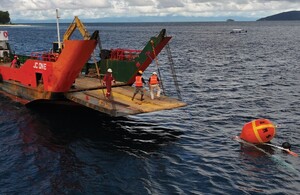
Workers deploy a mooring buoy in Raja Ampat as part of efforts to strengthen marine protected area management and safeguard globally important coral reef ecosystems. Photo: Konservasi Indonesia website.
Coral reef ecosystems underpin global food security, climate resilience and livelihoods of one billion people. The Coral Triangle, which spans coastal areas in South-East Asia, contains 76% of the world’s reefs and produces 30% of the world’s tuna. This region is recognised as critical by the UK National security assessment on global ecosystems and underpins global seafood supplies that affect UK food security.
However, more than 85% of reefs are threatened by overfishing and habitat destruction.
The UK is helping safeguard this vital marine ecosystem. In Indonesia, fishing communities and local authorities are creating marine protected areas, enforcing rules about how to fish sustainably. UK support has helped Indonesia establish its largest marine protected area with community co-management, strengthening local conservation.
UK investment has also supported the development of a new mooring system that enables boats to anchor without damaging reefs. Overall, 10 moorings have been installed, protecting over 1,700 coral species.
Across Indonesia, UK investment to date has enabled over 526,000 hectares to be placed under sustainable management practices, contributing directly to ICF KPI 17.
This funding does more than protect biodiversity and food security – it helps coastal communities find new ways to sustain fish stocks for future generations, strengthening global food security.