Joining up services for people facing multiple disadvantage
Policy Lab worked with MHCLG's Changing Futures programme to shape services around the lived experience of people facing multiple disadvantage.

Summary
- People experiencing multiple disadvantage often interact with many services simultaneously, including housing, health, justice and welfare. Where services operate in isolation, individuals can fall between organisational responsibilities and receive fragmented support.
- Policy Lab worked with the Ministry for Communities, Housing and Local Government’s (MHCLG’s) Changing Futures programme to help central government and local partners enable flexible, person-centred frontline delivery for people experiencing multiple disadvantage.
- People with lived experience were central to the project, co-designing Policy Lab’s approach and shaping the direction of the work throughout.
- The work strengthened collaboration across departments and sectors and developed practical tools including a workshop toolkit rolled out across all 15 Changing Futures partnerships. It generated the evidence base that shaped the programme’s forward strategy which secured further funding from HM Treasury’s Shared Outcomes Fund.
The policy challenge
Some people need support from many public services at once. They may be homeless while also experiencing poor mental health, substance dependence, domestic abuse, or involvement with the criminal justice system.
Although public funding supports these services, the nature of multiple disadvantage means they are often organised through separate departments and delivery bodies. Individuals can therefore fall between organisational responsibilities and service thresholds, receiving fragmented or inconsistent support.
Sophie a resident in Greater London said:
My case is complicated because there’s so many things happening in one go… I’ve been through a lot but it kind of interlinks
MHCLG established the Changing Futures programme to tackle this challenge. The programme, funded by HM Treasury’s Shared Outcomes Fund, worked in 15 local partnerships across England to explore new ways for central government and local areas to work together.
Policy Lab partnered with the programme to address a central question:
How can central government enable flexible and person-centred frontline delivery models on an ongoing basis for people experiencing multiple disadvantage?
What changed
Deeper and more visceral understanding of people’s experiences
Policy Lab brought the experiences of people facing multiple disadvantage directly into the development of policy and delivery options through filmed ethnographic research involving 29 participants in three areas across England (Greater London, East Midlands, and the Northeast). The resulting films were shared across government and across England via the 15 Changing Futures partnerships.
A head of Public Health in a Local Authority said:
There has been so much more meaningful input from lived experience which has been a huge benefit.
We worked with the National Expert Citizens Group to establish a lived experience panel of people who had experienced multiple disadvantage. The panel co-designed Policy Lab’s overall approach to the project and were actively involved in the development and delivery of our five co-design workshops. This ensured that people with lived experience were not merely subjects of research, but active agents in shaping its focus and directing policy development.
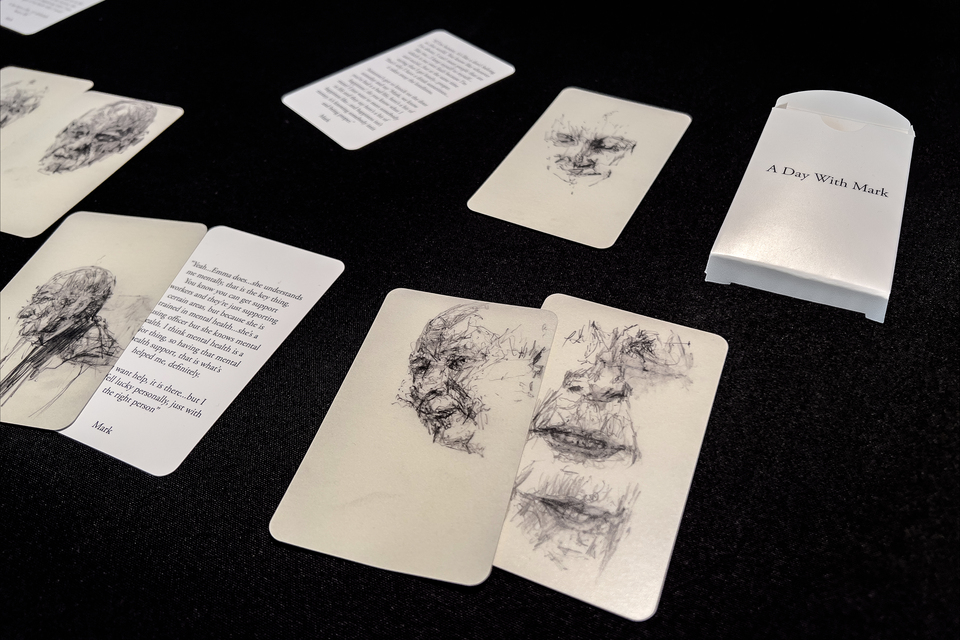
Policy Lab placed a MANIFEST artist, funded by the Arts and Humanities Research Council, into the Changing Futures project. Dryden Goodwin’s portraits, shown below, foregrounded the shared humanity of people involved at different points in the system – including those experiencing multiple disadvantage, frontline staff and policymakers.
Improved ideas, options and approaches
This richer evidence base diversified the type of insight available to the policy team, enabling Policy Lab to co-create bold new ideas and approaches to address the challenges of multiple disadvantage.
The ethnographic films and the work by Dryden Goodwin helped participants see how existing policies interacted in real situations and where coordination broke down. This prompted greater attention to the wider personal and social contexts shaping experiences across the multiple disadvantage policy system and sharpened focus on how services are experienced in practice.
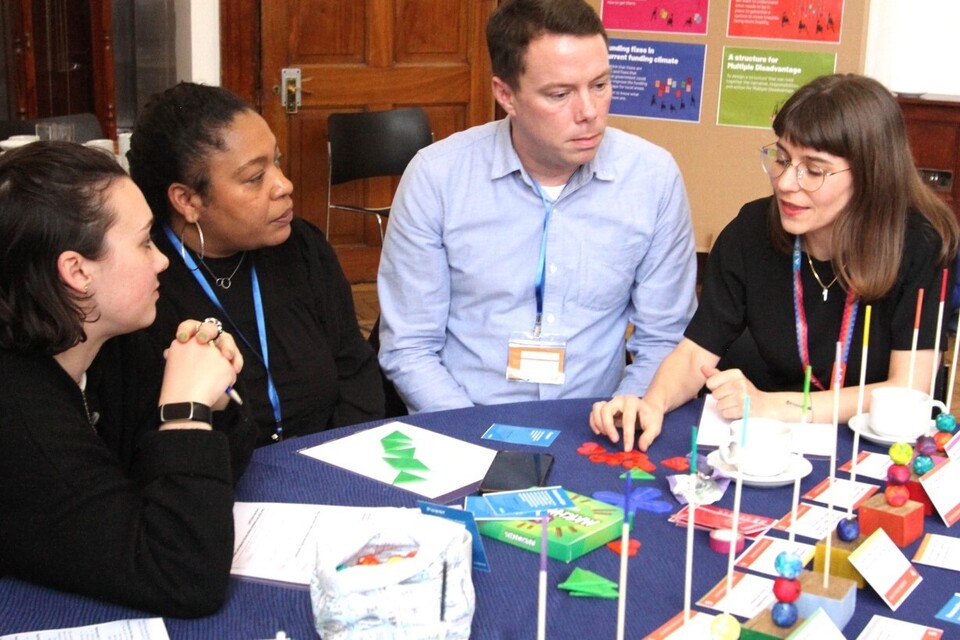
Policy Lab prototyped five practical interventions to enable flexible and person-centred frontline delivery models on an ongoing basis for people experiencing multiple disadvantage. One of these was a workshop toolkit, co-designed with service providers and people with lived experience, to help local areas map services and plan coordinated support. Following testing and refinement across five local areas, the programme rolled out the toolkit across all 15 Changing Futures partnerships to support cross-agency planning and collaboration.
A national government policymaker said:
It was genuinely collaborative and provided new perspectives that can lead to real and positive change. Rather than simply challenge my department’s position, there was a collegiate atmosphere focussed on providing solutions.
Systemic understanding of policy issues
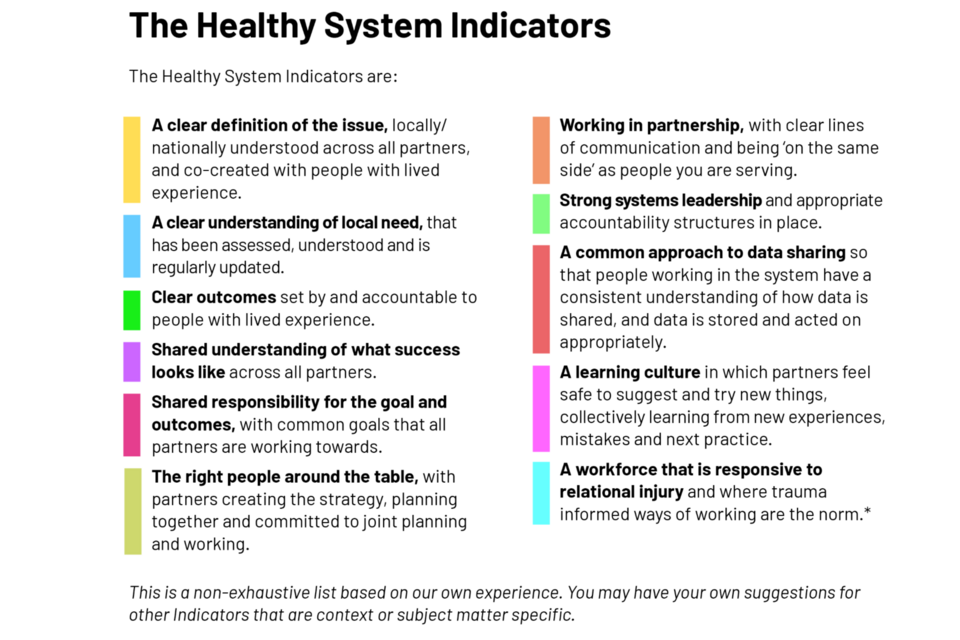
Another of the prototypes was the Healthy System Indicators, a framework helping people self-diagnose conditions needed for effective local systems and national–local coordination. Drawing on the Four Keys to Systems Innovation (developed by Jennie Winhall and Charles Leadbetter), we examined how power, purpose, resource flows and relationships were operating. We then developed our own shifting systems in policy framework to design workshops and activities and to support analysis of research. We created a game, Systemic, that simulates how policy-making systems function and possible shifts that can be made to improve policy outcomes.
The Healthy System Indicators, our broader systems framework, Systemic, the film ethnography and the artist’s work all underlined the need to coordinate services around individuals rather than focusing only on improvements within single services.
Together, these insights helped the policy team connect national strategy more closely to the reality of frontline delivery, and identify a clear set of proposals for change. The programme drew directly on the project’s outputs to shape its forward planning and the next phase of work, which subsequently secured further funding from HM Treasury’s Shared Outcomes Fund.
Enhanced working practices: trust, relationships and humanity
This work underlined the importance of flexible, person-centred and relational approaches for people experiencing multiple disadvantage. Where individuals require support that cuts across organisational boundaries, trust and collaboration between services are preconditions for effective delivery.
Ultimately, Policy Lab’s contribution to Changing Futures – through film ethnography, co-design, systems thinking and artistic inquiry – was to recentre humanity in the policy area: both for some of the most vulnerable people in society, and for the frontline workers and policymakers who support them.
A policymaking professional on the Changing Futures programme said:
Working with Policy Lab has transformed our approach to our policy work. Their ability to convene cross-sector audiences and facilitate open, challenging discussions about complex cross-cutting issues has provided a foundation for change that we could not have created on our own. The expertise in design methodology has opened up our policy questions and brought us much closer to solutions.
Documented learning
- Launching the Healthy System Indicators: A new way of relational working across local and national systems
- Shifting policy systems – a framework for what to do and how to do it.
- Launching “Systemic” - A game for applying systems change thinking to policy
- MANIFEST: Artists, policy and the process of making change