Calder Hall: Decommissioning the world’s first commercial nuclear power station
Seventy years after opening, Calder Hall continues to make history as teams safely decommission the world's first commercial nuclear power station.

Calder Hall helped establish the UK’s civil nuclear industry. Seventy years after it opened, teams at Sellafield are safely taking the power station apart and preparing the site for the future.
What is Calder Hall?
Calder Hall opened on the 17 October 1956 by Her Majesty the Queen, Elizabeth II.
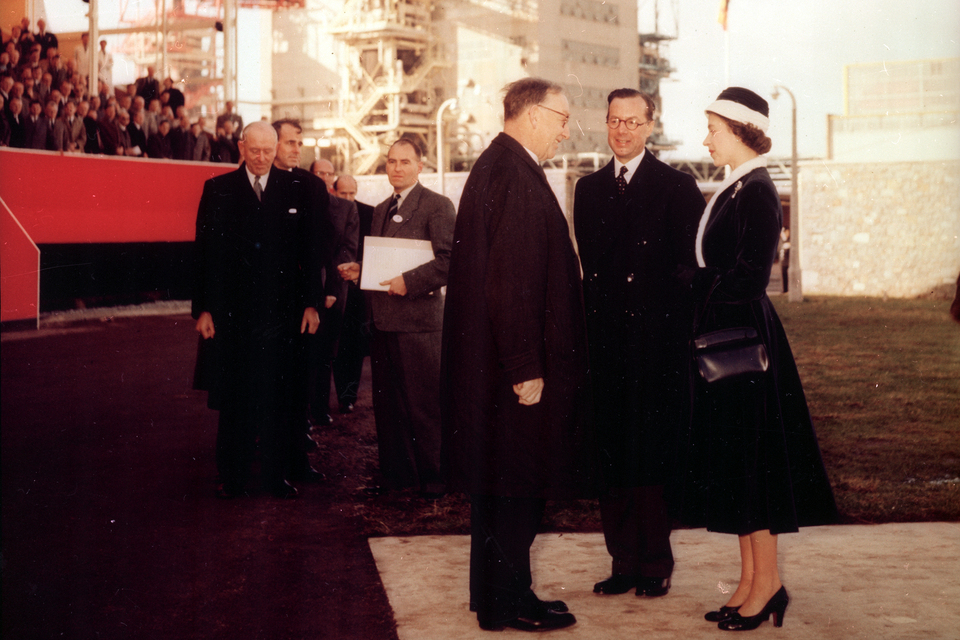
Her majesty the Queen, opening Calder Hall Power Station
Its 4 Magnox reactors generated electricity for 47 years. The station closed in March 2003.
The station helped develop nuclear power in the UK and around the world. Other Magnox power stations were based on its design. Calder Hall also became a familiar landmark in West Cumbria.
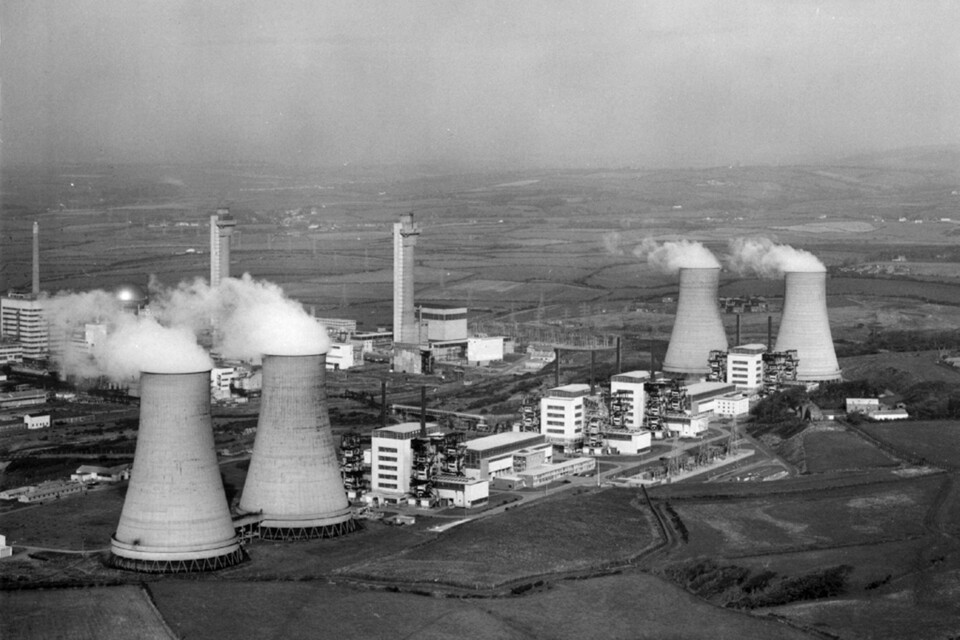
Today Calder Hall has a very different role.
The fuel has been removed from the reactors. Work is now underway to take down buildings and equipment that are no longer needed. Calder Hall was confirmed free of fuel in 2019.
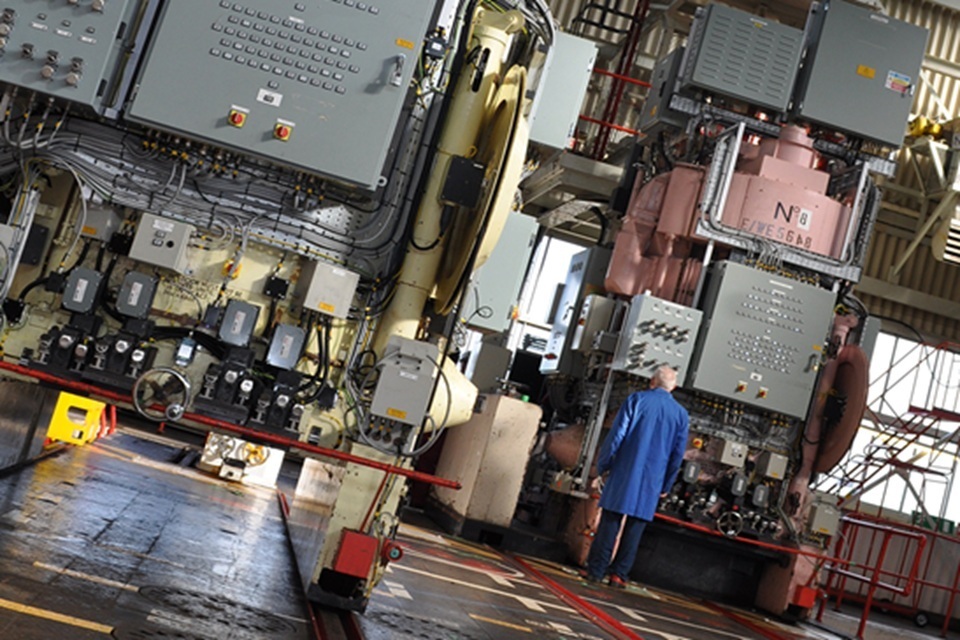
The defueling of Calder Hall
The challenge
Calder Hall was built to generate electricity. Its buildings, equipment and systems were designed to keep the power station running.
Taking it apart requires a planned sequence of decommissioning.
Fuel had to be removed. Plant and services had to be isolated. Large amounts of asbestos and other hazards had to be removed. The buildings were then made safe so they could be taken down.
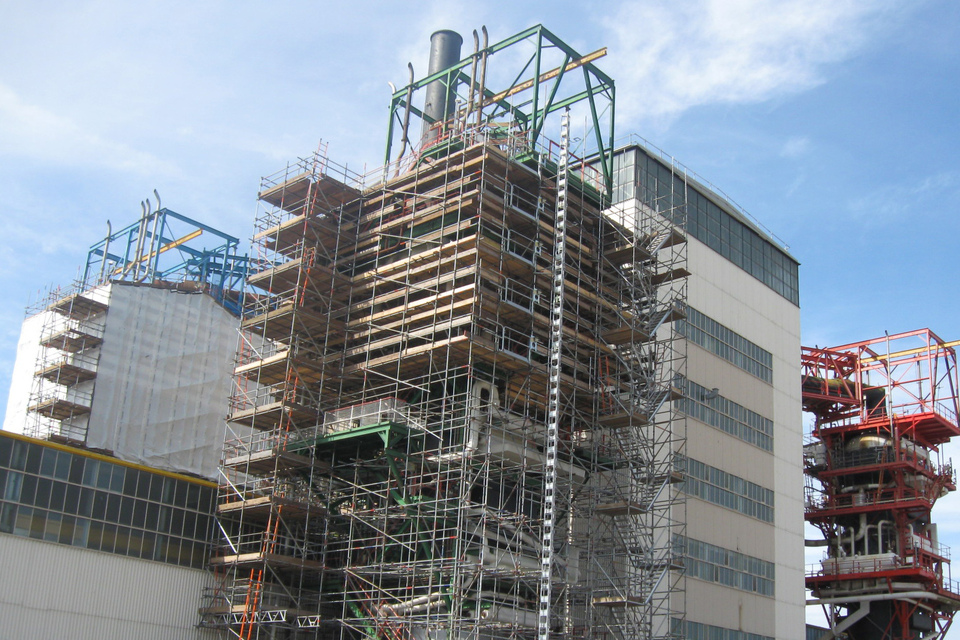
The removal of asbestos.
The station has changed a lot since it stopped making electricity.
The way the station is managed safely has also had to change. Teams now need safety plans that match the site as it is today and the work taking place there.
Preparing Calder Hall for demolition
A large amount of work has already taken place across the station.
All 40,000 fuel rods were removed from its 4 reactors. The cooling towers have been taken down. Teams have also removed thousands of tonnes of asbestos from the station and nearby buildings. Other redundant plant, pipework and structures have also been dismantled.
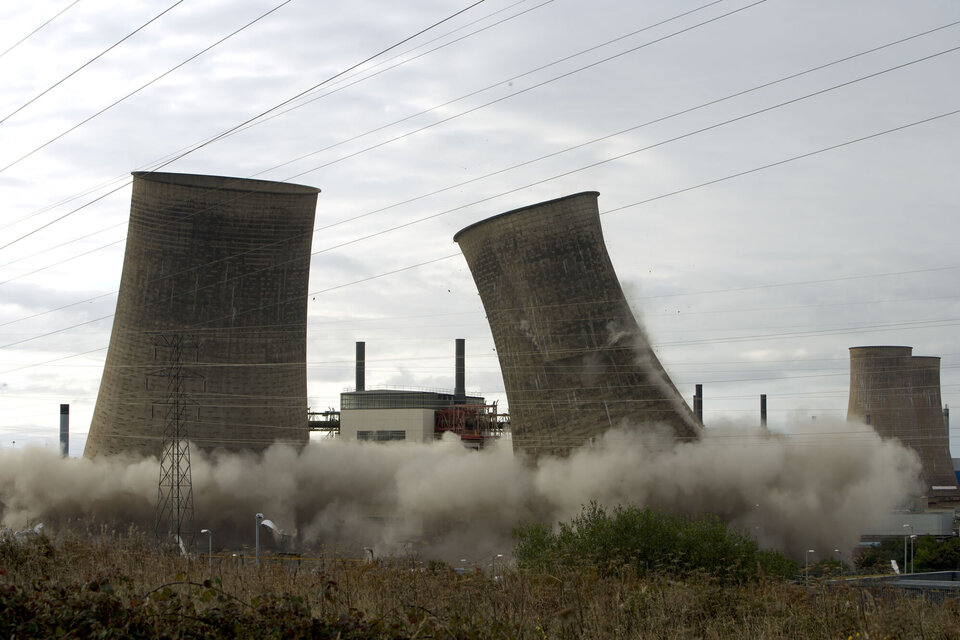
Demolition of the cooling towers
This work has changed Calder Hall from a working nuclear power station into a decommissioning site.
People will soon see even more changes as more buildings and structures are taken down.
A different approach as the hazard changes
Decommissioning has allowed the team to build a much clearer picture of the hazards that remain at Calder Hall.
Making space for Sellafield’s future
Demolition also has a practical purpose beyond removing redundant buildings.
Land at Sellafield is limited. Future mission delivery requires space for new facilities and infrastructure.
Removing parts of Calder Hall that are no longer needed will create space for future work. This includes supporting the SIXEP Continuity Plant.
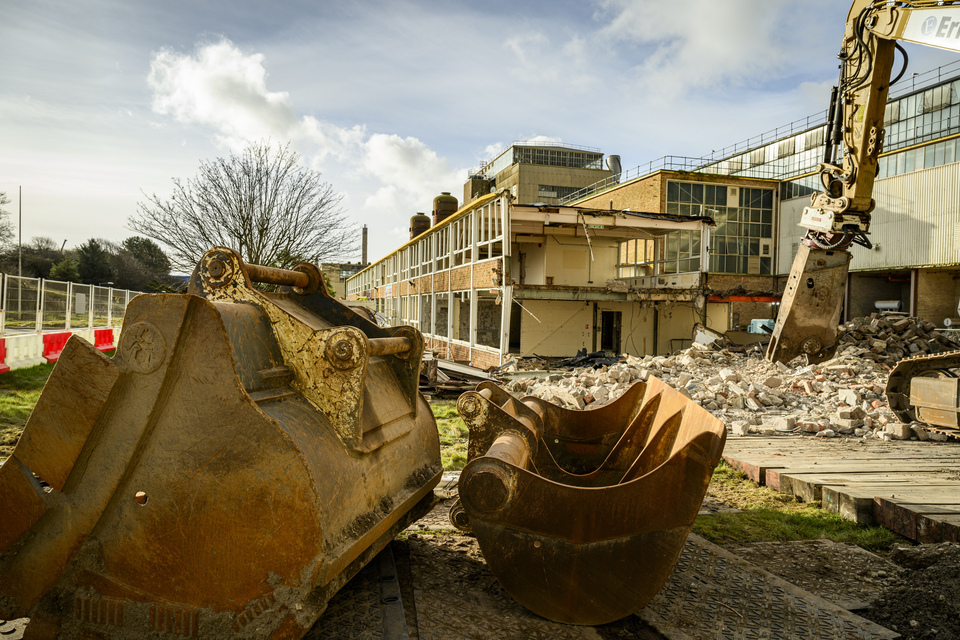
Demolition of the main admin building
That means a site built for one of the earliest chapters of the UK’s nuclear programme is now helping create space for its next phase.
Sharing what we learn
Calder Hall is helping Sellafield learn how to safely take apart a nuclear power station.
Calder Hall is helping Sellafield learn how to decommission a nuclear power station. It provides valuable experience for the work ahead.
This includes learning how safety plans change as hazards are removed. It also includes how demolition work can be carried out safely and how land can be prepared for future use.
What teams learn at Calder Hall will help other decommissioning projects at Sellafield and across the NDA group.
Seventy years after Calder Hall opened, its contribution has changed.
The work now is to safely complete its final chapter and make room for what the country needs next.
Further reading
Sellafield Magazine: issue 5 - Memories of Calder Hall
60 years since the day that changed the nuclear industry
Halfway there – Sellafield’s Calder Hall now 50% fuel free
History made as final fuel leaves iconic nuclear plant
Sellafield’s Calder Hall turns 70 as decommissioning gathers pace