Moorings: environmental impacts, consent and marine licensing
How traditional and advanced mooring systems can affect the seabed, and what consent or marine licence you may need to install, maintain, or remove a mooring in English waters
Applies to England
Traditional moorings
Traditional swing moorings usually use an anchor or block, chain and float. As the vessel, wind and tide move the mooring, chain can move across the seabed. This movement can scour or damage sensitive habitats such as seagrass, maerl and reef.
Advanced mooring systems
Advanced mooring systems are designed to reduce contact with the seabed. They are also known as environmentally sensitive moorings or ecomoorings.
Different designs are suitable for different places. The choice of system can depend on water and sediment depth, seabed type, tidal range, wave conditions and the vessel using the mooring.
Using an advanced mooring system does not remove the need to check whether consent or a marine licence is required.
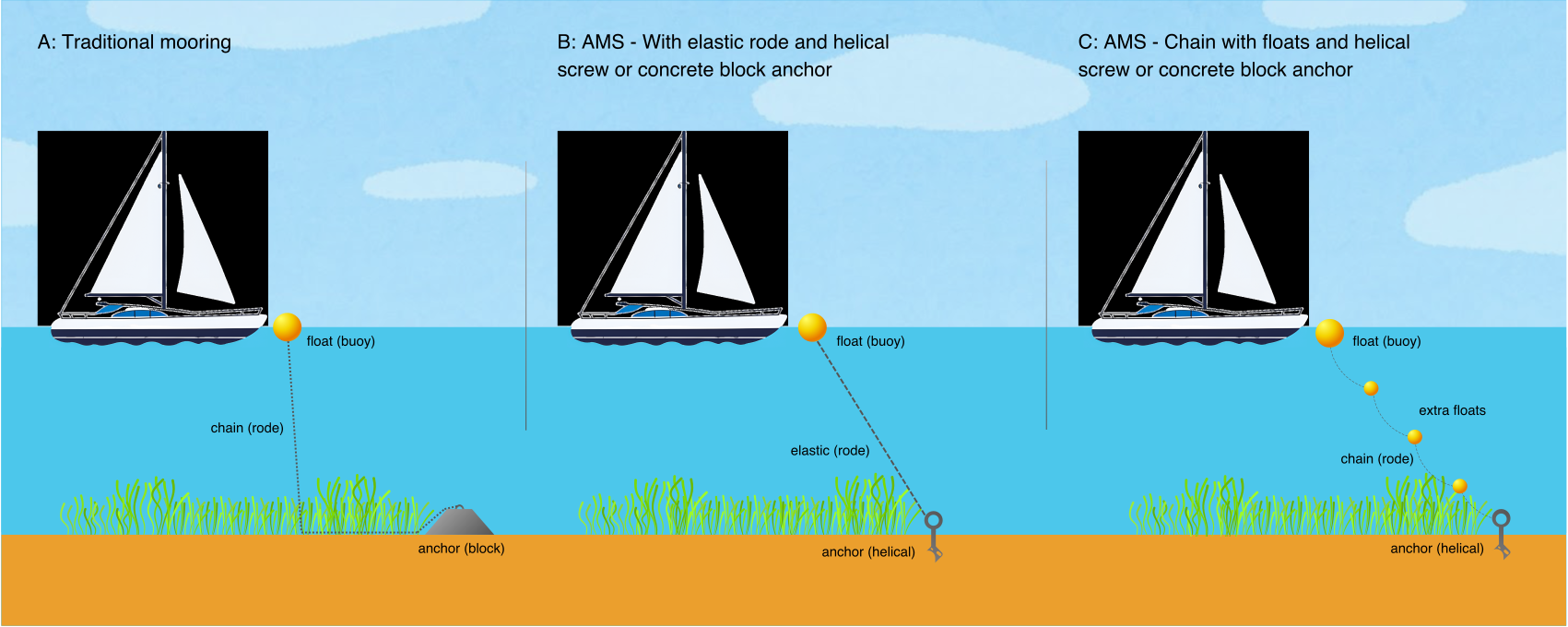
How traditional moorings work compared to advanced mooring systems (AMS).
Check who controls the area
Moorings in a harbour or lighthouse authority area
Harbour authorities and lighthouse authorities can carry out certain mooring and navigation-aid activities without a marine licence where the relevant exemption applies.
If you are not the harbour or lighthouse authority, you may be able to rely on an exemption where you have the authority’s consent. You must meet all the conditions of the exemption, including any requirement to notify MMO.
Moorings outside a harbour or lighthouse authority area
If you plan to install, maintain or remove a mooring outside a harbour or lighthouse authority area, check whether you need a marine licence before carrying out the work.
Apply for a marine licence for a private mooring
Installing, maintaining or removing a temporary, seasonal or permanent mooring can involve marine licensable activities, including construction, deposit and removal.
You are responsible for establishing whether your proposal needs a marine licence. MMO may need information about the location, installation method, existing moorings and sensitive habitats or species,
If the work is in or could affect a marine protected area, engage with Natural England at an appropriate stage and provide enough information for the environmental effects to be assessed.
Make a marine licence application
Anchoring and marine non licensable activities
Anchoring is a marine licensable activity but is generally exempt from the requirement to obtain a marine licence. For MMO’s work on marine protected areas, anchoring is treated as a marine non licensable activity.
MMO assesses and, where necessary, manages the effects of marine non licensable activities on protected features in marine protected areas within 12 nautical miles of the English coast.
Marine non licensable activities: guidance, sites and evidence
Studland Bay
At Studland Bay Marine Conservation zone, advanced mooring systems can provide an alternative to repeated anchoring or traditional moorings over sensitive seagrass.
Marine non licensable activities at Studland Bay Marine Conservation Zone
Other considerations
If you have installed a visitor AMS please provide this information to the RYA Green Blue so it can be included on the environmental facilities map.
A network of projects and individuals involved in AMS trials has been established to help share experiences and support future work. The group meets every 2 months. If you would like to join the mailing list, please contact liferemedies@naturalengland.org.uk.