Anglian waterways - river conditions, navigation notices, closures and restrictions
River conditions, lock closures and restrictions affecting boaters on Anglian waterways.
Applies to England
River conditions
River advice for boaters is a free messaging service to advise waterway users when:
- levels and flows are above normal
- some of our locks are being prepared or used to discharge flood water
- conditions are becoming unsuitable for boating
We recommend everyone using the Anglian Waterways should register to receive these important messages.
To find out the latest river advice for boaters call Floodline on 0345 988 1188. Choose option 1 and then option 1 again, and listen to the pre-recorded information followed by one of these quick dial codes:
- Nene - 032112
- Great Ouse (Bedford to St Ives) - 033211
- Great Ouse (St Ives to Earith) - 033212
- Ancholme - 031212
Find out about call charges.
You can be added to our free messaging service. You will receive a voice message on your mobile phone and/or landline. The messages can be sent at any time of day or night. You can also receive text and email messages.
You can register for river advice online. You can also cancel and update your registration.
What the warnings mean
Any river activity poses a greater risk when there are:
- strong currents
- high river levels
- cold weather conditions
River flows can increase even during the summer months. Never assume that sunny weather means the conditions are not hazardous.
We (the Environment Agency may display warning boards at locks to inform river users of the conditions. Read the explanations of what these mean for you. Do not take risks and never underestimate the power of the river.
Strong Stream Advice warning (red)
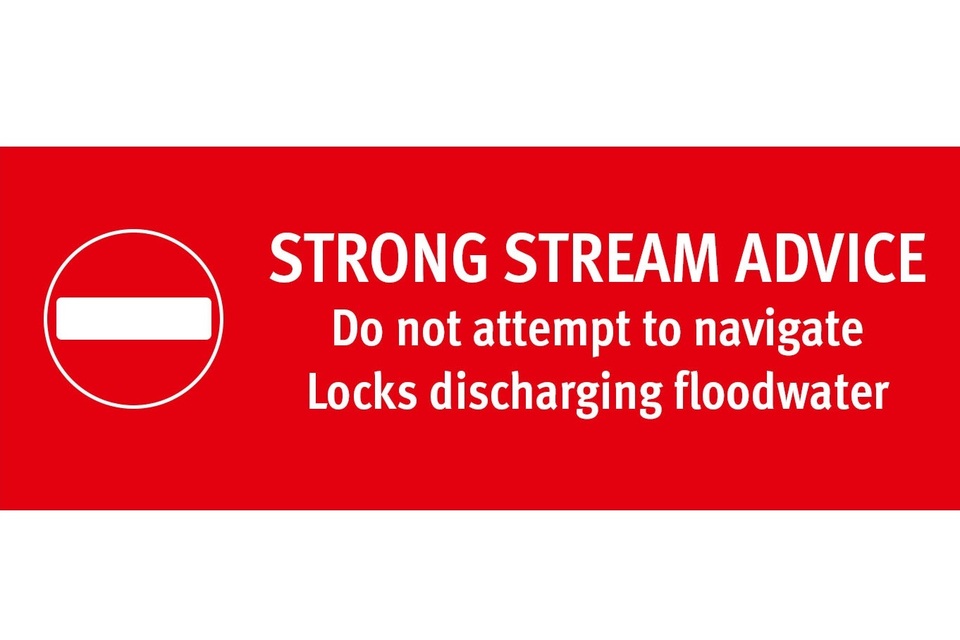
A red sign with white text reading 'Strong stream advice. Do not attempt to navigate. Locks discharging floodwater'.
These signs are displayed when river flows are above normal levels, making conditions unsafe for navigation. Water currents may be too fast for safe manoeuvring, and headroom may be restricted at some locations.
During these periods, some locks are ‘reversed’ to discharge floodwater. Reversed locks are closed to navigation, and red LED ‘X’ lights are activated at the lock. These warn boaters to keep well clear of the lock. Some marinas and boat clubs may also display red flags.
We strongly recommend that you do not attempt to navigate during these periods.
Caution warning (amber)
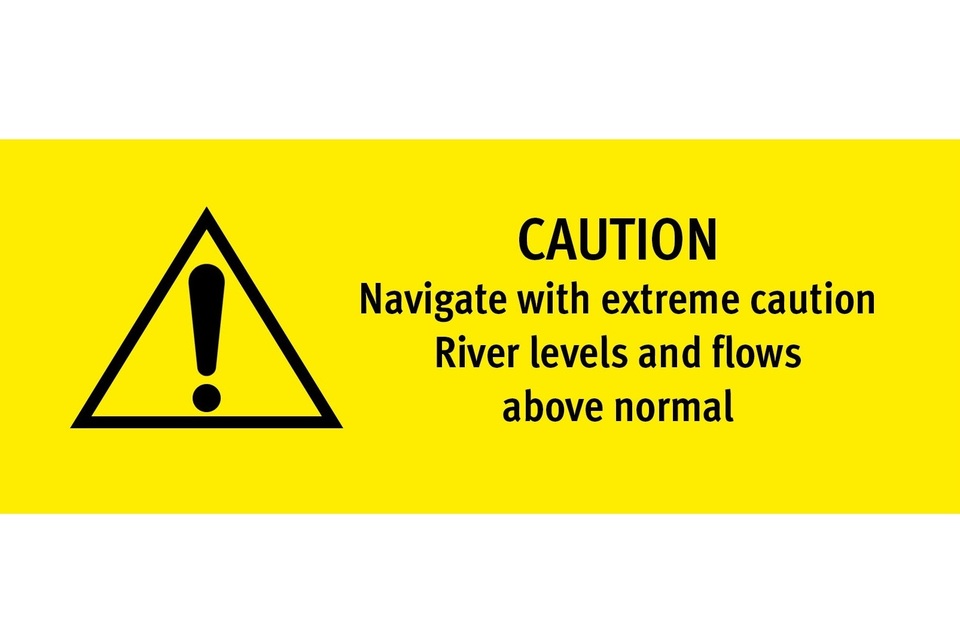
An amber sign with white test reading ‘Caution. Navigate with extreme care. River levels and flows above normal’.
When these boards are displayed at locks, we advises river users that river flows are above normal and that headroom may be restricted at some locations. Some marinas and boat clubs may also display amber flags. Anyone intending to navigate should proceed with extreme caution.
Normal conditions (green)
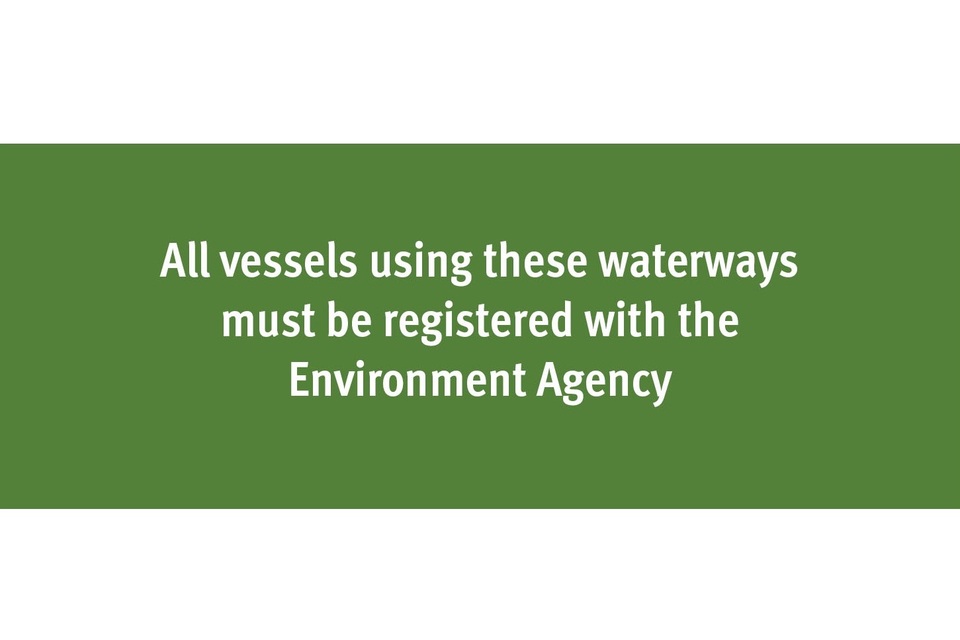
A green sign with white test reading ‘All vessels using these waterways must be registered with the Environment Agency.
When these boards are displayed at locks, we advise river users that there is no warning messages issued. Some marinas and boat clubs may also display green flags.
Weirs and sluices
Keep well away from weirs and sluices at all times, but especially when any warnings are active.
Flow conditions may change unexpectedly and without warning when our weir assets are being operated, making these areas extremely hazardous and a risk to life.
Dealing with changing river conditions
If you find yourself in conditions where the Environment Agency advises you to stop navigating, you should take the advice and stop. Even the most experienced boater can be caught out, so think about those who could be put in danger if they have to help you.
You may find the following measures helpful. Not all conditions will be serious enough to need all the suggested measures, which include:
- Mooring your boat in a safe place, preferably in a marina or at a recognised mooring. Limited space may be available at some locks. Moor against high banks if you can.
- Ensuring your mooring lines are fastened to secure fixings such as bollards, rings or even trees. Put out extra lines for more security and allow enough slack for a further rise in river levels. Do not rely on your own mooring pins or stakes, as they might not hold.
- Using extra fendering (such as scaffold poles or strong timber posts) between your boat and the bank side. This may prevent your boat drifting onto the riverbank and becoming caught up when levels drop.
Make sure you have a safe exit ashore from your boat. If not, consider returning home or finding alternative accommodation until conditions improve.
You should treat it as an emergency if you:
- are not able to vacate your boat safely
- are running low on essential supplies
- have other safety concerns
You should dial 999 to ask for evacuation.
Those in hire boats should stop immediately if you are advised to stop navigating. Contact your hire boat operator and follow their instructions.
Please remember your life is more important than your boat.
The Environment Agency does not provide emergency services. We are not able to carry out search and rescue, or provide supplies to stranded boats.