Use of Discretionary Housing Payments: analysis of mid-year returns from Local Authorities, data for April 2025 to September 2025
Published 18 December 2025
Applies to England and Wales

© Crown copyright 2025
This publication is licensed under the terms of the Open Government Licence v3.0 except where otherwise stated. To view this licence, visit nationalarchives.gov.uk/doc/open-government-licence/version/3 or write to the Information Policy Team, The National Archives, Kew, London TW9 4DU, or email: psi@nationalarchives.gov.uk.
Where we have identified any third party copyright information you will need to obtain permission from the copyright holders concerned.
This publication is available at https://www.gov.uk/government/statistics/use-of-discretionary-housing-payments-april-to-september-2025/use-of-discretionary-housing-payments-analysis-of-mid-year-returns-from-local-authorities-data-for-april-2025-to-september-2025
1. Main stories
Here are the main headlines about the use of Discretionary Housing Payments (DHPs) for the first half of the financial year ending March 2026 based on information received from 293 out of 318 local authorities in England and Wales:
- In the first half of the financial year ending March 2026, local authorities had spent 47% of their combined allocations for the year, compared to 47% at the same point in the previous financial year ending March 2025
- DHP spending varied between local authorities, with 30% of local authorities spending up to 40% of their allocation, 53% of local authorities spending more than 40% and up to 60% of their allocation and 17% of local authorities spending over 60% of their allocation
- For local authorities that submitted awards data, the total number of DHP awards given out in the first half of the financial year ending March 2026 was 69,600
- 64% of DHP expenditure was recorded as related to welfare reforms, with Local Housing Allowance (LHA) accounting for the greatest share of expenditure (26%)
- 29% of DHP expenditure was recorded as related to moving accommodation, while 14% was used for short-term rental costs while seeking employment
2. What you need to know
Discretionary Housing Payments (DHPs) can be paid to those entitled to Housing Benefit or the housing element of Universal Credit who face a shortfall in meeting their housing costs. Funding is allocated to lower tier and unitary local authorities (LAs) and they have broad discretion to spend in line with their local priorities. This includes deciding how much will be paid and the length of the award. A DHP can be awarded to cover a rent shortfall, a rent deposit, rent in advance, or other costs associated with moving.
The government provides funding to local authorities for DHPs. For the financial year ending March 2026, the Government provided £100m of funding for DHPs. In addition to the government contribution, LAs can top up their DHP funding so that their total DHP expenditure is a maximum of two and a half times this figure using their own funds.
LAs are encouraged to manage their DHP budget, therefore the level of DHP spending does not necessarily reflect the level of demand for DHPs.
These statistics cover the period of April to September 2025 which is the first half of the financial year ending March 2026. The findings are based on returns from 293 out of 318 local authorities.
Further guidance on these statistics is provided in the “More information” section of this publication and in the background information and methodology document.
3. How much of their DHP funding did local authorities spend?
In the first half of the financial year ending March 2026, the local authorities who submitted a return spent £43.3 million on DHPs which represents 47% of their combined government allocations. This is similar to the same point in the previous financial year ending March 2025 where local authorities had spent £45.5m which represented 47% of their combined allocations. Caution should be taken when comparing expenditure to the previous year as different local authorities responded in each year.
Welsh local authorities spent 45% of their combined allocations in the first half of the financial year ending March 2026, which is a lower proportion than that spent by reporting English local authorities (48%).
The local authorities that provided information on the number of awards, made 69,600 awards to claimants in the first half of the financial year ending March 2026. For the local authorities that provided this information, the total expenditure on DHPs was £42.7m. While this suggests that the average DHP award was around £614, this figure should be treated with caution, since there are a variety of different types of DHP awards (for example, a single DHP award to cover a deposit is likely to have a different value to a DHP award paid on a weekly or monthly basis).
Around 53% of local authorities spent over 40% and up to 60% of their allocation
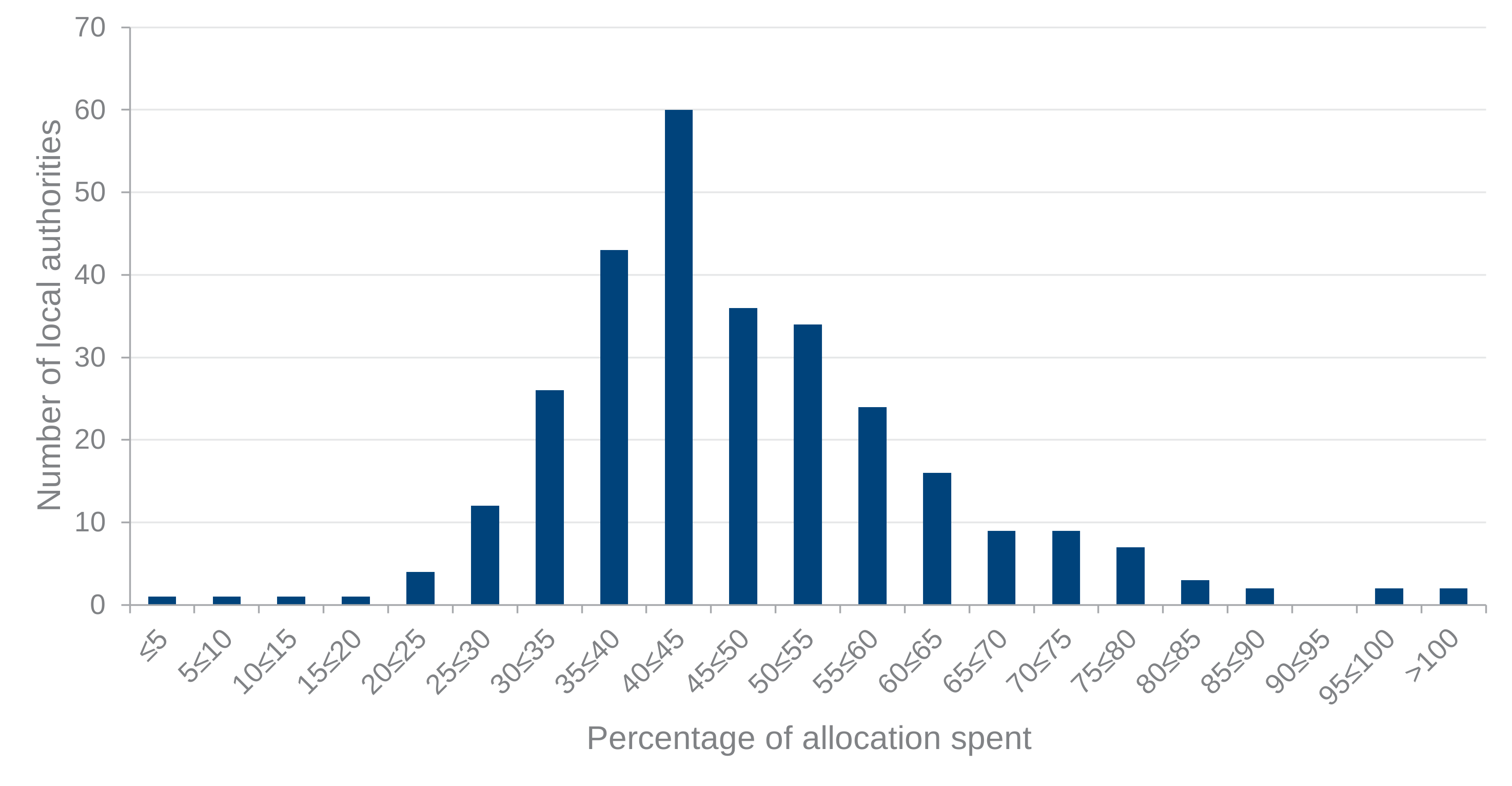
Local authorities varied in the proportion of their DHP government allocation that they had spent during the first half of the financial year ending March 2026, with 30% of local authorities spending up to 40% of their allocation and 17% spending over 60%. Around half (53%) of local authorities spent over 40% and up to 60% of their government allocation.
In the first half of the previous financial year ending March 2025, the pattern of spending showed local authorities spending a slightly lower proportion of their allocated funding: 38% of local authorities who responded had spent up to 40% of their allocation, while 15% had spent over 60%.
Local authorities in the East of England spent the highest proportion of their combined allocations while local authorities in London spent the least.
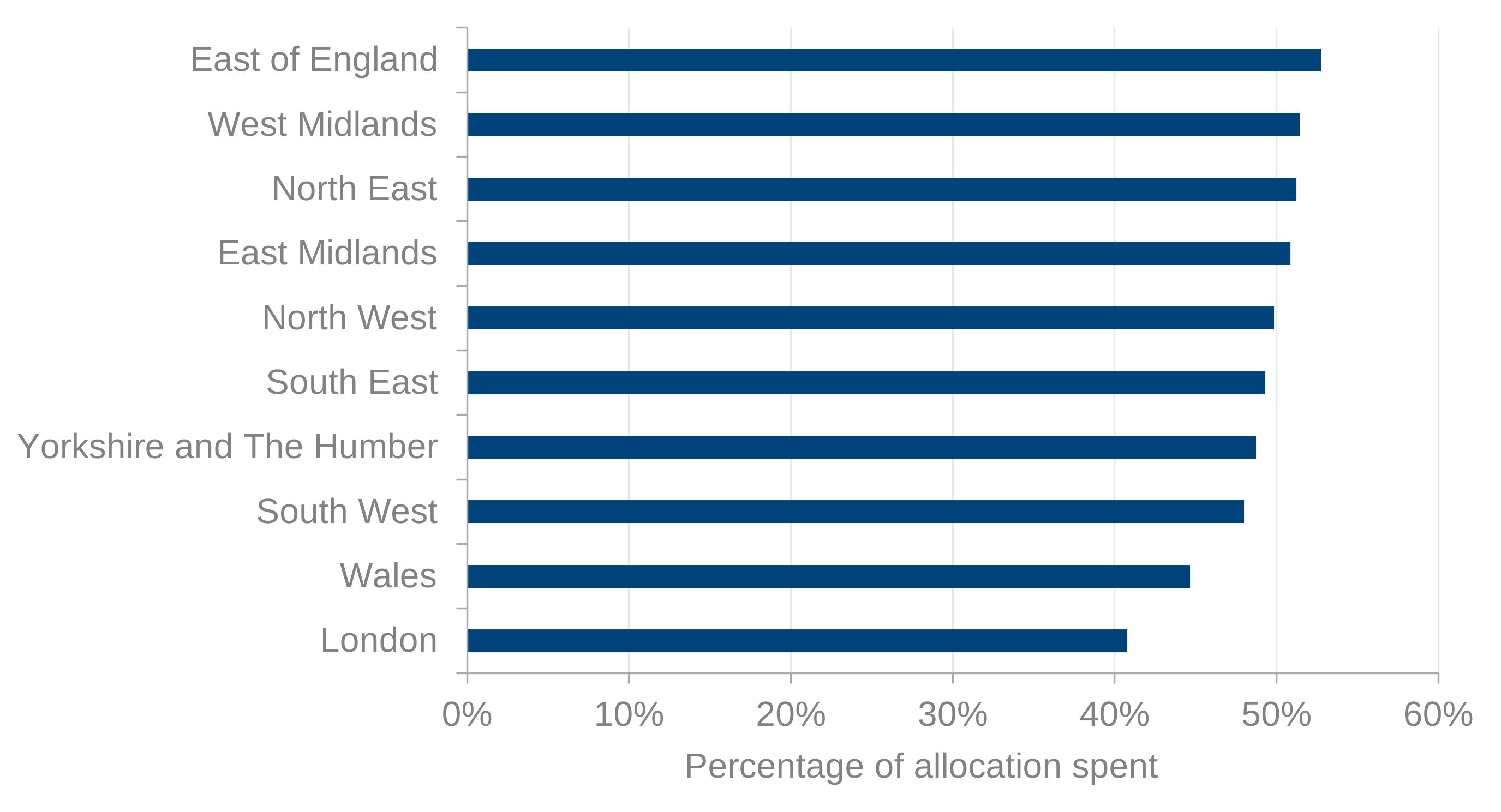
There was some variation by region, with local authorities in the East of England spending the greatest proportion of their combined allocations (53%) and local authorities in London spending the least (41%).
In the first half of the previous financial year ending March 2025, local authorities in the East Midlands had spent the greatest proportion of their combined allocations (59%) with local authorities in the North East spending the least (40%). Caution should be taken when drawing comparisons between years since different LAs may have responded in each year.
4. How much was spent on each welfare reform
64% of DHP expenditure was related to welfare reforms

64% of DHP expenditure was recorded as related to welfare reforms (for local authorities who provided the information), with Local Housing Allowance (LHA) reforms recorded as being responsible for the largest proportion of DHP expenditure (26%), followed by Removal of the Spare Room Subsidy (RSRS) (21%), Benefit Cap (9%) and a combination of welfare reforms (8%). Around 36% of DHP expenditure was reported as not related to welfare reforms.
At the same point in the previous financial year ending March 2025, a lower proportion (61%) of DHP expenditure was recorded as being related to welfare reforms. In previous years, RSRS has been reported as the largest welfare reform expenditure category.
5. What DHPs were awarded for
Around £12.2m (29%) of expenditure was related to moving to alternative accommodation
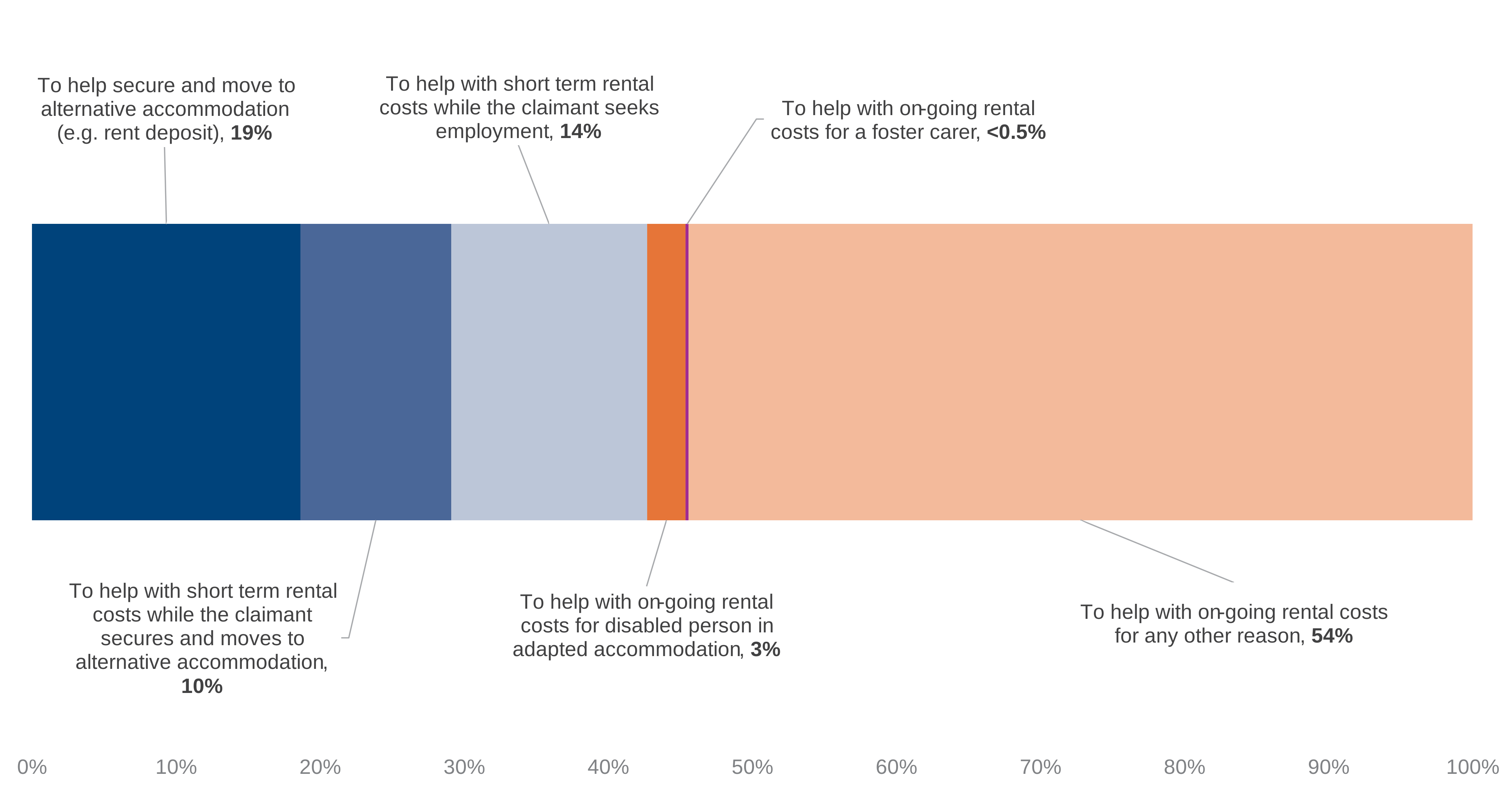
Around £12.2m (29%) of DHP expenditure was related to moving to alternative accommodation, 14% was to help with short-term rental costs while the claimant sought employment, while 3% went towards costs for disabled people in adapted accommodation.
Around 54% of DHP expenditure was given to help with ongoing rental costs for a reason unrelated to the above. This is similar to the proportion reported (55%) at the same point in the previous financial year ending March 2025.
6. More information
DHP Government Funding
DHP government funding for the financial year ending March 2026 is £100m. This funding is allocated to lower tier and unitary LAs across England and Wales. More information about funding levels over time can be found in Table 1 in the data tables document of this statistics release.
Welfare Reforms
Since the welfare reforms in 2011, the Government has significantly increased its contribution to DHPs. This is so that local authorities can support those affected by the Benefit Cap, Removal of the Spare Room Subsidy (RSRS) and reforms to the Local Housing Allowance (LHA). The background information and methodology document provides more detail.
Data Source
At the midpoint and end of each financial year, local authorities provide details of their DHP expenditure for financial accounting purposes, which they are legally required to do. 293 out of 318 local authorities provided this information in time for inclusion within these statistics.
In addition to financial information, local authorities are also asked, at the mid-point and end of each financial year, to provide additional monitoring information. Not all local authorities supply some or all of the monitoring information requested. Of the 293 local authorities that submitted a return, 285 gave information about the number of DHP awards they gave out so far in the financial year, while 281 provided a breakdown of expenditure by welfare reform and 280 provided a breakdown of expenditure by purpose of DHP. More information about both the financial information and monitoring information provided in returns can be found in the background information and methodology document.
Release Schedule
These Official Statistics are released biannually. This current statistical release presents a summary of the mid-year returns that include both financial and monitoring information. They cover April to September 2025 which is the first half of the financial year ending March 2026.
The next release in this series will be based on end-of-year financial and monitoring returns covering April 2025 to March 2026. It will be published in July 2026.
Status
These statistics have not been assessed by the UK Statistics Authority and have not been designated as National Statistics.
7. Where to find out more
These statistics are released as part of a series of Discretionary Housing Payment statistics.
Information about Discretionary Housing Payments, including how to claim them.
8. Contact information
For media enquiries please contact the DWP Press Office
Responsible Analyst: Katie Wilkinson
Email: katie.wilkinson1@dwp.gov.uk
Author: Noah Whiteman
Email: noah.whiteman@dwp.gov.uk
Published: 18 December 2025
Next edition: July 2026