Annual Stamp Tax Statistics 2024 to 2025 - Commentary
Updated 11 March 2026
Applies to England and Northern Ireland

© Crown copyright 2026
This publication is licensed under the terms of the Open Government Licence v3.0 except where otherwise stated. To view this licence, visit nationalarchives.gov.uk/doc/open-government-licence/version/3 or write to the Information Policy Team, The National Archives, Kew, London TW9 4DU, or email: psi@nationalarchives.gov.uk.
Where we have identified any third party copyright information you will need to obtain permission from the copyright holders concerned.
This publication is available at https://www.gov.uk/government/statistics/uk-stamp-tax-statistics/uk-stamp-tax-statistics-2023-to-2024-commentary
1. About this release
This publication presents information on Stamp Taxes, which are those collected for ‘Land and property’- Stamp Duty Land Tax (SDLT) - and ‘Stocks and shares and other liable securities’- Stamp Duty Reserve Tax and Stamp Duty (SDRT and SD).
SDLT data is split by transaction type, property type, region, price band and buyer type, including transactions paying the higher rates on additional dwellings (HRAD) and Non Resident Stamp Duty Land Tax (NRSDLT).
This publication contains new data for 2024 to 2025 covering SDLT transaction numbers, property value and SDLT receipts by geography, buyer type and price band. Total receipts align to the HMRC tax receipts and National Insurance contributions for the UK.
These statistics are National Statistics. National Statistics are accredited official statistics. These statistics include methods of Statistical Disclosure Control to reduce the risk of disclosive information about data subjects.
An improvement in methodology impacting HRAD and NRSDLT receipt and transaction numbers from 2022 to 2023 onwards means this data is no longer directly comparable to previous years.
2. Changes to the publication
This publication contains new data for 2024 to 2025.
As of December 2025, we have updated the publication name from UK Stamp Tax Statistics to Annual Stamp Tax Statistics.
As of Quarter 1 2025, HMRC is no longer producing Quarterly SDLT statistics. We have consolidated those statistics into this publication.
This publication includes changes to how data tables and commentary are organised. As a result, data tables from previous publications may not align directly with data tables from this year’s publication. Some tables have been discontinued including some annual time series tables and one table on previous year’s age distributions. However, this data is either calculable from the quarterly series provided or available on the National Archives. Finally, there are no revisions to the statistics reported for previous years, only changes in table numbers and names.
3. Key Definitions
3.1 Stamp Duty Land Tax
SDLT is paid on property or land purchases in England and Northern Ireland. The total value you pay SDLT on (sometimes called the ‘consideration’) is usually the price you pay for the property or land. Rates and thresholds differ depending on the property type or if it is an additional dwelling. Some transactions qualify for reliefs such as First Time Buyers’ Relief (FTBR).
3.2 Stamp Tax on Shares
Stamp duty is paid on shares at a rate of 0.5% on the transaction. This applies to:
-
shares purchased electronically, where Stamp Duty Reserve Tax (SDRT) is paid
-
shares purchased using a stock transfer form, where Stamp Duty is paid if the transaction is over £1,000
More information can be found in Stamp duty on shares: detailed information - GOV.UK
3.3 Liable and non-liable
Liable transactions are identified as transactions where an SDLT liability is due. Non-liable transactions still complete an SDLT return, but do not have an SDLT liability. The split between the liable and non-liable transactions is dependent on the level of the SDLT threshold. As of 1 April 2025, the SDLT threshold is £125,000 for residential properties and £150,000 for non-residential properties. Residential properties under £125,000 may still be liable to SDLT if subject to either the HRAD or NRSDLT surcharge. Changes to thresholds effective from April 2025 do not affect data contained in this report.
3.4 Price bands
Transactions under £250,000 do not include transactions valued at less than £40,000 as these transactions do not require returns and are therefore not captured in HMRC’s SDLT database. Further information can be found in the Methodology Quality Report Annual UK Stamp Tax statistics - January 2024 report published on the GOV.UK website. This document was published on 31 January 2024.
3.5 Higher rates of Stamp Duty Land Tax
Higher rates of SDLT apply to ownership or part ownership of more than one residential property worth £40,000 or more. Further information can be found in Higher rates of Stamp Duty Land Tax - GOV.UK
3.6 Non Resident Stamp Duty Land Tax
As of 1 April 2021, SDLT surcharges apply to properties purchased by non-residents. Further information can be found in Rates of Stamp Duty Land Tax for non-UK residents - GOV.UK
4. Headline Findings
The headline findings in this annual report are:
-
total stamp tax receipts have risen between financial year 2023 to 2024 and 2024 to 2025, increasing by 23% from £14,815 million to £18,205 million
-
SDLT receipts increased by 20% from £11,615 million to £13,885 million between financial year 2023 to 2024 and 2024 to 2025. This increase is partly explained by the uplift to the HRAD surcharge rate from 3% to 5% effective from 31 October 2024. The increase in total stamp tax receipts is also partially explained by forestalling effects, where buyers sought to purchase properties before the changes to SDLT thresholds became effective from 1 April 2025
-
stamp taxes on shares and other liable securities (SDRT and SD) receipts have risen by 35% from £3,200 million to £4,320 million between 2023 to 2024 and 2024 to 2025
-
residential SDLT receipts have risen by 21% between financial year 2023 to 2024 and 2024 to 2025, from £8,570 million to £10,380 million
-
non-residential SDLT receipts increased by 15% between financial year 2023 to 2024 and 2024 to 2025, from £3,045 million to £3,505 million
-
211,700 transactions were subject to HRAD surcharge in financial year 2024 to 2025, which gave rise to £2,790 million
-
19,000 transactions were subject to Non Resident Stamp Duty Land Tax surcharge in financial year 2024 to 2025, which gave rise to £225 million of tax before refunds
-
155,400 transactions benefitted from FTBR in financial year 2024 to 2025. The total amount of SDLT relieved due to FTBR in financial year 2024 to 2025 was estimated at £772 million, an increase of £232 million compared to 2023 to 2024. Part of the increase is explained by forestalling of FTBR transactions before FTBR thresholds were reduced on 1 April 2025
4.1 The quarterly findings in this report are:
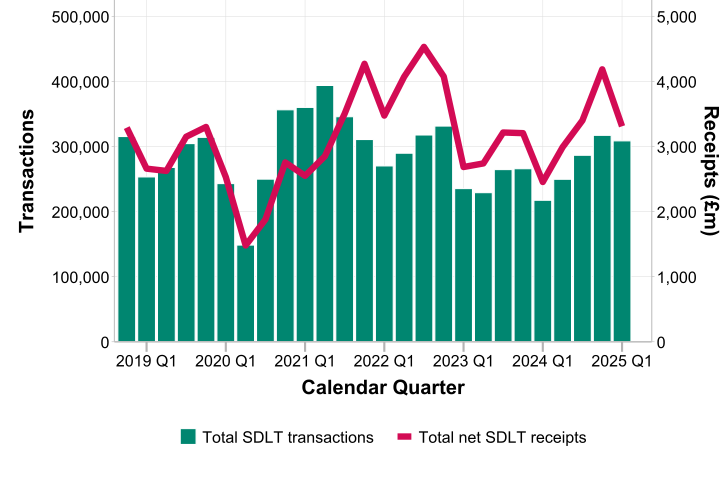
Figure 1 below shows a timeseries of quarterly SDLT transactions and receipts since Q4 2018.
Figure 1: Total SDLT transactions and receipts
-
since the series began, the lowest total number of SDLT transactions and total net SDLT receipts were seen in Q2 2020 when transactions and receipts fell due to COVID-19
-
following the extension of the residential SDLT holiday to end in June 2021, total SDLT transactions peaked in Q2 2021 as taxpayers sought to complete transactions before the residential nil-rate band threshold reduced from £500,000 to £250,000 on 30 June 2021
-
total net SDLT receipts reached their highest levels in Q3 2022 due to an increase in transactions and the end of the residential SDLT holiday in September 2021, increasing the amount of tax paid on most residential transactions
-
total net SDLT receipts and SDLT transactions in Q1 2025 decreased compared to the previous quarter, breaking the trend in rising receipts that started in Q1 2024
5. SDLT transactions and receipts by property type
This section reports on key findings for SDLT transactions and receipts by property types.
5.1 Residential
The key findings for residential transactions and receipts includes:
-
residential SDLT receipts increased by 21% from £8,570 million to £10,380 million between financial year 2023 to 2024 and 2024 to 2025
-
residential transactions have increased 20% from 872,000 to 1,049,600 between financial year 2023 to 2024 and 2024 to 2025
5.2 Non-Residential
The key findings for non-residential transactions and receipts includes:
-
non-residential receipts increased by 15% from £3,045 million to £3,505 million between financial year 2023 to 2024 and 2024 to 2025
-
non-residential transactions have also increased by 7% from 105,000 to 112,400 between financial year 2023 to 2024 and 2024 to 2025
5.3 HRAD
The key findings for HRAD transactions and receipts includes:
-
higher rates on additional dwellings (HRAD) receipts were £5,435 million in financial year 2024 to 2025 which is £870 million (19%) higher than in 2023 to 2024. This increase is partly explained by the uplift to the HRAD surcharge rate from 3% to 5% effective from 31 October 2024. The increase in total stamp tax receipts is also partially explained by forestalling effects, where buyers sought to purchase properties before the changes to SDLT thresholds became effective from 1 April 2025
-
211,700 transactions were subject to HRAD surcharge in financial year 2024 to 2025, which gave rise to £2,790 million
5.4 NRSDLT
The key findings for NRSDLT transactions and receipts includes:
-
NRSDLT receipts were £1,130 million in financial year 2024 to 2025 which is £80 million (7%) lower than in 2023 to 2024
-
19,000 transactions were subject to Non Resident Stamp Duty Land Tax surcharge in financial year 2024 to 2025, which gave rise to £225 million of tax before refunds in financial year 2024 to 2025
6. SDLT transactions and receipts by region
This section reports on key findings for SDLT transactions and receipts by region.
6.1 Receipts
Figure 2 below shows total SDLT receipts by country and region for 2024 to 2025.
Figure 2: Total Receipts by Country and Region for England and Northern Ireland

-
SDLT receipts are concentrated in Southern England, this is in part explained by higher property prices
-
London was the region with the highest amount of SDLT receipts in financial year 2024 to 2025, £5,140 million (37% of total SDLT receipts)
-
Northern Ireland was the area with the lowest amount of SDLT receipts in financial year 2024 to 2025, £110 million (1% of total SDLT receipts)
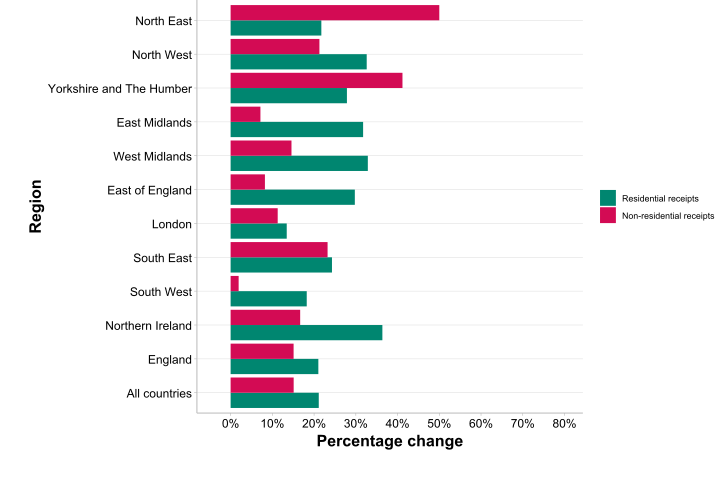
Figure 3 below shows a breakdown of the percentage change in receipts by country and, within England, region between financial year 2024 to 2025 and 2023 to 2024 by property type.
Figure 3: Receipts - percentage change between 2023 to 2024 and 2024 to 2025
-
residential and non-residential receipts increased for all areas in the period 2024 to 2025 when compared to 2023 to 2024
-
the North East saw the greatest increase in non-residential receipts, while South West saw the least percentage increase
-
Northern Ireland saw the greatest percentage increase in residential receipts, while London saw the least percentage increase
6.2 Transactions
The key findings for transactions includes:
- total transactions have increased by 185,000 (19%), from 977,000 in financial year 2023 to 2024 to 1,162,000 in 2024 to 2025. Part of this increase can be explained by forestalling effects, where buyers sought to purchase property before changes in SDLT thresholds
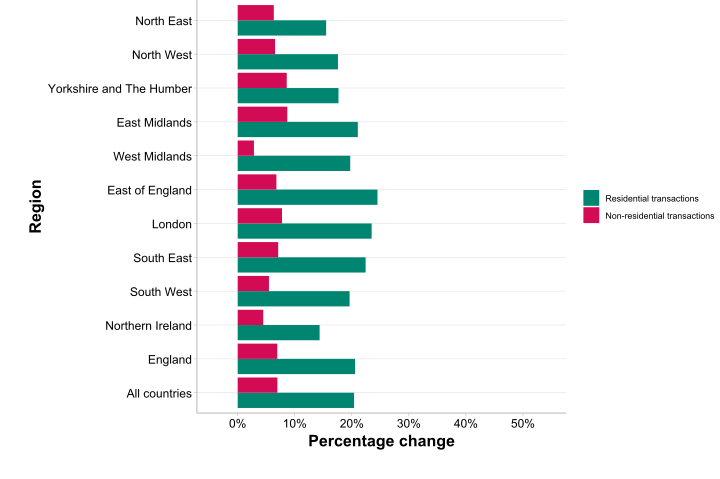
Figure 4 below shows a breakdown of the percentage change in transactions by country and, within England, region between financial year 2024 to 2025 and 2023 to 2024 by property type.
Figure 4: SDLT transactions - percentage change between 2023 to 2024 and 2024 to 2025
-
residential and non-residential transactions increased for all areas in the period 2024 to 2025 when compared to 2023 to 2024
-
the East Midlands saw the greatest increase in non-residential transactions, while West Midlands saw the least percentage increase
-
the East of England saw the greatest percentage increase in residential transactions, while Northern Ireland saw the least percentage increase
6.3 HRAD
The key findings for HRAD transactions and receipts by region includes:
-
the top 3 regions for HRAD receipts were London, South East and East of England, totalling £3,720m (68% of total HRAD receipts)
-
total HRAD transactions have risen by 19%, from in financial year 2023 to 2024 to in 2024 to 2025. Part of the increase can be attributed to forestalling, as some buyers sought to complete purchases before the higher rates came into effect in April 2025
-
multiple areas saw a rise in HRAD receipts (gross). This ranged from a 10% rise in London (from £2,090 million to £2,290 million), to a greater 38% rise in Northern Ireland (from £40 million to £55 million) compared to 2023 to 2024
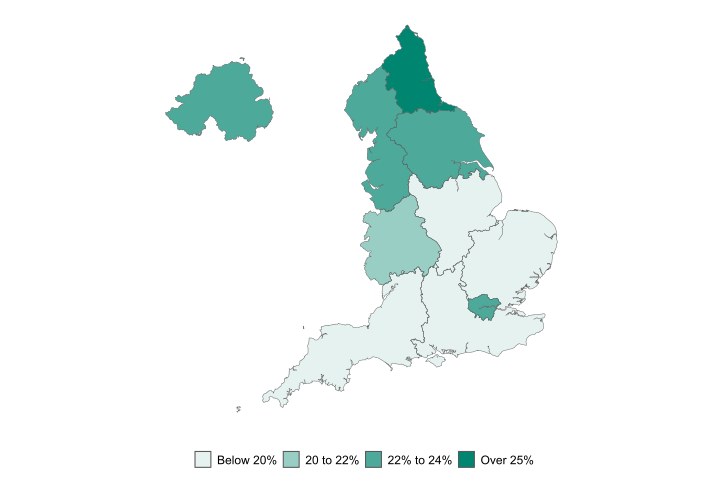
Figure 5 below shows proportion of transactions that are HRAD transactions by region
Figure 5: Proportion of Transactions that are HRAD
-
areas with the highest proportion of HRAD transactions are concentrated in Northern England and Northern Ireland
-
the North East was the region with the highest proportion of HRAD transactions
Figure 6 below shows percentage change in HRAD transactions and receipts by region between 2023 to 2024 and 2024 to 2025.
Figure 6: HRAD transactions - percentage change between 2023 to 2024 and 2024 to 2025
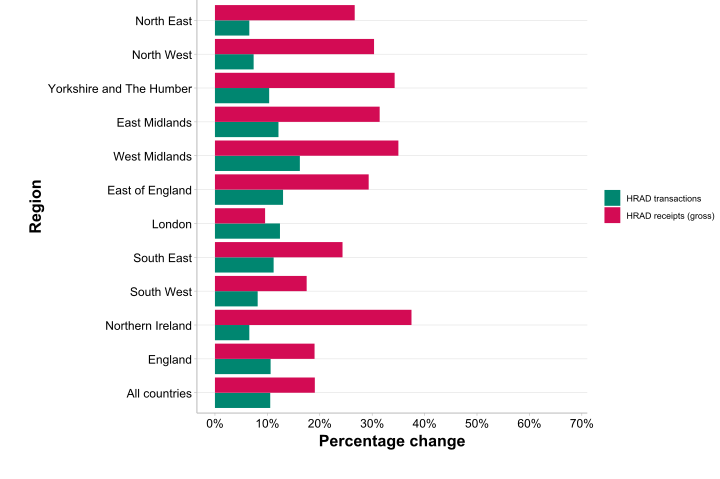
- HRAD transactions and receipts increased for all regions. Part of this increase is explained by an increase in HRAD surcharge from 3% to 5% effective from 31 October 2024
6.4 NRSDLT
The key findings for NRSDLT transactions and receipts by region includes:
-
the top 3 regions for NRSDLT receipts were London, South East and North West of England, totalling £1,000m (88% of NRSDLT receipts)
-
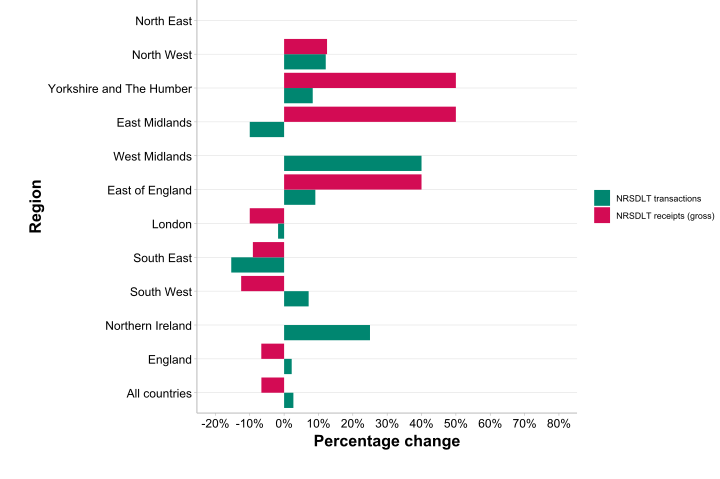
multiple areas saw a rise in NRSDLT receipts (gross). This ranged from a 12% rise in the North West (from £40 million to £45 million), to a greater 50% rise in Yorkshire and the Humber and the East Midlands (from £20 million to £30 million) compared to 2023 to 2024
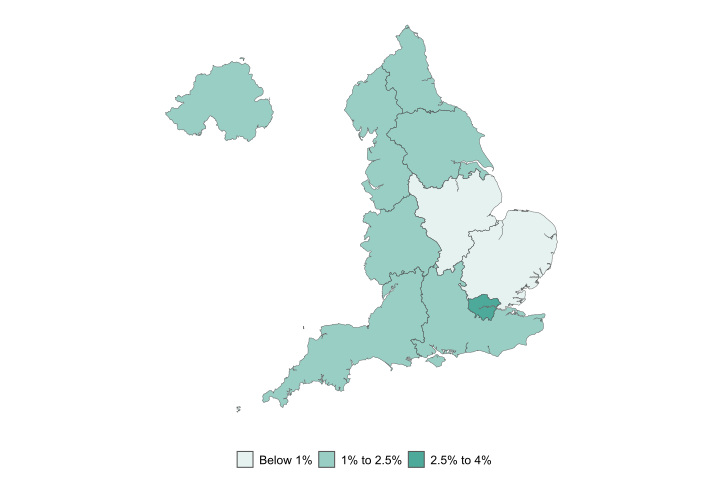
Figure 7 below shows proportion of transactions that are NRSDLT by region.
Figure 7: Proportion of Transactions that are NRSDLT
-
NRSDLT transactions are focused in London with the rest of England and Northern Ireland having a fairly consistent proportion
-
London had the highest proportion of NRSDLT transactions
Figure 8 below shows percentage change in NRSDLT transactions by region between 2023 to 2024 and 2024 to 2025.
Figure 8: NRSDLT transactions - percentage change between 2023 to 2024 and 2024 to 2025
-
Yorkshire and The Humber, East Midlands, and East of England saw the greatest changes in NRSDLT receipts
-
West Midlands and Northern Ireland saw the greatest increase in NRSDLT transactions
7. SDLT transactions and receipts by price band
This section reports on key findings for SDLT transactions and receipts by price band.
-
residential SDLT transactions, where the value of the property was £250,000 or less, accounted for 44% of transactions (decreasing by 4 percentage points when compared to financial year 2023 to 2024), but 6% of total residential SDLT receipts in financial year 2024 to 2025 (increasing by 1 percentage point when compared to financial year 2023 to 2024)
-
residential properties valued at over £1 million accounted for 3% of all residential transactions (remaining unchanged when compared to financial year 2023 to 2024), these properties accounted for 41% of total residential SDLT receipts (decreasing by 3 percentage points when compared to financial year 2023 to 2024)
-
non-residential SDLT transactions, where the value of the property was £250,000 or less, accounted for 68% of transactions (decreasing by 2 percentage points when compared to financial year 2023 to 2024), but 15% of total non-residential SDLT receipts in financial year 2024 to 2025 (decreasing by 2 percentage points when compared to financial year 2023 to 2024)
-
non-residential properties valued at over £1 million accounted for 12% of all non-residential transactions (increasing by 1 percentage point when compared to financial year 2023 to 2024), these properties accounted for 76% of total non-residential SDLT receipts (increasing by 2 percentage points when compared to financial year 2023 to 2024)
8. Buyer types
This section reports on key findings for SDLT buyer types:
-
the majority of residential properties are purchased by individuals (88%), which is similar to financial year 2023 to 2024
-
20% of residential properties over £2 million were purchased by non-natural persons (companies, partnerships and collective investment schemes) in financial year 2024 to 2025, this is 5 percentage points lower compared to financial year 2023 to 2024
-
the amount of SDLT from non-natural persons paying the single rate of SDLT on residential transactions has increased by 44% from £45 million in financial year 2023 to 2024 to £65 million in financial year 2024 to 2025
-
the majority (78%) of non-residential transactions were made by non-natural persons in financial year 2024 to 2025. This remained unchanged compared to financial year 2023 to 2024
-
non-individuals accounted for 93% of non-residential transactions over £2 million in financial year 2024 to 2025, increasing by 1 percentage point when compared to financial year 2023 to 2024
9. Age Profiles
This section reports on key findings for SDLT age profiles:
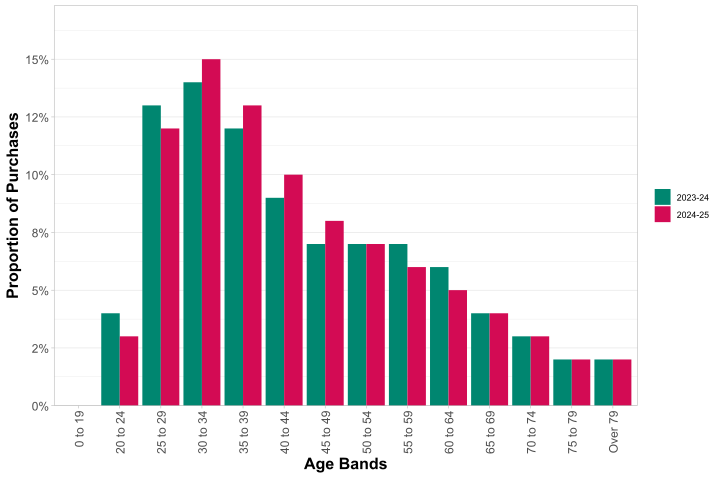
Figure 9 below shows residential transaction volumes by age group for financial year 2024 to 2025 and 2023 to 2024.
Figure 9: Property Purchasers by Age Band
-
in 2024 to 2025, the 30–34 age band recorded the highest number of transactions at 138,300 (15% of total transactions). This was closely followed by the the 35–39 age band with 120,800 transactions (13%) and the 25–29 age band with 110,765 transactions (12%)
-
transaction volumes peak for the 30 to 34 group and decline steadily
-
individuals aged 65 and above collectively made up 13% of transactions, with the 65–69 band at 4% and those over 79 contributing 2%
-
the largest increase in transactions between financial years 2023 to 2024 and 2024 and 2025 were in the 30 to 34 age group
10. First Time Buyers’ Relief
This section reports on key findings for FTBR:
-
the total amount of SDLT relieved due to FTBR in financial year 2024 to 2025 was estimated at £772 million, an increase of £232 million compared to 2023 to 2024. Part of the increase is explained by forestalling of FTBR transactions before FTBR thresholds were reduced on 1 April 2025
-
London and the South East accounted for £453 million of the relief in financial year 2024 to 2025, which is 59% of the total
-
155,400 transactions benefited from First Time Buyers’ Relief in financial year 2024 to 2025, this is an increase of 37% from the 2023 to 2024 figure of 113,100
-
nationally, the average amount relieved per transaction was £5,000. London had the highest average relief at £7,000 and East Midlands, Northern Ireland had the lowest at £3,200
Figure 10 below shows the percentage of transactions claiming First Time Buyers’ Relief by country and, within England, region between financial year 2023 to 2024 and 2024 to 2025.
Figure 10: Percentage of residential transactions that benefited from FTBR by country and, within England, regions
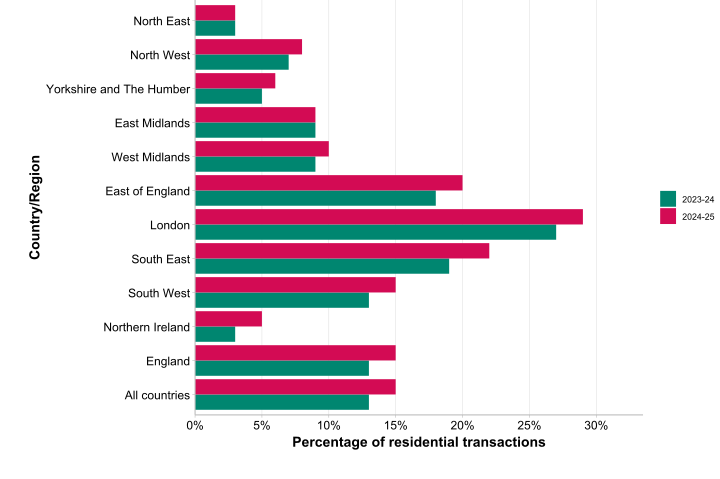
- this figure shows that there has been increases in the percentages of transactions claiming First Time Buyers’ Relief between 2023 to 2024 and 2024 to 2025 across all regions. Part of the increase is explained by forestalling of FTBR transactions before FTBR thresholds were reduced on 1 April 2025
11. Stamp tax on shares receipts
The main findings for stamp taxes receipts are:
-
stamp taxes on shares and other liable securities (SDRT and SD) receipts have risen by 35% from £3,200 million to £4,320 million between 2023 to 2024 and 2024 to 2025
-
Stamp Duty Reserve Tax (SDRT) receipts increased by 33% from £2,295 million to £3,050 million
-
Stamp Duty (SD) receipts increased by 40% from £905 million to £1,270 million
11.1 Stamp tax on shares timeseries
Figure 11 shows revenue raised from SDRT from financial year 2003 to 2004 to 2024 to 2025
Figure 11: Revenue raised from SD and SDRT by financial year
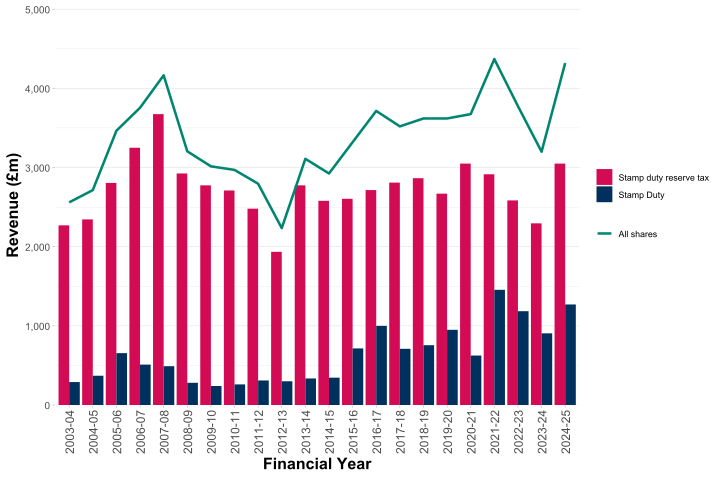
- the increases Stamp Duty between 2015-16 and 2016-17 were in large part due to legislative changes for transfer schemes of arrangement and the resulting tax status. More information can be found under the following link for legislative changes for transfer schemes of arrangements.
12. Background information - recent changes in stamp taxes
Changes in Stamp Duty Land Tax
Since this publication was first released in 2013, there have been a number of major tax policy reforms affecting SDLT receipts. The structure of residential SDLT was subject to major reform in December 2014, therefore the figure for 2014-15 includes tax collected under both the new and old systems. Prior to 4 December 2014, varying flat rates of SDLT were charged on the total consideration (price). Since then, SDLT for residential property is charged at different rates depending on the portion of the purchase price that falls within each rate band. The reforms mean that less SDLT was paid on the majority of residential transactions, with only those at higher prices paying more. A similar change was introduced for non-residential transactions in April 2016.
The increase in receipts in 2016-17 is associated with the introduction of the higher rates of SDLT charged on additional residential properties (HRAD). This reform added 3 percentage points to the SDLT rate for purchasers who already own residential property.
First Time Buyers’ Relief (FTBR) was introduced in November 2017, which meant that first time buyers buying properties valued less than £300,000 paid no SDLT and those buying properties valued between £300,000 and £500,000 paid £5,000 less than standard rates.
In April 2015, land transaction taxes in Scotland were devolved to the Scottish Government and are now known as Land and Buildings Transactions Tax. Figures for SDLT from 2015-16 onwards do not include any receipts from Scotland and are therefore not directly comparable with previous years. The fall in SDLT receipts in 2015-16 compared with 2014-15 is due to both the absence of receipts from Scotland and the fact that 2015-16 was the first full financial year of the new SDLT regime.
Land transaction taxes were devolved to Wales in April 2018, so this publication no longer includes Welsh transactions that were completed from Q2 2018 onwards. However, a small number of Welsh transactions were filed after April 2018, thus they are reflected in transactions and receipts in the post-devolution period. The Welsh Revenue Authority publishes its own statistics on its new Land Transactions Tax which has replaced SDLT.
On 8 July 2020, the SDLT holiday was introduced. This raised the nil rate band for SDLT to £500,000 for the purchase of residential properties. This continued until 30 June 2021, after which time the nil-rate band reduced to the first £250,000 of the purchase price until 30 September 2021. Beyond this date the nil-rate band reverted to the first £125,000 of the purchase price.
On 1 April 2021 a 2% Non Resident Stamp Duty Land Tax surcharge was introduced for non-residents who purchase residential property.
On 23 September 2022, the government announced that the 2% standard rate for residential properties for the part of the property price between £125,000 and £250,000 no longer applies. The announcement also included the raising of the thresholds for First Time Buyers’ Relief so that these purchases are completely exempt for the first £425,000 of the purchase price. On 17 November 2022 the government announced that these changes would be temporary and last from 23 September 2022 to 31 March 2025.
On 30 October 2024, the government announced an increase to the higher rates on additional dwellings (HRAD) paid by individuals and companies on purchases of residential properties, from 3 percentage points to 5 percentage points above the standard residential rates of SDLT. The announcement also increased the single rate of SDLT payable by companies and other non-natural persons when purchasing residential properties worth more than £500,000, from 15% to 17%. These measures came into effect for transactions with an effective date on or after 31 October 2024.
Contact information
E-mail stamptaxes.statistics@hmrc.gov.uk
Website https://www.gov.uk/government/collections/stamp-duties-statistics
Media 03000 585 024