UK Clinical Research Delivery key performance indicators: data to March 2026
Published 15 April 2026

© Crown copyright 2026
This publication is licensed under the terms of the Open Government Licence v3.0 except where otherwise stated. To view this licence, visit nationalarchives.gov.uk/doc/open-government-licence/version/3 or write to the Information Policy Team, The National Archives, Kew, London TW9 4DU, or email: psi@nationalarchives.gov.uk.
Where we have identified any third party copyright information you will need to obtain permission from the copyright holders concerned.
This publication is available at https://www.gov.uk/government/statistics/uk-clinical-research-delivery-key-performance-indicators-data-to-march-2026/uk-clinical-research-delivery-key-performance-indicators-data-to-march-2026
Background
Overview
The UK Clinical Research Delivery (UKCRD) key performance indicators (KPIs) report brings together data from the National Institute for Health and Care Research (NIHR) and the Medicines and Healthcare products Regulatory Agency (MHRA) to monitor the delivery of globally competitive clinical research across the UK.
The report predominately measures the performance of studies held on the NIHR Research Delivery Network’s (RDN) Central Portfolio Management System (CPMS).
The indicators have been published since January 2024 on the UKCRD programme website and were developed with input from stakeholders from across the clinical research system, including the NHS, industry, charities, academia, regulators and public contributors. They were first published on GOV.UK in December 2025 with further indicator development in April 2026. They measure trends in the speed and predictability of regulatory and study set-up times, delivery of research to time and target, and volume of clinical research activity.
Data coverage
The data in this report measures the performance of a specific subset of studies in the UK, predominantly those on the CPMS. It does not capture the performance of the entire clinical research system.
The indicators are intended to be UK-wide but currently some do not include complete data from all 4 nations. Coverage has also changed over time. Work is ongoing with devolved governments to improve completeness.
Data in this report is categorised into 3 distinct clinical research study types:
-
commercial contract studies: studies sponsored and fully funded by the life sciences industry
-
commercial collaborative studies: studies funded, wholly or in part, by the life sciences industry and sponsored by a combination of life sciences industry and non-commercial organisations. These studies were previously included under the non-commercial category but are now disaggregated to more accurately reflect the scope of commercial research activity. Commercial collaborative studies are supported in the same way as non-commercial studies, including provision of support costs and excess treatment costs through the NIHR RDN and the NHS.
-
non-commercial studies: studies sponsored and wholly funded by one or more non-commercial organisations, including medical research charities, universities and public funders, such as NIHR and UK Research and Innovation
A further breakdown of the data by observational and interventional studies is provided in the accompanying data tables.
Data quality
For most indicators, the quality of the data reported is dependent on the accuracy, timeliness and completeness of its entry into the CPMS and local portfolio management systems by sponsors and research sites. Many of the data fields relevant to the indicators are not mandatory and are sometimes incomplete.
Delays may occur with sponsors and sites entering their data, meaning figures reported for recent months may be incomplete. Data is updated retrospectively in future reports as further information becomes available.
Short-term fluctuations in the data are not always reliable indicators of changes in performance. Users are encouraged to focus on longer-term trends (for example, over 6 or 12 months) for a more accurate view of system performance. Work is ongoing to improve the completeness and timeliness of data collection.
The time period presented in this report varies by indicator and depends on when data became complete.
Methodology
For a full explanation of data sources, data coverage, calculation methods and data quality, please refer to the UKCRD programme KPIs methodology. Details for each indicator are provided in this report.
Key performance indicators overview
In 2023, UKCRD KPI reporting set specific targets for indicators 2 to 5, but not for indicators 6 and 7. The scope of indicators 3 and 4 has changed from April 2026. Indicator 1 is a new indicator from April 2026.
Some indicators in this report have changed or been removed since its initial publication on GOV.UK in December 2025. Further details are provided in the methodology.
Table 1: UKCRD key performance indicators overview
| Indicator number | Indicator description | Latest month | Latest figure | Target |
|---|---|---|---|---|
| 1 | Proportion of commercial contract clinical trial of investigational medicinal products (CTIMP) studies recruiting first participant within 150 days of applying for regulatory approval | September 2025 | 78% | 95% |
| 2 | Proportion of studies receiving combined review approval within 60 days (or 90 days for advanced therapy investigational medicinal product (ATIMP) studies) | February 2026 | 99% | 99% |
| 3 | Proportion of studies opening to recruitment within 60 days of Health Research Authority (HRA) approval letter or equivalent process used by the devolved governments | September 2025 | 58% | 90% |
| 4 | Proportion of studies recruiting first participant within 30 days of opening to recruitment | September 2025 | 62% | 90% |
| 5 | Proportion of open studies on track, delivering recruitment to time and target | March 2026 | 82% | 80% |
| 6 | Average monthly recruitment to clinical studies | January 2026 | 86,151 participants | No target |
| 7 | Number of new studies added to the NIHR RDN portfolio | February 2026 | 154 studies | No target |
Study set-up timelines
Indicator 1: proportion of commercial contract CTIMP studies recruiting a first participant within 150 days of applying for regulatory approval
This indicator is designed to assess the efficiency and predictability of the full end-to-end study set-up process, in line with the target set by the Prime Minister for cutting the time it takes to get a clinical trial set up in the UK to 150 days.
It measures the percentage of commercial contract CTIMP studies (excluding ATIMPs) on the CPMS that opened to recruitment within 150 calendar days of submission for regulatory approval by combined review.
The measure broadly links together those for indicators 2 to 4 in this report, which cover the different stages of the study set-up process:
- regulatory review
- study opening
- recruitment of the first participant
The clock starts on the date an initial clinical trial authorisation application is submitted to the Integrated Research Application System. If the applicant has chosen not to attend the first available REC meeting, the start date is set 2 weeks prior to the selected REC meeting. The clock stops on the date the first study participant is recruited.
For the regulatory review part of the 150-day metric, we are specifically measuring the time taken for MHRA and REC to complete their joint assessments of an application, without inclusion of the time taken by the applicant to respond to any requests for further information (RFI) following the initial combined assessment.
The target is for 95% of studies to recruit their first participant within 150 days of applying for regulatory approval.
Studies where recruitment of the first participant is not expected within 150 days of applying for regulatory approval (rare disease and other low recruitment studies, extension studies and studies where the sponsor has notified NIHR RDN as such) are excluded from the report.
To produce the most up-to-date results that are sufficiently complete and accurate for measuring performance of commercial contract CTIMP studies against the 150-day target, additional assurance by gathering sponsor intelligence is carried out. Where a study is missing data, the relevant sponsor is contacted to get the latest status of the study. This only applies to indicator 1. See the methodology for a full explanation of this process.
Figures for all months are subject to change and will be revised in future reports as more information becomes available.
This indicator groups studies by the month they received combined review approval. It relates to table 1 in the data tables.
Table 1.1: study set-up performance against the 150-day target for commercial contract interventional CTIMP studies by application month, including sponsor intelligence.
| Application month | Percentage of studies with known status set up within 150 days | Set up within 150 days | Not set up within 150 days |
|---|---|---|---|
| April 2025 | 58% | 7 | 5 |
| May 2025 | 64% | 9 | 5 |
| June 2025 | 72% | 13 | 5 |
| July 2025 | 80% | 12 | 3 |
| August 2025 | 73% | 11 | 4 |
| September 2025 | 78% | 7 | 2 |
| Financial year 2025 to 2026 (April to September 2025) | 71% | 59 | 24 |
Between April 2025 and September 2025, 83 studies were set up and 59 of these (71%) recruited their first participant within 150 days of submitting their initial clinical trial authorisation application.
The results above combine CPMS data with supplementary sponsor intelligence to provide a timely and complete assessment of performance against the 150-day target. To enable comparison with earlier time periods, the following section presents analysis based on CPMS data only, using a consistent methodology across financial years.
Table 1.2 shows the counts and proportion of studies being set up within 150 days. Table 1.3 shows the median time for these studies to be set up. Proportions and averages are calculated from studies with known status.
The data in tables 1.2 and 1.3 may differ from the data in table 1.1. This reflects the inclusion of supplementary sponsor intelligence in table 1.1 that are not included for reasons of comparability in 1.2 and 1.3.
Table 1.2: study set-up performance for commercial contract interventional CTIMP studies by application month - CPMS data only
| Application financial year (6-month periods) | Percentage of studies with known status set up within 150 days | Set up within 150 days | Not set up within 150 days | Unknown status | Number of studies with known status |
|---|---|---|---|---|---|
| April 2025 to September 2025 | 73% | 53 | 20 | 11 | 73 |
| October 2024 to March 2025 | 46% | 33 | 38 | 14 | 71 |
| April 2024 to September 2024 | 45% | 37 | 46 | 4 | 83 |
Table 1.3: average study set-up duration for commercial contract interventional CTIMP studies by application month - CPMS data only
| Application financial year (6-month periods) | Median number of days from application to first participant recruited |
|---|---|
| April 2025 to September 2025 | 122 |
| October 2024 to March 2025 | 157 |
| April 2024 to September 2024 | 169 |
Indicator 2: proportion of studies receiving combined review approval within 60 days (or 90 days for ATIMP studies)
This indicator measures the percentage of approved initial clinical trial authorisation applications in the UK that received their combined review decision within 60 calendar days, or within 90 days for ATIMPs, of regulatory submission each month. It is designed to assess the efficiency and predictability of the combined review process.
Combined review is the way approval is sought for new clinical trials of investigational medicinal products and combined medicine and device trials. It is jointly conducted by MHRA and a research ethics committee (REC).
The clock starts on the date an initial clinical trial authorisation application is submitted to the Integrated Research Application System. If the applicant has chosen not to attend the first available REC meeting, the start date is set 2 weeks prior to the selected REC meeting. The clock stops on the date when joint approval is issued by MHRA and REC on the initial clinical trial authorisation application.
We are specifically measuring the time taken for MHRA and REC to complete their joint assessments of an application. This includes the time taken both to conduct the initial combined assessment and to issue the joint decision following receipt of the applicant’s response to a request for further information (RFI).
It does not include the time taken by the applicant to respond to any RFI following the initial combined assessment. This means the clock stops once the applicant has been sent a RFI and starts again once a complete response has been submitted.
The target is for more than or equal to 99% of approved studies to receive combined review approval within 60 days (or 90 days for ATIMP studies).
This indicator groups studies by the month they received combined review approval. It relates to table 2 in the data tables.
Table 2.1: percentage of approved studies that received combined review approval within 60 days (or 90 days for ATIMP studies) in February 2026.
| Study type | Percentage of approved studies that received combined review approval within 60 days (or 90 days for ATIMP studies) | Target |
|---|---|---|
| All | 99% | 99% |
Table 2.2: percentage of approved studies that received combined review approval within 60 days (or 90 days for ATIMP studies)
| Combined review approval month | Percentage of approved studies that received combined review approval within 60 days (or 90 days for ATIMP studies) | Number of approved studies that received combined review approval within 60 days (or 90 days for ATIMP studies) | Number of studies that received combined review approval |
|---|---|---|---|
| March 2025 | 98% | 57 | 58 |
| April 2025 | 100% | 66 | 66 |
| May 2025 | 96% | 66 | 69 |
| June 2025 | 98% | 65 | 66 |
| July 2025 | 97% | 74 | 76 |
| August 2025 | 98% | 63 | 64 |
| September 2025 | 100% | 63 | 63 |
| October 2025 | 98% | 91 | 93 |
| November 2025 | 100% | 76 | 76 |
| December 2025 | 99% | 73 | 74 |
| January 2026 | 97% | 59 | 61 |
| February 2026 | 99% | 67 | 68 |
Indicator 3: proportion of studies opening to recruitment within 60 days of HRA approval letter or equivalent process used by the devolved governments
This indicator measures the percentage of studies on the CPMS that opened to recruitment within 60 calendar days of receiving HRA approval or equivalent process used by the devolved governments each month. It is designed to assess the efficiency and predictability of study set-up processes.
The clock starts on the date a study receives regulatory approval. The clock stops on the date a sponsor confirms the study is ready to start recruiting participants in at least one site.
Studies are grouped by the month they received regulatory approval.
The target is for 90% of studies to open to recruitment within 60 days of receiving regulatory approval.
The latest time period reported is the month 6 months prior to the report’s publication month. This is to allow sufficient time for most studies to open to recruitment, whether within 60 days or not, and to enter their data. Figures for all months are subject to change and will be revised in future reports as more information becomes available.
This indicator relates to tables 3a, 3b and 3c in the data tables.
Table 3.1: opening to recruitment performance by study type in September 2025
| Study type | Percentage of studies that opened to recruitment within 60 days of regulatory approval | Number of studies that opened to recruitment within 60 days of regulatory approval | Number of studies that opened to recruitment | Target |
|---|---|---|---|---|
| All | 58% | 55 | 95 | 90% |
| Commercial contract | 54% | 20 | 37 | 90% |
| Commercial collaborative | 50% | 3 | 6 | 90% |
| Non-commercial | 62% | 32 | 52 | 90% |
Table 3.2: opening to recruitment performance of studies by study regulatory approval month
| Study regulatory approval month | Percentage of studies that opened to recruitment within 60 days of regulatory approval | Number of studies that opened to recruitment within 60 days of regulatory approval | Number of studies that opened to recruitment | Number of approved studies that have not yet opened to recruitment, or have not recorded doing so |
|---|---|---|---|---|
| October 2024 | 38% | 57 | 149 | 2 |
| November 2024 | 40% | 50 | 124 | 1 |
| December 2024 | 33% | 38 | 116 | 7 |
| January 2025 | 47% | 60 | 127 | 3 |
| February 2025 | 41% | 48 | 116 | 13 |
| March 2025 | 42% | 53 | 126 | 7 |
| April 2025 | 42% | 48 | 115 | 8 |
| May 2025 | 43% | 53 | 122 | 9 |
| June 2025 | 33% | 38 | 116 | 13 |
| July 2025 | 50% | 67 | 135 | 27 |
| August 2025 | 44% | 48 | 110 | 21 |
| September 2025 | 58% | 55 | 95 | 49 |
Table 3.3: opening to recruitment performance of studies by study regulatory approval year
| Study regulatory approval year | Percentage of studies that opened to recruitment within 60 days of regulatory approval | Number of studies that opened to recruitment within 60 days of regulatory approval | Number of studies that opened to recruitment | Number of approved studies that have not yet opened to recruitment, or have not recorded doing so |
|---|---|---|---|---|
| 2017 | 53% | 1,122 | 2,099 | 0 |
| 2018 | 51% | 1,103 | 2,146 | 0 |
| 2019 | 49% | 1,043 | 2,117 | 1 |
| 2020 | 30% | 539 | 1,815 | 4 |
| 2021 | 33% | 668 | 2,000 | 2 |
| 2022 | 35% | 620 | 1,782 | 6 |
| 2023 | 38% | 672 | 1,787 | 11 |
| 2024 | 35% | 577 | 1,630 | 30 |
Figure 3.1: percentage of studies on the CPMS that opened to recruitment within 60 days of regulatory approval
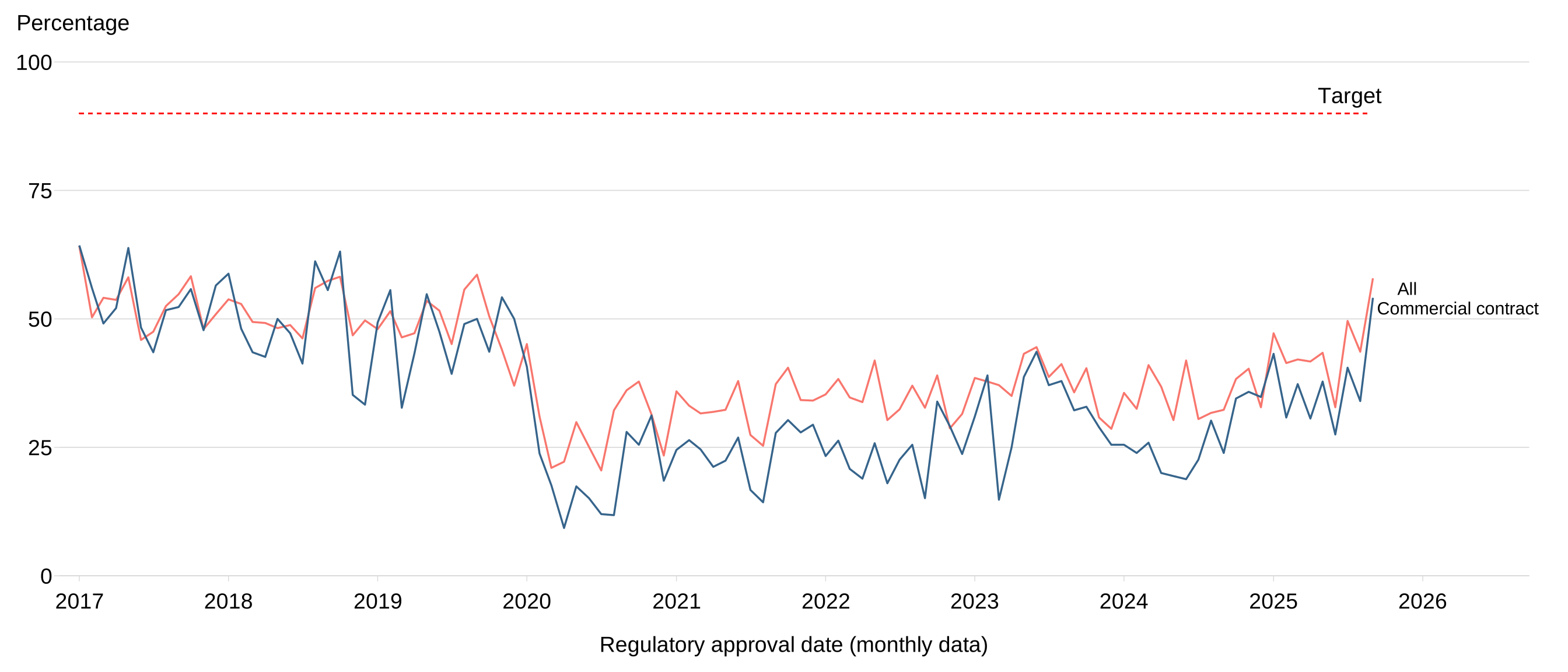
Figure 3.2: average number of days taken for studies on the CPMS to open to recruitment following regulatory approval
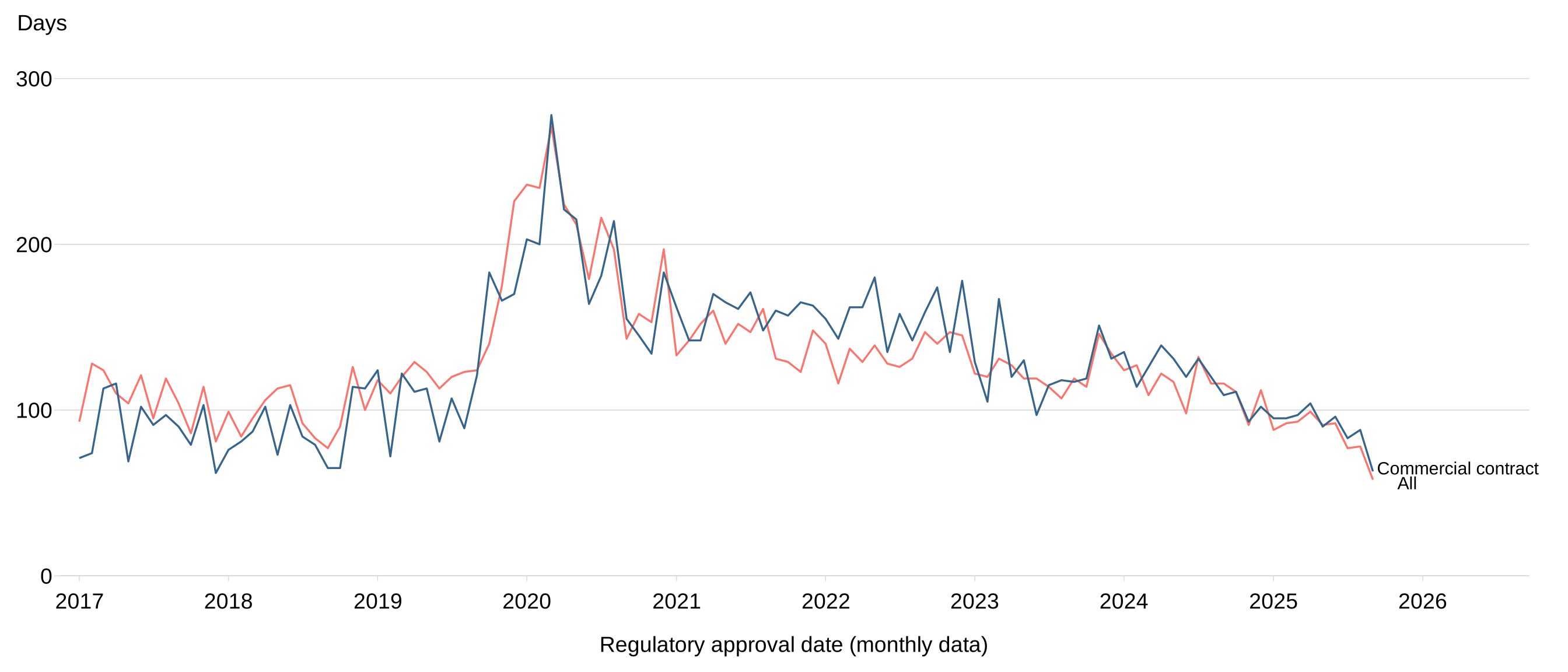
Figure 3.1 shows the percentage of studies on the CPMS that opened to recruitment within 60 days of regulatory approval per month since 2017.
Figure 3.2 shows the average time taken for studies to open to recruitment.
During the COVID-19 pandemic, average time to recruitment was higher as the system re-prioritised its focus towards COVID-19 research.
Following the pandemic, performance returned towards pre-pandemic levels.
Indicator 4: proportion of studies recruiting first participant within 30 days of opening to recruitment
This indicator measures the percentage of studies on the CPMS that recruited their first participant within 30 calendar days of opening to recruitment each month. It is designed to assess the efficiency and predictability of study set-up processes.
The clock starts on the date a sponsor confirms the study is ready to start recruiting participants in at least one site. The clock stops on the date the first study participant is recruited.
Studies are grouped by the month they opened to recruitment.
Studies where recruitment of first participant is not expected within 30 days of opening to recruitment in the study milestone plan (that is rare disease and other low recruitment studies) are excluded from the report.
The target is for 90% of studies to recruit their first participant within 30 days of opening to recruitment.
The latest time period reported is the month 6 months prior to the report’s publication month. This is to allow sufficient time for most studies to have recruited their first participant, whether within 30 days or not, and to enter their data. Figures for all months are subject to change and will be revised in future reports as more information becomes available.
This indicator relates to tables 4a, 4b and 4c in the data tables.
Table 4.1: first participant recruitment performance by study type in September 2025
| Study type | Percentage of studies that recruited their first participant within 30 days of opening to recruitment | Number of studies that recruited their first participant within 30 days of opening to recruitment | Number of studies that recruited a first participant | Target |
|---|---|---|---|---|
| All | 62% | 52 | 84 | 90% |
| Commercial contract | 52% | 15 | 29 | 90% |
| Commercial collaborative | 40% | 2 | 5 | 90% |
| Non-commercial | 70% | 35 | 50 | 90% |
Table 4.2: first participant recruitment performance of studies by study opening to recruitment month
| Study opening to recruitment month | Percentage of studies that recruited their first participant within 30 days of opening to recruitment | Number of studies that recruited their first participant within 30 days of opening to recruitment | Number of studies that recruited a first participant | Number of open studies that have not yet recruited a first participant, or have not recorded doing so |
|---|---|---|---|---|
| October 2024 | 51% | 32 | 63 | 16 |
| November 2024 | 49% | 31 | 63 | 14 |
| December 2024 | 49% | 25 | 51 | 13 |
| January 2025 | 51% | 28 | 55 | 15 |
| February 2025 | 50% | 43 | 86 | 19 |
| March 2025 | 50% | 27 | 54 | 19 |
| April 2025 | 53% | 33 | 62 | 20 |
| May 2025 | 58% | 46 | 79 | 15 |
| June 2025 | 58% | 33 | 57 | 17 |
| July 2025 | 42% | 24 | 57 | 26 |
| August 2025 | 57% | 31 | 54 | 21 |
| September 2025 | 62% | 52 | 84 | 26 |
Table 4.3: first participant recruitment performance of studies by study opening to recruitment year
| Study opening to recruitment year | Percentage of studies that recruited their first participant within 30 days of opening to recruitment | Number of studies that recruited their first participant within 30 days of opening to recruitment | Number of studies that recruited a first participant | Number of open studies that have not yet recruited a first participant, or have not recorded doing so |
|---|---|---|---|---|
| 2017 | 61% | 662 | 1,091 | 157 |
| 2018 | 62% | 714 | 1,143 | 174 |
| 2019 | 63% | 633 | 999 | 190 |
| 2020 | 56% | 417 | 744 | 148 |
| 2021 | 56% | 523 | 934 | 182 |
| 2022 | 53% | 484 | 913 | 193 |
| 2023 | 51% | 418 | 822 | 192 |
| 2024 | 51% | 397 | 774 | 188 |
Figure 4.1: percentage of studies on the CPMS that recruited their first participant within 30 days of opening to recruitment
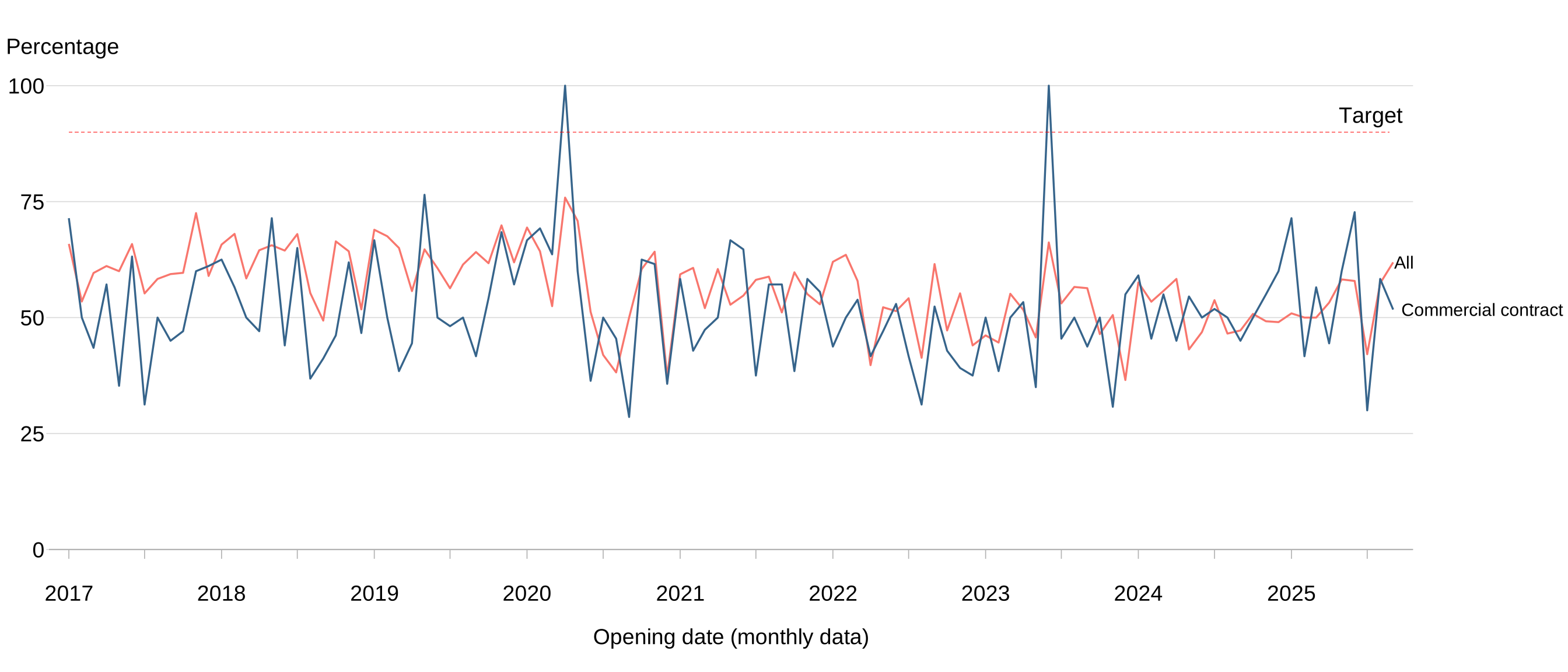
Figure 4.2: average number of days taken for studies on the CPMS to recruit their first participant from opening to recruitment
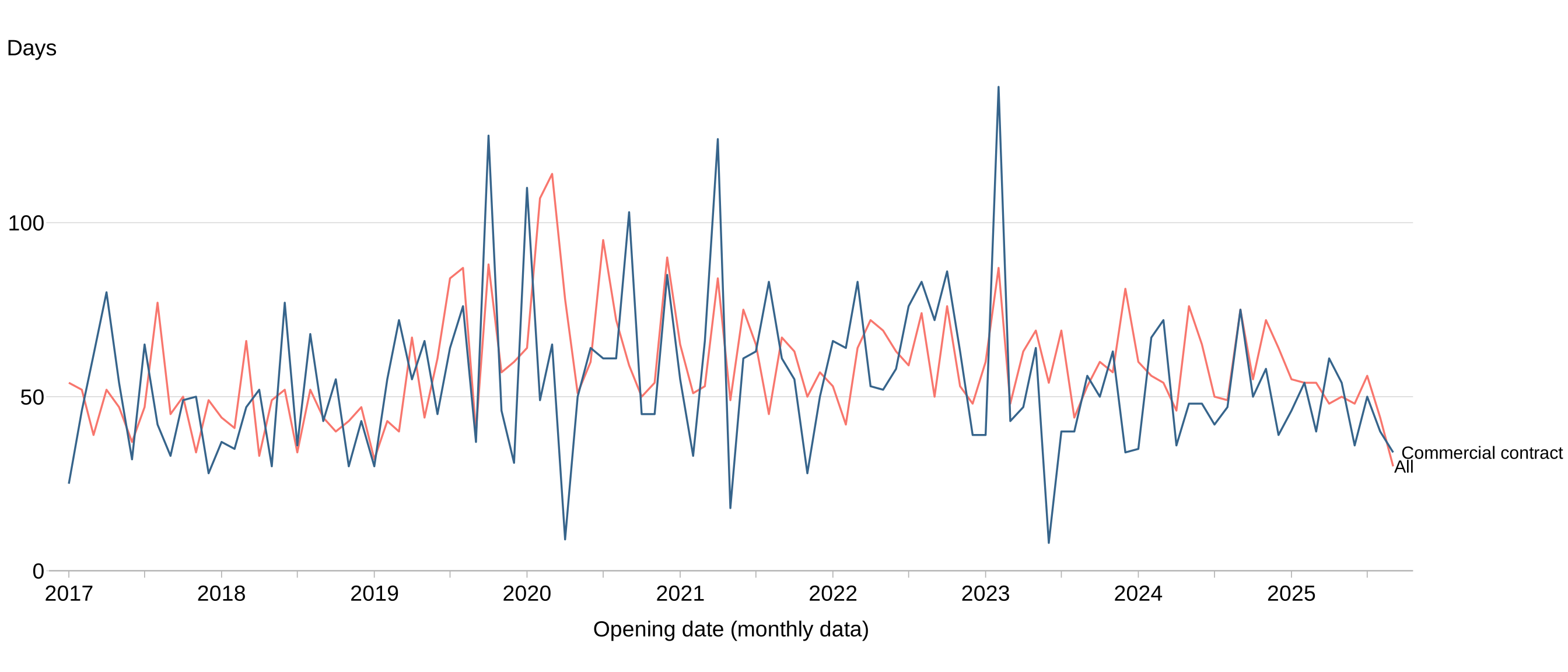
Figure 4.1 shows the percentage of commercial contract studies on the CPMS that recruited their first participant within 30 days of opening to recruitment per month.
Since 2017, the percentage of studies recruiting their first participant within 30 days has been consistently below the current KPI target of 90%.
Data on the average time taken for studies to recruit their first participant shows a similar trend, as seen in figure 4.2. Since 2017, the average number of days taken for studies to recruit their first participant has been consistently higher than 30 days.
Contracting and delivery
Indicator 5: proportion of open studies on track, delivering recruitment to time and target
This indicator measures the percentage of open studies in the UK on the CPMS that are delivering recruitment to time and target each month. It is designed to assess the efficiency and predictability of study delivery.
‘Time and target’ is a measure of whether a study’s recruitment is on track compared with expectation.
The target is for 80% of all studies to deliver recruitment to time and target.
There is a lag between activity taking place at a study site and data being entered. This means data reported for a particular month may not be completely up to date. The data is not updated retrospectively in future reports.
This indicator relates to table 5 in the data tables.
Table 5.1: percentage of studies recruiting to time and target in March 2026 by study type
| Study type | Percentage of studies recruiting to time and target | Number of open studies |
|---|---|---|
| All | 82% | 4,264 |
| Commercial contract | 79% | 1,125 |
| Commercial collaborative | 83% | 359 |
| Non-commercial | 83% | 2,780 |
Table 5.2: percentage of studies recruiting to time and target by month and study type
| Month | All | Commercial contract | Commercial collaborative | Non-commercial |
|---|---|---|---|---|
| April 2025 | 84% | 78% | 86% | 86% |
| May 2025 | 83% | 77% | 86% | 85% |
| June 2025 | 82% | 76% | 86% | 85% |
| July 2025 | 84% | 77% | 87% | 86% |
| August 2025 | 83% | 78% | 85% | 85% |
| September 2025 | 83% | 79% | 86% | 85% |
| October 2025 | 83% | 80% | 83% | 84% |
| November 2025 | 83% | 80% | 83% | 84% |
| December 2025 | 83% | 81% | 83% | 83% |
| January 2026 | 82% | 80% | 82% | 83% |
| February 2026 | 83% | 79% | 83% | 84% |
| March 2026 | 82% | 79% | 83% | 83% |
Figure 5.1: percentage of studies on the CPMS recruiting to time and target by month and study type
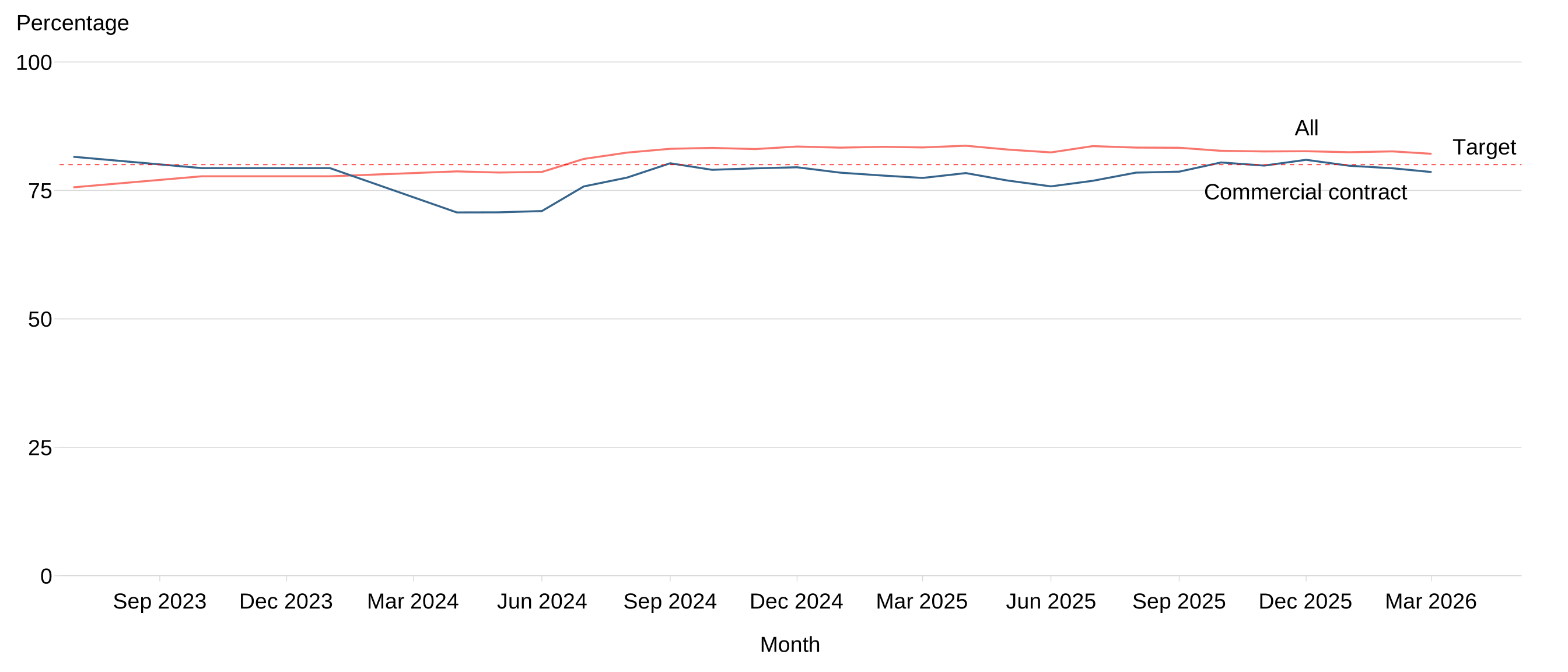
Figure 5.1 shows the percentage of open studies on the CPMS recruiting to time and target per month by study type.
Since July 2023, overall recruitment to time and target has improved, with the percentage of studies on the CPMS recruiting to time and target regularly meeting or exceeding the KPI target of 80% each month.
Recruitment to studies
Indicator 6: average monthly recruitment to clinical studies
This indicator measures the average (mean) number of participants recruited per month over the last 12 months to all studies in the UK that are held on the CPMS. It is designed to track the volume of clinical research activity taking place in the UK.
The data presents a 12-month rolling average to account for seasonality.
The pre-COVID-19 baseline has been calculated as the average monthly recruitment to studies between January 2016 and December 2019.
There is a lag between activity taking place at a study site and data being entered. This means the figures reported are subject to change. Data is updated retrospectively in future reports as further information becomes available.
This indicator relates to table 6a, 6b and 6c in the data tables.
Table 6.1: average number of participants recruited per month over the last 12 months as of January 2026 by study type
| Study type | Average number of participants recruited per month over the last 12 months | Pre-COVID-19 baseline |
|---|---|---|
| All | 86,151 | 69,200 |
| Commercial contract | 3,212 | 3,900 |
| Commercial collaborative | 6,497 | 7,500 |
| Non-commercial | 76,442 | 57,900 |
Table 6.2: average number of participants recruited per month by year and study type
| Year | All | Commercial contract | Commercial collaborative | Non-commercial |
|---|---|---|---|---|
| 2016 | 57,692 | 3,144 | 5,953 | 48,594 |
| 2017 | 68,688 | 4,529 | 5,964 | 58,194 |
| 2018 | 77,511 | 4,368 | 8,737 | 64,405 |
| 2019 | 72,970 | 3,358 | 9,235 | 60,377 |
| 2020 | 156,042 | 3,242 | 6,626 | 146,174 |
| 2021 | 150,748 | 2,915 | 9,320 | 138,513 |
| 2022 | 92,371 | 3,027 | 9,532 | 79,813 |
| 2023 | 92,853 | 10,221 | 9,858 | 72,774 |
| 2024 | 99,975 | 9,715 | 10,269 | 79,991 |
| 2025 | 86,150 | 3,212 | 6,497 | 76,442 |
Figure 6.1: number of participants recruited to studies on the CPMS by month and study type
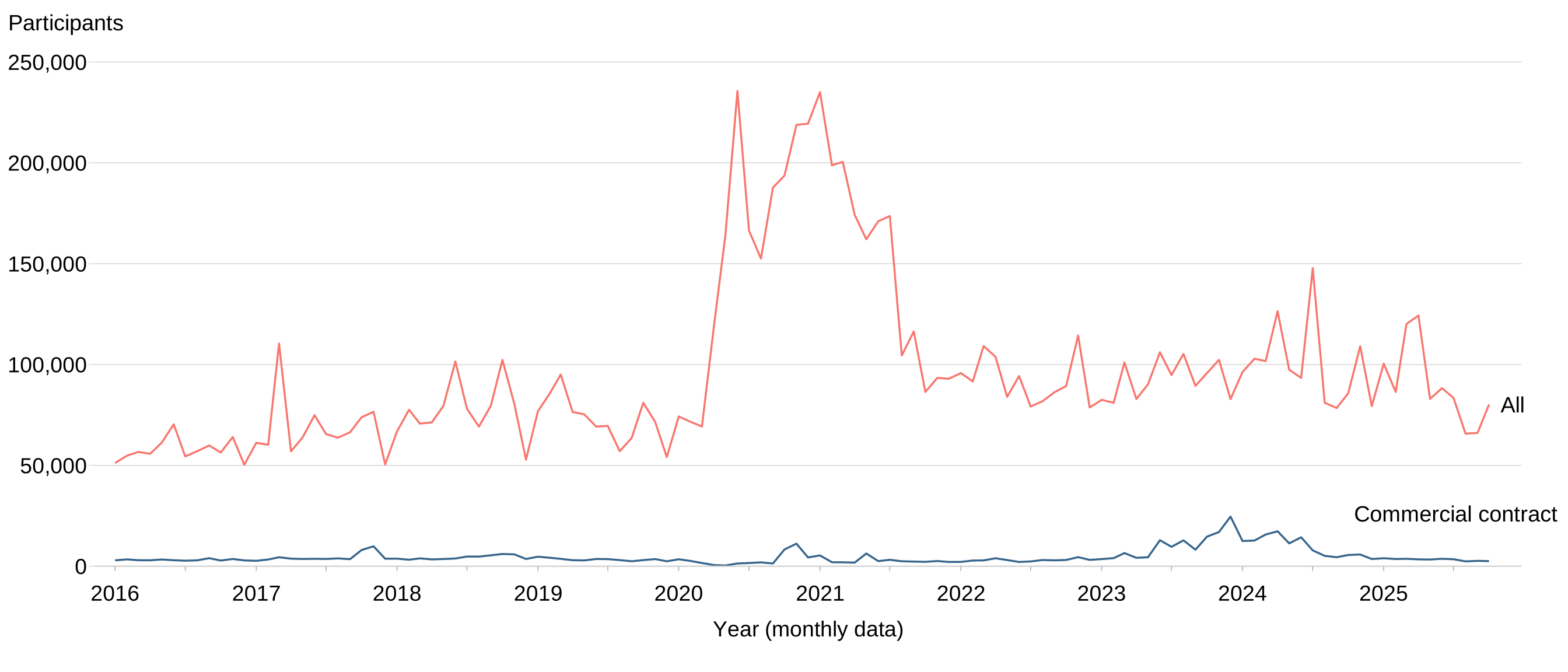
Figure 6.2: number of participants recruited to commercial contract studies on the CPMS by month and study type
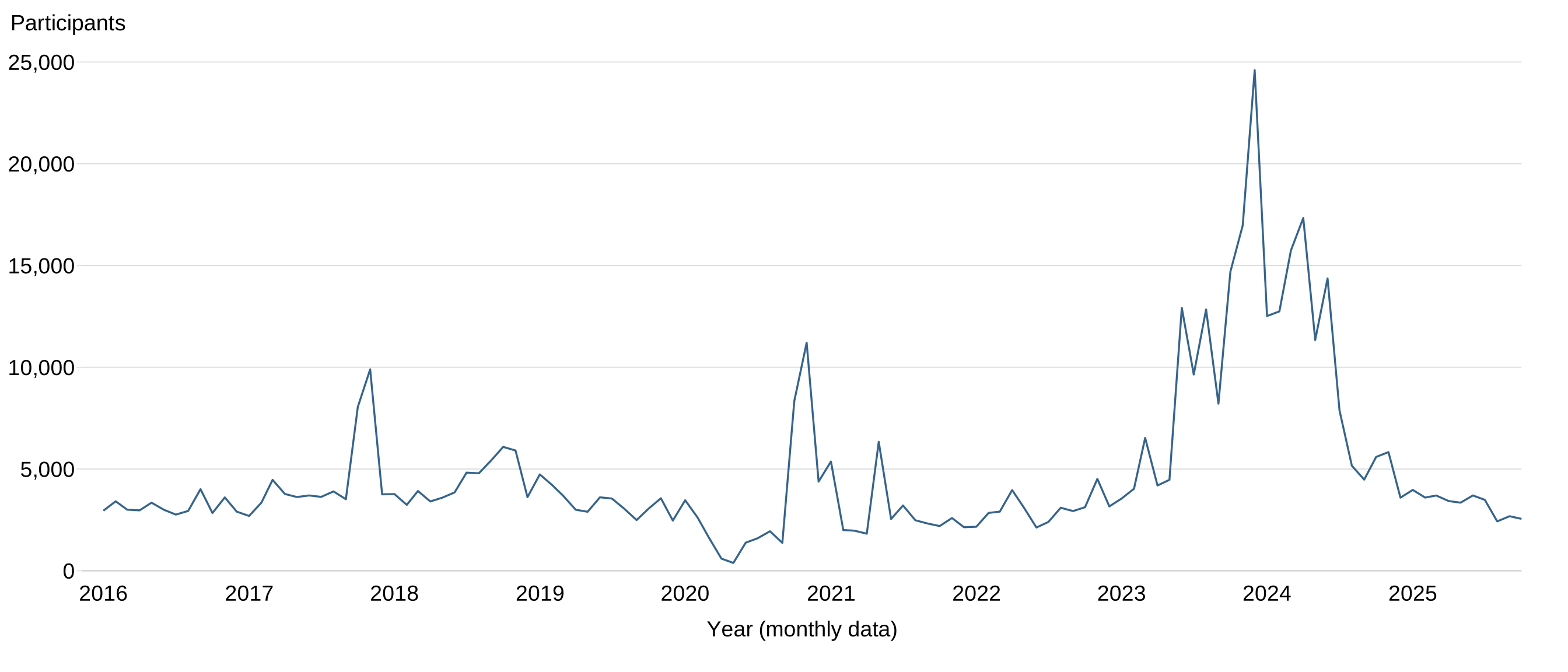
Figure 6.1 shows the number of participants recruited per month to studies on the CPMS since 2016 by study type.
Figure 6.2 shows the same data but only for commercial contract studies, to present the detail.
Since 2016, most recruitment to studies on the CPMS has been to non-commercial studies.
There was a significant increase in recruitment to non-commercial studies and a slight drop in recruitment to commercial contract studies between 2020 and 2022, as the clinical research delivery system re-prioritised its resources to respond to the COVID-19 pandemic.
Participation in commercial contract studies increased significantly in 2023 and 2024, primarily due to increased recruitment to several very large observational studies.
Commercial contract studies recruit, on average, fewer participants per study than non-commercial studies. This is probably due to them comprising a higher proportion of more complex, interventional studies.
Volume of studies
Indicator 7: number of new studies added to the NIHR RDN portfolio
This indicator measures the number of new studies added on the CPMS portfolio. There is currently no target set for this indicator.
This indicator relates to tables 7a, 7b and 7c in the data tables.
Table 7.1: number of new studies added to CPMS in February 2026 broken down by study type.
| Study type | Number of new studies added to CPMS |
|---|---|
| All | 154 |
| Commercial contract | 68 |
| Commercial collaborative | 9 |
| Non-commercial | 77 |
Table 7.2: number of new studies added to the CPMS by month and study type
| Month | All | Commercial contract | Commercial collaborative | Non-commercial |
|---|---|---|---|---|
| March 2025 | 147 | 50 | 14 | 83 |
| April 2025 | 132 | 51 | 3 | 78 |
| May 2025 | 161 | 59 | 10 | 92 |
| June 2025 | 164 | 71 | 7 | 86 |
| July 2025 | 210 | 84 | 9 | 117 |
| August 2025 | 167 | 70 | 6 | 91 |
| September 2025 | 187 | 72 | 10 | 105 |
| October 2025 | 143 | 59 | 6 | 78 |
| November 2025 | 131 | 51 | 10 | 70 |
| December 2025 | 117 | 41 | 6 | 70 |
| January 2026 | 148 | 62 | 6 | 80 |
| February 2026 | 154 | 68 | 9 | 77 |
Table 7.3: number of new studies added to the CPMS by year and study type
| Year | All | Commercial contract | Commercial collaborative | Non-commercial |
|---|---|---|---|---|
| 2016 | 2,076 | 651 | 196 | 1,229 |
| 2017 | 2,312 | 668 | 260 | 1,384 |
| 2018 | 2,440 | 665 | 286 | 1,489 |
| 2019 | 2,246 | 630 | 254 | 1,362 |
| 2020 | 1,771 | 569 | 196 | 1,006 |
| 2021 | 2,190 | 713 | 207 | 1,270 |
| 2022 | 2,021 | 738 | 156 | 1,127 |
| 2023 | 2,002 | 744 | 157 | 1,101 |
| 2024 | 1,856 | 697 | 118 | 1,041 |
| 2025 | 1,852 | 709 | 104 | 1,039 |
Figure 7.1: number of new studies added to the CPMS by month and study type
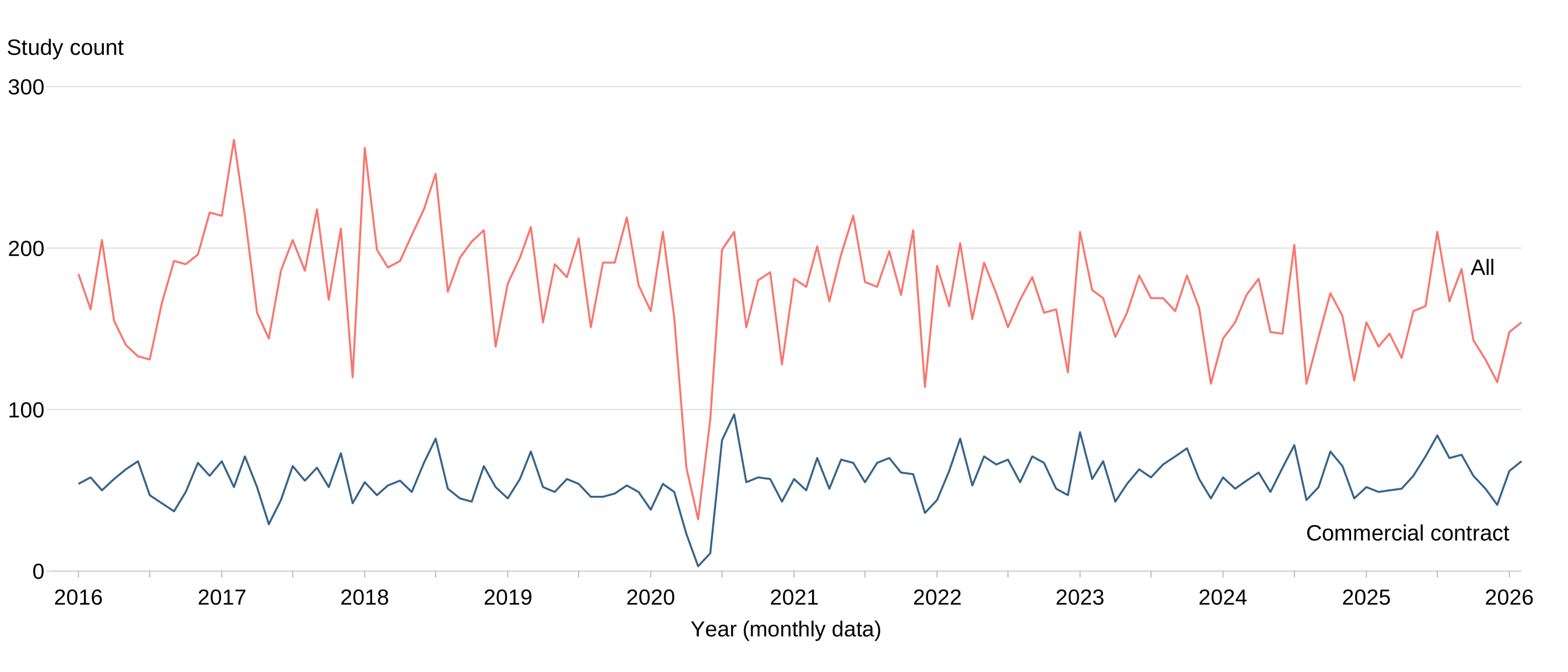
Figure 7.1 shows the number of new studies added to the CPMS per month since 2016 by study type.
Since 2016, approximately one-third of new studies added to the CPMS have been commercial contract studies.
The number of new studies added to the CPMS has been stable across time.