Statistics on trusts in the UK December 2025
Published 18 December 2025

© Crown copyright 2025
This publication is licensed under the terms of the Open Government Licence v3.0 except where otherwise stated. To view this licence, visit nationalarchives.gov.uk/doc/open-government-licence/version/3 or write to the Information Policy Team, The National Archives, Kew, London TW9 4DU, or email: psi@nationalarchives.gov.uk.
Where we have identified any third party copyright information you will need to obtain permission from the copyright holders concerned.
This publication is available at https://www.gov.uk/government/statistics/statistics-on-trusts-in-the-uk/statistics-on-trusts-in-the-uk-december-2025
1. Summary of key statistics
The latest statistics show that:
- the Trust Registration Service (TRS) had 835,000 trusts and estates registered up to 31 March 2025 and that remain open as of 29 August 2025
- around one-seventh of registered and open trusts and estates were registered in the period between 1 April 2024 and 31 March 2025, when there were 121,000 new registrations
- the total number of trusts and estates that have made Self Assessment returns has increased by around 3% in the tax year ending 2024 in comparison to the previous year. Interest in possession trusts increased by around 6%, while other trusts increased by around 2% in the tax year ending 2024 compared to the previous year
- the total income of all trusts and estates in tax year ending 2024 was £3.63 billion. This represents an increase of around 14% compared to the previous tax year when the equivalent figure was £3.19 billion
- the total chargeable gains of all trusts and estates in the tax year ending 2024 was £3.02 billion. This reflects a decrease of around 20% compared to the previous tax year when the equivalent figure was £3.75 billion
- the total Income Tax and Chargeable Gains Tax Payable on trusts and estates in the tax year ending 2024 was £1.62 billion, increasing by around 2% from the previous tax year. This is primarily driven by 26% increase in Income Tax likely due to the basis period reform and around 23% decrease in Capital Gains Tax
An ‘interest in possession’ trust is one where the beneficiary is entitled to trust income as it arises. A discretionary trust is one where trustees have ‘discretion’ about how to use the income of the trust, and sometimes the capital. Discretionary trusts pay tax at the special trust rates.
For the purposes of this publication, ‘other trusts’ include estates and all other types of trusts that are not interest in possession trusts or trusts paying tax at the special trust rate, such as heritage maintenance trusts, vulnerable beneficiary trusts and charities. Further information is provided in the background quality report accompanying this publication, or at Trusts and taxes.
TRS is primarily designed as an administrative system which is a part of the United Kingdom’s anti-money laundering legislation. We have undertaken an analytical data cleaning process to ensure that we have data that is sufficiently fit-for-purpose for publication of some simple aggregations of data to provide summary information on the numbers of trusts and estates. These figures are provided in figure 1 and table 1 and are based on a data extract taken from TRS on 29 August 2025.
Within this cleaning we aim that each trust or estate is only counted once, and the most recent data relating to that trust or estate indicates that they remain open. Further details of the cleaning process can be found in section 3.4 ‘Data validation’ in the background quality report accompanying this release. We believe that taking these steps and mitigations mean that these aggregated figures meet the quality standards required to be badged as an Accredited official statistics.
As with the November 2024 publication and following on from the statistics consultation, for the latest 2024 release, we have combined the number and income tables for each of trusts taxed at the special trust rates and interest in possession trusts. As a result, tables 3 and 5 have been combined into a single table which is now table 3, while tables 6 and 8 have been combined into table 5.
We have shortened the time series in all tables to include the latest 11 tax years where applicable, including figures 3, 6 and 9 in the main commentary. The historic data and tables remain available in the Government Web Archive.
2. Trust registrations
2.1 Figure 1: The number of non-taxable trusts and estates registered on TRS between 1 April 2024 to 31 March 2025 increased compared to the previous year
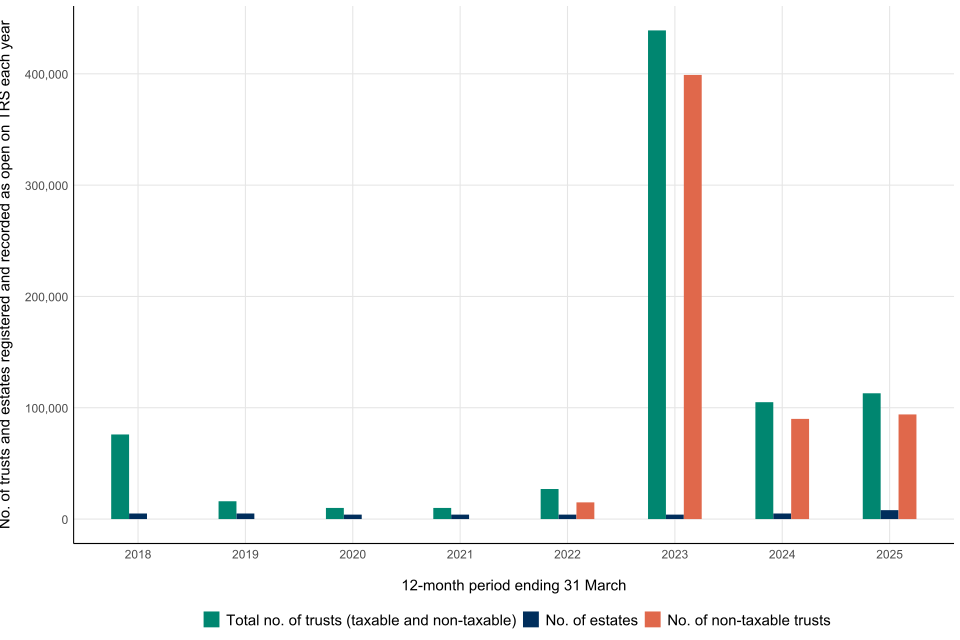
These figures represent the number of new trust and estate registrations in each 12-month period ending March, that are still recorded as open as of 29 August 2025. Some figures up to and including the 12-month period ending March 2024 have decreased as some have become closed or obsolete. In general, trust and estate registration figures for earlier years are expected to decrease slightly with time as trusts and estates close.
Figure 1 shows that in the 12-month period up to 31 March 2025, 121,000 trusts and estates registered on TRS and remain open as of 29 August 2025, which represents about 5% increase from the previous 12-month period when there were 115,000 registrations. Around 78% of the trusts and estates registered in the 12-month period up to 31 March 2025 are non-taxable trusts.
The high volume of trust and estate registration in the previous 12-month period ending in 2023 was mainly due to the requirement for all UK express and non-express trusts to register by 1 September 2022 deadline, even if they have no tax liability, unless they are exempt (see section 3.1 ‘Source data’ of background quality report). The number of estate registrations has continued to increase by 60% compared to the previous year, with around 8,000 estates registered and recorded as open in the period between 1 April 2024 to 31 March 2025.
The total number of trusts and estates registered and recorded as open on TRS has continued to increase since its inception in mid-2017, with 835,000 trusts and estates registered and open until 31 March 2025. These figures may change over time as the data within the service is updated (for example due to trust closures) and improved.
2.2 Table 1: Number of additional trusts and estates registered and recorded as open on Trust Registration Service in each year
| 12-month period ending 31 March | Total no. of trusts (taxable and non-taxable) | No. of non-taxable trusts | No. of estates |
|---|---|---|---|
| 2018 | 79,000 | NA | 5,000 |
| 2019 | 17,000 | NA | 5,000 |
| 2020 | 10,000 | NA | 4,000 |
| 2021 | 10,000 | NA | 4,000 |
| 2022 | 27,000 | 15,000 | 4,000 |
| 2023 | 439,000 | 399,000 | 4,000 |
| 2024 | 105,000 | 90,000 | 5,000 |
| 2025 | 113,000 | 94,000 | 8,000 |
3. Overall trends
3.1 Figure 2: The number of trusts and estates submitting Self-Assessment rises slightly
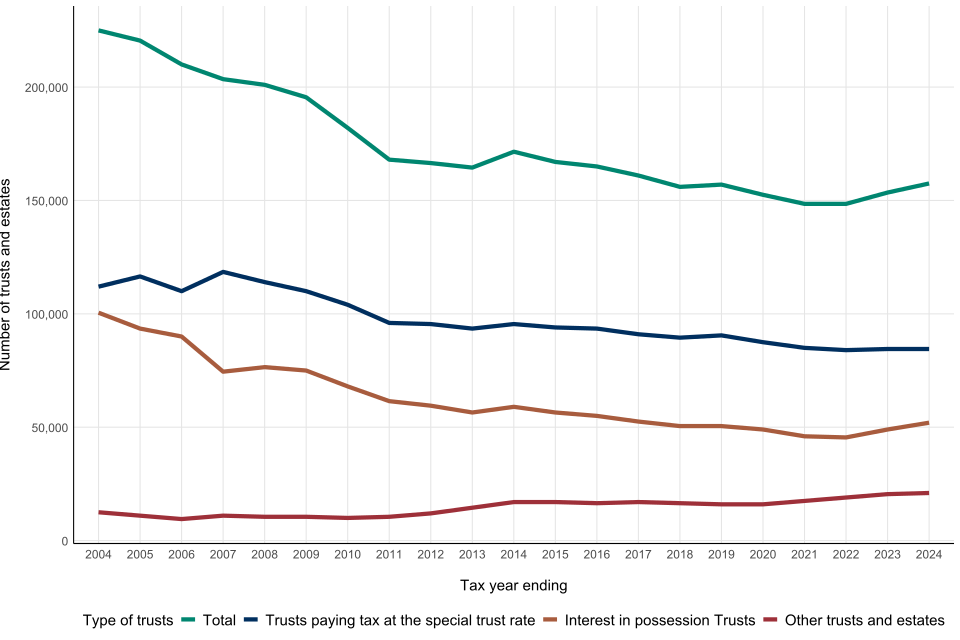
Figure 2 shows that the total number of trusts and estates in the UK submitting Self Assessment returns increased by 3% in the tax year ending 2024 compared to the previous year (see supplementary table 2). The number of interest in possession trust increased by around 6%, while other trusts increased by around 2%. There were 161,000 trusts and estates submitting Self Assessment returns in the tax year ending 2017, which has fallen to 157,500 in the tax year ending 2024. The figure provided for the tax year ending 2023 in the previous release (Nov 2024) has been revised upwards from 147,500 to 153,500 in this release (see section ‘Revisions strategy’).
3.2 Table 2: Numbers per tax year broken down by type
| Tax year ending | Total | Trusts paying tax at the special trust rate | Interest in possession trusts | Other trusts |
|---|---|---|---|---|
| 2004 | 225,000 | 112,000 | 100,500 | 12,500 |
| 2005 | 220,500 | 116,500 | 93,500 | 11,000 |
| 2006 | 210,000 | 110,000 | 90,000 | 9,500 |
| 2007 | 203,500 | 118,500 | 74,500 | 11,000 |
| 2008 | 201,000 | 114,000 | 76,500 | 10,500 |
| 2009 | 195,500 | 110,000 | 75,000 | 10,500 |
| 2010 | 182,000 | 104,000 | 68,000 | 10,000 |
| 2011 | 168,000 | 96,000 | 61,500 | 10,500 |
| 2012 | 166,500 | 95,500 | 59,500 | 12,000 |
| 2013 | 164,500 | 93,500 | 56,500 | 14,500 |
| 2014 | 171,500 | 95,500 | 59,000 | 17,000 |
| 2015 | 167,000 | 94,000 | 56,500 | 17,000 |
| 2016 | 165,000 | 93,500 | 55,000 | 16,500 |
| 2017 | 161,000 | 91,000 | 52,500 | 17,000 |
| 2018 | 156,000 | 89,500 | 50,500 | 16,500 |
| 2019 | 157,000 | 90,500 | 50,500 | 16,000 |
| 2020 | 152,500 | 87,500 | 49,000 | 16,000 |
| 2021 | 148,500 | 85,000 | 46,500 | 17,500 |
| 2022 | 148,500 | 84,500 | 45,500 | 19,000 |
| 2023 | 153,500 | 84,500 | 49,000 | 20,500 |
| 2024 | 157,000 | 84,500 | 52,000 | 21,000 |
4. Interest in possession trusts
4.1 Figure 3: The number of interest in possession trusts by income band and tax year
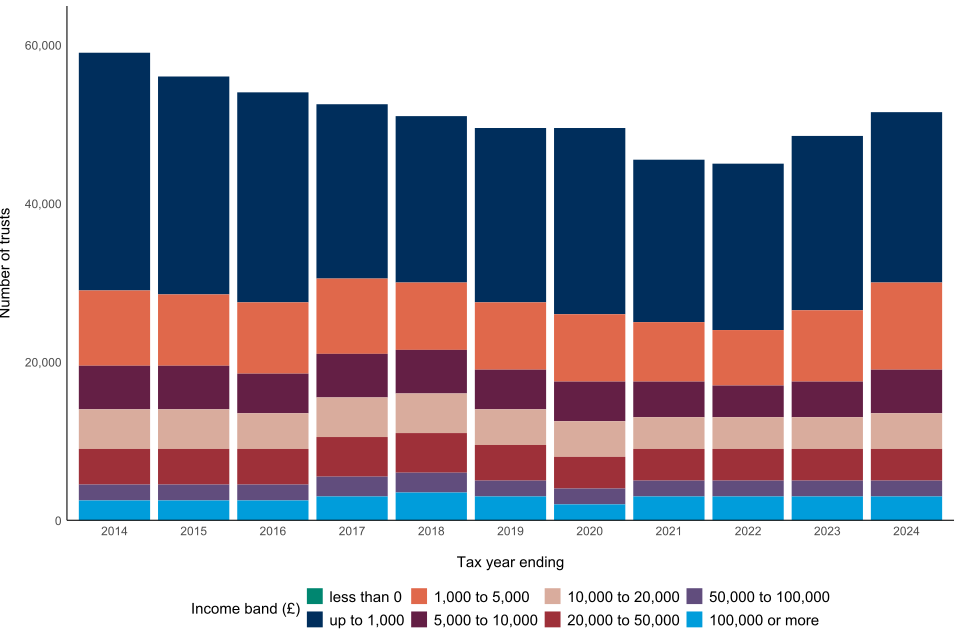
Figure 3 shows the number of interest in possession trusts submitting Self Assessment returns in each income band, (see supplementary table 3). The number of interest in possession trust has continued to increase. There has been around 6% increase in the number of interest in possession trusts between the tax years ending 2023 and 2024. This increase in the number of interest in possession trusts is mainly driven by trusts with income between £1,000 and £20,000. The ‘less than £0’ income band refers to cases where a trust reports negative income to HMRC because allowable expenses and losses exceed total income, resulting in a net loss for the tax year.
4.2 Figure 4: Income of interest in possession trusts by income type and tax year
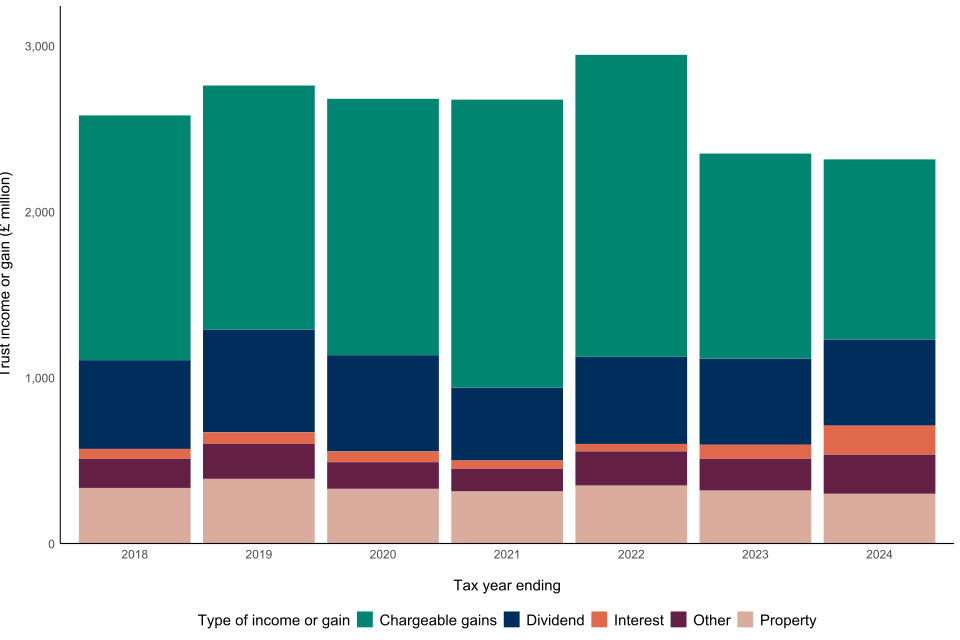
Figure 4 shows the level of income and gains for interest in possession trusts by income type (see supplementary table 4). Total income was £1.23 billion in the tax year ending 2024, which represents around 10% increase when compared to the previous year, while total chargeable gains for interest in possession falls by 12% from the previous year to £1.09 billion in the tax year ending 2024. Interest income has doubled to £175 million and other income for these trusts increased by around 24%. The increased interest income is likely driven by rising interest rates in 2022 and 2023.
4.3 Table 3: A breakdown by income type and gains for interest in possession trusts
| Tax year ending | Dividend income (£ million) | Interest income (£ million) | Property income (£ million) | Other income (£ million) | Total income (£ million) | Chargeable gains (£ million) |
|---|---|---|---|---|---|---|
| 2018 | 535 | 60 | 335 | 175 | 1,105 | 1,475 |
| 2019 | 620 | 70 | 390 | 210 | 1,295 | 1,470 |
| 2020 | 580 | 65 | 330 | 160 | 1,135 | 1,545 |
| 2021 | 440 | 50 | 315 | 135 | 940 | 1,735 |
| 2022 | 525 | 45 | 350 | 205 | 1,125 | 1,820 |
| 2023 | 520 | 85 | 320 | 190 | 1,115 | 1,235 |
| 2024 | 520 | 175 | 300 | 235 | 1,230 | 1,085 |
4.4 Figure 5: Number and income of interest in possession trusts
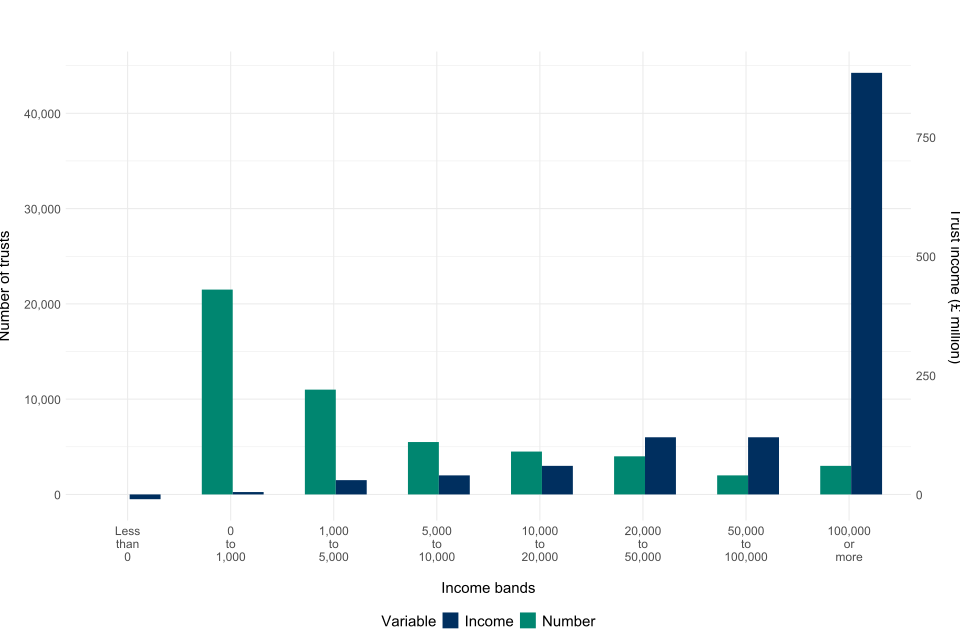
Figure 5 shows the distribution of these trusts by band of income (see supplementary table 3). There were 52,000 interest in possession trusts in the tax year ending 2024. Around 41% of interest in possession trusts had income of less than £1,000, with their total income being around £5 million. Around 6% of trusts had income of more than £100,000, accounting for £890 million of income. Overall, approximately one-fifth of interest in possession trusts had income greater than £20,000 and these trusts accounted for around 90% of the total income. Trusts in the highest income band (£100,000 or more) account for 71% of all income, similar to that seen in the tax year ending 2023.
4.5 Table 4: Income bands for interest in possession trusts in tax year ending 2024
| Income band (£) | Total Number | Income (£ millions) |
|---|---|---|
| less than 0 | <500 | <5 |
| up to 1,000 | 21,500 | 5 |
| 1,000 to 5,000 | 11,000 | 30 |
| 5,000 to 10,000 | 5,500 | 40 |
| 10,000 to 20,000 | 4,500 | 60 |
| 20,000 to 50,000 | 4,000 | 120 |
| 50,000 to 100,000 | 2,000 | 120 |
| 100,000 or more | 3,000 | 885 |
5. Trusts paying tax at the special trust rate
The statistics shown below for trusts paying tax at the special trust rate cover both discretionary and accumulation trusts.
5.1 Figure 6: The number of trusts taxed at special trust rates by income band and tax year
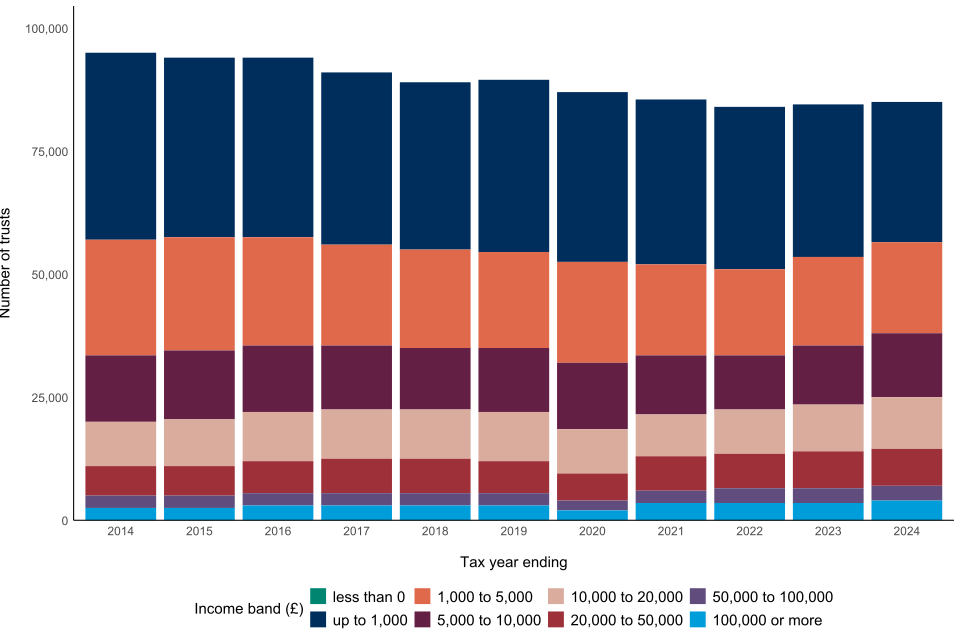
Figure 6 shows the number of trusts paying Income Tax at the special trust rates by income band (see supplementary table 5). The number of trusts paying tax at the special trust rates in the tax year ending 2024 has remained stable compared to the previous year. The number of these trusts has fallen in the income bands between £0 and £1,000. This is offset by an increase in these trusts in the income bands between £10,000 to £20,000. Trusts with income between £10,000 to £20,000 increased most by 10%. Trusts paying tax at the special trust rates in the income bands between £0 and £1,000 account for over one-third of these trusts.
5.2 Figure 7: Total income and gains for trusts paying tax at the special trust rates by tax year
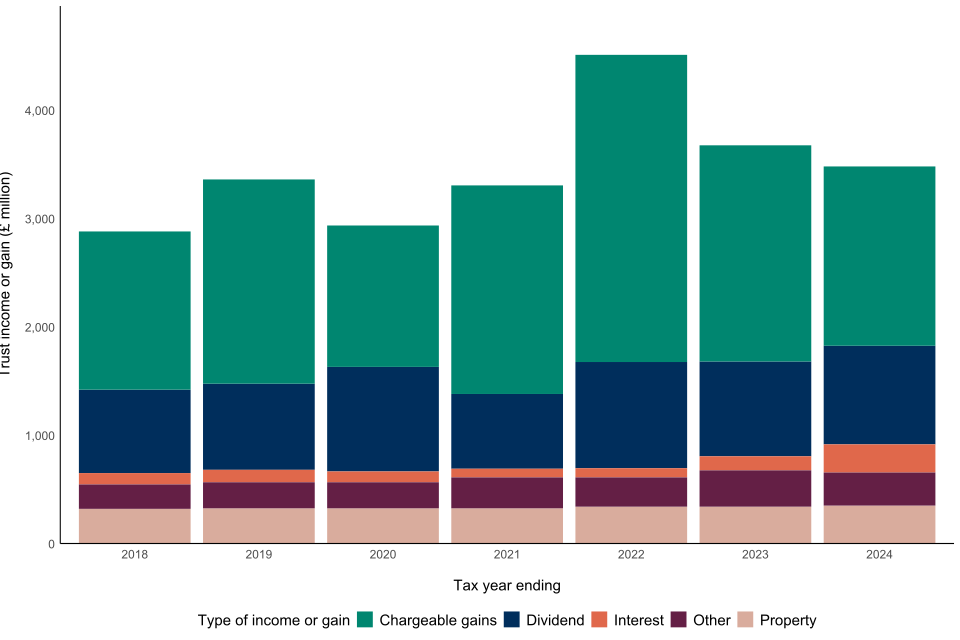
Figure 7 shows the income and gains breakdown for trusts paying tax at the special trust rate (see supplementary table 6). The total income of trusts paying tax at the special trust rates was £1.82 billion in the tax year ending 2024, which represents an increase of around 8% compared to previous year. Interest income for these trusts has doubled which is likely due to successive interest rate increase in 2022 and 2023. Dividend income and property income of these trusts increase slightly while Other income for trusts paying Income Tax at the specials trust rates falls by around 9%. Chargeable gains for trusts paying tax at the special trust rates has decreased to £1.66 billion in the tax year ending 2024, compared to £2.0 billion in the tax year ending 2023. Historic data shows that chargeable gains can be volatile on an annual basis.
5.3 Table 5: A breakdown by income type and gains for trusts paying tax at the special trust rate
| Tax year ending | Dividend income (£ million) | Interest income (£ million) | Property income (£ million) | Other income (£ million) | Total income (£ million) | Chargeable gains (£ million) |
|---|---|---|---|---|---|---|
| 2018 | 770 | 105 | 320 | 225 | 1,415 | 1,460 |
| 2019 | 795 | 115 | 325 | 240 | 1,480 | 1,885 |
| 2020 | 965 | 100 | 325 | 240 | 1,630 | 1,305 |
| 2021 | 690 | 80 | 325 | 285 | 1,380 | 1,925 |
| 2022 | 980 | 85 | 340 | 270 | 1,675 | 2,835 |
| 2023 | 875 | 130 | 340 | 335 | 1,680 | 1,995 |
| 2024 | 910 | 260 | 350 | 305 | 1,820 | 1,655 |
5.4 Figure 8: Number and income of trusts paying tax at the special trust rate for the tax year ending 2024
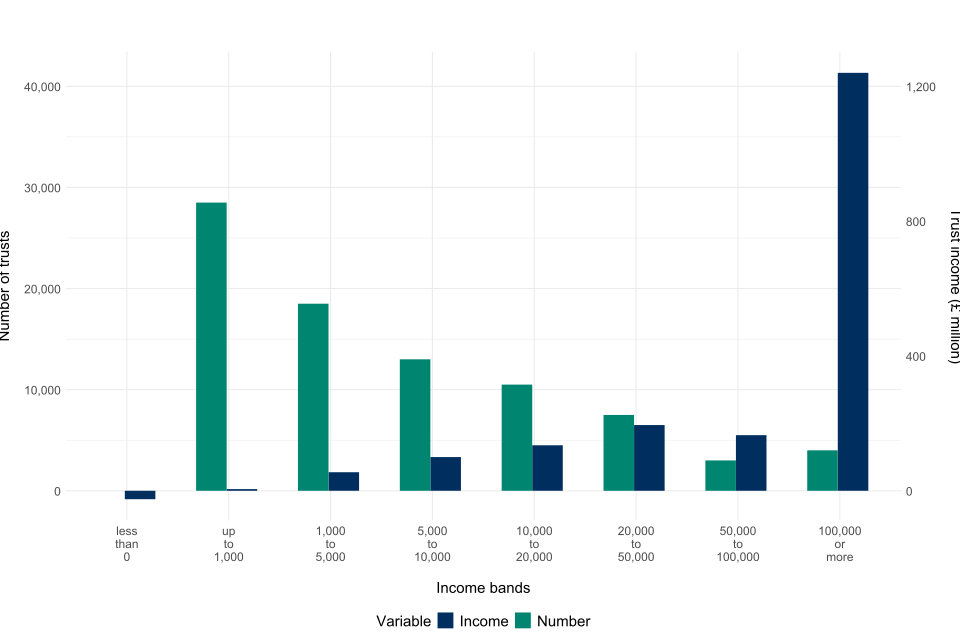
Figure 8 shows the number and income of trusts paying tax at the special trust rates (see supplementary table 5). There were around 84,500 trusts paying Income Tax at the special trust rates in the tax year ending 2024. Of these, 28,500 had income less than £1,000, while 4,000 trusts had income greater than £100,000.
The income of trusts paying tax at the special trust rate with income more than £100,000 increased from £1.10 billion in the tax year ending 2023 to £1.24 billion in the tax year ending 2024. The trusts in this income band accounted for around 66% of the total income in the tax year ending 2024, compared to 65% in the previous year.
5.5 Table 6: Income bands for trusts paying tax at the special trust rate for tax year ending 2023
| Income band (£) | Total Number | Income (£ millions) |
|---|---|---|
| less than 0 | <500 | <5 |
| up to 1,000 | 28,500 | 5 |
| 1,000 to 5,000 | 18,500 | 55 |
| 5,000 to 10,000 | 13,000 | 100 |
| 10,000 to 20,000 | 10,500 | 135 |
| 20,000 to 50,000 | 7,500 | 195 |
| 50,000 to 100,000 | 3,000 | 165 |
| 100,000 or more | 4,000 | 1,240 |
6. Tax liability
6.1 Figure 9: Income Tax liability increases and Capital Gains Tax payable on chargeable gains of trusts and estates decreases
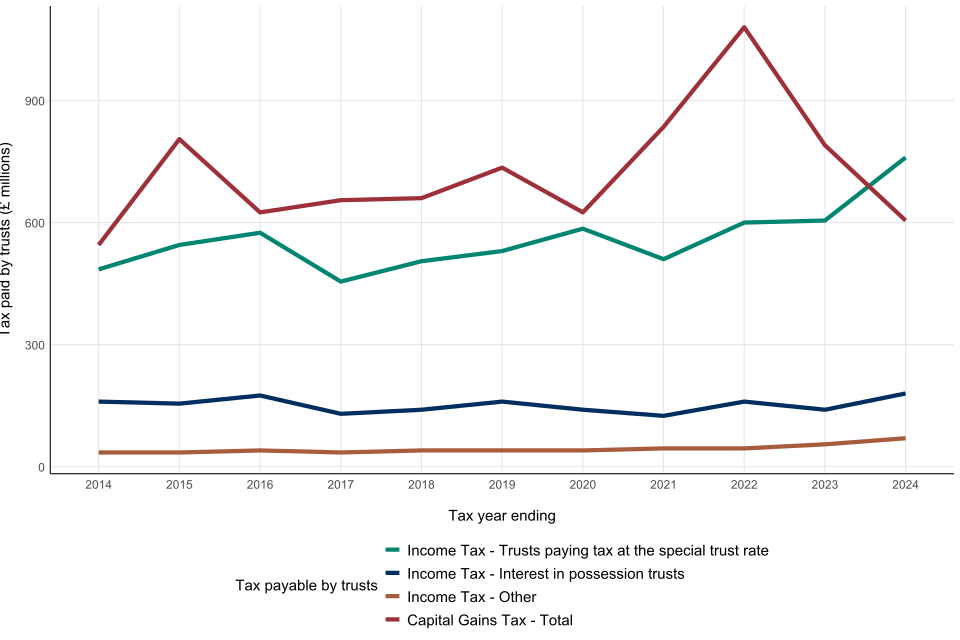
Figure 9 shows tax payable on income of trusts, split between different types of trust. Total Income Tax increased to £1.01 billion in the tax year ending 2024, an increase of around 26% compared to the previous year (see supplementary table 8). The significant increase in the income tax liability of trusts is likely due to the basis reform where some trusts have to align their accounting period to the tax year. This brings forward the recognition of profits into the 2023 to 2024 tax year, resulting in a significant increase in total taxable income and corresponding income tax liabilities for trusts. Transitional profits arising from this alignment are subject to full trust tax rates .However, HMRC allows transitional profits to be spread over five years to ease the impact.
Further information about the basis period reform are available at Basis period reform. Around three-quarters of Income Tax comes from trusts paying tax at the special trust rate, which stood at £760 million in the tax year ending 2024. Income Tax from interest in possession trusts increased by around 29% to £180 million in the tax year ending 2024.
Capital Gains Tax payable has continued to decrease in two consecutive tax years to £605 million in the tax year ending 2024. This represents around 23% decrease when compared to the previous year when it was at £790 million. Historic Capital Gains Tax data shows relatively volatile results with some occasional higher peaks (see figure 9). The ‘Key Points’ section of the July 2025 Capital Gains Tax statistics comments on wider factors which may have caused Capital Gains Tax payable to decrease overall during the tax year ending 2024.
6.2 Table 7: Breakdown of Income Tax liability and total Capital Gains Tax by trust type
| Tax year ending | Income Tax - all trusts (£ million) | Income Tax - trusts paying tax at the special trust rate (£ million) | Income Tax - interest in possession trusts (£ million) | Income Tax - other - estates, charitable trusts etc. (£ million) | Capital Gains Tax (£ million) |
|---|---|---|---|---|---|
| 2014 | 675 | 485 | 160 | 35 | 545 |
| 2015 | 735 | 545 | 155 | 35 | 805 |
| 2016 | 790 | 575 | 175 | 40 | 625 |
| 2017 | 625 | 455 | 130 | 35 | 655 |
| 2018 | 690 | 505 | 140 | 40 | 660 |
| 2019 | 730 | 530 | 160 | 40 | 735 |
| 2020 | 770 | 585 | 140 | 40 | 625 |
| 2021 | 680 | 510 | 125 | 45 | 835 |
| 2022 | 810 | 600 | 160 | 45 | 1,080 |
| 2023 | 800 | 605 | 140 | 55 | 790 |
| 2024 | 1,010 | 760 | 180 | 70 | 605 |
7. About these statistics
This is an Accredited official statistics publication produced by HM Revenue and Customs (HMRC) showing the number of full Self-Assessment returns made in respect of trusts and estates. Their income and tax paid are based on information from HMRC’s administrative systems.
Figures are updated annually and were last published in November 2024. Statistics for the tax year ending 2024 are included for the first time in the current publication. Figures for previous years have been revised due to availability of further data; see section 1.9 of the accompanying trust statistics background quality report for further information about these revisions.
The trusts and estates that have closed since 14 August 2024 have been excluded from this release. Some figures up to and including the 12-month period ending March 2024 have decreased as a result. In general, trust and estate registration figures for earlier years are expected to decrease slightly with time as trusts and estates close.
This publication contains statistics on chargeable gains and Capital Gains Tax. The chargeable gains figures presented are the gains above the tax-free allowance, also known as the Annual Exempt Amount (AEA). Further information on the AEA is available at Capital Gains Tax rates and allowances. Due to changes to the chargeable gain and Capital Gains Tax reporting requirements for trusts with disposals of residential property in the tax year ending 2021, this information can be reported separately from Self Assessment returns. This publication uses a separate data source to include Capital Gains Tax and chargeable capital gains from residential property filed via the Capital Gains Tax on UK property service in the tax years ending 2022, 2023 and 2024. This may cause capital gains and Capital Gains Tax figures to be more prone to revisions in later publications.
For the tax year ending 2024, we excluded records for around 352 trusts from the new data source accounting for under £6 million Capital Gains Tax liability and £24 million chargeable gains, since they do not exist in our Self Assessment return data. For the tax year ending 2023, we exclude records for around 361 trusts which account for under £7 million Capital Gains Tax liability and £26 million chargeable gains. We exclude non-resident chargeable gains relating to the disposal of UK property from the chargeable gains statistics in this release.
7.1 Rounding
The amounts of money shown in the tables have been rounded to the nearest £5 million, while numbers of trusts and estates in TRS-derived tables have been rounded to the nearest 1,000 and to the nearest 500 in all other tables (except for the lowest income categories in tables 3 and 5). The rounding of numbers in the TRS-derived tables reflects a degree of uncertainty in the number of open trusts and estates as the cleaning process is unable to deal with all possible circumstances in which a trust or estate may be recorded more than once within raw TRS data.
Some figures and percentages presented in the commentary have been calculated based on unrounded numbers and therefore may not sum up to the rounded totals shown in the tables.
7.2 Revisions strategy
This publication includes figures for the tax year ending 2024 for the first time plus revised figures for earlier years back to the tax year ending 2021, reflecting any Self Assessment tax returns for these years received since statistics were last published and changes to the way the data has been extracted from Self Assessment administrative systems. The method for counting registered trusts and estates has changed since the previous publication and now exclude from these figures records that have subsequently been marked as closed or obsolete.
The table below shows changes since last publication. Numbers may not sum due to rounding.
7.3 Table 8: Year-to-year revisions - changes in number or in £ million
| Tax year ending | Number of trusts and estates | Total Income Tax | Total Capital Gains Tax |
|---|---|---|---|
| 2021 | 870 | 0 | 0 |
| 2022 | 1,990 | 5 | 0 |
| 2023 | 6,730 | 15 | 0 |
7.4 Table 9: Year-to-year revisions - percentage change
| Tax year ending | Number of trusts and estates | Total Income Tax | Total Capital Gains Tax |
|---|---|---|---|
| 2021 | 0.6% | 0.2% | 0% |
| 2022 | 1.4% | 0.5% | 0% |
| 2023 | 4.6% | 1.6% | 0.2% |