
Special consideration in GCSE, AS and A level: summer 2025 exam series
Published 20 November 2025
Applies to England

© Crown copyright 2025
This publication is licensed under the terms of the Open Government Licence v3.0 except where otherwise stated. To view this licence, visit nationalarchives.gov.uk/doc/open-government-licence/version/3 or write to the Information Policy Team, The National Archives, Kew, London TW9 4DU, or email: psi@nationalarchives.gov.uk.
Where we have identified any third party copyright information you will need to obtain permission from the copyright holders concerned.
This publication is available at https://www.gov.uk/government/statistics/special-consideration-in-gcse-as-and-a-level-summer-2025-exam-series/special-consideration-in-gcse-as-and-a-level-summer-2025-exam-series
This release provides information on special consideration for GCSE, AS and A levels for the summer 2025 exam series.
There are 2 categories of special consideration included in this report: mark adjustments and qualification awards. Mark adjustments are for students who were present for the assessment but who might not have been able to demonstrate their ability due to exceptional circumstances occurring at the time of their assessment. Qualification awards are for students who were absent from the assessment for reasons which meet JCQ’s eligibility criteria. To be eligible for special consideration, students must have been fully prepared for the assessment and have covered the whole course.
The total number of applications for individuals and groups is not the same as the total number of special consideration requests. Special consideration applications are made by schools and colleges to exam boards, usually after an assessment has taken place. Each request specifies the students and components it covers. A single request relates to one student and a specific component. In cases where a group of students has been affected by the same issue (for example, a fire alarm during an exam), a group application can cover all students and any components affected by the issue.
This release only includes special consideration given in the form of mark adjustments and qualification awards. Special consideration given in the form of an adjustment to the way an assessment is taken, is reported separately in our statistics on access arrangements.
The coronavirus (COVID-19) pandemic led to the cancellation of exams in summer 2020 and summer 2021. As a result, there were no special consideration requests for those series. Exams and assessments resumed in summer 2022. Therefore, this report contains information on special consideration for the summer 2022 to summer 2025 series.
Only full-course GCSEs are included in the special consideration and qualification results figures, in addition to AS and A levels. In previous releases of these statistics, short-course GCSEs were also included but these have now been removed. This has meant that some historical figures have changed to a small degree compared to previous releases.
Key headlines
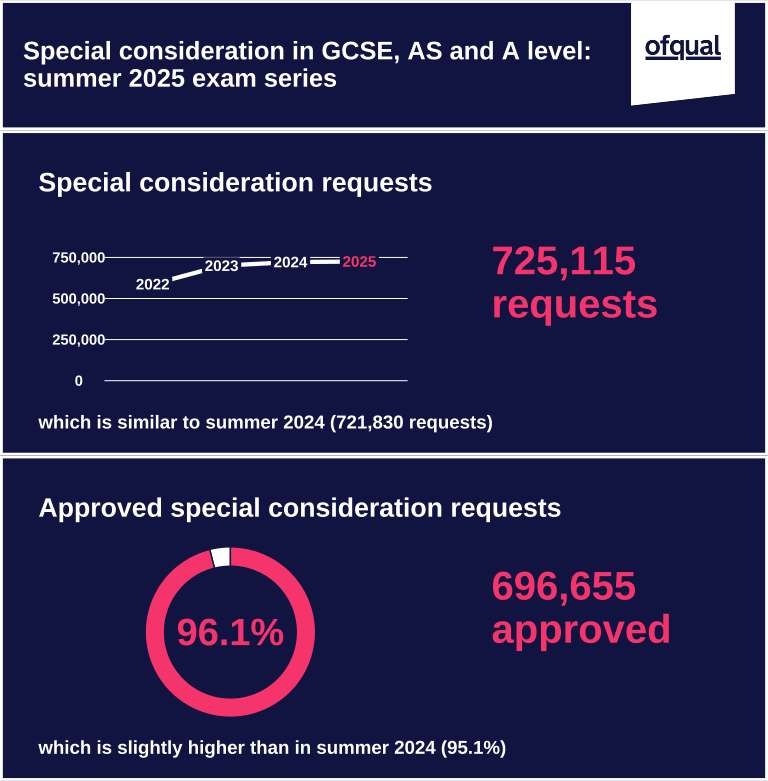
- In summer 2025, 168,245 individual students had at least 1 special consideration request approved. This represents 12.2% of the overall 1,376,480 GCSE, AS and A level students with results issued in summer 2025. This is similar to summer 2024 where 13.1% of the overall 1,349,260 GCSE, AS and A level students had at least 1 special consideration request approved (176,115).
- In summer 2025, there were 725,115 GCSE, AS and A level special consideration requests, which is similar to 2024 (721,830 special consideration requests). For context there were 17.1 million GCSE, AS and A level scripts and non-exam assessments marked in summer 2025 and 16.7 million marked in summer 2024.
- The majority of special consideration requests (96.1%) were approved, similar to summer 2024 (95.1%).
- Most approved requests in summer 2025 were for mark adjustments (96.1%) rather than qualification awards (3.9%). This is similar to summer 2024 where mark adjustments and qualification awards constituted 95.2% and 4.8% of approved requests respectively.
Provide your feedback
We welcome your feedback on our publications. If you have any comments on this statistical release, or how to improve it to meet your needs, complete our short survey or data.analytics@ofqual.gov.uk.
Special consideration requests
There were 725,115 special consideration requests for GCSE, AS and A level in summer 2025, which is similar to summer 2024 (721,830 requests). Out of all special consideration requests in summer 2025, 96.1% were approved (696,655), similar to the proportion of requests approved in summer 2024 (95.1%).
The number of special consideration requests may be affected by the total number of scripts and non-exam assessments marked in a summer series. In summer 2025 there were 17.1 million GCSE, AS and A level scripts and non-exam assessments marked, an increase of 2.1% from summer 2024 (16.7 million).
In summer 2025, 168,245 individual students had at least 1 special consideration request approved. This represents 12.2% of the overall 1,376,480 GCSE, AS and A level students with results issued in summer 2025. This is similar to summer 2024 where 13.1% of the overall 1,349,260 GCSE, AS and A level students had at least 1 special consideration request approved (176,115). Note that in this release ‘results issued’ refers to passing grades, Unclassified (U) as well as outcomes representing the absence of a result (Q, X) as these may still have had components with special consideration requests approved.
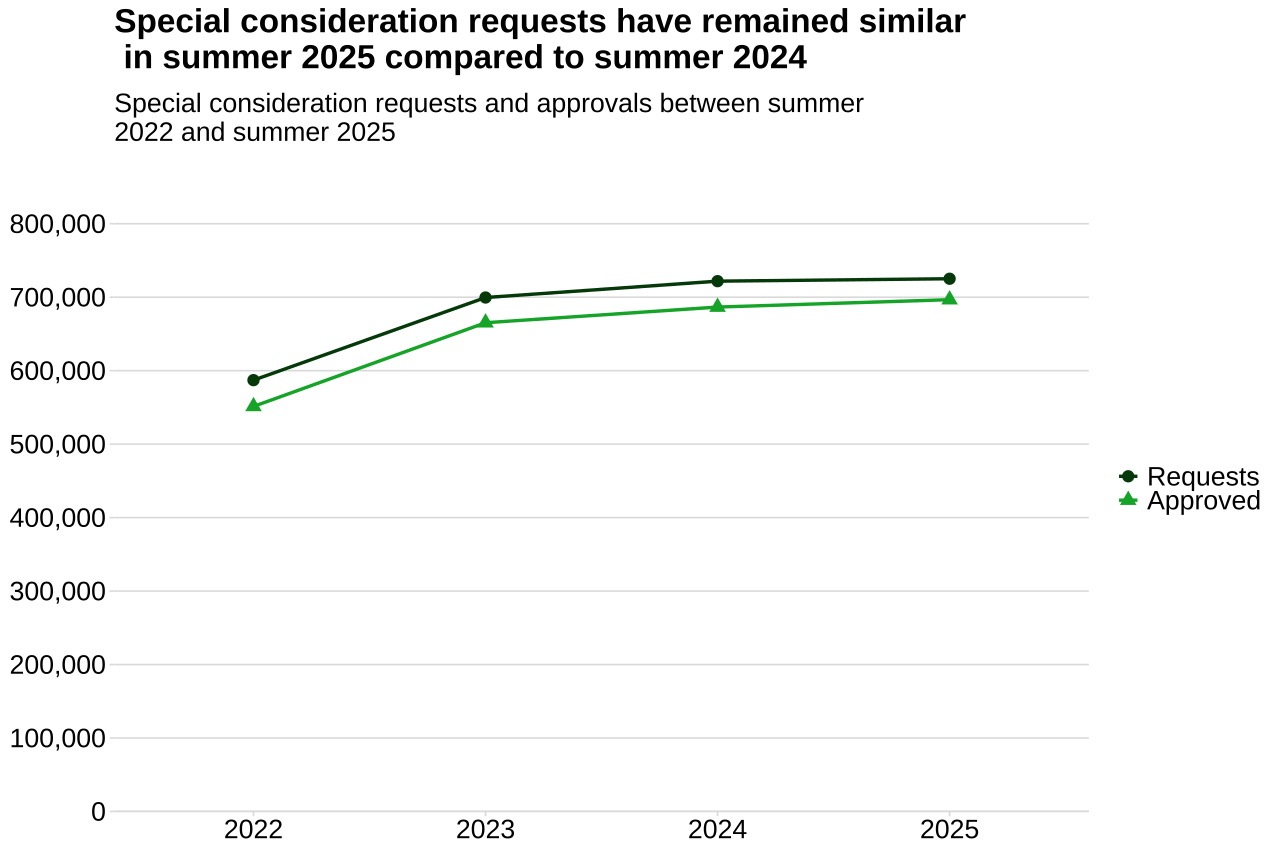
Table 1. Special consideration requests and approvals between summer 2022 and summer 2025
| Special Consideration requests | Level | 2022 | 2023 | 2024 | 2025 |
|---|---|---|---|---|---|
| Requests made | AS and A level | 122,500 | 139,170 | 140,860 | 139,745 |
| Requests made | GCSE | 464,605 | 560,410 | 580,970 | 585,375 |
| Requests made | Total | 587,105 | 699,580 | 721,830 | 725,115 |
| Requests approved | AS and A level | 116,475 | 133,575 | 134,680 | 134,290 |
| Requests approved | GCSE | 434,850 | 531,700 | 551,915 | 562,365 |
| Requests approved | Total | 551,325 | 665,275 | 686,595 | 696,655 |
Special consideration requests for external and internal assessments
Requests relating to internal assessments (non-exam assessments) represent a small proportion of the total number of requests. In summer 2025, 1.3% of requests were for internal assessments (9,125 requests) and 98.7% of requests were for external assessments (715,990 requests). The proportions of requests were similar to 2024, where 1.5% of requests were for internal assessments (11,120 requests) and 98.5% were for external assessments (710,710 requests).
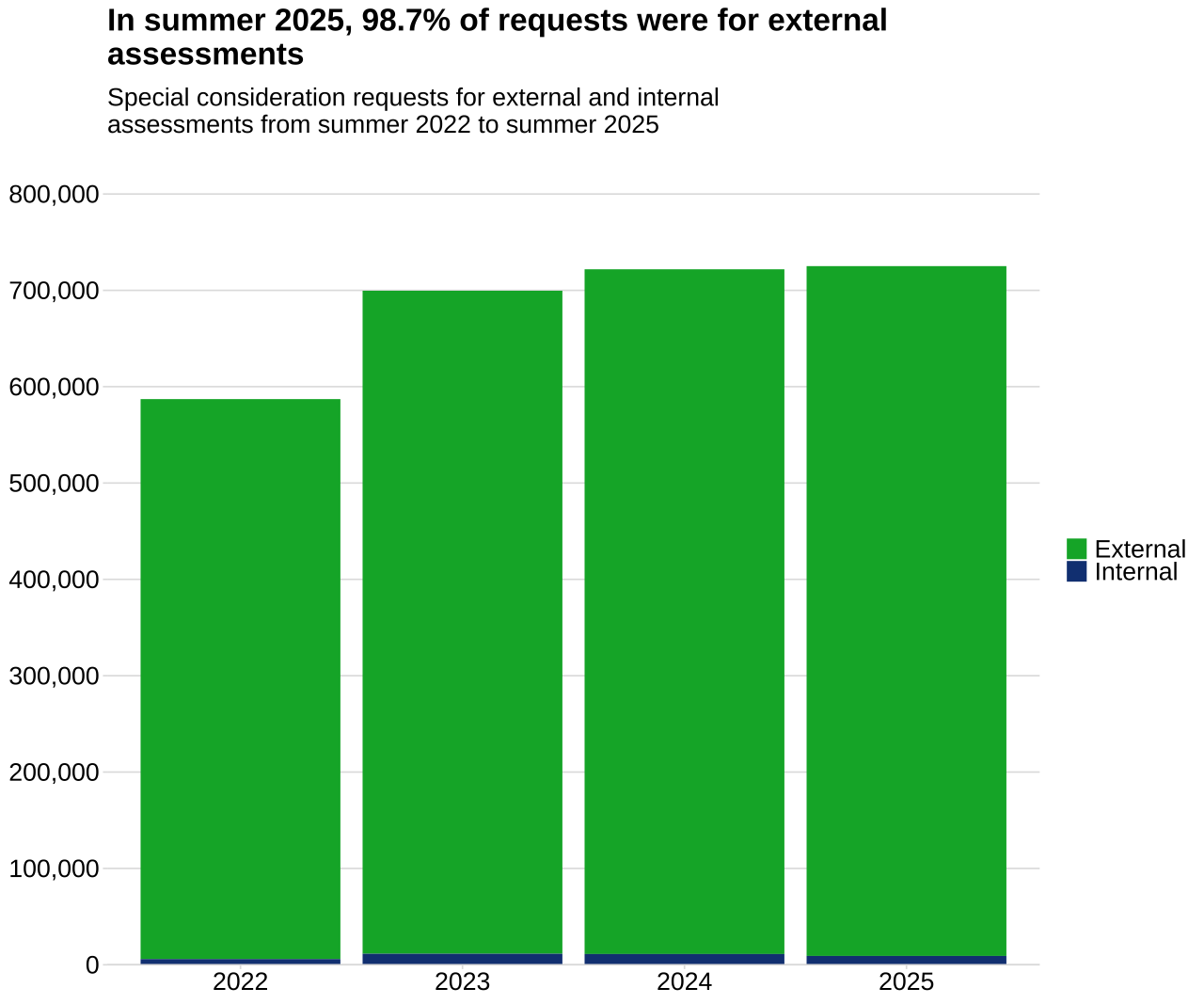
Table 2. Special consideration requests for external and internal assessments from summer 2022 to summer 2025
| Assessment type | 2022 | 2023 | 2024 | 2025 |
|---|---|---|---|---|
| External | 581,225 | 688,190 | 710,710 | 715,990 |
| Internal | 5,880 | 11,395 | 11,120 | 9,125 |
Special consideration requests by subject
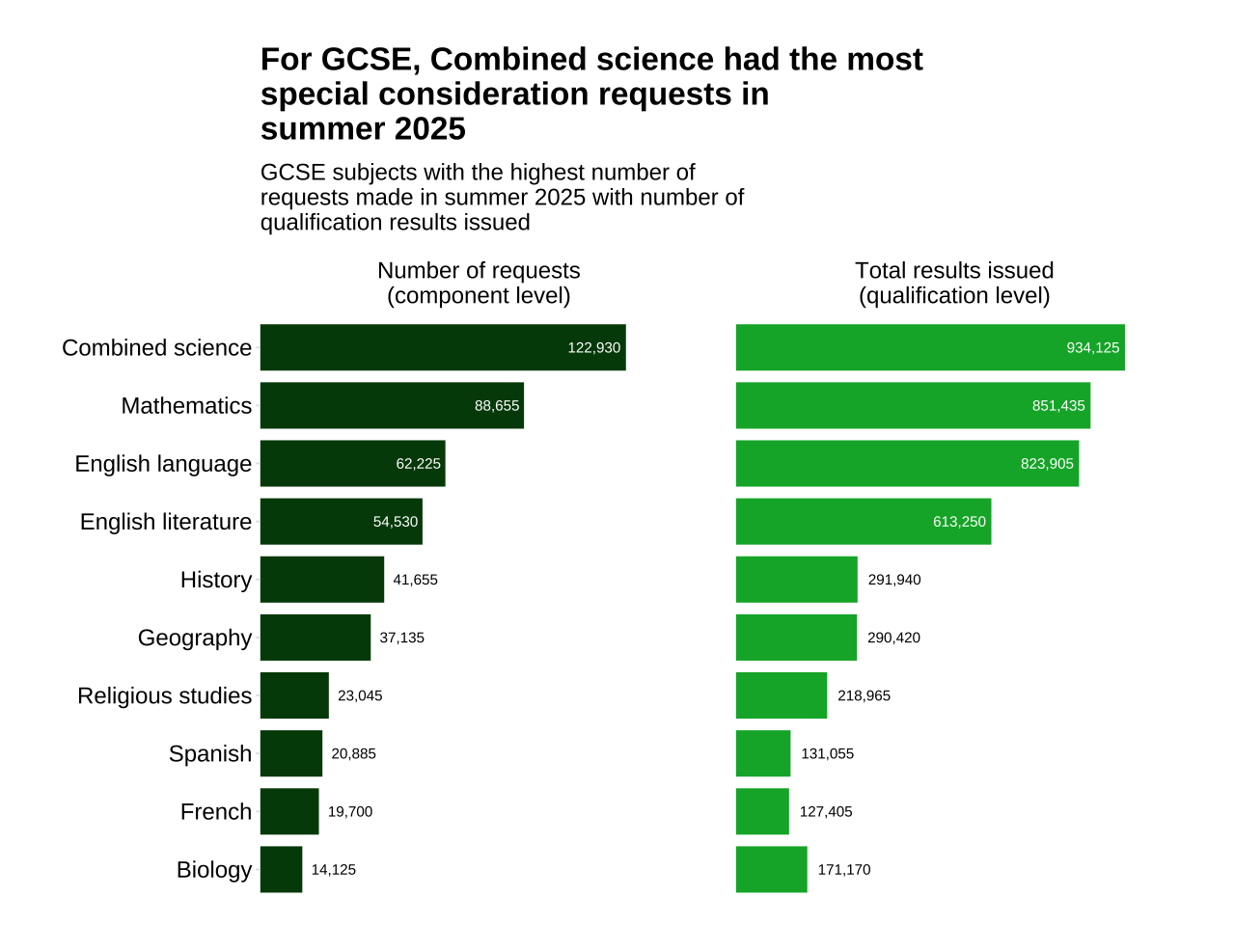
The charts in this section present 2 sets of data by subject: special consideration requests at component level and the number of qualification results issued.
Note, in this release ‘results issued’ refers to passing grades, Unclassified (U) as well as outcomes representing the absence of a result (Q, X) as these may still have had components with special consideration requested.
The qualification results issued chart is provided to show the relative size of subjects according to result volumes. Typically, we would anticipate a relationship between the number of special consideration requests and the number of qualification results. However, because special consideration requests are at component level, subjects that include more components may also have more special consideration requests. It is, therefore, not appropriate to calculate proportions between the number of special consideration requests at component level and total results issued at qualification level. We are currently exploring ways in which we can improve our presentation of these figures, to allow for more direct comparisons.
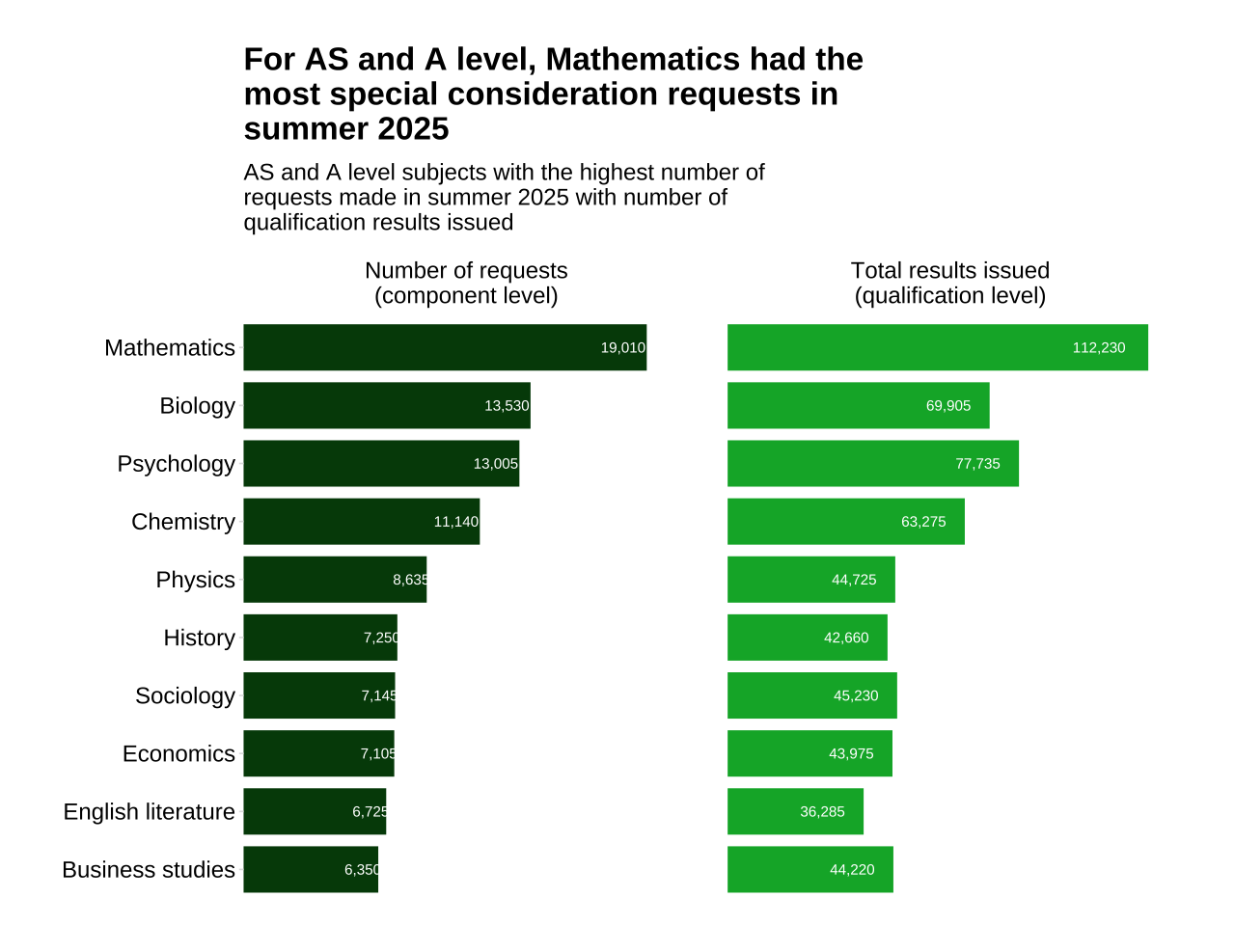
Note: for reasons explained above, it is not appropriate to calculate proportions between the number of special consideration requests at component level and total results issued at qualification level.
Table 3. AS and A level subjects with the highest number of special consideration requests made in summer 2025 and the number of qualification results issued
| Subject | Number of requests (component level) | Total results issued (qualification level) |
|---|---|---|
| Mathematics | 19,010 | 112,230 |
| Biology | 13,530 | 69,905 |
| Psychology | 13,005 | 77,735 |
| Chemistry | 11,140 | 63,275 |
| Physics | 8,635 | 44,725 |
| History | 7,250 | 42,660 |
| Sociology | 7,145 | 45,230 |
| Economics | 7,105 | 43,975 |
| English literature | 6,725 | 36,285 |
| Business studies | 6,350 | 44,220 |
For AS and A level, the subjects with the most special consideration requests were generally those with the largest number of qualification results issued. Figures for all subjects can be found in the accompanying data tables.
Note 1: for reasons explained above, it is not appropriate to calculate proportions between the number of special consideration requests at component level and total results issued at qualification level.
Note 2: results for GCSE combined science are double-counted in this release, because the qualification is the size of 2 single GCSEs.
Table 4. GCSE subjects with the highest number of requests made in summer 2025 with number of qualification certifications
| Subject | Number of requests (component level) | Total results issued (qualification level) |
|---|---|---|
| Combined science | 122,930 | 934,125 |
| Mathematics | 88,655 | 851,435 |
| English language | 62,225 | 823,905 |
| English literature | 54,530 | 613,250 |
| History | 41,655 | 291,940 |
| Geography | 37,135 | 290,420 |
| Religious studies | 23,045 | 218,965 |
| Spanish | 20,885 | 131,055 |
| French | 19,700 | 127,405 |
| Biology | 14,125 | 171,170 |
Similar to AS and A level, for GCSE the subjects with the most special consideration requests were those with the largest number of qualification results issued. Figures for all subjects can be found in the accompanying data tables.
Special consideration applications for individuals and groups
According to JCQ guidelines, special consideration applications can be made either on an individual or group basis. An individual application involves just one student but can relate to one or more assessment components. In cases where a group of students has been affected by the same issue (for example, a fire alarm during an exam), a group application can cover all students and any components affected by the issue.
The total number of applications for individuals and groups is not the same as the total number of special consideration requests. For instance, a group application can represent more than a hundred requests, because requests are counted at individual student and component level.
Table 5 shows the percentage of applications relating to individuals or groups as a percentage of all special consideration applications.
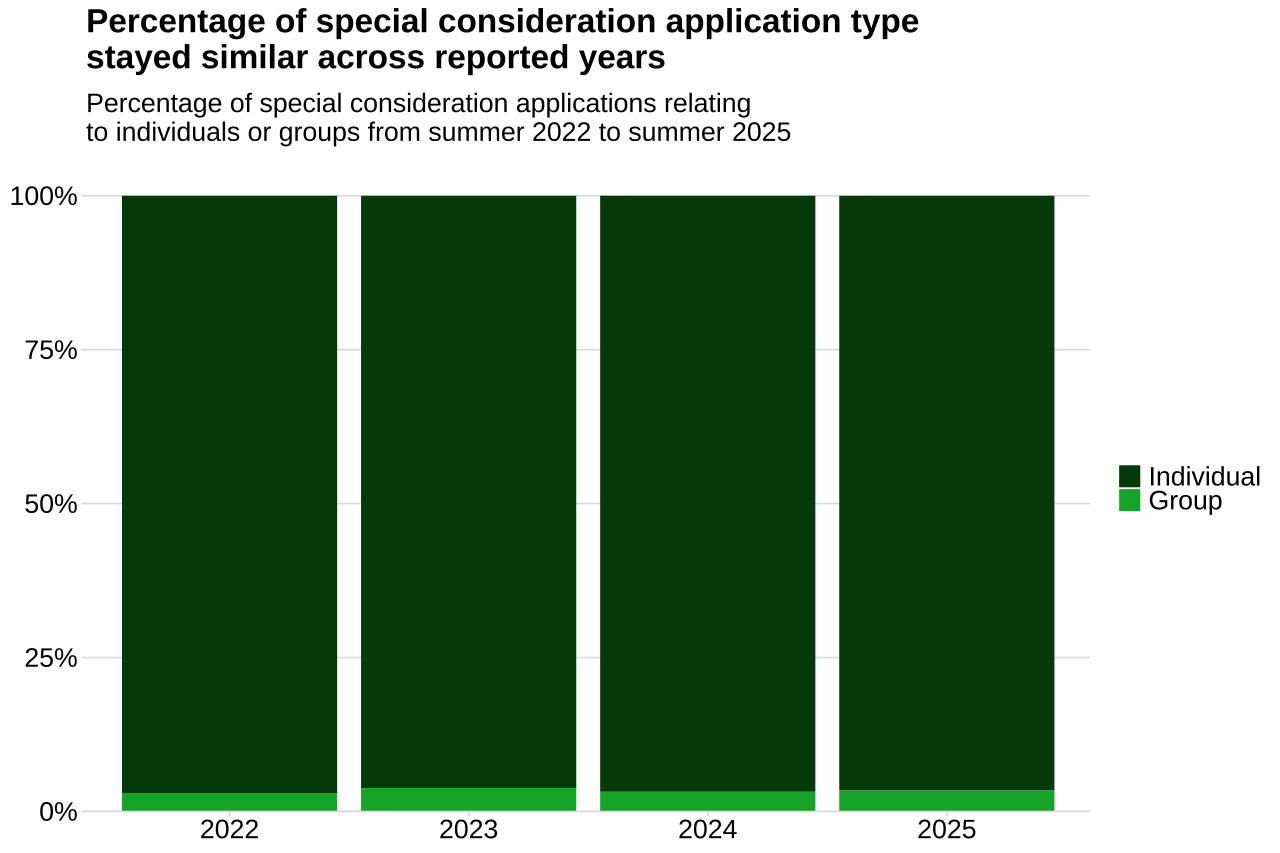
Table 5. Percentage of special consideration applications relating to individuals or groups from summer 2022 to summer 2025
| Application type | 2022 | 2023 | 2024 | 2025 |
|---|---|---|---|---|
| Individual | 97.0% | 96.2% | 96.8% | 96.6% |
| Group | 3.0% | 3.8% | 3.2% | 3.4% |
Table 6 gives a breakdown of group applications in summer 2025 by number of students in the group. For instance, 25.9% of group applications included between 2 and 5 students.
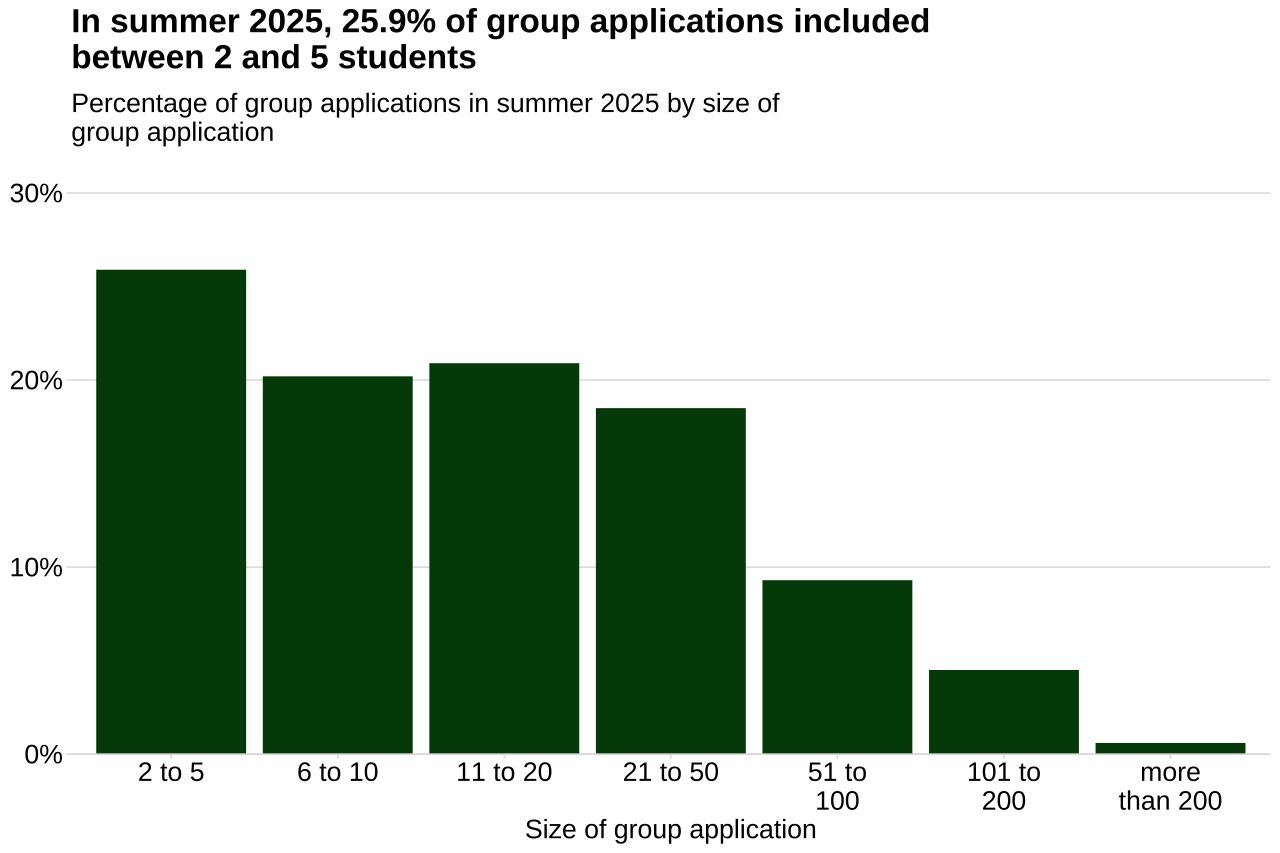
Table 6. Percentage of group applications in summer 2025 by size of group application
| Size of group application | Percentage of all applications | Percentage of group applications |
|---|---|---|
| 2 to 5 | 0.9% | 25.9% |
| 6 to 10 | 0.7% | 20.2% |
| 11 to 20 | 0.7% | 20.9% |
| 21 to 50 | 0.6% | 18.5% |
| 51 to 100 | 0.3% | 9.3% |
| 101 to 200 | 0.2% | 4.5% |
| more than 200 | less than 0.1% | 0.6% |
Categories of special consideration
There are 2 categories of special consideration included in this report: mark adjustments and qualification awards. Mark adjustments are for students who were present for the assessment but who might not have been able to demonstrate their ability due to exceptional circumstances occurring at the time of their assessment. Qualification awards are for students who were absent from the assessment for reasons which meet JCQ’s eligibility criteria.
Most approved requests in summer 2025 were for mark adjustments (96.1%) rather than qualification awards (3.9%), similar to summer 2024 (where mark adjustments and qualification awards constituted 95.2% and 4.8% of approved requests respectively).
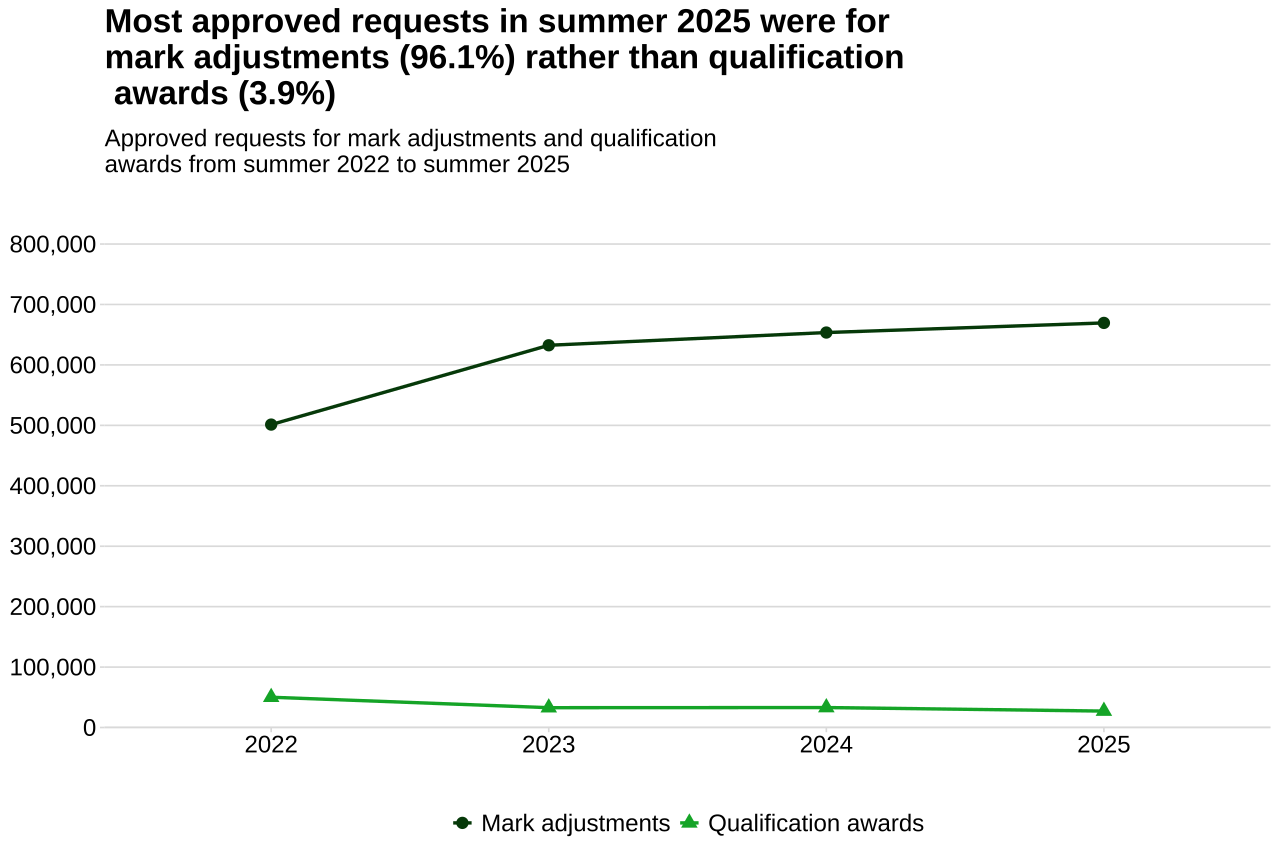
Table 7. Approved requests for mark adjustments and qualification awards from summer 2022 to summer 2025
| Special consideration type | 2022 | 2023 | 2024 | 2025 |
|---|---|---|---|---|
| Number of approved requests for mark adjustments | 501,245 | 632,460 | 653,550 | 669,470 |
| Number of approved requests for qualification awards | 50,080 | 32,810 | 33,045 | 27,185 |
Approved special consideration requests for mark adjustments by tariff
The guidelines published by JCQ allow for percentage adjustments to the mark given for a student’s work according to a tariff of up to 5% of the maximum raw mark of a component.
Mark adjustments in summer 2025 were most frequently made at the 3% tariff (30.2% of mark adjustments), compared with summer 2024 where mark adjustments were most frequently made at the 4% tariff (28.4% of mark adjustments).
Table 8 shows the percentage of mark adjustments by tariff.
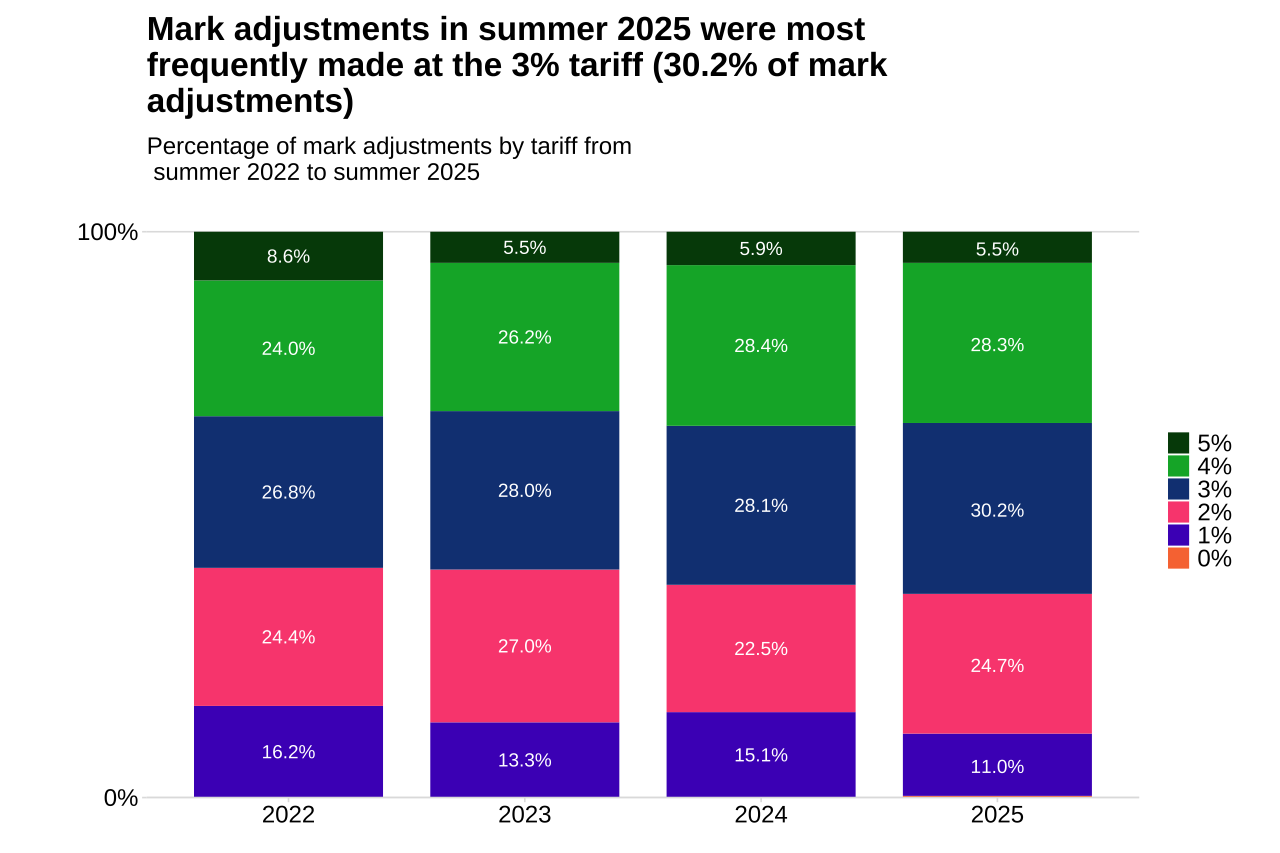
Table 8. Percentage of mark adjustments by tariff from summer 2022 to summer 2025
| Mark adjustment tariff | Percentage of mark adjustments in 2022 | Percentage of mark adjustments in 2023 | Percentage of mark adjustments in 2024 | Percentage of mark adjustments in 2025 |
|---|---|---|---|---|
| 0% | less than 0.1 | less than 0.1 | less than 0.1 | 0.3 |
| 1% | 16.2 | 13.3 | 15.1 | 11.0 |
| 2% | 24.4 | 27.0 | 22.5 | 24.7 |
| 3% | 26.8 | 28.0 | 28.1 | 30.2 |
| 4% | 24.0 | 26.2 | 28.4 | 28.3 |
| 5% | 8.6 | 5.5 | 5.9 | 5.5 |
More information on the 0% tariff can be found in the accompanying background notes.
Contextual Information
The Joint Council for Qualifications (JCQ), a membership organisation of 8 providers of qualifications, including the 4 exam boards offering GCSE, AS and A levels in England, publishes guidelines and procedures on special consideration. There may be small changes year-on-year to this document that reflect the procedures in place for a particular exam series.
Special consideration applications are made by schools and colleges to exam boards, usually after an assessment has taken place. Requests specify which students and which components the application is for. In cases where a group of students has been affected by the same issue (for example, a fire alarm during an exam), a group application can cover all students and any components affected by the issue.
To ensure confidentiality, the data in this report has been rounded in line with Ofqual’s rounding policy. Where data is presented by qualification level, AS and A level have been combined.
Further information on this release is available in the background information and data tables accompanying this report.
Head of profession: Ben Cuff