Social housing sales and demolitions 2024-25: Right to Buy sales
Published 12 February 2026
Applies to England

© Crown copyright 2026
This publication is licensed under the terms of the Open Government Licence v3.0 except where otherwise stated. To view this licence, visit nationalarchives.gov.uk/doc/open-government-licence/version/3 or write to the Information Policy Team, The National Archives, Kew, London TW9 4DU, or email: psi@nationalarchives.gov.uk.
Where we have identified any third party copyright information you will need to obtain permission from the copyright holders concerned.
This publication is available at https://www.gov.uk/government/statistics/social-housing-sales-and-demolitions-2024-25-england/social-housing-sales-and-demolitions-2024-25-right-to-buy-sales
The data on Right to Buy presented in this release is complemented by the Right to Buy sales and replacements in 2024-25 statistical release which was published in July 2025. That release focuses on the receipts from the sale of local authority properties and how they are spent on the provision of new social housing. For more information, please see the technical notes.
1. Headline figures
2,038,589 social housing dwellings have been sold through Right to Buy schemes from April 1980 to March 2025. This includes Statutory Right to Buy, Preserved Right to Buy and Voluntary Right to Buy
90% of all recorded social housing sales from April 1980 to March 2025 have been through Right to Buy schemes
In 2024-25 there were: 9,236 sales of social housing through the Right to Buy schemes. This is a 7% increase from 2023-24
629 sales of social housing through the Right to Acquire scheme, a decrease of 18% compared to 2023-24 and the lowest since 2016-17.
2. Right to Buy sales
2.1 Overview
The Right to Buy scheme allows eligible social housing tenants to buy their house at a reduced price and has been in place since 1980. Right to Buy is available to local authority tenants. Some tenants of private registered providers can access the Preserved Right to Buy scheme and previously, Voluntary Right to Buy pilot scheme [footnote 1].
In 2024-25, there were 9,236 sales of social housing through the Right to Buy schemes, a 7% increase compared to 2023-24. Of these 9,236 sales, 7,580 were of local authority owned stock, while 1,656 were private registered provider owned stock [footnote 2].
Significant changes to Right to Buy policy were introduced in November 2024. These will be discussed in the next section.
2.2 Right to Buy sales trends in context
Since the introduction of Right to Buy in 1980-81, a total of 2,038,589 social housing dwellings have been sold to tenants through all Right to Buy schemes[footnote 3] up to the end of March 2025. Preserved Right to Buy was introduced in 1988-89, although data on the number of sales is only available from 1996‑97. There were two pilots of the Voluntary Right to Buy, which ran between 2016 to 2021. The vast majority (94%) of all Right to Buy sales to date have been to local authority tenants.
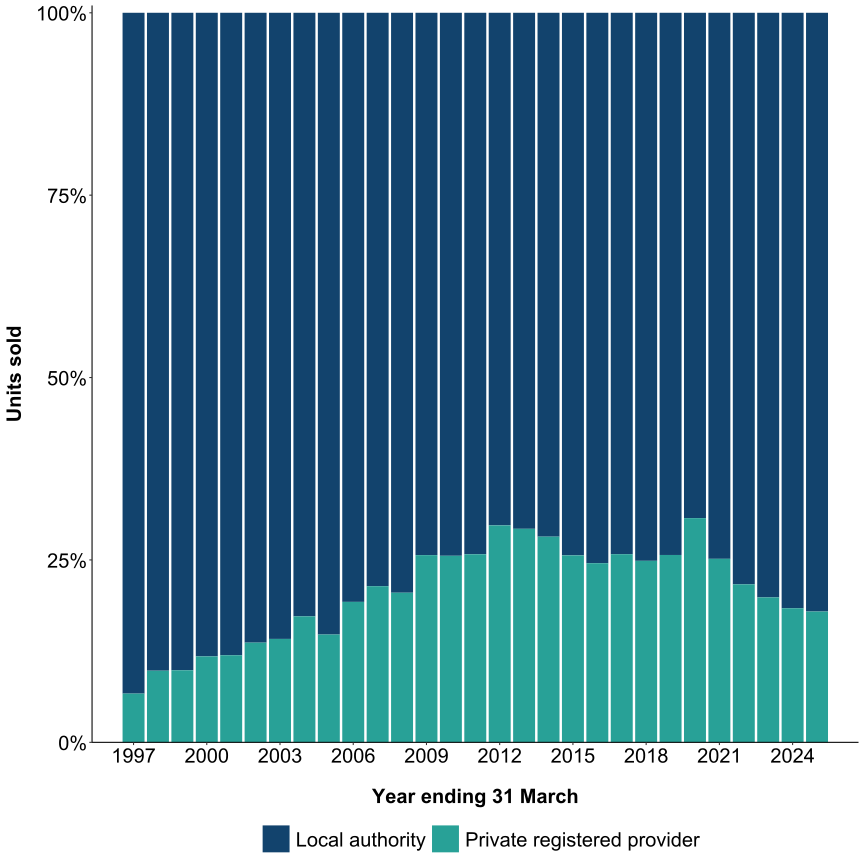
Between 2008-09 and 2020-21, the share of Right to Buy sales made to tenants of private registered provider owned social housing was relatively stable, averaging 27%. However, this fell to 18% in 2024-25, possibly reflecting the end of the Voluntary Right to Buy pilots.
Figure 2.1 Proportion of sales to tenants through the Right to Buy Schemes in England, by provider 1996-97 to 2024-25
The data for this chart is available in Live Table 678.
At the peak of Right to Buy sales in 1982-83, there were 167,123 dwellings sold through the scheme, representing 3% of social housing stock at 31 December 1982[footnote 4]. Subsequent years saw several smaller peaks and troughs, reflecting various changes in policy relating to Right to Buy. In 1986 discount levels for flats were increased and the minimum qualifying tenancy period was reduced from 5 years to 2 years. These changes contributed to a second major peak in sales between 1988-89 and 1989-90 when over 130,000 dwellings were sold each year,representing 3% of stock at the time.
Figure 2.2 Sales to tenants through Right to Buy schemes per 1,000 stocks, by provider 1980-81 to 2024-25
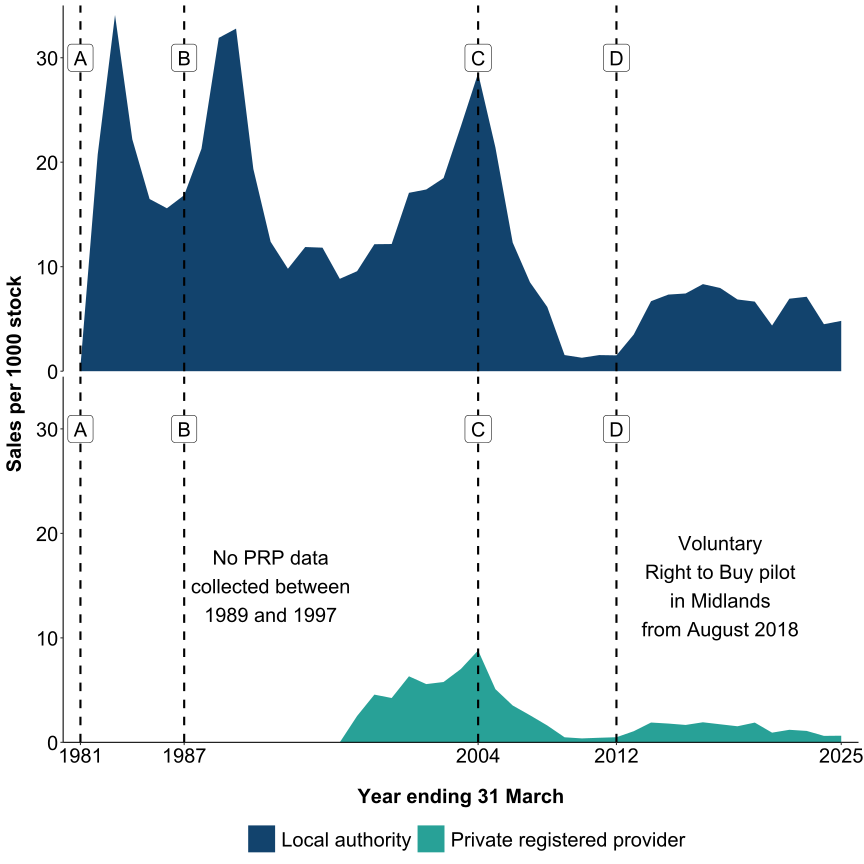
A: Start of Right to Buy Scheme, B: discounts increased for flats, C: discounts and eligibility reduced, D: discounts increased (reinvigoration)
The data for this chart is available in Live Table 678.
In 1999, the maximum discount was reduced from £50,000 to a regionalised maximum, ranging from £22,000 in the North East to £38,000 in London. This change, combined with the government’s announcement that Right to Buy discounts would be reduced, led to a sharp increase in sales from 1998 to 2004. Right to Buy sales in 2003-04 reached 84,102, the highest since 1989-90.
Further changes were introduced in 2003, increasing the minimum qualifying tenancy to 5 years and reducing the discount levels. These measures, alongside the global financial crisis, contributed to a substantial decline in sales: annual Right to Buy sales fell from 84,102 in 2003-04 to 3,144 in 2009-10, a 96% reduction.
In April 2012, the government changed the maximum cash discount available for Right to Buy sales to a new higher level of £75,000 across England. In March 2013, the maximum discount available to tenants in London boroughs was raised to £100,000, reflecting rising property prices in the capital. From July 2014, the government changed the maximum cash discount available for the Right to Buy to increase annually in line with the Consumer Price Index (CPI) rate of inflation. This reinvigoration of the scheme, together with the introduction of the Voluntary Right to Buy pilots from 2015, increased sales through Right to Buy to 18,100 in 2016-17; more than a fivefold increase compared to 2009-10, but still a 78% decrease compared to 2003-04.
Since 2016-17, annual sales of social housing through the Right to Buy schemes have generally declined, from 18,100 in 2016-17 to 15,257 in 2019-20. There was a sharper fall in 2020-21, likely due to the restrictions introduced in response to the COVID-19 pandemic. Sales rose again to 14,000 in 2021-22 and 2022-23. In 2023-24, sales through the Right to Buy scheme decreased again to 8,659, the lowest annual figure since 2012-13.
In November 2024, the government made significant changes to the Right to Buy scheme, including a reduction of the maximum cash discounts to the pre-2012 values. The 21-day window between the policy announcement and its implementation led to a spike in Right to Buy applications which will be discussed in the applications section below. However, most completed sales in 2024-25 will relate to applications made before the policy change. In 2024-25, sales through the Right to Buy scheme increased by 7% from 2023-24. The full impact of the new rules is not expected until the 2025-26 reporting period, due to the standard timeline for processing Right to Buy sales and the time needed for landlords to process the high volume of applications which were received ahead of the discount changes coming in.
Figure 2.3 Sales to tenants through Right to Buy schemes per 1,000 stocks, by provider 2002-03 to 2023-25
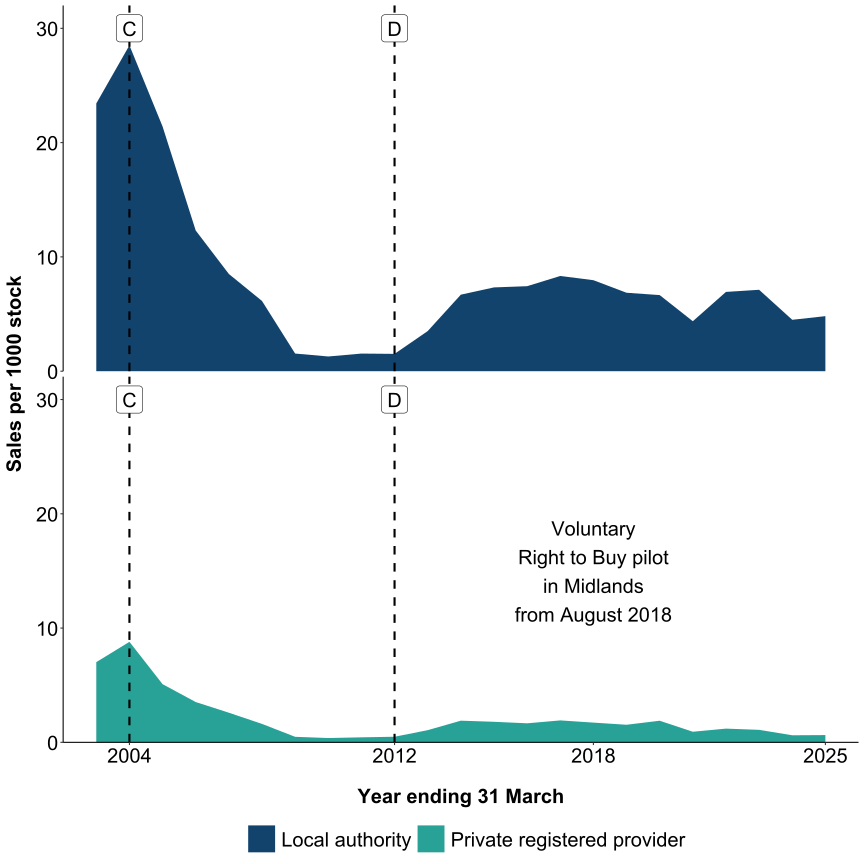
C: discounts and eligibility reduced, D: discounts increased (reinvigoration)
The data for this chart is available in Live Table 678.
3. Right to Buy sales by region
Since 2022-23, Preserved Right to Buy and Voluntary Right to Buy data, which relate to sales of private registered provider-owned social housing stock, are now available by local authority.
Historically, the data collected by the Regulator of Social Housing (RSH) only recorded the total number of sales to tenants by local authority. This included Preserved Right to Buy, Voluntary Right to Buy and any other sales to tenants. The number of sales for the separate categories were only collected at England level.
To allow comparison over time, in this section we use the term ‘Right to Buy’ for private registered provider sales to mean all sales to sitting tenants. Local authority Right to Buy sales do not include any other types of sales. Between 2012-13 and 2024-25, Preserved and Voluntary Right to Buy accounted for 74% of total sales to sitting tenants of private registered provider-owned properties.
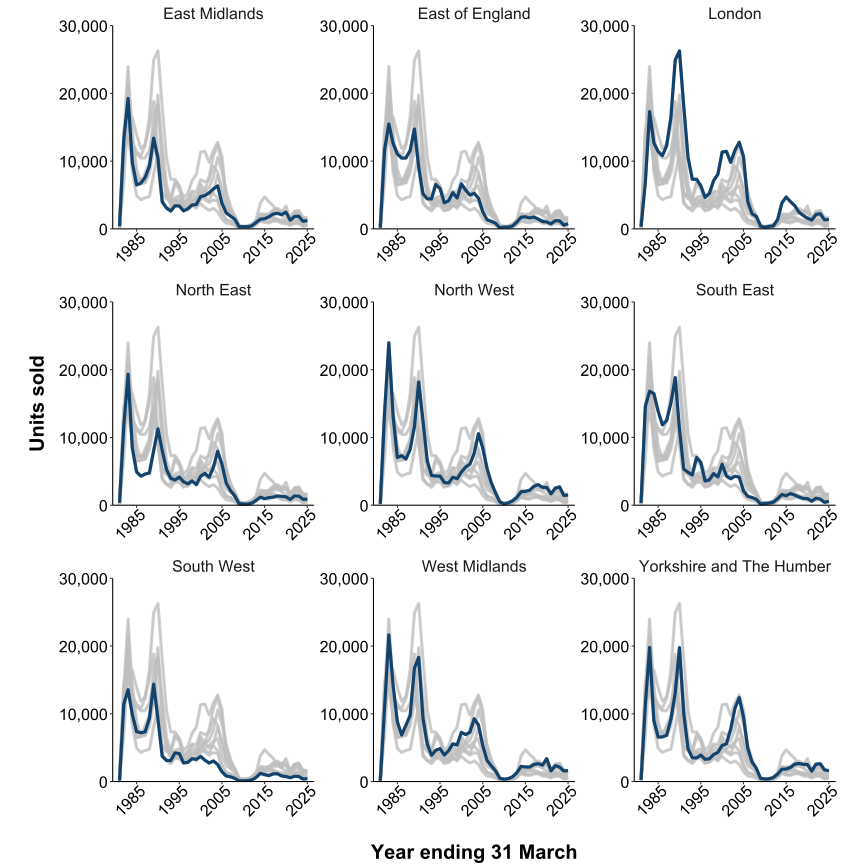
The figure below shows the total number of Right to Buy sales to sitting tenants by region between 1980 and 2025. During the first 4 years of the Right to Buy scheme, which was introduced in 1980, the North West and West Midlands were the regions with the most sales. When the scheme was changed to increase the discounts for flat sales in 1986, London recorded the most sales in nearly all subsequent years until 2017-2018. Since then, the West Midlands and Yorkshire and The Humber have had the highest sales.
Until 2010-11, all Right to Buy sales recorded by region are only local authority sales; from 2011-12 onwards private registered provider sales are also included in the total. Since reinvigoration in 2012, sales to sitting tenants increased in all regions of England, with the largest increase seen in London.
Figure 2.4 Sales to sitting tenants through Right to Buy schemes, by English Region 1980-81 to 2024-25
The sales data for this chart is available in the Social Housing Sales and Demolitions open data and stock figures are taken from the Local Authority Housing Statistics and the Statistical Data Return for local authorities and private registered providers respectively.
In 2024-25, the percentage of stock owned by both local authorities and private registered providers that was sold to sitting tenants through Right to Buy schemes ranged from 0.1% in the South East, South West and North west to 0.3% in the East Midlands and Yorkshire and the Humber. Both the East Midlands and Yorkshire and the Humber have seen higher sales to sitting tenants as a proportion of existing social housing stock in recent years.
Figure 2.5 Sales to sitting tenants through Right to Buy schemes as a percentage of total stock, by English Region 2008-09 to 2024-25
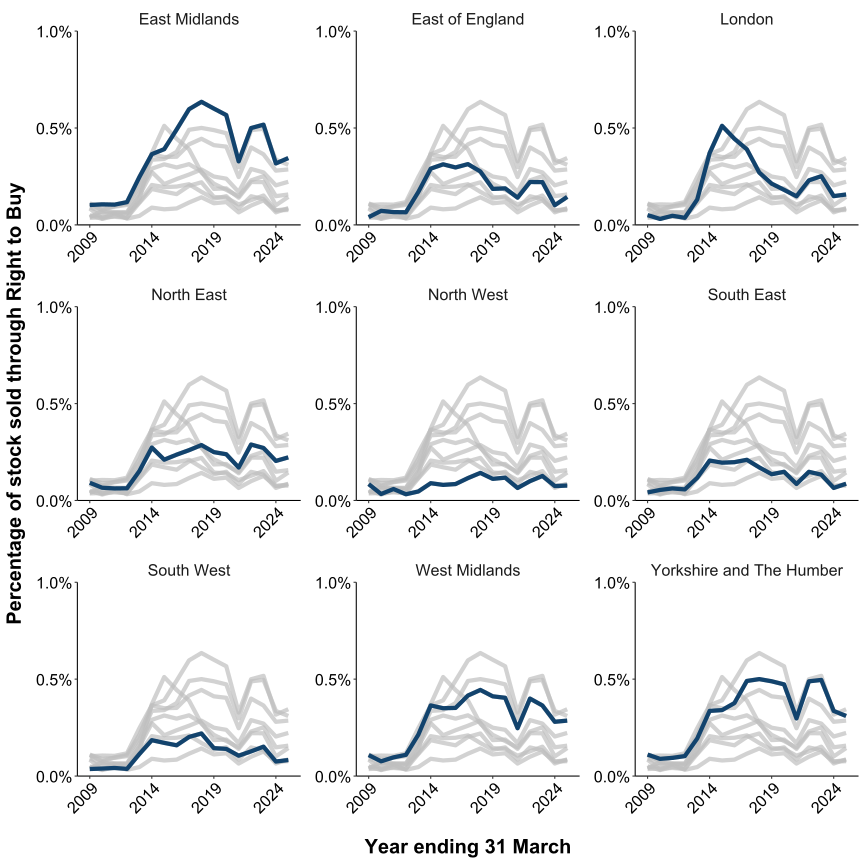
The sales data for this chart is available in the Social Housing Sales and Demolitions open data and stock figures are taken from the Local Authority Housing Statistics and the Statistical Data Return for local authorities and private registered providers respectively.
3.1 Sales to sitting tenants by region and provider
Local authorities were historically the main provider of social housing across all English regions. However, transfers of stock from local authorities to private registered providers, including large scale voluntary transfers (LSVTs) [footnote 5], shifted the balance between local authority and private registered provider owned social housing stock. Between 1988 and 2015 [footnote 6], over 1.3 million social housing dwellings were transferred from local authorities to private registered providers as part of a total of 307 LSVTs. LSVTs were more prevalent in certain regions of the country, particularly in the North West where 85% of stock was owned by private registered providers by 2015.
Between 2015-16 and 2024-25, 74% of Right to Buy sales in the North West were of private registered provider stock, Reflecting the regional distribution of LSVTs. By contrast, in Yorkshire and the Humber, where there were historically fewer LSVTs, the Right to Buy sales were predominantly (81%) local authority owned stock.
Figure 2.6 Sales to sitting tenants through Right to Buy schemes, by English region and provider 2011-12 to 2024-25
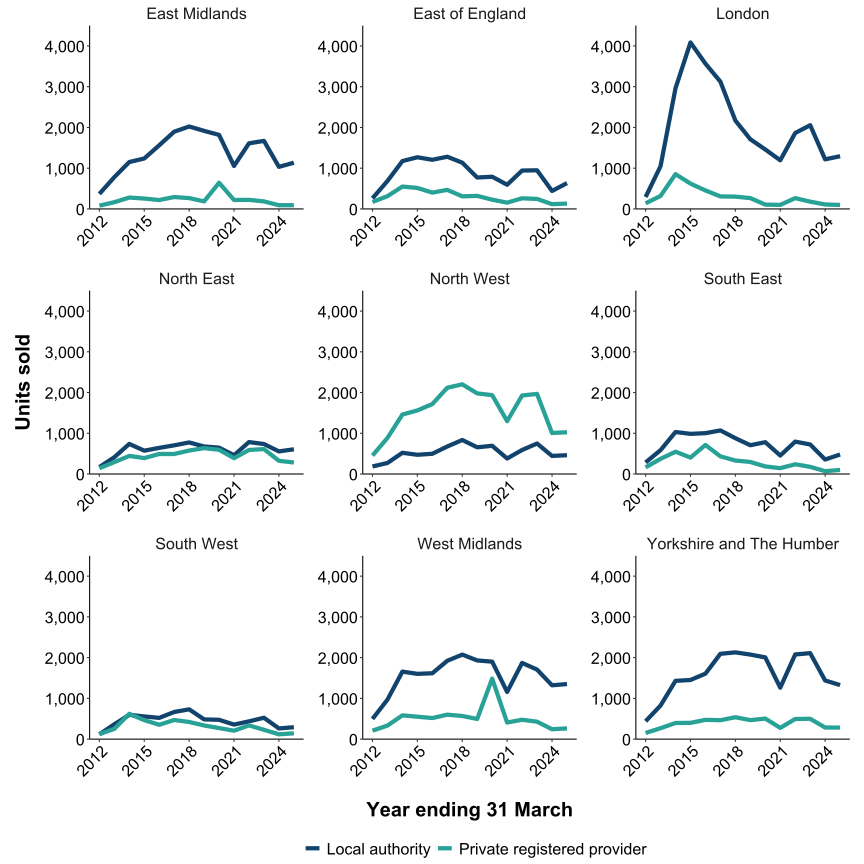
The sales data for this chart is available in the Social Housing Sales and Demolitions open data and stock figures are taken from the Local Authority Housing Statistics and the Statistical Data Return for local authorities and private registered providers respectively.
3.2 Right to Buy sales of flats
Right to Buy sales of flats by provider
Data on the percentage of Right to Buy sales of local authority and private registered provider stock which were flats is available from 1980-81 and 1996-97 onwards, respectively [footnote 7] [footnote 8]. However, there is a two year gap of information for 1984-85 and 1985-86. Combined information for both local authorities and private registered providers is only available from 1996-97, and therefore this section will focus on that period.
In 2024-25, 30% of Right to Buy sales were of flats, the third highest proportion recorded, after 2014-15 and 2023-24. The percentage of Right to Buy sales that were flats increased steadily between 1996-97 and 2014-15 from 12% to 32%. This was followed by a decrease between 2015-16 and 2019-20 from 31% to 22%, before increasing again to 30% by 2024-25.
For local authorities, 34% of Right to Buy sales of local authority owned stock in 2024-25 were flats, compared to 37% in 2023-24. Despite some fluctuations, this proportion increased from 1996-97 to 2014-15. After a fall in the subsequent years, it is increasing again nearly year-on-year between 2019-20 and 2023-24.
For private registered providers, 12% of Right to Buy sales were flats in 2024-25, similar to the previous year. Generally, despite some fluctuation in a few years, the proportion of Right to Buy sales by private registered providers which were flats has varied between 10% and 13% since 1996-97. [footnote 8]
Figure 2.7 Percentage of Right to Buy sales that were flats, England 1996-97 to 2024-25
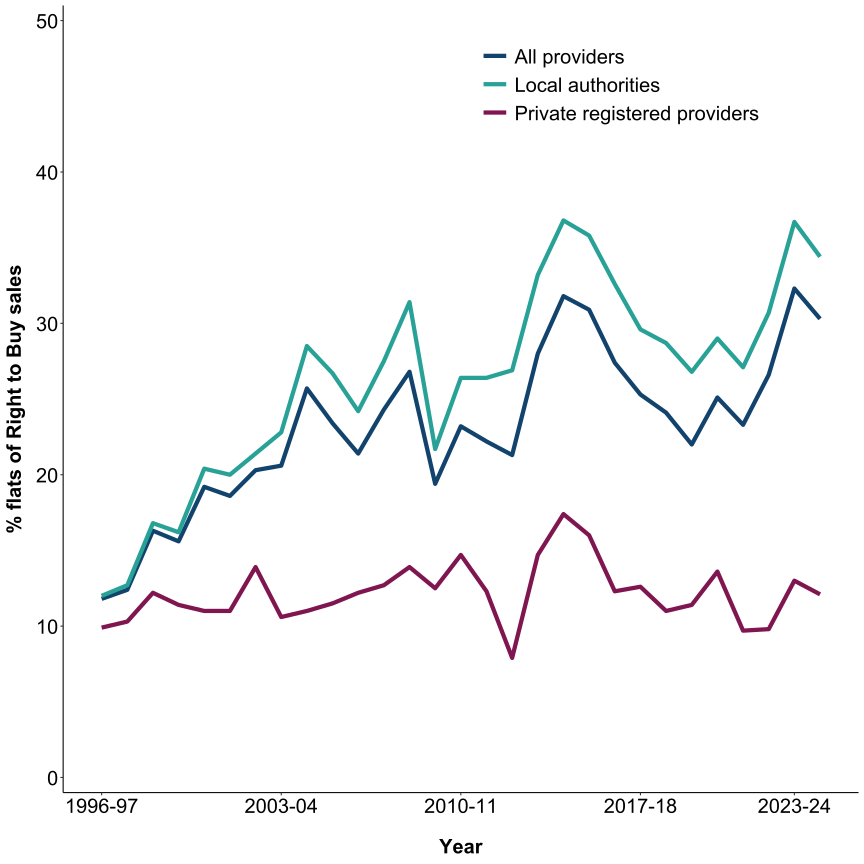
The data for this chart is available in Live Table 681.
Local authority Right to Buy sales of flats by region
Data for the number of Right to Buy sales by local authorities is available continuously since 1986-87. The regional breakdown shows that London has been consistently and by far the region with the highest proportion of sales of flats under the Right to Buy scheme. In 2024-25, 78% of Right to Buy sales in London were flats, while the second highest proportion was in the South West, at 43%.
Figure 2.8 Percentage of local authority Right to Buy sales that were flats, by English region 1986-87 to 2024-25
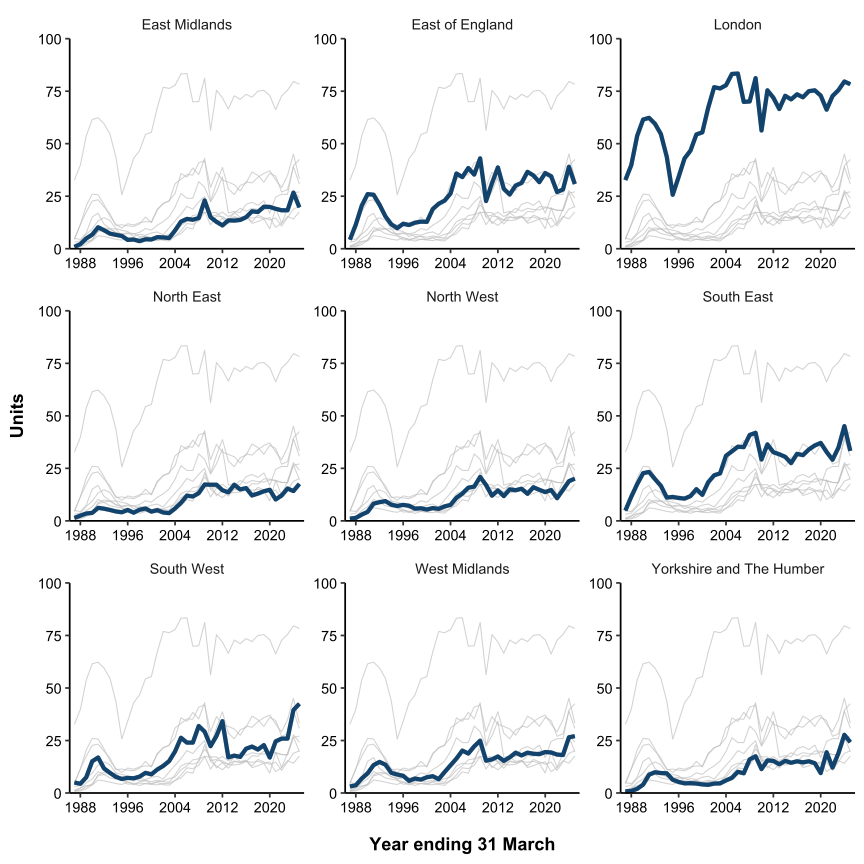
The data for this chart is available in the Local Authority Housing Statistics open data.
There is no data on the number of flats owned by local authorities by region, and therefore it is not possible to adjust for the fact that some regions may see higher proportions of sales of flats because of the profile of existing stock. However, it is likely that regions with higher proportions of sales of flats also tend to have more flats owned by local authorities as a proportion of existing stock.
4. Right to Buy discounts
Financial data on Right to Buy discounts is available from 1998-99 onwards for local authorities and private registered providers[footnote 8].
In 2024-25, the average market value of properties sold through Right to Buy was £183,330 for local authorities and £155,250 for private registered providers, an increase of 6% and 9% compared with 2023-24, respectively.
The average monetary discount for local authorities was £78,750 and for private registered providers was £78,170. These increased by 7% and 2%, respectively.
In 2024-25, the average discount of a Right to Buy sale was 43% for local authorities and 50% for private registered providers. Most completions in 2024-25 relate to applications made before the November 2024 discount changes and the average discount per dwelling reflects this.
Between 1998-99 and 2011-12, the average discount reduced from 50% for both local authorities and private registered providers to 26% and 32%, respectively. Following the reinvigoration of the Right to Buy scheme in 2012, which also impacted Preserved Right to Buy, the average discount increased to 45% and 50% in 2012-13 for local authorities and private registered providers, respectively. Since 2012-13 the percentage discount has remained broadly stable.
Despite the percentage discount for private registered provider sales remaining higher than for local authority sales between 2012-13 and 2024-25, the value of the discount for local authority sales has remained similar to those for private registered providers. This is partly because since 2012-13, London and the South East have accounted for 28% of all local authority Right to Buy sales, and these regions have higher property values than any other region in England.
5. Right to Buy applications
Data on applications by tenants to purchase their social housing through the Right to Buy scheme is only collected for local authorities and is available since 1998-99. There is no information on the number of Right to Buy applications for private registered providers.
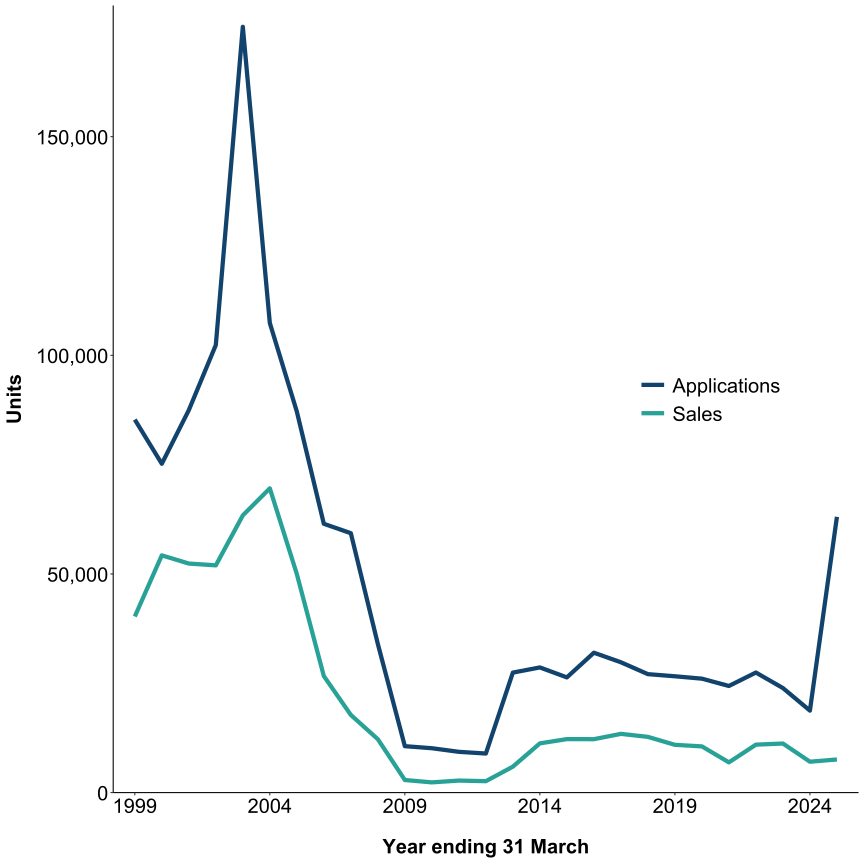
In 2024-25, there were 63,068 applications by local authority tenants to purchase their social housing property through Right to Buy, an increase of 236% compared to 2023-24. This increase is expected to be related to the announcement in November 2024 of the reduction of Right to Buy discounts. The recorded peak of applications in 2002-03 also coincided with an announcement the reduction of Right to Buy discounts laid before Parliament on 6 March 2003 and that came into force on 27 March 2003.
The graph below (Figure 2.9) shows the number of local authorities Right to Buy applications since 1998-99. It shows a high peak of 175,121 applications in 2002-03, before a rapid decrease until 2011-12, when there were only 8,938 applications. Following the reinvigoration of the Right to Buy scheme in 2012, the number of applications increased to 27,445 in 2012-13, peaking at just under 32,000 in 2015-16, before a gradual reduction since then. Applications reached their lowest level since the 2012 reinvigoration in 2023-24. The number of sales each year between 2012-13 and 2023-24 is typically around 40-50% of the number of applications. The increase in applications in 2024-25 we see are now reaching the highest level since 2004-05. This spike was caused by the 21-day window during which tenants could still apply to purchase their property under the old discount rates.
Figure 2.9 Local authority Right to Buy applications and sales, England 1998-99 to 2024-25
The data for this chart is available in Live Table 682.
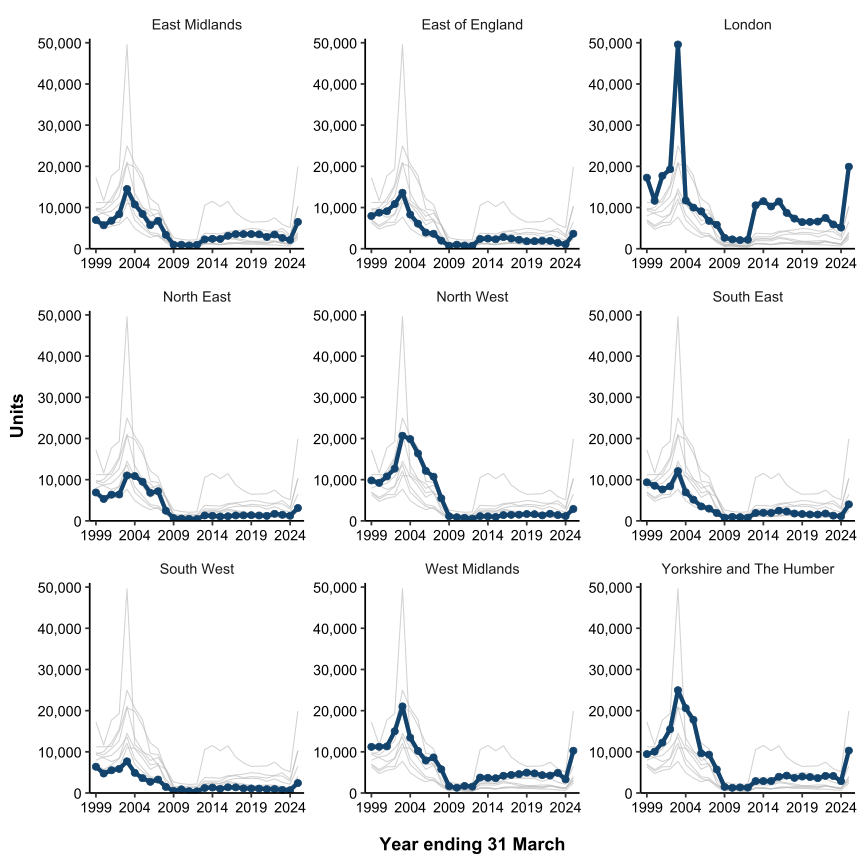
Of the 63,068 applications in 2024-25, 19,912 (32%) were in London and 43,156 (68%) were in the rest of England [footnote 9]. The increase in the number of applications after reinvigoration in 2012-13 has been driven by applications to local authorities in London.
Figure 2.10 Local authority Right to Buy applications, by English region, 1998-99 to 2024-25
The data for this chart is available in the Local Authority Housing Statistics open data.
6. Number of bedrooms in Right to Buy properties
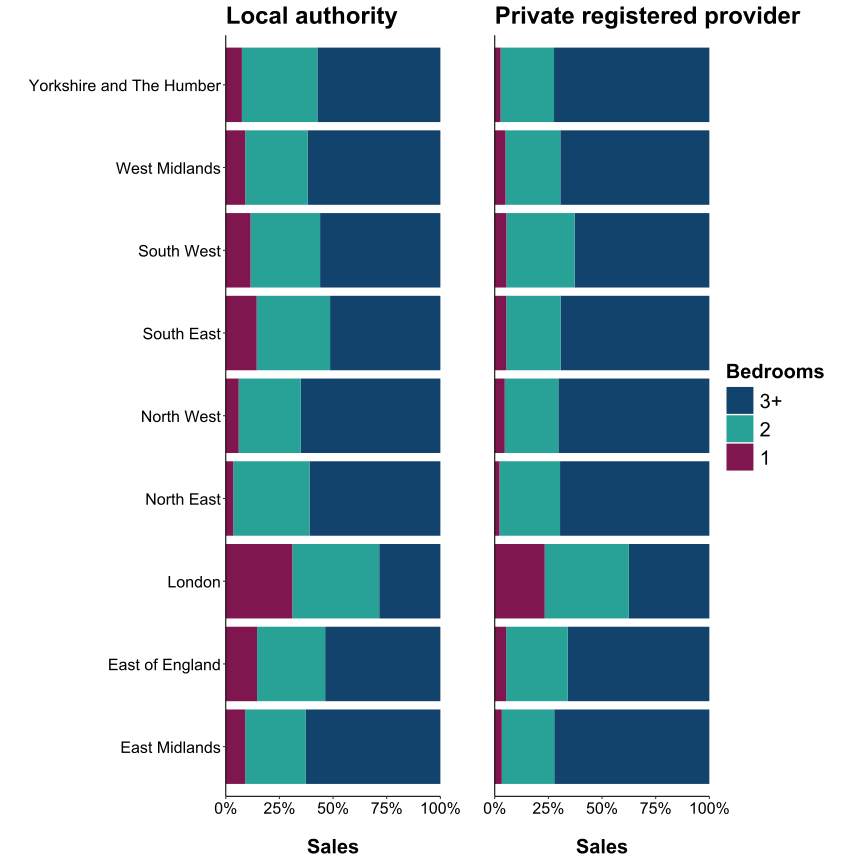
Since data on bedroom numbers of local authority Right to Buy sales were first collected in 2012-13, 14% of these sales have been of 1-bedroom properties, 33% have had 2 bedrooms and 53% have been properties with 3 bedrooms or more. In this same period, 5% of private registered provider sales through Right to Buy were 1 bedroom, 27% were 2 bedroom and 68% were 3 or more bedrooms. These proportions have remained broadly similar since 2012-13.
The chart below (Figure 2.11) shows the breakdown of Right to Buy sales by the number of bedrooms by region for private registered provider and local authority sales [footnote 10]. The chart below shows that for all regions of England; private registered providers proportionally sell fewer 1 bed properties and more 3 or more bed properties than local authorities.
The chart also shows that for both local authorities and private registered providers, the proportion of 1-bedroom properties sold in London is considerably larger, and the proportion of 3 or more-bedroom properties sold in London is considerably smaller, compared to all other regions.
Figure 2.11 Number of bedrooms in properties sold through Right to Buy schemes, by provider and English Region 2012-13 to 2024-25
The data for this chart is available in Section B of the Local Authority Housing Statistics for local authorities and the Statistical Data Return for private registered providers.
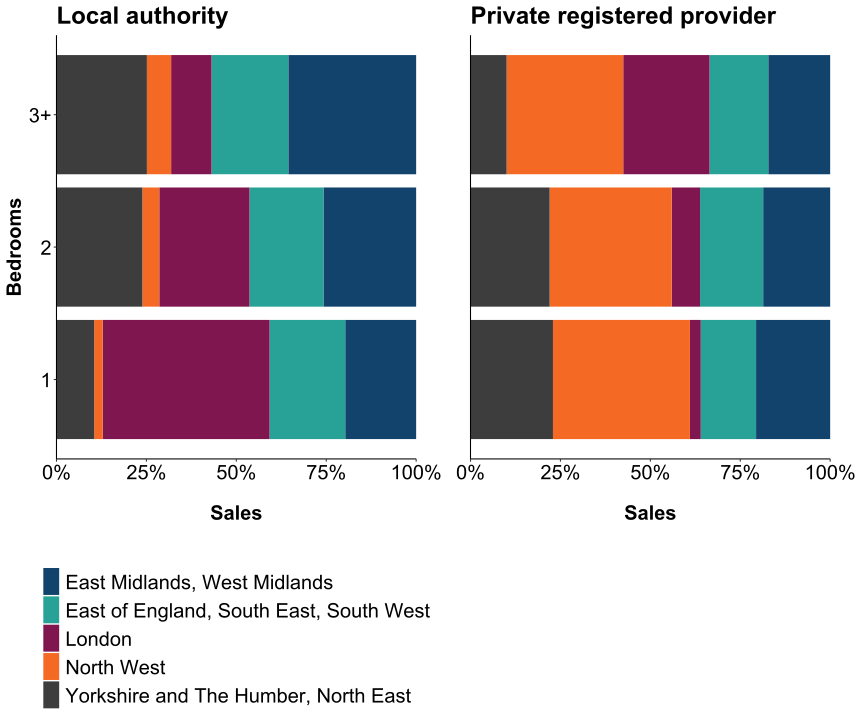
The chart below (Figure 2.12) shows the regional breakdown of Right to Buy sales by local authority and private registered provider per number of bedrooms. It shows that for local authority Right to Buy sales with three or more bedrooms, most of the sales are in the combined East Midlands and the West Midlands, reducing the share for properties with fewer bedrooms. By contrast London is the region with most of the one-bedroom properties sales, with this proportion decreasing for larger properties.
For private registered provider sales, the North West has larger share than any other region for properties of all sizes. And for one-bedroom properties, the contrast with local authorities is more noticeable, with a small proportion of one-bedroom properties sales in London.
Figure 2.12 Regional breakdown of the number of bedrooms in properties sold through Right to Buy schemes, by provider 2012-13 to 2024-25
The data for this chart is available in Section B of the Local Authority Housing Statistics for local authorities and the Statistical Data Return for private registered providers.
For private registered providers, the number of 1-, 2- and 3 or more-bedroom properties sold is proportionally similar across all regions of England. Exceptions include London, and the combined North East and Yorkshire and the Humber. The number of private registered provider Right to Buy sales of 2- and 3 or more-bedroom properties sold is also proportionally similar in the North East and Yorkshire and the Humber, but is lower for sales of 1-bedroom properties. The proportion of private registered provider Right to Buy sales in London decreases as the number of bedrooms increases.
7. Right to Acquire
Tenants of social housing owned by private registered providers who do not have the Preserved Right to Buy may be able to purchase their property through the Right to Acquire scheme. Right to Acquire offers a discount between £9,000 and £16,000 to tenants depending on the location of the property. Since its introduction in 1998, there have been 14,147 sales of social housing through the Right to Acquire recorded by Homes England. [footnote 11]
In 2024-25, there were 629 sales of social housing through Right to Acquire, a decrease of 18% compared to 2023-24.
Figure 2.13 Right to Acquire Sales in England, 1998-99 to 2024-25
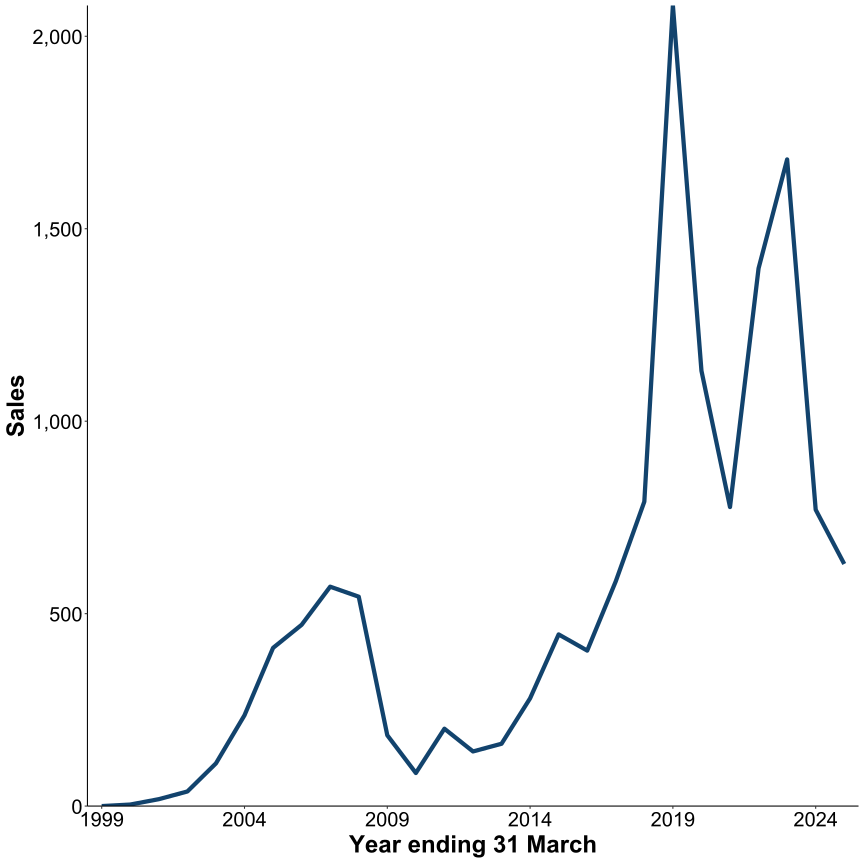
The data for this chart is available in Live Table 677.
-
Preserved Right to Buy and, previously the Voluntary Right to Buy, is only available to private registered provider tenants. More information on both these schemes can be found in the technical notes. The Voluntary Right to Buy pilot scheme ran in the Midlands from 2018 to 2021. In November 2024, the government announced it will not be taking forward the extension of the Right to Buy to housing association tenants. ↩
-
Data sourced from the Local Authority Housing Statistics (LAHS) for local authorities and the Regulator of Social Housing’s Statistical Data Return (SDR) for private registered providers. ↩
-
This includes Statutory Right to Buy, Voluntary Right to Buy and Preserved Right to Buy. The Voluntary Right to Buy pilot was launched in the East and West Midlands in August 2018. The Voluntary Right to Buy concluded in 2021. ↩
-
Data of social housing stock sourced from Live Table 104. ↩
-
A Large-Scale Voluntary Transfer is the voluntary transfer of ownership of all or some of a local authority’s tenanted and leasehold homes to a private registered housing provider, registered by the Social Housing Regulator, in return for a payment for the value of that stock ↩
-
Data available shows the dates for 307 large scale voluntary transfers between 15 December 1988 and 13 April 2015. ↩
-
Data of Right to Buy sales which were flats sourced from Live Table 681. ↩
-
From February 2026, the methodology has been updated to ensure that any voluntary returns from a small number of local authorities have been excluded in the estimate of private registered providers Right to Buy flats and in the calculation of private registered providers’ financial information for Right to Buy in Live Tables 681 and 682, respectively. Therefore, historic figures may have been amended. ↩ ↩2 ↩3
-
See Section B of the Local Authority Housing Statistics ↩
-
Local authority data is collected from the Local Authority Housing Statistics (LAHS) data collection, and private registered provider data is collected from the Continuous Recording (CORE) sales dataset. ↩
-
The time series on Right to Acquire sales is derived from data reported to Homes England (HE) and the Greater London authority (GLA). These may differ from the Statistical Data Return (SDR) figures due to the coverage, response rates, and timing of the SDR returns which are used for Live Table 678. ↩