Summary of the Social Housing Decarbonisation Fund statistics: April 2026
Published 30 April 2026
Applies to England

© Crown copyright 2026
This publication is licensed under the terms of the Open Government Licence v3.0 except where otherwise stated. To view this licence, visit nationalarchives.gov.uk/doc/open-government-licence/version/3 or write to the Information Policy Team, The National Archives, Kew, London TW9 4DU, or email: psi@nationalarchives.gov.uk.
Where we have identified any third party copyright information you will need to obtain permission from the copyright holders concerned.
This publication is available at https://www.gov.uk/government/statistics/social-housing-decarbonisation-fund-statistics-april-2026/summary-of-the-social-housing-decarbonisation-fund-statistics-april-2026
Introduction
The Social Housing Decarbonisation Fund (SHDF) is a government scheme designed to upgrade a significant amount of the social housing stock currently below Energy Performance Certificate (EPC) C up to that standard.
The Government launched Wave 1 of the SHDF in August 2021. It awarded around £179m of grant funding for delivery from 2022 into 2023 for energy performance improvements to up to 20,000 social housing properties.
Successful projects within Wave 2.1 of the SHDF were announced on 22 March 2023. Wave 2.1 of the SHDF awarded around £778m of grant funding to 104 projects, delivering from 2023 to 2026.
Wave 2.2 of the SHDF awarded around £80m of grant funding from April 2024, building on the allocations made under the previous Wave 2.1 for delivery from 2024 to 2026.
What you need to know about these statistics
This release presents the latest statistics on the SHDF Wave 1, Wave 2.1 and Wave 2.2.
SHDF Wave 1 is now closed and the statistics are based on returns from all 62 local authorities who participated in this wave. SHDF Wave 2.1 and Wave 2.2 are actively reporting.
The data in these statistics are based on returns submitted by mid-April 2026, covering measure installations to the end of February 2026.
The Wave 2.1 data is based on returns from 102 grant recipients, with completed installations reported by 82 grant recipients.
The Wave 2.2 data is based on returns from 38 grant recipients, with completed installations reported by 29 grant recipients.
All figures in this publication are provisional and subject to revision.
Key statistics
Total homes upgraded
To the end of February 2026, there were around 136,900 measures installed in 63,600 households across SHDF Wave 1, Wave 2.1 and Wave 2.2.
SHDF Wave 2.1 has delivered around 96,000 measures in 43,500 households, while Wave 2.2 has installed around 9,100 measures in 4,100 households up to the end of February 2026.
Almost 100% of upgraded homes were improved to EPC band C or above under Wave 2.1 (35,000 households), and 99% under Wave 2.2 (3,110 households). This is based on the 81% (35,100 households) of all households for Wave 2.1 and 77% (3,130 households) for Wave 2.2, where pre and post installation EPC ratings are known and initial rating was band D or lower.
Delivery by month
To the end of February 2026, there have been around 96,000 measures installed in 43,500 households under SHDF Wave 2.1. This is an increase of 13,740 measures installed (17%) and 4,950 households upgraded (13%) compared to the March statistical release. Of this increase, 13,390 measures (97%) and 4,830 households (98%) came from upward revisions to previous months from Grant Recipients.
As shown in Figure 1, 350 measures were installed in February 2026, 430 in January 2026 and 640 in December 2025 under Wave 2.1. There was a similar pattern in households upgraded, with 120 households upgraded in February 2026, 220 households in January 2026 and 210 in December 2025. It is likely that data, especially for the most recent months, will be revised upwards in future publications, but monthly upgrades for Wave 2.1 have decreased significantly from the 1,000-2,000 homes upgraded per month from January 2024-June 2025.
There have been around 9,100 measures installed in 4,100 households under SHDF Wave 2.2 to the end of February 2026. This is an increase of 390 measures installed (4%) and 150 households upgraded (4%) compared to the March statistical release. Of this increase, 280 measures (73%) and 110 households (75%) came from upward revisions to previous months from Grant Recipients. There were 110 measures installed in February 2026, 140 in both January 2026 and December 2025. There was a similar pattern in households upgraded, with 40 households upgraded in February 2026, 50 households in both January 2026 and December 2025. It is likely that data, especially for the most recent months, will be revised upwards in future publications as more reports are received from Grant Recipients.
Figure 1: Number of Measures Installed by Installation Month under SHDF Wave 1, Wave 2.1 and Wave 2.2
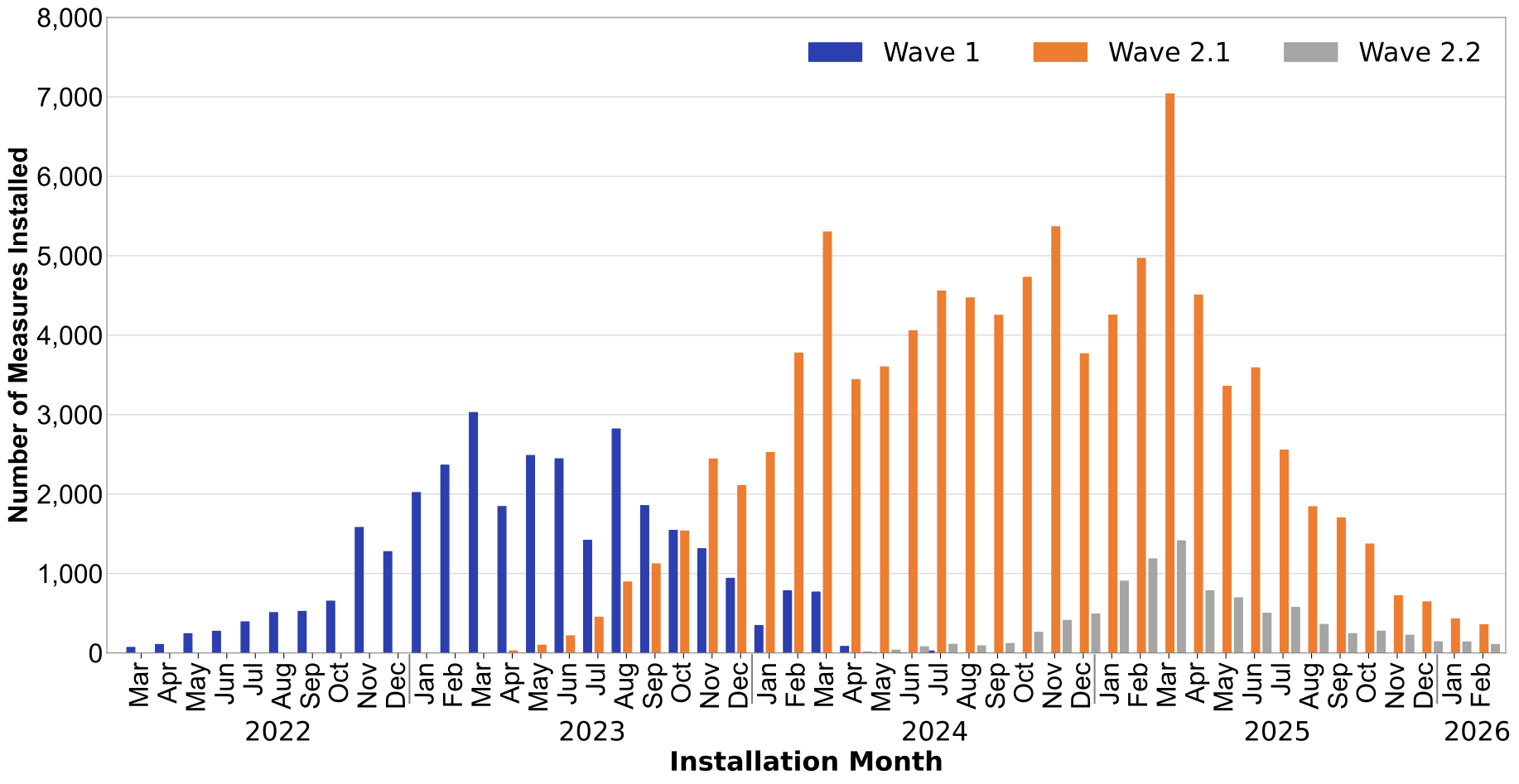
The data used in Figure 1 can be found in Table 1 of the Accompanying Tables.
Delivery by measure type
As shown in Figure 2, the majority of measures installed under SHDF Wave 2.1 have been insulation measures, accounting for 51% (48,900 measures) of the total 96,000 measures; this is followed by electricity related measures (such as Solar PV) accounting for 23% (22,100 measures); and measures to upgrade windows and doors (such as double or triple glazing) accounting for 17% (16,000 measures).
Of the 9,100 measures installed under Wave 2.2, the most common measure types have been insulation measures accounting for 45% (4,100 measures), with electricity related measures accounting for 25% (2,300 measures) and windows and doors measures accounting for 15% (1,400 measures).
Similar to the pattern for Wave 2.1, the majority of measures installed over the period under SHDF Wave 1 were insulation measures accounting for 59% (18,600 measures). Windows and door measures accounted for 23% and electricity related measures accounted for 13% of the total 31,700 measures installed.
The most common single measure type installed under Wave 1, Wave 2.1 and Wave 2.2 is loft insulation, accounting for 23%, 25% and 26% of measures installed respectively.
Figure 2: Percentage of Measures Installed by Measure Type under SHDF Wave 1, Wave 2.1 and Wave 2.2 (March 2022 to February 2026)
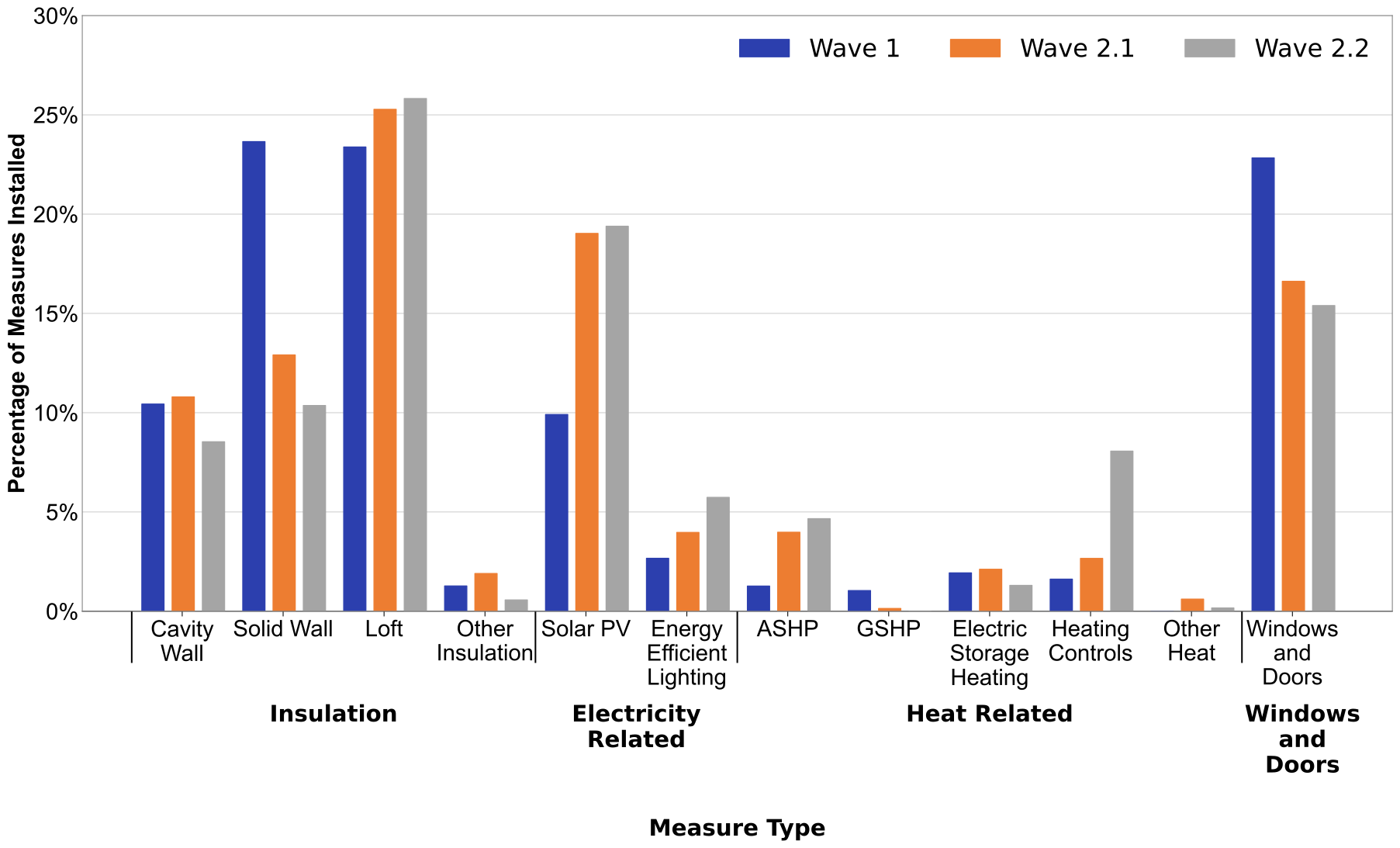
Solid Wall contains External Solid Wall Insulation and Internal Solid Wall Insulation measures; Other insulation contains all roof and floor insulation measures; ASHP: Air Source Heat Pump; GSHP: Ground Source Heat Pump; Other heat contains all other forms of low carbon heat and heating controls measures not listed.
The data used in Figure 2 can be found in Table 3.1, 3.2 and 3.3 of the Accompanying Tables.
Delivery by region
There have been 43,500 households upgraded under SHDF Wave 2.1 up to the end of February 2026, meaning they have at least one measure installed. Figure 3 shows that North West had the most households upgraded (9,100 households, 21%), followed by the West Midlands (6,200 households, 14%) and the East of England (5,200 households, 12%).
Of the 4,100 households upgraded under SHDF Wave 2.2, the South East had the most households upgraded (860 households, 21%), followed by West Midlands and the North East (750 households, 18% each).
Please note the regions have different population sizes and participating number of grant recipients across Wave 1, Wave 2.1 and Wave 2.2.
Figure 3: Number of Households Upgraded under SHDF Wave 1, Wave 2.1 and Wave 2.2 by English Region (March 2022 to February 2026)
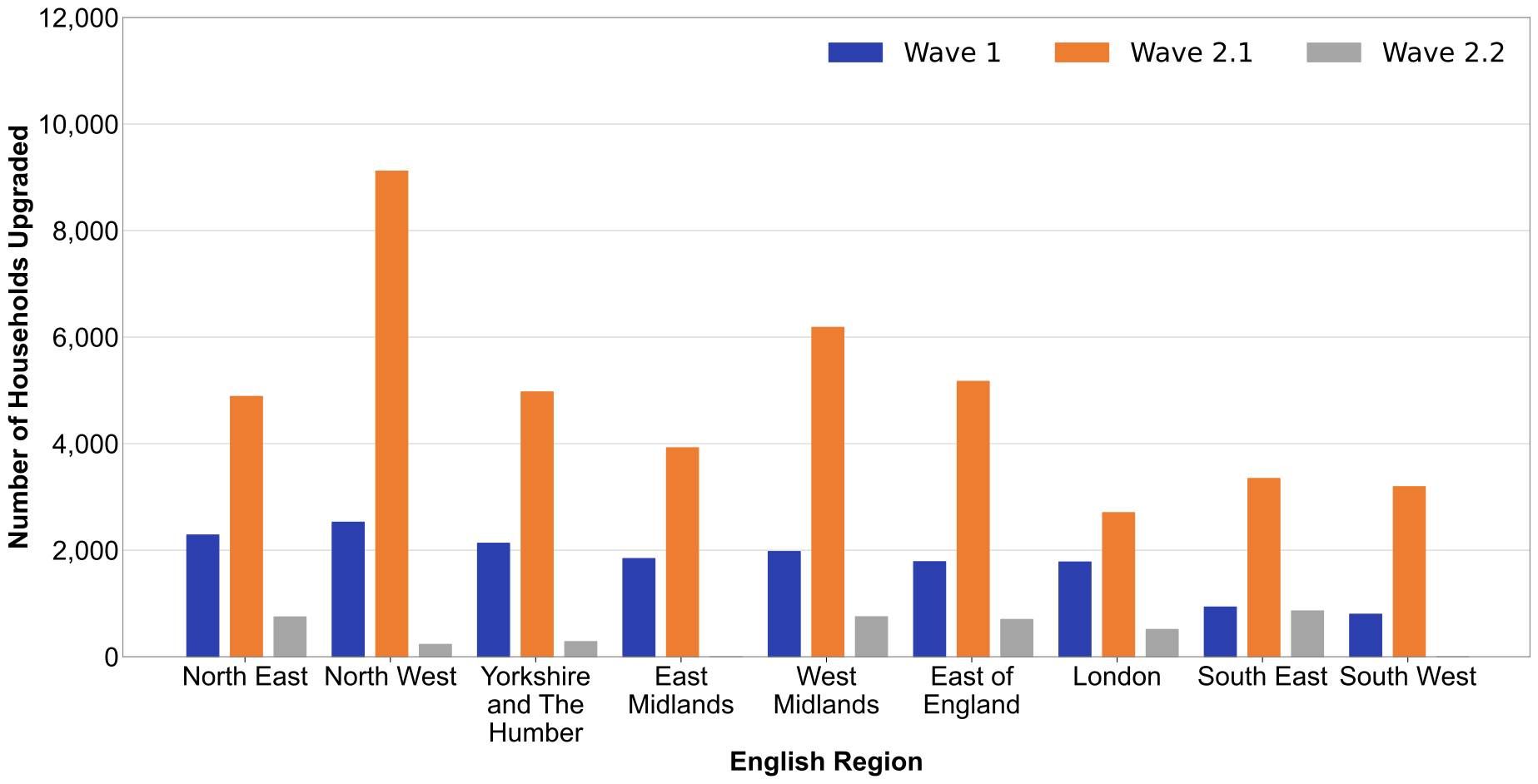
The data used in Figure 3 can be found in Table 6.1, 6.2 and 6.3 of the Accompanying Tables.
Delivery by property type
As shown in Figure 4, the majority of measures were installed in houses under Wave 2.1 accounting for 78% (74,800 measures) of the total 96,000 measures; this is followed by bungalows accounting for 13% (12,700 measures) and flats accounting for 9% (8,400 measures). No measures were installed in Maisonettes.
Similar to the pattern of Wave 2.1, the highest number of measures were installed in houses under Wave 2.2 accounting for 78% (7,200 measures) of the total 9,100 measures, followed by bungalows (1,500 measures, 16%) and flats (470 measures, 5%). No measures were installed in Maisonettes.
Figure 4: Percentage of Measures Installed by Property Type under SHDF Wave 1, Wave 2.1 and Wave 2.2 (March 2022 to February 2026)
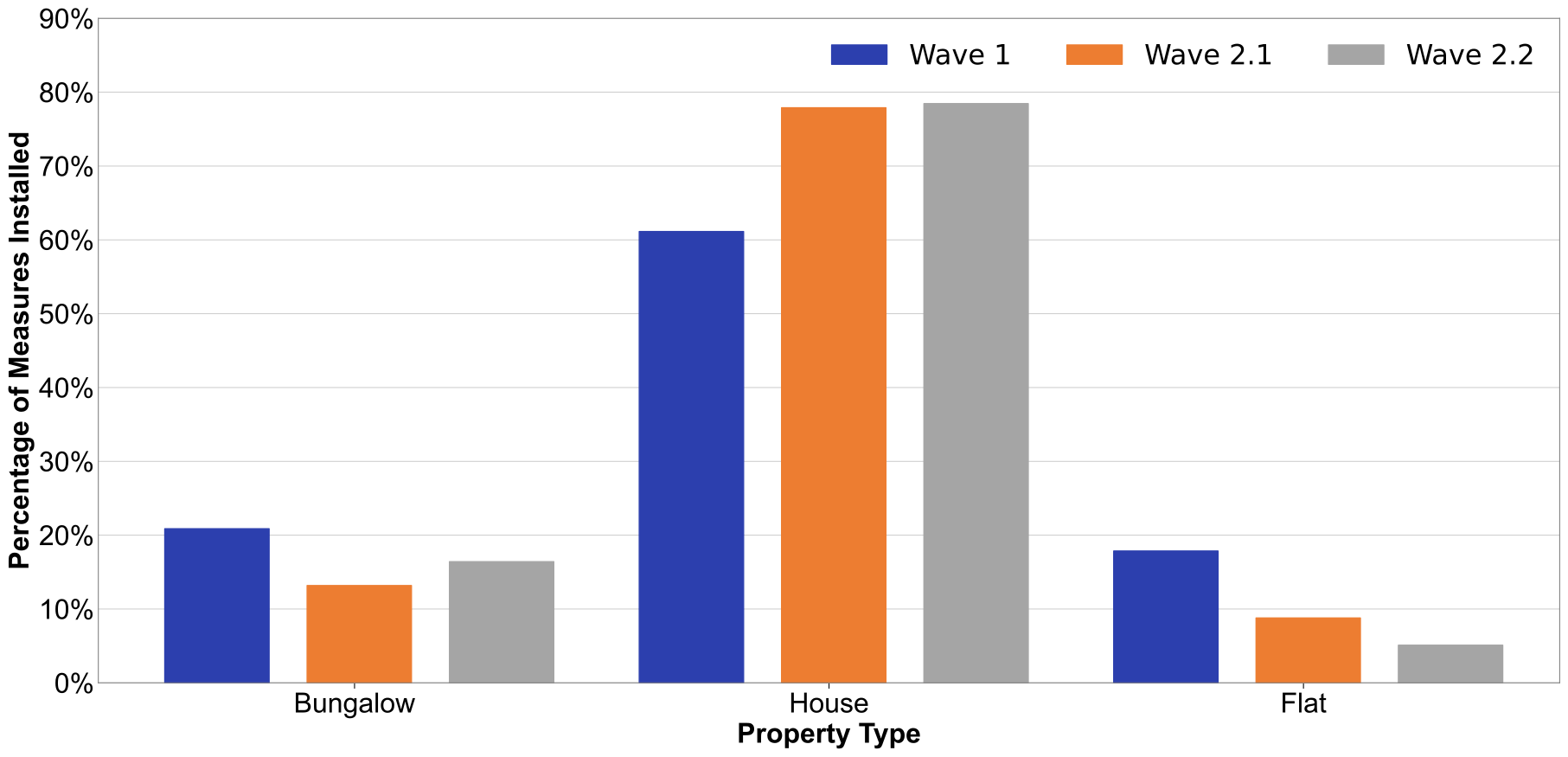
Maisonettes and unknown property type feature less than 1% of measures installed across Wave 1, Wave 2.1, and Wave 2.2 and are not shown on this chart.
The data used in Figure 4 can be found in Table 4.1, 4.2 and 4.3 of the Accompanying Tables.
Annex: Further Information
Next publication date
The next publication will be released at 09:30am on Thursday 28 May 2026.
Scheme Information
More information on the SHDF scheme can be found on the SHDF Wave 1 website, SHDF Wave 2.1 website and SHDF Wave 2.2 website.
Accompanying tables
Tables showing number of measures installed and households upgraded under SHDF are available.
Revisions policy
The Department’s statistical revisions policy sets out the revisions policy for these statistics, which has been developed in accordance with the UK Statistics Authority Code of Practice for Statistics.
User engagement
Users are encouraged to provide comments and feedback on how these statistics are used and how well they meet user needs. Comments on any issues relating to this statistical release are welcomed and should be sent to: EnergyEfficiency.Stats@energysecurity.gov.uk. The Department’s statement on statistical public engagement and data standards sets out the department’s commitments on public engagement and data standards as outlined by the Code of Practice for Statistics.
Pre-release access to statistics
Some ministers and officials receive access to these Official Statistics up to 24 hours before release. Details of the arrangements for doing this and a list of the ministers and officials that receive pre-release access to these statistics can be found in the Department’s statement of compliance with the Pre-Release Access to Official Statistics Order 2008.
Contact
Responsible statisticians: Nick Dann and Christine Cheung
Email: EnergyEfficiency.Stats@energysecurity.gov.uk
Media enquiries: 020 7215 1000
Public enquiries: 0300 068 6838