Seasonal influenza vaccine uptake in frontline healthcare workers in England: winter season 2025 to 2026
Published 28 May 2026
Applies to England

© Crown copyright 2026
This publication is licensed under the terms of the Open Government Licence v3.0 except where otherwise stated. To view this licence, visit nationalarchives.gov.uk/doc/open-government-licence/version/3 or write to the Information Policy Team, The National Archives, Kew, London TW9 4DU, or email: psi@nationalarchives.gov.uk.
Where we have identified any third party copyright information you will need to obtain permission from the copyright holders concerned.
This publication is available at https://www.gov.uk/government/statistics/seasonal-influenza-vaccine-uptake-in-frontline-healthcare-workers-winter-season-2025-to-2026/seasonal-influenza-vaccine-uptake-in-frontline-healthcare-workers-in-england-winter-season-2025-to-2026
Main points
In the 2025 to 2026 season:
- 45.0% (523,410 out of 1,162,139) of all frontline healthcare workers (HCWs) in National Health Service (NHS) trusts (209 out of 235 organisations submitting data) received the influenza vaccine in England, an increase of 7.5 percentage points compared with the previous season (2024 to 2025), when uptake was 37.5%
- vaccination uptake among frontline HCWs increased, following 4 consecutive seasons of decline
- seasonal influenza vaccine uptake in NHS trusts ranged from 0.6% to 77.2%
- the proportion of NHS trusts that achieved a vaccine uptake of 5 percentage points or higher than the previous season was 58.9% (113 out of 192 organisations who have submitted data for both this season and the previous season)
- the highest vaccine uptake in NHS trusts by staff group was 50.6% in all doctors and the lowest vaccine uptake was 39.7% in total support staff
- the highest vaccine uptake in general practitioner (GP) practices by staff group was 60.7% in all nurses and the lowest vaccine uptake was 47.9% in all other professionally qualified clinical staff
Response rate
The final, end-of-season response rate to the frontline HCW influenza vaccination survey was 88.9% for NHS trusts and 9.5% for GP practices. This was lower than the previous season. For the 2025 to 2026 season, a total of 209 out of 235 NHS trusts (88.9%) and 614 out of 6,460 GP practices (9.5%) submitted data on seasonal influenza vaccinations administered up to 28 February 2026. In comparison, in the previous season (2024 to 2025), a total of 215 out of 233 NHS trusts (92.3%) and 621 out of 6,459 GP practices (9.6%) submitted data. For the 10 seasons prior to the 2021 to 2022 season, the response rates for the final, end-of-season data was at least 95%.
Throughout the 2025 to 2026 season, provisional vaccine uptake data was published on GOV.UK on a cumulative monthly basis. The final, end-of-season response rate for this annual report was 88.9% for trusts and 9.5% for GP practices. This was higher than that observed in the provisional monthly surveys (Table 1).
Table 1. NHS trust and GP collection response rate (%) in each provisional monthly survey for the 2025 to 2026 season
| Month (2025 to 2026) | NHS trust response rate (%) | GP response rate (%) |
|---|---|---|
| October | 73.5 | 3.7 |
| November | 78.3 | 3.8 |
| December | 83.4 | 4.0 |
| January | 82.1 | 5.9 |
| February | 81.3 | 6.7 |
For NHS trusts, the February provisional monthly collection had a response rate of 81.3% and a corresponding national vaccine uptake of 46.1%. The final, end-of season data was calculated using the higher response rate of 88.9%, resulting in a lower national uptake of 45.0%. The difference in national vaccine uptake between provisional monthly data and final, end-of-season data reflects variation in response rates.
Caution should be used when interpreting provisional monthly vaccine uptake data, as percentages are calculated only from trusts that return data in a given month, and response rates vary. Data is not extrapolated to represent a 100% return rate in provisional monthly or final, end-of-season data.
National vaccine uptake rates
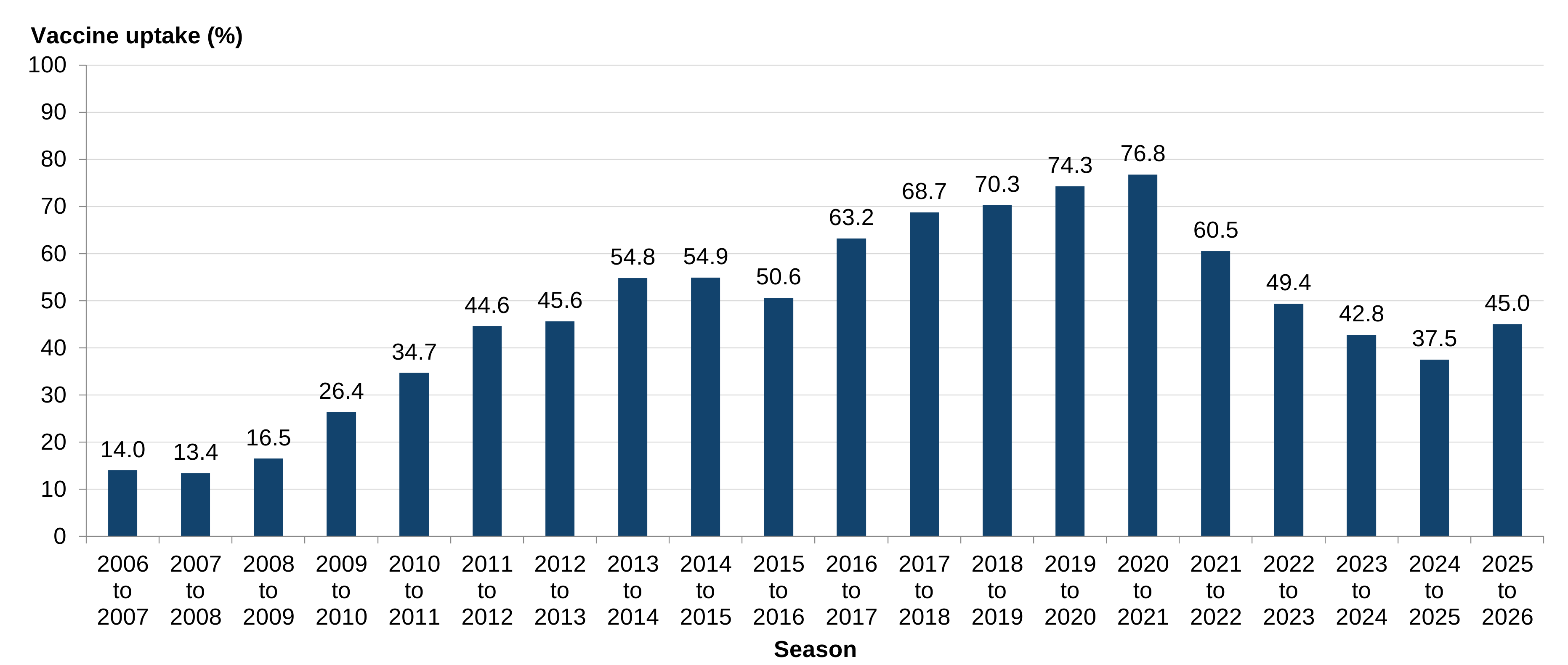
A total of 45.0% (523,410 out of 1,162,139) of frontline HCWs in responding NHS trusts received the seasonal influenza vaccine during the 2025 to 2026 season compared with 37.5% in the previous season. This was an increase of 7.5 percentage points (Figure 1). This is 2.5 percentage points higher than the aim of improving uptake by at least 5 percentage points.
A total of 53.5% (11,291 out of 21,105) of frontline HCWs in responding GP practices received a vaccine during this season, compared with 51.5% in the previous season. This was an increase of 2.0 percentage points compared with the previous season.
Overall, based on submitted data, the combined uptake of the seasonal influenza vaccine across NHS trusts and GP practices this season was 45.2% (534,701 of 1,183,244) among frontline HCWs, compared with 37.8% in the previous season. This season, 54.8% (648,543 out of 1,183,244) of HCWs in responding NHS trusts and GP practices who work in direct contact with patients did not receive the influenza vaccine.
This season marks the first increase in national vaccine uptake following 4 seasons of consecutive decline (since the 2020 to 2021 season), with uptake higher than in the previous 2 seasons.
Figure 1. Seasonal influenza vaccine uptake in frontline healthcare workers in NHS trusts in England for the 2025 to 2026 season compared with the 19 previous seasons [note 1][note 2][note3][note 4][note 5][note 6]
Note 1: the influenza vaccination of frontline HCW scheme was introduced in 2000 to 2001 season. Data for the earlier seasons is available at Seasonal influenza vaccine uptake in HCWs.
Note 2: the 2009 to 2010 season was the influenza pandemic year in which the HCWs vaccine uptake survey expanded from acute trusts only to include other trusts, such as ambulance, mental health and primary care trusts.
Note 3: in the 2016 to 2017 season, the commissioning for quality and innovation (CQUIN) payment incentive scheme was introduced, which incentivised trusts to reach specified vaccine uptake targets, this scheme continued until the 2019 to 2020 season.
Note 4: CQUIN payments were suspended in the 2020 to 2021 and 2021 to 2022 seasons due to the COVID-19 pandemic.
Note 5: CQUIN scheme was continued in the 2023 to 2024 season, but was no longer linked to the ImmForm surveys, which are used to generate the data used in this report. The CQUIN scheme was paused for the 2024 to 2025 and 2025 to 2026 seasons.
Note 6: Frontline HCWs for this season (2025 to 2026) and the previous season (2024 to 2025), were eligible for vaccination from the start of October (1 October 2025 and 3 October 2024 respectively), rather than 1 September as in previous seasons. Therefore, data is comparable between seasons where the vaccination campaign started in October (2024 to 2025 and 2025 to 2026), but data is not comparable between those seasons and seasons with a September start date (2023 to 2024 or seasons prior to that).
During the 2025 to 2026 season, vaccine uptake increased during the first 2 months of the vaccination campaign and then began to plateau from December onwards. At all points in the season, vaccine uptake was higher than corresponding times in the previous 2 seasons (Figure 2).
Figure 2. Seasonal influenza vaccine uptake in frontline healthcare workers in NHS trusts in England by month from the 2020 to 2021 season to the 2025 to 2026 season

Historic data for September is only available for the 2021 to 2022 and the 2022 to 2023 seasons as this was the second year of the COVID-19 pandemic and the first year of living with COVID-19. The seasonal influenza vaccination campaign in frontline HCWs was also of additional interest during this time. Data was not collected at this time point for any other season.
Vaccine uptake rates by organisation type
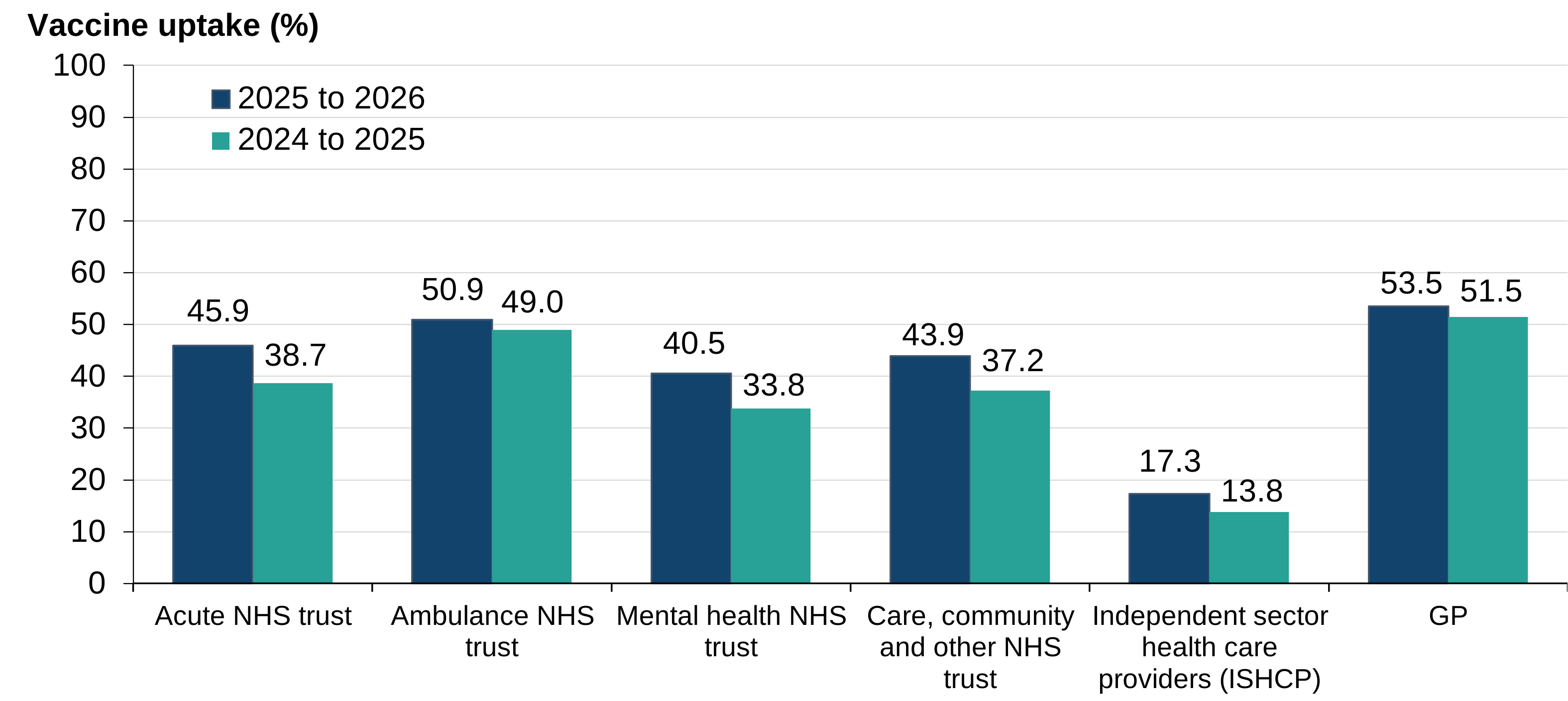
Seasonal influenza vaccine uptake by organisation type ranged from 17.3% for staff in independent sector health care providers (ISHCP) to 53.5% in those working in GP practices. Vaccine uptake increased in all organisation types this season compared with the previous season. This ranged from an increase of 2.0 percentage points in GPs to 7.2 percentage points in acute NHS trusts (Figure 3).
Figure 3. Seasonal influenza vaccine uptake in frontline healthcare workers by organisation type for the 2025 to 2026 and 2024 to 2025 seasons
Vaccine uptake for all trusts
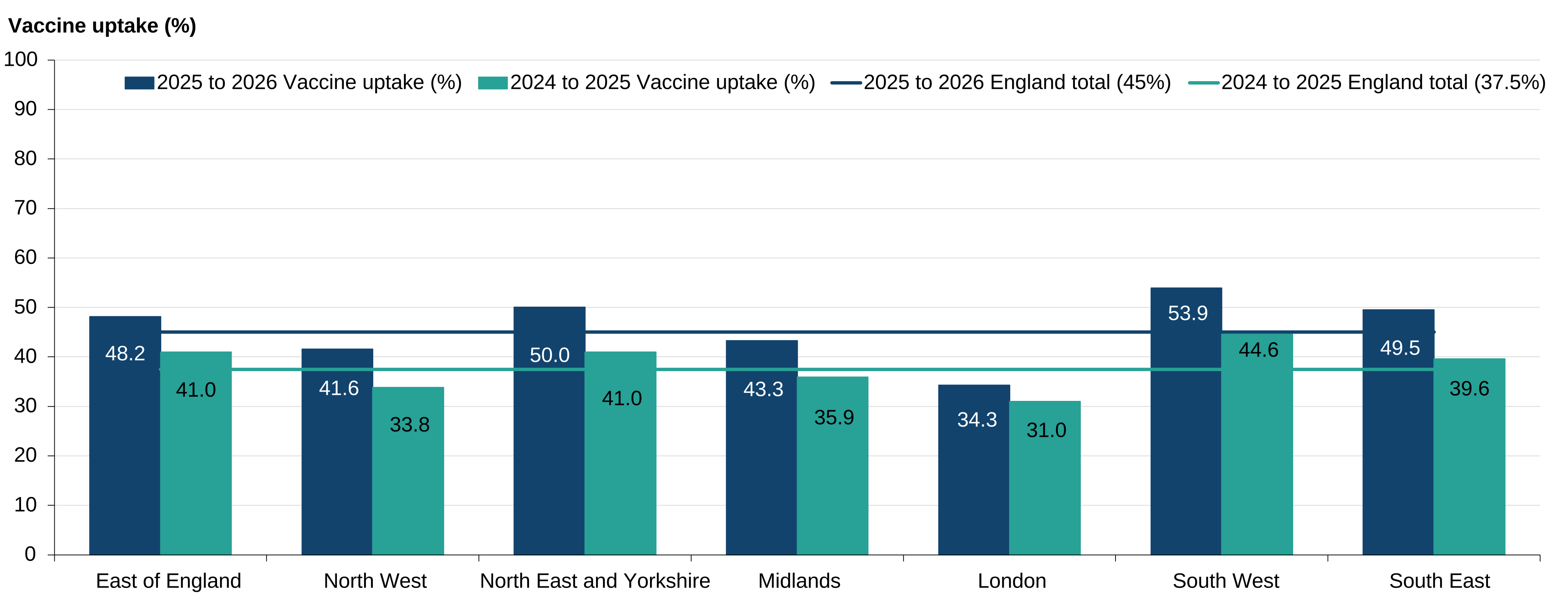
Vaccine uptake in frontline HCWs in trusts was 45.0% in the 2025 to 2026 season compared with 37.5% in the previous season. This was an increase of 7.5 percentage points. Vaccine uptake by commissioning region ranged from 34.3% in London to 53.9% in the South West. This season, vaccine uptake increased in all commissioning regions compared with the previous season. This ranged from an increase of 3.3 percentage points in London to 9.9 percentage points in the South East (Figure 4).
Figure 4. Seasonal influenza vaccine uptake in frontline healthcare workers in trusts by commissioning region for the 2025 to 2026 and 2024 to 2025 seasons
The median seasonal influenza vaccine uptake for trusts was 45.9%. The highest seasonal influenza vaccine uptake reported by a trust was 77.2%, with the lowest reported as 0.6%.
Figure 5 is a frequency distribution chart that shows the spread in the number of NHS trusts who achieved vaccine uptake in each 5-percentage category.
Figure 5. Distribution of trusts by seasonal influenza vaccine uptake (%) in frontline healthcare workers, England, 2025 to 2026 season
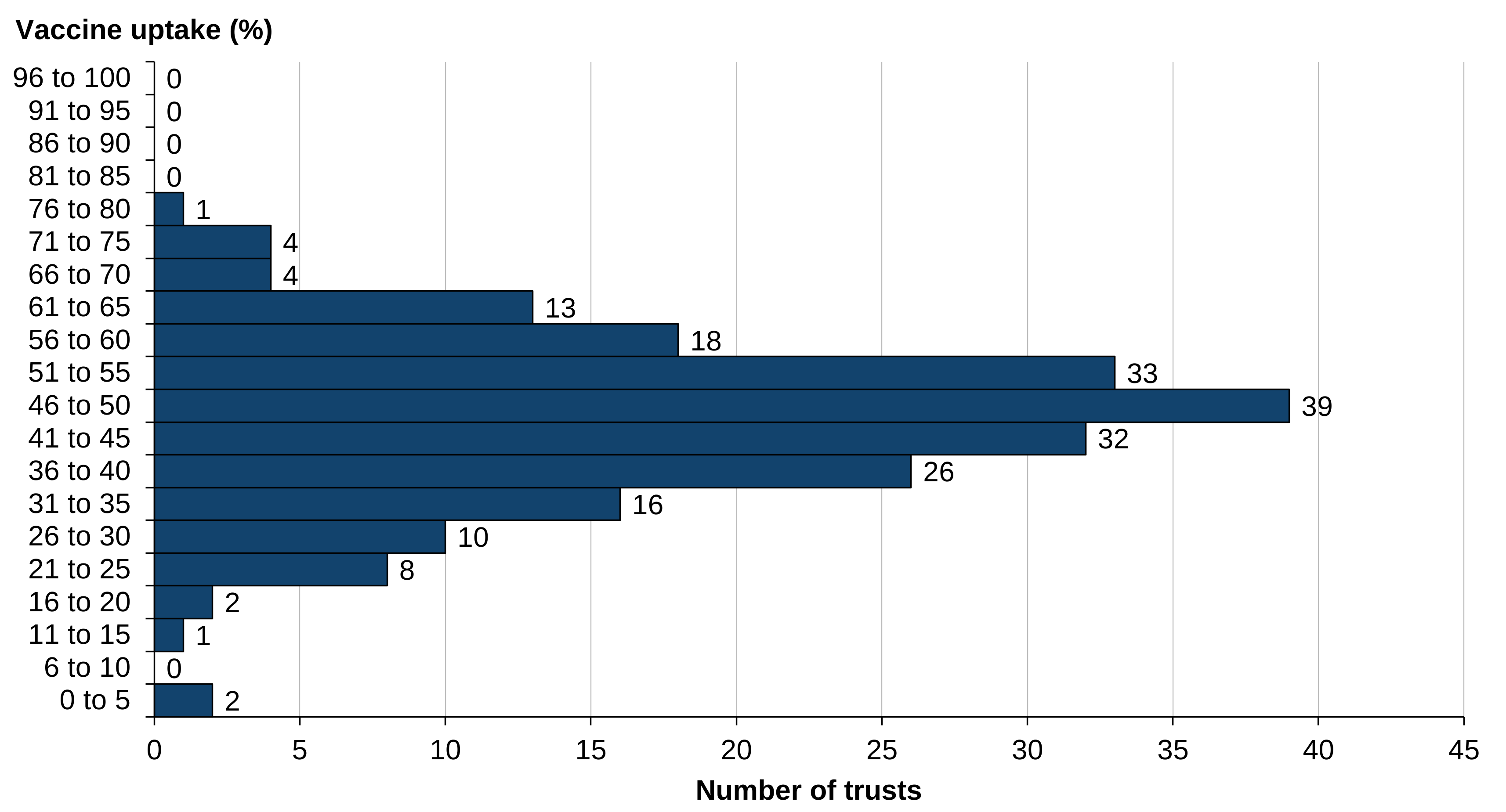
Four categories (36 to 40%, 41 to 45%, 46 to 50% and 51 to 55%) had over 25 trusts falling within them, with 46 to 50% being the most frequent category, with 39 trusts. Compared with the previous season, the distribution has shifted towards higher uptake categories; in 2024 to 2025, the most frequent category was 30 to 34% (also with 39 trusts), while higher uptake categories (above 45%) contained fewer trusts than in 2025 to 2026.
This season 58.9% of trusts (113 out of 192 trusts who responded this season and the previous season), achieved vaccine uptake that was at least 5 percentage points higher than the previous season. The largest increase achieved by a trust was 40.4 percentage points compared with the previous season, while the largest decrease was 15.7 percentage points. Vaccination data by trust is available in the data tables that accompany this report.
National vaccine uptake by staff group
Vaccine uptake among frontline HCWs varied by staff group in trusts, GP practices, and in the combined trusts and GP practices data. The combined data for trusts and GP practices should be interpreted in the context of the much lower response rate for GP practices (9.5%, 614 out of 6,460 practices) compared with the higher response rate among NHS trusts (88.9%, 209 out of 235 trusts). This season, uptake increased in all staff groups compared with the previous season.
In NHS trusts, the highest vaccine uptake by staff group was 50.6% in all doctors, and the lowest vaccine uptake was 39.7% in total support staff (Figure 6).
Figure 6. Seasonal influenza vaccine uptake in NHS trust-based frontline healthcare workers in England by staff group for the 2025 to 2026 and 2024 to 2025 seasons

In GP practices, the highest vaccine uptake was 60.7% in all nurses, and the lowest uptake was 47.9% in all other professionally qualified clinical staff (Figure 7).
Figure 7. Seasonal influenza vaccine uptake in GP practice frontline healthcare workers in England by staff group for the 2025 to 2026 and 2024 to 2025 seasons

For all frontline HCWs, vaccine uptake in GP practices (53.5%, Figure 7) is higher than those in trusts (45.0%, Figure 6). This trend is also consistent across all staff groups (Figures 6 and 7), apart from in all other professionally qualified clinical staff. For all other professionally qualified clinical staff, vaccine uptake is 0.5 percentage points lower in GP practices (47.9%, Figure 7) than in NHS trusts (48.4%, Figure 6).
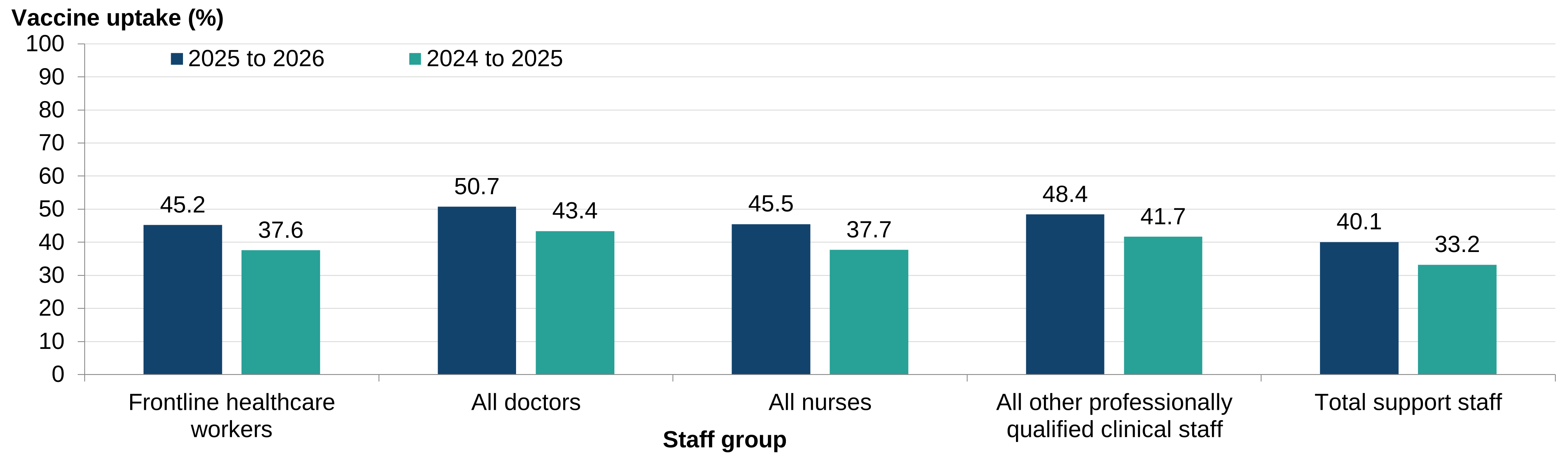
Figure 8 shows the combined data for NHS trusts and GP practices by staff group. Interpretation of the combined results should take into account the higher response rate from NHS trusts (88.9%), meaning uptake and trends align closely with trust rather than GP practice data.
Figure 8. Seasonal influenza vaccine uptake in frontline healthcare workers in NHS trusts and GP practices (combined) in England by staff group for the 2025 to 2026 and 2024 to 2025 seasons
Glossary
Green Book
The Green Book is ‘Immunisation against infectious disease’, a UK Health Security Agency (UKHSA) publication on vaccines, vaccine-preventable infectious diseases and vaccination procedures. Chapter 19 refers to influenza.
ImmForm
ImmForm is a website that provides a secure online platform for vaccine uptake data collection for several immunisation surveys, including the seasonal influenza vaccine uptake collection.
Data sources and methodology
Cumulative data on seasonal influenza vaccine uptake was collected from all NHS trusts (including ISHCPs, acute, ambulance, care, community, mental health and other NHS trusts, and primary care) and GP practices in England, using the ImmForm website. Monthly data was collected on frontline HCWs involved with direct patient care for vaccinations administered between 1 September 2025 to 28 February 2026 (inclusive). This included doctors, qualified nurses, other professionally qualified clinical staff, and clinical support staff; and are the same groups that were monitored in previous seasons. Trusts identify frontline HCWs eligible to receive seasonal influenza vaccine (the denominator) and record all those that are vaccinated (the numerator) to calculate their overall vaccine uptake. For this season (2025 to 2026) and the previous season (2024 to 2025), seasonal flu vaccination of adults was advised from the start of October (1 October 2025 and 3 October 2024 respectively), rather than 1 September as in previous seasons.
Each monthly survey on the ImmForm website was opened for data submission for the first 9 working days of each survey month, with adjustments and extensions made to allow for public holidays in some weeks. The 2025 to 2026 monthly data collection schedule with original survey deadlines is provided in Table 8 of the supplementary tables. Trusts had 7 working days to submit data manually onto the ImmForm website. Additional follow-up was undertaken by UKHSA of non-responding trusts or for data validation as required.
For the 2021 to 2022 and 2022 to 2023 seasons, UKHSA collected and published data a month earlier for vaccinations given to the end of September, therefore comparable data is only available for those seasons.
For the 2021 to 2022 through to the 2024 to 2025 seasons, data collections combined influenza and COVID-19 vaccinations with the aim of reducing data burden where it was possible for organisations to submit data for either vaccination programme with the same denominator of frontline HCWs with direct care. For the 2025 to 2026 season data, collections returned to influenza vaccination only.
Frontline HCWs for this season (2025 to 2026) and the previous season (2024 to 2025), were eligible for vaccination from the start of October (1 October 2025 and 3 October 2024 respectively), rather than 1 September as in previous seasons.
The data in this report is as submitted by the above organisations and has not been altered except by specific request from data providers.
ImmForm website
One of the functions of the ImmForm website is to provide a secure platform for vaccine uptake data collection for several immunisation surveys, including this collection. It allows data providers to:
- provide information on the trust type, trust status and survey coverage
- view vaccine uptake rates by staff group, allowing data providers to review and assess progress for their own organisation
- allow local NHS England and Screening and Immunisation teams to view a ‘non-responder’ report that highlights trusts and primary care providers in their region that have not yet submitted data, thus allowing follow-up
Data limitations
Reported uptake is based on responses from organisations. Non-responding organisations are not included in uptake figures.
All the data needed to calculate vaccine uptake was entered manually, directly onto the ImmForm website by trusts (including ISHCPs) and GP practices. The number of ISHCPs included is 7 as ISHCPs have historically had to self-declare and register with ImmForm to be included. This number is less than the number of ISHCPs licensed. All trusts were asked to submit cumulative influenza vaccine uptake data each month over a five‑month period.
This manual element means there is the possibility of human error or misinterpretation. The ImmForm survey form has basic automated validation checks to ensure logical consistency. For example, ensuring that the sum of the figures for individual staff group match the total for all frontline HCWs, and that the number vaccinated must be less than or equal to the number of reported frontline HCWs. As part of an exercise to improve data quality and remove input errors, the submitted data was then manually checked and validated before publication.
Staff group definitions
All staff group definitions used in this report are the official NHS definitions.
Background information
On 6 June 2025 NHS England and the Department of Health and Social Care (DHSC) published the Urgent and emergency care plan 2025 to 2026 which stated that vaccination rates for frontline staff should be improved towards the pre-(COVID-19) pandemic uptake level of 2018 to 2019 season. This means that in the 2025 to 2026 season, the aim was to improve uptake by at least 5 percentage points.
HCWs involved in direct patient care are encouraged to receive a seasonal influenza vaccine annually, to protect themselves and their patients from influenza. HCWs themselves may be at increased risk of exposure to influenza when compared with the general population; and their patients may have a suboptimal response to their own vaccinations. HCW vaccination may also help to protect healthcare services by reducing sickness absences.
UKHSA co-ordinated and managed the data collection and produced monthly provisional data on vaccinations. This collection received approval as a mandatory collection from the Data Alliance Partnership Board (DTAPB) under the reference ‘DAPB2204 Amd 49/2022 Seasonal Influenza vaccine uptake in Frontline Healthcare Workers survey’.
The aims and objectives of the 2025 to 2026 seasonal influenza vaccine uptake campaign amongst HCWs in England were to:
- monitor vaccine uptake amongst frontline HCWs
- allow DHSC, NHS England, Screening and Immunisation Teams, NHS trusts and integrated care boards (ICBs) to review national, regional, and local vaccine programme performance
- identify staff groups and local or regional areas where coverage is high (to identify best practice to inform activities to increase uptake) and low (to increase uptake further)
- gather epidemiological data to support the evaluation and future planning of seasonal influenza vaccinations amongst frontline HCWs
For the 2025 to 2026 season, details on the inclusion and exclusion criteria of frontline HCWs continued to be included in the user guide. Alongside efforts from participating NHS trusts to ensure accuracy of provided data, UKHSA continued to carry out additional data validation to ensure the minimisation of double counting by contributing organisations (see staff group definitions).
The Health and Social Care Act 2008 code of practice on the prevention and control of infections and related guidance, emphasises the need to ensure, so far as is reasonably practicable, that HCWs are free of and are protected from exposure to infections that can be caught at work. It also emphasises the need for all staff to be suitably educated in the prevention and control of infection associated with the provision of health and social care. Registered providers should therefore ensure that policies and procedures are in place in relation to the prevention and control of infection such that:
- all staff can access occupational health services or appropriate occupational health advice
- occupational health policies on the prevention and management of communicable infections in care workers are in place
- decisions on offering immunisation should be made based on a local risk assessment as described in Immunisation against infectious disease (The Green Book)
- employers should make vaccines available free of charge to employees
- if a risk assessment indicates that it is needed (Control of Substances Hazardous to Health (COSHH) Regulations 2002), there is a record of relevant immunisations
Further information and contact details
Feedback and contact information
To provide feedback about this report and data, please email HCWvac@ukhsa.gov.uk
Alternatively, you can contact the Office for Statistics Regulation (OSR) with any comments about how we meet these standards by emailing regulation@statistics.gov.uk or via the OSR website.
Acknowledgements
The authors would like to thank everyone that contributed to the data collection, specifically all the staff and data providers who participated in and supported the frontline HCWs seasonal influenza vaccine uptake data collection, the ImmForm team and the ImmForm support team.
Official statistics
Our statistical practice is regulated by OSR. OSR sets the standards of trustworthiness, quality and value in the Code of Practice for Statistics that all producers of official statistics should adhere to.
UKHSA is committed to ensuring that these statistics comply with the Code of Practice for Statistics. This means users can have confidence in the people who produce UKHSA statistics because our statistics are robust, reliable and accurate. Our statistics are regularly reviewed to ensure they support the needs of society for information.
UKHSA has conducted a formal review of these statistics. Following this review, an implementation plan has been developed to continue to improve the trustworthiness, quality, and value of these statistics. Key continuous improvements made will be highlighted within future releases of these statistics for transparency.