
Reviews of marking and moderation for GCSE, AS and A level: summer 2025 exam series
Published 11 December 2025
Applies to England

© Crown copyright 2025
This publication is licensed under the terms of the Open Government Licence v3.0 except where otherwise stated. To view this licence, visit nationalarchives.gov.uk/doc/open-government-licence/version/3 or write to the Information Policy Team, The National Archives, Kew, London TW9 4DU, or email: psi@nationalarchives.gov.uk.
Where we have identified any third party copyright information you will need to obtain permission from the copyright holders concerned.
This publication is available at https://www.gov.uk/government/statistics/reviews-of-marking-and-moderation-for-gcse-as-and-a-level-summer-2025-exam-series/reviews-of-marking-and-moderation-for-gcse-as-and-a-level-summer-2025-exam-series
This release presents data on reviews of marking, reviews of moderation and administrative error reviews for GCSE, AS and A level qualifications for the summer 2025 exam series in England. Data for previous years is also included for comparison.
Underlying figures for this report and data for previous years are reported in the accompanying data tables.
Review requests are made to the exam boards. Exam boards only accept review requests through schools and colleges, and not from students directly. Each exam board offers 3 review services for exam papers and non-exam assessments:
- An administrative error review for an individual assessment (‘Service 1’)
- A review of marking for an individual assessment (‘Service 2’ priority and non-priority), this service also includes an administrative error review
- A review of moderation of the school or college’s internal assessment using the sample of students’ work that was used in the initial moderation (‘Service 3’)
A single GCSE, AS or A level qualification generally comprises several components, which are either exam papers or non-exam assessments. Reviews are requested for each component individually and not the qualification as a whole. If there is a review requested for any component associated with a qualification, the overall grade was ‘challenged’.
Multiple reviews can be requested for the same component: for example, an administrative error review may be requested and then a review of marking.
This means that typically the number of reviews is higher than the number of reviewed components. Separate reviews can also be requested for more than one component for the same qualification. This means that the number of reviewed components is higher than the number of grades challenged.
If a review shows that marking or administrative errors have been made and the mark of the reviewed component is incorrect, the exam board changes the mark to correct the error. In some cases, mark changes for reviewed components can affect the overall grade, which leads to the grade being changed.
To ensure confidentiality, the data in this release has been rounded in line with our rounding policy for statistical publications. Further information is available in the background information accompanying this report.
Changes to methodology
There were two changes to the methodology of this release compared with previous releases. This has led to some changes to previously reported figures.
Firstly, we changed the data source for the total number of grades awarded in each summer series. We now use the same data we receive from awarding organisations prior to summer results days and reported in Statistics: summer qualification results in England. Previously, we used two data sources for these figures:
-
Data for total number of grades awarded was taken from data used for the Statistics: entries for GCSE, AS and A level.
-
Data for total grades by subject was taken from examination results data published by the Joint Council for Qualifications).
This change was made to increase the coherency of reported figures and data sources within this release and with our other related statistical releases. As a result of using a different data source, the figures for total numbers of grades for previous years in the current release differ from figures reported in previous releases.
Secondly, only full-course GCSEs are included in the figures for reviews of marking and moderation and total grades, in addition to AS and A levels. In previous releases of these statistics, short-course GCSEs were also included but these have now been removed. As a result, some figures for previous years have changed to a small degree compared with previous releases.
Key headlines

- For summer 2025, 389,730 reviews were requested for GCSE (a decrease of 11.5% from summer 2024), 2,075 reviews were requested for AS qualifications (a decrease of 14.7% from summer 2024) and 101,100 reviews were requested for A level (a decrease of 0.5% from summer 2024).
- One or more reviews were requested for 2.9% of the 17,523,265 total GCSE, AS and A level component entries in summer 2025 compared with 3.2% of the 17,610,745 total component entries summer 2024.
- For summer 2025, 62.7% of reviewed component marks for GCSE were not changed (compared with 63.2% for summer 2024) and 55.7% of reviewed component marks for AS and A level were not changed (compared with 54.5% for summer 2024).
- Of all GCSE, AS and A level grades awarded in summer 2025 (6,526,780), 4.6% were challenged and 1.1% were changed following reviews (compared with 5.1% challenged and 1.1% changed for summer 2024).
- Of the 1,019,010 students who received results for GCSEs in summer 2025, 17.0% had one or more of their grades challenged and 5.2% had one or more grades changed (compared with 19.1% with grades challenged and 5.5% with grades changed for summer 2024).
- Of the 336,045 students who received results for AS and A levels in summer 2025, 14.8% had one or more grades challenged and 4.0% had one or more grades changed (compared with 15.4% with grades challenged and 4.1% with grades changed for summer 2024).
- Of all GCSE grades awarded in summer 2025 (5,661,970), 4.3% were challenged and 1.0% were changed following reviews (compared with 4.7% challenged and 1.1% changed for summer 2024).
- Of the 243,150 GCSE grades challenged for summer 2025, 58,725, (24.2%) were changed. Of all challenged grades, 24.1% were changed up and less than 0.1% were changed down. For comparison, for summer 2024, 269,080 GCSE grades were challenged and 22.4% of challenged grades were changed.
- Of all AS and A level grades awarded in summer 2025 (864,810), 6.8% were challenged and 1.6% were changed following reviews (compared with 7.1% challenged and 1.6% changed for summer 2024).
- Of the 58,830 AS and A level grades challenged for summer 2025, 14,150 (24.1%) were changed. Of all challenged grades, 24.0% were changed up and less than 0.1% were changed down. For comparison, for summer 2024, 61,915 AS and A level grades were challenged and 23.1% were changed.
We are improving this release. Let us know what you want to see
We welcome your feedback on our publications. If you have any comments on this statistical release, or how to improve it to meet your needs, please complete our short survey or data.analytics@ofqual.gov.uk.
Number of reviews requested
Reviews are requested for each component individually and not the qualification as a whole. Multiple reviews can be requested for the same component: for example, an administrative error review may be requested and then a review of marking. This means that typically the number of reviews is higher than the number of reviewed components.
GCSE
For GCSE, 389,730 reviews were requested for summer 2025, a decrease of 11.5% from summer 2024 (440,430 reviews).
Of all GCSE component entries in summer 2025 (14,916,800), reviews were requested for 2.7% (compared with 3.1% in summer 2024).
AS and A level
For AS and A level, 103,175 reviews were requested for summer 2025, a decrease of 0.9% from summer 2024 (104,060 reviews). For A level, 101,100 reviews were requested for summer 2025, a decrease of 0.5% from summer 2024 (101,625 reviews). For AS qualifications, 2,075 reviews were requested for summer 2025, a decrease of 14.7% from summer 2024 (2,435 reviews).
Of all AS and A level component entries in summer 2025 (2,606,465), reviews were requested for 4.2% (compared with 4.3% in summer 2024).
Components with the highest proportion of reviews of marking
GCSE
Table 1 and the accompanying chart show the 10 GCSE components with the highest proportion of reviews of marking (‘service 2’) relative to the number of entries for summer 2025. Please note, only components with over 1,000 entries were included in this analysis.
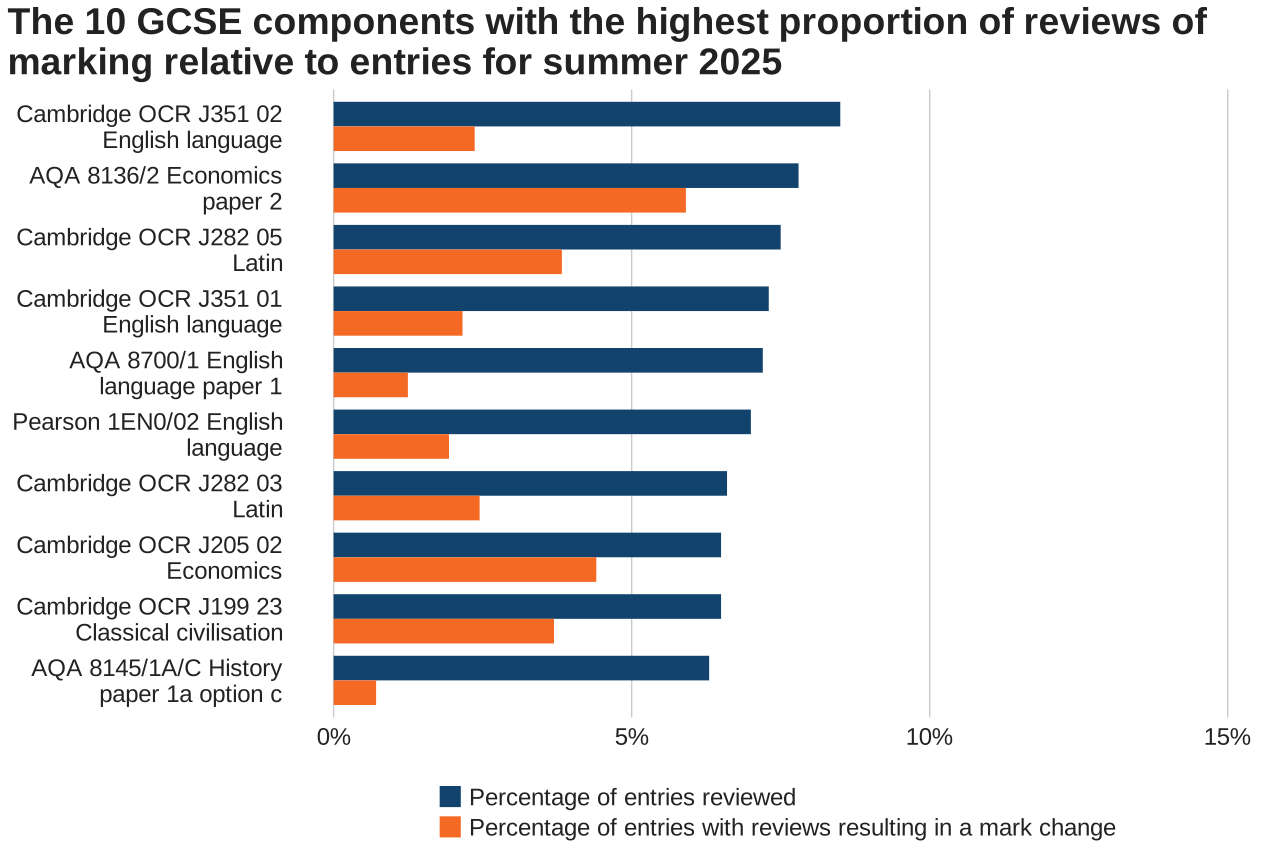
Table 1: The 10 GCSE components with the highest proportion of reviews of marking relative to the number of entries for summer 2025
| Title | Number of reviews | Percentage of entries reviewed | Number of reviews resulting in a mark change | Percentage of reviews resulting in a mark change | Percentage of entries with reviews resulting in a mark change |
|---|---|---|---|---|---|
| Cambridge OCR J351 02 English language | 500 | 8.5% | 140 | 27.7% | 2.4% |
| AQA 8136/2 Economics paper 2 | 235 | 7.8% | 180 | 76.2% | 5.9% |
| Cambridge OCR J282 05 Latin | 255 | 7.5% | 130 | 51.4% | 3.8% |
| Cambridge OCR J351 01 English language | 430 | 7.3% | 125 | 29.5% | 2.2% |
| AQA 8700/1 English language paper 1 | 42,700 | 7.2% | 7,400 | 17.3% | 1.2% |
| Pearson 1EN0/02 English language | 2,995 | 7% | 830 | 27.6% | 1.9% |
| Cambridge OCR J282 03 Latin | 240 | 6.6% | 90 | 37.2% | 2.4% |
| Cambridge OCR J199 23 Classical civilisation | 70 | 6.5% | 40 | 56.9% | 3.7% |
| Cambridge OCR J205 02 Economics | 290 | 6.5% | 195 | 67.7% | 4.4% |
| AQA 8145/1A/C History paper 1a option c | 160 | 6.3% | 20 | 11.4% | 0.7% |
AS and A level
Table 2 and the accompanying chart show the 10 AS and A level components with the highest proportion of reviews of marking (‘service 2’) relative to the number of entries for summer 2025. Please note, only components with over 1,000 entries were included in this analysis.
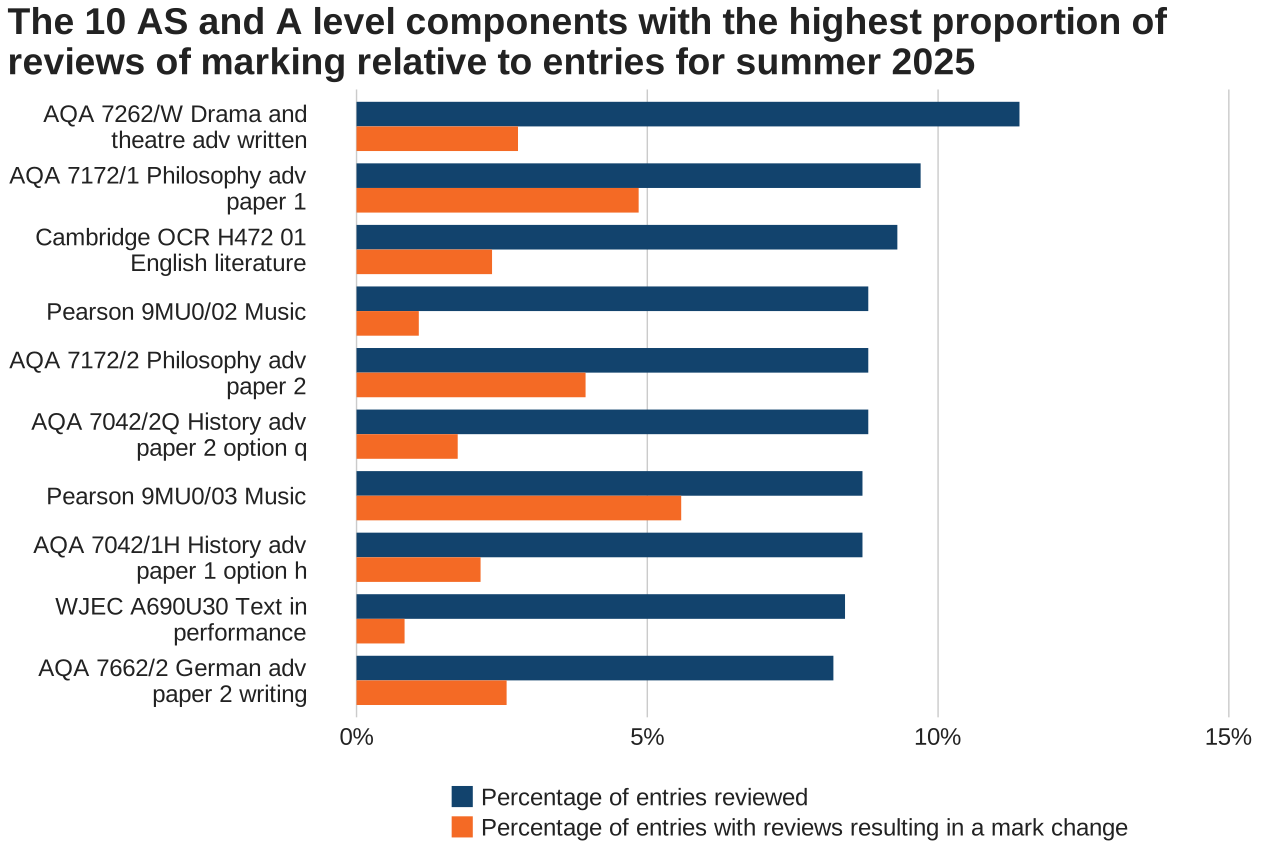
Table 2: The 10 AS and A level components with the highest proportion of reviews of marking relative to the number of entries for summer 2025
| Title | Number of reviews | Percentage of entries reviewed | Number of reviews resulting in a mark change | Percentage of reviews resulting in a mark change | Percentage of entries with reviews resulting in a mark change |
|---|---|---|---|---|---|
| AQA 7262/W Drama and theatre adv written | 275 | 11.4% | 65 | 24.4% | 2.8% |
| AQA 7172/1 Philosophy adv paper 1 | 370 | 9.7% | 185 | 50.1% | 4.9% |
| Cambridge OCR H472 01 English literature | 810 | 9.3% | 200 | 25% | 2.3% |
| AQA 7042/2Q History adv paper 2 option q | 135 | 8.8% | 25 | 19.9% | 1.7% |
| AQA 7172/2 Philosophy adv paper 2 | 340 | 8.8% | 150 | 44.5% | 3.9% |
| Pearson 9MU0/02 Music | 105 | 8.8% | 15 | 12.1% | 1.1% |
| AQA 7042/1H History adv paper 1 option h | 255 | 8.7% | 60 | 24.5% | 2.1% |
| Pearson 9MU0/03 Music | 105 | 8.7% | 70 | 64.2% | 5.6% |
| WJEC A690U30 Text in performance | 145 | 8.4% | 15 | 9.8% | 0.8% |
| AQA 7662/2 German adv paper 2 writing | 125 | 8.2% | 40 | 31.5% | 2.6% |
Changes to component marks following reviews
If a review shows that marking, administrative or moderation errors have been made and the mark of the reviewed component is incorrect, the exam board changes the mark to correct the error. Mark changes described in this section relate to the difference in a student’s mark in a single component before and after review.
Where multiple reviews were requested for the same component, they can result in separately recorded mark changes. For example, an administrative error review where the mark was not changed could be followed by a review of marking for the same component which resulted in an increase or decrease of marks. Mark changes which are still to be determined can relate to ongoing reviews or completed reviews for which the original mark has not been determined.
GCSE
The majority of reviewed component marks were not changed (62.7%). Of the reviewed component marks, 16.2% had an increase or decrease of 1 mark. Of the reviewed component marks, 3.8% had an increase of 5 marks or more and 0.6% had a decrease of 5 marks or more. Of the component marks that were changed after review, 69.7% had an increase in marks.
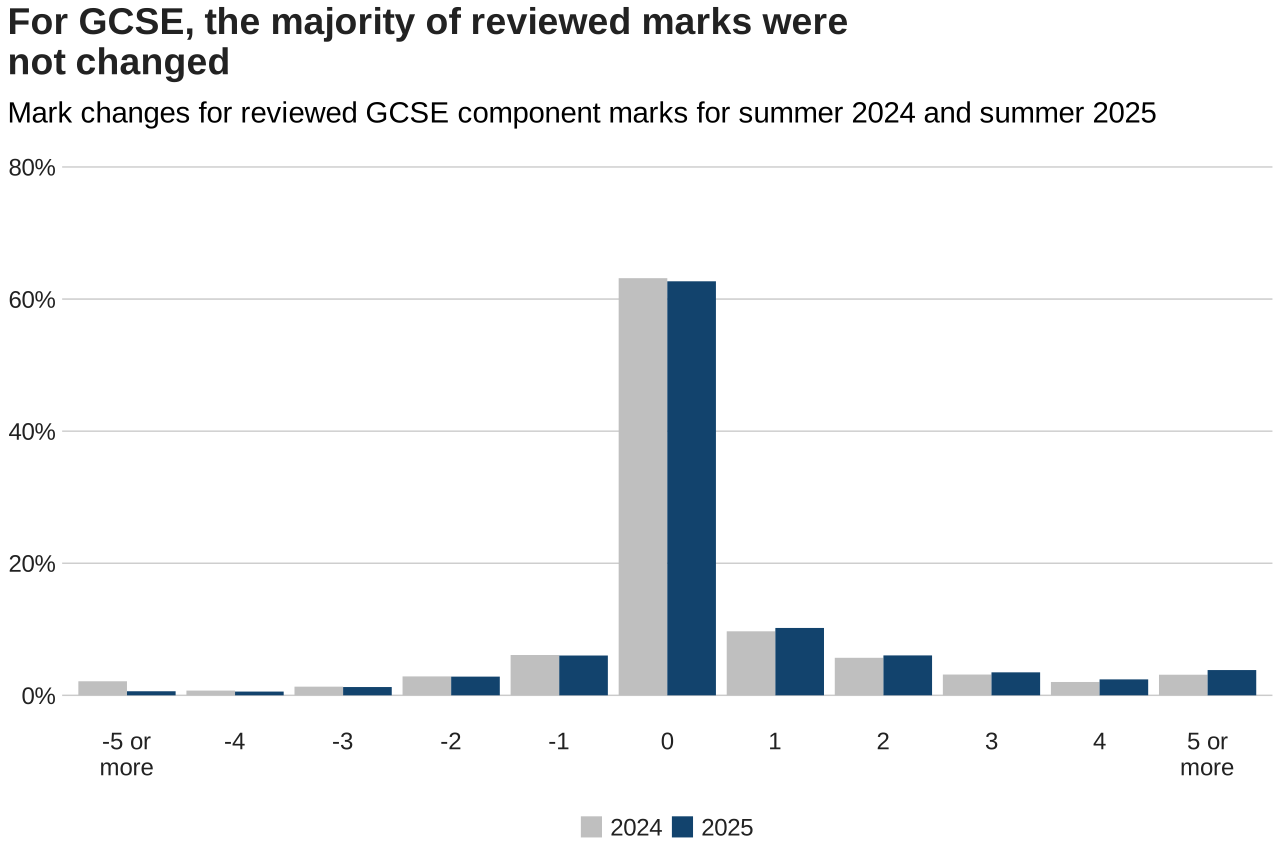
Table 3: Distribution of mark changes to component-level marks for GCSE following reviews
| Magnitude of mark change | Number of reviewed marks 2024 | Percentage of reviewed marks 2024 | Number of reviewed marks 2025 | Percentage of reviewed marks 2025 |
|---|---|---|---|---|
| 5 or more | 14,360 | 3.1% | 15,520 | 3.8% |
| 4 | 9,295 | 2.0% | 9,785 | 2.4% |
| 3 | 14,485 | 3.1% | 14,125 | 3.5% |
| 2 | 26,160 | 5.7% | 24,515 | 6.0% |
| 1 | 44,630 | 9.7% | 41,380 | 10.2% |
| 0 | 290,760 | 63.2% | 254,340 | 62.7% |
| -1 | 28,110 | 6.1% | 24,455 | 6.0% |
| -2 | 13,190 | 2.9% | 11,490 | 2.8% |
| -3 | 6,035 | 1.3% | 5,090 | 1.3% |
| -4 | 3,305 | 0.7% | 2,300 | 0.6% |
| -5 or more | 9,795 | 2.1% | 2,505 | 0.6% |
Notes:
At the point at which data was collected, some reviews were still in progress. For summer 2025, less than 0.1% of GCSE component marks for which a review was requested had mark changes still to be determined.
Where component marks were reviewed under multiple services, the mark changes following these reviews were counted separately for each service. For summer 2025, 0.4% of GCSE component marks were reviewed under multiple services.
AS and A level
The majority of reviewed component marks were not changed (55.7%). Of the reviewed component marks, 18.9% had an increase or decrease of 1 mark. Of the reviewed component marks, 4.8% had an increase of 5 marks or more and 0.9% had a decrease of 5 marks or more. Of the component marks that were changed after review, 67.3% had an increase in marks.
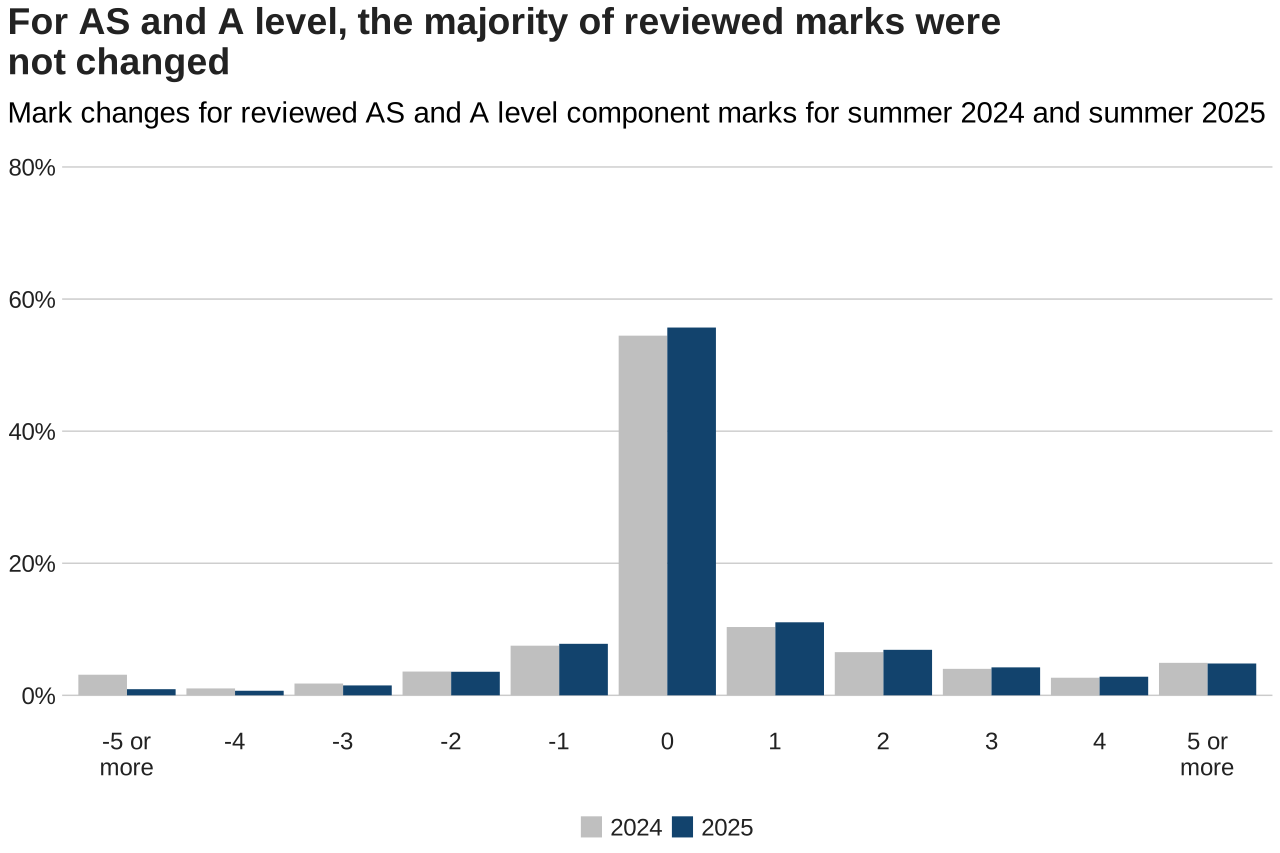
Table 4: Distribution of mark changes to component marks for AS and A level following reviews
| Magnitude of mark change | Number of reviewed marks 2024 | Percentage of reviewed marks 2024 | Number of reviewed marks 2025 | Percentage of reviewed marks 2025 |
|---|---|---|---|---|
| 5 or more | 5,575 | 4.9% | 5,225 | 4.8% |
| 4 | 3,020 | 2.7% | 3,055 | 2.8% |
| 3 | 4,545 | 4.0% | 4,590 | 4.2% |
| 2 | 7,410 | 6.5% | 7,475 | 6.9% |
| 1 | 11,720 | 10.3% | 11,995 | 11.1% |
| 0 | 61,715 | 54.5% | 60,415 | 55.7% |
| -1 | 8,515 | 7.5% | 8,460 | 7.8% |
| -2 | 4,080 | 3.6% | 3,870 | 3.6% |
| -3 | 2,025 | 1.8% | 1,625 | 1.5% |
| -4 | 1,185 | 1.0% | 750 | 0.7% |
| -5 or more | 3,535 | 3.1% | 1,010 | 0.9% |
Notes:
At the point at which data was collected, some reviews were still in progress. For summer 2025, less than 0.1% of AS and A level component marks for which a review was requested had mark changes still to be determined.
Where component marks were reviewed under multiple services, the mark changes following these reviews were counted separately for each service. For summer 2025, 0.5% of AS and A level component marks were reviewed under multiple services.
Average absolute component mark change by subject
Mark changes relate to the difference in a student’s mark in a single component before and after review. The absolute mark change is the mark change expressed as a positive value and the average is calculated using all absolute mark changes, including mark changes of zero.
GCSE
The largest average absolute mark change for the 10 GCSE subjects with the highest number of grades challenged for summer 2025 was 1.3 marks for religious studies.
Table 5 and the accompanying chart show the average absolute mark change for the 10 GCSE subjects with the highest number of grades challenged. Subjects are shown in order of number of grades challenged.
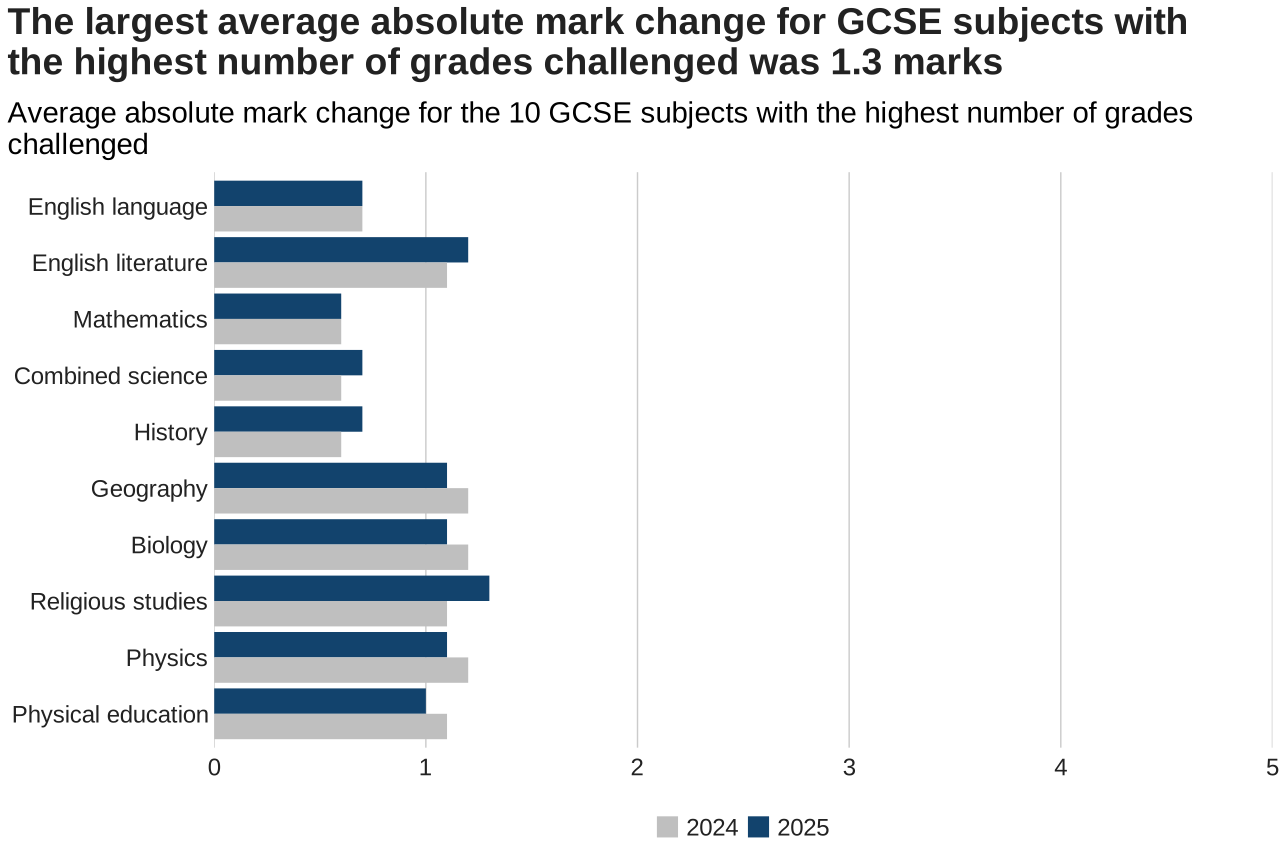
Table 5: Average absolute mark change for the 10 GCSE subjects with the highest number of grades challenged
| Subject | Average absolute mark change 2024 | Average absolute mark change 2025 |
|---|---|---|
| English language | 0.7 | 0.7 |
| English literature | 1.1 | 1.2 |
| Mathematics | 0.6 | 0.6 |
| Combined science | 0.6 | 0.7 |
| History | 0.6 | 0.7 |
| Geography | 1.2 | 1.1 |
| Biology | 1.2 | 1.1 |
| Religious studies | 1.1 | 1.3 |
| Physics | 1.2 | 1.1 |
| Physical education | 1.1 | 1.0 |
AS and A level
The largest average absolute mark change for the 10 AS and A level subjects with the highest number of grades challenged for summer 2025 was 1.5 marks for economics.
Table 6 and the accompanying chart show the average absolute mark change for the 10 AS and A level subjects with the highest number of grades challenged.
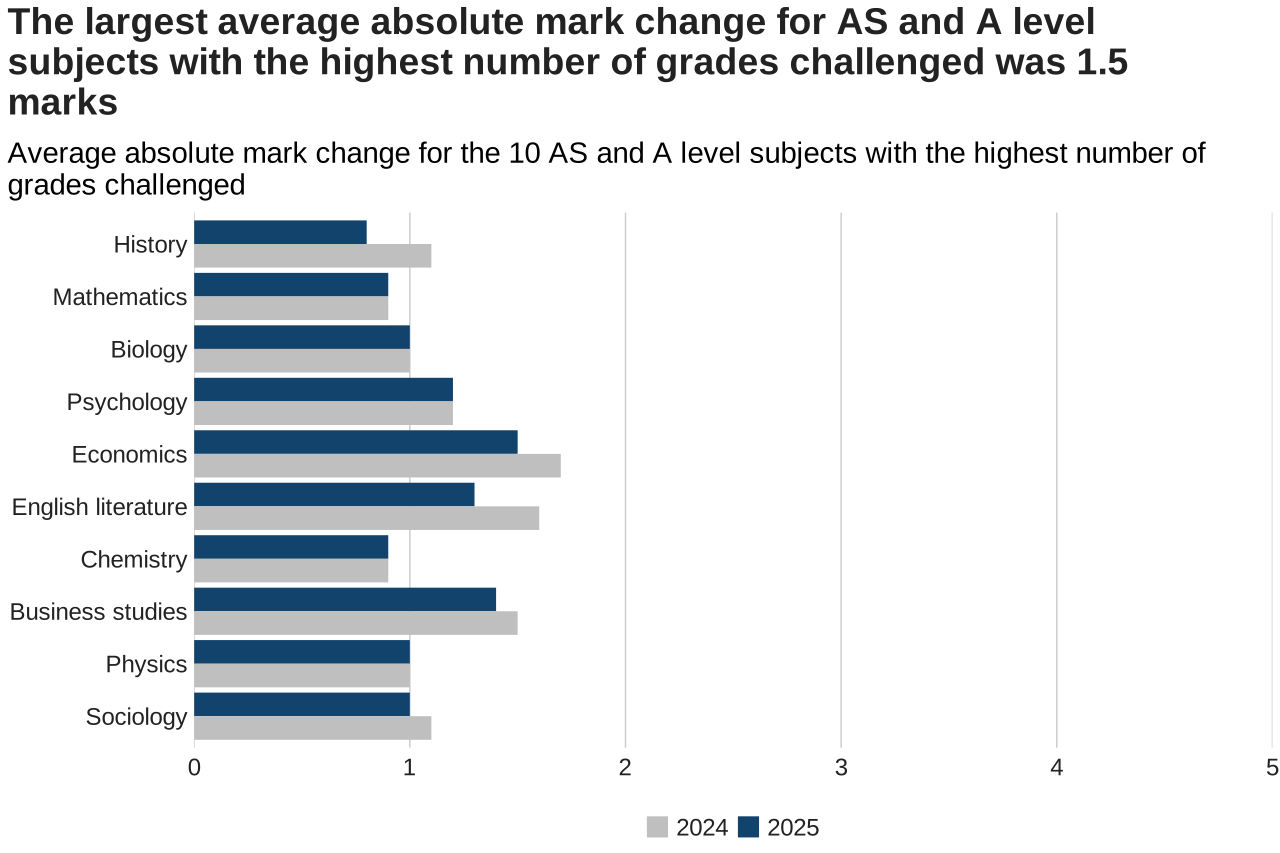
Table 6: Average absolute mark change for the 10 AS and A level subjects with the highest number of grades challenged
| Subject | Average absolute mark change 2024 | Average absolute mark change 2025 |
|---|---|---|
| History | 1.1 | 0.8 |
| Mathematics | 0.9 | 0.9 |
| Biology | 1.0 | 1.0 |
| Psychology | 1.2 | 1.2 |
| Economics | 1.7 | 1.5 |
| English literature | 1.6 | 1.3 |
| Chemistry | 0.9 | 0.9 |
| Business studies | 1.5 | 1.4 |
| Physics | 1.0 | 1.0 |
| Sociology | 1.1 | 1.0 |
Number of reviews, grades challenged and grades changed by service type
Review requests are made to the exam boards. Each exam board offers 3 review services for exam papers and non-exam assessments:
-
An administrative error review for an individual assessment (‘Service 1’)
-
A review of marking for an individual assessment (‘Service 2’ priority and non-priority). This service also includes an administrative error review.
-
A review of moderation of the school or college’s internal assessment using the sample of students’ work that was used in the initial moderation (‘Service 3’)
Where a review was requested for an individual component, the overall grade was ‘challenged’.
Reviews can be requested for more than one component for the same qualification. This is why the total number of grades challenged is always lower than the total number of reviews of marking. Reviews of moderation are different, as one review involves multiple students. However, the vast majority of reviews requested are reviews of marking and so, overall, the number of grades challenged is always lower than the number of reviews requested.
In some cases, mark changes for reviewed components can affect the overall grade, which leads to the grade being changed. The grade is not challenged or changed directly as a result of a review, but rather as a consequence of reviews and mark changes at component level.
GCSE
Table 7 and the accompanying chart show the number of GCSE reviews requested, grades challenged and grades changed by service type.
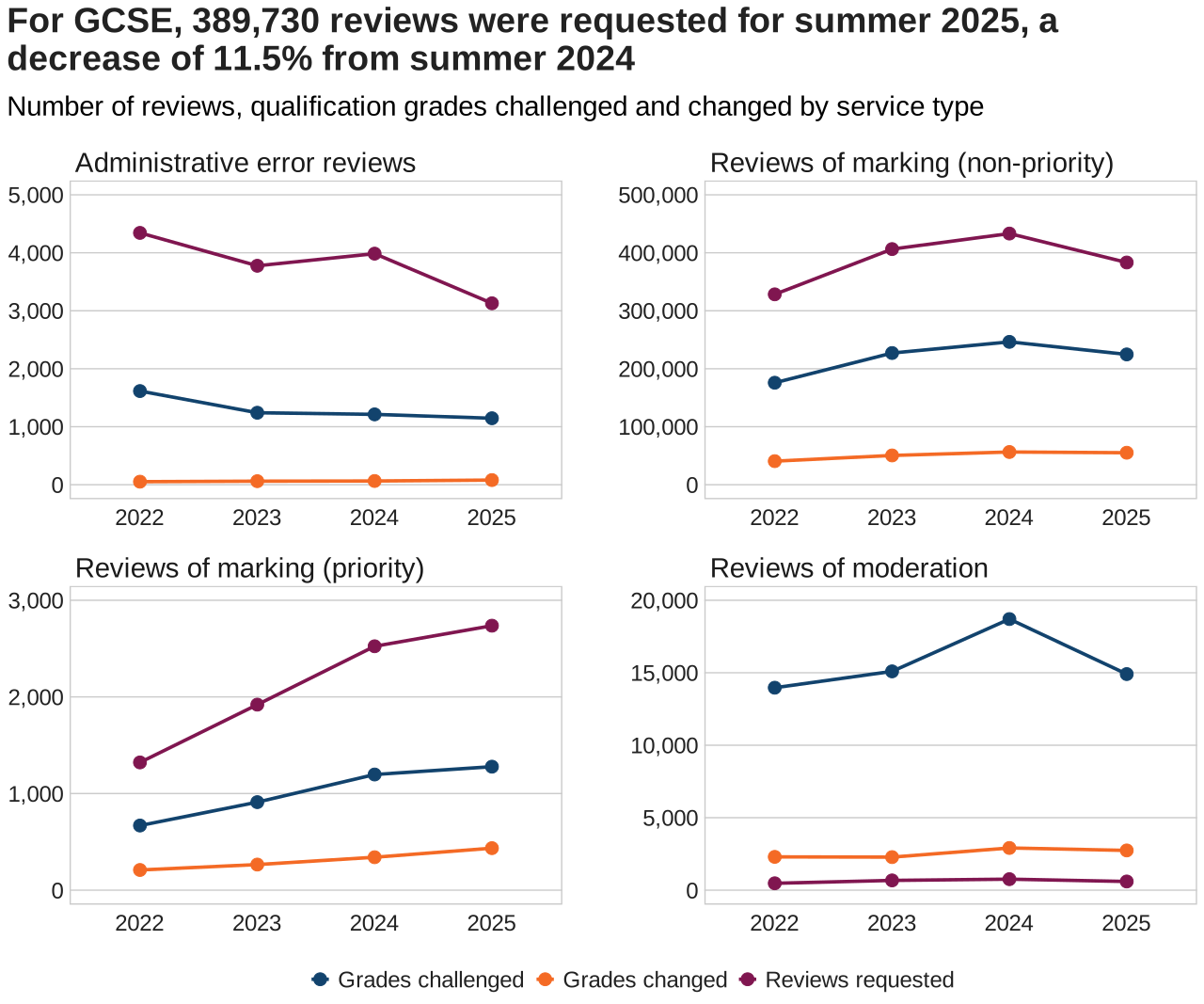
Table 7: Number of reviews requested, grades challenged and grades changed by service type for GCSE
| Type of review | Reviews requested, grades challenged and grades changed | 2022 | 2023 | 2024 | 2025 |
|---|---|---|---|---|---|
| Administrative error reviews | Reviews requested | 4,345 | 3,775 | 3,985 | 3,130 |
| Administrative error reviews | Grades challenged | 1,615 | 1,240 | 1,215 | 1,145 |
| Administrative error reviews | Grades changed | 50 | 60 | 65 | 80 |
| Reviews of marking (non-priority) | Reviews requested | 328,350 | 406,365 | 433,165 | 383,265 |
| Reviews of marking (non-priority) | Grades challenged | 175,875 | 227,105 | 246,370 | 224,715 |
| Reviews of marking (non-priority) | Grades changed | 40,630 | 50,485 | 56,395 | 55,140 |
| Reviews of marking (priority) | Reviews requested | 1,320 | 1,920 | 2,525 | 2,735 |
| Reviews of marking (priority) | Grades challenged | 670 | 910 | 1,195 | 1,280 |
| Reviews of marking (priority) | Grades changed | 210 | 265 | 340 | 435 |
| Reviews of moderation | Reviews requested | 475 | 675 | 760 | 600 |
| Reviews of moderation | Grades challenged | 13,970 | 15,095 | 18,705 | 14,910 |
| Reviews of moderation | Grades changed | 2,295 | 2,280 | 2,910 | 2,740 |
Notes:
Grades can be challenged and changed as a result of review requests for multiple service types. To avoid these being counted more than once, these grades are not included in the charts and table 7.
The number of grades challenged and changed through reviews of moderation is higher than the number of reviews requested because one review usually involves multiple students. See background notes for more details.
Underlying figures are reported in the accompanying data tables.
AS and A level
Table 8 and the accompanying chart show the number of AS and A level reviews requested, grades challenged and grades changed by service type.
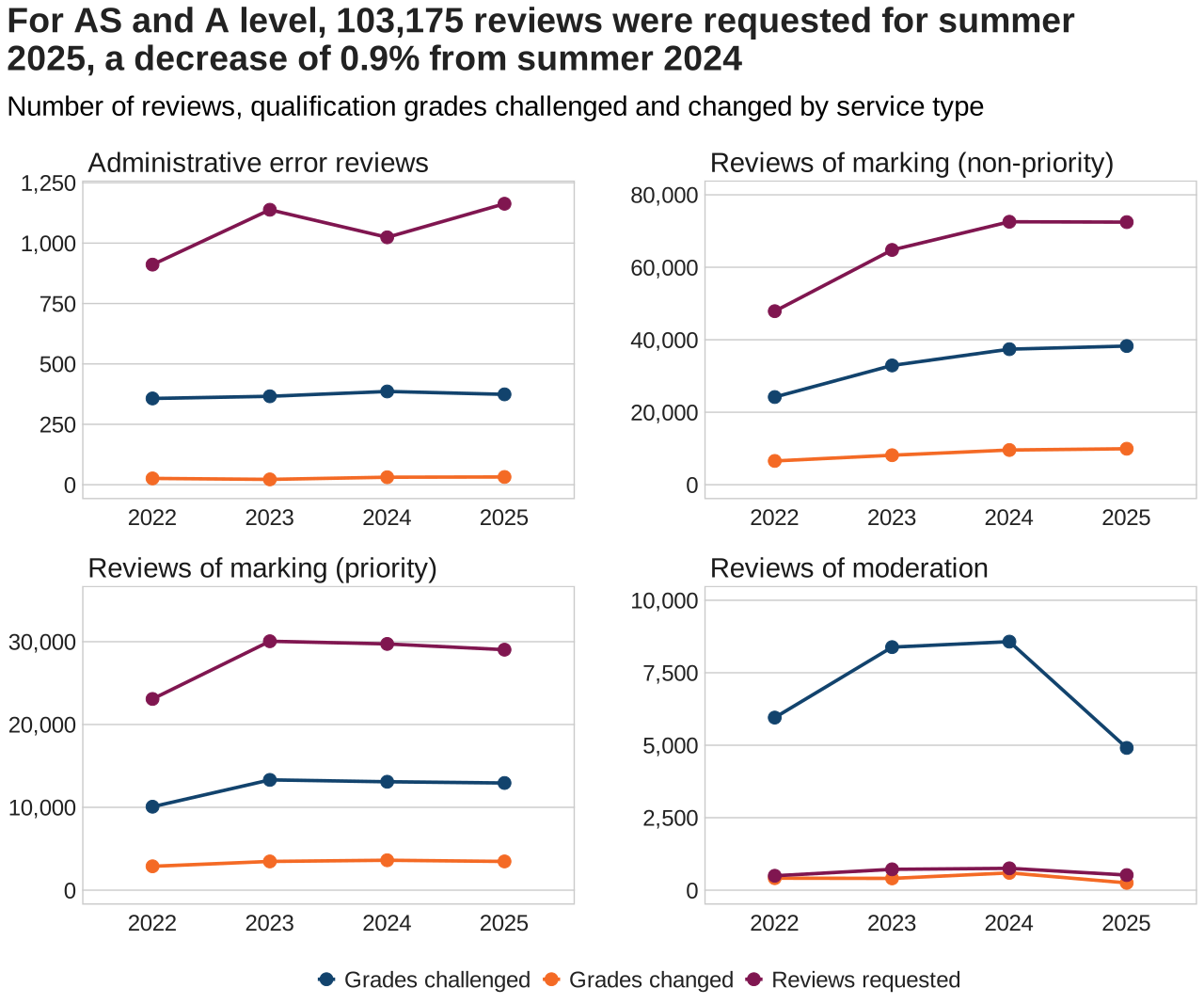
Table 8: Number of reviews requested, grades challenged and grades changed by service type for AS and A level
| Type of review | Reviews requested, grades challenged and grades changed | 2022 | 2023 | 2024 | 2025 |
|---|---|---|---|---|---|
| Administrative error reviews | Reviews requested | 910 | 1,140 | 1,025 | 1,165 |
| Administrative error reviews | Grades challenged | 355 | 365 | 385 | 375 |
| Administrative error reviews | Grades changed | 25 | 20 | 30 | 30 |
| Reviews of marking (non-priority) | Reviews requested | 47,885 | 64,785 | 72,555 | 72,460 |
| Reviews of marking (non-priority) | Grades challenged | 24,190 | 32,915 | 37,400 | 38,265 |
| Reviews of marking (non-priority) | Grades changed | 6,560 | 8,140 | 9,575 | 9,920 |
| Reviews of marking (priority) | Reviews requested | 23,085 | 30,055 | 29,730 | 29,035 |
| Reviews of marking (priority) | Grades challenged | 10,075 | 13,315 | 13,090 | 12,940 |
| Reviews of marking (priority) | Grades changed | 2,885 | 3,470 | 3,615 | 3,470 |
| Reviews of moderation | Reviews requested | 495 | 720 | 755 | 520 |
| Reviews of moderation | Grades challenged | 5,955 | 8,385 | 8,575 | 4,905 |
| Reviews of moderation | Grades changed | 415 | 405 | 595 | 250 |
Notes:
Grades can be challenged and changed as a result of review requests for multiple service types. To avoid these being counted more than once, these grades are not included in the charts and table 8.
The number of grades challenged and changed through reviews of moderation is higher than the number of reviews requested because one review usually involves multiple students. See background notes for more details.
Underlying figures are reported in in the accompanying data tables.
Original grades challenged
GCSE
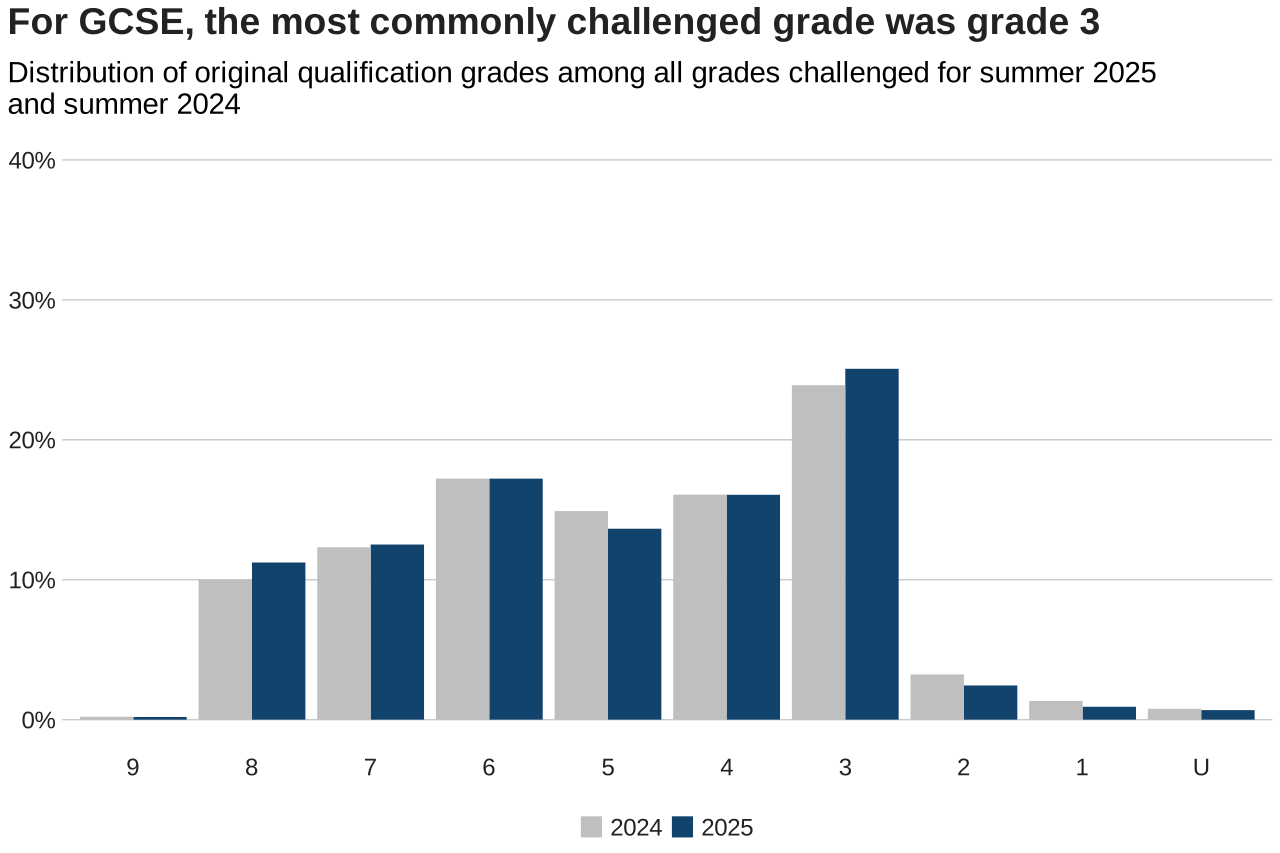
For GCSE, the most commonly challenged grade was a grade 3 (55,755 or 25.1% of all grades challenged). This is likely a reflection of the importance of attaining a grade 4 or above for progression to further study, training and skilled employment.
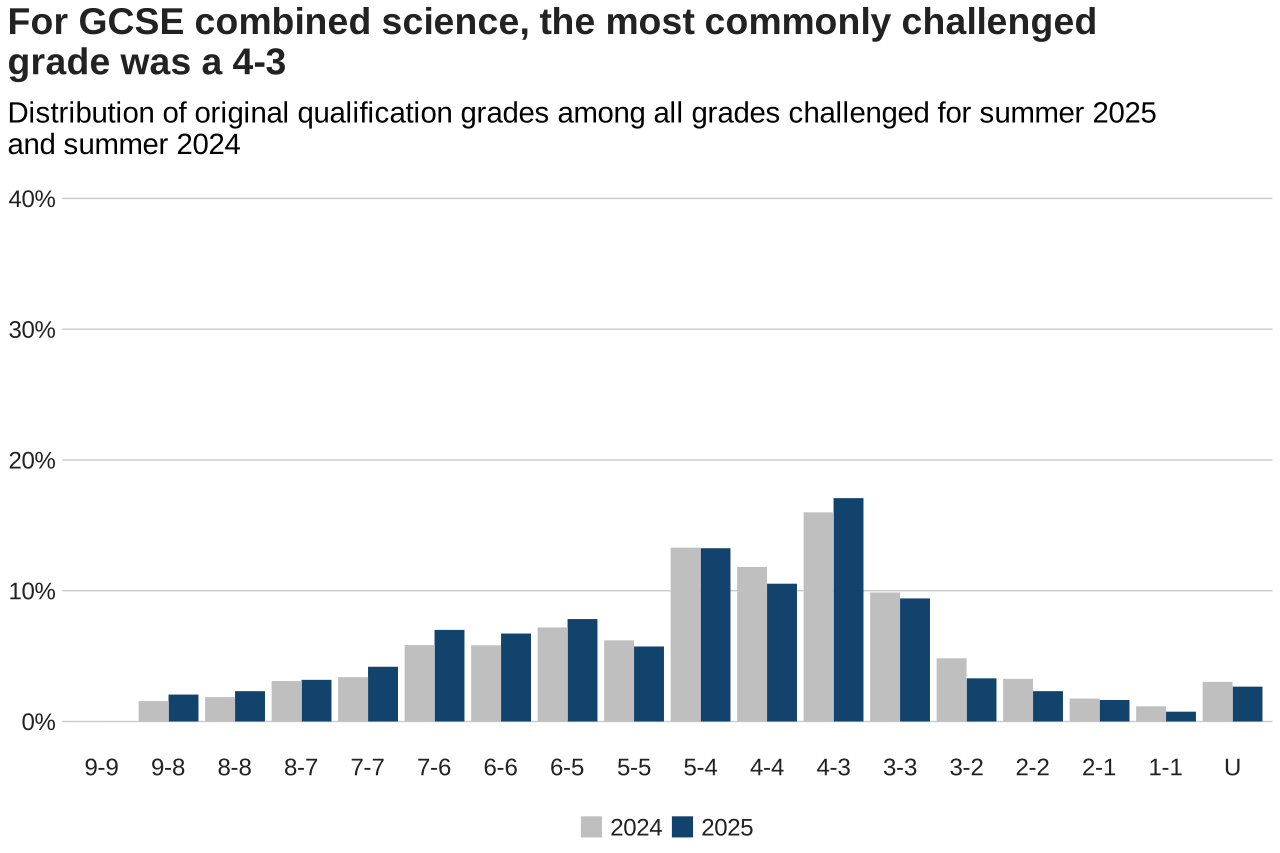
GCSE combined science has a 17-point grading scale from 9-9 to 1-1. The most commonly challenged grade was grade 4-3 (1,775 or 17.1% of all grades challenged), likely reflecting the importance of grade 4-4.
AS and A level
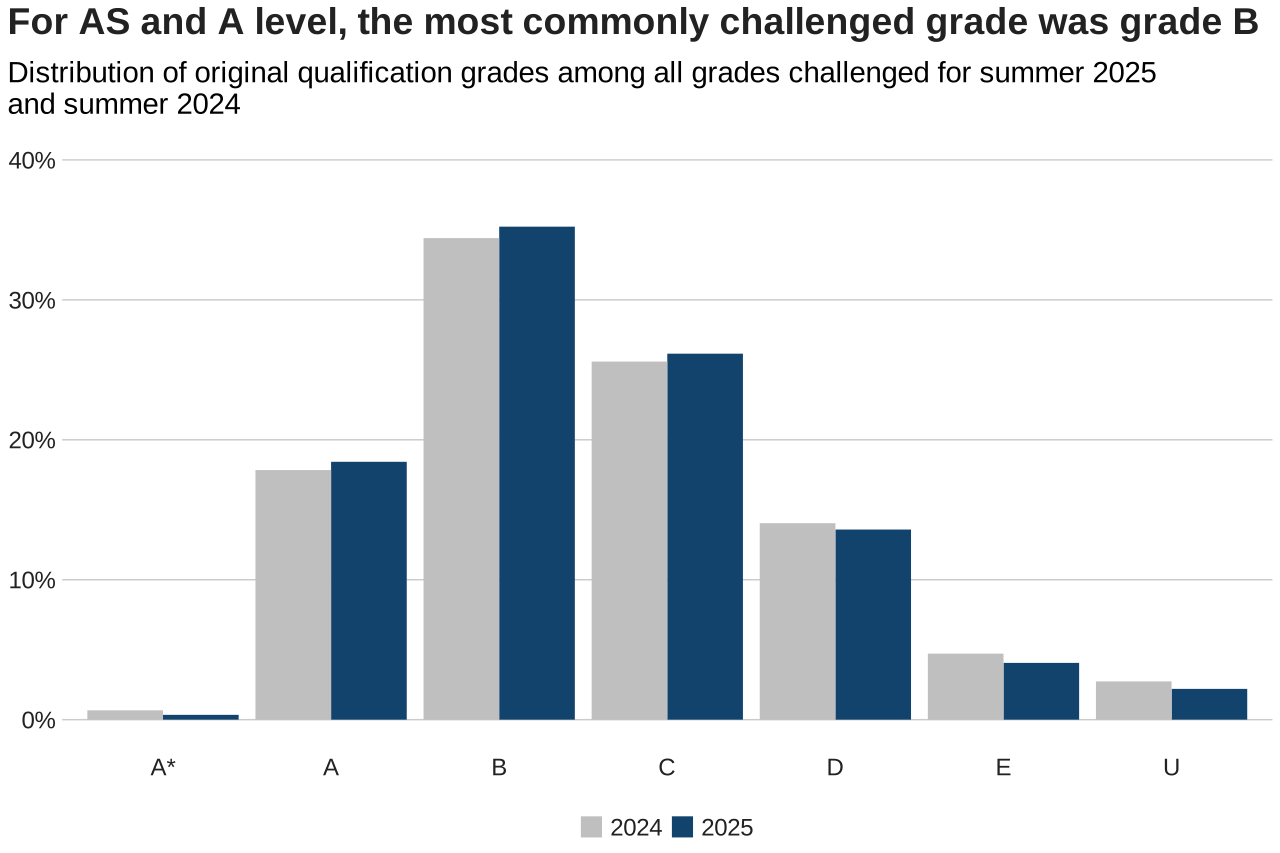
For AS and A level, the most commonly challenged grade was grade B (20,725 or 35.2% of all grades challenged).
Underlying figures are reported in the accompanying data tables.
Grade changes following review
In some cases, mark changes for reviewed components can affect the overall grade, which leads to the grade being changed.
GCSE
Of all GCSE grades awarded in summer 2025 (5,661,970), 4.3% were challenged and 1.0% were changed following reviews (compared with 4.7% challenged and 1.1% changed for summer 2024).
Following review, the majority of GCSE grades that were challenged were not changed (75.8%), 24.1% of challenged grades were increased, and less than 0.1% of challenged grades were decreased. When challenged grades were changed, they were most commonly changed by 1 grade (98.3% of changed grades).
To note at the point at which data was collected, some reviews were still in progress. For summer 2025, less than 0.1% of GCSE challenged grades had final grades still to be determined.
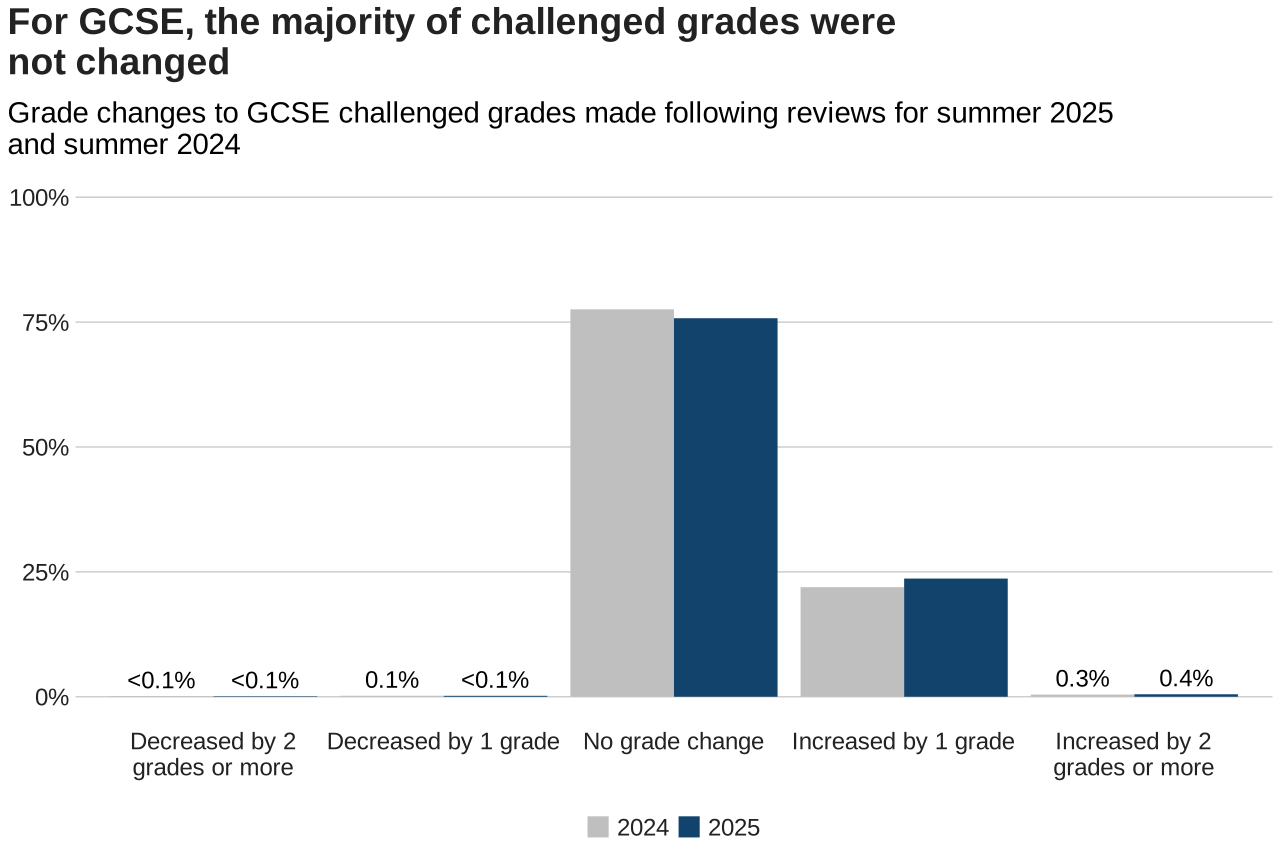
Table 9: Grade changes to GCSE challenged grades made following reviews
| Magnitude of grade change | Number of grades 2024 | Percentage of grades 2024 | Number of grades 2025 | Percentage of grades 2025 |
|---|---|---|---|---|
| Decreased by 2 grades or more | fewer than 5 | less than 0.1% | 5 | less than 0.1% |
| Decreased by 1 grade | 270 | 0.1% | 225 | less than 0.1% |
| No grade change | 208,690 | 77.6% | 184,250 | 75.8% |
| Increased by 1 grade | 59,020 | 21.9% | 57,535 | 23.7% |
| Increased by 2 grades or more | 900 | 0.3% | 965 | 0.4% |
Underlying figures are reported in the accompanying data tables.
AS and A level
Of all AS and A level grades awarded in summer 2025 (864,810), 6.8% were challenged and 1.6% were changed following reviews (compared with 7.1% challenged and 1.6% changed for summer 2024).
Following review, the majority of AS and A level grades that were challenged were not changed (75.9%), 24.0% of challenged grades were increased and less than 0.1% of challenged grades were decreased. When grades were changed for AS and A level, they were most commonly changed by 1 grade (99.6% of changed grades).
To note, at the point at which data was collected, some reviews were still in progress. For summer 2025 less than 0.1% of AS and A level challenged grades had final grades still to be determined.
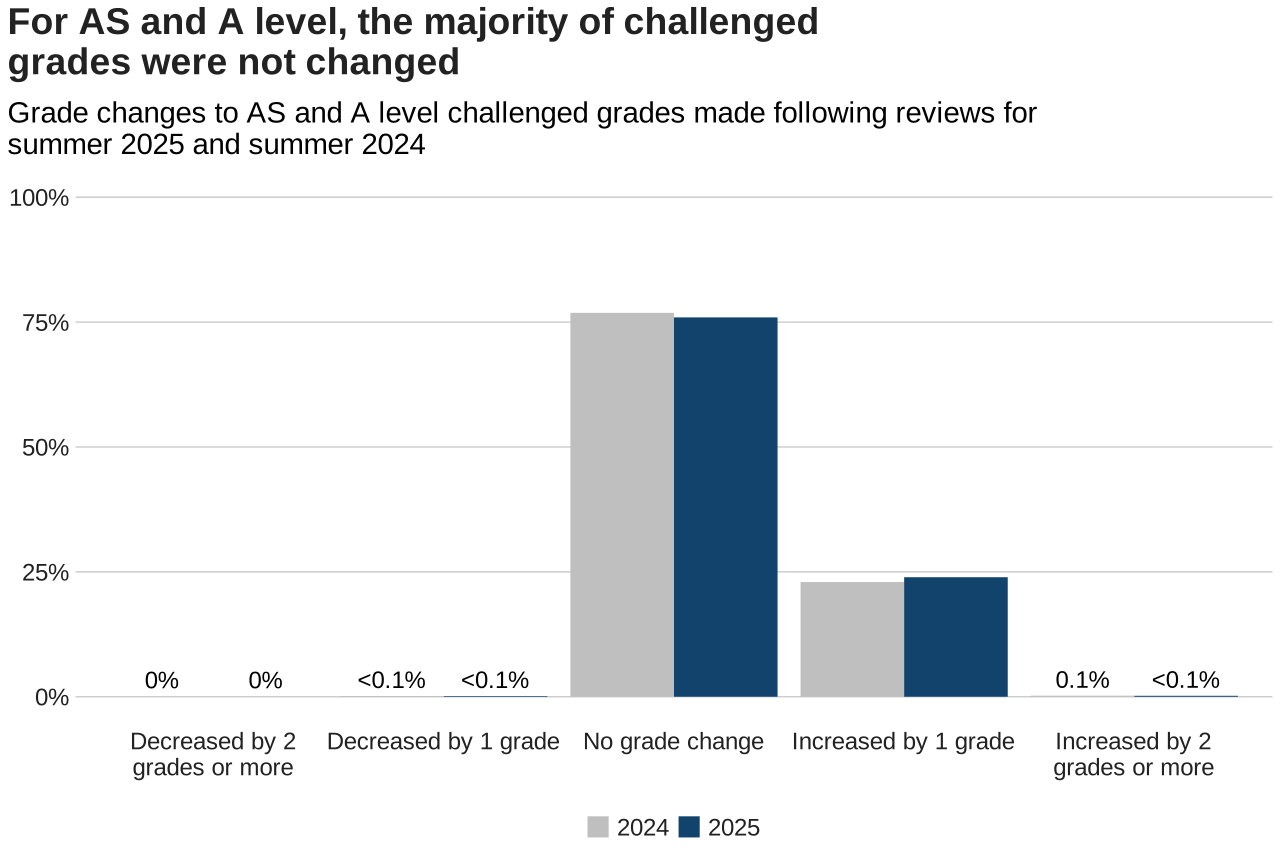
Table 10: Grade changes to AS and A level challenged grades made following reviews
| Magnitude of grade change | Number of grades June 2024 | Percentage of grades June 2024 | Number of grades June 2025 | Percentage of grades June 2025 |
|---|---|---|---|---|
| Decreased by 2 grades or more | 0 | 0.0% | 0 | 0.0% |
| Decreased by 1 grade | 30 | less than 0.1% | 20 | less than 0.1% |
| No grade change | 47,585 | 76.9% | 44,675 | 75.9% |
| Increased by 1 grade | 14,220 | 23.0% | 14,075 | 23.9% |
| Increased by 2 grades or more | 75 | 0.1% | 55 | less than 0.1% |
Underlying figures are reported in the accompanying data tables.
Grade changes of 2 or more grades by subject
GCSE
For GCSE, there were 970 changes of 2 or more grades which accounts for 1.7% of all GCSE grades changed for summer 2025. English literature and English (two subjects with some of the largest entry numbers) accounted for the highest number of changes of 2 or more grades.
Table 11 shows the number of GCSE grade changes of 2 or more grades by subject for summer 2025.
Table 11: Number of GCSE grade changes of 2 or more grades following reviews by subject for summer 2025
| Subject | Number of grade changes of 2 or more grades |
|---|---|
| English literature | 315 |
| English language | 295 |
| Art and design subjects | 205 |
| Combined science | 40 |
| Drama | 35 |
| Religious studies | 20 |
| Business studies | 10 |
| History | 10 |
| French | 10 |
| Spanish | 5 |
| All other subjects | 20 |
AS and A level
For AS and A level, there were 55 changes of 2 or more grades which accounts for 0.4% of all AS and A level grades changed for summer 2025. English literature and art & design subjects accounted for the highest number of changes of 2 or more grades.
Table 12 shows the number of AS and A level grade changes of 2 or more grades by subject for summer 2025.
Table 12: Number of AS and A level grade changes of 2 or more grades following reviews by subject for summer 2025
| Subject | Number of grade changes of 2 or more grades |
|---|---|
| English literature | 20 |
| Art & design subjects | 20 |
| History | fewer than 5 |
| Media / film / tv studies | fewer than 5 |
| Political studies | fewer than 5 |
| Sociology | fewer than 5 |
| Economics | fewer than 5 |
| English language & literature | fewer than 5 |
| Performing / expressive arts | fewer than 5 |
| Psychology | fewer than 5 |
| All other subjects | fewer than 5 |
Subjects with the highest percentage of grades challenged and changed
GCSE
For summer 2025, the percentage of all GCSE grades that were challenged varied by subject between 1.4% and 9.3% and the percentage of all grades that were changed following reviews varied by subject between 0.3% and 3.4%.
For summer 2025, the GCSE subject with the highest percentage of grades challenged was engineering (9.3%) and the subject with the highest percentage of all grades changed was economics (3.4%). For comparison, for summer 2024 the subject with the highest percentage of grades challenged was physical education (9.9%) and the subject with the highest percentage of all grades changed was also economics (3.6%).
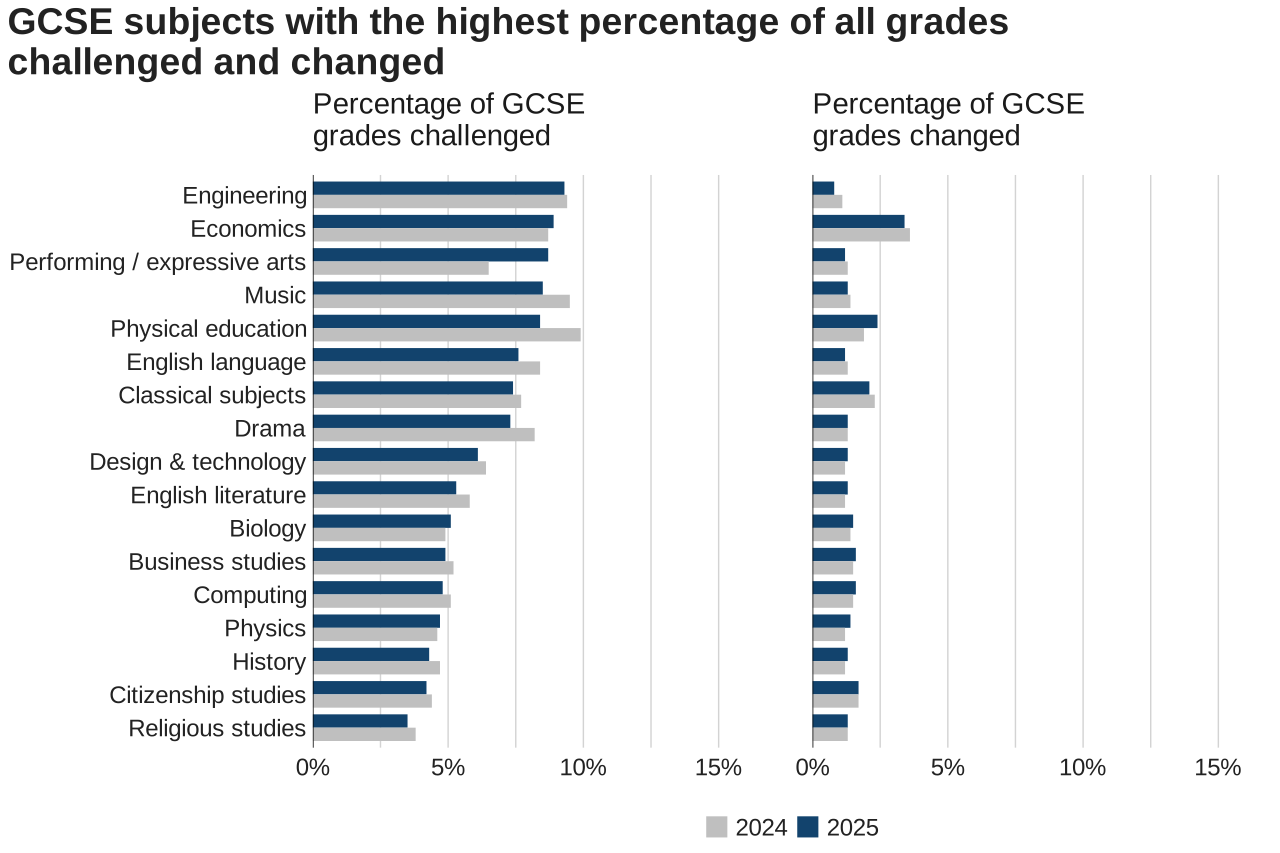
Table 13: GCSE subjects with the highest percentage of all grades challenged and changed
| Subject | Percentage of GCSE grades challenged in 2024 | Percentage of GCSE grades challenged in 2025 | Percentage of GCSE grades changed in 2024 | Percentage of GCSE grades changed in 2025 |
|---|---|---|---|---|
| Engineering | 9.4% | 9.3% | 1.1% | 0.8% |
| Economics | 8.7% | 8.9% | 3.6% | 3.4% |
| Performing / expressive arts | 6.5% | 8.7% | 1.3% | 1.2% |
| Music | 9.5% | 8.5% | 1.4% | 1.3% |
| Physical education | 9.9% | 8.4% | 1.9% | 2.4% |
| English language | 8.4% | 7.6% | 1.3% | 1.2% |
| Classical subjects | 7.7% | 7.4% | 2.3% | 2.1% |
| Drama | 8.2% | 7.3% | 1.3% | 1.3% |
| Design & technology | 6.4% | 6.1% | 1.2% | 1.3% |
| English literature | 5.8% | 5.3% | 1.2% | 1.3% |
| Biology | 4.9% | 5.1% | 1.4% | 1.5% |
| Business studies | 5.2% | 4.9% | 1.5% | 1.6% |
| Computing | 5.1% | 4.8% | 1.5% | 1.6% |
| Physics | 4.6% | 4.7% | 1.2% | 1.4% |
| History | 4.7% | 4.3% | 1.2% | 1.3% |
| Citizenship studies | 4.4% | 4.2% | 1.7% | 1.7% |
| Religious studies | 3.8% | 3.5% | 1.3% | 1.3% |
Notes:
The above chart and table 13 show the 10 subjects with the highest percentage of grades challenged and the 10 subjects with the highest percentage of grades changed. Because those are not the same 10 subjects, the chart and table show more than 10 subjects.
Figures for all subjects are reported in the accompanying data tables.
AS and A level
For summer 2025, the percentage of AS and A level grades that were challenged following reviews varied by subject between 2.9% and 13.8% and the percentage of grades that were changed following reviews varied by subject between 0.5% and 3.1%.
For summer 2025, the AS and A level subject with the highest percentage of grades challenged was physical education (13.8%) and the subject with the highest percentage of grades changed was music (3.1%). For comparison, for summer 2024 the subject with the highest percentage of grades challenged was also physical education (14.4%) and the subject with the highest percentage of grades changed was economics (3.4%).
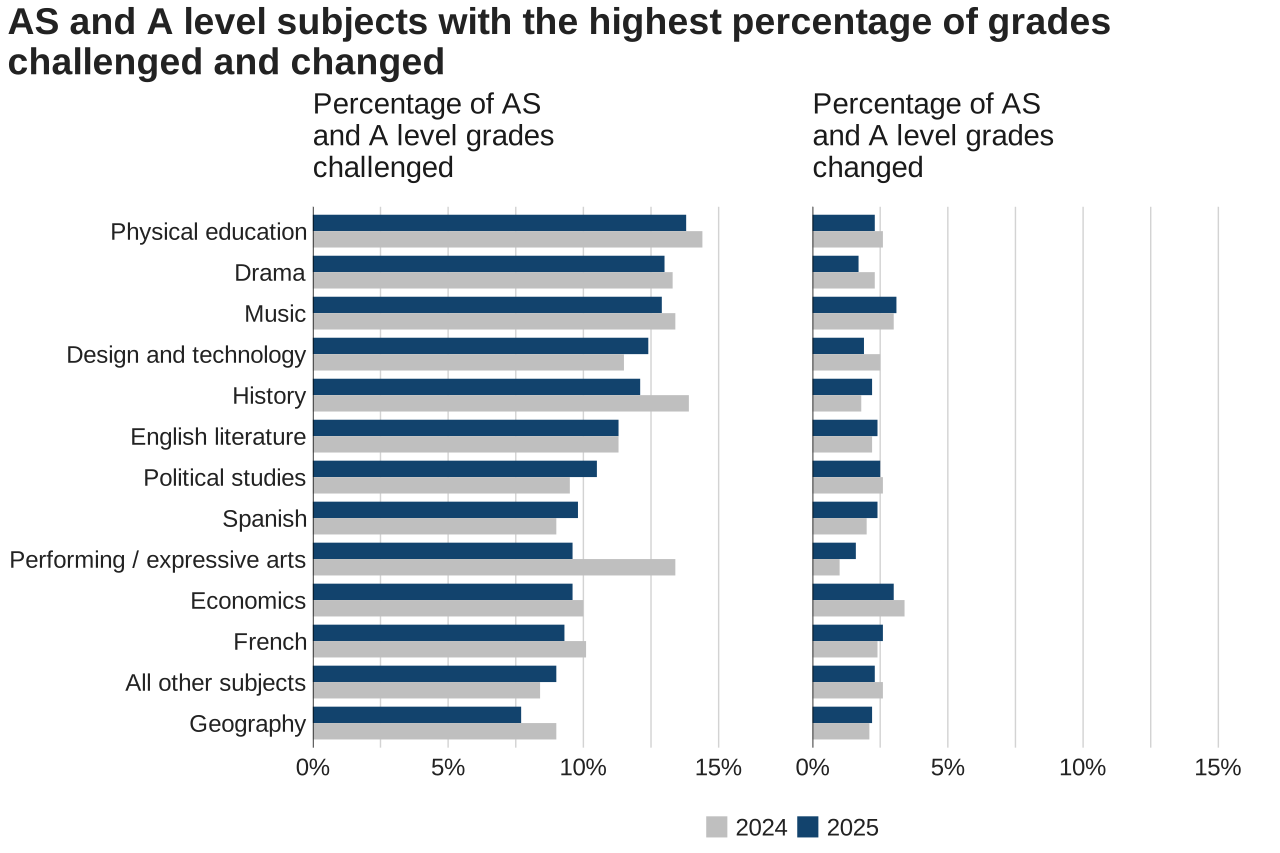
Table 14: AS and A level subjects with the highest percentage of grades challenged and changed
| Subject | Percentage of AS and A level grades challenged in 2024 | Percentage of AS and A level grades challenged in 2025 | Percentage of AS and A level grades changed in 2024 | Percentage of AS and A level grades changed in 2025 |
|---|---|---|---|---|
| Physical education | 14.4% | 13.8% | 2.6% | 2.3% |
| Drama | 13.3% | 13.0% | 2.3% | 1.7% |
| Music | 13.4% | 12.9% | 3.0% | 3.1% |
| Design and technology | 11.5% | 12.4% | 2.5% | 1.9% |
| History | 13.9% | 12.1% | 1.8% | 2.2% |
| English literature | 11.3% | 11.3% | 2.2% | 2.4% |
| Political studies | 9.5% | 10.5% | 2.6% | 2.5% |
| Spanish | 9.0% | 9.8% | 2.0% | 2.4% |
| Economics | 10.0% | 9.6% | 3.4% | 3.0% |
| Performing / expressive arts | 13.4% | 9.6% | 1.0% | 1.6% |
| French | 10.1% | 9.3% | 2.4% | 2.6% |
| Geography | 9.0% | 7.7% | 2.1% | 2.2% |
Notes:
The above chart and table 14 show the 10 subjects with the highest percentage of grades challenged and the 10 subjects with the highest percentage of grades changed. Because those are not the same 10 subjects, the chart and table show more than 10 subjects.
Figures for all subjects are reported in the accompanying data tables.
Students with grades challenged and grades changed
Students taking GCSEs, AS and A levels typically take multiple subjects and receive multiple grades. This section shows the number of students who had one or more of their grades challenged due to a review being requested for at least one component associated with each grade.
Exam boards only accept review requests through schools and colleges, and not from students directly.
GCSE
Of the 1,019,010 students who received results for GCSEs in summer 2025, 17.0% had one or more of their grades challenged and 5.2% had one or more grades changed (compared with 19.1% with grades challenged and 5.5% with grades changed for summer 2024).
Table 15 shows the number of students who had one or more GCSE grades challenged and changed.
Table 15: Students with grades challenged and grades changed following reviews for GCSE
| Exam Series | Number of all students receiving results | Number of students with one or more grades challenged | Percentage of all students with one or more grades challenged | Number of students with one or more grades changed | Percentage of all students with one or more grades changed |
|---|---|---|---|---|---|
| June 2025 | 1,019,010 | 172,995 | 17.0 | 53,290 | 5.2 |
| June 2024 | 989,880 | 188,855 | 19.1 | 54,790 | 5.5 |
AS and A level
Of the 336,045 students who received results for AS and A levels in summer 2025, 14.8% had one or more grades challenged and 4.0% had one or more grades changed (compared with 15.4% with grades challenged and 4.1% with grades changed for summer 2024).
Table 16 shows the number of students who had one or more AS and A level grades challenged and changed.
Table 16: Students with grades challenged and grades changed following reviews for AS and A level
| Exam Series | Number of all students receiving results | Number of students with one or more grades challenged | Percentage of all students with one or more grades challenged | Number of students with one or more grades changed | Percentage of all students with one or more grades changed |
|---|---|---|---|---|---|
| June 2025 | 336,045 | 49,865 | 14.8 | 13,615 | 4.0 |
| June 2024 | 338,840 | 52,255 | 15.4 | 13,750 | 4.1 |
Average review response times
In this section, the average time taken in days to respond to reviews is presented by service type. The exam boards collectively decide their own deadlines for completing reviews and reporting the outcome, outlined in the Joint Council for Qualifications guidelines. These are:
- 10 days for an administrative error review
- 20 days for a review of marking (non-priority) review
- 15 days for a review of marking (priority) review
- 35 days for a review of moderation
For summer 2025, 99.9% of GCSE reviews and 99.9% of AS and A level reviews were completed within these deadlines.
Table 17: Average time taken to complete review in days
| Type of review | GCSE June 2024: Average time taken to complete review in days | GCSE June 2025: Average time taken to complete review in days | AS and A level June 2024: Average time taken to complete review in days | AS and A level June 2025: Average time taken to complete review in days |
|---|---|---|---|---|
| Administrative error reviews | 1.2 | 0.7 | 1.3 | 1.2 |
| Reviews of marking (non-priority) | 7.3 | 6.3 | 4.5 | 4.5 |
| Reviews of marking (priority) | 2.2 | 2.5 | 3.7 | 3.5 |
| Reviews of moderation | 21.3 | 20.6 | 17.8 | 17.3 |
Contextual information
Please note that the figures reported in this release reflect the status of reviews at the data cut-off date: 10 November 2025. A small number of reviews were still outstanding at that point. These are included in figures where possible (for example, in the number of reviews requested and grades challenged). They are not, however, included in figures pertaining to grade or mark changes as the resulting mark or grade is not yet known.
Subjects are grouped using the subject groupings established by the Joint Council for Qualifications (JCQ).
AS and A level reviews are presented together in this report, but caution should be taken in making comparisons across time as the number of AS entries has declined considerably compared with earlier years.
To ensure confidentiality, the accompanying data in this release has been rounded in line with Ofqual’s rounding policy.
Further information is provided in the background notes accompanying this report.
Head of profession: Ben Cuff