Respiratory syncytial virus (RSV) older adults vaccination coverage in England: January 2026 report
Updated 1 October 2026
Applies to England

© Crown copyright 2026
This publication is licensed under the terms of the Open Government Licence v3.0 except where otherwise stated. To view this licence, visit nationalarchives.gov.uk/doc/open-government-licence/version/3 or write to the Information Policy Team, The National Archives, Kew, London TW9 4DU, or email: psi@nationalarchives.gov.uk.
Where we have identified any third party copyright information you will need to obtain permission from the copyright holders concerned.
This publication is available at https://www.gov.uk/government/statistics/respiratory-syncytial-virus-rsv-older-adults-vaccination-coverage-in-england/respiratory-syncytial-virus-rsv-older-adults-vaccination-coverage-in-england-january-2026-report
Published 5 March 2026
HPR volume 19
This report presents monthly vaccine uptake data for the older adult respiratory syncytial virus (RSV) immunisation programme in England, focusing on the period up to January 2026. This report includes vaccine uptake estimates for the routine cohort (individuals who turned 75 years of age since the programme start date of 1 September 2024) and the catch-up cohort (defined as individuals aged 75 to 79 years before 1 September 2024). Uptake data for both cohorts is reported as the cumulative figure measured up to 31 January 2026.
Main points
Between 1 September 2024 and 31 January 2026:
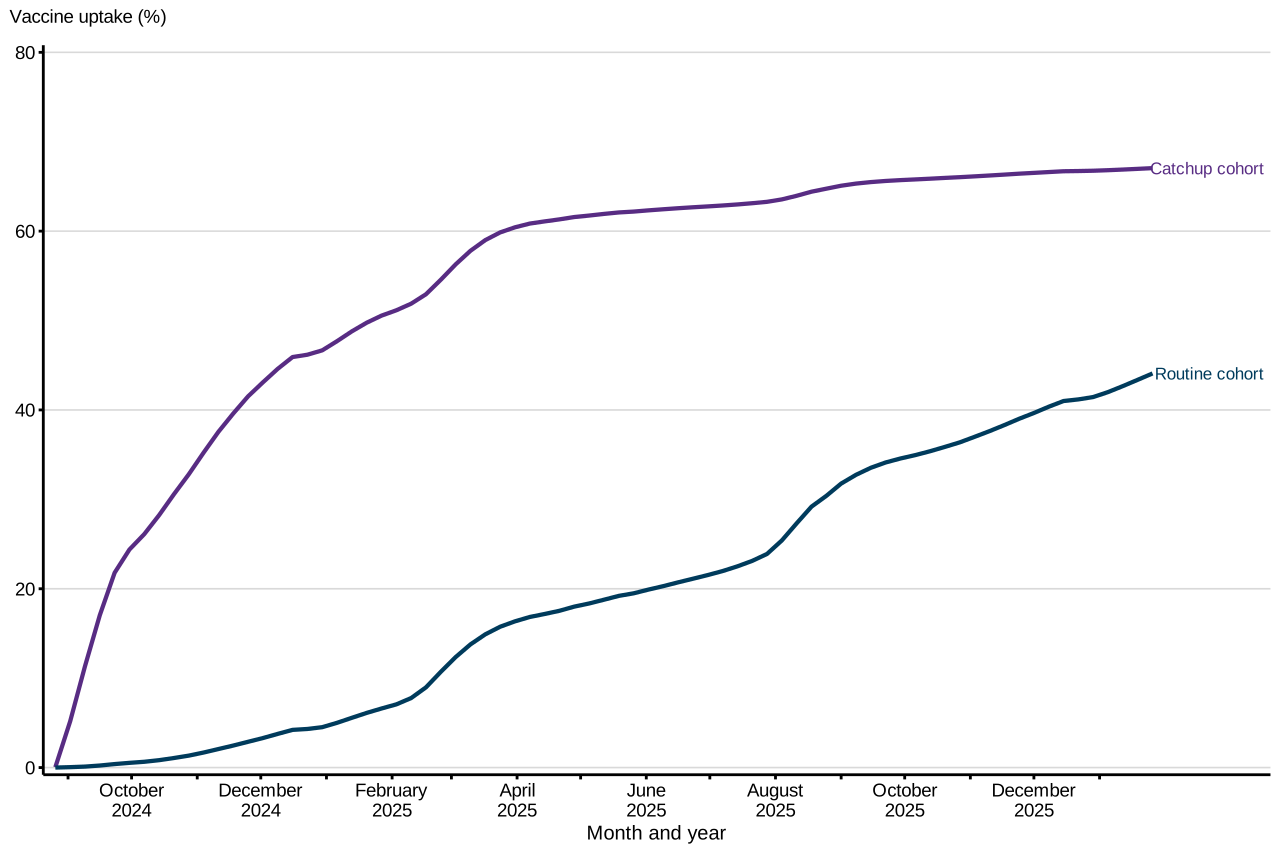
- vaccine uptake in the catch-up cohort reached 67.1%, increasing by 0.4 percentage points from the 66.7% reported in the December 2025 report (Figure 1)
- RSV vaccine uptake in the routine cohort reached 44.1%, remaining at the same level as the uptake reported in December 2025
- in all the eligible older adults (routine and catch-up cohort), the overall vaccine uptake reached 61.9%, remaining at the same level reported in December 2025
- in all the eligible older adults’ cohorts, regional vaccine uptake was highest in the South West (66.5%) and lowest in London (48.8%) (Table 2)
- uptake in males was 63.9% and in females was 60.1%
- uptake in the most deprived decile was 48.5% and in the least deprived decile was 70.1% (Table 3)
- uptake varied by ethnic group, with the highest uptake reported among White - British (65.3%) and the lowest among Asian or Asian British - Pakistani (23.8%) (Table 4)
- uptake varied by integrated care board (ICB), with the highest vaccine uptake in the NHS Hampshire and Isle of Wight ICB (68.8%) and the lowest in NHS North East London ICB (45.6%) (Table 5)
Help us improve this resource
This vaccine coverage report has been newly designated as an Official Statistics release. As part of this process, we are seeking feedback from users to ensure the publication meets your needs.
We would be grateful if you could take a few minutes to complete a short survey and share your views.
Your input will play an important role in shaping the development of this publication. Thank you for your time and support.
Analysis of RSV vaccine uptake by cohort
RSV vaccine uptake in older adults is described in terms of cohorts. This is where a cohort is defined in reference to the age at the programme start date (September 1, 2024, as described in the Green Book on immunisation against infectious disease). The eligible older adults are defined into 2 cohorts comprising the catch-up cohorts (a birth group cohort of those who were aged 75 to 79 years before the programme start date) and the routine cohort (defined dynamically as those that first became eligible by turning 75 years on or after the programme start date).
Owing to the dynamic nature of the routine cohort, the eligible individual in this cohort will increase progressively through the year as more individuals become eligible. The current cumulative vaccine uptake, dates of birth and eligibility definitions for these cohorts are described in Table 1.
Table 1. Cumulative RSV vaccine uptake for older adults in the routine and catch-up cohorts, measured at 31 January 2026
| Cohort group | Birth range of cohort | Age turned in September 2024 | Coverage (%) |
|---|---|---|---|
| Routine cohort | Adults turning 75 years old on or after 1 September 2024 | 75 | 44.1 |
| Catch-up cohort 1 | 1 September 1948 to 31 August 1949 | 75 | 66.2 |
| Catch-up cohort 2 | 1 September 1947 to 31 August 1948 | 76 | 66.7 |
| Catch-up cohort 3 | 1 September 1946 to 31 August 1947 | 77 | 67.6 |
| Catch-up cohort 4 | 1 September 1945 to 31 August 1946 | 78 | 67.7 |
| Catch-up cohort 5 | 1 September 1944 to 31 August 1945 | 79 | 67.1 |
| Total | 61.9 |
The combined uptake trend among all eligible older adults (catch-up and routine cohorts) is shown in Figure 1, while trend in RSV cumulative uptake by cohort for the catch-up and routine cohorts is shown in Figure 2.
Figure 1. Cumulative RSV vaccine uptake for older adults (both routine and catch-up cohorts combined), measured at 31 January 2026
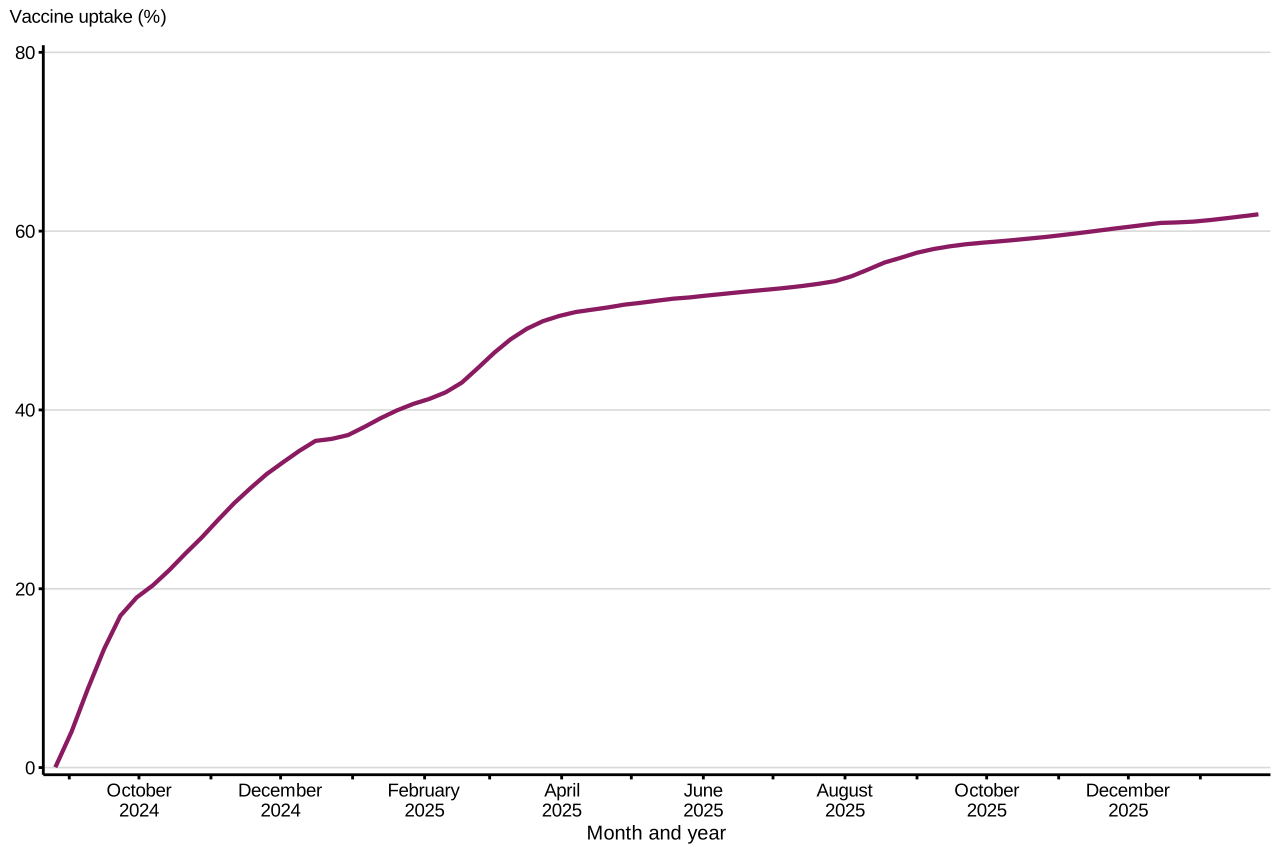
Figure 2. Cumulative RSV vaccine uptake comparing routine and catch-up cohorts, measured at 31 January 2026
To illustrate the rolling eligibility within the routine cohort, Figure 3 presents uptake by month of birth, showing uptake patterns as individuals reach the age of 75 years and become eligible. The oldest people in the routine cohort (those who reached the age of 75 years in September 2024) have had the most time to receive a notification and attend their vaccination appointments. As a result, their uptake is higher compared to those who only just reached the age of 75 years in the current reporting month.
Figure 3. RSV vaccine uptake for adults in the routine cohorts (adult turning 75 years after 1 September 2024) by month of birth, measured at 31 January 2026
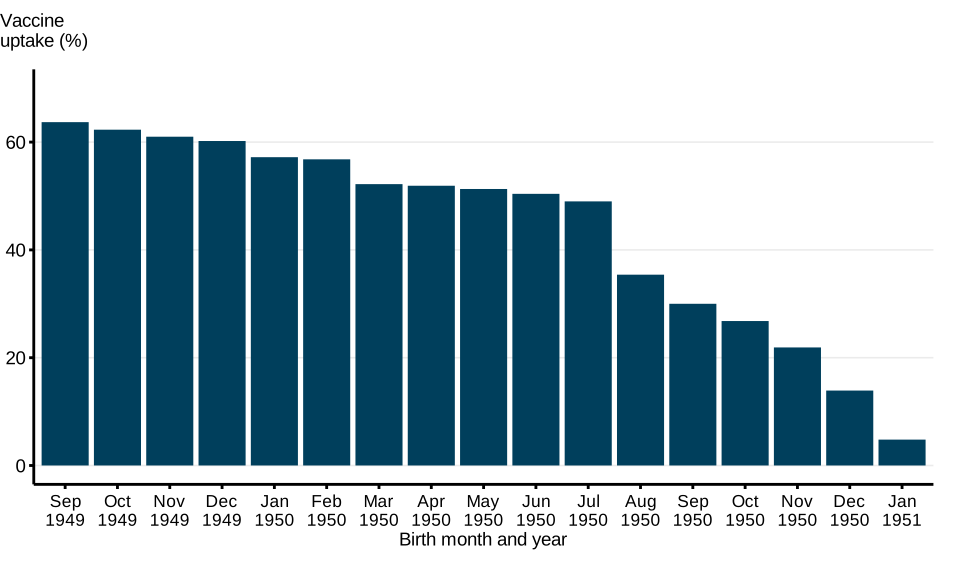
Table 2. RSV vaccine uptake for older adults (routine and catch-up cohorts), measured at 31 January 2026, by commissioning region
| Commissioning region | RSV uptake (%) |
|---|---|
| North East and Yorkshire | 63.8 |
| North West | 58.1 |
| Midlands | 61.1 |
| East of England | 64.2 |
| London | 48.8 |
| South East | 66.4 |
| South West | 66.5 |
Table 3. RSV vaccine uptake for older adults (routine and catch-up cohorts), measured at 31 January 2026, by Index of Multiple Deprivation 2019 deprivation deciles
| Deprivation deciles | RSV uptake (%) |
|---|---|
| 1 (Most deprived) | 48.5 |
| 2 | 51.2 |
| 3 | 54.5 |
| 4 | 58.1 |
| 5 | 61.0 |
| 6 | 63.0 |
| 7 | 64.6 |
| 8 | 66.0 |
| 9 | 67.6 |
| 10 (Least deprived) | 70.1 |
Table 4. RSV vaccine uptake for older adults (routine and catch-up cohorts), measured at 31 January 2026, by ethnicity
| Ethnic group | RSV uptake (%) |
|---|---|
| Asian or Asian British - Any other Asian background | 41.8 |
| Asian or Asian British - Bangladeshi | 26.4 |
| Asian or Asian British - Indian | 43.3 |
| Asian or Asian British - Pakistani | 23.8 |
| Black or Black British - African | 27.8 |
| Black or Black British - Any other Black background | 29.8 |
| Black or Black British - Caribbean | 26.9 |
| White - British | 65.3 |
| White - Irish | 55.4 |
| White - Other | 52.5 |
| Mixed - Any other mixed background | 51.0 |
| Mixed - White and Asian | 50.1 |
| Mixed - White and Black African | 37.0 |
| Mixed - White and Black Caribbean | 37.1 |
| Other ethnic groups - Any other ethnic group | 42.6 |
| Other ethnic groups - Chinese | 45.4 |
| Ethnicity not stated | 50.3 |
Table 5. RSV vaccine uptake for older adults (routine and catch-up cohorts), measured at 31 January 2026, by ICB
| ICB code | ICB name | RSV uptake (%) |
|---|---|---|
| QMF | North East London | 45.6 |
| QRV | North West London | 46.0 |
| QMJ | North Central London | 47.3 |
| QUA | Black Country | 49.3 |
| QKK | South East London | 50.6 |
| QHL | Birmingham and Solihull | 53.4 |
| QWE | South West London | 55.0 |
| QOP | Greater Manchester | 57.0 |
| QE1 | Lancashire and South Cumbria | 58.1 |
| QYG | Cheshire and Merseyside | 59.2 |
| QH8 | Mid and South Essex | 60.1 |
| QK1 | Leicester, Leicestershire and Rutland | 60.6 |
| QHG | Bedfordshire, Luton and Milton Keynes | 60.8 |
| QOC | Shropshire, Telford and Wrekin | 60.9 |
| QM7 | Hertfordshire and West Essex | 61.4 |
| QWO | West Yorkshire | 61.6 |
| QWU | Coventry and Warwickshire | 62.4 |
| QPM | Northamptonshire | 62.4 |
| QNC | Staffordshire and Stoke-on-Trent | 62.6 |
| QF7 | South Yorkshire | 63.5 |
| QT1 | Nottingham and Nottinghamshire | 63.8 |
| QHM | North East and North Cumbria | 63.9 |
| QGH | Herefordshire and Worcestershire | 64.0 |
| QT6 | Cornwall and the Isles of Scilly | 64.4 |
| QSL | Somerset | 64.5 |
| QJ2 | Derby and Derbyshire | 64.6 |
| QXU | Surrey Heartlands | 64.6 |
| QNQ | Frimley | 64.9 |
| QKS | Kent and Medway | 65.0 |
| QNX | Sussex | 65.4 |
| QVV | Dorset | 65.8 |
| QOQ | Humber and North Yorkshire | 66.1 |
| QJG | Suffolk and North East Essex | 66.5 |
| QJK | Devon | 66.7 |
| QJM | Lincolnshire | 66.9 |
| QUY | Bristol, North Somerset and South Gloucestershire | 67.1 |
| QR1 | Gloucestershire | 67.3 |
| QU9 | Buckinghamshire, Oxfordshire and Berkshire West | 68.1 |
| QUE | Cambridgeshire and Peterborough | 68.2 |
| QMM | Norfolk and Waveney | 68.2 |
| QOX | Bath and North East Somerset, Swindon and Wiltshire | 68.7 |
| QRL | Hampshire and Isle of Wight | 68.8 |
Uptake figures
Cumulative uptake in the catch-up cohorts of the RSV vaccination programme for older adults has been steadily increasing since the programme’s start. Uptake has risen from 22.6% in September 2024 to 61.9% by the end of January 2026. As the older adults remain eligible until they turn 80 years of age, it is expected that uptake in this cohort will increase progressively as they remain eligible for longer and have more opportunities to be vaccinated.
The cumulative vaccine uptake among all eligible older adults (routine and catch-up cohorts) was 61.9%, remaining at the same level reported in December 2025 (61.9%). The uptake within the stable, fixed birth-year catch-up cohort has shown a steady increase (increasing by nearly 0.4 percentage points from the 66.7% reported in December 2025), providing a clearer picture of progress unaffected by population changes and rolling eligibility.
Among the routine cohort, the vaccine uptake remaining at the same level reported in December 2025 (41.4%). In addition, the higher uptake among individuals who turned 75 years of age in September 2024 compared to those turning 75 years of age in the current reporting month reflects the natural lag between becoming eligible, receiving an invitation, and presenting for vaccination. This time-dependent pattern is expected and consistent with the rolling eligibility of people in this cohort and highlights the importance of allowing sufficient time for individuals to engage with the vaccination programme. These dynamics underscore why fluctuations in overall uptake should be interpreted cautiously and why separate reporting for routine and catch-up cohorts provides a more accurate assessment of the programme performance.
In addition, this report highlights that overall uptake in the eligible older adults varies by nearly 17.7 percentage points between regions, 21.6 percentage points between the most and least deprived deciles, and approximately 41.6 percentage points between ethnicities.
Data sources and methodology
More detailed methodological information is available in our quality and methodology information report.
This is the sixteenth in the series of older-adult RSV vaccination uptake reports that will be released monthly, providing cumulative vaccination uptake data since the start of the campaign. The reporting period in the current report is from 1 September 2024 to January 2026. Data is collected through the Immunisation Information System (IIS), which holds denominator data and captures vaccination events from GP practices and participating community pharmacies across England, based on data provided by NHS England.
Vaccine uptake is calculated by dividing the number of eligible older adults who have received the RSV vaccine by the total number of individuals eligible for the vaccination. The vaccine uptake is presented by cohort (routine versus catch-up) and for all older adults combined. Where relevant, figures also describe uptake within the routine cohort by month of birth to illustrate uptake as individuals become newly eligible when aged 75 years.
The data was extracted on 27 February 2026 to include vaccinations administered up to midnight of the last day of the reporting month (31 January 2026).
The 5 catch-up cohorts are defined by their birth year and age as of the programme start date. A more detailed breakdown of the different cohorts can be found in Table 1.
This report presents the vaccine uptake in both the routine and catch-up cohorts. The routine cohort are defined as those turning 75 years of age since the programme’s start date. This cohort is currently comprised of those that are just turning 75 years of age, and those that are currently aged 76 years. As individuals in this cohorts are gradually becoming eligible as the vaccination programme progresses, some have not yet had sufficient time to be notified and present themselves for vaccination due to the rolling eligibility in this cohort.
Data extraction note:
- population estimates for denominator data and vaccination records were extracted from the IIS on 27 February 2026 for vaccine events up to 31 January 2026
- the data for the new RSV programme relies on new data flows and is, therefore, provisional while enhanced data validation checks are being conducted; any changes to historic figures will be reflected in the most recent publication
The February older adult RSV vaccination uptake report is scheduled to be released on 2 April 2026.
Birth cohorts
Table 6. Birth range and RSV vaccine eligibility dates for routine and catch-up cohorts of older adult populations, measured at 31 January 2026
| Cohort group | Birth range of cohort | Age turned since September 2024 |
|---|---|---|
| Routine cohort | Adults turning 75 years old on or after 1 September 2024 | 75 |
| Catch-up cohort 1 | 1 September 1948 to 31 August 1949 | 75 |
| Catch-up cohort 2 | 1 September 1947 to 31 August 1948 | 76 |
| Catch-up cohort 3 | 1 September 1946 to 31 August 1947 | 77 |
| Catch-up cohort 4 | 1 September 1945 to 31 August 1946 | 78 |
| Catch-up cohort 5 | 1 September 1944 to 31 August 1945 | 79 |
Background information
The RSV vaccination programme was introduced in September 2024, targeting older adults as part of a national public health initiative. This routine programme is offered to older adults (divided into the routine and catch-up cohort) upon turning the age of 75 years, and who remain eligible until they turn 80 years of age.
The RSV vaccination programme for older adults in England began on 1 September 2024 as a single-dose offer. Eligibility is defined at the programme start date and comprises 2 groups (a routine cohort and catch-up cohort).
The populations eligible for the programme are divided into 2 groups defined in the Green Book Green Book on immunisation against infectious disease based on their age on or after the programme start date, as follows:
- rolling, year-round eligibility in adults turning 75 years on or after the programme start date (1 September 2024): the routine cohort
- adults already aged 75 to 79 years before the programme start date (comprising 5 catch-up cohorts) are eligible up until their 80th birthday
Those who reach the age of 80 years in the first year of the programme and have not been vaccinated still remain eligible until the present date of the programme.
The primary aim of the older adult RSV programme is to reduce severe RSV disease, hospitalisations and complications among older adults, particularly those aged 75 years and over. Programme uptake is reported as cumulative uptake by week, using ISO week definitions, from 1 September 2024 up to the data cut-off date for each monthly report.
This monthly report includes vaccine uptake data up to 31 January 2026.
Programme delivery
The programme is delivered through NHS providers. Offers are made proactively to newly eligible individuals in the routine cohort on or shortly after their 75th birthday, and through scheduled catch-up activity for those aged 75 to 79 years at the programme start date.
Previous monthly reports for RSV older adults vaccination coverage in England are available.
Related statistics
- RSV maternal vaccination coverage in England
- Surveillance of respiratory syncytial virus: winter 2024 to 2025
- NHS England vaccination statistics
- Public Health Wales RSV vaccination surveillance: August 2025
- Respiratory syncytial virus (RSV) older adult vaccination in Scotland
Further information and contact details
Feedback and contact information
For feedback or any enquiries relating to this document and the RSV vaccination uptake, please contact rsv@ukhsa.gov.uk
Official statistics
Our statistical practice is regulated by the Office for Statistics Regulation (OSR). OSR sets the standards of trustworthiness, quality and value in the Code of Practice for Statistics that all producers of official statistics should adhere to.
You are welcome to contact us directly by emailing rsv@ukhsa.gov.uk with any comments about how we meet these standards. Alternatively, you can contact OSR by emailing regulation@statistics.gov.uk or via the OSR website.
UKHSA is committed to ensuring that these statistics comply with the Code of Practice for Statistics. This means users can have confidence in the people who produce UKHSA statistics because our statistics are robust, reliable and accurate. Our statistics are regularly reviewed to ensure they support the needs of society for information.