Reported road casualties in Great Britain, provisional estimates: year ending June 2025
Published 27 November 2025

© Crown copyright 2025
This publication is licensed under the terms of the Open Government Licence v3.0 except where otherwise stated. To view this licence, visit nationalarchives.gov.uk/doc/open-government-licence/version/3 or write to the Information Policy Team, The National Archives, Kew, London TW9 4DU, or email: psi@nationalarchives.gov.uk.
Where we have identified any third party copyright information you will need to obtain permission from the copyright holders concerned.
This publication is available at https://www.gov.uk/government/statistics/reported-road-casualties-in-great-britain-provisional-estimates-year-ending-june-2025/reported-road-casualties-in-great-britain-provisional-estimates-year-ending-june-2025
About this release
This release provides an estimate of the number of personal injury road traffic casualties in Great Britain that were reported by the police in the year ending June 2025 using the STATS19 reporting system. These figures are provisional as they will change following the end of year validation process.
Data by road user type, police force and road class are available in the accompanying data tables.
1. Headline figures
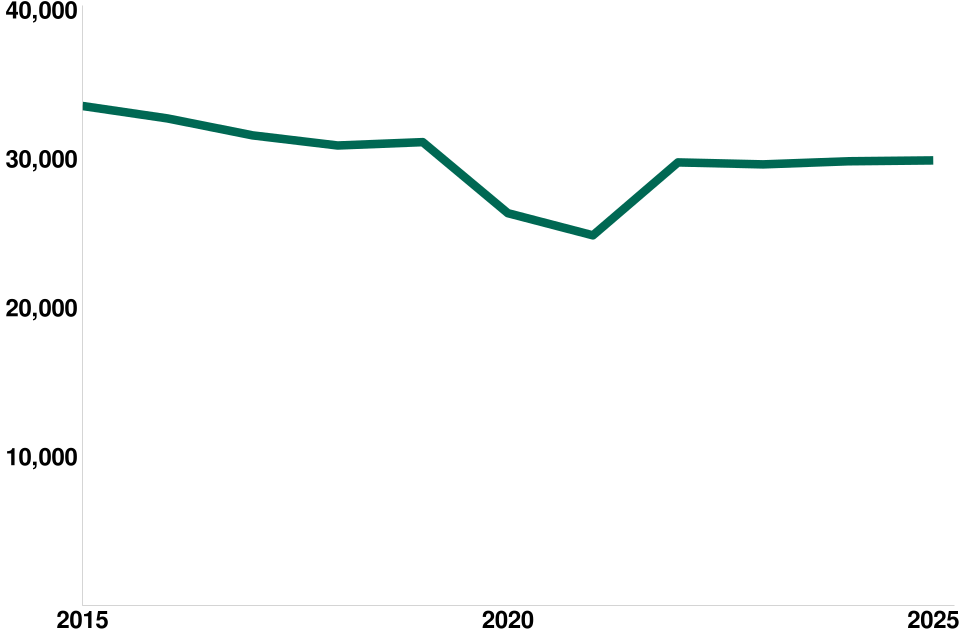
Chart 1 shows the trend in killed or seriously injured (KSI) road casualties over the last decade. Since 2015, there has been a slight downward trend in the number of KSI casualties in Great Britain with a notable decrease in the years affected by the coronavirus (COVID-19) pandemic. In the year ending June 2025, the number of KSI road casualties remained relatively stable, continuing the trend seen in recent years.
In reported road collisions in Great Britain in the year ending June 2025 there were an estimated:
-
1,579 fatalities, a decline of 3% compared to the year ending June 2024
-
29,896 killed or seriously injured (KSI) casualties, little change compared to the year ending June 2024
-
127,161 casualties of all severities, a decline of 3% compared to the year ending June 2024
Of the 4 road user groups with the most casualties (car occupants, pedestrians, motorcyclists and pedal cyclists) the statistics show that in Great Britain in the year ending June 2025 there was generally little change in the number of fatalities compared to last year, continuing the trend seen over the last 10 years. The notable exception is motorcyclists where there has been an increase in the number of fatalities, compared both to last year and the last 10 years.
Considering demographics, 77% of fatalities and 61% of casualties of all severities were male in Great Britain the year ending June 2025.
Chart 1: Reported road KSI (adjusted) casualties, Great Britain, the year ending June 2015 to the year ending June 2025 (provisional)
2. Things you need to know
2.1 Provisional figures
Figures in this release are provisional and are based on data supplied by police forces by November 2025. A small amount of missing data has been estimated. Figures will change following updates from the police and the end of year validation process. Further details are given in the background information section.
2.2 Severity adjustment
The figures in this release for injured casualties are based on adjusting figures reported by the police to take account of changes in the reporting of injury severity by some police forces in recent years. These adjusted figures can reliably be used to compare trends over time across the country. More details can be found in our severity adjustments guidance.
2.3 Data coverage
There is no obligation for people to report all personal injury collisions to the police. These figures, therefore, do not represent the full range of all collisions or casualties in Great Britain. All collisions reported by the police and that occurred on a public highway involving at least one motor vehicle, horse rider or pedal cyclist, and where at least one person was injured, are included in these statistics. More information on STATS19, how road traffic casualty data is collected and how these figures are produced can be found in the accompanying guidance.
3. Overall casualties
3.1 Casualties by severity
Casualties are broken down into fatalities (people killed in road collisions), and those injured (further split into seriously and slightly injured based on type of injury sustained). Killed and seriously injured casualties are commonly grouped together as ‘KSIs’.
It has long been known that non-fatal (and particularly slight) casualties are under-reported to the police, though we believe that the trends shown are likely to reflect genuine changes. Further information is available in the quality section below.
Chart 2 and Table 1 show the trend in road casualties by severity over the last decade. Over the last 10 years the number of fatalities and KSIs has remained relatively stable, outside of the years affected by the coronavirus pandemic. Figures for the year ending June 2025 broadly show a continuation of this trend. The overall number of casualties has decreased over the last 10 years.
In reported road collisions in Great Britain in the year ending June 2025 there were an estimated:
-
1,579 fatalities, a decline of 3% compared to the year ending June 2024
-
29,896 KSI casualties, little change compared to the year ending June 2024
-
127,161 casualties of all severities, a decline of 3% compared to the year ending June 2024
Chart 2: Reported road casualties by severity and all road traffic (billion vehicles miles), Great Britain, the year ending June 2015 to the year ending June 2025 (provisional)
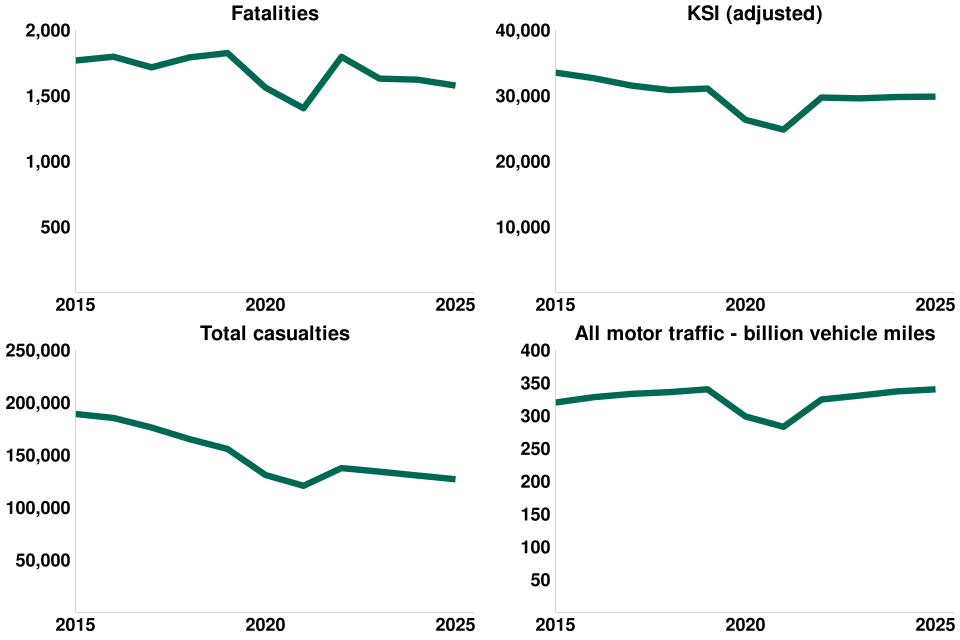
Table 1: Reported road casualties by severity, Great Britain, the year ending June 2025 (provisional) compared with the year ending June 2024 and the year ending June 2015 RAS90
| Severity | 2025 | % change from 2024 | % change from 2015 |
|---|---|---|---|
| Killed | 1,579 | -3 | -11 |
| Seriously injured (adjusted) | 28,317 | 0 | -11 |
| KSI (adjusted) | 29,896 | 0 | -11 |
| Slightly injured (adjusted) | 97,266 | -4 | -38 |
| All casualties | 127,161 | -3 | -33 |
3.2 Trends in casualty rates
Chart 3 and Table 2 show the trend in road casualty rates over the last decade. Over the past decade, overall casualty rates have steadily fallen while the rates for fatalities and KSIs have slightly reduced. The patterns in casualty numbers shown above largely reflect changes in traffic patterns, with the largest reductions in fatalities and KSIs associated with reductions in traffic, during the coronavirus pandemic lockdowns and restrictions.
In reported road collisions in Great Britain in the year ending June 2025, there were an estimated:
-
4.6 fatalities per billion vehicle miles travelled, a decline of 4% compared to the year ending June 2024
-
88 KSI casualties per billion vehicle miles travelled, a decline of 1% compared to the year ending June 2024
-
373 casualties of all severities per billion vehicle miles travelled, a decline of 4% compared to the year ending June 2024
Chart 3: Reported road casualty rates per billion vehicle miles by severity, Great Britain, the year ending June 2015 to the year ending June 2025 (provisional)
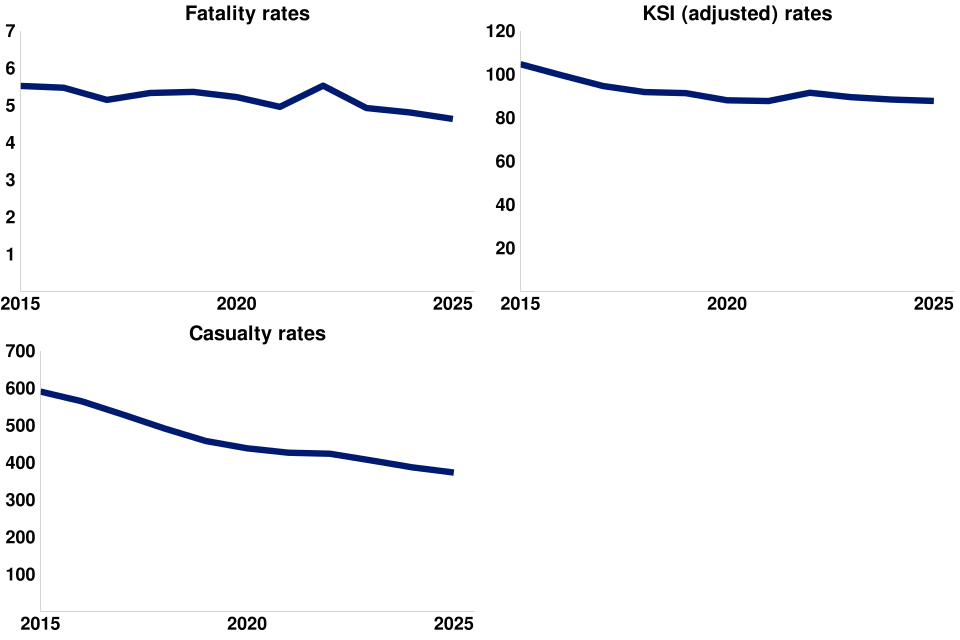
Table 2: Reported road casualty rates per billion vehicle miles by severity, Great Britain, the year ending June 2025 (provisional) compared to the year ending June 2024 and the year ending June 2015
| Severity | 2025 | % change from 2024 | % change from 2015 |
|---|---|---|---|
| Fatalities per billion vehicle miles | 4.6 | -4 | -16 |
| KSIs per billion vehicle miles | 87.8 | -1 | -16 |
| Casualties per billion vehicle miles | 373.4 | -4 | -37 |
4. Casualties by road user type
The 4 main road user types (car occupants, pedestrians, motorcyclists and pedal cyclists) are used in the charts below to show comparisons with the last 10 years.
While provisional statistics for the 4 main road user types are likely to give a reasonable indication of trends, figures for other road user types can be impacted by classification issues, as explained in the quality section below. Therefore, these figures should be interpreted with caution.
‘Other vehicle occupants’ include e-scooters, which account for much of the increase in casualties for this road user category compared to 2019 figures.
Provisionally, there were an estimated 1,357 casualties in collisions involving e-scooters, compared to 1,407 in the year ending June 2024. There were 6 killed in collisions involving e-scooters (5 of whom were e-scooter riders) compared to 8 in the year ending June 2024. Our best estimate, after adjusting for changes in reporting by police, is that there were 459 seriously injured and 892 slightly injured in collisions involving e-scooters, this compares to 437 and 962 respectively in the year ending June 2024.
4.1 Fatalities by road user type
Chart 4 and Table 3 shows fatalities for the year ending June 2025 and the preceding 10 years for the 4 main road user types: car occupants, pedestrians, motorcyclists and pedal cyclists.
In the year ending June 2025:
- 43% of fatalities were car occupants
- 24% were pedestrians
- 23% were motorcyclists
- 6% were pedal cyclists
Over the last 10 years the number of fatalities for these 4 road user types has remained relatively stable (excluding years affected by the coronavirus pandemic). These provisional figures show a slight decline in the number of car occupant fatalities for the year ending June 2025 continuing the pattern seen since the post-pandemic trend. There has been a slight increase in the number of motorcyclists fatalities in the year ending June 2025, compared both to both last year and the overall 10 year trend.
Chart 4: Reported road fatalities by road user type, Great Britain, the year ending June 2025 (provisional) compared with the year ending June 2024 RAS90
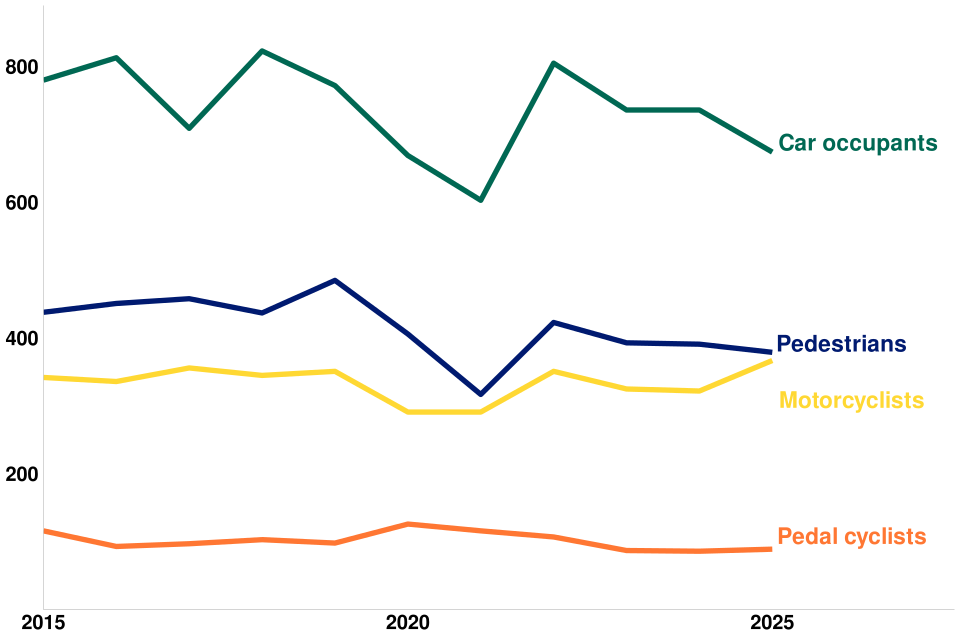
Table 3: Reported road fatalities by road user type, Great Britain, the year ending June 2025 (provisional) compared with the year ending June 2024 and the year ending June 2015 RAS90
| Road User Type | 2025 | % change from 2024 | % change from 2015 |
|---|---|---|---|
| Car occupants | 674 | -8 | -14 |
| Pedestrians | 379 | -3 | -14 |
| Motorcyclists | 367 | 14 | 7 |
| Pedal cyclists | 89 | 3 | -23 |
| Goods vehicles occupants | 42 | -22 | -33 |
| Other vehicle occupants | 26 | -19 | -4 |
| Bus or coach occupants | 2 | -33 | -50 |
4.2 All casualties by road user type
Chart 5 and Table 4 shows overall casualties figures split into the 4 main road user types: car occupants, pedestrians, motorcyclists and pedal cyclists.
In the year ending June 2025, 54% of casualties were car occupants, 15% were pedestrians, 12% were motorcyclists and 12% were pedal cyclists. Chart 5 shows that for all 4 of these road user types there has been a decrease in the overall number of casualties over the last 10 years, with this decrease being most pronounced for car occupants.
Chart 5: Reported road casualties by road user type, Great Britain, the year ending June 2025 (provisional) compared with the year ending June 2024 RAS90
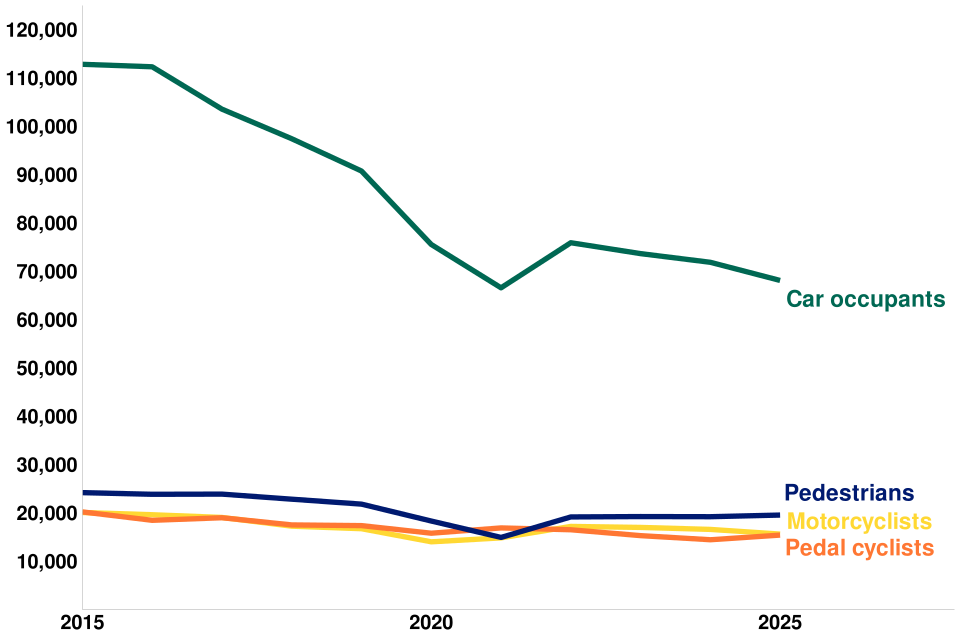
Table 4: Reported road casualties by road user type, Great Britain, the year ending June 2025 (provisional) compared with the year ending June 2024 and the year ending June 2015 RAS90
| Road User Type | 2025 | % change from 2024 | % change from 2015 |
|---|---|---|---|
| Car occupants | 68,102 | -5 | -40 |
| Pedestrians | 19,559 | 2 | -19 |
| Motorcyclists | 15,626 | -6 | -22 |
| Pedal cyclists | 15,413 | 7 | -24 |
| Goods vehicles occupants | 4,116 | -5 | -33 |
| Bus or coach occupants | 2,184 | -1 | -56 |
| Other vehicle occupants | 2,162 | 6 | 124 |
5. Casualties by age and sex
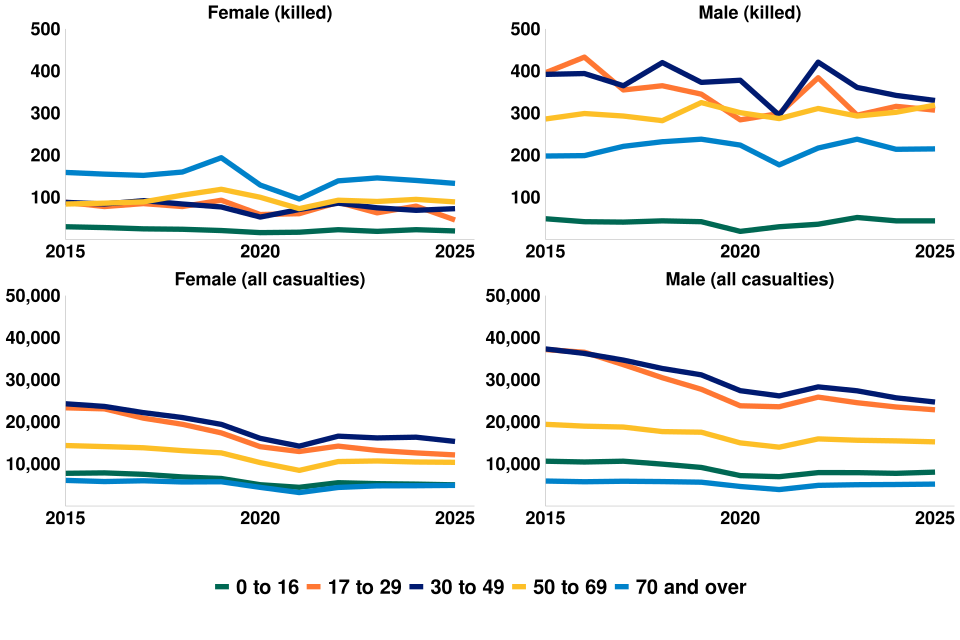
Chart 6 shows fatalities and all casualties split by both sex and age group.
Overall, in the year ending June 2025:
- 77% of fatalities and 61% of casualties of all severities were male
- 4% of fatalities and 11% of casualties were aged 16 years old and under
- 22% of fatalities and 28% of casualties were aged 17 to 29 years old
- 22% of fatalities and 8% of casualties were aged 70 years old and over
It should be noted that the figures in the breakdowns of casualties by age in the following section may sum to less than the “all ages” figures as casualties where the age is unknown are included in “all ages” but are not included in any of the breakdowns.
Chart 6: Reported road fatalities and all casualties by age group and sex, Great Britain, the year ending June 2015 to the year ending June 2025 (provisional)
5.1 Fatalities by age and sex
Overall, 77% of fatalities were male in the year ending June 2025.
In the year ending June 2025, the age group with the most male fatalities was 30 to 49 year olds with 330 fatalities, a decline of 4% compared to the year ending June 2024. For females the age group with the most fatalities in the year ending June 2025 was 70 year olds and over with 133 fatalities, a decline of 5% compared to the year ending June 2024. Overall larger reductions are observed for younger age groups and for females.
As the numbers in each group are small, there can be large fluctuations when comparing between years, as shown in Chart 6 and Table 5.
Table 5: Reported road fatalities by age group and sex in Great Britain, the year ending June 2025 (provisional) compared with the year ending June 2024 and the year ending June 2015
| Sex | Age group (years) | 2025 | % change from 2024 | % change from 2015 |
|---|---|---|---|---|
| Male | 0 to 16 | 44 | 0 | -10 |
| Male | 17 to 29 | 307 | -3 | -22 |
| Male | 30 to 49 | 330 | -4 | -16 |
| Male | 50 to 69 | 319 | 6 | 12 |
| Male | 70 and over | 215 | 0 | 9 |
| Male | All ages | 1,215 | 0 | -8 |
| Female | 0 to 16 | 20 | -13 | -33 |
| Female | 17 to 29 | 46 | -42 | -48 |
| Female | 30 to 49 | 73 | 6 | -17 |
| Female | 50 to 69 | 89 | -6 | 6 |
| Female | 70 and over | 133 | -5 | -16 |
| Female | All ages | 361 | -11 | -20 |
5.2 All casualties by age and sex
Overall, 61% of casualties of all severities were male in the year ending June 2025.
In the year ending June 2025, the age group with the most casualties of all severities for males and females was 30 to 49 year olds.
Table 6: Reported road casualties by age group and sex in Great Britain, the year ending June 2025 (provisional) compared with the year ending June 2024 and the year ending June 2015
| Sex | Age group (years) | 2025 | % change from 2024 | % change from 2015 |
|---|---|---|---|---|
| Male | 0 to 16 | 8,057 | 4 | -24 |
| Male | 17 to 29 | 22,865 | -3 | -38 |
| Male | 30 to 49 | 24,706 | -4 | -34 |
| Male | 50 to 69 | 15,252 | -1 | -21 |
| Male | 70 and over | 5,210 | 2 | -12 |
| Male | All ages | 77,221 | -2 | -31 |
| Female | 0 to 16 | 5,032 | -3 | -35 |
| Female | 17 to 29 | 12,143 | -4 | -48 |
| Female | 30 to 49 | 15,346 | -6 | -37 |
| Female | 50 to 69 | 10,384 | -1 | -28 |
| Female | 70 and over | 4,911 | 2 | -19 |
| Female | All ages | 48,612 | -3 | -37 |
6. Background quality information
Detailed guidance on road casualty statistics is given on our guidance page. A full list of the definitions used in this publication can be found in our notes and definitions documentation.
6.1 Quality and methodology
Quality
Road casualty statistics have been assessed as Accredited Official Statistics, indicating compliance with the Code of Practice for Statistics. Full details of the quality of these statistics are available in the background quality report.
There are several important areas which users of the statistics should be aware of which are listed below.
Provisional figures
These provisional mid-year figures are the first accredited official statistics published on the number of road casualties in Great Britain during the year ending June 2025. They will be followed by the provisional annual estimates for the whole of 2025 published in May 2026. Final annual figures are scheduled for publication in September 2026.
These are provisional estimates which have not been validated in detail and include imputation for missing data. Missing data for Avon and Somerset police force has been imputed for some months where data was not supplied or not considered to be complete. Overall the imputed data accounts for an estimated 0.85% of casualties and 0.42% of fatalities. There may be some duplicates, as some casualties might have been logged twice or more, these will be deleted following end of year validation. The potential of duplicate records is relatively small and therefore this publication provides a good picture of the road safety landscape especially at high aggregation. There are also known to be around 450 collisions (including 15 fatal collisions) that have been recorded in the CRASH system but have not yet been authorised by the relevant police force.
In recent years, some unexpected issues with data collection have been encountered, most notably for Staffordshire Police. A summary is available from our data quality page. These are unlikely to noticeably impact on the overall Great Britain road collision trends, but caution should be applied when considering geographical breakdowns by police force area in data table RAS90.
Provisional results for some road user types can be impacted by misclassified vehicle types. Misclassified vehicle types are reported back to the police who will return a designated vehicle type where notified. Vehicles are matched to the Driver and Vehicle Licensing Agency database and where there is a good body type match, vehicle type may be reclassified.
These factors are unlikely to affect the high-level national trends shown, but will have a bigger impact on figures for some road user types.
Traffic figures and casualty rates
Road traffic figures for 2025 are available for this release, therefore the casualty rates have been produced using the data published by the road traffic statistics team (Table TRA2501). The quarterly traffic data does not include pedal cyclists therefore an estimate has been made based on annual figures and added to the totals.
Under-reporting
Comparisons of road collision reports with death registrations show that very few, if any, road collision fatalities are not reported to the police. However, a considerable proportion of non-fatal casualties are not known to the police, as hospital, survey and compensation claims data all indicate a higher number of casualties than those recorded in police collision data. More information on the coherence of the police reported data with alternative sources can be found in our comparison to other sources of information on road casualties.
Changes in reporting systems used by police forces
From 2016 onwards, figures on the severity of injury have been affected by a large number of police forces changing their reporting systems. It is likely that the recording of injury severity is more accurate for forces using these new reporting systems.
The Office for National Statistics (ONS) Methodology Advisory Service have completed analysis to quantify the effect of the introduction of new injury based reporting systems on the number of slight and serious injuries reported to the police, and to estimate the level of slight and serious injuries as if all police forces were using injury-based reporting systems.
For more information, please see our guide to severity adjustments.
Online self-reporting
Online self-reporting is part of a wider project for digital public contact known as Single Online Home. It is funded by the Home Office to allow people involved in road traffic collisions to report the collision to the police online should they choose to do so, rather than having to physically report it at a police station.
The principle of online reporting is to make it easier for members of the public to report collisions. It is expected that the introduction of online reporting will affect the number of non-fatal (and particularly slight) casualties reported and therefore impact the total for Great Britain, as the public will have more reporting options available to them.
See our analysis of the impact of online self reporting for more details.
6.2 User engagement, developments and STATS19 review
Details of users and uses of road casualty statistics and response to recent user feedback is available from our user engagement page.
The STATS19 system which provides the majority of statistics for this publication is periodically reviewed to keep up with changes in technology, to make improvements to completeness and accuracy, and to reduce the reporting burden. Key recommendations of the latest review, carried out in 2018, can be found in the full STATS19 review report.
6.3 Accredited Official Statistics and pre-release access
These statistics were designated as Accredited Official Statistics in July 2009. The continued designation was confirmed in July 2013. Accredited Official Statistics are produced to high professional standards set out in the Code of Practice for Statistics. They undergo regular quality assurance reviews to ensure they meet customer needs. More information can be found on our national statistics status webpage.
Details of Ministers and officials who receive pre-release access to these statistics up to 24 hours before release can be found in our pre-release access list.
7. Instructions for printing and saving
Depending on which browser you use and the type of device you use (such as a mobile or laptop) these instructions may vary.
You will find your print and save options in your browser’s menu. You may also have other options available on your device. Tablets and mobile device instructions will be specific to the make and model of the device.
8. How to search
Select Ctrl and F on a Windows laptop or Command and F on a Mac.
This will open a search box in the top right-hand corner of the page. Type the word you are looking for in the search bar and press enter.
Your browser will highlight the word, usually in yellow, wherever it appears on the page. Press enter to move to the next place it appears.
9. Contact details
Road safety statistics
Email roadacc.stats@dft.gov.uk